Tag: NUJS

  • Adithya Reddy, Advocate, Tax Matters on setting up an independent litigation practice

    Adithya Reddy, Advocate, Tax Matters on setting up an independent litigation practice

    Adithya Reddy graduated from WBNUJS in 2008 and started his career in litigation as an Associate at HSB Partners. He then moved on to work at the Department of Commercial Taxes, Government of Tamil Nadu as a Government Advocate, and continued working on a variety of commercial law and taxation matters, before leaving to set up his independent practice.

    Here, he talks to us about

    • Why internships in the first three years of law school are a waste
    • Why one must only pursue the field of law they are truly interested in
    • The pros and cons of working as a Government Advocate
    • How to set up an independent litigation practice


    How did you choose to become a lawyer? What were your objectives when you thought about law while still in the preliminary years of at NUJS?

    Law has always offered more career opportunities than what are commonly known. If anything, the variety of opportunities has only increased in recent years. In fact, I remember that this was the first thing Prof. Madhava Menon told me at my interview while joining NUJS in 2003. He said one should leave all career options open at least till the first 3 years of law schools.   This is what I tried to do in NUJS. While I always believed that litigation is where a lawyer can prove his worth the most, I did consider other options like pursuing academics or policy research.

    My friends had no views about my career choice. I would be exaggerating if I say I myself was keen on becoming a lawyer. I was only sure of wanting to become a professional. In fact it was my mother who was totally impressed by her friend’s son who had just graduated from NLS and was drawing a 6-digit salary. She then wanted me to join a law-entrance coaching course, which I did more out of indifference than interest.


    How relevant do you think are internships for a present law student?

    Most people who get a corporate job do so because of one good internship in their 3rd or 4th year. That is why, I see no reason why they should keep interning in different firms right from their 1st or 2nd year, that too twice or thrice a year. Even for litigation, it might, at best, help in gaining some basic idea about how a court works. It gives you no particular advantage when you start as practice. I am also not sure how the number of internships one does makes any difference, say to an LL.M application.


    When did you actually experience the learning curve? What is your opinion when people say that all that they have learnt is in their years of practice?

    My law school experience was very valuable for two reasons:

    First, as you are competing with students of very high calibre, you have to learn independently of anything that the law school may provide for.

    Secondly, a national law school by virtue of its brand and the people at its helm exposes its students to avenues and opportunities that no law student from an ordinary law school can get. I would say my learning curve increased once I found some optional subjects interesting after my third year.

    Many people say that what is taught in law schools is not relevant for a litigating lawyer. This is absolutely true for a lawyer till he establishes good practice and starts arguing cases regularly. Once a lawyer develops enough practice to argue cases involving questions of law on a daily basis his academic knowledge gives him a distinct edge over his peers. So it is important for a national law school student to stay in touch with everything he learnt in law school and keep updating himself/ herself with current legal developments. It is also important to maintain research skills which many national law school students learn well through moots etc.


    How was your work as a litigating lawyer at HSB Partners? Please tell us a little about your work profile while working there. Tell us what a typical day at work was like for you?

    I was a litigating lawyer. HSB has considerable amount of litigation practice. In fact I started working in the city civil court for the first few months. I worked on many high profile litigations involving top corporates in the high court. I also worked in tribunals like the Company Law Board and Consumer forum. Most of the litigation was relating to commercial disputes. I was very lucky to have worked under the firm’s partner Mr. T.K. Bhaskar who was himself a NLS graduate. He gave me full independence in handling much of his litigation practice. Mr. Bhaskar was also kind enough to entrust me with some very interesting non-litigation/ corporate matters, something I never expected.

    A typical day at HSB started with me entering office by 9.00 am, much before most other associates, and sitting with the clerk to note cases in the daily cause list. The next 30-40 minutes involved hectic searching for case bundles and last minute preparation for the day’s cases. I used to leave for court with few other colleagues and come back in the evening. The work day used to end anytime between 8 to 10 pm depending upon the amount of work required to be done for the next day.  The most hectic day used to be when a client needed an urgent case to be filed or when a case involving voluminous documentation and research was being argued in court.


    adithya-reddy-2

    Thereafter you worked as a Government Advocate for the Department of Commercial Taxes, Govt. of Tamil Nadu. How did your appointment take place? What were the responsibilities you were entrusted with?

    Many people fear taking up litigation as a career option for lack of family background or a connections in the profession. My appointment as government advocate is a great example how one can receive help in the profession independent of these things. I was recommended to become a government advocate by an Additional Advocate General only because he had noticed me as a good junior lawyer. I will forever be indebted to him.

    For the first one year (since my appointment in early 2012) I was lawyer for the TN Government’s commercial tax department. Sales Tax/ Value Added Tax is one of the few areas of taxation which falls within state government’s jurisdiction. I argued many cases on behalf of the revenue involving the subject before the High Court. This stint also gave me my first few reported judgments.

    In early 2013 the TN Government appointed a new Advocate General who is also one of Madras High Court’s most senior and knowledgeable lawyers. He had known me from before and requested me assist him in his work on behalf of the government. I readily agreed. I worked with him for one and a half years. The variety of work I did in the AG’s office was mind boggling and I can say with some lack of humility that very few young lawyers would have had such kind of exposure. This was bound to be, because government is the biggest litigant and is involved in cases touching upon almost every branch of law. A lot of credit for this would also go to the AG who treated me very kindly and gave me full independence to interact with the senior-most bureaucrats and officers in the government.


    How and when did you decide to quit your job and start up with independent practice?

    I decided to resign as a government advocate in October 2014 for two reasons. Firstly my work , especially in the AG’s office, left me with very little time for anything else. I was entering my 7th year in the profession with no time to think of my own practice. Developing one’s independent practice involves a lot of struggle. As a government advocate I was getting used to so much comfort that I used to have sleepless nights thinking of how I was going to manage when I begin independently some day. So I decided there was no point postponing the inevitable.

    The second reason which is less significant is that being a government advocate required one also to be loyal to the political dispensation that was in power in the state. Not only did I have no sympathies for the political party ruling in the state, but I had my own political affiliations which I could not and did not want to hide beyond a point. I always felt guilty about having to lie to people about my political views.

    Normally nobody would pay much attention to the political affiliation of a government advocate. But as government advocate attached to the AG’s office I was the centre of a lot of attention. That was when I realized that people were talking behind my back about whether I belonged to the ruling party or not. This prompted me to quicken my decision.


    What are you main practice areas? How has been your experience so far? Is it more comfortable be your own boss or is the pressure of work almost similar?

    It has only been three months since I started independently. For this short period I have got more work than I expected. That only makes me nervous about maintaining this momentum. A lot private work I am getting also relates to the same area I worked on as a government advocate viz. sales tax/ VAT. But I am trying to get more work in other areas.

    It is much less comfortable to be your own boss in the initial years. You have to think of how much you earn because you have expenses to meet. This is something you can blissfully ignore when you are a junior because the senior’s infrastructure, staffs etc. is already there. Also there are expectations to meet.


    As a practicing lawyer how did you manage to learn the basics of court room practice? Did you have anyone to guide and mentor you during the initial days of your practice?

    Every senior I worked with has been a guide and mentor. It is just not possible for me or any junior lawyer to learn court practice without observing seniors and learning how they deal with clients, judges and other lawyers. What happens in the court room is just half of the work that forms part of litigation. There is drafting which you learn more directly from your senior by reading his drafts and by taking dictations from him if necessary. Also there is filing which you learn from the clerk.


    How did your first hearing as an independent practitioner go? Which are the most memorable cases till now?

    Well, as I said it has been only three months since I began independently. So it is too early to talk of memorable cases. The first case I argued after setting up my own practice was for a client who was faced with an adverse sales tax assessment. The judge set aside the assessment holding that the assessing officer had not applied his mind to the issue. I need to mention here that having good judges to represent your cases before is extremely crucial for a young lawyer to make a mark. A client is often only concerned about the result of his case. Judges who pay lesser attention to a case only because it is being argued by a young lawyer put his/her career prospects in great jeopardy. I have been lucky to have appeared to before some very good judges as an independent lawyer.


    What is your workday like? Are there new challenges every day or did work fall into a predictable pattern?

    My work day currently is a lot more relaxed than what it used to be. I don’t miss my daily golf practice and spend little more time on my political/ social activities. Most importantly I don’t miss my calls or at least I ensure I return them at the earliest! This is because now I have freedom to set my own schedule. I can go to court only for the time that my cases are taken up and leave immediately after that. The major challenge is to get new work and to retain clients I’ve just got. I’ve realized that it not always possible to impress a client. As long I am convinced that I have done my best for the client I remain satisfied. These are issues which are far less relevant when you are a junior.


    How far is theoretical knowledge in law schools consistent with the practical arena?

    It is very important once you start arguing your cases regularly. It gives you a clear edge. It is also important to impress your senior when you are still a junior.


    The Bar Council of India has recently come out with new Certificate of Practice and Renewal Rules, 2014. What is your take on this?

    I think it makes sense. Though, what is technically required to be considered by the Supreme Court is only questions of law, it is very essential for a Supreme Court lawyer to know how his case might have been decided at trial. Otherwise the approach tends to be very academic and detached from facts. Also it might help sensitise lawyers to the plight of clients who have to go through the entire process before coming to the Supreme Court.


    How to make a conscious career choice – corporate vs. litigation?

    My advice has always been for people to go with what interests them most. If somebody genuinely believes earning good money, that too pretty early in life, is important than obviously taking up a corporate job is better. I see some of my seniors from NUJS are already partners in the biggest law firms. This is guarantee of a prosperous and comfortable life. But litigation definitely allows you to grow to your full potential as a lawyer.  The uncertainty is what is exciting. The freedom is very satisfying. Also once you are a successful litigator, there is no limit to how much you can earn.

    Another advice would be for students to be sure of what they want to do before taking the plunge. At least in litigation the competition is tough and every day you spend doing something else is a waste. There are many people with a head-start. Lawyers with a family background have a distinct advantage. They can probably afford to try out other options before joining their father/ relative’s practice. But for a fresh lawyer every day brings new opportunities and new contacts.


    What would be your parting message to law students who want to litigate just after graduation?

    Never shy away from litigation because of the uncertainty. That is the most interesting aspect of the career. You could be under stress not knowing what to do next, only to be pleasantly surprised the very next day. It could be in the form of a big case or a big acquaintance, but rewards will keep coming to you from the most unexpected quarters. All that you need to do is show your talent and sincerity. Also, no matter how important success is, honesty and ethics have their own charm and will hold you in good stead throughout your career.

  • Sucheta Chatterjee, Indian Foreign Service Officer, on the UPSC and work experience at SEBI

    Sucheta Chatterjee, Indian Foreign Service Officer, on the UPSC and work experience at SEBI

    Sucheta Chatterjee is a graduate of WBNUJS, Kolkata (2007 Batch). Soon after her graduation she joined SEBI as a Legal Officer and had been working there for six long years, before challenging herself to the formidable UPSC.

    For her, taking the UPSC was more of an aspiration to serve the nation as an IFS Officer. She had determined that she would either serve India in the Foreign Service or continue in SEBI.

    In this interview she shares with us:

    • Work experience at SEBI
    • Deciding to take the UPSC plunge
    • Taking the UPSC prelims and the mains
    • Training period and posting


    How would you introduce yourself to our readers who are mainly young and enthusiastic lawyers?

    I would firstly like to congratulate them for taking up law as a career. As far as introductions go, I’m a law graduate from the National University of Juridical Sciences, Kolkata, and I subsequently worked in SEBI in the very niche field of capital markets and securities law, specifically in enquiry and adjudication matters. Thereafter I stumbled into the Indian Foreign Service. My first posting abroad will be in Moscow.


    What inclined you towards the field of legal education? Did anyone among your family and friends suggest you to choose alternate career options?

    Growing up as an adolescent in Calcutta’s politically charged atmosphere left me well coloured with a burning idealism and a fierce intolerance of injustice. At eighteen, I felt as if I could change the world and fight for the rights of the underprivileged and [sociallocker]marginalized. Therefore, I joined law school with starry eyes and I was rather disconnected from reality.

    My family and friends were very supportive and never tried to impose any course of action upon me. I remain grateful to my parents for their unflinching support even in the face of some unconventional decisions that I’ve made.


    How was your experience at NUJS? What activities were you involved in apart from the regular academic curriculum?

    NUJS was a wake-up call in many ways. My years there taught me some very hard lessons about the legal system. My very first encounters with the bureaucratic mode of functioning happened in NUJS, leading to several bitter-sweet incidents. All things considered, it was a very extensive learning experience that enriched my life and I feel a sense of gratitude towards my alma mater. I would specifically like to mention Professor D. Banerjee who was always an inspiration in my life. He had always told me that he felt that the civil services would be the best option for me and that he was confident that I would get selected.  I kept telling him that I couldn’t possibly get selected. Had he been alive, he would have been very happy. I miss him so much.

    As far as co-curricular activities are concerned, I can only remember a controversial monograph I’d written about the AFSPA in Manipur, which won me the first prize, to my greatest astonishment. Otherwise, I was essentially a loner and did not participate in any activity if I could help it. I was rarely in the campus after class hours and spent most of my time reading really amazing books (borrowed from the library) that had nothing to do with our academic curriculum.


    After graduation, you joined SEBI (Securities and Exchange Board of India) as a Legal Officer. How did you go about the appointment? Please tell us about the recruitment process at SEBI.

    I was selected by SEBI through the campus recruitment programme. I chose SEBI over law firms because I felt that working in the government sector has certain specific advantages that are not available in the private sector.


    You have worked with SEBI for a considerably long time as an Assistant Legal Advisor. Please tell us about your experience there.

    I worked at SEBI for about six years! SEBI is an outstanding employer. My years there were a continuous learning experience, albeit in a very niche sphere. SEBI, and especially my colleagues there, will always remain special to me. I will always feel a sense of gratitude to them for making my debut into the legal world such an enjoyable experience.


    sucheta-chatterjee-2

    When and what inspired you to appear for UPSC after having a secured career at SEBI?

    Will you believe me if I tell you that I appeared for the UPSC exam because I wanted to get away from my boss?! That was indeed a major factor.

    Another reason was pure wanderlust and I felt that joining the Indian Foreign Service would be a great way to live in various parts of the world, immersed in alien cultures. The fact that I have always been keenly interested in international affairs further strengthened my resolve to give it a go.


    When did you start preparing for the exams? When should a person ideally start preparation for the UPSC exam?

    I had severe time constraints because I was handling a full-time job while preparing for the exam. I started practicing a lot of mathematics about a few months before the preliminary examination. I focused entirely on mathematics because I felt that my performance in the quantitative aptitude part of the paper would make or break my attempt to clear the civil service exams. I studied for the main examination only after the results of the preliminary exam was declared and I was sure that I had qualified for the main exam.

    I suppose ideally a person ought to start preparing a year in advance but then I firmly belong to the school of thought that maintains that the amount of time you study is irrelevant. How you do it is what counts.


    Did you enrol in a coaching institute? How valuable do you think coaching institutions can be for UPSC preparation?

    No, I did not enrol myself in a coaching institute because of time constraints. Thus, I am not competent to opine about the value of coaching institutions.


    How many hours did you put in for your preparations every day? Is it important to have a fixed schedule or weekly targets important according to you?

    It varied from two hours to none at all. I did not maintain a fixed schedule and studied in fits and starts.

    I am sure fixed schedules and monthly targets are useful for those inclined to study in that manner. It is important to know what suits you as an individual and to create your own style of preparation. I don’t believe there is a fixed formula for success.

    What did you do to keep yourself abreast of all domestic and international current affairs? How did you study for static GK?

    I relied on The Hindu and the Indian Express to give me a fair idea of how events were playing out in local and international politics. But this isn’t something that can be started a year before the exam. It is a lifelong process and one has to keep reading all the time. I strongly believe that in the UPSC, it is accumulated knowledge that makes all the difference.


    Did you regularly read newspapers? How did that help you? How should one strategically use newspapers for preparation?

    I have always read newspapers regularly. It has become a habit. With time, one can instinctively pick out what’s important and what is of relatively less importance. My personal favourites are the editorial section and the opinion page. It is a mistake to cram up facts because the pattern of the UPSC paper is heavily analytical.


    Which books/materials did you rely on while preparing?

    A CSAT book published by Tata McGraw Hill on quantitative aptitude helped me to conquer my fear of mathematics to an extent. For the mains, NCERT textbooks were my bible, so to speak. I also highly recommend The Economic and Political Weekly as well as The Frontline magazine. Wikipedia should also not be underestimated, no matter what the pundits tell you. It also helps to choose one’s own subject for the Main Exams as it saves the trouble of learning an entirely new subject. The myth that some subjects are more “scoring” than others has effectively been busted. I stuck to my strengths – law and political science.


    Lakhs of people attempt the UPSC prelims and only a thousand get selected for the main written exam. Which are the prime skills and expertise required to crack the prelims?

    I will spare you a lecture on hard work and dedication because that would be an insult to lakhs of candidates who studied very hard with tremendous dedication and still did not make it. The role of chance is a big factor that is seldom mentioned by successful candidates. You have to do your best and hope that by chance you get to attempt questions which you have prepared for.

    Besides, those who have good time management skills have an obvious edge over those who do not.


    Please share with us your insight of attempting the prelims.

    You are interviewing me more than two years after I appeared for the preliminary examination. I cannot remember much except for the fact that most of the multiple choice questions were very tricky and designed to make one choose the wrong answer so I attempted only those questions that I felt reasonably sure about in order to avoid negative marking.


    What kind of posts had you opted for in the UPSC enrolment form? How do you want to serve the nation? Didn’t you think of applying for the IAS?

    In my DAP (detailed application form), I chose the Indian Foreign Service as my one and only option. I could have easily got IAS with my home cadre but I was determined to join either the IFS or remain with SEBI.

    As a diplomat, I would like to contribute to the formulation of a rational, enlightened foreign policy in consonance with the spirit of the constitution and the ideals of Panchsheel.


    How would you rate the main exam question paper on difficulty?

    The main examination paper was rather difficult, at least by my standards. The GS papers especially had some very tough questions that compelled a lot of thinking and planning before writing, leading to a time crunch.


    Did you appear for mock interviews? What are your views on taking mock interviews?

    No, I did not appear for mock interviews. So, I can’t comment on that too.


    Any specific strategy you would recommend us for the interview?

    I decided to be frank and forthright in my interview and not pretend to be someone I am not. The board members were all experienced bureaucrats who could easily see through all attempts at falsehood. Therefore one should respect their intelligence and not try to fool them. I was asked several highly controversial political questions and I answered all of them with candour and made no attempts to be evasive. Thankfully, I was also asked a lot of legal questions. There was one question to which I did not know the answer and I admitted my ignorance.

    “Bullshitting” is absolutely useless in the UPSC interview. Interestingly, I was even made to recite some Bengali poetry and sing a few lines of Rabindra Sangeet. I am sure the board members regretted asking me to sing the moment I opened my mouth!


    sucheta-chatterjee-3

    How would you describe your training period? Please share some memorable moments of your training programme with our readers.

    The training at Lal Bahadur National Academy of Administration, Mussoorie, was a saga of never-ending hardship for a laidback, unorganized person like me because there is a lot of emphasis on discipline, order and method. The fun parts were the treks, village visit and weekend parties in the Officers’ Lounge. But apart from having to get up at 4:30 a.m. in the freezing cold for P.T., I think we all had a stellar time.

    The training provided at the Foreign Service Institute was excellent. We especially enjoyed ‘Bharat Darshan’, the attachments with all three wings of the armed forces and the mission attachment at Dhaka. It is a cliché to say that training is the best part of the service bit it is very true, nonetheless.


    After the training period, where was your first appointment?

    At present, I am undergoing desk attachment at South Block in the Eurasia Division. My first posting will probably happen around August, 2015 in Moscow, Russian Federation.


    Please tell us a little about your work profile working as a Foreign Services officer. What are the responsibilities you are entrusted with?

    As a Foreign Service Officer, we are entrusted with nearly everything that involves a foreign relations component, from writing concept papers, to vetting treaties and MoUs to organizing visits of heads of states etc. Our division successfully handled the recently concluded Indo-Russia Annual Summit in New Delhi. We get to learn something new every day and compared to other services, political interference in the IFS is minimal.


    How is a typical workday like? How has your experience of being an IFS officer been so far?

    A typical workday involves getting up early and rushing to South Block by 9, dealing with little mountains of files, attending numerous phone calls and meeting a wide variety of people from all over the world. While working abroad, the experience is bound to be different.


    What would be your message to law students and lawyers who aspire to become a civil servant?

    It is always an asset to the civil service to have legally literate officers and I personally believe that law students and lawyers have an edge over others in the civil service exams because of the five years of rigorous training that we undergo at law schools. So if you think that the civil service is where you aim to reach, there is absolutely nothing to stop you! All the very best!

     [/sociallocker]

  • Rahul Rai, Competition/Antitrust & Trade Lawyer, AZB Partners on LL.M in International Trade Law from Stanford Law School

    Rahul Rai, Competition/Antitrust & Trade Lawyer, AZB Partners on LL.M in International Trade Law from Stanford Law School

    Rahul Rai graduated from WBNUJS, Kolkata in 2006 and got a PPO from Economic Laws Practice after interning there twice. He joined as an Associate after graduating and worked mostly on international trade and competition law matters.

    In 2011, he decided to pursue an LL.M and got in at Stanford Law School in the USA. He describes his LL.M experience, talks about the world-class professors and facilities and his time as an Article Editor of the International Law Journal.

    After returning to India, he joined AZB & Partners and contributed in building their competition law practice. Here, he talks about:

    • Why he didn’t take up any extra-curricular activities in law school
    • His experience as an Associate at Economic Laws Practice
    • The biggest reason he got through to Stanford Law School, USA
    • Joining AZB & Partners upon his return to India


    Please tell us a bit about yourself. How would you like to be introduced to our readers?

    I am a competition and international trade (WTO law) lawyer working with AZB & Partners in Bombay.


    rahul-rai-2How did you come to know about the newly established WBNUJS? What helped you gravitate towards law?

    Like most kids from my part of the country, I too aspired to crack the IIT-JEE. Like many, I bombed through class XI and XII and unless my parents were to buy a management quota seat in some forlorn engineering college; I stood no chance of becoming an engineer. Even if I were to get into an engineering college, I was confident about my incompetence. Throughout high school I had loved studying non-science subjects like history, economics, and civics. I fleetingly heard about Professor Madhav Menon and the National Law School in Bangalore. Law as a possible career option was becoming more and more promising- it offered the escape from sciences and also promised reasonably well-paid jobs upon graduation. The prospect of landing decent jobs helped win over my parents and their fascination of seeing their son in an IIT. The prospect of getting over the baggage of disastrous XI-XII performance (I got 2/100 in Maths in the first semester in class XI and passed my XIIth with 43/100), never to look back at sciences, studying subjects that I had enjoyed in high school and yet be hopeful of a decent job upon graduation made me zero down on law as a possible career. Thereafter, it was simple. In 2001 Google was relatively new but was catching up as a research tool. I went searching for National Law School, Bangalore and found a thread talking about Professor Menon’s move to Calcutta as the founding Vice-Chancellor of WBNUJS. I wrote the WBNUJS entrance test, got through but failed to crack the entrance to National Law School, Bangalore. So I ended up in Calcutta and WBNUJS.


    How would you describe your time at WBNUJS? Did you partake in extracurricular activities?

    Time at WBNUJS was fun. I entered NUJS with three other friends from school. All four of us had struggled in similar fashion to find a roof over our heads after class XII. The five years at NUJS made me cement the friendship for life. I also met some very interesting and nice people and the friendships forged during college days continue to this day. That is one of my most cherished takeaway from NUJS. Academically, when I look back, I can count 5 out of 50 subjects that were taught brilliantly. I just loved G. Ajay’s Political Science, Prof. Rudranshu Mukheerjee’s History, Prof. BS Chimni + Ms. Sheela Rai + Prof. Mritiunjoy Mohanty’s International Trade Law and M.V. Shiju’s Constitutional and Competition Law courses.

    Extracurricular activities were a strict no for me. I had spent my high school days in boarding school chasing (with reasonable success) the trophies in debates, elocutions and sports and decided to do nothing in law school unless it interested me. So, all I did, was sleep, read a few books, and spend just so much energy on studies that would offer a fighting shot at jobs.


    Right after graduating, you started working at Economic Laws Practice. How did the appointment take place? How difficult were the first few months of ELP given that it focuses mainly on a specific field of law?

    I had enjoyed studying International Trade Law and had done reasonably well in the course. With some good luck I landed an internship at ELP, Bombay. I think I worked hard and that got noticed. I got another opportunity to intern with ELP and I decided to work in their Delhi office. Back in 2006 there were 6 associates in their office and Samir Gandhi led the International trade practice in Delhi. Again, I think I worked hard and ELP made an offer.

    First few months at ELP were difficult. I could barely draft a two sentence email and within the first month I was working on a full blown WTO dispute. Samir was and continues to be a great mentor. I struggled with drafting for about 8-10 months and finally one day I got a draft without any red marks! Working in the area of International Trade law and doing a WTO dispute was more of fun than a challenge.


    How did you build up your expertise in competition and trade law? Please tell us a bit about your work profile at ELP.

    I had joined ELP with the idea of working in the area of International Trade law and the hope that someday when the Competition Act, 2002 becomes operational, take up competition law as well. I spent most of the first eighteen months at ELP working on the WTO Dispute with the US on additional and extra-additional duties on import of alcoholic beverages. I would spend 8 hours in the office and another two to three hours reading up on WTO laws. I guess once you become a lawyer, there is no substitute for reading legal texts and commentaries. I just read as much as I could between Monday to Friday, week after week and month after month while at ELP.

    Sometime in late 2007 I saw an advertisement from the Competition Commission of India for conducting market studies. I took the idea to Samir, who was extremely supportive and so was Mr. Suhail Nathani, my ultimate reporting partner at ELP. We put in our proposal to run a study on the interface between antidumping and antitrust law, the Commission accepted it and thus began my career as a competition lawyer. Again, I read and read- there is just no substitute.

    The work profile at ELP was just what I had asked for- mix of litigation, advisory and policy. Above all, ELP offered the opportunity to do what I wanted to do- trade and competition work.


    rahul-rai

    What prompted you to opt for an LL.M from Stanford Law School? How difficult would you say it was gaining admission?

    The desire to study for LL.M. was driven more by the idea of experiencing life in a very good university and not so much by learning ‘law’ a little more. Perhaps, I wanted to make good for the ignominy of not even coming close to cracking IIT-JEE (I was ranked somewhere around 99000 in prelims)! An LL.M. in the US back in 2011 cost about USD 75K and therefore I wanted to go to a place which ranked amongst the very best. Stanford Law School, of course does not need my certificate. I lucked out, despite my not so great rank and CGPA at WBNUJS, Stanford granted me a seat. In retrospect I think, it was all because of my work experience at ELP.


    Did you apply for any scholarships? How was the academic culture at SLS?

    Stanford Law School does not offer any scholarships to LL.M.s and I had secured the Hugo Grotius scholarship at Michigan. So, it was a tough call. In the end, the lure for the sun and sand in California took me to Stanford. I also tried my luck for INLAKS where I did not even make the shortlist.

    The best part about Stanford Law School was the absence of a formal grading system which made the law school such a fun place. Once you stop pitting students against each other and get rid of the system where one student will necessarily be ranked first and other ranked last, studies become fun. Students no longer run after CGPA, take up courses that they really like and above all study than aim for the top CGPA/rank. Like most top law schools in the US, Stanford attracts the very best of faculty and students. The professors are the very best, the peer group is the most diverse and extraordinarily talented. The law school promotes multidisciplinary education in the truest sense. Some of my friends were able to take up courses at the design school, others opted for ‘coding’. I had read a little on Francis Fukuyama’s work and never knew that he taught at Stanford. Realising this, I ran to register for his introductory course of political theory and despite being very selective he was just glad to take in a trade and competition lawyer with nothing but pop political science theories to offer. Likewise, I wanted to try courses at the Stanford GSB and was able to take up one of the most sought after courses-“Build your own start-up”. If I have to sum up the academic culture at Stanford, I would say that it offers the opportunity to try different things, perhaps fail, try again and in the end if nothing works out then walk out with an experience that will certainly make you a better person, if nothing else.


    You were also an editor of the reputed Stanford Journal of International Law. How did this opportunity come to you?

    Stanford Law School is fairly small but has significant resources. So it offers more opportunities than one can make good of in a year’s time. Every year, the student run law journals invite applications for editors. I had spent close to four years doing trade work and so I tried my luck with the International Law Journal. It worked and I got selected as one of the article editors.

    The experience though was a little ‘under-whelming’ considering how correcting footnotes can be quite boring. The article I edited was written by one of the top trade law practitioners and it was fun to read the primary sources and test the author’s propositions.


    How would you say in retrospect your experience in LL.M. helped you in gaining more knowledge and expertise in competition law? Would you suggest other lawyers having a similar profile to opt for an LL.M.?

    Yes. I studied competition law under Professor Mark Lemley, who is without a doubt one of the very best professors in IP and Antitrust and Charles Koob who has one of the most unparalleled profiles as a practitioner. The lessons in Antitrust and assignments have indeed helped in the manner in which I approach an issue now.

    I would most certainly recommend people to opt for an LL.M. at Stanford. If nothing you’d come back with a lot of good friends and even if you sleep through the classes, the activity surrounding you will leave you richer in many different ways.


    After finishing your LL.M. you started work at AZB & Partners. What prompted you to join AZB? Were there other career options available to you?

    Of course I wanted to spend sometime in the U.S. and had managed to secure an offer from one the top firm’s with their antitrust practice in Washington DC. The law firm withdrew the offer after a few weeks of extending it. I had to come scurrying back to India and look for a job. Although AZB did not have an established competition law practice, Samir and my colleagues from ELP had moved to AZB. I spoke to Samir and Zia and was convinced about the firm’s focus on building the competition law practice. Zia was and continues to be very enthusiastic about competition law and that was a big plus. The prospect of reuniting with the old team at a firm that promised to invest in a new area of law made the decision to join AZB a fairly simple one.

    I would have considered sticking around in the U.S. if we completed the “Build your own start up” course at Stanford GSB by securing the seed capital from a venture fund. All VCs told us we were ahead of the curve (polite way of saying the idea sucks). Once the start up dream failed to take off, and the DC law firm withdrew its offer, I came back to India.  AZB happened and I did not try my luck at any other firm.


    Have you ever considered litigation or starting up on your own? Would you say the opportunity a firm provides for a young lawyer is worth the trade off in building a reputation?

    The romance of doing litigation never got to me. I had grown up seeing a generation of my family and family friends with nothing short of master degrees looking for jobs and not finding any. Deep down I wanted a JOB and at the moment I am happy with the sense of security the monthly pay cheque provides.

    I don’t necessarily see a disconnection between the opportunity offered by law firms and building reputation. All professions are about building trust and maintaining one’s credibility. In a law firm setting, one has to first gain the trust of his/her colleagues, immediate seniors, then the partner and finally the clients. I like the system where you are slowly exposed to different levels of responsibilities. Once you have won the trust of colleagues, seniors, partners and clients, recognition will come. On the point of building reputation I do not see any trade offs between a law firm career track and private practice track. One has to earn the trust of everyone around whether at a law firm or at a counsel’s chamber. Become trustworthy and then recognition is bound to come.


    What are the primary essentials of a corporate lawyer? How do you say a fresh graduate can work on building these skills?

    There is a massive gulf between what is taught at law schools and what is expected from an associate at a law firm. If you manage to learn something, there is a good chance that you will have to unlearn it all once you start working. I generally think that most students walking out of the law schools have more or less the same level of intelligence and certainly sufficient intelligence to become a successful lawyer. The real differentiator is communication skills- written and spoken. The good part is that you need not be a gifted writer or orator- these skills can be acquired. And for that you need to be very very careful in the first job you pick. Rather, the decision to take up a job should primarily be driven by the senior you’d work with. If you find the right senior, the battle is half won. And if the senior has the time and patience to guide you, then nothing like it. Else just observing every single word he/she writes and speaks, analyze the difference in approach, and very soon you would develop your own style, tempered by the basic dos and don’ts taught by the senior.

    The other skill set that law schools can never provide is the ability to handle pressure. As you progress in your career, the pressure points will change and you’d see yourself struggling again. It is a continuous process and I am yet to reach a stage where I can start preaching.


    What is your current work profile at AZB? How can an intern be of help while trying to learn?

    I do a mix of competition and trade law work. I would say about 85% of my work is in competition law. In competition, a bulk of my work involves representation in behavioural cases and merger notifications to the CCI. Increasingly companies are approaching us for risk assessment on their business practice and guidance on mitigating risks. We loosely call it competition advisory and compliance. In International Trade I do the occasional representation for an exporter in an anti-dumping or safeguard duty investigation.

    Interns are quite valuable as the colleagues are working full time. We try and involve interns in ongoing assignments for all types of work, including research and drafting of bits and pieces of let’s say an appeal memo. All that I look for in an intern is ability and willingness to work hard and with diligence.


    What would be your parting message to our readers?

    To continue to work for a long period in a law firm set up can be challenging. Unless you enjoy the work, there is just no way that you will survive. So, pick the area of law that interests you the most and make a career out of that.

  • Deborshi Barat, Actor and capital markets lawyer on passion for theatre, corporate law and LL.M from Tufts Univ

    Deborshi Barat, Actor and capital markets lawyer on passion for theatre, corporate law and LL.M from Tufts Univ

    Deborshi Barat is a professional actor along with being a corporate lawyer. He had graduated from NUJS, Kolkata in the batch of 2008, thereafter he worked at worked at S&R Associates, Delhi for a little more than two years. Most amazingly he took out time between all these and pursued his passion for acting and theatres.

    His first break was in a national award winning movie ‘Ranjana Ami Ar Ashbona’ thereafter he has acted in many Bengali Megaserials. He is currently pursuing an LL.M and MALD (Master of Arts in Law and Diplomacy) from the Fletcher School, Tufts University. He is also an author having his first book in Magic Realism already published!

    Let’s ask him about:

    • His law school experience at NUJS and work at S&R Associates
    • His passion for movies and theatre, and receiving the first break
    • LL.M experience from Tufts University and future plans


    deborshi-barat-3How would you introduce yourself? Could you please share a little bit of what motivated you to pursue law as a career?

    I was interested in the humanities subjects in school, History, Pol. Science, Civics, the social sciences. In the latter half of my studies at St. Xavier’s Collegiate School, I was involved in debates and public speaking. Various things converged at a definite focal point, and suddenly I was giving the law entrance exams.


    How did you make the initial shift from a science background to law? Would you say it was difficult settling in?

    Not at all. I wasn’t cut out for Science. After a few months into the stream, I realized I would make a shift to something that augured well both for my skill-set and interest. Law was a much better fit for me.


    Please tell us a bit about your time at NUJS. Please tell us about the manner in which you approached academics while in college.

    NUJS was a lot of fun. I approached the academic aspect of law through logic, common sense, and understanding the broader concepts. Getting to the theories and tenets was half the job, obviously requiring further embellishment, but then what are photocopied notes for? Jokes apart, the environment in a lot of classes was one of inquisitive pedagogy, learning through questions, the old Socratic method, and that helped immensely to sustain interest. Other than academics, debates and dramatics kept me occupied.


    deborshi-barat

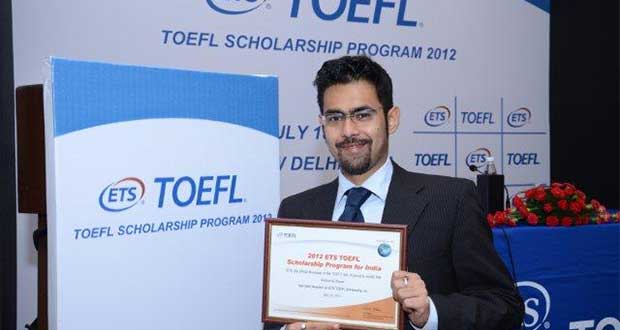
    You had scored an amazing 119/120 in the TOEFL, bagging the scholarship. How much effort would you say it had required you for this achievement? What prompted you to take this test?

    It isn’t very difficult for someone who’s been taught in English through school and college to secure a high score in this test. It’s designed in such a way that Indians, who are better in English than most other nationalities, can perform well. I was applying for a masters degree and so I took the test. Later, when I was looking for funding, I stumbled across the TOEFL scholarship and applied for it.


    When did you start pursuing acting? Was it one of your childhood dreams to act in movies, or did it materialise while at NUJS?

    I’ve been acting on and off through school, especially in the last two years, but it was only after I entered college that I started acting with professional theatre groups. NUJS itself wasn’t a catalyst to pursue acting. Since Calcutta is my hometown and I was enrolled here, I had a lot of time to act, rehearse. Acting in movies wasn’t really a dream, it happened accidentally. I’m mainly a theatre actor.


    deborshi-barat-6

    You have acted in the National award winning movie, Ranjana Ami Ar Ashbona, and many other movies and series. Please share with us how all of this happened. When did you receive your first break?

    I was working at S&R Associates in New Delhi for a little over two years, mainly doing capital markets work. I quit my job around the end of August 2010 to process applications for higher studies in U.S. universities for the next year. Since I was applying for Policy studies as well, I was required to give the GRE. Around the time of the test, the Airtel Theatre Festival was happening in Kolkata and my friends persuaded me to be a part of it. A panel discussion was organized to promote the festival, exploring the intersection of theatre and films. A friend of mine was moderating the discussion, and reputed director Anjan Dutt was a speaker on the panel, while I was a speaker too. Later, Mr. Dutt approached me to cast me in his next film, which was Ranjanaa. Subsequently, on account of certain pressing personal circumstances, I was forced to defer my admission abroad and stay on in Kolkata. During this time, I got a few more offers in a couple of other films and some megaserials. However, I did these projects as a pastime, not as an active pursuit of the creative arts.


    You are the author of a book, ‘The Hunter of Pigeons’, published by Partridge, a Penguin Random House Company. What is this book about? What made you write it?

    This book is a thriller. As a genre, I’ve been deeply fascinated by magic realism, and accordingly, I’ve tried to incorporate elements of it. The book, however, is a fast-paced mass market work of fiction. During the time that I was in Kolkata, after I’d quit my job and was waiting to go abroad, I had some time on my hands and began working on the book.


    Please tell us about your experience with FeminIjtihad as a Supervising Lawyer. What were the responsibilities you were entrusted with?

    A friend of mine at the Fletcher School connected me with Natasha Latiff, the founder of Femin Ijtihad, who was then working on a project in Afghanistan. With her, I render legal opinions aimed at strategic advocacy of human rights, especially for women in Islamic countries. I presently work as a Supervising Lawyer.


    How was your work as a corporate lawyer at S&R Associates between 2008 and 2010. Please tell us a little about your work profile while working there. What were the responsibilities you were entrusted with?

    I completed an internship at S&R and Mr. Sandip Bhagat, partner at S&R, offered me a job while I was in my last year of NUJS. I greatly enjoyed my stint there. Most of my work involved Capital Markets, with some litigation and M&A work. S&R has a superb work culture, with a special emphasis on quality, attention to detail and thoroughness. I learnt a lot on the job.


    deborshi-barat-2

    How did you decide to quit your job and start up with your independent practice?

    My plan was to process applications for higher studies abroad after I quit and leave the country. However, I was constrained to stay back in Kolkata for a couple of years thereafter. Apart from certain medical issues, I was helping out my family with some legal matters related to property and allied concerns. This prompted me to practise independently for some time, mainly liaising with other lawyers, briefing counsel, drafting, etc. Not only were the skills required for practice entirely different, the motivation and environment of work was different as well. Among other things, the process was far less efficient, slow, ridden with procedures, frustrating delays, etc. One had to get used to a slow-moving dynamic after the deadline-driven corporate culture of a firm.


    How is Masters of Arts in Law and Diplomacy along with a Masters in Law from Fletcher School, Tufts University. Please tell us a little about your course structure. What made you choose this programme?

    I wanted to use my law degree and training as a base and explore the Policy paradigm, including International Relations. Hence I applied to the Fletcher School where the keystone degree, the MALD, suited my needs perfectly. Once at Fletcher, I spoke to a few of my professors and they convinced me to apply for a joint LL.M. degree as well. The International Law course structure at Fletcher is one of the best in the world.


    How did you go about the admission process? What are your career plans after the completion of your joint degree?

    The admission process was long and arduous. I took a lot of time picking and choosing the universities/courses for which I’d apply, speaking to many people, researching. The process can be a lot quicker if one knows exactly what he/she is looking for, organizing the paperwork accordingly, focussing on the next step. I have a few career plans, but I’m happy to surprise myself!


    Is there a stark difference in the teaching pedagogy between the teaching model followed in law schools abroad and those in India? What are your views on this?

    In principle, they are the same. In effect, it’s quite different. The Socratic Method is followed more strictly in U.S. universities. The reading materials for each class are usually substantial, and one is required to have reviewed them thoroughly before the class, such that all students can engage in a discussion during the class which the professor moderates. Issues and questions are raised, clarified, argued upon. This may also be a reflection of education at the masters level, which assumes a level of maturity. I can’t vouch for all law schools in India, but from what I’ve heard, the teaching model in the country involves a lot of in-class lectures, where the professor ‘teaches’ (as opposed to leading a discussion among students) and students listen.


    deborshi-barat-5

    What were the biggest hurdles and challenges in the early days of your career as an actor? How did you deal with them?

    I’m still dealing with them! A career as a ‘professional’ actor is one of extreme frustration and patience. Acting is only part of the job, it involves networking, knowing people, haranguing directors, agents, showing up for umpteen auditions, etc. No matter what people say, there’s a huge element of luck. Acting merit is, I think, a very small component of the deal. I am quite bad at networking and following up, so I didn’t do any of it. My bad. My friends and family say I should push more, but I tell them that I didn’t sign up to do all that. I’ve been lucky to get the few projects that I did. Once in them, I tried to do my best. In movies and serials, I haven’t done a major role. So yes, they also serve who only stand and wait.


    How do you manage to divide and manage your time effectively? Have you thought of pursuing a career in acting fulltime?

    If there are multiple interests, one usually finds time for each of them. Of course, one has to have the right circumstances, and I’ve been lucky that way. Often, the time is divided into stages. For example, when I was working at S&R, I didn’t do any theatre. After I quit and I was on my own, I had more freedom, more flexibility to dabble in other stuff, things of interest, writing, acting, theatre. I’ve thought of pursuing acting full-time, and upon careful deliberation, I’ve decided against it. Eventually I would love to be a full-time writer though, god willing.


    As a concluding message, what would be your advice to law students who would innately want to try their time in acting?

    Law and acting have very little in common. It’s tempting to draw parallels but it isn’t true. Courtroom dramas are good for books and movies. If anyone wants to pursue acting, one should be prepared to give it a lot of time. Besides, law students already have the option of lucrative careers, meaningful work, by dint of their education. In that scenario, it is even more difficult not to crack in the middle of a frustrating wait for acting projects to come along.

  • Jay Sayta, Founder Glaws.in, on how he became an authority in Gambling Laws

    Jay Sayta, Founder Glaws.in, on how he became an authority in Gambling Laws

    Jay Sayta would be graduating in the 2015 batch of NUJS, Kolkata. In his words he is just like ‘like any other normal student who likes sports, movies and music’, but to the contrary and most amazingly he is already considered as an authority in gambling laws in India.

    In his 2nd year of law school he bought the domain glaws.in and had started researching and writing on gambling related issues from then on. Quickly enough, his work and enthusiasm in this niche area of law got noticed by the media and from then on he continues to receive a lot of audience. The readers of his blog who are bureaucrats, entrepreneurs, lawyers, corporate professionals, etc. regularly write to him for his opinion on gambling laws. He is currently planning to join Luthra&Luthra after graduation, and in the near future he plans to publish a commentary on Gambling Laws in India.

    In this interview you will get to learn how he started off with a simple passion to write on gambling laws and how he grew up to become an authority in it.


    How would you introduce yourself? Could you please share a little bit of what motivated you to pursue law as a career?

    I am a fifth year law student at NUJS Kolkata interested in gaming, commercial and public policy. I love reading and writing on legal issues as well as general socio-political issues. Apart from that, I would say that I am like any other normal student who likes sports, movies and music.

    As for why I decided to pursue law, I was always thrilled by courtroom dramas in movies and John Grisham novels. Another reason is also that my elder brother is a lawyer from NLS Bangalore (and now a corporate lawyer in London) and watching him make a career in corporate law and exploring opportunities across the globe inspired me to pursue law. Since I belong to a family of business persons or professionals, it was natural to pursue a career option which gave a chance to pursue social sciences, public policy(which I was always interested in) and commerce.


    Given that a significant number of our readers are law school students; would you please tell us a little about your experience so far at NUJS?

    I have had a fantastic experience at NUJS so far. It is one of the most chilled out and laid back colleges but yet gives you an opportunity to pursue your passion and ideas. I have got an opportunity to interact with many prominent personalities from various spheres such as politics, social service, journalism, bureaucracy, judiciary etc. Apart from that I have been fortunate to have learnt law from some top academics and fine teachers.

    NUJS is one law school which gives you the option of deciding which career path you wish to pursue and has all kinds of students- you could either decide to study hard, participate in moots, debates and other extra-curricular activities or pursue your own entrepreneurial goals or just sit back, chill and enjoy college! I decided to do a bit of everything and tried my hand at mooting, debating, writing research articles and also enjoying college life.


    Do tell us about the kind of internships that you did while in law school. Did you work on gambling laws while at your internships?

    Due to my instincts in business and commerce which come naturally because of my family background, I decided to pursue corporate law. However I have tried my hand at different types of organisations from an NGO to a litigating lawyer to a start-up.

    In my first year I interned with Human Rights Law Network (HRLN) Mumbai and it was a fascinating experience to understand the basic functioning of trial courts (especially criminal courts) and understand problems faced by poor litigants. After that, I interned with Kian Ganz at Legally India to get a taste of legal journalism as I always enjoyed writing. I learnt the basics of legal research and writing, how to look for interesting stories and got really interesting insights on the way law firms function and make deals.

    After my first year, I largely focused on interning at law firms, apart from one internship with a Senior Counsel. I worked with various firms such as Nishith Desai Associates, JyotiSagar Associates, Khaitan& Co etc. on different matters mainly in corporate law, securities law, cyber law etc. I have done some gambling law related work in my law firm internships but that has not really been my focus since my main purpose of doing internships was to learn as many new areas of law as possible.


    You’ve been cited as an expert on gaming and betting laws by many newspapers in the media. Please tell us as to how did you develop an interest in this niche area of law?

    In my first year at NUJS, I used to play a bit of poker and other games on the internet (mainly on social media). I was curious to know about the laws applicable to gambling and why gambling is an activity which is viewed as illegal and frowned upon in society. I did a basic internet search and could not find much information.

    Thus I did a bit of my own research and approached Ramanuj Mukherjee, one of my seniors on whether I should write a research paper on the subject.

    Ramanuj suggested that it is best to continue working on the area and start my own website. Once I started my website and wrote a couple of posts, I started receiving comments and mails from lot of persons asking for my opinion on various aspects as there was a dearth of information online. This resulted in me digging for more information and even today I try reading more about the subject and every day learn something new.


    Have you published research papers on gambling laws? Do you foresee yourself writing a book?

    I have plans to write a commentary on Gambling, Betting and Lottery laws in India. I have given the idea some thought and already started work on it. However for various reasons I have not been able to find much time to complete the research and manuscript. Hopefully I will be able to find the time and focus on this to write a book soon.


    You founded the widely known website named glaws.in while you were in your 1styear of law school. How did you come up with this idea? Tell us a little about this website.

    Like I said earlier, the idea of starting glaws.in came since I was curious to know about gambling laws and could not find enough material online. Once I started writing, I got more ideas and never left the zest to know more about the subject. Perhaps it is because I am fascinated by the subject. The gambling instinct in human beings never fails to marvel me and hence I have continued to write for four years.


    What is it like to maintain a website that exclusively deals with gambling laws in India? Please tell us about the reach of your website. Who comprise your target audience and readers?

    Gambling laws is an obscure area which people like to wish away. However there is considerable interest in gambling specially in a country like India which loves cricket (and betting on it comes as a logical extension) and entertainment/thrills. Thus, there are enough number of people who would like to know the legality of gambling and betting, updates about what is happening in the gaming industry as well as a forum to urge the government to change its current policy to prohibit gambling and bring reforms in the current archaic set of gambling laws. Glaws.in is thus meant for any average reader of ordinary intelligence to know and understand the issue of gambling in India holistically and be abreast with legal developments. I avoid complicating issues and try to write in such a manner that all readers can understand legal developments.

    Having said that, glaws.in is closely followed by journalists, bureaucrats, businessmen, entrepreneurs, lawyers, law firms, politicians and students and I try to ensure that they have to look only at one place for any new developments or updates in the field of gaming law.


    Has anyone approached you for advice on gambling law? Please tell us about it.

    Of course during the course of the past four years, there have been several entrepreneurs, businessmen, law firms/lawyers, journalists etc. who want to know more about the subject and have been unable to find enough information. I always try to interact with as many readers as possible and know their perspective and share my inputs as well. I believe that it is only on exchanging information and views that one is able to improve and develop one’s thoughts.

    Thus, I have helped various persons associated with the gaming industry formally and informally and in fact provided ideas to some of them, which has helped them build legally sustainable business models. .


    How do you research for the content on your website? From where do you get the topics to write on?

    I try to read news and updates about the subject through the internet and media. Apart from that, I also go through academic and business journals on the subject, books, commentaries etc. However apart from these traditional sources of information I believe it is imperative to communicate with as many people as possible and interact with readers. On many occasions, readers have supplied me with exclusive documents and information which no journalist or lawyer has, only because I have a rapport with my most people in the gaming industry and have helped them with their legal issues. The most important thing however is to have a zest for more information and keep digging for more. It is important to not have the feeling that one knows everything that is out there to be learnt.

    What I know about gaming in India is probably only a fraction of the total information available. I try to be inquisitive and never be satisfied despite doing research for the past four years.


    What are your future plans? Do you wish to get inducted into a law firm or work with a litigator in this niche area of law?

    I have received an offer from Luthra&Luthra Law offices and would be joining the firm after college. I will try to learn more about corporate law and build a career as a law firm lawyer. However, gaming law will always be my passion and hopefully, I will be able to continue reading, writing and learning about it even after college.


    It must have been a great experience starting up with glaws.in and taking it to a level of authority. Please share with us any memorable experience you had with glaws in all these years.

    There have been quite a few memorable experiences for me. The fact that top legal luminaries, gaming company executives, journalists etc. have contacted me and appreciated my work has kept me going. However the invitation by FICCI to be a panelist at ICE Totally Gaming India Seminar (ICE is the world’s largest gaming exhibition held in London every year) was one of my most memorable experiences. It was truly wonderful to speak at a global forum such as ICE and interact with top gaming executives, policy makers, entrepreneurs and lawyers.

    Another fond memory which pleasantly surprised me is an email from a Joint Secretary in the Union Home Ministry who invited me to share my views on an ongoing matter in the Supreme Court on games of skill and rummy. It was a great experience to visit the Home Ministry office and present my thoughts to top government officials.


    As a concluding message, what would be your suggestions to law students?

    My suggestion to law students would be to pursue their passion and not think in a straitjacketed manner. It is important to think innovatively and follow one’s dream as ultimately that will be the only thing which will give you satisfaction.

    There is no one way to pursue a good career in law and there are various avenues available for budding law students. It would not be correct to say that one will only succeed if one gets excellent grades or wins moots and debates or publishes a dozen papers. Law is one field which gives so many diverse opportunities and it is up to the students to choose any path. However, it is important to be focused, dedicated and show a desire to continue learning.

  • Shouvik Kr. Guha on higher grades, winning gold medals, Lexbioxis and teaching

    Shouvik Kr. Guha on higher grades, winning gold medals, Lexbioxis and teaching

    shouvik-guha-3Shouvik Kumar Guha pursued his B.A.LL.B. and LL.M. from West Bengal National University of Juridical Sciences, Kolkata. He has been associated with IDIA since the days of its inception. He has numerous publications in prestigious journals to his name and has authored few books also. He had always planned to pursue a career in academics since his days in law school. Presently, he is working as an Assistant Professor at WBNUJS.

    In this interview, he talks about:

    Getting high grades and winning gold medals
    Co-founding Lexbiosis, Legal Industry Academia Collaboration
    Opting for teaching


    How would you like to introduce yourself? Tell us a bit about your childhood and pre-college life as well as educational background.

    This is a slightly difficult question to answer. Different people in my life know me in different capacities and there is only a handful, who can claim to know me well enough to vouch for what I am saying here. I have no illusion about myself and I guess what I am above all else, is someone who tries to do as much as he can whenever he can of whatever feels the right thing to do –that’s it.

    I have been fortunate enough to have had as wonderful a childhood as one can hope for. I hail from a rather humble family myself and my family has throughout my life done everything it can to support me in all my pursuits. I am immensely grateful to my teachers too for having played a pivotal role in me turning into the person that I am today. I was never all-devoted towards academics, although the passion for reading had been inculcated within me very early in my life.

    Mathematics and languages were what I used to spend all my studying time on. My primary education, which in my opinion is in many ways the most important one in a person’s life, had taken place in a school of vernacular medium, but of great repute. I later shifted to an English medium school, though I still probably identify myself as a product of the former rather than the latter. I was engaged in scores of extra-curricular activities, ranging from sports (cricket, swimming, athletics, martial arts and so on) to debates and quizzes and I enjoyed every bit of it. I had been inflicted with wanderlust at a very early age and have got many opportunities right from the beginning in my life to indulge in that love, all across the country and beyond, on one pretext or another.


    How did your interest gravitate towards law?

    Well, I had often been told that my love for reading and writing and penchant for reasoned arguments might make life easier for me if I opted for this line of work. However, it was more of chance that had brought me down this path. I was studying Economics in the Presidency College, when I happened to give the entrance examination for NUJS as a sort of dare with absolutely no prior preparation. I did not do very badly by playing to my strengths during those two hours and after a lot of debates and discussion, I thought it might be interesting to give law a chance. Once I started studying it earnestly, law was quick to seize my fascination. However, my love for Economics and Mathematics did continue to reflect in my inclination towards financial laws and related disciplines.


    You have done your graduation and post-graduation from WBNUJS. How would you describe your experience as? How does it feel to be an Assistant Professor in the same college from where you graduated?

    I loved my college life with all my being. Still do, as a matter of fact, despite all that have changed since the day I had arrived at this place. It was sort of a Golden Age for NUJS when I had joined back in 2005 as a student rather green behind his ears. From my very first day, I was fortunate enough to be guided and inspired by a superb group of seniors, batchmates and some exceptional teachers. NUJS was undergoing a transformation from my second year onwards, with Prof. M.P. Singh having taken charge as the vice-chancellor. I was therefore lucky to have been taught by many of the experienced teachers from the Menon and Chimni Eras, as well as the younger batch of dynamic faculty members, who had joined during Prof. Singh’s tenure. We lacked a lot of things in terms of infrastructure during the initial years. To access legal databases now deemed commonplace across all NLUs, we had to go across the city to the British Council and American Centre libraries.

    However, there was one thing that had been driven into our minds from the very first semester –our journey had just begun and we had not achieved anything great simply by gaining entry in NUJS. On the contrary, it is what we would do in course of the five years that we spend here, that will define us as law students and subsequently, lawyers fit to join the profession. If there was something almost every NUJS student used to share back then, it was an acute hunger –hunger to be the best at what he or she would do. I take almost inordinate pride in having been a part of this institution from back those days. The sheer level of confidence that an NUJS graduate would have in his or abilities to tackle any possible predicament will always beggar belief –and that is an integral aspect of being a successful legal professional, no matter of which hue.

    My own batch was a maverick one, but insanely cool, yes! We had all sorts, from the studious note-taker, to the happy-go-lucky truant, from the great mooter to the superb debater to the best of sportspersons. Well, if I start reminiscing about them, this interview would be continuing even when the next batch graduates! I have seen a lot of things change since then. We have had our share of ups and downs. The important thing is not to stagnate, but keep going on, preserving the best from the past and tempering it with the curiosity, needs and efforts of the present, so as to forge it into a legacy that would live up to the scrutiny of the future. Through the years, I have come to love this institution and its members as my extended family and I have found that there is no price too high to pay to ensure its continued excellence. That is why I chose to come back from a corporate job to this place.

    While I have always enjoyed challenging research or finding solutions to problems, I only came be love teaching after joining NUJS. Even before my graduation, I had often taught junior batches and when I discovered from the student feedback that I was not doing a total hash of the job and that I am enjoying it a lot too, it was not a matter of if I will come back, but merely when. There is one thing that will always set NUJS apart – its students. If I may be pardoned for mixing metaphors, they have always been the catalyst to shape this institution into what it had been and I consider myself fortunate for being in a position to teach and learn from them in the foreseeable future. Every bit of success that a student achieves, I feel proud for as if it’s been my own, every occasional setback that they face becomes my personal uphill climb. That is what NUJS does –it makes you a part of it and does not let go.


    What do you like best about teaching at NUJS? Which subject(s) do you teach? Which one interests you the most? Why?

    Students, students and students. The life of a teacher, who is keen to do what is best for the students and also advance the university to progressively increasing heights of glory, is not entirely smooth sailing inside NUJS. However, I just forget all the other problems when I am dealing with the students, whether inside or outside the classroom. I think having been on the other side of the podium not too long ago helps me to figure out the problems faced by the students a lot quicker and come up with solutions acceptable to them. Each student has tremendous potential in one form or another. It is part of the teacher’s duty to ensure that he/she lives up to it. No one is happier than me when a student of mine informs me of success achieved by him/her, no one is more concerned when a student confesses about a problem he/she is having. My students are my family and my responsibility, plain and simple, and in several ways, they have taught me more than vice-versa.

    So far, I have tried to offer papers pertaining mostly to financial laws, subjects which are likely to be useful to an NLU graduate intending to etch his/her name in the corporate world. That does not mean I believe that is the only career option available to the students. Just that the number of competent teachers offering similar papers is really less in the legal education sector. Just like most of my batchmates, I too have done my share of griping about such lack and now that I am in a position to do something about it, not doing so would make my earlier actions seem a tad hypocritical.

    I have offered papers like The Law & Practice of Project Finance, International Investment Law, The Principles of Insurance Law, Banking Law & N.I. Act, International Banking Law etc. I would really love the opportunity to offer papers related to Corporate Law and Competition Law sometime, both of which are the subjects closest to my heart. Of the papers I have offered so far, Project Finance would be my foremost choice, since I framed this course out of scratch and offered it in an NLU probably for the first time, seeking to incorporate valuable inputs from industry practitioners about what exactly they would like an NLU intern/graduate to be conversant about when he/she joins their team. So far, the students who have opted for this course have provided considerably favourable feedback – many of them have told me how they have fared well during their internships and been praised because of aspects discussed in these classes. These are really moments that make each and every frustration that one may face in this profession seem worthwhile.  Depending upon the capacity of students to absorb, I would like to increasingly convert my courses to suit industry standards, involving drafting, negotiations, case studies, transactional work etc. – essentially the way high finance usually works in the real world instead of mere theoretical know-how.


    Before joining as an Assistant Prof., you worked as a Research Associate and Guest Lecturer at WBNUJS. How was the experience?

    I have always loved taking up challenges in terms of research and my stint at NUJS has provided a lot of such prospects. From contracts to corporate mergers, from media and entertainment law issues to intellectual property matters, the sheer diversity of research that I have been entrusted with so far vindicates my decision to join academia over and over again. I am and shall always be grateful to Prof. M.P. Singh for giving me this opportunity early on, even though formal rules and practices often require a prior LL.M. degree to join as a Research Associate or Assistant. Prof. Singh, however, has always believed in not letting formalities come in the way of progress and he had allowed me the former position even before I could start with my Masters Programme. The little bit of administrative know-how that I have gained in course of this, including conducting the Common Law Admission Test, 2011 and supervising diploma courses offered at NUJS, has also considerably enriched my experiences.

    When it comes to teaching, I have been doing that since a few years now, first as a Teaching Assistant and then as a Guest Lecturer and finally, as an Assistant Professor. Honestly speaking, the different capacities do not mean anything different for me, apart from perhaps the fact that I can requisition stationaries with impunity now! All I know is that when I take up the responsibility of teaching a subject to my students, I owe it to each and every one of them to give my hundred percent on a 24/7 basis. If there is a shred of doubt left in any of their minds about any aspect of the course after it has been over, then that is my failure as a teacher. The duties of a teacher cannot remain confined within the classroom walls, they will rightly spill over into the students’ lives outside the classes too. I have been taught by some brilliant teachers and I am lucky to have their footsteps to follow in. Discipline without the imposition of irrational rigour, creating an environment wherein different questions and perspectives and free exchange of ideas are positively encouraged, exhorting the students to bring out their best in what they do –these are all that a teacher ought to strive for. Simply put, my students are my life and I would give up everything else over and over again to teach them and learn from them in turn both inside and outside classroom. I strive to be a teacher who makes himself progressively unnecessary and hopefully, one who gives the student something to take home to think about besides homework!


    How did you decide to go into academics? What would be your advice to those law students who wish to go into academia but are instead forced to opt for other fields that are considered more lucrative?

    I never thought I would ever opt for an academic life before I came to NUJS. Once I found out academic and policy-based research, as well as teaching at this level is something I am enjoying and not entirely bad at either, coming back was a foregone conclusion –it was a simply a matter of when. Of course, I chose my alma mater because I am, as I have been rightly accused of from time to time, an “NUJS man through and through!”

    I can completely understand the plight of someone who wants to opt for an academic life, but has been compelled by circumstances, mostly financial, to opt for other fields instead. I myself had been in similar shoes not that long ago. To them I would say, if you are good enough in what you do and have confidence in your abilities, you can earn the living you need pretty easily, irrespective of which career you end up choosing. I myself was burdened with an educational loan, although the burden was fortunately eased to a certain extent by virtue of scholarships. However, I managed to settle that debt quicker than many who were engaged in corporate jobs. Circumstances may prevent you from taking that leap of faith in the very beginning, but if you really would like to be a part of this world, you can perhaps take a small detour, all the while keeping your sight firmly on this place. I will not pretend that it is not a difficult life at times, but I have also found it far more rewarding than any other option I might have chosen in its stead. If you love what you are doing for a living, whether it be the road oft-taken or its more deserted counterpart, it really does make all the difference.
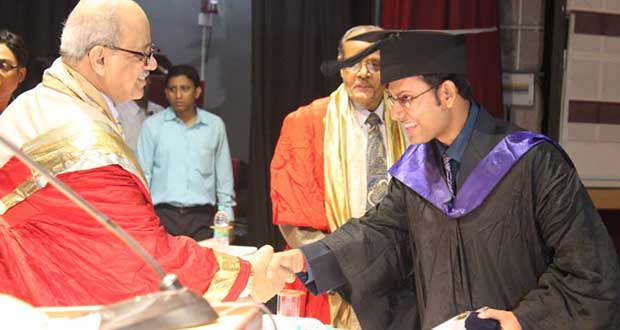
     

    shouvik-guha-2

    As a law student, you consistently excelled in academics and bagged a Gold Medal in your LL.M. course from WBNUJS. What are the 3 most important tips that you would like to share with law students for consistently excelling in academics?

    Yes, I was sort of dreading this embarrassing moment. I have scrupulously tried avoiding medals of any sort throughout my LL.B. days. Unfortunately, maintaining the resolve turned out to be too much of an effort during my post-graduation phase! See, I have never been the sort of student who would like to prepare for examinations. I never liked them and considered them to be at best unavoidable inconveniences. Even now I do not see many reasons to revise my perspective. I believe there are several more interesting alternatives for gauging a student’s prowess in a discipline. Excellence in academics to me simply means never giving up any opportunity to learn more about the subject that I am studying. If you like reading about a particular subject, then it is your personal decision whether you want to be the best in it. However, as a teacher, I accept nothing less from my students than their complete devotion towards being good in that subject and keep on improving further with the passage of every single day. You do not have to give up everything else in your life; on the contrary, you cannot get so lost among the trees as to be unable to recognize the forest for what it is. Keep calm, prioritize your objectives, manage your time well and never let your sense of propriety or any other sense for that matter, swallow your curiosity –that in essence will mean you can achieve pretty much whatever you want.

    Regarding achievement of success, be it professional or personal, I can give this example. NUJS offers law of torts as a subject in the very first semester of the B.A. LL.B. programme. After the end-semester examinations are over, students are usually anxious about their results, grades etc. This is what I say to them –their official academic training in torts is over. The question is whether they are feeling confident enough to represent a client tomorrow in a tortuous matter and provide him the best legal advice possible, or to teach the next batch law of torts in the semester after next. If the answer is yes, then their grade in law of torts doesn’t really matter. If the answer is no, then also, sadly, their grade in law of torts doesn’t really matter. In other words, if you are good in what you do, then irrespective of everything else, success will always hunt you down; you cannot possibly escape from it!


    You have co-founded Lexbiosis, Legal Industry Academia Collaboration. How did you go about achieving this? What is the overall model of Lexbiosis?

    Actually, Lexbiosis is originally the brainchild of Dr. Shamnad Basheer, who is one of the country’s top experts on Intellectual Property Law and had also been the Ministry of HRD IP Chair Professor at NUJS for several years. I have had the fortune of working with him even before I had graduated and also of having him as one of my mentors. He has always encouraged young law students to engage in meaningful research, reiterating time and again that it is never too early to start.

    We have also found that law firms or companies or practicing advocates or other professionals are always on the lookout for quality legal research and committed, intelligent researchers capable of thinking laterally. Using bright NLU students for this purpose not only helps these students gain invaluable experience and exposure to the real world scenario, but it also helps them to learn several soft skills and professional discipline. These researchers are also graded according to their performance and subsequently, when these firms or companies initiate their recruitment drives, these grades and certificates are made available to them. This provides the recruiter a very good yardstick of judging the capabilities of a potential future employee. The fact that it is also cost-effective to the law firms to get such research done by these students doesn’t harm either! Lexbiosis is, however, a fledging organization, and we hope this model will witness an exponential organic growth in the days to come.


    You have authored various papers in many reputed Law journals. What role do publications play in the life of an academician? What, in your view, are the few most important skills that law students should strive to acquire in order to write research papers effectively?

    Now this is an interesting question. I know of many an academician who treats publications as stepping stones towards glory or merely to score academic points to further their careers. I also know of several who cannot care any less for such factors and simply write about a topic because they feel strongly about it and wish to make their point heard/read. Personally, I feel fortunate to be inclined towards the latter category.

    I do not really think there are any ten commandments for writing a good paper. However, I will try to mention a few things that I have found helpful for myself. First of all, your motive should preferably be not merely to publish in order for enhancing your CV, but because you have a genuine interest in the topic concerned and you would like to express your views on the same. There’s no harm in building CV, but what I am saying is that it should not be the primary objective for writing a paper. Several students have asked me they want to start legal writing and whether I can suggest them a topic to write. I do not really believe that’s how it works! You come across a topic, read about it, get interested, read about it some more, start forming an opinion about it, test your opinion against the existing ones, find pros and cons for both sides and then form your argument and defences against counter-arguments –for me at least, that’s how it has always worked, which is why I ended up writing on a few rather esoteric topics, simply because I was reading something in relation to them and they piqued my interest.

    You also need to read. I mean, a lot! That’s one of the key features to being a good lawyer. And I don’t mean merely law books –read anything and everything that you can lay your hands on! One of the reasons I have chosen academia is because I can still continue pandering to my rather voracious bibliophilic self. Familiarizing yourself with the usual legal research databases helps a lot. Even the ability to do an efficient and expedited internet search is something that can prove to be astonishingly helpful. There are free-to-use websites like SSRN and Academia.edu that contain a treasure-trove of useful research materials. Another important thing is perhaps to remind yourself repeatedly of the needs, as well as the wants of the audience you’re addressing. Different people respond to different forms of writing. The sooner you can figure that out for yourself, the better are your writing skills going to be. The NLU students can get an early edge in terms of academic legal writing because of the projects and assignments that they have to mandatorily write. I remember how several of my early projects had been converted into subsequent papers, once the teachers concerned assured me that reading them had not been a complete waste of their time! Merely reiterating what others have said earlier and embellishing it with ten footnotes per page may seem adequate to get your paper published in some journal, but that sort of thing has never appealed to me. Academic web-blogs are here to stay now and some of their contents, albeit differently posited and presented than, say, a journal article, are not inferior by any means whatsoever. Academic plagiarism is another important issue for consideration, but that is something for another day.
     

    shouvik-guha

    You have been associated with IDIA from the days of its inception. Please tell us a bit about IDIA and your journey with IDIA.

    The IDIA project is something that is very close to my heart. What can a teacher want more than to ensure that every single deserving person gets the opportunity for a higher education by overcoming all obstacles in his or her path? We, who are part of the IDIA family, do not engage in charity. To say so would be an affront to our scholars. They do not want charity, they simply want to be recognized for what they are and what they can do. When I see an IDIA scholar hailing from the remotest village in the country earning accolades in NLUs and competing with their more privileged fellow batchmates without giving any quarter, the pleasure I derive from that is simply indescribable. I myself have come from a lower-middle-income family and I can identify with most of the problems that our scholars face. That is what makes it seem all the more amazing when they continue displaying courage, tenacity and perseverance in their academic and extra-curricular activities.

    In the short spell of a few years, IDIA has come far and it is also getting increasing support from established legal professionals pledged to its mission. The way student volunteers from NLUs have responded to this movement is without parallel! I do not know of a single other instance wherein students from any professional and hectic course have fought for a worthy cause en mass! Right now, we have more than forty scholars studying across different law schools and almost twenty state chapters and national verticals, all raring to play their own roles in this movement to facilitate inclusiveness and diversity in legal education in India. Several innovative projects are also in the pipeline and we would love every single law student, academic or other professionals to be a part of the IDIA family. For further details on our achievements and activities and how to be a part of IDIA, please refer to our official website (www.idialaw.com).


    What are the main essential qualities of an Academician? What do you think differentiates between lawyers who chose academics from those of other professions?

    Integrity, both towards himself/herself and towards his/her subject, discipline, commitment and an insatiable sense of curiosity. Well, strictly speaking, these are the hallmarks of any successful being and I do not see why an academician would be considered as an exception either. For far too long, legal academics have been treated as left-overs of the profession. When I had shifted to academics myself, a lot of people including even those who were part of this world, were quite surprised at my decision –for in their opinion, this role was for someone without any ambition or other recourse. I strongly disagree. If anything, this role brings along with it a sense of responsibility that many other forms of practice of law may be lacking in.

    Having said that, I truly believe there is little to choose between two people who have devoted themselves towards efficiency and excellence, one a legal academic and the other a legal practitioner, both very much in love with their respective work. Just like there is little to differentiate between two people, who are pursuing the same two careers, but with reluctance and little or no initiative to better themselves, instead allowing their responsibilities to falter and their abilities to stagnate. While sky is the limit for the former, the latter would do themselves and many other people a whole lot of good by bidding their respective professions adieu.


    What would be your advice for law students who want to take up the profession of teaching?

    Not much different from what I would advise their fellow students who intend to pursue other professions –be good in what you like. A teacher has to earn the respect of his/her students just like any other professional has to earn the approval of his/her superiors and colleagues. Students are as intelligent as the teacher and often more so, the latter just has had more time in honing his/her skills and managed to pick up a little bit more experience along the road.

    This does not mean one needs to be all-knowing; simply do your homework with an effort many times than that of the student in doing his own. One must not lose touch with his/her inner student and cross over entirely to the ‘Dark Side’, so to speak! At the same time, one must take care not to get lost within the groves of academe and become agoraphobic with respect to the external world and the industry practices. I try my best to stay in touch with the latest developments in my subject and how it influences the legal dynamic from both theoretical as well as practical perspectives.

    Otherwise, what I say to my students would become with the passage of time a mere fossilized redundancy and would be of no use whatsoever to them. However, all that comes later. As a student, all that you must do is observe, learn, evaluate and file for future use and last but not the least, enjoy these priceless moments that are not going to recur in your life! I consider law students to be (at least for the most part) grown-up individuals, fully capable of making their own decisions in life.

    The key point is making informed decisions. Trying your hand at activities that require public speaking, be it mooting, or debating or simply making presentations, may turn out to be useful for later. You also need to try your best to understand the much-elusive ‘other party’s perspective’. When you enter a classroom full of students, you would have to cater to their individual needs and not take care of a selected sample only.

    As William Ward had said once, “The mediocre teacher tells. The good teacher explains. The superior teacher demonstrates. The great teacher inspires.”

    If you ever start losing the love for learning, well then, run like hell away from this vocation and do not look back, for it is surely not for you anymore! Remember that it is always your choice to be which type of teacher you want to be: the kind that fills the student with so much dry boredom that the latter cannot move, or the kind that just gives the student a little and timely prod that is just right for the latter to jump to the skies.

  • Jayantika Ganguly on being a corporate lawyer at AMSS, and Khaitan & Co.

    Jayantika Ganguly on being a corporate lawyer at AMSS, and Khaitan & Co.

    Jayantika Ganguly graduated from WB National University of Juridical Sciences, Kolkata, back in 2008. She has thereafter worked at Amarchand & Mangaldas & Suresh A Shroff & Co (“AMSS”) for more than three years, and is currently working as a Senior Associate at Khaitan & Co. (“KCo”).

    We asked her to share her journey from being a law student to being a corporate lawyer.


    Given that most of our readers are law students and young lawyers, how will you introduce yourself to them?

    “Hello, Lawdroids! Greetings from a sample of Lawdroid Ice-cream Sandwich!”

    <Disclaimer: I do not own the terms “Lawdroids” or “Ice-cream Sandwich” and these are merely being used for representative purposes.>


    Back in 2003, NUJS was a fairly new institute. What motivated you to choose law as a career?

    It might sound a tad fickle, but law was simply the most interesting option for me at that stage. Law was exciting and a heady blend of the secure and intrepid – which just felt right.Perhaps a side-effect of growing up on detective stories!

    NUJS was fairly new back then (we were the fourth batch) – but we had the legendary Dr Madhava Menon as the Vice Chancellor! The rank #3 in the entrance exam helped, too.


    In retrospect how would you compare NUJS with other premier law institutions of the country?

    NUJS is undoubtedly one of the best. As an alumnus, my hindsight might be a little more rose-tinted than reality – but NUJS did a great job of not only training us in law, but also preparing us for our professional lives. The courses, internships, projects, moots, extra-curricular activities – it was all great. I think NUJS might have one of the most active student populations amongst the law schools. It certainly gave us a twinkle in our eye and a swagger in our stride.


    How did your recruitment at AMSS take place? How do you recall your anticipation of the job offer?

    Campus recruitment – our Placement Committee did a spectacular job. The procedure was fairly standard – CVs were sent, shortlisted students were called in for a Group Discussion, and further selected students were called in for individual interviews. I remember frantically reading the Companies Act before the scheduled date – but in the end, it wasn’t required. We were tested for our aptitude, oratory and analytical skills.


    Many lawyers would say that the actual learning takes place in the years of practice. How far would you say it is true? What was the case in your situation?

    I would take that statement with a grain of salt – but then, this is my personal opinion. I feel the internships and the way they are structured in law schools are very advantageous and we are not caught unawares upon joining a firm/company. You study a subject, and then you get to apply your knowledge during your summer internship. I certainly learnt a lot this way. Obviously we do not learn everything in college and during internships – but we definitely gain a general idea of how things function, and that is what ultimately influences the decision on where to work.


    You worked at AMSS for more than three years before joining KCo. Being the largest law firm in India, how did it shape up your work profile?

    At AMSS, I worked in the Project Finance team. Headline-grabbing deals and late nights were the norm. It was a fantastic learning experience – fast and glamorous.


    After having worked at AMSS for more than 3 years how did the shift to KCo take place?

    The move to Kolkata, for family reasons, was the operative factor. By a happy coincidence, KCo Kolkata was looking to recruit and I got lucky!


    What does your current work profile at KCo consist of? How is a typical workday like?

    At KCo, I am a part of the Corporate Team, so I get to work on a wider range of transactions here. A typical work day would have a few phone calls, a meeting or two thrown in, some discussion sessions and a lot of emails, document review and drafting.
    jayantika-ganguly-2

    It’s been six years of your work experience in corporate law. What would you say contributes to the high attrition rate of the top law firms?

    There are a fair number of reasons. A lot of lawyers wish to work for a few years before going in for their Masters degree. Some move either out of a desire for change or for personal reasons. In my opinion, though, the biggest culprits behind high attrition rates are burnouts and breakdowns. The frantic pace and glory of big deals feels amazing at the beginning – but gradually, it gets exhausting. Health problems start cropping up – and that is when most people leave. Some are able to adapt, some are able to change their lifestyle and continue. This is more common with first jobs, I think, because as students, we are unable to accurately gauge what we are getting into – we are too star-struck. Also, the elation of the first all-nighter, the euphoria of a successful closing, the excitement of seeing your deal in a newspaper, the feeling of being ‘important’ – these are all quite addictive, so, more often than not, we tend to ignore our health concerns until something goes seriously wrong.


    In these six years you must have guided a lot of interns at AMSS and KCo. What do you think differentiates a good intern from the rest?  How can an intern make a positive impression in the limited time they have?

    The best interns I have seen are prompt and meticulous. The characteristics of a good intern are pretty much the same as the characteristics of a good associate. Take your deadlines seriously. If you don’t have the bandwidth to take on additional assignments, say it upfront and request an extended deadline if possible – if not, check with the senior for priorities. Listen to instructions carefully – ask questions if you do not understand. Be meticulous. No one will penalise an intern for not knowing an obscure detail of law – but silly mistakes, shoddy submissions are not good. Do your research well and be prepared to answer questions on the assignment you have been given.


    Life for lawfirmites can be very hectic at times. What is your take on work-life balance? How do you unwind?

    Work-life balance is very important to me. I think it is a somewhat misunderstood concept. Work-life balance does not mean that you leave your time-sensitive transaction hanging and wander off because your work-hours are over – that is simple irresponsibility. What it means is that you do your work to the best of your ability, but you also keep some time to yourself, indulge in something you are passionate about, and you also keep an eye on your wellbeing. It is about finding a passion beyond your work and making time for it. It will have a positive effect on your work efficiency as well, as you will be more organised and work down the priority list.

    There are plenty of unwinding activities I indulge in. I love travelling – be it for work or leisure – and I try to travel as much as I can. I also fancy (or, perhaps, delude) myself to be a bit of a writer. I like to explore new cuisines and new languages. I am an avid Sherlockian as well – and a fan of music, art, dance and drama.


    Many young law students want to have a flourishing career in corporate law. What would be your advice to the future corporate lawyers?

    Other than thoroughly studying the corporate laws, keep abreast of the market news. Being up-to-date on information as well as laws is important. Try and intern with companies as well as law firms – this will give you a well-rounded idea about how things work on both sides. Hone your drafting and negotiation skills – this will form a major chunk of your work hours.

  • Debolina Saha on work at AMSS, quitting it to join Ashurst LLP and work at Allen & Overy

    Debolina Saha on work at AMSS, quitting it to join Ashurst LLP and work at Allen & Overy

    debolina-saha-1Debolina Saha graduated from NUJS, Kolkata. She worked at AMSS before getting appointed to Ashurst LLP, London. Currently, she is an associate of Allen & Overy based out of Hong Kong.

    In this interview she talks about:

    • Work experience at the largest Indian law firm
    • Appointment at Ashurst LLP without the necessity of masters in law
    • Working on tight schedules and time management
    • Work experience at a Magic Circle firm, Allen & Overy


    What impressed upon you the idea to study law? Being fairly a new concept and a new university how did you decide to pursue law from NUJS?

    I chose law for very different reasons. I always aspired to join the civil services and so thought at my undergraduate level it would be best to take up subjects that would be closely linked to subjects that I would be dealing with on a daily basis as a civil servant—and of course then the natural choice was the study of law.

    The fact that Dr. N.R. Madhava Menon would be the vice-chancellor of the new law school in Kolkata, was enough to strike both a chord of trust and optimism that NUJS too would soon be in similar leagues with the National Law School of India University at Bangalore and joining NUJS would definitely turn out to be one of the best decisions of life.

    Also NUJS came with the added advantage of being just 10 minutes walking distance away from my home -so I guess it was hard to say “no” to NUJS and it was the best way of savouring a few more years within the comforts of home, before a job required me to move out of Kolkata.


    How did you fare in your academics at NUJS? Would you say a great CGPA is a necessity to kickstart a good career in the legal profession?

    I missed out being on the top 10 student rank list of my class but was jointly ranked 11, in a class of 66 students. Doing well in academics was personally imperative to me. I come from a very simple family and being a first time lawyer in my family with no big names to back me up or provide me with references-I felt the only way for me to put my best foot forward was by means of doing well in academics.

    CGPA, does not reflect your level of intelligence or capability but what it does reflect to a person who first examines your curriculum vitae is that you believe in excelling, putting your best, are a focussed individual and have a higher degree of perseverance than the rest—-all of which qualities are highly valued at the job front.

    Sadly it is the truth, but CGPAs (which show your grade for a five year period and not just one semester) often gives the interviewer (who is a total stranger) a first impression about a candidate. But CGPA alone does not determine everything. Your personality, extra-curricular achievements and other volunteering activities—in short a “consistent” track record of achievements all put together, add to giving you that much needed ‘kickstart’ at a good legal career.

    Once into the profession, your CGPA really does not make any difference. I know of some fantastic lawyers who are doing very well in their profession but cannot boast of high CGPAs at law school.


    Right after graduation you got appointed at AMSS. What had contributed towards this appointment? What did you take away from a year long work experience at the largest Indian law firm?

    Amarchand gave me the strongest platform to start my career with and a brand name to pride myself—–an opportunity for which I would always be grateful. A consistent track-record of achievements at law school, a good group discussion round and an interview, I guess all contributed to securing a place with India’s largest law firm.

    Amarchand taught me that here was no replacement for hard work and to be honest it laid the foundation for my years to come and develop as a lawyer. Even as a fresher since I was deeply involved in transactions, at a very early stage of my career I got a bird’s eye overview of what my future as a lawyer would be. So while making my next move to Ashurst LLP in London, I was well prepared for the ‘life of a lawyer’—a life involving a whole lot of travelling, application of law, multitasking, dealing with stress, client management, working long hours and of course when not at work learning to make the most of leisure.


    Soon after completing a year at AMSS you started work at Ashurst LLP, London. How did this transition happen? Did you get an offer or did you apply for Ashurst?

    I have always been a strong believer of the fact that during one’s initial stages in the legal career, once should try and meddle with as many areas of law as possible before finally deciding the area that one would like to focus on.

    Unfortunately, during my time, we did not have a “rotation system” to various departments that many Indian law firms now offer their fresh associates. Having already been placed in India’s leading law firm, the natural way forward for me was to branch out beyond India. That was when I applied to Ashurst LLP, in London for a position in their international finance team. I was fortunate to have an associate role offered to me as opposed to a training contract. Generally with merely a single jurisdiction qualification (in my case India), only a year’s work experience in an Indian law firm and no master degree in law, one should be fortunate to just secure a training contract with a city-law firm in the United Kingdom.


    How different or similar was your work profile at Ashurst? What did you take away from your experience at Ashurst? How did your stint at Ashurst help you in making an ideal work profile?

    My role at Ashurst was more tilted towards the banking side, while at Amarchand I was a capital markets lawyer and the then Disclosure and Investor Protection Guidelines earned me my bread and butter.

    At Ashurst I was grappling on a daily basis with a host of new laws, never-heard-before terms that the Loan Market Association was throwing at me with every new read of the know-how documents and generally getting up to speed with a silver circle firm’s manner of drafting, various United Kingdom’s legislation, and associates who were already more experienced in this particular area of law. At least while, at Amarchand, certain laws and terms looked familiar and were taught at law school.

    Looking back now- my first four months at Ashurst taught me how it was more important to know where to find the law than what the law is, it taught me to be calm even when being out of one’s comfort zone, be willing to learn new things and most importantly being eager to experience the unknown. Though it can be daunting at first, once you cross the initial jitters, you would want to give yourself a pat on your back.

    Working for any international law firm especially a magic or a silver circle law firm goes a long way in opening up many channels of great opportunities for you. It is not just the work that you do in such law firms that help you secure better opportunities-the soft skills that you inculcate while working in such an environment can do wonders for your career.

    Amongst others your prospective interviewer very well gauges that having worked in an international law firm previously, you are a candidate who quickly adjusts to new unfamiliar surroundings, naturally adapts to people from varied cultures, you are sensitive to the needs of international clients and know how to conduct yourself in a demeanour that befits an international law firm. Needless to say, all this helps in making an ideal work profile for oneself.


    Generally it’s a notion that magic circle and silver circle firms take associates only from among post-graduates having expertise in corporate law. How far would you say this is true? What would you say substituted such a necessity in your favour for your recruitment at Ashurst?

    As a general concept, this may be true but I now see quite trend amongst a few English law firms picking up students from their campus recruitments in India. Also, some even offer extended internship opportunities over summer breaks to pick up some promising students as prospective trainees.

    All said and done, I would still say that for those of you, who think you are good to be in any of the international law firms and have well-balanced curriculum vitae with a consistent track record of achievements, be confident enough to apply. Remember being qualified in the foreign jurisdiction that you would be applying to is a great bonus, so you may consider adding this feather to your hat before seriously considering an application attempt. Also be perseverant and do not get disheartened with any rejection. Always remember that competition to these positions is fierce, and seats are very few, so if not this time, you will surely make it around at some point.

    I was cautiously advised by many to gain a few more years of experience in India and then after completing a master degree from a university abroad, make my way to an international law firm. That route seemed too long a wait at that point of time and besides a master in law would cost me a fortune-a sum that was beyond my reach at that point. So I thought, of giving an honest attempt at my Ashurst interview.

    In my feedback I was told that my eagerness, coherent and clear manner of speaking, general replies to interview questions with calm and composure and my sheer willingness to try new things and move into a part of the world where I did not know many people-convinced them, that I would be a quick learner at the job and a well-fit in my team.

    Over the years, I have learnt that what most international law firm interviews are geared to know if you will be a “well-fit” into the team and be happy as a person in new surroundings. Of course, knowing the law is important, but what is more important is that you are able to “find” that law and perhaps even more important is that you have a pleasant personality.


    After Ashurst, you worked at a couple of Indian law firms before deciding to join Allen&Overy, Hong Kong. Would you say the work experience garnered at Ashurst helped in your recruitment at A&O?

    Yes, most definitely but what I think worked in my favour was my qualification as a Solicitor, England and Wales. Having a widely accepted qualification goes a long way in securing a position with any international law firm.

    Besides law firms abroad look for individuals, who do more than just practice law. With the little time that we as lawyers have, at the end of the day it really looks good if your profile shows you as a holistic individual. So any publications, attempts to pursue serious hobbies, voluntary work, teaching assignments, any post-law school-added qualifications and every participation towards promoting any event on law would be highly appreciated.


    How diverse is your current workplace at Hong Kong now? Where do the associates hail from?

    One of the main reasons, while I personally enjoy working in an international law firm is its sheer diversity-both in terms of work and people. Though we are based in Hong Kong, we have people from all over the world. I will not be exaggerating in the least when I say that the office feels like a hub of global citizens. To name just a few we have associates from Sydney, The Netherlands, Hong Kong, United Kingdom, Thailand, The United States of America, Manila, Beijing, Korea, India and the list just keeps growing, depending on who joins us on “international secondments” from our offices abroad.


    How has been your experience working on tight schedules, meeting deadlines and with work-life balance?

    It is all about managing time and client expectations. As you grow in the profession, you become better at both the tasks, which leaves you more time for your personal pursuits. Besides, you learn to live life on the mantra of working hard when required and making the most of your holidays.

    It is important though to learn how to “switch off” and just enjoy yourself when on holidays. I personally don’t think that working on tight schedules or meeting deadlines should bother any lawyer-if one “enjoys” working as a lawyer. Trust me, the days when you have lesser work you realise how much you miss drafting, being across the negotiation table, or in short the constant adrenaline rush.

    Having said that, I think I must emphasise that those of you who are serious about joining law firms please be prepared for long hours at work, demanding clients, work on weekends and graveyard shifts (in the literal sense of the term) and a very competitive environment which may often leave you with very little time for yourself and your family, at least during your initial years as a professional.


    You have had the opportunity to judge the 12th Red Cross International Humanitarian Law Moot. What did you specifically look for in the mooters? How was the overall experience, being a general rounds judge at a prestigious moot?

    Well, I have always believed that if you are unable to put down complicated facts in a simple, coherent and clear manner, you really have not understood the moot problem. It is important that you understand the ‘facts’ clearly. So I was looking forward to see how mooters clearly explained me the facts and also applied the law to these facts.

    I was a little surprised when I saw how very well prepared the students were on the law but missed out on certain factual information, which perhaps cost them a few points but served them as a good reminder for their forthcoming rounds, to clearly brush up on facts which may seem insignificant at the first glance. Further a slow pace of talking, calm composure, clarity of voice and thought, and most importantly standing firm on arguments as opposed to readily conceding to the judge’s point of view helped me mark my score sheets for the team.

    Judging the top quality moot, with participants from all over the world was, needless to say, an exhilarating experience. I personally got to learn a lot from the students too and hopefully will get an invite again to hone my judging skills at the 13th Red Cross International Humanitarian Law Moot too.


    debolina-saha-4

    In between your schedules you have also managed to take not one but two clinical credit courses at NUJS. Tell us something about the courses and why you chose to do them? How has been your experience in teaching?

    I wanted students to make the most of their corporate internships and training contracts, starting day one itself. This was possible only if students were already familiar with certain integral, key, practical and basic terminologies used in day to day capital market, banking and finance and general corporate transactions. Most often what is taught in law schools is mostly theoretical law and students often fail to link this knowledge to their job.

    I wanted the students to be confident and know what they were doing while at their first job or during their internships. Sometimes it can take up to a couple of months or more for even a first year associate, to figure his or her way around a transaction and know exactly how and where his or her “piece” of work fits into the transaction. The aim of the courses I offered were to mainly provide the students with a chart of the various legs of a transaction, make them familiar with the manner in which due diligence was conducted and with certain terms used in loans transactions in the United Kingdom.

    As regards my teaching experience, I must admit I had my own set of apprehensions. I was forewarned as to how attendance would be low, students irregular and I might have to spend most of my time disciplining the students than teaching my proposed course.

    However, I was very pleasantly surprised with a class of regular attentive and enthusiastic students who left no stone unturned in getting the most out of the class and asking me some very intelligent and well thought out questions.

    What I personally understood from this experience is that if law teaching is coupled with practical anecdotes and the law itself is explained in simple, lucid and clear language with instances where such law may be applied, students are eager to learn and absorb such knowledge.


    debolina-saha-3

    You have also traveled to the Philippines to help support the people affected Typhoon Haiyan for fundraising and other activities. How did you contribute? What other volunteering opportunities have you been involved with?

    A few of us from our law firm traveled to the city of Bacolod in Philippines earlier this year, to help build toilets for some families affected by the Typhoon Haiyan. I was most humbled by the three-day experience. Yes, you heard that correctly-we built “toilets”!

    At the end of the trip, I must confess I was more proud of my bricklaying, cement and sand mixing skills than I was of my “lawyering” skills.

    I witnessed “sheer determination” and “will” amongst people who had very little by our standards. The houses that went down because of the typhoon, now stand stronger than ever showing how faith and unity in times of adversity could help one surpass any hurdle.

    I returned back from the “Land of Sweet People” more determined to continue participating in such activities and am already looking forward to my next volunteering opportunity.

    As regards my other volunteering opportunities, while in India, I made candles and taught English, on Saturdays, to visually challenged students, at the “The Blind Relief Association” in New Delhi for around a year. In London, I volunteered for the “Food for Life” program of the International Society for Krishna Consciousness, and helped in the preparation and distribution of food in the cold winter nights and also worked as a law volunteer at the Ipswich and Suffolk Council for Racial Equality. While at NUJS, as part of the legal aid society for three consecutive years, we traveled to some of the most remote villages in West Bengal and conducted legal awareness camps and on weekends assisted in providing free legal advice to people who came to the clinic.


    Having seen from the perspective of a student and a teacher, how do you say a student can perform better in examinations?

    I personally feel it is important to structure your answers to questions clearly and coherently. Most often students read lengthy articles, because of which at the time of examination, their thoughts are spread all over.

    After completion of any chapter in class, it is important to sit back and think of what questions you would have asked, had you been the teacher and looked at past question papers. Identify around 5-6 essay type question for each chapter and then write out the answers in a clear manner, clearly timing yourself.

    If this is done regularly then just before the date of your exams, instead of cramming long articles and chapters of books-you are concentrating only on your well-written answers. Your answers should always have a clear introduction, body (dealing with the issues posed by the question) and a conclusion.

    I am not at all saying do not read the books in the library. All I am saying is that it is of little use if you ponder over thick books just a day before the exam. In the library, you should spend time, learning to take note of matters which you would like to highlight in your answers.

    Your task would be always to ensure that teacher’s job in correcting the paper is made as easy as possible, and a good neat handwriting goes a long way in ensuring this.


    What would be your tips and advice for someone who aspires to join a magic circle law firm?

    If you plan early on in your law school days that you want to make your way to a magic circle law firm, it helps if you start building your curriculum vitae in that direction. There is no one straight jacket formula to make it to an international law firm. However, if you take note of all the matters that I have highlighted in my answers to the various questions in this interview, you simply increase your chances of selection.

    Also, it is important that you prepare for the interview well. Prepare a list of probable questions and think through the answers. Make sure your answers are honest; you dress smartly for the interview and have a firm handshake.
    Be confident and most importantly have faith in your abilities.

  • Ashish Arun on being the founder of Offshore Research Partners, leading Expert Witness Profiler and entrepreneurship

    Ashish Arun on being the founder of Offshore Research Partners, leading Expert Witness Profiler and entrepreneurship

    Ashish Arun graduated from NUJS, Kolkata in 2010. As a student he started working on his entrepreneurial skills while starting up with Offshore Research Partners. He didn’t have to sit for placements as ORP had already taken off. Currently he is a Partner, Principal and Director at Expert Witness Profiling.

    In this interview we ask him about:

    • Starting up and managing multiple ventures
    • Journey of being an entrepreneur
    • Importance of a co-founder


    How would you like to introduce yourself to our readers? Please share your academic and professional background.

    I graduated from NUJS in 2010 and currently run Offshore Research Partners, a legal research and outsourcing firm based in Calcutta. I am also a partner in Expert Witness Profiler, LLC, which is a legal research product oriented company, based in the United States. Originally from Patna, I am based out of Kolkata at the moment.


    Tell us a bit about your childhood, your hometown and your pre-graduate life as well.

    The first few years of my life were spent in a small town of Bihar. When I was 5, my father moved to Patna, primarily to get me a better education. Many who know me from NUJS wouldn’t believe this, but I was actually pretty good at studies as a kid.


    The career of a lawyer in India is still just a backup option for most students. What motivated you to choose law as a career? Did your family and friends not suggest you to go for Engineering or Medical Studies?

    As a kid, I never wanted to be a lawyer. My father is a practicing lawyer at the Patna High Court and I had seen the struggles that a lawyer has to go through during the first few years and law as a career became a strict no. After getting a decent score in boards, the natural choice was either medical or engineering and I picked medical because I didn’t want to study math.

    As fate would have it, I couldn’t clear the medical entrance exams and ended up wasting a few years after my 12th. I still wasn’t thinking of law till my cousin (a successful practicing lawyer at the Supreme Court) convinced me that I should consider studying law. If not for him and the easy competition back in 2005, I wouldn’t have studied law.


    Kindly acquaint us with your college life and your aspirations in college. What activities were you involved in apart from the regular academic curriculum?

    College life was the best thing that ever happened to me. I made some of my best friends, right in the first few weeks of college and the next five years were beyond imagination! I was involved in student activities right from the first year and tried my hand at almost everything; even singing – something my friends still make fun of. I used to actively participate in organizing Outlawed, the NUJS cultural fest and would also volunteer for almost every other event that took place. Student representation was something that I really enjoyed and eventually served as the President of the SJA (the NUJS student body) in my fourth year. That was a great experience as it taught me many organizational and leadership skills which still help me in running my businesses.


    What kind of internships did you do while you were a student? Are there remarkable experiences during your internships that shaped your career choices later?

    Like most law students, I was clueless about what I wanted to do after law school. So I tried all kinds of internships. Some of the memorable ones were from the first year when we actually spent days sitting on Jantar Mantar with the team of Justice for Bhopal, helping them with research and whatever little legal help we could offer as first year law students. Another great stint was at the offices of Siddharth Luthra, who personally taught us the basics of legal research. That internship made me understand how the right approach to research can save a lot of time and help you develop a clear understanding of the existing legal position on any issue; something that helps me today as well in serving our clients.


    How did you fare in your academics at NUJS? How was the academic pressure? Do you believe that excellent CGPA is the key to all success?

    If you make CGPA the benchmark, I didn’t do very well at NUJS. A good CGPA shows you are hardworking and dedicated to what is needed even if you don’t really like it. A not-so-good CGPA, on the other hand, doesn’t establish that you are good for nothing. I don’t think most of us felt any academic pressure. I may be wrong but the semesters used to be pretty easy going and everyone studied just a few days before the exams. Obviously, there were exceptions but not many.


    ashish-arun-2

    You started a business while you were at NUJS related to the LPO industry. Tell us the background story a bit.

    Quite a few of us used to do research for Daubert Tracker, an American legal database, to earn some extra pocket money. I had managed a few third party research projects for them in my third year and realized that there was potential in academic and commercial legal research outsourcing. In March 2009, I was helping them conceptualize a new research product and that is when I realized that I wanted to work in the area of legal research and publication. It was a good opportunity as they were willing to outsource all their research operations to me if I could set up a team of lawyers in India. One thing led to another and by the time we started the Calcutta office in December 2009; we already had 3 clients sending us work on a regular basis.


    A big stumbling block for student entrepreneurs is arranging capital for the business. How did you handle this? How did you find your initial team for the business?

    Capital requirements are different for product and services related companies. Since mine was the latter, we needed very little capital to get started – just enough to rent a space with 2-3 computers, a working internet connection and some basic furniture.

    The initial team came from friends and their references. That is something I would change if I had to do it again, as friends seldom make great co-workers.


    Did you look for a co-founder? Is this important to start a business?

    Since I started ORP after working as a researcher for Daubert Tracker for a few years, Myles Levin (Daubert Tracker’s owner) was an automatic choice for a co-founder. He funded the start-up expenses and I had been working with him for several years to feel comfortable about it.

    Having said that, I am not a huge believer in the “must-find-a-co-founder” theory. Many people start businesses with friends without truly understanding what the other person is really bringing to the table. No matter who your co-founder is, it is really important to decide the expectations and responsibilities of each person before you decide to sail together.


    What did you do after your graduation? Were you looking for placements at all?

    One big reason to go ahead with ORP with six months of law school left was placement options. I wanted to give six months to ORP which would have given me a fair idea if it was going to work or not. If not, sitting for placements was always an option. Thankfully, it worked fine and I didn’t have to go look for a job.


    Can you tell us something about the Expert Witness Profiler and Offshore Research Partners as your businesses and how did you conceive the idea for these business ventures?

    Expert Witness Profiler (EWP) was a company that was our (ORP’s) client. When one of the founders of EWP decided to leave to focus on his original business, I was presented with an opportunity to co-own the company. We were already handling their operations, from research to delivery and even post-delivery customer support – so it seemed like a good option to pick a stake and co-own the company and I went for it. It was one of the best decisions I made as the business has been growing and it is always more rewarding to be a co-owner than a vendor.


    You won the Star Youth Achiever Award for the Year 2010-11. Tell us something about this. How does it feel to reach these heights at such an early stage in career? And how has your journey as an entrepreneur been so far?

    Yes, the recognition and the awards came knocking very soon – but they are a mere reaffirmation of the fact that you are moving in the right direction and doing the right things. If anything, it motivated me to work harder and make sure that the growth momentum is maintained and the companies keep outperforming themselves on a regular basis.

    My journey as an entrepreneur has been like most others, I believe – I have seen good times as well as bad. Business slowdowns and a sudden upsurge in the order books have both happened and we have learned as a team, every day, how to tackle problems better and keep moving forward.


    How difficult would you say the first few years were of your own business? Tell us about the highs and lows.

    ORP has been profitable since the very first month – so, thankfully, we never had any financial issues. Most of the problems that we have had are what I would call a “good-quality-problem”. For example, we found ourselves overwhelmed with work and several of us would spend more than 24 hours in the office on certain days. This may sound normal to someone working in a law firm but it doesn’t really happen in the outsourcing. We have seen slowdowns and plateaued growth for a few months here and there – something that very few businesses can avoid, but other than that, it has been a pretty smooth ride till now.


    Did you at any point of time doubt your career choice of being an entrepreneur? If yes, how did you cope up with that?

    Never. I know it is easier to say this now with 20-20 hindsight, but I am thankful that I never really doubted it as a career choice.


    How do you think knowing law benefits an entrepreneur? What are the prime hurdles that a non-lawyer entrepreneur is likely to come across?

    Everyone needs to know the law – it has its own benefits and entrepreneurs are no different. However, there is a huge difference in knowing the law and being a lawyer. Because of being a lawyer, I could draft my own Agreements and I understood the legal as well as the commercial aspects of it. Or, I could incorporate a company without using another lawyer to draft my AoAs and MoAs. But then, an entrepreneur can always seek legal advice for these issues. I do not believe that a non-lawyer entrepreneur would face any specific difficulties or hurdles just because he is not a lawyer.


    You are a businessman more than a lawyer now. Do you feel that doing a business related course like MBA would have been better than studying law?

    Most of the projects and businesses that I have undertaken till now and plan to take up in the future are related to law. And I would not have been able to do any of this if I didn’t study law. An MBA may have helped but not as much as studying law did.


    Would you like to pursue higher study some day? Why or why not?

    Absolutely – but just to be able to go back to campus as a student! There is nothing better than that.


    Do you take interns? If yes, what qualifies one for an internship at Offshore Research Partners and how should one apply for the same?

    We do take interns and the only real qualification is that you need to be a law student. We have an internship application form on our Careers page (www.orp-india.com/careers) and one can apply using that.

    Interns are selected based on the cover letter, the accuracy and attention to detail in their CVs and a little weight is given to the year in which the student is – the higher, the better.


    Many law students consider working at an LPO to be an inferior choice. Why is this? What are your thoughts on the same?

    The industry is still new and the general perception is that you do not get to do any cutting edge work – the work can be mundane and repetitive. However, nothing can be farther than the truth. Yes, a lot of work that LPOs do is repetitive but if you are bright, you can move up the chain quickly and participate in the decision making process – develop new solutions, work with clients directly and do things in a few years that would take you decades in a law firm. Expert Witness Profiler prepares background reports for attorneys not only because it is cheaper to use us (ORP does all the research), but also because many attorneys do not have the same resources or the research skills that our lawyers have developed through the years.


    Lastly, what would be your message to law students and young lawyers who want to pursue entrepreneurship?

    Just because one thinks that an idea is great and has a lot of potential should not be the only factor in deciding whether you want to go ahead with something. Most startups fail because there is no demand for the products or services they create. Therefore, it is really important to assess the market and make sure that you are either fulfilling a need that already exists or you would be able to educate your target market and create a need for your product or service.


  • Shweta Bansal on work at AMSS, leaving firm job for Civil Services and acing it

    Shweta Bansal on work at AMSS, leaving firm job for Civil Services and acing it

    shweta-bansal-2Shweta Bansal a graduate from NUJS, Kolkata, After a successful career with AMSS, she went for the Civil Services. With utmost diligence and determination, she successfully cleared the Civil Services exam. She gives an insight into her childhood, the hurdles in life which she overcame and how she has been able to mould her life into a real success story.

    In this interview she talks about:

    • Her life and journey as a law student
    • Preparing for the Civil Services
    • Books and other knowledge sources helpful in preparation
    • An insight into the interview process


    Please introduce yourself to the readers? Please tell us a little bit about your childhood and your background?

    I was born and raised in Lucknow and pursued my schooling from the prestigious La Martiniere Girls College Lucknow. My life took a drastic turn at the age of 6 due to a major spinal injury, after which for many years I had to push myself immensely to grapple with a disability. Gradually, with the support of family, friends, and teachers, I continued with my studies. My grandmother has been thoroughly instrumental in my life and is the reason behind my little success story. At the Intermediate level, I studied humanities with Economics and secured a top spot in my class 12th boards. My good performance at school and at extra-curricular activities can be attributed to my teachers, more specifically to Mrs. Bhavna Kalra who taught me the importance of standing up on my own two feet. Thereafter I pursued my law from NUJS and spent few of my most crucial and definitive years there, shaping and building my career in Law.


    How was your experience at NUJS? What activities were you involved in apart from the regular academic curriculum?

    [sociallocker]
    I look back at my experience at NUJS as a great learning experience and despite the struggles I encountered, it provided a strong base to my career in Law. I am a person with a keen interest in a variety of non academic activities and NUJS gave me a brilliant platform to explore various such opportunities to help groom me as a well rounded personality. I fared well academically despite several health challenges and had an opportunity to perform with my college band, participate in fine arts and sketching competitions both at NUJS and at other Fests and Cultural events. I was even fortunate to present my paper at Hong Kong on legal valuation of patents as a solution to farmer suicide due to crop failure.


    You secured a job with AMSS. What worked for you in securing the placement?

    My journey with AMSS has been the best experience of my life. In 2006 after completing a two and a half month internship with AMSS, New Delhi and I was offered a pre placement at the Firm by Ms. Anuradha RV who has been a constant guide and support throughout my career at AMSS and even after. The work experience and firm culture at AMSS is unmatched and goes a long way in understanding and dealing with different areas of law. My experience at AMSS was exceptionally good and Mr. Shardul Shroff has been like a father figure in my life, Ms. Gunjan Shah and Ms. Purva Chadha played an instrumental role in shaping my legal skills and mentoring me.


    When and what inspired you to appear for Civil Services after having a career at AMSS?

    Truly speaking I was always keen to take the civil services exam but wanted to establish myself professionally before taking the plunge. I personally feel having an option to fall back upon provides you with the required security to give your best at the preparation level and if one has law as a career, civil services would tremendously compliment it as a career.


    How did you manage preparing for the Civil Service exam with your law firm job and other commitments?

    I was fortunate to be granted a sabbatical by Mr. Shardul Shroff to help me prepare for the exam.


    When did you start preparing for the exams? When should a person ideally start preparation for the Civil Services exam?

    Civil Service preparation requires absolute dedication and thus in November, 2010, I took a two year sabbatical leave from my work at AMSS and pursued my preparation. I gave my prelims with 5 months of preparation and cleared it however I couldn’t clear the mains due to my Hindi language paper. In my second attempt I cleared all three legs paving my way for the services.


    How many hours did you put in for your preparations every day? Is having a fixed schedule or weekly targets important according to you?

    The key to Civil Service preparation is consistency and diligence. I would plan my preparation targets on a daily basis and made it a point to achieve them so that there is no backlog created as the material to be read and study is extremely vast. My targeted study period was nothing less than 8 hours daily. Reading of The Hindu daily is a must for any civil services aspirant.


    Which were the easiest and the toughest part of your preparation?

    The easiest part for me during the Civil Service preparation was to tackle and remember the material provided by the coaching institutes, which hardly constitutes 30% of the entire bulk of study material one has to go through. Moreover I was extremely fortunate to get great guidance and support from Cyril Darlong Diengdoh and Ashutosh Salil who constantly mentored me. The tough part is primarily to figure out the remaining 70% of the study material and syllabus and this makes all the difference. I also faced the mammoth ‘Maths’ dilemma in CSAT since I had primarily been a student with a humanities background. I consider prelims and General studies papers for the Mains the toughest leg of the entire exercise. Prelims requires a thorough reading of  the fundamental concepts of different subjects and mains requires more focus on the current affairs.Prelims is the first scanning ground so the competition is really tough and negative marking only adds to the competition. Mains in contrast gives you an opportunity to get creative with your answers of course without derailing from the subject. GS paper I and II of Mains require very thorough reading of the editorials and various reports published by the government.


    What are the aspects that a Civil Service aspirant must focus on and start preparing for in advance?

    I would begin by stressing on the basics, they are the cardinal point of the entire preparation for Civil Services and if one is well prepared with the basics, one can tackle most of the questions. It is also important not to get lost in the sea of knowledge. Instead, focus on a few basic books so that revisions are possible. Since Prelims focuses more on the basic concepts, NCERTS can be quite handy, the Main examination is a combination of basic and current affairs, so your focus should be on newspapers, government reports and government websites.


    What were the attributes of your legal education and background which helped you in succeeding in the Civil Service Exams?

    A legal education and background definitely helps in the civil service preparation especially in Polity and General Studies Paper I and II of the Mains. Certain topics are common between the Law paper and Public Administration so that makes life easier. Also having studied law equips you with analysis and digging of most concepts and thereby providing an added advantage in writing answers. My background as a lawyer went a long way especially in my interview as most of my interview questions were based on law.


    What is the importance of CGPA for law students especially for Civil Service exam aspirant? Does it make any difference during the interview?

    CGPA is important and it is a reflection on the attitude and seriousness of a student but it does not per se reflect upon the merit of the person. Thus it makes a good impression to have a good CGPA but it is not the only factor that determines the merit of a student.


    Tell us about your interview? What kinds of questions were asked by the interview board?

    My interview was conducted by a 5 member panel headed by Mr. P.K. Mishra. The panel is always well read and grills you on the basis of your mains form. The major thrust of the questions was about my take on various socio-legal issues like Khap Panchayat, live-in relationship, decriminalization of S. 309 of the Indian Penal Code which criminalises attempt to commit suicide, the Aruna Shanbaug case. My legal background and extensive work experience also helped me tackle questions about good governance and withdrawal of subsidies. The panel also intended to assess my perspective on various problems and my ability to provide a solution for the same, for instance, crimes against women and measures to curb and tackle it. During the interview the objective of the panel is multifaceted since they assess your overall personality and knowledge. In fact the panel asked me to sketch one of the panel members within 30 seconds, since they read about my interest in sketching. The interview is both grueling and unpredictable.  It is very important to maintain your calm and be absolutely honest with the panel. Mr. P.K. Mishra was a great help in my interview once he realized I knew my stuff. He discouraged excessive grueling by other members.


    For the meantime, before your training period starts, you are holding the position of a Consultant with AMSS. What is the nature of your consultancy with AMSS and has your role in the firm changed?

    I came back to AMSS after my mains in 2012 to work with my mentor, Mr. Shardul Shroff on a unique role which has absolute administrative bearings and nothing to do with the transactional work of the firm. At the moment, I aid the firm with regards to firm development and handle the administrative concerns and issues.


    What would be your message for law students who are preparing or planning to prepare to appear for the Civil Service exams?

    The thumb rule should be firstly to focus on your education as a law student, studying and working towards making one’s basics strong. It is exceptionally useful in Civil Service to hold a law degree but before plunging into Civil Service preparation one should secure themselves a career to fall back upon as civil services can be a gamble. Education, work and then Civil Service has been my strategy as I believe that one should never put all their eggs in one basket.


    Lastly, what would be your message for the readers who want to pursue career in Civil Services?

    There is no substitute for hard work and diligence. Consistency and dedication goes a long way in achieving the desired result. One should regard coaching institutions as a very small part of the Civil Service preparation and should rather focus more on self preparation and self study. Be honest in your preparation and give your best. The outcome is never in your hands but the effort is. Civil services requires focused study so its important to isolate yourself socially till you are done with the Mains.[/sociallocker]