Tag: NUJS

  • Samim Ahmed Ranju, Senior Legal Counsel, GE Healthcare, on varied work experience at firms, in litigation and in-house

    Samim Ahmed Ranju, Senior Legal Counsel, GE Healthcare, on varied work experience at firms, in litigation and in-house

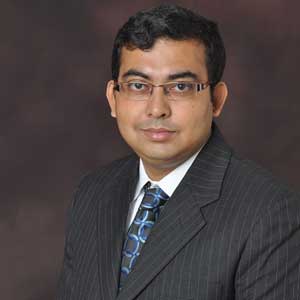
    Samim Ahmed Ranju belongs to the first batch of WBNUJS and graduated with B.A.LL.B.(Hons.) degree in 2005. Soon after graduation he joined Tata Services Ltd. as a legal trainee. Thereafter he joined Paras Kuhad and Associates, Advocates as an Associate and later switched to Khaitan and Partners. In 2010, he joined GE Healthcare as a Litigation Consultant and currently works as the Senior Legal Counsel there.

    In this interview he talks about:

    • Law school experience at WBNUJS
    • Work experience at Tata, PKA and Khaitan & Partners
    • Journey from a Litigation Consultant to Senior Legal Counsel at GE Healthcare
    • Role of a Senior Legal Counsel at an MNC like GE


    How would you introduce yourself? Could you please share a little bit of what motivated you to pursue law as a career?

    I am currently working as the Senior Legal Counsel for GE Healthcare, India and South Asia (Legal entity name is Wipro GE Healthcare Private Limited) and I am located in Bangalore. I belong to the first batch of The West Bengal National University of Juridical Sciences, Kolkata. I received by B.A.LL.B.(Hons.) degree in the year 2005.

    My father was an Advocate practicing in the Calcutta High Court. Seeing him and his colleagues in the profession, I got motivated mainly by two factors associated with it –

    • Empowerment through knowledge – A good lawyer is much more aware of the rights and obligations of an individual and this knowledge immensely empowers him not only in the professional field but in every sphere of life.
    • The opportunity to connect with people – The profession of law is such that you are always connected with people and trying to help them resolve their problems with your professional ability. In the process a lawyer touches many lives in this career and the amount of social recognition that one can earn is much beyond what other professions can offer.

    However, I was initially sceptical about the quality of legal education imparted in traditional law colleges. As a result, immediately after clearing my board examinations (in 1999), I opted for studying English Literature even after clearing the entrance test for the law department, University of Calcutta. Around the same time, Dr. Madhav Menon, the Founder Director of National Law School of India University, Bangalore (NLSIU) came to Kolkata, my home town, and established WBNUJS. I read a lot about Dr. Menon and his revolutionary success with NLSIU. So when I cleared the entrance test for WBNUJS in the year 2000, I did not think twice before leaving English Literature and taking up law as the career as my future career.


    Tell us about your college life at WBNUJS. Please tell us about the manner in which you approached academics while in college.

    I have spent the best five years of my life at WBNUJS. I was a resident student (WBNUJS was compulsorily residential during our time). Being part of the first batch, it was always special. Apart from the exceptional bonding among the batch mates (which we still maintain), we went through various experiments with curriculum, teaching methods, infrastructure (or the lack of it) etc.  Each one of us not only has seen a great institution coming into reality but we have actually contributed in building its reputation and pedigree. I am extremely proud of my batch mates who are now recognized everywhere as successful professionals.

    Our batch was a vibrant batch and the participation in various activities was spontaneous. The Moot Court Society of WBNUJS did show some phenomenal results in both national level and international moot court competitions in the very first year of its inception. Though I was not a part of the Moot Court teams representing the University, I used to take part in internal moot courts.  I was an active participant in the various activities conducted by the Legal Aid Society – legal awareness camps, street play on legal issues, seminars, legal aid clinic etc. The other student bodies such as Literary and Debating Society, Cultural Society, Sports Society were all very active and I was particularly involved in organising various events throughout the five years I spent at WBNUJS. I had special interest in quizzing and creative writing. I managed the student mess as the co-convenor for almost three years.

    I would categorize myself to be an average student so far as academics are concerned. The good thing about WBNUJS was that (at least during our time) it was not a traditional type of curriculum where you study for the whole year and your performance is dependent on one single examination. Instead, the evaluation was spread over the entire semester and the total marks in a paper was divided into Projects, Presentation, Viva, Mid-term Exams and End-Semester Exams which offered ample opportunity for a student to maintain a decent score even if they did not do well in part of the evaluation process. What also helped me was the analytical and problem based approach towards exam where bare acts were allowed in the exam hall and one was expected to analyse a problem/ situation and write answers as per his analysis. There was no right or wrong answer. I have found this extremely helpful as training for the future professionals. When I joined the profession, I realized that it is not so much important to know or remember a legal provision, rather it is important to know how to find a legal provision which is most appropriate in a given situation and how to actually apply it in reality.


    Did you take part in extracurricular activities?

    As I have already mentioned, I used to take part in Legal Aid, quiz, creative writing and I was always active in organizing events at NUJS. I was responsible for setting up the student mess and running it successfully for three years.

    In my opinion, extra-curricular activities have a very important role to play in creating leadership quality in a student. It is not necessary that you have to be successful only in Moot Courts for becoming a successful lawyer. Any extracurricular activity that you participate in will teach you few important lessons on leadership and that is what is important to build a successful career.

    Frankly speaking, I had very limited knowledge about law as a profession beyond litigation. In the initial years, at least I did not know much about what we know as corporate practice in law firms or in companies. Therefore, all my internships till thefourth year were in the field of litigation and my objective was clearly to become a litigation lawyer (either practicing under a Senior Counsel or in a litigation law firm).


    Do you believe that excellent CGPA is absolutely necessary for success?

    I can say for myself, I never had excellent CGPA but I have still survived. The same is true for some of my other batch mates who are also doing extremely well despite their average or poor CGPA. I would say, excellent CGPA is something ‘good to have’ as it shows your level of commitment which helps you in initial days as some recruiters also prefer it but definitely that’s not absolutely necessary. Especially once you are in the profession (be it in litigation, law firm or in corporate) your performance and your leadership quality are the only things that matter. However, this does not apply if you choose academics as your career in which case excellent CGPA is a must.


    What were your areas of interest during your graduation? How did you go about developing expertise and knowledge in these areas?

    Since I wanted to become a litigation lawyer and was inclined towards a practice in criminal law, I used to find lot of interest in all criminal law papers. I also took up optional papers such as Criminology, Forensic Science which are related to criminal law practice. Apart from that, I was interested in Constitutional Law and Family Laws.

    The only way once can develop expertise in litigation is to have some hands on experience. Reading a lot of case laws help but what really helped me was my close association with practicing lawyer’s chambers (which include my father’s chamber)and reading live case briefs and doing research. During the internships and even while the classes are on, I used to visit various courts on a regular basis. My father also used to give me little bit of drafting (mostly criminal and writ matters) work when I am at home. From these experiences I got to learn a fair amount of procedural law (both criminal and civil) which helped me a lot when I joined litigation law firm later on. In my opinion, procedural law cannot be learned in classroom.


    Did you do any internship during your graduation? Did you receive any assistance from your college?

    Yes, I mostly did litigation internships with practicing advocates at Trial Courts, High Court and the Supreme Court. I did one corporate internship and that was after I completed fourth year.

    Almost all my internships were organized by WBNUJS. We used to have a Placement Committee, mostly run by the students, which did an excellent job in organizing internships and later on the final placement.
     

    samim-ahmed-2

    Did you find that your law school education had prepared you sufficiently for the many tasks you were required to execute during your internships and later at your job?

    As I have already mentioned, the curriculum and the teaching method followed at WBNUJS did a very good job of preparing us for the real world. Obviously, there are few things which law school cannot teach you which I had to learn only during the internships and later in my jobs. But the law school education created that very foundation which is required to even learn those skills from outside. Another great advantage of being in a premier law school is that you are always surrounded by brilliant minds who will force you to come out of your limitations and one becomes a lifetime member of a great network of successful professionals.


    What led to your shift from Tata to Paras Kuhad? Please share your work experience at both these places.

    (Soon after graduation, Samim joined Tata Group as a legal trainee and after one year of work at Tata, he switched to Paras Kuhad and Associates as an Associate.)

    The Tata job was from the campus and I somehow could not adapt myself to the job. So I went back to my home town Kolkata and joined Paras Kuhad and Associates to do what I liked most – litigation.

    I had a very unique experience in Paras Kuhad and Associates. At that time the Kolkata office was small and going through a transition. Soon after I joined, I was entrusted with a very significant number of high value recovery cases for a bank. Since there was no senior in the office, I started handling these cases almost independently from day one though I had absolutely no prior experience. I am grateful to the Managing Partner who believed in my ability to handle the situation and helped me in gaining huge amount of exposure at a very early stage of my career. Initially I struggled a lot and I could figure out that the client’s legal officers were not very comfortable in dealing with a lawyer who hardly has any experience but within a year’s time I earned the confidence of the biggest client of the firm (a private bank) and it was the client’s same legal officers who started giving good feedback to the Managing Partner. This was the turning point which helped me to re-gain confidence in myself especially after the first job not going right for me. The high point of my career is when I resigned from Paras Kuhad and  the Chairman of the client bank himself requested me to stay back as he was extremely happy with the way I was handling his bank’s cases.


    You left PKA to join Khaitan and Partners as an Associate Advocate. What prompted you to make this choice and what made this shift possible?

    A Partner in PKA (who joined PKA after me) was taking up an assignment to set up and run the Kolkata office of Khaitan and Partners. He asked me if I am willing to join him in his new venture. What excited me was the fact that this would mean starting an office from the scratch and be a part of it while it is growing. I was also very comfortable in working with the Partner who used to give a whole lot of freedom in doing my work. So I took up the offer and the office started in the Partner’s residence and sometime we had to even work from his garage before we moved to a posh office in the Central Business District of Kolkata.


    Currently, you work as a Senior Legal Counsel- South Asia at Wipro GE Healthcare Private Limited. Please tell us about your induction into the company. What worked for you in securing this job?

    I joined GE Healthcare in 2010 initially as a Litigation Consultant on a 2 years’ contract. My only job was to look after all litigation and arbitration matters of the company all over the India region (mostly India, Bangladesh and Sri Lanka). I was interviewed by the General Counsel and the HR Manager over phone and I think what clicked for me was my experience of handling hardcore litigation work for four years in law firms.


    We would love to hear about your work profile. What is a normal workday like? Being a Senior Legal Counsel, what are your responsibilities?

    I had a very interesting career progress within GE Healthcare Legal and Compliance team. As I have already mentioned, I initially joined as a Litigation Consultant where my only job was to manage litigation and arbitration for the company. Soon after joining GE Healthcare I realized that managing litigation for a company especially for a big MNC which believes avoiding disputes in general is not a very challenging job especially for a person who has done hardcore litigation work in a law firm. So I approached the General Counsel and volunteered to take up some amount of corporate work in addition to my role as a litigation consultant. The General Counsel was quite impressed with this pro-active attitude and she was kind enough to slowly entrusting me with responsibilities which were meant for a full time Legal Counsel role. She first made me the ‘go-to’ counsel for the HR Department which gave me an opportunity to handle a lot of Labour and Employment issues. Soon I was looking after all the Supply Chain agreements. GE Healthcare in Bangalore has three manufacturing facilities in addition to its distribution business and hundreds of vendors supply various parts and services to these manufacturing facilities and other commercial offices which means huge number of contracts getting negotiated and executed on a regular basis. This gave me an opportunity to draft and negotiate huge number of contracts. By September 2011, before my contract as Litigation Consultant expired, I was inducted as a full time employee of the company with a designation of ‘Lead Counsel’. Though I continued to look after the litigation matters, corporate advisory and documentation work became my primary focus in the new role. Again in October 2013, when the position of Senior Legal Counsel became vacant, I was promoted to this role which is my current role. Again what went in my favour is that after the previous Senior Legal Counsel left the company, I volunteered and successfully managed his profile for a period of four months in addition to my existing role before I was officially offered the position.

    As the Senior Legal Counsel my work profile mostly includes transactional and advisory work wherein I have to actively take part in business decisions made by the various verticals of the business, advise the business leaders on legal issues, structure and strategize transactions in a way which is commercially viable as well as compliant to applicable laws and regulations, protect the company from any legal or regulatory risk by taking advance steps, drafting whole lot of agreements/ representations/ legal notice and reply to legal notice, resolving disputes, training the employees on compliance etc. The list is very long but in short I can say that any problem/ issue that the business or the stakeholders think has a legal angle to it comes to the Senior Legal Counsel for his expert advice.

    GE believes in flexible working hours and respects work-life balance to the extent possible. There is no fixed time for entry or exit, but I try to be in office by 9:30 am and generally do not get off before 7:30 pm on a normal day. However, sometime I need to stay back much beyond that time if there is some pressing urgency. I generally try to avoid taking work back home or working on weekends, but occasionally I will have to do that especially because for example, I need to support a sales team who are trying to close a deal with a customer on a late evening or on a weekend.


    What were the biggest hurdles and challenges in the first few months? How did you deal with them?

    Since my background was mostly of small litigation law firms, I had faced a huge cultural shock during the first few months in GE. GE is a completely process driven organization as opposed to law firms in which I worked where things used to run mostly on ad-hoc basis. I still remember the sleepless nights I had spent thinking about the power point presentations which I had to prepare in the very first month of joining GE. Also, the biggest learning for a law firm lawyer once he becomes an in-house counsel is that you are not expected just to give a legal opinion on matters brought before you. A legal counsels’ job is to provide a workable and compliant solution to the company and not a mere legal opinion. The other aspect I found most challenging in GE is that GE is a matrix organization which means people working in GE are not answerable only to his boss, instead one has to report to multiple stakeholders and one is answerable to all of them. Managing this huge number of stakeholders was another challenge which even now I sometime struggle with after spending five years in GE.


    What amount of legal work is there? What have been your failures and successes?

    Everything I do is related to ‘legal work’ in some way or the other. The role of in-house counsels in India has undergone a huge amount of change in recent times. Gone are those days when an in-house legal counsel was expected to act only as an intermediary between the external counsels/ law firms and the company. Because of various reasons which include cost constraints, a very large chunk of ‘legal work’ is now done in-house. Large companies and specially the MNCs have a very strong team of lawyers and compliance counsels who go to the external counsels only for specialized advises and very large or critical transactions.

    I think, my tenure in GE has mostly been a success story where I have reached a senior position within a very short period of time.


    What have been the highlights of your job so far?

    I think I already covered this part. I just like to add that GE has recognized me many ways and the number of awards/ recognition I have received in last few years is a testimony of that. I have received the following awards:

    ‘Clear Thinker’ award from the General Counsel, GE India (2012), award for ‘Expertise’ by Global General Counsel, GE Healthcare  (2013), CEO award for “Growth & Compliance” (2014), CEO award for “Delivering Results in an Uncertain World” (2015), award for “Achieving the Right Customer Outcomes” by Global General Counsel, GE Healthcare (2015)

    However, in my opinion the biggest highlight of my tenure in GE is to transform myself from a litigation lawyer to a full-fledged corporate senior legal counsel within a short period of time


    Corporate Law is oft seen as a dry arena of Law, sometimes with humongous workload. What made you gravitate towards this field?

    The word ‘Corporate Law’ no longer means only Companies Act and few related legislations. A corporate lawyer has to provide a wing to wing support to the business and is actually considered a business partner. I can say for GE, no major business or strategic decision is taken without involving the legal and compliance team. Every day you are challenged with new problems and the excitement of working on different things and learning in the process keeps me committed to my profession. Yes, there is huge workload sometime but all depends on how you prioritize and organize your workload to enjoy the benefits of a corporate job.


    What does it take to be a good corporate lawyer? What are the primary essentials of a corporate lawyer? How do you say a fresh graduate can work on building these skills?

    In my opinion a good corporate lawyer is someone who is considered to be an effective business partner by the commercial force. This is possible only when you have a very in-depth knowledge about the business and you are empathetic towards the needs of the other stakeholders in the business who are your clients. A good corporate lawyer is expected to provide solutions which are compliant and at the same time practical for the business to implement.

    My advice to a fresh graduate would be that first of all one should be careful while choosing the first few jobs. The primary focus should be to find out a place to work where you will be exposed to challenges on a regular basis and in the process you will develop your skillsets. I am not saying you can only acquire these skills in a law firm, but spending a few years in a law firm helps to build a solid foundation. The other advise I would have for the youngsters is that you should always stay hungry and be pro-active to grab every opportunity that comes on your way even if that means going beyond your defined scope of work and taking up extra responsibilities. These are better known as ‘stretch assignments’ in the corporate world. Believe me, when you are working in an organization, there is always some extra work which no one wants lap up. My suggestion is that you should keep your eyes open to these opportunities and volunteer to take them up. In corporate world one is valued not only for great execution of a work which are assigned to you, what they expect from a great leader is how much he is doing above and beyond his defined scope of work.


    What are the primary professional ethics you follow while at work? How do you deal with mistakes or errors?

    GE is a great company and globally one of the forerunners in ethics and compliance in the corporate world. One of the most precious things that I have learned in GE is that success is important but not at the cost of ethics, integrity and compliance. You will somehow stand out from the crowd if you do things in the most ethical way. Personally, I try to maintain a great level of transparency in whatever I do and try to do things in the right way by avoiding shortcuts. In today’s corporate world a person with doubtful integrity is never considered for any senior leadership role. With more and more corporates coming under the regulatory lenses, integrity is becoming an important quality that a recruiter likes to see in a potential candidate.

    One thing I have learned in my career through personal experience is that you should always face an error or mistake committed by you head on and the sooner the better. Brushing it under the carpet gives only temporary relief but does help in the long run. At some point of time it comes back and bite you and in a much bigger way. Therefore, if I have committed an error, I try to disclose it to my boss or the stakeholders at the very first opportunity and this helps things no growing out of proportion which cannot be handled later on.


    What is the procedure to apply for an internship and recruitment at Wipro GE? What are the qualities which they look for in their prospective employees?

    GE India Legal and Compliance team has an internship policy which is applicable to all GE businesses in India including GE Healthcare or Wipro GE. The internships in GE is done in a very structured manner wherein an intern is assigned with specific projects as soon as he or she joins the internship and at the end of the internship, the student has to do a report out presentation which is often attended by all GE lawyers. GE Legal and Compliance team generally does not recruit freshers. Lawyers with few years of experience in a reputed law firm or corporate are only considered for any open position. All open positions are posted in the career section of GE website.


    Is there any other tip you would like to give to our budding professionals?

    Success is a function of hard work and opportunity. You should always stay hungry and grab opportunities as and when it is available and do not let it go just because it would mean extra work for you.


  • Aniket Ghosh on bagging a job at Lakshmi Kumaran & Sreedharan and law school experience at NUJS, Kolkata

    Aniket Ghosh on bagging a job at Lakshmi Kumaran & Sreedharan and law school experience at NUJS, Kolkata

    Aniket Ghosh is a recent graduate (2015 batch) from NUJS, Kolkata, In his five years he explored a plethora of opportunities. He pursued a course on “Interpretation of Fiscal Statutes” by Mr. Badrinarayan, Partner at Lakshmi Kumaran & Sreedharan (L&S), he also worked as a Teaching Assistant to Prof. Saurabh Bhattacharjee and interned at various law firms including Ernst & Young, Mumbai.

    He has bagged a job at L&S after getting to work with Mr. Lakshmikumaran directly.

    In this interview we talk about:

    • His journey through WBNUJS and his gainful takeaways from these five years.
    • Pursuing “Interpretation of Fiscal Statutes” by Mr. Badrinaravan, Partner at Lakshmi Kumaran & Sreedharan (L&S).
    • Being a Teaching Assistant to Prof. Saurabh Bhattacharjee.
    • Interning at Ernst & Young, Mumbai.


    Tell us about your life before you joined law school. What inclined your decision to study law?

    I grew up in a very positive atmosphere as my parents have always been very encouraging and supportive of all my endeavours and have never pressured me regarding anything.  My father was a Wing Commander in the Indian Air Force and I have grown up all over the country from Jodhpur, Rajasthan in the West to Jorhat, Assam, in the East, and from Bangalore in the South to Delhi and Chandigarh in the North, not to mention the many road trips and excursions that we took to beautiful, untouched, out of the way places in Arunachal Pradesh, Nagaland and Manipur, and in the isolated desert sands of Rajasthan.

    This, I have always felt, gave me a wealth of exposure and knowledge that many of my peers could scarcely imagine.

    I was inspired to study law thanks to my maternal uncle, Mr Sujit Ghosh, who incidentally is a 1995-batch NLS graduate. Seeing him work and the critical problems faced by clients piqued my interest towards law.


    Studying in WBNUJS must have given you an opening to plethora of opportunities. How has been you experience through the law school timeline so far?

    Indeed, NUJS through its curricular, co-curricular and extra-curricular activities provides innumerable opportunities to its students to develop a wide range of skills like general academic development, critical thinking and honing of drafting and speaking abilities. Most importantly, the many competitive and intellectual forums that it provided us, by way of Moot Courts, Parliamentary Debates etc, taught us to ‘think on our feet’, which I am sure, will stand us in good stead in the future. It has been a very enjoyable experience and I believed that I have learned immensely during my time at NUJS, both about legal matters and about life in general


    How would you advice law students in freshman and sophomore years to proceed?

    I would advise them to take all the opportunities provided by the law schools very seriously, curricular, co-curricular and extra-curricular etc. Not many people get the wide range of opportunities that we get at national law schools and this fact must be borne in mind from the first year to the fifth.


    Do you think in recent times legal academia has been distancing itself from the practical aspect of law?

    In my opinion, the degree to which any academic work is distanced from practical aspects is dependent entirely on the context in which it is written. Most of the materials, by academicians, which we studied at NUJS, were written in a specific context which more often than not, discussed commercial, societal and practical ramifications of different legal issues rather than just dry legal rules alone.

    As regards, day-to-day knowledge of laws, rules, drafting etc. there is only so much that can be taught and learnt at law schools, since hands-on knowledge is best learnt and assimilated once one actually enters the profession.


    aniket-ghosh-2

    You have also pursued “Interpretation of Fiscal Statutes” by Mr. Badrinarayan Partner Lakshmi Kumaran & Sreedharan (L&S). Tell us about your course.

    The Interpretation of Fiscal Statutes course was an intriguing course indeed. We learnt about a variety of issues in a very small period of time. Mr. Badrinarayan was an extremely supportive and engaging teacher. He would often discuss current legal issues from various pending cases etc. and would test our critical thinking abilities by requiring us to provide our own opinions on the same. This added a whole new dimension to the teaching and, frankly, made it thoroughly enjoyable.


    You have also been a Teaching Assistant for Professor Saurabh Bhattacharjee in the Legal Method-I Course (2013 & 2014). Can you tell our readers about your experience?

    Being Teaching Assistant required me to assist Professor Bhattacharjee in providing guidance to the First Year students, give them feedback on their work, grade their papers etc. I tried my level best to extract and highlight the core issues from the various problems given to them as case studies, whilst also explaining to them how to do the same, on their own.

    It was a learning experience for me as much as for the first year students themselves, who would make some novel points which may have not occurred to me initially. Further, it gave me a wonderful insight into the pressures, and responsibilities that a teacher faces which I feel I will keep in mind, should I ever change my line of work and seek to become a teacher, in the future.


    What would be your inclusions to make an exemplary CV?

    I feel an exemplary CV would be one that highlights the all-round character of the individual concerned. It should seek to bring out a balance of all his complementary skill-sets be it in areas of academics, co-circular or extra-curricular activities, etc.

    Playing the role of the protagonist in the University Annual Theatre Production (2012) titled “God” by Woody Allen must have been a moment of pride. Tell us about your experience.

    Taking part in the University Theatre Production was a very memorable experience. I participated in the auditions and the subsequent play with the intent to enjoy myself. Admittedly, there were some scenes of the play, which required a bit of hard work from all of us, acting-wise, but with the encouragement of my friends and co-participants it became a thoroughly enjoyable experience.


    aniket-ghosh-3

    How did you garner interest in Tax? Tax being a dry subject, what would be your tips to law students?

    I garnered an interest in tax mainly because of my internship with Mr. Parasaran. I got a chance to work on numerous tax matters and issues with him. Researching, analysing, and discussing them with sir increased my liking for the subject.

    Every subject has some dry area or the other. Tax is no different. Unfortunately, the areas that we are taught in law schools at best give an overview of tax. The more practical issues and nuanced matters are hardly taught. Further, very few people intern in dedicated tax teams of firms. Moreover, even if they do, they intern for four weeks at most, of which unlike other areas of law it takes three weeks to grasp the basics of the subject. Due to these reasons many people tend to have a mental block regarding tax laws and already start on a negative footing with the subject.

    I myself used to feel this way before interning with Mr. Parasaran. Ultimately it comes down to your ability to avoid these mistakes and give the subject a chance.


    How was your work experience of working at Ernst and Young. Mumbai?

    My time at EY Bombay was a new experience because for the first time, I was working in a multi-disciplinary work environment with both lawyers and chartered accountants.  It gave me a perfect insight into the nascent stages of any tax dispute, something that is not usually seen in a law firm or a under a counsel.  I learnt how claims were negotiated with the Department at the initial stages and saw how they escalate into full blown litigations.


    How was it to intern under Mr. Mohan Parasaran?

    I worked under Mr. Parasaran whilst he was still Additional Solicitor General of India in the Supreme Court in 2012.  This internship, I must admit, was the most exciting one that I have done, as I interned at a time when the ASG’s office had innumerable high profile matters in the Supreme Court. To name a few, Mayawati’s DA case, the Enrica Lexcie Matter, the Presidential Reference on Auctioning of Public Resources etc. I got an opportunity to draft, research and discuss on these matters with sir on the  various legal issues involved, having significant ramifications like the Armed Forces Special Powers Act case.  This was also the internship that got me interested in tax laws as Mr. Parasaran handled many tax matters in the Supreme Court as well. One of the more famous ones was the Vodafone dispute.


    How did you bag your job at L&S? Please walk us through your appointment procedure. What is your work profile like at L&S?

    I interned with L&S for about one and half months during the summer break of 2014. I worked on a variety of matters with a variety of teams on the litigation side. There were a couple of matters where I got the chance to work with Mr. Lakshmikumaran directly. Ultimately at the end of the internship, I was informed by the HR, that they would like to hire me. I did not have to give any interview.

    As regards my job profile, I am just starting and we are going through our training period. Therefore I am not in a position to comment on that, at this moment. All, I can say is that I will be doing litigation work before various forums.


    What do you think should be the reasonable standards of a student approaching top-notch law firms?

    I do not believe that there are any specific standards that can be adhered to by a law student to approach a top-notch law firm.  This is because most law firms have their own methods of assessing students and interns. Further, the availability of vacancies, ability to fit into the firm’s work culture etc. also plays a significant role which we as students do not initially, quite understand or realise. Admittedly, having a decent academic score, publications, moots, organisational & extra-curricular achievements behind you do help to increase the options available, and the chances of the student getting suitably placed.

    Further, there are some fundamental qualities such as confidence, a positive and enthusiastic outlook, willingness to work hard diligently etc, that are appreciated across the board, by law firms and counsels alike.

    Nevertheless, ultimately it all depends on the circumstances and how he/she comes across on the day, or period of assessment.


    How do you think a successful speaker should nurture himself/herself? Do you idealise any specific person who his/her power of speech?

    Like developing any other skill-set, speaking skills also develop the most with practice. Further, apart from practicing, adequate and thorough preparation of one’s case also helps one come across as a good speaker. No, I do not idolise anyone but there are some great public speakers & parliamentarians, both historical figures and present day ones, whose abilities have impressed me.


    What is your message to current law students?

    We all should endeavour to enjoy our times in law school to the fullest and never miss an opportunity to learn and grow as individuals and professionals.


  • D Divyanshu, Counsel, Star India, on job interview and experience in media laws

    D Divyanshu, Counsel, Star India, on job interview and experience in media laws

    Divyanshu is a graduate of NUJS (2015 batch). Divyanshu interned in various law firms and also successfully completed an internship period in Vodafone India Limited, Legal Department, New Delhi. Divyanshu is largely interested in Media and Broadcasting laws and have landed a job at Star India on graduation.

    Divyanshu is also a great performer of Theatre and Music, and have performed in many events, in this interview we talk about:

    • The journey through five years of NUJS
    • Being a performer of theatrics and music
    • Experience of interning with Vodafone and various law firms
    • Getting through to Star India as an in-house counsel


    What caused your inclination towards law? Was it an event of chance or an affect of deliberate effort?

    Growing up in Jamshedpur, the career choices that were shoved down our throats, to mildly put it, were very limited. Everyone expected a student to clear any of the numerous engineering entrance tests, get a B Tech degree and THEN decide what he/she wanted to do with his/her lives. In fact thinking of pursuing medical was considered rebellious. Hence I was never really fully exposed to the so called “alternative” career choices. But thankfully, I had a senior who had given CLAT and informed me about the concept of national law schools in general. With a rough understanding of the curriculum and the lucrative job prospects that were reflected in the placement records of the national law schools, my interest piqued. For the sake of my mother’s peace of mind I maintained that I will give all the standard engineering entrance exams and keep CLAT as a backup even though I knew my aptitude was more in line with CLAT. This was eventually reflected in my results where all my engineering entrance tests results made people question my intelligence while in CLAT I managed to get one of the best colleges in the country. Convincing my family became a lot easier. They are still under the presumption that it was an event of chance which just proves they had low expectations.


    Law Schools provide a plethora of opportunities – from moot courts to legal journalism to corporate operations to litigation. How do you think a student should select the right by himself?

    The good thing about law schools is that the five years give you enough time and traction to set your goals straight and decide definitively what you want to do in life. You really don’t need to have a set career path chosen in the first year of college itself. There is nothing wrong if you do but don’t be scared if you don’t. At the end of the day, that is what law schools are for, to throw enough experience at your face over the course of five years that you are able to make the right choice or at least land around the vicinity of what you want. Internships will always provide you with the seminal moments in which you would understand the kind of work you are comfortable with. So a student has to smartly utilize his/her vacation periods and try to have as many different internship experiences as possible.


    Tell us about your timeline at NUJS. How do you think it put your growth in progression?

    The biggest advantage of studying in such a law school, in addition to the celebrated faculty members, or the myriad of opportunities that the college provides, is the presence of intellectual and hard working peers. I was actually terrified by the fact that I was surrounded by a bunch of over-achievers but it turned out to be a good thing for me as it taught me the value of hard work. And it was not one of those crippling and cut throat competitive environments, people were there to help you out in a moment’s notice. The environment prompted me to moot, to write, to debate, to voice my opinion or to simply have an opinion on a matter. While such things might not sound much to our readers, for a guy like me whose biggest concern for the day was to ensure that I downloaded the latest episode of whichever series I was hooked on that week, it was a much needed change that prepared me for professional life.

    Another important aspect of NUJS was the active involvement of its students in extra-curricular activities. I was the convener of the Cultural Committee as well as the Fest-Coordinator for one of the best cultural fests in the law school circuit, Outlawed. The immense experience of working in a team or leading a group for a common cause that I got while holding these two positions can definitely be termed as one of the most enriching in my college life.


    d-divyanshu-3

    The ratio of students moving towards corporate houses as opposed to litigation is high as ever. What do you think are the reasons for it?

    While at the outset it does look like the classic case of people opting for the more materialistic stuff in life, you can’t really blame the students for choosing a financial stable alternative. Law schools are an expensive affair. Unlike our fellow IIT-ians and their elite institutes, we are not provided with that level of concessions and financial aids by the government, leaving most of the national law schools with little choice but to charge almost two lacs per annum as fees. Many of my classmates, including me, have taken educational loans, which with its exorbitant interest rates, requires us to sway towards the well paying corporate jobs. I personally am intrigued by the work ethics and environment in corporate houses and I count my lucky stars (pun intended) that I got a big media house like STAR India, but many of my friends who wanted to litigate were bound simply by their apprehensions of financial instability and had to opt for the so called cushiony offers.

    But thankfully, there has also been recent increase in the number of national law school alumni setting up their private practices and recruiting young, hard working individuals with decent pay, which has at least solved the problem of the so called need of “connections” of getting good work in litigation.


    You have interned at Vodafone India Limited, Legal Department, New Delhi. Tell us about your work there.

    My internship in Vodafone was timed perfectly. I was appointed in the regulatory office in New Delhi where most of my days were spent in the Telecom Dispute Settlement and Appellate Tribunal where one of the biggest telecom disputes between the government and telecom operators was undergoing. It was the Adjusted Gross Revenue matter in which the telecom operators wanted the exclusion of certain revenue heads from the total license fee which is given to the government for the usage of the spectrum.

    The who’s who of the legal world was a part of this matter, most of the bigger names being on the side of the telecom operators. I was the only intern in that office and was privileged enough to accompany my mentor in all of the conferences with the senior advocates.

    Another memorable part of the internship was when the company sent me to Jammu High Court for a labour law related matter. There I understood the importance of alternative dispute resolution in a sensitive matter involving employees of a company and how negotiation can go a long way in achieving the desired results without the hassle of litigation.

    The internship was very fruitful, given the fact that it exposed me to the working of an in house legal team which had premised itself to a hands on approach to all its work contrary to the popular opinion people have of in house work. The internship also helped me in learning a lot about the broadcasting laws and legal policy which was immensely helpful for my STAR India interview as well.


    Through your years of law school, you have worked with various law firms. Which subjects do you think have most relevance for working with such firms?

    I really believe that ensuring that you are in sync with the work given to you during internships in law firm depends more on the ability of the student to use legal resources at his/her disposal than any previous knowledge on any subject. It is all about working smart rather than working hard. While subjects like Corporate Law and Securities Law do seem to come in handy for many of the corporate law firm internships, the vastness of these subjects render it difficult to be prepared for all kinds of problems that might be hurled at you. Hence according to me the most relevant thing for working in such law firms would be subjects like Legal Methods where the student understands the art of legal research and methodology.


    Companies of every industry have certain mutual professional ethics. What would you say are the mutual ethics of law firms?

    Based entirely on the internships that I have done in various law firms, I am of the opinion that recent trend in many law firms in general is to adopt the methods and practices of corporate governance prevalent in many industries. The ethics pretty much reflects the ones present in companies, and such instances are even present in small firms. I think that customer satisfaction which is now reflected on various online firm rating portals has prompted the firms to consider ethics as a strong image building tool.


    Do you think acquiring great grades is a necessity to be placed in the top-tier law firms?

    Yes, it is and frankly speaking there is nothing wrong with that. Good grades are the surest way a top-tier firm can ascertain whether the candidate is dedicated and suitable for the environment present in these firms. If a student has managed to maintain good grades over the five years of college, his/her hard work is recognised by these firms. Having said that, the top-tier firms solely do not depend on grades for their selection but it definitely constitutes a major aspect in their decision. On the flipside, if one has average grades, chances are he/she will not find work in top-tier firms according to his/her liking.


    d-divyanshu-2

    Please share your experience of performing at different college fests. Have you ever thought of pursuing it professionally?

    Theatre and music always fascinated me and thankfully I was provided with a lot of opportunities during my college years to pursue it. I was never really great so pursuing it professionally was a thought that never crossed my mind (except during certain exhilarating periods in my life). But yes, any chance to perform on a stage was an exhilarating experience and I believe it all culminated in helping me understand the importance of team work and social skills in any kind of work I do. I am certain that these experiences will help in the professional world as well. Additionally, the connections between the legal profession and theatricality are often quoted to be strong.


    How did you bag your current job at Star India? Please walk us through your appointment procedure and interviews.

    Our Campus Recruitment Committee was contacted by Star India intimating their interest in hiring new recruits from our college. The Committee arranged for interviews of the shortlisted candidates.

    Having interned in Vodafone India, I was well versed with broadcasting laws and the regulatory system in place as it was similar to the ones governing the telecom industry. This proved to be helpful during the interview. Additionally I was sure about my decision of starting my career as an in house counsel and was effectively able to convince them of the same.

    Star India shortlisted candidates on the basis of their CVs. Subsequently the shortlisted candidates had their interview taken by an HR personnel and a member of the legal team of the company. They started off with the general questions regarding myself and my family. The subsequent questions were mostly related to my previous internships. The discussion centered mostly on my Vodafone internship. One important question on which I was grilled the most was the reason for my choosing a corporate house over a firm for starting my career. I was also teased by them on the fact that I loved theatre and hence my ulterior motive for wanting this job was looking for opportunities to meet actors which I profusely denied albeit unconvincingly. All in all it was a fun and relaxed interview.


    What all does your work profile at Star India include?

    The first nine months in Star India would be a training period in which I would be working in every sub group of the legal team. Hence my work profile for now is amorphous and I have to engage in all kinds of projects from litigation to regulatory work to contract drafting. It is after the completion of this training period that I will be given a definite work profile.


    If you could rewind the clock, are there things which you would have undone? How do you advice our readers to make the most in their law school tenure?

    No, I would not change a thing. I strongly believe that the mistakes that I might have committed over the last five years were equally, if not more, important in the overall development of my personality. While the clichéd-ness of the previous line even made me roll my eyes, it is true. Hence I would like to advice the readers, to take risks during your law school tenure, try everything from mooting, to debating, to writing; you never know what might click for you. And of course, partying is an important aspect of law school life because all work and no play… you know how it ends.


    How do you see the bigger picture five years from now? Are you looking forward to LL.M from abroad?

    While I have a set answer for this question from when I was preparing for all my interviews, frankly I don’t have a concrete thought for where I picture myself in five years. I am currently excited about starting my career in STAR India and hopefully over the course of my time there I will be able to fructify a successful picture for myself. Yes, I have given thought to LL.M abroad, but not before three years of working. But I do keep finding myself on different universities websites, looking at their scholarships.


    What would be your parting message to our readers who are mostly law students, law aspirants and lawyers?

    For all the readers, congratulations, you have taken the step in the right direction. Where many fail to even understand the concept of career choices, you have chosen one which provides immense opportunities. And almost all of these opportunities will not dilute the importance of the things that you will learn over the course of five years. Hence be happy with the certainty that you have added in your life. Just remember to have fun while you are at it.

  • Akshay Sewlikar, Trainee, Linklaters, on being a star mooter and law school life at NUJS

    Akshay Sewlikar, Trainee, Linklaters, on being a star mooter and law school life at NUJS

    Akshay Sewlikar is a fifth-year law student of WBNUJS, who has been recruited by Linklaters for a TC. In his five years of law school, Akshay pursued a course on Acquisition and Merger under NUJS Summer School Programme. He also participated in various moot court competition amongst which are Fiat Justitia Moot Court Competition, Frankfurt Investment Arbitration Moot Court Competition Pre-Moot, 12th Henry Dunant Moot Court Competition. He also successfully completed a tenure of internship at Linklaters LLP, London.

    In this interview, we talk about –

    • His journey as a sojourner in WBNUJS
    • Pursuing the Acquisition and Mergers course and its credentials.
    • The strategies he acquired after mooting in various moot court competitions.
    • His period of internship at Linklaters LLP, London.
    • The procedure for application in Linklaters LLP, London.


    What inclined you in the pursuit of law? Was it an event of chance or was it an effect of deliberate measures?

    I had opted for science after the 10th standard but realised soon enough that it was not my cup of tea. I started looking for options. I realised that law perfectly suited my interests, and it had always been at the back of my mind as an option. I switched mathematics for psychology, although I carried on with science.

    After we had moved to Mumbai in my 12th standard, I joined a CLAT coaching centre and prepared for the exam. So, all in all, choosing law was a very deliberate, thought out process for me.


    Tell us about your pre-college life as well as educational background. Do you come from a legal lineage?

    My pre-college life was pretty normal, although it involved a lot of moving. I did most of my schooling from various small towns and districts in Maharashtra, except my 12th that was from Mumbai. I did my 11th and 12th from junior colleges, as is the norm in Maharashtra. I am a third generation lawyer. My father is a serving judge and my grandfather also retired as a judge before him.


    akshay-sewlikar-2

    Tell us about your experience of WBNUJS. Is there any specific event you would like to share?

    NUJS has been a wonderful experience. I have had the opportunity to learn from some of the best professors who are experts in their subjects. The opportunities that the college provides are also endless. I have had the chance to represent the institution in a number of national and international competitions, interact with internationally renowned experts in various fields and learn from them.

    NUJS offers students a level of freedom that is unparalleled and this is what distinguishes it from other law schools. This freedom extends from the courses – a number of optional subjects and credit courses are available, to what students do in their free time. This freedom allows students to develop their interests fully and definitely helped me.

    Although I cannot pinpoint any particular experience, the course on Law and Impoverishment offered by Prof. Saurabh Bhattacharjee was something that changed my approach towards the law. The way the poor and impoverished are treated in society as well as by the law is something that every law student should be taught. It is courses like this that have moulded my approach and I have NUJS to thank for it.


    How was your experience of learning Mergers and Acquisitions by Prof. Umakanth Varottil under NUJS Summer School Certificate Programme (June 2013)?

    Prof. Umakanth needs no introduction. Although he teaches at the National University of Singapore (“NUS”), he often takes time to come to India and teach students here. He was regularly associated with the NUJS-NUS Summer School and offered a three credit course on Mergers and Acquisitions there over a period of two weeks.

    The course not only dealt with mergers and acquisitions, but covered corporate law as well. He explained highly complicated concepts and issues to students with no grounding in corporate law in an incredibly simply manner. I learned almost all the corporate law I know through this course. The course taught me almost the whole of the little corporate law that I have been able to understand throughout the five years at law school.


    What do you think are the traits of a successful speaker?

    (Akshay has participated in various moot court competitions including Fiat Justitia Moot Court Competition, Frankfurt Investment Arbitration Moot Court Competition Pre-Moot, 12th Henry Dunant Moot Court Competition and many others.)

    The most important thing about mooting is hard work and preparation. You do not need to be a stellar orator to be a good speaker. However, you should know all the aspects of the problem at hand – the law, the facts as well as any probable arguments that might be used by the other side. All this does take up time, but the experience of delivering an argument well is very exhilarating.

    On top of all of this, the oft repeated idiom, practice makes man perfect also applies to moots. Practicing with friends, teammates, seniors and even professionals helps a lot. During speaking, one has to be very polite when dealing with judges. Cultural sensibilities have to be accounted for in international moots, where each judge on your panel could be from a different country. Being prepared for and answering any questions that are thrown your way is one very important aspect that cannot be ignored. However, the most important thing is to have fun while speaking.


    What are the essentials for a moot team should to do while preparing for a moot court competition?

    (Akshay is also the Coach of the moot team representing WBNUJS in ELSA WTO Law Moot Court Competition 2015 and Willem C. Vis Arbitration Moot 2015.)

    There are two aspects that need to be looked at during moots viz. memo writing and the speaking rounds. Teams need to prepare well for both. The memo usually counts towards the marks during most moots, with notable exceptions such as the Vis moots. A memo should be well researched, should cover all the issues and be well formatted. Taking help from seniors and others who have done the moot before you is usually quite helpful.

    Once the memo has been submitted, the entire team (researcher included) has to focus on the speaking. At the cost of sounding repetitive, practice is very important. Teams must also keep in mind that like any other competition, luck plays an important role in moots. Not losing heart after a bad round or a bad competition is also an important aspect that should not be ignored by teams.


    You have also authored publications of exemplary content. Can you tell our readers the protocols you follow to write such articles?

    I do not have a specific process or protocol that I follow while writing articles. I find an issue that I am interested in and just write about it. However there are a few things that I am particular about. I make sure that the article is up to date on the day I send it for publication. Any new case, article etc. should be discussed, otherwise the article remains incomplete. I personally do not enjoy reading articles that use unnecessarily complicated language. So I avoid prolixity and keep it short.

    Other than that, there is nothing in particular that I follow, except any guidelines that have been issued by the journal or publishers.


     In a brief, what are your views on Labour Standards in Investment Arbitration?

    There is a reference to labour standards in most Bilateral Investment Treaties (“BITs”). However, this reference is mostly aspirational and does not create any binding obligations on States. However, I think that labour standards can be introduced in investment arbitration through human rights. Although this inter-disciplinary linkage has its own set of difficulties, the introduction. You can find my views on this issue here:

    http://kluwerarbitrationblog.com/blog/2014/03/18/introduction-of-labour-standards-in-investment-arbitration/.


    You have also interned with Linklaters, London. Tell us about your experience of working there.

    Working with Linklaters was a wonderful experience. Known as vacation schemes, a large number of training contracts for most English firms are offered through these programs. During the scheme I was working with two different teams. At both these “seats” I was exposed to international deals and disputes from various parts of the world. The work was challenging and interesting and permitted me to gain an insight into the way that Linklaters functioned as a law firm.

    The vacation scheme differs from most internships we do in India with respect to the kind of events that are organized for the students. Known as socials, they allow to you interact with a range of people who work at the firm, from senior partners to trainees. These socials also encouraged interaction between the vacation schemers themselves and involved activities such as drinks on the London Eye, dinners at Michelin star restaurants and learning to cook pizzas and sushi. These socials also allowed the vacation schemers to interact with each other in a more informal setting.

    Overall, the Linklaters internship was a really enjoyable experience because of the atmosphere in the firm which was very cordial and genial. You could approach anyone for any doubts you had or just an informal chat without harbouring any second thoughts. Plus, the three weeks in London are an added bonus!


    Can you tell our readers how you prepared for this internship?

    I actually did not prepare for the internship in London as such – it was more for the interview. Getting a place on a vacation scheme is a long drawn out process which lasts around two months approximately. You have to fill a form (a lengthy one at that) which is then scrutinized by the firm. You also have to appear for an IQ test known as the Watson-Glaser test. If you qualify after this test you may be shortlisted for the interview by the firm. Linklaters holds this interview for students from all law schools together in Mumbai. The interview itself consists of four parts – a Watson Glaser test, an e-tray exercise, the HR interview and the technical interview.

    It is for these interviews that you need to prepare. I did a few practice sessions of the Watson Glaser tests and try a few sample e-tray exercises.

    The technical interview is based on a problem that you have to solve during the e-tray exercise. The facts deal with a proposed merger and acquisition, with issues that face the company with respect to this merger. General commercial awareness, knowledge about the firm is also tested during this interview. For this, reading the newspapers such as the Live Mint, Economic Times regularly helped me a lot. I also read up about  the firm and its history.


    Do you think the professional ethics of London differ from what we experience within the nation?

    The cultural difference does make a little difference when it comes to work ethics. All the people I spoke to were courteous and were always ready to talk to you about anything. Everyone is very punctual and events seemed to be planned to the second. I did not notice anyone being hauled up for mistakes in front of others – a welcome departure from Indian firms where everyone has stories about associates being yelled at in front of everyone.


    Any tips and caveats on how to frame a CV?

    The only tip that I would like to offer is to not plan your CV. A lot of people do a moot, try writing an article or join a committee in college just to increase CV value – with specific goals for each year. Instead of just running after a perfect CV, try and explore avenues in areas of your choice. The CV will develop automatically.

    Experiencing all the activities in law school – be it writing articles, debating or mooting helps in realizing what one is passionate about. Interning with a variety of organizations also helps in figuring out where your interests lie. There are also a variety of courses offered by a number of universities both in India and abroad, which would help in cultivating these interests. Most of these courses provide scholarships to students and are wonderful opportunities to network and build contacts.


    Last but not the least, what is your message for our readers?

    Enjoy the five years in law school and make the most of them! To quote Dr. Seuss:

    “You have brains in your head. You have feet in your shoes. You can steer yourself, any direction you choose.”


  • Samkit Sethia, Associate, Trilegal, on managing seven papers and twelve internships

    Samkit Sethia, Associate, Trilegal, on managing seven papers and twelve internships

    Samkit Sethia is a graduate of 2015 Batch of NUJS, Kolkata. He has had an exemplary timeline with the publications of seven papers, completing from twelve internships and has held a series of designations at WBNUJS. He has been chosen to work as an Associate at Trilegal, New Delhi.

    In this interview we talk about:

    • Lessons learn from the chronicles of his law school journey.
    • His idea on how to write papers.
    • How he managed his timeline to successfully complete twelve internships.
    • Experience acquired from moot court competitions.


    Tell us about your life before beginning law school. What inspired you for the pursuit of law?

    I went to a boarding school and thus, I remember always enjoying being challenged and sustaining my diverse interests. Learning outside the classroom interested me more and being an avid reader, writer and debater—I felt it was important to think in terms of arguments and develop an individual standpoint. This avenue of growth is what propelled me to pursue law.


    Do you come from a family of legal background or are you the first generation lawyer?

    I will be the first lawyer in my family. I come from a family where everyone is ultimately expected to join and contribute to the family business; this determinacy also fed into my interest for choosing a career that allows me to be creative with it.


    Tell us about the chronicles of your law school journey so far. Is there is specific incident which you would like to share?

    Being extremely busy works for me and that is how I managed my time in college.

    I kept myself extremely busy throughout most of law school. I was part of many societies and committees at NUJS and that kept me occupied for the most part. In addition, time permitting I interned during the semesters (online research work) and wrote a few papers.

    I didn’t compromise on having my share of fun in college; just like everyone else, I always found time for that.


    samkit-sethia-1

    You held a series of designations at WBNUJS. How has been your experience of working with the community?

    The most important thing is that it was always a community interacting with the larger community, it could never be just about the individual—which is something I learnt over the years through our experiences in various college societies and committees. Everyone brings so much to the table that it always a wonderful learning experience. You learn to appreciate different perspectives and different types of intelligence as well.

    Specifically speaking academic societies allowed me to develop and further my interests in niche areas of law and allowed me to work on something which I enjoyed outside of the stipulated college curriculum.

    Being Coordinator of the Recruitment Committee gave me a different kind of exposure; pursuing recruiters, handling administrative tasks and an overall HR lesson.  It was a great learning experience and while it took up an awful lot of time, I’d definitely do it all over again.


    You have authored seven papers of great content. Which amongst them is your personal stalwart and why?

    I’d say working on the paper on the Problems, Pitfalls and Perspectives on Public Interest Litigation in India because I was just not collating information on the paper but constantly bearing in mind the comparative angle vis-a-vis China. This paper was written while I was interning with the Danish Institute of Human Rights and the Legal Aid Society of West Bengal as part of a Study Tour comprising Chinese lawyers who were visiting to analyse how PILs function in India. This forced me to broaden my approach, yet remain nuanced in my reading of the Indian situation.


    What do you think are the core qualitative measures of writing an exemplary publication?

    Broadly, quality comes from grounded research, your own input and a cogent argument. The most significant for me is relevance for often it turns out that it is easy to get published in specialised areas or spin off a paper on a pivot that you think is “fresh” or “new”, but the real challenge is being able to do that while remaining socially relevant, accessible and cogent. Especially so at the university level when your engagement with the world outside and the discipline is unfettered—which is not the case when you are professionally placed and have demands of work wearing you down.


    samkit-sethia-4

    How do you think every law student should proceed while moving ahead in the timeline of law school?

    I think the “professional” nature the degree has acquired given the higher education scenario in India is detrimental to a spontaneous engagement with the subject. I have seen my college mates blindly following the herd when it comes to setting out a fixed plan of internships to do and the kind of brownie points to collect for your CV. While being practical about gaining experience is important, it is also important to indulge yourself by doing whatever interests you so that you can make an informed decision about what you’re suited best to do once you graduate.


    You have successfully completed twelve internships in your five years of law school. How did you manage your time alongside all the moot court competitions, paper publications and semester examinations?

    I enjoy being busy so this is the kind of schedule that worked best for me. Some of my close friends chose to focus on just a few gruelling internships, or academics and so on. It is all about taking the first couple of years to figure out a rhythm that works best for you. For example, I interned every break but also chose virtual internships during the semesters when my coursework and other activities weren’t too many.


    Moot court competitions have held a supreme position in your college life. What are the experiences you would like to share with our readers?

    I found it to be a valuable experience because I realized that while reading, researching and prepping for the moots, I learnt an enormous deal about specific areas of law that gets elided in class. Further, while speaking in public in a competitive scenario, it demands you to be thorough, coherent and articulate—seminal skills of a good lawyer!


    samkit-sethia-2

    If left at your discretion, which would you chose foremost – paper publications or moot court competitions?

    Paper publications because the curriculum and assessment pattern rarely allows one such creativity and individuation of ideas. Both have their advantages in their own right, but paper publications helped me have a better understanding of the topics I researched as opposed to moots.


    What do you think are the epithets of a successful speaker of a moot team?

    Brevity and cogency are important skills to me because they stand for a thorough research base and an effortless command over the subject matter. This in turn helps make the argument more convincing.

    In a flashback, what are they benchmark achievements did law school have to offer you?

    Law school allowed me to nurture friendships, write papers, moot, enjoy most of my weekends, land a job, learn law, intern, travel and otherwise have a fantastic college life. I couldn’t have asked for more!


    Last but not the least, what is your message to our readers?

    Keep reading Superlawyer!

  • Paramita Dasgupta, Policy Analyst and Academician on LL.M in IPR from QMUL and experience in research

    Paramita Dasgupta, Policy Analyst and Academician on LL.M in IPR from QMUL and experience in research

    Paramita Dasgupta graduated from WBNUJS, Kolkata in 2007 and started working in the litigation department of Amarchand & Mangaldas & Suresh A. Shroff, Mumbai. After working there for two years, she felt the need to change her field and completed an LL.M in Intellectual Property Laws from Queen Mary University London. After working abroad for a few years, she came back to India. Currently, she works as a policy analyst at a government think tank and is a faculty member at NUJS.

    In this interview, she talks about:

    • Her work at AMSS and the skills she took away from there
    • How to nail the foreign universities’ admission process
    • Her love for teaching and academia


    Could you please introduce yourself, professionally and academically, to our readers, who are mostly law students and young lawyers?

    A graduate of NUJS Kolkata (Batch of 2007) and an alumna of the University of London (Batch of 2010), – I started off in the profession as a litigator, to very gradually veer into academics, after what can only be called multiple epiphanies. The most truthful description however, would be: a student of law with particular interest in the interface between international human rights and intellectual property laws – an incredibly dynamic area of study, defined and shaped by the continuously evolving political and economic determinants in society.


    What motivated you to gravitate towards law, as a discipline and a career?

    Even though I happen to come from a family where almost everyone has been associated with the legal profession, either as a judge, a barrister or an academic, – pursuing Law, while neither an obvious nor a foregone conclusion for me, – was nevertheless one of the various options to be considered. What served as the proverbial clincher however, was the fact that the West Bengal NUJS was assigned the stewardship of none other than the legend that is Professor N.R. Madhava Menon; ergo, from being a nebulous ‘back-up plan’ at best, it immediately assumed pride of place among my career options. Little did I know then, what a complete U-turn life, as I knew it, was poised to take!


    Please tell us about your time at NUJS. What experiences during these five years would you consider key?

    While it is indeed true that nostalgia tends to lend that added element of sepia-tinted romance to otherwise prosaic facts and details, looking back, those five years do hark back to a whole different time, and certainly, a very different life.

    Academics aside, there were always multiple initiatives / events (ranging from music, dance, dramatics, art, literary oeuvres, debates, moots – all the way to regional and national seminars, workshops and an exhaustive gamut of pro-bono activities) that used to be afoot at NUJS, at any given point in time, – and all were welcome to participate to the extent their existing work-load would allow. Ergo, pitching in and immersing oneself therein served to help discover one’s key aptitudes and strengths, while immeasurably adding to the quality of the overall ‘undergraduate experience’, – and if nothing else, made for priceless memories to take away for keeps.


    Do you feel co-curricular activities played a role in shaping your personality and in forming your subsequent career choices?

    Most certainly.

    One of the biggest contributions of NUJS in the shaping of our academic aptitudes, social conscience, and thus eventual career choices – was the fact that it provided each one of us with a plethora of platforms and avenues to try out for size, as it were. What fit me most snugly, incidentally, were fora with a direct and palpable social connect, if one may call it that, such as the Society for Human Rights & Citizenship Studies, the Society for Gender Justice, the Environmental Law Society, and most prominently, the Legal Aid Society – each of which, in their own way, served to nudge and shape my personal, hence, professional priorities.


    You graduated with a B.Sc.-LL.B. degree. Would you say this confers any sort of an added edge on one?

    One wouldn’t wish to generalise, but I can speak for myself and perhaps also for those who are desirous of embarking on a course which demands a sound grasp over the interface between Science, Technology and the Law, when I say that, I do feel that going forth – be it applying for niche higher education courses, or introducing oneself as a litigator specialising in Intellectual Property Law – it does help in terms of asserting one’s credibility professionally.

    That said though, I would never go so far as to say, that one stands to be in any way handicapped in any of these arenas, should he/she be armed with a BA-LLB degree instead. I am personally acquainted with several extremely promising and successful practitioners who bear testimony to this.

    How did you plan your internships? Were they all meticulously planned or did they just happen to you as you went through law school?

    A bit of both, really. While it is wise to keep oneself as open to various instructive experiences and opportunities as possible, at least during the early years, it would also make sense, particularly as one moves up through law school,- to try and sample as many internships at organisations / firms / chambers as possible, which correspond with one’s core area(s) of interest.


    Right after graduation you got to join the Litigation team of AMSS. How did the appointment take place?

    Along with several of my batch-mates, I too was recruited by way of a PPO based on my performance during previous internships there. But, the one thing that I was always very clear about was what I did not wish to end up as – and that, with all due respect – was the quintessential corporate lawyer. It was this rather dogged adamance on my part, I believe, more than any other reason, – which resulted in the management acquiescing to my demand, and my being assigned to the Litigation & Dispute Resolution team.


    Is it true that it is difficult to make it to the top-tier law firms without being a topper and an all-rounder? Any tips you would like to share with people who want to intern at top-notch firms?

    Well, I would say, it is largely a myth, but with a grain of substance. Allow me to elaborate:

    From the perspective of a large multi-service national-level/high-street law-firm, a student’s CV serves as the only comprehensive ‘snapshot’ of his/her overall candidature. While this may be far from ideal, – it is by far, the most practical and time-effective approach given their peculiar logistical constraints. However, that is not to say that this is a completely opaque mechanism, by any means.

    My suggestion to students therefore, would be, – identify the individual practice areas within these large premier law-firms, that correspond with your personal long-term aspirations, and work to ensure that, if not your overall GPA, – your performance in at least those specific subjects, reflects your preference for the same; try to bolster this wherever possible, with relevant internships or other appropriate scholastic exercises (e.g., taking a course/boosting your qualifications, writing a paper, participating in/presenting at a seminar, etc.). It hardly begs elucidating that, when you present yourself thus, in the ‘best light’, as it were, – making a strong case as to how you would clearly be the best person to be invested in, for the purposes of a particular practice area, – people with such specifically honed profiles would in no way lose out to these aforementioned toppers and/or all-rounders.


    Please share some of your experiences as an Associate in the Litigation & Dispute Resolution team of AMSS.

    I would say that I was hugely fortunate to have been assigned to Mr. Marezban Bharucha, under whose inimitable guidance I cut my teeth in litigation, albeit in the capacity of a lawyer associated with a firm. While it was indeed a rather steep learning curve, as is only to be expected in the early stages – the process was considerably eased by the able mentoring of Mr. Justin Bharucha and Mr. Manvendra Kane – and what’s more, I had the rare privilege of observing a legend at work and to learn from his example, the best I could.

    Further, the firm’s ethos of stringent quality-consciousness and professional integrity, were lessons which, I am happy to say – continue to stand me in firm stead to this day.

    In sum, while my roughly two-year-long tenure at Amarchand & Mangaldas may not have been the longest of stints, it nevertheless, helped ensure crucial professional growth and the inculcation of a core work ethic that I shall always be grateful for.


    What prompted you to leave India’s largest law firm and consider venturing into practice/academia?

    As stated above, while Amarchand & Mangaldas’ contribution to the first few years of my career can never be overrated, it is equally true, that after the first year or so, it became increasingly evident that this was certainly not what I could see myself doing for the rest of my days. I was hungry for a lot more than my capacity as a lawfirm associate would ever allow: I was keenly desirous of functioning as a free agent and hopefully, some day, of contributing in however small a way, at a policy-level where the law is conceived, fashioned and moulded. This, I realised, would be impossible to ever realistically aspire to, with my then-existing level of academic qualifications, and so I decided to remedy that without further ado, which resulted in my leaving the firm for higher studies.


    In your pursuit of higher studies, which universities did you apply to for LL.M? Any pointers for our readers as to how should one go about choosing a university?

    I was quite sure that I wished to earn my Master’s Degree in Intellectual Property Laws from within a Common Law jurisdiction, which automatically put American universities out of the reckoning. The next step was to zero-in on those schools/faculties under individual universities, whose graduate and post-graduate departments boasted of a truly avant garde and demonstrably consistent track record in my specific area of preference. I shortlisted three universities, viz: Edinburgh, London and Cambridge, and ended up accepting the more than generous offer made to me by the Centre for Commercial Law Studies at Queen Mary, University of London.

    When choosing a university, while there can be no blanket formula and my advice would be to first consider the concerned university’s strength in the precise area/department that you wish to enrol yourself in. This can be gauged by looking at just how detailed and niche a curriculum they can afford to offer one, the stature of the scholars who feature among the faculty, the nature of relevant research projects that the university has been engaged in, the impact of such research, etc. Thus, while popular surveys and league tables may provide one with a broad idea, in my considered opinion it would be rather myopic to limit oneself to the overarching ‘brand value’ without scratching the surface in order to ascertain just how compatible the programme(s) may be with one’s personal goals.

    What should one do differently in college if he wants to pursue higher studies after graduation? Would you suggest having a brief work experience before applying for LL.M.?

    That depends entirely on the individual, and the demands of a particular course/programme. For some, like myself it made more sense to work for a while, before heading off for an LL.M, because it allowed me to buy a little more time to be absolutely sure about what I did / did not wish to do, and hence make a perfectly informed decision. It allowed me valuable insight into, and a very real perspective on all the avenues that were open to me on graduation, and this made it that much easier for me to opt for one of those.

    Further, since the subject that I had set my heart on, was something that was as steeped in classical jurisprudence as it was ruthlessly political and dynamic, – a uni-dimensional approach, I feel, would have severely limited my appreciation of the course components and its myriad applications.


    What was the decisive factor that prompted you to choose Queen Mary from the plethora of options available?

    Like I mentioned above, I had gone about short listing and eventually selecting my school in what many would consider a rather roundabout fashion. I had very clear ideas as to what I expected from my course, and set about looking for institutes of repute which could best cater to those. While each of the shortlisted faculties were, in broad strokes, easily a cut above the rest, I was principally concerned about the university’s strength in the precise department that I wished to enrol myself; and this is where Queen Mary College under the University of London (hereinafter ‘QMUL’) stole a march over the others. The sheer depth, detail, extent and variety of specialisations that its curriculum in the International & Comparative Intellectual Property Law LL.M programme offered were nothing short of breathtaking. To gild the lily, the stature of the professors who were slated to teach us, the level of research and allied scholastic initiatives that they had been engaged in was stellar by any standard. That I was additionally offered a complete tuition waiver was, of course, the cherry on the cake.


    You secured a full tuition waiver for your entire course at QMUL. How did you structure your SoP? What according to you is a good profile for securing scholarships & funding?

    A ‘Statement of Purpose’ (hereinafter, ‘SoP’) is one of the key (if not the single most important) document(s) that can, quite literally, make or break one’s application. There have been instances galore, where slightly ropey grades, or a lop-sided résumé, have been more than brilliantly compensated by spectacular SoP.

    While there aren’t any particular dos and don’ts to it, the one thumb-rule that I would nevertheless advise is: to please be as honest as you could possibly be. A generic approach towards all applications would be most counter-productive. Set aside a good chunk of time just for this exercise. Research, not just the university, but the individual school (and if required, key members of the faculty, as well, who are involved in your area of interest), programme curricula, research (and/or relevant pro-bono) initiatives in minute detail, have a good think about just how it is, that this particular programme uniquely responds to your particular academic/professional/personal goals, – and then put it down in writing as sincerely and lucidly as possible.


    Please tell us about your time at QMUL. Please share with our readers, the details about the academic pressure, faculty and campus life.

    I have, and shall always maintain unqualifiedly, that my year as a graduate student at QMUL was easily one of the very best years of my life. It gave me a lot more than just a degree: I had arrived to join a year-long course and to earn myself an added qualification, – but left after almost five years, with an incredible experience, priceless professional growth, lifelong friends and some great memories.

    Academically, it was nothing short of an eye-opener in that it introduced me to a whole new approach to, and take on legal education, than what I had been accustomed to back home. Intellectually, it ceaselessly challenged, pushed, goaded, tantalised, stimulated, forced me to simultaneously learn and unlearn, and stretched my horizons to help birth perspectives and concepts I wouldn’t hitherto have considered myself capable of. Professionally it offered me a glimpse into utterly unknown and uncharted vistas, and provided me with a launch-pad into an entire world of opportunities, which again, I had never believed to be within my reach.

    Now, to answer your question, adjusting to the British system wasn’t really ever an issue. In fact, it happened so organically and seamlessly, that one realised just how well one had fit in to the scheme of things only much later. The credit for this, in my opinion, would be squarely attributable to the superlative teaching and selfless mentoring we received from our professors.

    So, while I would certainly call the experience amazingly intensive, I wouldn’t quite stretch it to “pressure”. Jadedly clichéd as it may sound, rarely before, had learning been such fun! And while I was no stranger to a boarder’s life on campus, this was truly an unrivalled experience and being based in the heart of London, as one can well imagine, only added to it.


    Please share your experience of being a student delegate at WIPO with our readers.

    (During the course of Paramita’s LL.M, she was selected as a student delegate to attend the prestigious Inter-Governmental Conference on Intellectual Property Rights, Traditional Knowledge & Genetic Resources at the WIPO Headquarters in Geneva, Switzerland.)

    That was without question an incredible opportunity and a singularly educative platform.

    I happened to be selected as part of the UK student delegation that year (2009) to the IGC at the WIPO headquarters in Geneva. To the star-struck student that I was then, this was nothing short of a wonderfully surreal experience. It allowed me a peep into international policy-drafting exercises, and brought home in a way that nothing had before – exactly how inextricably inter-dependent we were as a ‘global community’. It also provided an exciting ringside view into the subtle yet razor-sharp machinations of political negotiations, executed with a level of finesse, and at a scale that served to instantly bring to life the years and years of theories and doctrines that one used to be taught in class- and underscored the essential nature, constitution and multi-disciplinary ambit of law.


    Please share with our readers, your experiences of being associated with policy-framing and multi-jurisdictional research exercises at a cutting-edge international level.

    The limited research experience that my LL.M dissertation requirement afforded me with, only served to whet my appetite for more of such experiences. It was merely a well-timed stroke of luck, which placed me in the right place at the right time, I suppose, when I came across an advertisement on the University notice-board inviting young scholars to apply for freelance researcher/policy analyst positions. I put in an application as did many of my peers, and I guess I just got lucky. One thing led to another, and before I realised, I was being summoned for project associations by not just UK-based bodies, but also those further afield, with assignments coming in from various EU nations as well. As expected, this aided invaluably in broadening, layering and enriching my perspective, and allowing me a marvellous opportunity to apply some of the ideas and concepts I had developed in class, in the course of my LL.M lectures.


    You are now back in India, working as an Advocate specialising in IPR. What prompted this decision?

    While it may not sound like a very long stretch of time, the Indian IP law scene has changed palpably during my five-year long absence. While I had not been able to monitor it nearly as closely as I would have wanted to, I had nevertheless, tried to keep abreast of key developments back home. Accordingly, around 2013, the environment seemed optimally receptive to the contributions of people such as myself, in terms of the bulk as well as the variety of IP-related legal services that had begun to be provided. Ergo, I surmised that time was indeed ripe to head back and take that plunge.

    IP Law is a discipline which, like all such niche ‘specialised’ fields, demands just as much in terms of core skills and expertise, as it requires a genuine interest for the same. Thus, having an innate aptitude is a very important attribute for someone looking to make a lifelong career in this sphere. An analytical bent of mind, with a sound grasp over basic scientific and technological concepts also come in handy. The rest, i.e., diligence, sincerity, industriousness, an eye for detail, quick comprehension skills, and an uncompromising personal work ethic, etc are, I would imagine, are common pre-requisites for any practice area.


    You continue to be involved with national-level policy-framing exercises. Could you share some of your experience in this area? How different is this from your prior experiences in the UK and the EU?

    I can only say that this is as much of a singular privilege, as it is an incredibly learning experience, to be even the tiniest of cogs selected to assist this élite  think tank constituted under the aegis of the Department of Industrial Policy & Promotion, Government of India – in their endeavour to conceive and draft a comprehensive National Intellectual Property Law Policy.

    This is a multi-disciplinary exercise, unique unto itself in its scope, ambition and inclusiveness, the very first of its kind for India (at least in this field of law), – and has witnessed the coming together of some of the best minds and the most experienced hands that our nation could boast of.

    While the rigour and the involvement required by all, regardless of hierarchy – is the identical to any similar exercise abroad, – I would say, it is our peculiar domestic reality and consequentially, the stakes and imperatives that drive and underpin the same, – which lend this experience its very own complexion and flavour.


    paramita-dasgupta-2

    You are also currently associated with NUJS Kolkata as a Faculty. How does it feel to be back at your alma mater, but as a teacher?

    It is an indescribably wonderful feeling of homecoming, of revisiting one’s roots, as it were, and what makes it extra-special, is the opportunity to be able to give back a little to the institution that shaped our formative years.

    While teaching is a completely new experience for me, – I must admit that it really is incredibly addictive, rivalled only (and that too, in just some aspects) by practising in court. The feeling of having even the most meagre of roles to play in helping shape some of the brightest and most promising young minds in the country, is tremendously humbling, gratifying, and frankly irreplaceable.


    What prompted you to take the plunge into academics? What are the main essential qualities of an academician? What do you think differentiates between lawyers who chose academics from those of other professions?

    While I had always had what can be called a ‘research bent of mind’, it really was a decision informed by my varied work experience which helped me identify what my basic temperament and ‘core competencies’ really were. This received a further shot in the arm, thanks to the LL.M experience and the years that followed, when it was finally clear, that it was indeed academics where my heart, and my future, lay.

    That is not to say, however, that, the prospect of trying my hand at teaching was anything short of a truly daunting proposition. But here again, my professors, both, at NUJS and abroad, were a lot more confident than I was, and fortunately for me I decided to trust their expertise and took this enormous leap of faith. What followed is something I can only describe as a very happy accident, and one that I am truly grateful to have happened to me.

    In terms of key defining traits, having dabbled in various other capacities before joining academics, I would say that the basic requisites for excelling are the same everywhere. One needs to be deeply in love with what they do, bring with themselves a basic degree of sincerity, responsibility, personal involvement, and an element of curiosity – and these, I would say, suffice to act as the basic fuels that help to keep one striving to grow, to better oneself, and to continue to give the very best of oneself to one’s discipline and of course, one’s students.


    What do you like best about teaching at NUJS? Which subject(s) do you teach? Which one interests you the most? Why?

    My students.

    If principles are what make the soul of an academic institution, students are its very heart; it is they, their keenness and their often very touching response which makes every effort worthwhile.

    Regardless of how uphill or cumbersome it may be to get proposals or initiatives off the ground  once a course is live, the sheer energy of a class can compensate for it all. The quality, enthusiasm and sheer promise that I see, is enough to keep one going ad infinitum, and inspires me to keep improving myself with every passing day, to ensure that I continue to do justice to this responsibility that I have been so fortunate to have been entrusted with.

    Thus far, I have offered papers on Biotechnology Law, Medicine & Public Health Law, and most recently, on IPRs, International Trade & International Human Rights. My area of specialisation, as mentioned earlier, being roughly the sphere of global IP governance, involves the interface of various subjects, which allows me to try out fresh vantage points into often familiar territory, – and the enthusiastic responses I have received thus far have only served to encourage me to come up with more such courses, topics and discussions that live up to the students’ expectations.


    What do you feel about the Indian legal education system? Do you think that the Indian law universities need a change to match up to the standards of foreign universities?

    We are second to none when it comes to human capital and sheer intellectual prowess. The only thing that has held us back in some respects, I believe, is our basic approach to education. Therefore, a fundamental shift in attitude, in my humble opinion, is the only catalyst we require to match up to the established international universities.

    But that said, I am very pleased to report that, since my return to India in 2013, I have noted some very positive changes already taking root in the system. With more and more young scholars taking up teaching, such trends (which, hitherto used to be practised only by a tiny handful of our professors), can and shall, only be more and more reinforced, and it would only be a matter of time before the entire environment will begin to reflect these cumulative changes, and the results too, will be there for all to see.


    What would be your advice for law students who want to take up teaching as a profession?

    I can only speak for myself when I say that it would be a fallacy to treat teaching as a ‘profession’ in the sense most of us law-school products are trained to think, or even as a stereotypical career. It is all of that surely, but a lot, lot more; I would even go so far as to call it a vocation. Ergo, anyone who may be considering moving into academics, would be well advised to make sure it is an utterly informed choice, and should therefore choose to opt for it consciously and for the right reasons; I can personally vouch for the fact that, there exist very few professions indeed, which can prove to be nearly as addictive and as rewarding at every level as this.


    Your parting message for our readers?

    Follow your heart, dream big, do what really makes you come alive. Above all else, – be true to yourself… and the world’s your oyster.

  • Naina Pachnanda, Junior to Additional Solicitor General, P. S. Patwalia, on work experience in litigation and LL.M application to UCL

    Naina Pachnanda, Junior to Additional Solicitor General, P. S. Patwalia, on work experience in litigation and LL.M application to UCL

    Naina Pachnanda graduated from NUJS in 2014. Her internship experiences with Hon’ble Mr. Justice Rajiv Sahai Endlaw, Mr.Sidharth Luthra and Luthra & Luthra Law Offices, were most instrumental in strengthening her interest in litigation. At present she is working with an Additional Solicitor General in Supreme Court of India, Mr. P. S. Patwalia. Her LL.M application to University College of London was duly accepted, but she chose to not go for it at the moment and instead garner more work experience.

    In this interview we talk about –

    • She graduated from WBNUJS and her internship experiences from various places in India.
    • Working as an Associate Editor of Indian Law Journal.
    • Declining an LL.M opportunity from University College of London.
    • Working with Mr. P.S. Patwalia, an Additional Solicitor General of Supreme Court of India.


    How would you introduce yourself to our readers who are mainly young and enthusiastic lawyers?

    I completed my law from the National University of Juridical Sciences (NUJS), Kolkata, (2009-2014). Having graduated only last year, I have the same aims and aspirations as all of you and I to strive to do better always and every time. Having developed an interest in litigation over the past five years, I am now practising under a Senior Advocate, Mr. P.S. Patwalia, who is currently an Additional Solicitor General in the Supreme Court of India.


    How would you describe your pre-college life as well as educational background? Do you have lawyers in your family who motivated you to pursue a career in law?

    Being an IPS Officer’s daughter, I had the opportunity to visit several cities and be educated in different schools during my childhood. I ultimately completed my schooling from Delhi Public School, R.K.Puram, where I had a very balanced student life, with the right proportion of studies and sports. During my childhood, I had the opportunity to represent my respective schools in squash, tennis, swimming and basketball. This apart I spent a great deal of my time playing the piano and gave examinations of the Associated Boards of the Royal School of Music, London.

    As far as my decision to choose law as a career is concerned, my father, who is a lawyer by profession, and used to practise as an advocate in the Punjab & Haryana High Court, and my brother, who is currently a practising advocate at the Supreme Court of India, have been my inspiration behind having chosen this profession.


    What inclined you towards the field of legal education? Do you reckon any specific incident that made you choose law as a career?

    My brother was a law student, at the Gujarat National Law University (GNLU), at the time when I decided to sit for the Common Law Admission Test. I was greatly enchanted by the moot court competitions and conferences that he would tell me about during his stay at law school. I was also inspired by discussions with my father who used to be a lawyer at one time. Being in the police, he used to discuss various issues regarding trials and investigations and the criminal justice system, which imbibed my interest in criminal law, from the time when I was in school.


    Tell us about your law school life, how instrumental was NUJS in shaping up your legal career? How well do you think your education at NUJS prepared you for real world practice of law?

    I owe the person I am today, entirely to NUJS. I went in as a young girl and five years hence I came out as a strong, independent and learned woman. Today when people ask me whether to choose between a national law school and a private institution for law, I always advise them to choose a national law school, because, if given an opportunity, being in a national law school has its own charm. The competition between the students is very motivating and inspires one to do better and work to one’s fullest capacity. The kind of hard work I put in at NUJS, be it in terms of preparing for exams, or even researching for projects and tutorials, has always taught me something different. Moreover, interactions with professors, some of whom have also been educated from the best universities in the world, and other legal luminaries who visited NUJS for guest lectures and workshops, also widened my horizon about legal education. Being at NUJS has not only groomed me to be more confident but has also instilled a sense of responsibility and perseverance in me.


    Tell us about your internships in law firms across India, at the High Court of Delhi and the Supreme Court. How would you recommend students to go about choosing their internships?

    My first internship was an NGO based internship, at the Human Rights Law Network (HRLN), under Mr. Colin Gonsalves. I got a chance here, to impart free legal advice to the poor and the underprivileged. This made me embark on the IDIA project (Increasing Diversity by Increasing Legal Access) as an active member, during my latter years at NUJS.

    Thereafter, I interned with Dua Associates, a premiere law firm in India, where I researched on issues relating to anti terrorism laws, due to my interest in the field of human rights that developed during my earlier internship at HRLN.

    Discussions with my father, over trials and investigations regarding the criminal justice system, increased my interest in criminal law. This interest developed further when I interned under Mr. Sidharth Luthra ( Senior Advocate, Supreme Court of India), wherein I had the privilege of assisting him in the curative petition that was filed by the Central Bureau of Investigation in the famous Bhopal Gas Tragedy Case of 1984 which is, to date, regarded as the world’s worst industrial disaster. I not only received a feeling of self satisfaction when the judgment was declared in our favour, but there was also a sense of achievement of having been a part of the proceedings of such a landmark case.

    I also keenly observed the art of court craft by witnessing various trial court proceedings and the cross examination of some of the witnesses in the famous 2G Spectrum case, where there was allocation of 2G Spectrum by the Government to various telecom providers; during my internship with Luthra & Luthra Law Offices, another premiere law firm in India. My brief stint with Amarchand Mangaldas & Suresh A Shroff & Co., gave me an exposure to arbitration, where I assisted them in matters involving commercial arbitration. Subsequently, I interned with Hon’ble Mr. Justice Rajiv Sahai Endlaw of the Delhi High Court. This internship provided me with an invaluable insight into judicial decision-making, which enabled me to enhance my research and oratory skills which are essential for a litigating lawyer.

    In fact, my internship experiences with Hon’ble Mr. Justice Rajiv Sahai Endlaw, Mr.Sidharth Luthra and Luthra & Luthra Law Offices, were most instrumental in strengthening my interest in litigation.

    In my opinion, law students should utilise their internships to endure different areas of law, which will make them aware of the particular field of law they are interested in; and ultimately lead them to pursue their goals.


    naina-pachnanda-1

    You have presented papers at various law conferences and authored articles in several publications. Please share with our readers your experience.

    Right from my first year of law school, I assisted my brother Vikrant Pachnanda, in editing articles and interviewing various legal academicians and lawyers, for the India Law Journal (ILJ), a global law journal, which was started by him, while he was a second year law student at GNLU. This imbibed in me a sense of knowledge about article writing, which is essential for a student, in any field. It also taught me how to examine legal issues and how to edit the lengthiest and most complex legal articles. This further enhanced my skills of writing and editing papers for publication and presentation at various conferences. Editing, writing and presenting papers instilled a great amount of confidence in me and improved my research and public speaking skills, which are very important for any and every law student.

    My suggestion is that law students should make full and appropriate use of their time at law school, in terms of getting involved in writing articles for publication; essay writing competitions; paper presentations and other activities that will not only help them be proficient in their ability to research meticulously on various case laws and current legal issues, but also help them to be fluent and confident in speechmaking.


    Please tell us a bit about India Law Journal. What are the basic constituents of an issue? Which skills do you get to hone being an Associate Editor of such a journal?

    I am an Associate Editor of India Law Journal (ILJ) which is a global law journal (www.indialawjournal.com) and provides a forum for generating a cross current of ideas on emerging topical issues. India Law Journal features articles and interviews of several leading lawyers and academicians in the legal fraternity from different parts of the world and finds its place in several law libraries such as the Peace Palace Library at the International Court of Justice and the Indian Society of International Law. India Law Journal has also partnered with international organizations such as the American Bar Association, Kluwer Law International and Lexis Nexis, amongst others as a Media Partner in many international law conferences. Serving as an Associate Editor of India Law Journal has provided me with the opportunity to research on various current issues while editing articles, writing book reviews for the journal, analyzing legal issues and interviewing legal luminaries.


    naina-pachnanda-3

    Please share with us your work experience with Mr. Paramjit Patwalia. What are the skills you bank upon at work?

    I am very fortunate to be working under Mr. Paramjit Singh Patwalia. He is a very good senior to work under as he encourages his juniors to learn and perform to their fullest. He also guides us and instils in us, the desire to learn, improve and excel. The research and oratory skills that I gathered through my five years at NUJS including various internships, paper presentations and paper publications, have extensively helped me assist him in researching on various case laws and briefing him on several propositions of law.


    What do you think clicked in your favour for your application at UCL?

    (Naina had applied for admission to University College of London. She chose not to pursue her LL.M thereaftr even when her application was successfully accepted.)

    Apart from academics, I was involved in a lot of extra circular activities during law school, such as writing papers for publication, presenting papers at legal conferences; editing articles, book reviews and interviewing legal luminaries for the India Law Journal (ILJ).

    I was also involved in the IDIA project during law school, wherein I mentored Ms. Karthika Annamalai, through her first two years, in her academic work and overall well being. Furthermore, I represented NUJS in tennis at our sports festival, Invicta. Thus, I would say, this balance of academics and extracurricular activities during law school, coupled with my internships, worked in my favour, to secure admission at UCL.

    As far as applying for admission is concerned, in my opinion, it is important to first decide on the subjects that you wish to further delve into after law school and short list universities across the globe, in accordance with the same. Thereafter, it is essential to meticulously read all guidelines and information regarding the course modules that you wish to study, in the shortlisted universities, on their respective websites. After reading this thoroughly, write your statement of purpose on the basis of this information coupled with the particulars provided in your cv, i.e. your academic and non academic achievements. It is further imperative to maintain a good rapport with college professors, have insightful discussions with them and seek their help regarding the letters of recommendation. Getting all the documents from law school, as per the requirement of the universities is the next step. I admit, applying for LL.M, is a strenuous procedure, and requires a lot of patience and hard work but where there is a will, there is a way, and the ultimate result will be worth the time and effort put in.


    Do you have any plans to pursue higher education in the future? What are your future plans?

    It was always my desire to pursue higher studies, straight after law school. Therefore, I applied to a few universities in the United Kingdom and secured admission in University College London (UCL) for an LL.M for the academic year 2014 to 2015. Despite UCL being a highly reputed university, I decided to garner sufficient work experience before pursuing my LL.M degree in order to make the most of it in terms of being an enriching and intellectually stimulating experience. I am happy with my decision as I have not only gained a vast amount of knowledge and expertise, in the last couple of months but have also begun to grasp the understanding of the practical aspect of law, which is imperative for a litigating lawyer.


    Is there any message you would like to share with our readers?

    It is important to pinpoint the field of law that you are interested in. It could be corporate law, litigation or even academics or law and policy making. No matter which field you pursue, it is necessary to work hard since there is no substitute to hard work. One should also give back to society by helping the poor and needy by engaging in pro bono work.


  • Somdutta Bhattacharyya, Advocate, Calcutta High Court, on quitting law firm to start up with litigation

    Somdutta Bhattacharyya, Advocate, Calcutta High Court, on quitting law firm to start up with litigation

    Somdutta Bhattacharyya graduated from West Bengal National University of Juridical Sciences, Kolkata in 2012. After graduation, he worked at AMSS for two years before joining Fox & Mandal, Kolkata. He was a part of the Litigation & Dispute Resolution Team at both places. He’s currently an independent practitioner practising litigation at the Calcutta High Court. In this interview he talks about:

    • Law school experience at WBNUJS
    • Working at AMSS and Fox & Mandal
    • Choosing to pursue litigation over a career in corporate law


    Please tell us a little bit about your childhood and your background?

    I am a through and through Kolkatan, born, brought up and working here. I spent a considerably large part of my life in residential school, at Ramakrishna Mission Vidyalaya, Narendrapur, from 5th standard right upto my plus two boards. I am not sure that spending so many years in a residential school and from such a young age has made me very self-sufficient though!


    How did you gravitate towards law? Why law and not engineering or medical studies?

    I did choose science as my study stream for my plus two boards, but that was because my parents initially wanted me to become a doctor. Engineering was never an option anyway, considering my fantastic mathematical skills. To be honest with you, I still have nightmares about my maths exams! I chose law pretty accidentally actually. It was more like law chose me. My uncle, who is a lawyer at the Calcutta High Court, told me at that time of the emergence of the national law schools across the country and the bright, young graduates these institutions were producing and suggested I should try taking the exams for these law schools. I only took the exam for WBNUJS, Kolkata (ours was the last batch who took individual law school exams instead of the CLAT) after preparing for about a month. The results came out about two weeks before the boards and I was very happy to find that I had gotten through. I decided that this was what I was going to pursue and make a career out of. And that is how it happened.


    Tell us about your years in law school. What made your journey with WBNUJS exciting? 

    Law school, I have no qualms in saying, were the five best years of my life. I must admit I was a bit confused at first since I did not come from a legal or even an arts background and there were a lot of subjects like Sociology, History, Economics, Political Science etc. to which I had no or very little previous exposure. But after the first semester or two went by and the strictly law oriented subjects came into the curriculum, I found out that I enjoyed most of these subjects. I enjoyed the process of understanding how and why a particular piece of legislation is framed and how it is implemented in reality. I had the fortune of being taught by some very good professors, who have shaped my life both inside and outside the classroom. There were a lot of extracurricular activities I involved myself in. Being a part of the Legal Aid Society was something I enjoyed thoroughly and it also helped me give a little something back to the society. And lastly, I must say that what made WBNUJS a really exciting place was that I found that most of my fellow students were very bright and very socially, politically and culturally aware people. No wonder I made some of my best friends there.


    How did you fare in your academics at WBNUJS? Would you say a great CGPA is a necessity to kickstart a good career in the legal profession?

    Well, I must say my academic performance at WBNUJS was not among the very best but it was pretty consistent. I was never among the top 10 but I was never outside the top 20. And in a batch of about a hundred students, I guess that isn’t too bad.

    The second part of this question is not very easy to answer. I guess it depends on how one wants to start his or her career, I guess. If he or she wants to get into a good law firm, a decent, if not good, CGPA is required to be taken somewhat seriously as a candidate by the recruiters. But of course, an average CGPA in such cases can be complemented by really noteworthy achievements in extracurricular activities or good recommendations from internships. However, once one starts working in any field of the legal professions, one finds out that the CGPA counts for very little in terms of professional growth. But I must conclude by saying that a good CGPA can never hurt and can only help, so why not aspire for it?


    somdutta-bhattacharyya-2

    What were your areas of interest during your graduation? How did you go about developing expertise and knowledge in these areas?

    My areas of interest in law school were diverse. Some of the subjects that I enjoyed studying the most were Contracts, Constitutional Law, International Law and Alternative Dispute Resolution. If I took a real interest in a subject, I would read the more authoritative textbooks (and not just the ones students mug from right before the exams) on the same, which was helped by the fact that WBNUJS has a really good library. I would also try to keep myself abreast of the developments, from the newspapers and the Internet, of the latest developments in the areas of law that are evolving with every landmark Supreme Court judgment, like Constitutional Law or Arbitration.


    After graduating from WBNUJS, you had worked at AMSS for 2 years and then joined Fox and Mandal before starting litigation. Please tell us a little about your work profile at these firms and the responsibilities you have been entrusted with.

    I would just like to clarify here that I had worked at AMSS for about 2 years and for F&M for about 8 months. In both firms, I was in the Litigation & Dispute Resolution Team, which means I was mostly working on the litigation side of the profession as part of solicitor firms. I was involved in quite a few interesting and high stake litigation matters, mostly at the Calcutta High Court but also sometimes at lower courts. I would have to get thoroughly prepared on the factual and legal issues in such matters so that I could brief the pleading Counsel effectively on the same and assist him ably. I even got to appear in Court once or twice and it felt really great! During my time at AMSS, I was also involved in an international (SIAC) arbitration and got to travel to Singapore and participate in the same. It remains one of the most thrilling experiences of my professional career till date, especially since I had worked very hard on the matter and been very involved in every stage of it.


    When did you decide to quit Fox and Mandal and start litigation? Was it pre-planned?Why did you prefer Litigation over your corporate job?

    I decided to quit F&M and start my career as an independent practitioner in or about December of last year, i.e., 2014.

    It was not pre-planned. I gradually came to realize, after having spent about 3 years in litigation as a solicitor, that I would like to be on the other side of the profession, i.e., as a counsel. I realized I would like to appear and plead in a court of law. And hence I took my decision.

    I would be lying if I said it was a very easy decision to make. I knew it would take me quite a bit of time to establish myself as an independent practitioner, especially coming from a family where no one is in the practice. I knew I would be giving up the financial security of a fixed sum of money, and not a very small one either, in my bank account at the end of every month. But, at the end of the day, the heart wants what it wants and I felt strongly that this is what I wanted to do, so I took the plunge anyway.

    As I said earlier, after being on the solicitor side for about three years, I thought I would like to remain in litigation but I would like to draft and plead my client’s case in the Court, which I would not have got enough opportunities to if I remained in a law firm. But I am immensely grateful to all my colleagues and mentors at the firms that I have worked at, and especially Mr. Debanjan Mandal, Partner at Fox and Mandal, for providing me the exposure to good, interesting and high-stake court litigation that not only increased my experience but also increased my interest in a career in litigation.


    What are you main practice areas? How has been your experience so far? Is it more comfortable be your own boss or is the pressure of work almost similar?

    At this stage of my career as a counsel, after I have just started out on my own practice, I’d prefer not to be choosy and say I will accept any matter. But if I must choose, then I would have to say that my main practice area would be civil and commercial law.

    It is still far too early to answer this question properly (it has only been a month and three weeks), but till now I have really enjoyed being an independent practitioner. I have been briefed in a few matters, both by solicitors as well as from personal sources, and I enjoy the challenge of understanding the problem faced by the client and trying to provide an effective solution to it. I am immensely grateful to my senior, Mr. Abhrajit Mitra, Senior Advocate, who has always provided me any guidance that I may have requested of him in this regard.

    I will say that it is definitely more comfortable to be your own boss but not because there is less work pressure. If anything, the hours I have to put in now are more compared to what I did in a firm. I attend court in the morning, then come back to my residence and leave for my senior’s chamber in the evening. Since my senior works till pretty late in the night, I try to stay in the chamber till he calls it a day and try to assist him in any way that he might require.


    How is your experience so far?  What is your workday like? Are there new challenges every day or did work fall into a predictable pattern?

    My experience so far has been pretty good. I enjoy the independence that comes with being in your own practice and I also relish the added dependence that my clients seem to have on me!

    I get to court by 10.30 am and I am in court till 4.30 pm on a typical workday, attending whatever matters I might have in court on that particular day. Then I come back to my residence, freshen up a bit and leave for my senior’s chamber, where I get to by 7.30 pm. I leave chamber when my senior is finished with his briefings/ work for the day, which on a typical day would be around midnight.

    I must say there are new challenges everyday in litigation. Everyday you are arguing on a different kind of matter, every client has his or her own unique set of problems that they are facing and you must be innovative in your approach to provide an effective solution.


    How necessary is it to have a mentor to guide a young lawyer while still in the formative years of the profession? Do you have one?

    It is absolutely vital to have a mentor in one’s formative years in the profession. He or she is the person from whom a young lawyer will learn the various facets of the profession, how to approach every legal problem differently, how to strategise a litigation, how to plead in a court of law so as to hold the attention of the Judge and the more one assimilates these lessons from one’s senior, I believe the more likely he is to succeed.

    Yes, my mentor/guide in the practice is my senior Mr. Abhrajit Mitra, Senior Advocate at the Calcutta High Court.


    What can the law schools do to encourage more people to pursue litigation? Do you think the law school curriculum requires an overhaul?

    I must not be pretentious here because I really have very little idea as to what law schools can do to encourage more people into litigation. Most young graduates, at the law schools, are hearing about the big bucks their seniors are making at corporate jobs and law firms and get encouraged to just go with the flow. But many of them, after some time, realise they might want to choose a different path, including litigation, for some of them. It is a realization one must have oneself and I doubt law schools can do much in that regard.

    I would not say that the curriculum requires an overhaul. But yes, I would suggest that students be not only constrained to the theoretical knowledge of certain subjects that they will never have to apply in their lives and teachers can provide them with more practical, real-life legal scenarios so the students can understand how to apply the law and find a solution to the same. It would hold them in good stead, no matter which facet of the profession they are involved in their careers.


    How far is theoretical knowledge in law schools consistent with the practical arena?

    A basic good grasp of the theoretical knowledge imparted in law schools is of course necessary in the practical arena also. But that can only help to a certain extent and one can only learn about how to excel in the profession through experience and by being involved in actual legal scenarios. In that regard, I would say the seniors, be it in law firms or in the practice are more important teachers for a young lawyer than their teachers in law school.


    How difficult would you say it is to build a reputed practice in litigation?

    I would say the main difficulties faced by a young practitioner is to get solicitors and possible clientele to know that he or she even exists, let alone being efficient and dependable! In that regard, one must have patience and execute whatever matters one is briefed on with utmost diligence and care. Sooner or later, a reputation, or at least a foundation, would start being built for the practitioner.

    I would certainly say it is not very easy to build a reputed practice. It needs a lot of hard work and probably some luck as well. It is especially difficult in a place like Calcutta, where there are a lot of good, young lawyers but probably not so much good, high stakes litigation. One can only work hard and start building a reputation, as I said in the first part of this question.

    It is difficult to say exactly how many years of hard work it takes to build a firm clientele. It depends a lot on each individual practitioner. From what I hear, it takes at least 3 to 4 years before one can say that the initial period of struggle has somewhat given way to calmer waters.


    The Bar Council of India has recently come out with new Certificate of Practice and Renewal Rules, 2014 that prohibit an Advocate from starting to practise in the Supreme Court unless they have practiced for at least two years in a Trial Court and three years in a High Court in India. What is your take on this?

    The Bar Council feels that one can only have a strong enough foundation in litigation practice to be practising at the Supreme Court if he or she has spent enough time at the lower courts, and I cannot say I entirely disagree. Most of the people in the practice will tell you that young lawyers get the most amount of exposure and experience in the lower courts, while in the Supreme Court they will in all likelihood be assisting an established senior lawyer. So I do not think it is a bad or unreasonable measure by the BCI.


    Indian criminal law is, to a large extent, influenced by its British counterpart. Do you think if Indians would have framed our Penal Code, it would have been better?

    I would not say that when the IPC was drafted, the Indians would have done a better job than the British. Lord Macaulay was an extremely knowledgeable and experienced draftsman and I doubt such an exhaustive Penal Code could have been drafted at that point of time by anyone else. But times have changed, and now the IPC, in my opinion, needs quite a few amendments. Archaic provisions like the criminalisation of homosexuality or the extremely narrow definition of obscenity need to be changed, while stricter measures to counter rape and sexual harassment of women in the current scenario need to be introduced. And that can only be done by our very Indian legislators, isn’t it? No point blaming the British for something that they had drafted so long ago, when social perceptions and scenarios were completely different.


    If you could re-live your five years in Law school, is there something you would do differently?

    I would have definitely studied my Civil Procedure Code course better and with more interest. I should have known more of the basic provisions of the CPC that I need to apply everyday by the time I graduated. Apart from that, I really don’t think there is anything else.


    How to make a conscious career choice – corporate vs. litigation?

    You have to ask yourself what you really want. Does the thought of drafting pleadings and navigating through piles of case law and legal books to present a successful argument in court for your client (I must mention it is a different feeling altogether when one does manage to get a really good order in the favour of his client) excite you? If the answer to that is yes, then you must ask yourself whether you are prepared to be patient and endure a bit of financial struggle in the early days in the sight of a greater goal, i.e., to become a successful practitioner? If the answer is still yes, then litigation is definitely for you.


    Lastly, what would be your parting message for our readers?

    To young people still at law schools, I would ask you to concentrate on your studies and focus on doing well. Indulge yourself in a lot of extracurriculars and also have a lot of fun, because trust me, these are some of the best years of your life and they will not come back. Also, do not give in to peer pressure or what everyone says. Look into your heart and ask yourself what you actually want to do. There are a lot of excellent career paths and options out there, and do not choose something you do not think you will like being stuck in because of extraneous reasons. I am sure you will be able to figure it all out and I wish you the very best of luck!

  • Pratyush Saha, Assistant Manager, Indirect Taxes, PricewaterhouseCoopers, on work in taxation firms

    Pratyush Saha, Assistant Manager, Indirect Taxes, PricewaterhouseCoopers, on work in taxation firms

    Pratyush Saha graduated from WBNUJS in 2011. During law school, he participated in various co-curricular activities and has multiple publications to his name. Soon after graduation, he joined BMR Advisors Pvt. Ltd. as an Associte-Indirect tax. Later he switched to PricewaterhouseCoopers and currently works as an Assistant Manager, Indirect Taxes.

    In this interview, he talks about:

    • Law school experience at WBNUJS
    • Work experience at BMR Advisors
    • Induction and work at PwC
    • Work experience in tax law


    Tell us a bit about your childhood and pre-college life as well as educational background.

    As a kid, I was an exceptionally confused individual. I wanted to be a doctor or a pilot and a painter. Once, I even considered the prospects of becoming a fashion photographer. But the thought of becoming a lawyer never really crossed my mind. Law happened to me by chance. I pursued science in my plus two in and like most of my classmates, I diligently prepared for the engineering entrance examinations. Law was hardly considered as an alternative career option by science students back then.

    Once I came across a friend preparing for law entrance tests and became curious. The questions appeared to be fairly simple, so I decided to give it a shot. I cleared both AIEEE and the entrance test for NUJS. The idea of me becoming a lawyer did not go down too well with my parents initially. However, I eventually managed to get them on board with the idea. I strongly believed that doing law would prove to be a fascinating journey ahead. Fortunately, it turned out to be a decision I would never regret.

    Coming from a typical Bengali family, I always had a liking for creative arts, which I thought would define my career in future. I always find creative thinking to be an essence of the legal profession which complements the objectivity of legal proceedings, research and the practice of law.


    Did you face stiff opposition from your friends about becoming a lawyer? What were your objectives when you thought about law while still in the preliminary years of Law College?

    Law has always offered more career opportunities than what is commonly known. By the time I joined NUJS, law was fast picking up as a lucrative career choice. Legal profession was evolving in every way. There was a huge demand for smart, young lawyers. NUJS is regarded as one of the premier law colleges in India and was naturally getting good placements then. Our alumni were making a mark in the industry. Some were doing exceptionally well as litigators. My friends did not really have much of a say about me becoming a lawyer but most of them were happy seeing me try out something different.

    Time at NUJS was fun. I never focused much on extracurricular activities. I mostly spent my time having regular ‘addaa’ (Bengali for gossip) sessions with friends, reading few books and sleeping. Temperamentally, I was more suited to activities that included reading, thinking and writing as opposed to debating, mooting or head banging with guitars and drum sets, for that matter. For a brief period of time, I was a part of the editorial board of NUJS Law Review (a prestigious law journal published by our college). But that’s it! I preferred to spend just the right amount of energy that was required to maintain decent enough grades to land me a good job in the end. In fact, till my fourth year I hadn’t even figured out what I wanted to do after college. I had few of my own subject preferences though. Thanks to a few outstanding professors at NUJS. I can distinctly remember our Sociology, Jurisprudence, Arbitration, Constitutional law and Contracts lectures to speak of few.


    How relevant do you think are internships for a present law student?

    Internships are very important for law students. But internships must be carefully planned and strategized. I feel, former internships add substantive value to one’s CV, which always helps secure better internships latter. Frankly, I don’t think interning in law firms in 1st or 2nd year serves any real purpose. Most of the students get good placements because of few good internships in their 3rd, 4th or 5th year. Well targeted internships help secure a job in a field where the student is genuinely interested in working. It is very important to make the most out of internships done in 4th and 5th years.  I had a liking for taxation laws (indirect tax in particular). With some good luck, I landed an internship at BMR Advisors, Delhi, at the end of 4th year. I was luckier to get a Pre Placement Offer (PPO) after my internship. It is extremely important to make a good impression on your seniors during internships. I have seen many students treating internships casually, especially in their final year which never helps. A student who comes across as an enthusiastic, hard-working, smart, and efficient person who is eager to learn, has a fairly reasonable chance of converting an internship opportunity into a PPO (of course it largely depends on whether the firm is actually looking to hire a fresher at that point of time). This is why I say, internships must be carefully planned and strategized.


    How valuable would you say your legal education was at WBNUJS? When did you actually experience the learning curve?

    I had a stellar time in college! It made me the person who I am today, in a lot of different ways. Even though the college is located at the heart of Kolkata, NUJS has a spirit that I feel is completely different from its city. In fact, one could often forget who he/she is in Kolkata, the moment one enters the campus (Yes! Our college does have a small but warm campus). NUJS provides a setting that presents a unique confluence of cultural diversity that one hardly comes across in any other undergraduate college in Kolkata. I met a bunch of exceptionally smart and talented individuals there. The ambience, activities, students and faculty made my transformative five years in college the most memorable experience of my life. NUJS was not just about studies, it taught me a lot about life. Managing studies along with research, paper presentations, internships and editorial work were my initial lessons on time management that I learnt at NUJS. Our Vice Chancellor, Professor Dr. MP Singh was a dynamic and a successful leader who had a completely different approach towards academics. Open book exams and take home papers were things that I had never experienced before. Students learned their subjects independently. Academic curriculum, exam and evaluation patterns were extremely flexible. We never had to stick to a routine text book for our studies. Our professor used to hand-pick reading materials for our courses and honestly, some of the lectures were actually worth attending. But one could not attend classes without being prepared. Some professors gave attendance but asked students to walk out if they were not interested. The academic and policy debates we had in their classes where extremely satisfying and fulfilling. We had an outstanding library and the research databases were topnotch. A lot of emphasis was put on reading, researching and publishing at a regular basis. There were so many things happening in college every day, starting from moots, debates, seminars, workshops to guest lectures. I really miss them now! I had the good fortune of attending lectures given by few bright young faculty members like, Dr. Prabhash Ranjan, Dr. Rukmini Sen, Pritam Baruah, Daniel Mathew and Shamnad Basheer who made a huge impact to the academic culture of NUJS.

    It is true that National Law Universities (NLUs) give students the right exposure to great learning opportunities and career avenues that law students from other colleges would rarely get. However, the learning curve only begins in college. It actually curves once we start off with our professional services. I remember an interesting conversation I was once having with a young IRS officer who was newly posted at a Customs station. I asked him, ‘The law is so vast and complex, don’t you feel bogged down as a fresh officer holding the post of an Assistant Commissioner?’He seemed very confident with his job. He smiled and replied, ‘I don’t need to worry, the chair will teach me everything’. That pretty much sums up the point I am trying to make here.

    Having said that, I do not undermine the education that I received in college in anyway. I think they are by far the most important thing that shaped me as a legal professional in my formative years. Professional experiences definitely help us learn court room antics, negotiation strategies, management and networking skills etc. Yet, unique academic insights provided by a lawyer give him a distinct edge over his peers across any table. I can vouch for that from my own practical experiences!


    How important do you think that extra-curricular activities are to a law student?

    The curriculum at NUJS always encourages students to participate in extracurricular activities. These activities include moot courts, debate competitions, essay writing, legal writing and lots more. No matter how much we complained, I feel we received adequate freedom and financial support from college. Such activities help build right attitude towards competition, a zeal for research and develop a skill for formulating arguments and expressing them confidently in front of an audience. Extracurricular activities are required for harnessing desired qualities like confidence building, working in a team, brushing your public speaking skills, managing and coordinating with your peers. However, making these activities mandatory eliminates the fun elements completely. I feel a student should be free to make a choice whether to moot/debate or just write articles or publish papers. Thankfully, NUJS never made them mandatory.


    pratyush-saha-1

    How was your work as an indirect tax lawyer at BMR Advisors Pvt. Ltd.? Tell us what a typical day at work was like for you?

    The year after graduation is the most defining and challenging time for a fresh law graduate. BMR was my first job and like any ‘first’, BMR experience was special in many ways. I relocated to Delhi after joining office. This was the first time I was actually stepping out of home which was my comfort zone and I was out there, dealing with my problems all on my own. I hardly had any relative in Delhi so my college friends and colleagues quickly became my support system. At the cost of a little embarrassment, for the first time in my life, I would admit having known what feeling ‘home-sick’ could be like.

    Before joining as an associate I had interned with BMR for a month. That helped to an extent. I already knew the system and the people within. People in the Indirect Tax team at BMR were like one small, closely knit family. BMR had a healthy mix of chartered accountants and lawyers and most of the lawyers were from NLUs. Back in 2011, when I joined BMR, the indirect tax team had three associates who were law graduates. Our team specialized in dealing with complex Indirect Tax advisory and litigation assignments. BMR is a hard-core consulting firm. People at BMR have very high work standards. I found them extremely knowledgeable, very smart and competitive. Everyone was a thorough professional, The BMR experience taught me a lot in terms of professionalism.

    First few months at BMR were difficult. I could barely draft a memo let alone handling complex indirect tax transactions and providing advice on tax implications. Reporting to multiple seniors and meeting their stiff deadlines had been a challenge. BMR trained me a lot in terms of working under pressure. As an associate, one is expected to take care of everything. Starting from drafting engagement contracts, ensuring bills are raised on time, draft thoroughly researched memos, prepare legal submissions, reply to notices, draft appeals, prepare presentations for client meetings, field queries from clients, keep tab on key legal developments and updates, keep a tab on all court proceedings for clients, give training sessions for team members and the list just goes on. Just name it, and the associate is expected to do it all. I have been very lucky for my seniors had always been there to help me out wherever I would get stuck. I will forever be indebted to two of the sweetest persons I met in BMR, Anshul Aggarwal and Saurabh Agarwal. They were my mentors, my role models and guides. Without their patience, guidance and support, I could never have been where I am today.

    A typical day at BMR would start with me reaching office by 9:30, having breakfast and a small chat with my colleagues. After that, I would usually sit with seniors to discuss my to-dos and set about completing assigned tasks within agreed timelines (BMR is very particular about timelines!). All of us would break for lunch, usually between 1:00-1:30 P.M. My colleagues and I would go for a short stroll outside office post lunch (That was, by the way, the best part of the day! Especially during the winters in Delhi). Post that, I would mostly be found perched up against my chair and profusely typing out deliverables on my laptop to get them done on time. Leaving office would mostly depend on the amount of work one had to complete in a day.

    However, the best/worst part of a consulting firm is that you are always on your toes. One could never guess how a typical day would pan out for him or her. “Urgent” deliverables, client queries and meetings could pop up like a surprise at any given time and one has to deal with them along with their regular work.


    What would you suggest a fresh law graduate should do to hold spirit and utilise the opportunities available in his first year of graduation?

    First: Get your basics right! You are expected to know the law, where to find it and how to use it without wasting much time.

    Second: Be clear as to what you are expected to do. Ask questions and clarify all your doubts before you start working on any deliverable. This was one lesson I learnt a hard way when I was an associate. One should never start working on a project without being clear about their senior’s expectations. Be it in terms of content or timelines, you must discuss it all with your senior before you start your work. That saves your time and your senior’s time as well.

    Third: Don’t shy away from challenges. Get out of your comfort zone and push yourself to do something you have never done before. That’s the only way one can grow as a professional and I feel, this is a ‘must have’ trait for a lawyer.


    Currently, you work as an Assistant Manger- Indirect Taxes at PwC. What prompted you to make this choice and what made this shift possible? How did your appointment take place?

    I always found Mumbai to be a better city to live in, as compared to Delhi. The opportunity of moving to Mumbai from Delhi was a decisive factor for making the decision to switch. Most of my friends and relatives stay in Mumbai and that made a lot of difference to me. Besides, BMR focused mostly on advisory and litigation assignments. I had very little exposure to compliance. I wanted to have a job with a healthy mix of compliance, advisory and litigation and PwC offered them all. I met Abhishek Rastogi (who was a Senior Manager at PwC Mumbai back in 2012), at an event in Delhi. We started chatting up and I discovered that there was vacancy for my post, with the exact job profile that I was looking for. I suggested that I was interested in joining. This followed up with an interview with the Indirect Tax head of PwC in Delhi and I landed my second job at PwC Mumbai.


    We would love to hear about your work profile. What is a normal workday like? Please tell us a little about the responsibilities you have been entrusted with. What kind of legal work do you get there?

    At PwC, I look after clients from Pharmaceutical and Financial Services sector. A normal work day at PwC is pretty much the same as BMR. However, at PwC the clients repose a lot of responsibility on us. Apart from advising clients on tax issues we are also accountable for their tax compliances. However, my seniors have been very kind to give me a free hand in terms how I choose to deal with my clients and plan my work, as long as the work gets done. I have a team of juniors to assist me on my projects.

    My role as an Assistant Manager involves advising clients on various tax positions, review regular compliances like filing returns, and refund claims, review or draft submissions to be made to revenue authorities, prepare reply to show cause notices, appeals before Commissioner (Appeals) and tax Tribunals, represent clients before tax authorities and various appellate forums.


    What were the biggest hurdles and challenges in the first few months? What have been your failures and successes? How did you deal with them?

    Every organization has their unique set of work culture, drafting style, format for deliverables, approach to clients and work. For the first few months, it is extremely important to learn the new essentials and unlearn old habits that do not comply with scheme of work of the new employer.

    Success and failures are a part of life and its best dealt with an objective bent of mind. I always believe in celebrating my success with my colleagues and friends and keep the bad experiences from failures to myself, try and learn from it and never repeat them again. Also, it helps to pass on experiences of failures to juniors so that they do not commit the same mistakes.

    Working with numbers, accounts and tax issues, one could go wrong quite often, and to top it, one may not even realize it immediately. At times, circumstances are beyond our control.  The consequences may leave you with a bad aftertaste but it is important to realize it’s not the end of the world. Similarly, winning and losing a case is a part of the game and its best that we do not take occasional failures to our hearts.


    What are the primary essentials of an indirect tax lawyer? What is the current scenario of studying indirect tax law as a career option in India?

    A tax lawyer needs to have all the basic skills that any lawyer is expected to have. It is also essential to have a good understanding of accounts. Tax, as a subject, evolves every day. It is very important to stay up-to-date with latest provisions. Fresh graduates aspiring to join the tax profession should not only have a good understanding of existing tax provisions but also understand how laws have evolved over the years. This comes in really handy while handling old tax disputes. I would also encourage them to take lessons on Microsoft Excel and PowerPoint. These are basic skills expected out of any fresher at a multinational accounting firm like PwC and most law graduates (including me) struggle with them in their early days.


    Tell us about your work mantra? What do think are the most essential things required to excel at work?

    Keep a positive outlook towards life. Give your best effort on each assignment and believe in your dreams.


    What are the qualities which PwC look for in interns and associates?

    Unlike BMR, I have not seen PwC Mumbai offering short internships to too many law interns. However, PwC does hire law students as full-time analysts. We have students from various law colleges from Mumbai who work with us as full-time resources. Interested candidates can get in touch with the HR. We look for candidates with a fair exposure to tax laws, good drafting skills and a positive attitude. But of course, requirements may vary depending on specific job profiles for which a candidate is being selected.


    What are your future plans from here on?

    As of now, I feel I have lots to learn. Hence, I would like to stick around for a while. But you never know what future beholds!


  • Sagnik Ghose, Counsel, FactSet, on work of an in-house counsel at MNCs

    Sagnik Ghose, Counsel, FactSet, on work of an in-house counsel at MNCs

    Sagnik Ghose is currently an in-house counsel for FactSet India. He graduated from NUJS in 2006. While in college, he has worked with Paras Kuhad Associates, Kolkata and interned at Reliance. After law school, Sagnik was an Assistant Manager at Dr. Reddy’s. Subsequently he has worked at the Chugh Firm, an international tax accounting firm, and IBM.

    In this interview he talks about:

    • Law school experience at NUJS
    • The first year after graduation
    • Working at various Law Firms and Companies


    How was your life before college? Kindly tell us about you pre-university educational background. Plus, do you have lawyers in your family?

    I haven’t had any lawyers in my family. My dad is a doctor and all my uncles are engineers. Plus, I have grown up in Calcutta, a city rich in art, music and cultural heritage. My mother is a trained classical musician. I, however, never had any exposure to law and the legal profession during my years growing up, and even after joining college, other than whatever exposure I got in college itself. Hence, there was almost no exposure to law during my precollege life.


    Did you not aspire to become an engineer, doctor or artist, given your family background? How did you get to know about law as a profession and what motivated you to take up the same as a career?

    Well, I was never really pressurised by my parents to do something that I didn’t have an inclination towards. However, I had very little exposure to and knowledge about the scope and array of things which a lawyer can do, except litigation. As and when I was exploring my career options during the final years of school, NUJS had come up as a new college, not even a year old. The motivation to get through to NUJS and join the legal profession was the fact that the university had been set up by Dr. Madhava Menon, who at that point of time (and even now), was a figure to reckon with. I had a discussion with my father about law as a career option, and he supported me completely. After having made up my mind, I gave the entrance exam a serious shot and became the first person in my family to enter the legal profession.


    According to you, what should a person, who hasn’t had the fortune of studying in a top law school, do so as to develop skills required in the legal profession? Do you think that they are at the same standing with NLU students?

    Well, my personal opinion is that a person graduating from a top NLU has that extra edge when it comes to campus placements only. On a close look at the industry, we can see that most of the top rated general counsels, partners or senior partners in law firms or senior law officials are from non-blue-blooded law schools, and have made their way to the top through the more difficult old school way, that is, working hard. It is after litigating for years or advising clients in Companies that they have figured out what the clients need. I think that which law school you graduate from makes little difference. Just like my other passion, cooking, it doesn’t matter which culinary school you pass out from. If after passing out, you put in your best, nothing can stop you from becoming a great chef. Even if you fail to get into an NLU, there is no reason to give up hope on the legal profession. If, after entering the professional field, you work hard and apply yourself correctly, you are guaranteed to be a successful counsel. The flip side is that, if you do graduate from an NLU and get placed in a law firm or a Company, you get to learn a lot more during the initial stint of your career. So, yes, there are both pros and cons, but I would say that studying in a top NLU is just a part of it, but certainly not the entire picture.


    sagnik-ghose-2

    How was law school? How did you go about your academics as well as extra-curricular activities? Were you into mooting?

    For me, the law school experience has been very positive. Having studied at NUJS, I got involved in many activities apart from the mandatory academics. I was a part of the student juridical association for a very long time. I did a bit of intra college moots, but I was not too much into mooting. I had realised that a career in litigation was not for me, and therefore, did not place too much of an emphasis on mooting.

    During my final year of law school, all throughout, I used to study in the first half of the day, and during afternoon I used to work in Paras Kuhad and Associates.I used to help them with small issues and research work and worked on various legal questions with a senior, Kushagra. Apart from other internships, this actually helped me mould my understanding of what actually a client is looking for, why a business lawyer is so much in demand, and what is expected from a business lawyer when he joins a Company in house.

    Apart from this, I also worked with Arjya Bir Majumdar, one of my closest friends from school, to help the WWF in whatever way we could. We actually took time off on a Sunday morning, went down to a market in Chingrihata, found turtles being sold (sale of turtle meat is banned), bought one of the live ones with our pocket money (what with us being students and money being short!), and then went to the Alipore Zoo to release it into the water!All of the above, in addition to the obligatory line of heartbreaks and new girlfriends, soulful music and endless food, hanging out at the movie halls and getting hammered at the local bars. It was an eventful five years!

    Despite them thinking otherwise, students actually have a lot of time, and they should take some time off to go get some valuable guidance under a senior lawyer to figure out what excites him or her the most.


    Kindly tell us about you internship at Reliance. Was it then that you decided to become an in-house counsel?

    Well, the Reliance internship was definitely the turning point for me. Before that, I had only worked with law firms and NGOs, but the Reliance internship actually changed everything for me. One, I had never spent so much time, almost three months, outside my city, working, that too in a city like Mumbai, which has such a brilliant work environment and where you get to work with the best of legal and business professionals. So the Reliance internship was an eye-opener on a lot of fronts, since I got to work with many good, solid lawyers, some of whom continue to be my friends even after so long. I got a learn a lot about laws around privacy, intellectual properties, copyrights, business laws, both procurement and sales, trademarks, media, technology, basically every law a lawyer can think of under the TMT business. There were a lot of intricacies that were involved in the Reliance internship. Getting a taste of the work, I decided to extend my internship. An internship is normally for 6-8 weeks, but I did it for almost 12 weeks, because of which I missed college a bit, but it was worth it. I also got a very good stipend at the end of my internship. Plus, I got due recognition for the work I did and also built a good rapport with my seniors. I also gave a couple of compliance presentations. Hence, summing up, I got really healthy work, and it helped me realise that working in a Company is something I can actually do, and contribute positively to the growth of a Company.


    Would you say that NUJS prepared you for the real professional world? Were the things that were taught at NUJS relevant to your internships and first year at work?

    Well, the answer to that is yes and no. I feel that some of the courses at that time should have been better tuned in the final year when students are looking to enter the work field. I am saying this because when I started working, I realised that almost three quarters of my time is being spent in working on contracts, which is a subject which was taught in the very first year of law school.

    So I really think that our college should have offered an advanced course on contracts, apart from the courses which were taught to us is our final years, to give students an exposure to various aspects of contract law that they would be dealing with while working. There are complex concepts like change control, confidentiality, data privacy and control, termination, warranties, indemnities, limitation of liabilities and there are various aspects to each of these concepts which one has to deal with while strategizing, understanding and negotiating contracts. I really think that every law school should offer, atleast as optional courses, tools which can equip you to deal with situations where you have to negotiate with more experienced professionals.

    For example, the person on the other side of the table would either be an in-house counsel or an external counsel. So, for an in-house counsel, it becomes very important to be more reasonable and break the ice during negotiations, whereas, for external counsels, you have to test waters and understand his level of aggression (because he has to justify his bills, I have more often faced very aggressive external counsels) and knowledge of his client before you start negotiations. Areas like these, which you learn during your professional experience, should atleast be offered as an optional course.


    After graduating from NUJS in 2006, you got to join Dr. Reddy’s Laboratories as an Assistant Manager. How did this happen, and what were your responsibilities?

    After passing out in 2006, Iwas appointed as a management trainee, and I spent about a year in probation before getting appointed as an Assistant Manager. In the first year, I was doing general corporate legal work, and then I moved on to more focused branded formulations work. My primary responsibility was to look at all the branded formulation contracts for all the thirty six countries. That is what I used to do for about a year, before I decided to move on.


    Many law students suspect that they would need to know a bit about pharmacy and chemistry if they want to join as an in-house counsel at a place like Dr. Reddy’s Laboratories. Is it true?

    Well, again yes and no. If you are looking to join as a fresher then they’ll not expect you to know much about the pharmaceutical industry, which you’ll have to learn on the job. But, if you are looking to join as an experienced professional, then ofcourse they expect you to know things like what licensing terms and conditions typically are, how much time does it take for a molecule to develop and so on. So yes, if you are joining as a fresher, you are not expected to know these nuances but if you join as a professional, you have to have a strong grip on the basics.


    How was your experience working there?

    It was excellent! I had a very good mentor in Mr. Narasimha Das, who was their General Counsel. He taught me the basics, like creating a checklist to be looked at while creating, or marking up agreements, managing time, speaking to clients and managing expectations. He exposed me to the maximum number of agreements, co-development, licensing, confidentiality, distribution, marketing, services, IT services, basically, the works. He literally held me by the hand and taught me how to strategize mark-ups and negotiations, learning body language and identifying signs of closure. I owe a great deal to him!


    After your work at Dr. Reddy’s Laboratories, you moved on to join an international tax accounting firm, the Chugh Firm. How did the shift take place, and how different was it from working at a pharmaceutical firm?

    The Chugh Firm is an international tax accounting firm. However, I joined their Indian partners, Universal Legal. I was a part of the core corporate legal team where I was helping in incorporation of Companies, post incorporation compliances, assisting in agreement processes and so on. It was very different, since I moved from an in-house counsel to a service oriented role. It was very different in terms of work culture.

    Specifically, in a mid-sized ambitious set up like Universal Legal, if you don’t provide answers to clients as of yesterday, your clients just move on the some other firm, which we could not have allowed to happen! Most of our clients used to be start-ups, who are typically hungry and desperate to succeed. They expected super high turnaround time and high quality of work. The thing with start-ups is, if you start off on a good note with them, and if it clicks, then they will be your clients for life. So I did that for about 3 years, where I learned to advise clients on a variety of legal aspects.


    After that, you joined IBM. What does an attorney do at an MNC like IBM? What were your responsibilities?

    In big Companies like IBM, the superstructure is usually broken down into wings dedicated for specific purposes. I was appointed at IBM as a deal lawyer for Global Business Services, which is their consultancy business. Basically, I used to negotiate on behalf of IBM from the legal perspective and help close deals for IBM. I used to work closely with sales, taxation, business, solutions and software teams for helping to take calls on questions of liability, protection, tax implications and so on. My time in IBM was very enjoyable, and this is the place which taught me how big Companies manage work efficiently in spite of their bulk and reach. A shout out here to Ajay Dua, who heads the legal function in IBM India for helping me out on multiple occasions with easy, workable solutions to complex problems. He has been an excellent mentor!


    At all the three places you worked, was the work similar or did you have to learn new skills every time you joined a new place?

    Well, some basic things like principles of contracts, litigation processes, HR policies etc., have to be the same, because the underlying laws are the same. The important change is whom you are working for. For example, working with Dr. Reddy’s Laboratories, you have to think from a global MNC perspective, and the effect on the position of an MNC dealing with pharmaceuticals. When you are dealing with something like pharmaceuticals, the liability is much greater, since human life is involved. One has to exercise extreme amounts of caution when you take on certain liabilities. But when you work with an IT giant like IBM, the life threatening aspect goes off the table.

    However, that doesn’t mean that there is any less liability. In a Company like IBM, you are dealing with large nationalised banks, which perform transactions worth millions of dollars in a single cycle. Accuracy and speed are tantamount to such transactions, and therefore, the liability is no less here.The heads of risk might differ but the risk of doing business is always present. One needs to figure out which risk is acceptable and which risk is absolutely non-acceptable in that particular industry. So there is this learning curve which you go through when you enter any work culture or a firm or a Company, and that is the learning curve you need to adapt to, and once that is done, things easily fall into place. So all the places where I have worked have been extremely different but equally rewarding and enriching as far as my understanding of different workplaces go.


    What are the highlights of your career till joining FactSet? How did you decide to leave IBM and join FactSet?

    FactSet has been around for a good 36 years now, and is a global leader in the field of financial information analytics, intelligence and solutions. I decided to leave IBM primarily because at IBM I was doing very high level of work, but I was doing only one kind of work, that is contracts and negotiations. I had no reason to complain, this is how any big Company functions, since efficiency is of paramount importance. After having worked with IBM for three years, the next logical step I could take was to expand my field of work in order to move up. I was looking for an opportunity where I could deal with not just contracts but also corporate matters, administrative matters, general government regulatory mechanisms, compliance matters and the entire gamut of general in house counsel queries, including sales. As a counsel for FactSet, that is just what I do, and it is brilliant working here!

    At FactSet, I have a dual role. One, I provide advice to my internal clients with regard to a number of matters, like contracts, real estate, labour, compliance, government regulations, negotiations and so on. This is at a local level. At the global level,I work a lot with the global team with regard to contract negotiations and deal making. If anybody is looking to move in an MNC which gives dual responsibility, they can expect a kind of work in which they’ll have to work at both local and global levels.


    Does your current role at FactSet involve any amount of data crunching?

    No, that is done by the operations team, just like at Dr. Reddy’s, a lawyer is not expected to develop molecules! I am the legal counsel for FactSet. As a legal counsel, you need to understand how the different wings of the Company work in tandem, what risks your Company can or cannot take, how flexible you can be for contract negotiations, which factors should influence your judgment of risks and so on.


    Do you have any vacancies for legal interns at FactSet?

    We do not have a permanent internship facility at FactSet. Normally, legal interns are taken for two reasons.

    One, they learn about FactSet and what sort of issues/ concerns come up in a global Company. That is the short term internship, which is for a month or so, which most Companies are open to.

    Secondly, there are long term internships to hunt for a good prospective employee. Currently, we aren’t really pursuing the second kind of aspect since all the positions are full but if somebody wants a shot term internship, then probably we can give it a thought.


    What do you think of higher studies as a career strategy? Do you plan to go for higher studies?

    I don’t, but then a couple of years ago I was thinking of an MBA, purely because I was interested in management, setting up a legal team and helping a Company to grow. So I would say that it’s a good idea to work for some years at different places, maybe a combination of Companies and law firms, and figure out what you are actually interested in. At that point of time, one can figure out what kind of higher studies you want to go in for, be it LL.M, MBA or anything. So it entirely depends upon a person. I have a very neutral stance with regard to higher studies, since I have seen many students studying advanced courses but still not making a mark in the market and some who havea simple law degree doing a wonderful job. So it completely depends on the person.


    The question that whether one should specialise in a particular area of law or be more of a general lawyer often comes up before law students. What is your opinion on the same?

    My opinion is to never specialise early on in your career, especially when you are in law school. That is because when you specialise, you start leaving out on some other spheres of law. Always explore the field. One should know about all the options that are available. There are so many avenues which a lawyer can go into these days, and the scope of work which a law student can do now is phenomenal. Never specialise in your last year of law school or your first year in a job. Just keep on generalising and growing on general strengths. Once you have done that, in around 8-10 years, you can know in what area you really want to go forward, if at all, and then you can specialise.


    What is your advice to law students who want to build a great legal work profile?

    A couple of them. One, you need to be a generalist at the start of your career. This comes with a disclaimer, that if you have a lawyer in your family and you at an early stage know what you want to do, it is a different ballgame. But when you don’t have that advantage, you should be a generalist at the start, and you should then build your profile with regard to being a general lawyer who is good at researching and understands the law of the land. It’s not just the work profile as far as going to office and advising your clients is concerned. You should be the scholar who a person on the road can have the confidence of approaching with a legal query and expect a well-structured, solid answer.

    Second, understand what your client wants. Always listen carefully to what your clients are saying, understand their needs and then respond. You don’t need to respond right away, but don’t give them a wrong response.

    Be very careful, since people automatically assume that being a law graduate, you are an expert in all laws. Hence, you need to be extremely careful with the advice you are dispensing. If you have read Kafka, you would be able to draw parallels between law and a big black house in a dream. You turn a corner, and all the roads look the same. It is scary for an outsider. Lawyers are supposed to be the friends, figure out the dream and help their clients. Law is as dangerous a field as medicine. So the amount of trust you place in your doctor, if the same amount of trust your client can place in you, then you are going to make it big, and there is no stopping you.