Tag: NUJS

  • Pranjal Sinha, CEO and Co-Founder, ODRways, on startup, college life and JAMS Fellowship

    Pranjal Sinha, CEO and Co-Founder, ODRways, on startup, college life and JAMS Fellowship

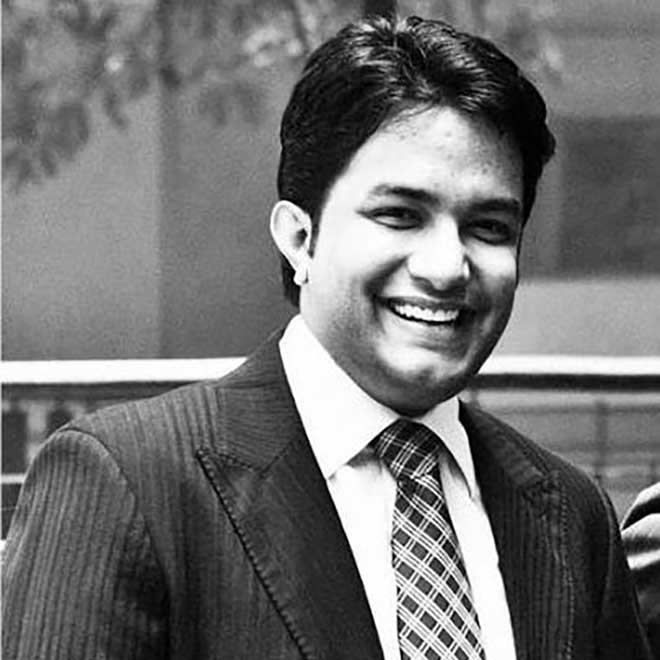
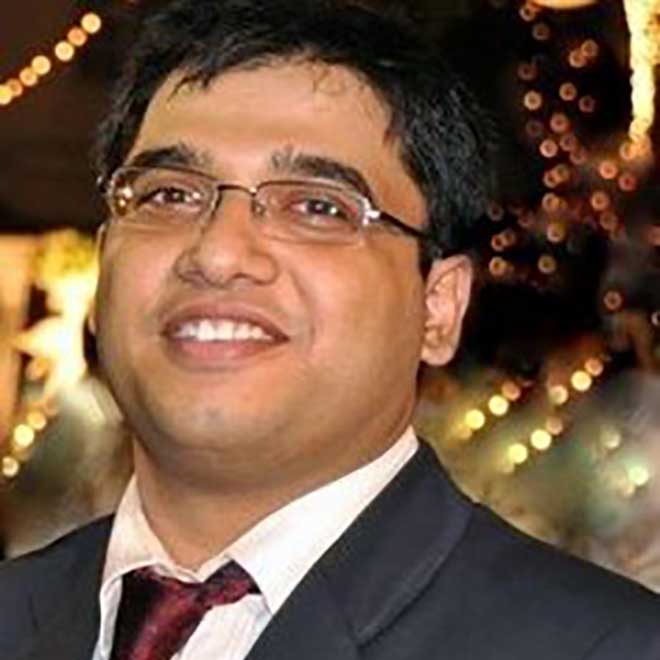
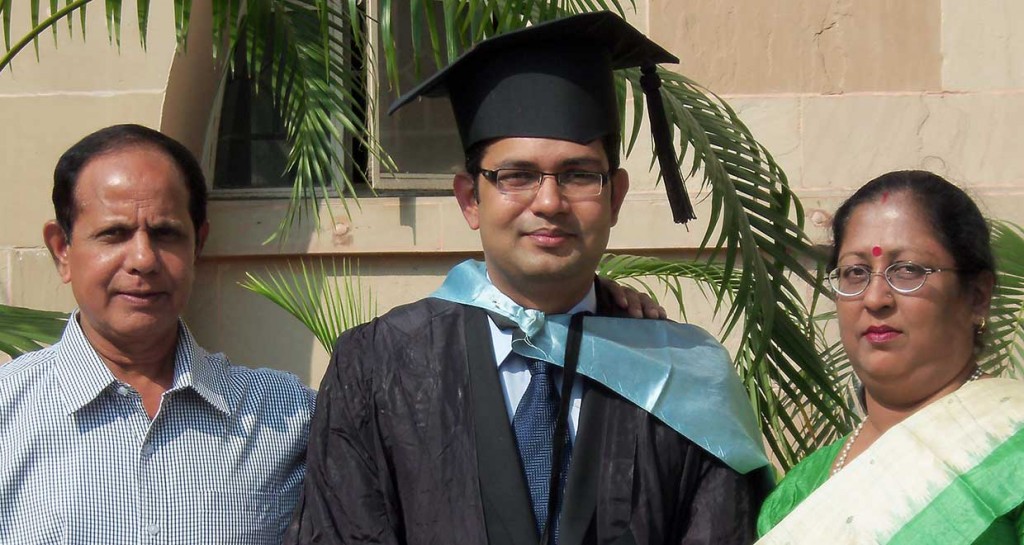
    Pranjal is a fourth-year B.A/LLB student of West Bengal National University of Juridical Sciences (NUJS), Kolkata. He is the CEO and co-founder ODRways, one of the top twelve mediation centers recognised by Ministry of Law and Justice, Government of India. He is also the youngest recipient of  Weinstein JAMS International Fellowship, recognising his efforts in the field of Alternate Dispute Resolution (ADR). He is also a trained cyber law expert and a certified mediator from Ministry of Corporate Affairs, India. Chief Coordinator of Indian Mediation Week, a pan-India mediation awareness campaign, he strongly believes that the Indian Justice System should move away from the contentious procedure of litigation, and towards more collaborative mechanism of mediation.

    In this interview he shares with us:

    • Balancing his startup with law school
    • Being youngest recipient of the JAMS international fellowship
    • His startup ODRways
    • Mediation as a means for dispute resolution


    HOW WOULD YOU LIKE TO INTRODUCE YOURSELF TO OUR READERS?

    A fourth year student from NUJS, Kolkata, with a vision to make mediation the primary method of dispute resolution in India and a startup called ODRways to support it.

    I have been often criticised by my friends for bringing mediation in most of my conversations. Another extremely key aspect of my life, which bores my friends, is spirituality. Although blessed with poor socialising skills, I strongly believe that the secret to a happy life lies in happy relationships.


    WHAT ROLE HAS THE COLLEGE PLAYED IN SHAPING YOUR CAREER?

    An extremely crucial role!

    NUJS exposed me to a wide variety of perspectives. When I entered college in my first year, I was told about high paying packages of corporate law firms but I was also told about the prevalence of a strong entrepreneurship culture. I was told about seniors like Tanuj Kalia, Ramanuj Mukherjee, Jay Sayta, Om Agarwal etc who took the road less taken, pursued their interest and made it big.

    In fact, in my second year when I came up with the idea of ODRways, it was Om Agarwal, presently the founder of EazyCoach, who encouraged me to attend a startup event at IIM Kolkata, where I eventually met my co-founder, Vikram Kumar, and started my startup journey. I also had the good fortune to find mentors like Professor Vaneeta Patnaik and Hon’ble Justice Protik Prokash Banerjee who have been a constant support system on every step of this journey. Another advantage about NUJS is the freedom it provides. The academics are not extremely heavy and one gets the time to discover and pursue new interests and hobbies.

    Lastly and most importantly, the brand of NUJS itself has been extremely helpful. We have got to meet and network with so many influential people just by the virtue of being students of this college. This college has definitely provided me the perfect combination of freedom and resources to pursue my interests.


    YOU ARE THE CEO AND CO- FOUNDER OF ODRWAYS. HOW DO YOU BALANCE A START UP WITH A LAW SCHOOL LIFE?

    To be honest, I don’t do a great job of balancing it. To clarify, balancing academics is still doable. The real challenge is to maintain attendance. God, the fear of debarment has been a constant part of my college life. So many times, I have missed classes because of mediations being scheduled in the morning or meetings with the parties. However, I have managed to meet the minimum attendance requirement, primarily because of the supportive teachers and roommates who ensure that I reach the classroom.

    My time management skills aren’t that great too. But the technique which has been really helpful for me has been energy management. One of the biggest misconceptions about productivity is that it’s all about time management. The difference has to do with our energy and enthusiasm rather than the amount of time we have. A high state of energy while working not only improves the quality of work but also gets more done in lesser time. Some of the practices which I have imbibed in my daily routine to manage my energy well has been meditation and exercise. It helps in maintaining calm, bumping up the productivity significantly and increasing satisfaction in the work.

    And lastly, one needs to have a clear ‘why’ about pursuing something. I needed clarity in my head about why I am prioritising my start-up and not focusing on academics or co-curricular such as moot courts or debates. I have never interned since my second year but I have always had the clarity about what I want to do.

    I absolutely love the process of mediation. I strongly believe that if the power of mediation is combined with the magic of technology, it can do wonders for the state of access to justice in India. Presently, ODRways has 80 mediators in 22 cities across India. We have dealt with more than 700 disputes in the last year, ranging from small consumer disputes to 400 crore worth mining matters. The Union Ministry of Law and Justice has also recognised us in the list of top twelve ADR centers across India to help cut governmental litigation. The journey has been challenging till now but it has definitely been a worthwhile cause to work for.

    With that clarity in mind and persistence, it is not difficult to figure out a way to balance these two things and make it work.


    YOU ARE THE YOUNGEST RECIPIENT OF THE JAMS INTERNATIONAL FELLOWSHIP IN THE WORLD. WHAT IS THE APPLICATION PROCESS FOR THE SAME?

    The JAMS fellowship is an extremely interesting opportunity for people specialising in the field of Alternative Dispute Resolution. It is annually awarded to ten to fifteen experts in the field of ADR from around the world. Inaugurated in 2008, the purpose of the fellowship is to provide opportunities for qualified individuals from outside the United States to study dispute resolution processes and practices in the U.S. to assist them in their efforts to advance the resolution of disputes in their home countries. The JAMS Foundation approves Fellowships of up to $20,000 in support of projects outlined by fellowship applicants. The Program is intended for individuals who have demonstrated experience with and commitment to the field of Alternative Dispute Resolution (ADR) and who seek to increase the availability of dispute resolution education, training and services in their own countries and beyond.

    Till now, India has produce four JAMS fellows which includes former Justice M.L Mehta, Delhi High Court, former Justice Kannan, Punjab and Haryana High Court Chitra Narayan, former Partner of Jyoti Sagar Associates (JSA), Laila Ollapally, Founder of Center of Advanced Mediation Practice (CAMP), Bangalore.

    The application process is extremely comprehensive with deadline of proposal submission being in mid-September. One needs to submit a proposal explaining their experience in the field of ADR and what they intend to do with the fellowship money. Basis that proposal, candidates are shortlisted for the interview, which takes place in March. In my proposal, I primarily focused on the work my tech-mediation startup has done and how if I need to make it better, it is imperative that I strengthen my mediation skill-set as well as my business management skills. Therefore, I proposed that as a part of the fellowship, I intend on attending mediation training courses at Harvard Law School and shadow mediation at JAMS Mediation Center, and also do executive courses in Business Management at Stanford Graduate Business School and attend Business Development Program at Silicon Valley. On the basis of my proposal and dispute resolution experience, they shortlisted me for the interview stage. It was an early morning Skype interview with a panel of five members from JAMS. It was a half an hour interview where the discussion was strictly restricted to my proposal.

    The results were released in a week and with some good luck in hand, my proposal got approved and I became the youngest recipient of this Fellowship. The entrepreneurship programme at the Silicon Valley and the dispute resolution experience of JAMS will provide me with a holistic skills-set and benefit me in improving the services of my mediation center in India. I am looking forward to making the most of this opportunity.

     

    WHAT IS YOUR TAKE ON MEDIATION IN CRIMINAL CASES?

    This is one of the most controversial debates in the mediation circle and I can take a book to answer this question. But, in my opinion, mediation is possible in criminal cases to a certain extent.

    Firstly, section 320 of CrPC allows cases, which are considered less serious criminal offences, to be compoundable in nature. This means they can be settled outside the court with the help of a mediator provided there is consent from both the offender and the victim. Some examples being adultery, causing hurt, defamation, criminal trespass, dishonor of cheques etc.

    For serious cases, it depends heavily on the nature of circumstances. I do not subscribe to the hard line stance that there should be no scope of mediation in serious crimes and the whole matter should be entirely handled by state criminal processes. The process of mediation is often used in criminal cases abroad. According to the Centre for Justice & Reconciliation in the US, there are around 400 Victim-Offender (VO) mediation programmes running in the US and Europe for criminal cases.

    In a VO mediation, it is a pre-requisite for a mediator to ensure that both parties are psychologically capable of making the mediation a constructive experience, that the victim will not be further harmed by the meeting with the offender, and that both understand that participation is voluntary. The parties then meet to identify the injustice, rectify the harm (to make things right or restore equity), and to establish payment/monitoring schedules. Both parties present their version of the events leading up to and the circumstances surrounding the crime. The victim has a chance to speak about the personal dimensions of victimization and loss, while the offender has a chance to express remorse and to explain circumstances surrounding his/her behavior. Then the parties agree on the particular nature and extent of the harm caused by the crime in order to identify the acts necessary to repair the injury to the victim. The terms of the agreed reparation (e.g., restitution, in-kind services, etc.) are reduced to writing, along with payment and monitoring schedules.

    Studies have concluded that these mediation programmes in criminal disputes have high client satisfaction rates, victim participation rates, restitution completion rates, and have resulted in reduced fear among victims and reduced criminal behaviour by offenders.

    Considering the heavy social stratification and unequal bargaining power present in our society, it is needless to say that implementing a V-O mediation programme will be extremely challenging in India. But taking lessons from other countries, it is still possible to implement an effective Victim-Offender (VO) mediation programmes for criminal disputes in India.


    PLEASE TELL US ABOUT THE MEDIATION COURSE UNDER THE MINISTRY OF CORPORATE AFFAIRS. WOULD YOU RECOMMEND THE COURSE TO OTHER LAW STUDENTS AIMING A CAREER IN ADR?

    In 2016, I completed the commercial mediation training programme at Bangalore from Indian Institute of Corporate Affairs (IICA) under Ministry of Corporate Affairs, Government of India. The 40-hour training course gives a comprehensive insight and understanding of the mediation practice in India. It has an added benefit of being one of the first government certified mediation training courses in India which can be a brownie point for one’s resume. The faculty includes some leading mediators from India such as Anuroop Omkar, Kritika Krishna Murthy, Dr. Vijay Kumar Singh and usually has some professionals from abroad too.

    The 40-hour training courses are not the end all of learning the skills of mediation. In fact, it is impossible to learn the art of mediation from a five day training programme. These mediation training programmes provides you an exposure and insight to this new field of dispute resolution. It doesn’t make you an expert. Some of the very senior mediators in India have done around 30 mediation training programmes and they still keep attending more. The art of reframing, using metaphors and analogies, active listening etc is something which comes mainly only from practicing and observing mediations. Needless to say, these courses are expensive ranging from 30k-50k.

    So, rather than jumping for a professional mediation training course directly, I would recommend to find out more about this field of dispute resolution. There are some excellent resources available on the internet such as MediatorsAcademy, Mediate.com, Harvard PON Blog etc to find out whether you are interested in this field or not. Afterwards, it makes sense to go for a professional mediator certification.


    DO YOU THINK THAT MEDIATION AS A MEANS OF DISPUTE RESOLUTION CAN BE SUCCESSFUL IN INDIA CONSIDERING MOST CASES START WITH MEDIATION FOLLOWED BY ARBITRATION AND FINALLY END UP IN COURTS?

    Unfortunately, most cases don’t start with mediation in India. In fact, 54 percent of the population in India is not even aware of the existence of mediation services. They often confuse it with medita’t’ion or think it is the same as arbitration.

    Mediation, unlike arbitration or the system of courts, has the highest party autonomy. Parties decide what they want. The mediator is not like a judge or an arbitrator. He cannot pass an award or a judgment. His job is to ensure both parties have an effective dialogue, they move away from their adversarial positions and underlying interests are figured out. Mediation as a dispute resolution gives parties the maximum control over the procedure and the outcome. Even after 20 mediation sessions, if the parties are not happy with the way the conversation is going, they can withdraw from the process. The nature of mediation is that it is completely voluntary in nature. When parties settle in mediation, they settle for life. There is no winner or loser in mediation, it is a collaborative process where you find a common ground, which is suitable for both parties. There is no loser in this process who will challenge or appeal in a higher forum, unlike arbitration or litigation. It is one of the most beautiful methods of dispute resolution, which ensures highest party satisfaction.

    Unfortunately, we do not have a strong culture of private mediation in India. People don’t approach mediation centers on their own when they have a dispute. Their lawyers don’t recommend it either. The misconception that mediation is not a very ‘legal’ way of resolving a dispute or it is not suitable for complicated matters affects the usage of mediation in the public. We need to understand that mediation is worldwide recognised as a better method of resolving civil disputes. 95 percent of the top 1000 U.S fortune companies prefer mediation to arbitration/litigation. From Reliance Dhirubhai Ambani-Mukesh Ambani dispute to Amarchand – Mangaldas split-off to the recent Raymond family dispute, they have been resolved through the process of mediation. In order to tackle these misconceptions and mindset issues, we recently organised a pan-India mediation awareness campaign in fifteen cities across the country. It was called the Indian Mediation Week and was supported by Government of India and Supreme Court Mediation and Conciliation Project Committee (MCPC). In two months, 126 mediation awareness drives were conducted with more than 250 student volunteers working in ten cities across India and sensitising over ten thousand people by encouraging them to adopt mediation as a method of dispute resolution.

    Mediation needs to be a first response to a dispute. When you are caught in a conflict, you need a professional neutral that can facilitate communication. You need to call a mediator first. You need immediate ego-destabilisation. The adversarial processes of courts or arbitration can make the relationship worse and turn it into ego battle, where you don’t really win even if you win the case.

    Also, mediation has recently garnered some ground and shown its success as an effective method of dispute resolution in India, with Bangalore and Delhi leading the movement. Bangalore mediation center (BMC) is known to have a resolution rate of 65 percent with one case taking an average of 126 minutes. Mediation centers in Delhi such as Samadhan, Delhi Dispute Resolution Society (DDRS) etc. have shown a settlement rate of 75 percent. The Government of India, in furtherance of the PM Modi’s agenda of improving the ease of doing business rank, is taking active steps to promote mediation. In August 2017, the Union Ministry of Law and Justice released a list of twelve ADR centers across India, which will help government departments in resolving disputes since government is the biggest litigant in India. ODRways is also getting the honor of being recognized in this list by the Government. They have also passed an ordinance on 3rd May, 2018, making pre-litigation mediation mandatory for certain commercial disputes. These developments can give a huge boost to the mediation culture of India.


    YOU ARE ALSO A PRACTICING MEDIATOR WITH AN ONLINE MEDIATION PLATFORM. WHAT IS THE SKILL SET REQUIRED TO SUCCESSFULLY MEDIATE A DISPUTE?

    From all the mediations I have coordinated through my platform, I realised that there are many skills, which a good mediator needs ranging from active listening, empathy, subject matter expertise etc. But in order to be a successful mediator in India specifically, I would like to emphasise on two important skills:

    • The Art of Reframing: Reframing means changing the frame of the mind of the party. Parties to a dispute come to us in a lot of stress. They are suffering emotionally, physically and financially. It is the burden of the mediator to bring a change in mindset of the litigant. To make the parties focus more on solutions than the problem. To make the parties value their relationships. To make the parties look at the dispute as a journey or an opportunity to grow rather than a war to win. Reframing is the essence of mediation. In order to reframe well, one needs to develop a strong command over the language, using metaphors and analogies effectively, storytelling etc.
    • The art of marketing yourself: Aled Davis, Founder of MediatorsAcademy, hits the chord, when he says that mediators are not terribly good at marketing themselves because they are generally a humble bunch of professionals who like to remain in the shadows and not make a fuss or song and dance. Marketing is the core of any business, without it the chances of you succeeding are next to nothing. We need to acknowledge the importance of marketing and learn from some of techniques as suggested by him. One that really stuck with me was that while advocating for mediation, we often focus on confidentiality, impartiality, flexibility of the process etc. Parties don’t care about these attribute or that it’s an informal process or that you’ve been mediating for ten years or that you have done N mediation training programme. They want to know that the issue can be concluded in 24hrs rather than six or twelve months of litigation. They want to know that they can protect their public reputation. They want to have certainty over the cost of reaching resolution. In order to convert the enquiries into cases, focus your marketing messages around your client’s biggest needs, fears or pains.


    WHAT MESSAGE WOULD YOU LIKE TO SHARE WITH OUR READERS?

    No one knows if it’s going to work out for you.

    You don’t know what the outcome is going to be of all your effort. Therefore, it’s extremely important to enjoy what you are doing as you are going along. Rejection is okay if you are still enjoying everything BEFORE the final “no”.

    Enjoy the journey, and stop worrying so much about the destination.


  • Prasanth V.G., Partner, J. Sagar Associates, on his time in NUJS, and his litigation experience

    Prasanth V.G., Partner, J. Sagar Associates, on his time in NUJS, and his litigation experience

    Prasanth V.G. graduated from WBNUJS, Kolkata in 2005 and thereafter joined Delhi office of Paras Kuhad and Associates. He is currently a Partner at J. Sagar Associates, Bangalore. He primarily specialises in dispute resolution and has an experience for twelve years. He has been handling matters relating to Company Contracts, Specific Relief, Intellectual Property, Banking, Infrastructure, Energy, Consumer Protection, Infrastructure and Arbitration. He has a vast experience in the drafting of pleadings, applications and evidence briefing for several counsels in numerous matters, and has also done many arguments including both final and interim arguments at various fora.  

    . In this interview he talks to us about:

    • His law school life at WBNJUS, Kolkata 
    • His experience of a litigation lawyer at a firm
    • The essentials of a good commercial litigation lawyer

    Given that most of our readers are law students and young lawyers, how will you introduce yourself to them? 

    I will not shamelessly claim that I am a “Super Lawyer”, but I am certainly one who constantly dreams of being a “Super Lawyer” whom society looks up to. I am a Partner at the Bangalore office of J. Sagar Associates and my area of work is dispute resolution.  I graduated from the first batch of NUJS, Kolkata in 2005 and started my career at the Delhi office of Paras Kuhad and Associates in 2005. In 2010 I shifted to Bangalore and worked for a short period of ten months at KLaw. In April 2011 I joined JSA Bangalore and I have been here since then. My father’s father and my mother’s great grandfather were lawyers, but both of them had passed away much before I was born and therefore I cannot say that I am from a family of lawyers.


    How was your experience at NUJS?

    To be frank, I had never before come across in my life an ambiance as fiercely competitive as was present at NUJS. The first batch of NUJS was a unique pack of some of the most gifted brains and talents. The levels of competition we had were naturally very intense. The fact that we were guided by a personality as towering as Dr. Madhava Menon, who had the unique ability to inspire his students to always dream high and strive, was the most remarkable feature of our NUJS life. He would constantly motivate all of us to very deeply believe that anything less than excellence is self-derogatory. I feel truly blessed to have studied law as a part of the first batch of NUJS, which had tremendous levels of ambition and zeal and was constantly very high on energy and drive.

    However, one tough question that my senior partner recently asked me was whether in the last twelve years anyone from our batch has really become a legend for his or her age. I found it very difficult to answer. Everyone is working at decent designations to keep their pride happy and earning decently to keep their families happy, but whether that is all the NUJS dream was, is a soul-searching question. Hopefully, I will have a clearer and happier answer after the next twelve to fifteen years. One may take until the age of 35 to settle down, but if he does not have the big break between 35 years and 50 years, one may rather reconcile that it was all for the making of just another office-goer. The hair has already started the tendency of greying here and there.


    What were your areas of interest in law school?

    Amongst the various academic subjects, I had maximum interest in Constitutional and administrative laws. I also deeply enjoyed the laws of contract, specific relief, property, statutory interpretation, etc. Preparations for and participation in both internal and external moot courts was considered to be a very important exercise by our whole batch. I also had my share of regular mooting experiences in those five years, including representing India at the Stetson moot court at Florida. Exploring and re-exploring the city of Calcutta on every Wednesday, which used to be the weekly holiday, was one of the most joyous part of our life. NUJS life was the first phase in my life which introduced me to a truly national ambiance. It was a remarkable experience getting to know and making friends with the peer coming from various different cultures and sensibilities across the country. All these were matters of great excitement at the impressionable age.


    Can you recall a few interesting instances in your litigation career?

    I will first answer the question on preparation. More important than how I routinely prepare, is how I think one ought to prepare. I am therefore making a general analysis and not any self-proclamation. One message I learnt from the great masters I had the occasion to meet or work with, is that every court appearance, however small or big, must be treated as a break by a litigation lawyer. It always helps to prepare for a matter beyond your brief for any given day’s appearance. Trying to put a lot more effort into every matter than what may be immediately required to attend to it, will over a period of time, make you very resourceful.

    While in my initial days at PKA Delhi, I was given a lot of exposure in DRT and DRAT matters. One set of matters that Mr. Kuhad made me in charge of was a series of cases filed by various banks and financial institutions against a pharmaceutical company, which was our client. I still remember the strenuous manner in which I went about labouring to put together the written statements and various interim applications on behalf of the company, trying to bring out some defence or the other in each matter, which otherwise appeared to be very open and shut against our client. It was a lot of learning on the job which gave the conviction that no matter can be given up as defenseless, if you are willing to go into the depths of documents and do some creative work at linking or de-linking ideas and points.

    Another Delhi matter which stands out in memory is an international arbitration which went on for about five years, in which we were representing an American company. What makes it memorable is the long days and nights spent reading through, deciphering and connecting thousands of pages of disorderly papers which used to come in heavy cartons from Dallas. There were several note books full of hand-written notes which I made while trying to organize the defences in the matter, trying to frame questions for cross examination, etc. We eventually lost the matter, but it was a rewarding experience for one’s faculties to go through the grill it demanded at a very early stage of career.

    Another interesting memory is that of a partition suit before the Delhi High Court. We were representing the Plaintiffs. We briefed Mr. Arun Jaitley for the first hearing and he got us an ex-parte order of appointment of a local commissioner to inspect and make an inventory of extremely valuable family heirloom items including gold, silver, diamonds, ruby, paintings, carpets etc., which according to our side, had been hidden by the Defendants inside the family house in Kolkata. I flew along with the local commissioner to Kolkata with the order and we went to the concerned premises the next morning along with the local police. The events which took place at the premises were nothing less than dramatic. After a lot of initial resistance and thereafter reluctant cooperation, the Defendants insisted that there was no express order to forcefully open the locked safes and almirahs. So I flew back to Delhi that evening while the local commissioner stayed over in Kolkata. The next morning we again mentioned and brought up the matter before the Delhi High Court and got a specific order to open all the safes and almirahs. With that order, I again flew back to Kolkata that night and we again went to the premises the next morning to get it enforced. While I do not want to go into the details, since both parties thereafter amicably settled the matter, it was a unique on-the-floor experience which stands out in memory even now.

    A more recent interesting episode was arguing on behalf of a sugar manufacturing company against local sugarcane farmers of a village before the Deputy Commissioner, Bellary. The farmers were refusing to provide sugarcane to the factory due to the alleged arrears in the payments of the previous sugar seasons. I had to argue that under the law all the farmers falling within the reserved area necessarily had to supply the cane to my client, irrespective of any past dues, for which they had already invoked the recovery mechanism. The farmers were led by the local MLA and were also represented by their lawyer. Our side had already made a statement against the intentions of the local MLA before the Karnataka High Court in a related matter and that had got reported in the newspapers before my visit to the village to argue the matter. When I reached there with the company representatives, I was amazed to see that a huge community hall was reserved for the hearing and about 300 farmers had gathered and the atmosphere was volatile. The local MLA met us as we were entering the building and started shouting at the company representatives. There were only a few policemen and they could not have handled the situation if the mass had taken the law into hands. The arguments were like making public speeches since that had to be made from the stage before the full crowd using the microphones. I was reminded of my school and college debating and mooting days. When I started arguing in English, the crowd started shouting that I should argue only in Kannada. The Deputy Commissioner who was a very dynamic young IAS officer suddenly took complete charge of the situation and demanded that the crowd shall not protest since I was not very fluent in Kannada. There were detailed arguments and counter-arguments between me and the farmers’ lawyer and the crowd patiently heard everything. The MLA also respected the fact that legal arguments under the Sugarcane Control Order and Essential Commodities Act were going on and remained silent watching the whole proceedings from the front row. Once the hearing was over, the crowd started getting agitated again, demanding that the order should be pronounced immediately. Many people came forward and started to stage a gherao, when the policemen came forward to make way for the Deputy Commissioner. In the process, we also made our way out and left for the hotel.

    There are many other interesting episodes I can narrate, but I am stopping here as this answer has already become very lengthy.


    How did you face the work pressure?

    In a way, everything in the profession of law, and not merely being in law firms, can be demanding. But I will always say with the fullest pride and conviction that JSA is a bliss.

    There are two very helpful ways to handle pressures in this profession:

    Firstly, you should try to know in detail each matter you handle. Unwilling or unenthusiastic participation without trying to be on the top of everything in a matter can make the situation very painful. Please also understand that you cannot mentally dislike or fight anything and then conquer it. You can conquer something only by most genuinely loving it. Comfort and ease are directly proportionate to your familiarity with the matter at hand. Your familiarity with the matter is directly proportionate to the time, attention and nurturing you give to it. Therefore much of it has got to do with the mind-set. If your mind genuinely aspires for heavier responsibilities, it will work wonders. If you decided to join law and you have progressed to a stage where there is no going back to engineering or medicine or anything else, then you might as well love your work on the subject than keep focusing on the exhaustion it causes.

    Secondly, avoid as much as possible, the intake of people-related negativity. It only takes away time and energy unnecessarily. Stop judging others. Stop telling yourself how imperfect or unjust others are. Stop also fearing that someone else will take away what you think is due to you. Do not let your mind dwarf you. Do not be a constant complaint-box indulging in shadow-boxing. The world has been, is and will remain unfair in varying degrees. There is no perfect world that has ever existed. While we all should work towards an ideal world, we should also remain realistic. After all, when you decided to join law, did you not know that you will interact with all sorts of people in life? Do you think a Jethmalani or a Nariman or a Venugopal or a Salve was made because they dealt all along with only the nicest of human beings? I am certain they would have dealt immensely with rogues, scoundrels and crooks in their fabulous journey as lawyers. So remain a good human being to everyone, without losing energy over the fact that an ideal world does not necessarily exist around us. A change in the mind-set can instantly take away your pains and bring a smile.


    A litigation lawyer in a corporate law firm is in the minority. What are your experiences holding this unique position?

    That is a very interesting question. I have to tell you three things in response:

    Firstly, in the litigation circles in general, you will find a lot of people who are cynical about non-litigation work and are unable to appreciate or respect the practice of corporate or transactional laws as real lawyering. I feel sad for those who sustain the said mentality. Let me tell you in no uncertain terms that law is not all about disputes. Law as a profession was derived from the requirements and needs of the society. If today’s society or economy mandates that a lawyer has a distinct space in a bank or an insurance company, who are we to deny it and claim that a lawyer is only for the court rooms? Therefore do not live in a self-created illusory world of bald denials.

    Secondly, we also need to burst this false and unfounded myth that most of our premier law schools are not serving the society since they are primarily catering to the needs of the corporate world. How many law graduates are created every year in this country and what percentage of them can all the corporate law firms and companies together recruit? Will Amarchand, JSA, AZB, Trilegal and all the other top law firms together be able to recruit even 1000 fresh lawyers in a year? If I am not mistaken we are creating not less than 50,000 new lawyers every year. If you wish to write off the largest majority of new lawyers who add to the already over-crowded court rooms and wish to find fault with the micro-minority who get corporate placements, the problem is really your inability to see the plain and simple reality. Further, I am also willing to concede that my friends on the corporate side helping the business of a company to be set up or helping a company with its project finance is doing as much, if not more, service to the society as is done by me or others in the court rooms.

    Thirdly, to specifically answer your question, I believe there is a very unique space for a litigation lawyer in a firm which primarily handles non-litigation works. A litigation lawyer is essentially a story-teller. He always has a narration to make. His clients come with narratives. His files are full of narrations. He reads his case laws to extract a dictum emerging out of divergent contentions placed in the background of a factual narration.  He reads his statutes looking for “the scheme of the law” and in the said process goes back into the social context or philosophy of law also goes forward into the social consequence of the written words of law. He is constantly preparing to articulate a narration in writing in his court pleadings. He is constantly selling stories to the judges. There is therefore an inner voice that starts communicating with you as a litigation lawyer, which I think can be synergised well even with non-litigation work. I truly believe that this mental process can tremendously help you creatively contribute to the work your colleagues are doing even in the non-litigation spheres. You can, not only deal with a contract when it runs into a dispute but can also assist your colleagues with appreciating a contract in a certain narrative form, concept and structure from its formative stages itself. You can assist your friends with providing legal opinions from various interpretative possibilities. According to me, a new work culture has to emerge which appreciates that a litigation and a non-litigation lawyer have a lot to work to do in tandem at every stage of a deal. Instead of seeing practise areas in isolation, synergies should be developed and maintained at stages when a contract is being drawn up, when a certain structure is being designed and when clauses are added in developing the said structure.


    What are the most important characteristic one needs to develop to succeed in the field of law? 

    Everything which works for one person, need not necessarily work for another. One needs to find his or her own answers and approaches through a constant process of enquiries, observations and self-analysis. There can however be a few very general guidelines, which possibly work commonly for the vast majority. In that general sense, I can always say a few things like one must constantly work on his language skills, on his physical and mental energy levels to sit for long hours of work, on his ability to carry the people around you together, on his approachability and availability to those who you service etc.

    But what according to me should form the most important characteristic or hallmark is the ability to proportionately mix the right amount of humility with the right amount of confidence, without either of it coming at the expense of the other.

    Humility is a must, or else you will never be a constant learner. You may be a first rank holder in 10th or 12th, but do not come to law with the same approach with which you thought of academics earlier. There would have been a certain amount of comprehensiveness or finality to anything you dealt with in your school before joining law. That is just not the case with law. Do not think that law is all about the syllabus you have in each subject in your class. For example, you may have just one semester to complete the Evidence Act, but let us bow down to the fact that it takes a life time to know the Evidence Act well. You may have just two semesters to deal with the whole of Company law, but it is again a lifetime affair to know it well. So, the legal education in law schools is only an introduction to the larger world. All along the law school as well as while in the profession, there is a constant requirement to bow down before the enormity of the subject and also the eminence of the great masters around.

    However, this humility shall not come at the expense of your confidence. The study and practise of law is also about the ability to take one’s own positions. I can tell you about my batch from NUJS. Throughout NUJS our batch debated human rights, child rights, farmers’ rights, tribal rights, women’s rights, prisoner’s rights and the like. However, our batch turned out to be one of largest contributors to corporate law practise. How does something like this happen? This happens because essentially you are developing a talent. You are developing the confidence of a person to go into details of any subject and take one’s own stand. Many times, Dr. Menon would engage the class in discussions based on some newspaper article instead of statutory provisions, and would yet create a confident lawyer out of you at the end of the session. Therefore please remember that while you respectfully carry the much-needed facet of humility, you must also confidently be able to believe that even if the best counsel in the country appears against you in a matter, you will do a good job and will not run away. If he can do it, so can you. Can’t you? Think about it.

  • Krishnayan Sen, Partner, VERUS Advocates, on starting his own firm, and his experience in arbitration

    Krishnayan Sen, Partner, VERUS Advocates, on starting his own firm, and his experience in arbitration

    Krishnayan graduated from National University of Juridical Sciences, Kolkata in 2006. After graduating from the second batch of NUJS, Calcutta, he joined the chambers of Mr. V.R. Reddy, Senior Advocate and former Addl. Solicitor General of India at the Supreme Court of India. Thereafter, after the sudden and untimely demise of his father, he held the reigns of his father’s legal practice – Udayan Sen & Co., when he was 24 years of age. After a couple of years in Calcutta, and about eighteen months in a mid-sized firm at Mumbai, he started Verus in early 2011, along with a few spirited friends.

    From humble beginnings in 2011, Verus has grown to a mid-sized firm with five partners advising on both transactions and disputes. Verus was recognized as the Best New Law Firm by IBLJ in 2012, won the Deal of the Year (Disputes) in IBLJ Awards 2015; and has been recommended by IFLR in its Indian Firm Rankings for its banking & capital markets practices. Krish is also the recipient of the NaniPalkhivala Medal (2004) and G. Venkatasubramaniam Gold Medal (2005).

    His principal areas of practice include international arbitration, corporate-commercial disputes, litigation advisory and banking litigation. Krish is qualified as an Advocate-on-Record at the Supreme Court of India and has been the Standing/Nominated Counsels for statutory and government undertakings.

    In this interview we speak to him about:

    • His experience in arbitration
    • Starting his own firm
    • His plans for the future

    What prompted you to think of law as your career?

    I actually aspired to be a footballer; I was a decent forward at school-level tournaments. However, I quickly realized that my ambition far exceeded my talent to seriously consider it as a career option. So I went along with what most Bengali middle class families considered safe, and chose science in my senior secondary (Class XI-XII). I was an average student and didn’t have a particular interest or aptitude for Science subjects. In fact, in hindsight, I should have taken Arts. Around that time, my parents who were both lawyers, mentioned that I could consider law as a career option. But what really got me interested in law was when I started going through the law entrance exam books which my father would get from Delhi – I remember there used to be one from Universal’s. The section on logic and analytical reasoning appealed to me – may be because it didn’t involve much preparation, and seemed more of common sense. So I sat for the different law entrance exams and got through NUJS. Looking back, I think one great thing about my dad was that he never imposed himself on me to take up law. Somehow I didn’t feel the pressure of joining the profession, which many with legal backgrounds ordinarily face. My parents were quite happy, maybe more relieved, that I had cracked NUJS. Deep within, I knew I was terribly lucky to have somehow got through a national law school.


    What is the importance of a good mentor in the early years of practice

    A mentor shapes your character, both as a person and practitioner, and instills certain values, ethics and principles in you which would define you. The most important thing to have happened in my professional life was to have Mr. V.R. Reddy as a senior and mentor. He was a former Addl. Solicitor General of India, Advocate General of Andhra Pradesh and Chairman of Bar Council of India under whose Chairmanship the NLSIU, Bangalore was conceptualized and instituted. Like most juniors I tried picking up some of the skills and tools of my senior by observing him closely, hoping that some of his qualities would somehow rub off on me. He was more in the old-school mould with meticulous preparation and incredible hard-work, always fair to the court and opposing counsel, never misled the court, superb articulation of the main points and keeping his arguments brief and to the point. His attitude toward fees was, “We take fees for our briefs, but not briefs for our fees.” He would keep reminding me of the 5Ps – ‘prior preparation, prevents poor performance.’ But where I felt he was different from others, were his qualities of the heart. If I had to sum up my senior’s qualities in one word, I would say it is compassion. In February 2007, when my father was on his deathbed in a hospital in Calcutta, VRR, who didn’t know my father personally, flew down to Calcutta to see him at the hospital. My father, by then already sinking, softly thanked him for his kindness, to which VRR replied, “Wouldn’t Krish have done the same for me?” VRR’s love and affection towards his juniors was, and is, almost paternal. That’s what a good mentor does. He doesn’t see his junior merely as a resource or an asset in his firm or chamber who is there only to get his work done. He genuinely wishes well for his juniors and maintains the relationship and association long after the juniors have flown out of the nest. I realized that stark difference when I joined a law firm a few years later under a senior partner who was a good lawyer, but all mind. That’s the unfortunate truth at many firms; where juniors are only treated as resources and billing machines.


    What drove you to establish your own law firm, Verus?

    There were many factors behind starting Verus, but the most important urge was to create something new and fresh. I think many of us were quite disillusioned with some of the big law firms on both external parameters (like client service, partner accessibility, billing patterns, value chain) and internal parameters (like family run management style, treatment of associates& staff, happiness at work, salary structures). We felt an alternate model was not only possible but absolutely imperative. Why couldn’t we live and work in a state of mind which was fun, enjoyable and adventurous? And so we started in early 2011 from a small one-room office at Mumbai. Six years on, while we have grown to larger premises and added both lawyers and offices, it’s still very much a work-in-progress as we continue to experiment with entrepreneurship and delivering alternative service models. Clients have been very kind in taking this journey with us. I must mention here something that I should have said at the very outset, I could have never started Verus without the support of my wife, Atreyee. She was the breadwinner in the family and stood by me like a rock in those difficult years.

    The initial challenge in running the partnership was to understand how to do business between friends. But the dust settles after a while, once you understand the different working styles of each partner and learn to give each partner his or her operational space. What is also important is to learn to appreciate each other’s role in a partnership; since partners would ordinarily possess complementary strengths. I was fortunate to have incredibly supportive founding members in Dipankar, Rishad, Charles, Gandhar and the one we lost, Jay. The founding team and a group of passionate lawyers across our four offices form the backbone of the firm. Despite your best efforts, there would be setbacks, and you will need to learn from each of those setbacks, pick up the pieces and move forward.The most important challenge, however, is to ensure that at all times, the soul of the firm remains intact. The form of the firm, as in any other organization, may undergo change, the firm will grow; the leaders in the firm would also change; so may the nature of the work too. But the members of the firm must see to it that the spirit of autonomy, innovation, excellence, togetherness, forthrightness, transparency and joy on which the firm was built, brick-by-brick, always remains alive and unscathed. In the end, it is this soul of the firm that would define who we are.


    While hiring lawyers, what kind of skills do you look for in their CV?

    Actually, people in the firm often mock me for not looking at the CV at all. But that’s not entirely correct. I do look at the CV cursorily just to get a basic background of the candidate; but then form any impression of the candidate only at the time of the interview. Studying the CV too closely could often cloud your judgment on a candidate. I ordinarily look out for candidates who show some degree of independence and autonomy. I may ask a few legal questions during the interview, but ordinarily I try to assess if the person would be a good fit for Verus and what are the drivers for the candidate to join the firm. There have been times when I have been quite impressed with the lateral thinking of a candidate or his accomplishments in earlier assignments but I thought he or she would not be a good fit. Despite being a product of a national law school, I genuinely feel that law firms give way too much importance on national law school graduates and thereby do a disservice to non-national law school graduates, most of whom just do not get a level-playing field and opportunity to really come into their own.


    The Government of India is planning to allow foreign law firms to enter into India. Do you think the Indian law firms will be confronting to fight with the tough competition foreign law firms entering into India?

    Entry of foreign law firms will be the great “wolf-wolf moment in the legal services space – every Government has given the threat but none have had the heart to execute it. Anyhow, if somehow foreign firms are permitted to eventually enter the Indian market, then my predictions are: (a) Bigger law firms will most likely decide to stay independent and compete with the foreign firms (pretty much like what we have seen in Singapore and Hong Kong), and it will be a battle for survival-of-the -fittest; (b) Mid-sized firms will have to decide whether to merge or enter a JV with the foreign firm; (c) There could be a consolidation of the big Indian law firms where two or three big firms may merge to form a domestic behemoth; (d) Smaller or boutique law firms who do not wish to merge with bigger firms will most likely carve out niche practice areas like IP, competition, tax; (e) Litigation firms would be mostly insulated from the entry of foreign law firms, except for those firms who are involved in only high-ticket litigation.  


    It is a general assumption that the fresher graduates have to struggle a lot during the initial years. What was your experience?

    I am afraid this is true. A beginner will basically need four things, which generally come in the following order: legal curiosity, hard work, legal intuition/temperament and some luck. Litigators need an additional trait, patience. A lawyer is like a skilled mechanic, he requires honing certain specific skill sets with a certain mindset. Whether you are a corporate lawyer or a litigator, both streams require learning certain fundamental skills which in legal parlance, we call learning the ropes of law. Struggle entails three things: first, learning the technical skills – researching, comprehending and analysing, strategizing, articulating, drafting, presenting, advocacy or negotiation skills etc; second, learning the soft interpersonal skills – interacting with clients, colleagues, understanding seniors, learning to work in a team, understanding and fitting into the work-place; lastly, and this is usually the tricky part, is to pick up the ethical principles which would guide the way you conduct yourself in the profession, the moral and ethical code you would like to follow. You pick this up from observing simple things like how conflicts and confidentiality are dealt with within the firm or chamber, how billing is done within the firm, whether proper risk disclosures are made to the client, whether your senior deliberately misleads the court or is unfair to the other side, and whether the firm or chamber indulges in corrupt and questionable practices.

    In terms of hard work, I used to put in about sixteen to eighteen hours a day, sometime more, in my first seven years, as did my peers. In my first five years, I had taken only two holidays, the first of which was for my honeymoon. While a lot of law is in the detail, what is important in the foundation years is, what I would call, to get a sense of the law. It’s a bit abstract to explain, but in essence you develop a sense of fairness and broadly develop a sense of what the law should be.


    What do you find admirable in present generation of lawyers compared to that of your generation?

    I think the present generation are much bolder and greater risk-takers. They tend to prefer the experience and are not solely driven by the money. My sense is that the next wave of innovation in legal services – the “Uber”moment –will come from the present and next generations.


    Where do you see yourself five years from now?

    You know I would earlier make these projections for myself – five years, ten years. My original goal, when I graduated from law school, was to become a senior counsel by my late thirties. But with time, I have realized that life passes us by while we make grand plans for our future. Therefore, best is to live at the present. Personally, in five years, I do not foresee myself involved in any leadership or management role at Verus – which would pass on to the next generations. I would prefer acting on select matters and like to explore some of my other interests like reading, travelling and writing. Verus is also preparing for a major push on the artificial intelligence and technology front which could be quite disruptive in the legal services space. It’s still too early to speak more on it, but once we are through with the pilot phase, maybe we could share more insights on that.


    What would be your parting message to our readers?

    I would like to say two things: First, do not take your life in law too seriously people get so consumed in the rat race stressing on partner promotions, senior advocate designations, office politics etc., that they forget that life is quietly passing them by. Explore other things like books, sports, travel, gardening, enjoy things that make you happy like music, teaching, painting & crafts, gardening, cooking or some voluntary work; even simpler things like spending time with your kids, friends, family and pets which would broaden your worldview. I personally find reading and travel quite enriching and therapeutic. Secondly, it is my appeal to students and especially to law schools, please see that the students get a holistic exposure on the true potential of law. Most law schools today focus in making corporate legal robots. There is very little imagination. The search for the answer to the question, “why become a lawyer?” should take students to places where they observe from close quarters, the challenges that law is seeking to address, be it on global climate change, human rights violations in Africa, refugee problems of Europe, studying the civil rights movements or the trials of war crimes. Law students need to be sensitized to these topics, not merely in class rooms, but also by giving them real first-hand field experiences to enable them to take an informed choice on what kind of lawyer they wish to become in life. Unfortunately, I find that vital education, exposure and sensitization completely missing which is a great disservice and denial to the students. First and second year law students are so stressed on whether they will get an internship in BigLaw or not. Even simple gestures like doing a case study on a movie – like To Kill a Mocking Bird, The Bang Bang Club, A Few Good Men, Before the Flood, The Verdict, The Pianist –would evoke spontaneous discussion and debate amongst young minds and some of them may choose an alternative career path in law. But most law schools have developed a tunnel vision where the entire focus is in reporting how many PROs the graduating batch has received, what starting salaries their students have secured, how many law firms or corporates have come to their campus on Day Zero. I am a product of such a law school and am now also one of those recruiters, but my appeal to law students and law schools alike is to please explore all opportunities that law, as a discipline, has to offer – which goes much beyond a commercial law firm or a Supreme Court lawyer’s chamber – and only thereafter take an informed decision as to what would be most fulfilling and satisfying for you personally and professionally.


  • Vishrut Jain, Banking and Finance Laws Specialist, on the Indian banking regime, and his experience

    Vishrut Jain, Banking and Finance Laws Specialist, on the Indian banking regime, and his experience

    Vishrut Jain graduated in 2012 from WBNUJS, Kolkata. He is a Senior Associate in the Banking & Finance team of VDB-Loi a law firm based in Myanmar, with offices in the South East Asian region. Prior to this he has worked as an in-house counsel, first as a Manager with ICICI Bank, then as a Senior Manager with Tata Capital and after that as an Assistant Vice President with Yes Bank. He is also a designated advocate of the Bombay High Court.

    In this interview we speak to him about:

    • His experience in the banking sector and the banking regime in India
    • His experience thus far in the legal field


    WHAT WOULD YOU LIKE TO SAY TO OUR READERS BY WAY OF INTRODUCTION?

     Growing up, I was always surrounded by law books as I am a fourth generation lawyer. In school, I was a voracious reader and enjoyed participating in debates and theatre. I would describe myself as having a gregarious personality and a curious outlook to life, therefore I like meeting new people and learning new things.


    WHAT MOTIVATED YOU TO TAKE UP LAW AS YOUR CHOICE OF CAREER?

    As I mentioned, law is in my blood, so to speak. Having said that, I was never forced to make it my career choice, rather I gravitated towards it organically. I was really impressed by the respect that the legal profession commanded and the fact that it was really about helping people in their time of distress. This is why it is called a noble profession.


    TELL US A BIT ABOUT YOUR TIME STUDYING LAW AT NUJS.

    I am proud to say I am an alumni of NUJS. It is a fine institution with an excellent faculty and one whose students have gone on to achieve great things in life. In college I was a member of the literary and debating society and headed the society for advancement of criminal justice and also the magazine committee. I also took active part in moot courts, MUNs and the cultural festivals. The learnings I received, both inside and outside the classroom, the life experiences I had and the friendships I made — these will stay with me for life. I do want to make a point here though. College life comes with it many challenges and everything is not always smooth sailing. It is in these difficult times that one has to carry on and hope that things will work out. And most times, they do.


    COULD YOU TELL US ABOUT THE INTERNSHIPS YOU TOOK UP, AND WHAT YOU LEARNT FROM THOSE EXPERIENCES?

    As is the norm, my first internship was with an NGO, followed by court internships (district courts in Delhi, Delhi High Court and the Supreme Court) as well as a judicial clerkship. Thereafter I interned in law firms such as AZB & Partners and Khaitan & Co. While academic learning is essential, there is no substitute for practical experience and I learnt the practical aspects of being a lawyer during these internships.


    WHAT ADVICE WOULD YOU GIVE STUDENTS IN AVOIDING A DECISION PARALYSIS WHEN MAKING A CAREER CHOICE?

    A decision paralysis is actually a blessing, since it is caused by having an abundance of choices. Ultimately, it comes down to what you enjoy doing. If you enjoy being in a court setting, and do not mind waiting a few years before raking in the big bucks, then a career in litigation may be for you. If you prefer the corporate lifestyle with the glamour of closing deals, then you may consider a law firm or an in-house role. The beauty of law school is that it opens up the doors to a variety of options – graduates have also chosen to join the civil services, judicial services, teaching profession and even politics.


    TELL US ABOUT YOUR EARLY PROFESSIONAL EXPERIENCES AT ICICI BANK LIMITED. 

    I was fortunate to get an opportunity to start my career with ICICI Bank. The legal team at ICICI is especially renowned for building a strong foundation in its fresh recruits. I gained transactional knowledge and learnt the intricacies of the banking sector during my time there.


    WHAT WAS THE TRANSITION LIKE FROM LAW STUDENT TO A LAWYER?

    Every student finds it intimidating when thinking about the shift from law student to lawyer and I was no exception. Three things helped make the transition smoother – the training I received in law school, self-discipline along with self-motivation and the guidance from my senior colleagues.


    HOW IMPORTANT IS IT TO HAVE A MENTOR?

    It is not only important, but absolutely essential to have a mentor. In fact, I would say not only one, you must have as many mentors as you possibly can. Mr. Edwin Vanderbruggen, Ms. Jean Loi, Mr. Jeffrey Martin, Mr. Nishant Choudhary, Mr. Arun Khanna, Mr. Kumar Medhavi, Mr. Raunaq Baid, Ms. Leena Chacko, Ms. Sarita Kamath, Ms. Nitu Agarwal and Mr. Sanjay Nambiar have guided me along my path.


    HOW DID YOU COME TO WORK AT TATA CAPITAL FINANCIAL SERVICES LIMITED AND WHAT WAS YOUR EXPERIENCE LIKE?

    Having worked in a bank, I wanted to gain experience working in an NBFC and this was an ideal opportunity. I worked closely with various stakeholders including other creditors, multiple borrowers, business teams and law firms, to build common ground and resolve legal and commercial issues to ensure that a deal goes through. At this time SARFAESI also became applicable to NBFCs and I helped revise the debt recovery policy of the organisation. I find the NBFC space to be an interesting sector with its own unique challenges.


    HOW WAS YOUR EXPERIENCE WORKING AT YES BANK LIMITED?

    YES Bank is the fastest growing organisation in the banking sector and the first greenfield bank to be licensed by the RBI. I was involved in a variety of transactions, including GIFT City funding and Masala Bonds. The experience I gained there is invaluable.


    WHAT IS IT LIKE TO WORK IN MYANMAR? WHY DID YOU MAKE THE SHIFT?

    It is an exciting place to be in since the country has only very recently opened up its economy. There are new projects coming in every day with foreign investors, and the legal regime is being overhauled as well. So, I am getting the opportunity to learn a lot and, at the same time, make a meaningful contribution to the progress and development of the country.


    ON WHAT PARAMETERS DO YOU CHOOSE THE PROJECTS YOU WORK ON?

    First, as expected, I work on the projects I have been assigned, which consist of a variety of transactions, including project finance, structured finance and debt recovery. Beyond this, I choose to work on projects which are somewhat new and off the beaten track. For example, in Myanmar I have worked on a World Bank project for the restructuring of state owned banks and advised the government on the drafting of housing laws. I have also made presentations on the new company law, investment law, insurance law and condominium law. I advised a foreign airline company on market entry into the aviation sector.


    COULD YOU TAKE US THROUGH A TYPICAL WORKING DAY AT YOUR OFFICE?

    Typically, a working day would see me handling multiple transactions at a time, meeting with clients and, time permitting, work on drafting a memo on a new law or a legal update.


    WHAT BOOKS HAVE YOU READ WOULD YOU SAY HAVE PLAYED AN INTEGRAL ROLE IN SHAPING YOUR LEGAL PHILOSOPHY?

    Three that immediately come to mind are Before Memory Fades by Fali Nariman,Roses in December by Justice M.C. Chagla and On Balance by Leila Seth. These autobiographies of renowned jurists have greatly influenced my thought processes.


    WHAT ARE THE KEY ATTRIBUTES THAT ONE MUST DEVELOP IN ORDER TO EXCEL IN THIS INDUSTRY?

    A person who reads a lot is bound to excel in this industry. Hard work and discipline are a must. It is important to enjoy what you do, since that keeps you motivated. And finally and most importantly, the key to success lies in one word – practice.


    HOW DO YOU MANAGE YOUR TIME BETWEEN YOUR PROFESSIONAL AND PERSONAL INTERESTS?

    Work-life balance is important to avoid getting burnt-out. I enjoy traveling, reading, biking, trekking, swimming and spending time with my pets.


    HOW DO YOU KEEP YOURSELF UPDATED ABOUT THE LATEST DEVELOPMENTS IN THE LAW?

    I feel the best way of learning is by doing. If I hear about some new developments in the law, I try to write about it. We regularly hold presentations and circulate a legal newsletter. External sources such as legal websites (Bar & Bench, Legally India) and newsletters from other organisations are also a useful source of information.


    WHAT ADVICE WOULD YOU LIKE TO GIVE OUR READERS, WHO ARE MOSTLY LAW STUDENTS AND YOUNG LAWYERS?

    To law students I would say, even if you decide not to become a lawyer, five years in law school teaches you how to think. This will hold you in good stead wherever you go. To young lawyers I would say play the long game. Law is truly a jealous mistress, but if you serve her well, she will take you places.

  • Anupam Prasad, Partner, Indus Law, on studying e-commerce management, commercial law, and his experience

    Anupam Prasad, Partner, Indus Law, on studying e-commerce management, commercial law, and his experience

    Anupam Prasad graduated in law from NUJS, Kolkata, in 2006. He is currently Partner at Indus Law. Anupam has experience in general corporate and commercial laws practice. He has significant experience in drafting transactional documents and representing clients in structuring commercial transactions and in negotiations in areas pertaining to funds, private equity investments, joint ventures and mergers & acquisitions (onshore and offshore). Anupam has assisted numerous businesses on India entry strategies, including formation of corporations and provision of all related post incorporation advisory services and documentation.

    In this interview we speak to him about:

    • His time at NUJS
    • Studying management after law
    • His diverse experience


    How would you like to introduce yourself to our readers?

    I am a Partner at Indus Law, Mumbai. My core practice areas at the Firm are mergers & acquisitions, corporate & commercial advisory, joint ventures, fund investment, private equity and venture capital Investments.


    Give us a brief overview of your life at NUJS.

    Life at NUJS was formative, both for us as the students and the university, as we were only the second batch at NUJS. The initial years were very different and exciting at the same time, as NUJS was operating off a temporary campus, while the permanent campus was under construction. Being part of the Student Juridical Association (University’s student body), we were actively involved in the formulation rules and procedures for setting up various student run committees, etc, which was imperative for setting the working of the University for the years to come. There have been varied experiences which have been good as well as not so good experiences / incidents while at college, which I guess is all part of growing up. For the sake of brevity, I shall not get into any specifics.


    Is it absolutely necessary to moot or undertake paper publications in order to be a successful advocate?

    As young adults, law school provides a number of opportunities to be associated with – be it the moot courts, paper publications, literary and debating opportunities, cultural events, sports etc. It’s a great opportunity to hone one’s skills, and also figure where one’s strong suits lies. In this context, a law student should try and involve himself / herself with as many activities as possible. The objective to have a well rounded approach and which would certainly help as a professional as well going forward.


    What internships would you recommend to a student who also aspires to cull out a career for himself/herself in corporate law?

    As a law graduate, the career opportunities are immense – litigation, in house roles, policy work etc. Post a LLM degree, the opportunities increase further. As far as internships are concerned, a student should garner experiences in all possible forums–whether it be at courts, in-house, think tanks, NGOs etc. In my view, these are enablers to help a student decide the profession that they would want to pursue post graduation.


    Do managerial courses add value to the resumé of a practicing advocate?

    (As opposed to the conventional L.L.M, Anupam pursued his post-graduation in E-Commerce Business Management.)

    In my view that’s an unfair comparison. In reference to areas of practice, I do a fair bit of work in the e-commerce sector across verticals, which would include transactions as well as advisory work. While the focus is legal advisory, to understand the commercial and operation sides of the sector, I had undertaken the course and also for self learning, which is a continuous process. As professionals, the advice that we give, should make commercial sense to the client as well, and for it we need to understand the sector as well.    


    At what stage in one’s law school life must one pick a field to specialize in?

    Unless an individual is certain while he/ she is at the college as to the field of specialization that the individual would want to get into, in my view, the initial years at work would help in determining the field that one would want to specialise in. This is because there is a huge difference in the learning while we are in college and when we actually start working.

    I would suggest (which I have done myself as well) to broaden on’s base and get work experience in various verticals that one can get exposure to. In fact, many firms today have a policy to rotate the fresh graduates among the various teams in the firm. This will also help in honing varied skill sets. In fact, as a result of this philosophy, one would be useful resource should the markets are not doing well. For instance, I did a lot of employment and litigation related work in around 2008 – 2009, when the economy was stagnant  and on the transaction front, nothing much was happening.


    How has the journey been from being an Associate at NDA to being a Partner at IndusLaw?

    I started a career with NDA and was there for four years and then moved in Khaitan & Co, where I was there for little over three years. After Khaitan & Co, for a brief period I worked independently and did manage a small practice of my own. Since I was getting work, including on matters which were not my areas of practice, such as litigation, this is when I considered getting into an organisation setup. This is when I joined RDA Legal and was taking care of the Mumbai office of the firm. Having spent about three years at RDA Legal, I moved / merged my practice with Indus Law in Mumbai. While as an Associate the responsibility is getting the work done, as Partner, and in a leadership position, the responsibilities are varied, that include getting business, execution of matters, client interface, being responsible to and for the team, etc

    In my experience thus far, I believe there are opportunities for everyone. However, these are not so easy to come by and is a function of the ability to take the risk, persevere, to never give up, work hard, be humble, respectful, believe in yourself, stop self doubting  and then magic happens!


    What would you say are the most attractive features of the work culture in Mumbai with specific reference to the legal fraternity?

    I adore the work culture in Mumbai. People from the legal fraternity are generally professional, matter of fact and have elements of EQ as well, which in my view is very important.


    What is the level importance given to a student’s Grade Point Average with respect to recruitment at Tier-I firms?

    In my view, GPA is one among the other aspects that is important for recruitments. To the best of my knowledge, while GPAs do help firms for short listing the student’s for recruitment, it is the overall resume of students, in terms initiatives and activities undertaken by a student matter immensely as well. Further, on the days of recruitment, the interviews etc make the significant difference as well, and such recruitments may not have a bearing on the GPA scores. There is significant empirical data to show the Tier 1 firms have hired from the entire spectrum of students participating in the recruitment process, especially if the recruitments nan organisation have happened in large numbers.


    How do you handle your diverse client base?

    (Anupam has clients across several jurisdictions including USA, UK, France, Italy and UAE, i.e., both civil law as well as common law jurisdictions.)

    In this era of global economy and cross border transactions, it is not uncommon to have clients across several jurisdictions. On matters involving foreign clients, on issues which are local in nature, we are advised by the client’s local counsel. Also, while dealing with clients from varied jurisdiction, I wouldn’t say the process in reference to the transaction per se is not cumbersome. Each transaction has case specific set on issues relating to structural and legal challenges, etc. The other set of challenges are more in the logistics and execution side of things, especially in circumstances where there are multiple parties in multiple time zones.


    How does one go about writing?

    While I don’t write as often as I would ideally like to do, in my view, it’s a small way of contributing to society by sharing knowledge by writing these articles. I have mostly made efforts to write on issues that are contemporary in nature, so that it is most useful to the readers.

    Therefore, I would strongly recommend readers to write on topics which are contemporary in nature. Further, this is an excellent avenue to showcase thought leadership and connect with other professionals on topics of similar interest.


    Is there any other suggestion you would like to give to our budding lawyers?

    Enjoy whatever you do, especially the college life – study work, play hard. Do not get disheartened should things don’t work out, the way you may have planned – remain focussed, be humble, meet people/ network, be helpful and competitive (but in a right way)!

  • Subhrarag Mukherjee, Regional Counsel, Hewlett Packard, on academic writing, and his diverse experience

    Subhrarag Mukherjee, Regional Counsel, Hewlett Packard, on academic writing, and his diverse experience

    Subhrarag graduated from NUJS, Kolkata, as part of their inaugural batch in 2005. He is the Region Lead Counsel for the Asia, Pacific and Japan (APJ) region for the Communications and Media Services (CMS) business vertical of Hewlett Packard. Prior to this role, he was the Country Lead Counsel for the Technology Services (TS) business vertical for India region. Prior to joining Hewlett Packard (HP), he had worked in some of the premiere law firms of the country in areas relating to general corporate advisory, labour laws, consumer matters, foreign exchange compliance, securities law compliance, media and communication laws, private equity etc.

    In this interview we speak to him about:

    • His role at HP
    • His diverse experience
    • Being an in-house counsel

    What inspired you to take up law? 

    I completed my Higher Secondary Education (Class XII) in the year 2000. Around that time the peer and parental pressure was completely aligned towards pushing students towards STEM discipline. We too went through the same peer pressure.

    However, I give full credit to my father for his foresight, as he encouraged me and my twin brother to consider law as the career choice. Around that time law was largely considered as a career choice to taken up by the non-serious and academically challenged students. This was primarily due to the quality of legal education that was being imparted in most law colleges in the country and only a handful of law colleges (especially national law schools) were providing the right ambiance and teaching methodology to encourage law students to take up law as a serious profession. My father took a lot of personal interest in understanding the new style of legal education that was being imparted in the national law schools and upon being convinced that it encourages students to develop a career in law he encouraged us to consider law as the career choice.


    Tell us a bit about your time studying law as an undergraduate student at NUJS.

    Studying law in NUJS was a very interesting experience for me. It provided me an opportunity to stay other students coming from diverse socio-economic backgrounds and pick up inter-personal and professional skills while pursuing academic interests in college.

    I was interested in moot court and was a part of the moot court team of my batch and have also represented the university at a national level moot court competition. I was also keenly interested in constitutional law and participated in various intra-colleges activities and competitions on constitutional law. I also have an interest in environment protection and was a member of the nature committee which organized various campaigns and events for promotion awareness about protection of the environment. I was also interested in writing academic papers and my articles on various legal topics have got published in numerous legal journals of national repute (like Labour Law Journal, All India Reporter etc). I was also interested in sports activities like football, cricket and badminton.


    Could you tell us about the internships you took up, and what you learnt from those experiences?

    Internship provides law students an opportunity to get a good first hand exposure of the practice of law. NUJS has a very structured internship programme. In the first year students were required to take up internship programmes in a Non-Governmental Organization (NGO). Starting from the second years were encouraged to take up internship with advocates and senior advocates in the High Court, Supreme Court and in law firms across the country. Following were the internships that I took up in NUJS:-

    1. March 2004 – Corporate Wing, Fox & Mandal, Noida
    2. April 2004 – The Chambers Of Law, New Delhi
    3. March 2003 – Mr. K.K Venugopal, Senior Advocate, Supreme Court Of India, New Delhi
    4. April 2003 – Late Mr. M.M. Banerjee, Former Advocate General, Jharkhand High Court, Ranchi
    5. March-April 2002 – Legal Aid Society, West Bengal, Kolkata
    6. March-April 2001 -Ramakrishna Mission Ashrama, Ranchi (NGO)

    My internships in the law firms Fox & Mandal and The Chambers of Law was a good opportunity for me to get a first-hand exposure of the working of a law firm and the role played by fresh law graduates and junior lawyers in the growth of law firms.

    Internship in the offices of Mr. K.K. Venugopal (Senior Advocate, Supreme Court of India) and Mr. Late Mr. M.M. Banerjee (Former Advocate General, Jharkhand High Court) was professionally enriching and a very humbling experience for me.

    Internship in Legal Aid Society West Bengal Kolkata and Ramakrishna Mission Ashrama Ranchi provided me an opportunity to understand the challenges faced by the socio-economically challenged classes of the society and the role being played by the civil society and India legal regime in their upliftment.


    What advice would you give students in avoiding a decision paralysis?

    In the initial years most law graduates go through this decision paralysis and only after having experienced a few career options through a trial and error process they finally decide on their appropriate path for career growth.

    My advice to law students is to objectively understand the challenges and opportunities of each career option and the key personality traits required to succeed for each of the career options – academics, in-house counsel, private practice, law firm counsel etc. Each career option has its own benefits and challenges and it is incorrect to state that one career choice is better than the other. One has to assess his personality traits and his professional and monetary compensation aspirations in order to decide the appropriate career option for professional growth.

    I too undertook this assessment and accordingly decided to take up in-house counsel role as the appropriate choice for career growth.


    Tell us about your early professional experiences at Sahara India and A.R.A. Law, Advocates & Solicitors. 

    Sahara India was my first job through the Campus Recruitment process of NUJS. We were the first batch of NUJS and each one of us had a certain number of interview options under the campus recruitment process. The first batch of every law school goes through the challenge of getting adequate number of companies and law firms to visit the college for campus recruitment so that a healthy number of students get a job offer through the campus recruitment process. Our situation was made more challenging by the fact that we almost had hundred (100) students in our batch looking for placement. However, the Recruitment Committee (including my NUJS batch mates who were a member of the said committee) left no stone unturned to ensure that a descent number of companies and law firms visit NUJS for campus recruitment. I sat for the limited job interview options that were available at that time. Sahara India was the first job offer that was confirmed to me and I decided to take the offer. The salary compensation that was being offered by Sahara India was one of the highest at that point of time. Sahara India provided me an opportunity to work on some interesting business projects of the company and engage in contract negotiation and drafting activities relating to these business projects.

    ARA LAW provided me an opportunity to shift base to the financial capital of the country and work in a highly professional work environment. This was the first time I was experiencing the fast-paced life of Mumbai and interacting with clients from across various industries – media houses, capital market intermediaries, banks, private equity players etc. I picked a lot of my legal analytical skills and business etiquettes from my stint at ARA LAW.


    What motivated you to quit your job at A.R.A. Law, Advocates & Solicitors and move to Trilegal?

    The main reason for me to move Trilegal was that Trilegal was offering me a very good compensation package. I was associated with Trilegal for a very short period but got important career and professional growth lessons during my time therein. Trilegal gave me an opportunity to work very closely with technology and media sector clients and get a good understanding of the legal issues and challenges of the information technology industry.


    What tips would you give students and young lawyers who are inclined to research and academic writing?

    (Subhrarag has authored papers in several fields of law including company law, labour laws, IPR, taxation, etc.)

    I chose areas of law on which the legal regime had either undergone a recent policy change or was subject to intense review by the legal and judicial fraternity. I would strongly encourage law students to consider writing academic papers on a regular basis. It provides a good opportunity to understand and critical analyse the legal regime on a particular subject of relevance and also helps strengthen the resume of the student for internship and job opportunities.


    Can you tell us about your time in HP?

    In my view the following requirements need to be met in order to develop a successful and satisfying career – (i) excitement about the work profile and the job; (ii) support, encouragement and guidance from senior members of the department; (iii) a reward structure that provides adequate compensation and career growth opportunities for the concerned individual; and (iv) a good working relationship and a sense of team spirit with other members of the team. I would encourage our young lawyers to consider these traits in deciding the appropriate organization for career growth.

    Hewlett Packard (HP) has provided me the right professional ambiance and support structure for my professional growth. I had the opportunity to work with senior members who encouraged me to lead and take ownership for my assignments. They have been very supportive and have provided guidance at various stages of my professional journey in HP.


    As the Asia Pacific & Japan Region Lead Counsel at HP, how did you work on developing a proficiency in multiple legal systems?

    This role gives me the opportunity to work with in-house counsels in the respective countries in the APJ region for review of key projects, deals and assignments and provide appropriate guidance to the team. It provides me an opportunity to understand the key legal and business challenges for each jurisdiction and provide appropriate advice to the business leadership team.This role also provides a closer insight into the latest developments in the CMS industry. I interact with the in-house counsel for the respective countries to understand and review the country specific key projects/deals/assignments and the related country specific legal challenges and decide on the appropriate response and risk mitigation strategy on the same.


    On what parameters do you choose the projects you work on? 

    The role requires me to have an oversight on key/critical/complex deals and projects in the APJ region and the key business and legal/regulatory issues being faced by the business and project teams and work with the country legal team to provide appropriate guidance to the business and project teams. I also lead certain special projects and assignments for the APJ region and certain key countries in APJ.

    Prioritization of work is an important trait that one needs to develop to perform this role in an efficient manner. One also needs to understand the extent of supervision that one needs to exert for the various projects and assignments that are being undertaken by the country legal teams on a day-to-day basis.


    What are the causes you feel strongly about?

    I have always felt that one needs to build a good team around him and motivate various team members to enjoy their work and to perform their tasks to the best of their ability and experience. In my previous role as the Country Lead Counsel for the Technology Services (TS) I took numerous steps to create a healthy work environment and encourage the team members to lead various key assignments and projects.


    Did you have a mentor or guide during the formative years of your career? 

    During my initial years of my career at HP, I had the opportunity to work under experienced and supportive seniors. They helped me understand the nuances of the business and have guided me in my professional journey at HP. They encouraged me to take key assignments and tasks and lead the same under their supervision and guidance.


    What books, judgements that you have read would you say have played an integral role in shaping your legal philosophy?

    The following books have inspired me and have helped shape my personality as a lawyer:-

    • To Kill a Mockingbird by Harper Lee
    • My Life in Court by Louis Nizer
    • The Firm by John Grisham
    • Crime and Punishment by Fyodor Dostoyevsky
    • And the Dead Shall Rise: The Murder of Mary Phagan and the Lynching of Leo Frank by Steve Oney
    • Roses in December by M C Chagla.
    • Nani Palkhivala: The Courtroom Genius by Soli J Sorabjee.
    • Before Memory Fades: An Autobiography by Fali S Nariman.

    Following judgments have been interesting and important to me as a lawyer:-

    1. KM Nanavati vs. State of Maharashtra 1961
    2. IC Golaknath vs. State of Punjab 1967
    3. Keshavananda Bharti vs. State of Kerala 1973
    4. Mohd. Ahmed Khan vs. Shah Bano Begum 1985
    5. Supreme Court Advocates-on-Record – Association and another vs. Union of India 1993
    6. Indira Sawhney vs. Union of India 1993
    7. SR Bommai vs. Union of India 1994
    8. Vishaka vs. State of Rajasthan 1997
    9. Aruna Ramachandra Shanbaug vs. Union of India 2011
    10. Lily Thomas vs. Union Of India 2013
    11. Novartis vs. Union of India 2013
    12. NALSA vs. Union of India 2014
    13. Shreya Singhal vs. Union of India 2015

    What are the key attributes that one must develop in order to succeed as an in-house lawyer?

    One of the most requirements for becoming a successful in-house lawyer is to have a good understanding of the business. It is also important to gain the respect and trust of business clients through smart, proactive and efficient handling of the matters on which business have approached legal for advice and support.

    Over the last few years, I have invested a considerable amount of time in interacting with members of various departments (like Business, Sales, Delivery, Finance, Tax, Global Revenue Recognition Organization etc.) to understand the specific legal/regulatory and business challenges and issues faced by the relevant department and identify the steps that need to be undertaken to address the said challenges and issues. I have also participated in discussions with internal and external clients for finalizing the contractual and project delivery structure and the governing terms and conditions for various types of information technology projects and this has helped me understand the unique legal and project issues for each type of business project.


    How do you manage your time between your professional and personal interests? 

    Outside law, I like playing badminton and swimming. I also enjoy listening to music.


    What are the challenges you have faced in building up your career as it stands today? 

    I see two main challenges in building my career as it stands today:-

    1. the alarming pace of technological improvements and innovations which is making the existing knowledge and understanding of business outdated/obsolete. Nimble enterprises/start-ups are coming up with new/improved business and service delivery models and are challenging the existing project delivery models of the big players in the industry; and
    2. artificial intelligence, data analytics and automation tools and software programmes taking care of legal research and legal review tasks.

    I keep a close watch on the latest developments in the legal and technology space that are affecting the information technology industry and keep updating my legal and business understanding accordingly.

    I think we should welcome the use of artificial intelligence, data analytics and automation tools and software in the legal industry. Data analytical tools and software will provide us objective data and information that we can use to identify opportunities for driving efficiencies in our legal support model.

    Artificial intelligence and automation tools and software will help take care of our low risk and routine tasks and thereby drive efficiencies in our operations and enable us to focus our attention to the most critical legal tasks and issues.

    Given the dynamic nature of the field you practice in, how do you keep yourself updated about the latest developments in the law?

    I read business newspapers and legal journals on a regular basis. I also utilize professional networking platforms (liked LinkedIn) to keep myself updated about the developments in the industry and the legal fraternity. I also network with my colleagues and friends in the industry to keep myself updated about the latest developments in the legal and regulatory framework in key jurisdictions.

    Hewlett Packard also invests a lot of time and effort in providing updates about the developments in the industry and the new business strategies of the company.


    What would you like to say to our readers who are mostly students and young lawyers, as a parting message?

    My advice to law students and young lawyers is that they should invest time and effort in clearly understanding the underlying transaction/business purpose prior to carrying out a legal research/legal review work.

    An important trait that an in-house lawyer needs to have is patience and maturity while performing tasks as an in-house lawyer in a company. In-house counsel role requires lawyers to be sensitive about factors like administrative costs of running the department, limited funds for growing the team, variable compensation/bonus being directly linked to the overall performance of the company, internal career growth opportunities subject to opening up of senior level roles within the organization etc. A patient and balanced approach towards career growth helps an in-house counsel grow his career over a period of time. If a lawyers wants his salary/compensation and job level to grow at an exponential rate on a sustained basis then he should consider joining a reputed law firm for the same.

    Further, in order to growth in the profession it is important to enjoy the work environment and the work profile and hence young lawyers should introspect on their current work profile and take career growth decision accordingly.

  • Shweta Luthra, An independent Legal Consultant, on switching from Corporate Law to Criminal Law

    Shweta Luthra, An independent Legal Consultant, on switching from Corporate Law to Criminal Law

    Shweta Luthra graduated from National University of Juridical Sciences, Kolkata in 2007. Her research, which started in 2011 and is still ongoing, is focused on the socio-legal aspects of fitness to plead and stand trial in English and Indian Courts. It involves a comparative analysis of the trial procedures for defendants who are charged with criminal offences, but are unable to plead or participate in their trial, as a result of mental disabilities.

    She currently acts as the external member on fifteen ICCs and as a legal consultant to many other organisations. She has worked with IISc (Indian Institute of Science), KEONICS, Orange County Hotels and Resorts, Skyway International Tours and Travels, CMCA (Children’s Movement for Civic Awareness), the Nature Conservation Foundation and Quikr. She also provides consulting services to a global technology support company with over 5000 employees in India alone, a global MNC providing customer engagement software and services, and a leading Life Science and High Tech company.

    In this interview she talks to us about:

    • Her areas of interest and developing expertise and knowledge in these fields.
    • Biggest hurdles faced in her career.
    • Her experience at Amarchand & Mangaldas.
    • Her experience as a trainer, legal consultant and external member to ICCs on sexual harassment matters.


    How would you like to introduce yourself to our readers?

    I am a legal professional interested in aspects related to human rights, especially those of persons with mental illnesses and victims of sexual harassment, since their issues have not received as much attention (until quite recently) as other issues.
    An Alumni of NUJS, Kolkata (2007 batch), I worked with AMSS Bangalore for two years before deciding to follow my true interests and joined the University of Oxford in 2009 to read for the MSc in Criminology and Criminal Justice (Research Methods).After completing my MSc, I started my Ph.D. at the School of Law, the University of Leicester on a part-time basis, which I am still pursuing.
    Since 2013, I have taught Principles of Criminal Law at Christ Law School, Bangalore as guest faculty and now work with an NGO, SASHA (Support Against Sexual Harassment), where I provide legal consultancy on matters relating to sexual harassment at the workplace.


    What inclined you towards legal education?

    As a child, I really enjoyed puzzles and mysteries. As I grew older, this interest moved towards brain teasers, and then towards logical reasoning and analysis. While I would have preferred to become a detective, that did not seem to be a very stable career option! I was also excellent at arguing (not just debating) and seriously considered becoming a criminal lawyer. When I got accepted at NUJS, studying law seemed like an excellent career prospect.


    What were your areas of interest while you were in law school? How did you go about developing expertise and knowledge in these areas?

    What I found most interesting at law school, was criminal law. What I did not realise then, was that my interest lay more towards the psychological aspects of crime and the socio-legal aspects of criminal law, rather than substantive or procedural law – why certain acts are considered to be criminal; why the same acts and behaviours that are punishable offences in some countries, are not criminalised in others? Most importantly, why, despite knowing that an act would result in punishment, people still continue to commit crimes?

    I was not at all sure where I would go with these interests. When you think of criminal law, you immediately think “litigation”, as did I. To that end a majority of my internships were with litigating lawyers – at all courts (trial to Supreme Court), and while I enjoyed trial court litigation most, I was not convinced enough to make a career out of it.

    By 3rd year, my interest took me towards criminology (which I chose as an elective), and during my summer vacation, I decided to conduct some research on the treatment of mentally disordered offenders. For this, I interviewed nearly 30 mentally ill persons who were either under trial or convicted and serving time at the Bangalore Central Prison. I spoke to mental health professionals and prison psychiatrists about the treatment received by such prisoners and realised what an abominable state they were in. It was this project that ultimately defined my career. My M.Sc dissertation and Ph.D. thesis, both are related to mentally disordered offenders and how law and society, both need to change to improve their situation.


    What do you think were the biggest hurdles and challenges in the early days of your career? How did you deal with them?

    Despite wanting to work in the specific area of criminal law relating to the mentally ill, I had no idea where to start, and with the pressure of placements, I applied for a job in corporate law, just like everyone else. My only corporate law internship had been with Amarchand Bangalore (in my 4th year), and when they offered me a PPO, I accepted it. It’s hard to refuse such an offer, especially against peer pressure as well as family pressure. Most families do not want their daughters running around prisons to speak to convicts suffering from Psychosis.

    While I adjusted to the job at Amarchand, I never really felt excited by it.A big challenge for me was the long hours required of a capital markets lawyer. Markets were booming at the time that I joined, and there was more work than we could comfortably manage. It’s easy to burn out quickly when you do not see yourself making a career out of that job. But, the biggest hurdle for me was to convince my family that I wanted to leave a coveted high paying job in order to enter into completely unknown territory, with no clear career prospects.


    How was the job interview? Do you remember any of the questions asked to you? Please give our readers some tips to nail a law firm interview.

    A lot of the questions asked during these interviews are about your personal opinions and aspirations. They want to know about the sort of person you are and whether you would fit into that particular law firm culture. They want to know where you see yourself in 5 or 10 years. What could you bring to that law firm, that is unique? Sometimes, they also ask you for your opinions on current legal affairs.
    While many applicants are quite scared to answer these questions because they want to sound impressive, the thing to remember is that there is no right or wrong answer. Rather than expecting a perfect answer, I believe that recruiters want to know if you have the ability to self-introspect and whether you have any future goals or not. Whether your aspirations are limited to getting the highest paying job at a huge law firm, or if you have actually thought of a long term plan. They also want to know if your knowledge is limited to what you have been taught in the classroom, or are up to date with and can critically discuss what is happening in the world.


    Describe your experience at Amarchand & Mangaldas. Why did you shift from Corporate Law to Criminal law and research?

    I was assigned to the capital markets team along with a majority of the new recruits. That is something that I was clueless about, never having worked in the area. But, considering the IPO boom at that time, they needed all hands on deck. I learned quite a lot during my two years there, but I missed my prison research and finally decided to study further, but not law – I wanted to study criminology and criminal justice. When I got accepted at Oxford, there was no looking back.


    What can help a student get through the application process at the  University of Oxford? How different was the work environment at that University?

    Unlike many high ranking global universities, Oxford does not put as much weight on your previous academic record, as it does to your potential.

    To gauge this, in addition to the statement of purpose, which is the most important part of your application, you are also required to submit two essays on subjects of your choice (not necessarily related to the course you are applying for), through which they analyse your ability to write, research and think critically. The latter is essential – Oxford looks for uniqueness rather than the ability to score high marks in exams. They would like to know that their students are interested in long term achievements rather than just a degree.
    I had an average GPA and was ranked in the middle of my class, but they took me anyway. I believe what they found interesting, was my research and ideas on the law related to Mentally Disordered Offenders.
    They also ask for three references, instead of the usual two – one of which needs to be non-academic.


    Please share a bit about your Ph.D. research experience with medical and legal professionals in India.

    My Ph.D. relates to the socio-legal aspects of fitness to stand trial for persons with mental disorders. I am looking at trial procedures followed in India and England if the accused is suffering from a mental disorder that prevents him from participating in his defence or from instructing his lawyers.

    During my research, I realised that legal professionals in India know very little about this area of law, and many steers clear of it. There are cases of mentally disordered offenders being imprisoned as under-trial prisoners for decades!A factor that further intensifies the implementation of this law is the stigma attached to mental illness, which prevents many from admitting that they are unwell, and therefore not fit to undergo a normal trial.

    On the flip side, until quite recently, this law could be misused very easily – there have been many cases where families who wanted to rid themselves of the responsibility of a mentally ill relative, accused them of criminal offences like rape or sexual harassment and then let them stay in jail until a proper trial, indefinitely. When India ratified the United Nations Convention on the Rights of Persons with Disabilities, many changes were brought into the Indian legal system. More than sixty Indian legislations that related to disabled persons (including persons with mental disabilities) are currently being reviewed and amended in order to harmonize them with this convention. That is currently the main focus of my research.

    When I started my research and conducted pilot interviews with legal and medical professionals, I realised that a major issue in India was not lacuna in the law, but more as a result of our legal culture and society. Besides the lack of awareness of these legal provisions, there are also contradictions between the medical and legal definitions of concepts like insanity and disability, in addition to how such persons should be treated. My Ph.D. may not be able to resolve these issues, but I aim to bring those issues to light, that have previously been ignored or disregarded.
    IMG_20151017_134953

    How did you become a legal consultant? What are the skills one must acquire to become a legal consultant?

    SASHA actually happened quite unexpectedly. In 2014, I was approached by Kanti Joshi, an old family friend who convened SASHA, as she was looking for lawyers to join her.Since the notification of the Sexual Harassment of Women at Workplace (Prevention, Prohibition and Redressal) Act in December 2013, she had suddenly seen an upsurge in her work as there was an immediate requirement of experts in this field. I attended a few of her sessions, read about the requirements under the law and realised that very few lawyers had this expertise.

    I was instantly drawn to this issue because in, addition to its relation to human rights and criminal law, it is another issue that has been ignored for too long.I initially started conducting awareness and training sessions on sexual harassment, and as I gained experience, I started analysing the law and became an external member of Internal Complaints Committees and also started providing legal consultation on this subject to other companies, who already had external members, but required expert knowledge of how to handle certain complicated cases.

    As such, there is no specific skill set required to become a legal consultant. In fact, lawyers working at law firms are legal consultants. Providing consultation is simply a practice, where instead of providing litigation services, the lawyer provides legal advice to individuals or businesses. However, most legal consultants have expertise in particular subjects. A big advantage for me has been the fact that as an independent legal consultant, I can keep my own work timings, and usually work out of my home office. I am very family oriented. I have a four-year-old son, with whom I get to spend a good amount of time, despite having a successful career. Also, as a result of this flexibility, I am able to dedicate a fair amount of time towards my Ph.D. research.


    Share your work experience as a trainer, legal consultant and an external member to ICCs on sexual harassment matters.

    The Sexual Harassment Act requires every organisation with more than 10 employees to have an Internal Complaints Committee to deal with cases of Sexual Harassment.For this, they need training on the provisions of the law as well as an external member who is either a legal professional or has expertise on this subject. The law also requires these organisations to conduct awareness sessions for the prevention of sexual harassment in the workplace.

    At SASHA, we provide all these services. Presently, I am an external member on the ICCs of 17 companies, where I assist them in resolving sexual harassment complaints. I also conduct training and awareness sessions for various organisations including hospitals, educational institutions, BPOs, IT companies, companies in the manufacturing, travel and tourism sectors, as well as various government departments and corporations.

    Despite our efforts, and efforts of other similar organisations, there is still some resistance to comply with this law. Many organisations are hesitant to sensitise their employees towards sexual harassment law, as they are worried that the provisions of this law will be misused. Their negative opinions towards this law include the fact that this legislation is just a political gimmick and that creating this law has resulted in giving power to women employees to retaliate against their superiors when unhappy with their professional progress. While not unfounded, these fears are a result of a lack of knowledge of the new law.

    Sexual harassment is a universal problem, unrestricted by financial or social status or the type of organisation one works for. No employer can be blamed for the behaviour indulged in by their employees, but closing their eyes to it is also not feasible. Many victims do not come forward with their grievances as they are unsure of what acts and behaviours amount to sexual harassment, and are unaware of what to do if faced with them. Many also do not have enough faith in their employer to deal with a complaint in a sensitive and supportive manner.

    It is my aim to spread as much awareness as possible, as I believe that to be the most effective way to bring about the desired impact.


    What would be your message to our readers?

    Don’t concentrate only on the subjects that are taught in law school. Learning about procedural and substantive laws is important, but what is more important, is how you practically apply that knowledge in the real world. I think internships are the best way to gather this knowledge. An internship can help you to understand the realities of the legal profession. You may learn Contract law and Company law at school, but you do not learn how to draft a contract or negotiate it.
    Also, you may not realise that you enjoy a specific field of law unless you have worked in it, so you should try your hand at internships in a variety of fields. In addition to learning the practice of law, internships are a great forum to learn from the experiences of professionals working in that field.
    Most importantly, keep an open mind. Litigation and Corporate Law are not the only options for legal professionals.

  • Akshath Goyal, Assistant Legal Manager, PayU Payments on work experience in IPR, mooting and legal career

    Akshath Goyal, Assistant Legal Manager, PayU Payments on work experience in IPR, mooting and legal career

    Akshath Goyal graduated from the National University of Juridical Sciences in 2012. Just after graduating he worked at the Intellectual Property firm Anand & Anand, and thereafter at Shardul Amarchand Mangaldas and Co. He is passionate about Intellectual Property and has interned and worked in IP related matters since qualification. He is currently the Assistant Legal Manager at a PayU Payments Pvt. Ltd.

    In this interview, he talks to us about:

    • His experience at WBNUJS
    • The importance of clarity, networking, and hard-work
    • The experience of working in big firms and start-ups
    • How to prepare yourself for the profession beyond the first placement


    How would you introduce yourself, given that most of our readers are law aspirants, lawyers-in-the-making & young lawyers?

    I am a first generation lawyer and I graduated from WBNUJS. Post-graduation, I have worked with IP boutique firms, full service firms, and now as a counsel for a fin-tech start up company. Over the course of my relatively short career so far, though it feels like a lifetime of work, I have had the privilege of working on subjects/ areas that I enjoy with some of the smartest people in the fraternity.


    What interest or influence propelled you to pursue Law as a career? What other options were you considering apart from Law and how did you make the final decision?

    Growing up in a family of Army doctors, I was neither exposed to law nor did I grow up with any innate disposition towards the same. Prompted by my nervousness with the onset of college admissions, I spoke to my parents, teachers, counsellors, etc. most of whom, surprisingly, suggested that I try law.

    I assume one of the major reasons for that was the Law School Entrance being the only exam that tested General Knowledge and Logic for under grad admissions, and being in my school’s quiz team, they assumed that I would have an edge. I then spoke to a few seniors of mine from school, who were doing their legal studies from Bangalore and Hyderabad, and they were very encouraging. So I took the entrance exam for NUJS, which used to be held in January back then, and even before my board exams started I had gotten an admission result. That pretty much sealed it and I was off to Calcutta.

    I did think of medicine as a career option, primarily because my father is a Doctor, but once I realised that the Medical entrance exam involved extensive rote learning of facts I realised it wasn’t my cup of tea and that law just seemed to be a more appealing option for me.


    You pursued your Law from the WBNUJS. How would you describe the experience? Would you like to do anything differently if given the chance?

    My time spent at Law school was, without doubt, the happiest 5 years of my life. Calcutta was an excellent city to study in and NUJS had a lot of extremely smart and interesting people. Being a tiny campus with a small student body, you invariably ended up knowing almost everyone and befriending people not just from your batch but from batches above and below yours, which provided for a rich and diverse learning experience.

    I essentially used law school as a platform to explore my interests in law. I mooted, debated, wrote papers, joined societies and committees, conducted events and even played football for my batch team (I still think that’s my greatest achievement in college). I tried my hand at everything law school had to offer and loved every bit of it.

    The one thing that I wish had done differently was maybe focus on my grades a bit more. Unfortunately, despite being one of the best law schools in India, NUJS did not have the best faculty and the entire teaching system was geared towards rewarding rote learning rather than actual legal knowledge and acumen and I think that was one of the reasons why I just never did well academically. Looking back, I probably should have been less stubborn and made the best out of the system that was available. I also regret taking Elective courses simply based on what would appeal to potential recruiters, I now wish that I had taken those that I had genuine interest in and wanted to learn about.


    akshath-goyal-2

    How did you perform on a purely academic scale? Which disciplines did you find especially engaging and challenging? What was the reason for the same?

    On a purely academic scale, I don’t think I did all that well. I could have definitely done better, but I was left extremely disappointed with the teaching system there. We, of course, had some fantastic professors such as M.P. Singh, Ruchira Goswami, Shamnad Basheer and Anirban Mazumdar, all of whom who made a lot of effort in their lectures, but overall the system left much to be desired leaving a lot of us feeling a bit disappointed.

    I enjoyed my IP and Legal history lessons the most. In fact it was because of the fantastic set of IP professors at NUJS during my time there that I ended up choosing the field as my career.

    Having said that, grades obviously are an indicator of performance but beyond my first college arranged recruitment interview my grades haven’t really been a factor in my legal journey so far. Once you’re in an organisation and in the industry in general, your work and skills count for more than your grades. Yes, getting good grades makes it easy to get that first job or get you that first interview but beyond that it’s your knowledge, handwork and passion for the subject counts.


    How did you build a CV which could offset your academic performance?

    Grades only form a part of your application. The CGPA system unfortunately is a very unforgiving one. Abad semester and the math goes against you. Even though I started progressively improving my academic performance after my second year, overcoming the deficit created due my prior performances turned out to be extremely difficult. I would assume that’s where my extensive participation in extra-curricular activates and rigorously pursuing internships helped me off set my academic performance. The fact that I had mooted, wrote and presented papers in India and abroad and organised legal seminars and talks probably tilted the decision in my favour. Having said this, I would also like to advise law students, who are in the same boat as I was, to not underestimate the power of networking. Talk to your seniors, your professors, your friends in other law schools, actively seek advice and recommendations, etc. Most of my internships came because I wrote to people and spoke about my interests and why I wanted to work with them.

    Everyone sends a CV and a generic two liner when applying, what will separate you is the fact that your letter should be able to effectively convey why you want to work with the firm or a particular partner, something that you will only get if you invest time and effort into researching an organisation and then choosing to work with them rather than just applying to the big names.

    By all means, apply to the big 6 but know why you want to work with them, which practise area of theirs fascinates you and why. Once you do the basic leg work and convey the same effectively, I don’t see any reasons why firms will not be glad to have you on board.


    Please share with us your experience of participating in in the Surana and Surana Corporate Moot. Did the same help you find your area of interest?

    (Akshath’s team won the runners-up position at the Surana and Surana Corporate Moot)

    I believe that I owe whatever success I had as a mooter to my seniors and team mates from college. I was extremely fortunate that I had a supportive team who never lost faith in me and we ended up working well together and reached the finals of the competition. Since I hadn’t really studied corporate law before the moot, the experience helped me gain confidence in my research skills and ability to understand and solve complex problems without any formal training in the subject.

    Since I did the moot in my first year, it really was too early for it to have an impact on my choice of corporate law as a career. I did, however, enjoy researching the problem.


    What interest led you to write research papers? What research techniques did you adopt and what focal questions did you ask in order to write such a paper?

    (Akshath co-authored a paper titled ‘Freedom of Modern Media & Privacy’ which was published by the University of Thailand.)

    Technology and its interplay with law was always something that fascinated me. Which is why when an opportunity to contribute to an international journal came up, I grabbed it with both hands. The fact that I was then invited to Thailand to present the paper was just a fantastic experience. Besides this, I have also co-authored papers on Sustainable Tourism and the Impact of International Trade and its impact on the environment.

    I really didn’t follow a particular theme with my articles, I simply worked on issues that fascinated me at different points of time.


    Could you tell the readers about your internships, how you searched and applied for them, the experience and diversity of work you received a chance to engage in, the development it led to?

    Internships were something that I was very careful about. Having decided that I wanted to practise IP laws, I worked in firms with extensive IP work. Even when I did intern in full service firms like Amarchand or Karanjawala, I ensured that I worked on IP disputes and transactions.


    You worked as an Associate at Anand&Anand in Noida. What was your work profile like and how did you secure that job?

    Since I wanted to be an IP lawyer, Anand and Anand was an obvious choice. I spoke to my professor, Mr. Basher, who had previously worked at Anand and he had only good things to say about the firm- its culture and practise. Once I had a general sense of the firm, then it was all a matter of applying and interviewing with the firm. Luckily, the firm liked my previous work experiences in the field and took me in.

    Being the biggest IP firm in the country, Anand provided me with an opportunity to work on some fantastic matters for some high profile clients. Being surrounded by some of the best IP practitioners in the country was an insanely enriching experience and ensured that I built a solid foundation.


    You then went on to work as an Associate at Shardul Amarchand Mangaldas & Co, Delhi. (SAM & Co.) What prompted this shift and what was the nature of your work?

    While Anand was a great place to learn, as with all boutique firms, your role tends to get highly specific and specialised. I personally felt that it was too early for me to specialise in one part of IP. I wanted to not just work on the contentious side of IP but also on the transactional side of it. That’s where SAM & Co. with its massive corporate practise and international clientele was the best choice. At the firm, I was exposed to the various aspects of IP practise such as technology transfer agreements, comprehensive IP Protections mechanisms, Patent litigation, Regulations governing Technology and IP valuation etc. all which prepared me for my next role as counsel for fin-tech start up.


    What qualities do you think a lawyer needs to possess beyond pure numbers on paper? What advice can you provide for a more holistic learning process to attain goals?

    Look don’t get me wrong, numbers help, having great grades gives the employers the confidence that at least you have the basics sorted and that they’re not wasting their time interviewing you. However, having said that, I think one of the biggest qualities a lawyer can possess is having an insatiable hunger for knowledge and information. Don’t just stick to the course material, read things that interest you, talk to people who have been in organisations that you see yourself in.

    I think one of the best things about having a five year college life is that it gives you ample time to figure out what your interests are.  Honestly, my only recommendations to the current bunch of students would be to use this time to understand what you want to do and not where you want to be. Moot, debate, travel, network, and use all the tools available to understand what you want to do and why you want to do it.

    Don’t follow the herd if you know you’re not like them. Understand your strengths and leverage them in your favour, figure out your weaknesses and work on them. Take courses not because they are scoring, but because they interest you (if they happen to be both, then it’s a jackpot). Pursue internships not because they will look good on your CV but because you genuinely want to work in those organisations. When I was interning in Amarchand, I was initially placed in the Projects team but I knew that I wasn’t something I liked. I enjoyed IP and so I spoke to the HR department and they were more than happy to accommodate me and because I had already worked with the Partner at AMSS before, getting the shift from Anand to AMSS was extremely smooth.


    In 2015, you left SAM and Co, to work as an Assistant Legal Manager for PayU Payments. Could you tell us a bit about PayU and the nature of your work? What prompted the shift?

    Like I mentioned before, the interplay of law and technology was always something that fascinated me and there is no better industry to watch this relationship unfold than the fin-tech industry.A law firm just cannot provide you with the kind of exposure that a start up can. To be able to sit with the Product Team and conceive and tweak consumer products, to help market the same to your customers, to be part of business strategies of a young company was something that really got me excited.

    At PayU, my work is more than that of a traditional lawyer. At a firm, your job is mostly restricted to legal and regulatory advisory work, but in a company your mandate is so much more. Not only do you have to ensure the product is compliant with the existing legal and regulatory framework, but you also need to figure out how to tweak it in cases where it is not. Plus, by joining a start up, you get to be a part of something from the very beginning and gain a sense of ownership unlike any firm experience.


    Could you describe your journey from your first job to the present one and how they’ve contributed to your knowledge and skill set? What has been absolutely memorable through this period?

    Well as mentioned before, each of my jobs focussed on developing a certain skill set which I felt was necessary for me to develop as a lawyer. Since my first job was a boutique firm, it helped me strengthen my basics in the field. My job in a full service firm helped me use those basics to further expand my knowledge base. Finally at my in house job, I’ve been finally able to use my acquired skills and knowledge to work in an industry that fascinates me and challenges me on aspects of not just law but business as well.

    The fact that I have worked at some of the best firms in the country, under some of the smartest people in the industry, and had the opportunity to work in a field that I wanted to has been the best part. I have always tried to work in places that have fascinated me and so far its going well.


    Which area of law do you think, personally, has the maximum capacity to develop over the coming years and why do you think so?

    At the risk of sounding biased, I think that IP is the most fascinating field of law. It’s still developing in the country and with all the technological revolution that’s going on around us, IP will start becoming more valuable to companies than traditional tangible assets and that’s when good IP counsels will be extremely sought after. In fact, in the mature jurisdictions of US and EU, patent litigation is one of the most lucrative areas of practise and I see no reason why India will not follow suit.


    What is a typical day of work like for you? What interests do you possess outside of the sphere of the workplace?

    Again, the good thing about working in a start-up is that there is no such thing as a typical work day or work profile. Your day can range from working on internal policies for the company, to sitting with the product team and brainstorming on new ideas, or even to negotiating agreements with your business partners, vendors, auditors or your outside counsels. So there’s always a lot going on and it’s always exciting and engaging.


    What is your advice to students in order to strike the right balance in law school life?

    My advice to law students would be to use their time to figure out their interests and passions. After that, everything becomes a lot clearer and achievable. Study hard but college should also be about stepping outside your comfort zone. So, join societies, organise events, moot, debate, quiz, dance, etc., because these things play an extremely important role in shaping who you are as an individual, and while grades will help you get your first interview, the rest will help you succeed in life.


    Lastly, what makes you believe that you are not a one-shot wonder, or just a lucked out by chance lawyer? What message do you have for our readers?

    Quite honestly, I don’t think I am a one-shot wonder. I say this because I refuse to believe that only the top 10 students in a class can make good lawyers. I went to a college where only 100 kids out of the 25,000 who apply are selected. Almost all of those who end up there are extremely intelligent and motivated individuals with their own inherent strengths and weaknesses, and almost everybody from the college is doing well. So career success isn’t a monopoly for those 10 rank holders. Sure, it makes life easier to get that first job, but after that it’s all a level playing field. That’s where your passion, work ethic, knowledge and networking skills come into play. The simple fact is that the harder you work the luckier you get.

    So just because you didn’t get the grades doesn’t mean that your career is over, because 6 months down the line nobody cares about your grades. What they do care about is your work ethic and dedication, and once you have that there’s nothing that’s going to stop you from achieving your goals.


  • Abhishek Tripathy, on joining Indian Revenue Service and quitting BigLaw

    Abhishek Tripathy, on joining Indian Revenue Service and quitting BigLaw

    Abhishek Tripathy graduated from NUJS, Kolkata in 2011. Thereafter, he worked at AMSS, Mumbai for almost a year. Not much later, he realized that working in a corporate law firm was not merely what he wanted. Looking for a work area that allowed him to work at the intersection of law, policy and governance, Abhishek decided to sit for the famously tricky UPSC exams. Today, after a steady pace of determined preparation and hard work, he has qualified the UPSC and is all set to join the IRS.

    In this interview, he tells SuperLawyer about:

    • His early experiences that led him to the desire of working for the people of the country
    • His realization that mooting and other law school activities helped even those who looked for a non-legal career
    • His experience at a premier law firm and then his decision to avoid the lures of this firm and prepare for the UPSC
    • The preparation that went into cracking the UPSC exam
    • His reason for choosing the IRS


    How would you like to introduce yourself to our readers who are mostly law aspirants, law students and young lawyers?

    I graduated from NUJS in 2011, and was working briefly at AMSS Mumbai. I decided to write the UPSC CSE in 2012, after leaving AMSS. I have secured a rank of 151 in the 2014 CSE, and will soon join the Indian Revenue Service.


    How would you describe your childhood and educational background before college? Do you have lawyers or bureaucrats in your family?

    I did my schooling from BJEM School and Class XII from BJB Junior College, both in Bhubaneswar. I had science in my higher secondary course. I was active in extra and co-curriculars all through. I was an avid debater and loved public speaking and elocution.

    My family has a great diversity of professionals which includes lawyers and bureaucrats. There was thus never a dearth of role models while growing up. My mother is trained in Indian Classical music. She used to perform songs written by my maternal grandmother, in the All India Radio while she was in college! Music and literature therefore had a tremendous impact on me.

    My father was a sports-person and a marathoner. My father and grandfather encouraged me to read the newspaper daily, without fail.

    Due to my father’s frequent and long spells of postings in the Kalahandi-Bolangir-Koraput (KBK) region of Odisha, I travelled through these areas quite a bit. What I found tragic was the deprivation, but what was startlingly redeeming was the rich culture of the people. That phase had a deep impact on me. I decided to commit to the UPSC preparation due to an awareness of ground realities in such areas.

    Looking back, that helped me learn many practical things.


    How would you describe your experience as a student aspiring to study at an NLU? How would you describe your academic life at law school?

    (Abhishek graduated from West Bengal National University of Juridical Sciences, in the year 2011)

    Education at a leading NLU is as comprehensive as it gets. It exposes you to diverse life experiences. It prepares you for life. To every law school aspirant, my simple message is to just do everything in your capacity to make the cut.

    To every law school student, I would simply tell you to absorb as much as your student life offers you. Your experiences will eventually define the lawyer that you will become.

    I had a great learning experience in law school. A great pool of motivated and driven batchmates made the experience challenging and thoroughly enjoyable. We were lucky to be taught by some of the finest law professors, from India and abroad. Besides, it was a time when research output was beginning to be focussed on substantially in NUJS, under Prof. MP Singh’s visionary leadership.


    abhishek-tripathi-1

    Did you like the combination of law and humanities right from the beginning, or was it an afterthought when you realized that you had to prepare for the UPSC exams?

    I really liked the humanities subjects, especially Sociology and Political Science. Economics taught at law school helped me a lot during my UPSC preparation, as there is a clear focus on Macro-Eco. Sociology helped me build bridges and link topics. Most importantly, it taught me the art of questioning seemingly mundane aspects of life, which we take for granted.

    For example, during one of my internships I was working on sanitation and public health, and in another I was working on disaster mitigation and management and had the opportunity to interact with women’s Self Help Groups (SHGs). This confluence of law, finance, policy and grassroots issues helped me a lot while in law school and as a lawyer. It helped me even more while preparing for the UPSC. I was not just reading concepts and problems, I actually began having a fair idea about how things work in real life.

    Further, we had a good set of professors to learn from in NUJS and that in itself is a privilege.


    How was your experience with internships? Did they help you in the long run?

    I planned my internships in order to have a good variety of work experience on my resume.

    I have worked with German and Spanish Red Cross Delegations to India, on some stimulating field and research based internships. I value this phase a lot. I have interned with a Singapore based law firm. The exposure to mediation and alternative dispute resolution mechanisms in Singapore was educative.

    I have interned at most of the major law firms in India. Somehow, ironically, I never quite enjoyed these much.


    You have academically done well both in NUJS as well as in your Junior College and in School. Any actionable tips to score well in law school for our readers?

    I came into law school with the single point agenda of not just building a good CGPA but also of getting an education that taught me practical life skills.

    I was always very active in all that each of my educational institutes had to offer. In law school as well, I was focussed on diversifying my resume and learning life skills. Since I was never targeting higher education right after law school, I was not obsessed about my CGPA. But I saw so many around me who went to great lengths to gain astronomic scores, irrespective of what they lost out on. I was never a part of this race!

    In the semester I had my lowest GPA, I learnt how to swim, interned at some of the best Indian law firms, wrote and published papers and so on. Looking back, I am richer for the things I did, and the way I prioritised my life at that point, than for the GPAs I lost out on.

    Therefore, I value life skills over college grades.

    Having said that, I should clarify that for all practical reasons like an LLM or an ideal Day Zero job, a CGPA unfortunately is the sine qua non. But there are ways to find a balance.

    I really wish law firms and other recruiters found a more comprehensive way to look at a person’s life experiences. Law is all about the real life dynamics. It should not be evaluated solely on the merits of how many sections one crams or how high your scores shoot up! These are fairly important, but eventually, parts of a whole. At present, these things are treated with undue importance, if I can put it that way.


    You were an avid mooter in your law school and participated in national moots. How does mooting help if you choose a non-legal career?

    Firstly, I have not really been an ‘avid’ mooter! Yes, I have mooted and enjoyed it. But I have never been obsessed about it really. I did it as something that I ought to have done as a young law student, so that later there were no regrets. NUJS has a thriving mooting culture which is difficult to avoid initially.

    As such, mooting structures the thought process of fresh law students. It teaches valuable research skills, presentation of arguments and marshalling of facts. Most importantly, it equips us to look at both sides of a fact. All of these are precious skills, irrespective of which profession one eventually chooses. To illustrate my point, my debating and mooting skills helped me do well at my law firm interviews. My UPSC personality test was also much easier to deal with, given the continued exposure to speaking. And it certainly has helped me improve my inter-personal and communication skills as a professional.


    Did you enjoy legal writing while at law school?

    To be honest, I was more interested in legal writing and research than mooting. I was in the Magazine Committee with a team of absolutely talented seniors to learn from. I was associated with the NUJS Law Review for a fairly long time, beginning as a junior Associate Member and then subsequently rising to become an Editor. This phase taught me crucial skills like attention to detail, communication, financial and regular administration. In addition, I was taught the important of rigorously skimming through many papers, picking out the better ones and editing them thoroughly. The unique NUJS Law Review model has been path-breaking. I am glad I was a part of it, at a time when this institution was being built from scratch by Professor MP Singh and a team of brilliant seniors.


    After law school you joined AMSS, Mumbai. How was the BigLaw experience?

    (At AMSS, Abhishek worked for almost a year in the firm’s Private Equity/Mergers and Acquisitions Team)

    It was my first job, a day zero placement at that. It shall always be very special. Mumbai shall always be close to my heart for various reasons. I had always wanted to work with a major Indian law firm. But with each of my internships I realised, that I was growing disenchanted with the entire idea of corporate law firms and the typical lifestyle changes that are inevitable.

    The real life experience at AMSS made me realize that only corporate law, or even law for that matter, would not motivate me. It had to be more holistic, more challenging, and this transition had to happen on my terms.


    abhishek-tripathi-2

    When and how did you decide to go for the civil services?

    The intersection of law, policy and governance deeply interests me. The Civil Services promised that along with great diversity and a unique opportunity to work for the people directly. I was very happy being a lawyer, but I was not satisfied with just that. I wanted to marry policy and governance to it, which is why the shift to bureaucracy made sense. In many ways, the UPSC CSE presented the next level for me as a lawyer: that is, connecting the citizens and public with law and governance.

    But I wanted to pursue this career for the right reasons. So I first decided to put in my papers. I did not leave AMSS because I wanted to do the UPSC CSE.

    I left the lure of a very prestigious and glamorous job at the best Indian law firm, because it did not align with my vision and priorities in life. After two months of resigning, I finally struck out all other competing and compelling alternative career choices, and decided that I should give the UPSC exams a shot. It was based on a year-long and excruciating cost-benefit analysis, which had started while I was still in AMSS.

    For me, it has always been about following my inner vision and motivation: with some courage, a lot of guts and an unfailing faith in my actions and thoughts. The thrill of risks, backed with thorough background research, gives me an adrenaline rush! I did not write myriad exams just for practice, as many of my friends did. My only singular priority was clearing the UPSC CSE. Nothing more, but nothing less!


    To gain exposure for UPSC, what all did you do?

    I pursued independent legal and policy research. I got back to blogging on different genres and themes. That helped me in my UPSC preparation tremendously. I was attached to an international NGO, which helped me appreciate the grassroots issues. I was blogging for a junior from law school, on her website www.lawschoolsterrace.com. I liked connecting with the young law school students community through this.

    I did not want to be just another aspirant, doing what lakhs of people always do: only study! I wanted to pursue my interests and hobbies also. I wanted to grow as an individual. I wanted to reflect that in my attitude towards this exam.


    Tell us what drove you to join the Indian Revenue Service? What were your service preferences?

    My service preferences were: IAS-IRS–IPS-IFS.

    This is not going to be my first job and as such, I have no star dust in my eyes regarding the civil services. I can only do a job that I am interested in really, and one that fits into my larger vision -personally and professionally.  The IRS fit the bill perfectly.


    You have secured a very high rank in the UPSC Exam. Tell our readers how to prepare for these exams to achieve success and on preparations you underwent to crack the exam.

    This was my second attempt. I failed to clear the prelims in my first attempt as I had no understanding of what the UPSC expects of the students. Lack of focus and complacency are largely to be blamed in hindsight.

    I prepared for a year all by myself at Bhubaneswar. I moved to Delhi for around 3 months and joined Sriram’s IAS. Sriram Sir was the perfect mentor I could ask for. That short stint helped me consolidate my preparation. I came back home for my second attempt in 2014, and joined Career Launcher and another local institute, Aarohan, for prelims tests only. I did not attend the classes at these places. I only wanted to polish my preparation.

    I made use of the internet and newspapers thoroughly. I wrote tests regularly and had a fixed, yet flexible timetable with daily, monthly and exam level targets. My uncle, Mr. Santosh Behera, helped me prepare systematically for the personality test round.


    How do you plan to go ahead in time?

    As long as I am committed to my job, and keep referencing back to my law school training, I can ensure I do my work as is expected of me. The biggest impact often comes from doing the simplest of acts with great faith, honesty and sincerity.


    Please give our young readers and followers some tips to help them ace the mighty UPSC.

    Focus, and you shall have it!

    Many of us are obsessed with our Plans B, C, D so much that Plan A (clearing the UPSC) gets compromised. A friend of mine told me once that there is a reason Plan A takes time. Give it the time and energy it deserves. It will reward you, one way or the other.

    If I were to borrow the thoughts and words of the Greek poet, Constantine Cavafy, this ‘Journey to Ithaca’, is totally worth its while! So enjoy the process, and wait for success to come at its own time!

    Godspeed and best wishes to all the aspirants!


  • Rahul Bhattacharjee, Attorney – Middle East, Schlumberger, on the role of a Corporate Counsel in an MNC

    Rahul Bhattacharjee, Attorney – Middle East, Schlumberger, on the role of a Corporate Counsel in an MNC

    Rahul Bhattacharjee graduated from West Bengal National University of Juridical Sciences (WBNUJS) in the year 2005. He was then recruited by the Development Consultants – Kuljian Group, where he worked for two and a half years. He then moved onto be an in-house counsel with Khadim India Ltd., where he again worked for two and a half years. He then went on to join the Legal Counsel team of DSM India, however, after a short stint of seven months, he finally shifted to his current job with Schlumberger. After working at both the Delhi and Mumbai offices, with a PQE of ten years Rahul has been now promoted to the post of an Attorney – Middle East and works out of the Dubai office currently.

    In this interview, he tells students about:

    • The importance of the Cumulative Grade Points Average (CGPA)
    • Making career choices when opportunities arise
    • What the work of an in-house counsel is like
    • The advantages of joining an in-house counsel team


    How would you like to introduce yourself to our readers? Please share your academic and professional background.

    I would like to introduce myself as an in-house lawyer who views his role as a business enabler. I have always worked in-house in companies, and through my experience of just over a decade now, have realised that one’s understanding of the business and its operations is of the utmost importance. I completed my degree in law from NUJS in 2005, and was privileged to be a member of the first graduating batch from that institution. The followings questions would cover my career progression.


    Tell us a bit about your childhood, your hometown and your pre-graduate life as well.

    This one is a bit tricky!! My father was employed with the State Bank of India, and he had a transferable job. Hence, by the time I had finished my Standard VIII, I had studied in 4 different schools, having been through 5 transfers. Thereafter, in 1996. my parents took the tough call of settling the family in Kolkata without my father joining us; he ultimately got a transfer to Kolkata only in 2001-2002 (i.e. after I had joined NUJS). Hence, I cannot call any particular town my hometown. However, during the period up to 1996, I had spent the maximum time (9 years) in Bhagalpur, Bihar, and thereafter settled down in Kolkata and studied through Standard IX to XII in a school called Saifee Hall, situated on Park Lane, in the vicinity of Park Street. So currently, I call Kolkata my hometown.


    The career of a lawyer in India is still just a backup option for most students. What motivated you to choose law as a career?

    I think the choice of taking up law as a career came more vicariously to me. My elder brother had wished to study law from NLS (he had read about the institute in its early days, but unfortunately, could not prepare for, or take the test himself, for want of information. Would you believe that? Those were the days before the internet). I was luckier than my brother in that respect. His dream kind of passed on to me.

    I always had a knack for argumentative thinking, or so I’d like to believe. Though I have never been a very good public speaker, I did have a knack for clarity and precision in written communication, and so people who mattered, acknowledged me. Somehow, the engineering or medical professions did not appeal much to me. I was a decent student, not great. I did well in the subjects that I liked. Though I had taken up science in my ISC, I was convinced by then that I’d like to do law. The range of career choices that an education in law provides, also helped me in my decision.

    I took the entrance tests for NUJS and NLS, and honestly, without much preparation.  I guess I got lucky getting through NUJS!!


    rahul-bhattacharya-1

    Kindly acquaint us with your college life and your aspirations in college. What activities were you involved in, apart from the regular academic curriculum?

    Well, my indulgences in the first year in law school were anything but academic. I had a lot of fun with new found friends and freedom. That did take a hit on the CGPA, which did not quite mend dramatically over the next four years, though I did have fun and thoroughly enjoyed. I have no regrets, since I made the best of friends for life.

    It was second year onwards that I paid a little more attention to academics. I think I always did well in subjects that I liked, which typically were those which required more logical thinking and less mugging up. Invariably, the core arts papers were not my cup of tea. Outside the curriculum, I enjoyed research oriented work. I had worked on a couple of projects associated with two of NUJS schools – one involving a research for drafting of the Economic Offence Code (School of Criminal Justice & Administration),and another involving Farmers and Breeders Rights in relation to Valuation of IPR for HYV Seeds (School of Economic & Business Laws).

    I was also an active participant in the activities of the Legal Aid Society, and there I found that unlike my limitations in public speaking, I could act in front of an audience. I participated in some plays for social awareness as an actor.

    I also took keen interest in organising and student affairs. During my days in the University, through the years, I had served as a member of the first Mess Committee responsible for setup of a full-time mess in the hostel, as the Co-convenor of the Library Committee, and as the Secretary to the Student Juridical Association, the NUJS Students’ body.


    What kind of internships did you do while you were a student? Are there any remarkable experiences during your internships that shaped your career choices later?

    Interestingly, for a very long time, I had actively contemplated pursuing the career of a litigation lawyer or counsel. I did my internships with the Litigation division of one of the oldest law firms in Kolkata, named Sanderson & Morgans, and in the following years, in the Chambers of Mr. Krishnan Venugopal, (now) Senior Advocate and Mr. Abhrajit Mitra, Advocate. The internship at Sandersons’ was more a passive one, considering I had just finished one year in the university. However, I obtained some first-hand impression about court proceedings, and the procedures involved in litigation. My internships with Mr. Venugopal and Mr. Mitra were more intensive. I researched on issues involved in the highest level litigation at the Supreme Court, Tribunals and the High Courts. Researching on case laws and preparing notes for arguments gave me a real insight into the nuances that play a critical role in the adjudication of matters. These experiences have held me in good stead even in my career, though I eventually did not get into a litigation practice.


    How did you fare in your academics at NUJS? How was the academic pressure? Do you believe that excellent CGPA is the key to all success?

    As stated above, my first year’s exploits did not help my academic scores! I ended up with a CGPA which would have placed me somewhere in the middle of my class; all in all, I would like to believe that I was an average, or just above average student. I truly believe the CGPA has hardly any role to play in your professional life. However, I would like to make myself clear here – I do not mean academics have no role. You see, CGPA is not always reflective of one’s academic abilities. One should comprehend the core fundamentals, like the understanding of the legal framework of the country, the basics of laws of contracts or rather commercial laws, which are critical to your survival. When a fresh graduate starts working, no one expects him to know “the law”, but one needs to develop the skill to ask the right question and know where/how to find the answers. The CGPA can help on one front for sure though, that is creating opportunities at the beginning of your career. For the potential head hunters, this is one of the differentiating factors. A good CGPA does imply a student’s commitment, which everyone values.


    After graduation, you joined as their Legal Assistant Manager for the Kuljian Group. How did you secure your appointment? How would you describe your experience working there?

    I was interviewed by the Development Consultants – Kuljian Group through an off-campus placement conducted by the NUJS Recruitment Committee. I joined as an entry level lawyer (Executive – Legal) for the group reporting into the Executive Director – Corporate Affairs, who headed the function. It was a steep learning curve. At the beginning it was a slow supervised induction into the matters handled by the department, and thereafter, with experience I got into more independent responsibilities. During my stint there, I was exposed to the drafting and reviewing of a lot of commercial contracts, advising on new business initiatives and handling litigation. This was a foundation of sorts which gave me the perspective about the role of an in-house lawyer. During my tenure, I was promoted to the position of Assistant Manager – Legal.


    rahul-bhattacharya-3

    Thereafter, you left Kuljian Group and  joined Khadim India Ltd. as a Legal Manager. What prompted this switchover? How did the appointment take place? What comprised your work at Khadims?

    As much as I learned from my first job, there was a sense of stagnation in terms of the range of issues I was handling. There was, of course, the incentive of a monetary benefit associated with a change of job. Khadim’s is a well-known brand in the eastern part of India, and as a business, it is a very profitable and prominent organization. I secured an interview with Khadim’s through their HR function tracking my resume from a job site. The role was very interesting, and offered a mid-level seniority, where I’d have been expected to take responsibilities of actions of others in the team. For a person with about 2.5 years’ experience, this was a good challenge. The monetary terms suited me and I decided to take the plunge.

    The experience at Khadim’s was a really valuable one which shaped my career beyond the learning phase, and took it to the phase of being a performer. The role here was more integrated withthe business. I could see my work product shaping decision making, and that can give you an incomparable sense of satisfaction. I got a lot of exposure in commercial transactions, company law, property transactions, IPR, and capital markets, to name a few. I could also add value to the functioning of the team by contributing to the preparation of SOPs, and standardising commercial agreement templates.


    You thereafter left Khadims to start working at DSM India as their Legal Counsel. What prompted you to keep changing your job so frequently? What does DSM do and what was the nature of your work there?

    The two biggest motivators for job changes(and I believe this is largely universal),are one’s quest for increasing and developing one’s skillsets, and the chances to increase one’s remuneration (actual and potential). DSM was the first job I opted for outside my hometown Kolkata. DSM is a multi-national organization, and the role would potentiallyincrease my horizon as a professional to legal issues not yet encountered by me, and also provide me with an exposure to cross-border transactions.


    After having worked with DSM for 7 months, you joined Schlumberger– the world’s largest oilfield services company as their Senior Contracts Analyst. How did the switch from DSM take place? Did you get an offer or did you apply for Schlumberger?

    Honestly, I had not expected to leave DSM so soon, and if the opportunity with Schlumberger had not arisen, I might not have. I became aware of the opportunity through a classmate of mine from NUJS, who in turn had come to know of the same thorough someone he knew in Schlumberger. The factors that prompted me to apply for the job were the fact that Oil & Gas is by far one of the world’s largest and most profitable industry, where Schlumberger was a leader in its domain; Schlumberger is renowned across the globe as a truly multi-cultural organization which strives to give its deserving employees an international career, and most importantly, the role was a very focussed role of Contracts. I would like to explain the importance of the role in my deciding to switch job. Unlike many other organizations, Schlumberger has Contracts as an independent sub-function within the Legal Organization, which is focussed on reviewing and negotiating the contracts for the company. With a little over 5 years’ experience behind me, this role offered me a different level of professional expertise in the domain of commercial contracts and negotiation. The role also meant working very closely with the business, thus ensuring closer integration with the organizational goals. I started off in Gurgaon as a Senior Contracts Analyst, taking responsibility for contracts that the company had signed/negotiated with Clients based in the North and North-East of India.


    Before moving to Dubai this February, you have worked as a Geomarket Contracts Managerof India, Bangladesh & Sri Lanka at Schlumberger [Mumbai office] for more than one year. What are the responsibilities you were entrusted with during your stint at the Mumbai office?

    After a couple of years in the previous role, I was promoted to the position of Geomarket Contracts Manager, heading the function for the businesses in India, Bangladesh & Sri Lanka. In this role, I led a team of 6 contracts and bid resource persons with the core objective of minimising the operational liabilities and commercial risks for the company in its business contracts. My job involved reviewing tender and contracts terms along with my team, to highlight potential exposures, suggesting changes to those terms, and advising on and participating in negotiations on those terms along with the operations and business verticals.


    What led to the shift to Dubai office and this promotion?

    (After moving to Dubai office of Schlumberger, Rahul is working as an Attorney and providing legal support to operations in various countries across the Middle East region.)

    As I had mentioned above, Schlumberger as an organisation believes in providing opportunities for an international career to its employees. Based on my career preferences, performance and company’s business needs, I was offered this position.


    Our readers would like to know about your current work profile. Plus, what is a typical workday like at your office?

    The Attorney’s role is to support the Legal Counsels, who head the legal function in the respective business units, and to provide legal support and advice to the company’s management. Unlike the Contracts role, the Legal function cannot be defined by a boundary. My job involves advising the management on various issues on laws ranging from employment and immigration issues to corporate laws, advising on strategic contracts, advisising on IPR related business contract provisions, ensuring ethics compliance, supporting claims and defence of claims (litigation or arbitrations), and compliance with statutory regulations, and so on.


    Would you say that the work environment at Schlumberger is significantly different from other companies where you have worked?

    An emphatic yes!!

    Schlumberger is a truly multi-cultural organization with no favouritism on the basis of nationality, at any level of management whatsoever. It’s very usual for one to be working with a group of people having varying nationalities. As an organization, it is not hierarchical in the typical traditional sense, and everyone is given due respect for their individual roles, and also expected to take responsibility for his/her actions.


    You have over ten years of experience in Contract Drafting & Negotiation, Contractual Risk Management & Mitigation, General Legal Affairs, R&D, Liaison, Corporate Consulting etc. How would you describe your experience so far?

    Well, no matter what one does in his/her career, it is a never ending learning curve. What I have learnt over the years is that it is critical to be able to judge the business needs of an organization, and you cannot do that without understanding the business operation itself. So, it is essential that you are inquisitive enough to understand that. Further, with the in-house role, unlike as an external counsel (read law firm), you cannot stop at advising. The management expects you to participate in decision making, hence your advice is expected to be a firm one, with clear focus on probable consequences of an action taken by the company based on your advice.


    Many people believe that working as an in-house counsel affords more work-life balance and is less demanding. What is your take on this?

    I do not agree that the job requirements in an in-house role and that in a law firm necessitates such a distinction. From my experience, my work-life balance has been fair over the years. There have been occasions where I have had to burn the “midnight oil” for an issue but that is not as frequent as I hear it is in the laws firms in India. I understand the question comes from the perspective of a culture in the Indian law firms where there is an absolute indifference to an individual’s personal space, and often spending an abnormal amount of time in office is something one brags about. That, with all due respect, is neither professional nor healthy. If you look at the trend in the global sphere, the suggestion that you have made in the question, does not hold true. As professionals, you hold utmost importance to the organization that you work for, and your responsibilities and organizational needs at a given point of time determine the time you can take out for yourself and your family. If that balance is lop sided for extended periods of time, that implies inefficiency, personal or organizational, and has direct consequences on the productivity of an individual.


    Would you like to work for law firms anytime in future?

    That is something I have not given much thought. Come to think of it, that seems unlikely, owing to the fact that the role in a law firm would require some different skillsets and mindset, than those I have spent 10 years to acquire. Logically, I am a better fit at an in-house role, and that is where my experience would count more.


    Last but not the least, what would be your message for law students?

    Primarily, enjoy the experience and build relationships, this is probably your last chance to make friends for a lifetime. Develop the basics on the academic front, since if that helps to push your CGPA, that’s an added premium. Indulge in the co-curricular or extra-curricular activities that interests you, not what makes sense to stitch together a career. How your career will shape depends on a lot of variables that you cannot control, hence enjoying what you are good at will help you build your personalities more than anything. Choose your internships well, you will learn a lot more there than in your classes. Most of all, once you are in the professional world, there are no substitutes for hard work. Have the humility to learn, hunger to know, and drive to deliver.