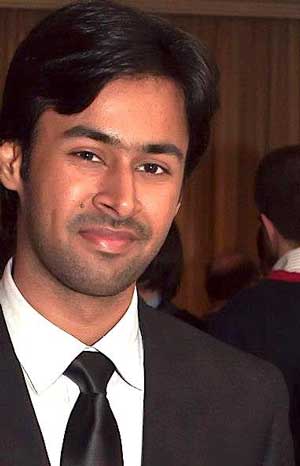
Tag: NYU

  • Shruti Hiremath, Legal Adviser, Allen & Overy, on dual LL.M. from NYU & NUS, and her experience thus far

    Shruti Hiremath, Legal Adviser, Allen & Overy, on dual LL.M. from NYU & NUS, and her experience thus far

    Shruti Hiremath graduated from NUJS in 2011. Following that she pursued an LL.M, which required her to attend two of the world’s best known universities – New York University and National University of Singapore. She is currently associated with Allen & Overy, in the capacity of Legal Adviser, where her role entails handling structured and asset finance.

    In this interview we speak to her about:

    • Studying in the US
    • Having a dual degree
    • Plans for the future

    What was your motivation behind doing LL.M.? 

    I decided to do my masters when I was in my final year. While many are of the opinion that it is best to do an LL.M after getting some work experience under one’s belt, it is my belief that if you are certain about the area in which you want to specialise in, having just graduated should not deter you from applying for a masters (it might in fact be beneficial to do so as you get to learn from the experiences of your classmates even before you start on your first job). In-depth study of my chosen subjects and international exposure were my primary motivations in applying for an LL.M.


    How did you choose the university/ college? 

    In choosing a university/college, it is very important to focus on whether a given university/college offers the specific courses that you want to do and who the faculty taking those courses are. It is also crucial to think about any other objectives you may have in doing a masters. Personally, I was certain I wanted to focus on business laws. Also, I wanted to attend a program wshruti-h1ith a smaller class size as I think this allows you to interact closely with more people. The NYU@NUS program met these requirements to a T. Being a dual masters program, I was able to study more subjects in my chosen specialty and the class consisted of only 45 students.

    I also applied to the Masters in Law and Finance at Oxford University, but withdrew my application once I received a positive response from NYU@NUS for two reasons: first, I would get greater international exposure, not only in terms of a diverse class but also in terms of giving me the opportunity to experience life in more than one international city (the program allows you to study in three international cities – Singapore, New York and Shanghai); and second, I was offered the Deans’ Award, a merit-based scholarship.


    What did you study? 

    I did my LL.M from NYU in global business laws and the LL.M from NUS in corporate and financial services. This is an area that has been of interest to me for very long and since I hoped to work on the transactional side, I decided to take up this field of specialisation.


    How was your experience? 

    I had a very enriching experience both within and outside the classroom. The facilities were fantastic both at NYU and at NUS be it academic or otherwise. There was no point where I felt that something was missing. As for the faculty, I couldn’t have asked for better. Both NYU and NUS have renowned faculty and the NYU@NUS program really gives one the best of both worlds – be it Prof.Joseph Weiler (World Trade Law and EU Law), Prof. Franco Ferrari (CISG), Prof. Soornarajah (International Investment Law), Prof. Michal Gal (Competition Law), Prof. Gary Born (International Commercial Arbitration) or Prof. Umakant Varottil (Indian Business Law) to name a few. I got an opportunity to learn from the best in these fields which I will always cherish. The one thing that really stands out is that most of these professors were not pure academicians but had either practised law at some point or did so alongside teaching. This I think is very beneficial for the students as these professors are able to adapt the courses to make them more relevant to actual practice.


    How’s the Indian fraternity over there? 

    On the NYU@NUS program itself we were six Indians. During the NUS terms, we attend classes with NUS students. The NUS program has a very strong representation from India at the LL.M level.


    How is the recruitment/ placement situation for overseas students?

    Being a dual masters program, students are able to use the career services of both NYU and NUS. The career services organise fairs and also conduct practice interview sessions with various law firms. Students can also attend the International Student Interview Program in New York where many international firms come to recruit.


    How was the academic schedule? 

    Being a dual masters, the academic schedule was hectic. During the NYU terms we had intensive sessions where we studied only one subject at a time for three weeks at a stretch instead of having one class a week over a semester. I found this system quite effective as it gives one’s study a sense of continuity. Classes with the NYU professors were extremely interactive. The readings would be allocated/uploaded the previous day and we would have to come prepared to have a discussion on the topic. The NUS terms were like the usual semester system. In addition to classes, we also had to write papers and make presentations.


    What about accommodation?

    In Singapore, NUS offers a place called College Green to NYU@NUS students. These are three bedroom houses that are very close to the campus. I chose to live at a private hostel called Evans Lodge which was also very close to the campus and more reasonably priced. In New York, I lived at D’Agostino Hall which is one of the NYU halls of residence. These are two or three bedroom flats that you share with other students. I shared a flat with another NYU@NUS student and a JD student at NYU.


    Tell us about your classmates – was there a predominantly international crowd? 

    Most students were in their late twenties or early thirties. The crowd was undoubtedly international. Even though we were a class of only 45 students, 23 countries were represented. The diversity was amazing. It gave me a chance to learn about so many different cultures and realise how we are all so different and yet so similar.


    Did you get time for any extra-curricular activities?

    There’s always time to do anything you want to, if you manage your time well! Being a dual masters, the program was very hectic. But people did manage to take out time to play sports or get involved in other extra-curricular activities . Personally, I used my time to work as a research assistant for Prof. Umakant Varottil which was a very enriching experience.


    How does one go about scholarships? 

    There are a number of scholarships offered for Indian students going to study abroad such as the ones offered by the Tata Endowment, Inlaks Foundation and so on. Each has its own application procedures. It is important to research their requirements well in advance and keep track of the deadlines. While I did apply for these scholarships and was shortlisted for various interviews, since the program starts earlier than other masters (in May), I was unable to attend any of the scholarship interviews. The program itself does offer various scholarships such as the Deans’ Award, the Singapura scholarship and the David Marshall Scholarship.


    What are your future plans? 

    I am currently working in London at Allen & Overy. The in-depth knowledge of various business laws and the international exposure gained on the NYU@NUS experience has been extremely beneficial for the cross-border nature of work I am involved in here. Also, the program meets eligibility requirements for taking the New York bar exam. This is an added advantage as it increases one’s mobility and enables one to advise on a broader range of transactions. As for future plans, I plan to continue working in this field.


    This interview was taken in 1st quarter of 2013 by A First Taste of Law.

  • Medhavi Singh on winning Best Oralist at Leiden Sarin and LL.M. from NYU

    Medhavi Singh on winning Best Oralist at Leiden Sarin and LL.M. from NYU

    Medhavi Singh talks about her journey as a Law Student of National Law University, Delhi. She had been awarded the Best Individual Oralist at the Leiden Sarin Air & Space Law Moot Court Competition. She has recently been accepted for a Masters in International Business Regulation, Transnational Litigation and Arbitration at New York University.

    In this interview, she tells us about:

    • The essentials of mooting every Law Student should keep in mind
    • What goes into excelling an International Moot
    • The importance of an LL.M from a foreign University
    • The application process for an LL.M in the U.S.


    How would you like to introduce yourself to our readers? Tell us a bit about your childhood, your hometown and your pre-graduate life as well. What motivated you to choose law as a career?

    I am a student of Delhi Public School, RK Puram. Originally, I am from Patna City, Bihar but have been brought up in Delhi. It was in Grade 7 that I first came across abook written on the subject of law. It was “The Colour of Law” by Mark Gimenez. The protagonist of the book was so inspiring that when I finished reading the book, I immediately knew I had to become like him. Of course, I think differently now since his practice in the book was criminal, but yes, that was my first ever motivation to pursue law as a career. Having this in mind, I took up Humanities with Maths in class 11th and 12th. I knew that subjects such as History and Political Science are tested in the National Law School exams and thought that taking these subjects would definitely be advantageous, which they actually turned out to be! For example, taking up Political Science was extremely helpful in understanding the political system of India as well as the Constitution of India, which is an integral subject from the view point of the entrance examinations.

    None of my family members are lawyers and I didn’t even know anyone who was a lawyer at the time I had decided to take it up. Thankfully, my family gave both my sister and me enough freedom to decide what we wanted to do with our lives, so they were pretty content with my career-goal.


    How did you gravitate into mooting? When did you decide to take up mooting seriously as a law student?

    At the outset, I would like to say that there is probably nothing more fun than mooting when you’re in law school. It’s hard work, for sure but the excitement it brings to a person at law school is absolutely unparalleled. I’m not sure how I ‘gravitated’ into mooting but I guess it’s something that most of the people in law school try anyway! I liked it so much after my first try that I couldn’t stop even when I was in my fifth year! For me, mooting was always a serious activity. It was fun but only as long as the results were positive, for which you needed to be serious about your work.

    I got drawn towards mooting especially when my team reached the finals of the KK Luthra Moot Court Competition on International Criminal Law in 2011. I remember being extremely nervous about not making it to the next round right from the first round but thankfully, it worked out well for us. Arguing in front of distinguished judges, finding loopholes in settled law as well as arguing on and learning about contemporary issues with no settled law seemed extremely exciting!


    medhavi-s2

    You have been the Best individual Oralist at the prestigious Leiden Sarin Air & Space Law Moot Court Competition held in Romania in March this year. Please tell us about your overall experience there regarding the competitors, the judges and other ancillary things.

    This moot was the best experience possible. I had been attempting to go for this moot since the second year of college and for some reason or the other, I couldn’t go until my last year – either I didn’t make the cut or the moot wasn’t included in the list. But anyway, I finally managed to go!

    This moot was special to me because I was very fond of Aviation Law as a subject of law. It was a field of international law that was always on the ‘move’. I must commend the Leiden-Sarin Organisers on the judges that had been called for the moot. During the entire moot, not once was I asked to state the facts and the questions that were posed to my teammate and me were precise, to the point and relevant to the problem at hand. What was more exciting about this problem was that it was based on a topic which has not yet been resolved, which meant that there was scarcity of material on the topic, which in turn helped us to make innovative and new arguments, applying not only to Aviation Law but also to different facets of International Law.


    How much preparation did you require for this success? Did you burn the midnight oil to excel in this moot? How much dedication and hard work was necessary for to ace Leiden Sarin?

    I’m not going to make it sound easy because I don’t think that’s honestly possible. Preparing for this moot was insanely hard. NLU-Delhi has a policy that all students must remain on campus through the week, even if you are from Delhi and I was known to be the one going home all the time for some reason or the other. I can vouch that it was during the time that I was preparing for this moot that I stayed the longest on campus, that too in the December-January winters. So yes, it’ a lot of work, but I am not complaining. I actually enjoyed myself, minus the sleep deprivation!


    What would you say differentiates between the best oralists and the rest? What are the top three things you consider sine qua non for being a great oralist?

    I think the most important criterion for being a great oralist is to be able to read the judge and understand what they’re looking for. We all do our homework in the sense of learning pleadings, facts, authorities etc. but ultimately, it comes down to how you can satisfy the bench before you. A judge may or may not know the problem very well, so it’s extremely important to answer his/her questions in a satisfactory manner, otherwise you end up losing the rapport that you’ve built with him/her. So according to me, on the top it would be understanding what the judge is asking for – for example, either answering questions in a precise manner or a detailed manner-and delivering the same.

    Secondly, I would want to emphasise on the importance of using relevant and contemporary real-life examples to back your case. It’s extremely important to let the judges know that what you’re arguing is in fact being practised at that very moment. I think it creates a huge impact on them.

    Thirdly, it is undeniably important to focus on you mannerisms. When it comes to mooting, most people will have the same amount of knowledge as you do and the only edge that you’ll ever have is to be able to display that knowledge and deliver your arguments effectively and differently by enhancing your mannerisms.

    For the most time that I was practicing my pleadings for the Leiden-Sarin Moot, I was concentrating on speaking slower (owing to the fact that all the judges were going to be from a foreign land) and remaining composed while answering questions. The best way to remain composed is to think of the whole procedure to be a meaningful conversation between the judges and yourself and to not let yourself get intimated by them; you probably know more than them about the problem at hand if you’ve done your research well!


    What prompted you to apply for an LL.M. abroad? Does it help given the career you have chosen? Why didn’t you opt for an LL.M. from India given that now we have 1 year LL.M as well?

    I experienced dispute resolution on an international scale for the first time at the Global Young Leadership Conference held in the US, where I was selected to represent India. Here, I was exposed to the tactful methods of negotiation rendered by people in addressing world issues. To further delve into the realm of international dispute resolution, I took part in Model United Nations, representing different States in various committees. I believe both these events formed the initial basis of my interest in dispute resolution on an International scale.I was drawn to International Law right from the beginning when I took part in the KK Luthra moot and ultimately by the fourth year narrowed down my liking to transnational litigation and international arbitration.

    The reason why I applied to foreign universities as opposed to an Indian one is definitely the courses that were being offered by the foreign universities as opposed to the one that were being offered in India. NYU was one University that offered a course on International Business Regulation, Transnational Litigation and Arbitration. I was excited to apply for this course because it befitted my aspirations perfectly and I wasn’t getting such an option anywhere else.


    You have got through to an LL.M. programme at the New York University. What do you think clicked in your favour during the selection process? How did you plan your Statement of Purpose for NYU?

    I think what worked for me was the clear picture that I had in my head with respect to what subjects I wanted to study as well as what benefit I would derive out of studying those subjects and how I would be able to apply the knowledge acquired by studying those subjects to fulfill my career-goals. My SoP had clear indications of what inspired me to choose this field, how I have already started worked in this field by means of internships, research papers etc. and how studying it would help me achieve my future plans.

    I know for a lot of people, LL.Ms are just ‘further studies’ but I think it’s much beyond that. I know it’s not a pre-requisite for any activity that you would want to undertake after law school but I feel that sometimes, it is quintessential to get expertise in niche areas, especially when you want to specialise in the same.

    Building up on your profile from the view point of an LL.M is essentially maintaining excellent grades through law school. The competition can get to you sometimes but it’s not impossible. Other activities could include mooting, debating, writing papers and even being members of relevant groups at your law school.


    For an LL.M you needed to have a student VISA. What are the requirements for a successful VISA application? As a lot depends on the VISA application did you prepare for the interview?

    The Visa application is a long drawn one month procedure. I can answer this question for the US Universities since that’s the procedure I am privy to. You need to first apply for your I-20, for which your University will provide you with details. The US University would then send you a hard copy of your I-20 which you must keep extremely carefully. After having done that, you must pay a fees online called the SEVIS fees and must keep multiple receipts of the same. Then you have to fill out the DS-160 form and make the visa application fees in cash to the specified banks (Axis or PNB). At the bank, they would generate a number for you which you have to use to schedule an appointment with the US Embassy. Once you have received your I-20 and paid the SEVIS fees, the visa application becomes easy and there’s not much you can do. My interview was a one line question where I was asked why I was going to NYU and which subjects I was specialising in. I was asked to pick my passport up with the visa the very next day! So no, not much preparation is required for the interview. But it’s always safe to carry all the documents with you just in case you’re asked for them.


    What would be your message to law students who look forward to an illustrious law school life?

    I would say it’s about maintaining excellent grades in law school and having a clear picture about what you want to study and why. It’s important to ask yourself these questions to be able to figure out whether you really want it or not. Apart from this, I would recommend all of you to have at least three teachers in mind, who have credibility and are somewhat renowned in their respective fields, who would be willing to help you out with your letters of recommendation. These letters have a huge influence on your application and must not be taken lightly! The whole application procedure seems daunting and you could feel lazy at times but trust me, in the end, it’s definitely worth it!


  • Ashitha Bhagwan on being an Attorney at Royse Law Firm, LL.M. from NYU and the American Legal Industry

    Ashitha Bhagwan on being an Attorney at Royse Law Firm, LL.M. from NYU and the American Legal Industry

    Ashitha Bhagwan graduated from University Law College, Bangalore in 2007 and subsequently completed an LL.M. from New York University. After working in India and Singapore, she is currently practicing in California. Being a dual licensed corporate attorney focusing on start-ups and mid-market companies, she regularly counsels on a wide range of corporate issues such as formation, equity structure, employment, general corporate governance, intellectual property protection and commercial transactions for domestic and international clients.

    We took this opportunity to ask her about:

    • Her experience at New York University
    • Work atmosphere in the U.S.
    • Working as an attorney at Royse Law Firm


    “Law school”, have become synonymous with the NLUs. Have you faced any such bias during your career? What would you say to the future graduates of ULCB regarding this?

    You will realize as you grow into the profession that what matters is what you made out of the school that you graduated from. And as you are well aware, opportunities that present themselves to the legal student community are open to all students, irrespective of the school. The school that you graduate from cannot really hold you back – you are at liberty to be as involved in this profession as you would like to be.

    I didn’t let the comfort of life at law college get to me while I was completing my course. I used every opportunity I got to explore and build an identity beyond the shadow of my college. The legal community is a closely knit profession so it’s important that you network among your peers, focus on your courses and make the most of the internships/moot courts that you are given an opportunity to participate in.


    After graduating from ULC you had taken up a Post Graduate Diploma in Intellectual Property Rights from NLSIU. What attracted you to this course? How has it impacted your overall career trajectory?

    [sociallocker] I wanted to get some background and insight into Intellectual Property (IP) laws since I was interested in corporate laws, and IP and corporate laws intersect at various junctures. I completed this course alongside my ULC degree, so it was twice as much pressure but I managed to learn quite a lot from the course. It helped me master the basics of IP laws which have proven imperative in my day-to-day practice.


    Of all the internships that you have done, which ones do you think really enhanced your chances of getting admission in such a prestigious University? How would you recommend students to go about choosing their internships?

    The thing about internships is that it is not so much a single stint that will lead to your LL.M admission, as it is a holistic view of your entire career as a law student. I enjoyed all my internships since each one gave me an opportunity to explore a new facet of law. In the end, it became clear to me what I wanted to pursue in future.

    Since most students in India are enrolled in the five year course, they have at least 8 breaks (short and long) in which they could potentially intern. It is important that you show for these times when you are not required to be in class, and they all add up to your end goal. You could certainly spend a break or two doing something you like, unconnected to your end goal, but for a post graduate degree, it is important that your resume tell a story that leads up to the LL.M.


    How did you decide upon New York University School of Law for your Post-Graduation, from the plethora of options available in the United States?

    It was a really simple choice – I had applied to 6 schools (in US and UK) and got admitted in 5, and NYU was simply the best of them all. It was located in NY (which is the financial hub), the faculty was awe-inspiring (we had professors coming in from all over the world, even legal luminaries that I had only read about as a student), and it was in the top 3 when I enrolled. Also, I knew that I would have the most fun living in NY.


    How did you get through the selection process of NYU? What would you say increased the probability of your candidature? What are the things one should do while at law school to have to sail through these selection processes?

    As any other potential post-graduate student, you need to show that your application is different from the thousands that the school receives that year. What helped me was top grades, a solid set of internships, publications, and victories at national level moot court competitions.

    Make sure that your 5 years in law school count – pursue internships/clinics that are of interest to you, participate in moot courts, write articles, work with your professors (if possible) on articles they may need research assistants for, and, most of all, make sure your grades don’t slip. Universities generally look for well-rounded individuals to mould into lawyers – if you can show that the natural next step after your time in law-school leads up to the LL.M., I think you would have better chance.

    Also, you should tailor your resume/application for the specific school – some prefer work experiences, some are more academic oriented so, keep that in mind while preparing an application.


    How was your time in NYU School of Law? How is the academic workload there?

    I enjoyed it! Workload was heavy, takes getting used to, but you learn pretty quick when you’re there – the adrenalin and the need to catch up is pretty high, so you will be fine. Prepare to study hard, and party harder!


    How difficult was it for you, as a student who had theretofore been used to the Indian education system, to adjust to the environment of a US University?

    It was very different from what I was used to, but as I said, you become a quick study when you are there. I suppose you learn to swim when you are thrown in the water! You also have a lot of flexibility (with courses, timings etc.) which gives you the opportunity to be creative with your courses.


    Corporate Law is oft seen as a dry arena of Law, sometimes with humongous workload. What made you gravitate towards this field?

    It is all about perspective. The way I look at it is that I have an opportunity to facilitate deals. One of the things which makes it very interesting for me is that I have the opportunity to work with entrepreneurs working on exciting products and help those products reach markets where it might have never reached a few years ago. My clientele is primarily from the technology sector and being part of the ever-changing advancing landscape of technological innovations in the Silicon Valley is a great opportunity.


    ashitha-bhagwan1Before starting work as an attorney you had to clear the Bar exam at California. Given that it is one of the toughest bar exams what was your experience?

    The California Bar Exam is the toughest exam that I have ever taken. It required my undivided attention and focus, and I am so glad it is over! If you are planning to crack this exam, remember that you have to give it your all – one hundred and ten percent. I know of people who have attempted this multiple times and failed. The volume of material is overwhelming but tackle it in small sections and you will be able to get through it.


    Which events led to your induction into Royse Law Firm? Were there any interviews or selection processes?

    I have always been looking for opportunities where I would not be stuck to a desk, but be able to meet new people and interact with clients on a regular basis. The Royse Law Firm presented itself as the perfect opportunity. It happened by being at the right place, at the right time. After meeting with team I was convinced that there was a great potential for me here, and I have enjoyed my time here ever since I joined.


    What is it like working in a law firm? How hectic is it? Are there new challenges everyday or has work settled into a predictable pattern?

    As a lawyer, there is never a dull moment. It is pretty busy – entrepreneurs always have interesting challenges and it’s our job to come up with even more interesting solutions. Being innovative is part of the job, and I love that I have the opportunity to do that.


    Tell us about your work at Royse Law. Can you tell us about a few of the most challenging problems you have faced thus far?

    I work with start-ups and mid-market companies. Since my practice encompasses cross border transactions, I am often required to reconcile the different jurisdictional implications of a single transaction. We work on strategizing the best way to ensure that the product can be accessed in the same way in a foreign jurisdiction, as it would be in the US. What I love is that I get to oversee a well-rounded perspective of working across multiple jurisdictions – tax, IP and corporate all of which are an integral part of a corporate lawyer’s career.


    How different is the work environment in the USA, from that in India?

    One thing I have noticed is that there is a clear line between your professional and personal life in the US. I find that that line in India is a little blur. Other things that are more specific to the US work environment are that it is more formal (people love setting up meetings), a little impersonal and is extremely professional.


    What are your plans for the next 5 years in the various fields of Corporate Law?

    Corporate Law is a broad term, and I have had the opportunity to explore various facets of it. I will probably be in the corporate law practice in the foreseeable future.


    What would be your word of advice to Law Students who want to practice law in the US?

    Read. Be well informed before you make any decision. Information today is very easily accessible and there is no reason that you should not make use of that.

     
    If you would like to reach Ashitha Bhagwan, Esq., feel free to connect with her on LinkedIn, alternatively you can also email her at abhagwan@rroyselaw.com

    [/sociallocker]

  • Ankit Yadav, LL.M candidate, NYU, on researching with legal luminaries and drafting the perfect memorial

    Ankit Yadav, LL.M candidate, NYU, on researching with legal luminaries and drafting the perfect memorial

    Ankit Yadav is one of the illustrious graduates of 2012 batch from RMLNLU. He subsequently went on to pursue his Masters NYU School of Law. After graduation he went for an LL.M. to New York University. During his tenure as an LL.M. candidate at NYU he worked with many legal luminaries and also had the opportunity to judge in the Philip C. Jessup International Law Moot.

    During this interview we speak to him about:

    • LL.M experience at New York University
    • Researching for Prof. Jose E. Alvarez and Prof. Eda Katharine Tinto
    • Perspective of a judge of Philip C. Jessup on what is an awesome memorial


    How would you like to introduce yourself to them?

    I am still a student of law, who is endeavouring to make a mark in this field.


    Tell us something about your life before college.

    I am a first generation lawyer. I did my schooling in the science background which, I still believe, helps me in having an objective approach towards various situations.


    How did you gravitate towards legal studies?

    I would not go on to the extent of saying that I always dreamt of being a lawyer. But yes, it always appeared to me as a fascinating profession, especially because most great leaders across the globe are/were lawyers. I believe that the study of law helps one relate better to the society and its needs.


    How did you go about securing internships at places like top tier firms?

    My idea of doing internships was to get a sense of different areas and work setups in this field (law firms, lawyers’ chambers, governmental and non- governmental organisations), which later allowed me to make an informed career choice.

    Most law students have an apprehension that one can’t get a good internship without having good contacts or knowing someone who can recommend you. Well honestly, I also thought so till the time I was proved wrong. Having a good network of relevant people is always a plus point in this profession.

    However, that does not mean that you cannot secure a good internship without the same.In my opinion, the key to securing a good internship is to apply well in advance and have a cover letter that allows the employer to judge your skills within a period of 30-40 seconds. Most employers get numerous applications every day. Therefore, the cover letter and resume of an applicant should be very concise and well drafted.

    Every internship that I did, not only helped me in honing my skills but also allowed me to decide what kind of lawyer I want to be. Internships teach us time management, team work, work ethics and give us a chance to put our classroom knowledge into practice. In short, internships give law students an insight into the real practice of law. Therefore, I would strongly recommend that law students should take all their internships very seriously.


    What was your motivation behind pursuing LL.M.?

    Everyone in my family is a post-graduate and I did not want to be the least literate one. I always wanted to get the knowledge, skills, academic resources and exposure that a world class university offers. Therefore, it was always there at the topmost position of my priority list. The only requirement was to get through one of the leading institutions of the world, which I was fortunate enough to get.


    ankit-yadav1How should one go about choosing a university?

    The hard task is for the law students to decide what area of law they want to specialize in. Once that is done, the process becomes relatively easier. Law schools ranking are available online and law students are good at doing online research. One needs to find the best uinversities in their chosen area of specialization. Location of the law school also plays an important role in determining what kind of exposure it would be able to offer to a prospective student. Therefore, a law student should take this into consideration before choosing a university.


    Please tell our readers about the application procedure and other requirements for an LL.M. at NYU.

    The application procedure for an LL.M at NYU is almost the same as other Universities of US and UK. All the applicants are required to submit a statement of purpose, writing samples and letters of recommendation along with the application form. All the information is available on the official website of NYU.


    Does NYU provide students with scholarships?

    Yes, like most leading universities, NYU also offers merit-based scholarships to prospective students. Also, apart from the scholarships offered by law schools, a number of charitable organisations offer merit-based scholarships to students who have secured or are hopeful of securing admissions in well recognized law schools abroad.


    Was there a lot of academic work?

    Yes, the work load becomes overwhelming at the beginning, but one gets used to the system after a while. Reading or writing assignments are allotted for every class and one has to go prepared to be able to understand the discussions properly.


    Please tell us about your experience working with Prof. Jose E. Alvarez and also Prof. Eda Katharine Tinto as Research Assistant.

    The work I did during my research assistantships was very enriching not just because of its academic value but also because of the amount of experience and knowledge I gained while working with the people who are widely recognized for their contribution to the American and international society.


    How has the experience of being Judge at the international rounds of Philip C. Jessup International Moot Court Competition been?

    It was truly a wonderful experience, being at the other side of the podium at the most prestigious moot court competition of the world, sharing the dais with and getting to interact with some of the well known faces of international law and just being a part of the entire process.

    The primary qualities that every judge looks for is a strong understanding of the basic concepts of international law and a proper appreciation of the facts provided in the Compromis. Once these are present, then eloquence, demeanour, poise, innovative arguments and persuasive skills are the qualities that bring out the difference between a winning team and the rest.


    If I want to write an awesome memo, what are the relevant skills and how should I go about learning them?

    An awesome memo would be the culmination of an awesome research into an awesomely drafted document. When I grade a memorial, I look for good amount of research and its proper application in the facts provided. Every word that is mentioned in a Compromis/problem statement should be presumed to be relevant while drafting a memorial.

    The language used should be formal and simple and must be as concise as possible. These are the skills that can only be acquired with practice. Therefore, it is imperative to have a first draft prepared well before the submission deadline and then keep refining it.

    In my opinion, MUNs, debates and moot courts are a great way of developing advocacy skills (research, drafting and oratory skills among other things). Unlike regular academic coursework, these activities involve the thrill of getting immediate results for all the labour you put in them. They are also a great way of boosting up the confidence of a law student and to learn something which may not be  a part of your academic coursework.


    Was your typical workday during your internships in India any different from your workday abroad?

    Not very different. Nowadays, most employers in India have also become more respectful towards their employees. They have started recognizing a proper work-life balance is necessary for employees to be able to perform up to their potential. I am hopeful that it will keep getting better from here on.


    What are your future plans?

    My future plans are to be a successful litigator. In the next five years, I want to be a well recognized name in this field.


    Lastly, what would be your message to a law student who wants to excel as a lawyer?

    Believe in yourself! If you are determined to be successful, no one can stop you. All you need is to stay focused and motivated. The legal profession needs to transform to keep pace with the changing society and our generation will bring about that change.

    “I have, let’s say, sixty years to live. Most of that time will be spent working. I’ve chosen the work I want to do. If I find no joy in it, then I’m only condemning myself to sixty years of torture. And I can find the joy only if I do my work in the best way possible to me. But the best is a matter of standards—and I set my own standards. I inherit nothing. I stand at the end of no tradition. I may, perhaps, stand at the beginning of one.”

    – Ayn Rand, The Fountainhead.