Tag: Partner

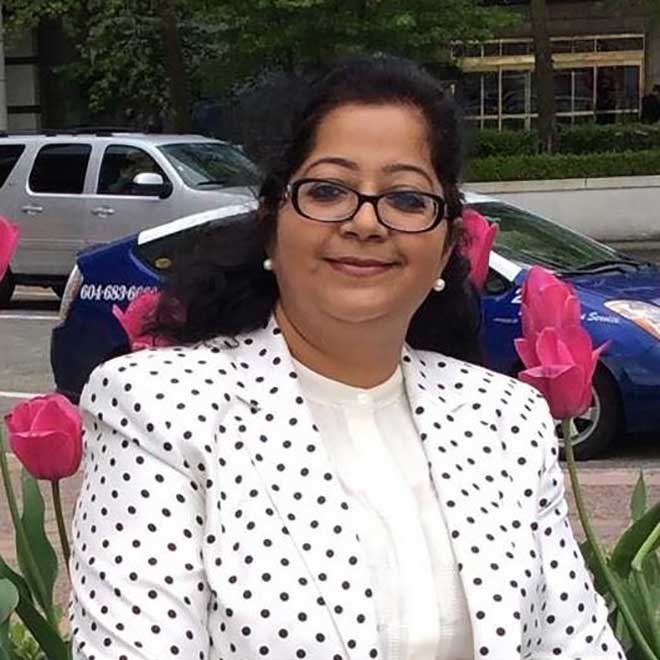
  • Veena Poolakal, Partner, Lall Lahiri & Salhotra, and her illustrious fifteen years of experience in the IPR

    Veena Poolakal, Partner, Lall Lahiri & Salhotra, and her illustrious fifteen years of experience in the IPR

    Veena Poolakal completed her graduation in Law from Government Law College, Calicut in the year 2000. Post completion of her Master’s degree in Intellectual Property Rights she started her legal practice in May, 2003 with Singhania & Co., Mumbai as an Associate. After a brief stint of two months with Singhania & Co., Mumbai, she joined the trademarks team of Lall Lahiri & Salhotra, Attorneys-At-Law, as an Associate in August, 2003. Since then she has been involved in Trademark Prosecution work and had represented many Fortune 500 companies. She was promoted to Head Trademarks Prosecution in the year of 2006 and thereafter as a Partner in 2011.

    She was recently ranked by the World Trademark Review in the top 1000 Individuals: Prosecution & Strategy Category.

    In this interview she talks to us about:

    • Her specialisation in IPR.
    • Work experience in Trademark Prosecution
    • Her responsibility as Partner- Trademarks at Lall Lahiri & Salhotra, Attorneys at Law.


    How did your interest gravitate towards law?

    Law was one of the desired career options for me. Perhaps, the liveliness of this particular discipline and the confidence and empowerment that a legal career would offer, comparing to any other field, might have attracted me towards this option. As far as my exposure to the legal fraternity is concerned, the same was very limited prior to joining of law school.


    You completed your LLB from the Government Law College, Calicut, in 2000. Please do share with us some memories from your years in college.

    The law school has given me fairly a sound understanding on most of the conventional legal areas. But, more importantly, the days I spend in law school remain as the most cherished memories in my life mainly for the pleasant and cheerful campus. The law school had always maintained a liberal approach towards the students’ political activities which contributed a lot to maintain the liveliness and enthusiasm in the campus and also helped many to reinvent themselves as more independent and rational humans. Either as a part of a particular political ideology or otherwise, an active involvement in the general issues was a part of our campus life. I believe that my law school experience have played a great role in the later part of my life. The years spent in law school has not only helped me to become a lawyer but also has helped a lot in the overall development as a person. The extracurricular activities of the law school days were limited to legal aid clinics, moot court participations etc.
    What were your major interests in law school?

    The teachings in the law school were mainly centred on the conventional areas like Constitutional Law, Law of Contract, Administrative Law, Criminal Law, Tax Law etc. The more specialised areas like IPR, in which I had done my specialisation later, or various laws relating to the economic offences which turned to be of extreme practical importance now etc. where not part of our law school syllabus. As a law student, I found Constitutional Law and Administrative Law as the most interesting areas, which still I believe to be of extreme importance, both from the academic and professional perspectives.


    What according to you can make law students more interested in studying Intellectual Property Rights in comparison to the much sought after Corporate Law?

    Needless to say, either of these areas would not be complete without the other. However, I feel that, the Intellectual Property Rights (IPR) being a subject that prominently deals with the substantive rights of the person as against a subject which concentrate more on the procedural aspects, may be attractive for a student of Law. Further, the interplay between the private and public rights and the State’s indulgence in recognising the just and required monopoly in each of the ever expanding areas of IPRs depending upon what is conducive for the growth of the concerned country/society and to maintain a balance of conflicting interest in its peculiar socio-political and economic conditions, would certainly be of extreme importance.  Further, we are witnessing a time where the whole world has equated the intellectual property with the conventional types of property and this spectrum which originally consists of conventional areas of patent, copyright, trademark and designs now been added with new property rights  in the area  like  geographical indications, plant varieties, semiconductor chips etc. Even the extent and scope the conventional areas are being expanding day by day. As one would see, the rights and obligations associated with intellectual properties are now well recognised across the globe and various trans-national regimes are also in place. Thus, even from a perspective of a practitioner, IPR is one of the prominent areas which are still in short of enough dedicated resource persons and professionals.


    How did your forte in IPR develop?

    As I said, the IPR was not part of my LL.B. I was first introduced to IPR as a subject during my Master’s degree in IPR at Cochin University of Science & Technology (CUSAT). I was really fortunate enough to receive the lectures and patronage of Dr. N.S. Gopalakrishnan, one of the leading experts/ academician in IPR. It was during this time, my initial interest in IPR law turned out to be a serious career option.

    Upon completion of LL.M., I started my career as an Associate with Lall Lahiri & Salhotra (LLS), one of the pioneer IPR law firms in the country.

    In LLS, I was fortunate enough to be mentored by Mrs. Anuradha Salhotra. The exposure, opportunity and guidance that I was able to get at LLS helped me to develop myself in the areas of trademark law.


    In the year 2006, you were promoted as Head -Trademarks Prosecution and as a Partner of Lall Lahiri & Salhotra in the year of 2011.Can you give us an insight into the type of work you handled?

    From a practitioner’s point of view, IPR practice is all about acquisition of rights, its maintenance and enforcement as per the statutory mechanism. An IPR professional cannot deal with any of these areas in complete isolation from the other as it very often needed a holistic and comprehensive approach and strategy. But, still, categorising one’s main area of work under a separate department seems to be of many advantages, which bring more clarity, focus, precision, responsibilities and responsiveness in the assignments and thus brings out better results. Ever since I joined LLS, I have been the part of trademark prosecution department and search department, which includes the board areas of providing opinion and advises to the clients on availability of trademarks, strategizing the acquisition of trademarks, advising and assisting clients securing the trademark registration, taking timely steps requiring for the protection of the their rights, advising and rendering transactional assistance in relation to trademark acquisitions, transfers and compliances of statutory requirements in this regard etc.


    Congratulations on being ranked under Individuals Prosecution & Strategy Category in the 2017 Edition of WTR 1000! Please elaborate on this milestone.

    For this, I owe to the extensive, continuous support and faith that LLS’s sole owner & Managing Partner Mr. Rahul Chaudhry has bestowed upon me. Also, I owe this to my team who has been a great support throughout my career so far. I have been fortunate to render the professional service to many of the noted commercial houses, both domestic and foreign and to deal with so many complex legal issues in my career till date. In rendering the professional services, we follow a sound and uncompromising professional approach to the cause of our clients. We represent the cause of client with highest level of commitment, dedication and professional expertise to achieve an exhaustive, expeditious and effective solution. For achieving the goal, we resort to meticulous and realistic strategies/ methods and implement the same effectively through the existing legal framework. Perhaps, this approach towards each assignment that is followed by LLS might have helped me to achieve said position in Prosecution & Strategy Category.

    How can students wishing to intern under your valuable guidance get in touch with you?

    The students who wish to intern with us can contact us at gpo@lls.in. Every year, we try to accommodate the students from different institutions. An intern is no way different from a student and as such, what we look in an intern is also not different from the qualities required for a student. The foremost thing which we would prefer in an Intern is his or her seriousness in approach to the subject, willingness to learn new things and discipline and the never let go attitude.


    Were you interning after college hours? How did you manage the internship with studies?

    During our days in law school, the concept of internships was not too prominent. The main objective of the course was theoretical study and it was in final year we were given practical experience through Court visits, legal aid cells, attending lawyer’s office etc. It is really good to see that the law courses of today are a blend of theoretical and practical knowledge. As a law student, it is very important to have an early practical exposure. This, would not only enhance his understanding of law and the legal sector, but also would help him to make an early decision as to the particular segment in the vast field of law in which he wants to be engaged in.


    What hurdles should one expect in a career in law firm and what are your tips to tackle the same?

    As every profession/career, career in a law firm too is not free from hurdles. Each law firm may have different culture. In the initial days in a law firm, a lawyer may find it hard to mend himself with the work culture of the firm, which one may adapt within few days.  Besides this, I don’t think, there are any particular issues that one may have to face in law firms which he or she may not see in any other offices. From my experience, the best way to avoid any sort of hurdles that one may face in career is to stay committed and sincere to the work. Your work and commitment will speak loud for you.


    Please share with us your daily responsibilities.

    It is difficult to define daily responsibilities as each day has a different call. A day is structured according to the meetings, hearings, deadlines we have on that particular day. The prime focus of a day is to ensure that we are attending to all clients ‘queries, meeting deadlines and providing the legally sound opinions to our clients to their needs. As far as the work profile is concerned, as I already told you, I lead the LLS Trademark prosecution and searches team which is responsible for the a wide spectrum of services that ranges from providing opinion on the acquisition of trademark to securing the statutory protection for the trademark. Being Head of the Team, I have the professional responsibility to supervise each assignment, guide the other team members and associates in work, ensure that the required professional services are done satisfactorily and in time, etc.


    What would be your parting message to law students and lawyers who want to establish their career in IPR?

    A lawyer entering into the trademark practice has to bear in mind that this area of law is extremely competitive and you have to compete with well-established trademark professionals to make a mark of yourself in this field of law. Making yourself established in trademark practice is not a cake walk and it requires lot of patience, dedication and hard work. Be sincere and dedicated to the work you do, be focused on your goals and don’t be swayed by short term monetary/professional gains.

  • Faizal Latheef, Partner, Kochhar & Co., on practicing Corporate & Commercial Law in the Middle East and DIFC Wills

    Faizal Latheef, Partner, Kochhar & Co., on practicing Corporate & Commercial Law in the Middle East and DIFC Wills

    Faizal Latheef graduated in Law from Mahatma Gandhi University, Kerala in 1998. He has close to twenty years of professional experience and has been practicing corporate and commercial laws in the Middle East for over a decade, with leading firms including the international law firm of Baker & McKenzie. Faizal has represented some of the largest multinational corporations on cross-border transactions and advised them on a multitude of international agreements.

    He is also one of the few lawyers licensed by the DIFC (Dubai International Financial Centre) Wills & Probate Registry to register common law compliant Wills for foreign investors and expatriates in Dubai, UAE.

    In this interview, we speak to him about:

    • His decision to shift from India to Dubai.
    • His role and responsibility as a Partner at Kochhar & Co.
    • The objectives of his personal platform where he mentors law students.
    • Maintaining a work life balance.


    How would you introduce yourself to our readers?

    I am a lawyer by passion and choice!

    I began my professional journey as a Dispute Resolution Lawyer in Kochi. I relocated to Dubai over a decade back and since then, I am practicing corporate laws. Dubai changed my career graph in a magical way as I had the opportunity to work with one of the largest international law firms, a Fortune Global 500 corporation leading its operations in the Middle East and Africa and a top tier local law firm. Now, my primary focus is on foreign investments, joint ventures, mergers and acquisitions, corporate restructuring and compliance, in particular anti-corruption.

    Personally, I am an ordinary guy with some crazy dreams. I do what I enjoy and am passionate about it. I am organized and determined and well aware as to where my destiny lies! I invest in people and have a large number of friends from across the world.

    I do not have any one in my family connected to law and am a first generation lawyer. Witnessing my initial struggles, even others have stayed away from the legal sector. I believe everything is possible in life and hope my journey will be an inspiration to my young friends who do not come with a legal background.


    What motivated you to pursue law? Describe your experience in law school.

    Law has always enthused me! I was into public speaking since my young days and somehow developed a misconception that a good public speaker could be a good lawyer too.

    On a serious note, law is to regulate society and promote social well-being. We all are required to comply with certain norms from early ages, be it at home or in the society. I was an organised child and enjoyed complying with such norms. From this perspective also, I thought law would be a great career choice for me.

    Like most of the law students, law school days are some of the most unforgettable days in my life. Be it some of those inspiring lectures, active participation in student politics or the wonderful time with my friends! I enjoyed every moment of those days! Candidly, I don’t think my law school curriculum sufficiently equipped me to build up a successful legal career. In contrast, it was what I learnt outside of the classroom that shaped my todays and lead me to this amazing journey called life!


    What was your first job after law school?

    It was almost two decades back! I started my professional career in Kochi, the commercial hub of Kerala. The legal industry then was dominated by individual lawyers and they all were into litigation. I practiced before the High Court and primarily focused on civil and commercial matters. I used to work for almost fourteen hours every day, without much financial returns!

    On hindsight, I admit that I did not enjoy litigation much! After spending considerable amount of time outside India and having got the opportunity to understand different legal systems from across the world, I believe our legal system needs a thorough revamp. It needs to be more professional, transparent, tech savvy, appealing to the youngsters and accessible to each and every citizen of the country.

    Nevertheless, those gruelling days helped me in preparing for the future in a tough way. It imparted lot of lessons to me, including the importance of hard work, patience, perseverance and above all, to stay optimistic – That my day will come!


    What caused the decision to shift to Dubai? What were the challenges you faced in this transition?

    I relocated to Dubai out of compulsion. A little over five years into my practice, I met with a near fatal car accident. I was bedridden for a considerable amount of time and could not speak. I lost my clientele in no time and could not come back despite my hard efforts! And I had no option but to quit litigation. Then, Dubai, with its big dreams, was a natural choice for me! If it could become one of the best cities in the world out of sheer grit and determination, I thought the city will have something in it for me too!

    The legal industry in Dubai is quite charming, with many of the top-tier international law firms and large multinational corporations. However, the transition was challenging. It was an alien place to me, with no relatives or friends. The legal system, culture, lifestyle, work ethics, client expectations all were starkly different from what I had experienced in India and it took a while for me to adapt. Fortunately, after a few months, I got into one of the best local law firms. And there started an amazing journey that transformed my life!


    Can you describe your role as an in- house counsel for AbbVie Biopharmaceuticals?

    I joined AbbVie Biopharmaceuticals on a specific mission – to lead its spin-off from Abbott Laboratories in around 35 countries in the Middle East and Africa region. Abbott then had one of the world’s largest selling drugs, which had an annual turnover of over USD fourteen billion. They decided to spin-off their business division which managed the said portfolio and wanted me to lead the transaction.

    The moment I stepped into an in-house counsel’s role, I realised that it’s the beginning of a journey into unchartered waters! Everything I experienced in my new role – from the people I met and their thought process to the work culture – was starkly different from a law firm.

    My in-house experience completely changed my perspective as a lawyer. Only then, I learnt that that the role of a lawyer is not just to enlighten the client about the legal provisions but more about analysing the risks in light of the legal provisions and guiding them to a solution, taking their business objectives into consideration.


    Describe your work profile at Baker & McKenzie Habib Al Mulla? What caused you to leave the firm?

    I spent most of my time in the Middle East with Baker McKenzie Habib Al Mulla. After my relocation to Dubai, my primary focus was on corporate and commercial laws and I continued to have a similar profile with the firm. However, the magnitude was completely different.

    All on a sudden, the nature of clients, transactions and their value changed in a big way. I got the opportunity to lead several multi-billion dollar deals involving some of the world’s largest multinational corporations. I also led the firm’s initiatives in the pharma and healthcare sector. I would proudly admit that I spent some of my best years with them. These eight years challenged me to a great extent and I was forced to reinvent myself all through the period.

    I spent considerably long time with the firm, and at some point, I felt like I am getting into a comfort zone. I wanted to get out of it and explore the unknown world. I was keen to find out if I would be successful in building up my own clientele. If successful, I knew nothing else would be more contenting!


    How did you come to be a Partner at Kochhar & Co.? What are your responsibilities?

    As I mentioned earlier, I wanted to leave Baker McKenzie and was exploring my options. Somewhere around the period, Kochhar & Co. became the only Indian law firm to have been granted license to practice local law in the UAE. I knew Rohit Kochhar, the Chairman of the firm, one of the most enterprising lawyers in India. We thought our interests complement each other and decided to join hands. Great colleagues, quality clients and an excellent office overlooking the iconic Burj Khalifa, the world’s tallest tower, can only be incentives to associate with the firm!

    I focus on three practice areas – corporate, compliance and DIFC Wills. I mostly work with multinational clients, several of them from India too, on a variety of matters including foreign investments, joint ventures, mergers and acquisitions, corporate restructuring and employment. I also do a lot of work on compliance, in particular on anti-corruption. I am one of the few Certified Auditors for the recent ISO 37001 Standards on Anti-Bribery Management Systems, which helps me in designing or auditing the compliance mechanisms of organisations as against an international benchmark.

    I also guide foreign investors in protecting their investments in Dubai through DIFC (Dubai International Financial Centre) Wills. I am one of the few Indian lawyers licensed by the DIFC Wills & Probate Registry to draft and/or register Wills that are not governed by Sharia. Being a Muslim country, inheritance in the UAE is governed by Sharia and foreign investors were concerned about its implications. This new mechanism is a big relief to all non-Muslim investors as they can now effectively secure their investments.


    Does law school prepare a student sufficiently for all the things expected from them after graduation?

    I often interact with teachers and students from various law schools and I understand that many of these schools are preparing their students in an exemplary manner. They offer trainings on a multitude of areas, help them find internship opportunities, arrange expert lectures and all these will help students to get prepared for the coming years.

    However, I believe it is impossible for a law school to fully equip its students for everything that comes after graduation. They can only set a platform for the students. It is for the students to decide as to what they want to achieve and how they want to reach there. They need to build relations with industry experts, find their mentors, expand their knowledge levels and take advantage of every opportunity that life throws at them!

    Nevertheless, an area where I hope to see improvement is on the soft skills part, in particular for law schools from the smaller cities. Many a time, it is not the academic credentials that will help you in reaching greater heights but certain other skills including your ability to connect with people. More importantly, I hope law schools mould their students to become responsible citizens of the society.


    What is your opinion on the recent proposal to allow foreign law firms to operate in India?

    I have been in Dubai for twelve years and spent most of time with Baker McKenzie Habib Al Mulla. I had a truly enriching experience with the firm as I got an opportunity to work with some of the best lawyers in the industry, on multi-jurisdictional transactions involving billions of dollars. I could lead several complex commercial transactions for many of the Fortune Global 500 corporations, all thanks to my association with an international law firm. All these have immensely helped me in evolving myself as a lawyer and as a human being. I would not have had this wonderful journey had I not been with an international law firm!

    The entry of foreign law firms will certainly shake the Indian legal industry and force us to adapt. Many of such firms’ systems, processes, clientele, people, work ethics, professionalism etc. are of a different magnitude that a sizeable portion of our industry has not yet seen. This will offer great opportunities to talented law students. In general, this will initiate a healthy competition and improve the quality of legal services.

    There are a few genuine concerns too, including the importance of setting up a level playing field for our law firms. Nevertheless, these are all minor issues that can be addressed effectively, if we want.


    How do you maintain a work life balance?

    Life in a law firm is always hectic! There are occasions where I have to spend long hours in office, in particular while working on projects involving multiple jurisdictions and tight deadlines. All these will bring in their own share of pressure too.

    I want to enjoy every moment in my life and do not want these long hours or pressure to impact me. I am able to manage these to a great extent by following three simple principles – by being passionate about what I do, being organised and saying ‘no’ wherever required! I try to work on matters that I enjoy. I plan my day before I get out of bed. I also try to practice the art of saying ‘no’ so that my time is efficiently managed. Come what may, I do not skip spending quality time with my family and friends or my squash sessions! Life is all about making the right choices.


    You have created a platform to mentor law students- through your website faizallatheef.com. Why did you come up with such an idea and what are its objectives?

    I started my website about a year back to share legal information on the UAE, in particular Dubai. A few months later, I was invited by Microsoft to be part of their initiative to mentor law students in Dubai, in association with Middlesex University. This was a great programme wherein several industry experts participated and it benefited the students immensely. I had a chance to meet with many students who were talented but confused too on a myriad of matters, who had no clue about how to shape their future. As a first generation lawyer, I could easily relate to their confusions. This is where I thought I must utilise my platform to help the younger generation.

    My objective is to make my website a platform for my young friends to connect with legal experts from across the world. This will help them in gaining great insights into the profession and apt guidance on a variety of matters including internship options, higher education and career choices. I am in the process of creating a panel of mentors with varied background, which includes private practice lawyers, in-house counsels with large multinational corporations and legal counsels from the government sector.

    I also provide internship opportunities to selected students, in our Dubai office. This is an amazing opportunity for students, in particular for those from India, as they get truly international corporate practice exposure.


    What advice do you have for our readers?

    My simple advice to my young friends is ‘enjoy life’! Life is full of possibilities and opportunities. It is up to you to explore and find them. You all are destined to achieve great things in life. So, believe in yourself. Break all the limits that you have set or others may set for yourselves. Dare to have big dreams and pursue them passionately. Life is all amazing!

    And more importantly, add a humane touch to everything that you do.

  • Shweta Bharti, Senior Partner, Hammurabi & Solomon, on management, studying at Harvard, and her diverse experience

    Shweta Bharti, Senior Partner, Hammurabi & Solomon, on management, studying at Harvard, and her diverse experience

    Shweta Bharti graduated in law from the Faculty of Law, University of Delhi, in 2002. She then went to Harvard Business School to pursue the Executive Education Programme. Shweta is currently Senior Partner at Hammurabi & Solomon and possesses experience of close to fifteen years in dealing with litigation and dispute resolution.

    In this interview we speak to her about:

    • Marrying law with management
    • Being Senior Partner at Hammurabi & Solomon
    • Taking time out for pro bono work

    How would you like to introduce yourself to our readers?

    A learner of law with an insatiable hunger to learn and excel and give my heart, soul and energy to all the matters that are being dealt with by our firm. I have been trained as a litigator and have handled crucial legal battles on behalf of clients based out of India and abroad. Being a first generation lawyer and having been thrown into an ocean of opportunities, I have learnt to swim against the tide and have thoroughly enjoyed the journey so far.

    What are your areas of specialisation and how did you go about choosing these fields?

    My interest in law developed while doing my B. Com (H) from Indraprastha College for Women, Delhi University, where I got exposed to certain areas of law, viz. Contract Act, Companies Act and Income Tax Act. I found the subjects intriguing and decided to pursue law as a career option, and also decided to do my Masters in Business Administration (since I was already working as a Executive-Business Development). As luck would have it, I got married to a lawyer who not only encouraged me to complete my course but also advised to start working as a paralegal in order to learn the basics of law while studying the subject, which would enable me to have a better understanding of the applicability of certain laws. I thereafter left my job and devoted my time pursuing law. It was then that I decided to pursue litigation, idolizing my senior colleagues, looking at the manner in which they convinced the Judges and moulded the judgments in their favour. That inspired me to opt for litigation and since then the journey has been long and interesting.

    The passion for dispute resolution developed over a period of time after attending to a few matters which gave opportunity to analyse the subject in further detail. The informal set up of resolving critical disputes with arbitrators to pursue parties to resolve the disputes in an expeditious manner was the key to dispute resolution. However, over a period of time, it is also a fact that Dispute Resolution mechanisms were only used by scrupulous litigants to buy time. While domestic arbitrations have been a huge learning, the maximum learning came from the ICC Arbitrations where the Arbitrators are particular about timelines, precision and detailing of filing the paperbook and where the expeditiousness along with quality delivery is the key.


    How were the first few years after your graduation?

    The initial years after coming out of Law College were extremely challenging with exposure to various facets of law which were alien to my knowledge and curriculum. I was trained to understand law but the implementation of that understanding was something that was new and challenging. While law college taught me the nuances of law, the real training came from the years I spent as paralegal, where I was involved in critical matters and got to observe how the law was to be interpreted and presented before the Court of Law, also developed research and drafting skills which enabled me shape my career as Lawyer.


    How do you think your managerial education has helped in furthering your career in law?

    (Shweta has engaged in a fair bit of managerial studies, from reputed institutions like Harvard Business School.)

    Being a  lawyer in today’s time also requires strategic knowledge and expertise besides the legal skills. In this age of globalization, to have the combination of law and management can hugely enhance one’s career prospects. Also considering the demand for combination skills, it definitely has its perks to have a degree in both, law and management. While managing your law firm, the business skills are of utmost importance, though it is hugely undermined by law schools and colleges. We are prepared and trained to be lawyers, but we are not prepared to be managers. Being a Senior Partner of a law firm requires you to be a Manager having the ability to handle organizational challenges, which can be as varied as Human Resource Handling, Business Development, Finance and Billings and Recoveries, etc. The art of managing an organisation is not necessarily an inherent skill, and the same has to be developed over a period of time. The managerial education enabled me to acquire those abilities.

    In the earlier times, lawyers considered it below their dignity to seek/solicit work from clients and they believed that if you have the skill set, the clients shall walk up to you on their own. Further, if you notice, the pouch behind the lawyers’ gown was meant to put whatever fees the client deemed appropriate considering your arguments advanced before the Hon’ble Courts. However, as ways of conducting business changed, the culture of running multinational companies trickled down to law offices as well. Now lawyers are akin to entrepreneurs where they need to hone their organisational skills as well and if required hire specialists in their organisation to handle the various organisational facets. However even in such circumstances, it has become imperative to have the managerial knowledge in order to ensure achieving the desired results.

    What is the ideal time for a student who’s looking at pursuing an MBA after their legal education–right after law school, or after a few years of practice?

    It is best to pursue your MBA after a few years into practice of law, since it is only at a higher rung in the ladder that you are expected to deliver both your legal as well as the business/entrepreneurial skills. It is necessary to mention here that not all the lawyers have managerial skills, which is a completely different ball game. Also with the demand for in-house counsels rising, having a management degree gives you a competitive advantage. Many such in-house counsels are also now taking up the role as the CEOs of the companies.


    Are there institutes in the country that offer joint degrees in law and management?

    (With IIMs in India being harbours for IIT graduates and with a bare minimum legal crowd, their courses and entrances are also being structured for engineering students.)

    Presently there are only a few institutions offering LLB-MBA degree. NALSAR is one of the pioneers to offer a combination of law and business qualifications. NLU, Jodhpur offers an MBA (insurance), and is amongst the first ones in the country to offer the combination of business and law. There are a few universities offering BBA-LLB degree but still the offering is a far cry as compared to the present day need.

    Do you offer internships at Hammurabi & Solomon?

    We do offer internships at Hammurabi & Solomon and have had interns from various law schools. We also have a Fellowship Programme, where the final year students can engage themselves with the firm full time for a period of six months and upon their successful completion of thep rogramme, are inducted into the team as lawyers. They are paid a stipend during this period and I have personally found this Programme to be a win win for both the learners as well as the firm since we are able to understand the potential of a candidate while the learners get the opportunity to learn on the job the nuances of law and its practical application.


    What does a regular day look like for you?

    My average working day as Senior Partner requires me to fulfill both my roles, as a lawyer as well as manager efficiently while creating a balance between both the critical aspects. Any dereliction in either responsibility has its own downfall and thus creating the right equilibrium is the key to success. My daily working has its unique challenges and thus am compelled to set my priorities for the day straight early in the day. The targets are set and thereafter I get rolling with completing my assignments one after another. There are days of high adrenaline when the deadlines are super imposing and there are cheat days when I do get some time to read something interesting I have been postponing for a while. The day is a mix of team meetings, Court/Arbitration hearings, Client meetings and thereafter also handling the day to day administrative challenges related to Human Resources, Finance and Billings, Recoveries, Business Developments etc.


    What is your success mantra which has helped you balance your hectic professional life with your social life? 

    (Shweta is also a very active member at various international forums including the International Bar Association (IBA), Organization for Economic Co-Operation and Development (OECD), Inter-Pacific Bar Association (IPBA), Society of Indian law Firms (SILF), I-Tech Law, Legal & Tax Summit of Indian Power Producers Association of India (IPPAI) on Nuclear Liability Bill, International Academy of Law on Competition Law, International Indian Bar Association on new business laws of India to name a few. Shweta is also writing a contribution for a German Federal-News- Publisher –‘Bundesanzeiger verlag’ regarding the compliance laws in India. She is also acting as the External Female Member of the Complaint Committee formed by various organisations pursuant to the Vishakha Guidelines laid down by the Supreme Court of India, in order to put in place a grievance redressal mechanism against sexual harassment of women.)

    Our profession is extremely demanding and leaves very little room for any other engagements. However as we grow in the profession the ideologies with which we are brought up also demand satiation. That was the motivating factor to get engaged with causes related to societal impact including women empowerment. My understanding is that the real success is in making the lives of others better in whatever manner we can. As lawyers we have developed a skill which can be utilised to make the lives of those downtrodden women for whom law is unaffordable a little better by fighting for their rights. Our pro bono works have been much acclaimed and we aim at continuing our good work for the betterment of our society. The only mantra is hard work. There are no short cuts in this profession. The more hard work we put into the profession the better is the outcome. Also the hunger to excel is a huge driving force and keeps us striving for doing better. I am hugely inspired by the legal luminaries and reading through their biographies, I have noticed a common thread running through their successes and that is the attitude of giving back to society. All of us are duty bound to give back to society from which we gained so much. That is a huge motivation in itself and keeps me going through the tough and challenging times.


    What is your message to our readers?

    My message is short and crisp, endeavour to excel in whatever you do. Patience, perseverance and persistence always pays, and the only shortcut to success is hard work.

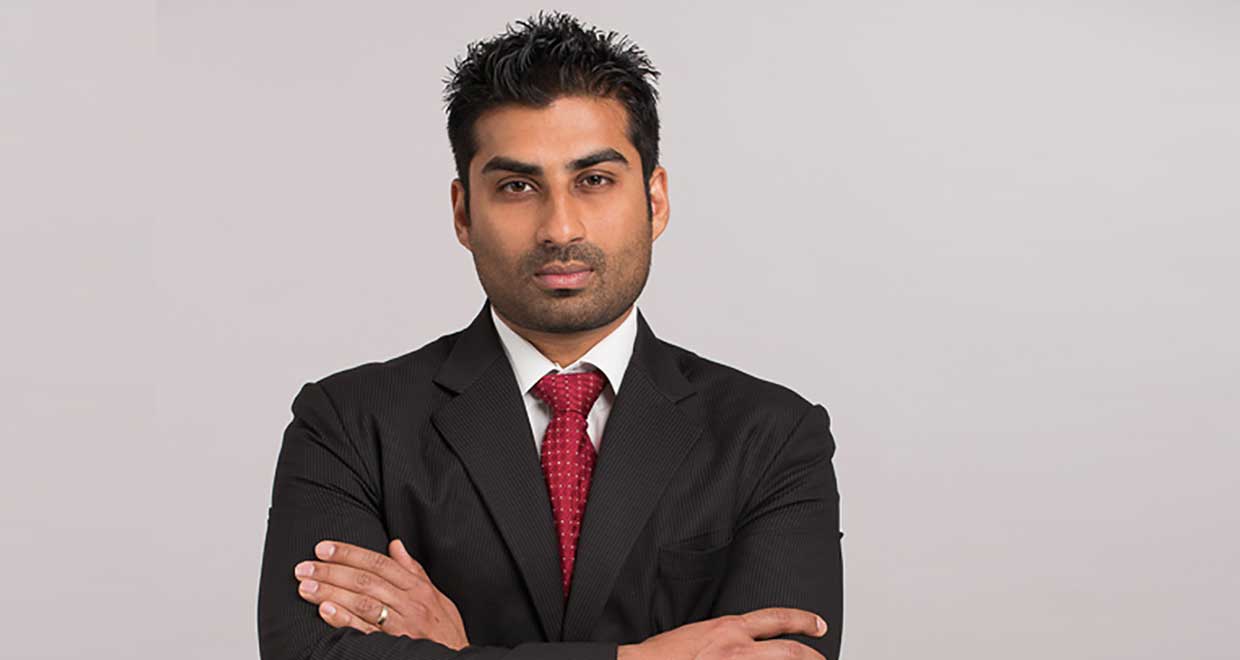
  • Abhinav Lohia, Partner, Davies and Associates, on immigration law, qualifying the NY Bar, and being a legal entreprenuer

    Abhinav Lohia, Partner, Davies and Associates, on immigration law, qualifying the NY Bar, and being a legal entreprenuer

    Abhinav graduated in law from Guru Gobind Singh Indraprastha University in 2007. He is a dual qualified attorney, admitted to the practice of law in the State of New York and the Republic of India. He was admitted in the Bar Council of Delhi in 2007. From 2007 to 2010, he was involved in mixed litigation including criminal defense, defamation, corporate criminal and intellectual property litigation at all levels of Judiciary including the Supreme Court of India. In 2010, Abhinav decided to concentrate solely on Intellectual Property litigation. In 2012, in order to pursue LLM from George Washington University School of Law, he moved to the United States. After graduating from the law school, he passed the New York State Bar Exam in 2013 and got admitted to the New York State Bar. In early 2014, he joined Davies and Associates, LLC, a full service immigration law firm headquartered in Manhattan. In 2015, Abhinav became a partner in the firm and the Head of India and South East Asia practice group. 

    Abhinav is a lawyer by profession and a traveler by passion. He is a member of Royal Beasts Motorcycle Club in New Delhi. He has traveled from Delhi to Mumbai, Hyderabad, Bangalore, Chennai, and Ladakh on his Royal Enfield motorcycle.

    In this interview we speak to him about:

    • His experience in IP Law
    • Studying in the US
    • His plans for the future

    What inspired you to take up law? 

    Like many other Indian children I was pushed to take up science in high school. My parents and I soon realised it was a big mistake. My sole motivation to work hard and graduate from high school was not studying science for an additional year. After graduating from high school, I decided to be as far away from science as possible and got admitted to a five year law program.


    Tell us a bit about your time as an undergraduate.

    I did not enjoy studying at my law school. It seemed like an unending marathon where we had to chew up the course work every day for five years and spit it out on the exam sheets. That to me seemed pointless. Courts are not interested in knowing how good your memory is, they care about precedents and arguments. A successful attorney needs good research skills, logical and quick thinking. Unfortunately, law schools fail to develop these skills. I did enjoy my internships though.


    Did you take part in co-curricular activities while in college? 

    I was part of the law school’s choreography club, basketball and soccer team. I am a strong advocate of co-curricular activities. It is great to spend time with like-minded people. Outside of law school I was an avid motorcycle rider. I traveled from Delhi to Chennai and Ladakh on my motorcycle. I think I covered around twenty states on my motorcycle. Motorcycling was my escape from everything. It is how I define freedom.


    What books, judgements that you have read, would you say have played an integral role in shaping your legal philosophy?

    I liked anything and everything to do with criminal law. Indian Penal Code was like a novel for me. The most memorable experience of my law school was drafting my research paper on Constitutionality of Brain Mapping and Narco-Analysis. At the time Telgi Scam was a hot topic. What made it challenging was that there were no Indian precedents. The matter was sub-judice in the Supreme Court of India.  I was forced to research on American Case Laws. This exposure was valuable on many levels.


    What were you areas of interest during your legal education? 

    As mentioned above, Criminal Law was my passion. I always wanted to be a litigator. I started my career as a criminal defence attorney. It was exciting at first and also gave me a sense of power. But soon that faded away. The long delays in court and the slow progress of cases killed my passion. I still wanted to be a litigator though. I researched and found out most intellectual property cases in Delhi are filed directly in the High Court of Delhi owing to pecuniary jurisdiction. They are fast paced as compared to Criminal and Civil Cases. I quit my job, took a pay cut and joined an I.P. law firm. For the first time in my legal career I was seeing the end of cases that I was filing instead of countless adjournments for questionable reasons.


    Could you tell us about the internships you took up, and what you learnt from those experiences?

    Internships are very valuable if you take them seriously. I primarily interned at Karanjawala & Co. It was a fruitful experience. My mentors were great, they pushed me to research all the time. The skills I picked up during my internship gave me a head start when I became an attorney.


    What motivated the shift from Chambers of Ankur Chawla to Lex Infini? 

    I moved to Lex Infini to pursue intellectual property litigation. It is here I found another mentor, Mr. Sushant Kumar Thakur.  He took me to the next level, professionally. He made me a fearless litigator and helped me transition to intellectual property. He gave me the freedom to work on matters from scratch to finish. He encouraged me to develop my own practice. It is here I started transitioning from a lawyer to a legal entrepreneur.

    What led you to decide to focus specifically on IPR litigation?

    (Abhinav’s diverse repertoire includes cases pertinent to areas of litigation including criminal defense, defamation, corporate criminal, among others.)

    I wanted to be a litigator and wanted a speedy disposal of cases. I also wanted to deal with corporate clients but never wanted to practice corporate law. Also, I.P. law was considered a niche field a decade ago.


    Tell us a little bit about your life a student of law at George Washington University School of Law. 

    Studying at G.W. Law was a great experience. It was the first time I saw the professors and students engage in a discussion as equals. The lectures were well structured and the course material made sense. We were not pushed to memorize everything; 90% was practical application. Most of our exams were open book and some were research based. The university also emphasized a lot on networking- they pushed us to meet lawyers and arranged a lot of networking events. There were a lot of social events within the school for students to interact and network with each other. I was on the board of Student Bar Association as a representative for LLM students and was also on the board of South Asian Law Students Association. Both these positions required a lot of student and faculty interaction and organizing events. I enjoyed every bit of it.  


    What was your experience with the Bar Exam in New York? 

    New York State Bar exam is one of the hardest exams I have taken in my life. As an international LLM student I attended only a year of American law school. I had to learn two years of law school courses in ten weeks during the bar prep course. Almost every day my friends and I questioned our decision of signing up for the bar exam. It was twelve to fourteen hours of torture every day for ten weeks.


    Can you please share with the readers your work profile so far at Davies & Associates, LLC? 

    I am a Partner at Davies & Associates, LLC. I head India and South East Asia for the firm. I represent corporates and high net-worth individuals from India and South East Asia who want to establish a presence in the U.S. I am one of the rain makers for the firm. A typical day for me starts with responding to queries of all the attorneys and paralegals that I supervise. I have a client facing role so most of the time is spent interacting with clients and scheduling meetings with them. I visit India and South East Asia every 40 days for client meetings. I meet with clients, explain the immigration process to them, tell them about our firm, and sign them up.

    Can you shed some light on the kind of work you and your firm are doing considering the current immigration crisis in the US?

    The immigration system is broken and needs an overhaul, however some of the suggested measures may make it very hard for some nationalities to immigrate to the United States. The change that impacts our practice the most is increase in investment amount to get investment based green card (EB5 Visa) from $500,000 to $800,000. This jump will make it very hard for a lot of people from India and other developing countries to get an investment green card owing to the week currency. We are part of various organizations that lobby against such changes. Also, I am on the Board of South Asian Bar Association, we run a pro bono immigration clinic to help immigrants who have limited or no access to legal representation.

    How do you manage your time between your professional and personal interests? 

    After a decade of working I have been able to find a work life balance. I love traveling, and fortunately some of it is satiated by the nature of my job. In order to spend time with my family I start my day early so that my evening are free. I try not to take client calls when I am at home. I figured clients will respect my personal life if I respect it.


    Where would you like your career to take you five years down the line?

    I achieved professional success in a short period of time since I moved to the States. Having become a partner at my firm, I cannot get promoted further. I joined a fairly new law firm that grew rapidly. I want to continue riding this wave and grow the firm. I also want to author publications and become an adjunct professor in a university, preferably George Washington University.


    What advice would you like to give our readers, who are mostly law students and young lawyers?

    Be fearless, it is never too late to change your career path. I found my calling after seven years of practicing law, changing my fields thrice and moving to a different country. Also, this is the age of being a legal entrepreneur instead of just being a lawyer. Develop networking skills, gain some knowledge regarding marketing and sales.

  • Anupam Prasad, Partner, Indus Law, on studying e-commerce management, commercial law, and his experience

    Anupam Prasad, Partner, Indus Law, on studying e-commerce management, commercial law, and his experience

    Anupam Prasad graduated in law from NUJS, Kolkata, in 2006. He is currently Partner at Indus Law. Anupam has experience in general corporate and commercial laws practice. He has significant experience in drafting transactional documents and representing clients in structuring commercial transactions and in negotiations in areas pertaining to funds, private equity investments, joint ventures and mergers & acquisitions (onshore and offshore). Anupam has assisted numerous businesses on India entry strategies, including formation of corporations and provision of all related post incorporation advisory services and documentation.

    In this interview we speak to him about:

    • His time at NUJS
    • Studying management after law
    • His diverse experience


    How would you like to introduce yourself to our readers?

    I am a Partner at Indus Law, Mumbai. My core practice areas at the Firm are mergers & acquisitions, corporate & commercial advisory, joint ventures, fund investment, private equity and venture capital Investments.


    Give us a brief overview of your life at NUJS.

    Life at NUJS was formative, both for us as the students and the university, as we were only the second batch at NUJS. The initial years were very different and exciting at the same time, as NUJS was operating off a temporary campus, while the permanent campus was under construction. Being part of the Student Juridical Association (University’s student body), we were actively involved in the formulation rules and procedures for setting up various student run committees, etc, which was imperative for setting the working of the University for the years to come. There have been varied experiences which have been good as well as not so good experiences / incidents while at college, which I guess is all part of growing up. For the sake of brevity, I shall not get into any specifics.


    Is it absolutely necessary to moot or undertake paper publications in order to be a successful advocate?

    As young adults, law school provides a number of opportunities to be associated with – be it the moot courts, paper publications, literary and debating opportunities, cultural events, sports etc. It’s a great opportunity to hone one’s skills, and also figure where one’s strong suits lies. In this context, a law student should try and involve himself / herself with as many activities as possible. The objective to have a well rounded approach and which would certainly help as a professional as well going forward.


    What internships would you recommend to a student who also aspires to cull out a career for himself/herself in corporate law?

    As a law graduate, the career opportunities are immense – litigation, in house roles, policy work etc. Post a LLM degree, the opportunities increase further. As far as internships are concerned, a student should garner experiences in all possible forums–whether it be at courts, in-house, think tanks, NGOs etc. In my view, these are enablers to help a student decide the profession that they would want to pursue post graduation.


    Do managerial courses add value to the resumé of a practicing advocate?

    (As opposed to the conventional L.L.M, Anupam pursued his post-graduation in E-Commerce Business Management.)

    In my view that’s an unfair comparison. In reference to areas of practice, I do a fair bit of work in the e-commerce sector across verticals, which would include transactions as well as advisory work. While the focus is legal advisory, to understand the commercial and operation sides of the sector, I had undertaken the course and also for self learning, which is a continuous process. As professionals, the advice that we give, should make commercial sense to the client as well, and for it we need to understand the sector as well.    


    At what stage in one’s law school life must one pick a field to specialize in?

    Unless an individual is certain while he/ she is at the college as to the field of specialization that the individual would want to get into, in my view, the initial years at work would help in determining the field that one would want to specialise in. This is because there is a huge difference in the learning while we are in college and when we actually start working.

    I would suggest (which I have done myself as well) to broaden on’s base and get work experience in various verticals that one can get exposure to. In fact, many firms today have a policy to rotate the fresh graduates among the various teams in the firm. This will also help in honing varied skill sets. In fact, as a result of this philosophy, one would be useful resource should the markets are not doing well. For instance, I did a lot of employment and litigation related work in around 2008 – 2009, when the economy was stagnant  and on the transaction front, nothing much was happening.


    How has the journey been from being an Associate at NDA to being a Partner at IndusLaw?

    I started a career with NDA and was there for four years and then moved in Khaitan & Co, where I was there for little over three years. After Khaitan & Co, for a brief period I worked independently and did manage a small practice of my own. Since I was getting work, including on matters which were not my areas of practice, such as litigation, this is when I considered getting into an organisation setup. This is when I joined RDA Legal and was taking care of the Mumbai office of the firm. Having spent about three years at RDA Legal, I moved / merged my practice with Indus Law in Mumbai. While as an Associate the responsibility is getting the work done, as Partner, and in a leadership position, the responsibilities are varied, that include getting business, execution of matters, client interface, being responsible to and for the team, etc

    In my experience thus far, I believe there are opportunities for everyone. However, these are not so easy to come by and is a function of the ability to take the risk, persevere, to never give up, work hard, be humble, respectful, believe in yourself, stop self doubting  and then magic happens!


    What would you say are the most attractive features of the work culture in Mumbai with specific reference to the legal fraternity?

    I adore the work culture in Mumbai. People from the legal fraternity are generally professional, matter of fact and have elements of EQ as well, which in my view is very important.


    What is the level importance given to a student’s Grade Point Average with respect to recruitment at Tier-I firms?

    In my view, GPA is one among the other aspects that is important for recruitments. To the best of my knowledge, while GPAs do help firms for short listing the student’s for recruitment, it is the overall resume of students, in terms initiatives and activities undertaken by a student matter immensely as well. Further, on the days of recruitment, the interviews etc make the significant difference as well, and such recruitments may not have a bearing on the GPA scores. There is significant empirical data to show the Tier 1 firms have hired from the entire spectrum of students participating in the recruitment process, especially if the recruitments nan organisation have happened in large numbers.


    How do you handle your diverse client base?

    (Anupam has clients across several jurisdictions including USA, UK, France, Italy and UAE, i.e., both civil law as well as common law jurisdictions.)

    In this era of global economy and cross border transactions, it is not uncommon to have clients across several jurisdictions. On matters involving foreign clients, on issues which are local in nature, we are advised by the client’s local counsel. Also, while dealing with clients from varied jurisdiction, I wouldn’t say the process in reference to the transaction per se is not cumbersome. Each transaction has case specific set on issues relating to structural and legal challenges, etc. The other set of challenges are more in the logistics and execution side of things, especially in circumstances where there are multiple parties in multiple time zones.


    How does one go about writing?

    While I don’t write as often as I would ideally like to do, in my view, it’s a small way of contributing to society by sharing knowledge by writing these articles. I have mostly made efforts to write on issues that are contemporary in nature, so that it is most useful to the readers.

    Therefore, I would strongly recommend readers to write on topics which are contemporary in nature. Further, this is an excellent avenue to showcase thought leadership and connect with other professionals on topics of similar interest.


    Is there any other suggestion you would like to give to our budding lawyers?

    Enjoy whatever you do, especially the college life – study work, play hard. Do not get disheartened should things don’t work out, the way you may have planned – remain focussed, be humble, meet people/ network, be helpful and competitive (but in a right way)!

  • Thayananthan Baskaran, Partner, Zul Rafique & Partners, on ADR, and practice in Malaysia

    Thayananthan Baskaran, Partner, Zul Rafique & Partners, on ADR, and practice in Malaysia

    Thayananthan Baskaran graduated in law from King’s College, London, in 1998. Presently, is a Partner with Baskaran, Kuala Lumpur, and an associate member of Crown Office Chambers, London.

    Thaya’s primary area of practice is construction law. He drafts various building and engineering contracts, advises on disputes arising from such contracts and appears as Counsel to resolve these disputes.

    Thaya is a co-author of The Belt and Road Initiative: Legal Risks and Opportunities Facing Chinese Engineering Contractors Operating Overseas published by Kluwer Law International in 2019. Thaya is an editor of Construction Law International, the magazine of the International Bar Association’s International Construction Projects Committee. Thaya was also the President of the Society of Construction Law Malaysia (2016-2017).

    In this interview we speak to him about:

    • Practice in Malaysia
    • His experience in arbitration
    • His expertise in construction law

    How would you like to introduce yourself to our readers?

    I am an advocate and solicitor based in Kuala Lumpur with chambers in London.  My primary area of practice is construction law. I draft various building and engineering contracts, advise on disputes arising from such contracts and appear as Counsel to resolve these disputes.  I also sit as an adjudicator, arbitrator and mediator.


    Share with us some of your experiences as a student of law at King’s College, London.

    I read law at King’s College, London, almost twenty years ago.  I enjoyed studying criminal law and jurisprudence in College and particularly recall writing an essay on how rape should be regarded as a form of heinous assault or bodily injury.  I would like to have studied human rights law but was wary as there was no textbook on the subject at the time.  Apart from the College, I very much enjoyed my time in London.  London remains one of the great cities of the world, and I spent a lot of time at the bookshops, galleries and theatre.


    What advice would you give students about avoiding a decision paralysis?

    My advice would be to start practice after completing the bachelors degree and being called to the Bar.  Once you have started practice and decided on the area you would like to specialise in you can consider doing your masters in that area.  Practice is quite different from theory, so it is perhaps best to practise first before deciding to specialise in an area.


    Have you always been keen on a career in contract and ADR?

    When I started practice in 2000, the metro rail was being completed in Kuala Lumpur.  I was involved in advising on disputes arising from this project.  Like most construction lawyers, one project leads to another, and before you know it you have specialised in the area without actually having consciously decided to do so.

    The standard form construction contracts used in Malaysia and internationally provide for the resolution of disputes by arbitration.  So, from advising on these disputes, it was a natural progression to appearing as Counsel in arbitration.

    Later, I was appointed as an adjudicator, arbitrator or mediator to determine these types of disputes, as well as more general commercial disputes.


    What was your path to being empanelled on several prestigious arbitration centres like? 

    As mentioned above, my area of practice to some extent naturally led to my sitting as an adjudicator, arbitrator or mediator.  There are certain key persons who have encouraged me to pursue this.  Firstly, I must mention Datuk Professor Sundra Rajoo, the Director of the Kuala Lumpur Regional Centre for Arbitration, who encouraged me to sit for the Chartered Institute of Arbitrators examinations and be empanelled with the KLRCA.  Once I had become a Fellow of the Chartered Institute of Arbitrators, been empanelled with the KLRCA and sat as an arbitrator in Kuala Lumpur I was able to apply for and be accepted at various international arbitration centres.  I must also mention Dr Cyril Chern, a barrister at my chambers, Crown Office Chambers, and the author of Chern on Dispute Boards, who encouraged me to pursue contractual adjudication and was instrumental in having me elected a Fellow of the Dispute Board Federation Geneva, which led to my being on their Expert Panel.  

    It has always surprised me to some extent, from my experience as an arbitrator, that people, disputes and the basic principles of law are the same around the world.  Despite the apparent divide between the civil and common law traditions, I believe there is more in common in principle than there are differences.


    Could you please share with us some of the key nuances of good drafting and how rookie mistakes can be avoided?

    The key to drafting construction contracts is to firstly thoroughly understand the model that the client intends to use.  There are many models in the construction industry, such as conventional contracts, design and build contracts, design build operate contracts, and so on.  There are also the newer and more innovative models such as partnering and alliance type contracts.  Secondly, once the model has been understood, it is perhaps always best in the construction industry to start with a standard form contract that suits the selected model and the division of risks between the parties.  The standard form may then be amended to reflect the particular needs of the client.  These amendments should be of a minimally invasive nature so as to prevent affecting the structure of the standard form.


    What are the key attributes that one must develop in order to excel in the field of arbitration and mediation? 

    I would highly recommend doing the Diploma in International Commercial Arbitration offered by the Chartered Institute of Arbitrators.  This provides a solid theoretical basis for future practice.  In terms of practice, one should set aside sufficient time before the hearing to read the papers thoroughly, to enable clarification of matters during the hearing.  Most arbitrations are decided on the facts, which are, in turn, largely reflected in the documents.

    As to mediation, again it is best to start with some formal training.  I was trained at the Singapore Mediation Centre, which offers an excellent course in Asia.  Loong Seng Onn, the Executive Director of SMC, plays a leading role in the training, which provides an understanding of the skills required of a mediator.  These skills are quite different from those of an arbitrator.  Here, the key really is to keep an open mind and determine the common interests of the parties that will facilitate a settlement.  Once these interests are identified, from my experience, even if a settlement is not reached at the mediation it is likely to be achieved soon after.


    Having worked in Kuala Lumpur, Singapore and London, what are the cultural differences that you find in the legal environments of these countries? 

    There is more in common between us than there are differences.  English and the common law system are used in all these jurisdictions, which helps.  Having said that, there is always much to learn from other jurisdiction.  The skilful cross examination of barristers in England is a pleasure to attend and may be adapted in Kuala Lumpur.  The efficiency of solicitors in Singapore is well known and can serve us as a benchmark for practice.


    As a Partner at Zul Rafique & Partners, what does a typical work day look like for you?

    I’m afraid I don’t really have a typical work day, as my work is so varied.  It depends whether I’m in court or at an adjudication, arbitration or mediation or whether I’m in Kuala Lumpur or overseas.  Much of the pleasure of my practice is the varied nature of the work and the travel it involves.


    In your opinion, has Alternate Dispute Resolution fulfilled the role of administering speedy justice while ameliorating the heavy backlog of cases in the courts?

    Again, I’m sorry, or rather, I’m delighted to say that there are no backlogs in the courts in Malaysia after the reforms initiated by The Right Honourable Chief Justice of Malaysia Tun Zaki Tun Azmi.  Cases in the High Court are disposed of within six to nine months and appeals are disposed of within three months.  The challenge now is to justify arbitration to clients.  In international contracts, arbitration is more easily justified as the award may be enforced almost globally under the 1958 New York Convention.  In purely domestic contracts, arbitration is now justified more in terms of the expertise of the arbitrator, the confidentiality of the proceedings and the relative informality of arbitration, as compared to the courts.  However, domestic arbitration will have to keep up with the speed of the courts.  Parties will have to explore more innovative forms of arbitration such as, documents only arbitrations and chess clock hearings to reduce time and cost.  These innovations are becoming more common in practice.

    Apart from arbitration, statutory construction adjudication in Malaysia does have an advantage in terms of time and cost over court proceedings.  Generally, these adjudications only take three months and are determined solely on documents.  They have proved very popular.  However, the adjudication decisions are only temporarily binding.


    Could you tell us a little about your upcoming book? 

    My book is essentially a commentary on the Malaysian Arbitration Act 2005, which is based on the 1985 UNCITRAL Model Law on International Commercial Arbitration.  The commentary includes judgments by the courts of Malaysia on the Act as well as reports and analysis by the UNCITRAL.  Writing the book, while being in active practice, has involved managing my time I try to write every night after work.  I have a substantial library in my house, which I am able to refer to and work from.  Writing the book has been one of the greatest pleasures of my practice and I look forward to its publication later this year.


    What books, judgements that you have read, have played an integral role in shaping your legal philosophy as a lawyer?

    In terms of arbitration, I have very much enjoyed reading the works of Professor Emmanuel Gaillard, in particular the Legal Theory of International Arbitration.  Professor Gaillard’s ability to transform what is essentially a very dry subject into compelling reading is really incomparable.  

    In terms of judgments, the ground breaking and yet simple and lucid judgment of Lord Atkin in Donoghue v. Stevenson never fails to amaze me.  It should be read and reread in terms of how to be quietly revolutionary.


    How do you manage to maintain a work-life balance as a busy legal professional?

    I don’t attempt to maintain a balance, as I do not see a distinction.  I enjoy my work very much and do not, in that sense, see it as work.  The words of the Bhagavad Gita on duty come to mind in this regard:

    It is better to do thine own duty, however lacking in merit, than to do that of another, even though efficiently.  It is better to die doing one’s own duty, for to do the duty of another is fraught with danger.


    How do you keep yourself abreast with all the daily news, happenings and legal developments in the world?

    I read journals.  Recently, I have discovered that the Supreme Court of the United Kingdom has some important judgments read out and recorded.  These recordings are available on their website and have become my favourite ‘movies’.


    What advice would you like to give our readers, who are mostly law students and young lawyers?

    Enjoy your work, it will be much of your life.


    LAST UPDATE MADE ON 28.07.2021 BY ISAM KABIR  AND THE SUPER LAWYER TEAM


  • Dr. Milind Antani, Leader-PharmaHealthcare and Social Sector, Nishith Desai Associates, on switching from medicine to law, managing healthcare practice, and his diverse experience

    Dr. Milind Antani, Leader-PharmaHealthcare and Social Sector, Nishith Desai Associates, on switching from medicine to law, managing healthcare practice, and his diverse experience

    Dr. Milind Antani graduated in law from SP University, Vallabh Vidyanagar, in 2004. Dr. Antani has been a practising ENT surgeon prior to that. He currently leads Pharma & Healthcare Practice and Social Sector Practice at Nishith Desai Associates. He represents clients in matters including mergers and acquisitions, investments, regulatory and transactional matters, intellectual property prosecution and litigation, joint ventures and new companies.

    In this interview, we speak to him about:

    • Making the shift from medicine to law
    • Working with Nishith Desai
    • Developing the pharmaceutical and healthcare practice


    What motivated the shift from medicine to law?

    After my MBBS, I did my Masters (MS) in ENT Surgery. Post that, I practiced for fourteen years as an ENT surgeon in Gujarat. I would rephrase that question and ask who motivated the shift, and not what. Nishith Desai motivated me to consider taking up the legal profession in order to start, develop and groom the pharmaceutical and healthcare practice. He encouraged me to make the difference with the domain knowledge that is so crucial for any profession. And post that what kept motivating me was the challenge to develop this practice. The challenge for the transition was to change mind-set from being a doctor to being a lawyer, being from a small place like Anand in Gujarat to a big place like Mumbai, and understanding the whole domain from the legal perspective.


    Tell us a bit about your time studying law as an undergraduate student.

    Studying law was not easy as I did that along with my active practice. Working out schedules of surgery and classes was a challenge but with good support of college and teachers I could manage the same. I was very focused while pursuing law that would be relevant to the pharma and healthcare practice.


    How has your education in medicine and medical practice of over fourteen years helped you in your career as a lawyer today?

    Significantly. Having knowledge of the domain in which you are working always helps. It has helped me understand client issues easily and then explain it to my colleagues in a better way. Understanding medicine as well as law has helped me work out relevant solutions to problems. Client gets comfortable when lawyer understands his language and speaks the same language too.


    Could you tell us about the internships you took up, and what you learnt from those experiences?

    Unfortunately, due to the professional schedules, I could not do internships during studies. But I must say that internships provide an excellent opportunity to students to gain practical knowledge and application of mind.


    What are the parameters that must be considered in deciding what the next step should be after graduation?

    According to me, decision paralysis is never by default but by choice. I firmly believe in the Seven Habits of Highly Effective People by Stephen Covey. Habit 2, “Begin with the End in Mind” and Habit 3, “Put First Things First” give you the correct perspective on deciding and then managing career. Every law student must keep these in mind and work on their career. I suggest only one parameter and that is “Believe in Yourself” and things will follow. Money should never be the parameter as I strongly believe money is the by-product of good efforts.


    Could you tell us about the Sixth Sense Academy for Human Excellence?

    Soft skill training has always been a passion for me and I am a certified trainer of Indian Junior Chamber (Jaycees). I started this academy to train students of schools and colleges in Anand. I still do such programs whenever the opportunity arises.


    On what parameters do you choose the projects you work on?

    Sometimes you don’t have a choice to choose the project to work on but we need to work on for clients. But yes, projects in which we can make the difference to clients definitely give that kick to work and deliver the best. And to build as specific body is very crucial as we need to tap in the best resource for the work.


    How did you come to work with Nishith Desai Associates?

    As mentioned in my first response it was Nishith Desai who motivated and encouraged me to change career and I haven’t regretted it. It is the ease, the simplicity, the culture, amazing colleagues, the autonomy to work makes it most enjoyable for me.


    What does a typical working day at Pharma & Healthcare Practice look like for you?

    Our firm has consciously moved to “Networked Leadership” from “Partnership” model. Hence no one is partner in the firm and this has led to cultivation of leadership mind-set in every firm member. The firm strongly believes in work-life balance and hence working hours don’t get stressful unless a transaction or a matter demands so. The culture and the processes do not make learning challenging at all at NDA. Personally I have not come across any major challenges to work at NDA as NDA provides ample opportunities to learn at every level from most junior to the most senior.


    What advice would you give to lawyers who aspire to develop a proficiency in multiple fields of law?

    “LOOK up, GO for it. You will GET it.” The challenge is where to look up. So it is important to work hard towards what you want to achieve. Decide what you want, work on the same. I believe it is important for a lawyer to become a visible expert. Hence the lawyer must continue to focus on one specific area and develop expertise of the same that will make him visible in the market.


    Did you have a mentor or guide during the formative years of your career?

    It is very important to have someone to whom you can look up to not only during your formative years but during entire career. And for me Nishith Desai was that person to whom I always look up to. Another person to whom I look up to now for last four years is my son, Kavan, who is twenty years and is an entrepreneur. He has been my greatest guiding force for everything.


    Could you share with us some of your experiences from working on high profile cases while at Nishith Desai Associates?

    Can’t put a finger to anything in particular but it has always been challenging with fun and more unlearning than learning at NDA. And this is vital for development as a professional


    Could you take us through the process you adopt while writing a paper or book?

    (Dr. Antani has co-authored a book on Contract Research and Manufacturing Services in relation to the regulation of the pharmaceutical and biotechnology.)

    Research, team work and application of mind with practical approach. Whatever you write, should be easily readable, understandable, applicable and useful to the reader.


    What books, judgements that you have read would you say have played an integral role in shaping your legal philosophy?

    Rather than books/judgement I would say input from all the colleagues specifically Nishith Desai, Gowree Gokhale, Vaibhav Parikh and Anay Shukla have played a big role in developing my legal philosophy. So my advice to everyone is to develop a capability to listen well and understand feedback and changing accordingly. And of course one needs to go through specific books on law.


    What are the key attributes that one must develop in order to excel in this industry?

    Believe in yourself, set goals (short to mid to long term), decide priorities, unlearn a lot, listen carefully, change when required and act on what you believe is right


    How do you manage your time between your professional and personal interests?

    I always believe that everyone has time what is required is managing time. I enjoy reading books, watching movies and Gujarati plays, watching sports and soft skill training.


    What are the challenges you have faced in building up your career as it stands today?

    The biggest challenge was to disengage myself from the ‘small town’ tag, understand hard core legal nuances, and convince myself and others that a doctor can be a good lawyer too. For next seven to eight years I will keep doing what I have been doing here at NDA, take the practice to next level and give it in the hands of my successor when I retire.


    Given the dynamic nature of the field you practice in, how do you keep yourself updated about the latest developments in the law?

    Read Read Read; Listen Listen Listen; Talk Talk Talk; Discuss Discuss Discuss .Always remain in a playfield attending key events.


    What advice would you like to give our readers, who are mostly law students and young lawyers?

    Set specific goals, stay focused, develop domain expertise and become Visible Expert. And most important believe in yourself.


  • Bhumesh Verma, Partner, Link Legal India Law Services, on commercial law, his teaching experience, and the art of writing

    Bhumesh Verma, Partner, Link Legal India Law Services, on commercial law, his teaching experience, and the art of writing

    Mr. Bhumesh Verma graduated from Delhi University in 1994. He was selected as a Chevening Scholar in 2000 by the UK government. During this scholarship, he studied at the College of Law at York and worked with Ashursts in London. Mr. Verma is currently a partner in the corporate and regulatory practice team of Link Legal India Law Services, New Delhi. He began his career at Ajay Bahl & Co. (now part of AZB & Partners) and went on to become a partner at Khaitan & Co and PKA Advocates before joining Link Legal. Mr. Verma has 22 years of experience in domestic as well as international corporate and commercial matters.

    In this interview we speak to him about:

    • His illustrious career, and his diverse experience
    • His passion for teaching
    • Engaging in academic writing

    How would you like to introduce yourself to our readers?

    I am a law student. Having spent some time in the profession with wonderful lawyers and clients, I may know a bit more about law and business than some young law students or lawyers, but that’s about it. In the legal profession, one is always learning and updating.


    What inspired you to take up law? 

    STEM disciplines have always been most popular among parents and even majority students. Being a school topper, I too was expected to pick up science. Maths was one of my favourite subjects. However, I had no interest in medicine, engineering or any other technical course. I picked up commerce and went on to pursue B.Com (Hons) from Delhi University. During my graduation, I got acquainted a bit with business laws.  It sounded interesting and challenging, so I thought pursuing law would be good option for me.

    I come from a humble, salaried class family. There was absolutely no one in my family, nor a friend in the legal profession (I don’t think even today is, besides me). My family never even knew a lawyer. To add to it, immediately after my graduation, I landed up a job as Accounts Executive with a good NBFC. So, all these circumstances were conspiring to drift me away. However, family being sure of my conviction and track record in studies till then, gave in.


    How would you contrast your time as an undergrad at Delhi University with your experience at College of Law, York, England?

    Campus Law Centre, Delhi University used to be among Asia’s top law schools in 1990s. Studying there was fun in those days. Even getting the admission makes it a funny story now. Ours was the first batch for which an entrance exam was introduced in Delhi University. We had absolutely no syllabus, no workbooks, no coaching classes, no preparation. Just appear in an entrance exam one Sunday morning and wait if you are in or not. This is how the first batch got in.

    The classes were held in typical old-school style – black board, chalk and talk. There were no computers or gadgets to help, no online searches available. We had to use the library a lot. Some smaller roadside help books called ‘Dukkis’ were also available and some students used it for last-minute cramming.

    College of Law at York was a different ball game altogether. Use of PPT, computers, interactive sessions, negotiation role-play, drafting skills workshops, interaction with local practicing lawyers, visits to Courts in London, Edinburgh and Employment Tribunal in Leeds to observe the actual atmosphere. It all made a big change in my understanding, perception and presentation skills.

    Although I was already working with foreign lawyers on international assignments before the scholarship, access to foreign educational institution, courts, foreign lawyers’ offices, working in a foreign law firm was a welcome experience. This gave me an insight about ‘where they are coming from’ and bridging the gap between what they expect and what Indian lawyers think they expect.


    What were you areas of interest during your legal education?

    I was always interested in Corporate laws so took up Business laws, labour laws and tax laws as my optional subjects. After joining Ajay Bahl & Co. (now part of AZB Partners) after passing out from college and working on FDI related transactions, incorporating companies, getting into secretarial, statutory, tax compliances etc., providing opinions on corporate law issues, drafting commercial contracts, etc. my conviction about my suitability for corporate practice strengthened. My supervising partners also saw value in my being part of the corporate practice vertical in their firm.


    What are the causes you feel strongly about? 

    I can only speak about the corporate laws perspective. Being transparent in all business deals, optimum compliance with law of the land and expeditious resolution of any issues arising out of non-compliance or otherwise are very close to my heart. Throughout my career, I have been advising clients to adhere to sound legal principles and not take recourse to “fixing”, “managing”, “manipulating” or brushing aside legal issues. As professionals, our stake in any matter is very minimal in terms of money, but immense in terms of reputation. Am proud that I have had the privilege of working with some of most reputed and ethical professionals in the country, who have been insistent on refusing a brief rather than compromising on principles. This is more important in case of foreign clients entering India. The laws pertaining to anti-corruption are more codified and enforceable outside India so we have to be doubly careful while advising foreign clients and not suggest short-cuts or unethical solutions.  

    Could you tell us about the internships you took up, and what you learnt from those experiences?

    Internships were not as structured in my college days as they are now. During my college days, I took up internships with litigation lawyers, learnt about of court practice, drafting, representation in the courts and so on. It helped me learning the basics from a grass root level. Since I had no relation or godfather in the profession, I had to work doubly hard.


    What advice would you give students in avoiding a decision paralysis? 

    On the contrary, I do not see much decision paralysis. In fact, I feel many students have pre-decided what area they wish to pursue even before joining a law school driven by the “packages” their senior friends or family members have got or the numbers they read in economic newspapers or some other sources.

    By the middle of your law course, majority of students are clear about what they wish to pursue. Litigation and corporate practices are complementary to each other but require different soft skills. Some students are very passionate and clear about their respective practice field – i.e., IP, environment, international laws, etc. one should pursue the line what feel confident about and is passionate about. Every practice area is rewarding, but it takes hard work. Some practice may sound remunerative from the first day, but it could saturate if you are not good at it.


    Could you please share with us how you came to be awarded with the prestigious Chevening Scholarship? 

    The British government used to provide scholarship to young Indian lawyers with few years’ work experience to get a feel of UK legal education and work culture. One of my senior colleagues had already been awarded this scholarship, so I was aware of the programme. Out of about 400 applications received in 1999, I was among the sixteen selected for this prestigious scholarship. The competition was so tough that year that instead of normal intake of twelve, they had to take sixteen!

    Scholarships are great means to enhance one’s knowledge and vision. Students should look at scholarships which could be useful in expanding their horizon in totality. One should not limit her quest to finding a job in the country wherein you get the scholarship. I don’t think more than one or two people in my batch would be abroad today. All of us came back with enhanced knowledge, exposure, contacts and confidence and are doing very well.


    What did you enjoy most about studying at College of Law, York?

    As I mentioned earlier, the teaching methods, education tools and exposure was very different. Being foreign students, we were pampered a lot while strictness on attendance and discipline was there. The teachers there were more of friends, unlike the strict and typical guru-shishya system in India.

    We did a lot of interaction based studies, role play for negotiation, drafting skills workshops presentations before the faculty on comparison of Indian vs UK laws, went to various courts within UK, and so on. At the end of the teaching programme, we were placed with law firms in Central London. I worked at Ashursts.

    From a law student to a lawyer, how will you describe the transition?

    I don’t think it is any different from any other profession. As a student, you just study and write or otherwise convey your opinions and views in exams and presentations. You can get marks or grades for providing your opinion one way or the other.

    Once you are out with a degree and registration as a professional, the reality hits you. The buck stops here. Whatever you say or do, has to be very carefully crafted and drafted – be it a pleading, argument, opinion. Your client getting bail or jail depends on your skills. Your clients’ millions in a new project or success in negotiating a deal depends on your skills. So, now the onus starts falling on you. It makes you more careful and responsible.

    Could you take us through the process you adopt while writing?

    There is too much of information available these days. Each one of receives so many phone calls, emails, updates and newsletters that we are sick of it.

    I enjoy tracking developments in corporate and investment laws of India. By now, I have too many professional contacts worldwide and it is very difficult to discuss any new developments with them on a one-to-one basis, nor do I wish to spam anyone not interested. Hence, I thought of formulating useful information in the forms of articles which anyone could read without obligation or interference on my part seems interesting. Now, people who are interested in these topics read, comment, compliment, criticise at their own free will.

    What I do is I track news and developments which in my view could be useful for my contact base and other professionals. I try to put it in simple language so that non-lawyers could also grasp the intent with basic and useful information. For more details and specific advice, the readers can always approach me directly. Due to the simple language I use in my blogs and articles, sometime Indian and international websites request me for republication thereof, which I happily agree to.


    Where does you passion for teaching come from? 

    (Mr.Verma started initiatives to impart legal knowledge and experience to younger lawyers and students at firms where you have worked. He has also been a guest lecturer at various national / international institutions.)

    Unlike money, knowledge increases by sharing. I enjoy sharing my knowledge with younger lawyers and students, so whenever there is an occasion, I am available for mentoring, be it CLE at the firm or guest lecture at an institution or a presentation at a seminar.

    The first professionals a kid has interaction with are doctors and teachers, isn’t it ? Kids are scared of doctors for obvious reasons, so they tend to pick up a teacher as their first role model. I think that has stayed with me forever. I have utmost respect for teaching fraternity and am thankful to the role of all my teachers for shaping me into whatever I am today. Within me too lies a teacher as well, so as and when there is an opportunity to go back to college, I am too happy to oblige. I keep getting offers for writing books and joining as guest faculty, so never know what lies ahead.


    Did you have a mentor or guide during the initial phase of your career?

    I have been very lucky and privileged to have worked with some of the best professionals of our times during last two and a half decades, be it Mr. Ajay Bahl, Ms. Lira Goswami, Mr. Pinto Khaitan, Mr. Paras Kuhad or Mr. Atul Sharma. There are some common traits to all these legendary and successful people. The more experienced and knowledgeable you are, you tend to be more approachable, humble, down to earth and open to new ideas. I am thankful to all these wonderful people for guiding me through my career and still rely on them for guidance. Besides legal acumen, you tend to learn so much from great professionals in terms of ethics, solution-centric attitude and so on.

    So, the importance of a good mentor cannot be underestimated, particularly in the initial phase of one’s career.


    Given the dynamic nature of the field you practice in, how do you keep yourself updated about the latest legal developments?

    Read and discuss.


    What advice would you like to give our readers, who are mostly law students and young lawyers?

    There are no short cuts or free lunches in life. Work hard. Be humble. Be serious about studies and work, but live and enjoy life too.


  • Sambhav Ranka, Partner, IC Legal, on his experience, studying in London, and dealing in M&A

    Sambhav Ranka, Partner, IC Legal, on his experience, studying in London, and dealing in M&A

    Sambhav Ranka is a graduate from ILS Law College, Pune, batch of 2005. He subsequently went on to pursue his Master’s degree in Law from Queen Mary, University of London, with a focus on international corporate and commercial laws. Since then he has worked at Morgan Walker Solicitors, LLP and Nithish Desai Associates. He is currently Partner at IC Legal, Advocates & Solicitors and heads the M&A, Private Equity and Venture Capital practice at the firm.

    In this interview we speak to him about:

    • Being a third generation lawyer
    • His diverse work experience
    • Challenges in the field of Mergers and Acquisitions


    How would you like to introduce yourself to our readers?

    I come from a family that has been part of the legal industry for generations now. I too am in the legal profession, but by my own choice, not because it is an evident conclusion. I believe that I belong to a generation, which has broken free from the past practices of following the footsteps of the family profession/business and ours is the generation that has started the practice of having the right to decide the career path of interest and choice. I say this as I had all the liberty to choose a different career path. However, the glory and passion towards the legal field brought me where I am today.


    What motivated you to pursue law?

    My grandfather is a Senior Advocate, Rajasthan High Court. My father is a Judge, Jaipur Bench, Rajasthan High Court and my brother is a counsel. Growing among legal professionals all my life, legal articulation was in my genes and vision. Besides this, meeting and interacting with legal luminaries and legends all throughout my childhood and being in awe of their wisdom, solidity and art of exhibition, I was always inspired to imbibe the same.


    Share with us your experiences as a law student at ILS, Pune.

    ILS Law College laid the ideal foundation for me to join the noble profession of law. The best experiences at ILS Law College were the times invested in the extracurricular activities and looking beyond hard-core academics, which led to a holistic development. All my classmates were from different geographies (even beyond India) which further expanded our horizons. Needless to say, the faculty has always done above and beyond to help us out. Participation in various competitions, events and simultaneous internships at different fora aided in shaping the legal professional in me.


    How did you develop the skills necessary for academic writing?

    The best way to build up the skills for academic writing is by doing ample reading, and more importantly, reading the right content. As lawyers, our profession is anyway built around reading legislations, commentaries, articles, orders, etc. At times, it is helpful to read content that is not related to the legal profession. For example, I make sure that I find time to read the opinion pages from the NY Times, Wall Street Journal, Washington Post and the like. In addition to building vocabulary, such write-ups help in opening the horizon of thoughts and imagination. This helps a lot whenever I try to author any article or write-up myself, as the devil is in the detail.

    In my early days, I was advised about two principles that I believe and follow: 1) Never feel shy in raising any query, whether to a senior, in a meeting or even at a public gathering. No question is stupid. Effective solutions can be arrived at only by questioning everything. Also, not clarifying the fundamentals will make you more susceptible to making bigger mistakes in the future. 2) There is no end to learning, knowledge and education. Even legends in the legal profession (and even beyond) would agree to this. The extent of knowledge that is out there to learn and grasp is enormous, so, it is up to you to capture as much as possible. Among others, these principles have helped me in developing my drafting skills in the legal profession as well as to author articles, etc.


    Tell us about life after college.

    Immediately after college, I pursued my LLM from University of London, U.K. in International Corporate and Commercial Laws and soon thereafter, I was lucky to get into a city based law firm in London called Morgan Walker Solicitors, LLP. The firm had Indian partners and had adequate Indian clientele and work, which I was exposed to. I handled all forms of client work possible, including litigation, corporate, consultancy, etc., which helped me in identifying my interest areas to a great extent. I had a stint of close to a year and a half at the firm in London. This period was immensely important to identify where my interests lie and what areas of law I wish to delve into deeper.

    I started with the London firm as an intern and pursuant to that, the partners were confident to take me on board for a full time position. I have felt that work experience in any form brings in a lot of different perspective than what we typically see or think as a student. Having done my internships at different forums has been tremendously helpful to me to understand the sophisticated work atmosphere that revolves around in a law firm, a chamber or beyond.

    Tell us about your work experience at Nishith Desai Associates.

    NDA has been remarkable in building the foundation years of my legal career. The foremost importance that has been given at NDA is continuing education for the firm members. Everything else in developing an individual concentrated around this principle. Among other practice areas, my initial focus at NDA was in the alternative investment fund space and I gained experience in setting up onshore and offshore funds. Over time, I developed interest in transactional practice and got involved in M&A and private equity investments space. The first three to four years at NDA were focused mostly on two aspects- strengthening the legal and technical knowledge and developing control on different laws relevant to the practice areas, and developing and enhancing the drafting skills for drafting agreements, memorandums, legal opinions, etc.


    What prompted you to pursue an LLM  from the University of London?

    The twofold advantages of pursuing LLM are the in-depth and comparative knowledge that you attain in your area of interest, and the exposure that you gain by learning alongside with students from across the world. These were precisely the reasons for me to pursue higher education and with the recognition that the University of London has, among other top institutions globally, clubbed with the experience of living in the city of London made my decision easier. The common legal system prevalent in India and the United Kingdom made it easy for me to understand the legal processes and hierarchies of the UK legal system. Further, as many key Indian legislatures date back to the British era, the basic tenets of legislations in both the jurisdictions are very similar. Courtesy my LLM, today I have friends in the legal fraternity from all over the world and I have had the privilege of working with quite a few of them in the past years.

    What has your experience of working at ICL been like?

    IC Legal is a young, vibrant and a growing firm compared to many other established firms in India. Two years since I joined them, the firm has grown to almost three times in terms of head count. This speaks of the growth trajectory that we are witnessing here. The firm currently is close to 40 lawyers with seven partners and the team composition is mostly young people. Most of the senior team members have had experiences with leading firms and thus the collective experience ensures that we deliver top quality work to our clients and generate value for them. My other partners at IC Legal are likeminded and we make a great team and passionately enjoy the work that we are doing.


    What are the most challenging parts of being a partner at a law firm? How do you manage to maintain a work-life balance?

    Partnership is all about multi-tasking, and doing all such multiple tasks in the best way possible. As for responsibility, one needs to keep an eye on several aspects in addition to client facing and client deliverables. Business development, firm administration, personnel management, marketing pitches, knowledge management, etc. are some of the regular coups one has to go through.

    Balancing oneself between the professional and personal life is of utmost importance. It does get strenuous at times in the legal profession; however, balancing it with the personal and family time is absolutely critical to bring fresh perspectives to things. Importantly, we all strive to start the day early so that we get off also early and get time with family. It is also important to take off for rejuvenating holidays at regular intervals. Separately, we also do regular firm lunches/dinners, firm weekend outings and annual firm offsite so that there is no overrun of professional life over the personal life.


    What does a typical day of work at ICL look like? What are your roles and responsibilities as Partner at IC Legal?

    There is no fun in doing something unless you passionately enjoy doing it. This has been the mantra for us at IC Legal. We enjoy the work that we all are undertaking. This means also having a bit of fun and laugh during the working hours. Unlike most of the other law firms, we try to keep a light atmosphere at the work place. Cracking jokes, talking movies, discussing sports, etc. keeps us going all throughout the day. However, this does not call for any form of sacrifice to the client work and the respective roles and responsibilities of the firm members.

    Other than developing my own practice area and team, it is important for me to ensure that we are trying to do a holistic development of all the firm members. The objective is to make everyone a better professional and evolve them into swiftly undertaking work under different hats. We try to work from a perspective that everyone in the team should have a basic knowledge of all the practice areas and the related laws and regulations and at the same time one should be an expert in his/her own practice area and knows all the complexities surrounding it. People management, speaking at conferences, practice area development, firm management, administrative concerns, etc. are some of the key roles and responsibilities that I jointly oversee at IC Legal.


    How does one develop an aptitude for a portfolio as diverse as yours?

    We have believed that it is important to develop a sector or industry knowledge for legal experts. Nowadays, clients engage us for not only legal acumen, but also for the strategic inputs and industry familiarity that we are able to contribute. In addition to legal expertise if we generate value for the clients by advising them on additional considerations keeping in mind their specific industry, it goes a long way in cementing the relationship. To develop the knowledge pool for different industries, we regularly keep ourselves abreast with all the latest developments, trends, issues, considerations, etc. affecting different industries so that we can devise innovative solutions and implant such knowledge in our work.


    What are the challenges you face as a lawyer dealing with contentious areas like cross border investments and M&A?

    Cross-border transactions are mostly a complex interplay between laws and regulations of multiple jurisdictions. As an Indian qualified lawyer, we are supposed to be well acquainted with the Indian laws; however, at times, certain transactions require you to analyse and ascertain the best possible solution keeping in mind the laws of other jurisdictions. It then becomes necessary to work closely with attorneys of other jurisdictions on such transactions. The other challenge that at times is faced is with respect to the numerous legal and corporate compliances that the clients have to undertake to ensure that the transaction complies with all the laws and regulations. Given the cumbersome requirements under the Companies Act and the Rules thereunder in addition to the various requirements under FEMA and the regulations thereunder, it becomes challenging to ensure that nothing is missed out from a compliance standpoint. Thus, one needs to keep an eye on the smallest of considerations involved and at the same time keep a solution-oriented approach to achieve efficient outcomes.

    What would be your parting message to our readers?

    First and foremost, it is imperative to know the basics and to make the foundation strong. I have always believed that the initial four to five years in our profession should be dedicated towards building the legal and technical knowledge. Second, concentrate in developing the drafting skills. As a lawyer, drafting agreements, petitions, memorandums, legal opinions, etc. are vital. Capturing the essence accurately is the key. Third, in the initial years of practice, be open to experiencing multiple practice areas and undertake variety of work, until you identify where your interest lies. And, fourth, have patience in whatever you select as your career path. Dedication and hard work will pay off at the opportune time.


  • Souvik Paul Mazumdar, Partner, ALMT Legal, on his journey to the top, his inspiration, and managing multiple verticals

    Souvik Paul Mazumdar, Partner, ALMT Legal, on his journey to the top, his inspiration, and managing multiple verticals

    Souvik Paul Mazumdar graduated from M.S. Ramaiah College of Law in 2005. He joined ALMT Legal soon after. His corporate practice includes advising and assisting corporates and promoters in private equity investments, mergers and acquisitions, cross border corporate structuring and capital market transaction. He has advised clients in international offerings before AIM (Alternative Investment Market) in London. He has also been closely associated with various sports management and celebrity management companies as a legal advisor and is currently concentrating on developing and building the Sports, Media and Entertainment law practice of ALMT Legal.

    In this interview we speak to him about:

    • His journey from being an Associate to Partner at ALMT
    • His experience working under varied verticals, under a host of capable mentors
    • Taking his father’s legacy of legal practice forward


    Was law always the career you wanted to take up? What inspired you to pursue law?

    To be very honest, yes, law was always my first choice. I did try my hand at the National Defence Academy by filling the form and was also fascinated by the Navy, but these were fleeting interests. Law has always been my constant passion

    My father was a senior lawyer in the Guwahati High Court. He inspired me to pursue law. I remember being in awe of his extensive collection of books and watching him read all day. Unfortunately, I never got the chance to practise under him as he passed away while I was in school. But the apple doesn’t fall far from the tree, does it. I feel connected to him through my practice of law. I love challenges and in a profession like law, every day is a new experience. The learning never stops when you are a lawyer. There is a new problem each day and with it emerges a new solution every time.

    You graduated from M.S. Ramaiah College of Law; tell us a bit about college life at BU.

    My time in college is unforgettable. Apart from just academics, those five years taught me to be independent and face the world on my own; to be able to overcome any hurdle. Coming from a small town, I had a bit of a culture shock, but managed easily. Apart from studying, my main interests were sports and motor biking. I used to play every possible sport, especially cricket.


    How did you come to join ALMT? What was your experience there like?

    I was supposed to intern with ALMT Legal along with my friend Debosree Paul during our final year. Unfortunately, that never crystallised. But I was acquainted with the ALMT Legal team. Mr. Arvind Kamath (my professor at Ramaiah College and now Partner at ALMT Legal) knew Mr. S.R. Arun (Senior Partner) and Mr. Prashant Popat (Senior Partner) personally. He suggested that I meet them for an interview and the rest is history.

    I believe that a fresher should concentrate on learning during the early years of their professional life and should not bother about packages. As my senior Mr. Vachan always use to say, “for a lawyer, the first ten years is learning, learning and learning, after ten years, the ‘L’ goes off and it is earning, earning and earning”. A fresher should decide what he/she wants to do and accordingly take a call to decide the right place. Work quantity and quality is very important.

    My experience over the first few years was very interesting. I made mistakes and learnt from my mistakes, I was too enthusiastic about many things. I started my career as an immigration and IP lawyer and moved to proper corporate law, employment law, sports law and media law gradually.


    ALMT was your first job and continues to be your workplace. What are things that you enjoy most about working here? How have you seen the firm grow during your twelve years here?

    I enjoy everything about the place! The people, the learning, the atmosphere, the seniors, the associates, the work culture, the bonhomie, everything. Most of us have been here for years and just love to be here and work and contribute towards ALMT Legal’s growth each day. I have grown from a fresher associate to a Partner.

    The firm has grown in diverse ways. It started in 2003 in Bangalore and I joined in 2005. When I joined, we had three partners and six associates (including me). Today we are twelve partners with almost 40 associates.

    We have grown in terms of clientele and also expertise. Many practice areas have developed in front of me. Today, we are a full service law firm and can assist clients across the globe and through different verticals.


    Have you had a guide or mentor in the industry? Do you think it important to have someone to look up to and take advice from in shaping a successful career?

    At ALMT Legal, I had many mentors. They were always around to guide me. Rajat Bopaiah and Junia Sebastian were always around to help me as friends. They corrected my mistakes. I have learnt to be meticulous with Dhanya Menon’s training. Rakesh Prabhu was my first senior and helped me grow over the years. Mr. Arvind Kamath is like a teacher to me. Mr. Prashant Popat’s teaching made me a better human being. Over the last twelve years, I have changed a lot; I’ve learnt to be a better person, and that is because of Mr. Prashant Popat.

    Last, and perhaps the most important is Mr. S.R. Arun. People who know me are aware of his influence in my life. He has been a true mentor to me in honing my skills as a lawyer. Everything I know has been taught by him. If I end up being even half the lawyer he is, I would consider that a huge accomplishment. I think having a mentor definitely helps you a lot. It is a huge benefit.


    As one of the most sought out after places for internships in Bangalore, what does ALMT look for in prospective interns and employees?

    What we look for is dedication, the hunger to learn and discipline. If you have these attributes, the sky is the limit.


    Your body of work includes cases dealing with M&A, Capital Markets, Sports Law, Entertainment and Media Law, Private Equity, Labour Law etc. How did you manage to build such a diverse repertoire?

    It is the hunger to learn that drives me. It is not that I decided to take up all these areas of practice. It happened and I decided to flow with it. I love challenges and these were challenges.

    One morning in 2010, I was in Mumbai to assist a client with his media law and sports law related requirement for the next eight months. It was the first time that I was dealing with something like that. The firm trusted me and I trusted my confidence. And that’s how the journey of sports law and media law started.


    What are the tricks to good legal drafting and advising clients successfully? What are the rookie mistakes that can be avoided?

    What you need to do is read well, be well prepared about your client’s background so that he need not give you the entire story, be a good listener, make notes for everything, have an eye for detail, think from a devil’s advocate perspective, avoid copy-paste and if you do so, please read it again to verify, keep things crisp and to the point, as this is not an examination paper where you think of filling up pages, and above all, be patient


    As a partner at ALMT, what does an average work day look like for you? Our readers would be very interested in understanding the roles and responsibilities of someone in your position.

    Average work day is anywhere between ten to fourteen hours of work. During transaction and deadline deliverables it can go upto 24 hours also. It is a personal choice that you make.

    Responsibility of a Partner is like the captain of the ship. You need to drive the client attorney relation. You are the person responsible. Be attentive, review everything, motivate your associates and when required do some fire fighting too.


    Outside law you have several interests including reading, painting and sports. How do you manage your time effectively between work and your hobbies?

    I try to keep my weekends free. Dedicate time to my beautiful wife, my adorable dog and to my hobbies. A busy man always finds time for things that can keep him busy. I was one of the co-founders of Justice League Cricket Club and have been actively involved in organising the Law Firm Tournament in the past and also participating in many Corporate T20 cricket tournaments.


    Where would you like your career to take you in five years?

    I have never been an astrologer trying to see the future. I take each day as it comes so probably enjoy what I am doing and touch base on some newer verticals of law.


    What is your advice to fresh graduates who aspire to work at law firms as Associates?

    Be yourself and the world will accept you, but yes, you have to be focused, develop new interests, be dedicated and diligent, and control your arrogance.


    What would your parting message be for our readers, given that most of them are young lawyers and students of law?

    Be good and do good. It is a lovely profession and there is so much to learn. Just follow your instincts and believe in destiny. When I was in school, I believed that I was destined to study law in Guwahati and practice litigation in Guwahati High Court. Look where I am today. Don’t get too hassled and paranoid with events happening around. Stay calm and as my senior Rakesh says, “keep walking”.