Tag: Professor

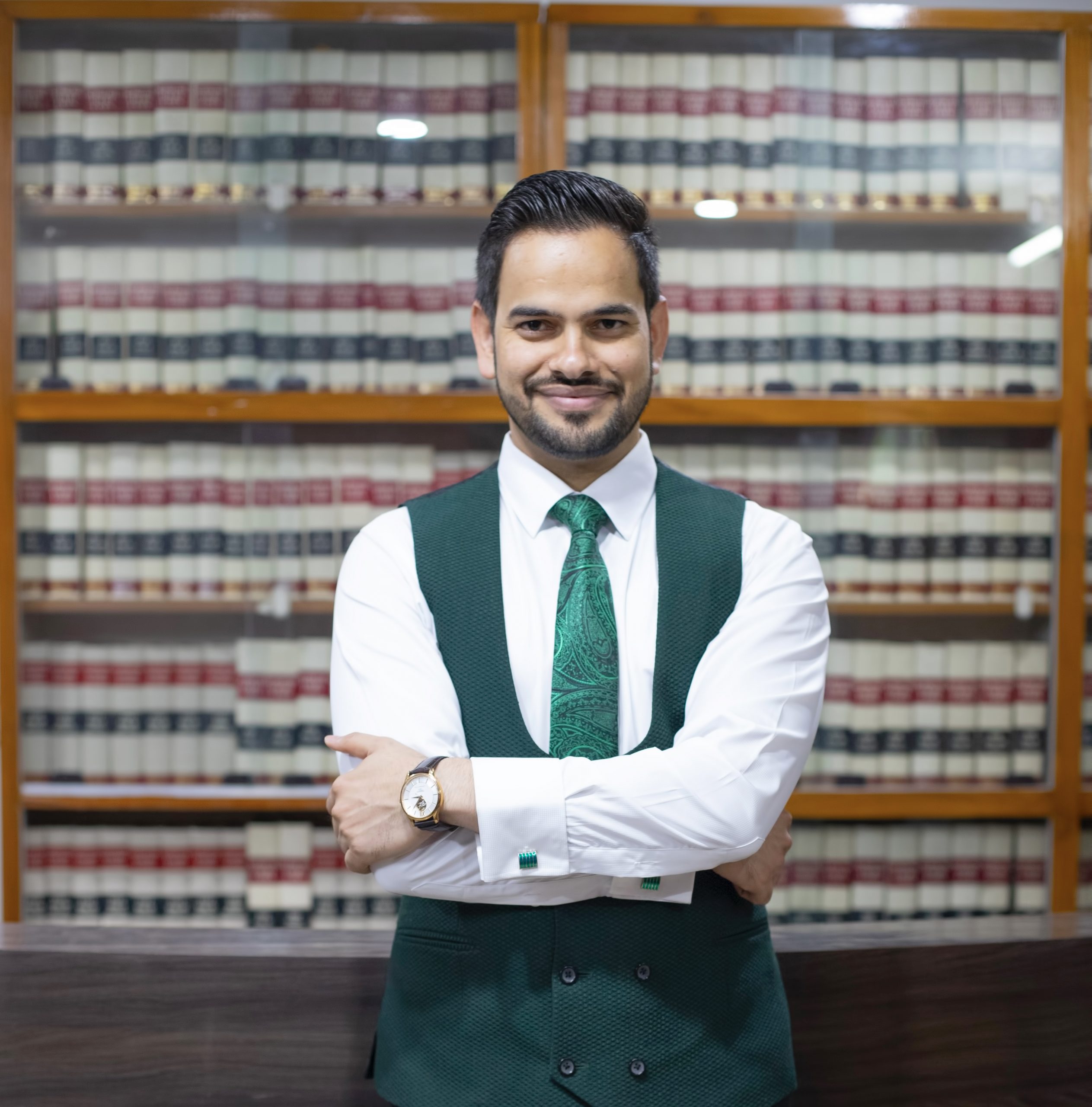
  • “I always request everyone in my family, as well as in my office, to learn to say no. The moment you learn to say no, ethical problems and other issues will never come your way.” – Ashok Kumar Singh, Senior Advocate, Supreme Court of India

    “I always request everyone in my family, as well as in my office, to learn to say no. The moment you learn to say no, ethical problems and other issues will never come your way.” – Ashok Kumar Singh, Senior Advocate, Supreme Court of India

    This interview has been published by Namrata Singh and The SuperLawyer Team
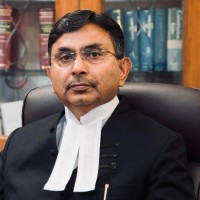
    Hello and welcome, today we have with us the esteemed Ashok Kumar Singh sir, who is a senior advocate. And we would like to start the interview by asking the most important and most pertinent question Sir, what inspired you to pursue law and how has been your journey from the beginning till the time when you are doing arbitration and dispute resolution with so much ease?

    My father was a government servant. I have seen bad days in my life. He was a small, hardworking government servant and an honest man. To survive with honesty at that time, when I studied professionally back in 1977 and 1978, was a difficult job. So, I thought of not joining any service and doing something different. Business was not an option because I had no money. Ultimately, I decided to adopt a profession that required little or no money. I thought of joining law and, in 1975, I joined the law faculty at Delhi University. I graduated in 1978.

    Before I graduated in 1978, I started going to the courts. At that time, there was no concept of internships. My senior would take me to court, and it was usually assumed that I was a new clerk. Sometimes, it was very humiliating and insulting when someone asked if I was a new clerk, and I couldn’t say yes or no. I started the profession because I wanted to do something different and had no money to invest in a business.

    Why did I come into arbitration and dispute resolution? Initially, I started as a criminal lawyer. To this day, I love doing criminal work; it is in my blood. In 1986 or 1987, a gentleman who was an additional general manager in the Delhi Transport Corporation gave me a challenge in arbitration. It was against NPCC, and his CMD told me, “Mr. Singh, even if you get it compromised at 20 lakh rupees, I will be the happiest person.” Twenty lakh rupees in 1985-1987 was a big amount. By the grace of God, it was the first case in my life, and I did it.

    A NIL award was passed, but no award was granted to NPCC. This brought a major change in my life. I realized that besides criminal clients, dealing with civilized, highly-placed clients allowed you to invite them to your place, your office, or chit-chat with them.

    You can have a cup of coffee, but with a criminal client, you can’t have all this liberty. Secondly, I realized that good money was transferred to me even at that time. I charged per hour and per hearing. I was the only counsel in Delhi Transport Corporation who was paid this much.

    Thereafter, some other government departments tried me. I worked in Delhi, outside Delhi, and gave good results in arbitration as well. People started liking me for arbitration work too. It was a matter of chance that I started working in arbitration. Slowly, around 2010, somebody from the US approached me. He wanted an Indian counsel to represent them in an international arbitration in different jurisdictions like London, Singapore, Mauritius, the Cayman Islands, and the Isle of Man. I thought he would pay me a certain amount as a fee, but he asked for my fee schedule in hours. He indicated that he didn’t want a petty lawyer, suggesting that I could charge a good amount. This gave a twist to my life. I started working for them as an Indian counsel because Indian laws and properties were involved. They needed someone knowledgeable about civil law, criminal law, and income tax.

    English counsels were very costly for them, so they wanted someone to assist the English counsels. Within six months, they made me the second leading counsel in the matter. In a year, I became the leading counsel, overseeing all litigation in the USA, Singapore, London, Mauritius, and other countries. All the counsels were working under me, and they found that I was much cheaper compared to English counsels who charged heavily.

    The best part, which I must share with you, is that a claim of about 1700-1800 crore rupees was filed against our client. When we entered the case, we reviewed the entire file, made a claim, and issued a notice for the counterclaim. Within a few months, the chairman of the claimant approached us for a compromise. Without contesting the case too much, they gave our client 192 crore rupees in Indian currency. The claimant didn’t get even a single penny. The respondent, whom we were defending, got 192 crore rupees. Obviously, we also received a good fee and gained confidence that we could handle international resolutions and deliver good results to clients globally. This confidence was earned by our hard work. It wasn’t just me; my team also contributed significantly. Other lawyers working with me helped a lot. That was another turning point in my life. I decided to focus more on arbitration rather than criminal cases because in criminal law, people initially look for a laborious, good lawyer.

    I was getting plenty of work. I must say I got plenty of work. I’m not boasting, but I consider myself one of the busiest counsels in District Court and later in High Court on the criminal side. But suddenly, things changed over time. Clients started approaching me with the idea, “Sir, you know such and such person, you know the government counsel.” This was not my cup of tea.

    So I slowly started moving away from that. It was a bit disturbing, and when you say, “No, I don’t know,” or “I don’t believe in this sort of practice,” they wouldn’t want to continue with you. They would go to others. But in arbitration and civil practice, I realized that people appreciated your expertise.

    They appreciated your knowledge, and over time, even till date, I’m getting good work from domestic as well as international clients. I have no problem. This is how I entered into arbitration, all with the grace of God and a little effort—a little effort, a little zeal to work, and a little enthusiasm to work. That is required too.

    Since you picked up such a new field of arbitration and, the field was absolutely new in 1986, as you said. During this course of time, what kind of changes have you seen in commercial dispute resolution as well as the kind of arbitration which we are seeing nowadays? There must be some difference because we suddenly opened up for the world, India, especially in 1991. So you must have seen a lot of change as you had shifted from criminal to arbitration and commercial dispute resolution. We would love to hear that, sir.

    There have been a lot of changes as far as arbitration is concerned. You know, it’s a very difficult question you’ve asked. I know a lot of people would get annoyed with my answer. Now it is dominated by a particular class. India wants to become the hub of arbitration. It is said so. But what I feel is, it is something, a slogan which we have been given, that it should be the hub of arbitration. If it is so, then why are about 36 percent of the arbitrations in Singapore conducted by Indians? Why are about 30 percent of arbitrations in Hong Kong or about 30 to 33 percent in Kuala Lumpur conducted by Indians? Why are they not coming back to India? Why are they not engaging Indian arbitrators? Why are they not relying upon Indian counsels? Why are they not relying upon the system which we have, even though it has improved a lot?

    The system doesn’t carry that much weight. The people who have to somehow work in the system are very important. How the arbitrators are appointed, who they are, how they behave, how much they charge, and whether it is feasible for international clients to engage them are all important. What is their tone and temperament? That is very important because an international client would not like to be dictated to, as we normally are. Secondly, internationally, when we go out to conduct a matter, we know that early in the morning at 9 o’clock, we have to report, or at 9:30, and by 10 o’clock we will start.

    It will continue up to 5 o’clock, and we are paid for that. Hourly basis, arbitrators are also paid hourly. The amount is also very reasonable, 500 pounds or 600 pounds, which is 55,000 or 60,000 rupees in Indian currency per hour. Even the arbitrators charge that much amount. But here it is a little costly affair, as you would appreciate. Normally arbitrators, though Schedule 4 is there for domestic cases, that is something different. But in international arbitration, there is no schedule. Arbitrators are charging fees according to their own choice. Normally charges are 2.50 lakhs per hearing of two hours or more.

    A good amount of time is wasted in looking into diaries to find out the actual dates. Then, two hours sometimes are completed or not completed. It is something, you know, which pinches the international clients. If you ask me, 2.50 lakhs means 1.25 lakhs rupees per hour, which is a little higher in comparison to international market rates. They give you a good amount. It doesn’t mean that they don’t make the payment. Their payment is much more than ours, but they give it in different forms, such as hourly preparation of the case. After preparation, when you prepare for the drafting of the awards, they pay you a good amount. For consultation and meetings in between, they give you a good amount. But hearings always go on in one go, from 10 to 5, 10 to 3, or 10 to 4, whatever the time given. And in a very disciplined manner. That is lacking somewhere here because we don’t have many institutional applications, if you ask me.

    There are only a few institutions here. And those institutions are also somewhere state-wise, somewhere region-wise. So international clients are unable to choose whom they should go to. Whether it’s the Mumbai International Arbitration Center, Delhi International Arbitration Center, Chennai International Arbitration Center, or Chandigarh International Arbitration Center, there’s no certainty.

    So you have to develop a particular city, find a particular city, and then develop it. Like in Singapore, they have a center in Singapore. It doesn’t mean the entire Singapore, it’s a particular place. There are also many other international arbitration centers working there.

    I am also an advisor to them, but you have to develop a particular center. You have to choose this, and that center should be completely free from judicial interference. Completely. It should be in the hands of only independent persons. Alright? Highly placed arbitrators, highly placed persons who have good knowledge in arbitration, only they should run it.

    Then, probably, we can make a difference. Previously, arbitrations were uncommon in this country, so the system was a little different. I still recollect when I would go to any arbitrator, he would welcome us warmly, invite us for a cup of tea, and teach us as if we were his children. Things are changing. Those days are gone. Now, we have become more commercialized. That is the difference I am noticing.

    Secondly, regarding labor, I don’t blame the arbitrators. Nowadays, we are getting 100-page judgments, 200-page judgments. By the time you rely on one judgment, another judgment comes in, contradicting the previous one. Sometimes in a month, we get two or three judgments that are not in line with each other. Nobody is following what was decided earlier.

    This creates a lot of difficulty for the clients. Their position is also very bad. Now the provisions are made very stringent. Normally, it should be in line with international practice, but we have to consider our country’s practice as well. In Section 34, there is no chance to get any relief unless the issue is something different. It’s the same with Section 37.

    I’m not accusing anyone, but the possibility and probability of a few arbitrators out of 100 becoming dishonest cannot be ruled out. Just imagine the plight of those clients and the impression they would carry if they had not been able to prove their case, despite knowing that an injustice has been done to them.

    There should be some judgment for clients facing such great difficulty and injustice. My experience is that most of the arbitrators I work with are very honest and dedicated.

    India is a very big place. We have the maximum number of arbitration cases in the world. Most of them are not institutional. When they are not institutional, arbitrations are happening in small places as well, where even the area in charge or market pradhan conducts arbitration. Those arbitrations are also covered by Section 30.

    I feel that while we are making the laws very stringent, we should also consider those who are losing good cases because of the arbitrator’s decision. The court says it is not sitting in appeal and that whatever is decided is final. This aspect needs to be looked at differently. The changes have both good and bad sides. It is very difficult to explain all these things.

    There are many things you can’t or don’t want to explain openly, but yes, a lot of changes are required. It’s time we make arbitration reach the roots of society. We should include people from society as arbitrators, like lawyers, senior lawyers, engineers, architects, academicians, chartered accountants, and company secretaries.

    Whenever I go to institutions to teach law or other aspects, the question they usually ask is, “Sir, will we be appointed as arbitrators sometime in our life?” I can’t say anything to them because appointments are done by someone who is not under my control. We all know how it should be, but I don’t want to open that discussion again.

    Alongside your legal career, you’re also a Professor at Sanskriti University. How do you balance your roles in academia and legal practice, and what do you enjoy most about teaching?

    When I was in London conducting the matter, I realized that most of the judges worked as part-time lecturers. My son also studied there, and my daughter studied in the US. So, I always got the impression that the judges would come in the late evening, sometimes at 10:30 or 11 o’clock. The message would be floated that they were coming to discuss a legal proposition, and they would come and teach the students.

    During the pandemic, I was in touch with my juniors, and we were discussing various aspects of law: arbitration, the IBC code, and other criminal laws. Online, I shared whatever knowledge I had with them. At this point, one or two universities approached me to speak to their students online. One of the universities made me an honorary professor. I don’t go very regularly to teach, but whenever they require my attendance for a particular subject or practical experience for the students, I love to go and share my experiences.

    I have realized, and I personally feel, that we should help because universities find it difficult to call us since their curriculum is different from what we have in mind. When we go and discuss practical problems, the students find it challenging. They say, “Sir, we have been taught this much, but you are saying it is to be done like this.” Particularly, there are so many problems in life. You know it very well.

    A student who has learned criminal law, when he comes to court, has an idea just like Shatrughna Sinha would come from the back and say, “My Lord, how can you do it?” And the matter would be decided in five minutes. At the time of a bail application, a hearing will take place, or evidence will take place. This sort of idea always remains because they are fascinated by movies and films.

    To make them understand that it is very difficult, I always tell my interns that this is not something to teach you. This is something to teach you only discipline in the office: come on time, sit over there, learn the legal propositions, and leave at the appropriate time. If you don’t learn discipline, you won’t be able to be a good lawyer.

    We can’t make them lawyers in three months, four months, two months, or six months. No, we can’t. We have to just make them understand what the law is so that tomorrow they should not get frustrated and run away from the profession. You won’t believe that 85% of young lawyers who join the profession leave within two to five years. They don’t continue, especially those who are not in corporate but in trial cases. They get frustrated much earlier because what they have in mind is not there.

    Getting clients is a difficult job, getting money from the clients is a very difficult job, and getting relief from the court is the next most difficult job. Unless they get relief, the clients will not come back to them. They won’t get new clients, so they soon get frustrated because they need to settle in life. They come in at the age of 23 or 24, and by 28, 29, or 30, if they are not able to earn even 50,000 rupees per month, they get frustrated. So, besides the legal education we give in universities and colleges, we have to make them aware of the practical aspects as well.

    I thought of doing something different besides what is written in the books, to inform them about the practical aspects of the legal profession. Getting this done is not difficult. I recollect one of my seniors, who greatly influenced me. He is no longer in this world, but he always said, “Vyast woh hain jo ast vyast hain.” If I have to take out the time, I will take out the time. If I don’t have to take out the time, I will not take out the time. I just manage. I don’t take up too much work that I can’t do. It is an injustice to the client, to myself, and to my family.

    Take only as much work as is required. In the initial stage, yes, I did a lot of work. I was working from 7 in the morning to 12 o’clock at night, conducting 20 to 25 cases in a day. Now, I don’t do that much work. I feel that whatever is required for me, God is giving me. I’m happy with that.

    Taking out time is not difficult. You have to manage your schedule. You don’t have to do too much work. You have to give proper time to your family, work, staff, hobbies, and yourself.

    I would like to ask you the next question related to the new entrance to the legal field and all the kind of stress that you were talking about that after five to seven years, usually they get frustrated because they have that filmy thought that this is how trial court will work. What would you suggest to those entrants and such kind of thought process, how to build this inherently that later when they enter the profession, they do not feel frustrated. There must be something because as you said, in your early days, you used to take a 25 cases a day. That’s a huge thing, but you must have managed that in some manner. So if you could impart some thought about that, because that will be very helpful to the new generation as well.

    For the newcomers, we can give much advice, but before giving any advice, it is better that we change ourselves. I’m still finding it very difficult to persuade my friends to give at least some amount to the interns or junior lawyers. If you go to district courts, you will find the position is also very tough for them.

    If we have to ensure that good lawyers join the profession, we have to support them for three years, maybe two, three, four, or even five years. It becomes the duty of every senior who is keeping a junior to cover at least the minimum possible expenses. This support is a great help to them in the initial stage. Even if they are asking for money from their parents, they are happy to receive 20,000, 15,000, 25,000, or 30,000. For a trial lawyer, when you join a law firm, the situation will be different.

    Learning in a law firm is a little slow, which I am not against. I have all respect for them, but it is slow. A person working in the district court, starting from zero, and learning from the beginning becomes a very good lawyer. He knows when the accused will be produced, what to do when the bail application is moved, how the bail bond is to be moved, how charges are to be framed, how sensible suit issues are to be framed, and the meanings of rejoinder, application, and written statement.

    He learns a lot of things in the process. So, before giving a suggestion to newcomers, I request all my colleagues who are well-placed in the system to extend their hands to help newcomers. That will be much better. The moment you do it, many will stay in the profession and prove to be good lawyers.

    The second aspect is that none of the newcomers want to go to the lower courts. Out of 100, you will find hardly 5 or 10 who go to the lower court. Everybody is interested in coming to the High Court or the Supreme Court in their father’s car, enjoying a cup of coffee, some snacks, or smoking with friends, and then going back in the evening with a new white shirt and coat, with a smiling face.

    They don’t appreciate that spending two, three, five, or even ten hours per day at the High Court is not going to help them in any case. The High Court has its own limitations, and the Supreme Court has its own limitations. Basic law is to be learned in the lower courts, which nobody wants to learn.

    They also have to change their temperament. They have to decide what they want to do. People come to me and say, “Sir, we want to work in the High Court only.” That’s fine, but you will get a chance to work in the High Court after working for five years in the lower court. Then you will be in a position to understand the basic concepts of law, the basic concepts of practice, and the basic difficulties of practice.

    So, we should also make them understand that it is better to work for two, three, four, or five years in the lower court, and then come to the High Court or the Supreme Court.

    Ninety percent of those who start in the High Court and Supreme Court, 85 to 90%, leave the profession midway because there is nothing. You can work in a law firm for two, three, four, or five years, but eventually, you have to show your worth. They are not going to pay you throughout your life without you showing your worth.

    You will show your worth when you learn something. The learning process is a difficult job. So, my humble advice to all newcomers is that they should spend some time in a law firm. Learn from the beginning, whether on the criminal side or the civil side. Learn from the beginning what civil law is, what criminal law is, the basics of the civil procedure court, the Limitation Act, the Specific Relief Act, the Stamp Duty Act, and other important provisions of law. On the criminal side, learn the CrPC, IPC, and Evidence Act. They should understand these and then come to the High Court to try their luck. They might be more successful in comparison to what they are today.

    Sir, as you have interacted with so many international and national clients parallelly, kind of ethical complexities, I would say, have you encountered any while representing such clients? And how did you upheld that kind of principle of justice and fairness that we always talk about as lawyers? How has it worked for you? How have you gone through the whole process?

    It depends on the person. Simply put, if I am honest, I am honest. If I’m not, I’m not. If I have to do something, I will do it. If I don’t have to do it, I won’t.

    I always request everyone in my family, as well as in my office, to learn to say no. The moment you learn to say no, ethical problems and other issues will never come your way. If you are concerned about something, just say no. What is the problem with that? That is the best way out. If you don’t say no and continue with something despite difficulties, it becomes problematic.

    It happens, right? Secondly, most people say the profession is degrading. Yes, in some aspects, I do agree, but in my 45 years of practice, I have never been abused for any work. No High Court judge, Supreme Court judge, or minister has ever approached me to manipulate a case. They know me well and are close friends. No member of parliament has ever asked me to ruin a session.

    You have to build up your image. Once your image is good, you won’t face such problems, whether domestic or international. No one has ever dared to approach me to say, “Sir, we have to do it in this fashion.” It’s my prerogative, my decision. You have given the problem to me. I will discuss it with you and suggest solutions. If you are happy, that’s fine. If not, give me a counter solution, and I will examine it. No illegal business, no hanky-panky in my office. If I’m sure of my integrity, I won’t face any difficulties.

    Problems arise when one doesn’t maintain their character. Otherwise, they don’t. At least, I haven’t faced such problems in the last 45 years. Not a single person has approached me inappropriately. I have handled the second largest arbitration case in the country, worth about 15,000 crore rupees. It’s not a small amount. I’ve also handled other cases worth 500, 1,000, and 2,000 crore rupees. I have been a senior legal advisor to many government departments.

    But nobody has ever approached me to do something against my principles. I don’t boast, but even for one of the biggest business houses in the country, when I was a legal advisor for a particular department, a substantial work assignment was based entirely on merit.

    So, it depends on the person. I have not found any difficulty, and I don’t think anyone should if they are a person of character. However, a person of character might face difficulties. People might consider you egotistical or form different opinions about you. They might say you don’t visit their chambers or listen to anyone.

    But in my heart, I’m happy that I have never compromised my principles in my life.

    Sir, that being said, when you mentioned the second-largest case of 15, 000 CR, if you are comfortable sharing some details and how it made a course for you, a difference in your life on your professional front, as well as personal, because this is the biggest thing which one can hear because you were handling such a huge case. How did it bring change in your life?

    Look, as far as the case particulars are concerned, they are always confidential.

    But I will say again that two things count a lot in all these matters: your reputation and your ability to plan effectively. If one knows how to prepare a case and how to achieve the ultimate relief, this planning must be done in the initial stage. Good work must be done before starting a case.

    Someone who was very highly placed in the Government of India, after retirement, became an advisor to that company. He had seen me working for about eight or ten years, dealing with matters worth millions of rupees and achieving positive results. So, he recommended my name, and that matter was assigned to us. We worked for about six months to make a strategy and prepare the case.

    I must say, it was a very well-prepared case. I’m happy that I worked on it, even though it presented different challenges. One of my friends, whom I must call a friend because of our long-standing relationship, came to me while I was handling the matter for the Delhi Transport Corporation. He got to know about me, and later, when he became the CMG of a department, he assigned me a case.

    He said, “Despite our best efforts, we are unable to recover the money from this gentleman who is politically very highly placed.” With the help of the concerned officers, who were also very nice and dedicated, and my staff, we worked day and night. It was very difficult, like trying to catch a snake that would run here and there. We got an order in the department, and I proposed filing an appeal.

    It was a very interesting issue. I proposed filing an appeal, which nobody wanted to do. Luckily, the chairman agreed, and we got the order modified. In the appeal, about 94 crore rupees were additionally paid to the government department. I’m happy that more than 400 crore rupees were recovered from that client for the government department.

    All this happens sometimes because of luck, sometimes because of hard work, sometimes because of your reputation, and sometimes because of your relationships. But somewhere, someone is deciding our destiny and making these things happen. I don’t attribute anything special to myself; it’s all the work of the Almighty.

    Sir, on that note, I cannot stop myself, but ask you all of this going around, definitely there must be some stress. I know not that much with your kind of thought process, but still, how do you come out of that kind of stressful situation? How do you take care of yourself? Your mental health and what kind of hobbies do you look forward to when you want to de stress yourself?

    The very simple process that I am doing, I don’t know. For so many years, early in the morning, I get up and, after getting fresh, my routine is that I do my pranayama.

    If I get time, then I go for meditation. For the last three or four years, I’ve been doing Sudarshan Kriya, Guru Shri Ravi Shankar’s. Whenever I get time, I also do my yoga asanas and take my bath. In the evening, if I get time, I like to spend quality time with my wife. My children are well settled with their families, so I have only my wife to help me. I had a good time with her. We are more friends than husband and wife and enjoy life beautifully.

    Before Corona, we travelled at least four or five times a year abroad and within the country. After Corona, we started travelling again. We were in Thailand and Cambodia just two weeks ago. Now we are planning to go to the US and Canada next month. You have to make time and choose the right company.

    God has already chosen the company for me, so my wife is there to give me company.

    As far as hobbies are concerned, I love reading. Sometimes, late at night, I read books of my choice. Previously, it was good literature and history; nowadays, I read spiritual books.

    Get in touch with Ashok Kumar Singh

  • “One must dive into the ocean of cases to understand the real intricacies and interpretation involved in Law.” – Pawan Reley, Advocate-on-Record, Supreme Court of India.

    “One must dive into the ocean of cases to understand the real intricacies and interpretation involved in Law.” – Pawan Reley, Advocate-on-Record, Supreme Court of India.

    This interview has been published by Namrata Singh and The SuperLawyer Team

    Reflecting on your journey from law school to becoming an Advocate-on-Record at the Supreme Court, what were the pivotal moments that shaped your career?

    “Qabza dila diya mujhe mere makaan ka

    Mere jo hain vakil adeem-un-nazeer hain

    Poochho jo unki fees, tou ab us makaan mein

    Khud hazrat e vakil rihaaish-pazeer hain.”

    -Anwar Masood

    (English Meaning-

    “My lawyer helped me get possession of my house.

    He is blessed with unmatchable foresight. The fees, however, were so high that it cost me to cover the house itself.”

    The aforesaid lines I came across in my law school days stirred a profound transformation within me, redirecting my aspirations from a corporate job towards the realm of practicing law and aiding those in need as much as possible. I harbored a persistent dream of exerting every effort to alter the public perception of advocates for the better.

    Though my odyssey of the profession of law commencing from law school has not been an easy one but an arduous endeavor. As I was a Hindi Medium Student, even in Law school I encountered myriad problems. I got back in two subjects (English and Economics) in my inaugural semester. My peers hesitated to form a moot team or collaborate on articles with me, exhibiting their professional reservations despite amicable personal relations. In that time some latent sense of inferiority had pervaded my psyche. I don’t blame anyone for this. As humans, everyone wants to be with the best, which I was certainly not in the sight of my colleagues. I decided to fight this and transcend these challenges. I made all possible attempts to hone my linguistic prowess after reading various literature and Judgements. I started writing various articles on different topics. I decided to become the only Speaker in Moot Court competitions to conquer the fear of facing the judges. Colleagues now started trusting me for all kinds of work. Ultimately, I topped my last semester and earned the accolade of Student of Excellence. While I secured a few placements, I opted to practice law in Delhi. I joined the office of my senior with a stipend of Rs. 10,000/- in the Supreme Court of India.  However, this was not enough to survive. I also realized that learning the trial court work for any first-generation lawyer is highly essential. Thus, I used to work in Trial Court from 9 am to 6:30 PM and earn Rs. 10,000/-, take personality development classes from 7:30 PM to 9 PM (Monday to Saturday) and earn Rs. 5,000/-, and then work for the Supreme Court drafting from 10 PM to 2 AM and earn Rs. 10,000/-. These circumstances fortuitously instilled in me resilience to confront challenges with unwavering resolve. I also initiated pro bono law classes for the underprivileged students for the preparation of Judicial Services Preparation from 2016. When people around reposed trust in me, they gave a few really challenging cases to fight. I tried my best and the same resulted in fortifying the trust of people in me.  I decided to write an AOR exam in 2023. My foundational academic expertise, cultivated through instructing judicial services aspirants, facilitated success in the AOR examination. In the legal profession, while supreme intelligence may be optional, mastery of patience remains an indispensable requisite.

    As someone who handles diverse cases, including civil and criminal, could you share an experience that was particularly challenging and how you navigated through it?

    Allow me to recount a pivotal case, which was like a litmus test for my tenacity and devotion to the legal profession. It was my first big case, which I got by god’s grace merely after seven months of my practice. I had a very small office in Pocket -2, Mayur Vihar Phase-I, Delhi. It was the evening of 12th of February 2016, which unfolded a narrative that would indelibly mark my legal journey. A group of around 8 to 10 people entered my office and told me that the Government of Delhi was cutting thousands of trees in the green belt area of Sector 15-16 Trilokpuri in order to build flats for the people whose land had been seized by the Delhi government for the Nizamuddin Metro project. Their plea was urgent, as the matter was slated for final arguments in the High Court on February 14. They implored me to initiate proceedings before the National Green Tribunal (NGT) on February 13 and concurrently file an Impleadment application in the High Court on February 14.

    Those people divulged to me that since they were unable to get other advocates to file the matters in such a short duration for a reasonable amount of fee, which led them to seek my assistance. They further asked me if I would be able to file the case in such a short duration before NGT and in the High Court. Undaunted, I seized this opportunity without a moment’s hesitation and said “Yes”. Despite lacking experience in filing Original Applications before the NGT and possessing no format for such applications, I committed myself to the challenge. They endowed me with three hundred pages of representation and other notices in Hindi. I enquired about the format of Original Application with other friends. My inquiries among legal peers yielded no guidance, as they were unacquainted with NGT proceedings.

    I knew that it was a daunting task to go through the entire file and draft the application in a 12-hour window. I read the file till 5 AM the next day. I thought it was impossible for me to complete the same. I thought of giving up. I was quite broken. Faced with exhaustion and contemplation of capitulation, I discerned a divine test of my dedication to the legal profession. Resilience prevailed, I again started working and completed the draft by 10 AM without any sleep. I filed the matter before NGT after serving the copy of the case to five different counsels on the other side. I mentioned the matter and after fearless arguments secured the stay from NGT on the same day. Next day again I could not sleep because I had to file an impleadment application before the Hon’ble High Court. I filed the application just in time and it was allowed by the Hon’ble High Court. The bench, after giving me a patient hearing, held that it is the duty of the Government to provide home to the aggrieved persons but not at the cost of cutting trees.

    This case not only introduced me to local communities but also attracted independent clients seeking my advocacy. I share this experience as a testament to the crucible moments faced by young advocates. In the face of adversity, it is imperative to rise, sprinting with unwavering determination, for it is the endurance forged in such crucibles that propels young advocates forward in this demanding profession.

    Your book, “Iudexcracy vs Democracy: Revisiting Fourth Judges Cases,” is noteworthy. What motivated you to write it, and what key message do you hope readers take away from it?

    My fervent inclination to contribute to this work predates the NJAC case escalation to the Apex Court.  As a law student, I harbored a profound interest in Constitutional law, initiating my engagement with the field early on. With guidance from seniors in Law school, I started writing articles and presenting papers from my first semester itself. In the beginning of sixth semester, my team participated in a Moot Court competition centered on Judicial Appointments and the National Judicial Appointments Commission (NJAC). Later in my final year, I thought of extending the research on Judicial Appointments and NJAC through my dissertation. When I graduated from law school and started practicing law in Delhi, I found that the 99th Constitutional Amendment Act, 2014 along with NJAC Act had been passed in Parliament and the same had been challenged in the Supreme Court. My co-author (who was interning in the Supreme Court at that time) and I diligently used to observe daily proceedings every day from 10.30 AM to 4 PM captivated by the profound legal minds presenting eloquent submissions. Amidst this intellectual panorama, we envisioned ourselves as solitary islands, fervently desiring to contribute our perspectives to this ongoing debate. Our initial intention evolved into a more concrete idea – encapsulating our insights in the form of a book. Then, we were astonished to see the voluminous judgment consisting of more than 1,000 pages. Undeterred, we scrutinized it meticulously, identifying flaws that spurred our decision to conduct a critical analysis. The book meticulously explored judicial appointment procedures in other nations, drawing comparisons with the Indian context. It articulated arguments both for and against the basic structure doctrine, delving into its genesis. Additionally, the book elucidated arguments supporting the constitutionality of the NJAC with few suggestions. The book lauded the dissenting opinion of HMJ Chelameswar and called him an unsung hero because he was the only judge who fearlessly maintained in his dissenting opinion that there is “nepotism” in the judiciary.

    Winning the Atam Samman and the Udbhav Cultural Award reflects your significant contributions to the legal field. How do you handle the balance between a successful legal practice and your role in academia?

     I am really humbled and honoured to receive these awards. It is my deep interest in academia which has given wings to my legal practice granting me a multifaceted perspective.  When any academician studies any law subject for teaching the student, he studies that from beginning to the end. Thus, whenever I find any case to represent in Court be it Civil or Criminal, where interpretation of any provision is required, I in the dual capacity of academician and practicing lawyer can see various angles which may sometimes be overlooked by few practicing lawyers. As far as I have researched, almost all legendary advocates and Judges have been great academicians. For instance, Shri Nani Palikwala, despite his busy practice, used to devote his time to teaching law to students and was a part-time Lecturer at Government Law College, Bombay. He endeared himself to students by his clear exposition of the subject—always with a dash of humour and eloquence (At that time he was lecturing on the Evidence Act.). 

    I would like to narrate one of my real stories which is connected to academics and legal practice. In the year 2017, when I was waiting for my item to reach before one Single bench in Delhi High Court, one of my colleagues at the Bar was making his submissions before the Court that he sent the representation to the Government. Then the Ld. Judge posed him a question that, “When a Communication of proposal and acceptance is complete and under what provision of law is it provided?”

    Then my colleague at the Bar started referring to some Judgements. The Court specifically pointed out that it does not want judgement but provision of law. When the counsel could not answer, Court posed the same question to the members of the bar present in Court to be answered. Upon receiving the opportunity I raised my hand and answered the question, as at that time I was teaching my students Indian Contract Act, 1872 only.  The court, acknowledging my response, expedited my case, demonstrating the tangible benefits of a robust academic foundation in legal practice. I believe that the marriage of academia and legal practice is indispensable for cultivating a flourishing and enduring legal career.

    Your involvement in guiding judicial services aspirants pro bono is commendable. How important do you believe it is for legal professionals to contribute to legal education and mentorship?

    If you have knowledge, let others light their candle in it.-

    Margaret Fuller

    There is really a dire need in the Society of the “good legal professionals”. I regularly interact with Law students across the country. I feel that they really want to study and aspire to be good advocates but lack proper guidance and mentorship, causing them to veer off course in their pursuit of legal excellence. Problem is many law students are neither given proper practical insights by their law college nor guided by any experienced law professional. One can become a good legal professional only when one gets proper guidance, right mentorship and proper exposure to the law field. Study confined to four walls of law school is not sufficient. One must dive into the ocean of cases to understand the real intricacies and interpretation involved in Law. It is the bounden duty of all experienced legal professionals to extend a guiding hand and to give back to Society whatsoever limited they have.  It is the duty of the Law professionals to instill the sense of honesty, integrity and confidence in the young minds for their future. This noble profession demands a commitment to service rather than a mere quest for financial gain, and imparting these values to aspiring lawyers is pivotal.  I request all law professionals through this platform to treat law students with respect even if they don’t know anything. They don’t know that is why they are students. Don’t neglect or demean them even if they do not have the basic understanding of law. They would be natured and nurtured through your profund guidance.

    You recently spoke at TEDx. Could you share the central theme of your talk and any key takeaways you want the audience to remember?

    My TEDx talk was not related to Law or the legal profession. It ventured beyond the legal sphere. The title of my talk was “Why we need to relearn the art of Crying”. It was related to the perception with which we should see the world. I have discussed why we need to let go of our ego, and why it is required to leave everything on nature when we have already acted and when our true faith and the situation has gone beyond karma. I discussed how this nature gives you everything without even demanding it. My talk emphasized the superpower of crying. It explains why respect and power of this world lies under softness (in Hindi “Komalta”) and not under hardness (in Hindi “Kathorta”), and thus why you need to be soft and gentle. I would to place the Urdu couplet from Habib Jalib which matches my TEDx talk and is apt for the people with ego considering themselves as God specifically in the field of law:

    “tum se pahle vo jo ik shaḳhs yahāñ taḳht-nashīñ thā 

    us ko bhī apne ḳhudā hone pe itnā hī yaqīñ thā”

    “ab vo phirte haiñ isī shahr meñ tanhā liye dil ko 

    ik zamāne meñ mizāj un kā sar-e-arsh-e-barīñ thā”

    Outside of your legal endeavors, what are your personal hobbies or interests that help you unwind and find balance in your busy schedule?

    Beyond the legal realm, I find solace in playing Chess. It is like a booster dose for me. I also love indulging in the rich tapestry of Indian Philosophy (Bharatiya Darshan) from Charvak Darshan to Mimansha Darshan etc. In my free time I also read old Hindi Literature. Nowadays, I have immersed myself in the world of Munshi Premchand as I am reading his novel namely Gaban. It soothes my mind as it takes me to the old lifestyle of the village and makes it dreamy and nostalgic at the same time.

    What advice would you give to aspiring legal professionals, considering your own experiences and the evolving landscape of the legal field?

    I will give the following advice:

    1. Find your right mentor:

    The first and one of the most difficult challenges for any young advocate who wants to dive into law practice is to find his/her right mentor who is not only a good lawyer but also a good human being. A mentor who gives his juniors the opportunity not only to seek adjournments and conduct research but also to argue some small matters in the beginning of his practice. A mentor who does not disrespect his juniors and can show his junior the right path and guide him in case of any need. Thus, the journey of finding the right mentor should start from the first year of law school itself.

    1. Read Judgements consistently:

    Cultivate a practice of reading judgments every day. There should not be even a single day when you have not read any judgement. Take small judgements in the beginning and not the long judgements like “Keshavanada Bharti (1973)” or “K. S. Puttaswamy (2017)”. Completing small judgements will boost your confidence. Keep reading it for 6 months without having any expectation. Reading judgements will improve your drafting skills, court language, legal vocabulary, interpretation of law, knowledge, and communication of law.

    1. Do anything and everything to improve your communication Skills:

    Recognize that effective communication is as vital as legal knowledge, with the ability to express ideas clearly a hallmark of a successful lawyer.

    1. Try to have positive social media presence specially if are first generation lawyer:

    Harness the power of social media specially if you are First generation lawyer, but with caution, ensuring accurate and verified information to avoid negative repercussions.

    1. Try to start your practice from Trial Court or at least learn the work of Trial Court specially if you are First Generation Lawyer:

    There are a very limited number of cases which come to the Supreme Court. Thus, the first-generation lawyers who start practicing in the Supreme Court find it difficult to survive after four to five years of practice as they get very few cases. I have witnessed many first-generation lawyers leaving practice and joining firms or companies with meagre salary because of high instability in their legal practice leading them to depression and anxiety. Thus, as far as my opinion and experience is concerned, for first-generation lawyers, gaining experience in Trial Court work is crucial for survival and growth in the legal profession.

    1. Embrace hard work, dedication, and patience: 

    These virtues are the cornerstone of success in the legal profession, fostering resilience and long-term prosperity.

    Get in touch with Pawan Reley-

  • Subhrajit Chanda, Faculty of Law at Jindal Global Law School and Founder of Global Sports Policy, Review on Different Careers in Law

    Subhrajit Chanda, Faculty of Law at Jindal Global Law School and Founder of Global Sports Policy, Review on Different Careers in Law

    This interview has been published by Prabhjot Singh, Priyanka Karwa and The SuperLawyer Team

    What prompted you to choose legal studies, post your Class 12 Boards, when you had the option to study architecture in a reputed government college?

    Long story short, from the beginning itself I had been looking forward to doing something different in the governing system. I had also wanted to break the family’s custom of pursuing engineering studies, if you are being born as a boy. If one wants to work in the managing system, there are only two domains where you can start working from – while the first is Management, the other one is being law. And law is a kind of subject, which starts where management ends. Further, since inception of the universe, it has been governed by law. So, I chose law in order to fulfil my aspiration of doing things differently from the usual course. As I say, once you are a lawyer, you are not jack of all trade, but master of all trade.

    Having studied your undergraduate legal studies from Amity Law School, Jaipur, Rajasthan, what were the challenges faced by you?

    I think you need to first ask me why Amity Law School Jaipur. During my time, from the group of faculties, four of them were stalwarts in their subjects who happened to teach me during my course of five years of law school, helped and backed me a lot. Those were the faculties who knew their subject inside out and used to deliver lectures at global conferences on a daily basis. The faculties of the college made me interested about Amity Law School Jaipur.

    Being from a traditional Bengali family with humble sports background, who has got more knowledge about engineering and medical colleges, they had no knowledge about what 5-year professional law course or law school entails. For my family, every lawyer sits below a banyan tree with a typewriter, as are shown in the typical Bollywood movies. The circa was 2012, when internet penetration was very low, and information was not very easily accessible. Therefore, having no knowledge of CLAT, I relied on two things to choose my college.

    As I mentioned above, faculty was one of the reasons, the other being a little funny – it was the Indian Premier League. Amity was one of the sponsors of Mahendra Singh Dhoni and the use of the logo Amity University in his bat and the Rajasthan Royals team, intrigued me into joining the law school, to pursue my five years of legal studies. Additionally, myself being an avid sportsperson, the seemingly world class sporting facilities at Amity Jaipur made me more interested to join.

    After getting inside, there were lots of challenges. The timing of the library was one major concern. We used to have two libraries – one law school library and the other one was the central library.

    Central library used to operate from 9 AM to 8 PM. And the law school library timing was from 9 AM to 5 PM, which means resource was not easily accessible. If, one compares that to the libraries of one of the most reputed global law schools of the country with Institution of Eminence tag, where faculties have connections with many reputed organizations in backing their students, to pursue research and internship, Amity Law School Jaipur was nothing at that point of time.

    I still remember when I got my internship at IIFT (WTO Studies) and Indian Oil, it was the walk of a lonely road for me, with my shadow being the only companion. So, one may easily comprehend how tough my journey was.

    What prompted you to opt for pursuing Masters of Law in Energy Law from UPES, Dehradun?

    Well, while planning for doing my masters in India, I was not looking for Masters in Energy Law, it was International Trade Law which I was looking forward to specialize in. Being a sports-person, I always had a keen interest from the beginning in the domain of Sports Law and wanted to make it a strong base along with International Law.

    Unlike the European Universities, which offers much flexibility to its admitted students to study and research in only in the subjects chosen for the specialisation, most Indian Universities are very inflexible.


    In Indian LL.M.’s you start with some basic subjects like Legal Research Methodology and so on, and then later on towards the second half of your course, i.e., the second semester, you get your subject in which you want to pursue your masters. But this is where there was a tweak in the story.

    When I was about to start my final semester at UPES Dehradun, I was informed by the University authority abruptly, that since I am the only student who had opted for the subject, they cannot provide me the same, and I have got to choose between the Corporate Law, Cyber Law and Energy Law specialisation. Hearing this I had initially decided to leave the college.

    However in these testing times, my parents and two elderly professor were the ones who had supported and motivated me by suggesting that since you have spent six month, leaving the college without taking the degree, would lead to wasting of your time only. Per their advice, I continued my LL.M. in Energy Laws from UPES, with the aim of specialising in the niche domain of Energy law and that is how I got my masters in Energy Law, as there is a saying “Knowledge never goes in vain.”

    When I compare my experience as a student in Indian Universities, with that of where I am employed, I can realize how stark the difference is in between them, and this is the difference which makes all the difference in the students studying in them.

    Were you always bent on pursuing an academic career post completion of legal studies? How did you prepare yourself for the same?

    I had not always harboured in my mind for an academic career post completion of legal studies but yes at certain corner of my mind, I had wished myself to see as an instructor. We, Indians are always complaining toward the law society that Sports Law is a niche area and that we need to work on it to make it more mainstream.

    Many people also say that we need the future of the country in the Sports Law in India; but how if you asked, people will be saying it is tough to answer. Now if you look at the countries like United Kingdom, you will see how sports law is an important and developed subject, also even smaller countries like New Zealand, Croatia, Ghana etc. have a proper developed knowledge of sports and education related to it, with young lawyers supporting it.

    While doing this research, it made me realize that young and future lawyers are created, only if one can share the knowledge with the future of the country i.e. the “students”.

    The only way you can inspire the future and make the world a better place if you reach out to the students, and the only way a person may do so is by joining the academics.  Therefore, I joined the academic side, so we can have large number of budding lawyers. Further if you say that you want to join the academics, I will suggest one should love one particular subject and gives his full dedication to it by research and publishing.

    If someone is interested in an academic career in law, how would you advise the concerned professional to work towards that goal?

    Well, there is only one thing I will advise them – you need to dedicate yourself toward one particular subject as your major, then try to master it by researching and publishing as much as you can.

    You had been an avid sportsperson right from your school days, what prompted you to choose a career in sports law over and above a career as a sportsperson?

    To answer this in depth I will provide a little introduction to my family from which I belong. See, sports run in my veins.  My mom used to be a state-level cricket player and my father used to be a football referee. So one can say that I have seen sports as an activity very closely, and it has made me also attracted to sporting activity. I still remember that I used to practise cricket every weekend and football every weekday back in my childhood days.

    But later part of my life, I have concentrated on football only, in which I played for Sports Authority of India Eastern Region. But later on, an injury lead me to stop the practice, but as you know, once you dedicate your love towards sports, you cannot neglect it.

    So, I thought if you cannot practise the game on the field, why don’t you practise it differently, as a discipline. I still remember back in 2017/2018 Indian people were unaware about the subject of Sports Law.

    There were only very few people who knew about it. Even its in developing phase today, people still get confused with management and law. But sports law has always been active in India. Looking back as far as 4th Century BC, there was a script which has mentioned about the law of games, which in most likely a board game. I researched this topic within my own studies and became aware of how most people were not aware of the existence of sports law, even in today’s society.

    Nowadays, as sports law is undergoing its development phase, many new upcoming lawyers want to know about the subject. They complain about the lack of knowledge available as we don’t have that much faculty who have specialisation within the subject. So, I thought, why not take in charge without complaining like most others and start to develop future Sports Lawyers. As soon as I thought this, from that time onwards itself I tried to change my passion into an education degree, so I can create the structure and teach the same to my students.

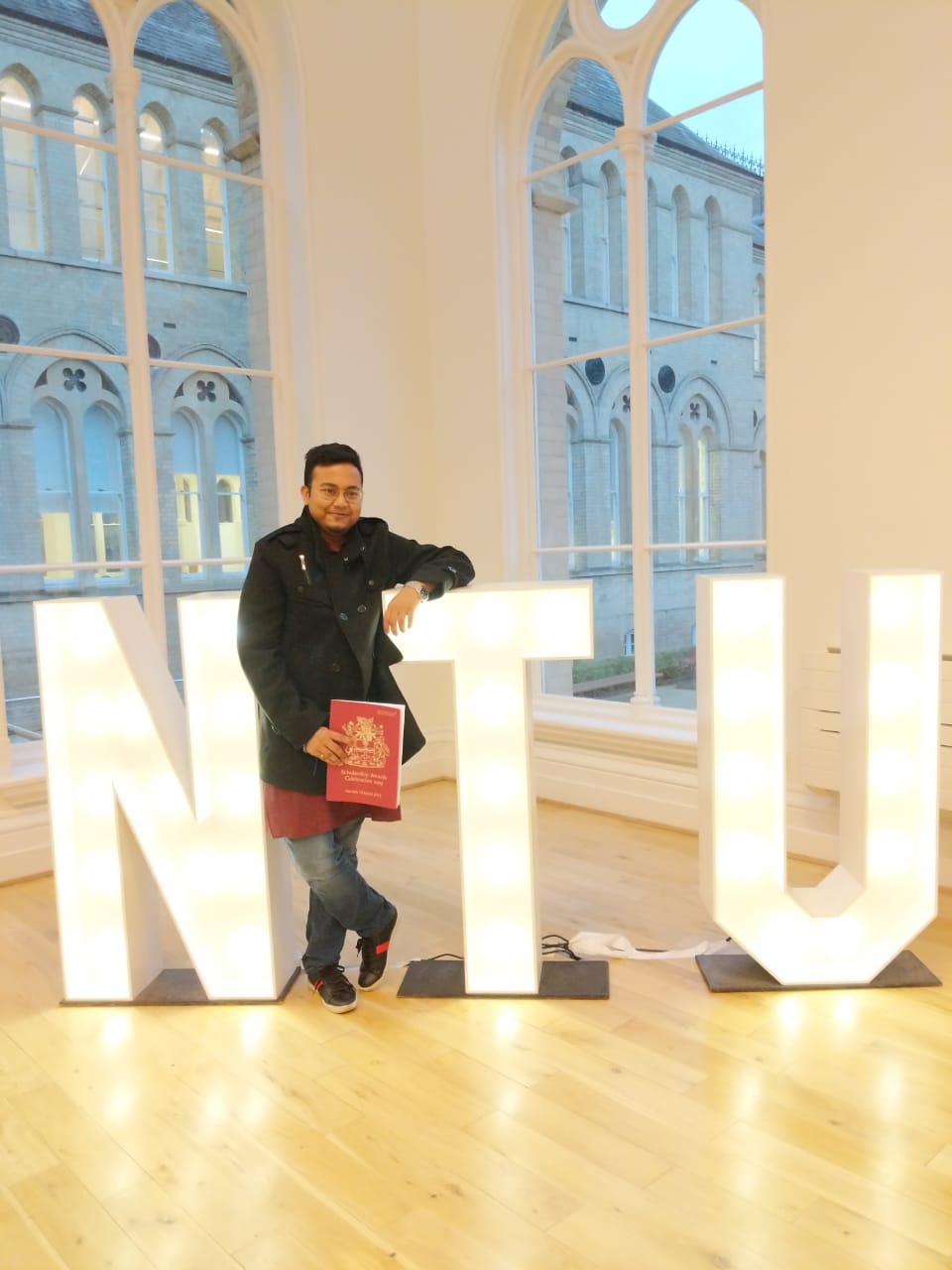
    After this, everything falls in place, and I got an admission call from Nottingham Trent University with an International Scholarship. This in itself came after sacrifice of many nights’ sleep. However, I did the same for the sake of my country and other underprivileged students from around the world, who want to study this subject and can’t be due to family or monetary reason. 

    Furthermore, there is more to be done for Athletes in India. These individuals suffer a lot due to lack of proper legislation / regulations of sports of any kind. Not only that, the legal system in India still now needs more research as even the Supreme Court sometimes get confused about whether some organisation representing the country will be considered as State or not. There is also a question of whether National Olympic Community will be considered as a supreme governing body or not. So, I just want to dedicate myself as a bridge to fulfil the gaps in my legal and educational systems. This has led to my love of sports developing into a passion for Sports Law

    You had completed your Second Master in law (LL.M.) from the prestigious Nottingham Trent University, United Kingdom, with an International Scholarship. Please share your experience starting from application stage for the LL.M., to the scholarship application up to your experience of studying at Nottingham Trent University?

    Well, from the beginning it is a smooth running operation compared to many Indian traditional universities, and the university authority will always be in touch with you, for every point of your application to fill the scholarship form.

    Now moving toward education system, not only Nottingham Trent University, even all the British Universities has the open and flexible education system, where we can take any subject as elective subject with our law subject, and secondly in Nottingham Trent University particularly, you have one of the famous Sports Law Professor Simon Boyes, who is considered as one of the chief architect for the development of sports law in the world.

    Post your LL.M. from Nottingham, you had also briefly worked at one of the prominent Football Clubs in the English Premier League Circuit. Kindly share your experience of working in the same including the work you used to do in the same organisation.

    Well see life there is pretty fast and timely, so it was good experience with some commercial experience, but yes if you have habit of hard work and smart work mixer you will enjoy their work culture.

    You have undertaken multiple diplomas and certificate courses, more importantly, from the International Olympic Association (IOC Young Leader), FIFA, UEFA. How do you choose courses for the purpose of skill-development? 

    So there is a saying knowledge is like ocean, even if you try to conquer all, still you can’t, and if you say you have learned everything it means you are only dooming yourself. For me I chose the courses at first for the thirst of the knowledge and secondly according to my student’s need because at the end of the day you are the captain of your crew which are your students.

    Despite being someone involved in the development of sports law in India, you have handled assignments of teaching other law subjects at ease and is quite popular amongst your students. What is your secret in being a popular teacher amongst the students?

    Thank you for saying so, but I think every student have someone who is favourite to that individual, but if you ask me I will say I always motivate them, try to listen them, collaborate with them; sometime try to empathise with them and treat them with utmost respect as upcoming future buddy lawyers.

    Apart from being an Assistant Professor at Jindal Global Law School Sonipat, you are also the Assistant Director at Centre for Sports Law Business and Governance of the law school. Kindly share your experience of working in the same, so far.

    It’s a dream for me to work with one of my role model and one of mentor and guru Professor Shaun Star, and really like to work under his leadership as he has taught me many things, and once it was also my dream to learn under him but that is fulfilling in another way under his leadership.

    Apart from your role as a Professor, you seem to be a multi-tasker, as you handle multiple roles as an Editor, Author, Guest Lecturer, Editorial & Review Board Member. Kindly share your experience of working in multiple roles at the same point of time.

    All I want to say in one sentence I enjoy to work and love to dedicate my time to the subject and development of future generation which is students

    What is the recipe of your success in successful multi-tasking, which you believe law students of today should develop?

    My tips to all the budding sports lawyer are to first change your passion for sport into love and interest towards the subject as like, you do same with your girlfriend or boyfriend, because subjects are like girlfriend or boyfriend only. How can you be happy if you don’t have interest in her or him? It will lead to break up, but more you are interested in a girl or boy and give him or her time she or he deserves, will give you more love in return, so same is with the subject. You have to have a passion and drive for sports to engage within the study of sports law.

    The second and more important tips will be to be curious about every rule and the judgement you come across and think why it has been decided like this or it has been not done in the other way, the more you think more capable you become.

    From having been appointed as a visiting faculty of SLS Hyderabad, you have gone a long way on becoming the Indian to be appointed the Ambassador of ISDE Law Business School Spain, a visiting faculty at IIM Rohtak , Research Analyst at Nehginpao Kipgen Centre for Southeast Asian Studies and an Assistant Professor at the Jindal Global Law School.

    How do you find this journey in such a short span of time of a little over two years?

    Well, Actually in my mind there is a thinking that when I am in this field there are lots of senior faculties who are at first senior to you and secondly they have more experience than you. So, for making it there and to sit on the chair of this assembly, one needs to be humble and spend more of their time in practising as well as sleeping less, because firstly you need to fill the gaps. Additionally, you always need to be one step ahead of them.

    Amongst so many achievements in your life, what is that one failure that redefined who you are today?

    Well, there is nothing as such. Even if there is, I think I have forgot the same by this time. I always like myself happy and I don’t look at the past or think about the future as you know I live each day and each moment of present as the last day, as you know present is gift to us by time.

    Being avid sports personnel and being involved in the development of sports law in India, how effective do you think AI and Legal Tech can be in the meaningful development of the sports law in India?

    In the world of IoT and constant change, its always helpful, as it helps to get access to more research document and case list around the world so one does not have any more barrier in the education world.

    Lastly, before we end our interview, what piece of advice would you like to give to the law students of today?


    I will suggest them, before if you want to win this subject,  it’s advisable to first change your passion for subject into love and interest towards the subject, then try to be always humble never let it enter our head.

    Secondly always keep in mind law that it is a professional subject, so don’t mug it up without understanding the subject as you know mugging it up means you will be theoretically sounded and top for many, but in court it is always not the same thing, which is mentioned in the book, you need to be practically smart.


    Never think about the marks, try to think about grasping more and more into practical view.

    And at last I will say them all that, it is your life, try to decorate it on way and try to be honest and listen to heart always. You all are young and will be having competitor whom you treat as enemy, then feel yourself lucky for having enemy as you know that a clever person learn more from his enemy then a fool from his friend.

    If any problem comes, always keep in mind that problem is not the problem but problem is your attitude about the problem.


    Get in touch with Prof. Subhrajit Chanda-


  • DR. MANVEEN SINGH, ASSOCIATE PROFESSOR AND ASSOCIATE DEAN & DIRECTOR (3-YEAR PROGRAMMES) AT JGLS ON ESTABLISHING A CAREER IN ACADEMICS AND MANAGING ADMINISTRATIVE RESPONSIBILITIES AT JINDAL GLOBAL LAW SCHOOL

    DR. MANVEEN SINGH, ASSOCIATE PROFESSOR AND ASSOCIATE DEAN & DIRECTOR (3-YEAR PROGRAMMES) AT JGLS ON ESTABLISHING A CAREER IN ACADEMICS AND MANAGING ADMINISTRATIVE RESPONSIBILITIES AT JINDAL GLOBAL LAW SCHOOL

    This interview has been published by Isam Kabir and The Super Lawyer team.

    We last met in 2014, and from being a Research Associate, you have become an Associate Professor and Associate Dean at Jindal Global Law School (JGLS). How has the journey changed you as a person?

    Yes, indeed, I joined JGLS as a Research Associate back in the Fall of 2013, and for the last 8 years, I feel I have grown, both as an individual and as a teacher. There were different phases throughout this journey that were instrumental in shaping my academic career thus far. Of course, I always have cherished teaching and enjoyed research and writing, but my journey as a PhD scholar gave me a certain sense of confidence and ease whenever I chose to lift a pen or sit in front of my laptop. It also allowed me to express myself as a researcher more efficiently, mainly because I decided to further my interests in the area of my doctoral research. In terms of my teaching, a great amount of credit should go to all my students, whom I have taught over these years, and who have challenged me to deliver my absolute best. Robert Heinlein has rightly said, “When one teaches, two learn.”

    As for administration, I never really felt I could also put on the hat of an administrator. Shortly after I finished my PhD. I found myself in a never-before scenario of having to strike a balance between my teaching, research, and administrative responsibilities, something I feel I have been able to achieve, owing to the tremendous support of my colleagues and mentors. It has been an absolute pleasure working with all of them. Furthermore, the institutional interests are paramount, and I consider it my duty to give back to this institution, for I wouldn’t be where I am today had it not been for JGU and JGLS.

    Having academic experiences in India and abroad, do you see any parallels between national and international education parameters?

    There are indeed quite a few parallels to be drawn between national and international education parameters. Some of them include the quality of teachers, the richness of academic content, the teaching pedagogies, academic research, student-teacher ratio, etc. However, it is also true that Indian universities have taken giant strides in raising the bar when it comes to meeting the global standards in the field of higher education. The recently conferred Institute of Eminence (IOEs) tag is a testament to the Government’s endeavour to establish world-class institutions in the country. I think we are well and truly on the path to achieving global excellence.

    Unlike most law students who aspire to build a career in litigation or the corporate world, you have always been committed to the education sector. Did you ever consider switching your career path? 

    To be honest, I have never really thought about switching careers. I come from a family of academics, and the biggest source of inspiration for me was my late father, who I grew up watching and from whom I inherited a passion for academia. Teachers, they say, are performers, and every time I walk out of a classroom having delivered a good lecture, the sense of personal satisfaction I get motivates me to go back in there the next day and perform, just the way it should be. There is just so much positive energy when you are around students. I cannot imagine myself doing anything else other than teaching.

    In your last interview, you had just begun your career as a young faculty member at JGLS. You told us about the academic freedom the institute provides its faculties. Would you claim that this is one of the core reasons for being successful in academia today?

    Absolutely. I think academic freedom is integral to achieving success in academia, and personally speaking, I have immensely benefitted from the same right throughout my time at JGLS. From designing courses and experimenting with different teaching pedagogies to organising conferences and panel discussions in different areas of law and across different disciplines, academic freedom has been central to where I find myself today. For a young academic, who is expected to contribute to teaching and research, you definitely need that freedom to make the cut.

    You are ardently admired on social media by your peers and students; Do you believe the coming generation of faculties are redefining the student-teacher relationship for a better change?

    I would say the key factor at play here is the choice of academia as a profession. Gone are the days when teaching rarely surfaced as the preferred career option for fresh postgraduates. That has definitely changed with the passage of time, with more and more law graduates aspiring for a career in academia. What that means is, you are likely to step into a classroom at 24 or 25 years of age, teaching students in their early 20s. It is precisely the kind of challenge a young professional is looking forward to. It has, in fact, provided for a highly conducive environment for mutual learning and the exchange of ideas.

    What kind of an impact do you think the Pandemic has had on the students? What is the roadmap universities and educational institutions can follow to ensure accessibility?

    I think it is fair to say that the Pandemic has had a significant impact on students, not just in terms of their academics but also their physical and mental being. Physical spaces, including university campuses being shut down, meant that students found themselves restricted to the virtual mode of learning, having to spend hours staring at the screens. In addition, not all the higher education institutions were in a position to switch over to online teaching on an immediate basis, which, when coupled with the lack of permeance of the Internet, left students in an extremely vulnerable position. Having said that, over the last year and a half, the students have shown tremendous resilience in coping up with the demands of the system, both on a professional and personal level, and they continue to fight against all odds.

    As for the Universities and other higher education institutions, I feel an investment in the up-gradation of technology infrastructure is the need of the hour. The education sector needs to brace itself for the after-effects of the Pandemic to last for a continued period, and higher education institutions must take all the necessary steps in ensuring accessibility to students. Adopting a dynamic and flexible approach under a definite Action Plan, tailor-made for such a situation, is fundamental to restoring parity and moving forward. At JGU, we have been lucky to have the Administration adopt such a course of action and upgrade its existing information technology infrastructure, providing an optimum learning experience with lecture recordings stored on cloud space. Students are at liberty to access the same as per their convenience, which is of immense help, especially considering the uncertainties surrounding the Internet. Considering that the reopening of campuses will occur in a phased manner, I feel universities must gear up for a hybrid mode of teaching, for it looks like we are in for a long drawn battle.

    You completed your PhD while you were working on a demanding role. Were there any taxing phases in this fascinating journey when you have had to go through severe hardships? Do you have any advice for the students who are struggling to reach their goals?

    Quite a few, I would say. Doing a PhD while you are in a full-time job is not easy but also not impossible. There were moments when I felt like giving up my PhD. However, there is always a reason for you to get up, dust yourself off, and keep walking. For me, that reason was my late father’s dream to see me earn my PhD. The hardships I found myself in the middle of were nothing when compared to fulfilling his dream. That kept me going and prepared me to overcome the bigger obstacles that awaited me. They say, if you do not feel like giving up your PhD even once during the course of your journey as a doctoral candidate, perhaps you’re doing something wrong. It’s a challenge, but a challenge every doctoral candidate must embrace.

    My advice to students would be to focus on short-term career goals and take one step at a time before they look to fulfil the long-term ones. Set yourself small but time-bound targets. Take small steps and make some progress towards achieving your goal daily. It could be as small a thing as writing 150-200 words or reading 15-20 pages of a book or a paper daily. It’s alright if you miss your daily goal but make a genuine attempt. For example, if you write 100 words instead of 200, you can always make up for it over the next day or two, but keep track of your daily, weekly, and monthly progress. ‘Discipline’ is the key; the more disciplined you are, the higher would be your efficiency, and the greater would be the degree of self-satisfaction.

    Wearing so many hats, how do you fit your leisure into such a busy schedule of yours? How do your additional interests in sports and entertainment help you?

    I feel leisure is absolutely crucial for one’s physical and mental well-being; therefore, it is important to take some time off from work and refresh yourself. If I were to talk about myself, I take my interests in sports and entertainment quite seriously, and no matter how busy I am, there would always be time to tune in to a Football match on the weekends or watch a 2-hour long movie once a while.  Having said that, if there is a movie or a web series worth watching, or a non-academic book worth reading, I try and plan the watching/reading schedule for the same in advance and finish all my work-related commitments before I begin to watch the movie/web series or read the book. My priority is, of course, to ensure my work does not suffer, therefore, striking the right balance is what I have always striven for, and I must confess it is something that has come along with the passage of time.

    Any last message you would like to convey to our young readers who wish to join academia?

    I would just like to say to all of them that teaching is one of the noblest and rewarding professions, deep-rooted in a penchant for learning, and one which gives you a sense of satisfaction like no other. While you may want to become a teacher, you will forever remain a student, for the learning never stops. Every lecture delivered, every discussion concluded, and every dialogue held with the students would enhance your learning. Having said that, it can never be a compulsive career choice, for you will not be able to do justice to your role as a teacher if the calling doesn’t come from within.

    Listen to that voice inside you, do what it tells you to, and in doing so, put your best foot forward.

    Get in touch with

  • Amrit Subhadarsi, Assistant Professor, KIIT University, on experience in academia and legal education system of India

    Amrit Subhadarsi, Assistant Professor, KIIT University, on experience in academia and legal education system of India

    Amrit Subhadarsi is currently an assistant professor at KIIT University. He completed his BA LLB from School of Law, KIIT Deemed to be University, and his masters in Corporate Law from National Law University, Odisha in 2017 and was nominated as LLM student representative to Prof G.V Ajappa, a leading expert on jurisprudence in India. He has written a book on Standard Essential Patents and abuse of dominance in the global telecommunication industry, which has been published by Laxmi Book Publications. He regularly engages with institutions and regulators alike to provide a platform for students to learn practical insights into the workings in a particular industry in corporate law. Before joining the academia, He has also worked as a trademark analyst in legal consultancy wherein, He has engaged extensively in analyzing and preparing reports on trademark case laws from the European Union and Commonwealth.

    In this interview we speak to him about:

    • His interest in academia
    • His opinion on the Indian legal education system; and
    • His experience as an Assistant Professor at KIIT University.


    HOW WOULD YOU LIKE TO INTRODUCE YOURSELF TO OUR READERS? PLEASE TELL US SOMETHING ABOUT YOUR PRE-COLLEGE LIFE?

    I am a soft-spoken and amicable person, with a passion for reading and writing. I am a native of Odisha and belong to a non-legal background. During my higher secondary schooling in Kolkata, I was a shy kid, a major obstacle in a society which considers shyness as a demerit. I was fortunate enough that I had good friends to guide me during my tough days. I was and still am a voracious reader. I never had much inclination towards pursuing commerce or science and I felt like I had a calling for arts subjects. Particularly, subjects like political science and sociology became my favourite. While reading newspapers, often I came across legal articles and interviews which I used to read with great interest and thus began the quest for having legal knowledge.

    YOU HAVE DONE YOUR MASTERS IN LAW. HOW WAS YOUR LLM EXPERIENCE AT NLU ORISSA. WHAT ARE THE CHALLENGES YOU HAD FACED WHILE STUDYING AT NLU ORISSA?

    The introduction of one year LLM has turned out to be a bane. One year LLM does not allow the student to explore research avenues effectively. For instance, if a person wishes to be a member of a research center, or take part in moot courts, then such avenues are not there. Further, it does not allow the student to make any one particular area as a specialization because many subjects have to be studied in such a short span of time. There are few institutes that encourage LLM students to take part in moots. But, this needs to be institutionalized, because more than mooting skills, research in moot courts can help the LLM student to make it a specialization later. I was fortunate enough, that despite the one year LLM, I managed to be an active member of the Center for Corporate Law, be nominated to represent the institution in a lecture series by Professor G.V Ajappa, a leading authority on jurisprudence in India. Also, my dissertation secured the highest marks which I have converted into a book slated for a release in March.

    WHAT IS YOUR OPINION ON THE INDIAN LEGAL EDUCATION SYSTEM?

    At the moment there is a large vacuum in the Indian legal education system. Systematic changes need to happen across three levels: students, parents and institution. At the student level, they need to understand that five years of legal education is not to just to train them with skills for the corporate sector but to equip them with analytical skills prerequisite for the legal profession. This brings me to the other two levels: parents and institutions. It is here that a paradigm shift is required. Many parents look forward to a well-paying job after graduation, but not necessarily quality education. In India therefore, the focus is on to generate placements and not delivering quality education. Fortunately, KIIT School of Law has emerged as an exception to this trend as among other laurels it has now secured the most innovative law school award in 2018.

    HOW HAS LEGAL EDUCATION SYSTEM CHANGED OVER THE YEARS AND WHAT ARE THE ADVANTAGES AS WELL AS DISADVANTAGES OF THIS CHANGE? WHAT CAN STUDENTS OF TODAY LEARN FROM THE OLD SYSTEM OF LEGAL EDUCATION?

    The legal education system has undergone a sea change over the years. Some advantages include many institutions like KIIT School of Law and a few others providing excellent infrastructure and resources to students. The new legal education system is also incorporating emerging trends in society, through classroom innovation, developing legal clinics, practical training for mock trials and moot courts, corporate and business laws being part of the curriculum more frequently. The advantage is that the students get the opportunity to learn practical aspects apart from theory at a very young stage, unlike in the earlier system, where such skills were taught only in the final years. Besides these advantages, the demerit is that students are no longer researching from books and journals as they used to before and this is inhibiting their development of analytical skills. Students must go beyond the ‘Google it’ mentality to ‘original research’ mentality.

    WHAT PROMPTED YOU TO CHOOSE TEACHING AS A CAREER?

    I always had an inclination for reading, writing and researching on my areas of interest. I never found research as boring as many in their student days often complain. Quite frankly, I was confused for quite some time even in my final year as well and still remember how my friends tolerated my constant changes in decisions. Eventually, as I was delivering a demo lecture during one of my post graduation classes, I realized this is something I could do passionately, not feel like work and not be bored. When you come out of class fully satisfied, that is when you know that you are in the right profession. These coupled with my patience for research and writing help cement my decision for academia.

    TELL US ABOUT YOUR TEACHING METHODOLOGY.

    Depending upon the subject, the teaching method varies. For instance, a paper having a mix of theoretical and practical knowledge ensures that I adopt lecture and Socratic Method along with practical training such as classroom simulations, or activity based class assignments, etc. For theory subjects, I usually adopt a mix of lecture and Socratic dialogue method. Before beginning the class, I regularly ask the students about the discussions in the previous class so the next class commences from where we left off. Reading assignments for the next class are also given.

    HOW IMPORTANT A ROLE DO YOU THINK LAW SCHOOL PLAYS IN SHAPING ONE’S CAREER?

    It is common knowledge in legal fraternity that teaching standards in Indian law schools have come down drastically. That does not mean all law schools should be painted with the same brush. Both the institution and student complement each other for laying down the foundation for future development. The current crop of students comes with a ‘fixed mindset’, whereas what is needed is a ‘growth mindset’. The same standard for any law school also. Based on their mindset, the student shapes his or her formative years at law school.

    All law schools may not be perfectly equipped to provide practical training, but they do provide opportunities for learning them through moot courts, internships, training courses, among others. Law schools are platforms for a vibrant mix of theoretical and practical training. But to learn them, the student has to navigate his way through networking. It is not a one-way street. Both students and institutions when complement each other, it leads to holistic development. What is needed therefore is a way to engage with students and institutions holistically. For instance, KIIT School of Law is one of the few institutions where because of engagement; many of our students have excelled in national and international moots, publications, higher academic research, among others.

    YOU ARE NOW WORKING AS AN ASSISTANT PROFESSOR AT KIIT UNIVERSITY. HOW IS YOUR WORK EXPERIENCE SO FAR?

    The experience of working at the school of law, KIIT Deemed to be University has been very comforting. When you start working at a place that is unfamiliar to you, there are some challenges you need to encounter, for instance, blending in with new people, with the work culture. But KIIT has been special for me for a number of reasons. Firstly, working at your alumnus provides me with a sense of pride when viewed from the other side of the table and working alongside many of my faculties who are always there to guide me. This helps increase your productivity manifold and sense of belongingness. Secondly, KIIT School of Law has been awarded the most innovative law school in India for 2018 and KIIT University has also earned a place in the Times Higher Education rankings. Working at a prestigious institution like this has given me exposure like never before and has definitely added to my professionalism traits.

    COULD YOU GIVE OUR YOUNG READERS CERTAIN TIPS ON EXCELLING IN ACADEMICS?

    Firstly, it is imperative for the faculty to reach class not on time but five minutes before time as it allows the faculty to prepare mentally. Students also would know that time must be maintained and consequently, the flow of teaching will not be disturbed. One should understand that excelling in academics not only means being a good teacher, but also a good guide, a good writer and researcher. If writing, lecturing and researching fascinate a student, then academics can be given a shot. Hence, prioritization is critical.

    Preparing the agenda of the class a day before leaves room for actual preparation for class. One should also accept the fact that not all students will have equal levels of aptitude and curiosity which is why regurgitating whatever preparation was made before class is not going to be enough. Students expect innovativeness in teaching and hence the teacher must be updated about subject content (hard skills) and an effective orator and communicator (soft skills). Also just like the student, once in academics, the individual must not stop reading. Effort must be made to make the teaching as interdisciplinary as possible so that both students and teachers have scope to add value to classroom discussions. Lastly, research and writing must be at the highest level. For instance, I have successfully converted my dissertation, which secured the highest marks, into a book which is slated for release this March.


    WHAT IS YOUR ADVICE TO STUDENTS WHO WISH TO PURSUE CAREER IN ACADEMICS BUT ARE CONFUSED BETWEEN LITIGATION AND ACADEMICS?

    Both litigation and academics have their own set of desired skill sets and perks. There is a common misconception that a job in academia means a comfortable lifestyle. This fallacious attitude leads many to take up academics as well. But I believe, as a student, one should first prepare a list of do’s and don’ts. For instance, the latter can include not succumbing to peer pressure and herd mentality. This will allow the student to take a realistic approach.

    The former can include watching out for signs where the student can develop skills. If the student has the inclination to research, write, loves to speak on a platform, and just loves to read, teaching is ideal. However, if the idea is to use the aforesaid to practice and argue before a judge, he or she must be prepared to struggle for years in litigation before making decent money. Of course, such choices do get affected by scenarios like mounting student loans or other financial burdens, in which case choosing litigation instead of a well-paid job is a pursuit in a fool’s paradise.

    HOW DID YOU DECIDE TO WRITE YOUR FIRST BOOK COMPARATIVE LAW RELATING TO PATENTS AND ABUSE OF DOMINANCE IN THE GLOBAL TELECOMMUNICATION INDUSTRY? WHAT WERE THE CHALLENGES YOU FACED AS A FIRST-TIME WRITER?

    I was already interested in this topic during my LL.B and got familiar with this topic when our team secured the approval for participation in our second moot court after clearing the intra moot court stage. However, at the same time, our final year placements were about to commence and I did not want to miss my shot at placements. So I had to leave this opportunity. But, I knew someday I would engage in research in this area, though not definitely knowing that I would publish a book on it someday. Broadly there are two sets of challenges for a first time writer like me. The first is to not get carried away by believing that merely because one is skilled at writing a good journal article, one should also be equally good when writing a book. The time invested, the patience utilized and the numerous proofreads that goes into one chapter for a book is a herculean task. A seasoned writer will, of course, know how to vary his or her strategy regarding publication in a journal and a publication as a book. The second challenge is that in a topic as specific as Standard Essential Patents in Telecom Industry and Competition Law, where the scope in India is ever increasing, it is very difficult to write within established regulatory rules, as the same is changing very quickly. Plus, due to lack of jurisprudence in India, I compared US, EU, UK, China and Japan, which are the other jurisdictions where such cases have had the most prominent impact during my research, and have written India’s first of a kind book on linkages between Intellectual Property and competition law in the telecom industries in major jurisdictions.

    HOW DOES ONE GET THEIR BOOK PUBLISHED?

    Being a first-time writer, I did not have contacts with established publication houses. However, I took my chances and made contact with few big publication houses, where my work was rejected because the market demand is for books catering to general subjects like Intellectual Property or Competition Law, but not an amalgamation of both. This is understandable because of the demand by students and also the fact that with a first time author the publication houses will be a little apprehensive. It’s important therefore that one uses professional networking sites such as Linkedin to use it to find and connect with publishers who can take a chance with first time choices. In other words, an open mind has to be kept. So, I approached another publication house as I believe that one needs to start somewhere regardless of the size of the publication house. I was initially apprehensive but I must give credit to them as they did their job professionally and meticulously changed the content, the font, the footnote font, page borders, book design and covers.


    HOW DID YOU MANAGE THE TIME TO WRITE A BOOK?

    Frankly speaking, this book is actually my dissertation in corporate law, which secured the highest marks during my post graduation. I never started with the intention to write a book, but I knew I had to give it all. So instead of working on projects which were given to us, I started working on my dissertation, a herculean task when six jurisdictions had to be comparatively analysed. I knew I had to maintain attendance for exams and could not pull all-nighters (which personally I love). So, I skipped some of my classes, sat throughout the whole day, and engaged in back-breaking research work and compilation. But, I am glad it was worth it and the hard work paid off.


    WHERE DO YOU WANT TO SEE YOURSELF FIVE TO TEN YEARS DOWN THE LINE?

    Legal academia is no longer confined to just imparting quality education. Faculties are also engaged in consultancy and advisory work. So in five to ten years, I would love for myself to be an established academician in my chosen field of specialization and create value through new avenues. It could be through publishing books and papers, value generation through consultancy for the institution and most importantly creating a conducive classroom learning atmosphere where students yearn for my lectures.

    WHAT WOULD BE YOUR PARTING MESSAGE TO OUR READERS WHO ARE PRIMARILY LAW STUDENTS AND YOUNG LAWYERS?

    My advice would be to never stop exploring. There is a no bigger teacher than one’s own curiosity. One should always be on the lookout for ‘unlearning’ as it helps to widen understanding of how a system works. And lastly, students must accept that the legal job market is not what it used to be decades ago. There are tons of options and it is but obvious that they will be confused. So trust your instincts and find avenues which match your desired skill sets. The path will follow.


  • Rajinder Kaur, Researcher and Professor, University Institute of Legal Studies, on making a successful career as a legal researcher

    Rajinder Kaur, Researcher and Professor, University Institute of Legal Studies, on making a successful career as a legal researcher

    Prof.(Dr.) Rajinder Kaur is a veteran in the field of research and currently a Professor of Law at University Institute of Legal Studies. She has achieved the prestigious prefix of the professor at a very young age, courtesy her extensive success in publishing and researching. She has dedicated her life to unceasing research and development in the law, with three of her case studies listed in the Harvard Business review! She has also collaborated and worked on numerous government projects. Her blend of new-age gallant thinking in law and advantage of teaching the same in classrooms makes her the perfect picture of success every young law enthusiast can aspire to achieve.

    In this interview she talks to us about:

    • How to become a successful researcher
    • How to choose the right journal for publishing work
    • How does the life of a researcher look like and opportunities for young researchers
    • Advise to young academicians on blending research with teaching
    • What can the new generation of students learn from her generation on the art of studying law?


    PLEASE TELL US SOMETHING ABOUT YOURSELF AND HOW YOU CAME TO BE IN THE LEGAL FIELD?

    I was pursuing pharmacy. I belong to an agricultural family and there were a lot of legal issues in the family which motivated me to pursue law instead. I did my law from Department of Laws, Panjab University.


    YOU HAVE DONE YOUR MASTERS IN LAW AS WELL AS THE DOCTORATE IN LAW ON THE ISSUE OF CHILD LABOUR. HOW DID YOU DECIDE TO PURSUE THIS SOCIAL ISSUE THROUGH RESEARCH-BASED STUDIES?

    There were certain articles which I came across during my graduation in an ILI journal. I was a student of constitutional law and studied certain books like ‘Neera Bura’s Born to Work’ which impacted me. So I decided to take up the topic of Child Rights.

    HOW HAS LEGAL EDUCATION SYSTEM CHANGED OVER THE YEARS AND WHAT ARE THE ADVANTAGES AS WELL AS DISADVANTAGES OF THIS CHANGE? WHAT CAN STUDENTS OF TODAY LEARN FROM THE OLD SYSTEM OF LEGAL EDUCATION?

    Practical training and clinical legal education have found a central place in the system of legal education today and it was not that stressed upon during our time. We were not exposed to court working and procedure until the final year itself. We came to know about the concept of mooting very late and nowadays it is part of the curriculum. Secondly, clinical education, developing legal clinics to bring awareness to citizens about their rights is also a welcome change. It simultaneously helps students develop insight into what they are actually supposed to do when they graduate from the college. The new legal education system is working towards incorporating changing trends of society, for instance, corporate and business laws are now taught as a regular subject. Research is also stressed upon more now. We didn’t have that many resources. The quality and quantity of resources have definitely brought about a significant change in the system.

    But one drawback of too many resources and activities is that depth of knowledge has decreased in students. They have a shallow knowledge of their subjects. They don’t even take into consideration the critical analysis of the subjects or topics they are studying. When we were studying, we studied a topic holistically and in entirety. Students don’t look beyond words or at the objective of having certain words and not others in the statute. This makes knowledge only superficial. While students are equipped with good oration skills and research, but in-depth knowledge is missing. For instance, Students don’t turn to constitutional debates anymore to fuel their research.

    YOU HAVE BEEN AN ACADEMICIAN FOR A LONG TIME. WHAT IS YOUR ADVICE TO STUDENTS WHO WISH TO PURSUE A CAREER IN ACADEMICS BUT ARE CONFUSED BETWEEN LITIGATION AND ACADEMICS?

    Be it practise of law or academic, one must do that which gives him/her more happiness and satisfaction. I wanted to go for the judiciary but due to Sidhu scam and various other litigations, I got into teaching instead. But when I did it, I started enjoying it. The moment you deliver a lecture and come out satisfied – that is your cue that you have made the right choice. And if you are in the court and the moment you come out and feel satisfied that you have done justice to your client, it is sufficient to conclude that this is your calling. There is no difference between the two fields and it all depends on the individual’s interest.


    YOU HAVE BEEN A RESEARCH SCHOLAR FOR SUCH A LONG TIME AND WRITTEN INNUMERABLE ARTICLES, THAT TOO IN DIVERSE FIELDS. HOW CAN AN ACADEMICIAN FILL THE GAP BETWEEN RESEARCH AND PRACTICAL TRAINING?

    A writer or researcher should avoid becoming self-obsessed after writing a few articles. Research is an on-going learning process. I am a teacher of Constitutional law, but due to several administrative reasons, I ended up teaching Business and Economic Laws. Company law as a subject had no takers. People usually underestimate its importance as a subject of legal education curriculum. But I found it to be very interesting and also found that labour laws, company law and corporate laws are actually interdisciplinary subjects and directly impact management.

    If you look into my research work, writing a case-study was a very challenging task for me. I was told to simply sit and observe, and note down things. There was no place for opinion in this type of researching. I was to narrate the events as it is. These case studies are now listed in the Harvard Review. But they helped me to fill the gap between research and practical training. I learnt structural problem solving and I share my experience and learning with students who gain insights into the practical aspects of working of companies. Research should be a tool to analyse the problem and solve the problem thread by thread, rather than simply looking at it as a cumulative and big problem. Steer clear of opinions and biased approaches, and simply look at the problem, bifurcate it and the gap between pragmatism and research will be filled. Case- studies method is the most sought-after way of teaching nowadays. Research can be more challenging than the practice of law! A good research exercise enhances one’s acumen in critical and analytical ability.


    SHOULD A RESEARCHER SPECIALIZE ON A PARTICULAR TOPIC FOR PURPOSE OF GETTING PUBLISHED OR RESEARCH ON DIVERSE TOPICS?

    One must continue in the research that is undertaken and acquire a thorough knowledge of his subject. I have done my research on child rights and then I continued it with topics of company law now have practically covered all topics under both. Now my research has ventured into Trade Conflict. Initially, I also committed some blunders, for instance, I wrote a paper on Bio-Terrorism which was very good and also got published, but I never followed up the issue through continuous research. Now I have to explain this anomaly in every interview I face.


    SO WHAT IS YOUR ADVICE FOR YOUNG RESEARCHERS? WHAT SUBJECTS SHOULD THEY FOCUS ON? WHAT ARE THE DO’S AND DON’TS THEY SHOULD BE AWARE OF?

    If you look at the demand in the market, it is for corporate law universities are already providing quite a lot of specialization in Constitutional law already. We need teachers to teach new upcoming subjects of national importance like Corporate Governance, CSR, Commercial Arbitration, International Trade Law, Competition Law, Financial regulatory Market etc. We are still lacking in this regard. Students should take up these subjects. Trends are changing very fast, for instance, the shift from arbitration to mediation and negotiation. So one must focus on the trends and work accordingly.


    HOW SHOULD STUDENTS GO ABOUT CHOOSING THE RIGHT JOURNAL FOR PUBLISHING THEIR WORK?

    Choosing the right journal has become a tricky task because there are so many predatory journals these days. A journal might have an impact factor of 3.5 or 4.5 in their local area but it doesn’t mean it is a good journal. For instance, Elsevier has an impact factor of only 1. So, it has become a market. So, one must either go for University Journals. Initially, one can start with student-run journals also. One should aim for good and standard publishers. For example – Elsevier, Springer, Sweet Maxwell, Thompson, INDUS foundation, I J Global, Lexis-Nexis etc. However, be it any journal, one must always aim for doing qualitative work and not sub-standard work. A good journal will teach you about your mistakes and shortcomings in research and that is important for growth in the field.


    WHAT IS A GOOD IMPACT FACTOR?

    Even a 0.1 or 0.3 is a good impact factor if it is given by the right agency. Now, the UGC has laid down that the impact factor given by Thompson Reuters will be taken into account. They mark out a journal and then give an impact factor rating. Thompson Reuters is a massive publishing house and also ranks Universities.


    WHAT OTHER OPPORTUNITIES EXIST FOR STUDENTS AND ACADEMICIANS LOOKING TO EXPAND THEIR CAREER IN RESEARCH (EXCEPT GETTING PUBLISHED AND TEACHING)?

    There are many opportunities for researchers. Editing is a great opportunity but command over language is very important. One can be a researcher for Government projects also. The Government hires researchers for framing public policies from time to time. One should keep a tab on the websites of various Ministries to avail the opportunity. The teachers who are selected to handle these projects also advertise for research assistants. Fellowship programs can also be availed by students.


    WHAT HAS BEEN THE HIGHEST POINT OF YOUR CAREER SO FAR?

    Listing my case-studies with the Harvard Business School! The first case-study took two years to complete. It was first published with Ivy and subsequently got listed with Harvard.


    HOW CAN ONE PUBLISH FREQUENTLY? WHAT ARE THE FUNDAMENTAL QUALITIES OF A GOOD RESEARCH SCHOLAR?

    One must give himself or herself a target and work towards achieving that target. Hap-hazard publishing will only add stress to life and lead to the imbalance between work and life. One must read a lot, and that too good books; Patience; Hard-work; Developing a framework of mind to comprehend things correctly; laying out things in the proper manner are the undisputed hallmarks of a good researcher.


    WHAT IS YOUR MESSAGE TO STUDENTS OF LAW?

    Students are running towards judiciary a lot and I was also a part of this Bandwagon once. But I would advise them that they should leave it out and things will come to them on their own, whatever the fate has laid out for them. One just has to work hard. The basic aim should be to study hard and be honest with yourself. Be sincere towards your studies and rest will follow.


  • Parna Mukherjee, Assistant Professor, GLS Law College, on legal education system, importance of moots and internships

    Parna Mukherjee, Assistant Professor, GLS Law College, on legal education system, importance of moots and internships

    Parna Mukherjee is as an Assistant Professor, having ten years of academic and one year of field experience. She has done Ph.D. in the area of Environmental Impact Assessment. As faculty both in full time and visiting capacity, she has taught in many prestigious institutions of Ahmedabad like Institute of Law at Nirma University, SLS at PDPU, HLIC & BKMIBA in AU, GLS Law College. She has taught several courses like, Environmental Studies & Law and Forest Law (Hons. Course), Legal Research Methodology, Interpretation of Statutes, electives as Business Laws, Tort & Consumer protection, Constitution, etc. She has been actively engaged both in teaching and research at the UG & PG level.  She has also presented papers in various international and national conferences and has few research publications to her credit.

    She has around six publications and has presented over ten conference papers both at national and international level. Her areas of interest include Socio-legal research in the area of Environmental Law and contemporary environmental issues such as EIA, E-waste, CCS, Bio-medical waste, etc. She also was involved in Socio-legal Research and environmental policy review and drafting of Moot Problem, etc. She received “Best Paper Presentation Award” titled  “A Study of the Impact and Efficacy of the EIA Norms in India presented paper in the 1st Annual National Seminar (NUILANS) on Law Impact Assessment organised by the ILNU, Nirma University, Ahmedabad, on 21st-22nd, January, 2011.

    In 2018 Awarded the “Best Participant” at the One Week Refresher Course for Law Teachers “March of Law: Critical Reflections in Law Teaching and Research Methodology”, organised by the National Law School India University, Bangalore in association with Bar Council of Kerala  M K Nambyar Academy of Continuing Legal Education, Kochi, held at National Law School, Bangalore and  was  awarded the “Best Participant” in June, 2018 held at National Law School, Bangalore.

    In this interview we speak to her about:

    • Her interest in academia
    • Importance of mooting, publications and internships
    • Changes essential in the current legal education system


    BEING A LAW TEACHER, HOW WOULD YOU LIKE TO INTRODUCE YOURSELF TO OUR READERS?

    Being a student of law myself, I am also engaged in teaching the law almost for a decade now and absorbing and learning the law every day.


    WHAT INSPIRED YOU TO PURSUE LAW?

    Choosing law was by accident in my case. I had my bachelor’s degree in (Hons.) Geography, from St. Xavier’s College, Ranchi. Then due to lack of opportunity to pursue Masters in the same field over there, my curiosity drifted towards law. Once I started with law, there was no looking back and no regrets. Rather, I can say that understanding of geography came as handy, it helped to cultivate my further interest in the area of Environmental law.


    YOU HAD AN EXCELLENT ACADEMIC RECORD IN LAW COLLEGE. PLEASE TELL US ABOUT THE MANNER IN WHICH YOU APPROACHED ACADEMICS WHILE IN COLLEGE.

    To be honest, my journey of L.L.B at Bangalore University was not that exciting. As doing law along with part time job turned out to be a disastrous idea and I ended up scoring a second class, which has been my worst academic performance in my entire life till now. However, this turned out to be a new valuable lesson and thus when I opted for LL.M. in Gujarat University in Environment Law; I decided to give up my job. Gave my full concentration towards this academic assignment, which helped me to achieve a 1st class with two gold medals and excel satisfactorily. Thus, the lesson was very simple, straight forward and a memorable one.


    WHAT’S THE BEST THING ABOUT YOUR JOB?

    To able to connect with young minds constantly, it tremendously rejuvenates my own thinking and learning process. As I believe, that teaching is a continuous learning and evolving process. With every lecture, every class, every year, I evolve with new ideas and dimensions of learning law. I love the goal of teaching i.e, inculcating the right perception of law and understanding among young minds.


    ACCORDING TO YOU WHAT IS THE THING THAT A LAW STUDENT SHOULD NOT MISS DURING LAW COLLEGE LIFE?

    First, when law student opts for law programme for his/her future profession whether by choice or accident, they need to devote for five continuous years minimum to learn the basics of law. Then along with academic performance they must start building up other skills like participating in moot competitions, paralegal activities, clinical exercises, internships etc., so that they can be professionally ready after five years of academic journey in law. They must also be updated with recent happenings whether it is at national or international level, as it is essential to understand ‘law in action’ rather than law in texts and statute books.

    WHAT IS THE IMPORTANCE OF MOOTING, PUBLICATION AND INTERNSHIPS IN A LAW STUDENT LIFE?

    Mooting is basically nothing but a mock clinical exercise for stimulation, in which a student is groomed for future legal practices whether for law firms or in litigation or in judiciary. However lately, personally I observed that mooting has become most dominating thing in legal education. Even, at time it takes serious toll on regularity of students and consequentially on their academic activity. Also at times the core academics get undermined due to dominance of extensive and aggressive mooting by institutions and students. Personally, I believe mooting should be considered as a part, not as the core element of legal education. And thus, balancing is important; focusing only on one component won’t help to achieve the purpose of legal education in true sense.

    Whereas publication is also an important skill for law students which helps to inculcate research and comprehension skills, analytical as well as literary skills, etc. It helps to pursue any given topic from different perspectives and angles. A student can always get credits for good publication. However, as teachers, we need to utmost careful to orient the students towards the issue of copyright as it persistent as a big challenge in academic domain presently.

    Internship, it is also another important aspect of modern legal education which tries to impart professional skills. It also exposes the students with the various realities and challenges of legal profession whether internship is done in a law firm, litigation or corporate sector. A student must select internship in order to grow and evolve in the area of their choice and interest in legal field.

    I also feel that the whole area of legal internship needs to be regulated towards protecting the student’s interest, who are at times feels a bit vulnerable as they often do not get positive responses from the professional bodies and many times do not receive any financial incentives, etc. There are also issues of maltreatment and harassment towards the student interns and hence we need some regulations in these areas of legal internship.


    WHAT IS YOUR SUCCESS HABIT THAT YOU WOULD LIKE TO SHARE WITH YOUR LAW STUDENTS?

    To be very practical, being a student of law, you may have likings and disliking’s towards certain subjects. Everyone have their own weakness and strengths, so there is a need to analyse both the aspects rationally to draw a strategy, so that they can complete the academics journey successfully in law. Regularity in attending classes, reading and analysis of law and legal issues, combining with the skills of writing and expressing will help the student to achieve a more realistic and career-oriented goals in legal field.


    WHAT IS THE GOLDEN RULE THAT YOU FOLLOW IN YOUR LIFE?

    To be clean and honest in our actions, as far as possible. ‘Success or failure’ both are facets of human life. So, we should be open to brighter days and glooming days both and continue our journey with bit of passion and dedication. Good things will eventually come to us.


    WHAT WERE YOUR AREAS OF INTEREST DURING YOUR GRADUATION AND HOW DID YOU GO ABOUT DEVELOPING EXPERTISE IN THEM?

    I had a natural inclination towards environment law and that area of interest of mine became stronger, when I pursued my PGDEL from NLSIU Bengaluru. Thereafter, I decided to do LL.M. followed by doctoral studies in the same area. For me reading, discussing and teaching environmental law is a very passionate and exciting journey.


    WHAT ADVICE WOULD YOU LIKE TO GIVE TO YOUNG LAWYERS LOOKING TO MAKE A CAREER IN FIELD OF TEACHING?

    I personally believe that legal institutions, law teachers and especially law students are major stakeholders of entire legal system. Hence, teaching law to law students and grooming them for legal profession is of paramount importance. So young lawyers, who want to dedicate themselves into teaching of law, it is like a silver lining. This will help our judicial and legal system to be better. I always advice brighter students whether they are into corporate or litigation filed, to devote few hours of their week in either para legal or for teaching activities. This will also create a relation between the academia and judiciary and legal profession as well as legal institutions. It will bind all the stakeholders into common thread and will also strengthen the legal education from professional and qualitative angles.


    WHAT CHANGES DO YOU THINK ARE THE ESSENTIAL IN CURRENT THE LEGAL EDUCATION SYSTEM OF INDIA?

    The curriculum of law and existing syllabus must be periodically revised and need to be designed in a way to make it more professionally and socially relevant. Along with this, teachers need to be trained and groomed with the various facets of effective teaching. The law teachers need to be trained in various teaching methodologies, assessment techniques and designing of various clinical legal courses, etc. Teaching and learning should be a process of continuous dialogue between various stakeholders like institution, teachers and students at the receiving end. Even the professional experts can be consulted to review the course from the practical professional parameters and requirements.


    WHAT DO YOU KNOW NOW THAT YOU WISHED YOU KNEW WHEN YOU WERE MY AGE?

    My legal education was of three years LL.B. programme. I wish, I could reverse the time so that I can join in five years integrated course of law again. Because, I feel this course is very well designed with good combination of theoretical, clinical aspects and combining mooting exercises etc., so this is what we missed during our time.


    AS A CONCLUDING MESSAGE WHAT WOULD BE YOUR ADVICE TO THE CURRENT LAW STUDENTS?

    We must be willing to learn every day. Also must keep your mind open in every field of human life and observe the impact and functioning of law. Thus, we can even learn from implementation impacts or failures of law. We need to try to understand very closely how the law virtually affects every facets of human life and learn more from ‘law in action’ rather law as it exists in letters in statutes.


  • Sajid Sheikh, Assistant Registrar (Academic), Maharashtra National Law University on experience as a law professor,  writing research papers and founding Lawlex

    Sajid Sheikh, Assistant Registrar (Academic), Maharashtra National Law University on experience as a law professor,  writing research papers and founding Lawlex

    Sajid graduated from The Law School, the University of Jammu in 2013. He did his post-graduation from National Law University, Jodhpur and is pursuing his Ph.D. from NALSAR University of Law, Hyderabad. With a passion to help the community, one step at a time, he founded Lawlex organisation in 2013. Presently, he is a faculty at Maharashtra National Law University Mumbai. His research interests are Intellectual Property Law, Law of Torts, Research Methodology and Advocacy Skills.

    In this interview he talks about:

    • His experience at National Law University, Jodhpur
    • His NGO – Lawlex organisation
    • Challenges of being a professor
    • Tips on writing research papers


    TELL US A BIT ABOUT YOUR CHILDHOOD, PRE-COLLEGE LIFE AS WELL AS EDUCATIONAL BACKGROUND.

    I have been born and brought up in Jammu (Jammu & Kashmir). I was a shy kid till the seventh standard. From eighth standard onwards, I started developing my interest in literary activities. I wrote two poems that year which I contributed to the school magazine. That was the beginning. Later, I participated in debates, symposium and essay writing competitions and fared well in them. I was much fascinated with science, particularly astronomy which I used to discuss with my friends during breaks.


    HOW DID YOUR INTEREST GRAVITATE TOWARDS LAW?

    My father is an Advocate. I enjoyed having a look at the files whenever I could get my hand at them. I liked the legal language, the sentence construction and how the arguments were presented. Sometimes, I used to assist my father in his office. Moreover, the fact that this profession could help people get justice inspired me to pursue law.


    WHAT DO YOU HAVE TO SAY ABOUT THE SUPPOSED ‘ELITE’ TAG ATTACHED TO CERTAIN LAW SCHOOLS? DO YOU BELIEVE BRANDING OF COLLEGE IS SOMETHING THAT’S VERY RELEVANT/ IMPORTANT AT ANY STAGE IN A LAW STUDENT’S CAREER?

    I have a kind of mixed opinion about this, based on what I have observed. Legal luminaries like Ram Jethmalani, Harish Salve, Fali S Nariman studied from traditional universities and are at the top of their profession. They started from the scratch and reached the zenith. But, these days when we rank everything when there are numerous options, ‘elite’ tag can help at entry level. The employer may give you a job based on the glitz of the institution tag, but your retention and growth depend on your knowledge, skill, and perseverance. There is no other route. Tags fail there. I have been told that there is certainly top tier law firms which provide stipends to interns belonging to certain law schools only.


    WHAT WERE YOUR AREAS OF INTEREST DURING YOUR GRADUATION? HOW DID YOU GO ABOUT DEVELOPING EXPERTISE AND KNOWLEDGE IN THESE AREAS?

    I loved Constitutional Law and Intellectual Property Law. There is no book better to understand law than to read the bare act thoroughly. This is my advice to my students today too. Before exams, I referred to many good books, but during exams, I used to refer to one book only due to time constraints. It’s better to remain focused than to wander.


    DID YOU DO ANY INTERNSHIPS OR EXTRA-CURRICULAR ACTIVITIES DURING YOUR LAW SCHOOL DAYS?

    The internship is the first step towards learning the etiquette of a profession. I interned under my father mostly. However, I did one internship with Luthra and Luthra Law Firm at Delhi which was phenomenal.


    WHEN AND HOW DID YOU DECIDE TO PURSUE MASTERS? WAS IT A PROFESSIONAL REQUIREMENT OR AN ENDEAVOUR OUT OF ACADEMIC INTERESTS?

    After my undergrad, I wanted to pursue my post-graduation either from abroad or from an NLU. I could not apply abroad as the results of UG got delayed, however, I got an opportunity at NLU Jodhpur, the decision which I never regret. Later on, I got an offer from European Masters in Law and Economics (EMLE), Germany, but had to forego due to my professional commitments.


    YOU HAVE DONE YOUR LL.M. FROM NLU, JODHPUR. CAN YOU PLEASE SHARE YOUR EXPERIENCE AT NLU-J? HOW WILL YOU COMPARE THE ENVIRONMENT AT NLU-J WITH THAT OF the UNIVERSITY of JAMMU?

    NLU Jodhpur invests a lot in academics. They provide a student ample exposure by inviting experts from different law schools and industry. All the events were open for all the students be it LL.B. or LL.M. I personally learned a lot. The residential nature of the University definitely helps in getting the best out of a student. The whole idea is of making a student think beyond the text.

    Doing a comparison between NLUJ and Jammu University won’t be fair. But, the teaching methodology which the NLUs use and the mode in which they keep students engaged 24×7 by projects, assignments other literary activities etc., gives an edge to them. Jammu University no doubt is great, but traditional universities have their own limitations.


    LOOKING BACK, HOW SIGNIFICANT DO YOU THINK THAT YOUR LEGAL EDUCATION WAS? WHEN DID YOU HAPPEN TO EXPERIENCE THE LEARNING CURVE?

    Law schools play a limited role in our careers. It can neither define nor decide your fate. To ace the race, one has to make the best use of the law school time. The question is how to get an edge over your other peers. The answer is apparent; by participating in skill-based activities like moots, debates, pursue certificate courses, attend summer schools, conferences, seminars etc. I did one i-policy course of Centre for Civil Society, Delhi which made me think about what I want to do with my life career-wise. I networked with a lot of friends who inspired me a lot. Through this network, I came to know about more opportunities which helped me define my trajectory.


    HOW HAS YOUR EXPERIENCE BEEN AS A LAW PROFESSOR? WHAT ADVICE WOULD YOU LIKE TO GIVE TO YOUNG LAWYERS LOOKING TO MAKE A CAREER IN FIELD OF TEACHING?

    The notion that you learn law to become a lawyer is deeply flawed. I have seen this notion still selling and being imbibed in fresh law students. Law is just like another course which opens a multitude of opportunities, and teaching is one of the best ones. If you have a habit of reading, a habit of writing and the zeal to impart knowledge, then this profession is for you. It is equally challenging like advocacy, every day is a new case, there are arguments and counterarguments, at least at good law schools which encourage discussions and debates. A teacher of today has to be a multi-tasker, you have to teach students, do the evaluation, do the mentoring, guide the students in lit. activities, do your research, work on research projects, spark collaborations and much more.


    DID YOU EVER HAVE DOUBTS BACK THEN ABOUT YOUR ABILITY TO STAND OUT IN THE LEGAL PROFESSION? WHAT, IN YOUR VIEW, ARE THE QUALITIES THAT A LAW STUDENT SHOULD STRIVE TO POSSESS TO RAISE A NOTCH ABOVE THE REST?

    I always believed in myself. But choosing the profession is very tough and no counseling is available for that. A law student should have a habit of reading, a passion for writing and the desire to learn. As mentioned above, within these five years, in the first three years, a student should get a multifarious experience by interning with NGOs, Commissions, advocates, judges, law firms; the last two years should be career specific. A law student should never join law with a notion in mind as what to become after five years. Getting the first-hand experience of various professions via internship always helps in making a good conscientious choice.


    HOW SHOULD LAW STUDENTS GO ABOUT SELECTING TOPICS FOR RESEARCH PUBLICATIONS?

    My response is again in tandem with my last response. For the first three years, topics should be diverse. My suggestion is that always choose a topic which is closely related to the project or assignment you have been given, as writing a reasonable paper takes at least a month of research. Topics should be contemporary, with a question of law which the existing research is not able to answer properly. Lastly, don’t waste time in finding an opportune moment to write. Just write and publish it wherever you can, be it law blogs or school magazines. Once you start writing, the quality will improve and trust me – this habit is addictive.


    YOU ARE THE FOUNDER OF “LAW LEX ORGANISATION”. COULD YOU PLEASE TELL THE MOTIVATION BEHIND THIS?

    Lawlex started with an aim of educational enhancement of law students all over India. In India, there are more than 1500 law colleges but the students are unaware as to the opportunities available to them. There is an information void. Secondly, I always wanted to do social work. I was associated with a blood donation organisation at J&K wherein we organised massive blood donation camps. This inspired me to start the NGO. Thirdly, at the time when limited platforms were available for students to write, Lawlex tried to fill that gap. We have the privilege of having provided more than 800 internships in the past years. With a subscriber base of more than 20,000 users, Lawlex has become one of the well know legal portal in India.


    WHAT ARE THE BIGGEST CHALLENGES THAT YOU HAVE HAD TO GRAPPLE AS A PROFESSOR? WHAT HAVE BEEN THE BIGGEST SUCCESSES SO FAR?

    Teaching profession of the present time is not a cakewalk. Every day is a new challenge. As a young faculty, mistakes are bound to happen. Teachers are also learners and students should accept this. The biggest success for a teacher is when a student fairs well.


    COULD YOU LIST OUT THREE ACTIVITIES WHICH ON A SCALE OF PRIORITY, SHOULD BE AT THE TOP IN ANY LAW STUDENT’S SCHOOL-LIFE?

    Academics (This is what you’re for in a law school. don’t get distracted)

    Co-curricular activities (This is what will give you an edge and will foment your skills)

    Networking (This is your getaway for a job. Meet new people wherever you go)


    LASTLY, WHAT WOULD BE YOUR MESSAGE TO YOUR STUDENTS?

    You cannot change your past but changing your destiny is in your own hand. There is no alternative to hard work. Identify your talent area and make the best use of it. If you are good in Mooting, go for that. If you are good at debating, debate more. If you have a good hand in research, publish good research papers. If you want to develop leadership skills and network, the intern with top legal portals. Just don’t rest, keep running.


  • Pritam Ghosh, Assistant Professor, IFIM Law College, Bangalore on his journey and receiving the Henry Dunant Research Fellowship

    Pritam Ghosh, Assistant Professor, IFIM Law College, Bangalore on his journey and receiving the Henry Dunant Research Fellowship

    Pritam Ghosh graduated from Symbiosis Law School in the year 2008. His deep interest in Political Science and Sociology made him gravitate towards law. Pritam always believed in understanding the nuances of any subject and by thinking beyond the text in a critical and analytical manner which led him to the field of academics. Currently, he is the Assistant Professor of Law (Senior Grade) with IFIM Law College, Bangalore and also a  recipient of the HENRY DUNANT RESEARCH FELLOWSHIP awarded by the INTERNATIONAL COMMITTEE FOR THE RED CROSS (ICRC), South Asian Regional Delegation. With seven years of academic and research experience Pritam has also been the Legal Editor for LexisNexis Butterworths Publications.

    In this Interview, Pritam shares his insights with Rounak Biswas of SLS, Pune on:

    • Henry Dunant Research Fellowship
    • His interest in academia
    • Being a prolific writer


    TELL US A BIT ABOUT YOUR CHILDHOOD AND PRE-COLLEGE LIFE AS WELL AS EDUCATIONAL BACKGROUND.

    Growing up in a nuclear family I was brought up by my parents in a liberal yet traditional manner. They made it a point to inculcate all the basic Indian as well as Bengali traditions, values and intellect in me and above all taught me to be a good human being. I was educated in Calcutta Boys’ School and Sri Aurobindo Institute of Education which happen to be two of the best english medium schools of the city even today. I was also taught how to maintain a balance between academics and personal life which helped me to have my fair share of fun and frolic along with studies as well. My pre-college background in Humanities at the 10+2 level was one of the major reasons that was going to influence my decision to study law later in life.


    HOW DID YOUR INTEREST GRAVITATE TOWARDS LAW?

    It needed a suggestion from my father and his bringing the prospectus of WBNUJS, Kolkata home that sparked my interest towards law and made me deviate from my original choice of studying Psychology (Honours) at the undergraduate level. Also, my interest in Political Science and Sociology in school and orientation from my teachers who told me that these two subjects which I had already done form the basis of law, was another major factor influencing my decision to do law.


    WHICH AREAS OF THE LAW FASCINATED YOU THE MOST AS A LAW STUDENT?

    (Pritam completed his BBA., LL.B (5 years integrated) from Symbiosis Law School, Pune in 2008.)

    During my undergraduate education, I was extremely fascinated with information technology law, international law, criminal law and constitutional law which are areas of teaching and research interest for me even today. I went into the in-depth study of these areas of law by referring to some of the best books and articles written on these subjects including the diploma material on cyber law prepared by the Asian School of Cyber Laws, Pune. Referring to such scholarly materials helped me to understand the nuances of these subjects and also to start thinking beyond the text in a critical and analytical manner.


    DO YOU FEEL THAT THE LEGAL PROFESSION HAS SIGNIFICANTLY CHANGED FROM THE TIME WHEN YOU DECIDED TO STUDY LAW?

    Indeed, the legal profession has changed significantly as compared to my times. The average law student today possesses a sound basic understanding of law right from semester I of the LL.B course and does not take time to find his feet unlike our times. Also, today’s law students are extroverts who realise the importance of networking in the legal industry as well as the positive effect of staying updated on current legal profession. This has changed the way law students study law both inside and outside the classroom. As a result, the boundaries of the teaching-learning process are constantly stretched which requires even teachers to update themselves even more than what was the case fifteen years back during my times.

    Two other positive changes that have come about in the legal profession during the last few years is the use of Information and Communication Technology (ICT) in law teaching and the legal profession generally. Legal information is available these days in digitised format either on the internet or in research databases in a soft format which helps lawyers find instant solutions to their problems online as well as helps teachers like me in making a law teaching session more lively and interesting. The use of ICT has ensured that law teachers can no longer afford to be one-dimensional as apart from teaching what the law is, they also have to teach students the places where the law can be found such as websites, search engines and research databases.

    The other most important change in the recent times in this profession has been the opening up of newer avenues and job profiles such as that of legal editors, legal journalists and startup lawyers who constitute the seemingly off-track branch of the legal profession. This has ensured more job opportunities for fresh pass outs at the entry level as opposed to the conventional practice in the courts of law or law firms that were the only two options during our times.


    BEING THE INTERNSHIP AND PLACEMENT COORDINATOR FOR THE LAST TWO YEARS, HOW RELEVANT ARE INTERNSHIPS FOR A PRESENT LAW STUDENT?

    Internships are extremely important for any law student as they help all law students to get exposed to the practical side of law and also to find out the application of law in real life. However, internships should be planned and executed very carefully by all law students as they help a student to decide about the future options for employment after completion of one’s undergraduate or graduate studies.


    HOW DID YOU DECIDE TO GO INTO ACADEMICS? WHAT WOULD BE YOUR ADVICE TO THOSE LAW STUDENTS WHO WISH TO GO INTO ACADEMIA BUT ARE INSTEAD FORCED TO OPT FOR OTHER FIELDS THAT ARE CONSIDERED MORE LUCRATIVE?

    (Currently, he is the Assistant Professor of Law (Senior Grade) with IFIM Law College, Bangalore.)

    I was oriented and influenced towards making a career in academics during my stint as an LL.M. student at the West Bengal National University of Juridical Sciences (WBNUJS), Kolkata as I discovered that I have the happy knack of discovering new and innovative information in research and also liked delivering presentations and seminars before a large audience which happens to be the basic method and characteristic of law teaching.

    To aspiring law teachers and academicians, my message would be that it is a popular misconception that teaching is not a lucrative profession as long gone are the days of being paid peanuts in academics. Moreover, the 21st century law teacher has several options of earning a fortune by expanding their horizons, acquiring additional skills and knowledge outside one’s basic area of specialisation and trying out new avenues of legal research as well as business such as venturing into online legal education. Academics is a profession which does not leave one exhausted at the end of the day and depending on personal interests, allows law teachers to take up additional employment and business opportunities on a part-time basis as well thereby ensuring good inflow of income as well as substantial contribution to the society.

    However, all law students aspiring to take up academics as a full-time profession need to possess the right kind of attitude and aptitude and also need to realise that teaching is the most difficult profession on this planet earth as this is the only profession where right from day one, teachers have to assess the work of people who are much junior to them in terms of age, experience and maturity. Therefore, this profession is only meant for people who are confident that counselling and orienting is their passion and who have loads of patience to deal with teenagers and adolescents of immature age and understanding. For instance, at times a question asked to a teacher by a student of the first year of an LLB course may seem very childish and foolish, but the teacher should never forget that the question is important for the student as it was posed to clear a doubt and gain knowledge about something.


    HOW DO YOU FIND TIME TO WRITE SO MANY SCHOLARLY ARTICLES?

    (Has also authored a book titled “Prevention of Torture on Detainees by Armed Forces Personnel: Global and Indian Perspectives with Special Reference to the efforts of international organisations” which was released from Germany by LAMBERT ACADEMIC PUBLISHING CO.)

    One of my teachers told me that a teacher who does not publish is no teacher at all. Keeping this important lesson in mind, I always make it a point to read up more and publish my personal opinion on all contemporary issues of law as it helps me to build on the knowledge base and thereafter encourages me to take the additional knowledge gained, to the classroom to be disseminated to students who are always hungry to acquire more knowledge. Personally, I prefer publishing rather than engaging in plain debate and discussion which at times knows no end. So far, I have always used up the time I got during the mid-year semester breaks and vacations at my workplaces to publish at least one research paper on a contemporary issue. Also, this book is a refined and upgraded version of my LL.M dissertation thesis, the publication of which will help me in future to gain more leverage on my work and is also a basic requirement to get international exposure relating to the subject areas involved in the publication. This advise was given to me by a senior colleague of mine for which I am extremely thankful.


    HAVING A  TOTAL OF SEVEN YEARS OF ACADEMIC AND RESEARCH EXPERIENCE INCLUDING LEGAL EDITOR FOR LEXISNEXIS BUTTERWORTHS PUBLICATIONS; PLEASE SHARE SOME OF YOUR EXPERIENCES.

    My experience can be broken up into six years of teaching and one year of corporate experience which has given me exposure to both the theoretical and practical sides of law. Working as a legal editor was particularly beneficial for me as I developed a habit of reading everything with a hawk’s eye and has helped me to take editorial positions with law school journals later on in my life. My professional experiences have taken me across the length and breadth of India into six different cities thereby giving me the opportunity to interact and build on my professional network and a chance to teach students from diverse backgrounds thereby allowing me to gain popularity and make a lot of friends among the student community. I have enjoyed every bit of my career so far and have earned a lot of respect and good wishes of people which has taken me higher in life. I have particularly enjoyed my role as an internship and placement coordinator and career counsellor as this additional responsibility has helped me to discover another side to my personality. I have realized that the more confused students are, the better it is for me as I love to orient and motivate people who are the so called underdogs or the confused lot. I can proudly say that to this point I have successfully oriented and helped many towards making a good CV and choosing the ideal career option.


    WHEN WOULD YOU SAY THAT AN ACADEMICIAN IS SUCCESSFUL?

    The answer to this question has to be given in a different manner. An academician may consider himself successful only when his or her work and contribution to the society as well as to the existing literature is remembered even after his or her death. They may not live to see the effect of their pioneering contribution, but people will always remember them and they will be revered and respected in academic circles. For this, the primary aim of an academician’s career should be to invent or discover something which no academician would have done before and also to constantly get their new scholarly work published for the world to know. Academicians should aim to make pioneering contributions to their areas of expertise so that people remember them as authoritative figures and their scholarly contribution leads to more fruitful research.

    In order to achieve the above objectives, teachers should constantly think about personal development and skill development rather than only restricting their activities within the classroom. A law teacher especially should think about ways in which to get practical exposure and to utilize the knowledge gained through such exposure to enrich the student community as well as to be known as an academician who has the ability to turn academic debate into action.


    WHEN WOULD YOU SAY A LEGAL ACADEMICIAN IS READY TO START WRITING BOOKS?

    A legal academician should not attempt to write books without gaining at least five years of work experience and also sufficient exposure to the theory and practice of law as writing a book involves exercise of one’s intellect at an extremely advanced level, a solid understanding of legal research methodology and the technique of compiling information in hard format by penning down one’s thoughts and personal opinion. Moreover, one needs to possess sufficient amount of critical thinking ability to go beyond the existing literature and formulate new opinion for it to find proper place in a book.


    YOU ALSO APPEARED BEFORE THE HON’BLE KARNATAKA HIGH COURT IN A WRIT PETITION UNDER ARTS.14, 19(1)(G) AND 21 OF THE CONSTITUTION OF INDIA CHALLENGING THE IMPOSITION OF GST BY THE CENTRAL GOVERNMENT ON HIGHER EDUCATIONAL INSTITUTIONS WHO OUTSOURCE THEIR AUXILIARY SERVICES. HOW IMPORTANT WAS THIS MOVE IN THE CURRENT SCENARIO?

    I am extremely thankful to the management at my current workplace for giving me this opportunity to get hands-on experience of the practice of law for a brief period while being on the job. The current result of this petition is that the finance ministry of the Central Government is now thinking about imposing GST on all private educational institutions as a whole without making any sub-categories or discriminating among private higher education institutions only on the basis of who outsources their auxiliary services and who does not. Thus, looking back now, the filing of this petition was an extremely important bold and timely move as well, as it has now got the government thinking and has created awareness among other private higher education institutions. The cause has also been supported by the Education Promotion Society of India (EPSI) which has been pursuing the matter with the Central Government for quite some time now.


    YOU ARE A RECIPIENT OF THE HENRY DUNANT RESEARCH FELLOWSHIP AWARDED BY THE INTERNATIONAL COMMITTEE FOR THE RED CROSS (ICRC), SOUTH ASIAN REGIONAL DELEGATION. PLEASE GIVE US AN INSIGHT TO THIS PRESTIGIOUS MILESTONE.

    I am thankful to my guide Prof. Manoj Kumar Sinha, who is currently working as the director of the Indian Law Institute in New Delhi for encouraging me to apply for the fellowship and also Dr. Sanoj Rajan who is currently working as the director of the School of Law, Ansal University, Gurgaon. He was the then head of the academic division at the ICRC, New Delhi Office and helped me in securing the fellowship. The addition of the fellowship in my CV has helped me to realize my aspiration of specializing in a new and contemporary branch of Public International Law, i.e. International Humanitarian Law and has helped me to publish in the area in combination with the other area of interest I have, i.e. information technology law/internet law.


    WHAT WOULD BE YOUR MESSAGE TO THOSE HARDWORKING LAW STUDENTS WHO DID NOT MAKE IT TO A TOP NLU BUT WANT TO EXCEL IN THE PROFESSION?

    My message to such students would be not to lose hope as all is not lost. Having studied in both the private law school and national law school systems and after having analysed both systems thoroughly as an academician, I have understood that the only criteria that distinguishes national law school and private law school students is exposure and fluency in English. Therefore, all law students studying in private institutions should constantly strive to keep enhancing their CV by participating in more co-curricular and extra-curricular activities, attend seminars and conferences on contemporary issues and most importantly have 2-3 publications during their undergraduate study on various issues of law that they may like to read and research about. They need to identify the areas of law that they like the most and build on those areas with publications and other activities focusing on those areas. Also, these students need to take their internships very seriously and try to repeat their internships in the same organisation, in case if they get through into an organisation that makes students learn the basics of court procedures and the general practice of law.

    Apart from reading the textbooks of law, every student studying in a non-NLU institution should try to improve their fluency in English by completing at least one novel or story book in every semester of the law course which means that they would have read ten good books by the end of the five years integrated LL.B course.


  • Nilima Bhadbhade, Lawyer and Consultant, from being a practicing advocate to Associate Professor at ILS Pune and authoring several law books

    Nilima Bhadbhade, Lawyer and Consultant, from being a practicing advocate to Associate Professor at ILS Pune and authoring several law books

    Nilima Bhadbhade graduated from ILS Law College, Pune in 1982. She started her career as a legal practitioner in Pune District Court and later moved to academia. In this interview we trace her story from being a B. Com student to taking up law and finally moving to academia. She shares her experience as a lawyer, a writer and a teacher.

    In this interview we speak to her about:

    • Her interest in academia
    • Her stint in Pune District for twelve years
    • Her role as a member of the expert committee appointed to examine the Specific Relief Act
    • Being a prolific writer and authoring several law books


    WHAT PROMPTED YOU TO STUDY LAW AFTER COMPLETING B.COM FROM PUNE UNIVERSITY?

    I studied commercial laws, company law and taxation laws at the B. Com course. I liked these subjects, and grasped them better than other subjects.

    Both my grandfathers were lawyers, one practiced general laws in the Osmanabad district and the other practiced criminal law in Pune, and conducted sessions trials throughout Maharashtra. Although I did not have the opportunity to watch them in their practice, this background influenced my decision.

    I was just 18 when I completed B. Com and decided to join law. Career guidance was not in vogue then. Perhaps the decision to join law was prompted by a gut feeling, it was an impulse. But, I had full support of my parents.


    HOW WOULD YOU DESCRIBE YOUR EXPERIENCE IN DISTRICT COURT PRACTICE? WHAT FACTORS INFLUENCED YOUR DECISION TO LEAVE PRACTICE AND TAKE UP TEACHING LAW STUDENTS?

    (She practiced in the Pune District Court for twelve years.)

    I joined the chambers of Advocate V N Mysore. He worked from his chambers, mainly in the field of drafting, conveyancing and consultancy, and visited courts on rare occasions. He impressed upon me the need to observe and learn the nitty-gritty of litigation, and return to him later. That, he said, would give a better understanding of drafting and conveyancing work. I then joined the chambers of Advocate M P Bendre. In the new chambers, I learnt the elementary as well as fine points of advocacy.

    Civil trials are very specialised. Civil trials do not sound attractive. They lack the drama that one associates with criminal trials. Doing civil trials is not easy. One needs to master the fine aspects of the provisions of substantive law (often many laws) involved, and mould the facts of the case into that law, and design the case (pleadings, evidence etc) with a sound backing of the law of procedure (CPC, Limitation, Evidence, Registration, Stamp, Court fees etc.).

    One needs to be patient and steady. One needs to learn the fine aspects of pleadings. My senior always told us that cases can be won simply by presenting pleadings effectively, be it the plaint or the written statement. Learning pleadings requires the guidance of a guru. Examination of witnesses and cross examination was also very challenging. I enjoyed trial more than appellate practice.

    I taught law even while I practised. Teaching complemented practice. One understands a statute or law best when one studies it for the purposes of teaching. Making a provision simple enough for a class requires a deep understanding of that provision and the entire law, and the background in which the law operates.

    Later, I applied for a full time post, sailed through the interview at ILS Law College, and had to decide when I received the selection letter. That was a time when full time teachers could practise if they wished. I did not intend to leave practice. I continued practice for a while, but finally discontinued it as I got more involved in designing and organising co-curricular activities in ILS Law College.

    Much later, the Bar Council required full-time teachers to give up their licence to practice.


    YOU HAD AN EXCELLENT ACADEMIC RECORD IN LAW COLLEGE. PLEASE TELL US ABOUT THE MANNER IN WHICH YOU APPROACHED ACADEMICS WHILE IN COLLEGE.

    I attended classes sincerely. I took notes from the lectures, and from books. I participated in all activities: moot courts, debates, magazine. The library provided opportunities to study and research. The amount received as prizes for topping the University each year went into buying good books on subjects I liked. I had the entire Mulla collection while I was a student.

    Good performance cannot happen without a desire to do one’s best in whatever one does.


    WHAT IN YOUR OPINION SHOULD A LAW STUDENT KEEP IN MIND WHILE CHOOSING A PARTICULAR DOMAIN OF LAW TO PURSUE A CAREER IN THE SAME?

    The current generation of students are fortunate to have so many career options, in terms of nature of work, and opportunities.

    I suggest: Follow your dream. Understand it well first.

    A little introspection can help understand one’s own strength. Am I good at research? Do I write well and effectively? Am I articulate in my expression? Do I have the ability to garner ideas and assemble them? Do I have a head for figures, and for accounts? Am I good at thinking in the abstract? Do I like to solve problems and find solutions?

    All these are different abilities. As a teacher, I found that students have different abilities. I encouraged them to locate their own abilities, and strengthen them first. Then locate those abilities that need strengthening, and work towards developing them. Locating one’s ability will help in the career decision.

    The other aspect is locating one’s goal, in terms of a career and in life generally. It is a good idea to explore and observe persons working in different careers, whether through internships, or just visiting courts. Vacations are useful for this exercise.

    Through the various activities I coordinated at ILS, I attempted to persuade students to join litigation, particularly at trial level. Such litigator is automatically also a consultant. That is the most challenging practice for a law professional. You are your own master.

    Being a judge is an excellent career option. Every year we organised a judgment-writing competition in our College. About 80 to 100 students of the last two years of each course participated. They all loved the experience. They experienced how difficult it is to judge. Judges who visited the competition always told the participants, that being a judge is a great intellectual exercise, and that those who seek intellectual challenges must aspire to become judges.

    I am happy that many of my students (ILS alumni) pursue litigation all over India, and a good number of them are judges.


     WHAT WERE YOUR AREAS OF INTEREST DURING YOUR GRADUATION AND HOW DID YOU GO ABOUT DEVELOPING EXPERTISE IN THEM?

    While in College, I liked family law most. I researched it extensively. I also wrote articles. My interest in contract and property law developed much later.

    How does one become an expert in a law. No one does. One only keeps developing and honing one’s expertise. One must love the subject. One must take keen interest in theoretical perspectives. History of that law gives important insights. One must know principles of interpretation of statutes. One must take keen interest in the contemporary issues in the subject area, or affecting the subject area of one’s interest. One must keep abreast of latest case-law, and developments of that law in other countries. A lawyer is always a student.


    HOW HAS YOUR EXPERIENCE BEEN AS A LAW PROFESSOR? WHAT ADVICE WOULD YOU LIKE TO GIVE TO YOUNG LAWYERS LOOKING TO MAKE A CAREER IN FIELD OF TEACHING?

    My best years have been in academics. It is good to be among the current generation of young persons. They are naturally tech-savvy. In that respect, they have guided me in using technology effectively. Sometimes I learnt from them, and very often they prompted me to learn. They knew about blogging, social networking before I did. Their questions in my IP Laws class compelled me to make friends with the internet.

    A career in teaching will be very satisfying. Each of your student recognizes you. You are bound to run into them in all parts of the world. They remember what you taught them. It is satisfying to receive an email from a student that he applied some principle based on what I taught him, or to get a call from another to tell me how she has preserved the notes she made in my class and uses them for reference.

    One enjoys the freedom of thought and expression as a teacher, more than any other person in the field of law.  One can participate in contemporary debates, express views freely in publications, and of course, on the internet medium, can critique the law and the legal system, and judgments of courts, and contribute effectively in development of law. When a teacher does this with a team of students, she shapes the next generation.


    WHAT WAS YOUR ROLE AS A MEMBER OF THE EXPERT COMMITTEE APPOINTED TO EXAMINE THE SPECIFIC RELIEF ACT?

    (She was a member of the Expert Committee set on examining the Specific Relief Act, 1963)

    I was appointed as a member of the committee appointed by the Ministry of Law to examine and make recommendations for amending the Specific Relief Act 1963, primarily to enable specific performance as a general remedy. The Committee submitted its report. The Government has moved a Bill based on the recommendations of the Committee. It has been passed by the Lok Sabha. It is hoped that the government will publish the report.

    My PhD thesis advocated that specific performance should not be an exceptional remedy, but should be available to anyone who seeks it. This was eventually published as a book titled : Specific Performance of Contracts: The Tests of Inadequacy and Effective Enforcement”. I am happy that my views were noticed, and I could participate in the process where these became part of legislative policy.


    HOW CHALLENGING IS THE TASK OF AUTHORING A BOOK? WHAT WAS YOUR APPROACH WHEN YOU STARTED WRITING AND HAS IT CHANGED OVER THE YEARS?

    (She has revised Mulla’s Indian Contract and Specific Relief Act and Halsbury’s Laws of India-Contracts and authored several books.)

    In the two books: Mulla’s book on Contract and Specific Relief, and Halsbury’s Laws of India (Contracts), I was a revising editor. It was an honour and privilege to be invited to revise them. I had to maintain the existing organisation and style of the two works. My task was to incorporate the latest developments into the works.

    While revising Halsbury’s Laws of India (Contracts), I took special effort to state principles laid down by Indian courts, and was pleasantly surprised to locate, revisit and state the tremendous contribution of Indian judgments on the subject.

    Authoring one’s own book is another task. The book on Specific Performance is different. It deals with contract remedies, and suggests that specific performance (and injunctions in matters relating to contracts) should not be exceptional remedy but available on the asking. It discusses the justification and limitations in adopting this policy. In its appendix, the book gives summary of some judgments relevant for the discussion. I developed my own style while stating these summaries.

    The task of writing a book is challenging. The contents and style depends on its audience.  When I plan to write a text book, and I will use plain language and many examples, mostly drawn from case-law. I will have to choose the most appropriate and relevant case-law that enunciates the principle under discussion. The challenge lies in the magnitude of research and collection of resource material, from India and other countries, and more in selection and expression appropriate to the readers for whom the book is written.


    YOU HAVE ALSO AUTHORED NUMEROUS LEGAL ARTICLES. WHAT ENCOURAGES YOU TO KEEP WRITING? WHAT ADVICE WOULD YOU GIVE TO LAW STUDENTS TO IMPROVE THEIR LEGAL WRITING SKILLS?

    My articles are my expression. There are times when a sudden idea comes to the mind. This has happened to me often while talking in class. An ‘A-HA’ moment that brings to mind  a thought worthy of further exploration, eg, a gap in the law. A question or discussion in the class opens a theme that can be explored. That urges: “I want to find out and say something about it”. A theme for an article is born. I have a list of such questions or themes, and hope to finish stating about them in the coming days.

    The internet is a wonderful medium. People from all parts of the world are able to read what I write, and also participate in a discussion. I was pleasantly surprised to receive an email from a former Justice of the Supreme Court, and another from a former Prime Minister of Bangladesh, stating that they read particular articles and liked them. My article about Stamp duty on Powers-of-Attorney Authorising Sale of Immovable Property that is confined to an amendment to the stamp law in Maharashtra has been viewed 12800 times. Another article about specific performance of development of contract has been downloaded 660 times. This is encouraging.

    Writing requires skills of language, thought and expression. Organising and writing an article consumes some time. The author must understand and digest the subject. He must put together thoughts and organise the content. It is important to avoid the temptation to copy-paste. An effective article must go through multiple drafts before the author makes it final. This applies equally to any well established and experienced author. An author will also be required to reorganise or rewrite some aspects in response to reviewers’ comments.

    My suggestion: Select a theme, decide that you want to write, and start. And be patient.


    WHAT CHANGES DO YOU THINK ARE THE ESSENTIAL IN CURRENT THE LEGAL EDUCATION SYSTEM OF INDIA?

    Legal education can be separated for two categories of professionals. Those who wish to become Advocates, i.e., practice the profession of law in courts, or before Tribunals or other authorities, and those who do not wish to so practice. The latter could be, for example, persons in employment, or working as consultants, or other professionals, who wish to specialise in a particular law with which they are engaged. The latter course can also be made available in the online or external mode.


     AS A CONCLUDING MESSAGE WHAT WOULD BE YOUR ADVICE TO THE CURRENT LAW STUDENTS?

    Be creative. Be original. Be healthy. Be wise. Be happy.