Mr. Bhumesh Verma graduated from Delhi University in 1994. He was selected as a Chevening Scholar in 2000 by the UK government. During this scholarship, he studied at the College of Law at York and worked with Ashursts in London. Mr. Verma is currently a partner in the corporate and regulatory practice team of Link Legal India Law Services, New Delhi. He began his career at Ajay Bahl & Co. (now part of AZB & Partners) and went on to become a partner at Khaitan & Co and PKA Advocates before joining Link Legal. Mr. Verma has 22 years of experience in domestic as well as international corporate and commercial matters.
In this interview we speak to him about:
His illustrious career, and his diverse experience
His passion for teaching
Engaging in academic writing
How would you like to introduce yourself to our readers?
I am a law student. Having spent some time in the profession with wonderful lawyers and clients, I may know a bit more about law and business than some young law students or lawyers, but that’s about it. In the legal profession, one is always learning and updating.
What inspired you totake up law?
STEM disciplines have always been most popular among parents and even majority students. Being a school topper, I too was expected to pick up science. Maths was one of my favourite subjects. However, I had no interest in medicine, engineering or any other technical course. I picked up commerce and went on to pursue B.Com (Hons) from Delhi University. During my graduation, I got acquainted a bit with business laws. It sounded interesting and challenging, so I thought pursuing law would be good option for me.
I come from a humble, salaried class family. There was absolutely no one in my family, nor a friend in the legal profession (I don’t think even today is, besides me). My family never even knew a lawyer. To add to it, immediately after my graduation, I landed up a job as Accounts Executive with a good NBFC. So, all these circumstances were conspiring to drift me away. However, family being sure of my conviction and track record in studies till then, gave in.
How would you contrast your time as an undergrad at Delhi University with your experience at College of Law, York, England?
Campus Law Centre, Delhi University used to be among Asia’s top law schools in 1990s. Studying there was fun in those days. Even getting the admission makes it a funny story now. Ours was the first batch for which an entrance exam was introduced in Delhi University. We had absolutely no syllabus, no workbooks, no coaching classes, no preparation. Just appear in an entrance exam one Sunday morning and wait if you are in or not. This is how the first batch got in.
The classes were held in typical old-school style – black board, chalk and talk. There were no computers or gadgets to help, no online searches available. We had to use the library a lot. Some smaller roadside help books called ‘Dukkis’ were also available and some students used it for last-minute cramming.
College of Law at York was a different ball game altogether. Use of PPT, computers, interactive sessions, negotiation role-play, drafting skills workshops, interaction with local practicing lawyers, visits to Courts in London, Edinburgh and Employment Tribunal in Leeds to observe the actual atmosphere. It all made a big change in my understanding, perception and presentation skills.
Although I was already working with foreign lawyers on international assignments before the scholarship, access to foreign educational institution, courts, foreign lawyers’ offices, working in a foreign law firm was a welcome experience. This gave me an insight about ‘where they are coming from’ and bridging the gap between what they expect and what Indian lawyers think they expect.
What were you areas of interest during your legal education?
I was always interested in Corporate laws so took up Business laws, labour laws and tax laws as my optional subjects. After joining Ajay Bahl & Co. (now part of AZB Partners) after passing out from college and working on FDI related transactions, incorporating companies, getting into secretarial, statutory, tax compliances etc., providing opinions on corporate law issues, drafting commercial contracts, etc. my conviction about my suitability for corporate practice strengthened. My supervising partners also saw value in my being part of the corporate practice vertical in their firm.
What are the causes you feel strongly about?
I can only speak about the corporate laws perspective. Being transparent in all business deals, optimum compliance with law of the land and expeditious resolution of any issues arising out of non-compliance or otherwise are very close to my heart. Throughout my career, I have been advising clients to adhere to sound legal principles and not take recourse to “fixing”, “managing”, “manipulating” or brushing aside legal issues. As professionals, our stake in any matter is very minimal in terms of money, but immense in terms of reputation. Am proud that I have had the privilege of working with some of most reputed and ethical professionals in the country, who have been insistent on refusing a brief rather than compromising on principles. This is more important in case of foreign clients entering India. The laws pertaining to anti-corruption are more codified and enforceable outside India so we have to be doubly careful while advising foreign clients and not suggest short-cuts or unethical solutions.
Could you tell us about the internships you took up, and what you learnt from those experiences?
Internships were not as structured in my college days as they are now. During my college days, I took up internships with litigation lawyers, learnt about of court practice, drafting, representation in the courts and so on. It helped me learning the basics from a grass root level. Since I had no relation or godfather in the profession, I had to work doubly hard.
What advice would you give students in avoiding a decision paralysis?
On the contrary, I do not see much decision paralysis. In fact, I feel many students have pre-decided what area they wish to pursue even before joining a law school driven by the “packages” their senior friends or family members have got or the numbers they read in economic newspapers or some other sources.
By the middle of your law course, majority of students are clear about what they wish to pursue. Litigation and corporate practices are complementary to each other but require different soft skills. Some students are very passionate and clear about their respective practice field – i.e., IP, environment, international laws, etc. one should pursue the line what feel confident about and is passionate about. Every practice area is rewarding, but it takes hard work. Some practice may sound remunerative from the first day, but it could saturate if you are not good at it.
Could you please share with us how you came to be awarded with the prestigious Chevening Scholarship?
The British government used to provide scholarship to young Indian lawyers with few years’ work experience to get a feel of UK legal education and work culture. One of my senior colleagues had already been awarded this scholarship, so I was aware of the programme. Out of about 400 applications received in 1999, I was among the sixteen selected for this prestigious scholarship. The competition was so tough that year that instead of normal intake of twelve, they had to take sixteen!
Scholarships are great means to enhance one’s knowledge and vision. Students should look at scholarships which could be useful in expanding their horizon in totality. One should not limit her quest to finding a job in the country wherein you get the scholarship. I don’t think more than one or two people in my batch would be abroad today. All of us came back with enhanced knowledge, exposure, contacts and confidence and are doing very well.
What did you enjoy most about studying at College of Law, York?
As I mentioned earlier, the teaching methods, education tools and exposure was very different. Being foreign students, we were pampered a lot while strictness on attendance and discipline was there. The teachers there were more of friends, unlike the strict and typical guru-shishya system in India.
We did a lot of interaction based studies, role play for negotiation, drafting skills workshops presentations before the faculty on comparison of Indian vs UK laws, went to various courts within UK, and so on. At the end of the teaching programme, we were placed with law firms in Central London. I worked at Ashursts.
From a law student to a lawyer, how will you describe the transition?
I don’t think it is any different from any other profession. As a student, you just study and write or otherwise convey your opinions and views in exams and presentations. You can get marks or grades for providing your opinion one way or the other.
Once you are out with a degree and registration as a professional, the reality hits you. The buck stops here. Whatever you say or do, has to be very carefully crafted and drafted – be it a pleading, argument, opinion. Your client getting bail or jail depends on your skills. Your clients’ millions in a new project or success in negotiating a deal depends on your skills. So, now the onus starts falling on you. It makes you more careful and responsible.
Could you take us through the process you adopt while writing?
There is too much of information available these days. Each one of receives so many phone calls, emails, updates and newsletters that we are sick of it.
I enjoy tracking developments in corporate and investment laws of India. By now, I have too many professional contacts worldwide and it is very difficult to discuss any new developments with them on a one-to-one basis, nor do I wish to spam anyone not interested. Hence, I thought of formulating useful information in the forms of articles which anyone could read without obligation or interference on my part seems interesting. Now, people who are interested in these topics read, comment, compliment, criticise at their own free will.
What I do is I track news and developments which in my view could be useful for my contact base and other professionals. I try to put it in simple language so that non-lawyers could also grasp the intent with basic and useful information. For more details and specific advice, the readers can always approach me directly. Due to the simple language I use in my blogs and articles, sometime Indian and international websites request me for republication thereof, which I happily agree to.
Where does you passion for teaching come from?
(Mr.Verma started initiatives to impart legal knowledge and experience to younger lawyers and students at firms where you have worked. He has also been a guest lecturer at various national / international institutions.)
Unlike money, knowledge increases by sharing. I enjoy sharing my knowledge with younger lawyers and students, so whenever there is an occasion, I am available for mentoring, be it CLE at the firm or guest lecture at an institution or a presentation at a seminar.
The first professionals a kid has interaction with are doctors and teachers, isn’t it ? Kids are scared of doctors for obvious reasons, so they tend to pick up a teacher as their first role model. I think that has stayed with me forever. I have utmost respect for teaching fraternity and am thankful to the role of all my teachers for shaping me into whatever I am today. Within me too lies a teacher as well, so as and when there is an opportunity to go back to college, I am too happy to oblige. I keep getting offers for writing books and joining as guest faculty, so never know what lies ahead.
Did you have a mentor or guide during the initial phase of your career?
I have been very lucky and privileged to have worked with some of the best professionals of our times during last two and a half decades, be it Mr. Ajay Bahl, Ms. Lira Goswami, Mr. Pinto Khaitan, Mr. Paras Kuhad or Mr. Atul Sharma. There are some common traits to all these legendary and successful people. The more experienced and knowledgeable you are, you tend to be more approachable, humble, down to earth and open to new ideas. I am thankful to all these wonderful people for guiding me through my career and still rely on them for guidance. Besides legal acumen, you tend to learn so much from great professionals in terms of ethics, solution-centric attitude and so on.
So, the importance of a good mentor cannot be underestimated, particularly in the initial phase of one’s career.
Given the dynamic nature of the field you practice in, how do you keep yourself updated about the latest legal developments?
Read and discuss.
What advice would you like to give our readers, who are mostly law students and young lawyers?
There are no short cuts or free lunches in life. Work hard. Be humble. Be serious about studies and work, but live and enjoy life too.
Mr. Yogendra K. Batra retired as Principal Commissioner of Income Tax, Ahmedabad, in 2015, and is currently teaching at the Institute of Law, Nirma University, Ahmedabad. From heading all the top posts in the Income Tax Department to teaching undergraduate and postgraduate students, his expertise in the field of income tax law is unparalleled.
In this interview he talks to us about:
His decision to join Income Revenue Services (IRS) over IPS
His views on the current tax laws in India and their implementation.
His decision to take up teaching post retirement and his experience thus far
His views on the Institute of Law, Nirma University, its teaching methods, and its students
How would you introduce yourself to our readers?
I consider myself a learner and seeker of knowledge and that is how I would like people to know me.
Can you tell our readers a little about your illustrious career?
I started my career as a Lecturer of Economics at DAV (PG) College, Bulandshahr, and subsequently joined SSV (PG) College, Hapur. In my pursuit for excellence, I kept preparing for Civil services and UP PCS exams. In 1983 I was selected in UP PCS (Accounts) and in 1984 I was selected for the Civil Services and obtained a rank of 206. I joined the Indian Revenue Service and after a training of almost twenty months at the Lal Bhadur Shastri National Academy of Administration, Mussorie and the National Academy of Direct Taxes, Nagpur I joined the Income tax Department in Delhi and in the very first year itself I was posted as the Assistant Commissioner of Income tax (Investigation Circle) wherein I was assigned the work relating to assessment of cases where search seizure operations were carried out. I also acted as Under Secretary, Tax Policy and Legislation under the Central Board of Direct Taxes and contributed to four financial bills (1991-1994). I retired as the Principal Commissioner of Income tax, Ahmedabad, in the year 2015. I have now taken up the role of teaching young minds and mentoring them in their pursuit of excellence.
You chose the Income Tax Department over the Indian Police Service. What motivated this decision?
I got the 206th rank in Civil Services Exams of 1983 and was more than eligible for Indian Police Services. I preferred Income tax (IRS) because I wanted a career free from political interference. Since I was a lecturer of Economics, the field of taxation was not unknown territory to me. I enjoyed every bit of my time at the Income Tax Department.
Having chaired and headed almost all the top posts in the Income Tax Department, what are your views on the current tax laws and their implementation procedure in India?
I started my career as Assistant Commissioner (Investigation Circle) in New Delhi. This was a very demanding and a very sensitive job considering my experience in the Department. Subsequently I was posted as Assistant Commissioner of Income Tax, Central Circle, Delhi, wherein I assessed group cases of big business houses. Subsequently I was selected as Under Secretary, Tax Policy and Legislation in the Central Board of Direct Taxes, the apex body of Income Tax Department. There I worked for more than three years and contributed to four finance bills, i.e. 1991 to 1994. Incidentally, these were the initial years of economic liberalization in the country and a number of amendments were made to the Income Tax Act. Then I came to Ahmedabad as Deputy Commissioner (nowadays, Joint Commissioner) and worked in various capacities. As Commissioner of Income tax I worked as Appellate Commissioner, Director of Income tax (Investigation), Commissioner (Audit), Commissioner TDS and Principal Commissioner.
The Tax Laws in India have been simplified over the years. The tax rates have been reduced and they are comparable to most of the developed countries. The tax regime in India is more taxpayer friendly now. However, a lot is required to be done on the administrative front. It is said that you cannot tax a person and keep him happy simultaneously. Therefore a lot of work is required to be done in order to educate taxpayers about the advantages of taxes and the ill effects of evading tax. A close review of the efforts made by the government on this through media and publicity has yielded desired results. The tax payers are gradually understanding their responsibility and more taxes are being garnered through voluntary compliance.
You opted to teach post retirement, despite receiving numerous offers from leading companies. How does this role fit into your overall career goals? How would you describe your ideal job?
As I mentioned earlier, I am a seeker of knowledge, be it any profession or job I undertake. Teaching has always been close to my heart, since it gives me an opportunity to continuously learn, research and interact with the younger generation- the future of India. It gives me great pride to be a contributor, albeit a small one, in mentoring our future generation. As far as an ideal job is considered, I believe it is different for different individuals, varying according to their aspirations, priorities and specialties. For me, what I do is ideal, and therefore I do with full passion and commitment.
How would you define good teaching? What do you think are the greatest responsibilities of a good instructor?
I would like to call myself an educator instead of an instructor. An educator needs to be current in his/her subject, have clarity of concept and thought, be open to new ideas and developments in the subject. Above all, a good instructor should be able to generate interest and curiosity in a student.
What are your views on the Institute of Law, Nirma University, and its students? What do you think about the pedagogical model being followed at the institute?
The Institute of Law, Nirma University, is a professional institute where students get enrolled on the basis of their CLAT scores. These aspiring lawyers are well versed in the theoretical as well as practical aspects of the law. There are several specializations available, such as criminal law, taxation law, etc., so that the students can make an important career choice early on. Advocates, legal experts and judges are called for lectures so as to help students get acquainted with a hands-on experience of the vocation. Students are also provided with a state-of-the-art digital library so that they can hone their skills.
From heading the income tax department to teaching undergraduate and postgraduate students, what are the things you enjoy, and what are the things you would like to to change about your current position?
Nirma University is a pioneer institute which is grooming a generation of lawyers to come. The institute is improving its nationwide ranking continuously which indicates the high standards the university is constantly aspiring to. The institute is endowed with rich library resources, a dedicated faculty and an exciting campus. The curriculum has been designed immaculately so as to provide an excellent mix of theoretical and practical elements. However, one must not lose sight of the fact that ultimately, it all boils down to the students’ performance and how they utilize the resources that are made available to them.
My job as Principal Commissioner of Income Tax was quite different as compared to my teaching role. As a bureaucrat you have to perform your duties within a stringent framework of regulations. Teaching on the other hand, gives you room to innovate and experiment. There is nothing as such which I dislike about my present role. However, a lack of enthusiasm among the students worries me a lot.
From your experience, what would be your suggestions to the new generation of students? How would you say their education and way of life is different from yours as a student?
My only suggestion to them is to follow your passion. Identify your strengths and interests first, then set your goal and follow it with commitment and perseverance. The Universe will be at your doorstep- have the courage to ask for it, work for it and believe in yourself.
This generation has a lot of opportunities, avenues and facilities made available to them, which we did not have in our time. However, they also have a lot more competition and struggle compared to us. Nevertheless, Darwin’s theory, survival of the fittest, is so far apt for all ages and generations. Since the students are in a professional institute they cannot behave like students of a regular college and settle for only routine understanding of any subject. The have to develop a desire for knowledge and have to read beyond what has been discussed in the class.
Finally, what would be your suggestion or advice to anyone who aspires to have a successful career? What are the dos and don’ts for ensuring success in any field?
There is no replacement of dedication, commitment and perseverance for anyone wanting to succeed in their career. Strive for excellence in whatever you do and you shall succeed. Give your 101% to what you do because a little bit extra effort makes all the difference. The following mathematical equation is proof that a little extra effort each day can go a long way.
1.01365 = 37.8
0.99365 = 0.03
Students should read at least one case law a day because staying abreast with current affairs is absolutely essential for any lawyer.
Rajrupa Sinha Roy is an alumnus of NALSAR. Having studied law from Haldia Law College in 2009, she pursued LL.M from NALSAR in the year 2011. Currently pursuing his PhD in Environment Law from Rajiv Gandhi School of Intellectual Property Law, IIT Kharagpur and gainfully employed at Adamas University as an Assistant Professor of law, she has taken part in several conferences in India and abroad. An academician throughout, she has worked in various projects that were funded by Government of India.
In this interview she talks about –
Her college days
Her opinion on importance of Mooting
Her experience as a Junior Research Fellow in Ganga River Basin Management Plan
On pursuing a PhD from an IIT
Her experience of working as a professor
How would you like to introduce yourself to our readers?
I would describe myself as a strong and dynamic personality with a broad temperament as well as someone who is a staunch supporter of innovative and constructive ideas.
Tell us something about your school and college days.
I wish I could travel back in time to be with my friends with whom I cherish fond memories. School and college days had been the best days of my life as it has helped me in shaping my present career. I take pride in being a student of Bethune Collegiate School, Kolkata which has inculcated a sense of discipline in my day to day activities. My tenure as a student at Bethune has always since my graduation from there motivated me to accept the tough challenges presented from time to time. I graciously thank Ms.Rekha Sengupta,my ex Principal, for assisting me to deal with complex situations in life. Graduating from Haldia Law College was no different from my school days since my teachers and friends reserved the same support for the endeavours I had taken now to be a lawyer. My stay at Haldia Law College has nothing but offered immense opportunities in the form of inspiration to take up higher studies that I had taken from my teachers and seniors. I owe a lot of credit to these beautiful people for what I am today.
How important do you think mooting or any co-curricular activity is in shaping one’s future career in law?
I being a student of a non NLU understand the importance of mooting in contemporary academics as I never got the opportunity to participate in any National level Moot-court Competition due to lack of proper guidance in regard thereof. Mooting is a vital co-curricular activity for all law students as it brings out the inquisitive personality in a student. It also helps in building inter-personal skills and all-round development which are basic necessities for a successful lawyer. I strongly believe that whether a NLU or non-NLU, the university should prima-facie focus on conducting moot-court competition both at University and National level to help aspiring law students to hone their skill and exhibit the same. As for other co-curricular activities are concerned a law student must make sincere efforts to undertake publication of Research Papers, Articles, Case Notes etc. in reputed journals. Publications in reputed Journals aids in writing a strong resume for students seeking jobs or applying for higher studies in reputed Universities around the world.
How important a role do you think law school plays in shaping one’s career?
The theoretical and the practical aspects of studying law are divided by a fine line of critical thinking and analysis which can be put into effective usage. Take for example an instance where the culmination of a research oriented topic could be used for framing policies in the legal domain. As the saying goes that knowledge without its application is meaningless, theoretical ideas supplemented by practical usage can go a long way in grooming a law student for achieving a successful career at the best law firms and companies in India.
Please share with the readers your LLM experience at NALSAR. What are the challenges you had faced while studying at NALSAR?
I did not face much difficulty in terms of my academics as while studying for my LLB degree I had a course structure similar to that in most other law schools. However, though the syllabus and other activities were quite similar, I had but two very significant disadvantages; one was ‘Internship’ and second was ‘Moot-Court’. Nevertheless, I still treasure each and every moment of my stay at NALSAR and made friends for life.
After completing your LLM, you worked as a junior research fellow in the ganga river basin management plan and policy project under the MoEF, GOI. Do share your experience on the same.
That was a major turning point in my life where I got the opportunity to begin the most desirable research work on environmental law. I wanted to do my LLM in Environmental Law but that dream materialized in a pragmatic sense only when I started working in the Ganga River Basin Management Project. I worked in the project for almost three years where I mainly researched on various legislation and policies relating to the river Ganga. The association with prodigious academicians as well as the Ministry of Environment and Forest ascertained me with a range of opportunities. I received the chance to not only work with great academicians but to also attend several research-oriented programmes, which eventually helped me to determine the area of my Doctoral Dissertation.
Please tell us about the selection procedure of for the fellowship program which you were inducted into.
There is no specific selection procedure for these kinds of research programmes. It depends upon the types of Projects that are presently in the pipelines or are being initiated and the funding which is available for the same.
Having secured a PhD from IIT, how would you describe the journey to attaining the same?
The moment I enrolled myself for the PhD I was determined to achieve all the goals which would have never been possible before I joined. The application procedure is very simple. The admission is open in July and in December every year. One can apply in four different categories for PhD in IIT. The first category is ‘Regular with Institute Assistantship’, which is the category where you will be ensured a Scholarship from the Institute. The second category is ‘Individual Fellowship’ (CSIR/UGC/DBT/ICAR/INSPIRE etc.). The third category is ‘Sponsored’. The fourth category is ‘Through Project’. You shall find all the rest of the details on the relevant web-page for the programme. The topic of my Doctoral dissertation is ‘Law and Policy Framework on Pollution of River Ganga in West Bengal’. I would not call it a challenge because striving hard for something which makes you knowledgeable and strong is worth the hardship and pain. I never thought in my life that I would go to Oxford University to present my thesis. I would always cherish these memories no matter where I go.
You can be best described as an academician. When did you realize that academics is the place where you can excel professionally?
I have always been fond of becoming an academician ever since I graduated as a law student. Being among the students gives me a sense of power and happiness. I believe I could positively contribute to the society by being a teacher. I could be a role model for students who are the future of this country.
You are now working as an Assistant Professor at School of Law, Adamas University Barasat. How is your work experience so far?
The experience till now has been very wonderful. Teachers and staff have been very kind and supportive. My role as Assistant Professor has been well appreciated by the Dean of law department and, most importantly, by my students. As I have already pointed out before, it was my love for teaching as well as academics that truly prompted me to take up this job of Assistant Professor at Adamas University.
In today’s time, every law graduate wants to get into the rat race of landing a job at a corporate law firm. What prompted you to choose the less charted pathway of teaching law?
Though working with a corporate law firm is a lucrative job, one has to be satisfied as well with what he or she is doing in life. My choice of working as an academician would definitely be more about my sense of satisfaction and happiness. As already mentioned, my love for teaching had a profound influence on me on taking up this job. I believe that teaching as a profession is not a less charted pathway as one can always do better in this field as well.
You have studied at a traditional law college, a NLU, a college constituted under the aegis of IIT, and, currently, you are teaching at a newly instituted private law school. How has the collective experience of that been?
It will be wrong to think that you could list out the pros and cons of a University because it is not the same as measuring how you would measure any place of work or vocation. A more appropriate way to discuss what you mentioned would be to address the challenges I faced as a student at the institutes where I studied or taught. To be very frank, in today’s time, every student faces immense stress related to academics, peer competition and the drive to excel in life. One nevertheless has to remember that opportunities lie in adversity. University is a level playing ground and it is the student who has to decide the rules of the games where he can excel.
Where do you want to see yourself five to ten years down the line?
I am very much keen to pursue Post-doctorate from a reputed University where I can excel in my research skills with regard to environmental law.
What final piece of advice do you want to pass on to the readers of the SuperLawyer?
A good piece of advice for this young generation would be that no matter how hard life plays with you it is upon you ultimately whether or not you want to get up and walk to see what life has in store for you. Never give up and try to give your best shot and leave the rest up to the Almighty.
Dr. J.S.Patil qualified in law from Karnataka University, Dharwad in 1977, and thereafter went on to pursue further studies from University of Mysore, and earned his Masters in 1979. In 1997 he also finished his Ph.D studies from Saurashtra University, Rajkot.
Dr. Patil served as a professor in the department of post graduate studies and research in law at Gulbarga University from 1995 and had deputations to other colleges including his stint from 2009 to 2013 as the Vice Chancellor of Karnataka State Law University. He is currently the Vice Chancellor of National Law University and Judicial Academy, Guwahati.
In this interview, he talks to us about:
His love for the law and positive changes he has witnessed in the evolution of law
The challenges he faces as the Vice Chancellor of NLU Assam and those that he faced in KSLU
Advice on various facets of the legal profession and on acing law school
The divisions he believes exist between NLUs and other law colleges
His vision for legal education and NLU Assam
Tell us a bit about your childhood. Looking back, what are the most important lessons that you learnt as a young student that shaped your personality.
My school days were very important days of my life. There was a small government primary school in my locality known as Konapupet in a small town called Manvi in the Raichur District of Karnataka, where I had an excellent head master always dressed in a sherwani and fur cap, known for strictness and discipline. His personality influenced me to a great extent especially in meticulous dressing. When I was in the 4th Standard in middle school, I was chosen to deliver a short speech on Independence Day on 15th August 1964. My oration started from then onwards. In high school, I had some excellent teachers who were responsible for shaping my personality and future. All the schools I studied at were government schools, but satisfactorily qualitative with committed teachers. I was one among five students out of 150 who passed SSLC or 10th Standard in 1970. It was so difficult to clear the matriculation during those days, passing matriculation was taken as a prestigious one. My parents were very pious and humble and their dream was to provide maximum education to their five children. They were from the lower middle class strata of society; they were unlettered and farmers, yet because of their commitment, four of their children could get a good education. This has taught me a great lesson – to work hard and worship work. They were my greatest teachers and my inspiration in my childhood. Along with my elder brother, I established a small library of Kannada literature at home, especially novels from Kannada litterateurs. I was fond of reading novels and lent the books to others by charging ten paise per day and buying books with the revenue. We were able to build a culture of reading among our friends in the mohalla by this initiative.
Why did you decide to opt for the profession of law? As a young student, which aspects of the law fascinated you the most?
When I joined the law course, I had no clarity in my mind as to career. Coming from a rural background, it was difficult for me to take decisions as we (my brothers and I) were the first generation educated people in our family. I joined law only because my other friends had also joined colleges for law. But later on, during the course of my study, I realised the importance of legal education. As a young student, I was deeply influenced by my principal and wanted to be a teacher like him and also an administrator like him. Teaching became my passion over a period of time.
Sir, you have pursued your law at Karnataka University. What were the highlights of your journey as a law student? Which legal subjects did you enjoy studying the most?
To study under great teachers like Professor G. V. Ajjappa, Principal, University College of Law, Dharwad and other very eminent teachers in the college was a memorable and privileged aspect of my life. As I was deeply influenced by the imposing personality of the Principal, his favourite subject, Jurisprudence, was an obvious choice as a subject I loved the most and continues to be so even today. I was an average student at the LL. B. level. When I moved to the Department of Studies and Research in Law at the Manasagangotri Campus, University of Mysore, I took to studies seriously and was often described by my teachers and library staff as a model student on campus. My serious commitment to legal academics during those days transformed me into a law teacher.
Did you ever have doubts back then about your ability to stand out in the legal profession? What, in your view, are the qualities that a law student should strive to possess in order to raise a notch above the rest?
When I came to Dharwad from my native place to prosecute higher education in 1970 for PUC, I had an inferiority complex. I was able to get over it during my LL.B. studies. I could not enrol as a lawyer due to economic problems. I got an LL.M. seat in the University of Mysore and joined. The problem of inferiority set in again as there were very good students with backgrounds of having ranks and other laurels to their credit, while I had none. Slowly I was able to get over it and developed confidence. I had very good classmates who encouraged me and helped me in my studies. We were like one family and had an excellent atmosphere in the Department. Because of my dedicated hard work and support from friends and the faculty, I could come out with flying colours, by getting the first position with a first class in the international law branch and getting the second rank in the entire department. That was the beginning of my academic career and I never looked back after that.
The legal profession demands hard work, regularity, punctuality, research, updating, good language and drafting skills, good communication and other soft skills, adaptation of modern IT tools and of course social and professional networking. Every law student should try to inculcate these qualities that will go a long way in building an excellent legal career.
How should law students go about selecting topics for research publications?
UGC regulations require a law teacher to take 18 hours workload of teaching. This takes away much of their time for teaching. Research takes a back seat as a consequence of this. Quality research has become a scarce commodity in the legal domain due to many reasons. The major reason, in my opinion, is the difficulty we are encountering in decolonising our consciousness. This problem is seriously interfering in understanding legal problems that we face in our country. Teachers need good training in customised research skills in the domain of law rather than routine research methods. Research and legal writings will become meaningful only if these are of relevance in providing justice to the common man. Competition to publish, due to the UGC requirement of API score, has encouraged law teachers to write and publish in research journals. It has also given rise to commercialisation and mushrooming of research journals raising question marks on the quality of research articles published in some of these journals. More attention to attend seminars and conferences, present papers, write research papers and publish have added to the overall personality of law teachers. It is also providing them with that additional input necessary to bring dynamics in their teaching.
Students must select research topics based upon the hard realities of the need of the time, the problems our people face and difficulties they encounter in their lives vis-à-vis legality. Problems taken up for research need not be big and impressive but they must be pragmatic and practical. Solvability of the problem should be the hall mark of research topics.
What are the biggest challenges that you have had to grapple with as the vice chancellor of NLU, Assam as well as KSLU? What have been the biggest successes so far?
I have just started my innings in NLUJAA, Guwahati. The faculty and students here are wonderful. An urgent issue that I have had to deal with is shifting the University to the new campus. This will take a couple of months. The administrative building and law school building are ready for occupation. The construction of the Boys’ and Girls’ hostels is nearing completion. Construction of the Library, Judicial Academy and other buildings is also being taken up.
We need to customise some of the course content to reflect regional aspects of the North East. We have to use A-VIEW (Amrita Virtual Interactive E-learning World) in our class rooms for more effective teaching and to ensure transparency. We have to launch some regionally relevant research projects on local cultural laws, the Brahmaputra River water management system, Legal regulation of mega biodiversity, legal regulation of petroleum and other energy resources. An ambitious project that I have in mind is the reconstruction of Indian Jurisprudence based on Indian experiences since the inception of the Indian civilisation. Consultation with stalwarts in the field like Professor Upendra Baxi and Professor G.V.Ajjappa has already been initiated to build the project.
At KSLU the greatest challenges that I faced as the founder vice chancellor, were to acquire land, prepare the master plan and construct buildings. The other challenges were to bring 95 law colleges affiliated to various universities in Karnataka under one umbrella of KSLU and build a uniform curricula, examination system, etc. I have been able to do all these things successfully. Innovative steps taken at KSLU include the introduction of Khadi uniform on every Monday and singing of the national anthem every day in the morning before commencement of the classes and administrative activities of the University. This is to realise the dream of transforming KSLU into the peoples’ university with the punch line ‘Indian roots and global heights’.
Do you feel that the legal profession has significantly changed from when you decided to study law? What are some of the changes that have positively impacted the profession and legal academia in your opinion?
There have been some important changes in the legal profession since I started studying law. When I joined law, the legal profession was limited to civil and criminal practice. As time passed, there has been a tremendous expansion in legal professional activities in a variety of new and emerging areas like corporate and business laws, intellectual property rights, information technology law, entertainment and sports law, press and media law, environmental law, bio-diversity law, wild life and forest law, family law, consumer protection law, human rights, women and child rights, vigilance practice, legal process outsourcing, etc. The Legal profession has become one of the most sought after professions today. Every establishment needs to have a legal cell and recruit legal professionals. The union and state government departments, banks, corporates, NGOs, associations and unions, cooperatives, entertainment houses, press and media, etc. are establishing their own legal departments to address legal issues. The practice of law has gradually shifted from advocate chambers recruiting juniors to LLPs and LLCs and young lawyers joining these firms as employees or partners rather than juniors.
There is a massive change in legal academics as well. We witnessed the introduction of a five year LL.B. programme, which runs parallel with the three year LL.B. programme. The introduction of semester (trimester in some national law schools) and choice based credit and grades points system have brought significant qualitative change in legal education. Introduction of new teaching-learning IT tools and e-library have added new impetus to legal education. NAAC accreditation is an important step that forces law colleges and universities to document their activities systematically and to conform to the requisites reflected in seven domains of NAAC proforma. This process is helping in activating activities in legal educational institutions.
There are many types of legal educational institutions in our country. National law universities, Indian Law Institute, state law universities (Tamil Nadu and Karnataka), private law universities (O P Jindal), Law Schools in IITs, Law schools in private universities, government law colleges, university law colleges, private aided law colleges, private unaided law colleges and autonomous law colleges. With the establishment NLSIU in Bangalore and other law universities in the country, legal education has become a sought-after education for students. The competition among various players has contributed to the enhancement of quality in legal education. At the same time, it has also led to commercialisation of legal education which cannot be undermined.
As a law student, you consistently excelled in academics. What are the most important tips that you would like to share with law students for consistently excelling in academics?
One has to be regular to classes, punctual, hardworking, and complete the portion covered by the teacher that day itself. A student has to actively participate in moot courts, debates and other competitions. He should be in the library after class hours for studies and make effective use of e-library. He should regularly consult teachers for clarifications without shying away. He should promptly refer to dictionaries and encyclopaedias for understanding difficult words. He should not proceed further without understanding the sentence or paragraph he is reading. He should make notes and make periodic revision of the areas he has already covered. He should work with reputed lawyers, judges and firms as an intern. He should be active in the class, with friends, peers, teachers and everyone connected with law. These are tips to students to excel in academics.
Do you feel that there are differences between students of ‘elite’ law schools and students from other law colleges and traditional universities?
There is a gap between students in elite law schools and others. However, this is not to overlook some of the excellent students in other law colleges. Most eminent lawyers and judges of the country are from traditional law colleges. Students of elite law colleges have many advantages. They have good infrastructure, faculty, library, opportunities to participate in moot court and other competitions, etc. Their elitist background and environment also helps them in performing better. Sometimes this background itself may become a disadvantage. There is a possibility of elitist students becoming overconfident and slipping into undesired activities.
What are your views on the future of Indian legal education? How would you suggest that the legal fraternity manages to stay ahead?
There is a wide scope for legal education in India not only for our students but also for those coming from abroad. India has become an education destination for students coming from third world countries. The legal fraternity is required to build and continuously work on various areas of legal education by updating curricula and pedagogy, updating of library, honing professional skills, building vibrant professional networks on social media and professional online platforms, building a network of alumni and professionals, entering into collaborations and MOUs with reputed institutions and above all, to keep continuously working on every aspect of legal academics to stay ahead in this highly competitive world.
What would be your advice to young law students? How do you think that they should approach their career?
Law students in India are becoming more and more smart and career oriented by making good use of e-libraries and internet. Every student should have a clear perception about his career. He must develop alternative plans (Plan-A, Plan-B, etc.) so that frustration does not creep in. In the new e-environ, they should not forget to read physical books and write and keep their reading and writing skills intact. This will take them into their careers in a better manner. Students should strive to get into litigation as a first priority so that courts get qualitative lawyers. As many NLU products are opting for corporate jobs their latent talent and skills are not expressed fully. Furthermore, they stagnate in their career after some time leading to frustration. Therefore, entering jobs should be the next priority. They can also think of establishing law corporates by finding venture capitalists and angel investors and think of working in ADRs, LPOs and many other para-legal domains. Students should do independent research, take counselling from peers and teachers and inputs from their friends before making any decision. Of course, at the end of the day, the decision must be theirs.
You have worked both in NLU’S and NON-NLU. Can you share your advice “How a law student can bridge the gap between NLU’S and NON-NLU”.
There is a typical status and aura about NLUs in the country. There is a separate test, CLAT, for admission into NLUs, paving way only for the creamy layer students to enter into these institutions. Expenses also forbid others from entering NLUs. Hence, NLUs have become elitist legal education centres and islands of excellence (not all of them of course). Others are essentially non-elitist; but there are some very good law colleges in this sector also, not just competing with NLUs but also marching ahead of some of the NLUs. Newly emerging private universities are posing a big challenge to NLUs. Pace has already been set with regard to tough competition between NLUs and some of these other legal education institutions. The real gap is between NLUs (along with other elitist law schools in the urban) and the other law colleges (including the ones in rural areas). This gap can be plugged by using the benefits available under projects like NME-ICT (National Mission for Education though Information and Communication Technology) and NKN (National Knowledge Commission). These projects of the central government are launched to bridge the gap between rural and urban educational institutions by establishing virtual class rooms, weekly discussions, retrievable AV content, etc.
Any time management tip for Law students?
Students should build timeline for their studies, get up at 4 or 4.30 in the morning, do some exercises and yoga to keep the body and mind fit for the day, jot down the tasks for the day, earmark a minimum of six to eight hours to study, use with restraint mobile phones and social networks, spend more time online in perusing legal professional networks and platforms, develop effective online reading skills, spend some time with friends, faculty and peers, involve in sports and cultural activities so as to develop total personality. While going to bed in the night reflect whether the tasks jotted down in the morning are completed.
What is your vision for NLU Assam? Where would you like to see NLU Assam 10 years down the line?
NLUJAA is a young and emerging institution with some unique advantages. Its campus location is wonderful with the Brahmaputra River flowing on one side and an imposing mountain with woods on the other side providing a serene atmosphere to conduct academic activities and also to develop it into a green campus. Another unique feature is that National Law University Assam has Judicial Academy Assam on its campus providing an additional advantage to the faculty and students to interact closely with the judges and judge trainees.
My vision of NALUJAA is to build it into a world class legal education institution with an avowed objective of leading from the front multi-task projects aimed at transforming Assam and the north eastern India into a legally conscious society and develop an atmosphere of respect for rule of law. Towards achieving this, the University will make all efforts to provide quality legal education at under graduate and post graduate level; and build an army of law graduates who will dedicate themselves in building India as a legalitarian-egalitarian society, by putting service before self wherever possible. Various law centres (17 of them are already established in the cutting edge knowledge of law) established in the University will undertake research projects in the focussed areas in the concerned discipline of legal knowledge and work in close liaison with public institutions, NGOs and civil society with the commitment to provide legal knowledge and legal literacy to the people of north eastern states in particular and the country as a whole in general. The University aims at building customised research projects that are socially relevant for the north eastern region such as Brahmaputra water management and regulation, legal protection of mega-biodiversity of the region, local cultural laws, Indian jurisprudence, regulation of petroleum and natural energy resources, legal protection of indigenous knowledge through intellectual property rights, issues relating to promotion of regional international business, trade and commerce, issues relating to labour and child labour specially in tea estates, problem of child trafficking, legal aid and legal literacy, etc.
Our dream is to build a vibrant national law university that caters to the law and justice needs of people in the north eastern region in particular and the country in general by providing qualitative legal education through usage of the most modern IT tools to access legal knowledge domain.
Dr. Tarunabh Khaitan is an alumnus of the 2004 batch of NLSIU, Bangalore and a recipient of the prestigious Rhodes Scholarship. After completing his masters (BCL) from Oxford University, Tarunabh decided to pursue higher studies, he completed his M.Phil and D.Phil from Oxford in 2007 and 2010 respectively. Tarunabh is an Associate Professor at Oxford currently, he teaches Constitutional Law and Jurisprudence to undergraduates, Discrimination Law to graduates, and supervises research in his areas of interest.
In this interview he talks about:
Studying at NLSIU and at Oxford.
Building a profile and SOP for pursuing further studies at the best universities.
A bit about the
His experience working as an Associate Professor at Oxford and as a visiting scholar at New York University.
How would you like to introduce yourself to them?
I am an academic working on law and legal theory.
Did you have lawyers in your family or in close proximity? How did you come to touch with law?
I don’t have any lawyers in my family. Where I grew up law wasn’t something one aspired to. A more urbane cousin passed on the law school prospectus and I gave it a go—entirely serendipitous. This chanced encounter with the law motivated my discussions with Shamnad Basheer on the need for diversity in law schools. I am very pleased to see his dynamism and energy in taking the IDIA (Increasing Diversity by Increasing Access) project from strength to strength.
How was your law school experience at NLSIU? Do you recall your first day at the Halls of Residence? Would you like to share any observation/memory from those days?
I loved my time in law school, largely because of the friends I made, and because that is where my political education happened. My politics and history classes and my internship with Aruna Roy’s Mazdoor Kisan Shakti Sangathan (MKSS) early in my law school career were particularly instructive. These early influences have continued to shape my thinking and career ever since.
I don’t recall my first day at law school, but I was probably very nervous and convinced they made a mistake in letting me in. Everyone else seemed cleverer. In hindsight, despite many positives, I don’t think law school challenged me enough academically. With some honourable exceptions, most courses required minimal effort, and reading cases or articles was entirely optional. I got a lot out of those five years and wouldn’t change that for anything else, but Indian law school needs to do a lot more to deliver on their primary mission of teaching law to young minds, and to help them think independently about the law.
What were your areas of interest during your graduation? How did you go about developing expertise and knowledge in these areas?
I was interested in public law and human rights law. My interest in these fields has continued, although I engage with them through a theoretical lens mostly.
How do you think a law student can build up his profile to get through to top-notch universities like Oxford? What should one do differently in college if he wants to pursue higher studies after graduation?
Most people in law school are very clever. Effort and motivation is the main thing that makes a difference. Most postgrad universities care about academic excellence alone. If you want to join the academy, more important than strategically designing your profile is to have a genuine love for scholarship—if you have that craving, you are likely to do the right things. So it is useful to ask yourself why you want to join the academy, what you think the role and purpose of a university is, and whether and how your personal goals interact with the point of scholarship.
That said, investing in learning how to write well can help. Indian law schools typically require you to do a lot of writing, but good feedback on improving your style, structure, argument and content is rare. I learnt the importance of clear, simply-communicated scholarship during my time at MKSS rather than at law school. To paraphrase a conversation over a dinner with Aruna Roy some 15 years ago, I remember her telling me that a polity needs good scholarship, but one that is readily intelligible. It was an important lesson.
What was your area of study during your masters at Oxford? What was the academic pressure like and did you find time to engage yourself in other activities?
I focussed on jurisprudence, human rights, constitutional theory and the penal system for my BCL. My doctoral research was on discrimination law theory, which was eventually published by OUP last year.
How did you take the decision to pursue higher studies? How did you go about choosing the programme and the university?
Like Edward Said, I believe that the role of an intellectual is to speak truth to power. It is the truth-seeking purpose of scholarship that underscores the importance of academic freedom. As for choosing Oxford, I got a scholarship to go there: that mostly did it.
What was your first reaction on learning that you are being awarded the Rhodes scholarship? Do you recall the first few days and the interview?
I was very happy, as one would expect. It has been a while (more than a decade), but I think most questions were character-oriented.
How did you go about writing your résumé and most importantly, your Statement of Purpose?
Not sure what résumé I submitted then, but I have come to realise the importance of short résumé, no more than one and a half sides. Selection panels include busy people, who have little more than a few minutes to make an initial judgment. Be kind to them, give a clean, professional résumé with your most important achievements. For the SOP, get as much feedback as you can on early drafts—from friends, family, professors, anyone whose opinion you care for. Make every sentence mean something. Keep it direct, personal, and honest. Don’t do platitudes.
What would be your advice to our young readers who would like to apply for Rhodes scholarship in future? What all does it take to have a brilliant profile good enough for the Rhodes?
I don’t think there is a formula. Rhodes scholars are a very diverse bunch, and there are many different ways to succeed. It is also important to remember that while the Rhodes Scholarship is valuable, it is not the only available door. While the role of luck cannot be discounted, if you have worked hard, something worthwhile should turn up. Being at an elite law school is already a position of immense privilege, one that secures opportunities not available to many others.
How was your experience at Oxford? What are the classes and professors like? Are the classes more interactive?
Oxford undergraduates are taught mainly in tutorials where 2 students meet a tutor for an hour once a week to have a pre-submitted essay dissected in detail. The contact hours are few—an undergraduate student typically gets 12 hours of tutorial in total in an 8 week term. But the intensity of exposure is staggering: there is no place to hide, not for the student, nor for the tutor. Lectures are mostly optional and students choose to go if they like the lecturer. Graduate students are mainly taught in larger seminars of 10-15 students, although they also get a limited number of tutorial exposure. The mainstay of the student experience here is the astonishing amount of self-study expected from students. A typical undergraduate student will normally read about 6-10 cases and 4-8 journal articles every week—graduate students read even more.
How rigorous was the academic schedule? Would you say a doctorate from Oxford can help make a good grounding for a career in academics?
Research students don’t have any schedule, it is really important to be self-disciplined and be passionate about your research to keep going. Research can be a lonely and daunting process, and your relationship with your supervisor is the key. I was lucky to have a great supervisor in Nick Bamforth, I also know people who were less fortunate. A good doctorate is increasingly becoming absolutely essential to a career in legal academia. I would recommend prospective research students to make early informal contact with potential supervisors. Doctorates in the UK tend to take a lot less time than they do in the US.
How is your experience of teaching at Oxford? Which subjects do you teach? How are the current batches of students whom you teach?
I currently teach constitutional law and jurisprudence to undergraduates, discrimination law to graduates, and supervise research in my area of interest. I find that teaching feeds into my research in interesting ways, and with the best students, I frequently learn as I teach.
Do tell us more about the Global Research Fellowship Scheme, 2016 and your experience at NYU.
I am on sabbatical for the rest of this calendar year. I am currently visiting the law school at the University of Melbourne, and plan to spend a few months later in the year at New York University. It is just a time to get out of Oxford, learn a bit about how things are done at other universities, and get some research time without the pressures of teaching.
Prof. Bhavani Prasad Panda is the Vice-Chancellor of Maharashtra National Law University, Mumbai. He graduated in LL.B from Lingaraj Law College, Berhampur, Orissa in 1979. Thereafter he went on to pursue higher studies in different disciplines of law.
Prior to his present designation Prof. BP Panda has held 16 other educational seats in various law institutes of India. He found his place as the Principal of NBM Law College, Professor of WBNUJS, Principal of Lingaraj Law College, Dean, Faculty of Legal Studies (BU), Chairman, Board of Studies Law, BU among others. He has numerous publications and has been an active member of different academic, executive and financial councils of various institutions till date.
In this interview we talk about –
Studying Physics in his graduating years at SKCG College, Odisha.
His journey through Behrampur University, Odisha – as a student and later as an academician
Being the Vice-Chancellor of MNLU
Case study of “Super-Cyclone”: a major research conducted in the aftermath of the 1999 disastrous cyclone in Odisha.
Journey from Assistant Professor to Professor at WBNUJS
Advise to the future legal academicians of India
Tell us about your educational background before college as well your graduation years at SKCG College, Odisha.
My early childhood education was conducted at the Government school of Paralakhemundi, Gajapati District, Odisha. Later on up to intermediate studies got educated at Visakha Tutorial College and at the very reputed Mrs. AVN College of Visakhapatnam in Andhra Pradesh.
I studied graduation with physics honours from S K CG College, Paralakhemundi, Gajapati District, Odisha. and remained active in college politics during the emergency period of 1975-76. Failed to get good score at B.Sc (Hons.) consequently, also failed to get a seat in M.Sc Physics at the local University. And due to financial difficulties could not go to other universities to pursue Physics. Under ‘no way out’ situation joined LL.B. at Lingaraj Law College, Berhampur University with a lot of hesitation, reluctance and guilt. Nobody at the house appreciated my joining Law College. My family members expected that I should study science and get into a good job.
How did your interest gravitate towards law?
Adding to my ill mood for joining law, the law college was located in a shabby, dilapidated building in a hospital premises, reflecting a nauseate feeling of the surrounding. The college used to function from 7:00AM to 12 Noon with hardly 2 (two) professors on its roll. The whole environment at Law College was far from academics and my previous experience of educational institutions with best of institutional structure. However, in the damp atmosphere after resigning to my fate started attending classes, soon I got involved with legal education and also once again became active in college politics for obtaining better amenities, facilities, environment and making issue for increasing number of teachers to the college.
You completed your LL.B from Behrampur University, Odisha. Tell us about your law school journey.
Formerly, being a student of Physics there were many advantages like groomed to be analytical, logical, practical and disciplined. These learning habits when invested on legal education there were encouraging returns. The books of law, literature, political theory inspired me very much for getting seriously involved in legal education. Reading books of literature, and political science at the law college library was a rare opportunity for a physics student. Soon I realised that there is enough world beyond physics and science, and learning law and studying political science is more nearer to understand life, society and the state craft. Within few months at the Law College, it appeared that the Law College Library is a luxurious space that propelled the appetite for knowledge. Thrilled by the first lessons of law, jurisprudence, political theory started reading biographic of legal luminaries and political scientists. Pleasure of reading books doubled with reading of conceptual basis of the state, citizen and the law. This was a sort of self relishing, and purely a voluntary involvement. Developed unconsciously a habit that after reading a book, to search for someone and narrate what has been read, before reading another book. Soon created a circle where the political issues, jurisprudence were debated passionately. So also reported judgments were argued as if things happened there and the impacts can be many.
The legal education appeared to be the real subject and precisely for which I was meant. I felt tremendously satisfied that I was studying law. Often entered into debate that legal education and legal profession is meant far more responsible persons with flair in social work, statesmanship; and it is holistic scholarship with heritage of literature, politics, sociology, economics, history and skills of advocacy. But unfortunately in India pupil join to law when they find rejected elsewhere. Sometimes I was successful in convincing people with my arguments and sometimes I used to return to study more to logically establish my point.
To supplement the economic needs, part time tuition to school children up to +2 level were taken up and learned to be independent without bothering parents about finance, as many of the students in Odisha do.
We know you have been a consistent top scorer in all subjects. Tell us a bit about it.
At the end of the first year of Law, it came as surprise for scoring highest mark in four subjects out of six and got nominated as the best student of the law college. Teachers became friends and got opportunity to spend more time among teachers’ company. During the second year of LL.B, I started taking interest in teaching the first year students as and when the concerned teacher of the class remained absent. I always waited for the opportunity to teach in the classroom at junior class, and was accepted by friends for the purpose and started training colleagues for moot-court, other academic competitions as well as assisted friends for competitive examinations.
The inputs of labour to legal studies were hardly anything compared to studying physics at graduation level. From the remote distant of Berhampur, Odisha, the law college made it’s presence feel by bagging prizes in national moot-court competitions. At the end of 3 year LL.B studies, bagged all the gold medals meant for LL.B.
As a student of LL.B, with a mission to change the stigma to the prevalent legal education that is mired with mass-copy, last-option course, and things like that, I participated actively in college politics and got elected as President of the Students Union and achieved reformation in the examination system made it free from much tainted malpractice at Berhampur University. The State Government and the University Authorities were compelled to construct a new building with holistic infrastructure facilities for the Law College. The foundation stone was laid and accordingly a new building of the Law College was built, as a constituent College of Berhampur University, Odisha.
After the successful completion of your LLB degree, you obtained numerous other courses as well. Can you tell our readers about your timeline after Behrampur University?
I joined M.L at Andhra University College of Law in the year 1980, and after completion of the academic period of study, found it difficult to cope up with economic needs. Joined as a Commercial Executive in New Delhi, with M/s. Desein – Indure Group of Companies and got exposed to the industrial and commercial world in the country (1982-87).
During my period in Delhi, I obtained ‘Diploma on Corporate Laws and Secretarial Practices’, conducted by Indian Law Institute, New Delhi; (1982-83) and also studied M.A. in Politics at Andhra University by private appearance (1983-85). However, there prevailed an inner calling to get back to legal education/profession.
In the year 1987, with little struggle, I obtained the LL.M degree from Andhra University and decided to join litigations at Visakhapatnam, giving up the alluring job at Delhi, enrolled as an I advocate to practice at Visakhapatnam. More than the practice at the Court, the local Private Law College teaching assignments provided me satisfaction and I soon joined as the Principal of the NBM Law College.
While you were the Principal of NBM Law College, you had the opportunity of meeting Prof. Madhav Menon. Can you share your experience with our readers?
During those struggling (1988-94) years of making a quality Law College, I got the opportunity to meet Prof. N R Madhava Menon who practically provided a new orientation to the mission of life and the concern for legal education. In the refreshers course at NLSIU Bangalore, Prof. Menon gave all the participants a forum and provided an opportunity to interact with the legal luminaries of the country like Prof. Upendra Bakshi, Prof. N L Mitra, Prof. Ranbir Singh, Prof. B B Pande, Prof M P Singh, Prof. Chandrsekahran Pillai, Justice Krishna Iyer, Justice Hidayatullah, Justice Venkatachaliah, Advocate Ram Jethmalani, Advocate K K Venugopal, Advocate F S Nariman, Advocate Ranjit Mohanty and many others.
Professor Menon was perhaps least knowing that he was creating so many future Vice Chancellors like Balraj Chauhan, Gurjit Singh, B L Sharma, S K D Rao, B Nagraj, N K Chakraborty, V Hemalata, L Jaisree, Faizan Mustafa, including me.
We were all so fortunate to follow Prof. Menon both by letter and spirit. All of us value the learning at NLSIU, Bangalore which was of great help.
Later you enrolled for Ph.D working for “Adolescent Offenders” in 1990. Tell us about your experience.
I accomplished my Ph.D work in the year 1994. It was a total involvement for conducting research about adolescent offenders undergoing sentence at Visakhapatnam Borstal schools. I still feel the Borstal school system of reformation of adolescents up to the age of 23 is more mature and better system of institutionalisation and reformation compared with much acclaimed juvenile justice system. The country has not given free and fair opportunity to Borstal School System and is being neglected to perish under the eclipse of JJ Act.
Amongst your accomplishments in the legal journey, academia has been in the forefront. What were the platforms which contributed to this journey?
My best years of teaching and academic administration were at NBM Law College, Visakahapatnam, it provided a platform for me to experiment everything what I felt best with legal education including classroom teaching/ lectures. I found some of my school time teachers and schoolmates joined in the evening college, and were all committed to attend my classes. It gave me pride and satisfaction. The college made a record progress and best students of the area joined to enhance the credibility of the law college.
In 1994 joined as a Senior Lecture in Law at a premier University – Utkal University of Odisha. The M.S. Law College being the first Law College in Odisha manufactured about 90% of Advocates at the Odisha High Court, 80% of the Judges at the High Court and the subordinate Judiciary and also provided law degrees to 70% Legislators in the State of Odisha. But the College remained far behind to contribute any quality legal education. During the days of service struggled hard to change the environment for Faculty Members coaxing them to enrich with greater exposure and wider participations in Law Seminars and Conferences. Also struggled to initiate the All India Bar Council Moot Court Competition, at Cuttack which somehow could conclude in 1996, this to register the college name in the national list.
In 1996, joined as a Reader in Law at Post-graduate Department of Law, Berhampur University and actively participated in academic activities to modernise the prevalent out-dated courses and syllabus being taught and got occupied with the University System of Administration.
In the year 2000 joined NUJS Calcutta, as a Founding Teacher along with Professor N R Mahdava Menon to establish the National Law University. It was a great experience to work with Prof. Menon in the founding days of NUJS Calcutta. In 2002 after availing the lien period joined back to Berhampur University and this time worked hard to contribute to the development of the Lingaraj Law College. It was an amount of satisfaction to join as the Principal of the Law College, where I was a student, but there the struggle for quality development was much more. There was a little cooperation from any side. As a student leader achieved more success than as a principal of the law college. Dissatisfied returned back to the Post –Graduate Department of Law, Berhampur University.
Quickly finding little leisure time, I got engaged in conducting post-doctorial research studies and completed the work in 2006 obtaining LL.D degree from Berhampur University.
In the year 2008, after a renewed association with Prof. M P Singh, joined NUJS Calcutta, for a second stint after obtaining two years lien from Berhampur University, and actively participated in University activities both academic and administration.
In 2010 returned back to Berhampur University. Found it hard to contribute to the newer challenges to legal education and corresponding deterioration in educational standards vis-à-vis growing challenges participated actively in University general administration until 2014.
I took voluntary retirement to assume charge as Vice-Chancellor of MNLU Mumbai on 10.10.2014.
How did you strategize your work on legal research?
During the time I enrolled for PhD there were very few research guides available to provide the direction and supervise research work to its logical end.
Research in law for an academician is a must; we learned the first lessons about research at Professor Menon’s Workshop. Little learnt and much unlearnt but with a great zeal to contribute to society with legal knowledge enrolled for PhD.
Legal Research by itself a separate discipline and methodology was not fully grown. Every research teacher explained the conduct of research and thesis writing in quite differently, mostly bookish or very confused. The practical implementation of the learning from most of the teachers was very difficult or impossible.
I spent quite some time in contemplating how to start legal research. I read many books of sociological methods of research as I was planning to do research in criminal law, and I was not getting a clue how to go about – choosing topic, defining the research problem, setting goal and designing the research. I started diving straight into prison studies and later focused on adolescent offenders at Borstal School of Visakhapatnam. Read more and more existing literature on young adult offenders from books of criminology and law. It happened on its own motion that I could identify the research problem and formulated hypothesis and realised the roadmap of the research terrain. Essentially, research is an individual personal scholarship and involvement and there can never be any fixed straight jacket method and finite prescription from any supervisor. I realised why the teachers were so different and incoherent. It has to evolve creatively on one’s own involvement and provide strength of logic and reasoning to defend the thesis that is being advanced.
I was happy to contribute a unique work on adolescent offender in legal research. My involvement was little bit more than mere legal research work for PhD and emotional involvement with the staff, administration and inmates of Borstal School at Visakhapatnam. I continued to argue for eulogising the working of custodial system where any youth in conflict with law however heinous the crime may be put to reformation model maximum up to the age of 23years and was then allowed to assimilate in the mainstream of the society. The current controversy of 16-18years age group of juvenile stands fully addressed in the system, but unfortunately in India we never explore all the sentencing options before passing an order. Most of the legal fraternity do not know what the Borstal School System is about. The institution is under eclipse of Juvenile Justice System clout. I still hold that the young adults need be reformed in a specially designed institution like that of Borstal School System under Correctional Administration. The prison system cannot be condemned as ‘jail for penal action for hardcore convicts alone’. We need to change our prison into Correctional Houses.
Please tell our readers about the case study behind the ‘the Super Cyclone’ of 1999 in Odisha. Also tell us about your interest in ‘Disaster management studies’.
I was disturbed, and developed interest in observing the recovery phase and the human rights aspect of relief operation. The tragedy after super cyclone is more horrible. Crime rate increased. Hunger coupled with poverty loomed large. Funds were mismanaged. There were politics of funding and certification of ‘State v. Natural disaster’. There has been politics of centre and state in relief funding etc.
In 2000, soon after the Bhuj Earth Quake, Professor Madhava Menon assigned me with the work to make a case study of ‘Super Cyclone’, provided financial support for the project. Over next two years along with the work at NUJS Kolkata and Berhampur University devoted all extra hours to study on Super Cyclone and its various facets of devastation and legal support mechanism; conducted seminars and workshops and finally submitted a comprehensive report on ‘Case Study of Super Cyclone’ to NUJS Kolkata. In 2005, the Disaster Management Act was enacted, where the students and faculty of NUJS have contributed with the inputs of experience from Odisha Super Cyclone and Bhuj Earth Quake.
In 2005-06, at Berhampur University designed and offered one year Post-Graduate Diploma programme in Disaster Management, and I was surprised to see some of the students got appointed as safety officers in certain establishments.
‘Disaster Management Studies’ became my new found hobby. In October 2013, Odisha was struck with another very severe cyclonic storm called as ‘Phailin’. I was eager to serve the state in terms of offering schemes for ‘impact reduction’. And closely followed the state action for pre-emptive measures, Odisha was more matured after Super Cyclone 1999 left no space for disaster to tell upon human life. The preparations were well addressed and the meteorological department predictions were properly used. The disaster was contained to loss of property and loss of human life was only 34 almost negligible compared the size of the disaster spell.
Later you got associated with Odisha Fire Services Department to write a report on their “Response System”. Tell us about the new route of your life.
Taking time off from the University, with total commitment I conducted the report and the same was published by the OFS Department as a book. Odisha state government accelerated the process of establishing the Fire Station Offices at every block in whole of Odisha covering all the 335 blocks. The Fire Service Department of Odisha got equipped with all types of disaster rescue and management services; and with their experience they rendered a great service to the State of Andhra Pradesh when it was struck by the cyclonic storm called ‘Hudhud’ and got applauds from the State. Odisha Fire Service Department is one of the robust systems today to encounter disaster, it stays ever prepared. A department not being taken seriously by the states for services and/or for their contribution stands tall in Odisha. My recommendations in the report were to a certain extent useful for the government to strengthen OFS to its current status.
What were your personal takeaways from this experience?
I believe disasters provide a very good opportunity for everyone to contribute something to the fellow being. It is a signal to part something. It provides lot many lessons for ‘living and sharing together’. It strikes all the selfish aggrandisement and calls for community participation. It implants a renewed zeal and hope for newer and intelligent tomorrow, with life full of sacrifices. Natural Disasters are good and a challenge to humanity. One need be humane and human with fellow being, that is the way of life. I can speak on disasters for hours together how it can change life for good.
What is your perception on legal academia as a career? How would you guide the future teachers of India?
India needs good, committed, honest, hardworking teachers. Teaching is a passion. Teaching provides unlearning along with the students. Teachers need to be humble and skilful. Teacher is made with lot of sacrifices, the compensation is limited to ‘a good rejoicing class’. For a teacher, the best accomplishment the students should grow beyond the teacher and realise their dreams as a good human and responsible citizen of the country. In life everything deserved comes on its own for the person who works for others. And many more values of being a teacher, I have seen in my teachers, I respected them and loved to live like them. I still struggle in my pursuit to live like my teachers. These values chained me into teaching, and I am happy.
Teaching can be a wonderful career pursuit for it provides the satisfaction of living a life full of giving. Law teaching has to happen in a very refined and bigger way where the legal scholarship will flourish for justice education. Enough is still to happen, where men will learn to have a successful and contented life and pursuit of legal profession. We should be able to logically explain where one is at wrong side and what is due and appropriate. We should learn to respect the adversary. Advocacy has much to offer. Dispute resolution and peace are interconnected, and language of law should have that magic wand. It comes out of the human quality and character of the arbitrator.
For me a good class with full of students intimately and continuously involved in learning process is the fountain of pleasure. No wonder I am struggling to be a teacher like my teachers.
You have authored a number of research articles and books. Is there any inspiration which incites to pursue this?
Writing articles do not happen all the time. Nor writing a book is possible for writing book sake. There has to be a creative streak. One simple idea which allures one can be the matter of writing an article. The appetite should come from within, and the research follows, reading a lot of literature is necessary to understand what is it that one is so fond of and/or that keeps absorbed or disturbs the peace. It takes lot of time to reach to the material of choice, and in the pursuit the idea gets involved with other wonderful writings and scholarship; one need be dispassionate and remain focused from the beauty of other scholarly articles. Once the ideas get concretised and literature seems to be exhaust and one is updated with existing literature, one can venture to enter into substantiating the points of view and when someone is able to provide the logic and reason to establish the postulate, has accomplished a research article. This need be reviewed, and verified with fellow colleagues. Language of presentation should be simple to the core because the author stays miles away from his very important readers.
Ideally speaking, research articles should happen as often as possible. It provides a window to the world to look at the author and his view point while contributing to knowledge system.
I could write only very few articles with zeal and self involvement, while bulk were attended with a compulsion for contribution and participation at seminars and conferences; and / or contributing to the request of a fellow teacher. I always enjoyed writing in group, sharing views.
How important is it to attend seminars, conferences and workshops conducted by various legal luminaries while in law school?
Seminars, Conferences and Workshops at National Law Universities are really good ones and whereas at many of the state universities and law colleges it appeared ritual and a function of get together. The culture of a good seminar linked with scholarly exchange formally and informally during the time of seminar should emerge. Only serious minded people who have done their homework and are prepared to contribute with ideas can meaningfully participate. One should meaningfully gain from such participation and quantify in a scale of learning. Seminars should be a continuous affair with in the education system. There need be daily seminars and exchange of ideas. More informal seminars need to happen from voluntary groups of students on various issues of the nation, judgments delivered by the courts and newspaper reports. And the views can be published periodically appropriately.
At NUJS, once I did not feel attracted to a topic of seminar and chose to remain in library during the time. Professor Menon called me to his office and asked the reason for not being present in the seminar. And said “senior teachers have no choice to opt out of university seminars however disinteresting the topic may be’, there is a need to come out from the ‘disinterest’ in the realm of knowledge”. “Seminars are open forum for learning and more unlearning”, is the lesson that I learnt.
How was your teaching experience at WBNUJS?
Professor Menon exposed me to cooperative teaching. One of the first experiences to teaching and learning debut at NUJS was to co-teach with Professor Menon. We were addressing class on ‘legal method’, the subject provides the first glimpse of law to students. I made my preparations but in the class room the discussion went in a different paradigm to my preparation and I had little to participate in the partnership. I chose to vehemently oppose the postulates of law and found well attended by Professor Menon. The class went on very successfully. It is the kindness of Professor Menon, he praised me before everybody in the class. Later, he told me the techniques of cooperative teaching. I enjoyed cooperative teaching. Two–three teachers together can take up teaching together, and stage a script of substantial delivery of teaching and learning.
Case method of teaching is another exercise, which divides the class into groups for considered debate and yet another groups to sum up, while the teacher provides the conceptual finish as conclusion.
At NUJS we were encouraged all innovative models of teaching and learning process including on-field exercises at court hall, police station and other workstations. We never had any one method, depending on the topic requirement we adapted to different methods, mainly to drive out any monotony among the students. We used visualise and invent surprises for the students in our teaching exercises. We are happy we had great opportunity.
Do you think MNLU is having an edge over the other NLUs of the nation? What are the advantages which an NLU seated in Mumbai receives?
First the location advantage, that we are in TISS campus. The whole of campus, library, wi-fi system, the dining hall, the wisdom of the TISS faculty are at our hands reach. It is a unique privilege which no NLU student in India must have got in the very founding year. Thanks to TISS and the Hon’ble Chancellor Mr. Justice FM Ibrahim Kalifulla who have been instrumental in the understanding.
Secondly, Mumbai provides a unique opportunity with rich resource of very learned lawyers and retired judges who are always ready to assist the law students in their academics. Most of the advocates and other members of legal fraternity are associated with the local law colleges contributing their bit as part-time professors. MNLU Mumbai will be certainly tapping the best of the resources for its students too. There are the best of law firms in Mumbai and the students will be skilful enough to find a good exposure and can participate with them in their vacations. So also the whole field of legal practice and experimentation is open for the students in the corporate climate to look litigation from different perspective including alternative dispute resolution and arbitration experts. The students after five years from MNLU Mumbai will have mine of opportunity in Mumbai alone. For availing the interaction from the lawyers and judges, we are open on Sunday, it shall be our working day, and our weekly holiday will be Wednesday. This arrangement will provide students an opportunity to visit offices on Wednesday to collect material and right their project assignments.
Thirdly, the education at MNLU Mumbai will have to be geared up to make study a pleasant experience and at the same time competitive to take the challenges of life as a matter of fact. We are fortunate, that we have seasoned faculty from social sciences available at the immediate vicinity from TISS. We also have the support of professional counsellors from TISS, to guide and ease any blues. Apart from the teachers with in the campus, the students will have exposure to the best teachers from other institutions in India. MNLU Mumbai will have to make such arrangement until we develop our own cadre of best teachers. MNLU Mumbai will adopt various methods of teaching and imparting education as are essential and appropriate to a particular course, all option and autonomy will be given to teachers to make best of class work.
Fourthly, the first batch of the students will get ample opportunity to vent their skills and ideas and contribute to the student forums with facets of self-governance, student-bar council, moot-court bar association, student discipline committee, anti-ragging committee, welfare bodies, cultural club, athletic club, placement cell, and establish a system of student self-administration. Also associated along with the co-curricular activities they will have to design legal aid cell, arbitration house, disaster management cell, drafting committee and things like that.
MNLU, Mumbai – Jogeshwari Campus
Fifthly, MNLU Mumbai is not in competition with any institution, but it shall create for itself a distinct place in terms of its education skills, student discipline, teaching and learning process. The idea is MNLU Mumbai shall be a forum to provide space and opportunity for every member to enjoy their field of persuasion with a sense of satisfaction and reap rich dividends in legal scholarship. More than competitive achievements, the students will learn to enjoy their contribution to the society and nation, by steadily growing to reach to their set goals. Students will be the maker of the University for tomorrow. The administration shall facilitate the best practices to happen. The students will realise at the end of five years, the time at MNLU has given everything that they cherished in terms of legal scholarship, and they shall have to feel proud to remain connected to lead the institution to greater heights.
What would you like to share with students who are not from an NLU?
I feel sad when I look to the bulk of the law colleges, where students just manage to get degree foolishly without any substance and degrade the law degree. Lot many of them enrol as advocates without knowing what they are going to do. Some even manage to become judges of the lower courts and struggle hard to meet the demands of justice. The society suffers a lot out of their ignorance. A lot of measures need be taken to overhaul the traditional law colleges. Bar Council of India is struggling to change the system.
The above position being disastrous, a fine opportunity also awaits for a serious minded law student to bake his cake. If the studies are taken seriously in those law colleges with scanty of facilities, and goals are fixed to excel in that little sphere, there can still be space for continuing with that spree of perfecting on and on in life. The opportunity is that a sincere student can achieve easily the best among the deprived atmosphere. There is no short cut to success, but one should learn to enjoy harder task. Life should be full of pleasantness, which emanates from knowledge alone. In the world, there is enough for everyone to pick and remain content as long one realises one’s own ability to carry.
Prof. Dr. Umakanth Varottil is an Assistant Professor, Faculty of Law at the National University Singapore (NUS). He is an alumnus of the National Law School of India University, Bangalore, graduating in the year 1995. Soon after graduation, he joined Amarchand & Mangaldas & Suresh A. Shroff & Co. (AMSS), where he soon saw promotion to the post of a Partner. While at AMSS, he was ranked as a leading corporate/mergers & acquisitions lawyer in India by the Chambers global guide. He then went on to complete his Masters from the New York University School of Law (NYU) in 2007, and then his Ph.D. from NUS in 2010. He has since taught on a visiting basis at the Fordham Law School, New York, University of Trento, Italy, and at various law schools in India. He is the recipient of several academic medals and honours. At present, he is an Assistant Professor of Law at National University of Singapore (NUS).
In this interview, he talks about :
His experience and journey from an Associate to a Partner at AMSS;
What made him leave AMSS for a life in legal academia;
His experience at NUS and NYU;
His PhD on the role of the independent directors in corporate governance;
Life as a Professor at NUS.
How did you decide to study law? Were any of your close relatives lawyers?
Since my late father was a lawyer, I was exposed to the legal profession from an early age. However, it was only after high school that I decided to follow his footsteps and take up law as a career choice for myself.
How did the opportunity to study at NLSIU, Bangalore feel like? Do you recall your first day at the Halls of Residence? Would you like to share any observation/memory from those days?
Securing admission into NLSIU Bangalore at that time was an entirely different ballgame from what it is today. At the time that I joined the law school, it was only two years old, with a great amount of uncertainty as to what lay in store for its students and graduates. Nevertheless, we were fortunate to have an eminent legal personality in the form of Dr. Madhava Menon at the helm of affairs, who led an able and dedicated team of law professors, which left no doubt in my mind that our professional future was not only secure, but also promising.
Some of my early memories relates to my initiation into the study of law, which revolved around analysing various social issues from a legal perspective, and debating them in hope of arriving at a solution to real world problems. As any student would experience in the first year of law school, there are no definitive answers to questions or problems, and each issue is capable of being viewed from multiple points of view. Added to this was the Socratic method of teaching adopted in the law school, which tends to confound problems in the minds of students than to clarify or resolve them. It is much later that I realised that this phenomenon was by design, and not an accident. As I was a resident of Bangalore, I did not stay in the Halls of Residence. Since NLSIU was still in its initial stage of establishment and hostels were yet being constructed, residence on campus was not compulsory. As it turned out, most of us “day scholars” spent long hours on campus, which helped us partake in the community aspects of law school.
How did you always keep ahead of your batch as a student at NLSIU? What would be your message to those people who never score much but do well at internships and moots?
In describing academic life in an Indian law school such as NLSIU, I have previously used a metaphor, which is that it is like playing Test cricket. Student life involves sustaining oneself over a five-year period with equal energy and drive, and the ability to handle countless exams, assignments, presentations and other commitments that law school demands, not to mention co-curricular activities such as moot courts, debates, and the like. Hence, it involves a great deal of patience and perseverance. I must add that I have been enlightened about these characteristics more as a matter of hindsight, and it is not as if I designed and implemented any specific plan or strategy while in law school.
For the lack of any alternative methodology for assessing the competence and capabilities of law students, grades do continue to matter a lot. But it is also important to develop an all-round personality, which can be attained through co-curricular activities. While performance in law school (academic or co-curricular) matters to some extent, it often tends to have a limited bearing on one’s professional progress and success, which might depend on other factors that a graduate may imbibe after law school.
Have you been in touch with your batchmates? Is it true that all graduates from NLSIU do extremely well in their careers? Do you find differences between graduates of NLSIU, other NLUs and other premier law institutes?
Apart from imparting legal skills, NLSIU helped me forge very strong relationships with a wonderful group of batchmates (as well as seniors and juniors), which I continue to cherish to date. It is true that the NLSIU alumni network is a tight-knit one. In fact, my batch is celebrating its 20th year reunion at the end of this year, where we will be spending a weekend together along with our families.
While there could be some differences between the graduates of NLSIU and other premier law institutions in India, I do not believe that they are significant. Ultimately, the top students from all of these institutions form part of the same crop, and have been successful in similar ways. It might be the case that more number of students from some law schools may have demonstrated a higher performance compared to the others. Over the years, I have developed professional relationships with graduates from several law schools around India. In my view, while the institutional quality and background are important, it is the capabilities and determination of individuals that matter more.
You joined AMSS early on as an Associate. How was your journey from an Associate to Partner? Was it mostly about legal knowledge, or did it include business development as well?
My early years as an associate at AMSS involved gaining experience in corporate transactions. I was fortunate not only to be working with a leading law firm in India and its managing partner, Mr. Cyril Shroff, but I was also the beneficiary of an unending flow of transactions following India’s economic liberalisation that witnessed several novel legal issues being considered in-depth. Of course, being made a Partner carries along with it, different demands, which include client management as well as human resource management (that takes a great deal of people skills).
You must have been very young as a partner. As a law student, it’s very difficult to imagine joining the ranks of a partner in just 5-6 years of work. What all does it take to become a partner?
At the outset, technical skills do matter, i.e. the knowledge of the law within one’s practice domain, which includes both substantive and procedural matters. In addition, skills such as conflict resolution, problem solving and acting as a “trusted” advisor to clients, are a hallmark of a competent partner. Then come other skills such as business development, human resources, and even financial management.
Is it possible for a person who is not exceedingly well versed with Business Development and is not good at drawing clients to get promoted to the ranks of a partner? Would it take more time?
It is ironical that while law schools teach the knowledge and skills pertaining to matters of law, the other skills, such as business development, are required to be developed by lawyers on the job. Some lawyers are excellent in technical legal skills, but they either do not have the capabilities, or are uninterested in the managerialaspects. In those scenarios, of course, there could be some constraints when it comes to promotion. Ultimately, this could depend on the policies of individual law firms. But, I do believe that there is always space for lawyers with good technical skills, and law firms and legal practices may ignore them at their own peril.
When did you actually find yourself getting drawn towards academics?
This is a question I get asked all the time. When I was at AMSS, Bangalore, during weekends,I used to co-teach a seminar course on Mergers & Acquisitions at NLSIU along with Professor M.P.P. Pillai. The discussions in class,surrounding the theoretical and policy-level issues on areas that I was closely connected with in practice, attracted me towards taking up a full-time career in academia. Although I embarked on an academic career with a view to teaching, I discovered along the way that substantial emphasis is also placed on research and publications. I enjoy this combination of teaching and research in the areas of corporate law, corporate governance, mergers and acquisitions, and related subjects.
How hard was the decision of leaving a well-established career as a partner of the largest law firm in the country, to take a plunge into academics?
I was quite determined about embarking on a career in academia. However, given that I was leaving the profession after spending over a decade in it, many of my colleagues and friends felt that I was more likely to flirt with academia for a couple of years, and then promptly re-enter practice. But, that did not occur: I remain committed to the legal academy, and have not felt the urge to return to practice. At the same time, I continue to remain in touch with the profession through various means that helps me stay up to date with developments in practice.
How did you select New York University School of Law among others? Was it any specific combination of modules that attracted you there?
I chose the New York University School of Law (NYU) due to its focus on some of the key areas I was interested in, namely corporate, securities, and financial services law. Moreover, located in the heart of New York City, it also has access to professionals from leading law firms, accounting firms, and other financial intermediaries, who would often visit the institution to teach, and also to participate in seminars and conference.
What was your topic of research for LL.M? Why did you choose that subject for research?
Although I did an LL.M by coursework, I was required to write research papers on a couple of courses, which I found to be a valuable experience. In a seminar course titled “Topics in Corporate and Securities Law”, I wrote a paper on the role of independent directors in corporate governance. This has been a significant topic of interest world-over, not least in India. This paper also acted as a stepping stone for my PhD thesis on the topic subsequently at the National University of Singapore (NUS). At NYU, in another seminar course titled “Financing Development”, I wrote a paper on the use of the pari passu clause by lenders in sovereign debt documents, to block the debtor countries from making payments as part of a sovereign debt restructuring. This issue, as well, continues to hold sway till date, with litigation pertaining to Argentina under this clause making headlines, especially as they have been considered extensively by the US courts.
How do you recall the faculty and facilities? Which other universities would you recommend for someone who cannot make it to NYU?
I learnt considerably from my courses at NYU. Having practised Corporate Law in India for several years, it was a wonderful opportunity for me to compare the Indian law and practice, with those of other jurisdictions studied at NYU, including Delaware. Some of the professors and their teaching methodologies have had a significant impact on me, in that they have helped shape my own teaching philosophy and style.Apart from NYU, there are several other leading law schools in the US, UK, Singapore and Hong Kong, that have strong corporate and financial services law offerings.
How did you choose NUS for your doctoral research? Tell us about your Ph.D thesis. Why did you choose that subject in particular?
When I was at NYU, I came to learn a lot about NUS, as there was a collaboration between the two Universities for a joint LL.M programme. This was also consistent with my desire to stay in the Asian region, and closer to India. Hence, after consulting my classmate Arun Thiruvengadam, who was then teaching at NUS, I decided to apply for the doctoral programme there. As mentioned earlier, my PhD thesis dealt with the role of the independent directors in corporate governance, wherein I examined board independence in the context of emerging economies such as India and China, as it had previously been studied in the context of developed markets such as the US and the UK, where the agency problems relating to corporate governance were largely different. I chose that area in particular, as the concept of independent directors has confounded academics for some time now, with incomplete understanding of the utility of that institution in enhancing corporate governance. The concept continues to hold importance in India even now, with extensive codification in the Companies Act, 2013.
Having taught at many universities in India, how would you compare it with the facilities and environment that NUS provides you? Do you find stark differences in administration between Singapore and India?
NUS provides an excellent environment for both teaching and research. It has a diverse faculty and student body. While the LL.B students are mostly from Singapore, the LL.M students are from several countries around the world (including from far-flung areas such as Latin America), which makes teaching here truly global. There are indeed perceptible differences in the administration between Singapore and India. For example, the law school at NUS is situated within a larger University, which is over 100 years old and therefore endowed with significant experience and resources. On the other hand, the leading law schools in India are standalone establishments that are relatively younger, with greater flexibility in determining their own destinies.
Is it possible that you may come back to India to teach? Do you look forward to that in near future? What all could probably could be the impediments, if at all you wished to come back?
Of course, it is hard to make predictions for the future, but for the present, I offer short courses and guest lectures at various Indian law schools each year, which I thoroughly enjoy. Even though I am currently based in Singapore, I continue to remain closely connected with Indian legal education.
What subjects are you currently teaching? What are your current research interests? Have you involved your students in your research?
At NUS, I teach three courses. One is Company Law, a compulsory course for LL.B students, that involves teaching Singapore law, which is similar to Indian company law at a broad level (with both Singapore and Indian having originally inherited English company law), but with significant differences when one drills down into the details. The other two courses I teach are upper-level electives, namely Mergers and Acquisitions (M&A) and Indian Business Law. Elective courses are attended by third and fourth year LL.B students as well as LL.M students.
My research interests are also on similar lines as my teaching. While my work is comparative in nature, I focus considerably on the laws of India and Singapore. I do involve research students in my work. While most of the research assistants tend to be NUS students (both LL.B and LL.M), I also often avail the services of students across various Indian law schools, particularly when the research material for a project is mostly available in India.
Having won quite a few awards and honours for academic excellence and teaching, what would be your message to young professors?
An academic career in law is an exciting one. It provides considerable freedom for young professors to delve into areas of their interest, both in terms of teaching and research. Several professors in India have established themselves as authorities in their respective fields, thereby garnering wide acclaim. They are also sought after by practitioners, policy-makers, and the Government. They have accomplished this through extensive research and publication of their work in leading academic journals, as well as through op-eds in the popular press that ensure a wider reach. My advice to young professors would be to identify their interest areas, and then build up domain expertise in those.
Students often complain about high-handedness of faculty and administration in India, how do you propose we either find a solution to it, or change our own perspective?
As I have already mentioned, Indian legal education continues to be moving along a steep learning-curve. The experimentation that began with the establishment of NLSIU, continues in one form or another. Given this trajectory, the path is not likely to be smooth. It would be presumptuous on my part to offer any solution, as the circumstances are rather complex. However, the key would be for the administration, faculty and students to work collectively to address various problems that are currently being faced. To go back to an incident that occurred when I was a law student, a proposal by the administration to raise tuition fees at NLSIU was met with stiff resistance from students, resulting in a deadlock. However, following successive rounds of negotiations between students and the administration, an acceptable solution was found, and the institution marched forward. Constant engagement between various constituencies within the legal education sector would be the key.
Shifting to moot courts, how does one draft a winning memo? According to you, what is the difference between a great and an average memo?
A good memo is one that is well-researched and expressed clearly. The grasp of the writer over the subject matter tends to be quite evident from its content and form. A great memo is also one that is very convincing. Ultimately, even in practice, a judge would decide a case based on (among other things) the written submissions of counsel, which must be clear, cogent and persuasive (supported by authorities).
Do judges actually expect mooters to know everything about the law, or is there something else at play, as well?
Successful mooting involves a combination of factors. Apart from knowledge of the law relating to the subject matter of the moot, it is necessary to master the facts (which often form the bone of contention). Thereafter, it is necessary to logically structure the arguments, which must be presented clearly. More importantly, mooters must be prepared to wriggle themselves out of a situation when they are caught off-guard by the judges. They must be able to think on their feet. Patience is another virtue that would come in handy in such situations.
Lastly, what would be your message to people who want to take up a career in teaching?
According to me, the idiom “Those who can’t do, teach” cannot be farther from the truth. It is no longer true that teaching is the last resort for a graduate in India. The academic world has attracted bright lawyers, and several excellent law students at their very early days, who have indicated their interest in teaching,and followed their single-minded pursuit towards attainment of their goals. Hence, I would encourage law students to consider an academic career. From my own experience, I have found academia to be extremely enriching and fulfilling.
Prof. Sanjeevi Shanthakumar is a graduate from Dr. Ambedkar Government Law College, Chennai (Madras University) (Batch of 1989). Thereafter he pursued LL.M. from Madras University with specialization in International Law and Constitutional Law.
Currently he is Dean, Faculty of Law at SGT University, Gurgaon [NCR]. Earlier, he was Director of ITM Law School, ITM University, Gurgaon, Director of MATS Law School, MATS University, Raipur; Controller of Examinations of Hidayatullah National Law University, Raipur; Associate Professor of Law at Hidayatullah National Law University, Raipur; Senior Lecturer at Government, Law College, Madurai; Senior Lecturer at Government Law College, Chennai. Before joining the legal academia he had practiced at the Madras High Court for seven years as legal practitioner.
He has an unique experience of establishing three elite law schools on a self financing mode.
He shares his experiences in this interview.
Please tell us a bit about your pre-college years, you as a student, your ambitions as a child. Did you have lawyers in your family or among close relatives?
During my school days, I was a studious and enterprising child. Believed in honesty and hard work. Very cooperative and helpful to teachers and the school administration. One day when my class teacher was asking about the subjects we like the most, each student was naming either maths or science. When my turn came, I stood up and said “civics” and all the students in the class laughed at me. I never knew those days that this interest in civics will lead me to study law. I never had any lawyer in the family or amongst my relatives. Hence, was complexly unaware of legal profession.
What were your objectives when you thought about law while still in the preliminary years of Law College? What were your goals after graduating? What were the options available to you?
As I said, I never knew about this profession. My father wanted me to be a Medical Practitioner. Since I could not get a seat in the Medical College, I got admitted in B.Sc. [Chemistry] and started attending classes. One day, my dad came to my college and said that we need to go to the Madras law college and the interview is scheduled for admission to five year integrated law degree program. I walked with him without realizing that this is going to be a turning point in my life. Went to the Law College, faced the interview and later was declared selected. That was the starting point of my law journey.
At the law college things were much unorganized. Was very scared to study in that environment. Was feeling very sad and was repenting my decision of joining the law college. Fortunately got few friends who cajoled me. Started developing interest in studies after meeting a friend called Gnanasekar. He was too elderly to be called a friend and hence we used to call him as “uncle”. He was the one who motivated me to study law. He used to call us outside the class room and started explaining to us each and every topic. He never used to carry text books like any other student. He used to carry with him volumes of AIR and read to us the full judgments of the Supreme Court. This created interest in me to read law through cases and law as interpreted by the Courts. He got opportunity to work on a part-time basis at a very popular law firm in Chennai, our interaction with him got reduced and I assumed his role in teaching my friends. This is how; I started teaching though informally.
Instant recognition and appreciations after a good lecture fascinated me and forced me to take up teaching. Those were the days when there was a serious dearth of good law teachers. I went for a coaching class for preparing for the Civil Services Examination. The Teacher who was teaching Indian Polity could not come to classes regularly due to certain personal reasons. One day I tried to fill the gap by teaching a topic in Indian Polity. The overwhelming appreciation and feedback from my fellow students gave me confidence to become a good teacher. Based on the feedback from student the Director of the Centre Prof. M.F. Khan insisted that I should teach Indian Polity regularly and I got in to active teaching.
My practice at the Madras High Court was a great experience. I was with one of the top ranking law firms M/s. Aiyar & Dolia and had a roaring practice. Received appreciations from my seniors, colleagues, clients and judges. In spite of these, my passion was in teaching and hence went for a full time Masters Degree Program at Madras University with specialization in International Law and Constitutional Law. After my Masters I cleared the UGC JRF and got the Junior Research Fellowship to do PhD in Law wherein as part of the fellowship terms and conditions, I had to deliver lectures for LL.M. students. Teaching Post Graduate Law students started this way and later got appointed as Senior Lecturer at the Government Law College, Chennai, and I happily started to teach at the college where I studied law. Later, on official transfer went to Government Law College, Madurai from where I resigned and joined Hidayatullah National Law University, Raipur. After HNLU, went to establish a new Law School for MATS University at Raipur as its founder Director, later established ITM Law School at ITM University, Gurgaon as its founder Director and now establishing the Faculty of Law at SGT University, Gurgaon as its founder Dean.
Which subject do you enjoy teaching the most?
(Sanjeevy has taught a number of both traditional legal subjects and the trending ones from Jurisprudence to Constitutional Law to International Law.)
Not only the above mentioned conventional law subjects. I have the experience of designing curricula for Honours Courses wherein I had taught courses like “Biotechnology and Law”, “National Regulation of International Trade”, Science Technology and Law, etc. However, I enjoyed teaching Environmental Law the most and other subjects like International Law and Constitutional Law. I would also love to teach and enjoy teaching Environmental Law.
Tell us about your teaching methodology. Do you encourage students to take notes or do you engage your students in active class participation? What advice do you share with your students on scoring higher grades?
My teaching was never a one way process. I was one of the fortunate few teachers to get trained to teach under a World Bank Capacity Building Project and also at Cardiff University, U.K. under the British Council Funded Project. Whatever new teaching methods I learnt at these programs, I disseminated the same to many other young law teachers, through various training programs for law teachers on law teaching methods, at different universities across the county.
I focus more on active learning rather than on teaching. It was always student centric. I actively involve the students in the process of learning the subject. During a semester, I deliver very few lectures. Most of the topics used to be learnt through small group discussions, role plays, field visits, seminars and projects. My question papers to assess my students understanding were always unique and different. Questions will never test their memory. Instead, it will encourage them to apply the acquired knowledge over a given situation and to come out with unique solutions, both legal and non-legal.
I encouraged students in small groups to visit environmentally affected areas and to talk to various stakeholders to find out the real reasons for the problem and approach the administrators to find out what measures have been taken and finally to come out with their original solutions to resolve the problem. These methods helped every student to get engaged in the learning process. I made certain passionate students’ members of a Public Trust founded by me and named as “TREES” Trust for Research and Education on Environment and Sustainable Development” through which they continue to do some good work for the cause of environment, thereby engaging them in a life long learning process.
My teaching methods for teaching Environmental Law was recently recognized by the Asian Development Bank, Manila by conferring on me the “Environmental Law Champions Development Award”.
What role do legal researchers and academics play in the Indian legal system? What positive changes would you recommend on this aspect of the legal system?
I personally feel by the legal academics have a greater role in producing quality legal professionals. As it was rightly said, the “Quality of the Bar determines the Quality of Justice”. Hence, it is the primary responsibility of legal academic to ensure the quality of the bar though developing the quality of law students who enter the bar.
The only change I would recommend to all my law teaching fraternity is that, ‘Please take law teaching seriously and don’t take law teaching for granted. Do justice to your profession; else the nation will fail as a consequence of chain reaction.
When would you say that an academician is successful? What are the career goals legal academicians should set for themselves?
A Legal Academician’s success is measured in terms of the quality of legal professionals he produces. I feel successful, when I hear news about the success stories of my students, whom I have taught at different points of time. I could not avoid but sharing this news that this year four of my students got admitted to the LLM Degree Program at Harvard Law School. This gives me, as an academic to feel successful.
The one point career goal for any legal academic is to be a good teacher and to be recognized as such. All the other positions and opportunities will automatically follow as and when time progress.
Most of the opportunities I have had so far came to me through the recommendations of my students. One of my students even recommended to her peers and teachers at Oxford University to invite me to give a talk on Environmental Law at Oxford, which I did. My students believed that I can do and I try not to disappoint them.
You have authored several books and have written various research papers. How did you find time to write so many scholarly articles?
For writing books, you need to have a compelling reason. I wrote books on Environmental Law only to help my students, as they were suffering for want of good reading materials, at that point of time, when Universities started to teach Environmental Law as a compulsory course. I tried to help them again with the help of a group of students, who dedicated a lot of time and energy to collect all the information and data required to author a book.
What was the biggest challenge that you had to face while building the law schools?
(Sanjeevy is the founder Director of MATS Law School as well as of ITM Law School, Gurgaon)
The biggest challenge was to attract good students because without good students around me, I will not be able to experiment or innovate in legal education.
Any thoughts on the current system in place to train the Indian judiciary and continuous legal education of lawyers? How can these systems be improved and made more effective?
I believe in the importance of “Continuous Legal Education” for lawyers and judges especially in the trial courts. 15 years back, I conducted one “CLE Program for Young Lawyers”, while I was teaching at the Government Law College, Chennai. I received tremendous response for the same and appreciations for the initiative. I wanted it to be a regular feature. Due to transfers and relocation, I could not continue the CLEP. As Dean of SGT University Faculty of Law, I have started doing it again, and hope to continue it.
As the current Dean of Faculty of Law, SGT University, how do you feel SGT can take a greater role in social engineering in India?
As Dean of the Faculty of Law of SGT University I try to leave no stone unturned to make the law school a clinical law school where students learn through experience. I believe in “justice education” in contrast to “legal education”. I am trying to provide my students, maximum exposure to the legal profession through various clinical activities.
I constantly remind them to think critically and not to accept anything just because it is there. To help the students feel more socially responsible I facilitate their visits to the communities for interaction very frequently through the legal literacy club. These visits to the communities and interaction with legal luminaries gives them a complete picture of the working of the Indian Legal System. Since they are made to personally feel the pain and sufferings of individuals, I sincerely believe that they will do their level best to mitigate pain and ensure justice.
How do you say a student can manage to stay ahead of the ‘rat race’?
Today, I find students quite impatient. My only advice to the young law students is that, keep working, work with dedication, sincerely and honestly maintaining the integrity and dignity of the legal profession. Results will follow as a natural consequence. Remember the phrase that “Rome was not built in a day”.
What would be your message to those hard working law students who did not make it to a top NLU but want to excel in the profession?
Many of those who are on top of the legal profession today were never a student of an NLU. In fact the NLUs started existing in public knowledge only 5-10 years ago. If they can do, why not you?
Anwesha Pal graduated from WBNUJS in 2009, and thereafter pursued her LL.M in IPR from Nottingham University. Presently, she is an Assistant Professor at Institute of Law, Nirma University.
We had earlier reached out to her to share her LL.M experience at Nottingham:
Pursuing Masters from Indian and Foreign Universities
Best Universities for Intellectual Property studies
Opting for teaching and on scoring higher
When and how did you decide to pursue Masters and further studies?
It was in my final year of NUJS that I wanted to study further and wanted to apply to the UK before the fees were hiked up due to the cutting down of the Government subsidies to universities. So I zeroed in on various universities including King’s, Queen Mary, UCL, Warwick and Nottingham, out of which I chose University of Nottingham to do my LL.M in International Commercial Law. However, I didn’t think of getting into academics full-time then, and kept my options open.
Which universities did you select for your LL.M?
I chose University of Nottingham, King’s College London, UCL, Queen Mary University of London, University College London, and University of Warwick.
How different is an LL.M in India from one abroad?
There is quite a difference between the two of them. LL.M in Indian universities is more of a spoon feeding business. However, in the UK I found that the students had to take the responsibility of their own learning themselves. One difference that I often talk about with my friends is the way dissertations are treated in both the countries. In the UK we were supposed to find out our own topics and research all by ourselves without any help whatsoever from the supervisor and only at the time of getting the topic approved one can meet and consult the supervisor. But in Indian Universities the dissertation supervisor plays a huge role in the shaping of your dissertation. If you do not have a good supervisor you actually will not learn anything and eventually your dissertation’s quality could be compromised.
What led you to pursue LL.M from Nottingham even after having finished your LL.M from India?
The laws in India are mostly influenced by the west and to learn from the best people in the business was the biggest incentive for pursuing the LL.M. The academic program was designed in a way to provide ample opportunities for research. Moreover, an international exposure is always a good thing to have. It gives you perspective with regard to the various learning patterns adopted by various students and cultural exchange in more ways than one proved to be a beneficial life lesson too.
Do you think the Indian higher studies regime requires an overhaul?
Indian higher studies in law do not need a complete overhaul but definitely needs a stricter curriculum. With all the debate about scrapping the one year LL.M, I do not support the view. I think a trimester system with an intense program dealing with the most important subjects at national law schools would attract not only the best students but would bring in better teachers as well who will be able to deal with such a challenging program. The responsibility of learning in such cases increases manifold for the students and encourages self-learning rather than spoon feeding.
Which universities do you think are best suited for someone who wants to specialise in IPR?
In the UK, I found the best faculty for IPR in the University of Nottingham, alternatively one may choose King’s and other colleges under the University of London. In India, apart from GNLU, I have little knowledge about any other national law schools that are providing a specialization in IPR. However, in India there is little scope to choose your subjects since the UGC has made a few subjects completely mandatory for LL.M
Have you considered Doctoral Studies?
I have considered doctoral studies and am working on my research proposal. I am keeping my options open at the moment, and haven’t zeroed in on a particular university yet.
What does it take for a lawyer to get into academia?
One cannot possibly enlist the essential qualities, since every student or every subject that one is working at brings forth absolutely new challenges with itself. But one can say without a doubt that an academician who is into active teaching and researching needs an immense amount of patience and should not have a fragile ego. There is so much even a teacher can learn from her students. Apart from patience, one needs to have the tenacity to keep working to better one’s teaching and learn more things, instead of being complacent about the knowledge gained so far.
What were your goals after graduating from Nottingham?
Nottingham opened new vistas for me and teaching was not the only option that I had considered back then. The decision to move into academics happened gradually through working for iPleaders and at IMS. The experiences I had while working at both the places were extremely rewarding and enriching. Teaching at Nirma has been a learning experience and equally rewarding so far, mostly because of the diverse student body that has an immense amount of potential, academically.
What advice do you share with your students on scoring higher grades?
Scoring high grades is more often than not a result of learning through self-studying. Listening to the teacher patiently and interacting in the class goes a long way in this respect. Taking notes is very important as they are your guides when reading for yourselves. However, I think it is a crime on a student’s part to expect readymade notes from the teacher at the university level.
What would be your advice for law students who want to take up the profession of teaching?
One must choose the profession of teaching law for the love of teaching and not only for the love of law. Teaching is a very different ball game from learning for oneself. Different students have very different needs and learning methods and one who can cater to all of them efficiently is considered to be a good teacher. Although, one can only strive to do so.
Rohini Sen graduated from GNLU, Gandhinagar in 2011 and thereafter she went for an LL.M to University of Leeds. Presently she is an Assistant Professor and teaches at Jindal Global Law School, Sonepat.
In this interview we speak to her about:
Studying B.Sc.LL.B from GNLU, Gandhinagar
Pursuing an LL.M. in International Law from Leeds
Experience as a teacher at JGLS
Tell us a bit about your work life, your dreams and aspirations.
I must congratulate you on this rather interesting and enterprising endeavour. SuperLawyer is very informative for those who need a form of guidance to see them through five years of law school and has a relatable touch to it as well. I am always on the lookout for such creative ideas and that is a good place to start when it comes to me. I am a big believer of constructive communications, collective problem solving and creative dialogues and, academia allows me to experience all of them. Through my academic journey, I hope to bring about some relevant changes in the Indian legal education system. Rote learning has eroded our ability to synthesize information and be mindful of their significance. I want to facilitate the process of independent, interdisciplinary thinking and help students integrate into a knowledge society with ease (I include myself in the student category because I learn new things almost every day through the lessons). I also hope to be able to contribute substantially to international law someday – global identity and perspective being my reference frame.
Do you reckon any incident that motivated you to choose law as a career?
No special incident as such, but to bring a perspective I should mention that I come from a family of academicians and have grown up amidst books, liberating discussions and topical debates. Having spent the better part of my childhood and adolescence questioning norms, I always believed that I would be an author and write profusely to make emphatic statements. I knew I wanted to be heard and be famous but I was never quite sure how that might happen! The idea of doing law never crossed my mind until my father picked up a form for GNLU and sent it my way. I was in that indecisive transition stage when he told me about these national law schools and that GNLU’s was the only entrance examination left. Three days later, I wrote the exam and the rest, as they say, is history. It was only when I started college did I realize that others prepare quite meticulously for such entrances and doing law is serious business. Well, law is a subject that requires you to stay on top of things all the time and ensure that any information you possess is absolutely updated. As a result of this constant input, lawyers seem to be generally (I don’t endorse generalizing though) more aware about things and events. This definitely gives you an edge.
Tell us about your time at GNLU.
Summing up my time in GNLU in a paragraph is nothing short of sacrilege! I have learnt so much from my time there. My five years of law school have taught me to think like a lawyer when the need arises, be tolerant to contrary opinions and ideas (as long as they do not represent ignorant/harmful practices), to nurture my fondness for creative thinking and diverse subjects. I have learnt something from each and every individual I have met in GNLU and cherish the collective experience. I have several interesting stories and highlights from my GNLU days. But one that stands out the most was winning the Henry Dunant Moot Court Competition at the national and international levels (we won the national and South-Asian rounds and were runners-up in the finals of Asia-Pacific). The moot helped me realize my immense fondness for International Law and IHL and set an invisible marker for the general direction my career would take. I also made some incredible memories and friends in course of the moot –people across the globe who have helped me grow as an individual.
Can you tell us about B.Sc. LLB course and its advantages?
That is an interesting question actually. As you correctly pointed out, the Indian universities are yet to pick up that trend. I was a student of science in school and that made B.Sc a fairly natural choice. I was (and continue to be) of the opinion that one can read the BA subjects simultaneously or subsequently, but, B.Sc allows you to have an added edge. The course consisted of the three basic science subjects and interesting law-related additions that possessed bio-chemical and forensic components. As far as I am concerned, this intensive science degree always gives me a well-rounded perspective on things. It allows me to engage deeply with certain topics of IHL (such as weapons, their nature and use, strategic international conflicts/disputes) and environmental law (science-based procedures and mechanisms) because of the technical components. I do think that it is essential to understand the background and context before delving into the law and my B.Sc LLB degree allows me to do that with comparative ease.
How did you balance academics with mooting?
(Rohini has been part of the winning team of the 8th Henry Dunant Memorial International Moot Court Competition.)
Well, as I already stated, winning Dunant was momentous for me. It pretty much drove me to where I am today. We put in a lot of effort for the moot and that, coupled with our natural flair for the subject helped immensely. We were very determined to win and spent hours in the ISIL and ILI library reading books for background and references (something that few moot teams do these days). This is a practice that all mooters need to inculcate and something I tell my students as well. If you know your subject and its background well, you will have answers to even the most obscure questions.
The confidence that you gain from reading and good oratory skills will see you through the rest. Balancing academics and mooting is not very difficult actually. I’d recommend that one takes it with stride. The minute you think of these as something that you must balance, it looks a lot more daunting than it really is. My advice would be to instead think of it as something you like doing and devote time to it as you would to any other hobby.
Any incident which is stuck in your mind from Henry Dunant?
Actually, there is something interesting that I took away from the experience. Right from day one, our only goal was to win and we would psych each other up by saying so on the occasional bad days. The power of this brand of thinking has impressed itself upon my mind rather well.
Tell us how has being associated with committees helped in building your personality and shaping your career?
Oh yes! Being an active part of committees and societies is very integral to one’s overall development. It teaches you teamwork which is often dismissed as a clichéd skill but, is very useful when you enter the professional domain. It also teaches you how to network –a skill that is terribly underrated in India and often relegated to the status of “unfair” simply because you choose to use your communication skills in addition to your talent. Of course, one must make the distinction between networking and seeking undeserved favour. And this is something the institutions can teach our law students.
In GNLU, I was associated with committees that conducted university related activities as well as committees/clubs that involved a lot of social and cultural engagements. The quiz club was a particular favourite and continues to be of immense interest. All these activities were a good blend of work and fun and helped me stay updated and motivated.
What prompted you to choose the University of Leeds from the plethora of options available?
The decision to do an immediate LL.M was made a long time ago, but, Leeds happened through some serendipitous and some pragmatic engagements. When I was a child, I had met a Barrister from Leeds and something about that reputed, old world, charismatic and Anglian intrigue became a part of my system. Leeds is one of the oldest and top universities in the UK and when the time came to make applications, it was but a natural choice (The only other university in UK I applied to was Edinburgh). Another important thing to remember is your subject of choice and to pick an institution that offers the subject and is reputed in that domain. When the offers arrived, I had to make a tough decision between NYU, UCLA, Chicago, Edinburgh, Leeds and Pace and Golden Gate. The American universities were expensive and the scholarships afforded by them were far from sufficient. I was fresh out of college and determined to get into academia post my Masters and these factors played an important role in my university selection. I was very reluctant to take a student loan because I wanted financial mobility after graduation. Academia is not really a money making profession yet and I did not want to be stuck in a job just to ensure loan repayment.
Having eliminated the American universities, Leeds was a very easy choice. I understand that brand name is often a concern for most people. But, having undergone the process and being where I am today, I can safely say that it really is not very relevant. At the end of the day, all that matters is how well you have done and how enterprising you can be.
Tell us about your time University of Leeds.
I loved my time in Leeds. Given my academic family background and previous travel experience, I was not unfamiliar with global education practices. This helped me ease into my LL.M program well. Indian law schools do not encourage independent thinking or intense research at the undergrad level.
At Leeds, I was exposed to a system that takes its readings very seriously. It was both liberating and challenging. As a Masters student, we were required to not just read hundreds of pages every week, but, to also ruminate on them. I enjoyed this practice very much and it has allowed me to hone my writing and teaching skills in the process. We engaged in seminar style discussions with each other and the faculty instead of lecture style classes and found that particularly refreshing and valuable. This is a practice that the Indian higher education system should definitely try and emulate. In a Masters class, there is a diverse presence of people from all kinds of backgrounds and age groups who have a lot to share. Everyone, especially the faculty, can learn a lot from this exchange.
In India, we overemphasize the faculty-student distinction much more than the necessary. In the UK, there is a lot of ease and the faculty make themselves a lot more approachable. So yes, the systems are different, but the difference is not daunting. If you are considering a LL.M you must be prepared to read and think – habits that can only stand you in good stead. Also, a traditional yet innovative university like Leeds takes its dissertation and research very seriously. This emphasis on quality has allowed me to make my work comprehensive and publishable. A year of studying abroad is necessary for everyone for several reasons. It helps you grow as an individual both professionally and personally. And while you figure your way out through the lessons, it is extremely important to have a lot of fun as well. Immerse yourself in travel, cultural exchange, sports, parties and meaningful conversations. You will be surprised at how much you can learn from a mere five minute exchange!
How did you manage funding and expenses for the LL.M?
Scholarships for LL.M are quite hard to come by actually. There are merit scholarships as well as need based scholarships, but the numbers are limited. I was given a partial merit scholarship by the university and the rest of it was paid for by my parents. Studying outside the country is an expensive process and I would advise all those who wish to pursue their LL.M to be very judicious in their decision making and take into account all possible scenarios post LL.M. There are some competitive scholarships available within and outside the specific universities. You can apply for the university scholarships while making your applications. If you don’t qualify for the merit scholarship, you may make an application requesting financial needs and stating your reasons for the same.
The universities will consider your request and grant you aid accordingly most universities follow this pattern. The external scholarships, such as Commonwealth, Chevening etc. are extremely competitive and merit based. But there are few others along those lines and you can keep your eyes open for as and when they come (I missed the deadline for all of them). Also, organizations such as Rotary, Ford Foundation and TATA provide scholarships for prospective graduate students in relevant areas. You just have to be enterprising and be on the lookout for such opportunities.
What prompted you to choose teaching as a career?
I have wanted to be an academic for as long as I can remember. Coming from a family of academicians made it a very easy choice. I have grown up observing some of the most brilliant professors, liberal thinkers and inspired individuals. This exposure constantly helped me to be my own person and think of a way to transfer some of what I have learnt and loved to others as well. Academia was the perfect vehicle to do that.
Tell us about your teaching methodology.
I would like to believe that my teaching methodology is fluid and anecdotal. I try to simplify the subject as much as I can and attempt to bring in relevant and contemporary references. As a teacher, proper communication of ideas is very important to me. I strive hard to make sure that most (if not all) have understood the very basic concepts.
Having been a student in the recent past, I try to think from the student’s perspective as much as I can. They sit through a variety of lectures all day and the mind tends to get saturated and distracted. Keeping that in mind, my goal is to make the classes interesting and informative, while keeping the subject structure intact. It is not easy and I try to think of new methods to do so as often as I can. As teachers, we often forget what it was like to be a student. And having seen both ends of the spectrum, I think that academics should never forget the trials and challenges of their student days. This perspective helps in making the lessons more relatable. I am also not a fan of this emphasized distinction between faculty and students. This is a personal opinion of course. I try to soften the barriers in order to make room for better exchange.
I do not encourage taking notes, but, I am comfortable with the idea of jotting down skeletal points of importance interest. I do ask my students to read and come so that a conversation is possible and try my best to engage them in debates, discussions and other class activities. I also send them any reading that I think is interesting or vaguely connected to the subject. I am afraid I am quite the spammer in that department! I am extremely happy when they ask questions or take interest in a topic. Through these questions, I get to learn new things from them.
Could you give our young readers certain tips on excelling in academics?
I really don’t like the idea of quantifying academics and comprehension of subjects. The best way to excel is to read voraciously (all kinds of books), be interdisciplinary and always take time out to reflect on what you have read. This is my overall mantra to doing well. As a teacher, I would recommend spending time with what one has read in order to absorb the basic ideas and concepts. This is very important. If you have understood the essence of a topic or an article, you will be in a position to write a skeletal answer and build upon it from memory or references. Last minute rote learning may help you get the grade, but, if you spend a few more days with the subject you might grow to like it as well. In addition to that, be lucid and simple when you write. If your opinion is contrary to the teacher’s do not hesitate to share it and justify it.
What do you feel about the Indian legal education system?
The Indian legal education system is intense but relies unnecessarily on rote learning in some subjects. To be fair, my Indian undergrad helped me stay ahead in my LL.M class all throughout. We cover an impressive spectrum of topics and subjects. However, barring a few instances, the teaching methodology needs to change. Asking students to memorize sections of Bare Acts is redundant since as a practitioner, you will refer to it anyway. Also, it is not at all helpful in simplifying concepts. Instead of such teaching methods, we need to generate more discussions, be more contemporary, practice oriented and analytic.
Having said that, I must state that the quality of discussions/debates in an Indian classroom is no less than reputed UK or American universities in any aspect. We just need to find a way to channel and hone these diverse minds and interests. We need young academics, a blend of old and new ideas and we need to dismantle bureaucratic practices in the legal education system.
What would be your message to our readers?
Read, travel and meet new people. Education is just one of the many components that help you grow and it is much more than a means to employment. Allow it to enhance you and not stifle you. And I’d encourage more law students to join academia in this time and day. Some of us braved it despite the comparatively less financial incentive while others had to settle for more lucrative prospects, despite an academic bent. Do not let that stop you. We are on the road to make change.
Never Miss Out on Important Updates!
Subscribe to notifications and get instant alerts for everything that matters to you. Stay ahead with real-time updates!
Allow notifications
Enable notifications to get the latest updates, tips, and insights delivered straight to your device.
Click "Allow" on the browser popup to subscribe.
If the modal does not open automatically, then follow these steps.



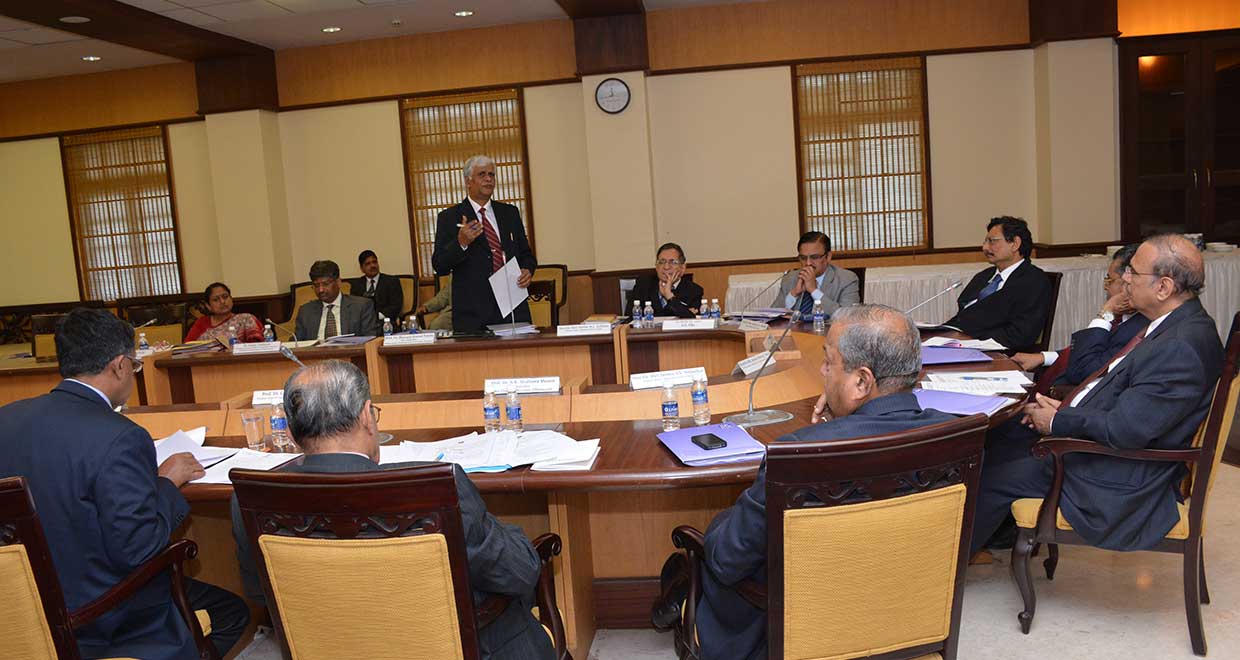
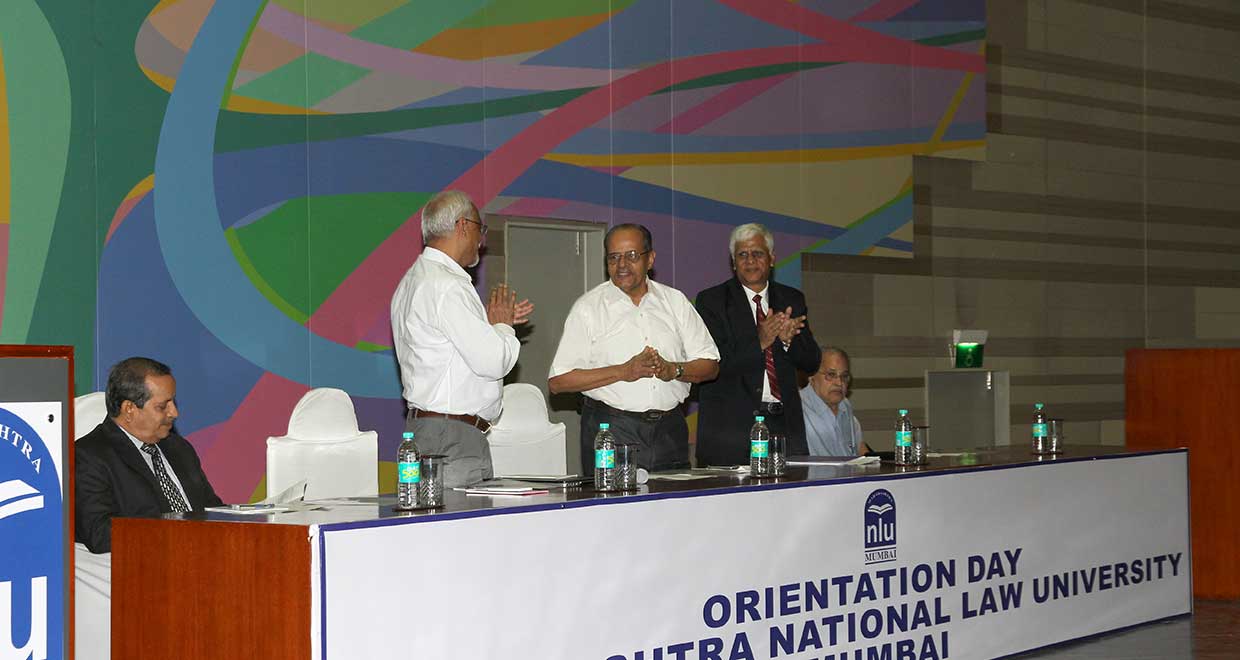




 Allow notifications