Tag: Real Estate Laws

  • A good real estate practitioner needs to be familiar with multiple laws which impact real estate- Probal Bhaduri, Managing Partner at EVA Law

    A good real estate practitioner needs to be familiar with multiple laws which impact real estate- Probal Bhaduri, Managing Partner at EVA Law

    This interview has been published by  Priyanka Karwa and The SuperLawyer Team
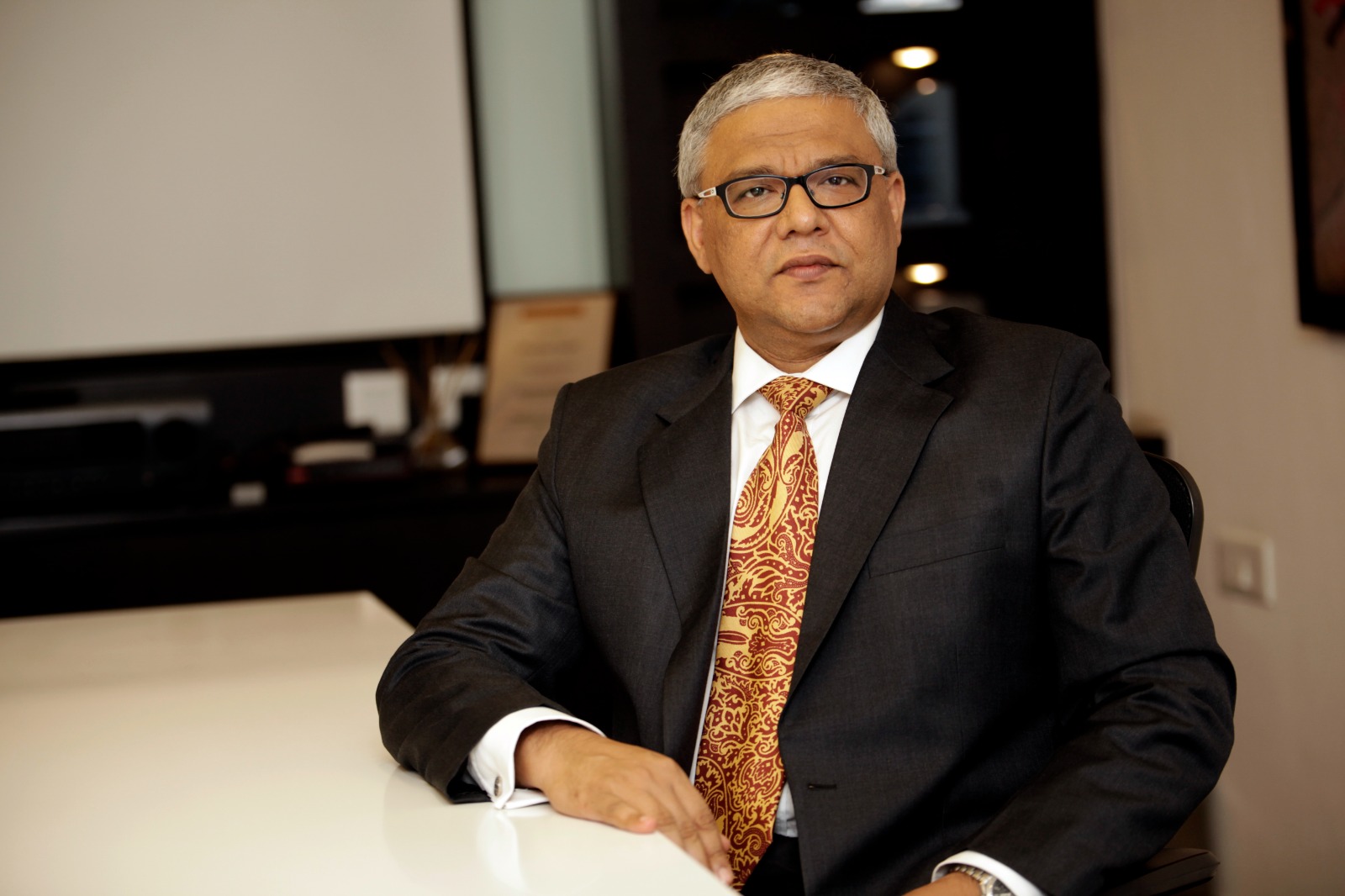
    Sir, could you please share with us your journey and how you ended up pursuing a career in law, especially with such a diverse background that includes corporate, commercial, and employment law?

    Prior to joining Law School (National Law School of India University) I was lucky enough to have interacted with Prof. Dr. N. R. Madhava Menon.  It was these interactions that led me to sit for the entrance exam.

    At the time I graduated, law firms did not put lawyers into specific practice areas as is the case today.  I, therefore, got exposed to various areas of laws during my initial years.  At that point of time, the liberalisation of the Indian economy was slowly gathering steam and owing to the same, I ended up doing a lot of corporate and commercial work and found that I enjoyed it.  

    You have extensive experience in mergers, acquisitions, private equity investments, and joint ventures. Could you tell us about a particularly challenging or memorable deal you’ve worked on and what made it stand out?

    Every transaction is memorable since by its very nature a transaction consists of balancing competing interests and arriving at a result which is a win-win.  Personally speaking, the learnings from each transaction have been different since nearly all of them required me to ‘re-learn’. 

    In addition to your work in M&A and private equity, you’ve also advised on real estate transactions. What are some key considerations for clients when navigating the complexities of real estate deals, especially in India?

    Real estate practice in India is fairly varied in terms of local practices and on-ground situations.  A good real estate practitioner needs to be familiar with multiple laws which impact real estate such as stamp duty laws, succession laws under various communities, environmental laws, land acquisition, etc.

    For a good real estate practitioner, balancing commercial needs with on-ground realities and legal protection is key and this is something which requires time and experience.  A diligent real estate lawyer is one who is aware of the legal precedents on a continuous basis.

    You’ve had the opportunity to work both in India and internationally, including with European clients on investment opportunities in India. What are some key differences you’ve noticed in the legal landscape and business practices between these regions?

    One of the key differences I noticed while working abroad was the focus and attention given by law firms to the mental well-being of their lawyers.  The other big difference was the way big law firms were structured to ensure focus on quality of deliverables, knowledge management, standardisation of work products, etc.  Indian law firms have taken time to walk down this path.

    Shareholder and commercial disputes can be intricate and sensitive matters. Can you discuss some strategies or approaches you’ve used to successfully resolve these types of conflicts for your clients?

    In India, given the stress our judicial system has, it becomes imperative to resolve disputes efficiently in a time bound manner.  This makes alternative modes of dispute resolution including negotiation and mediation particularly important.  Drafting commercial agreements which will stand the test of a legal challenge is a first step towards ensuring prevention of such disputes.  Furthermore, a key aspect in intricate shareholder and commercial disputes is the careful balancing of interests of both parties that a lawyer must strive for to ensure a speedy redressal of grievances of the parties involved.  In my experience, commercial disputes usually arise when the thought process of the people at the time of entering into the transaction has shifted which leads to one of the parties trying to ‘re-interpret’ the intention behind a particular provision of a transaction document.  By drafting documents using language which is not capable of multiple interpretations, some of these disputes can be resolved without having to go down a lengthy process of dispute resolution.  

    In my view, mediation seems to be the way forward, especially for shareholder and commercial disputes considering the many benefits it offers.  Lawyers and law firms would be well advised in educating themselves in this area and then advising their clients to use mediation as a process to resolve issues.  

    Your career has spanned various roles, including Managing Partner at Lumiere Law Partners and Director (Legal) at the Avenue Capital Group. How have these diverse experiences shaped your approach to legal practice and client service?

    During my formative years as a legal professional, I was very fortunate to have worked directly under lawyers who I would consider as doyens of the legal profession. Their kindness in taking the time out to mentor me is perhaps the biggest reason why I enjoy what I do even today.  While reading and constantly updating oneself is a prerequisite for a lawyer to do well in the profession, client servicing (learning how to deal with clients) is something which is equally important.  I built upon my client servicing skills gradually over the course of my career while working at law firms in India and abroad.  When I was working at Avenue Capital, I was essentially a client for law firms and that stint was invaluable in giving me the perspective from the other side – how a client ‘measures’ law firms/ lawyers and what he expects from his legal counsel(s).  

    You’ve been recognized by prestigious legal publications like the Legal 500 and Chambers and Partners. What do you attribute to your success in the legal field, and how do you stay current and relevant in such a dynamic industry?

    One of my professors in law school had once made a comment, “Lawyers are not brilliant by birth, they become brilliant only by working hard”.  The legal profession is one of those where knowledge trumps everything else.  When I started off my career, there was no internet, no google, which have now become an integral part of our lives.  Reading and researching, the two essential elements that form a key part of a lawyer’s arsenal, were to be approached differently as compared to today’s times.  This, however, is only half the story. Truly brilliant lawyers, in my experience, have a third element which is ‘analysis’.  In order to stay relevant in an ever-evolving legal landscape, especially in India, the first order of business is to read as much as possible and then analyse what one has read to see how to best use that learning.  Further, having a problem-solving attitude is critical in order to be able to serve your clients effectively and efficiently.

    You’re currently the Managing Partner of EVA Law. Can you tell us about your vision for the firm and the areas of law where you see the most growth and potential in the coming years?

    The word ‘EVA’ stands for life itself. My vision for EVA Law is not so much for the firm but for the lawyers who work with us.  My learning over nearly three decades is that for any vision to be successful, it has to first become a value system for the people in the organization.  

    My vision for EVA would be threefold:  

    (a) Building a culture of extraordinary mentorship.  Lawyers in EVA Law must instil a culture of thirst for knowledge and achieving excellence.  The culture must embrace openness and inclusiveness.  The mentorship must encourage everyone to aspire to become leaders and decision makers.  

    (b) Recognising teamwork is critical.  Every team member in EVA Law will be respected and appreciated for their contribution and learn from each other in that process.  Younger members of the team must feel committed to the process.

    (c) Dealing with mistakes and failures – The work culture must empower people to be secure enough to admit wrong decisions.  Failures and mistakes are not about putting blame on someone but learning individually and collectively.

    In terms of the areas of law that have a lot of potential, data privacy is right up there. I also feel that with the growing trend towards digitisation, cyber security laws will be in vogue.  Also as I mentioned above, mediation will be an important area.  

    As someone who has achieved remarkable success in the legal profession, what advice would you give to law school graduates and young professionals aspiring to excel in their legal careers?

    All the recognitions and accolades that I have received in my career are not by any stretch of imagination attributable to anything extraordinary done by me.  They are a reflection of all my team members who have worked extremely hard to ensure that our work got noticed. Success means different things to different people. For me, success is the fact that people who have worked with me have gone on to become remarkable lawyers; success is the fact that lawyers in my team who are less than half my age call me by name; success is the fact that my clients allow me to tell them what they ought to hear rather than what they want to hear. To all the law graduates out there aspiring to make a mark in the legal profession, all I would like to say is that be the lawyer who other lawyers call when they need good advice and (quite importantly) don’t take yourself too seriously.

    Get in touch with Probal Bhaduri-

  • The intersection of technology and law has been a recurring theme in my career, and it’s a space that continues to excite and challenge me- G.V. Anand Bhushan, Founder, Bhushan Rajaram, Advocates & Consultants

    The intersection of technology and law has been a recurring theme in my career, and it’s a space that continues to excite and challenge me- G.V. Anand Bhushan, Founder, Bhushan Rajaram, Advocates & Consultants

    This interview has been published by  Priyanka Karwa and The SuperLawyer Team

    Sir, could you please share with our listeners what initially inspired you to pursue a career in law and how you navigated your way to specializing in Corporate, Intellectual Property, Technology, Litigation, and Real Estate laws?

    Certainly, the journey to a legal career is often as varied as the individuals who undertake it. In my case, I stumbled upon the field of law somewhat serendipitously. Like many young lawyers of my generation, I wasn’t particularly inclined towards math or science. However, I had a deep-rooted fascination with technology—I even built my own computers and was an avid proponent of open-source platforms, particularly Linux.

    As fate would have it, my graduation coincided with two significant developments in the Indian tech landscape: the enactment of the Information Technology Act and the onset of a multi-decade growth spurt in the Indian technology industry. These events were not just pivotal for the sector but also set the stage for my own career trajectory.

    The legal challenges posed by the burgeoning tech industry were both complex and novel, offering a fertile ground for specialization. My affinity for technology naturally led me to focus on Corporate, Intellectual Property, and Technology laws. Over time, as I gained more experience and exposure, I expanded my practice areas to include Litigation and Real Estate laws as well.

    While my entry into the legal profession may have been somewhat accidental, the path I’ve carved within it has been intentional and guided by a combination of personal interests and market opportunities. The intersection of technology and law has been a recurring theme in my career, and it’s a space that continues to excite and challenge me.

    Over your impressive 20-year career, you’ve gained extensive experience in General Corporate, Projects, Technology, and Dispute Resolution. Could you highlight some of the key milestones or projects that have played a pivotal role in shaping your expertise and career trajectory?

    One must always remember that competition is fierce. There is terrific talent in the market in the next generation of lawyers. There’s a saying in private practise “You are only as good as your last deal”. Lol, I remember being quite taken aback as a young lawyer when I first heard that! But if you understand that in this economy you always need to upskill to stay relevant and competent, you will be able to thrive. For me, that meant things like pursuing my master’s as a Fulbright scholar and exploring both opportunities in-house and as a Partner in Shardul Amarchand. For example, in Cognizant I was the lawyer hired to set up both the India and the wider Asia Pacific teams as General Counsel. At Shardul Amarchand, I was given the opportunity to start our Chennai office. That kind of entrepreneurial journey is something that I will always cherish. 

    You’ve held significant roles such as General Counsel and Board Member of Cognizant Technology Solutions Asia Pacific. Could you tell us about the challenges and rewards of managing diverse practice areas, resolving complex disputes, and advising on multi-million dollar technology deals?

    The scale of operations at Cognizant, one of the fastest-growing Fortune 500 companies, meant that even seemingly routine matters like EULAs, Labour issues or client Master Service Agreements (MSAs) involved high-stakes financial implications, often running into tens of millions of dollars. The urgency was palpable, and the need for effective prioritization and execution across diverse geographies in the Asia-Pacific region was paramount.

    My experience in private practice at Shardul Amarchand was marked by an intense performance culture. Clients often presented us with complex, unprecedented challenges. It’s worth noting that most large clients have highly sophisticated in-house teams, so when they seek external counsel, it’s typically for issues that are both novel and intricate. This necessitates original research and innovative problem-solving, skills that are indispensable in the legal landscape. Our office of 4 partners advised on Tech, Corporate, M&A, Real Estate and litigation matters. 

    The common thread between these diverse roles has been the critical importance of a strong, well-trained team. Whether it was navigating the complexities of multi-million dollar technology deals, resolving intricate disputes, or advising on regulatory compliance, the strength of the team was often the determining factor in the successful outcome of these endeavors. I’ve been fortunate to work with exceptional teams both at Cognizant and in private practice, and their contributions cannot be overstated.

    Throughout your journey, you’ve been hailed as a trusted legal advisor. What do you believe sets you apart in terms of building strong client relationships and delivering effective legal counsel?

    What distinguishes my approach in building robust client relationships and offering effective legal counsel boils down to two key elements: trust and capability.

    In today’s fast-paced business environment, clients are inundated with challenges and operate under immense pressure. They aren’t seeking a legal lecture; they’re in search of actionable solutions, a quantifiable assessment of risks, and a straightforward strategy for compliance. To earn their trust, it’s imperative to communicate in a clear and direct manner that aligns with their commercial objectives.

    The legal industry often falls into the trap of obscuring advice with layers of disclaimers and complex jargon. This not only dilutes the impact of our counsel but also hampers the decision-making process for the client. My focus is on cutting through the noise to deliver advice that is both clear and actionable.

    Consistency is the final, yet crucial, ingredient in this equation. Trust isn’t built overnight or through a single transaction; it’s cultivated over years of reliable and consistent service. The ability to consistently identify and mitigate client risks transforms a transactional relationship into a long-term partnership.

    You’ve received recognition from esteemed publications like Legal 500, Chambers, and Asian Legal Business. How has this recognition influenced your approach to your work, and what does it mean to you to be acknowledged by your peers in the legal industry?

    Recognition from esteemed platforms is an honor. I’m deeply grateful for it. In a competitive market where credibility is often scrutinized, these accolades serve as a valuable endorsement. Operating under my own name, Bhushan Rajaram, these recognitions act as a seal of approval, opening doors that might otherwise remain closed.

    However, it’s crucial to understand that these accolades are essentially a foot in the door, not a guarantee of sustained success. Clients today are incredibly savvy. They have a keen eye for expertise and can quickly discern whether an advisor possesses the depth of knowledge required to address their unique challenges. So, while the recognition is validating, it’s merely the starting line, not the finish.

    Lastly, could you leave our listeners with a piece of wisdom or a mantra that has guided you through your remarkable legal journey, and which you believe can resonate with those embarking on their own paths in the legal profession?

    Before we conclude, I’d like to share a guiding principle that has been invaluable to me on my legal journey—a piece of wisdom from my father that I believe will resonate with many of you.

    We live in a time where ambition and intelligence are in abundance, especially among young professionals. The drive to reach significant milestones—like making partner, buying a home, or achieving financial independence—often takes center stage. My father, however, offered a different perspective: “Life is not a checklist but a journey.”

    The relationships you cultivate, particularly with your life partner during these formative years, are incredibly enriching. These bonds are built on shared struggles and triumphs, and they often become your most reliable support system.

    So, as you ascend the ranks in the legal field, by all means, be ambitious and aim high. But also remember to live your life fully. The journey itself is just as important as the destination, and the relationships you form along the way make the journey all the more rewarding.

    Get in touch with G.V Anand Bhushan-

  • I believe Corporate Commercial, Real Estate, Criminal and Estate law practices would continue to be rewarding in the future- Gaurav Singh Bhatti, Partner – Dhillon & Bhatti Lawyers Professional Corporation

    I believe Corporate Commercial, Real Estate, Criminal and Estate law practices would continue to be rewarding in the future- Gaurav Singh Bhatti, Partner – Dhillon & Bhatti Lawyers Professional Corporation

    This interview has been published by  Priyanka Karwa and The SuperLawyer Team

    Hi Gaurav! Before getting into the big details, can you tell us why you chose law as a career? Has it been a lingering childhood ambition?

    Since childhood I had a natural inclination towards law as both my parents are in the legal profession. I have always been motivated seeing their commitment towards law and administration of justice. Practice of law is such that in one matter a lawyer would be assisting clients in complex civil or transactional matters and in another matter a lawyer would be instrumental in protecting the lives and liberties of individuals. I am of the belief that as lawyers we can make a positive impact in our society at large and this motivated me to pursue a career in law.   

    Can you throw light on your practice pertaining to Commercial and Residential Real Estate transactions and Corporate-Commercial Practice?

    Our Real Estate practice revolves around acting on behalf of clients in acquisitions of land, developmental projects, commercial properties, multi-unit and single-family dwelling units. We also represent clients in institutional and private financing transactions.

    As a part of our Corporate-Commercial practice, we assist our corporate clients in the acquisition and disposition of shares/ assets, franchise agreements and business purchases. We also advise health care providers on matters ranging from acquisition of existing medial practices, incorporations, partnership agreements and regulatory and licensing matters.

    As we grow, we are also expanding our practice areas to include Immigration Law specific matters as well.

    Many budding law graduates intend to pursue LLM abroad. Can you describe your journey from Army Institute of Law (Affiliated to Punjabi University) to Osgoode Hall Law School, Toronto. What motivated you to pursue your LLM in Canada?

    During my time at law school, more and more law graduates began to pursue higher education abroad. With most of my internships and past experiences centered around litigation and adversarial system of law in India, the premise of gaining experience on how law is practiced in foreign jurisdictions seemed exciting to me. When I did my research, I was intrigued to learn how pursuing Masters at reputed universities would enable candidates to learn how law is practiced and applied in foreign jurisdictions.

    With that in mind, I applied to two Canadian Universities. I received an offer from Osgoode Hall Law School (York University, Toronto), which is the second oldest law school in Canada and because of the stimulating academic environment and diverse course offerings of the graduate program, Osgoode had always been my first preference.

    How did your education and internship experiences in India play a role in shaping your career as a lawyer now in Canada?

    During law school, I interned at the Punjab & Haryana High Court and District Courts to learn how litigation practices are managed. I also interned at a tier-1 law firm in Delhi in their General Corporate practice to get an insight on how legal support services are provided to corporate clients. I believe experience in both litigation and corporate setup is essential to ascertain one’s true calling in law.

    These days most of the premier law institutions abroad prefer candidates with prior work experience for admissions to graduate program. When I applied, it was not the norm but candidates with prior experience were preferred. My family and faculty at Army Institute of Law encouraged me to take a leap of faith and apply. In my statement of purpose to the foreign universities, I explained how my internship experiences enhanced my understanding and application of law in theory and in practice.

    Can you give our readers a glimpse of your experiences as an Articling Law Student at Mississauga?

    In Ontario, the Law Society mandates that prior to being admitted as a Barrister & Solicitor, licensing candidates need to work under the supervision of a lawyer for around 10 months (articling) or complete a law practice program. I articled at a boutique law firm in Mississauga focusing on Real Estate, Corporate and Immigration Law. During my time at the firm, I gained hands-on experience on how to manage files and develop a resolution-oriented approach.

    What do you think are best areas of practice for Indian law graduates seeking to establish themselves as lawyers and solicitors abroad?

    In most western countries, lawyers usually practice as specialists of one or two areas of law. General law practices are prevalent but not very common. I am of firm belief that one must choose an area of practice based on what they are passionate about. I believe Corporate Commercial, Real Estate, Criminal and Estate law practices would continue to be rewarding in the future.

    Can you describe how your normal work day would be like at Dhillon & Bhatti Lawyers Professional Corporation?

    Our firm is open on weekdays from 9 AM to 5:30 PM. We are a team of two lawyers with support staff. We usually start our day by attending to tasks that require immediate attention. Client meetings, appearances and important deadlines are marked in our digital calendar. I make it a point to go through my schedule for the next day one day in advance so that I am able to manage work seamlessly the next day. Depending on workload, sometimes we need to work on weekends and afterhours on weekdays. Most of our work has crucial deadlines and time is of the essence in corporate and real estate transactions. We usually host team lunches on Friday evenings to end the work week on a lighter note.

    What are the qualities and talents you would look out for in an intern or fresher you would recruit for Dhillon & Bhatti Lawyers Professional Corporation?

    I believe strong analytical skills and resolution-oriented approach is essential. Our clients are either billed hourly or a flat fee retainer is settled. In either case, time management skills are of value as lawyers usually work on multiple matters in a day.

    Can you share your advice and words of wisdom to young budding lawyers aiming to set up their legal careers across borders?

    Persistence is key and there’s no substitute to hard work. In our line of work, for continuing professional development, devoting time every week towards reading and keeping abreast with new developments in law is absolutely necessary. When it comes to practice of law, a healthy balance must be maintained when it comes to being empathetic and motivated towards the clients cause and a lawyers duty towards the courts in administration of justice.

    Get in touch with Gaurav Singh Bhatti-

  • “While there are challenges due to the unique nature of transactions in the real estate sector, I have come across many outstanding women lawyers in the field”- Shriti shah, Partner at Quillon Partners

    “While there are challenges due to the unique nature of transactions in the real estate sector, I have come across many outstanding women lawyers in the field”- Shriti shah, Partner at Quillon Partners

    This interview has been published by Priyanka Karwa and The SuperLawyer Team.

    Ma’am, as a conversation starter, our audience would like to know about your story of being a Lawyer.

    I didn’t start off wanting to be a lawyer. I took up commerce after Grade 12 and completed my graduation. I enjoyed accounting but I didn’t really see myself doing numbers. It was a very critical time of my career and I starting thinking what to do next – MBA or law or something else. I don’t have lawyers in my family so it was not an obvious choice for me. But I thought law college would be academically challenging and interesting. It really wasn’t until I joined Government Law College and started my articleship with Ms. Kalapana Merchant at a solicitor firm that I thought I would like the pace of law.  One of the things that I liked about my articleship was that it gave me a flavour of different streams of law i.e. corporate, intellectual property, real estate and financing . After graduating from law college and qualifying as a solicitor, I decided to focus on corporate law as it excited me the most. I have worked as a lawyer for about 15 years. Currently, I am a partner at Quillon Partners, a law firm which focuses on M&A and private equity.

    Being into the legal profession, you must have heard things like “real-estate is not for women”, what are your views upon this?

    While there are challenges due to the unique nature of transactions in the real estate sector, I have come across many outstanding women lawyers in the field. Fundamental changes introduced in the real estate laws by the Real Estate (Regulation and Development) Act, 2016 have led to greater transparency in the real estate sector and women lawyers no longer shy away from entering this sector.  

    Could you tell us about your struggles as a woman lawyer?

    There was a time when I wanted to focus on my family. I like to try different things – so I took up knowledge management (KM), business development and human resource which are very different and interesting roles. While knowledge management was nascent in 2011, law firms had started giving KM importance with several laws undergoing changes e.g. the Companies Act was completely revamped in 2013. During this time I also got an insight into Business Development.  Often different roles, help you to draw from one to the other. While I did KM, the corporate experience I had helped me and then when I went back to doing corporate law – the KM and Business Development experience helped me immensely. I still continue to be involved with the KM, BD and HR functions of the firm.   

    We see a lot more women lawyers now. However, as one progresses up the ladder of seniority, the scales start to tip with a decrease in the number of law firm partners being women. This landscape is starting to shift and many Indian law firms like international law firms are now working consciously towards inclusiveness and gender diversity. Personally, I have had very supportive seniors at Quillon Partners and they have been very encouraging. 

    Please shed some light upon your role as an M&A Lawyer.

    The role of an M&A lawyer varies from transaction to transaction depending on the kind of the transaction and who you are representing (e.g. buyer, seller, company). M&A lawyers have a versatile and extensive role throughout the transaction. All the legal mechanics of a transaction, including negotiating and drafting agreements to reflect a commercial deal, arranging finance and liaising with the client and their other advisors. Typically, in most transactions, it involves advising, planning, structuring, due diligence, drafting of the transaction documents, negotiations, obtaining regulatory approvals and finally closing of the transaction.  

    How do you see the M&A sector in the coming 5 years?

    Globally there was a dip on the deal street in 2022 due to several factors, including war and inflation. India seems very attractive to many global firms post Covid with investments in China taking a back seat. Mergers and acquisitions in India are expected to increase in 2023. The deal market is expected to be active in several sectors such are pharmaceutical, technology, infrastructure and healthcare. Therefore in-bound M&A investments are likely to increase. Out-bound foreign investments are also on a rise with the recent changes to the regulatory framework. India is expected to be a very attractive investment destination given the benefits of demographics, cost arbitrage, presence of large consumer market and democratic stability.

    Coming towards the end of the conversation, could you tell us three qualities which an M&A Lawyer must possess?

    Constant thirst for knowledge– legal technical knowledge is important but learning can’t stop with formal education. We have opportunities to learn new things in just about everything we do and from everyone we meet. It could be learning from a past deal, keeping oneself abreast with new laws, adapting to new technology, or learning people skills, it is a constant never-ending process.

    Being organised and structured – usually in most deals, time lines are tight and one needs to break the tasks and prioritize work streams in order to be able to service clients efficiently. Keeping an eye on the ball is key.

    Enjoy what you are doing – there are often personal sacrifices, sometimes long hours and only if you enjoy what you are doing, it’s worth it.

    Get in touch with Shriti Shah-

  • Woman in the Real Estate sector: a Discussion with Veena Krishnan, Partner at SAMVAD: Partners

    Woman in the Real Estate sector: a Discussion with Veena Krishnan, Partner at SAMVAD: Partners

    This interview has been published by Priyanka Karwa and The SuperLawyer Team

    What inspired you to choose law as a career and how has been the decision so far?

    I chose law as a career only because I cleared the entrance test conducted by NLSIU and felt that it would be beneficial if I studied at a University par excellence. I did not even consider law as a career and wanted to become an engineer. Out of the myriad of entrance exams I wrote, my parents had gotten the form for the NLSIU entrance exam and I simply wrote it on a whim. I have not regretted the decision since.

    What were the challenges faced by you at the beginning of your career?

    I wanted to become a practicing lawyer and be based out of Bangalore. At that time, finding good law firms was a challenge and it was initially difficult for me to find a good law firm to work with in Bangalore.

    Since you have also been a part of PoSH and the statutory Prevention of Sexual Harassment, do you think it is implied in local committees where women are neglected in informal sectors? 

    The Local Complaints Committee is a saving grace for women in the informal sector. As far as other establishments are concerned, there is a mandate for a POSH Committee but the LCC helps domestic workers and informal workers who may not be working in an organizational setup.

    Talking about work-life balance, there has been an ample amount of discussion on health issues as a lawyer, what do you believe are the best practices to maintain the equilibrium?

    I have by and large managed to strike a healthy work-life balance in my sphere of work. Some of the practices I would recommend are – daily exercise and physical activity which would lead to a healthy body and mind; any form of spiritual practice such as yoga or meditation which would enable the mind to stay calm; also while it is important to work hard and strive for professional success, it is important to keep a mental distance from success and failures and not get too attached to the outcome of one’s efforts; time management and conscious utilization of each minute of the day is very important.

    Among all the aspects, i.e,  lease and purchase of office spaces, stand-alone buildings, IT complexes, land, and properties conveyed by government entities such as the KIADB, etc, which one do you find the most interesting and challenging? 

    I find the lease of office spaces and acquisition of land parcels most challenging in terms of the title and documentation issues that arise in these transactions.

    Any road-maps that were followed by you, that you would like to share? 

    Spending time with family and friends; keeping a mental distance from my successes and failures; not comparing myself to others who are more or less successful than me (this consumes a lot of brain power and is a drain on one’s energy); emphasizing on teamwork and delivering quality work to the client and investing time and energy in helping juniors learn the ropes.

    What advice would you give to someone considering a real estate purchase? 

    It is important to make a commercial decision first on whether this property is suitable or not and then look at the legal aspects. The title and other aspects may work fine, but there are several instances where legal things are fine, but it does not work commercially for the client.

    What advice would you give to young law professionals? 

    Take your time and be patient to settle down in an organization, do not be in a hurry to jump jobs; be proactive in asking seniors for work and actively working on seeing a transaction to closure rather than simply doing the work allotted to you; when you are assigned work, do not simply sit down and start on it, but figure out the transaction structure, ask to be included on client calls and meetings. Do not compare yourself to your peers, as each lawyer’s journey is different; work hard and you will surely find success.

    Get in touch with Veena Krishnan-

  • In Conversation With: Anshul Gupta- Founder at ANG Partners- Advocates and Solicitors, having expertise of practice in Real Estate Laws

    In Conversation With: Anshul Gupta- Founder at ANG Partners- Advocates and Solicitors, having expertise of practice in Real Estate Laws

    This interview has been published by Sonali ParasharOjuswi Sahay, and the SuperLawyer Team


    To start at the beginning, how did you decide upon pursuing law? How would you describe your career up to this point with an adjective? 

    I belong to a small town, Agra in Uttar Pradesh, where we had limited options post matriculation. I wasn’t too sure of how to go about choosing a field for myself. I would often speak with a lot of people to understand the prospects that I have which can be explored. Coming from a city, where in the name of law chambers, lawyers sat on a single desk under an umbrella, Law seemed like an extremely challenging and far-fetched option for me. However, I was fortunate enough to have somebody in my family pursuing Law at that moment.

    My elder brother who is also a lawyer practising in Delhi made me realise the potential of the profession and encouraged me to enlarge my ambit and understand that this profession is far greater than what we saw growing up in our city. This marked the beginning of my journey with law. I spoke with some Senior Advocates who apprised me about national law universities and how I can prepare myself for the Common Law  Entrance Test. I, fortunately, got through one of the National Law Colleges and as one says  “Rest is History”!  

    If I choose one word to describe my career till now it will be ‘ENRICHING’. 

    You pursued your LLM and Master’s degree from French Universities. How has your career as a litigant benefitted from the degrees? What would your advice be for law graduates aiming at pursuing an LLM abroad? 

    Pursuing a master’s from a foreign university has several benefits attached to it. It makes you a very fine writer (thanks to the innumerable assignments!). However, on a serious note,  the education system in foreign universities in most nations is such that they teach you the law not just theoretically but also practically. I feel you catch the real essence of law when you start living it. My Professors there were also practitioners of law( like of-counsel of a  firm or an international organisation) and that made a lot of difference for there was a constant exchange of ideas.

    There are other benefits too like, one gets to learn different languages (I learnt French and German), you make friends with people of various nationalities and the most important it makes you self aware when you start managing yourself and there is nobody to help you with any household chores. Foreign universities have a very different process of teaching which is nurturing for the students. This helped me secure jobs right after college in foreign firms in Germany and China. Even though my area of practice is very different from the subject I pursued in my master’s, the main aim of a foreign LLM and masters is to open yourself to the world. 

    I would highly recommend law graduates to pursue LLM from abroad. Some advice I  would like to give the aspirants. Aspirants should fill up applications way before February for September intake. Other advice will be to choose a university which is the top most in the subject you are choosing. Do not limit yourself to making 4 -5 applications, I personally made 12 applications, got selected in 9 of them and took the best available option.

    Choose a university that should not burn a hole in your parent’s pocket or burden yourself with excessive student loans. The most important advice is that do not forget to be kind and cordial to other people, bear in mind that you are representative of India and our country’s reputation lies on your shoulder, and assume that responsibility when you speak with other foreign nationals. Lastly, do not forget to interact with your professors and take their help in securing internships and recommendations.  

    As a litigant, how was your journey in establishing your practice? What advice can you give to budding lawyers in terms of choosing specialisation and internships for them to help their litigation career ahead? 

    Establishing a litigation practice for a first-generation lawyer is extremely tough and a lot of resilience is required. When I look back on my journey from working as an Associate for a salary of Rs. 10,000/- per month only and to now have a team of more than 10 people with a minimum pay scale of Rs. 25,000/-. I always think and look back at that young fresher who had only aspired but never imagined that a day would come like this so soon. 

    As it said, Rome was not built in a day. This journey of 8 years has been no less than a  roller coaster with many ups & downs, there have been several instances when I was left feeling demotivated but I never stopped putting in my 100%. The trick is to never look back and learn from your mistakes, do not let them hold you back. There is no shortcut to success and I still have a long way to go but today I am filled with gratitude for all that  I have received.  

    For young students wanting to litigate in future, I urge them to read the Bare Acts of the subjects thoroughly, also they should intern with a litigating firm or a trial lawyer to get hold of the procedures. It is that simple, you have to fall in love with law and profession, and breathe it with every single breath of yours. For young professionals my advice will be to not leave the firm they are working for a minimum of 5 years even if the salary is marginal, the idea is to learn and gain experience. The sole of this profession is experience and I do not think  I can stress that anymore. Lastly, be obedient to the Court and maintain professional ethics. 

    As a first-generation lawyer, you have not just extensively practised law, but have also successfully established your firm, ANG Partners- Advocates and Solicitors. What factors and skills do you believe helped you establish your own practice? 

    I feel that a person should possess certain qualities of being a leader. There are various factors that have contributed to my journey of becoming who I am today. First, my parents encouraged me to start my own firm. I had unhinged support from my family. I  still remember when I first started my office, I was the only one who was there. I was the office boy, I was the Clerk, I was the Associate, I was the Lawyer, and I was my Firm.

    That undying spirit to achieve something made me go. I didn’t have money to pay my first office boy. I worked hard just to pay his salary. So I had to put other people’s needs in front of mine. This was the driving factor, my fire to fulfil the needs of the people working for me who are dependent upon me.

    Today there are more than 10 people whose homes are totally dependent upon me. The most notable attribute a person should have is that of a  team player. I believe in taking the whole team forward rather than acclaiming all the success individually. I feel that I have been very lucky to have a team of such hard-working lawyers,  who are at par with my pace and they keep motivating and supporting me to achieve better in my profession.  

    You hold the expertise of practice in Real Estate Laws and have particularly worked for the  Homebuyers in helping them overcome the harassment faced by the builders and the banks.  Please tell us more about this. 

    We are one of the top law firms in India in the Real Estate Sector, handling homebuyers’ disputes. We have been regularly appearing in Supreme Court, High Courts, Appellate  Tribunals, Real Estate Authorities, and Consumer Forums to safeguard the rights of the beleaguered home buyers. We are constantly being appreciated in news and print media for the work we do for estranged homebuyers. We have managed to secure several judgments and orders of the Court in our favour and have always come forward to help and protect the interest of the homebuyers.

    We are well appreciated by the community for the work we have done for the welfare of distressed homebuyers. We have helped Senior Citizens, and Army Personnel, who have put in their life savings to own a home. We have saved the homebuyers who have fallen into the loan trap laid by the Banks in collusion with the Builders. We have helped many homebuyers from criminal and debt recovery proceedings initiated by the Banks by giving false assurances and making illegal loan agreements. We have also delivered several lectures and webinars on these issues in order to help and make aware of the common man. 

    In practising at various Tribunals, Forums and Courts, including the Supreme Court of  India, how did you develop court mannerisms and practice etiquettes? Do you believe  Mock Trials and Moot Courts help in this regard? 

    Definitely yes! Moot Courts/ Trials are the first steps in your litigation career. However,  the court mannerism and etiquettes are also learnt by observing Senior Counsels in court.  You can read books but having keen observation skills and being inside the courtroom will work the best for you. So much so that there is a separate examination on Ethics in  AOR Examination and if one wishes to read and learn about ethics there is a special note prepared by Ld. ASG Mr R. Venkataramani on the Supreme Court’s Website. 

    How did working as a trainee associate in Germany and later in Shanghai, China, help you in your career forward? Should aspiring lawyers gain experience in practising in foreign jurisdictions? 

    Working as a trainee in Lupp and Partners, Germany in their Mergers and Acquisitions team was an enriching experience for me. I was amazed to see their work culture. I saw how people work with so much compassion and the method of work is stupendous, even the minutest details like commas and full stops were checked about 7 times before finalising a  draft. The work culture is stress-free, once I was scolded by my top boss for being in the office till 5:00 PM on a Friday! The learning I took from there is to take care of the colleagues who are working for you and they will take care of you.  

    When I was working in China I was working with the top arbitrator of China, Mr Tony  Zhang. The knowledge I gained from there was very useful for my Alternate Dispute  Resolution cases in India as our country is majorly a litigating nation. I always advise my client to go for alternate dispute resolution methods for fast redressal for I realised the importance of it.  

    You have also won the BW Legal World 30 under 30 Lawyers of India. Achieving such heights so early in your career, what is next in store for you?  

    I believe this is just the beginning and the good thing about this profession is that there is no finishing line/end. I will keep trying to grow bigger and achieve more in this profession.  Although, I do have my eyes on the Forbes top 100 Litigators of India for now! 


    Get in touch with Anshul Gupta –

