Tag: RMLNLU

  • “IP law is not just limited to conventional ideas of trademarks and copyright”- Anooja Padhee, Senior Associate at K&S Partners, Intellectual Property Attorneys

    “IP law is not just limited to conventional ideas of trademarks and copyright”- Anooja Padhee, Senior Associate at K&S Partners, Intellectual Property Attorneys

    This Interview has been published by Pragya Chandni and The SuperLawyer Team

    Can you share your journey into the field of law, particularly focusing on what drew you to specialize in intellectual property law?

    My interest in intellectual property developed in my third year when we were first taught ‘Trademark and Copyright law’. I found the subject to be interesting and relatable, as it dealt with brands and ideas that I would come across and use in my day to day life. Soon I found myself looking for the TM or ® symbol on top of brands on hoardings or while using products and wondering whether use of a song in a TV series or a similar tune or idea was copyright protected. 

    In law school, besides focussing on IP related projects for my curriculum, I also participated in an IP moot. 

    To explore this interest further and to understand what a career in IP could entail, I went on to do a few IP internships at Singh and Singh and K&S Partners. At both these places I worked on ongoing cases across various subject areas including trademarks, copyright and patents, which further helped me understand various legal concepts and their practical application. 

    With all this, early on, I realized that this was a subject that I enjoyed and found interesting and that I wanted to make a career in it.

    With over a decade of experience, you’ve likely encountered a diverse array of cases in trademarks, copyrights, and geographical indications. Could you tell us about a particularly challenging case you’ve handled and how you navigated it?

    My work primarily revolves around a diverse array of brands and their protection. It is difficult to talk about a single case as each case comes with its own unique set of facts and challenges, which require you to devise customized strategies that may not work in other scenarios. 

    Where it often gets tricky for international brand owners is when rogue Indian parties adopt, apply and use brands that are popular internationally but are not in use in India. India being a common law country, use of a brand precedes its registration with the trademark registration authorities. For example, brands such as Macy’s or Hulu or Skims, are not in commercial use in India but are known to a large portion of the Indian consumer base due to exposure to western movies, TV series and social media. Under Indian law, if an Indian party were to use and apply for such brands in India before the actual brand owners, they could potentially block or raise issues for the launch of the genuine brands in India in future. Such a scenario is problematic as companies invest thousands of dollars to launch a brand in India and stand to potentially get injuncted from using their own brands. 

    To navigate such issues, brand owners have to inter alia submit documentation to show that their brand was well known in India on the date of adoption by the Indian party. This is often difficult as the burden of proof is fairly high. Also not all companies maintain sales or publicity records going back several years. As a trademark lawyer, I have worked with several clients to assess their options in the face of risk of being sued, and helped find efficient, bespoke, and commercially viable solutions in such cases. 

    A niche subject area that I have had the opportunity to work on is that of geographical indications. There are not too many firms in India that have expertise in the field as the subject has various angles and legal intricacies that are still widely unexplored and for which there is no settled legal position. However, my mentors at K&S Partners have been extensively involved in the registration and protection of numerous Indian and foreign GIs, both at a legal and at a policy level. Due to this, I have had the rare opportunity to closely work with several such Indian and foreign GI right holders and stakeholders and advise on unique issues that have far reaching domestic and international consequences.

    As someone deeply involved in managing IP portfolios and brand strategies, what strategies have you found most effective in protecting your clients’ intellectual property rights, especially in such a competitive market?

    When devising an appropriate strategy for a client, few basics are key- such as the business they are in, how aggressively they wish to promote, how litigious they are and most importantly, what their existing rights are. As mentioned before, maintaining, and producing relevant documentation showing commercial use in India is imperative. Such documentation is vital to establish the rights of parties. 

    Secondly, when a new brand is being launched in the market, it may also be relevant to conduct a thorough check of the Trademarks Register and the market to ensure that there are no existing brands that are similar or identical. This simple pre-emptive measure helps clients identify risks in advance and prepare for a potential action. Similarly, we also advise clients on the strength of a brand from a protection and enforcement point of view. For instance, if one were to use ‘apple’ for a food item, it would be considered non-distinctive and/ or descriptive. However, ‘apple’ for electronics, is a distinctive brand. 

    Thirdly, it is important for clients to conduct market surveys and conduct other checks to identify copycats/ infringers and take appropriate action against them. If action is not taken and infringers are allowed to co-exist, it may eventually lead to dilution of the brand making it common to the trade. This is also equally applicable to geographical indications. In India, we come across numerous names that have been accorded GI status. However, post registration, there is little to no enforcement or quality control of the products bearing the GI tag. In due course, this will lead to the GI losing to have any commercial significance and it may end up becoming generic. 

    Your work spans across various industries, from FMCG to pharmaceuticals. How do you adapt your legal strategies to suit the unique needs and challenges of each industry?

    An understanding of the industry in question is important while devising a legal strategy. Depending on the industry and the needs of the client, we look at how long a particular brand will be in use in the market and what is the level of investment that the client is making for it. This gives an idea of the kind of risk the client may be willing to assume. Some clients are very keen on adopting a specific brand and are willing to take the risk that may come with its launch and use. On the contrary, sometimes they give us multiple options and seek an assessment of which would be the most risk free. It depends on how risk averse or aggressive the client is.

    When it comes to industry, FMCG and F&B clients usually launch sub-brands for a short period of time that may be for a promotional event during the festive season. In such cases, separate assessments for use and registration of a brand may be given, also keeping in mind the brand placement and packaging. Automobile or clothing companies, on the other hand, usually have one main brand and their primary intent is to enforce their rights in the brand and protect it. While they may adopt a few ancillary brands sometimes, these instances are comparatively fewer. For pharma brands, clients mostly derive extensions from the name of the main salt in the product, which may be difficult to protect in some cases. This is because no monopoly can be claimed in the name of the salt.

    Given the constantly evolving nature of intellectual property law, how do you stay updated with the latest developments and trends in the field?

    From a registration point of view, I keep myself updated with the practices of the Trademarks Office to understand the objections being raised by them and the timelines being followed by them. The kind of stands being taken in hearings and the orders being passed are kept in mind. One also needs to keep track of the notifications and public notices that are issued by them. 

    From a strategy point of view, I go through the articles published on SpicyIP, like almost every IP lawyer! When I find an article particularly interesting or believe that it may be applicable to our day to day working, I go through the case law to properly understand the reasoning being adopted by the Courts. I have recently started writing about such cases, which requires a further deep dive into the legal proposition. Such research is also done while providing opinions to clients to ensure that the advice being given is up to date and accurate. 

    Lastly, our team members try to meet on a weekly basis to discuss the relevant cases of a particular week and to bounce off ideas and consider their applicability in our matters. 

    Managing projects with tight deadlines and high volumes requires a great deal of efficiency. Can you share some insights into your approach to multitasking and maintaining quality in deliverables under pressure?

    First and foremost, as IP work is deadline centric, maintaining deadlines is crucial. In the office, we have an ERP system which sends a reminder a few days before and on the day a matter is due. In addition to that, I also maintain deadlines and reminders on Outlook, for matters which I or any of my associates are delivering. This not only ensures that no matter is missed out, but also helps me make sure that incoming and outgoing matters are attended to timely.

    It also helps to maintain a priority-based to-do list. The most time sensitive and urgent matters get first preference and so on and so forth. Also being in a managerial and supervisory capacity, I rely on associates and support staff to make sure that matters are smoothly and timely attended to. Efficient allocation of resources, by identifying the strengths of each team member, assessing the complexity and urgency of the matter at hand, is key. It is imperative to have open communication channels with the team so that a collaborative approach may be taken, without micromanagement. Setting realistic deadlines after discussion with the team and being clear with the client regarding their expectations and requirements goes a long way. For complex matters, I usually first discuss the strategy with the team, and then review the final advice/ draft being sent to the client, to ensure that all relevant points have been covered. For other matters, a review may not be needed after a discussion, unless of course a team member wants their draft to be looked at by a second set of eyes. I also discuss legal propositions and opinions with my peers and mentors to get their ideas and to provide a well rounded opinion which considers all possible angles.

    Most importantly, one needs to take ownership and responsibility of their work and strive to put in their best efforts to get the best work product. 

    Finally, what advice would you offer to law graduates aspiring to specialize in intellectual property law, based on your extensive experience in the field?

    First and foremost, read! The more you read, the better your understanding will be. IP law is not just limited to conventional ideas of trademarks and copyright. Given the prevalence of social media and extensive amounts of content being circulated, there are various interesting and unique propositions that come up that have not been explored in the past. The challenges of IP in the metaverse is one such example. Because of the Make in India campaign of the government, we are seeing a huge surge in IP protection, including in related fields such as data protection and media law.

    Another suggestion would be to intern with a few IP law firms or with IP teams of full-service law firms. There is a vast difference between theoretically learning the law in law school and applying it in cases in practice. An internship is the best way for law students to get exposure to the practical aspects of IP law.

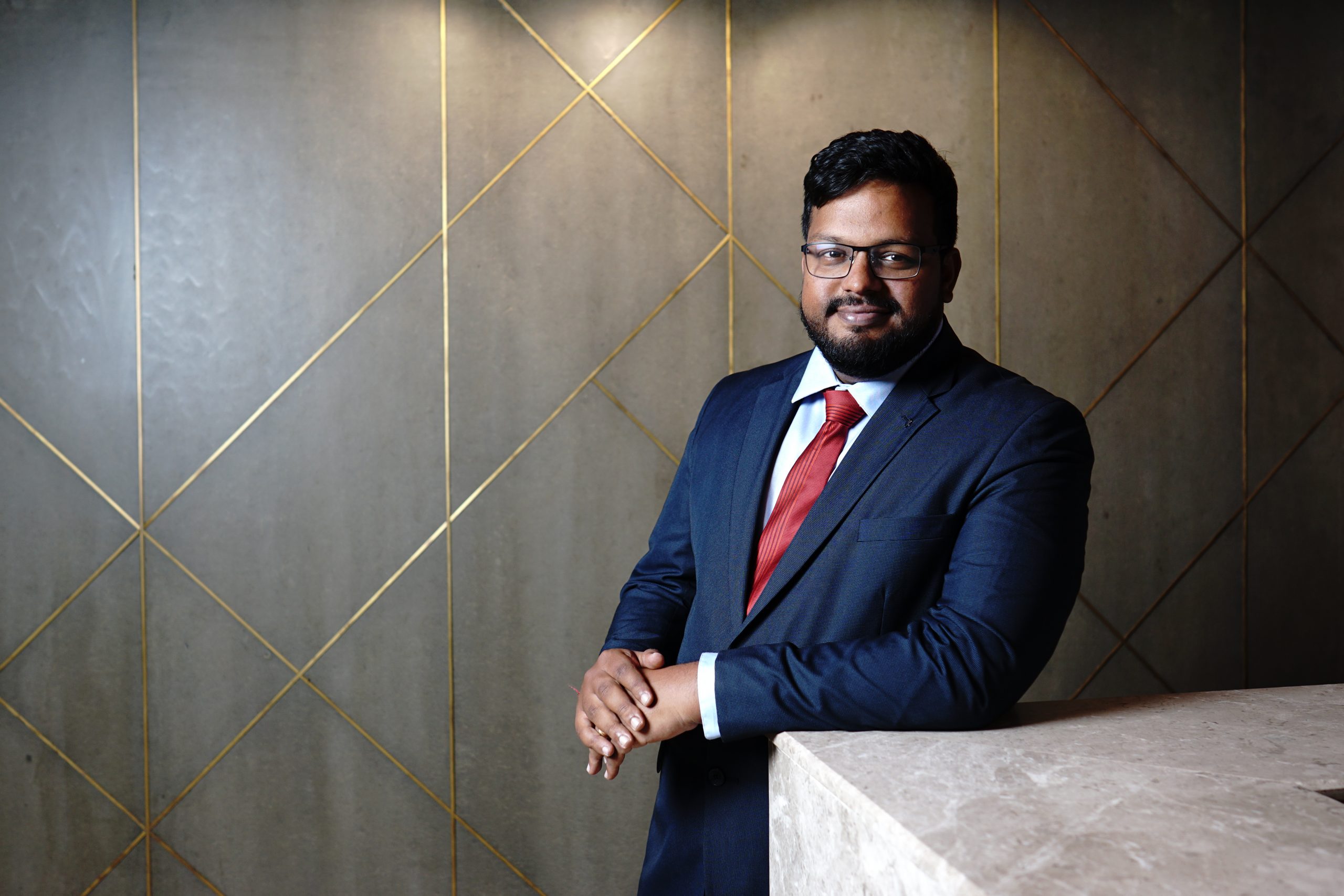
    Get in touch with Anooja Padhee-
  • “Each firm I worked at contributed in a significant way to my growth and development as a lawyer”- Anantha Krishnan, Partner at IndusLaw

    “Each firm I worked at contributed in a significant way to my growth and development as a lawyer”- Anantha Krishnan, Partner at IndusLaw

    This Interview has been published by Pragya Chandni and The SuperLawyer Team

    Can you walk us through your journey from studying law at Dr. Ram Manohar Lohiya National Law University to becoming a Partner at IndusLaw in Bangalore? What inspired you to pursue a career in law, especially focusing on corporate and commercial matters?

    I did my schooling in Chennai, loved writing, public speaking and was enthusiastic about problem solving. Around the time I was contemplating my career choice, the national law schools in India had decided to come together to conduct the common law proficiency test (CLAT), which looked like a good opportunity to explore. 

    Studying law at RMLNLU, Lucknow was a beautiful experience. I had a plethora of opportunities at my disposal, ranging from moot courts, parliamentary debates, MUNs to paper publications/presentations. Having said that, while law schools have a well thought out curriculum and they do help initiate efforts on building skills, they don’t prepare you for the fine print of any practice area and only just about scratch the surface in terms of concepts. This results in a significant void between theory and practice. To make up for practical knowledge and exposure, I spent each of my vacations doing internships, largely in the cities of Chennai and Mumbai. Mid-way through law school, I started interning with law firms, dabbling across practice areas such as litigation, project finance, intellectual property and corporate/commercial matters. I was still however looking for a specific practice area of interest, though I had developed a focused interest towards contract law and by then, corporate laws had been introduced as a subject. Around this time, an opportunity came by to participate in a national corporate law moot court competition, and we ended up winning it. What I loved about that experience was how interesting, vast and ever-evolving corporate and commercial laws were. I thoroughly enjoyed researching, drafting, preparing arguments and advocating them for that problem statement. It gave me direction that this is something I could really immerse myself in. I shifted my focus thereafter to internships solely in corporate law practice.

    From there on, it has been a voyage of dedicated and diligent learning across firms I’ve been a part of. Being a first generation lawyer, a lot of effort went into building my principles, knowledge and processes with focus on what I wanted to be and stand for as a professional. The initial years in practice went into establishing my fundamentals and processes which enabled me to deliver well thought out work products. Each deal that came by helped me build expertise on different sectors and issues around them. I’m a believer of self-assessment and feedback, used to approach my seniors on where I could improve after each deal. This helped me identified the chinks in my armoury and I worked consistently towards getting better at those. It has been a long yet fulfilling journey so far and I’m excited about what the future has in store for me.

    You’ve had a diverse range of experiences across various law firms such as Phoenix Legal and HSB Partners. How did these experiences shape your understanding of legal practice, particularly in the realms of mergers & acquisitions, private equity, and venture capital?

    Each firm I worked at contributed in a significant way to my growth and development as a lawyer. In the initial years, when I started out in Chennai post graduating from law school, I was lucky enough to be at the crossroads of the biggest overhaul of company law in Indian history. With the Companies Act, 2013 being introduced and to take effect from June 1, 2014, my first year in practice was almost entirely focused on interpretation of the new legislation and how it differed from the 1956 Act. These exercises were in fact driven by a plethora of queries from clients seeking advice on specific provisions of the 2013 Act. There were many engaging and interactive sessions with my seniors at the time to get a grasp of what we were dealing with, coupled with research drill downs, both in terms of interpretation of statutes and precedents in case laws. This helped me a great deal to get confident with my understanding of the legal practice involved in transactions and advisory. I had dealt with the 1956 Act in my internships. Hence, being able to deploy that understanding against the change in positions vis-à-vis the newly effective legislation in the 2013 Act gave me ample avenues to get better at shaping my understanding of the practice area. My stint in Mumbai was largely focused on mergers & acquisitions and venture capital. I got to do a lot of domestic and cross-border acquisitions and venture capital deals. It was a big learning curve for me which I embraced with all the efforts I could possibly put in. In your early years, observing your seniors negotiate on deals teaches you a lot, and over time, you tend to develop your own style of negotiating and handling multiple facets of the profession. 

    In any law firm, the work environment is dynamic, providing a diverse range of opportunities to learn from. With good mentors, exposure and diligence, one can dive deep into the requirements of a client and cater to its basis the demands of a given problem statement. From there on, it’s akin to polishing a precious stone, every bit of experience aggregates to fine tune a lawyer’s understanding and it only gets better with time. This, I believe, provides valuable insights and practice guidelines to develop oneself as a well reasoned and articulate legal professional capable of providing sound legal advice to clients. A couple of valuable lessons I’ve learnt over time with experiential learning are identifying client demands early on into a transaction and reflecting on them to deliver the desired results at every stage of the transaction. This varies based on the deal as well as from one client to another. For instance, a venture capital investment is akin to occupying a space in a newly built house while an acquisition is cleaning up and buying the entire house. What an investor is looking for from an investee company in an early stage venture capital investment differs vastly from what they are looking at in a late stage investment or what a buyer is looking to achieve from an acquisition. These differences range right from the level of detailing and lookback period involved in the diligence to the rights matrix to be negotiated for the relationship going forward. Negotiation is yet another skillset which requires constant learning and unlearning. With every deal, you take back something new from negotiations. Reassessment and reworking your approach to essentially figure out if your existing modus operandi could be better with the new learnings adds immense value in terms of reflecting on the outcomes of a deal. 

    Your work at IndusLaw involves advising on a multitude of transactions, including mergers and acquisitions, venture capital investments, and private equity deals. Could you share with us some of the most memorable or challenging transactions you’ve worked on and what lessons you’ve learned from them?

    There are quite a few deals I’ve absolutely loved working on at IndusLaw. Some memorable transactions I’ve done here include a series of acquisitions which set up daily delivery and instant vending businesses of a leading entity in the food and groceries space. These acquisitions included a business transfer, an asset purchase and a share purchase acquisition, and each acquisition structure came with its own set of challenges. In addition, these acquisitions taught me a lot about integrating new business models into an already well-grounded and flourishing model and practical challenges in terms of doing that. One of those acquisitions also included a founder exit, which was my first experience of a co-captain leaving the ship. Another transaction recently was internalization of a leading quick commerce brand from Singapore to India as part of a larger acquisition transaction. We dove deep into the process which happens at Singapore, including by working closely with our counsel there. The timing had to be spot on, given this internalization would need to seamlessly flow into the larger goal of the internalized entity being acquired by a listed company in India. The learnings from this deal were invaluable and while we faced multiple challenges on a daily basis, solving for each of them gave me a strong understanding of the process and its possible pitfalls. 

    More recently, with the changing trends, I’ve been closely involved with startups in the fashion space and manufacturing of materials (deployable across multiple industries), in both cases, with emphasis on sustainable and eco-friendly models. Transactions I’ve worked on have taught me a lot, in addition to fine-tuning my skills as a lawyer. These learnings range from interpersonal skills, understanding and appreciating the nuances of each product ecosystem (and the innovations that come with it) in this dynamic startup environment to understanding perspectives of founders who invested a lifetime of dedication, commitment and diligence to building successful businesses, and eventually decided to call it a day and sell. 

    Your expertise spans across sectors like e-commerce, healthcare, logistics, and media & entertainment. How do you stay updated with the legal developments and industry trends in such diverse areas, and how does this knowledge contribute to your advisory role?

    In a way, this was one of the main reasons I moved from Mumbai to Bengaluru. To get involved in the exciting startup ecosystem, in my area of competence. For A Long time, each sector presented itself in deals, and I loved working on each of those sectors.

    In terms of staying updated, early on in my career, I used to visit the websites of regulators such as RBI, MCA and SEBI to look for recent updates. Eventually, I figured out some useful hacks, which still serve me well to date. One of these was setting up Google alerts in my email driven by keywords. I placed a few alerts on keywords which most mattered to me, such as ‘venture capital’, ‘ministry of corporate affairs’, ‘reserve bank of india’, ‘foreign direct investment’, to hit my inbox at a time I could catch up on updates. So everyday, I get a collection of articles sourced from the web in my mailbox, to catch up on. In addition to this, I also spend some time on a weekly basis to stay updated by reading newsletters/articles by IndusLaw and other law firms (not just in my practice area but others as well), articles on legal and professional network platforms, publications by legal databases/journals, funding trends (generally through accessing periodic analysis reports released by various investors), sectors which get more traction than others and so on. Updating oneself regularly is of paramount importance in the legal services industry, and it helps a lot in staying honest and relevant with the trends. This has helped me in striking conversations with clients about what’s happening and could be expected in their sectors, the sector’s outlook going forward and so on. Another efficient way to stay updated is also to write articles. Along with our team at IndusLaw, I endeavour to write articles regularly and we put out a lot of content expressing our thoughts on a plethora of subjects. The firm also chalks out and conducts training sessions on specific subjects in each practice area, which gives me an overview in terms of thinking through and updating my understanding on those and our views on contentious issues. 

    In addition to your transactional work, you’ve also been involved in drafting legal opinions, conducting due diligence, and providing compliance advice. How do you balance the demands of these different aspects of legal practice, and what advice would you give to young lawyers looking to excel in these areas?

    Every deal is an opportunity to learn something new and nail the brief. First up, having a positive outlook on the profession is vital. Yes, the demands are rigorous and in a given day, you may be switching between multiple matters ranging from transactions to opinions to conducting due diligence to providing compliance advice. The ability to switch off from one matter to another is quite critical (and a skill in itself) in the profession and that can happen seamlessly only with a well grounded and firm understanding of each given matter. Preparation and planning prior to commencement of the transaction, establishing a workflow process and regular review sessions with the team are some of the other practices which help me navigate through multiple matters at the same time.

    I still have a long way to go in this profession, so I wouldn’t call this advice, rather a rational thought to ponder for young lawyers. Each matter is unique, treat each one of them with the attention to detail it deserves. A lawyer cannot convince a client unless they are convinced themselves. Deliberate, research and reflect on your own thought process and solutions which result from it until you’re convinced that it’s the way forward.

    There is a quote by the former secretary of state of the United States, Colin Powell, in his Thirteen Rules of Leadership – It ain’t as bad as you think! It will look better in the morning. Couldn’t ring truer in terms of being stuck in a thought loop on a problem statement. Anything complex is only an aggregation of simpler problems stacked over one another. So if you’re facing a complex problem statement, break it down into simpler ones and solve for each of them.

    Your publications reflect a deep understanding of complex legal issues, including trending topics such as GIFT City, relocation of supply chains to India and ESOPs/stock appreciation rights. Could you tell us about your approach to legal research and writing, and how it helps you in your day-to-day work?

    Research forms the fundamental base of any understanding. The more your research, the more you achieve in terms of clarity of conceptual understanding of a subject matter. I’m generally on the lookout to write articles on subjects which my practice area requires clarity on. This invariably helps me get better at my understanding of the subject as well. Once the topic is identified, conducting comprehensive research (including perspectives by various stakeholders) helps me to chalk out a framework for the article. From there on, I go into analysing precedents, statutory provisions and commentaries available on the subject. Once the above checkpoints are complete, the writing requires further deliberation (and a fair bit of drafting and rehashing) in terms of achieving coherence and flow in the article. 

    Legal research and writing has been a part of my life ever since law school. Establishing a process (as explained above) and following it religiously helps a lot, not only in terms of legal writing, but also to deal with multiple transactions at any given point of time. 

    As someone who has been deeply involved in the startup ecosystem, what are some common legal pitfalls or challenges that startups often face, and how do you guide your clients through these obstacles?

    Some of the common challenges which I’ve seen early stage startups face are keeping up with compliances, which sometimes includes obtaining necessary licenses and permits. This is understandable as startups invest a lot of their energies into solving the problem which is the genesis of their creation. Given the gamut of laws which apply to a company in India, it is quite possible to miss getting some of that paperwork done. Another challenge I would say is standardization of contracts. In early stages, there may be quite a few commercial contracts with multiple stakeholders in the startup ecosystem, such as suppliers, vendors, service providers etc., whereunder a startup may have signed up to onerous terms, such as say uncapped indemnity or not adequately covering for risks which may arise from the counterparty’s role in a contract. 

    For any such pitfalls, I prefer to explain the problem upfront to a client and then proceed to providing options which may be considered to resolve such issues, ranging from ones which could provide a quick fix for the time being to more robust and elegant long term solutions. Of course, there is gradation of the risk involved as well which goes into this process, so the client is aware which issue (and options available to fix it) needs their immediate attention as against the ones which could be addressed a little later in time.   

    Transitioning from being a law student to a successful legal professional can be challenging. What advice would you give to law students or young lawyers who aspire to follow a similar career path in corporate law and specialize in areas like mergers & acquisitions, venture capital, and private equity?

    Having interacted with quite a few students looking to enter the practice area, I would encourage young lawyers to explore their interests in law school and understand what their possible options could be. Thereafter, they should shortlist their areas of interest over the others, understand further on what each such shortlisted practice area demands. This can be easily achieved through their peer network of seniors who may be involved in those practice areas, and with the information publicly available. Understanding the rigours of the profession and what is required from their end in their formative years will go a long way in setting their expectations straight. 

    In addition to this, if young aspirants are interested in deal making, they need to do more than just understanding and reflecting the law in practice. Making a conscious effort to develop their commercial knowledge and understanding practical challenges and aspects which come along with deal making (including in terms of execution and implementation of structures) would give them a competitive edge by getting familiar with the challenges associated with deal making and solving for them. Such proactive steps would help them establish the contours of the profession and their capabilities quite early on. 

    Get in touch with Anantha Krishnan-

  • IP, in my view, is an area of law where all sizes and types of businesses/services require handholding- Deeksha Anand, Partner at Sujata Chaudhri IP Attorneys

    IP, in my view, is an area of law where all sizes and types of businesses/services require handholding- Deeksha Anand, Partner at Sujata Chaudhri IP Attorneys

    This interview has been published by  Priyanka Karwa and The SuperLawyer Team

    Can you tell us about your journey in the field of law and how you ended up specializing in intellectual property?

    My journey of law began in 2010, when I got admission into Dr. RML National Law University, Lucknow. I was never particularly driven towards becoming a lawyer but was rather fortunate to “crack CLAT” owing to my academically sturdy graph throughout my student life. Without having any legal background or bent of mind, IP captivated me as a subject due to my musically wired brain and the brand conscious inner me. To my benefit, our IP professor in university made lectures fun and stimulating. Given my passion for music and quest for brand identification, pursuing IP-centric internships and choosing IP as a career path was a natural corollary.

    Ever since my graduation from college in 2015, I’ve been associated with Sujata Chaudhri IP Attorneys, a Noida-based IP firm and have been challenging myself to keep up with the changing pace of IP every year. Today, I advise and act for clients on all aspects of brands and their protection, including their registration, management, exploitation and enforcement, as well as copyright and design prosecution.

    You have worked with both Fortune 500 companies and start-ups. How does your approach differ when advising these two types of clients on aspects of brand protection?

    IP, in my view, is an area of law where all sizes and types of businesses/services require handholding. Right from startups to well-established and multi-national corporations, protection of human intellect holds utmost importance and deserves to be protected and cherished.

    While the practicalities surrounding the functioning of a Fortune 500 company and a start-up differ drastically, the applicability of the fundamental principles of law remains the same. Stepping into the shoes of the brand owners and understanding their current and future business needs is where the distinction in one’s approach to a matter really lies. While start-ups, generally speaking, are cost conscious and pick their battles wisely, it is imperative for lawyers to appreciate that every organization, irrespective of size, scale, funds, etc. has different priorities at different points of time. What may work for a Fortune 500 company may also, unlike the common perception, work for a start-up. Ultimately, it boils down to addressing a client’s needs in the most cost-effective and meaningful way.

    What, in your opinion, are the attributes that set IP lawyers apart from the rest.

    Creative thinking and having an eye for detail (having an OCD actually helps!) while juggling multiple matters. Research and writing skills go without saying, whether or no IP!

    With your extensive experience in handling trademark portfolios, oppositions, and domain name disputes, could you share some notable challenges you have faced?

    Statutory deadlines are absolutely sacrosanct in an IP attorney’s career. Missing one could cost you a client! Time is of utmost essence in a trademark lawyer’s day-to-day life. Those who can’t keep up with the pace might fade away…

     Some of the other challenges faced by IP lawyers revolve around the functioning of the Controller General of Patents, Designs & Trade Marks (CGPDTM). While the Trade Marks Registry and the Copyright Office have come a long way since I started practising in 2015, loopholes in the functioning of the offices, both due to administrative and technological reasons as well as inconsistency in stands taken by different officers, are bothersome and difficult to explain to clients. Being aware of the happenings in the offices and getting insights from friends and officials always helps appreciate situations better. My experience of filing complaints before the National Internet Exchange of India (NIXI) has been fairly smooth. The office has really streamlined its procedures and functioning over the years.

    How do you manage the coordination and collaboration with foreign counsel in different countries for trademark protection? Are there any unique considerations that arise in these cross-border cases?

    Corresponding with several clients across the globe having businesses in India and having business interests outside India, is a part and parcel of my day-to-day work. Breaking down complexities of the law in simple terms is the key to good communication. One should work on the assumption that the foreign counsel is unaware of not just the nitty gritties of your law but also the overview of it. Asking the right questions, seeking clarifications, if needed, anticipating questions from clients and factoring those in your advice are some good practices. Being in constant touch, and meeting, with foreign counsel at conferences also helps strengthens ties.

    You have appeared before various judicial and quasi-judicial bodies. Can you share a few examples of significant cases where you represented a client before the Trade Marks Registry, Delhi High Court or another court, and the impact your representation had on the outcome?

    I was part of the team that advised one of the firm’s international pharmaceutical clients on a time-sensitive litigation along with connected rectification and opposition actions, briefed senior counsel, Mr. Sudhir Chandra, and obtained interim and permanent injunction orders within three (3) months of filing the suit. I was also part of the team that represented one of the firm’s popular international apparel clients in a trademark dispute against an Indian retail brand run by the Aditya Birla Group. Although the lawsuit, filed in the year 2015, was aggressively contested by both sides, the dispute was amicably resolved with the parties becoming business partners in India. I also independently led settlement negotiations regarding use and registration of the rival trademarks, with an electricals giant in India on behalf of one of the firm’s international luxury automobile clients. The dispute, which started back in 2017 and entailed filing nearly 60 trademark oppositions on behalf of the client resulted in a robust co-existence agreement. Very recently, I secured well-known protection for one of the firm’s pharma clients before the Trade Marks Registry, that accords protection to the client over that trademark across all goods/services classes.

    You have been recognized for your contributions to the legal profession, including being a recipient of the “Honourable Mention” in the Indian Law Firm Awards 2021. What does this recognition mean to you, and how does it motivate you in your work?

    Such recognitions and awards are merely a validation of one’s perseverance and efforts over the years. It is the appreciation of my work by my Managing Partner and clients, and the reassurance that I get from my associates about my mentoring ability, that really matter the most to me. I truly believe that words of appreciation from someone you care about are great motivators, far more than any award/ tangible recognition. The power of words (and music) is supreme!

    Lastly, what advice would you give to fresh law graduates who are considering a career in intellectual property law based on your own experiences and insights?

    To really focus on their careers (read learning) by taking small steps every day, and not on money or “great international clients” in their initial years of practice. Looking for “growth” as, very often, candidates I interview tell me, is meaningless unless you know what this term means to you. Growth, for me, is a natural phenomenon rooted in every individual’s career trajectory and needs to be honed every year (not handed over on a platter that smells of good money). Do good work and money will follow…

    Being familiar with the IP subjects taught in law school, doing IP internships in your later years of law school, and being abreast of latest developments in courts and the IP offices would always give you an edge! With many offices and courts moving to virtual hearings post the pandemic, law graduates can observe proceedings virtually and get pointers on the practical functioning of these offices.

     IP offices’ efforts in fast-tracking procedures, digitization of filings at the IP offices and introduction of several specialized IP software have really changed the landscape of IP practice over the years. From days where all filings were done by hand, to today, where online filings are a norm, IP as a practice area for lawyers has come a long way. Besides this, the formation of commercial courts across the country and the constant enrichment of IP jurisprudence by the Delhi High Court, in particular, have further strengthened the IP industry and scope of this field for upcoming law graduates.

    Get in touch with Deeksha Anand-

  • Anas Tanwir Siddiqui, Advocate, Supreme Court, on enabling access to justice, heading the Legal Aid Committee, and practising in the Supreme Court

    Anas Tanwir Siddiqui, Advocate, Supreme Court, on enabling access to justice, heading the Legal Aid Committee, and practising in the Supreme Court

    Anas Tanwir Siddiqui graduated in law from RMLNLU, Lucknow, batch of 2012. He has since then served as Convener to the Legal Aid Committee, working in areas of free legal aid, RTI, infocracy, child rights, consumer protection, juvenile justice, etc. He is currently advocate at the Supreme Court of India, with over four years of litigation experience. A first generation lawyer, Siddiqui believes that enabling access to the legal system lies at the core of his practice. He has also just begun independent practice.

    In this interview we speak to him about:

    • Deciding to pursue law despite family pressuring otherwise
    • His life, curriculum and extracurricular engagements in RMLNLU
    • His tremendous contribution to the Legal Aid Committee, and setting up a paralegal system of assistance in his university
    • His belief that at the core of litigation lies the intention to enable access to justice for all


    What would you like to say to our readers in the manner of an introduction of yourself?

    I am just a struggling lawyer who has faced and is still facing all the struggles that a young lawyer faces during his initial days.


    What inspired you to take up law? Did you have to deal with any resistance from family or friends while making that decision?

    Law was never really my first career choice. As any other teenager, I was pressurized into taking science at 10+2 level. So I also opted for PCB and as a natural progression I appeared for medical entrances, couple of which I miraculously cracked as well. However, I was never really interested in becoming a doctor. My family, especially my mother and my uncles, were really supportive, although my father had his apprehensions. The main idea behind opting for law as a career choice was that it gave me the freedom to read and know everything. A law student is never limited to reading law only. Law as a course satisfied my intellectual craving.


    Tell us about your life as a law student at RMNLU.

    Life in RMLNLU was more fun than work. I was never a studious student. However, law school gave me a platform which shaped my personality. When I entered law school there wasn’t much “law school culture”. As we were the second batch and the admissions were not through CLAT back then, the law school culture was absent. There wasn’t any mooting culture or any co-curricular activities. I had resolved from the very first day in RMLNLU that I will utilise every opportunity that this place provides. Much credit goes to La Martiniere Boys’ College, Lucknow, also for giving me the confidence to take initiatives. So with time things got streamlined and RMLNLU was a strong force among the law schools. We were fortunate to have some really good faculty like Prof. A.P. Singh, Prof. K.A. Pandey, Prof. Manwendra Tiwari, etc. The then Vice Chancellor Prof. Balraj Chauhan was also very supportive of the students. We started participating in mooting activity without much guidance. We learnt from our mistakes. In a nutshell, the life at RMLNLU gave me the confidence to lead and be vocal about my opinion.


    What are the causes you feel strongly about? How have you used you legal expertise in working towards them?

    So when I was forced by my father to leave Lucknow and practice in the Supreme Court, he asked me to be a means for the poor to access the highest court of justice. He told me that I should never say no to a brief just because the client cannot afford to pay fees. I myself having been involved with the free legal aid movement felt strongly about the same. So today most of the cases I fight are for those who generally don’t have the resources to access the justice system. I frequently represent the people declared as foreigners by Foreigners Tribunal in Assam. I also feel very strongly about the arbitrariness of government or its failure to control the fringe elements hell bent on destroying secularism in our country. Same is my view about the nepotism that is prevalent in the judiciary even though I myself belong to the same fraternity. So in this regard I have filed, strategized and appeared for causes pertaining to the same.


    Throughout your time at college you have enjoyed authoring essays and papers. How did you find an affinity for legal writing? How do those skills help you in your career today?

    The affinity for legal writing stems mainly from my interest in literature. I read a lot and a natural progression of reading a lot, is writing. Honestly, most of the essays and papers authored by me were more because of the pressure from a friend or for building up a strong resume. So the skills that I developed in law school now help me in drafting. Before becoming independent I have worked with three Advocates On record. The major part of the job profile while working as a junior to an AoR is drafting and this is where my prior experience of legal writing came in handy. Also, before writing any article or essay one needs to think a lot on the issue along with researching, these two skills are very important while drafting an SLP or Writ.


    You have participated and placed in several MUNs, moots and held several organizational positions during your time at law school. What did you learn from these activities?

    Mooting taught me to think like a lawyer and it took out the fear of public speaking or appearing before courts. In moots as well as in courts, you need to have spontaneity, an ability that developed due to my participation in moots and MUNs. I was lucky that I got the opportunity to appear before the Supreme Court in my initial days and I was not hesitant about arguing a matter anywhere. As far as holding organisational positions is concerned, I learnt leadership as well as being a team player from the same. The underlining factor of my participation in different committees was the idea of giving back to the institute. Any educational institution is known by its students and it was just a duty upon us to take RMLNLU forward and create a brand.


    What do you think the present status of legal aid is in India?

    (Anas has served as convener to the Legal Aid Committee for three years, working in areas of free legal aid, RTI, infocracy, child rights, consumer protection, juvenile justice, etc. )

    Last evening I had a chance to watch the video directed by Prakash Jha promoting legal aid in the country. NALSA is reinventing itself and is doing a great job. Having said that, it is very disturbing that most Indians even today don’t have access to justice. People are scared of going to courts or dealing with lawyers. This issue needs to be resolved and it can only be done by making people aware of their rights. My initiative was mostly inspired by the fact that as a kid I used to attend the legal aid clinics organised by various District Courts in Uttar Pradesh under the aegis of UPSLSA. My father was also a member secretary and their motto was “Nyaya chala Nirdhan se Milne”. I was greatly helped by Justice Sudhir Saxena who was then the Member Secretary of UPSLSA when we were trying to establish the Legal Aid Committee. As far as students’ contribution is concerned, I am really happy to announce that the Legal Aid Committee at RMLNLU has started a paralegal program and many students have joined the same. They sit at the assigned place right outside the university campus daily and provide legal aid to the needy. If the same model gets implemented in all law schools, it could be revolutionary.


    Could you share with us some of the highlights from your experiences as an intern during your legal education?

    I was lucky to intern in three major sectors like NGOs, corporate houses and litigation. The three sectors are very different from each other. While interning at Aman Biradri, I got a firsthand experience of the suffering of the street children. During my stint under Mr. Yashowardhan Swarup, I learnt about the intricacies of litigation, especially how to deal with a client.


    What motivated you to choose litigation over your other options?

    I am very old school. Litigation was my first choice. I firmly hold the belief that litigation is a service, and not a business. The idea that my skills can be utilised for those who have no access to justice was in itself a great motivation.


    As a litigating lawyer having worked on several cases, could you share with some of the judgments you have read that have shaped you as a lawyer.

    It may sound clichéd but the minority judgment of Justice H.R. Khanna in the ADM Jabalpur Case had a profound influence on me. Another Judgment that I find to be of great motivation is that of Brown vs. Board of Education, a judgment rendered by the U.S. Supreme Court ending racial segregation in educational institutions. Apart from judgments, two books that I feel every lawyer, especially young lawyers must read is Roses in December by the inimitable M.C. Chagla and Before Memory Fades by living legend Fali.S. Nariman.


    The first few years after graduation are considered to the most challenging . How are you coping with these challenges?

    It’s true that the first few years after graduation are most challenging especially if you’re in litigation and are living away from family. I remember travelling in DTC buses for two years and trying to cut expenses. Work is hard to come by, money even harder. Also, law school is a very protected environment whereas the world outside is harsh. Survival is a challenge. I have seen my friends and colleagues leaving litigation for good in their initial years. The only way to cope with these challenges is by constantly reminding oneself of the objective that one has in mind. One must also not let anyone dissuade you from your aim. When you enter litigation you earn much less and work harder than your friends working in a law firm or a corporate house. It becomes difficult to not give in to frustration and despair. One must remember that patience and perseverance is the key.


    You have argued before the High Court and Supreme Court.  How do you prepare yourself before an appearance?

    I read. I read my brief at least two to three times before standing at the bar. Also one must learn from what to say and even more importantly, what not to say in court. This is something that only comes with experience. Also one must always prepare case notes and do independent research beyond what is given in the brief. The art of advocacy is very much like acting. You need to get into the shoes of your client. You need to imagine all the possible queries from the bench. In the Supreme Court, you don’t get much time to put your point across so you must be very careful while choosing your opening lines.


    What has the experience been like working at the office of Adv. Ejaz Maqbool?

    Ejaz Sir was my first senior. He is known to be a hard taskmaster. He was very particular about grammar and I learnt whatever little drafting I know from him. He believes that the only way to work is by actually doing work, which is why he would often push us into difficult spots, just so we may learn in the process. I was lucky to have been a part of some very important cases like the Sohrabuddin Encounter case, Gujarat Lokayukta Case, etc. Ejaz Sir’s office is rife with opportunity.  Most importantly, I was lucky to have some really good senior colleagues who taught me a lot. I owe to them much more than I owe anyone in the profession.


    Tell us a bit about the nature of work you did at the office of Adv. Fuzail Ahmed. What does a typical work day look like for you?

    Fuzail Ayyubi’s office was like a home to me. I worked there for more than three years. Fuzail Sir’s office gave me the freedom and confidence to trust my work. Also the variety of work there was a huge factor in developing my legal acumen. I have never seen a lawyer as calm as Fuzail Ayyubi. In my three year long stint in his office I rarely saw him angry. A typical work day started with going to the Supreme Court to attend the matters and coming back to office and working on the matters to be prepared and drafted.


    Congratulations on starting your independent practice as of 2017! What prompted you to take that step?

    It was the motivation of Fuzail Ayyubi and support of Mr. Sanjay Hegde, Senior Advocate, that gave me the confidence to start my independent practice. Sanjay Sir has been really magnanimous to let me operate independently from his office under the British Chamber System. This is a very novel experiment that he is conducting and is a really good opportunity for young lawyers like me. I have been practicing exclusively in Supreme Court for a long time and now I intend to practice in other courts and tribunals. I will continue with my social justice litigation alongside commercial litigation and arbitrations.

    What would you like to say to our readers who are mostly students and young lawyers, as a parting message?

    To students I would like to say that the opportunities that you get in law schools shape your personality. Do everything that law school offers. Participate in moots, write research papers and get them published. You’ll never get such an opportunity again. To lawyers younger than me I’ll tell them that lack of means is no excuse. Anyone who works hard will eventually succeed.


  • Ahmad Shazeb Azhar, Partner, Goswami & Associates, on work experience in litigation at Goswami & Associates

    Ahmad Shazeb Azhar, Partner, Goswami & Associates, on work experience in litigation at Goswami & Associates

    Ahmad Shazeb Azhar graduated from Aligarh Muslim University (2003-2008). He is a lawyer with almost 6+ years of standing at the Bar. He started his career in Delhi in 2010, practising regularly at Supreme Court of India, where he was the panel counsel representing the State of U.P. from 2014 onwards.

    His Core Specialties include litigation, dispute resolution, drafting, rendering advice, contracts and agreements, corporate compliance, arbitration, due diligence and legal research and securities markets.

    In this interview he talks to us about:

    • His experience at internships.
    • Advise for law students who prepare for a career while in college.
    • Value addition of a Masters degree.
    • Difference in practice and litigation at Delhi and Lucknow.


    How would you like to introduce yourself to the legal fraternity?

    I am a lawyer with almost 6+ years of standing at the Bar, at present practicing at the High Court of Judicature at Allahabad, Lucknow Bench. I started my career in Delhi in 2010, practising regularly at Supreme Court of India, where I was the panel counsel representing the State of U.P. from 2014 onwards. I also initially practised on the Original Side of the Delhi High Court, as a junior to Mr. M.R. Shamshad, Adv., dealing with some high profile commercial litigations. At present I am a Partner with a registered law firm called Goswami & Associates, which is an emerging firm, based out of Lucknow, primarily we deal with traditional litigation and dispute resolution, but are delving now into IP and other commercial areas. We have a couple of Government Banks, Insurance Companies, PSU’s and Private Companies as our clients right now.


    How did you decide to choose law as a career? Is there anyone in your family who motivated you to opt law?

    Well I am a first generation lawyer, who had no inkling what the job I was about to get into entailed. Both of my siblings are doctors in US & UK. The reason I chose law as a career was the mystique surrounding it. I had always been fascinated by the working of lawyers, as to what it was that they read on a piece of paper differently than an ordinary man. What gave them that perspective? That is what enticed me into the profession. There weren’t any family members who were already there in the profession, therefore the mystique and the curiosity was compelling enough for me to get in and explore this world of words, letters, sentences and arguments.


    How was your life at Aligarh Muslim University & Dr. RML National Law University? Did you find that your law school education prepared you for your current life?

    Life in Aligarh was completely different than expected. It’s a vast University with around 30,000 students and we used to reside in mixed hostels, wherein students from different streams and courses lived together, so that gave me a very diverse perspective of things. The more you interact with people from different fields and areas, the more your mind opens to diversity of views. The case with Dr. RML National Law University at Lucknow, was different where you get to meet the freshest and the best of the legal minds in the country, here I completed my LL.M thesis on Cartelisation under Competition Law. I was good at writing in college, be it essays, critiques or any such sort. The one thing that I regularly followed in college was to keep reading, whatever I could get my hands on, be it fiction, biographies, Russian socialist literature, History, Mythology and even John Grisham. The best part about reading is that it gives you references, analogies and ideas to construct an argument. Analogies, whether historical or mythological provide simplicity of comprehension to the listener.

    The legal education in India does not remotely prepare you with the realities of the legal profession. Considering the high premium that is placed upon the procedural aspect of law, the court craft and the client dealing aspect, the only thing that can get you prepared is to actually get in there and practice it. A mere understanding of the substantive law is not sufficient to succeed in the profession.


    Could you tell us a bit about your internship experiences?

    The first internship I did was under Dr. Sandeep Pandey, Magsaysay Award Winner and Social Activist. I actually got to stay in a village without electricity in U.P. for a month, preparing a report on the discrepancies in the land allotted under Consolidation regime by the government, which was submitted to the District Magistrate, so that was an experience. Thereafter I interned under Mr. M.R. Shamshad, Adv. whose chamber I later on joined in 2010. I also interned at Desai & Diwanji, Delhi office and under Mr. Niladri Bhattacharjee, Adv. who was gracious enough to actually credit us, the interns, by name on the Due-Diligence Report for a major company we helped prepare.


    How would you advice a law student if one has to start on to preparing for a career while in college?

    By the final year of Law College every student has a slight assumption of his or her own temperament and one’s inclination for the career we would like to choose. If you are prepared for a long meditation, then practice is a good option. But you would have to be mentally and physically prepared to handle the stress that comes with it. A total lack of finances and as a result dwindling motivation everyday is what makes practice really tough. A lot of my colleagues who started practice left it mid way because of these very reasons. Firms are a good option to join, if you have that inclination. Besides now there are so many other options that one can decide and work on right from college, be it getting into judiciary, a private company, a governmental job or even going abroad for higher studies and into academics.


    What is the value addition of a Masters in your career?

    The Masters Degree and the study for it, gives you the opportunity to delve deep into the existential basis of laws. For example for me in BALLB, the most irrelevant part of a statute was the preamble attached to it. Its importance I realised while in Masters. The basis for a statute, why is it there? What prompted its promulgation? And therefore if there is a discrepancy, how could it be filled in are all the jurisprudential questions that I got the answers to while pursuing my LL.M. With that depth of understanding, you yourself feel motivated enough to delve into and apply that knowledge to any filed you wish to pursue post your Masters.


    You have practiced at Delhi & Lucknow. Tell us the difference you feel in terms of practice and litigation between the two places?

    Delhi and Lucknow are completely different places when it comes to litigation. Lucknow being a traditional city, the outlook and perception are still evolving. I still get asked the very same question almost everywhere in Lucknow, as to whose chamber I belong to. Traditionally in Lucknow it isn’t common to see a lawyer below 40 years of age practicing independently or having started independently. Delhi has evolved in that aspect. Also in Delhi the wonderful experience of getting to meet or brief such famous senior counsels, is an experience in itself. Significant amongst them is Mr. Arvind Nigam, Senior Counsel, who had the most impact on my career as well as life. Also of significance is the experience I gained when I shifted to Supreme Court and got a chance to brief such excellent Counsels as Mr. Jethmalani, Mr. Sibal, Mr. Soli Sorabjee, Mr. P.P. Rao, Mr. Harish Salve, Mr. Salman Khursheed, Mr. Mukul Rohatgi, Dr. Dhawan etc. Lucknow bar though puts a very high premium on your knowledge of Law and has some very thorough and learned counsels amongst its members, who are as good as any lawyer in Delhi.


    What would be your parting advice to our readers?

    Be enterprising. Do what you want to do. But the keyword is “Do”. Merely thinking and planning won’t get you far. Mistakes would be made, but the experience gained would be much more beneficial. You will learn much more than what the books can make you aware of.

  • Shwetank Tripathi, Associate, Zeus Law, on the primary years of a lawyer

    Shwetank Tripathi, Associate, Zeus Law, on the primary years of a lawyer

    Shwetank Tripathi is an alumnus of the RMLNLU, Lucknow of the 2012 graduating batch. As a fresh law graduate, he started working in Zeus Law Associates and within a year was made part of the team looking after matters before the Company Law Board, New Delhi as well as the Indirect Tax Team.  His current work profile includes client-coordination, research on legal issues, drafting, filing, briefing Senior Counsels and strategy-making.

    In this interview he tells us about:

    • His first few months as a fresh law graduate
    • His experience in arguing matters as an advocate when he was fresh out of law school
    • How experience at an internship is different from working at a firm as a full-time employee
    • The experience and challenges of briefing senior counsels


    Please tell us about your law school days at RMLNLU. How did you balance academics and co-curricular activities?

    My 5 years at RMLNLU have been a huge learning curve for me, both academically as well as personally. Ours being a relatively new college, with only one batch senior to us, exposed us to myriad opportunities. Academics and co-curricular activities couldbe easily balanced by maintaining regularity and paying equal attention to both the areas.


    You have published papers in various prestigious journals. Can you give us tips to ace the art of paper writing?

    I believe that article-writing is a simple yet tricky task. It is very important to keep a track on the contemporary legal developments. One needs to pick a contemporary issue of interest, research upon the past legal position, analyse the present development, foresee a roadmap ahead and compile all those aspects together.


    How important do you think CPI/CGPA is in terms of one’s CV value? Is it an important factor during the recruitment process?

    (Shwetank had a fantastic CPI of 8.89/10)

    Well, no one has ever asked me yet as to what my CPI was. But having said that, I also believe that having a good grade is a safe bet. Most firms take into account grades as one of the significant factors during the initial screening. However, CPI alone cannot see you through; it has to be backed by co-curricular activities, and more importantly, the work experience at your internships.


    All your internships have been at top-notch firms.How did you go about securinggood internships and what advice would you give to young students reading this interview who want internships in topfirms?

    (Shwetank has interned at firms like Dua Associates, Amarchand, Karanjawala and Fox & Mandal)

    I have been fortunate enough to be able to secureinternships at known places. I could get most of the internships through friends and contacts. For securing an internship, it is important to prepare a well-written résumé, and maintain a constant follow-up with the concerned HR Department of the firm where the internship is sought.


    shwetank-tripathi-2

    How is the experience at an internship different from working at a firm as a full-time employee?

    Working as an intern and as an employee is a different ball-game altogether, in terms of the expectations and responsibilities. However, my internships have a big role to play in the career choice that I made for myself. I could get a first-hand experience of the challenges lying ahead, which helped me make an informed choice.


    How did you secure a job in Zeus Law fresh after your graduation.

    I had interned at Zeus for 4 months in my last year of law school. After graduating when I applied for the job, it was merely an informal meet-up and I began working immediately after college was over. The recruitment process involves preliminary screening of your résumé and subsequent personal interview.


    How tough were the first 6 months at your workplace?

    First six months are tough because you know nothing of the profession. But hard work and attentive attitude makes things simpler in no time.


    What are your day-to-day responsibilities? What is the most challenging aspect of your job? How has the experience been so far?

    Daily responsibilities include coordination with clients, drafting and attending matters before various courts. Most challenging aspect of a law firm job is the management of time. My experience so far has been enthralling.


    What is your work profile like right now?

    My current work profile entails overall responsibility of matters, including client-coordination, research on legal issues, drafting, filing, briefing Senior Counsels and attending various courts.


    Do you think that the curriculum of law schools can prepare the students for real practice?

    The law school curriculum and the actual practice are very different. However, it is very important to have a sound academic base, because once we start working, there is always a dearth of time to spend on the basics. I believe law school curriculum should be made more practice-oriented.


    How has your experience been in arguing matters as a fresh-out-of-law-school advocate? Are there any memorable instances you can share with us?

    Well, arguing matters before courts has always been the most thrilling part of mylife after law school. Although in a law firm practice you don’t get to argue that often, but I have been fortunate to get many such opportunities. Every instance when you werefully prepared, presented your case to your best and got a favourable order is a memorable instance.


    What are the benefits and challenges of briefing Senior Counsels? Do you believe they are able to add value to your clients’ arguments?

    Having a Senior Counsel on board is a big help for us as we get to learn various ways in which a case can be strategized to serve the best interest of the client. Senior Counsels definitely add value to the case prepared by us.


    What according to you makes for a strong firm culture? What do you believe leads to the high attrition rates in law firms?

    A strong firm culture mandatorily requires cohesion between the team members. I believe high attrition rates in law firms are mostly attributable to the challenging nature of the job.


    Is work-life balance an issue?

    At times, we are compelled to sacrifice on the personal front. But, there are also good leisure times. It is all about what one wants in life, and managing the personal and professional commitments with smart planning.


    If you could re-live your 5 years in law school, is there anything you would do differently?

    My 5 years at law school have been pretty satisfying. However, if I am given an opportunity to re-live those five years, I would aspire to read more.


    Where do you see yourself five years from now?

    I do not believe much in foresightedness. I aspire to keep up the motivation and continue to work hard.


    Lastly, what would be your message for our readers?

    My experience being limited to law firms, I would like to share with such aspirants that it is the easiest of the careers to pursue. Hard work and dedication is obviously required, but once you are sure you want to do this, everything else would gradually fall into place.


    This interview was taken by: Jyotsna Arora, USLLS, IP University

  • Prateek Shanker Srivastava, Sr. Legal Executive, Hindustan Unilever Ltd., on job profile at Vahura and work experience in FMCG

    Prateek Shanker Srivastava, Sr. Legal Executive, Hindustan Unilever Ltd., on job profile at Vahura and work experience in FMCG

    Prateek Shanker Srivastava graduated from RMLNLU, Lucknow in 2012. After graduating, Prateek joined the Vahura Legal Talent Specialists in the Law School Engagement Team. During his work period there he helped to build the Campus Placement Consulting vertical of Vahura. At present, he works at Hindustan Unilever Ltd. as a Senior Legal Executive.

    In this interview we talk about his:

    • Law school experience at RMLNLU, Lucknow
    • Work with the Vahura Legal Talent Specialist
    • What recruiters look for in future employees (the Vahura perspective)
    • His present work profile at Hindustan Unilever Ltd.


    How would you introduce yourself to our readers? How did you gravitate towards law?

    To introduce myself, this is Prateek Shanker Srivastava, having graduated in 2012 from RMLNLU, Lucknow with a B.A. LLB. (Hons.) Degree and currently employed with HUL as a Sr. Legal Executive.

    I was indecisive of my career path till the fag end of 12st Std, but I was very certain that I did not want to follow the line for pursuing Engineering as a career option, although being a science student by choice. I was always fascinated by the study of Civics as a subject in school, which somewhat provided the knowledge base to my career in law. After passing out from school, I was on a hunt for courses in Management as I believed I had an entrepreneurial steak within me. This search guided me to the B.B.A. LLB (Hons.) courses at various reputed colleges and in turn exposed me to the relevant study material solely focused on elementary knowledge of law. Soon I felt that with the limited knowledge of the field I could gather, it was my calling.


    You graduated from RMLNLU, Lucknow in 2012 with a B.A.LL.B (Hons) degree. Tell us about your extracurricular activities. Is there anything you wish you had done differently?

    My experience at law school was such that by the end of the course it made me tired but proud. There is a popular belief that the choosing to study at the budding NLUs is not a safe career bet especially when eyeing placements with top tier law firms/PSUs/in-houses etc. However through my personal experience I see a silver lining to this dark cloud. These fairly newer law schools nurture talent in its innate form. In the surge to compete with the best law schools across the country and adapt best practices these newer law schools give its students both competitive exposure and motivation from the initial years of study.

    In law school, I was not an outspoken student. Instead I preferred being nestled and working within my close friends and other resources. I had participated in various national moot court competitions, a few conferences but the most engaging co-curricular activity for me was writing and getting my articles published both in print and online journals. Writing and publications gave me further motivation to pursue when some articles even fetched an honorarium.


    Please tell us about your most influential internships. How important is it to have big names on your CV?

    Throughout my tenure of study, I had interned with various top tier law firms such as AMSS, Luthra, Anand & Anand, DM Harish etc. These gave me an edge over my peers, but the feather in the cap was my internship with RBI Legal Cell. This certainly was special because the criterion for selection was not only the resume of the candidate, but it was to be followed by a panel interview chaired by the Regional Director, RBI. More so, the competition was not only between law students but also graduates/students from other streams such as management and engineering, all placed in a single selection pool. Around 35 candidates were contesting for five slots and I was fortunate to earn one for myself.

    Tables have turned since then, and now I am involved in selecting interns for my office. What I have learnt out of this transition is that our legal fraternity is a very small world. Wherever you intern irrespective of the fact that it is one of the Big Six or not, the review of your work is not contained in that firm. It shall be available to the legal community as a whole.

    Hence the key is to give every internship your fullest, and unlearn, learn, and relearn during your internship. Your prospective recruiter will be more interested in gauging the knowledge capital that you have on offer with your candidature for the relevant opening than the flashy names of your resume.


    Upon graduating, you secured a placement with Vahura Legal Talent Specialists in the Law School Engagement Team. What does Vahura look for in potential candidates before recruiting them? What consisted of your work profile?

    With sole individual interest I developed a habit of preparing a database of all possible avenues for placements for law graduates and relevant contacts in that organization. This activity helped me immensely to understand the legal recruitment landscape for the country. Further I aligned with fellow law students across all major law schools either through personal interactions in competitions or through social media or collaborative forums like Lawctopus and the likes to understand the recruitment committee setup, recruitment scenario and recruiter engagement initiatives at their college. By the end of my course, I had gained substantial knowledge about the ‘what and how’ of this process.

    Vahura at the same time was branching into the business of counselling students and managing recruitments for law schools in India. A blueprint of the proposals to various colleges was being sketched, and maybe that necessitated the need for a database and student perspective. The Vahura team, with whom I had earlier had certain formal interactions through of me as the guy best for the job and on-boarded me to the ambitious venture, this was certainly an ad-hoc skill based opening, and hence there are no set guidelines to follow to land a position within this team.

    My primary role at Vahura was to sync and develop my database using the recourses of the team and its brand. I was an integral part in framing SOPs and guidelines’ for the clients over recruitment and capability building.


    You helped build their Campus Placement Consulting vertical. Please give some advice on CV-building, extracurricular and internships that law students must keep in mind.

    I have always believed that in a law school you are not in simpliciter taught the law but what you learn is the art of reading the law. In my view, we may have a personal preference to reading a branch of law within/beyond our curriculum and that should always be developed. However, while drafting the resume one should give an impression of oneself as a generalist rather than a specialist with focus on the practice area of the intended organization. This gives the prospective recruiter a holistic understanding of your legal acumen and better flexibility to fit you within the available openings.

    The common mistake that students often make is to make exhaustive resumes running into multiple pages. The ideal resume should not be more than two pages. Also, the contents should be objective, bulleted and well formatted to catch the eye.


    After a few months, you joined Hindustan Unilever Ltd. as Senior Legal Executive. What consisted of the recruitment process?

    My resume was referred to through one of my acquaintances to HUL. Upon passing the screening process, I got a call for an interview. The opening on offer was of a Sr. Legal Executive to be working out of the West Branch. The process involved a three-tier interview with the top-brass of the legal team. The selection process at HUL is an industry benchmark as it not only tests your functional skills but also your virtues and ethics that should sync with the well guarded values of this company.


    What consisted of your work at Hindustan Unilever Ltd.? What does an average workday look like?

    My primary responsibility in the current role is defined on three pillars namely, litigation management, overseeing statutory compliances and business partnering with various verticals of the organization such as sales, finance, supply chain, HR etc. My ideal day involves interaction with advocates spread across states handling cases about civil, criminal, labour, consumer, functional (LMA/FSSA,D&C) profiles and strategising them towards disposal. My job involves frequent travel to courts. The other vertical of work is advising the business on all issues with legal implications and ensure the compliance of the relevant laws in all activities.


    It is a common notion that in-house counsels of companies are not given as much responsibility or work as law firm lawyers. Do you think this is true?

    This notion needs to be dispelled in the light of the prevailing legal landscape. We are now in a time when all major in-houses are expanding their legal teams and substantially reducing their outsourcing operations. This is being done to save costs and at the same time not to compromise on the quality of deliverables. The in-house lawyer is in that sense has an edge of better understanding of business and priorities that are to be met.


    prateek-shanker-2

    What should an employee do to get noticed in a big company like HUL, out of thousands of other employees?

    (In 2014, Prateek was awarded a Certificate of Appreciation in recognition of contribution towards reduction of high risk / personal liability cases for the company, and he was also the recipient of the Regional Manager’s West Dream Team Award for outstanding performance in the September Quarter.)

    Recognition in any form motivates you to develop and think out of the box. There is no set rule to achieve it. In my view timely delivery of the goals set by you or delegated to you backed by realistic and practical planning becomes your USP and makes you visible to the stakeholders.


    Tell us about your experience in publications.

    Out of the many articles that I have succeeded in getting published, only a few were researched ad-hoc. I had always followed the principle to extend the scope of the assigned curriculum project or internship assignment to my articles/research paper. Thus, it helped me save a lot of time and not reinvent the wheel every time.


    Lastly, what advice would you give to law students interested to make a career in the FMCG sector?

    If someone is desirous of serving in the FMCG/Manufacturing sector, the focus should be on the functional legislations like the Legal Metrology Act, Foods Standards & Safety Act, Drugs & Cosmetics Act and Intellectual Property Laws. Knowledge of Labour laws and its procedure will set you apart from the rest at any given day.

  • Abhishek Singh on why he decided to join the test prep industry and not a law firm

    Abhishek Singh on why he decided to join the test prep industry and not a law firm

    Abhishek Singh graduated from Ram Manohar Lohiya National Law University in 2014. He was an avid mooter during law school and has represented at the Phillip C. Jessup International Law Moot Court Competition in Washington in 2013. After graduation, he joined CLAT Possible as VP, Academics and Operations. In this interview he talks about:

    • Law school experience at RMLNLU
    • Representing India at Jessup
    • CLAT Possible and the ‘test prep’ industry


    Where did you grow up and attend school? Why did you decide to take up law?

    My hometown is Lucknow and I spent my entire childhood there. I studied at Seth M.R. Jaipuria School and graduated in the year 2008 from my school. I took up science with maths after class tenth, which is one decision I regret till date. I was into public speaking and writing all through my school days which is why I wanted to take up humanities after my tenth boards, but finally I gave in to peer pressure and the whole stigma and social perception attached with boys studying art subjects. After writing twelfth boards, I had decided to drop science for  good.

    The elitist NLU’s had become quite a rage already and being a public speaker, I thought law is surely my cup of tea.


    You graduated with a degree in law from RMLNLU, Lucknow in 2014. What was your law school experience like?

    My law school experience has been quite exciting and inspiring. My college was three years old when I joined. From being a nascent place which was not very well perceived by the law school fraternity to a point where my college became a respectable and sought after place, the efforts we put in to achieve this milestone is worth a mention. The initial 3-4 batches were the founding stones of my college and we ensured that our juniors reaped the benefits of our endeavours.


    abhishek-singh-2

    What activities were you involved in, in law school? What were your main interest areas?

    I was an avid mooter. I participated in various intra and inter-law school moots. My area of interest has primarily been International Law. At this point, I’d like to thank my mentor and senior from college, Siddhartha Singh and my batch mate and moot partner Mohith Pasham, who were instrumental in brushing my concepts in International Law and have been my pillars of support all throughout law school.


    You represented India at the Phillip C. Jessup International Law Moot Court Competition in Washington in 2013. Please describe your experience of doing an international moot.

    It was my second shot at Jessup in 2013, Previously, I had participated in 2012 where we ended up as quarter finalists. The second attempt did wonders for us and I realized my long standing dream of representing the college at the US rounds.

    Preparation for a moot like Jessup requires utmost dedication and is very taxing. From our first attempt, we learnt a lot vis-a-vis the strategy that best suits a moot of such magnanimity. Right from the written submissions to the podium, we learnt from our mistakes and worked day in and day out to achieve this milestone.


    Please tell us about the internships you completed while in law school.

    My last internship before graduating and taking up a job with CLAT Possible, was with Lakshmikumaran and Sridharan. It was my second stint with the taxation giants and I must say it was a great learning experience.


    Upon graduating you joined CLAT Possible as VP, Academics and Operations. Why did you decide to get into the test prep industry? How did you secure your position at CLAT Possible?

    A few months before graduating, my good friend Mr. Debajyoti Das, who was serving as the CEO of CLAT Possible after spending two years at Amarchand Mangaldass, asked me to join him on a part time basis. With nothing much to do in my fifth year, I gave him a nod. Surprisingly, I loved the experience, much more than a desk job stint at all the firms I had previously interned with. My work was appreciated and applauded and I was offered a PPO from Possible Education Ltd., the mother company. The remuneration was lucrative, future prospects seemed promising and I could foresee great growth both in the terms of learning, exposure and monetarily as well.


    What does an average day look like in the life of a person in the Test Prep Industry? What does your work profile include?

    Well the job is taxing, but comes along with immense satisfaction. My organisation is the second largest institute in the field of CLAT Test Prep.

    My work profile at CLAT Possible is varied. I take classes for legal aptitude, take workshops branding my institute, propagate aspects of law as a career option in schools across the country. I am also into anchoring and facilitating tie ups with different law schools across the country. So, to cut a long story short, I am into Education Marketing and Academics. We have establishments in over 15 cities and hence travelling is frequent. I love the travelling part, where one gets to meet and observe different people from all corners of the country.


    Please tell us the essential skills a law student must possess to work in the test prep industry?

    Well one should have a good command over inter-personal communication and possess the ability to convince and connect with people, especially school students since this industry caters to them.


    What advice would you give to law students wishing to take up an alternative career path?

    I wish to spread awareness regarding a very viable career option for law graduates- the Test Prep Industry. Just like leading MBA and engineering Test Prep institutes are run by ex-IITians and IIMites, the law test prep domain can be a great option for law graduates. The field is rewarding with great prospects and one should definitely think of it as a great career option.


  • Sneha Thakur, Law Graduate, on winning Best Researcher at Henry Dunant, writing for journals and LL.M from QMUL

    Sneha Thakur, Law Graduate, on winning Best Researcher at Henry Dunant, writing for journals and LL.M from QMUL

    sneha-thakur-2Sneha Thakur graduated from the first batch of RMLNLU, Lucknow in 2006. While at Law School her team won the Henry Dunant Best Researcher spot. As a law student she has been quite active and participated in many debates, MUNs and conferences. Soon after graduating from RMLNLU she was awarded the “Centre of Commercial Law Scholarship” from CCLS at Queen Mary University, London and thus she pursued an LL.M in Corporate Governance and International Comparative Commercial Arbitration from there.

    She is currently preparing for one of the toughest Bar Exams in the world: The California State Bar Exam.

    We asked her about:

    • Importance of mooting and collaborating for Best Researcher at Henry Dunant
    • Writing for journals and publications
    • LL.M experience, faculty and facilities at QMUL


    Given that most of our readers are law students and young lawyers, how will you introduce yourself to them?

    Firstly, I would like to congratulate you and your team for this endeavor. Launching such a website is indeed an innovative and creative step. It is certainly a breath of fresh air. Your website provides a complete ladder to a law student to understand their career path in law. Reading the interviews of top notch people in the legal field would certainly be an intellectually stimulating experience for a young lawyer who would gain first hand insight into the legal profession.

    Law happened to me by choice, it’s one field that has always fascinated me. I completed my law degree from RMLNLU Lucknow. After completing my degree I had an opportunity to work as a corporate lawyer in one of the biggest life insurance (Max Life Insurance) companies in India for a year. Then I was fortunate to be awarded the Centre of Commercial Law Scholarship from CCLS at Queen Mary London and completed my LL.M in Commercial and Corporate Laws with a focus on Arbitration.


    How did you gravitate towards law?

    Being a lawyer was my first occupational choice after careful consideration. Law for me is like a passion that runs in the veins of my family. My dad has always acted as my role model. Being a Senior Advocate, he had influenced me to a great extent to choose the profession. He has been my guiding beacon of light, always encouraging me and also gave me the freedom to take up the profession that interests me the most.

    Five years in RMLNLU has played a very important role in grooming me as I stand today. They were the most fun filled years of my life. It was like a family where you grow and develop yourself. The lesson that a law school teaches is that the end is not nearly as important as the means. I believe law school is a platform where a student is groomed to practice law rather than learn it. For being a successful lawyer always remember to be confident but not arrogant.


    What does it take to be a great researcher?

    (Sneha had won the Best Researcher Award and her team was also one of the quarter finalists at Henry Dunant Moot Court Competition.)

    Being the pioneer batch of RMLNLU we had faced some grave problems as we had no seniors or experienced mooters to guide us through the journey. The whole process of preparation and reaching the quarter finals among 65 teams when we were just in our second years and then bagging the Best Researcher award has been a momentous experience for me. We had put our body and soul for this moot and had spent the whole vacation in ISIL and ILI libraries. We even went to NLSIU and ILS Pune for the research work.

    The key to be a great researcher is to dissect the whole case, a researcher needs to be like a encyclopedia of the case at hand. A good researcher should also have excellent writing skills and should have clear knowledge of citing cases and references in preparation of memorials.

    The real problem faced in law school is to balance your academics with mooting as preparation takes almost as good as six months. In this regard our professors were helpful who provided us some project exemptions. Mooting is like a nerve cracking passion, as much honestly you put in, so shall be the result.


    Share some of your memorable mooting experiences.

    Mooting has been my passion ever since I joined college. The whole feel to argue your case in front of real judges, the period of preparation, research, long hours in library and team work prepare us for those few days in which we get practical insight to the real life of the law profession. The most memorable mooting experience was the one I gained during Willem.C.Vis International Arbitration Competition in Vienna. Arbitration is different form of mooting and competing against 260 teams around the world is indeed a nail biting experience. I have realized that few universities have libraries which have complete set research books for arbitration. In this regard I must say that now RMLNLU, NLSIU, NALSAR and ILS pune libraries are well equipped for arbitration research.

    The second experience I’ll always cherish is the team management skills which I developed when I organized several Moot Court Competitions in my college. Being the Convenor of the MCC one needs to delicately balance the work on hand bracketed with your ability to hold on to your position as a leader. It groomed me to work under timelines and develop the organizational skills which are very important for personal and professional development.

    The mooting tips I would like to share firstly is for the stage of preparation which tends to be the most time consuming part of mooting. You will need to ensure you know what you are expected to argue and read the fact pattern thoroughly and begin assimilating your relevant authorities for discussion. Make sure you know all the cases or authorities you are citing inside out, along with the general area of law on which the moot is based. For mooters always be prepared with your skeleton arguments and question yourself on it no matter how small and irrelevant the fact it may be on. This will prepare you for the final day.

    Secondly, as for the day of the moot, I know your stomach is full of butterflies. But don’t panic! Rehearse your speech in advance and familiarize yourself with the layout of the court room in advance. Secondly don’t write your full speech on paper, indeed write the bullet points on a small number of cue cards. Another thing to remember is to have soft speaking skills and pause while speaking so as to give time to judges to deliberate. Also remember that don’t be very anxious to finish your submissions and do so in a rush. There’s nothing worse you can do when it comes to finishing your moot. Make sure that you end it appropriately; by finishing with a conclusion and by telling the court what you want it to do.


    How helpful do you think is mooting for a law student?

    Mooting is the closest experience that you can get as to appear in a real court.  It a process of learning the Law differentlyand provides a holistic approach of learning by developing research skills, advocacy skills or even just plain old teamwork skills. Mooting boosts up the confidence level of the student and also serves as bolster addition to your C.V. and make oneself more attractive to potential employers. If one harbours any desire to become a practicing advocate then it is safe to say that employers can only look favourably on those who have mooting on their C.Vs, as this is a sure-fire sign that you possess these important attributes needed.


    How important is it to publish articles being in a law school?

    Writing papers serves several important purposes. First, it develops one’s research skills. Second, it provides us with an intensive writing experience in preparing one or more papers of an analytical nature. Third, it provides us with an opportunity to deliberate on the subject and provide our thoughts on the same.

    Publishing articles also serves an attractive point in your CV. As a good internship strikes a gold point this one serves as an additional star. It attracts recruiters as it showcases one’s drafting skills and the ability to research.

    It is rightly remarked that the written word is one of the most important tools of the legal profession. Words are used to advocate, inform, persuade and instruct. Although mastering legal writing skills takes time and practice and are essential to success. But all this depends on you interest and writing skills. One should always aim to analyse the law and add something from their own thought process rather than dissecting the analysis and history written by other authors.


    Do you think participating in extracurricular activities like MUNs, Debates, Seminars and Conferences proves to be of help to law students?

    Participating in such international conferences, seminars and paper presentations provides a firm base to law students to go beyond the books and help students to analyse topics and realms of international and national law which are not taught in law schools. It helps to develop and hone their research skills and provide a platform wherein they can present their own thoughts and insight to the critical legal issues. The ISIL and ILI libraries in Delhi have a huge collection of legal writing and articles which help for the preparation. Also the whole presentation provided me with a confidence to speak freely in public and I am sure these experiences help in professional practical career afterwards.


    How did you go about securing internships at various law firms?

    To secure good internship please be cautious to apply well in advance and keep a track of your application with frequent reminders. These days several national essay competitions are also providing internships as a prizes. Be sure to keep a track of it. Also some of your seniors might help you to get through some good internships.

    It is important to plan out your internship. Start from interning with Counsels and then opt for law firms. You should also mix governmental corporate internship. You don’t need to be specific in law school; try out different platforms so that you are sure at a later stage. While interning everyone has to go through the phase of trivial work. Even researching some basic points or finding case laws should be taken as an opportunity to learn. If you take interest and work diligently and quickly brief your seniors about your work, I am sure you would attract the firm’s attention for a PPO.


    What do you feel about the importance of a good CGPA and contacts when attempting to secure an internship?

    I think your CGPA does play a role in securing an internship and later college placements. As a member of placement committee I had observed most of the top tier law firms has one of the requirement to interview candidates who are among top twenty in their batch. For students who have no contacts in the law firm, it is necessary to secure good CGPA. College is fascinating and it a fun life but my only advice is that they shouldn’t ignore their studies. Even if you are not a topper but it is important to stay focused. Be aware of the happening in the legal world and try to gain more practical experiences.


    What was your motivation behind pursuing an LL.M.?

    I always wanted to pursue LL.M. Initially I was confused from where I should do it. It’s important to know the area one wants to cover in their LL.M program. LL.M provides a path to develop one’s skill and knowledge in a particular field of law. Once I was sure about the course I wanted to take, I decided to pursue an LL.M.


    How did LL.M. from Queen Mary, University of London happen?

    I always had an inclination for studying arbitration in depth, as in recent times the commercial world is taking a path towards dispute resolution mechanisms such as arbitration and mediation. Through my extensive research I found out that Queen Mary is one of the few universities which has also a well-known School of International Arbitration and is a well-respected member of the Arbitration community. The courses are designed in such a manner that they would provide an excellent foundation to the professional career in arbitration, focusing on both practice and procedure.

    I was fortunate enough to get through UCL, LSE, Kings College London, Newcastle University, Leeds University, Edinburg University and Glasgow University. In USA I got through NYU and Georgetown University. I was about take up the arbitration course in combination with commercial law from UCL but was awarded “Centre of Commercial Law Scholarship” from Centre of Commercial Law Study at Queen Mary which covered the entire waiver of tution fees and then Queen Mary happened.


    Please tell our readers about the application procedure and other requirements?

    The application procedure of Queen Mary requires high academic result combined with at least 105/120 TOEFL score. This year as per the Guardian’s Ranking Queen Mary School of Law is at third position after Oxford and Cambridge.

    Queen Mary offers two School of Law Scholarships (full tuition fee waiver) and two Centres of Commercial Law Scholarship (full tuition fee waiver). Queen Mary offers 2 partial scholarships each worth 50% of the tuition fee for the new LLM s –LLM in Energy and Natural Resources Law and LLM in International Shipping Law. Among other scholarships are Commonwealth Scholarships, Chevening Scholarships, Queen Mary Drapers Scholarships, Jean Monnet, CCLS/FGV Rio, Brazil, CCLS/University of Lagos, Nigeria, CCLS/School of Economics and Finance joint M.Sc Law and Finance and LLM in Law and Economics bursaries.


    Please tell our readers a bit about the course of Corporate Governance and International Comparative Commercial Arbitration from QMUL.

    The most attractive part of my academic module was studying International Comparative Commercial Arbitration from the likes of Professors Loukas Mistelis (Winner of Global Arbitration Review Award), Julian Lew and Dr. Stavros Brekoulakis. Studying from the stewards in the fields who are pioneer and leading authors of International arbitration books and leading contributor to the science of international arbitration and litigation. They have close links with major arbitration institutions and international organizations working in the area of arbitration and also conduct frequent research projects in this field. The classes are very interactive and one needs to be prepared to participate in the discussions. This module is designed in a manner to provide a deep understanding of the special characteristics and needs of international arbitration.

    The Module Corporate Governance is especially designed to provide an depth knowledge of financial regulations, impact of globalizations, various corporate governance systems in the world and corporate accountability. Prof Alan Dignam is a renowned writer in commercial law books and is also an advisor to Amnesty International’s Business Group on their corporate accountability.

    The tutorial classes in each module have been fruitful as it gives an insight and one to one chance to interact with the Professors and to know the correct methodology in solving the problem. It has provided me with a chance to study legal issues in classes composed of graduate students from numerous countries, who would resolve these issues differently and provide me with a completely different angle to look at.  Frequent seminars organized by the School of Law regarding the emerging and controversial issues are also very beneficial and useful. There is an abundance of e-resources to research upon and the libraries are well equipped with almost all the possible journals, reports and books.

    Studying in an international environment at Queen Mary, with students of various ethnic and cultural backgrounds has provided me a chance to know and understand different people and cultures which in itself is a wonderful and enriching experience and to add London as a location is perfect as a seat of Arbitration for all the global exposure and experience that one needs as it is the most inspiring and culturally rich city.


    How was the academic schedule?

    You need to study hard before the class. That is it. Every class is not confined to books and preparatory materials. The academic schedule is such that you need to prepare the basics before you enter the class. The classes are interactive and discuss the practical aspects of every subject and how it is dealt in different jurisdictions. Regular reading materials are provided along with reference to different books which the library is well equipped with. Frequent tutorials help in solving the question paper. For dissertation support each mentor guides you through the entire journey from selecting your topic to the division of titles, recommending books for references, guiding you through the current trend, insights to the major cases. One to one interaction with the mentors generally helps one to a clear idea about how to write the perfect dissertation


    How difficult was studying abroad in terms of finding accommodation, finances and settling in?

    Unfortunately, by the time I decided to go for Queen Mary, there was no hostel accommodation available. I stayed in London in a house shared by some of my friends. It must be acknowledged that rental prices are the highest in the capital, and students should be prepared for this even with the extra loan on offer, though you have range of options such as student houses which includes Nido, Mansion Tower and Urbanest as the best options. One also has an option of renting a house, wherein students are exempted from the local tax. And if you feel like earning a bit of extra money, generally part-time work is pretty easy to come by.  The major lifestyle benefits of living and studying in London, ranging from nightlife to food markets and culture, all are located in the centre. London is a student friendly city and there are a lot of activities to do and to enjoy your life in London. Ultimately everyone falls in love with this dynamic city.


    How’s the Indian fraternity over there?

    London is known to be the hub of cultures from students from all over the world. Queen Mary has a vibrant student community. The Indian Student community at Queens frequently organizes parties and get togethers for the celebration of festivals. Everyone is very interactive and helpful in each aspect. The Student Union at Queens also help the new students in settling down and also develop their skills and interests.


    Where do you see your career in the next five years?

    Right now I am living in San Francisco and preparing for California Bar Exam. In next five years I see myself as a commercial lawyer and develop my skills in the field of arbitration, I have been working with a firm based in Dubai which is establishing itself in USA and provides legal help to the companies who have their work base in UAE and Asia.


    Lastly, what would be your message to law students interested in going for higher studies from India?

    My message would be that you should do complete research on the law schools from where you want to pursue their LL.M. Every University has its specialisations in particular legal fields. Make sure you shortlist your choices. Also there are many scholarships given to support your post-graduation from Commonwealth, Chevening Scholarship, Tata Memorial scholarship and individual scholarship of every University.


  • Aastha Dhaon, In-house Counsel, Manupatra, on legal publishing, and her diverse experience

    Aastha Dhaon, In-house Counsel, Manupatra, on legal publishing, and her diverse experience

    Aastha Dhaon graduated from RMLNLU, Lucknow, in 2011. During this time she has interned with the likes of Mr. Arun Sinha, Senior Criminal Law Practitioner, Lucknow, India, Mr. Nirmal K. Seth – Senior Counsel, Lucknow, India (Civil), Nanavati Associates, among others. Since then she has gone on to work as Legal Associate at Chambers of Mr. J. N. Mathur, Additional Advocate General, Uttar Pradesh. She is currently in-house counsel, writer and legal editor at Manupatra.

    In this interview we speak to her about:

    • Being a fourth generation lawyer
    • Her interest in publishing
    • Her diverse experience

    How would you like to introduce yourself to our readers?

    I’d rather thank you for giving me this opportunity to connect back to where I belong. I am a proud Lucknowite, working here in Delhi with a lot of support from my mom and dad and a lot many dreams in my eyes.


    Why did you decide to study law?

    Law was never on my radar. I always wanted to be a famous painter. However, I first wanted to be an Architect. I got through the National Institute of Fashion Design (NIFT-Delhi) but, could not get through National Institute of Design (NID, Ahmedabad) the premier institute for design in India.  Hence, to sum it all up, law just happened, for which I usually tell people that it was in my blood.

    I qualified the entrance for the National Law School in Lucknow (Dr. RML NLU) and was part of the first batch of my University. My university really made me what I am today, personally as well as professionally. It really taught me ‘life’.


    What kind of internships did you do while you were a student?

    I never really focused on any one area in law. I interned everywhere I could get through really. Being the first batch of our institute, it really was a task convincing the high and mighty to give us opportunities, but, then we all were made out for law, we grabbed all opportunities coming our way. I interned under some senior Government Counsels, criminal lawyers, law firms, corporate houses and Non-Profit organisations as well. Since, I strongly believe in taking a multi-faceted approach towards things, hence, my aim was to get an experience in all directions so I could make better choices when choosing a particular work area in the legal field.

    My internship under a very well-known criminal lawyer in Lucknow was one of the most heart wrenching experience for me. He was handling quite a lot of famous criminal case, where a lot of media trials happened as well. Everybody used to have opinions on them, and there I was sitting with my boss’ clients in his chamber daily, listening to acts they may have done, and something inside me breaking every time. That was the time I saw a lot of small aspects involved in criminal law and I decided I had to drop my plan of becoming a female criminal lawyer for some time atleast.


    You worked as Legal Associate at Chambers of Mr. J. N. Mathur, Additional Advocate General, Uttar Pradesh. How was your experience there?

    This was an extended vacation time for me right after college, not because I did not work much (believe me I haven’t worked longer hours than I did here), but, because I have had some of the coolest seniors here. However, it was not all play without work. A few months into litigation my seniors gave me chances to handle my own individual cases, which nobody form my batch was really doing till then. Here, I worked on company matters, taxation matters, service matters, etc. Mr. J.N. Mathur has been one of the most dynamic, honest and hard-working advocates I have seen or heard about till date.


    What does a workday at Manupatra look like?

    Legal publishing was one dimension which remained untouched by me during my college days. I am soon completing a year here in Manupatra and it really feels great. Here at Manupatra, if you are really capable and a hard worker, a lot of varied opportunities are given to you time and again to prove your mettle. The senior management is one group of really smart and highly informed individuals, who not only are good at what they officially do, but, they are also adept at dealing with departments that they may have had no knowledge about.

    Just like in any other corporate house or a law firm, work in Manupatra is not as easy as it all looks. A lot of planning and hard work is done to bring forth everything on our site. A lot of value additions are made to our regular judgments, which go a long way in helping us all in our researches. And, of course, it is a big high being a part of something based on whose research we actually passed our law schools.

    Our day starts at sharp 9 a.m. with updation of new legal news, then selecting what judgments are to actually go onto our site, meetings, coffee-breaks, less of chit-chatting and a lot of work, etc. The office usually closes down by 6:30 in the evening. So this job, not only gives me the exposure of working in the best Legal Publishing House in India, but, it also gives me a chance to create a work-life balance in my life.


    What would be your advice to law student interested in working with a publishing house?

    As contrary to how the working in the publishing houses seem, when compared to law firms and litigation, the work scenario is not much different. It requires the same amount of commitment, or even sometimes more, to finish off our assignments within strict guidelines. Online publishing is a race against time. To feel content with your work at the end of the day, there is a lot of running around you need to accomplish during your work hours in office. Publishing demands unflinching attention and the zeal to achieve the best you can in very short spans of time. Everything in a publishing house is urgent. Nothing can be given a second position of importance. You need a lot of time management skills in here. Of course, apart from this, good writing skills could give you the opportunities of getting into legal writing as well. There may be days when you feel like giving up, but, those are really the days when you should just hang on, and wait for something better to happen for you.


    Do you feel that publishing may become a major career avenue for law graduates in the future?

    Publishing is ‘the thing’ coming up for sure. There are very few players in this field at present and the future does hold a lot of open ground for new people to come and settle in. Publishing is a major field abroad, however, it is catching up here in India now. Publishing houses can give you chances of working not only as an editor, but, they can rope you in as their legal advisors as well, giving you a chance of working multi-dimensionally.


    What would have you done, if not law?

    I would definitely have been a professional painter, trying to make this world a more artistic place to live.


    What’s your take on work life balance?

    Work-life balance is very essential. When we start out, with all our ambitions we just throw ourselves into work. Today, the longer working hours you can boast of, the more successful and hard working you are considered. However, a few months down the line, your life shakes up and you realize only work is not going to help you in life. There are a lot of human beings that you need around you to survive; you need to move out and socialize. Yes, I agree our profession does not really give us the liberty to have a life, but, the more you try the easier it is to get out of the vicious circle, and believe me, work’s perfect when you actually do have a life beyond work. More so, what are you going to do with all your hard earned money if you don’t really have the time to even spend some of it! Won’t that really be quite sad?


    How do you spend you time when you are not working? Any hobbies?

    Painting and sketching – that’s what I do. I love going out with my friends, spending time with them, as well as meeting new people. I was so stuck up in my field until recently, when I met a whole bunch of some of the brightest people ever when I got selected to attend RELEAD – an International Conference on Leadership at the Indian Institute of Management (IIM – Bangalore). It gave me a whole new perspective about work, life and the world. It brought in a whole lot of new aspects to my life.


    What would be your message for law students planning to join the publishing industry?

    I would definitely suggest them to try out this new upcoming field. I would ask them to be patient and be ready to slog it out if they really want to enjoy the fruits of their work. And, of course, develop love for what you do, because it is not always that you may do what you really love.