
Tag: RMLNLU

  • Fatima Quraishi on application and work of the post of a judicial clerk at Supreme Court

    Fatima Quraishi on application and work of the post of a judicial clerk at Supreme Court

    fatima-s4

    Fatima is a graduate of 2013 batch of RMLNLU, Lucknow. She has extensive experience of the Supreme Court atmosphere and has worked as a judicial clerk just after graduating.

    In this interview we asked her in depth about her experience of working as a judicial clerk under Justice T.S. Thakur, the application procedure and the future prospects of her legal career.


    How would you like to introduce yourself to our readers who are mainly young and aspiring lawyers?

    I’m a 2013 Batch law graduate from Dr. Ram Manohar Lohia National Law University, Lucknow (RMLNLU). I recently completed my contract as a Law Clerk to Hon’ble Mr. Justice T.S. Thakur, Judge, Supreme Court of India. A first generation lawyer, I am very enthusiastic to join the development sector.


    Do you feel that there is a bit of resistance towards legal education in India? How did you incline towards a career in legal field? Do you reckon any specific incident influencing your choice?

    Engineering and Medical studies were sought after because our parents were brought up in that environment and they have continued to have that mindset until now. They could only picture traditional litigation in their heads and were insecure about letting their kids, especially girls join that community.

    Currently, there has been a wave of change in which parents have encouraged this profession because they see dispute resolution in a different light. The working conditions are much more civilised and there is scope and variety in the different roles a lawyer could play. This change has been brought about by the zeal of our generation who was genuinely interested in the profession and took it upon themselves to change opinions. There are Law Firms, Companies, Think Tanks, Non-Government as well as Government sector that absorb the major chunk of law graduates. The most crucial insecurity about the profession is to a great extent addressed with an improvement in job security. For example a litigator who mainly deals with civil/criminal matters has a retainer client for a regular source of income.

    I belong to a family of doctors so law was never on the cards until class 11th where I got introduced to the profession by Mr. Sachin Malhan who visited my school, Loreto Convent to promote LST. Thereafter, things just took shape with my family being ever willing to let me follow my calling.

     

    fatima-s3How would you describe your time at RMLNLU? What kind of co-curricular activities did you participate in?

    Frankly speaking, I was a very laid back student who just enjoyed the ambience that Law School provided. I had a small bucketlist of things to do in Law School. Moot-check, conference-check, publishing-check but never pursued one thing for long. I hated monotony in my work which has trickled down to my career objective too. I was always inclined to venture out and do different things. I was part of the Placement Cell initially and then switched to the Legal Aid and Welfare Committee. The only thing I was very particular about was internships which provided me a great opportunity to learn and network. I thoroughly enjoyed RMLNLU for its independence, flexibility and facilities.


    Which are the law firms and other places where you interned? Which internships would you consider to be right at the top and why? Tell us about the variety of work you were given during your internships?

    In my first year, I interned with U.P. State Legal Services Authority and Greenpeace which was a very good social sector introduction. Subsequently, I moved on to law firms like Anand & Anand, Remfry & Sagar, JSA,  M.V. Kini & Co., Vaish Advocates Associates and Khaitan & Co. where I mostly worked on Intellectual Property Rights (IPR) issues which was my interest area then. The kind of work I got at each firm depended upon who I was directly working under. It’s always a good option to use every opportunity to directly interact and get work from the partners. I did quite a lot of drafting at Remfry, infrastructure related work at M.V. Kini and prepared presentations on law governing video games in India at Vaish. The rest of the work at my internships was research based.


    Interning at a top-notch firm is a dream of every law student. How did you procure your internships? Can you throw some light on the application and follow up process?

    Although, all law firms have an internship portal or email ID displayed on their website, in reality it’s difficult to get through, considering how all law schools have vacations practically at the same time. I got most of my internships through contacts. Importantly, most of these networks were my own that I had managed to form during my previous internships and conferences. It’s a good strategy to be referred and one can very well ask alumni and seniors for help.


    You have a Diploma in Entrepreneurship Administration & Business Laws. Tell us how helpful these courses have been in your career? Why did you choose to pursue diploma in corporate laws?

    It’s a fantastic course. It’s as good as a senior mentoring you at a law firm without any howler. It’s a study at your own pace program which explains practical aspects of business law lucidly. Career wise, I’m still to use this skill set which I have had no opportunity to use during Clerkship where I was mainly concerned with Criminal and Service law matters.


    Considering the fact that most of your internships have been in corporate firms, what drifted you towards the career of a judicial clerk?

    Clerkship was not my first career option. I was interested in IPR throughout my college days and somehow my law firm PPO in IPR did not work out. Alternatively, I had applied for Clerkship where I got through. I am extremely glad about the way things transpired. It’s an excellent first job experience which I would recommend all recent graduates to pursue.


    How did you obtain the Judicial Clerkship? What is the standard procedure to do so?

    The Supreme Court Registry annually publishes an advertisement inviting all final year National Law University students to apply. I applied through my Internship & Placement Committee at College wherein all applicants were required to send their application form, CV along with attested documents to the Supreme Court Registry.

    Thereafter, short listed candidates were called for an interview and results of the first list were declared within a month from the date of the interview. The list of successful candidates is not published and all selected applicants get individual phone calls from the Registry. As and when a vacancy for clerks arises, calls are made to the rest of the people on the list in accordance with merit. Once one confirms his/her availability for joining, the Registry asks them to report to the Supreme Court at a certain date wherein the person completes all paper work and then is informed about the Judge one is to assist for a term of roughly 10 months. Clerkship can be extended for a further period in consultation and by the approval of the Judge one works with.


    Tell us the daily routine of a judicial clerk? What is the kind of work you come across? How different is it from the corporate field?

    It will be patently wrong on my part to generalize my Clerkship experience as it totally depends on the Judge one is assisting, which continues to be a surprise till the last minute of joining. Speaking for my own self, I had flexible work timings and attending Court proceedings was not mandatory unless there was an important matter for which His Lordship required me to take notes. The office staff was extremely friendly and co-operative and provided me a conducive environment to work. I mostly worked on reserved matters or part heard matters as His Lordship was not inclined to let me make briefs only. The USP of the job was the daily discussions with His Lordship on nearly all matters that came before him. There were also other perks attached to the job which I think are part of the experience if you’re lucky to get a Judge who accommodates it.

    The experience can’t be compared with anything close to what one does as a lawyer, let alone exclusive corporate practice. Since you work for a Judge, your perspective on every matter is very holistic as you have the unique opportunity of weighing both sides of the matter and not be prejudiced. Your aim is the dispensation of justice rather than getting relief for your respective client.

     

    fatima-s2

    Tell us about your work mantra? What do think are the most essential things required to excel in clerkship?

    I have never followed a rule book but patience, hard work and optimism has worked well for me. For law clerks at The Supreme Court of India, one has to make the best of whatever one gets since there is no certainty. Generally speaking, I feel it will be sensible if one could be flexible enough to mold himself/herself according to the work requirements of the Judge, be cordial to office staff and impeccable with the research notes submitted to His Lordship. Half-heartedly done work is easily detected. It is also helpful if one keeps a track of the Judge’s recent pronouncements, part heard and reserved matters. One will hit solid gold if he/she is fortunate to share a similar passion/hobby as His Lordship because then one will be able to interact with His Lordship on an informal basis.


    Do you consider pursuing an LL.M abroad? A lot of LL.M aspirants opt for judicial clerkship before higher studies; what is your thought on this?

    Writing a recommendation letter is completely the discretion of the Judge. One should be prudent not to bank upon it. Clerkship experience independently is very enriching and has no causal connection towards higher studies except in cases one is pursuing Clerkship only to be referred.

    In my case, I am inclined to go for a Masters Program for Fall, 2015 after working for another year.


    What will be your suggestions to our readers who wish to be a judicial clerk?

    Judicial Clerkship is a privileged short term contractual job that gives you an insight into the way the Bench works, that one can never hope to get otherwise at this age. It’s an opportunity to be mentored by one of the finest fraternity in the Country. No matter how clerical things seem initially, it does inculcate life skills. The experience provides an optimum amount of pressure, moulds, evolves and prepares you to be better equipped on the other side of the Bench.

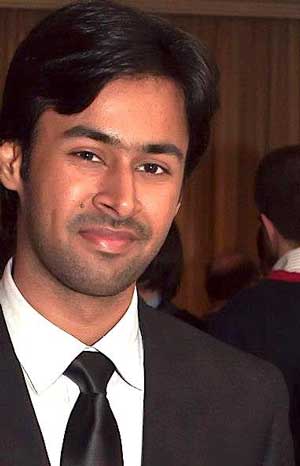
     

  • Ankit Yadav, LL.M candidate, NYU, on researching with legal luminaries and drafting the perfect memorial

    Ankit Yadav, LL.M candidate, NYU, on researching with legal luminaries and drafting the perfect memorial

    Ankit Yadav is one of the illustrious graduates of 2012 batch from RMLNLU. He subsequently went on to pursue his Masters NYU School of Law. After graduation he went for an LL.M. to New York University. During his tenure as an LL.M. candidate at NYU he worked with many legal luminaries and also had the opportunity to judge in the Philip C. Jessup International Law Moot.

    During this interview we speak to him about:

    • LL.M experience at New York University
    • Researching for Prof. Jose E. Alvarez and Prof. Eda Katharine Tinto
    • Perspective of a judge of Philip C. Jessup on what is an awesome memorial


    How would you like to introduce yourself to them?

    I am still a student of law, who is endeavouring to make a mark in this field.


    Tell us something about your life before college.

    I am a first generation lawyer. I did my schooling in the science background which, I still believe, helps me in having an objective approach towards various situations.


    How did you gravitate towards legal studies?

    I would not go on to the extent of saying that I always dreamt of being a lawyer. But yes, it always appeared to me as a fascinating profession, especially because most great leaders across the globe are/were lawyers. I believe that the study of law helps one relate better to the society and its needs.


    How did you go about securing internships at places like top tier firms?

    My idea of doing internships was to get a sense of different areas and work setups in this field (law firms, lawyers’ chambers, governmental and non- governmental organisations), which later allowed me to make an informed career choice.

    Most law students have an apprehension that one can’t get a good internship without having good contacts or knowing someone who can recommend you. Well honestly, I also thought so till the time I was proved wrong. Having a good network of relevant people is always a plus point in this profession.

    However, that does not mean that you cannot secure a good internship without the same.In my opinion, the key to securing a good internship is to apply well in advance and have a cover letter that allows the employer to judge your skills within a period of 30-40 seconds. Most employers get numerous applications every day. Therefore, the cover letter and resume of an applicant should be very concise and well drafted.

    Every internship that I did, not only helped me in honing my skills but also allowed me to decide what kind of lawyer I want to be. Internships teach us time management, team work, work ethics and give us a chance to put our classroom knowledge into practice. In short, internships give law students an insight into the real practice of law. Therefore, I would strongly recommend that law students should take all their internships very seriously.


    What was your motivation behind pursuing LL.M.?

    Everyone in my family is a post-graduate and I did not want to be the least literate one. I always wanted to get the knowledge, skills, academic resources and exposure that a world class university offers. Therefore, it was always there at the topmost position of my priority list. The only requirement was to get through one of the leading institutions of the world, which I was fortunate enough to get.


    ankit-yadav1How should one go about choosing a university?

    The hard task is for the law students to decide what area of law they want to specialize in. Once that is done, the process becomes relatively easier. Law schools ranking are available online and law students are good at doing online research. One needs to find the best uinversities in their chosen area of specialization. Location of the law school also plays an important role in determining what kind of exposure it would be able to offer to a prospective student. Therefore, a law student should take this into consideration before choosing a university.


    Please tell our readers about the application procedure and other requirements for an LL.M. at NYU.

    The application procedure for an LL.M at NYU is almost the same as other Universities of US and UK. All the applicants are required to submit a statement of purpose, writing samples and letters of recommendation along with the application form. All the information is available on the official website of NYU.


    Does NYU provide students with scholarships?

    Yes, like most leading universities, NYU also offers merit-based scholarships to prospective students. Also, apart from the scholarships offered by law schools, a number of charitable organisations offer merit-based scholarships to students who have secured or are hopeful of securing admissions in well recognized law schools abroad.


    Was there a lot of academic work?

    Yes, the work load becomes overwhelming at the beginning, but one gets used to the system after a while. Reading or writing assignments are allotted for every class and one has to go prepared to be able to understand the discussions properly.


    Please tell us about your experience working with Prof. Jose E. Alvarez and also Prof. Eda Katharine Tinto as Research Assistant.

    The work I did during my research assistantships was very enriching not just because of its academic value but also because of the amount of experience and knowledge I gained while working with the people who are widely recognized for their contribution to the American and international society.


    How has the experience of being Judge at the international rounds of Philip C. Jessup International Moot Court Competition been?

    It was truly a wonderful experience, being at the other side of the podium at the most prestigious moot court competition of the world, sharing the dais with and getting to interact with some of the well known faces of international law and just being a part of the entire process.

    The primary qualities that every judge looks for is a strong understanding of the basic concepts of international law and a proper appreciation of the facts provided in the Compromis. Once these are present, then eloquence, demeanour, poise, innovative arguments and persuasive skills are the qualities that bring out the difference between a winning team and the rest.


    If I want to write an awesome memo, what are the relevant skills and how should I go about learning them?

    An awesome memo would be the culmination of an awesome research into an awesomely drafted document. When I grade a memorial, I look for good amount of research and its proper application in the facts provided. Every word that is mentioned in a Compromis/problem statement should be presumed to be relevant while drafting a memorial.

    The language used should be formal and simple and must be as concise as possible. These are the skills that can only be acquired with practice. Therefore, it is imperative to have a first draft prepared well before the submission deadline and then keep refining it.

    In my opinion, MUNs, debates and moot courts are a great way of developing advocacy skills (research, drafting and oratory skills among other things). Unlike regular academic coursework, these activities involve the thrill of getting immediate results for all the labour you put in them. They are also a great way of boosting up the confidence of a law student and to learn something which may not be  a part of your academic coursework.


    Was your typical workday during your internships in India any different from your workday abroad?

    Not very different. Nowadays, most employers in India have also become more respectful towards their employees. They have started recognizing a proper work-life balance is necessary for employees to be able to perform up to their potential. I am hopeful that it will keep getting better from here on.


    What are your future plans?

    My future plans are to be a successful litigator. In the next five years, I want to be a well recognized name in this field.


    Lastly, what would be your message to a law student who wants to excel as a lawyer?

    Believe in yourself! If you are determined to be successful, no one can stop you. All you need is to stay focused and motivated. The legal profession needs to transform to keep pace with the changing society and our generation will bring about that change.

    “I have, let’s say, sixty years to live. Most of that time will be spent working. I’ve chosen the work I want to do. If I find no joy in it, then I’m only condemning myself to sixty years of torture. And I can find the joy only if I do my work in the best way possible to me. But the best is a matter of standards—and I set my own standards. I inherit nothing. I stand at the end of no tradition. I may, perhaps, stand at the beginning of one.”

    – Ayn Rand, The Fountainhead.

  • Aarushi Mishra, Associate, Wadia Ghandy, on being a first generation lawyer, her mooting experience, and plans for the future

    Aarushi Mishra, Associate, Wadia Ghandy, on being a first generation lawyer, her mooting experience, and plans for the future

    Aarushi Mishra is a graduate from RMLNLU, Lucknow, batch of 2014. She is currently working as an Associate at Wadia Ghandy & Co.

    In this interview, we speak to her about:

    • Interning with Wadia Ghady and getting a call back
    • Being a first generation lawyer
    • Her mooting experience

    Why did you decide to study Law?

    Honestly speaking, the first time I decided of becoming a lawyer was when in my eighth standard I read The Merchant of Venice by William Shakespeare and got inspired by the character of Portia in it and wished to be a lawyer like her.

    I believe that a good lawyer can truly bring about a change in the society and this belief has always motivated me to learn the subject.


    Do you have any lawyers in your family?

    No, I am a first generation lawyer. However, I do believe that if one has a family member with a legal background, it is quite helpful in terms of making the right choices because guidance can make a huge difference.

    I think being a first generation lawyer, I had to struggle slightly more than a few of my peers with a legal background. But I was very fortunate to be guided by seniors in my law school and even from other law schools who helped me take decisions about my career.


    What are the extracurricular activities you took part at RMLNLU?

    Well, I made sure I was a part of every academic or non academic activity in my college because I feel that it is very important for a law student to expose himself to every challenge that comes his way.


    You have taken part in a lot of Moot Court Competitions in college, can you share a few mooting experiences?

    Moot Courts are extremely important in a law student’s life, not only because it adds those extra brownie points to your CV but more importantly because it gives you that experience of working on a case as an advocate and use your intellect to the best of your abilities. Moot Courts are a great way to learn the subject inside out.

    I have participated in the Nani Palkhiwala Moot Court Competition, which is based on the law of taxation and the Leiden Sarin International Air Law Moot Court Competition which as the name suggests, is based on international air law. I got the opportunity of being a speaker in both the competitions and thoroughly enjoyed the experience.


    Do you think mooting is beneficial for Law students or is it just to make your CV look fancy?

    I don’t think mooting should be taken as an exercise to make your CV look fancy because then one can never enjoy the experience of mooting. It is not about winning a gold in the moot court competition but it is about what you learn from that moot and how that will help you understand the subject better. I did not always win my moot court competitions but every moot court that I have been a part of has enriched my knowledge about that subject to a great extent. Moreover, I believe mooting is one of the best ways to build your confidence and sharpen your articulation skills which is very important for a lawyer. Hence, every law student must participate in moot court competitions without the fear of losing!


    What are the law firms at which you interned?

    I have interned at Saikrishna & Associates, Noida; Oasis Advisory, Mumbai; Amarchand Mangaldas, Mumbai and Wadia Ghandy & Co., Mumbai.

    I think each of these internships has been very enriching in terms of experience. My internship at Wadia Ghandy & Co. was the most fulfilling. The Associates and even the Partners at Wadia Ghandy & Co. were very encouraging and approachable which helped me understand the work better and enjoy it.


    What was the procedure you followed to apply to these law firms?

    I mostly sent e-mails on my own. The Placement Committee of my college helped me secure a few internships.


    What was the kind of work was allotted to you during your internships?

    During the first three years of my law school I was usually given research work pertaining to matters. However, eventually in my fourth and fifth year internships, I also got an opportunity to draft letters of intent, opinions on issues, writ petitions etc.


    How many times did you intern with Wadia Ghandy to get a PPO?

    I have interned at Wadia Ghandy & Co. twice, in my fourth and fifth year respectively under two different teams.

    As I had mentioned before, my internship at Wadia Ghandy was very successful in terms of experience and work. It was quite different from my other internships because I found great mentors in the Associates and Partners of Wadia Ghandy with whom I worked. Since the work environment there was very encouraging it was easier for me to interact with the seniors and seek their guidance which improved the quality of work I did.


    What do you think an intern should accomplish during an internship in order to get a call back?

    I think it is very important for an intern to show his enthusiasm and inclination towards the subject because unless you really show your interest in the subject, nobody would take you or your work seriously. Obviously only showing interest is not sufficient but the work assigned should be done with utmost sincerity.


    Did you learn any skills while interning?

    I certainly acquired skills significant for my professional life during my internships, like multitasking, communicating with the clients, and most importantly use of all possible applications of MS Word which I was completely unaware of otherwise!


    How do you think one should go about writing a CV when one is applying for a job?

    I would suggest the clichéd old rule –keep it short and simple!


    How did you go about preparing for your interview?

    I focused on the work I had done during my previous internships which I had mentioned in my CV.  Apart from that revising the basics in all core law subjects helped.


    Do the law firms usually provide the candidates with an option to work with the teams of their choice while recruiting?

    Yes, most of them do.


    How important are grades in order to secure internships?

    Not really! It is more about the kind of work you show during your internships. However, of course a high GPA is a strong catalyst in securing that job once you’ve proved your mettle to your team while interning.


    Your advice to the law students, who aspire to secure a job at top law firms?

    My advice to all those aspiring to get a job at a top tier firm would be: make sure you know your subjects. I think it is very important for an intern who is a job aspirant to put across his intentions very clearly to his team because unless they know what you’re there for, they would never automatically make an offer or even notice your hard work. So, just work hard and never hesitate to approach your seniors for help and guidance!

  • Roli Sharma, Associate, Shardul Amarchand Mangaldas, on getting a PPO, her internship experience, and the importance of mooting

    Roli Sharma, Associate, Shardul Amarchand Mangaldas, on getting a PPO, her internship experience, and the importance of mooting

    Roli Sharma is a graduate from RMLNLU, Lucknow, batch of 2014. She is currently working as an associate at Amarchand, Mangaldas & Suresh Shroff & Co.

    In this interview she talks about:

    • The importance of mooting
    • Her internship experience
    • Getting a PPO from AMSS


    Why did you decide to study Law?

    To be completely honest I was a science student and did not know what to pursue after the 12th std. In my state of utter confusion I resorted to career counseling where law was presented to me as a viable option. However, when I started preparing for the various law school entrance exams, the sheer logical analysis that was an essential part of the study of law had me hooked. I realized that there was nothing else I’d much rather study.


    Do you have any lawyers in your family?

    No, I am a first generation lawyer. However, I do agree that being guided by people in your own family always gives one an upper hand in terms of taking the right decisions with respect to internships and other career decisions post law school. But having said that, this is not something that cannot be overcome with the right guidance from seniors and other mentors, it essentially just boils down to putting in a little more effort on your own to ask other people for help when required. For example, I will always be thankful to seniors from my own college and also other colleges who guided me and helped me throughout law school.


    What are the extracurricular activities you took part at RMLNLU?

    While I was at law school I participated in moots, debates and various other literary events and even though I wasn’t exactly a classic example of a perfect athlete, I was also a part of the college basketball team.


    Can you tell us something about your mooting experience?

    I think the most exciting thing about the moots that I have done was the opportunity to argue issues of pressing international importance before people who are experts in that field, whether it be Price Media Law, Man Lachs, Stetson or Jessup, the common thread linking them all is that the problem generally concerns a certain issue of pressing international importance and to have industry experts question you on those issues and then finally convincing them on your point of view and having them appreciate the effort you have put in is a feeling that cannot be explained in words.


    roli-sharma1Do you think mooting is beneficial for Law students or is it just to make your CV look impressive?

    I won’t disagree with the fact that mooting does make one’s CV look fancy and it is also beneficial for law students in more ways than one but doing a moot simply because one thinks it will help them secure a job is complete foolishness. Most recruiters don’t really care much about the moots you have done, in fact what matters more are one’s grades, so moots coupled with decent grades is reflective of how well one can handle extra-curricular activities along with academics. However, putting aside the ‘CV value’ of moots I want to add that mooting teaches one several skills that come in handy throughout one’s legal career.

    Through the course of the various moots that I participated in, I realized that mooting teaches you certain invaluable lessons in team work, research, streamlining the research by picking out the best arguments and then drafting a good argument, it teaches one how to think out of the box to come up with novel arguments, as also to present complex concepts in a simple manner and all of these are skills that any good lawyer needs in the longer run. Another great thing about mooting is that you get to travel and meet so many interesting people, whether it be students from other law schools or judges, there is always something new to learn from almost all of them.


    What are the law firms at which you interned?

    I mostly interned with the general corporate teams of various full practice law firms and out of all my internships I believe my most enriching experiences would be those at AMSS, DSK, and Luthra because of the work environment and the amount I learnt at these internships.


    What was the procedure you followed to apply to these law firms?

    Apart from applying through the college RCC, I mostly sent out e-mails on my own to apply for internships. These e-mails were usually followed up by some more emails and phone calls. Some firms like Phoenix Legal, ELP and Bharucha also have online forms that need to be filled to apply to them. However, I must admit that getting an internship at a law firm on your own till third year is almost practically impossible, it is only towards the end of third year or fourth year that most firms start taking your internship applications seriously.


    What was the kind of work allotted was to you during your internships?

    The kind of work that one gets allotted depends largely on the team that a person is working with and the kind of matters that the firm is dealing with at the time of your internship. Through the course of my various internships I was allotted all kinds of work involving drafting of legal opinions, notes and agreements, and also the standard research and due diligence work.


    Tell us about securing a PPO at AMSS.

    I got the PPO shortly after my first internship with AMSS. However, this internship after various extensions was almost two months long.

    My internship with AMSS is my best internship so far, mostly because of the people I worked with and the quality of work I got during the internship. What made this internship different from the others I guess was the fact that I was trusted with good assignments and encouraged to think out of the box. Further, where the matter concerned a subject area that I had scarce knowledge on, I was guided by my team on how to proceed with the research, this allowed me to learn immensely and made the experience an enriching one.


    What do you think an intern should accomplish during an internship in order to get a call back?

    I don’t think there exists a rule book with a set number of things that an intern should accomplish to get a call back because a lot also depends on being at the right place, at the right time. However, I believe that the single most important thing that one must always remember is to work smart, never shy away from asking questions about an assignment because that helps you find out what exactly you need to deliver and saves time by preventing unnecessary research.


    Did you learn any skills while interning?

    I think the most important thing I learnt while interning is to juggle between various assignments and complete all of them within a given time frame.


    How do you think one should go about writing a CV when one is applying for a job?

    I think the simplest way to look at a CV would be to compare it to a pitch presentation, so it should focus on the work areas of the firm that you’re applying to and it should highlight all the work that one has done in that area. Apart from this, I think the other more important thing to keep in mind is that no one likes clutter, so everything on one’s CV should be short, precise and to the point.


    How did you go about preparing for your interview?

    Apart from basics of subjects like corporate law, contracts, property, IPR etc., I don’t think even the best of firms expect us to know everything. What matters the most I think is, knowing what you claim to know, i.e., knowing everything on your CV inside out and staying updated with the latest developments in the legal world.


    Do the law firms usually provide the candidates with an option to work with the teams of their choice while recruiting?

    This is something that differs from firm to firm depending on the internal firm policy but yes, most firms do provide that option.


    Many law students strongly believes that getting a job at one of the top three law firms is mostly about securing a high GPA. Do you agree?

    A high GPA certainly makes getting shortlisted for recruitment easier, but it is not the sole determining factor, especially in cases of PPOs where the quality of work done by an individual coupled with a decent grade is usually what counts.


    How should a law student prepare in the last three years of law school?

    I believe there is no substitute to hard work, so maintain your grades, work hard at all your internships, give it your best shot and get noticed. And, of course, staying abreast with all the latest legal developments is always a plus.

  • Roma Das, law student, RMLNLU, on getting an offer from AMSS, her internship experience and plans for the future

    Roma Das, law student, RMLNLU, on getting an offer from AMSS, her internship experience and plans for the future

    Roma Das is a student at RMLNLU, batch of 2014.  She has secured a pre-placement offer from Amarchand & Mangaldas & Suresh A. Shroff & Co.

    In this interview we speak to her about:

    • The importance of mooting and of grades in law School.
    • How to choose an internship.
    • What it takes to get a call back


    Why did you decide to study law?

    I took commerce with math in my 12th, and had not thought of doing law. But that was more cause I didn’t know much about the profession. Career counselling workshops introduced it as an interesting and viable option.


    Do you have any lawyers in your family?

    I don’t have any lawyers in my family. And I do think that having relatives with legal backgrounds is invaluable for everyone who wants to litigate. It makes the process much easier.


    What are the extracurricular activities you took part at RMLNLU?

    I participated in moot court competitions, debates and other literary events.


    Do you think mooting is beneficial for law students?

    I would definitely recommend mooting for every law student. After all, law school is all about developing reasoning and researching skills. However, I don’t think  mooting is the be-all and end-all of a law student’s college life. But having said that, I maintain that it is an invaluable part and reflects that one can manage extra-curricular activities as well as academics.


    What are the law firms where you interned?

    Apart from AMSS, I’ve interned at a couple of other firms specializing in corporate and media law.


    What was the procedure you followed to apply to these law firms?

    Since I was always interested in Corporate Law, I looked for firms that had that as a major practice area. Once I had zeroed in on the firms, I just sent my internship application and followed up.


    What was the kind of work was allotted to you during your internships?

    During the span of all of my internships, I was fortunate enough to get a wide variety of good work. So while I drafted agreements, legal opinions and notes, I also did a lot of standard research work.


    You secured a job with AMSS as a ‘PPO’. How was the experience of that internship?

    Roma DasI interned at AMSS once before I secured my PPO. I interned with the General Corporate Team and got good work.


    What do you think an intern should accomplish during an internship in order to get a “call back”?

    You should give your best to every assignment and not merely focus on mechanically completing tasks.


    How do you think one should go about writing a CV when they are applying for a job?

    I think it’s important that your CV reflect the kind of work you want to do.  So for example, if you’re interested in corporate law, the work you’ve done at your previous internships should reflect that.


    How did you go about preparing for your interview?

    I brushed up my basics: Contracts, Business Laws, Property, IPR. I also kept up with the latest legal developments and prepared everything that I’d put on my CV.


    Do the law firms usually provide the candidates with an option to work with the teams of their choice while recruiting?

    A preference of practice area is usually provided.


    Many law students strongly believe that getting a job at one of the top 3 law firms is mostly about securing a high GPA. Would you agree?

    I cannot negate the importance of grades, but at the same time would like to emphasize that ultimately it’s all about how you work, and whether your team is happy with your work.


    Your advice to the law students aspiring to secure a job at top law firms?

    It is absolutely essential to have a grasp on basic subjects like contracts, company law, property, Constitutional law, IPR, and arbitration. This list is not exhaustive, of course, and one needs to keep in mind their areas of interest, but the basics are essential. Apart from that, it is important to keep abreast of the legal developments taking place in the country and abroad. This is all about what one can do to build his knowledge base. The next important thing is that one should aim at internships at law firms that have the relevant practice areas. So for example, if you’re sure you want to practice Corporate Law, there is just no point in going on doing litigation internships. And good grades don’t hurt, of course. That’s the first thing recruiters see on your CV.

  • Divya Swamy on mooting, internship and Judicial Clerkship

    Divya Swamy on mooting, internship and Judicial Clerkship

    552294_446406408729080_681169104_n

    Divya Swamy a student of 2014 batch of RMLNLU talks about mooting, internships and Judicial Clerkship. She elaborates on the details of doing a judicial clerkship and it’s importance for those who aspire to do an LL.M. from a foreign university.

    Key takeaways:

    • Mooting and its importance
    • Law firm internships
    • Judicial Clerkship


    Why did you decide to study Law? What inspired you to do so?

    Law is a field that ensures an over-all development of an individual. It makes us aware about our society so much more than any other field. As a student, just out of school, it seemed like the most rigorous form of personality building exercise to me, and this motivated me to study law.


    Which stream did you study at School? Was that beneficial in preparing for CLAT?

    I was a Commerce student at school. I wouldn’t say that it helped me much in preparing for CLAT but it left me with more options. In my opinion, the curriculum for CLAT is such that it requires only a couple of months of dedicated study in the right direction. There is no section in the CLAT paper that would make it more favorable for any stream. It tests only what ordinarily can be expected from any student who has passed Class 12.


    Do you have any lawyers in your family? Do you think having family members with a legal background help in this profession?

    No. I am a first-generation lawyer.

    Yes of course, having some guidance from the family always helps. In fact, it makes it easier to make decisions as regards internships, moots and even about the future after law school. Also, it is easier to break through. But, surviving in the legal industry is only subject to merit. There are innumerable examples of people who have excelled in the field without having any law-oriented family background. The beginning may be tough but what matters is how you use your 5 years in law school. I think that developing a skill set is the key to surviving in the fraternity.


    What are the extracurricular activities you took part at RML NLU?

    I participated in Moots and debates. Besides participating as a Debater, I was also actively involved in adjudicating Debates. I engaged in free-lance researching and also assisting a Professor in research in the last 2 years of law school.


    You have taken part in a lot of Moot Court Competitions in college, can you share a few mooting experiences?

    My favourite mooting experience has been at Surana & Surana Trial Advocacy because I will be practicing law soon and the exposure in this format of mooting is immense. The structure of the moot is different from other Moot Court Competitions and here, one is supposed to train witnesses, solve legal issues and conduct a proper trial. It fascinated me and gave me an experience as close to real Court as possible, in a simulated environment. It was because we enjoyed it so much that our team went on to win the tournament.


    Do you think mooting is beneficial for Law students or is it just to make your CV look fancy?

    I think that mooting adds more value than just decorating your CV. In fact that is the area where it least contributes. The exposure that one receives in a Moot is unparalleled. It is a learning experience in terms of helping you with developing research skills and speaking skills. It grooms one for the real competition. In fact personally I think that the subjects that I learnt while mooting, are the areas that I am most confident about and this is because you learn the law in the most practical way possible.


    What are the law firms and other places where you interned? Which internships will you consider to be right at the top and why?

    Well, since I am a first generation lawyer, I preferred to intern at the most varied places so as to choose my area of interest.  I interned at firms like Parekh & Co. in the corporate and litigation departments, with reputed Senior Advocates like Dr. M.N. Krishnamani and various other internships in the Supreme Court, Delhi and Calcutta High Courts and District Courts.

    The most noteworthy experiences have been while I interned with Mr. Subhiksh Vasudev, Advocate at the Delhi High Court since I learnt the Court procedure. I learnt how to draft legal documents and most important, I attended Court proceedings. Also, my internship with Hon’ble Ms. Justice Hima Kohli as a Law Researcher has been the most enriching experience because I researched on fresh cases and had the opportunity to work on many briefs at a time while also becoming comfortable with the procedure.


    What was the procedure you followed to apply for these law firm internships?

    I applied about 3 months in advance by sending in my CV. It is very important to follow up by sending e-mails and making phone calls after applying at any place.


    What was the kind of work was allotted to you during your internships?

    There was research work on various points of law, preparation of legal documents, preparing briefs and so on based on the place I was interning at.


    What do you plan to do for the next 1 year?

    I will be doing a Clerkship at the Delhi High Court.


    Why did you choose to do a Judicial Clerkship? What is the daily schedule of an Intern at a Judicial Clerkship?

    I chose to do a Clerkship because it is the most convenient and efficient way of learning the Court procedure. In fact, for those who believe in learning by observing, working as a Law Researcher at High Court is a very good option. Further, the interaction with Judges is unparalleled since it they teach you how to look at the law from a different perspective. In fact, I think that the nature of work is apt for a fresh law graduate who wants to learn the law.

    The nature of work for an intern working as a Law Researcher is different depending on the Court and the Judge. Generally one must reach Court by 10 a.m. and make all necessary corrections and proof read the orders that had been dictated the previous day. Then, attend all fresh matters for the briefs you prepared the previous day. You must then do all the necessary research as required and prepare briefs for the next day at Court. Besides this, research needs to be done on reserved judgments. Ordinarily the day ends at about 8 p.m.


    Did you learn any skills while interning at the Court? What are these skills and how did you acquire them?

    I observed that the nature of work for an Intern is the same as that of an Associate at a Law firm or a Law Researcher in Court. If one goes with an open mind and desire to learn, there is a lot to gain from internships. I think all skills of drafting and researching are best learnt at internships. In my opinion, while working as an intern, networking is also a necessity for any law student.


    How did you obtain the Judicial Clerkship? What is the standard procedure to do so?

    I had worked as an intern twice. This is when my application to work full-time got accepted. Generally, one must either intern with a judge or apply to the Registrar in the respective Courts. Annually, during this time of the year, posts are offered by High Courts and the Supreme Court. Interested students must keep checking the respective websites for the vacancies. There is an interview in the Supreme Court for the shortlisted candidates.

    To secure a clerkship with a judge, there are 2 ways:

    One applies to the Registrar in the High Court or Supreme Court, as the case may be, requesting for an opportunity by filling in the requisite form that is available on the website or you should have interned with a Judge, who MAY if impressed, permit you to work as a Law Clerk after graduation.

    To secure an internship with a judge, one should:

    Apply to the Registrar in the High Court or Supreme Court, as the case may be, requesting for an internship with a judge or apply to the office of the concerned judge, where you intend to intern.

    Even if one secures the internship by applying to the office of the concerned judge, the final approval is by the Registrar.


    How is it beneficial for further studies?

    Generally, besides the skill development, the Recommendations of Hon’ble Judges is held in high regard by foreign Universities. However, one does not get a recommendation letter as a matter of right. It is based on the quality of work during the clerkship and the sincerity shown in the work.


    What do you plan to do when the term of your clerkship expires?

    I plan to pursue a Masters in Law.


    Your advice to the law students aspiring to do an LL.M.?  What do they need to do, how should they prepare in the last 3 years of law school?

    For those who want to do a Masters abroad, immediately after law school, must start applying by their 4th year. For Indian Universities, one must prepare for the entrance examinations based on the format followed in the precious years. But irrespective of what one wants to do after Law school, it is most essential to love the law. So, read the law as much as possible because it helps you identify what you would want to do for the next 50 years of your life.

  • Smrithi Mariam on steps to getting good internships and a PPO

    Smrithi Mariam on steps to getting good internships and a PPO

    Smrithi Mariam a student of  the 2014 batch at RMLNLU  has secured a Pre Placement Offer from Lexygen. We asked her to share her experiences and strategies she used over the years. In this interview she speaks about:

    • Mooting and its benefits for a law student
    • Preparing a C.V. and interviews
    • Getting good internships and a pre-placement offer


    Why did you decide to study Law? What inspired you to do so?

    It took me a while to figure out what exactly I wanted to do after the 12th and being a science student I wrote all the possible engineering entrance exams. At the back of my head I knew that this wasn’t my thing and I began coaching for the CLAT. That’s when I realized that I could see myself as a lawyer and that most of all studying law would make me happy.


    Do you have any lawyers in your family? Do you think having family members with a legal background help in this profession?

    I’m a first generation lawyer, but I do have a lot of friends who have lawyers in their families and yes, I do think that it helps to have a family member in the profession to guide you in the  and show you the how things work. But, on the other hand NOT having such a person means that you need to stand up for yourself, take charge, be resourceful and figure out the ropes on your own.


    What are the extracurricular activities you took part at RML NLU?

    Sport has always been an important part of my life and I’ve been a member of the college basketball team throughout my law school life. I have also taken part in Parliamentary Debates, I enjoying ‘JAM’ing, traditional debating and other literary events.


    You have taken part in a lot of Moot Court Competitions in college, can you share a few mooting experiences?

    My first national moot was the Nani Palkhivala National Tax Law Moot, I was in my third year and we finished runners up at the competition. This moot holds a very special place in my heart and I vividly remember the finals, where we argued in front of Bombay HC Judges on a matter that was actually pending at the ITAT. The finalists at this moot are awarded internships a top tier tax law firms in the country which is a bonus. I also took part in the Stetson International Environmental Law Moot and our team finished semifinalists at the world rounds and we secured speaker and memorial citations. Arguing against law students from schools in Poland, USA, Ireland, etc was enriching and being able to connect with them and exchange stories from our home towns was an unforgettable experience. In my final year I took part in the North India rounds of the Phillip C Jessup International Moot and was part of the team placed third. That was a bitter sweet end to our mooting life, so close yet so far!


    Do you think mooting is beneficial for Law students or is it just to make your CV look fancy?

    I love mooting and everything that comes with it. The crazy workload, the compulsory reading, the brain storming sessions, the sudden burst of energy when someone comes up with an argument, the list goes on. In my opinion, mooting helps you learn how to work in a team, how to keep your head together and work on a single matter for months together, how to logically work your way out of situations and come up with novel arguments and most importantly it allows you the freedom to learn and explore a new subject at your own pace without a project or an exam deadline breathing down your neck. Yes, mooting may make your CV look good but that’s not why you should take it up.


    What are the law firms at which you interned? Which internships will you consider to be right at the top and why?

    I have interned at JSA, AZB, AMSS, ELP, Trilegal, Samvad Partners and Lexygen. I enjoyed all my internships, but my stints at Samvad, Lexygen and ELP would be the ones I consider most enjoyable. The work environment, quality of work and most importantly the unbiased nature towards students from ‘lower rung’ law schools in these places really impressed me.


    What was the procedure you followed to apply to these law firms?

    Continuous emails to the HR of the firms and then follow up phone calls. It’s easier said than done and one has to listen to a number of rejections but it is possible. My college RCC also helped out with one internship.


    What was the kind of work was allotted to you during your internships?

    Work given to interns depends largely on the firm you are working with and their policy towards interns. Some firms trust interns with meaty assignments and allow them be a part of an ongoing client matter, while other firms hand out a lot of due diligence work. I have had my fair share of both types of work.


    You secured a job with ‘Lexygen’ as a ‘PPO’. How many times have you interned there before? How was the experience of that internship (if you did one) and how was it different from other internships?

    I have worked with Lexygen on two occasions for a total of 12 weeks. After short listing your CV they conduct a telephonic interview based on which they offer you the internship. The firm offers internships only to 4th and 5th year students strictly for the purpose of assessing whether they can be absorbed into the firm after they graduate. Lexygen is a great place to intern at; the firm ensures that interns are a part of weekly training sessions where the latest law or judgment on a particular subject is discussed. The intern has to make a presentation at the end of the internship period and there is continuous assessment of the work done; the intern receives feedback on the completion of every assignment.     


    What do you think an intern should accomplish during an internship in order to get a “call back”?

    Get people to notice your work! There are no two ways about it. Many people seem to think that it is the people you get work from that make the difference, be that as it may, it is important to note that even if you are given work from a junior associate and you manage to impress them and continue to do so, a recommendation may be in the pipeline. A ‘call back’ also depends on a little bit of luck- being in the right place at the right time, etc. For example, interning when there are a large group of interns considerably lowers your chances of getting noticed as the work load splits among all of you.


    Did you learn any skills while interning? What are these skills and how did you acquire them?

    One skill that most law students acquire while interning is time management. More often than not interns are given a strict deadline by which they need to submit their work and managing your time is very important.


    How do you think one should go about writing a CV when they are applying for a job?

    I don’t think I should be an authority on the format of a CV but from what I have picked up, while applying for internships one must ensure that you change your CV as per the type of firm you are applying to. For example if you are applying to a Tax law firm highlight the tax work you have done at your internships or a paper you published in tax law journal, etc. Besides that, be clear, precise and to the point in your CV.


    How did you go about preparing for your interview?

    I was fortunate enough to secure the PPO without an official interview as I had been thoroughly assessed at both my internships. But in general for an interview be it for a job or for an internship knowing all the work that you have mentioned in your CV is the most important thing.


    Do the law firms usually provide the candidates with an option to work with the teams of their choice while recruiting?

    I understand that most law firms ask the candidate their area of interest, but there is no guarantee that you will be put in the team of your choice. It normally depends on the need of the firm and the vacancies available in their teams.


    Many law students strongly believes that getting a job at one of the top 3 law firms is mostly about securing a high GPA. Would you agree?

    Having a high GPA is important, but it is not the be all and end all of securing a job at a tier 1 firm. I personally know of people who have been placed at these firms with just above average grades. Especially in the case of PPOs, it is the quality of the work that you do and that is more important than your GPA.


    What would be your advice to the law students aspiring to secure a job at top law firms? What do they need to do, how should they prepare in the last 3 years of law school?

    As someone who is fresh out of law school, I do not feel competent to answer this question, but I will do my best by telling you my personal experience. Being in a law school that is not considered a ‘top’ one and wishing to secure a job in a ‘top’ law firm is hard but it is possible and I have seen it happen. Ensuring that you intern at the right time and making a mark at your internships can do wonders to your morale as well as your chances of getting a job.


    Follow her on LinkedIn: Smrithi Mariam Punnoose