Tag: SLS

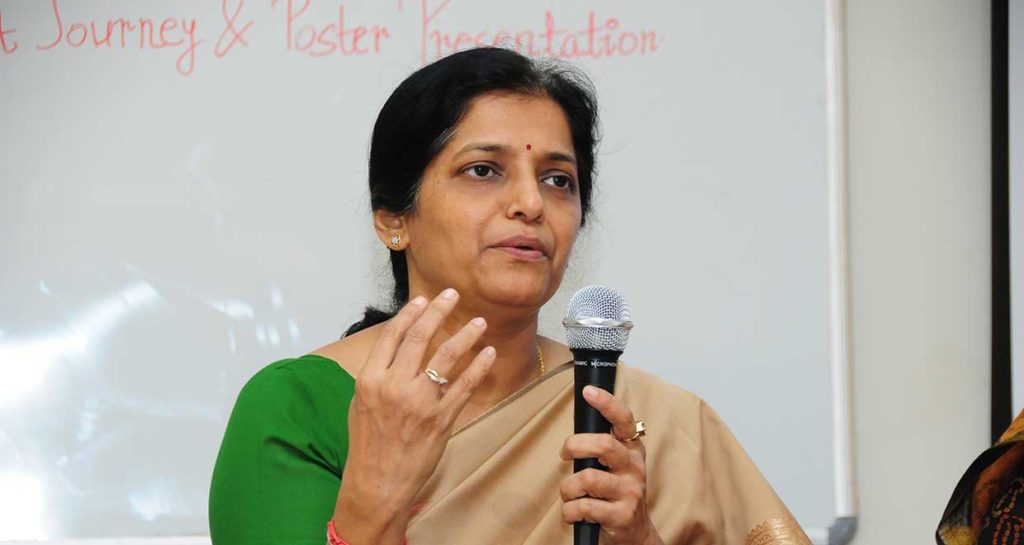
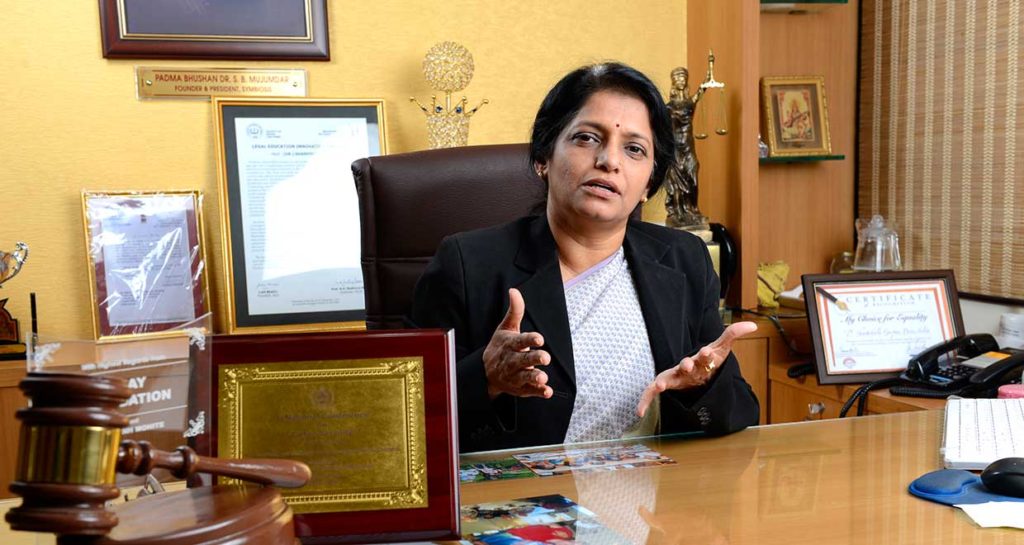
  • Richa Mohanty, Principal Associate, Cyril Amarchand Mangaldas on challenges of a Corporate Lawyer and tips to securing a PPO

    Richa Mohanty, Principal Associate, Cyril Amarchand Mangaldas on challenges of a Corporate Lawyer and tips to securing a PPO

    Richa Mohanty graduated in Law from Symbiosis Law School, Pune in 2008. Throughout her college life she engaged herself in various extracurricular activities which have greatly helped in shaping her as a professional. She has interned at various firms in different sectors ranging from civil, criminal to SEBI. She was offered a PPO while still interning at Cyril Amarchand Mangaldas.

    Currently, she’s a Principal Associate at CAM. Her work involves advising on a number of issues such as transition of employees in M&A transactions, individual and mass terminations, closure of establishment, anti-sexual harassment matters and social security issues.

    In this interview, she talks to us about:

    • Her decision to pursue a career in Law.
    • Her tricks to do well in moot court competitions.
    • Maintaining a work-life balance.
    • How to secure a PPO while interning?


    How would you introduce yourself to our readers?

    I am a corporate lawyer with over nine years of experience. I am currently a Principal Associate at Cyril Amarchand Mangaldas (CAM), New Delhi. I started my career with the erstwhile Amarchand & Mangaldas & Suresh A. Shroff & Co., and have had the privilege of working across its New Delhi and Mumbai offices. I moved to the CAM Delhi office, upon its inception in 2015. I specialise in employment and labour laws. I am also a member of a Special Taskforce on Employee Relations, at the Confederation of Indian Industry (CII), Gurgaon.


    What motivated you to pursue a career in Law?

    I think it was a mix of many factors. I don’t come from a family of lawyers and when I was in school, Law was not a popular career option.

    However, like most things in life, timing played an important role. With the second wave of liberalisation, the Indian economy appeared to be booming in 2002-2003. Simultaneously, the landscape of legal education was undergoing a transformation, especially with the introduction of the five year integrated law courses and the rise of professional law firms/ formal legal teams in organisations. All of this greatly enhanced the appeal of the legal profession and I decided to take the plunge!

    On a lighter note, I should also give some credit to popular TV shows like “Alley Mcbeal” and “The Practice”.


    How did you approach the extracurricular activities such as moots and debates in Law school?

    Yes, I was very much involved in the co-curricular and extra-curricular activities. I tried my hand at everything that law school had to offer- debates, presentations, extempore, moots, seminars and even business plan competitions. I also participated in a number of cultural festivals including drama, dance and music competitions and was a member of the Human Rights Cell.

    All of this really helped me get perspective about my strengths and weaknesses. As a trimmed list: public speaking, research skills, team work, strategic planning, rationalising each argument were by products of these activities.


    Having participated and judged several moot court competitions, what is your advice to students?

    I would say that debating on legal or socio-political issues is much more critical than mooting, but that is a personal bias. Mooting and debating are sans recourse for a law student. My advice for all mooters would be to immerse themselves in the basic legal framework (Act/Rule/Regulation) before jumping the gun and moving to case-law finding frenzy. I also always found it helpful to set out a research methodology for the various roles I rendered as a mooter.


    Tell us about your internships and how did you apply for the same?

    I had interned at a number of places- from criminal lawyers to corporate law firms, banks, corporates, SEBI and even with the JAG (Judge Advocate General) of the Indian Navy. The idea was to gauge and understand the role, expectations at each organisation; and accordingly figure out my interests and career goals.

    I would strongly advise law students to apply to individual lawyers/ partners, depending upon their area of specialisation and to focus on the practice area of one’s choice, rather than blindly applying to Big Law or corporates and letting the HR assign the partner/ team to you. Also, don’t get mesmerised by Big Law and corporates. The experience and exposure at smaller, niche law firms can be equally good and rewarding.


    Have you ever felt the NLU and non- NLU divide? Do you think it is a consideration for employers?

    Some National Law Universities (NLUs) were the first off the mark in the corporate-focused 5-year law course, consequently with great alumni connect. Plus, there’s bound to be greater comradery between people from the same Law school, whether NLU or non-NLU. While I never personally faced any such divide, it may not be unnatural for a smaller set in even a small-sized firm, to feel a little ‘out of sync’ or not entirely ‘tuned-in’.

    Being a part of a professional organization and conducting oneself as a professional in its truest sense means that you transcend these perceptions and beliefs very quickly. I do not think it is a consideration for any modern-day employers.


    Give us an insight to the Sir Ratan Tata Trust Scholarship.

     (Richa is an awardee of the Sir Ratan Tata Trust Scholarship.)

    I heard about the Sir Ratan Tata Trust Scholarship from a friend. It is basically a merit based scholarship. There were no interviews or essays for this scholarship in those days. I simply had to apply with my mark sheets and a cover letter (not sure of what the process entails today). If I remember correctly, I got a cash award and a certificate.


    How was your experience of attending a Student Exchange Programme?

    I was a member of a fourteen member contingent from Law school to the University of Hannover, Germany for a period of two weeks in 2006. It was more of a cultural exchange programme but we got the opportunity to participate in panel discussions on interesting issues like intellectual property, anti-trust laws etc. We also visited the local courts and prisons at Hannover and Hamburg and were given a detailed overview of the EU framework.


    How did you secure a PPO from AMSS?

    I interned with the firm, made sure to put in my 110% during this traineeship stint, and was fortunate to have got a pre-placement offer (PPO) interview call. I was also fortunate to have interned with a wonderful team that really encouraged and supported me. I am in touch with most of them and consider them to my true mentors.


    How important do you think a high CGPA is for recruiters?

    Traditional non-PPO / Campus recruitment for most big / medium sized firms would largely be based on CGPA as a first indicator. A high CGPA can reflect discipline, dedication and attention to detail as per assignment requirement. This conventional thumb-rule dilutes in value as you move up the PQE chain during lateral recruitments.


    What would be your advice to readers who hope to get an offer from CAM?

    Intern with the firm and put your best effort during traineeship. If you wish to intern with a particular team / secure sectoral / practice-area focus, back a sincere request to the HR (after being accepted) with some prior academic research / publications. If you could not secure an internship, focus on CGPA as a first amongst equals and then publications as well as co-curricular and extracurricular activities.


    Can you give our readers some insight to the field of Labour and Employment Law?

    It is a very interesting and developing practice area and CAM is one of the leading firms in this space. As an employment law specialist, I routinely advice clients (mostly employers) on a number of issues such as transition of employees in M&A transactions, individual and mass terminations, closure of establishment, anti-sexual harassment matters, social security issues, trade union issues, ESOPs, immigration laws and basically all matters in connection with employees/ workforce. This is one of the only practice areas which involve a mix of advisory, transactional and litigation work.


    What is the nature of your work as a Principal Associate at CAM?

    As Principal Associate, I am entrusted to engage with Clients, oversee / review delivery of work-products to them and undertake practice-area as well as business development. CAM is a demanding but a very vibrant work space. What I like the most about the organisation is that it is not hierarchical and talent is valued above all else. So it does not matter which Law school you come from or what level of associate you are or what your political views are, as long as you do the job well, nothing else matters!


    How do you maintain a work- life balance given the demanding nature of your job?

    I have to say that working in a law firm can be extremely demanding, especially in the early years, when you are learning the ropes. As a consultant, you have to be mentally prepared to “work-on-demand”, especially on weekends, holidays and when travelling etc.

    Two things that have really helped me are (1) effective time management; (2) prioritisation of daily tasks. It also helps to be candid and upfront with your reporting senior about how much time you will take to complete a task so as to manage expectations accordingly.

    As such, there is no real formula to maintain a work-life balance, but what I would recommend is to definitely take out time for things that you genuinely enjoy- for example if you are a marathon runner or a classical dancer or if you like travelling, etc. plan your leave or free time, in such a way that you can accommodate these activities. Otherwise, like they say, all work and no play, makes Jack a dull boy!


    What challenges have you faced in building up your career as it stands today?

    There have been multiple challenges during the course of my career. To begin with I think, nothing quite prepares you for the legal profession unless you officially join the bandwagon. It takes a while to bridge that gap since legal studies in India are by and large theoretical, rather than being practical. There is no gestation period in this industry, so you have to pretty much learn on the job. Also, you also need to constantly adapt and adjust to the demanding work life at a law firm and learn to build lasting relationships. Every new level brings new challenges and you will have to keep pace with it. I am very grateful to some of my seniors and colleagues, for the lighting the way and guiding me through some of such trying phases.


    What advice do you have for our readers who are primarily college students?

    Law school days will always be the most stress free days of your life-so my only advice would be to make the most of time and to choose your friends wisely. Also live it up and have lots of fun. After all, you live only once (borrowing from the millennial motto)!

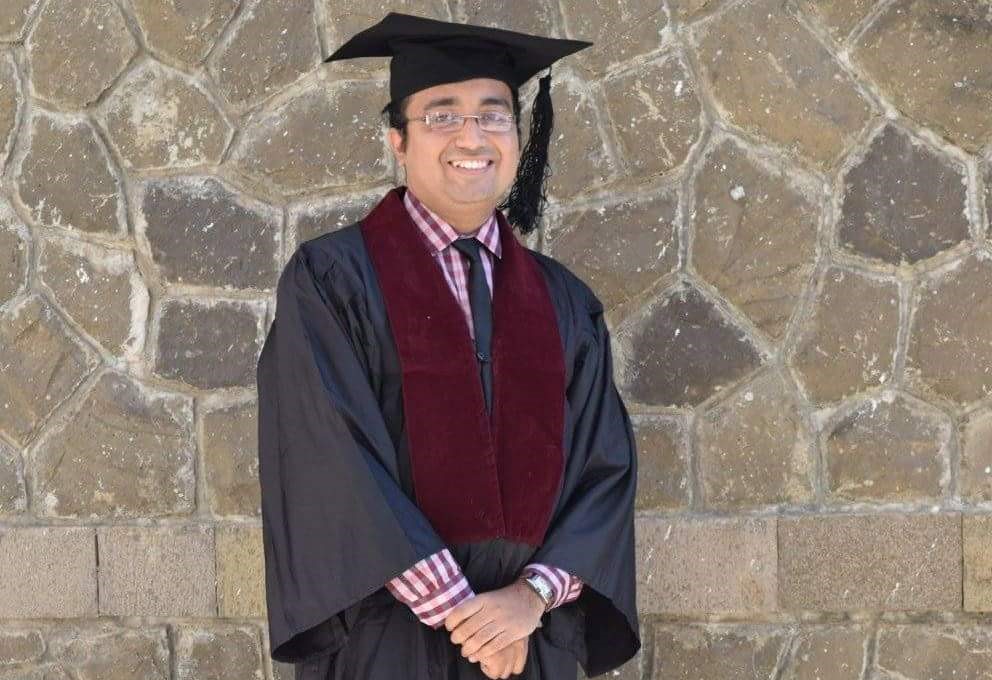
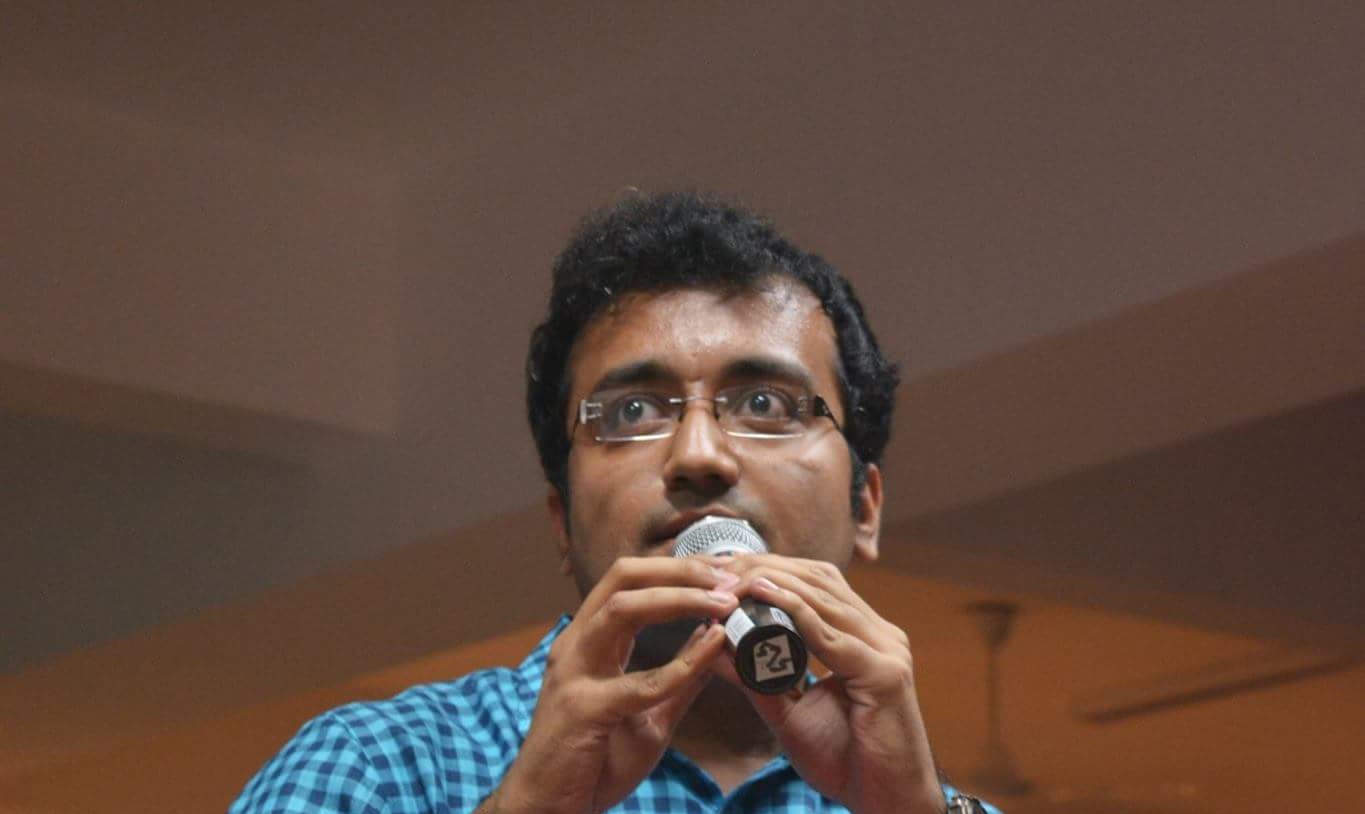
  • Varun Sriram, Partner, J. Sagar Associates, Chennai on steering a successful corporate legal practice with a law degree and completing Company Secretary course

    Varun Sriram, Partner, J. Sagar Associates, Chennai on steering a successful corporate legal practice with a law degree and completing Company Secretary course

    Varun Sriram graduated from Symbiosis Law School, Pune in 2006 and thereafter also qualified as a Company Secretary Course from the Institute of Company Secretaries of India. He is currently a Partner at J. Sagar Associates, Chennai and practices mainly in General Corporate, Mergers & Acquisitions, Private Equity and Banking & Finance. He has over ten years of work experience in corporate legal work.

    In this interview he talks to us about:

    • His law school life at Symbiosis Law School Pune;
    • The essentials of a good corporate lawyer;
    • His experience and work strategies for ruling the corporate market;
    • Opportunities that a corporate practice has to offer;
    • His views on the current demonetization of high value currencies and the new Insolvency Code; and
    • His fondness for corporate and commercial laws.


    What interests or influences propelled you to pursue law as a career? What other options were you considering apart from law and how did you make the final decision?

    It wasn’t out of any specific interest at the beginning. Interest grew over a period of time, over a few years into practice. I took up a science group in eleventh standard since most of my friends chose science and I wanted to continue to be in the same class as them. It was during my mid-term that I started considering options for higher studies mainly due to peer pressure. I knew science wasn’t my cup of tea and I should not continue in that stream. I asked the school principal if I could change streams to commerce and she was gracious to agree. I joined the commerce stream just a week or two before our half-yearly exams and aced business studies, economics and accountancy.  That’s when I knew what my fundamental interests/strengths were even though I was not sure about future plans. I was considering my options in twelfth standard and one of my teachers mentioned that no student for several years had opted for law. Plus I was reading Perry Mason books back then and had seen quite a few movies with court room drama. Thereafter when I heard about Pune law colleges and life out there, I was quick to make my decision. I joined Symbiosis Law College in 2001 and never look back. My other option was to do a professional course in culinary arts and become a chef. I enjoy cooking and thought I would take it to a professional level. Then someone told me I could be a lawyer and still cook for people, but the other way round would not work. It made sense and I stuck to the plan.


    What were your objectives and plans in the preliminary years of law school? What curricular and extra-curricular activities and internships did you opt for while in law school?

    I did not have a plan, at least not for the first two years of college life. I spent time exploring Pune and making new friends. Sometime during my second year, I realised I had lot of time in hand and enrolled for ACS. I did one internship every year including outside of my home town Chennai. I did a few moot courts as well. I was also part of AIESEC, Pune. I would sum up my college life as academically above average, well rounded and a lot of fun.


    Straight after law school, you got an offer from HSB Partners, Chennai. What was the work profile you were entrusted with there and how was your experience there during your initial days?

    I joined HSB Partners by chance and not by plan. I was exploring my options after college. I took up a special project with a Danish MNC based out of Chennai to work on compliance aspects for them. I thought I would take the opportunity to get some perspective on management/strategy issues on the side. Within a few weeks, I realised it was not the right fit for me. I needed professional guidance. I met with some Industry leaders, entrepreneurs and lawyers to get suggestions. I even had an offer from an FMCG MNC based out of Mumbai for a legal role. Still, I was not convinced. I had done an internship with Mr. TK Bhaskar (TKB) in my third year of college and decided it would be good idea to meet him and discuss some options. That was the turning point. He offered me a position instantly after a brief discussion around 8:30 PM. I joined the next day not knowing that stint was going to be my beacon in the years to come. Initially, I worked with HSB Partners for two years. I was involved in a variety of work on corporate & commercial contracts, PE/VC and M&A work, corporate litigation matters, merger/de-merger schemes, drafting legal opinions on various corporate/commercial matters and occasionally even running to the consumer forum. Most weeks were six and half day working weeks. It was a good experience, especially the diversity of the nature of work that I was exposed to. I was also fortunate to get a lot of time from TKB.


    Within a few years, (if I am not wrong it might be shortest journey for a new law graduate) you got promoted to partner at HSB Partners Chennai, a reputed law firm in the southern circle.  What skills and qualities do you think helped you achieve you this position?

    While I continued to enjoy work at HSB Partners, I wanted to have first-hand experience in a Mumbai law firm specialising in PE and M&A work. So I started applying to various firms and had the opportunity to interview with a few of them. A very good friend and senior from college was working in Economic Laws Practice (ELP) and arranged for me to interview with one of the Partners. I interviewed with them and was offered a position instantly by Mr. Suhail Nathani and I took it up. I worked in ELP’s PE/M&A team and did some fantastic transaction work. I learned a majority of private-equity transaction related nuances during my stint here. I moved after a few years to ALMT Legal in Bangalore and worked with well-known names like Mr. SR Arun and Ms. Dhanya Menon. I had the opportunity to do capital market work like IPO, Rights Issue etc. besides some good and large M&A transactions.         I spent almost five years between Mumbai and Bangalore before moving back to Chennai. I re-joined HSB Partners although I had an offer from a national level firm in Chennai. While I started handling more of transaction related work, I worked on other matters from time to time. I was extremely moved when I was elevated as a salaried partner, especially considering I was the first associate to be elevated as such. I think my progression is a result of the combination of many attributes – exposure to a variety of work, good mentorship, strong fundamentals and liking towards corporate/commercial legal matters, my dual qualification (Law and ACS) and my associations with reputed firms and individuals.


    Your linked in profile says that you are driven by an “interest to find resolutions to intricate business requirements” and that your “practice emphasis has always been to add value to clients”. What interests lead you to such a yearning?

    The first sentence of the statement is based on my interest and passion. The second sentence of the statement is the end objective of my first sentence. That’s how I look at it. Without facing challenging requirements, there is no intellectual stimulation. Without finding lawful yet workable solutions to clients under such circumstances, there is no value creation. Without value creation, there is no client. Thus I feel there is immense logic and purpose in that statement and living by it.


    What are the opportunities that a practice has to offer? What are the essential requirements to rule the Indian corporate market?

    The legal profession is going to become more specialised in the days to come. This is the natural progression. Clients demand, and rightfully so, deliverables under tight time-lines to keep pace with various commercial and M&A activities, competition etc. This is possible only if the lawyer in question is fundamentally strong in the subject matter and has good exposure on ground. The requirements for developing into a good corporate lawyer and continuing to be one are always dynamic and not constant or a one-time effort. I think the use of technology effectively will make a difference going forward. It is important to be aware of legislative/policy developments, changes, general business news, developments in transaction structures and practices, new and changing business models etc. It is combinations of all of these that aidsand improves one’s legal acumen and helps one perform better as a corporate-commercial/transaction lawyer. Being level-headed, rational and solutions driven is vital.


    Do you feel that doing a company secretary course from the Institute of Company Secretaries in India will be add fuel to one’s work profile at a corporate practice?

    Completing a Company Secretary course together with Law certainly gives an edge with regard to certain fundamentals academically, in corporate and secretarial laws and adds weight to one’s resume. But I would not attribute more than that. Anything I learned out of a text book until I applied it on the job was to some extent surreal. Most of the real learning is on the job at least that has been my experience. I think if one has the time to study and get an extra degree, why not. It could CS, CA or MBA finance – all of them are good combinations with a law degree.


    The newly enacted Insolvency and Bankruptcy Code, 2016 has stirred a dynamic shift in the insolvency regime. What is in your opinion, efficacious about this code in the Indian corporate market?

    Prior to this legislation, there were multiple laws and forums that dealt with insolvency related issues. The insolvency code is a uniform and complete code dealing with insolvency issues and applicable to all companies (not banking companies), partnerships and individuals. The code has established a new framework, with a regulator, insolvency professionals and detailed adjudication mechanisms. The code if implemented properly, will lead to pro-active and effective resolution processes re insolvency matters.


    You are currently partner at J. Sagar Associates, Chennai. What is your work profile there? Could you share your experience at the firm so far?

    I primarily deal with private equity, M&A and other corporate and commercial matters. JSA is a tier-1 firm both in capability and culture. JSA is known and stands for work quality, expertise and good values. The organisation inculcates and encourages good ethos and transparency in dealing with people, both internally and externally. It is also interesting to note JSA’s active involvement in pro-bono activities. This year being the 25th anniversary, additional pro-bono initiatives are under-way. This milestone is being celebrated by reaching out and giving in ways we can, so that others may be lifted by an experience of equality, empowerment and justice. I feel fortunate, proud and a sense of satisfaction being associated with JSA.


    Why the special interest in corporate laws and commercial laws with a special focus on mergers and acquisitions, joint ventures, private equity, general corporate matters and corporate compliance over a number of sectors?

    While I worked on a variety of matters during the initial two years of practice, I gradually realised I needed to focus on some area of practice. My natural inclination towards corporate/commercial and M&A matters made the choice easier. I think it’s important for any fresh law graduate to get a feel and sense of as many diverse areas of practice as possible, initially. At some point it will naturally lead to a focus in one or more areas of their liking if all goes well.


    Do you think the current demonetization of higher value Indian currency is going to boost the Indian economy?

    The market sentiments are polarised on this. Professional write ups, views and emotions are mixed and economists in some cases have taken a cynical view. While I am no expert on policy issues, I think the logic behind the policy measure is sound. Implementation of the policy is another matter and there possibly could have been more systems and checks put in place for it being more effective and reducing hardship to sections of people relying on physical currency in their daily life. But now that the policy is already in play, improvising implementation dynamically is the need of the hour. Whether the policy will actually meet its purpose and objective i.e. eradicate black money/counterfeit notes, weakens the parallel economy thus consequently leading to better GDP, digitalisation of payments and receipts etc., only time will tell. It is also important to measure the purpose and positive effects of the policy against the cost of implementation of the policy factoring in all adverse ripple effects created, in some objective manner to test the success of the policy.


    What were the challenges you faced in shaping up your career as it stands today and where do you see yourself ten years from now?

    It will be unfair to say I faced any material challenges in shaping my career. I was reasonably dedicated, took a keen interest in work and looked out for client interest while never diluting integrity. I did not see or think of them as challenges. I don’t know where I see myself in ten years. I just hope I have the strength and opportunity to do and continue to do what I like and proud of.


    Do you agree that law students with a corporate legal legacy (family background) are more likely to succeed in practicing it?

    Not necessarily. It may give a person an edge with respect to learning, networking and an immediate name in the market. But I believe one earns the tag as a good corporate lawyer over a period of time based on merit and work quality. Therefore, it is possible for lawyers without legal family lineage to also succeed, catch up, and even go past those who have it. It entirely depends on the individual, his/her capabilities and conviction. It needs to kept in mind that success is subjective, a state of feeling and difficult to be objectively measured.


    What is your parting message to law students and young generation lawyers?

    It is good to try diverse legal work for a few years before focusing on something more specialised. During the initial phase of your career, give more weightage to working with a good and reputed senior rather than the size of the firm, brand of the firm, pay package etc. Don’t give into placement/peer pressure. If often you do not feel a sense of pride/satisfaction relating to the work that you deliver, start assessing the situation as rationally as possible. Never hesitate to make drastic changes in the way you work or your career options when you are convinced the outcome will be more positive. But never make them in haste. Always think through, talk to well-wishers and more experienced people before taking any drastic steps relating to your career.


  • Rahul Kothari, Advocate, on starting an independent practice in Corporate Law

    Rahul Kothari, Advocate, on starting an independent practice in Corporate Law

    Rahul Kothari is an alumnus of Symbiosis Law School, Pune. Having completed his BBA.LL.B from Symbiosis in the year 2009, he is currently running an independent practice on dispute resolution, contract drafting and negotiation, real estate transactions, general corporate and compliance issues. Prior to and subsequent to his graduation, he worked with Hariani & Co. for four years and then at AZB & Partners for three years, thereby gaining an immense experience in dispute resolution, contract drafting, negotiation, real estate transactions, general corporate and compliance matters. Rahul is also presently a visiting faculty at Symbiosis Law School in Pune and at Symbiosis School for Economics in Pune.

    In this interview Rahul talks about –

    • His law school experience
    • His suggestion on how to make a career in a particular field of law
    • His take on mooting writing research papers
    • His experience of independent practice
    • Scope of ADR and the recent amendments in Arbitration and Conciliation Act, 1996
    • His opinion on balancing between personal interest and financial security


    HOW WOULD YOU LIKE TO INTRODUCE YOURSELF TO OUR READERS?

    Thank you for this opportunity. I am humbled. I don’t think that at this stage I would ‘qualify’ as a SuperLawyer – but hopefully I will get there someday. And, as for the introduction, I will let the readers be the best judge of who I am once they have read this interview.


    WHAT ARE THE FACTORS THAT MOTIVATED YOU TO CHOOSE LAW OVER OTHER PROFESSIONS?

    The most clichéd response to that question would be that I had a passion for the subject and the profession. However, that is only partially true – I had in fact practically closed other doors to most other professions. I did not enjoy nor had much acumen for maths or science, but at the same time did not want to be the average B.Com graduate. Hence, that pretty much left me with only one option – law! The most crucial factor, however, was my curiosity for the subject. I first got introduced to law while I was in my 8th standard of school. It was when I first learnt of basic fundamental rights, etc. in my civics lessons. That got me interested in the subject – and the rest as they say is history!


    HOW WILL YOU DESCRIBE YOUR LAW SCHOOL EXPERIENCE?

    I would describe my law school experience as some of the best years of my life.  As far as I know, other than medicine, the five-year law course is probably one of the longest academic courses, which could get a bit hectic at times, especially around exam time. I must admit that there were some law subjects that I did not enjoy much – just because of a sheer lack of interest. However, most subjects were enjoyable. I also believe that two other factors made my time at law school extremely memorable – my friends and the law school itself i.e. Symbiosis Law School, Pune. Both these factors in a way compliment and supplement each other. Traditionally, most Symbiosis institutes have students from various parts of the country, and Symbiosis Law School was no different – which made the experience enriching and diverse.


    HOW SHOULD ONE CHOOSE A PARTICULAR FIELD OF LAW TO PURSUE AND MAKE A CAREER IN?

    That’s a very good question. I’m not sure whether there is a universally applicable or accurate answer to this question – but here’s my take.

    Imagine your time in law school (including the internships) as a buffet meal. Try a bit of everything. You may like some things, and some things you may not – but you will only know that once each item in the buffet is tasted; the experience being also necessarily personal and not dependent on someone else’s tastes. I feel that ideally, one should not choose his/her interest in a particular field of law during their time in law school – it should be done within about 2-3 years of graduating from law school. In fact, there are many areas of law that one is not even exposed to while in law school, which require in-depth specialization. One such example applicable to me was maritime law – this was not taught to us in law school at all. The massive advantage that the students have is full service law firms that take in interns as well as fresh graduates. If a student does get an opportunity, my sincere advice is to not miss out on it. These law firms tend to give an excellent exposure to interns and fresh graduates into various fields of law. Sometimes, just listening to a colleague/ senior talk about a matter can give a whole new perspective on a subject.


    WHAT’S YOUR TAKE ON THE POPULAR STAND TAKEN ON LAW STUDENTS THAT WITHOUT MOOTS OR PUBLICATIONS YOU CAN NEVER LAND A DECENT JOB?

    This is not true – but it is very important to understand the context behind this often misunderstood issue. The skill set that one tends to develop while taking part in moot courts is invaluable, namely, research, oral argument, drafting, confidence, analytical thinking and clarity of thought. These are some of the most basic and essential skills needed to make a good lawyer. Similar is the case with authoring research papers, with the missing skill of oral arguments. Hence, in my opinion, a student’s abilities tend to sharpen with the skills developed through participation in moot courts and authoring research papers. These skills also tend to help one get through an interview process better. However, it is pertinent to point out here that in no way does this mean that without participating in moot courts or authoring research papers, one’s career gets hampered. Students need to realize that the ‘real world’ requires many more skills, which many a times are not even taught in law school. In fact, I know of many lawyers who have not taken part in any moot courts or authored a single research paper, and yet, are doing exceedingly well in their respective careers.

    To conclude on this point, in my opinion, moot courts and authoring research papers may give one a better start during the first 6 months to a year as a fresh graduate with a new job, but lack of this does not hamper career prospects.


    POST-GRADUATION, YOU WORKED IN LAW FIRMS FOR SIX YEARS AFTER WHICH YOU STARTED AN INDEPENDENT PRACTICE. WAS INDEPENDENT PRACTICE ALWAYS ON YOUR MIND SINCE YOU STARTED LAW OR WAS IT THE PRODUCT OF A RECENT SHIFT OF THOUGHT?

    It was always on my mind. It was just a matter of ‘when’ not ‘if’. As a person, I enjoy my freedom, and like to do things my way. A significant aspect that I have learnt over the years is to maintain one’s individuality – and not follow the crowd. This trait does not usually yield short term and immediate returns but, in the long term, it will surely help. Most people I know tend to join a law firm and stick around to hopefully make partner someday. Being with an established law firm was never a part of my long-term plan – but establishing my own law firm was always part of the agenda.


    HOW MUCH HAS THE KNOWLEDGE AND EXPERIENCE OF WORKING AT TOP COMMERCIAL LAW FIRMS HELPED YOU IN YOUR CURRENT SEPARATE PRACTICE?

    Immensely! The knowledge and experience gained at both Hariani & Co. as well as AZB & Partners is priceless and invaluable. In addition to the regular legal work, with both firms, I tried to work on non-legal matters too. With Hariani & Co., I was the Editor of their Newsletter and also wrote a few articles. With AZB, I additionally did a little PR, attended conferences and handled some office administration too. Neither of the tasks was thrust upon me, but since my eventual plan was always to start my own law firm, these additional tasks added value to the legal knowledge that I was gaining in any case. However, a common mistake by students is to assume that a large law firm always tends to give better experience – this is not necessarily true. There are a multitude of factors which determine how fruitful, satisfying or enriching your experience with a law firm is – and the size of the law firm is a relevant but not necessarily that important a factor.

    rahul-kothari_image-1

    YOU ADVICE CLIENTS ON CIVIL AND COMMERCIAL ALTERNATIVE DISPUTE RESOLUTION (ADR). CAN YOU THROW LIGHT ON ADR AND ITS SCOPE WITHIN THE NATIONAL CONTEXT FOR OUR YOUNG READERS?

    Well, this is a little tricky. Alternate Dispute Resolution is a fairly vast subject. I feel that any attempt to answer your queries will likely result in students or young lawyers having more questions than answers, but I will give it a shot. Simply put, Alternate Dispute Resolution is basically any form of dispute resolution that is attempted to be achieved outside the traditional Court/Judicial system, usually without much of it entering the public domain. The main and most popular forms of ADR are Arbitration, Conciliation and Mediation. The Arbitration and Conciliation Act, 1996 (as amended and updated) is presently the primary statute governing ADR in India. Mediation and conciliation in the Indian context are quite similar. While some may disagree, I feel that, in the Indian context, mediation and conciliation are not very effective or efficient means of ADR, and are not likely to gain much popularity in the near future. Arbitration, I find, is a fairly effective and efficient means of ADR, especially in view of the recent amendments (which I have discussed below). The main drawbacks of most forms of ADR are lack of awareness and knowledge on the subject by parties as well as genuine willingness of parties to participate in actual ADR. Also, in relative terms, traditional litigation in India is not very expensive, and hence, does not tend to be a deterrent to a party to not approach the Courts and instead go for ADR. Although, I am hopeful that all forms of ADR become a genuine alternative for litigants, I find that other than Arbitration, there is not much scope for other forms of ADR, especially in the present and near future, and considering the current Indian context.


    WHAT DO YOU THINK ABOUT THE RECENT AMENDMENTS BROUGHT TO THE ARBITRATION AND CONCILIATION ACT, 1996? HOW BENEFICIAL IS IT IN ESTABLISHING INDIA AS AN INTERNATIONAL ARBITRATION DESTINATION?

    I think it may be too soon to give a view on the recent amendments. I feel that the amendments are well intended, but whether they can be practically achieved or not is the real question. One example is that of the timeline prescribed for completion of proceedings being 12 months with a 6-month extension. While this is an optimistic change, it may not work in the Indian context or for that matter for complicated disputes involving large sums of money. I think that the recent amendments need to be taken in the right spirit, and needs the cooperation of parties, lawyers as well as the arbitrators. If implemented correctly and in the right spirit, these amendments could bring a significant change to the Arbitration scenario in India. As for establishing India as an international arbitration destination, I feel that this is a bit of a misnomer. Most international arbitration destinations, such as Paris, London and New York are in fact cities that have developed into internal arbitration destinations. Hence, ideally, we should focus on important cities and ensure that the infrastructure, the administration as well as the Courts of that city/State support arbitration. Also, I personally feel that none of our cities may truly become ‘international’ arbitration destinations until we allow foreign lawyers to appear in Indian seated arbitrations. This I feel will completely change the game with respect to arbitration in our country.


    MANY STUDENTS TAKE UP CORPORATE JOBS, DESPITE HAVING INTERESTS IN OTHER LEGAL STREAMS, POST GRADUATION BECAUSE OF THE FINANCIAL REWARDS THAT IT OFFERS OR THE PERCEPTION THEREOF. HOW YOU THINK ONE CAN BALANCE PERSONAL INTERESTS AND FINANCIAL SECURITY?

    That’s a very difficult a question to answer. I was just speaking about this to a Senior Advocate who I have briefed in one of my matters. He told me that for the first 10 years of entering the profession (he has been practicing for over 30 years now), he did not earn any money at all. His senior just paid him a few monthly out of pocket expenses! However, he gained in terms of knowledge, immensely from his senior, and that was invaluable. I cannot imagine the current crop of lawyers going through a similar period in today’s day and age. I guess one way to balance this is that for the first few years you may join a law firm. Most of them (in large cities) pay even freshers quite well. Stick around with the firm for a few years, ensure a good amount of savings and capital, and then follow your dream in whichever other field of law that you enjoy. This could possibly have an added advantage that you get exposure for a few years in a law firm, which could possibly open up many more avenues for young lawyers.


    RAPID FIRE QUESTIONS –

    • Happiest Day as a law student and law professor –

    As a law student – when I graduated law and received my sanad (license to practice).

    As a law teacher – whenever I bump into my students after they have graduated and they thank me for teaching them. I enjoy the fact that I have, in however small a way, contributed to the law student as well as the legal profession in general.


    • Worst Day as a law student and law professor

    Not really had a ‘worst day’ as such either as a student or as a teacher. I take the ups and downs in my stride.


    • Proudest Moment –

    As a professional: My first appearance at the Bombay High Court which happened to be with a Sr. Advocate. The matter got adjourned. But I have framed a certified copy of the adjournment order recording my first appearance.

    As a teacher: When a teacher that taught me in law school sat through one of my lectures along with students of the class, and on completion of my lecture complimented my teaching. I can also proudly say that my teacher later (briefly) became my student!


    MANY LAW STUDENTS PUT THEMSELVES INTO A SHELL WHILE CHOOSING A FIELD OF LAW. THEY ARE NOT OPEN OR READY TO EXPLORE NEWER AND UNIQUE OPPORTUNITIES. WHAT SUGGESTION WOULD YOU GIVE TO SUCH STUDENTS?

    As I said above, for the first few years, consider you are at a buffet. Try a bit of everything. To quote from Forrest Gump, “Life is like a box of chocolates. You never know what you’re going to get.”


    IS THERE ANY PARTING PIECE OF ADVICE YOU WOULD LIKE TO PASS ON TO THE READERS, ESPECIALLY THE STUDENTS?

    Don’t accept mediocrity. I don’t believe in the ‘chalta-hai’ attitude. To borrow from the tagline/slogan of Mercedes – “The best or nothing” – this is the motto I tend to follow.

  • Pranav Khatavkar, Advocate, on legal research acumen, founding a law journal, and authoring a commentary on the Insolvency and Bankruptcy Code, 2016

    Pranav Khatavkar, Advocate, on legal research acumen, founding a law journal, and authoring a commentary on the Insolvency and Bankruptcy Code, 2016

    Pranav Khatavkar completed his B.B.A. LL.B. from Symbiosis Law School, Pune in the year 2015 and his area of specialization is business law (dispute resolution as well as advisory). In pursuance of the same, he has obtained additional qualifications in Mergers & Acquisitions, Investment Laws and Corporate Finance from ASCL Law School. He has also obtained the Securities Intermediaries Compliance (Non-Fund) Certification and Issuers Compliance Certification from National Institute of Securities Markets. Further, he has completed a summer school on International Financial Law and Regulation from the London School of Economics and Political Science, United Kingdom (LSE).

    Pranav’s stellar academic and research credentials are evident from his publications in nationally and internationally renowned journals like Symbiosis Student Law Review, Plebs Journal of Law, International Journal of Legal Sciences and Research, World Journal on Juristic Polity, International Journal of Law and Legal Jurisprudence Studies and International Journal of Legal Research. He has also penned India’s first commentary on the Insolvency and Bankruptcy Code, 2016.

    Pranav also has a very well rounded internship exposure. He has interned at prestigious law firms such as Juriscorp, Trilegal, Economic Laws Practice, Lakshmikumaran&Sridharan and the then AmarchandMangaldas Suresh Shroff& Co. (Now known as Cyril AmarchandMangaldas). He is also the only candidate from his batch to have secured an internship at India’s capital markets regulator (i.e. Securities and Exchange Board of India) and India’s banking sector regulator (i.e. Reserve Bank of India).

    He is also the founding editor of International Commercial Law Review and the erstwhile President of the India Chapter of Network for International Law Students.

    In this interview, he speaks about:-

    • His law school experience
    • Role of grades in one’s career
    • Attending a summer school at the London School of Economics and Political Science
    • His decision to become a commercial lawyer
    • His experience of penning India’s first book on the recently enacted Insolvency and Bankruptcy Code, 2016 and founding a law journal.
    • Pursuing additional qualifications and clearing the compliance module offered by the National Institute of Securities Markets in the first attempt.
    • His take on the All India Bar Examination(AIBE) and enrolling for Bar Hacker.


    HOW WOULD YOU LIKE TO INTRODUCE YOURSELF TO OUR READERS?

    Professionally speaking, I am an independent legal professional based out of Mumbai specializing in commercial law (litigation as well as advisory). I am also retained as a Counsel at M/s Synlitigators. Otherwise, I am an unassuming person experiencing life as it unfolds itself to me.


    PLEASE TELL US SOMETHING ABOUT YOUR TIME AT LAW SCHOOL.

    Law school for me was a period of tremendous personal and professional development. I was shaped by my experiences. My primary and only focus during my law school days was to find a practice area to specialize in. In pursuance of the same, I read several books, engaged in industry oriented research, networked with people from the industry, pursued additional qualifications and interned at different places. My experiences allowed me to tap into a catena of perspectives that helped me arrive at a decision regarding my practice area and simultaneously build a network.


    HOW IMPORTANT A ROLE DO YOU THINK GRADES PLAY IN SHAPING ONE’S CAREER?

    In my opinion, grades assume relative importance (largely in the short term) which depends to a great extent on the set of circumstances you find yourself in. I believe grades play an important role in the following circumstances:-

    While applying for jobs as a fresher – Majority of the top law firms and companies (including quite a few mid-tier ones) (I collectively refer to them as “companies”) that recruit law graduates either through college placements or otherwise often enlist grades as one of the several criteria while short listing candidates for a job. As unfair as it may sound to other candidates who don’t have impressive grades but shine in other aspects (many of them actually do), companies have a valid reason to do this. Companies are also fully aware of the fact that grades don’t necessarily reflect a candidate’s merit and ability but they still use that as a criterion to shortlist candidates simply because they do not have the time and the resources to review each job application on merits as their primary concern is running the company and generating revenue. Recruitments are only one of the several aspects that come into the picture while running a company. Companies in order to reduce their time and effort in recruitments, use grades as a yardstick to shortlist candidates. Furthermore, seen from the viewpoint of the company, ultimately, they are going to make an investment of their time and money in you if they hire you. Hence, by using grades as a yardstick, they also gauge your consistency and motivation to perform. So if you are keen on working with a good company, then, yes, grades are important and especially if you come from a law school that does not feature in the popular rankings. Yes, companies also look at the ranking of your law school. While answering this question, I am categorically excluding those candidates who have strong industry connections using which they often get placed at top companies. I am addressing the concerns of the larger pool of unconnected candidates here.

    While applying for the LL.M. Program – Candidates who are keen on pursuing the LL.M. Program especially from well-established international universities need to have good grades. Since these are primarily academic institutions, it is obvious that they would demand stellar academic credentials from the applicants. Further, even National Law Schools (which I believe are the only places that offer a decent LL.M. Program in India as of date) select candidates for the LL.M. Program on the basis of their performance in the Common Law Admission Test (CLAT) that is designed only for the LL.M. applicants. So with respect to further education, academic performance is very important.

    I conclude this point by saying what I said earlier in this answer. Grades assume relative importance largely in the short term which is further dependent on your set of circumstances at the relevant time. As far as your job prospects as a fresher are concerned, look at your grades as an access pass to enter the job market. Once you are in, then you are on the same footing with everybody else in the market. In order to differentiate yourself then, you have to only focus on delivering results. This applies even to those candidates who secure jobs through references. Ultimately, the industry evaluates you on your individual merit and credence irrespective of your background and connections.

    As far as the long term is concerned, your grades don’t necessarily matter. Then it is only your work that largely speaks for itself. Nevertheless, seen from a holistic perspective, your long term also comprises of several short terms (including your short term time duration as a fresher wherein your grades matter which might influence the subsequent short terms and ultimately your long term if you were to connect the dots). Sounds contradictory and confusing, doesn’t it? Believe me, it’s not.

    To clear this apparent contradiction and confusion, I will just say that you should try your level best to get good grades but at the same time not get bogged down if you aren’t able to achieve the desired score. Give it your best shot and leave the rest to the circumstances. Remember – circumstances no matter how good or bad they appear to be, always change. Nothing stays. Control what you can, manage what you cannot.
    pranav-khatavkar-2

    HOW WOULD YOU DESCRIBE YOUR SUMMER SCHOOL EXPERIENCE AT LSE? WHAT MADE YOU DECIDE TO CHOOSE IT AND WOULD YOU RECOMMEND IT TO OTHER LAW STUDENTS AND LEGAL PROFESSIONALS?

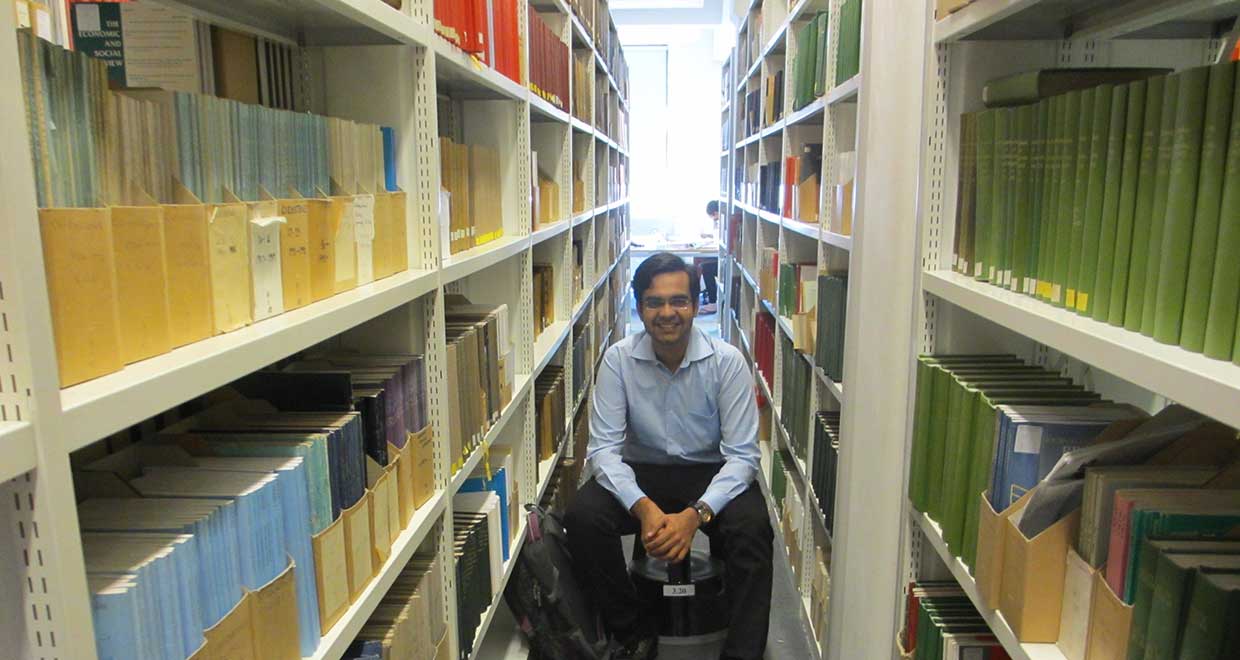
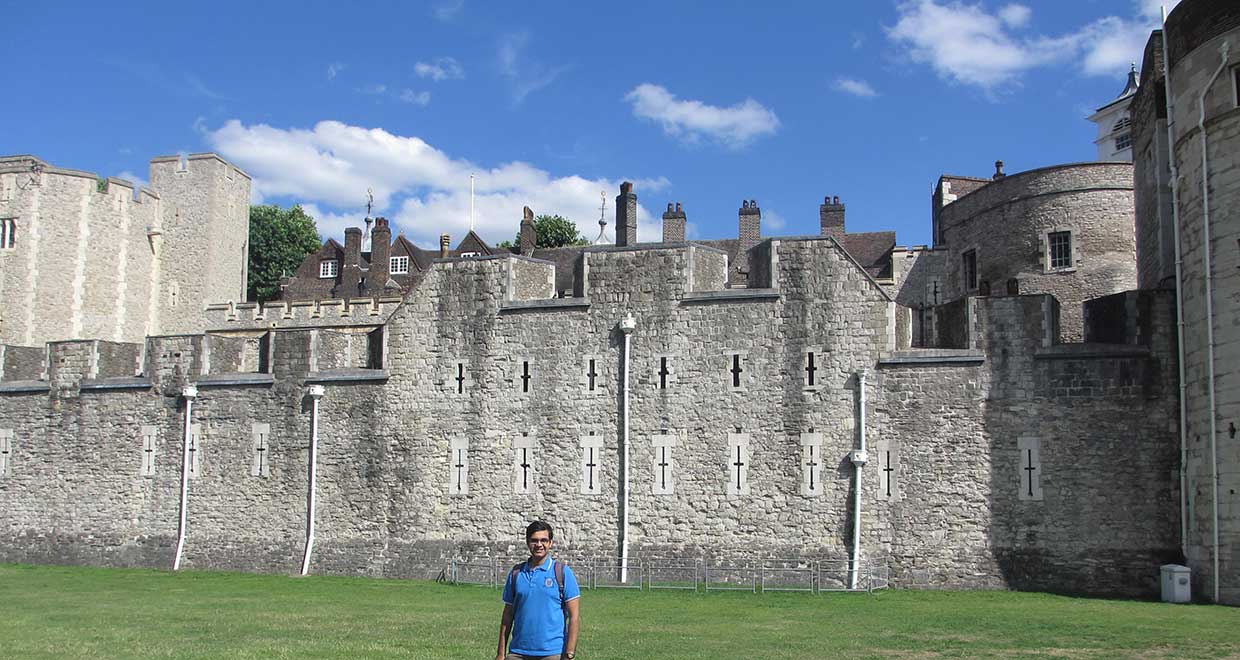
    I wanted to enhance my understanding of the jurisprudential foundation of Indian financial law. Since Indian financial law draws heavily from its British counterpart, I attended a summer school at LSE to study UK financial law and regulation. I had a fabulous time studying at LSE and exploring UK generally. I also learnt a great deal about myself and became more independent. I would certainly recommend attending LSE’s summer school to all law students and legal professionals (subject to your feasibility).


    WHY DID YOU ELECT TO BECOME A COMMERCIAL LAWYER? WHAT KIND OF WORK DO YOU DO?

    I support my decision for becoming a commercial lawyer (focusing specifically on commercial litigation and arbitration) on the basis of two averments. First, this field is dynamic and vibrant. Every matter exposes you to a new jurisprudential or a practical aspect of commercial law that you cannot fathom otherwise. Hence, the scope for learning is actually unlimited. Second, there are tremendous growth prospects in this field as there is a huge demand for legal professionals who demonstrate a sound understanding of the legal aspects of business and commerce. Once established, sky is the limit.

    After graduation, I worked at a mid-size law firm for a year before migrating to individual practice. My work now largely involves the following:-

    • Representing banks, financial institutions and corporations before the Bombay High Court, Debts Recovery Tribunal and Debts Recovery Appellate Tribunal.
    • Drafting pleadings and applications in law suits and researching on different aspects of corporate/commercial and bankruptcy law.
    • Advising and representing clients in commercial arbitrations.
    • Advising clients on pre-litigation strategy and procedure.
    • Briefing counsels in various litigation and arbitration proceedings.


    HOW WOULD YOU DESCRIBE YOUR EXPERIENCE OF HAVING INTERNED AT THE TOP LAW FIRMS AS WELL AS THE GOVERNMENT ORGANIZATIONS TOO WHERE YOU HAVE GAINED A WORK EXPERIENCE?

    (Pranav has interned with Juris Corp, Trilegal, Economics Laws Practice, Lakshmikumaran & Sridharan and Amarchand Mangaldas Suresh Shroff & Co, now Cyril Amarchand Mangaldas, on the one hand as well as with the Reserve Bank of India and the Securities Exchange Board of India on the other.)

    I interned at law firms specializing in commercial law firms with the primary intention of exploring the practical aspects of commercial law and subsequently taking a call with respect to narrowing down on a practice area. My law firm internships gave me an opportunity to work on a variety of commercial law matters (research as well as drafting). My internships at SEBI and RBI gave me a first-hand exposure to financial regulation. My overall internship exposure gave me tremendous insight in terms of industry operations.


    WHAT IN YOUR OPINION IS THE APPROPRIATE WAY FOR ONE TO CHOOSE HIS/HER AREA SPECIALIZATION WHILE AT LAW SCHOOL? WHAT VALUE ADDITIONS DO THESE DIPLOMAS AND ADDITIONAL QUALIFICATIONS OFFER?

    (Pranav has secured diplomas in Corporate Finance, Securities Law, Investment Law and Mergers & Acquisitions. In fact he had pursued his diploma degrees at a fairly early stage of his law school tenure when most others remain undecided about where they want to go.)

    I will first answer the last part of your question that broaches the value additions offered by these diplomas. The academic structure of most of these diplomas offered by other reputed institutions is usually designed after consulting industry experts; for e.g. the Business Law Diploma offered by iPleaders. Although I haven’t done the course as of now, but on the basis of the reviews that it has received and more importantly on the basis of my perusal of the sample study material that is available in public domain, I can say that the insights one will gain after doing a course like this, will certainly benefit him/her in practice which I believe is what ultimately matters.

    With all due respect to the prescribed law school curriculum, I am constrained to say that it is largely theoretical rather than being practical. While I don’t dispute the importance of theory, but I do emphasize the importance of putting theory to practice and therefore recommend a more practice oriented curriculum. Practice not only tests the veracity of theory, but also brings to light issues which have not been previously considered by theory. The investment of money and more importantly the time in law school should yield returns in one’s career. Hence, I recommend pursuing additional qualifications while managing the law school curriculum to expand one’s horizon.

    I believe, a law student should select his area of specialization on the basis of the following considerations:-

    • Existing and estimated growth rate.
    • Demand-supply specifics from an industry standpoint.
    • Existing and prospective competition one can or will encounter.

    pranav-khatavkar-1


    YOU ALSO HAVE A FAIR SHARE OF LEGISLATIVE DRAFTING AND RESEARCH EXPERIENCE. HOW WILL YOU DESCRIBE YOUR EXPERIENCE WITH THE SAME?

    (Pranav was awarded the Best Contributor Award for making concrete recommendations to the Prevention of Sexual Harassment of Women at Workplace Bill, 2010 as a part of Legislative Analysis Project undertaken by a Member of Indian Parliament from the Upper House, Government of India, Mrs. Vandana Chavan)

    My limited legislative experience exposed me to the issues surrounding regulation and governance. I saw the law from the law maker’s eyes and got an iota of an idea of the considerations that influence the law making process. The insights that I derived then, armed me with tremendous perspective on interpretation of laws and more importantly discerning the legislative intent.


    WHILE ATTENDING LAW SCHOOL, YOU ALSO TOOK THE INITIATIVE TO ATTEND SEVERAL WORKSHOPS AND TRAINING PROGRAMS. WHAT WAS YOUR MOTIVATION BEHIND PARTICIPATING IN THESE WORKSHOPS AND TRAINING PROGRAMS?

    My primary motivation behind attending these workshops and training programs (I collectively refer to them as “programs”) was to first gain industry insights and second build a professional network. I attended these programs at the Bombay Stock Exchange and Institute of Company Secretaries of India’s Centre for Corporate Governance Research and Training. These workshops largely covered the practical aspects of securities law, debt restructuring and banking law.


    YOU HAVE AN ENVIABLE TRACK RECORD OF EXTRACURRICULAR ACTIVITIES (BOTH WITHIN AND OUTSIDE LAW SCHOOL). HOW DID YOU KEEP A BALANCE BETWEEN EXTRACURRICULAR ACTIVITIES AND LEGAL STUDIES?

    (Pranav was a Core Committee Member of the Corporate Law Cell of Symbiosis Law School, a Pro Bono Legal Aid Volunteer for Helping Hands, a Non-Governmental Organization and the Founder& erstwhile President of the India Chapter of Network for International Law Students)

    When it comes to pursuing extra-curricular activities, time management is the key. One has to intelligently allocate his/her time to all activities that he/she intends to pursue. I used to keep a diary (and I still do) to plan and execute my itinerary for the day. This helped me to keep a track of my time and navigate my day smoothly. Extracurricular activities were a welcome break for me from my usual academic routine as a law student then. I saw it as an opportunity to network and step out of my comfort zone.


    YOU HAVE AN IMPRESSIVE RESEARCH PROFILE AS THE SAME IS EVIDENT FROM YOUR MULTIPLE PUBLICATIONS IN REPUTED LAW JOURNALS. WHAT ACCORDING TO YOU ARE THE MOST IMPORTANT ASPECTS OF AUTHORING RESEARCH PAPERS AND HOW DID THEY ACTUALLY HELP YOU IN YOUR CAREER?

    (Alongside publishing in reputed law journals such as Symbiosis Student Law Review, Plebs Journal of Law, International Journal of Legal Sciences and Research, World Journal on Juristic Polity, International Journal of Law and Legal Jurisprudence Studies and International Journal of Legal Research, you have also published three blog posts on the iPleaders Law Blog. Please comment as to whether any specific reason inspired you to write particularly for the named blog.)

    I believe that academic research is the best way to expand one’s understanding of a particular subject. It’s almost like completing a mini-Ph.D. on the subject. The hours that you spend doing literature review and empirical research refine your interpretation and research skills, something which all lawyers need irrespective of their field. Further, it helps you gain expertise in a particular sector; something which both employers and academic institutions appreciate. Lastly, it does add a line in the publications section of your CV. The best part, however, is the immense joy you feel if someone else cites or relies upon your research in his/her research. It makes you feel that your efforts have truly fructified.

    As far as my blog posts on the iPleaders Law Blog (“Blog”) are concerned, I chose to publish my blog posts on the Blog because of its fantastic readership and subscription. The quality of blogposts that are published on the Blog is of a superior quality and practically relevant. Further, in the light of the market standing of I-Pleaders, any association with them is certainly beneficial. Hence, I chose the Blog to publish my articles.


    WHAT PROMPTED YOU TO FOUND A JOURNAL SPECIFICALLY FOCUSING ON COMMERCIAL LAW?

    (Pranav has founded the law journal International Commercial Law Review while managing his job at the same time as well as secured top legal professionals and academicians to be part of the Advisory Board of the Journal.)

    Peer contribution provides tremendous insights and fresh perspective. This has been my primary motivation behind founding the ICLR. I look at ICLR as a platform where one can put forth his/her ideas and at the same time get recognised for the value additions that he/she makes. Lastly, legal editing has always been a pleasure and a privilege for me. The kind of intellectual enrichment one gets through legal editing (or any type of editing for that matter) cannot be reduced to words.
     

    pranav-khatavkar-3

    YOU HAVE ALSO RECENTLY AUTHORED A BOOK TITLED COMMENTARY ON THE INSOLVENCY AND BANKRUPTCY CODE, 2016 (DECODING THE LAW OF INSOLVENCY AND BANKRUPTCY) WHICH IS THE FIRST BOOK IN INDIA ON THIS SUBJECT. PLEASE COMMENT ON THAT.

    I had been following the Insolvency and Bankruptcy Code, 2016 (“Code”) since it was a Bill as I knew that this Code would be a complete game changer once implemented. While I did not have any ambition to set a record by writing the first book on the Code, I will say that it happened rather intermittently. So, once the Code was passed by the Parliament (i.e. on 11th May 2016), I foresaw a demand for some intellectual material on the Code (since you cannot rely only on the Bare Act). Before I undertook the task of penning the book, I made some enquiries myself. I asked around if any book has come up or whether any book is coming up to which everybody replied in the negative. So, that’s where the thought to pen the book set in. I thought that if nobody had written or was writing a book on the Code then why could I not do it myself. At least, that way, I knew I was setting a foundation by providing some literature on the Code for everyone’s benefit. This was my impetus to penning the book.

    I penned this book while being employed at my erstwhile workplace. Managing my job and penning the book was indeed a task for me. I had to comply with the publication deadline and underperforming at work or taking a leave from office wasn’t an option that I had kept open for myself. So, I burnt the midnight oil. I mean literally. To be honest, there were several occasions while penning the book when I did not know as to where I was headed or what my effort would result into. I had to sacrifice time with family and friends. This caused a lot of upheaval and discontent amongst them. I still persisted nevertheless as I knew I had to comply with the publication deadline come what may. Then came a time when I let go all worry and anxiety with respect to the result and thought of focusing only on penning the book and more importantly the content. I realized deeply that I can only control my inputs and not the result. I was mentally prepared to face both praise and humiliation with respect to my book. Thankfully, it was received well and it got decent reviews.


    WHAT ACCORDING TO YOU SHOULD A LAW STUDENT CONCENTRATE ON DURING HIS/ HER TIME IN LAW SCHOOL IN ORDER TO BECOME A GOOD LEGAL PROFESSIONAL AFTER GRADUATING FROM LAW SCHOOL?

    A law student’s first priority in law school should be to find a practice area at the earliest. I have earlier in this interview enlisted the criteria one should consider while zeroing down on a practice area. Once you have identified your practice area, 50% of your job is done. The remaining 50% of your job is to refine your knowledge and skills with respect to the practice area of your choice. Second, time management is the way ahead. I have seen many law students (including many of my batch mates) totally waste their time doing counter-productive activities. While I do not judge them, as it is a matter of personal choice, I do say that what you sow is what you reap (cause and effects). The law is infallible. You can’t do the same thing over and over again and expect different results. Third, learn to look at the larger picture. I have seen many law students remain stuck up over trivial things and completely miss out the larger scheme of things which is nothing but their own long term career interests.


    AFTER GRADUATING, YOU COMPLETED THE ENTIRE LEGAL COMPLIANCE MODULE OFFERED BY THE NATIONAL INSTITUTE OF SECURITIES MARKETS. WHAT PROMPTED YOU TO ENROLL FOR THIS AND HOW DID YOU MANAGE TO CLEAR THIS MODULE IN THE FIRST ATTEMPT WHILE MANAGING YOUR JOB?

    Commercial law does not operate in isolation. There are several other areas of law and finance that intersect. In order to bring about a more balanced approach while pursuing a career in commercial law, I chose to pursue the legal compliance module offered by the National Institute of Securities Markets (NISM). Pursuing the module gave me exposure to the legal and financial compliances applicable to the issuers and the intermediaries in the securities markets. You don’t have to be super intelligent to clear the NISM examination. All that it takes is preparation and practice. I used to study over the weekends and appear for mock examinations during the weekdays (before and after office hours at home).


    YOU RECENTLY CLEARED THE ALL INDIA BAR EXAMINATION (AIBE). WHILE PREPARING FOR THE SAME, YOU ALSO ENROLLED FOR THE BARHACKER PROGRAM OFFERED BY iPLEADERS. HOW WAS YOUR EXPERIENCE WITH BARHACKER? WOULD YOU RECOMMEND IT TO OTHER AIBE ASPIRANTS?

    Many people assume that since the All India Bar Examination (AIBE) is an open book exam, it can be cleared without any preparation. In reality, it’s otherwise. Although the AIBE is an open book exam, people often forget that it is a time bound examination and most of the questions that are asked are application based rather than being direct. Also, the syllabus is vast. For e.g. in the AIBE that I appeared in i.e. AIBE IX, the Environmental Law component was valued for only 5 marks. What this actually meant was all that acts, rules and regulations covered under the Indian Environmental Law would carry 5 marks out of which the Bar Council of India can ask a question on anything and I mean anything under the scope and ambit of Indian Environmental Law. Like this, there were other areas of law that more or less carried proportionate weightage in the paper except for Cr.P.C and Contract Law (which are again vast subjects). Statistically speaking, about 37% candidates failed the AIBE in 2012. So, it certainly isn’t an easy examination. Like any other competitive exam, you need to prepare and practice over and over again in order to crack it in the first attempt.

    Many newbie lawyers who join the legal profession get caught up with office work which leaves them with no time to prepare for the exam. That’s exactly where a course like BarHacker adds value. The course has a result oriented approach and team iPleaders ensures that you are equipped with the best tools to clear this exam. If you religiously follow their tips, techniques and study methods, chances are that you will clear the AIBE in the first attempt. I give full credit to BarHacker for my AIBE result and, yes, I recommend this course to all AIBE aspirants.


    WHAT FINAL PIECE OF ADVICE DO YOU WANT TO PASS ON TO THE READERS?

    Believe in yourself and make the most out of every moment. Use your time wisely and never lose sight of your goals.


  • Shashikala Gurpur, Director, SLS Pune on choosing academics, securing scholarships and higher education

    Shashikala Gurpur, Director, SLS Pune on choosing academics, securing scholarships and higher education

    Dr. Shashikala Gurpur graduated in law from Mangalore University in 1988, she is currently the Director of Symbiosis Law School, Pune and Dean of Faculty of Law, Symbiosis International University. Dr. Gurpur is a recipient of the Fulbright Fellowship as well as the Legal Education Innovation Award of SILF-MILAT in 2011, in addition to being the recipient of many other such prestigious accords since then.

    Dr. Gurpur had been the winner of many distinctions and awards which she received throughout the length of her law studies. Today, she holds the reputation of having held office as member of the Law Commission of India and having taught at the National University of Cork, in addition to having co-authored two academic books and carried the role as constituent of Editing Boards of various foreign/ international journals.

    In this interview, Dr. Shashikala Gurpur will be talking about

    • Choosing law and academics and a professional line
    • Legal education in India today in a comparative context
    • Community Legal engagement in SLS Pune and beyond
    • Contemporary professional prospects and requirements


    How do you feel about receiving Lexis Nexis’ 100 Legal Luminaries Of India?

    Thank you, I feel that sincerity and hard work always get noticed and honoured. I dedicate this honour to my parents, mentors, my family, the team, students and management of SLS, Pune as well as the institutes and the generation of students I have been engaged with.


    How would you like to introduce yourself to our readers?

    The choice of law as an educational avenue is I believe a deep calling unto healing the evils of society and to serve the mission of justice. So, praise yourself if you have made that choice. However, getting into a good law school requires planned preparation right from high school itself. I had completed my high school education in vernacular medium at a municipal school; my primary school was strongly national with the undertone of largely Gandhian values. While still in my early childhood and college years, I had already gotten a taste of politics and implications of communal violence, untouchability and feudalism.  A particular sensitivity to nature and society were cultivated in me from my household and ancestry. My paternal grandfather was a herbal healer for no fee. My maternal grandfather was a village chief. My maternal grand uncle ran a tribal residential school. My father ran a one person justice mission preventing and resolving disputes and protecting the meek. Nevertheless, taking the route of law and legal education was actually thrust upon me by my family property mired in litigation.


    gurpur-maam-picture-1

    You have taken lectures and seminars at famous institutions abroad. What must be done so that our own legal education system can be at par with global standards?

    At the present moment, the gap seems to be narrowing. Legal education systems in the advanced law schools of the world are profound in corporate, qualitative higher education as well as in prioritizing knowledge creation and student transformation, but the top Indian law schools are also nearly there now. In India, constant check should be maintained to see that the gap between ideal and real remains adequately compensated. Changes are on the anvil. Our different strata or tiers must be uniform. The top and the bottom in the ranking band of the west have one to three percent difference. In India, the top ten have a total of 45% difference in scores.


    Your vast experience in legal education in India and abroad must have brought in new ideas for SLS Pune. How would you describe the environment that the institution fosters?

    SLS Pune inculcates the values of hard work, fraternity, excellence and public service. When we received the prestigious Herbert Smith Freehills Community Engagement Award this year, for an institutional body such as our own with the overarching erroneous perception as an ‘elite’ law school, it felt the same as winning an Olympic medal. At SLS Pune, we always have close monitoring of quality and excellence. We believe in fostering human and national development using legal education as a tool. Our university’s vision and mission and our Founder’s life and philosophy stand as testimony and inspiration to that end.


    Which among the following do you think is important for instilling legal knowledge – practical knowledge and/or theoretical knowledge?

    A judicious mix of both with competency, courage and collaboration along with profound core ability to stand up and defend would seem to be the perfect requisites for a holistic legal personality.


    gurpur-maam-pic2

    A strong alumni community being one of the most crucial factors behind an institution’s success, how closely do you think SLS Pune works with the alumni and in what ways?

    Every year, we arrange a meeting of our alumni at least twice. They even engage as employers, work buddies, mentors, teachers, clinical trainers, mock judges, advisors, and role models, moot and overall mentors. They consider the institute as their friend in need as well as an extended family.


    What is your opinion on start-ups and new business ventures as an alternative to traditional litigation and corporate jobs?

    Start-ups throw up great possibilities as well as provide better time allocation for quality work-life balance, in addition to enhancing innovation. At SLS Pune itself, we have had an Entrepreneurship Cell created just recently in the year 2014. We have at least a dozen start-ups created in the last three years and a host of alumni specialising as start-up consultants. This year, with support from the university as well as from the Symbiosis Institute for Business Management (SIBM), we are hoping to further scale up such efforts.


    What message or advice do you want to pass on to those who are passionate about vocations in human rights and policy research as opposed to landing corporate jobs?

    It depends very much on how you hold on to this work over the years and what skills you acquire. My advice would be that you develop a profound array of skills and abilities and that you maintain your deep passion and drive towards such aspirations.


    How did you choose to pursue a career in academics over practice? How would you advise law graduates and lawyers about this comparatively less charted path?

    I had made this choice by compulsion, by reason of being a first generation lawyer in a farming family and the first female graduate in generations. Women were not encouraged in education or career in my ancestral past despite being owners of land and the existence of a matrilineal culture. Another reason was that my aspiration of practicing/choosing litigation had already gotten fulfilled by the time I graduated by way of my engagement in our familial property disputes, which were settled out of court due to my informed initiative. We have a dearth of proficient teachers nowadays. Quite apparently, the law school demand has gone up in recent years, hence teaching now pays reasonably well. On the other hand, the value of teaching has always had a manifold yet discreet effect in shaping the generations of legal leaders.


    What according to you are the necessary skills the lawyers of tomorrow need to possess in order to make a mark in the practice or to place a job in the current scenario?

    To carve out a niche for oneself, especially in the present scene, one must be possessing competencies in several areas, predominantly in thinking out of the box, possessing problem-solving capacity, oral and written communication abilities, research skills and advocacy skills. The right internship is ultimately about aligning opportunity with one’s career/professional goal and not simply accounting for association with top names in one’s CV. True mentorship is what can help you to change or transform yourself.


    How do you think a law student can build up his or her profile to attain scholarships or get admissions at the premier universities abroad?

    Build your profile in accordance with the criteria of the respective universities/institutions of your choice. Ensure academic excellence with a minimum 3.5 CGPA. Be among the top ten to fifteen percent students. Enrich your CV, indicating profound legal engagement. Show research experience with a minimum of five standard publications. These will win you scholarships which may ultimately help reduce the cost of your LLM programme.


    How do you manage your academics and work life balance? What keeps you motivated to keep working for the betterment of your institution and the legal profession?

    Well, let me confess here that I was quite often thrown completely off balance! The X-factor you mention would be definitely taking one’s job as a service to humanity and the nation (and in my case to my loving son and my students). In brief, it is about seeing the universal mother’s manifestation in every deed and seeing dharma or balanced order as an unfinished endeavor of justice.


    Please share with us an experience from your life that makes you feel that it was definitely of utmost worth in choosing law as a profession and teaching as a career?

    In the early days of my career, I spent 50% of my time helping the poor to get access to justice. I introduced students to community based law reform. One especially memorable instance of our reach-out efforts was when we guided an agrarian worker woman to admit her intelligent daughter to a college; she would later scale to a much higher social status as a competent business woman. When the poor and helpless look up to you as credible source of support, when a gleam of truth touches upon you as you journey with your students in class to a higher level of learning, when the alumni of your institution write and recall such inspiring moments, and when you see your junior colleagues or students surpassing and outgrowing your achievement, those are the times when you can fully appreciate the legal profession for what it is and what it is capable of achieving today, and I have experienced all of these moments.


    What message do you want to pass on to the readers (aspiring lawyers, legal professionals or anyone related to the law)?

    Take your work in the form of a service to your fellow human beings and as contribution to the greater universal design. Align your life’s overall purpose with what you do as a profession and always keep the spirit of dharma or duty burning in your heart.


  • Shatarupa Mishra, Indian Revenue Service Officer, on preparing and cracking Civil Service Examination

    Shatarupa Mishra, Indian Revenue Service Officer, on preparing and cracking Civil Service Examination


    Shatarupa Mishra graduated from Symbiosis Law School in 2013. She is a lawyer by interest, civil servant by profession and dancer by passion. Currently, she is training as an INDIAN REVENUE SERVICE OFFICER-Income Tax in National Academy of Direct Taxes, Nagpur after clearing Civil Service Examination 2014.


    In this interview she talks to us about:

    • How she developed interest in reading and writing.
    • What inspired her to appear for civil service exam?
    • When should a person ideally start preparation for the civil services exam?
    • Easiest and toughest part for preparation.
    • Aspects that a civil service aspirant must focus on and start preparing for in advance.


    Please introduce yourself to the readers. Please tell us a little bit about your childhood and your background.

    Hello friends! I am Shatarupa Mishra, lawyer by interest, civil servant by profession and dancer by passion. Currently I am training as an INDIAN REVENUE SERVICE OFFICER-Income Tax in National Academy of Direct Taxes, Nagpur after clearing Civil Service Examination 2014.

    My schooling has been in De Paul School in a small town Berhampur and subsequently in St. Joseph’s High School, Bhubaneshwar, the capital. I was extremely active in extracurricular activities like writing, dancing and singing. Both me and my elder sister started training in Odissi, the classical dance of Odisha  and other dance forms.

    Infact I started performing in stage shows and dance festivals from a very young age of 4 years and those childhood memories of dancing remain the most cherished. I was also the house captain in my school.


    What impressed upon you the idea to study law?

    Frankly speaking, I wanted to pursue law when I realized after two years of science in intermediate level, I did not want to pursue Engineering or Medicine, the two most preferred options at that time. Browsing through the law syllabus in my +2 2nd years, my interest was piqued and I thought graduation in law would bode well for me. My choice was very instinctive and it worked out well.


    How was your experience at Symbiosis Law School, Pune. What activities were you involved in apart from the regular academic curriculum?

    My five years in Symbiosis Law School was very enjoyable and memorable. Right from academics to internships to pro-bono activities to extracurricular activities, Symbiosis gives you a wide platform for everything.  From my 1st year itself, I took an active part in extracurricular activities like dancing and participated in many college fests. Timings of law school were such that we could pursue our other hobbies and interests in the later part of the day. Second year onwards, I started mooting and was fortunate enough to be a part of our college team in Jessups. Mooting piqued my interest in legal research and I subsequently wrote many legal essays in pre-final and final year. Being a part of the very active Human Rights Cell of our college for all five years, I loved teaching young kids from underprivileged background and spending time with them on weekends.

    I loved learning law for the sake of itself and was extremely diligent about my studies and projects. The cherry on the cake was when I was awarded a scholarship for academic excellence in my fourth year and the Chancellors Gold medal for topping my batch in BA LLB course.


    How did you develop your interest in reading and writing?

    Reading was my favourite pastime since childhood. If I was not dancing, I was reading. Both my parents, grandparents are voracious readers and encouraged me to develop reading habit. At home there was already a huge library to pick books from.   I have many pleasant memories of visiting book shops and exhibitions with my father and buying loads of books, all non-academic of course. If there was a book club in my city, I was a member in it. In school also, my favorite subject was English literature. My reading habit almost borders on obsession, my family tells me, ha-ha! In childhood, I started writing poems and subsequently, articles. My mother also writes poems in Odia language and she has been a major motivation behind my writing.  Law School and preparation for civil service examinations only enhanced my interest and skills in writing articles.


    When and what inspired you to appear for Civil Service Exam?

    I believe it was a very conscious choice to appear for Civil Service Exam. I belong to a family of state and central civil servants, so somewhere the inspiration to be one myself was right at home. My biggest inspiration has been my father who is respected by all as an honest, upright and efficient officer in the State Government. Dinner table conversations have many a times, been about development, administration and issues therein.  Secondly, I was keen to be in a profession which offered me a wide platform to work in law, policy and implementation. My legal training actually strengthened my resolve to sit for this examination. Thirdly the syllabus of the civil services exam piqued my interest, particularly the general studies papers.  Keeping all these factors in mind, I eliminated other career options in law in fifth year of law school so that I would never regret the decision of appearing for this examination. I was fortunate that I got a mentor in Pune, Shri Aashay Abhyankar, who along with his family, has played a stellar role in my success.


    When did you start preparing for the exam? When should a person ideally start preparation for the civil services exam?

    I started preparing for this examination immediately after graduating from law school in 2013.  I really wanted to clear the examination in my first attempt itself and join the services at a young age so I wanted to give it my full focus the first time around.

    As regards the second part of your question, I believe once the person is sure that this is what he wants to achieve, then that time automatically becomes the most ideal for preparation. Hence, to each his own.


    How many hours did you put in for your preparations every day? Is having a fixed schedule or weekly targets important according to you?

    I used to fix daily targets and accordingly work to complete them, so there was no fixed number of hours. On an average, it ranged from 6-8 hours daily.  Rest of the time was spent in reading newspapers, surfing the net or carrying out other hobbies.

    Yes having a fixed schedule and weekly targets is important as I have personally benefited from such meticulous planning.


    Which were the easiest and toughest parts of your preparation?

    The easiest part was reading newspapers and making notes from them and studying the general studies papers which are exhaustive but highly interesting as well. History,  culture, polity, foreign affairs are topics that I loved to read and analyze.  The toughest part for was staying away from my family, and friends as I was preparing in Pune while my family stays in Bhubaneshwar.


    What are the aspects that a civil service aspirant must focus on and start preparing for in advance?

    A civil service aspirant should first know how to read the newspaper for this examination. Then preparation becomes very easy and interesting as one can interlink concepts with current affairs, analyze and present  in a unbiased manner. My preparation for civil services was very newspaper-oriented and it held me in good stead throughout all three levels.


    What were the attributes of your legal education and background which helped you in succeeding in the civil service exam?

    I would attribute my success in first attempt to legal education in a lot of ways. As law students, we are used to processing copious amounts of information and presenting them in answers. Secondly writing subjective answers in limited time, a skill acquired during law school, is an asset while writing the Civil Services (Main) Examinations. In all my mock tests and the mains examination I never faced the issue of time management. Thirdly, integrated law course already gives you an insight into general humanities subjects in the initial years like political science, history, sociology, etc which is somewhat registered in your mind. The only catch here is to keep legalese and biased viewpoints out of your preparation and remembers that this examination wants administrators and not lawyers at the end of the day and moulds yourself accordingly.


    What is the importance of CGPA for law students especially for Civil Service exam aspirant? Does it make any difference during the interview?

    More than CGPA, it is the grasp over syllabus and overall analytical skills that matter most for law students in civil service examination. Having said that, I believe a decent CGPA would always be an asset to the law student, be it in this examination, or legal jobs or pursuing higher studies, etc.

    I can answer the second question only from my own experience. As I was the batch topper with a high CGPA, I was apprehensive that they could ask me a lot of law-related questions expecting accurate answers. And this is what happened I was asked factual questions spanning multiple law subjects. However, the interview experience is very subjective and nothing is a precedent.


    Tell us about your interview? What kinds of questions were asked by the interview board?

    My interview was on the afternoon session on 15th May, 2015. It was chaired by Prof. David Sylimlieh. As discussed above, mostly factual and legal questions were asked which I could answer racking law notes in my mind at that very instant.


    What would be your message for law students who are preparing or planning to prepare to appear for the Civil Service exam?

    I personally feel that with the hard work, perseverance and right guidance, it is not difficult for a law student to clear these Examinations. Civil Services involve law interpretation and implementation, public administration and management, which law students imbibe in their five-year long erudition. So they should approach this examination with full focus and determination, if they choose to appear for it. Success shall definitely follow.


    Lastly, what would be your message for the readers who want to pursue career in Civil Services?

    Readers wanting to pursue a career should first be clear about why they want to pursue it. Once they have decided, they should just focus and plunge into the syllabus with full determination.  Enjoy the process of learning and studying for this examination and before you realize, success shall be yours! God Bless.


  • Aloy Das Mahapatra on interning abroad, working at Bose & Mitra & Co. and Scorpio Marine Management (I) Pvt. Ltd. and setting up an independent practice

    Aloy Das Mahapatra on interning abroad, working at Bose & Mitra & Co. and Scorpio Marine Management (I) Pvt. Ltd. and setting up an independent practice


    Aloy Das Mahapatra is an alumnus of Symbiosis Law School Pune, a constituent of Symbiosis International University. Having graduated from law school in 2013, he has worked in Bose & Mitra & Co. and Scorpio Marine Management (I) Pvt. Ltd. in the field of marine law. During his law school days he got opportunities to intern abroad which he undertook successfully. Apart from that he has a fair experience of leadership skills too while he was heading the Disciplinary Committee in Symbiosis Law School Pune. He has completed four grades of the violin curriculum from the Associated Board of the Royal Schools of Music, London and takes pride in calling himself a music enthusiast. Starting under the tutelage of Mr. Amitava (Raja) Majumdar (a notable practitioner in India and abroad in maritime law) at the Band I law firm Bose & Mitra & Co., he can currently be described as an independent advisor in the maritime law based out of Mumbai, India.

    In this interview he talks about –

    • His college experience
    • His take on internships and opinion on co-curricular and extra-curricular activities
    • His interest in the maritime law
    • His Indian and foreign internship experience
    • His experience of working at Bose & Mitra & Co. and as an independent advisor


    HELLO ALOY, WE FROM THE TEAM SUPERLAWYER WOULD LIKE TO THANK YOU FOR PROVIDING US A CHANCE TO INTERVIEW YOU ON THE SUPERLAWYER PLATFORM. HOW WOULD LIKE TO INTRODUCE YOURSELF?

    I’m a maritime lawyer with a keen interest in the business aspect of the legal practice. I’m presently trying to effectively shape a transition to the commercial side of global trade. As to my law school background, I graduated in the 2008-2013 batch of Symbiosis Law School, Pune and I pursued the B.B.A, LL.B dual degree programme. If you were to digress from law a bit, you’d find me exploring the latest hot joints in the city –when it comes to food, I am passionate about it to another level. On weekends, when I’m free, you’d probably find me playing badminton or swimming with my mates – I thoroughly enjoy playing a lot of sports.


    TELL US SOMETHING ABOUT YOUR COLLEGE EXPERIENCE.

    I don’t think mine would be any different from that of most students at Symbiosis. I learned as much outside of my class as I learnt while inside it. It was the first time that I had actually moved away from home and, looking back, I think it was a sum total of all my experiences there that played a significant role in moulding me into the person that I am today. I was fortunate to have a lot of friends, not just from law school, who became my family there. In law school, I was associated with the Disciplinary Committee and I had a chance to learn a lot of life skills while heading the team there. The team was fabulous and I forged close friendships with most of them. If I had a chance, I’d perhaps relive my life there, but I’m also conscious of the fact that each phase of live is meted out in the perfect dose; so yes, it’s time to move on.


    YOU HAVE UNDERTAKEN INTERNSHIPS AT RENOWNED LAW FIRMS WHILE IN LAW SCHOOL. DO YOU THINK THAT INTERNING AT BIG FIRMS MATTER AND HELPS ONE IN THE CAREER?

    I think a lot depends on not just one’s ability and interest in a field but also how well one fits into a particular setting, so the firm could be big or small or whatever but if it’s not the perfect fit then what’s the point? I tried several lines till I was able to identify a stream that I associated with most – shipping. Accordingly, most of my internships were in that stream. For me, it fit well. Thus, coming to your point, if you can make your mark and if what the organisation does aligns with your interest, then go ahead and jump right in. There’s no point beating around the bush. If you’re not sure, intern in as many different places as you can till you find your perfect fit. Just to be sure, however. it’s imperative to be guided by the age-old advice that, as a young lawyer, take whatever comes your way and do not develop a preconceived restriction for yourself.


    THOUGH YOUR INTERNSHIPS HAVE BEEN BALANCED THROUGHOUT, THERE SEEMS TO HAVE BEEN A PERSISTENT TILT TOWARD MARINE LAW. WHEN DID YOU REALIZE THAT MARINE LAW IS THE AREA WHERE YOU CAN EXCEL?

    My first internship with Bose & Mitra & Co. was when I really thought maritime law was a line I could do well in. Dealing in a subject that was not taught in college and yet getting to grips with it easily was what kind of set the deal straight for me. My father had worked in shipping for at least the entire length of my life till then, so there were shipping terms and concepts that I had heard for years and was aware of which perhaps gave me an edge in dealing with matters. Apart from this, the international nature of the line appealed to me. You get to work with people all over the world on a daily basis and play a significant role in global trade. The relevance of what I did really strike me as I realized the impact the shipping industry has on one’s daily life. All this ultimately culminated in an interest to pursue a career in shipping.


    YOU HAVE INTERNED TWICE AT BOSE & MITRA & CO., THE FIRM THAT IS BEING CONSIDERED AS A TOP TIER LAW FIRM IN INDIA IN THE MARINE LAW SECTOR. HOW WILL YOU DESCRIBE THE EXPERIENCE OF THE SAME? HOW DID IT BENEFIT IN SHAPING YOUR CAREER?

    Bose & Mitra & Co. does top quality work in maritime law and I always maintain that it’s the best learning experience that one can get in that field in India. Pretty much every major shipping company, not only in India, but also in the world, are its clients. Right from the first day, you are thrown straight into quality work. They expect you to pick up fast and know your matters inside out. I was also fortunate to have some of the best seniors mentor me. The Managing Partner too will himself hear you out if you have a relevant point to make and spurs you on to be more involved in matters if you show interest. You’re expected to contribute and are encouraged to discuss and pick up as much as you can in the duration of your internship. As I said earlier, for me, it was the perfect fit – so working there opened doors to a host of different opportunities that may not have come up if I were pursuing something else.


    aloy-das-mahapatra-2


    HAVING INTERNED OVERSEAS UNDER RENOWNED LAWYERS IN TWO VERY PROMINENT ORGANIZATIONS, HOW WILL YOU DESCRIBE THE EXPERIENCE OF THE SAME?

    So, in shipping, you have to make your perspective international. There are no two ways about it. You could be acting for Singaporean clients who are shipping Arab crude from Houston to South Africa and they, in turn, might have a dispute with some party in the UK. An internship at Stephenson Harwood, London gave me a chance to work in an international setting and deal with shipping matters from all over the world. Stationed in London, I was at the hub of global maritime law. Most international shipping contracts are governed by English Law and to have gotten a first-hand experience in dealing with it, worked wonders in developing, further, the international perspective that I refer to. Similarly, I also had a chance to work with a barrister Mr. Brian Dye, who is associated with the Essex Court Chambers. With him, my focus was to get a first-hand experience in an international shipping arbitration. I had a chance to work on a cargo contamination dispute and attend the arbitration proceedings at the famous Baltic Exchange. Both these experiences gave me a chance to develop further a global mindset to approaching problems in shipping.


    HOW BENEFICIAL DO YOU THINK FOREIGN INTERNSHIPS ARE? WHAT ARE THE BENEFITS YOU BELIEVE YOU HAVE REAPED FROM THE TWO INTERNSHIPS THAT YOU UNDERTOOK IN ABROAD?

    This would really depend on what line one is pursuing. I cannot comment about other streams, but at least in maritime law an international experience (and I do not mean just an internship- one could be doing very relevant international shipping work sitting in Mumbai) would really expose one to a lot and help one understand better the relevance of shipping to everything. Apart from this, if one has a chance, why not? It’s always great to get a global exposure and get out of one’s shell, deal with people from multiple nationalities, get a completely different insight into another way of thinking. Both experiences gave me a fantastic awareness into the workings of foreign firms and chambers in the field of maritime law. As mentioned earlier, they were very useful in developing the international perspective that one has to have in this field.


    PLEASE SHARE WITH THE READERS ABOUT HOW YOU SUCCESSFULLY LANDED THOSE HIGH-PROFILE INTERNSHIPS.

    I just worked really hard during my internships. Raja Sir, the Managing Partner at Bose & Mitra & Co. and my mentor was privy to how I planned on making a career in shipping. He suggested that I get an exposure to the workings of a foreign law firm and the proceedings in an international arbitration. Through his enviable network, he was able to organise these stints for me. They were great experiences and I am grateful to him for them.

    A SUBJECT LIKE MARINE LAW IS NOT A PART OF LAW SCHOOL CURRICULUM. IN THAT CASE, HOW DID YOU LEARN THE SAME LAW KINDLY ADVICE THE READERS ABOUT HOW TO GET INTO THIS PARTICULAR FIELD OF LAW.

    Get involved with work. When I come to think of it, most of the law that I learnt was by applying the same to practical situations in internships. So, you really learn by doing. Agreed, not all schools have a maritime law curriculum, but I don’t think that makes a difference to the practical side of learning it. Also, as with any other stream of law, keep reading and updating yourself on developments in the field. It’ll be important to be in sync with not just Indian law but also with English law and sometimes Singapore Law. The only way to really get into this field would be to first try and secure an internship in the field and then see if one can fan that spark into a flame.


    MARINE LAW IN INDIA IS QUITE OLD, WHICH MEANS THE LAW IS NOT THAT EFFECTIVE TO DEAL WITH NEWER CHALLENGES. WHAT IS YOUR OPINION ON THE SAME?

    We are fortunate to have a learned judiciary that keeps the general best interest in mind. A lot of maritime law in India has also developed from precedents such as the MV Elisabeth case where the Supreme Court made international conventions applicable as common law. The decisions delivered by the courts have developed maritime law to global standards. In fact, it is my opinion, in shipping at least, that the judgments of Indian Courts are delivered as fast as, if not quicker than, foreign courts. Even now, there are steps being taken to make a comprehensive legislation that will take into account the situations of this day and age. Till then, the multiple inter connected legislations in maritime law will have to be referred to, by taking into account the specific facts and circumstances of the case.


    PLEASE SHARE WITH READERS YOUR EXPERIENCE AT BOSE & MITRA & CO. AND SCORPIO MARINE MANAGEMENT (I) PVT. LTD.?

    Both experiences were unique in their own way. As a Junior Associate at Bose & Mitra & Co. I had a chance to do a lot of shipping litigation work – both in courts and multiple arbitrations. I cannot stress enough the importance of working well in teams – especially in marine law. Litigation is unpredictable, but litigation in maritime law is even more so – an American client can give you instructions late night to move court in respect of a ship that will enter port early in the morning. Time is of essence and to be able to share the work effectively and coordinate with multiple parties will really lead to success. Bose & Mitra & Co exposed me to all this. Apart from this, we also worked on a lot of advisory work as well.

    Scorpio Marine Management (I) Pvt. Ltd. is essentially the Indian arm of the global Scorpio Group – a behemoth in the shipping industry. I worked there as a Shipping Claims Analyst in the Legal Shipping Claims team based in Mumbai. I was extremely fortunate to have excellent seniors and mentors there as well. The Scorpio experience allowed me to gain experience in dispute prevention rather than just dispute resolution. It threw me into a very enriching international experience. A regular day involved dealing and interacting with lawyers and people the world over and advising the company in various situations. It also was partly responsible for setting the tone to my aspiration of moving into the business side of things. It pushed me to get a commercial perspective while dealing with matters.

    All in all, when I look back, I can safely say that both were excellent experiences, helping me lay the foundations for my career.


    HOW DOES IT FEEL TO BE AN INDEPENDENT PRACTITIONER/ ADVISOR IN THE FIELD OF MARINE LAW?

    Trying out a short stint on my own before business school and getting a better understanding of the business side of shipping was important to me. I really wanted to get a first-hand experience in building something from scratch. It’s given me a chance to do a lot more than just legal work. In a way, it is shaping my business development skills, organisational understanding skills and generally understanding the commercial reasoning behind decisions. I am fortunate to have a few very senior people in the shipping industry who are mentoring me and giving me this exposure before I embark on a business education. Of course, I am no longer involved in high profile collision, piracy, oil-spill matters, but I am getting a chance to be my own boss and work on smaller advisory matters. And at the same time, I am getting an exposure into the management side of things in the shipping industry.


    aloy-das-mahapatra-3


    NOW THAT YOU HAVE DECIDED TO UNDERTAKE MBA, WHAT INSPIRED YOU FOR THE SAME?

    As I mentioned before, my interests and ambitions were gradually getting inclined towards management of businesses. I remember when I was in school, I really wanted to do something of my own. By deciding to do an MBA, in my own way, I am trying to give shape to this dream. My experience at Scorpio too was crucial in understanding that there is a lot more to business than only what lawyers dealt with. I wanted to get involved in all of it and to be able to do that, getting a formal business education was vital, at least for me. What the future holds only time will tell. Someone said it best when he said that if you have a plan for your life, what is guaranteed is that it won’t go as per that. So, I can really comment on the rest as and when things shape up.


    APART FROM THE SUCCESSFUL CAREER THAT YOU HAVE, YOU ARE A MUSIC ENTHUSIAST AND A SPORTSMAN. HOW DO YOU THINK THE EXTRA-CURRICULAR ACTIVITIES HAVE HELPED YOU IN MAKING WHAT YOU ARE TODAY WITH REFERENCE TO THE EXTRAORDINARY ACHIEVEMENTS YOU HAVE IN MUSIC AND SPORTS?

    Music enthusiast – true; sportsman – not so sure. I’m not as much of a sportsman as I am a person that likes playing a lot of sports. I’m not sure that would qualify as a “sportsman” so to speak. I think working well in teams is vital in life. I don’t have years of experience, but if there is one thing I’ve learnt in the course of my work it’s that you’ll get a lot more done better with a team than without one; and playing team sports only helps in developing a general ability to deal with various types of people. Maybe not consciously, but unconsciously just playing with ten other teammates trains the brain to think in cohesion with a common purpose. Unfortunately, my professional football stint came to an end after a major injury in the beginning of my fourth year. My inclination towards music has, fortunately, not met with the same fate. I’ve completed four grades of the violin curriculum from the Associated Board of the Royal Schools of Music, London. Presently, I play the guitar and am dabbling with the djembe. I think playing a stringed instrument really helps in developing an analytical mind. Trying to get the right note on the neck of your violin or the fretboard of your guitar sort of trains the brain to think a certain way, I guess.


    HOW IMPORTANT ROLE PUBLICATIONS AND COMMUNITY SERVICE PLAY ACCORDING TO YOU IN SHAPING ONE’S CAREER?

    I’ve never been an extraordinary over achiever, so for a question like this I’d just say be involved in anything that echoes well with who you are and the zone you come from. If you’re going to do community work with an intention to “build a profile”, then that’s pointless. If you feel strongly about something, get associated with a cause. I work with an organisation that deals with gender equality and women’s health, but I’m realistic about what I can and cannot do with them. I help them in ways in which I think I can be useful. I don’t do as much field work with them but I do the research and paperwork for them. Personally, I feel, this won’t perhaps scream out as a super achievement in community work. Nevertheless, I do it because I think it’s a way in which I can be more effective in dealing with a cause for which I feel strongly about. As to publications, again, they scream laurels on your CV, but if you can’t have a free flowing talk about it, then it seems you’ve done it just to see your name in print. If you’re really passionate about a subject, then research all you can on it and write as much as you can. It’ll only help.


    THERE IS AN INCREASINGLY TRENDING BELIEF AMONG THE YOUNG LAW GRADUATES OF TODAY THAT IN SPITE OF WHATEVER THEY MAY HAVE ACHIEVED IN THE ENTIRE DURATION OF THEIR RESPECTIVE LAW SCHOOL TENURES THEIR PROFESSIONAL WORTH IS ULTIMATELY DEEMED REDUNDANT IF THEY HAVE NOT IN THEIR POSSESSION AN LLM FROM AN IVY LEAGUE INSTITUTE. WHAT IS YOUR VIEW ON THAT?

    Maybe I’m not in sync with the current thought processes of students but this is a first. Education is always great. A wise man I look up to once told me education always pays you back with interest and it’s not just monetary. To beat yourself up, however, because you don’t have an Ivy League specialisation is a little extreme for me. Additionally, what really matters is the quality of the education that you want in the stream that you’re interested in. So, if its maritime law, you’ll usually hear of people going for their masters to University of Southampton in the UK or Tulane University in the US. Neither of the schools is an Ivy League institute. So, what it burns down to really is what one wants and whether a school can provide what that individual expects from an institute.


    WHAT FINAL PIECE OF ADVICE WOULD YOU LIKE TO PASS ON TO THE READERS?

    I’m hardly in a position to dish out advice, really; but for your law school student readers, I’ll just suggest this – follow your gut. Make the most of college and soak in all that your institute has to offer. Sound everyone out – seniors, mentors, guides, etc. Still, ultimately do what you have to. Once you do that, have the conviction to follow through, and when you trip, get up, brush it off and move forward. You only have yourself to blame if you don’t make it.

  • Prathamesh Joshi, faculty at Symbiosis Law School Pune on teaching law at college, completing CS and his opinion on co-curricular activites

    Prathamesh Joshi, faculty at Symbiosis Law School Pune on teaching law at college, completing CS and his opinion on co-curricular activites

    prathamesh-joshi_1

    Prathamesh Joshi, Assistant Professor at Symbiosis Law School, Pune has been teaching law for two years now. He is a professor of Contract Law and Code of Civil Procedure Code. He is loved among his students for his unorthodox way of teaching. He is also an alumnus of Symbiosis Law School, Pune having pursued his LL.M in Business and Corporate Law from the same college. He has also successfully completed his CS in 2016. Apart from teaching, he is very enthusiastic about games and sports, especially football.

    Hello Prathamesh, the Superlawyer Team wants to thank you for giving us the chance to interview you. How would you like to introduce yourself to our readers?

    I am Prathamesh Joshi. I have been teaching law in Symbiosis Law School, Pune. I specialise in Business and Corporate Law and teaching law is my passion. I have also cleared my Company Secretary course successfully in 2016.


    People throw a typical glance at those who study or practice law in today’s time as all lawyers are necessarily branded and stereotyped as self-serving in some way. Despite chances of facing such a situation, what are the factors that had motivated you to choose law over other profession?

    Since I am from a commerce background, I understood the necessity for corporate compliances. Through this sector I can serve the nation by contributing to the economy through my theoretical and practical knowledge in the corporate sector.


    How will you describe your law school experience?

    I had a very decent law school experience. My LLB days were fairly good as I did well in almost everything. My LLM days were very good as I studied in one of the premier law schools and was able to take part in many activities such as football, drama and so on. Coming to academics, I performed very well and I was able to strike a wonderful balance in every aspect.


    During the course of study, a student’s interest keeps on changing from time to time. I believe you have experienced the same as a student and see your own students experiencing the same. What is your take on it? How should one choose a particular field of law to pursue and make a career on it?

    Yes, students’ interests keep changing and are part and parcel of the legal education as students come across various subjects which they wouldn’t have ever before. My favourite subjects were Criminal Law and Constitutional Law but, as I stated earlier, I chose Corporate Law as it facilitated by vision to serve and contribute to the nation.

    prathamesh-joshi_2


    Having done LLM, how relevant do you find the same when it comes to a reality check? Do you think LLM has helped you in a positive way in making you who you are today? Kindly elaborate.

    LLM is very helpful as it dwells into the intricacies which are involved in a particular field of law. It has definitely helped me because the curriculum was designed in such a way that it gave me an opportunity to learn various aspects and gain maximum knowledge. The subject I studied was contemporary Business and Corporate Laws.


    In the current situation, people often go out to the foreign countries for pursuing masters in law. What according to you prompts people to take the foreign route for pursuing LLM?

    As far as going abroad is concerned, in my opinion, there is no large gulf between the education provided abroad and in India. Important specialisations such as Corporate, Criminal, Constitution, IPR and so on are provided in many universities across India with high quality. It is the experience which prompts majority of the students to go abroad.


    You are possibly the only professor who has completed CS but is still a professor of law. What’s your take on CS?

    Despite me completing my CS, I still identify as a law professor because of the belief within myself and my family as well as various third persons such as my students that I should continue to teach in law. CS as a profession opens a lot of doors and provides many opportunities such as teaching, working in private and public sector and so on. Most of all, the Course provides you with a lot of practical knowledge in addition to the theoretical knowledge.


    Many people consider CS to be an excellent value addition to their CV. Many people believe that CS is the key to a good corporate job. What do you think on this point? What should be the objective (aim) of the student if he/ she want to pursue CS?

    The reasoning of the people is legitimate. Earning money as a prime motive is legitimate and there is nothing wrong with it despite many criticisms of that notion. This should not be the only motive however. Finding ways to perform well and making efforts to strive for excellence shall ensure that success and money would follow. Interest in the subject and excellence should be the aim.


    Having been into teaching for some time now, how will you describe your experience of the same? Did you come to teaching after thorough planning or did it come coincidentally?

    The teaching profession was planned in advance because of my passion to serve.  My experience in teaching has been a very good one. I have received positive feedback on my rather orthodox way of teaching, which is linking up various themes and topics in order to make a strong point across to the students. Students’ being good listeners has also been a contributing factor.

    prathamesh-joshi_3


    Some people believe and opine that mooting, authoring research papers are a kind of skill development exercise and without these one will not have a good career (will not get a good job post graduation). What’s your take on this point?

    Of course, mooting and authoring research papers are important part of a law student’s life as they will help in minimising mistakes, but his should not be at the cost of academics. You should be able to strike a balance between both aspects because along with theoretical knowledge, logic and reasoning (can be mastered through mooting) is also necessary.


    What has been your happiest Day as a law student and law professor?

    Worst Day as a law student and law professor – none in specific, but I have faced a bad day where I was not able to deliver a proper lecture and couldn’t do enough justice.


    Despite being a professor in a law school, you still don’t miss even a single match of your favourite football team, Bayern Munich’s match. How do you maintain your work-life balance? What other hobbies do you have?

    The key for this is panning out well before hand and striking a balance among all the necessities. Teaching and being among students themselves act as a stress buster. Other than football, I am a big lover of music and I play the mouth organ too.


    Is there any parting piece of advice you would like to pass on to the readers, especially the students.

    I only have a simple piece of advice. Be diligent in everything you do, strike a balance and plan in advance all the things which you want to do and enjoy college to the fullest. Strive towards excellence and success will follow.

  • Dr.Atmaram Shelke on the experiences of being a professor of law and working with Ram Jethmalani

    Dr.Atmaram Shelke on the experiences of being a professor of law and working with Ram Jethmalani


    Dr. Atmaram Shelke is a professor at Symbiosis Law School, Pune, a constituent of Symbiosis International University. He is a Ph. D. He is one of the most knowledgeable professors in Symbiosis Law School, Pune. In this interview he talks about

    • The experiences of being in teaching field and the subjects that he prefers to teach
    • The skills that students need to imbibe to be a good researcher
    • Teaching experience at Ostfalia University, Germany
    • Experiences of working with Ram Jethmalani in his research project of “Handbook on IPC”
    • Being a part of Nani A. Palkhivala’s book review project.

    HOW WOULD YOU LIKE TO INTRODUCE YOURSELF TO OUR READERS?

    I am Dr. Atmaram Shelke, working at Symbiosis law school Pune, constituent of Symbiosis International University as a professor. I am also a recipient of two gold medals for standing first in LL.M. at Symbiosis International University (India).


    WAS TEACHING YOUR PASSION SINCE CHILDHOOD?

    Teaching has always been my passion. My father was also a teacher. In the second year of my LL.B. course, I used to take tuition for my classmates, juniors and even for a few seniors. So, teaching was always a passion and plan. Therefore immediately after my LL.B., I completed LL.M. and joined Symbiosis Law School, Pune.


    YOU COMPLETE TEN YEARS OF TEACHING (IN SYMBIOSIS) THIS YEAR, HOW HAS THE EXPERIENCE BEEN SO FAR? WHAT ACCORDING TO YOU IS UNIQUE ABOUT SYMBIOSIS AND ITS STUDENTS?

    It has been a wonderful experience. The students in Symbiosis are well informed about the current affairs and the latest developments in the field of law. So, the challenge that we as professors face is it that we have to cite current cases and go beyond the books. Also, in Symbiosis, there is a lot of emphasis on research and creation of knowledge.


    ANY SPECIAL OR MEMORABLE INCIDENTS IN YOUR TEACHING CAREER THAT YOU WOULD LIKE TO SHARE WITH US?

    Yes, there are many such incidents. Students thanking me for all the help I have given them through my teaching always gives a special unmatchable feeling. I think gratitude shown by students is the biggest award for any teacher.


    atmaram-shelke_2

    ANY MAJOR CHALLENGES THAT YOU FACED IN YOUR ROLE AS A PROFFESSOR SO FAR?

    As I mentioned earlier, students show a lot more interest when current cases are being discussed and are used as examples to explain the concepts. So, we have to constantly update ourselves. I think that is one challenge which every law teacher faces.


    AT A PERSONAL LEVEL WHICH SUBJECT DO YOU PREFER TEACHING AND WHY?

    I prefer Constitutional Law, Administrative Law, Intellectual Property (IP) law and Information Technology (IT) Law. I prefer Constitutional Law because it is the base for other laws. Constitutional law and Administration Law both are logically developed subjects. There is lot of scope for analysis and criticism in both the subjects. IP & IT are evolving subjects. There are many challenges with regards to IP & IT. I have keen interest in IP and IT law subjects; therefore I even choose them for my Ph.D. research.


    WHAT SKILLS SHOULD ONE DEVELOP TO WRITE GOOD RESEARCH PAPERS AND ARTICLES?

    Writing skills and analytical skills are the pre-requisites for a good researcher. A good researcher should also have the quality to read and grasp important points, understand and comment (upon) apart from the ability to infer from the available data or material.


    YOU HAVE VISITED OSTFALIA UNIVERSITY IN BRUNSWICK, GERMANY AS A VISITING PROFESSOR UNDER THE DAAD “NEW PASSAGE TO INDIA” PROGRAMME IN 2014. KINDLY ELABORATE ON THE EXPERIENCE

    Ostfalia is a wonderful university. I had delivered lectures on Indian Legal System and challenges posed by Cyberspace. I had commented on problems posed by cyberspace in general and lacunae in Indian and German Laws. The presentations and discussion with professors there were well appreciated.


    AT THE OSTFALIA UNIVERSITY, DID YOU OBSERVE ANY DIFFERENCES BETWEEN THEIR CURICULLUM AND OURS?

    I think there is more emphasis on research and less spoon feeding. Students are given material at home; maximum lectures are written and copy of that is given to the students. The curriculum is basically research oriented.

    atmaram-shelke_3


    YOU WERE A PART OF NANI A PALKHIVALA BOOK REVIEW PROJECT, KINDLY ELABORATE ON THE WORK THAT YOU DID  THERE.

    This project was given by Nani A. Palkhivala Trust to SLS, Pune. I was one of the members of this project and I am proud to say that I have received Nani A. Palkhival Trust Gold Medal for standing first in LL.M. We have revised and updated the book written by Nani A. Palkhivala and submitted it to the Nani A. Palkhivala Trust.


    YOU WERE ALSO A PART OF SENIOR ADVOCATE RAM JETHMALANI’S RESEARCH PROJECT ON “HANDBOOK ON IPC.” WHAT HAVE YOU GOT TO SAY ABOUT IT?

    This project was related to a book to be written by Adv. Ram Jethmalani on famous criminal cases. I was privileged to work with Adv. Ram Jethmalani sir. He is a true intellectual. I have learnt many things while working with him. We often used to meet and discuss with him about the project’s progress.


    WHAT FINAL ADVICE WOULD YOU LIKE TO  GIVE TO ALL THE LAW STUDENTS WHO ARE READING THIS RIGHT NOW?

    A law student always needs to be curious. It is the duty of law students (including the professors) to ensure that the rule of law is maintained. Primarily, it is duty of professor to research and guide judiciary, executive and legislative authorities and bring everybody on track as, whenever there is any wrong action, first reaction is from academics. We (Law professionals) have to work as a pressure group for justice in a democratic system; we shouldn’t just criticise the agents of justice system but also guide them. Law students should be the torch bearer and show the right path to society, legislatures, judiciary and government.

  • Arush Khanna, Independent Practitioner, on litigation and being the Youngest Indian Scholar at IBPA

    Arush Khanna, Independent Practitioner, on litigation and being the Youngest Indian Scholar at IBPA

    Arush Khanna graduated from Symbiosis International University in 2012. He is an Advocate & Legal Consultant enrolled with the Bar Council of Delhi and is a fifth generation lawyer in a family of highly respected lawyers.

    After having worked in M/s Karanjawala & Co. and in the chambers Mr. Sanjeev Anand, Advocate at the Delhi High Court, Arush started his independent practice in New Delhi.

    His principal areas of practice are Commercial & Corporate Litigation, Arbitration and Property Litigation. Arush has been providing dispute resolution and consultancy services to number of private and public sector undertakings in India.

    Arush was also selected as a Scholar to represent India at the Inter Pacific Bar Association (IPBA) Conference in Kuala Lampur in April 2016. He was a speaker at the event and was bestowed with a three year honorary membership of the IPBA. He is the Youngest Indian to be given such an honour.

    In this interview he talks to us about:

    • Why he chose independent practice over secured employment.
    • His experience as a youngest Indian to be selected as a Scholar at the Inter-Pacific Bar Association (IPBA).
    • His journey from Shanghai, 2015 to New Delhi, 2016 (Being a part of The BRICS Legal Forum).
    • Importance of writing for a law student.


    How would you like to introduce yourself to our readers? Please tell us about your family background.

    I come from a very typical food and cricket loving Punjabi family. My forefathers (both maternal and paternal) migrated to Delhi from Lahore post independence. My paternal grandfather was a wholesale cloth merchant who worked out of a shop in Chandini Chowk along with his brothers. After having been in the line for over 45 years, he recently took retirement and now spends most of his time with my most doting grandmother.

    From the maternal side, well, you can shake our family tree and a lawyer may fall from it. The four generations preceding mine have mostly been lawyers. My great grandfather was a senior advocate who appeared for a host of freedom fighters during his distinguished tenure at the Bar. My grandfather has been actively practicing law for over 54 years and I would need a separate interview to speak of his accomplishments.

    As regards my parents, my father is an importer of furniture and home decoration products. My mother is a lawyer by profession and was practicing corporate law for over 15 years before switching over to the field of image consultancy and soft skills training.

    I have little twin sisters who are not so little anymore. They are currently working with a talent aggregating Startup Company.


    What prompted you to think of law as a career?

    I was a very enthusiastic cricketer during my days in Modern School and like every third boy in India, had dreams of making it big in cricket. However, reality struck me after my 12th board exams and I suddenly did not know what to do in my life. I was never inclined to join my father’s business or sit in Chandini Chowk selling cloth yarns for the rest of my life. It was then that the thought of doing law came to my mind. So, in all honesty, law came in my life more as a last refuge than a first love.


    Describe your experience at Symbiosis, Pune as an undergraduate law student.

    As is the case with most students moving out of their hometowns to pursue under graduation, the initial days were difficult, as I had to adjust to life in a new city. Little did I know that they would end up being the most memorable five years of my life. Living in Pune and studying in Symbiosis taught me so much more than just getting a law degree. The thrill of making new friends, living within a budget, taking care of your own apartment, commuting in buses and autos and the exposure to small things was quintessential in helping me gain the confidence and awareness which I would have never got in the comfort of my home or within the four walls of a classroom. I would urge every student or anyone who wishes to pursue further education to get out of their comfort zones/homes for it may very well be end up being the most enriching experience of your life.


    Please share your experience at Karanjawala & Co.?

    After graduating (with good grades) from law school, I was clear in mind that I wanted to pursue litigation, atleast for the first few years of my practice. I was fortunate enough to get an opportunity to start my career with one of the best litigation firms of the country. During my tenure, I had the opportunity to work on some noteworthy cases like the N.D Tiwari paternity suit and the Lodhi Hotels case and brief eminent seniors like Mr. Mukul Rohatgi and Dr. Abhishek Manu Singhvi.

    I will always be grateful to Mr. Raian Karanjawala and all my colleagues at Karanjawala & Co. for taking such an active part in nurturing me during my infancy days in the profession.


    How did you decide to work under a Counsel even after getting an offer from Tier I firm?

    This was the toughest decision I’ve had to make in my entire life. As much as I was thrilled to learn that I was offered a job with a very lucrative pay-package, there was a part of me that wanted something more than just money. That urge inside me to go out there and make a mark for myself kept dissuading me from accepting the offer. I always had dreams of setting up my own independent practice and I thought working with a counsel who can encourage that sentiment would be the best platform for me to pursue my dreams. Since I was only 23 years at the time, I thought myself to have the privilege of time to make decisions out of choice and not compulsion so that in the event they don’t work, I could fall back on the secured environment of working with a law firm.


    Please share your experience with Mr. Sanjeev Anand, Advocate at Delhi Court.

    They were most enriching three years of my life. Mr. Anand was a true mentor for he made me love my work. When your boss becomes a mentor then your profession becomes your passion and when that happens, success is sure to follow (fingers crossed and touchwood, I’ve barely started).

    He consistently emphasized the importance of sound lawyering. He always told me that a good lawyer must be a surgeon in office and an artist in court. I would often go up to him with my problems and despite his busy daily schedule, he would always make it a point to sit with me and help me out. It’s like holding your child’s bicycle from behind to make sure that he learns before he can out there on his own. So much was our bond that on my last day in his chambers, both of us had tears in our eyes. I want to make him proud one day.


    Why did you choose independent practice over secured employment?

    Everyone has a perception of the kind of environment they wish to see themselves work in, one which not only gives them job satisfaction but can also bring out the best in them. I always felt that working independently would give me that kind of satisfaction and feeling of fulfillment. There is no better feeling than having to see someone invest their faith and money in your individual ability to fight their case, however big or small that person may be. I must confess that it is difficult line to choose, but then nothing worth having comes easy. Having said that, I am still very young in this profession and stand to change my views depending on what life has in store for me in the near future.


    What are your areas of interest? How did you go about developing expertise and knowledge in these areas?

    I was fortunate to work on a host of Commercial and Arbitration matters during my time with Mr. Anand. His phenomenal command over the original side Civil laws (CPC, Limitation and Evidence etc.), Contract law and Arbitration led to me developing a keen interest in the said areas. I am currently working on some noteworthy arbitration matters and also providing advisory services to companies in contractual matters/disputes pertaining to employment, shareholding and joint ventures. I have done trials (predominantly civil) for over 4 years and it is one of the joys of our profession, I hope to get some trial work coming my way in the future.

    Well, the concept of ‘practice makes you perfect’ does not apply strict sense to lawyers because apart from handling his cases a lawyer must also keep himself abreast with the latest developments in his strata of practice. Even small things like reading the newspaper help a lot. As for myself, I use my limited financial resources to invest in the some journals/reporters/magazines, which I read on a weekly/monthly basis. I also make it a point to attend the various conferences and seminars, which cover topics of my areas of practice. This gives me a chance not only to educate myself and but also get a practical insight from the experts in the industry.


    You are the youngest Indian to be selected as a Scholar at the Inter-Pacific Bar Association (IPBA). Tell us about the experience.

    I attended the IPBA Conference in New Delhi in 2012 and since then I always had a desire to take part in it. More than a 1000 lawyers from the Asia-Pacific region meet annually to discuss the major legal issues concerning their respective jurisdictions. There is tremendous scope to broaden ones horizons both in terms of knowledge and network. It was there that I learnt about the IPBA Scholarship for lawyers less than 35 years of age and since the registration fee was exorbitant, the only way I could attend the conference was through a scholarship.

    I applied twice and my application was vehemently rejected stating that my qualifications fell short of scholarly standards. It was only in early 2016 that I got third time lucky and finally got the opportunity not only to attend the conference. While being conferred my certificate at the Gala evening, my name and picture was flashed on the big screen in the backdrop of the Indian flag. That was a red-letter moment for me, one which I will never forget.


    Being a part of The BRICS Legal Forum, please share with us your journey from Shanghai, 2015 to New Delhi, 2016.

    This opportunity initially came with a stroke of good fortune. I was a last minute addition to the delegation, since two PHD students from the Indian Law Institute had to cancel their plans last minute. It was a great honor to represent your country especially when delegation is led by a stalwart like Mr. K.K Venugopal.  I also successfully completed a three-week academic program on Chinese Arbitration Law whilst I was in Shanghai.

    As a result of my contribution at the Shanghai conference, The Bar Association of India (BAI) asked me to be a part of the Organizing Committee for the Third BRICS Legal Forum, which was held in New Delhi under the stewardship of Mr. Venugopal and Mr. Rohatgi. I was a part of the team that drafted the New Delhi Declaration for the establishment of an Arbitration and Dispute Resolution Centre for BRICS Countries at New Delhi, which was signed in the august presence of the Chief Justice of India.

    I was recently made a member of the newly formed Youth Wing of the BRICS Legal Forum and I must thank Mr. Prashant Kumar, President-Elect, BAI, for having faith in me and supporting me throughout my association with the BRICS.


    Tell us about your publications. What is the importance of writing for a law student?

    I have been authoring articles since 2012. Being predominantly a litigating lawyer, it’s hard articulate yourself in a non-adversarial manner, so I resorted to writing articles on the topics that interest me. Apart from sharpening your ability to research and draft, they also give you some recognition and visibility which is very important in the competitive world we live in today.

    Seeing the mushrooming of publishers/journals(both physical and online), I would strongly encourage all law students and young(er) lawyers to pen their ideas and research in the form of reader friendly articles for it will help them immensely in the long run. Having said that, I hope they help me in the long run.


    What are your short-term and long-term goals? Where do you see yourself five years from now?

    I’m at a very nascent stage of my professional life, so every day brings a new adventure and every conversation opens a new box of opportunities. The erratic flow of work and the uncertainty of remuneration keep me on the edge and motivated to do more.

    My short-term goal is to increase the volume of work that I am doing and I am confident that in times to come, more and better work will come my way. Moving forward, I wish to establish a solid niche practice in field of commercial litigation, arbitration and corporate advisory. I am open to exploring the option of collaborating with like-minded people/offices (both domestic and overseas) preferably specializing in different branches of law so that the office can provide more comprehensive services to the clients. Since India is on the cusp of liberalization of the legal services sector, I believe this is time for consolidation, not fragmentation and we stand to gain more by working in teams than in isolation.


    What would be your parting message to our readers?

    It does not befit my position to preach anything at this stage of my life. However, from my limited experience at the bar, all I can say is that it very important for a lawyer to constantly grease his wheels of knowledge. It is also very important to be enterprising, whether you are working on your own or with a firm. Try to find a space for yourself in this vast profession where you can enjoy what you are doing without thinking about competing with 1.3 million lawyers in India. Burn the midnight oil when needed but also spend time with family and friends. Don’t get too busy making a living that you forget to make a life.