Tag: SLS

  • Nikhil Patel, LL.M. from University College of London, on being a Senior Legal Counsel for DSM Sinochem Pharmaceuticals

    Nikhil Patel, LL.M. from University College of London, on being a Senior Legal Counsel for DSM Sinochem Pharmaceuticals

    Nikhil Patel graduated from Symbiosis Law School, Pune in 2010. He has worked with business teams, as a legal expert, in multiple jurisdictions, including India, Malaysia, South Africa on a variety of corporate and commercial issues. He has also managed litigation in civil, criminal and labour related matters in both India and South Africa.

    Recently, he moved from being the Chief Legal Officer of Cipla Medpro in Cape Town, South Africa to Senior Legal Counsel for DSM Sinochem Pharmaceuticals in the Hague, The Netherlands. He has an LL.M. in Corporate and Commercial Law from the University of London and currently pursuing M.B.A. from the University of Warwick, both through distance learning courses.

    In this interview he talks to us about:

    • Biggest hurdles in the early days of his career.
    • Role of an in house/general counsel in India.
    • Advise for law students on maintaining a good academic profile.
    • What recruiters look for in law graduates.


    How would you like to introduce yourself to our readers?

    I’m a 2010 graduate of Symbiosis Law School, Pune. I’ve worked with Suzlon, Biocon and Himatsingka in the past, and recently moved from being the Chief Legal Officer of Cipla Medpro in Cape Town, South Africa to Senior Legal Counsel for DSM Sinochem Pharmaceuticals in the Hague, The Netherlands. I have an LL.M. in Corporate and Commercial Law from the University of London and am currently pursuing my M.B.A. from the University of Warwick, both through distance learning courses.


    What motivated you to pursue this field?

    I knew I wanted to be a lawyer from a relatively young age, although it was the allure of litigating in court at that point. This quickly changed during my time at college, where I found the intersection between business and law, particularly contract negotiation and creative problem solving, were much more attractive to me. This was particularly evident during my internships, since I enjoyed the in-house internships the most.


    What do you think were the biggest hurdles and challenges in the early days of your career? How did you deal with them?

    The biggest hurdle for me was about Law school is great for giving you theoretical knowledge, however it doesn’t prepare you very well for the practical side of being an in-house counsel. This meant a lot of late nights working on drafting styles, negotiation tactics and strategies and most importantly a superior that is willing to invest in training you, which is especially difficult in a typically underfunded and understaffed support team. I can’t stress enough on how important it is to find people in positions above you that are willing to spend time giving you context, exposure and knowledge.

    Practical legal training aside, there were some skills that I needed to learn (and/or bad habits that I needed to unlearn) like empathetic listening, a risk evaluation and mitigation approach rather than risk avoidance and having a thorough knowledge of the business behind the legal agreements I was negotiating.


    nikhil-patel-2


    What did your work profile at Cipla Medpro consist of and what do you now do at DSM Sinochem? What is the role of an in house/general counsel in India?

    My profile at Cipla Medpro included contract drafting and negotiation, litigation strategy and settlements, labour law, strategic advisory and transactional structuring, competition advice, corporate restructuring, compliance and a little IPR with a strong focus on the pharmaceutical sector in South Africa. The pharmaceutical focus continues at DSM Sinochem, though as a global role rather than limited to a particular geographical area.

    The in-house counsel is first and foremost a generalist. This means that you tend to do a little bit of everything and are expected to have knowledge (a working knowledge, at minimum) of everything. This means that you have to spend a lot of your time being up-to-date on not only the latest business updates of the industry sector, but also on legal updates pertinent to that sector. You play a vital role in the on-going business of your company – through contracts up and down the supply chain – as well as the future of the company by giving input on the strategic direction and advising on risk management and mitigation. Particularly with the rise in costs of external counsel (and reducing legal team budgets), companies are giving more and more responsibility to their in-house counsels, making the role more dynamic and exciting.


    What advice do you have for law students on maintaining a good academic profile?

    A good academic profile gives you a ‘foot in the door’. After that, it is up to you to make a great impression in the interview and ensure that you work hard to learn and add value to the place that you work. Of course it always helps that a good academic profile should indicate that your knowledge base is sound.


    What do recruiters look for in the current crop of law graduates?

    If you are a law graduate fresh out of college most recruiters will test your basic knowledge to ensure that you understand the fundamentals of the law. However, by far the most important aspect, at least from my experience, is attitude and ability. One of my previous superiors once commented while we were interviewing to fill a legal position that everything but attitude and ability can be taught and that those were often the hardest to find.


    When and how did you decide to pursue masters? Was it a professional requirement or an endeavor out of academic interests?

    I pursued my LL.M. simply because at the time I was working on a large number of agreements that were international and I wasn’t sure that I knew everything that I needed to know while I was drafting them. While it was difficult to manage my obligations and my studies, the LL.M. was fantastic in my opinion. It focused on teaching me how to apply the legal principals I was learning, and since I was working while I was studying the LL.M., I was able to put this into practice immediately.

    More recently I realised that if I wanted to grow further in the corporate world, purely legal knowledge is insufficient and that you also need an understanding of how HR, Finance, Marketing, Strategy and the other functions within a company operate. This realisation, coupled with the great experience of the distance learning LL.M. led me to begin the Distance Learning M.B.A. from Warwick Business School.


    What would be your advice to our budding lawyers?

    My advice would be, once you have decided that you want to practice law (whether in-house, at a law firm or as a litigator), make sure it is something that you truly enjoy doing. You’ll find that makes all the difference in whether you excel at it.

  • Arush Sengupta, counsel based out of Delhi on college experience, CGPA and career on litigation

    Arush Sengupta, counsel based out of Delhi on college experience, CGPA and career on litigation

    img-20160819-wa0007_1

    Arush Sengupta is an alumnus of Symbiosis Law School Pune, Symbiosis International University who graduated in the year 2012. Currently working under Mr. Anil Shrivastav, Advocate on Record at Supreme Court of India, he can be best described as a practicing counsel based out of Delhi.

    In this interview he talks about –

    • His college experience
    • The importance of CGPAs and co-curricular activities in shaping one’s career
    • His take on litigation
    • Preparing to shape one’s future career while still being in college.

    How would you like to introduce yourself to our readers?

    Arush Sengupta, SLS Pune Batch of 2007-12, currently pursuing litigation in New Delhi.

    What is your work profile like?

    I work under Mr. Anil Shrivastav, Advocate on Record at the Supreme Court and have been exposed to a wide variety of matters under his guidance and supervision. My work profile involves assisting him with research, drafting and framing of arguments in matters at the Supreme Court, High Court of Delhi, the Central Administrative Tribunal and the National Green Tribunal, among others. The issues we deal with range from disputes arising out of rules governing government servants to border disputes between states, and a number of things in between.  While most of this is in the capacity of a junior, on occasion there are briefs which my senior lets me handle with a great degree of independence and autonomy which exponentially increases the rate of development of one’s skills. Additionally, I try to freelance and get my own matters and clientele, which is challenging work with uncertain outcomes but integral to the process of becoming an independent practitioner.  Out of the latter category, an interesting matter that I am currently engaged in arises out of discrepancies in export documentation under the Customs Act wherein a senior official has been implicated by the CBI and various proceedings connected with it are underway at diverse forums, ranging from the CBI Court to the Rajasthan High Court. Taking up this matter has resulted in fantastic learning, since I got familiar with several laws and procedures that I was not previously aware of.

    What would you say sets SLS, Pune apart from the other law schools in the country?

    I suppose strictly in terms of academics there would be not much to choose from between a set of similarly ranked institutions. However SLS did not provide accommodation within the old campus on SB Road, and consequently we started living independently in the city from the day we landed in Pune. In retrospect, this made a massive difference since we were exposed to the legal aspects of day to day living such as rent agreements, motor vehicle rules and so on. Every now and then one had to deal with the friendly neighbourhood policemen when music at house parties got too loud or when bikes on the way home from the said parties were too fast. If one was fond of such activities invariably the need for finding loopholes in attendance rules, exam rules, etc. would arise. While we were in college it was all part of the fun and games associated with student life out of one’s home town, but I realise now that these experiences equipped a lot of us with problem solving skills, the ability to think on our feet and  familiarized us with the patterns and systems of various laws, rules and regulations. All these soft skills gained inadvertently have helped me immensely and I daresay that had we been a part of a regular residential campus these experiences would have been hard to come by.

    How much do moots, research paper publications impact one’s employability or desirability?

    These activities are very helpful. Perhaps, the value addition that takes place from participating in a moot or writing a research paper is not immediately tangible; except for those who apply for higher studies after college. However, mooting helps in developing public speaking skills, framing logically consistent arguments and the ability to research on tricky topics and obscure points of law. Paper publications create awareness of issues which may not be covered in great depth in the mainstream curriculum. At the very least, mooting and paper publications would definitely help students who have participated in these activities approach real life cases and legal issues with confidence. Personally I draw from my mooting experiences when it comes to figuring out where to look for relevant material or applying arguments and analysis to different matters. Interacting with fellow students, teachers and legal professionals at inter-college moots and other similar events is a good way of getting to know people from the legal fraternity and my inter-personal skills improved as a result of these interactions.
    img-20160819-wa0003

    Do additional qualifications like LLM, MBA, CA, CS, Diplomas help in getting the Job or getting promoted?

    Yes they do. All other things being equal, additional academic qualifications help to distinguish a resume’ from others to a great extent. The potential of an added degree or diploma is maximized if it largely compatible with the areas of interest and work experience on the resume’.

    What will be some challenges faced by freshers and how can they grow within the profession as a lawyer?

    On the basis of my limited experience, I would say that a big challenge is to cope with the sheer magnitude of the legal profession in terms of the number of areas of specialization that one can opt for, the levels and rungs of the court structure, the breadth of knowledge that is required (and should ideally be aspired to for its own sake also) as well as the seemingly innumerable channels of being recruited. It is difficult to make optimum career choices on being faced with such a wide range of options, especially since the information available about the various dimensions of the profession is at times skewed and prone to a high degree of subjectivity, especially for first generation lawyers. As is said often, there is no uniform and standardized method of achieving success as a lawyer. Common questions like whether one is better suited for law firms or litigation, what area of specialization to opt for, whether an MBA is preferable to an LLM in certain cases and so on; are best answered keeping in mind one’s unique strengths and weaknesses rather than on the basis of the conventional wisdom of the day.


    Tell us about your internship experiences. How did you choose your internships? How early did you apply? Are there any things that an applicant must keep in mind?

    I never had an overwhelming preference for any one dimension or branch of the legal profession, so the motive behind my internships was to explore as many different kinds of work environments as I could so as to be able to decide what suited me best. I did 5 internships, at Sanderson & Morgan-a prominent law firm in Kolkata, Price Waterhouse Cooper (Kolkata), under Advocate (Justice) Sandip Mehta at the Rajasthan High Court, at APJ-SLG Law Group- a firm specialising in WTO legislations and international trade in Delhi and finally under my current senior, Advocate Anil Shrivastav at the Supreme Court. I really enjoyed my stint with APJ since I am fascinated by international trade, the WTO and other aspects of international trade and economics and laws relating thereto. However I concluded that it might limit the development of my skills if I entered full time into such a niche branch of law at the very outset, especially without a relevant post grad degree; since the level of academic know how required seemed to be marginally greater than in other branches of the legal profession. That being said it is a field I would be interested in entering at some stage in my career, upon becoming qualified to do so. My final internship under Mr. Shrivastav was also very fruitful since he constantly encouraged me to think and form opinions about a case independently and even allowed me to draft and frame arguments for certain matters, which are responsibilities that seniors are usually hesitant to entrust interns or even associates with. After graduation, I also worked at the chambers of Sr Adv Tilak Bose in Kolkata and as an associate at the firm R.L. Gaggar & Co, which allowed me to gain an insight into the difference between practicing as a litigating lawyer and working at a law firm. Applicants should keep in mind that it is equally important to experiment and get exposed to different kinds of work environments and at the same type keep looking out for places which might have potential for longer term employment and strike a balance between the two.

    How important is a CGPA for recruiters to assess students? How did you maintain a balance between a good academic record at university and your extracurricular activities?

    The CGPA is actually a good indicator of a student’s performance as far as corporate recruiters are concerned since it provides an indication of the academic merit of a potential employee in relation to his entire peer group, as opposed to isolated grades or percentages. This is true especially in the phase immediately after college, when applicants for entry level posts have no substantial work experience to speak off. However it is by no means the only criterion used to select candidates and a good track record vis-a-vis moots, paper presentations, internships and so on also help strengthen one’s candidature for recruitment. Later on, prior work experience becomes a more important factor. Most litigating professionals on the other hand believe, with plenty of justification; that real learning begins after college so it is relatively less of a determining factor if one opts to work at the chambers of a senior after college. Coming to the second part of the question, while my grades are not abysmal, I could have probably balanced co-curricular activities and academics much better than I did. For everyone in law school who is as into moots, MUNs and debates as I was, there will sometimes be at least a slight trade off between grades and pursuance of co-curricular activities, unless you happen to be one of those rare geniuses who excel at absolutely everything. However I wouldn’t exchange the skills and experience I gained from taking part in these events for a few extra decimal points on the final mark sheet, and to the best of my knowledge the same would hold true for most people who pursued similar interests. Most of us who spent a lot of time debating or mooting and MUNing have been fairly well rewarded for the value addition that took place as a result.

    What has been the driving force behind choosing litigation over a well-paying corporate job?

    I enjoyed taking part in moot courts, debates and MUNs in college so in a way a career in litigation is a natural extension of that since it involves elements of public speaking, framing arguments and researching on various issues to a far greater extent than a corporate job. I also feel that the best way to utilise a five year undergrad law degree is to be working in the courts as a practicing advocate. Despite the initial phase of struggle with low pay that it usually involves, it maximises the potential for professional growth. However this opinion is purely personal and subjective and others may have equally or even more compelling reasons for opting for law firms, companies etc. Also, I haven’t ruled out an MBA later on. If I eventually do one, I will re-assess my options since at that stage I could look at corporate jobs beyond the somewhat limited spheres of a legal officer or an executive in a company secretarial role.

    img-20160819-wa0002

    The alumni of any college are often regarded as one of the reasons behind the institute’s success. An active alumni base being of utmost importance, how closely does SLS work with the alumni and in what ways?

    We have a very active alumni network, with frequent reunions and alumni meets. Outside the formal channels too, we have a strong alumni network and I have found seniors and even batchmates and juniors to be extremely helpful and supportive. As far as working closely with SLS goes; from helping students during moots to assisting graduates who are new in the profession with career choices and decisions, the alumni plays an important part in ensuring that the transition from law school to the legal profession is smooth. The legal profession can be intimidating for newcomers and it is always comforting to have people one was at college with as your colleagues in the profession.

    Lastly, do you have any suggestions for students on how to deal and pick from the pandora’s box of legal specializations?

    In as much as choosing an area of specialisation goes I would say keep an open mind and keep learning about various spheres of law. It is important to go beyond the surface if one is to make an informed decision in this regard. For instance, when we first entered college, a lot of people were fascinated with IPR laws and wanted to explore career options in the field. However some of them later discovered that patent laws involved dealing with complicated industrial designs, chemical compounds and other things which require one to be comfortable with physics, chemistry and so on in addition to just the law. On the other hand, tax is a subject that many people find distasteful in college because it is assumed to be a lot of maths, but now I see a few of my friends as well as seniors in the profession who practice tax law and find it fascinating as well as lucrative.

    How would you advise a law student if one has to start on to preparing for a career while in college? Any parting words of wisdom to our readers?

    I will repeat that there is no fixed or ‘one-size fits all’ way in the legal profession, so there is a strong case to be made for assessing your strengths, weaknesses, areas of interest and then moulding your career accordingly. For example, sports law (often coupled with sports management), media law and laws relating to international relations and global governance are emerging fields and involve work in spheres that many people are inherently passionate about and even though they may not yet be conventional areas of practice, I see colleagues do really well at these because they were already interested in the subject matter. Some of my seniors have advised me to not limit myself in the initial stages and gain diversity of work experience, because only thus can one get a grasp of the full spectrum of opportunities that a career in law affords. This approach has worked for me, and I would recommend it especially to those who are inclined towards litigation.

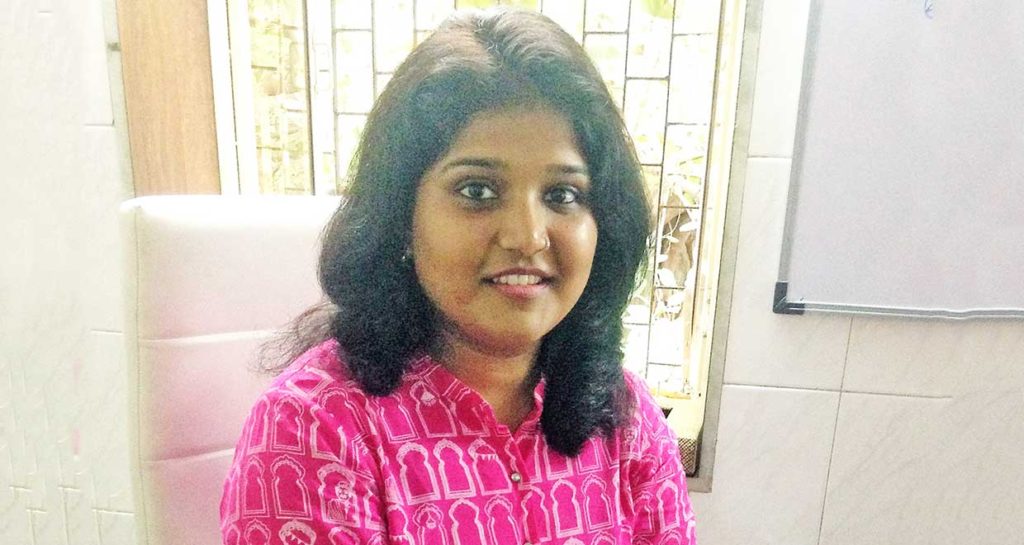
  • Shubhi Sharma, Freelance Social Media Expert, Cartoonist on law school and pursuing LL.M from King’s College, London

    Shubhi Sharma, Freelance Social Media Expert, Cartoonist on law school and pursuing LL.M from King’s College, London

    Shubhi Sharma graduated from Symbiosis Law School, Pune in 2007. She then completed her Master’s with a focus on competition law, arbitration and finance from King’s College, University of London. She worked at Vahura as a Talent Management Specialist and a Social Media Artist before moving on to working as a freelancer creative social media manager. In this interview, she talks about:

    • Her decision to pursue law
    • Experience at Symbiosis Law School and Master’s at King’s College
    • Exploring her creative side and eventually taking it up as a full-time profession
    • Decision to not pursue a traditional job in the legal profession
    • Balancing work with personal life
    • Following her passion against all odds


    How would you introduce yourself to our readers in one sentence?

    I am the ‘mother of Egg-Heads’ (popular name for my cartoon characters), who, after a law degree from Symbiosis Law School and a master’s degree from King’s College London, is now practicing the humorous side of law.


    What made you choose law for your graduation? Was there any pressure to join this field?

    Will you believe me if I say that it was an influence of movies and TV shows?  From ‘Meri Jung’ to ‘Ally McBeal’, I was influenced by all of them. However, it was probably my genes that pulled me towards law. My father still is my biggest inspiration and I grew up watching him practice. As a matter of fact, I grew up in an environment where intense discussions were a part of our daily routine. As kids, we were expected to be aware – socially and politically. In addition to that my time at Welham Girls’ School, further enhanced and shaped my debating skills. After winning series of awards in both debating and dramatics, I felt the next best thing was to study law. To be sure, I underwent the necessary career counselling sessions, and my choice of profession seemed in sync with my attributes.


    Tell us about your life at Symbiosis Law School, Pune.

    One thing about the five years at Symbiosis Law School, Pune is that they just flew by. We were the first batch of Symbiosis Deemed University and our management wanted us to have the best of everything. The batch of 2007 was extremely special, each one of us came with our own special traits – focused, diligent, unconventional, highly ambitious and a lively bunch.

    Our classes usually got over by noon, which left us with ample time to do things we liked. This was one of the advantages of a non-residential college. While most of my friends spent time in the library, I was busy converting our study material into humorous study notes- something like a story made from the content of the subject. That was my unique way of preparing for exams. In retrospect, I guess that’s where the seed was sown. This content was an excellent way to study, and was often used by my study group as the last minute resort to memorize for exams – you know – no-body forgets a good joke! Probably it was this interesting style of preparation that helped me win the prestigious Ram Jethmalani Award for Excellence in Law of Evidence.  On the other hand, I also utilised my free time by opting to help a new advertising firm with their IPR queries, but instead, ended up working with their creative team.

    Another interesting thing about Symbiosis was its campus. We had other courses running on the same campus. That gave us the opportunity to befriend students pursuing other courses and expand our knowledge.


    How involved were you in co-curricular and extracurricular activities?

    A lot more than I was involved with books! I did a lot of theatre and debating in my early years.  Being on stage brings out the best in me, it is therapeutic. I wasn’t called ‘Drama Sharma’ for no reason. On the other side, I was very active in contributing ideas to an advertising firm. I can proudly say that my ideas were used in various ad campaigns in and around Pune.


    Why did you choose King’s College, University of London for your Master’s? What was your area of specialisation?

    I was always keen on doing my higher studies outside the country, UK being the priority.  It was about gaining international exposure, meeting fellow students from across the world, and experiencing a different education system. When I was shortlisting colleges, my priority was the ranking of the college, curriculum it offered, and its faculty.  KCL is not only the one of the top ranked colleges, it is also known for its incredible faculty –  Prof Richard Whish, Prof Tennekoon, Toby Landau QC, to name a few. I consider myself lucky to have studied under their guidance.

    My LL.M. was focused on competition law with additional subjects of arbitration and finance.


    How was your experience there? What was your biggest learning experience?

    My LL.M. at KCL not only taught me the intricate details of syndicated loans or gave me the in-depth insight on per se rule in EU Competition law, but it also changed the way I thought. The pedagogy followed at King’s is different from the one in India. It forces you to think beyond the regular. It was intriguing to observe the mix of minds in the class; everyone came with their own opinions, experiences and perspectives. Unlike my previous batches from school and college, my class at KCL had a few students who were way senior to me. Learning about their professional lives and experiences made me realise that we, at the start of our careers, restrict ourselves to walk down a particular paved path. Today, when I look at a few of my class mates from KCL, I see a Competition Law lawyer turned into a full time travel photographer and an associate from a Magic Circle law firm as a legal journalist. To cut the long story short- KCL and the people I met there taught me one thing –  to think beyond the regular.

    My LL.M. was not all about the curriculum, it was an overall experience.  My stay in London gave me the opportunity to travel. I backpacked across half of western and southern Europe with students from across the world!


    shubhi-sharma-2

    After completing your Masters, you started working with Vahura, a legal talent specialist firm. Why did you choose to move away from pure law work in a law firm?

    The original plan was a regular one –  apply to the law firms and make a career. Luckily, I came across Vahura. What really attracted me was their business offering: they are unique in their solutions and the best in the industry. When I met Ritvik Lukose (CEO, Vahura), I was floored by his sense of vision. The concept of Talent Development Service excited me. It was relatively new at that time, and I knew I could contribute a great deal there. I felt I could use my creative side to this project too, which I did. The best part about Vahura was that I could retain my creativity and identity. Ritvik gave us complete freedom to run the show our way and that helped me grow personally as well as professionally.


    Did you ever contemplate joining a top corporate law firm, or even become a litigation lawyer, while a law student?

    I suppose we all grow up the same way and compare ourselves with what our friends or seniors are doing. ‘Career’ becomes all about taking up a secure job. I too belonged to this line of thought.  I would be wrong in saying I am not ambitious, it is just that with time my goal changed. I wanted to be successful and be known for what I do best. Even though I tried, I didn’t see myself fit into closed spaces and a structured environment. I needed the freedom to explore and shape my own identity.


    Please tell us about your work as Talent Management Specialist & Social Media Artist at Vahura.

    At Vahura I worked for the Talent Development Service, now known as the Mentorship programme. This programme is a series of end to end recruitment preparatory services for law students and young professionals, to help them improve their recruitment potential, and make the right professional choice. Something, we all needed during our final year at law school. We created detailed, comprehensive workshops catering to the core needs of students. These workshops were not long, monotonous, yawn-inducing training sessions. In fact, we made sure that there was a good balance of knowledge, psychometrics test, interview snippets of seniors from the industry, and humour – that’s where the Egg-Heads made their first appearance. I enjoyed this role thoroughly, as a major part of this profile included intense market research, interviews of luminaries from the industry, preparation of accurate content, design and presentation.

    My role with Vahura also evolved. As a team, we regularly plan or modify the strategy. My main deliverable is comic banners created under the pen name Pen-Ultimate. It has been two years since we started! Over this time, Vahura gained immense visibility and Pen-Ultimate & Ultimate Lyre gained popularity.


    Why did you leave Vahura?

    The decision to leave Vahura was a difficult one, but necessary at that time. I had started to feel the need of getting into the creative field completely. Although, my profile at Vahura was giving me enough opportunity to pursue that, I wanted more. Honestly, I did not have an immediate plan. But I knew I had to get myself out of my comfort zone to take the step, which, at that time, was completely unknown to me. I was confused but, I never lost focus. I took a much needed break from work, and started figuring out my next career move. I was looking at something where I could use my knowledge of law more creatively. I used this time wisely; I connected with people from the creative industry and took their advice, researched on various options, took a few online courses. Ritvik and Balanand (from Vahura) played a major role in this decision making.  It is they who planted the idea in my head.  Sketching, doodling or just scribbling stick figures has been my stress buster since childhood, and those little puzzles started to fit in together. The creative bug had bitten me by then, and I figured out how to put my artistic brain to good use.

    Currently, I am a freelancer, working as a creative social media manger. I provide creative marketing solutions on various social media platforms. My clientele is mostly from the legal industry, who are either looking at increasing their visibility or targeting to be known in a particular segment of services.


    shubhi-sharma-8

    You are known for your satirical cartoons on the legal field. What is your source of inspiration?

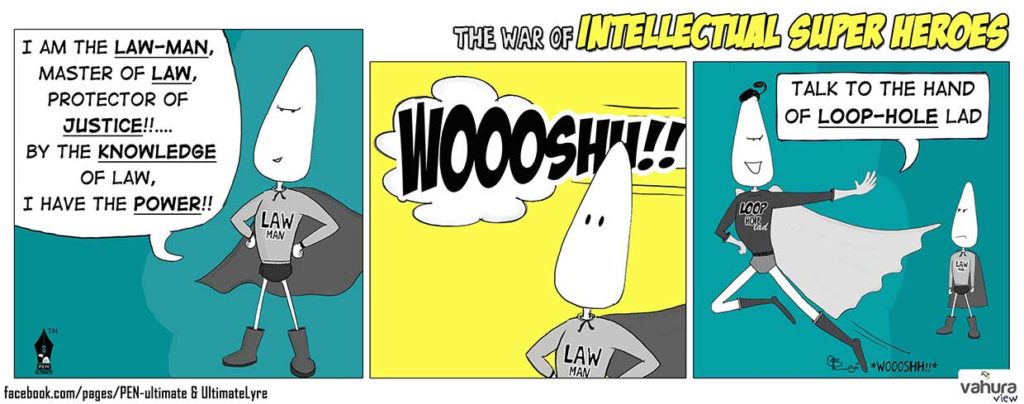
    I don’t have to look for inspiration. It’s all around me- friends, family, former batch-mates, ex-colleagues, former students and my husband. I am a good listener with decent observation skills. I have a mind which sees humour in almost everything. Every work of mine is associated with a real life incident. I use Egg-Heads for my legal cartoons.  I try to depict a general life of a lawyer- working during holidays, dealing with a demanding boss, appraisals, legal subject matter, courts, love lives – and so on.  Other than the usual legal cartoons, one of my personal favourites is a series called ‘Legally Ever After’, showing famous fairy tales with a legal twist. ‘Bollywood’s Special Procedural Laws’ is another very popular series by Pen-Ultimate. Keeping the look and feel of Bare Act, I draft imaginary sections applicable to (in)famous legal system of Bollywood. And they come with case laws too. Chadhha vs Govind 1993. DAM. 32 (Tareek pe Tareek case), State of Bollywood vs Dr. Asha Mathur 1985. MeriJung. 11 to name a few.


    shubhi-sharma-7

    How do you prepare these cartoons?

    Preparing a comic isn’t as easy as it seems.  Thinking of a concept, preparing a script, working on illustrations, all are very time consuming tasks with their own challenges. A lot of research goes into figuring out a concept. Never had I thought that I would be reading articles on legal maxims to get a gag out of it. Once the idea is ready, I write the script. Writing dialogues is a delicate task. A shabby punch line kills the joke completely, and I cannot risk that. Once I have my script in place, I start working on the illustration and presentation. This is the part I enjoy the most, specially working on the character’s expressions. I make sure I add a new style of presentation with each comic. I went from regular one frame cartoon to three-five frame comic.


    Are you planning on developing your cartoons into other forms?

    Yes, there is a lot lined up. A full comic book is my next aim. Other than that, I will be soon launching GIFs of my cartoons. Long term plan is to have animated videos of them. I am currently working on other forms of humorous illustrations, with different characters, pertaining to non-law fields. If all goes well, you will soon be seeing Egg-Heads merchandise as well.  Fingers crossed!


    shubhi-sharma-5

    Did you face any problems?

    Of course! It is not easy to make a lawyer laugh. As soon as they saw a cartoon on legal set-up, they jumped into the technicality of it. It took me some time to understand the right kind of humour and presentation to tickle their funny bones. But this was a part of the learning process.

    The real problem I faced is an artist’s worst nightmare. There was a time my cartoons and banners were being used by others. The tragedy was that they would ruthlessly remove my logo and put theirs. It was very disheartening to see my own comic, which took days of hard work, being circulated with someone else’s logo on it.   There were times I received my own work on WhatsApp! I used to be happy and disturbed that the same time. Luckily, things have changed now. Egg-Heads have found their own identity and so has their original creator-the mother of Egg-Heads. Also, my IPR is in place now. So logo-removing thieves, beware!


    shubhi-sharma-6

    You also freelance as a social media expert. Tell us more about your work.

    Well, it is more of a blend between social media marketing and creative marketing. It’s a digital world today, and everyone is looking for ways to utilise it to their benefit. But, with everyone doing similar kind of marketing, the purpose is somewhat lost. That is where I come into the picture.  I prepare a strategy for my client which enhances their USPs and aims at a good rise in their visibility among the target audience. This mostly comes along with creative content. Keeping in mind the target market, client requirement and the social media platforms, I prepare the content. The basic idea behind this is to get the attention of the viewers and to create an image of the client.


    shubhi-sharma-4

    How hectic can this get? How do you ensure wide publicity?

    Oh! It gets hectic. It is a one-man show as of now. I have to do everything by myself- researching, preparing the plan, its execution, communication with clients, artwork, finances, and also getting myself a cup of tea in between work.  The good thing is that I didn’t have to worry about business development. My work did that for me.

    Honestly, I haven’t felt the need of serious publicity for my work. It is getting attention organically. So far, Facebook, Instagram, Twitter and even LinkedIn have been working well. I am looking at a gradual growth. Today, people have a very limited attention span, it takes a minute to get noticed as well as fade away. I ensure to have active engagement with the audience. I have also gradually started creating more presence across various platforms.


    How do you manage it solely by yourself?

    As of now only one brain is working on this. But with increasing work, I am looking at hiring virtual interns soon.


    You have now completely shifted out of the legal profession. Did you face any opposition or dissent from your family regarding this? How easy a decision was this to make?

    It wasn’t easy, not even close to being easy. I was thinking of moving out of a highly sought after career line. In a typical scenario, that is not something a sane mind would do. Judgemental eyes are always following you around. One little change and you are bombarded with questions. Before answering anyone, I had to be sure myself as it was a drastic, high risk shift. Talking about the ‘road less travelled’ sounds good but to actually plan on walking down that path is like planning to walk into a tunnel, not being sure of finding light at the end of it. The most difficult part was to make that decision; and once I was sure, there was no looking back.

    My friends and my family were extremely supportive in my decision to take the leap of faith. Courtesy to my two fairy God ‘mothers’- my brother and my husband. Thanks to them, I went from manual sketching to fully digital.


    Do you now regret taking up law for your graduation? Do you feel you would have been better off with a degree in closer connection to your current work profile?

    Not at all! I am a mix of things- my knowledge of law/legal industry combined with my creative expertise makes my work unique. I enjoyed studying law, so have no regrets there. Art and humour come naturally to me. And by God’s grace, I have been able to find a way to combine the two. A degree could help, but then imagination cannot be taught.


    shubhi-sharma-3

    Most law students would hesitate to change their fields like this, majorly because they fear economic instability. What would you have to say to such young students?

    Money is important. There are no two thoughts about that. But how can we be sure that it will come to us by following a certain set path? It is a big world out there, with many opportunities.  Think differently, have the courage to pursue your dreams, but first be sure of your dream. A half-hearted passion will take you nowhere. I often hear – “you are so ‘lucky’ to turn your passion into your profession”. Well, to quote Seneca- ‘luck is what happens when preparation meets opportunity’. Cliché as it may be, but there is no substitute to hard work.

    I feel it is more to do with finding your real potential. Had I continued to be a lawyer, right now I would be doodling instead of taking notes during some yawn-inducing con-call. Not a sign of a good lawyer, is it? We’re born with a set of skills and we acquire a few over our lifetime, what matters most is what we make of our unique potential. Money will come eventually.


    How can an Indian law student find their feet in an arena such as creative content development or social media/marketing? Since there is no degree to show for these fields, would it be difficult to find gainful employment?

    I won’t deny the fact that the sector is difficult if you are looking to break away from the regular work. On the other hand, people are experimenting with ideas, and are able to make their presence felt. The challenge will always be there if you want to do anything offbeat. The good news is that we are living in a time of start-ups after all! The best part about social media marketing is the freedom an artist gets to be unique, unconventional and at times even bizarre! There is no set syllabus, no rules or guidelines. Your task is to formulate a strategy which catches the interest of the target groups.

    A law student/graduate willing to make a mark in this field can start with mapping the legal industry. In today’s time, all law firms are seeking visibility. But they cannot be in the news seven days a week. So, the next best place to make their presence felt is on social media. When these firms approach the social media experts, they find it difficult for an outsider to understand the mind-set of the people in the legal industry. They want someone who understands the market as clearly as they do. Who would know the legal market as well as a lawyer does? Another lawyer. There! You have a market ready.  I see  great potential here.


    How do you balance work and personal life?

    Even though I work from home it does get a bit difficult to strike a balance between professional demands and daily household tasks. Well, as they say, creative minds are not very good with time management. I can vouch for that, my brain doesn’t understand 9-5. An idea can strike at the oddest hour and if I do not work on it at that moment, there is a high chance I will lose the essence of the entire concept. Living outside India comes with its own challenges; biggest one being to do everything on your own with no help whatsoever.  But I have no complaints at all. I have a great support system in my better half. Honestly, I don’t know how we do the balancing trick, but at the end of the day, everything is taken care of.


    What is the one advice you would like to give young law students?

    Do not fall into the trap of ‘what will people think’. The day you master that, you will feel free from distractions and obstacles which stop you from reaching your true goal. On the other side, get inspired by success of friends/ acquaintances. Jealously, comparison, and bitter competition will only do one thing- take away your peace of mind.

  • Zaryab Rizvi, Partner, LCZF, on starting up with independent litigation and building clientele

    Zaryab Rizvi, Partner, LCZF, on starting up with independent litigation and building clientele

    Zaryab Rizvi graduated from Symbiosis Law School, Pune in 2005. He started practicing law in Delhi right after graduation and has been independent from the very beginning, Zaryab is one of those who started out with their first few matters of legal career without a mentor or guide.

    He is the Founding Partner of LCZF (Law Chambers of Zaryab and Firdouse) where they provide varied legal solutions to their clientele across the country and provide solutions in litigation, corporate jobs, compliances, IPR, ADR etc. Their clientele is diverse and includes MNCs, banks, shipping companies, government entities, private individuals etc.

    In this interview he talks to us about:

    • His experience at SLS, Pune.
    • Importance of internships in shaping his career.
    • His experience of first time court appearance.
    • How he overcame the initial hurdles.

    How would you like to introduce yourself to our readers?

    I will prefer to call myself a learner who is in search of excellence and for which purpose I have put in my best efforts. I have done my schooling from the great city Lucknow, after which I joined Symbiosis Law School, Pune. After successful completion of law degree, I decided to work independently and ever since have pursued my passion. Being a first generation lawyer, the decision to work independently in an unfamiliar city of Delhi had its share of challenges, but my strong determination and focus never made any kind of pressure to halt and change my decision. My position or you can say mindset can be described aptly in the following words: “I just hate losing and that gives you an extra determination to work harder”- Wayne Rooney. I am the founding partner of LCZF (Law Chambers of Zaryab and Firdouse), which is a full service law firm. Our Head Office is located in Delhi, but we are operational all across the country through our wide number of associate offices. The firm is a one-point destination for all legal requirements of a client, where we ensure that tailor made solutions are provided to client’s each requirement in the legal domain.

    What prompted you to think of law as a career? If not law, what other options would you have considered for your career?

    Choosing a career is one of the most important decisions of an individual’s life, as it determines ones entire future life. Although there are several occasions, when a person may have to take up a call on the future profession, but the first of such a significant instance is at the time of selection of subjects/stream after the high school results. Fortunately, the power to take such decision, like all other important decisions of my life was given to me by my parents, after providing the insights and guidance about various options. I acknowledge the importance of all other professions, but I would say that many people make such an important decision of life just on the basis that, many others are deciding in favor of a particular stream of education and they should follow the same. The profession of law has been a noble profession, but the problem with the profession has been the deteriorating standard of lawyers between the periods of 1980’s and 1990’s. The said concern has been raised and discussed by multiple Courts, Judges, Bar Council of India and in this regard various measures have been taken for improving the standards. I believe that a person should consciously choose a profession and the same shall not be by default, but the irony with the legal profession for years has been that many people end up in profession by default and not by choice.

    There are several reasons responsible for my inclination towards the legal profession, some of the prominent reasons are:

    A) Desire to be able to provide assistance to many persons who are caught on the wrong side of the law and who do not have sufficient resources to defend themselves.

    B) Recognition of the fact that a good lawyer is a person who possesses attributes like sharp mind, eloquent speech, command over the law, credibility in society, honesty and a rich taste in life, placing such lawyers in the elitist and distinguished class of the society. C) Apart from the above positive aspects, I also had certain bad experiences, with some unprofessional lawyers, while assisting my family in some of the civil disputes. Such instances also made my resolve stronger to be a part of the legal profession and make endeavor to raise the standards of profession by lifting my own personal standards.To answer to your second part of the question regarding options, which I had or considered apart from law, I will only say that although there were all the fields available to me, but I do not believe in options.

    Describe your experience at Symbiosis, Pune as an undergraduate law student. Any highlights and incidents you would like to share.

    I believe that all the educational institutions are respectable and knowledge imparted to students there is also good. However, having said that, I want to further add that, an educational institution is not only about imparting knowledge from the books, but such institutions are also responsible for giving a vision to the students. A student during the process of learning evolves his choices about his future course of action in the professional life. I believe that an educational institution should have conducive environment for the learners and shall provide all resources to the students, which eventually develops their skills and vision. For me, Symbiosis Law College is not just a college, I share a nostalgic relationship with the institute and all its members, be it the academic staff, administrative staff, support staff, fellow students as also senior and junior students. Moto or the central ideology of our alma mater is “Vasudhaiva Kutumbakam” which means the ‘whole world being one family’. I was 18 years old, when I joined the Law College in Pune, about 1500 kilometers from my home.

    There never arose a situation where my parents had to worry about me in the then alien city. The college truly lived up to its Moto and I never felt that, I was in a city where I have no roots. I clearly remember that several times some of the political outfits created ruckus in the city, about the people (students) from outside the State. But on every such instance the college management and Local Teachers/Students stood in firm support of all the students from other states, which action was not just in conformity with the Constitution of India but also was inline with the core ideas of the institution “Vasudhaiva Kutumbakam”.

    Our college was headed by Prof. Mrinal S. Raste, who was the principal of the College during the period of my academic journey in the College. Prof Raste went on to become the Vice Chancellor of the Symbiosis University (Deemed University) and along with the Management of the College, was responsible for enhancement of the Brand of the College. We were privileged to have academic faculty, which not just possessed immense knowledge of the Law subjects, but were very friendly and easily accessible to all the students. Although, all teachers were great but amongst them, my favorite guide and mentor was our torts professor, Prof C. J. Rawandale. He holds a respectable position in eyes of every student, as he is a knowledgeable and friendly person with a pleasing personality and is a “go to” person in every crisis situation, be it academic or otherwise. My connect and association with Prof Rawandale, did not end with the conclusion of my academic period in Symbiosis, Pune, but even thereafter it became stronger year after year. At present Prof CJ Rawandale, heads the Noida campus of Symbiosis, as its Director and because of him the doors of the Noida campus are always open for the Alumni of the college, which is quite helpful for all of us. Prof. Rawandale is putting immense efforts in bringing alumni closer to each other as also to the current students of the college, by organizing several events, paving way for colossal work opportunities to each and every one who has been and is part of my alma mater. Such a thoughtful faculty makes my alma mater, one of its kind. Symbiosis is a part of my life, which I cherish the most and I am thankful to the Almighty for granting me such an opportunity, which completely impacted and changed my life for good.

    Where did you do your internships while at law school? How important were these internships in shaping your career?

    During the breaks in the academic session, I used to join Law Offices situated in Delhi for internships. I interned at several places. All Internships I took up, were very helpful as I not just got opportunity of learning and understanding about the practical aspects of the functioning of Justice delivery System, but such internships also helped me to make informed decision about my future. It became relatively easy to choose between various avenues like job in a company/ law firm/ corporate work/ litigation etc. Amongst other internships, I also interned twice with Mr. Atul Sharma, (Founder, ASA Law Firm). I will say that my decision to choose litigation as my career was influenced to a great extent from my first hand experience with high profile litigation in his office. My first internship was in my second year of law and on the very first day, I attended proceedings in Hon’ble Delhi High Court, where we were seeking anticipatory bail for one celebrated singer accused of illegal immigration scandal. After being granted the relief, the moment we moved out of court, media surrounded our team and standing in a corner, even my face was telecasted across the globe. My parents were relieved that their son has actually joined work. Such small moments always remain special, although I have made numerous television appearances since I joined profession, but that appearance of few minutes will remain my best and most cherished one. I will say that the present generation is even better and are taking profession in a much more serious manner. I believe that such approach by young students is not only helping skill enhancement of the students, but at the same time is also having a positive impact on the larger scenario, as the quality of lawyers is improving with each day.

    How did you overcome the initial jitters in a courtroom full of experienced lawyers and judges, as you started out independently?
    zaryab-rizvi-1It is indeed a very pertinent question, why and how I started working as an independent practitioner in an unconventional way at the initial stage of my professional life. In the lighter vein I will say, that I still wonder and look for answers even today for the above question. But probably had I not taken such decision I may not have got to answer such an eccentric and rare question. On a serious note, it is true that I decided to work independently from the day one in an unconventional manner against the usual trend. I was fully aware that I will have my own share of challenges in pursuing the said decision and it would not be an easy sailing for at least a few years.

    Trust me I was not wrong and there were ample challenges throughout the journey. I was not born in the profession with the silver spoon in my mouth, as I am a first generation lawyer, who decided to work in an alien city where I had no roots as such.Every aspect of the professional life and work, be it the simplest of jobs was a challenge and gargantuan, as there was no one whom I could have asked solution for my queries. I will say that my feeling on finding solution to a simple thing used to be same as of “Early man” who discovered fire accidently by striking stones together. It is true that the challenges were huge but my desire to pursue my aspiration, gave me inspiration to face all these challenges and I believe once you decide that “YOU CAN” surely “YOU CAN”. As I said earlier that, I don’t believe in options, for that reason I had no other option but to perform.I never had any fear of any senior advocate, judge, or advocate having more experience than me. As I always believe that if I had done justice to my work I will get justice in return. The only pressure I felt has been of miscarriage of justice for my client because of my adventurism (as some people used to term it in my early days). But in the past 10 to 11 years I have a success rate of over 99% in the cases, which I have handled. I always ensured that my decision to start independently should never be an obstacle in putting my best foot forward, when my client’s interest is involved.

    Describe your experience when you appeared in the court for the first time?

    My first appearance in the professional life was before the Hon’ble Supreme Court of India. I could not have expected a better first appearance. Although my role in the said case was very limited as there were many other parties in the said case, but for a first generation lawyer who decided to practice independently and who practically had no experience, this opportunity to commence professional life before the highest court of the country was in itself a privilege. I think it is not very difficult to imagine my situation at such time. However, after appearing before Hon’ble Supreme Court in the very first instance, appearances before all other courts appeared to be relatively easy. Many years have passed since then but the memories of that first appearance are still fresh in my mind.

    Did you ever have any other plans other than litigation? What are your views on LL.M.? Do you think Indian Legal Education needs to improve?

    Litigation has always been the first love but apart from litigation I have been involved in a lot of Corporate work, which includes drafting/vetting Commercial Agreements, Contracts, MOUs, advisory compliances, incorporations/mergers/acquisitions etc. I have also imparted training on Sexual Harassment of Women at Workplace (Prevention, Prohibition and Redressal) Act, 2013 to various representatives of the corporate world in Delhi, Bangalore, Hyderabad, Noida, Gurgaon and Lucknow. Apart from the above, my several articles on different subjects have been published in some leading Magazines. The evaluation of the education system can only be done by examining the developed products of that system and in the present case the product is a lawyer. If I say that the education system is bad, the same would be absolutely wrong as the products of the same system have made not just the fraternity proud by their knowledge but have also got recognition to the country’s legal acumen at the international stage. However, I agree that there is scope for improvement. In the present system, brilliant students of the top law schools are somehow more inclined towards non-litigation assignments. I believe that the exposure to litigation should be encouraged during the academic course, so that these students are better equipped to take up litigation assignments and jobs.

    Tell us something about LCZF (Law Firm).

    LCZF came to be formed by me along with Ms. Firdouse Qutb Wani (“AOR” SCI), with a thought that a client looks at it as a trusted resource. The name LCZF stands for Law Chambers of Zaryab and Firdouse. We wanted to be a one-point destination for all the legal requirements of a client and ensure that a tailor made solution is provided to the best of their interests. Today with the support and efforts of our able team of lawyers and Para-Legals, we have achieved this goal successfully. LCZF provides legal support to various private Corporates, Government Establishments as also to individuals. We provide legal solutions even in the remotest parts of the country and it has become possible through our wide network of capable associates across the Country. Further details can be checked by the readers on our website, www.lczf.in. We also take up Pro bono assignments, because I always feel that one should never live with regret that due to lack of financial resources, he/she could not seek justice. Furthermore LCZF, believes in giving opportunity to young law students, to taste the life of lawyers and learn the tactics of the legal practice, while they are still in cocoon, hence we have created an independent department in our Firm, which completely deals with the Law interns and round the year several students get benefited by the same.

    Please tell us about your current occupation. What do your main tasks and assignment include?

    During the course of my professional life I have handled assignments of diverse nature, as I have never restricted my professional abilities in small compartments. Presently, I will say that I am undertaking multiple litigation assignments which includes corporate crimes, service matters including writs, commercial arbitrations, matters emanating from Arbitration and Conciliation Act, matters under Companies Act including winding up, civil and criminal writs, petitions under Section 482 Cr.P.C, Bails, matters under SARFAESI Act, cyber-crimes, matters under labour laws, matters under Negotiable Instruments Act, matters pertaining to marriage, sexual harassment cases to name a few. I am also involved in advisory functions to start ups, factories, MNCs and Banks. My corporate assignments include drafting/ vetting Commercial Agreements, Policy Formulation, Contracts, MOUs, compliances, incorporations/ mergers/ acquisitions etc. I also give sessions/training on Sexual Harassment of Women at Workplace (Prevention, Prohibition and Redressal) Act, 2013 to various representatives of the corporate world in Delhi, Bangalore, Hyderabad, Noida, Gurgaon and Lucknow. Apart from the above, my several articles on different subjects have been published in some leading Magazines.For catering to the above assignments, I have responsibilities at LCZF. I aim for perfection in every assignment that LCZF takes up and for that purpose every document that is prepared by our team which of consists hardworking and capable professionals, has to come to my desk for settling before it goes to the Client for approval or is filed in the concerned court or Tribunal, as I want to ensure that no error is on part of LCZF. We believe that we as Lawyers have great responsibility on our shoulders to safeguard the interests of our clients and our small error or oversight can change the course of future of our client. My main work includes arguing matters in court, advising clients as per the requirement, supervising all the heads of the concerned departments, meeting clients and forging alliances with other Law firms.

    Many law students aspire to secure a job. What do you think most are doing wrong, from your observation?

    Most of the times life gives us multiple options and the choices that may determine our future. Similarly a law student has multiple options at the time of graduating, broadly we can categorize the same as: –

    1. Option in the corporate side as legal manager.
    2. Options with law firms handling corporate assignments.
    3. Options with law firms handling litigation.
    4. Options with small law firms/ Lawyers.
    5. Other non-traditional avenues.

    In my view all options are good and a person who joins any of the above has a good future. I’ll say a person shall make the choice after considering the benefits and the challenges that one may face in the stream of his choice. I believe that the focus of an individual should always be towards satisfaction in the work that the person is undertaking as if a person is satisfied with the work he is undertaking his/her quality of work will always be good and for that reason he/she need not worry to secure a job as his/her work may have taken care of securing a job. I think many of the professionals take up assignments which they don’t want to take but they land up in such domain due to choices driven by glamour, monetary benefits, family pressure, peer pressure, false evaluation, under estimating the challenges. In my view if we make a choice for reasons other than passion to do such things we are bound to be dissatisfied after a short span of time, as when we are passionate about a decision, we take every difficulty, which we face as a challenge and not as a dead-end. To conclude I’ll say that aspiration to secure a job is not wrong, but the legal profession requires patience, determination, dedication, hard work, sincerity and perseverance which maybe difficult if we have made our choice for any other reason or consideration other than our passion.

    What helped you shape your current profile within the field?

    As they say, “Rome was not built in day” similarly I cannot single out one factor which is responsible for shaping my current profile. There have been several factors over the years, which have played important role at relevant time.As a first generation lawyer, I started to work in an alien city since the very beginning. I had no one to guide me, I learnt a lot from observing the masters of the profession in courts and at every opportunity. I’ll not say that a Dronacharya had closed his doors upon me as I never knocked such doors, but yes, its true I learnt a lot while adopting Eklavya’s way of learning.  Over the years I have had many people from whom I’ve learnt a lot, one such name is of Mr. C. Mukund (Advocate). I have had numerous opportunities to interact with him and every interaction has been of immense learning. I’ve not only benefitted from his knowledge of law but I am also influenced with his humility, humbleness, down to earth attitude and generosity.

    Where do you see yourself by the end of coming five years? What are your long-term objectives?

    Every individual must have goals in his life, as without destination we do not have a path, which we have to follow. I since the very beginning have set goals for myself, both short term goals and long term goals. The short-term goals are usually milestones in our journey to achieve long-term goals. I have set timeline to achieve such goals, as without timeline goals are rendered meaningless. In the coming 5 years I wish to work on assignments which test my abilities to enhance my legal acumen. As I said, I am learner, I would like that in the coming 5 years, I use such time to gather as much knowledge as I can, while putting such knowledge to good use and obtain good results for my clients. Although I have many goals in the long term, but if I look at the ultimate goal of my professional life, I would say that I want to be some one, fondly remembered in the legal fraternity.

    What would be your parting message to our readers?

    To the law students, I would say that, make a choice of your profession wisely and put your best efforts to continue chasing your goals. Do not quit the pursuit, due to any reason as the momentary troubles and roadblocks will vanish if you confront them, but if you quit, you will always regret taking such a decision and there will be no respite available to you, throughout your life. To all other readers, belonging to the legal fraternity, I would say, we all should make our best efforts to serve the Justice Delivery System, in a manner in which we ensure that speedy Justice is delivered and for which purpose we all should continue our best efforts, to further raise the standards. To conclude, I’ll say that every professional associated with the domain of Law, be it an academician, Judicial officer, Legal Manager in a Company, a practicing Lawyer, Journalist involved in Legal assignments, organisations dealing with legal search tools, all are important and without any of them, the Justice Delivery System may come to a standstill. We all owe a responsibility towards the profession and we all should do our best to keep the Noble Profession, Noble”.

    Md. Zaryab Jamal Rizvi

    Founding Partner – LCZF (Advocates and Solicitors)

    Correspondence Address: LGF, E-102, Kalkaji, New Delhi – 110019

    Website: www.lczf.in  E-mail: zaryab@lczf.in  , advocatezaryab@gmail.com

    Landline Numbers:  +91-11-46078301 – 02  FAX:  +91-11- 46078303

  • Vibha Mane, Founder, Law Matters on experience in research work at JGLS and TISS and LL.M from Univ of Glasgow

    Vibha Mane, Founder, Law Matters on experience in research work at JGLS and TISS and LL.M from Univ of Glasgow

    Vibha Mane is a 2006 graduate of Symbiosis Law College, Pune and did a Diploma in Alternative Dispute Resolution from the Asian School of Cyber Law. Thereafter in 2008, she earned a Master’s Degree in International Commercial Law from the University of Glasgow, United Kingdom. She worked for a while as a Research Manager at Rainmaker and then as a Legal Assistant at IC Legal, Advocates and Solicitors. She also worked as a Senior Research Associate at Jindal Global Law School and as a Research Officer at TISS. At present, she is the Director at Law Matters, a company that she founded.

    In this interview she explains to us:

    • Suggestions on engaging in extra and co-curricular activities during law school and how to plan internships
    • Her various job experiences
    • Setting up and working at Law Matters
    • Studying at the University of Glasgow


    How would you like to introduce yourself to our readers?

    I am the Founder & Director of Law Matters LLP based out of Mumbai. Some other terms that are often used to describe me are- a teacher, trainer, researcher, writer, lawyer who doesn’t practise and an entrepreneur by chance!


    Why by chance?

    In ten years of work experience, I tried litigation, law firms, and the state electricity commission. I also worked as a content creator, trainer, teacher and researcher. Of all these experiences, I could relate to academia as my core field of work. I had the opportunity to work with some big educational institutes like Jindal Global Law School and Tata Institute of Social Sciences. These work profiles allowed me to understand my career strengths – content, research and teaching/ training. I realised, my work has a broad spectrum and I could freelance. So, in 2014 Law Matters was emerging as an idea and honestly, it was my husband who encouraged me to think big and take the bold step of setting up Law Matters. I had my inhibitions about this whole ‘starting up on your own’ concept! But it was worth taking a chance.

    Together, we spent a year studying market trends in the legal field, met many principals and vice chancellors, gathered their feedback on lacunae in legal education and Law Matters was conceptualised by February 2015!


    Tell us more about Law Matters.

    We have four faculties- content, training, policy analysis and social projects. We create various courses for law schools and even management schools. We train law students on career options in law, career combinations with law, research methodology, effective communication and writing, soft skills, resume crafting, mock interviews and a lot more. We assist law schools with course content assessment, students’ calibre tests, organising seminars, getting their students job ready etc. Our team also undertakes policy analysis on various topics and we have some interesting social projects lined up. While the first two faculties generate income for us to sustain, the other two faculties are more out of interest for these causes. Law Matters believes that a healthy legal change equals a better social tomorrow and hence these initiatives.


    So how has it been for Law Matters? What challenges did you face?

    vibha-mane-3We are already a year old and are perceived as a finishing school for lawyers. In the first year we did more of training in Pune, Delhi and Satara but this year we are being approached a lot for content from Bangalore, Haryana and Delhi. I am very happy with our progress and particularly with this shift in demand. My biggest challenge has been to make law schools understand that we need to change our traditional methods of teaching law. A mere ‘Drafting, Pleading and Conveyancing’ (DPC) class doesn’t equip them with the skills they need to be ‘employment ready.’We need new and practical courses for law students.The standard courses that one takes through three or five year courses are redundant. Today’s students are always on the lookout for some diploma / certificate courses on upbeat topics. So why not provide them with those? Quality content is critical if we want them to stay up-to-date with changing trends and acquire skills for a good caree start.


    What would you like to share with us about your college time and the impact it had on your views of law?

    My views on law were very dramatic. My family has many lawyers and I was always in awe with their work and reputation.  As a child I gathered soon that lawyers, like police are quite important people! So studying law was natural for me. I had thought, I will get a law degree and then practice in courts, as is the family trend.

    Five years at Symbiosis Law School, Pune made me realise that being a lawyer was quite a task. What I loved most was the pattern of logic and reason that law holds. This makes it so interesting. The course was vast, yes! But thankfully, studying law didn’t seem tough.


    While there, what co-curricular or extra-curricular activities did you indulge in? How did you plan your internships? How did the same affect your overall take away from law school?

    I enjoyed legal-aid workshops and street plays on socio-legal issues. Honestly, I was not much involved in moot courts and elocutions at law school. This is one aspect that is often considered important on a fresher’s resume. Though, its absence never affected my career, it is one of those college things, I still regret not having done. I think, participating in such activities gives a boost to your confidence, it is through these activities that you can actually practice some research and presentation skills.  It also aids in improving your rapport among the social circle.

    About internships; no one ever recommended that I should intern with law firms or corporate houses. I toiled in district courts and the Bombay High Court learning procedural laws. During this time, I got a reality check- law is not as fancy as it seems in cinema! So, unfortunately, my internships lacked planning. This I often see as my career drawback. Learning from my own experience, I suggest that students should get a variety of internships at companies, law firms, NGOs and even start-ups, as they offer a hands-on learning base.


    vibha-mane-2

    What motivated you to pursue an LL.M in Glasgow after graduation?

    I saw this coming!!! You see, my career wasn’t working the way I saw it – in courts. Post degree, I again tried to give litigation a chance in the Bombay High Court but I wasn’t enjoying it. The clueless, ignorant and vulnerable crowd at courts made it even less interesting. I felt I just can’t be practicing law. This self-realisation was scary and difficult to deal with. I obviously wanted more time to think about my options. The senior lawyer I was working with; Advocate Deepa Chavhan, suggested that I do an LLM and appear for QLTS (solicitors’ exams). At that time, I wasn’t sure what it means to be a solicitor but the prospects looked promising. Thus, I began applying for UK universities for Masters in Law. I was happy to get through to the University of Glasgow. Ranked in the top 1% of world universities, it is considered the university of world changers– Adam Smith, James Watt, seven Nobel Laureates and a rich heritage of over 560 years. Besides, I was fascinated with Scotland!


    How did the degree change your perspective on legal practice and development within the country?

    I am truly grateful for the exposure I got while doing a Masters in Law. Within the first few months, I realised I wasn’t equipped or trained to do systematic research, my writing lacked clarity and did not justify the research methodology I had used, and my critical analysis had to be a lot stronger and supportive of my arguments. This was the case with many Indian students studying law there. We weren’t taught these things. We weren’t groomed to be researchers and effective writers. I had to unlearn to write volumes about a topic, instead I struggled to put my point across crisply, in one or two lines. Funny but true!  I also realised that soft skills are a very crucial part of a lawyer’s personality and practice, and Indian law schools were missing the point completely. Our law schools have begun focusing on these issues only recently.


    Your work with Rainmaker stressed on content creation and streamlining legal research skills and techniques. What sort of a gap did you believe existed in the ability of trainees?

    Rainmaker offered great intellectual freedom. The team was committed to bring in a much needed change in the legal field- teaching, training and talent management.  This job helped me execute all that I had learnt during my Masters’ degree. I enjoyed creating content on varied legal topics and training was equally fascinating. Initially I was sceptical about training law students only a few years younger than me and law professionals quite older than me! But most of these trainees – young and old, acknowledged the fact that I knew things they wished to learn, this made my task easy. The biggest gap however, was of virtual intelligence! Being able to type a word document, or writing emails, or having LinkedIn accounts doesn’t mean we are virtually intelligent and technologically effective. There are a zillion little things to make a lawyer’s work look more professional, serious and authentic. So yes, there is still a huge scope for improvement there.


    At the prestigious Jindal Global Law School, what were the finer points of your research projects? What did the process of publishing your work from there entail?

    My year and a half at JGLS was loaded with research on topics like election laws, police reforms, prison industry, laws relating to women, inter-relations between law, society and cinema; right to religious freedom, torts, ragging and a lot more. Some work was published as articles, some as reports. During this time, I also worked as the Managing Editor of the Jindal Global Law Review, for the September 2010 issue. This responsibility proved to be a good opportunity to learn the intricate process of making a piece publishable. It really takes practice to go over the same piece again and again and to fix faults each time. And it is so good to see law students taking keen interest in publishing their work in various law journals. We as teachers and trainers, must encourage them to publish more.


    From your experience of teaching, what would you like to say about the newer generations of law students?

    There are quite a few things I like about this generation of law students- they are open to new ideas, they like mixing law with literature, poetry, documentaries, designs, humour and more. A curious class makes the teacher bring in something new to the desk, always! Plus, these students are aggressive about their career growth. They are sure of their choices. However, they dedicate all their five years towards building one particular resume that supports only their liking, not their ability! And see, this is also something that I have done myself. So, I know what it leads to.

    During our career counselling sessions, we often handle a lot of confusion. For instance, “Can I do CS even if I am weak in my accounts?” The question is how you see CS complimenting law and future prospects. Or something like, “I want to study for a Master’s degree but I am not sure whether to pursue an LLM or MBA.” Again, the answer to this question depends on why you think you need a Master’s degree in the first place and which areas do you want to work on.

    Another prominent trait of this generation is that these kids are setting very high standards for themselves at the very beginning of their career. This quite often leads to disappointment. They usually fail to do a reality check.


    Would you say their education varies from your own experience in college? If so, how?

    Oh yes, certainly! The exposure that law schools offer to their students has tremendously increased. Of course, even we had industry experts teach us. We had active placement cells too, but the law schools were few then. Now private universities are offering world class facilities, state of the art infrastructure, and global faculty! Ten years ago, many practicing lawyers acted as visiting faculty for several law schools. Only a few teachers were committed to teaching law the way it should be taught! No one taught us howto use LexisNexis, Hein Online, Westlaw, JSTOR etc. We learnt these things on job. These days, more or less all law school libraries offer free access to these databases.Besides, earlier; for moot courts, students prepared themselves. Now law schools put up a whole team of industry experts to make students ‘moot ready’ and that’s great, isn’t it?


    Law, Development, and Social Change was the core focus of your work with the Tata Institute of Social Sciences, (TISS) Mumbai. What would you like to tell us about the need and aspirations of the same?

    Every institute has its own unique agenda. Social commitment was an integral part of the proposed LLM course for TISS. So while creating content I had to make a course that evolved around poverty, religion, gender justice, vulnerable groups, alternate advocacy, economic law and development, legal reforms and court and case management. As a lawyer, knowledge of these subjects is indeed crucial but interest in these topics cannot be forced, you have to be passionate about it.

    An emotional quotient is important for lawyers but the levels may vary for everyone. When one has flourishing options to consider from property, real estate, maritime, space, sports, media, arbitration, etc. one tends to favour these topics over the social reform aspects of law. Having said that, I am, by no means, generalising the choices. We still have a good number of law students extremely keen on topics like refugee laws, immigration issues, torture, armed forces’ powers, animal rights, peace treaties, child rights, LGBT and so on.


    From an aspiring SuperLawyer to the Founder of Law Matters LLP, how does the specific skill development you envision set someone apart from the current crop?

    With Law Matters, I and my team are attempting to bring in the desired change in current legal educational environment through new content and innovative teaching techniques. The skills that we envision all lawyers to acquire are very crucial. It is his research and writing ability that helps a lawyer win his bread. Research allows you to get to the details, and writing teaches you to value the information. Most of these professionals and students alike, realise that we are assisting them with acquiring important skills that aren’t taught elsewhere. Basics like how to effectively draft a document, how to use search engines for accurate legal research, what search terms to use -when and where, how to break an issue to reach the most convincing argument, what other technological tools a lawyer can benefit from etc.are gaining popularity and acceptance.


    Finally, do you have any other advice for our readers, most of whom are college students?

    I would strongly recommend they take soft skills seriously. They should focus on developing a good resume from the very beginning. Reading for class and beyond class material is one good habit that they should try to inculcate. Also, a clean and responsible virtual presence adds a lot of credibility to your personality.  Lastly, your years at law school are equally important as your internships. So, don’t get so busy learning the tricks of the trade that you forget to learn the trade.


  • Ankita Ray, Senior Associate, Cyril Amarchand Mangaldas, on building a career in Corporate Law

    Ankita Ray, Senior Associate, Cyril Amarchand Mangaldas, on building a career in Corporate Law

    Ankita Ray graduated from Symbiosis Law School in 2010. With excellent legal and soft skills, a profound love for the written word and a series of successful internships, after graduating she pursued a corporate law practice for a few years with J. Sagar Associates. She is now a Senior Associate in Cyril Amarchand Mangaldas.

    In this interview, she shares her insights on:

    • Interests and gravitating towards law and university life.
    • Decisions in college – extra-curricular activities and maintaining a good academic record.
    • Interning – how she chose her internships and the differential internship experiences in India and in Singapore.
    • Working at Cyril Amarchand Mangaldas and the changes that being a senior associate brings.


    How would you like to introduce yourself to our readers?

    I am a senior associate with Cyril Amarchand Mangaldas, working out of their Mumbai office. I was in the Bangalore offices of Amarchand Mangaldas Suresh A. Shroff & Co. for a period of 2 years, before relocating to Mumbai. I started my professional life with JSA, Bangalore, after graduating from Symbiosis Law School in 2010.


    Tell us about your life before you joined college. Where did your interests lie as school student?

    My father’s transferable job took me across various cities and towns in India, and through 8 schools! This meant recreating a new social circle and inculcating aspects of new cultures every few years, if not months. I have always been interested in the written word and would probably have studied literature, if law had not happened. While in school, debating and mock parliaments were my favourite extra-curricular activities and I bagged a few laurels representing my school in various competitions. It is a plus that both these interests come in handy as a professional lawyer.


    What made you gravitate towards law?

    What made me gravitate towards law – this is an interesting one! I had the opportunity to be a part of the Indian contingent to the International Schools Olympiad held in Karachi, Pakistan, in 2004. Organised by The Telegraph in Schools, our journey to Karachi was much more than a competition, and was dubbed a peace mission: ‘Bonding Beyond Borders’. While I cannot say enough about the exhilarating experience that it was at various levels, this was the first time I had exposure to interesting discussions on various legal issues across borders, especially on international law. This piqued my interest in the legal field. Later that year, while deciding on which field to select for my graduate studies, I knew that I wanted to study law.


    What extra-curricular activities did you participate in while in university? What do you think is the importance of moot competitions, mediation competitions and debates in aiding the overall development of a law student?

    ankita-ray-4My approach towards engaging in any form of extra/co-curricular activity is geared towards expanding my limits and gaining new experiences. Given that, personally, I do not think one kind of activity can be more important than the other. However, it is best to take a shot at every possible opportunity before deciding what you would like to be regular at. Moots etc. are definitely helpful in getting your research and speaking skills in place or to evaluate yourself in those areas. While it is important to move out of your comfort zone, it is also important to try to understand what you identify with.

    The first couple of years in college, I was into debating (and won the best team in debating in Mood Indigo and a Rotary Club debate). Thereafter, having interned in law firms by then, I realised the importance of having adequate drafting skills. Further, I realised I enjoyed the entire process of researching and putting it down on paper in the form of an article. I won the national first prize for an essay on cyber crimes, in a competition organised by Competition Success Review, in 2013 and a couple of articles also got published in Manupatra.


    How important is a CGPA for recruiters to assess students? How did you maintain a balance between a good academic record at university and your extracurricular activities?

    Let’s put it this way: for the purposes of campus recruitment, CGPA is one way for recruiters to shortlist from a large number of students. Also, if one intends to pursue a Masters degree, academic scores will be relevant. Any which way, it never hurts to keep your academic records in good shape.

    It was not very difficult to maintain a balance between a good academic record and extracurricular activities! During our time at Symbiosis Law School, we did not have the concept of weekly assignments and exams (which have been introduced now), which made it a bit easier. However, like in everything, time management is essential – usually keeping a fixed time (even if it is half an hour a day) to devote to your extracurricular activities works well.


    ankita-ray-1

    Tell us about your internship experiences. How did you choose your internships? How early did you apply? Are there any things that an applicant must keep in mind?

    Initially, I wanted to test out as many avenues of the legal profession as possible, in order to make an informed decision on which one I would want to follow. Therefore, I interned with an NGO, a senior counsel in the Kolkata High Court, in the legal departments of Vodafone India and ICICI Bank and law firms, in that order. Post my first internship in a law firm (Khaitan & Co., Kolkata) I realised that I would like to work in a law firm environment. Hence, all my internships thereafter were in law firms.

    I applied anywhere between 6 – 9 months in advance. Very often, during an internship, my reporting/mentoring lawyers were kind enough to either get me a follow on internship or refer me to other firms for internships, when requested. Similarly, seniors from college were a great help when it came to getting internships.

    A couple of things that an applicant for internships must be careful about, even before actually joining an internship, is their application email (which should be without any grammatical or spelling errors and customised) and their resume (which should not be very long). Following up after sending an email requesting for an internship opportunity is another important matter.


    You interned at reputed firms in India as well as a firm in Singapore. How was the internship experience different? What did you gain from the experience?

    I was lucky to get an opportunity to experience the workings of a foreign law firm during my stint at Drew & Napier in Singapore, which added another dimension to the entire internship experience. The chance to examine the laws and experience the workings of the judicial process of a different jurisdiction was a fruitful experience. Meeting lawyers and co-interns from Singapore and other countries like Australia, France etc., having discussions on comparative aspects of laws from our respective countries was truly enriching.


    You joined JSA after graduation. Tell us about your experience at the firm and the work profile you were entrusted with.

    Like all firsts, my tenure at the Bangalore offices of JSA (where I began my career from), is memorable in many ways. I got an interesting mix of work there, ranging from technology law (this was in 2011, when the privacy rules were enforced) to transactional matters.

    Since I hear a lot of complaints from juniors about doing due diligences, one thing I would specifically like to mention here is that in my first year of work, I also did a lot of due diligence exercises. Contrary to popular belief, due diligence exercises were a great learning experience since they exposed me to the entire gamut of laws that may be applicable and a range of different sectors.


    You have now been made senior associate. How different is the work from being an associate and what challenges have you had to deal with since?

    ankita-ray-2At the Senior Associate level, you need to be thorough with your field of law. You are expected to have ready answers which are legally sound and which can be implemented in practice. It is also essential to develop skills (both, legal and soft skills) to handle clients on your own and maintain an ongoing relationship with them.

    In terms of work, there is a shift from taking the first crack at a document to reviewing a first draft worked upon by a junior. In this regard, there is also a role of mentorship that you play in your own small way.

    Additionally, you are increasingly aware of the business side of law practice – invoicing and revenue generation, networking to generate more work etc.


    Apart from corporate/commercial matters, you now handle a lot of labour and employment matters. Could you give our readers a glimpse into what the area deals with for those interested and the type of matters one may expect to deal with?

    Previously, employment and labour laws were pertinent more from the perspective of protection of blue-collared workers. However, with increasing interest in India as a destination for foreign investment, finer issues in this field of law have arisen. Hence, employment law practice has now assumed greater significance, with many law firms recognising it as a separate, albeit upcoming practice area.

    In terms of work, there are primarily four buckets one may consider: The first being employment advisory which covers complex issues of trade union strategy, high profile terminations, large scale downsizing and retrenchments in all sectors, sexual harassment complaints, as well as routine matters such as employee handbooks, appointment letters etc.

    The second bucket of work is transactional – conducting human resources due diligence, employee movement, transfer of employee benefits, recognising employment related risks in different types of transactions, whether business transfer or share acquisitions.

    The third bucket of work is contentious matters such as wrongful terminations, internal investigations, disciplinary procedures, sexual harassment complaints and includes representations before the labour commissioner.

    The fourth bucket is compliance – where we conduct employment health checks for companies and assist in identifying risks and advice on best practices.

    The practice of employment laws is interesting and challenging given the human element involved in every situation – no two people react in the same way and often each situation we advise on throws up different issues, which are often time sensitive and have to be dealt with. Therefore, it involves thinking on your feet, where you have to complement your legal knowledge with a practical approach towards the issue at hand. With regard to the kind of work one can expect, there are no two days which are similar! And that is what makes this practice area invigorating!


    Finally, what advice would you have for our readers, most of whom are college going students?

    While at law school, try to participate in as many activities as you can, be it moots, debates, mock parliaments. Also, I would emphasise doing as many internships as possible, because there is no alternative to gaining practical experience. However, do enjoy the college days!


  • Trisha Mitra, Legal Trainee, Shearman & Sterling, on Masters in International Dispute Settlement from GIDS, Geneva and a career in Int’l Arbitration

    Trisha Mitra, Legal Trainee, Shearman & Sterling, on Masters in International Dispute Settlement from GIDS, Geneva and a career in Int’l Arbitration

    Trisha Mitra graduated as a lawyer in 2012 from the Symbiosis Law School, Pune. During her years of law school she participated in various events. She was awarded the Advocate S.K. Jain Scholarship for being the topper of B.A.,LL.B. from her batch.

    Prior to pursuing her Masters in International Dispute Settlement from Graduate Institute of International and Development Studies, she served as an associate at the ADR teams of Bharucha and Partners and Wadia Ghandy & Co.

    Soon after the completion of her masters she had the opportunity to work with Prof. Pierre Tercier and later joined Shearman and Sterling as a legal trainee in their International Arbitration team.

    In this interview we talk about –

    • Her years through law school and her growing interest in Arbitration.
    • Significance of Post Qualification Experience (PQE) before pursuing Masters.
    • Receiving Hans Wilsdorf Scholarship offered by the Swiss-based Hans Wilsdorf Foundation.
    • Studying Masters in International Dispute Settlement from Graduate Institute of International and Development Studies.
    • Working as a trainee in the International Arbitration group at Shearman & Sterling LLP
    • Working as Legal Assistant to Prof. Pierre Tercier


    What inclined you towards the field of legal education?

    Looking back, I believe my involvement in extra-curricular activities during school paved the way for choosing law as a career. I have always been an avid reader and that inspired my passion for writing and oration. In school, I actively participated in essay competitions, poetry competitions, debates, Model United Nations, extempores and just about any event that involved speaking and writing.

    When it came to a stage where I had to decide what degree I would pursue after school, my instinct was to choose a profession which has its core both these passions of mine, law. I do not have any lawyers in my family or close relations. However, I was extremely fortunate to have supportive parents who encouraged me to make this choice, despite the popular belief that law is not a profession meant for girls.


    How instrumental was Symbiosis Law School in shaping your legal career. Did you have interest in arbitration and dispute resolution while at law school?

    My time at Symbiosis Law School set the foundation for my legal career. I have always maintained that I was lucky to be in a law school that gave me the freedom to learn, develop skills and explore opportunities, both within and outside the classroom. I firmly belief that learning cannot be restricted to lessons in classrooms and my time at Symbiosis is reflective of that. At Symbiosis, I actively took part in both national and international Moot Court competitions, numerous Model United Nations, intra-law college sports tournaments, essay competitions and parliamentary debates. Further, my internships and interactions with practitioners and academics helped me gain an essential practical understanding of the law. Being awarded the Advocate S.K. Jain Scholarship for Topper of B.A.,LL.B. was a recognition of this fact.

    My interest in Alternate Dispute Resolution, and Arbitration specifically, began as a result of curiosity in the second year of my law school. Having heard about it from a friend, I decided to research further on it and found the concept extremely interesting and a practicable means of dispute resolution. The benefits of Alternate Dispute Resolution, i.e. speed, cost-effectiveness and expertise, appealed to my sense of how the system should be and I decided to gain as much experience and knowledge as I could in it. Therefore, I pursued a Diploma in Arbitration, Conciliation and Alternate Dispute Resolution offered by Symbiosis. Also, most of my internships after that were directed towards alternate dispute resolution. I interned with the arbitration and dispute resolution teams at Advani & Co., Kachwaha & Partners, Bharucha & Partners and this cemented my interest for arbitration.


    trisha-mitra-6

    Please tell us about your work profile at WG and Bharucha.

    (Trisha worked in the Dispute Resolution team of Bharucha and Partners and Wadia Ghandy & Co. before she decided to pursue Masters in International Dispute Settlement.)

    Working as an Associate at both Bharucha and Partners and Wadia Ghandy & Co. was an important stepping stone in my professional career. I was fortunate to have guidance and mentorship from the partners at both firms and a collegial set of colleagues, who made the transition from a student to a working professional smooth. At both firms, I was involved in high-stake commercial litigation cases and international and domestic arbitrations.


    According to you, is it better to pursue higher education right after graduation or after gaining some Post Qualification Experience?

    It depends on a lot of factors. Pursuing a Master or higher degree is usually a step towards a professional goal that a person envisages for himself. Thus, a decision to pursue it is best taken when the person is reasonably certain of his professional goals or at least what his/her next steps after the Masters will be.

    Many of the people who pursue an LL.M. already have work experience before taking up the course. Gaining prior work experience in the field of law for the person who wishes to pursue higher studies is advisable – that way the person can be sure that he/ she wants to continue working/studying in that field of law. Having said that, there are also several people who are sure of their areas of concentration and take up higher studies right after graduation, and have done well for themselves.


    trisha-mitra-5

    Apart from Graduate Institute, which other universities offer good arbitration courses? What made you choose MIDS over others?

    The interest among Universities to have a specialised programme dedicated to Arbitration is relative now but fast picking up. Most Universities offer one or two courses on Arbitration, which the student can combine with other courses during their LL.M. Some notable Universities that offer good arbitration courses are Columbia Law School, Queen Mary University of Law, Georgetown Law School, Stockholm University and recently Miami School of Law.

    The Masters in International Dispute Settlement (MIDS) offered jointly by the Graduate Institute and University of Geneva is quite unique in that sense. The entire programme is geared towards giving its student an exposure to various dispute resolution mechanisms, with a particular focus on International Arbitration. At the MIDS, courses are offered on both Public and Private International Law, and more specifically on WTO, ICJ, UNCLOS, Investment Arbitration, International Commercial Arbitration and Sports Arbitration. As regards International Arbitration, MIDS has specific courses on international arbitration in specific regions like United States, European Union, China, Latin America etc and also intensive courses on the different facets of arbitration like the Arbitration Agreement, New York Convention, Definition of Investment in Investment Arbitration etc. These courses are taught by well-known practitioners and academicians in those fields. For example, Professor Gabrielle Kaufmann-Kohler and Zachary Douglas took courses on commercial and investment arbitration, Professor Albert van den Berg took a course on New York Convention, Professor Jan Paulsson took a course on Investment Arbitration and Professor William Park on Arbitration in the United States. It truly was learning from the best!

    The well-designed programme as well as the location in Geneva, which is home to numerous international organizations, made the choice to take up the MIDS an appropriate one.


    Having been the recipient of the Hans Wilsdorf Scholarship and Ratan Tata Travel Grant, tell us more about scholarships for Indians at the MIDS?

    The Hans Wilsdorf Scholarship is an incredible opportunity offered by the Swiss-based Hans Wilsdorf Foundation to allow students pursue graduate courses at the Graduate Institute. It is a full scholarship and was an essential factor in my being able to pursue the MIDS. Similarly, the Ratan Tata Travel Grant is offered by the Sir Ratan Tata Trust to students travelling abroad for post-graduate or doctoral studies.

    The MIDS administration encourages applicants from all over the world, and every year a considerable percentage of the intake is from India. Professors have often chided that there is an “Indian mafia” at the MIDS! The Hans Wilsdorf Foundation offers quite a few scholarships to students admitted into the MIDS – in my year at the MIDS, an estimated 8-10 students had the Hans Wilsdorf Scholarship.

    Apart from this, students from India also have the option to apply to other scholarships, which are not necessarily MIDS-centric. For example, scholarships are offered by the Sir Ratan Tata Foundation, Aga Khan Foundation, Inlaks etc.


    trisha-mitra-4

    Tell us in detail about the academic programme at the MIDS. What differences did you find in the education systems of India and Geneva?

    To answer the last question first, the education systems in India and Geneva, and abroad generally, differ greatly.

    Pursuing an LL.M. abroad is an act of discipline and perseverance. For starters, the readings for each class were usually enormous, often going upto 500 pages for a single class of 5-6 hours. We were told that for one hour spent in class, there would be readings for atleast two-three hours. This is significantly different from the approach in Indian law schools. The classroom teaching style differs in that there is more learning through discussions and debates. The professors pay a lot of attention to the viewpoints of the students and give inputs from their experiences or jurisprudence to add to the discussion. To gain from this level of exchange, it was necessary to be thorough with the prescribed readings.

    MIDS, like other foreign LL.M.s, provides mentoring and assistance to its students to help them adjust and settle into the system. We had a set of amazing tutors who were always at hand to answer our queries and provide guidance whenever needed. The administration was extremely friendly and helpful and helped us with everything from visa to permit to choice of courses to career counselling.


    Do you think knowledge of European languages such as French or Spanish helps in areas related to Private or Public International law?

    Most definitely. In International Arbitration, a lot of the case-load originates from Latin America, Russia or Europe. Plus, some offices of even international firms have a huge French or Spanish population and prefer persons who speak those languages. Thus, fluency in one or more European languages is a huge advantage.


    After the MIDS, you joined WilmerHale in London as a legal intern in their International Arbitration team.  Tell our readers about the experience.

    Anyone who has ever studied or practiced arbitration knows Gary Born. The fact that he leads the International Arbitration practice at WilmerHale made the choice of firm easy for me.

    WilmerHale has a straightforward application process for its internship programme. Once the application makes it past the first round, there is an interview with the Internship Committee. Successful candidates are then invited to intern with them for three months.

    WilmerHale has a wide portfolio of International Arbitration and international law cases, including human rights cases. At any point of time, they are handling arbitrations seated around the world and are also pro bono representing victims of human right violations. The team at WilmerHale is young, energetic and welcoming. I was fortunate enough to assist with both their arbitrations and a human rights case in the African Court on Human and Peoples’ Rights.


    You have recently joined as a Trainee in the International Arbitration group at Shearman & Sterling LLP– Tell us about your experience.

    Shearman & Sterling is a well-renown practice in International Arbitration and is touted to have one of the best portfolios of cases, both in international commercial arbitration and investment arbitration. Their International Arbitration practice in Paris office is headed by Emmanuel Gaillard, a stalwart in the field.

    As a result, my experience so far has been extremely interesting and gratifying. I have been working on energy arbitrations and investment arbitrations and enjoying every bit of it. Of course, it requires a lot of hard work and long hours, but it is all completely worth it.

    The application process at Shearman & Sterling is quite comprehensive – once the application is selected, there are 2 rounds of interviews – the first one is usually taken by Associates along with a Counsel, and the second one is taken by a Partner.


    trisha-mitra-1

    You also served as Legal Assistant to Professor Pierre Tercier. Do you think it is better to work with an arbitrator rather than an ADR firm? Tell us your experience.

    I consider myself extremely lucky to have had the opportunity to work with Professor Pierre Tercier. Professor Tercier is considered one of the top arbitrators in the world and consequently, sits as arbitrator in some of the most interesting investment arbitrations and international commercial arbitrations.

    Working with an arbitrator is a different experience than working with a law firm. As Legal Assistant to Professor Tercier, I gained valuable insight into the functioning of an arbitral tribunal – a hitherto unknown process to me. As a counsel, it is one’s duty to assist the tribunal navigate the case and come to a decision. Watching a tribunal work is like peeking behind the curtains and learning how best to do this.

    I do not have a preference of working with an arbitrator over a counsel practice, or vice versa. Both involve equally interesting and exciting work and maybe at this stage of my career, I look forward to gaining more experience in both.


    Lastly, what would be your parting message for our readers?

    If you have a passion and do not mind facing a few challenges, you can get what you want. Also, do not hesitate to reach out to people you will be surprised how often they go out of their way to help you.

  • Barasha Baruah Pathak, Senior Associate, Clasis Law on profile of a corporate lawyer and work experience in multiple law firms

    Barasha Baruah Pathak, Senior Associate, Clasis Law on profile of a corporate lawyer and work experience in multiple law firms

    Barasha Baruah Pathak graduated from Symbiosis Law School in 2003. Soon after graduation she joined Karnik & Karnik as an Associate and later worked with M/s. M.V.Kini & Co., PDS Legal. Thereafter she also had the opportunity to work as a Senior Associate at AM Law, Advocates & Solicitors and Juris Corp. Very recently she has joined Clasis Law, Mumbai as a Senior Associate.

    We have taken this opportunity to ask her about the several decisive moments in her career amongst other things including:

    • Law school experience at Symbiosis
    • Work experience at M.V. Kini, PDS, AM and Juris Corp
    • Induction and work at Clasis Law


    What got you into legal studies? Was it all planned or something that just happened by chance?

    My entry in the legal field was not deliberate. To become a lawyer was one of the career choices available for me but I was focussing on medicine. However, as my score in the medical entrance test did not help me to get into a medical college, I started to seriously consider building my career in law and worked in that direction.


    How was your experience at Symbiosis Law School? What activities were you involved in apart from the regular academic curriculum?

    My experience in Symbiosis Law School was quite enriching and engaging, I didn’t realize how time flew.  It was fun to study and do the many assignments with a group of friends. During those days, I used to participate in seminars organised by our college which provided ample opportunities to listen to the erudite speeches of who’s who of the legal fraternity. Those speeches were enlightening and gave a perspective to us students, which made the legal world all the more attractive and interesting for us.


    barasha-baruah-pathak-3

    What were your major interests as a student of law? Any suggestions for the law students on how to deal with Pandora box of laws?

    I was particularly thrilled by Corporate Laws and Criminal Laws. My suggestion for law students will be to keep an open mind and look beyond the obvious. Understanding the legality of any issue in hand requires a wholesome approach and one should be able to correlate diverse aspects to arrive at a proper legal interpretation or analysis of an instance. One needs to be constantly updated on the current happenings particularly in the legal world as well as general current affairs. A daily dose of current affairs with an eye for the legal aspects is an absolute must for anyone wishing to develop a career in law.


    What is your take on academics? How important do you say is a good CGPA for an illustrious career?

    It’s always good to have excellent academics. When your CV carries an attractive CGPA, it will automatically attract the attention of your future employers. Having said that, it does not mean that, anyone not having a great CGPA can’t be good at his work place. Ultimately, your work only will speak at your work place and that is what matters.


    How was your first year after graduation? What do you think were the biggest hurdles and challenges in the early days of your career? How did you deal with them?

    My first year of graduation was overwhelming. I was exposed to the various specialisations and was indecisive and unsure of what will engage me the most. So, I took some time to choose and finally zeroed in on non-litigation and I am currently enjoying every bit of it.

    The early days of my career required me to be very patient with almost all aspects of my job right from the work that I was getting to the remuneration at the end of the month. Adding to this, the psychological challenge of being away from family and friends, trying to settle in a new city alone, made those days tough. For me, being constantly in touch with my family, friends and relatives over phone or meeting them from time to time made things easier to handle. Being patient initially helps and I have come to realise that for me law profession is one that I enjoy more with each passing day.


    What is your opinion when people say that all that they have learnt is in their years of practice?

    I think when one starts practice that is the moment of truth. At this juncture all that one had learnt during their law studies converges and from that point onwards one is expected to interpret on one’s own. Of course there will be references, but there is this immense sense of individuality that one can display in their respective interpretations or analysis of situations / laws. I think this sense of individuality and the freedom to exercise the same is what makes most people perceive actual practice as the only learning medium. I feel that although practice is not the sole learning medium, law practice definitely is a lifelong learning journey.


    In the first three years of your career, you worked at Karnik & Karnik, M/s. M.V.Kini & Co. and PDS Legal. Why did you keep changing your job? How would you describe your working experience at these places as?

    In the first three years of my career, there was not only a change in terms of the firms that I worked for but there was a corresponding change in cities as well. I always wanted to come to Mumbai to build my career and hence all these changes were to ensure that I was able to make a foothold in this city and focus on building a long term career.

    I will be grateful for the learning that I received and also the patience displayed by these law firms. Being my first professional assignments, I had lots to learn and these firms gave me ample opportunity and helped me fine tune my focus on specific areas which later on became my specialisation.


    What kind of responsibilities you were entrusted with AM Law, and Juris Corp? What led to your shift at Clasis Law?

    My responsibilities as a Senior Associate mainly involved transactional and advisory work in the corporate commercial, IPR and media & entertainment domain that include drafting, negotiating and reviewing a variety of documents.

    Joining Classis Law has been career enhancing decision for me. I am looking forward to a wider canvass to practice law.


    What does a Senior Associate at a Law Firm like Clasis Law do? What falls within the scope of your responsibility? Tell us about a typical work day.

    My typical work day starts with making a list of deliverables for the day. This is followed by e-mail browsing / responding to emails and further additions to the to-do list of the day. If need be there are discussions with seniors and team members regarding prioritising work. Once the day’s work is defined, I get on with the work as per priority. My day is full of internal/external meetings and con-calls in addition to my usual drafting & reviewing work.


    What are the primary professional ethics you follow while at work? What has been your strategy to deal with errors and mistakes?

    Integrity and accountability are the two most important professional ethics that I follow.

    Errors and mistakes do happen, but the important thing is to never repeat the same mistakes.

    One should own up, learn from the mistakes and move forward. Once a mistake is made, damage control should be the focus by informing seniors and clarifying the same.


    barasha-baruah-pathak-1

    Corporate law comes with a humongous workload. How do you manage the workload and your personal life?

    I think nowadays all professions are quite demanding not only the legal profession. The important thing is to enjoy what one is doing. For me managing a work – life balance is quite challenging. I am a mother of twins and I do face difficulties at times but the people surrounding me including my family, seniors and my team members support me to overcome those difficulties.  Today’s work environment is very competitive and demanding but at the same time there is empathy too.


    What kind of effort should a young associate put in to work to get it appreciated?

    I think for a young associate, it is very important to understand the norms of the firm that one works in. Additionally, he / she should work towards building and maintaining professional relationships with seniors and colleagues for better team work. A young associate should be proactive and sincere to get appreciation from seniors.


    How is internship helpful for a law student?

    Internships provide the unique opportunity to experience actual working conditions while one is still studying. This is a welcome trend and during my student days we too had internship opportunities that most of us availed. Through an internship a law student can evaluate different facets of the law profession and also explore the real life functions and implications of various specialisations. These experiences can be very helpful for one to choose a particular specialisation within the legal world and also helps in getting the most out of the academic curriculum by being able to relate the theories with the actual real life instances.


    What would be your message to a law student?

    Explore and experience various specializations at your initial days of practice and then decide on the career path.

  • Pranay Agrawala, Ex-Law-firmite on starting up with Lex Adista and experience in litigation

    Pranay Agrawala, Ex-Law-firmite on starting up with Lex Adista and experience in litigation

    Pranay Agrawala is a Symbiosis graduate who had interned at Dua Associates and Ernst & Young among others. Upon graduating, he joined Khaitan, Jayakar, Sud & Vohra as an Associate after which he joined Trilegal and worked there for three more years. Thereafter he started a private litigation practice. He subsequently joined the Chambers of Senior Advocate, Mr. Siddharth Luthra (former ASG) before starting his own law firm, Lex Adista. In this interview he talks about:

    • Interning at the Supreme Court, Dua Associates and E&Y
    • Working at KJSV, Trilegal and Chambers of Mr. Luthra
    • Experience and challenges at a startup law firm


    Tell us a bit about your childhood and pre-college life as well as educational background. Did you have lawyers in your family?

    During my childhood my family moved around quite a lot and I had the benefit of experiencing different cultures and becoming comfortable with varied thought processes and customs. This has been one of the biggest parts of my school education and has proved to be invaluable in my growth. I never had any lawyers in my family and throughout my childhood, I didn’t have any interactions with lawyers either. The profession was a mystery to me until I joined Symbiosis and did my first internship, with Mr. Dushyant Dave no less.


    Tell us something about your college life? What activities did you participate in?

    During college like most teenagers I concentrated on enjoying my life. I travelled, played sports all day etc., but now I feel that I missed out in participating in law school centric events. Having never been guided properly as to what would help me grow as a lawyer, I never benefitted from all the things a good law school has to offer. It was only towards my later years in college, especially after some serious internships, when I realised the value of extra-curricular activities, like mooting and client counselling, writing research papers etc.


    What were your areas of interest during your graduation? How did you go about developing acumen in these areas?

    Law school, is not geared towards exposing a student to the ‘practice’ of law; Theory and understanding statutes, philosophy etc. were given a significant focus. I still feel that the course design and structure lacked the foresight that is conducive to learning Law. Thinking back, subjects like jurisprudence, history of courts, administrative law seemed mundane and uninteresting because of a lack of perspective, but the knowledge of such subjects is greatly beneficial to practising law. Interests for me were mostly found through internships where exposure to the various practice areas made me realise the beauty of the English language; the immense application of intellect required in drafting statutes, contracts or any legal document; the sheer application of intelligence that can make the difference between a good lawyer and spectacular lawyering; and most importantly the power of knowledge. Practice areas in law became secondary to me, just the thrill of the practice of law was paramount.


    What kind of internships did you do in your law school? Which internships will you consider to be right at the top and why?

    Having had little or no exposure to the profession prior to going to law school, I realised the value of internships only by the third year. Despite having interned in every break, I really started absorbing the nuances of being a lawyer towards the end of the second year. Thereafter, I tried to intern at as many different organizations as possible. I interned at the Supreme Court, Dua Associates, Ernst & Young and many other firms. The reason for this was so I could find my practice area and an environment that I would feel drawn to. Although this approach had its downsides with respect to securing a job right after law school, I needed to know I was doing what I liked. An internship where I really felt like I was a lawyer was at E&Y. I feel it was a combination of maturity as a student and the good opportunities and structure at E&Y. From that point on I knew that I can be a good lawyer.


    pranay-agrawala-1

    Did you learn any skills while interning? What are these skills and how did you acquire them?

    Like I have mentioned above, I learned everything that I knew about being a lawyer from internships and not only from law school. During internships, notably at Dua Associates, I realised that if you desire to learn, you have to have a combination of enthusiasm (not to a point of being nauseating to associates) and hard work. The better you assist your bosses the more they want to work with you. Observe, take extensive notes, ask the right questions and don’t be afraid to be called stupid (as long as you don’t ask the same question twice); these cannons were what helped me learn at internships and I also maintain these till date. One can learn much by just paying attention.

    Needless to say, I benefitted a lot from lawyers who were happy to explain concepts and teach a young aspiring lawyer. I have many to thank for my legal education, beyond college and till today.


    What do you have to say about mooting at law school and legal writing for journals? Do they have any ‘bonus’ value when seeking jobs?

    Like I said before, mooting, legal writing, etc. are very important. Participating in these extra-curriculars helps build confidence and skills, which are basic skills every lawyer needs to master, and like any other thing – sooner is definitely better. I gained most of this, under extreme pressure, while working and regretted not having honed these skills in college. Although, it’s a trade off for students, whether to be entirely entrenched in college or to go out and explore the world and experience life during college. Considering the nature of our profession, college is often the last opportunity to expand your horizons.

    While seeking a job, it can make the difference between getting hired and passed over. It also makes a difference in the initial upward growth as someone with a certain degree of skill may be at an advantage.


    Upon graduating, you started working at Khaitan, Jayakar, Sud & Vohra (“KJSV”) as an Associate. How did you secure your appointment? Please describe the interview and induction procedure for a fresher?

    By the time I interned at KJSV, I had gained a lot of focus in what is expected from a lawyer. My natural attitude and approach to matters was noticed and I was able to convert that into a job opportunity. Also, the fact that my focus was on learning and gaining exposure meant that a smaller law firm was a great place to start, and was consequently easier to break into. In my personal view, in the beginning of the career a smaller law firm generally places more trust in you and consequently, bestows larger responsibility, helping you learn faster.


    pranay-agrawala-3

    After having worked at Khaitan & Jayakar  for a year, how did the shift to Trilegal take place? Please tell us a little about your work experience and life at Trilegal.

    Given the fact that I wanted to have an all round experience in Law, after one year of practice on the civil side of litigation, I started to seek opportunities in law firms with a corporate profile. My search began a few months before the shift and I was willing to forego pay and position within the organization for a chance to gain exposure. Trilegal gave me an opportunity and I leaped at it, making the change to corporate and M&A. The shift was not easy and the expectations were often overwhelming. Trilegal is of course a great place to work and has a highly motivated team of lawyers, who never cease to set the bar of performance higher. The most important learning I took away from Trilegal was the attention to detail and research that needs to go behind any advice or action of a legal professional. As a lawyer, one is only as good as the knowledge he brings to the table, whether it be the negotiating table or the bar. This fact was driven home daily at Trilegal. I still put the same amount of attention to detail and set the bar of research very high in my own practice and with my associates.


    You left one of the finest law firms in India and started your own independent private practice. What were your reasons for moving from a corporate setting to litigation?

    I had not left Trilegal to start a litigation practice, but soon realised that to start a corporate practice I would have to create some credibility in the market as also become a brand on my own, so to speak. Having left the firm with a few clients (my own and not from Trilegal) already available to me, I had a steady stream of work which unfortunately lasted for only short while, and was ultimately not sustainable. Litigation is a practice more geared towards individual lawyers seeking clients and creating a presence in the profession, I simply had to shift practice areas to survive.


    After a few months of  your independent practice, you  have  joined  the Chambers of  Senior Advocate, Mr. Siddharth Luthra, where you have  worked for almost one year. Please tell us about your experience working under the  supervision of  Mr. Luthra.

    Like I have explained above, I needed to expand my practice to stay afloat independently. Mr. Luthra was extremely kind to me and gave me an opportunity to join his chamber while he was ASG. This proved to be a baptism by fire, as the office of the ASG was extremely busy and the intensity was only exacerbated by Mr. Luthra’s insatiable appetite for work. I did feel that I was at a slight advantage, having come from Trilegal and being adjusted to intense timelines and high expectations. Bringing my law firm approach to Mr. Luthra’s chamber helped me transition easily with respect to what was expected of me.

    I likened my stint with Mr. Luthra as a sort of LL.M, where I learned the finer nuances of the practice from a seasoned and highly successful Senior Advocate. I tried to grab as much work as possible to maximize my learning and also to increase my exposure to Mr. Luthra. Court craft, legal drafting, framing arguments and managing clients’ expectations as an individual lawyer were some of areas where I focused my attention. Exposure to the Supreme Court and representing the Union of India were an icing on the cake.


    Please tell us about your experience with regard to your first few sessions in court. Has it become more difficult for a fresher to achieve success?

    After completing roughly an LL.M’s worth of time learning from Mr. Luthra, I once again took the tough decision to go independent and start a practice. This time, however, I was better prepared and more mature. I did not limit myself to litigation or corporate law as I felt that I was capable of providing clients with both facets of professional services. Appearing in court is a nerve racking experience at first, no matter how well prepared you are, stage fright does kick in. Keeping a calm demeanour and retaining your presence of mind, while having the eyes of all your peers on you is not an easy task. Being extremely well prepared and keeping easily understandable, well structured notes was of great help and still is.

    Success is never easy. Those who say they got it easy are either being modest, or will have to struggle at some point to retain the success. The harder you work, the more opportunities for ‘success’ will become available to you. In the end though, success is relative.


    Your main area of practice consists of  corporate/civil advisory and litigation. Please elaborate on the cases you normally deal with and how has been your experience so far.

    Coming from the varied background that I do, I afford my clients a unique perspective to legal issues and advisory. At a given time, I feel comfortable taking care of regulatory compliances and commercial work, while at the same time I can advise on dispute resolution and litigation. I feel that this gives my clients a great deal of comfort, especially when it come to handling contractual disputes which require the ability to assess and understand complex SHAs or EPC contracts and to be able to build an effective strategy.

    Presently, I have a bouquet of technology and engineering companies as my clients. This is a sector of industry which has always been of interest to me and being a product of the internet age, clients find it easier to interact with me with respect to the technological aspects of commercial contracts. Of course, having a working knowledge of the internet, computer systems and engineering goes a long way in impressing a client, who then does not have to waste precious man hours in briefing their lawyers on how technology works. Relying on this unique blend which I feel I bring to the profession, I have today managed to start my own law firm, we are called Lex Adista and are a full service law firm. I represent the firm in corporate and commercial matters while my partners handle civil and criminal litigation/disputes.


    What were the difficulties you faced in the early days of your practice? How difficult would you say it is to build a reputed practice? How many years of hard work does it require to build a firm clientele?

    The difficulties are not far from what one would imagine. Finding clients in an industry which is teeming with talented and hard working professionals is not an easy task. To be able to sustain a steady stream of work, turning it around and finding more work to keep you going is a daily struggle. The quality of work is what ultimately decides whether your practice will be successful or not, and maintaining that quality is essential. I will give you the exact number of years it takes to build a successful law firm when I feel Lex Adista is a success.


    Did you build everlasting relation with your clients? Please share some of your secret tips on how to boost fiduciary relations with the people we serve?

    Having great interpersonal skills and managing client expectations are the basics for building everlasting relationships with clients. However, to maintain an everlasting professional relationship you have to provide top notch, intelligent legal advice. At the end of the day, the quality of your services and professionalism is what makes clients stick with you.


    What is your workday like? Are there new challenges every day or did work fall into a predictable pattern?

    My workday is quite varied. As a partner in a small start up law firm, each day I have to give equal importance to internal management, business development, client interaction and at the same time produce deliverables for clients. While it may be tiring, it’s never tiresome.

    We are constantly trying to pick up new work and are not confined to any particular sector. We even advise musicians, artists, startups, designers and other creative professionals who help keep the work exciting. Sometimes, as a bonus we even get passes to upcoming events for the associates!


    If someone does not go to a top law school, would you say he still has a shot at a great career in law?

    Of course! A lawyer never stops learning. One is always learning on the job and what a lawyer makes of his opportunities is what creates the opportunity of having a great career. Never stop working and focus on learning, this is the advice I would give to anyone who wants to grow. I too will never stop following this.


    When you hire interns and associates under you, what kind of qualities do you look for? What should an intern or aspiring lawyer do to get noticed in a positive way?

    At Lex Adista, and particularly under me, we focus on an appetite for learning. I love to share knowledge and find that a heated discussion based on research is a great way to find solutions for legal issues. Attention to detail and being able to present a legal argument with proper justification is the basics of any lawyering. For an intern to get noticed or for that matter for an associate to get hired, I look for individuals with a thorough approach. Any point of law can be explained on the basis of solid research and reasoning, reliance on judicial pronouncements, commentaries and the application these to the facts of the matter at hand. Creativity and a willingness to learn are essential in my book.


    Where do you see yourself and your firm in five to ten years?

    We are presently trying to build a successful law firm. Currently, we are looking at expanding, both, our lawyer base and our client base and hope to do each aggressively. At the same time, we are conscious of the fact that our quality and focus should not get diluted in the process. Perhaps, it is too soon for me to predict where Lex Adista will be in five to ten years, but where I would want it to be is quite clear in my head.


    What would be your parting message to law students who want to litigate just after graduation?

    For any aspiring litigator, the most important advice I can give is to focus on gathering a variety of experience and to look for opportunities to learn. For a successful litigation practice having exposure to every field of law is very valuable, and can be gained in the earlier years of practice easier than later. I too pushed myself to constantly be involved in different practice areas of Law to build an all round understanding of the practice. Getting attached to big names and going after CV value can sometimes backfire, when you realise after some years of practice you may have learned very little. A lawyer is a sum total of his experience, while frequent changes can be detrimental to getting hired, knowledge and experience will always shine through.


  • Rajesh Kumar, Legal Associate, Sanjay Leela Bhansali Films, on a legal career in Bollywood

    Rajesh Kumar, Legal Associate, Sanjay Leela Bhansali Films, on a legal career in Bollywood

    Rajesh Kumar is a lawyer who specializes in Media & Entertainment law. He graduated from Symbiosis Law School, Pune in 2011. While in law school, he also pursued a Diploma in Intellectual Property Rights from the Asian School of Cyber Law, Pune. He has interned with the Aditya Birla Group, Singhania and Co. and Mr. Gaurav Pachnanda (Advocate at the Supreme Court). Upon graduating, he started working at Lex Legal Advocates & Solicitors, Mumbai before joining Sanjay Leela Bhansali Films Pvt. Ltd.

    In this interview he talks about:

    • Pursuing a career in Media and Entertainment Law
    • Working at Sanjay Leela Bhansali Films Pvt. Ltd.
    • Litigating the Ram Leela case


    Tell us something about yourself. Where did you grow up and attend school? What were your reasons for taking up law? Explain briefly how you made it to law school?

    I grew up in a village on the border of Jammu (J&K). Despite its geographical location and its political unrest in my region, my parents always believed in education and its power and always encouraged me to break these shackles and my mettle. My father secured my education at the nearest Army school.  It was only an unflinching spirit and ambition to pursue law which was a constant guiding force to educate myself.

    After high school, I had no choice but to leave home in order to pursue law, I had managed to find an institution in Jodhpur that would train me for the entrance examination, although I could not pay their fees upfront but it was only my belief in my ambition to study law that sustained me through huge struggle to educate myself.

    It was not a cakewalk for my parents to teach me at a reputed college like Symbiosis, but it was only their support, encouragement and blessings that could transform me from a village boy to a lawyer in metropolitan city. My law education has undoubtedly instilled in me the confidence to speak out without fear and deal with all the challenges courageously.


    You graduated with a BA.LL.B from Symbiosis Law School, Pune in 2011. How was your law school experience?

    Graduating with a B.A. LL.B, from Symbiosis was a dream come true. Before I was granted my scholarship by the Central Government, my family made tremendous sacrifices to fund my dream education.  Symbiosis Law School has played an important role in shaping me and my career; I would say Law School has changed me. I could see a dramatic transformation in my personality after having perused law education from Symbiosis. I was not merely a dreamer but a real achiever. Law school has been truly instrumental in my education to being a lawyer.

    I would give faculty members the credit for where I am today in my career. Each individual I have met in law school has impacted me in some way, and I cherish the collective experience. Through a combination of hard work, ambition and support I fulfilled my lifelong dream of becoming a lawyer. My experiences have taught me that if I have to achieve something no obstacle can refrain you from achieving success in life.


    rajesh-kumar-1

    In addition to your regular studies, you also completed a Diploma in Intellectual Property Rights from the Asian School of Cyber Law, Pune. What were your reasons for taking up this course?

    I was introduced to the Legal Head of Balaji Telefilms by a mentor during my initial years of law study. Media and Entertainment law is a niche area, which caught my interest after meeting Mr Sidhu. Since then I started working with special dedication towards Intellectual Property Law, leaving no stone unturned to achieve the most in-depth knowledge in this field. Today, due to following my passion, I am a professional Copyright lawyer (Media & Entertainment law). I find that my diploma education has given me a competitive edge over others in this field.


    You interned in the legal department of the Aditya Birla Group, Mumbai. How did you secure your appointment? What should one keep in mind while applying to a conglomerate like ABG?

    I secured my internship with ABG due to my persistence in following up with them. I cannot stress enough how much I learnt through this experience and strongly endorse the same tenacity in every student of law.


    You also interned at Singhania and Co., and later on Mr. Gaurav Pachnanda, Advocate Supreme Court of India, New Delhi. What are the main differences in interning at a law firm and an in-house legal department of a company?

    My internship with Mr. Gaurav Pachnanda was a great learning experience, to describe this personality and my learning from him I must say “a new broom sweeps well but the experienced one knows all the corners”. Under his guidance, I would attend Court, sit in on arbitration matters, and all of this instilled confidence within me. He continues to be my mentor, especially with regard to litigation/arbitration matters. His guidance during the Ram- Leela litigations is truly commendable. I would say, the chief difference interning at a law firm versus interning in a legal department of a company is the first hand litigation experience and the sense of the court room that a lawyer gains.


    Upon graduating, you started working at Lex Legal Advocates & Solicitors, Mumbai, where you assisted them in work pertaining to cases of IPR, media and entertainment laws. Can you please describe your experience?

    Lex Legal gave me exposure to Media and Entertainment work i.e drafting, vetting actors, directors, writers, agree and also co-production agreements, which play an important role in film. I also attended briefs on Intellectual property issues within the Industry, which increased my thirst to know more.


    How is an average day in the life at Sanjay Leela Bhansali Films Pvt. Ltd.?

    My work revolves around drafting agreements, acquisition, assignment of rights, cast and crew, master service agreements, talent management, remake rights, distribution filing for trademarks and dispute resolution work.

    My day starts at 10AM with drafting, vetting and reviewing agreements, keeping an eye on  litigation proceedings (if any), conference with lawyers wherever we have pending litigations, also in advising and representing the company before various forums and courts. My main work focuses on the legal issues surrounding the field of media entertainment, especially films and music. I keep close contact with its developments in and across the industry followed with the Court order on the Film and its releases especially with respect to content of the Film or with Intellectual Property rights related issues. Secondly, after joining SLB Production, I am very much concerned with the maximum protection of IP created at Sanjay Leela Bhansali Films so far including copyright, trade mark etc, specially the trade mark of all our titles. Every fresh day is a good learning experience where I get to learn many new things.


    rajesh-kumar-3

    During the release of the film Ram Leela, there were many stay orders and litigations over the release of the Film, can you share your experience in handling litigation and getting the film released on its scheduled date?

    Ram Leela’s release was a hectic and a stressful time, as there was a fresh case filed against the film and Sanjay Sir, Ranveer, Deepika Padukone and Priyanka Chopra. It was quite a challenging task to handle the litigation, though we fought and finally procured favourable orders for us. Usually, during the release of each film we produce there is a feeling of completeness, accomplishment, as we head on for premier, music launch parties, etc.

    However, the Ram Leela litigations caused me to miss every event we had of the film. I still remember before the release, we had a big premier at night, but unfortunately, there was news on all TV news channels about the stay order being passed by Karkarduma Court, Delhi. On the same day, there was another matter lined up at Bombay high Court. This should give you an idea of how stressful yet rewarding such an experience can be. But I am happy the “Ram- Leela” litigation has set the bar in judging the question of obscenity and the sensitivity of religious sentiment as a matter of pre-release film litigation. Delhi High Court in one of our matters said, “that freedom of expression is of inestimable value in a democratic society based on the rule of law and that the effect of words, title and scenes in a film has to be judged from the standards of a reasonable strong minded, firm and courageous man and not from that of a weak and vacillating mind”.


    Is a strong base in contract law necessary to succeed in media and entertainment, insurance, infrastructure laws?

    Contract law plays an important role in all commercial laws, and is the basis of contracts in the Media Entertainment field too. A thorough study of contract law is much required. One must know the essential elements of a valid contract before even working on any given contract.


    Generally speaking, do you think studying in a non-NLU has placed you at any kind of disadvantage in your career?

    No, not at all once you are practicing law, you are judged based on your knowledge in your chosen speciality and not by the college you attended.


    Lastly, what are your plans for the future? What message would you like to leave for our readers?

    My plans for the future include reaching my potential, and perhaps exceeding it, in the field of Media and Entertainment law.  I have personally experienced that nothing is unachievable in this world. If you can dream it you can do it, therefore one must dream, believe in himself and the rest will follow. Lastly, I would say, to achieve, we must not only act but also dream, not only plan, but also believe.”