Tag: Supreme Court of India

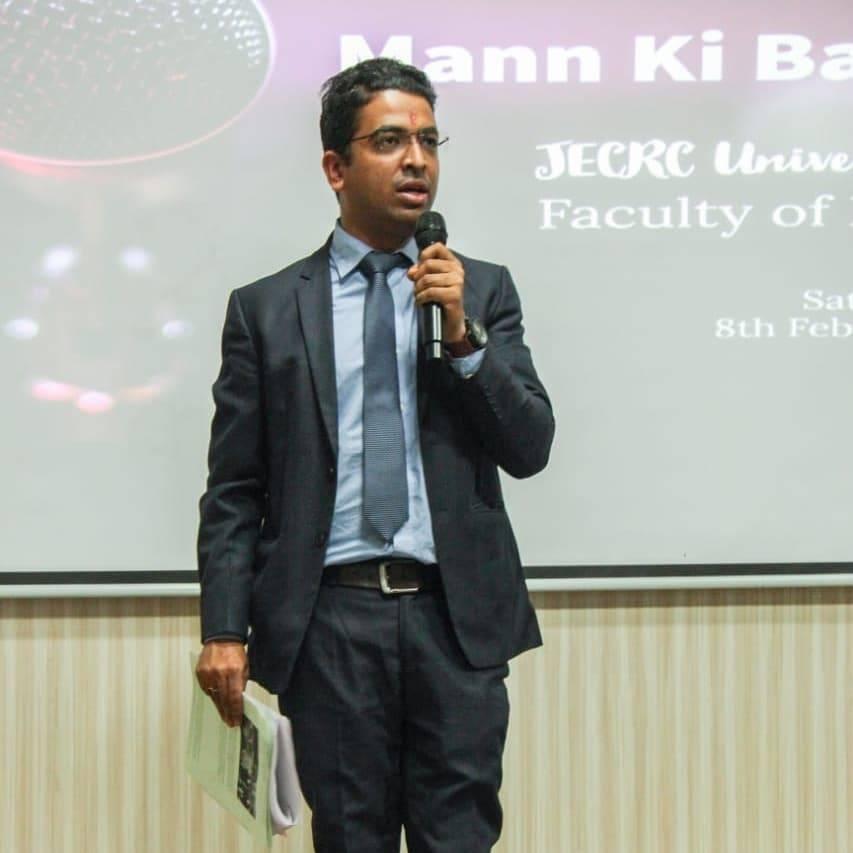
  • Mr Swarnendu Chatterjee, Advocate-on-Record at the Supreme Court of India, talking about the nuances of litigation and becoming an AoR

    Mr Swarnendu Chatterjee, Advocate-on-Record at the Supreme Court of India, talking about the nuances of litigation and becoming an AoR

    This interview has been published by Sonali ParasharOjuswi Sahay the SuperLawyer Team


    Let’s start at the beginning, how did you decide upon making a career in Law?

    When I was in school, I didn’t have even the slightest interest in being a lawyer, although my father, Mr Arabinda Chatterjee (Senior Advocate) was a practising lawyer (quite successful!) in the High Court at Calcutta. I was interested in pursuing my career in Economics or, being a Chartered Accountant. However, as rhetorical and ironic as it was, when one day (I was in the 12th grade as far as recall), I had to go somewhere in the afternoon and my dad had asked me to come to his office near High Court, as the car was parked there. When I went there, I saw my dad’s office packed with junior lawyers and clients who were busy discussing their cases. Then it struck me, that, this profession is the one for me, as it will allow me to study the social strata more and help people to advance their causes in every sense.

    At that juncture, I decided to pursue my career in law. Further, as I was a commerce student, I wanted to pursue law with B.B.A. School of Law, KIIT University, Bhubaneswar was offering the course and I qualified the entrance and graduated in 2013. I qualified for the Bar (AIBE) in July/Aug 2013. This was my journey from school till I qualified to be a lawyer.

    You hold expertise in various areas of practice like Civil Law, Constitutional Law, Insolvency Laws, Taxation Laws, Labour Law, Criminal Law, and Arbitration. You are also qualified as an Advocate-on-Record in the Supreme Court of India.  How would you describe your journey in the field of litigation so far?

    I started my career in this profession, in the chambers of Late Shri PP Rao (Senior Advocate) and after his demise, I had a short yet effective stint as a junior to Mr P.S. Narasimha (now- Hon’ble Justice PS Narasimha, Judge, Supreme Court of India).

    Both my seniors do not need any introduction, as they have been doyens of the legal profession and have nurtured so many successful lawyers. It was an honour to work with both of them.

     During my initial days, I learnt the following things in the chambers of Late Mr Rao, 

    1. Patience
    2. ability to work hard
    3. To desire something, I should deserve it first.”

    At the very outset, Sir (Late Mr Rao) had told me that, “decision to become a lawyer is a very tough one, it is not a 9 to 5 job, it is a 24-hour profession and that, it is a jealous mistress…the more you give, the more it will demand, but with time, you will be rewarded with the fruits. Initially earning will be less and there will hardly be any time for social life. If you are prepared, then carry on….else be an ornamental junior and then one day you will be nowhere.”

    During those days, Insolvency laws, particularly IBC (which came in Dec. 2016) were not there, so a majority of cases where I was involved with Sir were related to civil laws (education, land, reservation, service law et all.), arbitration disputes, some criminal matters and the matters relating to important questions of law in the realm of constitutional law. That is how I developed an interest and honed my skills in the aforesaid branches of law. 

    Once I was somewhat independent, the first matter, which I had dealt with was before the Hon’ble National Company Law Appellate Tribunal (NCLAT) and the question involved in that matter was related to the payment of gratuity to employees and workmen in a company undergoing liquidation under IBC. I somewhat had achieved success in that and thereafter I did quite a few matters before NCLTs (Delhi, Allahabad and Chandigarh) wherein I had the opportunity to study the law and the precedents minutely.

    Thereafter, an opportunity came my way, I successfully argued the case of workmen of Moserbaer India Limited (In liquidation) before NCLT Delhi, NCLAT and Hon’ble Supreme Court. 

    For the last four years or so, I have been doing cases related to IBC extensively and have appeared in matters before NCLTs (Delhi, Hyderabad, Mumbai, Chandigarh), NCLAT and Supreme Court.

    I do not however agree with the term, “expert”, as I believe that “we are students of law from the beginning till the end.” The day, the learning ends, lawyers are bound to board the flight from God’s airport (quoting Late Mr Jethmalani and Mr Nariman together)

    My journey so far (almost a decade) has been a mixed match with lots of twists and turns. However, with the good wishes of my peers, friends and blessings of my father and seniors in the profession, I can say that I have had a satisfying beginning to a race, where I intend to run to the fullest extent.

    The credit for me being an Advocate-On-Record in the Supreme Court goes to my father and my late senior, Late Shri PP Rao. They were my guiding light and a strong force, which inspired me and instilled confidence. Sir is no more (he passed away on 13.09.2017) but in every difficult situation, I try to remember his guidance and take a cue from the experience I had in his office (2013 to 2017).

    Litigation is a profession and not a job. One should remember, that the clock is the last thing that you should look at, during your work. This profession has no end time. It depends on you and how you prioritize your work. The mantra is to work hard during working days/hours and enjoy to the fullest during vacations. It is true for every gender. Nothing comes easy, at every step, there will be people to challenge you, dissuade you, demoralize you and there will be people and friends to inspire you and tell you/give you confidence that “yes you can”. Therefore, one must choose their friends/peer groups well. Hence, according to me, irrespective of the gender and issues involved in litigation, one should look at the brighter side of the profession and always strive to work hard and achieve the best.

    In your college days, you have interned at various organisations ranging from Judicial Clerkship at the Hon’ble High Court Judicature of Kolkata, to interning at reputed firms like Amarchand Mangaldas, Trilegal, to name a few. How important according to you is picking the right internship for one’s career ahead in Law School?

    Choosing the correct path is very important. Many people will try to guide you in different ways, but one should always weigh the advice with respect to their career choices. Most importantly, there is no branch of law, which will fetch a lawyer easy money and humungous earnings from the word “go”.

    In those places, they train you to be responsible and how you should work in a super competitive atmosphere. Further, you are taught how to move out of your “comfort zone” and strive toward excellence.

    Internship, especially in the formative years (4th and 5th year of law school/penultimate year in 3-year courses), plays an important role, for students to understand their niche areas and work towards it professionally. Students should remember that filling up their resumes/CV(s) with twenty to thirty internships, in my opinion, will not be useful, unless they have done something fruitful and worthy in those internships. Students should be aware and trained to draft their CV(s) properly, as in, the work/tasks done in those internships, should be properly mentioned and not as “attended court proceedings.” These sorts of sentences are vague and carry no meaning.

    Therefore, choosing of internships in the formative years, as I said, is important and plays a definitive role.
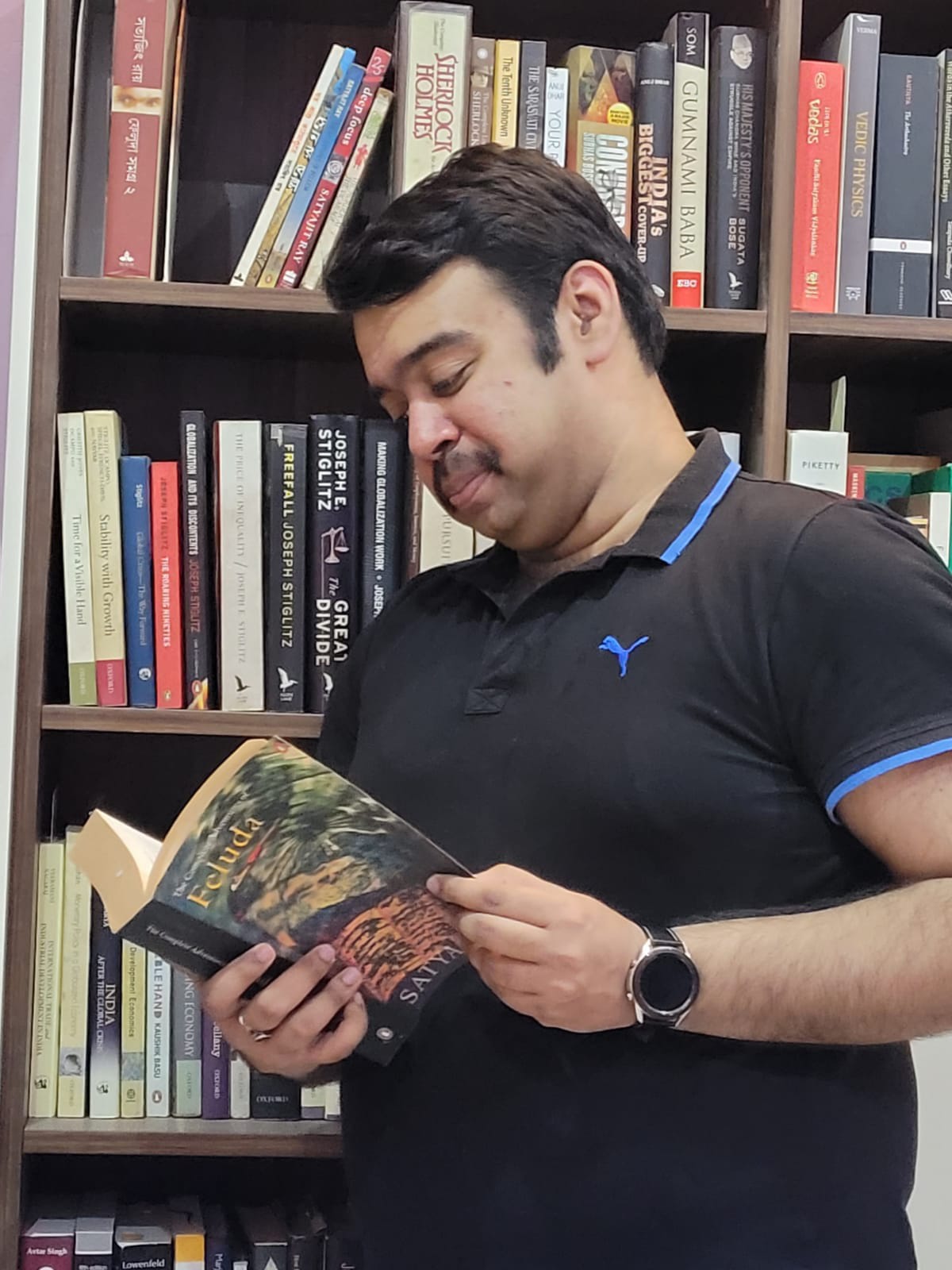
    Please guide our readers about the nuances of becoming an AoR, the responsibilities that follow, and the nature of work one can expect to take up as an AoR.

    Advocate-On-Record (AoR) is a designation which has to be earned upon qualification of one of the toughest examinations in India. It is conducted by the Hon’ble Supreme Court, on yearly basis. 

    An advocate is eligible to appear, once, the advocate has completed 4 years of practice and a further one year of training with an AoR with an experience of ten years or, more as an AoR in the Supreme Court. Therefore, a total of 5 years of experience is required to be eligible to appear for the exam.

    It is both a test of elimination and qualification and the pass percentage hovers around 10% to 15%. The pass marks in individual papers (4 papers total) is 50 and the overall candidate needs to score 240 out of 400 (therefore overall it is 60%). The papers are subjective and one needs to write answers by hand.

    The papers are (i) Practice and Procedure before Supreme Court (ii) Drafting in Supreme Court (iii) Professional Ethics and Advocacy and (iv) Leading Cases (list of cases is on the website of the Supreme Court).

    The majority have an idea that being an AoR is simple and they are only to be used as signatories to a petition to be preferred/filed before the Hon’ble Supreme Court. AoRs are NOT notaries. They hold a position of responsibility and it is a designation to be proud of. AoRs can be described as the “spinal cord” of the bar in the Supreme Court and of course, they come after the Ld. Senior Counsels who hold the fort with an AoR. Therefore, we need to be very careful about our drafts, the conduct and mannerism used and followed in Court.
    Being an AoR is not easy. It is like a “crown with a lot of thorns.” You are entrusted with drafting/ensuring the draft is according to the standard followed by the Supreme Court, filing and follow-ups with the registry, briefing a senior counsel (if required and instructed by the client) and on some occasions arguing the matter. It is a difficult but enjoyable journey as an AoR and a position to be proud of.

    You have dealt with various service matters and labour disputes across various jurisdictions. How was your experience in this category of litigation and, what would your advice be for lawyers and graduates who are interested in this area to take their skills a notch higher?

    It is a normal idea and thinking, that service matters/jurisprudence is easy. As I said, nothing is easy and it goes similarly for service matters unlike any other field of law. Service / Job for a human being is equally precious as his life. Livelihood depends on it. Therefore, it needs proper research, care and caution to present the case with precision and endeavour to get the relief, as much as possible. 

    Sometimes, the cases and the pain involved in some disputes get onto you. Remember that one has to be partisan as a lawyer and cannot get into the client’s shoes. It is very important to let the client know the possible outcome (in the fair opinion of the lawyer) of the case; even if it is negative. Some clients may go away and some may not follow the path. However, the reputation you carry will soar high and you will be regarded as an honest person. Being a lawyer is not only about the money and billing you do (it is important to an extent) but it is also important to advise correctly and try to sort out things, if possible, in the quickest and most effective manner. 

    The important skills according to me are:

    1. Being patient (earning will come but be patient in the beginning).
    2. Read the facts/papers well (do not leave any paper/fact).
    3. Research on the precedents based on the factual situation.
    4. Lastly, have your basic English and grammar in place.
    5. Sacrifice holidays/Sundays in the beginning and also work hard and if possible, for long hours without affecting the health.
    6. Observe your senior and learn how he approaches the matter and his/her presentation skills.

    If an Advocate, in my opinion, follows the aforesaid (basic and not exhaustive) things, mostly will be successful and the rest is the luck factor. If you work hard, success is bound to come (sooner or later).

    You are also a lifetime member of the Indian Institute of Arbitration and Mediation (IIAM). How essential do you believe Arbitration and Mediation is in today’s time and age and how should young professionals approach this area of practice?

    I am actually thankful to my friend, Iram Majid (the guiding force behind IIAM), who inspired me and inspires me constantly in this branch. A visionary and an excellent human being have been working very hard in this field for more than a decade now. I am happy to be a part of the prestigious IIAM.

    With the increasing burden in Courts, arbitration had already carved out its importance. However, mediation is also an important tool and we lawyers have to focus more on mediation and try and solve disputes as much as we can and to the extent possible by sitting across the table.

    Advocates should advise clients, where ever possible and to the extent possible to discuss, mediate with the other side and solve the disputes. However, cases which need arbitration and adjudication can surely be continued in Courts and await the verdict. This approach shall forward the cause of the client and also lessen the burden on the Courts.

    Young professionals should have an open mind and perceive ways and train themselves to solve and mitigate disputes along with their training to argue cases as well. An open-minded approach is necessary for successful mediation and we as lawyers should accept the approach of mediation with an open heart and mind.
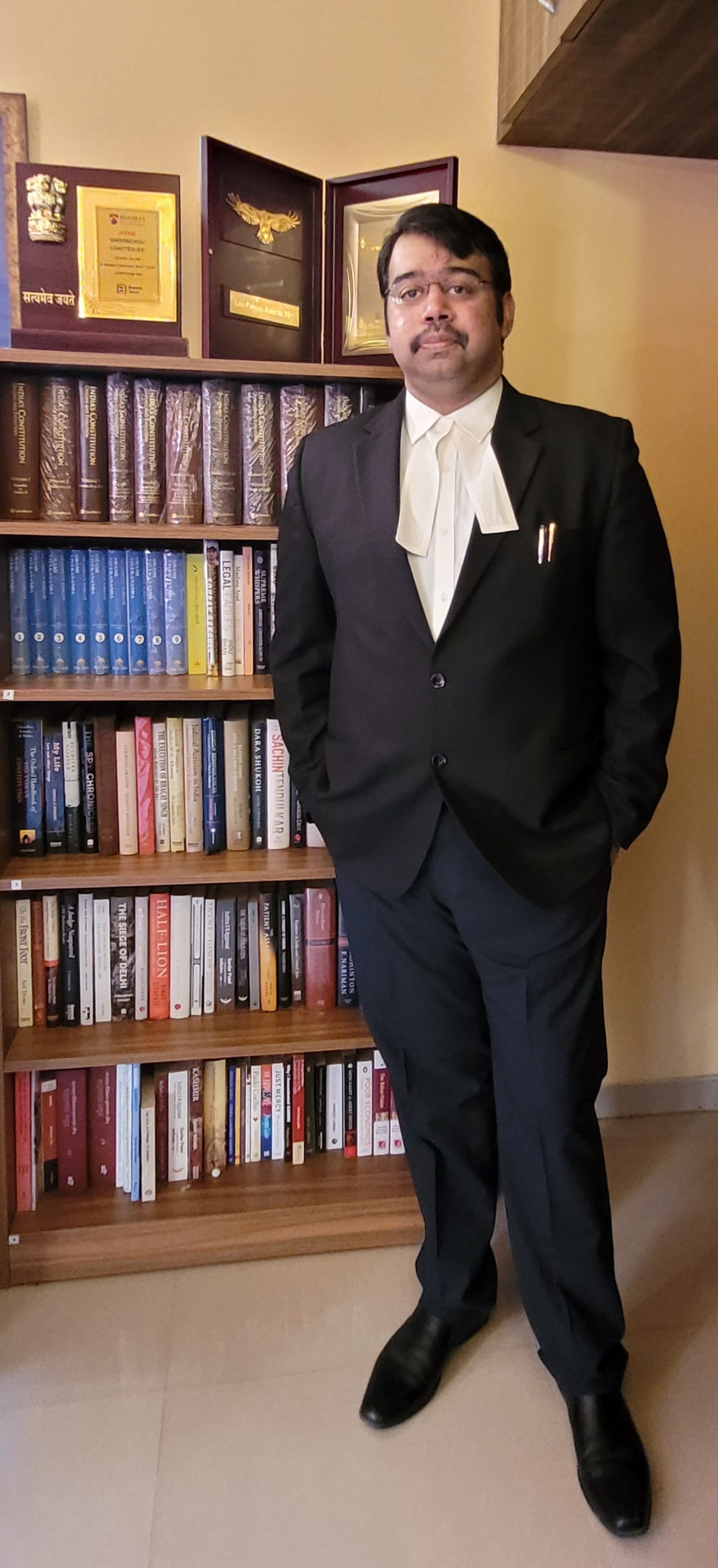
    Earlier, you worked as a Principal Associate for Saraf and Partners, and now you are engaged in your own practice at Law Chambers of Swarnendu Chatterjee. How did you decide upon establishing your own practice and what are the challenges one can expect when making this move in their legal career?

    I had an amazing experience working as a Managing Associate in L&L Partners and thereafter as a Principal Associate in Saraf and Partners, Law Offices. I was in the dispute resolution team in both firms.

    In L&L, I was working with Mr Wasim Beg (Partner). It was an awesome experience for me. He is an excellent human being and has an open mind. He always listens to the ideas and promotes his team members. His forte being criminal law, I had the opportunity to hone my skills in that area by assisting him in some of the most complex and difficult matters in criminal law before the Hon’ble Delhi High Court, Bombay High Court, Esplanade Court (Mumbai), Rouse Avenue Court Complex, Tis Hazari Court Complex and Patiala House Court Complex.

    In Saraf and Partners, I had the opportunity to represent clients in Insolvency matters, like top nationalized banks, private banks and top resolution professionals, et all. I worked mainly in matters relating to Insolvency Disputes, SARFEASI, Companies Act and some matters related to civil disputes and arbitration.

    As I had the idea of counsel practice in my mind and I always wanted to argue cases, I thought, it is the best time now to branch out and do what I always intended to do. Hence, this decision to move out and establish my own chambers.

    It is not easy to move out from the comfort of the heavy pay packages which the firms offer you, especially when you have experienced something like the pandemic (Covid-19). However, sometimes, you must decide, what you want to do and make a move accordingly.

    As I have mentioned, I wanted to be an arguing counsel and practice accordingly, therefore, I planned a move at a juncture, when we can dare and say we have braved the waves of Covid-19 and even if it comes back, we are presumably well prepared with the e-courts system working well in Delhi at least.

    I intend to grow my practice as a counsel and as an Advocate-On-Record. My chambers are open for people/clients from every stratum. 

    Young lawyers, who intend to learn and work hard and most importantly are enthusiastic about litigation (not form ideas based on paycheque and the clock) are welcome to join. However, I do not intend to have a big team of juniors/colleagues. A small and efficient team works well for me.

    Finally, a word of advice for the lawyers and law graduates who are passionate about litigation?

    The only advice which I can share is litigation is not a T20 or One-Day match. It takes time to flourish. Hence, as I said, one needs patience, and the ability to work hard and research well. One should read about law, literature and the works of great advocates (like MC Setalvad, PP Rao, Shanti Bhushan, FS Nariman and so on).

    Further, write research papers, and hone your skills, so that the ability to write and bring out argumentative skills emanate from within.

    Further, do not get dissuaded by the common understanding that a particular branch of law pays well and others do not. With time, this profession rewards you with all laurels and honours provided you treat the same with all your best efforts and honesty.

    Lastly, do not go by the clock, learn to work hard and long, when required and try to advise clients properly and thereafter leave it to them for their decision; meaning do not try to make money when according to you the case has no merit at all. Even if it has 1% merit, you can go for it.

    Rest is all about how it spans out. There is a common understanding, that you need godfathers to flourish in litigation. It is not always true. If you don’t have godfathers, don’t feel out of place, then take it like Kapil’s Devils in the 1983 world cup. No one gives you a chance or has any expectations upfront, therefore, once you have the chance, make the most of it and make a mark in your career.

    All the best to team SuperLawyer for this interview. Cheers and thanks!!


    Connect with Swarnendu Chatterjee –

  • In conversation with Anirudh Suresh – Founder and Partner at Aristo Legal and featured in the list of “Top 50 Disputes lawyers in Asia” by Thomson Reuters

    In conversation with Anirudh Suresh – Founder and Partner at Aristo Legal and featured in the list of “Top 50 Disputes lawyers in Asia” by Thomson Reuters

    This interview has been published by Sonali Parashar and the SuperLawyer Team


    How would you like to introduce yourself to our readers?

    I am Anirudh Suresh, Founder of Aristo Legal, a full-service pan Indian corporate law firm. My success story as a first-generation lawyer was recently published by Brut as I was recognised among the Top 50 Disputes Lawyers in Asia (Litigation and Arbitration) by Thomson Reuters on the basis of my work, market feedback and client recommendations. My interest in law and legal enforcement goes back to my 10th grade. While I don’t exactly recall the genesis of this interest, I sure till date remember and feel its intensity.

    We get that being a first-generation lawyer, it is difficult to find one’s footing. You started off as a Litigating Lawyer and then you moved up to become a Corporate Lawyer. Can you share what all struggles did you face while being a Litigating Lawyer and then as a Corporate Lawyer? What all skills did you learn as a Litigating Lawyer which are now assisting you in your current role?

    As a Litigating Lawyer for the first 5 years, I was working 8 AM to 8 PM, 365 days a year but I never complained about it as I was involved in my work deeply and enjoyed the learning experience step by step. It’s a matter of interest, at the end of the day. I used to appear before all courts in Bangalore for all sorts of matters and this helped me in developing a diverse and strong foundation, eventually allowing me to head the Delhi office of Bathiya Legal successfully as we had a range of matters under the Companies Act, Insolvency and Bankruptcy Code, and Competition Act. I never felt any of these experiences to be a struggle as I enjoyed the work and liked what I was doing. In fact, it never felt like work either. So, the knowledge and court craft I had developed as a litigation lawyer enabled me to successfully implement it for the corporate litigations matters that I took. This journey has given me the confidence to handle any matter before any court.

    You’ve accomplished so much in your career in such a short time; what skills do you think a law student should develop in order to pursue a career in Corporate Law?

    Firstly, I feel like I still have a lot to achieve. I would recommend that law students read the entire commentary on a subject rather than reading only the textbook. This will mean that they would have read thousands of pages, and this reading habit will help improve their drafting skills and legal communication skills. And the hard work put by them in reading so many commentaries will bear fruits when they start practising. Further, they should meet lawyers in different practice areas and understand the practical aspects of those areas. For this, I would recommend students complete at least six months of internship under a corporate law firm or a corporate lawyer. 

    You have graduated with B.A.LL.B. from B.M.S. Law College, and then went on to pursue your PG Diploma and Masters from National Law School of India University and O.P. Jindal Global University. How important do you think it is for a law student to pursue Masters? Does it help one in his career trajectory?

    I often see law students rushing to get a master’s degree immediately after graduating from law. I would recommend that the students should start their practice in a particular area of law and get accustomed to a particular practice area as a working professional and then pursue Masters in that relevant practice area. This would make the master’s degree have value as your work experience and your interest would align with it. 

    You have also led the Delhi Office of Bathiya Legal for about 3.5 years. What exactly were your responsibilities while you were there? How would you describe your experience of working at such a reputed law firm? 

    My responsibility as the head of the Delhi Office was to handle all the corporate litigation matters in Delhi, Jaipur and Chandigarh and work closely on M&A and Private Equity transactions when the buy-side or the sell-side was based in Delhi. I regularly appeared before various forums such as Supreme Court, High Court, NCLAT, NCLT, DRT, Consumer forums, etc. And this journey helped me develop myself as an advocate and realise my potential. I will forever be grateful for the platform that Bathiya Legal gave me. The amount of confidence, trust, and faith that the Partners put in me, and I hope I have reciprocated the same by ensuring positive results with the best of my efforts. I was very much impressed with the values, ethical standards and calmness to approach of the Partners which I too hope to implement. I can go on writing volumes about the positive influence this firm has had on me.

    Your work as a corporate lawyer has earned you a well-deserved appreciation in the legal industry. What have been your key learnings to date? And what does it feel like to be recognized among the Top 50 Disputes Lawyers in Asia (Litigation and Arbitration) by Thomson Reuters?

    I would like to reiterate that I still have a long way to go as known is a drop and unknown is an ocean. My key learnings to date would be that Client satisfaction is key and this can be achieved with extensive research and ensuring timely deliverables. And I feel that my work in the past which involved getting successful reliefs for clients in high profile precedent-setting matters has been acknowledged by this recognition bestowed upon me by Thomson Reuters, Asian Legal Business. 

    It is now close to a decade that you’ve been in the legal profession. What do you think is the difference between the law profession right now and the profession a decade back? And, what all changes would you like to see in our Indian Law Profession?

    The legal profession has completely changed in the past decade. Both substantively and procedurally, one could probably call it one of the most dynamic and important decades. Many new age laws such as the Insolvency and Bankruptcy Code, Companies Act being overhauled, Data protection Law etc. have come up and they are constantly subject to change based on different interpretations given by the courts every other day or based on amendments passed by the government to keep pace with the rapidly growing economy. In terms of practice, the profession and the professionals have been highly digitalised, and it becomes vital for lawyers to be tech-savvy.  

    I would like to see more courts make way for hybrid hearings such as NCLT and NCLAT. The normalization of hybrid hearings would be a much welcome development towards implementation of the online dispute resolution. I would also like to see long term internships that range at least 6 months being made mandatory for law students during their final as it helps them to get a true picture of a particular practice area.

    What would be your parting advice to the budding lawyers? How would you like to inspire those who are unsure about their future in the profession?

    Read, read, read. One should find what motivates them to keep them going. A healthy relationship with colleagues, respect towards seniors and ensuring timely deliverables to clients should be a habit rather than a mode of precaution. Never look back and compare yourself with peers, just keep yourself occupied all the time and the work you do will automatically lead you to the path suitable to you. 

    Get in touch with Anirudh Suresh:

  • Aditya Vaibhav Singh-Advocate on Record, Supreme Court of India| Head of Chambers, Chambers of Aditya Vaibhav

    Aditya Vaibhav Singh-Advocate on Record, Supreme Court of India| Head of Chambers, Chambers of Aditya Vaibhav

    This interview has been published by Tanmaya Sharma. The Interview was taken by The SuperLawyer Team.


    What is your current role? What was your journey like? 

    I am presently an Advocate on Record in the Hon’ble Supreme Court of India. I enrolled with the Bar Council of Delhi in 2013 and have since been practising in the Hon’ble Delhi High Court, and various Courts and Tribunals in Delhi apart from the Hon’ble Supreme Court of India. After completing my school at St. Joseph’s College, Allahabad in 2008, I graduated from Dr Ram Manohar Lohiya National Law University in 2013. After working with the law chambers of Mr Gaurav Bhatia, the then Additional Advocate General of UP in the Hon’ble Supreme Court,  I joined the office of Advocate Mr Avninder Singh who was then the Standing Counsel of the Delhi High Court Legal Services Committee. 

    After completing around 1 year with Mr Singh, I joined the chambers of HMJ Mr Navin Chawla, who was then a practising Advocate-On-Record in the Hon’ble Supreme Court and specialised in Commercial, Telecom and Regulatory Litigation. Under his able guidance, I found the interface between technology and law quite interesting and made considerable progress in understanding the legal and procedural concepts involved. HMJ Mr Navin Chawla got elevated as a judge in the Hon’ble High Court of Delhi in 2017 and around the same time, I decided to start my independent practice as well.

    In my journey, I have represented various multinational companies, domestic companies and leading industry associations, etc. I have also been appointed as an arbitrator by the Hon’ble Delhi High Court. I am presently on the criminal law panel of the Hon’ble Delhi High Court Mid Income Group Legal Aid Society. I have also been appointed as amicus curiae by the Hon’ble Delhi High Court. I have experience in regulatory litigation including telecom litigation, arbitration, commercial/civil litigation, land matters, criminal litigation, IPR, cyber law and service matters.

    Being a science student, why did you decide to choose law? Do you appreciate your decision?

    My journey as a lawyer has been both challenging and rewarding. To be honest, my decision to take CLAT was not a very well thought out decision. I was a science student and had secured a good score in my Board examinations and could have easily made it to the cut-off list of the leading universities. However, I decided to appear for the CLAT examination in 2008 because an integrated national level entrance test was being conducted for the first time and the theme of the test coincided with my general aptitude. 

    I was a little confused during the initial years of my journey as a law student. However, once I made a decision, I took every step to make that decision right. Fortunately for me, I started to enjoy reading and applying the law and am very happy and thankful today for deciding to become a lawyer.  However, one thing that I have always kept in mind is that we, as lawyers, are always students of law. Hence, approaching any problem with humility is something which I endeavour to practice in my professional as well as personal life. 

    I am always thankful to my parents who, despite not belonging to the legal fraternity,  have always been supportive of my decisions and my professional journey.

    How do you see the law as a profession? 

    Very early on, I had learnt that law is not a profession to only earn money. It’s a profession to learn, grow and apply. Throughout the journey, I have always been cognizant of the fact that Advocates have a greater responsibility as ‘Officers of the Court’ and hence have always made a sincere effort in discharging my duties effectively towards the Bench irrespective of the nature of the client I am representing or whether I am acting as the Amicus. 

    I do not say that earning fees is not important but we as Advocates need to understand that our clients come from different walks of life. Empathy is what helps Advocates understand their clients better and put their best case forward. 

    Seniors play a vital role in shaping one’s personality. Would you like to share your thoughts on the same?

    I firmly believe that bonhomie is an integral part of the legal profession. On weekends, I make it a point to pay my regards to the senior members of the Bar who have now retired or are not that active in Courts, as their love and affection has nurtured not only my legal career but also my personality as a lawyer. I have learnt more about law, over a cup of coffee, from the senior members of the Bar than reading any legal commentary on the subject. I believe, a word of encouragement goes a long way and I endeavour to pass on the care and affection that I received in my career to the younger members of the Bar and the interns whenever called upon. Mr M. R. Chawla who is a veteran of the Delhi Bar with over 55 years of experience, is one such person who deserves a special mention in my journey. My interactions with him have shaped who I am today, his wit and sharp sense of humour while sharing anecdotes about his long career spanning around 6 decades, have provided me perspective to move forward.

    Profile photo of Aditya Vaibhav Singh

    You had great mentors throughout. How do you carry the legacy to support the young lawyers?

    I am grateful to have received the guidance of so many excellent mentors throughout my journey and all of them are a constant source of inspiration. With the same view, ‘Chambers of Aditya Vaibhav’, believes in encouraging first-generation lawyers, to discover their niche in the legal profession. I would like to emphasize that the above statement does not mean that I hold back from extending support to worthy second or third generation lawyers. However, being a first-generation lawyer, there is a sense of empathy as usually there is a lack of guidance for them in the profession.

    Would you like to give some advice to the law students? How important are extracurricular activities with academics?

    My advice to law students would be to get their foundation right. During my 5 years in law school, I paid special attention to 6 subjects which are Constitutional Law, Contracts Law, Administrative Law, Interpretation of Statutes, Property Law and Criminal Law. These subjects will help you get your basics clear about substantive rights and to understand how to read law. As far as procedural laws are concerned, I believe they can only be imbibed well once you start practising them on a daily basis. Other than academics, participating in extra-curricular activities is important as well. I understand that managing moots, publications, examinations, internships etc. can get a little overwhelming for a law student. However, my advice would be to not get discouraged. One can easily manage these activities with a little bit of planning and strategy. Do not take up more than one moot in a semester and only intern during your vacations. The idea behind all these activities is to keep you occupied and to keep exploring. These activities also teach you teamwork and co-operation which are some of the most important traits you should have once you join the legal profession. To students who are just entering into this vast ocean of law, I would like to say that with humility, sincerity and a little bit of faith, one can achieve anything that their hearts desire.

    Most Advocates wish for their independent practice of law. What one must focus on in independent practice?

    My advice to Advocates who are thinking of going independent would be to be sure of their skills before taking the leap of faith. Clients don’t look for a fancy office or an entourage of associates. They do look forward to the assurance that their matters would be handled diligently coupled with the greatest sense of sincerity. Living up to that faith is what matters. Everything else falls into place once you have built that foundation of trust. It is your word that has value, everything else is transient.  


    Get in touch with:

  • ADITYA JAIN, CO-FOUNDER OF J&G ADVOCATES ON ESTABLISHING A PRACTICE IN THE FIELD OF DISPUTE RESOLUTION, MEDICAL & HEALTHCARE LAWS AND WHITE-COLLAR CRIMES

    ADITYA JAIN, CO-FOUNDER OF J&G ADVOCATES ON ESTABLISHING A PRACTICE IN THE FIELD OF DISPUTE RESOLUTION, MEDICAL & HEALTHCARE LAWS AND WHITE-COLLAR CRIMES

    This interview has been published by Isam Kabir and The Super Lawyer team.

    Please tell us about your journey towards choosing the legal field. What made you pursue a career in law, given that you were a science student?

    Law somehow always intrigued me as a child because of its dynamic and ever-changing nature. As a student, I was always fascinated by dozens of books that lawyers possessed and what they did with all of them. My uncle is a corporate lawyer, and I remember visiting his office once. I was somehow amazed at the setup, his command over the language, and his ability to organize and analyze facts.

    My interests as a school student were rooted in Geography, Physics, Mathematics and English. An explorer by nature, I wished to study everything in-depth, so I found formal schooling education very dull.

    Law allows you to explore every single day.

    You have pursued multiple internships during law school in different areas of practice. How have these internships shaped your career and choices? What do you believe is the relevance of internships for a law student?

    Yes, I am a lawyer today because of my internship experiences. I am fortunate to have gotten an opportunity to pursue 14 different internships ranging from NGOs, Companies, Law Firms, Litigation Lawyers at The Supreme Court, High Courts and Trial Courts and with a Policy Research Centre. 

    From this vast palate of internships, I decided that litigation and dispute resolution would be my first choice. 

    Coming to its relevance, I feel that litigation gives you real-world exposure to the subjects that you read in college. One must structure them in such a way so that maximum benefit can be derived out of them. Try to structure your internships around the laws that you read in the preceding semester. My advice would be to keep on experimenting with your internship preferences till you reach your final year.

    With your rich experience at both The Supreme Court and the Rajasthan High Court, what key differences have you noticed in the work culture at the courts in Delhi and Rajasthan?

    As different as Chalk and Cheese!

    I am glad that I got an opportunity to work in both these jurisdictions. For me, I started working at:

    Supreme Court on the Government’s side for two years, and simultaneously worked in Delhi High Court and other Tribunals.

    Learning: Drafting of Special Leave Petition, Registry and filing work at SC, Patience and Perseverance in dealing with Government Officials, Court preparedness and ability to think on your feet.

    Rajasthan High Court, Jaipur and Jodhpur (along with frequent visits to the SC) and Trial Courts and Tribunals.

    Learning: Command over the Hindi language for Trial Courts, Cross-Examination of Witnesses, Preparing evidence, Understanding the Relevance of Facts at Trial Stage. Appreciation of evidence by Appellate Courts. The difference in the practice of Civil Law, Criminal Law, Service Law and Commercial Law.

    Advisory for Startups in Healthcare and E-commerce Space.

    Learning: Relevance of understanding a business from a commercial perspective and understanding the needs of a company and its future goals. Most importantly, building a contract and a strategy in sync with the business processes.

    Being a founding partner in a law firm and becoming an Advocate-on-Record at the Supreme Court of India.

    Learning: Nothing comes easily, and initially, you have to be an all-rounder to establish your enterprise, the importance of team building and leading by example, of fruitful conversations and discussions. Advocate-on-Record is a huge responsibility as it involves diligence and allegiance to your parent court, i.e. The Supreme Court. You are responsible for the cases that are being filed in your name.

    In your opinion, is it better for a fresh graduate to begin their litigation career at the Supreme Court, or is it better to practice at the courts in one’s city, considering one would have a well-established network there?

    I took a reverse trajectory in the sense that I started from the Supreme Court, then worked at the High Courts and Trial Courts for a while to establish my practice. Today, I am an Advocate-on-Record at the Supreme Court of India. Litigation is a challenging ball game altogether.

    Today I would like to break a well-established myth that one should work for 5-7 years with a Senior. I say, don’t. Work for 2-3 years at max, identify your area of interest and then go independent. You are then required to catch up with your peers by running around and researching about Courts/Tribunals where there is a vacuum of good lawyers. Go and pursue your area of interest, and in 2-3 years, you will be able to create your space.

    Do not limit yourself to your city, instead use your existing connections to the maximum. Start with pro bono work, and slowly build your network.

    What inspired you to go independent and start your law firm, J&G Advocates, six years into practice? Please share some details about your firm’s areas of expertise?

    I have an exciting story to tell for this segment. Like other individuals, I also wanted to set up my firm. Initially, I worked for two years at the Supreme Court of India and realized that until & unless I don’t brush up my basics and trial skills, I won’t become a complete and competent lawyer. At the Supreme Court, I was fortunate enough to argue some good cases given to me by my seniors, and I learnt a lot.

    When we started the firm, my colleague Neha had only 30-40 cases. In 1.5 years, the number rose to 120+ (despite the lockdown) because of our consistency and persistence. We did suffer in the past year, but we just didn’t stop working. The sheer independence one gets with his/her firm is unparalleled, even more than Startups (who are majorly investor driven).

    Our firm specializes in Commercial Litigation, Dispute Resolution, White Collar Crimes, and Healthcare and Medical Laws.

    How has the Diploma in Entrepreneurship Administration and Business Laws from NUJS shaped you as a professional? 

    Primarily, it sparked my interest in the practice of commercial law and litigation. Secondly, the course structure and lectures are nuanced and help get your basics right.

    But, unfortunately, I think that is where they grab the bull by the horn.

    How did the pandemic change your approach towards work, and how did it affect your practice or career plans?

    To speak the truth, it affected our practice since the pandemic hit when the firm was only six months old. We started our practice on 1st October 2019, and COVID struck us right in March 2020. 

    As a ray of hope, I cleared my Advocate-on-Record Exam on 23rd March 2020. It opened another avenue for us as our work in the Supreme Court increased.

    We also started doing a lot of advisory and non-litigation work to balance our work and compensate for our litigation practice during the lockdown.

    You have expressed your compassion for health care laws in interviews as well as on public platforms. How did you develop an interest in such a niche and unexplored area of law, and how do you continue to cultivate your interest in this area?

    As a kid, I was always annoyed by Pharmaceuticals’ overpricing of drugs and medical equipment. The sufferer is the common man. 

    While in my initial years of practice, I got a chance to look after a patient’s medical negligence. We got a compensation of Rs 5 lakhs for him from the Courts, which piqued my interest in this area of law.

    Yet another side of Medical Law, which intrigued me, is Digital Health and its regulation, as I feel that it is the need of the future. But, at the same time, we need to have proper systems to regulate these laws.

    I recently launched a course on Medical and Healthcare Laws with Enhelion, which law students can pursue to get an idea of the sectoral regulations.

    How would you describe your career choices, starting from your internships to establishing your firm? Intuitive or well planned?

    I don’t want to sugarcoat things. We all make intuitive decisions, and so did I. It is outstanding to do that, but at the same time learn from them. Even intuitive choices can make you understand the nuances of life. For example, my intuitive decisions helped me plan my future, and at the same time, taught me to never look up to anyone and never look down on anyone!

    College life should be a mix of fun and work, so live it fully while you’re at it. By 4th year you should be able to figure out your career path.

    What advice would you give to lawyers who want to start their practice as well as law students who are in the process of figuring out their interests?

    Kids, if you’re in the fifth year and still haven’t figured out your interest, it’s terrific. In that case, find out what you’re good at and do it. Eventually, you will come to a situation where you would be able to identify your interest and your skill. Then, choose a career option, which has both these elements.

    If you want to start your practice, just follow a few things:

    1. Join a decent chamber, and learn the basics of drafting, filing, research and arguments. Do not shy away from dealing with the registry.
    2. Do not compare yourself with your friends who are working in law firms. They must be having a hefty pay package, and you must be getting pittance despite all the sweat and hard work. But ultimately, a litigator would be in a better position five years down the line to establish and run his/her law firm since he would not shy away from doing the tiniest of tasks. To avoid comparison, develop a spiritual sense of being.
    3. No work is negligible. It is about what suits you. If you want to know the society in and out, go to the trial court. Litigation is one of the most fulfilling professions, which gives you money and recognition after a few years. So be patient, and things will come your way.

    Where do you see yourself in the coming five years? What changes in current trends do you expect?

    In the coming five years, we see ourselves expanding wholly in the field of Healthcare and Medical Laws and establishing our presence in this niche area. We also see our firm robustly practised in the Supreme Court and all the Commercial Courts and Tribunals. We further look forward to building collaborations with various law firms to increase headcount and practice areas.

    Is being a second-generation lawyer liberating or restricting?

    My father is a criminal lawyer in Jaipur. From the very outset, he was very strict and never spoon-fed me to get matters or empanelled anywhere. It was evident that I wanted to establish my firm at a certain point. My mother was instrumental and encouraged me to do the same.

    It is majorly about your mindset, you may limit yourself to your father’s area of practice, or you may venture out to newer areas. It’s more about what you dream of and how far are you willing to go to fulfil that dream.

    What professional choices would have differed for you had you been a first-generation lawyer? Would you have preferred a corporate practice over litigation?

    Never. I initially chose to practice in Delhi even when I could have joined my father’s chambers in Rajasthan. The reason was simple and straightforward, and I wanted to see the best in business, how they conduct their cases, and what distinguishes them from the rest. 

    I briefly worked in my father’s chambers from 2015 till 2018 to learn the nuances of Criminal Law and Commercial Writs. He encouraged me to take up my matters and allowed me to argue his cases at times. I still remember him asking me to argue a matter just minutes before the matter was about to close. From this, I developed a habit of going through every file.

    Any parting advice for our readers? What are some critical skills that law students should look to develop to succeed in litigation?

    Read, write and speak! Start this from Day 1, and you will be noticed. A lawyer without the law is like a labourer without skills. 

    Develop the skills of persuasion and patience. I would urge all the young litigators to sit in courts and watch proceedings as much as they can. Observe the skills of client counselling and watch your senior while he counsels a client.

    Make the journey interesting by talking to fellow lawyers, taking their opinions on your cases or vice versa. A true test of a man is in the face of adversity, and litigation precisely does that. It tests you now and then.

    Get in touch with

  • Kailash Vasdev, Senior Advocate, Supreme Court of India, shares his experience on the struggles, challenges of a career in litigation

    Kailash Vasdev, Senior Advocate, Supreme Court of India, shares his experience on the struggles, challenges of a career in litigation

    Kailash Vasdev is a Senior Advocate at the Supreme Court of India. He has worked with Senior Counsel Nonit Lal, then Justice BN Kirpal, former Chief Justice of India. He cleared the AOR exam in 1981. He became member executive of Supreme Court Bar Association in 1991 and was instrumental in creating 1st Advocates Welfare Fund in Supreme Court. He was designated as Senior Advocate in 2000. He has a huge number of cases to his name, including sensitive cases like that on the death penalty. He has more than 1400 reported judgements to his name.
    In this interview we talk to him about:
    • Designation of Senior Advocates
    • Qualities expected of a fresh entrant in litigation
    • Importance of mentors at the starting of one’s career.


    HOW WOULD YOU LIKE TO INTRODUCE YOURSELF TO OUR READERS? PLEASE TELL US SOMETHING ABOUT YOUR PRE-COLLEGE LIFE?

    I am a lawyer who respects the law and prefer to discharge my duties without fear. It is a lawyer’s obligation to discharge his professional obligations with promptitude, correctness, and expedition.


    COULD YOU TELL OUR READERS ABOUT THE FIRST TIME THAT YOU APPEARED IN COURT?

    Within fifteen days of joining the profession in 1975, we were appointed as amicus to assist detenues under the Detention laws prevailing during the emergency. We were to assist the detenues in obtaining facilities in detention like medical care and other amenities. I knew nothing about detention. The Judge and the Additional Solicitor knew everything about this law. It was challenging for a fifteen days old lawyer to stand frightened in court with a single purpose of getting in client relief. Success came with learning.


    HOW IMPORTANT IS IT TO HAVE MENTORS FOR A YOUNG LAWYER IN STARTING HIS CAREER IN LITIGATION?

    That can be controversial because in today’s professional ethics new entrants necessarily look at high incomes. Good mentors do not have high incomes because they follow ethics both in fees and practice. Youngsters do not accept this. It was after fifteen years that we felt that we had learned some law. Today the feelings are different because all learning comes from behind the screen. Therefore, mentor selection is a choice for young lawyers.


    WHAT FACTORS INFLUENCED YOUR DECISION TO BECOME AN AOR?

    Drafting – learning to draft well because when you draft a petition you learn to be precise on facts and specific on the law. The absence of either kills a good case. Drafting is a learning experience.


    DID YOU REQUIRE ANY PREPARATION TO APPEAR FOR THE SUPREME COURT AOR EXAM?

    There is more to the AOR post exam. There is a prescribed syllabus. One needs to follow the syllabus and prepare themselves for the exam. But the real skills are developed post the exam.


    WHAT SKILL SET IS REQUIRED FOR A YOUNG LAWYER AIMING TO BE DESIGNATED SENIOR ADVOCATE IN THEIR CAREER?

    There are no more skills set – especially after 2017 judgement laying down guidelines for designation of a senior advocate. Eligibility set down by S.C. contractionary to Advocate Act where seniorship was a privilege by the court.

    After Supreme Court judgement and High Court Rules it requires eligibility and skills are no longer required.


    WHAT QUALITIES WILL YOU LOOK FOR HIRING A JUNIOR?

    A young entrant is to learn as he gets along. He must be dedicated. The only single requirement is dedication.


    PLEASE TELL OUR READERS OF SOME OF YOUR MOST MEMORABLE CASES?

    1. Bhushan Singh v. the State of Punjab, 1983 judgment: Three people were sentenced to death; the Supreme Court acquitted one and reduced the sentence of two to life.
    2. R.C. Sood v. the State of Rajasthan: High Court had created false evidence and relied on non-existing persons.
    3. Detention Cases: On false implication, many people were taken into custody. The satisfaction of getting a detenue released on a false accusation is unparalleled.


     WHAT WOULD BE YOUR WORD OF ADVICE TO OUR READERS?

    Keep money as your last call. It comes with dedication. Most importantly dedicate your time reading, understanding and improving the judicially settled law because you can change the judicial pronouncements.