Tag: Supreme Court

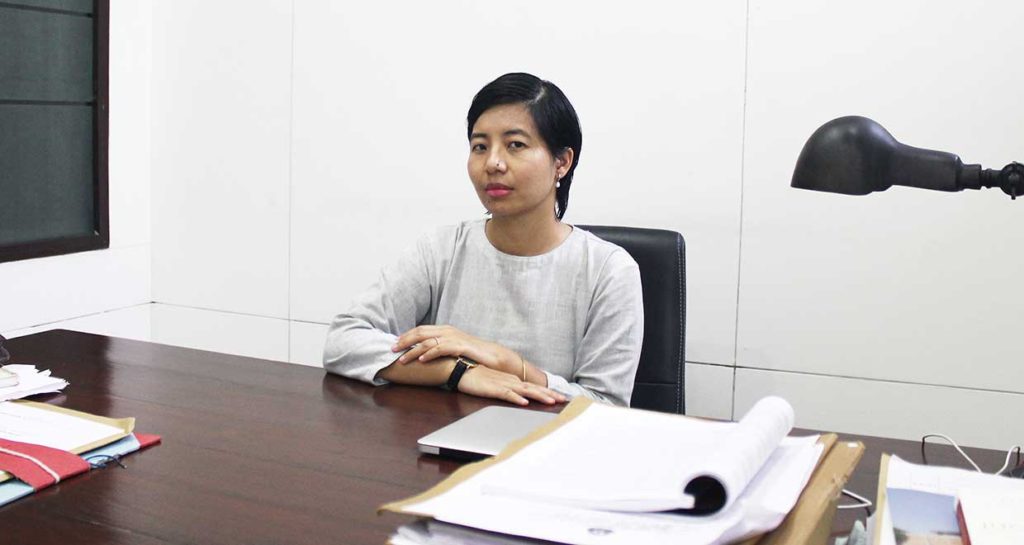
  • Ila Haldia, Advocate, Supreme Court, on starting out with civil and criminal litigation at Supreme Court

    Ila Haldia, Advocate, Supreme Court, on starting out with civil and criminal litigation at Supreme Court

    Ila Haldia graduated from Government Law College, Mumbai in 2013. She has an enviable academic record and has an excellent series of internships at top law firms including DSK Legal, Trilegal, AMSS, Khaitan & Co., AZB & Partners etc. She started practising at the Supreme Court of India soon after graduation. She is currently practising general civil and criminal litigation at the Supreme Court under the tutelage of Dr. J.N. Dubey, Senior Advocate, Supreme Court.

    In this interview, she talks about:

    • Law school experience at GLC, Mumbai
    • Choosing litigation over corporate law
    • Practising at the Supreme Court


    What brought you into legal studies?

    Hi, I am Ila Haldia. I am currently practising at the Supreme Court under the tutelage of Dr. J.N. Dubey, Senior Advocate, Supreme Court. Unlike many, my journey in legal studies began quite unexpectedly. I was a science student and never considered law as a career option. However, while studying science, I realised that engineering was not my cup of tea and so I decided to look for other options. In the pursuit of looking for alternate options, I met many people from different professions and through this process, I met a few lawyers. Having interacted with these lawyers, I felt drawn to the profession since I was impressed by the kind of knowledge they possessed and their command over their thought process and so I decided to pursue law. My parents were supportive of this decision of mine and thought that law would be a career suitable to my abilities.


    Tell us about your years in law school. What made your journey with GLC worth it?

    To be honest, it took me a year to get used to GLC. Initially, I was a little lost and wasn’t sure whether I had made the right decision. But slowly, I started getting into the groove as law started rubbing on to me. In addition to law, I had some amazing friends and seniors who helped me through thick and thin. One thing that anyone studying at GLC encounters is the ubiquitous phrase: “GLC is like a buffet which serves the best of dishes but it is up to you to choose the dishes”. At first, I never quite understood this phrase, but now when I look back, I realise that GLC is quite like such a buffet. The curriculum at GLC gave us the freedom to shape our careers according to our own accord. We had all the options and guidance available but none of which was imposed. So it really came down to individual choices. Many used this freedom to nurture their careers the others used it otherwise. It is this sense of freedom and space that made GLC absolutely worth it and stand apart from all other law colleges!


    Which internships that you have pursued will you consider to be right at the top and why? Tell us about some interesting internship experiences.

    Interestingly, I have had internships at many big law firms, but to me the most memorable has been one at a small firm in Bombay. We were a team of 5-6 lawyers/law students and as such the work responsibilities were not differentiated between lawyers and law students and therefore it was a really good learning experience for me. I remember my very first assignment at this firm was to assist an associate in drafting a reply to a very complex 30 pages show cause notice from the customs authority. As luck would have it, the associate I was supposed to assist was caught up with other work as a result of which the responsibility fell on my shoulders to draft the reply. Upon reviewing the draft, my senior was very impressed with my drafting skills and rewarded me for having completed this difficult task all by myself without having any prior drafting experience. Thus, I learnt that it is important to keep doing whatever work comes your way, no matter how big or small. If one keeps working and keeps doing, he/she will find an area where his/her interests lie. So look for internships which provide you work across the platform and be ready to seize whatever opportunity comes your way.


    ila-haldia-2

    Soon after graduation, you started practicing before the Supreme Court of India. Did you ever plan to join a corporate law firm? Do you plan to pursue litigation from now onwards?

    Somehow, at first every law student’s aim is to land the highest paying job and since such packages are mostly offered by corporate law firms the aim is to get into such law firms. I was also party to this type of thinking and in fact tried to get internships in all the big law firms in their corporate department. But slowly, as I got more involved in the “corporate culture” I realised that this was not my calling. There was always this uncertainty in my head regarding corporate law since it did not involve court work. So through this process of elimination, I decided to pursue litigation and was most fortunate to get the opportunity to work at the Supreme Court of India. However, I am not restricted to the Supreme Court only, I also appear before other courts and tribunals.

    As far as my future plans are concerned, I don’t believe in long term planning. My philosophy is to do what is in hand and let’s see where it takes me. Having said that, I do hope to start my independent practice in the coming future.


    What are you main practice areas? How has been your experience so far?

    We are into general civil and criminal litigation. The experience so far has been extremely enriching and has broadened my horizons. I have not only matured as a lawyer but also as an individual. Litigation has taught me to have a structured thought process, improvise and think on my feet.


    What is your workday like? Which would be the most memorable case you argued on?

    In litigation, there is a lot of work. From morning till evening the whole day is consumed in courtrooms and chambers. So one needs to be sure that they like the work and also the work environment or else it becomes overwhelming and stressful. There are times when we have to appear in court without having a complete idea about the case and these situations help in learning how to filter irrelevant information and how to improvise in front of the judge.

    There was an early hearing application which I had to argue before a three judge bench headed by the then CJI Justice Lodha. Usually, early hearing applications are only heard on the point of urgency and the merits of the case are not argued, however on that particular day Justice Lodha decided to hear the cases on merits and took all the lawyers, including me, appearing in early hearing applications off-guard. Since, my case was listed as item 9, I hardly had the time to read through the entire file and so when my case was called out it all boiled down to improvising and succinctly putting forth the arguments which ultimately helped me in winning the case. The profession requires one to think clearly and quickly which only comes with constant practice and observation.

    The best part about litigation is that there is hardly anything predictable except for the fact that you have to work constantly. Another memorable case that I have argued was one before the National Consumer Disputes Redressal Commission. The case related to claim of insurance by a bus owner, however, the said case had been dismissed in default and we had filed the restoration application after delay of 2 and half years! After 2-3 hearings of immense grilling, the matter was finally restored however, the same was dismissed on merits. However, the presiding judge acknowledged my hard work and made a mention of the same in the judgment itself! Thus, despite the adverse order against my client, it was an achievement for me since my hard work had been acknowledged.


    How necessary is it to have a mentor/guide to handhold a young lawyer while still in the formative years of litigation?

    It is extremely important to have a mentor in litigation. I couldn’t have come this far without my senior. There is so much to learn in practice that it can become overwhelming. Having a mentor gives one support and structure to the learning curve of a young lawyer. Making mistakes is inevitable and only a mentor can help in minimising and dealing with them.


    ila-haldia-3

    What are the difficulties people face in their early days of practice? How is it turning out for you? How many years of hard work does it require to build a firm clientele?

    Initially, the responsibility of handling even a single case seemed overwhelming. I remember even drafting an entire petition seemed like a huge task to me but now with constant practice, the process has eased and now I am able to research the law, draft the petition and argue the matter in court. Same goes with arguing in court, initially it was terrifying to even take a ‘pass-over’ but now with passage of time and experience that initial hesitation has also vanished.

    A lot of people say that lawyers who don’t have a family legacy will find it very difficult to build a reputed practice. This may be true to some extent, but from what I have gathered, any lawyer who puts in even a reasonable amount of hard work is sure to go a long way in litigation. It may take some time, which may differ from lawyer to lawyer, but the hard work does pay off which is why there are so many successful first generation lawyers


    A lot of law students prefer corporate jobs over a career in litigation. What is your take on this? Is it better to work in the corporate sector for a few years before starting litigation?

    Well, I feel it’s a personal choice. If the interest of a law student lies in corporate law then by all means he/she should pursue it, however, I do not recommend seeking a corporate job only because of the perquisites that it offers. Initially it may be exciting but with passage of time, money does not bring job satisfaction which may lead to frustration. Many law students, do not opt for litigation/counsel practice because of low salaries. It is true that in the initial years the money is not as much in litigation but if one puts in a sincere amount of hard work then there is no looking back.


    What would be your parting message to law students who want to litigate just after graduation?

    As a lawyer in litigation, keep working hard and be patient. It takes years for a bamboo seed to start growing but once it shoots, the growth is exponential. So don’t get dismayed if the results don’t show. Have faith in your abilities and clarity in your thoughts.

    Also my message to all law students who are struggling to find their path, would be to just go with the flow and keep doing whatever comes your way and enjoy your college life!

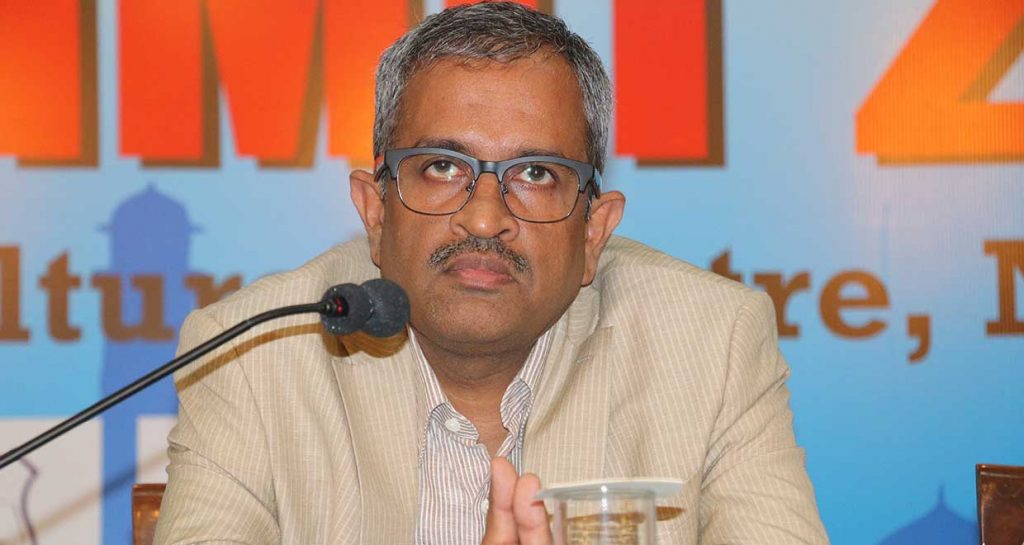
  • Shishir Dholakia, Senior Counsel, Supreme Court, on a career in Arbitration in India and the White Industries effect

    Shishir Dholakia, Senior Counsel, Supreme Court, on a career in Arbitration in India and the White Industries effect

    Mr. Shishir Dholakia is a Senior Counsel at the Supreme Court of India with 45 years of experience in litigation practice, over 1000+ cases with specialization in arbitration, commercial and tax laws. He is a leading expert on arbitration law, in particular on the value and applicability of the UNCITRAL Model Law to India.

    The GNLU Digital Media Team had the opportunity to interview him at ‘Changing Face of Arbitration’ seminar about some very specific areas of the Arbitration Law in India.


    What would be your advice to law students who wish to take up arbitration as a career?


    What kind of skills must a student have if he/she wants to take-up arbitration?


    What are your comments on the current state of Arbitration Law in India?


    After the recent White Industries award which went against India, what do you think shall be the implication on the Arbitration regime of our country?


    Certain International Commentators have taken a counter view and they have argued that the host state should keep an eye on functioning on Judiciary. What are your views?


    Some newspaper reports has suggested that the Govt. of India has started revising all its BITs after this award. What do you think can be done for improving the investment law regime as a whole?

  • Kartikey Mahajan, LLM Candidate, Harvard, on mooting, practice at the Supreme Court, and plans for the future

    Kartikey Mahajan, LLM Candidate, Harvard, on mooting, practice at the Supreme Court, and plans for the future

    kartikey-m1Kartikey Mahajan graduated from NLU, Jodhpur in 2011. He has been practicing as an Advocate at the Supreme Court of India, after a stint at Luthra & Luthra. Recently he got admitted into an LL.M. programme at Harvard Law School, with a 50% tuition waiver.

    We took this opportunity to ask him about:

    • Being among the Top Five Oralists at the  World Finals of Stetson Environmental Moot Court
    • Practising as an advocate at the Supreme Court of India
    • Pursuing an LL.M from Harvard Law School


    How would you like to introduce yourself to our readers?

    I did my schooling from Delhi Public School, Mathura Road, New Delhi. Thereafter I decided to pursue law as a career and joined National Law University, Jodhpur. Law school provided me with a platform to participate in a number of moot court competitions and be a part of different committees in various capacities. Law school also made it possible for me to intern with some of the biggest names in litigation and as well as the biggest law firms of the country. These opportunities exposed me to different facets of law and also helped me develop a deeper understanding of our society. It also exposed me to various sectors of our economic functioning. After law school, I joined the Project Finance team of Luthra&Luthra Law Offices, Delhi that was one of the coveted teams to join in the country for corporate law at that time. At Luthra&Luthra, I worked on high profile transactions as well as did a lot of policy work for Planning Commission of India in terms of drafting model PPP documents. After Luthra&Luthra, I joined the chambers of Additional Solicitor General of India where I worked on government matters before the Delhi High Court and Supreme Court of India. The ASG allowed me to take my own private briefs which also helped me learn a lot about handling the matters without anyone else’s supervision. Now I am leaving for my masters at Harvard Law School this fall and intend to concentrate on litigation and arbitration related subjects during my LL.M.


    Did any of your family members motivate you to pursue a legal career?

    Both my father and mother are doctors in New Delhi. My father is in private practice and my mother is with a government hospital. I believe a legal background always helps a lawyer in his early days be it any field of law. Although, I didn’t even remotely have a family member in the legal field, my father always wanted me to become a lawyer.

    In litigation particularly, the benefit of having a legal background becomes more tangible early on, as you can land few clients or have an established office space. However, with respect to any field of law a having a legal family background helps understand the law better, as a person can always take help of his/her family member’s experience to understand the nuances of law. But I am strongly of the opinion that in the long run it’s the individual’s hard work and determination, which helps him. Any person can get those easy breaks when he has a legal background but to sustain it over a long period of time and establish oneself as a reputed lawyer, it is always the competence of that person alone.


    How did you manage being an all rounder in school?

    (Kartikey was awarded the Academic Excellence Award Scholarship in school and was also awarded various awards for playing guitar and drums.)

    Well quite frankly I will not call myself an achiever in school. I hardly used to study in school until 9th grade and I was always involved in extra-curricular activities like playing guitar, drums and being part of cricket and basketball teams. It was only during 9th grade that I started paying attention towards studies as the board exams were due next year, therefore my father asked me to pull up my socks. I consequently, started excelling in studies, which helped me secure Academic Excellence Award Scholarship for the next three years. By the time I started concentrating in studies, I had already acquired the skills of playing sports and recreational activities like guitar and drums, which enabled me to continue these activities without spending that much time which one usually requires for learning a skill. So being an all-rounder came quite gradually over a period of time and just required a little bit of time management. It is this time management skill, which I can say that I learnt at school, which is still helping me engage in multiple activities at the same time.


    Were your sure about pursuing a career in the legal field from the beginning?

    I was always fascinated with doing something different from my parents. Initially I started preparing for medical entrances in 11th grade and since I really enjoyed science, I used to excel at the exam preparation courses at Akash Institute in Delhi (an Institute which helps you prepare for medical examinations). But like I said I was always fascinated with doing something different from my parents, which always made me think about exploring different options and law was certainly one of the options which I had in mind. Then in the beginning of 12th grade my school organised a mock moot court for the students and I participated in the same as a speaker. It was during the preparation of that competition that I realized the thrill and excitement associated with the field of law and I knew that a career in law was right for me.


    Tell us in detail about your time at NLU–J.

    During law school, I participated in a number of moot court competitions like Vis East, Stetson Environmental Moot, Henry Durant and ICC Trial. Mooting was one activity, which I extremely liked during law school and I always wanted to perform better every time I participated in a moot. Besides mooting, I published a number of articles in leading national and international journals and as well as periodicals. Whenever, I got time, I also played basketball and cricket to unwind.


    What skills did you acquire while serving various committees at NLUJ?

    I was fortunate enough to be selected in a number of student committees by the faculty at NLUJ for various important positions. All these roles and positions helped me grow as a professional and as well as an individual. This is because working in any committee always involves coordinating and organising important events. This makes you more patient while dealing with your peers and as well as the University staff and outside organisations. Working for events also enables you to handle pressure without taking too much stress. This is true of every committee whether be is Sports, Cultural, Academic Support, Moot Court etc.

    Well I think my fondest memories of working in any student committee were during my fourth year when I was the Secretary of Legal Aid Committee. During the short stint of one year we organised numerous awareness camps on legal issues in nearby villages of Jodhpur. Rajasthan as you would know is a very conservative state, which has practices of dowry, female foeticide etc. prevalent almost in every part of the state. Before my stint at the committee, I always saw those problems from only an academic point of view. My involvement with the committee was the first time that I saw these sensitive issues up close.  These events certainly had a lasting impact on me and really helped me while dealing with the pro-bono cases at the Delhi High Court Legal Services Committee. I would say that I really absorbed a lot of practical nuances when it comes to common societal problems during my stint at the Legal Aid Committee which made me more sensitive towards these issues of dowry death, child rape etc.


    What difference did you find in the Indian and the world rounds?

    (Kartikey was awarded the Fifth Best Oralist Prize at World Finals of Stetson Environmental Moot Court Competition and also the third best oralist at Northern Rounds of Stetson International Environmental Moot Court Competition.)

    There is a marked level of difference in the judging standards of Indian and world rounds. While at the Indian rounds you will routinely find judges who are alumni of the law schools who tend to grill you on the legal points. So they basically tend to give marks based on your legal knowledge. I have been a judge in few competitions like Jessup, Stetson etc. post law school and I have noticed this tendency amongst the Indian judges to mark the students on the basis of their legal knowledge. Basically if you are good in legal knowledge then mostly you will get higher marks in other sections of the scoring sheet like style, etiquette etc. However, in the international rounds of any competition, the emphasis is mostly on the speaker’s speaking style and his ability to answer the questions with poise and clarity. While legal knowledge is relevant during international rounds, but other sections become equally important.

    Well during the World Finals of Stetson, my team members who were in the Indian rounds could not manage to come with me to Florida due to Visa and Financial issues. So ten days before leaving for the World Finals, I had to speak to the national and international organisational members of the competition to amend their rules and allow me to induct a new member from the University who had a valid US Visa. When the permission was granted, I managed to induct a new partner (Rashi Ahooja) for the World Rounds and she prepared everything in just five days and managed to secure the 6th Best Speaker at the World Finals. The entire period after the Indian rounds until the culmination of the World Finals was an exciting period which involved a lot of challenges and made me learn a lot of things like acting under pressure and petitioning the organisations to amend their rules.


    Can you give three essential tips to our readers who wish to ace the oral rounds of an international moot?

    The First tip would be to know your proposition, memorials and the relevant legal issues thoroughly. You cannot not know the above things. A person should equally devote a substantial amount of tine writing down the structure of his arguments and rehearsing them until you master them. In any moot court, a judge would try to deviate you from your structure but a good mooter would always come back to his structure of arguments after answering the judge’s question. Lastly, always remember to speak slowly when it comes to arguing before international judges, as Indian accent tends to be really fast which the judges may not understand. I essentially followed all the above rules while preparing for any round.


    What kind of internships did you do in your law school?

    During law school, I managed to intern at many different places like law firms, counsels, consultancy firms and corporate organisations. This helped me get exposure to different realms of law and different work environments.

    There used to be institutional support for procurement of internships at law school from third year onwards. However, I always managed to secure an internship for myself without relying on the Placement and Internship Cell.


    Did you plan out the course of your internships?

    I did plan out my internships as initially I interned with counsels to try and understand the basic fields of law like contracts, constitution and procedure statutes including arbitration. Then from third year onwards I interned in law and consultancy firms to get an experience of corporate laws.

    I think it is extremely important for a law student to plan the course of his internships as certain internships like a corporate law related internship can be understood better only when one has read and worked on contract law related issues. So basically doing a corporate law internship in the beginning of second year will not make much sense for a law student. Also, if a person is thinking of applying for LL.M, then he must undertake internships, which will help him show his focus towards the field of law that he wishes to pursue in LL.M.


    Can you give us a few tips to ace the art of paper writing?

    Well there is no tip for writing a paper as such. One just needs to start writing and the person becomes better with time. What I would say is that a person should always pick up a novel topic to write, as there is no point writing on something on which already a lot has been written. I have always picked up topics on which I can add to the scholarship of the subject by highlighting my own original viewpoints.


    Tell us how has moot court participations and paper publishing helped you in acquiring skills that are important for a successful legal career?

    They certainly have. Moot courts made me develop the requisite confidence to appear before a judge in litigation. Although many would say that moots are not at all like a real case, to which I would agree as well, but moots give you a style of presentation and help you being thorough. I am so used to appearing in Court without looking much into my file as I acquired this habit while preparing for moot courts. I have also handled an international arbitration in Singapore and I must say that my mooting experience at Vis moot was extremely relevant for that arbitration interms of my presentation style. Legal writing although did not seem to have contributed to my drafting skills, but it helped me develop thought process and delve deeper into certain legal issues.


    How did you manage your academics, curricular and co-curricular activities?

    Well… I was always interested in basketball and cricket, but it was mostly in my first and the last year that I played these sports on a regular basis.

    Like I said before, time management came naturally to me from school itself and it was never hard to manage all these activities at law school.


    Tell us about your experience at Luthra&Luthra?

    I was offered a job at Luthra&Luthra through campus placement. The experience was very interesting as I got to work in one of the most exciting teams in the country for Project Finance. I worked on few huge transactions, which helped me realise the need of a lawyer to pay attention to detail. Also, the experience helped me read very long documents in lesser time and improve my drafting skills by the end of my stint at Luthra&Luthra.


    Why did you switch from a corporate job to a job of a practicing lawyer?

    (After working in a law firm Kartikey started working as a practicing advocate under Mr. Rajeev Mehra, Additional Solicitor General of India.)

    I switched because I always wanted to pursue litigation and arbitration and argue before the courts. I started with Luthra&Luthra because I wanted to save some money to help me tide over the initial years of litigation and at the same time become familiar with commercial documents.

    The initial major challenge was to remain physically standing by the end of the day. Litigation unlike corporate work, involves a lot of running around the courts and even outside the court to conduct client meetings etc., so after working in a corporate firm one looses touch at being that physically active. Then obviously making new clients is always challenging in litigation as clients usually don’t place confidence in young lawyers to handle their cases. I must say that everyday in litigation is a challenge, which comes with its own set of thrills and excitement. You never know what problem can crop up like a small mistake in filing because of which the registry doesn’t put up your matter, like managing multiple courts on the same day, tackling judges on their bad mood days etc. So basically the uncertainties increase in litigation manifold and it was basically understanding that these uncertainties were very much possible on an everyday basis was the initial challenge.


    Tell us about your work at Supreme Court of India.

    I have majorly handled cases at the High Court and then at the Supreme Court. This is because I was associated with the chambers of Additional Solicitor General of India. The government work is really interesting and at the same time very time consuming not allowing you to find enough time for your private matters. So basically I used to handle atleast 8-10 matters a day for the ASG, which also sometimes turned out to be 15-20 matters per day. Obviously not all of them came up for arguments, many had just small applications or asking times for filing rejoinders/counters etc., many had adjournment motions or many required usage of court craft to ensure that the matter was passed over or put at the end of the board so that it can be rolled over to the next day. But what all these matters put together tested was the organisation and coordination abilities of the juniors as we had to coordinate with the government departments and as well as the Standing Counsels for their instructions. Many a times a 500 to 1000 page brief used to arrive in the office at 9 pm with instructions to appear next morning (We all know how disorganised and lethargic government departments can be). So this helped me read the files faster and understand what the relevant points can be in a short span of time. Whenever I used to have a private brief, then I had to face the additional problem of managing my workload.


    Why did you choose Harvard Law School?

    (Kartikey was awarded Jagdish Bhagwati Fellowship (Columbia Law School) Willams Papsworth Studentship (University of Cambridge) Graduate Dean Award (New York University School of Law), all of he declined to pursue an LL.M at Harvard Law School.)

    All these scholarship applications are basically included in the application procedure for the LL.M Programme. Cambridge had a separate scholarship question in which you basically had to state your reasons for applying for a scholarship. NYU had a question on describing a legal issue facing a country or the world and proposing solutions to address the same. As far as Columbia was concerned, it did not have any separate question.

    Harvard has also offered me a tuition waiver of almost 50%, its just that its not a named scholarship like that of Columbia, Cambridge or NYU. I chose Harvard primarily because it has the best faculty for the courses that I am interested in, like Constitutional Law and Policy. Also, candidly speaking, I intend to return to India post LL.M to continue pursuing dispute resolution for which a Harvard LL.M offers intangible benefits over the other LL.M programs.


    What are the necessary traits required to bag a scholarship?

    I think it’s not only about law school but your overall profile. Curiously, I am still not sure as to what did the admissions committee like about me at every college that I got so many scholarships. I think this question is best suited for admission officers to handle.

    But I would like to say that if I have to think of some factors which would have helped me then I would say a good rank at law school (top 2% is a must), international awards at moots, international publications and both government and corporate work experience would be the factors which could have probably helped. But like I said before, I am not even myself sure to give two cents about this.


    kartikey-m4

    Tell us what motivated you to go for a master’s programme?

    I always harboured a desire to do an LL.M since law school. Its just that I didn’t know what I wanted to study during an LL.M. So that’s why I think that work experience is really important for most people as they get better clarity interms of what they want to study and how they want to utilize their time at LL.M which is just for 9 months.

    The reason why I didn’t opt for an LL.M at Indian University is because I have already studied at one of the best law schools of the country and I didn’t think that pursuing an LL.M at another good Indian law school would enhance my skill set or knowledge base. I think an international LL.M programme always helps you develop different perspectives about a particular legal topic as there is a presence of diverse viewpoints of people from around the world. Additionally, studying your interest areas from the best professors of the world and not that of one country, obviously helps you delve deeper into that subject area.


    What is your area of study at Harvard?

    I intend on pursuing Constitutional Law, Negotiations, Civil Procedure, International Commercial Arbitration and other litigation related courses. I also intend to get involved with trial workshops/clinics and learn the American way of litigating.

    From what I have heard from my friends who are Harvard alumni, I think the educational culture at HLS is really intense and demands a lot of time. This is chiefly because of the Socratic method of teaching which is followed at all US Law schools that involves a lot of reading up before coming to class and the class itself involves only discussion with the professor. Lets not discount the fact that a classroom at Harvard would be filled with some of the brightest minds so you can obviously expect a lot of cross-exchange of indepth analysis of legal issues. I think that’s where the fun lies.


    What are your plans after LL.M.?

    I intend to continue with my Litigation and arbitration practice. As far as a job in corporate sector is concerned, that is definitely not cut out for me. Although, I certainly love corporate laws and I intend on continue doing commercial litigation.


    Lastly, what would be your message to our readers?

    I don’t think I am in a position to offer any advice or a guiding principles to anyone at this time. However, I have always tried to follow what my father used to tell me since I was a child which was that one should pursue whatever he or she feels like. There is no set career path for anyone whether be it litigation, law firms or corporate organisations or NGO’s etc. If one really likes whatever he does, he will never get bored of it. People should ask whether they are willing to get up every day and do that kind of work that they are doing. If not then Quit! If yes then I feel possibilities are limitless.

  • Fatima Quraishi on application and work of the post of a judicial clerk at Supreme Court

    Fatima Quraishi on application and work of the post of a judicial clerk at Supreme Court

    fatima-s4

    Fatima is a graduate of 2013 batch of RMLNLU, Lucknow. She has extensive experience of the Supreme Court atmosphere and has worked as a judicial clerk just after graduating.

    In this interview we asked her in depth about her experience of working as a judicial clerk under Justice T.S. Thakur, the application procedure and the future prospects of her legal career.


    How would you like to introduce yourself to our readers who are mainly young and aspiring lawyers?

    I’m a 2013 Batch law graduate from Dr. Ram Manohar Lohia National Law University, Lucknow (RMLNLU). I recently completed my contract as a Law Clerk to Hon’ble Mr. Justice T.S. Thakur, Judge, Supreme Court of India. A first generation lawyer, I am very enthusiastic to join the development sector.


    Do you feel that there is a bit of resistance towards legal education in India? How did you incline towards a career in legal field? Do you reckon any specific incident influencing your choice?

    Engineering and Medical studies were sought after because our parents were brought up in that environment and they have continued to have that mindset until now. They could only picture traditional litigation in their heads and were insecure about letting their kids, especially girls join that community.

    Currently, there has been a wave of change in which parents have encouraged this profession because they see dispute resolution in a different light. The working conditions are much more civilised and there is scope and variety in the different roles a lawyer could play. This change has been brought about by the zeal of our generation who was genuinely interested in the profession and took it upon themselves to change opinions. There are Law Firms, Companies, Think Tanks, Non-Government as well as Government sector that absorb the major chunk of law graduates. The most crucial insecurity about the profession is to a great extent addressed with an improvement in job security. For example a litigator who mainly deals with civil/criminal matters has a retainer client for a regular source of income.

    I belong to a family of doctors so law was never on the cards until class 11th where I got introduced to the profession by Mr. Sachin Malhan who visited my school, Loreto Convent to promote LST. Thereafter, things just took shape with my family being ever willing to let me follow my calling.


    fatima-s3How would you describe your time at RMLNLU? What kind of co-curricular activities did you participate in?

    Frankly speaking, I was a very laid back student who just enjoyed the ambience that Law School provided. I had a small bucketlist of things to do in Law School. Moot-check, conference-check, publishing-check but never pursued one thing for long. I hated monotony in my work which has trickled down to my career objective too. I was always inclined to venture out and do different things. I was part of the Placement Cell initially and then switched to the Legal Aid and Welfare Committee. The only thing I was very particular about was internships which provided me a great opportunity to learn and network. I thoroughly enjoyed RMLNLU for its independence, flexibility and facilities.


    Which are the law firms and other places where you interned? Which internships would you consider to be right at the top and why? Tell us about the variety of work you were given during your internships?

    In my first year, I interned with U.P. State Legal Services Authority and Greenpeace which was a very good social sector introduction. Subsequently, I moved on to law firms like Anand & Anand, Remfry & Sagar, JSA,  M.V. Kini & Co., Vaish Advocates Associates and Khaitan & Co. where I mostly worked on Intellectual Property Rights (IPR) issues which was my interest area then. The kind of work I got at each firm depended upon who I was directly working under. It’s always a good option to use every opportunity to directly interact and get work from the partners. I did quite a lot of drafting at Remfry, infrastructure related work at M.V. Kini and prepared presentations on law governing video games in India at Vaish. The rest of the work at my internships was research based.


    Interning at a top-notch firm is a dream of every law student. How did you procure your internships? Can you throw some light on the application and follow up process?

    Although, all law firms have an internship portal or email ID displayed on their website, in reality it’s difficult to get through, considering how all law schools have vacations practically at the same time. I got most of my internships through contacts. Importantly, most of these networks were my own that I had managed to form during my previous internships and conferences. It’s a good strategy to be referred and one can very well ask alumni and seniors for help.


    You have a Diploma in Entrepreneurship Administration & Business Laws. Tell us how helpful these courses have been in your career? Why did you choose to pursue diploma in corporate laws?

    It’s a fantastic course. It’s as good as a senior mentoring you at a law firm without any howler. It’s a study at your own pace program which explains practical aspects of business law lucidly. Career wise, I’m still to use this skill set which I have had no opportunity to use during Clerkship where I was mainly concerned with Criminal and Service law matters.


    Considering the fact that most of your internships have been in corporate firms, what drifted you towards the career of a judicial clerk?

    Clerkship was not my first career option. I was interested in IPR throughout my college days and somehow my law firm PPO in IPR did not work out. Alternatively, I had applied for Clerkship where I got through. I am extremely glad about the way things transpired. It’s an excellent first job experience which I would recommend all recent graduates to pursue.


    How did you obtain the Judicial Clerkship? What is the standard procedure to do so?

    The Supreme Court Registry annually publishes an advertisement inviting all final year National Law University students to apply. I applied through my Internship & Placement Committee at College wherein all applicants were required to send their application form, CV along with attested documents to the Supreme Court Registry.

    Thereafter, short listed candidates were called for an interview and results of the first list were declared within a month from the date of the interview. The list of successful candidates is not published and all selected applicants get individual phone calls from the Registry. As and when a vacancy for clerks arises, calls are made to the rest of the people on the list in accordance with merit. Once one confirms his/her availability for joining, the Registry asks them to report to the Supreme Court at a certain date wherein the person completes all paper work and then is informed about the Judge one is to assist for a term of roughly 10 months. Clerkship can be extended for a further period in consultation and by the approval of the Judge one works with.


    Tell us the daily routine of a judicial clerk? What is the kind of work you come across? How different is it from the corporate field?

    It will be patently wrong on my part to generalize my Clerkship experience as it totally depends on the Judge one is assisting, which continues to be a surprise till the last minute of joining. Speaking for my own self, I had flexible work timings and attending Court proceedings was not mandatory unless there was an important matter for which His Lordship required me to take notes. The office staff was extremely friendly and co-operative and provided me a conducive environment to work. I mostly worked on reserved matters or part heard matters as His Lordship was not inclined to let me make briefs only. The USP of the job was the daily discussions with His Lordship on nearly all matters that came before him. There were also other perks attached to the job which I think are part of the experience if you’re lucky to get a Judge who accommodates it.

    The experience can’t be compared with anything close to what one does as a lawyer, let alone exclusive corporate practice. Since you work for a Judge, your perspective on every matter is very holistic as you have the unique opportunity of weighing both sides of the matter and not be prejudiced. Your aim is the dispensation of justice rather than getting relief for your respective client.


    fatima-s2

    Tell us about your work mantra? What do think are the most essential things required to excel in clerkship?

    I have never followed a rule book but patience, hard work and optimism has worked well for me. For law clerks at The Supreme Court of India, one has to make the best of whatever one gets since there is no certainty. Generally speaking, I feel it will be sensible if one could be flexible enough to mold himself/herself according to the work requirements of the Judge, be cordial to office staff and impeccable with the research notes submitted to His Lordship. Half-heartedly done work is easily detected. It is also helpful if one keeps a track of the Judge’s recent pronouncements, part heard and reserved matters. One will hit solid gold if he/she is fortunate to share a similar passion/hobby as His Lordship because then one will be able to interact with His Lordship on an informal basis.


    Do you consider pursuing an LL.M abroad? A lot of LL.M aspirants opt for judicial clerkship before higher studies; what is your thought on this?

    Writing a recommendation letter is completely the discretion of the Judge. One should be prudent not to bank upon it. Clerkship experience independently is very enriching and has no causal connection towards higher studies except in cases one is pursuing Clerkship only to be referred.

    In my case, I am inclined to go for a Masters Program for Fall, 2015 after working for another year.


    What will be your suggestions to our readers who wish to be a judicial clerk?

    Judicial Clerkship is a privileged short term contractual job that gives you an insight into the way the Bench works, that one can never hope to get otherwise at this age. It’s an opportunity to be mentored by one of the finest fraternity in the Country. No matter how clerical things seem initially, it does inculcate life skills. The experience provides an optimum amount of pressure, moulds, evolves and prepares you to be better equipped on the other side of the Bench.