Tag: Supreme Court

  • “Legal Profession particularly working as Advocate on Record is full of challenges and Responsibilities and for being successful, one has to required to develop the habit of working 24*7  without any liberty from work”- Purnima Jauhari, Advocate on record at the Supreme Court of India

    “Legal Profession particularly working as Advocate on Record is full of challenges and Responsibilities and for being successful, one has to required to develop the habit of working 24*7  without any liberty from work”- Purnima Jauhari, Advocate on record at the Supreme Court of India

    This Interview has been published by Pragya Chandni and The SuperLawyer Team

    Can you share with us your journey into the legal profession and what inspired you to pursue a career in law?

    First of all, I would like to extend my thanks to team ‘Super Lawyer” for my interview.  Being a second generation lawyer in the family, it was my  passion and privilege both to join the legal profession and to reach the prestigious and challenging milestone of  Advocate On Record.

    As an Advocate-On-record at the Supreme Court of India, you’ve handled a variety of cases ranging from education to environmental issues. Could you tell us about a particularly challenging case you’ve worked on and how you navigated through it?

    As an Advocate on Record I appeared in a number of cases wherein the most challenging to appear in bail matters wherein Hon’ble Supreme Court granted bail to the  accused  charged under Section 302 I.P.C under life imprisonment and Anticipatory bail to the accused charged for Section 376 I.P.C .

    Your reported judgments include significant cases such as Girish Ramchandra Desh Pande Vs. Central Information Commissioner and Indore Development Authority Vs. Manohar Lal Sharma. Could you walk us through the process of handling such high-profile cases and the impact they’ve had on your career?

    Before the apex Court, I also got the  opportunity to assist the reputed Senior Advocates and it was a great experience  for me to appear in high profile cases like the Indore Development Authority Case related to Land Acquisition. NJAC Case and recently   in Article 370  case and an important  point in these  types of cases is research work and finding out the reported judgment in your favor and to search a new point which can change the direction of your case in your favor.

    Being a member of the Supreme Court Bar Association (SCBA), you’re deeply entrenched in the legal community. How has networking and building connections within the legal fraternity influenced your career trajectory?

    I also get a 4 time  opportunity to serve the  Supreme Court Bar Association as Member Executive. During my tenure as member executive I tried my best to raise my voice against  issues related to day to day  problems faced by members of the bar  like Filing , Health , Chamber Allotment, Lockers Allotment,  Canteen Facility etc.

    Could you shed some light on your experience representing the U.P. Madhyamik Shiksha Sewa Chayan Board? How does representing a government entity differ from other types of cases you handle?

    In relation to professional assignments I always  realized  that clients  appreciate your sincerity towards your work rather than result. In my professional journey I represented the U.P. Madhyamik Shiksha Sewa  Chayan Board handled  cases related to selection and  appointment of candidates . I also get the opportunity to appear on behalf of Prathmik Shiksha  Mitra Association  regarding their appointment and working as Shiksha Mitra. While handling such types of  service matters I realized my responsibility  towards those persons who belong from the rural side and have no proper sources despite that they qualify the competitive exams and not getting  their appointment and sometimes persons less than in merit from them are appointed at their post.

    Your expertise covers a wide range of legal areas, including matrimonial matters, criminal law, and land acquisition cases. How do you manage to stay updated and proficient in such diverse areas of law?

    I usually appear in Matrimonial Transfer Petitions where usually wife filed petition for transfer her matrimonial disputes from one state to another state now a days on being working and equal stake holder it is not easy to get relief of Transfer the cases but on certain guidelines Hon’ble Court always consider the point of Transfer in favour of Petitioner wife . Apart from it I appear in  Mediation thereof wherein I feel the great satisfaction when I get success in settling the dispute of the parties .

    Can you share some strategies or approaches you’ve employed to overcome obstacles and achieve success in your legal practice? What advice would you offer to recent law graduates aspiring to establish themselves in the legal profession, especially those interested in advocacy and litigation?

    In my professional journey  I have realized that  Legal Profession particularly working as Advocate on Record is full of challenges and Responsibilities and for being successful, one has to required to develop the habit of working 24*7  without any liberty from work. Lastly, I would like to advise the law graduates who have recently join or going to  join the profession that – “Successful people are not gifted; they just work hard with dedication and Sincerity.” 

    Get in touch with Purnima Jauhari-

  • “Travelling to various Courts per-se add a great value, however, arguing a matter before another Court apart from your regular Court adds more experience and sharpens the argumentative skills”- Devmani Basal, Associate Partner at SNG Partners

    “Travelling to various Courts per-se add a great value, however, arguing a matter before another Court apart from your regular Court adds more experience and sharpens the argumentative skills”- Devmani Basal, Associate Partner at SNG Partners

    This Interview has been published by Pragya Chandni and The SuperLawyer Team

    Sir, could you please share the story of how you initially decided to pursue a career in law? Were there specific experiences or influences that led you to choose this path? 

    First of all, I am a second generation lawyer. I was motivated to pursue law from the beginning as Law is a noble profession and contributes a lot to society. Since my childhood, I have seen my Father’s contribution towards society as his core practice area was Criminal Law. However, during my college days, I was much inclined to pursue my career in the stock market being financially connected which goes to my core passion. Simultaneously, I was pursuing Law and finally, I decided to shift myself to Law especially in Commercial matters, which is a mixed bag of finance and commerce. I, then, shifted to Delhi.

    With almost 12 years of experience across litigation, commercial arbitration, and consumer and company litigation, what motivated you to specialize in these specific areas within the legal field? 

    I am passionate to read and learn more and more deep into financial activities related to business and commerce. This interest connects me with the litigation and enlightens me to understand the problem of a businessman in a much better way, which ultimately led to making a business decision. Law can be practiced by anyone but having basic knowledge over the general subject of the case either commercial, arbitration or consumer or company makes things easier to resolve the query in an effective way. Like an Advocate having understanding of stock market would be able to pursue a case related to stock market than a novice. Since I have interest in reading these topics, I was more inclined to specialise in the above specific areas in the legal field, so that I can deliver better than ordinary. 

    Your career includes appearances before various High Courts, the Supreme Court of India, and various tribunals. Can you highlight a particularly challenging case you’ve worked on and discuss the strategies you employed to navigate through it successfully? 

    It was in Sep’ 2014, when I caught up in a matter before Hon’ble Supreme Court. I briefed a Senior Advocate, however, he was stuck in a traffic jam and could not make it on time. I was called upon by the Bench to argue. With hesitation, I began and strenuously argued the matter. When I finished my arguments, my Senior reached the Court. However, by that time, the Hon’ble Court reserved the matter for order. The judgement was delivered in the month of March’ 2015 and finally, we succeeded. This case taught me to always be ready with the brief irrespective of engaging a Senior Advocate. I have fearlessly appeared before almost 11 High Courts of the country and numerous District Courts and Tribunals across the country and independently argue the matters. This rich experience and exposure are completely devoted to my Senior Colleague Mr. Ajay Abhay Monga Advocate, who always reposed faith on my skills and offered opportunity as and when it appeared.  

    Given your expertise in Consumer Laws, Commercial Law, and other areas, how do you stay abreast of the ever-evolving legal landscape, especially with regards to amendments and changes in laws and regulations? 

    In the current scenario, especially the deep presence of online updates and platforms, it becomes easy to keep updated. However, specific laws get evolved as and when I work upon a case file. I must state that sitting in Court, in idle time, is indeed a good way of learning and keeping updated, apart from learning argumentative skills and to have a broad idea about the temperament of a Judge.

    You’ve been associated with significant reported judgments, such as Millennium Wires vs. The State Trading Corporation of India. Can you share the role you played in these cases and the impact they had on your legal career? 

    As explained to you above, the case you highlighted was a game changer for me as it was an opportunity to independently argue a case before the Hon’ble Supreme Court in addition to the fact that many stakes were involved. I was quite nervous in the beginning, however, after the hearing concluded, I felt immensely satisfied with my performance and it boosted my confidence to argue a case before any Court. I was involved in the above case since it was before the Hon’ble High Court of Delhi, therefore, I had good command over the facts and coupled with the fact that I briefed the Senior Advocate for hearing, so I was quite prepared with the case. The preparation, briefing and discussion with Senior and deep involvement in the case since inception, in fact, gave power and confidence to present the case independently.

    Having worked on matters related to FEMA, PMLA, and other financial regulations, how do you approach advising senior management on the legal implications of business decisions, particularly in the context of financial laws? 

    Advising on the legal implications of financial laws certainly depends upon the kind of business my client is involved in coupled with their requirements. Those days are gone by, where businesses can flourish without legal support. Presently, the laws are quite stringent, which require legal advice at every stage of business decisions. Therefore, after understanding the business model and the requirements of a particular trade, I would advise my Client in making its business decisions in line with the financial laws.

    From being an Associate to now being an Associate Partner at SNG & Partners, can you discuss the key milestones and challenges you faced in your career progression? 

    I belong to Gwalior, Madhya Pradesh and shifted myself to Delhi in Sep’ 2011 to pursue my career in law. Since, I was not much active during my college days, therefore, I was completely raw, when in fact, I entered the profession. I initially practiced with some Advocate for a period of 4 months and thereafter, I began my career with SNG & Partners in March’ 2012. Our Managing Partner, Mr. Sanjay Gupta is a kind-hearted and a great mentor, who always encourages the juniors. In the beginning, rushing from one Court to another gave me an exposure to a variety of laws. I was working under Mr. Ajay Abhay Monga, Senior Partner, who gave me ample opportunities to argue the matter independently. Later on, he handed over the outstation cases portfolio to me, which added more exposure in my experience. Travelling to various Courts is per-se add a great value, however, arguing a matter before another Court, apart from your regular Court, adds more experience and sharpens the argumentative skills. Travelling to different Courts gives independence as well as enhances decision making without the support of your colleagues. It also helps you to understand the local practices of various Courts. I must add that there are no free lunches anywhere and the same goes with different Courts in different states. You will face challenges like language barriers as all the Courts in this country are not following English as their base language but these exposures not only add experience but also shape an Advocate to argue a matter in challenging circumstances as well. My journey with SNG is full of challenges in each case, however these challenges make an Advocate. I am always thankful to my Seniors for always appreciating my work and finding me suitable for new challenges. A special regard to Mr. Monga, who has been a great mentor for me and guided me in my hard times and always motivated me.

    As someone with a rich and varied legal career, what advice would you give to fresh law graduates who are just entering the legal profession? What key lessons have you learned along the way that you would like to share with them? 

    A law graduate must understand that law is a learning process, which would never end. Therefore, reading and understanding the law and its implications are essential. Like practice makes a man perfect, similarly, the more you read, the more you gain. Law graduates, during the initial days, must visit Court everyday and observe the Advocates arguing their cases and the kind of questions raised by the Benches. This will make them understand how the case is presented. You can make notes and read the file thoroughly, however, there are certain spontaneous questions, which would arise and those questions can be answered, only with your general acumen. A law graduate must not refrain from reading the topics, which are not necessary for the kind of legal practice he/she is involved in. He/She must understand that presenting a case before the Court is an art crafted by an Advocate. Thus, every advocate has a different way of presenting the case. Thus, the argumentative skills can only be learnt, when you hear and listen in a Courtroom. I wish All the Best to all the Law graduates.  

    Get in touch with Devmani Bansal-

  • Dr.Vidyottma Jha, Advocate at Supreme Court of India, In Conversation With SuperLawyer On Strategies For Successful Outcomes In Legal Profession

    Dr.Vidyottma Jha, Advocate at Supreme Court of India, In Conversation With SuperLawyer On Strategies For Successful Outcomes In Legal Profession

    This interview has been published by Prabhjot Singh, Priyanka Karwa and The SuperLawyer Team

    What inspired you to choose law as a career? How has been the decision so far?

    I’ve wanted to be a lawyer for as long as I can remember, so much so that I don’t really remember ever wanting to be anything else! My earliest memories of wanting to be lawyer date back to when I was in primary school. What triggered the idea of becoming a lawyer in the first place was becoming the voice of people or the voiceless who for some reason are unable to speak for themselves or they are not heard. There are people who fear to approach the court and ask for justice.

    This deeply impacted my thought process and since then, I set a goal for myself and from then on my focus was on one thing – to become a lawyer so that I could serve the people; the needy and the unheard. Many of us have childhood dreams which end up being just that, dreams. Life takes us in different directions and those childhood dreams become distant memories. I was a very determined child. My decision or the journey so far has been of trial triumphs. All I can say is despite the odds the journey has been good and worth it.

    What were the challenges that you faced in the beginning of your career?

    Ans: Despite the Constitutional guarantees and amendments in the laws women are still far away from the desired level of treatment from society. They still face bias. The legal profession is no different. Here also the women have to confront gender bias at several levels. According to senior advocate Pinky Anand, women in litigation have it harder as they have to face clients, lawyers and judges, most of whom are male, on a daily basis. In a way, they have to confront gender bias at several levels. We say we live in a modern society, but gender inequality is still evident in several professions, including law.

    According to data published by the American Bar Association’s Market Research Department in April 2016, women comprised only 36 percent of legal professionals in the country. Though the number of women is growing in private law firms as well as the judiciary, they don’t have equal access to senior positions.

    The working environment and office hours in most law firms are still more suitable to male lawyers compared to their female counterparts. Women entering the legal profession have to face a multitude of obstacles to pursue a successful career. Three issues still continue to be the biggest problems to a woman’s advancement in the legal profession. They include traditional sexual stereotypes, inflexible workplace structures and inadequate access to mentoring.  

    Besides, women also face problems such as inequality in pay and sexual harassment in the workplace. There is a wide gap which still needs to be addressed and women ought to be given better work environment as we know they can give a boost to the economy if they participate actively. It’s high time that they are not repressed, suppressed and oppressed.

    What strategies do you use to ensure successful outcomes for your clients?

    Well…advocates are mere representatives of their clients. It’s all about facts and circumstances when you reach the court room. The advocates certainly have to do a lot of research, studies and observations to ensure a positive outcome for the clients. At the same time even the clients have to be truthful with the facts and documents so that things turn out to be positive. In short, it requires a lot of hard work from the lawyers and cooperation from the clients.

    Vidyottma, how do you keep up with the changing laws and regulations in your field?

    This is an era of globalization. It has impacted almost every sector and legal profession is no exception to it. The impact is both qualitative and quantitative. In fact, the past revolution  has been a sort of mini-revolution in the legal service sector with the greatest impact on corporate legal arena, activities in the field of corporate taxation, corporate governance, environmental protection, competition law, intellectual properties etc. The number of law firms dealing with such work was very few so there has been discerning shift in the disposition of emerging legal sectors towards settling disputes through ADRS rather the adversarial litigation mode of dispute resolution. Globalization has thus expanded the internal and external demand for legal services.

    Among all the cases, i.e, Environmental law, Service matters, Family and matrimonial disputes, Cyber laws and IP, etc, Vidyottma which one do you find the most interesting and challenging? 

    All these areas are different. In fact law itself is vast, diverse like an ocean. It has various facets. Choosing one stream over another won’t be fair as all are very interesting and important. Still if I need to choose I will choose Environmental law and Cyber law as they have grabbed much attention in recent times due to the changing paradigms in the legal sector in the era of globalization.

    How do you handle ethical dilemmas that may arise in your work? Could you highlight some ways to tackle the same?

    The Bar Council has codified the laws that relate to the ethics for the practicing lawyers. According to the Bar Council Rules the advocate has to accept any brief in the Courts or Tribunals at a fe consistent with his standing at the Bar as per the nature of the cases. An advocate can say ‘No’ in certain cases according to the Rule 11 of Bar Council of India. He has to give valid reasons for not accepting the briefs. It could be due to non-availability, not practicing in such area as the case relates to or if an advocate has to go out of station he can decline from accepting the brief. 

    According to you Vidyottma, as you are also involved as a speaker on various issues, like sexual harassment of women, hit and run cases, PoSH, etc, do you think it is implied in local committees where women are neglected in informal sectors?

    Yes, it is implied and women face myriad challenges in no matter which sector they work in be it informal sector or any. Women are not given the requisite treatment. They are denied their rights. Though the Constitution guarantees equal rights to all irrespective of gender. The onus is upon us, the society as a whole; to give them equal footing in every area. It should not be just said that they deserve to be treated equally rather it should be manifested.

    Talking about work-life balance, there has been ample amount of discussion on health issues as a lawyer, what do you believe are the best practices to maintain the equilibrium? 

    The work-life balance  for an Attorney can’t be defined just once.  It is rather a process that evolves and grows with time. One has to discover self in order to chart a course of action which is flexible on the one hand and committed on the other. Besides, it should add to the overall well-being and mental health.

    Also, one’s mindset towards achieving a balance is very important. Mindset would include positive stress and growth which can pay positive dividends in the way you process the work. So, the work-life balance could be achieved by the lawyers only by way of non-negotiable commitment to yourself and developing an understanding of an idea that no two definitions of the term will look alike. An attorney has to delve deep, process and channelize their work in such manner that it does not affect their health especially mental health.

    Few advice for our young law professionals?

    Well… for the new generation lawyers I will suggest to go where the expectations and demand to perform are high. This will give them the opportunity to grow. They should refrain from joining the easy crowd that won’t help in the long run though it may seem easy in the beginning. Then you will always have two ways in front of you; the easy way and the right way.  

    Not only in law school but in life also you will come across these two every now and then; committing to choosing the latter over the former can help you not only grow as a professional but also as a person.

    The shortcuts may seem easier but it may haunt you later. Law graduates have number of opportunities they just have to take their time, delve on every option available and think about it analytically and then decide which career path suits them the most.

    I strongly believe that we know ourselves the best and whatever career option we choose is a reflection of our choices that we make. I suggest to think and decide for that one should talk to the seniors, the teachers and the mentors who can help in clearing the doubts and take the best decisions. 


    Get in touch with Dr.Vidyottma Jha-

  • What does it take to become a partner? Sahil Narang, Partner at Khaitan & Co and AOR, Supreme Court shares his 8-year-long journey at Khaitan: from junior associate to a distinguished Partner.

    What does it take to become a partner? Sahil Narang, Partner at Khaitan & Co and AOR, Supreme Court shares his 8-year-long journey at Khaitan: from junior associate to a distinguished Partner.

    This interview has been published by Sonali Parashar and the SuperLawyer Team


    Let us begin with the most important question, did you always dream of becoming a lawyer or, did it happen by chance? Also, tell us about your journey.

    Before coming to what led me to become a lawyer- a little bit about me. I hail from Abohar, a small town, about 30 km from the India-Pakistan border, in the State of Punjab. My grandfather was a local politician and social worker, and my father was a lawyer practising at the city civil courts, Abohar who, quite often, also used to attend and appear before the District Courts at Ferozepur (later at Fazilka, a border town). So, I was exposed to the field of law at a very young age. 

    Since I grew up looking at my father, working diligently as a lawyer and collecting hundreds of books for his library every year, the curiosity towards law was imbibed in me by default. However, I had a huge interest in the field of science during my school days and wanted to become either a doctor or an engineer given the trend prevalent at that time.  I went on to study science in the 11th and 12th standard and gave competitive exams such as the IIT, AIEEE, etc. to get admission into engineering courses back then. I had an option to continue that pursuit and become an engineer, however, the innate affinity towards law imbibed within me from childhood, looking at the meticulous way my father used to practise law, pushed me to pursue the study of law. Therefore, rather than getting admission in some renowned engineering college, I enrolled in the B.A.(Hons.) program at DAV College, Chandigarh affiliated to the Panjab University, Chandigarh. I passed BA with a distinction in Political Science in 2005, post which I got selected in the three-year law course at one of the oldest institutions in the region, the Department of Laws, Chandigarh, my father’s alma mater.

    Since I was inclined to continue the study of law and give competitive examinations including the judicial services exam, I got admitted to the LL.M course at NALSAR University of Law, Hyderabad through CLAT. I was actively involved in research, pro bono work and co-curricular activities at the university during the LL.M course

    During my days at NALSAR, I was introduced to various opportunities in the field of law. I also got an opportunity to attend the Private International Law Course at the Hague Academy of International Law at, the Hague, the Netherlands in 2009. Eventually, I joined Khaitan & Co. and a decade later – here we are. 

    The present focus is on advising on regulatory issues, commercial litigation, and the representation of various clients from the entertainment and multiplex industry across India. If we draw a comparison between the global and Indian entertainment and multiplex industries, were you able to predict these advancements in the legal arena?  

    The advancement in the legal arena surrounding a sector depends upon the growth of that sector. I have been blessed to get exposure to and advise and represent clients in various sectors including in the entertainment and multiplex industry during my career. The Indian entertainment and multiplex industry caters to a very different demographic as compared to the western world. Although we receive some guidance from other countries when it comes to legal issues surrounding this sector. While there is a significant amount of autonomy and minimal regulation in western countries in the sphere of entertainment and cinemas, jurisprudence is still evolving in India. We still see heavy regulation by the government in these spheres and archaic laws which are dealing with these fields. The Indian cinema industry is faced with archaic laws which need to be updated given the fast-paced development in this area. The liberalisation of Indian cinemas and the recent shift to OTT has been a game-changer on how people consume entertainment in today’s world. The recent years have witnessed a massive influx of OTT giants such as Netflix and Amazon foraying into the Indian market. This has led to an increased reliance on Indian lawyers to assist them to find their way into the Indian space and steer clear from legal repercussions. The real challenge is for the regulation to catch up with the development of this sector.    

    You were named as one of the lawyers for Legal Era’s 40 under 40 list in the field of law for the year 2020, and you also served as the Co-Chair of Competition Law & Consumer Affairs Committee of PHDCCI for Presidential Year 2021-22. Congratulations on adding another feather to your cap. What is your next goal? Is there anything you’d like to tell us about?

    I had started with Khaitan & Co as an intern in the year 2009, got a PPO and became a Partner with the Dispute Resolution practice group, New Delhi in the year 2018. I have learnt a lot during this time. Currently, I lead a team of lawyers working on the dispute resolution side with a primary focus on commercial litigation and arbitration. The year 2020 was a very challenging year given the outbreak of the COVID-19 pandemic. It brought the best out of many of us. I was very lucky to have worked on a variety of matters despite the disruption in the legal sector because of the pandemic. It was because of the wide variety of work and the client’s recommendations that helped me get recognised in recent years. 

    However, I wish to be mindful that it’s a sea out there and there is still more to be achieved. I would want to expand my commercial litigation and arbitration practice, both domestic and international, and engage more in highly complex and challenging disputes. 

    Besides this, I would also like to contribute to the development of jurisprudence in various nuances of laws including beneficial legislations made for ease of trade and commerce.

    Having received so much from the legal fraternity, I would like to take out time to render legal advice to individuals and organisations that are unable to afford legal advice and/or cannot access legal aid. Various organisations are doing good work in this sphere. However, it is particularly overwhelming to see young law students very effectively running legal aid clinics in their colleges and effectively using social media to educate people and spread legal awareness. It would be a privilege to be associated with such benevolent activities.  

    At this juncture of my career, I would want to engage with law students and young lawyers to share the experiences and learnings, which I have received in my career to date. In fact, in furtherance of this endeavour, I have been actively participating in such webinars and would certainly like to keep that going. 

    I would conclude with a famous quote – ‘Big tasks are still out there and a lot of hard work yet to be done.

    You are involved in research and have authored some extensive research on a variety of topics. How has research work helped you stay updated with the academics as well as policy and legislative changes that we see occur from time to time?

    I think the most important tool in a lawyer’s toolbox is his / her ability to research, read and write. During my time at NALSAR University of Law, while pursuing the masters’ course, I realised that one of the best things one could invest in is books, be it academic or otherwise. This habit of reading will inculcate a life-long habit of curiosity and research.  

    This helped me immensely during my preparation for the coveted Advocate-on-record exam of the Supreme Court of India. Getting admitted is a major achievement as very few lawyers qualify in this annually held examination conducted by the Supreme Court of India.

    In addition, knowing and being abreast of the current position of law gives one confidence in dealing with and correctly advising a client.  

    Further, research methodologies would generally include comparatives analysis of legislation across jurisdictions and critique of legislation and policy prevalent in various jurisdictions. This would in turn give one perspective of laws of developed countries and what legislative changes our country may see. 

    Mr. Sahil Narang, Partner at Khaitan & Co.

    Can you give our readers a brief idea of what they need to prepare for if they want to climb the corporate ladder based on your experience representing international commercial arbitration in a variety of matters?

    There is no shortcut to hard work, perseverance, and commitment. I would add that in the initial years, a young lawyer must remain open to all kinds of work whether he/she chooses to join a law firm, a senior counsel or a chamber practice for his/her training. At a later stage, one may discover their interest in a particular field of law.  

    Further, for one to excel and climb the corporate ladder, it is important to be client-centric, innovative, detail-oriented, and prolific. These virtues will not only make one solution-oriented but also will give them an edge over other contemporaries.

    In the field of arbitration, it is important to refer to commentaries of various celebrated authors on arbitration and keep abreast of recent judgments by the courts.  

    What was the one learning experience throughout your entire career that you’d credit to have shaped your career and brought you to this point?

    My family, I would say has been my greatest motivator, and has shaped my career. Seeing my father practising law at the city civil courts, Abohar, working hard, day in and day out, motivated me at a very young age to work hard and excel in academics. Further, having roots in a very small town has made me grounded but at the same time meaningfully ambitious.

    Can you take us through a typical day in your life? Is it possible to carve out time for your other interests or hobbies given your hectic schedule as a renowned Partner at Khaitan & Co?

    In pre-covid times, most parts of my day were spent either in courts or in office. Substantial time used to be spent commuting from court to office or conferences and venues for arbitration. Travelling used to take a fair share of my time, however, with most courts and tribunals going virtual, I could save a lot of time. Consequently, efficiency increased. During covid times, my day is usually spent on reviewing drafts, attending conference calls with my colleagues in the team, clients, and senior counsel. I also make it a point to read the latest case laws of the Supreme Court and other courts on dispute resolution and arbitration. Even in my hectic schedule, I make it a point to take out time for my family. I love to read books on weekends. My favourite pastime since my college days has been to watch movies in multiplexes and the latest series on OTT platforms. I have recently picked up badminton as a sport and would also like to learn to play the piano soon.  

    What career advice do you have for our readers? In my opinion, to be successful in the field of law one must inculcate a habit of reading at a young age. One thing that has helped me in being thorough in my work is that I read every document in full, irrespective of any preconceived notions. I would advise law students to read, read and read everything you can get your hands on. To put this in perspective, my favourite quote is by Walt Disney- “There is more treasure in books than in all the pirate’s loot on Treasure Island.”


    GET IN TOUCH WITH SAHIL NARANG:

  • Pavan Duggal, Advocate, Supreme Court, shares his views on protecting privacy, cyber security issues and enforcement of cyber laws in India

    Pavan Duggal, Advocate, Supreme Court, shares his views on protecting privacy, cyber security issues and enforcement of cyber laws in India

    Pavan Duggal is an Advocate specialising in the field of cyberlaw and e-commerce. He has been recognised as one of best cyber lawyers around the world. He has made a tremendous impact with an international reputation as an expert and authority on Cyberlaw, Cyber Security Law and e-Commerce law.

    His empanelment as a consultant to UNCTAD and UNESCAP on Cyberlaw and Cyber crime respectively, membership of the AFACT Legal Working Group of the UN / CEFAT, consulting as an expert with the Council of Europe on Cyber crime, inclusion in the Board of Experts of European Commission’s Dr. E-Commerce and his work as an expert authority on a Cyberlaw primer for e-ASEAN Task Force and as a reviewer for Asian Development Bank speaks volumes of his worldwide acceptance as an authority. He is the President of Cyberlaw Asia, Asia’s pioneering organisation committed to the passing of dynamic Cyber laws in the Asian continent. He is also a member of the WIPO Arbitration and Mediation Center Panel of Neutrals.

    He has been associated with the Ministry of Communication and Information Technology, Government of India on Cyberlaw and Electronic Governance legal issues. He is a member of Advisory Committee on E-Governance in Karnataka constituted by the Government of Karnataka. Pavan is a member of Information Forensic Working Group on e-Information Systems, Security and Audit Association.

    He heads his niche law firm Pavan Duggal Associates, which has practice areas, amongst others, in Cyberlaw, Business Process Outsourcing Law, Intellectual Property Rights and Information Technology Law, Information Security Law, Defence, Biotech and Corporate Law.


    HOW WOULD YOU LIKE TO INTRODUCE YOURSELF TO OUR READERS? PLEASE TELL US SOMETHING ABOUT YOUR PRE-COLLEGE LIFE?

    I would like to introduce myself as a student of Cyberlaw.  A person who is constantly trying to discover new nuances pertaining to legal, policy and regulatory aspects pertaining to the Internet, Cyberspace and the newly emerging technologies.  A scholar who has dedicated more than 23 years of his life in this space and who still believes that he is at the outside periphery of knowledge.  A person who believes that the Internet is a game-changing paradigm, which is potentially the most significant, that human civilization has seen after the advent of fire.  I have been working on various issues on the intersection of law and technology.  Hence, my path has not been like traditional lawyers.  I have chosen to create my own path on the road to discovery.  In fact, it is strange that you could never even think while in school what you will ultimately land up doing in life.  I have been the student of Delhi Public School, Mathura Road, New Delhi and did my entire schooling from that school, excelled in academics and topped the school in Humanities and was also in the merit list.  As a student, I was extremely active in extra-curricular activities including debating, music, theatre, dance, essay writing, quizzes and various other kinds of extra-curricular activities.  I won a record number of prizes in school.


    YOU ARE FAMOUS AS A CYBER LAW EXPERT. WHAT KIND OF WORK DO YOU CURRENTLY DO?

    It is true that today I am known as a Cyberlaw expert.  This is primarily so because of the kind of super specialization that I have acquired the area of Cyberlaw. I have worked for more than the last 2 decades in this space. I have been extensively working on the intersection of law and technology. Currently, I do various kinds of works. I advise clients on nuances pertaining to cyberspace transactions, compliances under the applicable provisions of the Indian Cyberlaw, advise on cyber/electronic transactions and the legal nuances, help companies to protect and preserve their domain names and their web presence online, do litigation for variety of clients so as to protect their legal interests, whether in the form of plaintiffs or defendants.  I write extensively and have written 102 books on various aspects of Cyberlaw and connected nuances.  I teach extensively in select law colleges and international and national institutions including the National Police Academy, National Judicial Academy, Delhi Judicial Academy and various state judicial academies.  I extensively interact with various international stakeholders on the nuances of cyberspace.

    I had been contributing a column entitled “Brief Facts” for 8 years in the Economic Times. I have extensively featured in various international and national media.  My different columns published in various media, news portals and columns include The Economic Times, The Hindustan Times, The Business Standard, The Pioneer, The Deccan Chronicle, and The Mint etc.  I have launched a Course on Cyber Security Law last year, which today has more than 9750 students from 157 countries.  I speak at various conferences, seminars and workshops.

    I am the Conference Director of the International Conference on Cyberlaw, Cybercrime &Cybersecurity which is the world’s unique Conference looking at the intersection of Cyberlaw, Cybercrime &Cybersecurity.  I am chairing the International Commission on Cyber Security Law which is looking at collating legal principles governing cybersecurity at a global level.  I am also heading the Artificial Intelligence Law Hub which is looking at the examination of cutting-edge nuances concerning Artificial Intelligence.  I am also heading the Blockchain Law Epicentre which is also looking at legalities concerning Blockchain. I am extensively working with international organizations including UNESCO, ITU, ICANN, Council of Europe, INTERPOL and many other organizations so as to contribute to the evolving jurisprudence on Cyberlaw, Cybercrime &Cybersecurity. In my humble manner, I have been trying to contribute my small inputs to pushing the envelope of evolving jurisprudence on Cyberlaw, Cybercrime and Cybersecurity.  In a nut-shell, I try to do the variety of activities all surrounding the Internet, cyberspace and legal, policy and regulatory issues connected therewith.   I advise the Government of India and its various Ministries especially the Ministry of Electronics & Information Technology, Government of India on various issues concerning Cyberlaw and am part of various governmental bodies.  I have also been part of G Gopalakrishna Working Group on Electronic Banking formed by the Reserve Bank of India which determined and set the cybersecurity standards for Banks in India.


    WHAT SORT OF CASES DO YOU USUALLY HANDLE?

      I handle a variety of cases on diverse issues. These cases invariably involve data thefts in the corporate sector, unauthorized transmission of data, violation of trade secrets, breach of privacy of individuals, disputes concerning electronic contracts, cybercrime prosecution and defence. I also do cases pertaining to liability arising from contravention under the law.  I advise on domain name disputes and try to get domain names back from the squatters.  I do a lot of cases for protection of reputation.  I do cases concerning cyber defamation, cyber nuisance, cyber harassment, cyberstalking and trolling and help affected persons and provide advisories.  I also do various cases pertaining to breaches of cybersecurity and the potential ramifications emerging therefrom.  I also advice intermediaries, in terms of their respective compliances on how they can limit their liability for third-party data.  I do cases pertaining to abuse of Over The Top Applications and also the social platforms like Facebook, Twitter, Instagram etc.   I also do cases for protecting and preserving digital rights of netizens.  I also file Public Interest Litigations (PIL) on legal aspects concerning cyberspace which impact the public interest at a broader level.


    HOW IS CYBER LAW AND ENFORCEMENT SYSTEM IN INDIA? IS IT ADDING TO THE CHALLENGES OF TIME?

    The Cyberlaw system in India has been put in place by virtue of the Information Technology Act, 2000.  India enacted this law, keeping in mind the UNCITRAL Model Law on Electronic Commerce.  The said legislation is indeed historic as it not only legalized the electronic format but also paved the way for the growth of electronic commerce and electronic governance in the country.  It also sought to cover various cybercrimes.  This law also elaborated the liabilities of intermediaries. However, in the year 2000, this law did not specifically cover the mobiles, despite the fact that mobiles had already emerged as a major factor in mainstream society.  The Information Technology Act, 2000 was amended by the Information Technology (Amendment) Act, 2008, after 26/11 Mumbai attacks.  The said amendments sought to enhance the scope and applicability of the Indian Cyberlaw to be applicable to all kinds of mobiles and communication devices. Various new cybercrimes were added and also the concept of intermediaries and their liability was more specifically well defined. Cybersecurity as a concept was distinctly added in the said law and various provisions concerning the same were also adequately put in the same.  It has been for the last more than 10 years since the amendments have taken place. However, when one looks at the cyber legal regime in the country, one finds that it has not been effectively implemented.  First and foremost, it needs to be understood that the Information Technology (Amendment) Act, 2008 effectively watered down the deterrent effect of the previous law.  This is so because, barring few cybercrimes, almost all cybercrimes were transformed into bailable offences where the accused is entitled to bail.  I was the counsel for the complainant in India’s first cybercrime conviction in the year 2003.  We had hoped that this first conviction could be the precursor of more convictions to follow. However, with the change of law and given the sloppy enforcement of the law, cybercrime convictions have effectively dried up. Today, India is seeing a famine of cybercrime convictions.  This is also primarily so because enforcement of provisions of law has not been very effective.  The way the Police is detecting, investigating and prosecuting cyber crimes, leaves a lot of potential gaps.

    Electronic evidence is not given the right kind of legal treatment, as is mandated by the Hon’ble Supreme Court of India in its various judgments. Consequently, there is a big gap between the registration of such cybercrimes and final prosecution. Majority of electronic evidence has not been able to be put in the right manner that further complicates the entire scenario.   Further, it needs to be understood that technology is a constantly growing target and technology invariably leaves the law 10 steps behind.  The problem in the Indian Cyberlaw is that despite various shortcomings, it is not effectively amended, given the newly emerging challenges that have already come up, which have not been appropriately addressed under the law.  Social media as a paradigm has not been adequately addressed.  Further, issues like cyber stalking, cyber trolling and cyber harassment are not effectively detailed in the said law.  The advent of Over The Top Applications has brought forward new challenges, which are not adequately covered under the law.  Further, the coming of new technologies like Blockchains, Artificial Intelligence and the Internet of Things have further highlighted the inadequacy of the Indian Cyberlaw. There is a need for appropriate amendments in the same so as to make it topical and relevant to the requirements of today’s times.  While it is indeed laudable that the Indian Cyberlaw has provided the legal framework for the legal validity, sanction and growth of electronic commerce and electronic governance, the fact remains that there is lot more work that is required to be done.  India as a country needs to provide utmost focus and priority to Cyberlaw frameworks since the Indian Information Technology Act, 2000 is special legislation and it supersedes any other law prevailing for the time being in force.  Currently, I do feel that due to the advent of emerging technologies, the inadequacy of the Indian Cyberlaw has not been effectively brought forward. It is high time to make the Indian Cyberlaw more topical and relevant, by updating it and incorporating new offences so as to deal with new technological challenges.


    HOW DID YOU BUILD YOUR PRACTICE? THREE STEPS YOU HAVE TAKEN THAT MADE THE DIFFERENCE.

     I began as a civil and corporate lawyer.  I started practice in Tis Hazari Court, Delhi and then moved on to the High Court and Supreme Court.  I was initially interested in technology. In the early 1990s, I got certain software clients and that retriggered my interest in technology.  The advent of the Internet provided a completely new game-changing moment in my life.  After being overwhelmed by the media in the first couple of months, I quickly realised that there are a lot of legal, policy and regulatory issues that need to be appropriately addressed and I started working on the same.  At that time, there was not much work happening in India and I started working with the international players.

    Towards the end of 1990s, the Government of India was preparing the Information Equipment Bill, 1999.  I got active and started working with various stakeholders including the Parliamentarians and the Government of India so as to give inputs on the Bill.  I also started working with the Ministry of Electronics & Information Technology, Government of India on Cyberlaw issues.  All this time, I had started doing work on domain name disputes.  The coming of the Information Technology Act, 2000 provided a new area to focus on, where I focused. As time passed by, clients came back and said that they wanted us to expand the scope of services that we were providing. So, I swam with time and kept on expanding the bouquet of services that were provided to clients and slowly, the practice grew. Today, I am primarily known because of my super-specialization in Cyberlaw, Cybercrime and Cybersecurity.  My law firm PavanDuggal Associates, Advocates also does commercial and civil litigations as well.

    As regards three steps that I have taken that made the difference, I believe that Almighty has got its own ways of getting work done from us. I distinctly believe that we all are puppets on the stage of life, for whom all work has been predetermined.  Looking back, the three steps that made the difference for me would include the following:

    I was driven with my passion for technology and its intersection of law and technology.  I followed my passion and my heart and landed up where I am currently standing.

    My perseverance and hard work.  A lot of people only try to see the glossy side of legal career.  However, it takes a huge volume of untiring effort to make one’s position and contribution.  I have been extensively doing hard work which potentially could also be a contributing factor to my current position.

    Patience is also one factor that has helped me. A lot of people often run out of patience and do not have the patience to pursue their passion for their dreams, if they don’t get early success. There were numerous hiccups and massive earlier failures that I actually experienced but I felt that cyber is the next domain of the future and I need to focus. I patiently waited and kept on working silently in this space.


    COULD YOU TELL OUR READERS ABOUT THE FIRST TIME THAT YOU APPEARED IN COURT?

     I remember the first time when I appeared in the Court. That was immediately after passing out from LL.B. My first appearance was in the Tis Hazari Court, Delhi.  I was nervous.  I was appearing before a Trial Judge and while I was reading the case, I was slightly confused as to how to address the Judge, whether the Judge should be addressed as Your Honour or My Lord.  I had done a lot of preparations for the case and ultimately, when the hearing of the case happened, it took a couple of minutes.  I did fail initially because of the slight nervousness but as the case began, I confidently stated what I had to state and the Judge also asked the other side about the proposition and thereafter proceeded to pass an order.  That particular appearance is still vivid in my mind.  It was a completely different experience from the traditionally filmy legal appearances that we are used to seeing in the Bollywood and Hollywood films.  However, I distinctly remember extensively reading the file prior to my first appearance. I also told myself that I need to be most updated with all the aspects of the file, and worked towards that direction. It was my very interesting first appearance.


    WHY DID YOU CHOOSE CYBER LAW AS YOUR SPECIALISATION?

     I chose Cyberlaw as my specialisation because I felt that cyberspace is the paradigm of the future.  I was very clear that the world is increasingly going more and more digital and therefore if I have to look in the future, I must be fully prepared for the same. Hence, I chose Cyberlaw as my specialisation since I felt that over a period of time, my specialisation will increasingly have to grow very significantly and will even land up having a large impact, on other specialisation as well.


    MANY LAWYERS ARE INTERESTED IN CYBER LAW. WHAT WOULD BE YOUR ADVICE TO THOSE WORKING AS CYBER LAWYERS?

     My advice to lawyers who are interested in working as cyber lawyers is that there is a lot of scope in Cyberlaw in the coming times.  However, everything is not as rosy, as it appears.  There is a lot of hard work, required before one can achieve the desired destination.  There is an increasing need for cyber lawyers as more and more stakeholders are increasingly using the digital format and are using cyberspace as a central theme point for all their operations, activities and initiatives.  As time passes by, the volume of work is constantly going to increase. So if you are interested in Cyberlaw, this is the right time to get started and be involved in this area.


    HOW IMPORTANT IS IT TO HAVE MENTORS FOR A YOUNG LAWYER IN STARTING HIS CAREER? WHO WERE YOUR MENTORS AT THE START OF YOUR CAREER?

     It is very important for a young lawyer in starting his career to have mentors.  Mentors are not just pillars of strength but also inspiration, encouragement and source of advice.  One should not believe that one knows everything in the starting of the career. On the contrary, after passing out from the law college, it is very important to unlearn what you have learnt and then relearn aspects in the profession.  Mentors help guide and supervise young lawyers and also put them in the right direction.  The brilliant aspect about mentors is that mentors can use their lifetime experience to guide youngsters to reach their best potential.  My mentor in the starting of my career was my father and he still continues to be my mentor.  My father is a practicing Advocate.  I looked upto him as my hero, as my idol and as my mentor.  Consequently, I started looking up to him for all advice and inputs to get started and what to do in important cases that I am doing. My father still plays a very significant and invaluable role in my evolution as a lawyer. He is the rock-solid pillar to whom I always go back in the event of any challenge.  He appropriately guided me in the right direction and also warned me on how to face various challenges that lie ahead in my legal practice.


    PRIVACY HAS BECOME VERY FRAGILE. HOW INDIA SHOULD PROTECT PRIVACY OF CITIZENS?

     Privacy is an integral part of our human existence.  No wonder, when the Hon’ble Supreme Court has declared the right to privacy as an integral part of the fundamental right to life, it is effectively ventilating the hopes and aspirations of millions of Indians.  India needs to do extensive homework to protect and preserve the privacy of its citizens.  Currently, India does not have a dedicated law on privacy.  The Indian Information Technology Act, 2000 is not a law on privacy and only has provided lip service to privacy.  There is a need for a dedicated law on privacy that would help define the roles, duties and responsibilities of various stakeholders. Personal and data privacy needs to be adequately specifically addressed.

    As a nation, we should not confuse privacy with data protection. Data protection is important but privacy is critical to human existence, human dignity and human life.  As a nation goes forward, we need to have specific courts who only look at privacy related violations so that privacy violation matters are handled with utmost care in a very gentle manner and with distinctive victim friendly approach. With now increasingly the Government being straddled with the duty to ensure that the right to privacy is effectively implemented, the Government has also a lot of work to do.   India is currently in the process of coming up with a new Personal Data Protection Bill. While that could address some aspects of privacy, but India needs to do far more. Privacy would require the adoption of distinctive new approaches for the purposes of adequately addressing it.  Also, stringent, effective and efficacious remedies need to be provided to victims whose privacy, both data privacy and personal privacy is infringed or violated.  India needs to provide for a regime of exemplary damages so as to give a right message to all stakeholders, that privacy of citizens cannot be taken for granted and is a value of human dignity that needs to be respected and handled with utmost care, caution and regard.


    WHAT IS THE CURRENT STATE OF CYBER SECURITY IN INDIA?

     Today, India as a nation has not been giving its best efforts to the cause of cybersecurity. In fact, India as a nation is giving only lip service to cybersecurity.  India did come across with its National Cyber Security Policy, 2013 which was a remarkable document containing good motherly statements and the Policy of the Indian nation on cybersecurity. However, the last 5 years have shown that the National Cyber Security Policy of 2013 has only remained as a paper-tiger. In addition, we need to appreciate that India does not have dedicated legislation on cybersecurity, in comparison to a large number of other countries.  The Indian Information Technology Act, 2000 is not a cybersecurity legislation.  This is despite the fact that cybersecurity as a concept has been defined and introduced under the Indian Information Technology Act, 2000 by virtue of the Information Technology (Amendment) Act, 2008.

    At a time when countries like China, Singapore, Vietnam, Egypt etc. are racing miles ahead in terms of coming up with detailed and elaborate cyber security legislation, India as a nation has been left behind.  Further, as a nation, we are also not clear as to whose responsibility is cyber security.  A large number of people in India believe that cyber security is a governmental responsibility, without realising that it is not a correct picture. Cyber security is a collectively shared responsibility for all stakeholders. The Government has to play an important role in cyber security, but other shareholders have to increasingly also play a very significant role in this direction.  India as a nation needs to define the rights, duties and responsibilities of various stakeholders. Indian networks and systems are constantly under attack and as a nation, we have not been very effective in terms of repelling those attacks.  There is a need for a dedicated cyber army in India who can actually protect and preserve cyber security attacks, both in the actual world and also in cyberspace on a 24/7 basis.   We still don’t have a dedicated cyber security authority in the country.  Cyber security is a shared baby and is a subject of turf war amongst various ministries.  India as a nation needs to quickly realise that in case if we are not effectively working on protecting and preserving cyber security, it could potentially start adversely affecting the sovereignty, security and integrity of India in the coming times.


    WHAT IS YOUR OPINION IS ON ONLINE DISPUTE RESOLUTION. DO YOU THINK IT WILL BECOME REALITY ANYTIME SOON IN INDIA.

     I feel online dispute resolution is the way going forward.  We have seen the success of online dispute resolution for protection of domain names with the effective implementation of Uniform Domain Name Dispute Resolution Policy (UDRP) of the Internet Corporation for Assigned Names & Numbers (ICANN).  We have also started seeing the beta use of online dispute resolution. It will become a reality very soon with the coming of a few years in India.  In fact, cyber arbitration should be an important element in online dispute resolution in the coming times.


    WHAT IS THAT ONE CASE THAT HAS LEFT A LASTING IMPACT ON YOU?

     The one case that has left a lasting impact on me is the case that I did for an online card processing company. The company suffered a cybersecurity breach and the said breach was extremely complicated and sophisticated. The breach led to not just theft of data but also subsequent cloning of credit cards of some high net worth individuals. The said cards were subsequently cloned and sent to different countries. In more than 2 dozen countries, the said cards were used in massive global operations all aimed to physically withdraw millions of dollars from ATMs across the world.  Our client lost millions of dollars. The client was however insured. This case demonstrated to me the enormity of cybercrimes through various highly professionally organised and ultra sophisticated cybercrime gangs.  It also showed the inadequacy of organisations and companies to deal with cybersecurity breaches and new challenges of cybercrimes. This case brought to my attention the enormous manipulations of ATMs and planning done by cyber criminal gangs and also showed me the ground reality that in the present and in the coming future, there is nothing known as complete security and that nobody is secure. This case further sensitised that everybody is capable of being hacked and therefore now the new norm has to be to accept the fact that breaches of cybersecurity will be a part of our day-to-day lives. How can we concentrate on cyber resilience and how can we be up and about after being breached by the cyber attack, has to be the new focus area.  This case has been an important case which made me understand the impermanence of today’s present scenario.  Just because everything is going fine, there is no guarantee that these things will keep on going fine tomorrow. On the contrary, change is constant and will be so, in the lives and times of stakeholders in the digital and mobile ecosystem.


    HOW CAN A JUNIOR WISHING TO WORK UNDER YOU GET IN TOUCH WITH YOU? WHAT QUALITIES WILL YOU LOOK FOR HIRING A JUNIOR?

     Any junior who wishes to work under me could get in touch with my law firm PavanDuggal Associates, Advocates.   He/she could contact us at email ID info@pavanduggalassociates.com or could also reach out to me personally at my email ID pavan@pavanduggal.com and pduggal@vsnl.com.  I am looking for the hunger and passion to learn as important qualities of any junior that could work for me. A lot of juniors today are not willing to learn.  They come out under the presumption that they know everything and due to overconfidence, often land-up missing important milestones.  Hard work, perseverance, patience, dedication, discipline and good interpersonal relations are important attributes and qualities that I look forward to while hiring a junior.


     WHAT INSPIRES YOU TO WRITE? HOW DOES BEING AN AUTHOR OF NUMEROUS BOOKS AND ARTICLES HELP YOU IN YOUR CAREER?

     I believe that life is short.  We will all be dead and gone tomorrow. Hence, it is very important to write your thoughts and express them in print so that they can be your contribution to society.  I get inspired to write because I believe that my thoughts must be well captured and communicated to other stakeholders.  I have had a flair for writing from the very beginning.  I love to write as I feel that writing is the best way of sharing experience, knowledge, perspectives and opinions.  I write rigorously and regularly. Over the last more than 2 decades, I have authored 102 books on different aspects of Cyberlaw, Cybercrime &Cybersecurity and connected legalities.  In addition, I have written a number of articles that have appeared in various newspapers, online media platforms, websites and other publications.

    Being an author of articles and books will help you in your career. People see you with a different perspective and in a different light, once you become an author.  They start giving you more respect and regard and also your books then become ambassadors of your capacities and capabilities. Also, writing books demonstrates your authoritative command on your subject and hence contributes to your career.


     YOU ARE A PROLIFIC WRITER. DOES IT HELP A LAWYER TO WRITE ARTICLES AND BOOKS?

    As a prolific writer, I believe that it does help a lawyer to write articles and books.  We have to traditionally change our mindsets about the legal profession. The perception that lawyer must only go and argue matters in courts is an old perception and needs to be slightly changed with the times. Today, lawyers are expected to do multi-dimensional roles. Hence, they must not only have people friendly soft skills but also have appropriate contributions to give back to society. Writing books and articles is one such contribution that one can make in terms of giving back to society.  Your books and articles could get read by members of the public who will then become your potential clients and will start forming an opinion about you.  In the event of any challenge and issue, they would come back and seek your opinion.  So over a period of time, a lawyer which writes books and articles not only tends to enhance his/her capability but also tends to contribute to the growth of evolving jurisprudence.  Having authored 102 books and numerous articles, I believe that it definitely helps lawyers to write articles and books.

    In the end, I would just like to say that the world is a constantly changing paradigm. Everything is in a constant state of flux. Hence, the focus of any lawyer has to be to try to update his/her skill-sets. We must unlearn, relearn, unlearn, relearn all the time.  This is so because the coming times are very challenging times ahead. The advent of new technologies will bring in, not only new challenges but far more opportunities as well. It requires a vision to understand and identify some key opportunities that the coming future will bring across. The legal profession has been one of the best professions in the world. I believe that with the advent of technology and cyberspace, it will continue to grow by leaps and bounds.  Cyberlaw, as a discipline, will increasingly contribute in the evolving digital law jurisprudence at global and national levels.
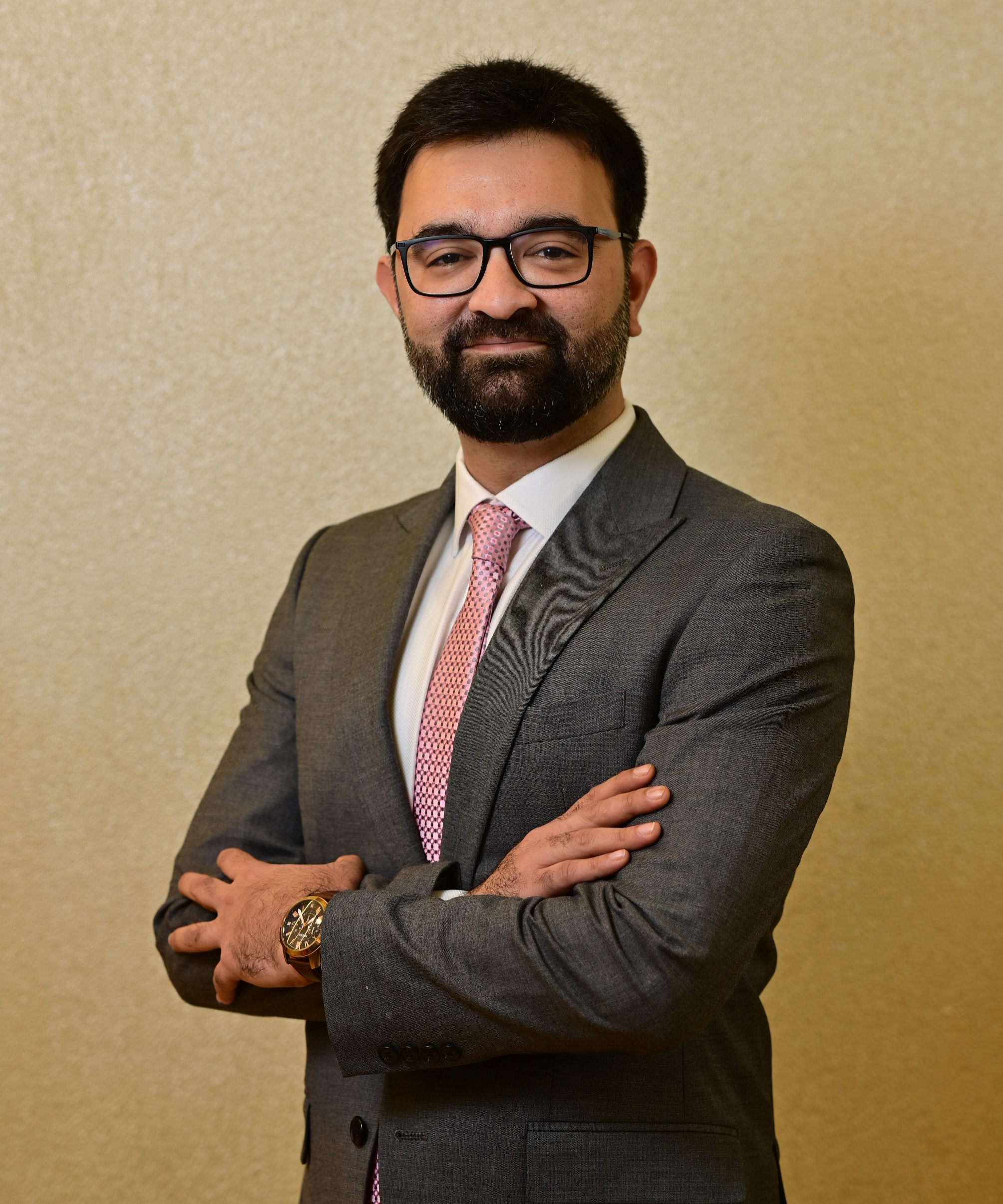


  • Ashok K. Gupta, Senior Advocate, Supreme Court of India, on the AOR exam, life in litigation and being on panel of union government

    Ashok K. Gupta, Senior Advocate, Supreme Court of India, on the AOR exam, life in litigation and being on panel of union government

    Ashok K. Gupta  graduated in B.A. (Hons. – Political Science) from University of Delhi in the year 1976.  Then he completed LL.B. from Campus Law Centre, University of Delhi in 1979.

    He enrolled as an Advocate with Bar Council of Delhi in January, 1981.  After practicing in District Court, Delhi for two years, shifted to Supreme Court & joined the chamber of Mr. P.H. Parekh, Advocate Supreme Court of India. He passed the Advocate-on-Record Examination conducted by Supreme Court of India in November, 1986.  And started his Independent Practice in 1987.

    He practices primarily before the Supreme Court, various High Courts like Jabalpur and Indore Benches of MP High Court, High Court of Odisha at Cuttack and Punjab & Haryana High Court, and before various statutory fora like National Consumer Disputes Redressal Commission (NCDRC), National Green Tribunal (NGT) & Appellate Tribunal for Electricity (APTEL) .

    He was appointed Counsel by Delhi High Court (to conduct its cases on the administrative side) before the Supreme Court in the year 2000. The he was appointed Senior Panel Counsel for UOI in Delhi High Court, in January 2001. He was designated as a Senior Advocate in April, 2012. He was the appointed by the supreme court as chairman of three-member committee under the Right to Education Act to report on compliance with various stipulations contained in the Right to Education Act in April, 2014. And also, other pro-bono committees.

    He is also the member of Supreme Court Bar Association, Delhi High Court Bar Association, Odisha High Court Bar Association, Madhya Pradesh High Court Bar Association and International Law Association. Life member of All India Women’s Education Fund Association and in that capacity was elected as member of the Governing Body of Lady Irwin College, University of Delhi during the Academic Year 1996-1997 and 1997-1998. Life member and Treasurer of Confederation of Indian Bar.

    In this interview, we talk to him about:

    • Being a first generation lawyer: college life, internships and interest in litigation;
    • Establishing his independent practice;
    • Cracking the Supreme Court Advocate on Record examination;
    • His wide range of practice encompassing various courts, tribunals and;
    • As Panel of Union Of India for Delhi High Court.


    HOW WOULD YOU LIKE TO INTRODUCE YOURSELF TO OUR READERS?

    I would like to be known as a quintessential Delhi-06 person, who loves his family, puts in honest, hard work, never ceases to learn and practice, and yet, enjoys all the good things of life: food of Old Delhi, and theatre at Mandi House in the evening, to name a few. This is my typical middle-class perception of myself.


    YOU ARE A FIRST GENERATION LAWYER. WHAT LED YOU CHOOSE LAW AFTER GRADUATION IN POLITICAL SCIENCE?

    Right, I am a first-generation lawyer. After my graduation in political science from Delhi University way back in the year 1976, I chose law not because it fascinated me; I chose law because I thought firstly, it would help me in my Civil Services examination, and shall be my second subject apart from political science. The other feeling was that, in case, I fail to make it to the Civil Services (as indeed, I did), I won’t be unemployable and could always do something as a professional lawyer. So, this was with a view to ensure that I don’t remain unemployed and/or unemployable.


    YOU STARTED YOUR CAREER WITH PRACTICE IN DISTRICT COURTS. HOW IMPORTANT IS IT FOR YOUNG LAWYERS TO KNOW BASIC DISTRICT COURT PRACTICE BEFORE MOVING TO THE HIGH COURT AND SUPREME COURT.

    It is correct that I started my career in district courts. Knowing that the nitty-gritty of practice in the Districts Courts is an absolute must for a young lawyer, I’m not suggesting that a lawyer should not aspire to become a High Court/ Supreme Court practitioner. All that I’m suggesting is that one should be fully familiar with the procedural parts of the legal practice, both on the criminal as well as the civil side. At the genesis of one’s career, it is your known circle of acquaintances who approach you, say, for a recovery suit, section 138 complaint, some accident or insurance case, matrimonial disputes and such matters which primarily emanate at the district court level. The ideal situation would be, of course, where one joins a chamber, which handles district court work, besides work in the constitutional courts.


    YOU JOINED THE CHAMBER OF SENIOR ADVOCATE PH PAREKH. PLEASE SHARE YOUR EXPERIENCE WORKING WITH HIM.

    Way back in the early eighties, the experience of working in my senior’s chamber was very fascinating and exhilarating. We were about a dozen junior colleagues at that time and it was not unusual for one junior to be doing two-three cases each day. The day would normally begin with a conference with a Senior Counsel like Mr. Fali Nariman, Mr. Sorabjee, Mr. Mridul or Mr. Tarkunde at around 8:30 A.M in the morning, court thereafter, after which we would be immediately heading towards office for drafting work and, again, the cause list would come around 6:30 P.M, whereupon our senior would allocate matters; the office of Senior Counsel would be informed and conferences fixed for next day morning. Then you head towards home around 9 PM and read the brief for the next day morning conference. But we had great fun; lot of outings and birthday celebrations, with legal conferences and seminars thrown-in between.


    HOW DID YOU DECIDE TO COMMENCE YOUR INDEPENDENT PRACTICE WITHIN A SHORT SPAN OF SIX YEARS AFTER GRADUATION?

    I decided to commence my independent practice once I realised that one cannot be somebody’s junior eternally. By the time I commenced practice, I had already passed my AOR examination and knew that one has to setup his own practice one day.


    WHAT WOULD BE YOUR ADVICE TO LAWYERS APPEARING FOR AOR EXAM NOW?

    I can really advise that a lawyer should thoroughly prepare with case law, latest judgements and equip himself with precise and concise drafting skills. One should know that on the account of the very heavy work load, the Supreme Court judges very much like and appreciate if the pleadings are to the point, not verbose and the point arising in the case is neatly stated. I keep emphasising and reinforcing to my juniors and briefing counsels: “don’t miss the forest for the trees”.


    WHAT ARE THE CHALLENGES IN STARTING INDEPENDENT PRACTICE?

    Challenges in starting independent practice are no different from starting any new venture in any new sphere of activity. But, then, if you put in sufficient quality work, you are bound to be noticed. You have to build up reputation for being an upright and a committed professional. Of course, all this would take time. Nothing good was ever achieved in a short time.


    YOU ALSO TAKE UP AND ARGUE ARBITRATION CASES. HOW IS PRACTICE IN ARBITRATION DIFFERENT FROM LITIGATION PRACTICE IN INDIA?

    I was first introduced to arbitration way back in the mid-eighties when I appeared alongside a noted junior counsel (now, a respectable Judge of the Supreme Court) in an arbitration proceeding pertaining to claims and counter-claims arising out of the 1982 Asian Games held in New Delhi. The Arbitral Tribunal was headed by Justice (Retd.) A.C. Gupta of the Supreme Court. He was a very quiet and taciturn arbitrator, unlike the majority of present-day arbitrators. For a successful arbitration practice, it is indispensable for one to know the basic essentials of handling suits, even though the technicalities of CPC and Evidence Act do not apply to arbitration proceedings. Surely, one must know about admission and denial of documents, framing of issues (not all arbitral tribunals frame issues), and the proof of documents in case of denial by other side, etc. Also, the art of cross-examination assumes a lot of significance and seriousness in an Arbitration proceeding. An arbitration claim is no different from a claim in a suit, except that the procedure is shorn of all the technicalities, and there is much less stress because of less pressure of time.


    YOU HAVE ALSO BEEN ON THE PANEL OF UNION OF INDIA FOR DELHI HIGH COURT. WHAT IS THE MODUS OPERANDI WORKING FOR THE CENTRAL GOVERNMENT?

    This was the first time ever that I worked for any government (Central/ State). I was, hitherto, primarily appearing for private clients and some PSUs. It was, initially, difficult for me to adjust to the role of a government lawyer, inasmuch you hardly receive timely instructions, proper records are not maintained, and most of the time you cut a sorry figure before the Court, not on the account of any lack of professional skill or competence on your part. That said, it is, indubitably, a matter of pride, prestige and honour for any lawyer to be empaneled as a government lawyer.


    WHAT ARE THE SKILLS REQUIRED FOR A LAWYER AIMING TO BE A SENIOR ADVOCATE IN HIS CAREER?

    First, one has to be a competent and honest lawyer and the other, one should totally abjure sharp practices as a lawyer. There have been several instances, where very skilful and competent lawyers were not given the designation of a Senior Advocate by the Court, on account of the perception of lack of ethics on the part of such lawyer. Now, of course, the Supreme Court in the judgement of ‘Ms.Indira Jaising vs. Supreme Court of India’ has laid down the entire procedure for designation of a lawyer as a Senior Advocate.


    BEING A LAWYER, IS IT DIFFICULT TO MAINTAIN WORK-LIFE BALANCE?

    Work-life balance is difficult but not impossible to achieve, just like in any other business or employment. Here the complexities are of a different nature, in the sense, that in the early years as a lawyer, money is hard to come by, hours are uncertain and stress is a little too much to handle. The reason being that the client is primarily concerned with the outcome of his case, not really concerned with your legal knowledge and the hard work put in by you. This does take its toll on one’s health and impacts work life balance.


    WHAT IS THE REQUIRED SKILL-SET OF BEING A SUCCESSFUL LAWYER?

    Being successful in the profession requires no set of different rules than the ones you require in other spheres of activities of life. It is talent, hard work and luck – an amalgamation of all the three.


    PLEASE LET US ABOUT YOUR MOST MEMORABLE CASES.

    I have appeared in hundreds of cases in my career as a lawyer spread over 38 years, as an instructing advocate in the early years of practice, and as a counsel thereafter, and a senior advocate in later part of life. A government-tender matter, wherein I had engaged and instructed Mr. S.S Ray, Sr. Adv. (now deceased) and Dr. Shankar Ghosh, Sr. Adv. to appear before the Jabalpur High Court in 1991-1992 stands out in my mind. The other case that I fondly remember of the nineties was a very complex trademark case before Justice Ajay Noth Roy of the Calcutta High Court against NALCO Chemicals, USA. I found Justice Roy to be an outstanding and brilliant judge, though the Supreme Court collegium, perhaps, thought otherwise. Among the arbitration matters, I have a proclivity towards my case, ‘National Aluminium Company vs. Pressteel & Fabrications Pvt. Ltd.’: (2004) 1 SCC 540, which paved the way for the Supreme Court to rule on the applicability of the 2015 Arbitration Amendment Act in ‘BCCI vs. Kochi Cricket Pvt. Ltd.’. In recent years, in the cases, ‘National Aluminium Company Ltd. vs. Ananta Kishore Rout’: (2014) 6 SCC 756, ‘Chairman-cum-MD vs. Bharat Chandra Behera’: (2013) 16 SCC 622 and ‘Kalinga Mining Corp. vs. UOI’: (2013) 5 SCC 252, I was able to persuade the Supreme Court to sustain my view point.


    HOW CAN JUNIOR WISHING TO WORK UNDER YOU GET IN TOUCH WITH YOU? WHAT QUALITIES WILL YOU LOOK FOR HIRING A JUNIOR?

    A junior wishing to work with me can directly approach me, no need for an intermediary. The only quality I look for in a junior is that he should be hardworking. I have always maintained and continue to maintain till this date, that a talented person might fail but a hardworking person never fails.


    WHAT WOULD BE YOUR WORD OF ADVICE TO YOUNG LAWYERS AND LAW STUDENTS AIMING TO MAKE CAREER IN LITIGATION?

    My advice to young lawyers would be no different than what I received in the early eighties, and it is: “work like a horse, live like a hermit”. Now, a word of unsolicited advice: I would very much like if young lawyers take to politics as well, even as they continue to practice law. There is such a dearth of good people- professionally employed people in Politics. This way you contribute to the well-being of the society, as also enhance your own prospect in the profession. The success achieved by the likes of P. Chidambaram, Arun Jaitley and Kapil Sibal is attributable, in part, to their being seen in politics.

  • Manu Beri, Advocate, on setting up independent practice; litigation at NCLT and urgent need for reforming judicial system

    Manu Beri, Advocate, on setting up independent practice; litigation at NCLT and urgent need for reforming judicial system

    Manu Beri graduated from Campus Law Centre, University of Delhi, in 2000. With over eighteen years of experience in litigation, he has handled a variety of matters in different forums including the Supreme Court, Delhi High Court, National Company Law Tribunal, National Consumer Commission and Arbitration Tribunals.

    In this interview we speak to him about:

    • His early years as lawyer in litigation practice
    • His experience in various courts
    • Challenges of a litigation lawyer
    • Building independent practice


     HOW WOULD YOU INTRODUCE YOURSELF TO OUR READERS?

    I practice in the Supreme Court, Delhi High Court, National Company Law Tribunal, National Consumer Commission and before Arbitration Tribunals. Have been doing a variety of legal matters both in Corporate and Criminal law (Economic Offences) for clients in India and from abroad, including large and medium size corporations in FMCG, Logistics, and Infrastructure sectors etc.


    PLEASE TELL US ABOUT YOUR COLLEGE LIFE. WHAT MOTIVATED YOU TO TAKE UP LAW AS A CAREER?

    I did my LL.B from Campus Law Centre, Faculty of Law, University of Delhi in the year 2000. Spending three years during my LL.B course in the North Campus of DU was quite good. The best part of it was that Senior Lawyers would come to our Faculty to share their experiences and interact with the students. I had the opportunity to listen to stalwarts like Mr. Ram Jethmalani, Mr. Harish Salve and many others. Likewise, some practicing lawyers used to take our classes. In addition to regular faculty, teaching by visiting/guest faculty helped us to know the practical aspects of the legal profession while studying Law. I hope they are continuing with this system and other Law schools have also introduced this.

    My initial interest to do law came from studying subjects like Political Science in which I got to know of constitutions of many democracies in the World. Out of all other professions, I found law intellectually challenging and stimulating. Unlike many other professions, it gives you a chance for lifelong learning. A Lawyer can help develop or change the policy making not only in his client’s businesses but Government policies as well. Law helps you constantly learn and grow.

    My uncle Mr. Sandip Beri is in the legal profession. After having practiced in the Supreme Court of India and then having done a long stint with law firms and corporations in the USA and India, he is presently a partner with a large Corporate Law firm in Delhi. He was the guiding force behind my decision to take up law as a career. Through him I had a fair idea of what the legal profession was all about.


    PLEASE TELL US ABOUT YOUR INITIAL YEARS OF PRACTICE.

    After working for about a year and a half as a Junior Lawyer, I started my own independent practice a little early in my career. However, I think I should have worked for a few more years as a Junior lawyer. But luckily for me in my initial years of practice I was able to get good work from some Companies and I learnt a lot from the work I did for them by handling various legal issues for them in Courts and otherwise. Also, briefing Senior Counsels in the High Court and Supreme Court on important matters has been a good learning experience for me. I think learning in this profession comes from handling maximum cases and arguing in Courts. The more cases you work on, the more you will enhance your knowledge, skills and consequently increase your confidence as a litigation lawyer. When I started my law practice, I was advised to specialize in any one branch of law rather than doing a variety of legal work but I somehow did not like this idea and I knew what I wanted to do. It is very exciting to work on cases involving different legal issues. I have had the opportunity to represent clients in a variety of matters like IPR Suits, Writ Petitions, Arbitrations, Consumer matters, Company Petitions and Criminal matters in the higher Courts. I hate monotony in professional work; hence getting to do cases from different branches of law has only enhanced my knowledge and skill set.


    AS A LITIGATION LAWYER, THE TOUGHEST CHALLENGE IS TO GET CASES – WHAT WOULD BE YOUR TIPS TO LAWYERS WHO HAVE JUST STARTED OUT IN THEIR CAREER.

    Public relations are very important in legal profession. But more than that if you work with sincerity for your clients and give them positive results in a time bound manner, then one client will naturally lead to another through word of mouth and there cannot be a better publicity or advertisement than this for a lawyer.


    YOU CHOSE TO WORK IN TRIAL COURTS AND DISTRICT COURTS INSTEAD OF MOVING DIRECTLY TO THE HIGH COURT AND SUPREME COURT. HOW IMPORTANT IS TRIAL COURT PRACTICE IN THE INITIAL YEARS OF ONE’S CAREER?

    In the initial years of practice one may not get big and high stake matters and even if one gets such matters in higher courts then the clients prefer Senior Counsels to argue these matters. Therefore, Trial Courts give junior lawyers a chance to conduct depositions and argue the cases themselves which is a great learning experience and confidence building measure.


    YOU HAVE SUBSTANTIAL NCLT PRACTICE AS WELL. PLEASE TELL US HOW CAN ONE GAIN EXPERTISE IN COMPANY AND INSOLVENCY AND BANKRUPTCY LAW.

    Well, as I said for gaining expertise one needs to handle maximum cases in that field of law. Mere theoretical knowledge of any law subject is not going to help. In my view, to gain expertise in any branch of law it is important to read and understand the statute with the relevant judgments passed by the courts and then handling cases in courts/tribunals. Also, one should keep oneself updated with the latest news in the corporate world through print and electronic media. In corporate litigation practice, in addition to understanding the law, a lawyer has to understand his client’s business. This has helped me to learn so much about different businesses and industries, as well as the diverse areas of law that impact my clients.


    WHAT IS THE ONE IMPORTANT LESSON YOU HAVE LEARNT IN YOUR CAREER AS A LITIGATION LAWYER?

    One thing I have realised over the years is that one should also listen with an open mind to what clients have to say about their case in addition to the facts, rather than being dismissive about their logic and opinion. Sometimes, their ideas based on their life and business experience can really help in developing a case.


    HOW DO YOU RECOMMEND A FRESH LAW GRADUATE INTERESTED IN LITIGATION START THEIR CAREER?

    I started my own independent practice a little early in my career. However, I think I should have worked for a few more years as a junior lawyer. My advice to budding lawyers, who intend to enter into litigation, is that they should spend at least two-three years as a junior in a law office having lot of drafting work and reasonable number of appearances in courts and after that if they get a chance to work in the office of a good Senior Counsel, they should spend a couple of years in the Senior’s office as well.


    HOW CAN ONE APPLY FOR INTERNSHIP UNDER YOU? HOW CAN AN INTERN STAND OUT DURING HIS INTERNSHIP?

    I generally keep one intern at a time so that we can have maximum interaction with each other. I invite CVs from interns and then decide. At this stage of their legal education the interns are expected to do the research work and read case files. I think an intern can stand out by doing good research work and finding judgments for the ongoing cases.


    WHAT QUALITIES DO YOU LOOK FOR IN A JUNIOR?

    A junior should be hardworking having the ability to put in long working hours, sincere, reliable and courteous.


    WHAT ARE YOUR THOUGHTS ON THE JUDICIAL SYSTEM.

    It amazes me how under the given circumstances the Judges in this country work tirelessly to decide cases and write judgments by spending extra hours to deal with pendency of cases. It is very challenging to properly hear and decide so many cases on the board in a single day. There is an urgent need to increase the number of judges so that the justice delivery system is quick and more efficient.


    WHAT WOULD BE YOUR WORD OF ADVICE TO YOUNG LAWYERS AND LAW STUDENTS?

    For young budding lawyers it is very important to plan their career path right from the law school years, by doing extensive internships with Judges, litigation lawyers, Law Firms, and in-house lawyers etc twice a year which can be really helpful as they plan their future in the profession.


  • Shriya Maini, Advocate, Supreme Court of India, on Independent practice in law, studying an International LLM from the University of Oxford, and writing research papers

    Shriya Maini, Advocate, Supreme Court of India, on Independent practice in law, studying an International LLM from the University of Oxford, and writing research papers

    Advocate Shriya Maini practices at the Supreme Court of India, the Delhi High Court and District Courts at New Delhi. She specialises in Dispute Resolution and as an unabashed feminist particularly enjoys criminal litigation.

    Ms. Maini is a graduate of Gujarat National Law University, Gandhinagar. She joined the Dispute Resolution team of erstwhile Shardul Amarchand Mangaldas and Suresh A. Shroff, as an Associate in their law firm. Subsequently, she went ahead to pursue her Bachelors in Civil Law (LLM) on a full scholarship namely Dr. Ms. Ambuti Salve Scholarship 2014-2015 at the University of Oxford, United Kingdom. Ms. Maini is also a recipient of the Oxford Global Justice Award for Public International Law, 2015 – 16 which gave her the opportunity to assist the President of International Residual Mechanism for the Criminal Tribunals (“MICT”) at The Hague, Netherlands. Currently, she serves as Visiting Faculty at National Law University, Delhi and Lloyd Law College, Noida. Ms. Maini is an independent consultant for International Law and Legal advisor at the LexQuest Foundation.

    Oxford is a dream college for any law graduate. However, what is life at Oxford like? What happens once you have earned your Oxford degree? Is Independent Practice an option? Being an independent litigator or founder of a firm, in the bubble of the bar, is a pretty big deal. Most who step foot in litigation, often only on nominal remuneration (if any) doled out by well-paid senior lawyers, the dream of the day they can finally set up their own shop. While it might seem to outsiders like all it may take to become a successful advocate is talent and passion, the skills required lie in the business realm more often than in legal.

    In this interview we speak to Ms. Maini about:

    • Tips on writing SOPs and Recommendations required to bag scholarships for foreign LLMs;
    • Masters in Law from the University of Oxford focussing on full scholarship;
    • Transition from a law firm job to Independent Practice;
    • Importance of writing research papers.

    HOW WAS YOUR EXPERIENCE AT GUJARAT NATIONAL LAW UNIVERSITY (“GNLU”) AND WHAT WOULD YOU SAY THAT YOU DID DIFFERENTLY FROM THE REST OF THE STUDENTS TO GRAB FOUR GOLD MEDALS AND EVENTUALLY ADMISSIONS IN BOTH OXFORD AND CAMBRIDGE?

    GNLU was a lovely experience, not only in terms of my professional and academic learning but also personal growth. In college, one is straight out of school and is looking for an avenue where he/she wants to achieve the skies, learn something new, besides of course, making new friends. Hostel life and classroom studies can be real tough taskmasters especially in a place which is far away from what we all call our comfort zone – home. What GNLU taught me was how to adjust well in hostile situations and share my knowledge with possibly everyone around. I also think the quality of the law school really matters, be it their faculty, teaching style or available course options. A great idea would be to speak to as many seniors and alumni and gather information online as to what each law school distinctly offers. When you are picking your college even while filling in your CLAT preferences, be very sure of what you want and where do you want to go. Don’t just follow the names, see for yourself what you want to do, be it social work or firm job or Court practice. For instance, I was very sure that I wanted to litigate and hence, I chose a college closer to my hometown and made a conscious choice that Courts in Gujarat and Delhi could perhaps, help me find plausible internships.

    As for your second question, I didn’t do anything different particularly but I think the one thing that I plausibly did differently was that I paid attention in class. There is a current trend of sleeping through law school classes or being very casual about attending classes thinking that during exams, one can read right at the end and score well. However, I believe it is a great exercise to listen in class and make your own notes, supplementing them with a book perhaps for each subject – for instance say Kelkar for Criminal Law or C.K. Takwani for CPC. These individual notes for me turned out to be best possible sources to study for end-term exams which were subjective in nature. This is in my opinion is one of the easiest ways to score very well in almost every subject in law school (be it civil, criminal or corporate law) and achieve a very high CGPA!

    Another thing that I incessantly followed was writing well researched papers when I was doing assignments or projects at law school. I have converted a lot of them today into top quality publications which have been read world – wide and have helped me garner some great work as an Independent Practitioner and Consultant in Public International Law. So I would say take your projects very seriously and critique the law that’s currently in place. Pick a topic which is perhaps a grey area of law or a burning topic for that matter. These could also help you create some cutting edge research ideas which could set you apart from the rest in class.

    HOW DID YOU GET INTO OXFORD, WHAT ALL DID YOU DO?

    I think for admissions to Oxford and for that matter Cambridge as well, it’s very important that you plan well in advance. Should you want to start your studies the next year, I think it’s important that you start gearing up from August-September this year itself. Start collecting your recommendations, prepare a well-researched Statement of Purpose and apply before the scholarship deadline. To sum up, time management is one thing that you must keep in mind while making Applications to foreign Universities for the LLM course. I suggest it’s a great idea to make a chart or table of all the deadlines of various Universities (with and without scholarship) so that the application process becomes far more coherent and crisp. This is what I personally followed, besides carefully monitoring my Statement of Purpose and Recommendations.

    Another aspect to keep in mind is that when you are applying to a stalwart University like Oxford, it is always advisable to research well about the University and its courses offered. Another suggestion would be to speak to a lot of seniors and alumni who have been to Oxford because these are the only few who seem to know the things at the grass-root level. A quick Google search say of the University, any of the past Statement of Purposes uploaded therein could benefit you manifolds. This would give you a wide array of options to pick from and you could then craft an SOP or Recommendation Letter, suited to your own specific needs, depending upon the college. For instance, Oxford Recommendations and SOPs are very academic unlike a London School of Economics, which focuses more on the practical side of law. I had made up my mind for an Ox-Cam degree and hence, I prepared all my documents accordingly. My SOPs and Recommendations were very specific, academic and crisp alongside, distinctly explaining why I wanted to read which course at a foreign University only.


    WHAT WERE THE OTHER ACTIVITIES THAT YOU UNDERTOOK OTHER THAN WRITING AND PUBLISHING RESEARCH PAPERS?

    That’s a great question! I think these activities which you are referring to – that we undertake at law school form the very basis of the contents of any LLM application. Foreign Universities do not decide Applications solely on the basis of academic scores (which are fairly important) but they look for something extra, what I like to call the “X” Factor. These could be moot court competition, research publications, book or commentary writings etc. I was primarily focussed on mooting for public speaking came rather very easy to me. I participated in two moot Court Competition, the Manfred Lachs and Nani Palkhivala – both which dealt with my interest area – Public International Law. So, mooting for me was like learning the law and enjoying myself while doing just that. Infact, Public International Law is a field that I now constructively engage with on a daily basis. So, I would say, keep your focus intact and start preparing step by step, right from the first year depending upon where you see yourself in the next five years. Focus on your interest areas, be it civil, criminal, corporate or tax. This is how I used the mooting process to my advantage – I researched and learnt the law, developed court mannerisms and soft skills besides inculcating team spirit. Additionally, it is also advisable to engage in atleast one extra circular activity, be it painting, dance or music.

    Another activity that I undertook was attending conferences and research based events. This extensively helped me network and realise how communication is the key to success in this profession. I applied for internships and sought answers to my queries by sending e-mails to my seniors. Today, I receive requests on Social Media on a daily basis requesting information on a plethora of topics, be it my work at the United Nations or Oxford or the LLM Application process in general. I make it a point to take out some time and try and respond to as many students as possible.


    WHAT WERE YOUR CONSIDERATIONS WHILE APPLYING AT THE FOREIGN UNIVERSITIES AND WHAT MADE YOU CHOOSE BCL FROM OXFORD OVER AN LL.M. FROM CAMBRIDGE AND HOW ARE THE TWO ANY DIFFERENT?

    One of the most important considerations apart from academic scores is finding scholarship options while making LLM Applications to foreign Universities. Another consideration for me was place of convenience (England being closer to India than America), a specific law you want to study (International Law for me) or place where you want to practice eventually. Let’s go step by step: While applying for both Oxford and Cambridge, I was categorically focussed on applying for a common law university. It’s a good idea to keep your options open if you are not sure what you really want to major in. Apply for a general LL.M unless you are very keen to practice in a niche area of law, such as International Tax or Intellectual Property Law. I too opted for a general LL.M. with 50 subjects on the table so that I could pick my four most preferred subjects.

    As for differences between Oxford and Cambridge – the BCL course at Oxford looks at the law from a very academic point of view unlike Cambridge, which is more practice oriented. Oxford in general has a very theoretical approach to the law because you have a lot of Queen’s Counsels and Professors teaching on campus who have literally helped lawmakers create the law. So, Oxford in effect teaches you why the law i.e. the reasoning behind the formulation of a law. This is a very interesting approach because the same inculcates critiquing abilities in a student and help form arguments and questions of law subsequently in filing Special Leave Petitions for instance. Again said, the Tutorial system in both these Universities is a fantastic model from which our Indian Universities could benefit manifolds. During the tutorials, one writes a research paper critiquing the law, and the tutor gives him/her individual feedback in person. This teaches the students the art of formulating legal arguments, besides describing how the papers must be structured.


    YOU PUT A LOT OF STRESS ON RESEARCH PAPERS AND PUBLICATIONS. HOW MUCH IMPORTANCE DOES PUBLISHING OF A BLOG OR AN ARTICLE ON INDEPENDENT BLOG WEBSITES HOLD?

    Today, blogging has given the power and leverage to almost everyone to put their thoughts onto paper. When used effectively, this could be an easy and inexpensive gain for any Independent practitioner’s work. Like persuasive and binding value of judgements, if you publish an article in a legal journal, it carries more weightage than an independent publication on a blog-site. Hence, I would suggest either you write something so strikingly different on your own blog or write for a blog – site which has a good readership and is well known in the market. For Example – there is a very famous peer-review blog called EJIL which was started by the University of Oxford students. Today, the blog is very highly regarded and every two months, stalwarts share their views on International Humanitarian Law and International Criminal Law. If you have a publication on EJIL, that’s more prestigious than some of the journals as well. I believe, blogs – sites are the way forward – they are the best spaces for Advocates to work on, to enhance their knowledge and clientele.


    COULD YOU PLEASE TALK ABOUT YOUR APPLICATION FOR THE PRESENT STUDENTS?

    Out of the many who apply to Oxford, only a handful are selected, not because the others don’t have the marks or academic prowess but because their applications starkly lack content and structure. It is essential to be aware of the International standards and approaches when one is making such applications. The most important feature of your Application for an International course is an SOP – “Statement of Purpose”. When you draft an SOP you must state clearly why you want to join a particular University, the subjects you want to study or why do you want to study those subjects in that particular University only, perhaps, because the same are not available in an Indian University. Before making my Application, I thoroughly researched about the Universities that I was keen to apply to, their course modules and current as well as adjunct faculty. I request all of you to decide well in advance which are the subjects you wish to pick for your LLM – so you must know before making your Application which course modules you intend to read in which College. This process immensely helped me craft tailor-made Applications for different Universities and their courses. Additionally, I read my Application twice over prior to submission and applied well in advance, within the Scholarship deadline.


    WHAT IF A PERSON WANTS TO PURSUE THE SAME COURSE WHICH IS AVAILABLE IN A GOOD UNIVERSITY IN INDIA? WHAT SHOULD A STUDENT DO IN THAT CASE?

    I think it is important to realise and fathom the fact that we are still miles away to go when it comes to legal education. There’s a reason why people go out and study. I won’t say that there’s no good faculty in India but what they are doing out there is very different and there is no harm in learning from the foreign Universities how and what they teach. Today, many Indian Universities are collaborating with foreign ones for exchange programmes for their undergraduate students. There must be cogent reasons for the same. Should you compare the course modules that an Indian University offers vis-à-vis a foreign University, you will realize how far ahead they are in terms of teaching innovative subjects, hiring excellent practitioners to teach academic subjects and characteristically bright methods of teaching, such as the tutorial system.


    IS AN LL.M. FROM THE UNITED STATES OF AMERICA BETTER OR FROM THE UK? WHAT ARE THE MAIN DIFFERENCES BETWEEN THE TWO?

    The two are essentially very different in their approaches. The UK LL.M. is based totally on Common Law perspectives, though we study a fair bit of Civil Law. On the contrary, the US LL.M. is totally based on Civil Law teachings. This limits the scope of those who want to come back to India at some point in time and practice. So if you want to come back to the Indian Courts, I’d suggest it is always better to go for the United Kingdom. However, many believe that the American market is currently way more welcoming when it comes to hiring Indian students who write the American Bar exam post their LLM. Again said, they both have their own pros and cons.


    HOW IS THE PEDAGOGY AT OXFORD DIFFERENT FROM THE TOP UNIVERSITIES IN INDIA?

    My most favourite memory of the last few years is my time spent at the University of Oxford. This because studying at Oxford is a once in a lifetime opportunity. The environment is intellectually stimulating to the extent that it pushes you to excel, should you take it in the right spirit. It is a student’s city, full of the best minds from all across the globe, bubbling and bursting with knowledge. Even the Pubs and Bars have students lounging and discussing the law. My experience at Oxford taught me how to question and critique the law, without simply accepting and applying it. The teaching methodology at Oxford comprised of lectures and seminars (classroom discussions wherein questions were released a week in advance). We had a system of tutorials wherein we were supposed to write papers every month on topics for subject, only to be assessed and given feedback on in person by our teachers. This personalized attention in a Masters course is what makes Oxford the best of the best. It was inspirational for me to witness how the best University in the world functions, alongside keeping its humanitarian approach intact.


    HOW DID THE 100% SCHOLARSHIP AT OXFORD HAPPEN? COULD YOU TALK ABOUT WHAT HELPED YOU GAIN THAT SCHOLARSHIP?

    I think this is one question I can answer out of sheer experience and nothing else. I never had a Plan A or a Plan B when it came to doing the LLM. I had always decided that I was going to go out and study, and as far as the money was concerned, I knew it was a big amount but I really did not think too much about it while I was making the Application. The best advice that I can pass on is – Do not fret about the funding before applying for a Master’s course. Make your Applications first and alongside or subsequently figure out the funding options available. And the best way to do that is – APPLY EVERYWHERE POSSIBLE FOR SCHOLARSHIPS! This is what I tell all the students who come and ask me about any kind of scholarship questions. The best way to get a scholarship is to apply everywhere because what matters is that one YES, not those numerous NOs. A cent per cent scholarship (including tuition fees and living expenses) may not be easy, but it’s not impossible if you try hard. Almost every University application has a separate scholarship section. So, keep an eye out for these alongside the bursaries and grants that are doled out towards the end of the Application process. There are also numerous Indian donors who can help you out – be it Inlaks or Aga Khan. Please remember all the University linked scholarships have early bird application deadlines with an automatically linked funding application. Also, Universities like Oxford have multiple colleges, be it Exeter or Sommer ville. So, check if any Scholarships are specifically linked to your College. For instance, the Dr Mrs Ambruti Salve Scholarship was linked to Exeter College at the University of Oxford. I was indeed blessed to have received a full grant which included my tuition fees, travel and living expenses.

    Another tip that I give students is that your SOP must in a line or two stress on the need for funds factor. Make it clear and evident even when you are applying to the University that you are looking for funding. Do not feel shy or embarrassed about the fact that you are coming from a third world country, and probably you could do with some monetary help.


    HOW CAN ONE MAKE THE MOST OF A SHORT SUMMER SCHOOL COURSE AT OXFORD UNIVERSITY, MAY BE A MONTH’S COURSE? ARE THEY BENEFICIAL THESE KINDS OF SCHOOLS, OR IS IT BETTER TO GO ON A SCHOLARSHIP?

    I realize that I am on a public platform and I may be quoted if I say this, but I am going to be very brutally honest about it. From a very personal experience, I believe spending money on a month long summer school at a University in England or America is definitely not worth it, unless you have the funding available. I think one can easily enrol for diploma courses online or offline that are available at much cheaper costs in India, instead of these expensive foreign location based summer schools. Please do not spend your parents’ hard earned money, or even your own accumulated money on a summer school option which is only a month long. So, hold on to those green notes for a wiser option, maybe an LL.M.


    WE KNOW FOR A FACT THAT YOU HAVE WORKED AT AMSS BEFORE GOING FOR YOUR BCL. HOW DID YOU UTILISE YOUR TIME AT AMSS TO STEP INTO PRACTICE ?

    The workings of a law firm are very different from how independent practice works. The law firm culture teaches you qualities that practice wouldn’t and vice versa. The most important skill that I acquired from the law firm environment was communication. I learnt how to send out and receive formal e-mails to clients and arbitrators, how to make contacts, how to interact with people, especially client interviews. This is one skill I now utilise in my practice, a lot.

    The second skill which is law firm specific is meeting deadlines. In an independent practice set up, one can get pretty lazy and relaxed, seeking multiple dates for submissions. But the law firm environment teaches you to stick to deadlines because you have a senior to report to. The inherent structural hierarchy teaches you effective time management and smart client billing. These acquired skills are a boon for a practitioner who finds it hard to not only procure work but also bill decently well. I have purely used these skills to grow from one client into fifty more in an ongoing builder-investor dispute. Lastly, the law firm as a junior teaches you how to be resilient and churn out the first draft so that the same can be edited over a series of corrections. Now being in independent practice, I ensure that my drafts are read over and copyedited atleast thrice in the office/chambers before their submission in Court.


    IS THERE ANY POINT IN DOING AN LLM, IF YOU ACTUALLY WANT TO LITIGATE IN INDIA?

    I’m always asked this question because almost all those who cannot make it to an Oxford or Cambridge at the Masters level criticise it thoroughly, saying there is no use wasting a year, better practice in the Indian Courts. However, I do not at all agree with their views. This because the education standards, legal knowledge, command over language and critical thinking are approaches that are best developed at the Masters Level, for the focus becomes very specific on a single subject or topic. This tremendously enhances the aura of a lawyer for he learns how to question why the law. This is why most of the better Supreme Court lawyers in India have a foreign LLM degree. I can proudly say that I draft all my petitions from scratch, analysing precedents and even critiquing them at times, without cut copy pasting judgements. Small skills can go a long way in making a great lawyer. Foreign LLMs train you exactly in that direction and for that purpose. Additionally, foreign LLMs do give you special knowledge which general practice in Court would never. I was fortunate to read International Criminal Law during the BCL at Oxford and today, I teach that subject in Indian Law schools, be it Lloyd Law College or National Law University, Delhi. Indian Court practice wouldn’t have ever taught me the same!


    WHAT CHALLENGES DID YOU FACE DURING THIS TRANSITION FROM THE TOP MOST LAW FIRM TO INDEPENDENT PRACTICE ?

    While at Amarchand, I had waited too long to litigate and appear in Court. The law firm may be a great place for some but I had long realised it was not my calling. When I reached Court, I very well know that I was young and fresh. Noone would so easily entrust me with a brief right at the outset. So I taught myself how to run after work and not money. It took me a few months initially to find my feet but I think I managed rather very well. I was also in an advantageous position because I was a second generation lawyer. These privileges (as much as we shy away from them) do give us a Launchpad and I can never thank my father enough for the same. The best tip is – Do not run after money; lots of money will definitely come to you, at the maximum within a year or two if you’re passionate, hard – working and slightly lucky. Today, I am happy to pass on certain briefs due to paucity of time, only because I was initially hungry for good work and not just good money. Another challenge that one faces is finding work. Now this is the tricky bit. I would suggest you join a boutique law firm or maybe a senior counsel (though for only a few months) before you network for some good work.


    IS THERE ANY EDGE THAT YOU GET OVER THE PEOPLE WHO HAVEN’T DONE AN LLM SPECIFICALLY IF YOU ARE LOOKING FOR A JOB AT THE LAW FIRMS?

    Law firms and I have a very cynical relationship. Don’t get me wrong when I say this – law firms are essentially looking for those who can mechanically deliver on a daily basis what is required of them, may be a contract draft or a petition draft. So, they do not really look at an LLM or a Masters in depth knowledge with any respect because all they want is research and finding out almost every possible detail, without analysing or doing anything path breaking. Many enjoy the economic comforts and benefits of a law firm job and for all those, you can easily get the same with a Bachelor’s degree from India.


    HOW MUCH GPA IS REQUIRED FOR SECURING A PLACE IN A TOP LAW SCHOOL LIKE OXFORD?

    Good question! GPA scores are very important if you are amongst the top three or five in your college. During your Application process, play to your strength and do not forget to mention the same in your Statement of Purpose and Scholarship Application. I wrote almost everywhere that I stood first in my class and this turned out to be a great conversation starter during all my scholarship interviews, besides giving me a cutting edge and good impression. I stressed on how having a high GPA meant that I was one of the best students at my University and I too could bring something unique to the Oxonian high table. On the contrary, if your GPA scores are low, do not mention them unless asked and stress on other aspects such as extra – curricular achievements or books or publications.


    COULD YOU PLEASE GIVE AN ADVICE EACH FOR THOSE WHO ARE APPLYING FOR AN OXFORD LLM; THOSE WHO ARE TRYING TO GET INTO LAW FIRMS AND THOSE WHO INTEND TO UNDERTAKE INDEPENDENT PRACTICE?

    For Oxford Applicants, manage your time effectively and apply well in advance, and of course, flag your scholarship deadlines. Be consistent in your efforts to procure great recommendations from academicians and draft a heartfelt Statement of Purpose. The BCL is a course which you’ll never be able to undertake again in your life, so make the most of it once you are there.

    For Law Firm aspirants, intern at reputed firms all through law school and in a variety of subjects, be it civil, criminal or corporate law. Pick the one that you are most keen in for you have to practice it for a fairly long period of time, once in the firm.

    For Independent Practitioners, dream big to make it happen. Find your feet by interacting with seniors and lawyers alike, network well and be patient. Just run after work and not the money. The latter is bound to follow suit, that too soon.


    Credits : Mr. Manthan Nagpal for transcribing the interview.


  • Bhaven Shah, Co-Founder, Presolv360, on entrepreneurship, technology and the future of dispute resolution

    Bhaven Shah, Co-Founder, Presolv360, on entrepreneurship, technology and the future of dispute resolution

    Bhaven Shah is a Chartered Accountant and has completed his law from Government Law College, Mumbai. He is the Co-Founder of Presolv360, which is India’s first homegrown cloud-based dispute management platform capable of preventing litigation, protecting people and businesses from adversities of disputes and resolving them through time-tested dispute resolution mechanisms. Bhaven has previously worked with KPMG in their M&A and tax litigation practice, R. K. Bothra & Co. and Ernst & Young in their tax and assurance practices, respectively. Besides, he has had varied experience before judicial and quasi-judicial authorities including the Supreme Court of India, High Courts of Rajasthan and Bombay, and the erstwhile insolvency boards.


    HOW WOULD YOU LIKE TO INTRODUCE YOURSELF TO OUR READERS?

    I am no super-lawyer. I am just a super-believer. I believe in our youth and that gives me the drive, I believe in India’s growth story and that gives me reason and I believe in the values passed down by our great leaders that gives me confidence that I am at the right place – ‘India’, at the right time – ‘now’, and doing the right thing – ‘Presolv360’.


    PLEASE TELL US WHAT MADE YOU PURSUE LAW?

    Law came to me by legacy. My grandfather was the first in the family to come to the land of opportunities and dreams. Since then, Mumbai was the only home known to him and my entire family. Against all odds, he brewed roaring success in the textile industry and this success was compounded by my father. The business expanded but so did complexities. Opportunities increased but so did opportunistic individuals. The economy was growing but values were rapidly eroding. From property-grabbing to non-payment of dues, from trespassing to cheques bouncing, it became a usual occurrence for many of us. Practices and professions became sophisticated, but law and procedures remained unchanged.

    Crediting my sweet and sour experiences with litigation and courts, I decided to take the law into my own hands. Scratch that, I decided to take the fate of these disputes in my own hands. The only way to begin that was by pursuing law academically, and so I did. After completing my graduation from H. R. College of Commerce and Economics, Mumbai, I enrolled myself in the Government Law College, Mumbai.


    FROM LAW TO ENTREPRENEURSHIP, WHAT MADE YOU TAKE THIS LEAP?

    In a heavily-litigated personal matter, a Supreme Court Judge (now retired) said to me in open court “Son, your father started this case and your child will have to conclude it.” And these wise words came after 29 years (read 45% of the lifespan of an average Indian) of fighting tooth and nail in Indian courts. The harsh reality is that legal cases in India last a lifetime and have a propensity to wipe out all your resources, and I faced this first hand. I didn’t want to suffer in the future, I didn’t want others to suffer, ever, and so, it was time that India and her citizens were offered a solution that changed the way they insulated themselves from disputes and litigation. Something that was quick, economical, convenient and effective. With this in mind, Presolv360 was born.

    Disputes are inevitable and are inherent to the nature of humans. So, we re-imagined, re-engineered and radically improved the ‘approach’ to dispute management. In devising this approach, the founding team of Presolv360 tapped into all possible learnings and experiences, be it law, chartered accountancy, insurance, management and of course, encounters with realities of life.


    WHAT PROBLEM ARE YOU TRYING TO ADDRESS WITH PRESOLV360?

    The traditional dispute resolution mechanisms like courts are plagued with a number of serious problems. Where 19th-century laws still dominate dispute resolution, there is a need to provide 21st-century solutions to uproot these challenges.

    Statistically speaking,

    • Everyday 40,000+ cases are filed due to the absence of dispute prevention mechanisms.
    • Approximately 67% disputants do not even attempt an alternative before litigating.
    • 80,000 crores p.a. is lost due to court hearings and loss of business. This translates to 0.77% of India’s GDP and shockingly, this figure is without accounting for professional fees.
    • On an average, it takes 13 years for the final disposal of a civil case lodged in an Indian Court.
    • It is estimated that by the year 2025, there will be 6.19 crore pending cases and at the current rate of filing of new cases against the rate of disposal, it will take 587 years to clear this backlog.

    Believe me, these numbers are not an exaggeration. Let me ask the readers to ponder over three simple questions. If the answer to any is ‘yes’, they will understand the problem we address:

    1. Would you like to enjoy a life free from disputes, litigation, and courts?
    2. Do you want to secure yourself, so nobody drags you to court?
    3. If you have a dispute, would you not like to resolve it quickly, reasonably and efficiently?


    DON’T YOU THINK THE GOVERNMENT IS AWARE OF THE PENDENCIES AND IS UNCLOGGING THE OVERBURDENED JUDICIAL SYSTEM?

    Undoubtedly. When I first spoke about confidence provided by our leaders, that included our leaders in the profession as well as those in the government. Lok Adalats, infrastructure improvements, E-Court Mission, encouraging ADR, commercial courts, state and national litigation policies, etc. are long strides in the right direction.

    While I believe that India is in extremely capable hands, it is also important to understand that, for India to tackle this grave problem, a concerted partnership is required between all stakeholders – potential and existing disputants, governments, judiciary, professionals and facilitators like us. This will ensure that only those matters worthy of the courts’ attention and judicial resources will find a place on the docket, while the remaining are dealt with in a systematic, civilized and optimal manner. This way, courts can dispense justice, governments can govern, businesses can flourish, and the citizens can enjoy a stress-free life.


    WHAT IS YOUR VALUE PROPOSITION AND WHO IS IT FOR? WHAT IMPACT WILL YOUR SOLUTION HAVE?

    Presolv360 is a unique dispute management platform that blends technology, human expertise, and innovation to provide effective dispute prevention solutions, collaborative dispute resolution mechanisms, fast-track and cost-effective alternatives to courts and protection from uncertain outcomes and adversities. This makes Presolv360 the first of its kind across the globe!

    Our services include:

    1. PresolvReview: Preventing disputes is one of the key objectives of Presolv360. With PresolvReview, our expert will review your agreement from a dispute prevention standpoint and make suitable suggestions and recommendations so that you can enjoy a dispute-free relationship and a hassle-free life.
    2. PresolvSecure: This is a plan that secures you from adversities of disputes that arise in a contractual relationship. For a small annual fee, the parties can safeguard themselves from prohibitive costs, traumatic experiences, time-consuming processes and ruined relationships, and instead ensure a speedy and effective resolution by our empaneled experts, at no additional costs.
    3. PresolvDirect: We assist parties in resolving existing disputes (whether pending in court or likely to be submitted to the court), in a collaborative environment.

    At the centre of this, all is a seamless, integrated tech platform accessible from your desktops, laptops or mobile devices to ensures affordability, convenience, efficiency, and effectiveness. The beneficiaries of this system are unrestricted, be it individuals, businesses, institutions or even governments.

    This dispute management ecosystem will have a far-reaching social and economic impact.

    – From taking an average 13 years for disposal of a case, to collaboratively resolving a dispute within 3 months.

    – From expending lakhs of rupees in litigation to resolving disputes at a fraction of that amount.

    – From uncertain outcomes and irreparable loss to certainty of resolution and conserving resources.

    – From litigation ruining relations to safeguarding them … this is the impact of Presolv360

    We have also launched the ‘Presolv for All’ Project that extends the services of Presolv360 free of cost to weaker sections and low-income groups to ensure that we, as a community, can enjoy a litigation-free future.


    WHAT ALL HAS GONE BEHIND THE MAKING OF PRESOLV360 AND PLEASE INTRODUCE YOUR TEAM TO OUR READERS.

    The learning never stops, nor does the evolution of Presolv360 and its team. I can only give you a glimpse of the groundwork undertaken, and I can assure you that our efforts, to constantly improve by reflecting on feedback from our stakeholders and the incessant spirit of innovation, will never cease as it is ingrained in every member working at Presolv360.

    You may know that dispute resolution has its roots in the Vedic age and this has been entrenched in our village system. That’s where we began, our research and studies ranged from India’s gram panchayat system to international diplomacy, from traditional dispute redressal machinery to sophisticated global practices. After this theoretical escapade, it was time to understand contemporary challenges. We undertook an ‘Appeal for Change’ survey where we interviewed over a thousand people from different walks of life to understand all the facets of disputes. It is on this robust foundation that we built and designed the Presolv360 platform.

    Along with me, Namita Shah and Aman Sanghavi are the cornerstones of Presolv360. While Namita is a lawyer, chartered accountant and a CPA from the USA, Aman hails from the insurance and management background and is also a Certified Mediator from IICA, Ministry of Corporate Affairs. Presolv360 is guided by a distinguished Board of Advisors and Mentors comprising of

    1. Ashok Barat, former Managing Director, and CEO, Forbes and Company Ltd. He is currently on the Board of several listed companies and is passionate about making mediation the primary form of dispute resolution.
    2. Tanu Mehta, Legal Counsel, Mediator and Conciliator recognized by the Bombay High Court and is an MA in Conflict Resolution & Mediation from Tel Aviv University, Israel.
    3. Rajani Iyer has been designated a Senior Counsel by the Bombay High Court and is a Mediator with over 4 decades of experience in dispute resolution.

    Presolv360 is powered by a team of fifteen members (including six dispute resolution and legal experts) with an unbreakable spirit and the determination to change the way India and her citizens deal with disputes.


    HAVE YOU RECEIVED ANY RECOGNITION SO FAR?

    Presolv360 won the ‘Start-Up Excellence Award for Technology-Enabled Dispute Management & Redressal System’ at the Indian Startup Convention (ISC) 2018. The ISC recognizes those organizations and individuals who have changed or have the potential to change the face of their respective industry. We were also shortlisted for ‘Power of Ideas’ – India’s largest entrepreneurship program. Facebook, Economic Times, Department of Science and Technology, Government of India and CIIE, IIM Ahmedabad conducted this program and received over 6500 business ideas out of which 358 were shortlisted.

    The Presolv360 team has discussed the applicability and benefits of its services with officials from the Ministry of Commerce and Industry and the Ministry of Law and Justice, Government of India. Presolv360 is privileged to be recognised by the Ministry of Law and Justice, Government of India, as providers of dispute prevention and protection services, online dispute management, negotiation (online and offline), neutral evaluation (online and offline), mediation (online and offline) and is now listed on the website of the Department of Justice. Besides, Presolv360 has also been recognised as a qualified startup under the Start-Up scheme of the Department of Industrial Policy and Promotion (DIPP), Ministry of Commerce and Industry, Government of India.


    HOW DID YOU GET THE MINISTRY TO RECOGNIZE PRESOLV360?

    The Presolv360 team made representations to the Ministry of Commerce and Industry and the Ministry of Law and Justice, Government of India. To our delight, the officials were extremely forthcoming, encouraging and provided us with insightful feedback. Following these representations, Presolv360 was listed on the website of the Department of Justice, as providers of dispute prevention and protection services, online dispute management, negotiation (online and offline), neutral evaluation (online and offline), and mediation (online and offline).

    ‘Startup India’ is a flagship initiative of the Government of India, intended to build a strong ecosystem for nurturing innovation and startups in the country that will drive sustainable economic growth and generate large-scale employment opportunities. From tax exemptions to self-certification, from credit and funding access to rebates in patent applications, this initiative is definitely a boost to the ‘ease of doing business’ objective. Presolv360’s application was accepted by the Department of Industrial Policy and Promotion since we are working towards innovation, development, and improvement of dispute management services with a scalable model and high potential of employment generation and wealth creation. If any of the readers satisfy the eligibility criteria, I would recommend they apply under the scheme and take advantage of the benefits of a recognised startup.


    WHAT WOULD BE YOUR PARTING MESSAGE TO OUR READERS?

    We are all ordinary people until we master one extraordinary power – the power of choice. The choice to hold on or to let go, the choice to give up or to be relentless, the choice to follow or to lead, the choice to destroy or to rebuild, the choice to go to courts or ‘to presolv’ – choose wisely.

    You can get in touch with me at bhaven@presolv360.com and visit https://www.presolv360.com/ for more information.


  • Ngangom Junior Luwang, Senior Partner, Kochhar & Co., on law school experience, choosing specialisation and work life balance

    Ngangom Junior Luwang, Senior Partner, Kochhar & Co., on law school experience, choosing specialisation and work life balance

    Ngangom Junior Luwang completed his graduation from ILS Law College, Pune. He is currently co-head of the Infrastructure Law practice of the Firm. He has over twenty years of professional experience and has been practicing Corporate, Commercial & Dispute Resolution matters, his sector specialisation being Oil & Gas and Infrastructure. Luwang has represented issues of corporate law in various International Conferences and has also been a speaker in many conferences organised by the Hong Kong University, Law Asia etc. Luwang also has extensive court room experience, mostly in the Supreme Court of India.

    In this interview, we speak to him about:

    • Choosing law as career and his experience in law school
    • Choosing his specialisation
    • Internships every law student should undertake
    • Maintaining a work life balance being Senior Partner


    HOW WOULD YOU LIKE TO INTRODUCE YOURSELF? PLEASE TELL US SOMETHING ABOUT YOUR PRE-COLLEGE LIFE?

    Enrolled in 1995, I am a lawyer with extensive experience in dispute-resolution as well as non-dispute-resolution verticals across diverse facets – handling high-stake Supreme Court & Arbitration matters, contract drafting & negotiation, statute drafting, general legal consultancy apart.

    I grew up at Imphal, Manipur till my 12th standard. I did my primary schooling at the First Battalion Manipuri Rifles High School, Imphal and MBC English School, Imphal till 10th standard and my 11th and 12th at the DM College of Arts, Imphal.


    WHAT FACTORS INFLUENCED YOU TO CHOOSE LAW AS A CAREER? WHY DID YOU CHOOSE ILS LAW COLLEGE FOR PURSUING LLB?

    To be honest, law was my father’s career choice for me and I reluctantly followed my father’s advice. I had always wanted to become a civil servant or a doctor but I have no regrets for, inter alia, the following reasons:

    1. Just as our body is an integral part of our existence, law is as much an integral part since almost every aspect of our existence is governed by some law or the other.
    2. Law is ever-evolving and a lawyer’s adaptation to the same makes a lawyer fully updated and current for sound opinions on different aspects of life and law.
    3. Diversity in laws makes a lawyer’s life as much diverse and professionally challenging, enough to make him/her “Jack of all trades, Master of as much.”
    4. A Law degree also opens up a law student or a lawyer to a number of other possible sub-careers – in-house counsel, hardcore litigator, full-time corporate lawyer with specific specialisation options, academician, LPO professional, Law Firm management professional etc.

    I chose ILS Law College, Pune for, inter alia, the following reasons:

    1. ILS’s heritage as a cradle of legal education for nearly a century then
    2. Credible academic staff
    3. ILS was the best amongst the few law colleges with the five year integrated course in 1989 when I joined ILS.
    4. ILS’s incredible infrastructure, more specifically its library facilities with its unique collection of books
    5. Pune’s academic atmosphere and of course, its unmatched weather.


    WHAT ALL ACTIVITIES DID YOU TAKE PART IN DURING YOUR TIME AT LAW SCHOOL? HOW IMPORTANT IS MOOTING FOR A LAW STUDENT?

    I remember my participation in moot court competitions, mock trials and declamation competitions. Of course, I did some bit of lawn tennis and swimming since ILS campus had the said facilities.

    Since I strongly believe that every lawyer should spend at least the initial first three years of his/her career in Courts of Law/quasi-judicial fora (before exploring other options), mooting is and should be made compulsory for every law student. My specific reasons are as under:

    1. Mooting presents a fantastic platform for problem-solving skills for budding lawyers, something a lawyer is expected to do life-long.
    2. A must for focused drafting skills and oral court submissions.
    3. Mooting certainly exposes a law student to the practical side of law in terms of legal research, strategic thought process, creative interpretation of laws etc.
    4. Mooting is certainly a break from the mostly theoretical approach of classroom lectures.


     HOW DID YOU KICK START YOUR CAREER POST YOUR GRADUATION? WHAT WERE THE CHALLENGES YOU FACED AS A FRESHER?

    I kick-started my career from a chamber in the Supreme Court of India, but handling matters not only in the Supreme Court but also in Delhi High Court, DRT, Consumer Commissions and lower courts. The following were the main challenges:

    1. Identification of a good lawyer/chamber with drafting opportunities for diverse legal/quasi judicial proceedings.
    2. Understanding the different stages of legal/quasi-legal proceedings
    3. Low stipend was indeed an issue for a fresher like me with a rented accommodation.
    4. Lack of opportunities for placement in big law firms then.


    WHY DID YOU DECIDE TO PURSUE HIGHER STUDIES?

    I joined an LL.M course since I genuinely believed that an LL.M course would add up to my knowledge of law, but now, on hindsight, I am of the opinion that exposure to courts of law or being in a Law Firm for the same time period would have taught you more lesions on law and practical sides thereof. A full-time LL.M course could possibly be helpful for students who plan to be in academia.


    HOW DID YOU CHOOSE YOUR SPECIALISATION? WHAT SHOULD A LAW STUDENT KEEP IN MIND WHILE CHOOSING A PARTICULAR DOMAIN OF LAW TO PURSUE A CAREER IN THE SAME?

    I started my practice without any specific specialisation in my mind, but Clients ultimately chose my specialisation! One cannot choose a specialisation unless one is really interested in it and good at it and ultimately, most clients choose you for that specialised area of law you are interested in and equally good at. I believe that a law student should have an open mind and should choose specific domain or specialisation after having a feel of every aspect of law at least in the first three-five years of his or her practice. This having said, the following should be kept in mind, while choosing an area of specialisation or practice domain:

    1. Strong interest in the chosen stream(s) of law.
    2. One’s comfort and professional confidence in executing work of the chosen specialization or domain.
    3.  Client/Senior feedback on works executed qua the chosen stream(s).


    WHAT IS YOUR OPINION ON GRADES AT LAW SCHOOL? MANY LAW FIRMS AND ORGANISATIONS USE GRADES AS YARDSTICK FOR SHORT LISTING PEOPLE FOR THE JOB. DO YOU THINK THE SYSTEM IS FLAWED?

    A more pertinent question will be whether our law schools have the right benchmarks for grading law students. My observations on this issue are:

    1. More focus should be on practical aspects of law. For example, most questions can be on specific facts involving questions of law and students can be asked to apply law accordingly and solve the issues presented.
    2. More emphasis can be on mock-trials and moot courts.

    I think most law firms extensively bank on academic performance of students for campus recruitment since presumably there is no other better way. No system is fully fool-proof and so is this system. Since legal acumen is not all about exam marks, Law Firms may consider having its own independent way of conducing specific test(s) for such recruitment, independent of academic grades.


     WHAT ALL INTERNSHIPS DO YOU THINK A LAW STUDENT MUST UNDERTAKE DURING THEIR TIME AT LAW SCHOOL AS A STUDENT?

    The following internships are recommended:

    1. Internship with a trial lawyer with substantial drafting assignments at a lower court in a small district or town in India, covering both civil and criminal matters.
    2. Internship with a lawyer with substantial drafting work in a High court
    3. Internship with a public sector corporation
    4. Internship with a private commercial entity
    5. Internship with a litigation/arbitration team of a law firm
    6. Internships with different corporate practice teams of law firms
    7. Internship with an arguing Senior Counsel
    8. Judicial Clerkship with a judge of a High Court/Supreme Court.


    WHAT IS THAT ONE ACHIEVEMENT IN YOUR PROFESSIONAL LIFE THAT YOU ARE PROUD OF?

    Rendering both litigation and non-litigation legal services to ONGC Videsh Limited and Oil India Limited in the USD 2.475 billion acquisition of a hydrocarbon block in Mozambique in 2014.


    WHAT IS THE AVERAGE WORKDAY EXPERIENCE OF A SENIOR PARTNER AT A LAW FIRM LIKE? HOW DO YOU MAINTAIN A WORK-LIFE BALANCE?

    Every day is a hectic day with deadlines and meetings lined up. Everyday is indeed a lesion on some legal issue or the other. To be frank, it is very difficult to have such a balance. However, I do try to give enough time to my family and of course, I play and run for at least one hour a day.


    WHAT QUALITIES HAVE HELPED YOU ACHIEVE YOUR CURRENT POSITION AND STATURE?

    It is hard work, hard work and hard work.


    HOW DO YOU STAY UP TO DATE ABOUT THE RECENT DEVELOPMENTS IN ALL THE AREAS WHERE YOU WORK AND HAVE AN INTEREST?

    The different assignments coming to me usually keep me informed and updated. For the rest, social media and internet are good information tools.


    WHAT ADVICE OR SUGGESTION WOULD YOU LIKE TO GIVE TO OUR READERS, WHO ARE PREDOMINANTLY LAW STUDENTS AND YOUNG LAWYERS?

    1. Academic courses are different from actual legal practice.
    2. If one is not ready for hard work in terms of giving at least twelve hours of effective professional engagement daily, one may explore other options (academia, LPO etc.).
    3. At least for the initial three years of one’s career, one should be in litigation practice before various courts/quasi-judicial fora.
    4. Drafting skill should be developed for all types of legal proceedings for as many different courts and legal fora.
    5. A time-line based systematic roadmap on approaching or dealing with each specific legal issue/proceeding should be learnt/developed and followed steadfastly.
    6. Hard work is the key, coupled with due application of mind.