Early in your career, you had the opportunity to work with various big names in the legal field. What were some of the most enriching experiences from those formative years that deepened your passion for the legal profession?
The privilege of working under legal titans like Mr. Ram Jethmalani and Mr. Fali S. Nariman during my early years was akin to stepping into a masterclass in advocacy. In 2007, while interning with Mr. Jethmalani, I was thrust into the frenetic pace of a high-profile criminal case at the Supreme Court. I vividly recall his electrifying presence in court, where he dismantled a prosecution’s argument with razor-sharp logic and an almost theatrical flair. One evening, as we prepared for a hearing in the high-profile Jessica Lall murder case, he shared a gem: “The law is not just about statutes; it’s about storytelling that moves hearts and minds.” This perspective transformed my understanding of advocacy, igniting a passion for crafting compelling narratives grounded in legal rigor.
Similarly, in 2009, assisting Mr. Nariman on a constitutional matter was a revelation. His meticulous analysis of Article 14 during a late-night briefing session taught me the art of weaving constitutional principles into practical arguments. Watching him argue before a Constitution Bench, I saw how his calm demeanour and scholarly depth commanded respect, reinforcing my belief that advocacy is as much about integrity as it is about intellect. These experiences cemented my love for the courtroom, where law becomes a living instrument of justice. I also remember an incidence where he asked me to draft something several times thereafter just near my breakpoint, asked me to get all the drafts and approved the 1st draft which I had shared saying it was the best one and I ought to have shown it to him. I didn’t understand the meaning of it then, however over a period of time I realised he taught me several valuable professional and life lessons through it.
Your academic and professional background is both impressive and diverse. Could you take us back to the initial experiences that sparked your interest in the field of law?
My fascination with law was born when our family friend Mr Jethmalani visited our home at Nagpur and there were tons of people there to visit him. I belong to a freedom fighters family and a family which has always been into social work, i was used to people visiting home. However people visiting Mr Jethmalani had a different approach and the respect commanded by him simply left an everlasting and permanent impression on me. He asked me “what I want to become when I grow up?”, I naively asked him, “what do you do?”, to which he said “I am a lawyer son”, so I promptly replied that I want to become a lawyer as well. That is the 1st time I said that and it was etched in my mind since then, as a teenager in 2001. That moment was electric, it showed me the law’s power to uplift the voiceless and the respect one commands with being true to one’s profession. My school debates on issues like caste discrimination and women’s rights further fueled this spark, as I realized advocacy could bridge ideals and action.
This conviction led me to pursue a B.A. LL.B. at RTM Nagpur University, where I immersed myself in moot courts and legal aid clinics. A particularly memorable experience was organizing a legal awareness camp for rural farmers and downtrodden on the occasion of Dusshera Festival in Nagpur under the aegis of our political science professor , where I explained various faucets of laws in Marathi, my mother tongue. Seeing their faces light up with newfound understanding solidified my resolve to make law accessible and impactful, setting the course for my career.
Your educational journey from RTM Nagpur University to Queen Mary University of London is inspiring. What motivated you to pursue an LL.M. in Commercial and Corporate Law abroad, and in what ways has that international exposure shaped your current practice before the Supreme Court of India?
The decision to pursue an LL.M. at Queen Mary University of London was driven by a realization that India’s legal landscape was becoming increasingly globalized. By 2010, I had seen how multinational corporations and cross-border disputes were reshaping commercial litigation in India. I chose Queen Mary for its reputation in international commercial law and arbitration, aiming to master the nuances of global legal frameworks. The program’s modules, International Commercial Arbitration, Commercial Conflict of Laws, and Intellectual Property in Creative Industries, were intellectually exhilarating, challenging me to think beyond Indian jurisprudence.
A defining moment was my dissertation on pre-arbitral interim relief, which required analysing cases from multiple jurisdictions. This global perspective proved invaluable when I returned to India. For instance, in the ABG Shipyard Swiss Challenge Process case at the Supreme Court, my understanding of international insolvency frameworks allowed me to craft arguments that aligned Indian law with global best practices. My London experience also honed my ability to navigate cultural and legal diversity, enabling me to represent clients like PT. Bara Daya Energi etc. with confidence. Today, this international lens informs my Supreme Court practice, blending global insights with constitutional rigor.
You’ve appeared in several high-profile Constitution Bench matters, including the EWS Reservation and PMLA Validity cases. How have such landmark litigations influenced your legal philosophy and approach to constitutional interpretation?
Appearing in Constitution Bench matters like the EWS Reservation and Prevention of Money Laundering Act (PMLA) Validity cases has been a humbling and transformative journey. The EWS case, which upheld reservations for economically weaker sections, taught me the importance of purposive interpretation to advance social justice. I recall a heated courtroom exchange where we debated the balance between equality and affirmative action, moments that underscored the Constitution’s role as a living document adapting to societal needs.
The PMLA case, challenging the validity of stringent anti-money laundering provisions, was equally profound. It highlighted the delicate interplay between state power and individual liberties, shaping my belief in proportionality as a cornerstone of constitutional interpretation. These cases have instilled a legal philosophy that views the Constitution as a dynamic framework, requiring advocates to harmonize fundamental rights with directive principles. My approach now emphasizes rigorous research, contextual analysis, and a commitment to ensuring that constitutional interpretations serve both justice and the public good.
As the Founding Managing Partner of Asal Legal Solution LLP, how do you navigate the demands of leadership while actively engaging in high-stakes litigation before the Supreme Court? What motivated you to establish your own practice in the first place?
Leading Asal Legal Solution LLP while litigating before the Supreme Court demands a delicate balance of vision, discipline, and teamwork. As Founding Managing Partner since, I’ve built a firm that thrives on collaboration and innovation. I delegate research and drafting to a talented team of associates, empowering them to take ownership while I focus on courtroom advocacy and strategy. We use case management software (Libra) to streamline workflows, ensuring I can prepare for high-stakes cases like the Maratha Reservation matter without compromising firm operations. Evening team meetings foster open communication, allowing us to tackle complex cases with agility.
My motivation to establish Asal Legal stemmed from a desire to create a practice that blends ethical advocacy with client-centric innovation. After years at Desai & Associates, I saw an opportunity to address gaps in legal services, particularly for clients navigating both Indian and international jurisdictions. Founding my own firm allowed me to take on diverse cases, from constitutional benches to international arbitrations, while mentoring the next generation of advocates. This independence has been liberating, enabling me to shape a legacy of impactful litigation.
Your consistent involvement in social initiatives, particularly through the Maratha Sewa Sangh, reflects a strong commitment to public service. How do you strike a balance between your legal practice and social responsibilities?
My involvement with Maratha Sewa Sangh and other initiatives is a natural extension of my belief that law must serve society and as a member of society one must give back to the society. As President of its Legal Cell since 2023, I’ve spearheaded legal aid camps and policy advocacy for marginalized communities, often working late evenings after court hours. For instance, organizing the first All India Conference for Rashtriya Maratha Seva Sangh was a logistical challenge, but my team’s support at Asal Legal ensured seamless coordination. I allocate specific days for social initiatives, using weekends for community outreach while reserving weekdays for litigation.
This balance is fuelled by my conviction that legal expertise carries a responsibility to uplift. My team handles routine legal tasks, freeing me to draft policy recommendations or write columns for Organiser and Kashmir Canvas. These activities recharge me, as the gratitude of a farmer understanding his land rights or a student inspired by a legal talk mirrors the fulfilment I find in courtroom victories. This synergy ensures that my legal practice and social commitments reinforce each other.
For law students aspiring to build a litigation practice like yours, what advice would you offer? What skills, mindset, or resources do you believe are essential for excelling in this demanding field?
To law students dreaming of a litigation career, my advice is to embrace the grind with passion and purpose. Litigation is a marathon, not a sprint, so cultivate resilience to navigate setbacks like losing a case or facing a tough bench. Key skills include:
Legal Research: Be well versed with law and for that master platforms like SCC Online in order to build airtight arguments.
Drafting: Hone the art of concise, persuasive pleadings, every word matters in court.
Oral Advocacy: Practice clarity and confidence through moot courts and mock trials.
Networking: Seek mentorship from senior advocates; my internships with Mr. Jethmalani and others were game-changers.
Adopt a growth mindset, view challenges as opportunities to learn as was taught to be by Mr Nariman. Early in my career, a dismissed petition taught me to anticipate judicial perspectives, sharpening my strategy. Resources like legal journals, bar association seminars, and internships in litigation chambers are invaluable. Above all, uphold integrity and empathy; clients trust advocates who fight for their cause with heart. Stay curious, stay ethical, and let your passion for justice drive you.
Litigation can be incredibly intense and high-pressure. How do you manage the stress that comes with maintaining a rigorous legal practice, and what do you do to safeguard your mental well-being?
The intensity of Supreme Court litigation, where deadlines loom and stakes soar, demands a robust approach to stress management. I start each day with 30 minutes of yoga and meditation, a ritual that grounds me and sharpens focus. A particularly vivid memory is meditating before arguing the auction case, which calmed my nerves and clarified my arguments. Regular runs in Talkatora Gardens and a disciplined diet keep me physically resilient, countering the sedentary demands of legal work.
Professionally, I rely on my team at Asal Legal to share the load, delegating research and filings to avoid burnout. I set boundaries, reserving evenings for family or reading historical biographies, which offer perspective on life’s pressures. My social initiatives, like blood donation camps with Maratha Sewa Sangh, are surprisingly rejuvenating, helping others reminds me of the law’s broader purpose. These practices, combined with a supportive network of peers, ensure I thrive in the high-pressure world of litigation.
Looking back at your journey so far from internships with iconic legal figures to leading your own firm, what has been your biggest takeaway or guiding principle as a legal professional?
Reflecting on my journey, from a wide-eyed intern in Mr. Jethmalani’s chambers to leading Asal Legal Solution LLP, my greatest takeaway is that advocacy is a blend of conviction and compassion. Whether arguing a marathon case or advising a small business like ILA Naturals, I’ve learned that the law’s true power lies in its ability to humanize disputes. My guiding principle is to approach every case with unwavering integrity and a deep understanding of the client’s story. This means not just winning arguments but ensuring justice resonates, whether for a corporation or a community. This ethos, forged through years of mentorship and practice, drives me to leave a lasting impact on both law and lives.
Coming from a different academic background, what sparked your decision to pursue law as a career? How did your law school years shape your perspective on the legal profession?
To be honest, I never intended to pursue a career in law. I come from a completely non-legal background. I’m a first-generation lawyer with no one in my family, even distantly, associated with the legal profession. When I moved from Assam to Delhi, it was with the goal of preparing for the UPSC examinations. However, my father, who always believed in the value of having a professional degree, strongly encouraged me to pursue law first. At his insistence, I enrolled in the Faculty of Law at Delhi University, while simultaneously preparing for UPSC.
In the beginning, I had little understanding of how the legal system functioned or the vital role it played in shaping our democracy. That changed during my time in law school. As I started reading landmark judgments in our course materials, I began to understand the transformative role the judiciary had played in protecting rights, interpreting the Constitution, and ensuring accountability. For the first time, I saw how the law could be used to empower the weak and uphold justice against power.
This intellectual shift deepened during my internships when I visited the Supreme Court of India and the High Court of Delhi. Watching senior advocates argue passionately on behalf of their clients was a defining moment for me. It became clear to me that as a lawyer, I could make a meaningful impact.
That realisation shaped the course of my legal education. I decided early on to focus on litigation rather than corporate or in-house roles. Thus, throughout law school, I interned exclusively with practicing advocates and senior counsels to better understand the courtroom and the craft of advocacy. That foundation continues to guide my journey in the legal profession today.
After years of working with several reputed law firms, what inspired you to set up your independent practice? How has the transition been, and in what ways have your prior experiences enriched your current approach to litigation?
When I started out as a junior counsel, my senior, who primarily practiced before the High Court, assigned me matters before trial courts in Delhi. This early exposure to trial work which included arguing applications, conducting cross-examinations, and making final submissions proved invaluable. It allowed me to develop a strong foundation in procedural law. I learned how to adapt during cross-examinations, think on my feet, and refine strategy in real time. More importantly, it taught me how a case is built from the ground up, starting from when a client walks in with a set of facts and documents, to seeing it through to its conclusion.
My trial court experience shaped the way I approach litigation, even later during my years at law firms. At the firms, I worked on complex, high-value disputes and was mentored by seasoned partners. I developed a better understanding of client management, commercial awareness, and the importance of structured preparation. The exposure to varied matters and corporate clients broadened my perspective and added discipline to my practice.
As for my decision to start an independent practice, it felt like a natural progression. Most litigators, at some stage, aspire to have their own practice. Moreover, clearing the Advocate-on-Record examination served as an additional catalyst as it strengthened my resolve to build a practice in the Supreme Court alongside my existing work in other forums. The transition has been both challenging and fulfilling since it demands not just legal skill, but consistency, judgment, and the ability to run both the legal and operational aspects of practice. My prior experience has helped me maintain clarity, structure, and strategic thinking, qualities that I continue to rely on in my current practice.
In the early stages of your career, you worked with various advocates and law firms. Could you share a few pivotal experiences that significantly influenced your legal thinking and helped expand your expertise across diverse domains?
A range of matters across forums has shaped my legal thinking and approach to litigation. Working on construction and infrastructure arbitrations gave me hands-on experience in drafting pleadings, framing cross-examination strategies, and arguing before arbitral tribunals. These technically complex and document-heavy disputes helped me develop a structured, detail-oriented approach to fact-intensive cases.
In arbitration-related litigation, I have drafted and argued petitions under Sections 9, 11, and 34 of the Arbitration and Conciliation Act, dealing with issues of procedural fairness, jurisdiction, and the scope of judicial review. I have also handled cross-border disputes involving foreign parties in infrastructure and shipping disputes, which required navigating enforcement, foreign law, and complex contractual structures.
My broader civil and commercial work has included recovery suits, partition and specific performance claims, landlord–tenant disputes, defamation, banking, and insurance matters. All these experiences have enabled me to develop a forum-conscious, legally rigorous, and strategically adaptive litigation practice.
You’ve represented both Indian and foreign clients in civil matters and commercial matters ranging from salary disputes to high-value recoveries. How do you bridge the differences between the international legal system and the Indian legal system while navigating such cases?
In cross-border disputes involving foreign parties, it is important to ensure that the legal strategy is not only consistent with Indian procedural norms but also communicated in a manner that is clear, accessible, and contextually appropriate for clients unfamiliar with the Indian legal system. My central consideration in such matters is to meet domestic procedural requirements while also reflecting upon the broader commercial and contractual context from which the dispute arises. Foreign clients often approach Indian proceedings with assumptions shaped by how similar disputes are handled in their own jurisdictions, whether in terms of timelines, document disclosure, or court processes. It therefore becomes essential to bridge that gap by managing expectations and crafting a legal strategy that acknowledges those assumptions, while remaining firmly within the framework of Indian law.
You’ve been part of both ad-hoc as well as institutional arbitrations. What do you believe are the main reasons institutional arbitration has not flourished in India as it has in other jurisdictions?
Institutional arbitration in India hasn’t taken off as it has elsewhere largely because the ad hoc proceedings remain the default in commercial contracts. Many parties simply insert a bespoke arbitration clause, viewing that as more directly under their control and cost-effective. At the same time, there is limited awareness of institutional rules and best practices among contract-drafting teams. As a result, institutions seldom feature in the underlying agreements. Moreover, institutional arbitration has struggled to gain traction largely due to preferences for ad hoc proceedings, concerns around cost, and a historical lack of trust in domestic arbitral institutions. Many parties, particularly public sector bodies have opted for ad hoc mechanisms, believing them to be more flexible and cost-effective.
However, recognising these systemic hurdles, the Government in the Draft Arbitration and Conciliation (Amendment) Bill, 2024 has made an effort to strengthen institutional arbitration. The bill proposes clearer recognition of arbitral institutions, limits judicial interference during the pendency of proceedings, introduces enforceable emergency arbitrator provisions, and empowers institutions to manage certain procedural aspects that were previously routed through courts. These reforms are a step toward creating a more credible and self-sufficient arbitral ecosystem in India, but institutional arbitration will only become the norm when users, both private and public, begin to see these changes reflected in actual practice.
With a practice spanning commercial litigation, matrimonial cases, and consumer disputes, what has been one of the most challenging or personally memorable cases you’ve worked on, and what made it stand out?
For me, every case is equally challenging and personally memorable. Once you put your name to a matter, you inevitably invest a part of your professional identity in its outcome. Since I have to mention one, I would like to speak about the first case I was independently engaged in during the very first year of my practice. The client had filed a suit for recovery of damages against a courier company for the loss of machinery in transit. The advocate representing the client had, for some reasons, missed multiple hearings and by the time I was engaged, the court had already closed the plaintiff’s right to cross-examine the defendant’s witness and listed the matter for final arguments.
At first, I considered filing an application to reopen the defendant’s evidence and recall the witness. However, upon examining the record, I figured out that nothing much was going to come out of the cross examination as the Defendant in his defence primarily relied upon a term at the back of the invoice which limited his liability to Rs. 100/-. Hence, I decided to proceed with final arguments as I had a strong case legally. The court ultimately decreed the matter in favour of my client, despite the defendant’s evidence remaining unrebutted.
You’ve worked with clients across sectors like infrastructure, pharmaceuticals, and technology. How do you keep pace with the constantly evolving regulatory landscape, and what tools or resources would you recommend to young legal professionals to stay informed and ahead of the curve?
I primarily rely on Lexology for its daily sector-specific and jurisdiction-specific newsletters, while Mondaq offers in-depth insights into emerging regulatory trends across industries. For real-time updates on Indian law, I follow Bar & Bench and LiveLaw, which provide reliable coverage of all legal developments in the country. Young legal professionals may subscribe to these resources which are largely free and develop a routine of reading beyond their immediate areas of work. Over time, this habit not only sharpens legal awareness but also builds the contextual understanding needed to advise effectively in a fast-evolving legal landscape.
Clearing the Advocate-on-Record (AOR) examination is a major milestone. What aspects of the AOR exam did you find most challenging, and what strategies did you use to prepare effectively for this prestigious qualification? Additionally, how has the AOR designation influenced your professional practice?
The most challenging aspect of the AOR exam for me was managing the subjectivity and time pressure, particularly because I opted for the handwritten mode of the exam. Having worked on the laptops for so many years, I had lost the habit of writing for extended periods, and improving my writing speed became a real challenge. In terms of strategy, I began with the papers on leading cases and professional ethics, as these required substantive reading. I made notes, knowing I might not have time closer to the exam to revisit lengthy judgments and texts. This also helped me get back into the habit of writing regularly. For the papers on practice and procedure and drafting, prior experience in the Supreme Court was definitely helpful, as I was already familiar with the format of petitions and procedural nuances. I also relied on the Supreme Court Rules, 2013 and the Supreme Court handbook on practice and procedure for the preparation. Citing relevant case law in the practice and procedure paper also added value. For the drafting paper, I focused on solving previous years’ questions within the stipulated timelines to build both accuracy and speed.
The AOR designation has long been regarded as a mark of credibility and respect within the legal community, and earning it has been both empowering and confidence-building. Since becoming an AOR, I’ve seen a shift not only in the nature of work I receive but also in who approaches me since my clients now include not just litigants, but also lawyers who are not AORs and seek assistance with filing and pursuing matters before the Supreme Court. The designation has added a level of professional trust that has meaningfully expanded both the scope and responsibility of my practice.
Finally, what guidance would you offer to law students and aspiring litigators hoping to chart a path like yours? Is there a particular mindset, skill set, or approach you believe is essential in today’s dynamic legal environment?
I find that today’s law students are far more informed and situationally aware than I was during my time in law school, which is truly encouraging. However, I also see many of them constantly under pressure, whether it’s the next moot, internship, or securing a PPO. While these things are important, I would urge them not to lose sight of the bigger picture. It’s equally important to enjoy the process, make memories, and meaningfully engage with the subjects taught in law school.
For aspiring litigators, I would add that law is a demanding field. If you don’t allow law to become a part of your life, you’ll always struggle to find the so-called work-life balance. Even the most celebrated senior advocates who have reached the very heights of success continue to work as hard, if not harder, than those just starting out. That says something about what this profession demands. Those who approach it purely as a source of income often find it difficult to sustain in the long run. I also believe that spending time in trial courts is invaluable as there is no better way to develop procedural clarity, practical judgment, and courtroom instinct. That is where a litigator truly understands how a case unfolds. Lastly, building relationships and nurturing a professional network is just as important since law is a people-centric profession, and the connections you make often shape the opportunities that come your way.
Let’s understand why and how you chose to pursue a career in law while you had already completed your Bachelor’s in English from Delhi University?
It’s a very interesting question though. I never thought of becoming a lawyer, but I had this idea in my mind that I wanted to do something which has a larger public interest. It was my father who wanted me to become a lawyer. I was a UPSC aspirant and I used to say, this time I’m sure that I’ll clear UPSC. And he used to say that you will become a very good lawyer. So it was his inspiration and the journey when I entered into law. And when I did my first internship, it was at the Delhi Commission for Women. I had goosebumps when I went there for the first time. And for the first week, I could not sleep. I used to say to my mom that I never thought that women are in such a bad condition. What I was seeing was a nine-month pregnant lady saying that her husband pushed her back, threw her out of the house, and beat her so much that she ran away. Another female was raped by ten men. She had married one, and he just captured her in her home, and she was being raped daily by ten people. She said that she had just run out of that place. So that sort of complaint was coming from very basic people who never knew what law was, who never knew what resort they had or where they could go and complain. And when I saw that this power a lawyer has, this knowledge a lawyer has, any female lawyer or a male lawyer can deliver this justice or help in taking that path, this internship changed my outlook. And this was the reason that I decided I will not go for judiciary, I will not go for UPSC, but I will go for litigation.
During the very early stages of your legal career, what kind of experiences do you see have shaped your thoughts in relation to the kind of practice that you want to take forward because you are doing something very unusual? Why? Because your points towards bringing in that social justice in society are very different. And I really would request you to bring in those aspects which were so inspiring for me. And I really don’t want to push anything, but I just want to understand how you came to that thought process because it’s not easy for anyone to just give up something so big and plan something to do for society that easily.
So basically, I had a plain paper when I entered into litigation. No one from my family, no one from my in-laws, no background from lawyers or litigants to the nearest or the far more relatives I could see. I had never experienced or listened to any lawyer or their experience. I just did law and I came as a practitioner. But as soon as I came, I realized that this is the only field which is gender neutral. Gender neutral in the sense that the hard work a male has to do, the same a female has to do. You have to earn your client on your own. You have to work on your own. Suppose I say today that I want to practice in the field of IPR or I want to practice in the corporate field, but I want to be in litigation. That means I should have my own clients. But then I’m getting divorce cases, I’m getting property disputes, depending on the social exposure that I have or the client base or the people who know me as now becoming a lawyer. So the first and foremost thing I realized after becoming a lawyer is that you cannot choose your profession, the profession chooses you. That means the field you can’t choose, the field will choose you. Otherwise, in a job in various law firms, you can apply for a job in which you are interested. But becoming a proper advocate, practicing independently as a litigant, you have to wait for your clients. Then, when I say it is a gender neutral process, a client comes to you, a client doesn’t bother if you are not feeling well, you are married, you have shifted to a new place, you have kids, you don’t have kids, you’re pregnant, you’re not pregnant. Doesn’t matter. For them, they need the delivery of their work. Doesn’t matter whether you’ve eaten or not. And the same things apply to a male. They don’t bother if there’s some mishap in the family, if they’re struggling with something, or if they don’t have people to come. Whatever the problem a male faces, the same problem and even more a female has to face. So I understood that I can’t cry like a crybaby. I have to make sure that I have my own setup. I have my own work culture. I have to set my own standards, and I have to start working the way every second person in this profession is working. Every colleague is working with the same passion that I am working with. What difference do I have to offer to my clients? I should trust them. I should be loyal to their work. I should be readily available to them. These are very important points. It’s very unfortunate that I’m saying this, but clients come to me with this problem that their lawyer is not picking up the call. It is very shocking because taking a case means taking the whole life of an individual. So this moral social obligation that we as lawyers have, ethics also, we know what our ethics say. But fortunately or unfortunately, whatever the circumstances are, I can’t comment on that. But these are three to four very essential things as a lawyer irrespective of whether you are a male or a female, you have to face. But when I went to the court, I saw that actually the condition, the infrastructure is very poor. I strived in the chamber for almost four or five years. I worked from the chamber, and what I realized was that there were no basic amenities, no washroom facilities. If a female is pregnant, then she might have some medical condition if she’s using those washrooms on a daily basis. And when it comes to hygiene, it was very bad. And with respect to females, there’s another factor of hygiene. It was very bad. And with respect to females there’s another factor of regular day-to-day monthly hygiene and basic facilities and amenities, but all of them were lacking. I realized that one of my colleagues, she started practicing with me. She got married, she was blessed with a baby girl, and then she was nowhere to be seen in the court. I asked her, why aren’t you coming? So she said that my baby is too small, and coming to court means you have to start by 9 in the morning, and you don’t know whether you will be reaching back by 8 or 9 or 10. The time is not limited. And I can’t leave work. There is no facility in the court where I could come with the baby and use a creche facility, leave her, do my work, and go back. And this is not about the Honorable Supreme Court or Honorable Delhi High Court. The basic infrastructure at the district court level, where most of the females are working and being independent lawyers, they get cases, independent cases, that means they have their own client base. So they have to first start with district court only. Nobody will give you a direct SLP of the Supreme Court. So they have to struggle for that. And with the gap of the maternity time period, their family also says that you can’t take the child, what are you earning? It doesn’t make sense because those first five years are pretty hard for every lawyer, either male or female. And when we see that there are females of 20 to 25 years, 30 years of age groups from 20 to 30 years, and then you see females from roughly around 40 and above because in those 10 years, most of the females are engaged in their household activities. So for that, I observed that in order to sustain in this field, every female has to find a way out. First, it’s better to establish yourself, and it’s very important that as a female you have a better family who understands you, after marriage and before marriage, who understands your work, respects it, and helps cater to those four to five years of growing up and understands your development and growth. So the challenges of being a female lawyer are very interesting, and it’s very deep. And I enjoy those challenges. And then I see myself that I have actually come out of it, so I feel that it’s worth living.
My next question would be, how do you see all these kind of challenging impacts help you either get better perspective towards law or help you get clients or help you do the networking, because all of these things at the end of the day end up either having a better network which will bring in a long term of change or have better clients who may or may not bring in that particular change.
So how do you see your practice moving towards a specific area of such sorts which actually points out such important things that are not there. That is basic infrastructure, just to practice. So how do you see yourself in times to come?
See, what future to predict I don’t know, but what I can say is it has made me a better human being in that perspective because being a lawyer, being from a well off family, or a family who promotes females to get educated and also in my next family where I am married. They also promote females to be educated, to go out and to have work.
She’s struggling that there are no washrooms in the capital of Delhi in the main courts where almost five to ten lakh people are coming on a daily basis. And again, I’m not talking about Honorable Delhi Court and Honorable Supreme Court. They have very good facilities.
But when we come to district court, I can’t say what Uttar Pradesh, Rajasthan, Punjab, Haryana district courts are to offer to the lawyers. But when I see that there’s no creche facility, no washroom facility.
I can feel that a female who’s not empowered, who’s not having that support from the family, who is not educated, now they have to face daily life problems.
Their husband might die and they might end up in domestic violence disputes with their in-laws.
Or they have husbands who are not supportive. Or the family, they got married and she has to run off and she might be facing some other issues from the family or a girl who has taken a step out and she got married but it doesn’t work the way she had thought. And now she wants to explore legal remedies.
So, since India has so much population, and the population has so much thought process and every individual is different, I feel that this experience which I had in my past five, six years, it not only evolved me as a person but also gave me a thought process that how much a female or a male or a person on daily basis is struggling every day going out and earning for the family and then facing legal issues, what all they have to experience. So when I look down on myself for the next five to ten years, I see that I have to make sure that those people who are actually loyal to their work, who are actually loyal to the system, who actually look at justice as God. They get what law has provided in its books, and it should not be just a book, it should be a delivery system. And we being the representative, we should deliver it to those people.
So, my journey as a whole has started from district court and then High Court and then Supreme Court. If I had gotten a golden plate, I would have started from Supreme and I could have not seen what cross examination is. I could have never seen what evidence is, what are the documents that need to be added in the file, what all evidence I need, and what is the written statement that I have to file.
Or what are the basic ingredients that plaint should have. This is what I have learned from my clients. They have told me that, you know, this document needs to be added because it has this relevance. But when I look into SLPs what I see is down paper trail. Oh, in district court, this paper was not there. Now our case is weak.
So a well learned, educated lawyer should come to district court, they should practice there, and then they should proceed to Honorable High Court, to Honorable Supreme Court, and this should be the step. But nowadays, the generation is that as soon as they do law, they feel that we are lawyers of suits and we just have to jump into some lavish kind of practice. We will get some fame. I don’t know what they think of it.
Actually, they should come to district court and they should understand what a life of a lawyer and clients are.
How does the court function? Very interestingly, I would say, I was in the Rouse Avenue Court. We had one argument in the CBI matter and one of the senior advocates from Maharashtra was there, and I was addressing readers of some work and I said I’ll ask Alhmad. So the senior advocate said, who’s Alhmad? So I said that there is this person who looks into the court’s day to day activity. So he said, but in Maharashtra we don’t call him Alhmad. So how does the court practices vary from state to state?
Even I would not know. I go to a new place, what a reader is called, and when we go to Ghaziabad court, a reader is called Babu.
But being an independent practitioner, I should be aware of all these practices. Even if my clerk would come to me and say that, you know, this much is the cost, I should know that I have gone through all these things. I know how much it may cost. So a lawyer should be the clerk first, then should be an intern, and then should be a litigant.
And this is what I have learned through my journey till now.
Let’s move on and understand certain challenges that you may have encountered while you were dealing with sexual harassment complaints or administrative inquiries during your representation of plans or universities per se, especially University of Delhi.
How have you strategized that and how have you overcome those kinds of challenges?
So I’m not specifically talking about any university per se, but we have to understand the importance of the POSH act. Unfortunately, most of the people are not understanding what POSH act is about and why the POSH act was born.
So in that case, what happens is females are using it, first of all, and also misusing it. So in every sort of institution, administration, these are first and foremost important things that we make sure to understand the genuineness of the case. Secondly, the males are offensive in that case, what they say is, we’re also harassed, this is what I face in most of the training sessions. What the male’s outlook is with respect to the POSH act. We are also being harassed. There are fake female complaints. There are administrative issues with respect to promotions and with respect to work culture, with respect to the hours that they have to work and they do not feel like working.
They file a complaint under ICC, so even males are not understanding where that line is being crossed and it becomes a case of POSH act.
Third and the foremost thing is the ICC committee itself, they’re not even aware what is procedure first of all, they feel they are not even comfortable with the environment that, if a complaint has come how it should be dealt with. Either they panic. What I have observed in most of the corporate companies, what they do is without getting into investigation, they suspend the accused or the respondent. And this is a very dangerous situation. Just in order to prevent your name, your company’s name, you suspended a person without getting to know what has actually happened, without even investigating.
So what’s important is the awareness. Training of POSH is a very fundamental and important aspect that is ignored by most of the institutions until and unless there are complaints which have come. Then they will recommend their final finding that POSH sessions are recommended.
But it is not similar to any gender committee. It’s not similar to any disciplinary committee. It has its legal liability. It has its legal obligation that has to be complied and the birth of the POSH is because of Bhavari Devi case and Nirbhaya rape case.
That is to be understood. It cannot be compared with a male harassment or disciplinary committee harassment. It’s very different perspective and it evolves around that definition of sexual harassment only and those points only determine the complaint. So these are the challenges which I have faced while dealing specifically with the POSH act and the complaints before ICC most of the time.
I would now like to ask you about establishing your law firm at such an early stage. You have made NS Solicitors and after working for such a short span of time, you have built a name for yourself. What do you see or what plans do you have as a mission and vision for your firm, along with the kind of causes that you are fighting for, or you are bringing in those topics, which are absolutely required.
So how do you plan to take forward your law firm, along with the passion that you have for social causes?
One thing which I feel as a lawyer is that a law firm is mandatory for me.
All the juniors, all the associates associated with me, I feel that they should be independent and their independence is not in association with me. Whenever associates or an intern come to me, first and foremost I say you are not here as a permanent member.
You have created your own practice. How can I help you? You have to take my help. You have to go out in public. You have to create your own face. This is how I started. This is how my seniors helped me, and this is how I should help you. This is my obligation that you are being associated with me.
And I should make sure that you have your own life ahead. So the concept of a law firm for me is that all the associates with me, I am associate and they are also associates. I never call myself a founder. I never call myself head of the team. If I am working on a case, I make sure one associate with me is working so both are equal at the stage. I never named my law firm as Niyati Sharma and Associates because not all of us are associated with my name. If they as a lawyer are dealing with their client, they have my office, they have their law firm name, and they can have their card made, they can use their file which has NS Solicitors, and they have their own name on their card.
They’ve got their name on their file. They feel independent, they don’t need infrastructure, they don’t need money for that. So, the idea of a law firm is only for that. Another reason for the law firm is that I have different sects of corporate, civil, criminal, and we all have the head of all the sects and specifically with the IPR. So, I had one of my associates who started his practice from a very early stage. But he was not sure where he had to go and how he could explore cases, how he could get more cases.
So for him specifically, we highlighted a few aspects that were he’s coming from, where his family belongs to, what sort of work he’s into. So what we used to do is, I used to give them Saturday off and they have Sunday off. So on Saturday, they had to go to their gatherings.
They had to meet people and then distribute their cards and tell them that I have my office at this place and if you have any issues with respect to your work, you can let me know. It took him six months. And those regular practices like going on weekends, going to some meetings, some family gatherings, social gatherings.
What I have seen usually is nine to eight associates working, no Saturday or only Sunday off, and it’s a packed job. But whenever my associates touch wood as of now, if they ask for a leave, I make sure they have to inform me beforehand. So, we designed their work in such a manner that it took him six months and one year or so, and gradually his first case came.
And, whenever a first case comes, we make sure we have a cake cutting ceremony or we distribute sweets for our associates. And then randomly another case came, and then another case came. Now that the associate has his own office in Delhi, but he is again associated with us till now.
So, this is how I feel. I do not want to restrict any newcomer. They have their own life. They have their own family. They have their own perspective of looking into society and why should that perspective be limited to my office only.
So I’ll have 10 offices, then it would not be only my single office. So, this is the way I function my law firm, and today I’m proud to say that I have associates and juniors from all over India. From Kolkata, from Nagaland, from Haryana, from Delhi. Those who can obviously travel to Delhi and want to work.
I am open to every sort of work culture just because of the reason that everyone should get equal opportunity and they should get that scope of practicing in Delhi. And they should not be held back that I don’t have anyone, I do not have anyone in Delhi, where should I go. So this is how I want my law firm to be. Today also, when I see interns, I make sure that not specifically Delhi, I have students from different, different parts of states. If they’re applying to me through email, I very proudly welcome that. Just because of the reason that they’re doing so much hard work that they’re finding out the advocates online, and then they’re applying. They’re not coming through their father’s call or through their uncle’s call or through someone. So this is how an experienced advocate who has seen all the journeys should treat youngsters.
Such a positive and noble gesture that you are imparting on so many people. It is already bringing in a lot of change and I feel like it’ll be bringing in a lot more change if everyone whosoever is associated with you, expands their services and their purpose. It’ll be very influential for social causes as well as the practice itself.
So, do you think in doing all of this, has social media contributed in any way, bringing in these kinds of changes, bringing in your awareness aspect in front of the society? And how has that helped you establish even more authority and authenticity in your practice?
Let me say that social media and online practices have evolved a lot. When I started there was no social media. Post Covid, there was actually the beginning of online virtual hearing. And I do remember that when I was in the early phase of my pregnancy, I had an abortion though. During that time, I was running to court and I was sweating and I was out of breath.
And I felt that I might have to end my practice here because I can’t come for another few months in such a conducive environment where I have to run and reach the court. I have to park my car and have to run, move fast and my items are about to reach, this is how lawyers are working, you know, very fast, super fast, but then gradually after 2021, by the end of 2021. There was a transformation to virtual hearing.
And this empowered mostly females who are having maternity issues, who are having health issues, who are having their young ones, and they cannot travel that often that a male advocate can. Obviously, they can go to their office for a few hours and then come back home but they have virtual hearing. If the child is not feeling well, if their husband is not feeling well, if someone in the family is not feeling well, they can take that time, which is involved in traveling and through virtual hearing, they can do that. So the litigation has empowered females a lot via virtual hearing.
Specifically, those females who are around the age of 25 to 40, they can establish their litigation. They can have their family. They can have their clients. Even a female in one room setup at their home can establish her litigation with a virtual hearing setup. She need not go to the chamber, she need not go to office, she need not join another person’s office just because she does not have her own setup.
So, the virtual hearing has increased the participation of women. So. I have this data which says that only 15% of the females used to practice when there was no virtual hearing, but after virtual hearing, the participation of females has increased a lot. Now, a female doesn’t take a break of even six months. So virtual hearing has evolved so much that it has empowered the females.
When it comes to social media, we see that there are so many reels that advocates are making these days, so when I say that while I was starting my practice, I had one case in a month. And another 29 days, I had nothing to do. I used to call people or talk with my friends, or I used to think of it. Now I don’t have time. But when I see those youngsters who have just done their law or are into practice, they started developing their social media to that level. Now they have thousands, lakhs of followers.
And gradually they’ll get work from that space. So, now the client base is not just limited to your near and dear ones. The client base has now changed to social media also.
You get a lot of work from social media and this has empowered those who might not have a circle where they might get a case, but they have that idea where they can deal with artificial intelligence, they can deal with space law, they can deal with environmental law, they can deal with sports law, which is not a common practice when it comes to civil or the criminal sort of work.
So, social media, I guess this is the way it has impacted.
So while you were talking about all these burning issues, I would say, they bring in a lot of food for thought, especially for young lawyers who are starting not only their career, but their lives as well. What is your take on maternity leaves or rather parental leave or paternity leave? How do you see that will bring in more workforce back if one gets ample amount of leave after having a baby?
So this issue was raised by one of the advocates, before the Honorable High Court of Delhi. And it was observed thereby that advocate is a professional-based service and therefore there is no need for maternity leaves. But I would like to add to that, that it’s not just the professional-based services, rather for a female who’s an independent advocate, who is appearing before the court and having a good amount of attendance. The bar should take that criteria in that if you are having supposedly 20 appearances in a year and you have to take maternity leave. So the bar should give a stipend of let’s say 5 thousand, 10 thousand, so that she can take care of herself and her baby during those six months when she’s off from her work. Even the family won’t say that you are not getting anything, being a lawyer.
If you would’ve got a government job, it would’ve been a better position, what are you getting from being a lawyer? So in that case, a small support from the bar will help the females to get out of the six months phase, and then gradually she can start the practice. But when as a female we see that we do not have any support, even if taking leaves, then the gap from going out of career and the line of going out of career starts.
So I think maternity for females is an important aspect, which I think the bar should take that decision just like they had helped in COVID providing stipend to those young advocates who were not doing that good and required some basic stipend. Similarly, those females who are not from that well-off family or they need support to establish their career, they can have this six months stipend. A specific amount should be decided and they should have an attendance prior to practicing or they should have an attendance continuously so that they are eligible for the maternity leaves or the parental leave, let’s say.
You mentioned the bar’s role during COVID, how do you see bar associations, both state and national, contributing to the lives of lawyers in India, especially in promoting gender equality? Given the lack of basic amenities like toilets and maternity support, what role should the bar play, and how does this compare to international bar practices?
So I think now the bar has also become a very strong, opinionated platform where the lawyers and the youngsters are getting into.
Let me tell you, with respect to the Delhi High Court elections, this time there were more recorded voters than ever before. So the participation of advocates is increasing. Similarly, the youngsters are coming into the bar elections. So now the perspective of the bar has changed a lot and the bar has a very important role to play with respect to the basic amenities, the facilities, the outlook, the perspective of lawyers, and what are the challenges the lawyers are facing. It is the bar that takes it up. So, when it comes to the international community how they make sure that the facilities are there,
The perspectives are there. I must tell you, it is the first time that female reservation in the bar came up this time. So the role of the bar has evolved because there were no females, so there were no requirements, there was no urge. So we are at a revolutionary stage with respect to the bar also.
The representation of females has increased. The candidates you may see there are so many females now coming up. In campaigning, there are so many females involved. So now the bar has an important role to play with respect to the basic amenities, the facilities. And now the bar is coming online through social media and telling that these are all the things we have done in the court.
So very interestingly, I’ve seen the president of Delhi High Court or the elected bars of Saket Court, let’s say Dwarka Court. Now they are coming up with what they have done.
Just on the first day of their bar being elected, they come and say that these are the things that we have done. They’re now accountable to lawyers through the social platform also. So that is the reason I’m saying that only the bar can take this issue ahead with respect to maternity and paternity leaves.
Since we have already discussed all these things, all the advice that you have given, we would request you to impart some more wisdom and give some golden nuggets for the aspiring law students who want to build such a kind of social impactful legal career as you are making.
Particularly in the kind of fields that you are interested in that is gender justice, legal policy, public interest litigation, and other social causes which will bring in long-term change.
I would like to say to my young fellows who are now entering into the field or will enter into the field very soon.
I have always seen a few female advocates and a few female judges who had all the things in their life, all the comforts, all the facilities, but they dedicated their life to social work. I might point out a few judges whom I really admire Justice Swarna Kanta Sharma, she has published so many books.
She actually works for the justice of the females. She has worked from Delhi courts to Delhi High Court, and she’s now continuously working for the females. Justice Bela Trivedi, she has worked so much for the cause of females. So I would like to say that first, you have to empower yourself. If you feel that you want to contribute to society,
The first and foremost thing is to make sure that you have your hold on your profession, and through your profession, you have to deliver into society. And this is how all the successful males and females in this field are working. And secondly, you have to target your career and divide it in three-year spans. First three years, you should have a target, next three years, you should have a target. First three years, you should have a target that people should know you. After people should know you, after three years, those people should get back to you. You have to make sure that if there is an advocate, your name should come to their mind.
And then comes the golden phase next three years and you will not know how, after 10 years, you are into those top 10 lawyers. But you have to make sure as a litigant, it’s not a piece of cake that you are entering with lavish gowns, flowing and photographs. This is a very beautiful way to display your profession, but your objective should be clear, your target should be clear that first three days all my people should know that I’m an advocate. You should not expect anything else more than that. And once you’re an advocate and people are coming back to you, then you’re a lawyer. You have established yourself in your field. So this is my message to all the young generation. See what all successful people have done, learn from their mistakes, and then decide how you will be taking your five years ahead.
And one thing more as an advocate, when I started, people used to say it’ll take you five years to establish. I used to say they’re very slow people. They don’t know how to establish themselves. But when I came into this field, I understood why they used to say five years. It is not that you won’t get work till five years. You will get work.
The pace of the work will be very slow. You’ll have to go through a lot of patience and then things will fall into place.
After transitioning from the Kerala High Court to the Supreme Court of India, what differences have you observed in terms of legal strategy, advocacy, and the overall courtroom environment?
First of all, a big thumbs up to LawSikho and SuperLawyer for reaching out to young lawyers, interviewing them, and sharing their experiences with the wider legal community. It’s an encouraging initiative that inspires and guides many who are just starting out in the profession. I trust that this exchange of experiences among lawyers is carried out within the bounds of professional ethics, and serves to strengthen the legal fraternity.
Coming to the question, in terms of legal strategy and advocacy, I have not observed any significant difference from the High Court. The manner in which we draft a petition or present a case before the court is almost the same. These are the basics. They apply uniformly across all courts. The only difference I observed was the time available during the admission stage in the Supreme Court. You typically get only one to three minutes to argue the matter, and within that short span, you must convince the court that the case warrants admission and the issuance of notice to the parties. If you have a strong case on merits, are well-prepared, and present it with due respect to the court and the opposing side, the court will hear you regardless of your experience or age in the profession.
You’ve taken up several pro bono matters, including a notable case involving life-saving treatment for an infant. What drives your commitment to such causes, and how do you balance them alongside a demanding practice?
I won’t claim to have taken up several pro bono matters, but yes, I have handled a few because I believe it is not just the duty of a lawyer, but also a moral responsibility as a human being to help those in need, to the extent we can. One such case that I will always be proud of as a lawyer was about securing life-saving treatment for an infant. The child was only five months old. Her parents had already lost two daughters to a rare genetic disorder called Spinal Muscular Atrophy. Naturally, they were terrified that their third daughter might meet the same fate. Through the intervention of some social activists, they reached out to me. To save the child, they needed Rs.18 crores, an amount far beyond their reach. I filed a writ petition seeking financial assistance from the State, arguing that the right to life is a fundamental right under the Constitution, and it is the duty of the State to ensure that this right is not violated. Hon’ble Mr. Justice Nagaresh passed an interim order directing that the child be provided with complete free treatment, based on a statement made by Government Pleader Ms. Parvathy Kottol, who was handling the case at that time. The State extended full support to the family. What stood out to me in this experience was how, in such extreme situations, Judges and Government Pleaders are also willing to go beyond their regular roles to ensure justice is served.
With experience spanning Constitutional, Administrative, and Criminal Law, how do you tailor your approach to building cases in each of these distinct domains, and what strategies help you stay current across them?
At this point in time, I don’t believe it’s possible for me to plan and settle into a specific area of law. The areas of law one ends up working in often depend on the offices one has assisted, or the nature of the cases you get. Moreover, legal subjects often overlap, say, a criminal case may give rise to constitutional questions.
While I was a junior at Nagaraj Associates, I had the opportunity to assist in a wide range of matters across various fields. In my personal view, at this stage of practice, a lawyer should be open to working across all kinds of matters, be it civil, criminal, constitutional, arbitration, or any other area of law.
Your PIL led to significant changes in Telegram’s content moderation policies. Could you share about it?
No, the platform did not change any policy on its own. The PIL was filed specifically to curb child pornography on this particular platform. When the court issued notice to the State Government, the State supported the Petitioner and even stated that the platform was a “safe haven for criminals.” Later on, the Central Government issued the new IT Rules, which included the appointment of a Nodal Officer for all digital platforms to address such complaints. The court then relegated the Petitioner to approach the Nodal Officer under these rules. As per my understanding, the platform no longer retains such objectionable content. It is now being removed immediately upon detection or complaint.
Having handled a wide range of cases across different legal domains, could you share one of the most complex or challenging cases you’ve worked on and how you navigated its intricacies?
One case that stands out was that of a minor boy who aspired to study at Jawahar Navodaya School. His admission was rejected on the ground that he had not studied in a rural area, as required by the rules. We challenged these rules. In the second round of litigation, after the Single Bench dismissed the case, I filed a writ appeal. At that time, I had just two years of experience in the profession. I studied the case to the best of my ability and appeared before the Division Bench led by Hon’ble Mr. Justice Jayasankaran Nambiar. However, during the admission hearing, the questions posed by the Bench made me feel as though I didn’t even know the basics despite all the time and effort I had invested in preparation. The court granted me one more week to prepare. When I returned the following week, I argued the matter with all the relevant case laws. Yet, each argument was carefully questioned and, one after the other, rejected by the court. Despite that, when the final judgment was delivered, the court directed the school to grant admission to the student, with a specific note that the relief granted would not be treated as a precedent. What made the experience unforgettable was that the Hon’ble Judges recorded in the judgment how I had presented the arguments in court. After pronouncing the judgment, they smiled at me and said, “We are granting this relief only because of your hard work on this case.” That moment was a huge relief, not just for the child, but also for me as a young lawyer. It gave me immense confidence to continue in the profession.
In one of your cases, the court emphasized that a guilty plea should not automatically result in a lenient sentence. How do you perceive the judiciary’s evolving stance on sentencing and plea bargaining in the Indian legal system?
There is a growing trend where, when charges are framed and read over to the accused, they admit guilt on the spot, believing that the matter will end with the payment of a small fine. In one such case, the Petitioner had suffered a head injury from an attack, yet the accused was let off with just a petty fine. This was challenged, and the court took serious note of the same, issuing a strong warning to the trial court against exonerating accused persons in serious cases merely on payment of fines. While plea bargaining is an accepted legal practice, in my personal opinion, it should not become a means for the accused to escape the real punishment prescribed by law for serious offences.
As someone who has independently argued cases before the Supreme Court and contributed to reported judgments, what guidance would you offer to young lawyers aiming to build a strong practice?
As anyone would say, hard work and stepping out of your comfort zone are the only ways to grow. In my case, I decided to move to Delhi after five years of practice at the High Court even though I had a handful of cases there. Some well-wishers asked me, “Why would you leave a steady practice to become a briefless lawyer in a new place?” Honestly, I wasn’t sure if my decision was right. Coming from Kerala, where we enjoy clean air, good food, water, and a clean environment, the shift was tough. I initially found accommodation in a very poor locality, and the weather, food, and overall conditions in Delhi weakened me both physically and mentally. At one point, I even questioned if I had made a mistake. But within two months, I started receiving briefs in the Supreme Court from senior colleagues at the High Court. That’s when I realised that the hard work I had put in back home was beginning to pay off in a new form. So yes, in my experience, hard work remains the only way to build a strong and lasting practice. One guiding principle I always carry with me is a piece of advice from my senior, Mr. Adv. Nagaraj Narayanan, once gave me: “Never ever suppress any facts from the court, even if they go against you.” That integrity is something I strive to uphold in every case I handle.
What initially inspired you to pursue a career in law, and how has your vision for your legal practice evolved over the years? What are your aspirations going forward?
It was my father who first inspired me to pursue law as a profession. I remain ever grateful to him for his constant support. Today, my wife, Ipsita Ojal, who is also a lawyer, stands beside me, making her own sacrifices by joining me in Delhi to support my journey. Over the years, my vision for legal practice has matured from simply building a career to creating a meaningful and principled practice. I aspire to continue growing in this profession, staying true to the values that brought me here, and to keep practising with the same commitment and integrity that I began with.
I believe more young lawyers should actively come to the Supreme Court. It’s one of the most effective ways to make litigation at the apex court more accessible and affordable for litigants, especially those from underprivileged backgrounds. Until we have separate regional benches established across the country, the presence of committed and capable young lawyers at the Supreme Court in Delhi is essential to bridge the gap.
Balancing the demands of a legal career with personal life can be challenging. How do you manage this balance, and what are your preferred ways to unwind or recharge outside of work?
For me, the answer is simple. My family. Amid the pressures of legal practice, spending time with my loved ones helps me stay grounded and recharged. Their presence gives me both strength and perspective, and it’s through those quiet moments with family that I find balance.
Your academic trajectory from B.Com (Hons.) to Law, Company Secretaryship, and an M.Com reflects a strong interdisciplinary foundation. What inspired you to pursue both law and the CS qualification simultaneously, and in what ways has this combination given you an edge in advising clients on matters of corporate governance, regulatory compliance, and financial structuring?
From the very beginning, I was drawn to the intersection of law, commerce, and corporate governance. Pursuing Company Secretaryship alongside my legal studies was a conscious decision as it allowed me to build a foundation that wasn’t just legally sound, but also rooted in financial and regulatory nuances. This interdisciplinary approach has been extremely helpful, especially in matters involving corporate litigation, insolvency, and compliance. Clients often benefit when legal advice is well-integrated with an understanding of statutory filings, boardroom dynamics, and financial frameworks. I’ve also noticed that having both an LLB and CS qualification adds to my credibility in the eyes of clients. They feel more assured that their legal matters are being handled with a broader understanding of business and compliance.
During your time with Advocate-on-Record Abhinav Shrivastava, you worked on several significant matters, including cases involving medical negligence, public infrastructure, and high-stakes regulatory disputes. Which of these experiences had the greatest influence on your legal mindset or courtroom confidence, and why?
Each case taught me something unique, but one that stands out was the medical negligence matter which ultimately led the Delhi High Court to direct the Medical Council of India to frame sentencing guidelines against doctors. The case was layered with complex medical facts and touched deeply on issues of public interest and human emotion. Working under the guidance of Mr. Abhinav Shrivastava in this matter was instrumental. He gave me the opportunity to argue before the Supreme Court in the very first year of practise. His clarity of thought, meticulous approach to drafting, and strategic vision shaped how I began to understand litigation at a deeper level. Observing how he navigated the matter and collaborated with senior counsel not only sharpened my legal thinking but also instilled in me the confidence and discipline required in court, something no textbook alone can provide.
You also contributed to the due diligence process for a major international brand like Burger King. How did this corporate compliance role differ from your litigation work, and what insights did you gain into global business operations and cross-border regulatory frameworks through that engagement?
That engagement was eye-opening. While litigation often focuses on resolving disputes, due diligence work is more about anticipating and mitigating future risks. Working at Burger King allowed me to see the meticulous backend of corporate transactions: compliance checks, property evaluations, and regulatory assessments. It gave me a global perspective on how multinationals approach legal risk and localization, which I now carry into advising Indian startups.
Since embarking on your independent practice and founding Maximus Legal , you’ve handled a wide variety of matters before bodies like the NGT, NCLT, and the Supreme Court. What have been the most significant challenges and turning points during this journey? What initially motivated you to take the leap and establish your own firm?
Starting my own firm was less about ambition and more about purpose. I wanted to build a practice rooted in accessibility, integrity, and multidimensional legal service. The biggest challenge was transitioning from being an associate to becoming a first point of contact for clients. The turning point came when I successfully argued for a client in a habeas corpus matter involving child custody, a deeply sensitive issue that reaffirmed my decision to take this path. Founding Maximus Legal has allowed me to offer end-to-end solutions across practice areas, with a team that shares this commitment.
Your experience spans a wide legal spectrum from consumer protection and matrimonial cases to environmental litigation and complex insolvency proceedings. Could you share one particularly challenging case that tested your legal acumen or professional resilience?
One of the most challenging cases was representing a group of industries before the NGT, Principal Bench regarding the air quality of my hometown Mandi Gobindgarh, Punjab. Balancing environmental concerns with the economic realities of industrial stakeholders required not just legal knowledge, but nuanced negotiation and strategy. The matter demanded extensive groundwork, collaboration with technical experts, and the ability to argue for sustainable solutions. It was a test of endurance, but also of finding balance in public interest litigation.
Having facilitated over 50 trademark and 25 copyright registrations including international filings you’ve built a solid IP practice. In your experience, what are the most common hurdles startups and individuals face during the IP registration process, and how can these be effectively addressed from a legal strategy perspective?
Many startups underestimate the value of early IP protection. The most common hurdles include inadequate documentation, lack of awareness about global classifications, and conflicts with existing trademarks. I believe the solution lies in proactive education. At Maximus Legal, we guide clients from day one, not just in registration, but in building an enforceable brand identity. International filings also require understanding treaty frameworks like the Madrid Protocol, which many startups overlook. Strategic foresight, coupled with clear documentation, can save significant time and costs down the line.
Now leading your litigation practice and having cleared the Advocate-on-Record exam, what guidance would you offer to young lawyers hoping to build a career path similar to
yours? What specific skills, values, or tools have proven vital to your growth and long-term success?
The most valuable skill is consistency, whether in drafting, client communication, or court appearances. Young lawyers often look for shortcuts, but the law rewards diligence and depth. I would also stress the importance of mentorship, both formal and informal. Working under experienced professionals taught me discipline and nuance. Tools like legal research databases, structured daily schedules, and clear documentation habits have helped me immensely. Above all, maintaining integrity, doing the right thing even when no one is watching, has been a guiding value.
Could you walk us through your experience of preparing for and clearing the Advocate on-Record examination? How has achieving AOR status influenced your professional standing and the scope of your legal practice?
Preparing for the AOR exam was rigorous. It required not just legal knowledge but also the ability to think practically under pressure. I had to revisit core procedural law, refine my drafting, and understand the unique ethos of Supreme Court practice. Clearing the exam has been a milestone. It has enhanced client trust and opened doors to file directly before the apex court. Interestingly, I’ve noticed that people look at you a little differently when they hear you’re an Advocate-on-Record, it carries a sense of credibility and seriousness in the legal community. More than anything, it’s a personal reminder that persistence and preparation truly pay off.
High-stakes litigation is often intense and time-consuming. How do you maintain balance between the demands of your profession and your personal life? Has your approach to well being, stress management, or time allocation evolved throughout your career?
Yes, it has evolved a lot. In the early days, I was constantly on edge, running from court to office and barely taking time off. Over time, I realized that burnout doesn’t serve anyone. I now prioritize structured schedules, take short breaks, and occasionally unplug completely to reset. Being in court almost every day is demanding, but creating boundaries and nurturing personal interests, like travel or spending time with family, keeps me grounded.
Sir, your journey is truly inspiring. After completing a B.Tech in Computer Science & Engineering, you made a noteworthy shift to the field of law. What inspired this transition?
I finished schooling from Delhi Public School, R.K. Puram in 1999. At that point I had an offer for a B-Tech degree in Computer Science & Engineering from GGSIP University in New Delhi. Not being very clear about where I wanted to be in the long term, I decided to take up the offer and figure things out with work and life experience. Various opportunities came my way after graduation of which the most noteworthy was a startup called Montalvo Systems with offices in Bengaluru and Silicon Valley, California. This company was acquired by SUN Microsystems in 2008. The feeling of being a bird of passage in engineering came to a head for me at that point in time. I was not feeling very keen on repeating the technology cycle all over again. I joined Nvidia in Bengaluru and while working there started thinking from first principles about a long-term career best suited to my interests and inclinations. This process culminated in my returning to Delhi and joining Campus Law Centre, Delhi University for an LLB degree.
In school I rather enjoyed languages and the acts of reading, writing, and argumentation. It was a delightful and easy-going kind of engagement with the use of language; and it never occurred to me that it could be the basis for any full-fledged career. It was like breathing. It is only after work experience and self-examination that I let these instincts guide me to law as my long-term career. The peace of mind that comes from working alongside, and not too far away from your natural inclinations, is priceless and an abundant source of mental energy.
How has your engineering background continued to inform or benefit your legal practice? How has your technical education influenced the way you approach complex cases before the Intellectual Property Division and Commercial Courts of the Delhi High Court?
A technical degree in a subject like Computer Science or Electronics can enable one to appreciate and analyze a technical system in its entirety: from the top-level algorithm, to the software that implements the algorithm, through the hardware that executes the software, down to the circuits which constitute the hardware, and even the underlying semiconductor materials on which the circuits are etched.
As a lawyer one can then pause at the required depth in this chain, depending upon the requirements of the case at hand, and synthesize and elucidate the matter in appropriate legal terms to assist the court in reaching a decision. Ultimately technology lawyering is a synthesis of the science of understanding and the art of communicating.
Further, the general analytical rigour typically imbibed in the study of engineering and technology also seems to carry over naturally to law where precise and accurate analysis of legal and factual propositions is of value.
In the initial stages of your legal career, you must have encountered a variety of formative experiences. Could you share a few experiences that deepened your understanding of the law and shaped your approach?
After LLB., I had the opportunity to work in the chambers of a very experienced and encouraging lawyer at the Tis Hazari courts. Thereafter I joined a law firm and came to the High Court of Delhi and practised primarily in IPR and media law related matters. In 2017 I moved out from the firm and helped set up a new law firm with some of my friends and colleagues from Bengaluru and Chennai —this was the genesis of my Supreme Court practice. I was appointed an Advocate-on-Record by the Supreme Court in 2020. Presently I work as an independent chamber counsel engaged by clients, lawyers, and law firms for their matters at the Supreme Court, High Court of Delhi, and the NCLT/NCLAT.
Working in the trial courts as a fresh graduate, I recall, gave a feeling of both empowerment and emancipation: empowerment in terms of getting hands-on experience in practice, and emancipation in terms of a mindset shift that with due effort one could learn and practise any branch of the law in any forum available. I therefore usually recommend experiencing the trial courts to law students and lawyers starting out in the profession.
Another formative experience was listening to other matters being argued in court while I waited for my own matter to be called. This was an easily accessible and enriching source of learning, and it improved my approach to the drafting of pleadings (it was sobering to see experienced lawyers sometimes being put on the spot by the judge for not having impleaded necessary parties, or not having pleaded the cause of action properly, jurisdiction etc.). It also taught me about speaking more, speaking less, and speaking to the point in court. I still like to listen to the back-and-forth between the bench and the bar while waiting for my matters.
What motivated you to take the leap and establish your own legal practice? What were some of the significant challenges you encountered while building your Supreme Court practice, and how did your long-term vision help you navigate the journey particularly leading up to becoming an Advocate-on-Record?
It was clear to me during LLB. that I wanted to have an independent chamber practice in due course. I was fortunate in getting the work experience and the work opportunities (which sometimes came through sheer happenstance) that enabled me to eventually graduate, as it were, into chamber practice.
It also helps to keep in touch with colleagues from the various High Courts who may call upon one for assistance with their appeals to the Supreme Court. Practising in New Delhi provides one the opportunity of being of service to lawyer colleagues from across the country.
As a salutary reminder of the role of time and chance, along with human effort, I have this quote from Ecclesiastes written in my personal notebook of quotations:
“I returned, and saw under the sun, that the race is not to the swift, nor the battle to the strong, neither yet bread to the wise, nor yet riches to men of understanding, nor yet favour to men of skill; but time and chance happeneth to them all.”
On a lighter note, some practice of writing with pen on paper helps in surviving the Advocate-on-Record examination. I had numb fingers by the end of each three-hours long paper!
Which are some of the areas of law where you have had an opportunity to make a contribution to the evolution of jurisprudence through the matters you have handled so far?
My practice has been primarily in commercial litigation, involving: appeals to the Supreme Court from the various High Courts; suits and petitions before the IP Division and the Commercial division of the High Court of Delhi; IBC and Company law matters before the NCLT/NCLAT (New Delhi).
Accordingly, some of the reported judgements that come to mind also pertain to these areas of law.
The High Court of Delhi decided a trademark matter where interpretation of the prior-use defence under S.34 of the Trade Marks Act, 1999 was at issue. The court explained the operation of S.34 and laid down elaborate tests for the applicability of the section in trademark disputes.
In another commercial suit, the High Court of Delhi elaborated the law on the intersection of a counter-claim under the Civil Procedure Code, 1908 with the provision for moratorium under S.14 of the Insolvency & Bankruptcy Code, 2016.
The Supreme Court in an appeal from NCLAT, New Delhi under the Insolvency & Bankruptcy Code, 2016 clarified the law that when a large number of invoices are unpaid by the corporate-debtor, and some of these invoices are older than three years, then the whole claim under S.9 cannot be dismissed as time-barred so long as the invoices that are within limitation together constitute the threshold amount for initiating insolvency resolution.
A matter, somewhat atypical to my usual practice, was recently decided by the Supreme Court. The matter pertained to retrospective appointment of candidates as medical officers in the State of Karnataka. The court dismissed the appeal filed by the State of Karnataka against such retrospective appointments. I had the opportunity to address arguments as Advocate-on-Record and lead counsel for the respondent.
There are various ongoing matters where interesting points of law are at issue, and where I am looking forward to the eventual pronouncements. It is one of the privileges of being a litigation counsel to have the opportunity to contribute directly to the evolution of the law through arguments addressed in court.
What advice would you offer to budding lawyers, especially those looking to transition into the legal field from other professions? Are there specific resources or skills you would recommend they focus on to successfully make this shift?
Law has traditionally been open to and accepting of graduates from many fields through the three-year LLB. courses. This is reflective of the importance that the field of law has placed upon different streams of knowledge and experience.
It was only after the introduction of five-year integrated LLB. degrees that interested students had the opportunity to join a law college directly after school. I understand that one of the most reputable of such colleges offering five-year courses now also offers a three-year LLB. course open to graduates from various fields. This seems to me to mark the coming of a full circle in legal education.
The decision to transition into law ultimately is a personal decision driven by the individual’s aspirations and motivations. A thorough self-examination is necessary to determine these motivations and aspirations. As the Oracle of Delphi says: Know Thyself.
In terms of studying the law and then practising it, I only remind the interested of the three-step classical formula which, in my subjective opinion, leads to good outcomes: 1) attentive reading, 2) careful reasoning, and 3) lucid communication —both written and oral.
Litigation can be mentally and emotionally taxing. How has your long-standing involvement in martial arts, particularly its focus on discipline and mental resilience, helped you maintain balance, composure, and clarity under pressure in your professional life?
I have trained actively and intensively in the martial arts from the age of eight. I hold a black-belt in Karate, and used to teach pro bono in self-defence workshops during halcyon undergraduate days, and also later, when finding free time used to be easier. More than delivering blows it is a particular kind of mental resilience that comes from the practice of martial arts that I encourage people to explore. I have personally found it beneficial in many aspects of life.
Sports generally seem to have a good effect on building discipline and mental resilience. Hobbies too are a great source of engagement, entertainment, and the occasional succour when circumstances may seem too much. In due course everything passes, and it is largely about staying busy and positive in the meantime!
With almost a decade of experience and an established practice today, what initially inspired you to pursue a career in law? Was becoming a lawyer always part of your plan, or did you come to it gradually over time?
I decided to pursue law relatively early in life because I always felt a deep desire to do something meaningful for the society at large and to create a real impact. I grew up witnessing my mother devoting 16 to 18 hours of her day in public service. I would wake up every morning to find our drawing room full of people who had come to discuss their concerns and problems. Watching her tirelessly listen to them and help them find a way forward left a profound impression on me. It taught me the value of empathy, responsibility and standing up for others.
Although I am a first-generation lawyer and had no direct access to the legal world, I was fortunate to interact with some of the finest lawyers in the country. I was always in awe of their distinct personalities and eloquence, their command over the law, awareness of the social issues and the sheer force of conviction with which they carried themselves. Their work inspired me and somewhere deep within, I knew this was the path I wanted to pursue.
But perhaps what sealed my destiny was my Nanaji, who always dreamed of seeing me as a practicing lawyer. He was a great admirer of Sh. Nani Palkhivala, and he often spoke of his brilliance, his courtroom charisma and the respect he commanded. That admiration became a seed that grew within me. It aspired me to follow in the footsteps of those who use the law not just as a profession but as a powerful instrument of change.
After completing your law degree, you pursued a Master of Laws (LLM) at the University of California, Los Angeles, specializing in Entertainment, Media, and Intellectual Property Law, along with Pretrial Criminal Litigation. What motivated you to choose UCLA and these specific specializations? How did your education there differ from legal education in India, and were there any challenges you faced during the application process?
I chose to pursue Intellectual Property and Entertainment Laws for my master’s because these areas of law have an increasing global importance and have a universal character, often protected and harmonized through mutually signed international treaties. Its global relevance and increasing demand particularly appealed to me.
I chose Criminal Pretrial Advocacy as my minor because I have always been deeply interested in understanding the criminal justice systems across different jurisdictions. It gave me an insight to the jury system followed in the US and for our assignments, I also got a chance to visit the LA County Superior Court to witness trials of the ongoing cases.
As for my choice of UCLA School of Law, the decision was significantly influenced by the advice of my Guru, Hon’ble Justice A.K. Sikri. He guided me to prioritize the strength of the faculty of an institution. UCLA offered exactly that – an exceptional faculty with real world experience, especially in the fields of IP and Entertainment Laws. Being located in the heart of Hollywood, UCLA provides unparalleled access to professors who have worked with major studios and production houses, offering a practical and industry-oriented education. It also offered unique networking and internship opportunities.
In terms of education, there was a significant difference from India. I felt that the curriculum and teaching at UCLA emphasised more on critical thinking, in depth research and practical application than the rigid curriculum followed in India. The lectures at UCLA were more interactive with active participation of the students, critical analysis and continuous assessment through assignments, mock trials and presentations. Also, the strictness towards plagiarism is something which I feel needs to get implemented in our Indian education system.
The early stages of a lawyer’s career often shape one’s understanding of the law. Looking back at your journey, whether as a legal researcher/ law clerk under Justice A.K. Sikri at the Supreme Court of India or as a Legal Associate at Shakti Vahini NGO, what are some of the pivotal experiences that helped form the foundation of your legal career?
I feel blessed and honoured to have worked under Justice A.K. Sikri as his law clerk/ legal researcher. The experience was not just professionally enriching, but deeply transformative on a personal level as well. Other than the fact that I got to work on some of the most sensitive and high profile cases at the time, I learnt a lot about being humble in life and honest towards your work. Justice Sikri carries a rare blend of deep legal wisdom and an open inquisitive mind. Despite his towering stature in the legal field, his extremely hectic and intense work schedule, he was always approachable and would often encourage a discussion and be open to an independent thought. He fostered an environment where I felt valued and confident even though I was fresh out of law school. I truly believe that my time working as a judicial clerk under Justice Sikri was the perfect start to my legal journey – a rare combination of rigorous legal work, inspiring mentorship and invaluable interactions. My time working under him really helped me boost my confidence and learn the most important lessons of life – work hard and be humble.
As I said, I always wanted to serve the society and make an impact, Shakti Vahini helped me to achieve that and the experience I got was profoundly transformative. Shakti Vahini is working towards strengthening women and child rights in India. During my tenure working at Shakti Vahini, I got an opportunity to work on several cases involving minors who were trafficked in Delhi from all parts of the country and exploited for prostitution, child labour and child marriages. I provided legal assistance and representation to these victims once they were rescued and also got an opportunity to be a part of various rescue operations, their counselling sessions and rehabilitation process. I also engaged in legal research and authored papers assessing the shortcomings in our legal system and proposed reforms aimed at making the justice system more efficient, accessible and sensitive to the needs of these minor victims who are extremely vulnerable. I had just returned from the US after completing my masters when I decided to commit my time to pro bono work and got this opportunity. This was a real eye-opener. It reshaped my perspective and exposed me firsthand to the disturbing realities faced by society’s most vulnerable, deepening my commitment to justice and reform.
During your time as a Senior Associate at Rajiv Mohan Law Offices, you were involved in high-profile criminal cases. Could you share some of the most challenging aspects of handling one such complex case, particularly with respect to the legal intricacies of laws such as the IPC, NDPS Act, PC Act and PMLA?
During my time working under Sh. Rajiv Mohan, I received hands-on training in the nuances of criminal trial practice which included right from preparing for bails, arguments on charge to crafting effective cross-examinations and strategically developing a defence throughout the course of a trial. I also got an opportunity to work on appeals in several high profile cases where the accused were convicted of most heinous offences. His meticulous approach to each stage of a criminal case gave me an invaluable foundation in trial advocacy. One of the most enriching aspects of this experience was the open discussions and brainstorming sessions every evening. The evenings before witness examinations were spent drafting and refining questions often dictated by him with great precision and purpose. It was during these sessions that I truly grasped the art of cross-examination. He often emphasized: “Always know what not to put to a witness.” That single line has stayed with me and shaped the way I think about courtroom strategy. His deep knowledge of medical jurisprudence added another layer to the learning. As a former Senior Special Prosecutor, he brought with him a rare insight into how the prosecution builds its case which helped me learn how to analyze a case not just as a defence lawyer, but from the perspective of the State as well. This dual perspective greatly sharpened my analytical abilities. Mr. Rajiv Mohan also mentored me in navigating cases involving special statutes and complex areas like bail under NDPS Act for commercial quantity or under PMLA, helping me understand how to overcome the stringent twin conditions laid down under Section 37 and 45 respectively. Additionally, as the jurisprudence around the PMLA was evolving at the time, he explained the developing bail laws and the strategic nuances involved in those cases.
Among all the cases, it was the murder trials or appeals that intrigued me the most. Observing and participating in the cross-examination of eye witnesses, medical and forensic experts, and investigating officers gave me a deep appreciation of how facts, law and courtroom psychology converge in a trial.The four years that I spent working under Mr. Rajiv Mohan taught me that in the courtroom, it is not just about law, it is about human behaviour, precision and above all, preparation.
Would also like to mention and thank Mr. Abhimanyu Kampani for playing a pivotal role and trusting in me.
Having worked with various legal entities, what ultimately drove you to establish your own legal practice? What challenges did you face when starting out, and how did you overcome them?
Starting my independent legal practice was undoubtedly one of the toughest decisions I have made in my professional journey. In the legal field, there is no clear benchmark that tells you when the “right time” to branch out on your own has arrived. I feel in our profession the decision is highly personal and often requires you to look inward, trust your instincts and take a leap of faith.
For me, the decision came after a lot of careful thought and self-assessment. I was fortunate to have built a decent clientele base and had secured a couple of clients on retainer basis, which provided a much-needed cushion of financial stability. This base was extremely important because it gave me the confidence that I would not be starting from absolute scratch as I had work that could sustain me as I navigated the uncertainties of independent practice.
That being said, the journey has not been without its hardships. There were times when I was appearing only two-three times a week in contrast to two-three times a day while I was working with Mr. Rajiv Mohan. There were moments of real struggle and self doubt. However, I have come to realise that the only way forward is to believe in yourself, stay honest and work hard.
I firmly believe that the support of one’s family, particularly that of my mother and my wife has been absolutely crucial. Their unwavering encouragement, emotional support and constant belief in my abilities have provided me with the confidence and clarity needed to pursue this challenging path. Their presence has not only been a source of personal reassurance but has also allowed me to remain focused and resilient at times of professional uncertainties.
Another major factor that encouraged me to take this step was my appointment as a Legal Aid Counsel on the Sessions Court panel with Delhi State Legal Services Authority (DSLSA). I genuinely feel that this appointment was a game changer. Not only did it allow me to gain access to a wide variety of cases including many heinous and high-stakes matters but it also gave me the invaluable opportunity to serve those who truly needed help but lacked the resources to hire legal representation. Representing underprivileged litigants added a new dimension to my practice and brought a deep sense of purpose to my work.
Looking back, I realize that starting my independent practice was not just a professional move but it was a test of belief in myself. At some point, you have to back yourself, trust in the foundation you have built and have the courage to step into the unknown. It hasn’t been easy but it has been deeply rewarding.
In cases involving the Prevention of Children from Sexual Offences Act (POCSO), what are some of the most significant challenges you’ve encountered while addressing the complex legal aspects of such sensitive cases?
Defending a POCSO (Protection of Children from Sexual Offences) case is extremely challenging and demands high emotional quotient. One of the primary reasons is the statutory reverse burden of proof under Section 29 of the POCSO Act. This provision presumes the guilt of the accused once certain foundational facts are established, thereby shifting the burden onto the defence to disprove the allegations. This is a significant departure from the general principle of criminal law where the burden of proof always lies on the prosecution to prove the guilt beyond resoluble doubt. As a defence lawyer, this reversal requires you to strategize your case very differently which means every piece of evidence, every inconsistency and every contradiction must be highlighted with utmost precision.
Moreover, POCSO cases involve victims who are minors and that brings its own set of sensitivities and responsibilities. Cross-examining a child witness is one of the most delicate tasks a lawyer can undertake. Unlike regular cross-examinations where a more aggressive or confrontational approach may be employed to test the credibility of a witness, here, you have to strike a fine balance. You must be extremely respectful and gentle in your demeanour while still being assertive enough to bring out inconsistencies, contradictions or improbabilities in the testimony. It requires a heightened level of alertness which means that you need to listen very carefully to the nuances of the child’s statements, their body language and the overall circumstances under which they are testifying. Further, courts are also far more protective of minor witnesses, and rightly so. Thus, every question must be carefully framed, keeping in mind the emotional and psychological vulnerabilities of the child. Working on such cases requires not just sharp legal skills but also a great deal of emotional intelligence, patience and empathy.
As Senior Panel Counsel for the Union of India, you’ve represented various ministries before the Delhi High Court in several legal proceedings. What are some of the most complex legal issues you’ve faced in this role, and how do you manage the intricacies of government representation?
My appointment as a Senior Panel Counsel is a relatively recent and significant development in my career. It also marks my formal debut into civil litigation. Most of the matters I handle in this role are service-related cases i.e. disputes pertaining to appointments, promotions, transfers, disciplinary actions, pensionary benefits and other service related disputes involving government employees.
Engaging in civil litigation, particularly service matters, brings with it a whole new dimension of legal practice. These cases require a deep understanding not only of legal principles but also of administrative procedures, departmental rules and government policies. Preparing for these matters involves careful scrutiny of service records, government orders, circulars and applicable service rules. Every case demands a meticulous approach. What makes this responsibility even more serious is that, as a Senior Panel Counsel, I am representing the Government of India and hence it carries immense responsibility and expectation. Every appearance, every submission and every argument must reflect the highest degree of professionalism, preparedness and integrity because it is the sovereign that you are representing. You are expected to defend the government’s actions wherever they are legally sustainable and also to fairly advise when a case ought to be conceded or settled in the interest of justice.
One of the unique aspects of this engagement is the presence of departmental officials from the concerned Ministry or Department who are often present to assist during the preparation and hearings. Their assistance is invaluable as they provide important background information, factual clarifications and access to departmental records which might otherwise be difficult to obtain in regular litigation. At the same time, as counsel, I have to exercise independent judgment in assessing the strength of the case, guiding the officials and ensuring that the position taken before the court is legally tenable. This new role has been both challenging and exciting.
With your background you’re committed to serving the people of India in alignment with the principle of ‘Satyameva Jayate.’ How do these values influence your approach to legal advocacy? Additionally, what advice would you give to aspiring young lawyers who hope to achieve similar success in the legal field?
In a profession where the pressures are immense and the temptations to take shortcuts can be strong, staying true to the pursuit of truth ensures not only professional integrity but also personal satisfaction and long-term success. Hence, my belief in the principle of “Satyamev Jayate” (which translates to “Truth Alone Triumphs”). It is the very foundation upon which I approach every case, every client interaction and every argument in court.
To all young and aspiring lawyers, my sincere advice is simple yet uncompromising: there are no shortcuts in this profession. Legal practice demands a tremendous amount of patience, perseverance and hard work. Knowledge, reputation and success are built slowly, case by case, argument by argument.
Be humble, Be honest and work hard.
With your demanding professional commitments, how do you maintain a healthy work-life balance and prioritize your personal well-being while managing such a wide range of responsibilities?
Maintaining a healthy work-life balance is something that is crucial, especially in a profession as demanding as law, where we have frequent long work hours and constant deadlines. It is essential to understand that while dedication to your work is important, your well-being is the foundation that supports everything else including your performance, your relationships and your long-term success.
To be honest, at this point in my career, I have not been able to maintain the kind of balance I would ideally want. Building an independent practice, handling sensitive matters and representing clients to the best of my ability have often meant that personal time, fitness and mental relaxation have taken a back seat. However, with time and experience, I have realized that burnout is real, and without consciously making space for your own health both physical and mental it becomes difficult to sustain the level of excellence we all aspire to achieve. I am now committed to prioritizing myself and my well-being more consciously which means setting clearer boundaries. I recognize that nurturing my health is not just good for me but also essential for the quality of work I deliver.
Having built a successful legal career and currently being an AOR, what initially inspired you to pursue law? Was there a defining moment that confirmed your decision to embark on this profession? Additionally, how did your experience at Symbiosis Law School Pune contribute to shaping your legal journey?
Honestly, law was not my first choice. I initially wanted to join the army as I was into sports and athletics. However, nobody in my family has been in the forces and everyone I had or looked up to was a professional working in different areas. My parents are entrepreneurs and my elder brother had already chosen IT and Engineering sector, which was considered very rewarding then. I had the option of wanting to do something different and got all the support from my family. By class 12th I ended up eliminating the army option. I had narrowed down my choices to business administration or law. Back in 2011 law was still a lesser-known option for students and there was some novelty in the prospects of joining a law school. At that time, I was lucky because one of my cousins had joined RGNUL, Patiala in 2009, and I also got some very positive feedback from him regarding the subjects for the course. Few of my very good friends had also started their preparation for law entrance in class 11 and an interaction with them, and looking at the past law school entrance test papers interested me enough to sit for these exams. I ended up writing a couple of these exams and joined Symbiosis Law School, Pune, which was the best decision I ever made. Symbiosis played an instrumental role in shaping my journey. The kind of exposure I got there by interacting with people from different backgrounds, participating in moot court competitions and other extracurriculars really helped me grow both personally and professionally.
As you began your legal career, what were some of the key learning experiences that shaped your path? Starting as an Associate with a litigation office, what were the pivotal moments and challenges that were faced by you?
Despite my urge to sound positive and encouraging, I must admit that the initial years were quite tough. As a first-generation lawyer in a new city, everything felt overwhelming—getting nervous before every matter, second-guessing my drafts, worrying about whether my seniors would approve, etc. But I was lucky to have some great mentors who have been very supportive and have led by example to instill in me the values and importance of consistent hard work, developing an eye for detail and being clear in thought and words.
After transitioning to another firm and handling a variety of cases, including landmark Supreme Court cases for homebuyers, could you share your experiences from these cases? Specifically, what challenges did you face while representing homebuyers, and how did the judgment/order, particularly regarding the definition of homebuyers as ‘financial creditors’ under the Insolvency and Bankruptcy Code, affect their rights?
After working for almost a year at the office of a Senior Advocate, I moved to PSP Legal in 2017, where my legal career really picked up pace. At PSP we handled a lot of cases for aggrieved homebuyers across the NCR region. When I had joined in 2017, the prevalent option with the homebuyers was to go under the consumer protection regime. However, the process had its own limitations where although the homebuyers were successful in obtaining decisions in their favour, yet there were constraints in having them executed against the real estate entities. Needless to say, we faced tremendous opposition from the real estate players to refuse enforcement, often citing poor financial health of the sector as a whole.
We had also explored other legal remedies where criminal proceedings were also initiated on behalf of the homebuyers against a few promoters of the real estate entities for their criminal actions where all monies of the homebuyers had been siphoned off for their personal gain.
The laws around insolvency and its application to the real estate sector were still evolving at that time. However, we took charge and had initiated IBC proceedings against several established real estate players. Again, there was severe resistance against these actions, and the proceedings were dragged across several forums (NCLT, NCLAT, Delhi High Court and Supreme Court) in a relatively small amount of time, and we were fortunate to represent the homebuyer interests in all these proceedings.
The big breakthrough came when the Supreme Court confirmed that homebuyers are financial creditors under the IBC, in Pioneer Urban Land and Infrastructure Limited & Anr. v. Union of India &Ors. (2019). In this case we faced an initial setback as the Supreme Court had stayed all NCLT proceedings under IBC against the real estate builders initiated by the homebuyers. Finally, this judgment came as a big relief for the homebuyers and the homebuyers were confident in initiating similar proceedings across the country.
The whole journey (which is still ongoing), involving working non-stop in preparation for days, has been very rewarding. The cause of the homebuyers has become something very close to my heart, as some of our clients had put in their entire life savings and were left with nothing—not even legal clarity on how to fight back. To play a small part in their betterment, and in the development of the law was very satisfying. These cases also put a spotlight on PSP’s practice in this niche area of law.
With your extensive experience in both arbitration and real estate law, how do you foresee the future of these areas evolving, especially considering the continuous changes in regulations and legal developments?
In real estate law, there is still a lot of uncertainty especially with conflicting court rulings on similar issues. Whether it is RERA or the Consumer Protection Act, we also have to deal with situations where there are overlapping remedies under different legislations, and it becomes an important factor for advising on solutions to a particular legal problem. However, considering that the legal framework in the sector, especially under RERA, is still nascent, we are hopeful that critical issues (like construction of stalled projects, issues with banks disbursing loan amount directly to the builder without any due diligence and enforcement of the orders/directions) would be ironed out soon.
Arbitration has a lot of potential, but it is still expensive and not as efficient as it was designed to be. There is a lot of talk about India becoming a global arbitration hub, but we have got some ground to cover in terms of legal reforms and meeting the practical challenges.
Another big challenge is enforcement/execution of decisions, which is native to both real estate law and arbitration. Even after you win a case, enjoying the fruits of the decision can take years. The Supreme Court’s judgment in Periyammal (Dead) Through Lrs & Ors. v. V. Rajamani & Anr. Etc. (2025) is a step in the right direction as it has brought much needed reform and accountability in how lower courts/tribunals handle execution matters. However, how these directions are carried out into actions by the executing courts (especially in the face of shortage of judges and court staff, and judicial pendency) is something which we must look out for.
Becoming an AOR is a significant achievement. What motivated you to take the exam, and what steps did you take to prepare and succeed? How has becoming an AOR enriched your legal practice?
The AoR exam and the system of representation only through AoRs has a reputation of its own—and rightly so. I found the exam to be tough, mostly because you need to know the procedural aspects of law inside out, and it requires you to write longhand answers, which we are not used to any more after college.
What pushed me was the desire to have a separate identity at the Bar. As a first-generation lawyer, becoming an AoR felt like a major personal and professional milestone. Initially, as I was slowly getting familiar with the practice at the Supreme Court, I realized that being enrolled as an AoR would be a good value addition to my career and would give me a foothold towards perhaps setting up my own practice in the future.
The preparation for the AoR exam takes time so you must be consistent towards digesting the mandatory reading material, including study several landmark judgments which are part of the exam syllabus. However, I liked the process of preparation as it makes you pause and revisit several fundamental concepts, particularly for understanding procedural law and constitutional law principles, which are often missed out in the humdrum of day-to-day practice. It also helps in being updated with the recent developments in several topics of law.
Since qualifying, I have noticed a positive difference in how clients and colleagues perceive my work and me as a lawyer, which is very encouraging.
Can you discuss your experience of appearing and arguing before the Supreme Court in a case where the Court directed the CBI to place before it an action plan to probe the nexus between banks and real estate developers? What were the key legal challenges, and how does this ruling impact the protection of innocent homebuyers?
This litigation battle started during the pandemic in 2020, when homebuyers were facing a double-edged sword: while the builders were delaying the delivery of units on time, and the banks were also aggressively trying to recover against the home-loan amounts. The homebuyers were faced with a very peculiar situation that although the banks had disbursed more than 70% of the sanctioned loan amount directly to the real estate builders, and progress in construction of the projects was barely significant. This left the homebuyers in a situation where they do not have their homes (and often paying rent for their current accommodation) and also having to repay the EMIs of their home loans.
We first approached the Delhi High Court, which granted interim relief in early 2022 but ultimately, we lost the battle before the Delhi High Court. Later, the litigation reached the Supreme Court in 2023 after the High Court dismissed the petitions and the SC not only extended the protection but also rightly appreciated the issue and ordered the CBI to investigate the possible builder-bank nexus.
The biggest challenge was to highlight that this was not just a legal issue—it was a human one as thousands of families were suffering. Thankfully, the Court took a balanced view. It did not rush to conclusions but made it clear that if any wrongdoing is found, action would be taken against the builders and the concerned banks. For the homebuyers, this was a huge moment—they finally felt like their voices were actually heard.
With your diverse experience across various legal sectors and your practice at the Supreme Court, what advice would you give to aspiring lawyers who wish to specialize in these fields? What skills or personal traits do you believe are critical for success in the legal profession?
My biggest piece of advice would be that do not compare your journey with others. Everyone has their own pace, and there is no single “right” way to succeed in this profession. I believe that one must stay honest, work hard, and be patient. Also in the early years, try exploring different areas of law. That experience will help you figure out where your strengths and interests lie. Lastly, never stop learning—every case file, every court hearing and every client interaction teaches you something new and you should embrace it with open arms.
Throughout your distinguished career, how have you managed to maintain a healthy work-life balance? What advice would you offer to others trying to balance their professional goals with personal responsibilities?
Balancing work and life in this profession is tricky—it is easy to let work take over everything. For me, weekends and short breaks have been very important in unwinding—whether it is catching up with family, taking a short trip, or just disconnecting for a bit. Apart from all that, what keeps me motivated of late is maintaining a fit and healthy lifestyle, and now I have been an amateur long-distance runner for the past couple of years.
My advice to others would be that do not wait for a “perfect” time to take a break. Start small—an evening off, a Sunday without work, a mid-week chilling session with college friends—and build from there. Over time, it makes a big positive difference in your overall personality.
With your impressive and extensive background in law, what initially sparked your passion for pursuing a legal career? Was there a specific moment or experience that motivated your decision, or did your interest gradually evolve over time?
My passion for a legal career ignited during my early twenties, sparked by a single, transformative experience. I was working a summer job at a local nonprofit when I sat in on a community meeting where a pro bono lawyer was helping a group of tenants fight an unjust eviction. The way that lawyer wielded the law, calmly dismantling the landlord’s arguments with precision and turning a seemingly hopeless situation into a victory for those families, was nothing short of inspiring.
It hit me then: the law wasn’t just a set of rules; it was a tool to level the playing field and give a voice to those who might otherwise be silenced. I started reading everything I could about legal precedents and civil rights, and I found myself drawn to the intellectual challenge of untangling complex problems.
Law school only amplified that drive, as I discovered the satisfaction of building a case and seeing it through. Over the years, what began as a spark of admiration has matured into a deep-seated passion for using my skills to advocate, solve problems, and uphold justice—whether in the courtroom or beyond.
Given your varied internship experiences at prestigious firms, how did these formative experiences shape your legal perspective? How did they guide your eventual decision to specialize in arbitration and energy law, which have become key pillars of your practice?
My internships at prestigious law firms provided a robust foundation for my legal perspective and career trajectory. V. Shekhar Mohan, a distinguished Senior Advocate, was the first in this fraternity to guide me when I was in my first year, mentoring me throughout my five years of college during my internship with him; tragically, his passing during COVID-19 was a profound loss to the legal community, where he had served as a Special Tax Counsel and amicus curiae in numerous matters before the Supreme Court.
I also interned in corporate law, where I assisted in drafting agreements and gained insight into the intricacies of business transactions—an experience that honed my analytical skills. Subsequently, I have interned at leading laws firms of India including Khaitan & Co, Amarchand Mangaldas (now Shardul Amarchand and Cyril) , Luthra & Co (Now Split into Luthra and Saraf) specializing in real estate law, where I engaged with property transactions and regulatory frameworks, deepening my appreciation for precision and detail. My most formative experience came during an internship focused on mergers and acquisitions, where I contributed to due diligence and risk assessments for large-scale corporate deals. The intellectual rigor and strategic thinking required in that environment profoundly influenced my approach to problem-solving.
Upon graduating, I joined the office of the Additional Solicitor General at the Delhi High Court, where I spent several years immersed in high-stakes litigation and advisory work. This role exposed me to complex constitutional and public policy matters, refining my advocacy skills and broadening my understanding of legal systems at the intersection of law and governance. Following this, I transitioned to private practice at leading law firms, where my focus shifted toward arbitration and the regulatory sector, particularly energy and petroleum law. My early exposure to arbitration during internships resonated with me, as I valued its efficiency and resolution-oriented nature—qualities well-suited to the corporate and M&A work I had encountered.
In the energy domain, I developed expertise in regulatory frameworks, including the operations of DISCOMs and the tariff-setting processes overseen by electricity commissions, which involve navigating intricate balances of cost, compliance, and policy. These experiences collectively shaped my specialization.
The internships instilled a versatile skill set and curiosity for complex legal challenges, while my tenure at the ASG office provided a rigorous grounding in advocacy and public law. Together, they guided me toward arbitration and energy law, which now form the cornerstones of my practice, blending practical dispute resolution with the dynamic regulatory landscape of critical industries.
Your involvement in assisting senior counsels on landmark constitutional matters and public interest litigation is truly commendable. Could you provide insights into your approach when handling high-profile constitutional cases, particularly those involving the Union of India or challenging critical policy decisions?
My approach to handling high-profile constitutional cases and public interest litigation, particularly those involving the Union of India or challenging critical policy decisions, is grounded in rigorous legal research, strategic collaboration with senior counsels, and a steadfast commitment to upholding constitutional integrity. Over the years, assisting senior counsels on landmark matters has equipped me with the tools to navigate complex legal frameworks, anticipate executive responses, and advocate effectively for justice.
One notable instance was my involvement in the Serious Fraud Investigation Office (SFIO) matter concerning Bhushan Steel, where I assisted senior counsel in addressing allegations of financial misconduct involving the diversion of funds through associated companies. My role included analysing extensive financial evidence to support arguments on corporate accountability within constitutional and statutory bounds—an exercise that demanded precision under intense scrutiny.
Similarly, I contributed to arbitrations between the Government of India and other countries, where I helped interpret treaty obligations and domestic laws like the Arbitration and Conciliation Act. These cases often required ensuring India’s sovereign interests were robustly defended, drawing on precedents like White Industries to address enforcement delays, blending constitutional and international law perspectives.
I’ve also assisted in cases where procedural challenges arose, such as matters before tribunals that could not proceed due to an incomplete quorum. For instance, I worked with senior counsels on disputes where the absence of requisite tribunal members stalled adjudication, requiring us to strategize interim reliefs or push for administrative resolutions under constitutional provisions like Article 14 and 21. These experiences underscored the importance of adaptability and leveraging judicial oversight to address systemic gaps.
In another significant case, I supported senior counsel in a citizenship matter involving a Pakistani citizen visiting India. This involved dissecting the Citizenship Act alongside Article 14, balancing national security with individual rights. The Rakesh Asthana matter at the CBI was equally impactful. I assisted the ASG involving Sathish Sana Babu in the money laundering case related to the controversial meat exporter Moin Qureshi.
Currently, I’m engaged in two critical PILs. One seeks approval for regulated stem cell therapy under Article 21, where we’ve achieved a milestone with the High Court granting permission for its use in autism cases. My role involves coordinating with medical experts and advocating for a broader regulatory framework, aligning public health with constitutional rights.
The second, still pending, addresses the tragic death of a child due to alleged negligence by GNCTD hospitals and schools. We’re examining lapses in duty of care, drawing on precedents of state liability, and seeking both compensation and structural reforms—though the case remains unresolved due to ongoing proceedings.
Across these matters, my approach remains consistent: anchor arguments in constitutional doctrine, collaborate closely with seniors to refine strategy, and pursue outcomes that balance individual rights with public interest. Whether addressing Union policies, tribunal delays, or systemic negligence, I aim to ensure the law serves as a robust instrument for accountability and equitable relief.
What inspired you to take the bold step of establishing your own practice? Was there a particular vision or experience that motivated you to venture into entrepreneurship within the legal field, and how has this decision shaped your professional journey?
The decision to establish my own practice was a bold evolution, sparked by a wealth of professional experiences and the transformative guidance by the seniors I have worked with.
In my early years, Maninder Acharya, Senior Advocate, laid the bedrock of my legal journey. She instilled in me the essentials—ethical practice, thorough preparation, and professionalism—equipping me with the resilience and integrity needed to navigate the initial challenges of a legal career.
Later, it is Dama Seshadri Naidu, Senior Advocate and former judge of the High Courts of Hyderabad, Kerala, and Bombay, who inspired me to take the entrepreneurial leap into chamber practice. His mentorship elevated my capabilities, sharpening the advanced skills that now define my independent work. His influence is profound and multifaceted. A seasoned jurist turned advocate, he brought a rare blend of judicial insight and courtroom mastery to his mentorship. Having served on three High Courts, he adjudicated complex constitutional and regulatory disputes, and his return to practice as a Senior Advocate in 2021—arguing before the Supreme Court—demonstrated a fearless adaptability that he urged me to emulate.
He saw chamber practice as the ultimate test of a lawyer’s mettle, and he took it upon himself to refine my abilities to meet that standard. He sharpened my drafting skills, insisting on clarity and precision. His feedback was exacting: ‘A good lawyer argues; a great lawyer persuades,’ he’d say, pushing me to craft submissions that were not just sound but compelling.
He also honed my advocacy skills, emphasizing the art of oral argument. His tenure as a judge had given him an uncanny ability to spot weak links, and he trained me to pre-empt them. Beyond technical skills, he instilled a strategic mindset—how to read a case’s broader implications, a perspective honed from years of authoring judgments. His passion for legal education, evident in his guest lectures at judicial academies and it inspired me to deepen my own research, ensuring my arguments were rooted in robust precedent and policy. He pushed me to lead these cases independently, refining my drafts to withstand scrutiny and my arguments to drive systemic change.
Establishing my own practice was the culmination of this journey. Dama Seshadri Naidu’s vision—that a lawyer’s true strength lies in autonomy—aligned with my desire to focus on constitutional advocacy, arbitration, and regulatory reform, passions forged through energy and petroleum law work. His training empowered me to tackle the cases with expert collaboration.
This path is demanding—building a practice requires grit—but with his mentorship, it’s become a platform to effect change on my terms, reflecting the excellence he demanded.
As an Advocate on Record at the Supreme Court of India, how do you navigate complex legal issues in representing clients in arbitration and cases under the Arbitration Act? Can you share examples of particularly challenging cases that tested your legal expertise?
As a recently appointed Advocate on Record at the Supreme Court of India, I draw on years of handling matters before the apex court to navigate complex legal issues in arbitration and cases under the Arbitration and Conciliation Act, 1996. My approach hinges on a deep dive into statutory frameworks, a strategic grasp of judicial restraint, and relentless preparation to represent clients effectively—whether in arbitration disputes or broader civil litigation. The Supreme Court’s nuanced oversight demands precision, and my role as an AoR amplifies my responsibility to streamline filings and argue with clarity, honed over time through challenging cases.
One case that tested my expertise was an election matter under the anti-defection law in the Tenth Schedule. Representing a party contesting a legislator’s disqualification, I grappled with interpreting ‘voluntarily giving up membership’ against merger exceptions. Another arbitration matter involved a clause drafted to exclude ‘financial defaults’ from arbitration, limiting remedies to civil courts. I argued under Section 11, citing Vidya Drolia v. Durga Trading Corporation, to sever arbitrable disputes while preserving parallel remedies—a tightrope walk of contract interpretation and jurisdiction.
An SLP against a Section 37 order under the Arbitration Act posed a steeper challenge. The appellate court had upheld an arbitral award my client deemed unconscionable, and the Supreme Court’s minimal interference narrowed my window. I crafted the plea around ‘patent illegality’ under Section 34, distilling a dense record into a focused argument, testing my ability to balance arbitration’s finality with judicial review. Contempt matters have been equally demanding, especially when my client faced direct contempt. In one instance, a senior official’s public defiance of a court order triggered suo motu proceedings. Defending required navigating the Contempt of Courts Act, securing compliance through apologies, and arguing proportionality—stretching the diplomacy and advocacy under fire. Complex property civil suits have also been a significant part of my practice, often involving intricate interpretations of the Code of Civil Procedure (CPC).
Execution proceedings further complicate matters. Enforcing arbitral awards and court decrees—whether against reluctant parties or tangled assets—often faces resistance, like in a case where a decree holder struggled to attach property due to third-party claims.
As an AoR, I now channel these lessons into tackling the Supreme Court’s exacting standards, ensuring complex issues—from arbitration to CPC-driven suits—find resolution through rigorous, client-focused advocacy.
In your experience representing DISCOMs, transmission companies, and PSUs before various courts and tribunals, what are some of the key challenges you face in interpreting and enforcing the Electricity Act, 2003? How do you ensure that your clients comply with its evolving regulations?
Key Challenges in Interpreting and Enforcing the Electricity Act, 2003
Unclear Rules and Provisions:
The Electricity Act, 2003, aims to modernize India’s power sector by encouraging competition and consumer benefits, but some of its sections—like those governing open access to transmission lines or setting tariffs—are not clearly defined. This lack of clarity often leads to disagreements between companies, regulators, and consumers, resulting in legal battles before courts or tribunals like the Appellate Tribunal for Electricity (APTEL). For example, terms like “non-discriminatory access” can be interpreted differently, creating confusion.
Frequently Changing Regulations:
The power sector is dynamic, with new rules, amendments, and policies introduced regularly by the Central Electricity Regulatory Commission (CERC), State Electricity Regulatory Commissions (SERCs), and the Ministry of Power. For instance, requirements like renewable purchase obligations (RPOs) or grid stability standards evolve over time. Keeping up with these updates is tough, especially when court rulings may not yet reflect the latest changes, leaving companies uncertain about compliance.
Financial Struggles of DISCOMs:
Many Distribution Companies (DISCOMs) face significant financial losses due to high operational costs, unpaid bills, and subsidies they must provide. This financial strain makes it challenging to invest in infrastructure upgrades or meet regulatory mandates under the Act, such as reducing losses or adopting new technologies. Transmission companies and PSUs also face pressure to balance profitability with public service obligations.
How Compliance is Ensured
Staying Updated with Changes:
Companies must actively monitor updates to the Electricity Act, regulatory notifications, and judicial decisions. This involves reviewing orders from CERC, SERCs, and government policies to ensure their operations align with the latest requirements.
Relying on Expert Guidance:
Legal and technical experts play a key role in interpreting complex provisions of the Act and advising on compliance. For instance, they help navigate tariff disputes or ensure adherence to open access rules, reducing the risk of penalties or legal challenges.
Training and Awareness:
Regular training programs for employees—covering topics like regulatory obligations, renewable energy targets, or consumer rights—help ensure that staff understand and implement the Act effectively. This is especially important for frontline teams dealing with customers or grid operations.
Strategic Planning and Execution:
Companies develop long-term plans to meet mandates, such as integrating renewable energy sources or reducing transmission losses. This might involve upgrading infrastructure, improving billing systems, or securing funds to address financial gaps, ensuring they comply with both the letter and spirit of the Act.
By addressing these challenges with proactive measures, DISCOMs, transmission companies, and PSUs can better navigate the complexities of the Electricity Act, 2003, and its evolving framework
You’ve represented a diverse range of clients, from builders and road contractors to energy companies. What are the most significant legal hurdles these industries face, particularly in terms of contract disputes, compensation claims, and force majeure events especially during challenging times like the pandemic?
Contract Disputes
Construction Industry (Builders and Road Contractors): Contract disputes often arise due to delays in project timelines, cost overruns, or disagreements over scope of work. For instance, builders may face conflicts with clients or subcontractors over incomplete payments or quality of materials, while road contractors deal with government agencies disputing milestones or penalties for delays. Ambiguities in contract terms—like unclear deadlines or variation clauses—frequently escalate these issues.
Energy Companies: DISCOMs, transmission firms, and PSUs often encounter disputes over power purchase agreements (PPAs), tariff adjustments, or delivery obligations. For example, a DISCOM might argue with a generator over pricing during low demand, while transmission companies face disputes with contractors over infrastructure delays. Rigid contract terms can complicate renegotiation during unforeseen events.
Compensation Claims
Construction Industry: Builders and road contractors often file compensation claims for additional costs incurred due to delays, such as extended equipment rentals or labor expenses. However, proving entitlement to compensation is tough—clients or government bodies may reject claims citing inadequate documentation or failure to mitigate losses. During the pandemic, claims surged due to halted work, but proving the extent of loss was a hurdle.
Energy Companies: Energy firms, especially DISCOMs, face compensation disputes with consumers or suppliers. For instance, consumers may demand refunds for outages, while generators seek payments for idle capacity during low demand (e.g., pandemic lockdowns). Regulatory caps on tariffs and financial distress often limit their ability to settle claims, leading to prolonged litigation.
Force Majeure Events (e.g., Pandemic)
Construction Industry: Force majeure clauses—covering events like natural disasters or pandemics—are critical but often poorly defined in contracts. During COVID-19, builders and contractors struggled to invoke these clauses to excuse delays or seek extensions, as clients argued that pandemics weren’t explicitly listed or that mitigation wasn’t attempted. Courts had to interpret whether lockdowns qualified, creating inconsistency in rulings.
Energy Companies: Energy firms faced similar challenges. For example, DISCOMs saw demand plummet during lockdowns, triggering disputes with generators over “take-or-pay” obligations in PPAs. Invoking force majeure was contentious—generators argued it didn’t apply to payment duties, while DISCOMs cited revenue losses. Regulatory interventions, like moratoriums, added complexity to enforcement.
Common Challenges Across Industries
Proving Causation and Loss: Both sectors struggle to link delays or losses directly to events like the pandemic, requiring detailed evidence (e.g., timelines, financial records) that’s often incomplete.
Cash Flow Strain: Compensation delays or disputed payments worsen financial pressures, especially for contractors and DISCOMs already operating on thin margins.
Regulatory Uncertainty: Shifting government policies—e.g., pandemic relief measures or tariff revisions—create confusion, making compliance and dispute resolution harder.
Addressing These Hurdles
Clear Contracts: Drafting precise terms for scope, timelines, and force majeure events reduces ambiguity.
Documentation: Maintaining robust records of delays, costs, and mitigation efforts strengthens claims.
Negotiation: Early dialogue with counterparties can resolve disputes before they reach courts.
Legal Expertise: Engaging specialists helps navigate complex regulations and precedents, especially during crisis.
With your vast exposure to both national and international legal practices, what advice would you offer to aspiring young legal professionals who wish to pursue complex commercial litigation, particularly in sectors like infrastructure, energy, and regulatory law?
Advice for Aspiring Legal Professionals
1. Build a Strong Foundation in Core Skills
Master Contract Law: Commercial litigation in infrastructure and energy hinges on contracts—whether it’s construction agreements, power purchase agreements (PPAs), or regulatory tariffs. Understand how to draft, interpret, and challenge contract terms, especially clauses like force majeure, liquidated damages, and termination rights.
Sharpen Research and Analysis: Cases in these sectors often involve technical details (e.g., grid stability, project delays) and evolving regulations. Develop the ability to dig into statutes like the Electricity Act, 2003, or international standards like FIDIC contracts, and connect them to case facts.
Hone Advocacy Skills: Whether before courts, arbitral tribunals, or regulators like CERC, persuasive communication—both written (pleadings) and oral (arguments)—is key. Practice clarity and precision to stand out.
2. Specialize Early, but Stay Versatile
Pick a Niche Focus on infrastructure (e.g., roads, real estate) or energy (e.g., renewables, DISCOMs) to build expertise. These sectors have unique challenges—land acquisition disputes in infrastructure or tariff battles in energy—that reward deep knowledge.
Understand Regulatory Law: Regulatory bodies (e.g., SERCs, NHAI) heavily influence these industries. Learn how they function, their rules, and how judicial review works (e.g., APTEL rulings). This sets you apart in litigation involving policy interpretation.
Adapt Internationally: Global projects often use frameworks like FIDIC or involve cross-border disputes. Familiarize yourself with arbitration under ICC or UNCITRAL rules, as infrastructure and energy cases increasingly go international.
3. Get Hands-On Experience
Work with Firms or Seniors: Join a law firm or assist a senior advocate handling commercial litigation in these sectors. Exposure to real cases—say, a road contractor’s delay claim or a DISCOM’s tariff dispute—teaches practical nuances no textbook can.
Engage with Tribunals: Shadow or clerk at forums like APTEL, NCLT, or arbitral panels. You’ll see how technical evidence (e.g., project timelines, financial losses) is argued and adjudicated.
Take on Pro Bono or Small Cases: Early in your career, handle smaller disputes (e.g., consumer energy complaints) to build confidence and courtroom experience.
4. Understand the Business Side
Learn the Industry: Litigation isn’t just about law—it’s about the client’s world. Study how infrastructure projects are financed (e.g., PPP models) or how energy markets work (e.g., renewable integration). This helps you craft arguments that align with commercial realities.
Think Beyond Winning: Clients value solutions—settlements, renegotiations—that save time and money. Develop a problem-solving mindset alongside litigation skills.
5. Stay Ahead of Trends
Track Policy Shifts: Laws and regulations evolve—think renewable energy mandates or infrastructure funding schemes. Read government notifications, industry reports, and case law updates to anticipate legal challenges.
Embrace Technology:
AI tools, e-courts, and data analysis are transforming litigation. Learn to use them for research, case management, or presenting evidence.
6. Build Resilience and Networks
Prepare for Complexity: These cases can drag on for years, involve multiple parties, and demand stamina. Cultivate patience and attention to detail—success often lies in outlasting the chaos.
Network Actively: Connect with peers, industry experts, and regulators at seminars or bar associations. Relationships open doors to mentors, clients, and insights into sector-specific disputes.
Given your extensive involvement in both procedural and strategic aspects of legal representation, how do you successfully balance the demands of appearing before high courts, tribunals, and arbitration proceedings, while also maintaining a fulfilling personal life?
1. Prioritize and Plan Strategically
Case Management:
Handling high courts, tribunals (like APTEL), and arbitration proceedings requires juggling tight deadlines and complex preparations. Prioritize tasks by urgency and impact—focus on filing deadlines or key hearings first, delegating research or drafting where possible. Use tools like case management software to track schedules across forums.
Time Blocking: Reserve specific hours for court appearances, client meetings, and strategy sessions, while carving out non-negotiable personal time—say, evenings for family or mornings for exercise. Planning ahead ensures neither sphere is neglected.
2. Leverage a Strong Support System
Professional Team: Rely on junior advocates, paralegals, or associates to handle procedural filings, initial drafts, or evidence collation. For example, while arguing a tariff dispute before a high court, delegate tribunal paperwork to the team. This frees up mental bandwidth for strategic thinking.
Personal Network: Lean on family or close friends for emotional grounding. A quick dinner with loved ones or a weekend getaway can recharge you, making it easier to return to a contentious arbitration with focus.
3. Master Efficiency Without Sacrificing Quality
Preparation Discipline: High-stakes forums demand thoroughness—whether it’s mastering a construction delay claim for an arbitration or a regulatory challenge in a tribunal. Develop a streamlined process: skim key documents first, then deep-dive into critical issues. This saves time while keeping arguments sharp.
Travel Smart: Frequent appearances across cities mean travel. Use downtime—flights or train rides—to review briefs or unwind with a podcast, blending productivity with relaxation.
4. Set Boundaries and Protect Personal Time
Say No When Needed: Decline non-essential commitments—like an extra case with a tight deadline—if it risks burnout or family time. For instance, after a grueling week at the Supreme Court, politely defer a new client pitch.
Unplug Regularly: Switch off work calls or emails during designated personal hours. A Sunday hike or movie night without interruptions can feel as rewarding as winning a case.
Take Short Trips: Whenever you get a breather—say, a long weekend or a gap between hearings—plan a short trip. A quick drive to a nearby hill station or a day by the beach can refresh you, offering a mental reset from the grind of legal battles.
5. Integrate Passion and Purpose
Find Meaning in Work: Strategic wins—like securing compensation for a road contractor or defending an energy company’s tariff—can be energizing. When work feels purposeful, it’s easier to justify the long hours and stay motivated.
Personal Fulfilment:
Pursue hobbies or causes outside law—gardening, mentoring students, or charity work. These outlets provide joy and perspective, balancing the intensity of legal battles.
6. Stay Physically and Mentally Fit
Routine Matters: Long days in court or arbitration can drain you. Exercise (even a 20-minute walk), eat well, and sleep enough to sustain energy. A sharp mind wins cases and enjoys life.
Stress Management: Techniques like meditation or journaling help process the pressure of a lost motion or a tough cross-examination, keeping you steady for both work and home.
As an Advocate-on-Record before the Supreme Court of India, with a deep understanding of procedural complexities and a strategic approach to complex tax disputes, what motivated you to pursue a career in law initially? How did your experiences at Rajiv Gandhi National University of Law, Punjab shape your journey?
Like many first-generation lawyers, my journey into law began more by chance or perhaps, more accurately, by a process of elimination. In school, I took Physics, Chemistry, and Mathematics with the intention of joining the defence forces, particularly the Air Force. However, due to imperfect eyesight, that option was ruled out. The next conventional choice at the time was engineering, but I was certain that it was not for me. Around that time, a family friend who was studying at GNLU introduced me to CLAT. I found the course material interesting and developed an instant liking for law. At that stage, there was no deep-seated motivation but just a practical decision that I had to pursue something meaningful.
My time at Rajiv Gandhi National University of Law, Punjab, turned out to be an enriching experience. Coming from a small town with a near Hindi-medium schooling background, adjusting to law school, where extroversion is often applauded, was challenging at first. But RGNUL had an intellectually stimulating environment that instilled in me the desire to work on myself. More importantly, I had an amazing group of friends who, in their own ways, taught me valuable lessons. All of this collectively fostered my analytical skills and deepened my appreciation for the law.
One of the most impactful moments of my time at RGNUL came during our convocation, which was chaired by Justice T.S. Thakur. One of my dearest friend received three gold medals, and just like that scene in “3 Idiots”, I found myself feeling a mix of happiness for my friend and regret for not achieving the same. Then, Justice Thakur delivered a speech that, to this day, remains with me. He acknowledged that while some students had won gold medals, many had not but that did not determine success in the legal profession. He emphasized that success in law comes from following the Five Ps: Patience, Perseverance, Persistence, Passion, and Practice. It felt as if he was speaking directly to me.
That moment reinforced something I have carried throughout my career. While my initial decision to study law was incidental, my time at RGNUL cemented my passion for the field and gave me the clarity to pursue litigation. Looking back, I can say with confidence that law, whether by chance or choice, turned out to be the right path for me.
During the early stages of your career as an Associate, what key experiences stood out that deepened your legal understanding and influenced your decision to specialize in tax disputes?
My interest in tax law started during my internship at a tax litigation firm. Tax litigation has a unique mix; it allows you to work on complex corporate matters while also experiencing the thrill of courtroom advocacy. That combination intrigued me and ultimately led me to choose tax as my area of practice.
During the early years of my career as an Associate, I had my fair share of lessons, some humbling and others eye-opening. One incident, in particular, stands out. I was working on a case where I advised a client purely from memory. I have always had a strong recall, and in my overconfidence, assumed I knew the provision perfectly. I overlooked the fact that tax laws change frequently. The client later pointed out an amendment that completely changed the position I had advised on. It was a moment of realization that no matter how confident you are, never rely on memory alone. That experience taught me the importance of always verifying the law rather than depending on recollection. From that day on, I made it a habit to double-check and stay updated.
I was fortunate to start my career under the guidance of Mr. Pramod Kumar Rai and Mr. Puneet Agarwala, both of whom have been incredible mentors. Their approach toward juniors is something I try to imbibe today. They never raised their voices or scolded but always guided with firm yet encouraging clarity. One of the most valuable lessons they taught me was to always stay updated on the law, no matter how busy the day gets. Even today, my mornings begin with reading legal updates because I learned early that in tax law, staying current is non-negotiable.
Another crucial lesson I learnt was that litigation is unpredictable. You can never be too certain about what will happen in court. Early on, like many young lawyers, I sometimes assumed that a matter would be adjourned and did not prepare as thoroughly as I should have. That assumption was short-lived when, in one of my cases, I almost got a dismissal order. My senior gave me an advice that has stayed with me: “Deepak, always come to court as prepared as if you are arguing Keshavananda Bharati. So that when you ARE arguing a matter that big, you are ready.” That advice changed my mindset. From that day forward, I never walked into a courtroom unprepared, no matter how small or routine the case seemed.
I remember another incident where my senior asked me to find a judgment on a potential question that might be raised by the judge. The request came late at night, and like any junior, I was frustrated about the timing and wondered why I was working on hypothetical scenarios. Still, I burned the midnight oil and managed to find the answer. The next day in court, the very first question the judge asked was the one my senior had anticipated. Because we had the answer ready, we moved past it smoothly. That experience taught me two things: (1) litigation, at times, is like war. Be a good soldier and follow the command of your seniors, and (2) some things come only with experience. Stay humble and keep working.
Looking back, those early years were filled with invaluable lessons; some learned the hard way, others through the wisdom of my mentors. I learned that confidence must always be backed by diligence, that preparation is non-negotiable, and that every case, no matter how minor, deserves serious effort. While I entered tax litigation because of its unique mix of corporate and courtroom work, I stayed because of the intellectual challenge, the unpredictability, and the sheer excitement of the practice.
Having cleared the AOR exam on your first attempt, what challenges did you face during your preparation, and how has earning the AOR title impacted your practice and professional growth?
When preparing for the AOR exam, the biggest challenge is time management. Most advocates taking this exam are full-time practitioners, managing court appearances, client meetings, and drafting work daily. Finding the time to sit down and study consistently is easier said than done.
In my view, the AOR exam does not fall into the category of being extremely difficult. The concepts are straightforward, but the real challenge lies in the sheer volume of material that needs to be covered. The questions are not the kind that one encounters in daily practice, so prior experience alone is not enough. There are no shortcuts. You have to go through the prescribed material, cover to cover.
Another challenge is structuring answers effectively. The questions in the AOR exam are often lengthy, yet the time to answer them is limited. In litigation, we are used to explaining arguments in detail, but in this exam, brevity is the key. Answers need to be crisp, precise, and well-structured, striking a balance between conciseness and completeness.
But perhaps the most underrated challenge is ‘writing’ the exam itself. We have become so accustomed to typing on laptops and dictating drafts that writing for hours at a stretch feels almost unnatural. The AOR exam requires handwritten answers, and I remember struggling with writing speed and endurance. I even had to practice writing answers just to get my hand used to it again.
Clearing the AOR exam was a significant milestone. It wasn’t just about earning the title but because of the journey. The process of preparing for it deepened my understanding of procedural law and reinforced the importance of consistency. It has allowed me to take greater responsibility in Supreme Court matters and strengthened my credibility as a litigator. The efforts it took to clear the exam was worth it, and the experience has helped me grow in the profession.
Given the demanding nature of your profession, what methods do you employ to unwind and strike a healthy balance between your professional duties and personal interests?
The practice of law, especially in the field of tax litigation, is undoubtedly demanding. My work takes me to the Supreme Court, High Courts, and Tribunals, often involving travel to different cities. The long hours and unpredictable schedules can be exhausting, but I genuinely love what I do. At the same time, I also recognize that longevity in this profession comes from accepting that you are not a machine. Law as a profession requires your undivided attention. No human being can be attentive all the time and if you are burnt out, in a way you are doing disservice to your client. So, learning when to pause and step back is much needed, which is of course easier said than done in our profession.
Work-life balance is highly subjective. For me, unwinding is not about carving out large chunks of time. It varies from reading to watching a movie or playing on PlayStation or simply just relaxing with the family. Recently, it has been my two-year-old son who eagerly waits for me to come home and play with him. Those moments are priceless, and no matter how hectic the day has been, I make sure to come back home and play with him. Also, the travel, though often work-related, also becomes an opportunity to explore new places, even if just briefly, which helps in breaking the monotony.
What are some of the most common tax-related challenges that businesses and entities typically encounter, and what proactive strategies or best practices can they implement to minimize or avoid these issues?
In my experience I have seen that: department rarely accepts a tax position without questioning it. In most cases, the authorities argue that the company has suppressed facts, misrepresented details, or acted fraudulently, even when the issue is merely a difference in interpretation. This often turns a straightforward tax position into a protracted legal battle.
At the same time, I’ve also seen companies take tax positions that are legally untenable by relying on interpretations that have already been rejected by courts or positions that are directly contrary to statutory provisions. What’s surprising is that many of these decisions stem from well-meaning but flawed sources such as random internet searches, AI-driven answers, or informal advice from non-experts. While technology has made information more accessible, it has also made misinformation more widespread. A company’s tax strategy should never be based on a ChatGPT response or a Google search alone as it needs professional scrutiny.
To minimize these challenges, businesses should adopt a proactive approach. Some examples would be:
Regular tax reviews and audits: Companies should periodically review their tax positions with professionals to ensure compliance with evolving laws and precedents. Instead of relying solely on online sources, businesses should consult experienced tax advisors who can provide tailored, legally sound guidance.
Document everything: A well-documented tax position, backed by legal provisions, case laws, and expert opinions, strengthens a company’s defense in case of a dispute. Further, intimate the tax position to the Department so that they cannot allege suppression of facts.
Stay updated on legal developments: Tax laws are constantly evolving, and staying informed through professional updates, industry discussions, and expert opinions is crucial.
Tax disputes are inevitable in business, but a well-informed, strategic approach can significantly reduce litigation risks and ensure compliance while optimizing tax positions effectively.
With the continuous evolution of tax regulations, how do you see the future of tax law shaping up? What advice would you offer to aspiring lawyers interested in tax litigation, and could you recommend any resources to help them stay updated on the latest developments in the field?
Tax law is evolving rapidly, and while the Government is making an effort to create business-friendly policies and curb unnecessary litigation, anyone who has dealt with the tax department knows that tax disputes are far from over. The tax department, by its very nature, is litigation driven. No matter how much simplification is introduced, the nature of taxation itself ensures that litigation will always be a part of the system.
For anyone looking to build a career in tax litigation, one thing is non-negotiable i.e. you must stay updated. Tax law is not static. It is shaped by frequent amendments, evolving judicial interpretations, and shifting departmental positions. The best way to develop expertise in GST or indirect taxes is to go back to the roots by reading landmark judgments under Excise, Service Tax, VAT, and CST. Many of the key issues under GST today are not entirely new and have their roots in Excise, Service Tax, VAT, and CST because GST is essentially a conglomerate of these laws. A strong foundation in these older tax regimes will give a deeper understanding of GST and help in tackling complex issues that arise today. Understanding how courts ruled on classification disputes, valuation issues, and input tax credits under the old tax laws will provide a strong foundation for handling similar issues under GST.
For staying updated, there are plenty of sources available online such as Taxscan, Taxsutra, and GSTSutra provide daily updates, case summaries, and expert opinions. It can be overwhelming as the updates are repetitive; to avoid that one can opt for GSTR journals as it captures the most relevant cases and amendments.





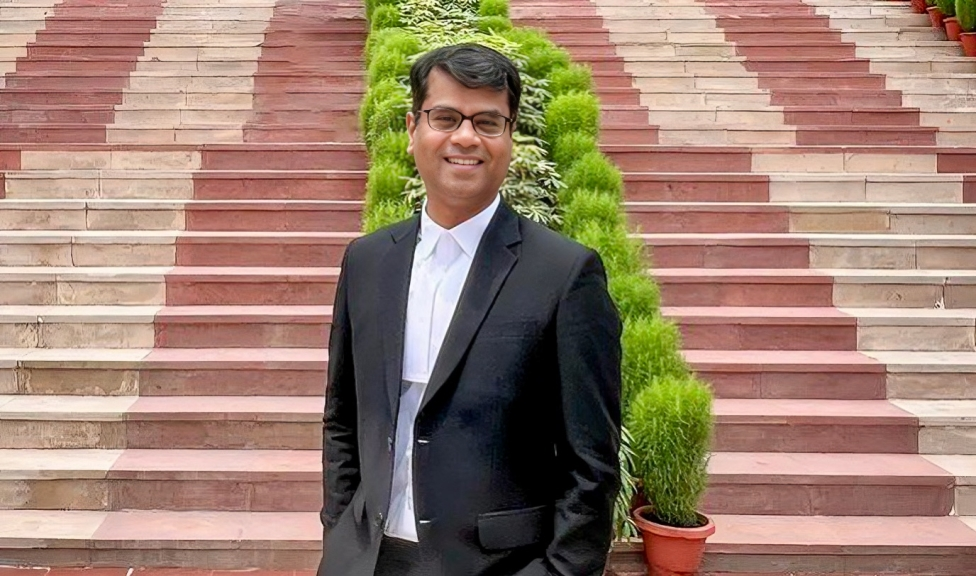


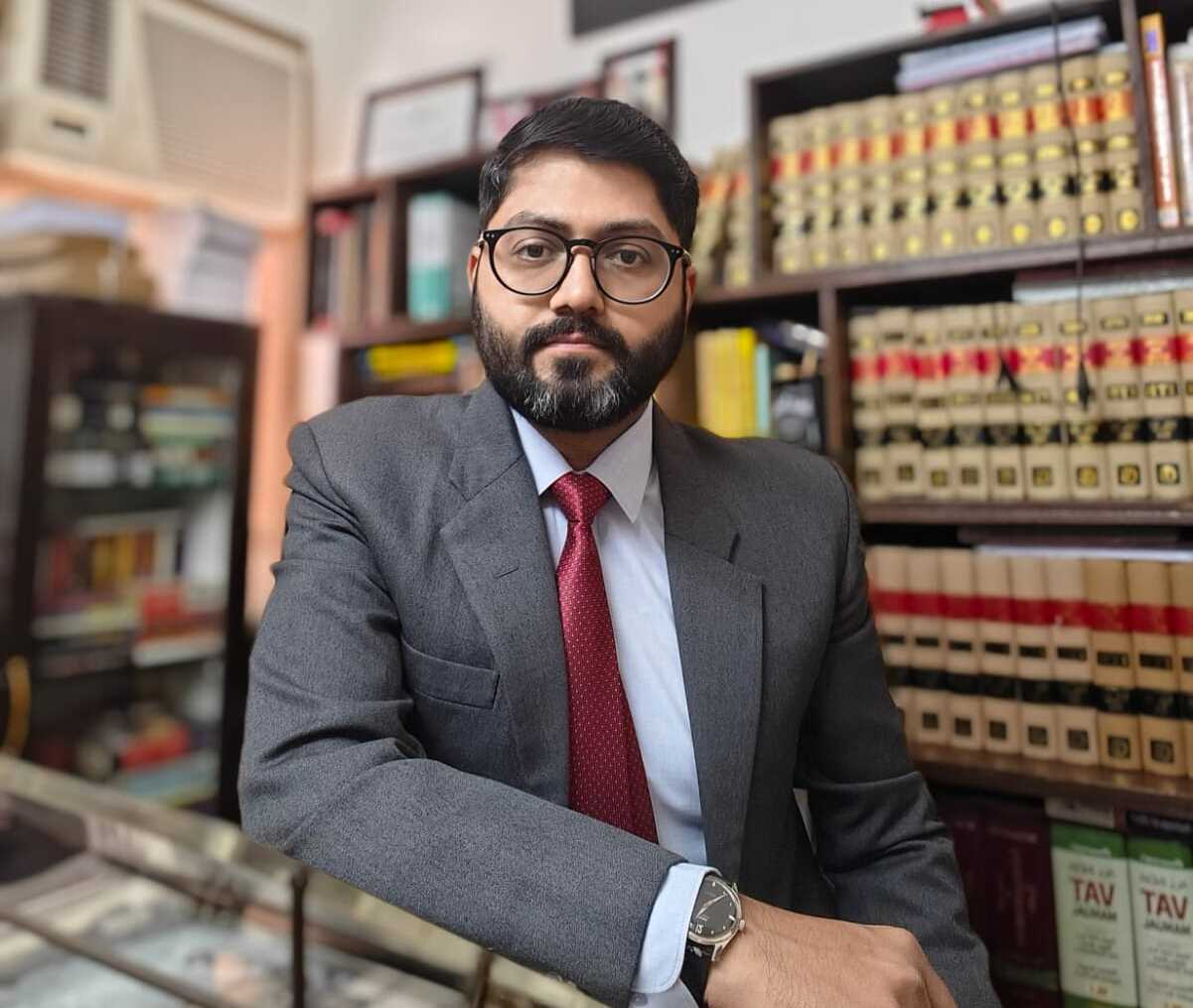


 Allow notifications