Joining the field of law can stem from different motivations. What inspired you to pursue law, and how did your law school experiences shape your perspective and understanding of the profession?
Like many other kids, my first exposure to law came with the movies. Law is an ever evolving combination of words, written in a manner that each and every word matters and has weight. For me, it was particularly intriguing to comprehend how mere words could wield such influence, to construct meaning from the given elements and to find solutions mostly in the shades of grey – there are no right or wrong answers. I am an alumnus of Jindal Global Law School, O.P. Jindal Global University, Sonipat. Jindal, a name reckoned with unparalleled academic excellence, was a truly innovative practical legal experience. It has a global outlook to curriculum – a carefully designed amalgamation of arts and law, offered through a combination of mandatory courses and multidisciplinary electives. Further, it has educators and students with diverse global experiences, the former having the flexibility leading to learning through thinking, questioning and engaging in meaningful discussions. Jindal fostered my understanding of law beyond silos, by equipping me with practical training and exposure in an overall dynamic space. From self-doubt, it helped me transform into someone who is not afraid to trust her instincts in driving solutions to complex legal problems.
You started your career at a leading MNC in compliance and taxation. What were the most valuable experiences from that period, and how did they lay the foundation for your later work in providing end-to-end legal solutions on tax issues for major industry players across sectors like E-commerce, Liquor, Food and Beverage, Gaming etc?
I accepted a Pre-Placement Offer from PricewaterhouseCoopers when I was still in my fourth year of law school. Therefore, immediately after my graduation, I joined their Governance, Risk and Compliance team. My job description required me to determine whether the internal controls and policies of Multinational Corporations were legally compliant, from a global standpoint. Despite a brief stint of only six months at PricewaterhouseCoopers, I believe that I learnt an extremely valuable lesson, which led me to secure and stand out at my subsequent job at AZB & Partners. I realised that a major hurdle in the practice of the legal profession is the flood of lawyers in the system each year – there is an apparent glut. The mantra to stand out, from what I learnt very quickly, is marshalling facts and figuring out the intricacies of how businesses function – both the granular details as well as the broad perspectives.
What motivated your shift from corporate compliance to a law firm, and what differences did you notice in the work environments? How did you adapt to managing complex litigation strategies and representing clients before Commissioners of Income Tax, ITATs, High Courts, and the Supreme Court across India?
My appointment at PricewaterhouseCoopers happened more by accident than by design, at the least expected time. Even though my job profile acquainted me with diverse areas of law at an international level, yet, I craved hands-on practical involvement in the application of law in intense adversarial set ups. This was the motivation with which I started applying to law firms, knowing fully well that the work there was expected to be more intense. As far as the work environments of both the places at which I have worked thus far goes, honestly, contrary to the popular opinion, I personally do not think that the same have been very different – fortunately for me, both the places have been marked with supportive supervisors, learning, flexibility, autonomy, open communication and work-life balance (for most part). In order to discharge the responsibilities that came with my new role with sincerity, I dove deep into the facts of briefs assigned to me and simultaneously, immersed myself in absorbing what I could about the nuances of the Indian tax regime/ Tax Treaties. Of course the “real-world” with no margin of error was daunting, more so, since I took up a highly specialized area, but nonetheless, being someone who had fought stubbornly for a spot at the most reputed law firm in India, I was determined to make the most out of the opportunity advanced to me.
With over seven years specializing in Income Tax, International Tax, Transfer Pricing, Foreign Exchange, and Benami law, what has been one of the most challenging cases you’ve handled and how did you navigate it?
For me, the fact that a case is significantly weak on facts or on a point of law will not by itself make it “the most challenging”. When it comes to taking a case to Court, there is always more than what meets the eye. It’s not just about reviewing documentation, drafting and arguing – it’s actually about all the behind the curtain strategizing and client management – balancing possible outcomes with client expectation every time the case is likely to come up. For me, the most challenging cases are the ones with an ostensible mismatch in the attainment of the said balance. In fact, even an unassuming case of assured balance may become a challenging one owing to certain unforeseeable circumstances, such as, delayed hearing on account of the opposite counsel or the Judge being on a leave, or on account of the case not being listed or taken up. There is no rigid or inflexible formula for ready application, so as to navigate a challenging case. Needless to state that when such a situation arises, which it will more often than you’d like, you will be constrained to think of creative solutions, trust your instincts and quickly follow through, irrespective of how outside your comfort zone it may be. It may not be in the fitness of things to allude to a specific instance of any case.
You have authored several articles on contemporary tax issues, including Equalisation Levy, GAAR, Benami Property, etc. How has writing shaped your career, influenced your approach to complex legal issues, and contributed to policy discussions?
I firmly believe that what distinguishes an average lawyer from a great one is the latter’s ability to draft a legal document methodically and precisely, in a manner that captivates the reader of such a document. The reader should not have any doubt about the observations advanced and its co-relation with the ultimate conclusion or the proposition sought to be canvassed. This is particularly true for those pursuing litigation, since very often, Judges base their decisions having regard to the content of the petitions, appeals, applications, submissions, etc. I believe that each time I write an article, it helps me enhance this precise skill. Of course, it’s a process – you come across a relevant contemporary issue or a topic you don’t quite know much about; you understand its context; you go over the related statutory provisions, precedents and scholarly works; you formulate your independent thoughts; and finally, you pen it all down! Each time I have done this, I have been exposed to the enormous gap between what the businesses are doing and the law as it is. This invariably opens policy discussions. Article writing assumes even more significance for entry-level associates, since a large part of their job profile entails churning out drafts. It goes without saying that it should be them who should be doing the reading, the thinking and the writing and not the nuanced Artificial Intelligence!
While working with international entities and advising on transactional tax matters, how do you approach cross-border cases? What are the major challenges in handling matters like foreign exchange issues, M&A structuring, or international tax disputes, and how do you navigate them effectively?
I believe that the underlying challenges and approach to each transaction or case is specific to its own set of facts and as such, the same cannot be generalised. Be that as it may, in my experience, the biggest challenge still seems to be the rather intricate regulatory compliances, both domestically and internationally. Since laws usually play a catch-up with the pace of dynamic businesses, the extent of applicability of existing laws on such businesses. always remains debatable and prone to future litigation. Further, with specific reference to the domain of tax laws, in cases where existing laws could not bring certain business models within the taxing net, retrospective amendments have been conceptualised and effectuated, consequently, adding to investor anxiety. I believe that one way to navigate this is to keep updated about the mechanics of disruptive business models and the manner in which such models are being looked at, globally. With the requisite background, the need of the hour is to engage with the policy makers so as to strike the requisite balance.
As a woman litigator in a highly technical field, what challenges have you faced, and how do you balance mastering complex legal frameworks, devising litigation strategies, and mentoring the next generation of lawyers?
Being a nuanced field, not many law graduates opt for tax law. What I noticed during my initial days of practice was that the litigation space, specifically, the tax litigation space, is dominated by a handful of lawyers. The percentage of women lawyers amongst this handful, is negligible. The trend seems to be improving as far as entry-level and mid-career level representation of women in litigation generally is concerned, where women seem to be matching, if not outnumbering men. However, effects of improvement are yet to be noticed in the tax litigation space. In my opinion, the strides made to ensure formalistic equality in many corporates and firms are laudable. This includes a supportive environment, with a clearly articulated policy on discrimination, harassment, flexible timings, maternity leave, etc. That said, in my experience, heightened scrutiny, specifically, outside these spaces, still continues to serve as a systematic barrier. It is up to the legal community to collectively work towards addressing this challenge. In my experience, one way to do this effectively, is to assume a mentorship role, offering insights, guidance and support to law students as well as organising and participating in periodical sensitisation trainings. Certainly, this would add meaning coming from women already assuming leadership roles.
What advice would you give to law students or young lawyers considering a career in tax law and litigation, particularly in balancing technical expertise with advocacy and strategic client management?
A couple of quick points here. First, as stated above, get your hands dirty figuring out the facts and how businesses function; understand risks. Second, whether you work for free or for a fee, marshal the facts and apply the law to create a positive impression. Third, which is an extension of the second, remember that preparation is key and hence, never appear before a Court unprepared, else, you will be doing a disservice to your client, the Court and the cause of justice. Fourth, know that networking is an integral part of the legal profession. You may have the best understanding of the law, but unless and until the client community reposes confidence in you, what is the worth of all the theoretical knowledge? Therefore, from day zero, network within the community – with your friends and associates across different fora in different parts of the country/ world. Keep in mind that most of the work is generated through references alone. So, be active on social media. Your network should know exactly what you’re up to. For this, post regular updates, write articles/ papers/ columns or participate in talk shows/ conferences/ seminars/ lectures. Fifth, have patience and perseverance – remember that giving up is not an option. Stay relentless and focus on building a quantum practice. Trust the process.
What inspired you to pursue a career in law? Was there a particular moment, influence, or personal experience that drew you to the legal profession?
Since the time I learned to read and write, I have been a voracious reader. This passion led me to a deep interest in literature, history & political science. Everything I could lay my hands on, from William Shakespeare to Edgar Allen Poe to George Orwell and William Wordsworth to Arthur Conan Doyle, Oscar Wilde & of course Haruki Murakami. I was fascinated by how stories shape society and I was certain that I would either end up as a journalist chasing and breaking news stories or a writer churning out books and articles.
My family of lawyers, journalists and politicians encouraged me to develop my writing skills by reading. Contrary to popular belief, being a second generation lawyer is not always easy. In fact, like in my case, the bar was already set high by the rest of my family, and I knew that nothing less than excellence would be acceptable should I decide to join the legal practice and forge a career in law. However, my first choice was to be a journalist.
But one day during the Diwali/Winter break in my final year of studying for my Bachelor’s degree in Arts as I had made no plans to spend time in recreation with my friends, I decided to attend a cross-examination being conducted by my Advocate aunt when I watched her meticulously extract the truth with surgical precision from a witness on the stand with. The next day I requested my father, who had a flourishing legal practice in civil disputes and trial courts, if I could intern with him for a week. He agreed on the condition that I had to work even harder and put in more hours that week than the rest of the interns and not look at the clock. The first day I sat with him while he painstakingly drafted and re-draft a legal notice meticulously with the skill of what I could barely fathom. We must have spent close to 16 hours that first day, and much to my surprise, I was back again the next day where we spent another 16 hours, and I kept my word, I was the first to arrive and the last to leave. At the end of that week, I made up my mind to pursue a career in law.
Thus, Law wasn’t a detour, it was a logical conclusion of my evolution from being just a writer to being one who writes to ensure that justice is available to everyone in need of it.
What motivated you to pursue your master of laws degree (LL.M.) from Queen Mary University of London? What aspects of the program & institution aligned with your academic and professional goals? What are your key takeaways & experiences from your time there ?
If the degree of Bachelor of Laws was the foundation for my legal practice , my Masters in Law at Queen Mary, University of London was what built the edifice from which I could have a world view of international legal trends at and the ever widening scope that law provides to ensure a more equitable world. Out there I wasn’t analysing just the law in theory, but society and the way we function in relation to the law which gave me tools to further my learning.
Most of India’s statutes have either been drafted while we were a colony of the British or are based on laws in the U.K. In that sense Queen Mary offered me a historical mirror coupled with a modern lens, which made it ideal for my practice in Corporate & Commercial law. I chose Queen Mary because its LL.M. was famous for being both rigorous in theory and incredibly practical. It felt less like a classroom and more akin to partaking in real world legal scenarios. Three factors converged to create the perfect storm: In fact, prior to my LL.M. degree I had already been advising startups on Transactions, Litigation Avoidance advisory and Pre-Litigation when I realized that understanding international commercial law wasn’t optional anymore, it was the only means of raising India to the highest international standards. Second, London’s position as a global financial hub meant access to case studies that textbooks simply cannot replicate. Third, QMUL’s University’s faculty included practitioners who wrote the rulebooks on disputes and dispute avoidance.
My Master’s Degree in law laid an emphasis on comparative legal systems which proved invaluable to me now in my legal practice. Part of socialising and networking would regularly involve heated debates with faculty and peers which were our own version of the Oxford Union debates where we dissected existential legal conundrums faced in transactional agreements under Indian, English, American (Delaware), and Singapore laws. These were followed by a round of Hors d’oeuvres and drinks for which the lawyers who had failed to win the crowd would have to pay for it. The program’s real value wasn’t in the lecture halls but in the conversations that followed afterward. Late-night debates at the pub about whether certain aspects of media law really needed new legal frameworks, weekend trips with peers, faculty and chance encounters with renowned QCs & KCs.
These sessions taught me that Law isn’t just about a set of rules, it’s the art of predicting human behavior within social constraints. That became my mantra. Even my dissertation became the foundation for later advising several startups on their transactional and regulatory strategies. My London experience taught me that legal advice without commercial context is akin holding G.P.S. hardware with no connection to satellites and software, technically sophisticated, but practically useless. London offered something Mumbai could not at that time, proximity to the birthplace of commercial law and traditions that govern global transactions even today. London taught me two things: how to use the law with surgical precision and how to survive in a multi-cultural metro much akin to my own home city of Mumbai, with the only difference being that it wasn’t ‘Home’.
Queen Mary wasn’t just a campus; it was a court room without borders. I chose it for its emphasis on comparative commercial laws and of course, being in London, the commercial capital of the world was the icing on the cake. Every lecture was an eye opener to the world’s legal machinery and watching it in motion. We didn’t just study corporate and commercial law but we debated it with both present and future public policy influencers. It provided me with the opportunity to interact with vanguards and scholars of law and economic policy in our classrooms and campus. Of course, having such as alumni consists of stalwarts including India’s former RBI Governor Mr. Urjit Patel, Economist Pranoy Roy & Davidson Nicol, the former Under Secretary General of the United Nations makes it stand out even more.
Legal expertise without cultural fluency is like using complicated words with no proper context in an unrecognisable language. The LL.M. taught me to be multi-lingual in legal traditions essential for any lawyer serious about Start-up advisory in our globalized world.
In the early stages of your legal career, what experiences or matters significantly enhanced your understanding of the Law? Are there any pivotal moments that helped shape your professional trajectory?
If law school is your boot camp, then your initial few years of practice are akin to active combat duty. My father who was my mentor when I joined the profession has a saying: “Every mistake you make costs someone else money, time, or opportunity, so be extremely alert you may make new mistakes, but never repeat the old ones which you must use as a means of from your old ones which you must use as a means of enhancing your knowledge.”. Those words transformed how I approach every Start-up advisory engagement.
Every lawyer has that one case or a few early on in their career that serve as their trial by fire. Mine involved a tech Start-up whose founders had structured their equity like a Rom-Com love triangle, complicated, dramatic & destined for disaster. As we worked towards reconstituting the documentation, one thing was clear to me, ‘Startup Law’ (as people have labelled it) isn’t about preventing problems, it’s about creating efficient solutions for smart people who often make predictable mistakes. That client taught me three things: First, documentation matters, but context matters more. Second, the best legal advice often sounds like business advice. Third, sometimes the best service you can provide to a client is talking them out of their own cleverness.
Another pivotal moment came during my first due diligence exercise for a Series A round. Thirty hours into document review, I discovered a licensing agreement that could torpedo the entire deal. The lead investor later told me that I didn’t just save them money, I saved them from becoming a cautionary tale. My (Late) Grand-mother, who was a highly respected and loved State Legislator once told me: Good lawyers know the law; great lawyers understand the story behind the enactment of that law. That’s when I realized that due diligence isn’t treasure hunting; it’s about defusing land mines. These experiences of multiple successful people shaped my philosophy: Be the lawyer who prevents a crisis, not one who profits from it.
One of my first major transactions involved a then small scale e-commerce startup with revenue in different jurisdictions and compliance documentation in none of them. It was like being asked to perform surgery with a plastic knife. We spent several weeks creating the legal infrastructure for them which in fact should have existed from day one. One of its founders later said, ‘We thought that legal documentation was trivial until we realized it was life support.’
You advise & litigate for several major government bodies as a Senior Panel Counsel for the Directorate of Revenue Intelligence (DRI)/GST Intelligence & Central Board of Indirect Taxes (CBIC) as well as Standing Counsel for the Central Board of Direct Taxes (CBDT), & Maharashtra Housing & Area Development Board (MHADA) AND being a legal advisor to several Start-Ups in the tech & media space on the other how has working across such diverse institutions influenced your legal approach? What have been some of the most challenging matters among them?
My experiences with government agencies and statutory bodies taught me to navigate bureaucracy not as an obstacle, but as a playing field where real business gets done. This perspective proves invaluable when guiding startups through regulatory approval processes. Of course, I have been blessed and privileged to have had the opportunity to work with some of the most intelligent, upright & hard-working officers right from the grass-roots level Inspectors & Superintendents to Legal Advisors/Officers from right at the top up to (Chief/Joint/Deputy) Commissioners, A.D.G., Deputy & Joint Directors, so I have to give them credit where it’s due. If I have to sit and name them all that in itself would be a fairly long list.
Diversity proves invaluable for Start-up advisory work. When advising media houses or fintech companies, It’s not just about understanding MCA, RBI, SEBI, SWA regulations, It’s about deciphering the Regulatory and counter party mindset, the concerns that keep regulators awake at night, and how policy gets translated into practice.
That lesson now translates directly into how I work with startups and media houses. I cannot count the number of times boot strapped founders have met me and said “We don’t need the paperwork, it’s fine, we trust each other” only to reappear a few months later realising that when disputes arise trust flies out of the window. My early career showed me that cross-checking every consent form, every signature, every assumption can mean the difference between smooth sailing and sinking fast.
Despite my LL.M. specialisation I never restricted myself to one particular area of practice, which is why I now am able to decipher matters ranging from Income Tax disputes, Customs act & GST related Writs, Appeals, Bail & Anticipatory Bail dealing with Tax Evasion, NDPS cases, Housing disputes & other laws. Working across government bodies is like playing five-dimensional chess with tax intelligence, urban planning, housing rights, anti-evasion laws being the pieces on the chess board. Each brief requires switching mental gear and watching details with varied legal lenses. I’ve argued tax evasion by breakfast and housing and society related issues in the second half.
Working with multiple statutory bodies is like being a legal anthropologist and a linguist, each institution has its own culture, priorities and rules, both written and unwritten. My empanelments read like a tour of some of India’s most fascinating legal statutes including The Black Money (Undisclosed Foreign Income & Assets) and Imposition of Tax Act, Finance Act & Income Tax Act under the CBDT, the Goods & Services Act, Customs Act & Narcotics & Psychotropic Substances (NDPS) Act under the CBIC & DRI and the Maharashtra Housing & Area Development Act, to name just a few.
Each case has been fascinating and just like fingerprints no two cases are alike but one of my most fascinating as well as challenging one has been a Writ Petition filed by one of the world’s largest manufacturers of automobiles having it’s parent company based in Germany who had sought to quash & set aside a $1.4 billion Show Cause Notice issued by the Office of the Commissioner of Customs based on investigations by the Directorate of Revenue Intelligence for wilful tax evasion misclassifying imported car parts to avail lower import duties. In that case, I was led by the Learned Additional Solicitor General (ASG) of the Government of India who used to regularly fly down from New Delhi to argue the case. It was like solving a Rubik’s cube while being blindfolded where every move in one dimension affects others. That case taught me that regulatory strategy isn’t merely about simple compliance or the lack thereof with statutory provisions which may appear uncomplicated but a complex choreographed play involving multiple issues which ought to be viewed from multiple angles to get a holistic picture and arrive at what requires to be followed in practice.
Another case involved the challenge to an incorrect and manipulated technical opinion given by a multi-national consultancy firm to a multi-national South Korea based conglomerate who imported electronic equipment worth billions of dollars under a wrong entry based on the aforesaid technical opinion.
Yet another case involved a challenge to a pivotal aspect of tax administration which involved the transfer of a group of cases from one Assessing Officer (AO) to another and was crucial in ensuring the smooth functioning between two different state jurisdictions of the tax administration where the Assessee raised objections to the change in jurisdiction.
The diversity proves invaluable for startup advisory work. When advising Start-ups and individual entrepreneurs, I don’t just have to understand and simplify regulations I have to understand the regulatory mindset, the concerns that keep regulators awake at night, and understand how policy has to get translated into practice.
My government litigation experience taught me to navigate bureaucracy not as an obstacle, but as a playing field where real business gets done. This perspective proves invaluable when guiding Start-ups through regulatory approval processes. It has helped me to represent my private clients in their attempt to bridge the gap between legal theory and public policy reality.
Each role brought with it unique challenges, serving on regulatory panels involves balancing innovation with protection, investigating financial irregularities requires detective skills which they don’t teach you in law school, and where policy advisory work demands thinking beyond individual cases to systemic implications.
Yet another challenging matter pertained to a multi-agency investigation into a scandal involving small individual investors on the one hand and a group of companies, whose interests ranged from real estate development to cattle rearing to broadcasting services. Over three years, multiple stakeholders, and countless sleepless nights later, we crafted a resolution that protected investors while preserving innovation incentives. The experience taught me that public service isn’t about serving the law, it’s about serving justice through the law.
The experience of working with government bodies and statutory bodies transformed my startup advisory practice. I don’t just help companies comply with regulations; I help them understand the ‘why’ behind the rules. When founders grasp regulatory intent, they can work smoothly within set boundaries rather than riding rough shod over the set perimeters. These roles have made me lawyer, policy analyst & virtual entrepreneur. When advising CBIC on procedural lapses or individual entrepreneur clients, I often have to translate complex regulations into implementable steps. That cross-sectoral experience honed both my legal acumen and empathy to various causes.
You’ve actively participated in pro bono matters & causes varying from human rights to animal welfare, including filing public interest issues before the hon’ble Bombay High Court. What drives you to take up such socially significant and often challenging cases? In your view, what role should pro bono work play in a lawyer’s practice? You’re also a legal advisor to Sanctuary Foundation and Fur-rida’s Animal and Rehabilitation Trust, NGOs dedicated to Animal Welfare & rehabilitation in Mumbai, how do you balance both out?
Pro bono work, for me, began as a calling of my conscience. As a lawyer when you only litigate on behalf of those who can afford it, you are not helping the cause of justice but only helping those who are already privileged. Pro bono work always reminds me why I became a lawyer: not to rake in the money, but to actively work towards changing our world for the better, using the opportunity to advocate for a better, fairer and more equitable society. Billed clients feed the body. Pro bono work feeds the soul.
But here, before I even begin to think of taking any personal credit I must mention that it was the elders in my family for instilling whose values instilled in me makes me give back to society. My Late grandfather, an industrialist paved the way by social and charitable work. My Late grandmother was a Mumbai City Legislator and later Maharashtra State Legislator from the 1990s to the early 2000s. My Late uncle, also a businessman, sacrificed his business interests to champion the causes of the common man and was well known as a vociferous advocate of causes who many felt were lost causes. Just the three of them were responsible for providing basic sanitation and piped water connections to lakhs of residents of informal settlements in underserved parts of (South) Mumbai and also later went on to build study centres and gymnasiums for the poorer class of citizens who could not afford these “luxuries” throughout (South) Mumbai.
I grew up watching my father put in the same dedication and hard work into his pro bono clients that he would into his millionaire clients and once (while I was very young) I asked him why he did this, he simply said, If I don’t, then who will? … and that rational question just stuck with me. My mother gave up a very promising career as a journalist to teach journalism, creative writing and conduct writing boot camps. My brother, now a high-profile Surgeon still spends days working pro bono and organising medical camps in rural Maharashtra where there is little to no expert medical facilities. Another uncle is a senior journalist who has covered some of the most ground breaking issues of the time, not stories about luxury but the ones that no one else dared to cover because he felt that someone had to take up such matters. Another aunt gave up her job as a Banker to teach children.
When the Covid-19 pandemic hit India people had to take recourse to the Covid vaccine as it appeared to be the only defence against it. However, some unscrupulous elements took advantage of the rush for the vaccine and started administering mere saline water and passing it off as the Covid Vaccine. When my aunt, and I heard of it we couldn’t ignore it. The idea that thousands of people were tricked into believing that they were being given the vaccine when in reality they were not, shook both of us. Our PIL on this issue wasn’t just about a legal remedy, it was about restoring public faith in the ability of the law in dealing with such unscrupulous elements.
What continues to drive me is the belief that law must serve those who can least afford it. If startups look to me for guidance on shareholder rights, ordinary citizens need me for something far more basic: the right to life and health. In my view, pro bono isn’t charity, it’s oxygen for the soul. It reminds us why we became lawyers in the first place. As William Scott Downey had aptly put it, Law Without Justice is a Wound Without a Cure.
Pro bono litigation is not mere work without purpose in monetary terms, it’s about priceless work for those who cannot afford to pay to get good legal representation. I believe every lawyer who has crossed 10 or more years of practice must dedicate a part of their practice to Pro Bono Litigation. Otherwise, we risk becoming mere paper pushers and money making soulless machines instead of custodians of real justice.
Once I found myself in the thick of a case involving a teenage boy who died after being detained and allegedly tortured by the police whilst in their custody. The boy, barely 17 years old from Mumbai’s Dharavi slum district, was accused of stealing a mobile phone. After being released from “routine police detention” in July 2018, he complained to his parents and siblings of his torture by the police while in their custody. Soon after his release, he developed a fever, and his condition deteriorated rapidly, and he tragically passed away within a week. The post-mortem report mentioned pneumonia as the cause of his death. To everyone but his family, the case was as good as closed. The family’s grief was not just raw, it was distrustful of the very system that swore to protect them and it was absolutely justified in refusing to take their child’s body for his last rites for nearly two years until the High Court ordered a second post-mortem. For those two years, the body lay unclaimed in a morgue, almost frozen in time. But the law did not forget him and nor did I.
I wasn’t new to litigation then, but here I learned something every statute book misses: law isn’t just about sections and precedents; it’s about instilling trust in those for whom laws are enacted. The Hon’ble High Court’s order was a pivotal moment it showed me about the compassion and kindness of judges and it showed me that you don’t need to have the loudest voice to tilt the scales of justice in favour of the helpless and restore faith in the judiciary. It also sharpened my skills in due diligence because when you’re digging through contradictory medical reports and hospital records, you learn how to scrutinize details like an auditor hunting for hidden liabilities.
Taking on that case was not about earning any fees as it was completely pro bono, it was the weight of my conscience which guided me to do so. That case became my personal reminder that law is not always swift, but it is relentless. Sometimes you carry files that weigh more than law books they weigh with grief, suspicion, and silence.
Another matter that shaped my formative years was one that involved a medical negligence case where a woman contracted Hepatitis C after a hysterectomy at a famous South Bombay hospital. A team of surgeons and doctors, one operating theatre, and a chain of negligence right from the top, it was a puzzle of medical protocol and accountability. For a young lawyer, it was baptism by fire. I spent nights reading medical manuals, learning how a surgery should be conducted, and finding out with what went wrong. What it taught me is that the devil truly hides in the documentation.
Pro bono cases also tend to surprise you and throw you into the deep end, no fees, minimal support, high legal stakes for those involved. But they also teach you to think creatively and advocate fiercely. They’re a bootcamp for both skill and conscience. Pro bono work teaches you humility: you are not always the smartest person in the room, sometimes you are the only person standing between injustice and justice.
Animal welfare law in India is like a crossword puzzle with half its clues missing. As advisor to Stranctuary Foundation and Fur-rida’s Animal Rehabilitation Trust, I have actively helped them get set up as well as look into internal policy and legal fine print. I’ve worked on matters involving animal cruelty, harassment from societies against members from using elevators or accessing common areas with their pets. These cases taught me that education is as vital as litigation. Sometimes, the law needs a lawyer often it needs an earnest storyteller. “Until one has loved an animal, a part of one’s soul remains unawakened.” – Anatole France
Pro bono work should be mandatory in every lawyer’s practice, not as a penance for making money, but as a training for making better decisions. Every PIL or Pro Bono Writ I advise on makes me a sharper commercial lawyer because it reminds me that law exists to serve, not the other way around. Plus, there’s practical value: Pro bono cases often involve cutting-edge legal questions that commercial clients pay premium rates to explore. It’s continuing education coupled with social service. My pro bono work began with the simple realization of the advice of my (Late) grandmother who told me: Corporate law pays your bills, but public service will reward you with a clear conscience and a good night’s sleep. When you spend your days crafting shareholder agreements and due diligence reports, you can lose sight of law’s fundamental purpose of protecting the vulnerable and ensuring fairness. Pro bono work keeps me honest.
Every time I review a startup’s employment policies, I remember the domestic workers whose rights I’ve advocated for. Every time I structure a complex transaction, I’m informed by cases where transparency could have prevented injustice. It’s enlightened self-interest: Better lawyers emerge from engaging with law’s moral dimensions, not just its commercial applications.
And oddly, these cases have made me sharper in my commercial practice. Start-ups come to me with messy equity structures, hidden liabilities, and co-founder disputes. I approach those files with the same rigor I did in the case of the boy’s family who allegedly died as a result of custodial interrogation, digging until the truth emerges from a metaphorical mountain of dirt and stones which seek to hide it. Pro bono makes your professional muscle stronger, because when you stand against the State or against a famous hospital with unlimited resources and a legal team the size of a small army for free, a mere shareholder squabble doesn’t scare you.
Why take up pro bono cases? Because the power of the law is meaningless unless it reaches those who most need it. The directing of a second post-mortem after a teen’s death or holding doctors accountable for medical negligence are milestones for society and for any lawyer involved in pursuing such cases.
Looking ahead, what is your vision for the future of your legal practice? How do you see your personal journey evolving within the legal field? In a profession that is both demanding and dynamic, how do you maintain focus, purpose, and mindfulness?
My future vision is to promote people to start building a hybrid practice where commercial matters fuel a strong public interest wing and not just something which has purely commercial motivation. Think of it as the Robin Hood model: charge the rich, fight for the voiceless.
The future belongs to lawyers who can speak three languages fluently: Law, business, and technology. I’m building a practice that serves as a bridge between these worlds, helping founders navigate not just current regulations but anticipate future ones.
As for purpose: I want my legacy to be measured not in my tangible assets, but in barriers removed, regulatory hurdles that no longer impede innovation because I found simple solutions, and compliance frameworks that enable rather than constrain entrepreneurial ambition. My goal isn’t to be the most famous lawyer or the richest one, it’s to be the one clients trust with their most important decisions because they know I’ll give them efficient solutions within the parameters of the law and not just some short sighted temporary balm for any problems that they could encounter.
The legal profession needs fewer disruptors and more steady ships. Staying focused requires principled pragmatism. When faced with ethical dilemmas, I ask not ‘What’s legally permissible?’ but ‘What would I want my family & friends to be told about me as a lawyer and a human?’ This compass has never steered me wrong. I see myself evolving into policy advisory roles, where law meets legislation. I mentor young lawyers and young law students, and I hope to use this to build a legal aid network where all of us endeavour to focus just 30% of our time and resources towards pro bono legal aid in india focussing on individual cases and causes ranging from human rights, prevention of domestic violence and animal welfare cases.
My five-year vision: Become the first and last go-to legal strategist for Tech & Media Entrepreneurs and Start-ups tackling challenges such as: Intellectual Property Protection, Transfer & Monetization, Data Privacy & Compliance, Fund-raising & Investor relations, Content Liability & Platform Responsibility, Technology Contracts & Partnerships, Regulatory & Policy Navigation and the biggest & most common one being: Dispute Prevention & Legal Crisis Management. These companies don’t need traditional lawyers; they need legal pioneers who can craft frameworks for technologies that don’t yet have regulatory precedents. Maintaining focus requires what I call ‘productive paranoia’ constantly asking ‘What could go wrong?’ not from anxiety, but from genuine curiosity. Mindfulness comes from remembering that every legal document I draft affects real people’s lives and dreams.
My endgame? To be feared by crooks, respected to be fair by counter-parties and of course, followed by puppies, especially the ones that have no place to call home.
Focus and mindfulness? I journal, I used to learn Salsa & Bachata, popular latin american dances, I also took up MMA and found that to be a great stress-buster, I spend time taking care of my dogs as well as feeding a few community dogs. I take breaks from the screen. “The law is a jealous mistress, but she respects a loyal one.”
I have one rule which most of my clients are already aware of: if it’s urgent I’ll be drafting and doing research even if it’s 3am or a holiday, but if it doesn’t need urgent redressal I stop working by 9 pm. Balance isn’t a luxury, it’s how I keep the fire burning without burning out.
Based on your extensive experience across sectors, what advice would you offer to young lawyers just starting out in the profession? Are there any particular resources or habits you would recommend to help them build a strong foundation?
Your law degree is just a learner’s license. The real exam begins in court. Try and read at least one interesting case law a day or at the very least. Argue (respectfully) with your peers. Your opponents and counter-parties are not your enemies. In litigation, your opponent is your adversary, but only inside the courtroom, they are your peers, your colleagues, your juniors and seniors outside the courtroom, treat them all with the same respect once your matter is over that you would want them to treat you with.
Even if you’re being appointed just for an adjournment, read the entire case, carefully, make sure if given the opportunity by the court, you answer correctly and confidently, most judges asking you about your case are providing you with an opportunity, they know they may lose time with a young lawyer, but they are trying to help you and not put you in a spot.
Your counter-parties are not your adversaries, you have a common goal, mutual co-operation and trust go a long way here, far longer than brow beating or one-upmanship. Write even when no one’s reading. Don’t confuse over-confidence with Confidence. But humility is better. Young lawyers often worry about the wrong things.
Here’s what actually matters: Master the fundamentals before chasing specializations. You can’t advise on complex M&A structures if you don’t understand basic contract principles. It’s like trying to compose symphonies before learning scales.
Your first five years will feel like everyone’s speaking Latin while you’re struggling with the alphabets, that’s okay, read and re-read. The lawyers who succeed aren’t the smartest ones, they’re the ones who can admit ignorance, ask better questions, and turn feedback into improvement rather than taking it personally. Clients hire lawyers to solve problems, not to demonstrate legal knowledge. Be solution-oriented, not statute-oriented.
Stop thinking like a student who merely asks for answers and start thinking like a strategist who helps clients navigate ambiguous situations. Law school teaches you what the law says; practice teaches you what the law means.
In start-up advisory, I’ve learned that founders and investors speak different languages, even when using the same words. ‘Aggressive timeline’ means ‘next week’ to founders and ‘next quarter’ to VCs. A founder once wanted to structure their Series A with several different classes of shares: one for each team member’s ‘unique contribution.’ We simplified to three classes and closed the round in half the time. Then there was the time that Start Up wanted to grant equity to advisors before clarifying their intellectual property ownership. We sorted IP first, advisory agreements second. One recent challenging due diligence involved a company with operations in four countries, three legal entities, and legal documentation that looked like abstract art.
Good legal advice feels expensive until you need it, then it feels cheap. My approach is preventive medicine for businesses, identifying potential complications before they become complications. Whether it’s crafting founder agreements that anticipate future disputes, structuring employee equity plans that scale with growth, or creating compliance frameworks that evolve with regulation, the goal is always the same: Build legal infrastructure that enables business success rather than constraining it. Benjamin Franklin said, ‘An ounce of prevention is worth a pound of cure.’ In startup law, an hour of careful drafting can prevent months and sometimes years of expensive litigation. Don’t aim to be the smartest/richest lawyer. Aim to be the one your client calls first when they need a solution.
Four Non-Negotiable Principles:
Understand not just legal implications but business consequences.
Sometimes the best legal advice is telling clients what they don’t want to hear.
Your career will be defined not by the cases you win, but by the problems you prevent and the trust you build. Be the lawyer people call not just when they’re in trouble, but when they want to avoid trouble altogether.
The moment you think you know everything is the moment you become dangerous to yourself, as well as your clients.
Essential Habits:
Read everything thrice, once for content, once for implications, and once again for good measure.
Make time for one pro bono brief, at least once a month.
When you aren’t reading, attend court like an obsession: watch, make notes, learn.
Kindness, not money, makes the world go round. Be Kind… Always, especially when you would not benefit. Be kind to those less fortunate than you, how you treat a clerk or a peon is a lot more telling of your character than how you behave in front of a Judge or a Senior Advocate. Be kind to people, be kind to animals.
You don’t have to be the biggest fish in the court-room or the negotiation table, remember piranhas bite more sharply (but remember, above all, Kindness)
As an Advocate-on-Record before the Supreme Court of India, with a deep understanding of procedural complexities and a strategic approach to complex tax disputes, what motivated you to pursue a career in law initially? How did your experiences at Rajiv Gandhi National University of Law, Punjab shape your journey?
Like many first-generation lawyers, my journey into law began more by chance or perhaps, more accurately, by a process of elimination. In school, I took Physics, Chemistry, and Mathematics with the intention of joining the defence forces, particularly the Air Force. However, due to imperfect eyesight, that option was ruled out. The next conventional choice at the time was engineering, but I was certain that it was not for me. Around that time, a family friend who was studying at GNLU introduced me to CLAT. I found the course material interesting and developed an instant liking for law. At that stage, there was no deep-seated motivation but just a practical decision that I had to pursue something meaningful.
My time at Rajiv Gandhi National University of Law, Punjab, turned out to be an enriching experience. Coming from a small town with a near Hindi-medium schooling background, adjusting to law school, where extroversion is often applauded, was challenging at first. But RGNUL had an intellectually stimulating environment that instilled in me the desire to work on myself. More importantly, I had an amazing group of friends who, in their own ways, taught me valuable lessons. All of this collectively fostered my analytical skills and deepened my appreciation for the law.
One of the most impactful moments of my time at RGNUL came during our convocation, which was chaired by Justice T.S. Thakur. One of my dearest friend received three gold medals, and just like that scene in “3 Idiots”, I found myself feeling a mix of happiness for my friend and regret for not achieving the same. Then, Justice Thakur delivered a speech that, to this day, remains with me. He acknowledged that while some students had won gold medals, many had not but that did not determine success in the legal profession. He emphasized that success in law comes from following the Five Ps: Patience, Perseverance, Persistence, Passion, and Practice. It felt as if he was speaking directly to me.
That moment reinforced something I have carried throughout my career. While my initial decision to study law was incidental, my time at RGNUL cemented my passion for the field and gave me the clarity to pursue litigation. Looking back, I can say with confidence that law, whether by chance or choice, turned out to be the right path for me.
During the early stages of your career as an Associate, what key experiences stood out that deepened your legal understanding and influenced your decision to specialize in tax disputes?
My interest in tax law started during my internship at a tax litigation firm. Tax litigation has a unique mix; it allows you to work on complex corporate matters while also experiencing the thrill of courtroom advocacy. That combination intrigued me and ultimately led me to choose tax as my area of practice.
During the early years of my career as an Associate, I had my fair share of lessons, some humbling and others eye-opening. One incident, in particular, stands out. I was working on a case where I advised a client purely from memory. I have always had a strong recall, and in my overconfidence, assumed I knew the provision perfectly. I overlooked the fact that tax laws change frequently. The client later pointed out an amendment that completely changed the position I had advised on. It was a moment of realization that no matter how confident you are, never rely on memory alone. That experience taught me the importance of always verifying the law rather than depending on recollection. From that day on, I made it a habit to double-check and stay updated.
I was fortunate to start my career under the guidance of Mr. Pramod Kumar Rai and Mr. Puneet Agarwala, both of whom have been incredible mentors. Their approach toward juniors is something I try to imbibe today. They never raised their voices or scolded but always guided with firm yet encouraging clarity. One of the most valuable lessons they taught me was to always stay updated on the law, no matter how busy the day gets. Even today, my mornings begin with reading legal updates because I learned early that in tax law, staying current is non-negotiable.
Another crucial lesson I learnt was that litigation is unpredictable. You can never be too certain about what will happen in court. Early on, like many young lawyers, I sometimes assumed that a matter would be adjourned and did not prepare as thoroughly as I should have. That assumption was short-lived when, in one of my cases, I almost got a dismissal order. My senior gave me an advice that has stayed with me: “Deepak, always come to court as prepared as if you are arguing Keshavananda Bharati. So that when you ARE arguing a matter that big, you are ready.” That advice changed my mindset. From that day forward, I never walked into a courtroom unprepared, no matter how small or routine the case seemed.
I remember another incident where my senior asked me to find a judgment on a potential question that might be raised by the judge. The request came late at night, and like any junior, I was frustrated about the timing and wondered why I was working on hypothetical scenarios. Still, I burned the midnight oil and managed to find the answer. The next day in court, the very first question the judge asked was the one my senior had anticipated. Because we had the answer ready, we moved past it smoothly. That experience taught me two things: (1) litigation, at times, is like war. Be a good soldier and follow the command of your seniors, and (2) some things come only with experience. Stay humble and keep working.
Looking back, those early years were filled with invaluable lessons; some learned the hard way, others through the wisdom of my mentors. I learned that confidence must always be backed by diligence, that preparation is non-negotiable, and that every case, no matter how minor, deserves serious effort. While I entered tax litigation because of its unique mix of corporate and courtroom work, I stayed because of the intellectual challenge, the unpredictability, and the sheer excitement of the practice.
Having cleared the AOR exam on your first attempt, what challenges did you face during your preparation, and how has earning the AOR title impacted your practice and professional growth?
When preparing for the AOR exam, the biggest challenge is time management. Most advocates taking this exam are full-time practitioners, managing court appearances, client meetings, and drafting work daily. Finding the time to sit down and study consistently is easier said than done.
In my view, the AOR exam does not fall into the category of being extremely difficult. The concepts are straightforward, but the real challenge lies in the sheer volume of material that needs to be covered. The questions are not the kind that one encounters in daily practice, so prior experience alone is not enough. There are no shortcuts. You have to go through the prescribed material, cover to cover.
Another challenge is structuring answers effectively. The questions in the AOR exam are often lengthy, yet the time to answer them is limited. In litigation, we are used to explaining arguments in detail, but in this exam, brevity is the key. Answers need to be crisp, precise, and well-structured, striking a balance between conciseness and completeness.
But perhaps the most underrated challenge is ‘writing’ the exam itself. We have become so accustomed to typing on laptops and dictating drafts that writing for hours at a stretch feels almost unnatural. The AOR exam requires handwritten answers, and I remember struggling with writing speed and endurance. I even had to practice writing answers just to get my hand used to it again.
Clearing the AOR exam was a significant milestone. It wasn’t just about earning the title but because of the journey. The process of preparing for it deepened my understanding of procedural law and reinforced the importance of consistency. It has allowed me to take greater responsibility in Supreme Court matters and strengthened my credibility as a litigator. The efforts it took to clear the exam was worth it, and the experience has helped me grow in the profession.
Given the demanding nature of your profession, what methods do you employ to unwind and strike a healthy balance between your professional duties and personal interests?
The practice of law, especially in the field of tax litigation, is undoubtedly demanding. My work takes me to the Supreme Court, High Courts, and Tribunals, often involving travel to different cities. The long hours and unpredictable schedules can be exhausting, but I genuinely love what I do. At the same time, I also recognize that longevity in this profession comes from accepting that you are not a machine. Law as a profession requires your undivided attention. No human being can be attentive all the time and if you are burnt out, in a way you are doing disservice to your client. So, learning when to pause and step back is much needed, which is of course easier said than done in our profession.
Work-life balance is highly subjective. For me, unwinding is not about carving out large chunks of time. It varies from reading to watching a movie or playing on PlayStation or simply just relaxing with the family. Recently, it has been my two-year-old son who eagerly waits for me to come home and play with him. Those moments are priceless, and no matter how hectic the day has been, I make sure to come back home and play with him. Also, the travel, though often work-related, also becomes an opportunity to explore new places, even if just briefly, which helps in breaking the monotony.
What are some of the most common tax-related challenges that businesses and entities typically encounter, and what proactive strategies or best practices can they implement to minimize or avoid these issues?
In my experience I have seen that: department rarely accepts a tax position without questioning it. In most cases, the authorities argue that the company has suppressed facts, misrepresented details, or acted fraudulently, even when the issue is merely a difference in interpretation. This often turns a straightforward tax position into a protracted legal battle.
At the same time, I’ve also seen companies take tax positions that are legally untenable by relying on interpretations that have already been rejected by courts or positions that are directly contrary to statutory provisions. What’s surprising is that many of these decisions stem from well-meaning but flawed sources such as random internet searches, AI-driven answers, or informal advice from non-experts. While technology has made information more accessible, it has also made misinformation more widespread. A company’s tax strategy should never be based on a ChatGPT response or a Google search alone as it needs professional scrutiny.
To minimize these challenges, businesses should adopt a proactive approach. Some examples would be:
Regular tax reviews and audits: Companies should periodically review their tax positions with professionals to ensure compliance with evolving laws and precedents. Instead of relying solely on online sources, businesses should consult experienced tax advisors who can provide tailored, legally sound guidance.
Document everything: A well-documented tax position, backed by legal provisions, case laws, and expert opinions, strengthens a company’s defense in case of a dispute. Further, intimate the tax position to the Department so that they cannot allege suppression of facts.
Stay updated on legal developments: Tax laws are constantly evolving, and staying informed through professional updates, industry discussions, and expert opinions is crucial.
Tax disputes are inevitable in business, but a well-informed, strategic approach can significantly reduce litigation risks and ensure compliance while optimizing tax positions effectively.
With the continuous evolution of tax regulations, how do you see the future of tax law shaping up? What advice would you offer to aspiring lawyers interested in tax litigation, and could you recommend any resources to help them stay updated on the latest developments in the field?
Tax law is evolving rapidly, and while the Government is making an effort to create business-friendly policies and curb unnecessary litigation, anyone who has dealt with the tax department knows that tax disputes are far from over. The tax department, by its very nature, is litigation driven. No matter how much simplification is introduced, the nature of taxation itself ensures that litigation will always be a part of the system.
For anyone looking to build a career in tax litigation, one thing is non-negotiable i.e. you must stay updated. Tax law is not static. It is shaped by frequent amendments, evolving judicial interpretations, and shifting departmental positions. The best way to develop expertise in GST or indirect taxes is to go back to the roots by reading landmark judgments under Excise, Service Tax, VAT, and CST. Many of the key issues under GST today are not entirely new and have their roots in Excise, Service Tax, VAT, and CST because GST is essentially a conglomerate of these laws. A strong foundation in these older tax regimes will give a deeper understanding of GST and help in tackling complex issues that arise today. Understanding how courts ruled on classification disputes, valuation issues, and input tax credits under the old tax laws will provide a strong foundation for handling similar issues under GST.
For staying updated, there are plenty of sources available online such as Taxscan, Taxsutra, and GSTSutra provide daily updates, case summaries, and expert opinions. It can be overwhelming as the updates are repetitive; to avoid that one can opt for GSTR journals as it captures the most relevant cases and amendments.
What initially inspired you to choose law as your career path? Was there a particular moment or individual that influenced your decision, and how did your journey begin at National Law Institute University, Bhopal?
I was a student of Science-Mathematics, so initially I wanted to become an engineer. In my 11th standard I came across an edition of India Today which talked about Country’s top advocates. I was deeply impressed by their prowess and authority, most importantly their contribution to the political and legal development of the Nation. It created a subtle effect in my subconscious mind and gradually I started inclining towards the legal profession.
After which I cleared the entrance test of National Law Institute University, Bhopal and joined NLIU. At NLIU I have been exposed to different approaches to legal interpretation for example case based approach to see how the law has evolved over a period of time. It helped me immensely in my future litigation especially in constitutional and Service matter cases.
The initial exposure which I received at NLIU was commendable, for example the lectures delivered by the Supreme Court and High Court Judges and designated Senior lawyers. I am quite grateful to the support which I could gather from my Seniors at law school, for example my Senior Mr. Faizee got me an internship at the chambers of Additional Solicitor General of India, Late Mr. Amrendra Sharan in 2007 and eventually, I joined his chamber only. Moreover through the Clerkship programmes by NLIU at Jabalpur High Court I could observe the minute intricacies of core litigation arguments.
When I joined NLIU, I was not clear about my priorities. But then the lectures of the leading Supreme Court advocates and the Judges created fascination towards the core litigation. But I made sure to have enough exposure to the corporate side , which was probably the dominant idea in NLIU at that time so I did internships in almost all the top law firms in corporate areas. Gradually I became convinced to the core that my inherent interest lies in the Core litigation as in Constitutional and Service matters. Being a first generation advocate, had no guidance in the legal field, had to create my own path.
You were associated with the cases like Bar Council of India Vs A.K. Balaji and Kantaru Rajevaru Vs Indian Young Lawyers’ Association and other landmark judgments by the Supreme Court. How do such cases shape new legal dimensions, and what key insights did you gain from working on them?
Bar Council of India v. AK Balaji underscores the importance of regulating the entry and practice of foreign lawyers in India. The judgment reaffirms the restrictions imposed by the Advocates Act, 1961, on foreign lawyers practicing law in the country. By upholding these regulations, the court aims to preserve the ethical standards and integrity of the legal profession in India while allowing for limited engagement of foreign lawyers in specific legal activities such as providing legal advice on foreign law and participating in international arbitration proceedings. This decision strikes a balance between promoting legal exchange and collaboration while safeguarding the interests of Indian advocates and maintaining the sanctity of the legal system.
Whereas in Sabrimala Case (Indian young lawyers Association versus Union of India), the Supreme Court upheld the concept of constitutional morality, where the judiciary interprets the Constitution in a manner that upholds its core values and principles and went on to clarify that in case of Conflict between Constitutional morality and Social morality, the objective standards of Constitutional morality will prevail.
While working on these case I have realized that these Landmark cases often have a profound impact on society, influencing public policy and societal norms, for example Sabrimala decision allowed the female’s entry into the temple with in age group of 10-50, hence redefined the standards of social morality in accordance with Constitutional morality.
These cases provided me with deep insights into judicial reasoning and the interpretative methods used by judges. In fact these cases provided me with insights which not only enhanced my legal acumen but also contributed to a broader understanding of mine as to how the law interacts with society and evolves over time.
Tell us about your legal journey and mentorship at the Supreme Court of India. How did that experience shape your foundational years, and how have those early lessons influenced your practice today? Could you please walk us through your journey?
After my graduation from NLIU I joined a law firm for a brief period but soon lost interest in law firm culture. I also appeared for Delhi Judicial Services 2010, where I secured 34th rank.
Then I joined the chambers of Late Mr. Amrendra Sharan Ji , Additional Solicitor General at Supreme Court of India, at that time. It helped me a lot in terms of exposure, especially on the Govt side. As A juniors at his chamber I assisted him in drafting legal opinions for different government departments, assisted in arguments before the Supreme Court and drafted replies on behalf of the government. I have briefed him on many occasions. Later on when I became the Standing Counsel for the State Govt of Rajasthan, this experience helped me a lot. He passed away on 12th August 2019. He was a person of eminence, mentor and guide to many including myself. He will be remembered for his lucid arguments and his pleasant demeanor at the Court and outside the Court. He may not be with me physically today but his teachings will always be there. His gentle demeanor, his smile, and caring disposition will always be missed.
My second innings of advocacy started with Senior advocate Mr. Mahabir Singh Ji at the Supreme Court. A plainspoken man of substance and humility. I was always amazed at his diversified legal acumen. I have briefed him in my independent matters also. The biggest learning from briefing him is, to hear briefs patiently and carefully. Even though he himself is an authority on legal subject matters, still he would always take briefings very patiently and accommodate the viewpoints of juniors. The teachings learned at his office helped immensely in my future practice at the Supreme Court of India.
After that I started my own independent practice with Mr. Mukesh Kumar singh, who is now the executive member of SCBA. Together we worked upon many landmark reportable judgements pronounced by the Supreme Court like Richal versus Rajasthan Public Service Commission, Employees provident fund organisation versus Sunil Kumar, Kantaru Rajeevaru versus Indian Young Lawyers Association ( Sabrimala case), Satyama Dubey Versus Union of India ( Hathras Rape case ), Saurav Yadav versus State of Uttar Pradesh, related to Vertical and Horizontal reservations in public services etc. to name a few. An overwhelming sense of pride surges within me as I witness Mr. Mukesh Kumar Singh growing in practice and stature in the legal profession as recently for the third time he has been elected as Executive Member of Supreme Court Bar Association. I owe him greatly in terms of establishing my private practice at the Supreme Court of India. Till date we both work as a team.
With your extensive experience in handling tax, constitutional, and service matters, could you share your key roles as Standing Counsel for state and national bodies and highlight some important legal opinions you’ve provided? Also, could you explain some settled principles of service law jurisprudence?
By the grace of Goddess Sh. Karni Ji, I got enough opportunity to defend the state as well as various Corporations and other national bodies.
I have been appointed as Standing Counsel for the Department of Finance (Commercial Taxes). In that capacity I defended cases for the Department of Finance, Govt of Rajasthan. In such Writ petitions, Sales Tax Revisions dealing with GST, VAT, I got them dismissed at the very outset, on preliminary grounds like not exhausting the alternative reliefs available.
Also appointed as Standing Counsel at National Consumer Dispute Redressal Commission at Delhi for Govt of Rajasthan, National Company Law Tribunal and NCLAT Delhi for Govt of Rajasthan, Standing Counsel for Department of Stamp and Registration for Govt Of Rajasthan, Standing Counsel for Rajasthan State Ganganagar Sugar Mill, Rajasthan State Beverage Corporation Limited.
While defending the Corporations I have learned the intricacies of Service Matter Jurisprudence. In such matters successfully defended the corporations from being compelled to regularize the services by persons working for a placement agency. I ensured that we get a categorical order from the Court in such Service matters directing the petitioners to provide an affidavit proving the existence of employer – employee relationship between them and the corporation. This again reinforces the settled legal position that regularization cannot be sought without a clear master- servant relationship.
I have drafted the legal opinions as a Standing Counsel for the finance department, Rajasthan Govt in the matters of Commercial Tax Officer versus M/S Larsen Toubro Ltd., Apollo Pipes Pvt. Limited Vs Tonk Water Supply Limited, Kishna Grit Udhyog Vs State of Rajasthan and Ors. Drafting legal opinions involves high responsibilities as depending upon your opinion, the state will adopt a future Course of action. Hence the legal opinion should always provide clear and concise conclusions and it must answer the legal question posed at the beginning while discussing all the relevant statutes, case laws and legal principles which apply to the issue.
Recently you have been appointed as Senior Public Prosecutor for the National Investigation Agency by the Ministry of Home Affairs, Union Government, this role will be entirely different from core litigation in Constitutional or Service matters, so in that capacity what will be your role and challenges?
My appointment as a special public prosecutor for the National Investigation Agency (NIA) involves handling cases related to national security and terrorism. The NIA is India’s primary counter-terrorism law enforcement agency, and it investigates and prosecutes offenses affecting the sovereignty, security, and integrity of India.
In this capacity, I would be responsible for presenting the NIA’s cases in court, ensuring that the prosecution is robust and that justice is served. This includes preparing legal documents, presenting evidence, and arguing cases in court. This work often involves high-profile and sensitive cases that require a deep understanding of both national and international law.
In the initial years of my practice I always ensured that I gave myself enough exposure at the Session Courts, especially Criminal side. I have argued criminal cases on behalf of the accused especially in POCSO and Session trials. I have also succeeded in keeping a high acquittal rate for my clients in that capacity. But this time as Public Prosecutor at NIA my role will be from the State side and I would play my level best to prosecute the accused, ensuring that justice is served and the accused gets conviction beyond any reasonable doubt.
How do you manage the workload and pressure from these diverse roles and what strategies do you use to maintain a balance between your professional and personal life?
Definitely many a time the litigation becomes hectic and stressful due to high Stakes involved and demanding nature of the profession. With the increase in workload I have deployed a team of junior lawyers and started allocating them specific work. Since I have to maintain my private practice at the Supreme Court so I made myself available at Supreme Court in the matters which required my direct involvement. At the same time I started delegating work at the High Court to my juniors, they helped me a lot. I am thankful to Sudeep Lakhotia, who helped me immensely in Commercial Tax Litigation matters at Jaipur High Court. I trusted my team and delegated tasks that don’t require my direct involvement.
In fact the post COVID phase brought tremendous changes to the core litigation. Now a lawyer sitting at any remote place can attend the litigation at the Supreme Court quite easily. All thanks to COVID and advancements in technology. It has enabled me to manage multiple cases very easily simultaneously, sitting at one place and giving time equally to diverse legal forums.
As an experienced lawyer, do you actively mentor young advocates or law students? What is your approach to mentoring, and what values do you aim to instill in the next generation of legal professionals?
In fact I am an advocate by profession and teacher by passion. I am always very keen on taking lectures over Constitutional Law of India and its evolution over a period of time. Many of my students of Constitutional law and Indian Polity have successfully cleared Civil Services and Judicial Services Examinations. I take immense pride in their Success. I have been associated with Government initiatives for providing free education to the students of Civil Services.
In fact, for the last 15 years of my practice and teaching students, I am learning from my students. Students are the most effective teachers of their teachers. I owe a lot to them for keeping me younger and updated. Every batch of students brings refreshing vibes and intellectually stimulating energies.
I always ensured that my students first develop an interest into the discipline, knowledge and its application will be the by-products automatically. It’s the interest into the discipline which will ensure the application part and will subsequently help them, cracking the questions. Students have always appreciated my teaching methodologies, especially when they have cracked the judicial or civil services and went into the field. They could successfully connect the theory with practice. Without knowing the practical application, theories are meaningless. While teaching the students I always emphasized the importance of integrity, honesty and ethical behavior in all professional activities.
For fresh law graduates aspiring to pursue a career in litigation, what would your advice be—should they start at the district courts or aim for the High Court or Supreme Court early on in their careers. Especially what is your advice for law students from law schools where the dominant idea is always in favor of joining corporate law firms?
It is always advisable to start practice at the District and lower courts where one will learn basic advocacy, nuances of conducting a trial and client handling which eventually help him in the long run in the career as an advocate. In fact for a brief period I was also associated initially with the Session Court where I argued in the POCSO cases and Session trials. After that one can move to the High Court or Supreme Court.
My suggestion to current NLIU students will be to break their comfort Zone which is being provided by corporate law firms in the initial years after their graduation. There will be challenges in the core litigation initially especially for the first generation lawyers but ultimately by investing the initial most productive time you are building your permanent asset as an independent practitioner. In most of the law firms after a certain point the growth becomes stagnated.
In this context it’s also important to identify your inherent interest in the field, I mean it’s highly a subjective question. I personally felt that at NLIU there was always a dominant trend in favor of corporate law firms, even I was perplexed many a time but then ultimately it’s your inherent inclination which is bound to supersede every other consideration. Don’t give too much importance to the monetary considerations initially because these years are the most productive years in which you can construct a business for yourself.
Having been part of many landmark judgments, can you throw some light over your pro bono work in terms of teaching law students or at litigation where such work not only impacted the society but also changed your personal perspective of profession?
I have been part of pro bono work at both the levels as in litigation as well as teaching law students especially the Constitutional Law of India.
At the level of litigation my first Pro Bono case pertained to an employee of Hindustan Salt limited and Samber Salt Limited, ( A Government enterprise ) for revising the payment scale and releasing the arrears and other emoluments.
At the level of teaching I have taken many lectures on Constitutional law of India on a pro bono basis, many of such students have also been successful in Judicial Services as well as Civil services. Nothing can be more satisfactory than enabling the students to understand the intricacies of the complex legal principles. Engaging in pro bono teaching helps law students develop practical skills that are essential for their future careers. They gain exposure to real-world legal issues and learn how to apply theoretical knowledge in practical settings.
Pro bono teaching allows students to explore different areas of law and develop competencies they might not encounter in the classroom. This experience can be invaluable in shaping their career paths.
Can you take us through your early journey as a lawyer? What inspired you to choose law as a career, and how did you build your path to where you are today?
“I am standing in a courtroom before one of the senior most judges of the Hon’ble High Court, and I started, My Lord, the Petitioner wants immediate intervention of My Lord in the nature of a mandamus (I wanted to sound important, I guess and college made me superfluously over-confident); The immediate reply, though a simple one came in a resounding baritone- ‘Yes, Mr. Counsel, Mandamus! Why? Tell me, what do you want! ’, while I took the Hon’ble Court through the merits of the Petitioner’s case, the Hon’ble Judge listened to me intimately with an amusing chuckle on his face to denote that he was already abreast with the relief claimed and the merits of the matter, however he, with immense patience granted a hearing to an absolutely green junior and awarded me with a win”- An overwhelming pleasure as a lawyer but I was rewarded with a fee, so meagre that would not even cover the expenses; it’s quite evidently a mixed feeling. Albeit, one experience should never deter a young practitioner from going on especially since each and every experience is unique and distinct in its flavour and nature, not always salty and more often than not it’s actually rewarding. A legal career, just like Rome is never built in one day, it’s like trust and based on it, which is built over a longish period of time and even greater service through GRIT, sincerity and hard work.
With a career that bridges multiple aspects of law, how do you see the legal landscape in India evolving, particularly with respect to consumer protection, banking disputes, and taxation?
It’s rightly put by you and it really seems to be the future of the legal landscape where monetary disputes would seem to rule the profession in the coming days.
As someone who upholds the rule of law, how do you balance professionalism with empathy when dealing with cases that involve sensitive or personal matters, such as criminal defense or family disputes?
Your question warrants two separate answers, I believe. With regard to empathy, I have my own standards and method of choosing the clients I represent and often I choose to represent client’s pro bono and with regard to criminal defense I believe it ought to be the ethical code which should guide us in efficiently representing the clients. In family matters, well it’s really the worst of it all since it’s where everything including each and every intimate details of a household comes to be strained through the test of evidence and testimony and is often exhausting. Nevertheless, it’s your legal aptitude which saves the day and rescues you from the difficult trenches of matrimonial mudslinging. It’s not easy, but it’s the job and it demands your objectivity and so it lets you go on with the interests of the client at heart.
With a strong foundation in arbitration and dispute resolution, what are your views on the importance of Alternative dispute resolution methods in the Indian legal system? How can they help reduce the burden on courts and offer quicker justice?
Alternative Dispute Resolution is without any ambiguity the future and we must resort to it more often, especially since the need of the hour is avoidance of protracted litigation in any matter.
What advice would you give to young lawyers who aspire to specialize in diverse areas of law, from arbitration to constitutional law? How should they navigate the complexities of building such a broad skill set?
Specialization in terms of academic qualification cannot be equated with professional specialization. A young lawyer must aim to and actually practise each and every aspect of law and if so desired and necessitated navigate towards one or more specializations later on not before.
With your experience in both litigation and arbitration, which of the two do you find more rewarding and why? Can you share an instance where you felt arbitration was a more effective approach than traditional litigation?
It would be unfair to compare traditional litigation to arbitration and to be truthful both are equally rewarding. However, since arbitration tends to do away with strict rules of procedure it certainly aims at an expeditious resolution.
You hold a diploma in Medical Jurisprudence & Forensic Science, which is quite unique for a civil and criminal law practitioner. How has this specialized knowledge influenced the way you approach cases, particularly those involving forensic evidence?
I must confess, I am more based in the High Court which more often than not lets me not use my knowledge gained in studying Forensics however at conducting Trial at Trial Courts I am at an immense advantage where I am easily and quite effectively able put such knowledge to use in deciphering the case details put forth by the prosecution and find the obvious and not so obvious loopholes in it favouring in criminal defense to my benefit.
Could you share some of the key differences you’ve experienced in practicing law across different courts, and what do you see as the major distinctions when representing a government client versus a private client?
Yes, Trial Courts are often so accommodating to you to put forth facts, law and so on in a detailed manner however, the Hon’ble High Courts are often so about your capacity to put forth your submissions in a concise manner supported by sound legal principles which are ‘jointly and severally’ so rewarding.
After handling intense and high-profile cases across various legal domains, what are some of your favourite ways to unwind and recharge outside of work?
My unwinding is far away from the legal domain. We’ve heard ‘all work and no play…’ and I believe it verbatim. As a matter of fact, I love trekking, travelling the most besides having a Bengali Adda with friends with a simmering hot tea and incidentals.
You have an impressive academic background in law and accounting, coupled with your experience in the Field Intelligence Corps. Can you share with us what inspired you to pursue a career in tax law, and how your journey has evolved from your early days as a legal intern to becoming a Partner at Herzog, Fox & Ne’eman?
My path to tax law began at university. However, with Israel having the highest density of lawyers per capita in the world, I wanted to have something extra to stand out. My interest in finance led me to pursue an accounting degree alongside law. I enjoyed almost all of my legal courses, but tax law stood out and felt like the perfect combination of my interests. Additionally, in tax practice, both areas of expertise (law and accounting) come together, allowing me to maximize the use of my knowledge and capabilities.
Becoming a partner at Herzog, Fox & Ne’eman, Israel’s leading law firm, was a goal I set from the start. After law school at the Hebrew University of Jerusalem, which is probably the best law faculty in Israel, I was allowed to intern at Herzog, and even though I left for a few years to complete my CPA qualification, I was determined to return. That persistence, combined with hard work and dedication after rejoining the firm, eventually promoted me as a partner in the tax department.
Your experience as a commanding officer in the Field Intelligence Corps must have provided you with unique leadership skills. How has your military background influenced your approach to leading teams and managing complex tax cases? Could you please share your experience as a commanding officer?
While there are key differences between leading military teams and legal teams, the core principle remains the same: leadership isn’t about rank; it’s about professionalism, setting an example, and teamwork. If your team looks up to you and knows you have their best interests at heart, they’re more likely to be motivated and committed to the work.
My military experience also taught me that pushing a team too hard can backfire. There’s a fine line between creating a disciplined, professional team and overwhelming them. This balance is something I carry with me when managing legal teams today. Another key takeaway from military service is perspective. After leading teams under life-threatening conditions, I’ve developed a calmness in office life. Having experienced the intensity of field command, I received tools (such as the importance of preparations, practice, meeting timelines, etc.) that helped me stay more focused in the face of tough client meetings or deadlines. In my opinion, understanding this balance is crucial for every legal practitioner.
Could you please describe some of the most challenging tax cases you’ve handled, particularly those involving international aspects like MAPs (Mutual Agreement Procedures) and APAs (Advance Pricing Agreements)?
Dealing with multinational enterprises, aggressive tax authorities, and multi-million-dollar tax assessments can be complex, but that’s what makes these cases so interesting. Over the years, I have been involved in numerous tax audits, many of which eventually developed, per Herzog’s recommendation, into MAPs. One case involved an Israeli subsidiary of a major US tech company. The Israel Tax Authority (ITA) claimed that the Israeli company transferred all its functions, assets, and risks (FAR) to its non-Israeli parent company shortly after its acquisition. This argument is raised by the ITA against almost every Israeli company acquired by a multinational group. The ITA’s position, which we believed was baseless, resulted in a USD 40 million tax assessment. After the taxpayer’s administrative appeal was rejected by the ITA, we took the case to the Israeli District Court. At this stage, we also recommended the taxpayer initiate a MAP. After years of litigation and negotiations, the ITA eventually admitted to the US Competent Authorities that it could not support its arguments and dropped the assessment entirely, accepting the original tax returns.
Another interesting international case I handled did not require a MAP, fortunately, but demonstrated some of the challenges that global activities of multinational enterprises (MNEs) create from a tax perspective. In this case, we had to convince the ITA of the appropriateness of a complex transfer pricing method, which resulted in most Israeli revenue and potential profits being attributed to other group entities. The case involved an Israeli subsidiary of a European-based multinational group. The group implemented a complex transfer pricing methodology called the Residual Profit Split Method (RPSM) for allocating profits among group entities based on their contributions to the business. After multiple meetings, the ITA accepted the methodology and its implementation and upheld the company’s tax filings. This was especially challenging, considering the fact that the ITA’s ability to audit the worldwide implementation of the transfer pricing methodology by the group was limited.
How do you stay updated with the ever-evolving tax laws and regulations both in Israel and internationally? Are there specific resources or practices that you rely on to maintain your expertise?
Staying up to date is crucial for every law practitioner, especially in the dynamic field of tax law. I follow newsletters from top law and accounting firms in Israel and abroad, keep an eye on updates from the ITA, review court cases weekly, and attend both local and international tax conferences.
At Herzog (and also PwC Israel, where I worked for two years), we encourage our teams to stay updated and hold periodic update meetings. We have regular team discussions to review new developments, which help everyone stay sharp. Personally, I make it a point to dedicate at least one hour a week to reading and catching up on new developments. I also try to learn as much as I can from my team and partners: if I overhear an interesting discussion between partners, I try to participate, even if it’s not billable (yes, billable hours aren’t everything!).
Additionally, outside of formal meetings, I often discuss cases and ideas with colleagues. These discussions are invaluable for staying current in such a fast-changing environment.
You’ve been involved in drafting responses to the Israel Tax Authority’s circulars and proposed legislation. What role do you think legal professionals should play in shaping tax policy, and how do you approach this task?
Tax law is intricate, and changes in one area can have a ripple effect on others, impacting various aspects of taxpayers’ business activities. That’s why legal professionals must be involved in shaping tax policy. The Israel Tax Authority has significant expertise, but legal practitioners bring insights from daily interactions with clients and authorities. This practical experience is invaluable for refining policies and regulations.
When working on policy, I believe it’s important to broaden our perspective beyond just clients’ interests. We need to think about what’s best for the taxpayers, the business community, and the overall relationship with tax authorities. Constructive feedback from legal professionals can lead to better, more balanced tax laws and policies. Working on legislation allows practitioners and regulators to collaborate, fostering relationships that may later be beneficial for more efficient tax audits.
Throughout your career, you have mentored teams and led significant tax projects. What key lessons have you learned that you believe are crucial for young legal professionals entering the tax field today?
My advice is simple: aim high and always strive to do your best. Surround yourself with the best people, challenge yourself, and continually seek improvement. The best way to grow is by pushing yourself, whether through challenging tasks or by working with top professionals, which often goes hand-in-hand with studying or working at highly-ranked universities or firms.
Also, never underestimate the value of learning from those around you. You can learn from anyone—a boss, a colleague, even representatives of the tax authorities. Every task, no matter how small, is a learning opportunity. Pay attention to details, understand the bigger picture even if your task is limited, and don’t be afraid to ask questions when the time is right.
Looking forward, what do you see as the biggest challenges and opportunities in the field of tax law, particularly in the context of digital economies and global trade?
The ever-increasing global trade and the digitization of commerce present significant challenges and opportunities in tax. On one hand, businesses can now operate in markets and jurisdictions previously inaccessible. Additionally, tax authorities are offering incentives to encourage companies to relocate. On the other hand, new regulations like the OECD’s BEPS project, especially Pillar 1 and Pillar 2 rules, are adding layers of complexity to tax planning and compliance for multinational enterprises. These trends will require tax professionals to be more creative than ever, developing a deep understanding of clients’ business activities and becoming familiar with global tax regimes to provide the best advice.
AI technologies could also significantly impact the tax field. While tax authorities are in the early stages of using machine learning and big data, it’s likely only a matter of time before these tools are more widely adopted in audits. This will create challenges for taxpayers but also open new opportunities for professionals prepared to navigate these changes.
With your demanding career and significant responsibilities, how do you find time to unwind? What are some of your favorite ways to relax and recharge outside of work?
Maintaining work-life balance is a challenge, but I’ve learned that it’s essential. Early in my career, I had a rule of not working at home, even if it meant long hours at the office, late nights, etc. At a certain point, I decided to change my approach. Now, I wake up earlier to exercise, tend to my garden, and spend time with my dog before starting the day. I also make it a point to have dinner with my family, recharging before diving back into work later in the evening. This balance has made a significant difference.
Could you share what inspired you to pursue a career in law, and how your journey has evolved from your early days at Campus Law Center, Delhi University, to becoming an Advocate-On-Record at the Supreme Court?
In a way, I am an accidental lawyer as after my graduation in 2009 with B.Com (Hons.) course from Zakir Husain Delhi College(erstwhile Zakir Husain College), Delhi University I was preparing for CAT and other MBA entrance exams along with Combined Defence Services examination. I cleared my Combined Defence Services examination and went to 14 SSB (Service Selection Board) Allahabad around March 2010. Unfortunately, I could not clear the Service Selection Board interview and later joined Aon Hewitt (erstwhile Hewitt Associates) as a Research Associate. In the meantime, I had cleared the Faculty Of Law, Delhi University entrance exam and got a decent rank so I took up the 3-year LLB course at Campus Law Centre.
During my days at Campus Law Centre, I took part in many Moot Court Competitions all over India and debates within the college itself. The atmosphere in Campus Law Centre is different as compared to other Law Schools’ be it National Law Universities or any other Law School. The vibe of studying at Delhi University, especially on North Campus and the exposure which one gets there develops the personality of an individual holistically. My internship stints in different offices after classes also helped me in making my decision towards taking up litigation as a career.
After my graduation in 2013, I was working as a Law Clerk with HMJ. (Retd.) Shiva Kirti Singh in Hon’ble Supreme Court and later on in many different offices such as Suri & Co., Luthra & Luthra Law Offices India (erstwhile L&L Partners), Chambers of Sr. Adv. Ajay Verma, C&C Associates, M/s. Dev Bhumi Cold Chain Pvt. Ltd. before going fully independent. All these offices helped me in becoming a better individual in my professional career and maybe in life as well. The exposure of dealing with different kinds of people and different complex situations has its advantages & disadvantages which one tries to navigate.
I had the opportunity to clear my Advocate-On-Record exam on my second attempt and got the result around April 2023. I think for establishing one’s career in litigation in the Supreme Court although it is not mandatory becoming an Advocate-On-Record does help as a stepping stone.
You are currently enrolled in the Professional Final Level of the Company Secretary course. What motivated you to pursue this course at this stage of your career? Do you see it as a strategic move for future growth in your field, or do you have any new plans or directions you aim to explore with this qualification?
I think this course will help as an add-on if one still pursues law as a career. I did B.Com (Hons.) before doing law so I found taking up another course such as Company Secretary as an advantage. But mind you this course does take up quite some time & energy in preparations, even though I am a bit held up in the Professional Final Level for quite some time. But it is also my opinion that the benefits after clearing this course are quite immense in commercial client buildups for individual practitioners specifically related to NCLT & NCLAT matters and even for those who want to join Commercial Legal Practice of Law Firms or Corporate In-House jobs.
It is also a reality that at the end of the day one might have 2-3 or 7-8 academic/educational course degrees, but if one does not know how to use them practically, then it does not make much of a difference in a practical professional career.
As an Advocate-On-Record at the Supreme Court, could you describe the unique responsibilities and challenges associated with this role compared to other legal positions you have held?
As an Advocate-On-Record, one must be mindful of the Special Leave Petitions or other drafts drafted and filed in Hon’ble Supreme Court, since the language is explicitly read and re-read by Judges and Counsels in open Court. Anything that is seen as amateurish or even bordering contempt of court can have serious repercussions for the Advocate-On-Record on whose name the document has been filed. The strictness of the Hon’ble Supreme Court is also legitimate since there is no appellate court as per se after the Hon’ble Supreme Court.
The stakes are high being an Advocate-On-Record due to the responsibility being attached with cases in Court, hence that will be a big difference as compared to other positions held in my legal career.
Could you share some insights or memorable experiences from the high-profile cases you have handled, such as those involving the Delhi Development Authority (DDA) or the Airport Authority of India?
With DDA, most cases were general land acquisitions in the manner of Writ Petitions in the High Court or Arbitrations related to the 2010 Commonwealth Games; henceforth, they were property law or commercial and arbitration-related.
However, there was one case while appearing for a private party against the Municipal Corporation of Delhi wherein a commercial establishment was sealed which was against the Hon’ble Delhi High Court order. I was working at C&C Associates at that time and we had to apply with regard to the same in the High Court, got it mentioned and then listed so that it can be heard as soon as possible. We argued in the evening and got a favourable order around 5:30-6 P.M. The efforts and the result of doing everything on almost the same day made this case special.
While looking after litigation matters at M/s. Dev Bhumi Cold Chain Pvt. Ltd. I had the opportunity to look after a case filed through a local Counsel in the United States Of America in the state of Washington, which required me to see witness depositions in a Court there till 2-4 A.M. in the night (Indian Standard Time) about 3-4 time and mediation attempt between parties couple of times, also had the opportunity to prep up an Indian witness being deposed in the Court in United States. I must add that based on my experience just like most Indian Courts are not as depicted in Indian movies, similarly courts in the United States are not as depicted in their movies (may I mention A Few Good Men!).
Another case was in Sikkim High Court wherein I flew to Gangtok to argue and get a stay order for the client. We had to file a Special Leave Petition in the Supreme Court to get the stay application heard in Sikkim High Court I think during winter vacation time. The climate terrain in that part of the region during winter is very cold, hence matter of preparation and getting a favourable order in an environment which one is not used to had its charm. I must add that North-East India is extremely beautiful and if one can then one should see the natural scenery there.
What has your experience been like as a Group ‘A’ Panel Counsel for the Central Government, and how do you balance this role with your private practice?
Being a Group ‘A’ Central Govt. Counsel in the Hon’ble Supreme Court is a mixed bag, from criminal to tax to service matters all kinds of cases come up. The work quality gives great exposure and managing it with private practice is not that big a task if one gets used to handling it quickly & efficiently.
You have significant experience in arbitration and mediation. What are the key skills a lawyer needs to succeed in these areas, and how do you prepare for arbitration proceedings?
I don’t know if I have significant experience in this field as it’s quite broad, but I can say that the preparation for cases in this area should be thorough since commercial arbitration matters have a lot at stake in terms of commercial repercussions. One should know the relevant provisions of law and the procedure before the appointment of an Arbitrator and after the appointment of an Arbitrator.
In Mediation proceedings, if parties are willing to settle the issues at hand, then all endeavours should be utilized to do so. Otherwise, prolonged litigation is in the interest of no one in the long run as compared to speedy disposal of a case at hand.
You have authored articles and a book on legal topics. How important do you think it is for practising lawyers to contribute to academic discourse, and what impact does it have on their practice?
I have written two books one on Patna High Court and its judgments and the other one on my Grandfather Late Shri Lalit Narayan Mishra (Former Railways Minister). I believe writing is a flare that helps in augmenting the drafting skills of a lawyer. I also contribute articles for The Daily Guardian, so I’ll encourage writing articles as a scope as well.
A practising lawyer should try to contribute to the academic discourse as a Guest Faculty or through any other medium as long as it does not affect the professional practice of the lawyer.
As someone with a highly demanding career, how do you manage to maintain a work-life balance, and what advice do you have for young lawyers struggling with this aspect?
In my opinion, work-life balance goes for a toss whether you are an Independent Practitioner or working in a Chambers/Law Firm/In-House Corporate Office. The reason for the same is competition in the market especially when it’s difficult getting clientele for your practice or job in someone’s office.
Time management is quintessential in such situations. Although time management is still a work-in-progress for me, those who can handle time durations for work and family along with extracurricular activities such as theatre or sports can still have a decent work-life balance.
Based on your extensive experience, what advice would you give to young legal professionals who are just starting their careers, particularly in the areas of civil and commercial law?
My advice to someone would be to do your best, so you don’t have too many regrets later. Those who are young in the profession should work on what they can do rather than thinking of something which might not be in their control for example applying for as much legal empanelment work as possible rather than waiting for work to come.
It’s a tough field where different types of people will come across in the profession, some as friends some may be something else. Always remember to value yourself no matter what the situation is while avoiding the fine line between self-confidence and arrogance.
The client whether an individual or a corporate house will be posting faith in you as a lawyer, so avoid letting someone down. Be ethical, since shortcuts and cutting corners will lead someone nowhere in the long run.
Any newcomer in the field should read the file at hand a lot and should be well-versed with the facts of the case while being updated with the recent judgments on the moot question in the matter. If opportunity is there then one should enjoy the process of arguing before the judge, whether District Court or Supreme Court to the best of one’s ability; the next client/the next opportunity could very well be watching the proceedings.
I also believe that the difference between first-generation and second/third-generation lawyers is in the first few years of the profession, it all gets levelled out based on the hard work and personal networking skills of the individual. There are enough first-generation lawyers in the field who are role models for many.
Your parents had distinguished careers, with your father being a banker and your mother an esteemed lecturer and poet. How did their careers and your early life in Madras and Bangalore influence your path to law?
Having a banker father and a lecturer and poet mother created a unique blend of influences that led me on a path to law. From my father I learnt the importance of strategic thinking and perhaps an understanding of dealing with clients. It is on account of my mother that I developed a love for language and reading, as also appreciation for the power of words, all of which are valuable assets in the legal profession.The ability to communicate effectively, analyse complex texts and craft persuasive arguments are all essential skills for a lawyer. Additionally, growing up in a household with diverse interests and perspectives helped foster a well rounded approach to problem solving and decision making, which are also invaluable traits in the legal field. Overall, the combination of influences from both parents provided a solid foundation for pursuing a career in law.
You had a diverse educational background, studying at various institutions across India. Can you share some pivotal moments from your time at Don Bosco Boys’ High School and Bishop Cotton Boys’ High School that shaped your future career?
Both Don Bosco Boys’ High School and Bishop Cottons Boys’ High School laid emphasis on the development of the whole person, integrating intellectual, physical, social, and spiritual dimensions, and the importance of values like kindness, respect, honesty, and responsibility. They also fostered traits such as integrity, perseverance, and leadership through various activities and mentoring, encouraging a spirit of service and compassion towards others, especially those in need.
After obtaining a BSc. in Microbiology, you pursued an LLB degree from Kerala University. What motivated this shift from science to law, and how did your scientific background benefit your legal studies and career?
Yes, transitioning from Microbiology to law is quite a departure. My uncle Prof. Krishnan Nair, who had been the Principal of several Government Law Colleges in Kerala and after retirement Principal of the Kerala Law Academy Law College at Thiruvanathapuram was instrumental in persuading me to take up law. He also presented me with copies of the many law books authored by him and reading through them, also got me interested. I think a science background promotes meticulous attention to detail and critical thinking and analytical skills, which are crucial in legal reasoning.
During your final year of LLB, you interned with Mr. K.K. Ayyappan Pillai, a renowned Tax Advocate. How did this internship shape your early career, and what were some key lessons you learned from Mr. Pillai?
Tax laws is a complex and specialised field. Mr K.K. Ayyappan Pillai, a renowned Tax advocate at Thiruvananthapuram proved to be a valuable mentor, being a stickler for minute details, with exceptional researching skills, an uncanny ability to immediately spot errors ,a staunch believer in “hands on training” and “thinking on your feet”. I remember while training under him, on one occasion he made me accompany a client and appear before an ITO on a question of Agricultural Income Tax. The ITO placed before me a document which was in Malayalam and asked me to read a portion of it. Not being able to read Malayalam I shot back – “I have read it, why don’t you do so?” The ITO then read out the relevant portion and I was able to make my submissions ! The client was overjoyed with the result that he treated all of us in Mr. Pillai’s chambers to cake and tea! Mr Pillai instilled in me a strong sense of professional skills emphasising the importance of integrity, confidentiality and ethical standards.
John & Co. was a significant milestone. Can you describe the challenges and triumphs you faced in the early years of establishing the firm?
I took over as Managing Partner of the law firm K.J.John & Co. when Mr K.J.John, a very respected and well known Advocate on Record of the Supreme Court decided to retire in 2001. Establishing a law firm comes with its share of challenges and triumphs, especially in the early years. Establishing credibility and a strong reputation in the legal community takes time and effort. Clients often prefer experienced firms, so proving competence early on can be challenging. Further, a law firm requires significant initial investment in office space, and personnel and managing cash flow and ensuring steady revenue in the early stages is critical. Balancing client work, administrative tasks, and development efforts can be overwhelming, especially with limited resources and personnel. However, triumphs include acquiring important corporate clients and successfully handling their cases, which not only validates the firm’s capabilities but also starts building its reputation. Assembling a team of talented lawyers and staff who share my vision and values was also a significant achievement. Achieving sustainable growth, expanding practice areas, or opening new offices are milestones that reflect the firm’s success and acceptance. We opened a branch office of the firm at Kochi which was successfully managed for many years by a very close friend and coursemate in law college, till he was elevated as a Judge of the High Court. Navigating these challenges and celebrating these triumphs requires resilience, strategic planning, and a commitment to delivering exceptional legal services. Each hurdle overcome and each success achieved contributes to the firm’s evolution and long-term viability in the very competitive legal field.
You’ve been involved in landmark cases like the Sahara and PACL cases and Nirma Vs SEBI. Can you share insights into these high-profile cases and what they taught you about the intricacies of Indian law?
Certainly! Each of these landmark cases provided valuable insights into the complexities of Indian law and the legal system. The Sahara and PACL cases, for instance, highlighted the importance of regulatory compliance and investor protection in the financial sector. These cases involved intricate legal arguments regarding securities regulations, investor rights, and corporate governance, showcasing the need for thorough due diligence and adherence to legal frameworks to ensure fair and transparent dealings in financial markets.
The Sahara Vs SEBI case is one of the most notable legal battles in Indian corporate and securities law history. It revolved around the issue of Sahara Group’s non-compliance with SEBI’s regulations regarding raising funds from the public through Optionally Fully Convertible Debentures (OFCDs). SEBI asserted that Sahara had raised billions of rupees from investors without proper regulatory approvals and disclosure requirements, thereby violating securities laws and jeopardizing investor protection. Sahara Group, on the other hand, contended that the funds were raised through private placements and were not subject to SEBI’s jurisdiction. The case spanned several years and involved multiple legal proceedings, including appeals to higher Courts. In 2012, the Supreme Court of India delivered a landmark judgment directing Sahara to refund the collected amount to investors with interest, through SEBI. The court also imposed hefty fines on Sahara for non-compliance. The SEBI Sahara case significantly contributed to shaping securities regulations in India, emphasizing the importance of investor protection, regulatory compliance, and transparency in fundraising activities. It also underscored the pivotal role of SEBI in regulating and monitoring capital markets to maintain their integrity and stability.
The PACL vs. SEBI case was another significant legal battle concerning securities regulations and investor protection in India. PACL, also known as Pearls Agrotech Corporation Limited, was accused by SEBI of running illegal collective investment schemes (CIS) without proper regulatory approvals. SEBI alleged that PACL had raised over ₹60,000 crores from millions of investors through its CIS (Collective Investment Schemes) activities, promising high returns on agricultural land investments. However, SEBI argued that PACL was not complying with the necessary regulatory frameworks and was operating in violation of securities laws. The case involved extensive investigations, legal proceedings, and efforts to recover funds for affected investors. In 2015, SEBI order PACL to refund the collected amount to investors and imposed penalties for non-compliance with regulatory requirements. In Appeal before the Supreme Court, the setting up of the Justice (Retd) R.M.Lodha Committee to sell properties of PACL and its associate concerns etc. and repay investors, was ordered. The PACL vs. SEBI case highlighted the importance of robust regulatory oversight in preventing fraudulent schemes and protecting the interests of investors. It also underscored the need for strict enforcement of securities regulations to maintain trust and confidence in the financial markets.
In the Nirma vs. SEBI case, the Supreme Court in its decision on the takeover offer by Nirma Industries Limited to the shareholders of Shree Rama Multi Tech Limited (SRMTL), concurred with the view of the Securities Appellate Tribunal (SAT) and the Securities and Exchange Board of India (SEBI), in disallowing the withdrawal of the offer by Nirma. he Supreme Court largely relied upon an interpretation of Reg. 27 of the. SEBI Takeover Regulations, 1997 to come to the conclusion that withdrawal was not permissible. This case shed light on the evolving landscape of corporate law and the regulatory authority of SEBI in matters concerning securities market violations and underscored the significance of regulatory oversight in maintaining market integrity and investor confidence. I was the lead Counsel in this case and I will never forget the day of pronouncement of judgment in this case, when the Hon’ble presiding Judge of the Bench that had heard the appeal, looked up and said ”Mr Venugopal you have won”!
Your practice spans various legal domains, from civil litigation to securities laws and arbitration. How did you develop such a broad expertise, and what areas do you find most challenging and rewarding?
My broad expertise developed through years of studying and practicing law across different domains. As Standing Counsel for the State of Goa from 17.01.2013 to 18.02.2021, I dealt with a wide range of legal issues and cases that affected the State and its residents, and these included everything from constitutional matters to administrative law, civil disputes, matters related to environmental regulations, water disputes and even criminal cases. Each case presented unique challenges and opportunities. I find the diversity of legal issues fascinating, but the complexity of securities laws and arbitration tends to be both challenging and rewarding as they require a deep understanding of regulations, market dynamics, and dispute resolution strategies.
As someone with over 33 years of experience and a recent designation as a Senior Advocate by the Supreme Court, what advice would you give to fresh law graduates entering the legal profession today?
I would advise fresh law graduates to prioritize continuous learning, build strong professional relationships, maintain integrity, and always strive for excellence in their work. It’s crucial to stay updated with legal developments and hone both legal knowledge and practical skills to navigate the complexities of the legal profession effectively. Additionally, fostering a reputation for reliability, honesty, and professionalism will be invaluable throughout your career.
Congratulations on the success of your book The Law of Goods and Services Tax: A Comprehensive Internet Age Commentary. Tax is primarily an auditor’s topic and a territory of Chartered Accountants. Why did you choose to write a book on GST Laws?
I started my practice in the 1980’s in an age of information scarcity. I had a degree in commerce and then a law degree. I worked under my maternal uncle who was a tax lawyer. I enjoyed the complexity of tax practice and specialized in tax litigation, appearing before various tribunals. My exposure to accounting and accounting principles in my commerce degree was a huge advantage in commercial and tax litigation. In my experience, judges and lawyers without an accounting background feel challenged by accounts and accounting entries. Understanding these is essential for tax litigation . Much of my advocacy in the High Courts and the Supreme Court is to simplify accounting principles and concepts and explain them in a legal language acceptable to the legal mind. .
After GST laws were enacted in 2017, I saw tax lawyers and practitioners instructing me struggle with the complexities of GST legislation. Unlike the Income Tax Act, GST Laws did not have any standard commentary. I decided to do something about it and began writing. My book is a focused and penetrative commentary, an original writing on GST laws . It took me four years to complete my book.
I wrote a commentary in simple language avoiding legal jargon and overflow of citations. Considering the daily information overload on tax practitioners, I wanted to write a book which tax lawyers and practitioners could read on the way to the court or the tribunal and succeed in their arguments.
It is an internet age commentary which avoids copious extracts from judgments, circulars, and GST notifications to the greatest extent possible. The book refers to a large number of decisions of the courts and rulings of the advanced ruling authorities. However, these references are given only as footnotes to the commentary. The relevant page and para number is given in the footnote. This will make it easier for the reader to locate the relevant para and cite the decision. The book also points out defects and deficiencies in judgments of the courts and advance rulings. It gives possible answers to legal issues (such as betting, racing and online gaming) which have not been decided by the courts so far. My book is gender neutral. I avoided using ‘he’ or ‘she’ unless absolutely necessary.
Your involvement at the National Judicial Academy, conducting sessions for newly elevated High Court Judges and Judges from other jurisdictions is unique and commendable. How has this experience influenced your own perspective on the legal profession?
These experiences have made me deeply sympathetic and understanding of the plight of an average judge. Judges face enormous pressure disposing of matters, sitting in committees and simultaneously handling tons of administrative work. I am no longer irritated when a judge does not read the papers fully or adjourns a matter for want of time. Lawyers must understand that judges are also human beings. Judges also feel hunger, body pain and tiredness. Mental fatigue and irritability set in any judge, any human being after hearing arguments day after day, week after week without time to recover or recoup energy.
My advocacy has become judge-centric. I now see myself as a senior advocate assisting the court rather than arguing before the court. The best of arguments should be made in a manner helpful for the judge to write the judgment in the client’s favour. Good advocacy should give the judge a quick and easy solution to the dispute. No judge anywhere is interested in long arguments showcasing the lawyers’ erudition.
You’ve authored publications, conducted sessions on law for judges, and played a role in drafting rules. Could you share the motivations behind your contributions to legal literature, legal education, and rule-making, and how do you believe these efforts contribute to the legal community?
I did not have any specific motivation to do all of these. The legal profession rewards good work with more work. My first book was on the Madras High Court Letters Patent, Appellate and Original Side Rules. The book was successful and resulted in the Chief Justice appointing me on the Court Fees Rationalisation Committee. The committee’s well drafted report was accepted by the government and by the High Court without modifications.
This led to my appointment on the Madras High Court Arbitration Committee and on the Madras High Court Rule Committee. My contributions here were kindly appreciated and I continue to be on the Rule Committee although I have shifted to the Supreme Court. Similarly, the success of my first book led to publishers inviting me to more books.
There are two lessons from all of these. Firstly, one must grab every opportunity that presents itself. Secondly, most opportunities lie outside the comfort zone. Therefore, having grabbed the opportunity, one must struggle, overcome discomfort and grow to the level of the opportunity.
How have you seen yourself evolving as a Senior Advocate from a raw young law graduate? What role do you believe mentorship plays in your development as a legal professional?
As a young lawyer, I thought precedents were all important and tried to support every argument with some case law. Now, I realise persuasion is all-important. Arguments with too much case law are like over spicy food. They turn away judges. Arguments must be garnished with minimum case law, just enough to make it attractive and presentable but not beyond. As a young lawyer, I thought I could succeed in my arguments without too much hard work once I became a senior. Now, I realise hard work is a part of the process even as a senior advocate. I had appeared in common-law jurisdictions across three continents. I found hard work was an essential requirement for success at the Bar throughout the world.
Mentorship is essential for improving the quality of the justice delivery system. I have seen retired judges mentoring sitting judges at the National Judicial Academy. Similarly, advocates must mentor junior advocates. Mentoring must be professional and must meet the needs of the mentee. Mentoring does not mean placating the mentor’s ego by listening to the mentor’s war stories. Real-life examples from the mentor’s past offer valuable guidance but must be fine-tuned towards the mentee’s requirements.
Sir, could you please share a bit about your background and journey that led you to become a Barrister at Law, practicing in both India and London? What inspired you to pursue a career in law?
I completed my bachelor’s degree in commerce. Then, I had the option of pursuing management, accounting or law. I applied for an MBA and was offered admission by two prestigious colleges in Mumbai. My father felt I was temperamentally suited for a profession rather than a corporate job. He suggested I could become a chartered accountant or a lawyer. My paternal great-grandfather, my maternal and paternal grandfathers and my uncle were lawyers. Law seemed to be a more attractive choice. I felt I would be bored with accounting. I studied law and became a lawyer.
I became a barrister at law by accident. An English barrister met me for legal advice on Indian law. She was impressed by my legal skills and suggested I should become an English barrister. By then, I had put in 25 years as a lawyer in India. I felt becoming a barrister did not add any value to my practice in India.
A couple of years later, she convinced me to sign the application papers. Amidst hectic professional life, I studied English law like a maniac and passed the difficult test. I was called to the Bar by the Honourable Society of Inner Temple where Mahatma Gandhi was also called to the Bar. I wanted to return to India after becoming a barrister. However, the Sub-Treasurer of Inner Temple insisted that I should complete my pupillage in England and obtain rights of audience before the English courts. I stayed on, pupilled in barristers’ chambers in London and obtained my practising certificate as well.
Your educational background is quite diverse, including degrees from the University of Edinburgh, NALSAR University, and the University of Bangalore. How did these experiences shape your approach to law, especially in the areas of international arbitration and commercial litigation?
LLM from the University of Edinburgh was a game changer for three reasons. Firstly, since I joined LLM after 25 years as a lawyer, I could understand and implement in my practice many legal concepts taught in the course. This would not be possible had I joined LLM immediately after my LLB.
Secondly, my writing skills improved enormously. I needed to write concisely and with precision. I could not simply fill up the pages and expect to pass. Almost everything I wrote in my dissertation needed to be supported by citations. The high quality of writing I learnt from LLM helped me write three books on law.
Thirdly, a degree from one of the top universities in the world gave me entry to many places.
One of the courses in LLM was on international commercial arbitration. The course was taught by a reputed international arbitrator. Learning the nuances of international commercial arbitration helped me become a Fellow of the Chartered Institute of Arbitrators, teach arbitration as an accredited tutor, argue international arbitration matters in Indian courts and finally sit as an international commercial arbitrator abroad.
Exposure to foreign legal systems such as English law, Scottish law and continental jurisprudence in Europe helped me to think out-of-the-box in identifying new lines of arguments in Indian commercial and tax litigation.
You’ve been involved in significant matters under the Insolvency and Bankruptcy Code and commercial litigation. Could you share some insights into the challenges and complexities you’ve faced in these areas, especially when dealing with issues such as avoidance applications, corporate liquidation, and company petitions for oppression and mismanagement?
I have only one insight. The task of an advocate in any complex litigation is to break the complexity into simplicity. Judges hate complexity and love simplicity. Justice Oliver Wendell Holmes said “For the simplicity on this side of complexity, I wouldn’t give you a fig. But for the simplicity on the other side of complexity, for that I would give you anything I have.” It requires enormous hard-work to reach this simplicity.
As a Fellow of the Chartered Institute of Arbitrators, you’ve been involved in numerous domestic and international arbitrations. Can you discuss some of the key aspects of your experience in arbitration, including any notable cases or challenges you’ve encountered?
The glaring contrast between domestic and international arbitration is the professionalism in international arbitration. Timelines for pleadings, witness examination and arguments are scrupulously followed by the lawyers in international arbitration. The arbitral tribunal is also well prepared, having studied the pleadings and the evidence well ahead of the hearing. International arbitrators do not have a sense of loyalty to the party appointing them. Domestic arbitration has to travel a long way to catch up with international arbitration. Sitting as an international arbitrator, I see Indian lawyers and Indian law firms rise up to international standards. However, this is absent in domestic arbitrations.
Lastly, considering your wealth of experience, what advice would you offer to law graduates who are just entering the profession? Are there any key lessons or principles that you wish someone had shared with you at the beginning of your career?
First, take care of your health. Eat correctly and exercise regularly. Aim to live active and to ripe old age.
Secondly, set one small goal, reach the goal. Then set another small goal and so on. Do this consistently. Small goals always trump large goals.
Thirdly, remember the journey never ends. Thirty-eight years at the Bar, I am still learning law and improving my skills, daily.
Fourthly, be kind to yourself (but not indulgent).
Could you please share your journey and the pivotal moments that led you to pursue a career in Intellectual Property Rights and Corporate Law, especially considering your diverse experience and background?
I am a first-generation lawyer and belong to a through and through business oriented family. So it would be fair to say, Business instinct runs in my genes. My journey in law began with a genuine passion for understanding the intricacies of business and innovation. Throughout my educational years, I was deeply intrigued by how businesses evolve, and the role intellectual property plays in safeguarding creativity and fostering innovation. Those formative years allowed me to delve deep into the nuances of Intellectual Property Rights. It’s not just about trademarks or patents; it’s about safeguarding the very essence of an individual’s or a corporation’s innovative spirit.
Corporate Law, on the other hand, appealed to my analytical side. It provides a framework for businesses to operate, grow, and expand. I was particularly interested in how businesses navigate the complex regulatory landscape, make strategic decisions, and ensure compliance while still being competitive and innovative. Over the years, with my diverse experience, I’ve come to appreciate the nuances, the intricacies, and the beauty of both these fields. They might seem poles apart for some, but to me, they are two sides of the same coin – both essential for a business’s growth and protection.
How has your global academic exposure shaped your perspective and approach in law?
Pursuing my education from the University of Torino and WIPO was a transformative experience that deeply influenced my approach to the legal landscape. The University of Torino, with its rich academic traditions and its location in Italy—a hub of art, culture, and innovation—offered a profound understanding of the historical and contemporary nuances of IP law. This foundation was complemented by WIPO’s expertise, which is the Mecca of IP. The synergy of these two esteemed institutions offered a unique blend of academic rigor and practical insights into the global IP landscape.
Interacting with a diverse group of peers, professors, and industry experts, I gained a holistic view of legal frameworks across various jurisdictions. This experience not only sharpened my technical acumen but also cultivated a global perspective in me. Today, when I advise clients or engage in multifaceted legal cases, I frequently draw upon this reservoir of international knowledge, ensuring that the counsel I provide is both globally informed and locally pertinent.
In fact, this was not just an academic endeavor; it was an opportunity to be part of a global community of legal professionals. This rich network that I cultivated during my L.L.M has since become an invaluable asset in my practice back in India. With this international network at my fingertips, I can confidently assist and represent my clients on a global stage. It ensures that they receive not only locally tailored advice but also benefit from a wealth of international insights and collaborations.
What prompted you to start your own journey and launch your Firm in 2019?
After years of working in the bustling legal environment of Delhi, life took an unexpected turn and led me to relocate to Dehradun in 2019, owing to personal circumstances. Having been deeply rooted in a corporate framework for most of my career, I felt a distinct void in Dehradun’s legal landscape. Rather than viewing this shift as a setback, I saw it as an
opportunity – a chance to create the very ecosystem I thrived in. It was a confluence of this need, my passion, and years of experience that drove me to establish MAK LAW. Launching my own firm wasn’t just about continuing my profession; it was about recreating the dynamic environment I was so accustomed to and contributing to the legal community in Dehradun.
Although launching it single-handedly, especially as a first-generation lawyer, presented its own set of unique challenges, I was not alone in this journey. The wonderful support and guidance of my family, friends, colleagues, mentors, and even my professors were instrumental in helping me take this bold step. Every challenge faced, every hurdle overcome, served to solidify the foundation of MAK LAW, making it the reputable law firm it is today.
Could you shed light on some of the most significant cases you’ve handled, and the complexities or challenges they presented?
Among the cases that deeply resonate with me, the one involving a seasoned Silicon Valley professional with over three decades of experience, engaged our firm in a multi-faceted case encompassing violation of contractual obligations, IP infringement, and theft of intellectual property between his company and two other entities.
The case was particularly challenging due to its international scope, requiring adept handling of both Indian and US laws. However, what sets this case apart was not just the complexity but also the swiftness with which it was resolved. Within a mere span of two months since initiation, we managed to settle the case for an impressive amount of 200 million dollars against a prominent US company. Achieving such a settlement in a short time frame was a testament to our meticulous strategy, transparent communication, and relentless pursuit of our client’s best interests. It’s cases like these, where the stakes are high and the complexities manifold, that truly underscore the essence and importance of the legal work we do at MAK LAW.
You also practice Family Law along with IPR and how does that intersect in your practice, and what inspired your involvement in both areas?
In my practice at MAK LAW, I’ve had the privilege of delving deeply into both Intellectual Property Rights (IPR) and Family Law. While they might seem worlds apart to many, I approach them with equal commitment and passion. My foray into Family Law began organically, initially assisting on pro bono cases and extending a helping hand to friends and family. Over time, this transformed into a specialized vertical within our firm.
Handling intricate matters of Family Law, especially matrimonial disputes, demands a high degree of sensitivity, discretion, and compassion. At MAK LAW, we’ve tackled some of the most challenging familial disputes, always prioritizing the well-being of the aggrieved parties. Being a woman-led firm, I’ve emphasized an approach that is empathetic, yet ensures fairness, striving to offer relief without any gender bias. We are known to have settled family disputes effectively in shorter spans than the usual legal scenarios.
What are the challenges you faced while floating your own law firm and how has that journey been for you?
Launching MAK LAW was both a dream realized and a massive challenge, especially as a first-generation lawyer. Establishing a new law firm in a market already populated with well entrenched firms was not easy. I was resolute that MAK LAW would not just be another firm
but would stand for ‘Legal insight. Business instinct’. Our initial struggles ranged from convincing potential clients to entrust their legal matters to a relatively new firm was a hurdle. However, our emphasis on strong relationships and transparency gradually solidified our reputation in the market. The most difficult to handle was personal pressure: Being at the helm meant my successes were the firm’s successes, but so were my failures. The weight of responsibility, especially in the initial years, was immense.
Despite these challenges, the journey has been immensely rewarding. Each time we win a case, we win a client’s trust, and we solidify our base automatically. The testimonials from satisfied clients have been constant reminders of why I embarked on this journey. It has truly been a path paved with lessons, growth, and sheer hard work.
Given your background and expertise, what do you believe are the most significantchallenges and opportunities in the field of Intellectual Property Rights and CorporateLaw today, and how do you see it evolving in the future?
At MAK LAW, we pride ourselves on navigating the complex arenas of IPR and Corporate Law with meticulous precision and dedication. That said, practicing these domains hasn’t been without its challenges. With technology evolving at a lightning pace, keeping up with IPR changes to safeguard digital creations and inventions has been a continuous effort. Especially in fields like AI, IoT, and blockchain, where the line between innovation and IP often blurs.
Representing clients with global portfolios has meant grappling with diverse IPR laws across countries. Each jurisdiction has its nuances, making it essential to continuously update our knowledge. On top of that, the digital age, while presenting opportunities, has also been a breeding ground for copyright and trademark infringements. Monitoring digital platforms and swiftly acting against violations remains a consistent challenge. Especially in M&A or joint ventures, ensuring IP assets are correctly valued, transferred, or protected can be intricate.
It’s a delicate balance of safeguarding IP while also looking at the broader corporate picture. I envision the realms of IPR and Corporate Law becoming even more intertwined in the future. As businesses increasingly rely on their IP assets for growth, corporate strategies will need to be framed with IP protection and monetization at their core.
In future, I foresee an increased emphasis on digital IP rights, sustainable business practices, and more collaborative, international legal frameworks to address the challenges posed by a globalized business environment. We are continually preparing and adapting for this future, ensuring we remain at the forefront of these evolutions.
Finally, what is your Advice for aspiring law graduates stepping into the legal world?
For those stepping into the legal world, my advice is multifaceted –
– Stay curious, passionate and keep pace with the evolving legal landscape – in short read, read and read the relevant laws and new developments, especially in the world of Artificial intelligence – create your niche.
– Building and cherishing relationships should be paramount; they are as invaluable as your legal skills.
– Engage in continuous internships, stay actively connected with your alumni, and network diligently. Especially for first-generation lawyers, embrace every opportunity and task, no matter how daunting.
– Additionally, never underestimate the importance of your academics and participation in moot courts. They provide the foundational bedrock upon which you’ll build a successful legal career.
Remember, in this profession, the combination of a solid academic base and a strong network often determines your net worth. While at it, please also remember to have fun – this profession is already notorious for being taxing!




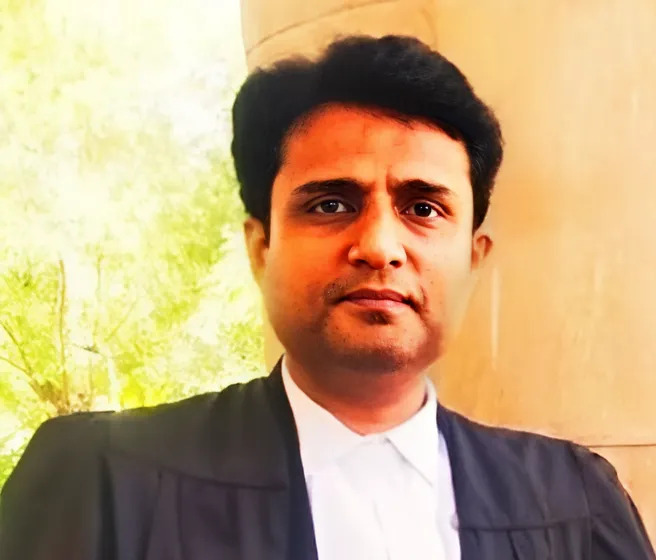












 Allow notifications