Tag: Tax Law

  • Whilst I do agree that the dynamic nature of tax makes it challenging, that is precisely what also makes it interesting and exciting,Counsel at AZB & Partners

    Whilst I do agree that the dynamic nature of tax makes it challenging, that is precisely what also makes it interesting and exciting,Counsel at AZB & Partners

    This interview has been published by  Priyanka Karwa and The SuperLawyer Team

    Sir, can you please share the story of how you initially became interested in law and what motivated you to pursue it as a career?

    Funnily I come from a family of lawyers, being a fourth generation lawyer from both sides, so the “interest” in law has always been there, however, the journey to pursue the same was not so straightforward. 

    As a kid I always aspired to be a lawyer, however, once I completed my schooling, I decided against it and went abroad to study Business and Public Policy Management. When I came back, I joined a budget hotel as a part of their management team. Long story short, in 2008 the global recession hit and the investors in the business being non-residents wanted to liquidate their investments. That’s when I realised that I needed to have a professional degree handy as a back-up, even if I never wished to practise. I gave the entrance exam for Campus Law Centre, thankfully got through. I chose evening classes since I was working during the days, however, since that did not take up a lot of my time I started assisting in my dad’s office. Just basic stuff like making returns for individuals which led to basic preparation for representation before the appellate authorities. 

    The intrigue came from the dynamic nature of tax law with changes being introduced with every finance bill and the constant tussle between the department and the taxpayer whilst interpreting the same section. By the end of my 3-year course, I knew this was my calling and decided to join the profession.

    With over 10 years of experience in the field of direct tax advisory and litigation, could you highlight a specific case or project that you found particularly challenging and how you successfully navigated it?

    One case which comes to mind is the Honda Trading Corporation case, where I had the privilege to assist in, which was argued over a span of a few days before the Delhi Tribunal and actually led to an amendment being brought into the statute book. As a lawyer, the satisfaction one gets in such matters and the acknowledgement of the same whereby the legislature brings in amendments to overcome the judgement is something which cannot be expressed in words. 

    Tax law is known for its complexity. Could you explain your approach to helping high-net individuals and corporate entities in optimizing tax efficiency and managing compliance issues effectively?

    Firstly, this notion of tax law being more complex than other laws is flawed. If one is honest and diligent in their subject, the complexity is of no consequence. If your basics/fundamentals are strong, nothing can stop you. This is evidenced by the fact that the greatest tax lawyers of the country do not necessarily have a tax background like the great Nani Palkhivala. Whilst I do agree that the dynamic nature of tax makes it challenging, that is precisely what also makes it interesting and exciting. 

    Coming back to your query, the Indian Tax Department is known to be one of the most aggressive departments world-wide, therefore, tax compliance ought to be a key consideration for any businesses. Till what is being done is within the four corners of the law, even if the position being taken is aggressive, should not deter the clients. That being said, one must be mindful of not being unrealistic under the garb of being aggressive. Hence, being primarily from a litigation background, the endeavour is to advice clients whilst keeping in mind the litigation exposures that I foresee and mitigation of the same.  

    You’ve represented clients before various judicial forums, including the Supreme Court of India. Can you share some insights into your strategies for building a successful track record in representing clients in high-stakes tax litigation cases?

    The strategy is very basic and simple. Read – Re-read the files and Repeat!! 

    Be thorough on facts and the relevant legal provisions. Something which I have learnt from my mentor, Mr. Chopra over the years is that till date whenever we discuss any case, his first go is to read the relevant sections even if he has read them a thousand times. Trust me something as basic as reading the relevant provisions can sometimes lead to interpretations which you could not fathom earlier. 

    Secondly, ensure that all the relevant facts/documents are on record. Last but not least, court craft is extremely important in any litigation. Understanding which battle to pick and when to relent is extremely important. Harping on a point which apparently is not working, learn to let go and move on to the next one.   

    Your expertise spans various tax matters, including income tax, corporate tax, international tax, and transfer pricing. How do you keep up-to-date with the constantly evolving tax laws and regulations in these diverse areas?

    First and foremost, read the bible (the Income Tax Act) again and again. I can’t emphasise that enough. Keeping a tab on the ever-changing landscape of tax laws is extremely hard, but I am lucky to be in a team in which our mentor ensures that we earmark time every week to discuss important judgements/circulars etc. which really helps. Plus, over time I have realised that such discussions with every member contributing with their point of view helps expand one’s opinions and understanding.  

    As Counsel, you’ve worked with both domestic and international clients. Can you discuss the unique challenges and opportunities you’ve encountered when advising international clients on Indian tax matters?

    The client comes to you for the value-add you provide. The nationality of the client is of no consequence. The only difference, if any, which I have noticed is that in the cases of international clients, since they are not acquainted with the nature of litigation in India or Indian laws, it is important to be very transparent and clear in all communications and explain the strategy along with its rationale. 

    Finally, considering your successful career and diverse experiences, what advice would you like to offer to fresh law graduates who are just starting their journey in the field of law and tax advisory?

    To be honest and speaking from experience, I would urge all fresh graduates to begin their career with smaller/boutique firms. The kind of learning and experience you will get there is unparalleled. Get the fundamentals clear and understand how things really work at the grass root level. This is something you will never learn in bigger firms. No matter how attractive big tier 1 firms sound, it is not recommended to begin your career there. 

    If your fundamentals are in place, everything will follow and fall into place. It is important to have a good mentor, as it plays an important role in your initial years. Honestly, I feel I have been extremely lucky in that department. I started my career with a boutique tax firm where my senior was known to begin his day at 4 AM. He always told me that by the time the world wakes up, half of his work was complete. So that’s one thing I held on to and till this day, I begin my day very early. Secondly, my mentor Mr. Deepak Chopra has always imbibed in us that you don’t leave your clients in the office. It is important to keep at it till you find the solution or to simply put, the value-add the client came to you for. 

    To sum up, if you are honest to yourself and your work, the world is your oyster. 

    Get in touch with Rohan Khare-

  • Engaging experienced tax attorneys is crucial to navigate the complex legal landscape effectively- Adarsh Somani, Partner at Economic Laws Practice

    Engaging experienced tax attorneys is crucial to navigate the complex legal landscape effectively- Adarsh Somani, Partner at Economic Laws Practice

    This interview has been published by  Priyanka Karwa and The SuperLawyer Team

    Can you tell us a bit about your journey and how you ended up pursuing a career in law, particularly specializing in taxation and related areas?

    I was born and raised in a family with a deep-rooted background in law and taxation. From a very young age, I was exposed to discussions about legal matters and the intricacies of tax law (though am not claiming that I particularly followed everything!). My father and some close relatives were established tax specialists, and their passion for their work naturally influenced my interests as I grew older.

     As I progressed through my education, I found myself naturally gravitating towards subjects that aligned with the legal and financial world. I was particularly drawn to the complexities of taxation and how it played a vital role in shaping economies and businesses. I realized that taxation was not just about numbers and calculations; it was a dynamic field with constantly evolving laws and regulations that had significant implications on individuals and organizations alike.

    After completing my legal education and obtaining the necessary qualifications, I ventured into the field of tax law, ready to take on the challenges that came with it. Over the years, I have had the privilege of assisting numerous clients with tax planning, tax controversy matters, and cross border taxation, among other areas.

     My journey in the field of law, particularly specializing in taxation, has been incredibly rewarding. I continue to be fascinated by the ever-changing tax landscape and remain dedicated to helping individuals and businesses navigate the complexities of tax law to achieve their financial goals while ensuring compliance with all relevant regulations.

     As I look back on my path, I feel grateful for the strong foundation laid by my family’s background in law and taxation, as it has shaped me into the professional I am today—one who is deeply committed to making a positive difference in the lives of those I serve.

    With almost 18 years of experience in tax law, could you share some pivotal moments or experiences that shaped your expertise and passion for this field?

    Over the course of my 18-year journey in tax law, I have encountered numerous pivotal moments & experiences that have profoundly helped my passion inch northwards for this field. Some of these moments include:

    1. Early Mentorship: Right from the guidance of my father in early stages of my career as well as in the early years of my career and support and push of my first few mentors at BMR Advisors (all seasoned tax attorney/ specialists) the expertise and passion were always enlarging. Their guidance, wisdom, and willingness to share their knowledge played a crucial role in my development as a tax professional. Witnessing their dedication to their clients and their mastery of complex tax matters inspired me to strive for excellence in my own practice.

    2. Challenging Tax Cases: Throughout my career, I encountered several highly complex and challenging tax cases that required innovative solutions. These cases pushed me to expand my knowledge, research skills, and critical thinking abilities. Successfully resolving these intricate tax issues gave me a sense of accomplishment and reinforced my passion for tax law.

     3. Staying Current with Tax Law Changes: Tax law is a constantly evolving landscape, with frequent changes to regulations and tax codes. Staying up-to-date with these developments has been a significant challenge, but it is also crucial for providing accurate and effective advice to clients. My commitment to ongoing education and continuous learning has been instrumental in maintaining my expertise in this dynamic field.

     4. Cross-Border Taxation: As businesses increasingly operate on a global scale, cross-border taxation has become my prominent area of focus. Handling these matters exposed me to the complexities of dealing with multiple jurisdictions, trade agreements and varying compliance requirements. These experiences broadened my perspective and enriched my understanding of the global tax landscape.

    5. Advocacy and Tax Reform: Throughout my career, I have been involved in advocating for changes in tax laws and regulations to benefit taxpayers and improve fairness in the system. Engaging in discussions with policymakers, participating in tax reform initiatives, and contributing to public discourse on tax-related matters allowed me to see the potential impact of legal professionals in shaping tax policy.

     6. Sharing Knowledge: As my career advanced, I found joy in sharing my expertise with aspiring tax professionals and clients alike. Conducting seminars, writing articles, and participating in panel discussions not only helped disseminate knowledge but also encouraged me to continuously refine my understanding of tax law.

    Each of these pivotal moments and experiences has contributed to my passion for tax law and my commitment to provide top-notch legal counsel to my clients. The ever-changing and intellectually stimulating nature of this field, combined with the ability to make a tangible difference in the lives of individuals and businesses, continues to fuel my enthusiasm for the work I do as a tax attorney.

    As a Tax Partner at Economic Laws Practice, you focus on GST, customs & trade, providing strategic transaction advisory and policy counsel. Could you shed some light on the scope and significance of these areas in the business landscape?

    ELP first of all has been blessing, more of a home coming I would say! A lawyer at a law firm, my first!.  Businesses as well as economy are all fueled by tax and trade policies. Navigating the complexities of these areas is vital for businesses to ensure tax efficiency, regulatory compliance, and a competitive edge in the global market. As a Tax Partner at Economic Laws Practice, my role involves assisting businesses in harnessing the opportunities and overcoming the challenges presented by these dynamic aspects of the Indian economy.

    You’ve advised multinational and domestic companies on tax-efficient value chains in business. What are some key principles or strategies businesses should keep in mind when aiming for tax efficiency?

    When aiming for tax efficiency in their value chains, businesses should consider several key principles and strategies to optimize their tax positions while remaining compliant with applicable tax laws. Some important principles and strategies to keep in mind include (i) Proper Entity Structure; (ii) Interplay of Customs and Transfer Pricing Compliances; (iii) Tax Treaty & Trade Agreement Utilization; (iv) Location of Intellectual Property; (v) Business Object Mapping, the most Optimum structure may not work for all businesses in view of its objectives!; (vi) Use of Tax Incentives and Exemptions; (vii) Serious credits to documentation; (viii) Flexibility for ever changing policy landscape; etc

    Also, such assignments would often involve engaging with experienced advisors & consultants on different subject matters as well as jurisdictions. The learning from these experiences can always prove to be  valuable.

    For any budding lawyer, it is important to note that while pursuing tax efficiency is a legitimate business goal, businesses must ensure that their tax strategies comply with the law and are not driven solely by aggressive tax avoidance practices, which may be subject to scrutiny and potential legal consequences. Striking the right balance between tax efficiency and compliance is crucial for the long-term success and reputation of any business.

    Indirect tax legislations can be complex and vary across different industries. What are some common challenges you encounter while advising clients, and how do you overcome them?

    Advising clients on indirect or other tax legislations presents challenges due to complexities and variations across industries. Common hurdles include interpreting ambiguous laws, staying updated with changing tax regulations, addressing cross-border transactions, and managing compliance burdens. Overcoming these challenges involves continuous research, industry-specific expertise, collaboration with subject matter experts, cautious interpretation of laws, and developing cost-effective solutions. Communication with non-tax professionals aids in ensuring client understanding. Additionally, creating robust compliance frameworks, automating processes, and representing clients in disputes or litigation contribute to providing effective advisory services.

    Tax litigations can be high-profile and challenging. How do you approach such cases, and what advice would you give to companies facing potential tax disputes?

    Approaching high-profile tax litigations requires a thorough understanding of the specific tax laws, industry intricacies, and potential implications. My strategy involves conducting in-depth research, consulting past precedents, and collaborating with experts to build a strong case. For companies facing potential tax disputes, my advice is to stay proactive by maintaining meticulous records, complying with regulations, and seeking professional advice early on. Engaging experienced tax attorneys is crucial to navigate the complex legal landscape effectively. Open communication with tax authorities, willingness to resolve disputes amicably, and a focus on compliance can help mitigate risks and achieve favorable outcomes.

     As a part of Business World’s elite 40 Under 40 Club of Young Law Achievers and being recognized by The Legal 500 Asia-Pacific, what personal qualities or professional attributes do you believe have contributed to your success in the legal field?

    As a member of Business World’s distinguished 40 Under 40 Club of Young Law Achievers and having earned recognition from The Legal 500 Asia-Pacific, my success in the legal field can be attributed to several personal qualities and professional attributes. Continuous learning, a proactive approach in gathering facts to build strong business acumen, effective problem-solving skills, and a commitment to innovation are some of the key factors that have contributed to my achievements. Moreover, maintaining personal integrity and cultivating professional networks and relationships have played pivotal roles in fostering credibility and growth.

    Additionally, I must acknowledge the invaluable support and contribution of my exceptional team & mentors, whose dedication and professionalism have been crucial to my personal success. Their commitment to excellence during business hours and camaraderie during social gatherings have been truly inspiring and rewarding.

     Needless to add that by embodying these personal qualities and professional attributes, I have been able to make a positive impact in the legal field, earn recognition from industry peers, and achieve success in my career as a tax specialist.

    Apart from your legal career, you also engage in speaking at tax & regulatory conventions and write articles for leading publications. How do these activities complement your professional work, and what drives you to share your knowledge in this way?

    Engaging in speaking at tax and regulatory conventions and writing articles for leading publications complements my legal career by allowing me to share my knowledge and insights with a broader audience. These activities serve as platforms to disseminate complex legal concepts in a more accessible manner, contributing to the professional development of peers, clients, and the wider community. The drive to share knowledge stems from a passion for empowering others with valuable information, fostering a culture of continuous learning, and making a positive impact in the legal and business domains. It also reinforces my commitment to staying at the forefront of industry trends and best practices.

    Many fresh law graduates aspire to have a successful career like yours. What advice would you give to them as they begin their journey into the legal profession, particularly those interested in taxation and related fields?

    Certain non-negotiable attributes for any aspiring lawyer include a strong focus on continuous learning, an earnest pursuit of mentorship, a willingness to embrace technological advancements, the development of impeccable communication skills, an unwavering work ethic, perseverance in navigating challenging circumstances, and a receptive attitude towards exploring diverse opportunities. These foundational qualities form the bedrock for a successful and rewarding career in the legal profession, enabling growth, adaptability, and the ability to excel in an ever-evolving legal landscape.

    Get in touch with Adarsh Somani-

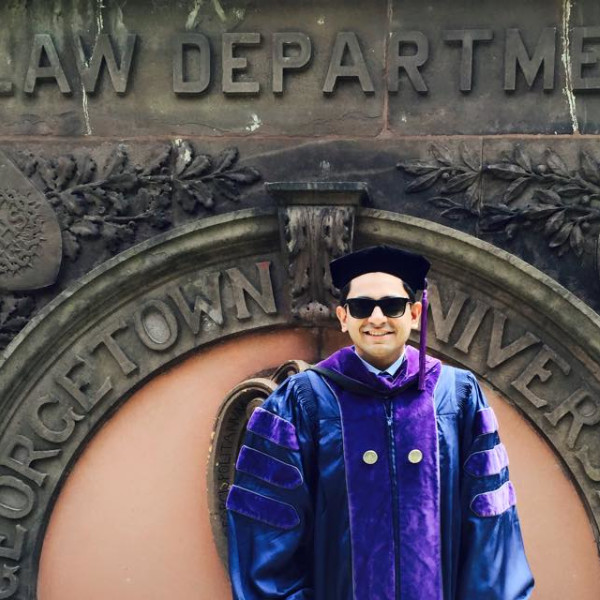
  • Anmol Anand, Associate, AZB & Partners, shares his experience on LLM from Georgetown University and career in taxation law

    Anmol Anand, Associate, AZB & Partners, shares his experience on LLM from Georgetown University and career in taxation law

    Anmol Anand graduated from ILS Law College, Pune, in 2014. He then went to Georgetown University Law for studying LL.M in law of Taxation. After a brief stint as International Tax Analyst at Bloomberg BNA he returned to India and worked with PDS Legal. Currently, he working in AZB & Partners as an Associate.

    In this interview, Anmol talks about:

    • His experience at Georgetown University Law Center
    • Career in taxation law
    • Difference between International Tax and Domestic Tax Practice


    HOW WOULD YOU LIKE TO INTRODUCE YOURSELF TO OUR READERS? PLEASE TELL US SOMETHING ABOUT YOUR PRE-COLLEGE LIFE?

    Not sure how to put this across for readers, but Hi! I am Anmol, just another lawyer with a curious and ambitious mind.

    Well before ILS happened, I had a pretty nerdy journey through the better half of my academic career. I had scored pretty decently in my X and XII, which at that time seemed satisfactory to my ambitious mind.

    Coming from a family full of lawyers, I was on the path to become an engineer. I was a science student with aspirations of making it through the best colleges for B.Tech. I also had law as my backup option since I was a firm believer in not wasting time or creating any gap in my resume. I thought of law as an alternate option in the event I would not get through any of the engineering entrances so as to try a different field while perhaps preparing for taking another shot at the engineering entrances a year later.

    Soon it was all over and I was left with my score in XII standard and an option to take up engineering colleges’ way down my priority list. Bogged down with not making it to any of the preferred institutions for B.Tech I chose to go ahead with law, at least for a year, wherein ILS was the clear cut choice, being one of the better institutions as per reputation. I mean there were couples of reasons for choosing ILS – one that there was no entrance exam and that selection was based on XII score and second it was away from Delhi.

    So from a family of lawyers, and from never having set foot outside Delhi, I chose ILS and flew to Pune.


    PLEASE TELL US SOMETHING ABOUT YOUR COLLEGE LIFE. HOW IMPORTANT WAS YOUR COLLEGE IN SHAPING YOUR CAREER?

    ILS as mentioned earlier, was perhaps a stopgap arrangement for me when I made the decision of studying there. Well, it turned out to be the best decisions of my life.

    I remember my first day in ILS and was immediately hooked on. I was surrounded by highly competitive peers who either had law as a preferred career choice or were far too serious about ILS being a stopgap arrangement for them. However, soon for me, I became adamant of continuing at ILS and taking my career forward from thereon.

    ILS as an institution threw various options at students to pick from. One could enroll oneself in any particular kind of specialised academic cell or pick up a moot-court competition or engage in research paper writing etc. after regular classes. Since regular class hours were not long, I had ample time to pursue a lot of extra-curricular activities.

    I would, therefore, remember ILS as a place that taught me the value of opportunities, self-learning and leadership. From acting in dramas to representing college at national level moots to leading the charge for sports activities, I had bagged various opportunities and converted most of them into success, while also making a lot of friends, who will remain so for life.

    I also took time out to enrol myself in the Company Secretary Course, which was the first time in point when I got interested in tax laws. Although I could not manage completing it, given that I left the country right after ILS for my masters, it’s important to mention that at ILS it is manageable to be able to pursue the CS and that pursuing so opens up a wider perspective that I believe everyone should endeavour to at least discover.

    To conclude, I would say that I had to pick ILS for the lack of better options at that point of time but I am happy to have studied there and gathered most of out.


    WHAT MOTIVATED YOU TO GO FOR A MASTERS PROGRAMME? WHAT LED YOU TO CHOOSE TAXATION AS YOUR SPECIALISATION?

    Well taking up LLM as the next move in my academic career was largely because I had the will to dig deeper in tax laws.

    That does sound boring. But honestly I felt that I had the knack for tax laws once I started pursuing CS, followed by various internships in tax firms. What really had me hooked up to the idea of LLM in tax laws was one of the national moots that my peers and I participated in. It was in international tax and although, unfortunately for us, we ended up as runners up, it opened the idea for me to explore the subject of international tax.

    The other reason why I picked taxation as specialisation, apart from tax being a heavily litigated subject, was perhaps because it was rarely chosen by law students (may be because it sounds boring to a lot of people), which to my mind was an opportunity for the future. I knew I had a knack for a subject, which to a lot of people would always remain a text book that they will dread opening.

    Therefore, before I could to step into the shoes of being a hardcore tax lawyer, I wanted to dig deeper into the subject, which is why I chose to take up LLM in tax laws as my next move, by the end of fourth year in college.


    HOW IMPORTANT IS TAXATION AS A SUBJECT FOR LAW STUDENTS? WHAT COURSE OF ACTION WOULD YOU SUGGEST TO STUDENTS LOOKING TO SPECIALISE IN TAXATION?
    I believe that even if one is not willing to be an expert in tax, one should not neglect it completely. India is the front-runner when it comes to aggressive tax jurisdictions. Newspapers make headlines almost every week with some or the other tax policy or decision which shows the volatile nature of the subject in India.

    It’s not a secret that demonetisation was aimed at booming the revenue by increasing the tax base, GST was brought in for achieving better compliances, GAAR and concepts like equalisation levy were all directed against tax planning and at times to counter what the courts had otherwise held in favour of the taxpayer. It’s important to realise that this country runs majorly on taxes. Most of the times the income tax department tries to extract more than what is allowed to be gathered as taxes as per law. This outreach, apart from being unreasonable, brings with it most interesting issues that are at times dragged to the supreme court only to have the government amending laws to nullify a taxpayer favourable supreme court decision. On the other hand, businesses are always looking to pick up tax advantages in every transaction, which is where the involvement of tax lawyers has become inevitable. Therefore, its time law students should realize the importance of tax laws and work towards putting a couple of pointers regarding the same on their respective resumes.

    Taking up specialised courses in tax, pursuing CS/ CA or like courses, taking up internships or going all the way in spending a year or two in tax LLM would definitely help.


    WHICH UNIVERSITIES DID YOU APPLY FOR LLM? HOW DID YOU CHOOSE GEORGETOWN UNIVERSITY LAW CENTRE?

    The biggest challenge to apply for LLM in tax laws is that not every university around the world has a tax specialised LLM. Therefore, again I chose to have back up options like National University of Singapore for a general LLM program.

    However, I had a preference to go to the United States given its unique and discrete tax policies that are followed world over. I had applied to most of the the specialised tax LLM courses at universities like New York University, Northwestern University, University of Florida, Boston University, Georgetown University Law Centre etc.

    Given that Georgetown University was considered to be one of the best in the world for specialised tax LLM courses, it was the inevitable choice for me. The options for tax courses were extraordinary and were far from being imaginable for a student just out of law school like me. I remember this one course, which was called “international business planning workshop”. It was taught by an adjunct professor who was also the chairman of national tax practice at Baker Mckenzie. The course involved practical international tax planning issues for business looking to restructure globally and was graded on one’s understanding of such issues and capability to present the same. All this is to say that the learning experience at Georgetown that I have had is unparalleled and I would highly recommend law students to explore the option of LLM abroad, if possible.


    WHAT DOES THE CV OF A STUDENT SEEKING ADMISSION TO A PREMIER UNIVERSITY OFFERING AN LLM PROGRAM HAVE TO LOOK LIKE? WHAT SHOULD BE KEPT IN MIND WHILE WRITING SOP FOR LLM ABROAD?

    I believe, that the CV of a student looking to apply for an LLM should be clear and reflective of one’s decision of picking a specialisation, if any. It should be short, preferably one page and should include references to instances that show one’s capability of being an opinion maker.

    SOP on the other hand could be as long as two pages. It should be crisp, should reflect on the personality of the candidate and the flow should come out naturally. The candidate should put in there his/her thought as to how a particular course at a particular university in a particular city will help the candidate in achieving his/her short term and long term goals.


    YOU HAVE WORKED AT BLOOMBERG BNA, WASHINGTON DC POST YOUR LLM. HOW WAS YOUR EXPERIENCE WORKING THERE? HOW IS THE WORK CULTURE ABROAD DIFFERENT FROM INDIA?

    BNA was a fantastic stint. I would rather say that it was an extension of my LLM program since I was working exactly in what I had just been trained for at Georgetown. My job was research oriented and advisory in international tax and I had to play around with tax laws in about 114 countries, which was tedious but interesting.

    Working at BNA under Bruce Reynolds was inspirational. My other colleagues at BNA were very supportive and insightful and it was real fun to be working with them. Work culture was very typical as per American standards. Best part about working in Virgina was that it was about a few minutes away from where I lived in Washington DC, the working hours were decent, people at the organisation were compassionate and respectful and mindful of everyone’s personal life.

    Working here in India, although not complaining, is very aggressive. Everyday here is a new challenge, sometimes with added levels of difficulty. Work hours are long, but none of this makes it worse. It is rather better.


    WHAT FACTORS INFLUENCED YOUR DECISION TO COME BACK TO INDIA AFTER WORKING IN WASHINGTON DC?

    Well the biggest factor that influenced me to come back to India was visa issue. I had the option of opting for a program called CPT, which allows you to study and work alongside, but that seemed to be taking the issue too far for me. Because of the visa issue, it was becoming difficult to find a job at a law firm in the US, since they would not offer one to someone not holding a valid H1B visa already. Clearly that was a vicious circle. With my back against the wall, I decided to move ahead in career and look for jobs in hometown rather than opting for CPT.


    PLEASE TELL US ABOUT THE RECRUITMENT PROCESS AT AZB? HOW IS THE WORK ENVIRONMENT AT AZB?

    AZB Delhi recruitment happens in different manner for different teams I believe. For our team, its need based as is in most cases and we look to identify candidates based on their level of reception to most of the queries and their responses of course. If you are an entry-level candidate, your merits won’t matter as much as your ability to demonstrate interest in the subject.

    I think working at AZB exposes you to the best of all practices. I am part of the tax litigation team here. So primarily, I represent a number of major MNCs pan India. I think it’s much more smoother to do so at AZB, given AZB has presence in major cities like Mumbai and Bangalore and therefore traveling from Delhi to at least either of these jurisdictions assures full ground support.
    I also engage in tax advisory, which flows from various practices that run parallel at AZB. For instance, I also work with corporate partners of AZB located in different cities, on the tax side of a particular transaction/ restructuring.
    What makes working at AZB special is the quality of work and the work culture that I believe is inherent in the nature of every lawyer here. Anyone at AZB can freely walk up to any else for help and help is never denied. Also I should mention that AZB hosts an annual off site for all AZB lawyers across the country, which is an absolute delight to be at.


    WHAT IS A TYPICAL DAY AT WORK LIKE? HOW DO YOU MANAGE TO STRIKE A BALANCE BETWEEN YOUR PERSONAL AND PROFESSIONAL LIFE?

    Typical day at work normally starts with courtroom followed by meetings or calls or just completing pending assignments. The best part about working at AZB is the team that I work with. It is spear headed by Mr. Deepak Chopra who is not only inspirational, but also instrumental in making sure that his associates’ personal lives are not compromised. We as a team work for mostly corporate clients representing them before various forums pan India in relation to issues of international tax and corporate tax.

    I believe that at this stage of my career, its important to invest more time in professional life, while focusing on personal life on the sidelines. In early stages in a lawyer’s career, it’s easier to do so I believe. Most of my time, these days, is spent in traveling and as soon as I get time off, I like to spend that with family, or get some rest or maybe catch up with some friends. I believe that if one is happy professionally, then at least at the earlier stages of career, one is bound to strike balance with one’s personal life.


    HOW IS INTERNATIONAL TAX PRACTICE DIFFERENT FROM DOMESTIC TAX PRACTICE?

    Totally different. International tax issues arise out of cross border transactions. Most of these cross border transactions involve the interplay of tax treaties between India and the other country at the other end of a particular transaction. Rules relating to interpretation of such tax treaties emanate out of documents published by OECD or other international organisation or negotiations between the two countries. They trump the application of domestic law if they are more beneficial to taxpayers.


    WHAT DOES IT TAKE TO BE A GOOD TAX LAWYER?

    To be a good tax lawyer, one needs to have a strong accountancy base. It’s very essential. Secondly, it’s important that tax lawyers, at least in the early stages, focus on lower authorities first rather than jumping to the high court level and Supreme Court level. Thirdly, it’s important for a tax lawyer to keep his/her knowledge up to date, especially given the divergence in view on various tax issues across the country. Fourthly, it is highly recommended for lawyers interested in tax to become acquainted with concepts of international tax and transfer pricing as the world is seeing numerous changes in those fields which are bound to give rise to issues that will be ripe of advisory and litigation in the near future.


    LASTLY, WHAT WOULD BE YOUR PARTING MESSAGE TO OUR READERS?

    My grandfather used to say that a lawyer is a student for life. One should always give importance to self-learning, as the knowledge you gather today will be your biggest weapon in future. Also, learn the importance of networking. Your network will sooner or later decide your fate as to where you land up in future.

