Tag: technology

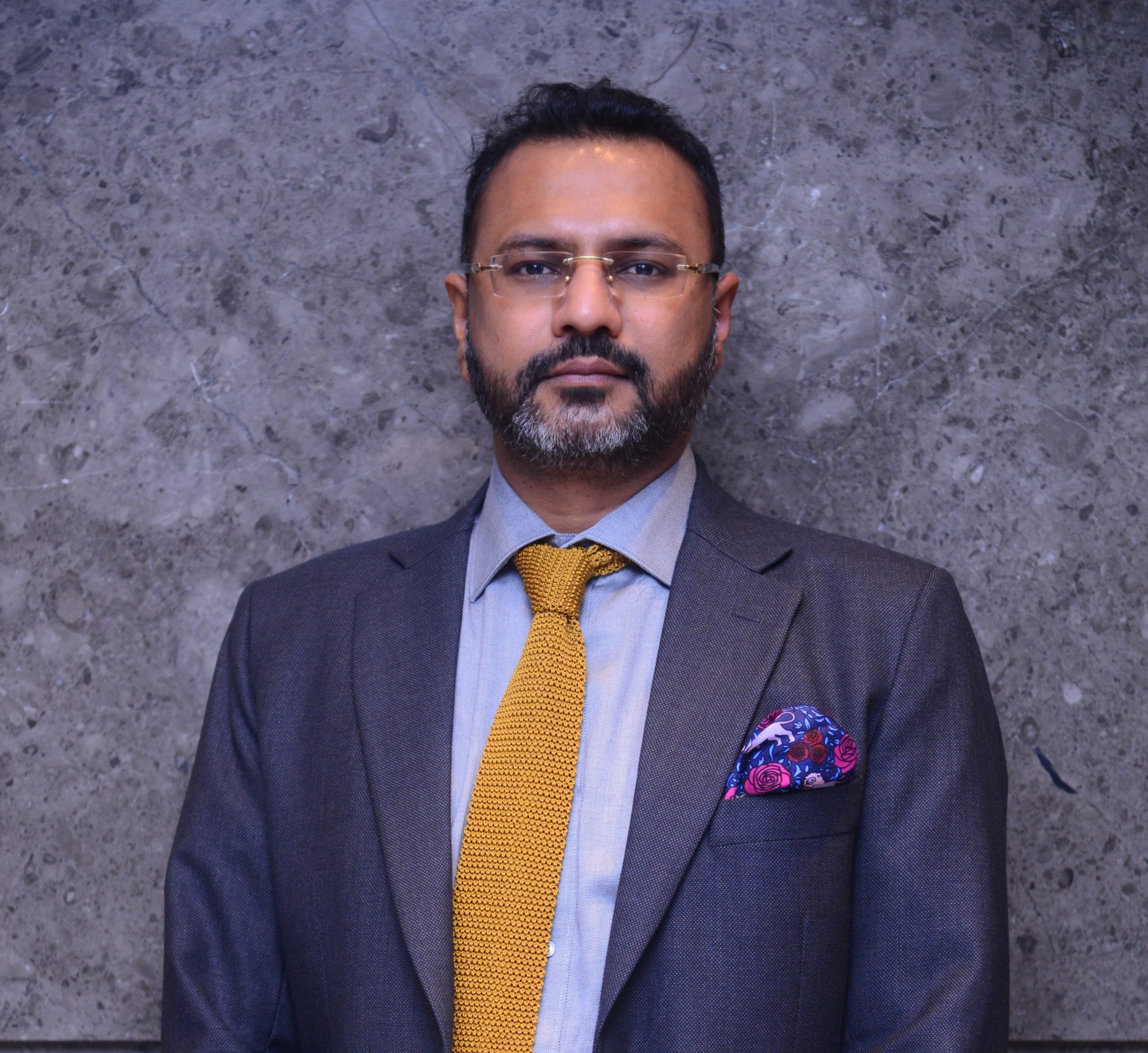
  • “By leveraging strategic foresight, interdisciplinary collaboration, and a robust understanding of both legal and technological landscapes, I’ve successfully managed to navigate complexities, while driving innovation, and fostering growth”- Rahul Bakshi, Group General Counsel, Vance 

    “By leveraging strategic foresight, interdisciplinary collaboration, and a robust understanding of both legal and technological landscapes, I’ve successfully managed to navigate complexities, while driving innovation, and fostering growth”- Rahul Bakshi, Group General Counsel, Vance 

    This Interview has been published by Pragya Chandni and The SuperLawyer Team

    Can you share with us your journey into the legal field, from your education at Queen Mary University to your current role as Group General Counsel and Founding Member at Vance? 

    My journey from pursuing LLM from Queen Mary, University of London to my current role has been a testament to perseverance and enthusiasm. As a first-generation lawyer, I embarked on this path driven not only by personal ambition but also by the inspiration of my father, whose own ambition inspired me to have a deep respect for the legal profession. 

    Studying abroad was a pivotal decision, marking the initial stride towards establishing myself in the corporate and commercial legal fraternity. Since then, my career has been characterized by a diverse array of experiences as an in-house counsel, navigating complexities in the fields of Real Estate, Information Technology & Privacy, Fin-Tech, Digital Payments, Digital Lending, Neo Banking, among others. From the moment I set foot at Queen Mary to the present day, each step of this journey has been marked by growth, learning, and the pursuit of excellence. 

    The opportunity to collaborate with Vance was not unexpected; rather, it was the culmination of a deliberate partnership with a visionary founder aimed at addressing the challenges of cross border payments and enhancing access to Indian banking and financial services for NRIs. Leading the legal, compliance and regulatory endeavours at a global level, I am privileged to contribute to the establishment of this groundbreaking venture. I am humbled to play a role in shaping the future of banking and financial services on this scale. 

    Throughout your career, you’ve worked in various capacities within the financial technology sector. What initially drew you to specialize in this industry? 

    Throughout my career, I’ve involved myself in various roles within the Fin-tech sector. However, it wasn’t until I got the opportunity at PayU Payments, where I stepped into a legal counsel role during the company’s establishment phase as a prominent B2B payments business in India. This pivotal moment ignited my passion and set me on a trajectory of growth within the fintech landscape. 

    From witnessing the nascent stage of payments in India to contributing to its evolution, my journey has been both exhilarating and transformative. Whether it’s pioneering digital payments at PayU, shaping digital credit strategies at Krazybee, driving the biggest of Indian payments products at NPCI, the umbrella organisation for operating retail payments and settlement systems in India or exploring the endless possibilities within the sector, I’ve found my niche and thrived in it. Fin-tech isn’t just where I work; it’s where I belong, and where I’ve honed my expertise. 

    Could you elaborate on the challenges you’ve faced navigating the intricate landscapes of information technology, digital payments, and licensing throughout your career? 

    A lawyer’s life is loaded with countless challenges, a reality I’ve faced firsthand while steering complex areas of Information Technology, Digital Payments, Credit, and Licensing. One particularly notable hurdle has been customizing legal advisory to keep up with the swift pace of technological advancement in this space. With innovations occurring rapidly, it’s imperative to ensure that legal frameworks and policies evolve in tandem, necessitating continual adaptation and innovation. 

    Additionally, staying abreast of frequent regulatory changes and requirements especially in payments and digital lending has been paramount. The regulatory landscape is constantly evolving, compliance has become non-negotiable, and the regulator appreciates no compromises- I have numerous instances at hand from the industry. It’s essential to remain proactive, continuously monitoring changes, swiftly adjusting strategies and operations to maintain regulatory requirements, compliance and mitigate risks. 

    Collaborating with business and product teams to evaluate and incubate new payments products has its own complexities. Balancing innovation with regulatory compliance and risk management requires careful navigation. Successfully achieving regulatory approvals often entails extensive coordination, documentation, and engagement with regulatory bodies, adding another layer of challenge. If I talk about structuring deals and negotiating technical agreements in this dynamic environment, it has been daunting as well. We need to strike the right balance between innovation, risk allocation, and legal & compliance demands strategic thinking and adept negotiation skills. Moreover, managing peers amid these challenges requires effective leadership, clear communication, and fostering a culture of adaptability and continuous learning. 

    Despite these formidable challenges, I’ve approached each hurdle with resilience and a commitment to excellence. By leveraging strategic foresight, interdisciplinary collaboration, and a robust understanding of both legal and technological landscapes, I’ve successfully managed to navigate complexities, while driving innovation, and fostering growth. 

    As someone with extensive experience in commercial law, what are some key strategies you’ve employed when structuring complex business transactions? 

    It doesn’t sound as simple as this question. There are various stakeholders involved in structuring a commercial transaction depending on its size, however, my priority is to build a clear communication with those stakeholders to outline a transaction’s contours. Thorough due diligence, risk assessment, and mitigation are crucial, along with ensuring compliance with relevant regulatory and tax requirements. Additionally, being a business lawyer, I always consider the commercial viability of the deal and its potential profitability from a business perspective, working closely with my business to align legal strategies with their business goals. 

    With your background in cross-border payments and global neo banking, how do you approach managing regulatory challenges in different jurisdictions? 

    Establishing business in different jurisdictions or dealing with regulators of different jurisdictions I tell you is a very challenging affair. This is something, expertise of which you do not have while bearing limited understanding. There must be a well thought through strategy. I prioritize thorough in-house research to gauge the feasibility of operating within each regulatory landscape. This involves understanding the legal and corporate structure(s) needed, which may vary significantly from one jurisdiction to another. When expertise is lacking, I rely on experienced consultants to guide us through the complexities either with respect to any kind of licensing, structuring, re-structuring, or other requirements. It’s crucial to have the right team in place to manage compliance both domestically and internationally, ensuring adherence to regulatory requirements while minimizing costs and risks. It could be a mix bag of domestic and international personnel. 

    As the Group General Counsel and Founding Member at Vance, what are your primary responsibilities, and how do you ensure legal compliance while fostering strategic growth for the organization? 

    I feel my responsibilities extend beyond traditional legal service a General Counsel could render, especially after joining hands with Vance. I am tasked with leading both domestic and international legal, compliance and regulatory initiatives, ensuring that every facet of our operations aligns with the relevant laws and standards. However, my role is not limited to legal here; I also embrace the strategic aspects of business development. 

    To ensure smooth functioning of my department while fostering strategic growth, I engage deeply with multiple facets of the organization. This involves a collaborative approach with the business, product teams and other relevant stakeholders to navigate complex challenges and identify growth opportunities. By thinking strategically before incubating and executing commercial arrangements, I ensure decisions serve the best interests of the business while maintaining robust compliance. 

    Key to our success is the establishment and management of competent teams across India and other countries where we operate. This global framework supports our mission to expand as a Neo Bank currently serving more than five countries, with further expansion on the roadmap. Building the right team is crucial, not only for managing our expansive legal framework but also for enabling Vance to grow strategically and sustainably on the international stage. 

    Throughout your career, you’ve demonstrated a passion for leading legal teams. What leadership principles do you prioritize when managing and motivating your team? 

    Until I received the opportunity to lead legal & compliance at Krazybee, one of the fastest growing digital lending organizations in India, I hadn’t led teams throughout my career. Leading a legal team is a position of immense ownership and comes with significant responsibility. Here, I prioritize several key principles, many of which I gleaned from working closely with my previous managers. Firstly, I emphasize the importance of clear communication to ensure everyone comprehends their roles and objectives. Secondly, cultivating a culture of trust and collaboration empowers team members and fosters a sense of value. Additionally, I believe in offering continuous support and mentorship to facilitate professional growth and development. The guiding principle is collective growth and development of the entire team. Lastly, I underscore the significance of adaptability and resilience in navigating challenges and embracing change within the legal landscape. 

    Considering your wealth of experience, what advice would you offer to fresh graduates aspiring to pursue a career in law, especially within the dynamic landscape of financial technology and business management?
    I recall there was no mentor or proper guidance available to steer me in the right direction when I was graduating. As I progressed into my graduate years, I learned the intricacies of the legal industry and the life of a corporate lawyer the hard way. My foremost recommendation for fresh graduates is to seek guidance from seasoned lawyers in their vicinity, whether they specialize in litigation or corporate law, to gain insights into the industry and what lies ahead. It’s crucial to carefully consider which area of law they wish to specialize in, as there are various options available. They must engage in multiple internships during their undergraduate years, which is essential, as it prepares them for the intense competition they’ll face upon entering the workforce. Lastly, it’s important not only to focus on Fin-tech (it may be niche now, but may not be in the future) or business management but also to stay updated on the latest developments and rapidly changing technology in any area of law or other fields that find their interest.

    Get in touch with Rahul Bakshi-

  • “The Legal system, with the myriad issues that it deals with, technology can definitely prove to be  increasingly significant in shaping the future of legal practice across various areas”- Vasundhara Shanker, Founder & Managing Partner, Verum Legal

    “The Legal system, with the myriad issues that it deals with, technology can definitely prove to be  increasingly significant in shaping the future of legal practice across various areas”- Vasundhara Shanker, Founder & Managing Partner, Verum Legal

    This Interview has been published by Pragya Chandni and The SuperLawyer Team

    Can you tell us about your journey into the field of law, from your early experiences to your current role as the Founder and Managing Partner of Verum Legal?

    My journey into the field of law has been one of personal growth, with a vision to create a lasting impact. It all began with my fascination for justice and the legal system, sparked during my childhood but my formal journey into law started with my undergraduate studies at SLS, Pune. SLS Pune gave me plenty of opportunities and space to grow into a professional, exactly the way I liked, with the right guidance and support, through it all. I, like all other driven law students, did over 12 internships in 5 years – at law firms, with practicing lawyers, NGOs, et al! 

    After my law school and upon passing the bar exam, I began my career as an associate at an IP firm, believing IP to be my “calling”. While I gained valuable experience at this firm, I had a persistent desire to delve into criminology and criminal laws. This is when I met a stellar female criminal-law advocate – whom I consider a mentor, even today! 

    However, my entrepreneurial spirit and desire for autonomy led me to establish my own firm, Verum Legal. The vision behind Verum Legal was to create a client-centered practice dedicated to providing personalized legal solutions to upcoming technology-focussed clients – both in the Web2 & Web3 space. As the Founder and Managing Partner, I oversee all aspects of the firm’s operations. From developing client relationships to leading a team of talented attorneys, every day presents new challenges and opportunities.

    My journey into the field of law so far, has been a rewarding one, filled with growth, learning, and a deep sense of purpose. 

    With your extensive experience in both litigation and corporate matters, how do you integrate these two areas to provide practical solutions to your clients?

    I honestly believe that, for a lawyer, integrating different skills and experiences is the key aspect of providing comprehensive legal solutions to clients. Choosing on an expertise too soon in one’s career, without exploring opportunities may be detrimental to one’s overall growth. 

    To become an effective lawyer, the first step is to thoroughly understand the client’s needs and goals and then tailor strategies accordingly. For this, lack of understanding of what is important for a client or how legal solutions today can impact them in the future, can be precarious.

    With changing times, a lawyer is also expected to dexterously implement preventive measures to avoid legal disputes, as these disputes can prove to be expensive and tedious for the client.

    A lawyer must also understand that despite preventive measures, disputes may still occur and a lawyer with experience in both litigation and corporate matters can prepare clients for potential litigation scenarios effectively. 

    You’ve worked with several renowned law firms and also in the legal-tech space. How has this diverse experience influenced your approach to legal practice?

    I’ve in fact worked with law firms, chamber lawyers and a legal-tech company before I started Verum Legal. I believe that my experiences have provided me with a unique perspective that greatly influences my approach to legal practice. 

    While my other experiences helped me enhance my legal knowledge, my stint with the legal tech company helped me understand businesses better, helping me provide a more client-centric approach than a traditional legal practice. My experience has been instrumental in providing me with a multi-dimensional approach with better technology exposure, evolved understanding of the market and focussing on client delivery. 

    As someone deeply involved in advising startups and SMEs on legal and business structuring, what unique challenges do you often encounter in this space?

    As an advisor and service provider, I think the most pressing challenge encountered in this space is the obvious one – Startups and SMEs often operate on tight budgets and may not have the financial capacity or inclination to engage legal services. Since seeking legal services also requires the main stakeholders time and efforts, they tend to overlook it, till they are faced with a legal hassle. We pride ourselves on being “startup-friendly” and work on very tight budgets, timelines and innovative perspectives that help new businesses multifolds. We aim to be strategic partners who can provide practical and tailored solutions to address these unique challenges.

    Your interest in Legal-Technology is evident from your experience at MyAdvo. How do you see technology shaping the future of legal practice, particularly in areas like arbitration, dispute resolution, and intellectual property rights?

    Absolutely, in fact, I consider myself to be a flagbearer of technology, especially in the legal domain. The Legal system, with the myriad issues that it deals with, technology can definitely prove to be  increasingly significant in shaping the future of legal practice across various areas. There are sundry applications of technology in the legal space, and it is ever-evolving too. To list a few, I can think of how Online arbitration platforms can allow parties to engage in proceedings remotely and offer secure communication channels, document sharing, and virtual hearings, reducing the need for physical presence and streamlining the arbitration process, while also creating real-time record of the entire process for accountability and precedential value. In fact, Smart contracts, powered by blockchain technology, have immense potential to automate aspects of arbitration and other forms of dispute resolution as well. If executed well, self-executing contracts can automatically enforce agreed-upon terms and trigger arbitration clauses when disputes arise. 

    In Dispute Resolution, I believe Artificial intelligence can be used to predict case outcomes, assess the likelihood of settlement, and recommend optimal strategies for dispute resolution by analyzing historical case data and legal precedents to provide valuable insights to all parties involved.

    For Intellectual Property, AI-driven search tools can quickly scan vast databases to identify prior art, potential infringements, and registration opportunities. In fact, Blockchain technology offers a secure and immutable way to record and protect intellectual property rights. AI tools can monitor IP assets, track deadlines for renewals and filings, and provide insights for strategic IP decision-making.

    From your background in handling white-collar crime issues to your expertise in intellectual property rights and data privacy, you’ve covered a wide range of legal domains. What motivates you to continuously expand your expertise across different areas?

    I guess I am what they call a “Jack of all trades”. I’ve always been enthusiastic about learning, and doing only work that really interests me. There were times when we picked up assignments that we had, perhaps, never worked on before and learnt most about these assignments, on the job! I would say I’m also blessed to have extremely kind and helpful seniors and colleagues around me who have always lent a helping hand. 

    I love this about being a lawyer – the world is really your oyster. There are so many options that one can explore – depending on their inclinations, interests, skills – and keep evolving with experience. You never have a dull day, as a lawyer. I think all lawyers ought to be driven by a desire to grow their skill set and advance in their careers. By expanding expertise into new areas, they can broaden their practice, take on diverse cases, and develop a well-rounded understanding of various legal domains. This not only enhances their value to clients but also opens up new opportunities for professional advancement.

    Can you share some insights into your role as a Co-Founder of JannAwaaz and how it complements your work at Verum Legal?

    JannAwaaz is a project that has always been very close to my heart. JannAwaaz is a social enterprise dedicated to providing legal education, awareness, and assistance to underserved populations, particularly in rural areas. As a Co-Founder of JannAwaaz, my role revolves around leveraging technology to bridge the gap between legal services and accessibility for citizens of India. It’s a platform meant to help Indians raise their voice against all wrongs, violations, breaches and find their rights, using their voice.

    Finally, based on your journey and experiences, what advice would you offer to fresh graduates aspiring to pursue a career in law, particularly in corporate and investment transactions?

    The only advice I’d give to any aspiring lawyer – don’t decide on your “specialisation” too soon. Experience everything. Technology and the Internet have really changed the game for all young professionals today. You have so much information, available at your fingertips. An individual’s career spans over 40-50 years of their lives, spending around a decade to decide what really interests them, before committing to it, is a fair and required investment! That, and the fact that the legal world has more options and opportunities of careers today than perhaps any other profession does – it is only fair that all of us make the very best of it. 

    Get in touch with Vasundhara Shanker-

  • The usage of technology and artificial intelligence to streamline legal processes and improve efficiency is a trend that will continue to grow- Rohan Sharma FCIArb, Principal Associate at Karanjawala & Company and Solicitor (England & Whales)

    The usage of technology and artificial intelligence to streamline legal processes and improve efficiency is a trend that will continue to grow- Rohan Sharma FCIArb, Principal Associate at Karanjawala & Company and Solicitor (England & Whales)

    This interview has been published by  Priyanka Karwa and The SuperLawyer Team

    Can you tell us about your journey into the field of law and what inspired you to pursue a career as an Advocate and Solicitor in both India and England & Wales?
    Coming from a generational family of lawyers, taking up law as a profession was a default option. However, after completing my graduation in Political Science (Hons.) from Delhi University, I initially dabbled in venturing towards doing something Information Technology or Business Administration, but not getting the college of my choice I finally decided to pursue law. By the time I made my decision, the entrance exams for both IP University and Campus Law Center, Delhi University were over, so I took up admission at Mewar Law College, C.C.S University. Looking back I regret that despite the opportunity I never interned with any law firm or Advocate during my studies at the law college. 

    After completing my graduation I read law in the chambers of Sr. Counsel Mr Arun Bhardwaj for almost 6 years and practised both on the Civil and criminal side during which I had secondments with both English and Singapore law firms, and then in 2013 I joined my current law firm Karanjawala & Co, I am very grateful to Mr Raian Karanjawala who gave me the opportunity to sharpen my legal skills in my current firm which I call the “AIIMS” of legal practice, because of the sheer amount of diverse matters one gets to handle ranging from complex commercial disputes, PIL, writs petitions, etc to family disputes and one is exposed to the whole spectrum. My supervising partners, Debmalya Banerjee and Meghna Mishra, also deserve credit for their priceless guidance and mentorship.

    Credit goes to my father who encouraged me to become a Solicitor as after completing of LL.B., we discussed the possibility of doing an LL.M. However, I was not keen to do further studies, so he suggested that I should sit for the Solicitors conversion test and simultaneously work with either English or Singapore law firm for some time abroad to broaden my horizons. I qualified as a Solicitor after taking the erstwhile conversion test known as the Qualified Lawyers Transfer Test (QLTT) in 2010 and my experience working at Clyde & Co, London gave me key insights into the life of an English Solicitor. Following my secondment at Clydes, I had the privilege to join Rajah & Tann in Singapore where I worked under the current Chief Justice of Singapore, Mr. Sundaresh Menon SC, as well as Jainil Bhandari, Partner in Admiralty & Shipping, and Prakash Pillai, Partner in International Arbitration and then later on I continued my professional journey at Herbert Smith Freehills, under Mr. Nicholas Peacock, Partner in Arbitration.

    Just before the Covid 19 pandemic, I submitted my application via The Experienced Practitioner Route (EPR) to become a Fellow with the Chartered Institute of Arbitrators (CIArb) which is the world’s largest community of alternative dispute resolution (ADR) professionals, and in 2020 after review of my application and interview by the main office at London, I was inducted as a Fellow.

    With around 15 years of experience in civil & commercial litigation, arbitration, and corporate matters, could you share some key highlights or memorable cases from your career that have had a significant impact on you?

    Sure, let’s start in a descending timeline, in 2022, it is every lawyer’s aspiration to brief and assist Mr Fali Nariman, Sr. Advocate who had been on hiatus for quite some time, my chance to brief Mr Nariman came during the COVID pandemic in 2022 when Mr Nariman agreed to appear for Surat Parsi Panchayat Board before the Supreme Court who were seeking a traditional burial of Parsi Zoroastrian Covid-19 victims. From the initial preparation of the special leave petition to the final disposal of the matter, Mr Nariman even at the age of 94 is full of energy and spent a great deal of time and energy going through every document. Mr Nariman used to dictate numerous notes, which he used to consistently amend to make them as concise as possible for the Bench. My big takeaway is to consistently think about your case as with the passage of time you are able to articulate the material facts required for the applicable rule in a concise manner. 

    The culmination of a successful arbitration (Government Of NCT Of Delhi. Vs. M/S Shonkh Technologies ) that started from seeking an injunction (Section 9 of A&C Act Petition) against the termination order passed by the Transport Department, Government of NCT in 2013 against our clients- Concessionaires. Due to the sheer volume of documents we had to sift through and collate them in a logical manner in relation to our claims with the various Sr. Advocates that were briefed in the matter starting from Mr Gopal Subramaniam, Dr. Abhishek Manu Singhvi, Mr Sandeep Sethi, Mr Saurabh Kripal and  Mr Chinmoy Sharma, gave me a front row seat the manner in which the said Sr. Advocates muster and applied law to common facts, their legal strategy has been invaluable in my growth as a lawyer. The case is memorable as the client reposed faith in me and referred me to subsequent matters. 

    During my initial days of joining Karanajwala & Co I was marked on an ongoing writ petition against an Insurance Company that had unilaterally deleted rain cover for a cricket match and subsequently repudiated the insurance claim. After two concurrent findings by Delhi High Court that writ petition is not maintainable, we were able to successfully persuade the Supreme Court to set aside the concurrent findings. This case is memorable as we developed the parameters for invoking writ-large jurisdiction concerning insurance policies, rather than resorting to alternative remedies.

    I have had the best time working at Barlow Lyde & Gilbert now known as Clyde & Co and I express deep gratitude to my supervising partners Mr Richard Black, Eurof Lloyd Lewis, Patric McGonigal, Jeb Culow and colleagues Lyall Hickson, Leon Alexander and Kenzia who involved me in their matters, encouraged me and were patient in clarifying my numerous concerns. 

    During my tenure in the Marine Energy & Trade department at Barlows, Mr. Black engaged me in the Elektrim SA v Vivendi Universal SA case, which was a multi-billion-euro dispute ranked by American Lawyer magazine as the 11th largest arbitration in the world in the year 2008. As this matter had only a limited number of associates involved due to its focus on insolvency issues and compliance with EU Regulation No. 44/2001, rather than shipping-related disputes. So Mr Black involved me and I had the chance to undertake various tasks preparing notes for the hearing, from drafting witness statements & procedural applications, bundling & filling, attending conferences with Barristers and Kings Counsels such as Gabriel Moss KC, Richard Millett KC & Julian Kenny KC, court hearing, etc.

    I recall that in one of the hearings before the Commercial Court, Royal Court of Justice, Mr Toby Landu KC who acting for the Vivendi Universal SA during his submissions quoted from the book- EU Regulation on Insolvency Proceedings which was incidentally authored by Gabriel Moss KC who was leading us in the same matter which lead to a series of amusing comedy of errors during the hearing.

    One of the other big matters- Congentra AG v Sixteen Thirteen Marine SA (The “Nicholas M”) in which assisted & acted for the Russian Charterer- Congentra AG against the Greek Shipowners-Sixteen Thirteen Marine SA who had instituted London arbitration proceedings and obtained attachment order in New York in support of their arbitration claim. We counterclaimed that the attachment order was wrongfully obtained and the injunction should be discharged. We were led by Richard Southern KC, Richard Walker KC and Anna Gotts. Leading up to the dispute the emails were exchanged from different parts of the world so to get a real sense of the timeline I remember we had to cross-reference each email with the corresponding UK, Russian and New York time. 

    You are the Director of the Federation of Indian Corporate Lawyers (FICL), a not-for-profit organization. Could you tell us more about FICL’s mission and the role it plays in the Indian corporate legal community?

    Yes, FICL (www.ficl.org.in) was incorporated during the Covid pandemic in 2020 as a not-for-profit company. FICL’s vision and mission are centred around becoming the leading advocate for corporate lawyers in India. We aim to facilitate the sharing of legal expertise among the Indian corporate legal community while promoting the highest professional standards and offering valuable developmental opportunities for in-house lawyers and legal professionals in India to enhance their skills and expertise. To that effect, FICL released “FICL Code of Ethics & Standards of Professional Conduct for In-House Lawyers’ ‘ (“FICL Code”) during its Inaugural “FICL 1st Corporate Lawyers Summit 2022 held in New Delhi. FICL Code aims to provide general guidance on the ethical and professional standards to the In-house corporate lawyers community in India. 

    This year Justice Navin Chawla (Delhi High Court) released the results of India’s first “Survey on Dispute Resolution in India” undertaken by FICL & Centre for Trade and Investment Law (CTIL) during FICL’s annual one-day conference “DELHI DISCOURSE 2023”. FICL signed a Memorandum of Understanding with the Singapore International Arbitration Centre (SIAC), Beihai Asia International Arbitration Centre Pte Ltd (‘BAIAC’) to promote international arbitration as a preferred method for resolving international disputes. FICL also supports seminars of ICC, SIAC, IPBC, ACGC, Singapore Academy of Law, АРАС, etc for wider reach and participation of key stakeholders. 

    In 2022, you were recognized as one of the Forbes Top 100 Individual Lawyers in India and received the Lex-Falcon Global Award for Outstanding Achievements in the Legal Industry. What do these recognitions mean to you, and how have they influenced your career?

    These recognitions hold immense personal and professional significance for me, as they validate the dedication and effort I have invested in my practice. They serve as a powerful motivator and a source of pride, not only for myself but also for my team and my current colleagues Kartik, Nicholas, Anmol and Shreesh who have supported me along the way. Moreover, these accolades have had a substantial impact on my career trajectory. They have enhanced my professional reputation and opened doors to new opportunities. For instance, they have facilitated networking with like-minded professionals, leading to collaborations and partnerships that have further enriched my work.

    Your professional journey has taken you to law firms in India, London, and Singapore. How has working in these diverse legal environments shaped your perspective on the practice of law?

    I consider myself fortunate to have had the opportunity to work in diverse legal environments, which has greatly enriched my legal skill set. For example, in the UK, it is common for English Solicitors to engage in settlement negotiations and discuss the merits of a case without prejudice before it proceeds to a hearing, as the prospect of bearing actual and punitive costs in the event of loss weighs heavily on the parties involved. Likewise, I have observed that the legal practice in Singapore tends to be characterized by its clinical and direct approach. All in all, my experience of working in leading law firms across different parts of the world has provided valuable insights into their approaches and behaviours in different situations. 

    You’ve been involved in a wide range of legal matters, from representing corporations in arbitration to dealing with government regulations. Can you share some strategies or insights you’ve gained for effectively navigating complex legal landscapes?

    Whilst navigating disputes complex or otherwise, what I have learned is to develop a central theme like a tree trunk and then to categorise all the ancillary, supporting points like branches. This is also useful for complex legal issues where you can compartmentalize your key premises by using deductive and inductive reasoning methods as to why the court should rule in your favour. One should use a visual representation of a complex problem/ transaction by way of charts, diagrams or photographs which break down a big issue into bite-size issues which are easy to understand. 

    In drafting with the advent of cut-copy-paste, there is always an inclination to paraphrase and verbosity does not help either your clients or the judges so keep it concise. If you represent the Plaintiff- use active voice and vice versa for the Defendant. As mundane and time-consuming as it may be, make it a point to peruse through all the correspondence, documents, etc yourself and not solely rely on the client’s inputs.

    It’s prevalent for English solicitors to maintain a case diary/logbook, which basically is a notebook in which they pen down their case notes, client conferences, conferences with Barristers, coordination, etc which serves as a time capsule and it can be referred back for clarification, itemising memos, etc. This practice I believe one should inculcate.

    Can you discuss any trends or developments in the legal industry that you find particularly interesting or noteworthy, especially in the context of India and international practice?

    Technology Adoption: The Indian legal industry has increasingly adopted technology solutions for tasks such as e-filling, document review, research, case management, VC hearings, etc in the aftermath of the confinement during the COVID-19 pandemic. The usage of technology and artificial intelligence to streamline legal processes and improve efficiency is a trend that will continue to grow.

    Entry of foreign law firms in India: The much-awaited entry of foreign law firms this year by BCI is a big development that has happened this year. As these foreign firms establish a presence in India, a demand for local legal expertise in areas such as transactional and corporate law, JV, M&A, intellectual property, contract drafting, etc would emerge. The inclusion of foreign law firms in active participation in arbitration cases in India in form of either venue or seat will contribute to India’s potential to become a prominent international arbitration centre akin to London and Singapore. Simultaneously, this would open doors for Indian legal professionals to engage in arbitration activities abroad, presenting substantial prospects for them.  

    Alternative Dispute Resolution (ADR): India is ranked the fifth-largest economy in the world which is fuelled by mega infrastructure projects, Services, IT, manufacturing, etc. Consequently, the momentum of this booming economy often translates into an increase in commercial disputes. Resolutions of commercial disputes through arbitration and the newly enacted The Mediation Act are popular ADR methods. Furthermore, making India the hub of International Arbitration has been one of the pioneering initiatives of Prime Minister Shri Narendra Modi. So I do see a huge potential in this area.

    Finally, as someone with a wealth of experience and achievements in the legal field, what advice would you like to give to fresh graduates who are just starting their legal careers and are eager to make their mark in the profession?

    I am reminded of what a KC said to me when I was delivering hearing bundles at his chambers he asked “What is the similarity between mushroom and trainee solicitor” after a few moments he replied, “Both are kept in the dark and fed shit”. My advice to recent graduates is to prioritize the finer details, such as organizing paperwork in accordance with court records and staying in regular communication with your seniors regarding case progress or when things go south. These are the qualities that will make you stand out and your Seniors will entrust you with greater responsibility. Make a habit of writing legal articles periodically. The rest is about embracing your legal journey with a touch of humour and paying attention to your mental health. 

    Get in touch with Rohan Sharma-

  • Legal professionals need to be tech savy not to look smart but to be smart because, the solution needs to be digital, fast, smart and Tech driven nowadays and more in future- Shaswata Kapat, Tech-Lawyer, DIFX – Digital Financial Exchange

    Legal professionals need to be tech savy not to look smart but to be smart because, the solution needs to be digital, fast, smart and Tech driven nowadays and more in future- Shaswata Kapat, Tech-Lawyer, DIFX – Digital Financial Exchange

    This interview has been published by  Priyanka Karwa and The SuperLawyer Team

    Can you tell us about your journey into the field of law, particularly how you developed a passion for technology law and web3?

    From my childhood I was always a tech Nerd, I still remember I would draw new smartphone designs, new kinds of computing devices in the back of my note books, and conduct odd experiments with my school best friends at his or my house. But then my family is a doctor’s family so got drawn into Medical & NEET entrance. But did miserably at entrances and got depressed and thought I can’t do anything in my life. From a bright student to a failure….life had taken a sharp turn, so my father suggested to study B.SC.LL.B where I would be able to study Science and Law together, and from my first class at Contracts and Constitution – Torts I fell love in law..and then GDPR came..so data privacy..and during 2019 into Web3 and this world…because I wanted to be part of this amazing revolution happening in Our technology, financial and social world.

    Your background includes expertise in Cyber Ethics & Forensics. How has this specialization influenced your approach to technology law, and can you share any notable experiences from your work in this area?

    As I was saying my course was in BScllb, so from start we were taught in law school ballistics,  forensic physics,  chemistry,  Cyber forensics,  bioinformatics, Toxicology and interned in 1st year in Chandigarh Central Forensic Science Laboratory,  live place where the heinous Kathua Rape case’s forensics has been done, that propelled my interest in the junction of Law – Science & Technology. So these experiences and learning curve helped me to later on write a research paper on core tech policy issues which got international recognition, referred to in International – USA University Law journals,  which was read coincidentally read by one of my then future seniors who hired me after a few years. 

    With your extensive experience in IP, Data privacy, AI Ethics, and Cyber Laws, how do you see these areas evolving in the context of emerging technologies like web3 and blockchain?

    People have a very big misconception about Web3 & blockchain.  That everything is this field is crypto currency.  It’s much more than that…web3 blockchain are the jumps of what we have seen since 1990 when the internet started to become commercialized..when web2 happened in 2010-12 the social media started to take place. But it’s more than that because it’s disrupting conventional financial system,  social ideology,  macro and micro economy. And in this new order of law everything is moving..so IP, Data Privacy,  AI Ethics, Cyber Laws all are part of it…your general civil litigation…corporate laws…criminal liability..Competition law…corporate governance..Banking law..capital markets all are part of it… these will be becoming more intertwined to each other, and we will see newer versions of every conventional law we have seen till now.

    You’ve worked with top-tier law firms in different parts of the world. Could you share some insights into the challenges and opportunities you encountered while advising clients on complex cross-border technology transactions and crypto projects?

    The biggest challenge is to be updated and be prepared for dynamic laws across the globe and how it connects and how it sometimes does not connect. For an example some clients want a bespoke corporate structure for their project to have banking in Singapore,  some Money remittance license in USA, corporate tax free entity in Caymans Islands, treasury in BVI, sister one in UAE and IP in Bahamas. So you need to know not only those countries’ laws…all sorts of laws required for this…so you need to keep studying, updating yourself…keep researching..try to come up with innovative and long term beneficial plans for your clients. As I have been the young lawyer in the room of some senior folks….it needs more of your quick analysing ability and effort to be on toe to toe with their experience. 

    As someone who’s deeply involved in the world of Web3 and Tech events, could you highlight some recent developments in Crypto & TMT law that you find particularly fascinating or impactful for businesses?

    There has been some big developments across the globe, starting with india’s Long due Data Protection Act and then with recent G20 Summit in India the G20 countries have called for global consensus based crypto and web3 regulations on this basis of recently published IMF – FSB Synthesis Paper on Crypto Policy. Then UAE with their forward thinking VARA & ADGM regulators coming up with some comprehensive regulatory frameworks and planning and Singapore and Hong-Kong are on the same path. And California and the EU are recently working on their AI regulations as well… every other country wants to regulate these emerging countries…but the countries who are acting first with pro innovation and ample light touch regulations are going to win the race of getting maximum business. 

    How do you balance your technical knowledge with legal expertise when representing clients in negotiations, drafting contracts, or advising on complex legal issues?

    Most of my clients are seasoned entrepreneurs and Tech wizards.  So it’s hard to be on their wavelength in a conversation about the technical side of the business connecting dots with law. So I keep Learning and keep using my background in core technology and science to bridge the gap between their technological solutions and my legal solutions.  So complex technologies sometimes don’t have their pre structured legal solutions.  So I always map their tech and their implications,  jurisdictions,  risks, solutions and then solve each challenge of them in a legal lense one by one and in the end connect the dots and give them the full picture legal solutions.  It’s challenging and it’s exciting!

    Given your belief in the transformative potential of AI and web3, what role do you see for legal professionals in shaping the future of these technologies?

    People are either getting fearful that AI will replace their jobs or web3 will replace conventional business ecosystems or either People are ignorant that they should be detached from AI & web3. Both thoughts are wrong,  you should embrace with awareness, you should harness the power of AI & web3 to take leverage and grow your capabilities and your business.  Legal professionals need to be tech savy not to look smart…to be smart…because the solution needs to be digital..fast…smart and Tech driven nowadays and more in future.

    Lastly, as a seasoned legal professional, what advice would you like to give to fresh graduates aspiring to pursue a career in technology law, especially in the context of the ever-evolving landscape of web3 and emerging technologies?

    This field is new, unconventional but with mammoth potential.  Don’t get caught in the dazzling rays in this field, try to understand and go deeper into this field, explore it and then choose this as a career.  Be very quick in your approach.  Because remember Technology always moves faster than Laws and regulations.  So you need to be in tune with technology and sometimes go beyond it … ..it’s a highly innovative and exciting and challenging field…if you love to be at the forefront of writing the future legal world of a newly forming digital world … .take up web3, AI and emerging tech law…. Best of luck & After all it’s fun to be a lawyer in this space!!

    Get in touch with Shaswata Kapat-

  • Knowing your brief, correct facts, being bold and aware about what you present, are key points which come what may, would not shake the confidence no matter what- Anushkaa Arora,Principal & Founder at ABA Law Office

    Knowing your brief, correct facts, being bold and aware about what you present, are key points which come what may, would not shake the confidence no matter what- Anushkaa Arora,Principal & Founder at ABA Law Office

    This interview has been published by  Priyanka Karwa and The SuperLawyer Team

    Ma’am, please tell us about your educational background and how you ended up pursuing a Master of Laws (LL.M) in Intellectual Property Laws from the National University of Singapore?

    I was born and brought up in Delhi however, I pursued 8 years of school from Dehradun, namely Ann Mary School.  I am a Science with Maths student from an ICSE + ISC school named previously. Thereafter, from a PCM background I took the plunge into BA LLB, and with god’s blessings topped semesters and attained top position during my final semester. I further pursued my masters in IPR from NUS Law. Meanwhile during school, I have also had the innate interest towards yoga and attained Pramana Patra by clearing all 5 levels with highest grades. 

    I took the plunge into IPR for the reason that apart from criminal laws, IP Laws interested me a lot during university days. I found that the curriculum taught in law schools was not enough to overall understand this subject, which is when I decided that I would definitely want to study IP  in depth. I was fortunate to get into Amarchand Mangaldas on merit, as an intern, where I was put into the IP team, which further caught my attention towards IP, which is when I was sure that I would like to explore this subject more, before I hit the professional world. I thereafter to satisfy my curiosity over this subject got into Luthra & Luthra internship and experienced various more aspects in the same. Further, I was called back at Amarchand Mangaldas over an assessment internship, with which I was sure that I would really love to further pursue this subject and dwell into advanced core. This is when, it struck me, to pursue IP from NUS, being top 10 in the world for IP Laws, as a recommendation from every well-known practitioner of IP India has seen. After further training with some of the most refined law firms as named above including RK Dewan, I took the plunge for Singapore to pursue masters in IP. 

    During your LL.M program, you specialized in subjects such as Celebrity and Entertainment laws, fair use in the UK and USA, copyright, trade marks, cyber law, and more. What sparked your interest in these areas of law, and how do you think they contribute to the field of intellectual property?

    My main motive to pursue masters from Singapore in IP field was to be trained by the best and pursue subjects which form part of real core of IP. These subjects form part of the real core of IP if we talk about trademarks and copyrights. Being trained by the best, witnessing luxury brands In Front of your eyes by professors who teach such subjects, not only amazed me, but reinstated the dedication for which I had subscribed to masters from Singapore. 

    These subjects have not only contributed towards my professional commitments but have given me the maturity, edge over competitors and confidence to deal with some of the very high stake and high profile IP litigations/advisory I have handled so far.

    You completed Directed Research under Prof David Tan on Luxury Brand Counterfeiting. Could you share some insights from your research and its significance in addressing the issue of counterfeiting?

    My directed research under the topic as mentioned has been pursued under the guidance of a person who is not only well known for the said subject but is a live example of walking luxury brands. My research involved understanding luxury brands, the efforts and time spent on making the same, counterfeits of such brands, empirical research of the same. To undertake the research,  I even travelled to south Vietnam, which houses counterfeits of the world, understanding the market there, issues with use of counterfeits etc were some aspects which were witnessed in person and thereafter jotted down. 

    Counterfeiting is escalating especially with advent in technology and know-how. The directed research addresses very specific points over the same, creating significant impacts over society to understand the issue to its root cause and the pitfalls associated.

    Your Bachelor of Arts and Law Honours degree from Guru Gobind Singh IP University in Delhi showcased exceptional academic performance. What motivated you to excel in your studies, and how did this experience shape your understanding of the law?

    Honestly, I was always passion driven. Nothing seems rather a task when it comes to law. I just loved what I am doing, hence it all happened as it should happen. I always had the innate quality to understand arts subjects right from school where I used to obtain highest grades in history, English etc. continuing the same interest in BA LLB. I am glad I did exceptionally well. 

    Being honest, law school studies did shape a personality, however with respect to understanding of law, I will say I give the credit to my training as an intern since 2012 in any or all holidays. I think practical knowledge in law is most important which one does not get by studying law. Same story follows, at least for me. 

    As a member of the Singapore International Arbitration Center (SIAC), could you share some of your experiences in handling arbitration cases and the significance of alternative dispute resolution in the legal profession?

    I have represented Indian clients before SIAC and have also advised on such international arbitrations. Apart from the same, I have dealt/been a part of some of the high stake arbitrations in India for which the journey compared with litigation has been a much smoother ride.

    Getting instructions from clients, presenting the same before the arbitrator working your way out in a much organised and sophisticated manner, have been some of the most loved experiences.

    I believe we should work towards advising parties in choosing ADR rather than complex, long and haphazard litigation, which not only saves time and money of the Client but it does give a comprehensive organised flavour to the case. Speedy angle being added, makes it even more suited for clients. 

    You have been actively involved in conducting webinars on various legal topics and moderating sessions with renowned individuals in the legal field. What motivated you to engage in knowledge-sharing activities, and how do you think they benefit both legal professionals and the wider community?

    I have always been involved in such knowledge-sharing activities, since school days. Having an innate quality to help the society, I have even kept myself occupied with pro bono activities and extending pro bono legal aid to the downtrodden. 

    Be that as it may, I do not think anything motivated me, I think this is always something I liked, because I wanted to help a major section of society either by imparting education or by getting dignitaries who could do the same. 

    Such knowledge-sharing activities have far reaching effects. These days, the internet is accessible to masses. For those students or professionals who cannot afford expensive commentaries, web access, mentoring under dignitaries, can gain insights by witnessing such knowledge-sharing activities, which has been my main motive all the while. People who are preparing for exams, involved in litigation over subject matter relating to such knowledge-sharing activities etc are tremendously befitted, as they can join and during interactive sessions, pen down their queries and thereby avail answers. 

    In your role as the Founder of ABA Law Office, you have worked on notable matters such as handling complex criminal law cases, intellectual property rights etc. matters for clients. Could you share some key challenges you faced in these cases and how you effectively addressed them?

    Key challenge faced is I believe with respect to me being a female. Gender discrimination though subtle but is prevalent. Tackling the same especially in lower courts outside Delhi is yet again a major task, which I successfully seem to have handed over the years of my practice. 

    Knowing your brief, correct facts, being bold and aware about what you present, are key points which come what may, would not shake the confidence no matter what. Being any sort of subjugation from the opposite sex, having the above mentioned points, would not let you digress from your end goal.

    As a litigator, you have represented clients in various forums and courts, including notable companies like M & R Furnishing (Apartment 9), Asian Paints, Mr. Shiv Khera Central, Government of India, Indian Railways etc. Could you share some experiences from your litigation practice and how you have successfully advocated for your clients’ interests?

    Running from one court to another, 1 DAY- different forums, different state courts, international matters, briefings, advisories, client calls, drafting’s, arguing, sleep and repeat is a summary of my experience of litigation.  

    I am very confident to say that I believe in obtaining a speedy redressal for my Clients which my track record till date (by god’s grace) has been at par with my thought process. Having an unblemished record of win and speedy redressal is something for which I am truly humbled and bow down to the almighty to bestow upon his kindness. 

    Throughout your career, you have received several professional qualifications and honors, such as winning the Best Research Paper Award and being a recipient of the Ram Jethmalani Academic Excellence Award. How have these accolades contributed to your growth as a legal professional?

    They have given me the boost to consider that I am on the right track and also the reinstatement of the thought that with hard work comes success.

    Based on your experiences and expertise, what advice would you give to fresh law graduates who are about to embark on their legal careers?

    Train/intern as much as you can. Do not waste law school years by sitting ideal and wasting vacations. Any vacations, joining an internship, online internship, virtual internships can be done even if we have difficulty in pursuing physical internships. 

    Only once you have experienced different types of law offices, you would have clarity as to what is the right profession for you when you leave law school. 

    Many a times, students do not train/intern much during law schools, and end up figuring for the first 1-3 years as to which place suits them best, is it a law office, law firm, chamber, judges chamber etc. so to avoid wasting 3 -5 crucial years of career post law school, my only advice would be this. 

    Could you provide us with an overview of the collaboration between ABA Law Office and R S Solomon LLC? What drove the two firms to sign a Memorandum of Understanding (MOU) and join forces?

    The collaboration is an understanding between group international law firms, to work together on matters which may come across each other’s way including advisory, drafting or vetting etc.

    I always had a vision for a global practice of my Law Firm. I have always since my law school ventured to international domains to present papers, understand cultures, built international contacts, and then pursued my masters from Singapore, which further gave me an excellent domain to further strengthen my international contact database. 

    With the said edge of having an international masters from Singapore my south east Asia connect with my colleagues became very strong and soon ABA Law Office started to become a one stop shop for client who wanted to set up companies in southeast Asia by having an Indian law office who could coordinate with various other law offices abroad and get the work done.

    India clients reposed trust in ABA Law Office and soon ABA Law Office developed a strong international practice of advisory, registering trade marks, opinions on IP, contract vetting etc. 

    In the same manner, R S Solomon LLC carrying the same vision was already in a group law firm collaboration with various other law firms across the globe. With the recent BCI notification of allowing foreign lawyers and law firms in India, I saw the same as a good opportunity to further strengthen my Firm’s international practice and with the same in mind, both law firms found synergies to further dwell and commit to. 

    Get in touch with Anushkaa Arora-

  • From the clothes we wear to the recipes of food we eat, IP forms a part of anything and everything that revolves around us on a daily basis- Arpit Jain, Founder at Lawdroit

    From the clothes we wear to the recipes of food we eat, IP forms a part of anything and everything that revolves around us on a daily basis- Arpit Jain, Founder at Lawdroit

    This interview has been published by  Priyanka Karwa and The SuperLawyer Team

    Sir, can you tell us a little bit about yourself and how you became interested in law?

    I describe myself as a person on the prowl for learning new things. Even when I was pursuing Engineering, I always had an eye out for the latest developments in the law. Subsequently, I completed a course to feed my curiosity in Cyber Law then got my law degree followed by a Master’s degree and, ever since, have not looked back.

    What inspired you to focus on trademark, copyright, design and patent law, and what do you find most rewarding about it?

    My inspiration is derived from the omnipresent nature of Intellectual Property. From the clothes we wear to the recipes of food we eat, IP forms a part of anything and everything that revolves around us on a daily basis. If that is not inspiration, then what is? The most rewarding factor of IP is the never-ending brain-racking challenges the clients present in continual. To fit their ideas into the right mould in IP and the same reaching to fruition is what being rewarded truly means to me.

    Could you describe your experience as a founder of Lawdroit and the types of cases you handle there?

    LawDroit is a dynamic law firm. I established it with the motive of “IP under one roof,” and that is what I have aimed for. I started off with India-based clients, the work involves IP prosecution to litigation, and now with the help of my team have slowly expanded into International arenas as well. The experience has been nothing short of a roller-coaster ride, but when you love what you do, the low lows are a teaching point rather than a despondent experience.

    How do you advise clients on the registrability of trademarks, and what factors do you consider when conducting trademark clearance searches?

    All my work experience has taught me is that the trademark clearance search forms the ground norm of any brand. I usually assess a trademark based on how unique it is for the perceiving public. The questions I ask myself while conducting a search involve the risk of confusion, availability in the Trade Mark Office register, and whether a prior party exists, which can later turn into a red flag.

    How do you approach opposition proceedings, and what strategies have you found to be most effective?

    The most effective strategy is gauging the interest and capabilities of the other party. Before commencing an opposition proceeding, I make sure to assess how my client’s rights in the conflicting trademark are getting affected and what is the severity of such an infringement. The strategies revolve around honest concurrent use or acquired statutory or common-law rights.

    What do you think are the biggest challenges facing intellectual property law in today’s global economy?

    The first and foremost challenge I can put my finger on is the lack of knowledge. The unawareness of the aspects or the prospects that surround IP. I have come across various instances where a client wishes to safeguard a particular design but has already released it in the public domain, which makes it outrightly impossible to protect such nuances that can easily be avoided with proper awareness.

    You mentioned that you will be appearing for the Barrister and Solicitor exam in Canada later this year. What motivated you to pursue this additional qualification?

    I embarked on this journey a while ago, and additional qualifications never hurt. My only motivation, as also stated above that we are now expanding our clientele internationally, and this step was taken to embark on more projects with primary knowledge of the Canadian law of the land.

    Finally, what advice would you give to fresh graduates who are interested in pursuing a career in law, particularly in the area of intellectual property?

    My advice is two-fold. First, do not be dependent on someone to come and spoon-feed you the procedures and the law. In today’s internet era, when there is a never-ending cluster of knowledge, embrace that and read. Secondly, do not shy away from asking questions during internships and do not decide on a particular field too early. Explore a little and circle back to what floats your boat and will continue to float your boat 30 years down the line as well.

    Get in touch with Arpit Jain-

  • Vasundhara Shrivastava, Legal Counsel, Cisco Systems on work experience as a Counsel in the Technology Industry

    Vasundhara Shrivastava, Legal Counsel, Cisco Systems on work experience as a Counsel in the Technology Industry

    Vasundhara Shrivastava graduated in Law from University of Bangalore in 2010. Having received a Gold Medal in Jurisprudence and being ranked 4th in B.A. Law Examination (among ~ 4000 students), Vasundhara joined IBM India on graduation where she continued till September 2015. Vasundhara has mainly worked on technology matters concerning IT Outsourcing, Cloud Services, Arbitration, Trust & Compliance and Environmental Law during her tenure at IBM. She has thereafter moved on to join Cisco Systems, where she is currently the Legal Counsel for India and SAARC region.

    In this interview Vasundhara answers to Rounak Biswas of SLS Pune the questions posed by Shafina Salahuddin of Calcutta University.


    What made you choose Law as your profession? Is there anyone else in your family who works in the legal field?

    I belong to a family of writers and freedom fighters. My father is an activist-writer and his writing focus on bringing out the pain of people who were forced to migrate in order to escape the misery of lawlessness. Thanks to him, the family dining table was a democratic platform accessible to the young ones in the family. It respected and protected our freedom of speech, and actively sought participation in decision making about issues that mattered to me. Reading and writing was always on top of the mind. It made me aware of various socio-political issues of that period. The constant debates in our home made me realize that the root cause of any trouble was the rampant lawlessness and the sole sustainable solution was law and order – interestingly, both were effects of governance and policies. I wanted to understand this better. Being a science student who loved mathematics, I was attracted to engineering as a profession.  It took me a bit of swerving and swaying but I soon followed my heart and decided to pursue law as my undergraduate major at the University of Bangalore, Karnataka.


    Which activities did you partake in? Please tell us about the manner in which you approached academics while in college.

    During college, while I focused on acing academics, I also leaned towards writing as my medium of expression. I went ahead and started publishing my articles and opinions on a range of issues from sexual harassment, role of media in democracy, child labour and women reservation bill to pharmaceutical patents – any issue that I felt deserved intervention and thought exercise from the angle of law and governance. Some of these were published by various law school journals, some were award winning essays and some won accolades from national and international organizations and in the process, my belief in law as a profession to bring about change strengthened. Academics was a keen interest for me but I was acutely aware to keep it related to the practical application. So I strived to developed an empirical and simple approach as opposed to the general notion of pedantic and intimidating legal language. During university exams, I questioned the conventional methods of answering. I believed that lengthy history answers could be reduced to simplified bullets and Sociology could be as objective as Physics. And I would say that my quest for being innovative in academics was well received! But I was aware that a smooth transition from a law student to a professional lawyer needed that extra push. First year onwards, I had begun to intern with various law firms and worked pro-bono for a few NGOs in Bangalore.  Essentially, I tried to push the boundaries of academics’ experience by designing it to match my passions and interests.


    What were your areas of interest during your graduation? How did you go about developing expertise and knowledge in these areas?

    I found laws related to media and technology particularly interesting. One was surrounded by real time legal and social issues in these areas. Social media was beginning to boom and technology was entering our lives like never before. The legal implications of such generation altering changes made me curious. To develop expertise and knowledge, I read whatever I could get my hands on and wrote passionately about such issues. My published essays touched upon issues ranging from Tsunami, Jyllands-Posten Muhammad cartoons controversy and the need for reforms in privacy laws to questions such as whether Novartis could patent Gleevac in India.


    What kind of internships did you do during your law school days?

    I did internships at various law firms in New Delhi (Trilegal) and Bangalore (Trilegal, ALMT Legal, Holla & Holla). These firms have a wide range of practice areas and this gave me an opportunity to work on telecom laws, patent laws, litigation, drafting, research etc. Internships were a great learning experience. It was less about knowing the right answers and more about pursuing the right way to derive answers to the unknown. I also worked pro-bono for some NGOs in Bangalore and these were long term associations. I was sensitized to matters of day to day importance, particularly related to women and children. These NGOs focused on children’s right to a quality education and happy childhood, women battling domestic violence and dowry. I conducted surveys and prepared projects suggesting alternative opportunities for children whose calling was not traditional but vocational schools.


    Did you find that your law school education had prepared you sufficiently for the many tasks you were required to execute during your internships and later at your job?

    Significantly but partially. During my undergraduate years, I often found myself questioning the niceties of legal language and its practical application at work. Our university education curriculum stresses on good academic record with limited focus on arranging internship opportunities for students in an organized manner. Being in Bangalore, the technology destination of India and home to thousands of start-ups, there was neither a better place nor a better time to pursue a career in technology laws. By third year, I had decided to work for technology driven companies as an in-house lawyer. So, I would say that college education was successful in helping me choose the course of my career as a lawyer. However, the details of the job were learnt on the job. I have worked from IBM and two years ago, I moved to Cisco. On-the-job learning has not stopped. There is no other way than to learn every day.


    You are associated with Mahila Dakshata Samiti (Pro-bono legal aid to women victims of domestic violence). How important do you think pro bono service is?

    One can’t stress enough on the need for pro-bono work, particularly for lawyers. While I believe that lawyers can provide genuinely the much needed help, the relationship is symbiotic. The amount of learning that happens through pro-bono work is phenomenal. It is an excellent way to give back to one’s community, it also provides a great means to develop one’s skills. We have to consciously block time on our hands for a wider range of pro bono and charitable work which is tangible and beyond our traditional work. To say the least, making a difference in someone else’s life will make you feel happier. Fortunately, all employers I have worked with encourage their employees in this area by running numerous campaigns and programs. They have tied up with various NGOs working in the field of housing and shelter, disability, education, hunger etc. where employees can work pro bono and make a difference.


    You’ve been a Professional Mentor for IDIA Scholars. How can interested students volunteer?

    IDIA has a Professional Mentorship Program for those who are interested in being a mentor to an IDIA scholar. When I wanted to be a part of this program, I got in touch with a friend who was working for IDIA. For those interested in volunteering as a mentor, it is important that he/she approaches this mentorship program in a structured manner to ensure that the experience is meaningful for both mentor and the mentee. Interested students can write to info@idialaw.com for details.


    You have published quite a few articles on social problems and were felicitated by the Governor of Karnataka for an essay on Child Labor recognized by ILO. How do you find time in the midst of your busy schedule?

    I enjoyed writing on issues which I believed, needed progressive laws. During college, I did not have to find time for it, rather it was what kept me busy. Recognition from the state government and organizations such as ILO was encouraging and at the same time, made me aware of the need to have a better understanding of my socio-economic surroundings.


    You are the Lead counsel for Channel Partners, Services and Commercial segment, India & SAARC. What are the roles and responsibilities?

    Cisco’s business model in India (and globally) is to serve its customers through its extensive world-class channel partner program, which means we sell our products and services primarily through channel partners. I handle legal and contractual issues associated with Cisco’s distributors, systems integrators and indirect channel partners. In the services and commercial segment, I advise our internal clients on the scope of our products and advanced services offerings (mainly network consulting and optimization), negotiate distributor and service agreements, apply commercial insight to deals and contractual structures in concert with other functions such as finance and service delivery, at all times aiming to provide legal advice that proactively enables business and at the same time helps to minimizes legal risk. Of course, there is always focus on ensuring adherence to internal policies and compliance requirements as well as critical aspects of anti-trust laws and anti-corruption that relate to our business model, channel partner and customer dealings.


    You were awarded the Prof. V.B. Coutinho Gold Medal for excellence in Jurisprudence. What is the mantra as most of the students have a tough time with it?

    I had heard enough and more about how difficult Jurisprudence was as a subject. Right in the beginning, I chose Salmond’s legal classic on jurisprudence and adopted an objective and inter-disciplinary approach to explain legal principles. While the classic legal language of jurisprudence could have intimidated me, a simpler and logical solution came to my rescue. Using Venn diagram instead of lengthy sentences to explain the concept of ‘joint and several liabilities’ in Jurisprudence was one such instance where being innovative and creative with concepts was appreciated by the evaluators. I was awarded Prof. V.B. Coutinho Gold Medal for the highest score in Jurisprudence in Bangalore University. These achievements gave me further hope regarding the possibility of innovation in law.


    You were Deployed on a prestigious IBM Corporate Service Corps (Aug – Sep, 2014). Please share your experience with our readers.

    (Top 500 global IBM leaders are deployed to address a high-priority social issue as a part of leadership development and CSR activity through a rigorous selection process)

    In 2013, with three years into my professional career, I was selected for IBM Corporate Service Corps Assignment. As IBM’s flagship CSR program (modeled on the US Peace Corps), CSC deploys top 500 global IBM leaders to address a high-priority social issue. I was one of the youngest member in IBM India to be selected for this program. In 2014, for two months, I was deployed in Taiyuan, China. It was a life-changing experience of community service coupled with leadership development with a team of ten employees selected from several departments of IBM across the globe. I braced myself to be tested on cultural awareness by this multi-cultural broth. Our client, the Department of Civil Affairs, Taiyuan was looking for coherent strategies to revamp its Community Centres. I focused on the elderly population of Taiyuan – old ‘empty nesters’ who would rather live on their own than go for professional nursing and care. I conducted surveys and interviews of the ageing population, and four weeks later our team had converged their stories into a summarized narrative, which was presented as our recommendations to the government. Sensitivity to cultural norms and enhanced inter-personal skills made it a well-rounded personal and professional journey.


    Previously, you were an Attorney at IBM India, what kind of work were you tasked with? What was a normal work day in your life like?

    I joined IBM in 2010, right after college. Honestly, it was a little overwhelming to be selected as an Attorney in a company known to have shaped a century! First few months at IBM were about training and education sessions. Later, almost seventy percent of my work was handling technology transactions with government and private customers which included negotiations and transactional advice. Rest of the pie was an interesting mix of issues around real estate matters, environmental laws, business partners and ad hoc general legal advice. I was with IBM at a very interesting time when the IT industry was witnessing the transition from traditional offerings to trending industry concepts like cloud computing, big data and Analytics. A significant time and effort was towards adapting to these changes through constant learning. Needless to say, I was fortunate to work in one of the best legal departments with brilliant lawyers and managers who had a significant role to play in honing my skills as a professional.


    We thank you for agreeing to this interview. As a concluding message, what would be your word of advice to our readers?

    Thank you SuperLawyer for this opportunity. It is a great medium to connect with the members of our fraternity. And this is rather a concluding thought that I would like to share with the readers – from being an outsourcing destination, we are now the third biggest start-up ecosystem in the world. For our country to sustain its technology driven growth, as technology lawyers, we must constantly upgrade our skills to support this transition. We cannot be lawyers in the traditional sense. We are expected to be business enablers, aware of the market trends, always learning on the job!


  • Chaitanya Ramachandran, Legal Counsel-India, Twitter, on technology and law, and his experience

    Chaitanya Ramachandran, Legal Counsel-India, Twitter, on technology and law, and his experience

    Chaitanya graduated from NLSIU in 2009. After a successful stint at Clifford Chance LLP, he went on to pursue his Masters at Stanford Law School, with a specialisation in Law, Science and Technology. He is currently Legal Counsel (India) at Twitter, where his role entails managing litigation in courts throughout India, drafting and negotiating commercial agreements for all Twitter products, services and partnerships, advising on Intellectual Property, Privacy and Data Protection law, developing and enforcing robust corporate governance policies, and developing and delivering training programs on Twitter policies and processes for both internal and external audiences.

    In this interview we speak to him about:

    • His time at NLSIU
    • Marrying law with technology
    • His experience at Twitter

    What would you like to say to our readers in the manner of an introduction of yourself?

    I’m a technology lawyer and work for Twitter, where I lead the Legal function in India.


    What inspired you to take up law?

    I was always interested in computers and technology, so as a senior school student I did briefly consider engineering. But I noticed that hardly anyone I saw studying engineering in India actually ended up becoming an engineer; the “engineers” all seemed to end up in finance, consulting, management, or pretty much anything other than actual engineering. So I quickly realized that it wasn’t for me. Around the same time (this would have been around the 10th standard), I started to become interested in law, largely owing to interesting and vigorous debates in the media about the controversial laws of the time (the Prevention of Terrorism Act being a notable one). I also knew a few seniors who had been admitted to the five-year law programs, and their accounts of law school life sounded very appealing to me! I’m not a first-generation lawyer, but my family was quite supportive.


    Tell us a bit about your time studying law at NLSIU.

    I have fond memories of my five years at NLSIU. I wasn’t particularly fixated on academics to be honest; it was the non-academic pursuits that captured my imagination. Quizzing was foremost – I have always been a quizzer, and NLSIU has a very rich tradition of quizzing. It was an honour to have been part of that tradition, and to have been part of Bangalore’s quizzing scene, which is India’s finest. Another interest that developed at NLSIU was writing – I wrote a few articles on technology law, and was involved with the publication of the Indian Journal of Law and Technology (IJLT) in its formative years. I also spent a LOT of time listening to music and discovering new artists and genres! Looking back, it was a fun, relaxed time when I was mostly free to explore whatever interested me.


    Could you tell us about the internships you took up, and what you learnt from those experiences?

    I don’t think I was very serious about my internships. I did one per year, which was the minimum amount required. Three of those were litigation internships in Delhi, where I experienced every level of practice from trial up to the Supreme Court. While I worked with some truly accomplished and supportive seniors, I realized that litigation as a career wasn’t for me. I didn’t enjoy the chaos and wastage of time that are an inescapable part of the day-to-day practice of litigation in India, nor did I see myself thriving in the increasingly aggressive milieu of the Bar. So more than anything else, my internship experiences steered me away from a potential career path – not that that’s necessarily a bad thing!


    What advice would you give students in avoiding a decision paralysis?

    Go with your gut. If you are reasonably engaged with what’s happening at law school, you should find your inclinations emerging naturally during the five years. As you learn what interests you, seek out more research, writing or internship opportunities in that field, and if you can, reach out to people in the field to learn more about what they do. Perhaps most importantly – don’t do something just because other people are doing it. That’s probably the single worst reason to do anything.


    Tell us about your early professional experiences at Clifford Chance LLP. 

    The transition was difficult. In addition to the transition from student life to working life, I also had to contend with the transition from India to a completely new culture. But my main motivation in signing on with Clifford Chance was to experience living and working overseas, so I met the challenge willingly. What appealed most to me about the big London law firms was that all trainees are required to rotate through three or four practice areas in the first two years, which gives you a pretty comprehensive overview of legal practice when you’re fresh out of law school. I also got the chance to spend half a year in Brazil on secondment, which was a fantastic experience. These experiences built my confidence in being able to do business across borders and cultures, which is central to what I do today. In retrospect, another thing I appreciate about these early experiences is that one tends to develop good working habits in the type of demanding work environment that firms like Clifford Chance offer, and these stay with you later, even if you eventually choose to move on to something different.


    Did you have a mentor or guide during the formative years of your career?

    I didn’t have a mentor, which I suppose isn’t surprising because I became interested in technology law when it was a brand-new, mostly unknown field, and nobody was making a career out of it, at least in India. It really took off in India only about five years ago, and today there’s no shortage of people in the field whom law students can seek out for guidance. Based on my experiences, I don’t think it’s necessary to have a mentor. What’s important is getting to know yourself and what makes you tick, and creating opportunities for yourself. A strong drive and quality work product will help you get noticed. I’ll also add that I’ve been very fortunate to have had some extremely supportive bosses at every stage of my career – at Clifford Chance, Amarchand Mangaldas, and now at Twitter – who have encouraged me to follow my chosen path and provided sound advice when I needed it.


    What motivated you to pursue an LL.M?

    Two things. The first was that I knew relatively early in my law school career that I wanted to make a career out of technology law, and a specialized degree seemed like a good way of embarking on that path. The second was that I wanted to experience a foreign academic culture and learn from the world’s leading minds.


    How did you keep up with the challenging academic rigor at Stanford?

    I think attending Stanford has been the single most important decision that I’ve taken in my career to date. “Rigor” is the right word – the LL.M. was a very demanding course for me. But staying motivated was never a problem; US law schools allow you to design your own LL.M. program, so I was only taking courses that I was genuinely interested in. “All killer, no filler!” In fact, the real problem at Stanford was that I was interested in more courses than I could realistically take during the LL.M. year, so deciding which courses not to take was a conundrum. Stanford Law School allows you to take courses outside the law school as well, so for the first time in my life I was able to experience a bit of non-legal higher education! Another standout part of the Stanford experience was that my professors were all world-renowned authorities in their field, and my fellow students were an extremely accomplished bunch, so the classroom environment was excellent. That encouraged me to put in the work to be able to come into the classroom and hold my own, day after day.


    How would you compare your LL.M experience with your under grad legal education in India?

    The difference is stark. The pedagogical cultures are fundamentally different. Five-year law schools in India are focused on classroom teaching. The vast majority of your time as a student in a US law school is spent in self-study, and you come into the classroom to both refine and question what you have learned on your own. US law schools make huge demands on your time with respect to reading, and focus much more on primary materials including case law and statutes. This helps greatly with the transition from studying to practice, as knowing your way around a judgment or statute is such a fundamental skill in practice.


    How did you come to work with Amarchand Mangaldas? 

    Having tossed my hat over the wall of technology law, I wanted to work with a practice that would allow me to specialize in this field. The team at Shardul Amarchand Mangaldas (which was still AMSS at the time I joined) was in the process of building out their technology practice (which was then housed within the policy and regulatory practice), and I saw this as a good opportunity to start the next phase of my career. Over two years at SAM, I got to do some very interesting work with a client base that included some of the world’s leading tech companies, and was also exposed to industry bodies and Internet institutions like ICANN and ISOC, which I remain engaged with today. I also had two incredibly supportive bosses in Mr. Shardul Shroff and Mr. Sandip Beri, who encouraged me to pursue my chosen path and gave me the opportunity to prove myself.


    How do you deal with the massive challenges of representing one of the most important social networking sites world over?

    (Chaitanya is Twitter’s first Counsel in India.)

    It never gets boring, that’s for sure! Twitter is a unique place, and I never cease to be amazed by the ways in which our users are constantly reinventing how they use our platform; to joke, to speak up (or speak out), to connect with like minded strangers, to share information at the speed of light, to stay connected with what’s happening in the world. I often have to deal with difficult legal issues where the law provides little to no guidance and there’s no ready solution, which is precisely the kind of challenge I thrive on. It’s also a privilege to work for a company that shares my own values – that free speech is valuable and worth defending. I always find my work engaging due to the inherent nature of Twitter; the legal issues I encounter are closely connected to current events in India and beyond. When work gets especially demanding, I stay motivated by remembering that what we are doing is giving every person in the world a voice –an idea that has gone from being absolutely unthinkable to indispensable reality within my own lifetime. That’s powerful stuff.


    On what parameters do you choose the projects you work on? 

    These days, as an in-house lawyer, I don’t have much room to choose – I have to deal with whatever crosses my desk! Though as someone who has always wanted to work in tech, I find most issues I come across at Twitter very interesting. In previous roles, I definitely tried to build up a corpus of work in my chosen field, and was fortunate enough to have access to clients that offered exactly the type of work that I wanted to do. I’ve learned that you must proactively seek out the type of work that you want to do – don’t count on it finding you. While fresh-faced graduates may not have a huge amount of choice right off the bat, this becomes easier to do with more experience.


    Could you take us through a typical working day at your office?

    I don’t think I’ve had a single day at Twitter that has gone perfectly according to plan! Nevertheless, to give you a representative example, I typically start work early and catch up on my inbox and the news. I try and reserve technical work like marking up an agreement or reviewing a litigation draft for this time of the day, when I’m at my freshest. I may have a Hangout scheduled for mid-morning with one of my internal business clients, where I’ll bring them up to speed on the current status of their ongoing deals, and learn about other deals that are in the pipeline. I may then move on to reviewing requests from various parts of the company that I need to approve; these could be anything from supplier contracts to press releases to creatives for an upcoming ad campaign on the platform. While my colleagues and I always talk about having a sit-down lunch at one of the many restaurants nearby, this mostly remains a pipe dream, and I usually only have time to grab something from one of my favourite shops or food trucks and catch up on Twitter or The Economist. Post-lunch, I may have a regular Hangout scheduled with one of my international counterparts in the Legal organization, after which I’ll usually try and check off the remainder of my list of goals for the day – perhaps complete a piece of legal research, respond to a customer or internal client, or work on an internal company policy or process that’s being updated. I’ll then try and beat the notorious NCR traffic on my way back home, where I’ll resume attacking my list and catch up on my inbox. Later that night, I may have a cross-time zone call with our headquarters team and outside counsel to set our strategy and prepare for an upcoming court hearing. I’ll hopefully end the day feeling that, while not everything may have gone to plan (there are always surprises and emergencies that you can’t account for), I made meaningful progress on my goals for the week.


    What books, judgements that you have read would you say have played an integral role in shaping your legal philosophy?

    I’d say my philosophy has been strongly influenced by the writings of three lawyer-statesmen: Thomas Jefferson, for his conception of individual liberties and their central role in society as well as his mastery of the written word; Jawaharlal Nehru, whose idealism and clarity of purpose shone through vividly in his writings; and Lee Kuan Yew, whose warnings about the essential fragility of civilization and the dangers of populism seem especially prescient in 2017.

    With respect to my day-to-day work, a book that has influenced me greatly is High Performance with High Integrity by Ben Heineman, which I was introduced to as a student at Stanford. It is essential reading for in-house counsel, and I strongly recommend it to anyone who is interested in this line of work.


    What are the key attributes that one must develop in order to excel in this industry?

    I think the key skill for in-house lawyers is being a good listener. The outcome that we are always pursuing is helping our business colleagues achieve their goals while simultaneously protecting the interests of the company. Listening well helps you identify potential risks and ask the right questions. An added benefit is that it helps you learn something new every day, especially at a large, diverse company where you’re surrounded by colleagues working on amazing stuff that’s well outside your comfort zone as a lawyer. The only way to develop this skill is to practice it everyday.


    How do you manage your time between your professional and personal interests? 

    I’ve learned that you have to make the time for the things you value in life – no one’s going to hand it to you. Music is my first love; when I’m not at work you’ll probably find me playing or tinkering with one of my guitars.


    How do you keep yourself updated about the latest developments in law?

    On Twitter!


    What advice would you like to give our readers, who are mostly law students and young lawyers?

    I don’t know how qualified I am to give advice, but since you’ve given me a soapbox, I’d encourage anyone reading this to be original and follow their own interests within (or outside) the law, wherever they may lead. I often turn to a great quote by Phil Knight that has pride of place outside the Stanford Graduate School of Business: “There comes a time in every life when the past recedes and the future opens. It’s that moment when you turn to face the unknown. Some will turn back to what they already know. Some will walk straight ahead into uncertainty. I can’t tell you which one is right. But I can tell you which one is more fun.”


  • Anirban Sen, Litigation Attorney, on bridging the gap between technology and policy, and IP Law

    Anirban Sen, Litigation Attorney, on bridging the gap between technology and policy, and IP Law

    Anirban Sen graduated from Symbiosis Law College, batch of 2004. After serving at the Calcutta High Court as Advocate for three years, he went on to purse his Masters from George Washington University Law School, specialising in Intellectual Property Law. He is admitted to the New York State Bar Association as well as the American Bar Association. He is currently Advocate at the Courts of Delhi.

    In this interview we speak to him about:

    • Marrying technology with law
    • Studying in the US
    • His experience in IP Law

    How would you like to introduce yourself to our readers?

    I am an all-round general litigation lawyer although I have specialised in both IP and Technology laws as well as Media and Privacy laws.  My hobby had been to build electronic gadgets since my early school days, and later to write computer code.  In some ways I think I still know more about computers and technology than I know about law. However, having actually studied and practised law for so many years, I enjoy the opportunity to explain one field of knowledge to people from the other field. Usually, technical persons do understand the law to some extent, but usually lawyers fail to move beyond the basics of technology.  Hopefully, this will change soon.


    What is unique about the B.S.L., LL.B course that you undertook, and how did it contribute to your career in law?

    The B.S.L., LL.B. course is a 3+2 year course which was available at Symbiosis Law College under Pune University. There was a two-fold advantage to this course.  As a science student in 12th standard, I had never studied subjects like Sociology, Political Science or Economics which create a good base in the understanding of law. Secondly, there was an option to just get a B.S.L. course and then study a different postgraduate degree.  The unique advantage in studying towards a B.S.L. degree is that the subjects help your understanding of the law and its social implications.


    To what extent does one’s GPA affect one’s chances of landing jobs in top firms?

    Grades are unfortunately very important.  It doesn’t matter if you get good grades, but very bad grades will make you look poor in the corporate law world.  Of course a better grade may just get you that interview that you have been eyeing, but internships hold more value in deciding who would be hired.  Of course, if you interested in a career in litigation and want to start apprenticeship under an advocate, what matters most is your understanding of the courts, followed by knowing how and where to look up the relevant law.

    What subjects did you take particular interest in during your law school days?

    As far as law school (LL.B.) degree goes, I did not take particular interest in any one subject. Of course, I found Constitutional and Administrative Law to be the bedrock of litigation, but subjects such as Evidence and the Indian Penal Code were interesting too. Interest in a subject may not affect career choice in India but rather how much of what you know.


    What were the activities, academic or otherwise, that you undertook in your law school days which in your opinion have shaped you and your career?

    For me it was having a keen mind that shaped both me and my career.  Those days there weren’t that many options. I wasn’t particularly interested in mooting.  But I did read, a lot.  Mostly news and current affairs.  Those days there was no Google or Facebook or Twitter. News sites and periodicals kept the interest alive.  I also kept up my interest in building electronic gadgets and writing computer programs which later helped in realising that lawyers and technophiles are largely a mutually distinct group. During my Masters’ degree, I wrote a paper on governing virtual reality given the speed with which immersiveness of artificial, interactive media was increasing. Yes, in India this may take some time to evolve, but once the prices come down, there would be rapid adoption and the law would be far behind.


    Who was your mentor, or main source of inspiration who motivated you all along the way?

    I did not really ever have a mentor or single source of inspiration. I have worked with many different lawyers with different philosophies towards life.  However, I found my father’s way of working to be the most balanced in terms of both working hard and enjoying life. Although he is a Barrister-at-law and Senior Advocate, he can mix with anyone with ease and regularly takes out time to visit new and interesting places every year and I am happy to accompany him.


    What kind of internships did you engage in during your student years?

    I did only three internships in my last two years of college, each in a different city.  The different environments of different cities also contribute towards one’s career.  Since each was a different type – firm, individual, and Delhi litigation (Supreme Court), and offered me a unique perspective at the time and age, I wouldn’t trade one for the other.


    Would you say higher studies are relevant for a career in litigation?

    LL.M.s per se really don’t have much value in litigation. However, a good college (at least in the U.S.) imparts far more knowledge than a five year course in law here does and I would highly recommend one as a course which can help a person grow. Also, in later life, the Master’s degree helps.  Add to this the thrill and the opportunity to study with international students is something to look forward to. And when it’s all over, it’s simply great to have friends from all over the world.


    Which universities in your opinion, offer a worthwhile L.L.M program in IP law?

    There are many universities offering good programs, but The George Washington University Law School is one of the best in IP law.  That said, a candidate has to marry their interests with what a law school offers and this requires an in-depth, time consuming research – both online and through students of those colleges.


    Which is the ideal time to do an LL.M?

    An LL.M. should ideally be done after two or three years of practicing law in courts.  It gives one better focus and the habit of addressing courts goes a long way in posing critical questions to professors in class.  For someone in corporate law or in-house practice, an LL.M. can be done even after five or six years while on a planned sabbatical. That said, if one is so inclined, there is no set age limit for broadening your educational horizon.


    Tell us about your work experience at Anand & Anand where you’d held the position of Senior Associate.

    This position helped me understand how Delhi courts worked and  acquainted me with the Delhi style of practising law. Although short, I really enjoyed my time there.


    Between Calcutta and Delhi, which city do you feel is more receptive to a newbie in litigation?

    Each city has its pluses and minuses.  Delhi is commerce driven and works well in set schedules.  Calcutta allows juniors to address courts easily and the financial stakes of cases are not as high, making it better for a newbie to argue and learn drafting.  The Calcutta style drafting follows more traditional methods and is probably more sound. However, Delhi drafting is more flexible and is focused more on the objective than form.  For a newbie, I recommend working in Kolkata for a few years to gain sufficient experience in addressing courts and arguing matters alone.


    Is there any other suggestion you would like to give to our budding lawyers and IPR enthusiasts?

    Budding lawyers these days are much better prepared than we used to be.  However, I would advise that future lawyers must understand not just the law, but the history and tradition of the profession from seniors.  Law is not a money-making business, but a profession (although many lawyers, especially in Delhi, are amongst the highest paid).  Read up about the life histories of different lawyers or spend time with lawyers you know. Get to know their schedules and how they conduct their lives.  This will help you appreciate the responsibility of not just being a lawyer, but also help you understand how to carry yourself in public. For an IPR enthusiast, get to know the underlying subject as well. To understand copyright, understand how the music business works.  For patents, know the underlying physics or biochemistry. For technology, go to the basics and understand how and where it evolved and why. This will give you an edge over an otherwise simply bookish lawyer and this practice will hold you in good stead throughout your life.

  • Stephen Mathias, Partner, Kochhar & Co., on being a pioneer in Technology Law and work experience

    Stephen Mathias, Partner, Kochhar & Co., on being a pioneer in Technology Law and work experience

    Stephen Mathias graduated from NLSIU, Bangalore in 1995. He pursued a diploma from the College of Law, York as a Chevening Scholar. Thereafter he joined Arthur Andersen, and worked there for three years. Later he moved on to the Bangalore office of Kochhar and Co., a leading law firm with which he has been associated since 1999 and is currently the Partner-in-charge. He is also a co-chair for the firm’s Technology Law Practice, which is a first of its kind in India.

    In this interview he talks to us about:

    • His initial interest in Law and the subsequent formulation of his career goals
    • His experience at Arthur Andersen
    • His experience as a Partner at Kochhar & Co. in Bangalore
    • The development of Technology Law Practice


    You started your legal education in 1990, can you tell us “why law”?

    I did not have any close relatives who were lawyers. I was generally interested in Economics, Political Science, etc. and law seemed to be closely allied. Moreover, National Law School had opened in Bangalore and I thought it was worthwhile to give it a shot. I wrote the entrance exam and got in. After that, I did not hesitate to join.


    Tell us a bit about your time at NLSIU.

    Looking back, it was truly a revolutionary approach to legal education. There were some special moments. For example, while learning criminal law, Prof. Joga Rao would choose a case that brought out the intricacies of the ingredients of a section, get two students to argue for one side and two students to argue for the other side. It was great fun, far more so than watching even an engrossing Law TV series. The focus was on thinking, arguing, logic, rather than on mere rote learning. Our batch was also the first in NLSIU to experience open book exams. For the first one, we all went in, rather cocky, thinking it was going to be a breeze only to come out shocked having encountered long and confusing fact situations that required us to think, navigate through the facts and figure out the relevant from the irrelevant portion. I also enjoyed Prof. Devidas’s explanations on concepts of Constitutional Law, especially his focus on equality. I would say that though the institution was not at its best on commercial law subjects like Contracts, Company Law and Taxation at that time, I think Dr. Menon was truly a pioneer in his different approach to legal education. And I’m grateful to many of the faculty members who sacrificed a lot to teach us.


    What career goals did you have in mind while studying at NLSIU?

    In my third year, I encountered Corporate Law and took to it immediately. I felt I had found my field. Later on, when we had our pick of electives, I always chose topics that were allied to Corporate Law. There was a ‘Computer and Law Society’ in law school but I did not take to the subject until after I had practiced for a couple of years. I started writing articles in my 3rd year and by the 5th year, was writing on various law related topics for the Deccan Herald and also became the editor of the students’ law journal. I remain greatly interested in writing and have written for the Economic Times in the past on law and technology.


    How was your experience working with Arthur Andersen upon your graduation from NLSIU?

    In those days, there was no campus recruitment. Andersen sent word that they were interested in hiring. I applied and got in. I was recruited at Mumbai, which I didn’t mind as I had planned to start my career in Mumbai anyway. I had a job offer from RA Shah at Crawford Bailey as well. However, Andersen was paying me 3 to 4 times more and I found it to be a more exciting opportunity. Standards were extremely high. There was a huge emphasis on client servicing. I learnt how to communicate in simple business language, coupled with a logical flow. I realized that in Corporate and Commercial law, to be a successful lawyer, one has to possess strong commercial acumen. Almost everything you do, every transaction, has a tax implication. I learnt a bit about tax while I was there. I enjoyed Bangalore more than Mumbai though, because there was no separate legal team in Bangalore due to which I got to work a lot with the accountants.


    You did a diploma in European Law from The College of Law, York. How was that experience?

    I applied for the course and received a Chevening Scholarship. It involved 6 weeks in York pursuing a diploma on European Law and 6 weeks in London working with a law firm. It provided me a chance to get some international exposure. In York, there were classes every day, but there were no exams. Most of us didn’t take it too seriously. In London, there was not much work given to me at the law firm I worked at, Wilde Sapte. I discovered an amazing city with every kind of attraction imaginable – the history, gardens, plays, musicals, museums, walks. I made it a point to experience London in some new way every single day. I had a total blast and I have to admit, it was more like a paid holiday. If the aim was to expose Indian lawyers to British culture, my participation in the scholarship was a resounding success!


    What prompted your move to Kochhar & Co. in 1999?

    Andersen closed down its legal practice in 1998. I took a small break and a bit of time to find my feet again. Kochhar & Co. were looking for a new partner for their Bangalore office/chapter. I met Rohit Kochhar and was instantly impressed. He emphasized on client servicing and I felt that he was closely aligned to my way of working and the Andersen philosophy. When I was selected, I decided to join instantly. I spent a month in Delhi initially and I found working with Rohit Kochhar and his attitude to achieving success to be quite inspirational.


    stephen-mathias-3

    Being a pioneer of technology practice you represented reputed international clients and engaged in high stakes work right from 1999. What has your experience been like as a partner heading the office in Bangalore?

    The initial years involved a lot of hard work. Rohit Kochhar gave me a great platform and freedom to build the practice. Through our tech practice, we built a clientele of international tech companies. Managing an office involves dealing with substantial non-legal work like strategy, accounting, HR, etc.

    In more recent years, our partner Suhas Srinivasiah has played a substantial role in growing the practice and has been the backbone of so much of the work that we have done.


    You set up the Technology Law Practice. How did that come about?

    When I was in Andersen, paradoxically, for Bangalore, I did a substantial amount of securities work. It has continued to be a small part of my practice. But I did a lot of work in IT Contracting. I found that there were many international tech companies who needed specialized tech lawyers. I jettisoned Securities Law, concluding that I had no future with it in Bangalore. We set up the Technology Law Practice the moment I joined Kochhar & Co. and did a lot of research on Technology Law. Those were the incredible days of the ‘dot com boom’. Internet law was changing in the US literally every week.


    What does the technology law practice really comprise of?

    There are two parts to it really.  There is general commercial work we do for tech companies.  This could be corporate compliance, employment, real estate, regulatory.  Employment and real estate are particularly large practices because a large software development, BPO or call centre unit will have a large office and a huge workforce.  Then there is the tech work – licensing, outsourcing, e-commerce, privacy, telecom, IP.  There are some more specialized areas like virtualization and voice over IP implementation which is the biggest part of the Technology Law Practice.


    Voice over IP seems to be a somewhat unique practice. Tell us a bit more about it.

    India has many restrictions on the use of voice over IP (VoIP), in terms of it being used only by persons within the same group, prohibition on inter connectivity with PSTN, etc. Then there are issues around the use of the same PBX for IP and PSTN, call managers in the cloud and overseas maintenance of voice mail and recording of calls. Every large company would have implemented a VoIP based voice communication network. They want a seamless system whereby you can use your soft phone no matter where you are, whether in office or at home or whether in India or overseas. Indian law prevents this and there is a fair amount of structuring in terms of what is permitted and what is not. Then there are separate provisions for call centres which can have IP and PSTN inter connectivity. But these undertakings are subject to numerous restrictions as well. I think I enjoy this work because it satisfies my need to be more than just a lawyer. At the same time, it is very challenging and it’s essentially a lawyer practicing within an environment of technology professionals.


    What are the key areas of technology law today?

    Internationally, technology law has never been more exciting than it is today. You have cloud computing and the ability to provide services remotely. Different applications like email, social media, e-commerce, mapping, etc. are increasing connectivity leading to huge privacy concerns. The sharing economy and the likes of Uber and Airbnb are challenging traditional ways of doing business and concepts of law. In India, there is a fair amount of unrest within traditional hardware distribution channels over the discounting of pricing by e-commerce platforms. These throw up issues relating to foreign investment regulations and competition law. At the moment, the start-up scene in India is truly exciting.


    What are your areas of work outside technology law?

    I do some amount of corporate work. I have been more active in employment law of late. A key focus for me is risk management. I help clients and other partners navigate through difficult situations, helping them understand what the different options are, the risks under each and that an optimal solution is one that balances risks and the needs of the client best. I have recently been doing work in the field of renewable energy which I find most interesting. I also spend time helping to grow different practices.


    stephen-mathias-2

    You have an interest in public policy. Tell us a little about that.

    I am terribly dismayed by the direction the regulatory environment in India has taken in the last few years. The era of liberalisation of the 1990’s has passed. India is a highly over regulated market. Many of my international clients are taken aback by the extent of restrictions and conditions to doing so many things in India. India badly needs a strong dose of right-libertarianism. There needs to be a focus on finding an optimal level of regulation so that the needs of public policy and freedom to do business are better balanced. Every restriction, every condition must be questioned and there must be a justification for the curtailment. I also feel that the expertise of corporate lawyers, as opposed to senior Supreme Court lawyers to contribute to government policy making has largely been unexplored. Corporate lawyers are closer to the clients and have a better sense of how regulations affect businesses. I’d like to see the government appoint corporate lawyers to help with reforms.


    Can you give us a few examples?

    Take the Companies Act, 2013 for example. It is a terribly retrograde legislation. There are restrictions on so many things such as your financial year, how to issue shares, transfer of shares, related party transactions and so on. Apart from that, there are still limits on voting rights for preference shares, buybacks are still difficult. To add to that, the MCA has come out with a plethora of regulations with the result being that the total volume of company law regulation in the country has increased, not decreased. I was doing an ESOP plan for a private company recently – there are regulations on private companies as to minimum vesting period, limits on promoters receiving ESOP’s, acceleration of all options in the case of death or disability, etc. This is completely unnecessary and an interference with management. The current company law has largely taken us backwards, making doing business in India much harder while creating too much uncertainty in the system.


    What do you think of the new government’s focus on ease of doing business? Would you say the bureaucrats are ‘trigger-happy’?

    The one positive thing I would say about the current government is that their sentiment is in the right place. But we were hoping for change that is transformational and we have not got it yet. There have been some changes in Company Law that have reduced some of the restrictions imposed by the new statute.

    We were looking at the new industrial relations code recently. It is largely a combination of several laws without much change in the laws. In fact, some changes make life more difficult for employers. Do we still need a law that requires a business to take permission from the government to retrench an employee? Some changes to the proposed Land Acquisition Amendment do not make complete sense and have not been properly explained, even though the key changes are absolutely essential. I get the feeling the bureaucracy is not on board with the idea of liberalising India further.


    What is life like outside of law?

    The days are full with little time to myself. I like working out at the gym. I enjoy listening to a mix of jazz, blues and country music. When I travel I map where the concerts are and try to attend some that fit my schedule. I follow the world of the internet and changes in technology and Technology Law closely. Looking after my kids takes up a large part of my weekend and spending time with family is a truly enjoyable part of life.