Tag: technology

  • Hrishikesh Datar, Founder CEO, Vakilsearch.com, on entrepreneurship and starting up

    Hrishikesh Datar, Founder CEO, Vakilsearch.com, on entrepreneurship and starting up

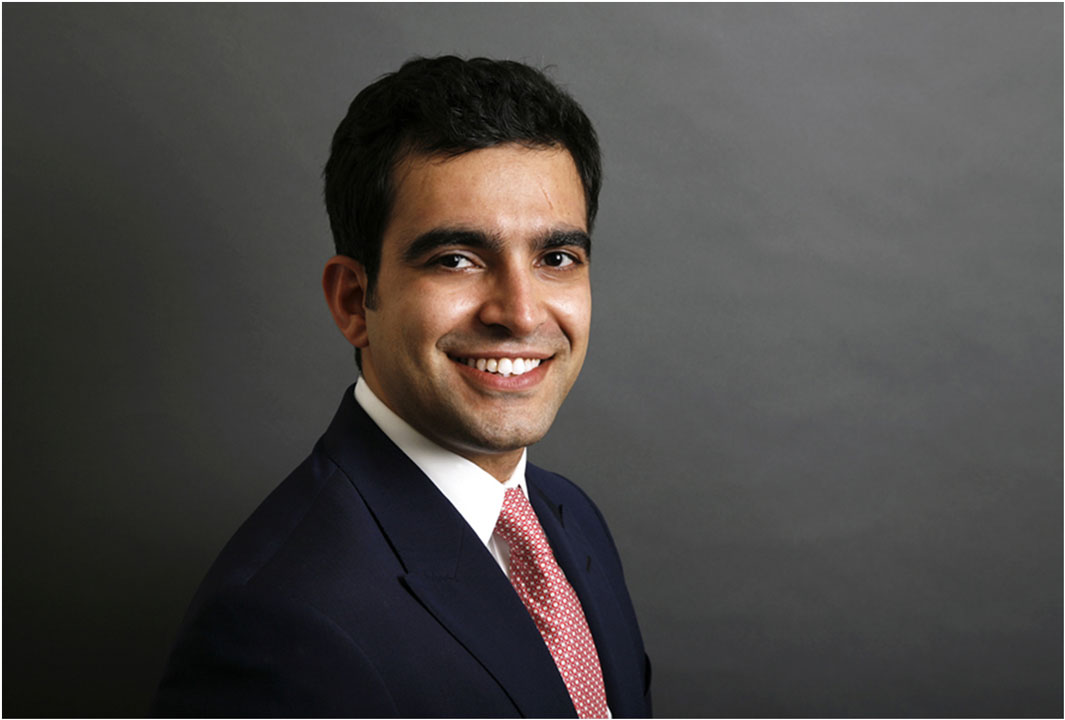
    Hrishikesh Datar is a graduate of the 2010 batch of National Law School of India University, Bangalore. He is an entrepreneur and the Founder CEO of Vakilsearch.com, the leading online legal services facilitator in India. Vakilsearch.com provides online legal services 24/7 and gets about 10,000 clients a year.

    In this interview, Hrishikesh talks about:

    • Being an entrepreneur
    • Starting Vakilsearch.com and its progress so far
    • Internships at Vakilsearch.com


    Almost all our readers know you and your endeavour Vakilsearch. What else would you want us to know about you as an introduction?

    I’m a graduate of the 2010 batch of the National Law School, Bangalore. I opted out of the recruitment process for law firms and spent a year playing with ideas before starting Vakilsearch in 2011.


    Did you have lawyers in your family? What motivated you to choose law as a career?

    Yes, absolutely. My father is a reputed lawyer in the Madras High Court and Supreme Court. My great-grand father was a lawyer in Pune and some of my grand-uncles were lawyers and judges in different courts in Maharashtra.

    I loved debating and I found grey a far more interesting colour than black or white. So the precise sciences were never really my cup of tea. I found the opportunity to be creative and try different approaches interesting about a career in the law.


    Kindly acquaint us with your college life. What activities were you involved in apart from the regular academic curriculum?

    I was a keen debater and mooter. In my fourth year, I started visiting  IIM, Bangalore where my love affair with entrepreneurship began. I started a T-Shirt business in college which convinced me that entrepreneurship was going to be my life.
     

    What kind of internships did you do while you were a student? How were you at academics?

    I interned at the law offices of P.S. Raman, then the Advocate General of Tamil Nadu. I had a memorable stint with Arun Jaitley, who was then a full time practising advocate. I also worked with a criminal lawyer in New Delhi, a matrimonial lawyer in Chennai as well as on research and book writing assignments.

    I did reasonably well throughout. To start with, yes, there was a pressure and a drive to succeed academically. But once you get used to the ‘system’, things become easier.


    You are an Entrepreneur and the Founder CEO of Vakilsearch.com, the leading online legal services facilitator in India.  What motivated you to start Vakilsearch.com?

    I just feel that the opportunity in India is so immense that we need a hundred companies like us to meet the needs of a billion people.

    And I was deeply motivated by the sheer amount of pain and suffering people face because of not having reliable, affordable and friendly professional support. I saw this in abundance when I worked with different lawyers and firms across India.

    This problem is not limited to the core legal space, it includes CAs and Company Secretaries as well.


    With so much of competition existing in the online legal service field, what makes Vakilsearch different from its peers?

    I would say relentless focus on customer satisfaction, a wide range of offerings and a technology focus.


    Did you visit entrepreneur meetings during the formative years of Vakilsearch? How would you compare the Indian start-up scenario with the rest of the world?

    The Indian scenario is in its early years, even now. And we have a long way to go. Yes, I did visit a lot of meetings at the IIM Bangalore and they were very inspirational.


    You are a businessman and also a lawyer now. Do you feel that doing a business related course like MBA would have been better after studying law?

    No, I don’t think an MBA would have helped. Business is about life and people, and managing both. You can’t learn this in a college. You have to learn it by doing. But yes, spending time with people who have succeeded in the business world, and learning from them is important. You can leapfrog some steps and avoid many mistakes.


    Please tell us more about Vakilsearch.com

    Vakilsearch.com, India’s fastest growing professional services platform on the Internet with offices in Chennai, Hyderabad and Bangalore.
    Our goal is to disrupt the delivery of legal, accounting and compliance services for every individual and every enterprise in India by harnessing cutting edge technological tools – and in the process, introduce transparency, efficiency and reliability. You’ll agree with me that these are huge pain points in India today.

    We get about 10,000 clients a year right now, and they are primarily small businesses and individuals looking for reliable professional support.

    We help them with a wide range of things, ranging from incorporating their companies to getting their trademarks, copyrights and patents, preparing legal documentation and contracts, offering them advice and support and also tax related work. We are very comprehensive.


    You are also in charge of building Vakilsearch.com’s lawyer network, brand building and marketing and alliances. How do you manage all these by yourself?

    We have a dedicated team for that now, so I have plenty of help. I just act as a catalyst, ensuring that problems are smoothened out and that difficulties are handled. That sums up my role today.


    How are you financing the business? How do you plan to finance future expansion?

    We raised finance through internal sources before raising a round of Series A funding with Kalaari Capital this year.


    Who all are associated with Vakilsearch?

    We’ve been funded by Kalaari Capital in a Series A round. We have a great team of mentors and advisors, including Shri Madhava Menon who consented to be an external mentor.


    Are you planning to hire? What do you look for in a prospective applicant?

    We’re looking for the most aggressive, tenacious and determined minds to join our team. If you think you have it in you, write to us and we’ll take it forward.


    Where do you see yourself five years down the line?

    We will be a billion dollar business serving more than a million clients each year.


    Lastly, what would be your message to law students and young lawyers who want to be entrepreneurs?

    Be willing to be ‘unsure’ about what lies ahead. Try different things and keep on looking for what moves you. And to quote Steve Jobs, “never settle”.


     

  • Nirupama Jayasimha, Associate, Telecom Media Tech team, Trilegal, on work and LL.M from Stanford Univ

    Nirupama Jayasimha, Associate, Telecom Media Tech team, Trilegal, on work and LL.M from Stanford Univ

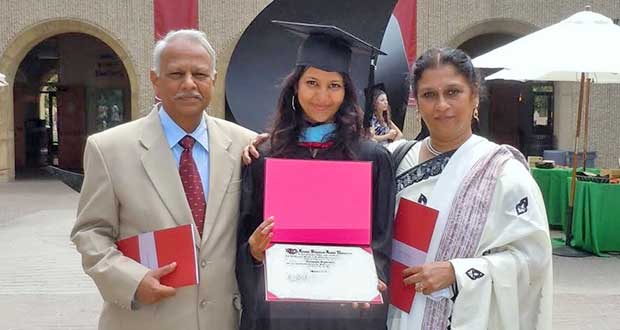
    Nirupama Jayasimha is a graduate from Bangalore University batch 2003-2008. Currently she is an associate at Trilegal, working in the Telecom, Media, Tech team. She has had a brief stint with Infosys and then she worked at Wilson Sonsini Goodrich and Rosati. She has completed her LL.M. from Standford University.  She has also been an Exchange Student at Université Paris X Nanterre. She shares her experience as an Exchange Student and tells us why and how an exchange programme is beneficial for a law student.

    She tells us about JN Tata scholarship application and other procedures for further studies abroad. She also talks about the job opportunities available overseas.


    Though it’s one of the most cliché question, but yet, why law? What were your areas of interest while you were studying law?

    I come from a family of eminent lawyers and engineers. Dinner time conversations were filled with stories from the court or the latest developments in technology. This led to an interest in these fields from a very early age. My father thought I would make a better lawyer and persuaded me to take law. In the meantime, the growth of IT in Bangalore presented a unique opportunity to work at the cusp of law and technology. Most of my internships were in the legal departments of technology companies to help me understand the fundamentals of technology, business and its interaction with law.


    You have been a part of Université Paris X Nanterre as an Exchange Student. How do you think such exchange programmes are beneficial for a law student? Tell us about your experience there.

    When I signed up for the exchange program, apart from getting to live in Paris without paying for it, I couldn’t think of a single way the exchange program would benefit me. If anything, it seemed like opening a Pandora’s box. I had to attend classes and take exams in a language I didn’t understand well, the college administration was not sure if the courses taken in Paris would count towards graduation and I had to live away from home for eight months which I had never done before. Call it adrenaline rush, or the compulsion to be different, I just signed-up for the program. Apart from learning enough French for a lifetime, there were no immediate benefits I saw from the exchange program. It’s only much later that I reaped the benefits. While at Infosys, I worked closely with clients in France and having an idea of civil law and French was an added advantage. It may have influenced my admission to Stanford as I was one of two students in my university to have done the program. Even today, the networks I cultivated have stood me in good stead. So, I guess, my advice to anybody who wants to take up an exchange program is to go for it! Like Steve Jobs said “its only when you look back that you will be able to connect the dots”.


    nirupama-jayasimha-2

    You have studied LL.M from Stanford University, through the J.N Tata Scholarship. Tell us in detail about the application procedure for the JN Tata scholarships and other such scholarships.

    The J.N Tata scholarship requires applicants to submit a personal statement along with their application. Based on the strength of the application, candidates are shortlisted for an interview in Bombay. Candidates are interviewed by a subject-matter expert from their particular background for an hour. A week after the interview, successful applicants are intimated by mail. The final distribution of the scholarships is at a ceremony held at the Bombay House (where you may have a chance to meet Ratan Tata!). The ceremony is also attended by scholarship alumni and distinguished members of the Tata Group.

    The Stanford acceptance letter comes out well past the deadline for most scholarship applications. I just made it in time for the JN Tata scholarship and that’s only because an extension was granted! However, there are a few scholarships that you can apply prior to sending out your college applications. Applying to these will ensure you don’t lose sleep after receiving the acceptance letter.

    In terms of the selection process for the JN Tata Scholarship, it is hard to give a definitive answer of the traits required to bag the scholarship. My advice is that it is good to spend a few days thinking about why you want to do a LL.M, how you would use it to further your career and the interests of the society at large and then present it in your application in a compelling way. This is the most important question any scholarship panel asks and is also a defining part of the application you submit to colleges.


    How was your experience with faculty and academics at Stanford University?

    As a law student, I spent a lot of time reading and thinking about technology law issues like net-neutrality, P2P sharing, patent trolls, dispute resolution in e-commerce. Quite naturally, the opportunity to study at Stanford, at the bleeding edge of all the action, was an exciting prospect. And I was not disappointed at all. The Socratic method of teaching is crafted towards making you evaluate these issues by questioning the fundamentals. In addition, hearing perspectives from competing stakeholders on issues they deal with on a daily basis makes you appreciate and understand the different facets of the issue. For instance, in a panel discussion onP2P sharing, we had the ex-CEO of Napster, Hank Barry on the panel and a lawyer from Viacom. Meeting such stalwarts on a daily basis inspired me to contribute to the evolution of technology law in a meaningful way.


    How is the recruitment/ placement situation for overseas students?

    Well, it’s not easy to find a job. If you are looking to do an LL.M just so you may work in the US, then it may not be a wise decision. To land a job in the US, an extensive network of contacts will take you much further than a LL.M degree. When you interview for jobs after your LL.M, you are competing with JD’s. A law firm will not want to pick you ahead of a JD unless you have something a JD doesn’t. More often than not, that X-factor could be your ability to bring in work from your home country. As a general observation, I found that the network one has built in India is the most effective tool to land a job in the US.


    How did you get a job as a foreign legal specialist in Wilson Sonsini Goodrich and Rosati? What kind of work did you come across?

    My boss during my stint at Infosys, Samuel Mani generously referred me to a partner at Wilson with whom he worked closely. At Wilson, I worked with the Technology Transaction team which primarily worked in representing technology companies in business transactions driven by the development, use, acquisition, or divestiture of intellectual property, including licensing, mergers and acquisitions and public and private offerings. The most interesting piece of work I was involved in was preparing a memorandum for the Demi Moore and Ashton Kutcher foundation on the ethics of web scraping to help prevent child trafficking. Additionally being from India, I helped in cross-border transactions involving Indian clients.


    nirupama-jayasimha-3

    Is it easy to have a work-life balance in this profession?

    I think you need to identify as early as possible, the things important to you in life and then prioritize them accordingly. For me, health, family and work are the top priorities. The most important of course is to maintain a healthy lifestyle, without which one can neither do justice to work (no pun intended!) nor spend quality time with your family. If one is disciplined, it is not hard to set aside an hour everyday for some sort of physical activity. I also don’t let work get in the way of having timely meals. As for prioritizing between family and work, it is very contextual and one cannot blindly prioritize one over the other. There are times when you may need to give up working on an important deal because you have a prior family commitment, and there are times when you have to miss a family event because you are committed to closing a deal. I think planning and being organized helps a lot in navigating this tightrope. It is also important that people at work respect your priorities and that people at home understand. I have been lucky to have a very supportive family, and colleagues at work who understand the importance of striking a work-life balance.


    Is there any success mantra that you follow which you would like to share with our readers?

    Howard Roark, in Fountain Head (which is my favorite book of all time) says,

    “I have, let’s say, sixty years to live. Most of that time will be spent working. I’ve chosen the work I want to do. If I find no joy in it, then I’m only condemning myself to sixty years of torture. And I can find the joy only if I do my work in the best way possible to me.”

    This really sums up what I believe. Any work you choose to do, do it to the best of your ability. The rest will take care of itself!


  • Om Agarwal, Founder, EazyCoach, on being an entrepreneur, the startup climate in India, and juggling law with business

    Om Agarwal, Founder, EazyCoach, on being an entrepreneur, the startup climate in India, and juggling law with business

    Om Agarwal is a student of WBNUJS, Kolkata, batch of 2016. He embarked upon his entrepreneurial venture, AimCLAT along with a few of his batchmates in the beginning of law school. He later developed EazyCoach, an online mentorship portal that helps students discover colleges globally, get admission help from college seniors and alumni, enabling them to pursue their dream. They are a portfolio company of NASSCOM and have been sponsored by tech heavyweights like Google, Microsoft, Amazon, and IBM. He is currently travelling to the US on an all expenses paid trip.

    In this interview we speak to him about:

    • Taking the entrepreneurial plunge
    • Managing law with business
    • Travelling to the US on an all expenses paid trip

    How will you introduce yourself to them?

    Crudely stated, I am an entrepreneur studying law. I love to discuss and experiment with new ideas, no matter how crazy it seems.


    Given your love for tech startups, why law? Why not engineering?

    From Google to Facebook to Snapchat, our lives have been deeply influenced by tech startups. I love using them and am working on creating new ones.  However, you do not have to write lines and lines of code to pursue your love for them. All you need is a great team, determined to work towards a problem worth solving. I love interacting with people and prefer to spend my time knowing what excites them. I know how to build a great team and keep them motivated.

    Law, centered around people and research skills, has helped me with all aspects of my startups: searching for a co-founder, doing market research for my idea, attracting good talent and preparing business plans, which make sense.


    You have been a part of many initiatives. Would you please give us some insight on them?

    Right from AimCLAT, an online portal for law aspirants, to DesignTurks, an organization helping college students create their own digital impression, I have always wanted to solve the problems, faced by students like myself. Aspiring to take this to the next level, I am working round-the-clock on my upcoming startup, EazyCoach.


    So, what is Eazy Coach?

    Simply put, Eazy Coach is a P2P guidance platform for college entrances. It would help students aspiring to get into the top colleges in the world, by getting them personally coached from students already studying the same.


    And what has been the progress till date?

    We have been included in the Microsoft BizSpark programme, entitling us to receive lots of free perks. We even went up to the finals of the business plan competition of IIM Ahmedabad. Right now, a prospective investor of Eazy Coach has sponsored my way to USA to learn the startup ecosystem and network with like-minded entrepreneurs in the West.


    Getting an all expenses paid trip to USA is just awesome! How do you feel about it?

    Well. I am presently in the States and I am loving it. Interacting with people much better than you, is a great experience in itself. Plus, the trips to places like Niagara Falls and Times Square provides the ‘fun’ element. Today (18/05/14), I am going on a weeklong trip to Wharton, Harvard and MIT. Thrilled, is the word.


    So what do you expect to learn from this trip? How would it be beneficial for the EazyCoach project?

    I am taking numerous courses on growth hacking, hiring talent, building revenue models, raising funds, etc. These would definitely help me towards my current and future startups. Apart from this, I am trying to attend as many networking events as possible. New York is turning into one of the most startup friendly state in the world and entrepreneurs are swarming in from all around the world to showcase their awesomeness. It is great to network with such people.


    When are you expecting it to launch?

    Right now, we are on our way to complete the web version of the platform and are busy fixing bugs. We are expecting it to be online in a few weeks. However, you can sign up to get early access by logging on to Eazy Coach.


    How did you find the time to do so many things? What motivates you to keep going?

    Law school is hectic, but we always find time for the things we love. Building a product from scratch, getting it to the market and improvising it every now and then, is an amazing experience. Customer appreciation provides those added cookies.


    How has your entrepreneurial experiences changed your life? Are there any anecdotes on this?

    The one major thing I learnt was to never take yourself lightly. I always felt that being a student, I am somehow at a lower position compared to those people, with years of experience. One thing I learned from Eazy Coach is that age and past experiences do not matter in the startup world. All that matters is your passion and your hard work.

    After a business plan competition last year, I got the first investment offer for Eazy Coach. However, the investor primarily seemed to discount my startup’s valuation due to the fact that I was a student. One side of me wanted the money (which student doesn’t). However, I decided to go with my guts and I rejected the offer. It paid off well and Eazy Coach is currently valued double the offer, even before launch!


    Does law school in any way facilitate or impede your ventures?

    A law school, with its tight deadlines isn’t very supportive of start-ups. There were times, when project submissions were a day away, and I had to complete my pitch deck for a competition. However, it is the love and passion for startups which has kept me afloat till now (and I hope it does for the next two years).


    Will you ever do an MBA?

    Yes. I surely plan to pursue an MBA after law school, provided I can sponsor the same with own initiatives. The entrepreneurship environment of B-Schools interest me more than the classroom teaching. The thought of studying at a place where people are as motivated to bring about a change, as you are, gets me excited. Wish me luck for that.


    What would be your message for wannabe entrepreneurs and law students?

    I can just say one thing from experience. Start-ups always have a J-curve. It is easy to get discouraged if one does not get a viral opening like Facebook; and couple it with the demanding law school life, we decide to quit. But only if we stick through the initial slump of the “J”, can we be eligible for the sharp growth coming our way.


  • Nima Heydarian, Founder, Indianlawyers.net, on the need to modernise the legal industry and his passion for technology

    Nima Heydarian, Founder, Indianlawyers.net, on the need to modernise the legal industry and his passion for technology

    Nima Heydarian is a Controls Engineer in the Oil & Gas industry with an electrical engineering bachelor’s degree from Purdue University. He has been developing websites and applications on the side for the past eleven years. In 2010, he started a new business called “Heritage Law Marketing” focused on marketing the services of the attorneys based on their heritage background, international practice areas and languages that they speak. He has been developing an online marketplace through which one can reach out to Indian lawyers worldwide, Indianlawyers.net.

    In this interview, we speak to him abut:

    • His project and its importance
    • The challenges faced by him
    • How lawyers will benefit from Indianlawyers.net


    nima-hHow did you decide to start a project related to the legal industry?

    I am Iranian. About seven years ago when I was in college I built the website, IranianLawyers.net, to list Iranian lawyers and help them connect with the Iranian community. I built the website as a hobby and completely free of charge. At the back of my mind, I also believed that this could one day be a serious business because I would be addressing a very real need in the market. Also lawyers of other ethnicities are a demographic largely overlooked by the larger legal marketing firms.

    From the beginning my goal was to turn Heritage Law Marketing into a large legal marketing firm so I had to build a solid platform and a set of the tools focused on long term growth. That required time and a decent amount of investment neither of which most senior electrical engineering students have. I graduated college in December 2009 and started the business in March 2010.


    To anyone who’s never come across ‘Indianlawyers.net’, how would you describe it?

    It’s a directory of Indian attorneys around the world. We publish legal articles pertaining to the Indian community. We are working on a ranking system to rank Indian non-corporate law firms in India and elsewhere. We also plan to host various “Indian Legal” events around the world.


    Could you explain your business model to our readers in layman terms?

    Attorneys pay to be included in our directory and we help them connect with clients seeking their services. We also sell legal marketing services such as Adwords, SEO, Web Design, etc.


    What have been some of the challenges?

    The biggest challenge so far has been to stand out among the abundance of the legal directory websites that are out there. We are going to be much more than just a directory and need to do a good job of conveying that message to attorneys who get bombarded by ads from different directories every day.


    How did you go about creating the technology behind the product?

    I did as much of the programming myself to save money but for the more complicated and delicate parts of the script I hired the best programmer I knew from around the web. He wasn’t cheap but the results are obvious in how user friendly, fast loading, and solid the website is.


    What kind of growth has ‘Indianlawyers.net’ seen since its launch?

    I spent the first 3 years mostly building the platform so we didn’t have much growth during that time. Right now I am offering the listings to about 100 select attorneys free of charge to test features of the website, so that I can get feedback, and generate word of mouth advertising. I hope to have 100 attorneys listed with us by end of 2013.


    Any major learning you would like to share with our readers?

    Finding the right people and right team is much harder than it seems.

    What kind of lawyers would benefit from joining the portal? Why should they join it?

    Individual lawyers and small law firms would benefit the most because the legal clients we send to lawyer are mostly individuals, families and small businesses.

    How are you marketing Indianlawyers.net to lawyers?

    I am using a host of different methods right now including social media, article marketing, banner advertising, direct mail, print advertising, etc. I am trying to use as many weapons out of the book Guerrilla Marketing Weapons by Jay Conrad Levinson as possible.


    What message would you like to share with our readers?

    The legal industry in India is old and in need of modernization. Let’s work together and make it happen. I am happy to work with anyone else who is looking to leave an impact on the legal industry in India through the use of technology.

  • Apurva Sukant, Founder, Androidly, on studying in CNLU, his passion for philosophy and venturing into tech

    Apurva Sukant, Founder, Androidly, on studying in CNLU, his passion for philosophy and venturing into tech

    Apurva Sukant is a graduate from CNLU, batch of 2011. During this time he has interned with the likes of Mr. Arvind Mouar, Advocate, Civil Court Patna, the Rural Litigation & Entitlement Kendra, Amnesty International India, Honb’le Justice Mr. Ajay Kumar Tripathi, Patna High Court, among others. In May, 2012, he took the entrepreneurial plunge and started his own range of Android smart watches, Androidly. He is also Founding Partner and Managing Director at Scenescape, a registered partnership firm, dealing in gardening and art.

    In this interview we speak to Apurva about:

    • Making the shift from lawyer to entrepreneur
    • His diverse internship experiences
    • His passion for technology


    Most of our readers are law students and young lawyers. How will you introduce yourself to them?

    I would like to introduce myself as a tech and a philosophy enthusiast first and subsequently as an entrepreneur and a lawyer.


    Why did you decide to study law? What would have you been doing if not law?

    I found law to be the only professional degree with no limits on what could be done with it in the future. This is to say, law is very open-ended. Today, we have lawyers successfully walking every field of life, ranging from the arts, politics, business, non-profits, and there are a few in technology too.


    What kind of internships did you do while you were a student?

    I have interned at a few non-profits, like Amnesty International and Rural Litigation Entitlement Kendra, which was during my early years as a law student. Later on, I did an internship under a High Court judge in Patna, and with an additional Solicitor General in the Supreme Court. The high point in my internships was one term with the eminent lawyer Mr. Ram Jethmalani, during which I got to see and work on some landmark cases and be in the same room with some very influential people. The only internship I did at a law firm was at Luthra & Luthra.

    A singular experience during my internship was when I got to interact with and legally help folks in remote villages in Himachal Pradesh, during my internship with RLEK. The villages were small with around twenty households and were inaccessible by road. There was no electricity or telecommunication. The beauty of the place and its people has me searching for words! As a plus, I found that work meaningful too as I was able to cause direct change in peoples’ lives, albeit at a smaller scale.


    Apurva SukantHow did you manage the shift from HNLU to CNLU? Did you face any difficulty caused due to the shift?

    The shift was great as I was welcomed in the institution with open hands and hearts of both the faculty and students. I found some of my best friends there, and was fortunate enough to win the university presidential elections for the Student’s Bar Council. I went to the Willem C. Vis moots, both the Hong Kong and Vienna rounds with competent and dedicated teams from CNLU only. So I’m only too glad that that happened.


    How did you decide to venture into the startup space?

    Internships are co-curricular activities, meant to interface us with the industries and the real world. As a law student, I found it normal to go to NGOs, courts and firms for internship just like my peers. In hindsight I can say that an internship in the legal section of a tech company might have come in handy, but that never happened. As a law student, I wanted my education and experience to be as complete as possible, and so I did all the regular categories of internships.

    Starting up, after doing a slew of regular internships doesn’t seem unusual to me, as the idea of starting up had always run parallel to my circumstances as a law student. I had always thought of being a decent lawyer first, so that I could use all that knowledge into starting my venture successfully afterwards.


    How did Androidly happen?

    ‘Happened’ is a good verb to describe the story of Androidly. The story is about four childhood friends together, all of whom are moonstruck with technology. After about completing their graduation, we serendipitously decide to ‘make’ things. I think it works out something like this, when people become really good at things, they naturally want to take their stuff out into the real world. This might be our innate sense of adventure, our desire to make a ‘dent in the universe’ etc. When we became convinced that what we could do would be comparable to what billion dollar multinationals were doing, then we were able to shut off our risk-aversion behaviour and take the plunge!

    The specific story about how we decided up on a smart watch is related to our perception that whatever we were to make, should be cutting edge and something which would arouse interest out of sheer novelty first and functionality and quality later. It should be something that everybody needs, but nobody can place their finger on quite yet. Smartphones have been with us for some time now, and tablets are becoming popular every day. The wrist seemed the eventual destination for the next generation computing platform, and that’s when we decided it was to be a next generation smart watch.


    Tell us something about the smart watch that Androidly developed?

    The Androidly smartwatch is the world’s smallest full Android device, and the first complete Android smartwatch in the world. The watch comes with a full suite of sensors including GPS, camera, accelerometer and a full suite of radios including, Phone, WiFi, Bluetooth. So there is not much difference between a latest Android based phone and the Androidly smartwatch as far as functionality goes. The only difference is the form, now all this functionality is available on your watch, which lets you carry the whole world on your wrist.


    How is a typical day for the CEO of Androidly Systems Pvt. Ltd.?

    The typical day goes making calls and sending emails to customers, and business inquiries and doing development work on the watch and our websites. Outreach activities with the media and customers worldwide also come in a bit, though most of that is handled by our very capable communications officer, Pavneet. Occasionally meetings are scheduled with corporate partners to negotiate deals and alliances.

    Do you think that in today’s time when wristwatches are being replaced by phone, Androidly’s smartwatch would make a breakthrough?

    Wristwatches are dumb devices, they perform only one function, that of telling the time and date. Smart phones perform many functions one of which is also telling time, so inevitably phones are replacing watches. Androidly unlike traditional watches, is a smart watch and has all the features of a latest Smartphone and it too tell the time. So going by the example you provided, and for the same reasons, Androidly should replace phones, just like phones have replaced traditional watches and shouldn’t have much trouble in the breakthrough process!


    Is there any particular marketing model you are working on for Androidly?

    We have several and we favour none in particular. We pursue crowd-funding, direct sales, distribution arrangements and other forms of corporate partnerships. We estimate our target audience to be 15-35, belonging mostly to the nerdy, techie crowd. We are happy to reach them through whichever model happens to work!


    Where do you see your company 5 years down the line?

    We would like to shift out our offices in US preferably California! Currently Androidly operates from UK and India which is fine for now. Seeing how most of the tech development and funding activity happens in the US, I think it is most likely that we will end up there. We would likely have partnerships with telecom operators in India , China and UK, as several talks are already underway with some operators right now.

    We would have had an IPO, or be trying hard for one. I believe the idea is ultimately to transform into a brand, from a device manufacturer.

    Do you think doing law is helping your current career in any way?

    Self employment is not a career!

    With that in mind, let me give an example of when we had company law in our 4th year, the study freaks were busy memorizing the clauses and case laws, and the party freak were busy not caring and partying. I looked upon those clauses as words of God that were going to regulate my life for all foreseeable time! Every clause invoked in me a very personal sense of wonder or disgust, depending on whether it was going to make my life easier or tougher later on. This was true for a host of other related subjects too. So yes, law helped me and the venture in a very big and direct way.

    Luckily I was able to grasp this importance when it mattered.


    Everyone faces rough patches in their career – what will be your advice to beat a rough patch being faced by a young lawyer?

    Rough patches are the best. This might sound a bit unintuitive but in my personal experience I have constantly found it to be true. Rough patches and failures in general are an entrepreneur’s best friend. It is said that the reasons for any venture succeeding are always unknown, because they are so complex, interdependent and spread out. While reasons for failure are always specific. So failing offers better chances of actually learning, given that one is willing to be brave and learn. My advice in this regard would be to smile, and be attentive while one is through a rough patch. Given that time continues to flow, no failure or rough patch is terminal, as one always has the next moment to innovate and pivot from the failure into success or something like it.


    How is easy or difficult is the process of transition from being a law student to a lawyer? What would be your piece of advice to gonna- be- graduates?

    The transition is extremely difficult. I believe this is true for other careers too, where one has to provide business for oneself, such as for doctors. The educational institutions of our country are to blame for this. In the case of law, for five years, they systematically amputate the mental faculties of students and push them into a delirious, make believe fantasy land of text books. They are told, this is what it is, and this is how it works, and if you can memorize it then you have succeeded. You couldn’t get any further from the truth. Anybody working in the field has this complaint, they don’t teach all that matters in the law school. Human beings are effectively turned into compliant vegetables unable to stand up for themselves. Obviously this translates into an extremely difficult transition for students. My advice would be to be vigilant towards real world development in one’s field. One should always try and gain as much experience as possible by ‘doing’ all the things that one is taught ‘about’. Lastly, one shouldn’t forget to keep smiling.


    Do you take interns? How should one apply? What do you look for in interns?

    We keep getting emails from prospective interns. At this time though, we neither have the inclination for interns and nor the appetite for them. We would be going on a recruitment spree very soon, but for that we already have people and institution in mind, so again interns don’t figure in this plan.

    If we did take interns, we would probably look at their philosophic outlook on technology and also the knowledge and experience they have. Probably give them a couple of quirky, offbeat problems to solve like Google does.


    Last but not the least, what would be your message to law students, young lawyers and wannabe entrepreneurs?

    I would like to leave you with a quote from Lewis Carroll’s Alice’s Adventures in Wonderland. “She generally gave herself very good advice, (though she very seldom followed it).”