Tag: Trilegal

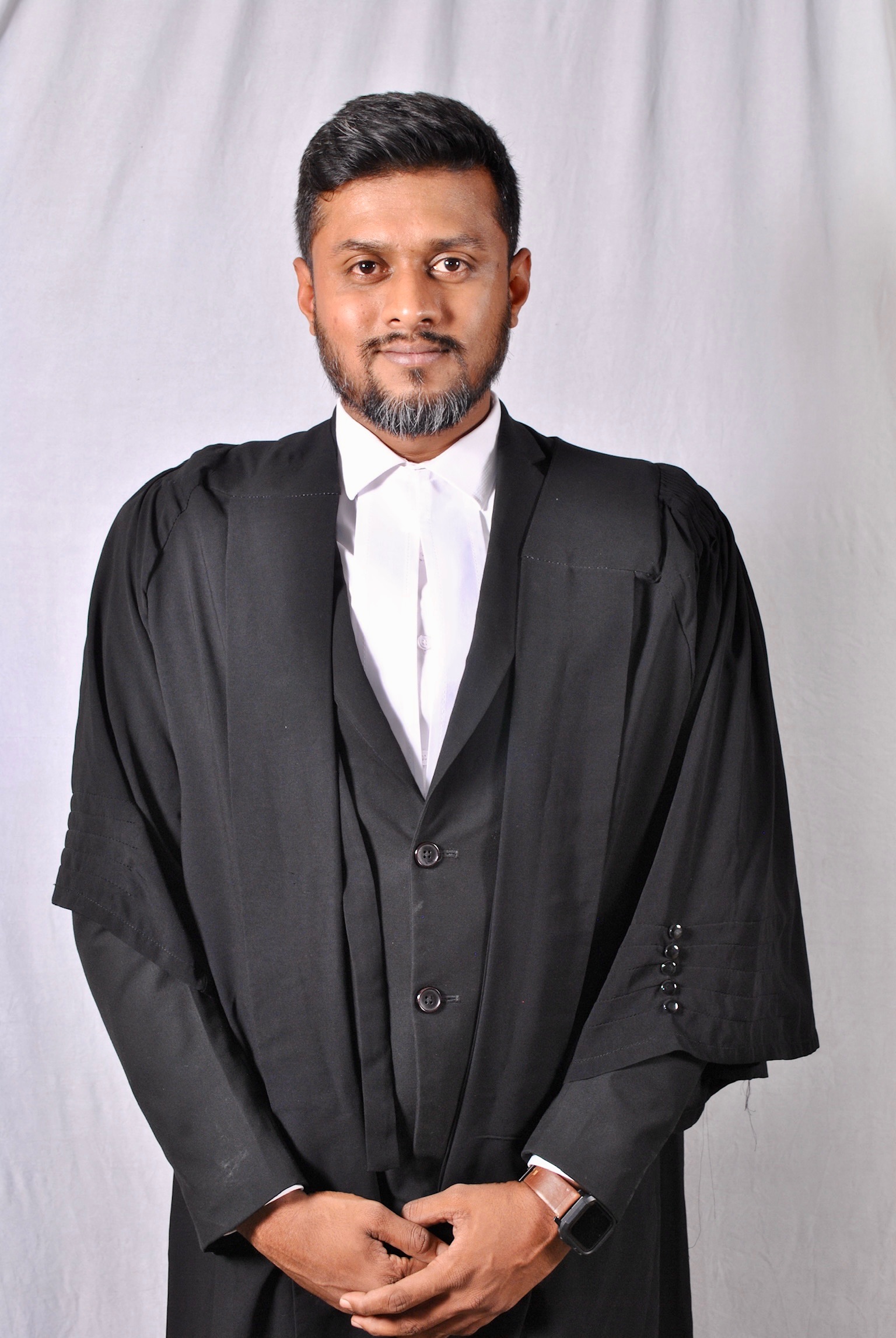
  • “No matter how much law school prepares us, real life challenges take you by surprise”- Goutham RV, Counsel at Trilegal

    “No matter how much law school prepares us, real life challenges take you by surprise”- Goutham RV, Counsel at Trilegal

    This Interview has been published by Pragya Chandni and and The SuperLawyer Team
    Can you share the pivotal moments or experiences that led you to pursue a career in law, especially in dispute resolution?

    My journey to law was somewhat pre-destined, but I had not accepted all the signs. Growing up, I frequently visited courts with my father, a trial lawyer. Ironically, those visits initially deterred me from considering a legal career. But my disinterest in traditional science subjects made the writing on the wall clearer. During my higher secondary education, I was introduced to the unique world of law schools. This new perspective piqued my curiosity, and eventually, I found myself at NALSAR.

    It was during my time in law school that my path – as a disputes lawyer – became clearer. Reading Justice HR Khanna’s “Neither Roses Nor Thorns” profoundly influenced me. His principled stand in the Habeas Corpus case, especially his dissent, was both inspiring and instructive – this continues to be my favourite judgment and anchor of sorts.

    During law school, all my internships, predominantly centred around dispute resolution and this further cemented my interest. I saw first-hand, how enjoyable advocacy was and I resonated with it and took an active interest in moot courts. Come placement time, I heard NSE was visiting college for recruitment. Given that there are only a couple of exchanges in the country, and the role on offer involved litigation management, it made sense to work at NSE.  My selection for this position marked a significant turning point.

    Working at the Exchange, I was involved in several high-stakes litigation cases. While I prepared for the cases in detail and worked on strategies with external counsel, it was in the courtroom, as an observer, that I felt my calling to litigation. These moments in court crystallized my decision to transition from an in-house role to becoming a litigating lawyer. My mentor at NSE encouraged this shift, and Trilegal, where I now work, gave me the opportunity to realize this aspiration. The rest, as they say, is history.

    Your experience at NSE involved handling multi-faceted regulatory disputes. Can you shed light on the challenges you faced and the strategies you employed to navigate such complex regulatory issues?

    No matter how much law school prepares us, real life challenges take you by surprise. Although we studied a few of the legislations pertaining to the securities market, it is such a niche area with heavy regulatory oversight that the first few months felt like a return to the academic rigor of college.

    The first crucial lesson at NSE was understanding its dual nature. Firstly, it acts as a regulator of first instance, governed not only by a myriad of laws such as SCRA, SECC, and the SEBI Act but also by its own set of Byelaws, Rules, and Regulations. These are essential in overseeing every facet of the Exchange’s operations. Secondly, the Exchange operates like any other business, facing similar risks and requiring innovative strategies to remain competitive. My role was to bridge these two aspects seamlessly. This meant ensuring that new product ideas proposed by the business teams aligned with the regulatory framework established by SEBI. One strategy I personally employed revolved around prioritizing the Exchange’s regulatory responsibilities, ensuring all other initiatives conformed to this framework. A testament to this balancing act was our success in obtaining an exemption from the CFTC, a major U.S. regulator. This achievement, though time-consuming and challenging, was a significant milestone for us.

    As a key member of NSE’s proposed IPO team, could you share some takeaways from working on such high-stakes projects?

    Working on the NSE’s proposed IPO was a lesson in managing a multifaceted operation involving numerous stakeholders. You have the Company, the selling shareholders, the BRLMs, the Bankers, the Auditors, separate legal counsels for each of these stakeholders etc., and the Exchange’s proposed IPO was a landmark project for all involved. This complex process demanded extensive efforts from every department within the Exchange, with the legal team being no exception. In addition to providing information on the outstanding material litigations, we were also liaising with our internal teams and the Exchange’s external legal counsels (both domestic and foreign), who held the pen on the DRHP. Further, we were negotiating and finalizing all other agreements with the multiple intermediaries, all of which had its own challenges. 

    For me, the process was immensely challenging yet fulfilling. Successfully filing the DRHP within the established timeframe was a testament to our collective hard work and coordination. The experience underscored a vital management lesson for me: with well-defined goals, clear role delineation, and assigned responsibilities, even the most daunting tasks and deadlines are achievable. This endeavour reinforced the wisdom of the adage, “If you want to walk fast, walk alone. But if you want to walk far, walk together.” It was a powerful reminder of the strength in collaboration and shared purpose.

    Apart from the above, another intriguing aspect I gleaned from the IPO process is the concept of “self-listing.” Ordinarily, a company selects a stock exchange for its public listing. However, when stock exchanges themselves decide to go public, they have the option to list on their own platforms, a choice motivated by various factors. This practice is permitted in some jurisdictions, but my understanding is that SEBI ultimately did not endorse this approach. As a result, the country’s exchanges have to list on the competitor bourse. 

    Transitioning from being a Deputy Manager at the National Stock Exchange to becoming a Counsel at Trilegal seems like a significant shift. What motivated this transition, and how did your role at NSE influence your current focus on dispute resolution?

    At its heart, advocacy is about effective communication. This involves understanding the law, applying it to the facts of your case and ultimately seeking a relief for your client. This aspect of the legal profession has always been deeply fulfilling to me. While at NSE, I found myself on the periphery of advocacy, close yet not fully immersed. Thus, my transition from in-house role was motivated by my need to be in the driver’s seat. My confidence in my communication skills drew me towards dispute resolution.

    Coming from an in-house background, I had a clear understanding of the motivations behind corporate litigation, whether for strategic positioning, financial gains, reputation management, preserving shareholder value, or avoiding setting precedents. This insight has been invaluable at Trilegal, where I can effectively align with and contribute to our clients’ litigation objectives. My tenure at NSE taught me the importance of understanding the fundamentals first – we had to learn how a service / product worked, the legal and regulatory regime / challenges around it, the external risk-factors etc. and break all of this down to a Judge, who did not necessarily specialize in the securities market. This is an approach I continue to adopt with my current Clients and their cases. By understanding a client’s business and the rationale behind their litigation, I can create a clear and effective legal strategy. Therefore, lessons learnt during my time at NSE continue to be guiding lessons / principles in my current work.

    Moving to your current role at Trilegal, you deal with a wide range of matters, from civil / commercial disputes to white-collar crimes. How do you approach these matters across diverse areas of law, and what challenges do you typically encounter?

    The firm receives a wide-range of commercial disputes mandates – arising from large shareholder disputes, complex lending transactions, cross-border IP disputes, the list goes on. Similarly, the firm also receives a wide ranging white-collar crime mandates – say internal investigations into corporate espionage, IP theft, misappropriation of funds etc., and these may result into various kind of proceedings before the Criminal Courts. In addition, we routinely appear in mandates challenging local municipal laws, arbitrary government action and the like. The challenges we face in these mandates vary – it could be us dealing with foreign clients who are new to Indian legal ecosystem (and thus managing expectations), not having the luxury of time, logistical challenges in execution of a strategy, to name a few.  

    The approach I adopt in all these matters, irrespective of the diverse areas of law, is rudimentary. First, we meticulously review all the documents Clients share and prepare a comprehensive chronology of events – noting even seemingly minor details relevant to the case. Second, deep dive into the relevant laws, revisiting first principles, statutes and commentaries rather than relying solely on online resources or case law databases. This critical process helps identify both the strengths and potential obstacles in the client’s case. Third, once we have the legal and factual framework, we strategize the most effective path to achieve the client’s goals. This process will include all stakeholders internally, including the Partner. Once we internally deliberate this, we go back to the Client and give them all the options on how we can drive the matter and go on about executing it, based on their instructions. In my experience, these initial steps are crucial for successful outcomes and managing multiple cases simultaneously.

    During your time as a secondee at Allstate India, what was your role? How did this experience impact your perspective on the intersection of legal and business functions?

    At Allstate, my role was essentially that of an in-house counsel, a position I was already familiar with. My primary responsibilities included managing contracts and providing internal legal advice.  My background in dispute resolution enabled me to identify red flags in the standard contracts and negotiate more effectively with vendors and their legal counsels. Over time, I gained insights into the company’s common legal challenges, leading us to review and streamline their standard contract templates.

    In my opinion, most companies see their legal team as cost centres,. he business teams which are keen on getting the revenue, see the legal team as roadblocks or business barriers. This perspective can lead to business teams overlooking crucial contractual provisions such as indemnities, representations, warranties, and dispute resolution clauses, either due to a lack of understanding or the misconception that these are mere boilerplates not warranting attention. While it’s true that these clauses may never be invoked during the life of the agreement if all things go smoothly and as planned, the real value of a well-negotiated indemnity clause, for instance, becomes evident in challenging times, potentially shifting liability away from the company. So this stint reaffirmed my belief that a strong in-house legal team is not merely a cost-centre, but a vital asset that can prevent unnecessary expenditures. Such teams can actually be very effective in ring-fencing the Company from foreseeable and unforeseen risks, thereby preventing value erosion. A competent legal department is instrumental in balancing business aspirations with realistic legal perspectives, ensuring a holistic approach to risk management and decision-making – a message that I reiterate to business teams I work with usually. 

    With your extensive experience in handling high-value disputes, could you share a specific case that posed unique challenges and the strategies you employed to achieve a favorable outcome?

    While there are several cases I could reference, confidentiality constraints prevent me from sharing specific names or details. It is key to note that each case throws unique challenges of its own and as such, our strategies need to be flexible and adaptable. A rigid litigation strategy often leads to less desirable outcomes.

    For instance, in a case involving a shareholder dispute with a foreign institutional investor client, the primary conflict was between domestic institutional investors and the company’s promoters, who had made broad allegations that also implicated our client. Initially, we planned to respond to these allegations directly. However, we soon realized that such a strategy would unnecessarily draw attention to our client in a dispute that was primarily between other parties. Consequently, we revised our approach, choosing to specifically address only the most serious allegations and then shifted our focus to the legal intricacies of the case. This allowed us to take a more reserved role. As the conflict escalated, involving cross-appeals and arbitrations, our client began to be perceived as a neutral entity and was gradually removed from the core of the dispute (we were either formal parties or not arrayed as a respondent altogether). This strategic shift not only limited our client’s legal expenses but also enabled them to divest from the company without loss.

    Contrastingly, in another shareholder dispute, our approach was entirely different. We aggressively addressed each allegation and actively litigated before various foras, to preserve shareholder value and safeguard company assets, amidst a battle between majority and minority stakeholders. This experience underlined the importance of maintaining a dynamic and responsive strategy in litigation.

    As an alumnus of the National Academy for Legal Studies and Research (NALSAR), Hyderabad, what aspects of your legal education do you believe have been most valuable in shaping your career? Additionally, what advice would you give to fresh graduates aspiring to pursue a career in law based on your journey so far?

    Reflecting on my academic journey at NALSAR, Hyderabad, I realize it’s a narrative too rich and complex for a brief summary. Suffice to say, the true value of NALSAR lay in its exceptional faculty, who fostered an environment of independent and critical thinking – a mode of learning that was entirely novel to me. Equally significant was the company of my peers, a group of incredibly driven individuals with clear objectives and ambitions. Their presence was a constant source of motivation, pushing me to surpass my perceived limitations and achieve things I never thought possible.

    Looking back, the most crucial lesson from my college experience is the belief in the boundless potential within ourselves. To the graduates embarking on their legal careers, I want to impart this wisdom: the path may seem daunting, and it’s natural to feel overshadowed by others who appear more accomplished. However, remember that your journey is unique and will unfold in its own time. Treat yourself with kindness, acknowledge your achievements, and maintain patience, a vital trait for any legal professional. Trust in your journey, and know that perseverance will guide you to your destination.

    Lastly, for those looking to have a career in disputes resolution at law firms, do you have any tips / suggestions?

    I believe litigation – whether in a law firm or independently – requires the same set of skills. Law firm cases may often be high-stake or involve significant amounts, but the fundamental approach remains the same. A few things to consider: 

    • Integrity is key to this profession and your reputation. Do not rely on shortcuts and keep all your dealings above board. 
    • Patience is crucial. You might find yourself waiting for extended periods in court, only to speak for a brief minute. Achieving the results your client desires often requires persistent effort and time. Stay patient.
    • Time management is essential, especially early in your career when tasks may seem overwhelming. Gradually, it becomes more manageable. Be prepared to deal with urgent cases and client demands, sometimes with little notice. It’s better to devote extra time to fully understand a case than to be unprepared in court.
    • Develop a reliable process. Being thoroughly acquainted with both the facts of your case and the relevant law is vital. Establish a method that works for you and apply it consistently to each new client or case. 
    • Emphasize teamwork, particularly in a law firm setting. You’ll likely be handling multiple cases simultaneously, so coordinating effectively with your team is key. Remember, you can’t be in two places (read as court halls) at once, so dependability and ownership are important.
    • A quick and sharp presence of mind is essential for dispute resolution lawyers. While you can take time to respond to client queries, the same isn’t true in court. Being unprepared could lead to immediate decisions from the judge, potentially unfavourable to your case.
    • Understanding the concepts is far more important than knowing sections / citations. The concepts should be so clear, that even a common man can understand your iteration of it.  

    Get in touch with Goutham RV-

  • In conversation with Anweshaa Majumdar, Corporate Lawyer at Trilegal, talking about her current role and her experiences in different areas of the Corporate law practice.

    In conversation with Anweshaa Majumdar, Corporate Lawyer at Trilegal, talking about her current role and her experiences in different areas of the Corporate law practice.

    This interview has been published by Sonali ParasharOjuswi Sahay the SuperLawyer Team


    Tell us about yourself and why you chose law as a profession. What other professions would you have considered if not law? 

    I have always known that I am a people person and communication is a strong skill that I possess, and I knew I wanted to pursue a career wherein I could hone this skill further. Despite taking science as my stream for my 11th and 12th, I knew my calling was not in the science or engineering stream. The career paths that I was keen on pursuing were law and journalism. I had, in fact, gotten into my preferred colleges for both these degrees. However, my parents were insightful about the potential of Jindal Global Law School, even though at that time there was no placement matrix to rely on. They felt that Jindal was a law school of the modern era and I also took the leap of faith and joined. My parents’ insight, has always proved to be correct as now, JGLS is known to be the best private law school in India. I personally feel I would have thrived in journalism as well, but I always knew that I would be a better lawyer than a journalist.

    You have worked extensively on succession planning and wealth restructuring/ management with a lot of experience working with Family Businesses. What drew you to this field in the first place? Would you like to tell us about your journey to this point?

    Honestly, I joined PwC as a fresher from college and when I was told that I would be joining a team which primarily focuses on succession planning and wealth restructuring, I was intrigued as it was a very niche and lucrative field. When I graduated from college, I knew I wanted to be in the corporate field, and being in the succession planning space, I was able to network and interact with various high net-worth families in India Bangladesh as well as Sri Lanka. When you work in a Big4 as a lawyer, your learning goes beyond the technical legal aspects, and you get a lot of exposure to various business building/continuity strategies. Working in PwC also allowed me to gain insight into tax-related aspects of a business and pointers to consider during corporate restructuring. I started in PwC as an Associate and left as an Assistant Manager.

    Other than the above mentioned,  you also hold expertise in General Corporate, Transactions, Mergers & Acquisitions, and Drafting Agreements. What, in your opinion, are the upcoming corporate trendsetters? It would be an excellent compass for our readers.

    In my opinion, an upcoming trendsetter is a simplified style of drafting. Drafting is a skill which will be required in whichever field one is part of, whether it is M&A, private equity, venture capital etc. The documents are essentially the same, but the context of the transaction is different. A trend that I have seen evolving in the legal space is the moving away from verbose legal language to simple language which is understandable to the clients as well as the counterparties. This is a trend I definitely stand by, as I have seen that by simplifying the drafting of contracts, it is possible to keep the rights intact and it also reduces the back and forth between the counsel and the client and even the client and the counterparty, and therefore significantly reducing the transaction closing timeline. My team follows a mantra of “draft the way you speak formally”.

    I have always believed in this concept, and I am elated to see that it is being practiced widely now. Further, I also believe that the M&A, private equity and investment structuring field is a phenomenal space to be in, as one gets to work on different kinds of deals which involve different strategies, negotiation points and consideration structures. After being in fields like this for a while, you are able to anticipate any plausible push-backs from counterparties, push for rights which will be beneficial to your client, address different options of consideration structuring and are able to identify any potential risks and advise to rectify them accordingly. The transaction space such as these typically does have heavy workloads, but the learning curve is steep and the effort you put in along with your experience does positively contribute towards your individual value as a lawyer.

    You are currently working at Trilegal. Previously, you were associated with Cyril Amarchand Mangaldas, and before that, you were with PwC. How different it is to work at these three behemoths?

    After my stint at PwC, my entire team moved out with the Partner as he wanted to start his own ventures – one of them being a venture capital fund called Turbostart. At Turbostart, I was designated as Corporate Counsel and assisted with all the legal documentation required when the fund identified start-ups to invest in. After this stint, I decided that I wanted to move back to a core legal practice and that is when I got into Cyril Amarchand Mangaldas, in the legal advisory team in their General Corporate practice. From there, I was selected for the Transactions team at Trilegal where I am today. At Trilegal, I work on high net worth deals in the M&A and private equity space. In these three behemoths, I have learned different things which I will carry with me throughout my career.

    At PwC, I got to work with many incredible chartered accountants outside my core team on various deals, I was able to get over my irrational fear of numbers and was able to understand various tax and business-related aspects of a transaction. At CAM, as I was in an advisory team, I was able to work on various opinions and memos relating to different aspects of the law, and was able to further my knowledge in these domains and re-connected with the process of legal research and statutory interpretation.

    In Trilegal, I am now working with an incredible team, in a very dynamic field. As we work on different kinds of deals at one time, one gets exposure to many drafting and negotiation strategies, front-ending deal closures, as well as exposure to transactions in various sectors. I would definitely say that during my formative years in PwC and during my time in CAM and now Trilegal, the learning curve has been steep, the professional exposure has increased, along with responsibilities and accountability and I feel that all 3 places have largely contributed to the professional I am today.

    You earned your Diploma in Entrepreneurship Administration and Business Laws from the West Bengal National University of Juridical Sciences after graduating from JGLS. In what ways does entrepreneurship aid a lawyer’s understanding of business?


    Especially in today’s day and age, where entrepreneurship is the theme of the market, I feel entrepreneurship increases a lawyer’s scope of understanding beyond the law itself. As someone who has had exposure to both, I think entrepreneurship is essential in understanding the business, which as a result will improve your legal advice as there is a much more holistic perception rather than a singular focus on a legal point. Once you have a decent understanding of the business, its operations, pain points, and strategies you are in a better position to align your legal advice and anticipate the outcomes of your recommendations which could be both legal and business-centric.

    Are you able to carve out time for your other interests or hobbies given the nature of the legal profession?

    I would not say that it is easy to take out time. But I would definitely say it is essential and sometimes you have to really push yourself to take out time for your hobbies. I choose to unwind with music as I play the ukulele or travel (either to work from out of the station or as a normal vacation). These little breaks are quite important to rejuvenate your mind and especially in this fast-paced profession, it should definitely take precedence to avoid burnouts.

    You are a young and well-established legal professional. What is your success mantra?


    My success mantra actually took some time to build, and now when I look back, it all boils down to “believe in yourself”.  Do not be afraid to take challenging career shifts, if you think it is the right thing to do – and even if it doesn’t work out, at least you tried it. Bounce back up and move on. I also believe in the aspect of not halting the process of learning – I have learnt from every case/matter I have handled and from the people I have interacted with and built a network even after. Another thing that I regularly follow, is self-introspection. It is extremely insightful to honestly connect with yourself, as it helps you figure out what you want, what your priorities are and how to achieve your goals.

    What career advice do you have for our readers?

    Never pay heed to people who discourage you. There are various kinds of people that you will have to encounter during your professional life, there will be people who will think that you do not have it in you to make it big. My advice – do NOT listen to them. Other people’s perceptions do not define who you are or what you can do. In today’s day and age of social media and seeing the career milestones of your peers might lead you to pressurise yourself, but don’t let it. Personally, back in 2020-21, I had found myself in a situation which required an immense amount of self-motivation to get out of. I would urge everyone to find that within themselves. The imposter syndrome is a self-created construct, break it down and thrive. Another piece of advice I would give, especially to people who are starting off their career – is never be afraid to burn bridges if you are not being respected. Put yourself first, know your worth and your path will find you one way or the other.

    Work on your soft skills as much as you would work on your technique. Believe it or not, both are equally important. Build your network, keep reading up, keep working on your communication skills (written and spoken) and always keep in touch with people who have impacted your career path in any positive way.


    Get in touch with Anweshaa Majumdar –

  • AKANKSHA BISEN, MANAGER- BD & DIGITAL MARKETING AT TRILEGAL, ON CHOOSING A CAREER IN LAW AND HER BUSINESS DEVELOPMENT ROLE AT LAW FIRMS

    AKANKSHA BISEN, MANAGER- BD & DIGITAL MARKETING AT TRILEGAL, ON CHOOSING A CAREER IN LAW AND HER BUSINESS DEVELOPMENT ROLE AT LAW FIRMS

    This interview has been published by Maaz Akhtar Hashmi and The SuperLawyer Team.


    Having completed your graduation from Gargi College in commerce, you shifted to Campus Law Centre, Delhi, to pursue the three-year law program. Was that transition planned or a leap of faith? Could you walk us through your journey in the field of Law?

    It was a planned decision, and there were many factors – being the first-generation lawyer in my family is one of them.

    It is great to have a black and a white coat in the family. My dad being the holder of the white coat – I opted for the black one.

    On a serious note – I always had a knack for knowing and appreciating the legal nuances. That later just spilled over my vocational side. In my extended family, we have had lawyers and judges. My discussions with them during family get-togethers led me to legal studies. Much before I studied law, I read books on constitutional law, and it fascinated me. At a practical level, I believe that commerce and law are a potent combination.

    To answer your second question –  My education in commerce and law taught me how businesses get impacted by laws in several ways throughout their journey. My curiosity increased on how new businesses are changing the world and how organisations are changing their working styles and processes to move forward in the competitive world. This ignited a spark in my mind to learn more about businesses, which led me to partner with a business consulting firm post my studies and a brief litigation stint where I provided business advisory services to start-ups, e-retailers and large retail companies, among others.

    After spending three years at a consulting firm, I realised that my business advisory skillset could be best put to use in a law firm setup. That’s when I took up the role of setting up the BD function at a mid-tier law firm. I was responsible for identifying growth opportunities in national and international markets, managing marketing and client relationships.

    After pursuing LLB from CLC Delhi, you did your masters from NLSIU, the premier institution for law in India. What prompted you to pursue your master’s in business laws?

    MBL seemed like a great option to pursue after LLB as I kept thinking about the nexus between law and business. The curriculum is top-notch and gives you a 360-degree view of the finer nuances of the law as applicable in the business world.

    I am a firm believer that education broadens your horizon. It clarifies your vision and objective in life. In my case, I believe it helped me make informed professional decisions.

    Having practised for over a year in the CBI court, you shifted to independent consulting and legal advice post which you worked as in a practice development role at a law firm. How does such an unchartered role pan out in a law firm?

    Everyone goes through a phase of transformation. I believe it was my interest area, and I exhausted some other options before I found my true calling in the business development function in the legal sector. I tried everything possible (I still do and plan to keep doing it) in an attempt at self-discovery – something we all do once in a while, if not constantly, throughout life’s journey.

    I have always been fascinated by law, but I didn’t know the industry had so many opportunities. After working as a lawyer and getting some exposure as a consultant, I found myself ready to take up a BD role in a law firm.

    That said, I think it’s important to highlight that it took a lot of discussions, convincing and brainstorming to develop such a profile. I didn’t have many people in the industry who were doing similar work that I intended to do.

    To be the senior, I was looking for when I was a junior; I host a weekly virtual coffee for students and legal professionals who want to explore careers in a law firm’s BD and marketing function.

    It is heartening to see that several individuals (including in-house counsels, law graduates and budding lawyers) want to explore the other side and do not want to stick to practising law just because they studied it.

    You are now working in the Business Development and Digital Marketing domain. You are mainly responsible for managing business development and handling the digital and social initiatives of a leading law firm. In that light, could you explain the array of work you undertook in the last 3 years being in the firm?

    I manage all aspects of the firm’s digital personality, from its website to social media. In addition to that, I have also made the firm’s efforts in the DI space visible in the last couple of years. Further, there is a whole lot of work that goes behind the scenes to make conferences and business meetings successful. You can say that I am a member of the behind-the-scenes crew.

    You have also served as a Treasurer and now the VP for Toastmasters International, a premium group helping individuals worldwide to become confident communicators and able leaders. What attracted you to divulge into such positions of responsibilities?

    Personal development is a constant DIY exercise. For example, during the pandemic, I worked on myself by taking workshops and training that helped me in improving other areas of life, like communication or leadership skills.

    One such exercise led me to get associated with Toastmasters International and winning some awards later down the line.

    Toastmasters is a non-profit organisation and thrives because of its volunteers. I believe in paying it forward; that is one of the reasons I stood up in the elections.

    Additionally, I started a community for people to take up a 30-day challenge of video making. This was my way of paying it forward to the community supporting my journey to improve my video and presentation skills. Close to 50 people joined the challenge, and we were flooded with video across Instagram and YouTube. Like I say, having your community helps. It’s not only sustainable but also enriching – as you learn together.

    How would you describe the relevance of LinkedIn as a platform in the legal industry today? Would you like to accord our viewers some tips to optimize their LinkedIn?

    Let me ask you (or whosever is reading) this:

    • How have you been networking or keeping in touch with your clients during the pandemic?
    • What was the platform that you used from the comfort of your home?
    • Which is the ever-growing platform for professionals to network?
    • Where are your clients or potential clients already present?

    If I had to use only one word, it would be LinkedIn.

    To answer your second question, I am going to share my personal experience of using LinkedIn.

    • I started using LinkedIn intermittently when I was fresh out of college.
    • I haven’t received an Inmail that was unprofessional.
    • I started connecting with/following people who I thought would act as a guiding light.
    • I have connected with people from diverse backgrounds whose insights have helped me evolve as a professional.
    • I have got jobs through LinkedIn.
    • This is the only platform where I spend most of my time, and every day brings new learning for me.
    • I wish I could have started earlier – it would have gained more guidance from mentors, internship opportunities, practical tips from seniors, references for jobs and an edge over my peers to create my personal brand.
    • I believe this is the platform that would benefit you in different ways at different stages of your professional journey.

    I hope this clarifies some apprehension, and may you make the best of this platform and, in a way, it is meant to be explored.

    To your third question, and since your platform (SuperLawyer) attracts a diverse crowd, I will share one basic point that very few LinkedIn experts talk about. 

    Try to understand your niche. The clearer you define it, the better your chances are to find them. You can go as deep as defining the sectors and industry. For instance, my broad and ambiguous TG would be law firms. However, if I try and define it, My TG is CMO/COO of commercial law firms looking for expanding their BD and marketing efforts.

    To make your reader’s work easier, here is a template that will be helpful: Fill it for yourself.

    • My TG is ___________ looking for _______________, Or
    • I solve ________ problem for __________companies/people. You can also add sectors/practice area to have a better and clearer TG.

    This is particularly helpful for lawyers as progressively; the ask is becoming specific and laser focussed.

    As a professional, you have stated that you endeavor to help law firms grow their business by increasing client engagement outside traditional methods of communication. Could you highlight some valuable points related to client management at law firms to enhance businesses?

    In recent years, legal marketers have had to find new ways of marketing. Traditionally word of mouth was common and still is in some circles. But, with increased use for digital marketing, this has become less effective as people are constantly on their phones or computers rather than listening closely to one person at a time. In addition, there’s more work involved beyond just traditional modes of marketing; you need to understand what those potential clients want before they even contact you!

    In law firms, BD and marketing are closely and intricately integrated. The work essentially is to create awareness about the firm and its capabilities in the minds of decision-makers within the relevant target market – usually by deploying marketing tools such as websites, social media, newsletters, PR/media coverage, webinars/seminars and thought leadership.

    Being someone who has spent years in business development at law firms, could you enunciate one day in your life as a BD professional and skills required for the position, which students can imbibe during their law school days?

    I can’t give you a typical day because it’s different on different days. One day you are doing your routine work the next day, you get something entirely different. This is because business development as a field within the legal industry is growing and gaining traction. As law firms mature and increase in size, the scope of marketing and business development will grow further.

    As Business Development Manager, my typical day involves interacting with the firm’s stakeholders and the BD team to discuss outreach strategies and new business opportunities. I also liaison between our team and other departments to ensure that the projects are on schedule.

    Business development requires strong communication and time management abilities, in addition to the keen attention to detail and an ability to manage multiple projects at once with accuracy. It also helps if you enjoy working on your own because BD managers are often required to travel for conferences and speaking engagements. These are some skills that students can learn during their law school days!

    You have repeatedly written about the reinforcement of women pursuing careers in the legal sector. Which initiatives in the legal field are required to promote a change and neutralize gender biases at workplaces?

    During my discussion with various lawyers (men and women), I have realized that many women lawyers leave the profession after a certain age despite being brilliant at work, which is a loss to the profession. To avoid or reduce such situations, there should be more women-oriented policies in place, facilitating the retention of valuable lawyers/staff willing to resume work after a certain time gap. Policies like ‘Flexi-career’, work from home and in the case of young mothers, provision for day-care in the office premise becomes a relief. Also, it encourages them to combat difficulties and continue to remain in the profession.

    The thought is to provide an environment to women conducive to fulfilling their professional dreams despite social and domestic pressure faced by them. Of course, women know they’re just as competent as men, but I believe, if such policies are well placed in the legal sector, more women lawyers would be open to the idea of starting a family, pursuing higher education, or experimenting with other career options. This will result in significant value addition to their respective firms and the profession.

    Due to the ongoing pandemic shouldering responsibilities has become an arduous task. Could you please tell our readers how do you juggle motherhood with a demanding career? How should the present generation balance work and enjoy the luxuries of life?

    Parenthood is a difficult task in itself, becoming a first timer even more so. And add to it, becoming a first-time parent in the times of corona, all of it was just unimaginable.

    I became a mother just before the pandemic hit us. Quarantine or not, it’s multitasking for working moms, but this phase has made us the multitasking ninjas of doing the impossible.

    In no way can I reduce stress on all the other working moms. However, here are some tips that helped me keep myself aligned on both fronts amidst the crisis.

    1. Look at the silver lining – I count my blessings, always.
    2. Re-asses your daily tasks – I can’t function without my planner.
    3. Brush up your skills – I am enrolled under one workshop/course at any given point in time.
    4. Meet people who are going through the same – build your community
    5. Eat that frog for breakfast – try to accomplish the most important/critical thing early in the morning.
    6. Be a little proud of yourself – Look back occasionally and pat your back to have come this far.
    7. Accept help – No one person can do everything alone. We all need collective care and community.
    8. Don’t expect too much of yourself – give yourself grace
    9. Make your health (physical and mental, both) a priority – You can’t pour from an empty cup.

    I have started following this after I became a mother, but I think it applies to everyone.

    What advice would you have for others who want to set off in a similar direction?

    I am not great at giving advice, but I can share what worked for me. I tried everything and then figured out what I wanted to do. Being a lawyer and coming from a middle-class family with road maps laid out for me, I explored my options and settled for what worked for me.

    After removing the limitations posed by our educational background, it is always crucial for us to explore all the possibilities.

    I strongly feel that we are all artists once we figure out what our ‘art’ is. Artists are great because they do what they love and what they are meant to be doing.

    So, my only suggestion would be – In a generation of professionals, be an artist.


    Get in touch with:

  • Rahul Bajaj, Associate, Trilegal, on being awarded prestigious Rhodes Scholar, and making the Legal Ecosystem Disabled-Friendly

    Rahul Bajaj, Associate, Trilegal, on being awarded prestigious Rhodes Scholar, and making the Legal Ecosystem Disabled-Friendly

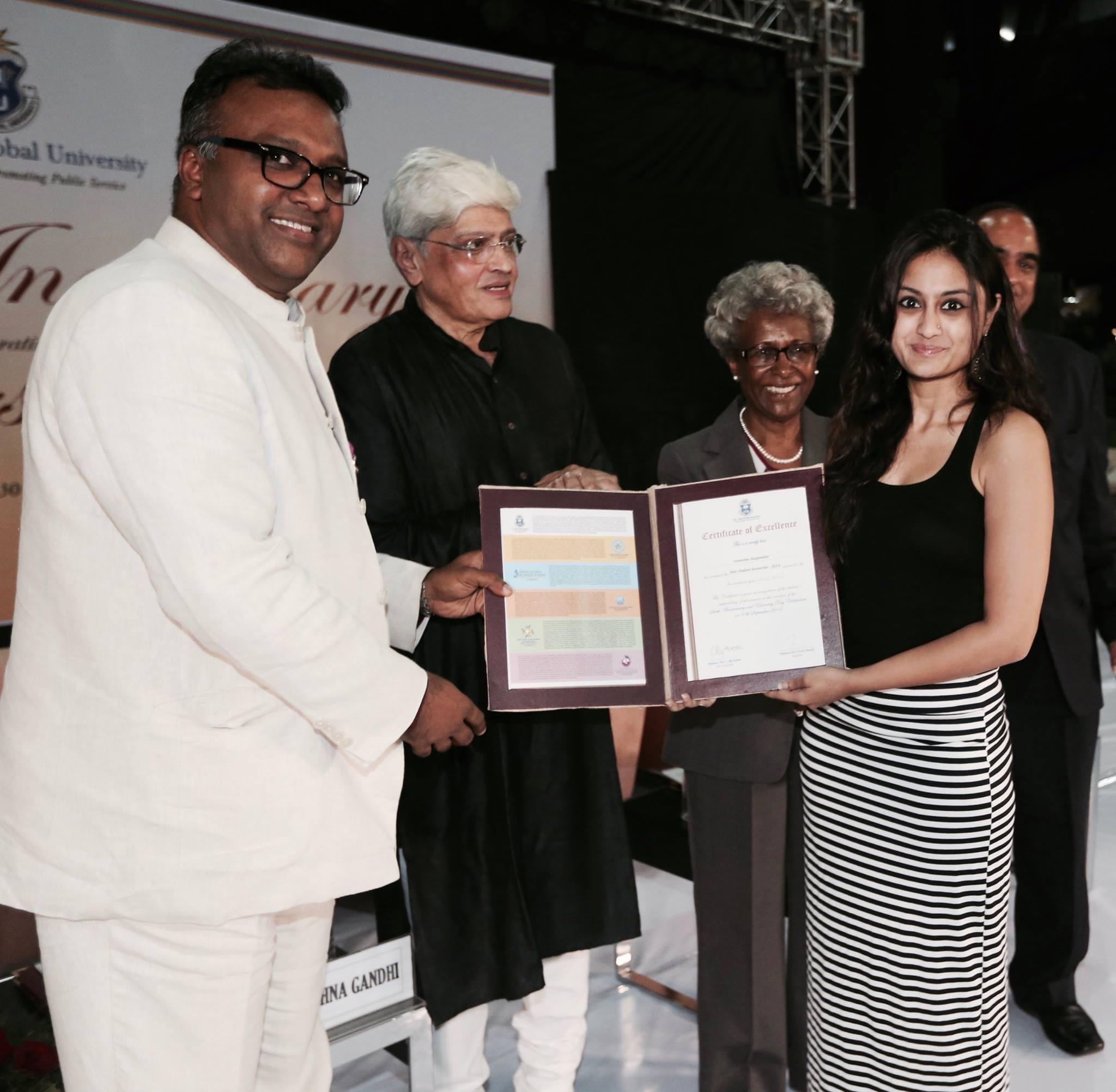
    Rahul Bajaj graduated in law from the  University of Nagpur in 2017. He has also secured the first position in the B.A. LL.B. course. He is the 2017 recipient of the prestigious Rhodes Scholarship. This scholarship is awarded only to five Indians each year to pursue their postgraduate education at the University of Oxford. He is currently working with Trilegal as an Associate.

    In this interview, Rahul talks about: –

    • His journey towards becoming a Rhodes’ Scholar;
    • Encouraging more persons with disabilities to join the legal profession and;
    • His recruitment at Trilegal


    HOW WOULD YOU LIKE TO INTRODUCE YOURSELF TO OUR READERS?

    First of all, thank you very much for giving me the opportunity to share my thoughts on your wonderful platform. I have never been one for crisp and pithy writing, but I’d say that I’m a 24-year-old lawyer from Nagpur. I enjoy reading, travelling, acting a little silly from time to time, learning about new cultures and swimming (although I barely know how to swim).


    WHAT WAS YOUR FIRST REACTION ON LEARNING THAT YOU ARE BEING AWARDED THE PRESTIGIOUS RHODES SCHOLARSHIP? DO YOU RECALL THE FIRST FEW DAYS AND THE INTERVIEW? WHAT INSPIRED YOU TO APPLY?

    You’ve packed a lot of things into that question. Let me answer your question in a chronological order, based on the order in which each of these events took place.

    I had no plans of applying for the Rhodes when the application window opened last year. In fact I didn’t even know when the application window opened until I decided to apply. While I have always viewed myself as someone who is sure-footed and confident about their abilities, I didn’t think I had any chance of getting the Rhodes. This was principally because of two reasons. First, I didn’t go to an NLU, and almost all Rhodes Scholars from the field of law, in the last two decades have been NLS or NALSAR graduates, with some notable exceptions. Second, I wasn’t sure if the selection committees were prepared to select a student with a disability, not just because of stereotypes, but also because of the very concrete limitations my disability poses and tackling them, even in Oxford, would entail time and effort. I think my inhibitions are best captured by what James J. Barnes, the first blind person to get the Rhodes says in his memoirs:

    “… I know that I can take no credit for blazing the trail, but I have always given my selection committee members, both at the regional and state levels, much appreciation for not eliminating me out of hand. Clearly they looked behind the superficial but very real limitations I possessed and judged the whole personality.”

    My friend, Dhruva Bhat, who got the Rhodes in 2016 was the first person who encouraged me to apply. I then consulted another close friend who told me that there was no one more deserving to get the Scholarship. So I figured that there was no harm in applying and, given that the Scholarship had been awarded to a student from a relatively low-ranked NLU the previous year, my chances were not unquestionably foreclosed.

    The interview panel for the final round was headed by Gopal Krishna Gandhi who went out of his way to make all interviewees feel comfortable and at ease. I had prepared very rigorously for the interviews, with many rounds of mock interviews, so I found the actual interview to be quite manageable from that standpoint.

    My first reaction was one of complete disbelief, followed by unrestrained elation, followed by the recognition that this is just one milestone on a long road.


    HOW DID YOU GO ABOUT WRITING YOUR RÉSUMÉ AND MOST IMPORTANTLY, YOUR STATEMENT OF PURPOSE FOR RHODES SCHOLARSHIP? WOULD YOU LIKE TO SHARE YOUR SOP WITH US?

    Insofar as the resume is concerned, I just modified the resume that I already had to fit their requirements; I structured it in such a way as to make good the point that I meet the four criteria that they look for. Insofar as the SoP is concerned, I thought long and hard about how I wanted it to be. Instead of sharing the text itself, I think it would be more helpful if I share the process of crafting it.

    I wanted to not only highlight my accomplishments and successes, but also make the point that they were all achieved despite being blind since birth. Some might read this and think that I was playing the ‘blindness card’, but my thinking is that someone who has achieved the things that bring you within the zone of consideration for the Rhodes despite being blind has definitely had to work a lot harder to mitigate the impact of a significant objective impairment. So I began my SoP by talking about the challenges that I faced as the first blind legal intern at the Supreme Court working for a judge, through an anecdote. Against that backdrop, I outlined my relevant accomplishments in the areas of IP and constitutional law, in which I am most deeply interested, and closed by trying to drive home the point that my accomplishments, coupled with the odds that I have had to face in achieving them, make me a great fit for the Scholarship.


    DO YOU NEED TO HAVE RECOMMENDATIONS AS WELL? WHAT KIND OF PROFILE IS NEEDED WHILE APPLYING FOR THE SCHOLARSHIP?

    Yes, you need six letters of recommendation – preferably three academic and three extracurricular. I chose my referees in such a way as to be able to make a cogent and compelling case for the proposition that I met all the four criteria that they look for – intellectual ability, ability to use your energy to the full, ability to empathise with and protect the weak and moral force of character and instincts to lead. My referees were Professor Shamnad Basheer, Swaraj Barooah, Justice UU Lalit, Professor Shirish Deshpande, one of my law professors who is himself blind, my constitutional law professor who I’ve described in response to a subsequent question, Professor Varsha Deshpande and my school principal.

    I think anybody who feels that they meet these four criteria should give it a shot, despite whatever grave flaws they might feel their profile suffers from.


    WAS THERE ANY INTERVIEW ROUND? IF YES, HOW WERE YOU PREPARED TO FACE THE PANELISTS? WHAT KIND OF QUESTIONS WERE YOU ASKED?

    Yes, there were two interviews – one technical and one final. The technical interview focuses on questions about: (a) your areas of interest in the field of law; (b) your general legal ability; and (c) your awareness of topical legal and sociological issues. As I mentioned earlier, I had done a lot of mock interviews – in fact with three of the five scholars from the previous year that were very invaluable.

    In the technical interview, I was asked such questions as a question about a piece of research that I did in my internship with Justice Shakdher of the Delhi HC; why I got involved in IDIA’s programme for students with disabilities and what structural barriers they faced; how I thought IP and human rights could be balanced, based on a paper that I had written; if I thought that studying in my home town was a compromise that I had to make; and if my disability should form part of the calculus when assessing my candidature.

    In the final round, I was asked such questions as my views on the right to be forgotten which I had written about and unenumerated rights in general; my internship for Justice UU Lalit of the Supreme Court; the one fundamental transformation in society that I’d like to see; what my future plans were; and my interest in learning languages.


    WHAT WAS THE SELECTION PROCESS LIKE? WHAT WAS THE MOST CHALLENGING PART OF THE PROCESS? HOW DID YOUR LAW SCHOOL EXPERIENCE HELP YOU IN THE PROCESS?

    The process is divided into three parts – written submissions, followed by two rounds of interview, the details of which I have sketched above. The most challenging part, for me, was making the decision that I wanted to apply.

    As for my law school experience, I got a lot of flak when I said in my interview to Bar and Bench after getting the Rhodes that my college, Dr. Ambedkar College of Law, has a lot of scope for improvement and the manner of functioning leaves a lot to be desired. While I continue to maintain that belief, I think I would be doing a huge disservice and injustice to some teachers in law school if I don’t make a mention of their contribution in shaping my thinking as a lawyer. We had an excellent constitutional law professor, who, despite the dispiriting college environment, taught constitutional law with a tremendous amount of energy and passion and unparalleled power of articulation and helped cultivate my love for the subject. We had another great professor who taught us legal language and writing and labour law and devoted significant effort into helping us appreciate the nuances of the subject matter that we were taught. We had a couple of other good professors, too.

    Notwithstanding the above, I think traditional law colleges, such as mine, are characterised by institutionalised mediocrity, as Dr. Manmohan Singh once said. For a student of law who is interested in honing their legal skills and acquiring a deeper appreciation of the law, nothing can be more demotivating and frustrating than having to return home day after day after day because the college doesn’t want to conduct classes for some or the other specious reason or the students and teachers who help perpetuate this culture aren’t taken to task. I don’t say this to demean anyone or because I have an axe to grind, but because I think that there’s no point in the platform that I have been privileged to have been given by virtue of getting this Scholarship if I can’t use it to make a contribution, howsoever insignificant, in helping foster conversation on the issues that I care deeply about and sow the seeds of change.


    WHAT ARE YOUR PLANS AFTER YOUR POST-GRADUATION? WHAT KIND OF CAREER DO YOU ENVISAGE AFTER GRADUATING FROM OXFORD?

    I’d like to litigate in the areas of constitutional law and IP law. I’d also like to pursue a career in policy formulation alongside litigation.


    WHAT FIELD OF LAW DO YOU INTEND TO PURSUE AT OXFORD AND WHY?

    Constitutional law, human rights and intellectual property. These are the areas that I have developed maximum interest in, by dint of the opportunities that I have had in my career thus far.


    DOES THE UNIVERSITY OF NAGPUR PROVIDE EQUAL OPPORTUNITIES TO PERSONS WITH DISABILITIES?

    You see, back in 2012, my family and me didn’t think that an NLU would have the wherewithal to accommodate a student with a disability. The only example of this happening was Moiz Tundawala, who had gone to NUJS and is in fact a resident of Calcutta, so he was a day scholar there. I have always attached great importance to maintaining high standards of excellence in academics. I was not sure an NLU would have an enabling environment to facilitate this. As we saw it, the choice was between being relegated to the fringes at a leading law school and thriving at a lesser known law college where I would have easier access to resources and more time to build my career in the manner in which I wanted to. Further, while it may have been possible for me to adjust, as I eventually did in the Supreme Court, the Delhi High Court, and several other places where I have interned, I was not the person then that I am now, so I didn’t really push the envelope on going to an NLU as assertively as I perhaps should have, in hindsight.

    Our concerns back then weren’t unfounded. Even today, the students with disabilities who are at the NLUS aren’t exactly welcomed with open arms. From faculty members who grudgingly accommodate disabled students at best and make them objects of pity or refuse to accommodate them at worst to registrars and staff members who adopt an adversarial approach when dealing with their needs; from peers who quietly distance themselves from you and are unable to embrace someone who is difference due to ignorance or prejudice to inaccessible infrastructure, the challenges faced by the disabled are large in number.

    That said, change is afoot in many places and we will hopefully see things improve. NLSIU recently admitted the first totally blind student in its 32-year-history and their Law and Society Committee has taken the lead on sensitising all stakeholders about the needs of the disabled.

    Insofar as my own college experience is concerned, as I studied in my hometown, I had access to all the resources I needed to study independently, which is what my legal education mostly boiled down to. My professors were also as helpful as they could be.


    WHAT IMPROVEMENTS DO YOU SUGGEST THAT THE COURTS NEED TO MAKE FOR ENCOURAGING MORE PERSONS WITH DISABILITIES TO JOIN THE LEGAL PROFESSION?

    That’s a very loaded question and probably warrants a separate interview. The challenges are many, and most notably include: (a) inaccessibility of documents, even digital documents; (b) inaccessibility of legal databases; (c) accessibility barriers on court websites; (d) absence of an institutionalised frame work to accommodate disabled lawyers; and (e) inaccessible physical infrastructure, lack of human assistance in courts and overcrowded courts in which even a sighted lawyer would struggle to find their way, let alone someone who is blind. People tell me: now you have digital access, doesn’t that solve your problems? The answer is that digitisation, if not configured with accessibility in mind, can help create and perpetuate barriers rather than breaking them down.

    I have filed an application in the Supreme Court to help effectuate some of these changes. You will hopefully hear about it soon.


    HOW DID YOUR RECRUITMENT TAKE PLACE AT TRILEGAL? IS TRILEGAL A DISABLED FRIENDLY PLACE?

    My recruitment happened by virtue of a PPO that I got after my internship at Trilegal. The answer to your second question would unequivocally be in the affirmative. I can cite several examples of the initiatives that they have taken for me: buying for me a more efficient OCR software; a computer that works better with my screen reader; and encouraging me to figure out ways of doing all the things that my able-bodied counterparts are expected to do.

    As a disabled legal professional, one obviously faces a variety of challenges, given that the working of the profession and the courts is not structured with you in mind. Despite this, Trilegal has done everything possible to accommodate me as fully as they can.


    WHAT WOULD BE YOUR ADVICE TO OUR YOUNG READERS WHO WOULD LIKE TO APPLY FOR RHODES SCHOLARSHIP IN FUTURE?

    I am not old or wise enough to give career advice to anyone. What I would like to close with is this beautiful quote from Marianne Williamson, which more eloquently and forcefully conveys my thinking:

    “Our deepest fear is not that we are inadequate. Our deepest fear is that we are powerful beyond measure. It is our light, not our darkness that most frightens us. We ask ourselves, Who am I to be brilliant, gorgeous, talented, fabulous? Actually, who are you not to be? … Your playing small does not serve the world. There is nothing enlightened about shrinking so that other people won’t feel insecure around you. We are all meant to shine, as children do… And as we let our own light shine, we unconsciously give other people permission to do the same. As we are liberated from our own fear, our presence automatically liberates others.”

    You may dismiss that as a lofty and cheesy expression of sentiment, divorced from the way the world actually works. But I think it conveys a profound message which is this: unless we are able to come to terms with the proposition that we have within us the capacity to achieve our goals and break down the barriers holding us back, how can we ever hope to convince others or translate it into reality?

    So my short message would be that, instead of focusing too much on the cards that you are dealt, try focusing on how best to play them; instead of focusing on what you cannot do, try focusing on what you can. This can hold one in good stead for pursuing any meaningful endeavour, and the Rhodes is no exception.


  • Parvathy Tharamel, Associate, Trilegal, shares her work experience and on converting her internship to PPO

    Parvathy Tharamel, Associate, Trilegal, shares her work experience and on converting her internship to PPO

    Parvathy graduated from ILS Law College Pune in 2014. She completed her Masters in Business Laws from National Law School of India. She has an enviable academic record and an excellent series of internships at law firms.  She was also nominated by the faculty of ILS Law School by consensus and was awarded the ‘Best Student Prize’ of the five year law course. Soon after graduation, she started working as a Senior Executive, Wipro, Bengaluru where she worked for close to two years. She is currently working with Trilegal, as an Associate in Labour and Employment team.

    In this interview, she talks about:

    • Work experience at Trilegal
    • Converting internships to PPO
    • Importance of extra circular activities in law student’s life
    • Significance of moots and their preparation


    HOW WOULD YOU INTRODUCE YOURSELF TO OUR READERS?

    Though this is a common (yet difficult) question, I still don’t have a rehearsed answer. Let’s just say, I’m a lawyer by profession with an infectious smile who loves to work!


    WHAT FACTORS INFLUENCED YOU TO CHOOSE LAW AS A CAREER? WHY DID YOU CHOOSE ILS LAW COLLEGE FOR PURSUING LAW?

    The result of an aptitude test was a key decisive factor in choosing law. My uncle is a successful lawyer and his work had inspired me right from the beginning. The environment at my school, St Josephs’ Anglo Indians Girls Higher Secondary School, Calicut encouraged students to look beyond the four walls of classroom and my teachers gave me the confidence to take part in debates, elocution competitions and to express my opinions. All these factors prompted me to choose law as a career option. Above all, my father intended to be a lawyer when he was young. So, when I decided to pursue law, I felt that I am fulfilling his dream in my own special way.

    I wrote CLAT and got through NUALS, Kochi and I also made it to ILS, Pune on merit, based on XIIth board marks. Until then, I’d enjoyed the privileges of being at home and a convent school in Calicut. Hence, my parents felt that the exposure in a prestigious institution in Pune would make me independent and that sealed the deal.


    PLEASE TELL US ABOUT YOUR TIME AT LAW SCHOOL. HOW WAS YOUR APPROACH TOWARDS ACADEMICS WHILE IN COLLEGE.

    ILS was a beautiful learning experience and I truly cherish my five years in Pune. It was not just about learning law and giving exams in ILS. Friends became family and I’m confident they will remain so for life. The discussions outside classrooms during intervals, running around in college, the long queues for collecting marksheets, the podium, the pavilion and the beautiful campus. I miss them all now!

    The state of the art library, the committees, events and other extra-curricular activities run by the faculty offered me tremendous opportunities. I had the chance to meet and work with great legal minds in country while working for the Corporate Law Cell and the Editorial Board. The early morning lectures with the added requirement of 75% attendance taught me punctuality and discipline. I maintained a first class throughout all five years of law school. The lecture schedules provided flexibility to pursue other areas of interest and I could be a part of a research project funded by the Commonwealth foundation and complete my Diploma in Corporate Laws at ILS. As I was pursuing a five year integrated course, I received my Bachelor’s degree from the University of Pune after third year and I was able to apply for my Master’s in Business Laws from National Law School of India University, Bangalore (NLSIU). Hence in 2014, I received my LL.B. as well as my Master’s degree.


    HOW IMPORTANT ARE EXTRA CURRICULAR ACTIVITIES TO A LAW STUDENT?

    Extra-curricular activities have proven to be beneficial for me and I believe it would help individuals to hone their skills. Let me cite some examples. As the Student Coordinator of Moots and other Advocacy Skills Activities for three years, I had the chance to organise moot court competitions, conduct mooting workshops for students. I learned something new each time when I donned the hat of a coordinator because I had to interact with a group of more than 300 students each year, who represented ILS in moots, client counselling, negotiation competitions etc., keep track of these competitions and report the progress to faculty. Being the coordinator taught me teamwork, to be a good listener, how to be organised and mange my time. It also helped me to improve my problem-solving and communication skills. There was a sense of satisfaction when I was able to find solutions to problems. Through presenting papers at seminars, I left behind my fear of addressing an audience. With each and every extra activity and going beyond the curriculum, I was learning to unlock another milestone.


    YOU HAVE REPRESENTED YOUR COLLEGE AT PRESTIGIOUS MOOT COURT COMPETITIONS. HOW DO YOU RECOMMEND ONE SHOULD PREPARE FOR THEM? DO YOU THINK MOOTING IS SIGNIFICANT FOR LAW STUDENTS?

    A while ago, I came across a meme which said that “asking someone to be your moot partner is the single most important decision you make in law school“. I couldn’t agree more and I’ve been fortunate to work with wonderful people on challenging moot problems when I was in ILS. A significant part of the preparation goes in forming the group and identifying the competition one wishes to take part in. The selection procedures may vary from one college to another. But I feel the broad steps to address any moot problem is similar. Once you have the moot problem, the key tasks are to (1) understand the facts, (2) identify the issues, (3) research on the law, (4) apply it to your case (5) draft arguments accordingly and (6) improvise them based on multiple round of practice sessions. This is tried, tested and highly recommended.

    Most of the questions in exams tend to judge the memory of the student rather than analysing their reasoning or logical skills. Mooting provides a platform to test a student’s analytical skills. It also trains a law student to prepare effective arguments and to do thorough, in-depth and exhaustive research. Moreover, it also teaches law students to work in a team. Hence, I believe mooting is important.


    HAVE YOU EVER FELT THE NLU AND NON- NLU DIVIDE? DO YOU THINK IT IS A CONSIDERATION FOR EMPLOYERS?

    No. While this may have been true for some, I think recruiters focus on whether the individual would fit in their working environment rather than their law school. At the end of the day, the work speaks for itself and the NLU or Non-NLU tag will not create a distinction at workplace.


    HOW DID YOU SECURE YOUR FIRST JOB? HOW IMPORTANT DO YOU THINK A HIGH CGPA IS FOR RECRUITERS? TELL US MORE ABOUT YOUR SELECTION PROCEDURE AT WIPRO?

    Wipro offered me a PPO based on my internship.

    Though it may not be the sole criterion, I believe that marks generally play a critical role in shortlisting candidates for interviews.

    For internship, Wipro invited applications through the ILS Placement Cell and shortlisted candidates based on their CVs. Thereafter, interns were selected based on two rounds of telephonic interviews. I was offered a PPO based on my mentor’s feedback, the presentation before the legal team and an interview with the General Counsel.


    TELL US ABOUT YOUR ROLE AND RESPONSIBILITIES AT TRILEGAL?

    I’m part of the labour and employment practice at Trilegal. The employment practice in law firms is not confined to the law regarding factories and industries as taught in law schools. Trilegal has one of the first dedicated as well as the most comprehensive employment practices in the country and I consider myself lucky for being able to work under the guidance of Mr. Atul Gupta who inspires me to find practical solutions to issues. I’ve grown as a lawyer, thanks to his brilliance and insights.

    At Trilegal, I routinely work on a variety of labour and employment issues ranging from recruitment until termination of employment. I assist in advising Indian and multi-national clients on matters regarding disciplinary proceedings, senior management exits, anti-harassment, structuring employee benefits, leave entitlements, immigration, transfer of personal data. I’m also involved in business transfers and related employee transfer scenarios. Trilegal has changed the way I look at problems and I’m grateful to the support I receive from my excellent team who makes every day worthwhile at work.


    YOU WORKED AS A SENIOR LEGAL EXECUTIVE AT WIPRO. WHAT WERE YOUR MAIN TASKS AND WHAT RESPONSIBILITY DID YOU UNDERTAKE?

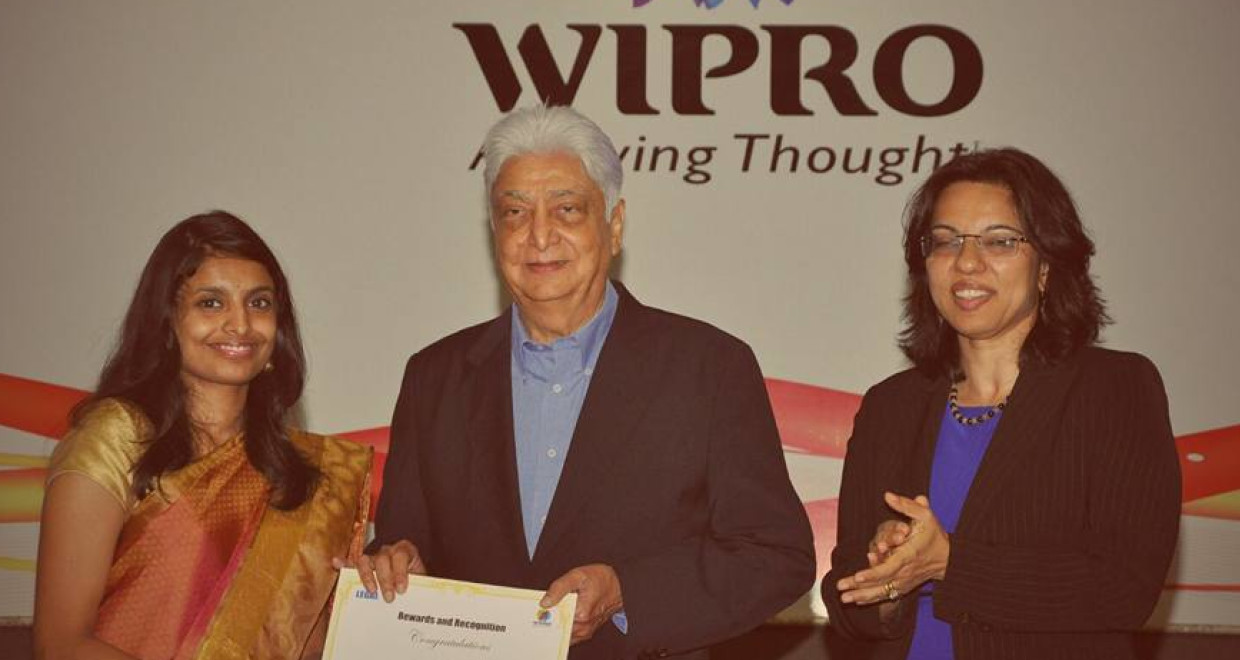
    Parvathy is a recipient of the ‘Best New Lawyer Award’ which is given annually to Wipro’s best in-house lawyer.

    Wipro is a great place to learn and I was truly blessed to have worked with wonderful mentors and colleagues who motivated me at every juncture. I was part of the Compliance team at Wipro and I was primarily advising on Global Data Protection compliance. My portfolio also included advising business, HR and contracts teams on immigration, employment, export control and other regulatory issues in Europe. With the support and encouragement of my mentors, I also had the chance to assist the Government Advocacy team to on matters regarding public policy and also work with the Ethics Compliance team to ensure compliance with anti-corruption, anti-harassment laws etc. The team dynamics influenced my performance and I had a great journey in Wipro.


    WHAT ADVICE DO YOU HAVE FOR OUR READERS, WHO ARE PRIMARILY COLLEGE STUDENTS?

    This is one of the best time in your life and it is important to enjoy what you do. The thought of internships and career prospects can be overwhelming at times. It’s quite normal and everyone goes through the same. So, don’t worry about it. Be confident and express your views and opinions. Work towards enhancing your writing skills. Try to write on a regular basis. It is essential to articulate your thoughts into words and to write with clarity. As Mathew Arnold once said, “Have something to say and say it as clearly as you can“. Channel all your energy in the direction which interests you. Nothing is impossible!


  • Devottam Sengupta, Senior Legal Counsel, Structured Trade Finance (Global), Louis Dreyfus Company (LDC), Singapore

    Devottam Sengupta, Senior Legal Counsel, Structured Trade Finance (Global), Louis Dreyfus Company (LDC), Singapore

    Devottam Sengupta graduated from NLSIU, Bangalore in 2005. He started his career at Trilegal where his work involved practice in Corporate Finance, Banking, Private Equity, etc. After working at Trilegal for almost two years he went for The European Master Programme in Law and Economics (EMLE) on the Erasmus Mundus scholarship. His EMLE degree was conferred jointly by the University of Hamburg and the University of Manchester.

    After returning from the EMLE programme he joined Amarchand Mangaldas, Delhi in 2008 and then later in 2011 he moved in-house to Cargill where he tasted Structured Trade Finance. He is now responsible as the Senior Legal Counsel at Louis Dreyfus Company (LDC), Singapore where he continues to work in Structured Trade Finance since the last three years.

    In this Interview Devottam shares his insights with Rounak Biswas of SLS, Pune on the topics raised by Reshma Ravipati of NLU, Jodhpur.


    How would you like to introduce yourself to our readers?

    I am the Global Lead Lawyer for Structured and Trade Finance at the Louis Dreyfus Company Group (LDC), based in Singapore. LDC is one of the four biggest agricultural product traders in the world, and is headquartered in Geneva. Working with the STF business, I get to work on banking and trade transactions across the globe – at the moment, I’m advising on matters in places as disparate as Uruguay, Kenya, Qatar and Vietnam!

    However as anyone who has worked in-house would tell you, – you are almost never doing only what your role was meant to be! You have to wear many hats, juggle many roles and be able to pitch in wherever needed to be a successful in-house lawyer. As such, I am also the financing counsel for the LDC Group for Asia-Pacific and a part of the global M&A team.

    But my work is only a part of my life. I’m an avid traveller, a fanatical foodie, a published translator, budding Instagrammer and a regular pub quizzer. My varied interests help contribute to my ability to view issues through multiple lenses, which in turn helps me in bringing new and fresh energy and insights to my work.


    Why did you choose to pursue a degree in law, amidst the many options that you had after school?

    Sadly I don’t have a great answer for this question. I got into law more by chance than a focus on the profession. My legal path was built by the simple fact that I cleared the NLSIU entrance, while I had assumed I would end up doing something in business administration. However, my first year at NLS really changed my perception of law – I stopped looking at it as a job but more as a vocation.

    I do not think that one becomes a lawyer by the simple fact of graduating from law school. The key advantage of the study of law is that you come away with ingrained core skills which give you a foundation to pursue any profession you choose to pursue thereafter. My wife is a lawyer by training but works with the United Nations on social policy by profession; I have close friends who are running successful businesses; there are those who have succeeded in investment banking or consulting. Your options following law school are only limited by your imagination. And this I learnt in my first year of law school, which made me want to stay on and see it through. The rest, as they say, is history.


    Give us a brief overview of your personal experience at NLSIU. Is the NLU culture truly more conducive to legal education, as compared to other universities that provide legal education?

    As with all meaningful experiences, my time at NLSIU was full of ups and downs, just as one’s student life should be. Alongside my law studies, I was deeply involved in co-curricular and extra-curricular activities. During my time at NLSIU (2000-2005), I participated in pretty much every extra-curricular activity, organised some significant academic conferences, was on the student committees, helped my classmates get jobs, and represented NLSIU at various competitions. All of these were as essential a part of my education as my classroom studies, but I wouldn’t have minded a higher CGPA! I can however definitely say that pursuing these multiple co-curricular paths helped me become a more well-rounded individual and have helped me build my career post NLS.

    I think the question on NLU culture is a little misleading in today’s world. I think very little distinguishes NLUs (as originally envisaged) from private law schools and the traditional law schools. The question therefore isn’t so much on NLU culture as it is about culture of the best law schools. The best law schools in India, whether you’re talking NLSIU, GLC Mumbai or ILS, all have a culture of learning and imparting professional skills. Besides, what is an NLU today? Amity Law School, Army Institute of Law, ILS and JGLS have the same format, without being “NLUs”, so what is the dividing line?

    By professional skills, I don’t solely mean the skills required for litigation or corporate law job, but the most basic ones required for all lawyers – research, analysis, problem solving and drafting. No matter which stream you finally end up in – academia, in-house lawyering, completely non-legal jobs, or politics – these basic skills help you succeed. Therefore, it’s more a question of whether your institution creates the right environment and delivers on imparting these skills.

    I think the advantage NLUs start out with is that being (a) residential and (b) over five years, there is more time to deliver and hone these skills, compared to a non-residential or a three-year law school. What the institution (and the students they select) does with the time is what sets apart the best ones from the also-rans. There is no point being structured as an NLU if the students don’t receive access to the best academic resources, to high quality internships, backing for co-curricular and extra-curricular activities, and the space to practice what they learn in the classroom.

    One of the key elements of NLSIU’s success, in my mind, is that the student body has practiced what the Constitution of India has preached. Freedom of speech and expression is sacrosanct, there is equality for all, principles of natural justice are followed and there is representative decision making. I think this manifestation of lessons learnt in the classroom and in other facets of campus life helps to concretise certain core beliefs in most students. This, together with the academic rigour needed to write numerous papers and provide analytical answers in most exams does help in building future lawyers, and I’m happy to see so many NLUs have successfully adopted these methods.


    What are your areas of specialisation and how did you go about choosing these fields to specialise in?

    Formally, I am a structured finance lawyer and a specialist in trade finance, though like I said at the outset, I still consider myself a generalist. Even though I have been a trade finance focused lawyer for many years now, I have concurrently worked on M&A, private equity transactions and general corporate finance, and don’t hesitate to get involved in other areas of law as and when I get the opportunity.

    I didn’t choose structured and trade finance so much as it chose me! My first job after NLSIU was with Trilegal Mumbai, which was best known at the time for its banking and finance practice. The years I spent at Trilegal were during the booming mid-2000s, and I was fortunate that I was able to work on some of the best structured finance work to have taken place in India. This experience laid the groundwork for pretty much the rest of my career, with subsequent jobs with Amarchand & Mangaldas Delhi (now Shardul Amarchand), with earlier Cargill and now LDC, all being grounded in the banking and structured finance experience I gained at my first job.


    At what stage in one’s law school life must one pick a specialisation? What words of wisdom would you offer to someone who is yet to make this choice?

    My humble advice is one should never pick a specialisation voluntarily, especially not in law school. Unless you are absolutely certain you will be miserable doing anything other than criminal law litigation or writing books on public international law, most of us have very little experience of the day-to-day realities of professional life while in law school, and certainly not enough to make career-defining choices before we’re old enough to drink in most states in India.

    I would instead recommend gaining as much experience as possible in a wide variety of fields, so that when you graduate, you are able to cope with anything life throws at you. Whether it’s a corporate role, or litigation or studying further, extra knowledge will never be a waste. Lack of knowledge on the other will always hold you back.

    The right time, to my mind, to specialise, is two to three years after graduating from law school, where you have a more realistic idea of what you want to do with your life and what you enjoy doing professionally. This is borne out by the international standards in the practice of law – US law schools are postgraduate institutions, which do not accept students straight from their undergraduate degrees; UK firms require all associates to have spent two years on a training contract, where you’re shuffled around to gain as much experience as you can, while the firm judges what you’re best suited for. Anecdotally too, I find that most of my friends have ended up specialising in fields quite different from those they had in mind when in law school.

    By all means, we should aim for certain jobs which attract us the most, and do everything that it takes to be considered for that job, including gaining as much knowledge relevant to the dream job as we can, but that shouldn’t to the exclusion of general knowledge.


    Who was your mentor, or main source of inspiration who/which motivated you all along the way?

    Throughout my career, I’ve been fortunate enough to consistently have had seniors from whom I drew inspiration. Before your readers get the wrong idea about this, I’m not saying this to be diplomatic or politically correct! I firmly do believe that I have learnt something from every senior I’ve worked with, and each of them has in some form or fashion motivated me to do better or helped me to grow as a lawyer and a person. I have even found inspiration from some of my talented and hardworking peers. I must however say that working under Mr. Shardul Shroff was a great learning experience, given the breadth of work he handles and the depth of his knowledge.

    A mentor though isn’t necessarily a person who has always been nice and helpful to you, but someone who has taught you lessons you needed to learn in order to grow, even if you do not realise it at the time. You can seek out inspirational figures, but a mentor will not merely inspire you, they will be teachers who can show you the right path.  This is not restricted merely to legal skills, but also extending to crucial soft skills of people management as well as ability to understand business concepts and come at issues from a solution-oriented lens.

    That said, there are individuals whose advice and training have been foundational and critical to my career. From my private practice career, I owe a debt of gratitude to Avinash Umapathy (now at CAM) and Nishant Parikh (Trilegal) for their patience and guidance, which certainly did help shape my career in unexpected ways. And from my in-house life, Aditya Bhagat (India legal head at Cargill) and the current APAC GC for LDC- Massimiliano Talli have taught me about what it takes to be a successful in-house lawyer and become a successful team leader.

    Last but not the least, my understanding of the structured trade finance business would be incomplete without the guidance of Gopul Shah, who used to head the business for Cargill in India.


    You had previously worked with Amarchand & Mangaldas, Delhi and Trilegal, Mumbai. What does it take to make the cut and land a Tier-I job?

    What does it take to make the cut?

    You should be able to demonstrate to the recruiter an ability to work hard, to deliver solutions and an interest in the job beyond the paycheck. Whether this is through selection of elective courses, moot court excellence, articles in journals, organising academic conferences, or something else altogether, there really isn’t a “correct” answer, but it has to be apparent from your CV. It is not sufficient to be considered the smartest person alive by your classmates – what you are able to put down on paper is what helps you get to your dream job.

    At the same time, it is not enough to say you are interested in a particular job if you haven’t done the basic research on it and have no idea what it takes to do well in that field. For example, when applying for a corporate law role, the one article you might have written on corporate law on the developing law of insolvency or that internship with a small corporate law firm in your second year might be more valuable than winning a medical law moot or a dozen debating tournaments. While moot court wins and debating experience does undoubtedly have value, the corporate law angle would demonstrate that you know your audience just that little bit better.

    What law firms look for?

    A disclaimer here – what law firms look for when they’re hiring varies significantly between Indian firms and foreign firms, especially when the economy is booming. In times of rapid growth, the only thing a firm might look for is a heartbeat. That’s a joke, but only just – firms often hire large numbers during good times, secure in the knowledge that they will naturally shed underperformers when times are bad.

    But to be more specific, what gets someone hired in a top tier law firm are certain skills needed to succeed in a corporate law firm role, and which is what most partners look for in prospective associates.

    Primarily, these skills would be

    1. ability to get things done,
    2. ability to multitask and cope with pressure; and
    3. of course a high standard of core legal skills (research, analysis, problem solving and drafting).

    Of these, I think the third one is pretty self-explanatory, so I will focus on the first two parameters.

    When I would interview associates, I would rate a person with decent grades but a broader set of skills over someone who might be ranked first in class but have nothing else at all on their resume. A successful corporate lawyer has to be able to do many things at once –juggling 5 transactions at the same time, developing client relationships, working to grow their practice, thinking proactively of their clients’ future needs, chasing up on bills – no corporate lawyer I know succeeds without being able to multitask.

    Being able to multitask brings with it the ability to cope with competing demands and pressure. You will never have enough time to do everything that is required of you in a law firm. And I don’t mean in your early associate days, but through your entire career as a corporate lawyer. The demands and pressures change, but if you’re not multitasking and trying to cope with time constraints, then your growth as a corporate lawyer may stall.

    And a corollary to the demands on your time is the ability to get things done. This is not the euphemism common in government offices, but refers to being able to find ways to deliver on what you’ve been asked to do. Whether it’s by doing simple things like being enough of a team player for others to help you out when you are overloaded, or your ability to prioritise, or being able to quickly find the right answers, the ability to deliver on promises and expectations goes a very long way in ensuring professional success.

    Lastly, it might be useful to do some research as to which teams the firms hiring for, even if it is for more senior roles. Some teams need more people urgently than others, and it’s always best to spend a little bit of time trying to figure out how you can demonstrate your value for existing vacancies than be lumped in for general roles.


    What is the level importance given to a student’s Grade Point Average with respect to recruitments at Tier-I firms?

    It’s an important consideration as a cut-off. Like I mentioned earlier, law firms try to gauge a candidate’s skills in making a hiring decision, but GPA standalone provides limited insight on quality. What it does provide though is a useful benchmark for determining which students are likeliest to have the necessary skills and qualities.

    I personally had an average GPA, so I wish this wasn’t true, but the fact of the matter is that law firms, especially Tier 1 law firms, have to use GPA a screening mechanism. Each firm receives hundreds of applications for internships and entry level associate roles, and there are a limited set of objective criteria for predicting which applicants might be good enough for the firm – reputation of institution, GPA and past work/ internship experience.

    And more often than not, you’ll be competing with people from the same law school and with similar work experience. GPA is therefore bound to be a major differentiator at the outset. However, once that first hurdle is cleared, then it comes down to subjective criteria, where the lower GPA candidate might actually be a better fit than the higher GPA candidate.


    How do you say interns should go about their work at a firm like Trilegal, so as to get noticed in a positive way in the limited time they have?

    Be excited, willing to learn, open minded and proactive. If you’re morose about being at the firm, whatever be the reason, it will show and come across to the associates and partners as disinterest. No associate is going to stick their neck out for an intern who does not seem to be excited at the prospect of being at the firm.

    Another quality the lawyers at the firm will pick up on is your willingness to learn. Assume you’re pulled into something you’ve never looked at before, or even heard of – very few law students would have ever come across Food Safety Standards or Air Information Circulars. It’s how you react to such a challenge which will be noticed. Did you come in with a closed mind or a willingness to learn and take on the challenge? Did you give up immediately or did you work past the difficulties in finding an answer? Did you go back empty handed or did you ensure you had some leads, if not an answer? More often than not, the partner or associate asking you the question already knows the answer, but wants to check your response.

    Open-mindedness is pretty crucial when interning with any law firm. So you didn’t get the office or the team you really really wanted…so what? You’re still at the firm right? The aim is to get the job offer, so it’s better to be a star intern in the IP team than to be the person who moped about because s/he wasn’t in the Capital Markets pool. Once you get the job, you can always seek an internal transfer after you’ve established your worth. One of the best juniors I’ve had in private practice was originally hired for Amarchand’s tax team, but is now an M&A partner at SAM.

    Lastly, proactively seeking out work will take you a long way. Just because you’re not being given work is no reason for you to skip out early or take a day off for a Netflix marathon. As an intern, you should actively go up to associates, if not partners, and ask for work. If you see your seniors struggling on a project, go and offer to help. If your fellow intern is struggling, lend a hand. You may not learn anything or even be given work, but the fact that you asked will be remembered.

    One bonus tip – always assume you’re auditioning for the job during every interaction at the firm, whether in office or outside. That means always put forward yourself as a candidate, whether that is when you are having coffee with your senior from law school, at the office party, or if you’re stuck in the elevator with the managing partner.


    What was the reason for your transition from firm practice to being an in-house legal counsel for corporate houses? What is difference (if any) in the work culture at the two places?

    I moved from private practice to in-house legal as I wanted to move from a service provider role to a business side role and more specifically participate in the practical running of a business. I acknowledge that some lawyers are so trusted by their clients that they become business advisers, but this more an exception than the norm. Especially in India, but also true generally globally, private practice lawyers have little to no say on business decisions. In my mind I had always wanted to get closer to the business side of things. To this end, even my LL.M wasn’t a traditional legal degree, but a Masters in Law and Economics.

    This is not to generalise and say that in-house lawyers are all heavily involved on the commercial side, but if you choose your employer wisely, build your business skills and demonstrate your acumen, business teams will get you involved on commercial decision-making. I have been fortunate that both in Cargill and in LDC, I’ve worked with business teams who have valued my skills and judgement enough to make me a part of the business decision-making, rather than look at me only as a legal expert or worse as a legal roadblock.

    But I do not want to generalise and compare private practice and in-house roles. There are already too many negative stereotypes and myths about in-house roles, and it will not be helpful to make sweeping statements. Every private practice role comes with its unique challenges, as does every in-house role. So I think it would be better served for me to try and dispel some notions about in-house life.

    One of the silliest and most baseless assumptions I hear about in-house counsels is that lawyers go in-house when they want an easy life. This certainly is not true in today’s cost conscious business world. No company will tolerate the cost of an in-house lawyer who is not working at least as hard as the business team; nor will they tolerate an in-house lawyer who incurs additional costs on external counsel. If anything, in recent years, in-house legal teams have expanded greatly in pretty much every company across the board, which is a testament to how cost effective in-house advice is in comparison to external advice.

    Given the increasing role of in-house legal teams, a natural corollary is increased pressure to deliver. While private practice lawyers live or die by short deadlines, in-house lawyers face a different type of pressure – you MUST find the right answer for your company, because you will be held accountable for it. You cannot go back with a bad answer, because if things go sour, the external counsel is not the one being held accountable. Whether it’s in finding a solution to a seemingly impossible problem, or finding hidden risks in that otherwise sure deal, external counsels are at best trusted advisers, but not the decision makers. In-house lawyers on the other hand are on the hook for every decision taken by them. Remember – no business means no need for your job. So you better get it right!


    Which would you recommend for a fresh graduate who’s looking to start off his/her career?

    There isn’t a right answer to this. For fresh graduates, it might be better to join the in-house team of some companies than to join some law firms, where the former could be a role better suited for the person’s career goals. Many friends have started out in in-house roles and are now highly rated partners in law firms. On the flip side, some friends had joined law firms and had very quickly become disillusioned and left the practice of law altogether. It depends very much on the law firm or the company in question. My recommendation to any fresh graduate is to do their research on the job before saying yes or no. Is the law firm known for promoting their younger talent? Do they work on areas that interest you? Do they have a high attrition rate? Do they have a reputation as a good employer? If the answer to these is no, then you might be better off going to a company.

    At the same time, there are some critical questions which one should reflect on when considering an in-house role:

    What kind of work would be expected of you as a junior lawyer?

    If the answer is primarily corporate secretarial and filings, run away at top speed. Conversely, if you’re expected to review contracts and provide memos, you might actually end up with more responsibilities than your roommate who joined a law firm.

    How big is the in-house legal team and which business teams will be your internal clients?

    Small in-house teams are not necessarily bad, especially if you have a large number of internal clients. But size usually correlates to greater amounts of work for the legal team, which could give you as much exposure as your law firm friend.

    At what stage in transactions is the legal team brought in?

    The earlier the better for you personally, and more generally, would be demonstrative of higher responsibility.

    Who are the internal stakeholders or clients for the role?

    If your clients are primarily business teams or Treasury, your role will give you greater transactional approach, than if you’re primarily dealing with other support teams.


    Give us a brief overview of your current work profile with Louis Dreyfus Company (LDC) Group. What does a regular working day look like for you?

    As the Global Lead lawyer for structured finance at LDC, I am the primary point of contact for the financial services business of the company, and responsible to the business for review of all transaction structures and documents. At the same time, I am responsible to the senior management of the company for controlling risks taken by the business team and for ensuring compliance with company policies and laws generally.

    What this means on a day to day basis is that I have to work with my colleagues on the business side to ensure that we proceed with transactions with counterparties in a manner which is in compliance with the law and safeguards the company’s interests while minimising risks. To do this, I review transactions while they are still being planned, review the transaction documents, work with external counsel to ensure we are accounting for all regulatory requirements, participate in negotiating documents with counterparties, and lastly, work on addressing any concerns raised by other stakeholders and the senior management of the company.

    Given the broad geographical scope of my work, I am often working simultaneously on transactions from places as dissimilar as Colombia, Nigeria and China! Which also means that I could find my mailbox bombarded overnight by my colleagues in South America, try and resolve crises during the day for the China team, and in the evening, get onto calls with colleagues in Africa to negotiate with a counterparty there! Thankfully I have a great set of colleagues on the business side, and great support from juniors in the legal team.


    How important is it to have a foreign qualification in working overseas as an in-house lawyer? Can someone with only an Indian qualification be considered for international roles?

    It is not a prerequisite but it definitely helps to be dual qualified. We are fortunate that India has a common law system, which allows us to easily understand and work on transactions under English or other common law systems. But the Indian legal system is still not as commonly used in international trade as those from England, New York, Singapore or even China. It is possible to be considered for international roles within companies in certain very globalised segments – IP related roles and banking come to mind –  but without a second qualification, you’ll have a tougher time demonstrating your knowledge and ability.

    The good thing is the English law qualification is open to Indians without much hassle, under the Qualified Lawyers Transfer Scheme. It is not cheap, but given the relative cost of an LLM, I think investing in English law qualification is a better bet, especially if it’s one or the other. Even if you never end up working abroad, it shows your international credentials to companies and your interest to international law firms. Also, it might give you an edge when it comes to some very highly sought after in-house positions.


    Is there any other suggestion you would like to make to our budding lawyers?

    Keep learning and investing in your personal growth. It doesn’t matter if you work in litigation, private practice, in-house or in academia, if you stop learning, you will cease to be relevant as a lawyer.

    Also, underestimate the importance of networking in the legal profession at your own peril. It is easy to make fun of people who seem to be endlessly attending conferences, or those posting on professional networks or writing for magazines, but remember that your dream employer could be at that conference or reading your post or article and ultimately can will help build your profile to show why you are the ideal candidate for your dream job.

  • Abhijeet Shinde, Senior Associate, Trilegal, on litigation, the importance of an LLM, and his experience

    Abhijeet Shinde, Senior Associate, Trilegal, on litigation, the importance of an LLM, and his experience

    Abhijeet graduated from Government Law College, Mumbai, in 2008. He then went on to pursue his Masters from the University of Mumbai, batch of 2010. After successful stints with Haresh Jagtiani and Associates(Oasis Advisory and Counsel), Dua Associates, and Bharucha and Partners, he is currently Senior Associate at Trilegal.

    In this interview we speak to him about:

    • Pursuing an LLM
    • His litigation experience
    • His current role at Trilegal

    How would you introduce yourself to our readers?

    A first-generation lawyer, with no prior connection with law or the legal fraternity;  other than a twelve-year long legal battle fought by my family. Some top tier law firm stints and hard work is what has made me what I am today. I am proud of what I have achieved in this short career of about a decade. I am thankful to all my seniors, friends and colleagues in playing an important part in making me.


    What motivated you to pursue a career in law?

    Well I became a lawyer by mistake rather than by my own choice. I was eagerly pursuing to get into IIT’s as is a case with the current generation. Unfortunately (or may be fortunately), I had to abandon the IIT dream due to some compelling personal reasons. However, Mr. Mayur Vora (Managing Director of Mapro Foods Pvt. Ltd., Mahableshwar) had different plans for me. It would be fair to say, had it not been for his faith in my abilities, I wouldn’t have been a lawyer today.    


    Can you tell us about your internship experiences?

    Internship during our college time weren’t as important or sought after as they are nowadays. I did two internships, one with a small firm, and another with a practising lawyer in Bombay High Court. What I understood during these stints was that the legal profession was difficult to pursue and it was even more difficult for first generation lawyers.


    Have you ever felt the NLU and non- NLU divide? Do you think it is a consideration for employers?

    When we got out of college, the divide wasn’t as prevalent as it is today. However, even at that time, the Government Law College (GLC)/Non-GLC divide was quite apparent. People were more inclined to accept a fresher from GLC with lesser grades than from any other college. This, I think, was because most of the well known legal professionals, at that time, were alumni of GLC and were biased towards GLC students. Similarly, the NLU, non-NLU divide is quite palpable today. With the expansion of the legal profession, the desire for proficient resources has grown tremendously. Firms are ready to pay better retainerships than salaries offered to IIT freshers, to get good talent from the college itself. NLUs have provided the infrastructure required for imparting correct form of professional education so that young professionals are ready for the kind of work and culture the firms are desirous of having. It is a great opportunity for the law students from law schools to capitalize on. Though I’m personally not in favour of making this divide black and white, I do, however, appreciate the law schools’ efforts in preparing students for the kind of work they are expected to do.  


    What are your areas of interest? 

    I was always interested in Disputes. I have worked in the disputes teams of Oasis Advisory and Counsel, Dua Associates, Bharucha and Partners, and Trilegal – over a period of nine years. Unlike corporate practice, disputes throw up challenges everyday. The uncertainties and the challenges involved in resolving the disputes matters make this practice quite interesting. Over the years, I have been associated with some great personalities, high stake and interesting disputes cases. My love for my work provided me the additional push required for succeeding in disputes practice, especially, when you are a first-generation lawyer.

    I always advise interns who work with me, to do internships in both areas of practice, so that if they are able to understand and relate to their interests they will be in a better position to make an informed career choice. Difficulty is that, the short internship stints that the students undertake, are incapable of providing them enough insight into the nature of work so as to assist them in making a choice. I personally find it interesting when I meet students who are very clear as to the practice area they want to pursue after passing out of the college. I admire them. The more the students push themselves during internships, the better for them to understand the nuances of the legal field and different practice areas.

    This being an important choice, should be made before they join anywhere, since the firms have a tendency of putting resources in the basket to suit their needs and the students have no choice but to go with the flow even if that means they do something that they do not enjoy doing. Few of my junior colleagues have realised, frankly speaking – quite late in the day, after three or four years of being in corporate practice, that they like doing disputes matters and have requested me to guide them. At this stage it is difficult and quite painful to advise them to let go of their entire experience and start all over again, and with that, also take a hit on the remuneration. Few of them have been brave enough to take decisions to switch their practice areas and have done well even after that. To obviate these circumstances, I would advise students that they will do well to make their career choices at the earliest possible time.    


    What was the motivation behind opting for an LLM? 

    I always wanted to do an LLM. Specialization in Business Laws from Mumbai University was quite sought after at that time. It had evening classes for the course. I had joined Mr. Jagtinai’s chambers immediately after my LLB. It is difficult, if not impossible to do your LLM while you are working. If not for Mr. Haresh Jagtiani, who allowed me to purse my LL.M, it would have been impossible to undertake studying LL.M. It was done quite sincerely, completing the thesis and dissertation as is required, and topped in one of the subjects.

    Higher studies do add value to one’s career and students who have the opportunity do it, should do it, preferably from a recognised university. I have seen students travelling for higher studies to countries which are not known for imparting legal education; these, according to me, should be avoided. The purpose of pursuing higher education should be to add value to one’s career. Another reason it could be pursued, is to get accustomed to foreign law firm culture and get professional experience. This may be quite valuable in days to come.    


    In your opinion, what is the ideal time to pursue an LL.M?

    As I said, the aim of an LL.M should be to add value to your existing knowledge, or give you the extra dimension that was not provided in college. This could either be immediately after LL.B or even after getting some experience in the field that the student desires. The latter gives an option of specializing in a specific area of law.   


    How did you secure your first job? How important do you think a high CGPA is for recruiters?

    It was fairly easy to secure a job with Mr. Jagtaini because of his philosophy and personal views. I completely agree with them. According to him no resource in legal fraternity can be fairly assessed on the basis of his academic performance or in fifteen minutes of the interview. You will have to give a resource a chance of working for some time for anyone to realise his true potential. Specifically, because of this I do not agree on Firm/Corporates looking for students from National Law Colleges only. I have come across great knowlegable resources even from not very well- known colleges. According to me, the college or CGPA should be the last criteria for assessing a resource.  


    Please tell us about the hurdles you faced in the initial years when you were litigating?

    As the saying goes – a law professional is like wine, the older it is the wiser it gets. I was fortunate enough to get associated with Mr. Jagtiani for almost half a decade during which time I was able to hone my legal skills including drafting, application of law and argumentative skills. He at that time had some great senior people working with him. I was able to work closely with them and sharpen my legal skills. I credit my time at Mr. Jagtiani’s chamber to have prepared me for the legal career that I have today. My advice to junior lawyers would be to choose a good boss rather than well paying job. In the long run, this will tremendously add value to one’s career.  


    You have worked on and argued some landmark cases. How do you go about framing and drafting your arguments?

    Law is very dynamic. It keeps on changing and updating every now and then. Government changes and so do the Judges who interpret law. Many a time law is what the judge perceives it to be. All these factors make law very dynamic. A litigator has to be well informed, updated and should be able to convey his point with clarity and in the best possible way. Some of these qualities are inbuilt and some are required to be worked on and are developed overtime.

    One of my seniors, I remember, advised me that drafts should convey a clear message using minimum words. It is a wrong practice that is followed in drafting pleadings today when grounds over grounds and points over points are repeated. Drafts and arguments have to be concise, clear, and easily understandable by the audience it is meant for. Over the years I have worked on building these skill sets. It is always a work in progress. Fortunately, I was able to execute some high profile, high stake dispute matters successfully for our clients.

    What would be your advice to our readers who want to pursue international commercial arbitration?

    (In his time as a Senior Associate at Bharucha and Partners, Abhijeet has worked on a number of arbitration matters.)

    Arbitration is a specialized field. It is bound to grow bigger. Also, in terms of government’s motto of “ease of doing business”, further impetus to making arbitration compulsory as a mode of resolution of disputes is anticipated. Historically, there was a vast difference between ad hoc arbitrations and international institutional arbitrations in respect of timelines and the way they used to be conducted. Amendments to the Arbitration and Conciliation Act, 1996, were necessitated to reconcile the disparity and ambiguity with the rules of international institutional arbitrations and revamp the system in order to compete with these institutions, which due to their structured procedure and administrative support, provided distinct advantages, which were unavailable to parties opting for ad hoc arbitration. In a legal set up such as India’s, with huge population and enormous number of disputes, burdening of the Court system is bound to happen. Arbitration provides that leeway to this system firstly by reducing burden from the Courts and then providing a well structured and timely resolution of disputes with minimal interference from the Courts. To this end, good arbitration lawyers capable of effectively handling ad hoc arbitrations as well as international arbitration is the need of the hour. There is dearth of lawyers who can handle international arbitrations effectively. To my mind, it is a great opportunity to young lawyers to specialize in this area of law.  


    How did you secure a position at Trilegal? 

    My work was quite well known in the litigation circle. Trilegal was looking at someone senior to handle their litigation and mentor a team in Mumbai,  which at that time did not have a Partner. Since the role was to lead and mentor a team, I accepted to join them.

    Trilegal is great place to work and has a culture much different than the other places that I worked with. It is resource friendly. It has some high-profile dispute matters. These include advising and representing clients in different forums and on different aspect of law. Trilegal has a established practice in Delhi. It will take some time for Trilegal to have a robust disputes practice in Mumbai.   


    What challenges have you faced in building up your career as it stands today?

    Frankly speaking, when I look back, it does appear that I have come a long way. This is despite existence of all the issues which I have discussed earlier, particularly in respect of the legal field and personally. It is not easy to have a career in disputes if you are not passionate about law and hardworking. One thing is very clear is – hard work will never let you down and someday it will be rewarded.  

    How do you maintain a work- life balance, given the demanding nature of your job?

    This is a very important question to consider for everyone including my colleagues in the legal field. The professionals are caged due to the hourly billing and time sheet culture. I am not saying that the hourly billing and timesheet culture is bad, what I am saying is that the professionals are busy pleasing bosses or competing for good bonuses by putting in more time. I have done it and I don’t expect this to stop anytime soon. I am fortunate to have a wife who is a lawyer herself, and understands the demanding nature of my work. Otherwise, it would have been a task to balance the two.

    My advice to everyone will be to try and balance it in some way – either by taking up a sport (part time) or build on a hobby or do something unconnected with the profession. It releases pressure and helps increase productivity. It has worked for me, I am sure it will for others.  


    What advice do you have for our readers, who are primarily college students?

    Firstly, as far as choosing a career is concerned, I think it’s important that students decide, or at least converge on the practice area they would want to pursue at the earliest possible time. There’s competition everywhere, even getting into college, and after that, to get a good job. You will do good if you decide which places, if not bosses they would want to work with and try and work towards that. People landing in wrong jobs face many difficulties than the ones who start a little slower but have done so thoughtfully. Life also becomes easier if you do what you have chosen or like. A great law career awaits everyone and I wish students a successful one. I would be available should any of the readers want to contact me for career advise or otherwise.   


  • Sudipta Routh, Partner, SAMVAD: Partners, on Mergers and Acquisitions, Banking and Finance, and Debt Capital Markets

    Sudipta Routh, Partner, SAMVAD: Partners, on Mergers and Acquisitions, Banking and Finance, and Debt Capital Markets

    Sudipta Routh graduated in law from NLS, Bangalore, in 1996. After successful stints at ICI India (now part of AkzoNobel NV) and Trilegal, he went on to pursue his Masters at Queen Mary, Univ. of London, batch of 2006. Since then, he has worked with Clifford Chance, Luthra and Luthra Law Offices, and founded Agram Legal Consultants. He is currently Partner at SAMVAD: Partners, where his role entails Mergers & Amalgamations, Foreign Investments & Joint Ventures, Cross-Border Banking and Finance, Trade Finance, Debt Capital Markets (Domestic and International), Corporate Advisory.

    In this interview we speak to him about:

    • His internships
    • His extensive experience at Tier-I firms
    • His current role at SAMVAD: Partners

    What motivated you to pursue a career in the legal field?

    As a science student I did the usual things science students did back then, many entrance exams. It helped that my CET scores were mostly non-reportable. I was surprised when I came in thirteenth in the NLS entrance test (no CLAT back then). My grandfather was a lawyer, but during colonial times. He passed away when I was quite young. My dad used to be in the army and a metallurgist.  He neither inspired me to take up law, nor was he inspired when I did. Very few (except the NLS faculty perhaps) had any inkling of the influence NLS would go on to have on legal education and the preeminent stature of the institution today.


    Can you share some memorable experiences from you time at NLSIU?

    Too hard to choose any one. Mr. Soli Sorabjee’s speeches, Chief Justice E. S. Venkataramiah classes (he taught Constitutional Law 1 and 2 immediately after retiring from the Supreme Court), Mr. Ram Jethmalani’s classes (he took a sabbatical to teach us Criminal Law for a month or more), Chief Justice Ahmadi (gave me my degree certificate), stirring speech by APJ Abdul Kalam at that time he was SA to RM. We had no idea we were interacting with the greatest president India would ever have. He signed a photograph for me, squatting on the floor, building a rocket – I keep this really carefully.  We were fortunate to have a lot of greatness rubbing off on us. Many of us were blissfully unaware though.  Sometimes, in hindsight, it was a little surreal too. Dr. Manmohan Singh (Chairman of UGC back then) had come by to inaugurate a hostel block. Two of my best buddies considered it their national duty to entertain him then and there. Of all things, they sang “Comfortably Numb” (quite badly, but it could’ve been the sound system). I can’t say Dr. Singh was comfortable (he clapped feebly), he certainly looked numb. He went on to become Finance Minister next month, the magic of 1991 happened, then prime minister, the rest is again history – you make what you will of that, but if I hope those two rock stars are not reading this!

    Amidst all this, there are those in the faculty who have dedicated more than a quarter century of their most productive years, who are still there now, and who still know each of us by our names and misdeeds. I am still living off that.


    Did you pursue activities such as moots, debates and internships in law school?

    The mooting standards were spectacular. Even before the first batch had graduated, NLS teams had already won international competitions. I mooted, but was thoroughly overawed. I focused on paths of lesser resistance, debates, quizzes, and other literary events. By my second year, NLS was dominating the “culfest” scene.  I was born for sports and athletics. M.P. Ganesh, India hockey legend, then director of Sports Authority of India (which is close to NLS campus), gave us full access to world class facilities. That was heaven.

    My internships were in the High Court (Bangalore), chambers of a senior counsel, a PSU bank, an NGO, law firms in Bangalore and Mumbai, and two multinational companies in Chennai and Pondicherry. These internships were invaluable. They gave me a job, and the chance of coping with life experiences (in Mumbai, I would always run out of cash in the very first week, from Pondicherry I could send money home if I wanted, which I didn’t eventually. By the end of the fourth year, I had a career plan (and several Plan Bs). By the end of the fifth year, I had three offers on campus (not without anxious moments). The internships had however already prepped me for whatever was to come.


    Would you say law school prepared you for the real world practice of law?

    The programme was superbly designed, even for the most indifferent student. The internship program was only one aspect. Other than the tough curriculum (two tests plus a project and a viva for each of the 60 subjects – none of which you could score below 50), we had a retinue of occasional / vocational teachers from every walk of life, academicians, industry captains, scientists, politicians, ministers, activists, sportsmen even, who taught us a life-lesson or two every now and then. NLS was conceived by brilliant educationalists, it also had the backing of the entire Judiciary, the Bar Council of India, the Karnataka Bar Council, the Bangalore University and the Government of Karnataka. The Chief Justice of India was the Chancellor. The Chairman, BCI, was the Chairman of the GC. I guess the odds were heavily against the “real world” when we stepped out.


    What are your areas of interest? How did you discover such fields and cultivate your knowledge of them?

    Intense focus in any one subject I owe to Professor Pillai (he continues to teach at NLS even today). His question papers were legendary. They were excruciating but hugely satisfying (i.e. if you passed) – at least eight to nine pages long and labyrinthine. They were invariably open book (the more you carried in, the worse your chances). He would set information dense scenarios (deviously misleading) which would require extremely quick analyses and a sort of synthetic application of competing principles. It was possible to come to diametrically opposite conclusions and be assured that both solutions were equally right. He provoked thought and demanded only the ability to solve problems – not swotting his notes or reeling off citations. So Corporate Laws and M&A was where it all began for me. I guess Prof. Pillai was really trying to inculcate method and application. He left the “imparting knowledge” part to you. Much later I would tackle a Masters, banking and finance, debt capital markets and restructuring, using only his approach.


    As an expert in Mergers and Acquisitions, Banking and Finance, and Debt capital markets, can you tell our readers a little about the subjects and the nature of work they demands?

    Maybe they all require different mind-sets. M&A perhaps requires a certain “structuring” knack based on comfortable ability with the corporate laws, exchange control, tax and some sector specific laws. Banking & Finance, less of “structuring” but far greater technical ability distilled from in-depth knowledge of market practices. Debt Capital Markets (especially the cross-border variety), a deeper regulatory awareness and conversational fluency with international market practices. Perhaps the common thread is really an ability to solve problems rapidly and deal with complexities even faster. Sometimes the spin-offs can be startling. When you are able to use a run-of-the-mill old hat technique in one practice area, add some bells and whistles, and push it out as as a “brilliant innovation” in another. This cross-pollination will make you stand out – you mustn’t give the game away then, pretend it’s an original brainwave, you are naturally quick witted like that, and in an everyday matter of fact way. Accept the applause graciously.


    What was your first job out of law school and how did you secure it? 

    ICI India Limited (now Akzo-Nobel).  ICI was looking for an entry level M&A and corporate lawyer. I had gone through two rounds without breaking a sweat (I had just interned with an MNC). My final interview was with my to-be “super-boss”, sharp eyed and intimidating. He immediately picked up on the word “treaties” in an obscure paper I had unfortunately mentioned in my CV – “Economic Analysis of Indian Double Taxation Treaties” (My wife-to-be, NLS senior batch, had made a “serious contribution”. I had speed read the Indo-Mauritian DTA though, some months ago).  He asked me how many “treaties I had to analyse to write this “seminal, heavy duty paper”. I distinctly felt the rug slip. I blurted “all” (mostly by reflex) and looked surprised that he should even ask? That was it. He stopped his interrogation immediately. I saw a paternal smile which clearly said “You are hired!” Much later, I fessed up to him and my boss – I could hear the boss man laugh long and hard.


    What was your work profile at ICI Group? 

    ICI had just launched a take-over bid on Asian Paints. This was apparently the first bid under India’s first “takeover code”, freshly minted in 1994. I had two wonderful mentors – two bosses, one in Calcutta the other at Delhi. They gave me a free hand (but would always keep an eye, I didn’t know then). I ended up fronting 3 M&A deals all by myself (or so I thought back then) by my 3rd and 4th year at ICI. I left suddenly, on a whim, to join Trilegal – but ICI immediately followed as a client.


    How did you secure an appointment with Trilegal?

    The name would come a tad later. The founding partners were actually founders of three firms which they had started-up independently (at around the same time) in different cities. Sridhar and Karan (seniors at NLS) in Mumbai, Akshay and Anand in Delhi, Rahul and Prem (again, seniors at NLS) in Bangalore.  What I remember hazily is sometime in the winter of 2000 these gentlemen were in Delhi (possibly discussing Trilegal?). I was with ICI based at Delhi then and Sridhar caught up and asked if I would join Singh and Gorthi at Mumbai. I immediately did. Trilegal was christened very soon thereafter.

    I was an M&A partner. ICI had followed as a client, for an acquisition from Hindustan Levers (HLL). Then HLL hired us soon after for one other – they were across the table on that first deal. My two mentors at ICI (one of them had already moved on to a famous technology MNC as GC and the other would, a little later, as GC to a bellwether IT giant) stood by and referred a couple of acquisitions. I had not planned on leaving Trilegal. I went to London to complete my masters in Banking & Finance, to come back with perhaps an extra arrow or three in my quiver (or at least that was the plan). The LLM without the work experience would not nearly count as such. So therefore Clifford Chance –that stint continued longer than either I or Trilegal had planned.


    What motivated you to finish your masters? 

    This was planned for long time. I planned on doing my masters back in my fifth year. We were allowed a choice of either M&A or Banking & Finance for our 5th year clinicals. You couldn’t choose both for some reason. I, of course, opted for M&A with Prof. Pillai. So Banking & Finance was definitely on the cards for later.  Banking & Finance is also hugely driven by market practice, so this had to be a “practical” and working programme with an assured return on my investment (never bright enough for a scholarship). I picked a very specific programme (designed by Prof. Walker) at Queen Mary, CCLS after many months of painstaking research. As with the programme at NLS, this programme featured several partners from Magic Circle City firms – A&O, Linklaters, Clifford Chance, Freshfields, Chadbourne & Parke – the GC of World Bank and the redoubtable Philip Wood.

    The LLM would give me a new livelihood and a dual qualification in an international market. It is probably not enough to have an objective. You need a strategy (or two or three). Choosing a programme and the timing is part planning part luck. If you are pursuing a career in academics or with multilateral organizations, it is best you plan from your fourth year onwards and finish your masters as quickly as you can (the long slippery slope of an M.Phil / Ph.D lurks ahead, so Godspeed and good luck). Naturally, your choice of subjects will be simple and mostly driven by your forte. If you desire to augment skill sets, you should ideally hold until you have about four to five years of work experience. At this stage, your choice of universities and subjects will become increasingly complex as also your objective. An LLM without work experience is really a sabbatical – which is hardly a bad thing. Go out, enjoy yourself, take a break and come back enlightened to boot. Do it for the pleasure. Do not expect a payback. An LLM combined with work experience is not only force multiplayer, but you could cunningly weave in the “sabbatical” part. I saw a lot of UK and Europe on a shoestring while studying and working in the UK. You do have to fret about the “work experience” bit right up front though.


    How did you secure an appointment with Clifford Chance?

    I had completed my masters with an emphasis on leveraged finance. This was a high risk strategy given the Indian context – you still cannot structure PE deals in India using leveraged finance structures. Which meant, if I couldn’t secure a position in UK, the LLM would become a sabbatical (default setting – screensaver, I could have lived with it). The acquisition finance market was highly stratified at that time. The magic circle firms did the large (above USD 500m) and the mega deals, and the small and lower mid-market deals were the preserve of the silver circle firms. CC was at the centre of the centre of that universe. I planned my application well in advance, did tons of research, and wheedled several decent references. I did many interviews with other firms for practice. Enrolled with agencies. I keenly followed CC’s India plans on a daily basis. Made friends and tried to influence them –no stone unturned. Even then, when I got the call it seemed like the Lotto Euromillions numbers just tallied (I used to buy those tickets too). I was a senior associate with “50X” – as the CC banking and finance team was known back then. This was probably the best outfit for acquisition finance transactions. I did a lot of heavy lifting on headline grabbing international acquisition finance transactions, besides bilaterals and restructuring (finance). The work culture was truly world class. There were lawyers from all over the world with absolutely stellar partners. It is my second alma mater, a mothership, very close second to NLS.

    In September, 2008, Lehman Brothers collapsed, literally, in front of us. The European headquarters were located at Canary Wharf, very close to CC. I think it was a Monday when I turned up for work. I saw about 2,000 Lehman employees (some good friends too) cramped outside Lehman offices in Jubilee Park. That, for me was a graphic and symbolic snapshot from ground zero of the beginning of the 2008 crisis. Thereafter, the leveraged finance market simply fell off a cliff. Some in 50X shifted to restructuring, others moved on. I did restructuring for about 8-9 months, which was absolutely fascinating (especially whilst working with the Bank of England and Her Majesty’s Treasury) – but this was no longer a sustainable career option. I returned to India to pick up from where I had started, with those extra arrows in my quiver.


    How did your appointment as a Partner at Luthra & Luthra happen? 

    In mid-2009, Mohit Saraf was in London. We met over breakfast near Hyde Park. He asked if I would like to join L&L. It took nine months to return to India, but Mohit was more than patient. I joined as an M&A and Banking & Finance Partner at Mumbai.  Later, I would go on to develop the international debt capital market practice piggybacking on L&L’s superb ECM practice.  

    While at CC, I met with Vaishali Sharma, then Partner with AZB Mumbai. CC had tied up with AZB and she was in CC London in an ambassadorial capacity. Vaishali would return to India and later go on to found Agram Legal Consultants as a sole proprietorship in 2014. After nineteen years of doing everything (in-house, private practice, masters, magic circle…), what remained was the entrepreneurial plunge. In May 2015, I joined Agram.


    What was your role in founding Agram Legal Consultants? 

    We converted Agram to a partnership. I was now well and truly into the business of law from scratch, even doing IT and server maintenance by myself. Vaishali was already adept with both the practice and business of law and in addition proved to be an excellent administrator, bookkeeper, interior designer, HR and constant gardener.  The hurdles were many, but nothing loyal client following and good old fashioned project management couldn’t take care of.  As with the practice of law, the business of law, too, threw up more than one right answer. We looked at Agram’s growth from two different perspective. Vaishali focussed on the bottom line with quality as the primary driver and I was looking to grow the top line by adding partners and offices. Hindsight would prove us both right, but for that we needed two different platforms.


    You are currently a Partner at Samvad Partners? 

    I was looking for a larger platform around mid-2016. On account of a sporting injury I was admitted in Breach Candy. Harish (batch mate at NLS and old friend) and Vineetha (college mate from NLS and old friend), two of the three founding partners of Samvad came by for possibly the weirdest hiring decision Samvad has made to date. I had just undergone surgery, full of some potent IV stuff they were shooting (legally) – so I probably wasn’t too coherent, but over coffee and masala dosa (or idli?), at Breach Candy canteen I may have convinced Harish and Vineetha somehow. For me, the lifelong friends I made at NLS were yet again banding around me and it was an easy and natural choice. The transition was seamless. I continued with the very same M&A and Banking & Finance deals I was working on. Strangely, my clients didn’t seem to miss a beat (or may have pretended they didn’t) – not even when I was in hospital and these were large cross-border deals.  There were many law firms and many group email ids – so Agram servers were still being pinged. In one deal, Vaishali had to actually step in independently – that was hilarious.


    What hurdles have you faced in building your career as it stands today?

    Mostly my own pig-headedness and delusions of how clever I am.


    How have you overcome them and what lessons have they taught you?

    I have learnt to constantly double guess the calls I make. The lessons are: not to take myself too seriously; to remember that, success and failure are two sides of the same coin; and with luck (lots of) and planning (even more of), you will often win that toss (maybe, can’t really say for sure).


    What are the qualities one needs to develop to succeed in the world of corporate law?

    Do not depend on your knowledge and expertise with law alone. If you cannot understand your client’s business and financial imperatives, you would serve that client really well by not offering your services in the first place. And borrowing from my old mentor- “God resides in the detail”.


    What qualities do you look for while recruiting law students or young lawyers? 

    Problem solving. How I wish I had preserved Prof. Pillai’s question papers. CGPA may /may not / sometimes / depending / inter alia get you through, but then again, maybe not; yesno?


    How do you maintain a work- life balance?

    I look to squeeze the last drop of fun from out of every waking second, of every of minute of every hour. Rest of the time I sleep as long and as fast as my baby daughter. So far this has worked perfectly. This is more than a good bargain / balance / whatever this “work- life balance” thing be – at my age, I accept this with gratitude.


    What advice do you have for our readers who are primarily college students?

    Experience is a comb nature provides you with once you are bald. I am.

  • Sarvesh Saluja, Senior Associate, Trilegal, on working at Khaitan & Co., corporate law, and the need for an LL.M

    Sarvesh Saluja, Senior Associate, Trilegal, on working at Khaitan & Co., corporate law, and the need for an LL.M

    Sarvesh Saluja graduated in law from Vivekananda Institute of Professional Studies affiliated to Guru Gobind Singh Indraprastha University, in 2008. He then went on to pursue his Masters from Kurukshetra University and holds a Post Graduate Certificate in Cyber Laws from Indira Gandhi National Open University. After successful stints at The Practice, ibibo Group, PAV Law Associates, BT Telecommunications, Khaitan & Co., and Accenture, he is currently Senior Associate at Trilegal, where his role entails advising on various aspects of telecommunication, broadcasting and information technology regulations like interpretation of terms of various telecom licenses like UASL, UL, Audiotex License, OSP Guidelines, uplinking and downlinking guidelines, M&A Guidelines, spectrum trading and sharing guidelines, IT Act etc.

    In this interview we speak to him about:

    • His expertise in media, telecom, and technology law
    • The importance of pursuing an LL.M
    • His experience thus far

    How would you like to introduce yourself to our readers?

    On the professional front, I am a corporate lawyer specializing in Telecom, Media and Technology matters. On the personal front, I am a sports junkie. I follow most sports and try to take out time for some sports like cricket which are very close to my heart.


    Did you feel like not being from an NLU was a disadvantage in any way?

    Nostalgia kicks in when I think about law school days. They were an eclectic mix of varied influences and activities. Activities in law school comprised moots, paper submissions in addition to the usual classes and the most important of all, college banter. I think the diverse activities and influences shape your personality in addition to your professional skills. Personally, I did not face any discrimination because of the lack of NLU tag. Most law firms judge you based on the work done. Having said that, having the tag of a prestigious institution comes with its advantages but one has to follow up with good work to actually build on the advantage.


    What were the activities, academic or otherwise, that you undertook in your law school days which in your opinion have shaped you and your career?

    I was an active participant in various moot courts organised by our college. Also, we had a regular system of court visits. I think the court visits and the moot courts got me acquainted with the level of persistence required in the profession.


    What kind of internships did you engage in during your student years?

    My internships were a heady mix of court practice and corporate law firms. I think the initial internships were more about finding out the fields which excited me and the later ones were about trying to gain a perspective on the work and tasks to be performed. I think all my internships gave me a perspective about various facets of law. I feel that the experiences gained at various internships lay down the foundation on which an individual can shape up the career.


    Are LL.Ms absolutely necessary for a career in law?

    I do not think that LL.Ms are an incumbent for a career in law unless one is looking to go towards academics. An LL.M program requires you to delve deeper into the areas of law one chooses. So in effect, one gets to do a lot of work and research on the chosen topics. Also, one gets to interact with a variety of people and gain perspectives which enhance the networking skills.


    What in your opinion are the factors to be taken into account by a student while choosing a field to specialize in?

    I feel that specialization comes in much later. A student should try to gain experience in at least the basics of law before going in for a specialization. One should take into account, I think, one’s aptitude and strengths. Also, one should also be very careful about the anxiety to jump into a specialization very early in career as the basics are something which cannot be ignored.


    Could you give us some insights on working with a tier-I firm like Khaitan & Co.?

    Khaitan is a truly professional law firm in every sense of the word. Khaitan gave utmost emphasis on looking for pragmatic solutions for clients and building a relationship on the basis of good work. I think the work culture and timings in most Tier-I firms revolve around the requirements of the clients. However, in terms of mentorship and colleagues, I think I was fortunate enough to work with some exceptional mentors and colleagues in Khaitan.


    What should the CV of a student aspiring to land a corporate job look like?

    A student should try to build in ample internship experience in corporate law firms/ corporates to land a good corporate job. Having said that, other activities like moot courts, court visits and being part of various committees carried out in college also count and one should build up an impressive array of activities to be put in a CV.
    I am a firm believer in the notion that during the formative years one should try to get into as many varied internships as possible. Also one should interact with the professionals in the field to gain perspective about the work and understand the finer nuances of the profession.


    How do you say interns should go about their work at a firm like Khaitan & Co., so as to get noticed in a positive way in the limited time they have?

    Due to heightened competition for slots in Tier-I firms like Khaitan and Trilegal, an intern has to be really pro-active. The earlier measure of just performing the given tasks has been upgraded and now the emphasis is on the analytical capabilities, smart work and ability for value add. I think these factors would help interns get noticed in a positive manner.


    Tell us about your current work profile with Trilegal.

    My current work profile in Trilegal is a mixture of the general corporate and TMT work wherein I am involved in both transactional work and regulator advisory. A typical day starts much before reaching the office when I read the e-mails and make plans for the work to be done. The timings hover depending on the requirements of the clients. A typical day would involve drafting, internal discussions and research on various aspects.


    What is your message to our readers?

    As a parting message, I would like to quote Justice Joseph Story who said, “The law is a jealous mistress and requires a long and constant courtship. It is not to be won by trifling favors, but by lavish homage.”
    In the present context, I believe this quote has become even more relevant and would go to the extent of saying that it is not only the lavish homage which is required but a lavish and consistent intellectual homage which is required to win it over.

  • Avirup Nag, Partner, IndusLaw, on working with Trilegal and Herbert Smith, and his experience

    Avirup Nag, Partner, IndusLaw, on working with Trilegal and Herbert Smith, and his experience

    Avirup graduated from NLSIU, Bangalore, in 2005. He then went on to receive his Master’s degree under the European Union Erasmus Mundus programme, from University of Hamburg and University of Vienna. Avirup is currently is a Partner at IndusLaw. He is part of IndusLaw’s Energy, Infrastructure and Natural Resources practice, and specialising in power, roads, railways and PPA. He has more than twelve years’ experience in the field of energy and infrastructure advisory, and he regularly advises various Indian and overseas IPPs/project developers on a range of issues relating to development of renewable energy projects, including in relation to development contracts, off-take arrangements, regulatory issues. He regularly acts for financial and strategic investors on energy/infrastructure M&A transactions involving purchase or sale of infrastructure and energy assets (including large portfolio deals, single-asset deals and joint ventures), particularly in the renewables sector.

    In this interview we speak to him about:

    • His time at NLSIU
    • His experience at Tier I firms
    • Being Partner at IndusLaw

    How would you like to introduce yourself to our readers?

    Well, I am Avirup, father of a three year old daughter, and a commercial lawyer specialising in Energy and Infrastructure. I live and work in Delhi, and am a big Manchester United fan. I think that enough to go on for now.


    Why did you choose to pursue a degree in law, amidst the many options that you had after school?

    Honestly, I chose law because of my inability to handle mathematics – I was studying economics and I was bored with all the mathematical models you are required to create to explain any theory in economics. Also, the concept of being a deal maker always fascinated me (although when I left school I didn’t have much idea of what a deal maker is supposed to do – other than wear fancy suits and sit in fancy conference rooms!), and I thought my ineptitude at math will came in the way of going to a B-school after my undergrad degree in economics – so I chose to go to law school instead. I felt that lawyers are deal facilitators and are intrinsically involved in shaping commercial deals, but to tell the truth I didn’t have much idea about what to expect from law school.

    I think one of the problems with the Indian education system is that they make you take the hardest decisions about your life at the time when you have no experience with the outside world.


    Give us a brief overview of your life at NLSIU.

    Honestly, I have kind of forgotten what the day to day life in NLS was like other than the fact that the food was nothing to write home about – I graduated almost twelve years ago!

    However, NLS is a truly amazing institution which lets you discover your strengths and weaknesses. What really comes to my mind when thinking of NLS is “competitive” – the place makes you really competitive and pushes you to challenge yourself, which I think kind of prepares you for the world outside. Also, what I really liked about NLS was the fact that some of the professors (but not all) there really taught you to question things which one would otherwise take as obvious – this really helps when you have to look at structures/proposals and analyse them, it helps you question things others consider ‘standard’ or ‘market’.  The academic schedule at NLS was quite intense and consisted of four courses a trimester which involve four hours of classes every day. The trimester was divided into phases where you either study for your exams (mid-term and final!) and writing research papers that are mandatory for every course, and this kind of keeps you on your toes and teaches you a lot about time management and delivering under pressure.


    What kind of internships did you engage in during your student years which you feel were invaluable to you in reaching your current position?

    Other than two mandatory litigation internships, all my internships were with commercial law firms – I was clear from my third year onwards that I wanted to be a commercial lawyer and not a litigator. I did couple of internships with Trilegal (where I got a PPO).  During my first internship at Trilegal I worked on some aspects of the then new electricity act which really interested me, so after that I did internships with firms with good infra and energy teams and tried working more with the folks working in those fields. So, in a nutshell I kind of chose a specialization really early and tried to get more practical experiences of that field during my internships – this was important since infrastructure and energy laws are not something which were offered as a concentration at NLS.


    Are LL.Ms absolutely necessary for a career in law?

    No, I don’t think an LL.M degree is absolutely necessary for a career in law (unless of course you are taking about a career in legal academics, in which case yes!). While recruiting I really don’t care if you have a LLM or not. My hiring decision will be not made on the basis of the LL.M but on the basis of the LL.B, your aptitude and attitude and your relevant work experience.  

    However, having said that I believe if one wishes pursue a specialisation in some fields of law (like tax, maritime law etc.) or understand the specific technical nuances behind why certain things are structured certain way (such as long term contracts/concessions etc.), lawyers can use the LL.M. to deepen an existing specialization or develop a new one, particularly when their first law school didn’t offer that concentration.  


    Which is the ideal time to do an LL.M?

    I would say the right time to do an LL.M is when you have worked for couple of years, and know that specialisation you want to pursue or which areas of law really interests you. To me, an LL.M is about enhancing your knowledge about a specialised field and increasing your exposure to the world – so you are better off doing it when you are got some practical experience of that field and know what you want from that one year.


    What does it take to make the cut and land a Tier-I job?

    (Avirup had previously worked with Trilegal, New Delhi, one of the most sought after firms for placements by students, as a Counsel.)

    When I joined Trilegal it was a firm experiencing a steep growth trajectory and it was exciting to be part of that – honestly I didn’t have an interview or go through any formal process while joining Trilegal. I had done couple of internships there and got a PPO from them.

    I think what it takes to make the cut and land a Tier-I law firm job (or any job for that matter) is demonstrating or signalling to the firm or the interviewer that you really want it, and most importantly convey to the firm that once in you will be willing to put in the hard work and that your ambition matches that of the firms’.  Be clear on why you want to join a particular firm and show confidence in your ability.

    Personally I don’t have any fixed criteria for assessing a newly qualified candidate – of course for a senior level hire relevant experience becomes key. For NQ hires, what I look for in a candidate is whether he/she feels bad if their work is criticised and take that criticism to improve the next piece of work they give me. Also, I put a premium of how confident they are in defending their work and do they take pride in the piece of work they hand over to me.


    What is the level importance given to a student’s Grade Point Average with respect to recruitment at Tier-I firms?

    CGPA is important, but it is not the be all and end all. CGPA serves as an indication of the capability of the candidate (not always accurately – for example a candidate may have a good CGPA because of good grades in social sciences but may not have done that well in commercial law subjects), but equally important is the sense of confidence, ambition and the commitment to put in the hard work to back that ambition. Also, commercial law firms look for candidates who have a genuine interest in how businesses work and how this may affect the clients the candidate will be working with – this will become more and more important as the clients become more sophisticated and start demanding that their lawyers understand their businesses in order to provide more tailored solutions.


    How do you say interns should go about their work at a firm like Trilegal, so as to get noticed in a positive way in the limited time they have?

    As I said earlier, you cannot repeat mistakes and you need to use all feedback and criticism to improve your next piece of work during an internship. Be prepared to defend your and most importantly each piece of work you hand over to your senior should be the best you can do.  Also, you need to show the commitment – be in office on time, don’t leave without completing your work and respect deadlines.

    Also, I have noticed that most interns complain that they don’t get to work with partners – in a big firm you will hardly get that opportunity – remember that the SA/associate you are working with has much more practical experience than you and you can learn a lot from them. If you are good, they will recommend you to the partners. Most firms usually rely on the feed-back received from SA/associates in giving PPOs to interns.


    What was the reason for your transition from Trilegal to Herbert Smith Freehills LLP (London)?

    After completing my masters I applied to various law firms in London, and was accepted by a few including Herbert Smith. At that time international law firms were recruiting a lot of Indian lawyers in the hope that Indian market will be opening up for them soon – I felt it was a great opportunity to get some international experience under my belt and may be come back to India as part of an international firm when the market open.

    I think Trilegal is the closest you can get to an international firm in India – it is very professionally run and they believe in doing first class business in a first class manner. So the bedding-in at Herbies from a work culture perspective wasn’t a big challenge. However, the focus at all major international law firms is on specialisation and the business understanding of the partners about their clients’ business is tremendous – they encourage you to become a legal-commercial advisor as opposed to limiting yourself to a pure legal advisory role. Also, the support system (in the form of knowledge management/precedent banks etc.) that fee earners have is far ahead of what we have in India – even in a place like Trilegal which is very forward looking in these areas.


    Why did you then choose to come back to India?

    I chose to come back to India because the action was shifting to India (and other emerging markets). Because of the way Indian firms are structured and their size (as compared to firms like Herbert Smith), in India you tend to get thrown in to the deep end much quicker than you would be in a foreign firm – I thought I was missing all the excitement in India. Also, it was evident that the India legal market wasn’t going to open up anytime soon, and it was a time for me to make a decision about whether I wanted to stay for the medium-long term in London or come back to India – I chose India because of the sheer volume of deals happening in India.


    What was the rationale behind moving to a smaller firm (HSA Advocates)?

    I felt I was beginning to get typecasted in Trilegal as a regulatory-advisory lawyer and I wasn’t doing as many deals I would have liked – especially on the Energy M&A side of things. The fact was that there were quite a few other M&A partners at Trilegal who were looking to specialise in M&A deals in Energy/Infrastructure sectors and therefore building a niche for myself as an Energy/Infrastructure and Energy/Infrastructure M&A specialist at Trilegal may have been difficult.

    HSA, though smaller than Trilegal, was doing a fair bit of transactional work in the Energy & Infrastructure space and was a leading name in the Energy & Infrastructure space, and I joined them with an understanding that I will continue doing transactional work in the Energy & Infrastructure work and also try and build up my M&A practice focused on the Energy & Infrastructure space leveraging my regulatory and transactional experience in the Energy & Infrastructure space- thankfully, I was able to do that and today 60-70% of the work that my team handles is related to M&A/JVs in the Energy & Infrastructure space – the rest being regulatory and transactional work in the Energy & Infrastructure space.


    Tell us about your current work profile as Partner at IndusLaw.

    My practice focuses on all commercial law aspects of Energy & Infrastructure, and we advise various Indian and overseas project developers on a range of issues relating to development of energy and infrastructure projects, including in relation to development contracts, off-take arrangements, regulatory issues. We also act for financial and strategic investors on energy/infrastructure M&A deals particularly in relation to structured acquisition of infrastructure and energy assets (including large portfolio deals, single-asset deals and joint ventures). However we have been so busy in the renewable energy field that I keep joking that our practice is 100% renewables, 80% infrastructure, and the rest regulatory advisory.

    There is no regular day and each day is different – this is the charm of being a commercial lawyer and the drawback too since you can never plan your day. I show up knowing what I am going to be working on that day but them something comes out of the left side of the field and derails all my plans and I end up fire-fighting the rest of the day.

    On a good day, I typically work on maybe three to four different matters and on a bad day, I feel like I am jumping from one foot to the next, and maybe work on seven to eight different matters – typical tasks includes reviewing drafts, con-calls, attending negotiations, responding to email, setting-up business development meetings, sending out pitches for new work etc. etc.

    Having had experience working at a Tier-I firm as well as a Tier-II firm, which of these would you recommend for a fresh recruit who’s aspiring to obtain a placement right out of law school?

    Both have their pros and cons – I would suggest that as a newly qualified lawyer the best place to begin one’s  career is a firm experiencing a steep growth trajectory and which is professionally run. In a place like that a newly qualified lawyer will get the maximum exposure to varied and good quality work, and will be able to choose a specialisation. Also, since the firm is growing fast, the money will probably also be good – which is important too no doubts.


    Where do you see yourself ten years from now?

    I am not one for making long term plans. But hopefully ten years on I will still be advising companies in doing deals the energy and infrastructure space – basically keep doing what I love and be a better lawyer thanks to ten more years of experience. Ten years hence if I am in a position to advice governments /regulatory bodies and able to shape some of the policies governing the energy and infrastructure sectors I think that will be the icing on the cake. Also, I won’t mind being able to buy an Aston Martin in ten years.


    What would your parting words be for our readers?

    If anyone reading this wants to become a commercial lawyer I would advise them to develop a genuine interest in and understand how businesses work, choose some sectors to focus on (I believe even in India the days of a generalist lawyer is limited), and keep updated will developments (legal and business related) which may affect the clients operating in his or her chosen sectors of focus. Finally, I would say work hard and more importantly work smart.