Author: Editor

  • Richa Mohanty, Principal Associate, Cyril Amarchand Mangaldas on challenges of a Corporate Lawyer and tips to securing a PPO

    Richa Mohanty, Principal Associate, Cyril Amarchand Mangaldas on challenges of a Corporate Lawyer and tips to securing a PPO

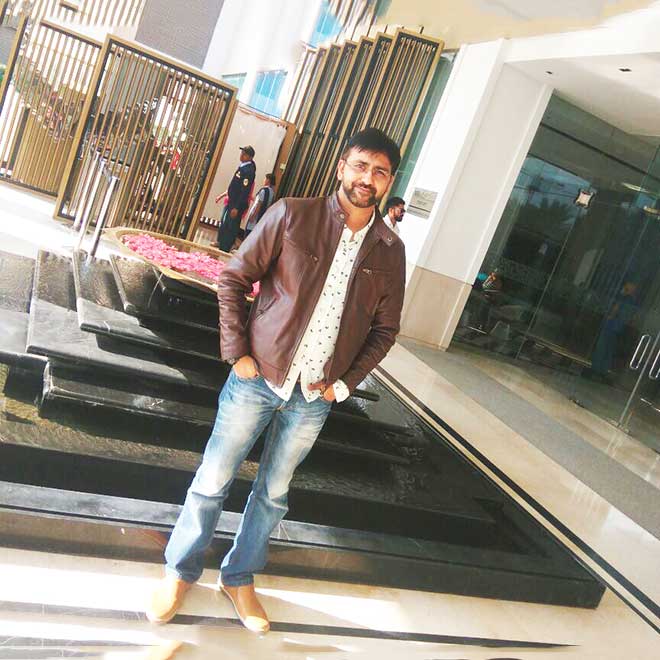
    Richa Mohanty graduated in Law from Symbiosis Law School, Pune in 2008. Throughout her college life she engaged herself in various extracurricular activities which have greatly helped in shaping her as a professional. She has interned at various firms in different sectors ranging from civil, criminal to SEBI. She was offered a PPO while still interning at Cyril Amarchand Mangaldas.

    Currently, she’s a Principal Associate at CAM. Her work involves advising on a number of issues such as transition of employees in M&A transactions, individual and mass terminations, closure of establishment, anti-sexual harassment matters and social security issues.

    In this interview, she talks to us about:

    • Her decision to pursue a career in Law.
    • Her tricks to do well in moot court competitions.
    • Maintaining a work-life balance.
    • How to secure a PPO while interning?


    How would you introduce yourself to our readers?

    I am a corporate lawyer with over nine years of experience. I am currently a Principal Associate at Cyril Amarchand Mangaldas (CAM), New Delhi. I started my career with the erstwhile Amarchand & Mangaldas & Suresh A. Shroff & Co., and have had the privilege of working across its New Delhi and Mumbai offices. I moved to the CAM Delhi office, upon its inception in 2015. I specialise in employment and labour laws. I am also a member of a Special Taskforce on Employee Relations, at the Confederation of Indian Industry (CII), Gurgaon.


    What motivated you to pursue a career in Law?

    I think it was a mix of many factors. I don’t come from a family of lawyers and when I was in school, Law was not a popular career option.

    However, like most things in life, timing played an important role. With the second wave of liberalisation, the Indian economy appeared to be booming in 2002-2003. Simultaneously, the landscape of legal education was undergoing a transformation, especially with the introduction of the five year integrated law courses and the rise of professional law firms/ formal legal teams in organisations. All of this greatly enhanced the appeal of the legal profession and I decided to take the plunge!

    On a lighter note, I should also give some credit to popular TV shows like “Alley Mcbeal” and “The Practice”.


    How did you approach the extracurricular activities such as moots and debates in Law school?

    Yes, I was very much involved in the co-curricular and extra-curricular activities. I tried my hand at everything that law school had to offer- debates, presentations, extempore, moots, seminars and even business plan competitions. I also participated in a number of cultural festivals including drama, dance and music competitions and was a member of the Human Rights Cell.

    All of this really helped me get perspective about my strengths and weaknesses. As a trimmed list: public speaking, research skills, team work, strategic planning, rationalising each argument were by products of these activities.


    Having participated and judged several moot court competitions, what is your advice to students?

    I would say that debating on legal or socio-political issues is much more critical than mooting, but that is a personal bias. Mooting and debating are sans recourse for a law student. My advice for all mooters would be to immerse themselves in the basic legal framework (Act/Rule/Regulation) before jumping the gun and moving to case-law finding frenzy. I also always found it helpful to set out a research methodology for the various roles I rendered as a mooter.


    Tell us about your internships and how did you apply for the same?

    I had interned at a number of places- from criminal lawyers to corporate law firms, banks, corporates, SEBI and even with the JAG (Judge Advocate General) of the Indian Navy. The idea was to gauge and understand the role, expectations at each organisation; and accordingly figure out my interests and career goals.

    I would strongly advise law students to apply to individual lawyers/ partners, depending upon their area of specialisation and to focus on the practice area of one’s choice, rather than blindly applying to Big Law or corporates and letting the HR assign the partner/ team to you. Also, don’t get mesmerised by Big Law and corporates. The experience and exposure at smaller, niche law firms can be equally good and rewarding.


    Have you ever felt the NLU and non- NLU divide? Do you think it is a consideration for employers?

    Some National Law Universities (NLUs) were the first off the mark in the corporate-focused 5-year law course, consequently with great alumni connect. Plus, there’s bound to be greater comradery between people from the same Law school, whether NLU or non-NLU. While I never personally faced any such divide, it may not be unnatural for a smaller set in even a small-sized firm, to feel a little ‘out of sync’ or not entirely ‘tuned-in’.

    Being a part of a professional organization and conducting oneself as a professional in its truest sense means that you transcend these perceptions and beliefs very quickly. I do not think it is a consideration for any modern-day employers.

     

    Give us an insight to the Sir Ratan Tata Trust Scholarship.

     (Richa is an awardee of the Sir Ratan Tata Trust Scholarship.)

    I heard about the Sir Ratan Tata Trust Scholarship from a friend. It is basically a merit based scholarship. There were no interviews or essays for this scholarship in those days. I simply had to apply with my mark sheets and a cover letter (not sure of what the process entails today). If I remember correctly, I got a cash award and a certificate.


    How was your experience of attending a Student Exchange Programme?

    I was a member of a fourteen member contingent from Law school to the University of Hannover, Germany for a period of two weeks in 2006. It was more of a cultural exchange programme but we got the opportunity to participate in panel discussions on interesting issues like intellectual property, anti-trust laws etc. We also visited the local courts and prisons at Hannover and Hamburg and were given a detailed overview of the EU framework.


    How did you secure a PPO from AMSS?

    I interned with the firm, made sure to put in my 110% during this traineeship stint, and was fortunate to have got a pre-placement offer (PPO) interview call. I was also fortunate to have interned with a wonderful team that really encouraged and supported me. I am in touch with most of them and consider them to my true mentors.


    How important do you think a high CGPA is for recruiters?

    Traditional non-PPO / Campus recruitment for most big / medium sized firms would largely be based on CGPA as a first indicator. A high CGPA can reflect discipline, dedication and attention to detail as per assignment requirement. This conventional thumb-rule dilutes in value as you move up the PQE chain during lateral recruitments.


    What would be your advice to readers who hope to get an offer from CAM?

    Intern with the firm and put your best effort during traineeship. If you wish to intern with a particular team / secure sectoral / practice-area focus, back a sincere request to the HR (after being accepted) with some prior academic research / publications. If you could not secure an internship, focus on CGPA as a first amongst equals and then publications as well as co-curricular and extracurricular activities.


    Can you give our readers some insight to the field of Labour and Employment Law?

    It is a very interesting and developing practice area and CAM is one of the leading firms in this space. As an employment law specialist, I routinely advice clients (mostly employers) on a number of issues such as transition of employees in M&A transactions, individual and mass terminations, closure of establishment, anti-sexual harassment matters, social security issues, trade union issues, ESOPs, immigration laws and basically all matters in connection with employees/ workforce. This is one of the only practice areas which involve a mix of advisory, transactional and litigation work.


    What is the nature of your work as a Principal Associate at CAM?

    As Principal Associate, I am entrusted to engage with Clients, oversee / review delivery of work-products to them and undertake practice-area as well as business development. CAM is a demanding but a very vibrant work space. What I like the most about the organisation is that it is not hierarchical and talent is valued above all else. So it does not matter which Law school you come from or what level of associate you are or what your political views are, as long as you do the job well, nothing else matters!


    How do you maintain a work- life balance given the demanding nature of your job?

    I have to say that working in a law firm can be extremely demanding, especially in the early years, when you are learning the ropes. As a consultant, you have to be mentally prepared to “work-on-demand”, especially on weekends, holidays and when travelling etc.

    Two things that have really helped me are (1) effective time management; (2) prioritisation of daily tasks. It also helps to be candid and upfront with your reporting senior about how much time you will take to complete a task so as to manage expectations accordingly.

    As such, there is no real formula to maintain a work-life balance, but what I would recommend is to definitely take out time for things that you genuinely enjoy- for example if you are a marathon runner or a classical dancer or if you like travelling, etc. plan your leave or free time, in such a way that you can accommodate these activities. Otherwise, like they say, all work and no play, makes Jack a dull boy!


    What challenges have you faced in building up your career as it stands today?

    There have been multiple challenges during the course of my career. To begin with I think, nothing quite prepares you for the legal profession unless you officially join the bandwagon. It takes a while to bridge that gap since legal studies in India are by and large theoretical, rather than being practical. There is no gestation period in this industry, so you have to pretty much learn on the job. Also, you also need to constantly adapt and adjust to the demanding work life at a law firm and learn to build lasting relationships. Every new level brings new challenges and you will have to keep pace with it. I am very grateful to some of my seniors and colleagues, for the lighting the way and guiding me through some of such trying phases.


    What advice do you have for our readers who are primarily college students?

    Law school days will always be the most stress free days of your life-so my only advice would be to make the most of time and to choose your friends wisely. Also live it up and have lots of fun. After all, you live only once (borrowing from the millennial motto)!
  • Harish Nambiar, Vice President-Legal, Syntel, on working in the Information Technology and Services Industry

    Harish Nambiar, Vice President-Legal, Syntel, on working in the Information Technology and Services Industry

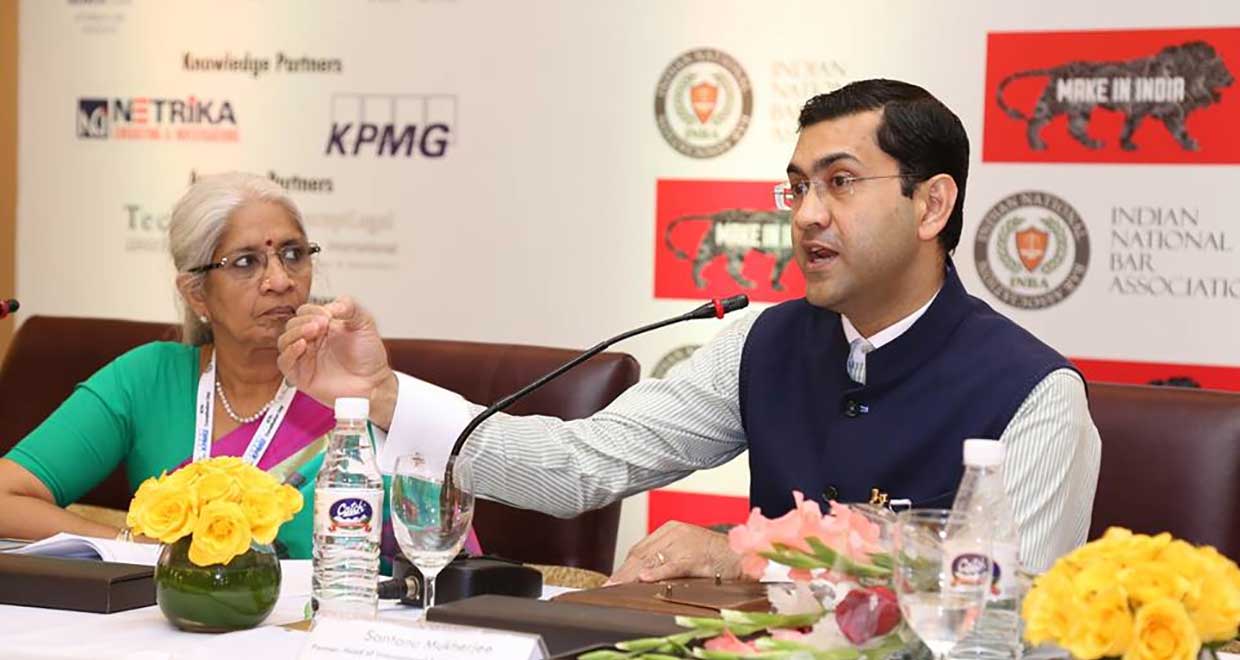
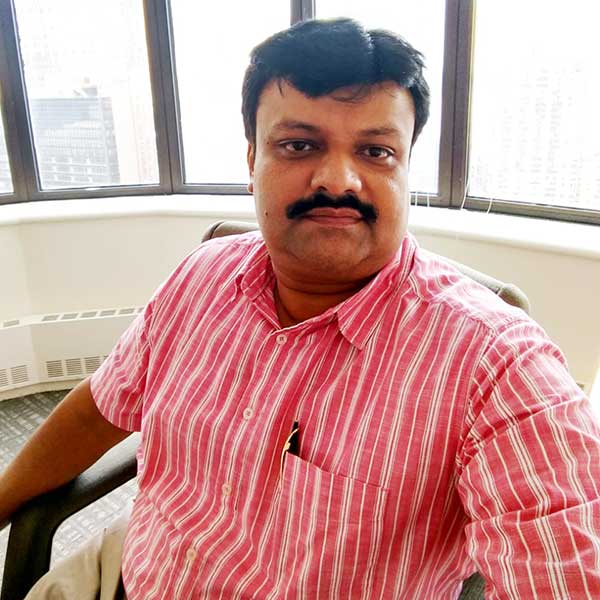
    Harish Nambiar graduated in Law from JSS Law College, Mysore in 1997. Harish has been exposed to seventeen years of comprehensive experience in the areas of: Legal Strategic Planning, Management, Consulting Compliance, Drafting & Vetting, Litigation, etc. He joined Syntel as General Manager – Legal and was promoted to Vice President in 2014. His role also includes managing the ethics and whistle-blower policies of Syntel.

    Harish likes to be a practical and proactive lawyer with an inclination towards understanding relevant laws and underlying jurisprudence.

    In this interview, he gives us his insights to:

    • Being a first generation lawyer.
    • Constructively utilizing time at law school.
    • His areas of expertise and how did he go about developing them?
    • His important message to young law graduates.


    How would you like introduce yourself to our readers?

    I am Vice President – Legal at Syntel, a global IT multinational corporation. As a lawyer, I have always been an in-house counsel, starting from my first corporate assignment with a large IT company in 2000. I have worked in IT companies and insurance companies. Of my total seventeen to eighteen years in corporate assignments, I have been in senior leadership position (AVP and above) for about twelve years. I am interested in Law related to contracts, property, employment, crimes, IPR, and anti-harassment. However, as an in-house counsel, there is really no limitation on what kind of matters may come up and what range of Laws will have to be applied. On personal side, I am very passionate about environment protection and planting trees. I like driving and comedy movies. I am an avid reader and like reading anything that is available on Indian history – I have a collection of books. I also like to be associated with causes that support destitute children and underprivileged women.


    Tell our readers a bit about your childhood and pre-college life as well as educational background.

    Most of my childhood was spent in Mysuru, then known as Mysore. It is a beautiful place. I went to the St. Joseph’s School at Jayalakshmipuram in Mysore, Junior college was done in SBRR Mahajana Junior College, and I completed B.A, LL.B from JSS Law College (which was at that time affiliated to the University of Mysore). Overall, I used to do well in studies. Law school was particularly good. JSS Law College was one of the best things that happened in my life. I had very good teachers and I am in touch with all of them, even today.

    Childhood memories revolve around railway equipment and associated stuff as my father was an officer in the Indian Railways and we used to stay in residential quarters within the railway housing colonies. I am a first generation lawyer and there were no lawyers before me in the family.


    What inclined you towards the field of legal education?

    I decided to pursue law a career probably when I was in the seventh or eighth standard of school and the trigger was Mr. Shatrughan Sinha. While watching him play a powerful lawyer in one of his movies, something clicked within me saying “I too need to become that.” While that may seem like a melodramatic reason, I think it also had to do with something in me that made me like complicated sentences, legal references and the like from a very young age – like fourteen or fifteen years. Since there was no family precedent, I had to convince my parents to let me do this, and they agreed, and that was the beginning. It was all set and sealed by the time I was entering my tenth standard of school.

    I started reading law books right from those days, and I completed reading treatises on the Indian Penal Code and Central Motor Vehicles Act when I was in 12th, and I was probably the only one who had ever touched these books before entering the law school.

    At law school, I always tried to do more than was required. I would keep Cox or Modi on Medical Jurisprudence and Toxicology open for reference while reading Ratanlal & Dhirajlal on IPC or Indian Evidence Act. I had Gaur’s Firearms and Forensic Ballistics while learning about the Indian Arms Act and Indian Evidence Act. This approach helped me understand the topics better. I had a very good academic record at law school.


    You’ve been a professional lawyer with more than seventeen years of extensive experience. How did you go about developing your expertise?

    Some of these items cannot be ‘taught’ in the classical sense. It needs to be picked up along the way. My formula was to overlay the theoretical and technical knowledge imparted during law school into the manner and methods which my seniors in the office were employing to handle a situation. Then, I would top it with my own common sense and arrive at a solution.

    One of the most important things that I used to do was ask questions to my seniors and air my opinions freely, so that each time, I was taking one step towards perfecting the solution I had arrived at. I also had the ability to say ‘no’ to something that I believed was not possible to do.

    I strongly believe that a lawyer with a sound and strong knowledge of the technical aspect of law and the jurisprudence can provide a solution to most issues. The fact that I was on the right track manifested itself when I started the heading the Legal Department at a major insurance company with between five and six years of professional experience. I was able to replicate this at another insurance company with eight years under my belt.

    It is all about knowing how much you actually know, bridging the gap, using common sense, asking questions and being bold enough to take the plunge. Most importantly, while taking the plunge, be mindful of the fact that you can fail too – but that failure should not be taken negatively and should be used as tool to avoid repeating the same mistake.


    What is a day at work like? What is the most challenging or stressful part?

    I enjoy what I do, so no workday is more stressful or difficult than any other day. I don’t say that every day is a cakewalk, but since I enjoy what I do, it is quite pleasant most of the time. I start early and segment the day into various buckets, which helps me manage my time better. I haven’t really faced any work life balance issues as such, as I am able to manage the time properly. Syntel, in particular is a great place to work and quite understands on the work life balance part – I have been here for more than seven years and it has never happened that my personal life was compromised because of my professional life. On home front, my family understands the several demands that apply on my time. My wife Rashmi and my ten years old daughter Nandana are very supportive of my professional commitments and leave me to my own devices on work related matters. They are a great source of strength and inspiration. Unless there is an absolute emergency, or I am travelling, weekends are always reserved for the family. On a daily basis, I keep an hour for myself which is the time that I use to recharge myself. That hour could be spent doing nothing, or it could be used for reading, or tending to the plants at home. I also spend part of my weekend with my parents generally discussing on any topic that we find amusing or interesting.


    You joined Syntel as GM in 2010 and were later promoted to VP. Please walk us through your work profile.

    Broadly, my work profile is to manage all legal affairs of the company, wherever we operate. This includes contracts, litigation, compliance, corporate law matters, employee conduct etc. Additionally, most organisations bundle the whistle-blower policy and related matters like employee conduct into the Legal Department. While these are strictly not ‘legal matters’, at senior levels within the Legal Departments, these matters also come your way. I have been handling such things for more than twelve or thirteen years now.


    What was role did you play at your first corporate assignment?

    My role at my first corporate assignment was largely on contracts – both buy-side as well as sell-side. Certain items of compliance and IPR were included, as well as part of one M&A. But those few years taught me a lot, because at that time, it was a small team and I had to adapt fast and become independent.


     How do you manage your diverse range?

    (Harish handles statutory compliances and other works like drafting and vetting of contracts and liaison with external agencies on legal issues.)

    As I said earlier, it is the willingness and eagerness to learn that will help one gain the ability to master a wide range of duties. I am a perpetual learner and seek out new challenges. Once you make learning a habit, range is not an issue.

    As a concluding message, what would be your suggestions to law students/young lawyers?

    Stay focussed on the goals you have set for yourself. Most law students that I have met believe that they are already lawyers within their first year of law school, and tend to fall into the trap of unwanted distractions that comes with it. Avoid that trap at all costs – you are a formal student till you graduate, so use that time to study. The fundamental job of a student is to study and acquire knowledge. Bear in mind that you can ask any question till you graduate, but the ability to ask certain questions is reduced after graduation, and that reduction keeps increasing with each passing year since graduation. No client is going to be impressed if you must research a basic legal question.

    Once you graduate, use the first five to six years of your career to gather as much knowledge as possible on practical aspects, without losing the technical side of the matter. Unlearn and relearn if need be. At the end of this period, assess yourself and determine if you have become a better lawyer — one that can recite the law, propose a solution to a problem, and have the wisdom to realize when no legal solution exists. Never compromise on the technical knowledge and keep the basics strong. Always remember that the most complicated techno-legal agreement on space technology collaboration also needs to pass the basic test of ‘consideration’ or ‘capacity of parties’ to be held enforceable as a contract under law, as much as the agreement on buying sugar from a neighbourhood grocer also need to pass the same test to be held enforceable under Law. Basic principles are divine – they cannot be forgotten or violated at any stage.

    Simply put, never compromise your professional integrity. Don’t manipulate the Law or your clients, base the legal opinion of the principles of Law, don’t use your knowledge of Law to gain an unfair advantage over your clients, and most importantly, have the courage to say ‘no’ when something is not legally possible to do.

    A combination of professional integrity, technical knowledge, common sense and the ability to propose solutions to your client’s problems is what will set you apart from others.

  • Anghrija Chakraborty, Senior Manager-Global Risk and Compliance, Aricent Technologies, on how to deal with academics, internships and work

    Anghrija Chakraborty, Senior Manager-Global Risk and Compliance, Aricent Technologies, on how to deal with academics, internships and work

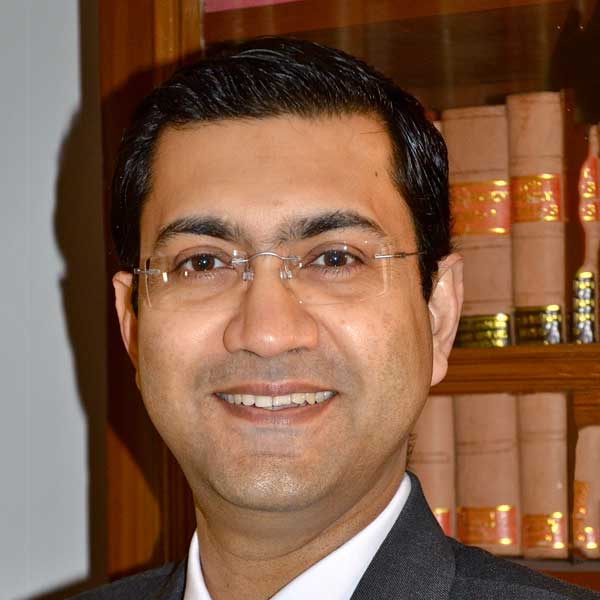
    Anghrija Chakraborty, graduated in Law from Campus Law Centre, University of Delhi in 2008. Coming from a family of doctors and engineers, her fascination for the working of the wheels of justice motivated her to pursue a career in the legal industry. She firmly believes that if work is done smartly, you can still find time for “Netflixing”- her major stress buster.

    Anghrija joined Aricent as a Manager in June 2015 and was promoted to Senior Manager in July 2016. Her chief duties are planning, implementing and monitoring all corporate compliance programs. Co-ordination of compliance audit activities and communication of expectations and reporting results are the key functions of her position.

    In this interview, she gives us an insight into:

    • Tricks to approach academics without having a mental breakdown.
    • How to make the most out of internships?
    • Importance of work ethics.
    • Indispensable message to the budding lawyers.


    How would you like to introduce yourself to our readers?

    I’m a legal and statutory compliance specialist. Occasional writer. Dreamer. Thinker. Random lover of all things breakfast-y. Total snark with a heart of mashed potatoes. Bad photographer. Charmingly neurotic. An absolute, but barely controlled, legal research junkie.


    What prompted you to study Law after completing your English Honours from Miranda House, University of Delhi?

    I had always been interested in the dictates of justice, and I genuinely found Law fascinating. Therefore, it was easy-peasy. Of course, there were several other reasons – (i) I could represent myself in court if push came to a shove; (ii) because movies and TV series gave me no choice (read, Ally McBeal, The Practice, etc.); and (iii) because I wanted my grandparents to have something nice to tell their friends.


    Which activities did you partake in and how did you approach academics while in college?

    Law school, I believe, is akin to cooking for the first time. You have absolutely no idea what you are doing, and it is a bit of a mess. But just like cooking, you get better at it with time. During my time at law school, I learned a few things that helped me sail through.

    Make one page summaries every week.

    One of my professors at college once said that a good lawyer can explain their case in  one sentence. I say a good law student can explain their lectures on one page. A one-page summary will force you to do three things: (i) re-read your notes over the week (ii) think about the important details; and (iii) rewrite your notes in a simplified form.

    Use colour (lots and lots of them).

    When you make a one-page summary, or your notes, use colour. It helps you find key words easily, and also distinguish between different topics. Not to mention, it is easy on the eye and a colourful way of immersing your desk with law notes.

    Keep a balance.

    Burning out from studying too much and cramming because of studying too little are two things that one should avoid. In both instances, you can study for so long before you start hitting diminishing returns and your brain begins to sizzle. Law school has taught me that a ten-minute break every hour is a good rule of thumb to stick to.

    Test yourself (can I explain this to a friend?).

    If you can explain why positivism is at odds with naturalism to a friend, then you can do it in an exam. Why this works? – (i) You must know the content to explain it; (ii) You must explain it so that it makes sense. Two important skills in any law exam.

    Be friends with a ruthless proof-reader.

    What you want is someone who will destroy your essay/assignment if it is awful rather than calling it “scholarly and erudite.” Here is a suggestion – either print your assignment or read it out loud. That is the best way to avoid being ½ marks off an A.

    Be friends with a law school senior.

    This is important. A friend who understands the struggle, and who is also able to give you assessment advice is something money cannot buy. Taking the initiative when the opportunity comes up and being genuine would be my two cents when it comes to befriending a law school senior.

    At law school, apart from the regular academic coursework, I found myself in the library, reading up, or volunteering with blind students at the Braille Institute Library next door, or helping set up meetings and events organized by the Gender Justice Society.


    What were your areas of interest during your graduation and how did you go about developing expertise in them?

    To be honest, I did not have a favourite subject or area during law school. I remember that legal research on various topics interested me. Therefore, I read a lot, and then worked on my research skills. After law school, in my different jobs, I worked at strengthening my research skills, and continued reading a lot, leading to my eventual interest in data privacy, anti-corruption, anti-trust, ethics, etc.


    How is internship helpful for a law student and what kind of internships did you do during your law school days?

    I remember my first days in law school. I had this air of confidence, quite like Harvey Specter. I had good grades in college, and I had made it to law school. I felt extremely proud of myself. That was until I started talking to my peers and seniors. One had already worked at the Attorney General’s office. One had already nabbed an internship at a top tier law firm. I remember wondering in second year if I should just drop out of law school and take up something less daunting, like, nuclear physics or rocket science. After all, how could I compete with these people when I had no legal or internship experience? I really thought that evil HR managers would just show me the door. But this is not what happened/happens.

    I figured later that most legal workplaces are on the lookout for people who can think on their feet, can interact well with clients, and are not afraid of hard work. And these are skills that are not contingent on you having done an internship or not.

    In fact, there are several non-law things that you can do, which will count as good experience when you apply for a highly coveted legal job:

    You could get involved in campus life – join the law society, become a student ambassador, join a volunteer program, become a mentor or a research assistant for your professor.

    You could volunteer at charities – find a cause you are passionate about and start devoting time in helping those who need help. It shows that you are compassionate and have varied interests. Also, this would make you stand out in law firms that do pro-bono work, or companies that have good corporate social responsibility functions.

    You could organize a successful college event – may be a fundraising one. Such events are fun, and they showcase your management and leadership skills too. They also demonstrate that you work well under pressure and can meet deadlines. These are skills that all employers look for.

    You must remember that work experience is not just about having an impressive resume; it is also about personal development.

    Personally, I pursued a post-grad diploma in Human Rights Law, International Humanitarian Law, and International Refugee Law, organized various events under the auspices of the Gender Justice Society, volunteered at the local orphanage, pet shelter, and the Braille Institute Library.


    Did your law school education prepare you for the many tasks required to execute during your internships and later at your job?

    Okay, let’s ponder over this.

    When I graduated from law school, as part of my usual delayed process of unpacking significant life moments, I began to consider what I had achieved/learned. It was actually not the first time I had to ponder this question. I was the one in a family of doctors and management graduates and engineers that bucked the trend and made the decision to study Arts and Law. I would occasionally be asked, what is it that I learned? My answer was that I learned to read and write really well.

    Jokes apart, it is hard to explain what you learned at law school. I did not learn how to design a building or cure a disease. I learned how to navigate the many invisible lines in the sand that made up the accepted rules and behaviours in society.

    Law school helped me to apply the scientific method, in that you ask a question, carry out research, construct a hypothesis, test the hypothesis and draw conclusions based on the results. Law is a product of this same process – however, in core law subjects we consider this process in reverse. We start with the legal rule, read the cases that have tested it, then perhaps the jurisprudence and policy that explain the academic and research perspective of the rule, and, lastly, the social wrong or problem which posed the question in the first place.

    Also, you learn to differentiate between a fact and an opinion, and then between a conclusion and an assumption. This makes us discerning and compelling. It also gives us the skills to contemplate the vast ocean of media that drowns us day to day. The rules of admissibility and evidence are not only useful in the courtroom, the habitual cognitive practice of considering “hearsay”, relevance” and “fact over opinion” when gathering our thoughts allows us to be more concise, effective and persuasive communicators. Conversely, it also equips us with the ability to think critically when we are being communicated to.

    As law students, we learn not to think in isolation and write manifestos and treatises fit only for academia. We are on the ground, thinking and contributing to very real discussions and responding to very real problems.


    As a member of the ISIL delegation to the WFUNA Asia-Pacific Model United Nations Conference, in Delhi (in 2006), share your experience.

    This MUN Conference was organized in 2006, and it was a lot of fun. So, let me tell you the story. As a kid, I was extremely fascinated by what went on in the United Nations – the Security Council meetings’ snapshots on the news, etc. In fact, there was a time when I actually dreamed of being the Secretary General of the United Nations. Well, I digress. So, when this opportunity came up, I just grabbed it. Not only did it provide me with a platform to discuss global socio-economic issues, and get a mind-share from individuals around the world, but it also gave me lifelong friends in the team-members that I worked with. Basically, you meet new people, you go to new places. You get over your fears of facing the public. You become acquainted with global issues. You learn diplomacy and negotiation skills. You can enhance leadership skills. You can also leverage the MUN experience and network to get into college or find jobs.


    How difficult would you say it is changing workplaces and creating a comfort zone all over again?

    (Previously, she has worked as Manager at GRC, Risk Assurance – PricewaterhouseCoopers India and Manager, Engagements, Corporate & Compliance Solutions, Pangea3 – A Thomson Reuters Company.)

    Honestly, I had no issues. Both companies really invest in their people, and juniors usually get fantastic training, and more importantly, a lot of one on one time with seniors, learning from their experience. Also, in both these companies, everywhere you look across, there are bright, talented people and whenever you need help or you have a question, there is a rush of people wanting to help. To have that sort of knowledge and experience essentially at your fingertips is phenomenal.


    You joined Aricent as a Manager in June 2015, and were promoted to Senior Manager in July 2016. What contributed to this shift?

    Before Aricent, my job was mostly legal and regulatory research and writing. Compliance was a much smaller element. Also, I was more of a consultant, and therefore, I was not really at the trenches, my sleeves all rolled up. Therefore, I knew I wanted a change.

    My job at Aricent requires me to formulate, implement and monitor corporate policies and processes relating to compliance, to train employees on compliance, and to monitor subsequent company and employee behaviour. Further, it has helped me develop a skillset comprising of project and business management, relationship development, strategic understanding and more enhanced communication skills.


    Are there new challenges every day or did work fall into a predictable pattern?

    My initiation into work-life was swift. I learned e-discovery within a week. By month end, I was a Westlaw pro. I was doing contract reviews in a year. By the end of my first two years, I had presented to client teams on misleading and deceptive advertising and other regulations.

    As a legal and statutory compliance specialist for a multinational corporation, I can be involved in advice and transactions running anywhere from data privacy to anti-corruption, anti-trust, labour compliance, supply chain compliance, and everywhere in between. I like to compare it to an exotic smorgasbord – I have a tasty pick of matters from the US, the EU, and rest of the world. The variety and constant challenges in new areas of the law are what I thrive on. In house lawyers and compliance specialists also get to flex outside of the law, and may assist in company secretarial duties and initiatives to cut costs or time to access legal services. I like to call it “cheerleading efficiency.”

    Of course, this all sounds pretty peachy. It isn’t always like that. Sometimes I work long hours. However, the flexibility is good. As I am an early riser, I am in office quite early, and can leave with a little daylight left to satisfy me. Calls with the US are either early in the morning, or early in the evening, and Europe comes after lunch. There is plenty of time for mind-calming yoga (or vegging on the couch for a Netflix marathon) in the early evenings.

    I have not seen many cons so far. I have gained invaluable experience with stakeholders at all levels of a business. I have learned that “no” is not an option (alternative solutions are always welcome though). And, there is access to a never-ending supply of varied legal matters and projects.


    Having a lot of publications to your name; how do you manage to find time to write besides your various engagements?

    I have always enjoyed writing. I will usually find time to write for about half an hour or an hour in a day. If not, then I blog. You won’t believe this but there is a reason why I love my job – it requires me to draft policies and processes all the time. Also, you won’t ever “find” time; you must “make” time.


    What is your approach to that maintaining a work-life balance?

    Well, honestly, the hours are quite daunting, and well, you cannot always avoid them. However, there are a few things that will help you get through the day like a pro:

    Turn off the notifications on your phone and minimise distractions. This helps you to focus and finish your work timely.

    Take breaks – they clear your mind so you can focus on the tasks at hand.

    Create checklists of things to do, and prioritize.

    The most important thing is to de-stress at work. What I do:

    I pick up a colouring book and colour my stress away.

    I go for a short walk – it clears the clutter in my mind.

    I catch up with my colleagues, or make a short call to a friend.

    I watch animal videos – they are short. Additionally, cute videos of corgi butts, pandas with no spatial awareness, fluff balls running around, and cats who knock glasses off tables always de-stress me.

    Like I said before, you have to “make” time. If you can manage your time well, you will have enough time to “Netflix” your way through the evening, or do whatever you like.


    What do you want to say to the next generation lawyers on the growing areas of Law where he/she can focus?

    Honestly, there are just so many options now. All I would like to say here is that you should relax and not worry so much about what others are doing. There is a lot of pressure on later year law students (and much of it is self-inflicted) to have a clear career plan after graduation. In reality, nothing could be farther from the truth. The best piece of advice anyone has ever given me was to stop worrying about the future because “there is not one right way to go through life.”

    Ignore what everyone makes you think you should achieve in your career/life by forging a unique path. I actually took a year’s break during law school, before I finally completed. In that period I did not lose pace with my peers, nor did I have challenges in starting again where I left off or while starting my career, but I did gain the world.

  • Sundra Rajoo, Director, KLRCA, and Managing Director, Sundra Rajoo Arbitration Chambers shares his insight on the arbitration world

    Sundra Rajoo, Director, KLRCA, and Managing Director, Sundra Rajoo Arbitration Chambers shares his insight on the arbitration world

    Datuk Professor Sundra Rajoo graduated in Law from University of London, England in 1994. Currently, he is the Director of the Kuala Lumpur Regional Centre for Arbitration (KLRCA). He has also been the President of the Chartered Institute of Arbitrators (CIArb) Global, which is the world-wide leader in training, accreditation and practice of alternative dispute resolution. Sundra is the Past President of the Asia Pacific Regional Arbitration Grouping (APRAG), a federation of  fourty arbitral institutions in the Asia Pacific region.

    A Chartered Arbitrator and an advocate and solicitor of the High Court of Malaya, Datuk Professor Sundra Rajoo is also a professional architect and registered Town Planner.

    In this interview, he talks to us about:

    • His illustrious practice in Malaysia.
    • How to acquire skills to become a great arbitrator.
    • Are grades really that important?
    • His role in legal academia.


     Tell us a bit about your childhood and pre-college life as well as educational background. Did you have lawyers in your family?

    I grew up in the state of Malacca and later moved up north to Penang. I attended the Francis Light and Penang Free School in Penang during my primary and secondary education. I then obtained my first honours degree in Housing, Building and Planning from University of Science Malaysia, Penang in 1979. Following that, I proceeded to Australia and obtained two professional degrees in Architecture and Town Planning, after which I pursued Law at University of London, England and obtained the Certificate in Legal Practice. I also hold a Master’s degree in Construction Law and Arbitration (With Merit) from Leeds Metropolitan University where I was the winner of the Annual Prize, North-East Branch, the Chartered Institute of Arbitrators, England; and a Master of Philosophy in Law from Manchester University which I completed as a Chevening Award holder.

    I was not surrounded by relatives who were lawyers but shared a close relationship with my father who often told me stories about my great grandfather who was a war hero during the Malayan Revolution period, sparking an interest in history and Law.


    How did you gravitate towards the field of law? Where did you study initially?

    Initially, I pursued my education in the areas of Housing, Building and Planning, and Architecture and Town Planning. I worked for the Central Bank of Malaysia as an Architect and Town Planner in Malaysia and Australia. I gained extensive experience and exposure in construction law. That coupled with my interest in law since I was a child motivated me to pursue my education further in Law.


    Were you a top scorer in your educational journey? How important are grades according to you?

    I fared were very well in the courses that I pursued, however, while grades are important, I do not necessarily believe that it is the most important aspect of education. In my opinion, what is most important is how one equips oneself with the ability to apply the knowledge gained in real-life situations.


    You were a writer, and have been published in various national journals. Do tell us, how you pursued your love for writing.

    Although I was a light-hearted and playful child, I picked up the habit of reading at this stage. Starting with books on war, my interest in reading continued to grow and expand – a habit that has certainly served me well over the years. This motivated me to pick up writing as I developed ideas, thoughts and opinions that I wanted to impart to others. When writing articles, it is important to understand who your readers are to ensure that the message you are trying to send across is conveyed clearly.


     Please give us an insight into your role in academia.

    (He is a visiting Professor at the Faculty of Built Environment, University of Technology Malaysia and Adjunct Professor at the Faculty of Law, University of Malaya.)

    From 2000 to 2003, I continued to lecture at local universities including in the Arbitration Law course offered in the Master of Laws (LL.M.) Programme at the Faculty of Law, University of Malaya. I have been a guest lecturer on arbitration at the Law Faculty, International Islamic University and on the Master’s in Contract Management at University of Technology. I was also an invited contributor to the MSc in Construction Law and Arbitration Programme offered jointly by National University of Singapore and King’s College, University of London in 2004.

    How do you instill creativity and innovation in your employees and in the work environment?

    I instill creativity and innovation in my employees by encouraging brainstorming sessions with them where we make observations and approach things from a new viewpoint, together.


    If I want to be a great arbitrator which university should I go to? Which courses would you recommend?

    Since arbitration is international, you ought to choose an institution that offers programmes of an international nature to ensure that you are remain relevant to as many countries as possible. The most renowned courses to pursue would be, traditionally, those by the Chartered Institute of Arbitrators however in light of changing times and how everybody is looking to the East (think ASEAN Economic Community, Belt Road Initiative, etc.) it would be wise to think Asian institutions such as KLRCA that offers the same.


    How do you keep yourself updated with the latest arbitration issues, news and cases?

    I keep myself abreast of latest developments in arbitration by news related to arbitration from an international front as well as attending conferences and talks on the same.


    Who are the stalwarts in arbitration that you follow?

    That would be the late KC Cheang, a former President of the Malaysian Institute of Architects. KC was well-regarded in the industry. He was skillful and knowledgeable. Everything he did personified professionalism and leadership.


    As the winner of the Cedric Barclay Prize by  the Chartered Institute of Arbitrators, share some tips to our readers.

    A love of reading, perseverance and the drive to succeed are the essentials.


    What qualities do you think have helped you achieve your current position and stature?

    Perseverance is definitely the key to success. Every once in a while, you will fail, and most of the time, the circumstances will be well beyond your control. The key to overcoming this; is this – DO NOT let your failures keep you down. Compose yourself, dust the dirt off, take a deep breath and get back up on life’s saddle and keep going. Failures are part of life. If you don’t fail, you don’t learn. If you don’t learn, you will never change. The world doesn’t care how many times you fall down, as long as it’s one fewer than the number of times you get back.


    What are the skills a law student should try to imbibe to successfully carve out a niche in the arbitration world?

    Analytical reasoning and logical reasoning – law students must learn how to process voluminous information, interpret them analytically, and structure their arguments and reasoning in a logical manner.

    Legal research – it is essential for law students to master the art of legal research especially in terms of legal authorities and citations.

    Technology – With the rise of software and applications used in legal work, it is now a must for students to be familiar with technology.

    Time management – a strong work ethic and the ability to carry out multiple tasks are important and for this, law students are required to manage time well.

    Communication – law students need to equip themselves with both written and oral communication skills in order to convey and gather information clearly.

  • Deepak Narayanan, LL.M. from Queen Mary University, member at Chartered Institute of Arbitrators, UK and on his journey as a legal practitioner

    Deepak Narayanan, LL.M. from Queen Mary University, member at Chartered Institute of Arbitrators, UK and on his journey as a legal practitioner

    Deepak Narayanan graduated in Law from Ambedkar Law College (well known in the past century as Madras Law College) in 2012. Throughout his college life he was an avid participant of extra co-curricular as he firmly believes that it plays a great role in shaping you as a professional. He went to on to pursue his LL.M. in Commercial and Corporate Law from Queen Mary University of London. Deepak regularly appears at the High Court of Madras, District Courts and several Tribunals in Chennai and his practice areas primarily include commercial, corporate, banking/finance and property Law.

    He also specialises in arbitration and represents clients as Counsel before arbitral tribunals and arbitration related court matters and holds the membership to the Chartered Institute of Arbitrators, UK

    In this interview, he talks to us about:

    • The culture at a Law college vs. non-Law college.
    • His experience of interning at various international arbitration centres.
    • The challenges faced by a legal practitioner.
    • How can students overcome the handicap of practical knowledge?


    How would you like to introduce yourself to our readers?

    I am a qualified lawyer from India and have experience in wide range of work with a particular focus on litigation and arbitration. I have a general service independent practice with a few lawyers in my team and I cater many major clients including individuals, firms and companies across India. I graduated from Ambedkar Law College, Chennai and hold an LL.M. from Queen Mary University of London.


    Tell us a bit about your practice areas and the challenges a legal practitioner faces?

    I regularly appear at the High Court of Madras, District Courts and several Tribunals in Chennai and my practice areas primarily include commercial, corporate, banking/finance and property law. I also specialise in arbitration and represent clients as Counsel before arbitral tribunals and arbitration related court matters. I am in the Panel of Advocates for Bank of India and appear for the Bank at Debt Recovery Tribunals on a regular basis.

    My non-contentious work involves drafting and vetting of commercial contracts for individuals and companies, catering builders and promoters in their real estate work, negotiations and providing legal opinions.

    Every legal practitioner faces unique and different challenges. The practice and procedure being widely diverse in different courts and tribunals, the main challenge is to quickly learn the intricacies to provide an effective solution to your client. Also allocating sufficient time in an already busy schedule to constantly update with new laws and judgements is another main challenge that I am sure any law practitioner faces.


    How did your interest gravitate towards Law?

    (Deepak completed his B.A. in Economics from Loyola College, Chennai before pursuing Law and is a State Level Badminton champion.)

    To be honest, I was predisposed to pursue Law since childhood and was inclined to have a go at a few premier National Law Schools in India by taking up the entrance exams. But being a State Level Badminton player, I was offered an admission at Loyola College through sports quota, a premiere institution in both academics and sports. I accordingly decided to finish my undergraduate degree in Economics first.

    I hail from a family of lawyers including my father and a desire to pursue Law never wavered during my three years at Loyola. An aspect of Law that has always been of interest to me is that, Law influences almost every facet of our life, and is constantly evolving to keep up with the dynamic changes to which we constantly try to adapt. In particular, I am always drawn towards Dispute Resolution mainly because it consists of constructive legal argument and an analogy of legal reasoning more often than in many other careers. I strongly believe in following one’s passion and a career in Law has always been my calling.


    What was life at Law college? How different was it from a non-Law college?

    Life at Law school was tangentially different from my under graduation in Economics. While my Bachelors in Economics equipped me with the foundation and basics in Economics (which I think is a great specialisation to have as a commercial lawyer), Law college gave me a real insight into the Law profession. It is extremely crucial to keep yourself academically inclined and garner as many experiences as possible out of your institution, which I was able to achieve through participating in moot courts coupled with the immense support of my faculty members.


    Did you partake in any extracurricular activities and how important were they in shaping you as a student?

    I was an avid moot court participant and was fortunate to have an excellent team, which I think is fundamental to perform in moots. In my second year, I won the Amity National Law School Moot Court Competition in Delhi on Public International Law. I received a special accolade from the former Hon’ble Chief Justice of Madras High Court, as it was a win for my college after many years. I also captained the badminton team and victorious at sports fests held at NLSIU, Bangalore and NLIU Bhopal.

    I am a strong believer that co-curricular are fundamental in shaping any student. While actual litigation is quite different from moot courts, the experiences I gained from moots have greatly benefited me in my practice.


    How was your experience participating in the Willem C. Vis International Commercial Arbitration Moot Court Competition in Vienna?

    (Deepak represented his college twice in the Vis Moot Court Competition.)

    Vis Moot ran through almost my entire academic year and it made me feel like it was part of my academic curriculum. Long work hours and sleepless nights are part of your routine preparation schedule. With arduous oral rounds on the one hand and networking with international students on the other, the entire week at Vienna was enriching and irreplaceable.

    I am also thankful to the Tamil Nadu government to have funded all our expenses on both the occasions that I participated at Vis Moot.


    What made you go for higher studies and what procedure did you follow for selecting your college?

    (Deepak completed his masters in Commercial and Corporate Law from Queen Mary, University of London.)

    I pursued my higher studies mainly to specialise in some of the finer areas of Law in which I had more of an inclination than the others. Since, I was greatly interested in arbitration; I applied to universities in the UK after thoroughly researching the facilities and opportunities that the universities provided. I was accepted by these universities and was even offered scholarship at the Southampton University, UK which is famous for Maritime Arbitration Law. In the end, I chose Queen Mary as it had the world renowned School of International Arbitration and luminaries in the field as professors such as Professor Loukas Mistelis and Professor Julian Lew.

    The year at Queen Mary was not ‘rigid in the Indian sense. While there were fewer modules when compared to an LL.M. in India and the classes were spaced out, and the amount of self-learning that had to be done on a day to day basis made the course intense and interesting.


    How was the exposure of interning at a lot of international arbitration centres?

    Internship experiences that readily come to my mind are Clyde & Co LLP (London) and at Singapore International Arbitration Centre (Singapore).

    After several rounds of rigorous interviews, I got selected to work in the international arbitration team of Clyde & Co, London office. Being one of the leading global law firms, I had a chance to work in some of their high stake matters including a dispute raised by Microsoft regarding breach of exclusivity clause and also a Middle East investment arbitration dispute. I got a practical insight into live the life of a solicitor at the firm and it was a treasurable experience.

    SIAC on the other hand was a completely different experience. I had an opportunity to witness what happens in an institutional arbitration from other side of the table, i.e., an institution. My work mainly resembled that of a Case Counsel of the Centre and I involved extensive research on international arbitration. I was also briefly involved in making recommendations to the SIAC Rules which were being amended at that point of time


    You are a member of the Chartered Institute of Arbitrators, UK. Please give us an insight into this.

    Chartered Institute of Arbitrators is a world renowned organisation which recognises expertise in ADR. Having specialised in commercial arbitration at Queen Mary and through the practical experience that I already possess in the field of arbitration, I was directly inducted at the Member grade (MCIArb) instead of the usual route of passing the necessary modules. As a practitioner, the qualification immensely helps me to showcase my expertise to my clients.


    Are you finding a change in your balance between work and life after starting practice at Madras High Court?

    Life as a practitioner always implies more of work and less of personal life and I diligently followed this tradition during my early years of practice. But after commencing my own practice, I have managed to cope up with the work load albeit the work pressure. I still put in long hours but producing immaculate work has become the key rather than putting mundane face time at office for hours together without getting much work done. This enables me to squeeze in a few games of badminton, marathons and triathlons, which help me maintain a balance.


    A lot of practice deals with procedural aspects of Law – something that is not emphasized on in Law schools. How can a student overcome this handicap?

    Yes this is completely true and moreover procedural aspects of Law does not just mean learning CPC and CrPC but also having an astute knowledge of working your way through ever so complicated registry and sections of Courts and Tribunals.

    Students can definitely overcome the difficulty by going an extra mile in their internships to learn the various procedural aspects. Instead of just doing research and taking down dictations, students can play more of an active role by shadowing office clerk in section and registry.


     As a concluding message, what would be your word of advice to our readers?

    It is essential to pursue a career/field that you like. Whatever is your chosen line, be it litigation or non-contentious work, do you see yourself doing your job day in and day out? If yes, you are in the right field and if no, you need to explore more interesting things.

    Also working extraordinary long hours is the new fashion in almost any career in Law. So make sure you do not burn out and try to have a healthy work-life balance

  • Nishant Sharma, Lead Counsel, Dolby Laboratories on work experience in Patent Litigation and being a Patent agent

    Nishant Sharma, Lead Counsel, Dolby Laboratories on work experience in Patent Litigation and being a Patent agent

    Nishant Sharma graduated in Law from Delhi University in 2012. His professional experience encompasses all sorts of patent related activities- contentious matters, prosecution or preparation of patent applications. He has frequently participated in patent litigation matters, drafting patent applications, carrying out patent-ability searches, filing of patent applications, prosecuting patent applications at Indian Patent Offices and handling opposition cases.

    Currently, he is responsible for handling litigation as well as Patent Licensing in India for Dolby Laboratories.

    In this interview he talks to us about:

    • His decision to pursue Law as a career.
    • His role as a Lead Counsel.
    • Specialization in Patent Law.
    • Skills required in making a successful career in Patents and Designs.


    How would you introduce yourself to our readers? Do you come from a family of lawyers?

    I consider myself an evolving IP professional who is trying to learn new things – be it in IP or legal field in general or even about facets of life – every day, every moment. I have a firm belief in destiny – you won’t get more than what you deserve and before it is due – and at the same time am a strong follower of principle of karma – do good work and you will get appropriate returns in the long run.

    I am a hands-on person and so like to be involved to the very core in every project I undertake or am assigned, and this has always been my advice to my juniors whom I have mentored over my past fifteen years of professional life. I have a strong belief that one needs to be self-sufficient so as to be able to complete assigned tasks even if requisite resources are not available, and throughout my career I have tried not to let unavailability of a resource, such as a paralegal or even a hardware resource, become a hurdle in completing a deliverable in time.

    Coming to you other question, no I did not belong to a family of lawyers. My family includes Engineers, Scientists and Bankers and never in my life had I thought I would be in the legal profession. But I have had good mentors who guided me, and still do, in my pursuits in the legal field.


    What motivated you to pursue law as a career?

    (Nishant completed B.E. (Electronics) in 2001 and a PG Diploma in Advanced Software Design and Development from C-DAC, Noida, 2001.)

    Ah! As I said I believe in destiny and may be my entry to legal profession was destined to happen. After completing my Engineering degree, I was in a secure job, so as to say, with Hindustan Aeronautics Limited (HAL) – a Public Sector Undertaking. I was working on latest Russian technology but the itch to learn something new was always there as things were moving at a steady pace at HAL. Most of the time we had to follow standard procedures with limited options to innovate to improve efficiency of operations. But I was happy doing the same. It happened somehow that my wife got a job opportunity in Delhi and we thought of shifting base. It was during that time, Remfry & Sagar had advertised for openings for Engineers. It was around December 2005 and the Patents Act had just been amended. Sensing a good opportunity to shift base to Delhi to accompany my wife, I applied for the opportunity and after two rounds of interview, I was selected. However, even after getting the offer, which was way beyond my expectations, I was sceptical of leaving a well-settled Government job. Thankfully, I had an acquaintance that used to work for a law firm in the IP field and she motivated me to join this field. So it was like all blocks were falling in the right place slowly paving the way for me to join the IP field. After a discussion with my wife and father, I finally decided to plunge into it and within few days of receiving the offer, I was at my work desk in Remfry browsing through heaps of files.

    On the very first day, as part of induction, I was given few files to study and develop my understanding of how the Patents filed operates. I would spend hours studying each file, making notes and writing down my doubts, which I would later on clarify with my seniors. I was lucky to have seniors who were eager to help me understand the nuances of Indian Patent law as well as Patent Cooperation Treaty. Within few months of joining Remfry, I was actively doing patent prosecution including official hearings at the Patent Office.

    I was happy doing prosecution work until one day my Supervisor suggested that I should pursue Law. Being from the Engineering field, I thought I had a technical bent of mind and I should better be pursing further studies in technical field only and thus, I didn’t give Law studies a second thought then. Yet again destiny was to play its part in shaping my decision. I moved to some other firm eventually, where I was actively involved in Patent Litigation. I liked the entire concept of Patent Litigation and how it is the ultimate test of both the legal and technical acumen of a person. And within few months, I was attending evening classes at Delhi University’s Law school.


    Being a science graduate, did you face any difficulties in law school?

    Frankly speaking, I did not face much of a problem in terms of understanding of Law as I felt statutes are generally very logically drawn with an intended objective in mind and defining steps towards achieving that objective. This is how science operates too! The major problem I faced was adjusting to life of an academic after a gap of seven-eight years. Moreover, I was actively attending to my official duties as well while I was continuing my studies and this made the entire academics part hectic. However, with my family’s support I managed to sail through.

    My advice to students pursing Law would be to understand the basis of each legal provision, question it and support your understanding with explanations provided in judicial precedence of the Courts. The best part of legal education is that Courts, with their elaborative speaking orders, help one clearly understand legal positions and I would encourage students to read a lot of Court decisions, even if different decisions speak the same language you never know when you might chance upon an additional drop of wisdom in the same.

    The other thing to keep in mind is to ask a lot of questions – to your teachers, your peers and even to your juniors. The beauty of Law interpretation is that everyone can bring in his own perspective and it is always good to know all dimensions to a legal provision. Recently, I had trouble interpreting Section 65B of the Evidence Act and to solve the conundrum all I did was to prepare a note of my understanding of the provision and circulate the same to my professional connections, even those whom I remotely knew. Many people pitched in with their perspective and finally I could gather enough understanding of the provision.

    In addition, students should be bold enough to challenge and question settled propositions. So far my experience has been that most Law practitioners hold strong biases towards settled legal propositions and they would rather dissuade their juniors from thinking beyond the same. I am not preaching to students to suspiciously look at each and every settled proposition but as the saying goes – There’s always a scope for improvement.


    How was your first year after graduation? What do you think were the biggest hurdles and challenges in the early days of your career?

    My first year after graduation from Engineering Course was the toughest one as all job opportunities in India had literally dried up in the wake of September 11 attacks in the US. I did initially try my hands as sales professional, selling rugged computers and other military grade products to various R&D organizations in Delhi, for some five-six months, but eventually realized it was not my cup of tea. That was the time I decided to quit that job and study for Government sector jobs that were supposed to be the most stable ones as compared to the ever volatile IT/software jobs. My hard work paid and I landed up in HAL.

    The biggest hurdles I faced during the initial years were to shift gears from slow pace of student life to that of a professional managing a team. I had to manage a team of workmen/work-women and get the deliverables within scheduled time as any delays would ultimately result in delaying delivery of an aircraft for which the deliverable was required. This would primarily involve managing a lot of human capital and this is what you are taught the least in your academic life. Slowly I realized that treating people with empathy can do wonders and I eventually learnt the art of people management.

    My first year after graduating from Law school was easier as I was already seven years in the profession and had learnt how to conduct myself.


    When you accept interns under you, what kind of qualities do you look for?

    Interns should be eager to learn, have some innovative thinking and be willing to experiment with new ideas. Another important aspect is, as I mentioned earlier, interns should be bold enough to challenge the settled propositions.

    In addition, honesty is a quality that every person must imbibe. Honesty towards their work, their co-workers and towards self is very important. If you have faulted, be honest and accept it before your seniors/co-workers.

    Lastly, interns or even starters in any profession must remember that there is no shortcut to success. Toil hard and reap benefits!


    Please tell us about your experience representing Remfry & Sagar at the LES 2013 and AIPPI 2015.

    (Nishant represented the firm Remfry & Sagar as a Partner Designate at the AIPPI (Association Internationale pour la Protection de la Propriété Intellectuelle) 2015 held in Rio de Janeiro and LES (Licensing Executives Society) 2013 held in Hangzhou, China.)

    The good part about such conferences is that while business development is the primary focus, you tend to end up discussing lot many things, besides IP, with people whom you are meeting. In my experience, this helps a lot in knowing about different culture and practices abroad. While you may not have earned a client for your firm, you go back enriched with knowledge about a new country/culture that may be helpful to you or your profession in the future. Besides, you get to learn of IP developments and practices throughout the world, which helps in overall development of one’s IP intellect.

    Moreover, such interactions help a lot in settling doubts in the minds of foreigners about India. For instance, many people whom I interacted with during these conferences were not aware that India actually had four patent office branches or specialized commercial benches in High Courts. During these conferences, I was able to clear many such doubts which foreigners have about India.

    And finally, all such conferences are generally in beautiful locales, and one gets the opportunity to indulge in some local sight-seeing. I love travelling and passionate about visiting new places. I consider myself lucky to have visited two of the wonders of the world – The Great Wall and Christ the Redeemer – during these conferences.


    Currently you are the Lead Counsel (India) – IP & Litigation at Dolby Laboratories. We would love to hear about your work profile.

    At Dolby, I have been entrusted with the responsibility of advancing Dolby’s patent licensing program in India. In addition, I oversee the Indian litigation suits instituted by Dolby – providing strategic inputs, whenever required, in line with the intended objective.


    What are the skills required for a fresher who is aspiring to build a successful career in Patents and Designs?

    Be inquisitive, ready to learn and honest to your profession. Also, there is no substitute to knowledge, so read a lot!


    You have a total experience including technical experience of fifteen years, how do you keep yourself updated of the recent developments?

    I read a lot about IP developments in India and abroad thanks to Google Alerts and subscribed newsletters. I also read and research a lot about other areas of law, whenever someone from my friends or family requires any legal help. In addition, I regularly read latest Indian judgments related to Patent cases on some of the free databases, a habit introduced to me by my colleague at Remfry.

    Moreover, I attend IP conferences, which are another source of abundant information on IP and other facets of law.


    You have worked as In-charge of Radio Division of Avionics Lab at HAL, Nasik Division. Please give us an insight into this marvelous achievement.

    I cannot say if it was an achievement or not, but yes it was definitely my contribution towards nation building. My team was assigned the work of developing testing equipment that were to be used for testing various electrical, hydraulic and pneumatic systems of Sukhoi aircrafts being manufactured for the first time in India under a license agreement with Russia. The part not to be missed here was the strict adherence to deadline for completing the project as any delays could have delayed the delivery of first few aircrafts to the Indian Air Force. Often, it was a race against time but by the time I had left HAL, my department was on track with regard to delivery of the testing equipment to the end customers thereof. As I mentioned earlier as well, my stint at HAL helped me learn people management and also that you can only win respect of your co-workers/juniors by showing empathy and contributing, if not more, equally as them.


     Can you elaborate any two cases for which you are extremely proud of?

    (He has given several advisories to clients on patentability and infringement issues, interacting with the inventors and apprise of the important details of their invention.)

    Without going into the specifics, in view of maintaining confidentiality of clients for whom I worked, I along with my team drafted a patent application for a Japanese client. The project was more like a test project as the client was testing waters for considering outsourcing their patent preparation part. It was an invention related to memory chips used in electronic devices. After toiling hard and intense in-house discussions, we drafted a patent specification which was filed in India as well as the United States simultaneously. The US application was recently examined and granted a patent without any objections. This gave me immense pleasure because there is nothing more than having a satisfied client. This success also helped the law firm in bagging subsequent drafting projects from the same client.

    Another case that I remember quite vividly is a pre-grant opposition case I handled in the initial years of my career. It was again a Japanese client, whose technology was surreptitiously claimed in a patent application by one of their old customers. I, under the guidance of my Supervisor, prepared a pre-grant opposition that was fiercely fought at Kolkata Patent Office. There were certain new legal propositions that we introduced in our submissions, which were finally accepted by the Patent Office leading to the impugned patent application being refused a patent. We were thus able to restore the honour of our client and this was a soul satisfying moment for me as a professional.


    Last but not the least, what is your parting message to our readers?

    First and foremost, be a good human being.

    Secondly, try and build a congenial environment at your workplace. Don’t expect something from your juniors or co-workers, if you would not have done it in the first place. If you are human, so are they!

    Moreover, be ready to share your experiences with others, especially juniors, as there’s no better lesson than learning from real-life experiences.

    Finally, don’t be afraid of making mistakes but do learn from them as well and do not repeat the same mistake again.


  • Chakradhar Varadarajan, Head-Corporate Legal in Godrej, roles and responsibilities as In-house Counsel

    Chakradhar Varadarajan, Head-Corporate Legal in Godrej, roles and responsibilities as In-house Counsel

    Chakradhar Varadarajan holds a Bachelor of Law degree from the first batch of five-year law course (1983-’88) from the Government Law College affiliated to Bharathiar University, Coimbatore, Tamil Nadu, India. He is the Head-Corporate Legal in Godrej Industries Limited (GIL). He is also the authorised signatory for Godrej Consumer Products Limited (GCPL) and Nature’s Basket Limited (NBL).

    Chakradhar’s current role is to add value to the businesses as a trusted advisor, shape up and maintain a client-focused in-house legal team. His work areas engage him to manage and advice on risk analysis and mitigation including M&A, indirect taxation, brand protection enforcement, business advisory, compliance and regulatory aspects.

    In this interview, he speaks to us about:

    • His decision to choose a five-year law course at a very nascent stage of Indian legal education
    • The culture back in his college days.
    • His role and responsibilities as Head-Corporate Legal in Godrej Industries Limited (GIL).
    • The reason behind giving up litigation practice and accepting an in-house legal counsel role.


    How would you like to introduce yourself to our readers?

    I am a student. I continue to learn every day.


    What prompted you to choose a five-year law course?

    (The five-year law course was newly introduced at that time.)

    Most of my junior college buddies were focussed on graduating as either engineers or as doctors. A new engineering college was set up in our town back then and also a renowned Government medical college. Probably this contributed to many of them opting to becoming engineers or doctors.

    My upbringing in a middle class family of a State Government employee (my father) and the situation of two of my elder siblings already aiming then to become doctors made me think differently.

    Living in Kurnool town surrounded by an agrarian economy in a drought-prone region of the undivided Andhra Pradesh, I was more influenced by the agenda and focus set for social and industrial development by Telugu Desam, CPI & CPM.  I was keen to talk about the growth of industry & commerce in the region. Kurnool, Anantapur, Nandyal, Tirupati in particular started looking out for industrial and educational renaissance.

    Rayalaseema Paper Mills had just started production in those days, granite export industry was slowly picking up, Tungabhadra Industries Limited was producing vegetable oil products including Vanaspati locally and APIIDC was taking steps to create industrial parks.  Amidst such socio-political-industrial climate, the travel of my thoughts took direction of further studies in commerce and law.

    Had it not been for Justice Chandrachud (Retd) starting a five-year law course in the 4 law colleges of Tamil Nadu (Chennai, Trichy, Madurai & Coimbatore) during mid-1983, preceded by a newspaper advertisement issued by the Directorate of Legal Education, Tamil Nadu, I probably would have turned a commerce graduate in Venkateshwara University and opt for a 3 year law degree in Anantapur or Hyderabad.


    How was the culture back in your college days (1983-’88)?

    I joined five-year law in Coimbatore, a city that was fairly well industrialised in 1983 with many textile machinery manufacturing units & spinning mills (serving as the back office for the Mumbai mills).

    No other State (including Andhra Pradesh) started any such course in law by then and National Law Schools were not even established. The experience of being soaked in a completely different and industrially vibrant atmosphere as well as being in an educational hub of Tamil Nadu planted bigger dream of managing and leading legal services for companies, early in life.

    Our college being a Government Law College, resources for us were limited so, the students of 3 year law batch & five-year law batch both used to attend college in the same premises in morning and afternoon sessions respectively.

    India’s gender diversity efforts & girl child education were getting evident in the early ‘80s itself basis the statistics that in our own law class.  We were a total of 78 students of which 18 were girls.  Some of them are doing well now in the profession and practising law in courts today.

    Our five-year law curriculum being new, some of the books prescribed for study were not available in stores or our own college library, so we undertook visits to State and/or District libraries in different cities to gather material to study and used to share notes with other classmates.

    With no internet and Google, no online research tools, preparing for inter-collegiate debates, competitions or moots was a group activity with a lot of excitement peppered with visits to other educational institutions as well as local courts in search of willing seniors who could guide us regarding various topics.

    Our professors treated us more lovingly as we were seen as fresh and young buds who were enthusiastic to listen, be more regular to attend lectures and moots.

    Our initial law college studies also involved the experience of receiving guest lectures from professors of other colleges teaching liberal arts (Political Science, Sociology & Economics, History of India & developments leading to Constitution) as our 1st 2 years curriculum was mostly related to these subjects, apart from English, Logic & Reasoning, and Legal Writing in Tamil.


    How did you overcome your initial jitters in a courtroom full of experienced lawyers and judges?

    (He holds the distinction of being the first ever five-year law graduate to be enrolled as an Advocate in 1988 with the Bar Council of Andhra Pradesh, Hyderabad.)

    Preparing for the day of enrolment, wearing that black coat, tying up the white bands around neck and entering the High Court of A.P in Hyderabad with a gown on the shoulders had been a ‘dream come true’ (which actually was not so financially, as I experienced later in courts for about two and a half years but I had to go through that phase as part of the process).

    Joining a chosen senior’s office (after closely following up as to whom to join) and then getting paid Rs.750/-, a princely sum back then at the end of the first month (when no other senior counsel generally paid money to any junior) is a cherished high. A High Court judge and a District Court judge encouraging me to argue the senior’s brief and guiding me while I put across a defence. Such experiences probably are rare now due to paucity of time in courts today. The attention and time the judges gave for testing the skills of juniors like me, to observe and correct the preparedness was also a blessed high. When a District Judge advised me stoutly across the bench in an open court stating professional ethics demand that an Advocate should not visit a complainant’s home and talk of settlement on behalf of the client who engaged him was a low and as well as a learning moment.


    What lead you to give up litigation practice for accepting in-house legal counsel role?

    Prior to fully involving in active court practice, I attended a corporate internship in Hyderabad, a first for me in a reputed corporate group in Hyderabad. Almost 2 years later, I was blessed with an enquiry from them as to my interest in a vacant position of ‘Law Officer’. Based on the evaluation of my socio-economic background coupled with my own need for a stable income and a big dream of going in-house, I said yes to such an opportunity.  I consider myself lucky too that my joining as in-house counsel coincided with onset of liberalisation in 1991.  On personal front, the contributing factor to be unwavering in continuing to being in-house counsel was the loss of my mother a year later and then marital responsibility. There was no looking back after I joined in-house, though I did have a fair share of mirage of reflections to see myself as a practising Advocate to which I did not yield to!


    How are internships helpful for a law student? How was the scenario back in your days?

    Internship in an Advocate’s office and attending the courts were part of planned curriculum for our five-year law study.

    Our internship was for the entire five years of study. We would start by 8.30am in the morning in our assigned law office, work there first and move into Court and be present there until 1.00pm and later on, reach our Advocate’s office again by 5.00pm and remain there until 8.30pm. Such hours of internships for learning were possible since our classroom lectures were between 1.30pm to 5.30pm.

    The curriculum made it mandatory for us to attend a senior Advocate’s office, learn drafting,  observe client guidance by the senior as well as work of the court clerks, do case law research, know professional etiquette and ethics, observe and learn court decorum.  At the end of the year, we had to submit a project paper over the aspects learnt in our internship.  All our learning during such internship was assessed for marks as our internals by our college.

    I am happy that now, apart from internships in law firms, students of law also have the benefit of focussing on gaining knowledge through internships in corporates. Such internships are no doubt preparing the law students to be much more agile, employable and professional and learn a lot about crucial transactional non-litigation work which is a large share of corporate in-house roles.


    Currently, you are the Head-Corporate Legal in Godrej Industries Limited (GIL). What are your roles and responsibilities?

    Our team in Godrej Corporate Legal has about 11 in-house counsel and 2 paralegals. The team has 4 sub-function group heads. Sub-function head managers are there for (i) Contracts, M&A and business/category advisory; (ii) Brand Protection/IPR, category advisory & International business; (iii) Indirect taxes management and (iv) Litigation management.

    My role as strategic function business partner is to provide in-house legal services for the Consumer Goods, Chemicals, Retailing and Corporate HO. The role also partners with Godrej’s M&A team initiatives for inorganic growth of the consumer goods business in Indonesia, in Africa for about 14 countries, the USA, Chile & Argentina.

    An average work-day in Godrej is ‘a day to look forward to’ since the consumer goods, the most dynamic amongst all, sets up an agenda of good amount of in-house legal service activity both for India as well as overseas. At the same time, the work-life balance afforded to the employees by Godrej are of world-class standards offering us flexible working hours (core hours being defined as 10.30am to 5.00pm), well laid out policy on gender diversity and inclusion, a ‘work from home’ facility when required and approval for sick leave without a limit when such a situation arises.

    Godrej’s philosophy of human resource assessment relies on 3 key pillars (Leading Self, Leading Others, and Leading Business).Further, ‘the Godrej way’ makes it important to constantly remind myself about ‘Godrej way and the Purpose/Objective’, the importance of ‘Trust’, the characteristic to ‘Be Bold’, to undertake the best effort and ‘Create Delight’ for your customers and therefore ‘Own it’ to deliver, and simultaneously ‘Be Humble’ and ‘Show Respect’ to people as much as you expect from them.


    What are the qualities which Godrej looks for in one’s CV while applying for internship?

    GIL offers law students internships and the intake is limited to 2 students per annum at present.  The applications for such internships are received processed by our Corporate HR based on prior assessment and notification of such intern needs by the heads of the sub-function groups.

    Criteria in Godrej for assessment of any candidate’s CV are (i) individual’s Initiative, (ii) hunger to learn & improve, (iii) emotional and social awareness and (iv)positive mind-set for collaboration’.


    You were bestowed with “India’s finest in-house counsel” in 2016 .What is the success mantra?

    (This recognition is given by the Indian Corporate Counsel Association & the Ministry of Commerce.)

    Any bright young lawyer who is able to practise the following principles will definitely taste success and will himself amongst ‘successful in-house counsel in India’ :

    1) Believe in yourself; 2) Be humble to learn every day; 3) Be respectful of others; 4) Have patience to practise and persevere and (5) Accept to kiss & hug any change.

  • Santanu Mukherjee, Founder, Ex Lege Chambers, and his involvement in multilateral negotiations at the global level

    Santanu Mukherjee, Founder, Ex Lege Chambers, and his involvement in multilateral negotiations at the global level

    Santanu Mukherjee graduated in Law from South Calcutta Law College, Calcutta University in the year 1998. He is an Advocate and an accredited Mediator practicing in New Delhi. He is currently the founder and Head of Ex Lege Chambers, Advocates and Regulatory, Policy Advisors, a boutique law office.

    Over the past twenty years of his work experience he has worked in Statutory and Regulatory Policy, Commercial Mediation and Litigation practice while specializing in Intellectual Property Rights, Competition Law and International Trade Law. His clientele comprise of entities from governments and large corporations to start-ups.

    Recently he has been awarded the prestigious Intellectual Property Lawyer of the Year Award 2017 from the Indian National Bar Association.

    In this interview, he gives us insights into:

    • The importance of extra-curricular in shaping your personality.
    • His international work at the South Centre.
    • Setting up his own firm- Ex Lege Chambers.
    • Honing one’s legal research and communication skills.


    How would you like to introduce yourself to our readers?

    I would like to introduce myself as a legal professional and a mediator, who is passionate in seeking solutions to legal problems and ready to go deep into a matter that I take up. Someone who is passionate to continuously learn, be a thoughtful leader and a change agent, someone who does what he believes in.


    Tell us a bit about your childhood and pre-college life as well as educational background. Do you have lawyers in your family?

    My childhood and college days had been fascinating, I was always interested in extra-curricular, was extremely disciplined and loved to do social work. I studied in Don Bosco Bandel School and was very active as a boys scout. It was long time back but I still cherish the memories of public cleanliness initiatives we took up and volunteering activities in community fairs and traffic rules awareness programmes. Of course the adventure activities were fun, hiking, rock climbing, trekking and the competitions. It developed a deep bond of brotherhood that is still live; I am in touch with many of my childhood friends and my scout brothers even now. Finally an acknowledgment for life, it was a great honour to be awarded by the Hon’ble President of India as a President’s Scout.

    Then came the college days, at South Calcutta Law College, studies were as one could expect in a Law college those days, no frills of moots but occasional debates. However, here again I was focused on some different type of extra-curricular, I enrolled with No. 2 Bengal Air Sqn, National Cadet Corps (NCC) and was the only student from a Law college at the NCC unit. It was again another wonderful memory, the weekly parades, the skeet shootings, the glider flying, the extempore preparing for the best cadet competition, it was a unique experience. In the three years of Senior Division NCC, I rose to be the Senior Under Officer, a learning of leadership that is a training for life. Preparing for the Republic Day camp was an ordeal; I was selected as the West Bengal and Sikkim contingent senior and with it came a sense of responsibility, fellow feeling. The camaraderie was unbelievable, the contingent was tight even during challenging moments, and these thoughts still make me nostalgic. The love and support of my trainers, fellow cadets enabled me to work hard and get the Best Cadet of West Bengal and Sikkim Directorate medal from the Hon’ble Governor of West Bengal. My childhood was adventurous and full of activities of rather unconventional outdoors. I am sharing these thoughts since I want to make a point that there is learning in everything, in sports, in community work, in adventure activities, all can contribute to making our personality.

    I do not have lawyers in my immediate family, my father was a polymer technologist and my mother is an artist and home maker and both of them have always been a great inspiration for me. My only sister has not taken up legal profession either, however my maternal cousin, who is elder to me, had been a practicing lawyer at the Calcutta High Court. She inspired me a lot but I specialized in IPR early hence professionally could not gain much when she was a general litigator.


    In India there is bit of resistance towards legal education even now. What motivated you to choose law as a career?

    Yes, very true, legal education was not at all promoted; some people even had a very negative perspective of legal professionals. Things have changed now to a certain extent and is improving every day. I think a lot of credit goes to structured legal education that has been introduced, the contribution of the National Law Schools and entry to legal education through Common Law Admission Test.

    Typically when one talks of Law as a career, one thinks of becoming a lawyer who would interpret Law and of course aspire to be elevated to the bench one day. In my days as a student, my Law career goals were similar, only that I always wanted to work on international issues and wanted to be an expert. I was exposed to Intellectual Property Rights (IPR) at an early phase, when I was preparing for the NCC Best Cadet competition; I read about the General Agreement on Trade Tariffs (GATT) and the negotiations on IPR, discussion on the ‘Dunkel Draft’ was in the newspapers. My curiosity made me read more and I liked the IP Law discipline and at the final stage of my Law studies was already more aware than most practising lawyers (those not practicing IP law). However, gradually what really intrigued me was ‘Law making’ and this has been a constant motivating factor, to be able to draft a Law from scratch and the grand finale perhaps to be able to move it as a Law maker.

    You have a varied work experience, how did you start, how was your initial days of law practice?

    It’s true that I have a varied work experience, in fact I always wanted to get a 360° exposure to different works in Law. Having started as an Advocate at the Calcutta High Court, I moved beyond whenever I got an opportunity. I started as a Law trainee at S. Jalan and Company, a leading Solicitors’ chambers in Kolkata and was fortunate to be under the tutelage of Mr. Shyamanand Jalan. He was one of the leading corporate and commercial lawyers of the time in Kolkata at that time and I will always be indebted to his guidance towards meticulous drafting and his pragmatic approach. The GATT 1995 was already signed and the World Trade Organization was formed. The Agreement on Trade Related aspects of Intellectual Property Rights (TRIPS) was one of the pillars of the WTO multilateral trade regime. My interest in IPRs landed me at D. P. Ahuja and Co., one of the leading IP Attorneys at Kolkata. I was quickly drawn into IP litigation work, new learning experience amidst some of the legal experts in IPR practice, one of whom was later elevated to the Bench at the Calcutta High Court. I was bonded to IPR domain for ever while gradually expanding to different other areas in the days to come. Later I went to York England to read Law at the College of Law of England and Wales, now University of Law, York, UK.


    You were a British Chevening scholar in UK, can you let us know how was your interview to give our readers some tips to nail the scholarship. What did you study and how was it helpful in your career? During this time you were also a visiting lawyer at the Littleton Chambers, Inner Temple Bar, London, how was your experience?

    Indeed, I attended the British Chevening Programme for Young Indian Corporate, Commercial Lawyers 2000 at the College of Law of Engaland and Wales at York, now University of Law, York, U.K. I understand that this programme is not continued any longer, I am told that instead the number of LL.M. Chevening scholarship offers have been increased. I qualified in the preliminary interview at Kolkata and appeared before the final interview in New Delhi. It was a panel interview of five members which included a Supreme Court practitioner, two academic faculty members of the College of Law, one of who was also a qualified British barrister and the other a solicitor and I think there were members from British Council and the High Commission in New Delhi. I enjoyed the interview which was more of a discussion about my career plans, IPR issues and a tricky trademark infringement matter and some generic questions.

    The scholarship programme was a customized for legal practitioners and touched on laws of England and Wales and the European Union as well, often drew comparison with the Indian laws. A number of corporate and commercial Law subjects were covered but what I really found fascinating was the trainings in lawyering skills. The Woolf Reforms and the Civil Procedure Rules of 1998 had just come into effect the year before we went to England. The legal drafting style in England and Wales had already experienced a sea change, crisp lucid language was in vogue. We were quite taken by surprise but the unlearning of the Indian legal drafting style and adapting to the new style was perhaps necessary. The drafting sessions and the courses on negotiation and advocacy which I attended in the programme were excellent and definitely helped me later on as a lawyer.

    I had already gained some experience in drafting and negotiating skills working at the Solicitor’s firm in Kolkata hence wanted to get some exposure to good advocacy. This made me split my practical attachments between Beresford and Company an IP Attorney Firm well known for their hi-tech practice (now Beresford Crump LLP) and Littleton Chambers, Inner Temple Bar. At that time Littleton Chambers was not one of the leading chambers for IPR matters but had quite a wide variety of matters. I wanted to gain maximum from this wide exposure hence opted for the Littleton Chambers to get a real life experience of advocacy in English courts. I could join different barristers at the Royal Court of Justice in London, the Employment Tribunal in Leeds and watch them plead. They had also arranged a visit to the Old Bailey (the central Criminal Court of England and Wales) for me; it was quite a unique experience. I liked the work culture of the chambers, the discussions and the warmth. I could also get a ticket to attend a lecture of Lord Rt Hon Lord Woolf who was the author of the legal reforms, it was quite a treat.


    You have spent some time in doing legal research work and policy work, how did you get interested in such works?

    The founding stone to my interest in doing legal research is actually my master’s studies at Bern, Switzerland. The IPR related issues that I worked on were interesting but I was interested to understand the interface issues between IPR and international trade laws as established under the WTO regime. The first five years of the transition period for developing countries to adopt TRIPS was over and India had already suffered a setback at the first IPR case. The Panel of the Dispute Settlement Body (DSB) of the WTO found India’s Patent law not in compliance with its WTO commitment. I felt that for a developing country like India, WTO regulations would be important for the coming future and it would be worth studying it deeper.

    At that time, a friend informed me of the World Trade Institute in Bern, Switzerland providing a Master’s programme in International Law and Economics with exclusive focus on WTO regulations. Although initially I was reluctant since it was a new institute but given the reputation of Bern University and having some of the leading names from Yale, Oxford, Columbia Universities and many others as members of faculty I was convinced. I managed to get a scholarship from the Institute and successfully complete it and I gained immensely from our Managing Director, Prof. Thomas Cottier who was also the chairman of the first IPR case decided by the WTO between USA and India. I had already done an internship at the WTO Secretariat in Geneva which gave me an inside view of how the WTO worked. Further, it also gave me an opportunity to sit in the TRIPS Council meetings and understand the importance of strategy and the play of tactics in multilateral negotiations.

    My master’s studies involved significant legal research and actually it also opened my door to policy work which involved critically analysing laws, recommending changes and took me to a step ahead of my interest in drafting laws. It gave me a feeling that I can contribute in works that can have mass effect and encouraged me to undertake deeper legal research based policy work rather than rhetorical advocacy. By now I had already noticed that in continental Europe, lawyers dedicate time doing legal research while in India such research is only taken up by academics. I decided to adopt this model and try for some fellowship at some renowned research institute and my exploration led me to the Max Planck Institute for Intellectual Property and Competition Law (MPI) in Munich, Germany. At MPI, I worked on interface between IPR and multilateral trade regulations under the WTO and the Indian Patent Law and protection of traditional knowledge and the research foundation helped me all through later. Based on my work published an article at their peer-reviewed journal, IIC and made presentations including at the Global Salzburg Seminar on Trade, Aid and Development.


    Tell us about your international work at the South Centre, what was the nature of your work and your return to India.

    After completing my research at the MPI I was contemplating moving back to full time legal practice when I got an interesting opportunity. The South Centre, an intergovernmental organisation of developing countries based in Geneva working along the UN organizations and chaired by Dr. B.B. Ghali, former Secretary General of the UN was looking for a Fellow with IPR practice and research background. I was familiar with the Centre’s works and also that our former Prime Minister Dr. Manmohan Singh was its chairman when it was still in the form of South Commission, I was quite excited when I cleared the interview to join the South Centre. As a Fellow I worked in the capacity of a consultant and enjoyed certain perks as an international civil servant similar to the UN staff which itself was a new experience.

    My main work was on pharmaceutical patents and how developing countries could draft examination guidelines in a manner helpful to their developmental needs, but remaining within the TRIPS Agreement. I was also deeply involved in preparing negotiating texts for on-going IPR negotiations at the WIPO and WTO including those on geographical indications. It was quite an unique opportunity to prepare draft laws and amendments to patent laws for member countries that lacked capacity and it’s very satisfying to note that some became laws in those countries. I worked very closely with WIPO, WTO UNCTAD and other IGOs on different international issues. South Centre used to hold training sessions for commerce ministry officials of member countries regularly, it was absolute pleasure to model such training courses and teach these trade diplomats. One of the new learning was to present technical matters in a non-lawyerly manner since the bureaucrats were seasoned generalists but not always familiar with legalistic approach. Once my project was complete, instead of waiting for some other project, I thought that I should return to India and explore opportunities back home.


    You have been working in Delhi for about 10 years now and have started your own Law office, how did it come by?

    Many friends had advised me against leaving Geneva, they tried to convince me that I would be able to contribute more by being there rather than returning. However, I took the decision to return to Kolkata and after an initial year moving back to legal practice and consulting, I realised that if I want to continue working on policy, I needed to move to Delhi.

    Once I decided to move to New Delhi, I started discussing work possibilities with some Law firms when Qualcomm, an advanced wireless technology company based in San Diego, California approached me for a lawyer role. I was not aware that Qualcomm’s presence in India was big enough for an India-based role and that too they were looking for someone who had a background in IPR and a deep understanding of the international trade regime. Initially, I was not that convinced for the position since had never expected myself in any in-house role but as it happened with me, “never say never”. After some thoughts and discussing with some seniors whom I consider as mentors, I concluded that this would be a new experience for me and fulfil my aim of getting exposed to law at 360°.

    I tried to chalk out what should be my learning in the three to five years that I intend to stay and thought that it would be worth understanding how to form legal strategies, manage outreach and learn how they engage with governments. It was a great experience as I moved in with the global team within a short time. I was a part of an international team with lawyers from different countries all working in synergy. The experience of working with multiple internal clients in different jurisdictions in a wholesome manner considering the business impact is something unique and completely different from that of an external counsel. As I engaged in different works I never realised that even when I had thought that I will transit out after five years, I continued for 8 years enjoying every bit of my work.

    Finally, I decided that it is time for me to return to mainstream legal practice and discussed my intent of moving back to practice with friends and family. It was a difficult decision since I was a family man and the corporate legal work comes with some leisurely perks and a different work style. I talked to some senior lawyer friends and finally took the decision to join Luthra and Luthra Law Offices after talking to Mr. Rajiv Luthra, Manging Partner. I joined as Partner and Head of International Trade and Policy Advisory practice and enjoyed the policy advisory work including trade matters working closely with different governments as well as private corporate clients. However, I soon realised that I would not be able to introduce a number of prospective clients even when they have approached me and I have an excellent relationship with them given the conflicts problem that affect large firms across the globe. I understood that with the firm’s established clients, it would be difficult for me to create my own clientele and felt an urge to be independent. As it has always been, once decided I have never looked back, I started Ex Lege Chambers, a boutique law chambers, an independent effort with strong support from close friends.


    You have founded Ex Lege Chambers and call it a boutique chambers, how is it different from any other law firm?

    Always fascinated with my experience at Littleton Chambers in London, when I introduced this concept to a dear friend, a litigator at the Supreme Court and Delhi High Court, he was game to it. From day one he supported me as a co-founder and I established Ex Lege Chambers, Advocates and Regulatory, Policy Advisors in New Delhi. Typically like chambers legal practice elsewhere and distinguished from law firms, the lawyers are independent members and share costs and not profits. Keeping costs as low as possible, our aim as a boutique chambers is to provide complete support to our clients in a dedicated manner rather than be in a hurry to scale up.

    At present we are mainly focused on Dispute Resolution, Alternate Dispute Resolution (ADR) and Policy Advisories as well as corporate legal support. We aim to increase our commercial mediation work within the ADR services and hopefully make our mark in deal mediation. Given the global move for resolving conflicts quicker, mediation plays and will increasingly play a major role and I think that India would gain from adopting mediation in a major manner. Being a boutique chambers has also helped us to address needs of the start-up clients providing complete legal service package for all their needs.

    The chamber does not follow the concept of hiring lawyers at any level. A client work would be supervised by a lead counsel (as of now the founders) and considering client requirements, a team of counsels at two levels. The first level with around five to seven years’ experience is retained as members and the second level with three to five years’ experience as junior members. Depending on the nature of work freshly qualified Advocates can also find a place as trainee members. Trainee members are exposed to close mentoring and get an opportunity to learn.


    You have been involved in multilateral negotiations at the global level can you share your experience.

    Apart from my involvement in WTO, WIPO, UNCTAD and ITU while working in Geneva, while working with Qualcomm too, I was actively involved in some multilateral negotiations. One such experience is at the United Nations Framework Conference on Climate Change (UNFCCC) Conference of Parties (COP). Interesting to note that in these negotiations only governments can be negotiating parties while the decisions taken affect many stakeholders including private sector. To address private sector concerns, it is possible for private sector to engage in track 1.5 / track 2 negotiations, i.e. attend the COP as observers and hold parallel negotiations with country delegations. I was part of the delegation of Business Council of Sustainable Energy which held an observer status at UNFCCC and attended the COPs at Copenhagen (2009), Durban (2011) and Doha (2012).

    I was focused on the technology-transfer negotiations related to climate change mitigating technologies. The debate on access to patented clean energy technologies negotiations through track 1.5 track 2 at a number of COPs with extreme positions being taken by negotiating parties.

    Like any other multilateral negotiations, the engagements started early in the morning and went on until late in the evenings. Just to give an idea of the works, we would access country positions that were published in UNFCCC documents and changed as the negotiations proceeded, analyse them considering client needs and as needed, prepare alternate texts. Then we used to hold parallel meetings with different relevant delegations to explain our position substantiating with data and valid reasons so that once convinced, they can raise these at their negotiating meetings.

    In between there were different meetings and briefings to attend, Among the COPs that I have attended, I will remember the Copenhagen COP vividly because of its administrative collapse when I waited for eight hours at minus 12°C to get an entry pass. There were also massive protests and police action against demonstrators. The negotiating styles of different countries were also worth noting and how these styles actually manoeuvred the results of the negotiations.


    Many lawyers are submerged in work most of the time and often find it challenging to juggle between your personal and professional life? How do you look at work-life balance?

    Lawyers’ work demands a considerable bit of time, I think that in the initial years’ lawyers would need to work very hard and long hours would be normal. However, there seems to be a growing trend in law firms to stay back for long hours to create a perception that one is working hard, this unfortunately brings no dividend and I think should be avoided. For me, being independent gives me the flexibility to take up work that I can manage and can give sufficient attention without compromising on my other interests. Apart from spending time with family, my other interests include lecturing at law schools at times engage in public discourses in seminars and conferences and writing articles.


    The trend is now on gathering various internship experiences at different places. Was the scenario same while you were pursuing law?

    I believe that internships are mandatory in the five years law curriculum hence the students spend time interning at different law firms during their vacations. While I think internships are important, I do not think that doing a month’s internship at a place during vacations allow the students to gain any meaningful exposure. Although some are very hardworking and able to gain some good experience, I think one would need at least for two or three months to get a good exposure. However, since the setup is such that students would hardly get few months’ time, the students should plan well in advance and try to learn different lawyering skills through their practical exposure while being attached to work related to the discipline that they like.

    During my law college days there was no concept of internship although those coming from lawyer’s families usually spent time at the firms and chambers. I realised that since I was not from a lawyer’s family, getting practical experience was essential hence managed to join a law firm as legal trainee and worked there beyond college hours.


    As a concluding message, what would be your suggestions to law students / younger corporate commercial lawyers?

    Law students while they are still at school/college need to make sure that they improve their listening skills, communications skills, both written and verbal and legal research skills. All the rest can be developed while working as freshly qualified lawyers. If they are interested in any particular legal domain, they should put in an extra effort to know more about the subject through reading of learned articles, following good blogs and also writing articles at law journals. In addition they should also read news and current affairs in a manner that they are well aware about what’s happening around them. This would help them engage in any pertinent discussion without difficulty. The skill of being able to initiate and engage in a conversation is always helpful for a lawyer. I wish all law students and young lawyers to be able to put in their best to contribute in whatever field they pursue, as I stated earlier, law is a discipline in which a 360° approach is not just possible, it can be rewarding.

  • Rishabh Mastaram, Founder, RGM Legal on higher studies and starting up with a Corporate Law firm

    Rishabh Mastaram, Founder, RGM Legal on higher studies and starting up with a Corporate Law firm

    Rishabh Mastaram graduated in Law from Jitendra Chauhan College of Law in 2005  and then went on to pursue his LL.M. from Middlesex University, London. After having worked with top tier firms like DSK Legal, Desai and Diwanji and Fox Mandal Little Co., he decided to set-up his own firm “RGM Legal”.

    He has multi- jurisdictional legal experience as he has worked with London based law firms and top tier law firms in India. He works extensively in practice areas of corporate advisory, transaction support, private equity/venture capital, mergers and acquisitions and joint ventures.

    In this interview we speak to him about:

    • The importance of extra activities like mooting, debating and publications in law school.
    • Why should one pursue higher studies?
    • Starting his own firm “RGM Legal”.
    • His message to Law students who dream of having their own law firm.


    How would you like to introduce yourself to our readers?

    “You don’t know till you try. If you don’t try then the result will be 100% negative”.

    This is something which I personally believe in because it actually reflects my personality.

    Trying and striving has become like my DNA. So far my attitude of “trying and striving” has helped me reach where I am today, obviously with blessings of my parents and support of well wishers (especially my clients who have now become like close friends/ family members).

    Constant striving and trying has resulted in developing a unique practice of  being updated and trying to find untapped/ innovative means of structuring a deal. In short, its “Kaizen”!

    I am obviously not God gifted (which means natural talent), except for having a good memory, and hence I had to put in a lot of efforts in honing my skills (both lawyerly and non-lawyerly  😉 ) to reach up-to this level. Now it is all about leveraging my experience and skills which I have developed over a period of time.

    By the way I am a first generation lawyer and probably that is the reason why I had to put in those extra efforts.


    Having done B.Com, what motivated you to choose law as a career? Or did it just happen?

    Even before graduating and knowing the true life of a lawyer, I aspired to practice law (either as advocate, solicitor, CS or otherwise) after realising my deep interest in law in my second year of B.Com My first encounter with subject of law in SYB.Com was the trigger of  my decision of pursuing law. In the same year I found out about the Company Secretary course and started pursuing it. After my graduation I decided to join a law college for LL.B. degree (to pursue my interest and also because I found out very early that LL.B. was one of the cheapest professional course back then). By the time I was in second year law, I had decided to become a corporate lawyer (pursuing CS course majorly influenced this decision) and today being one is like fulfillment of my aspiration.

    What were your areas of interest during your graduation? How did you go about developing expertise and knowledge in these areas?

    During my B.Com graduation and LL.B. graduation, I had very wide areas of interest. However, if I have to narrow it down to Law then Companies Act, 1956 and Contract Act, 1872 got me interested.

    I was and I am a very keen researcher. Wanting to know new things and exploring it (with help of internet based research in college library) was my top most interest.

    According to me there is no methodology for developing expertise and increasing knowledge. Just having fire in the belly with strong desire to reach somewhere helps you develop expertise and knowledge both, as by-product.

    I have to mention one of my experience of getting up-to speed with my contemporaries. On returning back to Mumbai after finishing my LL.M. in London, I was given FEMA related assignments in my first week with Fox Mandal Little and Company (then merged firms got split in 2010). It was all together a new area for me. To ensure that I make meaningful contribution in meetings and negotiations, I use to read the FDI policy cover to cover in a week. I continued with this practice for about 3 to 4 months and thereafter most of the provisions were on the tip of my tongue – like a ready reference. This approach really helped me to get a lead with my contemporaries and even immediate seniors.

    What are your thoughts on activities like mooting, debating and publications in journals? What skills do law students acquire by engaging themselves in such activities?

    Being an “outstanding” student, my interest was more towards extra activities that college had to offer. Some way or the other I use to get engaged in moots, debates, etc… if not as a speaker/ mooter then as a researcher. It is all very important to experience. That is when you learn that implementation and application of what you know has more value than knowing more but unable to apply/ implement. This has a very deep meaning when it comes to practice because I have seen rank holders and academic legal writers/ authors getting entangled with law and unable to give practical advice and whereas those who know how to practically apply law are more effective as professionals.


    Did your law school education prepare you sufficiently for the many tasks you were required to execute after graduation?

    I completed my Law from law college having syllabus designed by Mumbai University. Historically our education systems is based on R3 i.e. Read | Retain | Reproduce. The competition is primarily for scoring good marks rather than focusing on being able. I understand that this has drastically changed and law schools and colleges are now focusing more on practicals. With a strong desire to give back to the society, I also impart guest lectures on practical side of the legal practice.


    After graduating, you went for LL.M. and then a PGDFM from NMIMS and then solicitors from England and Wales. Why did you decide to go for higher studies?

    I did my LL.M. from London. This was primarily to get international exposure and international way of doing things. If it would have been LL.M. from India then it would have been purely for academic purpose. I think this was the best decision of my life. Today I have international connect with worldwide practitioners. Hence, I don’t see just India as a market but the entire world as a market for legal services in India.

    Being a corporate lawyer, it was important to understand financial aspects better. Pursuing management studies in finance i.e. PGDFM from NMIMS helped in honing my ability to understand commercials better. Combination of law with finance is a value add for corporate clients.


    What advice would you give to people who are trying to decide which area of law to specialise in?

    It is very subjective and vary from person to person. However, if someone wants to pursue legal practice as professional career option then ask yourself following questions to determine your specialisation after gaining experience of two years with senior or law firm:

    What is your interest? Litigation? Transaction? Structuring?

    What is your aspiration? Top lawyer? Highly paid lawyer? Renowned lawyer? Challenges?

    What is your priority? Money? Law? Practice? Society?

    What is you ability?

    How big is your tolerance level?

    Above all, before pursuing law, please ask yourself: whether you are ready and willing to live a lawyers life? Please make yourself fully aware through your parents/relatives, friends, etc.. about lawyers true life before pursuing it.

    You’ve worked at DSK Legal, Desai and Diwanji and Fox Mandal Little Co. On what practice areas did you work on at these top tier law firms?

    I started working in a law firm in London as corporate lawyer and since then there is no looking back.


    Thereafter, you have started your own law firm “RGM Legal”. What prompted you to make this choice and start your own law firm?

    Necessity is the mother of all inventions and RGM Legal is no different. There were certain compelling reasons why I decided to start RGM Legal. In a short span of time, RGM Legal has closed more than 10 deals already and still counting. Proof of the cake is in eating and RGM Legal has proved a point by closing a number of quotable deals.

    I have to mention that RGM Legal initiative has been taken with the intention of creating flat organisation, if it is possible in Indian circumstances. Unlike many other law firms where seniority is decided by the designation (and such designations are decided by the equity partners), in RGM Legal I wish to implement a practice where even a senior most can be assisting a mid-level lawyer if that lawyer has more grip over the matter. This concept will evolve in time to come but will try to implement it in some form or other.

    If someone who works with you makes a mistake or an error in an assignment what course of action do you follow as a partner?

    For transaction/ deals, I strongly believe that mistakes and errors are pardonable until the documents are signed. Even if the error or mistake is identified before signing, it is good enough rectification.

    Having said that, considering RGM Legal is trying to shape-up as a flat organisation, the responsibility on the lead professional should be of same gravitas as what the client expects from partner/ founder.


    What were the difficulties you faced in the early days of your practice? How difficult would you say it is to build a reputable practice?

    I think the initial days of start-up firm varies from person to person. For me, personally it was extremely challenging due to unforeseeable personal reasons. My focus was spread very thin on multiple things, including starting and growing practice of RGM Legal. Also, the initial four to six months of dry period were extremely difficult to see-off, especially when I had very heavy outgoings. But all’s well that ends well. Although I can’t say it with full conviction but I can somewhat mention that the initial difficulty phase has now subdued. Now I started facing sweet difficulties like moving the office to client preferred location (it is a big task but is still sweet), selecting the right candidate, deciding which work is to be given priority (especially when you have to finalize the bill of cost in between execution/ closing), setting-up, marketing, meeting new leads, etc…

    Do you take interns? What do you look for in a prospective applicant?

    We will start taking interns from April 2018 onwards.

    If a candidate is looking for entrepreneurial career growth then RGM Legal is the firm to apply. We at RGM Legal promote entrepreneurial lawyers who wishes to work as a professional with ambition to have a career trajectory of becoming an entrepreneur.
    The policy of the firm is only to recruit lawyers with entrepreneurial spirit and commercial acumen.


    What would be your message to Law students who dream of having their own law firm one day?

    “He knows enough who knowns how to learn”.
    The day you stop learning or feel you know everything and self claim to be law god right up there, then you are misfit to become a lawyer. Learning should never quit.

    Also, most importantly, please understand the life of a lawyer before aspiring to become one. Have seen umpteen number of young talent being crumbled because of the pressure. Life is like a road trip and you are most likely to get a vehicle ahead of yours! So believe in yourself and do your best.


  • Veena Poolakal, Partner, Lall Lahiri & Salhotra, and her illustrious fifteen years of experience in the IPR

    Veena Poolakal, Partner, Lall Lahiri & Salhotra, and her illustrious fifteen years of experience in the IPR

    Veena Poolakal completed her graduation in Law from Government Law College, Calicut in the year 2000. Post completion of her Master’s degree in Intellectual Property Rights she started her legal practice in May, 2003 with Singhania & Co., Mumbai as an Associate. After a brief stint of two months with Singhania & Co., Mumbai, she joined the trademarks team of Lall Lahiri & Salhotra, Attorneys-At-Law, as an Associate in August, 2003. Since then she has been involved in Trademark Prosecution work and had represented many Fortune 500 companies. She was promoted to Head Trademarks Prosecution in the year of 2006 and thereafter as a Partner in 2011.

    She was recently ranked by the World Trademark Review in the top 1000 Individuals: Prosecution & Strategy Category.

    In this interview she talks to us about:

    • Her specialisation in IPR.
    • Work experience in Trademark Prosecution
    • Her responsibility as Partner- Trademarks at Lall Lahiri & Salhotra, Attorneys at Law.


    How did your interest gravitate towards law?

    Law was one of the desired career options for me. Perhaps, the liveliness of this particular discipline and the confidence and empowerment that a legal career would offer, comparing to any other field, might have attracted me towards this option. As far as my exposure to the legal fraternity is concerned, the same was very limited prior to joining of law school.


    You completed your LLB from the Government Law College, Calicut, in 2000. Please do share with us some memories from your years in college.

    The law school has given me fairly a sound understanding on most of the conventional legal areas. But, more importantly, the days I spend in law school remain as the most cherished memories in my life mainly for the pleasant and cheerful campus. The law school had always maintained a liberal approach towards the students’ political activities which contributed a lot to maintain the liveliness and enthusiasm in the campus and also helped many to reinvent themselves as more independent and rational humans. Either as a part of a particular political ideology or otherwise, an active involvement in the general issues was a part of our campus life. I believe that my law school experience have played a great role in the later part of my life. The years spent in law school has not only helped me to become a lawyer but also has helped a lot in the overall development as a person. The extracurricular activities of the law school days were limited to legal aid clinics, moot court participations etc.

    What were your major interests in law school?

    The teachings in the law school were mainly centred on the conventional areas like Constitutional Law, Law of Contract, Administrative Law, Criminal Law, Tax Law etc. The more specialised areas like IPR, in which I had done my specialisation later, or various laws relating to the economic offences which turned to be of extreme practical importance now etc. where not part of our law school syllabus. As a law student, I found Constitutional Law and Administrative Law as the most interesting areas, which still I believe to be of extreme importance, both from the academic and professional perspectives.


    What according to you can make law students more interested in studying Intellectual Property Rights in comparison to the much sought after Corporate Law?

    Needless to say, either of these areas would not be complete without the other. However, I feel that, the Intellectual Property Rights (IPR) being a subject that prominently deals with the substantive rights of the person as against a subject which concentrate more on the procedural aspects, may be attractive for a student of Law. Further, the interplay between the private and public rights and the State’s indulgence in recognising the just and required monopoly in each of the ever expanding areas of IPRs depending upon what is conducive for the growth of the concerned country/society and to maintain a balance of conflicting interest in its peculiar socio-political and economic conditions, would certainly be of extreme importance.  Further, we are witnessing a time where the whole world has equated the intellectual property with the conventional types of property and this spectrum which originally consists of conventional areas of patent, copyright, trademark and designs now been added with new property rights  in the area  like  geographical indications, plant varieties, semiconductor chips etc. Even the extent and scope the conventional areas are being expanding day by day. As one would see, the rights and obligations associated with intellectual properties are now well recognised across the globe and various trans-national regimes are also in place. Thus, even from a perspective of a practitioner, IPR is one of the prominent areas which are still in short of enough dedicated resource persons and professionals.


    How did your forte in IPR develop?

    As I said, the IPR was not part of my LL.B. I was first introduced to IPR as a subject during my Master’s degree in IPR at Cochin University of Science & Technology (CUSAT). I was really fortunate enough to receive the lectures and patronage of Dr. N.S. Gopalakrishnan, one of the leading experts/ academician in IPR. It was during this time, my initial interest in IPR law turned out to be a serious career option.

    Upon completion of LL.M., I started my career as an Associate with Lall Lahiri & Salhotra (LLS), one of the pioneer IPR law firms in the country.

    In LLS, I was fortunate enough to be mentored by Mrs. Anuradha Salhotra. The exposure, opportunity and guidance that I was able to get at LLS helped me to develop myself in the areas of trademark law.


    In the year 2006, you were promoted as Head -Trademarks Prosecution and as a Partner of Lall Lahiri & Salhotra in the year of 2011.Can you give us an insight into the type of work you handled?

    From a practitioner’s point of view, IPR practice is all about acquisition of rights, its maintenance and enforcement as per the statutory mechanism. An IPR professional cannot deal with any of these areas in complete isolation from the other as it very often needed a holistic and comprehensive approach and strategy. But, still, categorising one’s main area of work under a separate department seems to be of many advantages, which bring more clarity, focus, precision, responsibilities and responsiveness in the assignments and thus brings out better results. Ever since I joined LLS, I have been the part of trademark prosecution department and search department, which includes the board areas of providing opinion and advises to the clients on availability of trademarks, strategizing the acquisition of trademarks, advising and assisting clients securing the trademark registration, taking timely steps requiring for the protection of the their rights, advising and rendering transactional assistance in relation to trademark acquisitions, transfers and compliances of statutory requirements in this regard etc.


    Congratulations on being ranked under Individuals Prosecution & Strategy Category in the 2017 Edition of WTR 1000! Please elaborate on this milestone.

    For this, I owe to the extensive, continuous support and faith that LLS’s sole owner & Managing Partner Mr. Rahul Chaudhry has bestowed upon me. Also, I owe this to my team who has been a great support throughout my career so far. I have been fortunate to render the professional service to many of the noted commercial houses, both domestic and foreign and to deal with so many complex legal issues in my career till date. In rendering the professional services, we follow a sound and uncompromising professional approach to the cause of our clients. We represent the cause of client with highest level of commitment, dedication and professional expertise to achieve an exhaustive, expeditious and effective solution. For achieving the goal, we resort to meticulous and realistic strategies/ methods and implement the same effectively through the existing legal framework. Perhaps, this approach towards each assignment that is followed by LLS might have helped me to achieve said position in Prosecution & Strategy Category.

    How can students wishing to intern under your valuable guidance get in touch with you?

    The students who wish to intern with us can contact us at gpo@lls.in. Every year, we try to accommodate the students from different institutions. An intern is no way different from a student and as such, what we look in an intern is also not different from the qualities required for a student. The foremost thing which we would prefer in an Intern is his or her seriousness in approach to the subject, willingness to learn new things and discipline and the never let go attitude.


    Were you interning after college hours? How did you manage the internship with studies?

    During our days in law school, the concept of internships was not too prominent. The main objective of the course was theoretical study and it was in final year we were given practical experience through Court visits, legal aid cells, attending lawyer’s office etc. It is really good to see that the law courses of today are a blend of theoretical and practical knowledge. As a law student, it is very important to have an early practical exposure. This, would not only enhance his understanding of law and the legal sector, but also would help him to make an early decision as to the particular segment in the vast field of law in which he wants to be engaged in.


    What hurdles should one expect in a career in law firm and what are your tips to tackle the same?

    As every profession/career, career in a law firm too is not free from hurdles. Each law firm may have different culture. In the initial days in a law firm, a lawyer may find it hard to mend himself with the work culture of the firm, which one may adapt within few days.  Besides this, I don’t think, there are any particular issues that one may have to face in law firms which he or she may not see in any other offices. From my experience, the best way to avoid any sort of hurdles that one may face in career is to stay committed and sincere to the work. Your work and commitment will speak loud for you.


    Please share with us your daily responsibilities.

    It is difficult to define daily responsibilities as each day has a different call. A day is structured according to the meetings, hearings, deadlines we have on that particular day. The prime focus of a day is to ensure that we are attending to all clients ‘queries, meeting deadlines and providing the legally sound opinions to our clients to their needs. As far as the work profile is concerned, as I already told you, I lead the LLS Trademark prosecution and searches team which is responsible for the a wide spectrum of services that ranges from providing opinion on the acquisition of trademark to securing the statutory protection for the trademark. Being Head of the Team, I have the professional responsibility to supervise each assignment, guide the other team members and associates in work, ensure that the required professional services are done satisfactorily and in time, etc.


    What would be your parting message to law students and lawyers who want to establish their career in IPR?

    A lawyer entering into the trademark practice has to bear in mind that this area of law is extremely competitive and you have to compete with well-established trademark professionals to make a mark of yourself in this field of law. Making yourself established in trademark practice is not a cake walk and it requires lot of patience, dedication and hard work. Be sincere and dedicated to the work you do, be focused on your goals and don’t be swayed by short term monetary/professional gains.