Author: Editor

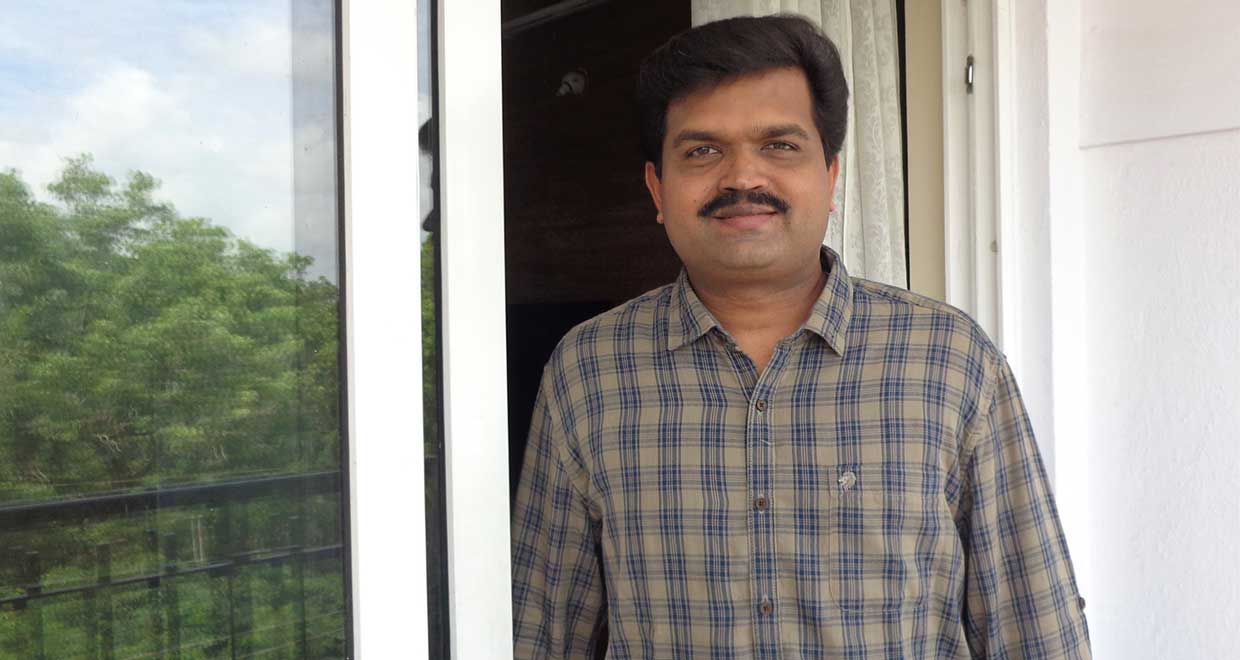
  • Vikram Koppikar, Senior Legal Manager, TCS, on being In-House Counsel, and his diverse experience

    Vikram Koppikar, Senior Legal Manager, TCS, on being In-House Counsel, and his diverse experience

    Vikram graduated from Government Law College, Mumbai, in 2000. He currently works with TCS and handles India and the MEA regions. He was engaged in the setting up of the first all women BPO in Saudi Arabia, which was the first of its kind. This involved interactions with the Labour Board as well as the Saudi Client. He has also been responsible SPOC for the takeover of an erstwhile Government IT Company – CMC limited, by TCS.

    In this interview we speak to him about:

    • His experience in IP Law
    • His role as In-House Counsel
    • Working for Marico, McDonald’s, Wadia conglomerate, and M/s. Jehnagir Gulabbhai, Bilimoria and Daruwalla

    How would you introduce yourself to our readers? 

    I would probably introduce myself, as the “Accidental Attorney”. I joined law college only because my friends at that time were joining the same. It was only upon attending law school, through the various lectures that I attended I realised, that I had made the right choice!

     

    How was your experience at law school? 

    I joined Government Law College (Mumbai), and did take part in the odd moot court competition. Through GLC’s recruitment process, I interned with and later joined, the law firm of M/s. Jehangir Gulabbhai, Billimoria and Daruwalla, one of India’s oldest law Intellectual Property (IP) specific law firm. The sheet variety of IP work, kept my interest going, even during my studies.

    You worked with a senior partner at a law firm on IP related matters. Can you describe the nature of the work you did? 

    I worked with the late Prof. Tehemtan Daruwalla, a true giant in the field of IP matters. He insisted that we always get our hands “dirty” in each matter, and ours was the only firm carrying out a manual (physical files) in the trademark registry (when it was allowed) to ensure accuracy of our opinions. In this tenure, Trademark search, opposition, Copyright oppositions (both at a registry and high court level) and patent drafting were all opportunities that I devoured with glee. A copyright case involving Mira Nair’s film Monsoon Wedding was a memorable case that I remember working upon.


    How has the advent of technology impacted the field of IPR law? 

    As Spiderman’s quote says “with great power comes great responsibility”, with strides in technology have arisen ways to counterfeit/ infringe such tech and consequently legislation which is struggling to keep up. For each “Paywall” Netflix subscription comes a “Bit-torrent” where you download the leaked “Game Of Thrones” episode. Of late, tech such as 3-D printing has also made counterfeiting that much easier. IP law, its relevance and furthermore understanding (I’ll touch upon that in my next answer) have never been more important.

    How did you secure a position with Marico? 

    I joined Marico, keen to try an in-house role. My work involved working with their R&D team, in the filing of trademarks, and assisting with drafting, search and opposition of patents. Most frequent were my anti-counterfeiting actions involving pan-India travel to ensure search and seizure of infringers of Marico’s intellectual property. I would stress here that both the knowledge of IP laws as well as the intent to act upon IP violations was markedly lower in those times, amongst police authorities than it is today and as mentioned in my previous answer, the proliferation of social media, technology has led to a greater cognizance of such offences in small town India.



    You have also worked with McDonalds India. How did this appointment happen? 

    I joined McDonald’s to be part of this global brand. Management’s mandate to open restaurants at a hectic pace led to exposure with business agreements, property laws, labour matters, taxes and of course litigation. It was interesting to fend various customer complaints seeking damages in lieu of rude behaviour by staff, or another filed by a parent whose daughter had received a Mickey Mouse with an Indian Flag with her “Happy Meal” thereby hurting his national sentiment! Was this a fall-out of the infamous Stella Liebeck case? I can only guess!


    What motivated you to pursue an LLM while you had a successful legal career? 

    Having had my brush with international legislation, dealing with an American parent corporation (McDonald’s), I decided to pursue my LLM in International, Commercial Law from the University of Durham (UK). I chose the UK, as common law as is practised in the UK serves as precedent for the Indian legal system. I further chose Durham, as this particular course had the right mix of international topics for an In-House career (in India). I would always recommend working for a few years before one opts for an LLM. This is because one’s previous (or future) career path should be supplemented by the LLM content that one chooses. Secondly, previous work experience will help you “value add” to the interactive class sessions, and examinations


    What are your views on the importance of higher education? 

    In my capacity as In-House Counsel of some years, I can vouch that each Indian corporate today, has some overseas business or funding. The importance of international commercial legislation, especially that of the EU, US and even China and Africa is crucial to have knowledge of. My advice to readers, is to first have a firm footing in the legal “stream” of their choice (IP, Tax etc.) and then take this footing further into the “ocean” that is international studies, to provide further impetus .


    How did you secure a position with the Wadia conglomerate? 

    I secured a position with the Wadia Group, through a common friend with Mr. Burjor Nariman, who was the then Head of Legal for the Wadia Group. The choice to continue In-House was a conscious one, as I by then realised the unique advantage that an In-House counsel holds in the management of a company (I will elaborate this in a subsequent answer).  The Wadia Group has some renowned brands such as Britannia Industries, Go-Air and Bombay Realty and the role offered a chance to work across these industries with a focus on litigation, customer complaints and property re-development contracts.


    What caused the shift to Capgemini India? 

    My experience with the Wadia Group focussed primarily on litigation and subsequently, was limited by the inputs I could offer to the senior counsels handling such high stakes litigation. When the Capgemini role of sole counsel came along, I grabbed it eagerly. My tenure saw Capgemini India (CGI) commence its “India Business” operations, which then extended into the Middle East leading to a plethora of business contracts. CGI then took over Ernst and Young’s India consulting division, which brought opened a floodgate of legacy litigation. My challenges as In-House Counsel were two –fold given the sheer volume and variety of work, and that I had previously never been attuned to the “IT Industry”. I can honestly say that this was the hardest time in my career and the lessons that I have learned in this period have helped me to this day.

     

    How did your appointment at TCS happen? 

    I was recommended to TCS by a previous senior, Mr. Debabrata Dutt. I currently am responsible for the Middle East and Africa geographies at TCS and handle services, licensing and BPO related contracts within these geographies. I was in charge of the take-over of CMC Ltd. an erstwhile Government owned IT Company by TCS. My crowning glory (so far) has been my role in aiding the set-up of the first All Women BPO services unit for a client in Riyadh, Saudi Arabia by TCS. I cite this example because, unlike other business transactions, this one was the first of its kind, and there was no template or precedent for the same. I was initially geared towards ensuring contract closure (as is the case with most In-House counsels). I realised that there were many “pitfalls” in ensuring successful project completion from issues including security (requiring clearance of the Burkha clad Saudi women, archiving video footage) and compliance (the Saudi personnel refused to handle transactions arising from countries such as Israel). Through my interactions with the Saudi Labour Board, I was able to highlight these challenges and obtain concessions/clarifications. In conclusion, not only did I aid the smooth roll-out of this prestigious project, but also a template was put in place, when a similar request came along from another Saudi Client. In closing, I would like to highlight that this set-up has since been visited by our Prime Minister Mr. Narendra Modi and the US First Lady Melania Trump, during President’s Trump’s visit to Saudi Arabia.


    What are the skills and qualities required to succeed as an in house counsel? 

    In the movie The Godfather, Robert Duvall plays Tommy Hagen, the counsel of the Corleone family, who is entrusted with some very unusual requests which he carries out with great patience and diligence. While a real life In House counsel may not get such unusual requests, he nevertheless has to be patient, diligent and protect business interests above all. Indian conglomerates today have stepped overseas and/or entered into diverse business operations and an In-House Counsel has to keep him/herself abreast with legislation both current and anticipated that may arise due to such venture. I remember Mr. Bharat Vasani (ex Legal Head; Tata Sons) mentioning how he underwent a technical training program to understand the DTH business at the time, the TATA group was entering the same (TATA Sky). On a personal level, during my McDonald’s tenure, I spent a week working hands on in a McDonald’s restaurant (serving fries, burgers) to understand the daily routine of the store and developing empathy to the store employee!


    In your experience, how is working in house different from working in a law office?

    An In-House counsel, unlike a law firm lawyer, has two masters, the Law and his CEO! This is because; an In-House counsel is required to be attuned to overall business interests and on some occasions, the whims of the management; from commencing litigation against an overnight friend turned rival or even developing a taste for your CEO’s favourite brand of scotch!


    What advice do you have for our readers who are primarily college students?

    Firstly, enjoy this time! The friends that you will make, will last you a lifetime. Secondly, be open to learning from various streams of law before circumstance requires you to specialise. Lastly, be always aware of trends not only in legislation, but the industry that you cater to. Legal services have changed as much as other industries, and as Richard Susskind predicts, it is going to change further yet!


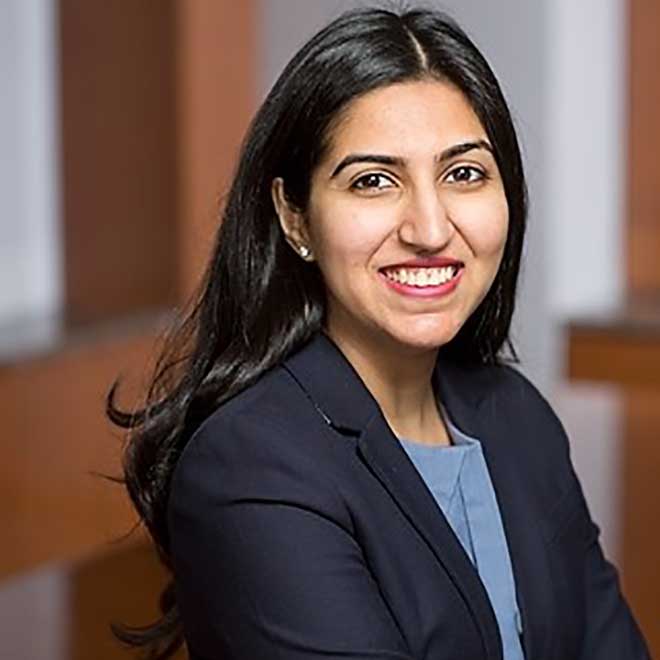
  • Shruti Chopra, Associate, Morrison Cohen LLP, on IP Law, and studying at Berkeley

    Shruti Chopra, Associate, Morrison Cohen LLP, on IP Law, and studying at Berkeley

    Shruti Chopra graduated in law from University of Mumbai, batch of 2011. She then went on to pursue her Masters at the University of California, Berkeley – School of Law, specialising in Law & Technology, Intellectual Property, Privacy Law, Media & Entertainment. She began her career as an Associate with a full service law firm in Mumbai, India focusing on Intellectual Property and Corporate law. Prior to joining Morrison Cohen, she worked at a social enterprise start-up with a focus on devising solutions to complex legal and business issues, and with a civil society non-governmental organization leading policy and advocacy efforts for the organization at the United Nations. Since being admitted to practice in New York, she has also provided pro-bono transactional and legal services to low-income entrepreneurs and start-ups through Volunteers of Legal Service.

    In this interview we speak to her about:

    • Pursuing the unique BSL LLB course at the undergraduate level
    • Studying at Berkeley
    • Her experience in IP law

    How would you like to introduce yourself to our readers?

    In my professional capacity, I am a dual-qualified corporate attorney and specialize in intellectual property, technology and privacy law. In my personal space, I am a food aficionado, who has a food blog on Instagram and love to travel.


    What is unique about the BLS, LLB course and how did it contribute to your career in law?

    The B.L.S, or the Bachelors of Legal Science degree, is similar to the Bachelor of Arts degree offered at most law schools. It is a great way to introduce oneself to the legal system without being overwhelmed with the intricacies of it. While the learnings of law school only lay the foundations of one’s career, the B.L.S course with its emphasis of subjects such as logic, legal writing and political science ensured a smooth transition to the L.L.B degree.


    What subjects did you take particular interest in during your law school days? 

    Very early on I knew that I wanted to do something in the field of intellectual property law. This was, in part, because I come from a family that is very serious about its movies, and because it was (is) a field of law that is still developing, allowing you to be part of the process. Because of this drive, and the lack of opportunities to study intellectual property law before the final year of law school, I went to Harvard University for a summer to study the basics of intellectual property and legal writing. This was certainly a turning point, both in terms of academics as well as extra-curricular activities!

    What kind of internships did you engage in during your student years which you feel were invaluable to you in reaching your current position?

    Unlike the norm at Government Law College, I never did semester or yearlong internships. Instead, I interned during the summer and winter breaks. While my first few internships were focused on getting a feel for corporate law, in my second year and onward, all my internships were focused on strengthening my background in different facets of intellectual property law. During the year, especially during my fourth and fifth year at law school, I worked as a research assistant to Madhavi Divan, who is an exceptional teacher and mentor. She was working on updating her books “Facets of Media Law” and the opportunity to contribute to her research is largely responsible for me heading to Berkeley for my LL.M., and for being deeply invested in new media and privacy law.


    What are your areas of specialisation in law? 

    My areas of specialization are intellectual property, technology and privacy laws. I selected intellectual property laws as an area of specialization in my second year of law school, and the rest followed as I made my way through law school and professional life. The most important factor, in my opinion, is finding something you are truly passionate about. A lot of people say that law is a very dry field, without much excitement. I beg to differ. If you look around, every aspect of our life is touched by law; it is about finding what excites you. For me, since I grew up on steady appetite of movies and television, I was always enamoured by the industry and always knowledgeable about it. Soon, with technology – whether it is mobile communications, software applications, social media platforms or user content – my horizon broadened. We spend so much our day working that it is important to find something that truly motivates and stimulates you, or you risk a burnout.


    Is an L.L.M absolutely necessary for a career in law? 

    The LL.M. degree is certainly not a requirement or necessity; it is, however, a good asset. My decision to pursue the LL.M. degree was based on three things – introduction to a different legal education system, access to people from diverse backgrounds, and the opportunity explore different subjects that didn’t exist in India at the time. I chose Berkeley since it was selective in the number of Indian students it enrolled, ensuring I would be interacting with people from different countries; I met people from 49 different countries. Berkeley also has a stellar faculty for intellectual property and privacy law.

    One should expect to benefit from an LL.M. if one has an open mind; the program will allow you to make friends that will last you a lifetime, expand your professional network, and widen your thinking and adaptability to different situations. The LL.M. program is not only a professional degree; if you allow, it can be instrumental in shaping who you are as well.


    Are there any commendable Indian institutions which you would recommend to a student pursuing an L.L.M, or would you suggest looking only at options abroad?

    Since the LL.M. degree is not a necessity, I wouldn’t recommend someone graduating from an Indian law school to pursue the LL.M. degree in India, unless of course if required to get into academia. The true value of LL.M. lies in its diversity of cultures, people and the law, something better accessed outside your own country.


    Tell us about your work experience at DSK Legal where you’d held the position of Associate.

    My experience at DSK Legal was absolutely wonderful. It was my first job after law school, and I couldn’t have asked for a better set of people to work with. For me, it was absolutely critical to work with people I could learn from, and working with Mr. Anand Desai ensured that. Even though my area of practice has always been related to intellectual property, and therefore everything from entertainment law to M&A transactions to trademark prosecution, DSK Legal gave me the opportunity to work on commercial litigation, to draft memos on companies act provisions, understand real estate transactions, and experience criminal trials. The diversity of experiences is important when you are new because it gives you the ability to view things in a comprehensive manner, and not in silos.   


    You’ve assisted The Walt Disney Company in the capacity of a secondee. What did your job here entail?

    My favourite childhood movies came from Rajshri and Yash Raj; I mentioned how films were integral to my childhood! That aside, DSK Legal gave me a multitude of opportunities to learn, and one of them was the chance to with the gaming division at The Walt Disney Company. My work here comprised of two things – helping the division comply with regulations and polices set up by the Burbank office (HQ) of the company, and advising the business and product teams on legal issues that needed to be addressed in new releases. This experience has stayed with me; it taught me the importance of the commercial aspects of a business when providing legal advice.


    Tell us more about Morrison Cohen LLP. How did you come to work here?

    My path to Morrison Cohen, LLP hasn’t been conventional – to say the least. Unlike most people, I moved to India after my LL.M., worked at DSK Legal for two years, and then moved back to the United States to take the bar exam and work here. Since I was transitioning between countries, I thought it was the opportune time to expand my horizons before heading back to law firm life. I worked with a social enterprise start-up and with a non-profit affiliated to the United Nations, while providing pro-bono legal services to small businesses, all before I began working at Morrison Cohen, LLP in New York. Once I was ready to move back to a law firm, I applied for a position with the firm, and less than six weeks later I was working as an Associate. The path was a long and winding road that involved varied experiences, lots of networking, staying relevant even while not being in the legal field, and a heavy dose of confidence in my abilities.


    What can you say are the notable differences in work culture in Indian and foreign/international firms?

    I don’t think I prefer one culture over the other – both have their pros and cons. The difference in working at a top tier firm in both these jurisdictions (and I would imagine over the world) is fairly minimal. However, depending on the type of firm you choose, your experiences can differ. For example, at a mid-size or boutique firm you will likely have more responsibilities. Obviously, the US being a more mature market, firms are more streamlined in the way they function, which makes day to day life a little easier. That said, Indian law firms allow you cross-over access i.e. a corporate associate can get experiences in litigation, or a real estate associate can work on a purely corporate matter; something like that would rarely happen in the U.S.


    Tell us about your current work profile as an Associate at Morrison Cohen LLP. 

    Since I work in the corporate team but specialize in intellectual property law, a regular work day is diverse. I could begin my day working on an intellectual property and technology due diligence for a corporate transaction, follow that with a trademark application filed with the USPTO, and end with drafting a privacy policy for a start-up. In between, there is working on commercial agreements, both standalone and for transactions. This diversity allows me the opportunity to understand multiple business types, and how aspects of law apply to each. As I said before, it is important to be excited about the work you do, and the assortment of matters ensures that it never gets boring!


    Where do you see yourself ten years from now? 

    My decision to become a corporate lawyer focused on intellectual property, technology and privacy was based on the fact that the industry is ever-changing, and ever-growing, and therefore, always challenging. While a decade ago people were coming to terms with the advent of social media like Facebook and user generated content like YouTube, today it has moved towards security and privacy concerns of big data, impact of blockchain and alternate currencies like bitcoin, and the importance of developing and monetizing intellectual property assets in business. Ten years from now I imagine the industry will still be as dynamic, and by association, my practice, as challenging and exciting. I see myself as a lawyer to individuals and businesses grappling to understand how the legal ecosystem applies to the advancement of technology.


    What is your message to our readers?

    As clichéd as it may sound, believe in yourself. You are always going to be your best advocate, and if you can’t believe in yourself, you can’t expect anyone else to. In our profession, trust and confidence is everything – only if your seniors, peers and clients trust you and believe in your abilities are you able to progress. Always hustle, get up and move ahead; there is no substitute for plain hard work. Lastly, don’t be afraid to reach out, to help and be helped – find mentors, be a mentor, volunteer your time, say yes to a challenge, and allow yourself to grow. And since I believe in practice what you preach, if anyone wants to reach out, I am happy to talk and help in any way I can – I can be reached at schopra@morrisoncohen.com.  

  • Nazneen Ichhaporia, Partner, ANB Legal, on IPR Law, and her diverse experience

    Nazneen Ichhaporia, Partner, ANB Legal, on IPR Law, and her diverse experience

    Nazneen graduated in law from University of Mumbai, in 2009. She is a Partner with ANB Legal since 2014, and heads the Private Equity, M&A, Intellectual Property Rights and General Corporate practice of the Firm. She has expertise in matters relating to venture capital investments, acquisitions of unlisted and listed companies, joint ventures, cross border transactions and structuring, and external commercial borrowings. Nazneen has, in the past, also been a part of various capital markets transactions like Initial Public Offer, Rights Issue and Qualified Institutional Placement.

    In this interview we speak to her about:

    • The Indian IPR regime
    • Her time as Partner at ANB Legal
    • Her experience thus far

    How would you introduce yourself to our readers?

    I come from a family of accountants. My family has not known lawyers for far and wide in our circles. My parents, just like their ancestors had instilled in them, have taught me the philosophy of ‘good thoughts, good words and good deeds’ which is the mantra I try and follow at all times (well, most times, so to speak).  I am the only child and hence have been pampered quite a bit. But that has never prevented me from working hard and going full throttle to achieve what I want. Right from my school days, and through college, I have been very good at academics as well as at various extra-curricular activities. I secured the 7th Merit Rank in Maharashtra State at the HSC exam. I was also the recipient of Maharashtra State Open Merit Scholarship for three consecutive years. I pursued a Diploma in German language from the University of Mumbai in 2004, and secured 2nd merit rank. I was also the recipient of various prestigious awards from my college, such as “Lights Of Podar Award” and the “Principal’s Special Award” in the year 2005-06, for outstanding contributions to various co-curricular and extra-curricular college activities.

    Can you tell our readers how the combination of B.Com and LLB has been beneficial for you in your career?  

    Actually, I started with the three years law course after completing my B.Com, as an interim arrangement while I studied and prepared for my MBA entrance exams.  However, within the first six months of starting the course at Government Law College, Churchgate, I was hooked on to it completely, and decided that this was exactly where I wanted to be, rather than pursuing any management or other degree. B.Com definitely gives you the edge over others, when you have to understand the commercials/financials involved in a transaction, specially an investment or M&A deal. And a better and quicker understanding is the key to help you negotiate and drive the transaction in a particular manner, with the shortest possible turn-around time.  


    Have you ever considered pursuing higher education? 

    In the field of law, your work is your education. I do not think even the most proficient lawyer loses the tag of a student till he/she hangs in his/her boots. Higher education is surely beneficial to a certain extent, but what you learn from practical exposure is what guides you best. To implement what you know and to put it to practice, giving the best way out to the client, is always priceless!


    What were your areas of interest in law school?

    Reading and languages have always been my passion. I have dabbled in both French and German during my college days, in addition to Hindi, Marathi and Gujarati, which I can understand and speak quite fluently. Before joining law school, I had an avid interest in debating, and had won quite a few competitions for my college. This continued in law school, by participating and helping to organize various moot court competitions. I was also an active member of the Social Service League. Pistol shooting is another activity very close to my heart, though I don’t get much time for it these days. I helped coordinate and form the pistol shooting team for our law college, which was ranked among the top five teams from the Mumbai University.


    How did you land your first job?

    One of my good friends, Jayom Shah, who had then recently started practising as an Advocate, helped me with getting my first job as an intern at Kanga & Co., under the senior Corporate Partner, Ms. Preeti Mehta. My work started initially with legal research, opinions and helping out with various legal audits/ due diligence for private equity and M&A transactions. This gradually progressed to learning how to draft and negotiate complex legal documents for such transactions. Since the transactions involved parties across India, I started travelling quite a bit for work, which in turn helped me become more and more independent, and also culminated into my present love for travelling and exploring new places.

    I had a brilliant team when I used to work in Kanga & Co. My colleagues are my friends even today. We discuss legal issues among other stuff and coming from diverse practise areas, help each other whenever need arises. I have a lot to thank this firm for, and am ever so grateful for having landed there with my first internship. The four years that I spent there, from 2007 to 2011, without any doubt, had a very significant influence on me and helped shape up my legal career, leading me to where I am today.


    Can you recall the first time you argued a significant matter?

    Well I am not a litigation lawyer, so my arguments have been in the form of negotiations for various corporate transactions. Having said that, I did appear quite briefly in court, when I did a short stint in the field of litigation with a senior lawyer, Mr. Hakim. He put great faith in me and coaxed me to appear in one of his matters before the Hon’ble Bombay High Court, which I did, and thoroughly enjoyed the experience.


    Can you describe the nature of your work as a young advocate? 

    I have already spoken on the type of work I handled as a young lawyer in the corporate department in Kanga & Co. Being an intrinsic part of various transaction teams while working here, and also getting the benefit of personal interaction and guidance from the Senior Partners of the Firm, helped me to get an inside edge, which I believe has taken me a long way. When I left Kanga & Co., I was again fortunate to be working with another brilliant lawyer, Ramesh Vaidyanathan, at his firm Advaya Legal. I got to learn a lot working with him as well, especially the subtle nuances of dealing with various types of clients, both domestic and international, and always delivering to their satisfaction. He has this amazing knack for simplifying and explaining complex legal issues, to arrive at the most effective/practical solutions, which I have tried my best to imbibe.

    My biggest challenge as a young lawyer, was to step out of my sheltered cocoon, and create an identity for myself, to stand out and hold my own right amidst a brilliant and dynamic set of peers and colleagues. This healthy competitiveness helped me in keeping on my toes during those initial years, and not slackening my pace, which I believe is crucial for all young lawyers. Whatever the odds, you have to keep going at all times if you want to create your own niche.


    How did you come to be a Partner at ANB Legal?

    ANB Legal was the start-up legal venture of one of my good friends, Ashish Bhakta, who is one of the best lawyers I have known. I first met Ashish during my days at Kanga, where he was a Partner when I started my internship. Subsequently, he shifted to London, U.K. and was working there with one of the reputed international law firms. However, due to personal reasons, he had to relocate to Mumbai around the end of 2013. His offer to practice independently with him and his newly started firm ANB Legal, came at just about the right time for me. At that time, I was looking at shifting my practise to part-time independent consultancy, which would give me the discretion and flexibility to manage and devote half of my time for certain family and business interests.

    Today, I am back to full-time legal practice, and am the partner in charge of the corporate practise at ANB Legal. As a part of my role here, I devote equal importance and time to grooming my colleagues and interns, as I do to executing work, and that’s one of the things that I enjoy the most. At ANB Legal, we strongly believe that whoever comes to our Firm has to learn, and benefit from our knowledge and experiences. Our principal and senior associates now handle a lot of independent work, however I make it a point to always be available for them, whenever they require. I also try and keep pace with new knowledge management practices, and strive for constant improvement in all aspects of our work.

    What is your opinion of the Indian IPR regime?

    I think one of the biggest challenges facing our present IP laws, is to keep up with the fast evolving, and ever-changing technology. Blogging, Facebook, twitter and other social media, as also various apps and web-portals for conducting your business online, have put forth a completely new sphere of intellectual property and intellectual property users, that were unheard of earlier.  Owning, managing and exploiting your intellectual property in such scenario, without compromising it, has itself become a challenge. Our IP laws need to be reviewed and updated frequently, to be in sync with these real-time developments and trends. The fact that we have realized this and are initiating steps in the right direction, is evident from the recent move of the Government, by introducing the online filing process for registering Trade Marks and revamping the Trade Mark Rules a few months back. More such updates need to be initiated pro-actively.


    Can you give our readers some advice that will help to increase their chances of getting published?

    Good content, written from the heart and well researched is always appreciated. Do not hesitate in sharing your thoughts and views, merely because they are not in line with the popular opinion. Explain your rationale with logic and illustrations, wherever possible. You never know when a good appreciative reader takes your content higher.


    In your opinion based on your experiences, does law school prepare a student sufficiently for all the things expected from them after graduation?

    No, academic knowledge gained from law schools is necessary, but not entirely sufficient. It needs to be supplemented with practical training and exposure, through various internships and projects.


    Do you think that methods of alternate dispute resolution such as arbitration are the future of dispute resolution in India?

    I think that arbitration as the most effective mechanism of alternate dispute resolution, has great potential and future, specially in India which is a fast growing economy, and likely to be one of the major business hubs of tomorrow. Since I am mainly involved in corporate law and transactional work, I don’t think I am the right person to comment on the required reforms as such. However, I can surely say that I feel the need for an effective ADR mechanism more and more, while being involved in an increasing number of cross-border negotiations and global transactions.


    What is your opinion on the recent proposal to allow foreign law firms to operate in India? 

    If it’s going to be a level playing field, competition is always welcome. We should have faith in ourselves. I don’t see any reason to block them from the legal field in India, specially since they already have been here in other professional fields like tax and accountancy. Professionals who are good, will anyways manage to keep up with the changing times, and don’t really have to worry. Other impact will have to be seen. Whichever way, it should definitely benefit the clients. Let’s wait and watch!


    How do you remain updated about the developments in the numerous areas of law that you deal with on a daily basis?

    Unlike our seniors, we have the advantage of the digital and online world, which makes this task much much easier than the herculean process that they had to adopt to gain knowledge and updates. Today, you have access to various knowledge-share hotlines, websites, apps, etc. which help you keep on top, with minimal effort. Also, conferences and news-letters and magazines on various legal issues and trends are good options to help keep up.


    What advice do you have for our readers who are primarily college students?

    Be true to yourself and the profession, and in turn, the profession will surely give back to you, sooner or later. Don’t have a closed mind and be open/receptive to new opportunities and ideas. You never know where it may lead you. Last but not the least, don’t be intimidated and lose yourself in the jungle out there, forge your own path ahead.  Keep your faith and do not give up, ever!

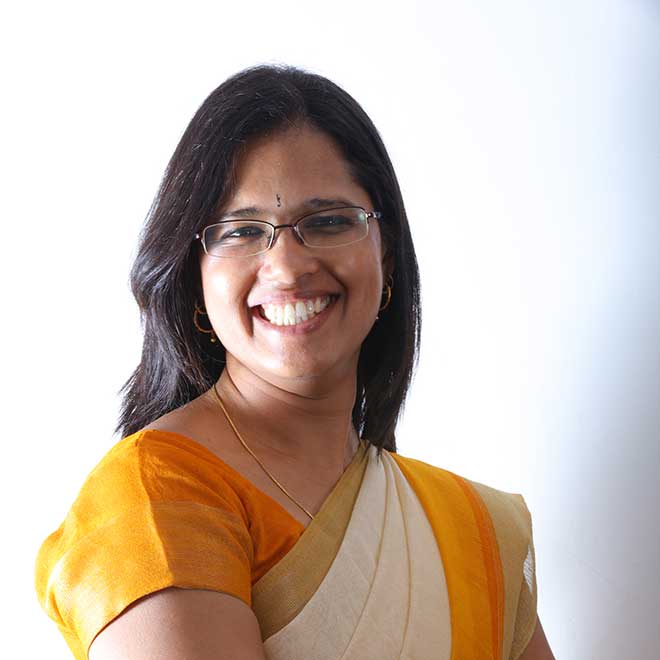
  • Swapna Sundar, CEO, IP DOME, on Intellectual Property Rights Law, and starting her own firm

    Swapna Sundar, CEO, IP DOME, on Intellectual Property Rights Law, and starting her own firm

    Swapna graduated from Tamil Nadu Doctor Ambedkar Law University, in 2000. She then went on to pursue her Masters from Brussels School of International Studies, University of Kent, in 2002. She is presently the Principal strategist and CEO at IP DOME – IP Strategy Advisors. She co-founded the company with partner, Mr. Raghavendra Ravi, a CEO coach, consultant and expert at operations and supply chain. She has also been teaching European and US patent law at the NALSAR PG diploma course on Patent Laws, in addition to giving guest lectures at different institutions, including the Asian College of Journalism (ACJ), Symbiosis Law School, Vellore Institute of Technology (VIT), IIT-M and Anna University. She also sits on the IP Advisory Committee of the Tamil Nadu Technology Development and Promotion Centre (TNTDPC), an autonomous not-for-profit society of the Government of Tamil Nadu and Confederation of Indian Industry (CII). The TNTDPC helps formulate policies to guide use and protection of IPR in Tamil Nadu.

    In this interview we speak to her about:

    • Starting her own company
    • Her experience in IPR
    • Her teaching experience

    Can you tell our readers about your firm?

    At IP DOME, we work with corporates, MSMEs, research institutions and individual inventors to take their inventions and creations of the mind – books, illustrations, musical works – to the market. We are a multi-disciplinary team, with Hariprasad – a hardware engineer heading operations, Dhanya – a biotechnologist heading analysis, Karthick handling Business Administration, and Prashant – an electronics engineer spearheading market expansion. In addition to being an excellent supply chain expert, Mr. Raghavendra Ravi is a formidable chemist with more than a cursory interest in perfumes and oil. Clients get to meet experts from their area of interest even at the first meeting, besides meeting me or other lawyers at the firm.  Therefore, my work at IP DOME is extremely interesting and I look forward to rewarding discussions and new challenges every day. In the past ten years, we have also learnt how to leverage the opportunities afforded by the bustling Indian market. I am happy to say that our Toolkit for the UK IP Office ‘The IP Smart Approach to Doing Business in India’ has earned us a place as strategic partners of the UK Institute of Exporters’ Doing Business in India Guide.


    What was it that got you interested in the legal field? Do you come from a family of lawyers?

    No, I don’t come from a family of lawyers. My father was a Lieutenant Colonel in the Army. My uncle was a respected public prosecutor at Vellore, but by the time I became a lawyer, he was already semi-retired. I think my interest in law came from my desire to work with people, and I found the logical process of thought required to build arguments fascinating. I do research and teach credit courses on technology law, and then interface between technology and rights.


    Did you participate in extracurricular activities such as moots, debates, etc. in law school?

    I did participate in a couple of moots while at the Madras Law College, but I did not find it very exciting. I have participated in debates while at the Madras Christian College, where I pursued my Bachelor’s degree. I started working in a legal firm from my first year after college hours. I found that very rewarding. I had the opportunity to support a protest by farmers opposing shrimp cultivation, which was destroying the land through inundation of sea water. My task as a (trainee) lawyer was to ensure that the protestors – mostly women and children – were not harmed. Eventually, they were taken to a school where they were made to wait till remand. I took the opportunity to ensure they got water and food, and also taught them a preliminary class on Article 21. Interestingly, the arresting policemen participated avidly in the discussions, pointing out that their human rights were being violated by long hours of ‘bandobast’ duty and unpaid overtime!

    Later, when I was studying for my ML in International Law with International Relations, I worked, as a paralegal, with Monsieur Nicolas Angelet, a lawyer specialising in refugee rights. The cross-cultural work provided me with insights into European governance models, history and notions of nationhood, that I may otherwise not have learnt.


    What was your first job after law school? 

    My first job was that of a junior lawyer, in the very firm where I had interned. I suppose they liked my work and found me competent.


    Can you tell us about being a teaching assistant at the University of Kent where you deliver lectures on British constitutional law and British Human Rights law?

    I studied for my ML at the Brussels School of International Studies (BSIS), which is the European School of the University of Kent at Canterbury. My professor Dr. Wade Mansell, liked my papers on International Relations, where I had explored constitutionalism and colonialism, and how many of the most volatile regions of the earth had been distressed colonies. My papers on the TRIPs agreement were also appreciated. The University of Kent offered me a seat for Ph.D. and a teaching assistantship to help pay the tuition.

    Constitutional law in the books, and Constitutional law on the streets, or in the courts mean different things to different people. UK has no written Constitution; it is derived from many different sources. My background as a lawyer, and my interest in Constitutional law were advantages, since they were looking for someone with practical experience. The British Human Rights Act had been promulgated only in 1998, and not many people were familiar with it. I had an interesting experience giving a lecture on the Act to the Metropolitan Transport Police. They subsequently wrote a very good feedback about my lecture.


    What got you interested in the field of intellectual property?

    Mr. Kamath of Kamath & Kamath strongly recommended that I should register as a Patent attorney and I thank him for that. A patent agent drafts and files the patent application on behalf of the inventor, or the applicant. The role of the patent agent is to capture the invention in its technological brilliance, and fence it with appropriate legal mechanisms. The claims are the most important part of the patent application, although it forms, in general, about 10-15% of the content of the application. Today, my work is largely strategic. I work with our patent engineers and illustrators to communicate a strategic agenda to the application being filed, bringing to it market insights, technology trends and international strategy.

    My exposure to International Economic Law and the macro-economic scene relating to technological advancement, market share, banking and the global development agenda were crucial factors in driving my attention and interest towards IPR. The WIPO course on IP strategy that strengthened my understanding of the connections between Intellectual Property resources, competitive advantage and sustainable growth. It is very interesting to keep track of changes at local and global levels in areas of economics and market, and the volatility keeps us on our toes.


    What caused you to leave teaching and take up a job at a law firm?

    It was always my intention to work. Giving lectures in new and emerging areas is interesting, but I don’t have to grade papers, or guide research. I admire the dedication of law professors, who not only prepare interesting lectures for students, grade papers, and advise on reports, they also find time for their own research and publications, while supporting the institution. I don’t think I could have done it.


    You are currently the CEO of IP Dome Strategy Advisors. What is the nature of your work? 

    As CEO, my job is more administrative than legal. I put out the fires, manage the resources, oversee the operations (without stepping on the toes of competent colleagues), and act as a point of communication between the directors and corporate operations. As a small organisation IP DOME also depends (largely) on me to provide brand visibility, develop markets, reach out to senior associates in India and overseas, and provide expansion plans. As we look to expand into Singapore and USA in the near future, I am also expected to drive the project.

    India is a net importer of technology. I don’t see this changing in the next decade or two. The role of the IP lawyer in India will not remain focused on inventors and research institutions. The IP lawyer or IP firm will have to evolve into market specific entities with wide ranging capabilities, including negotiation, contract management, statistical modelling, data analysis and data management.


    What advice would you give those of our readers who want to pursue a career in the filed of intellectual property?

    It is interesting to note that while young lawyers are interested in IPR, not many are interested in science and technology, or mathematics. I suppose that is why they became lawyers in the first place! We are always looking for whip smart lawyers who are also good in scientific disciplines. Going forward, I foresee a good demand for lawyers with knowledge of science and market or economics and statistics. As the field evolves in India, it would be important to keep track of the changes in IP law and IP regimes across the globe.

    Engineers talk differently from lawyers; biotechnologists and medical professionals use jargon that is incomprehensible to us. Data analysts have a different perspective on an course which we are contemplating. You would be benefited if you learn how to work with people from different scientific disciplines. When contributing your skills or ideas to people from other domains, it helps to be familiar with the jargon or terminology of their discipline. I would also advise learning to read and interpret graphs, trend charts and data models.


    What is your opinion about the importance or necessity of higher education?

    ML at BSIS provided me with an understanding of the market as a powerful agency of amorphous actors, which is nevertheless organised and well-structured. This perspective lends me the ability to identify and re-orient tactically to economic transitions. Higher education, according to me, should enhance competency or skills in a chosen area of work or interest. A lawyer who studies for Master’s with basic knowledge of law supplemented with practical experience, stands to gain the ability to define her role more finely, and align herself with market requirements. Higher education must either drive better understanding of the domain of operations, or help the lawyer to reach professional goals. Choose wisely, both on the basis of what you want to study, and where to study.


    You are a part of the Ethics committees of various institutions. What does this position entail and what kind of matters do you have to deal with?

    I am a member (legal) of the Institutional Human Ethics Committee of the National Institute of Epidemiology, an ICMR body, and a member (legal) of the Ethics Committees of IIT-M, SRM Medical College and Hospital, the National Institute of Siddha and the SRM Institute of Medical Sciences. An ethics committee is an independent body consisting of healthcare professionals and non-medical members, whose responsibility is to protect the rights, safety and wellbeing of human subjects involved in a clinical trial and to provide public assurance of that protection. As member (legal) I keep track of whether the research protocol ensures that the rights of the patients are not violated; at the same time, I also see that the rights of the researcher to conduct research on human participants is not unreasonably curtailed. The other members of the committees look to the lawyers on the committee to ensure that laws are not violated, and that institutions, researchers, contract research organisations and sponsors of trials do not avoid their obligations. We study and comment on the trial protocol, suitability of investigators, adequacy of facilities, significance of number of participants, compensation, consent and waivers, reporting on adverse events and termination of trials.


    What are the measure we should be taking to empower women further?

    In general, we can empower women by promoting gender balance in recruitment and promotions, and by driving a culture of diversity. In India, this includes people from different communities, as well as different states. It is important to realise that if Indian companies fail to recruit and retain talented women, they will only exacerbate the acute shortage of competent personnel. It is necessary to support women by encouraging conversations around gender equity and professional goals in a co-working situation. Women feel valued when their self-assessment of technical competencies, and professional relationships meet and align with the organisation’s assessment of them. An organisation that values its women, promotes a culture that encourages openness, accessibility, collaboration and community, allowing women to contribute with greater confidence. Empowerment also means promoting women to positions of leadership and decision-making.

    At IP DOME, we strive to empower all team members by encouraging a focus on health and wellness, both mentally and physically. We aim to create a workspace and culture that empowers and inspires members to achieve professional excellence. Whether men or women, we encourage team members to ‘be yourself’. This promotes a transparent and balanced company culture. Having a family should not deter either men or women from pursuing a fulfilling career; this means we are prepared to enable flexibility in work schedules and help with education expenses. As a woman CEO, I tell women colleagues to develop a stronger political self, questioning the straitjackets that society may insist on. They should be able to think and act as competent professionals and leaders.


    Do you think law school prepares students for real world challenges?

    The purpose of law schools is to prepare students to pass the Bar Exam and to be responsible and ethical members of the legal fraternity. But I would not say that they are sufficiently prepared for a successful career in law, when they graduate. While a graduate from a good school may meet the knowledge and competency criteria, other crucial skills will have to be learnt from school activities that students participate in, or the internships they take up. Important skills include case management, communications, non-electronic research, drafting, analysis of law and facts, strategies for resolution, and a whole host of client management issues including evaluating potential client engagement, maintaining client trust, arriving at budget and terminating client relationship. In addition, account management, interpersonal skills and working collaboratively – challenges in working any industry, will also have to be learnt by the new graduate.  

    I believe that graduates who allocate sufficient time to planning their careers, and understanding their capacities and competencies stand a good chance of succeeding in their chosen profession. The planning should be a combination of vision and intense, detailed planning. There is one quality that appears to differentiate a successful lawyer from the rest – the ability to be tactically flexible in achieving a strategic goal!


    What are the challenges you have faced in building your career as it stands today? 

    IP DOME entered the market with a clear strategy to promote IP Strategy in India. India’s unique ecosystem – high growth coupled with infrastructural inefficiencies and delays in bureaucracy and judiciary, and the large cost of controlling infringement by many small and micro-unites – call for special measures and strategies. In the last 10 years, we have earned a reputation for strategic IP services. In fact, the UK IP Office commissioned us to write a Toolkit: IP Smart approach to doing business in India, which is available for free download on our website, which has received good feedback.

    The challenges have been in terms of maintaining focus on our core expertise, developing and nurturing a strong network and attracting top talent. Yet another challenge is enabling and encouraging visibility and recognition for our subject matter experts, as many fora recognise only me as a resource person! Brand building requires considerable investment in terms of time and resources from the company as well as the team members, and as we provide highly specialised services, we also invest in education and awareness campaigns in colleges, schools, SME and entrepreneurship development institutes, self-help groups and industry bodies. The experience has taught me that deriving value from IP in India requires tactical planning and strategic deployment of resources from the time of conception of an idea to the launching of it in the market.


    How do you maintain a work- life balance?

    Personally, my method is to apply my mind to many different projects simultaneously; my second book on the Marina pro-Jallikattu Protest – Occupy Marina! will be released in September. I believe that in a balanced life, we must accord equal priority to family, career and other interests that make us who we are. There are a few well-recognised means of ensuring a good work-life balance for the team. The following have worked well for us:

    1. We know we are running a marathon, not a sprint. Endurance as a team is more important than a short burst of speed resulting in burn outs, frustration and high stress levels.
    2. We know we are human, and have limitations. Sleep deprivation, high stress levels, no time to decompress, irregular hours – all these result in less than optimum health. We prefer productive hours to long hours.
    3. Delegation and redistribution. In a sense, we communicate that no one team member is indispensable. This helps us to let people off to take care of family or health matters. When work is distributed evenly, the team feels less burdened, and friendlier towards each other.
    4. Take the help of an organisational consultant. Our organisational consultants, Dr. T.T. Srinath and his colleague, Mr. Sadasivan, encourage a balanced outlook to life, and ensure that we are constantly aware of our current state of stress as individuals, and as members of a team.


    What advice do you have for our readers who are primarily college students?

    OK, here goes: Don’t watch TV. There are other ways to keep yourself informed, and a million things happening around you that will provide you with meaningful entertainment, future visions, opportunities and choices. Don’t get hooked to social media. You will only keep hearing what you like; social media channels, use filters to amplify what you respond to, and filter out what you don’t like. Keep track of trends, but don’t be too quick to specialise. If you have interests in areas like science or fine arts, now is the time to explore. After ensuring good grades, spend more time building relationships. Great marks won’t help you in practice, friends and seniors will. Your free time would be excellently spent if you read a few books, among them, 1984 (George Orwell), The Trial (Franz Kafka), The Social Contract (Jean-Jacques Rousseau), The Handmaid’s Tale (Margaret Atwood), History Will Absolve Me (Fidel Castro), My Name is Red (Orhan Pamuk), Serious Men (Manu Joseph), India after Gandhi (Ramachandra Guha), Clarence Darrow for the Defence (Irving Stone), Midnight’s Children (Salman Rushdie) and One Hundred Years of Solitude (Gabriel Garcia Marquez) – in no particular order.


  • Prasanth V.G., Partner, J. Sagar Associates, on his time in NUJS, and his litigation experience

    Prasanth V.G., Partner, J. Sagar Associates, on his time in NUJS, and his litigation experience

    Prasanth V.G. graduated from WBNUJS, Kolkata in 2005 and thereafter joined Delhi office of Paras Kuhad and Associates. He is currently a Partner at J. Sagar Associates, Bangalore. He primarily specialises in dispute resolution and has an experience for twelve years. He has been handling matters relating to Company Contracts, Specific Relief, Intellectual Property, Banking, Infrastructure, Energy, Consumer Protection, Infrastructure and Arbitration. He has a vast experience in the drafting of pleadings, applications and evidence briefing for several counsels in numerous matters, and has also done many arguments including both final and interim arguments at various fora.  

    . In this interview he talks to us about:

    • His law school life at WBNJUS, Kolkata 
    • His experience of a litigation lawyer at a firm
    • The essentials of a good commercial litigation lawyer

    Given that most of our readers are law students and young lawyers, how will you introduce yourself to them? 

    I will not shamelessly claim that I am a “Super Lawyer”, but I am certainly one who constantly dreams of being a “Super Lawyer” whom society looks up to. I am a Partner at the Bangalore office of J. Sagar Associates and my area of work is dispute resolution.  I graduated from the first batch of NUJS, Kolkata in 2005 and started my career at the Delhi office of Paras Kuhad and Associates in 2005. In 2010 I shifted to Bangalore and worked for a short period of ten months at KLaw. In April 2011 I joined JSA Bangalore and I have been here since then. My father’s father and my mother’s great grandfather were lawyers, but both of them had passed away much before I was born and therefore I cannot say that I am from a family of lawyers.


    How was your experience at NUJS?

    To be frank, I had never before come across in my life an ambiance as fiercely competitive as was present at NUJS. The first batch of NUJS was a unique pack of some of the most gifted brains and talents. The levels of competition we had were naturally very intense. The fact that we were guided by a personality as towering as Dr. Madhava Menon, who had the unique ability to inspire his students to always dream high and strive, was the most remarkable feature of our NUJS life. He would constantly motivate all of us to very deeply believe that anything less than excellence is self-derogatory. I feel truly blessed to have studied law as a part of the first batch of NUJS, which had tremendous levels of ambition and zeal and was constantly very high on energy and drive.

    However, one tough question that my senior partner recently asked me was whether in the last twelve years anyone from our batch has really become a legend for his or her age. I found it very difficult to answer. Everyone is working at decent designations to keep their pride happy and earning decently to keep their families happy, but whether that is all the NUJS dream was, is a soul-searching question. Hopefully, I will have a clearer and happier answer after the next twelve to fifteen years. One may take until the age of 35 to settle down, but if he does not have the big break between 35 years and 50 years, one may rather reconcile that it was all for the making of just another office-goer. The hair has already started the tendency of greying here and there.


    What were your areas of interest in law school?

    Amongst the various academic subjects, I had maximum interest in Constitutional and administrative laws. I also deeply enjoyed the laws of contract, specific relief, property, statutory interpretation, etc. Preparations for and participation in both internal and external moot courts was considered to be a very important exercise by our whole batch. I also had my share of regular mooting experiences in those five years, including representing India at the Stetson moot court at Florida. Exploring and re-exploring the city of Calcutta on every Wednesday, which used to be the weekly holiday, was one of the most joyous part of our life. NUJS life was the first phase in my life which introduced me to a truly national ambiance. It was a remarkable experience getting to know and making friends with the peer coming from various different cultures and sensibilities across the country. All these were matters of great excitement at the impressionable age.


    Can you recall a few interesting instances in your litigation career?

    I will first answer the question on preparation. More important than how I routinely prepare, is how I think one ought to prepare. I am therefore making a general analysis and not any self-proclamation. One message I learnt from the great masters I had the occasion to meet or work with, is that every court appearance, however small or big, must be treated as a break by a litigation lawyer. It always helps to prepare for a matter beyond your brief for any given day’s appearance. Trying to put a lot more effort into every matter than what may be immediately required to attend to it, will over a period of time, make you very resourceful.

    While in my initial days at PKA Delhi, I was given a lot of exposure in DRT and DRAT matters. One set of matters that Mr. Kuhad made me in charge of was a series of cases filed by various banks and financial institutions against a pharmaceutical company, which was our client. I still remember the strenuous manner in which I went about labouring to put together the written statements and various interim applications on behalf of the company, trying to bring out some defence or the other in each matter, which otherwise appeared to be very open and shut against our client. It was a lot of learning on the job which gave the conviction that no matter can be given up as defenseless, if you are willing to go into the depths of documents and do some creative work at linking or de-linking ideas and points.

    Another Delhi matter which stands out in memory is an international arbitration which went on for about five years, in which we were representing an American company. What makes it memorable is the long days and nights spent reading through, deciphering and connecting thousands of pages of disorderly papers which used to come in heavy cartons from Dallas. There were several note books full of hand-written notes which I made while trying to organize the defences in the matter, trying to frame questions for cross examination, etc. We eventually lost the matter, but it was a rewarding experience for one’s faculties to go through the grill it demanded at a very early stage of career.

    Another interesting memory is that of a partition suit before the Delhi High Court. We were representing the Plaintiffs. We briefed Mr. Arun Jaitley for the first hearing and he got us an ex-parte order of appointment of a local commissioner to inspect and make an inventory of extremely valuable family heirloom items including gold, silver, diamonds, ruby, paintings, carpets etc., which according to our side, had been hidden by the Defendants inside the family house in Kolkata. I flew along with the local commissioner to Kolkata with the order and we went to the concerned premises the next morning along with the local police. The events which took place at the premises were nothing less than dramatic. After a lot of initial resistance and thereafter reluctant cooperation, the Defendants insisted that there was no express order to forcefully open the locked safes and almirahs. So I flew back to Delhi that evening while the local commissioner stayed over in Kolkata. The next morning we again mentioned and brought up the matter before the Delhi High Court and got a specific order to open all the safes and almirahs. With that order, I again flew back to Kolkata that night and we again went to the premises the next morning to get it enforced. While I do not want to go into the details, since both parties thereafter amicably settled the matter, it was a unique on-the-floor experience which stands out in memory even now.

    A more recent interesting episode was arguing on behalf of a sugar manufacturing company against local sugarcane farmers of a village before the Deputy Commissioner, Bellary. The farmers were refusing to provide sugarcane to the factory due to the alleged arrears in the payments of the previous sugar seasons. I had to argue that under the law all the farmers falling within the reserved area necessarily had to supply the cane to my client, irrespective of any past dues, for which they had already invoked the recovery mechanism. The farmers were led by the local MLA and were also represented by their lawyer. Our side had already made a statement against the intentions of the local MLA before the Karnataka High Court in a related matter and that had got reported in the newspapers before my visit to the village to argue the matter. When I reached there with the company representatives, I was amazed to see that a huge community hall was reserved for the hearing and about 300 farmers had gathered and the atmosphere was volatile. The local MLA met us as we were entering the building and started shouting at the company representatives. There were only a few policemen and they could not have handled the situation if the mass had taken the law into hands. The arguments were like making public speeches since that had to be made from the stage before the full crowd using the microphones. I was reminded of my school and college debating and mooting days. When I started arguing in English, the crowd started shouting that I should argue only in Kannada. The Deputy Commissioner who was a very dynamic young IAS officer suddenly took complete charge of the situation and demanded that the crowd shall not protest since I was not very fluent in Kannada. There were detailed arguments and counter-arguments between me and the farmers’ lawyer and the crowd patiently heard everything. The MLA also respected the fact that legal arguments under the Sugarcane Control Order and Essential Commodities Act were going on and remained silent watching the whole proceedings from the front row. Once the hearing was over, the crowd started getting agitated again, demanding that the order should be pronounced immediately. Many people came forward and started to stage a gherao, when the policemen came forward to make way for the Deputy Commissioner. In the process, we also made our way out and left for the hotel.

    There are many other interesting episodes I can narrate, but I am stopping here as this answer has already become very lengthy.


    How did you face the work pressure?

    In a way, everything in the profession of law, and not merely being in law firms, can be demanding. But I will always say with the fullest pride and conviction that JSA is a bliss.

    There are two very helpful ways to handle pressures in this profession:

    Firstly, you should try to know in detail each matter you handle. Unwilling or unenthusiastic participation without trying to be on the top of everything in a matter can make the situation very painful. Please also understand that you cannot mentally dislike or fight anything and then conquer it. You can conquer something only by most genuinely loving it. Comfort and ease are directly proportionate to your familiarity with the matter at hand. Your familiarity with the matter is directly proportionate to the time, attention and nurturing you give to it. Therefore much of it has got to do with the mind-set. If your mind genuinely aspires for heavier responsibilities, it will work wonders. If you decided to join law and you have progressed to a stage where there is no going back to engineering or medicine or anything else, then you might as well love your work on the subject than keep focusing on the exhaustion it causes.

    Secondly, avoid as much as possible, the intake of people-related negativity. It only takes away time and energy unnecessarily. Stop judging others. Stop telling yourself how imperfect or unjust others are. Stop also fearing that someone else will take away what you think is due to you. Do not let your mind dwarf you. Do not be a constant complaint-box indulging in shadow-boxing. The world has been, is and will remain unfair in varying degrees. There is no perfect world that has ever existed. While we all should work towards an ideal world, we should also remain realistic. After all, when you decided to join law, did you not know that you will interact with all sorts of people in life? Do you think a Jethmalani or a Nariman or a Venugopal or a Salve was made because they dealt all along with only the nicest of human beings? I am certain they would have dealt immensely with rogues, scoundrels and crooks in their fabulous journey as lawyers. So remain a good human being to everyone, without losing energy over the fact that an ideal world does not necessarily exist around us. A change in the mind-set can instantly take away your pains and bring a smile.


    A litigation lawyer in a corporate law firm is in the minority. What are your experiences holding this unique position?

    That is a very interesting question. I have to tell you three things in response:

    Firstly, in the litigation circles in general, you will find a lot of people who are cynical about non-litigation work and are unable to appreciate or respect the practice of corporate or transactional laws as real lawyering. I feel sad for those who sustain the said mentality. Let me tell you in no uncertain terms that law is not all about disputes. Law as a profession was derived from the requirements and needs of the society. If today’s society or economy mandates that a lawyer has a distinct space in a bank or an insurance company, who are we to deny it and claim that a lawyer is only for the court rooms? Therefore do not live in a self-created illusory world of bald denials.

    Secondly, we also need to burst this false and unfounded myth that most of our premier law schools are not serving the society since they are primarily catering to the needs of the corporate world. How many law graduates are created every year in this country and what percentage of them can all the corporate law firms and companies together recruit? Will Amarchand, JSA, AZB, Trilegal and all the other top law firms together be able to recruit even 1000 fresh lawyers in a year? If I am not mistaken we are creating not less than 50,000 new lawyers every year. If you wish to write off the largest majority of new lawyers who add to the already over-crowded court rooms and wish to find fault with the micro-minority who get corporate placements, the problem is really your inability to see the plain and simple reality. Further, I am also willing to concede that my friends on the corporate side helping the business of a company to be set up or helping a company with its project finance is doing as much, if not more, service to the society as is done by me or others in the court rooms.

    Thirdly, to specifically answer your question, I believe there is a very unique space for a litigation lawyer in a firm which primarily handles non-litigation works. A litigation lawyer is essentially a story-teller. He always has a narration to make. His clients come with narratives. His files are full of narrations. He reads his case laws to extract a dictum emerging out of divergent contentions placed in the background of a factual narration.  He reads his statutes looking for “the scheme of the law” and in the said process goes back into the social context or philosophy of law also goes forward into the social consequence of the written words of law. He is constantly preparing to articulate a narration in writing in his court pleadings. He is constantly selling stories to the judges. There is therefore an inner voice that starts communicating with you as a litigation lawyer, which I think can be synergised well even with non-litigation work. I truly believe that this mental process can tremendously help you creatively contribute to the work your colleagues are doing even in the non-litigation spheres. You can, not only deal with a contract when it runs into a dispute but can also assist your colleagues with appreciating a contract in a certain narrative form, concept and structure from its formative stages itself. You can assist your friends with providing legal opinions from various interpretative possibilities. According to me, a new work culture has to emerge which appreciates that a litigation and a non-litigation lawyer have a lot to work to do in tandem at every stage of a deal. Instead of seeing practise areas in isolation, synergies should be developed and maintained at stages when a contract is being drawn up, when a certain structure is being designed and when clauses are added in developing the said structure.


    What are the most important characteristic one needs to develop to succeed in the field of law? 

    Everything which works for one person, need not necessarily work for another. One needs to find his or her own answers and approaches through a constant process of enquiries, observations and self-analysis. There can however be a few very general guidelines, which possibly work commonly for the vast majority. In that general sense, I can always say a few things like one must constantly work on his language skills, on his physical and mental energy levels to sit for long hours of work, on his ability to carry the people around you together, on his approachability and availability to those who you service etc.

    But what according to me should form the most important characteristic or hallmark is the ability to proportionately mix the right amount of humility with the right amount of confidence, without either of it coming at the expense of the other.

    Humility is a must, or else you will never be a constant learner. You may be a first rank holder in 10th or 12th, but do not come to law with the same approach with which you thought of academics earlier. There would have been a certain amount of comprehensiveness or finality to anything you dealt with in your school before joining law. That is just not the case with law. Do not think that law is all about the syllabus you have in each subject in your class. For example, you may have just one semester to complete the Evidence Act, but let us bow down to the fact that it takes a life time to know the Evidence Act well. You may have just two semesters to deal with the whole of Company law, but it is again a lifetime affair to know it well. So, the legal education in law schools is only an introduction to the larger world. All along the law school as well as while in the profession, there is a constant requirement to bow down before the enormity of the subject and also the eminence of the great masters around.

    However, this humility shall not come at the expense of your confidence. The study and practise of law is also about the ability to take one’s own positions. I can tell you about my batch from NUJS. Throughout NUJS our batch debated human rights, child rights, farmers’ rights, tribal rights, women’s rights, prisoner’s rights and the like. However, our batch turned out to be one of largest contributors to corporate law practise. How does something like this happen? This happens because essentially you are developing a talent. You are developing the confidence of a person to go into details of any subject and take one’s own stand. Many times, Dr. Menon would engage the class in discussions based on some newspaper article instead of statutory provisions, and would yet create a confident lawyer out of you at the end of the session. Therefore please remember that while you respectfully carry the much-needed facet of humility, you must also confidently be able to believe that even if the best counsel in the country appears against you in a matter, you will do a good job and will not run away. If he can do it, so can you. Can’t you? Think about it.

  • Ayon Basu, Manager-Legal, Vodafone Mobile Services Limited, on being in-house counsel, and his experience

    Ayon Basu, Manager-Legal, Vodafone Mobile Services Limited, on being in-house counsel, and his experience

    Ayon Basu graduated in law from Symbiosis Law School, Pune, in 2013. After successful stints with S. Jalan and Company, Advocates & Solicitors, Kolkata, and Pangea3 Thomson Reuters, Mumbai, he is currently Legal Manager at Vodafone Mobile Services Limited, where his role entails looking after the Kolkata and West Bengal Telecom Circles along with Sikkim and Andaman and Nicobar Island. The job involves managing litigation along with supporting and advising business in order to minimize risk and ensure general legal compliance.

    In this interview we speak to him about:

    • His time at Symbiosis Law School
    • His role at Vodafone
    • His experience thus far

    What would you like to say to our readers in the manner of an introduction of yourself?

    I am an in-house counsel (presently designated as Manager – Legal) working with Vodafone in Kolkata. I graduated from Symbiosis Law School, Pune in 2013 and have been in the profession since then.


    What motivated you to take up law as your choice of career? Are you a first generation lawyer?

    I’ll answer the second question first, to provide a background to the first. Yes, I am a first generation lawyer, owing to which, much of what I knew or understood about law prior to law school, was what I got to watch and observe in cinema. We all know how the two are vastly disconnected. So yes, I liked arguing and considered the concept of legality as intellectually intriguing.


    Tell us a bit about your college days at Symbiosis Law School, Pune.

    The key responsibility of a business/corporate lawyer is to first understand the business, thereupon working closely and liaising with necessary stakeholders etc. I graduated with a BBA LLB degree, and the curriculum at SLS, Pune was very friendly to students and gave us the leg space to carve our own niche. Apart from the academic sphere, the five years in Pune were incredible! I strongly feel it is very important for any student to enjoy the social life that college brings as that helps us in various ways in our future. That is one of the strengths of SLS Alumni, the strong bonding and networking that we have today.


    Could you tell us about the internships you took up, and what you learnt from those experiences?

    I have interned with Senior Counsels, firms and PSUs during my academic stint and each of these internships have contributed a good deal to who I am today. Amongst all, I believe that my first internship and my first full time assignment with a law firm had opened me up on how to deal with clients (paradoxical as it may sound, I happen to be one of their clients today!)


    What advice would you give students in avoiding a decision paralysis? 

    This is something I had personally faced, and I graduated in 2013 with a plethora of options with regard to the next step I was to take. I believe the decision must be made on the basis of the exposure one receives while interning and the candidates own aims/interests. At 22/23 one has a career of over 35 years to look forward to and hence, must chart out his/her own path. Two people cannot have identical career paths. Hence, one must thoroughly look into his/ her options and work them out accordingly.  


    What areas of law interested you during your legal education?

    Initially, post my first internship with Sr. Advocate Ranjan Bachawat, I had keen interest in IPR. Personally though, Company Law and procedural laws are of utmost importance.


    Tell us about your early professional experiences at S. Jalan and Company, Advocates & Solicitors.

    S. Jalan and Company, is one of the reknowned old school law firms in Kolkata, and I was fortunate enough to work closely on some big ticket litigations during my brief stint there. This allowed me to understand how to balance business dynamics and present them accordingly before the Learned Court.


    What were the main takeaways for you from your time working with Pangea3 Thomson Reuters?

    I worked on quite a few international engagements, at P3TR and worked with a team spread across three cities in India, with the client sitting in the United States. Working in such a vast team, allowed me to learn how to blend in and satisfy a client’s requirement and negotiate with stakeholders accordingly.


    As an in-house counsel with Vodafone Mobile Services Limited, what does a typical working day look like for you?

    As an in house counsel, with a general legal profile, we are entrusted with looking after all forms of legal work, be it litigation, contracts or even compliance. A daily operational role does not allow us the luxury of fixed hours and billing time accordingly, as in the legal service industry. We are fire fighters and are looked up to by business as professional trouble shooters. I have been in the present role for almost two years and needless to say, I have been facing a plethora of complex problems on a day to day basis, each of which comes with its own novel challenges. The senior legal professionals in Vodafone India’s Legal Leadership Team are great mentors to have and are of great help in providing guidance and advise as and when required. Also, the Telecom industry is going through a rather interesting phase and it has been a great learning curve in adapting to the changes dictated by this phase.


    How do you manage your time between your professional and personal interests?

    I have always been an avid movie buff and watch a lot of cinema. This I feel widens my exposure and restores sanity after a hard day at work! Apart from films, I am also actively involved in playing football video games (Pro-Evolution Soccer and not FIFA) on the Playstation.

    I have also played guitar at an earlier stage in my life, though I barely ever get to play these days.


    Where would you like your career to take you five years down the line?

    My career and academic stint has seen me traveling between home and Maharashtra regularly. I never settle with anything and am always looking for novel steps to take in my career. Planning for the next five years has never been my style. There have been instances where I have had to take calls on opportunities as I have a clear vision in my head of what I seek to do. More than the five year bit, I’m more interested in where I’d be in the last decade of my professional career, and that’s what keeps me going.


    What advice would you like to give our readers, who are mostly law students and young lawyers?

    For students, I’d strongly suggest they enjoy college life with all the social obligations it brings and embrace any academic challenge. It is not possible to put one’s heart and soul in one’s work if one does not enjoy it. It is strongly recommended that they learn how to enjoy their academic or professional pursuits and read up on latest amendments. It goes without saying, that a law student ought to be updated with the news in order to be well versed with all kinds of regulatory changes.


  • Arjun Krishnan, Advocate-on-Record, on arbitration, studying at Oxford, and securing AIR 2 in the AoR examination

    Arjun Krishnan, Advocate-on-Record, on arbitration, studying at Oxford, and securing AIR 2 in the AoR examination

    Arjun graduated from NLSIU, Bangalore, in 2005. Thereafter, he received the Inlaks Scholarship to study at New College, University of Oxford, in the prestigious BCL programme. Since 2006, he has been practicing in India. Between 2006-2011/12 he was the junior of Gourab Banerji, Sr. Advocate & Barrister. In 2012, he took the Advocate-on-Record exam, and was awarded a silver medal and the Mukesh Goswami Memorial Prize for obtaining the 2nd rank in the Supreme Court’s AOR examination. Thereafter, he branched out and set up an independent legal practice.

    In this interview we speak to him about:

    • His time at NLSIU
    • Preparing for the AoR examination
    • His new role at Samvad Partners

    How would you like to introduce yourself to our readers? Do you come from a family of lawyers?

    I do not come from a family of lawyers. Some of my more distant relatives were lawyers, but that did not influence my career, or my decision to pursue law. Having said that, I am from what you would call an ‘upper middle class’ background. Where you start from does make a difference to where you end up – without that I probably wouldn’t have made some of the decisions or taken some of the opportunities that came my way. Perhaps, these choices or opportunities would not have presented themselves to persons who were not as in the same position as me.


    What was it that got you interested in the legal field?

    When I started my legal education, I had no idea about the law, other than the distorted picture of what cinema and television gave us in the late 1990s. My father had a big role to play. He was keen that I join a profession, and had heard about the National Law School at Bangalore. He encouraged me to give the entrance exam (there was no CLAT back then), which I did. I passed – I was last on the list of candidates who made it. In retrospect, I was quite lucky, because my 12th Standard board exam performance was not exactly stellar. I got into the legal profession without knowing anything about it.

    How was your experience in NLSIU? 

    Simply put, it was a defining and enriching experience – the value of which is inestimable. In every way – socially, intellectually, morally – I think I came out of the institution a better version of myself. And everyone there made a big contribution in this. We had some excellent professors. They taught students to question and challenge what they had read about. This is a really important skill for a lawyer – we do this every day, sometimes without thinking. Here I must commend the multi-disciplinary approach at NLSIU. We had to read history, economics and political science apart from the law. In my experience, it was our history professor – Dr. V.S. Elizabeth, who first taught us to challenge and question some of things we took as gospel truth. I hope she reads this and knows what a great contribution she made. There were a number of others who were great teachers in their own way – Prof. Jayagovind, Prof. Ramakrishna, Prof. U.R. Rai, Prof. A.K. Rai, Prof. Ramesh, and many more.

    But more than anything else, it was the other students there who challenged you to do better and be a better person all the time. My closest and best friends are all from my college days. All law students should make the most of their years in college. The lessons learnt outside the classroom are generally the more important ones.

    As far as extra-curricular activities were concerned, I was part of the Literary and Debating Society. Quizzing was very big in Bangalore back then. We reached the semi-finals of University Challenge, a TV Quiz Show. A team that I was part of was ranked second in the State of Karnataka. Frankly, I found mooting to be quite boring, though it does teach you a lot of skills you can use in the practice of law. I think legal writing is far more important. I did some of that – writing articles and trying to get them published in journals. As a lawyer, the ability to put across legal arguments clearly in the written form is a valuable skill – whether you end up as a corporate lawyer or as a disputes lawyer.

    I don’t really count internships as extra-curricular because they were a part of the curriculum when I was at NLS. We got grades based on the feedback the lawyers would give the interns and based on what we did during the internships. I think its important to take internships seriously. What to do after law school is a difficult choice, at the best of times. It is important to try out different kinds of legal work to see what suits your personality.

    Did Law School prepare me for the real world? – yes and no. I think legal practice is very different from learning about the law. Nothing can prepare you for all the things you are going to face when you get into a law office.

    But some of the skills you learn in law school can help you a great deal in legal practice. Firstly, the basics are important – contract law, criminal law, property, constitutional law, tort – without this you will spend a lot more time struggling in the initial years. Secondly, you don’t need to know all the law, but you do need to know where to find it. I can’t stress the importance of good legal research skills in the workplace enough. By this, I don’t just mean being skilled at using a legal database (though that is also important nowadays) – you have to know where to start. Usually, this is with the statute itself or with a good book.

    What were your areas of interest in law school? How did you recognise and cultivate such interests?

    In law school, I used to be very interested in Intellectual Property as a subject. I read a lot about the subject, attended all the talks and lectures about this field. I even took on the assignment of being a teaching assistant. Alas, the charm wore off when I joined legal practice. As a subject, I think it is more interesting in the books, than in actual practice. Competition law, on the other hand, continues to be of interest to me. I have been fortunate to be able to work with the Competition Commission of India on a number of cases.


    Can you describe your experience at Oxford? 

    The whole Oxford experience was nothing short of magical. I went to New College (which ironically was founded in 1379, as the New College of St. Mary of Winchester at Oxford). It really is the most magnificent and beautiful place. I was fortunate to be amongst an amazing group of graduate students, from across disciplines.

    I think in terms of quality and teaching methodology, there is no course like the BCL at Oxford. Its one of the few graduate courses where there is a tutorial system – essentially either individually or a small group of students sit together with the law tutor to discuss the law. We were taught by some of the leading lights in their respective fields. For instance, Conflict of Laws was taught by Professors Adrian Briggs and Edwin Peel. One course which stood out for me was Philosophical Foundations of the Common Law – I could actually make connections between jurisdprudence and the actual practice of law.

    I was very fortunate to be awarded a scholarship by the Inlaks Foundation to cover almost all my expenses of studying abroad. I am not sure if the process remains the same – but there was a written application and two rounds of interview. During the final round there were at least a dozen people in the room, all past scholars and some of them famous personalities who were instantly recognizable. It was quite inspiring to see what people had gone on to do after being awarded an Inlaks scholarship.

    How can students increase their chances of obtaining a scholarship? Working hard and getting good grades is very important. There is no substitute for that. Other than that, you have to set yourself apart from the crowd. Another very important thing is your references – be it professional or academic ones. Unless you were able to impress your professors and senior colleagues at work, you are unlikely to get good references.


    What are your views about the importance of further studies beyond the undergraduate level? 

    There are two or three aspects to this, from the point of view of someone who doesn’t want to pursue an academic career but become a practising lawyer. The first is that it’s a great experience – in and of itself. You do learn to think about the law in new and different ways. If the graduate degree has a specialisation, then this would certainly help your career in that specialised field. The second thing to know is, further studies will not make you a more successful lawyer. Just because you have an LLM doesn’t mean that you are better than the rest. The qualities that go into the making of a successful lawyer in this country have more to do with hard work, perseverance, the ability to interact with and impress clients, and most of all – a healthy slice of good fortune. The third thing is – money. Further studies (particularly abroad) can be quite expensive. If you cannot afford it, or you do not have funding, then you should not worry too much about further studies. It will not make or break your career. But if you can (afford it) – go for it!


    What made you decide to litigate instead of taking up a job at a law firm, which seems to be the trend these days?

    When I was in Law School, I interned with a number of litigating lawyers. I also interned with a law firm. But I found that I found litigation more interesting – I could see myself doing that for the rest of my life. One of the persons I interned with was Gourab Banerji, a barrister and a Senior Advocate. He is one of the finest commercial lawyers in the country, and very fine human being. I was very sure that I wanted to work with him when I completed my studies. Working in his chambers as a junior advocate to Mr. Banerji was my first, and only job. Working with him gave me the skills and confidence I needed to begin practice independently.

    But I couldn’t have done it without the support of my parents, who also live in Delhi. I always knew I had their support, and didn’t have to worry about paying rent or worry too much about money. Without the support of family –both  financial and moral, practicing independently would have been a much bigger challenge than it was.


    How did you prepare for the AoR examination?

    (Arjun ranked second in the country in the AoR examination.)

    It is not an easy exam, and I am firmly of the belief that you have to take some time off from work to prepare. I took a little over a month off, and tried to avoid going to court altogether. Luckily the exams are held in early June, and the Supreme Court closes in mid-May for the summer vacation. I think the key is to practice writing because finishing the paper and attempting all the questions can be very challenging.


    Can you recall the first time you appeared in court, or a time you appeared in court for a significant matter? 

    I do remember my first significant appearance and it is a very vivid memory. It was a case in the regular hearing list of the Supreme Court, before Justice A.K. Mathur and Justice Dalveer Bhandari. The case had been in the regular list for months and it never used to reach. But that day, it did reach. My Senior, Mr. Banerji, was arguing a case in another court. The briefing counsel was also held up elsewhere. I was the only one there. I asked for a short adjournment, but the bench was not agreeable. They passed over the matter and told me to be ready to argue. I must confess, to my great embarrassment, that I was not prepared. I quickly went over the written notes, and when my turn came, I made my submissions to the Court to the best of my ability. I remember being extremely nervous and my hands were shaking. Eventually my Senior arrived and rescued me. I have to say that the Bench was extremely indulgent, and I will be forever grateful for that experience. It’s a reported judgment – “Nadia District Primary School Council v. Sristidhar Biswas & ors”. But I learnt a lesson the hard way – if you are holding a brief, be prepared to argue it, or at least know what it is about. It’s a story I always share with my junior colleagues in the hope that they will do better than I did, if caught in a similar situation.

    As far as the attitude towards junior counsel is concerned (I can only speak from anecdotal and personal experience), I have had a varied experience. In the Delhi High Court, I think the experience, on the whole, has been that judges have been very patient and encouraging to juniors, as long as they are able to exhibit that they are well prepared. In the Supreme Court given the stage of proceedings, the time for presenting your point is quite short. It is a very difficult skill to put the best part of your case, anticipating what the Judges have in mind. For this reason, more experienced counsel tend to fare better.


    What caused the decision to join as a partner at Samvad Partners? 

    There are a number of reasons. The primary reason was that I found that there are limitations to practising as an independent practitioner. Without the organisation and infrastructure that the law firm setup provides, it is not possible to meet the challenges posed by large commercial litigations. At the same time, being part of Samvad Partners does not mean I would have to give up on arguing cases, which I enjoy. It was a win-win for both Samvad, and me, personally. I have been interacting with them for quite some time now, and I was impressed not only with their professionalism but also their ethics. Another reason is that, whether we like it or not, the hitherto disorganised or unorganised legal market is tending towards greater organisation – in the form of partnership firms and LLPs. But after having practised as an independent practitioner, there are very few places that I could adjust to working in – Samvad Partners seemed to be the perfect fit for me. My role at Samvad is to grow their disputes practice in Delhi from the ground up, and in this, the firm has given me a lot of freedom and flexibility. Above all, Samvad is a partnership in the truest sense of the word – everyone gets their due and the work environment is underlined by compassion.


    Can you give law students some advice on how to go about researching and drafting their work? 

    I think the important thing is to first concentrate on the written work that is part of the curriculum. Don’t plagiarise – when you start out at law school no one expects you to produce original academic research. Concentrate on in-depth research. Once you start seeing that there are two sides to every argument through your research, you will be ready to start writing something that may have a chance of getting published. To begin with try to get your articles published in the journal sections of law reports, and then move to peer-reviewed journals.


    Generally speaking, what qualities are most important to succeed in the field of litigation and how can law students develop them?

    Of course, hard work and perseverance are the most important qualities. But I have to admit that I was very naive when I joined the bar. If I had known how difficult it was going to be, I am sure I would have had second thoughts. I always used to wonder why do juniors in litigation get paid so little. After ten years of practice, I still think juniors are a terribly under-paid lot, though there has been an overall improvement in pay. But there is a flip-side to this. If I was paid handsomely, what incentive would there be to make a niche for myself and develop a clientele of my own?


    Do you think arbitration is the future of dispute resolution in India? 

    I think arbitration has a future in India, but it is not the future of dispute resolution in India. Arbitration in India suffers from a lot of problems and we are quite a long way away from addressing them. Unless we sort out our problems with justice delivery through the system of courts, we can’t begin to address the real, practical problems facing arbitration in India today. The people who are stakeholders in the arbitration system are not different from the stakeholders in the court system. Lawyers in India (on the whole) take on too much work, and too much of that work is underpaid. They are not able to devote sufficient attention to any particular case. Wherever we see arbitration thrive in the west, schedules are maintained scrupulously. Part of the reason for this is that lawyers are incentivized to do this. So if a court hearing or arbitration is fixed for a particular set of dates, nothing else is scheduled around the same dates. A lot of things have to change for this to happen in India. This is just one example. As a result, arbitration is neither speedy nor cost effective. I think arbitration clauses are inserted into contracts nowadays without much thought. Nobody seems to be thinking – are we better off with or without an arbitration clause in this contract?


    How do you stay up to date about the recent developments in all the fields you work in and have an interest in? 

    My Senior advised me to go through the loose/unbound parts of law reports as soon as they were delivered to the office. It was a great way to keep in touch with the latest judgments. Nowadays, things are much easier – all the updates come to your inbox or through social media!


    What advice do you have for our readers who are primarily college students?

    Whatever you do, enjoy yourself. If you don’t, you will regret it. These are the best days of your life and they won’t come back.

  • Abhishek Dutta, Founding and Managing Partner, Aureus Law Partner, on arbitration, taxation law, and starting his own practice

    Abhishek Dutta, Founding and Managing Partner, Aureus Law Partner, on arbitration, taxation law, and starting his own practice

    Abhishek graduated from NLSIU, Bengaluru, in 2002. He is the Founder and Managing Partner of Aureus Law Partners. He has been in the consulting industry for most of the last decade and a half. Having worked in Ernst & Young, he decided to move with the founding team of BMR Advisors, and worked with BMR Advisors till 2011. After a long stint in BMR, he founded the tax team of HSA Advocates, which saw HSA Advocates being ranked in International Tax Review rankings for the first time as a tier two practice.

    In this interview we speak to him about:

    • His time at NLSIU
    • The Indian tax regime
    • Working for Ernst and Young, and HSA

    Given that most of our readers are law students and young lawyers, how will you introduce yourself to them? 

    I am the first lawyer in my extended family. And a first generation Delhiite, if there is such a term. My introduction to any young lawyer at this stage of my career would perhaps be that I am just like you, with self-belief, courage of conviction, and aspirations. For me, starting a law firm and working as a Partner in Aureus Law Partners is as new as a career in law would be for you. The quest to perform and succeed would be your constant wingmen. But do remember to savour the small successes, and take failure of any kind in your stride.


    What was it that got you interested in the legal field?

    Three factors really – at the time when I was completing my school, the only two ‘career choices’ were medicine or engineering. I did not want to pursue either.

    The second reason is perhaps more contextual. My father had been embroiled in litigation ever since he was a very young. I wanted to help him out, and studying law was one of the ways in which I could.

    The third reason being – I got through NLSIU. Had it been any other institution (and at the time the only other choices were the three year courses which were not really an option immediately out of school), I would have probably pursued chartered accountancy, and definitely cricket.

    How was your experience in NLSIU? 

    We end up spending five of our formative years in a residential course in NLS. You go in as an eighteen year old greenhorn and come out as a 23 year old qualified lawyer. The world that you had left behind in your small town, has in the meanwhile, completely changed. This is bound to shape your future years as a professional and a person. The experience in law school instils a certain kind of confidence. The five years in law school makes you see the other point of view. This is important in several ways, as the ability to see the other point of view and choosing to agree or disagree with it depends on reasons that you give yourself for doing so. The ability to reason conflicting positions out is at the heart of understanding the role that you play later. I played cricket  for the university team through my five years– internships and moots were limited to coursework only! Playing a part in taking NLS to the second round of the South Zonal Inter Varsity Tournament in my first year, and being the captain of the cricket team in the third year, perhaps contributed the most to my identity in law school. Law School taught me how to research, provided me with an analytical bent of mind and to express myself. This is important in real world practice of law as well.


    What were your areas of interest in law school? How did you recognise and cultivate such interests?

    I used to participate in a lot of sporting activities and some inter class cultural events. Other than that, I did wish to write, and perhaps would do so yet. And as of other areas of ‘interests’ – I met Nimisha in NLSIU, who I am now married to and have twin daughters with! So that turned out well.


    Have you ever considered pursuing further studies? 

    I had certainly thought about further studies, but circumstances back home would not have allowed me to take another year before I got into a career. I think in today’s context higher education is desirable. However, I feel that getting a prestigious scholarship is what one should be aiming for.


    How did you secure an appointment with Ernst and Young?

    I got to know that there was a vacancy through Gaurav Malhotra, a senior from law school who used to work in EY at that point of time. I then applied via the regular channels with my CV and got called for an interview.  After being selected as an executive, bulk of the work assigned to me was to do with Value Added Tax advisory services – fairly niche work.  I left EY upon, and  perhaps because of, the beginning of BMR Advisors which was founded by Bobby Parikh, Mukesh Butani, Rajeev Dimri and a host of other partners and seniors from EY.  


    What motivated you to join BMR Advisors instead? 

    I joined BMR Advisors due to the promise of exposure, the opportunity to work directly with top notch professionals in the indirect tax space like Rajeev Dimri and Sujit Ghosh (who also is an NLSIU alumni), and the certainty of bone crushing work schedule – the latter of which almost always ensures a very steep learning curve, which is something I was aiming for. At BMR I dealt with all indirect taxes and worked on client assignments which only a few others would have at that stage of one’s career. Notably, I worked as the only senior associate in Delhi on jobs to transition some of the biggest companies to Value Added Tax back in 2005. I have the privilege of claiming that I played a (big?) role in transitioning business like GSK, Nokia, Cargill, etc. to VAT. My experience in BMR was tremendous throughout to say the least.  BMR taught me a lot of what I know today. It also gave me the confidence to strike out on my own – and I did that, which I guess some of my seniors in BMR may still not be very happy about! 


    You founded the tax team at HSA Advocates. How did you go about doing this? 

    The decision to join HSA Advocates was based on an idea to render tax and legal services together as a seamless offering. Rashmi Chaudhury, our partner in Aureus, contributed to and developed this idea with me at the time.

    Essentially, in accounting firms, one did not provide legal services along with tax advisory. Drafting assistance, for example, would not be provided by an accounting firm, even though one may know an arrangement inside out having advised the business on the tax implications of such transactional arrangements. This, I felt, was limiting. I got the opportunity to speak to Hemant (through Utsa Shome who was working for HSA at that point of time) and got to present a business plan to the then partners at HSA. It was the indulgence of the Partner team in HSA at the time that allowed us to work with them. I am deeply thankful for that. I’d like to think that we managed to meet the business plan. We also got HSA to rank in the International Tax Review rankings at tier three.

    Taxation law is a bit of everything really. The best part about tax practice is that it allows you to learn about virtually all industries, and interact with business, legal and finance teams alike. Of course there is another aspect of the practice (more particularly seen in Big Four, etc.) that dictates that a tax professional be a niche area advisor. This may have its merits at an organisational level, but could be a limiting factor at a professional / personal level.


    Can you please share your opinion on the GST Bill?

    GST is a bit of two things really; it is continuity in several aspects that relates to service tax, while revamping the entire taxation regime in relation to goods. The most important change – which the common man does not really focus on – is that it has taken excise duty away. Common understanding aside, from a ‘doing business’ stand-point GST changes everything for most businesses. More importantly it changes the manner in which compliances are done, and brings is some amount of certainty in several areas where there was no certainty earlier.  

    The tax regime of any country is typified by the administration. I like to think that I am a keen observer and a student of tax administration in India. I have contributed an essay in an HSA sponsored publication that I had edited entitled “Perspectives: On certain aspects in Indian taxation” where I had commented at length on tax administration, having studied various authorities on the subject.


    What motivated you to leave HSA and found Aureus Law Partners? 

    Again, leaving HSA was more of a strategic decision to expand beyond infrastructure practice. As I already noted, tax work gives you a unique perspective into a transaction, and the industry as a whole. You end up working closely with the commercial and business team, which always helps to structure a deal, while keeping in view the possibility of litigation on account of positions taken. This is the idea which gave birth to Aureus,  which provides end to end solution across industries. I got lucky in that I had a tremendous team with me – we had very good rapport and the attorneys who became the first few Aureuseans, were all willing to share the risk.  Some of these associates are still with the Firm and have gone on to open our branches in various locations. For instance, Chinmay and Suresh handle our Uttarakhand presence having been there since day zero in the Firm.  Some of the others have gone on for further studies, and / or are placed with larger firms. Both these developments are a matter of pride for me and the Firm.

    The other reason for starting a new firm was that I got an opportunity of being able to work with Mr. Kantawala who is senior partner at Aureus. I had interned with him when I was a student, and worked on some of his matters later as a litigator from an associated chamber. That’s another story – I started my career as a litigator under Ajit Warrier, who is now a partner at SAM. Our chambers (NN Agarwal & Associates) used to work quite closely with Mr. Kantawala at the time.  I always felt that a firm should have a very strong litigation practice, which Mr. Kantawala has ensured for Aureus Law Partners.


    What is your current role as the Founding and Managing Partner?

    As the Chief Executive & Partner at Aureus, the responsibilities range from executing engagements, to developing business to office administration and managing the attorneys in the firm. As a professional matures in career, expertise becomes wider. This is where I find myself now. I am called upon to render strategic advisory assistance to clients – which may have to do with corporate criminal matters to M&A advisory to targets and investors alike, and even business and legal advice to promotor groups as and when called for. Taxes, and therefore by extension GST, remains a focus area, having worked in the area for the better part of my professional life. I have had the opportunity to work on some very big ticket matters for large industry majors, including the likes of Indorama, Nike, Lanco, Wipro, etc. to name a few. We have managed large litigations and arbitrations where I have been involved on a hands on basis along with our litigation team. We have provided strategic advisory to offshore entities in setting up presence in India, and continue to manage their operational compliances in India.  We are attempting to establish our presence in various new industries, including defence, insurance and the like. So the hands are quite full.

    In addition to these, one needs to manage the office infrastructure. From day one in the Firm we had time sheet, accounting and invoicing systems. In fact, I also was hands on in developing our website and the client outreach programs. These are tough jobs – and need to be done. The responsibilities are varied. There is no dearth of work.  


    Can you give law students some advice on how to go about researching and drafting their work? 

    Research, content, language, prose, and formatting. I think these are the things that you need to focus on to be able to be published.


    Do you think arbitration is the future of dispute resolution in India? 

    Our litigation and arbitration practice is a well-established practice and this shows in the fact that  we have succeeded in getting some big ticket matters in arbitration.  We have achieved success in international commercial arbitration out of London in the first year of our founding itself when we secured costs from the Arbitrator towards legal expenses to be paid by the offshore claimant. The claimant had to pay damages to our client as well. All this without even leaving Delhi to attend the arbitral proceedings.

    Recently, we achieved closure in an arbitration matter in insurance, by virtue of an opinion that we had given and are representing a client in relation to a D&O insurance policy. Arbitration would be the recommended course of action for these and many other such newer areas of law, for which precedents are few and far between. Of course, traditional areas of law also benefit from an arbitral process. There are very good arbitration centres in India now. These can be used for the purposes of effective, cost efficient and quick resolution of disputes.


    How do you stay up to date about the recent developments in all the fields you work in and have an interest in?

    In today’s day and age literary and professional resources are much more easily available thanks to the net. I would suggest that students and professionals alike maintain a hunger to read. Given a chance, read anything you can lay your hands on. Also, I find that certain internet resources are very good sources of primers on various areas which a student may not be familiar with. These could help in a base level understanding and serve as a launch pad for further reading and understanding of a particular subject. However, net based knowledge should be verified with the actual statutes and verified sources.


    What advice do you have for our readers?

    College is a time when you should focus on all aspects of your personality. Try to ensure that you do what you like and not just what you are told. This is the time when you form views, when you establish an identity, and when you try to give direction to your career. You should keep an open mind and try to learn as much as possible. And yes, don’t forget to have fun.

  • Deepak Singh, Associate Partner, Lexorbis Intellectual Property Attorneys, on Patent Law, and his experience

    Deepak Singh, Associate Partner, Lexorbis Intellectual Property Attorneys, on Patent Law, and his experience

    Deepak Singh graduated in law from University of Delhi, batch of 2015. Prior to that, he held a degree in Engineering from Maharshi Dayanand University. After a successful stint at LakshmiKumaran and Sridharan, and short span at Khurana and Khurana, and at IIPRD Consulting, he’s currently Associate Partner at Lexorbis. Deepak specialises in Patents, with an expertise in Software, Networking, and Telecommunications. He is actively involved in identifying inventions, drafting patent applications, performing Infringement analysis, drafting responses to office actions for Indian and foreign applications in the field of software, mechanical, medical robotics, bio-medical, robotic processes, medical devices, electrical, electronics, and automobiles.


    In this interview, we speak to him about:

    • His major shift from engineering to the IPR sector.
    • His role at Lexorbis.
    • His gainful experience in IPR.
    • The importance of mentors in the legal fraternity.


    How has your  degree in Engineering been useful in your work as a lawyer?

    During my school days, I wanted to become an Engineer like my father and never planned of becoming an Advocate. I got my engineering degree in computer science in 2006. Being a mediocre student, I decided to take up any engineering job and started my career in software domain.

    While working in the software domain, I got a call for a Patent Analyst profile from an HR of Anindus Consultants (Formerly known as Bluefile IP Services). Anindus Consultants was a subsidiary of Lakshmikumaran & Shridharan Attorneys. Following that, I was hired in 2007 as one of the first employees in the prosecution team of the IPR division. I  started my IPR career with drafting responses to US and EP office actions. I also got an opportunity to work for a US Attorney on analysing a patent portfolio for identifying potential patent infringers, preparing infringement charts, preparing invalidity contention charts, preparing response to invalidity contention charts, performing market analysis, and computing financial damages due to patent infringement by an infringing party.

    After four successful years with Anindus Consultants, I was shifted to the main firm Lakshmikumaran & Shridharan Attorneys. While working with the law firm, I felt a need of becoming an Advocate and therefore I joined the regular evening batch of the Law Faculty, University of Delhi. After three hard years, I completed my Law Graduation, which I had never planned for in my early days of career. There is no direct connection between engineering and legal graduation; but a job profile in Intellectual Property Rights, requires both technical as well as legal knowledge. Following my Law Graduation, I have also cleared a Patent Agent Exam and now I am an Engineer, an Advocate, and a Patent Agent. Thus, I am now a complete Intellectual Property Professional. As one can see, nothing was planned, everything kept on rolling from one strength to another.


    How has the transition been moving from the STEM discipline to legal studies?

    Like I have mentioned earlier, nothing was planned, everything kept on rolling. But yes, I started my career in the STEM discipline and then moved to legal the fraternity. In the initial days, I would think on a regular basis that whether I had taken a right step or not. But, as you can see that it proved out to be the best for me. I will not shy away from saying that STEM and legal world are totally different, but when you accept something from your heart, there is little to worry about. And as rightly said by someone “Nothing even becomes real till it is experienced”.

    What were the different activities that you took up at law school?

    I had attended the evening classes at Law Faculty, University of Delhi. I would join the class after the entire day at office for 10 long hours. But still, I managed to participate in a few sports events and annual day programs, apart from attending the moot court as a spectator. I really wanted to take a part in moot court, but my official responsibilities never allowed me to take another extra step beyond attending the classes.


    Did you always aspire to work in IP law?

    Well, I never even aspired to become a lawyer. But I joined the Law Fraternity either by chance or by luck. Year 2007 was a period of world job recession and even the right candidates were not getting right job. I am very thankful to God that I met right people at right places in that year. Whatever I am today is because of the friends and professionals I met in the year 2007. Becoming an IP Professional was never on my wish list but you never know what God had already decided for you.


    In a few years you got promoted from Associate to Principal Associate at L&S, which is one of the most reputed law firms in India. Please tell us a bit about it.

    The qualities and competencies vary from one professional to another. There is no formula to success. Some takes easier path, and other take longer ones. But, what matters in the end is whether you are successful or not.

    According to me, one has to have fair communication skills to deal with inventors, applicants, clients, and even the officers sitting in the patent offices. One need not to be excellent or exceptionally well versed with the in-depth knowledge of the developing technologies, but has to have good basic knowledge of the subject matter. In addition to that, as and when a professional career rises, one has to keep his legal knowledge updated from one level to another. So, basically, when you a make a distinction between an Engineer and a Lawyer, you will see that Engineer requires to have a good rather strong basic knowledge about his/her engineering domain, but the lawyer has to keep on updating his knowledge on day to day basis. He has read latest case laws or judgements to compete in the Legal Fraternity, which is not the case with Engineer.

    But, yes, I enjoyed with working with L&S. And  currently I am not a part of L&S but working as Associate Partner at Lexorbis Intellectual Property Attorneys.

    Having mentored a lot of interns what would be your advice to those seeking internships at law firms like yours?

    The qualities required for internship varies from one firm to another. There is no sure shot formula. But yes, I would recommend that an aspirant can connect socially with one or more seniors over the social network to secure the internship program. Otherwise, each firm has their own rules and guidelines to select the interns for the internship.


    What is your stance on India’s present standard of protection for software?

    The Patent Office has released new revised Guidelines for Examination of Computer Related inventions (CRIs) in June 2017. These Guidelines are modified version of the Guidelines published in February 2016, last year.

    I would not like to go into details but would like to let the inventors or investors know that the new Guidelines are definitely a step forward in positive direction and are in line with foreign jurisdiction practices. That is, with the new Guidelines, the success ratio for grant of patent related to software will now increase.


    What do you do and how do you do it?

    I have recently joined Lexorbis. But, when I was at Lakshmikumaran and Sridharan Attorneys followed by Khurana and Khurana, I managed some of the largest client accounts at both the firms. I oversaw end-to-end client engagement, delivery and operations management, and resource management. The responsibilities also include interfacing with other organizational functions including management of paralegal operations in addition to technical part of the job.
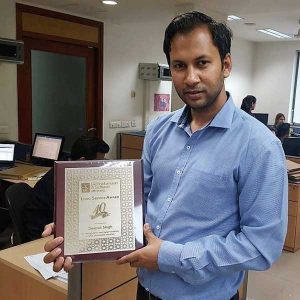
    My responsibilities as Principal Associate followed by Associate Partner include managing a fast-growing group, defining processes, ensuring quality, maintaining client relations, and helping the new paralegal team of IPR Engineering to understand the various requirements of the Indian Patent Laws.

    Within the technical team, I was responsible for mentoring fellow associates, determining and ensuring revenue targets, and creating new workflow processes. The responsibilities further include identifying training requirements of team members, understanding their personal goals, and mentoring them to achieve their personal and professional objectives.

    At, Lexorbis, I would be involved in managing Foreign Law Firms and Clients, Strategic Planning, Operations Management, Business Process Transformation, Managing Budgets and P&Ls, Board Reporting, Client Engagement, Thought Leadership, and Managing Patents operations. I would also focus on removing bottlenecks, work in cross-functional teams to get things done in expected turnaround time, and attain scalability to create value for Lexorbis and its clients.


    What steps did you take to land in your present job?

    Currently, I am working as the Associate Partner with Lexorbis. Previously, I was working in Patents Division of Khurana & Khurana, IIPRD Consulting, and Lakshmikumaran & Sridharan. While landing on the present job. I have attained a Law degree and a Patent Agent Certificate.

    However, obtaining multiple degrees was not the only means to land in my present job. But most importantly, my 10 years of experience of working with Indian and Foreign clients on projects including patent drafting, patent prosecution, FTO, infringement analysis, patent searches, invalidation searches, litigation support, and attending hearings at Indian Patent Office and Indian Intellectual Property Appellate Board (IPAB).


    What are the most challenging aspects of being an IP lawyer?

    There are a number of challenges in this career. One major challenge is that majorly an IPR section or IPR job opportunities prevail in law firms. In law firms, there is a culture of sitting late in office and leaving after set time period. So, this in return offsets the work life balance.


    What final piece of advice would you like to pass on to our readers?

    A student aspiring to become an IPR professional needs to complete his/her law degree after a graduation in science. Also, everyone should visit a career counsellor at least once to choose his/her career and to sort out what they want to be. A career counsellor’s job is to assist or guide a student to figure out what they want to be.

  • Ishana Tripathi, Legal Practitioner, on Policy Law, working for Tier-I firms, and her diverse experience

    Ishana Tripathi, Legal Practitioner, on Policy Law, working for Tier-I firms, and her diverse experience

    Ishana graduated from NALSAR in 2011 and joined AZB in 2011. After working there for three years in the fields of acquisitions, inbound investments, commercial/civil/corporate crime litigation and arbitration, she then branched into helping set up a private mediation centre – Centre for Advanced Mediation Practice. She assisted them with rule drafting and case management strategies and also a lot of business development. In 2015, she started work on two projects in parallel, the Centre for Policy and Research, Bangalore, and Vidhi Legal, Delhi; one on civic citizenship to develop a constitutional law search engine and the other on court annexed mediation.
    In this interview we speak to her about:
    • Working for Tier-I firms such as JSA and AZB
    • Her time in NALSAR
    • Her experience in Policy Law

    How would you like to introduce yourself to our readers?

    This is a trick question. If it has to be concise, then it would someone who is trying to navigate through the various avenues of the inter discipline of law available today!  To me, there are a variety of experiences that one can gain even while pursuing a corporate law firm career without viewing it myopically.  While “specialising” in an area and building your own niche is important for recognition, if you don’t broaden your horizons to work – in every space and opportunity available, in my view, at this seventh year of practice, your ability as a lawyer stagnate.

    As a professional who is here to stay, you need to keep educating yourself to the changing ecosystem and while you can’t know everything, it our responsibility to be aware of as much as possible and not let go of opportunities that allow us to experiment. Law as professional can be a beautiful thought provoking and life changing way of life.

    Give us a brief overview your NALSAR experience for our readers.

    The NALSAR experience is novel to each one in terms of utility. For me, law school was a confusion on whether I want to pursue the law at all. Today, the passion I feel for law comes from working with some of the best people in the profession – a privilege that at the beginning  of my career in 2011, came from being a NALSAR graduate. It would be foolish to deny the edge that having an “National Law School” label will give you but to say that the students are smarter than the rest would be another thing and misconceived.  Its ultimately boils down to a proof of hard work, integrity and dedication – which you need to find within.


    What kind of internships did you undertake during your student years?

    Law school to me was an opportunity to explore and take chances. I did close to fifteen internships, with different work profiles, I didn’t repeat a single internship. This was a personal choice. I worked with government organisations like TRAI, not for profits like TERI, clerkships with the CLB and the Supreme Court, trial work, general litigation and corporate law firms.  By the end of it, the only thing, I had no idea what I wanted to do but I knew what I didn’t. For instance, I realised I was too mercurial for criminal trial work (here, i mean cases of rape, domestic violence, assault, and not white collar work) and decided not to pursue that route. I am now venturing back into criminal trial work – particularly in relation to restorative justice models – so lets see if I have reached an emotional maturity to handle it.


    Is it absolutely necessary to moot or undertake paper publications in order to be a successful advocate?

    There is no straight jacketed formula to success. Every individual has their own journey.  Like I said, law school is an individual experience. But if it is advice, then I would urge people to not be close minded, especially todays generation of lawyers –  who have many more avenues like legal journalism, legal policy, legislative drafting – which are work spaces available for a lawyer and were not as present in the mainstream in 2011 when I graduated. Try as much as possible in law school but do it with zeal and not because the mass says so. Law school prepares you to embrace different perspectives. While having ambition and direction are important, do not write off anything.


    What are your areas of specialisation and how did you go about choosing these fields to specialise in?

    I specialise in – ADR and corporate /commercial litigation, and, labour and employment laws. The first was an interest in law school which solidified at AZB and is a true academic area of interest which I continue to pursue. The latter is attributable entirely to AZB. If you would have told me in law school that I would become a diligence handbook for labour laws, I would have laughed at myself, it was my worst subject – mostly for the lack of interest in it! Today, the research and jurisprudence in it fascinates me to no end. I read regular updates and amendments.


    How were the first few years after your graduation? 

    Law school was a different phase all together. It engineers healthy competition, using your brains to argue/defend positions, change view points, embrace failure and general personal development.  It doesn’t, however, unfortunately give you notes on implementing the law. It is necessary that the absence of practice from theory in legal education changes. But, that’s a debate for another time. The internships that I was fortunate to get gave me some insights into the inner workings of the lawyer life but I suppose my mind was too young to comprehend and process the amount of handwork and brain cells required to materialise the text book law into strategy.

    I honestly lucked out with the mentors I had at work right out of law school. They instilled a quality of work and pushed my intellectual barriers. They enabled me as a lawyer right from the start, they never treated me as someone fresh off of the boat. It was “use your brains and assume responsibility for work” from go!  If I look back, my time at AZB, gave me a strong foundation and was a very empowering experience. I can blindly say that I am ardent Zia Mody fan, she defies patriarchy in the profession in ways I took for granted at the age of 21, when I started working there.


    Give us some insights on the qualities that Tier-I firms look for in prospective candidates.

    I can’t speak for every Tier-I firm and I also think recruitments and requirements change with time / legal landscapes.  Prospective candidates vary accordingly – depending on type of work, experience, firm expansions etc. If you are asking for what they look for in an fresh of the boat law student in an interview – for me, self confidence, good English (I suppose!), demonstrable ability to work well with others, passion for any element of the law is what worked.  


    Briefly describe your experience in assisting the set-up of the Centre for Advanced Mediation Practice.

    Professionally, after three years of arbitration experience at AZB, mediation was a new bull to me. To study it and embrace it was easier than I thought it would me. CAMP opened a new chapter to me as a person as well as a professional and gave me insight into being non – adversarial in thought process and also gave me new direction towards understanding law.  CAMP, to me, was being a part of a movement, which would shape a new dimension in legal process in India. It was of course, a new challenge, since going from the comfort of a corporate law firm to figuring out how to get conference call facilities! But that’s the beauty of a start up. Its not only the idea of it but also every other element of it that makes it more personal. Combine it with the “purpose” that it seeks to achieve – CAMP was critical in reinforcing the idea of wanting to be a part of the system and help nurture a better case resolution mechanism.


    Please give our readers some insights into the functioning of Policy Law firm.

    (Ishana has worked with two of India’s most reputed firms in policy law- The Centre for Policy and Research, Bangalore and Vidhi Centre for Legal Policy, Delhi.)

    With Vidhi, I worked on a project that studied the efficacy of court-annexed programmes. Here, we studied four centres in India and where there were issues and fallouts. The hope remains that the recommendations are picked up and a change in implementation of mediation is envisioned by the law makers and the judiciary.

    With CLPR, was a project on civic citizenship and constitutional law. This was uncharted territory, since my knowledge of constitutional law was basic and text book. CLPR was spearheading a project that would culminate into a database of the constituent assembly debates that led to the framing of our constitution. I worked on the first phase which was focused on the fundamental rights and directive principles.  The project involved reading through days of debates and coding them in a prescribed format which would then be fed into an algorithm where people could search (like Google).

    It was amazing to learn and unlearn the pre-conceived notions of our rights and in a way get to know the people who fought / argued/ reasoned / shaped the future of individual and social rights in this country. To everyone who reads this, I am shamelessly asking you to check out the CLPR website for the CAD page! It will be worth the effort! The hope is that one day it would reach the common man for general awareness.


    When and why did you decide to leave your job at JSA?

    It was in April 2017 that I decided to leave JSA. I believe it was the right time in my profession to pursue a higher education in law with the Erasmus Mundus programme.  


    Is there any other suggestion you would like to give to our budding lawyers?

    You just have to have the dedication and maintain a standard and drive for yourself.  The day you can’t give your 100% to something – it could be even proofreading ten lines on a matter, then its time to find something else. Demotivation in life is the worst thing you could do to yourself and the person whom you represent – who deserves your dedication, time, thought and places their faith in ‘you’ not anyone else to guide them right.  So if you ever find yourself in a situation where you say “have to” more than ten times a day, move on. It is a disservice to yourself and your colleagues if you choose to continue in the same state of mind.

    As a parting thought, never take any work opportunity and position in life for granted. Moreover, to me work-life balance is a myth. Never take on a task with the purpose of attain this. It is work that has shaped my personality, increased my capacity to question and broaden thoughts. It is practice that has indulged a love of studying the law.  The sooner you accept the importance of work in your life the easier your journey in law becomes!