Having graduated from NUALS, Kerala, and starting your practice directly before the Hon’ble Supreme Court of India, what inspired you to pursue such a high-stakes litigation career so early on ?
My decision to pursue litigation particularly by starting directly at the Supreme Court was rooted in both personal ambition and the exposure I received during law school. Coming from a first-generation legal background, I didn’t have familial connections in the profession. That absence could have been a limitation, but in many ways, it became a motivator.
A key factor that empowered me was the strong support of my family, especially my elder brother. His advice and encouragement played a crucial role in helping me make bold career decisions, including the step to begin my practice at the apex court. His belief in my potential gave me the confidence to pursue a path that was unconventional and challenging.
During law school, I had the opportunity to intern with a diverse set of accomplished lawyers. These experiences offered me valuable exposure to different styles of practice and deepened my understanding of litigation as more than just dispute resolution. I saw firsthand how litigation can serve as a powerful tool—not just for individual justice, but for broader policy reform and societal impact.
What truly attracted me to litigation was its intellectually rigorous nature. It demands more than a sound understanding of the law; it calls for strategic thinking, creativity in argumentation, and a deep sense of ethical responsibility.
Starting out at the Supreme Court was undoubtedly intimidating, but it gave me a unique opportunity to engage with complex, high-stakes matters early in my career. I was able to learn directly from senior advocates and constitutional experts. While building a reputation from scratch came with its own set of hurdles, the process made me more resilient, disciplined, and committed to the principles of justice.
What were some key challenges and lessons you learned while transitioning from working with an Advocate-on-Record to establishing your own practice in 2016, and later founding Scripta Lex Law Firm in 2018?
The transition was both challenging and transformative. One major hurdle was building a client base from the ground up. As a first-generation lawyer, I lacked industry connections and had to rely solely on the quality of my work and my ability to earn trust.
Running an independent practice also introduced me to the administrative side of law—budgeting, staffing, operations, and more. Shifting from solely legal work to managing a full-fledged firm required developing a new skill set quickly.
The most valuable lesson I learned was the importance of building and nurturing relationships. In the absence of a network, I made a conscious effort to connect with senior counsel, peers, and clients. Legal expertise is essential, but trust and communication are what sustain a practice.
Running my own firm has also taught me to take full ownership of every case. Beyond legal strategy, I now consider a client’s broader goals and circumstances. It’s given me a holistic approach and a deeper understanding of how to lead both in the courtroom and within my firm.
As a qualified Advocate-on-Record (AOR), what are the unique responsibilities that come with the role, and how do they affect your practice?
Being an AOR comes with significant responsibility. Only AORs have the right to file documents before the Supreme Court, which means every filing must be flawless in terms of format, compliance, and timing.
As an AOR, I’m also the official point of contact between the client and the Court. This means that my role extends beyond documentation, I must ensure that clients are informed, and expectations are managed appropriately.
This responsibility has enhanced my attention to detail and refined my organizational skills. It has also deepened my appreciation for the precision and professionalism that the Supreme Court demands, ultimately shaping me into a more disciplined and reliable practitioner.
You have significant experience across varied forums, Supreme Court, High Courts, NCLT/NCLAT, NCDRC, and more. How do you approach such diverse jurisdictions and areas of law? Which field has evolved the most in the last decade?
Each forum requires a distinct approach. At the Supreme Court and High Courts, cases often involve constitutional or public interest elements. These require legal foresight and arguments that resonate at a policy level.
In contrast, corporate forums like NCLT/NCLAT demand a deep understanding of statutory frameworks like the Insolvency and Bankruptcy Code (IBC). I frequently collaborate with financial experts to address the commercial realities involved.
In the NCDRC, which deals with consumer disputes, the emphasis is on practical solutions and timely resolutions. These forums call for clarity, efficiency, and client-centric approaches.
Among all, Insolvency Law has evolved the most over the past decade. The IBC has transformed corporate debt resolution in India. As it continues to evolve through amendments and judicial interpretation, staying updated and agile is crucial.
Consumer Law has also seen major developments, especially with the growth of e-commerce. The introduction of the Consumer Protection (E-Commerce) Rules, 2020, reflects this shift and has changed how we approach digital consumer disputes.
Navigating these forums successfully demands continuous learning, adaptability, and cross-disciplinary collaboration.
With your expertise over various aspects, can you share a defining case that shaped your outlook on litigation?
One defining case was a complex corporate insolvency matter under the IBC before the NCLT. The company in question had multiple stakeholders—each with competing interests. The legal issues were intricate, but so were the financial and strategic considerations.
What made the case significant was its timing, it occurred when the IBC was still evolving. We were navigating uncharted waters, relying on fresh judicial interpretations and creative legal solutions.
This case reinforced my belief that litigation isn’t just about resolving disputes; it’s about contributing to systemic and economic recovery. Lawyers play a vital role in shaping not only legal outcomes but also financial futures and social stability.
What gaps do you see in consumer awareness, and how should the Consumer Protection framework evolve?
A major gap lies in the lack of awareness, especially in rural and underserved areas. Many people don’t know their basic consumer rights or how to seek redress. Even in urban areas, legal processes can seem intimidating and inaccessible.
With digital commerce, new challenges like cross-border transactions, misleading ads, and jurisdictional issues have emerged.
To address these, the framework must evolve by:
Expanding legal literacy through targeted outreach programs
Simplifying online complaint processes
Strengthening digital consumer protection mechanisms
Enhancing enforcement to ensure timely justice
Creating user-friendly forums for efficient dispute resolution
Improving access and responsiveness will help make the system more inclusive and effective.
How do you balance pro bono commitments with your commercial practice?
For me, pro bono work is not just a commitment, it’s a principle. I believe access to justice should never be determined by one’s ability to pay.
Balancing both requires discipline. I set aside dedicated time and ensure that pro bono matters are managed with the same attention as commercial cases. In fact, these cases often sharpen my empathy and creativity, enriching my approach to complex commercial matters as well.
Pro bono work reminds me why I chose this profession—to make a meaningful impact. It grounds me and enhances the human side of my legal practice.
Where do you see the greatest opportunities for young legal professionals today?
There’s immense opportunity in emerging areas like data privacy, technology law, and insolvency law. With growing digital transactions and evolving privacy concerns, lawyers with expertise in tech-law intersections are in high demand.
The IBC continues to offer opportunities in corporate restructuring, cross-border insolvency, and distressed asset resolution.
Young lawyers should focus on:
Staying updated with legal-tech trends
Carving niches in emerging fields
Embracing specialization
Building digital fluency alongside legal expertise
Those who adapt early to these trends will be best positioned to lead the future of legal practice.
What advice would you give to law students or young advocates entering litigation?
Master the basics: Strong fundamentals are your best asset.
Seek mentorship: Learn from seasoned lawyers—it shapes your growth.
Be patient: Litigation is a long journey; focus on consistency and credibility.
Build relationships: Clients value trust, not just technical knowledge.
Work in teams: Collaborative success is sustainable success.
Use technology: Legal tech enhances efficiency and reach.
Specialize and build focus: Develop niche expertise to differentiate yourself. Alongside this, cultivate the habit of reading books—legal and otherwise. Deep reading enhances comprehension, critical thinking, and focus in a way that passive scrolling through social media never can.
Take care of yourself: Mental and physical well-being are vital for long-term growth.
And most importantly stay curious, stay ethical, and stay resilient. Litigation rewards those who show up, stay prepared, and work with purpose.
With your impressive and extensive legal background, what first ignited your passion for law? Was there a defining moment or experience that influenced your decision, or did your interest evolve gradually over time?
As a first-generation lawyer, my journey into the legal field wasn’t a conventional one, nor was it influenced by early exposure or family tradition. In fact, until I was in 12th standard, I had never considered law as a career option. I was raised in an environment where engineering and medicine were viewed as the most respectable and secure professional paths. Surrounded by mainly engineers and scientists, I too felt the societal pressure to pursue these fields, especially during the early 2000s, when Computer Science and Information Technology were rapidly gaining traction and many of my seniors were securing promising opportunities both in India and abroad.
Despite this prevailing narrative, I never truly felt drawn to either engineering or medicine. I found myself searching for something different, a discipline that would not only challenge me intellectually but also allow me to connect with the world in a more meaningful way. Around that time, I was also deeply interested in photography, which sparked my curiosity and creativity. However, during those years, building a stable career in photography seemed unconvincing and uncertain, particularly given the expectations around me. It was during my 12th grade in the year 2011-12 that I first came across the 5-year integrated law program. The more I explored it, the more I realised that ‘law’ resonated deeply with me.
What attracted me most was the law’s interdisciplinary nature, its ability to intersect with almost every aspect of life, from economics and politics to human rights and technology. It struck me as a subject rooted in real-world issues, one that was dynamic, intellectually stimulating, and, most importantly, closely connected to society. This alignment felt natural to me, especially because I had grown up witnessing my parents’ active involvement in social work. Their dedication to community service instilled in me a sense of responsibility and an urge to make a meaningful contribution.
Convincing my parents initially took some effort, given our family’s lack of familiarity with the legal profession. However, once they saw my determination and passion, they became my strongest supporters. Since then, they’ve been unwavering in their encouragement, always motivating me to excel and make a mark in this field.
Looking back, choosing law was a turning point that defined not just my career, but my identity. What began as a curiosity evolved into a deep-seated passion, and I remain inspired by the impact this profession can have on individuals, communities, and the broader social fabric.
Looking back at the early stages of your career, which experiences were pivotal in enhancing your understanding of the law? How did these formative moments shape the trajectory of your professional journey?
Looking back at the early stages of my legal career, there were several defining experiences that significantly shaped my understanding of the law and laid a strong foundation for my professional journey.
During my time in law school, I made a conscious decision to pursue a career in litigation. This clarity helped me seek out internships with litigation-focused law firms and seasoned advocates, where I was exposed to the practical aspects of the legal system early on. Beyond classroom learning, it was the experiences in moot courts, college seminars, and conferences that truly enriched my perspective. These platforms gave me the opportunity to engage with practising lawyers, judges, and professionals from diverse areas of law. I was also fortunate to have had the guidance and encouragement of some exceptional professors, whose mentorship played a crucial role in shaping my legal thinking. Their support and accessibility created a nurturing academic environment that motivated me to explore the subject deeply and confidently pursue a future in law.
One of the most pivotal phases in my early career was my time at Parekh & Co., a reputed law firm in New Delhi. It was here that I transitioned from theory to practice. The firm provided me with hands-on exposure, and the mentorship I received from the partners and senior colleagues was instrumental in helping me build a strong legal foundation. I was entrusted with significant responsibilities early on, which greatly accelerated my learning curve.
My professional development continued at Karanjawala & Co., where I had the chance to further expand my legal expertise across a wider range of matters. The firm offered a dynamic and fast-paced environment, where I was exposed to varied practice areas and a broad client base. It also allowed me to deepen my understanding of litigation strategy, court procedures, and the practice of law.
Across both firms, I was fortunate to handle high-stakes and complex litigation, appear for prominent clients, brief some of the country’s top senior advocates, and even gain international exposure in specific legal domains. These experiences collectively played a pivotal role in shaping my professional outlook and strengthening my commitment to the field of litigation.
Together, these formative years were essential in defining my career path. I had the benefit of working under exceptional mentors, gaining valuable practical insights, and being consistently challenged in ways that helped me grow as a legal professional. These opportunities not only nurtured my passion for law but also instilled in me a strong sense of purpose and resilience that continue to guide me today.
Becoming an Advocate-on-Record is a significant accomplishment. How has this role influenced your practice, what responsibilities does it entail, and what opportunities have arisen as a result of this distinction?
Becoming an Advocate-on-Record (AoR) in the Supreme Court of India is a significant professional milestone, and for me, it was a goal I had set early in my career. Having consistently worked with AoR firms (law firms officially registered with the Supreme Court owing to the presence of multiple AoRs), I was fortunate to be immersed in an environment that demanded high standards, deep procedural knowledge, and a commitment to excellence in litigation. This experience not only shaped my early understanding of Supreme Court practice but also inspired me to pursue the AoR qualification. Clearing the exam was both a deeply fulfilling personal accomplishment and a pivotal step forward professionally.
The role of an AoR comes with exclusive responsibilities and privileges. Only Advocates-on-Record are authorised to file petitions, vakalatnamas, and other pleadings before the Supreme Court in their name. In addition to representing clients, AoRs are responsible for ensuring strict procedural compliance, coordinating legal strategy, briefing senior counsel, and serving as a vital link between the client and the apex court. To become an AoR, an advocate must undergo formal training and clear a rigorous examination, an intensive process that ensures only well-prepared professionals are entrusted with this role.
For a first-generation lawyer, this distinction has been particularly empowering. It has enhanced my credibility, allowed me to represent more clients before the Supreme Court, and significantly expanded the scope of my practice. The AoR title is widely recognised as a mark of legal competence and reliability, which has naturally led to increased client trust and broader professional opportunities.
At Vayam Legal, the law firm I co-founded, my qualification as an Advocate-on-Record has further strengthened our firm and added significant value to our litigation practice. It aligns with Vayam Legal’s commitment to delivering strategic, high-quality legal solutions across all forums, including the Supreme Court of India.
Since attaining the AoR qualification, I’ve experienced a clear evolution in the nature of work I engage with, ranging from constitutional and commercial matters to public interest issues. It has reinforced my belief in the importance of long-term goals, continuous learning, and building a practice grounded in credibility and trust.
In essence, becoming an Advocate-on-Record has not only strengthened my individual practice but also helped shape the vision and capabilities of Vayam Legal. It’s a responsibility I carry with pride and a milestone that continues to define my professional journey.
Over the years, handling special leave petitions, civil, and criminal appeals before various courts and tribunals, which case stands out as both interesting and particularly challenging? How did you approach such a case, and what resources did you rely on?
As I’ve mentioned earlier, I’ve had the privilege of working with some of the leading litigation firms in the country, which exposed me to a wide variety of matters across multiple forums, ranging from the Supreme Court and High Courts to tribunals and regulatory bodies. This diversity of experience has brought with it a number of cases that were both intellectually stimulating and professionally demanding.
It’s difficult to single out just one case as the most interesting or challenging, as there have been several that tested my legal acumen in different ways. High-stakes commercial litigation, in particular, often stands out. These matters are inherently complex and highly contested, as both sides typically engage top-tier legal teams. The margin for error is minimal, and even the smallest legal point can tip the balance. Crafting a strong legal strategy, whether in advancing a claim or defending against one, requires not only deep legal research but also the ability to anticipate the opposing party’s arguments and prepare precise counterpoints. These cases challenge you to be at the top of your game, both in court and behind the scenes.
On the other hand, I’ve also found cases relating to accessibility and inclusivity for persons with disabilities to be particularly meaningful. While these matters may not always involve procedural complexity, they are socially significant and present unique challenges in terms of real-world impact. With the introduction of the Rights of Persons with Disabilities Act, 2016, there has been a legal framework in place to empower persons with disabilities, but actual implementation, especially in rural and under-resourced areas, remains limited. Working on such cases provides an opportunity to contribute to a larger social cause, even though the challenge often lies not in obtaining favourable court orders, but in ensuring their effective enforcement.
In both types of matters, commercial or public interest, the approach remains rooted in meticulous preparation, strategic foresight, and collaboration. I rely heavily on thorough legal research, insights from recent judgments, and sometimes interdisciplinary perspectives, especially in socially sensitive cases. These experiences have deepened not only my legal skills but also my sense of responsibility as a practitioner who can influence both legal outcomes and broader societal change.
You have dealt with a range of matters in the Indian automotive manufacturing sector. What, in your experience, have been the major legal challenges in cases involving electric vehicles?
I have had the opportunity to handle several matters in the automotive manufacturing sector, including those involving electric vehicles (EVs). These cases have largely revolved around tender disputes, mediation, and arbitration, each presenting unique legal and strategic challenges.
The Indian EV sector, being relatively new and rapidly evolving, brings with it a distinct set of legal complexities. One of the major challenges I’ve encountered involves the interpretation and application of tender conditions in public procurement, especially for electric buses and related infrastructure. As government-backed tenders are central to EV adoption, disputes often arise over eligibility criteria, technical specifications, and compliance, requiring a deep understanding of administrative law, procurement procedures, and the technology involved.
Another recurring issue is the absence of stable regulatory standards. As the policy landscape continues to develop, frequent changes or ambiguities, particularly concerning battery safety, environmental clearances, and fiscal incentives, often create uncertainty.
With increased EV adoption, challenges are also emerging in areas such as product liability, safety compliance, and consumer protection.
Overall, dealing with matters in the EV space requires not only legal expertise but also a strong grasp of the sector’s fast-changing regulatory and technological landscape. It has been both a challenging and rewarding area of practice, offering insights into the intersection of law, policy, and innovation.
In handling matters under the Copyright Act, 2012, particularly with respect to the use of music during marriage processions and social events, what key legal challenges have you encountered?
In matters involving the use of music during marriage processions and social events under the Copyright Act, 1957 (as amended), one of the key legal challenges has been the interpretation of Section 52(1)(za), which exempts performances during bona fide religious and certain social functions from being considered infringement.
The complexity often lies in determining whether the exemption applies when such events are hosted in commercial venues. The question typically arises as to whether the setting alters the personal or social character of the function, especially when claims are made that licensing fees are required despite the event being a private celebration like a wedding.
These matters frequently involve navigating the tension between copyright enforcement and longstanding cultural practices. It becomes essential to analyse the legislative intent behind the exemption, relevant judicial precedents, and the extent to which such performances are truly commercial in nature.
Another layer of difficulty is the practical enforcement and compliance landscape, where different interpretations can create uncertainty for event organisers and service providers. Addressing these challenges requires a nuanced understanding of copyright law, industry practices, and the social context in which such events occur.
When representing clients in high-stakes international arbitrations, especially where foreign laws are applicable, how do you typically approach the complexities of cross-border legal frameworks?
Approaching high-stakes international arbitrations, particularly those involving foreign laws and cross-border parties, requires a carefully structured and collaborative strategy. One of the key complexities lies in reconciling different legal systems, especially when the governing law of the contract differs from the procedural rules of the arbitration.
These matters typically require close coordination with foreign legal experts to ensure accurate interpretation and application of the applicable substantive law. Working across jurisdictions also means navigating diverse legal traditions, commercial practices, and procedural expectations, which makes clarity in drafting, advocacy, and case presentation especially important.
Effective communication with international stakeholders, whether clients, opposing counsel, or arbitral tribunals, is essential, as is an understanding of cultural nuances and business sensitivities. Strategic planning, well-supported evidence, and cohesive teamwork are all crucial to managing the complexity in disputes.
Overall, international arbitration demands not just legal proficiency but also adaptability, cross-cultural awareness, and a strong grasp of commercial realities, especially when foreign laws and parties are involved.
What advice would you offer to aspiring law students who wish to follow in your footsteps and build a successful career in law? What skills or qualities do you think are essential for success, especially in the evolving field of technology law?
Law has become a highly respected career, and with the rise of top law schools, the standard of legal education has improved significantly. For aspiring law students, it’s crucial to build a strong foundation through both classroom learning and internships. Early exposure to practical work helps in understanding various legal fields and in making informed career choices, whether in litigation, judiciary, corporate law, or in-house roles.
Clarity of direction, combined with patience, perseverance, and a positive attitude, is key to long-term success. The legal profession often demands time and resilience before tangible results appear, especially in litigation.
As law continues to evolve alongside technology, students must stay adaptable and committed to continuous learning. Familiarity with areas like data protection, intellectual property, and tech regulation will be increasingly valuable. Above all, success in law comes from consistency, ethical practice, and a genuine passion for the profession.
Balancing a successful career with a commitment to public service and education is no small feat. How do you maintain a healthy work-life balance, and what advice would you give to others who aim to follow a similar path while managing both professional and personal responsibilities?
Law is undoubtedly one of the most demanding professions, both mentally and physically. The long hours, high-pressure environments, and the constant need for precision make it challenging to maintain a work-life balance, let alone dedicate time to public service or education. However, I firmly believe that striking this balance is not only possible but also essential for long-term growth and well-being.
Constantly working without pause or personal reflection can lead to early burnout and diminished productivity. Incorporating activities outside of regular practice, such as contributing to legal education, engaging in pro bono work, or participating in public interest initiatives, provides a healthy shift in perspective. These engagements allow one to step out of a purely commercial mindset and reconnect with the broader role of law in society. They also remind us of the lawyer’s place as a trusted advisor, problem-solver, and social contributor.
I also find that travelling and meeting people from different walks of life play an important role in maintaining balance and staying inspired. Travel gives me a chance to step back, recharge, and return to work with a fresh perspective. Interacting with people from diverse backgrounds broadens my understanding of society, exposes me to different viewpoints, and often shapes how I approach my work.
Maintaining balance doesn’t mean taking grand measures; it’s often about small, conscious steps, setting clear boundaries, taking short breaks, or making time for personal interests. Even small efforts can help preserve clarity, resilience, and creativity in a demanding field.
To those aspiring to build a meaningful and well-rounded legal career, I would say, stay dedicated to your professional goals, but always make space for causes and interests that keep you rooted and inspired. This balance not only prevents burnout but also enriches your journey as a lawyer in ways that pure professional success alone cannot.
With your academic journey spanning commerce, English literature, and law, how did you navigate your transition into the niche field of sports and media law? What initially drew you to this area of practice?
While my academic background has been interesting, it has not really been intentional. I studied commerce because I initially tried my hand at CA, which I failed at gloriously. I then did my masters in English literature solely for the love of the language while being a full time fellow at the Teach For India Fellowship. Post which I decided to do law. While the journey may not have been intentional, the quest for knowledge always has been. Learning new things has always excited me. In any space at all, even when I have failed. So when I got the opportunity to work in the field of sports and media law, I only saw it as another opportunity to learn. The transition did not feel difficult because I was doing something new everyday so it was, and still is, exciting.
You’ve been involved in high-stakes media rights cases, including securing broadcasting rights for major international football leagues. Could you walk us through one particularly interesting case you’ve handled and share what the experience meant to you?
One memorable experience was supporting a client in securing sub-continental broadcasting rights for three of Europe’s biggest football leagues. It wasn’t just about the licensing, it involved negotiating with multiple stakeholders across jurisdictions, one of which had a structure so complex that it took me 3 whole days to understand what the proposed structure even was! What made it meaningful was knowing myself a little bit better. That I could add value to a transaction in a very unique way and aid a client in closing a deal. That was a good day!
Your work covers a wide spectrum from game development agreements and SaaS contracts to plug-in software agreements. What are the key challenges you face in balancing intellectual property protection with the commercial facets in such fast-evolving digital spaces?
The pace of innovation often outstrips regulation, and that’s where the challenge (and opportunity) lies. Balancing IP protection with commercial viability often means designing agreements that are forward-thinking but also flexible. Whether it’s ensuring IP ownership in a co-development model or negotiating licensing structures for evolving SaaS platforms, the ultimate agenda of drafting agreements and structuring deals is to future-proof them while keeping them commercially sensible. The key is clear listing of rights, scope and exit mechanisms, especially when the tech itself may evolve the life span of the transactions.
When drafting white-labelling agreements and enabling tech integrations, especially in light of evolving data privacy regulations, how do you address concerns around data security and brand protection?
For me, it begins with clarity of thought and then it’s just a matter of expressing that thought on paper. I believe every privacy/data centric agreement should clearly lay out who’s responsible for what, who gets access to what, and who’s accountable when things go wrong. We always include strong confidentiality, indemnity, and data protection clauses that align with relevant laws like the GDPR or India’s DPDP Act. But beyond the legal terms, we also build in practical guardrails like audit rights or protocols for keeping data separated. When it comes to brand protection, it’s important to have quality checks and clear representations, especially when the tech touches end-users or customers directly and includes collection of sensitive data. Ultimately, the goal is to safeguard both the technology and the brand behind it.
Athlete endorsement agreements can be commercially complex and high-profile. What is your typical approach to structuring these agreements, and which clauses do you consider most critical, particularly regarding brand alignment, image rights, and breach scenarios?
It’s all about striking the right balance. We need to make sure the athlete’s image and reputation are protected while ensuring that the agreement gives some wiggle room for the brand’s creative expression. Typically, I would try to understand what the athlete’s expectations are from a deal with respect to the brand’s deliverables and ensure that those aspects are covered. Then, I add clauses which I find essential to protect the athlete’s interests such as ownership of the athlete’s attributes, the term of usage of a deliverable, exclusivity (or lack thereof), how the brand shall take approvals on all materials before they become publicly available, representations by the brand against defamatory statements against the athlete, etc.
Beyond transactional work, you’ve also drafted POSH and POCSO policies. How do you ensure these frameworks are not only legally compliant but also practically implementable and attuned to workplace realities and cultural sensitivities?
Legal compliance and framework are just the starting point. When I work on POSH or POCSO policies, my goal is to make them clear, usable, and rooted in the real dynamics of the workplace or institution. There’s no point in a policy that ticks the legal boxes but doesn’t resonate with the people it’s meant to protect or guide. So we focus on language that’s accessible and workflows that are actually implementable. We also put a lot of thought into the practical aspects of these policies like putting up awareness posters in venues, because a policy is only as strong as how well it’s understood and followed on the ground. The idea is to create safe environments, not just safe documentation.
Your previous role as a communication consultant and brand manager is quite distinctive for a legal professional. How has that background influenced your approach to client engagement, negotiation strategy, or brand-related legal advisory?
It’s been a game-changer, simply because communication is the most important aspect of absolutely any role you play in life, especially in a job where you write in legalese but must explain things to clients in a manner that is easy to understand and comprehensible. My brand communication and management background also allows me to understand the perspective of the brands when they ask for things a certain way which aids my negotiation of the deal, leading to faster closure.
Given your involvement in technology-driven sports products like the ICC Immersive app, how do you see the intersection of sports, law, and emerging tech evolving over the next few years?
In one word, exciting! We’re just getting started. With immersive experiences, gamification and AI-driven fan engagement, the legal landscape is evolving in real time, faster than we can keep up actually! We’ll see more attention on licensing rights for digital experiences, cross-border IP enforcement, data monetization and AI ethics. I see lawyers becoming key enablers of innovation in this space and not just compliance gatekeepers. It’s a thrilling time to be at the intersection of sport, tech, and law, and I look forward to witnessing it.
You’ve worked with a range of international clients and platforms. How do you navigate the legal nuances across jurisdictions, especially when dealing with IP, broadcasting, and digital rights on a global scale?
IP is one of those areas where the core principles of ownership, licensing and protection are fairly universal, which gives you a strong foundation to work from. But the real challenge is in how those rights actually play out on the ground. Every country has its own legal quirks like how they treat moral rights, how collecting societies work, what’s allowed digitally and those details can really shape how a deal gets structured. In sports especially, it gets even more layered. Each sport has its own ecosystem, different governing bodies, event rights, eligibility rules, media frameworks. So what works for a football league in Europe might not work at all for a cricket tournament in India or an e-sports platform in Southeast Asia. So it becomes about figuring out the local landscape quickly, not just the law, but also how the sport or the ecosystem operates commercially and culturally and then building legal and IP structures that actually hold up in practice.
What guidance would you offer to young lawyers who are eager to build a career at the intersection of sports, media, and technology law, especially those coming from interdisciplinary academic backgrounds like yours?
If I had to give one piece of advice, it would be this: perseverance is everything. This field rewards those who keep showing up and stay curious. Ask questions to anyone who’s willing to answer. You’d be surprised how much you can learn from the most unexpected people, a filing clerk, a stenographer, fellow interns, senior lawyers, or even someone from a completely different organization. And at some point, that random piece of knowledge will come in handy (almost like a Slumdog Millionaire moment!). The opportunities to learn are all around you, but you’ve got to be open enough to catch them while willing to work harder than you thought you did!
With over 11 years of experience across commercial law, technology, and AI, what drew you to this unique intersection as your niche? Were there specific moments or projects early on that sparked this direction?
This niche was never planned. It was a series of opportunities seized at the right time and a passionate deep dive into whatever crossed my path. I have never been one to restrict myself to just scratching the surface. On the contrary, I have always been a business-oriented legal professional. I went down the rabbit hole in any new opportunity, and each one became a moment of evolution. I still can’t say for certain that this is the finishing line. I continue to learn and evolve. In fact, I would take a step further to say that AI itself will not remain a “niche” for too long. It has already started to become mainstream. The world will soon see specialized domains being created within the supposed “niche” of AI. So what part of it I would end up being drawn to is for time to tell. As of now, I am just learning.
As for specific moments, there have been many. At the beginning of my career itself, I had a front-row view of the impact of regulatory compliance issues on the overall business and sustenance of a company. I had joined Unilever as an in-house counsel, and my entry coincided with the infamous MSG/ash in instant noodles fiasco, which had hit 3 of the largest FMCG conglomerates in the country. I was posted in UP at the epicenter of it all. While it was an incredible opportunity, the impact on business was palpable. That continued through Covid when I was with Coca-Cola when boilerplate clauses like force majeure became the biggest game-changer for a company, followed by my role in Qyuki coinciding with the TikTok ban, which had shaken the entire creator economy. Qyuki, however, was my first tryst with technology in which my seniors encouraged me to go down the NFT rabbit hole and explore synergies from a legal and business perspective between content and the metaverse. I ended up writing a white paper on it, which was dropped as an NFT at All About Music in a session in which we presented it. As a certification and security mechanism, blockchain is one of the primary drivers of AI. I continued my journey with Qyuki as a consultant while also building a legal technology product powered by AI. From concept to pivot to funding and building the beta version of the product, it was not only a journey down a rabbit hole, but also a massive learning curve for me. But there are darker truths behind the shiny veil of startups, and most startups are not able to make it. So that’s when I considered going back to a job and joined Dentons as a Partner for the AI and technology practice. Yet, a traditional law firm environment is not the right environment for someone who has gained interdisciplinary skills to thrive and grow in. That’s what led to the birth of The AI Lawby. I had already spent enough time in the creator economy and learned to create content. Governance of AI was jumping out as the most pressing issue. While the world kept talking about privacy, I was creating diagrams on a mind map to go to the roots of the product and evaluate it from a multi-lens perspective: Brand building, Compliance, and Technology.
From founding a venture-backed legal tech company to shaping AI governance frameworks for global teams, what motivated your shift from traditional legal roles to innovation-driven leadership?
As I said, it was never by design but always an accident. I grabbed opportunities, thought out of the box, and kept discovering my path as I kept carving it. It’s not over yet. I am always a work in progress, and I would like to be so till my last day. There’s nothing as empowering as discovery and a realization that there is so much more to learn and do. Also, I never liked being placed in a box anyway. Most people believe that an in-house counsel’s role is that of a postman. There could be nothing farther from the truth than that. I chose to become an in-house counsel because that enables you to be entrenched in the business. You are both a lawyer and a client, and you can see the consequences of decisions you take directly on the client’s business. From a bird’s-eye view, it grounds you in reality. So I always used strategy over theory. That was my DNA. So I don’t think I was ever in a traditional legal role. At every stage I have embraced challenges and opportunities at the intersection of law and business. As technology kept invading our lives, the lines of traditional roles kept blurring. I firmly believe that we are in a day and age where interdisciplinary skill sets are the need of the hour while also having a specialization in one field. For instance, in law, I choose to specialize in technology—not just AI, but data privacy, intellectual property, product liability, and so many other aspects of technology—and I would not trade that to dip my fingers into a practice of M&A or banking or ESG, etc. However, at the macro level, beyond law, I am a complete generalist—be it UX, brand building or brand development, content writing, optimizing user journeys and efficiency, strategies in product funnels, etc. So when I work with a client, it is well beyond just legal advice – I am in the trenches with them.
You’ve worked closely with creators, artists, and founders to solve cutting-edge legal challenges. Can you share an experience which was the most interesting to you?
I honestly don’t know where to start—there have been so many. I think the “most” interesting challenge is the one I am solving for and advocating aggressively—AI governance. Most people make the blunder of considering governance as a policy document being created, and the benchmark for them is a privacy policy, which is generally a boilerplate clickwrap agreement. But AI has pushed boundaries in incredible ways, and every use case is a separate one and mandates an extremely curated approach. The type and level of governance is influenced by so many variables—industry/sector, geography, unit economics, whether they are manufacturers or providers or deployers of technology, the specific use case in the industry, and so on. There can never be a one-size-fits-all approach, and unlike most lawyers, I dive extremely deep into product features specifically and entire workflows for every feature. My role does not end with just an assessment of the risk but extends further to providing solutions basis the resources and existing incentive/operational framework of the organization. So each one is honestly a fresh learning altogether for me.
You’ve supported businesses with fundraising, IP governance, and workflow automation. What are some of the key legal or ethical blind spots you see in today’s AI adoption and how do you guide clients through them?
There are two elements to this question. From a pure play compliance point of view, I would say there are three broad issues: data privacy/cybersecurity, intellectual property, and product liability. As I said I not only dive deep into every feature workflow but I interview at least a sample set of the entire value chain of stakeholders (internal and external) and every inquiry, whether for the product or the stakeholder, is curated to the nature of the business. For example, if the client is in fintech, I would explore their ways of protecting customer data as well as an inquiry into the training data set to see if the system can be misused to cull out personal data once deployed.
From the ethical blind spots point of view in terms of the consequence of using the tools, I would say that there are issues of bias stemming from the systemic bias of the data set on which the model is trained or even the cognitive bias of the individuals training the system. security is another massive blind spot. And here i dont mean just cyber-security but even the safety of using the product – consider the crashes of autonomous vehicles. So ethical blind spots depend on the nature of the product, the use case, and the industry.
You’ve co-authored a first-of-its-kind e-book on art law and worked on complex issues of art estate and provenance. What are some legal challenges unique to the art-tech intersection, and how do you approach them strategically?
I don’t see any specific challenges unique to the art-tech intersection. The art industry has some unique challenges—provenance, counterfeits, art financing, and royalties from the art estate, such as exclusive merchandise. These problems simply get accelerated with technology and are also countered with technology. For instance, AI has made it easier to detect counterfeits in the market and also create counterfeits seamlessly. Rights management has similarly moved from physical rights of a visual art piece to digital rights management wherein NFTs are created based on the artwork, or prints are sold through e-commerce without a royalty being passed on to the creator and without any licensing arrangement in the first place. So technology has simply added complexity to the existing issues in the art-tech space. However, one issue that personally disturbs me is of Generative AI – take the case of The Next Rembrandt – while it was a scientific experiment to identify how far AI could go, it has paved the way for so many iterations and developments, which I personally believe are unethical for the art ecosystem. The Next Remmbrandt is a new painting completely generated by AI in the style of the legendary artist Rembrandt after training an AI model on the enormous volumes of his original works. Technically, it’s a new piece. But has come into the picture with old pieces having been used as a base. The same thing happened with Ghibli Studio. This is not just personal inspiration. This is a usage of creative intellectual pursuits for commercial gain without a license. Strategy is different for each of these – for instance the Gen-AI problem is very well solved by a licensing arrangement which would propel AI and incentivise artists to continue creating breathtaking work.
You’ve held leadership roles in prominent firms and companies. What led you to establish your own independent practice and what were some key experiences from that transition?
Most importantly, I would clarify that The AI Lawby is not a traditional private legal practice. And that itself is what powered the shift. If I get an opportunity tomorrow to play a part (even temporarily) for a futuristic organization that paves the way for me to leverage my skills appropriately, I would absolutely go for it. The old structures and paradigms are giving way to new ways of working, and progress lies in embracing the new. The present day demands agility, and I would continue to evolve as a multidisciplinary professional. What I offer to my clients through The AI Lawby is not legal practice. It is strategic consultation with an added feather of legal specialisation.
You’ve moved seamlessly between domain law firms, media-tech, AI governance, and art law. How has your legal philosophy evolved through these transitions, and what values ground your work at The AI Lawby today?
The values that ground me are the same ones that I started my career with a decade and some ago: the willingness to be a perpetual student, the one to jump into the trenches with a solution-oriented mindset whenever a problem arises big or small; and resilience to spring back up after every setback. These remain consistent and actually more entrenched with every passing day.
With your expertise in legal tech and automation, how do you envision the role of technology transforming legal advisory over the next five years? What advice would you give and what skills should the next generation of lawyers start building now?
The progress in legal technology is phenomenal but there are limitations inherently to legal tech. I think it’s a futile exercise for legal tech companies to create workflows that provide analyses. That cannot become helpful until we reach significant success in AGI (Artificial general intelligence) and we are far from even an entry into that as of now. However, in terms of document extraction and automating mundane tasks I think legal technology is already revamping the profession. It has multiple implications – TAT for lawyers should come down resulting in the need to focus on volume as the unit revenue from a mandate would be significantly reduced. Further, clients would also come with more awareness and not be at the behest of the lawyer. The change is inevitable.
My advice to new lawyers is to start with humility and be on a constant pursuit of new skills and learning. If they don’t develop interdisciplinary skills they will be left behind. However, this works even for those in more advanced stages of their career. The legal profession has always been called “an old boys club” and it’s time for those who continue to remain stringent in their perspectives and models to wake up and smell the coffee.
You began your career in Electronics and Communication Engineering before transitioning into intellectual property law. What inspired this shift, and how has your technical background influenced your approach to IP practice?
Before moving into intellectual property law, I was working with a government-backed electrical equipment company, fully immersed in engineering projects. I kept noticing that while a lot of great ideas were being developed, very few were being protected or taken to market in a structured way. That gap between technology and protection really stayed with me and eventually pushed me to explore IP.
What began as curiosity soon turned into a career path. I decided to formally study law and later qualified as a Patent Agent, which gave me both the legal and technical grounding to work in this space. That combination of engineering, law, and patent practice has been invaluable. When I sit with inventors or R&D teams, I can dive into the technical details and at the same time think strategically about how to convert their work into strong IP assets.
My engineering background helps me speak the language of technology, while my law degree and patent agent qualification allow me to translate that innovation into legal protection and business value. It’s this blend that really shaped my approach to IP and continues to define how I work with every invention that comes across my desk.
As an empanelled IP Facilitator under the Government of India’s Start-up India Intellectual Property Protection (SIPP) Scheme, what are the key challenges and opportunities you encounter while supporting early-stage start-ups?
Working as an IP Facilitator under the Government of India’s Start-up India Intellectual Property Protection (SIPP) Scheme has been a truly eye-opening experience. One of the biggest advantages of the scheme is the strong support it provides to early-stage start-ups. With the government offering significant rebates on official patent fees and providing pro bono professional assistance through empanelled attorneys to DPIIT-recognized start-ups, many young companies have been able to secure patents that they might have otherwise delayed or avoided due to cost concerns. This framework has opened the doors for start-ups to build strong IP foundations right from the early stages of their business.
However, the biggest challenge continues to be awareness and mindset. Many Indian start-ups still approach patent filing as a defensive move or a legal checkbox they need to tick, rather than seeing IP as a core part of their growth strategy. In contrast, if you look at start-ups in the US or Europe, they adopt a far more aggressive, offensive IP strategy. They use patents to carve out market monopolies, create high valuation leverage, and build long-term competitive barriers. This is one of the reasons why IP-driven companies in those economies contribute significantly more to GDP and societal growth because they see IP as a business asset, not just a legal requirement.
Through the SIPP scheme, I’ve had the chance to work closely with many such Indian start-ups and help them shift their perspective. One example that stands out is a EV based start-up we supported in securing their patents and aligning their IP portfolio. That strategic IP work became a major factor in them raising approx. USD 15 million in funding, proving that when IP is treated as a growth tool, it delivers tangible results.
The opportunity here is immense. With the government backing start-ups through rebates and professional support, and with the right guidance on how to leverage IP offensively rather than defensively, Indian innovators can build companies that not only protect their ideas but also dominate markets.
You’ve collaborated with premier institutions like IITs and NITs on IP strategy and commercialization. Can you share an experience on how you helped transform a research idea into a commercially viable innovation?
Over the years, we’ve had the opportunity to work with several premier institutions, especially NITs, on building their IP strategy and taking research beyond the academic stage. A lot of the work coming out of these institutions is brilliant, but often, the initial intent behind filing a patent is academic credit rather than commercialization. Our role has been to change that perspective and create pathways for these ideas to become market-ready innovations.
Being empanelled with multiple IITs and NITs has given us a chance to replicate this model across different institutions and help them not just file patents but also align their research with commercial outcomes. It’s incredibly rewarding to see academic innovation transition into real-world solutions and to know that our IP strategy is helping bridge that gap between lab and market.
Through MoUs with universities and incubation centers, you’ve promoted a culture of IP awareness. What critical gaps do you see in IP literacy among Indian innovators, and how can they be addressed?
Signing MoUs with universities and incubation centers has shown me how powerful structured IP awareness programs can be. Despite the growing innovation ecosystem in India, there are still some critical gaps in IP literacy that hold back many inventors. A large part of the problem is that IP is still seen just as a legal formality. Innovators often file patents to meet academic requirements or to create a defensive shield, but rarely integrate IP as a business and commercialization tool from the very beginning.
Another major gap is geographical. Most IP awareness and resources are concentrated in Tier-1 cities, while a lot of untapped innovation is happening in Tier-2 and Tier-3 cities. These regions have bright minds and unique problem-solving approaches but lack exposure to structured IP education and professional guidance. That’s one of the reasons I recently started Udyovidh Innovation and Incubation Centre in Gwalior, a Tier-3 city, with the aim of bridging this gap. Our focus is on early-stage start-ups, helping them embed IP strategy into their business models from day one, and creating an ecosystem where innovation doesn’t get lost due to lack of guidance.
What we’ve noticed is that once innovators from smaller cities understand how IP can help them secure funding, scale their business, and even expand globally, their entire approach changes. Tier-3 cities need this focus because they’re not just catching up, they’re creating solutions that are often more cost-effective and directly relevant to grassroots challenges. By building IP literacy in these regions, we’re not only helping start-ups protect their ideas but also enabling them to compete on a national and international stage.
After working with several leading IP law firms, what motivated you to establish your own practice? What were the biggest initial challenges, and how did you overcome them?
After working with some of the leading IP law firms, I realized that there was a gap that needed to be filled. A lot of start-ups, individual inventors, and innovators outside the big cities struggled to access high-quality, business-focused IP services. Most of the top-tier firms were catering primarily to large corporations. I wanted to create a practice that was agile and approachable, where a young start-up or a first-time inventor could get the same level of strategic IP support as an established company. That vision is what motivated me to take the leap and establish my own practice.
The initial challenges were exactly what you’d expect i.e., credibility and trust. Competing with Tier-1 firms while being based in a Tier-3 city like Gwalior was not easy. People often questioned whether a small-city firm could deliver at the same standard. The only way to overcome that was through consistent, high-quality work and building long-term relationships with clients. We leveraged technology to work seamlessly with clients across India and overseas, and word-of-mouth from successful cases helped us grow organically.
Looking back, those early challenges shaped the DNA of the firm. Yes, we committed mistakes but these mistakes taught us to stay client-focused, maintain the highest standards, and prove that quality IP services don’t depend on your postal code rather they depend on expertise and commitment.
As a member of international bodies like FICPI and AIPPI, how do you view India’s evolving IP landscape in comparison with global trends especially in areas like AI, biotech, and clean energy? What policy changes or reforms would you like to see to strengthen support for inventors and start-ups?
Being part of international IP bodies has given me a good perspective on how India’s IP ecosystem compares with global trends. In areas like AI, biotech, and clean energy, India is moving in the right direction, but we are still catching up when it comes to integrating policy, industry, and innovation at the same pace as countries like the US, Europe, or even some parts of East Asia.
AI is a prime example. While India has strong talent and a growing start-up base, our patent laws still need more clarity around software and algorithm-based inventions to give innovators confidence. In biotech, the potential is huge because of our R&D capabilities, but faster regulatory clearances and better tech-transfer mechanisms from academia to industry are needed. Clean energy is another critical area where India is innovating at the grassroots level, but the IP frameworks to support large-scale commercialization need strengthening.
One policy change I’d really like to see is more structured incentives for IP-driven start-ups, similar to what some European countries offer. This includes not just fee rebates but tax benefits for companies actively investing in patent portfolios and R&D. We also need to build better linkages between government-funded research and industry so that patents don’t just sit on paper but actually reach the market.
India is on the verge of becoming a global innovation hub, but to truly compete at a world-class level, our IP policy needs to be more forward-looking and business-oriented, especially in emerging technologies.
You actively mentor start-ups through incubation programs. What advice would you give young entrepreneurs on embedding IP strategy into their business early on? Additionally, what guidance would you offer to aspiring IP lawyers looking to enter this field?
When I mentor start-ups through incubation programs, the first thing I tell young entrepreneurs is that IP isn’t something you add later; it’s something you build into your business model from the very beginning. Every product roadmap, every funding pitch, and even every discussion with potential partners or investors is stronger when backed by a clear IP strategy.
My advice is simple: don’t look at IP as a cost, look at it as an investment. Even a basic prior art analysis before you start developing can save you from reinventing the wheel or walking into infringement issues later. Start small if needed, but start early and build your IP portfolio as you grow.
For aspiring IP lawyers, my guidance would be to really understand technology and business beyond the legal language. A good patent attorney is not just someone who drafts claims; they are a bridge between innovation and strategy. Learn to decode inventions, understand how businesses work, and always think about the commercial value of the IP you’re protecting.
As the founder of PNA Intellectual Property & Technology Attorneys, what is your long-term vision for the firm? How do you see IP shaping India’s future as a global tech hub?
When I founded PNA Intellectual Property & Technology Attorneys, my vision was very clear i.e., to create a firm that doesn’t just provide legal services but becomes a true partner in innovation. I wanted to build a practice where inventors, start-ups, and companies feel that their ideas are being nurtured into business assets, not just filed as paperwork. In the long run, my goal is to make PNA a go-to destination for technology-driven IP strategy, both in India and globally.
India is on the cusp of becoming a major technology hub, and IP will play a central role in that journey. If we want to compete globally, our innovators must be able to not only create but also protect and commercialize their technologies effectively. I see PNA contributing to that by helping inventors move from idea to market with strong IP foundations and by creating awareness that intellectual property is as important as funding or product development in building a successful tech business.
Over the years, that vision has grown stronger, especially with the team that came together to shape the firm. Anmol has been instrumental in developing robust business development strategies. He brought in a structured approach to client engagement, built sustainable collaborations with universities and incubation centers, and ensured that our services were aligned with the rapidly evolving needs of start-ups and enterprises. His ability to translate market dynamics into actionable growth strategies has been key in expanding our reach and making PNA a trusted name, even outside the Tier-1 hubs.
Monica, with her sharp legal acumen, has been the driving force behind our legal strategies. She has meticulously built processes that combine technical insight with legal precision, ensuring that every patent or trademark we handle is strategically positioned for both protection and commercialization. Her focus on maintaining international standards has also allowed us to manage cross-border IP portfolios effectively and deliver the kind of quality work that competes with global practices.
My vision is also to bridge the gap between Tier-1 cities and emerging innovation clusters in Tier-2 and Tier-3 regions. We’ve already proven that high-quality IP services can thrive outside the big metros, and I want PNA to be at the forefront of making IP accessible, strategic, and business-oriented for everyone, from a first-time inventor to a scaling tech company.
With over a decade of experience, what initially drew you to a career in law, and what inspired your decision to specialize in intellectual property and trademarks?
I have always appreciated how rules and the law govern society and, from a young age, developed a strong sense of justice and fairness. What the law represents therefore resonated with me strongly and pursuing a career in law was a vocation. Of course, having parents, who deeply value education, and who have very conventional ideas of employment, made my decision to pursue law an easy one.
The decision to specialise as a trade mark practitioner I credit to Adams & Adams. My relationship with Adams & Adams predates my employment with the firm and from that first interaction I was fascinated by the intersection between intellectual property and everyday life and how trade mark practitioners must strike a balance between protecting a fair monopoly and allowing innovation and creativity to thrive. The intellectual diversity of a trade mark practice inspired my choice.
Looking back at your early years as an attorney, what key lessons or experiences shaped your current approach to trade mark law and brand protection strategies?
There are too many learnings to cite, but those with the most profound impact are:
being accountable, which translates to taking responsibility for all aspects relating to you, including the advice provided, your professional development and knowledge, and levelling with a client when things go right or wrong; and
shifting your mindset, so that within the legal problem you can identify opportunities for you and/or your client and add value that enhances business.
As a Partner at Adams & Adams, you handle complex, multi-jurisdictional matters. How do you balance strategic advisory, litigation, and client relationship management while leading within a large IP firm?
Being knowledgeable and confident in one’s field, keeping up to date with developments, working systematically, and developing sound knowledge of and relationships with clients have all made striking that ever-elusive balance manageable as an individual practitioner. However, I would be remiss in not acknowledging that building trust with and reliance on team mates, colleagues from other jurisdictions and my own partners in business have all positively contributed to the handling of my practice and developing and realising aspirations and achievements. The combination of my personal attributes and professional networks and support make my day-to-day rewarding and sometimes balanced.
You’ve developed extensive expertise in enforcing trade mark rights across Africa. What are the most significant legal and practical challenges you encounter, and how do you navigate them?
The diversity of the African continent is to be celebrated, but that same diversity can make enforcement in Africa challenging. Historically, many African states were subject to colonial rule by different countries that resulted in the different states adopting varied languages, including indigenous languages, and different legal frameworks and considerations. Some states have also not adopted the typical international treaties, and their own local law and practice is unique to their territory. Cultural nuances which are also varied, can play a role in the interpretation of legislation and its enforcement. To date, therefore, diversity in language, culture and legal practice affect how I practise brand enforcement from one territory to the next.
The continent still suffers from a lack of resources and infrastructure in parts which makes obtaining information relevant to enforcement difficult. This has, however, compelled me to be more liberal and innovative in strategies for enforcement.
With brands expanding rapidly into international markets, how do you approach developing cross-border IP strategies that ensure robust protection while remaining compliant with diverse regulatory frameworks?
As exciting as expanding into international markets is, it is also challenging. Crafting a cross-border strategy requires foresight and flexibility and my approach includes:
assessing the current level of protection and any gaps in protection;
prioritising the acquisition of protection in line with business goals and the risk to business from one territory to the next – which means understanding the target business well and collaborating closely with the IP owner;
considering the benefits of protection afforded by international treaties and how they are treated practically in each jurisdiction and weighing that against regional and national filing systems in Africa, if applicable;
leveraging technology to afford brand owners watching services specific to Africa with early access to publications;
staying abreast of developments in legislation and practice in each country and considering how those affect existing rights;
leveraging our professional networks to liaise with local attorneys, who frequently knowledge-share and assist us in understanding whether the IP in question can be protected and enforced; and
developing and maintaining knowledge of regulatory frameworks outside of IP protection which affect the relevant business, and which dictate how we tailor the approach so that there is compliance with those regulations, too.
Could you share an example of a particularly challenging matter you handled and how you successfully resolved it?
The most challenging case that I have encountered is still ongoing. It is a matter with theoretically excellent merits in favour of the brand owner, but the matter has suffered due to archaic legal provisions and practices, unforeseen delays and external factors unique to the specific jurisdiction and outside of the control of the attorneys involved. That said, my view is that the matter will ultimately be resolved in favour of the brand owner, due to:
flexibility in our enforcement strategy;
reliance on astute counsel that are knowledgeable in their fields and who have never veered from their solutions-orientated approach;
keeping alive to developments in other cases and areas of law, which aid the progression of the case;
managing the brand owner’s expectations as we work together towards achieving the desired business goal; and
offering high levels of client service and attention to detail, so that the brand owner can appreciate the value added even when the outlook seems bleak.
Technology is transforming IP practice worldwide. How do you see tools like AI influencing trade mark prosecution, monitoring, and enforcement in the African context?
AI is re-shaping trade mark practice globally and Africa is no exception. I anticipate that the incorporation of AI tools for purposes of conducting clearance searches, better tracking of renewals and online platform monitoring for infringement and the like will become commonplace. AI tools now available are seemingly modelled on developed, western data bases and the ease of access that they promote. In Africa, there are, of course, difficulties with legal frameworks, infrastructure and the reliability of local Registry records, which may affect the training of AI models and therefore their roll out and relevance to practice in Africa. Within that, however, seems to be an opportunity for the development of localised AI models, perhaps even by African creators and tech companies, that promise more relevance to the legal landscape in Africa.
Given your experience in advertising and IP regulatory compliance, what key trends or pitfalls should brand owners be mindful of when operating in Africa, especially with the growth of digital marketing?
Africa has cottoned on to the digital marketing boom with a surge in influencer and video-content marketing. This trend presents exciting opportunities and complex legal terrain with many countries in Africa relying on outdated legislation and enforcement mechanisms, or not having legislation that regulates, for instance, influencer marketing. This means resorting to traditional legal remedies and forums to address advertising concerns, which is not ideal. However, there is an increasing trend of awareness about the IP challenges arising from digital marketing and many countries are making good progress in adapting their legal frameworks to better deal with these challenges. For instance, South Africa’s Code of Advertising Practice now includes a Social Media code and there is a direct link for communicating decisions from the Advertising Regulatory Board to Meta. In addition, Nigeria recently revamped its copyright legislation and founded an Advertising Regulatory Council to deal with advertising complaints. There has also been an uptick in the promulgation of data privacy legislation in many African states and cases before African regulators and courts dealing with privacy and personality rights infringements arising from digital marketing. These developments are testament, in my view, to African awareness of the need for sound regulatory frameworks and treatment of digital advertising and related regulatory concerns.
As a partner in one of Africa’s leading IP firms, what leadership principles guide your work? What advice would you give aspiring IP practitioners who want to build a successful career in this specialized field, particularly in Africa?
The leadership principles enshrined in the core values of Adams & Adams are those which I live by, personally and professionally. Of particular importance to me are the values of Constant Improvement, Integrity and Ethics, People-centriticty, Teamwork and Respect and Innovation.
My advice for aspiring trade mark practitioners is to realise that ambition by growing and showing interest and knowledge in new developments in or relevant to IP law and aligning with like-minded individuals already in the legal fraternity, who can mentor you and lead you towards pursuing a career in the field.
Looking ahead, where do you see the greatest opportunities and challenges for brand owners in Africa over the next decade, and how do you foresee trademark enforcement evolving with economic integration and technological advancements?
With the lack of legacy wealth and infrastructure in Africa, it seems that digitally and technologically aware natives will drive business trends and move business further away from traditional models to allow greater access to and awareness of their brands on a more global scale via, for instance, mobile-first ecommerce sites. With the advent of the African Continental Free Trade Area, which creates access to a unified market in Africa with reduced tariffs, it is expected that there will be a boost in cross-border brand expansion on the continent and promotion for African brand loyalty. These two developments present great opportunities for Africans and brand owners generally, but the advent of new technologies and a unified market also imply a surge in trade mark violations and ease of access to goods that may infringe legally protected IP. Enforcement strategies will be dictated to by these developments, and it is foreseeable that brand owners will need to re-prioritise protection for trade marks in countries not otherwise considered a high priority. It is also expected that policy makers will exert further pressure on governments to introduce legislation that conforms to the trends in business and caters for unconventional infringements. In the meantime, and until the law catches up with trends in commerce and technology, attorneys and adjudicators will need to be innovative in their interpretation and the implementation of existing legal frameworks in resolving disputes.
With extensive experience in law, you specialize in financial offences, particularly under the PMLA and the Prevention of Corruption Act. What initially drew you to this area, and how have you seen the landscape of white-collar crime evolve in India over the years?
What drew me to this space and what keeps me here is the fact that financial crime enforcement sits at the crossroads of criminal law, regulatory risk, and constitutional rights. As I see it, financial offences are not just a regulatory issue. They are a fundamental rights issue. When assets are attached, when accounts are frozen, or when public notices are issued, it’s not just compliance at stake, it’s the right to property, the right to reputation, and sometimes the very ability of a client to run their business. Even the presumption of innocence can become collateral in financial crime enforcement. These are fundamental protections under the Constitution, but they get tested in the financial crime context more often than we like to admit.
Over the years, I’ve seen the enforcement landscape shift from reactive prosecution to preemptive intervention. There’s more focus on pattern recognition, on tracing funds, re-examining legacy transactions, and questioning ownership structures. Regulatory triggers have become anticipatory. Regulators are now looking at patterns of conduct, structures of ownership, and financial relationships that may give rise to perceived risk, even before a clear offence has been proven. This means that perfectly legitimate business activity can still lead to enforcement action, especially when cross-border elements or financial opacity are involved. For businesses and individuals, it creates exposure not just to penalties, but to loss of control, reputational damage, and prolonged regulatory entanglement. For lawyers, it demands a different toolkit: you need to defend the transaction, secure the property, and protect the client’s constitutional rights all at once. It requires precision, discretion, and the ability to respond both to immediate crises and long-term structural risks.
Your early career included serving as a law clerk to two Chief Justices of India. How did that exposure shape your understanding of judicial reasoning, and in what ways does it continue to influence your litigation strategy today?
Anyone who clerks with a judge of a constitutional court will have fundamentally altered how they approach litigation because they realize that judicial reasoning is not simply how judges think about the law, but also policy implications, social impact, and the architecture of fairness. At the Supreme Court level, the court is not just applying precedent; it’s balancing competing rights, institutional considerations, and long-term consequences. My clerkship experience trained me to think in layers that while there’s the technical legal argument, there is also the judicial perspective on control, liberty, propriety, and fairness, all of which come into play when dealing with any legal issue, but especially when dealing with financial offence litigation. Enforcement cases aren’t just about statutes like the PMLA or the Prevention of Corruption Act, they often raise underlying constitutional questions, particularly when asset security or personal liberty is at stake. So I always prioritize anticipating what the judicial priority is with any issue. Is it asset preservation, regulatory deterrence, or protecting fundamental rights? My strategy is calibrated accordingly whether that means structuring a case for early intervention, limiting collateral damage, or helping courts find a middle path that resolves the issue without setting unintended precedents.
Having assisted Mr. K. K. Venugopal during your tenure in the office of the Attorney General, what were some of the key takeaways from working closely as a counsel?
Working with Mr. Venugopal has been an exercise in legal craftsmanship. He is someone who can reduce the most complex matters into their simplest legal propositions, without losing nuance. The biggest takeaway was learning how to balance legal acumen with diplomacy. As the Attorney General, you are not just an advocate but also a constitutional advisor. That role requires restraint, judgment, and an ability to see the larger picture.
I also observed the value of preparation. No argument was ever made lightly. Everything was tested, refined, and stress-tested again before being presented in court. That level of rigor has stayed with me.
What are some common blind spots or legal risks that founders and corporations often overlook?
One of the most common blind spots is transactional tunnel vision that founders and boards are often focused on growth and deal-making, but not on the legal structures underpinning that growth. This leads to risks in areas like regulatory exposure, anti-money laundering compliance, or cross-border taxation.
Another overlooked area is relationship risk. Founders may underestimate how interpersonal disputes with co-founders, partners, or family members can evolve into full-blown legal conflicts affecting control, governance, and even asset security.
There’s also the misconception that having a legal team on payroll automatically means risk is covered. Often, the most sensitive risks i.e. reputational damage, regulatory inquiries, or intra-group conflicts require a different layer of strategic legal counsel.
What advice would you offer to young lawyers aiming to build a similar niche in litigation and compliance?
Financial crime, compliance, and regulatory defense are multidisciplinary. What would help is to understand not just statutes but also market behaviour, regulatory intent, and enforcement trends. So one would have to look beyond the black-letter law.
Secondly, building both litigation and advisory skills. The best compliance lawyers understand how enforcement happens, and the best litigators understand where risk begins. That dual perspective is valuable.
Finally, cultivating relationships of trust. In sensitive practice areas, clients don’t just need legal expertise; they need discretion, judgment, and someone who can help them think several steps ahead.
What influenced your decision to pursue law in the first place? Was it a long-standing goal, or did your interest develop over time through specific experiences?
For me, law was a natural choice because it sits at the intersection of language, strategy, and problem-solving. I was always drawn to fields that involve analyzing systems and human conduct. That said, my interest in financial crime and regulatory law evolved over time. The more I saw how deeply legal structures shape real-world outcomes especially for businesses and individuals operating in grey zones, the more I realized this was the area where I wanted to focus.
After working across diverse legal roles, what inspired you to set up your own independent practice? What initial challenges did you face, and how did you navigate them?
It was more a gradual recognition that the kind of legal work I wanted to do was strategically complex, often preventive rather than reactive and didn’t quite fit within the traditional firm or counsel structure. I realized that clients didn’t just need courtroom representation or compliance checklists; they needed someone to map their risk, help them anticipate legal exposure, and work across silos: private, regulatory, reputational. The decision to go independent was more about alignment. I wanted to design a practice that allowed for deep thinking, selective work, and long-term relationships. That came with its own challenges and one of the core challenges has been that the Indian legal and business ecosystem isn’t entirely ready for this kind of role. Many still see legal advisors in binary terms either courtroom litigators or compliance officers. My practice doesn’t fit neatly into either box and it will only be over time that businesses in India will begin to see the difference strategic legal foresight makes. That means only a select group of clients who value discretion, long-term thinking, and trust truly understand its value. But that’s also what makes the work meaningful. I get to work closely with people at critical junctures helping them retain control, preserve reputation, and structure around risk.
How do you balance the intensity of your practice with personal life?
Balance is always a work in progress, especially in a high-stakes advisory role. For me, the key is boundaried availability i.e. being there for clients when it matters, but also carving out space for rest, reflection, and personal growth.
I also find that writing provides a different kind of professional engagement that’s both fulfilling and restorative.
Why is legal writing and scholarship important to you?
I find that legal writing sharpens practice. It forces you to distill complex legal issues into clear arguments, and in doing so, you refine your own thinking. For me, writing is not just about sharing insights with peers, it’s about contributing to a culture of clarity of thought in the legal profession. Besides, practitioners have a duty to engage with emerging issues, test ideas publicly, and contribute to the evolving landscape of legal interpretation. That’s how the profession grows, and how we serve clients better.
Starting from your first role in 2008 at Khaitan & Co., you’ve built a legal career that bridges traditional law and cutting-edge technology. What mindset shaped this journey? My journey has been one of deliberate growth — from shadowing senior counsel during internships to advising boards on privacy and AI. At NLIU, I learned discipline and legal craftsmanship. Assisting senior counsel before the Supreme Court taught me the value of precision in advocacy.
Joining Khaitan & Co. in 2008 gave me exposure to private equity and M&A, where I realized law can enable growth, not just mitigate risk. These experiences shaped my approach to law as a living system — not merely a set of rules.
“Every deal, every court brief was a rehearsal for the lawyer I was becoming.”
You pursued an MSc in Law & Finance at the University of Oxford in 2015. How did this experience reshape your perspective on law, business, and technology? Oxford was transformational. The program pushed me to think like a policymaker and strategist, marrying systems thinking with economic foresight. The admissions process itself forces you to ask: Who are you, and what will you change?
At Oxford, I realized law is not just about resolving disputes — it’s about designing fairer futures. Today, whether drafting cross-border data policies or shaping ethical AI frameworks, I rely on those lessons — precision, foresight, and human-centered thinking.
“Oxford didn’t just open doors. It reshaped how I walk through them.”
After Oxford, you joined Baker & McKenzie, London, in 2016, working on complex cross-border deals. How did this prepare you for tech law challenges?
Baker & McKenzie exposed me to multi-jurisdictional transactions involving data, competition law, and tech-driven businesses. It refined my ability to integrate legal advice with commercial strategy — a skill that remains critical in regulatory leadership.
“Global deals teach you that law is not just local compliance — it’s about harmonizing rules with vision.”
With the Digital Personal Data Protection Act, 2023 (DPDPA) reshaping privacy frameworks, what should businesses focus on?
DPDPA 2023 introduces a consent-first, rights-driven approach. Businesses must embed privacy into their DNA. The Business Requirement Document on Consent Management becomes crucial — translating legal obligations into features like granular consent, revocation, and audit logs.
For SaaS companies, compliance means building privacy into product architecture from the start — not bolting it on later.
“Under DPDPA, privacy is no longer a checkbox. It’s a design principle.”
AI regulation is evolving fast. How should SaaS companies approach permitted AI usage?
Permitted AI usage means innovating responsibly — ensuring data processing aligns with consent, purpose limitations, and ethical safeguards. For SaaS, it requires documenting use cases, maintaining risk registers, and conducting ethical reviews before rollouts.
“Permitted AI usage is about proving that innovation respects rights, not just scaling technology.”
You transitioned from law firms to leading compliance and privacy in-house. How did this shape your leadership style?
Law firms were my training ground, but moving in-house allowed me to build rather than just fix. At CoinSwitch and later at Dun & Bradstreet, I became a translator between risk and vision — operationalizing DPDPA and IT Act obligations into workflows teams could implement.
Leading cross-border teams taught me that leadership isn’t about authority; it’s about making people feel safe, seen, and inspired.
“You can’t lead well if you’re afraid of being disliked. Courage creates clarity.”
Aligning compliance across India, Singapore, and European markets is challenging. What worked for you?
The key is balancing speed with regulation. At Dun & Bradstreet, we operationalize DPDPA alongside Singapore’s PDPA while maintaining agility. The secret lies in simplifying complex regulations into actionable steps and keeping regulatory reporting both consistent and efficient.
“Regulatory leadership is about keeping law human.”
You’ve faced curveballs in high-stakes environments. How have they shaped you?
I’ve seen strategies falter and negotiations stall — not because of effort, but because the environment changed faster than expected. Each curveball wasn’t a setback; it was a reset that made me sharper.
Examples:
In a cross-border M&A deal, cultural misalignment nearly derailed progress. Listening and adapting saved the deal.
During a privacy review, spotting gaps in vendor contracts early prevented regulatory risk.
When developing a consent framework, simplifying it through user-centric design improved adoption across teams.
“Curveballs teach you to anticipate change, stay agile, and turn challenges into frameworks that drive long-term success.”
What do recognitions like being featured in prominent legal rankings or industry awards mean to you in terms of your professional journey and leadership?
These awards reflect consistency and relevance. They’re not destinations; they’re mirrors reminding me to stay adaptive, curious, and innovative while empowering the teams I work with.
“Careers aren’t built in boardrooms. They’re built in quiet moments of reflection, persistence, and refusal to be ordinary.”
You lead Regulatory, Legal & Compliance across India and Southeast Asia. How can a lawyer carve their path to becoming a DPO while managing these broader responsibilities?
Being an effective DPO while leading regulatory, legal, and compliance functions means more than knowing laws — it’s about embedding privacy into the company’s growth strategy.
At Dun & Bradstreet, where analytics power decisions for enterprises worldwide, the DPO role is integral to building trust while enabling innovation.
What works:
Deepen expertise in privacy (DPDPA, sectoral laws, cybersecurity).
Embed privacy into processes, not just policies.
Work across teams — legal, product, engineering — to align compliance with agility.
Learn from real challenges, such as mitigating risks in cross-border data flows.
Keep learning and stay visible through certifications and thought leadership.
“A great DPO doesn’t just enforce compliance; they design trust that drives the business forward.”
What’s your advice for young lawyers entering privacy and tech law? Pick a niche — privacy, SaaS, fintech — and go deep. Master laws like DPDPA 2023, the IT Act, AI frameworks, and client-facing SEBI regulations. Pair this with an understanding of how technology works, and share your insights through writing and forums.
“Expertise is built when curiosity meets consistency.”
You’ve handled billion-dollar deals and privacy decisions impacting millions. How do you stay grounded?
Balance is intentional. Strong mentors and high-performing teams keep me centered. High-stakes work demands clarity that comes from preparation and purpose.
“Balance isn’t slowing down. It’s designing rhythms that let you accelerate without burning out.”
Final Words to the SuperLawyer Community
Law is evolving at the speed of technology. Even in an age of AI and SaaS, three things remain timeless: trust, clarity, and courage.
My journey — from NLIU Bhopal to Oxford (2015), Baker & McKenzie London (2016), and leading privacy across India & Southeast Asia, to being recognised in the Forbes India Top 100 Lawyers 2023 and Business World Legal 40 Under 40 — is proof that deliberate choices shaped by curiosity and resilience can redefine what’s possible.
“You don’t have to be fearless. You just have to move forward despite the fear — and build a brand that speaks for itself.”
Having spent over a decade in the legal industry, handling diverse areas such as contract management, litigation and arbitration, trademarks, and legal advisory, what drew you toward in-house roles instead of pursuing a traditional litigation career?
Over the years, I found myself more inclined toward roles where legal expertise is closely integrated with business strategy. While litigation offers its own challenges, I was drawn to in-house positions because they allow for ongoing engagement with the business, where legal input can shape decisions early and support long-term objectives. What appealed to me most was the breadth of exposure from contracts and disputes to intellectual property along with the ability to work cross-functionally. I’ve always enjoyed being a trusted advisor, not just resolving issues but helping prevent them through practical, forward-looking counsel. In-house legal work gave me the platform to apply the law in a commercially meaningful way, contribute to enterprise-wide goals, and build deeper relationships across the organization. That level of involvement and impact is what truly motivates me.
Could you share a bit about your law school journey? What inspired you to pursue a career in law, and how did your LL.M. in Corporate & Financial Law shape your legal perspective and contribute to your long-term growth?
My journey through law school was both intellectually stimulating and personally grounding—it confirmed that law was the right path for me. I was drawn to the clarity and structure that legal thinking brings, especially in navigating complex business scenarios. Early on, I realized I wanted to work at the intersection of law and commerce, where legal insight directly influences strategic decisions.
What led me to pursue an LL.M. in Corporate & Financial Law from O.P. Jindal Global University (OPJGU) was a desire to deepen my expertise in areas that shape how businesses operate—corporate governance, M&A, financial regulation and cross-border transactions. The program not only sharpened my technical knowledge but also gave me a broader, international outlook, which has been essential in working with diverse industries and stakeholders. This academic grounding has played a pivotal role in my in-house journey. It equipped me to approach legal challenges with a commercial mindset, engage confidently with leadership, and contribute to sustainable, compliant business growth. OPJGU was established as a philanthropic initiative of its Founding Chancellor, Mr. Naveen Jindal, and I am truly indebted to him for establishing a world class university in India which has shaped the future of thousands of students globally including helping me in becoming a successful in-house counsel and working for giants like JSPL, BPCL, ReNew and GMR.
You began your career with an in-house role, a path not many young professionals take right away. What early experiences or challenges helped build your legal foundation and shape your approach to corporate practice?
Starting my legal career in an in-house role gave me a unique head start as it allowed me to understand the commercial realities of legal work from day one. Rather than focusing solely on theory or litigation procedure, I was immediately immersed in how legal decisions impact daily business operations and long-term strategy. One of the earliest challenges I faced was learning to tailor legal advice in a way that was both accurate and actionable for non-legal stakeholders. It pushed me to think beyond just identifying issues. I had to propose workable solutions that aligned with the company’s goals and risk appetite. Those early responsibilities, whether it was reviewing contracts, supporting compliance efforts, or advising internal teams, taught me to be responsive, business-minded, and pragmatic. They laid the groundwork for the way I practice today with a clear focus on enabling the business while managing legal risk thoughtfully.
Over the years, you’ve held in-house roles across various organizations. How has each experience contributed to your legal and leadership development, and in what ways do these roles continue to influence your current position?
Every in-house role I’ve taken on has added a different layer to my legal and leadership journey. Working across varied sectors and organizations has helped me develop a broad perspective and a flexible approach to handling legal challenges. It’s taught me to quickly understand business priorities and align legal strategies accordingly. Along the way, I’ve learned to navigate cross-functional dynamics, manage stakeholder expectations, and lead initiatives that have both legal and commercial impact. These collective experiences continue to influence how I work today; whether it’s offering practical, business-oriented legal advice, leading teams, or mentoring junior colleagues. They’ve shaped me into a legal professional who’s not just reactive, but someone who adds value proactively across the business.
At GMR, you manage end-to-end contracts for the entire non-aero business across India. What are some of the recurring challenges you face during contract negotiations in this sector, and how do you typically address them?
Working in the non-aero space at GMR Airports, one of the recurring challenges during contract negotiations is managing the varied expectations of diverse stakeholders from retail and F&B partners to service providers while staying within a strict regulatory framework. Each agreement involves a careful balance between commercial viability, operational flexibility, and legal compliance. Negotiations often involve complex revenue-sharing models and long-term commitments, which require clarity around deliverables, risk allocation, and exit rights. It can also be challenging to tailor terms that satisfy business teams yet remain aligned with airport concession requirements and regulatory obligations. To navigate this, I intend to focus on building structured, practical agreements with well-defined roles and responsibilities. I work closely with the internal teams to ensure business goals are captured clearly, while also ensuring the contract holds up to legal and compliance standards.
What are the key legal complexities you encounter during due diligence in airport-sector transactions, especially when working with international investors or structuring joint ventures?
In my opinion, due diligence in the airport sector, particularly when dealing with global investors or joint ventures, is layered and complex due to the regulated nature of airport operations and the involvement of public authorities. The first area of scrutiny is usually the concession agreement where we assess whether rights can be transferred, what limitations exist, and whether any government approvals could delay or derail the transaction. Issues like land tenure, encumbrances, and use restrictions are also critical, especially since many airport projects are developed on leased government land or under public-private partnership models. These factors often carry legal and operational risks that must be identified early. When foreign investors are involved, we also have to navigate FDI regulations, security clearance requirements, and ensure the investment structure complies with both aviation sector guidelines and company law. In joint venture setups, we focus on clarity around governance, economic rights, dispute resolution, and exit options, which can get intricate in a sector with long concession cycles. To address all this, we ensure to carry out detailed legal risk mapping, engage with stakeholders to understand regulatory expectations, and build robust representations and warranties into the deal documents. This helps ensure transparency and long-term sustainability for all parties involved.
What advice would you offer to young legal professionals aiming to build a career in corporate law or enter in-house roles early on? Are there particular skills or experiences you believe they should focus on?
For those starting out in corporate law or looking to join an in-house team early in their careers, I’d recommend focusing on building a well-rounded foundation not just in legal knowledge, but also in understanding how businesses function. Getting comfortable with contracts, compliance, and risk assessment early on will give you a strong advantage. It’s equally important to develop clear and concise communication skills, because in-house lawyers often act as bridges between legal and non-legal teams. I’d also advise young professionals to prioritize adaptability and commercial thinking and the ability to align legal advice with business goals is key in any corporate role. Real-world exposure, even through internships or secondments, can be more valuable than purely academic achievements. Lastly, find mentors, ask questions, and stay engaged with both legal and business trends. The more proactive and curious you are, the faster you’ll grow into a trusted advisor.
What guiding principle has stayed with you throughout your career, and how does it shape your professional outlook today? What is your vision for the future, both personally and for the legal profession?
The principle that has guided me from the beginning is: “Blend legal precision with business pragmatism.” This approach has helped me stay grounded in legal integrity while ensuring my advice adds real value to the business. It’s about being a protector of the organization’s interests, but also a facilitator of its goals. Even today, I focus on being solution-oriented and commercially aligned, especially in high-stakes or cross-functional matters. I believe that legal professionals should be trusted not just for their knowledge, but for their ability to guide outcomes and build confidence. In the future, I see myself stepping further into leadership and mentorship roles, using my experience to support both the organization and younger legal talent. As for the profession, I envision a shift toward more agile, tech-savvy legal teams, i.e. the ones that integrate deeply with business strategy and act as co-creators of value, not just risk managers.
From working with one of the biggest firms in the country to co-founding Gurcaran Divya Law Offices, what inspired your transition from a leading full-service firm to launching your own corporate law practice?
To begin with, technically, I didn’t co-found the firm. What was originally founded in 1977 was J S Arora & Co, a local tax practice set up by my father in a small town in India. He remains the founding partner, and we continue to carry forward the history, values, and professional integrity that defined his practice. That legacy forms the foundation on which Gurcaran Divya Law Offices stands today.
When I took over the managing seat in 2022, we rebranded the firm and focused on taking it to the next level, both in terms of geographical reach and the range of practice areas. We transitioned it from a local tax-centric setup into a boutique Corporate, M&A and Capital Markets law firm advising clients across industries and borders. In 2023, I was joined by my current co-managing partner, Divya Badlani, and together we now lead the firm.
The real turning point for me came during a deal I worked on at a leading full-service firm. We were advising the investors, and on the other side was a passionate founder, building something of real value, but his lawyer lacked the expertise to fully understand or push back on the legal risks being placed on him. The deal closed, everyone moved on, and yet I couldn’t. There was something deeply unsettling about watching someone unknowingly give away more than they should have, simply because they didn’t have the right counsel in their corner.
That experience stayed with me. It made me realise that India doesn’t just need more corporate lawyers, it needs more accessible, business-focused, high-quality legal advisors who can meet founders and businesses where they are, not just those operating in tier 1 firms for large institutional clients. That’s the gap I set out to fill.
Having worked on numerous high-value cross-border M&A transactions, what have been some of the most challenging aspects of executing such deals within the Indian legal landscape?
Let’s be honest, navigating the Indian regulatory landscape can be incredibly challenging. It is highly complex, with layers of central, state, and local laws that are often unorganised, outdated, or not readily accessible online. Approvals can take significant time, and there are usually multiple authorities and stakeholders involved, each with their own processes and expectations.
What makes things even harder is the lack of clarity in several regulatory provisions. Many times, the law is ambiguous, and no formal clarification is issued by the regulators. In such situations, lawyers and dealmakers are left to take a considered view based on legal interpretation, precedent, and practical experience, often under tight timelines.
Another challenge is the unpredictability of how different regulators or authorities might react to the same issue. A structure that works in one transaction may be flagged in another, even in the same sector. This requires not just legal acumen but also strategic foresight, strong communication with stakeholders, and a solutions-oriented approach.
Yet, despite all of this, the satisfaction of successfully closing a complex cross border deal in India is unmatched. The legal landscape may be tough, but with the right planning, advice, and execution, it is navigable.
Having worked extensively in regulatory compliance, especially for clients in dynamic sectors like fintech and renewable energy, what major sector-specific challenges do you frequently encounter?
Both fintech and renewable energy are evolving faster than the regulatory frameworks meant to govern them. In fintech, the challenge lies in navigating a fragmented regulatory environment involving multiple authorities like the RBI, SEBI, and MeitY. The laws often lag behind innovation, forcing us to interpret legacy frameworks in new contexts.
In renewable energy, the friction typically stems from federal complexity. Central policies may be progressive, but state-level execution, land laws, and tariff regimes are inconsistent and often unpredictable.
Across both sectors, regulatory ambiguity is a constant.
As the legal counsel, we are frequently required to operate in grey zones and provide commercially grounded solutions where the law offers limited guidance. It is where legal advice moves beyond compliance to become strategic.
Given your expertise in capital markets and corporate governance, how do you foresee regulatory trends evolving for listed companies in India over the next few years?
We are likely to see a steady shift toward greater transparency, accountability, and shareholder empowerment. SEBI has been consistently tightening corporate governance norms, be it around related party transactions, independent directors, or disclosure standards. That trajectory will only intensify as Indian markets continue to integrate with global benchmarks. The recent Jane Street case is a clear example of SEBI’s growing willingness to act decisively against market abuse, even involving global institutional players.
Environmental, Social, and Governance (ESG) compliance is also set to become more structured and enforcement-driven, moving beyond voluntary reporting. At the same time, we can expect sharper scrutiny of promoter behaviour, board independence, and market conduct, especially in the wake of recent high-profile cases.
Overall, the direction is clear: listed companies will need to move from a minimum compliance mindset to a culture of proactive governance. Those that lead on this front will be better positioned to attract long term capital and market credibility.
As someone who has closely advised on FDI and SEBI regulations, what are some common misconceptions or pitfalls that foreign investors face when entering the Indian market?
One common misconception is that India’s liberalised FDI policy means a deal can be closed quickly. While entry routes may be automatic in many sectors, the reality is that regulatory, procedural, and sectoral nuances often require detailed structuring and proactive compliance.
Another pitfall is underestimating the role of state-specific laws and local business practices, which can significantly impact timelines, particularly in sectors like infrastructure, retail, and real estate.
Foreign investors also occasionally assume that SEBI’s disclosure and takeover regulations mirror those of mature markets, but in practice, there are several India-specific requirements, especially around pricing guidelines, minimum public shareholding, and indirect acquisitions, that require careful navigation.
Ultimately, success in India requires more than just legal compliance. It demands a strategic understanding of regulatory sensitivities, stakeholder expectations, and long-term alignment with Indian business realities. How has your legal education at Symbiosis Law School (Noida) shaped your professional journey, and what advice would you offer to law students aspiring to build a career in corporate practice?
Oh, absolutely yes. My time at Symbiosis Law School (Noida) played a foundational role in shaping my career. One of the best aspects of the institution was its strong emphasis on internships. We were not only encouraged but marked on the quality of internships we pursued. In the final two years, that push became even more intense. The structure of long weekend classes gave us the flexibility to intern during the weekdays, which made a huge difference. I genuinely owe the start of my career to the opportunities I got to intern during law school.
On the academic front, during our time, subjects like capital markets and transactional law were not deeply embedded in the core curriculum, although optional courses and guest lectures were available. From what I hear now, the curriculum has evolved meaningfully to include more practice-oriented subjects like M&A, securities law, and corporate structuring, which is a great development.
My advice to law students aspiring to build a career in corporate practice is to structure their internships thoughtfully. Start your internships with boutique or mid-sized firms to build a solid foundation, then move to Tier 2 and Tier 1 firms as your skills mature. About two good internships at each level are enough to learn the ropes. Do not chase Tier 1 firms too early in your law school journey. Reserve them for your final years, when you’re ready to demonstrate what you’ve learned and convert the opportunity into a job. Always focus on quality; what matters is not just where you interned, but what you actually learned and delivered.
What advice would you give to law students who are just starting out in their careers? What practices should they aim to inculcate early on, and what resources would you recommend to support their growth? The single most valuable investment a law student can make early on is in meaningful internships. Not just collecting them, but actually doing quality work, asking the right questions, and learning on the ground. What you take away from those experiences will shape your confidence, skills, and career direction far more than any textbook ever could.
That said, conceptual clarity is equally important. A solid grasp of core legal principles and staying updated on legal and commercial developments gives depth to your practical work.
One area that often gets overlooked is networking and personal branding. Your batchmates, seniors, and law school peers will become your professional ecosystem and, very often, your strongest sources of referrals and opportunities. Build those relationships with sincerity, they will serve you far beyond your law school years.
Given the demands of a high-intensity legal career, how do you maintain a healthy work-life balance? Are there any personal interests or activities that help you unwind and recharge?
My trick for balancing work and life? I married the firm’s future co-managing partner. 😀
Jokes aside, the legal profession is undeniably demanding, and striking a balance takes intention. For me, discipline is key. A structured schedule, clear boundaries, and conscious downtime help keep things in check, especially when there’s no ‘boss’ above you, but accountability still runs deep.
One habit I’ve tried to inculcate is not setting unrealistic timelines for clients. It helps manage expectations and protects mental bandwidth. Having a partner who understands both the personal and professional pressures makes all the difference, and I’ve been very fortunate to have Divya by my side, keeping both life and law running smoothly.
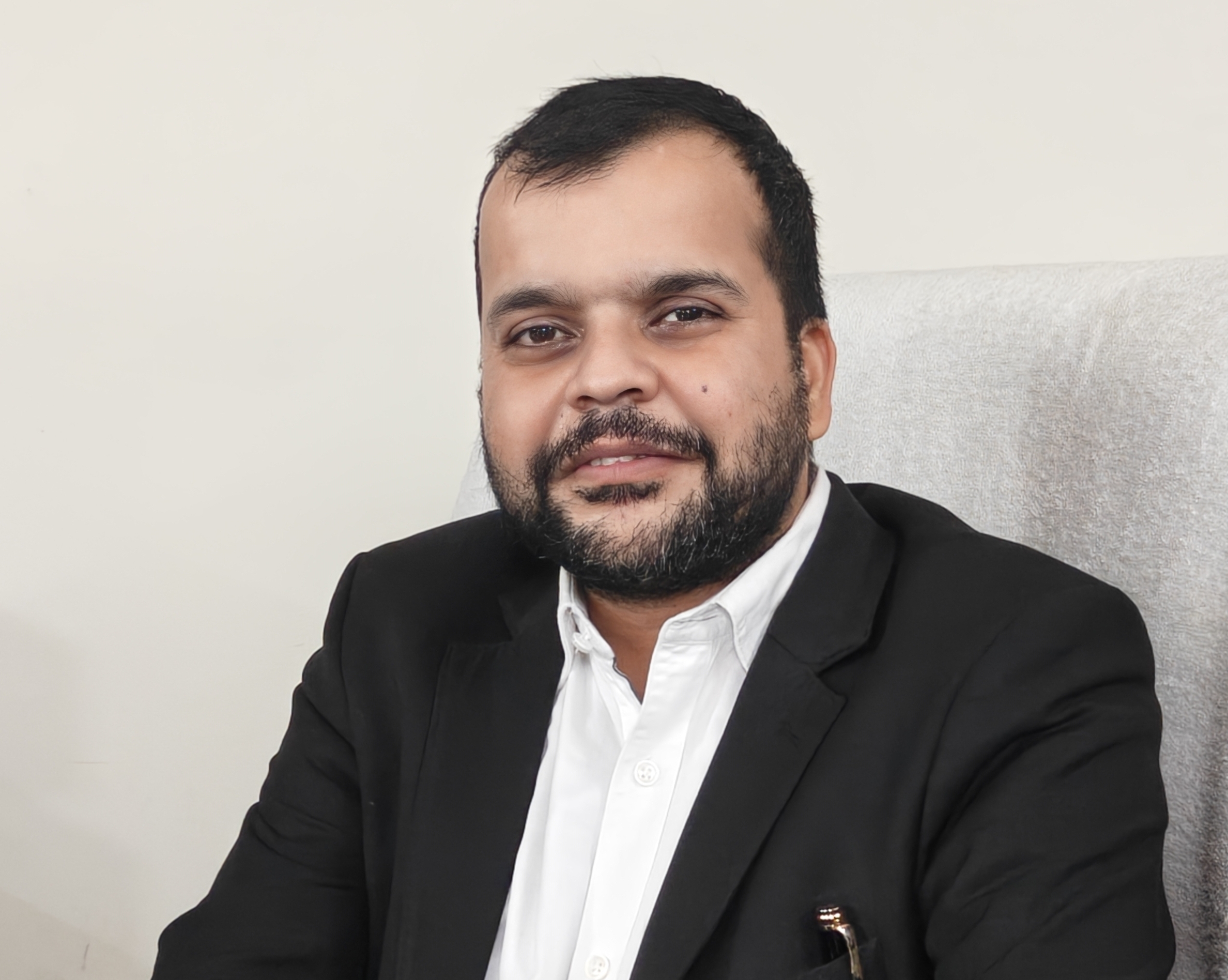
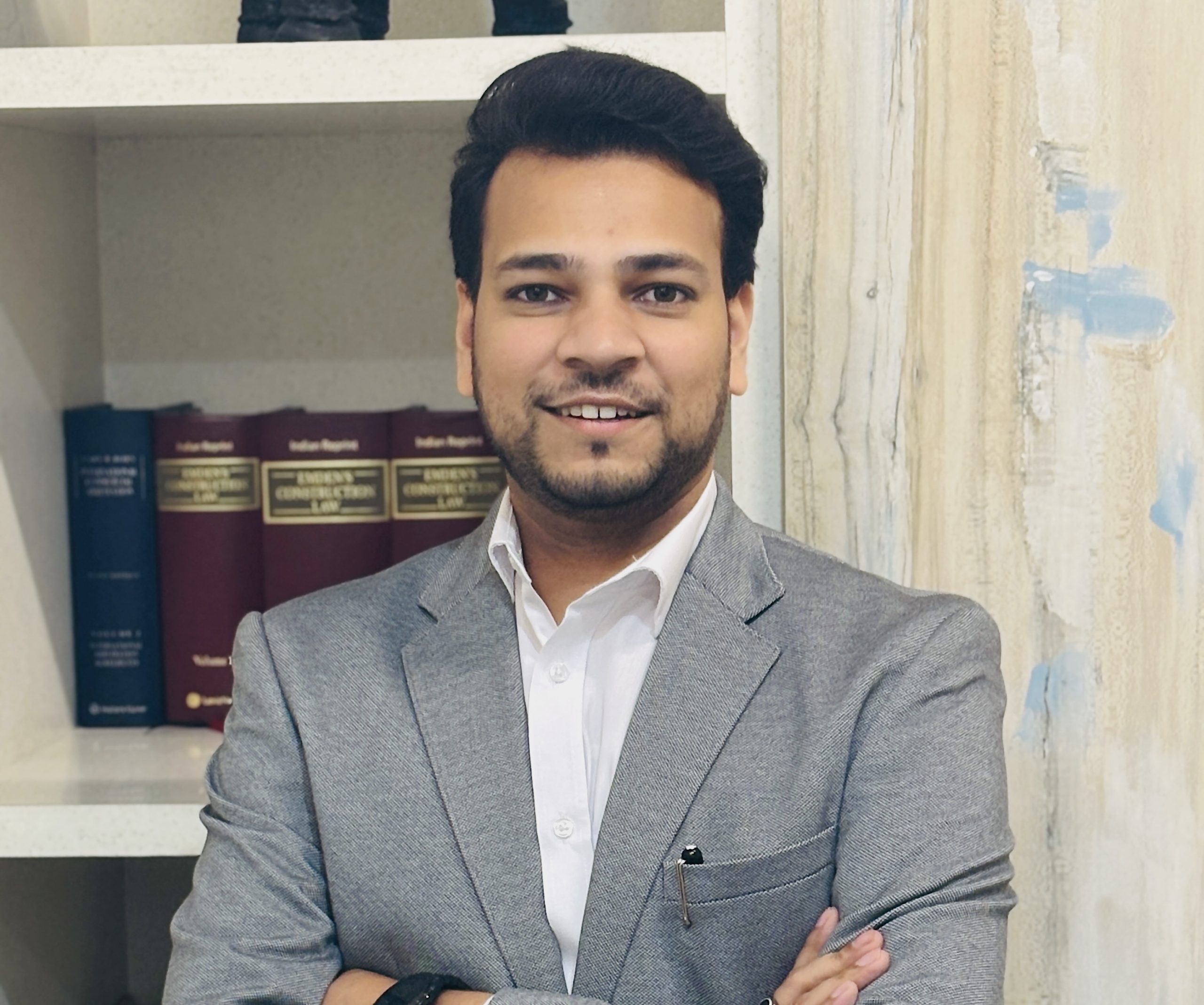
















 Allow notifications