Author: SuperLawyerTeam

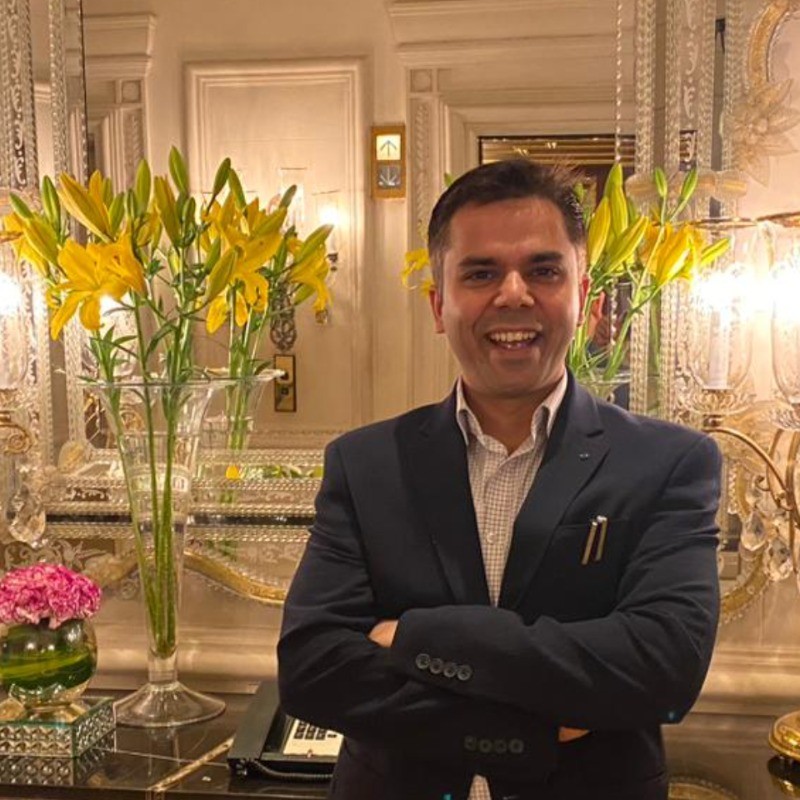
  • “Prioritize learning, dedication, and perseverance in the legal profession. There are no shortcuts to success; hence, young lawyers should embrace challenges, treat professors as legal gurus, and remain committed to continuous growth.” – Neerav Merchant, Partner at Majmudar & Partners

    “Prioritize learning, dedication, and perseverance in the legal profession. There are no shortcuts to success; hence, young lawyers should embrace challenges, treat professors as legal gurus, and remain committed to continuous growth.” – Neerav Merchant, Partner at Majmudar & Partners

    This interview has been published by Namrata Singh and The SuperLawyer Team

    Could you take us through your journey from college to your first job and eventually to becoming a partner at Majmudar & Partners? What were the pivotal moments or experiences that shaped your career path, and how did you navigate the transitions along the way? 

    I come from a legal background. My father, Mr. Pravin Merchant, was a practicing Solicitor for over 35 years, and as a result, I was exposed to law early on.  I took up different part-time assignments, internships, trainings, etc., even when I was studying in college.  However, my first job (as a legal trainee) was at Kanga & Co., one of the oldest law firms.  Thereafter, I spent few years in private practice with other prominent law firms, such as Vimadalal & Co., and Gagrat & Co., before moving as an in-house counsel. My transition to being an in-house counsel was under tenuous circumstances. My father passed away in 1995 (when I was in second year law) and the pay standards in most law firms in India in the 1990s was not that high, as compared to in-house profile.  Hence, I decided to spend few years as an in-house counsel.  Except in a few cases, not many in-house counsels go back into private practice.  I went in-house at a relatively early stage in my career and after having spent seven (7) years in-house, I felt that my learning curve had hit a plateau.  Though, I had done large private equity deals, negotiated large outsourcing contracts and even built an entire legal department, I needed more challenges, which I thought I could get only in a law firm setting.  This was the genesis of my decision to move back into a law firm.  As regards my choice of Majmudar & Partners, I knew about Majmudar’s stellar reputation and had even seen their work on a private equity deal that they did against the company where I was the general counsel.  The high-quality work, top-tier clientele, and fantastic standing, both domestically and internationally, convinced me that this was the place for me.  The transition from an in-house set-up into a law firm was challenging.  The key challenge that I faced as an in-house counsel was that of changing my mindset and approach, to be able to think like a client.  Additionally, in private practice, lawyers deal with various clients (individuals and companies), which makes it more interesting.  To summarise, the main challenge was to switch gears in my overall thinking and perspective, and to give paramount consideration to the business objectives of the company. I believe, I made this transition quite well, and this helps me in my practice today.

    Having experienced both roles as a partner in a law firm and as in-house counsel for companies like Tata Housing and Patni Computer Systems, what notable differences did you encounter in these positions, and what factors influenced your decision to transition between the two roles?

    Good question.  One should understand that the industry and sector plays a critical role for an in-house counsel as regards adapting to the legal function, whereas when it comes to operating in a law firm, one must adopt to the work ethics, culture, etc. Firstly, the in-house lawyer is required to understand the industry and sector in which he or she operates, especially, because vertical line of business brings different and interesting challenges, compulsions, limitations and risk appetite. Secondly, the management approach and focus vary for each business. Thirdly, government rules, regulations and policies vary according to industry, which is not relevant when one works in a law firm set-up.  All of this makes it imperative for an in-house lawyer to remain focussed on the sector and ensure that nothing is missed in terms of legal strategy, advice, approach, risk mitigation, etc.  I think the foregoing factors did influence my decision whilst working as practicing lawyer as also as an in-house counsel.

    Having more than 25 years of experience, you’ve witnessed significant changes in the legal landscape. What key shifts or trends do you foresee in the field of dispute resolution, arbitration, and intellectual property in the coming years? A lot has changed over the years and much of it has been for better.  Whilst, it will be impossible to identify all the major shifts or trends, the most important shifts that come to mind are that, judiciary has evolved and matured over the years, the use of technology has become more rampant, the present-day judges are commercially savvy, procedural laws have undergone various changes as also laws on arbitration have become more stringent and focussed after taking cues from cross border arbitration cases.  In my view, IPR practice deserves a compliment because it is kind of evergreen in its own right and has gained momentum over the years, especially, with an extensive increase in the use of the internet, matters relating to infringement, counterfeiting, etc., has become more rampant, there is tremendous awareness re brand protection, logos, etc.   

    You’ve represented clients in enforcing an ICC arbitration award in India. Could you share insights into the challenges and strategies involved in the enforcement process, particularly in the Indian legal context?

    This question deserves a comprehensive response, and we could end up writing a complete chapter on this issue. Broadly speaking, over the years enforcement of foreign awards in India has become smoother as the courts have become sensitive towards being pro-enforcement and acknowledging India as a signatory to the New York Convention on enforcement of foreign awards in India.  Moreover, there have been various statutory amendments and judicial pronouncements which have helped in reducing the challenges of foreign awards by Indian parties.  In my view, the biggest challenge that persists is that of asset tracing and seeking an interim injunction against disposal of the assets.

    Your role involves advising on technology and telecommunication matters. With the rapid evolution of technology, how do you stay updated on the latest legal implications and challenges in this dynamic industry?

    I have been fortunate to work in these sectors very early on.  My first stint as in-house counsel was at GTL Ltd, which was in the business of installation of radio-frequency towers, laying down optic fibre cables, and providing other related telecom services. All of this compelled me to continuous learn, read and stay on top of the regulations, interact with governmental officials, and constantly review judicial precedents touching this sector.  I had to adopt a similar approach in the areas of technology. The Information Technology Act was introduced sometime in 2000, which, since then has been the legal backbone in relation to technology law.  There has been constant learning, checking new amendments regularly, focusing on the rationale of changes, and then advising clients on a given scenario.

    In your recent transactions, you’ve been involved in diverse matters, from challenging telecom regulations to high-stakes arbitration involving global players. Could you highlight one or two recent transactions that you found particularly intriguing or challenging, and share the key strategies that led to a successful outcome for your clients?

    In the recent past, we had represented one of the large telecom service providers, operating in the business of mobile portability. The TRAI (telecom regulator) brought in a certain regulation that impacted our client’s ability to do business in India. We assessed the relevant law, regulations and provisions and checked judicial precedents, as also researched on important provisions of the Indian Constitution, and filed a constitutional writ before the Delhi High Court considering that the regulation was impacting our client’s fundamental right to do business.  After some deliberation and with excellent arguments made by eminent Sr. Counsels, we eventually succeeded in obtaining a favourable order quashing the controversial regulation.  This allowed our clients enormous commercial relief and the time and efforts spent by the firm were highly appreciated.

    Amidst your demanding legal career, how do you unwind and recharge? Could you share some of your hobbies or activities that bring you joy and relaxation outside the courtroom or office?

    I agree that having a good work-life balance is critical to reduce stress levels and to enhance productivity.  To manage stress levels, I spend my mornings in doing some physical training, reading interesting articles, etc.  In the evenings, I prefer to simply relax with family and occasionally with friends. My hobbies include reading, going for evening walks, long drives, an occasional movie in the theatre, etc.

    Given your extensive experience in the legal field, what advice would you offer to law students regarding the scope of the profession and the mindset they should cultivate while studying law?

    Firstly, all law students should opt to pursue this profession, only if they are mentally and intellectually driven to pursue such profession, and not because of any other reason. Practicing law is a serious profession as it demands commitment, dedication, and devotion.  If one compares the overall mindset of experienced lawyers versus young law students (including newly graduated lawyers), there will always be a general gap in terms of overall approach, thinking, priorities and perceptions.  In my view, law students (or freshly qualified lawyers) are dynamic, aspirational, and savvy, but they lack patience and perseverance. I would like to urge the younger generation to focus on learning, and hard work, and to treat their professors as legal gurus.  Law students should understand that there are no shortcuts to success; hence, they should not cut corners.  Youngsters should be smart in choosing their internships with firms where they genuinely see interesting client work that can help them apply legal theory in practice.

    As a seasoned lawyer, you’ve advised on foreign investment, general corporate matters, and joint ventures. What advice would you give to young lawyers aspiring to specialize in international law or corporate law?

    A simple advice to all young lawyers is to take up all kinds of work in the earlier years of their career, namely, matters relating to commercial disputes, arbitrations, securities law, foreign exchange law, employment law, or on general commercial queries, doing due diligence, working on a commercial contract, etc.  In other words, never say no to any legal work assigned by one’s senior.  After spending around 2 or 3 years as a generalist lawyer, one can pursue the vertical area of practice that is appealing or interesting.

    Get in touch with Neerav Merchant-

  • “Politeness is an understated skill to possess; it reflects integrity and professionalism in every interaction.” – From navigating high-stakes commercial disputes to advocating for legal reform in Chhattisgarh, Rishabh Garg, Partner at Pransh Law Offices

    “Politeness is an understated skill to possess; it reflects integrity and professionalism in every interaction.” – From navigating high-stakes commercial disputes to advocating for legal reform in Chhattisgarh, Rishabh Garg, Partner at Pransh Law Offices

    This interview has been published by Namrata Singh and The SuperLawyer Team

    Reflecting on your journey from ILS Law College, Pune, to your current position as a Founding Partner at Pransh Law Offices, what pivotal moments or experiences shaped your career in law and What inspired you to establish a legal practice in Chhattisgarh, and what unique approach does Pransh bring to the legal landscape?

    My first encounter with Law was when I was an hour away from my higher secondary mid-term examinations at Symbiosis Junior College, Pune. I had received a call from my inconsolable mother, “Your father has been arrested”. I remember returning to my hometown Korba, Chhattisgarh after my exam and spending months going through the complex legal proceedings. It was then that I studied the law in detail and had a very many meaningful conversations with the lawyers. It took 4 months of hardships before he was discharged of all offences. I believe that’s when I found my true calling and joined ILS Law College in 2008. 

    At ILS, one had to be self-motivated in order to learn since the College did not mandatorily require anyone to partake in any activity other than attending lectures, which too, ended at 10 in the morning. This meant one had ample time to explore and identify one’s area of interest. I did a couple of internships in Corporate Law during the initial years, but it was my internship with a Senior Advocate in the Supreme Court in my penultimate year that made me realise that litigation was what intrigued me. Therefore, after passing out of ILS, I applied to a few law firms and Senior Advocates in Delhi to begin my career in litigation, however, nothing materialised and I was forced to start my career from my hometown in Chhattisgarh. 

    In Chhattisgarh, I realised that although opportunities abounded, the learning curve was slow and Seniors did not take particular interest in teaching the nuances of the law to a young graduate. As such, at the advice of my peers, I left my practice in a year and joined Tech Mahindra in their litigation team in Hyderabad. Tech Mahindra had just taken over Satyam Computers at that time, which meant, being involved in several high stake litigations to deal with. I enjoyed my time at Tech Mahindra but since the goal was always to gain experience and come back to Chhattisgarh, I left that job within a year; pursued a Master’s Degree from the National University of Singapore; and founded Pransh Law Offices in Raipur in July 2016. 

    At Pransh, we believe in keeping things simple. We ensure that our drafts are prepared on time and there are no unnecessary adjournments in Court. We thoroughly research the legal issue involved before giving opinions. We are polite, we do not overcharge, and we keep our Clients up to date with the developments in their matters. We are a team of 11 lawyers who stand shoulder to shoulder in pursuance of holistic growth. We also often collaborate with other firms/lawyers to ensure the best possible outcome for our Clients. 

    Having pursued your LL.M. in International and Comparative Law from the National University of Singapore, how has your international education influenced your approach to legal practice in India?

    Studying at NUS for a year taught me to meticulously draft a legal document after extensive research. It helped me develop analytical skills, since at NUS, we were given reading material a week prior to lectures – where we were supposed to share our thoughts on the reading material. Other than that, the substantive law that I read there has not really helped me yet in my legal practice in India. In fact, a Masters does not really help in litigation, other than the skills one develops, and it is advisable only if academics is one’s calling.

    As a seasoned legal professional, you have extensive experience in high-value commercial disputes and advising clients in various industries. Can you share some insights into the challenges and rewards of practicing law in the domains of DDUGKY, Mining, Construction, and Infrastructure?

    In commercial disputes, it is important to know the business as much as it is important to know the law. These disputes are mainly governed by a Contract in writing, and therefore, a thorough understanding of the Law of Contracts is extremely important. 

    Early on in my practice, I got the opportunity to work on several low-stake commercial matters. Every matter had its own complexity where I made mistakes and learnt from them. Over time, it gave me the confidence to take on high-value commercial disputes; since there is no scope for making mistakes in high-value transactions. 

    One of the many challenges we often face in these domains is to quantify the damages that arise out of breach of the Contract. Courts, after Kailash Nath v/s DDA, have held that even Liquidated Damages have to be proved. Often, Clients – at least in a jurisdiction such as Chhattisgarh – don’t maintain their books of accounts properly to enable lawyers to quantify damages such as loss of profits and profitability. As such, a favourable Award / Order in such circumstances is always rewarding. 

    Pransh Law Offices covers a range of practice areas. Which area do you find the most fascinating or challenging, and why?

    As a firm, my colleagues practice extensively in criminal and civil law; however, I personally don’t have the temperament to practice criminal law. As such, I stick to commercial disputes only. 

    The fascinating part about commercial disputes is that they can be settled; there’s a quietus to the never ending litigation. I think lawyers have a substantial role to play when it comes to settlement, as they are the ones who initially inform their Clients of the merits involved in the matter. An honest opinion can help litigants make an informed choice whether to pursue the matter in Court or settle. 

    Your time with the Global Litigation and Arbitration Team at Tech Mahindra involved handling diverse cases. Can you share an interesting or unexpected challenge you encountered during that phase of your career?

    We were dealing with a litigation against Tech Mahindra in the Courts at Los Angeles, California, filed by a disgruntled employee who was sent Onsite from India. During discovery, we found documents against the employee; however, the legal costs, publicity, and risks of going through a jury trial forced us to settle the matter. It was then as an in-house counsel that I realised that litigation is not just about the law or proving who is right/wrong. There are many variables and considerations, such as costs, bargaining power of the parties involved, and attitude of the Presiding Officer of the Court, among others, that are to be kept in mind while dealing with a dispute. 

    Beyond your legal work, you’ve volunteered as a teacher with Make A Difference. How has your experience in community engagement shaped your perspective, both personally and professionally?

    During my time at Make A Difference, I was tasked with teaching English to a Class of 4 Juvenile Convicts in a Juvenile Home in Pune. Professionally, it was obviously a very enriching experience since it was hands-on learning on how the Juvenile Justice Act worked. Personally, it was an experience that made me culturally sensitive and socially aware. These Juveniles were some of the smartest 10-year-olds I met who were also grateful for the learning opportunity. It made me trust the reformative form of punishment. 

    You’ve been recognized for your contributions. Could you share a bit about any notable publications you’ve authored or awards you’ve received, and what those moments meant to you?

    I have not had the honour of receiving any of the prestigious legal awards.

    My last publication was a result of a sleepless night during COVID-19 graciously published by Bar & Bench on Access to Justice in the State of Chhattisgarh, which can be accessed here:

    https://www.barandbench.com/columns/access-to-justice-or-lack-thereof-in-the-state-of-chhattisgarh

    Although it has been a while since I have done any legal writing, I believe legal writing offers a unique avenue for the expression of creative arguments; which unfortunately, legal pleadings do not provide. Legal writing fosters a dynamic and evolving dialogue within the legal community. I regularly read articles published on “indianconlawphil” and “indiacorplaw”. I can only wish that my practice affords me time to write such enriching articles.  

    As someone deeply connected to Chhattisgarh, how do you perceive the evolving legal landscape in the state, and what role does Pransh play in contributing to that evolution?

    We have been making representations to the Government urging them to establish more Commercial Courts in the State as well as set up other Tribunals like DRT, NGT, and NCLT but to no avail. More Tribunals would mean more opportunities for Lawyers as well as access to litigants. It would also ensure the development of a Commercial Bar in the State, which is non-existent as of date. There is still a long way to go! 

    Beyond the legal realm, what are your hobbies or interests that bring you joy and relaxation outside of work?

    General interests in movies/music aside, I went for a 7-day trek to Har-ki-doon a couple of years ago, which got me hooked on trekking. I make it a point to go on a trek during Court vacations in summer. It allows me to be completely disconnected, reducing the mental strain associated with information overload. 

    What advice do you have for law students and aspiring lawyers who are navigating their way through legal education and considering a career in law?

    a) Politeness is an understated skill to possess; b) Don’t be arrogant, it reflects in Court, and no one likes to deal with an arrogant person – neither the judge nor the client; c) Try and make the job of the Court easier – submit brief written arguments with case compilations, whenever possible; d) Be patient, the learning process is slow; e) Don’t be hard on yourself. 

    Get in touch with Rishabh Garg-

  • “Legal compliance is not just a requirement; it’s a commitment to ethical practices and client trust.” – Explore the symbiotic relationship between luxury real estate and legal expertise, Rohit Chopra, Consultant & Founder of South Delhi Prime and Goa Prime.

    “Legal compliance is not just a requirement; it’s a commitment to ethical practices and client trust.” – Explore the symbiotic relationship between luxury real estate and legal expertise, Rohit Chopra, Consultant & Founder of South Delhi Prime and Goa Prime.

    This interview has been published by Namrata Singh and The SuperLawyer Team

    Congratulations on your remarkable 27+ years in the real estate industry! Looking back, your educational journey reflects a focused approach towards real estate from an early age. Can you share what inspired you to choose real estate, and did you always know this was the path you wanted to pursue?

    Real estate as an industry has excited me since early childhood. There’s no exaggeration if I say that I decided to become a realtor while I was still studying in school. As I completed my high school education and stepped out to become a realtor, I consumed every little detail about the market (South Delhi) I wanted to specialize in. This happens to be the area I grew up in and to some extent knew inside out. In the days to come, I realized that demand for luxury homes around the area was skyrocketing and there was immense scope to expand my services across different locations so yes the approach was always focussed.

    That’s when I decided to partner with locational experts and take my business https://southdelhiprime.com/ to an all-new level. In fact, I’ll say I always enjoyed and still enjoy influencing friends to join real estate

    Starting a company is a significant undertaking. What were the most challenging aspects you faced during the startup of South Delhi Prime, and how did you overcome them? Any lessons you learned that you would share with aspiring entrepreneurs, especially from the current generation?

    For the 27-odd years that I have been in the shoes of a realtor, not once have I felt intimidated to take the lead. I will credit all the stakeholders who made me feel at ease while crediting myself for putting in the backend work. However, if I have to list one challenge, I’d say it has to do with helping every team member find their purpose while making room for their personal growth and satisfaction.

    To achieve this objective, I feel it is necessary to encourage dialogue, mostly 1:1 interactions wherein the leader can understand the teammate’s state of mind and suggest accordingly. Being in the business of selling super luxury homes, managing the art of frustrations and disappointments, having supreme self-belief, and trusting in the process is of paramount importance, thus when every team member is on the same page, I believe can organizations walk collectively in the direction of fastened progress to become a dominant leader in the business. I’d like upcoming startup founders to take note of this.

    Given your involvement in luxury real estate, what unique challenges and opportunities do you find in dealing with high-value transactions, and how does your educational foundation in Law aid you in addressing these challenges effectively?

    Since we run a 100% referral business there are no major challenges as such because the person approaching us already has the required faith and belief that we’d be able to help them find their dream luxury property. However, there is one realization I have developed in the process, which I believe can act as a great opportunity of success too, which is to be a continuous learner. Also I feel delegation and moving away from micromanagement has helped us in being fully available to our clients – right support at the right time ideology.

    In terms of my educational foundation in law, this degree surely complements my role as a realtor by enabling precise contract drafting, ensuring terms are clear and favorable. It aids in compliance with regulations, safeguarding clients from potential pitfalls. Familiarity with property laws and zoning regulations enhances the ability to identify viable investment opportunities and mitigate risks, which can eventually be optimized in the interest of our clients. Furthermore, during deliberations regarding the property’s title chain with either the Seller, the Buyer, or their legal representatives, I am equipped to offer guidance and advice concerning the accuracy of the title, while also facilitating the provision of necessary legal remedies.

    You’ve mentioned that South Delhi Prime is the digital arm of ‘SanD Advisory Pvt Ltd.’ How has technology, especially legal tech, played a role in shaping and enhancing your real estate advisory and transaction processes?

    I’d like to believe legal tech has revolutionized the real estate landscape by streamlining processes and enhancing efficiency. For instance, automated contract management has helped improve the accuracy and speed of closing transactions and reduced overall administrative burdens. In fact, online platforms always come in handy to provide quick access to property laws, zoning regulations, and market trends, a must-have for realtors and clients alike. Blockchain technology and E-signature tools are other interesting legal tech alternatives, I believe can change the face of the real estate market. I’d conclude by saying that in today’s digital age, what is real estate without legal tech?

    As a principal consultant and entrepreneur with a focus on start-ups in the real estate domain, how do you believe your educational background in law has equipped you to make strategic decisions, and what qualities do you consider essential for individuals venturing into entrepreneurship in this industry, especially when navigating the initial legal challenges?

    I’d say my educational background in law has helped in shaping my strategic mindset, which I believe is vital for navigating the complex legalities in the real estate landscape. The ability to interpret intricate regulations and negotiate contracts is paramount, something my law background helps me with tremendously. Moving ahead, the essential qualities I believe real estate entrepreneurs need to possess are adaptability to the ever-evolving legal frameworks, a keen analytical eye, and effective communication. Moreover, to be able to navigate initial legal challenges, resilience, proactive compliance measures, and a commitment to ethical practices become mandatory. 

    With the rise of legal tech solutions, how do you see technology continuing to influence the legal and real estate sectors? Are there particular innovations that have significantly benefited your practice or streamlined operations?

     From what I have noticed the surge in legal tech has helped shape the legal and real estate landscape by ensuring efficiency and precision. Innovations like AI-powered contract analysis fasten transactions, while blockchain ensures secure and transparent property deals. Virtual reality enhances property showcasing from the comfort of our homes. For our business per se, digital platforms for market analysis and e-signature tools have been of significance to streamline our luxury real estate business, saving time and enhancing client experiences, which happens to be the ultimate goal of our business.

    Considering your proficiency in law, are there specific legal trends or changes in regulations that you believe will significantly impact the real estate landscape in the near future?

    As a luxury realtor, who has been around for almost 3 decades now, having explored the traditional way of working to now getting a taste of the best of the digital world offerings,  I anticipate several legal trends taking the real estate space by a storm. I’d like to believe increasing emphasis on sustainable and green practices may end up influencing property development regulations. Similarly, data privacy laws shall become vital in handling client information securely, a non-negotiable in today’s times. Zoning regulations could eventually accommodate flexible workspaces. Additionally, emerging technologies, like blockchain, can revolutionize property transactions. These are just some of the many trends I can immediately think of.

    With your extensive background in sales and marketing, how do you ensure that legal considerations are seamlessly integrated into the overall strategy of acquiring and selling real estate assets for your clients?

    I would say exercising rigorous due diligence precedes each transaction at South Delhi Prime and now Goa Prime, which helps with mitigating risks and placing client interests on the pedestal. Similarly, practicing transparent communication on legal nuances proves equally integral in client interactions, eventually instilling trust. We also make it a point to tweak our sales and marketing strategies in line with the legal frameworks, thus optimizing property positioning. With this approach, we have been able to maximize asset value, safeguard client interests, and set a standard of excellence in the luxury real estate domain.

    What made you choose the South Delhi Market? Do legal dimensions change in real estate based on the region and if yes to what extent?

    Like I said earlier, having grown up in South Delhi and having known the region inside out was one of the pivotal reasons behind me fixing my mind on the South Delhi luxury real estate market. South Delhi is home and with South Delhi Prime we wanted to make our clients feel at home.

    To answer the second part of the question, yes, legal dimensions in real estate do vary significantly based on regions. In fact local laws dictate property rights, zoning regulations, and transaction procedures. From land use policies to contract requirements, regional nuances play a crucial role, making it crucial for realtors to develop a deeper understanding of specific legal frameworks and eventually navigate related complexities.

    Balancing the demands of a thriving real estate business with your personal life can be challenging. Tell us more about what your day looks like.

    Work days are extremely busy for me. Being a realtor, most of my business associations ride on relationships. To build these relationships, it is necessary for me to step out in the field, go meet people, pass on information, note down their requirements, and ultimately help them with their dream property. One word to describe my routine is Hustle-Continuous Hustle day in and day out.

    On starting my day, I tend to finish any e-meets that may be scheduled. Then I drive either to work or the client’s/prospect’s home/office. Breakfast usually happens between meetings. At work, I get done with all that is a priority before again moving to the field to keep in touch with the happenings. Usually, my days are very busy but I have no complaints.

    I always dreamt of becoming a successful realtor and today living my dream is what gives me a different kind of high. All the team members share their schedule for the day and I try to join them wherever I am needed and wherever I can. For more than 27 years I have been following one motto – I have to do the most productive thing possible in any given moment. Had read it somewhere and it has stayed with me since🙂

    In your experience, how crucial is legal expertise in the real estate industry, and what advice would you give to aspiring entrepreneurs about navigating legal complexities in this field?

    I’ll say legal expertise is paramount in real estate as it heavily influences transactions, contracts, and compliance. For aspiring entrepreneurs, I’d suggest understanding local laws, contracts, and staying abreast with the evolving regulations is crucial. Similarly, whenever possible investing in legal education, consulting with experts, and prioritizing compliance to mitigate risks is equally critical to long-term survival and success. A solid legal foundation ensures ethical practices, builds trust, and is instrumental in establishing a successful and sustainable real estate venture, which is why I’d encourage entrepreneurs to not shy away from acquainting themselves with legal knowledge and avoid fearing related complexities.

    Ultimately, when acquiring a real estate asset, you are purchasing not only the physical structure or land but also the associated title papers. The integrity of the title papers is paramount, as the real estate asset represents a legacy asset, necessitating legal precision and correctness at 100% each time and every time. 

    Get in touch with Rohit Chopra-

  • ” I like the variety that comes with being a practising advocate. I did not deliberately choose these practice areas, most lawyers don’t get that choice– at least not initially when you’re starting out”- Devyani Gupta, Advocate-on-Record, Supreme Court of India

    ” I like the variety that comes with being a practising advocate. I did not deliberately choose these practice areas, most lawyers don’t get that choice– at least not initially when you’re starting out”- Devyani Gupta, Advocate-on-Record, Supreme Court of India

    This Interview has been published by Pragya Chandni and The SuperLawyer Team

    Could you please share with us the pivotal moments or experiences that led you to pursue a career in law, particularly your journey from your undergraduate studies at National Law Institute University, Bhopal, to earning an LL.M. from Cornell Law School?

    I just went with the flow and ended up where I did. When I was in school, I was very sure that I’ll be studying English Hons. in Delhi University. Most of my classmates in school were heading to DU and I felt like that is where I want to be as well. But I cleared CLAT and allowed myself to be talked into studying law – and boy, am I glad I did! Although I was quite average academically, the five years I spent at Bhopal were very fulfilling. The decision to apply for Masters was also one without a lot of planning behind it –I was in the final year of my course, I had no job and I had no idea what I wanted to do. I made a last minute decision to apply for LL.M.. In fact, some of the admission deadlines for colleges had already passed by the time I got around to applying. My LL.M. year was very enriching and I thoroughly enjoyed it.

    As an Advocate-on-Record at the Supreme Court of India, you have a diverse range of experiences, including representing political parties and government departments. What motivated you to specialize in areas such as commercial law, service law, constitutional law, and election law?

    I like the variety that comes with being a practising advocate. I did not deliberately choose these practice areas, most lawyers don’t get that choice– at least not initially when you’re starting out. You say yes to all kinds of work. For me, this diversity is what keeps the work exciting and interesting.

    During your time at Cornell Law School, you served as an Associate Editor for the Cornell International Law Journal and as a Researcher for the Center on the Death Penalty Worldwide. How did these roles shape your perspective on the legal profession, and how do they contribute to your current work?

    My work as an Associate Editor for the Cornell International Law Journal felt like a natural extension of my work at the NLIU Law Review when I was in Bhopal. I had been a part of the journal since the first year, and continued up till my final fifth year when I was effectively in-charge of the Editorial Board – Content Review. At CILJ, I had an exposure to how much more professional these journals are; you work on tight deadlines, the articles and publications are by well-known academics, the editing is strict, the citations must always be as per the Bluebook. I feel like my editing experience helps me write and draft better. It instills an ability to discern good writing quickly.  

    My time as a Researcher with the Death Penalty Worldwide was shorter. I felt like I had taken on too much, what with all the credits and extra-curricular activities, and could not continue it for longer. 

    Drafting and researching constitute a big chunk of my professional responsibilities, so I’d say, yes, these experiences definitely help me now.  

    From your extensive internship experience, including working at Parekh & Co., Amarchand & Mangaldas & Suresh A Shroff & Co., and others, which experiences had the most significant impact on your development as a legal professional, and how did they influence your career choices?

    I did not do as many internships as some of my classmates and colleagues. But from the ones I did, I got a fair look into the workings of litigation chambers, litigation law firms and corporate law firms. I also got to work with an Intellectual Property Rights team, specifically the patents team of a law firm. Through these experiences, I realised that (A) I’m probably better suited as a litigating lawyer over a transactional one, and (B) I’d rather work with a small team of a few colleagues than with a large team of people. The internship experiences brought that clarity at some point.

    You’ve been involved in varied cases relating to Constitutional matters, and also many election disputes involving RP Act, symbol order etc. Can you share a specific case or experience that challenged you professionally and how you navigated through it?

    I think each case is a new challenge in itself. I cannot think of anything specific at the moment but I am looking forward to a few 7-judge bench matters that are scheduled to be listed where I am involved as the Advocate-on-Record. 

    What made you decide to take the New York Bar Exam? Have you had the experience of handling cases before US Courts as an Attorney and Counselor-at-Law in the State of New York. 

    Most international students in my LL.M. cohort were very keen on taking the New York Bar Exam. On finding that I can easily fulfil the eligibility requirement by taking certain credits from a list of a few select courses, I decided that I will also take the exam and see where it takes me if I pass. I was open to exploring work opportunities outside but I didn’t know what kind of law I wanted to practise. 

    I passed the NY Bar, but I came back to India soon thereafter and joined the litigation chamber of an Advocate-on-Record. The NY Bar qualification is now just an embellishment on my CV. My feet – and practice – are firmly planted in the Supreme Court of India.

     Lastly, considering your rich and varied experiences, what advice would you give to recent law graduates who are embarking on their legal careers?

    There is no straight line to success and everybody’s experiences are different. Don’t compare your path to others’. Stay motivated and stick it out. Showing up is half the battle.

    Get n touch with Devyani Gupta-

  • “Learning happens with all sorts of firms in different ways and means, each firm offers unique learning opportunities crucial for a fulfilling legal career.” – Adnan Siddiqui, Managing Partner, MAYSS Partners Law Offices

    “Learning happens with all sorts of firms in different ways and means, each firm offers unique learning opportunities crucial for a fulfilling legal career.” – Adnan Siddiqui, Managing Partner, MAYSS Partners Law Offices

    This interview has been published by Namrata Singh and The SuperLawyer Team

    Starting with the basics, can you share a bit about your journey into law and what inspired you to pursue a career in this field?

    I started as a litigating lawyer with Mr. Vivek Chaudhary who was elevated as a HC Judge from Allahabad. Thereafter, I worked with Sr. Adv. Aman Lekhi for some time and went on to become an in-house counsel with CREDAI. Worked with CREDAI for a span of few years and realised that I could call myself a real estate lawyer. I got an offer from MAX subsidiary Antara Senior Living and joined Antara in 2021. I worked with MAX for two years and got an offer from an MNC to lead their real estate team in India. I resigned from Antara only to find out that the company’s culture is bad – hence, instead of finding another job, I ended up making MAYSS Partners with two other colleagues.

    As the Founder of MAYSS Partners Law Offices, can you tell us about the ethos or guiding principles that define your law firm and set it apart in the legal landscape?

    We wish to make a law firm that understands its Client’s business. Very soon, we will be taking up interns and freshers from Tier 3 colleges and try to give them exposure to good Clients and Courts in New Delhi

    You transitioned from the role of Legal Counsel at Antara Senior Living to becoming the Managing Partner at MAYSS Partners. What motivated or inspired this transition, and how has your perspective on the legal profession evolved as a result of taking on a leadership role in your firm?  

    Honestly, it was never planned, it all accidental – A coffee meeting with my Promoter made me think if I should really work for a company that does not have very good intentions for its employees, I resigned immediately after the meeting and thanked the Promoter for being so honest on day one – Ended up making MAYSS Partners

    As a Managing Partner, you lead a team of ten lawyers. What qualities do you look for in team members, and how do you foster a collaborative and productive work environment?

    I honestly believe that everyone can learn and anyone can be trained. Therefore, the idea is to help young professionals from Tier 3 cities come to Delhi and Mumbai and learn the art of practice in these cities.

    Given your expertise in regulatory compliance, what are some key considerations for businesses dealing with RERA, RBI, SEBI, IBC, and other relevant regulatory frameworks?

    The only thing that businesses should bear in mind is that they cannot cheat the investors anymore.

    Looking ahead, what are some trends or developments in the legal landscape that you find particularly intriguing or that you believe will shape the future of legal practice?

    I think AI will bring in a massive change and it is high time that we start learning to use AI.

    With your extensive experience, what are your thoughts on the dynamics of working as legal counsel compared to being a managing partner? How do you navigate the challenges and find fulfilment in these distinct roles?

    In employment, you work for business teams who are your clients and the same goes for a law firm. As long as you are committed to solving a problem, it’s all the same.

    For aspiring law students, internships are often pivotal in shaping their understanding of the legal profession. In your experience, what kind of internship do you believe is crucial for a law student, and what advice would you give on how students can make the most out of their internship experiences?

    I think students must intern with good companies, law firms and lawyers. Students should learn how businesses are run and how do we reach out to the Clients.

    Beyond the legal realm, what are some of your personal interests or hobbies that you find relaxing or rejuvenating?

    I am trying to run five km every day. I love to cook and hang out with my family.

    Considering your extensive experience, what are your thoughts on aspiring legal professionals choosing to intern or work with Tier 1 law firms as opposed to Tier 2 or Tier 3 firms?

    How do you believe the choice of the firm tier can impact one’s career trajectory in the legal field? I think all three are important. Learning happens with all sorts of firms in different ways and means.

    Get in touch with Adnan Siddiqui-

  • “Through open communication, continuous learning, and professional development, I cultivate a culture of collaboration that drives success.” – Purvi Shah Asher, Partner at M/s. Maunsukhlal Hiralal & Co

    “Through open communication, continuous learning, and professional development, I cultivate a culture of collaboration that drives success.” – Purvi Shah Asher, Partner at M/s. Maunsukhlal Hiralal & Co

    This interview has been published by Namrata Singh and The SuperLawyer Team

    Reflecting on your journey from the initial days after college to where you are now, could you share some insights into the challenges or struggles you faced when starting your career, and how you navigated through them to reach your current position as a Partner at Mansukhlal Hiralal & Co.?

    When I look back at my early days, I faced several challenges, the foremost being establishing myself in a competitive legal landscape. I started working at the grassroot level and navigated the system while learning the legal skills. People believe that litigation is about drafting and arguing, but a huge part of litigation is the process that each of the courts implement.  

    In hindsight, starting my career at Mansukhlal Hiralal & Co. felt daunting. Balancing the steep learning curve with client demands was challenging. It was a centenarian firm with an impeccable reputation to vouch for. But I embraced mentorship, built relationships, and developed resilience. Each obstacle became a stepping stone, fuelling my growth and leading to my current role as a Partner. The most challenging part for me was networking. As  lawyers, we are not trained to network. Personally, I had to work hard to come out of my shell to expand my network. =I focused on continuous learning, and sought mentorship from seniors and experts. I worked in different roles to develop new avenues and set a solid base for the years ahead. This act of building a strong network and fostering positive relationships within the legal community also played a pivotal role in my journey. Being able to adapt and never give up was vital. This helped me overcome hurdles and move forward in my career to the position I am in today.

    Congratulations on being named ‘Woman Legal Leader of the Year’ by the Future Digital Summit 2022! Can you share with us what this recognition means to you personally and professionally? Also, given your achievements, including being part of the Asia Super 50 Disputes Lawyers, what motivates you to continue pushing boundaries and excelling in your field?

    Thank you for your kind words. These recognitions are truly an honour and a testament to the hard work of not just myself, but my entire team at M/s. Mansukhlal Hiralal & Co. In fact, it is humbling as well as intimidating since now the bar is set higher and I know I need to do even more than I have been, to stay on these lists.

    It was a pleasant surprise being named the ‘Woman Legal Leader of the Year’ by Future Digital Summit 2022. It is a substantial honour for me, both on a personal and professional level. Personally, it signifies that the determination and effort I have invested in my profession have been recognized and rewarded. Professionally, this accolade serves as a motivation to continue contributing to advancements in the legal sector, reinforce my commitment to diversity and inclusion, and to inspire other women to pursue leadership roles. 

    Furthermore, being part of the Asia Super 50 Disputes Lawyers adds another layer of motivation. It reinforces my dedication to pushing boundaries and excelling in my field and contributing meaningfully to the legal community. It’s a constant reminder that excellence is a journey, not a destination, and one cannot get carried away with it.

    As a TEDx speaker, we’re curious about your experience. What topic did you speak about, and how did sharing your insights on that platform influence your perspective on your legal practice?

    My passion for empowering women extends beyond the courtroom. I recently gave a TEDx Talk titled ‘Equality Begins at Home,’ where I explored how fostering gender equality within families can be a powerful catalyst for broader societal change.

    During my years of practice, I have represented several women who are ill-treated at home, be it mentally, physically, emotionally or financially. While I help them legally, I can say that in this evolving world, the term equality is used very loosely. There are so many facets of equality that need to be looked into. It is easy to understand that if you don’t grow up understanding what equality is, you will have difficulty in implementing it.

    I am sharing the link as well.

    During my talk, I emphasized the importance of looking into people’s mindset. It is a change that is required to bring equality in life. Equality is only spoken about superficially. It’s not just about educating a girl child or her having a successful career. It is how girls and women are treated at home and outside and breaking societal stereotypes to empower women. I shared stories of resilience, determination, and success, highlighting how only a change of mindset can have the transformative impact that empowering women can have on families, communities, and societies at large.

    As a lawyer, my experience speaking on the TEDx platform influenced my perspective on my legal career. It reinforced the important role of the legal system in promoting gender equality and protecting women’s rights. It highlighted the need for lawyers to actively participate in projects that promote women’s empowerment and advocate for policies that address gender inequality.

    On a personal note, my 13-year-old son was the proudest to have his mother be invited to be a TEDx speaker. He also related to the topic and understood its essence. He helped me throughout my preparation. So, for me, that itself was a big win.

    As a leader heading the corporate, real estate, and dispute resolution team, how do you foster a collaborative and innovative work environment among your team members? Can you share an example of a successful collaborative effort that had a positive impact on a project or case?

    As the leader heading the corporate, real estate, and dispute resolution team, fostering a collaborative and innovative work environment is critical to success. One effective way I encourage collaboration is by encouraging open communication and creating a culture where team members feel comfortable sharing their ideas and opinions. I believe in the power of ideas and actively seek opinions from individuals of different backgrounds and expertise. Additionally, I encourage continuous learning and professional development and motivate team members to stay abreast of industry growth and development. We hold in-house update sessions once a month where all the team members educate the other members with critical updates.

    One outstanding example of a successful collaborative effort in our group was during a real estate transaction for the sale of two adjoining plots of land with two separate structures. The interesting part of this land holding and the structure holding was that the ownership belonged to one family, and was divided into several entities being: 

    1. Individuals,
    2. Several HUFs
    3. Private Limited Company
    4. Partnership firm and
    5. Trust

    Along with this, there were several disputes inter-se between the co-owners including testamentary disputes, corporate actions, and partners-inter se, and there were several tenants in both the structures. All these land-holding structures and the disputes led to a very low valuation of the property.

    For the sale of this property, my real estate team, my dispute resolution team and my corporate team not only worked together but put a joint face before the clients and all the adversaries. With such seamless collaboration, all the disputes and challenges were resolved and the client got a substantially high consideration for this property.

    For aspiring lawyers and law students looking to excel in corporate law, real estate, or dispute resolution, what specific skills or areas of knowledge do you believe they should prioritize during their education and early career? Considering your diverse expertise, what types of internships or practical experiences would you recommend for students to gain a well-rounded understanding of the legal field and enhance their employability?

    For aspiring lawyers in corporate law, real estate, or dispute resolution, prioritizing skills such as legal research, negotiation, and communication is crucial. I personally believe that whatever practice area you choose, one should always have hands-on experience in litigation and dispute resolution. One may be brilliant at drafting contracts and commercial documents, but execution of the agreement is not the measure of good drafting. The measure of good drafting is the test of the court. If the document does not speak for your intent in drafting in the Courts, the draft is not good enough. I strongly recommend having hands-on litigation experience early on in your career and then deciding your area of practice.  I also strongly recommend judicial internships.

    Needless to say, staying updated on industry trends, and developing business acumen is essential. Practical experience through internships and networking can provide a holistic understanding of the legal profession and enhance employability. To gain a well-rounded understanding of the legal field, students should pursue internships in diverse areas, including law firms, corporate legal departments, and government organizations. Practical experiences in drafting and research contribute to a comprehensive skill set. Exposure to different legal environments helps students adapt to various scenarios, making them versatile professionals.

    You hold licenses as a Solicitor in the U.K. and Wales as well as in India. How has being a member of both legal communities enriched your professional perspective, and how do you navigate the differences in legal practices between these jurisdictions in your daily work?

    Being a Solicitor in the U.K. and Wales as well as in India has enriched my professional perspective. It allows me to move seamlessly between legal systems, giving clients a global perspective. Having recognized the differences between legal practices, I use the strengths of each jurisdiction to provide comprehensive solutions. It provides me broader understanding of the nuances of international law and enhance the quality of legal services.

    Considering your extensive experience, are there any key changes or developments in the legal landscape of India that you find particularly noteworthy or impactful for the legal community?

    The Indian economy and landscape is changing every day. The laws we have also need to be updated at the same speed. There are several noteworthy changes in the legal sphere as well. As the world takes steps into the world of Artificial Intelligence and constant digital upgradation, the challenges of privacy have increased multifold. To mitigate the same, Digital Personal Data Protection Act, 2023 (DPDPA) is a crucial development in the Indian legal landscape.  It is the very first comprehensive data privacy law in India with focus on individual rights. It empowers individuals with rights like access, correction, and erasure of their personal data, granting them greater control over its use. It also imposes obligations on data fiduciaries i.e. businesses collecting and processing personal data with respect to data security, transparency, and accountability. It also establishes the Data Protection Authority to oversee data protection compliance and investigate potential violations.

    The Indian government is actively working to update and improve its regulatory framework across various sectors. This includes initiatives like the Insolvency and Bankruptcy Code (IBC), the Goods and Services Tax (GST), and the Real Estate (Regulation and Development) Act (RERA)

    The Indian legal system is embracing technology at an accelerating pace. Increasing use of technology in legal practice, including virtual court proceedings, has streamlined processes and increased accessibility. This shift presents both opportunities and challenges, emphasizing the need for legal professionals to adapt to the evolving landscape.

    Initiatives like the eCourts Mission and the introduction of online dispute resolution (ODR) platforms are transforming how cases are filed, managed, and adjudicated.

    Outside of your legal career, what are your favorite ways to unwind and relax? Do you have any hobbies or activities that you find particularly rejuvenating?

    I am a big advocate for work-life balance. Outside of my legal career, spending time with my son and my family are my biggest stress busters. I also find relaxation through various activities. I love reading, it gives me a break and a new perspective. I have re-connected with Bharatnatyam and it is really fulfilling to perform again on the stage. Traveling and exploring different cultures also rejuvenates me, and gives me new perspectives that positively impact my professional life.

    Get in touch with Purvi Shah Asher-

  • “I feel that increased technological advancement in legal practice will create better opportunities for young lawyers, will lead to increased transparency, lower rates of disputes,  faster dispute resolution, standardisation of legal fees and overall improvement of the legal system which directly impacts ease of business”- Saurabh Bhardwaj”, Partner, ORTIS Law Offices

    “I feel that increased technological advancement in legal practice will create better opportunities for young lawyers, will lead to increased transparency, lower rates of disputes,  faster dispute resolution, standardisation of legal fees and overall improvement of the legal system which directly impacts ease of business”- Saurabh Bhardwaj”, Partner, ORTIS Law Offices

    This Interview has been published by Pragya Chandni and The SuperLawyer Team

    Can you share with us what initially inspired you to pursue a career in law, and how did your journey in the legal field begin?

    My father who is a practising lawyer inspired me to become a lawyer. He believed that my analytical skills, command on languages and oratory skills would get me immense success in the legal profession. During my college days I interned with some of the best senior lawyers of the country and was mesmerised by their personalities and their court craft. I aspired to become a senior counsel one day and that’s why I started my career as a litigator. I started my career with my father but shortly thereafter joined the office of a young and successful lawyer in Tis Hazari District court. With my mentor and first boss I got the opportunity to work on some very high stake white collar crimes cases as off-counsels for tier 1 law firms. I was taking up my own matters as well as assisting my senior in his matters. After 4 years of litigation I felt I was stagnated as I had ready playbooks for all kinds of criminal and civil litigation and the cases progressed very slowly. I felt I should expand my horizons and learn a little bit about corporate legal work before I can decide which way to go.

    At this time I got the opportunity to work in the legal department of a popular Indian mobile phone company (Micromax) where I got to draft,review and negotiate commercial agreements for the first time. During my two years of working with the said company I learnt immensely about business and the role of lawyers in ensuring good business hygiene. I would work directly with business heads of various departments and get to learn in detail about their respective departments. I understood the scale of legal operations that are there in big corporations and how to manage them using available digital tools. I also learnt how to get things done by making interpersonal bonds with people which I could never learn as a litigation counsel. Later, I started my own boutique law firm with a few of my friends from law college and started providing comprehensive legal services to startups in NCR including disputes resolution, general corporate, M&A, IPR, compliances etc. In the year 2022 I decided to finally start working on my long standing dream of starting my own business in legal-tech space and that’s when i incorporated my own company to develop a B2B legal tech SaaS platform under the brand name “TrueCounsel”

    Versatility in Legal Practice:

    Legal profession is more art than science and although I do believe in the importance of specialisation, I feel a good lawyer can do anything and everything. Many great lawyers choose to specialise in one area of law but if needed they can take up any kind of challenge. A lawyer who has the capability of representing a client before the Hon’ble Supreme Court of India, can also represent a client in an international arbitration, can also negotiate a high stake deal, can also become a politician, can become a great entrepreneur etc. The level of preparedness, meticulousness, foresightedness and oratory skills that are expected of lawyers, make us ready to take any challenges head-on and with ease. We are mostly performing and at best of our behaviour be it before a court or in a virtual meeting or even when casually meeting anyone in our social circle.

    You have expertise in both litigation and corporate legal work. How did you find yourself navigating both these aspects of law, and which area do you find more challenging or rewarding?

    I find myself navigating between all aspects of law quite smoothly. I believe good research is the key to do well in any area of law or business or technology. I like to take on challenging problems and solve them by sheer hard work. All areas of law are equally challenging and rewarding in my experience and I feel that I thrive under pressure. Whenever I feel that I have become comfortable and bored, I try to take on a new and bigger challenge for myself. Presently I am focussed on learning how to mentor and train the young generation of lawyers which is very different from my generation and becoming a good leader. Also I am facing the challenges of being a tech founder and running a highly competitive business which is very different from being a lawyer.

    You mention a strong aptitude for managing large volumes of corporate disputes using the latest technology. How has technology played a role in your legal practice, and how do you see it shaping the future of dispute resolution?

    The first time I started managing huge volumes of agreements, consumer disputes and recovery matters as an in-house legal counsel, I realised this was completely different from being a litigator. This was the first time I used Microsoft Excel with the help of my boss and second mentor who is also a Chartered Accountant. I understood the importance of using digital tools effectively in order to manage large volumes of data. I had been using technology for legal research during my litigation days already along with OCR tools for extracting data easily for drafting but beyond that I did not know much about the need of tech in the legal profession. This was the time when companies such as ProVakil, Vakilsearch, MyAdvo, Mikelegal etc. had also come up with the objective of solving major pain points in the legal industry using technology. These companies provided solutions for easy discovery of legal professionals, contracts workflow management, automatic updates on court cases, enforcement of IPR etc. This caught my interest immensely as I could see that any problem can be solved using technology and that India is booming with a tech workforce which can create any kind of tech very fast. During the Covid times, the necessity for incorporating tech in legal practice got highlighted and we saw fast advancement in this direction.

    I feel that increased technological advancement in legal practice will create better opportunities for young lawyers, will lead to increased transparency, lower rates of disputes,  faster dispute resolution, standardisation of legal fees and overall improvement of the legal system which directly impacts ease of business.

    Could you share one or two experiences representing clients in high-stakes disputes that have left a lasting impact on your approach to legal representation?

    During my initial litigation days and also when I was working as an in-house counsel, I got to work on some very high stake disputes involving foreign entities. I got the opportunity to work with foreign lawyers and I was highly inspired by their inquisitive approach towards understanding Indian law. I drafted memos and legal opinions which were then vetted by tier-1 Indian law firms and finally shared with these foreign lawyers and that taught me how to appreciate law from an outsider’s perspective. I became more critical and inquisitive about statutes and legal provisions. Also I learned the importance of strategising in detail at the very commencement of a dispute and factoring in all possible outcomes of every step well in advance so that you are never caught by surprise. It also taught me how to manage voluminous documents and data effectively in order to succeed in any dispute because more than law, the facts make or break a case.

    Moving on to your current role as a Partner at Ortis Law Offices, what prompted this transition, and how has this role differed from your previous experiences?

    When I merged my law firm with Ortis Law offices, I made a hard decision to stop doing everything and focus completely on corporate legal work. This decision was prompted by the need for specialisation. I had been doing everything that would come to me and even actively generating work in all possible directions but I realised that although this keeps me motivated, it is not very effective in many ways. I realised that once you have more than 10 years of experience, you must pick an area of law and focus completely on it while generating other work for your partners in the law firm. This creates a good structural foundation for scaling up your legal practice. At Ortis Law Offices I learnt how to be a good mentor and senior. Earlier I would expect a bit too much from my juniors and as a result would become very frustrated with them. This led to low motivation and a toxic environment in my team but my senior partners at Ortis Law Offices taught me how to keep your team happy and motivated and give them space to blossom. Also, while working with other partners at the firm I learnt a lot more about working with MNCs and big clients than I had in my earlier experience.

    You’ve been involved in various acquisitions, funding rounds, and legal proceedings. Could you highlight a recent case or advisory role that stands out to you and share some key lessons or insights gained from it?

    Recently I worked on the acquisition of a company undergoing financial distress wherein I had to represent the said company and its founders. At the same time I had to negotiate settlements with the creditors of the company. This was a very stressful and hectic project wherein I learned how to keep calm and stand your ground under tremendous pressure while representing the losing side in a transaction.

    As someone with over a decade of experience in the legal field, what advice would you give to law students or recent graduates who are starting their careers in law? What lessons have you learned that you believe would be valuable for them?

    My only advice to young law students and lawyers is to do as much freelance work as possible. I believe that while working with seniors or in a law firm structure or as an in-house lawyer one tends to have huge scope for error and a lot of cushion but when you freelance you are directly answerable to the client which teaches you professionalism at a whole different level. It teaches you how to value their time and provide the highest quality of services that you can. 

    Another important advice is that you must keep adding skills in your arsenal. The moment you stop updating your skills you become obsolete and redundant. I recommend that the young lawyers should use as much technology as possible while doing their research, drafting or any other work to increase efficiency and quality of their product and keep a lookout for the latest advancements in legal tech.

    Get in touch with Saurabh Bhardwaj-

  • “Passion is key, and success comes from enjoying what you do. Invest time in learning about the industry, attend training sessions, and network with peers. As you climb the ladder, mentor and guide juniors with patience.” – Shagoofa Rashid Khan, Group General Counsel & Head Corporate Affairs at National Investment and Infrastructure Fund (NIIF)

    “Passion is key, and success comes from enjoying what you do. Invest time in learning about the industry, attend training sessions, and network with peers. As you climb the ladder, mentor and guide juniors with patience.” – Shagoofa Rashid Khan, Group General Counsel & Head Corporate Affairs at National Investment and Infrastructure Fund (NIIF)

    This interview has been published by Namrata Singh and The SuperLawyer Team

    Looking back at the journey from your CA articleship to becoming the Group General  Counsel at NIIF, how did you initially decide to pursue a career in law, and what pivotal  moments shaped your decision to specialize in corporate law and investment funds?  

    My career path has been a case of pure serendipity. I chose the CA course as my group of  friends collectively decided this was the path forward for us. After qualifying as a  chartered accountant, I thought of giving civil services a shot. Hence, I picked “law” as a  second subject. I joined Government Law College (GLC), as it was convenient to attend  morning college and get to work at my chartered accountancy firm by 11 am. I had  encountered Nishith Desai Associates (NDA) in my work-related research, and hence  when they came to GLC for campus recruitment, it was a no-brainer to sit for their  interview. From what the interviewer told me later, I came across as a no-nonsense nerd,  and when they made an offer, I accepted. That’s how my journey in the professional field  of law started.  

    In those days, NDA was a leading firm in India in the fields of international tax and  investment funds. I joined the tax team and being a CA-and-lawyer, I got pulled into the  funds team. I thoroughly enjoyed my time at NDA and lapped up every challenge /  opportunity thrown at me, be it international tax advisory, international tax policy, fund  formation, fund documentation, corporate transactions work, pro-bono advisory etc.  

    Looking back, I can only conclude that whenever I was at the fork of a decision in my  career path, I took that leap of faith and successfully ploughed my way with self-belief  and hard work as my tools. And as for the challenging days, I had the blessings and  patience of my family and guidance from friends and well-wishers to pull me through.  

    As the Group General Counsel at the National Investment and Infrastructure Fund  Limited (NIIF), what are some unique challenges and exciting opportunities you  encounter in your current role? 

    When I joined NIIF, I already had over two decades of experience behind me. The niggling  feeling was, what next. I had been an external lawyer as well as in-house, so what more  could I look forward to. In NIIF I found the next chapter in my professional life.  

    During my interview for the post, my boss-to-be asked: what is it that makes NIIF an  appealing opportunity to you? My answer was, NIIF as a sovereign anchored fund is a  unique experiment in the history of India and it would be an honor to be a part of this  history.  

    As Group General Counsel and Head Corporate Affairs (GGC-CA) at NIIF, the unique task I  had to dive right into was ‘stakeholder management’. NIIF is 49% owned by the Government of India and balance 51% by sovereign, quasi sovereign, and other institutional investors (domestic and offshore). The Board is a representative of these diverse stakeholders as  well as independent directors. Hence, as GGC-CA being trusted advisor to the  stakeholders is key. A routine day is a combination of being the voice of reason, providing  clear legal advice, addressing compliance challenges, providing guidance on governance  matters, being sounding board for new ideas, and supporting business teams in executing  strategic decisions. As fiduciary for investors’ monies, it is imperative to approach every  legal/compliance conundrum with thorough technical analysis, test alternate outcomes,  closely monitor execution and reporting.  

    NIIF offers exciting opportunities for professional growth and intellectual curiosity as we  continue to scale our various investment platforms (across various infrastructure sub sectors), expand our private markets footprint, roll out new fund products (including our  maiden India-Japan Fund) and much more.  

    From your extensive experience in structuring funds to managing acquisitions and  joint ventures, you’ve covered a wide spectrum of legal aspects. Is there a specific area  within your expertise that you find particularly fascinating or enjoy working on the  most?  

    My first love has, and continues to be, taxation. As a student, I aced the subject and had  penned “be a core member of the team to re-write the Indian income-tax act” on my  vision board! Well, I haven’t achieved that goal but I have enjoyed my tryst with various  taxation matters. Researching on and writing tax opinions has been tremendously  rewarding, tax structuring of funds, managed accounts, fund investments, strategic  ventures and other collaborations helped me to deftly leverage my passion and expertise.  Through my focus on ‘policy advocacy’, I have also made representations (and drafted  proposed amendments) on tax, legal and regulatory issues.  

    Another fascinating aspect of my professional life (which am sure, other deal junkies like  me will also confess) is negotiating complex contracts. On the execution day of any  transaction, it is absolutely satisfying to check your score card and find that the deal  breakers were addressed suitably and the terms of the resultant contract have emerged  as clear and unambiguous, thus being capable of performance as well as enforcement.  

    In one of my early transactions, when I ended up being chosen as the common counsel  for the buyer and seller of a large real estate transaction, I asked the seller-client (who  had approached me first) that aren’t you worried a common lawyer may find a middle  path rather than fight for your side? His reply has stayed with me since: there is never a  good contract with a bad counterparty and never a bad contract with a good counterparty.  A clever lawyer is one that doesn’t miss the woods for the trees. Stay focused on why that  transaction is important for your company and thereby make the right legal calls for the  longevity and success of the business.  

    As a seasoned counsel, my approach is not to treat the negotiation room as a war zone.  Rather take it as an opportunity for parties on both sides to negotiate in good faith and  with the objective of finding the best workable solution for any deadlock in the commercial imperatives. Having worked on several transactions in my career, I have  realised that a deal can take a life of its own and it is very easy to get caught in the vortex  to make the deal happen. However, knowing when to keep going and when to back off  from a transaction is a critical skill to cultivate. “Sometimes your best investments are the  ones you don’t make”1.  

    As a jury member for awards recognizing Alternate Investment Professionals in India, what qualities or achievements do you look for in professionals that make them stand  out in the field of investments and legal advisory? 

    When Aditya Gadge of Equalifi reached out to me to be a member on their jury for “40  under 40, Alternative Investment Professionals in India”, it felt like coming of age and as if  we the jury members were handing over the baton to the next generation stars. The  nominees definitely lived up to this expectation. The nominees had dedicated years to  their respective fields with passion and had strived to make a mark for themselves.  

    The qualities that I appreciate are: consistency in performance, staying focussed when  faced with a challenge, ability to spot opportunities and own the space, and bias towards  quality in execution. For professionals in the legal and compliance function the qualities  that will make them stand out are: solid foundation (educational / practical training),  ability to navigate the grays, a strong backbone to withstand pressures/not take short  term calls, foresight to spot legal/regulatory changes on the horizon and impact on the  company/business and having an affable personality.  

    Being a member of SEBI’s Working Group on AIF Regulations and other regulatory  committees, how do you see the evolving landscape of investment regulations in India,  and what role do you think legal professionals play in shaping these changes?  

    There is no doubt that we are functioning in a complex and dynamic legal and regulatory  environment. Change is the only constant. Laws are being redrawn, regulations are being  upscaled and regulators are being conferred with enhanced powers. It is no surprise that  in such a scenario, the experienced senior and her freshly minted lawyer are reading the  new law at the same time!  

    Legal professionals play a pivotal role in such times. Legal acumen and clarity in drafting  are the two key skill sets that a legal professional brings to the expert group / committee.  With her experience, the legal professional can also help the ministry / regulator sift  through the clutter and narrow down the mischief that needs to be addressed through  the new law or regulation. The new law / regulation needs to address the ostensibly  contradicting objectives of keeping the industry in check (from malpractices) and support  growth of the industry. Thus, being effective through the policy drafting process becomes  very important.

    Unfortunately, clear drafting is becoming a dying art. Have encountered many lawyers  accessing the myriad library options and walking the easy ‘copy-paste’ path. There was a  time when our seniors would dictate complicated clauses off the top of their heads. The  technological advancements and legaltech solutions have unfortunately stymied the  creativity and thinking on your feet skills of young lawyers.  

    You transitioned from working at a law firm, Nishith Desai Associates, to joining Kotak  Investment Advisors Limited. What factors or considerations influenced your decision  to make this switch, and what notable differences did you experience in working with a  firm versus working directly with a company like Kotak? 

    My primary reason for the transition was to learn the industry from the inside. As an  external counsel, you are sometimes like an ‘armchair advisor’. You provide the advice,  give the pros and cons of each option and you move on. What makes your client chose  one option versus the other, how the risk chips stacked up for each scenario and finally  did the option yield the desired result or not – are all unknown to you as you have already  shut that file and moved on to the next deliverable on your to-do list.  

    Joining Kotak gave me that opportunity to learn the business side of asset management  industry. Building and growing the business by standing shoulder-to -shoulder with the  leadership made me the business lawyer that I am today. I am privileged to have worked  across multiple business / economy cycles impacting this industry. There are lawyers I  have heard say, “in my experience….” but most of these have not had any practical  experience and are merely shooting off theoretical knowledge as experience. If one is  serious about dedicating their professional life to a particular specialisation it is  imperative that one sees that industry from the inside-out.  

    “When you come out of the storm, you won’t be the same person who walked in. That’s  what this storm’s all about.”2 – so is the case with going in-house. You come into your  own – you are a sharper lawyer and decision-maker, you can provide 3600 analysis of the  issue at hand (legal, tax, regulatory, compliance, governance, risk and probability of  success if challenged), and you eventually build your own name/brand within your  company and the industry. For all those who have asked me the question, should they try  an in-house role, my answer has always been – just do it, you won’t regret the decision.  

    Having navigated through prominent roles at Cyril Amarchand Mangaldas and IDFC  Alternatives, what unique insights or perspectives have these experiences offered you,  shaping your journey and imparting valuable lessons to enhance your growth as a legal  professional? 

    I joined Cyril Amarchand Mangaldas (CAM) after 10 years of being in-house. Hence, I will  admit I had my apprehensions. However, I buckled up for the ride, decided not to look back until I had achieved a short-term goal that I had set for myself and thereafter it was  as easy as getting the hang of building your Lego masterpiece! Through my stints at each  of my law firms and employers, the learnings I have gathered are:  

     Hire wisely: Take your time to find the right mix of professionals to be on your team.  A team is as strong as its weakest link. When you hire right, the members will up the  game for each other, will learn from each other, will work collaboratively and create  a lasting professional camaraderie. The corollary also implies that you need to let go  of the one that don’t make the cut, bring the morale down or don’t work as one team.  

     Be generous with your time: not just with your clients but also your team. The clients  and team are your twin responsibility as the team head. You need to make time and  effort to understand them well in order to succeed.  

     Learn-Unlearn-Relearn: keep an open mind. There are learnings to pick up from every  interaction. When tackling a challenging matter, empty your cup and restart to find  the right solution for the client. When juniors are going through personal challenges,  be kind and patient. If the junior is a sound and committed lawyer you don’t want this  talent to get lost, be supportive and collaborate with her in navigating the path.  

     Don’t indulge in a race to the bottom: Don’t compete on price. When you know your  expertise and experience lead to a superior output then command that premium.  Work with the people who will pay the value for your worth.  

     Clarity and forthrightness: Provide clear view based on fine reading of the law and  supported by appropriate underlying research. The number of “should” opinions are  increasing, so what is the client getting from such opinions. Another one of my favorite  quotes is: contradictions don’t exist, check your premises.3 Do your best in navigating  the greys and narrowing down to the right answer / solution. Stay your ground and  don’t compromise.  

     Don’t get complacent: “On a stone that doesn’t roll, moss grows certainly”. Keep  investing in yourself and your intellectual growth.  

    With over 25 years of experience, you’ve witnessed the evolution of the legal  landscape. Could you share some challenges you faced during your early career, and  how do you perceive the changes in the education system and internship opportunities  for aspiring legal professionals today?  

    I neither came from a family of lawyers/judges nor did I spend enough time at law college  as I had to hurry back to work post lectures. I remember bungling my first (and only) moot  court appearance! I learnt the ropes along the way. From education system wise, some of  the law schools are doing an excellent job at building the foundation of sound legal  knowledge in students. However, the ‘business’ of education comes in the way at times  and churning out graduates in large numbers takes over. Law firms too hire 100-200  students from law schools and throw them at the deep end of the pool. The legal  fraternity then loses talent as either the young minds burnout or leave the profession due  to lack of mentors, sponsors or support in carving their own niche. 

    Currently, there is an  evident short supply of talent in the middle (5 to 10 years PQE) segment. Most corporates are hesitant as in the short internship stints one is neither able to extract value nor make  effective use of an additional resource. However, it is imperative for corporates to take  on the ownership of providing more internship opportunities and these opportunities  could be created not just in legal and compliance functions but also in the business teams  as it would be a wonderful opportunity for the young minds to be exposed to a ring side  view of corporate India. To the students, my advice is to do as many diverse internships  as possible. Don’t box yourself too soon, in one field or another. Try out multiple  fields/businesses/practices, you may or may not choose that field eventually but the  learnings you will gather would be transportable and will stand you in good stead.  

    You’ve been recognized in various lists, including BW Legal World’s Top 100 General  Counsel Power list. What does such recognition mean to you, and how do you think it  contributes to the representation of women in leadership roles in the legal domain?  

    Being named on the BW Legal World Top 100 General Counsel Power List 2022 was a very  humbling and rewarding experience. When one’s work is validated by a jury of eminent  seniors from your field and you stand amidst peers that you hold in high esteem, it works  like a booster shot and makes you power on with renewed energy. The women comprised  ~ 35 out of the Top 100. Surely, there is scope for many more women professionals to  make their mark in leadership roles. May our tribe increase!  

    Improving the representation of women in leadership roles in the legal domain requires  concerted efforts to not lose talented women. To begin with, recognising that most  women professionals still carry a disproportionate burden for domestic deliverables despite  both spouses having similar demanding jobs. She goes through phases where going the family way, rearing the kids and providing elder care will raise demands on her time. So long as the woman professional is committed to career, it would be helpful to provide flexible options / customised solutions with respect to role, office timings or pace of  career growth. Another solution would be to provide a path for women to return to  fulfilling roles post their career breaks.  

    Apart from your professional achievements, we’re curious to know if you have any  hobbies or interests outside of the legal world. How do you unwind and recharge  outside of work? 

    While my professional work satiates the left side of my brain, my hobbies leverage the  right side of my brain. Hence, if I wasn’t a lawyer, I would have been an artist. I enjoy  dabbling in acrylic and oil painting (on canvas) and generally indulge in creative projects  around my house. I enjoy music and in fact when tacking a badly drafted document, I  switch on my playlist and hack through the document at the beat of my favorite songs!  Being a Mumbaikar has also been a boon, as I love going for longs walks along the sea face  after a tiring work-day as the cool sea breeze and hum of the city immediately recharge  my batteries.

    The legal profession is constantly evolving. What advice would you give to young legal  professionals who are just starting their careers, especially in navigating the  complexities of corporate law and investment funds?  

    A lawyer’s life is not easy. It is a demanding career and my first piece of advice is don’t  venture in this field unless you are passionate about law. Choosing to be a lawyer because  it is a safe financial bet will lead you to disengage very soon and you will end up dragging  yourself to work unhappy and bored. You will achieve your true potential only when you  enjoy what you do. If you are a good lawyer, you can distinguish yourself from your herd  of fellow lawyers by being curious, reading the text of law / regulation thoroughly,  challenging the premises, researching underlying legal principles and absorbing from the  conversations when participating in clients meetings / leadership meetings.  

    There is no textbook / handbook on the funds industry. So, the more time you invest in  learning about the industry the better lawyer you will be. Invest time reading about the  industry players (there are many corporate biographies / founders biographies),  understand the business of investing, research the legal structural options in India and  across the globe, study the commercial clauses of fund documents closely, understand  the trends / preferences of capital allocators (investors), get an exposure to work in other  jurisdictions, and research on laws/regulations (and their evolution) in relation to the  funds industry in other countries. When in doubt, ask for help. Reach out to your partner  and request time to discuss and understand better your work, your work output and ways  in which you can improve and grow. Further, attend training sessions conducted by  industry bodies (e.g. IVCA, CII, FICCI etc.) and above all network and interact with lawyer peers as well as peers from within the industry. Lastly, when you become successful and  reach the top, remember to send the elevator back down for the others i.e. be a patient  mentor and guide to your juniors. 

    1Donald Trump, in the article available at https://www.niveza.in/stock-news/learn-investing/sometimes-your-best-investments-are-the-ones-you-dont-make-donald-trump#:~:text=Sometimes%20your%20best%20investments%20are,don%27t%20make%20%2DDonald%20Trump

    2Haruki Murakami.

    3Atlas Shrugged, Ayn Rand.

    Get in touch with Shagoofa Rashid Khan

  • “Law aspirants should familiarize themselves with this disruptive technology  and understand its implications in a wide array of areas such as contract law, regulations, data privacy,  intellectual property, and digital currencies”- Anshuman Gupta, Counsel, Fox & Mandal

    “Law aspirants should familiarize themselves with this disruptive technology  and understand its implications in a wide array of areas such as contract law, regulations, data privacy,  intellectual property, and digital currencies”- Anshuman Gupta, Counsel, Fox & Mandal

    This Interview has been published by Pragya Chandni and The SuperLawyer Team

    Sir, could you please share with our readers how your journey in law began and evolved, leading  you to specialize in commercial litigation, arbitration, and mediation? 

    I had intended to join the Indian Air Force as a reconnaissance pilot rather than practice  law. The National Defence Academy in Pune required unaided 6/6 eye vision as a visual criterion  and a passing grade in mathematics and physics in 12th standard as an educational requirement for  admission to the Air Force wing. However, when I was in my early teens, I developed myopia and  found that I struggled with mathematics. It implied that I wouldn’t even meet the eligibility criteria  to take the entrance exam. At first, I was dejected, but as they say time is a great healer! 

    Years passed by and in my high school years, I developed an interest in civics and business studies  which contained chapters on constitution, business law and ethics which propelled me to take up  commerce stream in 11th standard and eventually I pursued undergraduate course in law. I took up  internships with an independent counsel, LPO and law firms to understand different facets of law  and organizational structure of lawyers. Initially, I worked on a bouquet of dispute resolution matters, 

    My work included inter alia real estate, testamentary, writ, arbitration, commercial, company,  banking, labour and with the passage of time, I realised that my area of interest was in commercial  litigation, arbitration and mediation. 

    You’ve achieved significant recognition, being enlisted by Forbes India and acknowledged by  The Legal 500 and with experience across various industry sectors, from aviation to real estate, you’ve  covered a wide array of legal areas. How do you manage to navigate and excel in such diverse practice  areas? 

    I believe to excel in diverse legal practice areas, a thorough understanding of facts and  legal issues, effective strategy and planning, and time management are crucial. Keeping abreast of  recent updates through legal publications is also essential.  

    A successful lawyer should adopt a personable approach, comprehensively understanding the client’s  business, and creatively using resources to address the legal issues. In my view, continuous learning  and dedication to provide quality support to my clients drives my motivation to excel. In addition to  this, a successful lawyer must imbibe the spirit of learning throughout one’s career and be able to  creatively use its resources to fulfill the requirements of the client. 

    Your academic background includes an LLM in International and Commercial Law from King’s  College London. How has your international education shaped and influenced you?   

    Pursuing a master’s degree in London on a scholarship gave me a great deal of exposure  to a relatively different university pedagogy and to students from diverse backgrounds. The subjects  were more advanced and in-depth than those I studied in the undergraduate law program and writing  assignments and thesis helped me develop my research and analytical skills. Most of the assignments  which were given to us revolved around practical legal issues compelling us to apply our legal  knowledge in real-world settings. 

    Pursuing a degree abroad also made me become self-reliant and independent. I think when you face  challenges independently, you develop resilience and confidence which benefits you in various  aspects of life. 

    Interacting with fellow international students and locals enabled me to expand my network. Building  friendships establishes a global alumni network, expanding your horizons and introducing you to  diverse ideas and perspectives that may not have been part of your previous considerations.

    From your independent practice to your current role at Fox & Mandal, you’ve navigated various  professional settings. How has this journey contributed to your personal and professional growth,  and what key lessons have you learned along the way? 

    Working in diverse work environments enabled me to understand the perspectives and  challenges one goes through in its legal practice. For example, in an independent counsel setting,  one needs to pay attention to the legal cases as well as take care of administrative tasks such as billing,  operational requirements of the setup and HR aspects etc. However, in a law firm you might be  spared from the administrative responsibilities and focus only on your work that has been assigned  to you.  

    It is essential to know and understand your role in each professional setting. Once this is clear in  your mind, it will be easier to handle and navigate the work and the expectations of your seniors and  your team. Another thing to remember is that the learning in this profession never stops. The law,  and the practice, is constantly evolving. You either evolve with it or be left behind.  

    In my short professional journey, I have learnt that one must be open to embrace new opportunities. It is only when you open yourself up, wonderful opportunities come your way to help you polish  your skills and be instrumental in your professional and personal growth. 

    For law students and recent graduates aspiring to build a successful career, what advice would  you give based on your own experiences and observations within the legal industry?   

    I believe law students and graduates should act like a sponge trying to absorb knowledge  and information from wherever they receive, be it reading an article/newspaper/blog, or listening to the submissions advanced by counsels or observations made by the judge in a courtroom or  discussion on a legal topic with colleagues over lunch.  

    I also believe that one must have the hunger and passion to excel in his/her field of specialization.  In addition, one must also be honest towards the work assigned to them. When you give your all to  the matter, whether you win or lose, it does not matter, what matters is – did I give my best? If your answer is yes, you will get immense gratification, there will be no regrets. 

    I’ve learned that being organized and having your case files at hand is crucial, whether you’re  conducting your own study or research or briefing a senior counsel. 

    Another factor which is instrumental in building a successful career is having a mentor to offer you guidance and support when you require the most. I consider myself fortunate to have numerous  mentors in my field like Mr. Sanjay Kumar Pathak, Mr. Kanishk Vardhan Shahi, Mr. Sonal Kumar  Singh and Mr. Kunal Vajani who have shaped both my professional and personal development. My  deepest gratitude to all of them.  

    Considering the evolving landscape of law and legal practice, are there specific trends or changes  that you foresee impacting the field in the coming years? How should aspiring lawyers prepare for  these changes? 

    The Covid-19 pandemic has not only showcased the feasibility of remote work but also  emphasized the flourishing potential through effective work procedures and cutting-edge  technologies, a concept previously unthinkable. 

    This shift emphasizes the increasing significance of technology in the legal sector. Whether you’re a  law student or a legal professional, proficiency in working efficiently in virtual environments and  familiarity with online collaboration tools is essential in the evolving landscape. 

    One trend which is already making its impact felt across the entire world is generative artificial  intelligence (AI). AI is being increasingly used by law firms/companies nowadays for document  review, legal research, contract analysis, communication etc. Aspiring Lawyers should make  themselves acquainted with legal tech tools and understand how technology is transforming the way  we practice law. 

    Furthermore, the use of blockchain technology and smart contracts is increasing across industries, including legal practice. Despite challenges, blockchain has revolutionized the world of  technology and business. Law aspirants should familiarize themselves with this disruptive technology  and understand its implications in a wide array of areas such as contract law, regulations, data privacy,  intellectual property, and digital currencies. 

    Finally, drawing on your extensive experience, what advice would you offer to fresh law  graduates who are just starting their professional journeys in the legal field? 

    The early years of this profession are the formative years and important for the fresh  law graduates. I reckon in my early years of the profession; a senior advocate narrated the importance  of commitment in the profession by quoting United States Supreme Court Justice Joseph Story – “The law is a jealous mistress and requires long and constant courtship. It is not to be won by trifling  favors, but by lavish homage.” One needs to devote a lot of time to the subject and not be casual in  the approach. Commitment and perseverance are inseparable and work hand in hand for success. As a practicing lawyer, I have realized that learning in this profession is perpetual. Embracing the  idea of being a lifelong student is paramount, resonating with the timeless adage, “Once a student,  always a student.”

    Get in touch with Anshuman Gupta-


  • “Find what genuinely interests you. Embrace unconventional paths, don’t succumb to peer pressure. Networking is key – reach out, introduce yourself, and grow.” – Aritra Chatterjee, Manager at Herbert Smith Freehills, U.K

    “Find what genuinely interests you. Embrace unconventional paths, don’t succumb to peer pressure. Networking is key – reach out, introduce yourself, and grow.” – Aritra Chatterjee, Manager at Herbert Smith Freehills, U.K

    This interview has been published by Namrata Singh and The SuperLawyer Team

    You have worked in different places including Hong Kong, Singapore, Tokyo and Belfast. Could you share some insights into the challenges or struggles you faced along the way, and how these experiences have contributed to your personal and professional growth?

    Every jurisdiction has its unique challenges and a different regulatory landscape. There are also differences in market practices and work culture. However, exposure to such differences helps you become a better lawyer and allows you to think outside the box and bring a global perspective to help your clients. On the personal front, I don’t see it as a journey filled with struggles; on the contrary, it has been quite exciting and fun. Yes, you do miss your family, friends, and the familiarity of the place you are from, but I have been lucky to find excellent friends, colleagues, and mentors along the way. I love experiencing new places and cultures, so I have tried to make the most of it.

    You’re managing a team delivering outsourcing and transaction management solutions in your current role at Herbert Smith Freehills, ALT Finance. What unique challenges and rewards come with overseeing a team working on such diverse projects?

    I enjoy the different hats I need to wear. In addition to core legal skills, my role involves team, project, and stakeholder management. Every day is different; you need to continuously innovate and provide tailored solutions to clients at a large scale. I have been lucky to work with clients who are industry leaders, and I find solving problems for them very rewarding. I am also very passionate about people management, learning and growing together as a team, and celebrating each other’s success, which brings me a lot of happiness. 

    Having worked with major financial institutions like HSBC and JP Morgan Chase & Co., what are some of the key insights you’ve gained about the intersection of law and finance in the derivatives space?

    Derivatives is a complex and highly regulated practice area. To be a good derivatives lawyer, you need to understand different derivatives products and the economic outcomes that they are trying to achieve. You can’t afford to look at things only through the lens of laws and regulations and need to be aware of operational, credit, and reputational risks and limitations. My in-house stints at large investment banks were extremely helpful in improving my knowledge of different derivatives products as well as operational and other commercial aspects of the industry.

    You’ve managed large teams of lawyers and paralegals. What strategies do you employ to foster a collaborative and efficient working environment within your teams?

    There is no straitjacket formula – every individual is different. Appreciating these differences and creating a positive work environment based on trust and mutual respect is very important. Having fun as a team and celebrating little wins and each other’s success is also essential. To develop a high-performing team, a manager must empower and help teammates grow by giving them the support and space they need.

    You worked in different capacities including as an Associate Counsel as well as a Manging Consultant. What adjustments or learnings did you find most valuable when you shifted to a leadership role?

    It is an evolutionary process; there are always opportunities to lead the way, even when you are not formally in a leadership / managerial role. Effective delegation and leading by example are crucial. It is about striking a balance between acknowledging that you can’t do everything on your own and knowing that there are certain things that you must learn to do well yourself before delegating to others. 

    As a derivatives lawyer with a keen interest in legal technology, what advancements in legal tech do you find most promising for the future of transactional law?

    No prizes for guessing – AI is the obvious one. However, it is essential to differentiate between tech solutions that add genuine value and solve complex problems from solutions that are more bells and whistles. AI has radically changed how large-scale projects are managed and delivered in the last few years.

    The industry will generally see an increase in the adoption of tech platforms for streamlining document negotiations.

    I am looking forward to seeing the next leap in generative AI solutions. Currently, the technology is prompt engineering dependent, and there are concerns about accuracy and reliability. These issues will be ironed out pretty soon, and the technology’s ability to learn from and understand us will increase manifold.

    You’ve held diverse roles in different geographical locations. How have you navigated the cultural nuances in these regions, and do you believe that understanding cultural differences is essential for success in the legal profession, especially in the derivatives and finance sectors?

    Absolutely – at the end of the day, we are in a people-centric profession. Keeping an open mind as well as appreciating and respecting differences go a long way. I have come to realize that the world is smaller than we think it is and navigating cultural nuances or differences is not difficult as long as you keep an open mind. It is also important to appreciate cultural similarities instead of focusing on just the differences!

    Having worked across various international offices, is there a particular country that holds a special place in your heart, both professionally and personally? How has your experience in that country influenced your approach to law and life?

    Tough question. It would be impossible to single out any place. As mentioned, I have been lucky to find excellent friends, colleagues, and mentors wherever I have worked. The person I am is a culmination of my different experiences. I have learned a lot from and felt welcome everywhere.

    With your passion for quizzing, how do you balance your high-stakes legal career with your interests outside of work? Any favorite trivia or quiz moment you’d like to share?

    It is really important to have a passion or a hobby outside of work – especially for one’s mental health. Your work can get quite taxing and stressful, so it is nice to have something to look forward to outside of work. Quizzing was quite a sidelined activity when I was in law school. I and a few friends started the Quiz Club at our university (RMLNLU, Lucknow). Work does get in the way of quizzing, and I don’t get to participate or conduct as many quizzes as I would like, but I try to whenever possible.

    During the pandemic, when there were no live quizzes for obvious reasons so I started a quiz podcast with a friend. We made ten episodes on diverse topics. We were pretty surprised with how well it did on platforms like Spotify and Apple Podcasts, and we had a lot of fun in the process, and it kept us going when we were trying to cope with the lockdown.

    You’ve had international stints in various countries. How do you perceive the differences in legal education between India and abroad, and what insights can you share for someone considering pursuing an LLM in India or abroad?

    I might not be the best person to answer this because I did not study law abroad. Back in law school, there were not enough courses if one wanted to be a transactional lawyer, and interaction with experts from the industry was limited. Now, that has changed significantly. Law schools do get experts from the industry frequently and offer specialised seminar courses. Private players like LawSikho have done a great job in making practical legal education accessible.

    Based on my interaction with my colleagues and law students abroad, I think firms are more proactive in reaching out and connecting with students. The process for vacation schemes and training contracts is much more efficient, accessible, and consistent across firms.

    In India, the industry can do much more to make itself accessible to law students.

    Given your successful career trajectory, what advice would you offer to the current generation aspiring to excel in the field of law, especially those interested in derivatives and legal technology?

    I am not very good at giving advice. My career path has not been very traditional. It is crucial to find out what genuinely interests you. If you are not lucky enough to do what you love, see if you can love what you do. Don’t succumb to peer pressure and take up something because everyone else is doing it.

    For someone who wants to pursue a career as a derivatives lawyer, a good understanding of the financial ecosystem and macroeconomics can definitely help.

    The legal tech landscape is evolving rapidly and has a lot of exciting career opportunities. I think developing an acumen for technology to understand how it works is important. The best way of doing it is learning how to code. You can start by playing around with low code / no code platforms and move on to learning coding. There are excellent resources all over the internet. 

    It is also vital to learn how to network effectively. Don’t be shy in reaching out to people and introducing yourself!

    Get in touch with Aritra Chatterjee-