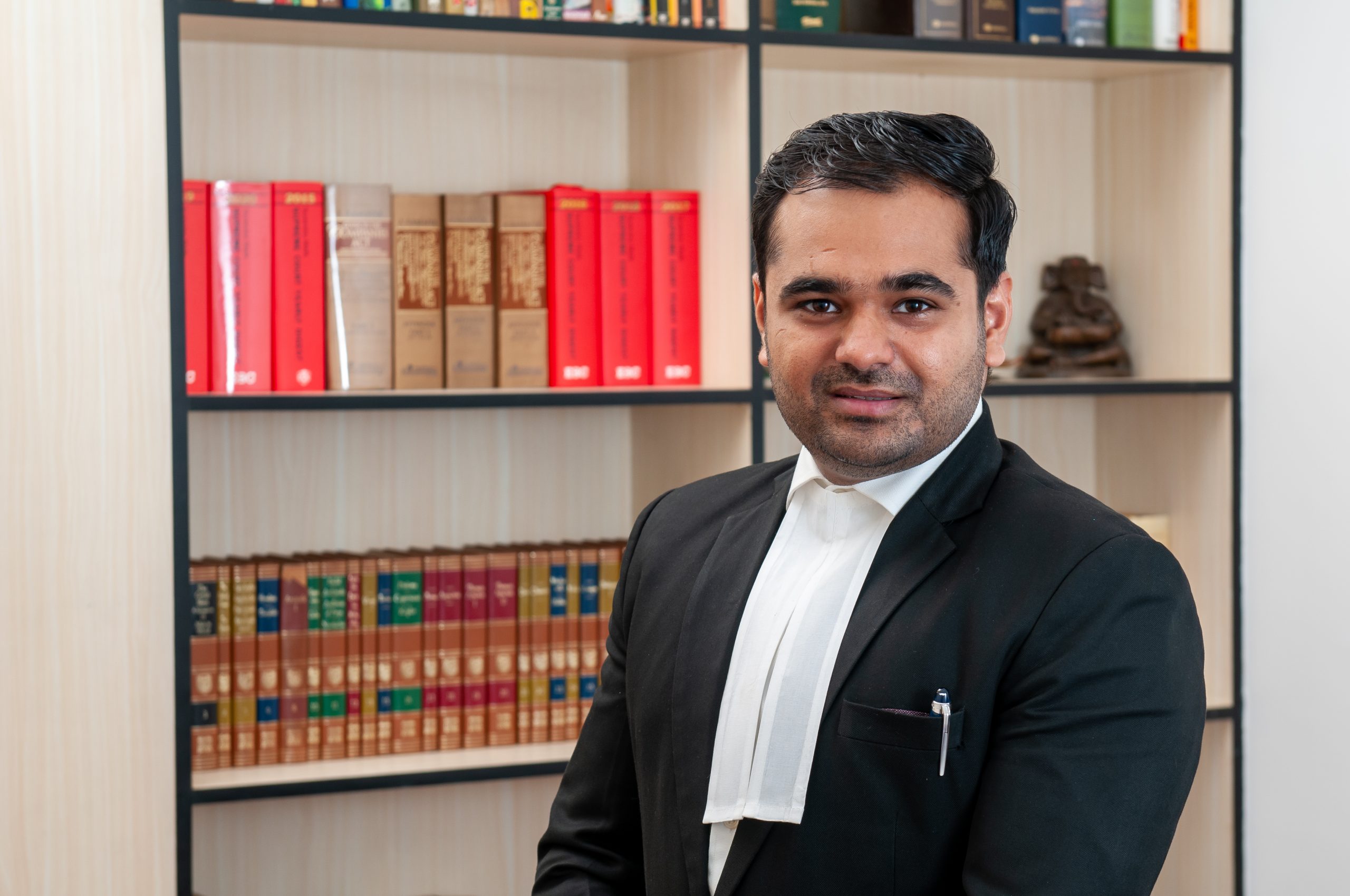
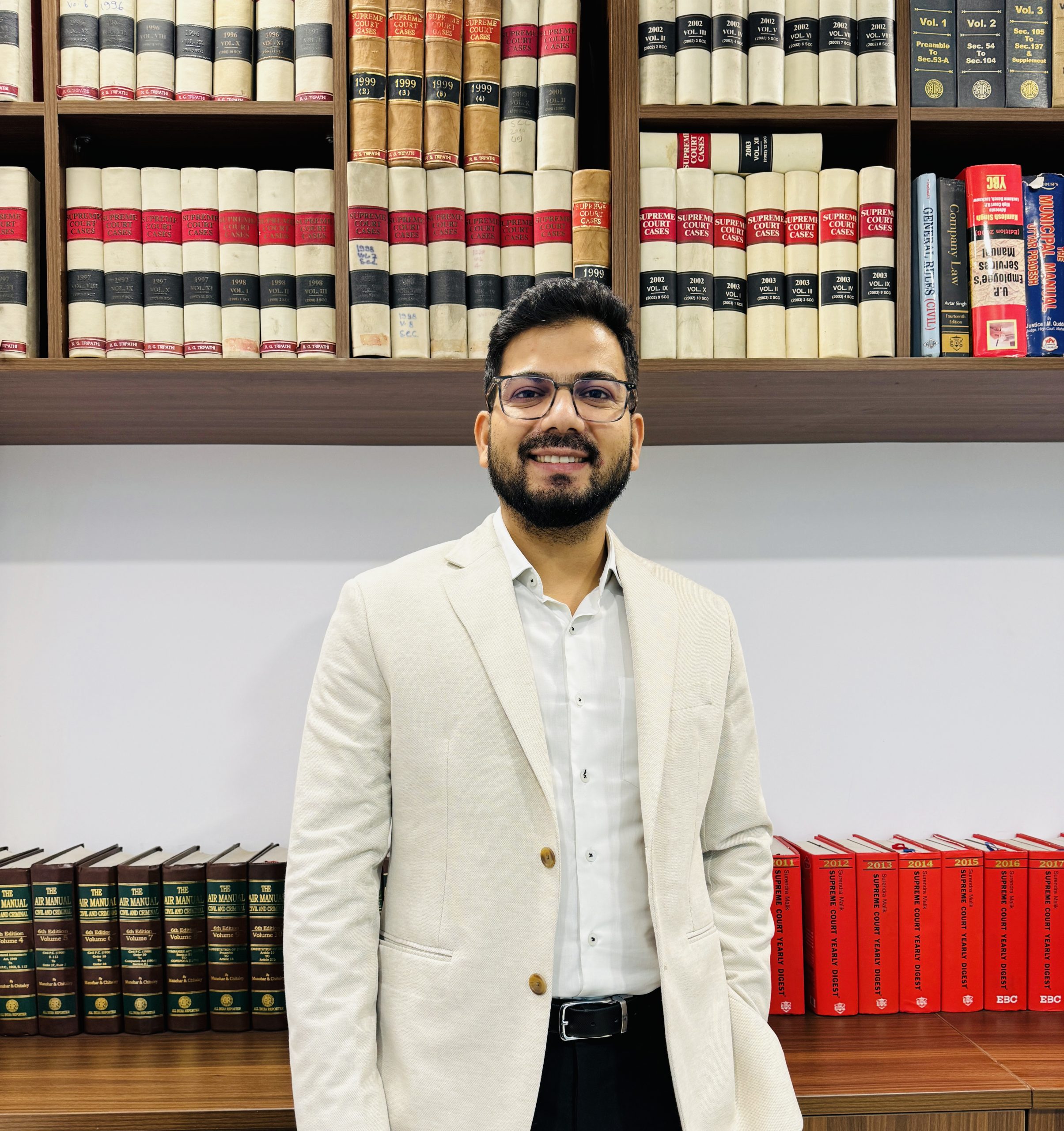
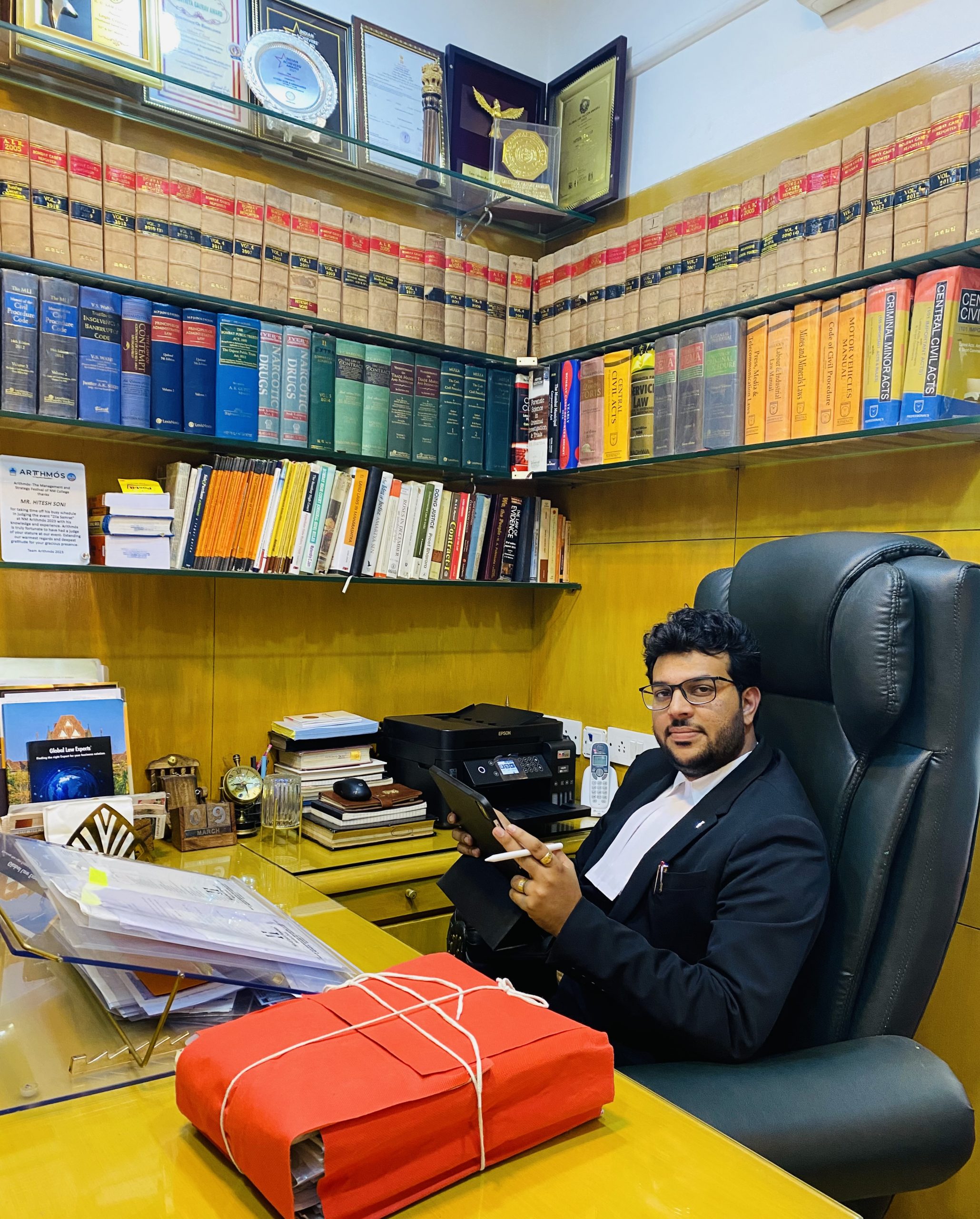
Author: SuperLawyerTeam

  • “The IBC is a significant reform and its successful implementation can bring resolution to the stress situation in the country’s financial system”- Puneet Yadav, Founding Partner- Samaya Law Chambers

    “The IBC is a significant reform and its successful implementation can bring resolution to the stress situation in the country’s financial system”- Puneet Yadav, Founding Partner- Samaya Law Chambers

    This Interview has been published by Pragya Chandni and The SuperLawyer Team
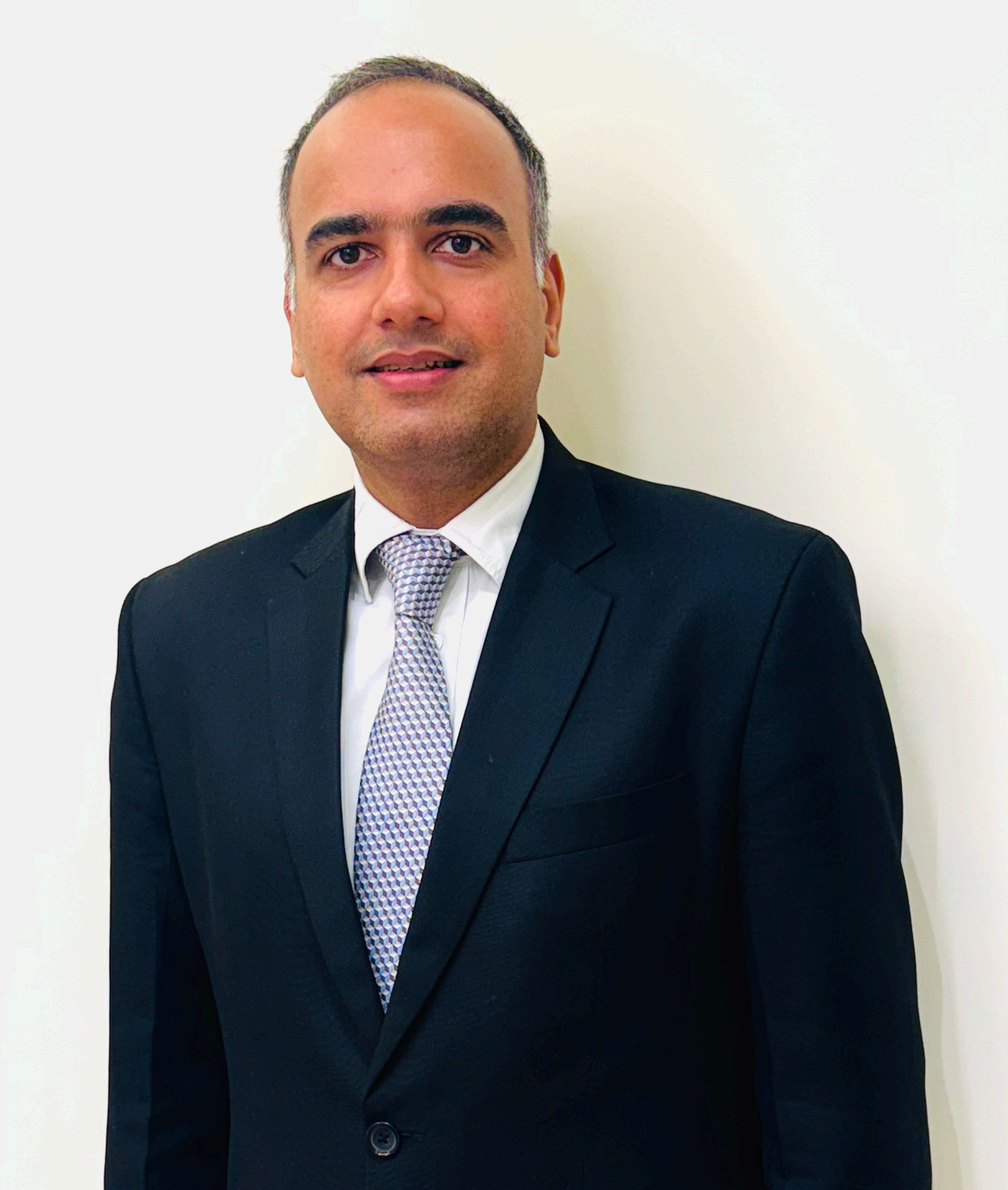
    Could you share a bit about your journey into law and how you decided to pursue it as a career, especially with your educational background at National Law Institute University and Symbiosis Law School?

    My father played a significant role in guiding me to pursue law considering my personality. Then, I was always keen to pursue law since my school days and at that time law was not sought for profession as it is now. We did not have CLAT in the year 2003 and had to fill up individual forms for each college. I was fortunate enough to get through B.A.LL. B course in Symbiosis Law School, Pune. I was inclined for post graduate education and thereafter, I appeared for CLAT LLM and I got through National Law Institute University, Bhopal. It’s a wonderful experience to independently live in a hostel which makes you a confident individual to deal with every situation in your life without the support of family. I not only got to polish my legal and individual skills at the law schools but also got to make great friends during both the courses who are budding colleagues and make the legal practice feel like home.  

    You’ve had a diverse experience, from working in top legal firms to founding your own practice at Samaya Law. What inspired you to take the entrepreneurial route, and how has this journey been for you?

    I am thankful to all the law firms, their partners, and senior advocates who I worked with through my journey. I got immense experience and guidance from them which helped me build my independent practice. Since beginning, I always wanted to have my independent practice as it gives a sense of accomplishment to me, however, working in a firm setup can be equally beneficial considering the fact that the initial few years of independent practice take a toll on you mentally and financially. I was lucky enough to have my own set of clients who trusted in me and helped keep afloat in initial years of practice which is significant to keep you going. The journey of independent practice is full of peaks and valleys as its both demanding and rewarding profession. You have a thrill of victory which is unmatched and gives you a sense of pride and satisfaction and doing public interest litigation can give added satisfaction by making a difference in the lives of people. The downfall being the stress and expectation not only towards yourself but also to Clients and Judges. However, this profession can teach you resilience, perseverance and the importance of hard work which makes you a valuable legal professional.

    Your practice involves appearing before various courts and tribunals, including the and the National Company Law Tribunal and Supreme Court of India. Could you highlight a memorable or challenging case you’ve handled and the key takeaways from that experience?

    After my stint with law firms, I started my independent practice and after a few years started our law firm Samaya Law along with my partner Sourabh Gupta, Advocate and we  completed 10 years in June, 2023. We appear before all courts, tribunal across India. However, being based in Delhi gives an opportunity to physically appear before the Hon’ble Supreme Court and Appellate Tribunals. Although, now the Supreme Court also works on Hybrid mode which helps all the counsels across India to get remote access to appear and argue their cases. We recently argued a case under the maternity benefit act wherein the Petitioner was being denied maternity benefit as her contract with the government body had come to an end. In a landmark judgment, a three Judge bench of the Supreme Court in Dr. Kavita Yadav v The Secretary, Ministry of Health and Family Welfare Department & Others (17 August 2023) held that if a woman has worked in an establishment for 80 days, she would be eligible for full maternity benefits, even if such benefits exceed the term of contract. We also made a significant petition for post-graduate doctors during the COVID-19 period when they were being sent across states for their practical examination as per National Medical Commission and Diplomate of National Board guidelines. The Supreme Court intervened and directed the NMC and NBE to conduct examinations within the state so that the post graduate doctors do not have to cross state as per directives of the government of India. This brought relief to more than 1 lakhs doctors who were appearing for the examination. Each forum has its own way of working, before the Supreme Court you only get 2-3 minutes to explain your brief at the admission hearing so you need to prepare your list of dates and synopsis thoroughly and be precise with your arguments on factual and legal aspects to catch the eye of the  Judge.

    With a significant focus on drafting and vetting petitions across different legal domains, could you share some insights into your approach to crafting effective legal documents and the importance of precision in this aspect of your work?

    My advice would be to keep your focus on the facts of the case because facts forming part of the pleadings can never change and highlighting relevant facts of the case can bring life into a dead brief. It is crucial to draft pleadings that are short, persuasive, point blank and not overstated. It’s best to work on all kinds of pleadings before the trial court and High Court in the initial years of your practice which can be beneficial when you handle matters before the Appellate Courts and Supreme Court. Most part of building up a case happens at the trial court and if the pleadings are not drafted, covering the facts accurately can bring significant damage to the case as it becomes difficult to introduce new facts or legal grounds in support of the brief at appellate stage of the proceedings. The pleadings should ensure that all the relevant facts are covered on the issues to be framed and lead evidence on the said issues to support your case. In a case done by us the Hon’ble Delhi High Court in a suit (CS(OS) No.553 /2016 order dated 21.05.2019) dealing with recovery of possession of an immovable property and a counterclaim for recovery of over Rs. 5 crore had due to lacuna in the drafting and not claiming the relief for recovery of possession made an observation “This is a classic textbook case of, how not to draft a plaint, which should be taught in law colleges and to young lawyers so that such bloopers in drafting of pleadings, damaging to one’s own client, are avoided.”. The pleadings have to be factually fortified and legally formulated to bring forth your best case. 

    Having engaged in extensive research across civil, criminal, and commercial laws, could you discuss a specific area of law that you find particularly intriguing or challenging, and why?

    The latest insolvency and bankruptcy code, 2016 has brought a fresh dimension to the insolvency law including bringing new questions of law which need to be answered both by the Lawyers and Judges. The fact that the code has been modified five times in the last five years including several judgments which have been passed by the Hon’ble Supreme Court itself shows the way it is evolving and which makes it challenging. The IBC is a significant reform and its successful implementation can bring resolution to the stress situation in the country’s financial system. We constantly support the Insolvency Resolution Professionals and companies on advising them on the intricacies of the Code and its implementation. 

    Your involvement in arbitration, both domestic and international, is notable. Can you share a bit about your experiences with arbitration cases and any unique challenges or differences you’ve encountered in handling international arbitrations?

    With the introduction of Arbitration and Conciliation Amendment Act, 2015 the arbitration proceedings must be completed within a time bound manner and which has brought drastic improvement in the overall process of arbitration. The constant queries of the clients as to the time limit within which dispute would be resolved has been answered by way of the said amendment and also by bringing in Schedule IV with the amendment of 2015 the fee being charged by an arbitrator has been regulated making the whole process efficient and cost effective for the client. Thus, we advise clients to keep arbitration clauses in the agreement so that the disputes, if any, can be resolved in an efficient and timely manner. However, it is particularly important where the parties (or their assets) are in different jurisdictions or where the disputes might give rise to complex and technical issues. We recently did an international commercial arbitration under the ICC rules where the seat of arbitration was Narobi, Kenya. The arbitrators in such arbitrations are chosen by the arbitration rules which provide for a method of appointment of arbitrators in case the agreement does not name the arbitration. The cost between a sole arbitrator and three arbitrations can vary considerably in international arbitration including the efficiency within which arbitration can be completed as there is lesser need for coordination between the arbitration. However, high value and complex arbitration would be better with the panel of 3 arbitrators as they can give more insight into the decision-making process. The timelines set in the international arbitrations are strictly adhered to and any deviations are subject to high cost awarded against the defaulting party including closing their rights if no reasonable reasons have been given by the parties. In choosing the seat of arbitration, the parties should consider the effect that this might have upon the conduct of the arbitration and the potential enforceability of the ultimate award and selecting a state which is party to the New York Convention as the seat of any arbitration, provides parties considerable scope for the enforcement of their awards.

    Given your wealth of experience, what advice would you offer to law graduates who are just starting their careers in the legal field? What key lessons have you learned that you believe could benefit those embarking on their legal journey?

    I would advise all the young graduates to learn the basic skills of drafting and research in their initial years along with arguing matters before the courts whenever they get an opportunity. The key would be to accumulate as much knowledge as possible from your seniors, arguing counsels and observing proceedings before the courts. In addition, always keep yourself abreast of the times by reading the latest judgments and updates of law in every field. Always be nice to your opposite side, you will have to face them every day in court and not the clients. Never lie to the court, better lose a client than your respect and trust before the court. Lastly, always take care of your health and follow stress management by having work life harmony.

    Get in touch with Puneet Yadav-

  • “The legal system plays a pivotal role in addressing economic and social disparities, with ongoing efforts to create a more inclusive and equitable society”- Siddhant Sharma, Advocate-on-Record

    “The legal system plays a pivotal role in addressing economic and social disparities, with ongoing efforts to create a more inclusive and equitable society”- Siddhant Sharma, Advocate-on-Record

    This Interview has been published by Pragya Chandni and  The SuperLawyer Team

    Can you share a bit about your background and upbringing, especially how you ended up pursuing law as a career?

    My journey into the field of law is somewhat unconventional, rooted in an upbringing that seamlessly blended athleticism and a commitment to education. Hailing from Himachal Pradesh, I was born in Bangalore and received my education in Patiala, Chandigarh, and Delhi, reflecting the diverse cultural influences that shaped my worldview.

    My parents, with my father being a Dronacharya Award Winner in Judo and my mother serving as the Chief Judo Coach with Sports Authority of India for over 35 years, instilled in me the values of humility and hard work. The mantra that ‘hard work has no substitute’ became a guiding principle, thanks to my father’s wisdom.

    Initially immersed in a promising career in sports, representing Himachal Pradesh in various BCCI tournaments from U-15 to U-23 levels, my trajectory took an unexpected turn due to a sports-related injury. This setback prompted a moment of introspection, leading me to re-evaluate my career path.

    Amidst the contemplation, the decision to transition into law emerged organically. Inspired by a desire to push beyond my comfort zone and propelled by the encouragement of my parents, I embarked on the journey to become an advocate. This shift was marked by rigorous preparation for the Delhi University entrance exam, which I successfully cleared, ultimately choosing to enrol at Campus Law Centre, Delhi University.

    It was during my time at CLC that I discovered the rich legacy of its alumni, further deepening my appreciation for the profession I had serendipitously found myself in. In retrospect, I didn’t so much choose law as it chose me, a realization that has fuelled my commitment to excellence and continuous growth in the legal field.

    I am profoundly grateful for the opportunities that shaped my journey, and I carry forward the invaluable lessons of discipline, resilience, and dedication instilled in me through my unique blend of experiences. Today, as a seasoned lawyer with nine years of experience, I draw upon both my sporting and legal backgrounds to approach challenges with a well-rounded perspective and unwavering determination.

    You completed your LLB from Campus Law Centre, Delhi University. What factors influenced your decision to study law, and were there specific experiences during your academic years that shaped your interest in the legal field?

    Honestly, after cricket I had no other option but to choose law, there is no specific reason or any decision that influenced me to study law.
    I pursued my LLB at Campus Law Centre, Delhi University, and my journey into the legal field was somewhat unconventional. Having initially aspired to pursue a career in cricket, the transition to law emerged organically.

    In my first year, following the advice of my seniors to enjoy the initial phase, I focused on grasping the fundamentals and keeping a balance between academic studies and my passion for cricket. It was during this time that I discovered a genuine interest in Criminal Law, sparking the beginning of my journey in the legal domain.

    As I progressed into my second year, subjects such as Criminal Procedure, Evidence, and Civil Procedure captivated my attention, deepening my understanding and enthusiasm for the legal intricacies. An internship experience further exposed me to the practical aspects of legal work, where I engaged in clerical tasks, gaining invaluable insights into the operational side of the profession.

    The turning point came in my third and final years of college when I made a conscious decision to fully commit to my legal studies. Realizing that my cricketing aspirations were taking a back seat, I explored potential career paths. A pivotal moment occurred in March 2015 when a senior connected me with an internship at Luthra and Luthra, providing me with a firsthand experience of the legal profession.

    Simultaneously, a subsequent internship with Mr. KTS Tulsi, Senior Advocate, in April further solidified my interest in law. The dynamic and challenging nature of the work at both offices fueled my passion, ensuring that each day was intellectually stimulating.

    The opportunities I got was only because of cricket which landed me to my internships, which shaped my professional trajectory. These experiences have not only enriched my legal knowledge but have also instilled in me a deep sense of commitment and enthusiasm for the legal field.”

    You’re currently engaged in independent legal practice, handling a diverse range of cases. Can you walk us through the pivotal moments that led to your decision to transition from working with law firms to establishing your independent practice?

    Embarking on my legal journey, my initial exposure to the legal profession unfolded through internships at Luthra and Luthra, a prominent law firm, and later under the guidance of Mr. KTS Tulsi, Senior Advocate. These experiences, though disparate, were pivotal in shaping my journey as a lawyer.

    During my stint in a law firm, the routine was structured, demanding undivided attention to assigned tasks within the confines of an office. However, my subsequent internship with Mr. Tulsi, Senior Advocate, introduced me to a different world—a dynamic blend of courtroom advocacy and after court management. Witnessing the strategic use of skills, experience, and court craft to win cases ignited a profound fascination within me.

    Despite the allure of firm remuneration, I recognized a deeper passion for the courtroom. The prospect of being confined to an office space without the vibrancy of court experiences did not resonate with my vision for a fulfilling legal career. Driven by a belief instilled in me since childhood—that hard work paves the way to success—I transitioned to LawRato, where I honed my communication skills with clients. However, the confinement of a firm environment eventually led me to seek a more dynamic setting.

    Gratefully, I found mentorship under Mr. Jaspreet Singh Rai, a period that contributed significantly to my growth and gave me a fair bit of experience in Trial Court. Destiny smiled upon me when I secured a position at the Chambers of Mr. Tulsi, a dream opportunity by the support of Mr. Amit Sharma and Mr. Raj Kamal. 

    Before venturing into independent practice, I had the privilege of working with Mr. Karan Bharihoke, Advocate-on-Record who played a transformative role in shaping me from a novice into a confident, independent lawyer. His mentorship instilled in me the courage to appear before the court and the resilience needed to pursue my goals.

    You’ve had significant experience in handling high-profile cases, including criminal matters, civil matters, and more. Could you share a challenging or notable case that you’ve worked on and the lessons you learned from it? 

    In my not so extensive legal career spanning nine years, I’ve had the privilege of handling some high profile cases, each carrying its own weight of significance. High-profile cases, in particular, demand a heightened level of diligence and responsibility, given the elevated stakes involved for both the client and the legal representative.

    Throughout my journey, I’ve had the honor of collaborating with seasoned advocates and independently handling noteworthy cases. One such pivotal experience that stands out is my involvement in the Nirbhaya Case (Appeal) at the Supreme Court, where I assisted my senior who was representing the parents. The magnitude of this case not only underscored the gravity of criminal law but also provided me with a profound insight into the nuances of Supreme Court procedures.

    This experience served as a springboard for my subsequent work, notably in preparing and drafting the Petition in the Arushi Talwar Case. The lessons gathered from these high-profile cases have been instrumental in deepening my understanding of criminal laws and honing my legal skills.

    I am deeply appreciative of the trust placed in me by seniors, which has been a constant source of motivation throughout my career. Every case, regardless of its nature, has been a stepping stone for my professional growth. I firmly believe that embracing and learning from each experience is imperative for continuous development as legal professionals.

    In essence, my journey has been shaped by a commitment to excellence, a deep appreciation for the opportunities afforded to me, and an unwavering belief in the transformative power of every legal experience.

    You’ve worked with esteemed advocates such as Mr. KTS Tulsi, Mr. Harin P. Raval, and others. How has mentorship played a role in shaping your career, and what advice do you have for young lawyers in finding the right mentors?

    In this profession finding the right mentor is what every young lawyer would dream. In my legal career, the significance of mentorship has been profound and instrumental. I have had the privilege of working alongside distinguished advocates such as Mr. KTS Tulsi, Mr. Harin P. Raval, Mr. Karan Bharihoke, and Mr. Raj Kamal, each of whom has played a pivotal role in shaping my professional journey.

    The mentorship I received from Mr. Bharihoke and Mr. Kamal, spanning the entirety of my career, has been invaluable. Their guidance has not only illuminated the path but has been a constant source of support during challenging times. I consider them beacons of wisdom, always approachable for clarifications, and ready to provide insights into the intricacies of the legal profession.

    Reflecting on my experience, I would advise young lawyers to seek mentors who not only possess exceptional legal acumen but are also genuinely invested in nurturing the next generation of legal professionals. The essence of a good mentor lies in their ability to impart knowledge, offer constructive criticism, and share their practical experiences. A mentor should be someone who sees beyond the professional competition, taking the time and effort to contribute to your growth.

    I am deeply appreciative of the guidance I have received, and it has instilled in me the importance of paying it forward. As a seasoned practitioner, my advice to young lawyers is to actively seek mentorship, be receptive to constructive feedback, and cultivate relationships with mentors who prioritize your professional development. In doing so, not only will you acquire valuable skills and insights, but you will also contribute to the perpetuation of a culture of mentorship within the legal community.


    From your perspective, how would you describe the current legal landscape in India, especially in areas like economic offenses, commercial dispute litigation, and recent legal developments? How has technology impacted the practice of law in recent years?

    Thank you for the opportunity to share my perspective on the current legal landscape in India, particularly in the areas of economic offenses, commercial dispute litigation, and recent legal developments.

    The landscape of economic offenses in India has seen significant changes in recent years. The country has witnessed legislative developments aimed at addressing white-collar crimes, with a focus on laws such as the Prevention of Money Laundering Act, 2002, and the Prevention of Corruption Act, 1988. These laws, along with the Companies Act, 2013, and the Indian Penal Code, 1860, form the backbone of India’s regulatory framework against economic offenses. In 2023, pivotal judicial decisions brought clarity and precision to the nuanced aspects of money laundering, including territorial jurisdiction, bail eligibility, and the procedural obligations of enforcement agencies.

    Commercial dispute litigation in India has also evolved, with the establishment of specialized commercial courts designed to provide efficient and timely resolution of conflicts. These courts employ case management techniques to streamline proceedings and encourage parties to explore alternative dispute resolution methods such as mediation and arbitration before proceeding to trial. The trend towards alternative dispute resolution methods is increasingly being embraced by companies in India.

    Recent legal developments in India have been multifaceted, reflecting the complexity of the challenges faced by the nation. The legal system plays a pivotal role in addressing economic and social disparities, with ongoing efforts to create a more inclusive and equitable society. The Supreme Court and High Courts have been active in shaping the legal landscape, with rulings on a wide range of issues.

    Technology has had a profound impact on the practice of law. It has streamlined processes, improved access to legal resources, and enabled more efficient communication. In the context of commercial courts, technology integration has been instrumental in promoting a more effective dispute resolution process.

    Drawing from my nine years of experience in the legal field, I would advise aspiring lawyers to stay abreast of these evolving trends and developments. It’s crucial to understand the interplay between law and technology, and to adapt to the changing dynamics of the legal profession. Always strive for excellence, but remember that the pursuit of justice should be at the heart of all we do as legal professionals.

    In conclusion, the legal landscape in India is dynamic and evolving, shaped by legislative developments, judicial precedents, and the integration of technology. As legal professionals, we must navigate these changes with diligence, adaptability, and a steadfast commitment to justice.

    You’ve been involved in cases that have gained public attention, such as the Aarushi Talwar Murder Case. How do you manage the pressure and public scrutiny that comes with handling high-profile matters?

    Each case, regardless of its prominence, brings unique challenges and learning opportunities. Drawing from my sports background, I understand the importance of timing – knowing when to start and when to stop. This philosophy translates into legal practice, emphasizing a focus on the task at hand.

    Handling high-profile cases, like the Aarushi Talwar Murder Case, demands a blend of professional poise and personal resilience. Recognizing the inevitable pressure and public scrutiny, my approach revolves around a practical mindset.

    I prioritize client objectives over the name of the case, steering away from unnecessary pressure. Overthinking is counterproductive. Trust in thorough preparation and professional competence forms the foundation of my approach.

    Anytime you appear before a court, you always have butterflies running through your stomach. But my only mantra is not to think  much and deal with every case as it comes. My experience in high-profile cases underscores the need for a strategic and composed outlook. Success hinges on maintaining professional rigor while navigating the intense scrutiny, much like delivering a top-tier performance in sports.

    Having excelled academically, how do you balance the theoretical knowledge gained in law school with the practical challenges faced in the legal profession? What advice do you have for fresh law graduates entering the field?

    Honesty, Patience and Hard Work is the advice I shall give fresh law graduates entering the field. In my experience, I’ve noticed a shift among interns and young lawyers, with some placing undue emphasis on stipends and remuneration rather than on learning and professional growth. (I know the younger generation would not like this part). Patience is paramount in our field; the legal profession offers boundless opportunities for those who approach it with dedication and a long-term perspective. 

    Hard work, another cornerstone of success, involves staying focused on your goals, mastering procedural intricacies, understanding the law thoroughly, and presenting your cases with unwavering commitment. Success, I believe, is an outcome of consistent, diligent effort.

    Addressing the evolving nature of law, it’s imperative to keep abreast of daily developments in statutes and judgments. However, the true essence of this profession manifests in the courtroom—where legal theories transform into practiced skills, confidence, and court craft.

    For aspiring legal professionals, my advice is to approach each day as an opportunity to learn, adapt, and refine your skills. Embrace courtroom experiences as they come; there’s an undeniable beauty in the synthesis of theory and practice. As you navigate this dynamic field, you’ll discover the profound fulfilment that stems from a genuine passion for the law.

    I encourage new entrants to the legal field to embrace this journey wholeheartedly, with humility, and to derive satisfaction not only from personal achievements but also from contributing positively to the legal community.

    Considering your achievements and experience, what advice would you like to offer to fresh law graduates who are embarking on their legal careers today? If there’s one piece of advice you wish you had received at the beginning of your career, what would it be?

    I am still learning and I have a lot to achieve in life. As a friend who possesses a little bit of experience over the others who would be graduating soon or have entered the profession.

    Reflecting on my own journey, if there’s one piece of advice I wish I had received at the outset of my career, it would be to find joy in the process of learning. This profession is dynamic and ever-evolving, presenting opportunities for growth at every turn. By immersing oneself in the school of learning, one not only acquires knowledge but also cultivates a mindset that views every experience as a valuable lesson.

    I often share the sentiment that in the legal profession, you never truly lose – you consistently gain insights that contribute to your professional evolution. Aspiring legal professionals should approach their careers with a clear vision, a full commitment to the journey, and an unwavering determination to learn from every experience. In the words of a mantra I hold dear, ‘Clear Eyes, Full Heart Can’t Lose.’ 

    Get in touch with Siddhant Sharma-

  • “In law and in life, embracing every opportunity for learning and mentorship is the compass that guides you towards success.” – Raghunath Peter Doraisamy, Managing Partner at PDLegal LLC Advocates & Solicitors.

    “In law and in life, embracing every opportunity for learning and mentorship is the compass that guides you towards success.” – Raghunath Peter Doraisamy, Managing Partner at PDLegal LLC Advocates & Solicitors.

    This interview has been published by Namrata Singh and The SuperLawyer Team

    With 25 years of extensive practice in law, you’ve built an impressive career as the Managing Partner of PDLegal LLC. Can you share a bit about your journey from college days and struggles you faced during that time and what motivated you to establish your own law firm?

    My journey in law began with a deep-rooted passion for justice and advocacy, nurtured during my university days. This drive, coupled with extensive experience gained over the years, led me to establish PDLegal LLC. My goal was to create a firm that embodies a blend of personalized, partner-level service with efficiency and cost-effectiveness, addressing the evolving needs of our clients.  

    Your areas of expertise range from Maritime and Shipping to International Trade, among others. What drew you to specialize in these particular fields, and how have they evolved over the course of your career?

    My inclination towards Maritime, Shipping, and International Trade law stemmed from recognizing the dynamic and globally interconnected nature of these fields. These areas are not only pivotal to global commerce but also constantly evolving, presenting unique legal challenges and opportunities. Over my career, I’ve witnessed and adapted to significant changes in these sectors, ensuring that our firm stays at the forefront of legal expertise and innovation.

    Having been recognized by leading legal directories like Legal 500 and Chambers & Partners, what do you consider to be the key factors that contribute to your success as a litigation and arbitration counsel?

    The key factors that have contributed to my success in litigation and arbitration include a relentless commitment to excellence, a strategic approach to each case, and a deep understanding of our clients’ needs. Recognition by leading legal directories like Legal 500 and Chambers & Partners reflects our firm’s dedication to delivering high-quality legal services and our ability to achieve favourable outcomes for our clients.

    PDLegal LLC has a strong regional presence with offices in Singapore and Bangkok. How does the firm adapt to the legal landscape in different regions, and what challenges and opportunities does this bring to your practice?

    Adapting to the legal landscapes in Singapore and Bangkok involves a keen understanding of regional legal nuances and cultural sensitivities. Our firm leverages its strong regional presence to offer tailored legal solutions. The challenge lies in navigating diverse legal systems and market dynamics, but it also presents opportunities for cross-border collaboration and expanding our expertise in international law.

    Your practice involves both contentious and non-contentious matters. How do you balance being a trusted business advisor for non-contentious issues like joint ventures and mergers while also navigating complex litigation matters?

    The key to balancing both contentious and non-contentious matters lies in versatility and deep legal acumen. For non-contentious issues like joint ventures and mergers, I focus on being a strategic advisor, ensuring due diligence and foresight. In complex litigation, my approach is more dynamic, with an emphasis on thorough preparation and robust advocacy. This dual role requires adaptability and a deep understanding of our clients’ diverse needs.

    With your background in Maritime Law, how do you perceive the future of the maritime industry, especially considering the advancements in technology and environmental considerations?

    The maritime industry is poised for significant transformation, driven by technological advancements and environmental considerations. As we move towards more sustainable practices, I foresee increased adoption of stricter environmental regulations. 

    Given the recent advancements in technology, there’s a notable shift towards automation in shipping operations. How do you see this trend impacting the maritime industry, and what legal considerations or challenges might arise as a result of increased automation in shipping processes?

    Automation in shipping marks a revolutionary shift, enhancing operational efficiency and safety. However, it also introduces legal challenges, particularly in terms of liability, regulatory compliance, and cybersecurity. As the industry adapts to these changes, our role is to guide clients through this legal landscape, ensuring they stay ahead of the curve.

    As someone deeply involved in pro bono legal services, can you share a rewarding experience or a case where your involvement made a positive impact on the community you serve?

    We do a number of pro bono cases through the Law Society of Singapore Pro Bono Services (“LSSPBS”).

    Beyond your professional achievements, what are some personal hobbies or interests that you indulge in to unwind from the demands of the legal profession?

    To unwind from the demands of the legal profession, I enjoy watching football. I am an avid Manchester United fan.  

    Given your extensive experience and success, what advice would you offer to college students or young professionals on how they can make the most of their college days and choose meaningful internships to pave the way for a successful legal career?

    For university students and young professionals, my advice is to embrace every learning opportunity, whether in academics or internships. Focus on building a strong foundation in legal principles while also developing soft skills like communication and problem-solving. Networking and mentorship are invaluable; seek connections that inspire and guide you towards your career goals.

    Get in touch with Raghunath Peter Doraisamy-

  •  “I have come to the conclusion that in the intensely dynamic environment that we live in where the laws are revolving on a constant basis, it is imperative to have at least the bare minimum knowledge of all fields of law, so as to best advise your client” – Shashwat Tripathi, Advocate on record at the Supreme Court of India

     “I have come to the conclusion that in the intensely dynamic environment that we live in where the laws are revolving on a constant basis, it is imperative to have at least the bare minimum knowledge of all fields of law, so as to best advise your client” – Shashwat Tripathi, Advocate on record at the Supreme Court of India

    This Interview has been published by Pragya Chandni and The SuperLawyer Team

    Can you share with us how your journey in law began, and what inspired you to pursue a career in litigation and dispute resolution?

    Specialization and Expertise: Commercial Litigation, Insolvency and Arbitration. 

    To be honest, I belong to a family of lawyers, my father and my elder brother are both lawyers, although both have worked/work in starkly different fields. One (my elder brother), being a hardcore IPR expert and the other (my father) who has seen the growth of litigation in the once colonial town of Allahabad and been actively involved in service matters before various High Courts. 

    As they say, you sooner or later become a victim of your surroundings. However, in my case, it worked for the best and I can turn the statement around and say, “I am a true by-product of my enriching and encouraging surroundings”!

    I would often as a child accompany my father to the court or interact with his colleagues and associates at home as well as in social spheres. In my opinion (of course as lawyers we are bred in a manner to specify our opinions !) my liking and fondness towards the profession began then itself, in my formative years. Thereafter I saw my brother go to law school as well, which is when my intentions to pursue a career in law solidified and I was sure that I wanted to become a lawyer. 

    My decision to pursue litigation is however a result of my internships and work experiences at various law offices. The irony is that my first job offer and might I add, with a hefty pay in a big firm, was NOT in litigation but the General Corporate  team. However, even then, I refused to take up that opportunity and decided to start all over with the process so long as I was given Litigation. Thus, inherently, my brain and heart were always drawn towards litigation. 

    With expertise in civil and commercial disputes, arbitration, intellectual property, and more, what specific aspects of law drew you in, and how did you develop such a diverse skill set over the years?

    My personal favourite has always been the constitution, which is why I was driven to even appear for the Advocates-on Record examination, which I successfully cleared in the year 2022!

    However, over the last couple of years, I have come to the conclusion that in the intensely dynamic environment that we live in where the laws are revolving on a constant basis, it is imperative to have at least the bare minimum knowledge of all fields of law, so as to best advise your client. Let’s say you have a client who approaches you for a simple case of corporate fraud, your advice however will start on the basic provisions of companies act in the north pole and span to filing a criminal complaint in the south pole. For the naked eye, one is a civil remedy and one is criminal, but for me, both are equally important. Thus, I feel, skill sets also develop over the years based on the kind of matters and briefs you receive or work on as well as the happenings  and trivia in the legal fora, which in my view, every budding lawyer should keep pace with. 

    Establishing your own law firm is a significant accomplishment. What motivated you to form Aeddhaas Legal, LLP, and how has the experience of working with accomplished legal professionals influenced your approach to legal practice?

    From the time I decided I wanted to pursue a career in litigation, I had my eyes on like a hawk!! on opening my own law firm and setting up my practice. 

    I was fortunate to have met people who I connected and bonded well with, who echoed the same feeling as mine, and thus, we all got together and created Aeddhaas. 

    One thing I learnt the most from all the stalwarts at the bar as well as all the accomplished legal professionals I have worked with is the golden rule of always being prepared. One thing I preach to every lawyer is that you must always read your brief to the fullest  (of course over time you learn the art of swiftly navigating ) as well as prepare your draft after a detailed research to seal any/all loopholes. A good draft in my opinion is not one which runs into 100 pages but one which briefly summarizes the issue in question. At the same time, a good argument is not the one which involved showing to the court every document (in most cases pleadings exceed 10000 pages!!), but one where the advocate runs through the essentials, to touch the heart of the case. 

    I also learnt the benefits of team work and how to be calm and patient even in the time of an urgency to take the right decisions. 

    Thus, Aeddhaas for me is the final dish, of all such ingredients, hard work, team building, patience (most important virtue of a lawyer) and attentiveness! 

    Your experience in handling matters under the Insolvency and Bankruptcy Code is extensive. Can you share insights into the complexities involved in such cases and the strategic considerations one needs to keep in mind?

    Insolvency and Bankruptcy code is now one of the most commonly invoked statutes in our country. I have always had an affinity towards commercial laws and hence, once the code was published, I was naturally drawn towards the same. 

    To be frank, as it is still fairly new as a law in our country, it still keeps evolving. It’s an extensive statute with various regulations and rules made thereunder. 

    I would recommend that to be abreast, the best way is to read the recent judgments and monthly updates released by various legal media. Nowadays live law and bar and bench upload updates even before the judgments are released online! Life has become easy because of them. So, we must use these mediums to our benefit. 

    For handling matters under the IBC, strategy planning with regard to the end goal at the very initial stage, whether you are for the corporate debtor or the creditors, goes a long way.  

    With a focus on arbitration matters, including those related to construction contracts and commercial agreements, what role do you see arbitration playing in resolving disputes, and how has the landscape evolved during your career?

    Arbitration is the need of the hour. In my opinion an arbitration clause has become as important as a confidentiality clause in any agreement/contract and there has been a paradigm shift worldwide towards arbitrating disputes viz entering into long drawn litigation battles, which in case of international commercial contracts is a nightmare, be it in the initial stages of overcoming the hurdle of jurisdiction or seeking the enforcement of a decree. 

    Having said this, even though the Indian Arbitration Act was enacted to be time bound, today, realistically speaking the Appellate courts are burdened with appeals and challenges to the awards passed by arbitrators, leading to a delay in execution. All in all however, the interim reliefs and ease of dispute management are unparalleled with arbitration. 

    Unlike courts that are often overwhelmed with a high volume of cases each day, comparatively, arbitration provides parties with more time and opportunities to present their arguments. In arbitration proceedings, parties have more flexibility in scheduling hearings and presenting evidence, which can result in a more efficient and streamlined resolution of disputes. This is because arbitration is a private and confidential process, and the parties have more control over the proceedings, including the selection of the arbitrator (who can be a specialist in case of subject matter being technical in nature). As such, arbitration can be a more attractive option for parties seeking a faster and more cost-effective resolution of their disputes.

    Reflecting on your career, what would you consider as the key milestones or turning points, and how have any challenges or setbacks contributed to your growth as a legal professional?

    Well I am fortunate to not come across any setbacks as yet and I hope it continues to be the same. My journey so far has been exactly the way I thought it would be. Turning point is of course setting my own practice and qualifying the Advocates-on Record examination.

    The transition from working for someone else or a law firm to establishing one’s own practice presents numerous challenges beyond just completing tasks. In addition to securing new clients and meeting their expectations, there are other obstacles to overcome such as financial management, marketing, and building a reputation in the legal community. These challenges can be overwhelming, but successfully navigating them is a significant milestone for any lawyer.

    As a legal professional, it is my duty to provide my clients with the most effective solution within a specific timeframe. So far, I have been doing justice to my work and that I think the actual growth one should be aiming for.

    As someone with a wealth of experience, what advice would you offer to law graduates entering the field today, especially those aspiring to build a successful career in litigation and dispute resolution?

    Law is a dynamic field. You could be making policies sitting in the parliament  or  challenging their implementation. You could be the mastermind behind a watertight contract or the person whose job is to find ways to read into the clauses. You could be the one because of whom we resonate a tick to Nike and an apple to Apple) or the one because of whom an acquisition or merger failed.

    My advice is simple, whatever it is that you intend to do, be it corporate, litigation (civil or criminal), be it IPR or policy, one should begin planning their way forward the day you step foot in law school. I am sure there are days when confusion is bound to occur, however, the sooner you surpass that, you will be way ahead of many others by the time you graduate. You would get the advantage of taking up internships in the specific field and building your CV, additional courses, writing papers and attending conferences in the field of your preference. This way, by the time you graduate out of law school, you are not a ripe student looking for direction, but someone who would add value to the place which hires you.

    Get in touch with Shashwat Tripathi-

  • “In the pursuit of legal excellence, a commitment to continuous learning, a higher purpose, and a passion for sharing knowledge become the cornerstones of a fulfilling journey.” – Satwinder Singh, Founder and Managing Partner, Aekom Legal

    “In the pursuit of legal excellence, a commitment to continuous learning, a higher purpose, and a passion for sharing knowledge become the cornerstones of a fulfilling journey.” – Satwinder Singh, Founder and Managing Partner, Aekom Legal

    This interview has been published by Namrata Singh and The SuperLawyer Team

    Mr. Singh, your journey from Jalandhar to the establishment of Aekom Legal is truly inspiring. Can you walk us through the key moments that shaped your path in law, from your commerce graduation to founding your own firm last year?

    Thank you for acknowledging my journey. Initially, the prospect of practicing law was not a consideration during my undergraduate years. However, a strong desire for attaining a professional qualification drove me forward. To support my parents, I decided to pursue law through evening classes while working during the day. Simultaneously, I successfully completed my Company Secretary (CS) course while serving at the State Bank of India, stationed near the border towns of Punjab. After completion of my CS qualification, I left the bank and joined as a company secretary and then headed the office of a merchant banking firm in Chandigarh. My journey took a turn when I found myself amidst the challenging financial landscape following the collapse of the capital market. It was then that I recognized the enduring potential in practicing in the field of corporate and commercial laws.  

    With this foundational expertise, I found my stride as a corporate lawyer, starting as an associate in one of Delhi’s notable law firms. Over time, I climbed the ranks to become a Partner. After accumulating over 24 years of valuable experience, I made a pivotal decision – to establish our own law firm, ‘Aekom Legal.’

    The journey from Jalandhar to founding Aekom Legal has been fueled by a deep-rooted sense of purpose and is a story of continuous learning, professional growth, and an unwavering commitment to excellence in the field of law. 

    The name “Aekom” is derived from the first word of Gurbani, “Ek Onkar” or “God is One.” Can you share a bit about the significance of this name and how it reflects the ethos of your law firm?

    The name ‘Aekom’ holds a profound spiritual significance for our law firm, drawing inspiration from the sacred Gurbani phrase ‘Ek Onkar’ or in Hindi “एक ॐ” which translates to ‘God is One and all pervasive’. This name choice reflects not only my personal spiritual inclination but also a deep belief in the principles of unity and divine presence. 

    Choosing the name ”Aekom” was a deliberate decision, driven by a desire to transcend self-interest. It symbolizes our commitment to infuse our legal practice with higher purpose and a dedication to ethical and principled legal services. In essence, ‘Aekom’ encapsulates the core values of unity, integrity and a profound sense of responsibility and righteousness. 

    Moreover, the ethos of our firm is rooted in the belief that the pursuit of knowledge is integral to success. We hold a steadfast conviction that for every problem, a solution exists somewhere.

    This guiding philosophy shapes our practice, fostering a culture of continuous learning and problem-solving to better serve our clients and the community at large. 

    You’ve authored and co-authored books and articles. What drives you to contribute to legal literature, and can you share a memorable experience related to your writing?

    Engaging in legal literature has been a deeply gratifying journey, propelled by my unwavering commitment to disseminating knowledge. My extensive experience as a regular faculty at ICSI, where I taught corporate law matters, including corporate restructuring and stamp duty to aspiring company secretaries, laid the foundation for this endeavor.  Additionally, I’ve had the privilege of being a speaker at various forums, such as different chambers of commerce, where I shared insights on Corporate Law, delving into topics like joint ventures, mergers, and acquisitions. 

    The inspiration to actively contribute to legal literature stems from these interactions, providing not only a platform to share expertise but also fostering a meaningful engagement with evolving legal concepts. My driving force has always been the ceaseless pursuit of knowledge – an ethos underscored by a personal motto influenced by the belief that seeking the blessings of Goddess Saraswati, the goddess of knowledge, will naturally attract the blessings of Goddess Laxmi, symbolizing wealth and prosperity. 

    This reciprocal process of learning and sharing underscores the significance of contributing to legal literature as not just a professional duty but a continuous and rewarding endeavor for personal and professional growth.

    Over your extensive career, your expertise has expanded from corporate law to insolvency matters. What motivated you to diversify, and how has this expansion enriched your professional journey?

    The introduction of the Insolvency and Bankruptcy Code in 2016 in India served as a pivotal moment, motivating a deliberate shift towards the intricate domain of insolvency matters. With a strong foundation in company law and having successfully navigated over 300 matters in the area of corporate restructuring, right from conceptualizing to execution, and working on  various Company law realms, including joint ventures, acquisitions etc. I recognized the transformative potential of this new legal framework. 

    Driven by my deep passion for company laws, I proactively sought certification as a Resolution Professional, becoming one of the earliest individuals to achieve this distinction. This strategic move was fueled by a desire to remain at the forefront of the evolving legal landscape.

    This strategic move has proven invaluable in real-world cases, allowing me to apply my enriched understanding of company laws to the dynamic challenges presented in insolvency proceedings. Early involvement in diverse matters has conferred a unique advantage, positioning me as a pioneer in this evolving field.

    In essence, the introduction of the Insolvency and Bankruptcy Code acted as a catalyst, seamlessly merging with my background in company law and inspiring a purposeful pursuit of insolvency matters. This strategic alignment has not only enriched my professional journey but has also empowered me to offer comprehensive and effective legal solutions to clients navigating the complexities of corporate challenges and financial distress. Some of the notable achievements in the stressed assets acquisitions is navigating the acquisition of Ruchi Soya for Patanjali Group, Orchard Pharma acquisition for Dhanuka Group and many other acquisitions in M&A space. It also helped us to build a strong Dispute Resolution team. 

    You’ve been appointed as a member of the Appellate Authority under various acts. How does this role contribute to your broader vision for the legal profession, and what challenges or successes have you encountered in this capacity? As the Chairman of the NCLT/NCLAT Task Force, what initiatives do you envision to enhance the efficiency of these tribunals, and how do you plan to address current challenges in corporate litigation?

    The Government by notification appointed me as a member of the Appellate Authority for a period of three years. It’s an authority constituted under CA, CS and ICWA Acts. I feel privileged to take up this honorary role where you get the opportunity to dispense justice and also play the role as reformist. As the Chairman of the NCLT/NCLAT Task Force constituted by ICSI, my vision revolves around recommending the ways and means to streamline and enhance  the efficiency of these tribunals. The Task Force has submitted a comprehensive report to the President -ICSI. Once it is approved by the Council of ICSI, it will be submitted by the ICSI to President NCLT and other relevant authorities. This report focuses on vital initiatives to reform the system and address current challenges in corporate litigation. The emphasis is on reforming the process to make it more accessible and responsive to the dynamic needs of corporate litigation. The proposed initiatives seek to create a framework that not only expedites proceedings but also encourages a more collaborative and efficient resolution of disputes within the ambit of the NCLT and NCLAT. A key aspect highlighted in the report is the incorporation of mediation in the NCLT framework. By introducing mediation, we aim to unclog the current system and provide a more efficient alternative for resolving disputes. This initiative aligns with the broader goal of enhancing the overall efficiency of NCLT and NCLAT, ensuring a more expeditious and effective resolution of corporate litigation. I would also like to take the opportunity to thank ICSI for believing in me.

    Being recognized as a Notable Practitioner in M&A and Private Equity by IFLR1000 is a significant achievement. How did you celebrate this recognition, and what does it mean to you personally and professionally? 

    Being acknowledged as a Notable Practitioner in M&A and Private Equity by IFLR1000 is a momentous achievement that holds both personal and professional significance. Personally, I celebrated this recognition by taking a moment to reflect on the journey that led to this recognition. Gratitude fills my heart for the collaborative efforts and unwavering dedication that played a pivotal role in reaching this milestone. From a professional standpoint, this recognition is a testament to the commitment and expertise invested in the field of M&A and Private Equity.  The acknowledgment from IFLR1000 underscores the importance of consistently delivering high-quality legal services and upholding a standard of excellence in practice. 

    This achievement not only bolsters personal confidence but also elevates professional credibility, creating new avenues for opportunities and collaborations within the legal realm. 

    When you’re not immersed in legal matters, what are your favorite activities or hobbies that help you unwind? What inspires you outside the legal realm, and how does it influence your approach to your work?

    In my early part of life, playing Tabla at Gurdwara was an activity of my life and over time, it has become a cherished hobby that evolved into a source of joy and relaxation. My love for playing Tabla is not just a leisure activity but a source of inspiration that brings balance to my life. It infuses a sense of achievement and a well-rounded perspective into my professional endeavors, enhancing my effectiveness in the legal world. Engaging in heartfelt conversations with friends is another way I find solace. Meaningful exchanges with friends provide me insight and a refreshing break that helps me to continue to work in a positive manner. 

    You’ve been actively involved in various roles, including the past Chairman of NIRC of ICSI. How do you see your legacy in the legal profession, and what advice would you give to aspiring lawyers and company secretaries? 

    Active engagement in diverse roles, including my tenure as the past Chairman of NIRC of ICSI, has been a defining force in shaping my professional journey. These leadership roles have not only honed my skills in public speaking but have also cultivated essential leadership traits that prove invaluable in navigating the intricate landscape of the legal profession. In essence, my legacy in the legal profession reflects the importance of a balanced approach—blending academic excellence with hands-on exposure and continually striving for both personal and professional growth. Opportunities like these should be embraced, as they not only provide a platform to showcase your strengths but also contribute significantly to your overall development.

    To aspiring lawyers and company secretaries, my advice is simple yet profound: work hard, have a thirst for more knowledge, and adhere to the motto that drives your passion. The legal profession demands a relentless pursuit of excellence, and a strong foundation of knowledge coupled with dedicated effort is a key to success. Embrace every opportunity for learning and active participation, as they will serve as stepping stones toward a fulfilling and successful career in the dynamic and ever-evolving field of law. 

    Get in touch with Satwinder Singh-

  • “If matters could be resolved in a time-bound manner, there is always an advantage. If that fails, litigation is always an option. Today mediation is a highly specialized subject.” – Suchishmita Ghosh Chatterjee, Trained Mediator & Independent Counsel.

    “If matters could be resolved in a time-bound manner, there is always an advantage. If that fails, litigation is always an option. Today mediation is a highly specialized subject.” – Suchishmita Ghosh Chatterjee, Trained Mediator & Independent Counsel.

    This interview has been published by Namrata Singh and The SuperLawyer Team

    Your journey in the legal profession is truly remarkable, especially considering the legacy of your family. How did you navigate the challenges of establishing your own identity in a field where family connections can sometimes be both a boon and a burden?

    It was easier for me to get my first break as a Counsel but then to earn my first brief independently took a while longer. Now reflecting I feel family connection for me was both a boon and a burden. I cannot point to a single incident that led to others acknowledging me, shorn of my background, as it was a gradual process. When people saw me assisting my senior single-handedly in very high stake matters regularly and then appearing in matters like the Saradha Chit Fund case for RBI, SST Media- winding up proceedings, Testamentary suit in the estate of Priyamvada Devi Birla, I think I got noticed by others. Today I can safely say I have other law firms and independent Advocates on Records believing in me and giving me work and my background no longer matters. I always wanted to make my independent existence count in my profession and I am walking a step closer every day by the grace of God and the support of everyone who stood by me like a rock!

    Starting your career when there were relatively fewer women in law, how do you perceive the changing landscape for female lawyers today? Have you noticed a shift in attitudes and opportunities over the years?

    Yes, our profession is very demanding and it’s not like a 9-5 job. A conference can be fixed at 9.30 pm or even 10.30 pm in the night and not all women can work in that format. To practice as a counsel, can even involve staying up all night to prepare an urgent draft or prepare for a matter. As a woman, it is certainly not easy unless she gets that support on all fronts. When I joined, women lawyers by number were much less and I greatly admire all those who were practising as Counsel in those days. Their struggle was a telling tale and I am greatly inspired by all of them. I could see the shift in mindset over the years, people starting to take women lawyers seriously and treating them at par with their male counterparts. Today I see the confidence in the eyes of clients as well as solicitors when they interact. It does not matter whether they have a woman counsel defending them as long as they know the gender would not create any difference. Now the ratio has greatly improved even in litigation, which sure is noticeable.

    Starting your career from scratch after college, you faced challenges that many young professionals can relate to. Can you share some of the initial struggles you encountered and how you overcame them to establish a successful legal practice today?

    Well what was a struggle for me was to break the myth that having a solicitor father helped me gain an advantage over my contemporaries. Although it did help me earn my first matter easily, but unless I performed, it wouldn’t have ensured the future briefs coming my way. In fact, I lost a couple of briefs when people learnt about my family background. It was an added pressure for me to conduct myself in a certain way. This made me apprehensive and I never went to anyone asking for a brief, not because I was too proud to ask for it but because I felt my work would be my identity. I believed if I worked honestly and sincerely I would get noticed. So from the end of 1st year in college, I joined the chamber of my senior Mr Hirak K. Mitter, senior barrister and every day after college hours, I used to attend his Chamber, work out briefs, make lists of dates, read judgments, make my own notes and attend conferences in matters where I wasn’t even engaged. That was a huge learning experience. For 5 years even my senior didn’t have much interaction with me. I would return home late in the night and break down at the dinner table. After seeing me attend his chamber every day for 5 years, with not a single break my presence was felt and also acknowledged. I earned my senior’s trust and confidence. At the end of 5 years, with my senior’s recognition, I started assisting him in heavy matters singlehandedly. Then from assisting him to appearing as an arguing counsel, it was a journey in itself that happened over the years. 

    In setting up your chambers, you’ve emphasized creating an environment where everyone can speak their mind. How do you foster such an atmosphere, and why is it important to you?

    I always tell my juniors to read the facts well. Knowing where to find the law and how to apply a proposition of law would all come subsequently once the facts are mastered. Difficult law points are not always there in every matter. So knowing what are the facts on which law has to be applied, reading is important. To understand it better, a discussion and exchange of thoughts are important. In my senior’s chamber, my senior used to invite us to have a one-on-one participation in conference. That helped us think of different outcomes, options, and perspectives to a matter. Logical thinking and reasoning develop only when there is a conducive environment to air one’s views, without fear. If I see my juniors doing well and better than me, it would be a moment of great satisfaction. Knowledge is the only thing that grows with sharing, so I don’t keep anything up my sleeves. Whatever I learn and know, I believe in sharing that. At times I even find my juniors bringing up some fresh ideas on the table, so there are always new things that I even end up learning from them. It is important to give them that confidence since if they can speak freely to me they can address the Court better and fearlessly.

    Having worked on various matters, including some high-profile cases, is there a particular case or experience that stands out as a significant turning point in your career?

    There are about 4 or 5 such cases. Exposure to matters like the Will case of the Late Priyamvada Devi Birla, helped me learn a lot about mutual Wills, and testamentary suits. I was fortunate enough to get an opportunity to address the Hon’ble Division Bench at the request of the then Chief Justice J.N. Patel in this matter as the junior most member on the side of the Birla after all the seniors had finished their arguments. I was asked if I would like to address the Hon’ble Bench on what I understood of Administrator-pendente lite after hearing and assisting my seniors and copiously taking down notes during arguments for so many days. It was too overwhelming for me but I really enjoyed getting to address such a heavy matter for about half an hour. 

    Then addressing on behalf of RBI in the Saradha chitfund case was a great experience. I learnt about goodwill valuation and the company being sold as a going concern from handling the SST Media case which was regarding Kolkata TV. Learnt a lot about Thika Tenancy from the case of Fona Rubber, then came to learn about the Originating Summons suit from Thakurani Sree Sree Durga Mata Jew case where I assisted the late Mr. S.B.Mookerji. I learnt about misfeasance first-hand from the matter of Jamshedpur Cements which was reported in (2011) 4 CNH but my name was not reported. These are some prominent cases that come to my mind. My exposure in arbitration was through Shappoorji Pallonji vs Videsh Sanchar Nigam Limited which was a huge matter with a lot of intricate points. I learnt about liquidated damages and Hudson’s formula on the calculation of loss of profit first from this arbitration. 

    Your approach to technology is interesting, acknowledging its importance while maintaining a preference for traditional methods like reading physical books. How do you strike a balance between embracing technology and preserving traditional legal practices?

    Change is the only constant. So we have to adapt ourselves to the changing times and technology. When we see other High Courts like Delhi and Bombay, most of the counsel prefer going paperless. They have their brief stored in iPads on liquid text, notes, judgments everything in the system. It’s fascinating. I am yet to go paperless that way as now I prefer micro-Xeroxing briefs in big matters but I do appear virtually in matters either for court appearances or conferences. Even arbitrations are being conducted virtually or in hybrid mode. This truly saves time and cost. However, when it comes to reading textbooks on law, I still prefer the touch and smell of the books. I also enjoy writing down points using pen and paper instead of iPad and good notes. But I accept the change with an open mind and also use iPads in courts at times. Research work has become simplified due to online search engines. But once I come across a case online, I take out my journal and read. I feel some things are to be preserved while accepting the changes.

    As a trained classical vocalist and music lover, your interest in sketching with social messages is intriguing. Can you share a bit about your artistic side and how it contributes to your personal expression or advocacy?

    Music is my soul. I have been in training since age 4. Nowadays I don’t get that time for Riyaz but I sing for my daughter now who has a musical inclination. My interest in sketching began only in lockdown when I discovered this new side of me. Whatever I sketch has a social message, starting from acid attack to saving nature. I even write a bit of poetry but that is purely for my own reading. The creative side of me is a gift from God and whenever I am sad or even happy I think I express it through either music or poetry. Creativity helps to channel my emotions and handle pressure better. 

    Looking ahead, you’re pursuing a mediation program. How do you see alternative dispute resolution methods like mediation shaping the future of legal practice, and what motivated you to explore this avenue?

    I always prefer gathering knowledge. Mediation is a well-accepted ADR system in South East Asia, Europe and further West. India is slowly catching up. We have now the Mediation Act in force. There are mediation centers also attached to High Courts where matters are referred for exploring mediation. My interest cropped up when section 12A of the Commercial Courts Act, 2015, which mandates pre-institution mediation in commercial suits. Litigants are wary of mediation and we lawyers need to open up as well in embracing this mediation. Personally, I feel, if matters could be resolved in a time-bound manner, there is always an advantage. If that fails, litigation is always an option. Today mediation is a highly specialised subject and I am the first batch pursuing 60 hours+ program under Indian Institute of Corporate Affairs. Certified Mediators with the right training can facilitate parties resolve their disputes while restoring relationships. 

    How does your involvement with the Robin Hood Army and your dedication to social causes enrich or influence your perspective within the demanding realm of your legal career?

    I associated myself with RHA and signed up as a volunteer during a pandemic. Participating in the drives as a volunteer of RHA and then taking up other blood drive campaigns, and vaccination programs through tie-ups with Institutions helped me grow as a person. Now I do not get that time to act as a volunteer in the demanding realm of legal career but I do my own bit every now and then through Ramakrishna Math and Mission as well as other organisations. Doing pro bono matters for social causes like the Haemophilia Society or handling cases like acquiring land for Palli Mangal where women are trained and earn their own livelihood under Ramakrishna Mission order, are my way of giving it back to society.

    Over the years, you’ve trained numerous law students as interns. Have you noticed any notable differences in the skill sets of students today compared to when you started your career? And in your training programs, what specific advice or guidance do you find yourself consistently offering to the aspiring lawyers of this generation?

    In our formative years we used to work for learning. Now because of the change in society, students are keen on earning from day one. That is a noticeable change for sure. 

    I find today’s generation is quick in research, as they are all tech-savvy. But overall I find they are in a race against time. Quick recognition and quick fame are not lasting and anything of substance requires nurturing, perseverance and time. Whoever is willing to do that, would sure to taste success. This is usually what I keep telling my juniors and interns. There is no magic mantra and anything that is too easily achieved is short-lived, so as my Grandpa used to say- “Hard work first, hard work second and hard work last. If anything is left, it’s hard work again!” I try to live by that and aspire to be a better human being, living on my terms with my head held high and respecting and loving the institution of which I am a part of. 

    Get in touch with Suchishmita Ghosh Chatterjee-

  • “In law, Precision is power. Precision in understanding the law, articulating arguments, and drafting documents defines the quality of a lawyer. Immersing oneself in the field and staying ahead is key for aspiring legal professionals.” – Prachi Dave, Managing Partner of Dhaval Vussonji & Associates

    “In law, Precision is power. Precision in understanding the law, articulating arguments, and drafting documents defines the quality of a lawyer. Immersing oneself in the field and staying ahead is key for aspiring legal professionals.” – Prachi Dave, Managing Partner of Dhaval Vussonji & Associates

    This interview has been published by Namrata Singh and The SuperLawyer Team

    Can you take us on a journey from your college days to your current position as the Managing Partner at Dhaval Vussonji & Associates? What were the pivotal moments or experiences that shaped your professional trajectory?

    Embarking on my legal career, I pivoted from a potential future in medicine to law at Government Law College, devoid of campus life but rich in opportunities. My journey began with an internship at Kanga & Co., where I was drawn to the practical aspects of law, a contrast to academic theories. This internship transitioned into a clerkship, offering me invaluable mentorship from firm partners. My stint at the National Stock Exchange revealed that my true calling wasn’t in-house but in the legal field.

    Joining Dhaval Vussonji & Associates during its burgeoning phase was a pivotal moment in my career. It was a leap into the unknown, a challenge I embraced wholeheartedly. This decision not only allowed me to grow professionally but also to contribute significantly to the firm’s expansion and success.

    Your career spans various sectors, from banking and finance to real estate and capital markets. What initially drew you to such a diverse legal landscape, and how do you find balance in managing these different areas of expertise?

    My foray into the diverse legal landscape of banking, finance, real estate, and capital markets was not a deliberate choice as it was a natural progression shaped by curiosity, client trust, and the interconnectedness of these sectors.

    Initially, my involvement in one practice area organically led to opportunities in adjoining fields. Clients, satisfied with our work in a specific domain, entrusted us with their legal needs in related areas. This expansion was less about a strategic plan and more about the evolution of client relationships and the recognition of our firm’s expertise.

    My fascination with challenges and a constant thirst for knowledge have been the driving forces in my journey through these sectors. Understanding securities markets from a regulator’s perspective, and then applying that insight as an advisor, provided a unique vantage point. The legal nuances of finance and securities, once alien, gradually became my comfort zone, thanks to the dynamic environment and expertise of my colleagues.

    When I transitioned into real estate law, I didn’t just see it as a new field to conquer.  Instead, I viewed it through the lens of my previous experience, blending the knowledge of real estate dynamics with the intricacies of funding and financial regulations. This approach allowed me to appreciate the laws not just as rules to be followed but as frameworks designed to protect certain values and objectives.

    This holistic understanding has been crucial in managing these different areas of expertise.  By recognizing the interplay between various sectors, I’ve been able to adopt a unique approach to legislation and practice. It is about seeing the big picture – how a decision in capital markets affects real estate development, or how financial regulations influence banking operations.

    Congratulations on Dhaval Vussonji & Associates being recognized as a “Recommended Firm – 2023” by ILFR (International Financial Law Review). What does this prestigious recognition mean for the firm, and how does it reflect the team’s dedication and expertise in the financial and corporate legal landscape?

    Thank you. IFLR has been renowned for its discerning analysis and recognition of legal expertise in the financial realm and sets a high benchmark for law firms around the globe.  Being acknowledged by such a prestigious platform is not just an honour; it’s a confirmation of our firm’s standing in the legal community. This accolade is especially meaningful to me, as a professional deeply embedded in the financial law sector. It further intensifies the significance of our work and the impact we have made in this field.

    For Dhaval Vussonji & Associates, this recognition is a reflection of the caliber of matters we handle and the substantial volumes of each case we undertake. It validates the depth of our expertise, our strategic approach to complex legal challenges, and our unwavering commitment to our clients. It is an acknowledgement of the collective effort and dedication of our entire team, whose expertise and hard work have been instrumental in achieving this level of recognition.

    In addition to your legal pursuits, you’ve been involved in advising Shapoorji Pallonji on power projects in Africa. What unique challenges and opportunities did this present, and how did you navigate them?

    Advising Shapoorji Pallonji on power projects in Africa presented a unique set of challenges and opportunities, reflective of the continent’s dynamic and evolving energy sector.

    One of the primary challenges in African power projects is dealing with regulatory complexities. Each country has its distinct set of laws and regulations governing the energy sector, which often includes navigating bureaucratic hurdles and ensuring compliance with local and international standards. To address this, our approach involved thorough research and collaboration with local experts to ensure a comprehensive understanding of the regulatory landscape.

    Another significant challenge is the infrastructure deficit. Many African countries are in the process of developing their power infrastructure, which can lead to logistical challenges in project execution. Our strategy here was to work closely with local stakeholders,

    including government bodies, to understand and anticipate infrastructural limitations, and devise practical solutions.

    Financing is another critical aspect. The African power sector, particularly in renewable energy, requires substantial investment. We focused on creating sustainable financial models, identifying potential investors, and facilitating partnerships that align with the project’s financial needs and objectives.

    Additionally, the socio-economic context in Africa cannot be overlooked. It’s crucial to ensure that power projects contribute positively to local communities. Our involvement extended to ensuring that projects were not only commercially viable but also socially responsible, aligning with local needs and contributing to community development. 

    The opportunity to work on these projects was not only professionally enriching but also personally rewarding.

    Your expertise extends to insolvency resolution, including notable cases like Binani Cements. Can you share a challenging experience from this area of practice and how it shaped your professional growth?

    The Binani Cement insolvency case was indeed a landmark in my career. It was riddled with complexities, not just in the sheer volume of the debt involved but also in the multifaceted legal challenges that came with it. Juggling the interests of various stakeholders and adhering to the stringent timelines of the Insolvency and Bankruptcy Code (IBC) was a test of endurance and skill. This case honed my abilities to navigate through a high-pressure environment and underscored the importance of innovative legal solutions.  It was a vivid reminder that the law is not just about theories from textbooks; it is a living, breathing entity that often requires a blend of strategic acumen and legal expertise.

    Congratulations on being named one of ALB Asia’s “40 Under 40” in 2022! How does this recognition impact your approach to leadership and the legal projects you undertake?

    Being named in ALB Asia’s “40 Under 40” is an honour that extends beyond personal recognition; it signifies a broader commitment to leadership and excellence in the legal field. This recognition has profoundly impacted my approach to leadership and the management of legal projects within our firm.

    One of my core beliefs is that a true leader’s role is to cultivate new leaders. This accolade has reinforced that belief and encouraged me to continue focusing on mentoring and nurturing the talent within our firm. I firmly believe that by staying focused and striving for excellence, rewards and recognition will naturally follow. It is about setting a standard, leading by example, and inspiring others to reach their full potential.

    The recognition as one of Asia’s “40 Under 40” has instilled in me a greater sense of responsibility. It is a reminder that our actions and decisions can influence the trajectory of our firm and the careers of those we mentor. This has led to a more conscious approach towards leadership – one that values the development of individual capabilities and fosters a culture where everyone is encouraged to contribute their best.

    Your specializations include Banking and Finance, Capital Markets, Mergers and Acquisitions, and more. Is there a specific area that you find most intriguing or challenging?

    In the panorama of my legal practice, the dynamism of Capital Markets stands out. It is an arena that is both stimulating and demanding, given its constant state of flux and the intricate regulations that govern it. The thrill lies in the challenge – to demystify complex financial instruments, untangle the web of regulatory compliance, and craft strategies that not only safeguard but also advance our client’s interests.

    You’ve witnessed significant changes in the legal landscape over the years. How do you see the evolution of the legal industry, especially in areas like real estate, banking, and capital markets?

    The legal sector, particularly in banking, real estate, and capital markets, has seen significant shifts driven by recent regulatory changes. The real estate sector has been transformed by the Real Estate (Regulation and Development) Act (RERA), which brought in a new era of transparency and accountability. In banking, recent amendments to the Prevention of Money Laundering Act (PMLA) and the Reserve Bank of India’s (RBI) stringent norms on non-performing assets (NPAs) have reshaped the legal framework, focusing on stronger compliance and risk management. In capital markets, the Securities and Exchange Board of India (SEBI) has been instrumental in implementing regulations to bolster investor protection and market integrity, including enhanced disclosure requirements and corporate governance standards. These developments have required legal professionals to adapt rapidly, specializing in the nuances of each sector to provide effective legal solutions.

    As someone deeply involved in insolvency matters, what changes or improvements would you like to see in the current legal framework to make insolvency resolution processes more effective and efficient?

    In India’s insolvency sphere, key enhancements are needed to boost the Insolvency and Bankruptcy Code’s (IBC) efficacy. This includes enforcing stricter adherence to resolution timelines to avoid delays, clarifying the hierarchy of creditors’ claims to reduce litigation, and augmenting the infrastructure and manpower of the NCLT and NCLAT to handle cases more efficiently. Additionally, incorporating cross-border insolvency norms and

    streamlining the resolution plan approval process would further enhance the system’s effectiveness. Addressing these aspects would lead to more efficient insolvency resolutions, benefiting creditors and the economy at large.

    When you’re not in the midst of legal matters, how do you unwind and recharge? Any hobbies or activities that you turn to for relaxation?

    When stepping away from legal duties, I recharge by spending quality time with my family and indulging in reading, which provides a peaceful escape. My commitment to social work grounds me, reminding me of the broader societal impact of our actions. Additionally, as an avid sportswoman, I engage in health and wellness activities within the community, which rejuvenates me and maintains my balanced lifestyle. These pursuits offer both relaxation and a sense of fulfillment beyond my professional life.

    In your journey as a legal professional, what is one piece of advice you received early in your career that has stayed with you and proven invaluable? Additionally, what advice would you like to give to the upcoming generation who wants to excel in this legal field?

    Early in my career, I was told, “In law, precision is power.” This has been the cornerstone of my practice. Precision in understanding the law, articulating arguments, and drafting documents defines the quality of a lawyer. To those aspiring to make their mark, I would say, immerse yourself in the field, stay abreast of the changes, and always think a few steps ahead. Law is as much about anticipation as it is about knowledge.

    Get in touch with Prachi Dave-

  • “It’s this impact, the compelling stories of people, and the continuous learning from each case that fuels my passion for law, far beyond any monetary gain”- Anisha Mathur, Partner at Shepherd Law Associates

    “It’s this impact, the compelling stories of people, and the continuous learning from each case that fuels my passion for law, far beyond any monetary gain”- Anisha Mathur, Partner at Shepherd Law Associates

    This Interview has been published by Pragya Chandni and and The SuperLawyer Team

    To start, can you give our listeners a brief introduction to your background and journey in the field of law? How did you initially become interested in pursuing a legal career?

    I love stories! If you carefully hear, everyone has something to share. That’s just the essence of law.

    Growing up, I have harboured a deep love for listening to the stories of other people. Whether engaging with friends facing some challenges or family issues, I always felt a strong desire to offer solutions and guidance. The process of meeting individuals, understanding their problems, and finding ways to help them has been a fascinating aspect of my life.

    This interest and problem-solving attitude that developed in me over the years played a pivotal role in shaping my career aspirations. The realisation that a legal profession could empower me to resolve the problems of others fuelled my passion. As I delved into law subjects, and navigated the intricacies of the legal system during my internships, I became increasingly convinced that this profession was my calling.

    In essence, my journey into law is not merely a career choice but a manifestation of a lifelong passion for understanding and resolving the issues that people encounter on a day to day basis. 

    Whether it’s aiding someone to reclaim what’s rightfully theirs, providing a way out of an abusive relationship, assisting companies in debt recovery or negotiation, or facilitating legal actions, each act is incredibly fulfilling. It’s this impact, the compelling stories of people, and the continuous learning from each case that fuels my passion for law, far beyond any monetary gain. Law has a transformative power in both individual lives and society at large.

    Today, as the founding partner of Shepherd Law and Associates, my journey in law has been both diverse and enriching. With a distinction in my Masters from Queen Mary, University of London, and being NCA qualified in Canada, my practice has spanned various sectors. I have had the privilege of representing a wide range of clients, from individuals to the State of Maharashtra to US-based organisations, across fields such as Pharmaceuticals, Fintech, Artificial Intelligence, Jewellery, and Sports. This breadth of experience has allowed me to develop a versatile approach to legal challenges.


    Your LLM in Intellectual Property Law from Queen Mary, University of London is quite impressive. Could you share what drew you to specialize in intellectual property law, and how has this expertise shaped your legal career? 

    Choosing to specialise in Intellectual Property Law at Queen Mary, University of London was a thoughtful decision because I saw how applicable this area of law is globally, especially in growing industries. The course provided innovative learning opportunities, delving into areas such as the legal implications of 3D printing, the evolving video gaming industry, and emerging concerns in privacy and personality rights. These areas, especially privacy law, have now become pivotal in the global legal arena. 

    My proficiency in these domains has been crucial, from my very first job under the mentorship and guidance of Ms. Vibha Datta Makhija, Supreme Court designated Senior advocate, who has some of the most prominent cases and at the time was representing the Union of India in matters related to privacy laws. The knowledge kept helping me as I continued to guide my clients in crafting comprehensive privacy policies and Terms of Use.

    The option to study Alternative Dispute Resolution (ADR) as one of my course subjects, complemented my expertise, aligning with its growing significance in both personal and corporate dispute resolution today. Skills acquired in negotiation, mediation, and understanding ethical practices have proven invaluable in client counselling and effective case resolution through amicable settlements.

    My choice of IPR, combined with forward-thinking courses, enabled me to address a wide, international market. The course’s emphasis on creative problem-solving and open-ended exam formats, which encouraged innovative thinking over rote memorisation, greatly enriched my learning experience. For instance, my proposal for new legislation in an exam not only showcased my creative legal thinking but also contributed to my distinction in the LLM program.

    Studying abroad extended beyond academic achievements, fostering personal growth, independence, and a deeper appreciation for cultural diversity. This comprehensive experience has not just enhanced my capabilities as a legal professional but also transformed me into a well-rounded individual, prepared to excel in a global environment.

    Having worked with diverse clients across India, Singapore, and the UAE, can you highlight a couple of key experiences or cases that were particularly impactful in your career? How did you navigate the challenges posed by different legal jurisdictions and cultures?

    In my career, working with clients across India, Singapore, and UAE and many other jurisdictions, the key to handling diverse cases successfully has been comprehensive research and robust teamwork. 

    My journey in Indian law began at the Supreme Court and Delhi High Court, under the mentorship of Ms. Vibha Datta Makhija. This experience, particularly on high-profile cases like the Bofors scam and the WhatsApp-Facebook privacy issue, was crucial in understanding the nuances of representing clients in India’s highest courts. My subsequent empanelment with the State of Maharashtra, under the leadership of Mr. Nishant R. Katneshwarkar, Standing Counsel for the State at the time, built upon this foundation. The insights and skills I developed under Ms. Makhija’s guidance proved instrumental in my growth and effectiveness in these roles. The only way to navigate through challenges is to face them.

    Whether dealing with prominent clients in the arena of mixed martial arts in Bahrain, aviation in the UAE, or emerging sectors like Electric Vehicle, Artificial Intelligence, Fintech and sports in India, the approach remains consistent: engaging with industry professionals and learning continuously. This attitude has been fundamental in navigating different legal jurisdictions and cultures.

    Facing new challenges, seeking advice from experts, and always responding professionally and promptly are crucial. My guiding principle is simple: if you commit to a task, give it your all and never stop growing professionally.

    As a partner at Shepherd Law & Associates, you lead a team handling over 500 active litigation cases. How do you approach leadership, especially in a legal setting? And how do you balance strategic decision-making with day-to-day management?

    I believe in leading my team by empowering each member, creating an environment where open communication and collaboration thrive. This ensures that everyone feels valued and contributes meaningfully to our shared goals.

    I maintain a balance between strategic decision-making and day-to-day management by effectively delegating tasks and placing trust in my team’s capabilities. Regular meetings and progress reviews help me stay informed while also giving the team the autonomy they need. This approach not only streamlines our workflow but also fosters professional growth and a strong sense of ownership among team members. My role is to provide direction, instil confidence, and ensure that we meet our client commitments with the highest standards of legal service.

    In managing our practice, I have bifurcated and specialised teams dedicated to corporate matters, intellectual property rights, litigation, and so on. I make it a point to check upon my team and ensure they have a comprehensive understanding of every aspect of a case and deliver holistic solutions to our clients and my team knows that I am always reachable, at any hour of the day. 

    My team understands the unpredictable nature of court appearances. I encourage them to approach each day with a fresh mind-set, understanding that there will be good days and challenging ones, but they just need to do their best, rest everything works out. Following timelines, reaching on time, promptly responding to clients and fulfilling commitments, takes you a long way and also separates you from the crowd. Many struggle to do these things and that’s how you become different.

    Your experience spans multiple countries. Can you share insights into the challenges and advantages of handling legal matters in cross-border contexts? How do you navigate the complexities that arise in international legal representation?

    Handling legal matters in cross-border contexts presents both unique challenges and advantages. One of the main challenges is navigating different legal systems and cultural nuances, which requires extensive research and collaboration with local legal experts. This ensures accurate understanding and application of relevant laws. Another challenge is managing time zone differences and communication barriers, which we overcome through flexible working hours and clear, concise communication.

    The advantages include a broader perspective on legal issues and the opportunity to learn from diverse legal practices. It enhances our adaptability and problem-solving skills, making us more effective lawyers.

    To navigate these complexities, we focus on thorough preparation, building a network of international legal contacts, and staying updated on global legal developments. This approach ensures we provide our clients with informed, comprehensive legal representation in any international context.

    Mentoring seems to be an integral part of your role. How do you approach mentoring junior associates, and what advice do you find yourself giving most often to those starting their legal careers?


    Mentoring junior associates is deeply rewarding, yet it comes with the responsibility of guiding them through the stark realities of legal practice. I often share my own experiences, emphasising that the transition from law school to the courtroom is challenging. The practical aspects of law are much tougher than academic learning, and even something as basic as reading a case file can feel overwhelming at first.

    I remind them that internships, while valuable, are different from the reality of courtroom work, especially in litigation where initial earnings are modest. I started my career with a salary of INR 12,500/- p.m. despite my academic distinction, a stark contrast to peers in other fields. It’s easy to feel disillusioned, but persistence and passion are key.

    The journey in law is filled with learning from mistakes and facing tough feedback from seniors and judges. My advice is to embrace each day as a learning opportunity. If law is your passion, the challenges you face early in your career will eventually lead to rewarding experiences. 

    I encourage them to have faith in their journey, learn relentlessly, and approach every new challenge wholeheartedly. The path may be difficult, but it leads to growth and fulfilment beyond monetary gains.

    Passion in law leads to fulfilling outcomes, and I emphasise the importance of empathy and kindness in professional growth. The goal is to nurture not only skilled lawyers but compassionate individuals who recognise the power they hold to positively impact lives.

    What insights can you share about the motivations and challenges for new lawyers embarking on a litigation career?

    The path of litigation, particularly for first-generation lawyers, is often marked by a focus on service rather than immediate financial gain. 

    Many of us start by handling pro bono cases or assisting friends and family, building our practice without the expectation of significant remuneration. 

    This initial phase is crucial, as responsiveness and competence are key to retaining clients who often hold the misconception that lawyers are unreliable or deceitful. This is especially true for individual clients and small businesses. 

    Being successful in the legal world means being patient and not always focusing on immediate financial gains. This profession is all about learning, and you cannot become an expert overnight. It is more about consistently showing up, being open to new opportunities, and taking things one step at a time.

    When reflecting on my legal journey, I recall the initial years where I was an external member of company’s Prevention of Sexual Harassment (POSH) committee. Despite being a part of their Internal Complaints Committee (ICC), I went beyond my role to assist in problem-solving. This dedication led the same company to later offer a retainer to my firm, entrusting us with the responsibility of handling all their corporate and litigation compliances.

    Similarly, my empanelment with the State of Maharashtra before the Hon’ble Supreme Court of India followed a similar trajectory. Having previously assisted on various matters for the government to the senior, I gained the confidence to represent the State right from day one.

    The lesson learned from these experiences is that in the legal profession, don’t view yourself as a junior but see yourself as a leader, there are abundant opportunities for growth and recognition. By actively contributing and going beyond the expected role, one can build lasting relationships and open doors to new and exciting opportunities.

    Lastly, considering your journey and success in the legal field, what advice would you give to fresh law graduates who are just starting their careers? Are there any lessons you’ve learned that you wish someone had shared with you early in your career?

    Reflecting on my journey, I wouldn’t label it as a success; it’s still unfolding. A crucial understanding I have gained is the importance of compassion in the legal profession. 

    Recognising that everyone handles pressure differently and allowing space for growth and mistakes is vital. We all err, and it’s about learning and improving. Have faith in your team, rely on friends and connect with seniors. Help and seek help, there is no shame in asking what you don’t know yet.

    Early in my career, I was advised to keep going! and it’s something I firmly believe in. To fresh law graduates, my advice is to take it one day, one hour, or even one minute at a time. Be patient with yourself and your seniors. This profession will test you, but the key is to keep getting back up. Many may leave, but those who stay, grow immensely, both intellectually and financially.

    As the founding partner of Shepherd Law, I started with ‘file No.1’ and have now surpassed 500 active case files. This growth symbolises persistence and dedication.

    Another lesson that I have learnt is that one should preserve their mental peace to create a healthy work-life, in the high-pressure world of litigation or corporate, where intense concentration and problem-solving are constant, a hobby serves as a therapeutic escape. It provides a chance to unwind, offering a mental break from the complexities of legal cases and courtroom dynamics.  

    Therefore, my advice is simple, yet on bad days, extremely difficult to follow. ‘Just don’t give up yet!’

    Get in touch with Anisha Mathur-

  • “When I use the word learning, it is not limited to various laws and Court cases but also extends to communications and handling different clients”- Achal Shekhar, Partner at Ediplis Counsels 

    “When I use the word learning, it is not limited to various laws and Court cases but also extends to communications and handling different clients”- Achal Shekhar, Partner at Ediplis Counsels 

    This Interview has been published by Pragya Chandni and The SuperLawyer Team

    Can you share your journey and how you ended up becoming a litigation attorney, especially specializing in intellectual property disputes, arbitration, and corporate laws?

    It all began from a small town called Chittorgarh (Rajasthan), where I was born and did my schooling. There people were aware of only very limited career options such as engineering, BBA, MBA or BCA, MCA. Most people opted for one of these. 

    I was not inclined towards any of these and was honestly quite confused at that point. It was then through a relative that I got to know about the integrated course of BBA, LLB. I researched on the subject and that’s where I was hooked. That was my first exposure to legal life. 

    During college, I participated in a few moot court competitions (most of the time as speaker), as well as took on internships every semester. So while my initial mindset was towards joining a company as in-house counsel, from these experiences, I learned about my acumen as a litigator and speaker. Most importantly, I enjoyed it tremendously. I understood that a legal career is like a tree with several branches, but the trunk remains litigation i.e. the Court practice. Because no matter which branch you choose as your career, you will always find your way back to the trunk i.e. the court cases and litigation. 

    By the time I reached my final year of law school, I was sure that I would start my career most definitely with litigation to learn drafting, filing, arguing, preparing for Court hearings, etc. Basically all the aspects of litigation. After graduation, I joined a law office in Jaipur, Rajasthan. 

    In Jaipur – at my first job, I was handling Intellectual property infringement cases. I also helped some of my seniors in court while appearing and arguing bail applications and other cases, with no charge. My focus was to learn as much as possible in my first year. This is how I got several opportunities to argue IP infringement cases, bails, criminal first appeal, Arbitration petitions, MACT cases. 

    While the experience in Jaipur was a very rich learning experience for me, I was still worried about my financial stability. At the same time, I also started enjoying the process of  preparing cases, finding case laws, preparing arguments, occasional long nights and  then arguing in Court. All it took to make up for any tough nights, bad days, etc., was a single compliment or favourable order from the bench. 

    Another subject that has piqued my interest since my college days is the law of crimes. Naturally, I dabbled in this field as well. That said, soon I realised that Intellectual Property laws and Arbitration are comparatively newer statutes with a lot more coming especially in terms of interpretation and evolving jurisprudence. Being a first generation lawyer, I was especially keen on taking on a new challenge and mastering it- drawing me into these new subjects.

    Even when I was practicing in Jaipur, I frequently travelled to the Delhi High Court for various IP and arbitration matters. Slowly I realised that the scope of learning is far wider in Delhi for these subjects motivating my move to Delhi.

    In 2017, I got an opportunity to join a law firm in Delhi where I learned a lot about Intellectual Property Laws- such as civil and criminal cases, enforcement and raid actions, communicating with clients and general advisory. This was great exposure and after a few years I took the risk and finally decided to go independent. I wanted to explore and learn matters arising out of various other laws such as Criminal cases, Arbitration matters, other Commercial disputes, etc. 

    During my independent practice, I came in contact with the Senior Partners at Ediplis Counsels. The very first conversation was fruitful as they not only understood my passion for litigation but in fact appreciated it. So much so that I was offered a partner position to develop and manage a team for litigation. 

    With almost a decade of experience practicing law, can you highlight some of the most memorable cases you’ve worked on, particularly those involving the interface between criminal and corporate laws?

    Ahh! I always find these questions very tough to answer. I treat all my cases like my baby and it’s always difficult to choose your favourite child. However I still remember one fine day when my senior in Jaipur called me for a meeting immediately. I was informed that an FIR was lodged in Kota against one of our clients for alleged copyright infringement. This client was in fact a senior citizen. He was being taken from Alwar to Kota (Rajasthan) under custody and I was asked to leave immediately to figure out his release. This was particularly important as Diwali was approaching. I reached the police station at Kota and tried to convince police personnel that the allegation in the FIR does not constitute any offence under the Copyright law, however all efforts went in vain. 

    The next day, my senior was supposed to join me but due to some unavoidable reasons he couldn’t make it. This was when I got the opportunity to argue my first bail and my client was released. When I returned to my office in Jaipur, my senior gave me my first salary. For obvious reasons, this case is still very close to my heart. 

    Another very interesting and relevant scenario is when we recently filed an action against a social media influencer who had uploaded multiple defamatory/disparaging videos on YouTube. In this day and age of the internet, it was of utmost importance to take swift action to prevent dissemination of defamatory/disparaging content. After consulting with our client and relaying our strategies, we were able to file a suit for injunction and damages wherein on the first date of hearing, we secured an ex-parte, ad-interim temporary injunction against the social media influencer. Google was also directed to take down the disparaging videos from their platform Youtube.com 

    At the moment, we are also handling a very unique case of identity theft where an unknown person has obtained illegal digital signatures in the name of our clients, created fake LLPs, and filed trademark withdrawals impersonating our clients. We filed a writ petition seeking appropriate directions from the Delhi High Court and the Hon’ble Court was pleased to direct the government departments to reply to the representations submitted and resolve the issue within two weeks. Since these discussions and a final resolution is impending, I cannot disclose any further details for now. We curated an out of box strategy for our clients here and I’m happy to report that it has provided good results. 

    Having worked with different law firms and currently heading litigation at Ediplis Counsels, what factors influenced your career decisions and transitions between firms? 

    Litigation is generally also called “practice” i.e. the more you work, the more you learn. When I use the word learning, it is not limited to various laws and Court cases but also extends to communications and handling different clients. Each client is unique and accordingly needs different kinds of solutions, patience levels, strategies, etc. My transitions between firms was motivated by the various learning opportunities that each place provided. At every firm I have learnt a lot – not only have I learnt how to handle different kinds of cases but also to handle different kinds of clients ranging from a poor needy person, to a new and promising start-up, or even an established conglomerate or governmental body. 

    Finally, joining Ediplis as Partner was a conscious decision as now I can not only independently use my experience to serve the clients, but at the same time can always strategize with other senior partners who are experts in their respective domains. 

    Your profile mentions expertise in conducting civil and criminal raids for trademark protection. Could you share an experience or case that stands out in this aspect and the challenges you faced?

    So in Trademark Law- there are two kinds of remedies against infringement, one a civil lawsuit filed before the Court seeking injunction and second filing a criminal FIR. In both the scenarios, it is imperative to conduct search and seizure at the premises of the infringer (also known as raid). 

    I have been lucky enough to be a part of both civil and criminal raids in my journey. It involves lots of research, right from the starting till the infringing products are seized. Each experience brings something new to the table – sometimes one may have to convince police personnel or even explain the basics of IP law, other times you may have it easy with personnel who already know the procedure. The risks can also vary as it is possible that the target entity is very influential in a local area. This could create problems right in maintaining secrecy which is a crucial component before any raid- the complete procedure is not only very filmy but very exciting also.

    I still remember one raid which I conducted for a famous electronics manufacturer. The targets were spread out at 16 different shops in 6 markets located across 6 different cities of India. All the raids were conducted simultaneously. I was in a famous electronics market in Chennai. I had an intuition that this is not going to be easy and I will have to be really quick in my process. However, by the time my team and I  were concluding the seizure, the whole electronic market surrounded us. There were approximately 70-80 people who threatened us and tried to detain us in the market. I decided to approach the president of the market immediately and convince him politely to let us complete the procedure. I explained to him that we were not taking any products and that we would only click photos, make an inventory and then they can defend their case in Court. After much persuasion and cajoling, we safely came out from that market. It was a bone-chilling experience. But we were happy when the task was completed.    

    Being recognized as an IP Specialist by Asia Law Profiles and a Recommended Lawyer by Legal 500 Asia Pacific, how have these accolades impacted your career and approach to legal practice?

    The first feeling is always feeling happy and excited, when your hard work is recognized. I also treat them as milestones and it motivates me to put in more effort, with more sincerity.

    Can you shed light on your role in advising and handling Custom Recordal portfolios for various corporate and Fortune 500 companies? What challenges do you often encounter in this domain?

    The owner of an intellectual property can register its brand(s) with the Customs Authorities. This is highly recommended for brand owners. Once the brand is registered with the Customs Authority, the same is uploaded to a central database which can be accessed from all ports. Now, whenever a consignment is imported into India and customs officers suspect that it may be containing counterfeit goods, they seize it and call the representatives of brand owners (us in most cases). After a detailed inspection of the seized consignment, we file our reply stating whether the consignment has original or counterfeit goods. If the goods are original then they are released however, in case they are counterfeit, such goods are seized and destroyed thereafter.   

    There are many challenges which we face in this process-  in order to get the brand registered we need to continuously follow up with the authorities, we also keep conducting trainings for the Customs officials to apprise them about the developments in the IP laws, about the new products of our clients and the new kinds of infringement which are being imported etc. 

    Given your background in both criminal and corporate laws, how do you navigate the complexities of white-collar crimes, bail applications, and other related areas?

    We have been assisting our clients in conducting internal audits and to create appropriate risk mitigation strategies. Since the stakes involved in white-collar crimes are very high, we have to be very cautious, and thus as a general policy we have several meetings with our clients to understand their actual needs. Thereafter we curate an exclusive strategy for each client to move further. I always feel if due diligence and research is accurate, it becomes really easy to get a favourable order, be it bail applications or any other discretionary relief. 

    With your extensive experience, what advice would you give to law graduates entering the field today, particularly those interested in pursuing a career in litigation, IP disputes, and corporate laws?

    Be patient and avoid peer pressure. Every person has their own journey. In the initial days of your career, focus on learning a variety of cases/laws. I particularly always recommend my colleagues to start from scratch and have strong basics. It is important to know the legal profession right from arranging files to arguing cases. Research and knowledge is key and something one must continue at all ages and experience level in this profession. Transparency and providing a very clear picture of the case and potential results to your client is imperative. 

    Get in touch with Achal Shekhar-

  • “The legal profession is a triangle where you have only one edge, while the other edge is the opposition lawyer, and ultimately, the judicial system, which ultimately takes its time and decides finally”- Hitesh C Soni, Founder & Managing Partner at Hitesh Soni & Associates

    “The legal profession is a triangle where you have only one edge, while the other edge is the opposition lawyer, and ultimately, the judicial system, which ultimately takes its time and decides finally”- Hitesh C Soni, Founder & Managing Partner at Hitesh Soni & Associates

    This Interview has been published by Pragya Chandni  and The SuperLawyer Team

    Can you share with us the journey that led you to pursue a career in law, and what specific experiences or influences played a role in your decision to become a lawyer?

    I am a first-generation lawyer and hail from Mount Abu, the only hill station in the state of Rajasthan. While my childhood was spent playing soccer and exploring the wilderness of my town, little did I know I would be becoming a lawyer. Well, I can say the first thought ever came to my mind to become a lawyer was in 8th grade when my father, a businessman, once bought the constitutional book for his simple curiosity of reading it. No, he never wanted to become a lawyer, nor did he understand the legal text, but his choice to bring that book changed my life forever. Of course, television plays an important role in seeing court functions and, most importantly, seeing a duty on a lawyer to fight for someone he or she didn’t know. Another reason that motivated me to become a lawyer was my connection with the wilderness. When you’re close to nature, it is very obvious that you would be very philosophical, and I firmly believe that those encounters with nature were another quite solid reason for me to dream of becoming a lawyer. I was very curious, and the next thing I did was wonder how I could achieve this dream of becoming a lawyer. There was none who could guide me, but I also believe a path searched and chosen by oneself is the one where you do not get lost. I succeeded and joined a law college in Jodhpur.

    Establishing a law firm at the age of 26 is quite remarkable. What motivated you to take on such a significant endeavor at such a young age, and what were some of the challenges you faced in building your own legal practice?

    When you have clarity of thought and are able to take risks in life, things become achievable. Though it does not guarantee success, it warranties you, assures you to keep going, and when you feel down, it gives you hope to continue. I never followed the crowd collecting the internship certificates and academic accolades. I knew that law books are the same for everyone, and a degree from Harvard or Oxford is no guarantee of success in life. Though worthy degrees can give you placement, they can never give you a sense of satisfaction, especially when your dream is only to become a lawyer who practices law in the real sense and nothing else. Therefore, during my law school for the entire five years of my law, I joined a permanent internship with Rtd Chief Justice Rajesh Balia and majorly interned with Sr. Advocate Vikas Balia in Jodhpur. Since Jodhpur was not my hometown, I still had a choice to choose my life wisely. Bombay was next, a city that changed my life. It not only changed my life but also gave me a platform to show my merit. Immediately, shifting to Mumbai in the month of June 2017 with no background and only after a year of experience was a tough choice, which I never regretted. At the beginning, I faced very common issues like shelter, food, and survival, but God rewarded me with the risk. I was standing tall with limited earnings from individual briefs. I started my law firm, M/s Hitesh Soni & Associates, on November 27th, 2017, with no surety of covering the expenses in the future. I was always confident that if I had merit, I could do it every time. I never looked back then.

    Congratulations on receiving the ‘Mahatma Gandhi Lifetime Achievement Award’ at such a young age. How did it feel to be recognized with such a prestigious honor, and how do you believe your work contributed to earning this lifetime achievement award?

    Thank you. At first, it sounded like a dream and more of a fear with the title, as it is a precept to give to someone who wishes or thinks that he or she is going to retire from his or her profession, but after interaction with the award presenter, Smt. Meira Kumar, former Speaker of Lok Sabha, and noted personalities like Shri Lal Thanhawla, former Chief Minister of Mizoram, my perception proved wrong. I received the award at the age of 31, when I had just completed six years in the legal profession and five years at Hitesh Soni & Associates. I was the only young awardee in the field of law. Well, from the beginning of my practice until I received this award, I worked in a diverse field of law. This honor is more focused on how I started in a place like Mumbai, with no background, established something, and continued the same spirit, which must have contributed, and the rest are cases I worked on that I feel I should not discuss.

    Your expertise covers a wide range of legal areas, including constitutional law, corporate and commercial law, international trade, customs law, immigration law, and white-collar crime. What drew you to these specific fields, and how do you manage to excel in such diverse areas of law?

    These practices can never start with the practice of law, but the root is somewhere else. In my case, it is related to my law school days. I never studied for law exams only, but I interpreted the text as if I was going to deal with such cases in the future, and that’s the key. Reading is the key, and reading in a way not just for examination, is to keep in mind. Simply put, I never had any extra interest in any particular subject of law, but I was inclined and interested equally. In fact, if I can share more candidly, you have to be an expert in all subjects; what’s your next case? You never know.

    Being featured in the “2023 Annual Guide to the World’s Top Lawyers” and receiving various awards like the International Achievers’s Award and the Rashtriya Gaurav Award is truly impressive. How do these accolades impact your approach to your work, and what do they mean to you personally and professionally?

    Thank you. These recognitions bring a great deal of sense of maturity, integrity, and responsibility, specifically when justice in India is not always served hot. Actually, it is also another wrong perception; laymen think urgent reliefs are not justice. The legal profession is a triangle where you have only one edge, while the other edge is the opposition lawyer, and ultimately, the judicial system, which ultimately takes its time and decides finally. In the midst of this lies the other skill of a lawyer: to calm his clients and keep giving them hope, but more than simply giving them hope, you have to keep making consistent attempts for your client because, for you, it may be one of hundreds of cases, but believe me, for your client, that’s the only case and it matters a lot for them. I take it that way, and it helps me a lot. These awards remind me that when I saw a dream of nature somewhere, a prayer for my success was heard and answered. Though there is a lot to be done, it is just the beginning of a lifetime.

    Your law firm, Hitesh Soni & Associates, has expanded its presence to multiple locations, including Bombay, BKC, and New Delhi. What challenges did you encounter while expanding your firm, and how do you ensure consistent quality and service across these different locations?

    Mumbai was and will always remain a base for Hitesh Soni & Associates; after all, this is the place where my dream took flight. I am not so frequent, but I am a decent visitor to the Supreme Court of India. Whether it is related to our firm client or any other brief, Delhi is something you cannot avoid, not only the highest judicial body but also many other authorities, tribunals, and whatnot. We started the firm in New Delhi last year, in June 2023. The initial challenge for me was handling it without any partners there. Our firm is primarily operated and run by me and my wife, Adv. Vaishali H. Soni, and we are based in Mumbai, so it is a challenge for us to find a team of trustworthy individuals. I believe any law firm cannot go beyond the quality of minds that make it up. Thus, yes, it is challenging to look for like-minded individuals who can understand your value to the firm.

    As the founder of an award-winning law firm, what role do you believe innovation and adaptability play in the legal profession, and how do you incorporate these elements into the services provided by your firm?

    After international law firms came to India, good things happened, boosting innovation and adaptability for Indian law firms. Like ours, we have to keep adapting to innovation. Innovations for me are not just adopting AI and software but also matching the international industry standard for staff, juniors, and interns, who are ultimately India’s upcoming legal faces. Thus, it has a great role to play; without it, a law firm becomes outdated, and in these changing times, no one can afford to be that.

    Given your extensive experience and success in the legal field, what advice would you offer to law graduates who are just starting their careers and aspiring to make a significant impact in the legal profession?

    If you read my story, you would have experienced the challenges and had an idea of how I have done it, but to all fresh law graduates and aspiring lawyers, I advise you that it is immaterial how you started, where you started, and how you are going to start, but what is important is to remember that you are never going to feel down when you do not get an internship or a job; you do not get upset when you lose a case or a client backfires on you; and always remember that nothing can force a sun to set for a lifetime. Believe me, you are a sun, and the next sunshines are yours. Wait for your dawn to come. All the best.

    Get in touch with Hitesh C Soni-