Author: SuperLawyerTeam

  • “No matter how much law school prepares us, real life challenges take you by surprise”- Goutham RV, Counsel at Trilegal

    “No matter how much law school prepares us, real life challenges take you by surprise”- Goutham RV, Counsel at Trilegal

    This Interview has been published by Pragya Chandni and and The SuperLawyer Team
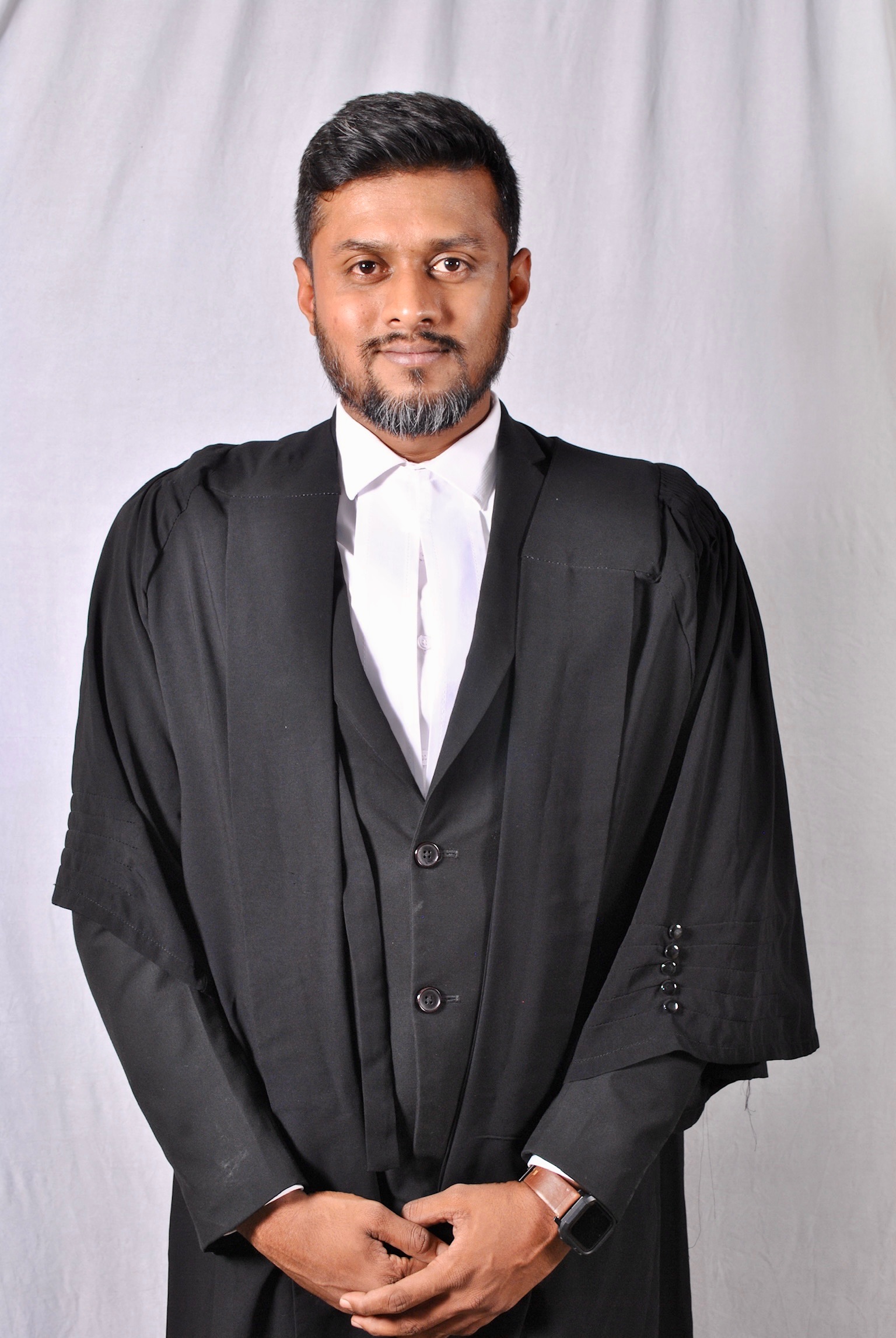
    Can you share the pivotal moments or experiences that led you to pursue a career in law, especially in dispute resolution?

    My journey to law was somewhat pre-destined, but I had not accepted all the signs. Growing up, I frequently visited courts with my father, a trial lawyer. Ironically, those visits initially deterred me from considering a legal career. But my disinterest in traditional science subjects made the writing on the wall clearer. During my higher secondary education, I was introduced to the unique world of law schools. This new perspective piqued my curiosity, and eventually, I found myself at NALSAR.

    It was during my time in law school that my path – as a disputes lawyer – became clearer. Reading Justice HR Khanna’s “Neither Roses Nor Thorns” profoundly influenced me. His principled stand in the Habeas Corpus case, especially his dissent, was both inspiring and instructive – this continues to be my favourite judgment and anchor of sorts.

    During law school, all my internships, predominantly centred around dispute resolution and this further cemented my interest. I saw first-hand, how enjoyable advocacy was and I resonated with it and took an active interest in moot courts. Come placement time, I heard NSE was visiting college for recruitment. Given that there are only a couple of exchanges in the country, and the role on offer involved litigation management, it made sense to work at NSE.  My selection for this position marked a significant turning point.

    Working at the Exchange, I was involved in several high-stakes litigation cases. While I prepared for the cases in detail and worked on strategies with external counsel, it was in the courtroom, as an observer, that I felt my calling to litigation. These moments in court crystallized my decision to transition from an in-house role to becoming a litigating lawyer. My mentor at NSE encouraged this shift, and Trilegal, where I now work, gave me the opportunity to realize this aspiration. The rest, as they say, is history.

    Your experience at NSE involved handling multi-faceted regulatory disputes. Can you shed light on the challenges you faced and the strategies you employed to navigate such complex regulatory issues?

    No matter how much law school prepares us, real life challenges take you by surprise. Although we studied a few of the legislations pertaining to the securities market, it is such a niche area with heavy regulatory oversight that the first few months felt like a return to the academic rigor of college.

    The first crucial lesson at NSE was understanding its dual nature. Firstly, it acts as a regulator of first instance, governed not only by a myriad of laws such as SCRA, SECC, and the SEBI Act but also by its own set of Byelaws, Rules, and Regulations. These are essential in overseeing every facet of the Exchange’s operations. Secondly, the Exchange operates like any other business, facing similar risks and requiring innovative strategies to remain competitive. My role was to bridge these two aspects seamlessly. This meant ensuring that new product ideas proposed by the business teams aligned with the regulatory framework established by SEBI. One strategy I personally employed revolved around prioritizing the Exchange’s regulatory responsibilities, ensuring all other initiatives conformed to this framework. A testament to this balancing act was our success in obtaining an exemption from the CFTC, a major U.S. regulator. This achievement, though time-consuming and challenging, was a significant milestone for us.

    As a key member of NSE’s proposed IPO team, could you share some takeaways from working on such high-stakes projects?

    Working on the NSE’s proposed IPO was a lesson in managing a multifaceted operation involving numerous stakeholders. You have the Company, the selling shareholders, the BRLMs, the Bankers, the Auditors, separate legal counsels for each of these stakeholders etc., and the Exchange’s proposed IPO was a landmark project for all involved. This complex process demanded extensive efforts from every department within the Exchange, with the legal team being no exception. In addition to providing information on the outstanding material litigations, we were also liaising with our internal teams and the Exchange’s external legal counsels (both domestic and foreign), who held the pen on the DRHP. Further, we were negotiating and finalizing all other agreements with the multiple intermediaries, all of which had its own challenges. 

    For me, the process was immensely challenging yet fulfilling. Successfully filing the DRHP within the established timeframe was a testament to our collective hard work and coordination. The experience underscored a vital management lesson for me: with well-defined goals, clear role delineation, and assigned responsibilities, even the most daunting tasks and deadlines are achievable. This endeavour reinforced the wisdom of the adage, “If you want to walk fast, walk alone. But if you want to walk far, walk together.” It was a powerful reminder of the strength in collaboration and shared purpose.

    Apart from the above, another intriguing aspect I gleaned from the IPO process is the concept of “self-listing.” Ordinarily, a company selects a stock exchange for its public listing. However, when stock exchanges themselves decide to go public, they have the option to list on their own platforms, a choice motivated by various factors. This practice is permitted in some jurisdictions, but my understanding is that SEBI ultimately did not endorse this approach. As a result, the country’s exchanges have to list on the competitor bourse. 

    Transitioning from being a Deputy Manager at the National Stock Exchange to becoming a Counsel at Trilegal seems like a significant shift. What motivated this transition, and how did your role at NSE influence your current focus on dispute resolution?

    At its heart, advocacy is about effective communication. This involves understanding the law, applying it to the facts of your case and ultimately seeking a relief for your client. This aspect of the legal profession has always been deeply fulfilling to me. While at NSE, I found myself on the periphery of advocacy, close yet not fully immersed. Thus, my transition from in-house role was motivated by my need to be in the driver’s seat. My confidence in my communication skills drew me towards dispute resolution.

    Coming from an in-house background, I had a clear understanding of the motivations behind corporate litigation, whether for strategic positioning, financial gains, reputation management, preserving shareholder value, or avoiding setting precedents. This insight has been invaluable at Trilegal, where I can effectively align with and contribute to our clients’ litigation objectives. My tenure at NSE taught me the importance of understanding the fundamentals first – we had to learn how a service / product worked, the legal and regulatory regime / challenges around it, the external risk-factors etc. and break all of this down to a Judge, who did not necessarily specialize in the securities market. This is an approach I continue to adopt with my current Clients and their cases. By understanding a client’s business and the rationale behind their litigation, I can create a clear and effective legal strategy. Therefore, lessons learnt during my time at NSE continue to be guiding lessons / principles in my current work.

    Moving to your current role at Trilegal, you deal with a wide range of matters, from civil / commercial disputes to white-collar crimes. How do you approach these matters across diverse areas of law, and what challenges do you typically encounter?

    The firm receives a wide-range of commercial disputes mandates – arising from large shareholder disputes, complex lending transactions, cross-border IP disputes, the list goes on. Similarly, the firm also receives a wide ranging white-collar crime mandates – say internal investigations into corporate espionage, IP theft, misappropriation of funds etc., and these may result into various kind of proceedings before the Criminal Courts. In addition, we routinely appear in mandates challenging local municipal laws, arbitrary government action and the like. The challenges we face in these mandates vary – it could be us dealing with foreign clients who are new to Indian legal ecosystem (and thus managing expectations), not having the luxury of time, logistical challenges in execution of a strategy, to name a few.  

    The approach I adopt in all these matters, irrespective of the diverse areas of law, is rudimentary. First, we meticulously review all the documents Clients share and prepare a comprehensive chronology of events – noting even seemingly minor details relevant to the case. Second, deep dive into the relevant laws, revisiting first principles, statutes and commentaries rather than relying solely on online resources or case law databases. This critical process helps identify both the strengths and potential obstacles in the client’s case. Third, once we have the legal and factual framework, we strategize the most effective path to achieve the client’s goals. This process will include all stakeholders internally, including the Partner. Once we internally deliberate this, we go back to the Client and give them all the options on how we can drive the matter and go on about executing it, based on their instructions. In my experience, these initial steps are crucial for successful outcomes and managing multiple cases simultaneously.

    During your time as a secondee at Allstate India, what was your role? How did this experience impact your perspective on the intersection of legal and business functions?

    At Allstate, my role was essentially that of an in-house counsel, a position I was already familiar with. My primary responsibilities included managing contracts and providing internal legal advice.  My background in dispute resolution enabled me to identify red flags in the standard contracts and negotiate more effectively with vendors and their legal counsels. Over time, I gained insights into the company’s common legal challenges, leading us to review and streamline their standard contract templates.

    In my opinion, most companies see their legal team as cost centres,. he business teams which are keen on getting the revenue, see the legal team as roadblocks or business barriers. This perspective can lead to business teams overlooking crucial contractual provisions such as indemnities, representations, warranties, and dispute resolution clauses, either due to a lack of understanding or the misconception that these are mere boilerplates not warranting attention. While it’s true that these clauses may never be invoked during the life of the agreement if all things go smoothly and as planned, the real value of a well-negotiated indemnity clause, for instance, becomes evident in challenging times, potentially shifting liability away from the company. So this stint reaffirmed my belief that a strong in-house legal team is not merely a cost-centre, but a vital asset that can prevent unnecessary expenditures. Such teams can actually be very effective in ring-fencing the Company from foreseeable and unforeseen risks, thereby preventing value erosion. A competent legal department is instrumental in balancing business aspirations with realistic legal perspectives, ensuring a holistic approach to risk management and decision-making – a message that I reiterate to business teams I work with usually. 

    With your extensive experience in handling high-value disputes, could you share a specific case that posed unique challenges and the strategies you employed to achieve a favorable outcome?

    While there are several cases I could reference, confidentiality constraints prevent me from sharing specific names or details. It is key to note that each case throws unique challenges of its own and as such, our strategies need to be flexible and adaptable. A rigid litigation strategy often leads to less desirable outcomes.

    For instance, in a case involving a shareholder dispute with a foreign institutional investor client, the primary conflict was between domestic institutional investors and the company’s promoters, who had made broad allegations that also implicated our client. Initially, we planned to respond to these allegations directly. However, we soon realized that such a strategy would unnecessarily draw attention to our client in a dispute that was primarily between other parties. Consequently, we revised our approach, choosing to specifically address only the most serious allegations and then shifted our focus to the legal intricacies of the case. This allowed us to take a more reserved role. As the conflict escalated, involving cross-appeals and arbitrations, our client began to be perceived as a neutral entity and was gradually removed from the core of the dispute (we were either formal parties or not arrayed as a respondent altogether). This strategic shift not only limited our client’s legal expenses but also enabled them to divest from the company without loss.

    Contrastingly, in another shareholder dispute, our approach was entirely different. We aggressively addressed each allegation and actively litigated before various foras, to preserve shareholder value and safeguard company assets, amidst a battle between majority and minority stakeholders. This experience underlined the importance of maintaining a dynamic and responsive strategy in litigation.

    As an alumnus of the National Academy for Legal Studies and Research (NALSAR), Hyderabad, what aspects of your legal education do you believe have been most valuable in shaping your career? Additionally, what advice would you give to fresh graduates aspiring to pursue a career in law based on your journey so far?

    Reflecting on my academic journey at NALSAR, Hyderabad, I realize it’s a narrative too rich and complex for a brief summary. Suffice to say, the true value of NALSAR lay in its exceptional faculty, who fostered an environment of independent and critical thinking – a mode of learning that was entirely novel to me. Equally significant was the company of my peers, a group of incredibly driven individuals with clear objectives and ambitions. Their presence was a constant source of motivation, pushing me to surpass my perceived limitations and achieve things I never thought possible.

    Looking back, the most crucial lesson from my college experience is the belief in the boundless potential within ourselves. To the graduates embarking on their legal careers, I want to impart this wisdom: the path may seem daunting, and it’s natural to feel overshadowed by others who appear more accomplished. However, remember that your journey is unique and will unfold in its own time. Treat yourself with kindness, acknowledge your achievements, and maintain patience, a vital trait for any legal professional. Trust in your journey, and know that perseverance will guide you to your destination.

    Lastly, for those looking to have a career in disputes resolution at law firms, do you have any tips / suggestions?

    I believe litigation – whether in a law firm or independently – requires the same set of skills. Law firm cases may often be high-stake or involve significant amounts, but the fundamental approach remains the same. A few things to consider: 

    • Integrity is key to this profession and your reputation. Do not rely on shortcuts and keep all your dealings above board. 
    • Patience is crucial. You might find yourself waiting for extended periods in court, only to speak for a brief minute. Achieving the results your client desires often requires persistent effort and time. Stay patient.
    • Time management is essential, especially early in your career when tasks may seem overwhelming. Gradually, it becomes more manageable. Be prepared to deal with urgent cases and client demands, sometimes with little notice. It’s better to devote extra time to fully understand a case than to be unprepared in court.
    • Develop a reliable process. Being thoroughly acquainted with both the facts of your case and the relevant law is vital. Establish a method that works for you and apply it consistently to each new client or case. 
    • Emphasize teamwork, particularly in a law firm setting. You’ll likely be handling multiple cases simultaneously, so coordinating effectively with your team is key. Remember, you can’t be in two places (read as court halls) at once, so dependability and ownership are important.
    • A quick and sharp presence of mind is essential for dispute resolution lawyers. While you can take time to respond to client queries, the same isn’t true in court. Being unprepared could lead to immediate decisions from the judge, potentially unfavourable to your case.
    • Understanding the concepts is far more important than knowing sections / citations. The concepts should be so clear, that even a common man can understand your iteration of it.  

    Get in touch with Goutham RV-

  • “Transparency, direct counsel, and a relentless commitment to securing the best results for clients” – Embarking on a three-decade journey from litigation to global business leadership, Priti Suri, the Founder and Managing Partner of PSA, Legal Counsellors.

    “Transparency, direct counsel, and a relentless commitment to securing the best results for clients” – Embarking on a three-decade journey from litigation to global business leadership, Priti Suri, the Founder and Managing Partner of PSA, Legal Counsellors.

    This interview has been published by Namrata Singh and The SuperLawyer Team

    Could you share a bit about your journey from starting as a litigator to becoming a business lawyer? How has your overseas experience shaped your approach as a business lawyer, and what valuable insights have you gained from working across diverse legal landscapes?

    When I joined the legal profession, it was the norm to work with a senior practitioner in the courts. My first job was with Mr. Pran Nath Talwar, a senior advocate at the Delhi High Court who was the Standing Counsel for DDA. I worked with him for two years, from July 1986 to July 1988. Mr. Talwar was a stellar lawyer with a razor-sharp mind. Every day he regaled me with stories about the law, about life and always insisted we read the jurisprudence deeply and fully and learn how to apply it. He underscored the devil is always in the detail and to ensure we know full facts before starting to think of the merits or demerits of a case. I was fortunate to get solid grounding with him. 

    Subsequently, I left for the US to study further and then had opportunities to work there. My work with the large US law firms exposed me to and gave me insights on the western large firm model functioning – a deeper and different kind of professional ethics, to structured processes and systems, to development of a profound sense of responsibility for the advice we give to clients on the basis of which corporations were going to take decisions, to concepts of negligence if our advice was incomplete or inaccurate. After I moved to Paris, initially for a year, in a pre-Google era, I confronted different challenges including juggling work in a country where the native language was not English and I did not speak a word of French. I had no option but to take up the challenge and do what I had to. I was thrown into the deep end of the pool and simply had to figure out how to swim if I did not want to drown. I did not get anything easy, and, in hindsight, I am glad it was that way. Eventually, my one year in Paris became five! 

    Since my formative professional years were spent overseas, my work experience in both the US and in Europe shaped me enormously and provided insights on how to work which now, over decades, are part of my DNA! My clients reinforced that transparency is key when advising and it is best to be direct, without providing circuitous or ambiguous counsel. Eventually, we must remember they act on our recommendations, relying on our expertise. Plus, there is always a human impact as eventually people implement. So, it is crucial to understand the ramifications of what we say, when we say, and how we say. The work environment coupled with the commitment and diligence towards the tiniest of matters made me realize that regardless of the country, some key fundamentals are global: work hard truly, honestly with the key objective of securing the best result for your client and it will not evade you. All my lessons, professional learnings and value systems garnered from my clients, peers and seniors from around the globe always pointed to one thing only – work hard and the results will come. I suppose it is the age-old wisdom from the Bhagavad Gita. I firmly subscribe to the view that there are no shortcuts to success. Let your work speak for you and do not look for excuses. 

    Congratulations on being named “Woman Lawyer of the Year – India & Middle East” and the recipient of the “Mayre Rasmussen Award” for promoting gender equality. How do these accolades impact your commitment to gender sensitization, women empowerment and equality within the legal profession? 

    Thank you very much. Of course, I am very grateful, but the accolades came much later. Legal awards are a relatively recent development, while I have been personally, deeply committed to the advancement and nurturing of women lawyers in India since I returned to set up the practice. As a first-generation woman lawyer, setting my own firm in the late 90s was a huge challenge in every aspect, be it law firm management, execution of work, finding and training teams. Slowly, but surely, I wanted to try to make a difference and help in gender sensitization, women empowerment and equality. The legal profession is changing so rapidly everywhere, Indian women need to be equipped to handle the change and how the future is likely to impact their practice, be it of solo practitioners in courts or within law firms or in-house positions. While the education system has undergone a change, and the information highway is at everyone’s fingertips, yet most prospective lawyers are unprepared for life with the law. This requires more practical courses and skillful use of interns. All of us who are experienced at the Bar need to contribute to bring about that transformation. There is a dire need to focus on professional development, which must be matched by a desire to grow as well by women protagonists. 

    I think it is essential to focus on the reasons why organizations should create sustainability for women in the legal profession. There should be strategies in place for nurturing our own careers and those of the women following us. I have looked at this issue often, both in India and overseas.  It is essential to address the issues from a positive perspective and focus on what women lawyers can and should do to participate in their own success and the success of those who follow them. Despite a lot of progress in the law firm world, we still have “miles to go.” I could articulate more, but I think these are enough for the moment. After over three and half decades in the law, I feel the legal world needs to be more open to change as we come together to share experiences and aid in finding solutions at a local, national and even transborder level. 

    You’ve authored books and contributed to various publications. How does thought leadership play a role in shaping discussions on legal issues, and what motivated you to share your insights through books?

    So, for me, as a first gen lawyer in an era where technology had not really evolved, I had to devise ways and means to showcase my capabilities while building a practice. Writing came naturally to me. Plus, while navigating through the labyrinth of varied laws, regulations, guidelines, I would often be flummoxed at the lack of clarity, even amongst those who implemented those laws. The challenge was always to find answers in simple words. As a result, I thought writing and publishing would be a tool to demonstrate subject matter knowledge plus say it in a manner which would be easy for the reader to understand.  I still feel the same. 

    As a Board member of the International Technology Law Association, how do you see the intersection of technology and law evolving, and what legal challenges and opportunities do you anticipate in this space?

    I firmly believe whether we like it or not, rapid developments in technology have changed and are continuing to change how people consume, interact, play and work. Like it or not, AI, Big Data, blockchain, cybersecurity, Fintech, IoT, privacy are here to stay and an integral part of daily lives. 

    While government policies will influence the direction of technological developments, laws and regulations will undoubtedly need to match and address the new reality. Some people fear developments in the foregoing areas will somehow replace human interactions and, eventually, make us shed our human persona. Others believe these innovations will benefit humanity and help solve many problems of today and potentially of the future. As companies navigate through these changes and await effective enforcement of new legislation, one key challenge is how to gear up for the future and the need to formulate internal rules that comply with strictest global standards in place in other parts of the world or wait to match with local requirements. Legislating and regulating developing technologies is complex, and it becomes way more complex when crossing borders. A balance between global and local rules with some degree of self-regulation will be the need of the hour. Another problem is legislation can take far too long. Look what happened to the Digital Personal Data Protection Act and the number of years and iterations it has taken to pass this law. More than 4.5 months after the DPDP Act was passed, we still await the rules. In the tech world, this feels like eternity. Finally, I want to touch on cybercrime and data breaches which have grown exponentially even when compared with the start of the pandemic. A systemic threat of cybersecurity risks is the talk of most boardrooms. But while awareness is growing many directors simply are unsure if they have the information and tools to effectively handle today’s dangers. The massive digital transformation requires robust cybersecurity and privacy laws. The Indian government must put in place far more effective mechanisms to regulate cybersecurity and cybercrime effectively. 

    Can you share a particularly challenging or memorable deal you’ve worked on? How did you navigate complexities to ensure a successful outcome? 

    There are many that come to mind, but I will talk about one. I was in Europe for business and had to travel to the US for client meetings. Meanwhile, the Iraq war started which led to companies imposing travel embargoes. I had a tricky transaction that was to close later that week in Delhi. The business and legal team of the client wanted me to travel to India but I had commitments. I managed to convince them to let me stick to my travel schedule, and committed that I would be available to work with my team and the other side according to Indian time that week to ensure closing occurs timely. They agreed. As I was about to board the plane for New York, I got a call from my colleague in Delhi who said there was a problem, which was really an issue of the counterparty. They realized and announced at the last minute, but the effect was the deal could be in jeopardy. We needed to inform the client, and I had to board my transatlantic flight. Oh, and the colleague was to wrap up work on this file and then leave for her wedding, which was 2 weeks later. I felt the flight from London to New York was crawling and just felt helpless due to lack of knowledge. Eventually, I succumbed and asked for a satellite phone, rang my office in Delhi and got all the facts. I knew the client would be unhappy to hear of the developments. Upon landing in NY, I connected with the business and legal people at the client where one was ready to call off the whole thing, while the other wanted to proceed. 

    The problem was that we needed regulatory intervention, and it is always tough to predict the duration a government agency may take. So, there were several moving pieces, and we had no idea how long the closing could take. I told the client if they wanted to proceed, I would find a solution. I canceled my meetings in the US for the next few days, went to a travel agent and bought a ticket to fly to India. I must have been in the US for 5 hours from landing to heading again to the airport. I returned to Delhi as fast as I could, went directly to the office and stayed there for a week. We delayed the closing by a few days, drafted additional contracts to address the new developments which were negotiated each night between 10 PM to 2 AM and, finally, managed to get to the finishing line a week after the original scheduled date. It was tough both physically and mentally as I did not sleep for 3 or 4 days at all but worked non-stop. The satisfaction of a successful outcome with all sides happy was the adrenalin rush that kept us all going!   

    Juggling a dynamic legal career and contributing to various committees and associations can be challenging. How do you maintain balance in your professional and personal life? Any hobbies or activities that you turn to for relaxation?

    Balance does not come easy for anyone, and it needs both method and time and for long-term gains, it is important to cultivate resilience. I meditate regularly, read, take time out for fitness, and find periods of silence, all of which is therapeutic. Then, my closest childhood friends are my rocks and always there for me, when I need to talk. I also think it is essential to create boundaries, personal and professional. I never did that for the longest time when I was building the firm, but I encourage all my colleagues to do so and do so myself as well now. 

    Looking ahead, how do you perceive the future of legal practice, especially considering the evolving dynamics of international business and technological advancements? What advice would you give to the coming generation of lawyers? 

    The legal landscape is at a very interesting phase undergoing rapid and radical change.  Boundaries have blurred with digital and technology transformation. Then, competition has increased exponentially, putting pressure on firms and lawyers to be increasingly open to innovation. While the legal industry is known for sticking to tradition but for practices to thrive, lawyers must be aligned with developments in technology and emerging areas of practice, focus on building skills and learn effective, consistent communication, both internal and external. Never forget clients demand efficiency, transparency, personalized service. I firmly believe lawyers have the potential to seize challenges and convert them to opportunities.

    Get in touch with Priti Suri-

  • “As a transactional lawyer, one has to comprehend all the future eventualities while drafting agreements and documents between parties”- Hemant Kothari, Advocate and Legal Consultant

    “As a transactional lawyer, one has to comprehend all the future eventualities while drafting agreements and documents between parties”- Hemant Kothari, Advocate and Legal Consultant

    This Interview has been published by Pragya Chandni and and The SuperLawyer Team

    Sir, can you share a bit about your journey in the field of law, from your early days to establishing your own chambers? What inspired you to pursue a career in law?

    I come from a small town in Rajasthan called Merta, where we stayed for the major part of my childhood before moving to Jodhpur where I completed my schooling. In Merta, my Nanaji (Maternal Grand Father) was practicing as a Sales Tax Attorney and had established a small but niche and respectable practice advising the businesses in and around Merta, on their Sales Tax compliances. Even though he was not a traditional court going lawyer and mostly did departmental practice, he was fondly referred by everyone in the town as ‘Vakil Sahab’, which I used to consider a title of respect. 

    Also, despite coming from a predominantly business family, I had keen interest in social sciences while growing up. 

    Therefore, with the benefit of hindsight, I think my choice to pursue law was the fortunate amalgam of having grown up looking up to a tall and respectable figure in my Nanaji and the opportunity to explore my interests in social sciences when I got to know about NLUs after moving to Jodhpur.

    Coming from a small town, the opportunity to study law at NLU Delhi was a privileged experience, which for me was not only a place to train as a lawyer but opened the world to me in a manner that I had not envisioned. I am what I am today because of the five years spent in the company of the dearest friends and peers, apart from some of the most exceptional faculties at NLU Delhi.

    After completing college, I joined Khaitan & Co (KCO) in Mumbai. In my first year at KCO, I rotated and worked with the Banking & Finance team, Indirect Tax team and the Investment Funds team, before finally joining the Banking & Finance team. I had a great mentor and guide in my partner at KCO, Mr Kumar Saurabh Singh from whom I have tried to imbibe the ability to think holistically as a lawyer, instead of a tunnel view, on any given issue. 

    During my time at KCO, the Insolvency and Bankruptcy Code, 2016 (IBC) had just been introduced and top 12 defaulting companies then were referred to the process under IBC. With the team at KCO, I was involved in the CIRP proceedings of three (3) companies, being Essar Steel India Limited, Alok Industries Limited, and Electrosteel Steels Limited, apart from other assignments under IBC. Invariably, all the processes went into litigation, which gave me the opportunity to work on both transactional and litigation aspects in the aforesaid matters and to closely interact with the leading Senior Advocates in the country.

    The exposure to handle litigation in high stakes matters re-affirmed my interest in litigation but at the same time, I did not want to completely forego working on the transactional side. 

    From a long term perspective, I always wanted to settle in my home state, i.e. Rajasthan.

    Accordingly, after a stint of around three and half years with KCO, I moved to Jaipur and for the first few years, I wanted to just learn as much as possible in terms of managing court practice, advocacy and understanding the intricacies of litigation. In Jaipur, I initially worked with Chir Amrit Legal LLP as a Senior Associate, where I was fortunate to learn under Mr Sanjay Jhanwar (Sr. Advocate) and Mr Prakul Khurana.

    In 2020, I joined the Chambers of Major RP Singh, Sr Advocate and the then Additional Advocate General (AAG), as Assistant to AAG and continue to work under his guidance even today. Under his guidance, I received intensive training in court craft and advocacy, which has certainly helped me improve immensely as a lawyer. He graciously allowed me the flexibility to take up my own matters and to gradually build an independent practice. 

    With the support and blessing of my Seniors, I was fortunate to set up my independent Chamber in August, 2022 after extensive training of more than six (6) years.

    Your experience includes representing the Government of Rajasthan in key disputes. Can you highlight some of the challenges and highlights from your time handling matters related to finance, revenue, indirect taxes, and other departments?

    The experience of representing government departments does help one to gain a deeper strategic understanding of matters from the perspective of the government; in understanding how the institutional machinery works on policy matters; and generally in terms of how the decisions are taken. 

    Now practicing on the private side, the learnings from my experience in representing and advising government does help me in having a better perspective in matters where the government is on the opposite side. 

    Also, governments are the biggest litigators in our legal system and in representing it, one gets to work on a diverse range of matters and really fast forwards the pace of learning.

    In your current chamber practice, you cater to both transaction advisory and dispute resolution mandates. How do you balance these two aspects of legal practice, and what unique challenges do you face in each?

    As I said, during my time at KCO, I had the unique opportunity to work on transactional and litigation aspects simultaneously, for matters under IBC. While traditionally there is a clear segregation between transactional work and litigation work, but in my experience I have realised that one is a better transactional lawyer with the experience of litigation and similarly, one is a better litigation lawyer, with the experience of transactional work.

    As a transactional lawyer, one has to comprehend all the future eventualities while drafting agreements and documents between parties. Having a perspective that how the document so drafted will be construed in arbitration or courts, if it goes in dispute, helps one to give better advise at the transaction stage. The reverse is also true for litigation lawyers, particularly for those practicing in commercial laws. 

    I have experienced so while representing and handling complex commercial arbitrations or court matters involving large volumes of contracts such as Concession Agreements, Financing Agreements, Shareholders Agreement, EPC contracts, Service Contracts, etc. 

    In terms of managing a practice to advise on both transactional and litigation aspects, I have separate teams in my Chamber which work exclusively on transactional and litigation matters, respectively and the final advise or work product is reviewed by me. The chamber also focuses on training the associates to have multi-disciplinary understanding such that they are also trained to deliver a holistic solution to the client. 

    Obviously, with my litigation practice when I am in Courts for a good part of the day, it may at times be difficult for me to singularly manage the transactional practice which requires more desk work. Therefore, I have focused on retaining and nurturing experienced associates dedicatedly working on transactional matters to be able to deliver holistic work products in a timely manner in a Chamber set up, where the end responsibility remains mine.

    Could you share an anecdote or case that was particularly challenging and how you approached it?

    There are various interesting and challenging matters which I cannot talk about since they are still sub-judice in appellate forums. 

    One of the challenging matters I did was a road construction arbitration during the COVID-19 pandemic. I found it challenging since (a) I was the only Counsel responsible for preparing, drafting, researching, coordinating with the Government Officers and also to brief the Senior Counsel on behalf of the Government to defend a claim of more than Rs. 250 Cr.; and (b) barring last one hearing in the arbitration, the entire arbitration was held virtually including for cross-examination.

    The work on this arbitration went on for around one and a half year and I had to really burn the midnight oil on many nights to prepare and be ahead of the opposite side, which was represented by a Tier-1 law firm. 

    Generally as a lawyer one is only trained to look at legal principles, but the added interesting work involved in the matter was to understand the intricacies of road construction and engineering to be able to do proper synthesis of technical matters. I cannot say I became an expert in road construction after this matter, but it certainly tells you that as a lawyer, one gets to work on a variety of matters that keeps the urge to learn alive on each day.

    While we succeeded only partly in the matter, I was humbled to have received the kind appreciation from the Presiding Arbitrator, upon conclusion of the final hearings, as also from my Senior.

    As retained advisor to large Indian business and startups, you describe your role as an external general counsel. What does this role entail, and how do you oversee both transactional and dispute mandates for your clients?

    I do not have any title as External General Counsel but in order to summarise the range of services that I deliver to my clients, I use the term in an informal manner and also because most of the clients may have in-house legal team for general compliances but not to advise and coordinate with the management / business teams on complex legal-commercial issues. 

    As I have already explained, my chamber caters to both transactional and litigation services, which has fortunately been appreciated by a number of large businesses, who have retained me for overseeing and helping them with all their transactional and litigation matters with the expectation that I understand their business and commercial needs while advising them holistically. 

    Increasingly, I have felt that the upcoming businesses or for that matter even established businesses require steady and continued legal support from a lawyer, who is in active practice interacting with other clients and not in their in-house system, to be able to have a better outsider or on-field view on various issues, as early as possible before they rake up. This is possible only based on continued association with the clients to be able to understand and appreciate the needs of the client from a broader perspective while advising on specific issues.

    In this capacity, it is not necessary that we undertake the entire work but sometimes depending on commercial requirements of the client, I advise my client to engage services of other professionals/law firms with whom my chamber works in coordination. The underlying principle being that my role is not only to provide legal services but to keep the best commercial and legal interests of my client to help them navigate their requirements. 

    Thankfully, I have been receiving positive feedbacks from my clients so far on this working model and hope to grow this area of practice more.

    Your advisory work spans restructuring, insolvency transactions, GST matters, investment fund advisory, and more. Can you share a specific transaction or advisory mandate that you found especially interesting or complex?

    The earliest and cherished experience for me was to work on a large multi-jurisdictional financing transactions during my time at KCO. Apart from the long night calls due to the difference in time zones, I learned how one has to apply the prevailing laws and regulations to tailor make an agreement by incorporating the commercial wishes of the parties in the best manner possible. Being a multi-jurisdictional financing transactions, we dealt with the rules under FEMA and the RBI directions to accommodate the terms of the transaction between parties. The entire process of negotiating on the commercial aspects with the legal interpretation of the applicable laws was something that I found really interesting and complex, as it then helped me build an understanding that as a lawyer when one negotiates or takes a position, it has to be backed by sound legal reasoning else the other side can simply roll you over.

    There are many such experiences and learnings but the core principle that I have come to understand is that as a lawyer, one must not stop thinking or prematurely jump to assumptions or conclusions and one  must keep exploring and reinterpreting the bare texts of law as much as possible.

    Considering your diverse experience and success in both private practice and government representation, what advice would you give to law graduates entering the field today? Are there specific skills or mindsets they should cultivate for a successful legal career?

    From my experience so far, I can only say that give your best at your work place. Whatever assignment or work comes your way, take responsibility for it like you have to be personally answerable to the Court or the client, for your work. If you start inculcating such an attitude, your work will speak for you.

    In terms of skill set, the fresh graduates should focus on developing a multi-disciplinary understanding and keep themselves abreast with all the new legal developments to gain knowledge about other areas of law, in which they may not be working. Law evolves and develops every day and as new entrants into the profession, you have the benefit of looking at everything from a fresh perspective to contribute to better development of law.

    Get in touch with Hemant Kothari-

  • “One of the special privileges of our profession is that it allows you to sail in two boats and so a person can be associated with a reputed firm and side by side nurture an independent practice of his own to find his ground in due course”- Prabhat Kumar Rai, Advocate-On-Record at Supreme Court of India

    “One of the special privileges of our profession is that it allows you to sail in two boats and so a person can be associated with a reputed firm and side by side nurture an independent practice of his own to find his ground in due course”- Prabhat Kumar Rai, Advocate-On-Record at Supreme Court of India

    This Interview has been published by Pragya Chandni and and The SuperLawyer Team

    Sir, could you please share with us what inspired you to pursue a career in law, and how did your journey into legal practice unfold, especially in economic offenses and commercial dispute litigation?

    I hail from a small village in Bihar and hence my dreams were also moderate. Engineering and UPSC are the most popular options in Bihar as many of the locals perform well in these exams. I was too striving to become an Engineer, however the turning point for me was when I visited my uncle in Delhi who practices as a lawyer in the Supreme Court of India as an AOR. I was enchanted by his work on complex legal issues which created lasting imprints on my pristine mind. My Uncle also advised me to opt for a career in the field of law and with his guidance I took my leap into this exciting world of legalese. 

    Being garrulous by nature it seemed like a fish finding its natural waters and felt comforted by the mentor from my family who could always guide me past all obstacles that I may encounter charting this unfamiliar terrain. I was charmed by the interaction with a few senior advocates and their view on contemporary issues from the legal point of view which was on a much higher pedestal than many other professions and also afforded me the visibility which was missing in other professions.

    The rest of the things then fell into place with single-minded dedication and persistence in clearing the CLAT examination and opted for the curriculum at NIRMA University, Ahmedabad, where the set-up was quite rewarding in terms of the constant encouragement by the Professors and a competitive batch of students who would challenge me to excel and hone my skills. 

    Economic offences and commercial litigation seem to be the growing albeit nascent field of litigation and have become a natural choice for any newcomer who seeks to grow at an accelerated pace.

    Your focus area involves economic offenses, including matters related to the Prevention of Money Laundering Act, Prohibition of Benami Property Transactions Act, and more. What drew you to specialize in this particular field, and what challenges do you find most intriguing in handling such cases?

    With the opening of the Indian Economy and integration with the world economic systems, the intricacy of financial matters has acquired greater complexities, and it is important to delve into the nuances of trade and ensure compliance with the rules and regulations of the countries where they impact. Digitisation and internet connectivity have eased vigilance and tracking and often people get trapped into the web of deceit/conundrum of litigation which vexes the common man and in order to aid and assist them a legal professional is well suited to advice and counsel business professionals to safeguard their interest.  

    Increasingly the burden in litigation is being shifted onto the defendants and well-trained legal minds come to their rescue. Economic offences are the sunrise sector of litigation and hence attract young minds like a bee to the flower for its nectar.

    You’ve transitioned from being associated with law firms to establish your independent practice. Could you tell us about the pivotal moments that led to this decision, and how has the experience been as an independent legal practitioner?

    One of the special privileges of our profession is that it allows you to sail in two boats and so a person can be associated with a reputed firm and side by side nurture an independent practice of his own to find his ground in due course. I have always chosen to associate with firms that have no restrictive working conditions to hamper my independent practice. In this process, I have lost vital aspects of stability and study earnings with a top-tier law firm, but the confidence gained while straddling two boats has been a fair bargain in my assessment. It is akin to being a co-pilot who after filing in the requisite hours of flying is qualified to occupy the chair of the commander of his own craft.

    Nothing is gained without experiencing its share of struggle and the initial formative years shape our destinies. Every young professional is like a diamond which must undergo its share of being cut and shaped by circumstances and chiselled by the artisans who mould them, and I count myself lucky that I got picked by the sharp intellects who are luminaries in their own right and illumine the path for me. I also feel redeemed and gratified when I do pro-bono matters which satisfy not only the mind but also the heart which makes this profession endearing and noble. 

    Your professional journey includes representing clients before various courts and tribunals on diverse matters. Can you share an experience of handling a particularly challenging or high-profile case and the lessons you learned from it?

    With God’s grace and the blessings of my mentors, I have had multiple opportunities to assist in several high-profile matters. It is my belief that every matter imparts a new learning and everything that augments my knowledge is to be counted as high profile as it has uplifted me from the lower echelons to the next level.

    I take pride in all the matters that are assigned to me and am committed to giving it my best regardless of the outcome. The end result may not always be to our expectation, since the judges have a mind of their own, but our conscience should not bite us for having left any stone unturned. One hallmark of professional integrity which I strive for is to put the best foot forward with persistence and care. The sporting spirit is my guiding principle that even the best of players/champions encounter defeat in some games, but it never weakens their spirit or resolve.

    Having excelled academically during your time at Nirma University, how do you balance the theoretical knowledge gained in law school with the practical challenges faced in the legal profession?

    Once you get on the field there is no substitute for experience. Once again, the sports analogy will help understand this – no amount of theoretical knowledge about the intricacies of the sport, the past statistics, the precedents etc can anticipate the uncertainties of playing conditions. The theory brings about awareness and is like a rough diamond, but it is only experience and constant practice that shapes our minds, characters and destinies. Needless to emphasise excelling in academics opens several vistas and avenues for anyone to choose the path for individual glory.

    And in this profession, constant updation is the sine qua non for any practicing advocate just like you have new software versions which regularly and periodically update and upgrade your knowledge and provide you with the edge which is the single differentiator of any successful professional. The need to burn the midnight oil is greater in practice than ever in academia. This is also what Steven Covey enlisted as the Seventh Habit in ‘Sharpening the Saw’.

    You’ve had the opportunity to learn from some of the best advocates, including senior advocates and government counsels. How has mentorship played a role in shaping your career, and what advice would you give to aspiring lawyers on finding the right mentors?

    That the greatest learning in the profession has been that no work is small or unimportant and what is done by one’s own hand shall stay with one for life. It is similar to swimming which once learnt is never unlearnt. Mentors and guides are the lighthouses that safely guide the ships in the vast ocean of life. The role of mentors can never be undermined, and I always look up to them when faced with a quandary. Senior advocates help us understand as to how arguments have to be framed and articulated in any hearing and to steer the course in the direction which shall eventually help the judge decide in our favour. We can learn to craft strategies from the seniors who bring their wealth of experience and maturity and fuse with our exuberance to present our side with vigour and vitality. In all of this it is essential that the facts are garnered from the files and discussions that are compiled and then neatly sifted into a summary which can be helpful in framing the briefs for senior counsels who need to be provided the critical points for their arguments.

    Given your extensive experience, could you share your perspective on the current legal landscape in India, especially in areas such as economic offenses, commercial dispute litigation, and the impact of recent legal developments?

     The legal domain is fraught with extensive work opportunities and provides an excellent launching pad for assuming leadership roles in society. Technology is quickly upgrading the systems and making it easy to adjudicate matters without logistical constraints. It is therefore necessary to be tech-savvy so that one can stay ahead in matters which are bearing global footprints and have far-reaching ramifications.

    What prompted you to write the AOR examination and what do you suggest to any candidate who will appear for these examinations.

    For every advocate, it is a dream to work at the pinnacle which is the august body of the Supreme Court, and it was not possible to stay away from this venerable temple of justice. I would appear immodest if I were to claim that this was my goal, but the fact is that one needs to take this exam with great dedication and commitment and at a young age one is required to be enthralled with energy to conquer this peak amongst the many that we set our minds to scale.

    Lastly, considering your achievements and the knowledge you’ve gained along the way, what advice would you like to offer to fresh law graduates who are embarking on their legal careers today?

    I always draw inspiration from the Mahabharata which asserts and exhorts us to – Stay focused on the eye of the fish only and nature shall conspire to let your wishes come true.

    Get in touch with Prabhat Kumar Rai-

  • “The tactics to use criminal law for  monetary gains need to be checked for a healthy Indian Society. I feel it is a misuse of the judicial process and sensitization of different stakeholders is necessary to avoid misuse  of criminal law for personal satisfaction”- Saurabh Kapoor, Advocate on Record at Supreme Court of India

    “The tactics to use criminal law for  monetary gains need to be checked for a healthy Indian Society. I feel it is a misuse of the judicial process and sensitization of different stakeholders is necessary to avoid misuse  of criminal law for personal satisfaction”- Saurabh Kapoor, Advocate on Record at Supreme Court of India

    This Interview has been published by Pragya Chandni and and The SuperLawyer Team

    Can you share the pivotal moments that led you to pursue a career in law, from your  LL.B. at Maharaja Ganga Singh University to becoming an Advocate on Record at the  Supreme Court of India? 

    Honestly, I admit that I am an accidental Advocate. I had never thought to pursue  LL.B. and practice Law. Rather, I first visited Courts, on the day of joining in the  profession as an intern at District Courts, Ludhiana in February, 2012. I am basically a physiotherapist and even worked as respiratory physiotherapist at Dayanand Medical  College and Hospital, Ludhiana before starting my independent practice as  physiotherapist. My father was a bank officer and I also wanted to join Government  Service, so I tried my luck in UPSC and developed interest in the Constitution of India.  During my job as physiotherapist, I developed a habit of using the library in 2008. That was the turning point of my life. 

    But destiny wanted me to join the legal profession, as one of my friends during my UPSC  preparation advised me to pursue LL.B. It was November, 2009 and admissions were  closed as the examination was scheduled for March, 2010. My friend who was already  pursuing LL.B. from that University advised me to visit college. I got admission on  payment of late fees and penalty. My friend left LL.B. after second year but I continued and completed my degree. I started my career in the Chamber of Sh. Amandeep Singh  Grewal at District Courts, Ludhiana in 2012. Being from a medical background, I have  keen interest in reading, subscribed to quarterly law journals to keep myself updated since the beginning of my career and even opened a small office at Ludhiana. Sh. Davinder  Pal Singh, my dear friend and senior, gave me the opportunity to address the judicial  magistrate on preliminary summoning in 138 N.I. Complaint. He had also trusted my abilities and referred to a proclaimed quashing to me during earlier days at High Court.  In 2013, a retired bank officer visited my office to claim benefits as he was dismissed  by disciplinary authority in 2001 and reinstated by appellate authority in 2003 with  punishment for stoppage of increments for 5 years. The bank counted 5 years from 2003  instead of 2001. Being fresher, I was reluctant to take his case whereas the client not only  trusted my ability but motivated me to proceed with his Civil Writ Petition. I learnt High  court etiquettes on observing advocates while waiting for my turn at Punjab and  Haryana High Court, Chandigarh. The notice was issued and thus started my journey at  Punjab and Haryana High Court. Similarly, I was successful in getting the Proclaimed  Order quashed without even issuance of notice to the respondent by Punjab and Haryana  High Court. So, people started referring to my work. 

    I was appearing before DRT, Chandigarh and other forums as well because I never  wanted to specialize but to expand my wings. It was tough during initial years but I  never stopped and kept moving with the flow. Thereafter, in 2017, an advocate referred  me two Special Leave Petitions pertaining to bail in 420 IPC. I contacted Ms. Manju  Jately, AOR for filing and started appearing as arguing counsel before Supreme Court.  During lockdown, I planned for AOR examination as Court work was limited, so joined  Ms. Manju Jately as a trainee. I appeared in AOR examination in December, 2021 

    but could not make it in the first two papers because simultaneously I was pursuing LL.M. As such, I was determined to become AOR and succeeded in April, 2023. 

    You’re currently pursuing a Ph.D. at Rajiv Gandhi National University of Law,  Punjab. How do you balance your academic commitments with your active legal  practice, and what motivates you to continue your scholarly pursuits? 

    It is really difficult to pursue both things together but my friends and associates  helped me during mandatory Ph.D. coursework. The Ph.D. research has helped me to  refine my legal skills and knowledge. The research work does have an impact on my  professional career. As my supervisor has shared a time Schedule to complete various  stages of the research, therefore, I have become selective in accepting matters since  2022. I have a library in my office and I even use the Court Library during free time at courts to continue my research. I have also got a new teaching assignment and was invited by Punjab  Police Academy for training of Punjab Police Officers. I was felicitated by the Director,  Punjab Police Academy and this motivated me to pursue my research further. To curb  the pressure, I have already closed Facebook and other social media applications. I am  going to shift to keypad mobile to save myself from distraction and limit internet usage.  

    You’ve qualified in the Canadian Law examination. Could you elaborate on your  interest in international law and how it has influenced your practice in India? 

    I had planned to migrate and therefore, wanted to pursue a career in law after  migration. I applied for assessment before migration to Canada in 2015. But I did not  find Canada as a place to live for the rest of my life and returned back. To enhance my skills  and legal acumen, I appeared in examinations conducted by the National Committee on  Accreditation for law society of Canada. I have been influenced by many legal issues and have even included in my professional and academic life to name a few:- 

    The Canadian Supreme Court decision on disclosure influenced me to a great extent.  The Court in William W. Stinchcomb v. Her Majesty The Queen held that “The Crown  has a legal duty to disclose all relevant information to the defence. The fruits of the  investigation which are in its possession are not the property of the Crown for use in  securing a conviction but the property of the public to be used to ensure that justice is  done. The absolute withholding of information can only be justified on the basis of the existence of a legal privilege and privilege is reviewable”. 

    As I wanted to do something on disclosure by prosecution in India, so this is my research  topic in Ph.D. During interview for Ph.D., Prof. (Dr.) G.S. Bajpai, Vice Chancellor,  RGNUL (Punjab) appreciated my research interest in disclosure and advised me to  conduct pilot study. I have also got an article published on “Inconspicuous Duty of the  Prosecution to Disclosure” in Criminal Law Journal, March, 2022. My Supervisor, Dr.  Shiva Satish Sharda at RGNUL, Punjab has also motivated me to pursue comprehensive  research so as to work in directions for necessary amendments in legal regime looking 

    problems of overcrowding of prisons, increasing under-trials population and low  conviction rate in India.  

    I am also advising during training to the Police Officers at Punjab Police Academy to  respect the fundamental rights of accused and disclose the fruits of investigation to  avoid false prosecution. I have even impressed the trial court for disclosure of withheld  exculpatory evidence collected by the investigating agency in one or two criminal trials.  

    The Model Code of Professional Conduct is another area which helped me to learn  lawyer’s ethics and was useful in AOR examination. The Model code forbids the  lawyers to advise clients to initiate criminal and quasi criminal proceedings to secure  satisfaction of private grievances. But it is common in India to initiate criminal  proceedings to threaten or intimidate the opponents for personal matters like financial  disputes, property matters, family disputes including marriage and custody of children 

    and sometime even the consensual sexual relations are given the color of rape as  recently noticed by Madhya Pradesh High Court. The tactics to use criminal law for  monetary gains need to be checked for a healthy Indian Society. I feel it is a misuse of the judicial process and sensitization of different stakeholders is necessary to avoid misuse  of criminal law for personal satisfaction.  

    Your practice spans across various courts and tribunals, dealing with a wide range  of cases. How do you manage such a diverse portfolio of legal matters, from civil writs  to criminal appeals and everything in between? 

    My mentor has been dealing with both civil and criminal matters but he has  not been dealing in service matters. I got an understanding of service law as my father  retired as a bank officer and my first matter at High Court pertains to service matters of a  retired bank employee only. I am always keen to learn and spread my wings, therefore,  I shifted to Punjab and Haryana High Court, Chandigarh. Being the capital of two states,  there are various forums. As such, I never denied matters for forums like DRT, State  Consumer Commission, Human Rights Commission and NCLT. The initial foundation days gave me exposure to both civil and criminal branches of law before various forums. 

    I have been associated with the Department of Defence welfare (Punjab) since 2019 and  this has helped me to refine skills in civil writs and service matters including  departmental disciplinary proceedings. Even today, I take original civil and criminal  matters before all courts because I believe one should not stop learning and limit oneself to any stream of law. One needs to accept change and challenges of life with open arms  and mind. Litigation is a team work, I have always been assisted by friends, colleagues  and even my senior appears for me at District Courts whenever required because I could  not spare except Saturday for District Courts. Lastly, I am indebted to my associates  and clerks at Supreme Court, New Delhi, Punjab and Haryana High Court, Chandigarh and District Court, Ludhiana for timely filing, without whom, it is not possible to appear  at different courts.

    Your civil writ petition in 2019 regarding CCTV installations in polling booths  received media coverage. How do such cases with public interest components shape  your approach as a lawyer, and what impact do you aim to achieve beyond legal  resolutions? 

    There is a difference between Public and Publicity Interest Litigation as recently  highlighted by the Former Chief Justice of India. I never used PIL jurisdiction for publicity  and have not received any case even if any matter is reported in the media. I am very  particular about professional ethics. The civil writ petition pertaining to CCTV  installations in polling booths was pro bono and I mentioned the same in morning to get  it listed in afternoon. The Court found legal points in the matter and issued directions to  install CCTV cameras at Polling Booths with the objective of fair election looking at  apprehensions of the petitioner. An advocate being aware of the constitutional and  statutory rights of the people and citizens of India, must use its expertise for the welfare  of the society. I am impressed by Sh. Mahatma Gandhi, father of nation, the way he  used his legal expertise against oppressive law in South Africa and he is being  recognized globally for his welfare activities and Indian struggle for independence.  Similarly, one should not limit his legal expertise for dispute resolution but work for  social welfare and learn from seniors in the profession. 

    You’ve provided legal opinions for Indian Express Pvt. Ltd. Can you share an  instance where your legal advice played a crucial role in the resolution of a complex  legal matter? 

    I have been associated with Indian Express since 2017 and contested their civil  matters at District Courts, Ludhiana and Chandigarh and NCLT, Chandigarh. But, I  have been specifically engaged by Indian express in 2019, to carry out the thorough  legal search and submit a report on the status of the complainant partnership firm as directed  by the Supreme Court in a defamation complaint against Chairman, Indian Express pending  before Chief Judicial Magistrate, Ambala. On the basis of the report, the Supreme Court  quashed the criminal complaint and summoning order issued in 2000 against the Chairman,  Managing Director and Editorial Director of the Indian Express Group. 

    You’re actively involved in legal awareness programs and social welfare activities.  How do you believe legal professionals can contribute to the betterment of society  beyond their regular legal practice?  

    I feel it is the duty of every person to contribute to society. So, to repay the debt of what has been gained by me during the course of professional and personal  experience, I try to volunteer within my limits and even try to settle the family and  personal matters at the pre-litigation stage with honest advice. One can contribute by  organizing camps at villages and also by starting lecture series for different stakeholders. Our government needs good legal instructors with bare minimum expenses, therefore, one can apply as instructors/trainers at different training governmental and non governmental institutes or organizations. In the world of the internet, social media is a good  platform for necessary legal education. The legal awareness and education should not  focus on work procurement but with welfare objectives. Presently, the crime against  children is rising and therefore, I feel it is important to sensitize the people with sex  education, penalties in sexual crimes. People need to be aware of fundamental duties as well rights because duties are equally important as rights. The most important duty of every advocate is to educate the youth of the nation as most of them, due to physical  interaction indulge in activities forbidden by law and destroy their career and life. 

    Considering your extensive experience, what advice would you give to law  graduates who are just starting their careers in the legal field? 

    The first lesson, my senior taught me that never run for money but work hard,  the money will follow you. India is a developing nation, where people need affordable  and quality legal assistance. There is no dearth of work and the only precondition is hard  mental labor to update oneself with all facts and relevant legal issues. There is neither  any shortcut nor scope of smart work in the legal field. Last but not least, honest efforts by  lawyers, honest thorough presentation to court and honest updated advice to clients. Honesty, dedication and hard work automatically pay back. Failure does not determine success but the response to it. Therefore, always be ready to learn, unlearn and  relearn. 

    In the end, I am grateful to the SuperLawyer Team for this interview.

    Get in touch with Saurabh Kapoor-

  • “From books to billboards, I believe in reading everything that crosses my path” – In an exclusive interview, Arushi Gupta, Founder and IP Attorney at Satyaki Legal, shares her remarkable journey from her early legal career to establishing Satyaki Legal.

    “From books to billboards, I believe in reading everything that crosses my path” – In an exclusive interview, Arushi Gupta, Founder and IP Attorney at Satyaki Legal, shares her remarkable journey from her early legal career to establishing Satyaki Legal.

    This interview has been published by Namrata Singh and The SuperLawyer Team

    Your experience includes working with renowned firms and handling diverse responsibilities. Could you walk us through your journey from your early career to founding Satyaki Legal, highlighting key milestones and experiences?

    I am an advocate who started her career 8 years ago, in 2016. After gaining experience of working with senior advocates, I eventually started working as a partner with a firm and now 2 years ago, I started with my own firm, Satyaki Legal. When in my career, I had almost worked in the domains I wanted to practice in, run a team of my own, I believed I could start my own firm. We started in the last month of 2021, where from finding the firm name to getting the website and team members was done, we are now a humble team of 5 with an established portfolio of start- ups and corporates to manage and work with. 

    As the founder of Satyaki Legal, you’ve had the opportunity to work with both national and international clients. How do you approach building relationships with clients, especially in a field that requires a deep understanding of their business and creative assets?

    From books to billboards, I believe in reading everything that crosses my path. To stay in the know has always been my thing- which forms a firm base of my communication skills. To constantly stay in touch with clients is also another thing that helps you understand their operations and the hurdles they face while conducting it. Being able to grasp a client’s work and their industry’s work culture can only be understood while being in touch with them on a 1-on-1 basis as well as having an open mindset towards their point of view.  

    Having worked with notable companies like Blinkit, McCain, and others, what are some of the most interesting or challenging projects you’ve undertaken in the realm of intellectual property, and how have they contributed to your growth as an IP attorney? 

    Intellectual Property has a lot to do with a brands’ market presence and the knowledge of the brand amongst the customers. The legal problems that I faced at that time weren’t simple textbook problems, they were dynamic in nature and needed understanding of the market/industry as well. So, whilst working with these Clients and some others as well, the mere textbook answers weren’t sufficient. There in that situation I learnt to develop a holistic point of view and also assess the legal problem and come out with resolutions accordingly. 

    With your extensive experience, you’ve worked on more than 500 trademarks, 50 patents, and numerous designs. Is there a particular case or project that you found particularly challenging or rewarding, and why?

    Every project or case that comes up to us has unique challenges and they thus after getting resolved or completed do seem rewarding. But I remember this one particular project where an extant variety of plant had to apply for Protection of Plant variety in India which led to several visits to the relevant authority. Similar was the case where I had to apply for registration of a novel food under FSSAI provisions. There was one case where we worked on the terms and conditions of the sale by launching an e- commerce portal a day before because it was then that it was sent to us, one before the Launch of their Sale. 

    You’ve assisted numerous start-ups in strategizing their IP assets. How crucial is intellectual property management for start-ups, and what advice do you often find yourself giving to emerging businesses in this regard?

    I keep telling this to start- ups and I can’t get tired of it, that first protect yourself and then launch yourself. We, often as start- ups are tired of just doing the operations and not launching the product or service. In this scenario, we do not consider IP important and go out and launch the product or service in the market. This also happens because we don’t very well recognise the IP that subsists in our key operations. So, I always ask them to take a pause, recognise their IP and first protect them/it and later on promote. This not only protects their work from being copied but also builds the trust of Investors. 

    Beyond the legal realm, we hear you’re involved in conducting webinars and seminars for IP awareness. What motivated you to take up this initiative, and what kind of impact do you hope to make through these sessions?

    This subject matter of IP is really close to my heart and hence, ensuring that people know the correct forms of it as well. So, in one of my opportunities to conduct a webinar, I got a chance to deliver a presentation to kids of around 10-12 years. This opportunity was so interesting, with all the witty answers and some extraordinary questions that I was motivated to do more of it!! The only impact I seek to create is awareness as well as certain importance and respect towards Intellectual Property that one holds. 

    Balancing departmental operations, client engagements, and business development requires skill. How do you manage these various aspects, and what strategies do you employ to ensure a smooth workflow?

    The only strategy we follow is to maintain dated notes, have clear start of day and end of day discussion along with weekly overview of tasks. Open communication, putting forth point of views within the team has been very helpful too. 

    Looking ahead, what is your vision for Satyaki Legal, and how do you see the firm contributing to the legal landscape, especially in intellectual property and media practice?

    The vision of course, is to engage more team members and work with more people. In a year, the work and team growth has been as per my target and that’s what we aim to maintain.  The mission is to also ensure that the subject matter which is dear to our hearts, Intellectual Property, is given due importance in each of the business operations that take place within an entity. 

    In addition to your legal expertise, we’re curious about your personal interests. When you’re not immersed in the world of IP law, what hobbies or activities do you enjoy to unwind and recharge?

    I have varied interests like reading books. But in order to be stress free as well as lead a healthy lifestyle I do regular workouts (strength training in particular) and meet my friends and family. I am a kathak dancer too, and I take those lessons too, occasionally. 

    What advice would you give to law students aspiring to specialize in intellectual property and media law, based on your own experiences and the evolving nature of the legal landscape?

    I would like to and I always do ask each of those students to simply read. Be well- read, know the market developments, read about brands, their marketing strategies, all of this trivia knowledge will ultimately help each one of them to understand the IP in all of these operations or industries I have told you about. Once that understanding is developed, to work in the realm of IP would not only be easy but interesting as well. 

    Get in touch with Arushi Gupta-

  • “As a first generation lawyer, you cannot be choosy as you have to run your show and household both”- Abhinav S. Raghuvanshi, Advocate on record and  Manging Partner, Legal Intellizence

    “As a first generation lawyer, you cannot be choosy as you have to run your show and household both”- Abhinav S. Raghuvanshi, Advocate on record and Manging Partner, Legal Intellizence

    This Interview has been published by Pragya Chandni and and The SuperLawyer Team

    Sir, could you share with our listeners how you embarked on your journey in law? What motivated you to pursue a career in the legal field?

    Infact, my current profession of being a litigation lawyer is my second avatar as a professional as I started my career as a Scientist/Assistant Professor of Physics at Delhi University and I still consider myself to be a scientist by training and education but a Lawyer by profession. I am a first generation lawyer with no direct or indirect background in Law till I completed my LL.B. My real-life experiences rather confrontation with Law and Law enforcement agencies and my quest for the justice to the common masses motivated me to make my career in Law. During my stint as Professor of Physics, I was quite captivated by the working of certain law enforcement agencies and other government Institutions under the aegis of Constitution of India  and the interplay of the Legislature, the Executive and the Judiciary. Post my LL.B. from University of Delhi, I got shortly associated with the office of ASG, Government of India and AAG for the state of Rajasthan at Hon’ble Supreme Court, and thereafter, I started my own independent practice in the year 2012. 

    My cordial associations and relationships with my seniors at Supreme Court and other Courts helped me a lot in learning and developing the idea of litigation in a short span of time. 

    From your early career as a Jr. Associate at the office of the Additional Solicitor to become an Advocate-on-Record of the Supreme Court and to your current role as Senior Central Govt. Counsel, Counsel for DDA, Counsel For state of U.P. and several other PSUs including PNB & RFC and being lead and arguing Counsel for few big Corporate Houses like HAL Offshore, McDonald’s, Ultratech Cement, Binani Cement etc, you’ve navigated through different roles. How did these transitions shape your legal perspective, and what key responsibilities have defined your journey?

    Though, I had very short stint as Junior Associate in the office of ASG, Union of India and AAG, State of Rajasthan but I had a lot of learning in those offices and that helped me develop basic idea of litigation in a short span of time and with almighty’s grace, I was also able to strike very cordial associations and relationships with my seniors colleagues as also officers of registry at Supreme Court and other Courts. After only 15-18 months of my Jr. Associateship, I got onto my own independent practice because I started getting a few independent assignments based on my basic understanding of Court Ecosystem. However, my relations with my seniors at Supreme Court, High Courts and District Courts/Tribunals helped me in perfect execution of those assignments, thereby getting the intended reliefs. This is how the journey began and since then I have never looked back. 

    I am practicing as an independent Litigation and Arbitration Lawyer since Aug’2012 at Supreme Court of India, Delhi High Court, Mumbai High Court & Other High Courts across India, DRTs, DRAT, NCLT, NCLAT CCI, CAT ( erstwhile BIFR & COMPAT) at New Delhi. 

    The key responsibilities include:

    • Drafting & Vetting of Pleading of SLPs, Writs, PILs, Suits, Original Applications, Securitization Application, Misc. Applications, Service Matter Petitions, Claim Petition, Counter Claims, Evidence Affidavits,  Legal Notice, Reply/rejoinders and conducting Civil Trials and Appeals as also Arbitration matters. 
    • Appearing in all Court proceedings before the Hon’ble Justices & Registrars of Supreme Court of India, Delhi High Court, Bombay High Court, CAT, DRT, DRAT, NCLT, CCI, COMPAT & SAT at New Delhi, Kolkata and Mumbai.
    • Well versed with SARFAESI Act’ 2002, Recovery of Debts due to Banks & Financial Institutions Act’1993, DRT Rules, DRAT Rules, Banking Regulation Act’1949, Banking Companies Act’1970, Companies Act’2013, Insolvency & Bankruptcy Code’2016, SEBI Act’1992, PMLA Act’2002, Information & Technology Act’2000, Arbitration & Concilliation Act’1996, Specific Relief Act, Registration Act, Contract Act, Specific relief Act, Civil Procedure Code.
    • Vetting of Contracts, Agreements, Licenses, Hypothecation,  Mortgage & Conveyance Deeds.

    I am regularly appearing and conducting Litigations before Supreme Court of India, High Court of Delhi & Mumbai, DRT- Mumbai, DRT Kochi, NCLT & NCLAT Delhi, NCLT Mumbai, High Court of Calcutta, High Court of Kerala at Ernakulum, High Court of Orissa at Cuttak for my clients. Apart from my appearances before the Courts, I am also representing many of clients in their Arbitration cases at Mumbai and Delhi. I am also a qualified Mediator and am empanelled as Mediator- at Supreme Court of India. 

    Your profile showcases extensive experience in Civil-Corporate Litigation, Arbitration, and White-Collar Crimes. How did you develop an interest in these specialized areas, and what challenges and rewards have you encountered along the way?

    To be honest with you, as a first generation lawyer, you cannot be choosy as you have to run your show and household also. Therefore, during my initial years, I took variety of cases, which ranged from appearing before a Revenue Officer to going to Police Station or Human Right Commission. From drafting of criminal Complaint to drafting of Consumer Complaint. From drafting a Claim Petition for MACT to drafting a Claim Petition for Arbitral Tribunal. Doing almost all the work at Supreme Court/High Court registry myself. Took every assignment irrespective of its pecuniary rewards or forum or rigours with only one thing in mind that each case was learning experience and success at these cases boosted confidence and fostered new relations at different levels of hierarchy. Success in these small assignment perhaps got me noticed by my senior colleagues and few Corporate Heads and the insight, which I gained during these exposures lead me to convince my initial Clients with confidence. I started getting cases related to Banking and Recovery before DRT Delhi & DRT Mumbai and also erstwhile BIFR. After implementation of IBC regime, these cases took me to NCLT & NCLAT. These financial/ banking cases with big exposure values invariably involve criminal aspects of wilful default, siphoning off and diversion the funds, fraud or money laundering. Similarly Property disputes these days have intrinsically some criminal colour in form of forgery, cheating and Service matters may also have flavour of corruption involving PC Act. Thus, despite not exactly planning for venturing into a specific area of expertise, I gradually got specialised into these areas. The best reward and motivation to keep on moving in these areas of expertise was the pecuniary benefits and broad and global exposure to working of various Industries such as Cement Industry, Shipping Industry, Oil & Gas Industry, Minning Industry, FMCG Companies, Banking and Non-Banking Institutions, Event Management Companies, Hospitality Companies etc. However,  the challenge is obvious, one needs to extensively study and understand working of each Industry so that one have an insight of practical execution of business in such Industry or Sector,  secondly since stakes are high in these commercial matters, therefore there is constant pressure to outperform the routine practitioners and one has to keep toiling, traversing and translating the strategies into court room success.  

    You’ve represented significant industrial houses and corporations in high-stake litigation and arbitration cases. Could you share a specific case or accomplishment that you consider particularly impactful or challenging in your career?

    There is not one  or two but rather 4-5 cases, each in different domain of law, wherein my legal mettle along with personal traits of being lawyer was put to test. Out of 5, I succeed in three but lost in two but all 5 cases, I consider as most challenging and which left long lasting affect in my career journey. These cases gave me learning for lifetime and helped me to meta morph into a seasoned lawyer. It is difficult to describe the entire experience in this short interview but in hint, I can say that one matter was an arbitration matter against a big Corporate giant of this Country being represented through battery of senior designated lawyers.  But as luck could have it, my grit and determination finally prevailed and the Tribunal went by merit and not by the stature of either the Corporate House or the Sr. Counsel. Another matter was a matter against a Head of top Government Institution, who had entangled a female employee in her service matters ostensibly, whereas in reality it was a criminal matter having contour of POSH and other criminal element. This Officer was being defended by a Sr. Counsel, who was from a family of Judiciary and exuded aura and confidence. Though, we had initial success, however his aura prevailed in later part. Finally our persistence paid and fortunately after 4.5 years this person was booked by CBI and taken into custody but not before we had filed several cases before several forums in 3-4 years unshakingly, unperturbed and  undeterred by initial setbacks. The third one relates to a case before CCI & COMPAT, which gave me my entry into corporate litigation and again this was example of purely Out of Box thinking, wherein, we took advantage of legal technical loopholes to save 18.5 crores of rupees and to buy time to properly strategise our bankruptcy filling before NCLT, Kolkata. These instances lead me to believe in the famous saying- ‘ A lawyer never looses- either He Wins or He Learns ! ‘         

    How do you approach the unique challenges presented by different clients and Industries?

    The first and foremost thing, which I do, is to understand and identify the core issue/dispute involved in the given case and the mindset of client and his desired goal. Thereafter, I make a fresh & unorthodox approach towards finding all the possible legal remedies available for the client and devise strategies with precision taking holistic view of the matter to suit specific requirement of the client but at the same time ensuring that each step involving the dispute resolution is in sync with the legal requirements. Most of the time it requires – ‘Out of Box thinking’ and Risk taking. At times, it involves working beyond clock hours and travelling to different cities and interacting with people from different walk of life. To have a clear and succinct understanding of an event or case, I meticulously study each transactions or step involved till arising of the dispute and thereafter take a practical overview of working of that Industry or Office to get nuances and peep into intention of the person or parties behind such transaction or dispute. Once I am clear on this, I devise a multi- pronged strategy to tackle the issue effectively and efficiently. In accordance to the strategy, the steps are legally executed to get the intended result. So far it has given me success@85-90%. I do not believe in misleading a client or over stating before a client and therefore adopt a pragmatic approach towards the dispute resolution.  I am a firm believer of settling dispute through ADR mechanism especially in commercial disputes and that also makes a client to trust my bonafide. In order to understand financial jargons, nuances and technicalities with more clarity and in order to empower myself with a knowledge, wherein I could not only answer to the Court Room queries but also to Board Room queries, I did Executive Program in Business Finance ( (EPBF)from Indian Institute of Management, Ahmedabad.  

    Given your rich experience, what advice would you offer to fresh law graduates who are about to embark on their legal careers? Are there specific skills or mindsets you believe are crucial for success in the legal profession?

    Rather than advising, I shall prefer to share my experience which itself comprises of experiences of several associates of mine. Here, I would like to mention three things that I have learnt in the process. Firstly, during the initial phase of your career, give most of your time in learning the methodology of doing things, like how are the things being done. Understand the ecosystem in which we work. Learn and understand what is the ecosystem of the District Courts, the High Court, the Tribunal and the Supreme Court. Nobody can learn that ecosystem in such a short span of time therefore you need to have patience and perseverance and an undying attitude for exploring and learning. You need to understand what is registry, what is court master, what is cause list, what is the interplay of various officers in the court, what is the roster, how is filing done in registry, what is the defect curing technique, what is criteria for listing and how are matters listed and more. People think that every day when a case is listed, it is listed for the argument. No, it is not true. On a given day, a matter may be listed only for limited purpose of notice or for limited purpose of arguments or for a limited purpose of compliance. Therefore, we need to understand as to what is required for us to learn during formative years and than learn them effectively. 

    Secondly, as a law student or young lawyer, you should try to learn things other than the law itself. You need to read and understand polity, history, sociology, economics and finance but not in theoretical sense but the news part or the part of it actively influencing day to day life. You need to read news, you need to read technology. You need to read several other things more than the core law during these formative years.

    Thirdly, as a law professional, your connections and relations with people from several walks of life help you in securing cases and to effectively tackle it. Thus you need to forge and curate your relationships and connections with outmost sincerity and caution during these formative years. Even today, I seek guidance and help from my seniors and my cordial relations with them have helped me a lot in advancement of my career.

    In crux, I intend to say that litigation is not just about researching or presenting arguments before the Courts. There is some basic homework which as lawyer you do before arguing your case or presenting your case in the Court on a given date. Now those requisite skills cannot be learnt in the law school but only during your exposure with the Court Eco-system. Moot courts can definitely hone your researching and arguing skills but devoted internships and association as Junior Advocate with right mentor/ senior associate and your personal capacity to grasp things by observing and studying can help you take large strides. Mastering your drafting skills, client handling skills, communication skills and system management, makes you a wholesome lawyer. We, as established advocates always look up for competent juniors with good skills and traits. Learning law in the law school and its application in the real life court scenario with efficiency and effectiveness can help you become excellent litigation advocates of tomorrow. Learning the process and procedure is the key.

    Devotion, perseverance and consistency along with right approach will make one sail through it. Ultimately, it is one’s own hard work and patience that pays. Keep on learning each day. Even as an established advocate, I still thrive to learn each day.

    Get in touch with Abhinav S. Raghuvanshi-

  • Embark on a journey from the blend of common law and civil law in India to the purely civil law system in the UAE barring DIFC and ADGM, the two free zones which follow common law”, diverse projects from advising on healthcare services to managing trademark portfolios for Fortune 500 companies – Rajiv Suri, Senior Associate-Intellectual Property & Corporate, Alsuwaidi & Company, Dubai

    Embark on a journey from the blend of common law and civil law in India to the purely civil law system in the UAE barring DIFC and ADGM, the two free zones which follow common law”, diverse projects from advising on healthcare services to managing trademark portfolios for Fortune 500 companies – Rajiv Suri, Senior Associate-Intellectual Property & Corporate, Alsuwaidi & Company, Dubai

    This interview has been published by Namrata Singh and The SuperLawyer Team

    You’ve had an impressive journey in the field of law, especially in Intellectual Property and Commercial laws. Could you share some pivotal moments or experiences that shaped your career since you started practicing in 1994?

    I started off my journey as a lawyer in the year 1994 in the field of IP with a very well-known and IP-focused pioneer Firm in India i.e., Remfry and Sagar. The work I did in this firm particularly laid the foundation for me as an IP/Commercial lawyer. I was fortunate enough to have been exposed to various IP forms especially when in the year 2002, I took up a challenging role with UK based International Consultancy Firm, Rouse & Co., in Dubai, UAE. My stints at both these organisations helped me in my career by getting a very wide exposure to various aspects of intellectual property and commercial/transactional laws. Thereafter, in 2010, I was offered the role of a Partner with an Indian Firm, RNA, based out of India. For this Firm, I was heading their trademark prosecution and Transactional law practice. In 2022, I shifted my base once again to Dubai, UAE. I took up the role of a Senior Associate with a full-service law firm, Alsuwaidi and Company, It was founded in the year 1997 by a UAE national, Mr Mohammed Alsuwaidi, who is a very well-known and established Arbitrator in this region. My areas of practice cover intellectual property and commercial corporate matters including contracts, information technology and media laws”.    

    With a rich legal experience spanning both India and the UAE, how do you navigate the nuances and differences in legal systems and practices between the two jurisdictions?

    For navigating the legal nuances between two jurisdictions, it is very important to have an understanding of the basic fabric of the two judicial systems. India’s legal system is derived from common law, civil law and to some extent religious customs as well. In my areas of practice in India i.e., IP and Commercial/Transactional laws, it was mainly the mix of common law and civil law along with precedents – which are given their due importance in judgements – while formulating guidelines and legal opinions. On the other hand, UAE’s Onshore judicial system purely follows civil law and is not precedent-based. Hence, to practice UAE laws it is very important to know the laws and their interpretation as well. For this, it is very important to have access to the practical knowledge base through your interaction with peers within your organisation as these would offer insights into the pragmatic application of laws, local court practices, and nuances that might not be apparent in legal texts. Another key area is educating clients about such laws as what works in one jurisdiction may not work in another and thus customizing strategies to fit the specific legal landscape. Lastly, I would say ‘continuous learning’ which is very important in our profession, especially with changing laws and legal scenarios as only then you can keep yourself abreast with the latest developments in your areas of interest. 

    Being a facilitator for trademarks in the STARTUP INDIA initiative, how crucial is intellectual property protection for emerging startups, and what advice do you often find yourself giving to them?

    Intellectual property protection is extremely crucial for emerging startups not only in India but in any other emerging markets including UAE. It safeguards their innovations, ideas, and brands, giving them a competitive edge and fostering growth. One of the foremost things is to educate 

    Startups about the different types of IP. Many times, I’m asked this question of what form of protection they can get for their logos/designs or innovations. So, it becomes very important to help them identify their unique assets that require protection. For instance, if they have an innovative product, they might need a patent. If they have a distinct brand name or logo, a trademark is essential. I also advise them to conduct thorough prior searches to ensure their IP doesn’t infringe on any of the existing rights. Similarly, they should protect their innovations promptly to prevent others from claiming similar ideas. Further, Startups should always budget for IP protection in their business plans. Sometimes, Startups overlook this aspect due to budget constraints, but it’s critical for long-term success. I would also guide them on utilizing government initiatives on Startup India that offer support and resources for IP protection including financial assistance. Ultimately, the goal is to help Startups recognize the value of their intellectual property and take proactive steps to protect it. Doing so can significantly impact their ability to attract investors, scale their business, and establish a strong market presence.

    You’ve worked on diverse projects, from advising on healthcare services to handling trademark portfolios for Fortune 500 companies. Could you share a project that was particularly challenging or rewarding, and what lessons you drew from it?

    One challenging yet immensely rewarding project involved assisting an American Corporation in navigating the intricacies of trademark law while safeguarding its interests in the Indian market. This corporation had developed a unique brand identity and was rapidly expanding its business. The challenge lay in devising a comprehensive trademark strategy(ies) that protected their brand/s while ensuring compliance within the parameters of the law. The rewarding aspect stemmed from successfully guiding the company through this process. This involved conducting thorough trademark searches, advising on the availability of trademarks, maintenance of their registrations, and implementing strategies to safeguard their brand’s identities.

    Currently, working as a Senior Associate at Alsuwaidi & Company, how do you balance your role in Intellectual Property with corporate matters, and what unique challenges and opportunities does this dual expertise present?

    Balancing roles in Intellectual Property and corporate matters can be intricate but incredibly rewarding. I would say that handling Intellectual Property and corporate matters requires a blend of legal expertise. It is essential to not only know and understand the intricacies of IP law but also the corporate laws including regulations and transactions. This dual expertise helps me in my practice by providing comprehensive solutions especially when it comes to drafting and/or vetting contracts for clients. When advising on corporate strategies, I’m able to integrate IP considerations ensuring that clients safeguard their intellectual property assets while pursuing business objectives. Sometimes, conflicts may arise between IP and corporate interests. For instance, a merger might impact existing IP rights. It is our role to then somehow find a balance that preserves these rights while supporting the corporate transition.  Further, in an international market like the UAE, understanding global IP laws and corporate practices becomes crucial. You may face challenges related to harmonizing differing IP laws across jurisdictions while aligning them with corporate goals. For instance, in data protection laws, it is essential to know the local laws and also GDPR as these do come in handy when dealing with any sort of contract that provides for such data protection. It does require a deep understanding of both domains and effective communication with clients to align their interests. The challenges are unique, but so are the opportunities to provide comprehensive legal counsel and help clients maximize the value of their intellectual assets within their corporate strategies.

    You have received several accolades in your career. How do these recognitions impact your approach to your work and the legal community at large?

    Yes, I did receive accolades and because of this, it becomes incumbent upon me to rightly assess legal perspectives. These certainly boost confidence leading to increased motivation and dedication to maintaining high standards in my work. Further, it has also created a sense of responsibility to give back to the legal community. This has involved mentoring younger professionals within the organisations I’ve worked for, contributing to legal education by writing articles on related topics, being a speaker at events, round tables, seminars, webinars or actively participating in initiatives that benefit the profession or society. Overall, in my view, accolades do often serve as a source of motivation and a reminder of the importance of one’s work within the legal community, potentially pushing individuals to strive for further excellence and innovation.

    You’ve been recognized for your expertise in both Traditional and Non-Traditional Trademarks. Can you share an example of a unique or unconventional trademark case that you found particularly interesting or challenging?

    Yes, there was this sound mark of an American corporation, a giant in the field of computer processors, which has a distinctive musical note for the presence of their software. Traditionally, trademarks often involve logos or words, so attempting to trademark a sound was a unique challenge and interesting at the same time. We were made to provide the musical notation in the print form to the authorities along with the CD of the sound sought to be registered.

    Outside of the legal realm, what are your personal hobbies or interests that provide you with a sense of balance and rejuvenation?

    The hobbies and interests which I enjoy outside the legal realm are photography and travelling to different places along with spending time with my family.  

    With your extensive experience in handling commercial agreements, could you share a piece of advice for businesses, especially startups, when entering into legal agreements to protect their intellectual property?

    When dealing with intellectual property in commercial agreements, especially for Startups, IP protection is critical as it often forms the core value of their products or services or for that matter any commercial venture. Taking proactive steps to safeguard it through robust legal agreements is a crucial aspect of business strategy. Given below are some key points to consider while entering into legal agreements to protect intellectual property.

    • Specify what constitutes your IP, whether it’s patents, trademarks, copyrights, trade secrets, or any other proprietary information including any form of data. Be as precise as possible to avoid ambiguity.
    • Clearly outline who owns the IP and establish the rights and limitations regarding its use.
    • Also, determining ownership of any new IP developed during the collaboration is very important to avoid any conflict vis-à-vis ownership at a later date. For this, it is crucial to determine whether the IP remains with the creator or is jointly owned.
    • Include robust confidentiality clauses to safeguard any sensitive information. This prevents the other party from disclosing or using your proprietary information without permission, even after the agreement ends.
    • Specify the permitted use of your IP. Define how the other party can use your IP, whether it’s for a specific purpose, duration, or geographic area. Outline any restrictions or limitations clearly.
    • Include provisions for resolving disputes related to IP, such as arbitration or mediation. This can help avoid lengthy and costly legal battles and resolve issues more efficiently.
    • Provide details as to what happens to the IP post-termination. Also, provide details as to how the return or destruction of confidential information/IP will be handled to protect your assets.
    • Review your agreements periodically, especially as your business grows. Ensure that the terms regarding IP protection remain relevant and in line with your business objectives. 

    Get in touch with Rajiv Suri-

  • “The more diverse your practice areas are the better it is for you and your growth” – A Global Trailblazer in Wealth Management Solutions, Varun Kalsi, Global Head of Legal & Business Solutions, Lighthouse Canton

    “The more diverse your practice areas are the better it is for you and your growth” – A Global Trailblazer in Wealth Management Solutions, Varun Kalsi, Global Head of Legal & Business Solutions, Lighthouse Canton

    This interview has been published by Namrata Singh and The SuperLawyer Team

    Varun, it’s a pleasure to have you for this interview. Could you please introduce yourself and share a bit about your journey and your current role as the Global Head of Legal and Business Solutions at Lighthouse Canton? 

    Thank you for inviting me for this interview. I began my legal career back in 2007-08. Predominantly, I have always been a law firm lawyer before joining Lighthouse Canton as their Global Head of Legal and Business Solutions. I would bifurcate my career into two parts wherein the first part was spent at Dua Associates where I began as an Associate and continued for almost a decade. Thereafter, I was a Partner at PSA Legal Counsellors, and Desai & Diwanji, respectively. At Lighthouse Canton, I oversee the legal function, which is self-explanatory. The other function that I oversee is business solutions, which is essentially at the heart of the wealth management business of Lighthouse Canton, which has 2 main businesses wealth and asset management. While legal has a broad range and would cover arrangements on asset management, HR and myriad other areas across the organisation, business solutions cater to HNIs and UHNIs who are on the lookout for niche tax/other structuring solutions, setting up an offshore family office, flipping their current structure, succession planning solutions and so on.

    Varun, you pursued your Master of Laws (LLM) at NYU in New York and now hold a prominent position in Singapore. How did your education in the U.S. influence your career path, and what prompted your move to Singapore? 

    Education in the US is an incredibly enlightening experience. Not only is the method of instruction different from that in India or England, but the culture and approach towards education per se are distinct. The focus is on discussion, rationale, understanding and analysis, and your age or current vocation does not matter. There is no limitation to acquiring or enhancing one’s skill set. Ideally, I would have liked to work in the US for some time at least. But as they say, man proposes and God disposes. Shortly after I began my LLM program the world was hit by something called the subprime mortgage crisis, a global recessionary situation wherein the US was the epicentre of this economic earthquake, and I was one of those right in the middle of it. That apart, the US, especially New York, teaches you a lot about life in general. One of those things is self-reliance or sufficiency. If you are open to the idea, you could discover yourself in such a situation. Let’s face it. The LLM program at a premium varsity abroad is expensive for the average person. So, one would like to procure a work opportunity in the US to obtain exposure and recover the hefty tuition unless one manages a scholarship. The latter was on my agenda, but that discussion is for another day, I guess. Law firms in the US are extremely professional. Thus, even rejections to my request for placement were kindly worded and came to me in sealed envelopes. Other than the fact that you are away from home/family, an existing economic crisis only has a compounding effect on one’s self-esteem. However, sometimes, such a situation only makes one stronger, and it’s not in my DNA to give up easily. Thus, I took everything with a pinch of salt and made my way back to India. To clarify, Singapore was not on my agenda then. 

    Can you share insights into adapting to the legal and business environment in Asia after your experiences in the U.S.? 

    Honestly, the first time I thought about Singapore as a place where I could work and live was when I was transiting from Singapore for a holiday in 2015. The layover was longer than usual for some reason, so we opted for the free city tour that Singapore Airlines does from the Changi airport. It is an interesting tour for someone who has never been to Singapore. I had already been here twice and thought that I was aware of the city, but things were to change. The island country had changed a lot from the days when Orchard Road was the city centre and the Merlion stood tall at Sentosa. Now, there was a thriving central business district at Raffles Place/Collyer Quay and the city had transformed itself in more ways than one. So, yes, the thought did cross my mind, but I was too preoccupied with what I was already doing so I did not follow through. It was only in 2021-22, when the opportunity with Lighthouse Canton came along that I put my mind to it and began a detailed investigation into the possibility of moving to Singapore. Singapore and the US are very different from each other. One of the major factors is the sheer size, demographics, and population of the respective countries. There is no second-guessing about Singapore’s position as the financial hub of Southeast Asia. Further, the law and order promulgation, enforcement, political stability, and swift and efficient judiciary make it a force to reckon with not only in Asia but also in the world. As Singapore is a common law country, the basic structure of all laws is like other common law countries with subtle nuances to the same. The banking and finance industry is at the centre stage and almost all global corporations and conglomerates have a significant presence here. Honestly, the pressure to deliver never changes if you take your work seriously and have the desire to grow personally and professionally. So, while there could be a difference in approach, there is no compromise on quality. 

    You’ve had a diverse and extensive career, ranging from private practice at law firms to your current global leadership role. How has your journey, including experiences at Desai & Diwanji, Priti Suri & Associates, and Dua Associates, shaped your approach to legal and business solutions? 

    It has been a rather interesting journey wherein I have worked with two large firms and one boutique law firm. I began my career at Dua Associates, so a large part of my initial learnings came from here. I was fortunate to report to a senior partner with rich experience behind him. While that meant that expectations were always high, I had the opportunity to learn, sometimes by simply observing my senior and some other times by asking the right questions of him. One needs to understand that this process necessarily involves unbiased introspection as otherwise, you will not be able to upskill, improve yourself and identify the chinks in your armour. Further, another important thing is to know what to learn and imbibe and what not to. Of course, that comes with experience, age, and wisdom. By the time I was at PSA, I was relatively senior and joined them as a partner. Also, as it is a boutique law firm, the manner of operations was very different from that at Dua Associates. However, as we were a lean team, everyone put that extra effort to make things happen and sometimes the energy you create in such situations is contagious to others too. It was here that I unlearned some of the things that I had learnt as I identified and learnt some things that were better and contemporary than what I was accustomed to previously. One needs to appreciate that learning is a continuous process and one must continue to upskill themselves and sync with the present. While I had already begun the process of developing my own book, it was at PSA, that I shifted gears and opened my mind to different possibilities at work. Working at both these wonderful organizations gave me an insight into setups that were traditional and a heady mix of modern and traditional. My last law firm stint before Lighthouse Canton was at D&D, wherein I worked closely with the other partners. So, yes, I was back to a large law firm setup but the manner of functioning of the organization was again distinct from what I had seen in my earlier firms. As I said, the learning never stops. One needs to be a good observer and listener to identify what should be done and also what should not be done in a particular situation. Working at these firms was an enriching experience that shaped my career for the better and made me a better lawyer and a person.     

    As the Global Head of Legal & Business Solutions, you provide legal support to wealth and asset management businesses. How do you strike a balance between addressing legal intricacies and facilitating business solutions, especially in the wealth management sector? 

    Interestingly, there is an overlap between the legal and business solutions functions. As mentioned earlier, business solutions involve providing structuring solutions to HNIs/UHNIs, that are tax efficient. Further, a client may have successional planning requirements, which is akin to private client practice at law firms. At Lighthouse Canton, the main difference is that client requirements will typically mostly be at a global level, unlike a law firm wherein you may still engage in domestic mandates and transactions. Also, at law firms, we would typically engage a local counsel when catering to the laws of a foreign jurisdiction. However, with business solutions, there is an expectation to have a preliminary handle on foreign laws too. For instance, one will have to examine legal regimes across jurisdictions to appreciate the tax impact for a particular client. It is pertinent to note that this will change depending on the situation, objectives, and asset locations of a client. Similarly, succession planning solutions will also require us to assess the best option available globally, to address a client’s needs and objectives. Of course, we will engage with local advisers as and when necessary. Thus, it is fair to say that my legal background is critical in enabling me to deliver requisite solutions to our wealth management clientele.

    Your role involves executing wealth management pitches for UHNI prospects, including conglomerates and founders. Can you share an interesting experience or a successful pitch that stands out in your memory? 

    There have been many such experiences that are worth remembering or mentioning. But one needs to understand that a pitch to provide a solution becomes even more interesting where there is interplay between multiple jurisdictions, or where there is some uncertainty in applicable laws. A classical situation that arose some time ago was when we were prospecting a conglomerate for setting up its family office in Singapore. For this purpose, the prospect would make overseas direct investment/ODI from India under the new route for operating companies in India, as introduced by the legislature in August 2022. Interestingly, while on paper, which is also backed by a law firm’s opinion, this route is still available, practically it is not possible due to certain informal communication to authorised dealer banks, who are no longer willing to allow remittance through this new route. Again, this is one amongst several instances that have been extremely intriguing and interesting.

    Among the diverse legal projects, you’ve been involved in, is there one that stands out as your favourite? What made it particularly memorable or rewarding? 

    This is a tough one. I have been party to many and it is hard to place a finger on anyone. However, let me share one of them for our audience. The thing in legal practice is that favourites will change with time. This is so because at a later point in time, hopefully, one will be more experienced/skilled and the same thing that was interesting once may appear mundane now. In a particular instance, I met someone for a business development meeting at their office. We spoke for an hour about various businesses and issues that the group was involved with and areas where I could help the organization. The meeting was with the CEO himself. About a week after our meeting, he sent me a text saying I liked what you told me about securing our group’s IP. Let’s begin with that and see where we go. From there, I ended up assisting the promoter on their private client matters and other issues that the group was facing from time to time. Even today, I am in touch with the gentleman and my highest reward is not the billing that happened but the faith he reposed in me in executing different kinds of tasks for the group. I am ecstatic that I earned a person while earning my livelihood.

    Outside of the legal realm, what are your personal interests or hobbies that bring you joy and relaxation? How do you unwind from the complexities of legal leadership? 

    Now we are talking. I love my music, food, outdoor sports, and spending time with family including my extended family and specifically, my grandparents. I firmly believe that one should not forget that later our grandparents and parents will need us just the way we needed them earlier (and still do). As an aside, I am agnostic to the genre/kind of music or food as the music should sound nice and the food should taste good.

    In your career, you’ve worked across various legal domains, from general corporate to private client and intellectual property laws. How has this diversity contributed to your skills, and what advice do you have for legal professionals looking to diversify their practice? 

    Interestingly, nowadays most law firms have lawyers who operate in silos in terms of practice areas. While that can be a good thing for some practice areas, for some others, it is my view, that it inhibits growth. So, if you have the choice to diversify your practice areas, please do. However, keeping in mind how most law firms will have specific practice area-based departments, it makes sense to bifurcate your skill sets between your core areas and those that move around them. This is crucial from most large law firm’s perspective. Interestingly, in a smaller law firm (and some larger ones too), or in-house role, the more diverse your practice areas are the better it is for you and your growth. While it makes sense to augment your skill set, you must choose your areas wisely both in terms of your core areas and the then prevailing trends and opportunities.

    As we conclude, we’d love to hear your perspective on the importance of continuous learning in the legal profession. How do you stay updated on industry developments, and what role does ongoing education play in your career? 

    As I have already acknowledged, learning is indeed a continuous process. Personally, I keep my eyes and ears open concerning anything that affects my current work profile, or that may otherwise have any relation to the same. As you would appreciate, with the global role, my canvas is quite large. So, I need to keep painting when the opportunity arises while the canvas keeps on expanding itself. We also indulge in external trainings, that can enable us to improve our work and knowledge especially those in relation to Lighthouse Canton’s wealth management business. Thus, ongoing learning and education are critical for my functions.

    Get in touch with Varun Kalsi-

  • “I appeal to the young lawyers to have an empathetic and humane approach with integrity towards the downtrodden and poor litigants for whom lawyer is the only hope to fight for justice for him/her”- Sudeep Vijayan, Independent Legal Practitioner

    “I appeal to the young lawyers to have an empathetic and humane approach with integrity towards the downtrodden and poor litigants for whom lawyer is the only hope to fight for justice for him/her”- Sudeep Vijayan, Independent Legal Practitioner

    This Interview has been published by Pragya Chandni and and The SuperLawyer Team

    Can you share with us your journey into the field of law, from your decision to pursue it as a career to your experience at Hidayatullah National Law University and GGSIPU for your LL.M. and your recent decision to enrol for a Ph. D. program with IIULER?

    First of all, I would take this opportunity to thank Superlawyer for this interview and convey my deep appreciation for this endeavour as it could offer your young readers some valuable insights while planning their life around law as a career. 

    Addressing  the first part of your question on deciding to pursue law as a career; I would like to tell you that  I was a student of Physics, Chemistry and Biology up to 12th standard; and had no family member into active  legal practice, but I think my flair for languages and my father’s inspiration who despite being a serving Army officer ; pursued Law. Since my scoring in languages had remained stable throughout my school career, the orientation classes helped in getting an insight into the field of law. Thereafter, after completion of my 12th Std, I cleared entrance examinations for Hidayatullah National Law University, Raipur (HNLU) and Army Institute of Law, Mohali (AIL) in the year 2003. I decided to continue with HNLU. HNLU was established in the year 2003, and I could become a part of its 1st Batch having passed out in the year 2008. The State of Chhattisgarh was established in the year 2001, so our batch had a unique distinction of being from a new university in a newly established state, which had its own challenges but, it soon turned into opportunities for all my batchmates. 

    Now coming to the second part of the question; I would like to say that the professional work environment of a career in law is quite dynamic which entails frequent changes in laws, new legislations, delegated legislations etc. I have always believed that life in general and Law in particular is an ongoing process of learning; one needs to keep a tab on new developments to keep oneself updated and the grasp the diversity of knowledge. I, thus, completed my LL.M in Corporate Law from USLLS, IP University, Delhi during 2014-16 and currently pursuing a Ph.D. from India International University for Legal Education & Research, Goa (IIULER), on the topic of ‘Food packaging and food Contact materials’ and its Regulatory & Legal Standards in India’. IIULER is designated as the 1st International University for Law in India and is an initiative of Bar Council of India Trust-Pearl First.    

    You have a diverse career path, including working with ZEUS Law Associates, KPMG, and the Ministry of Finance. How did these experiences shape your expertise in tax law and advocacy?

    Law as a profession has always intrigued me with its depth and ambit and I have always wanted to explore the diverse verticals that it encompasses. During the final stages of college education, drawing inspiration from revered names in law practice i.e. Sh. Nani Palkhiwala & Sh. Harish Salve had both started their respective careers in the field of taxation. I was deeply inspired to take-up tax as a career option despite the general trend being to opt for court practice, corporate practice or capital markets. Despite being involved in matters of significant constitutional issues having national and international repercussions, they are still considered doyens of tax practice. My professional journey commenced with the tax team at Zeus Law Associates, New Delhi followed by KPMG. Both these stints gave me incredible insights into tax as an area of practice coupled with much desired cross-country work exposure. I had also learnt the importance of working with professionals from different disciplines, since it involved working with Chartered Accountants, Company Secretaries, Architects etc. These interactions gave me immense insight into overall working of ‘business transactions’ and added incredible value in my growth as a lawyer. From early part of 2013, I had ventured into independent practice and started to take-up matters in other areas of law in addition to my continued work in tax. Hence, I would encourage young graduates to bear in their mind that life shall always give you avenues to earn and learn. As long as you are able to identify those avenues which can catapult you and enhance your own sense of individuality, you should choose them over anything else no matter what the costs. I don’t intend to sermonise this but, if one were to practically see within the legal profession and perhaps medical profession too, there are no defined career progression or milestones which more or less exists for other professions. It’s all upto an individual about how one intends to lead his life. Hence, as and when one is able to identify an avenue of personal growth, one must prioritise it and seize the opportunity and work towards enhancing one’s skill set. Please understand that, skill set doesn’t really mean ‘legal skills’ alone it also means honing-up ‘life skills’ and can be as simple as one’s ‘ability to listen’, ‘time-management’, ‘language’ etc. It is for a reason that, law as a career lacks any entry age or retirement age as in life there is no specific age or stage for learning.  

    Could you tell us more about your role in formulating key proposals and legislative drafting for the Ministry of Finance? What were some of the most significant challenges you faced in this role?

    I have had the opportunity to work as a Consultant with the Ministry of Finance, Department of Economic Affairs, Govt. of India in 2016-17. This assignment entailed exploring the arena of legislative drafting and policy making for the said Department. This entailed attending stakeholder’s consultation process, undertaking research, preparing notes from legal standpoint, and drafting of statutory legislations, amendments, circulars etc. as desired by the said Department.  I can definitely say that it was quite an enriching experience. It gave me a bird’s eye view regarding the functioning of various securities laws in India and how policy making by the Departments tries to respond to challenges and concerns faced by the stakeholders and the public at large.        

    Co-founding Integricon Consultancy Services (ICS) is a significant milestone in your career. Can you share the motivation behind starting ICS & ILO and how it has evolved to offer comprehensive consultancy solutions?

    The basic idea behind ICS is to bring the concept of seamless cross-practice experience to clients. As a result, myself and two other partners were able to establish ICS in the year 2020 as a one stop consultancy service solution for clients. So as to provide these consultancy services, we have a bouquet of professionals from myriad walks of life viz., bureaucrats, lawyers, chartered accountants, cost accountants, economists, engineers, technocrats and company secretaries. ICS engages with various Companies, PSU’s etc. for meeting their consultancy, research and training needs.  

    In addition to the same, we had established Integricon Law Offices (‘ILO’) as a full-service Law firm for legal services and as a think tank for research and legal services. The think tank works on various vacuum areas of anticipated legislation world over and elucidates various situations from a legal standpoint involved.  On the legal services side, the ILO focuses on litigation practice, corporate practice and tax & regulatory practice. I personally look after the tax and regulatory practice including Food Safety and Standards Act, Legal Metrology Act, NMC Act & related Rules etc.      

    As someone with extensive experience in the legal field, what advice would you offer to fresh graduates who are just starting their careers in law? What skills and strategies do you believe are essential for success in the legal profession?

    All fresh graduates should journal their life and professional experiences. This would not only assist them to traverse through a career in law but also make them mindful of their respective professional/ life environment that they are a part of. This would allow them an opportunity to evaluate their respective strengths and weaknesses. Law offers myriad career choices. Thus, in addition to these career choices, a graduate should also try and develop a sectoral focus by integrating technical knowledge and expertise and not merely restrict to the nature and kind of work coming their way. After all, apart from professional journey it’s a life journey as well hence, both needs separate prioritising. In a lighter vein, I can only say that in this world of T20 cricket, a career in law practice is a like that of a Test Match wherein after surviving a few testing sessions the playing conditions are bound to get better. Hence, it’s all about staying put on the crease while trying to be the best player version of oneself alongside. 

    It is famously said about lawyers that they have this unique capacity to do what common people might find boring. Therefore, so as to answer your question, fresh graduates who are at the stage of commencement of their careers need to really hone up their capacity to pay attention to details. Moreover, no work should yield satisfaction unless there is an internal assessment of whether one has performed to the best of their capacity on a given day. Late Nani Palkhiwala had mentioned that, graduates coming out of law colleges should not be ‘ethical literates’ and they should inculcate a greater sense of understanding about public good hence, it is important for graduates to develop a public character while pursuing a career in law.

    For the lawyers/ young law graduates who aspire to take to court practice, my only advice is to be a keen practitioner who can challenge and alter his/her own thought process every day on settled legal propositions as per human and societal needs because that helps civilisations grow into a certain direction. Also, I appeal to the young lawyers to have an empathetic and humane approach with integrity towards the downtrodden and poor litigants for whom lawyer is the only hope to fight for justice for him/her. 

    In the end, I would like to once again thank Superlawyer for their initiative which has afforded me an opportunity to try to put my perspective on law as a multifaceted profession before the younger lawyers of the country.  

    Get in touch with Sudeep Vijayan-