With a specialized academic background in Intellectual Property Law and experience in arbitration, what first sparked your interest in these fields, and how did you chart your path toward building a niche?
My interest in Intellectual Property (IP) Law and Arbitration developed early during my legal education, as I observed how legal structures could facilitate innovation and enable efficient dispute resolution. The interplay of creativity, commerce, and protection within IP law captivated me, while arbitration appealed to my inclination toward structured, time-bound mechanisms for conflict resolution. Recognizing their growing relevance in a globalized, technology-driven world, I pursued a specialization in Intellectual Property Law and complemented it with a Diploma in Cyber Law and a Diploma in Alternate Dispute Resolution. Early in my career, I had the opportunity to work on both IP-centric transactions and arbitration matters, particularly for technology and media clients. This exposure helped me build core competence in these areas. Over the years, I have advised and represented clients in complex IP disputes, as well as high-value arbitrations, thereby developing a niche, multidisciplinary litigation and advisory practice.
With over 12 years of diverse litigation experience across multiple domains, what inspired you to establish your own independent practice? What were some of the initial challenges you faced, and how did you overcome them?
The decision to establish my independent practice was a natural evolution in my professional journey. After years of working with reputed law firms and handling high-stakes litigation and arbitration, I felt the need to channel my experience into building a practice that reflects my values and strategic approach.
Presently, I am regularly engaged by clients and fellow advocates for representation and strategic assistance in matters before the Supreme Court of India, the High Court of Delhi, the NCLT/NCLAT, NCDRC, and Arbitral Tribunals. My practice spans a wide range of civil, commercial, and arbitration matters, with a strong emphasis on tailoring strategy to suit the forum and the nature of the dispute.
That said, the transition to independent practice came with its own set of challenges, particularly as a first-generation lawyer. Unlike those with family legacies in the profession, I did not inherit a chamber, a network, or a ready set of clients. Every brief, every introduction, every recommendation had to be earned through consistent effort and credibility.
One of the most immediate hurdles was building a reliable and cohesive team that aligned with the standards and expectations I had set. Another was gaining visibility and establishing credibility in a competitive legal ecosystem where institutional names often carry weight. Financial unpredictability, especially during the initial phase, was a very real concern.
But persistence, the trust of long standing clients, and the support of peers in the profession helped me navigate those early hurdles. Looking back, the absence of a safety net made the process harder, but it also made every milestone more meaningful.
You’ve represented various corporates and associations before the Hon’ble Supreme Court. What are some key strategic and procedural considerations when preparing matters for the Apex Court?
As an Advocate-on-Record, I am closely involved in ensuring procedural compliance at every stage, whether it is curating the record, certifying pleadings, or meeting filing timelines. The smallest procedural oversight can delay a matter or, worse, affect its prospects, so attention to detail is non-negotiable.
Strategically, it’s essential to identify and frame substantial questions of law that warrant the Court’s attention, especially when seeking special leave. The task is not just to argue well but to demonstrate why the matter deserves to be heard at the apex level. This often involves a careful study of precedents, anticipating the judicial approach, and distilling complex factual matrices into crisp legal propositions.
When representing corporates or industry bodies, an added layer of responsibility arises, ensuring that litigation strategy is aligned with their internal governance, compliance protocols, and long-term commercial outlook. In such cases, the objective is not only to secure relief but to do so in a manner that reinforces institutional credibility and legal preparedness.
Ultimately, preparation for the Supreme Court is not about volume of material, but the clarity of thought and brevity in presentation. Every word counts and every argument must serve a precise purpose.
With the rapid rise of technology including AI and digital platforms, how do you see the landscape of dispute resolution changing, particularly in the realms of IP and commercial litigation?
The rapid evolution of technology, particularly artificial intelligence, and digital platforms, is fundamentally reshaping the legal landscape. In the realms of commercial litigation and arbitration, we are already seeing an increased reliance on digital evidence, virtual hearings, and AI-enabled legal research tools.
In the context of intellectual property, technology has created both opportunities and complex challenges. Issues like digital piracy, AI-generated works, and automated infringement detection demand legal interpretations that go beyond traditional IP frameworks. The pace of innovation often outstrips legislative response, placing greater responsibility on lawyers and Courts to bridge that gap with well-reasoned, forward-looking arguments.
From a procedural standpoint, the integration of e-filing systems, hybrid hearings, and digital evidence management has significantly improved access to justice and case efficiency. These changes, initially introduced out of necessity during the pandemic, have now become institutional features, and rightly so.
Looking ahead, I believe technology will not just augment dispute resolution but redefine it. Online dispute resolution (ODR), smart contracts, and AI-assisted decision-making are likely to become more mainstream. For practitioners, this underscores the need to stay agile, continually upgrade their understanding of emerging technologies, and reimagine advocacy in a digital-first environment.
Having said that, while AI can assist in streamlining legal tasks, it cannot substitute the nuanced reasoning, ethical judgment, and strategic insight that human intelligence brings to the legal process. Law is not only about rules, it is about context, persuasion, and the ability to interpret human conduct. These are areas where human advocates remain irreplaceable. It will likely take considerable time, and fundamental shifts in legal philosophy, before AI can meaningfully replicate that depth of analysis and discretion. For Advocates today, the challenge lies in integrating new-age tools without losing the craft of advocacy.
In advising international clients, especially in technology-related matters, how do you navigate cross-border legal systems? Do you feel India’s evolving legal framework is now aligned with global standards in this space?
Advising international clients requires not just legal expertise but also cultural and regulatory sensitivity. I ensure that our advisory is aligned with both Indian legal requirements and the client’s jurisdictional obligations. This involves collaborating with foreign counsel, staying updated on global developments, and contextualizing advice for transnational operations. India’s legal framework, particularly in arbitration, data protection, fintech, and IP, is increasingly converging with global best practices, though there is room for further harmonization. With the evolving jurisprudence in arbitration law, cyber and tech law, India is on the right path to becoming a robust jurisdiction for global business.
Having handled numerous high-stakes arbitrations, what are the key challenges you’ve encountered? In your opinion, how is Alternate Dispute Resolution shaping the future of dispute resolution in India?
Arbitration, particularly in sectors like construction, infrastructure, and real estate, often brings with it layered complexities, voluminous records, overlapping issues, technical details, and multi-party coordination. One of the foremost challenges I have encountered is ensuring that the presentation of evidence remains streamlined and digestible for the arbitral tribunal, especially when dealing with expert reports, engineering documents, or financial data spanning several years.
Coordinating with technical experts, be it structural engineers, accountants, or valuation professionals, also demands careful calibration. Their inputs must be integrated in a legally coherent manner while preserving clarity. Additionally, procedural inefficiencies, such as fragmented hearings, delayed cross-examinations, or challenges in securing timely interim relief, can dilute the effectiveness of arbitration if not proactively managed.
Enforcement remains another practical concern. Winning an award is one part of the battle; ensuring its timely execution, particularly in cross-border contexts, can often test both patience and strategy.
That said, I firmly believe that Alternate Dispute Resolution is no longer just an alternative, it is becoming central to the evolution of commercial justice in India. With institutional arbitration gaining maturity, greater judicial support for party autonomy, and statutory amendments aimed at reducing timelines, ADR is now seen not only as a faster route to resolution but also as one that offers confidentiality, flexibility, and sector-specific expertise.
In my own practice, I have seen clients grow increasingly open to ADR mechanisms, not only for dispute resolution but also for pre-dispute risk management. The shift is encouraging and, in many ways, necessary for a modern, efficient legal ecosystem.
What guidance would you offer to young lawyers who aim to develop a multifaceted practice in litigation and advisory, especially in specialized areas such as intellectual property and arbitration?
Young lawyers have more access today than ever, judgments are online, mentors are more approachable, and the legal market is broader. But with this comes pressure to specialize early.
My advice is to not to rush it. Spend your first few years building a strong base helps immensely. Attend court. Observe. Take notes. I still remember sitting in the back row of a courtroom during my early days, watching a senior counsel argue a simple interim application. The way he positioned facts, paused, and responded taught me more than any classroom could. That moment stayed with me.
Do not hesitate to ask questions or seek feedback. Invest in courses, read beyond textbooks, and keep your curiosity alive. Most importantly, find mentors who do not just teach the law, but help shape how you think. I have been lucky in that regard and I try to offer the same to juniors in my chamber.
Honestly, there is no one-size-fits-all formula. But if you stay honest with your work, remain open to learning, and surround yourself with people who push you to grow, the law has a way of rewarding your efforts.
Being enrolled as an Advocate-on-Record at the Supreme Court is a significant professional milestone. How has this achievement influenced your practice, and what additional responsibilities does it entail?
Becoming an Advocate-on-Record at the Supreme Court has been one of the most defining moments of my professional journey. It has brought me honor and repute. It is both a privilege and a significant responsibility, one that has deepened my involvement in constitutional, commercial, and regulatory litigation at the highest level.
The designation has brought with it the ability to independently file and conduct matters before the Supreme Court, which naturally expands both the scope and depth of my practice. It has also instilled a heightened sense of accountability, not just to clients, but to the institution of the Court itself. Every filing under my name carries the weight of professional integrity and procedural precision.
As a first-generation practitioner, the journey to clearing the Advocate-on-Record examination and earning the trust of clients in this capacity has been particularly meaningful. The recognition has not only enhanced my standing within the legal fraternity but has also opened doors to more complex and high-stakes litigation assignments, often requiring strategic foresight, coordination with senior counsel, and deep research.
Managing a demanding legal practice, especially as an AOR, can be intense. How do you maintain personal well-being amidst professional commitments? What does unwinding and relaxation look like for you?
Managing a demanding legal practice, especially in the role of an Advocate-on-Record, requires more than just professional discipline. It calls for conscious balance, perspective, and self-care. The pace can be relentless, with high expectations and tight timelines, but I have learned over the years that sustainability in this profession depends on how well you manage your energy, not just your time.
The unwavering support of my family has been the bedrock of that balance. Their patience and encouragement, especially during peak court seasons or when critical matters are listed back-to-back, provide a sense of stability that anchors me amidst the intensity of litigation. Knowing that there is understanding and reassurance outside the courtroom makes the pressures inside it more manageable.
I also try to be deliberate about switching off. Reading, particularly outside of law, is something I turn to regularly. Even a short walk or a quiet break during the day can bring a surprising amount of clarity. Setting boundaries around work hours and consciously unplugging when possible has helped me stay mentally alert and emotionally steady.
Ultimately, it is the combined support system at home and at the workplace that sustains consistent performance and personal fulfillment in this profession.
Coming from a different academic background, what sparked your decision to pursue law as a career? How did your law school years shape your perspective on the legal profession?
To be honest, I never intended to pursue a career in law. I come from a completely non-legal background. I’m a first-generation lawyer with no one in my family, even distantly, associated with the legal profession. When I moved from Assam to Delhi, it was with the goal of preparing for the UPSC examinations. However, my father, who always believed in the value of having a professional degree, strongly encouraged me to pursue law first. At his insistence, I enrolled in the Faculty of Law at Delhi University, while simultaneously preparing for UPSC.
In the beginning, I had little understanding of how the legal system functioned or the vital role it played in shaping our democracy. That changed during my time in law school. As I started reading landmark judgments in our course materials, I began to understand the transformative role the judiciary had played in protecting rights, interpreting the Constitution, and ensuring accountability. For the first time, I saw how the law could be used to empower the weak and uphold justice against power.
This intellectual shift deepened during my internships when I visited the Supreme Court of India and the High Court of Delhi. Watching senior advocates argue passionately on behalf of their clients was a defining moment for me. It became clear to me that as a lawyer, I could make a meaningful impact.
That realisation shaped the course of my legal education. I decided early on to focus on litigation rather than corporate or in-house roles. Thus, throughout law school, I interned exclusively with practicing advocates and senior counsels to better understand the courtroom and the craft of advocacy. That foundation continues to guide my journey in the legal profession today.
After years of working with several reputed law firms, what inspired you to set up your independent practice? How has the transition been, and in what ways have your prior experiences enriched your current approach to litigation?
When I started out as a junior counsel, my senior, who primarily practiced before the High Court, assigned me matters before trial courts in Delhi. This early exposure to trial work which included arguing applications, conducting cross-examinations, and making final submissions proved invaluable. It allowed me to develop a strong foundation in procedural law. I learned how to adapt during cross-examinations, think on my feet, and refine strategy in real time. More importantly, it taught me how a case is built from the ground up, starting from when a client walks in with a set of facts and documents, to seeing it through to its conclusion.
My trial court experience shaped the way I approach litigation, even later during my years at law firms. At the firms, I worked on complex, high-value disputes and was mentored by seasoned partners. I developed a better understanding of client management, commercial awareness, and the importance of structured preparation. The exposure to varied matters and corporate clients broadened my perspective and added discipline to my practice.
As for my decision to start an independent practice, it felt like a natural progression. Most litigators, at some stage, aspire to have their own practice. Moreover, clearing the Advocate-on-Record examination served as an additional catalyst as it strengthened my resolve to build a practice in the Supreme Court alongside my existing work in other forums. The transition has been both challenging and fulfilling since it demands not just legal skill, but consistency, judgment, and the ability to run both the legal and operational aspects of practice. My prior experience has helped me maintain clarity, structure, and strategic thinking, qualities that I continue to rely on in my current practice.
In the early stages of your career, you worked with various advocates and law firms. Could you share a few pivotal experiences that significantly influenced your legal thinking and helped expand your expertise across diverse domains?
A range of matters across forums has shaped my legal thinking and approach to litigation. Working on construction and infrastructure arbitrations gave me hands-on experience in drafting pleadings, framing cross-examination strategies, and arguing before arbitral tribunals. These technically complex and document-heavy disputes helped me develop a structured, detail-oriented approach to fact-intensive cases.
In arbitration-related litigation, I have drafted and argued petitions under Sections 9, 11, and 34 of the Arbitration and Conciliation Act, dealing with issues of procedural fairness, jurisdiction, and the scope of judicial review. I have also handled cross-border disputes involving foreign parties in infrastructure and shipping disputes, which required navigating enforcement, foreign law, and complex contractual structures.
My broader civil and commercial work has included recovery suits, partition and specific performance claims, landlord–tenant disputes, defamation, banking, and insurance matters. All these experiences have enabled me to develop a forum-conscious, legally rigorous, and strategically adaptive litigation practice.
You’ve represented both Indian and foreign clients in civil matters and commercial matters ranging from salary disputes to high-value recoveries. How do you bridge the differences between the international legal system and the Indian legal system while navigating such cases?
In cross-border disputes involving foreign parties, it is important to ensure that the legal strategy is not only consistent with Indian procedural norms but also communicated in a manner that is clear, accessible, and contextually appropriate for clients unfamiliar with the Indian legal system. My central consideration in such matters is to meet domestic procedural requirements while also reflecting upon the broader commercial and contractual context from which the dispute arises. Foreign clients often approach Indian proceedings with assumptions shaped by how similar disputes are handled in their own jurisdictions, whether in terms of timelines, document disclosure, or court processes. It therefore becomes essential to bridge that gap by managing expectations and crafting a legal strategy that acknowledges those assumptions, while remaining firmly within the framework of Indian law.
You’ve been part of both ad-hoc as well as institutional arbitrations. What do you believe are the main reasons institutional arbitration has not flourished in India as it has in other jurisdictions?
Institutional arbitration in India hasn’t taken off as it has elsewhere largely because the ad hoc proceedings remain the default in commercial contracts. Many parties simply insert a bespoke arbitration clause, viewing that as more directly under their control and cost-effective. At the same time, there is limited awareness of institutional rules and best practices among contract-drafting teams. As a result, institutions seldom feature in the underlying agreements. Moreover, institutional arbitration has struggled to gain traction largely due to preferences for ad hoc proceedings, concerns around cost, and a historical lack of trust in domestic arbitral institutions. Many parties, particularly public sector bodies have opted for ad hoc mechanisms, believing them to be more flexible and cost-effective.
However, recognising these systemic hurdles, the Government in the Draft Arbitration and Conciliation (Amendment) Bill, 2024 has made an effort to strengthen institutional arbitration. The bill proposes clearer recognition of arbitral institutions, limits judicial interference during the pendency of proceedings, introduces enforceable emergency arbitrator provisions, and empowers institutions to manage certain procedural aspects that were previously routed through courts. These reforms are a step toward creating a more credible and self-sufficient arbitral ecosystem in India, but institutional arbitration will only become the norm when users, both private and public, begin to see these changes reflected in actual practice.
With a practice spanning commercial litigation, matrimonial cases, and consumer disputes, what has been one of the most challenging or personally memorable cases you’ve worked on, and what made it stand out?
For me, every case is equally challenging and personally memorable. Once you put your name to a matter, you inevitably invest a part of your professional identity in its outcome. Since I have to mention one, I would like to speak about the first case I was independently engaged in during the very first year of my practice. The client had filed a suit for recovery of damages against a courier company for the loss of machinery in transit. The advocate representing the client had, for some reasons, missed multiple hearings and by the time I was engaged, the court had already closed the plaintiff’s right to cross-examine the defendant’s witness and listed the matter for final arguments.
At first, I considered filing an application to reopen the defendant’s evidence and recall the witness. However, upon examining the record, I figured out that nothing much was going to come out of the cross examination as the Defendant in his defence primarily relied upon a term at the back of the invoice which limited his liability to Rs. 100/-. Hence, I decided to proceed with final arguments as I had a strong case legally. The court ultimately decreed the matter in favour of my client, despite the defendant’s evidence remaining unrebutted.
You’ve worked with clients across sectors like infrastructure, pharmaceuticals, and technology. How do you keep pace with the constantly evolving regulatory landscape, and what tools or resources would you recommend to young legal professionals to stay informed and ahead of the curve?
I primarily rely on Lexology for its daily sector-specific and jurisdiction-specific newsletters, while Mondaq offers in-depth insights into emerging regulatory trends across industries. For real-time updates on Indian law, I follow Bar & Bench and LiveLaw, which provide reliable coverage of all legal developments in the country. Young legal professionals may subscribe to these resources which are largely free and develop a routine of reading beyond their immediate areas of work. Over time, this habit not only sharpens legal awareness but also builds the contextual understanding needed to advise effectively in a fast-evolving legal landscape.
Clearing the Advocate-on-Record (AOR) examination is a major milestone. What aspects of the AOR exam did you find most challenging, and what strategies did you use to prepare effectively for this prestigious qualification? Additionally, how has the AOR designation influenced your professional practice?
The most challenging aspect of the AOR exam for me was managing the subjectivity and time pressure, particularly because I opted for the handwritten mode of the exam. Having worked on the laptops for so many years, I had lost the habit of writing for extended periods, and improving my writing speed became a real challenge. In terms of strategy, I began with the papers on leading cases and professional ethics, as these required substantive reading. I made notes, knowing I might not have time closer to the exam to revisit lengthy judgments and texts. This also helped me get back into the habit of writing regularly. For the papers on practice and procedure and drafting, prior experience in the Supreme Court was definitely helpful, as I was already familiar with the format of petitions and procedural nuances. I also relied on the Supreme Court Rules, 2013 and the Supreme Court handbook on practice and procedure for the preparation. Citing relevant case law in the practice and procedure paper also added value. For the drafting paper, I focused on solving previous years’ questions within the stipulated timelines to build both accuracy and speed.
The AOR designation has long been regarded as a mark of credibility and respect within the legal community, and earning it has been both empowering and confidence-building. Since becoming an AOR, I’ve seen a shift not only in the nature of work I receive but also in who approaches me since my clients now include not just litigants, but also lawyers who are not AORs and seek assistance with filing and pursuing matters before the Supreme Court. The designation has added a level of professional trust that has meaningfully expanded both the scope and responsibility of my practice.
Finally, what guidance would you offer to law students and aspiring litigators hoping to chart a path like yours? Is there a particular mindset, skill set, or approach you believe is essential in today’s dynamic legal environment?
I find that today’s law students are far more informed and situationally aware than I was during my time in law school, which is truly encouraging. However, I also see many of them constantly under pressure, whether it’s the next moot, internship, or securing a PPO. While these things are important, I would urge them not to lose sight of the bigger picture. It’s equally important to enjoy the process, make memories, and meaningfully engage with the subjects taught in law school.
For aspiring litigators, I would add that law is a demanding field. If you don’t allow law to become a part of your life, you’ll always struggle to find the so-called work-life balance. Even the most celebrated senior advocates who have reached the very heights of success continue to work as hard, if not harder, than those just starting out. That says something about what this profession demands. Those who approach it purely as a source of income often find it difficult to sustain in the long run. I also believe that spending time in trial courts is invaluable as there is no better way to develop procedural clarity, practical judgment, and courtroom instinct. That is where a litigator truly understands how a case unfolds. Lastly, building relationships and nurturing a professional network is just as important since law is a people-centric profession, and the connections you make often shape the opportunities that come your way.
Coming from a lineage of four generations in the legal profession and having been raised in both legal and military environments, what pivotal experiences or influences led you to pursue law as your career? In what ways has your military background shaped your legal perspective and practice?
To be honest I was also one of those confused teenagers who couldn’t decide what direction to steer towards, one day I wanted to become an archeologist and the other day I wanted to become a fashion designer. But when you have so many lawyers in the family, that’s usually the safest option since you have someone to fall back on. I still remember the day my grandfather suggested to my dad that bring her to Law, and since my dad was the black sheep amongst the lawyers in the family, granddad had a sense of pride to have convinced me to pursue law as a family tradition. Being an Air Force kid, born in Bangalore and being brought up all over, I have lived and breathed the blue uniform life, from changing 9 schools in 12 years of school life, I was also taught to adjust and adapt to change almost every 2 years. I started my practice in 2014, with a military upbringing and a legal legacy I somehow felt the need that both had to be utilised to its max potential, and as if the universe had a plan all laid out, I started practice in an office which did military law and service laws as a major field of practice, and 11 years down, there has just been no looking back! Earlier I was fighting for the faujis against the fauj and now I’m proud to be fighting for the fauj instead, from private practice to being a Senior Panel Counsel for the Union of India.
What inspired you to pursue an LL.M. in International Humanitarian Law and Human Rights at Europa-Universität Viadrina in Germany? Could you share how your academic experience there enriched your understanding of law and influenced your professional journey?
The subject of Humanitarian law encouraged me to pursue my masters in the middle of my practice, in 2019. I suddenly took the decision to step aside and study, with an intention to gain experience on an international level and for self growth. Learning International law and understanding its applicability in your country gives you a macro prospective of what you do in court rooms daily, specially in military law, learning how the military law functions internationally changes your prospective and brings a better geopolitical understanding of your country. For a subject like this, I picked a university which is one of the oldest University of Germany, it has seen all the major wars of the world from the Napoleon War to being the centre of the World Wars, the university in fact became a shelter for refugees during the world war, so it could not have been any better than this for a subject like this, with professors from all across the globe, it has certainly had a great influence on both my professional and personal life.
During the initial phase of your career, you worked closely with a senior who later was elevated as the Delhi High Court Judge. What were some formative experiences or lessons from that time that helped build your legal foundation and sharpen your skills as a practitioner?
Every boss teaches you legal expertise but one of the main lessons that I learned from my senior, was the balancing act. We were all women in the office being led by a woman senior, as a lot of people say that a career driven woman usually loses sight of her homebound responsibilities, no matter what women have to cater to work, home and self.. I personally do feel it is a woman CAN do it all! Over the years I have learnt that litigation is one field where a woman can balance things, be the boss on her own terms, be the boss at home and also be your own boss! We were not only taught to be efficient at work but also to be responsible back at home and at the same time celebrate every small accomplishment which is needed for one’s sanity, and I still live by the same and try passing that on to my associates and even interns.
What motivated you to establish your independent practice in 2017? What was the vision behind taking that step, and how has the journey unfolded since then?
I guess, in litigation one has to take that leap of faith and jump, starting your practice is the ultimate milestone, sooner or later one has to just take the plunge and swim without the life jacket. It was a tough call, especially during covid, it was difficult to sustain and build the clientage, but I guess most of us went through the same struggle. 11 years in practice this year, every day is a new day, with a variety of matters on hand, it’s been all about brainstorming and eventually counting accomplishments, and thus, there has been no looking back!
As the Senior Panel Counsel for the Union of India at the Armed Forces Tribunal, Principal Bench, what types of matters do you typically handle? How do you approach cases that involve high levels of confidentiality and complex military legal issues?
So Armed Forces Tribunal has a variety of military related issues it caters to, I have personally been handling cases related to the Disability pensions of officials in forces, matters pertaining to policy decisions of the forces, Cases of NOC and early discharge from service, Agniveer being one of the newest cadre in the forces has its own challenges which has been a part of my expertise before the AFT. I was recently handling a case filed by an Agniveer who was denied appointment due to a criminal case against him before a Juvenile justice court, and we dealt with it in accordance with the Agniveer recruitment rules. Some matters which are filed against the Court of Inquires and General Court Martial proceedings are extremely interesting, where you are not just dealing with procedural aspects but also dealing with the very personal acts and actions of the person involved in the said COI and GCM, now these are matters which may bring in a bit of complexity due to its nature. On the private side I remember dealing with cases involving sexual harassment at workplace by women in uniform in the paramilitary, those issues involve military laws and dealing with the disciplinary inquiries while also making sure the women before the courts are given the due respect they deserve being in women in military fighting for their own protection.
You’ve handled matters involving the Indian Air Force, Navy, Army, and Para-Military Forces, including inquiry proceedings and policy-related issues. What are some of the unique legal and procedural challenges in dealing with cases related to the armed forces, particularly concerning Short Service Commissioned Officers?
One of the most important matters that I truly will always be grateful to be a part of are the right to Permanent Commission to women Short Service Commissioned officers of the Army and Indian Air Force. I joined the profession in 2014 when this legal battle was ongoing in various legal forums and I had the opportunity to assist my senior in these landmark matters and eventually take these matters ahead. We had several designated (rather legendary) seniors who led the show in the Apex court to restore the right to women in forces. When it comes to matter pertaining to the forces, the larger issue might remain common, however the policies around it keep changing, with regards to PC matters in the IAF, I was the first to challenge the 2019 policy for grant of PC to SSC officers, this policy incorporated all that had happened in courts up to date, with new avenues to challenge, in fact in the midst of covid I remember running pillar to post from AFT to Delhi High Court seeking relief for an IAF lady officer, who was denied PC and was to be released from her service while the courts were on a winter break, and I still the remember the feeling when the matter was heard by a vacation bench in HC and the judgement was stayed, we had 2 days in had before our release, and suddenly at 11 in the night the next day, i got a call from the court staff saying her release had been stayed and the order is uploaded online, she was to hang her uniform the very next day. Another such empowering issue was in the initial years of my practice, when I was approached by a young girl who came from a conservative muslim family, but was very passionate to join the paramilitary forces, due to the struggle to convince her family she was delayed and was denied entry to the forces, and I can never forget J Hima Kohli, (who headed the service db in Delhi High Court that time) felt every emotion and passion of this young girl and directed the forces to grant her a joining, and that, was my first reported judgement and my first news article, certainly a major motivational boost for a young counsel. I was also appointed an amicus curiae just 2 years into practice in a matter which laid down the law on delay and latches with respect to the Right to Information Act.
Since 2022, I have been a senior Panel counsel for the Union of India at both the Delhi High Court and the Armed Forces Tribunal, the switch from being against the Union of India to representing the Union has been quite drastic yet full of gratitude, representing the forces and defending them holds a different meaning for me (being a fauji kid). I have been representing the forces in a mixed bag of cases, from issues related to the disciplinary proceedings against officials, which involve Court of Inquiry proceedings and Court Martials which are intense yet interesting at the same time. Recently, I argued a matter before the HC which related to the fast track promotions through a special exam conducted by the UPSC of a para military force, and it was basis a legal opinion I had made, that the entire rule position of the said force changed and assented to by the highest authority, now in implementation. I have been grateful to have been a part of another landmark matter which relates to the disability pension to the personnel of the forces, there are many more policy and disciplinary matters which I have been truly glad to have handled.
What advice would you offer to young lawyers who aspire to work on legal matters related to the Armed Forces? Were there any specific habits, values, or resources that played a significant role in shaping your professional growth in this field?
The advice for young lawyers wanting to enter the AFT practice would be to firstly understand your defence forces’ uniforms, its important to learn their ranks, understand the hierarchy of these ranks and most importantly feel the pride of our country’s forces. Its genuinely upsetting to see the youngsters not even recognising the colours of the uniform of their armed forces, one should just begin with this value and respect, rest the seniors of the profession will teach you.
Legal practice is often incredibly demanding, requiring long hours and intense focus. Given your active involvement in public speaking and participation in DHC Bar Elections, how do you manage to balance these professional responsibilities with your personal life? Are there any routines, habits, or strategies you follow to stay grounded and maintain your focus?
Honestly there is no one way of doing this, elections were a taxing few months, balancing election campaigns, work, and home, did take a toll on me on some days, but I kept telling myself that I need to do it because I CAN do it! Winning or losing was never on the charts, the process of elections changed me in so many ways.. it got me so close to so many seniors, colleagues, juniors which would have not been possible without this process, it’s all win-win by the end of it. Litigation is one profession, where the same set of people who have seen you step into this Black & White life will also see your rise and fall both professionally and personally. The same set of people are also going to be with you in your good and bad phase of life.. I really appreciate how the entire Bar reaches for your weddings, your kids’ weddings, your designation celebrations and they even stand by you in your hard times.. we meet them everyday for years.. this family is here till your last day in practice.
What initially drew you to the field of law? Was there a defining moment or experience that solidified your decision to pursue it as a career?
They say ‘Blood is thicker than water’, well this proved true in my case and there were significant circumstances and events in my life that had drawn me towards the field of law. Later on, as a child as I grew up, I came to know my grandfather was also an advocate and somehow his stories and the cases he advocated motivated me to seek logic and reason in everything and life at large therefore making me question ‘Why?’
My grandfather Late Nirad Behari Sikdar who passed law in 1942 from Calcutta University had a great influence on me but I didn’t have the good fortune to see him but I had heard his stories which made me realise and achieve my destiny later in life and pursue a career in law. I think not seeing him was something I wish I had but then I realised by carrying forward this noble profession, this way I could be a part of him and yet pave the legacy he had made.
As an advocate, he was a senior counsel who had done some impressive landmark cases of that era like against the North Frontier Railways in the year of 1966; as he was a hardcore civil practitioner. I slowly developed a passion and love for law as I tread on my journey, as each day I consider myself to be an apprentice learning and improving the craft of practising law.
What motivated you to pursue an LL.M. in Corporate and Financial Law, and what drew you specifically to this area of specialization?
Well, my internships and clerkships were all aligned towards general corporate practice in Corporate Teams of law firms and organisations because from the onset of my law school, I was much interested in commercial laws and corporate laws. Slowly, I developed a sweet spot for this niche area of law.
I think it is very important to discover and understand your path at an early stage because then you can focus and decide your stream line in the field of law and hence carve your practice area. As a law student and even till now I was always focused on academia and research because better research means better practice and vice -versa. My main objective to do an LLM was to focus on research and academia pertaining to my practice area that would enhance my analytical reasoning and articulation on general corporate and commercial laws. This is a myth that masters are done to have a hike on your payslip or promotion in your organisation. NO, it doesn’t work that way, masters are done simply to have a niche area of intellectual understanding and to develop an expertise of knowledge in a certain specific practice area for those who like to pursue it.
Once I had asked my law school senior in my final year, “Should we do a masters”, his blunt reply was “Yes if you are rich”, well both my masters programs, I had been offered scholarships for the tuition fees because of my precedent academic credentials and entrance exam score also for the second one I didn’t take it because I was working(had taken a sabbatical from the firm), also so that a student who really needed the financial support would get it, hence higher education is not always necessarily only for the rich I suppose.
This area of specialisation is very dynamic as the regulatory, compliance part of the practice keeps on evoluting throughout the world and the best part is that the application is not necessarily bounded by the jurisdiction and surpasses borders and becomes universal for the application part of the law at most times.
In the early stages of your career working both in corporate roles and later with a law firm what key experiences helped hone your legal skills, and how did they contribute to building a strong foundation for your current practice?
Well, during my early years I remember that I was very curious, I wanted to solve problems, I asked ‘why’ till I was satisfied with the answer given. I always did my homework. I did more than what was asked for not because of my senior’s satisfaction but for the fact that I wanted to deliver. I remember asking myself “What can I give? ” and what I am bringing to the table.
I was punctual and I had an eagerness to learn. I think discipline played a strong foundation in building myself for the lawyer I am today but that doesn’t mean I don’t know how to have fun and a good time. Balance is the key and with the right momentum and a little bit of luck the world is your oyster. Just like a lot of lawyers when I worked at law firms, clients were my main focus. Also when I worked in-house, stakeholders were my primary focus.
There is a saying that if a good in-house counsel takes care of the stakeholders, then the stakeholders would take care of you. As a lawyer I think it is very important to build relationships and that’s exactly what I have done in most places I have worked till now.
What prompted your transition from working in the corporate sector to practicing with U.S. & Co (Advocates & Solicitors)? How would you compare the roles and working environments of both settings, and what unique insights did each offer?
After a certain point of time, I think change is inevitable, I took the jump trusting my instinct being the right time to do so. I think the best way to cater as an in-house lawyer is to understand the business because the organisation is your one client and your sole purpose is to make every effort to retain legal sanctity and regulatory legal compliance for the organization also to defend when necessary. Over here you dawn many hats but touch upon almost every available practice area but in a limited spectrum for your day-day work also you have to learn to efficiently manage your stakeholder and have good stakeholder management skills because they are not necessarily lawyers or have studied law but can be people from different verticals in the organisation. You have to be patient, diligent and research-oriented practitioner catering to your stakeholders.
Whereas, in private practice every client possesses a new challenge and there is a need that you got to have the client’s best interest at all times and do what is possible in offering the best possible legal service. Now, it becomes challenging when stepping towards the senior roles in a law firm because you are not only supposed to cater to clients but also bring in business and have a book as a partner which would be mostly about business development in the firm.
Each role has its own appeal and sets of unique challenges as the seniority increases, the complexity increases and the role becomes proactively engaging in different ways for both in-house and law firm lawyers.
As a Principal Associate handling a diverse portfolio of corporate clients across sectors such as IT, pharma, and infrastructure, you’ve led several high-value transactions, including mergers, acquisitions, and investor rounds. Could you share insights into a particularly complex or high-impact deal you’ve worked on and how you navigated them?
One of the most challenging high value transactions was a cross-border acquisition in the technology space. The deal was a high value deal and our client was a mid-sized Indian technology company acquiring a European database company.
Now there were some key challenges we needed to focus on the deal:
Regulatory Issues across Jurisdictions- We had to navigate both Indian regulatory requirements of FEMA, SEBI and RBI Approvals and EU compliances including GDPR.
There was a heavy due diligence on the IP Risks done by the team.
We had to do Investor coordination, the transaction had multiple investors including PE funds and strategic investors with varying expectations. Aligning all the stakeholders required careful drafting of the SPA and waterfall structures.
For the cultural and operational integration, we closely worked with the client’s internal team and foreign external team for minimum disruption and retainment of key talent in the organisation. The deal closed after six months successfully resulting in a significant boost in our client’s global footprint.
While dealing with matters relating to data privacy compliance under the DPDP Act, 2023, how do you balance legal innovation with compliance in today’s fast-evolving corporate regulatory landscape?
Having an equilibrium in legal innovation with compliance under the DPDP Act, 2023 in India’s vigorously changing fast paced corporate regulatory environment requires a proactive strategic and multi-disciplinary approach.
It is very important to understand the spirit as well as the Letter of the Law. The DPDP Act emphasizes consent, purpose, limitation, data minimization, and accountability. It is very important to interpret the law holistically. To designate individual rights while enabling business innovation. Design should be made on the onset of privacy by design principles into products, services, and internal systems.
For better judicial interpretation regulatory landscapes e.g. India’s DPDP, EU GDPR, etc are mostly dynamic. It is very important in having a practical governance framework in place as a centralized privacy governance model. To conclude it should be understood that innovation and compliance are not mutually exclusive. In accordance with the DPDP Act, organisations should have a momentum towards an ethical innovation, to have solutions futuristic but privacy oriented. Thus, developing frameworks that are transparent, adaptable, user centric that supports the business which can promote in this evolving legal environment.
What are some common legal pitfalls startups often encounter during early-stage funding rounds, and how did you proactively address or mitigate these while managing the legal aspects of a technology startup?
Navigating startup early-stage funding rounds can be quite tricky and this may lead to derail progress or damage in the long run.
Some common pitfalls for startups (Early-stage funding) are:
Wrong entity in corporate formation and structure
Incapability in protecting and securing IP Intellectual Property
Chaos on Cap Table
Non-compliance with Securities Laws
Improper Due Diligence
Ambiguous Drafted Founder’s Agreement
Violation of Employment Laws
To manage these legal aspects, it is required to have an active startup focused mindset to set up the company properly and duly advise fundraising. There should be a clean obligation of IP, use safe templates and investor friendly terms, do equity management from issued founder stock. Commit to a structured well planned due diligence flagging risks. Also, last but not least there should be proper scrutiny for supportive compliance with corporate governance and employment law.
What advice would you offer to law students and young professionals aiming to explore corporate law, particularly in areas like M&A, data privacy, and legal compliance? Are there any specific resources or approaches you’d recommend to help them stay ahead of the curve?
I think for law students and young professionals it is very important to have sound knowledge because there needs to be a marriage between theory and practice, that’s where excellence happens. General awareness of recent deal structuring in the market and the tactics followed is always helpful; it helps us understand the latest trends in deal structuring M&A. Also, it’s very important to stay updated with the latest regulations and the statutory norms.
In data privacy one should have a clear understanding of GDPR and DPDP 2023 also one must keep in mind data privacy is not just theory its operational. It is cardinal to understand privacy and compliance are implemented in practice. One can get certified through CIPP/US, CIPP/E these are law focussed privacy certificates from IAPP.
Legal Compliance goes beyond because it acts like a bridge between legal, operations and ethics. Nowadays, businesses try to build a strong legal and regulatory foundation by developing practical, business – facing skills in Anti-Corruption laws: FCPA, UK Bribery Act, AML/KYC in Banking and finance, Anti -Trust Laws (Competition), Environmental & Labor regulations, corporate governance & SEC rules also sometimes there are industry specific compliance. For law students and young law professionals it is also important to make tailor made internship choices from an early stage and take special attention to corporate law classes, white-collar crime, regulatory law or ethics.
For M&A some recommended reads are: Mergers & Acquisitions and Other Restructuring Activities by Donald DePamphilis, The Art of M&A by Stanley Foster Reed, Alexandra Lajoux and H. Peter Nesvold. It also is important to read industry reports Like the Financial Times, Bloomberg M&A News, Reuter Deals etc.
For Data Privacy I recommend EU Data Protection and the GDPR by Christopher Kuner, Privacy Law and Society by Anita Allen & Marc Rotenberg, comprehensive research can be done through Westlaw, LexisNexis and Bloomberg Law.
It is advisable to do some certificate courses as well on these practice areas which helps to stay ahead of the curve and also equips with the latest trends and focus of the industry at large.
Legal Compliance is something where one needs to keep abreast with the latest regulatory laws and focus on the industry trends that provide valuable market insights to delve much further to understand the concepts and safeguarding it. It is recommendable to take one or two internships in an in-house legal department of any good organization to gain a much more mature practical understanding.
Balancing the demands of a legal career with personal life can be challenging. How do you maintain this balance, and what are your go-to ways to unwind or recharge outside of work?
Yes, indeed it is challenging and always has been and would be. Well, maintaining a balance is difficult as it is all about managing workflow and if there is work then it has to be done with maintaining a certain standard, that’s all. I try not to work on a Sunday most times because Sundays, I try to keep for my family and myself.
I try to rejuvenate from work by listening to all kinds of music under the sun and I myself play the piano since childhood for the last 24 years. Since my seventh grade I had been interested in Equestrian activities so I did learn In India and UK now also occasionally I go for pursuing this hobby at the Polo Club when I have the time. I like to travel when I have the time and also, I do love driving, I take out time for going on long drives. Off late, I don’t get to read much outside law these days but I do like to read novels and autobiographies.
Let me begin with a very basic and very important question as in what shaped this particular thought process of pursuing law as a career and what kind of a vision actually evolved over these many years while you are practicing law. After doing it from National Law University, Jodhpur, what kind of perspective or aspirations were there when you started and where it has moved? What kind of challenges have you faced? We would love to hear that story.
When I was in school, I was not very much aware that there is something like a five-year law course. I had heard about National Law School, Bangalore in way. I had heard that there is one legal institution in Bangalore, which produces high quality professionals in law, but law was not my first choice, primarily because I never thought in that direction.
So, I did my higher secondary, 11th and 12th with commerce as a specialization. And my first focus at that point in time was to get through to a good college in Delhi University, colleges like the Hindu College, SRCC, or St. Stephens, or similar colleges if possible.
So that was my first aim, to get into good institutions at Delhi University because Delhi University is one of the best institutions in Asia actually. And especially when I was completing my 12th in the year 2001, it was one of the best in India, in fact, the best in India in terms of the number of colleges it had, number of courses it had and the quality of students it had drawing good resources from across India. So that was my focus. When I was in class 12th, around six months before I was to sit for my 12th exam, I got to know that there is someone I know who is in National Law School, Bangalore, but I had not spoken to him as such.
But I got to know that he’s from National Law School, Bangalore. And that is where I started finding more institutions of such nature in India. At that point in time there were only three or four National Law Universities in India. One was National Law School, Bangalore, the other was NALSAR, Hyderabad. The other NLU was National Law Institute University, Bhopal and NUJS had just started, I think in the year 2000 itself. There was limited visibility of these institutions also. I’m from Jaipur, the capital city of Rajasthan. Maybe students from metro cities like Delhi, Bombay, Chennai, Bangalore, would know more about these institutions. Students from tier two cities did not know much about it.
When I was in school I was not very much aware that there is something like a five year law course. I had heard about National Law School, Bangalore. I had heard that there is one legal institution in Bangalore, which produces high quality professionals in law, but law was not my first choice, primarily because I never thought in that direction.
When I got to know there were three or four institutions, I filled up my forms, applied to National Law School, Bangalore, and applied to NALSAR, applied to Bhopal, and wrote their entrance test also. While I was doing so, there were a lot of talks about an NLU to be set up in the state of Rajasthan.
There were a lot of parallel discussions between the government officials about when to set it up. So NLU, Jodhpur was to be set up in the year 2000, but for certain reasons it could not be set up. And it was decided very, very close to, let’s say, April and May, 2001, that NLU will be started in Jodhpur, in the new academic session. Next three months actually. And it was there in all local newspapers, et cetera. I also read about it. I had already given a couple of entrance tests for other national law schools at that point in time. I also gave an exam for NLU, Jodhpur. I was successful in securing a rank there and getting selected
And that is how my journey began. In parallel, I had taken admission in one of very good colleges in Delhi University. I withdrew my candidature there and went with Jodhpur. There was a reason I went with NLU Jodhpur. You know, the institution just started. So, there was no legacy for the institution as such because the 2001 year was the first batch of the institution. And the prospectus of NLU Jodhpur, a very small, 10-page prospectus was written by our first vice chancellor- NL Mitra. And I can tell you that the 8- or 9-page prospectus spoke volumes of what that the institution (NLUJ) could be.
It was worth a 100 pages prospectus. And in fact, one of my close ones who was senior to me, he read that prospectus in his free time. He told me, if you get a chance to join this institution, do join this institution because the way the prospectus is written, I think this institution will be a very good institution.
And exactly that happened. I got through NLU, Jodhpur and there I started my journey as a law student. Mind you, I never thought that I would join a legal profession as such, but it happened. And initially it was very, very difficult. We had two shifts of classes in NLU, Jodhpur. The first shift was from 8:00 AM to 12:30 PM and then there was a lunch break.
We did not have our own campus for the first three years. So, there was a transitory campus in the local university campus, basically, for us, a small campus. And then we were living in a hostel, which was far away from our university campus. So, we will come back to our hostels and then there’ll be a second shift of classes from 4:00 PM. The timetable said it was up to 7:30 PM in the evening, but it’ll stretch to 8:30 PM or 9:00 PM. And the second session classes were undertaken in the canteen area of our leased building.
We had no infrastructure as such. No physical infrastructure as such. The only thing we had with us at that point in time was that all of us, over a period of time, were mentally united. Subconsciously united over a period of time that we are going to create an institution of great eminence.
And we take pride in ourselves that we are part of the first batch of the institution. Otherwise, being part of the first batch of any institution is in a way an experimental step If things go well, the institution becomes well known. If things don’t go well for three, four batches, institutions take time to actually grow over a period of time that way. But as I said, our batch, we had a very limited number of 41 students. Over a period of time, we got subconsciously united and took pride that we are part of the first batch, and saw that as an opportunity.
That first batch is the most important batch because this is the batch, which is laying down the foundations for years to come.
But there was a great opportunity for all of us and that is where I would use this platform to also thank my first vice chancellor, professor, Dr. NL Mitra, a great man. He had the vision right from day one, how he wants that institution to be and only, and only because of his vision. Our institution started doing well right from the first batch. And his vision, we were able to imbibe to some extent over a period of time.
There is no one who can guide you generally or guide you how to apply for LLMs. There is no one who can guide you on how to crack into tier 1, tier 2, 3 law firms or top legal jobs in companies. And that is where we got a lot of exposure because there was no one to guide us.
We were our own torch bearers. So, we did a lot of trial and error. Actually, we studied a lot at that point in time, processed more information, that is something which really helped all of us. It also helped me a lot because by the end of my second year and the start of my third year, I knew what areas I should specialize in, and how I should take it forward.
I knew it like other students also subconsciously, because we have already tried and tested a lot of things. A lot of things didn’t work out. Only a couple of things worked out for us. So, we knew. It’s like saying, you know 1000 ways a thing will not work, indirectly you know one way the thing will work.
This was my experience at NLU, Jodhpur. I was very interested in corporate laws to start with because I had a commerce background in my 11th and 12th class that really helped me, and I was from ICSE board, so I don’t know now, but at that time ICSE board, some subjects were highly specialized.
For example, the economics that I read in class 11th and 12th was that time very similar to BA economics honors student was doing in Delhi University in second year or in the third year. So that was the level of certain subjects. I had a lot of interest in economics, commerce, and accounts.
That is something which really gave me a head start, an automatic head start when I was reading corporate laws, actually, because corporate laws are all about companies, companies actions, how company is dealing with stakeholders. I had done a bit of it already when I was in higher classes of my school, so that gave me a head start, and that gave me a lot of confidence.
It’s not only about confidence. Confidence has to be backed by substance over a period of time. How to generate that substance? Now, a lot of good students are writing blogs. They’re doing podcasts, they’re making videos on discussions, etc.
They’re joining panels or contributing to panels. But in my time, there were only limited avenues that were available. As far as your visibility is concerned, there was not much branding for legal institutions that time as much as it is today. There were no rankings as such other than some India today ranking and a couple of them.
That also came later on, I think in 2005, 2006, 2007 but 2001, 2002, 2003, 2004 there were no rankings as such, like we have today. We have a lot of rankings, a lot of brand building exercises. In fact, I go to a lot of networking events. I see representatives of legal institutions also being present there and networking there, branding their institutions.
So those things were not there. The only thing you could have done on your visibility on your institution was winning moot courts or writing articles. Even writing articles. They will select journals like All India Reporter, Criminal Law Journal, Company Law Journal and a couple more, and they will primarily prefer practitioners for article publications. Practicing advocates, a lot of practicing advocates and retired judges wrote in All India Reporter that was very famous and very esteemed. And must be even today, I presume so and so room for us as a student, for any student that point in time was less.
Again, that’s an opportunity. You see, mental perspective is very, very important. Very important. So, if you have a positive mental perspective, you see everything as an opportunity. Some of us had informal groups within our batch. In our batch only 40 students were there. So some of us decided that we will try to publish articles in criminal law journals, company law journals, et cetera.
We tried; we were failing. Then suddenly, a couple of us got published in Company Law Journal, Criminal Law Journal, All India Reporter. That gave us a huge impetus that now a journal which publishes articles of practicing lawyers, retired judges, or some judges also. Has published our article. That is a big confidence boost for us.
Others also started trying, then we had a lot more people trying, there was a lot more traction. More traction, possibility of getting positive results is more. If there are two people trying for something, and then there are a hundred people trying for the same thing, the chances of success are more with a hundred people as opposed to only with two people, right?
So that is something which really helped us, that also helped us to create an ecosystem of excellence. That is important because initial years with the first batch, second batch, third batch, and fourth batch law is not a simple course of study. It is very difficult. It is not like any other courses. It is very distinct. It is spread over five years and each year, each semester is different from another semester. So it cannot be that you have done very well in the first four semesters and next six semesters you will do well. No, it is also not that you have not done well in the first five semesters, that you will also not do well in the next five semesters.
You can always come back. That helped us to create a positive ecosystem for ourselves and indirectly for the institution also, because initially what happens is an institution is known by the students. Later on, students are known by the institution because so much of batches, so much of hard work has gone into the foundation over the years’ time and again.
And to motivate us at that point in time we were also trying to follow what other students, very, very good students of like institutions are doing in their fourth year or maybe in their fifth year, so that we can also emulate them, learn from their experience.
If somebody from NLS got into the World Bank, it also gave us a hope that we can also do so. If somebody wrote a book in another institution, it also gave us hope and motivation that we can also publish a book while we are in our fourth year and fifth year. Who is stopping us? That five years shaped all of us, shaped me a lot. When I started my journey as a first semester student, to be honest, I was not sure that I was going to survive for five years.
I thought I may have to drop out after the first year because it was not easy. There was a lot of regimentation at play. You had classes right from 8:00 AM to 9:30 PM effectively, it was too difficult for us actually. Typically, when people go to college, people think that they will have more free time.
That’s how people think of going to colleges of any university anywhere in the world, but when we went into college, it was upside down. We had less time. We had no time actually. So I did not think that I would even survive one year. But somehow, we kept on moving together. And being part of the first batch, I think was the most beautiful opportunity that all of us got. I’ve completed 18 years since I’ve graduated. All those trees, all saplings were planted by us. The first batch, second batch, and the third batch. So, it gives us more identification with the university that way. And the university also recognizes us.
I have a lot of gratitude for that institution. Moving from institution to practice of law, as I said, I was always very interested in corporate laws. I used to read a lot of articles on international forums, I think its Practical Law today, that point in time it was West Law.
I used to read a lot of journals, corporate law related topics or articles and used to follow them. That time there were a lot of changes in the Indian corporate law sections also, like there was a lot of talk about corporate governance in 2003, 2004.
I still remember Narayana Murthy Committee report, Naresh Chandra Committee report, Cadbury Committee report 1999. So again, it gave us a lot of impetus to actually use these changes to our advantage. For example, I wrote 20 plus articles when I was in my fourth year and my fifth year. And all those things helped me. They gave me a lot of topics actually. I was very well aware of what is happening around me in relation to corporate laws, corporate governance, securities law, and I took that as an opportunity to write about them, build my visibility, talk about them, and try to get the right internships.
Once you have known your ecosystem, you have known your ground well then you know what is your next step? What is your way forward? Without it, it is very, very difficult. So, I know that I’m very interested in corporate law, securities law. I was trying for an internship within college when college applied. Nowadays scenarios have changed a bit, but at that time, the College Replacement Association was doing.
I wanted to intern at SEBI, for example. I got a chance to intern at SEBI, and again, I was fortunate. It was a 4-week internship. The day I joined, I was given a task to make a compendium of orders passed by SEBI for the last three years. I did this internship in 2004. So, when I went onto the intranet website of SEBI, we had access because we were interns there, I saw that there were around 550 orders that SEBI had passed.
I had to summarize those 550 orders in a tabular format given by my senior, who was assistant legal advisor at that point in time. And I did that day in and day out. I used to enter the SEBI office like everybody else, and I used to stay in that office till 9:30 or 10:30 PM. By 5:30, 6:00, 6:30 everybody would’ve left.
So, either the office caretaker, et cetera, were there, or I was there. Or maybe a couple of seniors, those who had urgent deliverables also, because it’s a regulator, those were there. So, I had a chance to analyze more than 500 orders passed by SEBI. It gave me a wonderful exposure.
I could not have gotten that in my entire career because I do not think any lawyer or anybody in a particular stream would analyze 500 cases at one go, because you don’t. Because you go by what is your client requirement? What is the nature of the case? You see select precedents, you don’t see 500 cases as precedent, but I was very, very fortunate.
So, while I was doing that it augmented my learning in corporate laws. When I came back to college, I knew inside out about all SEBI regulations, the sections, the provisions, which SEBI order got overruled by SAT in the last three years because of the work I have done. So, I was very fortunate in that way.
I carried on my learning. I read more on securities law, for example, more on corporate laws. In our institution, one thing also which really helped me, I am part of the first batch in India of a five-year integrated law force in law and management, BBA LLB, and then Jodhpur started that course in 2001.
That also gave me an impetus because I had commerce as a background, and BBA was a natural next step to commerce background. So, whatever was to be taught in law school.
Because you see, law school focuses more on law. As opposed to BA or BBA or BSC, et cetera. The BBA part I had already done in my school, more than 90% of it. So, I could focus more on law in the later years to come. And somehow my internships were such, they helped me to explore myself as a person also and myself as a future professional also.
I did my first internship with Mazdoor Kisan Shakti Sangathan, MKSS. MKSS is the pioneer organization in right to information in India from early 1990s led by Aruna Roy. I did an internship with them, a ground internship with them in a village. In the outskirts of Udaipur district.
There was no conveyance, et cetera. It was a national highway; these national highways were not like express highways of today. There were two lane national highways and you had to take a lift. There were no buses, you had to take a lift on a lorry or a tanker or a truck passing by.
And I did my internship in that village. It was the year 2002, I lived with them, I also carried out what they had started, actually social audit. What they will do, they will form a team, they will go to different districts, monitor the development project there, and actually do a social audit of what is written on the paper and what on ground development has been done.
And there I also met Mr. Arvind Kejriwal. Because at that point in time his organization was working for right to Information in Delhi. So, I was with him as a part of his team. We were four or five team members in formal groups doing different parts of social audit, et cetera. So I was fortunate that way also, if I see, so now. And if you remember, 2002 was also a time of Gujarat riots, and this organization, what they were doing, they were trying to inform people about the riots going on, so that people are actually aware. It was May and June in Rajasthan, in the outskirts of Rajasthan, Udaipur. And we had a cycling project wherein we’ll go to different villages.
We had targeted, I think 50, 60 villages. We’ll go, we’ll interact with them, spread awareness, also talk about the right to information, et cetera. So, we would cycle along with 50, 60 more people along with us in the daytime in May and June in Rajasthan for the entire day. And we did that for seven days. And those bicycles were not sports bicycles, if you remember that black and yellow, those bicycles. So, these kinds of challenges, we do not know when we are in them. We do not understand or actually know how they are shaping us, but our experiences are actually shaping us. So, my internship in Mazdoor Kisan Shakti Sangathan also shaped me. Shaping me in terms of leadership skills, spreading awareness, having a team moving along with the team is all about leadership skills.
Otherwise, unless you are on the ground, you don’t get to learn leadership skills, team skills by doing a management course. You have to be on the ground. You have to connect with people. You have to relay what you want to relay to them.
Now, spreading awareness in the remote village of Rajasthan is very, very challengeable because forget about English, you will not find people, those who will even speak Hindi, they’ll speak Marwari or different languages because different areas have different nuanced languages also. Interacting with them, relaying to them how right to information relevant for them, they will not understand, right?
Because what they are concerned about is three times the food and clothes to wear. That’s the basic and all requirements. In remote villages, that’s the reality even today. And talking to them about the right to information, if you are successful doing that, I think you are the best salesperson in this country if you can do that.
So, I got exposed to these kinds of leadership skills, experimentation also, practical experimentation also. I did my second-year internship with Prashant Bhushan. So, you can see the trail. I was with Aruna Roy, Arvind Kejriwal and my next step was with Prashant Bhushan. So, Prashant Bhushan, I interned. We worked a lot on public interest litigation. Again, a very, very good experience, because law is all about well-rounded professionals. You may be practicing in a particular stream, but if you are well-rounded, your knowledge base is wide, your receptivity is wide, your perspectives are more, and that is what helps you in differentiating between yourselves and others, basically, this is your USP.
Any lawyer or any student who has more perspectives is a couple of steps ahead than any other knowledgeable student. Any professional who has more perspective is two steps ahead of any other professional having a host of degrees, host of experiences, best of salaries, does not matter. It’s all about developing perspective over a period of time.
In that way, my internships also helped me. Then I interned at KPMG, Bombay in my fourth year. I learned how accounting firms are important for legal practice or corporate law. Because when you think about law, you think about law in isolation or in silos, actually, it doesn’t happen.
Law requires a context to operate. Without the context, we will not be able to apply law. Very famously, our vice chancellor used to say, and I think there is a question on that also in subsequent discussion pointers, he used to say, you have to be master of fact rather than to be master of law.
If you are a master of fact, you will know how you will apply the law known to you. If you’re not a master of facts, you don’t have expertise on your facts or a subject matter, then how will you apply law? How will you get desired results? It’s all about doing a very nuanced interpretation or nuanced practice.
How do you nuance it when you are able to filter through a lot of information? How do you get more information? You have to know more and more about your facts, and then you get to know that these two statements are the most material statements. I’m basing my case on this; law is applicable on this.
So, before you become a master of law, you have to become a master of facts. I was actually judging one client counseling competition in National University Aurangabad. And I really love that concept because as lawyers, we forget about as a law student, as lawyers, we take years and years to learn the art of client counseling.
What does the client want? How is the client placed? How can he get relief? What should suit him? All this is client counseling, and we take years to actually understand this. I’m very happy that some of the institutions are taking the lead and organizing something like mediation competitions, client counseling competitions, because these are very nuanced initiatives as compared to the moot courts.
Because moot courts, you have a problem at hand. The facts are already with you. The problem statement is already with you. You don’t have to do anything. You have to read the problem statement. You have to apply law and argue. Moot court is all about that. But in a client counseling competition, or a mediation competition, you have to take out information from your client as much as you want, as much as it is relevant, and then use your knowledge to actually supplement.
That is why these initiatives are excellent initiatives. Some of the institutions are doing. I think all institutions should do it. They should have a course in client counseling. We have courses in mediation, but we should also have mock trials and courses in client counseling, because that is what we do as professionals, right from day one. Because day one, when you join as an associate or a zero, your senior may tell you if you’re practicing in the M & A department of a law firm and can tell you, okay, we require X, Y, Z information from the client. Why don’t you call him and take information from him? When you call the client and take information for him, you have to have certain basic knowledge so that you can tell the client why this information is relevant so that he’s more forthcoming and seamless to give you information.
Otherwise, clients would think that person is only asking for information, time and again, time and again, and time and again. The art of asking relevant information. And nuancing your interpretation and practice around it is the legal practice for me, be it contentious, be it litigation, be it non-litigation. Non-litigation at times can become even more difficult actually. So, if you are an M&A lawyer, private equity lawyer, or venture capital lawyer, it’s not about representing your client on the table. It’s also understanding what are the expectations and interests of other stakeholders. Reading the room. And after understanding the interest of other stakeholders, how do you actually manage the stakeholders together to cut the deal?
What happens if something is of much interest to your client, something else is of much interest to another client. And the same is the case with other stakeholders. You will never crack a deal together. There have to be middle grounds, there have to be nuanced positions. How do you do it? You have to have that mental perspective to understand the interest of other stakeholders.
Like we say, a good lawyer is a lawyer who understands the mental framework of judges as if he’s the judge, as if he’s asking the questions, so that he can preempt the questions and include it beforehand while arguing and in his pleadings. The same thing applies for corporate lawyers also. Also thinking from the mental perspective of the other stakeholders.
Counterparties also, because you see, you are saying X and you are not moving an inch at all. The other party is saying Y he is also not moving an inch. What is happening? The time is getting wasted for the clients, the clients may love you for your skills, for a couple of meetings, three meetings, four meetings.
After that, they would want to see how you actually solve this problem. And that’s what the practice is all about. Nobody is hiring lawyers, for example, to not do the deal. They’re hiring lawyers to do the deal, to act as a fulcrum, to act as a catalyst. So as a lawyer, if you’re reading the room well, understanding everybody’s expectation and the interest well understanding your client interest as well.
Then you know in your head that what is good to have for you and what it must have for you, good to have will have 30 items, for example, must have, will have only two items. You do a trade between good to haves to get much must to have. You have to close the deal. My idea talking about this at length is that law students and early legal professionals should focus on developing as much as mental perspective, definitely, and as much as interpretations, other perspective, nuanced perspective as possible. And, it comes with an interactive set of people.
Also, it comes when you take interest beyond your call of duty or beyond your work. So in our transactions, we have financial advisors, we have tax advisors, then there is a client who is talking about commercials. We, as the corporate lawyers advise on, let’s say 70% on commercials and 30% on law.
This is how corporate law transactions work actually, to be honest, now, if you only focus yourself to law and don’t understand what is the objective of the parties commercially. Then it may be very difficult for you to close the deal because you are on the table, on a deal table, you see important people are there. From the key managerial personnel to the directors and the senior managing director. Those are the kind of people there on the deal table. And as a lawyer, you are also on the deal table. That means you have to contribute. Not only with the knowledge, but providing a nuanced solution. Because knowledge will give you a lot of information.
But out of that information, what you pick as a solution is your capability. And that is why some legal professionals are more famous, command premium. Because if you hear their argument, be it in non-contentious practice or in contentious practice, they’re very focused.
They know five counterarguments for one argument and vice versa. They know five arguments for one counterargument, because first they think what the counterparty will think, or thinks. This is what he may tell us. I’ve got my arguments already ready. And to top it up, I also have my own arguments.
I also understand the commercials of the parties. Not only law. Again, we spoke about master of fact and master of law. Here master of fact means understanding the commercials of a transaction for a corporate lawyer because you are expert in law. And you have to ensure that there is a marriage between law and commerce.
That’s how the deal will get done. And that is what should be your capability. So, coming back, we were discussing internships. I was very lucky doing internships at very, very good places.
Then I sat for a campus interview. I was successful in getting selected into various law firms. I joined the Luthra and Luthra offices. It was a very good legal organization having top marquee work in India. I got a lot of opportunities to work on some outstanding transactions which also helped me to understand the relevance of a legal professional.
I understood the relevance of a legal professional is not only about drafting agreements in your laptop or your desktop. Relevance of an illegal professional is actually to get all the parties together and agree on a common solution. That is more important because once that is done, anything can be documented.
Otherwise, the mental perspective, which early lawyers have, new entrants have, law students have, is that they think of documentation first, agreements first, law first, and requirements of the client later. It should be vice versa. Understand the requirements of the client first, requirement of the stakeholder first, and then documentation, then comes legal knowledge, so that you can give a very nuanced and to the point USP, which is your legal opinion or your legal interpretation that you are taking. Your clients will love you for that. Stakeholders will also be happy with you.
Then I worked at different other law firms also. Now you see law firms, two law firms. What my experience was in corporate law, for example, M&A, private equity venture capital. The work stream may be common, but different lawyers and different law firms have different approaches towards their work.
A lot of people say in law firms, it is very, very difficult to have work-life balance because you tend to work long hours, because the transactions are so, they require your last-minute involvement, et cetera. You are the one who gives comfort to other counterparties to your clients as well. So, you have to be involved. But I tell you one thing, there’s nothing like work-life balance in law. Because legal practice is a very difficult and different practice. In legal practice, you don’t have to deliver what you are expected to deliver. You have to deliver what your client thinks you can deliver, and you have to top it up with a premium or with your USB.
This is how it works. So, it is not like drafting a clause a client wants, but while drafting the clause and deciding the contours of that clause and agreement. Also discussing with the clients, the advantages and disadvantages and how different scenarios can actually play out because the document you are drafting is the document which is not useful for good times because in good times nobody opens the documents. The documents get locked up in the cupboard. A lot of our clients also used to tell me that the best document we want to use so that we don’t open it. Absolutely. You should not open a document because once the deal is done, the relationship should be good. Practically also speaking. But what about those rainy days? When there are differences of opinions, disputes and interpretation, then you have to open the document and then you open the document and see whether you had actually thought about it or not.
So, for example, as a lawyer, if you only follow the instructions of your client, it is to get the work done as early as possible because any client would want that. If I’m a client, I will also want it, but at the same time, it is important for you to discuss the nuances of that with your client. And tell him how these frameworks can play out in different scenarios. And that is what you have to document in your agreement. So that your document is fungible and is to an extent futuristic. I’m not saying that all lawyers come together and draft a document for two years.
You cannot think of, there can be innumerable scenarios, et cetera. You cannot actually document it, but you can document what you have learned. This is your experience. So like, I have done 200 plus M&A deals, private equity and venture capital deals. I have had a lot of learning, for example. So, I’m carrying that learning when I’m doing my 251st deal.
I’m carrying out the learning of 250 deals that I have done in the 251st transaction. And I’m also telling my client to also include this scenario. What if this happens, what will you do? Let’s include that. Because you never know. Because commercial transactions in India are increasing.
We are almost a $4 trillion economy and we are moving to a $8 to $10 trillion economy in 25 years. In the last 75 years, we have added 4 trillion in the next 22, 23 years, which is 2047, we’ll add more than 4 trillion, which we could only add in 75 years. The pace of growth will be faster. There’ll be a lot of opportunities, but at the same time, there’ll be a lot of complications also. So, five, seven years back when the startup community in India started in 2015, 2016, now it is at a different level. If I had to discuss the founders’ agreement with my founder client, they would say, no, we are best of friends.
We are family friends; we are thick friends. We are school friends. We’ll not need it. Let us build the company. We’ll see it later on. But today you see there are a lot of founder disputes also. Now the same founders today, their first checklist is having a founder’s agreement.
You don’t have to educate them; they already know it. So, what happens there is more commercial traction. There are more disputes also, and that is where as a legal professional in this time, and in times to come in next 20 years, we have to work at a different level. At a very advanced level. It cannot always be a precedent based learning or a precedent based practice.
In litigation, it can be a precedent based practice. You know what the Supreme Court has viewed in such a scenario, et cetera. But in corporate law, M&A transactions, private equity, venture capital transactions, there are no court judgments that are applicable, it is up to the parties.
What is the nature of the parties? What is the nature of investment, amount of investment, nature of business, of the company? All these things play a very important role when you’re dealing with both the parties, your client as well as the counterparty. And how do you stitch the deal? To me, is the real premium you give to your client and that is something they pay you for. They’re not paying you for regular work. They can get it done from anybody else also, and then there is artificial intelligence also in the picture, which will draft a shareholder and share subscription agreement.
But what you give based on your previous learning is something no automated platform can give because there are a lot of practical nuances you handle while doing so. So that is why, it’s very important that today’s lawyers, today’s law students also think in those terms. Wear both hats, wear a legal hat and also wear an entrepreneurial hat because you don’t have to be a deal breaker, you have to be a deal maker.
You have to ensure, come out with structures, come out with opinions and arguments and practices, which enhances the chances of getting the deal through and not stalling it. Because you see clients have already made up their mind of doing a deal, and that’s why they have got you here. Very important because you see the top client, the principles have already been discussed between themselves, okay, we are going to do this.
They’re getting their advisors in the picture as a next step is to see, just in case there are no deal breakers as such. But they have not got you here to create an issue when the issue can be resolved. So, it’s like something which is of your best interest to your client. Can we oppose it to the other side?
And how you navigate that scenario is your role actually. And it’s continuous learning. You are never a complete lawyer. You are always learning, you are always understanding, you are always meeting new people with new perspectives.
If you have a positive bent of mind, a growth mindset, then you are progressing, then you are always progressing. And that is what I want to suggest to all new entrants in law. Any lawyer as well as, definitely law students have a growth mindset, a positive mindset where you see the counter arguments against you, not as counter arguments, but as an opportunity to develop further.
Give an even more nuanced solution because in a non-contentious practice, typically it is not that one party loses, the other party wins. Both of you win together. It has to be a win-win scenario for every stakeholder. And that is important. And over a period of time, how do you as a law student think how law works? You think of documentation, you think of law first, but when you become a legal profession, you understand how the client is placed? What are the expectations of the client? How can you deal with it? What can you suggest? This takes precedence over this agreement drafting. That comes actually later on. So that’s the mental perspective one needs to work, one needs to understand a lot of commerce, a lot of commercials. That also really helps because then you can read into the mind of your clients and the counterparties what they want to achieve?
Why are they doing so? How can I aid this, how can I facilitate this? Can I come up with a structure? Because in law there are a lot of gray areas, there are not many black and white areas in corporate law, for example, in M&A transactions, there are a lot of gray areas also, and that is where you have to take a call, you have to help your client to take a call.
You have to know market practices. How are other people doing it? Learn from others. So this is how the journey has been. I have always believed in learning as much as possible, learning as many perspectives as possible, trying to become a different version of myself each year, each couple of years, and trying to understand my clients more and more.
So this whole journey has been very fascinating, now I would like to ask you, as in when you start or when you enter these kind of deals, when you are trying to negotiate these big M&A transactions and you are drafting those deals, how do you make sure that you are a problem solver for your party, as well as you are not a problem creator for the other party as well? Second, while you were in your law school, I’m pretty sure that you may not have decided at that point of time that after five years I’ll become this, this, this, it became with learning. What kind of learnings were those?
Also, how did you navigate yourself towards this particular sector of getting so much into corporate law? Obviously, those SEBI 500 files were also very helpful. How have you made sure that that passion of yours, of reading still is there?
So, answering your last discussion point first, how did I decipher it when I was a law student and how I could continue. We just spoke that law is a very different profession, it is not only a deliverable based profession.
Actually, it is a way of life. Now, just try and understand one thing when I said, there is no work life balance as such in law, I did not mean that in a negative sense. I actually meant that in a very positive sense. In legal practice, more important, you are, people will want your more time, you’ll have more clients.
Clients will want your more time. You’ll be developing more trust with your client. This is how it actually works. You work, let’s say for 12 hours or 13 hours before it becomes a work life question. It is a question of your importance because you are important. Why is your client calling you and wants to talk to you at 12:00 AM in the night?
He wants comfort from you. Clients may have decided on something, we have a lot of clients, who are brilliant, people with management backgrounds from Harvard business schools. But still, at times they will discuss with me, they have already made their decision, but still, they will give me a call.
I’m thinking in these directions. Do you have any thoughts? You see how valuable you are to them. Because your one word, your one input can give them comfort or discomfort. In fact, discomfort can maybe give them lighter, more options to think on the decisions that they already wanted to make. Your importance here is inversely proportional to the time you have at hand. Because as a normal employee in any other profession. I go by the clock. Legal profession is a way of life, which doesn’t go by the clock. It’s a way of life. This is how you live, and you are able to manage everything together.
A lot of pieces in our lives move together. It is not that when we are at work, we are at work. Other pieces are not moving; other pieces are also moving. When we are traveling, we are also taking calls. When I’m on a holiday, for example, if a client wants to have a quick call, I’m taking that quick call. That does not take away my holiday leisure plans. In fact, it makes me more important. If you want to command a premium, both in terms of monetary privileges as well as non-monetary privileges, like you want to become famous for that, you have to become an important person. To become an important person, you have to be a trusted advisor to your client.
And why would any client chase you? He thinks you are relevant in the system and you have to give him time. That is why you see a lot of lawyers, top lawyers, they’re working for 18 and 19 hours a day. They still have a great life, great travel around the world, within India, outside India, great family life, great professional life.
How are they doing so? And why are some 9-to-5 people not able to do so? Because we don’t go by the clock. I’m talking to you right now. I’m also learning. It is also giving me an opportunity to express myself. Now I have two ways to think about it. Either think this as an opportunity of viewership.
A lot of people will listen to me, see my videos, and also give me a chance of an audience. Having good communication, developing my communication skills as I’m talking to you with examples or thinking, oh, we have already crossed one hour. Okay, let me see. Another 15 minutes.
I’ll complete it. There are two ways to look at it. A growth mindset looks at things very, very differently and that is where I have seen a lot of difference in my own life also. In my initial years, when I was a junior, I wanted to complete my work as early as possible, which even today, I want to complete as early as possible.
But, once the work is completed, move on to the other work and that is a pattern with lawyers which do not believe that law is a way of life, but once you believe and have a positive mindset, that law is actually your practice. Your profession is your way of life.
You operate very differently. You’re doing 5, 7, 8 transactions together. Doing 5, 7, 8 transactions together mean you are interacting with 50 plus people together at one point in time. 50 people know you directly, in meetings, in calls, and see your emails every day.
Those 50 people are talking to another 50 people about you. Some way, directly or indirectly. Look at your reach, look at your aura is wider. Because you believe in law, your profession and what you’re doing, your actions are the way of your life. That is how it is happening. Otherwise, there could be someone who can say, I cannot handle more than one transaction or two transactions. He is limiting himself. So this is something which when I was a law student, I took a lot of interest in corporate laws. Corporate governance was the flavor of the year at that point in time. As I said, the Naresh Chandra Committee report, Narayana Murthy Committee report, were very helpful to me.
I happened to read both the committee reports inside out and, if you read any of these committee reports inside out 200 pages, you know everything about corporate law practical, because they are the people with great experience in life. And if they’re doing some tasks, they are drawing on the experience of 20,000 people they have met in life, in one committee report.
And I also understood the importance of how the legal market is shaping up. As I said, knowing your ground is very, very important. And if you know your ground well, then you also know what are the movements happening in your ground, in your practice area or your to be practice area. So, I knew when I did my internship in SEBI, I did a lot of work there. When I came back I knew there were a lot of movements in securities related law. A lot of other judgments are coming. Many new laws are coming. Not only in India, but also outside of India with the Securities and Exchange Commission.
I also started reading about the Securities and Exchange Commission and see how SEBI is different from SEC. How did I create my interest? I created my interest by further developing the work. I did an internship when I came back to my college. Otherwise, what happens when you go to internships, you do work there. Once you are back to college, you forget everything. Your internship is as good as nothing. It’s only a statement on your resume. That’s it, because you have not further developed it. But I was somehow fortunate, had that growth mindset, that point in time, which helped me to actually develop on my knowledge.
When I came back from my internships, I read a lot of corporate governance stuff, I started writing articles, getting articles published, which gave me lots of motivation. Gave me a lot of fame within the university also. I was always thinking of cracking something, doing something well. So, my whole focus as a student in my fourth year and fifth year, every utilization of every second I’ve done was about creating something good for me, so that people know me. So that people talk about me. Nothing comes for free. It comes with a lot of hard work, but I never felt my hard work because I was in that momentum. Once you are in this kind of a growth momentum, positive mindset momentum, you are not doing any hard work, you aren’t required to do any hard work at all.
It automatically flows in that way because you are in that momentum. Somehow, I was lucky to be in that situation and having created that momentum for myself that I was only moving forward. That really helped me. And this is what I want law students of today or young lawyers of today to do. Get into that momentum. Give yourself a chance. Because the legal field, if you don’t have passion for law, can get very difficult actually. You have to have a lot of passion for law, a lot of passion for the work that you are doing, and it’ll show in the solutions you are giving to your client, in the discussions you’re doing with your client. And that is where the client will appreciate you. He will not think of you as a kind of another nut or bolt in the system. He will think of your entire setup. And that is where over a period of time the clients have become our friends.
If they’re buying any car or any vehicle or their sons or daughters are getting admitted in any law schools, they’re also talking to us. Because they have become friends. Trust has increased. How has trust increased? Because of the inputs that we are able to give and why we are able to give, because we are in that momentum, in that positive framework, mental setup.
Otherwise, it is not possible. Because law can actually drain you. Drafting a complicated agreement can drain you for days. You can get buried under work. If you have passion, then the scenario is totally different. I felt both I’ve been on both sides, where I’ve been buried under work, I’ve been on the other side also where I’ve done way more work than I was doing and did not feel any heat of what I was doing, I was really, really enjoying it. I was enjoying my time with the clients. I was enjoying talking on the conference call when a lot of people were listening to me.
That’s important. I was able to somehow give a better argument. The client is texting me on WhatsApp, oh, very good, very well done. That gives you a lot of impetus and that is something which keeps you going. It’s like fuel to the machinery. So, my advice for all law students and early lawyers is to somehow create that ecosystem for yourself.
Think out of the box. Today there are innumerable opportunities that are available to everyone. In my time, there were a couple of journals. Then the moot court, that’s it. Now, the number of moot courts and the client counseling events, mediation events, et cetera, has multiplied because we have 20 times more law colleges today, maybe more hundred times, I think. We have students making blogs, we have students making video podcasts, students having their own channels. There are so many avenues available wherein you can do your brand building. While doing brand building, you can augment your experiences and your work on a particular subject over a period of time.
So, SEBI, for example, from time to time or gift city regulators are coming out with consultation papers. As a law student, a sincere law student has done securities law, and has a lot of interest in securities law. Even if I don’t have any, I think I can do something, I can read up more. I can send in my comments to the regulator, who is stopping me?
The regulator is inviting public comments; you can send it. What is stopping me? So, there are lots and lots of opportunities in today’s time that are available with the students and young lawyers. There are a lot of good certificate courses going around. I happened to speak at a lot of good certificate courses. When I was a young lawyer or forget about being a student when I was a young lawyer.
These things were not there as much as they are today. There must have been a couple of certificate courses. Way too expensive. But today there are certificate courses, two hour sessions for 700 rupees, 800 rupees. And that too a partner from a tier one law firm actually doing so and sharing this experience.
So, my advice to all students and young entrants in law, get into that ecosystem, create a momentum for yourself, then you are absolutely unstoppable because you will see more and more meaning in what you are doing, which you may not be seeing now because you are not thinking in that direction. And, your first question is how do we actually strike a balance when on the negotiation table or trying to be part of a transaction? It is very important especially for corporate lawyers to understand what is good to have in a transaction and what is must to have.
If you’re clear on this, I’m telling you, 80% of the job is done. Now, if somebody doesn’t understand this, now, good to have a bucket list is a thirty-item bucket list and must to have a bucket list is the three to four items. If somebody really does not understand difference between good to have and must to have, he has bucket list of thirty five items, he is discussing item by item, by item by item, and the transaction, which should have been done in let’s say six weeks or eight weeks, is not getting done in four months, because he is trying to discuss each point and not trying to solve the points, not trying to understand the other side perspective also. So the best approach is while you put your best foot forward for your client, try to negotiate each point with him, but also see when it is not workable.
It is not working around. If it is not working easily with other stakeholders also, straight away have a couple of middle grounds to solve those problems. What will it do? It’ll make your deal more efficient. Save the deal time. Deal time at times is very important because you may be in a scenario wherein your client is investing in a very fast-growing startup at a X valuation.
You have done the term sheet and now deal with negotiation going for four months. That startup can tell you; the founders can tell you, look, boss, we are getting other suitors also at a higher valuation. Either you close the deal or we are moving ahead with somebody else. Because you cannot be endlessly trying to negotiate points on transaction documents for another four months or three months.
Very important, it doesn’t matter which side you are, the company side or the founder side or the investor side is to work on the middle grounds. If things are not shaping up positively, then work immediately on the middle grounds. See what is the expectation of all the parties and how all the stakeholders could be protected at the same time how your client can be protected, because what happens a lot of things are practical in nature also. You may want to document it in a certain way, but practically it happens with coordination between the shareholders.
This is how it happens and that is something we will need to understand. So, clarity on must have and it’s good to have and is very much required. And that is why I tell you very, very few lawyers have this clarity. They have acquired it over a period of time, and they are called deal lawyers because they make deals happen.
They act as a fulcrum or a catalyst to the deal as opposed to only doing knowledge sharing with their clients. This is how we are able to strike a balance between our client interest and the interest of the stakeholders on the deal table. While there are multiple other points.
It may not be possible to discuss that in video because that can go into some multiple hours of discussions. There are multiple points at play, but once you’re clear on good to have and must to have, 80% of the job is done.
What a journey, sir. It starts from this, that you entered NLU, Jodhpur and you decided to do your five-year law and then chose corporate law, did internships with a variety of legal patterns. Not only corporate, but I’m amazed that you did it with public interest litigation with going to the villages to understand how nitty-gritties work when it comes to fighting the system with the government and against the government, everything, it’s a fascinating story that you have shared. It is a long journey and it should be with the learners because you really have done almost all. From ground to up. And with so much passion. And it’s absolutely a beautiful interview.
We don’t learn at the cost of somebody else. All of us learn together. This is a kind of a win-win scenario. When I share my thoughts and you share your questions, I also learn along with your questions. Because your questions, your nuanced questions and different questions.
Put me in a scenario where I have to come up with something good, deliver. And this is common learning. And that’s why I am associated with a lot of the student community. I go to a lot of legal institutions, judge even in fact, there are even moot courts, et cetera, and take certificate courses also. Again, quoting professor Mitra here, he used to say that teaching is the best way of learning. So that’s my motto. As much as I can share my experience and learn at the same time, and all of us keep moving forward, keep moving together. So that’s my motto.
With a practice that spans commercial litigation and international arbitration, and a skillset that cuts across multiple domains, how do you stay motivated amidst such professional breadth? What drives your sustained commitment to engaging across disciplines, jurisdictions, and complex legal systems?
Someone I worked with once told me that they looked for three criteria in an attorney: are you decently smart, are you sincere, and do you have a fire in your belly to learn. Keeping that ambition is important, particularly in disputes. Commercial litigation and international arbitration require a high level of grit, because in addition to being passionate about your work, you require sustained patience to be good at what you do. Learning to write storytelling briefs, legal research, and being comfortable appearing before judges all require immense dedication and passion to this profession. It’s simply a longer learning curve than most other specialized areas of law. My motivation lies in knowing that there’s no real end to this learning curve, and there’s always space to grow.
Engaging in different jurisdictions and legal systems allows you to move away from a myopic view of learning. While India and the US are both common law systems, they have different legal principles and more importantly – cultural dynamics. Taking the time to understand both markets (culturally and legally) and being curious has kept me committed to serving clients in both jurisdictions.
You recently completed an LL.M. in International Economic Law, Business, and Policy from Stanford Law School. Why did you pick Stanford over other law schools, and how did this academic experience shape your perspective on the intersection of international law, economic policy, and business? You also received the prestigious J.N. Tata Endowment Scholarship and Gift Award, what was that experience like, and what advice would you offer to students looking to apply?
Choosing to attend Stanford Law was one of the best decisions I ever made. I was fortunate to get admission to a few other prestigious law schools, but I ended up picking Stanford because I felt like it was the best personality fit. While picking schools, we tend to make a pros-and-cons excel sheet with what we tend to think are objective criteria: reputation, financial aid, faculty, depth of courses etc. I tried using this approach and didn’t feel comfortable using it. At some level, I felt like I could overcome these objective criteria – I could get a loan, take courses outside the law school, learn online if I needed to – but I couldn’t possibly change my personality to fit into a school. Universities in the United States have a personality too, and it’s important to check if their personality brings out the best in you. I didn’t want to choose a university on a transactional front; I wanted to pick a place where I felt I was a genuine fit and could thrive without having to be anyone but myself. Stanford embodies an entrepreneurial spirit, where despite being highly competitive, there’s a sense to collaborate and create. I’ve always enjoyed building things, and to be given a platform to embrace this side of my personality was pretty life changing.
Stanford undoubtedly changed the way I approach international law, economic policy, and business. While the faculty were obviously great in terms of subject matter expertise, they taught me new ways to think by constantly forcing me to ask questions and teaching me to be comfortable with not finding answers. Doubt is key to learning, particularly in law where we learn to question everything. It was truly a drastic change to move from being a senior associate at law firms where “I don’t know” isn’t an acceptable answer (since it’s your literal job to know!), to once again being comfortable in uncertainty. I essentially had to unlearn many things and be open to relearning what looked like was obvious to everyone around me. I specifically recall when I was explained the Stanford Duck Syndrome. The Stanford Duck Syndrome is the idea that while a student may appear relaxed —like a calm duck gliding across a fountain — they’re actually furiously peddling underneath the surface. The idea was to help students overcome the imposter syndrome and learn to accept that there is a learning curve to getting acclimatized, particularly for international attorneys. It’s safe to say that after a few months in Stanford, I wasn’t a duck.
The J.N. Tata Endowment Scholarship and Gift Award was truly a blessing. Shortlisted applicants need to clear a technical round, followed by an interview round, where you’re questioned not just on technical expertise but given hypothetical scenarios to understand the way you think. I would strongly encourage students to apply for this scholarship. The scholarship is not only prestigious and gives you financial freedom, but it also gave me the privilege of time; I was able to put in time and effort in other extracurriculars at Stanford (particularly when I was running the Stanford International Arbitration Association) which I would have otherwise spent working part-time on campus.
You’re admitted to practice in both India and the State of New York. Could you walk us through your preparation for the New York Bar exam, and how this dual qualification has expanded or enhanced your legal practice?
The New York Bar exam was definitely an experience. I was a practicing lawyer for several years, with court appearances, cross-examinations, and negotiated settlements under my belt, so you wouldn’t think learning law was new to me. But Stanford runs on the quarter system, so everything moves at lightning speed. You’re taking classes, working on assignments, participating in extracurriculars till mid-June — all while preparing for an exam that tests multiple subjects in depth over two days in July. What saved me was accepting early on that this wasn’t a test of brilliance, but rather a test of discipline.
I remember creating a simple rule: read everything, be patient, and practice. I didn’t aim to master each topic right off the bat but just focused on becoming comfortable with concepts. Eventually, through hours of repetition and simulation, and weeks of practice tests, I managed to do okay. I also began viewing bar prep as a tool to better understand New York law— and that made it far more engaging than rote memorization.
Being dual-qualified in India and New York has helped me approach client problems with a comparative lens. It signals to clients that I can bridge the gap across jurisdictions, not just on paper, but in lived experience. For instance, when advising an Indian client on a U.S. motion to dismiss, I might explain it through the framework of an Order 7 Rule 11 application (similarities and differences considered). But beyond procedural translation, what makes a real difference is understanding the cultural texture beneath the law — the instincts, expectations, and communication styles that shape how clients perceive risk. That kind of fluency doesn’t come from textbooks. It comes from having practiced and appeared in courts in both systems. Being dual-qualified, to me, isn’t just about knowing two sets of laws. It’s about being able to speak about two legal cultures, and everything in between.
You’ve represented a diverse range of clients from state governments to technology and gaming companies, and you’ve appeared in multiple courts. Could you share an especially compelling case in or matter that stood out to you in India, and how you approached it?
I can share a few I handled, but unfortunately most of the arbitrations are confidential. The ones that strike my mind are a public interest litigation before the High Court of Karnataka in India, a negotiation which I handled for a founder leaving a poker company, and an international ICC arbitration.
The public interest litigation in India concerned the non-implementation of the Karnataka Preservation of Trees Act, 1976. The object of the Trees Act is to prevent indiscriminate felling of trees and maintain ecological balance by establishing a strict procedure and mandating compensatory afforestation. To cut a tree in the State of Karnataka, an application is to be submitted to a Tree Officer, who must assess if there is a genuine requirement to cut a tree and direct the applicant to conduct suitable compensatory afforestation. By filing several right to information requests with the statutory authorities, we discovered that organizations had failed to follow due procedure, and large-scale permissions were being granted to corporates causing a heavy loss of tree cover in the city of Bengaluru. We filed applications to direct government authorities to conduct a tree census in the city of Bengaluru and engage a company to develop an application to make this data publicly available and obtained an order requiring all permissions and applications to be uploaded on an official government website for the first time since the enactment of the Trees Act in 1976. I had the chance to argue a few applications before the Chief Justice of High Court of Karnataka against the Additional Advocate General and very well-known senior counsel, and these moments reminded me why I chose to be an attorney in the first place.
I also led a mandate of advising two founders on a heated exit from a leading online poker company. The negotiation took almost two years to complete, and I was working directly with the founding partner of my firm and the client on this mandate. We ultimately negotiated favorable terms for the founders’ exit with some assets of the company. This was a lesson of patience, and the client continues to be a good friend.
My most memorable arbitration was when I was a lead associate on a London seated ICC arbitration involving a construction dispute where we were able to secure a comprehensive victory for our clients, with costs. We had to draft urgent pleadings, reports and submissions, prepare for a trial by working with fact and expert witnesses, and I assisted the partner with conducting cross-examination and hearings. The expert was so impressed with our work that we got more referrals for arbitration mandates.
Your writing and conference portfolio spans topics such as international law, international arbitration and contract termination, all in prestigious journals or sources. How do you select the themes you write about, and what role do you believe legal scholarship plays in informing or influencing real-world legal practice?
I wish I could say I had a grand plan when it comes to selecting writing or panel topics. But most of my writing is sparked by curiosity or a moment of friction in practice. Something doesn’t sit right. A client asks a deceptively simple question. Or I notice a growing silence in the literature around an issue that’s rapidly evolving. That’s usually my cue to pause, dig deeper, and ask: “Why is no one talking about this?”
For example, I recently wrote two articles for Bar and Bench and Law360 on the growing legal business need in India, and how foreign firms tend to view these markets. It’s not a typical “law article,” but it does answer a lot of questions that I get from international students who want to make a career in the US regarding how foreign firms make decisions. It also helps foreign firms understand a market that is otherwise considered “tough to crack.” Similarly, when I wrote on contract termination during insolvency, it was because I had dealt with the real-life consequences of clients being caught in the grey zones between regulatory change and contractual rigidity. These were not abstract ideas, but live wires in the matters I was working on.
As for the role of legal scholarship, it can be a place where practice meets pause. The courtroom is fast, reactive, and adversarial, but writing allows you to reflect, to breathe, and even occasionally critique your own assumptions. More importantly, it helps shape the scaffolding of what tomorrow’s disputes might look like and acts as an informative guide to clients, judges, policymakers, students and even practitioners. For me, writing is a form of contribution. It’s how I participate in the growth of the field — not just as a practitioner, but as a member of a global legal community asking itself how to do better.
You’ve continued to judge international moot court competitions such as Oxford-Price Media, ICC and Jessup and often participate in and organize international arbitration panels. Why do you continue to do this, and how important do you feel it is to participate in panel discussions? What are other ways that young professionals can get involved in the arbitration community?
Mooting was a big part of law school for me. International moots taught me the application of law, advocacy skills, brief writing and teamwork; all of which continue to serve me today. I continue to judge some of these international moot competitions to try give back to students what was given to me.
Panels are a great way to naturally network and meet people in international arbitration. It’s a field where there are multiple conferences every year, and you have the privilege to select panels which interest you. When I was elected as one of the Presidents of the Stanford International Arbitration Association, I used that opportunity to organize panels on interdisciplinary topics that were not commonly discussed in international arbitration, e.g., international arbitration and corporate governance disputes. I also managed to organize a one-of-a-kind panel on US-India disputes during the California International Arbitration Week, where some panelists flew in from India. I was also invited to a wonderful AAA-ICDR panel on how silence can be interpreted in arbitration, with each person on that panel having a broad international perspective. Those panels allowed me to meet many fantastic international practitioners, who were then mentors and are now great friends. The arbitration community is small, and it helps to have a trusted group of friends.
I would strongly urge students and young practitioners to join organizations that resonate with them. For instance, I’ve been an active member of CalArb since I moved to the US and have continued to attend the California International Arbitration Week as a moderator for the last two years. I’m also a steering committee member of IWIA and a Peer Reviewer for the GNLU SRDC-ADR Magazine. Being at the helm of organizations really helps you naturally connect with your peers in the arbitration community.
From GNLU to Stanford and your extensive work across litigation, arbitration, and academia, what advice would you offer to young Indian lawyers aspiring to build a global legal career? What mindset or skills do you believe are essential to thrive in international legal settings?
Many young lawyers reach out to me with the same question: “What’s the path?” And my honest answer is that there isn’t one path. But if there’s one mindset I think is essential, it is that it’s okay not being the most knowledgeable person in a room. When I moved from India to the U.S., I had already argued in courtrooms, cross-examined witnesses, and led client negotiations. But in the US, I was always surrounded by excellent — and far better— peers, both at my law school and my current law firm. I was always told not to be afraid of being the least experienced person in the room, because that just means you’re in the right room. Second, detach your identity from titles. I’ve been an associate, a senior associate, a student, a tribunal secretary — and each role taught me something profoundly different. The point isn’t to climb a ladder, but rather to try to expand your vision. Finally, be willing to fail. And more importantly, be willing to fail better. One of the most liberating shifts in my mindset was realizing that failure is not static but rather directional. If you’re failing at things that matter and learn from that ‘failure’, you’re probably moving closer to being excellent at the work you’re meant to do.
A global legal career is built on persistence, perspective, and an openness to being reshaped by the world you’re trying to serve.
Reflecting on the early years of your professional journey, what were some of the most formative experiences that shaped your understanding of the law and motivated you to pursue an international trajectory?
Looking back, I think it was a very natural but not direct progression. I was always inclined towards political science and economics in school, gravitated toward spaces where people debated and defended their ideas, and heavily participated in Model UNs (from Harvard to Doon); all of which gave me a glimpse into how power, diplomacy, and language interact. At law school, I started applying law to defending ideas and participated in international moot court competitions. Jessup and ICC were particularly transformative because they are immensely immersive simulations of international law. I remember spending nights untangling treaties, piecing together arguments on state responsibility, and realizing how layered global law could be. It was also easy to draft briefs because I was simultaneously learning to review drafts while being on editorial boards at journals. Mooting taught me precision and encouraged me to apply for international opportunities.
An international opportunity that stuck out to me was working at the International Law Commission in Geneva for the Chairman of the Drafting Committee. My law school was also very helpful and awarded me a scholarship once I was selected. Sitting in on discussions where international rules were being drafted, I saw first-hand how legal systems tried (and often struggled) to build consensus. That experience gave me the quiet conviction that I wanted to be in rooms like that, where the stakes were high, but there was a strong intent to collaborate.
Those early years weren’t always linear. But they were rich — and they planted the seeds for everything that followed.
You’re a certified Classical Spanish Guitarist, an extraordinary pursuit alongside your legal career. How do you manage work-life balance, and has your engagement with music influenced your approach to stress management, creativity, or sustained focus in high-pressure legal environments?
I don’t think I’ve ever liked the phrase “work-life balance.” It feels like a scale you’re constantly failing to calibrate. I follow Indra Nooyi’s thoughts on this: it’s not about doing it all—it’s about prioritizing what matters most today.
Having hobbies is important not just to reduce stress but also to help you forcibly take a pause. The classical guitar has always been my little escape. It requires discipline, concentration, and most importantly, to enjoy the music you’re playing. You can’t rush through a Bach prelude — your fingers won’t let you and the music makes no sense. Playing music trains your mind to be fully present, to respect silence, and to pay attention to your notes.
In law, especially in high-stakes litigation or arbitration, we’re constantly managing pressure, deadlines, and expectations. It’s easy to lose yourself, and needless to say that your family and friends play a huge role in feeling like you have a solid support system. My mom (who was a fantastic business leader in her own right, much like most women I know), had a huge influence in my life growing up and continues to do so. Luckily, neither my mom nor many close friends are attorneys, and their perspective helps me view work from a less “all-encompassing” lens.
With nearly 12 years of impressive experience in the legal field, what initially inspired you to pursue a career in law? Which aspects of the profession resonated with you the most, and how did your time at NALSAR University of Law shape your legal journey?
I wish I had a more elevated answer to give you on what inspired me to become a lawyer. I think I was 10 years old when I got into a playful argument with my uncle. His son in law watched the entire episode and causally remarked that I should become a lawyer. I said “sure” and from that day I didn’t even conceive of an alternative career. In short, I have my brother in law to credit (or blame, depending on how the day is going).
The way I’ve looked at the profession has changed quite a bit from the time I chose to become a lawyer. Like many other first generation lawyers, my understanding of what a lawyer does was informed by TV shows, movies and books. Of course, NALSAR and my internships during my time in law school made me realise the difference between fiction and reality. During my five years in law school, I was fairly certain that I would litigate – though for the longest time I don’t think I really knew why. Quite naively, I conceived of a career as a lawyer from only two perspectives – litigating lawyer and transactional lawyer. I had tried my hand at corporate law during my internships, and by the process of elimination I knew I did not want to become a transactional lawyer. I also had a keen interest in debating and public speaking, so a career that enabled me to speak to an audience daily for living seemed the right fit.
Your LL.M. studies at the prestigious University of Michigan Law School must have been a transformative experience. How did those studies influence your practice, particularly in the fields of competition law, constitutional law, and criminal justice? Were there any specific courses or professors whose impact on your legal career has been particularly significant?
My LLM program at the University of Michigan Law School was both enriching and perhaps one of the toughest things I’ve done in my life. While I can’t say for sure if the content of the law that I learnt has impacted my career (yet), Michigan Law’s emphasis on teaching you to think like a lawyer definitely has. The professors who taught me the courses were experts at the Socratic method, and each day and each class felt like a very public final exam. Particularly, courses by Prof Don Herzog (Political Corruption), Prof Eve Primus (Criminal Procedure) and Prof Richard Primus (Constitutional Law) were life changing. The professors focused more on making us think of a legal argument from both sides seamlessly and sharpen our legal reasoning abilities. I also got the opportunity to take up courses outside the law school, and had the privilege to be selected for a leadership program by the Stephen M Ross School of Business. So I also got to learn a lot outside the law in Michigan.
Having had the privilege to work with eminent legal figures such as Mr. P.S. Narasimha, the Additional Solicitor General of India, and Justice Dr. S. Muralidhar at the Delhi High Court, what were the key lessons you learned from them? How did these experiences shape your approach to the practice of law, and which habits or skills from these mentors have you integrated into your own professional style?
After NALSAR, I joined Dr. S. Muralidhar, then Judge of the Delhi High Court, as his law clerk for a year. I believe I started to think seriously about the context of the law – and its nuts and bolts – only after joining his office. More importantly, the biggest lesson I learnt during my time as his clerk was that the profession isn’t about me – it isn’t about how I am perceived in court while arguing, how much fame and fortune I get through being a lawyer, or how many important cases I’ve done, but about who I represent and their lived reality.
Carrying this understanding of the profession, I next joined the chambers of Mr. PS Narasimha, then the Additional Solicitor General of India, for two years before I left for my LL.M. In those two years, I had the chance to be part of some landmark cases like the challenge to the NJAC and the challenge to criminal defamation laws. Working with Mr. PS Narasimha — now Justice Narasimha — was a fantastic experience, as I learnt how to at once look at the big picture while handling a case and analyse precedent granularly.
Perhaps most importantly, working under both of them taught me about the value of giving space to a junior lawyer – space to think, to express himself, and to have the freedom to be wrong.
You have represented a Member of Parliament before the High Court of Karnataka in a public interest litigation challenging the orders issued under Section 144 CrPC by the Government of Karnataka in Bengaluru. What were the key legal arguments you put forth in the case, and how did you navigate the complexities and high stakes involved in such a significant matter?
When the client approached us, given the time sensitivities involved, we only had about three or four hours to draft, file, get the matter listed and brief our senior counsel. But despite the short timelines and the pressure of getting the matter heard on time, a bunch of counsel who were representing similar petitioners got together and helped us in the process of filing and listing the matter – exemplifying the collaborative nature of litigation in general, and our bar in particular.
In terms of the merits of the matter, our petition started off focusing on constructing arguments on the values that the Constitution espouses and the meaning of the right to free speech and the right to protest. However, at the time of briefing and during arguments, our senior counsel decided to take a more practical approach to the matter by arguing on administrative law grounds – specifically, whether the orders were issued in a procedurally proper manner, and with reasons. This taught us the value of knowing when to call on a bench to make value-laden calls on the content of rights like free speech and the right to protest, and when to just focus on more objective standards of what the letter of the law permits and prohibits. This approach eventually helped the petitioners win the case, and made me realise the merit of developing tightly reasoned and irrefutable arguments — far from the type that make headlines.
After working with a range of esteemed lawyers and law firms, what motivated you to establish your own practice? What were some of the initial challenges you faced in this transition, and how did you overcome them to establish a successful practice?
Whether I’ve established a successful practice is for time to tell. I suppose I, like most litigating lawyers, always wanted to set up my own practice after working for a few years under someone. And as many litigators will tell you, a big part of being a litigating lawyer is being at the right place and at the right time. Before setting up my own practice, I had the chance to handle some of my own clients while being part of Arista Chambers, run by Promod Nair – now a senior counsel — in 2019. During my time at Arista, I slowly built up a base of clients largely through word of mouth. Then Covid hit and a lot changed. By January 2021, it felt like the time was right to start my own practice.
The real challenge that I faced – and perhaps continue to face – is more internal than anything that involves the actual practice of the law. I don’t know if this is an experience every other litigator has but, for me, I kept (or keep) changing the goalposts. Initially, when I started off, my concerns were about the number of clients and matters I had; this soon changed, and I started to worry about whether I was earning enough to stay on top of things. Very quickly, I moved on to worrying about the kind of matters I was doing and how much of a role I had in various matters. Rinse, repeat. So, essentially, I found myself stressing about different things relating to a career in litigation. Today, I guess I’ve become a bit better at getting some distance from all this, but I would be lying if I said I’ve completely moved beyond these challenges.
You’ve represented an AI startup in the past. How do you see the future of AI and technology law evolving, particularly in relation to intellectual property rights, data privacy, and regulatory frameworks? What challenges do you anticipate in balancing innovation with legal protections in this rapidly advancing field?
This may sound like a cliché, but the biggest challenge, I suppose, will be to see whether the law can keep up with technology that appears to be evolving every few months. We’re already seeing this play out live in the Delhi High Court with ANI taking OpenAI to court for copyright infringement. It’ll be interesting to see how the court applies the current copyright regime to deal with technology that was not even conceived at the time the legislation was enacted. The same goes for data privacy. Machine learning technology is rapidly evolving, and I believe the current consent-based approach to data privacy will be tested. I’m not sure how consent can be practically obtained for every instance of use of data when you consider how Gen-AI repurposes data continuously for new outcomes. We may therefore need to imagine a different, more comprehensive data privacy framework for machine learning – or perhaps a separate regulation policy – which not only accounts for the growth and development of the sector, but also keeps at its centre the individual whom the sector is supposed to ultimately serve.
With your extensive experience spanning constitutional law, commercial disputes, and more, what aspects of the litigation field continue to inspire and drive you? Looking ahead, what vision do you have for both your own career and the future of your firm and how do you balance your personal life with such a demanding career?
Three aspects mainly – firstly, I absolutely love the theatre of it all. I like thinking about the delivery of the argument, what style works before which judge, what the judge is thinking at any given point, how to craft the argument before the delivery, and finally the actual delivery of the argument. Secondly, no two days in litigation are the same. One day we are fighting a contentious shareholder dispute; the next day we are going up against the state to protect a farmer’s rights. I’m not sure there are very many professions that enable such diversity in work. Thirdly, every once in a while, you get to represent someone who has been left out by the system.
My interest in litigation naturally extends to wanting to nurture those who will shape its future (something I’ve gained immensely from thanks to my previous bosses). At Sadananda & Prasad, we’ve been trying to make it a sort of incubation chamber for future lawyers and a safe space to develop as a lawyer. I believe every good litigator eventually has the dream of starting off on their own, and we hope to create a space where lawyers can come, learn, and start to grow their own practice while not being afraid to fail. That is our vision, and we hope in time this vision is realised.
Of course, dedication to this vision, and to the profession as a whole, is demanding. That naturally leads to the question of personal balance. I used to try to unwind by either playing a sport or noodling on the guitar or piano. Now I have a 16-month-old, and I spend a significant chunk of my time pretending to be a monkey for her sake. Truth be told, personally, nothing is more stress-relieving.
What advice would you give to law students aspiring to build a career like yours? What key skills or qualities do you believe are essential for success in these fields? Your journey serves as an inspiration for many, and any advice from you would be invaluable to aspiring legal professionals.
The role of luck is frankly quite underrated. You may be the best legal mind in the room but still not get the opportunities to showcase it merely because it just isn’t your time. I’ve seen far better lawyers than me give up on litigation simply because of this. So my advice to aspiring litigators would be to just wait for it and don’t give up. Be patient and equanimous. Everyone’s time comes in litigation. In the meantime, be prepared for that moment. Observe and learn from your seniors and peers; know the law – the letter of the law, its logic, and finally its actual practice, so that when your chance comes – which it will – you’re ready to take it. And as my ex-boss often insisted, remember, it’s not about you.
What inspired your decision to pursue law, especially coming from an Army background? Was there a particular experience or influence that sparked your interest in the legal profession and if not how did it develop?
Being from a Defence family, I grew up observing my father’s unwavering commitment to discipline, integrity, and justice—not just for himself, but for those around him. When I was in Class 12, he was posted in Srinagar, Jammu and Kashmir, where he was entrusted with handling discipline and vigilance matters, including the oversight of legal cases. I often saw him engage with lawyers and Central Government Standing Counsels, and listening to those discussions sparked my initial interest in the legal field.
Another significant source of inspiration came from our family legacy. My great-grandfather was a barrister trained in England and was considered one of the most affluent and sought-after lawyers of his time. Stories of his work, often narrated by my father, filled me with pride and deepened my fascination with the legal profession. My father’s own experience in the Defence Forces had shown him the transformative power of law in shaping society. His belief in its impact and his encouragement played a crucial role in motivating me to consider a career in law.
Once in law school, I made it a point to seek practical exposure early on. I interned at various law firms across both corporate and litigation domains to gain a hands-on understanding of the profession. These experiences were eye-opening and shifted my perception of law from a purely academic subject to a dynamic and impactful vocation. I found particular excitement in applying legal principles to real-life situations and was deeply inspired by watching seasoned advocates present arguments in court.
This exposure transformed my attitude toward the field. I began to genuinely enjoy my studies and took part in moot court competitions, debates, and academic research with renewed enthusiasm. What started as a reluctant compromise gradually evolved into a meaningful and fulfilling calling.
Looking back, choosing law has been one of the most rewarding decisions of my life. If given the chance to choose again, I wouldn’t hesitate to take the same path.
You pursued your LL.M. in International Commercial and Corporate Laws at Queen Mary University of London, one of the leading programs in commercial laws and arbitration. How did that academic experience sharpen your legal reasoning, and how do you integrate that international perspective when handling domestic disputes in India?
Before pursuing an LL.M., I spent four years working in the dispute resolution team at Wadia Ghandy & Co., Delhi. During my tenure, I handled a diverse range of commercial and corporate matters, albeit from a dispute resolution perspective. Working on high-stake and complex cases made me acutely aware of a gap in my understanding of commercial and corporate law—my knowledge, while broad based, lacked the depth I aspired to achieve. This realization prompted my decision to pursue an LL.M., with the aim of gaining a more nuanced and in-depth understanding of this domain.
My longstanding interest in commercial and corporate law stems from a deep-rooted passion for commerce and business which further motivated me to pursue an LL.M. where I could experience the intersection of law and business, taught by some of the most respected professors in the field. In addition to enhancing my legal understanding, I was also drawn by the opportunity for international exposure and the chance to engage with a truly global legal perspective.
Undoubtedly, the LL.M. expanded my intellectual horizons and significantly deepened my understanding of international commercial laws. Exposure to an international legal framework offered a broader context and allowed for a more well-rounded grasp of the subject matter. My coursework included modules such as Mergers (a court-approved process in India), Acquisitions and Takeovers, International Commercial Law, Trial Advocacy, Regulation of Financial Markets, Conflict of Laws, and International Commercial Arbitration, among others. I had the privilege of learning from world-renowned professors like Mr. Stavros Brekoulakis and Ms. Rosa Lastra, both recognized authorities in their respective fields, as well as attending guest lectures delivered by distinguished legal luminaries.
What particularly stood out to me was the pedagogical approach of the LL.M. program. The teaching was rooted in exploring the “why” behind laws—their purpose, evolution, and the jurisprudential rationale—rather than simply focusing on the “what,” which tends to be the predominant style in Indian legal education. This method fosters greater intellectual flexibility and clarity, which I find immensely valuable, even when working on domestic legal matters, as the foundational legal principles often remain consistent.
To illustrate, consider the field of international arbitration, which has gained significant prominence in recent years and is now considered a cornerstone for lawyers dealing with cross-border disputes. The procedural frameworks of leading arbitral institutions as well as our own Arbitration Act are grounded in the UNCITRAL Model Law. Being taught by professors with direct experience in shaping and applying these frameworks offers invaluable insight—something that an LL.M. program uniquely provides and therefore applying this knowledge in the arbitrations which I am involved in proves to be highly beneficial.
With 9 years of post-qualification experience in dispute resolution and arbitration, what originally drew you to this field? What have been the most defining moments or lessons that shaped your professional approach within high-stakes litigation environments?
During law school, I explored a broad spectrum of internships across both corporate and litigation domains. These included stints under senior counsels, litigation lawyers, and prominent law firms. By the end of my academic journey, I found myself increasingly inclined towards litigation. However, I remained cautious about fully committing, having been advised by several mentors about the profession’s slow initial progression and modest early rewards.
In pursuit of clarity, I joined ASP Advocates—a full-service law firm led by my mentor, Mr. Abhishek Seth. He graciously offered me a legal position where I engaged in a balanced mix of litigation and corporate transactional work. My time at ASP proved instrumental in shaping my professional outlook. I found myself especially drawn to courtroom proceedings, legal drafting, and the application of legal principles to complex factual scenarios. These experiences sharpened my analytical thinking and compelled me to approach problems creatively and critically. After more than a year at ASP, I was certain that litigation was the path I wanted to pursue.
With a clearer sense of direction, I joined the Delhi office of Wadia Ghandy & Co., where I was exposed to a more demanding and dynamic litigation environment. I worked on a wide range of matters—from high-stakes disputes to those with relatively lower stakes. Interestingly, I came to appreciate that it is often the smaller matters that truly shape a lawyer’s core skills. While high-stake cases typically involve a team of lawyers—where one’s role may be limited—smaller matters offer greater responsibility, hands-on experience, and opportunities to build courtroom confidence. I strongly believe in regularly taking up such cases, along with engaging in pro bono work, both of which are essential for holistic professional growth.
That said, the value of working in high-stakes litigation cannot be overstated. At Wadia, I was fortunate to be involved in a landmark constitutional matter referred to a nine-judge bench. The case presented intricate questions of constitutional law and involved collaboration with some of the most respected senior advocates before the Hon’ble Supreme Court of India. It demanded intense preparation—multiple strategy conferences, long hours of research, and detailed analysis of extensive judicial precedents. The experience, while intellectually demanding, was equally enriching. I learned through observation—how senior counsels structured their arguments, interpreted precedents, and framed issues strategically to serve the client’s interests. Beyond the legal learning, such work cultivates discipline, resilience, and a deep respect for the value of time—all vital qualities for a successful litigator.
As my tenure at Wadia progressed, I came to appreciate that every matter—regardless of its perceived importance—requires diligence, precision, and intellectual agility. Growth in litigation is rarely linear; it is the product of sustained effort, patience, and humility. The profession teaches you that it is better to take deliberate steps than to chase quick wins. Success lies in consistent performance, staying focused, and not being swayed by external comparisons. Ultimately, perseverance and commitment—not shortcuts—are the true markers of progress in this field.
Being dual-qualified as a Solicitor in England & Wales and an Advocate in India is a rare accomplishment. What motivated you to pursue this path, and how has it enhanced your ability to handle cross-border disputes or advise international clients? Preparing for the Solicitors Qualifying Examination (SQE) significantly deepened my understanding of the law. The SQE not only enhances one’s grasp of Indian law but also equips practitioners with nuanced legal principles that, although rarely argued in Indian courts, are often favourably applied when effectively presented.
Following the completion of my LL.M., I was driven by a strong desire to further strengthen my legal acumen, especially in the context of local and general laws of England and Wales—such as criminal, property, and civil law—which have profoundly influenced the Indian legal system. These laws, having been extensively borrowed and embedded into our legal framework, are best understood through a comparative lens.
After conducting thorough research and engaging with qualified Solicitors, I was convinced that studying for the SQE would provide me with the foundational understanding of English law necessary to gain a richer, more structured comprehension of Indian law. While an LL.M. offers a broad, often international, legal perspective, the SQE is grounded in the practical and substantive law of England and Wales, which a Solicitor is expected to advise on across a wide range of practice areas. This distinction made the SQE particularly appealing as a rigorous yet rewarding route to legal excellence.
My SQE preparation has already had a tangible impact on my practice. At Economic Laws Practice, where I was involved in a variety of criminal and property cases, my enhanced understanding of legal principles has proven invaluable. Moreover, the knowledge gained has played a significant role in navigating a complex arbitration involving mortgage disputes, stamp duty issues, and interest-related legal principles.
You’ve advised clients across a wide spectrum, from defamation and regulatory enforcement to complex partnership disputes. Can you share an example of a particularly challenging or meaningful case and how you navigated it?
One matter I fondly recall – which was handled by me entirely independently – involves an engaging dispute in the realm of Intellectual Property Law, where I had the opportunity to defend a business conglomerate which was sued for alleged trademark infringement relating to the name of a restaurant it had established in India. The opposing party, a restaurant chain based in the United States, had engaged one of India’s leading IP law firms to represent them.
The crux of the dispute revolved around the use of the restaurant’s name. The opposing party not only sought its immediate discontinuation but also demanded an exorbitant amount in damages and compensation. However, once I presented our defense, it became evident that their claims were unfounded. My argument drew upon a range of statutory and common law principles, including the absence of cross-border reputation, lack of trademark advertisement or market penetration in India, the generic and descriptive nature of the name, and the failure to establish continuous use. These factors collectively undermined the credibility of their claims and formed a strong foundation for our defense.
Rather than escalating the matter further, the opposing party recognized the weakness of their position and initiated settlement discussions. What followed were protracted negotiations under the aegis of the Delhi High Court. In a rather unexpected outcome, the settlement concluded with my client receiving compensation—rather than paying it. In exchange, my client agreed to slightly modify the restaurant’s name, though the establishment eventually closed due to limited footfall.
As someone qualified in two legal systems, what are the biggest differences you’ve observed in dispute resolution culture between India and the UK?
While the Indian and UK legal systems share a common foundation rooted in common law principles, the administration of justice in the two countries differs significantly. In my experience, litigation in the UK is far more streamlined and structured to promote early resolution. Protracted legal battles, which are relatively common in India, are a rarity in the UK.
UK courts often actively encourage—and in some instances, require—parties to explore settlement options before proceeding to trial. This emphasis on alternative dispute resolution and various pre-action protocols helps to reduce the burden on the judiciary and results in more efficient case management. Even though pre-litigation mediation in India is mandatory for commercial matters, it is not strictly followed before proceeding for litigation on one ground or the other.
To put this into perspective, the Supreme Court of the United Kingdom hears and decides approximately 80 to 120 cases per year. In contrast, the Supreme Court of India handles nearly 600 matters in a single day. Similarly, the lower courts in the UK typically list only two to three cases for hearing each day, allowing for focused and in-depth deliberation. In India, however, the dockets of lower courts are often overcrowded, with judges expected to handle a substantially higher volume of cases daily.
What guidance would you offer to young lawyers interested in building a career in dispute resolution and arbitration, particularly those exploring international qualifications or LL.M. programs abroad? What key skills or experiences should they prioritize?
This question has vexed many students in the past and therefore I will strive to answer this in a clear and concise manner. I firmly believe that pursuing an LL.M. can provide invaluable exposure, especially in fields with an international focus. However, it’s essential to approach this decision with clear and realistic expectations. An LL.M. should not be pursued solely as a pathway to employment abroad, as many students may face a harsh reality—the job market in foreign jurisdictions is often limited and highly competitive. The decision to pursue an LL.M. should be guided by a range of considerations—academic interests, professional goals, financial feasibility, and personal fulfilment. There’s no universal path, and what works for one may not suit another. Therefore, it’s important to evaluate all these factors carefully before taking the plunge.
An LL.M. can be especially beneficial in fields with a strong international focus such as international arbitration, cross-border commercial litigation, international trade law, transnational mergers and acquisitions, and similar areas. In such domains, the specialized knowledge and global perspective offered by an LL.M. can significantly enhance your career prospects.
In my experience, gaining some work experience before pursuing an LL.M. is highly advisable. There are two key reasons for this: first, with practical experience, you’re better positioned to understand and appreciate the academic content of the program. Second, if you intend to leverage your LL.M. for international job opportunities, prior work experience may place you in a stronger position. That said, I’m not suggesting waiting too long—after all, the energy, enthusiasm, and flexibility you have at 26 may not quite be the same at 36.
An LL.M. also offers an excellent platform for building a global professional network. It brings together individuals from diverse jurisdictions, offering the chance to forge meaningful connections and broaden your international legal perspective—both of which are valuable assets in today’s interconnected legal landscape.
While the LL.M. certainly plays a pivotal role in supplementing legal knowledge and providing a strong academic foundation, it is not a substitute for the essential traits of a successful lawyer—hard work, resilience, and sharp analytical skills. Rather, it serves as a powerful catalyst that enhances these qualities and prepares one for the evolving demands of modern legal practice.
Coming from a commerce background, what initially inspired you to pursue law? Was it a long-standing goal, or did your interest in the legal field evolve over time?
Like most 18-year-olds, I had little clue of what I wanted to do with my life. The only streams that most people around me suggested were engineering or medicine, but I knew those weren’t for me. Not because I didn’t respect those fields, but they just didn’t click with who I was. I ended up in commerce because I enjoyed business and finance as it felt naturally coming to me. Toward the end of my degree, I started preparing for CA like most commerce students do. But halfway through, I realized I was just going through the motions. It wasn’t exciting me.
The real turning point was completely random. I was at the canteen at ILS Law College, Pune, chatting with a friend who was studying law. He started talking about constitutional law, contracts, torts and at that point something clicked. The way he described these subjects made me realize law could be the perfect blend of intellectual challenge and real-world impact I was looking for.
I applied to ILS that same year. Best decision I ever made. What I love about this journey is that my commerce background wasn’t wasted, in fact it actually gives me an edge. When I’m advising startups or corporations today, I understand both the legal framework and the business reality. Law isn’t just rules on paper; it’s a tool to make business happen. My advice to young people feeling lost? Don’t panic if you don’t have it all figured out. Stay curious, take calculated risks, and trust that the dots will connect eventually.
You began your legal journey with a prestigious law firm in Delhi. What drew you specifically to intellectual property law, and what early experiences deepened your interest and shaped your expertise in this domain?
I have to credit Prof. Neelima Bhadbade at ILS Law College, Pune for planting the IP seed. Back then, intellectual property was still relatively niche in India, not like today where many are aware of it. She made it fascinating by connecting Indian law with international cases and showing us how IP actually worked in the real world.
Getting campus recruited by an IP firm in Delhi was lucky timing. This Firm then was a small team of 7-8 people, which meant I couldn’t hide in a corner doing research all day. I was thrown into the deep end patent filings, trademark disputes, copyright issues and other wide spectrum of IP practice. My mentor back then, one of the founding partners thankfully gave me real responsibility early on. Scary at the time, but invaluable in hindsight. My personal rule was simple: “never say no to any assignment”. I’d stay late figuring things out, reading cases, calling up senior colleagues with questions. Resources weren’t as easily available as they are now, we had to dig for everything. But that struggle taught me to really understand the fundamentals.
The breakthrough for me was learning to translate complex legal concepts into practical business advice. That’s what clients actually appreciate, not a lecture on case law, but clear guidance on what they should do next. That skill of making law accessible and actionable has been crucial throughout my career.
What keeps me passionate about IP after two decades? The field never stops evolving. From AI-generated content to digital piracy to blockchain, there’s always a new challenge that requires you to think differently.
After beginning in a law firm environment, you transitioned into a corporate role. What motivated this change, and what key differences did you observe in terms of the challenges, culture, and expectations in both settings?
This transition wasn’t something I planned. It happened organically. After several years at the firm, the leadership decided to launch an IP outsourcing company to offer specialized services like patent searches, docketing, and portfolio management. They asked me to lead the IP products division, and I thought, “Why not? This could be interesting.”
The culture shock was immediate and eye-opening. At the law firm, everything revolved around legal excellence. We asked questions like could your argument hold up in court? Would the IP office accept your position? Quality was paramount, even if it took longer. In the corporate environment, it was all about scalable processes, efficiency metrics, and standardized deliverables. Instead of crafting legal strategy, I was building repeatable workflows.
The work rhythm was completely different too. Law firms operate on client urgency and if something’s critical, you work until it’s done. The corporate side was much more structured: 9 to 6 schedules, shift patterns for international clients, strict turnaround times. Frankly, I found it limiting. As a lawyer, I thrive on diving deep into complex problems, which doesn’t always fit neat time slots. What I missed most was the direct client relationship. In a law firm, we were solving strategic problems with general counsels and business leaders.
Having said that, this stint was brief but valuable. It clarified what I really wanted from my career. I realized I am energized by intellectual complexity, client relationships, and strategic problem solving, client facing and all of which led me back to traditional legal practice.
Sometimes you need to step outside your comfort zone to appreciate what you have.
What inspired you to establish your own legal practice, and how did you navigate the challenges of entrepreneurship in the legal field? Were there any pivotal moments that helped solidify your decision?
The decision wasn’t a lightning bolt moment, in fact it evolved over time. After years in firms and that corporate stint, I kept asking myself: “What if I built a practice the way I think it should be done?” The pivotal moment came when I realized if I didn’t try now, I might never get another chance.
Let me be blunt about what entrepreneurship in law really looks like:
Entrepreneurship is lonely. You can have great mentors and supportive family, but at 2 AM when you’re stressing about payroll or a difficult client, it’s just you. Nobody shares your failures, and the tough decisions are yours alone. Accept this reality upfront.
Think long-term or don’t bother. If you expect quick wins, you’ll be disappointed. Building a respected practice takes years. I tell lawyers considering this path: if you can’t commit to a 10 to 15 year horizon, stay in your firm job. Legal entrepreneurship is about compound growth. Trust builds slowly; reputation takes time.
Client relationships are everything. In a big firm, you inherit institutional relationships. As a founder, every client relationship starts from zero. I treated every matter, no matter how small, as if it were my biggest client. That approach led to repeat business and referrals.
Vision with flexibility. I was clear about wanting to create an IP practice that truly served business needs, not just legal technicalities. But I had to adapt constantly because of the client’s changing requirements, the evolution of the legal landscape and market dynamics shift.
Resilience isn’t optional. There will be lean months, difficult clients, and moments when you question everything. What got me through was believing deeply in what I was building and never compromising on quality.
My advice to aspiring legal entrepreneurs is “don’t rush it”. Master your craft first, understand the business of law, and build relationships. Then, when you’re ready, jump with both clarity and courage.
You’ve advised a wide range of clients, from startups and creative agencies to pharmaceutical companies and academic institutions. How do you adapt your IP strategies to meet the unique needs and growth stages of such varied industries?
After 20 years of practice, I’ve learned that one-size-fits-all IP strategies don’t work. My approach is what I call “protection with purpose” – every IP decision must align with the client’s specific business goals.
Startups and creative agencies need agility and smart prioritization. They’re usually cash constrained but need to show IP value to investors. I help them identify their crown jewels i.e. what IP assets will matter most for funding, partnerships, or market differentiation. We might focus on key trademarks, core provisional patents, or critical copyrights first, building the foundation they can expand later.
On the other hand, pharmaceutical companies require sophisticated, multi layered strategies. We’re managing global patent portfolios, complex licensing deals, regulatory considerations. Here, it’s about creating patent thickets around key products such that it covers the compound, formulation, manufacturing process, methods of use. The goal is sustainable competitive advantage across multiple markets.
Academic institutions have unique challenges – they want to commercialize research but maintain an open academic culture. The strategy focuses on identifying commercializable innovations early, filing strategic patents that don’t hinder further research, and creating licensing frameworks that benefit both the institution and industry partners.
The key is spending time upfront understanding each client’s business model, competitive landscape, and growth trajectory. I’m not just filing patents or trademarks – I’m helping build strategic moats around their most valuable assets. What remains constant across all clients is the principle that IP should enable business, not complicate it. Whether I’m talking to a first-time entrepreneur or a Fortune 500 general counsel, the conversation starts with understanding what they’re trying to achieve.
In your experience, what are the most common misconceptions businesses have about intellectual property protection? How do you guide them toward a more accurate understanding?
After two decades of client conversations, I see the same misconceptions repeatedly. Here are the big ones:
IP is only for big companies – Wrong. Some of the most valuable IP I’ve worked on came from small startups. Your trademark or patent could be your most important business asset, regardless of company size.
One filing protects me everywhere – IP rights are territorial. A US patent doesn’t protect you in India. A trademark registered in India doesn’t automatically work in Singapore. Global protection requires global strategy.
Once filed, I’m protected forever – IP requires active management. Patents expire, trademarks need renewal, portfolios need monitoring. I’ve seen valuable rights lost simply because nobody was paying attention to deadlines.
My company name gives me trademark rights – Company registration and trademark rights are separate. You can register “XYZ Private Limited” but that doesn’t give you exclusive rights to use “XYZ” as a brand.
How do I fix these misconceptions? Education and real examples. I show them competitors who got it right and ones who didn’t. I explain IP not as abstract legal concepts but as business tools. How a well-crafted patent portfolio helped one client raise Series A funding, or how trademark vigilance saved another from expensive rebranding.
The conversation always comes back to business strategy. IP isn’t just legal housekeeping, it’s competitive advantage, asset value, and risk management rolled into one.
How do you foresee IP law evolving over the next five years, especially considering emerging technologies, shifting regulatory landscapes, and global geopolitical dynamics?
IP law is entering one of the most dynamic periods in its history. As we look ahead to the next five years, I believe several major forces will reshape how businesses think about and manage their IP and how lawyers will need to adapt their counsel to serve clients effectively.
The rise of emerging technologies particularly AI and blockchain is challenging traditional IP frameworks. Questions such as who owns AI-generated content, or how blockchain can be used for IP rights management and enforcement are already pressing issues. I foresee regulatory bodies around the world moving to update and harmonise IP laws to address these new realities, though this evolution will be gradual and will require active dialogue between industry, policymakers, and the legal community.
We are also witnessing a shift toward a more strategic and data-driven approach to IP management. Businesses increasingly see IP not just as a legal shield but as a core business asset i.e. the one that supports valuation, drives licensing revenue, and enhances market position. In this context, IP lawyers must evolve from being pure legal technicians to becoming strategic advisors who can help clients align IP strategy with business goals. This is where my mantra of “protection with purpose” will be even more relevant going forward.
Geopolitical dynamics and regulatory fragmentation will continue to pose challenges for global IP strategy. With shifting alliances, evolving trade agreements, and varying national approaches to data protection and IP enforcement, businesses will need tailored, jurisdiction-specific advice. I also expect greater emphasis on IP enforcement and brand protection in digital environments, as e-commerce continues to grow, and cross-border infringement becomes more sophisticated.
In short, the future of IP law will be more complex, fast paced, and integrated with business strategy than ever before. As lawyers, we must be prepared to continuously learn, collaborate across disciplines, and help clients navigate this evolving landscape with foresight and purpose.
My advice to clients: don’t wait for perfect regulatory clarity. The companies that adapt quickly to these changes will have sustainable advantages. Those that wait will be playing catch-up.
Managing a demanding legal practice can be intense. How do you maintain a healthy work-life balance, and is there a personal philosophy or motto that has consistently guided you throughout your professional journey?
Let me be honest, work life balance in legal practice isn’t about perfect equilibrium every day. It’s about sustainable intensity over decades.
There are times when the practice demands everything like a major litigation heating up, international deals with tight deadlines or crisis management for key clients. During these periods, I’m all in. But I’ve learned to be equally intentional about recovery periods. When things are quieter, I actively recharge, usually with cycling, hitting the gym, watching mindless TV, or just sitting quietly doing nothing.
Building a strong team was crucial for long-term sustainability. Early in my practice, I tried to handle everything myself. That’s a recipe for burnout. Learning to delegate and trust others was one of my biggest growth areas. A well-functioning team isn’t just good for business, it’s what allows you to have a life outside the office.
My personal motto has evolved over the years, but what guides me now is “Do your best, let go of the rest, and expect less.” In a profession where perfectionism is expected, this mindset keeps me sane. I focus on delivering excellence where it truly matters, accept that I’m human and will make mistakes, and maintain perspective about what really counts in life. Law is what I do, not who I am.
Physical and mental health aren’t luxuries, they’re business necessities. You can’t serve clients well if you’re constantly stressed or burned out. I’ve made peace with the fact that some periods will be all-consuming, but I actively protect time for renewal.
What advice would you offer to young lawyers who aspire to work on IP law? Were there any specific habits, values, or resources that played a significant role in shaping your professional growth in this field?
For young lawyers aspiring to build a career in intellectual property law, my foremost advice is this – develop both depth and breadth. IP is a wonderfully multidisciplinary field, it sits at the intersection of law, technology, business and creativity. IP law is constantly evolving whether through landmark judgments, international treaties or emerging technologies like AI. Develop a habit of reading widely not just case law, but also industry reports, scientific advancements and business news. Always act with professionalism and respect for confidentiality. Develop a mindset of “protection with purpose”, understand why each IP asset matters to the client’s business, and align your advice accordingly.
Lastly, invest time in building mentorship relationships and learning from peers and seniors. In my own journey, I gained immensely from working under exceptional mentors who challenged me and gave me opportunities to grow.
After 20 years in IP practice, here’s what I wish someone had told me when I started:
1. Develop both depth and breadth: Master core IP law principles but also understand the business and innovation contexts you’ll be advising.
2. Adopt a mindset of continuous learning: Stay ahead of evolving IP law, emerging technologies (AI, blockchain), and global IP trends.
3. Build strong values early: Always practice with integrity and diligence
4. Embrace every opportunity to learn: Take on diverse assignments, large and small, and see every task as a learning opportunity.
5. Learn from inspiring seniors and build trust-based networks. These relationships will shape your growth.
What initially drew you to a career in law, and how did your time at Chanakya National Law University, Patna, equip you to meet the practical challenges of contract management and corporate legal practice?
My interest in law was sparked during my early school days. I have always had an inquisitive nature and a strong desire to view situations from multiple perspectives and ensure fairness in every interaction. These qualities naturally drew me toward a career in law. My legal education at Chanakya National Law University has provided me with a strong foundation in various laws and regulations, including a solid understanding of contracts. It has also equipped me with practical knowledge essential for working as a lawyer.
In your early years, you worked extensively on contract review and litigation. What were the most significant lessons from that experience, and how did it shape your approach to legal analysis and risk assessment?
Working on contract review and litigation has taught me several significant lessons. One of the most important is the need to approach legal negotiations not only from a legal perspective but also with a commercial mindset—thinking like a business lawyer. Contracts often contain complex legal clauses that can lead to prolonged negotiations. However, it is essential to remember that the ultimate goal is to close a commercial deal. Therefore, as lawyers, it is crucial to collaborate closely with business and commercial teams, assess legal and commercial risks effectively, and help facilitate a balanced, workable agreement.
Transitioning into in-house legal roles at the Taj Group and Brinks India marked a shift in your career path. How did these roles differ from your earlier legal service positions, and what changes did you notice in terms of responsibilities and expectations?
My earlier roles were more focused on outsourcing, where I worked alongside legal counsels, but without being directly invested in the company. This experience allowed me to collaborate with in-house lawyers and interact with Fortune 500 companies, but it involved relatively lower levels of risk assessment. In contrast, in-house roles are far more complex and come with higher risks. As an in-house lawyer, it is essential to approach cases from the company’s perspective, thoroughly understanding its business operations, and then making informed, commercial decisions that align with the company’s goals and risk appetite.
You’ve handled complex contracts involving Intellectual Property, especially in technology and AI domains. What are the key contractual safeguards you prioritize during negotiations to protect IP assets?
Protecting intellectual property (IP) involves safeguarding both the customer’s and the company’s rights. This includes ensuring the protection of the customer’s IP, any pre-existing IP, and the company’s rights against potential third-party IP breaches. It is also crucial to protect the customer from liabilities arising from modifications under the indemnity clause. IP breach liabilities should never be left open-ended—it’s important to negotiate and include a super cap on such breaches. Additionally, contracts must include precise language to clearly define IP rights and obligations, ensuring the legal interests of the company are thoroughly protected.
In your experience managing the contract lifecycle and engaging in vendor negotiations, particularly in global settings, how have you handled situations where contractual obligations conflicted with local legal regulations?
It is essential to ensure compliance with all applicable local laws and regulations when entering into commercial agreements. As a commercial legal counsel, one must not only address the legal obligations arising from customer contracts but also ensure that similar obligations and compliance requirements are appropriately flowed down to any third-party vendors involved in the service delivery.
For example, when your company provides services to a customer and relies on a third-party vendor to deliver part of those services, it is critical to ensure that:
All legal rights and obligations are clearly defined and back-to-back between the customer contract and the vendor agreement.
The third-party vendor is fully compliant with the local laws and regulations applicable to the services they are performing.
All necessary legal, regulatory, and contractual compliance requirements are properly captured in the vendor agreement to avoid any downstream risks or liabilities.
This approach mitigates legal and operational risks and ensures a seamless and legally sound service delivery framework.
In your current role as Lead Attorney for the America region, where compliance requirements can vary widely across U.S. states and other jurisdictions, how do you ensure your legal guidance remains locally compliant while upholding global consistency in standards and practices?
As a lead attorney operating in U.S. jurisdictions, it is critical to have a thorough understanding of the applicable federal, state, and local laws and industry-specific regulations. This legal insight ensures that contracts are drafted in a way that aligns with regulatory requirements, mitigates risk, and protects the interests of the company. Tailoring contracts to reflect relevant legal obligations also supports enforceability and compliance throughout the lifecycle of the agreement.
Reflecting on your diverse legal journey, what advice would you give to young legal professionals aspiring to move into in-house roles? Which subjects or skills should they prioritize, and how can they position themselves effectively early in their careers?
Advice for Young Legal Professionals:
Understand the Law and Contractual Framework: Develop a strong foundation in legal principles and contractual positions. Know the legal implications of various clauses and how they align with applicable laws.
Understand the Business and Commercial Context: Go beyond legal text—grasp the company’s business model, commercial goals, and industry dynamics. Legal advice is only effective when grounded in business reality.
Apply the “5Ws and How” Approach: Ask: What is being contracted? Why is it necessary? Where is it applicable? Who are the parties involved? When is it effective? How will it be executed? This approach helps in thorough contract analysis and effective negotiation, especially from an in-house counsel’s perspective.
Collaborate with Business Teams: Engage with internal stakeholders to understand their objectives. Review the contract from a commercial standpoint, not just a legal one, to ensure it serves the broader business strategy.
Be Agile and Prepared for Last-Minute Changes: Flexibility is key. Legal work often involves addressing urgent issues or last-minute gaps—adaptability ensures timely and practical solutions.
Conduct Risk Analysis Based on Business Appetite: Assess legal and commercial risks pragmatically. Identify “must-haves” versus “nice-to-haves,” and evaluate which contractual risks are acceptable based on your company’s risk appetite.
Outside of your professional legal work, what personal interests or activities do you pursue? How have these helped you maintain mental balance, resilience, and long-term effectiveness in such a demanding field?
Outside of work, I’m a proud dog mom to two wonderful dogs whose unconditional love brings me immense joy and comfort. In my free time, I enjoy painting, traveling, and cooking—activities that allow me to express creativity, explore new cultures, and unwind.
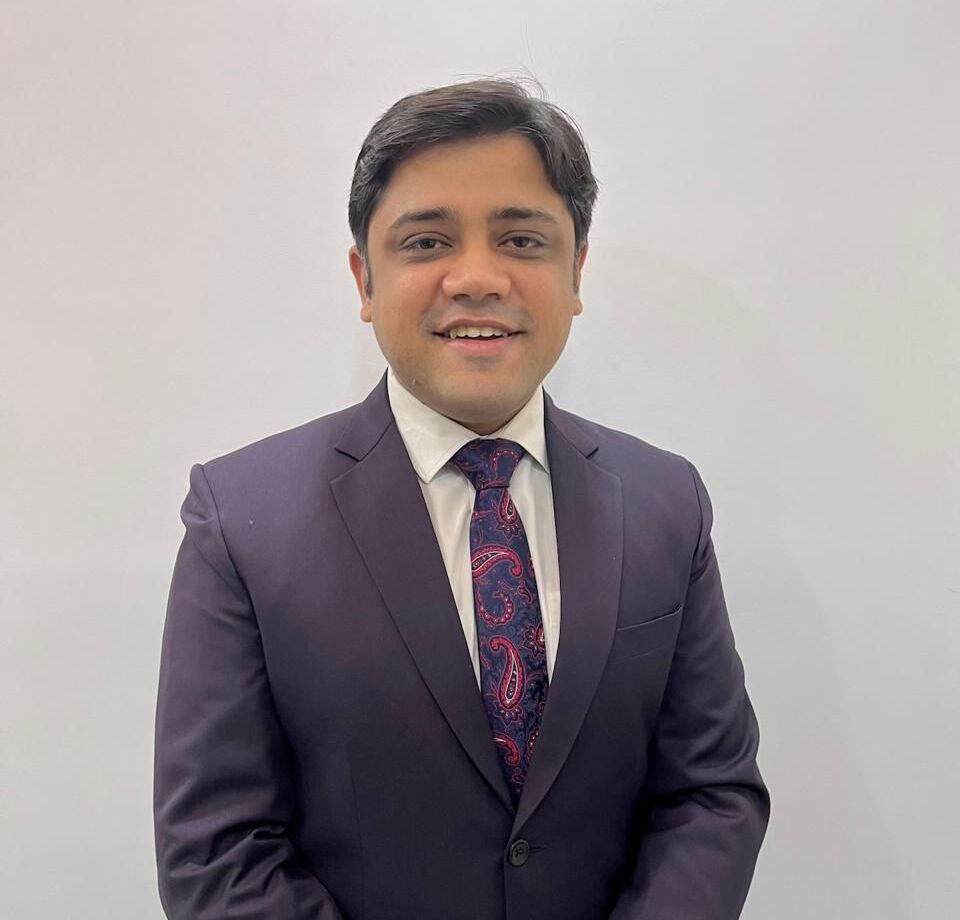


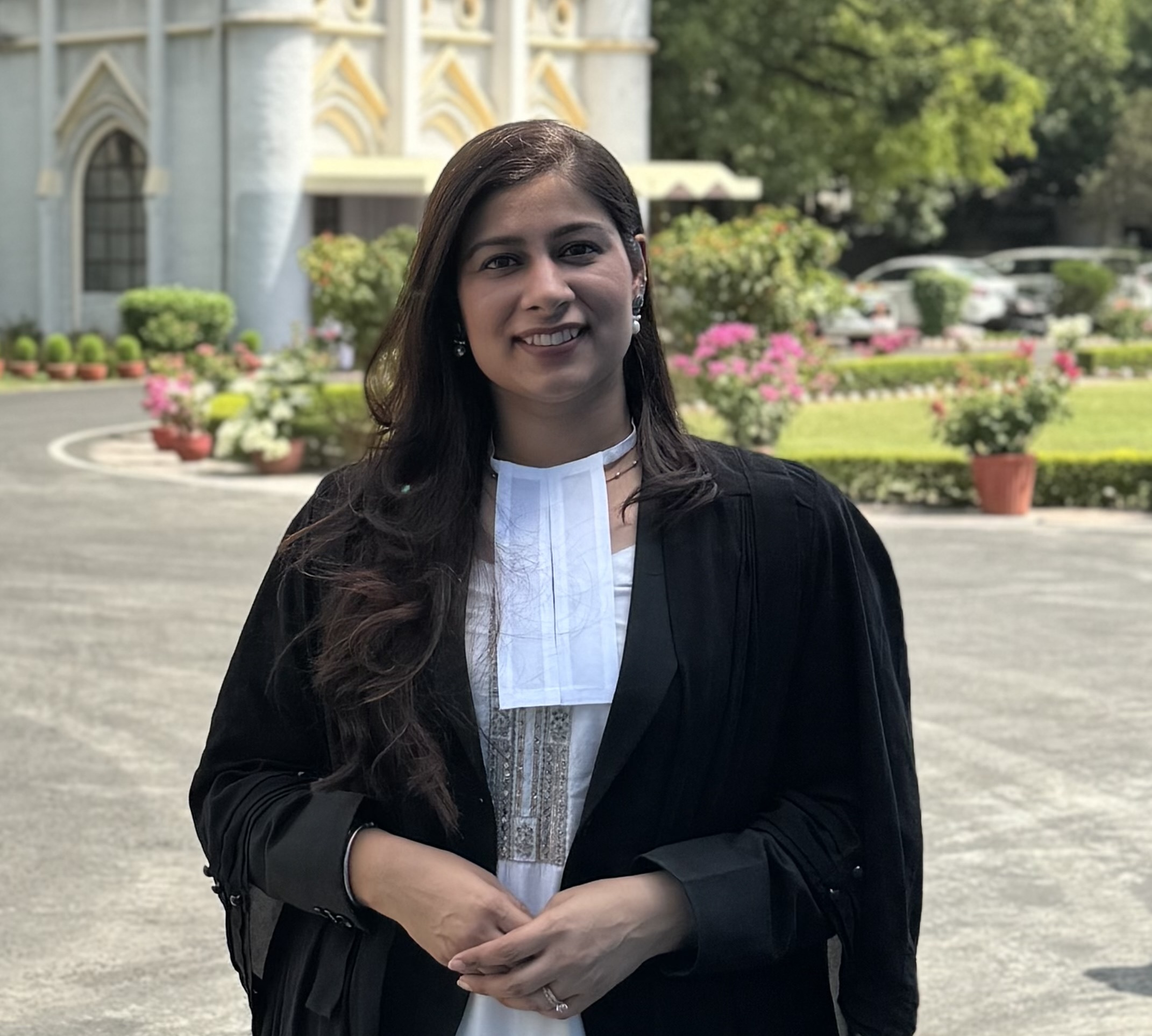









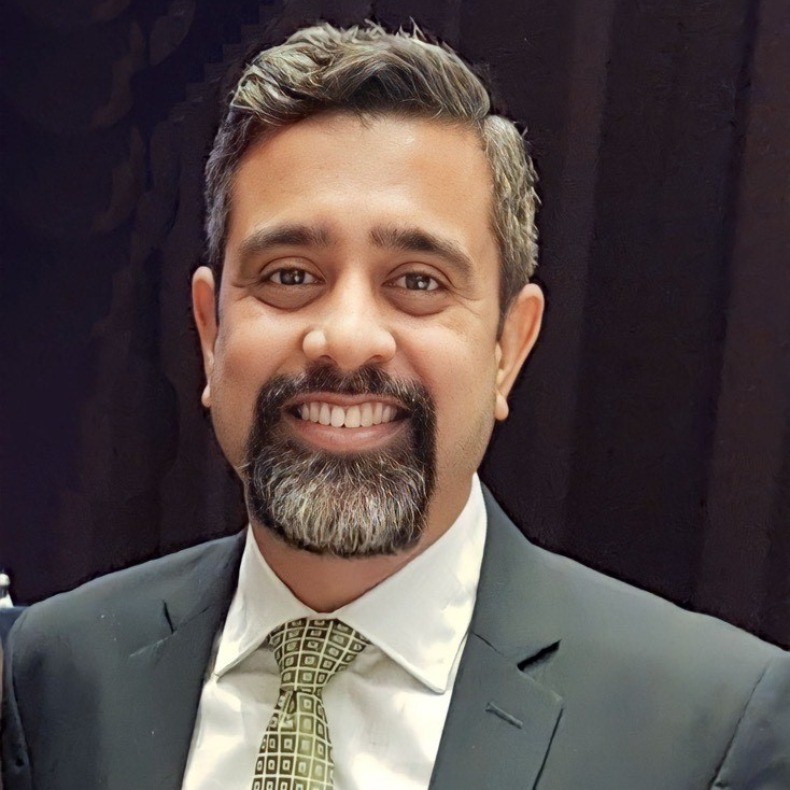



 Allow notifications