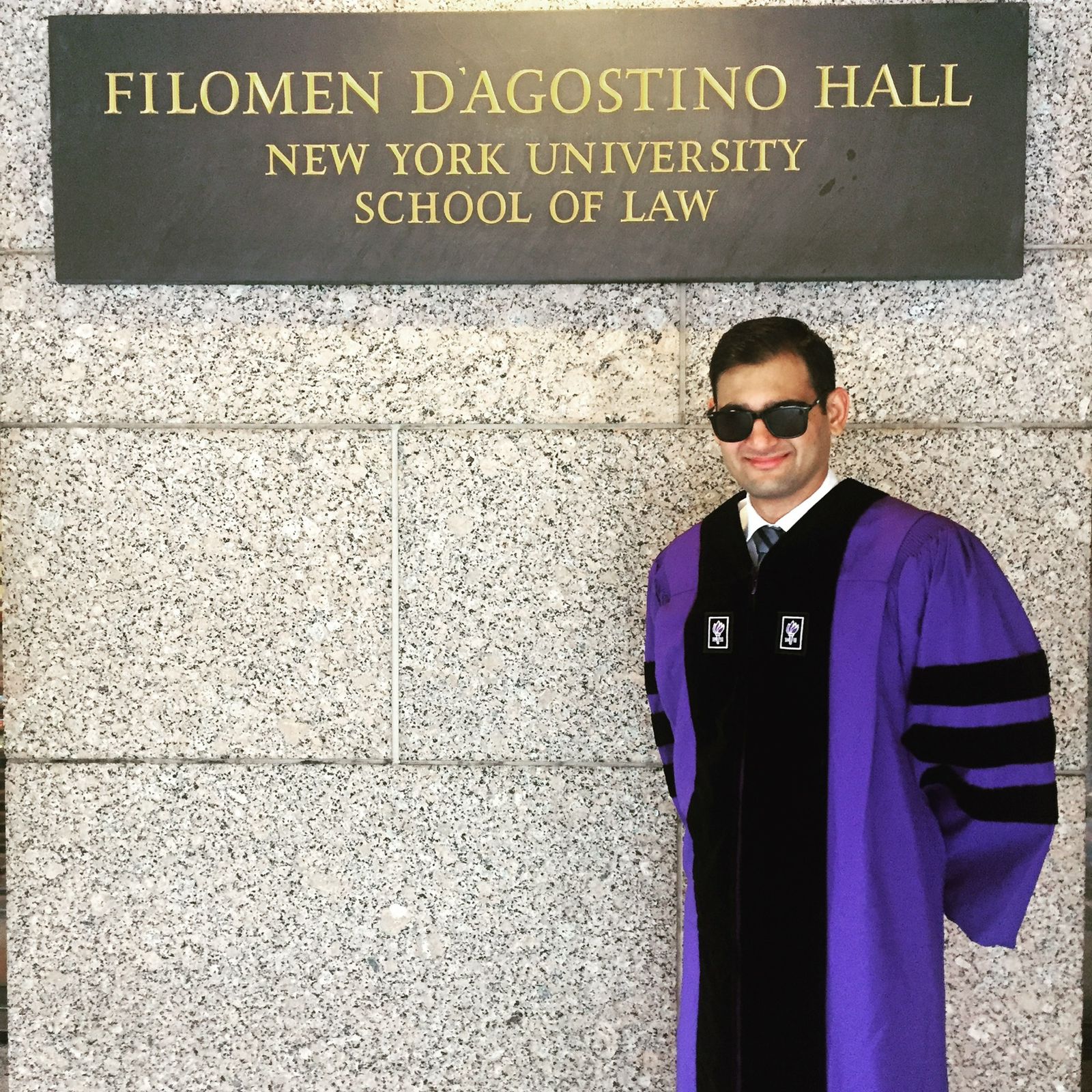
Author: SuperLawyerTeam

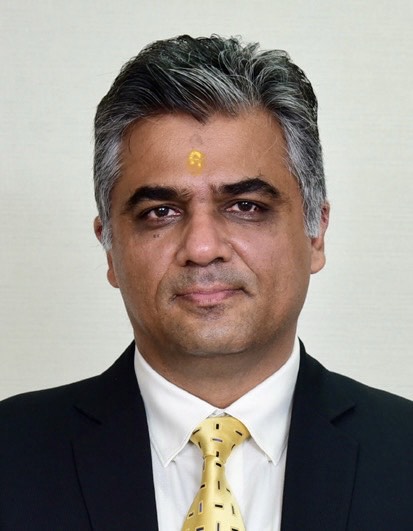
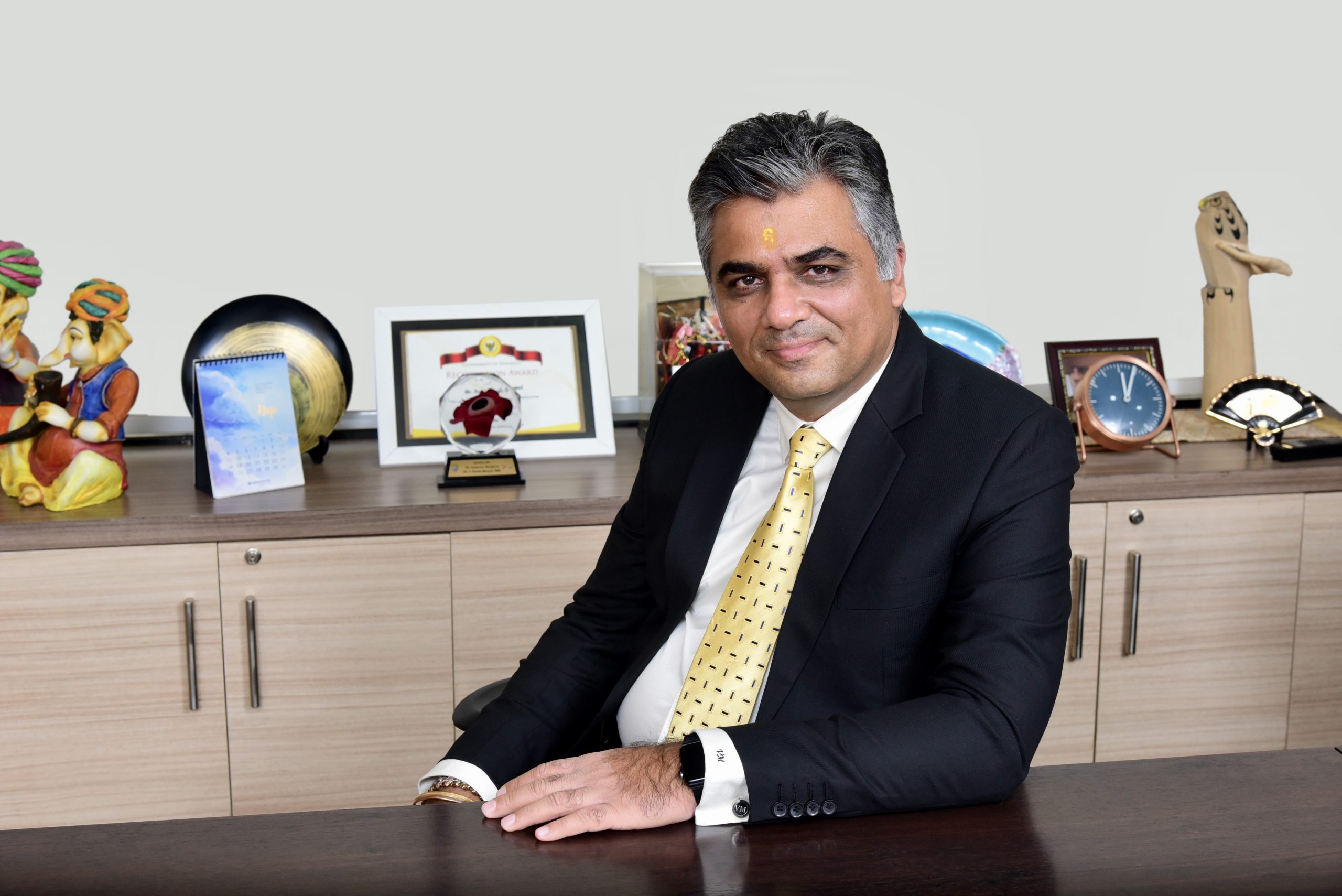
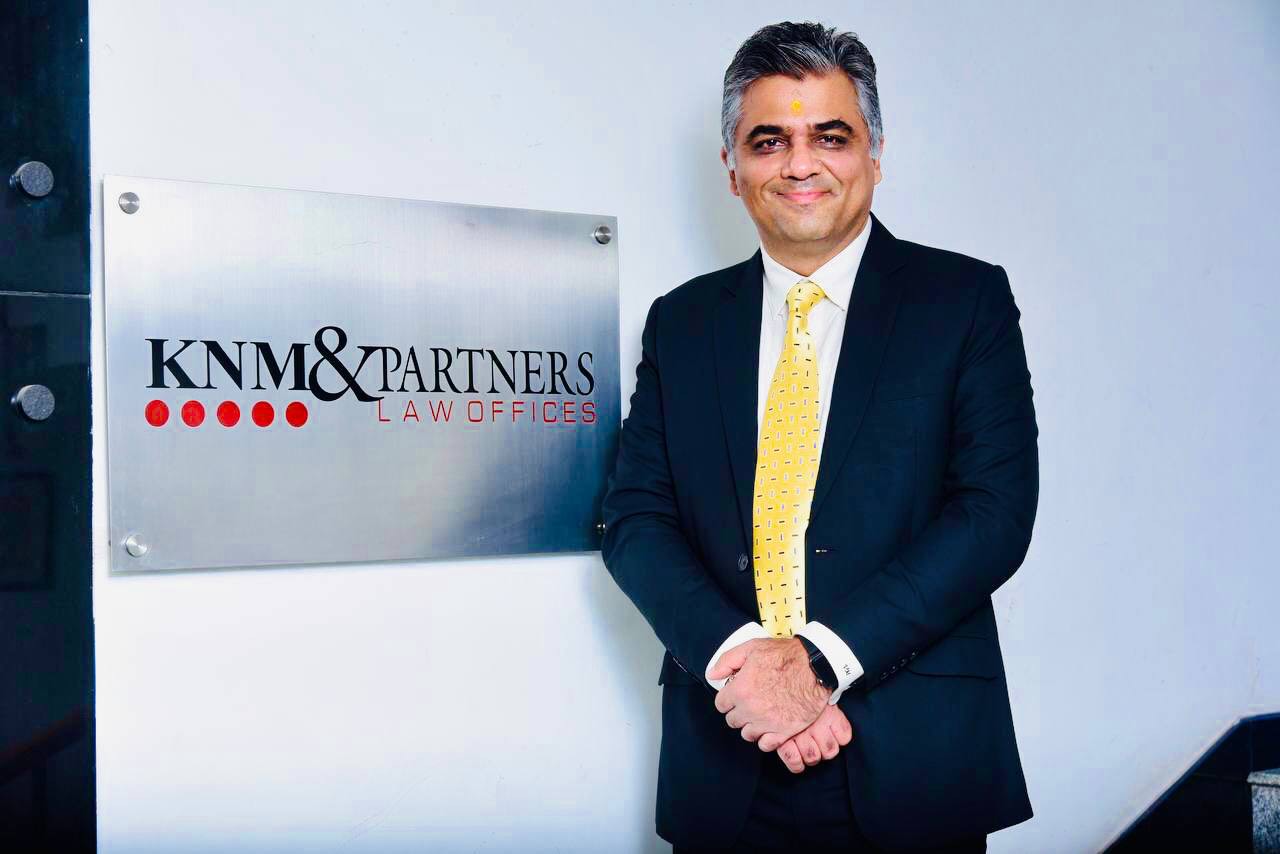
  • In Conversation with: Vipender Mann, Co-Founder & Senior Partner at KNM & Partners, Law Offices

    In Conversation with: Vipender Mann, Co-Founder & Senior Partner at KNM & Partners, Law Offices

    This interview has been published by Prabhjot Singh, Priyanka Karwa and The SuperLawyer Team

    Tell us about yourself-what motivated you to choose law as a career path.

    My roots are in the countryside and the farming community. My parents both worked for the government, so my family and I moved to the city of Karnal, Haryana where I attended school and eventually went to college, even though our hometown was only six kilometres away from our village. Due to our proximity to the village, we felt a strong sense of belonging to our heritage.

    When it comes to school and college, I’ve done about as well as average. However, my life experiences are quite varied. While in college, I joined the National Cadet Corps. (NCC). For my flight training, I went to the Karnal Aviation Club in Haryana, India. In Rajasthan, India, I assisted my brother in turning around a failing emery powder production facility.

    By riding around in a truck my brother owned, I got a taste of what it’s like to be a truck driver and learned about the ins and outs of the transportation industry and the difficulties truck drivers face.

    Due to my insatiable curiosity and desire to broaden my skill set, I decided to pursue a career in law school. In the field of law, you can expect to expand your knowledge every day. In 1998, I began practicing law in Delhi, India.

    Do you think being a Non-NLU student creates several obstacles in one’s professional life? If yes, how can one overcome that to build oneself in the industry?

    Whether we like it or not, branding plays a significant role in every aspect of our lives. A non-NLU student may find it more difficult to break into the legal profession, either by being hired by a prestigious firm or given a position in the chamber of a well-known senior advocate.

    However, that is only significant in the very early stages. These days, one can find many excellent job prospects among the many law firms and attorneys. Each law student, in my opinion, should make the most of his or her time in school by participating in as many internships as possible. It’s important that internships offer a wide range of experiences to their participants.

    The district court, the high court, the supreme court, the tribunals, the forensic laboratories, in-house departments, central/state govt. legal departments, pro bono/NGO etc. This variety will increase one’s horizons, education, and self-assurance.

    A lawyer ought to be well-rounded, with broad knowledge and deep expertise in specific areas. Experiences in the real world are the best teacher, and the more you gain from them, the more you can apply to your career. When someone needs legal advice, they automatically put their lawyer on a higher tier.

    Therefore, it is essential that he is well-versed in more than just the law. To put it another way, law students attending schools other than National Law Universities should focus on developing their own personal brands in order to compete with NLU.

    How has your experience been working with mid-sized firms and MNCs? What do you consider matters when it comes to having the right skill set for working with MNCs?

    Since multinationals usually only go to large law firms for complex legal matters, working with them can be challenging. It’s not that smaller or medium-sized businesses can’t handle legal matters; rather, they can point to their decision to hire a large law firm as proof that they did everything possible to secure a favourable outcome for the company in the event of a legal dispute.

    In-house attorneys I’ve worked with have trusted me with their personal lives, but they’re hesitant to refer me high-stakes cases because they don’t want to be held responsible if we lose. In spite of this, a law firm of medium size still has room for making a significant impact.

    Even though they may be outnumbered by larger firms in some practice areas, small and medium-sized law firms can stand out in their own right. As an example, we have been collaborating with a number of multinational corporations on a wide range of projects, from the mundane to the highly complex.

    M & A deals have boomed in these 2-3 years; what would be some of the challenges for legal professionals to deal with such transactions? And how do you cope with the same presently?

    In light of the rapid evolution of technology, it would be foolish to try to create everything in-house. An excellent illustration of the rapidity of change is what happened to Nokia when Android first appeared on the market. Recent years have seen a proliferation of merger and acquisition deals, as companies have realised that acquiring technological resources is the best way to maintain a competitive edge. The number of merger and acquisition deals will continue to rise in the years to come. To keep up with the rapid pace at which technology is advancing, legal professionals face a significant challenge in the current environment.
    You need to close the deal quickly because you can’t afford to miss out on this M&A opportunity. The opportunity cost of these M&A deals is high, so lawyers involved in them need to be well-versed in both the law and the business. 

    An attorney involved in such a deal will need to communicate with multiple parties, including those in upper management and business who have higher expectations than those of the legal team.

    They count on their attorney to provide them with business advice as well. Therefore, it is recommended that legal professionals also keep them updated on the commercial side of their clients’ interests.

    How far do you consider the role of LinkedIn in building a personal brand and great networks wrt the legal industry?

    If you know how to maximize LinkedIn’s potential, I think it’s a great platform for your business. The legal profession imposes many limitations on our ability to promote our services or to contact potential clients.

    In this case, you can use LinkedIn to meet people from all over the world. In addition, sharing your thoughts on any legal issue on LinkedIn is a great way to show off your knowledge and expertise in the field.

    I can’t promise you’ll see immediate results from your time spent on LinkedIn, but if you commit at least a little time each day to expanding your network there, you’ll soon begin to grasp the site’s value.
    Though, don’t be a spammer or ask for things like jobs or work directly. In other words, you have the option to ask for help. People are usually happy to offer assistance or advice, but it’s not a good idea to just blast them with your CV or a generic “Hi How are you?” Instead, you can ask for help or advice, and if you get a positive response, you can possibly move forward with your plan. You need to make sure you have a good profile and don’t treat it lightly. Without a profile at all is preferable to a sloppy one.

    Avoid combining your LinkedIn and other social media profiles. Don’t get too close to the subject or use personal language. You are welcome to share updates about your academic or professional pursuits, but please keep the personal details to yourself.

    What is your life mantra to work stress-free?

    Because of my extensive study of philosophy and spirituality, I am well-equipped to address many of the pressing concerns you may have about your life. The reason we experience stress is because we can never see more than a few steps ahead. For me, the study and practise of philosophy and spirituality facilitates this ability to look beyond when I am afforded a bird’s-eye view of a given situation.

    Thus relieving some of my stress. If we can look ahead and beyond, there will be no need to stress, and that is entirely up to our conditioning.

    I once worked with a client who, at 75 years old, still had a lot of pep in his step. We were tackling an extremely difficult problem that required us to put in long hours. When I inquired as to the source of his boundless vitality, he simply replied, “Stay stupid and drink lots of green tea.”
    Any last piece of advice that you would like to give to the upcoming generation of corporate professionals?

    I’ve also learned the hard way that you can’t give good legal advice to a client if you don’t try to put yourself in their shoes. The complicated legalese found in statutes need not be repeated in your legal advice. It is important that the legal advice you provide is clear, brief, and to the point. Be as specific as possible about what must be done, what must not be done, and what cannot be done. 

    Final thoughts: You are what you think, so think like an owner, act like an owner, and present yourself like an owner, and you will one day be an owner. 


    Get in touch with Vipender Mann-

  • In Conversation with: Arpit Guru, Partner at Legal Intel and Law Clerk to the Former CJI Hon’ble Justice Deepak Misra

    In Conversation with: Arpit Guru, Partner at Legal Intel and Law Clerk to the Former CJI Hon’ble Justice Deepak Misra

    This interview has been published by Prabhjot Singh, Priyanka Karwa and The SuperLawyer Team

    Tell us about yourself-what motivated you to choose law as a career path ?

    Studying law and making a career in it was not a matter of luck but a consciously thought and willfully made decision, which actualized the moment I entered law school. While the textbooks exposed me to a fascinating world of legal studies, the extracurricular activities and internships exposed me to the practical side of the law.

    Being from a law enforcement background I understood the law as powerful means to make a difference, that is the reason I went into the field of law.

    How tough was pursuing C.S. with additional professional degree like LL.B.?

    I pursued a full-time Post Graduate Diploma in Corporate Law and Management from Indian Law Institute, New Delhi. By doing that Diploma a person can get a certification to practice as a Company Secretary in India for companies having paid-up share capital of up to INR 5 cr. So, I did not do the traditional CS and finished my PG Diploma only after graduating from Law School.

    “Man with a silver spoon in his mouth” is what they say to a law student having a family with a law background. But in your case, it was somehow different as well, how far did it help you having some sort of legal background?

    It is difficult to establish yourself as a first-generation lawyer however with time your talent and caliber are tested. I would suggest having patience and keeping enhancing your network. You might not be paid well initially, however with time sky is the limit.

    Please tell us about one special case that helped you gain a great understanding of legal practice.

    Each case or situation in law teaches you something new. Law school might prepare you theoretically however it is different when you enter the real world. If I have to choose one situation or an experience I would say working as a Law Clerk Hon’ble Chief Justice of India (Hon’ble Justice Deepak Misra) has been the turning point in my career.

    Along with that, working in the field of litigation teaches you a lot which no textbook can do. My advice would be to just jump into the practice and will in no time be able to swim.

    As someone who is well versed in the areas of Real Estate and Arbitration, what sort of improvements are needed at the forefront in both the areas?

    Real Estate is quite rewarding however it is extremely complicated as the land record system of India still poses certain challenges. I would suggest any lawyer who wants to work in the field of real estate to practice before the office of the Tehsildar or Revenue Inspector and understand the nuance of this field.

    With regard to Arbitration, I feel laws have changed in favor of ADR and now it’s beneficial for lawyers to go for ADR rather than litigation as a mode for dispute resolution.

    What will be your parting words for our readers?

    If someone is pursuing litigation I would suggest giving your heart and soul to it. And trust me you will definitely be rewarded.


    Get in touch with Arpit Guru-

  • In Conversation with:- Cynthia Chepkemoi, Data Protection & Privacy Counsel at South-End Tech Ltd , Founding Leader at APLA (Association of Privacy Lawyers in Africa) and IGF Global Youth Ambassador 2022

    In Conversation with:- Cynthia Chepkemoi, Data Protection & Privacy Counsel at South-End Tech Ltd , Founding Leader at APLA (Association of Privacy Lawyers in Africa) and IGF Global Youth Ambassador 2022

    This interview has been published by Prabhjot Singh, Priyanka Karwa and The SuperLawyer Team

    Let us begin with the most important question, did you always dream of becoming a lawyer or, did it happen by chance?

    Yes, I dreamt of becoming a lawyer when I was 9 years old. What stir up this interest was the fact that I once went to court with my mum to collect a decree and in the process, we got into a court where the magistrate was delivering a judgment on a criminal matter and the decision of the court in that matter really got me thinking as the convict was handed a jail term of 15 years and a hefty fine.

    Following the pronouncement of the court decision, the convict became dramatic and started wailing in court that he was not guilty.

    As a young girl, I was struck by the turn of events and vowed to become a lawyer to learn more about how the criminal justice system works. As I grew older, I came to learn that the middle-aged man was wrongly sentenced due to forged and fabricated evidence presented to the court.


    Indeed knowledge is power and that education is the great equalizer. The middle-aged man was unrepresented as he could not afford a lawyer as he was a pauper and the state had not provided one to represent him.

    I chose law as a career as I have always believed that lawyers are justice emissaries and in part, to develop the skills that would allow me to speak truth to power, champion the underdog, and narrow the immense gap between what is and what ought to be.


    What is more, by making people’s lives a little easier, we achieve significance, creating legacies that transcend our own lifetimes. In my opinion, the law is not just a profession. In my sight, it is a medium through which I can serve my nation and people. Law is not just about rules and regulations. Law is also about rights, justice, and understanding human behavior and society. 

    Do you feel it is necessary to have a mentor/ guide to handhold a young lawyer in the beginning years of the profession?

    Yes, a mentor is a very important person in the legal field as they guide and advise on the practical aspects of the law. This varies from litigation practice before different courts and on different subjects, preparation of pleadings, contract drafting and review, file tracking and follow-up, and also client engagement.

    What are the eligibility requirements for becoming a Data Protection Counsel and what are the roles and responsibilities of a Data Protection Counsel?

    I believe one does not need to have a legal background to become a Data Protection Counsel. However, there are added advantages when one has a legal background since issues touching on privacy derive their basis from human rights. The basic requirements of being a Data Protection Counsel are having the skills and technical knowledge in performing the roles of a Data Protection practitioner.

    Some of the responsibilities include; advising clients on data protection and privacy laws, implementing data governance framework for data controllers and processors, drafting and reviewing privacy policies and the ancillary, training the management, board members, and staff on data protection.

    Please tell us about the Association of Privacy Lawyers in Africa(APLA) in detail!

    The Association of Privacy Lawyers in Africa is a non-profit association founded in 2022 with a mission to have a centralized effort towards defining, promoting, and improving the data privacy legal profession in all 54 countries in Africa. It is an invitation-only, selective, and limited membership association of the best African lawyers in data privacy and protection.

    The composition of the APLA is aggressively diverse, with recognition of deserving, experienced, and highly qualified lawyers across all practices relating to Data Privacy and Protection.

    What are the challenges in implementing the right policies and framework for data governance and compliance?

    One of the major challenges is that the law is always lagging behind innovation, hence it tends to be reactive rather than responsive. In that regard, the implementation and uptake of the policies cause a lot of friction due to a lack of awareness of the said policies.

    Also, some institutions expressed that they feel over-regulated and hence there is a lack of harmonization on the implementation of such policies as they overlap with internal processes.

    As someone inclined toward Legal Tech, how far do you agree that Legal Tech and AI will create more opportunities for lawyers in the coming years?

    AI is a fluid area to have a discussion on at the moment, especially in an African context. However, AI will immensely influence and change the practice of law in relation to the time taken to conclude certain tasks. For a tech-savvy lawyer, AI will impact the drafting of commercial agreements, smart contracts, pleadings, and even the general practice of law.

    How would you describe your career up till now? Where can we expect you in the upcoming years?

    As a woman in legal tech, the future is promising. This is due to its cross-cutting nature and intersectionality in a digital economy. In the coming years, with the knowledge and experience I have gained so far in data protection and cyber-security, I see myself running an International Legal Tech Corporate Consultancy.

    Would you like to give some advice to law students?

    Know your strengths! Know your craft! It’s either you are obsessed with it or you are out!


    Get in touch with Cynthia Chepkemoi-

  • In Conversation with: Lisa Lawrence Beard, Head of Legal Executive Search at Integral Search

    In Conversation with: Lisa Lawrence Beard, Head of Legal Executive Search at Integral Search

    This interview has been published by Prabhjot Singh, Priyanka Karwa and The SuperLawyer Team

    If we start from the beginning, were you ever dicey while choosing law as a career option? 

    I had some reservations about choosing law as a career, having never known any lawyers. I come from a family of working class Jamaican immigrants and my decision  to pursue a  legal career was based on what I read in the news or saw on TV. 

    I was a Humanities major at Stanford and loved critical thinking and creative and persuasive writing so I thought those interests, along with a passion for justice, would make me a good lawyer.

    What is your current role? How exciting is it for you?

    I have an incredible new role as Head of Legal Executive Search at Integral Global Search in London.  Integral is a leading executive search firm with global expertise in legal, tax, and compliance. I work with a brilliant team of experienced search consultants who are tax and compliance specialists in the financial services sector.

    I joined Integral, bringing my years of legal expertise as a former practicing lawyer and as a search consultant who also managed the global legal recruiting team at a Fortune 10 company. 

    It is a very exciting role. Many executive search firms work regionally with search consultants limited to choosing between in-house or law firm practices whereas at Integral I have a remit to service corporations and law firms internationally, better leveraging my market knowledge and contacts around the world.

    Being involved in so many roles lately, how far do you see a diverse set of roles helping in the legal profession? And do you think pursuing unconventional roles expands the skill set of an individual?

    I think diversity of all kinds just makes good business and career sense. The legal profession is a more conservative profession in terms of the type of experience firms and corporations are seeking but if you are strategic and very thoughtful about your career moves and can articulate them passionately to employers, your diverse background will serve you very well. 

    As I look back on my legal career, I worked in private practice, government, and in-house. My background has afforded me unique expertise as a legal search consultant.   I have a wealth of first-hand knowledge about what lawyers do for a living.  For lawyers seeking to work in-house, it’s critical that you are commercially-minded and creative. You’re expected to be a strategic business partner.

    Diverse experience will help you grow with the business.

    How important do you consider legal professionals to work with NGOs and support social initiatives? Do you think it adds value in the long run?

    I am very passionate about pro bono work and strongly believe that legal professionals should support social initiatives by volunteering their time and/or hosting fundraisers.  I think that the majority of us entered the legal profession hoping to make a difference in our communities.

    NGOs do not always have the budget to hire legal talent yet their work is invaluable to a fair society.

    As a legal recruiter, what are the necessary skills to have?

    As a legal recruiter, you must have a passion for people and be skilled in customer service. I see my role as a matchmaker. I care very much about the right cultural fit, even more than I care about technical skills.  Clients are willing to spend time mentoring someone who fits in well with their culture. You also need to have a firm understanding of the legal market and the confidence to pick up the phone to pitch to clients and candidates. 

    Strong communications skills, oral and written are crucial. Thick skin helps too. You are primarily in the people business and people will do the most surprising things! Search consultants are in the relationship business. Long lasting relationships with clients and candidates are what this career is all about. 

    How would you describe your career up till now? Where can we expect you in upcoming years?

    If I were to sum up my career in one word, it would be “eclectic”.  It’s been a fun journey that has allowed me to work with some of the smartest minds I’ll ever meet.  I have found a wonderful culture and collaborative community of leading experts at Integral Search. In the coming years, you will see me here at Integral, doing what I do best – matchmaking!

    Can one with no proper guidance pave his/her path and succeed in life? How would you like to inspire our readers to be determined and passionate? 

    ABSOLUTELY! If you want to do something, go for it.  I did not feel that I had proper guidance at the start of my career because I wasn’t comfortable initially asking for help or mentorship.  I thought I had to prove to people that I could do a job without asking for guidance.  I tell students entering university now to seek mentors immediately.  Visit your professors during their office hours.

    Always come to them with solutions (your thoughts on an issue) not problems.  Have the courage to ask for mentors at work.

    Find someone you admire and take them to lunch and ask.  I think I learned some lessons the hard way, by going through an experience a few times before I figured out the right path, whereas some people were given advice early on.  If your parents went to university and went to law school, there’s a clear advantage but you can succeed without legacy. 

    And some of us are just experiential learners. I don’t think I was always good at listening to being told what to do!  In the tech world, failure is an asset. It’s about failing fast and learning from your mistakes quickly to course correct. Take the leap, with faith!


    Get in touch with Lisa Lawrence Beard-

  • In Conversation with: Deeksha Malik, Senior Associate (Employment Labour and Benefits) at Khaitan & Co and Founder (Editor) at IRCCL

    In Conversation with: Deeksha Malik, Senior Associate (Employment Labour and Benefits) at Khaitan & Co and Founder (Editor) at IRCCL

    This interview has been published by Prabhjot Singh, Priyanka Karwa and The SuperLawyer Team

    Let’s start from the beginning, what inspired you to pursue a career in law? And how would you describe your journey thus far?

    Frankly, I had no plan of becoming a lawyer. I was always more inclined to pursue civil services and had thought that the 5-year B.A.LL.B (Hons.) course would help me in my preparation for one of the toughest exams in the world. However, from my third year in law school, I was exposed to several important subjects in law including constitutional law, and it was then that I realised how interesting the legal practice can be. I always had an analytical mind and immense love for writing, and it dawned on me that my new-found interest in law generally coupled with my capabilities could help me make a good career in this field.

    About my journey thus far, well, it has been a roller-coaster ride. I always say this in interviews because when I joined Khaitan & Co, I was assigned to the capital markets practice where, over a period of time, I realised how mis-aligned my interests are vis-à-vis the said area of law, and while I was already struggling in terms of finding an interest in the subject, I did meet people who were not always kind to me; and yet, the same place introduced me to the subject which I now love the most, which is employment law.

    Khaitan & Co gave me a platform to thrive, not just within the firm but outside as well, as I explored my love for pro bono work, teaching (through guest lectures in law school), and writing (through my blog). I am very grateful for all I have been able to achieve through a fantastic support system at the workplace and beyond. My parents have been absolute gems in this journey.

    Receiving an offer from the University of Cambridge and turning it down to pursue practise has to be one of the most crucial choices you have made at the beginning of your career and making such a decision requires a great deal of confidence in oneself. What advice would you want to give out to the readers to help them make better decision early in their careers?

    I am not exaggerating when I say that choosing between my law firm life and a masters at the University of Cambridge has been nothing but a Sophie’s choice. I spent days and nights discussing my options with my parents and preparing a pros-and-cons list. However, what I have realised is that you can mark in your field only if you are true to yourself and understand yourself completely.

    I knew very well that I was considering masters in corporate specialism at the University of Cambridge only because everyone around me told me that I would be a fool to lose something this prestigious and exclusive, and I knew deep down that I wanted to explore employment law and make my niche in a subject that is still underrated as an area of practice. My parents told me to follow the latter and forget the world for a while, and I did exactly that.

    My advice to law students and those starting out as young professionals is to stick to what you really desire. Hear everything that others have to offer but listen to yourself.

    You happen to specialize in Employment Labour and Benefits practice group at Khaitan & Co. Can you tell us a bit as to what prompted you towards this field of law? When did you realize you wanted to work in the field of employment?

    I wish I had a more interesting story about this than what I am going to say just now. I never liked employment law as a law student, perhaps because we had a trimester system of examination back then and we were expected to explore the vastness of the subject in a span of three months. Then again, our seniors were securing placements at the corporate practice groups in Tier-1 law firms, and we were made to believe that this really is the be-all-and-end-all.

    When I was allotted capital markets as the area of practice at Khaitan & Co, I gave it a sincere try. However, while not intending to sound critical here, I do note that working in this subject area cannot be everyone’s cup of tea. The subject entails heavy transactional work, much of which could get repetitive over a period of time especially for a young professional.

    I did have an amazing time there learning about different deal processes, but I knew it was time for me to move on to a practice area where I could better use the kind of analytical capabilities that I always had. The human resources team at the firm then allotted the Employment Labour and Benefits practice to me quite randomly, and I have never looked back since. It was – like I mentioned earlier – the most random and unpredictable move and yet the best one I had till date.

    People-centered issues are often overlooked and undervalued. What, in your opinion, is lacking in addressing the issue of equal representation, given your specialization in employment-related issues?

    I can think of two reasons. Labour laws have not kept pace with changing times. The laws provide bare minimum standards of compliance for employers. If I may, the law on persons with disabilities directs a private-sector employer to frame an equal opportunity policy for employees with disabilities, but it does not lay down a more direct set of guidelines to ensure that such employees are reasonably accommodated at the workplace.

    Also, while there is an increasing realization of the importance of diversity and inclusion at the workplace, it is definitely an expensive affair. For example, the law on maternity benefits requires employers to set up their own creche facility for allowing women-employees to take care of their children in close proximity, but no flexibility is afforded in the form of arrangements with third-party day care centers, nor any financial support offered by the government for such critical compliance.

    Even if one convinces oneself about the business case for a diverse and inclusive workplace, these compliance requirements, in their rigid form, could get too technical and impractical to fulfill.

    Would you like to talk about the new opportunities in law for aspiring and budding lawyers? Especially in the aftermath of pandemic?

    I am not sure if there is any correlation with the COVID-19 pandemic, but a positive sight I have noticed lately is the growing realisation among young professionals is that there are many ways to become successful in the legal profession. More young professionals are willing to try in-house practice or niche practice areas within law firms (such as employment law, data privacy law, etc.).

    Some young professionals are also setting up career counselling / consultancy organisations (such as LLM Wizards) or doing business strategy / knowledge management / learning and development work within law firms. We are living in a world where there is a greater realization of following the heart and maintaining work-life balance to the extent we can in this otherwise demanding profession.  

    Is it possible to pave one’s own path and succeed in life without proper guidance? How would you like to motivate our readers to be more determined and enthusiastic?

    Yes, this is possible. As much as I am grateful to my alma mater for what I have achieved, I have also faced slightly unfair treatment from certain seniors who preferred mentoring my batchmates who appeared to be promising because of their affluence and background (there was actually a “metro” group in my batch that was guided by seniors even during intra moot court competitions!). I learnt to carve my niche in those situations.

    For instance, when I realised that some of the seemingly popular individuals in my batch were not inclined to collaborate with me for a moot court competition because I was not part of THE “metro” group, I started looking for competitions that did not require group participation.

    I won a couple of writing competitions in the process, honed my writing skills along the way, and then aimed at and got published by some of the leading international publications. I continued to focus on academics because this again was something that only required my hard work and dedication without any specific guidance from anyone. A good academic performance helped me secure good internships and even an acceptance from the University of Cambridge.   

    Point is, if you seek guidance but do not always get one, become your own counselor and develop a fighting spirit that does not get overwhelmed by unpleasant circumstances.

    What do you like to do in your spare time when you’re not at work? Do you have any interests or hobbies that you’d like to pursue?

    Oh yes. I love biking and I am also a trained classical dancer. I along with my team also run a blog called The Indian Review of Corporate and Commercial Laws, which has received an insane amount of love and following over the years.

    Finally, do you have any parting words of wisdom for our readers who are still trying to figure out their path?

    As I mentioned before, one should stay true to oneself. There is no single path to success, hence we must all stop drawing parallels with the journeys of people who have traveled through the career path before us. But before we decide to follow what our gut feeling suggests, we must ensure that we have all the resources available with us to make an informed choice.

    This is possible only when we reach out to experienced professionals through professional / alumni networks and strike a candid conversation.


    Get in touch with Deeksha Malik-

  • In Conversation with: Arunoday Ganguly, Founder & Director – Cygal Attorneys (An ADGM Law Firm), National Director-BNI and Founder – Cygal Systems (Social Impact Startup)

    In Conversation with: Arunoday Ganguly, Founder & Director – Cygal Attorneys (An ADGM Law Firm), National Director-BNI and Founder – Cygal Systems (Social Impact Startup)

    This interview has been published by Prabhjot Singh, Priyanka Karwa and The SuperLawyer Team

    First of all, we’d like to know what was your motivation behind making a career in law?

    When I was studying in High School, I used to get fascinated to see my uncle’s practice at Calcutta High Court. He was a Senior Counsel and his law chamber used to be very busy with Juniors, Stenographers, Law Clerks, Solicitors and their Clients. In those days, there were no online meetings or telephonic meetings. All Solicitors used to visit the Chamber with their clients for face-to-face meetings.

    When my uncle used to get favorable Court orders for the Clients & the Solicitors, I used to see the tears of joy and their gratitude towards my uncle. This aspired me to get into the field of law.

    You are the Founder and Director of Cygal Attorneys in UAE. What are the challenges you faced in this process and how is your experience managing a firm at your level?

    There are challenges in starting any new business including a law firm and more particularly when you want it to be licensed by one of the award-winning jurisdictions like ADGM (Abu Dhabi Global Market) www.adgm.com . One needs to work much harder and with more responsibility when laying the foundation of a law firm. Cygal Attorneys is licensed by ADGM as an English Law Firm for Arbitration and Legal Consultation. Our niche is to provide full legal support in cross border business and technology SMEs & startups.

    How far do you consider taking Pro-Bono cases and how it can benefit one in their professional lives?

    We believe in not publicizing ourselves in Pro-Bono cases. We do it discreetly without letting anyone know about it. We do not make our clients feel that it is a Pro-Bono case as we give equal importance to the case as we do in any other cases.

    Kindly tell us about the BNI network in detail and what opportunities it brings for professionals?

    Business Network International (BNI) has been present for 37 years (www.bni.com) in 77 countries across the world. It gives professionals like us a referral platform. As a part of my entrepreneurial effort, I am on the process of launching BNI in Bahrain where businesses, mainly startups and SMEs, could grow through the worldwide networking platform.

    What sort of preparations one needs to do for settling as a legal professional in the UAE?

    At least 4-5 years of prior legal experience either in practice or in-house would be very helpful before starting in UAE or for that matter anywhere in GCC. To start with, I would recommend joining a small to mid-size law firm or as an in-house legal counsel which would give more all-round exposure to law. I would also encourage law students or fresh graduates to do internship with UAE law firms if there’s any opportunity to do so.

    As a legal professional with such great achievements, what motivates you to push harder than yesterday? And what is the role of mentoring specifically in the legal industry?

    Practicing law like my uncle has always been my aspiration. Destiny had other plans and I had to take up service at a very initial stage of my legal career where I had the opportunity to work with the best brands in the world in the likes of TATAs, Citigroup, ICICI Bank, American Express.

    I have worked closely with many CXOs and I know their prism through which they look upon the lawyer and the legal industry. I see an opportunity of disruption in the legal industry, and this is what keeps me motivating to work harder on my current legal tech project which I am sure it sees the light of the day would change the way the lawyers are engaged today.

    Finally, a word of advice for the upcoming legal professionals?

    Upcoming legal professionals should confidently prepare themselves to be able to produce pragmatic legal solutions for businesses – they need to believe in themselves. In addition to the good understanding of law, a good grasp of business will be a boon.


    Get in touch with Arunoday Ganguly-

  • In Conversation with: Ameyavikrama Thanvi, Advocate-on-Record, Supreme Court of India

    In Conversation with: Ameyavikrama Thanvi, Advocate-on-Record, Supreme Court of India

    This interview has been published by Prabhjot Singh, Priyanka Karwa and The SuperLawyer Team

    Tell us about yourself, what motivated you to choose law as a career path?

    I am an Advocate-on-Record at the Supreme Court of India. My practice is primarily focusses on civil, commercial and constitutional disputes. 

    How I came to choose law as a career was partly by elimination and partly by choice. As a high school student I was interested in history, political science, debates, I was a regular at MUNs and was also quite certain that I didn’t want to pursue a career in science stream.

    So, I chose to study commerce to keep my options open – between pursuing CA and Law. Eventually, given my co-curricular interests and the width of learning that studying law provided, Law came on top.

    Even with my commerce background, law seemed like a good professional course to undertake and so with the idea of pursuing a integrated course in BBA-LLB (it would eventually not be so as I switched to BA-LLB), I embarked on the journey of clearing CLAT and studying law.

    How did you envision you career while you were in law school and how did it turn out?

    Honestly, I did not envision a career in law. My primary goal was to clear the civil services exam and become a diplomat or a bureaucrat. Law, for me, was a backup option. But while in law school I was certain to not treat the course as Option-B and explored different options by undertaking internships across board.

    By my penultimate year I was certain that I enjoyed dispute resolution more than anything else and so if law were to become my career it would be in dispute resolution. So, in those terms I am doing exactly what I wanted to do.

    Where my plans differed from my reality was in terms of execution. I had always imagined being at a law firm and rising through the ranks; or alternatively I would be in the non-profit sector but instead I ended up at the jungle jump of counsel practice. Now I do a good mix of pro-bono and commercial disputes in equal measure.

    One thing I must say is that I imagined it to be straightforward career path but it has been quite a journey thus far with lots of twists, turns and even stoppages – all of which have contributed to the end result. And I am very hopefully looking forward to whatever’s to come next.

    We all know you have dealt with a plethora of cases in your career, is there any special case that has affected you deeply as a person or which has changed your mindset towards the litigation world?

    In a way every case one deals with is a learning curve of some shape – some are very steep, others not so much; and each of these cases, in my limited experience tend to give you a new perspective.

    The ambit of the question you put to me is quite large in the sense that “litigation world” entails within its ambit multiple small universe. However, there are some instances I would definitely want to highlight.

    First is regarding the reach or impact that a case you do has – however big or small. I recently did a probono case where an inter-faith couple that had eloped to get married was slapped with false and fabricated criminal charges as a measure of punishment by their family. If in terms of revenue or even legal questions one were to see, it was a rather straightforward open and shut case but the impact it had on someone’s life was quite large. After fighting and winning in court only can they today imagine returning home.

    Second, in terms of reach, I have been involved in the case where recently the Supreme Court interpreted that Medical Termination of Pregnancy Act and in another case where provisions of the Surrogacy Act and the Assisted Reproductive Technology Act have been challenged for being in violation of rights guaranteed by the Constitution – the number of people who have reached out to be me from parts of the country I didn’t even know exist to thank me and my colleagues for undertaking these projects is tremendous!

    Third, on a different note, litigation has an image problem that there are certain families which dominate the professions – while strong family presence is undeniable but one thing I’ve learnt from experience is that even if you do not have family in the profession but you’re sincere about your work, there are many at the bar who will stand by you and support your growth. The condition, however, is full and complete sincerity towards work.

    Lastly, practitioners are least expected to say this but my academics, especially the courses I undertook during graduate studies, greatly impacted my understanding of litigation. It gave me perspective which I lacked until then of looking at issues holistically and of exploring any given case from different perspectives before deciding on the best alternative.

    Appearing before various tribunals and forums needs extra effort, how do you plan your work to be super-efficient?

    Most important requirement to be efficient is to be organised. In litigation, if one wants to be efficient it is essential that one learns the art of time management. Unlike structured organisations here you have no HR to monitor your performance in terms of time given to do a task.

    This can be a boon or a bane depending on how one handles time. Work, by its nature, tends to expand with time. So I set for myself deadlines and try and stick to them.

    Apart from that I necessarily do a review of work twice a week– to ensure I complete all that was planned for the week and to ensure that there is sufficient time at hand to do things that I enjoy apart from work.

    Secondly, on most days one attempts to not spread oneself too thing across fora and since my primary practice is in the Supreme Court I try and avoid any other forum on Monday and Friday. In the older system of non-miscellaneous days (Tuesday, Wednesday and Thursday) I used to first attend the matters in SC and then attend other forum but now with the system of regular matters being taken up first, that issue has been taken care of.

    Lastly, as lawyers we often face flake that we have too many holidays but litigation is a stressful job –a lawyer takes upon themselves troubles of their client and then constantly engages in mental gymnastics of getting relief. Apart from that litigation itself is also a physically draining profession.

    It requires your presence in court at 10:30 every morning extending well into the afternoon and the “desk-job” aspect of practice mostly starts only around 5 pm which is when most other jobs close shop. So, to maintain efficiency it is necessary that regular breaks are taken.

    Could arbitration be seen as just another trend or does it hold a future?

    I think arbitration is too entrenched in our system of dispute resolution to be compared to a trend. It is sure to stay here in the near future. However, it may be said that in the Indian markets arbitration hasn’t yet reached its optimum beneficial levels. Arbitration is certainly a buzz word in dispute resolution circles in tier-1 cities but many a businesses operate in tier-2 and tier-3 cities where arbitration is still surely but rather slowly developing.

    This mode of dispute resolution is also facing some teething troubles in the sense of limited number of experts, high costs and judicial interference (which is steeply declining with every passing day). But these are common initial troubles across jurisdictions, which will be resolved as arbitration takes stronger roots in the Indian dispute resolution universe.

    At macro-level if one were to see most practitioners – and even academicians – today are only engaging with commercial arbitration between organisations whereas arbitration holds potential to resolve disputes also between individuals, between commercial organisations and countries, and  between countries even.

    These are practices that exist globally and are widely studied too. However, in India we are still in nascent stage and these constitute an untapped market and an under-studied academic field for us.

    Looking, however, at how there is a concerted effort now from the government as well as the legal industry and business community, arbitration is certainly going to flourish in India in the near and long term.

    Based on the list of cases that you handled, is there any particular case that boosted your legal career?

    For a young lawyer every case done which leads to a further referral and/or the client is satisfied with outcome of the case, is a career-boosting case. I am happy to report that I have been fortunate to have a good amount of those cases for me.

    That said, I think I have done the most landmark case of my life thus far only recently when I got the opportunity to assist the Court in interpretation of the Medical Termination of Pregnancy Act.

    I am now working with my friend and colleague Ms Mohini Priya on a case where constitutional validity of provisions of the Surrogacy Act and ART Act have been challenged before the Supreme Court. Reproductive jurisprudence is not very well developed in India yet and some clarity and certainty is required by the court.

    Apart from litigation I think what also gave a big boost to my career was the opportunity to work with the International Law Institute where I got the opportunity to pen a report in International Investment Arbitration, which was tabled before the UNCITRAL Working Group-III for wider consultation and consideration on reforming investment arbitration.

    What are the preparation tips you would like to give for our readers wrt AoR Exam?

    AoR Exam is a great learning experience, let’s start with that. So, first off I’d say it would be best not take it as merely an exam but also an opportunity to undertake an in-depth study of how the Supreme Court of India really works.

    Now regarding the syllabus, it seems a little overwhelming at first but it’s not much if you have practical experience of practice before the Supreme Court so ideally practice for at least two years at the Supreme Court before embarking on the journey of taking the exam (of course a pre-requisite for the exam is one year training with Aor, additional years, in my experience, only prove more beneficial).

    This is especially useful for the paper on Practice and Procedure, the syllabus for which is essentially in part Constitution and in part Supreme Court Rules – both of which can be mastered best by practice.

    Secondly, stay updated on latest legal developments, particularly landmark judgments delivered by the SC because the aim of the exam is not to test your legal knowledge per se but to test how much you understand about the working of the Supreme Court. This exercise will also help aspirants while tackling the paper on “Leading Judgments”.

    Thirdly, and I don’t know for how long this advice is going to be useful but at least so long as the exam is not computer based, I’d say aspirants must stay in practice of writing on paper. This is particularly important today when we’re moving completely away from physical filed and pen-paper world in law schools as well as at courts.

    Would you like to give any career/life tips to the readers?

    I am not sure if I’m qualified enough to give tips yet on life or career but I’d say be sincere and honest to yourself on whatever path you choose for yourself.

    In the field of law today a plethora of career paths exist – choose the one which really interests you because each of these paths has a long gestational period. Unlike other professional careers, law demands an intentional consistency of dedication towards your career.

    I would also suggest that students and young professional reach out to their role models and seniors who have been working in the field of their choice.

    Not everyone will respond but you’d be surprised the number of people happy and willing to help you if you show promise. All the best!


    Get in touch with Ameyavikrama Thanvi-

  • In Conversation with: Dhruti Kapadia, Arguing Counsel , AOR SC of India , International Arbitrator , Lecturer , Trained Mediator , Policy Analyst, Writer & Corporate Trainer

    In Conversation with: Dhruti Kapadia, Arguing Counsel , AOR SC of India , International Arbitrator , Lecturer , Trained Mediator , Policy Analyst, Writer & Corporate Trainer

    This interview has been published by Prabhjot Singh, Priyanka Karwa and The SuperLawyer Team

    What was your “slam-book career aim”? How well did it go?

    My Slam Book Career Aim was to be a lawyer since the time I was around 8 years old. I studied in ICSE SCHOOL  QUEEN MARY , I  enjoyed literature and that fascinated me to get into law . I liked the English Lawyer style. I was from my early teen days involved in social work and have worked on multiple causes in slums and also have uplifted few transgender by providing skill center to them. I always liked questioning if I saw something wrong I could not stop objecting. I planned my career from my school days as I opted to choose commerce as an option in school and economics instead of maths and science .

    My career plans from my secondary school had already started towards law. I did my BLS LLB from government law collage, church gate , I must reveal I had done my first year law from Pravin Gandhi Law Collage at Juhu and topped that college WITH HIGHEST SCORES BOTH THE SEMESTERS to get transferred in GLC  which was the best collage in my times in Mumbai. SO JOURNEY HAS BEEN ADVENTUROUS – from academics to  article ship and to be a solicitor which is like the toughest exam to crack , I think was very fortunate and I owe a big thank you to my family and best friend(my buddy who was with me in my toughest phase of life –he was there for  me  in my struggle phase and helped me  to be what I wanted to be).

    I also took up courses from my first yea example r of law for diploma in cyber law while studying first year of law in 2005 and I studied MASTERS IN INTELLECTUAL PROPERTY RIGHTS AND INFORMATION TECHNOLOGY. I took my second master’s degree in MASTERS IN PUBLIC POLICY.

    I was always a court person so I chose to be a Counsel and I got to see reality of  arguing before fantastic judges in my junior days gave me glimpse of court craft.I got my first appearance before Justice S J.Kathawalla it boosted my confidence , Justice Rajesh Ketkar who appreciated my hard work in his order made me feel I can do better and Justice Shantanu Kemkar who corrected me on a point when I was arguing made me feel there is lots to learn with every matter in hand.

    Three to four experiences from the bench I personally experienced -made me  feel more hard work more better results.  It was learning experience and it still is. I also got best opportunity to be junior Justice B.N. SRIKRISHNA  and I must say with pride he has been a fantastic mentor.I joined him to get exposure in arbitration and I absolutely got to gain lot of knowledge working with him.

     I also decided to take up matters which meant to make difference in the society like national level matters METOO MOVEMENT where I appeared pro bono for Vinta Nanda. I also took up social issues in covid-19 times pertaining to door to door vaccination for bed ridden people and  senior citizen and succeeded as couple of policies were framed by state and centre by the directions in my PIL. From High Court Litigation to matrimonial DISPUTES in Family Courts made me get my focus on mediation and I established myself into trained mediation. I am empanelled International Arbitrator as well which makes me feel it is good journey so far.

    I have taught law from 2012 in various colleges in Mumbai and even now I teach law and train students on various academic subject . It is like what you have that is knowledge must be shared is what I believe in . Many times I am appointed as amicus curie in matters where courts feel I can be of good assistance. I also appear for civic bodies and government bodies apart from my private practice. I am also doing transactional work and that keeps me happy. Being an ADVOCATE-ON-RECORD, SUPREME COURT OF INDIA –I ENJOY APPEARING IN APEX COURT OF OUR COUNTRY. I have experienced appearing   for all kind of individuals including politicians to celebrities to pro bono matters and that has been my complete hard work that’s been put in for than 13 years now as a lawyer and 12 years as a solicitor.

    What can be the real challenges while establishing a career in the field of law?

    To get a nice chamber to join , or  a branded law firm to join is not easy for first generation lawyer and then to prove your talent and ability is hard core competitive market is a major challenge.

    Sometimes as juniors you may get less opportunities so one must be patient. Invest 5 to 10 years in profession to make your name by doing honest work. Fees are compromised unless you have a brand created.

    How was your experience while judging during the moot competitions?

    I feel the young talent pool of brilliant to be lawyers are there -while I judge them , I feel all of them work too hard as to do their best . Sometimes it gets difficult to actually give marks and gives you a feel of a sitting judge to decide either one way or the other. I enjoy momentary pleasure of being a judge and I feel I too have learnt a lot from students who have participated. It is enriching experience.

    How challenging has it been maintaining a work-life balance and how young legal professionals can learn to strike that balance in their professional lives?

    I have my own chamber where I usually meet attorneys/clients after court hours. I owe my time for my family during dinner I make it a point I am with family on dinner table so 9pm-10pm no one can disturb me on calls or messages.

    Weekends I get into my relaxing mode I partially work and I catch up with friends. I keep some ME TIME .. I LIKE FREE TIME TO CHILL OUT, travel , music therapy and sports. Balancing your physical health vis a viz mental health with luxury of what you like is a must and that will help bring out quality work.

    Follow this- work time work-play time play . Vacations are for experiencing new things-learn , evaluate your work performance, try out good food if you like it will give you happy refreshing feeling to join back and perform better.

    According to you, how crucial is Psychology in matrimonial matters and how sufficiently it can be used there?

    It plays a vital role I would say counselling –psychology works there. Take an example A wants Y amount as alimony, B desires to give nothing yet A wants it -how do you make A get Y AMOUNT OF X Amount? . You got see what will TEMPT A’s mind and how will he/she come up to negotiation for something rather than nothing and how that something would make A feel I have got something close to Y . That juggling in minds and art of negotiation is inter-related with human psychology and as lawyer to know clients mind and psychology is essential.

    YOU LEARN IT WITH EXPERIENCE.

    As digital platforms are consistently increasing, such as Metaverse, Do you think there would be a large scope for lawyers because of this?

    Yes indeed. Global world will be here right before us . Experience we had in covid-19 times and e-concepts talks volumes. We have seen the success rates of performance which is booming up. BUSINESS WORLD GETS CLOSER AND EASILY CONNECTED AND THAT BRINGS GLOBAL CLIENTS IN THE MARKET WHICH DEFINITELY WILL BOOM COMMERCIAL MARKETS IN LEGAL INDUSTRY.

    What were the activities, curricular and extra-curricular, that you undertook during your law school days which helped to shape your career? / What kind of internships did you undertake during your law school?

    I took up courses and moots I participated in .  article ship  3 years I did it as that’s mandatory for me to get trained to appear for solicitors exams that kept me too busy and internship molded me practically. I worked on the grass root level to understand public policy and socialism. I started writing articles which are published in newspapers as well.

    Do you think it is crucial to have a career plan beforehand or one should move with the flow?

    Certainly you must have some plan MAY BE 5 YEARS PLAN IN HAND TO EXECUTE. AFTER 5 YEARS JUST GO WITH THE FLOW.

    What would be your parting message to our readers and the young budding lawyers?

    Believe in yourself, If I can do it you too can do it! Have confidence and please never ever get bullied by anyone. You are best in your own way. Don’t mix with negative people if you get positive vibes with people you associate with be there or leave. Them There are many opportunities waiting for you. Be honest and go ahead and do your best and leave the rest. Take compliments but don’t get elated.

    You still have miles to go before you sleep so keep working hard as that’s the only key to success. Live a dignified life as that ultimately  holds you high.


    Get in touch with Dhruti Kapadia-

  • In Conversation with: Jenna Krishnan, Founder at The Daily Lawyer Podcast, Lawyer, Speaker, Podcast Host, Legal Trainer and Content Creator

    In Conversation with: Jenna Krishnan, Founder at The Daily Lawyer Podcast, Lawyer, Speaker, Podcast Host, Legal Trainer and Content Creator

    This interview has been published by Prabhjot Singh, Priyanka Karwa and The SuperLawyer Team

    Tell us about yourself-what motivated you to choose law as a career path.

    Hi everyone! I’m Jenna Krishnan, a lawyer and now, also a Founder of The Daily Lawyer – a platform to educate and empower people through relevant legal knowledge, that can protect them from the thunderstorms of business and life…so that when rainy day hits, one at least knows what to do next, how to respond, whom to contact etc.

    Honestly, I stumbled into law by the process of elimination. I had a strong academic background, so, as was natural at the time, I pursued science after my tenth standard.

    While evaluating options for undergraduate studies, my father suggested that we make a chart of my strengths and weaknesses and, based thereon, decide on the stream I should choose. So, we conducted that exercise and were left with three options – medicine, law and journalism.

    I thought journalism wouldn’t pay as much, so that was crossed off the list; I was keen to do medicine, but hesitant to study till I’m 29, and if I chose to study abroad, would have to redo my studies all over again; And therefore, was left with law.

    My mother had only one condition – I could study anything I wanted, so long as I didn’t move out of Bombay. So that closed the doors to any of the national law schools for me, because at the time, there were no national law schools in Bombay. That is how I ended up at Government Law College (GLC), which is the oldest, and among the most prestigious law institutions in the country.

    We notice that you have shown real interest in arbitration through your career. Could you share your experience with any case that spurred an interest in the field of arbitration for you, and which shaped your career?

    My first internship in law school was with [Retired] Hon’ble Mr. Justice B N Srikrishna, a celebrated Supreme Court judge. At the time, he was acting as an arbitrator in many matters, and as his intern, I was required to attend some of the arbitrations and help in arranging the documentation, conduct legal research and so on.

    This was my first taste of arbitration, and I was fascinated at its apparent procedural ease, the control it vests in the hands of parties and just the private nature of the entire proceeding (the fact that we could munch on biscuits and coffee during the proceeding didn’t hurt either!)

    I then got the opportunity to be on the ‘inside’ of arbitration, when, as a first-year associate, I was on the team that represented MSEB (Maharashtra State Electricity Board) in an extensive arbitration against another conglomerate. This gave me both hands-on experience and a practical understanding of how arbitration works in real time.

    I further solidified both my interest and my academic understanding of arbitration law during my masters (LLM) from Columbia Law School, New York, where I had the opportunity of studying under and being a ‘Research Assistant’ to Prof. George Bermann, one of the leading minds in international arbitration.

    Since you have been both a law firm associate and an in-house counsel, what differences can one notice while working in a typical law firm v/s as an in-house counsel?

    From my experience – as a law firm associate, we tend to look at any matter primarily from the perspective of the law and apply the law to the facts. We don’t typically factor in the perspective of any of the other stakeholders or the business.

    Whereas as a legal counsel, one must judge a matter not just from a legal angle, but also factor in the needs and impact on the business, on other stakeholders – be it the Board or the shareholders, or even other vendors who may be impacted by any decision or delay.

    As lawyers, we are trained to assess and mitigate risks. So, a Legal Counsel also acts as a strategic advisor to management, advising on various business decisions or initiatives, from a risk mitigation perspective. So as a Legal Counsel, one dons multiple hats and not just a lawyer hat. This is a big shift from being a law firm associate.

    As a litigation lawyer, what are some of the challenges one must face in the beginning of his/her career in the legal profession?

    Well, from my experience, there are two main challenges that one may face at the beginning, as a litigation lawyer –

    1. One is the pay disparity – typically, litigation juniors make lesser than their corporate law counterparts. There may be exceptions today, but this was at least the way things were when we started out.
    2. Second is the rigour that litigation demands. Unless you experience it yourself, it is easy to underestimate the rigour required in litigation practice. In litigation, everyday is a new day. You may have sudden surprises, very narrow deadlines, long wait times in courts, frustrations because of some procedural or bureaucratic red tapes that impede the progress of your matter and so on.  Litigation demands patience, a relentless commitment to work, and a keen willingness to keep learning and growing.

    Regardless, I believe that every law graduate must have litigation experience before branching out into whichever field of law they choose. It is the test of everything that you write in a contract, it will show you (if you choose to see it) the ground reality of the country and will give you an exposure and understanding that no amount of reading can give.

    Through my conversations with various lawyers on The Daily Lawyer Podcast, I can say with some confidence that a lot of lawyers I know echo is view!

    What were the activities, curricular and extra-curricular, that you undertook during your law school days which helped to shape your career? / What kind of internships did you undertake during your law school?

    I was fortunate to read law at GLC, which has unique advantages when it comes to extra-curricular activities and internships.

    When it comes to internships – GLC has a tremendous locational advantage – it is literally a five-minute walk from the Bombay High Court, and the City Civil/Sessions court. Many other Tribunals are also close by, or within easy travelling distance. Plus, GLC has a rich alumnus, many of whom have offices in the near vicinity of the college.

    This ecosystem makes it very conducive for a GLC student to attend classes and simultaneously pursue an internship, all around the year. Ditto for extracurricular activities – the GLC ecosystem encourages one to pursue a number of extra and co-curricular activities.

    So given this veritable bouquet of activities I could choose from, I chose to be in the Magazine Committee, in the Legal Aid and the Placement Committee. We were also among the lucky ones who were present to cover (as part of the Magazine Committee) and celebrate GLC’s 150th year of existence.

    As for internships, I pursued one with [Retd.] Hon’ble Mr. Justice B N Srikrishna, as I already mentioned before.

    Congratulations on starting your own Podcast, “The Daily Lawyer Podcast”, kindly briefly elaborate on this shift and how challenging it has been for you lately?

    Thank you!

    To be honest, unlike my entry into law, my entry into the podcast world was something I keenly desired. I am a huge consumer of podcasts, and have been, even when they were not very popular in India.

    My experience as a litigator, a legal counsel, and a litigant afforded a rounded view of the legal system, not just in India but globally. One striking feature was that people in general were woefully under informed about their rights or concessions.

    They also had a very negative view about lawyers and would come to lawyers only when something went wrong. It pained me to see people suffer drastic consequences in business and life, simply because they did not take well-informed decisions. This is what birthed the idea of The Daily Lawyer – a place where legal information can be given, in an easily comprehensible manner, to enable people make better decisions and mitigate risks in their business and life.

    Of course, it took me a long time to go from idea to execution, mainly because I was terrified of leaving the comfort & certainty of my Legal Counsel job. Luckily, Covid hit, and it showed me that if we could all survive that, then we can survive anything! With that in mind, I quit my job in March 2022, and took the plunge into founding the Daily Lawyer. As part of the platform, I launched the Daily Lawyer podcast (available on Apple, Google podcasts and on Spotify). The video versions of the podcast are also available on the Daily Lawyer YouTube channel, for all those who are interested! I’m happy to say that since it’s launch in June 2022, TDL podcast is now ranked among the top 100 podcasts in the world for Education!

    As for challenges – I would say that my biggest challenge is synthesizing the information in small but easily digestible format and adapting it to what the ‘algorithm gods’ would approve

    (!) The second challenge is of course to get my word out there, garner and nurture a following towards really changing the way people think of lawyers and the law. The connotation around lawyers today is fairly negative connotation, thanks to the general media and movie portrayal of lawyers over the years. My aim is to show people that we are here to help, to assess your risk and create an umbrella for you, so that if there is rain, you will be protected in some way.

    As content curation takes a lot of research navigating around social media, how do you manage this and what sort of preparations one must do for this?

    It is a LOT of work! I would be the first to admit that I completely underestimated the amount of work involved in content creation. Especially when we are speaking of legal information, a great deal of research is involved to get one topic ready.

    Although I am still refining my process and am far from set in it, here is what I typically do – I broadly plan content for a month in advance, undertake my research on each of the topics serially, write out the points, cross-check with current case-laws to see if there is any conflict, then refine my notes, pruning it down to what is relevant to be communicated.

    Once I have my notes ready, I think of the way it should be communicated, either through a video or a post and then proceed to action on that accordingly. Truly, I am working more hours today than I worked in my Legal Counsel job, and that is saying something (!), because that role was a comprehensive, global role as well.

    Lastly, any tips for our young legal commanders?

    Yes. First, congratulations for choosing law as your career. I truly believe that it is extremely flexible and allows for a plethora of career options. Most importantly, a career in law offers a real opportunity to create impact in the world and, like my friend & batchmate Mohini Priya said in her interview, and on the Daily Lawyer podcast, ‘be a voice for the voiceless’.

    My tips to young lawyers would be –

    1. Keep learning! Remember – In the legal field, your success is dependent upon YOU. So, the more skilled you are, the more knowledgeable you are, the more you can apply that knowledge to find effective solutions for your clients, the more successful you will be.
    2. Work hard – Do NOT shy away from working hard. I see this new trend among the young graduates today – they want the glamour & success but are not willing to put in the work. The work is not glamourous – it is monotonous, tedious, and sometimes downright frustrating. But each of that is a building block to your success – the more you know, the more you can apply, the better you will be.
    3. Be professional – Be punctual, make firm commitments and stick to them relentlessly. Do NOT ignore deadlines, be polite and friendly during any interaction with clients, seniors, co-workers, staff etc. and stick to your side of the table. This simple discipline – of valuing both yours and others time, in every way, will reap huge rewards and will strongly aid to your positive reputation.

    Get in touch with Jenna Krishnan-

  • In Conversation with- Sandeep Bhalothia, Head, Legal Affairs Section (Legal, Regulatory, Risk, Compliance & Contracts) at Augmented Era and Partner at Node.Law

    In Conversation with- Sandeep Bhalothia, Head, Legal Affairs Section (Legal, Regulatory, Risk, Compliance & Contracts) at Augmented Era and Partner at Node.Law

    This interview has been published by Prabhjot Singh, Priyanka Karwa and The SuperLawyer Team

    What is your current role? How exciting is it for you? How do you describe your legal career?

    Let me begin by appreciating the work that SuperLawyer has been doing for the past few years. I used to read the interviews on SuperLawyer when I was in law school, and it gave me immense inspiration, hope and guidance.

    I started as a Legal Manager and sole legal counsel of Augmented Era when it was a start-up. Now, I am Head of Legal Affairs, and the group does more than 100 million USD (B2B) with several business verticals like apparel manufacturing, software development, financial education platform, events and marketing.

    I have seen my role and the company grow significantly over the past three years, with now presence in more than ten jurisdictions.

    This role will always have a significant impact on my career, irrespective of where I work in future, as it has exposed me to high stake deals, cross-border negotiations, emerging technology transactions etc.

    I also had the opportunity to lead the regulatory hearing in 4 jurisdictions which ultimately resulted in administrative closure – a rare opportunity for young lawyers.

    Having said that, the role came with its unique challenges. I was new in UAE and graduated just one year ago from law school.

    When I was offered this role in 2019 after cracking the last interview round, I started having a second thought. I thought that I might be biting off more than I could chew! We all occasionally have self-doubts. But as William Shakespeare once said, “Our doubts are traitors, And make us lose the good we oft might win, By fearing to attempt.” So, I went ahead with the opportunity, and it turned out to be the best decision of my career.

    Now I primarily work on technology, data protection and regulatory compliance issues, which I thoroughly enjoy.

    What struggles one has to be prepared for when practicing as a legal professional in the UAE? How can networking help in both corporate and litigation areas?

    It is not easy to provide a comprehensive answer to this question. The struggles an individual would face in UAE will vary depending on their past work experience, from which jurisdiction they graduated, what was their practice area, and whether they have a bar registration in India and other jurisdictions like the UK, USA, Canada etc., or not.

    The ability to draft and speak in Arabic, a law degree from the UK, USA, Australia, Canada, or some other prominent common law jurisdictions and a bar registration in those jurisdictions can ease your life when looking for a legal role in UAE. However, these requirements are not mandatory for all roles. I do not have any of these and am doing fine.

    Finding a corporate lawyer role in the UAE is easier than finding a litigation lawyer. UAE’s legal system is unique, and the court hearing before local courts are in Arabic with some exceptions like ADGM and DIFC, and that would be one of the biggest hurdles for someone who wants to be a litigation lawyer in UAE.

    Nevertheless, I don’t see any challenge in UAE that cannot be tackled for someone who wants to practice commercial and corporate law, whether in local law firms or in an in-house role. Every year I see dozens of lawyers in my network moving from India to UAE.

    Those who can break into this jurisdiction from India highly rely on transferable skills like contract drafting, regulatory compliance, outstanding legal research capabilities and networking.

    Networking, to some extent, is like preparing for war. You might not see the immediate benefit of it, but all the hard work and time invested in networking will ultimately be helpful when you plan to make that shift to a foreign jurisdiction. Networking takes time, so I would recommend that the readers start early.

    You were great in academics and was awarded with the Distinguished Alumni Award on graduation What impelled you towards your goal?

    I would disagree!

    I was never great at academics, or at least l do not believe so. I used to be above average and would score high in some subjects that sparked my curiosity. However, I never prioritised academics over other meaningful exposures.

    The Distinguished Alumni award was given to me not because I was great at academics. The selection committee’s decision was based on overall exposure to various activities.

    I participated in debates, negotiation and mediation competitions, client counselling competitions, publications, a variety of internships, semester exchange (Tsinghua University), was briefly active in sports, etc. I was doing everything that I can get my hands on while ensuring that I don’t blow a hole in my academics.

    I enjoyed all these different experiences that Jindal Global Law School provided rather than just “going through” law school. And I guess that is the reason why I received that award.

    How do you see the role of Virtual General Counsel emerging in coming years and what roles and responsibilities do they play?

    During the recent pandemic, we have seen that legal departments around the world have become more cost-conscious.

    Even big companies have started giving serious attention to outside counsel expenditures, and recent economic headwinds have further pressured the in-house legal department to cut costs.

    It is still manageable for MNCs, but it gets further difficult for start-ups or smaller organisations to get the best legal advice for their fast-growing operations. And that is where Virtual General Counsel come in. It is a relatively new concept, but we can see many tech companies and start-ups accepting this model.

    Virtual General Counsel is a lawyer who usually works full-time for a law firm or is an independent practitioner and is hired by a company to act as their General Counsel, but the twist is that such a person will not be a full-time employee of the company that has hired its services as “Virtual General Counsel”.

    Such lawyers would act as “Virtual General Counsel” for more than one company, depending on their time commitment. Companies prefer this because they can hire an expert from private practice to advise them on day-to-day legal issues and rely on their growing expertise; companies don’t have to bother about hiring an internal General Counsel and can avoid the cost associated with immigration, visa, insurance etc.

    Sometimes, in such an arrangement, the company gets the entire law firm team as their Virtual General Counsel giving the company on-demand specialist expertise at a low cost, where there will be a single point of contact from the firm, more like a Relationship Manager.

    I believe such arrangements will become more prominent in tech start-ups where in-depth legal advice is required at a competitive cost over the coming years.

    We are excited to hear the reason you opted for MSC in blockchain and digital currency, also what privacy issues does blockchain invite along with itself in coming times?

    I have always been fascinated by technology, especially how the law has to always catch up with it. I started reading about blockchain in my second year of law school (2014), and after coming to UAE, I got lucky to work on some blockchain and digital currency projects. This further increased my interest in exploring this domain in-depth academically.

    It was in 2020 when I first thought of doing this MSc from the University of Nicosia but pursuing it along with my current job seemed daunting, so I shelved the idea. However, at the beginning of 2022, we had some additional projects in the company where I was supposed to advise extensively on emerging technologies like blockchain and NFTs; therefore, it seemed a logical next step, and that is how I ended up being an MSc student (distance learning) along with the current full-time job.

    The University of Nicosia is arguably the first to provide a full-time degree course on Blockchain and Digital Currency. Their modules mix law, policy and technical aspects of blockchain and digital currency. I would recommend this MSc to someone who wants to dive deeply into blockchain and digital currency. It provides a comprehensive understanding of what is happening worldwide in this space from both legal and technical aspects and what we can anticipate.

    Regarding the privacy issues that blockchain brings with it, one can argue that it makes it difficult to regulate it. It is not a privacy issue but a regulation issue because of privacy. Like in the case of cryptocurrencies that are based on “Trustless”, “Decentralised”, and “Immutable” blockchain, it becomes challenging and unfeasible to fully regulate such cryptocurrencies.

    Firstly, there is a lack of one target as no single entity controls cryptocurrency like BTC.

    Secondly, the proliferation of pseudonyms makes it nearly impossible to identify the accused.

    And thirdly, it is difficult to establish the jurisdiction and governing law because the cryptocurrency network is not restricted to one specific jurisdiction; some jurisdictions treat cryptocurrency as property and others as currency.

    Even void or voidable crypto transactions can be entered on the blockchain, but a transaction entered on the blockchain is not legal by default, but it does, in most cases, make it irreversible.

    GDPR requires the identification of a “data controller”, and public keys used by natural persons for cryptocurrency transactions on blockchain may constitute “personal data” under GDPR rendering GDPR is applicable to “processing”, “collection”, “use” or “disclosure”.

    Recital 26 of GDPR states that data which has been “pseudonymised”, and could be attributed to a natural person by using additional information, is information on an identifiable person.

    And French data protection authority has observed that public keys constitute personal data if it is connected to a natural person.

    In the absence of an identifiable data controller, the GDPR cannot be enforced as data subjects enforce their rights against the data controller under GDPR.

    In cryptocurrency transactions, miners, developers, and users of the network determine the purpose of processing personal data.

    All these players might be hiding their real identities and located in separate jurisdictions, complicating the enforcement of GDPR.

    Such situations make it challenging to access who is the data controller, where they are located, how data subjects can enforce their rights and whether it is feasible to do the same.

    This is one challenge, but I am sure there is a way around it.

    You worked in multiple jurisdictions, how was that experience and being  a lawyer how tough it was for you to adjust according to different laws and regulations?

    Switching jurisdiction as a young and first-generation lawyer is challenging. I had to understand the new legal system, find opportunities, make new friends, get active in networking, read, understand new laws, adjust to a new culture etc. But eventually, one can manage all these challenges, and after a few years, when you look back to the time when you started, you develop a lot of respect for lawyers who have come before you.

    I will not say it was easy, but also it is not impossible. Many lawyers migrate from their home jurisdiction to a foreign one, and they were my inspiration. I silently looked up to them and focused on improving.

    I have been pursuing online courses since 2013. I am a big fan of virtual learning. Whenever I felt that I lacked academic and technical knowledge on a specific topic, I would look for an online course and devote myself to it until I was confident that I had some grasp over it.

    I continued this habit even after moving to UAE, and that has been of immense help.

    What made you start your own legal consulting company and how well is it going for you thus far?

    The Node.Law focuses on delivering legal consultancy services to start-ups working on Web3, NFT, Digital Currency, Metaverse, Blockchain, and FinTech space. It is a new venture, and I co-founded it with my friend from law school, Aman Garg, who is also working in Dubai.

    In the last few years, we have seen increasing demand for legal support in emerging technology, and since both of us are interested and have been working in this domain, we thought of extending our support.

    It has been an exciting journey so far. In such a short time, we have advised on several projects and our firm is retained as Virtual General Counsel on a 1-year contract by two fast-growing start-ups.

    How would you describe your career up till now? Where can we expect you in upcoming years?

    I am blessed with a supportive family, friends, mentors and professors from law school. They all have played a significant role in shaping my career. I am doing what I love to do, and this will continue in future.

    I plan to finish my MSc by next year and then focus on growing Node.Law.

    Would you like to give some advice to the law students?

    There are only two ways to be good at something. First, by in-depth reading and second, by working on it. If something excites you, then make sure you immerse yourself in extensive reading to have the required confidence when you get an opportunity to work on it.

    Reading and continuous learning are inalienable parts of a lawyer’s life.


    Get in touch with Sandeep Bhalothia-