Tell us about yourself-what motivated you to choose law as a career path?
I was interested in law early on in my childhood as would watch legal dramas like “Boston Legal”, “Law & Order” and ofcourse my all-time favourite legal show “Suits”. What interested me was how the lawyers helped their clients, fought for them in & out of court and delivered justice in some way shape or form.
Its ironic how back then I saw these lawyers as superheroes and fast-forward a decade or so, and I am being interviewed as a Super Lawyer, its funny how life comes full-circle.
However, besides the legal dramas, I also realised, very early on, that there were laws for everything and at every milestone in one’s life, right from birth certificates, to school rules, to employment law once you start a job, to corporate law if and when you start a business, to when you get married and buy a house, until you’re “dead and gone” or “6 feet under”.
The Law is interwoven into the fabric of life and I felt that learning the law and my knowledge in the legal domain would give me that edge in life and would always be advantageous.
Ryan, you worked as a remote lawyer during covid, how was that experience and what type of difficulties did you faced?
Yes, I did work remotely in Dubai, as an in-house counsel for a high-powered, VC-backed Indian based startup, it was an eye-opening experience to say the least, whilst it was one of the most testing and unsure time for me, career-wise, mentally and physically. It was not easy doing and getting what I needed to get done.
I do feel that it was an absolute privilege and once-in-a-lifetime experience to be the Sole Legal Counsel, setting up the legal operations, running it for a good 6 months, and then shutting it all down post-lock-down.
On the bright side it did give me the confidence to open my own shop and accelerated my career into the natural progression of being a lawyer and starting my own virtual law firm, in this new-remote-friendly world we live in.
What was and is the main USP behind your firm “YVLC”, and how do you manage your work since you have clients with different time zones? Do you believe the remote work model is going to stay in the future?
Offering the service of an experienced in-house legal counsel on a fractional basis for multiple startups allowed startups to operate with the mental freedom that their legal is being taken care off, this was YVLC’s USP starting out.
Now that we are on-boarding multiple Virtual Legal Counsels who are subject matter experts in their respective tech niche, such as E-commerce, Food-tech, Blockchain, Ed-tech and Prop-tech, we are creating a “Justice League” (pun intended) of Super Lawyers that will advise clients in their field of tech with relative ease and offer a more specialized legal advisory.
All while being fully-remote, fully-autonomous and with the necessary tech infrastructure in place to do what we legal counsels do best. Provide legal solutions that are commercially viable.
What is the biggest hurdle most attorneys face in bringing in new business at present times?
This is a tough question for me to answer as I dont feel there’s just one main challenge, it is a mix of the following in no particular order and may not apply to all attorneys: Building a strong online presence, having a healthy pipeline of new client meetings, being very personable and impressive to new clients such that they close with you, pricing their services or hourly rates and lastly doing all of this successfully through a screen or on audio only meetings or at times without even speaking to the client at all.
What’s the biggest threat to a solo or small law firm’s survival over the next 10 years? What should they be doing now to prepare?
Investing in Tech, Building a Brand, Not getting caught up in the day to day wins and losses and instead having a long term goal, vision and plan to make it a reality. Most solo lawyers or small law firms start for the sake of starting and making something for their own selfish intentions of having a bigger slice of the pie or more like having their cake and eating it too.
What are your future plans with YVLC academy and how can professionals be benefited with this initiative?
We are planning to provide legal professionals the tools and teach them the tricks of the trade of how to be a solo digital lawyer. We want to help them reach their potential and achieve their goals no matter how small or gargantuan they may be.
We want to empower lawyers and give them the tech infrastructure, a starting platform and the motivation and inspiration to have a successful legal career.
Law students often get confused between these big tech platforms such as Fintech, agritech and other startups, what advice would you give to them for having a better sense of clarity wrt same?
Read about them from credible sources, watch interesting you tube videos, listen to popular niche tech startup podcasts and last but not least work in those tech spaces that interest them and that they want to learn more about. There is no better way to learn something than by doing it.
Could you please share with us about your inclination towards law, when you were passionate about literature, how did you decide to make a career out of law?
As I was growing up, discovering myself and watched my personality develop, and being an empathetic person in a world full of injustices, I found out at a very early age that Law was and still is an excellent match for my personality and strengths.
I have a great memory, excellent communication and argumentation skills, I am also extremely ambitious, I tend to strive to always get what I want and have a strong moral codex; all of which I believe to be a good combination for any lawyer.
I am an ecumenical abuser and enjoy talking to people, especially from the Tech world, and what made me decide to make a career out of law, besides my personality and passion for the law, is that I strongly believe in what was said by the Human Rights Watch in 2016 : “The same rights that people have offline must also be protected online”. That is why I am specializing in Cyber Law and Cybercrimes.
How did you envision your career while you were at law school and how did that turn out?
Every Law student strives of becoming partner at a top firm, daydreams about saving the world, thinks that the practice of law is all about nice suits and good office views. That is exactly how I had envisioned it when I was a law student.
It turned out to be quite disappointing and yet fulfilling at the same time: The world cannot be saved in a day, month, or year. The most basic human rights are being violated right before our eyes and the journey to change the world into what we believe in and want to fight for is a long way ahead.
But, the journey to getting there is the most fulfilling. I surely worked hard, but clearly had not foreseen to be filling big seats at such a young age and having many accomplishments.
That means I am where I need to be, and that I am each and every time one step closer to reaching what I am fighting for and what I believe in ever since I was “that” law student back then.
You are a young generation lawyer, you must have enjoyed your graduation. Would you like to share any “funny-legal” memories of student life?
Law school passed on by pretty quickly. I did a lot of studying, made lifelong friends, and have innumerous fond memories.
But my funniest-legal memories would be in practice, at court hearings I would say: The best one that comes to mind was when I was at a hearing as an appointed lawyer and the plaintiff’s counsel had asked a witness the following question “What is your relationship with the defendant?” to which the witness answered “he is my son” and then counsel asked “was he your son on August 8th, 2018?” – The entire courtroom burst out laughing.
How crucial it is for a legal professional to learn different languages, does it really help in one’s professional growth?
Oh, I think it is extremely crucial for a legal professional to learn different languages, especially for the ones who want to become consultants on an international level.
Attorneys who only choose litigation do not see learning different languages as a must.
But in my personal opinion, whether in the legal profession or not, I think languages are extremely important to one’s self growth, because with languages, you are at home anywhere.
A different language is a different vision of life, it’s another way of thinking, it’s another sign of bravery and it is also another way of helping people.
What differences do you see practicing in Lebanon as compared to Brazil? Is it an easy sail or more of a challenging role?
There are a lot of differences between practicing in Lebanon and in Brazil. For instance, Brazil is a federal country, and Lebanon is a unitary multiparty republic with a parliamentary system of government.
Lebanon is a mixed legal system based on a combination of civil law, Islamic, Ottoman legal principles, and the Lebanese Legislature, highly inspired by the French civil law, as where Brazil is based on civil law “sprinkled” with common law.
Lebanon is a confessional country, which a lot of laws are highly based on confessionalism, whereas Brazil isn’t.
When the rules of law are different, the practice of law reflects on that too.
What are the main functions of the United Nations Association in Lebanon?
The main functions of the United Nations Associations in Lebanon are first and foremost, collaborating with the UN and its agencies to achieve their goals, producing activities and studies that relate to the code of the UN, working to help achieving international peace and understanding on the basis of justice, equality and respect of human rights, cooperating with other NGOs for economical and social progress.
Since members of UNA of Lebanon share the same aims and principles of the UN charter and work on fulfilling them; they cooperate with UN agencies and organizations and with other NGOs that share the same goals to spread their beliefs.
As cybercrimes are on a rapid increase, what steps do you think are considerable to control them?
They say that sometimes the answer to a question is right in front of you. And that is what I believe applies to cybercrimes.
The answer to that question is based on some of the most basic steps that need to be taken: Collecting data, spreading awareness, promoting cyber peace and implementing laws, especially in matters of collaboration between states.
Last, what piece of advice would you like to give to our young legal commanders?
The most important career advice to young legal commanders is to take risks. At this point, the old model – joining the firm, sticking to it for seven years, making partner, then working there until you die- has to be essentially gone for most graduates. Your career as a lawyer can go a million different ways. The only way you’re going to find true happiness and fulfillment is to take chances and pivot when necessary.
You may start your legal career as a prosecutor, then decide that you really enjoy child support enforcement cases and pivot to family law.
Or you may start as a litigator and realize that you really prefer deal making and would rather get involved with transactional work.
Or maybe, you will create the next great legal startup. Give yourself time, don’t be afraid to take risks, and most importantly, enjoy the ride !
Could you please share with us about your inclination towards law, what inspired you to work in the corporate sector?
As a young student I was inclined to become a corporate lawyer as I had seen my father who worked in a shipping company in Dubai speak about the role of lawyers in Maritime law and trade .
The company he worked for was having a number container ships which were often having advice and legal intervention from Lawyers .
I believed lawyers as heads of nation did more than just a politician everywhere in the world .
The lawyers who turned to politicians have been remembered by majority of the people in the world for their productive good deeds and have changed the world a lot .
Your experiences are diverse in many aspects, but what creates curiosity in our minds right now is “Maritime Law”, kindly explain this niche for our audience
Maritime law is a very important law with regards to the trade of the world . The majority of cargo movement happens through the sea . Nations have changed their faces and development happened to a great extent with Maritime law and logistics.
There are more ships at sea than all the ships in ports carrying various products for all the countries .
Maritime law has played a major part in avoidance of conflicts and delays of good transit around the world .
We assume that such expanded work requires smart people in the room. So are you a team player or is it a “one-man show”?
I have a good team to back me up with my juniors and associates from different countries .
They are people of high learning capacity and quick in finding solutions .
Confrere Global Legale was made with integration of most of them so that an international association would make things happen quicker.
The core team of CGL are people of good research and learning in their fields of legal practice .
Most often dealing with different countries comes with its own challenges and unavoidable hurdles. How do you manage that and what has been your game plan so far?
We have the best influential and informative lawyers to support and joint venture with us where ever we practice law beyond the boundaries of our nation.
Their capacities, knowledge and influence with various departments and organisations have helped us get into solutions without delays.
Your profile takes us to the next interesting angle, being an investor in startups, how do you see these startups scaling employment opportunities for law students ahead?
The startups create innovations and employment opportunities. Lawyers who are innovative and fast in adaptive technologies have an advantage over others in advising these startups ans taking them ahead .
Young lawyer are more adaptive to technologies and becoming legal advisers to such innovative startups.
What thin lines you observed between Indian laws and European law dealing with different transactions?
European law is more modernized and technologically adaptive to users as for trade and diplomacy . Indian laws have a lot to be changed and we are on the changing phase with many of them .
The present laws brought out are a fine example of our changing phase in legislative enactments to suit our needs on par with the rest of the world .
Young law professionals still often choose hard work over smart work, what do you think about this aspect? How can this be changed?
Today the legal world needs smart work more than the hard work . So young lawyer who are doing the smart work gain a lot in comparison with those who do the hard work .
Smart work can also be called effective work . This is needed to take trade ahead into greater heights for an example .
The recent CEPA signed between UAE and India is a fine example for it .
The hard work of making it is over but to get its benefits to people of trade, smart work of knowledge spreading and practical usage needs to be done which is yet to be done .
So hard work alone will not suffice today smart work plays a major role for young lawyers especially in trade law .
You were a sportsperson during your higher secondary and secondary school competing at the national and international tennis circuit. You have represented and won medals for your state in all age categories and were top 15 in India at one point in time. How did a tennis prodigy become a lawyer?
Becoming a lawyer for me happened by chance and enjoying the profession ended up being a blessing. It was due to too many injuries that I had to decide to get back to academics. Luckily for me, my mother being a lawyer herself (although now in the family business) was there to guide me through it. She knew the process and also had an idea as to how much time and effort would be required for me to excel in this field. Further, JGLS (my college) aided in the process as it provided me with the platform to be taught by excellent professors and also gave me access to ample opportunities to learn the nuances of law and hone my skills.
I always believe that it is important to strive to be the best at whatever one does. When I knew that this was not going to be possible in my tennis career (unfortunately, due to injuries), I had to make a choice and a very difficult one. It was a difficult transition, however, the never to give up attitude that I learned through my tennis career helped me through the process. I started to spend considerable hours in the library of my college and soon found myself enjoying the same. I had a revelation then that being a sportsperson, I gained and internalised very essential life skills of being disciplined, perseverant and hardworking. All of it aided in the transition process and till date helps me to strive to be a better lawyer each passing day of my life.
You got a chance to attend Summer School at Somerville College, Oxford University to complete courses in International Law and Global Governance in pursuance of your LLB degree. How were you able to secure that opportunity? Please share the experience.
It was an opportunity provided in college and I was able to secure a position in it based on my grades and a Statement of Motivation that I had to write and submit. The Statement of Motivation had to contain my reasons/motivations to pursue these courses at Oxford University.
It was a very enriching experience. I must say that the teaching patterns used in such an esteemed institution are worth experiencing once in a lifetime for sure. We used to have the lectures given by subject matter experts in the morning hours and during the late afternoon hours, we used to have tutors teaching us the same matter with extensive classroom exercises making it very interesting. I felt that they made us engage with the subject to an extent that it ignited the motivation to do further research and acquire more knowledge in the said subject. I believe there is nothing more that one can ask as a student.
After your education, you moved back to Kolkata, your hometown. Many stayed back in Delhi or Mumbai for better opportunities and bigger pay packages. Was this a conscious decision to move back to your hometown? If so, why? How challenging was it?
Yes, it was a conscious decision taken by me to move back to Kolkata after my studies. I had stayed out of home for too long due to my training, tennis tournaments and then studies. Therefore, this time around, I wanted to start in Kolkata itself and see where life takes me. Thus, to sum it up, the reason was simple. I wanted to live my life on my own terms and did not want the situation around me to determine the same.
It was very challenging but with persistent effort, I did secure a position in HSA Advocates. I remember that day and it’s been more than 5 years since then that I continue to work with the same senior and team and it’s been a great learning experience so far. It’s also been very exciting to be a part of the growth story of Citadel Law Chambers where I get the exposure to practice all areas of law and not be limited to one. I truly believe if you are good at something, you will do well wherever you are. Opportunities and money will follow.
You have published articles in some reputed journals and forums including IBLJ and Mondaq. How did you get into writing? What are 5 essential practices one should start to become better at research and writing?
I got into writing extensively when I was in law school. The seeds of it were sowed then and it continues to be a very essential part of my life.
The five essential practices to start would be: (1) read and write every single day. Such practice on a continuous basis will 100% show results; (2) gain comprehensive knowledge about all the databases that one needs to refer to for their respective subject matter; (3) learn the skills to know what to look where. This is a very important skill for a lawyer. There is no way around it; (4) technology has now become a very important part of our lives, therefore, to be better researchers, one should stay abreast of all the tools one can use to locate materials for their respective research; and (5) writing well is a skill that comes with time and with well-grounded research, therefore being persistent with the practices mentioned above would be extremely important.
You cleared the Custom Brokers Examination under the Custom Broker Licensing Regulations. How did it help you in your corporate career? As per your experience, how would you advise someone preparing for this exam?
My family is into the business of providing end-to-end logistic services (for two generations now) to importers and exporters which includes custom clearance services as well. Such services can only be provided by licensed customs brokers. Since this is a part of my family business I got first-hand experience of it during family discussions. I also gained practical knowledge of it with time. I also got to know that such service could only be provided by people who have sound knowledge about laws governing the logistics industry. Therefore, since I had completed law and the said business was a lot dependent on the laws governing the logistics industry, I decided to give the exam and continue the legacy. It really widened my knowledge base and also provided me with the opportunity to learn about laws governing logistics services in India.
Additionally, it helped me in my corporate career to understand the businesses of clients who were providing such services. To pinpoint, it came in very handy when a legal due diligence exercise was being carried out on a company which provided similar services. It made it much easier for me to discern the business-specific licences and consents required for such services. It also helped me while providing advisory services to clients on compliance requirements under food safety regulations for the import of processed goods in India.
The examination process was pretty rigorous. I had to sit for a written exam and thereafter an oral round which was taken by three IRS officers. One thing that I would like to mention for the people taking the said exam is that it is very important to solve question papers of past years (as many as possible) while preparing for such competitive examinations. It really helps to understand the type of questions which may be asked and the areas of law that one needs to concentrate upon. Further, the oral rounds are entirely on your confidence. It is important to know Customs Act in its entirety but it’s even more important to be confident and own up when you may not have an answer to a question in particular. Such officers really appreciate honesty rather than giving wrong answers.
You worked on various corporate commercial, M&A, and banking finance transactions. Can you share some of the nuances in this practice area for law students and professionals who are not exposed to this area of practice? Why should they choose this area of practice?
The nuances of these practice areas range from conducting legal due diligence for highlighting the red flags to preparing, negotiating and closing the documentation part for any transaction. It also includes providing advisory services which range from structuring a transaction/deal and advising on corporate actions taken by corporate bodies including corporate restructuring.
I believe the reasons for any student/lawyer to choose these areas of practice should be their knack for diligence and sound knowledge and interest in commercial laws.
Please share any two golden rules that you follow in your career which could be helpful for students and upcoming legal professionals.
Two golden rules that I follow are (1) there is no substitute for hard work. As we all know “hard work beats talent when talent doesn’t work hard” (Tim Notke). Therefore, one needs to understand and internalise that there is no shortcut to the learning process and being perseverant is the key; (2) once you decide to be a lawyer, you need to understand that you have signed up to be a lifelong student of law, therefore reading and applying the law on an everyday basis is an important rule that one needs to practice.
What motivated you to make a career in law? How would you describe your professional journey up until now?
I would say that studying law was a natural choice for me, and I find nothing that is more interesting, captivating and easier for me than law. Having studied law for the last 8-9 years of my life, I can confidently say that choosing law as my career has been the best decision of my life to date and I have never found laws to be complicated as such but just pure common sense.
If you believe in what you are doing, then you will find your work to be interesting; as it has been rightly said by Steve Jobs that ‘…Your work is going to fill a large part of your life, and the only way to be truly satisfied is to do what you believe is great work. And the only way to do great work is to love what you do. If you haven’t found it yet, keep looking….’
As far as my professional journey is concerned, I would say that I had to work very hard to understand the nitty-gritty of the laws, court procedures, principles of legal drafting, the art of advocacy, the jurisdiction of courts/tribunals etc. One has to work hard initially to understand the laws but it gets easier with time once you know the basics.
You have excelled in your academics throughout your career and also were a rank holder in your LLB and Graduation. What would you say were the factors that helped you excel in academics, especially while pursuing law?
I had more than 90% attendance in each semester of my college and rarely used to miss classes. I used to pay attention to whatever the professor was teaching and make notes. I never left anything to the last moment, a practice that I follow even today, and I used to study for all the exams well before the exam date. On the day before the exams, I only used to revise and think about how I could somehow improve my answers.
I focused more on writing as many cases as I could and on correctly writing the provisions of the laws; all this was only possible because I revised multiple times before the exams. I was confident that I had learnt it and focused on keywords while reading anything new. I used to read many different books and xerox the relevant parts to prepare my answers.
As this required a lot of effort and time, therefore I used to begin my preparation around one month before the first-semester exam and increased my hours of studying as the exams approached. Also, starting early gave me the advantage of clarifying my doubts to the concerned professor and I never left anything to luck; I always gave the exams by reading almost the entire syllabus, so that even if the question paper was difficult, I could answer them.
I always focused on writing the answers supported by case laws, sections and notes of that teacher and never missed answering any of the questions in my exams during my college days; I used to allocate a specific time frame for answering each question and then used to move on to the next question on completion of the allotted time frame.
Out of the wide spectrum of internships you did in college (Shardul Amarchand Mangaldas, NCRB, Ministry of law and Justice, Kochhar and Co etc), which one of them was the most enriching experience? What should be the three things one should keep in mind while choosing an Internship?
My internships at the Chamber of Adv. Murari Tiwari Sir and Chamber of Adv. Rajesh Yadav Sir was the most enriching for me.
Murari Tiwari Sir and Tripurari Tiwari Sir are both very polite, helpful and friendly, and they used to make sure that all the interns in their office learned something new each day; I was given case files which I had to read, and after that, Sir used to ask me as to what I understood from the case and after that guide me as to the facts of the case and laws applicable thereof. Despite Murari Tiwari Sir and Tripurari Tiwari Sir being very busy with their work, they always kept some time aside each day for their interns.
My internship at the Chamber of Adv. Rajesh Yadav Sir was also very enriching. I learned a lot under his able guidance, and Sir used to teach me about the intricacies of court procedures. I was given some case files to read, which I later used to discuss with him. Sir had an excellent command over the facts of the case, and he used to tell me about the arguments of both sides in that case. During this internship, I visited the Hon’ble Delhi High Court for the very first time. Sir had extensive knowledge of the facts and the laws pleased in the case so much so that even without opening the file, he could remember all the details of the case and even the page number where it was mentioned!
On the aspect of what one should keep in mind while choosing an internship is concerned, I would say that it would depend on the career objective of that person. If one has not decided which area they want to join, one may intern at different places to get an idea. Also, I feel that if one has figured out what one wants to join after completing their LL. B then a long-term internship at a single place is more beneficial than multiple short internships at different locations, provided one enjoys their time and is learning at that internship.
You hold expertise in various areas of practice like Civil Law, Criminal Law, Arbitration, Insolvency Law, Recovery matters etc. How would you describe your journey in the field of litigation so far? Please tell us – the good, bad and the ugly.
Litigation requires one to read a lot and spend a lot of the time thinking as to what could be the possible arguments in the case and anticipate the arguments that the opposite party might advance and how to tackle them.
The good part in litigation is the encouragement and appreciation you get from the judges, seeing your name as a counsel in judgements/order sheets, and the fact that what one might argue may become the law of the land if agreed by the judge.
The bad part would be the long hours one has to spend each day reading; there are so many documents that one has to read. Then after figuring out what the question of law is involved in the case, one has to read multiple judgments on that specific provision of law to find which cases laws support your case and which decisions are against your case and then think as to how to distinguish these decisions.
I would say the ugly part is that travelling from one court to another to the office daily can be extremely tiring.
You have 17 publications in various reputed journals. You also presented a paper on defamation at the Freedom of Speech and Expression Regional Conference organized by the Law Commission of India in 2016. Do ‘ideas pick you’ or do you have an extensive process of picking topics which you want to write about. Please take us through the whole process from finding an idea to publishing it in a reputed journal. How challenging is it?
Legal writing is my hobby, and I find it a way to express myself on legal issues that have evoked my curiosity. Generally, I write on contemporary legal issues and those issues which would not lose their relevance over time, such as prison reforms and electoral reforms. I had written legal articles on these two topics some 4-5 years ago, and even today, they remain a contemporary topic for discussion.
Before writing an article, it is first necessary to convince yourself as to why you want to write an article on that legal issue. For that, I used to read a little background about the same to ensure that it is indeed a good topic to write on. If I am sure that it is a good topic then I will read about it in detail. Usually, I choose those topics that are being discussed in the media/news so that the chances of their publication would also increase. I always substantiate whatever I would write through primary and secondary sources such as law commission reports, parliamentary committee reports, judges’ interviews, judgements on those points, legislations etc as it has been rightly said by Edwards Deming that ‘Without data, you’re just another person with an opinion’.
If one wants the article to be published in a reputed journal. In that case, the article must be well researched and something that is not only a bit different from the existing literature but also, more importantly, it should make the reader ponder and think if what the author intends to say is unique, has credence and is indeed thought-provoking!
At this young age, you have achieved so much, what do you think is in store for you in the future? How are you planning to use your skills and knowledge accumulated till now?
I still have a long way to go and plenty of things that I want to achieve in my life. I always believe that life would be meaningless if we don’t achieve difficult things. To achieve anything worthwhile, hard work and planning are necessary. Achievements often come at the cost of sacrifices which do pinch a lot; therefore, one should allocate his/her time accordingly and focus on things that are more important to them and in line with their professional aims. I will focus my future on achieving my ambitions and plan accordingly.
You were posted as a Young Professional (Legal) in the Ministry of Consumer Affairs, Food and Public Distribution, Government of India. Please share your experience in the job. How can one scale such an achievement?
I had a brief stint at the Central Consumer Protection Authority (CCPA), which is currently a part of the Ministry of Consumer Affairs, GOI. I enjoyed my time over there and cherish those moments. I am extremely grateful to Ms Nidhi Khare Ma’am (Chief Commissioner, CCPA), Mr Anupam Mishra Sir (Commissioner, CCPA), Rout Sir and Jayashree Narayanan Ma’am for giving me this opportunity to work at the CCPA.
CCPA is a newly established regulatory body under section 10 of the Consumer Protection Act, 2019 (CPA) and has been established to protect the rights of consumers. Regulatory bodies are different from courts/tribunals and are equally important institutions in the administration of justice. I wanted to work there so as to learn about regulatory bodies and to get exposure to how the work culture of the government is different from that of the private sector.
Finally, a word of advice for the lawyers and law graduates who are passionate about litigation & arbitration?
I don’t think that right now I am at that stage in my life where I can advise lawyers or law graduates. I still have a long way to go. However, those who intend to join the field of litigation & arbitration must be ready to work hard and focus their time on learning the intricacies of the laws. In any given facts of a case, there can be various laws that could be applicable, so you must have a fair idea of the applicable substantive and procedural laws so that you can research if there has been any violation of some legal principles or judicial precedents that would help you to advance your case before the courts.
For example, if there is a contractual dispute between two parties over goods purchased through an e-commerce site, then depending upon the facts, various laws could be applicable, such as the Contract Act, 1872, Sale of Goods Act, E-commerce rules, IT Act, 2000, CPC, IPC, CRPC, Evidence Act, Commercial Court Act, 2015 etc. Therefore, a holistic understanding of all the major laws is necessary while developing expertise in a few laws that one is most comfortable with.
I am grateful to the ‘SuperLawyer’ for giving me this opportunity to share my experience and conclude by quoting an extract of a speech by Justice K. M. Joseph, Judge Supreme Court of India, at the convocation of the National University of Advanced Legal Studies, Kochi, which I consider to be very useful and practical advice in life, he said that ‘…Study the Court. When I joined the Bar, a senior counsel gave me advice which I thought was useful. He told me that the Court is like a zoo. There is the elephant, the horse, the deer and also the tiger and the lion. You cannot feed grass to the tiger as much as you would feed them to a deer..’
How would you describe your journey as a legal professional so far? What part of it do you enjoy the most- teaching law or practising law?
To begin with, my journey as a legal professional cannot be described as anything short of a “privilege” – where not only do I get several opportunities to learn from the vicarious experiences of my seniors, friends, and colleagues, but also from the clients we represent. My journey is an amalgamation of academic endeavours and practice as the question aptly puts it. I cannot help but highlight that I was lucky enough to embark and act upon opportunities as and when they came my way with utmost hard work and professionalism.
In my professional journey, now close to a decade, I have had the privilege to represent global MNCs to individual clients – from Padma Vibhushan to Padma Bhushan Awardees to individuals who I looked up to during my days at law school. I have also had the privilege of representing a conspicuous bar association of Delhi comprising of 12000 lawyers, NLU’s, Municipal Corporation of Delhi, Law enforcement agency (Delhi Police) etc. as a lead counsel and take pride in appearing pro-bono for various bodies/litigants and have been appointed as amicus to assist litigants by the Hon’ble High Court of Delhi.
It’s a very enriching experience which enabled me to find an extended family within the legal fraternity on both the practice and the academic side. I have had the privilege of teaching / delivering lectures from Delhi Police Academy / Specialised Training Centre to several NLUs including NLUD, RGNUL, RMLNLU etc. to Delhi University, Hindu College, University of Oxford, Indian Police Institute, to several other esteemed private institutions such as Lloyd Law College, Symbiosis etc.
In terms of enjoying the academic side over practice or vice versa to separate my passions that overlap. Theory and practice are not only inseparable but essential in pursuing both effectively. Theory/teaching exposes me to the academic side which effectively equips me to deliver better on the practice side of the legal world. I think legal professionals should enrol/undertake teaching assignments at law schools so as to provide law students with a multidisciplinary/ practical insight into the legal world. I would conclude by saying that both teaching and practice are an indispensable part of my legal personality (on a lighter note). I enjoy them both equally!
As a Counsel for various commercial matters, representing clients at forums including Supreme Court, High Court and Tribunals, what do you believe has been the reason for your drive towards Litigation?
As a litigation counsel, I witness an opportunity to grow and learn on a daily basis – the reason for my proclivity towards litigation since inception. Litigation – though equally challenging has been a mentally enriching and soul-satisfying experience. My proclivity towards litigation is mainly because of the work satisfaction that I derive out of every matter – both personal and for those we represent. Every case has its legal and factual quests that make the research and arguments worth its toil.
Another incentive is being able to network. Even a lunch table at a court premise is nothing less than a crash course on certain legal topics and current affairs. The ability to meet diverse clients with multi-disciplinary needs and wants makes the work even more interesting.
Some of your esteemed clientele include the Delhi Police, RGNUL(Patiala), NLU Delhi, South Delhi Municipal Corporation etc., to name a few. What are a few essential skills one must possess to establish and retain clients in litigation?
The clients as highlighted by you are mostly government bodies, of course as esteemed they are. Office management is pivotal when it comes to managing multiple government clients alongside our esteemed private clients which include MNCs of various kinds, individuals, foreign nationals and other bodies. It’s imperative that there is a working system in the office to ensure timely drafting/filing of pleadings, follow-ups with clients and timely filings. Needless to highlight, every client deserves time and attention irrespective of the financial stakes. Therefore, time and resource management become equally necessary.
Also, building a strong team is more important than ever. A law office is never a one-person show. From peon/clerk, interns to associates everyone has an indispensable role – provided there is an effective oversight at all times. Accountability is yet another fundamental principle I would like to highlight.
Accountability towards the client and their hardships can be equated to responsibility. Therefore both accountability and responsibility coupled with the right tools for office management are a few of the fundamental essential skills paramount to being a litigation counsel. Research and promptness along with keeping the clients informed is an added incentive in my opinion which goes a long way in client satisfaction.
With a Bachelor’s in law from Jamia Millia Islamia, an LLM in Comparative Law from McGill University Canada and an MSc in Criminology & Criminal Justice from the University of Oxford, you have esteemed degrees to your name. How important do you believe academic excellence is in one’s legal career?
Academic excellence may not be the correct label. Nor do I claim to be academically excellent. I may rather re-label this as an academic proclivity – which does go a long way in shaping the lens with which I view the legal world. In terms of academic institutions, they really give an insight into global/legal realms and highlight how legal systems/traditions of the world overlap. It also enables us to bring a trans systemic/multi-disciplinary tune to our practice which, in my opinion, enables me to better assist the Court than I could have otherwise without my LLM and MSc in criminology. Of course, besides that, you make great friends and these institutions and their affiliations equip me with several academic and other opportunities which I would have otherwise been deprived of.
I always, therefore, encourage my interns/associates to pursue higher studies when possible from an institution that promotes multidisciplinary education at a global level in the area of their interest and not merely a master for the sake of a label at their office.
You have been a recipient of the National Scholarship by the Bar Council of India Trust. Please tell us more about that and how can law students target achieving the same in their careers?
I think it’s a combination of luck with some passion for legal studies. Keep up at both! The latter you control, the former only works with the latter!
You also hold experience in teaching law as a guest faculty at renowned institutions. You have delivered guest lectures to IPS Officers on evidence-based policing. Tell us more about your work in legal academia. What are some of the emerging trends in legal education and what are your views on these changes that you have witnessed in your career?
I’ve had the privilege as highlighted earlier to be a guest faculty/ lecturer in various academic institutions including RGNUL, Delhi Police, RMLNLU, NLUD, Delhi University, Lloyd Law College, etc. I’ve also delivered seminars at Oxford and other international platforms and have publications in various national and international journals. My blogs are accessible at SCC, Bar and Bench and Livelaw alike on several social-legal topics. This academic interest is towards giving what I learn back to society, the legal community and the upcoming members of the bar at law schools across India.
As the question aptly puts it, the trends in legal education are gradually changing. Physical books are being replaced by virtual worlds – and physical lectures by virtual classrooms. Knowledge is ever-flowing. Digital platforms are disseminating knowledge / legal awareness 24 x 7 and the desire to know it all is ever-increasing. But one has to maintain a balance while adopting the emerging trends in the legal educational world.
There is a famous saying by Donald Rumsfeld, “There are known knowns, things we know that we know; and there are known unknowns, things that we know we don’t know. But there are also unknown unknowns, things we do not know we don’t know.”
Therefore, it is important to read and apply our senses in a global context and assess every piece of knowledge as if there has to be a second side to the coin. The times to come are going to revolutionise how we study and interpret law and facts.
You have publications to your credit as well and have published in reputed journals including the University of Oxford, London Redress, and other reputed journals, and also blogs at Live Law and Bar & Bench. What are 5 major skills a budding lawyer must possess to make them better researchers and writers?
In no order:-
Academic interest
Endeavour to write – One has to simply write. Good or bad. It gradually improves.
Readability – Make it comprehensive, coherent and easily decipherable.
Accessibility – Write on accessible platforms which are mostly free to access/read so as to provide access to legal education.
Commitment & Research – Original research, commitment to collection of data and analysis. Originality in ideas is pertinent.
Finally, a word of advice to our readers who are on their journey to establish themselves as litigation lawyers?
Don’t give up! There are ups and downs – but thereafter – only ups and ups with fewer downs. Good luck & Thank you for your time.
How would you like to introduce yourself as a person to our readers?
Well…it’s simpler and easier to describe oneself professionally but quite tricky to define oneself as a person. We all have certain characteristics, likes, dislikes, skills, etc. I am an individual who goes by instincts and takes everything and every day of life as it comes. I am a simple, optimistic, honest, and emotional person. But at the same time, I am ambitious and driven, assertive, determined, and focused. I am always looking for opportunities to do better and one thing that keeps me going is that I refuse to settle until the goal is accomplished.
What made you pursue Law? Do you have any particular incident which tilted the balance in favour of choosing Law as your career?
As we know Law is a very vast discipline and inculcates within its ambit a wide dimension of every facet of life that we deal with be it family or property, constitutional issues, environmental issues, commercial or social issues. It touches upon every possible aspect. Hence, for me taking law as a profession means taking up humongous responsibility in terms of time, commitment, and financial investment. Though law school and passing the bar exams can be quite back-breaking and onerous, the motivation can depend largely on the brighter side that this profession offers and the impression of it out there on the horizon; for example; the perks and rewards, reputation and respect that it brings with it as the lawyers are among the highest-paid professionals.
Also, I believe that a career as a lawyer has been a hallmark of prestige for generations. It’s perhaps due to a reason that they not only possess impressive degrees but a certain authority over others that places them in an elite circle of professionals. Lawyers have a unique status professionally as they have an attractive, charismatic and glamorous image eternalized by the media. Besides, it is adhered to as intellectually one of the most rewarding jobs on the planet. Lawyers usually work in various areas which gives them an edge in understanding and dealing with myriad things, whether it is helping to patent a trade secret, devising a trial strategy, or forming a multi-million dollar merger. They are basically problem-solvers, analysts, and innovative thinkers.
Therefore, Attorneys have a very prestigious position in society. They are in a distinctive position to affect societal change as lawmakers and leaders. To add to it, they are the ones who frame the laws, rule the courts and hold dominant positions in government. They also influence top policymakers and leaders and affect change across the globe. Thus, I finally conclude by saying that ‘yes I feel powerful’ as being an Attorney gives me immense strength in terms of every aspect one can imagine. It is fulfilling, constructive, worthwhile and valuable. I had a keen interest in studying law and I looked up to the big famous lawyers as role models from a very tender age.
You did your law degree from Campus Law Centre, Faculty of Law, Delhi University. Do you have any “funny but eye-opening” incidents from your college life?
Yes, I studied in one of the most prestigious Law Colleges and Universities. I take pride in being part of such an esteemed university. I can’t remember any such incident to quote here. But Campus Law Centre, Faculty of Law is a place where students are given umpteen opportunities to hone their skills by way of moot courts, debates and learning.
Apart from practising at the Supreme Court, you are also an accomplished speaker on various matters related to Law and International Relations. How did you manage to build a public speaking career along with the practice?
I am an attorney in the Supreme Court of India and it fills me with pride. Lawyers are hardworking professionals and they are avid readers. So, when it comes to me that I’ve managed both I would like to say that it’s continuous hard work and perseverance and it has come to me naturally because Public speaking is an amalgamation of various factors like research skills, and stronger deductive skills ability etc.
Being in the legal profession we have a duty towards influencing decisions and motivating change. The art of public speaking comes in handy at every important event of our lives. It is not separated from the legal practice but rather a fundamental part of it. It aids in conducting a meeting, addressing a team, delivering an important message to the relevant audience, or putting forth your ideas to a discussion simply.
What are the three most essential factors that law students should keep in mind to develop their public speaking skills?
There are various determining factors for a person to be a public speaker be it a lawyer or anybody else from another stream. The first and foremost is reading and researching, followed by body language and confidence and lastly, one should listen to the celebrated speakers. Public speaking is a continuous process and it does not come to somebody in a day. Also, there are no formulas to follow, rather it’s more about practice.
What were some of the fears that you faced when you appeared at the Supreme Court for the first time? How did you overcome those?
Nothing compares to the fear of failure which is self-imposed by young lawyers. Initially, when I started as an attorney, I was nervous about the many things undivulged in the not-so-distant future. I felt that even a single mistake could be fatal. In fact, every bump, obstacle or setback would bring a premature end to my legal career. But that line of thinking is certainly ridiculous. Soon I realised that all lawyers, regardless of the prefix young, seasoned or old, face setbacks, disappointments and failures and it’s part of the profession.
So, as a lawyer resilience happens to be a necessary character trait to exhibit and it is also a key to overcoming obstacles. Resilience implies the ability to recover from tough experiences, situations, the setbacks, to adapt and move forward. Thus, as a lawyer, resilience means how one handles the given situation which is mostly unknown. Especially while preparing for a hearing wherein a number of challenges are waiting both in and out of the courtroom.
‘Being an independent counsel is a tough path to tread for women’ Do you think this is true? What are the challenges for women in litigation especially at the highest level? What according to you are the three topmost factors that upcoming women legal professionals should keep in mind when establishing their own practice?
Women are always at crossroads and they have to make distinct choices between their personal life and professional life at one point. She is expected to choose but the circumstances vary in the case of men it is not a matter of concern for a man. Women have to choose between marriage or promotion. There is a very tangible choice a woman has to make, to put it precisely she is expected to make because a lot of social undertones come with being a woman. Thus, we see a glass ceiling wherein the women face an impenetrable barrier which prevents them from moving upward. Women are subjected to unequal treatment across the globe because of this ubiquitous glass ceiling.
It is more evidently seen in corporations where despite the availability of women’s talent, they are reluctant to invest in it. They view the cost of maternity leave and benefits negatively. So, it’s not a surprise that approximately 84% of women in law firms and companies thought their employers have performed below average on child care assistance programs while 74% believed that they did below average in terms of promoting or mentoring women within the corporation. Now if we look at litigation, it does not fare any better. The court system is structured in a way where women don’t have 12 weeks of maternity leave.
The systemic discrimination impedes their upward mobility. The critics have often pointed out that women are given unchallenging work and that there are gender biases present in the fraternity. Also, women are less likely to receive investment from law firms, because they fear that they may leave the profession for other reasons later on. Thus, it’s the mindset that hinders the opportunities that women lawyers could’ve got. Gender plays a huge role in the professional sphere as female lawyers face more challenges in bringing a balance between their career and their family.
One of the studies has revealed that, unlike any other profession, even in the Indian legal profession, women lawyers are forced to choose between careers and children. The Researchers interviewed about 81 women lawyers. 75% of women in law firms, 43% of women in companies, and 52% of those in litigation said that their careers are adversely affected by maternity leave. In fact, the worst affected seem to be women in law firms, followed by women in litigation. The three top factors that women should have while establishing themselves in their careers are patience, perseverance and belief in themselves.
What message/advice would you like to give to the upcoming litigants on how to practice perseverance in this field?
I have not only known but have myself undergone the struggle. The law students or upcoming generation has to go through this hardship as well. It is perfectly normal at the initial stage. In fact, everything around them is new. But as time passes they gradually adapt to the given situations and also become familiar with the surroundings and things become easier for them. All this struggle and hardship will make them stronger and it will be a part of their experience.
They need to develop regular hard work and discipline to study daily because for a lawyer it’s the regular habit of reading that plays a big role in their careers, otherwise things would become difficult and messy. Hence, it will be good if one plans a positive, proactive stance by setting up a schedule, establishing an accountability structure with built-in breaks, understanding personal preferences and habits and finding a place which is conducive to work. So, in the end, the more one keeps these pieces in place, the better off they will be when it comes to keeping up with the workload.
To start at the beginning, how did you decide upon pursuing law? How would you describe your career up to this point with an adjective?
I belong to a small town, Agra in Uttar Pradesh, where we had limited options post matriculation. I wasn’t too sure of how to go about choosing a field for myself. I would often speak with a lot of people to understand the prospects that I have which can be explored. Coming from a city, where in the name of law chambers, lawyers sat on a single desk under an umbrella, Law seemed like an extremely challenging and far-fetched option for me. However, I was fortunate enough to have somebody in my family pursuing Law at that moment.
My elder brother who is also a lawyer practising in Delhi made me realise the potential of the profession and encouraged me to enlarge my ambit and understand that this profession is far greater than what we saw growing up in our city. This marked the beginning of my journey with law. I spoke with some Senior Advocates who apprised me about national law universities and how I can prepare myself for the Common Law Entrance Test. I, fortunately, got through one of the National Law Colleges and as one says “Rest is History”!
If I choose one word to describe my career till now it will be ‘ENRICHING’.
You pursued your LLM and Master’s degree from French Universities. How has your career as a litigant benefitted from the degrees? What would your advice be for law graduates aiming at pursuing an LLM abroad?
Pursuing a master’s from a foreign university has several benefits attached to it. It makes you a very fine writer (thanks to the innumerable assignments!). However, on a serious note, the education system in foreign universities in most nations is such that they teach you the law not just theoretically but also practically. I feel you catch the real essence of law when you start living it. My Professors there were also practitioners of law( like of-counsel of a firm or an international organisation) and that made a lot of difference for there was a constant exchange of ideas.
There are other benefits too like, one gets to learn different languages (I learnt French and German), you make friends with people of various nationalities and the most important it makes you self aware when you start managing yourself and there is nobody to help you with any household chores. Foreign universities have a very different process of teaching which is nurturing for the students. This helped me secure jobs right after college in foreign firms in Germany and China. Even though my area of practice is very different from the subject I pursued in my master’s, the main aim of a foreign LLM and masters is to open yourself to the world.
I would highly recommend law graduates to pursue LLM from abroad. Some advice I would like to give the aspirants. Aspirants should fill up applications way before February for September intake. Other advice will be to choose a university which is the top most in the subject you are choosing. Do not limit yourself to making 4 -5 applications, I personally made 12 applications, got selected in 9 of them and took the best available option.
Choose a university that should not burn a hole in your parent’s pocket or burden yourself with excessive student loans. The most important advice is that do not forget to be kind and cordial to other people, bear in mind that you are representative of India and our country’s reputation lies on your shoulder, and assume that responsibility when you speak with other foreign nationals. Lastly, do not forget to interact with your professors and take their help in securing internships and recommendations.
As a litigant, how was your journey in establishing your practice? What advice can you give to budding lawyers in terms of choosing specialisation and internships for them to help their litigation career ahead?
Establishing a litigation practice for a first-generation lawyer is extremely tough and a lot of resilience is required. When I look back on my journey from working as an Associate for a salary of Rs. 10,000/- per month only and to now have a team of more than 10 people with a minimum pay scale of Rs. 25,000/-. I always think and look back at that young fresher who had only aspired but never imagined that a day would come like this so soon.
As it said, Rome was not built in a day. This journey of 8 years has been no less than a roller coaster with many ups & downs, there have been several instances when I was left feeling demotivated but I never stopped putting in my 100%. The trick is to never look back and learn from your mistakes, do not let them hold you back. There is no shortcut to success and I still have a long way to go but today I am filled with gratitude for all that I have received.
For young students wanting to litigate in future, I urge them to read the Bare Acts of the subjects thoroughly, also they should intern with a litigating firm or a trial lawyer to get hold of the procedures. It is that simple, you have to fall in love with law and profession, and breathe it with every single breath of yours. For young professionals my advice will be to not leave the firm they are working for a minimum of 5 years even if the salary is marginal, the idea is to learn and gain experience. The sole of this profession is experience and I do not think I can stress that anymore. Lastly, be obedient to the Court and maintain professional ethics.
As a first-generation lawyer, you have not just extensively practised law, but have also successfully established your firm, ANG Partners- Advocates and Solicitors. What factors and skills do you believe helped you establish your own practice?
I feel that a person should possess certain qualities of being a leader. There are various factors that have contributed to my journey of becoming who I am today. First, my parents encouraged me to start my own firm. I had unhinged support from my family. I still remember when I first started my office, I was the only one who was there. I was the office boy, I was the Clerk, I was the Associate, I was the Lawyer, and I was my Firm.
That undying spirit to achieve something made me go. I didn’t have money to pay my first office boy. I worked hard just to pay his salary. So I had to put other people’s needs in front of mine. This was the driving factor, my fire to fulfil the needs of the people working for me who are dependent upon me.
Today there are more than 10 people whose homes are totally dependent upon me. The most notable attribute a person should have is that of a team player. I believe in taking the whole team forward rather than acclaiming all the success individually. I feel that I have been very lucky to have a team of such hard-working lawyers, who are at par with my pace and they keep motivating and supporting me to achieve better in my profession.
You hold the expertise of practice in Real Estate Laws and have particularly worked for the Homebuyers in helping them overcome the harassment faced by the builders and the banks. Please tell us more about this.
We are one of the top law firms in India in the Real Estate Sector, handling homebuyers’ disputes. We have been regularly appearing in Supreme Court, High Courts, Appellate Tribunals, Real Estate Authorities, and Consumer Forums to safeguard the rights of the beleaguered home buyers. We are constantly being appreciated in news and print media for the work we do for estranged homebuyers. We have managed to secure several judgments and orders of the Court in our favour and have always come forward to help and protect the interest of the homebuyers.
We are well appreciated by the community for the work we have done for the welfare of distressed homebuyers. We have helped Senior Citizens, and Army Personnel, who have put in their life savings to own a home. We have saved the homebuyers who have fallen into the loan trap laid by the Banks in collusion with the Builders. We have helped many homebuyers from criminal and debt recovery proceedings initiated by the Banks by giving false assurances and making illegal loan agreements. We have also delivered several lectures and webinars on these issues in order to help and make aware of the common man.
In practising at various Tribunals, Forums and Courts, including the Supreme Court of India, how did you develop court mannerisms and practice etiquettes? Do you believe Mock Trials and Moot Courts help in this regard?
Definitely yes! Moot Courts/ Trials are the first steps in your litigation career. However, the court mannerism and etiquettes are also learnt by observing Senior Counsels in court. You can read books but having keen observation skills and being inside the courtroom will work the best for you. So much so that there is a separate examination on Ethics in AOR Examination and if one wishes to read and learn about ethics there is a special note prepared by Ld. ASG Mr R. Venkataramani on the Supreme Court’s Website.
How did working as a trainee associate in Germany and later in Shanghai, China, help you in your career forward? Should aspiring lawyers gain experience in practising in foreign jurisdictions?
Working as a trainee in Lupp and Partners, Germany in their Mergers and Acquisitions team was an enriching experience for me. I was amazed to see their work culture. I saw how people work with so much compassion and the method of work is stupendous, even the minutest details like commas and full stops were checked about 7 times before finalising a draft. The work culture is stress-free, once I was scolded by my top boss for being in the office till 5:00 PM on a Friday! The learning I took from there is to take care of the colleagues who are working for you and they will take care of you.
When I was working in China I was working with the top arbitrator of China, Mr Tony Zhang. The knowledge I gained from there was very useful for my Alternate Dispute Resolution cases in India as our country is majorly a litigating nation. I always advise my client to go for alternate dispute resolution methods for fast redressal for I realised the importance of it.
You have also won the BW Legal World 30 under 30 Lawyers of India. Achieving such heights so early in your career, what is next in store for you?
I believe this is just the beginning and the good thing about this profession is that there is no finishing line/end. I will keep trying to grow bigger and achieve more in this profession. Although, I do have my eyes on the Forbes top 100 Litigators of India for now!
It is said that the best moments happen when they are unplanned. How true do you find this axiom? Do you anyhow relate to it considering that you were a science student and had never intended to take law as a career?
I fit this quote perfectly. Law for me was unplanned. It wasn’t a thought-out decision. I didn’t know of the challenges the profession brought with it. Had I planned on it, I would have researched and succumbed to the pressures and challenges, especially since no one even in my distant family was/is a lawyer. After finishing school, I was clueless about what to do. I knew that I could never be a Doctor for even the very sight of blood could send shivers down my spine.
A friend wanted to pursue law and convinced me to sit for an entrance exam. I think it worked in my favour. I came with no expectations, just seamlessly adjusted and fell in love with it. Sometimes the lack of expectation can set you free, certainly did so in my case. Today, I can say with certainty that it was the right and the best choice for me. I could have been nothing but a lawyer.
How did you manage to secure an internship under Mr Arun Jaitley and then land a job role at L&L Partners?
Mr Jaitley was the reason I took law seriously. I went to him seeking an internship in my final year of law school. At that time, everyone intended to seek a job where the internet and law firms were the most sought. I was very clear in my mind that I wanted to be a litigator and I knew that Mr Jaitley was inclined towards politics, so it may be my one and only chance to work with him for a considerable time. When I interned with him, the sheer aura he exuded was inspiring. His oration was impeccable and there was so much to learn from him.
The internship led to a job as he felt that, if groomed right, he could be a good lawyer. I am glad I learnt from him, else I would have never been what I am today. Mr Jaitley quit practice in June 2009 and I had no choice but to move on. I had interned at L&L Partners and it was natural for me to look for a job there. I knew the environment and they knew my work fairly well. So, it all fell into place and it did not take much time for them to decide on my candidature and I joined L&L in July 2009.
You worked at L&L for more than a decade. Can you share a bit about your role and the kind of work you had there? Do you think that L&L Partners was a turning point in your career?
L&L appeared to be a stop-gap arrangement back then because I was not sure if I wanted to be at a law firm. I was enjoying law, but a job change after working at a place merely for one and a half years left me in a bit of a quandary. I joined L&L and there has been no looking back since then. From being valued as a resource in every matter I worked on, to being given the exposure to develop business with barely 3 years into the profession, allowed me to hone my all-around skills. I was acknowledged for my contributions in a matter, given out-of-turn promotions, and allowed to argue matters early in my career. Mr Jaitley inspired me…he was my guru.
L&L shaped me into what I am… They knew what I was capable of, and they gave me the confidence and the platform to grow. I handled a variety of matters. A lot of practice areas (such as criminal trials) were not what my team did…but I was always encouraged to explore that part of the law as well. My Senior Partner had faith in me and let me develop my own ideas and approach. I have done everything from civil trial to criminal trial to PMLA to the consumer to arbitration to appellate and constitutional matters. I don’t think I could have gotten this kind of exposure anywhere else. In fact, it was my experience which helped me clear my AoR exam in my first attempt without the effort I expected I needed to put in. I continued with my regular work and cleared the exam with a good score.
You happen to excel both in Arbitration and traditional court-based litigation. What according to you is the best dispute resolution method? Do you think ADR is really serving its purpose in lowering the pendency of cases and burden on Courts?
According to me, Arbitration is nothing but a personalised mini-trial. It is a more formal and time-bound process. I enjoy arbitrations as much as I enjoy traditional litigation…and sometimes even more. Out of all the arbitrations I have handled till now (big or small), all have been presided over by retired Judges, so the efficiency of CPC has never been compromised despite CPC not be strictly applicable.
I feel ADR is serving its purpose. With the way the Arbitration law has evolved in the last 7 years, it is at par with global standards. Arbitrations no longer go on like civil trials for years and years. The challenge to an award is restricted and with no automatic stay to an award upon the filing of an appeal anymore, matters get resolved quicker. Courts are usually reluctant to grant a stay without a deposit and where the Judgment-Debtor has to pay a big deposit, the matter often gets resolved without going through the lengthy process of an appeal in many cases. I feel while ad-hoc Arbitrations are expensive, institutions like DIAC bring it closer to smaller claims. I am certain that with time, arbitrations would make way for all kinds of disputes.
What skills according to you a law student must groom in order to pursue his/her career in International & Commercial Arbitration?
I think reading the Arbitration and Conciliation Act is not enough. They must read the latest law on it…see how courts are interpreting it…follow law commission reports, and international developments…because what happens internationally is adopted by India too…sooner or later.
Can you tell us a bit about your current role and responsibilities?
Much like L&L, where I was a Partner for about 5 years, I am a Partner at ELP where I handle their dispute resolution (arbitration and litigation) practice. My role at the firm includes execution of matters, and business development so that we all can grow as a firm. Unlike several other firms, ELP (as did L&L) encourages its Partners to argue matters and conduct evidentiary hearings, which makes work more exciting.
You have also served as the regional representative of India in the International Bar Association’s Criminal Law Committee. Would you like to share your experience and key learnings with us?
That was a beautiful experience. I argued for the Prosecution in a mock trial for an international crime before a Bench Comprising of a sitting Judge of the Supreme Court of Korea and won the criminal trial. My entry to the committee just didn’t help me organise the Trial but helped me understand issues of Transnational Crime, discuss cross-border criminal law issues and meet the experts in the arena. IBA also helped me gain an international name which is hard on the criminal side till you take part in any actual international criminal trial. In fact, law firms in India usually don’t focus a lot on criminal trials and organisations like IBA take us beyond our territorial limits.
At last, would you like to share your success mantra with our readers?
After having given 13+ years to the profession, I feel there is no success mantra. There are no rules to go by. Work hard and with complete sincerity…enjoy what you do…success is a natural by-product. Don’t be impatient, don’t look to take shortcuts, there are none. Grow your way up the ladder with patience and perseverance.
You are a young mind with great potential and are doing great in your field. What do you think about the axiom ‘Sometimes hard work does not pay off, but smart work does,’? And, do you think ‘Smart-work’ is the need of the hour to achieve the desired goals?
First off, it’s a pleasure to be featured in this prestigious editorial, and I really appreciate the opportunity. Thank you for your kind words. I’m in agreement with that thought, and can very well relate to it. For me personally, “smart work” has always been the go-to approach when dealing with complicated and complex transactional matters as it helps you to think out of the box and achieve results in a more efficient manner. Having said that, it, in no way, suggests that “hard work” can be avoided or neglected.
I don’t see the idea of working smart as an escape route from working hard, but both aspects need to be parallelly aligned as per the nature of the transaction and client requirements, in order to accomplish the desired goals. In a nutshell, one needs to know how to strike the right balance between “hard work” and “smart work”, as in my opinion nothing in life is achieved without putting in the shift and being honest about your work. In the present ecosystem and as a need of the hour, a good lawyer needs to be adaptive, versatile and dynamic which includes being capable of working smart and creatively, to represent clients in the most effective manner possible.
Let us start from the beginning, what drove you to choose law? What other career options would you have considered, if not law?
Since school, I felt like I had a knack for, and felt a natural inclination toward subjects like civics, social sciences, and history. That, coupled with the right push and support from my family, were all the ingredients I needed to be decisive, confident, and passionate about becoming a lawyer. Upon giving it a more detailed thought and research, I knew it wasn’t going to be a stroll in the park and would come with its set of associated challenges, but I decided to back myself up and embark on the journey to see where it would lead me.
Funnily, I’m not very sure about what I would have done if not for becoming a lawyer, but I was really into outdoor sports since childhood and had the pleasure of representing the colours of my school and college in Football, so yeah, maybe I would have pursued a profession relating to sports, or even journalism for that matter.
You are into the Media, Entertainment and Gaming Law. These areas of law are still fairly uncharted and unconventional if we were to compare them with the other fields. How challenging/exciting do you find the fields that you chose? Would you like to briefly talk about gaming law for our readers?
The Media, Entertainment and Gaming Law space is evolving and has successfully carved a niche for itself. Speaking about the challenges, first, it demands a lawyer to be consistently well versed with industry nuances & developments, along with building a practical problem-solving approach. Second, I feel a media lawyer needs to have a 360-degree perspective, an ability to play devil’s advocate, and understand the nature of transactions well to be able to tackle the issues in the field.
I think the most exciting part about being in this sphere of law is the abundant opportunity available for a professional to make an impact and be able to stand out from the herd. As you rightly mentioned, the field is uncharted and unconventional which helps one define their own journey, be able to innovate, impose their personality, and largely control their own growth trajectory.
I believe excellence and excitement are a direct consequence of being passionate about, and interested in what one does. Sure, the “Gaming Law” practice stems from the booming gaming industry, globally including in India, and the uprising of multiple gaming businesses which include real-money digital fantasy sports (Dream11, MPL, DraftKings), e-sports (F1, DOTA, FIFA), high engagement casual games (Pub-G, COD, Monopoly) etc., which have significant commercial and engagement impact on the consumers.
Some of the facets of “Gaming Law” include contract laws, licensing, broadcast & streaming laws, intellectual property laws, data protection laws, sponsorships, marketing, athlete/gamer representation, tech and coding-related know-how etc.
You have shown your interest in various areas such as Cryptocurrency and Stock Markets, Start-Ups and Early Age Ventures, Technology, Data Protection, etc. How did you develop your interest in such uncharted fields? There is also a lot of chit-chat about the entire cryptocurrency regime. What according to you is the future of Cryptocurrency?
It is important to engage and be aware of developments in the aforementioned areas as all-encompassing discussions, issues, and talk can help an individual formulate a well-informed opinion on these subjects, which will have a significant impact in the near future, not just on lawyers but the masses in general. I’m positive about the adoption of Cryptocurrencies as an alternate means of investment since most cryptocurrencies have real-time use-cases with the objective of developing technologies for the future, however, it seems unlikely that cryptocurrencies will be treated as a substitute for fiat currency.
There are some very interesting projects out there, which involve blockchain technologies, the digital metaverse, NFTs and DeFi platforms. It’s becoming a huge market with new generational investors pouring in, especially in India, wherein it is becoming more of a “trend” or “jump on the bandwagon” rather than an informed investment decision, which is dangerous since there is not enough knowledge available to the masses, or willingness to understand the nitty-gritty of the schemes they are looking to invest in. I think it is high-time, we see some regulations being tabled to better govern and develop such growing and uncharted fields.
You are the youngest Senior Associate at ANM Global Inc. law firm. How does that feel to you? How do you handle the work-life pressure?
It always feels good to be recognized for the work you put in, and I’m grateful to my colleagues, mentors and seniors for being a constant support and considering my candidature worth such an accolade. I believe that the journey has only begun, with a lot more to achieve, and keeping that in mind, I strive to work harder, with more vigour and continue to contribute to the firm along with my personal growth.
Thriving in the legal profession can be taxing, and a lot of being able to deal with the work pressure involves identifying and working through one’s own strengths and being able to efficiently manage time and resources in hand. I feel it is very important to pay heed to your physical and mental capacities, and not end up over-exerting or burning yourself out. The key is to strike a fair balance between work priorities and personal space, along with being able to effectively communicate the same.
You have represented and advised the 1983 World Cup Winning Indian Cricket Team for the Film “83” starring Ranveer Singh; assisted and advised in setting up X1 Racing League in India, and GT20 Cricket League in Canada. Would you like to share your experience on such exciting projects?
I feel fortunate to have been trusted with such projects early in my career and to be given a platform, by my seniors Mr Nidhish Mehrotra and Ms. Anushree Rauta, to contribute at such a level. It was an incredible experience, where I learnt a great deal and found myself inspired to excel and delve deeper into the industry of media, entertainment and sports. The opportunity to work with and represent absolute legends of the sport (of Cricket) is definitely one for the books and will be cherished by me for many years to come.
Moreover, understanding the fundamentals from a legal standpoint in terms of building sporting leagues was quite an enriching experience, and I think the development of, and rise in the popularity of other sports (apart from Cricket) in India is extremely pleasing to witness, and with the success of IPL, ISL, UTT, PKL, et al, I hope there are many more sporting leagues that come up which will boost the sporting eco-system in India and provide a platform for the younger generation of athletes and sports personnel to show their mettle.
You have come a long way, and there are still more miles to clock. Would you like to share a glimpse of your life other than work? How would you like to inspire our readers to grow in their careers?
Thank you and I look forward to the journey ahead in these uncertain but interesting times to come. Apart from practising law, I’m extremely fond of solo backpacking, hiking, engaging in adventure sports, and exploring our beautiful country, which I firmly believe adds value and dimension to my thoughts and actions, and allows me time to switch off for a while. I also try to keep active by going for evening runs post-work or engaging in a game of football with some mates. It helps me to refuel and prepare for the upcoming day.
Apart from the above, I love to spend quality time with my family and loved ones. My advice to all the readers and fellow professionals would be to, at all times, have a positive attitude, be dedicated to accomplishing tasks at hand, be honest about your goals, trust your instincts, and strive to achieve the right balance in life. Last but not the least, don’t forget to catch up on good sleep, it’s the most underrated form of therapy.








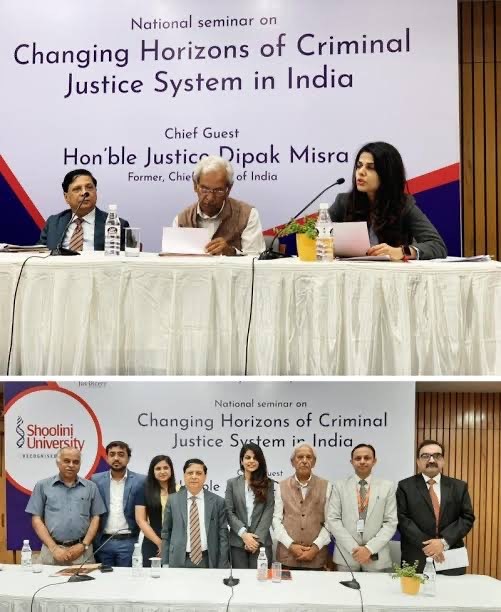



 Allow notifications