Author: SuperLawyerTeam

  • In Conversation With: Meenu Padha- an Advocate, an Activist, and also the President (Jammu and Kashmir) of the National Child and Women Development Council, India & the Vice President (Women Empowerment and Child Rights Movement) of the National Council of News and Broadcasting, India

    In Conversation With: Meenu Padha- an Advocate, an Activist, and also the President (Jammu and Kashmir) of the National Child and Women Development Council, India & the Vice President (Women Empowerment and Child Rights Movement) of the National Council of News and Broadcasting, India

    This interview has been published by Sonali ParasharOjuswi Sahay, and the SuperLawyer Team


    You chose law as a profession. Do you believe that the legal profession has the power to shape society?

    I strongly believe that Law is the only profession which has the power to shape society. Being a lawyer is a noble and honourable profession that requires a manner of conduct to be carefully followed.
    Apart from fighting cases, lawyers provide their skills and knowledge to society by doing pro-bono cases and lending legal services to the poor and needy who cannot afford the services of the lawyer for the conduct of a case or legal proceedings in any court, tribunal or before any authority.

    Lawyers can deal with all the fields of society including science, social values, human rights, banking, intellectual property etc. So I think only the law profession has the power to shape society.

    You graduated from the University of Jammu, considering the prevalent situation there, how challenging was it for you to complete your studies. What is the current scenario in Jammu and Kashmir on this educational front?

    Frankly speaking, there were challenges and still are there. But we should know how to overcome the challenges.
    Law has been my passion since my school days. I always wanted to do law. But I am from a middle-class family so the first challenge was of course the fee for law school. When I cleared the entrance of the University of Jammu and got a seat in The Law School my parents got me admitted to The Law School despite all the financial problems they were facing.

    As I am a first-generation lawyer, I know that there is always a fear among first-generation lawyers that it will take a lot of time to settle. But yes, later I realised that nothing is difficult when you give your best.

    Indeed, students of Jammu and Kashmir do not have the same opportunities as the students who are from other parts of the country. Because of this reason, most J&K students go to other parts of the country to pursue their studies. And it is also true that everyone cannot afford to study outside J&K.

    But yes I strongly believe that God helps those who help themselves. No obstacle can stop you if you have faith and you give your best on your goals.

    You are an independent practitioner in Jammu & Kashmir and Ladakh High Court and Legal Representative of IRCON, a PSU of the Ministry of Railways Government of India. Would you like to share your daily rundown with the readers?

    Yes I am an Independent Practitioner and my main area of practice is Criminal Law. Besides I am also the Legal Representative of IRCON before the Jammu & Kashmir and Ladakh High Court. To represent IRCON before the High Court is one of the best things. I feel delighted to represent IRCON International Ltd, a PSU of the Ministry of Railways Government of India.

    And so far as my criminal practice is concerned, I generally represent the rape survivors before Court. Despite being a first-generation lawyer, I never joined any senior and starting my own practice, as an Independent Practitioner is a bit challenging. But with the blessings of Lord Krishna and my parents, I will overcome it as well.

    Raising women and child rights matters accompanies appreciation and criticism too. How do you deal with the hurdles in the way of your goals?

    Yes Working for the rights of children and women has always been my interest since my law school days. Women in J&K are not so aware of their rights. To create awareness to them about their rights and then help them through litigation to get justice is quite a satisfying thing for me. As I said, I usually represent rape survivors before the court and all the vulnerable sections of society like women, children, SCs, and STs. This is the most satisfying thing for me. That’s the reason I love my work.
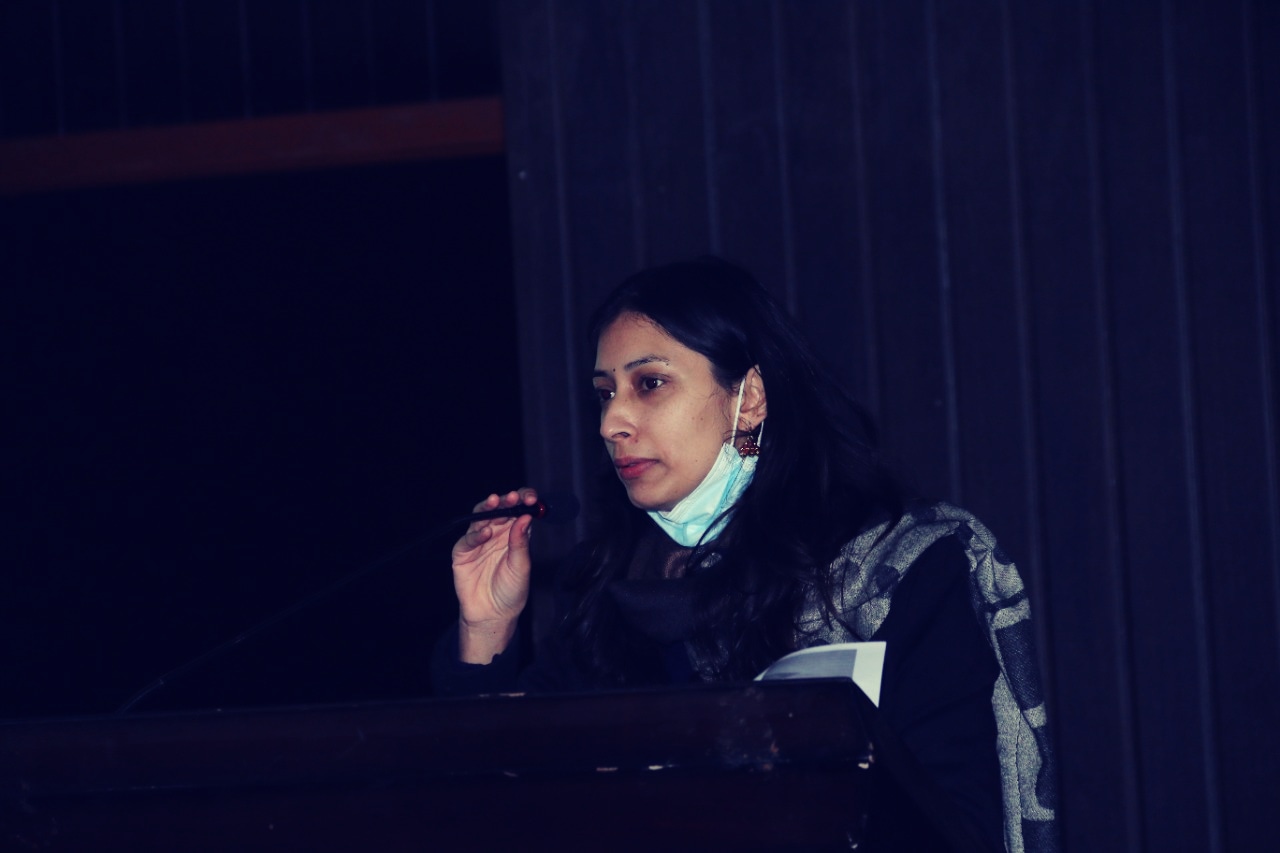
    You are appointed as the President (Jammu and Kashmir) of the National Child and Women Development Council, India; the Vice President (Women Empowerment and Child Rights Movement) of the National Council of News and Broadcasting, India. What responsibilities do you get in your respective capacities? Is the situation any better in J&K after your initiatives?

    Working for the rights of children and women has been my dream since the days I was doing my law. As women in J&K are not much aware of their rights. So to create awareness about their rights and help them through litigation as well is a really satisfying thing for me.

    I usually represent rape survivors & vulnerable sections of society like women and children before court. After being appointed as President of J&K, I conducted a number of awareness campaigns, workshops, webinars, seminars, and sessions for women and children in the outskirts of J&K. A number of women approach me because of the violation of their rights by their husbands, family members, people and sometimes by authorities. I try my best to help them to provide justice and to help every woman and child out there to get justice through Administration or Legally. Recently, I have also filed a Public Interest Litigation before J&K High Court because of rising cases of child abuse during COVID.

    Recently, I have also met with the Hon’ble Lieutenant Governor of Jammu & Kashmir Shri Manoj Sinha Ji and submitted a memorandum on women and child rights issues. Hon’ble LG has taken immediate action on the main points of the memorandum like he has ordered for the fresh reconstitution of Child Welfare Committees in every district of J&K. And giving approval for the Women Commission for J&K which was abrogated after Article 360 in J&K.

    What made you focus only on women and child rights? How close are we to ending the era of feminism?

    The rights of women and those of children have been promoted in isolation from one another.

    See women’s rights and child’s rights are human rights. These include the right to live free from violence and discrimination; to enjoy the highest attainable standard of physical and mental health; to be educated, to vote, and to earn equal wages in the case of women.

    Feminism is a movement that fights for women who are facing monumental odds. But it is also paving the way for gender inclusivity and equality that benefit society as a whole.

    Feminism is about supporting and empowering people which is something that is still needed even in 2022.

    Education is the most powerful weapon in the world”. How true are these words according to you?

    As Nelson Mandela says, “Education is the most powerful weapon which you can use to change the world.” Education is the key to eliminating gender inequality, reducing poverty, creating a sustainable planet, preventing needless deaths and illness, and fostering peace. I am also running a school for underprivileged children here in Jammu namely Masti Ki Pathshala a school for underprivileged children. It’s an evening informal School were out-of-school children who are mostly involved in some kind of child labour come during the evening time to get a basic education. So I believe education can change the shape of society. Children are our future. The right to education is their fundamental basic right, which should be implemented properly.

    Would you like to share a few tips on how even a student can uplift the marginalised?

    I want to tell the students that if you are doing law, then use your knowledge. Because what a law-knowing person can do, no one else can.


    Get in touch with Meenu Padha –

  • In Conversation With: Namrata Pahwa, Advocate- practicing Fashion and Entertainment laws, and also featured in the WIPF Powerful Women in IP, 2021.

    In Conversation With: Namrata Pahwa, Advocate- practicing Fashion and Entertainment laws, and also featured in the WIPF Powerful Women in IP, 2021.

    This interview has been published by Sonali ParasharOjuswi Sahay, and the SuperLawyer Team


    What factors made you opt for Law as a profession? How would you describe yourself as a law student? 

    There were 3 main reasons for me to choose to study law– a) I was good at debating and articulating my thoughts; b) I was in sheer awe of the black robes worn by Advocates and c) I wanted to opt for a profession different than the members of the family (the rebel in me).

    You completed your masters in International Business Law from the National University of Singapore (NUS). What challenges have you faced in the admissions process? 

    I applied to NUS because I was aware of and most impressed by their pedagogue and selection methodology. NUS always looks at a student in a holistic manner without focusing on one aspect alone. I remember writing my Statement of Purpose with a lot of heart and I think that’s what got me through. The admission process was as smooth as butter and it was the best time of my life!

    What special efforts does a law student have to make while pursuing law as a profession?

    For any student to succeed in the field of choice one has to be diligent, focused and disciplined. These key strengths are what will get you through anything. In the same vein, I would like to add, that as a law student, you should write as much as you can, do as many internships as you can and be a part of the requisite co-curricular.

    After interning and working under various law firms, you started practicing independently in Fashion and Entertainment Law, IP Prosecution, transactional and litigation. How would you describe your role as an independent practitioner? How strenuous is it to deal with and lead the matters? 

    My role as an independent practitioner is manyfold and I get to wear different hats from being an accountant to a paralegal to even a PR manager, but I wouldn’t have it any other way. It is most stressful but not as much as it is exhilarating and satisfactory.

    Fashion and Entertainment Law, these words excite most young creative-minded lawyers. What according to you this area of law seeks from an advocate? Is this area as exciting as it sounds? How can one enter into Fashion and Entertainment Law?

    I say often that I work in the most exciting genre/vertical/niche of civil law which is Fashion and Entertainment. I can understand the appeal that it has over students and young lawyers but I must warn them that like any other vertical of law, this also demands an equal amount of research, skill and strategy. Fashion and Entertainment law is an umbrella that houses many genres of law like Torts, Contracts, Intellectual Property, Custom law, Employment law, Criminal law and many others.

    First, a student must understand each aspect of Fashion and Entertainment law which only internships can provide. Read as many cases and keep yourself updated on the latest developments. One can join a law firm with such a vertical or be an in-house lawyer for a fashion brand or even enter it through academics.

    Would you like to discuss how brand names create a monopoly in the fashion industry? 

    For a brand name to create a monopoly in the market, they have to protect its name in terms of a trademark, its designs in terms of copyright or design, and its technology in terms of a patent and safeguard all of them through contracts. Apart from this, global goodwill and repute play a big role in creating a niche in the market.

    You are also accredited with WIPF Powerful Women in IP 2021. Would you like to discuss your achievement and the hard work involved in that?

    Before WIPF I was offered many awards for which I would have had to pay a sum of money in some form or the other. I detest that approach. So when WIPF got in touch with me, their first email stated that this did not involve any pecuniary transaction. This list was a compilation of the best Female IP lawyers in the country. For me to be on the same list as Justice Pratibha Singh and both of my ex-employers, was enough gratification for me. 

    Since the first lockdown, I shifted my focus online by conducting various webinars and talks. I also formulated my own Fashion Law Module. All I had was consistency and hard work and that was all I needed to get me to where I am today.

    What considerations do you take into account while hiring a legal professional/ graduate in your firm? What advice would you give to others who want to set off in a similar direction?

    I look at my juniors/interns as my colleagues and equals and expect them to work as hard as I do. A brief understanding of IP is important, the rest one always learns along the way. 

    Don’t be afraid is what I’ll tell others. Don’t hesitate in asking for work or looking for guidance. Teach yourself something new every day and you shall be more than fine!


    Get in touch with Namrata Pahwa –

  • In conversation with Mira Banga, a Corporate Lawyer and the Founder of Lawssistance, an online legal service provider

    In conversation with Mira Banga, a Corporate Lawyer and the Founder of Lawssistance, an online legal service provider

    This interview has been published by Sonali ParasharOjuswi Sahay and the SuperLawyer Team


    How did you decide upon choosing law as a career? What adjective would describe your professional journey up until now?

    I was always into public speaking and passage writing in my early school days. I used to score well in subjects like English and computer science in high school. It was my father who pushed me to choose law as a career as he felt I had the knack in me to eventually turn my skills into a profession and become a good lawyer. He always taught me that communication as a skill set is very rare and people spend years polishing it. As per him, I was born with it as he would see me argue and fight by giving logic to my friends or family during any discussion. 

    The adjective which would define my law journey up till now would be ‘Progressive’. My learnings, practice and thinking have been nothing but progressive all these years. I have managed to start my own office only in the 6th year of my practice and I managed to get clients and people to trust me and to go forward with the engagements only through the additional skill sets which I hone on a daily basis. I practice and read about not only law or legal developments but I also continuously work on how I can become a better communicator, a better writer or a better listener. 

    How challenging was establishing yourself first, as an independent practitioner, and then, establishing your own firm- Lawssistance?

    It was very difficult for me to make a decision to start my own practice or to leave my job at that time in 2020. The pandemic had just struck and it was pretty unpredictable as to how the legal ecosystem will be impacted in terms of work and payments. At that time, I was very comfortable working under a boss and doing what I was told but I used to notice that there were clashes when it came to choosing the right method of doing or steering a transaction. I used to face a lot of backlash for having different views and ways of taking up a certain assignment. I used to share these things with my family and they used to ask me to either learn a new way of taking up things or doing the assignments or find a way to do things the way I would want to, as I felt very strongly about what I wanted to do about the work I was given. I slowly started to feel that I must start my own office and practice so that I can further sharpen my skills and my macro-view towards transactions. I could realise that maybe I should try my hand at doing transactions independently and start my own practice. This was my 10-year plan and I eventually wanted to open my own independent law office wherein I would assist clients as per the expertise and skills which I would have gained over the years. This misalignment at work led to the birth of ‘Lawssistance’ in November 2020. 

    In terms of challenges, initially, I did not have an office space and I worked out of my living room because I was still exploring how I would start the practice, how certain policies would be required to be built, and how I would have guidelines for work etc. It was tedious as I was scared and thrilled at the same time. I worked on making a strong LinkedIn page, an Instagram page and a google pin for my office. This way people would recognise me, my office as well as my expertise. I kept posting and continuously adding information on my pages so that I could build a presence. It was a lot of work as I was doing it single-handedly while looking for clients to start working with.

    I will give to my father, who believed in me, guided me through this and supported me through every hurdle on the way. I clearly remember my first client call which I took sitting next to him wondering what to say and how to convince him to trust me with their work or transactions. My father would give me constructive criticism and help me grow into a better communicator and a better lawyer as a whole. I was not a known name in the market or the daughter of a  famous lawyer who would easily get people to trust me. I used to feel like I was being auditioned when the clients would ask me about my team or my office or how much I can handle in terms of the scope of work requested by them. Slowly and gradually I started to become more confident when it came to negotiating commercials with my clients and the rest is just history. We are now turning 2 years in November 2022 and we have built a strong presence in the market as well as in the start-up ecosystem. 

    You know how they say ‘Rome was not built in a day’! I am still working hard and will continue to, until I build my Rome or something even better. 

    Was pursuing Business law always in line with your vision? Tell us about your experience at NLSIU, Bengaluru during your LLM in Business Laws degree?

    You will be surprised to learn that I want to still study more and pursue a philosopher’s degree in law. I have had an interest in books, reading, learning, writing and understanding various concepts and digging deeper into the history of each phenomenon. I certainly enjoy reading and learning about the law. After finishing my Bachelor in Law I wanted to study more and wanted to do a course in LLM from the same college. I then found out that if one has an interest in corporate laws then the same can be studied and explored by pursuing the course, Masters in Business Laws. I tried to find colleges online and applied at various universities and then one day I received an intimation from the NLSIU Bangalore that I could join the course on a distance learning basis as I had already started working with a law firm. 

    Your firm Lawssistance deals with an array of contract management services amongst others. How relevant do you believe this domain of legal service is in the present time and space?

    Every business owner needs to understand the importance of a legal contract. It is pertinent for a growing business to enter into legally binding engagements or partnerships as it can lead to a more consistent and reliable manner of relationship building when it comes to growing at a larger scale as a business. When parties enter into a legal contract they are prepared and sure about what they have to deliver and what would be the repercussions if they breach the obligations stated in a written contract. Without a contract, it becomes very difficult for an entity to control how the other party performs and whether they stick to the terms they have discussed orally. It becomes important after a certain point to always have things written in a legally binding manner and vetted by a lawyer, to protect the interests of each party who is involved. Businesses grow better when there are legally binding contracts signed on the way with each partner or every entity which is playing a crucial role in building a business be it an employee, a co-founder, a manufacturer, a supplier, a distributor or the like. 

    Your firm specialises in dealing with Sports Contracts as well. We would love for you to share with us a few nuances of this domain.

    Yes, we specialise in sports and media contracts as well. It essentially includes agreements like Sponsorship Agreements, Endorsement Agreements, letters of Intent, Artist Agreement etc. These contracts are executed between brands and artists who are obligated to perform as per the terms of the contract. The performance duration and the payment milestones are the two crucial points of negotiation between the parties. I have been doing sports and media contracts for 7 years now and have had a great hold on the drafts in these years. 

    We are seeing that a lot of law students are heading towards Media and Entertainment Law practices recently. What should they be expecting to deal with upon entering this domain?

    As you enter this domain, one needs to understand that they will deal with clients like production houses, producers or artist management companies. Such entities need work to be done fast and sometimes on the same day. The drafts and basic structures of such agreements should be ready and one should be prepared to work at odd hours sometimes because as a practice, the producers, production houses or even artists, all have meetings late in the night after their shoot(s) and mostly require legal assistance in the second half of the day. One should stay prepared and active when it comes to delivering the contracts timely or even on short notice. 

    Tell us about your experience in dealing with clients for wills and succession services? How different is this line of practice from the others for you?

    Due to the pandemic, we have had more clients who have requested will drafting or succession management services, in this domain, one needs to be cautious while drafting the wills. The will must clearly specify the succession decision conveyed by the client and the executant and the beneficiary should be clearly mentioned. We recommend our clients have their wills registered so that there is no issue in executing the instructions stated in the will after their death. It is a very different area of practice as we connect to the client in terms of their savings and hard-earned money distributed amongst their family members. We provide will drafting services for both Hindus and Muslims as per the Indian Succession Act. I started my office solely for the purpose of providing will drafting services, then I gradually included other domains and started to provide all sorts of corporate legal services. 

    Lastly, as a woman in law, what would your advice be for the upcoming female legal practitioners and professionals?

    I treat myself as a lawyer and see all men and women as my colleagues. Just as being a man in law makes no difference to the nature of work, amount of effort or hard work one has to put in their work as a lawyer, similarly being a woman in law is no different. Our country has this practice of bifurcating between entrepreneurs as women entrepreneurs or a lady in business or woman lawyers. One needs to understand that a lawyer is a person who knows the law and practices the law in our country, be it a man or a woman. To all the ladies who are in a similar line of business to mine, please continue to work hard, read a lot, practice communication skills and be confident. I have had the privilege of working with many male entrepreneurs who approach me with full confidence despite me being a woman in law. We are past this classification and we are beyond this categorisation of women and men in any professional service. 


    Get in touch with Mira Banga –

  • In conversation with Rohit Jain- An Advocate, a former Legal Journalist, and a qualified Company Secretary, who is currently working as an Account Director at Adfactors PR

    In conversation with Rohit Jain- An Advocate, a former Legal Journalist, and a qualified Company Secretary, who is currently working as an Account Director at Adfactors PR

    This interview has been published by Sonali ParasharOjuswi Sahay and the SuperLawyer Team


    Could you please share with us your inclination towards law and tell us why you decided to pursue this discipline?

    First of all, thank you for this interview opportunity. Before starting on what made me pursue this discipline a little bit about myself. 

    I come from the small town of Dhule, Maharashtra where I completed my education till the eighth grade. Post that, I shifted to my current home town of Nashik where I completed my junior college (11th and 12th). I chose to pursue Bachelors of Computer Applications as computers were a rage those days. Post that I completed my MBA with Finance specialisation which helped me in getting my first job. 

    It will be slightly wrong if I say that law was always my first choice. Since my school days, I have had a multi-disciplinary approach towards studies and consuming knowledge in general. Until the 10th grade, I was deeply interested in mathematics and science. During graduation, it shifted towards finance and technology. 

    My interest in law evolved over a period of time. One of the first encounters with something purely legal that I can clearly remember was the starting copyright notice of this fantastic NES game – Captain America and The Avengers that I used to play during the early 2000s. The game starts with a copyright notice “Captain America, the Avengers and distinctive likenesses thereof”...During my bachelor’s, I enjoyed the coding as well as reading EULAs and software legal disclaimers that are embedded in these software. 

    My interest in law became even stronger once I cleared the Company Secretary examination. This coupled with my drafting skills, unquenchable appetite for reading and ability to understand complex things helped my transition into the legal sector. 

    You hold a degree in MBA in Finance and you also went on to pursue CS. What motivated you to pursue a career in the corporate sector?

    At the start, I was more inclined towards getting a government job or joining the civil services. Unlike the freshers of today, I knew of no other choice other than a corporate or a government job. Startups (as a choice as they are today) were non-existent then and NGOs were not the talk of the town. 

    My efforts in applying for government jobs bore fruit more than once. But I got rejected in the final rounds which dissuaded me from moving further. Once I got my first job with Axis Bank and then Deloitte USI, it was never looking back. I believe that if a person is good at the work that he/she does, the sector can never be a constraint. I have seen people transitioning from corporate to academia and then public services also. 

    Multiple factors work together in shaping your choice at any point in time. 

    You began your career working as a Legal Analyst for Deloitte US India Offices. Can you please tell us about your experience there? 

    I was part of the Office of General Counsel in Deloitte USI, which is the Indian subsidiary of the US-based Deloitte Consulting LLP. Our team handled the core legal functions pertaining to the Deloitte USI entities. 

    To put it in a nutshell, my work involved drafting, vetting and negotiating contracts, legal research, handling corporate secretarial compliances and providing counsel on legal matters. This would range from traditional areas such as employment laws to emerging areas like data privacy and taxation.

    Having worked there for nearly 5 years, I can say that Deloitte USI has one of the best environments that one can work in. The learning and development opportunities were immense – we had access to some of the top-notch legal training databases that may otherwise be reserved only for seniors in other companies. 

    I was lucky enough to have a wonderful and supportive team which was equally exuberant in the interests that I had. 

    You also worked at Bloomberg Quint as a Legal Correspondent reporting and writing on corporate, taxation, insolvency, securities and, indirect tax laws. What was working with a news portal like and how did it shape your career?

    My stint as a journalist helped me in enhancing my writing skills, although I do not agree with some of the writing conventions that journalists follow in general. Anyways, the stint as a journalist helped me in being more expressive of what I felt insofar as law and policy are concerned. I became more active on social media, especially LinkedIn. As a journalist, you can write in a more expressive manner. Inhibitions go away. 

    I was lucky enough to shift to journalism at a time when the Insolvency and Bankruptcy Code was slowly gaining momentum. Because of this, I got the opportunity to visit the High Court, SAT and the NCLT and listen to the arguments on an almost daily basis. Being from a legal background, I could relate to the arguments and developments even more. This also provided me with an opportunity to know a few practising lawyers who have now become good friends. 

    Being a part of the Strategic Communications group at Adfactors PR, India’s largest public relations company, how important do you believe communication and people skills are in one’s career, and how did law help you in developing these skills?

    Communication and people skills are an absolute must in one’s career. 

    From a public relations perspective, communication determines the state of relation between an inanimate object – a company – and its external stakeholders, who are animate.  A plethora of case studies has shown that a crisis situation could have been totally avoided or handled in a much better and smoother manner if the communication was properly done. Good communication skills equally matter for an employee as she/he climbs up the career ladder. 

    People skills also hold equal importance. We are living in changing times. The world is moving towards a flatter organisational structure, breaking unnecessary hierarchies and stereotypes that hitherto existed. People skills are thus very imperative for all, especially managers. It can be as simple as making a person feel welcome on her/his first day of work or being accommodative towards your colleagues. The way a person treats and behaves with others stays in the mind forever. So, people skills are equally important.

    You hold a PG Diploma in Cyber and media laws. What interested you the most in this and how should one go about making a career in these fields?

    Cyber law as a term has become a slightly out of date term now. Today, it is rather known as tech law, data privacy law etc. One must note that a 3 year or 5 years LLB program is a mix of different laws but nothing offers you specialisation. For instance, Patent and Copyright laws are so vast, yet they are mixed together in just one module (Intellectual Property) in a law school. The focused approach towards cyber law and media law interested me the most.

    The legal field of today demands specialisation. If you see the new practices being set up in law firms, one may notice areas such as technology, data privacy, blockchain and crypto etc. To gain a foothold in such areas, one needs a mix of solid work experience and academic knowledge. It is at this juncture that PG Diplomas help you. 

    We must remember though. Merely doing a Diploma as an additional course will not land you the dream job.

    Many legal professionals aim at pursuing CS. What are the aspects that one should keep in mind according to you, to prepare themselves in this regard?

    The Company Secretary course requires intense study. Lawyers who are working in law firms may find it difficult to devote adequate time to study because of their long working hours. Those who work in corporate law will find it easy as the syllabus will match their working area. They may face a challenge with the finance and accountancy modules though. 

    When I attempted the CS professional module, I remember quoting real-world, recent and relevant details in my answer sheet. For instance, I would have written about the IL&FS crisis w.r.t corporate governance if I was attempting my answers now. While the relevance depends on the invigilator, there is a good chance that you will get commensurate marks.

    In my opinion, lawyers who wish to become compliance officers must pursue the CS course. In general, the LLB syllabus of a 5-year course from a good law school is more than enough. 

    Finally, a word of advice for professionals leaping into communications and related fields?

    Public relation is an exciting field. Not many know about this industry because it is mostly based out of the top 3-4 metro cities. It is much more than just advertising. The lines are blurring though. 

    As a start, professionals intending to switch over to comms/ PR must develop a bandwidth to track what is happening in the world of media, what journalists are writing about, what are the topics being talked about etc. Like any other field, PR also involves specialisation. So a person from an engineering background who is good in communication skills can add much value to a client requiring advisory on ESG, mobility or allied areas. Comms and PR is an exciting domain where a long term play can be really rewarding. 


    Get in touch with Rohit Jain –

  • In conversation with Mr Nishant Prasad, Chief Compliance and Legal Officer (CCO) at Wint Wealth, talking about in-house role as well as working at law firms, and choosing between the two

    In conversation with Mr Nishant Prasad, Chief Compliance and Legal Officer (CCO) at Wint Wealth, talking about in-house role as well as working at law firms, and choosing between the two

    This interview has been published by Sonali ParasharOjuswi Sahay the SuperLawyer Team


    Let’s start with a cliché, why did you decide upon law as your career? Happy accident or predetermined plan?

    The career choice for me was probably a mix of a predetermined plan and my own interests as I was growing up. In school, my interest always peaked in Social Science subjects. Reading about the freedom struggle in history, the state of our community and how it functions in Civics and Political Science, especially the entire phase of the drafting of the Indian Constitution was highly intriguing. 

    The constituent assembly debates were a pleasure to explore and the opportunity to have a glance into the lawmakers’ thought processes at the time, to construct laws that stand relevant even to this day and probably for many more in the future, was inspiring. Understanding the interpretations and the multiple perspectives which can be present for a single phrase of legislation was absolutely addictive, and I think the decision was made right there. Add to that the ever involving nature of law where it always keeps you on your toes is great I think. You can’t get lazy. 

    That, supplemented by a background of law in the family, was a heavily contributing factor in the career choice. My great grandfather was a well-respected lawyer even during the British era and my Nanaji was a judge as well as a lawyer. Their stories and experiences narrated to me by my parents are etched in my memory and they became my career role models. 

    But I think one ironic trait I have as a lawyer is that I always hated reading a lot, so that part of my personality probably did not make the career call. 

    You have been part of the esteemed Law Schools of India, NALSAR University for your bachelor’s degree, and NLSIU, where you are currently pursuing an MBL Degree, i.e., Masters in Business Law. How would you describe your Law School days?

    Law school was an enlightening experience. I knew that I wanted to pursue law as a career but it was only after going through law school that I got a firm reason as to why. Law school was a humbling and highly educational experience and I do not mean only in terms of learning the law. 

    I learnt life lessons during law school, through experiences which were both great and some not so great. Just by living life with my batch mates and other members of the NALSAR community, I was exposed to a range of different experiences, thoughts, issues and perspectives which I think was instrumental in shaping me to be the individual I am today. I not only learned how to be a good lawyer at NALSAR but also how to be an open-minded and strong individual. Law school taught me to be open to opinions and shape them after considering all perspectives rather than be stubborn and just maintain the stand on what you believe with no recourse. 

    Other than that, it was an absolute blast to stay in the hostel and conjure up some of the best memories of my life, be it the lifelong friendships I have built or the probably insane activities we participated in sometimes. The madness of law school academics was always nicely supplemented by old school fun. I have a rather distinct memory of our entire boy’s hostel preparing for an all-night barbeque party which was made possible by the base stands of water coolers, steel mesh purchased from the village near NALSAR and groceries ordered through our mess representatives. It was a night of good food, blasting music and plain and simple fun. Memories which cannot be replaced. 

    Law is an ever-evolving profession and it was with this in mind that I joined the MBL degree at NLSIU as part of their distance learning programme. I think it has helped me to touch base with core concepts of law again and also learn the present-day evolution of the understanding of those concepts. It has been an enlightening experience so far and I look forward to completing this journey as well next year. 

    Your professional journey started with working at Khaitan, where you worked on Private Equity, M&A and VC transactions. What was your overall law firm experience like?

    The law firm experience was incredible for me. I won’t be lying when I say that after I joined Khaitan, in my head I knew the objective was to make it as a Partner in the firm and serve out my service years there completely. The people were incredible. My true mentors in the profession have to be all my colleagues and seniors with whom I worked in Khaitan. The work was of the highest quality and professionalism was at its best. The Khaitan team is where I learnt what it means to be a ‘professional’ and the honesty and integrity that should come along with it. 

    Yes, there was a lot of work going into a fair number of days with long hours but when the people you’re working with are amazing, the long hours are also quite fun.  I have learned immensely with the members of Khaitan and am truly grateful to Khaitan for being the stepping stones to any success I have today, it would not be possible without them. The exposure to how the law works in the real world was shown to me by Khaitan and the opportunities provided to learn from the best within the firm and from outside through other firms or clients in multiple transactions was an amazing experience. 

    Even after moving on from Khaitan, I am a proud Khaitan alumnus and they actually do have a newsletter which is sent out to all their ex-members as well to keep you apprised of what is happening. Ex colleagues are still great friends and mentors and you may have heard the famous quote in Harry Potter which states ‘Help will always be given at Hogwarts to those who ask for it’, this statement stays true for Khaitan as well. 

    You made a switch to an in-house role by joining Scripbox, which is a fintech company based out in Bengaluru. What made you decide on switching to an in-house role?

    I think this decision was purely based on the sheer curiosity of what lay on the other side of the fence. While I was part of several large ticket PE and M&A transactions at Khaitan, I was always left curious as to the impact any transaction made on the day to day functioning of the clients. For example, we would have probably closed a 100 million USD funding round but the execution and money transfer were the final destination for me as a law firm lawyer. 

    The ins and outs of how a business works and how such transactions impact the business on a daily basis were where my curiosity always lay. 

    And in my view, satiations of curiosity at an early stage of your career is a must to ensure there are no regrets at a later stage in life where you are stuck with the age-old thought of ‘ Should I have done that?’. 

    What are some of the challenges you believe an in-house counsel faces and how should the upcoming professionals prepare themselves for these?

    The primary challenge which I faced moving in-house was the difficulty in blending legal advice with business goals. If I talk specifically about the fintech field, it is a heavily regulated space and as the name suggests it’s all about technology and providing access to financial products digitally. 

    But to advise on compliance for the business would necessarily involve understanding how the business works and that means not only from a theoretical angle but also the ground realities of how a product functions. You have to understand each step of the entire product as a legal and compliance professional so that when a regulation, circular or any guidelines of any sort come up, you are immediately aware of whether any part of the business is impacted by it. 

    This involved learning a little of everything within the organisation, product, tech, operations, customer service, data privacy, labour laws for the employee-related aspects and of course your basics of contracts continue. You also need a deep understanding of the business strategy and the plan ahead by the management so you can be a productive participant in the discussions. It’s an all-around role and just being a lawyer is not helpful. 

    Another major challenge in today’s industry is to change the perception of lawyers. You will always see that the compliance and legal teams are viewed as blockers in the business industry and they just have to deal with them because they have to and more often than not, they are disappointed by going to them. The requirement of creating a good relationship with all stakeholders within a company, educating them on why you provide a certain view and rather than being a blocker, working with them to create a workable solution for what they are wanting to achieve is exceptionally challenging. 

    The only way to prepare for this I think is to go in head first and attempt it. Having an open mind and not being stubborn about your own thinking is always good. Having an open mind, leading discussions and collectively coming to decisions with logic and as a team will be helpful. Teamwork and a sense of ownership towards meeting the goals of the organisation as a whole are key to success in an organisation. Making yourself useful by providing valuable inputs not only as a lawyer but as a customer of the business or the users of the business or as a product manager thinking of how something needs to be made, what issues need to be solved – that is gold in an organisation. 

    You are currently working for Wint Wealth which is an upcoming Startup in the fintech space, as the Chief Compliance and Legal Officer (CCO). We’d love to know more about the organisation and your role in it.

    Wint Wealth is an exciting platform democratising debt investments in India by offering an alternative investment platform towards fixed income high return assets in India and is a unique platform in the Indian finance ecosystem providing the average retail investor with a great short term alternative debt investment product with fixed and high returns.

    The team at Wint Wealth is young and driven, striving to provide the best experience to its customers. We like to think of ourselves first as educators, attempting to create maximum awareness among customers about the products we provide access to as well as the other financial products. As the CCO, my responsibility of course includes ensuring that the organisation as a whole remains compliant with the regulations and laws of the land. But as previously mentioned, the job involves understanding the needs of the organisation from within as well as those from the perspective of our customers. 

    We have always been a customer-first organisation and that involves doing what’s right, being compliant and doing what’s best for the customer. So I do manage and take care of what you would say are the standard lawyer duties of reviewing the various contracts and general compliances of the company. However, a major part of the job is to remain updated on all the moving pieces of the organisation and be involved at all times to enable constant overview, ensuring that any developments being made by the organisation are all within the purview of the law and are for the benefit of the customer. 

    A daily effort to remain updated about what’s happening in the legal and regulatory space is a major part of the job to ensure that any impact on the organisation is identified and actions which may need to be taken are done at the earliest. 

    Congratulations on winning the Lex Falcon Award in the Lex Talk World Global Conference held in Dubai in February 2022 in the category of Legal (Under 10 years) for impactfully contributing to the legal industry with great knowledge, reach and innovation with a futuristic spirit and approach. Please share your thoughts on receiving such a prestigious award with us.

    It is an absolute honour to be recognised by the Lex Talk team. The conference was an amazing experience and an opportunity to interact with colleagues from India and other countries as well and a great learning experience. 

    The feeling of receiving the award was absolutely overwhelming and provides encouragement to lawyers like me to continue what we are doing and strive for excellence in what we do. Accepting an award in front of colleagues from the legal fraternity, many of whom are close friends, is always something to cherish. 

    The fintech industry provides a massive opportunity for legal innovation and an opportunity to reach the masses and finance is for every individual and organisation. It is a tough and arduous role to play balancing the legal needs and customer needs necessitating innovation in the way one looks at law. Recognition for playing an active part in this proposition of innovation is very satisfying and validation of the good work that the fraternity is doing in this field. 

    Finally, what would you advise an upcoming professional who is confused between a law firm role and an in-house role?

    I think the answer to this question cannot be black and white, as with any legal issue. It is highly subjective depending on the individual and their personality. As we propagate in the financial world, the identification of goals is of utmost importance to plan well and take apt decisions. 

    In my view, one must utilise their internships throughout the law school phase to get an understanding of what they are enjoying. Supplement that by actual experience in the real world after being employed by either a firm or in-house – one can learn what they enjoy doing. It’s a cliché line, but you must do what you enjoy the most. Maybe your two options may not include what you enjoy most, but what you enjoy more is always something you know. I probably enjoy cricket the most, but we all know that’s probably not the best career choice in India, especially at present.

    Never hesitate to take a leap of faith and try something different. But a calculated risk must also be taken. In my opinion, taking these leaps of faith early on in one’s career is helpful as it will help you gain the clarity you need for your future path very quickly.  However, if you are enjoying what you do, then there is no necessity to try something different just for the sake of doing so. 


    Get in touch with Nishant Prasad –

  • In conversation with Anweshaa Majumdar, Corporate Lawyer at Trilegal, talking about her current role and her experiences in different areas of the Corporate law practice.

    In conversation with Anweshaa Majumdar, Corporate Lawyer at Trilegal, talking about her current role and her experiences in different areas of the Corporate law practice.

    This interview has been published by Sonali ParasharOjuswi Sahay the SuperLawyer Team


    Tell us about yourself and why you chose law as a profession. What other professions would you have considered if not law? 

    I have always known that I am a people person and communication is a strong skill that I possess, and I knew I wanted to pursue a career wherein I could hone this skill further. Despite taking science as my stream for my 11th and 12th, I knew my calling was not in the science or engineering stream. The career paths that I was keen on pursuing were law and journalism. I had, in fact, gotten into my preferred colleges for both these degrees. However, my parents were insightful about the potential of Jindal Global Law School, even though at that time there was no placement matrix to rely on. They felt that Jindal was a law school of the modern era and I also took the leap of faith and joined. My parents’ insight, has always proved to be correct as now, JGLS is known to be the best private law school in India. I personally feel I would have thrived in journalism as well, but I always knew that I would be a better lawyer than a journalist.

    You have worked extensively on succession planning and wealth restructuring/ management with a lot of experience working with Family Businesses. What drew you to this field in the first place? Would you like to tell us about your journey to this point?

    Honestly, I joined PwC as a fresher from college and when I was told that I would be joining a team which primarily focuses on succession planning and wealth restructuring, I was intrigued as it was a very niche and lucrative field. When I graduated from college, I knew I wanted to be in the corporate field, and being in the succession planning space, I was able to network and interact with various high net-worth families in India Bangladesh as well as Sri Lanka. When you work in a Big4 as a lawyer, your learning goes beyond the technical legal aspects, and you get a lot of exposure to various business building/continuity strategies. Working in PwC also allowed me to gain insight into tax-related aspects of a business and pointers to consider during corporate restructuring. I started in PwC as an Associate and left as an Assistant Manager.

    Other than the above mentioned,  you also hold expertise in General Corporate, Transactions, Mergers & Acquisitions, and Drafting Agreements. What, in your opinion, are the upcoming corporate trendsetters? It would be an excellent compass for our readers.

    In my opinion, an upcoming trendsetter is a simplified style of drafting. Drafting is a skill which will be required in whichever field one is part of, whether it is M&A, private equity, venture capital etc. The documents are essentially the same, but the context of the transaction is different. A trend that I have seen evolving in the legal space is the moving away from verbose legal language to simple language which is understandable to the clients as well as the counterparties. This is a trend I definitely stand by, as I have seen that by simplifying the drafting of contracts, it is possible to keep the rights intact and it also reduces the back and forth between the counsel and the client and even the client and the counterparty, and therefore significantly reducing the transaction closing timeline. My team follows a mantra of “draft the way you speak formally”.

    I have always believed in this concept, and I am elated to see that it is being practiced widely now. Further, I also believe that the M&A, private equity and investment structuring field is a phenomenal space to be in, as one gets to work on different kinds of deals which involve different strategies, negotiation points and consideration structures. After being in fields like this for a while, you are able to anticipate any plausible push-backs from counterparties, push for rights which will be beneficial to your client, address different options of consideration structuring and are able to identify any potential risks and advise to rectify them accordingly. The transaction space such as these typically does have heavy workloads, but the learning curve is steep and the effort you put in along with your experience does positively contribute towards your individual value as a lawyer.

    You are currently working at Trilegal. Previously, you were associated with Cyril Amarchand Mangaldas, and before that, you were with PwC. How different it is to work at these three behemoths?

    After my stint at PwC, my entire team moved out with the Partner as he wanted to start his own ventures – one of them being a venture capital fund called Turbostart. At Turbostart, I was designated as Corporate Counsel and assisted with all the legal documentation required when the fund identified start-ups to invest in. After this stint, I decided that I wanted to move back to a core legal practice and that is when I got into Cyril Amarchand Mangaldas, in the legal advisory team in their General Corporate practice. From there, I was selected for the Transactions team at Trilegal where I am today. At Trilegal, I work on high net worth deals in the M&A and private equity space. In these three behemoths, I have learned different things which I will carry with me throughout my career.

    At PwC, I got to work with many incredible chartered accountants outside my core team on various deals, I was able to get over my irrational fear of numbers and was able to understand various tax and business-related aspects of a transaction. At CAM, as I was in an advisory team, I was able to work on various opinions and memos relating to different aspects of the law, and was able to further my knowledge in these domains and re-connected with the process of legal research and statutory interpretation.

    In Trilegal, I am now working with an incredible team, in a very dynamic field. As we work on different kinds of deals at one time, one gets exposure to many drafting and negotiation strategies, front-ending deal closures, as well as exposure to transactions in various sectors. I would definitely say that during my formative years in PwC and during my time in CAM and now Trilegal, the learning curve has been steep, the professional exposure has increased, along with responsibilities and accountability and I feel that all 3 places have largely contributed to the professional I am today.

    You earned your Diploma in Entrepreneurship Administration and Business Laws from the West Bengal National University of Juridical Sciences after graduating from JGLS. In what ways does entrepreneurship aid a lawyer’s understanding of business?


    Especially in today’s day and age, where entrepreneurship is the theme of the market, I feel entrepreneurship increases a lawyer’s scope of understanding beyond the law itself. As someone who has had exposure to both, I think entrepreneurship is essential in understanding the business, which as a result will improve your legal advice as there is a much more holistic perception rather than a singular focus on a legal point. Once you have a decent understanding of the business, its operations, pain points, and strategies you are in a better position to align your legal advice and anticipate the outcomes of your recommendations which could be both legal and business-centric.

    Are you able to carve out time for your other interests or hobbies given the nature of the legal profession?

    I would not say that it is easy to take out time. But I would definitely say it is essential and sometimes you have to really push yourself to take out time for your hobbies. I choose to unwind with music as I play the ukulele or travel (either to work from out of the station or as a normal vacation). These little breaks are quite important to rejuvenate your mind and especially in this fast-paced profession, it should definitely take precedence to avoid burnouts.

    You are a young and well-established legal professional. What is your success mantra?


    My success mantra actually took some time to build, and now when I look back, it all boils down to “believe in yourself”.  Do not be afraid to take challenging career shifts, if you think it is the right thing to do – and even if it doesn’t work out, at least you tried it. Bounce back up and move on. I also believe in the aspect of not halting the process of learning – I have learnt from every case/matter I have handled and from the people I have interacted with and built a network even after. Another thing that I regularly follow, is self-introspection. It is extremely insightful to honestly connect with yourself, as it helps you figure out what you want, what your priorities are and how to achieve your goals.

    What career advice do you have for our readers?

    Never pay heed to people who discourage you. There are various kinds of people that you will have to encounter during your professional life, there will be people who will think that you do not have it in you to make it big. My advice – do NOT listen to them. Other people’s perceptions do not define who you are or what you can do. In today’s day and age of social media and seeing the career milestones of your peers might lead you to pressurise yourself, but don’t let it. Personally, back in 2020-21, I had found myself in a situation which required an immense amount of self-motivation to get out of. I would urge everyone to find that within themselves. The imposter syndrome is a self-created construct, break it down and thrive. Another piece of advice I would give, especially to people who are starting off their career – is never be afraid to burn bridges if you are not being respected. Put yourself first, know your worth and your path will find you one way or the other.

    Work on your soft skills as much as you would work on your technique. Believe it or not, both are equally important. Build your network, keep reading up, keep working on your communication skills (written and spoken) and always keep in touch with people who have impacted your career path in any positive way.


    Get in touch with Anweshaa Majumdar –

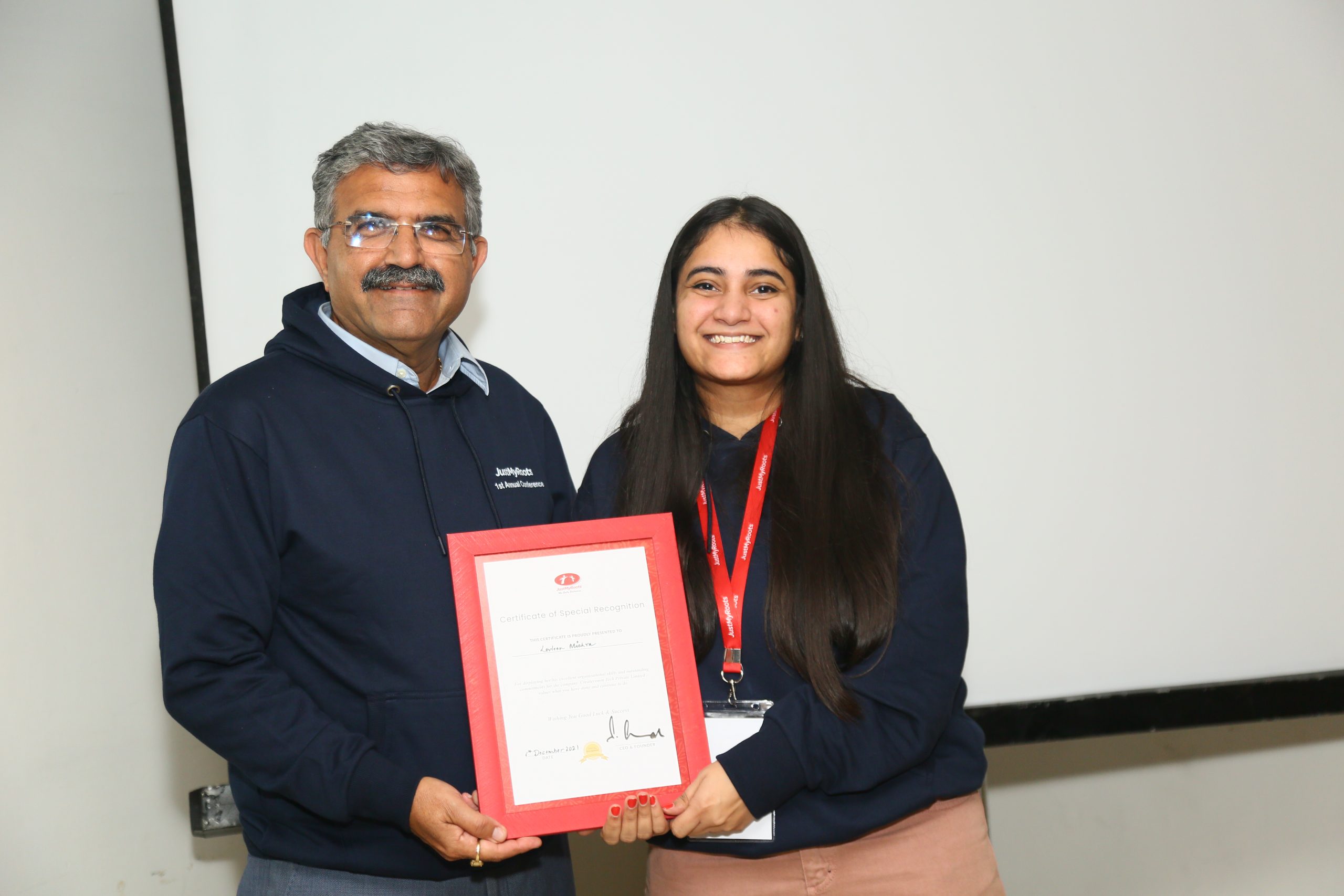
  • In conversation with Lovleen Mishra, Manager-Legal at JustMyRoots, an intercity food delivery company, sharing her experience of taking up diverse roles in the Legal field.

    In conversation with Lovleen Mishra, Manager-Legal at JustMyRoots, an intercity food delivery company, sharing her experience of taking up diverse roles in the Legal field.

    This interview has been published by Sonali ParasharOjuswi Sahay and the SuperLawyer Team


    To start at the beginning, was studying law a pre-decided career path for you? What was your motivation behind growing within the legal field?

    I wanted to be many things, but a lawyer was never one of them. I stumbled upon the idea of studying law in a casual “if not this then what?” conversation with a classmate, did a crash course on law immediately after my high school graduation (not that it was of much help), and the rest is history. During law school and in my professional career I have realised that being a lawyer is not just about the law. You have to be a meticulous writer, a conversationalist and most importantly you should know how to read between the lines. 90% of being a lawyer probably is understanding what people need from you and with time you can learn and grow into the remaining 10%. I reckon this is what interested me the most, the 90% and motivation came naturally with it. 

    You started your journey with litigation and had an experience of practice at the Supreme Court of India, where you litigated on matters related to film and media. How would you describe this experience of yours?

    It was exhilarating, to say the least. It had the excitement and eagerness of the first job and the anxiety of everything else that was my first as well. Litigation like any other thing comes with its own pros and cons. I was given the chance to learn from the best and since we had a lot of film and media matters, there were a lot of movie screenings in our chambers where we had the petitions opened in front of us and we formed our arguments. Most of the film and media petitions are usually filed a week before the movie’s premiere, so all we have is one week. There are sleepless nights and hours and hours of research which go into creating a brief. These matters are stressful for both, the client, and the advocate since the hearing takes place a day or two before the premiere and what we have at stake is years of hard work of hundreds of crew members and the money that went into making the film. In this job every day I thought through the perspective of the other party and my time management skills enhanced drastically while working here.

    Working for Sapphire and Sage on MSME, Arbitration and Energy Laws matters while heading the firm’s MSME and Energy Laws Teams, what motivated you to change your path this way, and how did this change treat you?

    Though I had been in various arbitration proceedings before, when I started working for S&S, I was given my first independent matter of MSME Arbitration. I knew the bare minimum about MSMEs so honestly, it was not I who specifically went for this change, but an opportunity presented itself and I took it and with that matter, my journey started in the field of MSME. As for the Energy Laws; I graduated with Energy Law Hons. from UPES, Dehradun. During the first wave of COVID, our partner at the firm suggested that we start exploring the solar energy industry. So, we started working with industry professionals and subject matter experts; hosted webinars and wrote handbooks on both MSME and Energy Laws. During my time with S&S, I not only worked on the above matters but explored Aviation, Real Estate, and Criminal and Corporate Laws. I remember the Partner in our firm used to check our drafts with a pencil in his hand and everybody would gather around and compare to see who had got the least slashes on their drafts. It was here where I honed my drafting skills and with each document, the number of slashes decreased. 

    You are currently working for JustMyRoots in the capacity of Manager-Legal. Tell us a bit about the organisation and your role in it?

    JustMyRoots is an intercity food delivery company. As the description suggests, it is a platform through which one can send perishable food products from one city to another. JustMyRoots has developed a special food packaging which keeps the food fresh for 24-36 hours by maintaining the temperature between 5-8 degrees Celsius and keeping the moisture intact. The work here is exciting and challenging at the same time. Every day we try to be better than yesterday and with that, we work on things we have never explored before. I currently head the legal department here and majorly work alongside the other departments in contract drafting and vetting, negotiations, advisory, compliances, investments, new projects, and strategy. Since we are a small company; apart from the law, I delved and worked in every single department of the Company and with that, I grew here more in the past year than I did in my entirety of law school and career. I have been fortunate to be a part of every new project. Each day is a new opportunity, and the learning curve has always gone up.  

    Your organisation JustMyRoots is a unique build in itself. What aspirations of growth do you hold for it in the future?

    It is, isn’t it? I was elated to see that something like this actually exists. We are present and operational in 30 cities in India; I hope this number increases exponentially and with that, every single person in the world can taste their nostalgia. 

    What are some of the highlights about each sector you’ve worked in, which you believe could be a guiding factor for upcoming Law graduates?

    Let me give you a quick black and white rundown. Film and Media are fast-paced and come with very high risks. In my opinion, MSME matters take comparatively less time to get resolved but the number of appeals is very high. Documentation in Energy Laws is very exhaustive, and you’d be surprised to see the requirements of water in the Solar PV Plants. If you are an in-house counsel, you must know everything about everything (at least the matters which concern your company). But I want the upcoming graduates to know that everything comes with its flaws and maybe some of the flaws are acceptable to you while some are not and that is okay. It is okay to not have a plan or to know everything about the profession you are in. It is okay if the cons of a sector are too much for you to take or if you are stuck at a place without the means to choose something else. I want them to know that not everyone’s career starts at the same age, at the same time, and in the same manner so if you see someone succeeding at 20 or 25, don’t think any less of yourself. It is also okay if you are having doubts about your choices, I have seen people who chose an entirely different career path for themselves after law and are content with their lives. There is no time limit to be whoever you want to be and do whatever you want to do. But I hope that you have the courage to change, make mistakes, and work towards the things that excite you. 

    How has the shift from litigation to Law firms to your current role of Manager – Legal been for you? Do you plan to explore litigation again in the future?

    From an organisational perspective; I have been rather lucky to have the support from my colleagues to make the transition seamless. On the other hand, the shift changed my way of looking at legal issues. I do not think that I will be exploring litigation again in the future. I thoroughly enjoyed my work while being there but over time I have realised that it wasn’t really my calling. That being said, it is my perspective today and it might change a few years down the road.

    Finally, being a woman in Law, what advice do you have for upcoming aspirants, especially the females in the field?

    As I mentioned earlier, there are no rules to this thing. The only advice I can give to the upcoming aspirants is to be the change they want to see in the world and to never give up on their dreams. The rest will follow. We have miles to go before we sleep!


    Get in touch with Lovleen Mishra –

  • Mr Vipul Maheshwari, a prominent and established Advocate and an Author, talking about his latest publications and his love for Law.

    Mr Vipul Maheshwari, a prominent and established Advocate and an Author, talking about his latest publications and his love for Law.

    This interview has been published by Sonali ParasharOjuswi Sahay and the SuperLawyer Team


    Having both a stellar legal career and being a celebrated author, how would you like to introduce yourself to our readers?

    I am a practising Supreme Court Advocate and have a keen interest in our polity. As an advocate and responsible citizen of society, I always feel that I have a duty towards the society to elaborate the comprehensive survey of our Indian democracy and rule of law. 

    What was your Law School journey like? Was Law School where you first tried a hand at writing?

    I had a wonderful journey in my college as a political science student and thereafter as a student leader in Law College. I had lots of opportunities to raise my voice on different platforms but not as a writer.

    Tell us about the book “Ramayana Revisited – An Epic through a legal prism”. What was the idea behind choosing this subject? 

    The Idea has come up with my uncle who is a co-author of the book. We discussed a unique idea which had never been thought about in the legal world. After discussion with him, I was excited and immediately started preparing the defence and prosecution of the characters of Ramayana and we decided to leave it to the readers to decide the culpability. Supreme Court and High Courts Judges, Parliamentarians, Mythologists, Journalists and Vice-Chancellors have appreciated the book.

    You have also written about elections in India in the book titled, “The Power of Ballot”. Was this idea always in your mind or was it something you and your co-author Anil Maheshwari together came up with?

    I have seen personally the election process very closely and hence was always keen to write about the theoretical law and practical reality. I have read and keenly monitored lots of elections and their processes in the country. The writing of the book was there in my mind for almost a decade. In fact, I had petitioned before the Supreme Court for admissibility of the Internet voting on mobiles but those were the days when the Court did not deem it fit to admit the writ petition. Another writ petition on similar lines has been admitted and is under process in the apex court. We have given details of the admitted case in the book.  

    You seem to be deeply interested in History amongst other disciplines. How do you believe writing on this subject is essential in today’s time and age?

    The idea to write on a subject which is very close to every citizen of India as I have always seen that Indians love elections which have become a sort of national festival across the castes, communities and regions in the country. Secondly, I have seen that elections in India in always been dominated by patronage, money, fake news and prediction which made me think to write about the book. Despite all these weaknesses, elections in India are the symbol of a thriving democracy even after seven decades since its introduction way back in 1952 after we attained independence. Let us discuss its shortcomings and make efforts to remove them. 

    You have been a member of the National Executive Committee of FICCI and PHD Chambers of Commerce and Industry in India and have received many accolades from different sections of the society for your literary achievements side, we would like to know what got you interested in Commercial Laws as practice area?

    This is not a variation as I have done the constitutional, civil and criminal litigation for almost three decades; lately, I started enjoying the commercial litigation of corporates. As a student of political science and law, this has always been my first choice and as an active lawyer and political analyst I always think that it would be good to pen my thoughts on law, the festival of democracy, duties, the exercise of the ballot by more than 910 million electors, management of the largest electoral process by the ECI and lastly the lifeline of democracy will be a good idea to share with the readers in the form of a book.

    You have served as the former Additional Advocate General of Haryana and Senior Central Government Standing Counsel of various state governments in the Supreme Court of India. If you had to choose between litigation and writing, what would you choose and why?

    As a lawyer, my first love is my profession and fortunately, it involves a thought process in drafting, therefore both litigation & writing go hand in hand and I would like to continue my passion for writing. 

    You are a founder of the law firm Maheshwari & Co., Advocates and Legal Consultants, a full-service law firm known in India and internationally dealing with corporate, commercial, transactional, mergers and acquisitions, and intellectual property. Please share about the challenges of your role and the advice you have for the next generation.

    As a founder of a Law firm is a big responsibility on one’s shoulder which involves hard work, integrity, dedication, transparency & accountability and lastly the tender job of nurturing young lawyers and help explore their talents. I feel in any sphere of life one should always aspire and try to do a larger good for society.


    Know more about Vipul Maheshwari –

  • Mr Anil Maheshwari, a celebrated Journalist and an Author, talking about his latest publications and his advice for young aspirants.

    Mr Anil Maheshwari, a celebrated Journalist and an Author, talking about his latest publications and his advice for young aspirants.

    This interview has been published by Sonali ParasharOjuswi Sahay and the SuperLawyer Team


    With a remarkable career in Journalism, and also having authored quite a few books, how would you describe your professional journey to our readers?

    My professional journey or say the foray into the realm of journalism had been a rewarding experience as I was transferred nine times, though most of my colleagues and friends in journalism spent their entire life at one station. Therefore, I was enabled to see and understand the major parts of the country at a grassroots level.

    Tell us about the inception and idea behind the book- “Ramayana Revisited- An epic through a legal prism”.

    I am happy that the book Ramayana Revisited: An epic through a Legal prism was so well-received in the market. This idea germinated in my mind in 1998 when I was enjoying the company of a lawyer serving the West Bengal High Court. He was talking in defence of Ravana. Two decades had passed, and eminent mythologist Bibek Debroy (The Economist) encouraged me to develop a book around this theme. I roped in my nephew, who has acquired a name in the legal parlance- Vipul Maheshwari, who helped me immensely with his legal inputs. That is why he is the co-author.

    How did the book- “ The Power of Ballot” actualized? What kind of research and fact-finding you have had to undergo towards the completion of this book?

    The newest book has been treated the same. Vipul Maheshwari has given his legal input on the subject, as holding fair and free elections is the base of a vibrant and thriving democracy. However, there are misconceptions about some innovations which have eliminated the most dangerous illness, which was rigging the elections. Hence, he is the co-author.

    You have been a journalist for over five decades and you retired from Hindustan Times as a Special Correspondent. We would love to know about this journey of yours.

    I’ve enjoyed every moment of my journalistic life. Newspapers were my classrooms, and the experience was my teacher. The mentors I met along the way were a few editors and an army of veteran reporters. They taught me about the classical roots of narrative non-fiction and offered great insights into the techniques of reporting. My belief is that intellectual curiosity and relentless work etc matter infinitely more than the natural ability in achieving excellence.

    What was more challenging for you, journalism or writing?

    Journalism and writing are subjects that overlap each other. However, there is a difference between journalistic writing and writing a book. Both remain challenging in their own ways. But I took the challenges in stride and that is why I enjoyed the unique joy both offered me. I have witnessed Vipul Maheshwari express a similar challenge with Law. 

     Here’s an incident he shared with me that I was tempted to include in The Power of the Ballot. Everyone is aware of the unseating of the PM Mrs Indira Gandhi, an incident that led to the imposition of an emergency in the country. The next time, when another election petition against her election for the Lok Sabha from Raibareli was filed before Allahabad High Court, it was summarily dismissed because the Raebareli district was under the jurisdiction of the Lucknow bench of Allahabad High Court. In the earlier instance, the judge overlooked such a gross mistake and the lawyer who appeared on behalf of Mrs Indira Gandhi. And the country had to pass through a cycle that could have been avoided.

    You have two short-term tenures as a fellow at the Aligarh Muslim University. Please share with us about this experience of yours.

    Aligarh Muslim University, a prime seat of learning and symbol of the Muslim way of life in India, has been kind enough to offer a short-term fellowship to me twice, to read and write any subject of my choice. For starters, I’ve worked on writing a book (co-authored by Dr Faizan Mustafa) about the Right to Information. Back then, the Right to Information was not in vogue in the country. 

    The second time, a few years ago, I worked on the subject of the History of Aligarh Muslim University, which will soon be released as a comprehensive book about the university in the coming November, with Bloomsbury publishing the title. Before I was absorbed as a full-time reporter by the Hindustan Times, I used to work for several magazines and newspapers as a freelancer. During that course, I also contributed to the prestigious weekly Economic and Political Weekly. I covered the Allahabad High Court, its Lucknow Bench, Jaipur bench of the Rajasthan High Court, The Haryana and Punjab High Court, Jammu and Srinagar High Court besides the district courts at Meerut, Siliguri, and Bareilly. Covering courts has always been fascinating and fulfilling. 

    You have contributed to the Economic & Political Weekly, and The Frontier, and have also covered stories on various District Courts and High Courts in India. What do you think is the most important aspect for becoming a successful journalist? A word of advice for aspiring authors and journalists among our readers?

    There is a dearth of professional legal reporters in this country. For any budding journalists, my advice is

    1. Singleness of purpose; 2. A wide study of various subjects; and, 3. Deep penetration into the subjects.

    To cap them one should be willing to learn new things and respect points of view expressed by others.


    Know about Anil Maheshwari’s works –

  • In conversation with Mr Arush Khanna, Co-Founder and Partner at Numen Law Offices, and India’s Former National Representative at the International Bar Association in 2019, currently holds two officer positions in the Young Lawyers Committee.

    In conversation with Mr Arush Khanna, Co-Founder and Partner at Numen Law Offices, and India’s Former National Representative at the International Bar Association in 2019, currently holds two officer positions in the Young Lawyers Committee.

    This interview has been published by Sonali ParasharOjuswi Sahay and the SuperLawyer Team


    How did choosing law as a career come into the picture for you? What were your law school days like at Symbiosis Law School and NLSIU?

    Truth be told, Law came in as a default option after I cleared my 12th standard. During my school days, I had aspirations of pursuing a career in cricket. I missed an opportunity of getting into the Delhi Under-17 team in the 11th grade and injured myself soon after which made the cricket option too risky for me to pursue. Since I hadn’t nurtured any other ambition by then and coming from a family of lawyers (persuasive ones at that), I was positively influenced into taking up law as a career. 

    I will always cherish the 5 years I spent at the Symbiosis Law School, Pune. Being away from home and living by myself contributed immensely to my growth as a person. I made some amazing friends who I consider as family. Once in a while, we all get together and regale ourselves by reminiscing our time in Pune. 

    The Master’s program offered by NLSIU was predominantly a distance learning program which I pursued after having spent 3 years at the Bar.  I would only have to visit Bangalore once a year for my examinations. Aligned with NLSIU’s unmatched standards, it was a challenging course especially since I was working professionally and had limited time to devote to academia. I look back with great satisfaction for having taken up this challenge. Getting my degree from the Chief Justice of India, who by convention is also the Chancellor of the College was a special feeling. 

    Being a fifth-generation lawyer, you have been fortunate to have your grandfather, Dr Lalit Bhasin, the President of the Society of Indian Law Firms and also the Managing Partner of Bhasin & Co; along with Senior Advocate Mr Sanjeev Anand, as your mentors. How essential do you believe a role model plays in one’s legal journey?

    Darius Khambatta, one of the finest lawyers at the Bombay Bar once told me that in law, you learn most through Osmosis, which means by observation. He couldn’t have put it better! 

    As a young lawyer, one longs for a sense of direction, purpose and the wisdom to know when to speak your mind and also, when to mind your speech. Ours is a heavy profession and every now and then, we need a dose of inspiration. That is why it is quintessential to have a mentor(s) in our line of work. I am indeed fortunate to have mentors like Dr Bhasin, Mr Karanjawala and Mr Anand. They have guided me at every important junction in my professional career and (*touching wood*) continue to do so. I hope I can make them proud one day. 

    You have had great wins in your litigation journey, including TGIF judgement at Hyderabad, title dispute at the Bombay High Court, and your regular appearances before the Supreme Court, amongst others. What motivates you to scale bigger heights in dispute resolution?

    The TGIF case was an inflection point in my career for it gave me the self-confidence to handle big-ticket litigation independently. I was 26 years old at the time and I still remember that I sought a passover, however, the Ld. Bench of the High Court of Judicature at Hyderabad refused to grant me one and directed me to present my submissions. There was a lot of public glare to this matter as the restaurant was alleged to have served liquor to underage persons which resulted in a fatal accident. It was heartening to get a favourable order whereby the HC quashed the liquor licence suspension order inter-alia on the ground that it was passed in violation of the principles of natural justice. 

    Similarly, the title dispute before the Bombay HC was a memorable experience. Interestingly, we preferred a writ petition in this case and not a civil suit as the PSU had rejected our client’s bid for setting up an Ethanol Plant by stating that the land did not belong to the company but to the Director. I remember working tirelessly on this matter alongside my Partner, Chaitanyaa Bhandarkar and we were pleased to be rewarded by a favourable finding given by a bench of Justice Gautam Patel and Justice Madhav Jamdar after hearing us for two consecutive days. 

    Dispute Resolution (Litigation and Arbitration) has always been my primary area of practice. It is a demanding line of work and one has to learn how to burn the midnight oil.  I make sure I consistently keep motivating (and hopefully, inspiring) my team to keep pursuing excellence in what they do. Notwithstanding the result, which is not in our hands, it is about enjoying the journey, finding the strategic nuances, researching for that clincher point and giving it our best before the Court or Tribunal.  

    Let’s talk about your firm, Numen Law Offices, which you have co-founded and are a partner at. We’d love to know about the conception of this idea of establishing your own office and how have you been taking it forward?

    Back in 2018, I would visit Mumbai almost on a fortnightly basis for work. As cliche as it may sound, I remember telling my cousin while we were driving down from Walkeshwar overlooking the Marine Drive that I wish to have an office here one day. I am glad that I connected with like-minded professionals during my adventures at the Bombay High Court. Everyone understood the need to collaborate as then we would be able to provide more services under one roof. Law is a vast profession and clients prefer specialists. We started Numen Law Offices with 4 Partners, all of whom bring different skill sets to the firm’s repertoire. We currently have two offices, one in New Delhi and the other in Mumbai. We have tried our best to incorporate the best practices, be it in our core legal work or in the managerial side of the firm. We have a dedicated HR, Accounting and IT team all of whom contribute immensely to the running of the firm. It has been a challenging yet rewarding journey thus far but as Robert Frost once famously wrote, “the woods are lovely, dark and deep but I have promises to keep and miles to go before I sleep”

    You also hold a strong association with the International Bar Association, where you were appointed as India’s National Representative in 2019 and currently hold two officer positions in the Young Lawyers Committee. Tell us about your experience at the largest bar association in the world, and how it has helped pave your journey forward?

    My appointment as a National Representative could have been a case of being at the right place at the right time. In 2017, I was selected as a scholar to speak at the IBA Annual Conference in Sydney. A day before the main conference, I attended the Young Lawyers Training Program where I was introduced to the then chair of the YLC by my friend Pranav Srivastava, who, after speaking to me for 10 minutes, suggested that I should apply for the NR position.  I did apply and as luck would have it, my candidature was approved by the YLC Board. That’s where my journey with the IBA began. I was soon appointed as an Officer at the YLC and now hold the position of the Asia Pacific Regional Forum Liaison Officer as well as the Scholarship Officer of the Committee. It’s really been a great journey with the IBA. 

    Our profession has transcended national boundaries and as young lawyers, we must look at opportunities to synergise with our global brethren. In addition to one’s core practice areas (litigation/corporate law etc.), it is important to devote time to increase your bandwidth as a professional. This not only forges life-long relationships but embellishes one’s own profile as well. 

    Amongst your various areas of specialisation including, Commercial Disputes in the field of Arbitration, Insolvency, Real Estate, Projects & Infrastructure, which area of practice excites you the most personally?

    I ventured into independent practice at a fairly young age as a result there were many days when I would not have much work to do. So any new matter coming my way got me excited. I am fortunate to be slightly busier now but that sentiment of excitement about getting a new brief or opinion is still the same as it was 6 years back. 

    All types of commercial disputes excite me. I am involved in some construction arbitrations and also doing noteworthy work in the Insolvency sector. Recently, I have also been instructed to give legal opinions on contractual issues arising out of complex infrastructure projects. They require a very nuanced yet pragmatic approach which aligns with the objectives of the company. I have some white-collar cases on my docket which makes for a great interplay between commercial and criminal jurisprudence. I am happy to be doing good work but it is still very much a work in progress. 

    Not only law practice, but legal academia is your strong suit, with over 25 publications in both national and international journals. How essential do you believe research and writing are in a lawyer’s career?

    I have always believed that legal academia and writing embellish your profile as a professional. Especially for us litigators as it allows us to express our thoughts in a non-confrontational and non-adversarial manner. It improves one’s research, analytical and drafting skills, that too on a far wider canvas as opposed to our briefs, which have several strategic restrictions. 

    At Numen Law Offices, we have started a monthly newsletter wherein our members are mandated to write one short article on a topical issue covering their area of practice. I also encourage my juniors to give lectures/talks at law schools and I do so when the opportunity arises. We try to imbibe a culture that encourages us to look and think beyond our respective briefs. 

    Finally, with so many experiences that you have gathered so early on in your career, what would your advice be for the up and coming legal professionals?

    The first advice would be that one should always feel that they are ‘up and coming’. A sense of satisfaction with one’s position at the bar leads to complacency for which there is no room in our profession. Every day there is something new to learn. We are all tenants of success and need to give our dues regularly to stay in the game. 

    However, what is most important in life, and more so in this profession is to love what you do. Some say the law is a jealous mistress, others call it a lifelong marriage. Whatever it may be, it is quintessential that one is passionate about their work. With the advent of the metaverse and the boom in IT, several new regulations and laws are likely to surface giving opportunities to young lawyers to develop new areas of expertise. The legal services sector has transcended national boundaries so young lawyers today have several opportunities to practice anywhere across the world. It is a great time to be a part of this profession so treat every day as an adventure and every conversation as an opportunity. There is a proverbial saying that if the best time to plant a tree was 20 years ago, the second-best time is now!


    Get in touch with Arush Khanna –