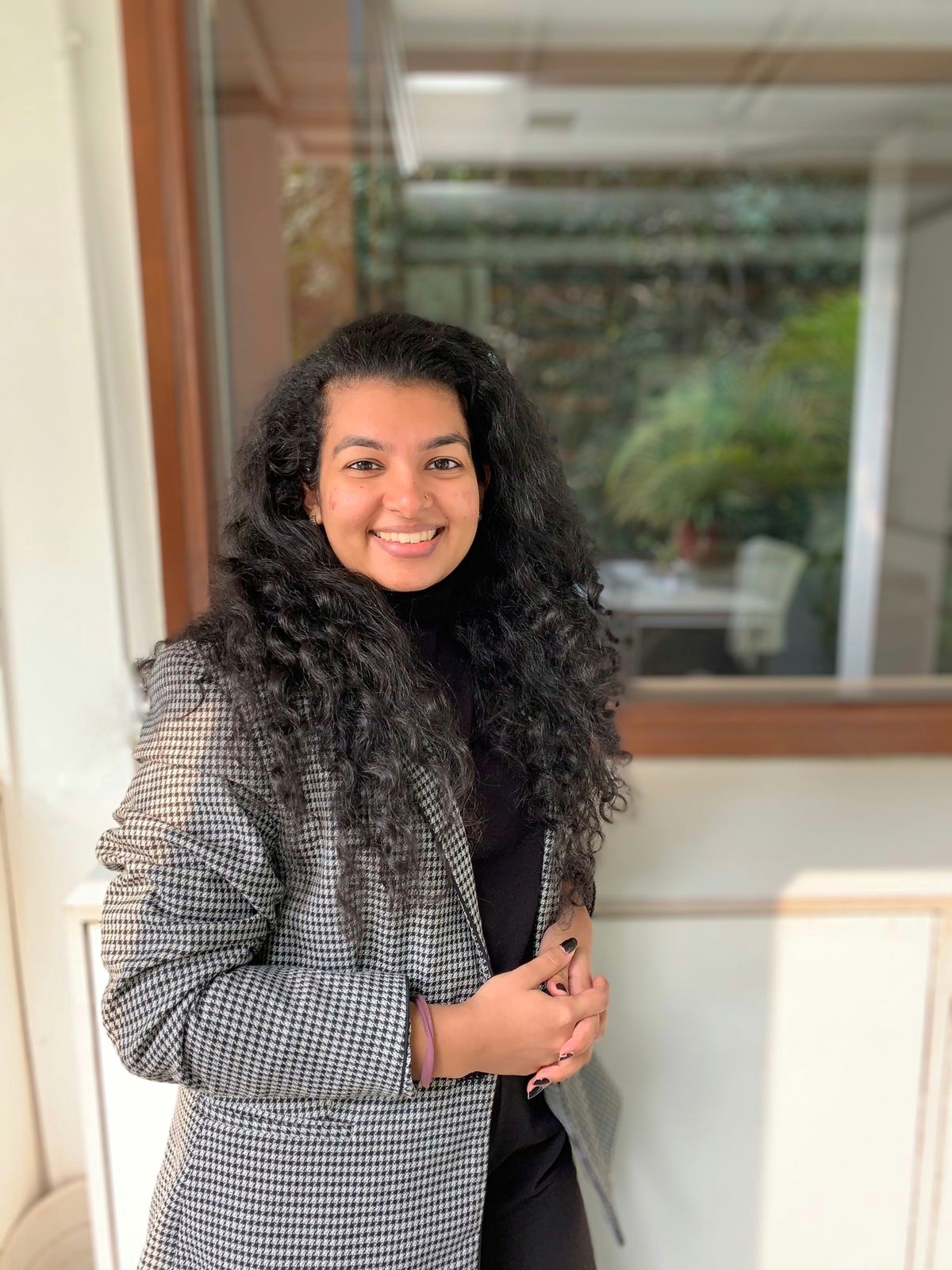
Author: SuperLawyerTeam

  • Kalpit Khandelwal, Principal Associate at Vaish Associates on venturing into law from a business background, the value of mentorship, and focusing on the present 

    Kalpit Khandelwal, Principal Associate at Vaish Associates on venturing into law from a business background, the value of mentorship, and focusing on the present 

    This interview has been published by Sonali Parashar and the SuperLawyer Team


    Coming from a business background, how did you gravitate towards the law? What other career would you have chosen, if not law? 

    From my early days, I was intrigued by the corporate world and wanted to be a professional instead of continuing my family business. As part of career counselling, law was identified as one of the professions’ I had the skill set for, maybe, due to my problem solving and persuasion skills. My parents always encouraged me and gave me full freedom to pursue any career of my interest. They supported me in all ways when I decided to pursue law as my career. Since my childhood, I was inclined towards computer games and also had an imaginative mind. So, if not law, I would have enrolled myself in a game designing course.

    It is said that getting a mentor is the first step towards attaining success. How true do you think the saying is? Do you think a mentor plays a crucial role in the growth of a person? What type of mentor would you suggest for a law student?

    I completely concur with the above saying, indeed I was lucky enough to get mentors in my life who had seen more talent and ability in me than I myself would have seen and helped in bringing out the same. They gave me an opportunity to work and assist them on big-ticket and complex transactions at a very early stage. I was made part of each and every phase of the transaction from the very beginning of my career so that I could learn in its entirety. I truly believe a saying that mentoring is a brain to pick, an ear to listen and a push in the right direction. In my view, every law student should have a mentor who is approachable, non-rigid, a good listener, non-judgemental, eager to invest in others, able to give honest and direct feedback. I am also fortunate enough to become a mentor for other law students now by becoming a mentor at Mentorology.     

    Litigation is notoriously time consuming and unpredictable. What changes according to you should the litigation sector imbibe to truly turn into the fundamental learning place for an advocate? Is struggling in the litigation sector worthy of effort? 

    In my view, one of the perennial reasons for excessive delay in delivering judgements is the ease of adjournments. Although Supreme Court had advised and Civil Procedure Code has enough provision for the imposition of realistic costs for every adjournment, costs are rarely imposed and therefore, litigants and their counsel think nothing before asking for an adjournment. Further, the registries of the courts are tasked with the judiciary’s administrative functions. Administrative support functions needed by the judiciary, identification of process-related inefficiencies and advisory on legal reforms, should be delegated to a specialised professional agency that has administrative expertise, specialisation, modern management practices and technologies. Also, a massive house-cleaning exercise in every single court to identify cases that are infructuous or not worth pursuing will surely reduce the pendency of legal cases. Indian legal system is also required to adopt technology and artificial intelligence in every phase of functioning. 

    Most of us struggle with pursuing different courses at a time but you pursued the Company Secretary course and Master in Business Laws while you were pursuing your law graduation. How did you manage to pull it off? Can you tell us a bit about your study pattern, and would you like to share a few tricks to ease the learning?

    The mantra I always used to sing while studying is to read as much as possible and re-read it at regular intervals. Always remember, play when you play and study when you study. Being focused in every moment is very important and challenging at the same time in today’s age of cell phones and tablets. Underlining keywords with different colours and complementing the study notes with mind maps will surely reduce the time in memorising the legal concepts. One should also inculcate a habit of reading bare acts, being the holy water of law, and judgements from college time itself. 

    You worked for almost 9 months as a Paralegal at ARA LAW, a boutique law firm and later you were handed a PPO. Can you share about your job responsibilities of both while you were a Paralegal and later on when you landed the job?

    I was never a morning person until I joined ARA LAW and used to reach the office an hour early. Every day before office hours began, I used to read the latest updates to existing laws, important judgements, legal news, etc. and used to discuss the same with my seniors, as keeping abreast with the rapidly changing corporate legal environment is essential for any lawyer. As a paralegal, I also used to research, attend and take notes of the calls/meetings, proofread agreements and make summaries of agreements/documents provided by the target entity for due diligence purposes. I have always believed in doing work diligently and sincerely without thinking much of the outcome. My work spoke for me and as a result, I was offered PPO by ARA LAW. As a lawyer, I used to assist my seniors in drafting and revising the transaction documents, preparing the due diligence reports, drafting legal opinions, etc.   

    Can you tell us a bit about your current job role and responsibilities? 

    As a transactional lawyer, I wear several hats in the process of working through a deal i.e. an advisor, mediator, negotiator and drafter. I provide advice on matters relating to M&A, strategic alliances, regulatory aspects, etc, prepare reports and opinions on diverse corporate matters relating to Companies Act, FEMA, SEBI regulations, stamp duty, etc., handle legal due diligence exercise, negotiate the transactional documents, drafting, vetting and execution of all the transactional documents. One of the biggest challenges and at the same time, most exciting aspect of M&A practice is that your schedule is exceptionally uncertain and highly variable in terms of intensity. I am fortunate enough to lead a team of associates who are extremely capable and flexible enough which makes my life easy when we are faced with an accelerated deadline. 

    You have led several acquisition deals like Patanjali’s acquisition of Ruchi Soya, acquisition of Innov8 by OYO, Lemon Tree’s acquisition of Keys Hotel and more. What were your key experiences/takeaways from these acquisitions?

    The sound understanding of commercial and business complexities besides the legal intricacies of a long-drawn M&A transaction and precisely communicating the same to the client as well as the other side while negotiating the deal is a bedrock skill that cannot be dispensed with. Further, a corporate lawyer is expected to think and reach with the same sense of adventure as that of his client as in the corporate world, there is no decision making without an element of risk. At times, in M&A transactions, you are faced with seemingly insurmountable obstacles wherein you have to train yourself to not merely focus on the specific issue at hand but also you have to consider every possibility, never being dismissive of anything and think out of the box to steer your client through the M&A deal. Further, we need to be highly responsive to clients and comfortable with interweaving work and personal life because of the technology we have today.

    What will be your parting message to our young lawyers?

    I have heard several times from young lawyers that they ‘do not understand’ their seniors or ‘have no idea what is going on’. Bizarrely on the same knot, they also shared that they do not address their queries and issues with their seniors. Establishing an open channel of communication with seniors would certainly help you in setting the work environment straight. These seniors can also show you the ropes and take you under their wings. As young lawyers, we are often driven to learn as much as we can and as fast as we can. Blinded by the thirst to improve, often we find ourselves volunteering to take on voluminous tasks which we may not be able to execute effectively. In case you find yourself in such a position, speak to your superior in advance, instead of attempting to move mountains in a short span of time. At the same time, remember always that the grind in the early years will pay off in the long years ahead in your practice. Focus all your energy on working hard. Attention to detail is also indispensable for any corporate lawyer as small mistakes could significantly cost a lot to your clients (and your organisation) and therefore, it is an absolute must for you to work on this quality from the start. 


    Get in touch with Kalpit Khandelwal:

  • Habin George  Sebastian  – International Lawyer, Georgetown University Law Center (USA) alumnus: 2017, ILS (Pune) alumnus: 2016, NUJS Entrepreneurship Diploma Alumnus: 2013

    Habin George Sebastian – International Lawyer, Georgetown University Law Center (USA) alumnus: 2017, ILS (Pune) alumnus: 2016, NUJS Entrepreneurship Diploma Alumnus: 2013

    This interview has been published by Tanmaya Sharma. The Interview was taken by The SuperLawyer Team.


    HOW WOULD YOU INTRODUCE YOURSELF TO OUR READERS?

    I am a self-motivated individual who tries to see positive things in all spheres of my life. “All is well, All is well” is my motto! (I presume you have seen the movie, 3 Idiots.)

    WHAT FACTORS INFLUENCED YOU TO PURSUE LAW. PLEASE TELL US SOMETHING ABOUT YOUR COLLEGE LIFE.

    To be honest, like any high school student I was also in a dilemma whether to choose law or any other subject for a career path. However, I believed my instinct to choose law as my career. I was good at logical reasoning and analysis in every aspect of decision-making in my life and these qualities are required for a lawyer.

    I enjoyed being at ILS, Pune. I was fortunate enough to be taught by Professors such as Prof. Nilma Bhadbhade, Prof. Sonali Jadhav, Prof. Anagha Kadolkar, etc, and even got some wonderful friends for life.

    WHAT IS THE SECRET TO SUCH A SUCCESSFUL ACADEMIC RECORD?

    I don’t have any secret for my academic excellence. However, like anyone else, I worked hard and achieved good grades. But I feel, it’s paramount for everyone to keep a positive attitude when preparing for their exams and never get into exam stress. Make a plan at least 2 months before the Semester exams and make sure that you stick to it.

    YOU HAVE DONE MANY INTERNSHIPS IN TOP-TIER LAW FIRMS DURING YOUR TIME AT LAW SCHOOL. HOW DID YOU BAG THEM? HOW WOULD YOU SAY THAT AN INTERN CAN GENERATE A POSITIVE FEEDBACK IN THE LIMITED TIME THEY HAVE?

    I have done several internships with some of the largest law firms in India. I secured a few of them through their internship opportunity application in their career section and others through networking. To make a positive impact on your internships, it is essential to display that you are passionate about your work. Further, you should be willing to clearly listen to the instructions provided by the Associates and Partners and thereafter, provide them with the exact material they are looking for, which may help them during the corporate transactions. In case, if you didn’t comprehend the specific tasks given, then you may kindly let them know. They will surely simplify the tasks and they may explain the concepts to you. Besides, keep in mind that time is very important and you should submit the work within the given time frame. I also suggest you reach the office early and make yourself ready for the day.

    YOU HAVE PURSUED A DIPLOMA IN ENTREPRENEURSHIP AND BUSINESS LAW FROM NUJS. PLEASE TELL US SOMETHING ABOUT THIS COURSE. WOULD YOU RECOMMEND IT TO LAW STUDENTS?

    I am happy to let you know that I was in the first batch of the NUJS diploma. This course helped me to know more about the basic practical insights of Entrepreneurship and Business Law. I recommend it to all law students. 

    My special thanks to Mr. Ramanuj Mukherjee who guided me throughout my career process.

    WHAT MOTIVATED YOU TO GO FOR A MASTERS PROGRAMME? HOW DID YOU CHOOSE YOUR SPECIALISATION?

    I always wanted to pursue a Master’s from any of the elite institutions in the world. I used to read about top law schools and even dreamed about getting into one of them since my second year of law school. During my research at that time, I came to know about corporate law, and international arbitration, and its possibilities in the real world such as leading and managing mergers and acquisitions, restructuring, private equity, general corporate advisory works, etc, and the role of international arbitration in resolving disputes between an investor and the sovereign state. From that moment, I made up my mind to become an international lawyer and to pursue a specialization in international business law and international arbitration from one of the top three universities in international law in the United States. Fortunately, I got into the International Business and Economic Law program of Georgetown University Law Center with immense hard work and dedication.

    WHICH UNIVERSITIES DID YOU APPLY FOR LLM? HOW DID YOU CHOOSE GEORGETOWN UNIVERSITY LAW CENTRE?

    I have applied to some of the top law schools in the United States. Here, I chose Georgetown Law

    because of several reasons such as the following: 

    1. Location: Georgetown Law is situated in Washington D.C and D.C have enough opportunities for networking in international law-related careers considering most of the international agencies and big US law firms are located in Washington D.C.

    B) Externships: Another reason that I would like to mention here is their Externship programs. They have a lot of great externship programs that may allow you to work with international organizations and international law firms in D.C. 

    C) World-class international law library: Georgetown Law has a brand new world-class library specifically for International Law with the library of Congress nearby.

    D) Celebrity International Law Professors: The other most important factor for my consideration to apply to Georgetown Law is their International Law Professors. Georgetown Law has world-class celebrity international Law Professors to teach international law.

     E) Ranking with respect to International Law: Georgetown Law is always listed ahead of Harvard and Yale in the international law category and most of the time in the top three international law programs in the United States as per the widely recognized US News Ranking. 

    WHAT SHOULD BE KEPT IN MIND WHILE WRITING SOP FOR LLM ABROAD?

    SOP: I must confess that the SOP writing part is the most difficult in the whole LL.M application process. I suggest you write your SOP at least a year before your application submission due date. The SOP must have a proper direction (means must look like a life story linked with real-life events ) where the admission committee can easily follow your genuine motivation towards your LL.M studies: (it is paramount to show your genuineness in your SOP) and what you aim to achieve after the graduation. (Always keep in mind that words should be used in minimal in number maybe 650 words or lesser)

    PLEASE TELL US ABOUT YOUR TIME AT GEORGETOWN UNIVERSITY LAW CENTRE? WHAT SHOULD A LAW STUDENT EXPECT WHEN GOING FOR AN LLM ABROAD?

    It was awesome! I got the opportunity to meet several brilliant minds from all over the world. Now, I can say I got friends from all over the world. 

    Be ready to work hard! Keep your expectation very high and this expectation will strive you to work hard to achieve your target.

    PLEASE TELL US ABOUT THE RECRUITMENT PROCESS AT JSA?

    The recruitment process in JSA is very transparent. You can apply through their career section on their website and wait for their response. 

    WHAT WOULD BE YOUR PARTING MESSAGE TO OUR READERS?

    Always be positive! You are gonna achieve your dreams. If you think you are an average or below-average student, don’t ever stick to that point. Get up and think, think, think! What should I do from now to change myself to my best? You should not compare yourself with others. Believe in yourself!


    Get in touch with:

  • Aditya Vaibhav Singh-Advocate on Record, Supreme Court of India| Head of Chambers, Chambers of Aditya Vaibhav

    Aditya Vaibhav Singh-Advocate on Record, Supreme Court of India| Head of Chambers, Chambers of Aditya Vaibhav

    This interview has been published by Tanmaya Sharma. The Interview was taken by The SuperLawyer Team.


    What is your current role? What was your journey like? 

    I am presently an Advocate on Record in the Hon’ble Supreme Court of India. I enrolled with the Bar Council of Delhi in 2013 and have since been practising in the Hon’ble Delhi High Court, and various Courts and Tribunals in Delhi apart from the Hon’ble Supreme Court of India. After completing my school at St. Joseph’s College, Allahabad in 2008, I graduated from Dr Ram Manohar Lohiya National Law University in 2013. After working with the law chambers of Mr Gaurav Bhatia, the then Additional Advocate General of UP in the Hon’ble Supreme Court,  I joined the office of Advocate Mr Avninder Singh who was then the Standing Counsel of the Delhi High Court Legal Services Committee. 

    After completing around 1 year with Mr Singh, I joined the chambers of HMJ Mr Navin Chawla, who was then a practising Advocate-On-Record in the Hon’ble Supreme Court and specialised in Commercial, Telecom and Regulatory Litigation. Under his able guidance, I found the interface between technology and law quite interesting and made considerable progress in understanding the legal and procedural concepts involved. HMJ Mr Navin Chawla got elevated as a judge in the Hon’ble High Court of Delhi in 2017 and around the same time, I decided to start my independent practice as well.

    In my journey, I have represented various multinational companies, domestic companies and leading industry associations, etc. I have also been appointed as an arbitrator by the Hon’ble Delhi High Court. I am presently on the criminal law panel of the Hon’ble Delhi High Court Mid Income Group Legal Aid Society. I have also been appointed as amicus curiae by the Hon’ble Delhi High Court. I have experience in regulatory litigation including telecom litigation, arbitration, commercial/civil litigation, land matters, criminal litigation, IPR, cyber law and service matters.

    Being a science student, why did you decide to choose law? Do you appreciate your decision?

    My journey as a lawyer has been both challenging and rewarding. To be honest, my decision to take CLAT was not a very well thought out decision. I was a science student and had secured a good score in my Board examinations and could have easily made it to the cut-off list of the leading universities. However, I decided to appear for the CLAT examination in 2008 because an integrated national level entrance test was being conducted for the first time and the theme of the test coincided with my general aptitude. 

    I was a little confused during the initial years of my journey as a law student. However, once I made a decision, I took every step to make that decision right. Fortunately for me, I started to enjoy reading and applying the law and am very happy and thankful today for deciding to become a lawyer.  However, one thing that I have always kept in mind is that we, as lawyers, are always students of law. Hence, approaching any problem with humility is something which I endeavour to practice in my professional as well as personal life. 

    I am always thankful to my parents who, despite not belonging to the legal fraternity,  have always been supportive of my decisions and my professional journey.

    How do you see the law as a profession? 

    Very early on, I had learnt that law is not a profession to only earn money. It’s a profession to learn, grow and apply. Throughout the journey, I have always been cognizant of the fact that Advocates have a greater responsibility as ‘Officers of the Court’ and hence have always made a sincere effort in discharging my duties effectively towards the Bench irrespective of the nature of the client I am representing or whether I am acting as the Amicus. 

    I do not say that earning fees is not important but we as Advocates need to understand that our clients come from different walks of life. Empathy is what helps Advocates understand their clients better and put their best case forward. 

    Seniors play a vital role in shaping one’s personality. Would you like to share your thoughts on the same?

    I firmly believe that bonhomie is an integral part of the legal profession. On weekends, I make it a point to pay my regards to the senior members of the Bar who have now retired or are not that active in Courts, as their love and affection has nurtured not only my legal career but also my personality as a lawyer. I have learnt more about law, over a cup of coffee, from the senior members of the Bar than reading any legal commentary on the subject. I believe, a word of encouragement goes a long way and I endeavour to pass on the care and affection that I received in my career to the younger members of the Bar and the interns whenever called upon. Mr M. R. Chawla who is a veteran of the Delhi Bar with over 55 years of experience, is one such person who deserves a special mention in my journey. My interactions with him have shaped who I am today, his wit and sharp sense of humour while sharing anecdotes about his long career spanning around 6 decades, have provided me perspective to move forward.

    Profile photo of Aditya Vaibhav Singh

    You had great mentors throughout. How do you carry the legacy to support the young lawyers?

    I am grateful to have received the guidance of so many excellent mentors throughout my journey and all of them are a constant source of inspiration. With the same view, ‘Chambers of Aditya Vaibhav’, believes in encouraging first-generation lawyers, to discover their niche in the legal profession. I would like to emphasize that the above statement does not mean that I hold back from extending support to worthy second or third generation lawyers. However, being a first-generation lawyer, there is a sense of empathy as usually there is a lack of guidance for them in the profession.

    Would you like to give some advice to the law students? How important are extracurricular activities with academics?

    My advice to law students would be to get their foundation right. During my 5 years in law school, I paid special attention to 6 subjects which are Constitutional Law, Contracts Law, Administrative Law, Interpretation of Statutes, Property Law and Criminal Law. These subjects will help you get your basics clear about substantive rights and to understand how to read law. As far as procedural laws are concerned, I believe they can only be imbibed well once you start practising them on a daily basis. Other than academics, participating in extra-curricular activities is important as well. I understand that managing moots, publications, examinations, internships etc. can get a little overwhelming for a law student. However, my advice would be to not get discouraged. One can easily manage these activities with a little bit of planning and strategy. Do not take up more than one moot in a semester and only intern during your vacations. The idea behind all these activities is to keep you occupied and to keep exploring. These activities also teach you teamwork and co-operation which are some of the most important traits you should have once you join the legal profession. To students who are just entering into this vast ocean of law, I would like to say that with humility, sincerity and a little bit of faith, one can achieve anything that their hearts desire.

    Most Advocates wish for their independent practice of law. What one must focus on in independent practice?

    My advice to Advocates who are thinking of going independent would be to be sure of their skills before taking the leap of faith. Clients don’t look for a fancy office or an entourage of associates. They do look forward to the assurance that their matters would be handled diligently coupled with the greatest sense of sincerity. Living up to that faith is what matters. Everything else falls into place once you have built that foundation of trust. It is your word that has value, everything else is transient.  


    Get in touch with:

  • Devashish Poddar- Senior Associate at Price Waterhouse & Co LLP working in the field of ‘Direct Taxation and other allied laws’

    Devashish Poddar- Senior Associate at Price Waterhouse & Co LLP working in the field of ‘Direct Taxation and other allied laws’

    This interview has been published by Tanmaya Sharma. The Interview was taken by The SuperLawyer Team.


    Working globally can prove to be challenging. Have you ever worked on a case that kept you in office long after the “office hours”? How did you handle the situation?

    Indeed, working globally proves to be challenging. But it comes with its pros and cons. As Lord Robertson once quoted, Globalisation will make our societies more creative and prosperous, but also more vulnerable. Working globally opens doors to a larger set of stakeholders which at times can become overwhelming.

    Yes, due to confidentiality requirements, there are times when we have to spend time beyond our office hours. The entire scenario becomes challenging and complex. However, finding a passion and zeal for the work helps me stay motivated and onboard. I realize that the moment I start spending more time with my work, I find creative and innovative ways to handle a particular situation. In turn, I begin to enjoy my work.

    You have crafted a niche for yourself in your area of expertise, i.e. Corporate and International taxation and regulatory services. At what point in your education curve did you realize you want to devote your career to this particular field? Besides your current speciality in law, what other specialities pique your interest? Do you have experience in those areas?

    I belong to a family of diversity. My grand-uncle is an economist and a tax professional. My father completed his LL.B. but was unable to pursue his career in law. My siblings, being chartered accountants/advocates, have been engaged in the field of tax for over a decade now. Being brought up in such an atmosphere always prompted me to take up ‘tax’ as my career. So to answer your question, it was during my preparations for final exams, I ensconced my thoughts to take up tax as a path ahead.

    Since many facets of tax are dependent on civil/criminal laws, others related to corporate laws and the Constitution of India, reading the same, intrigues my thoughts to come up with better, innovative and lawful solutions for my clients. Besides the same, in recent times, I have developed some interest in the field of Environmental, Social, and corporate Governance (ESG). The 2021 United Nations Climate Change Conference – COP26 held in Glasgow attended by the Indian Prime Minister Shri Narendra Modi enticed my interests in this area wherein the stakeholders are re-aligning their business strategy with environmental concerns to achieve sustainable development. Also, tax technology is another area of my interest.

    I was a part of the team which tested a newly-developed tax litigation tool in one of my previous organizations. In addition to the aforesaid, since every provision of law should sync with the intent of the Constitution of India, I have been a part of some assignments wherein I had multiple opportunities to explore the provisions of the Constitution of India related to the taxation statutes.

    You’ve previously worked in one of India’s leading law firms. What do you think is the main difference in work culture between L&L Partners, New Delhi (Luthra & Luthra Law Offices) and PWC?

    I believe most organizations turn out to be similar, only if a professional wants to work, learn, earn and grow. The same analogy applies to an Indian law firm and a global accounting firm. Indian law firms may not function under a global mandate, however, the trend of following ‘global best practices’ and developing a pool of stakeholders from different countries have made the law firms function in a manner that is not much different from a multinational enterprise. The work is similar, the clientele is similar, and again even the stakeholders and management function in a similar manner.

    However, the only difference is that while working with a multinational professional services network of firms, a person gets more opportunities to interact with peers and connections within the firm (both in India as well globally). A person can leverage the worldwide network of a global accounting firm to find more lucrative opportunities. Although the Indian law firms establish relationships with international law firms, the aforesaid difference is also fading away. On the other hand, Indian law firms provide you with ample opportunities to interact and communicate with some of the country’s top practitioners.

    Can you tell us briefly about the various global groups that you’ve assisted to set up their offices in India? What kind of work goes into setting up an office in a different country? 

    I have been a part of a team that assisted a global railway company set up its office in India. In addition, I had opportunities to assist-

    • British multinational telecommunications company
    • American multinational conglomerate company (world’s largest telecommunications company)
    • Canadian telecommunications and data networking equipment manufacturer
    • German automotive Manufacturing Corporation
    • Malaysian Oil and Gas Company
    • Private equity firms
    • International investment management firms
    • Massachusetts-based life insurance Company
    • And a few others.

    To set up an office (especially in India), the group should first decide about the form and structure of the entity. Since the efficiency of the presence in a country and the applicable laws flow from the type of entity being set up. Thereafter, if it is a company, then corporate laws applicable for registration and set-up are required to be adhered to. Similarly, if applicable, the entity in India is required to comply with RBI and SEBI laws. In addition, tax registrations (PAN, TAN, GSTIN, IEC, etc.) may also be required. If the entity decides to onboard employees, then employment laws and registration requirements may also warrant attention.

    You are a corporate tax lawyer, usually dealing with transactions, compliance and advisory, but you have hands-on experience in litigation and have dealt with some high-profile cases as well. Can you please share with our audience which part of your legal journey you enjoyed the most? 

    Being a CA as well as a lawyer, helped me experience the best of both worlds. While advisory and compliances have their own set of perks, litigation is an area wherein my mind becomes more creative. I believe I can enjoy and learn more while being engaged in a litigation project. The time spent on articulating thoughts and drafting a document to present one’s case in a simple, precise and crisp manner is satisfying. Representing a client before the court of law and achieving success is bliss.

    Finance Minister Nirmala Sitharaman introduced The Taxation Laws (Amendment) Bill, 2021 in the Lok Sabha recently, which seeks to withdraw tax demands made on indirect transfer of Indian assets before May 28, 2012, what major changes (if any) will be seen because of this? 

    The Taxation Laws (Amendment) Act, 2021 (TLA) amended the Finance Act, 2012. Earlier, due to the retrospective amendments vide the Finance Act, 2012, tax implications arose on a few of the largest Indian companies. Thereafter, there was decade-long litigation between the companies and the Government of India. Numerous international courts/arbitration forums were explored and approached by the companies aggrieved by the provisions of the Finance Act 2012. Therefore, to avoid such protracted litigation and dispute, the Government of India decided to settle the issue by giving a limited window to such aggrieved companies for settling the disputes forever.

    Such a move by the Government of India and the legislatures is a welcome move. The aforesaid would aid the companies to buy peace and seek the refund of taxes already deposited by them under protest. By introducing TLA, India is on its path to attracting foreign investments for the ‘Make in India’ campaign and in return fulfilling its objective of atma nirbhar Bharat, i.e. self-reliant India. The introduction of TLA has reposed the faith of big corporate houses in the Government of India. Multinational enterprises are now aware that the Indian Government and legislatures are well cognizant of the issues around the country and prompt laws are made to fulfil the objective of India as a welfare state.

    How do you see the Indian tax laws in the future?

    Laws are efficient only if they curb the menace. A complex and ambiguous set of provisions often defeat the legislative intent. India has tried to simplify the indirect tax regime by introducing the GST laws which have replaced numerous other statutes to form a single consolidated law for various indirect taxes in India. Similarly, I believe India may witness a change in its direct tax laws as well, wherein various deductions and exemptions can be done away with and a lower rate of taxation may be introduced to benefit the companies as well as individuals. Various ‘conditional’ deductions and exemptions provided in the direct tax laws may prove to be beneficial for professionals who are aware of the benefits provided by the law, but at the same time makes it difficult for the public in general to interpret the same. Due to the aforesaid, the legislature and the Government of India have already introduced a few provisions which provide for a low rate of tax while disallowing most of the deductions and exemptions. We may witness such similar changes in the future as well.

    What suggestions would you like to offer to our young lawyers, law students and law graduates? 

    I always resonate with the quote, “There is no shortcut to success”. Hard work has no replacement, especially in our country and in the field of law. However, we must all realise that the era demands not just hard work but smart work as well. We do not live long enough to spend a substantial portion of our life in the office or at work. We all need a work-life balance. And, there comes the smart work. A professional who works hard and at the same time smartly saves time, achieves desired results, adds value to the clients and also invests time in personal life and well-being. Even luck favours those who work hard and smartly at the same time.

    To sum up, I would quote the former president of the United States, Thomas Jefferson

    “I am a great believer in luck, and I find the harder I work, the more I have of it.”


    Get in touch with:

  • Lovejeet Singh- Managing Associate at Chandhiok & Mahajan, Alumni of Cardiff University UK, who paved his path in assorted parts of the law

    Lovejeet Singh- Managing Associate at Chandhiok & Mahajan, Alumni of Cardiff University UK, who paved his path in assorted parts of the law

    This interview has been published by Tanmaya Sharma. The Interview was taken by The SuperLawyer Team.


    Why does corporate law attract so much attention? What makes it so unique?

    The corporate sector in India is at a developing stage. The majority of the mid-size businesses in India are still not structured formally and are gradually moving towards formalization. Considering the aforesaid, there is a huge potential in corporate law practice. Further, there is a dearth of corporate lawyers in Tier II and Tier III cities including small towns. I think this is one of the key reasons that corporate law attracts more attention.

    The other aspect which makes corporate law unique is the financial aspect. Starting one’s legal journey in courts in India is still not financially viable, whereas, a career in corporate law with a law firm usually leads to a decent pay package even at the early stages of the career.  

    If we start from the beginning, were you ever dicey while choosing law as a career option? 

    I was never dicey while choosing law as a career option. As my father is a tax lawyer, I always had an inclination to be a lawyer from my school days despite being aware that it requires a lot of hard work and determination. I used to accompany him to tax tribunals at times during my school vacation. The courtrooms always intrigued me to be a lawyer. 

    However, I took time in choosing my practice area. I joined law school with a thought process that I will become a tax lawyer and join my father, however, later I realized my inclination towards corporate-commercial law. 

    You completed your LLB in 2008 from Panjab University and LLM (Commercial Law) in 2009 from Cardiff University, Cardiff (UK). How strenuous was it to get into Cardiff, a top ten university in the UK? Would you like to share your internship experience with a Kuala Lumpur-based law firm?

    I would say that completing Masters in Law at Cardiff University was more strenuous than getting into the university. As the Indian legal education system (when I completed law) was more subjective, getting a hang of the English education system (which focuses more on the practical side) took some time and effort in the initial days. Education at Cardiff University helped me to enhance my analytical and problem-solving skills which are much necessitated for a lawyer.  

    I had a delightful experience with Azmi & Associates, a Kuala Lumpur-based law firm. It was my first experience with a foreign law firm. I worked on corporate transactions and did advisory work during my internship. Perhaps, some of the assignments involved Indian parties so I also used to refer to Indian law. Further, the Contract Act and Companies Act applicable at that point of time in Malaysia were similar to what was applicable in India, hence adapting with work was not difficult. The Firm and its members were very supportive. I am still in touch with the Managing Partner and Corporate Partner of the firm.

    You assisted many renowned authors like Late Dr. Avtar Singh and were engaged in legal research while employed in LexisNexis. Immediately after that, you moved to CLG and dedicated almost 5 years. How has research work helped you in establishing your legal understanding at CLG?

    I think one of the important requirements for legal practice is that you should be aware of where the law is and what it says. Implementation of the law is a subsequent step. The research work done at LexisNexis helped me to gain an in-depth understanding of what the law says. Considering my interest in corporate-commercial law, I was always given the opportunity at Lexis Nexis to work on books relating to corporate-commercial law. 

    I would say that the research work gave me a foundation to practice law. At CLG, I worked in different areas of law including advice on corporate matters, regulatory aspects (in sectors like food processing and pharma) and disputes resolution. While I was not very keen to work on the disputes side, the Managing Partner at CLG persuaded me to have some experience of commercial litigation/ arbitration to have a holistic experience of legal practice. 

    You advise in assorted sectors like aviation, automobile, chemicals and fertilizers, food processing, manufacturing, IT, infrastructure, hospitality, and shipping. Which industry interests you the most? How does one handle advising all such evolving industries together?

    I find the transport industry (specifically aviation and shipping) more interesting in comparison to other sectors. I still remember my first assignment concerning aviation finance advice at Clasis Law. I found it challenging initially but, the aspects involved while advising on the assignment were fascinating. Subsequently, my secondment at Clyde & Co, Dubai in 2018 brought me closer to the aviation sector where I worked with the aviation team and got an opportunity to work on various aspects of aviation. I am currently advising on shipbuilding contracts and contracts relating to the procurement of equipment for shipbuilding.

    With regards to handling evolving sectors together, I think it is imperative to stay abreast with the legal developments in these sectors. As these are evolving sectors, the law keeps on developing from time to time and it is important to keep yourself updated to advise on such evolving sectors.

    What responsibilities do you carry out as a Managing Associate with Chandhiok & Mahajan (C&M)?

    At C&M, I handle transactional and advisory work. I have been working on assignments relating to aviation, automobile, chemicals and fertilizers, manufacturing, IT, and shipping. In addition, I am also gaining exposure to other areas of law such as insolvency and restructuring. 

    We often hear that a lawyer has a never-ending learning process. What is your next move to accelerate your career?

    Yes, learning is a never-ending process for lawyers and I believe it is important to upgrade your skills from time to time. 

    Going forward, I intend to focus on business development and further enhance my advocacy skills. I am currently exploring suitable study programs which can be taken up simultaneously with work to enhance my aforesaid skills. 

    Other than work, you are a fitness enthusiast and are involved in reading insightful books. How would you inspire a young mind to follow a healthy routine? 

    I think a healthy routine is not just for physical fitness, it also has an impact on your professional life. 

    For instance, following a regular fitness regime requires persistent determination and it keeps you more disciplined and focussed. Achieving fitness goals also boosts a person’s confidence. In my view, discipline, perseverance, a focussed approach, setting goals, and learning something new each day are a few of the key essentials for a successful professional life. I believe the advantages of a healthy routine and prerequisites for a successful career are interlinked.

    This connection can probably be a source of inspiration for young minds as everyone aims for a successful career. Further, reading insightful books keeps me motivated to keep going. I remember a quote from my recent read – Robin Sharma’s ‘5 AM Club’ which says “When you feel like surrendering, continue. Triumph loves the relentless.


    Get in touch with:

  • Dharmendar Kamti- Managing Partner at Kamti & Singh, Founder of Literate Hub, and also the Member of ICCA & SIAC, paving his own path in the Legal industry

    Dharmendar Kamti- Managing Partner at Kamti & Singh, Founder of Literate Hub, and also the Member of ICCA & SIAC, paving his own path in the Legal industry

    This interview has been published by Tanmaya Sharma. The Interview was taken by The SuperLawyer Team.


    You were born into a family of Lawyers. Was it the guiding factor that made you pursue law as a career? If not the legal profession, what would be your go-to career plan?

    What marks my struggle as unexceptionally remarkable and inspirational is the fact of having a start-up law firm being a First Generation Lawyer. So first things first, my father is associated with a law firm but not as an advocate. I have paved my way to the Law and Legal industry all by my hard work and zeal to be a smart gen commercial lawyer. Curiosity is the best teacher. I was curious to gain and learn about the law and legal framework and thereby, interpreting and relating it in the commercial perspective. If not a lawyer, I would have loved to become a Trading Tycoon and deal with shares. 

    You happen to be a member of the International Council for Commercial Arbitration and Singapore International Arbitration Centre. Can you tell us a bit about your work there and what according to you are the ways in which India can shift and evolve in the arena of Arbitration?

    Arbitration is an evolving mechanism in the Indian Legal perspective that gained substantial attention and demand in the COVID-19 and POST-PANDEMIC ERA. The International Arbitration and Mediation Centre, Hyderabad is the first step towards recognition of International Arbitration in a global perspective in India. The Indian Legal framework has marked the recognition of the very scope and potential of Arbitration. Being a member and having an affiliation with such a prestigious and enlightening Organization, I have witnessed several events relating to Arbitration and its scope and adoption in different countries.  

    You have worked as an Associate at SNG & Partners and then as a Partner at KJS Partners Legal LLP before setting up your own firm Kamti & Singh. What according to you was that one learning experience that you’d credit to have shaped your role as a Managing Partner?

    While every new opportunity in this industry brings with itself a myriad of life-altering experiences, the one learning experience that I can with absolute confidence credited to my current role and position is the Art of management and the beauty of networking. It’s a smart world and you need to pace yourself. Keep learning and keep growing is my life motto.

    KJS Partners was also my start-up idea which I tried to execute with 4 of my friends from the same industry but due to ideology mismatch, it couldn’t reach the heights I wanted it to. But that experience didn’t stop me from having an ace in the field and flourishing in the industry. 

    You are Managing Partner of Kamti & Singh Associates. Does growth in one’s career trajectory relieves one from stressful work or is it the other way around?

    Being sheer honest, I’d say both because being a managing partner gives me the power to delegate work and build a reliable and responsible team of efficient and excellent advocates, interns and clerks. But it’s the work that can be delegated and not the responsibility. So being a managing partner, I have the responsibility of keeping my entrepreneurial streak always active which can lead to sleepless nights. 

    No alternative text description for this image

    You pursued your Bachelors with specialisation in Banking, Corporate, Finance, and Securities Law. What piqued your interest in such subjects and was it something that you decided since the beginning of your law school journey? 

    Everyone at this stage is quite indecisive/lost and naturally so. However, I have always been quite clear with my vision to become a corporate lawyer. I have always been keen to explore the relationship between entrepreneurship and the legal sphere and how it can contribute to a healthy business scenario and an efficient yet speedy legal redressal. Being aware of the know-how of the business world can give you an edge in comprehending various commercial aspects of law like due diligence and auditing.

    What were the activities, curricular and extra-curricular, that you undertook during your law school days which helped to shape your career? / What kind of internships did you undertake during your law school?

    I was always focused on my aim to drench and explore the commercial side of the law. We all have our aims and vision but the ones who take steps in pursuance of their goals are the ones who emerge victoriously. I took small steps towards my ultimate aim and pursued all my internships in commercial law starting from Linklegal, NBCC, Indlegal, Shardul Amarchand Mangaldas, SNG & Partners to later on being an associate at SNG & Partners followed by being a partner of KJS Partners and finally proceeding as a Managing Partner of Kamti & Singh. It has been an utmost hardship yet an inspiring journey for me. Apart from this, I had participated in several Moot Court Competitions and Debate Competitions during my college life to enhance my pool of knowledge and shape my skills.

    Do you think it is crucial to have a career plan beforehand or one should move with the flow?

    One needs to have a vision, but versatility is the key. Be clear as to what you want to do. But be open to exploring the ways and means. Be ready to learn and seek insights into every stream of law and make an informed decision. Ultimately, the goal is to strike a perfect balance between both.

    What would be your parting message to our readers and the young budding lawyers?

    Age is just a number and Curiosity is the best teacher. Be you and stay focused. Enjoy what you do and do what you enjoy. 


    Get in touch with:

  • Nitish Banka- Founder of Lexspeak Legal who has also marked his steps in Civil, Consumer, Criminal Litigation along with corporate legal support

    Nitish Banka- Founder of Lexspeak Legal who has also marked his steps in Civil, Consumer, Criminal Litigation along with corporate legal support

    This interview has been published by Tanmaya Sharma. The Interview was taken by The SuperLawyer Team.


    You’ve graduated with a Bachelor in Engineering and then went on to pursue Law from the University of Delhi. What motivated you to switch your stream and pursue law?

    It was demotivation that actually motivated me to do law. I was tired of the monotonous routine offered by my previous job and to break that I enrolled in an evening college offered by Delhi University at that time and thereby I entered into law and for some time I was pursuing Job as well as law side by side. But then I quit my job and entered into law and restarted my career as an Intern. Believe me, it is the most difficult task to abandon a good career and restart as an intern in a totally unrelated field and that was the actual motivation to take the law very seriously. Motivation is overrated as I was not that motivated but I had no choice other than to pursue law seriously and improve. It is a consistent effort to become better which actually worked.

    You have been actively taking up Pro-Bono cases and have done a lot of free service in your career trajectory? How important is it for Law Students and professionals to take up Pro-Bono cases and help the needy? 

    At the initial stage, maybe for 2-3 years, you should not think about the fee as the experience you will gain will work wonders in years to come. That will compensate for free or pro bono work. I recommend enrolling with legal service authority in the initial years and helping the society and when you become established in your field then also devote some time to Pro Bono activities.

    Not all students manage to get into good law colleges let alone NLUs. How did you, as an engineering student, become fortunate?

    It is not about college or fortune. It is about how desperate are you? How needy are you? How much hunger do you have? When something is not working, we blame our college, the circumstances and our background. Instead of improving ourselves, putting hours in grooming our skills, we blame them. Your college or background has nothing to do with it. It is your hunger to achieve more.

    Can you walk us through your day in life? What is the life of a Founder of a reputed law firm and a renowned lawyer? 

    I have to reach 10 AM to court if it is an argument, then have to spend a few hours preparing that too in the morning, so you can say, I have to start at 6 AM or 7 AM in the morning.

    Between 10 AM to 4 PM I have to be in court and come to the office at 4 PM or 5 PM then have to start preparing for conferences scheduled for that day. Drafting work and preparation work for the upcoming day is delegated to associates who briefs me by EOD.

    At 7 PM when I finish with conferences, I get briefs from associates and plan for the next day.

    At 8 PM-9 PM, you-tubing and blogging are scheduled.

    On weekends, I focus mainly on Judgement reading and conferences.

    How has social media impacted your career?

    As a first-generation lawyer, I started blogging in 2014, started youtube 2018 and LinkedIn in 2021 so the impact is huge as 90% of clients come through these platforms.

    It is now close to a decade that you have been a Practising Advocate at the Hon’ble Supreme Court of India and also are the Founder of LexSpeak Legal.  What kept you motivated all the way long? 

    Again, I would say motivation is overrated. Someday you will feel motivated and someday you may not. It is consistent efforts and working on different cases, handling challenges that have worked.

    Can you share with us what it is like to build a clientele from scratch? What tips would you like to share with the aspiring lawyers?

    I was blogging for almost 7 years so it was my source but there are many sources for beginners like offering free legal advice on various online/offline platforms, joining legal aid, acting as proxy counsel for various seniors which in future may refer your matters. Socializing/Networking. Taking lead in legally solving social issues.

    What key tips do you suggest to the lawyers representing in the Courts?

    Well, I am still learning things so I am not at that level to give advice or tips. But I would like to emphasize that apart from legal skills lawyers should develop allied skills like marketing, accounting, finance, blogging, business management.


    Get in touch with:

  • Soumya Shekhar- Founder of Remote Lawyer, a scholarship holder from the National University of Singapore who also worked with tier-1 law firms and MNCs

    Soumya Shekhar- Founder of Remote Lawyer, a scholarship holder from the National University of Singapore who also worked with tier-1 law firms and MNCs

    This interview has been published by Tanmaya Sharma. The Interview was taken by The SuperLawyer Team.


    Tell us about yourself – Why did you choose law? If not law, what other career options would you have considered?

    A Law of Torts book had accidentally fallen in my hands when I was in class 11th. The fact that this field required application and interpretation of existing legal principles appealed to me. Since then, I wanted to pursue my higher studies and profession as a lawyer. If not law, then I would have been a journalist or an author. I love to write and would have enjoyed merging my passion with my profession. 

    You were amongst the first batch of students that took the AILET Examinations and you stood at 16th in the All India Ranking. Could you tell us a bit about how you managed to secure such a good ranking and about your experience studying at the prestigious National Law University of Delhi?

    I think the key to securing a good rank in any competitive examination lies in solving as many mock tests as possible. No matter how well you are prepared, what matters, in the end, is how well you did in the limited time that was given to you on the particular day of the exam. To bridge the gap between well-prepared and best-prepared, one should try simulated test-taking. It not only increases the confidence but also assesses the level of your preparedness. 

    National Law University, Delhi laid the foundation for my professional career. The academic pedagogy and the vibrant culture led to holistic development. Located in Delhi, it played a major role in being able to intern even during college days. It is the bedrock of not only my development as a lawyer but also who I am as a person today.

    You have been Course Content Curator, Legal Editor, and Research Consultants to many firms and Organisations. You were also the Research Lead at WHO Legal Development Program in India. It would not be wrong to denote you as a Scholar. Can you tell us what about Research kept you going?

    I am extremely passionate about both writing and law. There was nothing better than merging both my passions together and hence, I commenced my journey as legal research professional. During the initial years of my legal consultancy career, I exclusively worked on legal content creation and knowledge management assignments. I served as an external Knowledge Management Consultant to AZB and Partners and was also the Research Lead for the WHO Legal Development Programme for Road Safety in India. 

    The way research is conceptualized commonly tends to be more theoretical than practical. However, it was the latter aspect of the same that caught my fancy. For instance, while everyone knows what a force majeure clause is, it is its application that is rarely been written about. It was the application of legal concepts that I wanted to discuss rather than the theoretical underpinnings. A reflection of this fascination with the practical perspective of legal research can still be seen on the blog of my firm, Remote Lawyer.

    You have studied at National Law University, Delhi, and completed your Masters at the National University of Singapore in Corporate and Financial Services Law. What difference did you find in the Pedagogy in Indian Schools and abroad?

    One key difference is that schools abroad focus more on understanding than rote learning. For instance, there were many occasions at the National University of Singapore, wherein we had open-book exams, take-home exams, etc. which tested a person’s ability to understand and apply the legal concept rather than reproduce the theory around the same. Another important difference I found was the focus on in-depth legal research. The research papers were thoroughly vetted and the faculty was always looking for an element of originality. 

    What was that one learning experience in your entire career trajectory that you’d credit to have shaped your career and your role as the Founder of “Remote Lawyer”?

    I left a plum middle management job at a multi-national company to start my career as an independent legal consultant in 2018 and the rest is history. My stint as an independent legal consultant taught me more about the legal profession and the field of law than any organized institution would ever have. Experience is the best teacher. When you do not have anyone to correct your mistakes, you start becoming more careful. When you have to solicit clients on your own, you automatically shed the shell of an introvert and learn how to network. It was my 2.5 years as an independent legal consultant that gave me the confidence that I can set up an organization all on my own. It taught me how one can create value in oneself. 

    Can you walk us through a day in your life? What is the life of a Founder of an Online Legal Consultancy Firm like? 

    Managing a virtual legal consultancy, such as Remote Lawyer, with a diverse clientele from varied sectors and different time zones, requires meticulous planning ahead of each day. Before I end work for the day, I create a To-Do list for the next day. Every morning, I review this To-Do list along with the corresponding deadlines and plan accordingly. A typical workday consists of reviewing and drafting agreements, drafting notices and opinions, attending negotiations and client calls. I also run a YouTube channel by the name Remote Lawyer and make it a point to create content for the same, at least once every two weeks. It is a part of my commitment to give back what I have learned to the legal fraternity. Along with client assignments, I also make it a point to take out time to curate content for the blog of my website, at least once a week. 

    It is now close to a decade that you’ve been a part of the legal fraternity. What do you think is the difference between the law profession right now and the profession a decade back? And, what all changes would you like to see in our Indian Law Profession?

    A decade back, the very concept of a virtual legal consultancy would have been unheard of. The fact that legal services can be delivered right in your inbox, without the need for you to meet your lawyer, would have been an unthinkable idea back then. The legal profession today demands change and transition from the traditional to the modern. The fact that legal tech is booming and growing and there are so many software technologies that assist us lawyers in our day-to-day life shows that we need to adopt new technological advances. The subject matter we deal with every day is also fluid. Fintech and Information Technology laws, cryptocurrencies, NFTs, etc. are novel concepts and lawyers need to keep pace with the changing legal landscape. 

    Lastly, is there any suggestion or advice that you’d like to give to our readers?

    I have always felt that creating value in oneself is extremely important. From a young age itself, try to become that resource that every company and firm wants to hire. Be meticulous in what you do. Question everything and accept nothing without supporting evidence. And most importantly, focus on application rather than rote learning. Knowing what the law is will help you to a certain extent, but understanding and applying that law in a way that helps your client is what will enable you to leave your mark as a successful lawyer. 


    Get in touch with:

  • Bhavana Chandak- Associate at Kachwaha & Partners, Delhi, also volunteering as an Additional Director of Philanthropy at CAN Foundation

    Bhavana Chandak- Associate at Kachwaha & Partners, Delhi, also volunteering as an Additional Director of Philanthropy at CAN Foundation

    This interview has been published by Tanmaya Sharma. The Interview was taken by The SuperLawyer Team.


    You participated in a few National Rowing Championships and secured a great position. What made you choose law over sports? 

    Rowing till date is very close to my heart and I will never forget the days where it was rain or shine we would go down to the jetty and race against others. My passion kept me in the sport and I won the gold medal at the National Championships more than once. I loved my journey as a rower but at the same time, I was not keen on making it my full-time profession. In the penultimate years of school, I decided to pursue law. The prospect of being a lawyer and having a voice in a society wherein I could defend myself lured me to choose law as a career. 

    Do you think that participating in National MUN, National Parliamentary Debate, or National Moot Court Competition helps in real litigation or legal fields?

    Any form of extra-curricular, be it MUN, parliamentary debates or Moots plays an important part in one’s journey in law school.    A MUN gives you exposure to a pre-prepared competition in international diplomacy whereas a Parliamentary Debate teaches you to be quick on your feet and cull out the most interesting arguments in a short span. While the former is a well-rehearsed and researched competition the latter is dependent on your knowledge. Both these competitions are extremely fun, but I would prefer a Parliamentary Debate, because of the adrenaline rush. They help hone your public speaking skills. 

    Moot Court Competitions for sure help you in real-life litigation because they are the closest experience to a courtroom during law school. You learn how to draft issues, present arguments, learn court demeanor, and understand the courtroom. You may participate as a researcher or a speaker, but in either role, you understand the basics of real-life litigation, which you can then build upon once you’re a professional. For instance, when I took part in Mediation at the Symbiosis ADR Competition, I found one of my interest areas in law and when I won the third best memorial at the Philip C. Jessup, I learned how to deal with multi-dimensional issues, court craft, and drafting. I cherish all my participation and accolades in Moot Court Competitions because they have helped me grow as a student of law. 

    Should one always intern under the same Advocate/firm or explore new places with time? What will be best for a law student to establish his/her career in law? 

    Internships are without a doubt a vital part of law school which helps you find your passion and interest areas. Having said that, it is implied that one should explore through in their nascent years, say up to your 3rd year by working at different places. By interning at different places, one is exposed to different laws, working environments, projects. For example, in my first three years, I worked with NGOs, State Commission, a boutique family law firm in Bangalore, a Calcutta High Court Advocate specializing in company law matters, Sr. Advocate Siddharth Luthra specializing in criminal law. In those years I learned how different Courts operate and got a macro understanding of various laws and practices. On the way, through my internship with the Disputes team at Khaitan & Co., I found my interest in arbitration. 

    Then in my last two years, I streamlined my internship opportunities at the Disputes team of various law firms, like Nishith Desai Associates, Dua Associates. In my final year, I was looking to intern with a law firm for the long run or do repeat internships to secure a job. Since I already knew by then that I wanted to practice arbitrations I applied for an internship at Kachwaha and Partners. Once I completed that, I received my assessment internship at the firm for two months and then I was offered a PPO in my last semester. 

    My only reason to lay down my journey so far is to depict that one should not lay their eggs in the same basket. If you are trying to find your interest then explore your options, after a while streamline your internships and then choose what fits you the best. 

    You are dealing with national and international arbitration matters. How do you feel about it?

    I am fortunate that Kachwaha & Partners has allowed me to work on multiple high stake arbitrations. The experience has been exhilarating so far! I have for a year working on both ad hoc and institutional arbitrations on an array of topics. I feel humbled that I have worked so early in my profession, worked on such big-ticket matters, and attained knowledge about the intricacies of the profession. All in all, I would say that I have had a great kick start to my journey in the field of arbitration and undoubtedly it will go a long way in the profession. 

    Could you please tell us about your role in the CAN Foundation? How has your experience with the Foundation been until now? 

    Before I get into the specific role, I’d like to tell you a little about our work. At the Foundation, we support law students at various National Law Universities to complete their academic courses and freshers as well. I work there in the capacity of Additional Director of Philanthropy. My main role is to secure as much financial support we can to help out our applicants. Over the past few months, I have worked closely with Siddharth Sir (the CEO of the Foundation) and spearheaded the fundraising campaign for our flagship program Eklayva (wherein we provide scholarships to financially distressed law students). One would expect it to be a fairly simple task, but over almost three months, my team had approached approximately 400 potential donors daily to raise funds. 

    Being involved in fundraising at such a big scale has made me more humble and conscious of my privilege. While perusing through the applications, the obstacles which students have faced, the backgrounds they hail from, their stories, can shake a person to their core. It is honestly a fulfilling task to see that our hard work over the past few months has led to awarding of scholarships to so many students in need. 

    We have an audience that is interested in legal writing. Could you tell them how to utilize their interest in shaping their career?

    Legal writing is undoubtedly a very important part of our profession, and it is a skill best developed if started early. The beauty of legal writing is that firstly, it provides you with a holistic understanding of the topic one is writing on, and secondly, it improves your drafting skills. I would advise interested students to try and pen one article each semester. This would not even put a lot of pressure on the student or hamper their extracurriculars. It is important to mention that, it is not necessary to write your articles on the same law, but rather you can choose to diversify depending on the current topic of relevance and interest. For example, I have written on niche topics in arbitration, and alongside have written pieces on environmental law, human rights law, etc. The tricky bit while writing is not penning down the article but rather choosing a good platform to publish it. One should choose a forum of repute while sending in their manuscript for publication; only then will the publication be of relevance in the long run. 

    You are a young established legal professional. What is your success mantra?

    Thank you for your kind words, but I think I am too young in the profession to be called established. However, the only mantra I abide by is to learn something new every day, however inconsequential it may seem. It may so happen that the task you are allotted might be small but only if your basics are coherent can one build a strong empire. I would also like to say that it is important to not rush in the journey because it is a marathon, not a sprint. You need to perform every day and be a better version of yourself as compared to yesterday.  

    What career tips do you want to give to our readers? 

    The only career tip I would like to give everyone who is reading this is to do their tasks diligently. There is no shortcut to hard work. So if you put in your hours and apply yourself to the task you are working on and be patient, there is absolutely nothing stopping you from attaining success in the field of your choice. 


    Get in touch with:

  • Raghujeet Singh Madan- A Managing Partner at Lex Commerci, specializes in Litigation and ADR, seamlessly resolving complex legal issues

    Raghujeet Singh Madan- A Managing Partner at Lex Commerci, specializes in Litigation and ADR, seamlessly resolving complex legal issues

    This interview has been published by Tanmaya Sharma. The Interview was taken by The SuperLawyer Team.


    “Man with a silver spoon in his mouth” is what they say to a law student having a family with a law background. How hard was it for you to climb the ladder of success you achieved to your name?

    Not just the legal profession, in various professions, next-generation taking up the profession similar to their parents does get the benefit of the best education and are the beneficiaries of the family contacts and networks. Your parents’ experience and knowledge are great resources to learn from in your career. Having a family with a law background does provide you with a foundation. However, you alone have to build a robust structure upon the same with your knowledge, skills, and accomplishments.

    The common perception about the term “silver spoon kids” usually is, that they lead an easy and cushy life, are well provided, which ensures that they lead a life of entitlement and privileges. This perception is not correct. There is a huge pressure instilled, where you are constantly compared to the members of the family. 

    There is a beautiful quote I read somewhere which says – “Focus on doing, creating, and participating in your career in ways that tell the world you have credentials that are yours and not just an extension of your parents.” I truly believe in this. In my view, second or third-generation lawyers have immense pressure, and constant gaze, which leads them to be more deserving of respect, as there are fighting battles that the others may not be even aware of.

    I also faced challenges as a young lawyer. I have worked very hard to maintain and expand my client base, set up a law firm, to retain an effective workforce. There are issues to be dealt with on an everyday basis. However, this is a part and parcel of the satisfaction you yield from this profession. These challenges, in fact, now interest me, motivate me and I enjoy dealing with them. Therefore, even if you have a law background, your hard work, life skills, and virtues are what decide your growth. 

    Let’s start from the beginning – What prompted you to choose law? Was choosing law came naturally or it felt easy to adapt?

    Family undeniably influences the level and kind of education or training that their children achieve; the knowledge they have about work; the beliefs and attitudes they have to work, and the motivation they have to succeed. Most of this is learned unconsciously. Dinner table conversations did shape my belief about the meaning that my parents derive from the work they do. Fairly speaking, the decision to pursue law came naturally to me because of my family background but it never felt easy to adapt simply because of my background. I remember the first case I ever argued, my notes for the matter started from ‘my lord’ and ended at ‘obliged your lordship’. I wrote it down like a script, the pressure was real.  You learn new skills, concepts, and ideas every single day. Remember your career is a marathon, not a sprint. In an attempt to achieve too much too early, you should not lose your flexibility to adapt to situations and ability to embrace the lessons learned.   

    It has almost been two decades since you have started your independent practice. What do you think is the difference between the law profession right now and the profession a decade back? And, what all changes would you like to see in our Indian Law Profession?

    There is a lot of change in the legal profession over time. The use of technological advances has brought a paradigm shift. We have witnessed a movement towards unlimited use of legal research platforms. Technology has offered many practical solutions to automate work. A keyword search can sort documents in 1/10th of the time it took us physically a decade back.  The immense use of technology has also brought new or wider areas of practice such as cyber laws, intellectual property laws, etc. A well-working system of virtual courts that we all experienced during the COVID-19 crisis is another revolution in our profession. This also brings to us immense time saving and creates a potential to execute more work much efficiently. All this has brought an advantage to the young lawyers who are a step ahead in using the technology. Sadly, this is not realized by any of us. As against an age-old perception where the confidence of the client only rested with a senior and experienced lawyer, I see various clients who are satisfied and are more drawn to these young meritorious lawyers.

    Technology and globalization have also brought a radical change in the expectations of the client who expects not only legal delivery but a combination of legal, technological, and process expertise. Nowadays, most of our work is done online. It has its benefits. It allows us to work across borders, travel, and have an office on wheels, etc. Legal delivery is not just about lawyers anymore, it is about delivering legal services with strategies, innovation, collaboration, transparency, responsiveness, and accessibility. This is the reason that the law firms have gained popularity over the solo practitioners with the passage of time. Law firms these days provide a one-stop solution where you may find not only lawyers but also MBA’s and Technical Experts who offer a wholesome legal delivery to the clients. 

    There are still many unexplored areas of technology that can upgrade our judicial system further. Change is inevitable. In our profession, the pace of change has been accelerated by the economic downturn and a surge in new technologies. These changes are significant and permanent. The need of the hour is that we maintain a growth mindset and exhibit a willingness to experiment. Lawyers, who adapt and are proactive, using a growth mindset, can turn changing market drivers into opportunities.

    Raghujeet Singh Madan

    Have you encountered any young rebellious mind yet who positively challenges your litigation tricks?

    Yes, a lot of times, I have come across young professionals who are way vocal and expressive about what seems wrong, unacceptable, or unreasonable to them. It is good to be expressive and opinionated. However, young lawyers need to understand the balance between expression and disrespect. In our profession, there are no written rules which tell you how to conduct yourself in the courts. However, there are plenty of unwritten rules which can be understood well only by observing experienced professionals. A lawyer’s patience, presence of mind, and ability to maintain his/her cool is what makes the transition for the lawyer. 

    I remember an associate who told me that there should be fixed hours of working in a day which should not be more than 8 hours a day and 5 days a week. He termed anything more than this as ‘inhumane’. I expressed my agreement to his proposal but I told him that such agreement will be subject to you leaving aside expectations you had from working with me.  This profession requires a person to be switched “on” all the time. One mistake of yours may result in a client’s loss. Young lawyers need to manage their day properly but the one thing that young lawyers have to keep in their mind is that they have to work very, very hard. The initial years for young lawyers are the hardest but over time they get used to it and get better with time.
    Law is not an abstract practice. Irrelevant of how well someone does academically, at the end of the day lawyers work with people, on behalf of people, and the decisions that are made affect people’s lives. Life skills and people virtues are, therefore, indispensable for becoming a good lawyer. No law schools teach you that. It is the experienced professionals and real-time practice that can make a young lawyer learn all this. Young lawyers have the potential to generate new ideas, but they need to be directed properly by someone who has a lot of experience in the legal world.

    You have a team that often burns the candles at both ends, how do you find the perfect balance in being their boss and friend at the same time?

    “No matter how brilliant your mind or strategy, if you are playing a solo game, you will always lose out to a team.” This is a very powerful saying. A good team is built by individuals that passionately embrace the vision, believe their contribution is meaningful, and are motivated to give their best effort. I value and admire my team and we trust, respect, and support each other. Making out a time to regularly recognize, reward, and celebrate the team is as much a priority as work for me. I ensure that we sit together weekly for review meetings, be there for as many birthday celebrations as possible, and to give individual time to everyone.  It is up to you to find the balance between being friendly with your employees and being a leader to them. For me, it works to spend some good time with them without any ‘work discussion’, to listen and understand their problems, to help them, and to joke around with them.  

    You have two decades of strong and comprehensive legal experience in almost all sectors, which area, according to you, interests you the most and why?

    All the fields of Law have their charm.  There are a growing number of legal specialities and subspecialties that cater to almost every legal interest. My predominant area of practice is Infrastructure commercial disputes including resolution of such disputes through Arbitration. I won’t be able to say if I chose it deliberately or I got into it by default. Nevertheless, I thoroughly enjoy practicing it. The foremost reason for the same is that you learn not just law but also various business processes dealing with such disputes. For instance, while handling disputes about the building of national highways, you learn various engineering concepts and terminology and understand how large-scale highways are built and what impact it brings to the development of our economy. This is what I call a fulfilling experience of working which makes you wiser in a manner that no school or coaching class can do. 

    Raghujeet Singh Madan

    You are alumni of the Dickinson Law School, Pennsylvania State University, U.S.A. What core life-long values were inculcated in you during that period? And, what difference did you find in the Pedagogy in Indian Schools and abroad?

    I am grateful for my experience at Dickinson Law School, Pennsylvania State University, the  U.S.A not because it made me a better lawyer but because it exposed me to different types of people that helped me develop people skills.  It was the ultimate test in self-reliance, made me more organized, independent, and appreciative of every small thing I have. In so far as education abroad is concerned, you get a chance to become immersed in a different environment which enables you to see and do things you wouldn’t expect, and meet people who have grown up in a different culture. American law school experience is all about analysis and less about memorizing rules and statutes. The system focuses that the lawyers become problem-solvers through analysis of cases and defending with the correct reasoning. It cares less about the section numbers, the statute, or even the case name. However, it is not to say that the American approach works better than the Indian. Both pedagogy systems have produced excellent lawyers.   

    It would not be wrong to say that you are well-established in the legal profession. Do you want to share your success mantra with our readers?

    My foremost advice, which also concerns me a lot, is that young lawyers should make it a habit at a very early age to care for their health. To be a good lawyer, one has to be a healthy lawyer. Sadly, our profession is falling short when it comes to well-being. Exercise every day by cutting down the time you spent watching movies or web series, treat food as fuel, and meditate. This will not only improve physical health but also will make you strong to deal with the pressures and stress that our profession brings along. 

    Lawyers must be personable, persuasive, and able to read others. Learn people skills, be attentive, and be a good observer. Read a lot. It is an exercise for our mind and a healthy mind has a major role in leading you towards success. Also, a very important virtue of a successful lawyer is to inculcate Perseverance.  Perseverance is not a long race; it is many short races one after the other. Be consistent in your efforts. Failure will come and make you stronger if you remain consistent in overcoming them. 


    Get in touch with: