Author: SuperLawyerTeam

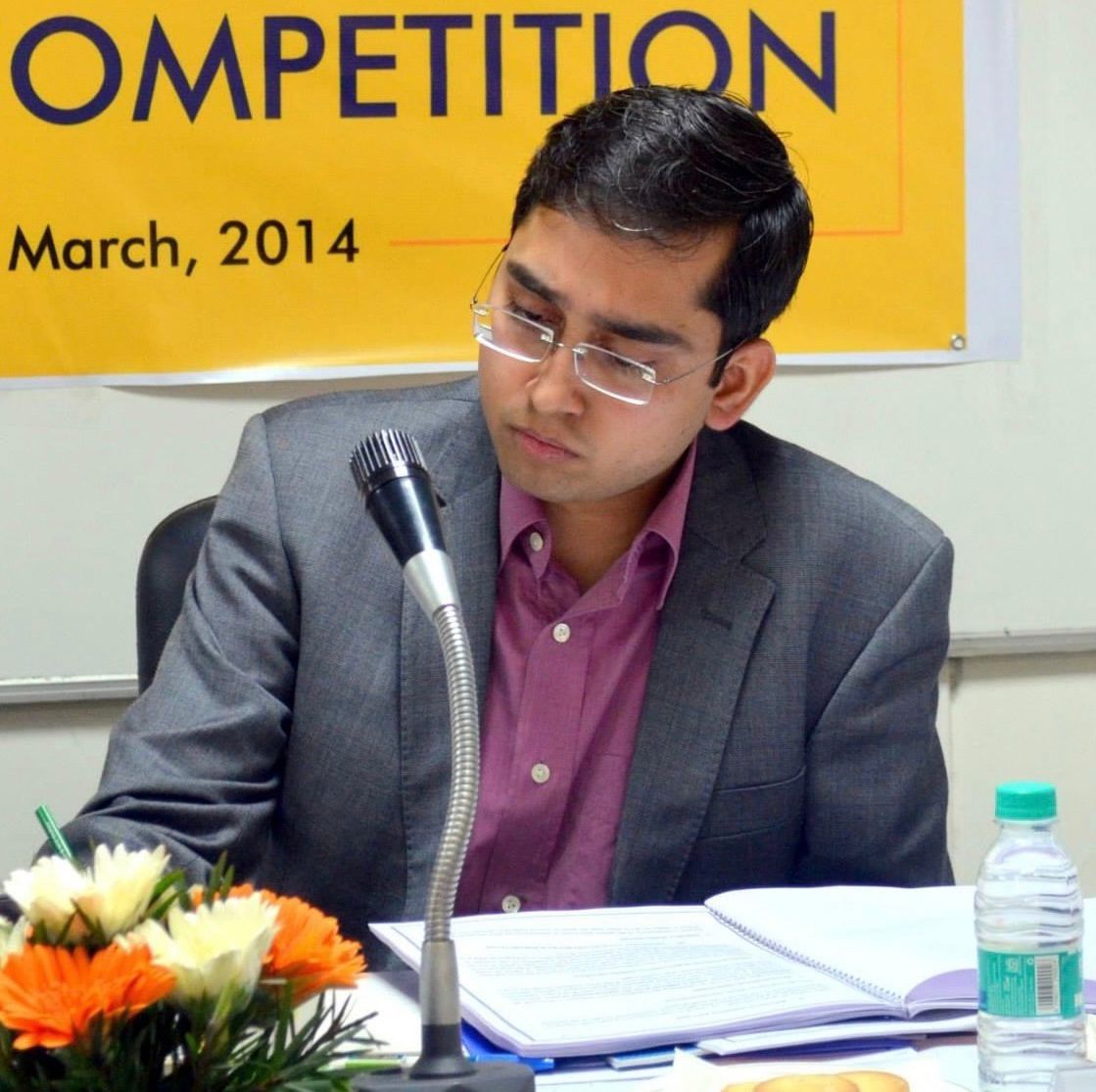
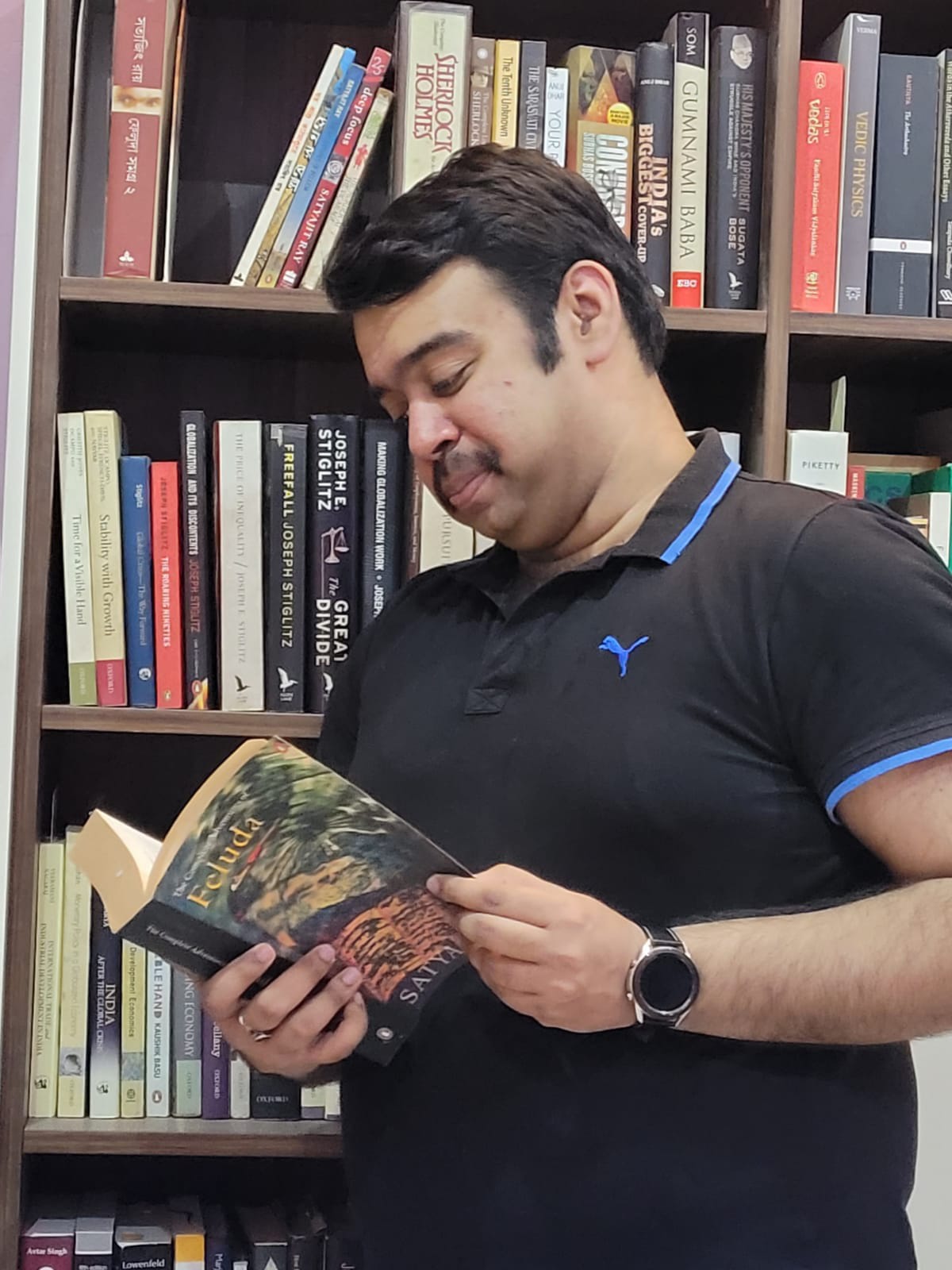
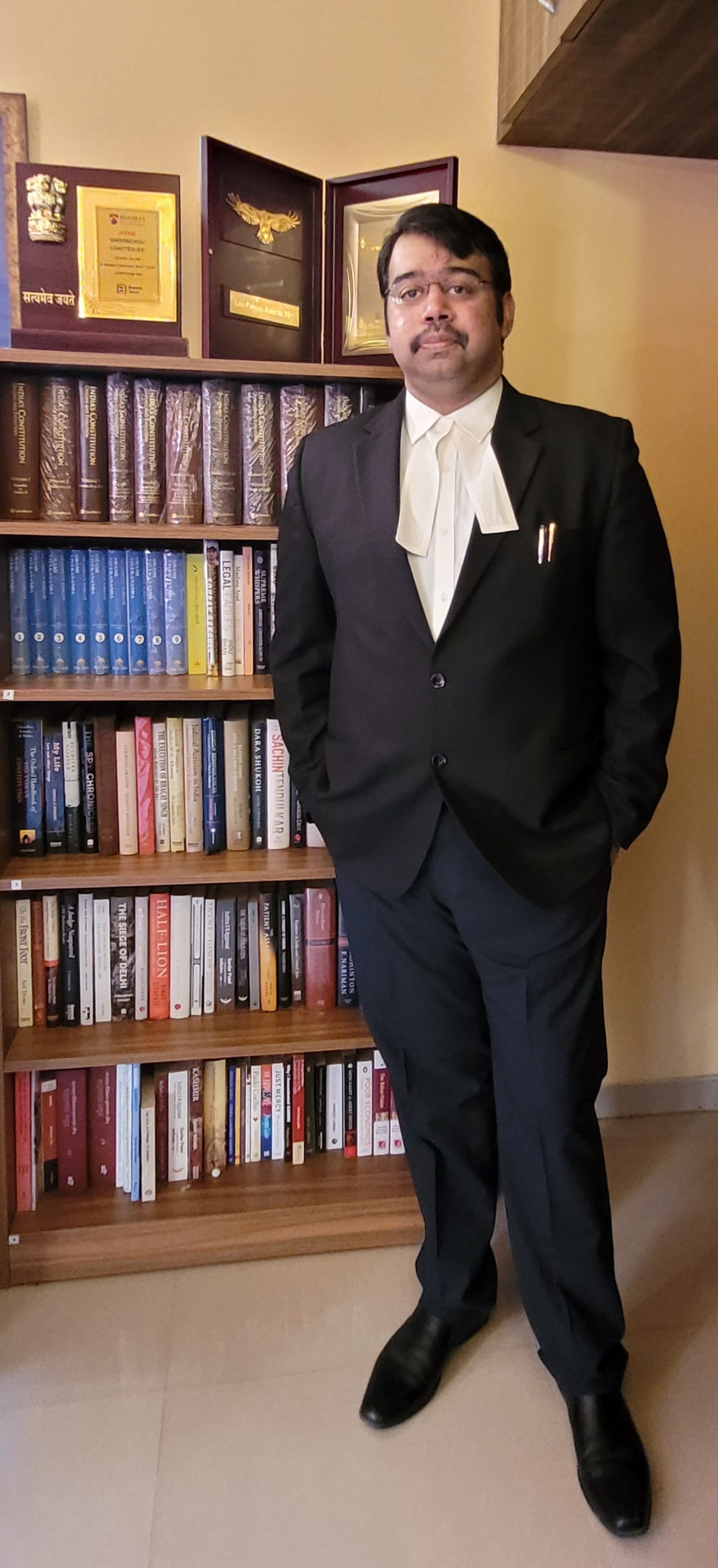
  • Mr Swarnendu Chatterjee, Advocate-on-Record at the Supreme Court of India, talking about the nuances of litigation and becoming an AoR

    Mr Swarnendu Chatterjee, Advocate-on-Record at the Supreme Court of India, talking about the nuances of litigation and becoming an AoR

    This interview has been published by Sonali ParasharOjuswi Sahay the SuperLawyer Team


    Let’s start at the beginning, how did you decide upon making a career in Law?

    When I was in school, I didn’t have even the slightest interest in being a lawyer, although my father, Mr Arabinda Chatterjee (Senior Advocate) was a practising lawyer (quite successful!) in the High Court at Calcutta. I was interested in pursuing my career in Economics or, being a Chartered Accountant. However, as rhetorical and ironic as it was, when one day (I was in the 12th grade as far as recall), I had to go somewhere in the afternoon and my dad had asked me to come to his office near High Court, as the car was parked there. When I went there, I saw my dad’s office packed with junior lawyers and clients who were busy discussing their cases. Then it struck me, that, this profession is the one for me, as it will allow me to study the social strata more and help people to advance their causes in every sense.

    At that juncture, I decided to pursue my career in law. Further, as I was a commerce student, I wanted to pursue law with B.B.A. School of Law, KIIT University, Bhubaneswar was offering the course and I qualified the entrance and graduated in 2013. I qualified for the Bar (AIBE) in July/Aug 2013. This was my journey from school till I qualified to be a lawyer.

    You hold expertise in various areas of practice like Civil Law, Constitutional Law, Insolvency Laws, Taxation Laws, Labour Law, Criminal Law, and Arbitration. You are also qualified as an Advocate-on-Record in the Supreme Court of India.  How would you describe your journey in the field of litigation so far?

    I started my career in this profession, in the chambers of Late Shri PP Rao (Senior Advocate) and after his demise, I had a short yet effective stint as a junior to Mr P.S. Narasimha (now- Hon’ble Justice PS Narasimha, Judge, Supreme Court of India).

    Both my seniors do not need any introduction, as they have been doyens of the legal profession and have nurtured so many successful lawyers. It was an honour to work with both of them.

     During my initial days, I learnt the following things in the chambers of Late Mr Rao, 

    1. Patience
    2. ability to work hard
    3. To desire something, I should deserve it first.”

    At the very outset, Sir (Late Mr Rao) had told me that, “decision to become a lawyer is a very tough one, it is not a 9 to 5 job, it is a 24-hour profession and that, it is a jealous mistress…the more you give, the more it will demand, but with time, you will be rewarded with the fruits. Initially earning will be less and there will hardly be any time for social life. If you are prepared, then carry on….else be an ornamental junior and then one day you will be nowhere.”

    During those days, Insolvency laws, particularly IBC (which came in Dec. 2016) were not there, so a majority of cases where I was involved with Sir were related to civil laws (education, land, reservation, service law et all.), arbitration disputes, some criminal matters and the matters relating to important questions of law in the realm of constitutional law. That is how I developed an interest and honed my skills in the aforesaid branches of law. 

    Once I was somewhat independent, the first matter, which I had dealt with was before the Hon’ble National Company Law Appellate Tribunal (NCLAT) and the question involved in that matter was related to the payment of gratuity to employees and workmen in a company undergoing liquidation under IBC. I somewhat had achieved success in that and thereafter I did quite a few matters before NCLTs (Delhi, Allahabad and Chandigarh) wherein I had the opportunity to study the law and the precedents minutely.

    Thereafter, an opportunity came my way, I successfully argued the case of workmen of Moserbaer India Limited (In liquidation) before NCLT Delhi, NCLAT and Hon’ble Supreme Court. 

    For the last four years or so, I have been doing cases related to IBC extensively and have appeared in matters before NCLTs (Delhi, Hyderabad, Mumbai, Chandigarh), NCLAT and Supreme Court.

    I do not however agree with the term, “expert”, as I believe that “we are students of law from the beginning till the end.” The day, the learning ends, lawyers are bound to board the flight from God’s airport (quoting Late Mr Jethmalani and Mr Nariman together)

    My journey so far (almost a decade) has been a mixed match with lots of twists and turns. However, with the good wishes of my peers, friends and blessings of my father and seniors in the profession, I can say that I have had a satisfying beginning to a race, where I intend to run to the fullest extent.

    The credit for me being an Advocate-On-Record in the Supreme Court goes to my father and my late senior, Late Shri PP Rao. They were my guiding light and a strong force, which inspired me and instilled confidence. Sir is no more (he passed away on 13.09.2017) but in every difficult situation, I try to remember his guidance and take a cue from the experience I had in his office (2013 to 2017).

    Litigation is a profession and not a job. One should remember, that the clock is the last thing that you should look at, during your work. This profession has no end time. It depends on you and how you prioritize your work. The mantra is to work hard during working days/hours and enjoy to the fullest during vacations. It is true for every gender. Nothing comes easy, at every step, there will be people to challenge you, dissuade you, demoralize you and there will be people and friends to inspire you and tell you/give you confidence that “yes you can”. Therefore, one must choose their friends/peer groups well. Hence, according to me, irrespective of the gender and issues involved in litigation, one should look at the brighter side of the profession and always strive to work hard and achieve the best.

    In your college days, you have interned at various organisations ranging from Judicial Clerkship at the Hon’ble High Court Judicature of Kolkata, to interning at reputed firms like Amarchand Mangaldas, Trilegal, to name a few. How important according to you is picking the right internship for one’s career ahead in Law School?

    Choosing the correct path is very important. Many people will try to guide you in different ways, but one should always weigh the advice with respect to their career choices. Most importantly, there is no branch of law, which will fetch a lawyer easy money and humungous earnings from the word “go”.

    In those places, they train you to be responsible and how you should work in a super competitive atmosphere. Further, you are taught how to move out of your “comfort zone” and strive toward excellence.

    Internship, especially in the formative years (4th and 5th year of law school/penultimate year in 3-year courses), plays an important role, for students to understand their niche areas and work towards it professionally. Students should remember that filling up their resumes/CV(s) with twenty to thirty internships, in my opinion, will not be useful, unless they have done something fruitful and worthy in those internships. Students should be aware and trained to draft their CV(s) properly, as in, the work/tasks done in those internships, should be properly mentioned and not as “attended court proceedings.” These sorts of sentences are vague and carry no meaning.

    Therefore, choosing of internships in the formative years, as I said, is important and plays a definitive role.
    Please guide our readers about the nuances of becoming an AoR, the responsibilities that follow, and the nature of work one can expect to take up as an AoR.

    Advocate-On-Record (AoR) is a designation which has to be earned upon qualification of one of the toughest examinations in India. It is conducted by the Hon’ble Supreme Court, on yearly basis. 

    An advocate is eligible to appear, once, the advocate has completed 4 years of practice and a further one year of training with an AoR with an experience of ten years or, more as an AoR in the Supreme Court. Therefore, a total of 5 years of experience is required to be eligible to appear for the exam.

    It is both a test of elimination and qualification and the pass percentage hovers around 10% to 15%. The pass marks in individual papers (4 papers total) is 50 and the overall candidate needs to score 240 out of 400 (therefore overall it is 60%). The papers are subjective and one needs to write answers by hand.

    The papers are (i) Practice and Procedure before Supreme Court (ii) Drafting in Supreme Court (iii) Professional Ethics and Advocacy and (iv) Leading Cases (list of cases is on the website of the Supreme Court).

    The majority have an idea that being an AoR is simple and they are only to be used as signatories to a petition to be preferred/filed before the Hon’ble Supreme Court. AoRs are NOT notaries. They hold a position of responsibility and it is a designation to be proud of. AoRs can be described as the “spinal cord” of the bar in the Supreme Court and of course, they come after the Ld. Senior Counsels who hold the fort with an AoR. Therefore, we need to be very careful about our drafts, the conduct and mannerism used and followed in Court.
    Being an AoR is not easy. It is like a “crown with a lot of thorns.” You are entrusted with drafting/ensuring the draft is according to the standard followed by the Supreme Court, filing and follow-ups with the registry, briefing a senior counsel (if required and instructed by the client) and on some occasions arguing the matter. It is a difficult but enjoyable journey as an AoR and a position to be proud of.

    You have dealt with various service matters and labour disputes across various jurisdictions. How was your experience in this category of litigation and, what would your advice be for lawyers and graduates who are interested in this area to take their skills a notch higher?

    It is a normal idea and thinking, that service matters/jurisprudence is easy. As I said, nothing is easy and it goes similarly for service matters unlike any other field of law. Service / Job for a human being is equally precious as his life. Livelihood depends on it. Therefore, it needs proper research, care and caution to present the case with precision and endeavour to get the relief, as much as possible. 

    Sometimes, the cases and the pain involved in some disputes get onto you. Remember that one has to be partisan as a lawyer and cannot get into the client’s shoes. It is very important to let the client know the possible outcome (in the fair opinion of the lawyer) of the case; even if it is negative. Some clients may go away and some may not follow the path. However, the reputation you carry will soar high and you will be regarded as an honest person. Being a lawyer is not only about the money and billing you do (it is important to an extent) but it is also important to advise correctly and try to sort out things, if possible, in the quickest and most effective manner. 

    The important skills according to me are:

    1. Being patient (earning will come but be patient in the beginning).
    2. Read the facts/papers well (do not leave any paper/fact).
    3. Research on the precedents based on the factual situation.
    4. Lastly, have your basic English and grammar in place.
    5. Sacrifice holidays/Sundays in the beginning and also work hard and if possible, for long hours without affecting the health.
    6. Observe your senior and learn how he approaches the matter and his/her presentation skills.

    If an Advocate, in my opinion, follows the aforesaid (basic and not exhaustive) things, mostly will be successful and the rest is the luck factor. If you work hard, success is bound to come (sooner or later).

    You are also a lifetime member of the Indian Institute of Arbitration and Mediation (IIAM). How essential do you believe Arbitration and Mediation is in today’s time and age and how should young professionals approach this area of practice?

    I am actually thankful to my friend, Iram Majid (the guiding force behind IIAM), who inspired me and inspires me constantly in this branch. A visionary and an excellent human being have been working very hard in this field for more than a decade now. I am happy to be a part of the prestigious IIAM.

    With the increasing burden in Courts, arbitration had already carved out its importance. However, mediation is also an important tool and we lawyers have to focus more on mediation and try and solve disputes as much as we can and to the extent possible by sitting across the table.

    Advocates should advise clients, where ever possible and to the extent possible to discuss, mediate with the other side and solve the disputes. However, cases which need arbitration and adjudication can surely be continued in Courts and await the verdict. This approach shall forward the cause of the client and also lessen the burden on the Courts.

    Young professionals should have an open mind and perceive ways and train themselves to solve and mitigate disputes along with their training to argue cases as well. An open-minded approach is necessary for successful mediation and we as lawyers should accept the approach of mediation with an open heart and mind.
    Earlier, you worked as a Principal Associate for Saraf and Partners, and now you are engaged in your own practice at Law Chambers of Swarnendu Chatterjee. How did you decide upon establishing your own practice and what are the challenges one can expect when making this move in their legal career?

    I had an amazing experience working as a Managing Associate in L&L Partners and thereafter as a Principal Associate in Saraf and Partners, Law Offices. I was in the dispute resolution team in both firms.

    In L&L, I was working with Mr Wasim Beg (Partner). It was an awesome experience for me. He is an excellent human being and has an open mind. He always listens to the ideas and promotes his team members. His forte being criminal law, I had the opportunity to hone my skills in that area by assisting him in some of the most complex and difficult matters in criminal law before the Hon’ble Delhi High Court, Bombay High Court, Esplanade Court (Mumbai), Rouse Avenue Court Complex, Tis Hazari Court Complex and Patiala House Court Complex.

    In Saraf and Partners, I had the opportunity to represent clients in Insolvency matters, like top nationalized banks, private banks and top resolution professionals, et all. I worked mainly in matters relating to Insolvency Disputes, SARFEASI, Companies Act and some matters related to civil disputes and arbitration.

    As I had the idea of counsel practice in my mind and I always wanted to argue cases, I thought, it is the best time now to branch out and do what I always intended to do. Hence, this decision to move out and establish my own chambers.

    It is not easy to move out from the comfort of the heavy pay packages which the firms offer you, especially when you have experienced something like the pandemic (Covid-19). However, sometimes, you must decide, what you want to do and make a move accordingly.

    As I have mentioned, I wanted to be an arguing counsel and practice accordingly, therefore, I planned a move at a juncture, when we can dare and say we have braved the waves of Covid-19 and even if it comes back, we are presumably well prepared with the e-courts system working well in Delhi at least.

    I intend to grow my practice as a counsel and as an Advocate-On-Record. My chambers are open for people/clients from every stratum. 

    Young lawyers, who intend to learn and work hard and most importantly are enthusiastic about litigation (not form ideas based on paycheque and the clock) are welcome to join. However, I do not intend to have a big team of juniors/colleagues. A small and efficient team works well for me.

    Finally, a word of advice for the lawyers and law graduates who are passionate about litigation?

    The only advice which I can share is litigation is not a T20 or One-Day match. It takes time to flourish. Hence, as I said, one needs patience, and the ability to work hard and research well. One should read about law, literature and the works of great advocates (like MC Setalvad, PP Rao, Shanti Bhushan, FS Nariman and so on).

    Further, write research papers, and hone your skills, so that the ability to write and bring out argumentative skills emanate from within.

    Further, do not get dissuaded by the common understanding that a particular branch of law pays well and others do not. With time, this profession rewards you with all laurels and honours provided you treat the same with all your best efforts and honesty.

    Lastly, do not go by the clock, learn to work hard and long, when required and try to advise clients properly and thereafter leave it to them for their decision; meaning do not try to make money when according to you the case has no merit at all. Even if it has 1% merit, you can go for it.

    Rest is all about how it spans out. There is a common understanding, that you need godfathers to flourish in litigation. It is not always true. If you don’t have godfathers, don’t feel out of place, then take it like Kapil’s Devils in the 1983 world cup. No one gives you a chance or has any expectations upfront, therefore, once you have the chance, make the most of it and make a mark in your career.

    All the best to team SuperLawyer for this interview. Cheers and thanks!!


    Connect with Swarnendu Chatterjee –

  • Mr Sourabh Gogna, Vice President, Professional Services Practice, at Smart Cube, and a Masters in Business Law from NLSIU, specializing in Growth Strategies and Consulting Support for Law Firms, on alternate career choices post Law

    Mr Sourabh Gogna, Vice President, Professional Services Practice, at Smart Cube, and a Masters in Business Law from NLSIU, specializing in Growth Strategies and Consulting Support for Law Firms, on alternate career choices post Law

    This interview has been published by Sonali ParasharOjuswi Sahay the SuperLawyer Team


    You have taken a completely uncharted path for somebody who has studied law. What brought you to your current role?

    Let me start by giving a background of my current profile. I work with The Smart Cube, a UK-based global research and analytics firm, catering to large professional services firms and Fortune 500 companies providing support for strategy formulation, business development, marketing and innovation. I have been with the firm since 2009. I hold an LL.B from Delhi University and Masters in Business Laws from NLU, Bengaluru. Prior to my legal studies, I studied business management with a specialisation in finance. Back in 2013, when I completed my legal studies, I had an opportunity to transition to a career in law or continue with my research and consulting profile at the Smart Cube. I realised that my passion lies in the business side of the legal industry and decided to grow our consulting business with law firms and professional services clients at the Smart Cube. Over the years, we have grown this practice to a team of 80+ people and my current mandate is to take our services to more US-based law firms.

    Tell us about your role as a strategist for global law firms?

    Every law firm is chasing top line and bottom line expansion and ways to introduce firm-wide innovation initiatives. My role is to support the law firms in defining strategic agendas and providing intelligence to execute projects and initiatives that will lead to these results. We play the role of a guide in supporting the offices of the CEOs, CFOs, COOs, CMOs, CBDOs, CIOs and Chief Innovation officers in pursuing their specific agendas. Typical areas of support are market opportunity assessment, geographic expansion, practice development, competitive intelligence, client intelligence, prospecting, marketing intelligence, innovation, indirect cost optimization, and data analytics.

    How do you support the practice development initiatives of professional services clients?

    We define practice development as the process of growing the business value for a particular practice area of a law firm or the entire firm itself. It need not result in revenue acceleration only but includes initiatives around innovation, marketing, and cost optimization. In terms of revenue acceleration, we support firms in market expansion through geographic or service expansion via lateral hiring, bolt-on acquisitions or by opening new offices in high potential locations. In terms of innovation, we support the innovation/special projects, marketing, business development, and strategy teams, in introducing innovative ways of conducting tactical work. For instance, we institutionalise competitive intelligence and key account management programs at scale leveraging our technology and analytics solutions, on a turn-key basis. Lastly, we support large professional services firms in indirect cost optimization. It is a small but growing interest area for large firms looking to bolster their bottom lines. We have a ton of experience in this space owing to our historic roots in procurement research and analytics. 

    You have supported law firms in their quest for regional and international law expansion. How does that work? Please share some insights on the thinking process of large firms.

    Law firms like any other business seek expansion. Mostly this comes in the form of geographic expansion, practice or service line expansion, new partnerships, new offices, lateral hiring, and M&As. We support law firms in each of these initiatives through our research expertise. To cite an example here, in 2018, we supported a leading US-based law firm in evaluating expansion opportunities in Canada, South Korea, and China. We provided an advisory deck to the firm’s strategy head covering intelligence on regulatory constraints, opportunity size, past success stories, growing practice areas, ongoing charge rates, competitive intensity, synergies with the firm’s US business, etc. Similarly, we supported a regional US-based law firm in exploring opportunities in different counties in California.

    Firms are looking to back their decisions with insights and data. Senior stakeholders lookout for making a compelling case for the growth initiatives and building consensus around it. They need a third-party unbiased independent review of these opportunities. We fill this need for law firms, other professional services firms, and corporate clients. 

    How do you help law firms with their profitability-related initiatives? What are the levers for law firms to augment profitability?

    To augment profitability, there are two main levers available to the firms, reducing cost or becoming more efficient. In terms of cost reduction, law firms typically find their hands tied up when it comes to salaries and bonuses as they try their best to retain the best industry talent. We saw this in 2020 and 2021 with unprecedented growth in associate and lateral salaries and bonuses. The next biggest cost head which is largely unexplored is indirect costs. We specialise in supporting law firms in reducing these costs around real estate, sales and marketing, professional and corporate services, IT & telecom, travel, facilities management, etc. 

    In nutshell, our process starts with understanding the spend categories and demand profile, supplier market dynamics, and formulating the sourcing strategy for each category. Then, we move to supplier identification, evaluation, and shortlisting, leading up to contract negotiations. We also monitor supplier performance and risks overtime to ensure that the operations run smoothly after the suggested changes. There is a whole science around spend analytics and procurement cost optimization which our researchers and data analytics experts deliver to our clients through our AI-HI approach, combining artificial intelligence and human intelligence. 

    In terms of efficiency-related support, we help in institutionalising best practices in business research and data analytics within the organisation with an aim of introducing automation, wherever possible. We also run shared services support centres for large firms in a few cases.

    Large professional services firms undertake huge exercises in competitive intelligence. Your team supports such programs. How do you do it?

    Collecting competitive intelligence is one thing but presenting and making it available to everyone in the organisation is another. Then there is the challenge of delivering timely insights which are actionable. 

    We attempt to offer actionable insights delivered to the entire organisation or relevant stakeholders by leveraging technology tools such as online portals, apps, RSS feeds, emailers, APIs to sync with your internal intelligence portals, etc. 

    If you come to think of it, it is competitive intelligence for your firm as it relates to the industries, practice areas, competitors, and clients that you want to track. It is a highly customizable deliverable that helps our clients in responding appropriately and in time to counter competitor moves. 

    We rely on information collated from trusted sources, databases, internal industry experts, and external expert interviews to deliver these insights. 

    Cross-selling is one of the most potent ways of increasing revenue growth. How do you support firms with this?

    Cross-selling is perhaps the lowest hanging fruit when it comes to revenue growth but often it goes unreaped. In our experience, there can be two reasons for this – one is cultural and the second is a lack of systems. 

    We can’t really influence the culture at the firm but we do play a role in streamlining processes and systems. Let’s say you have a CRM but there is no process to punch relevant client information and adherence to CRM updation is low. In this case, all your past efforts and relationships with the clients are not leading to future growth. We help define these processes, take the responsibility of maintaining this data for you with utmost confidentiality, and then make sense of it by conducting a deep dive into this data with a mix of research and analytics tools. We help the firms in defining and executing their data analytics practices to start with and then go about creating dashboards that throw actionable insights. Cross-selling is just one of the application areas of our data analytics work for professional services firms. 

    How do you support law firms in terms of organic revenue growth?

    In terms of organic growth, law firms can grow via lateral team hiring, opening new offices, partnerships or service lines. We can help you first access which practice area, service, or geography to select for expansion based on internal strengths and market trends. We support law firms in evaluating and executing each of these opportunities. 

    For lateral hiring, we provide a lay of the land in terms of legal talent availability and efficiency in the geography, practice area or service line. 

    When it comes to new offices, the primary puzzle is to identify the most viable location for your firm. We run macroeconomic studies and study industry potential studies to understand the growth prospects and competitive intensity. 

    For service line and practice area expansion, senior stakeholders evaluate the growth potential, synergies with existing teams, ongoing rates and profitability profile, competitive intensity, and client pools, before embarking on the expansion journey.

    Similarly, we help you find relevant partners in other geographies. These may not only be other law firms but firms in allied industries that can serve as a potential revenue source. 

    We support these areas by leveraging our deep industry knowledge of client industries, the competitive landscape in the professional services space, and the pool of specialist analysts and data analytics experts supported by our proprietary technology and information assets built over the years. 

    You touched upon the concept of key account management. What is the kind of support you offer in this space?

    In any organisation, a set of clients are identified as key accounts because either they contribute significantly to the revenue or are critical for the firm due to some other factors such as high growth potential, nature of work, prestige, etc. Companies are always looking to shield these customers from competitors and grow their own book of business with them over time. 

    To stay on top of things, lawyers and professional staff at the law firm are expected to stay current on the business dynamics impacting these clients. We, basically, develop a near-real-time insights engine for these key accounts so that you know what is going on with these businesses and what is it that you can do about it. 

    For instance, say that one of your key account companies has declared in its earnings call that it has raised $500 million and is gearing for an M&A driven growth strategy. With this information, you know that you need to have a top of mind recall for the client as an M&A advisory firm and hence you are required to initiate campaigns and conversations with the client stakeholders around the subject. I have given a very simple idea to put across my point. There are several complex use cases where the implications may not be as apparent. 

    In summary, you don’t just need this information, you need it faster than others and you need an implication-driven commentary to go with it. As a number of surveys have shown over the years, law firm clients love lawyers who have a business context. We provide this business context just in time for lawyers to react and take it to the clients. We support law firms in institutionalising this practice. 

    What are the mega-trends that you believe will offer a big runway for law firms in the future?

    The world has changed drastically in the last 2 years or so. In light of the recent events, I believe that 5 mega-themes will play out in the next 5-10 years that will lead to business growth and changes in the work/client mix. According to our research, these mega-trends are metaverse, climate change, geopolitical changes, global supply chain realignment, and government actions and regulatory outreach.   


    Get in touch with Sourabh Gogna –

  • In Conversation with Vikrant Parashurami- A Hotel Management grad who went on to pursue Law, and now heads his own Law Firm, P Legal – Parashurami Legal

    In Conversation with Vikrant Parashurami- A Hotel Management grad who went on to pursue Law, and now heads his own Law Firm, P Legal – Parashurami Legal

    This interview has been published by Ojuswi Sahay, Sonali Parashar and the SuperLawyer Team


    What prompted you to pursue a career in Law after graduating in Science from the Institute of Hotel Management, Catering Technology and Applied Nutrition, Mumbai? 

    I wanted to study further after Hotel Management and my preferred course was Law. Also, having both parents in the Legal field further prompted and pushed me to take law as my preferred choice of stream. Having Hotel Management as a previous qualification, the plan was and still is to take up work involving the two core fields of my education i.e. the legal issue relating to the Hotel and Hospitality Industry.

    Was there any specific reason to pursue a Diploma in Modern Applied Psychology after completing Diplomas in Corporate Law, Intellectual Property Law, Cyber Law and a Post Graduate Degree in Alternative Dispute Resolution? 

    Certainly, there was a specific thought process and reason for pursuing and studying Modern Applied Psychology. The Diploma in Modern Applied Psychology involved the science of human behaviour and how to apply it to everyday life and that is an essential and inseparable part of the Legal field, especially the Litigation part of it. A study of this aspect would certainly help in practice (litigation) hence the course was taken up and completed. 

    Do you enjoy training young minds? Do you believe one can always teach and learn at the same time? Would you like to share any skills or habits that you inculcated after having years of experience in teaching?

    I absolutely love interacting with young minds and students and I started teaching right after my graduation in Hotel Management. My first class of students comprised of students from my graduate college i.e. IHM Mumbai. I am a staunch believer that one tends to learn continuously while one teaches and interacts with students.

    I have taught students of the 3 and 5 years law courses and the students in 3 years course are generally from a very broad age group and interacting with such a broad age group always gives you different perspectives about law and life in general. Teaching law students has definitely taught me to be more patient, be more open to different perspectives and be open to the idea that you might not always know everything and that there is always something to learn from everyone. 

    How can a young lawyer step into international practice? Do you think working with foreign firms propels career growth?

    Personally, I got an opportunity to work with an attorney practising with a U K based law firm because one of my professors thought I would be a good fit for the work and that professor was in fact supposed to undertake that work, but due to some prior commitments on the part of that professor, I got an opportunity to work with that Attorney and learn.

    So from my personal experience, I would say that you just have to do your best whenever you get opportunities and make sure you interact with as many people as you can during and after your law graduation or for that matter any course that you take up. Working with a foreign firm certainly gives you great exposure and that certainly helps in getting you prepared for better opportunities that come your way in your career.

    You happen to be empanelled with various Insurance Companies, online platforms, and also BMC. Can you tell us a bit about your role and which role do you enjoy the most and why?

    I am empanelled with various companies including Insurance Companies as their panel advocate. I am empanelled as a dispute resolution professional with online platforms and I am empanelled as a counsel with the Municipal Corporation of Greater Mumbai commonly known as BMC.

    As a panel advocate for insurance companies, I am required to protect their interests before Courts and Tribunals. As a Dispute Resolution Professional, I am required to be an Arbitrator, Mediator or conciliator in disputes that the parties submit to these online platforms for resolution. As a counsel for MCGM or BMC, I have the responsibility of representing the MCGM/BMC before various courts as a Counsel and arguing cases on behalf of the MCGM/BMC. 

    Very frankly I enjoy all the roles and the responsibility that comes with each as all different roles involve dealing with issues under different laws and I prefer working on a variety of laws and issues. As a member of the legal fraternity and as an advocate  I believe it is our duty to give back to the society as much as we can and by taking up different roles and by dealing with issues under a wide range of laws I feel I am getting better equipped to do my part to the best of my capabilities.

    Would you like to share your experience as a member of the Managing Committee of the Advocates Association of Western India (AAWI)? What are the eligibility criteria for this role?

    As a member of the Managing Committee of the Advocates Association of Western India, I have been able to interact with advocates practising at the Bombay High Court, especially on the Appellate Side and have been able to be a part of the committee that is supposed to be the voice for the advocates and take up their issues with the Bar Council of Maharashtra and Goa and with the High Court Association. This has also helped me in understanding another aspect of being a part of the legal fraternity that requires dealing with issues faced by the legal fraternity and resolving them.

    You also happen to be heading your legal firm by the name of P LEGAL – PARASHURAMI LEGAL since October 2019. Can you tell us a bit about your law firm? And, what is the life of a Founder of a reputed law firm and a renowned lawyer like?

    I have been practising since 2012 and have started my law firm by the name P LEGAL – PARASHURAMI LEGAL in 2019. The motto of the firm is to provide Practical, Practicable and Pragmatic legal solutions (If you take a closer look at the logo of the firm, the P in the logo has 3 lines which indicates 3 P’s which in turn stand for Practical, Practicable and Pragmatic in addition to representing my surname).

    As a firm, we take up a variety of work which includes consulting as well as litigation and we represent a variety of clientele in their legal issues and disputes. As a Law firm, it is our endeavour to expand our scope of work and take up varied work in a variety of streams in Litigation as well as non-litigation, while providing legal solutions to our clients. 

    As a firm, we also try to provide law college students opportunities to get practical experience while interning with us. 

    Coming to the aspect of being the founder of a reputed law firm and renowned lawyer, I would only say that there is a long way to go and there is a lot more work that remains to be done as the Legal field is dynamic in nature, there is always scope to do more and learn more and get better every time. 

    Also, being associated with an organisation that is recognised for doing good work and being a professional who is getting recognition for good and genuine work, only adds to the responsibility and makes me strive harder to do better work. While striving to do better you only realise that there is a lot that can be done in the field in general and for society and this entire process is most certainly a humbling experience. 

    At last, would you like to give any parting advice to the young lawyers out there as to how can they practice litigation considering the current era of digitalisation? 

    The advice I would like to give to all the young lawyers, from my personal experience, is that as lawyers we should never shy away from any sort of work that comes our way and that as lawyers we should push our limits and expand our horizons. 

    As I have earlier mentioned, the legal field is dynamic in nature and as such, every advocate gets hands-on experience in dealing with the ever-changing environment in litigation and therefore is well equipped with dealing with new things. Digitisation, I feel, is one such change which every advocate should and can adopt and adapt to and moving forward, that is going to be the way all work would be undertaken. 

    For lawyers who have recently started their practice or would be starting their practice soon, they are better placed according to me as they get an opportunity to digitise all their records right from the very beginning and that would certainly work to their advantage. 

    To wrap it up, I would like to wish all the young lawyers and budding advocates and mention the two lines or sayings that have always helped me and that would certainly help many budding lawyers in practice: 

    Work hard in silence, let your success make the noise & Never say never.


    Get in touch with Vikrant Parashurami –

  • In conversation with Mahafrin Sidhwa, an Advocate practicing in Media and Entertainment laws as a Senior Member of the Legal Team at Only Much Louder

    In conversation with Mahafrin Sidhwa, an Advocate practicing in Media and Entertainment laws as a Senior Member of the Legal Team at Only Much Louder

    Let’s start from the beginning, are you a first-generation lawyer? What gravitated you towards choosing law?

    I am a second-generation lawyer, my mother is a trademark attorney and many of my family members are advocates and Senior Counsels. 

    What truly gravitated me to do law, was my keen interest in the business law paper during my B.Com days. That’s when I got acquainted with what law truly was and that has been my first step towards an interest in this direction.

    I was almost certain I wanted to pursue post-graduation and a specialization in something. I was least inclined towards M.com as that was mainly pursued by persons wanting to be professors, MBA required a fair number of entrance exams and you have to be inclined towards business and administration or marketing and I had no such inclination. When it came to law, I had a fair number of examples around me of successful lawyers and hence I didn’t mind pursuing this line. Moreover, I am a very rights-based person, “no harm in knowing the laws of the land” is what I thought.

    Do you think Law as a profession gives hard time to young lawyers? How can one overcome the ‘unsatisfied feeling’ of self? 

    I think every career path has its own set of challenges and is ultimately the “survival of the fittest”. I also feel everyone’s path is different, some young lawyers, may face herculean challenges and other might strike success a lot easily. I do feel young lawyers with no Godfathers in the business might struggle to get their break, especially on merit and it may take years to find ones footing in the profession. 

    The key to overcoming any “dissatisfaction” in the legal path is to keep at it. and failure or criticism should not deter one from prodding on. 

    Even if someone throws you under the bus or puts you in a tough spot, know that this too shall pass. Keep going on till you see the light!

    How would you describe your shift from M&A to the M&E sector? How important is it to find your right calling?

    I would consider it most important to find the right calling, as whatever you do, you should be able to sustain in the long run, in fact till your death bed.  No knowledge will ever go to waste. 

    My shift from M&A to M&E was a turning point in my life. I had a very basic foundation of M&A and understand documents like a Share Purchase Agreement or Loan Agreement and have managed to work on those as well post specializing in M&E, but M&E is what I could never get tired of. The knowledge keeps evolving considering how new platforms and technology are developing.

    You have been a part of various distribution and acquisition deals all over the world from Russia to the USA to South Africa. How well did IN10 Media Private Limited push your growth curve? 

    IN10 Media is a company which runs EPIC Television channel famous and one of its kind for info-entertainment. When I joined the company, it was in the process of its own growth since the applications EPIC ON and Docubay (a documentary streaming application) were nascent, and wanted international presence with various application integration in devices,  payment facilities with telecom partners through direct carrier billing middle entities, payment gateway and discount vouchers, along with forming a channel of its own with other content partners like Amazon etc. The Docubay app would acquire content from content partners all over the world on a day in and day basis and it’s important to be careful to acquire as many rights as possible such that when content is distributed there are no fetter or special approvals required. The sure volume and variety of these agreements gave me a steep growth curve, and not to mention other responsibilities towards the production of web series and acquisition of content for its allied channels and legal day to day issues of its news handle, Latestly.

    What is the main role of any lawyer working in Media and Entertainment Law? Can you tell us something about your current role? How would you describe yourself as a senior member of the team at your current place? 

    The Role of a Media and Entertainment lawyer is very demanding and requires one to work at the spur of the moment. My current role is that of a senior member of the legal team at Only Much Louder. Here, I focus on representing various brands like Facebook, Tinder, Bumble, YouTube etc., as well as celebrities, influencers writers, and show-runners like Dolly Singh, Abish Mathew, Rahul Subramaniam, Sumukhi Suresh etc. 

    Here I am also involved in various Writers, Director and Actor Agreements as also Endorsement Agreements or appearances at events and even production agreements for literary works created by the talents of the organization. At times, I also distribute content on platforms or towards entertainment transport facilities towards a pre-recorded stand-up comedy show recorded by the talents of our organization. I do any other technical agreements relating to IT and other ancillary documentation or advice towards trademarking and any other intellectual property-related advice etc., from time to time.
    I am a lawyer, who believes in being fair and I do what’s best for the entity or person I represent and I aim to get the best bargain in any deal with a solution-oriented attitude. I also believe that I give gratitude and utmost respect to my seniors and subordinates.  Sometimes an artist or an influencer or even a business person may not understand legal terms and their repercussions, I take time to explain these legal terms in layman’s language. When it comes to subordinates, I am fairly patient with newcomers and learners and have shaped a fair number of young media and entertainment lawyers without being selfish with my knowledge.

    After moving to OML Entertainment, you represented several renowned social media platforms like Facebook, Tinder, Bumble, YouTube, etc., and on the artist management side, you represented a fair number of stand-up comedians, writers and directors. Do you believe hard work always pays off? Would you like to drop a hint about your next big step?

    For me Work is Worship, it’s about giving your 100% to what you do and enjoying what you do. Once you enjoy what you do work won’t be considered “hard” if you are acquainted with its nuances and are focusing on continuous evolution, work won’t seem that difficult and will become a way of life. Hard work does pay off definitely, Rome was not built in a day, the struggle is a part of life, but I don’t believe in overworking or burning the midnight oil or a “show/pretence of work or abilities”.  I believe in work-life balance and to keep evolving and learning aspects of law and serious observance of disputes and issues in the legal aspects of the media and entertainment industry. 

    My next big step, none that’s planned as of now on the professional front. I believe in taking small steps, “slow and steady wins the race”.

    How interesting is it to advise and contract vetting for Artists mainly comedians and their appearances and performance for shows? Would you like to share any story where you worked for your favorite Artist?

    As already mentioned, the key issue in dealing with an Artist is, that they may not understand legal terminologies and the repercussions of clauses in the agreement that don’t favour them, so you have to be patient in explaining the terms and conditions in simple words such that they can give instructions which can be incorporated in the agreement. Besides the current talent of influencers and comedians,  I have worked on contracts for a fair number of A-listers like Neha Sharma, Saif Ali Khan, Hrithik Roshan, Dia Mirza and the likes. I will be very honest, I am not technically “star-struck” as I have dealt with all sorts of talent – be it upcoming or famous and established personalities. 

    Also, they are all normal people like us and some of them are extremely humble and listen to what is told. I think for me its more about the kind of deal or structuring of a document that excites me the most. Gratefully, there were several of those recently relating to comedy related live sports content with HOTSTAR and in the past various deals for the HRX brand and their association with Curefit and Cult fit.

    Do you believe Bosses and work environment play a crucial role in polishing the skills of a good lawyer? Would you like to give any parting message to young lawyers?

    Yes a good Boss is like a God sent Guru, but a selfish, rude, difficult, insecure frustrated Boss is a living curse, it might kill your morale to pursue your goals. Moreover, toxic work cultures and over working might derail you.  My message to Young Lawyers is to first have a goal, next would be to work on gaining knowledge by themselves and next to have strong observation skills and lastly to continuously evolve and stay updated with developments in the line of law they wish to specialise in. 

    The media entertainment sector has so many areas from publishing of music to sports and event as also digital show and acquisition/ licensing of softwares, artist management, production and law focusing on television and news etc. You have to endure different aspects of the industry you chose and “Keep at it”, success does not come overnight.

    Connect with Mahafrin Sidhwa:

  • In conversation with Anirudh Suresh – Founder and Partner at Aristo Legal and featured in the list of “Top 50 Disputes lawyers in Asia” by Thomson Reuters

    In conversation with Anirudh Suresh – Founder and Partner at Aristo Legal and featured in the list of “Top 50 Disputes lawyers in Asia” by Thomson Reuters

    This interview has been published by Sonali Parashar and the SuperLawyer Team


    How would you like to introduce yourself to our readers?

    I am Anirudh Suresh, Founder of Aristo Legal, a full-service pan Indian corporate law firm. My success story as a first-generation lawyer was recently published by Brut as I was recognised among the Top 50 Disputes Lawyers in Asia (Litigation and Arbitration) by Thomson Reuters on the basis of my work, market feedback and client recommendations. My interest in law and legal enforcement goes back to my 10th grade. While I don’t exactly recall the genesis of this interest, I sure till date remember and feel its intensity.

    We get that being a first-generation lawyer, it is difficult to find one’s footing. You started off as a Litigating Lawyer and then you moved up to become a Corporate Lawyer. Can you share what all struggles did you face while being a Litigating Lawyer and then as a Corporate Lawyer? What all skills did you learn as a Litigating Lawyer which are now assisting you in your current role?

    As a Litigating Lawyer for the first 5 years, I was working 8 AM to 8 PM, 365 days a year but I never complained about it as I was involved in my work deeply and enjoyed the learning experience step by step. It’s a matter of interest, at the end of the day. I used to appear before all courts in Bangalore for all sorts of matters and this helped me in developing a diverse and strong foundation, eventually allowing me to head the Delhi office of Bathiya Legal successfully as we had a range of matters under the Companies Act, Insolvency and Bankruptcy Code, and Competition Act. I never felt any of these experiences to be a struggle as I enjoyed the work and liked what I was doing. In fact, it never felt like work either. So, the knowledge and court craft I had developed as a litigation lawyer enabled me to successfully implement it for the corporate litigations matters that I took. This journey has given me the confidence to handle any matter before any court.

    You’ve accomplished so much in your career in such a short time; what skills do you think a law student should develop in order to pursue a career in Corporate Law?

    Firstly, I feel like I still have a lot to achieve. I would recommend that law students read the entire commentary on a subject rather than reading only the textbook. This will mean that they would have read thousands of pages, and this reading habit will help improve their drafting skills and legal communication skills. And the hard work put by them in reading so many commentaries will bear fruits when they start practising. Further, they should meet lawyers in different practice areas and understand the practical aspects of those areas. For this, I would recommend students complete at least six months of internship under a corporate law firm or a corporate lawyer. 

    You have graduated with B.A.LL.B. from B.M.S. Law College, and then went on to pursue your PG Diploma and Masters from National Law School of India University and O.P. Jindal Global University. How important do you think it is for a law student to pursue Masters? Does it help one in his career trajectory?

    I often see law students rushing to get a master’s degree immediately after graduating from law. I would recommend that the students should start their practice in a particular area of law and get accustomed to a particular practice area as a working professional and then pursue Masters in that relevant practice area. This would make the master’s degree have value as your work experience and your interest would align with it. 

    You have also led the Delhi Office of Bathiya Legal for about 3.5 years. What exactly were your responsibilities while you were there? How would you describe your experience of working at such a reputed law firm? 

    My responsibility as the head of the Delhi Office was to handle all the corporate litigation matters in Delhi, Jaipur and Chandigarh and work closely on M&A and Private Equity transactions when the buy-side or the sell-side was based in Delhi. I regularly appeared before various forums such as Supreme Court, High Court, NCLAT, NCLT, DRT, Consumer forums, etc. And this journey helped me develop myself as an advocate and realise my potential. I will forever be grateful for the platform that Bathiya Legal gave me. The amount of confidence, trust, and faith that the Partners put in me, and I hope I have reciprocated the same by ensuring positive results with the best of my efforts. I was very much impressed with the values, ethical standards and calmness to approach of the Partners which I too hope to implement. I can go on writing volumes about the positive influence this firm has had on me.

    Your work as a corporate lawyer has earned you a well-deserved appreciation in the legal industry. What have been your key learnings to date? And what does it feel like to be recognized among the Top 50 Disputes Lawyers in Asia (Litigation and Arbitration) by Thomson Reuters?

    I would like to reiterate that I still have a long way to go as known is a drop and unknown is an ocean. My key learnings to date would be that Client satisfaction is key and this can be achieved with extensive research and ensuring timely deliverables. And I feel that my work in the past which involved getting successful reliefs for clients in high profile precedent-setting matters has been acknowledged by this recognition bestowed upon me by Thomson Reuters, Asian Legal Business. 

    It is now close to a decade that you’ve been in the legal profession. What do you think is the difference between the law profession right now and the profession a decade back? And, what all changes would you like to see in our Indian Law Profession?

    The legal profession has completely changed in the past decade. Both substantively and procedurally, one could probably call it one of the most dynamic and important decades. Many new age laws such as the Insolvency and Bankruptcy Code, Companies Act being overhauled, Data protection Law etc. have come up and they are constantly subject to change based on different interpretations given by the courts every other day or based on amendments passed by the government to keep pace with the rapidly growing economy. In terms of practice, the profession and the professionals have been highly digitalised, and it becomes vital for lawyers to be tech-savvy.  

    I would like to see more courts make way for hybrid hearings such as NCLT and NCLAT. The normalization of hybrid hearings would be a much welcome development towards implementation of the online dispute resolution. I would also like to see long term internships that range at least 6 months being made mandatory for law students during their final as it helps them to get a true picture of a particular practice area.

    What would be your parting advice to the budding lawyers? How would you like to inspire those who are unsure about their future in the profession?

    Read, read, read. One should find what motivates them to keep them going. A healthy relationship with colleagues, respect towards seniors and ensuring timely deliverables to clients should be a habit rather than a mode of precaution. Never look back and compare yourself with peers, just keep yourself occupied all the time and the work you do will automatically lead you to the path suitable to you. 

    Get in touch with Anirudh Suresh:

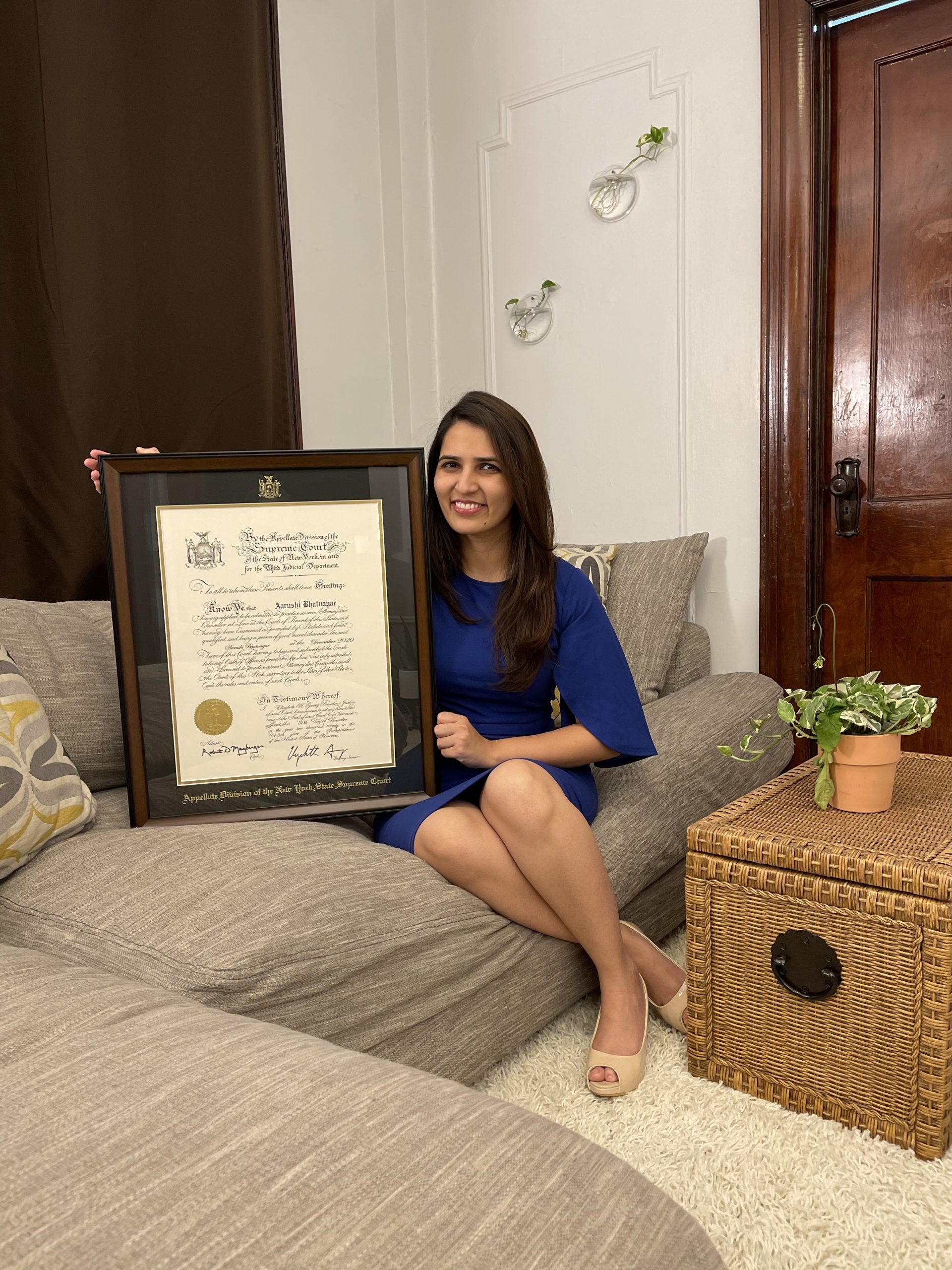
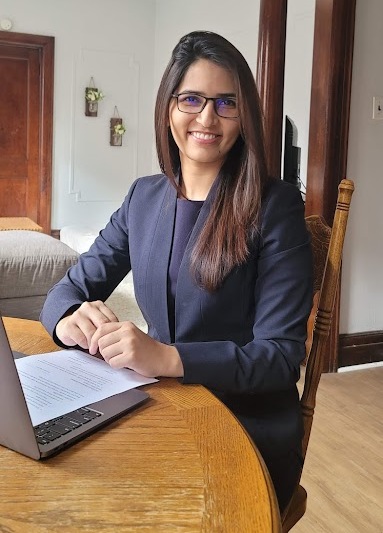
  • Ms. Aarushi Bhatnagar, Managing Attorney at PUNHANI LLC on LLM from NLU Jodhpur and NYU, cracking the NY state bar exam and practising immigration law in the United States

    Ms. Aarushi Bhatnagar, Managing Attorney at PUNHANI LLC on LLM from NLU Jodhpur and NYU, cracking the NY state bar exam and practising immigration law in the United States

    This interview has been published by Sonali Parashar and the SuperLawyer Team


    If we start from the beginning, were you always academically diligent? Did you always want to pursue law? What other career would you have chosen if not law?

    I have always considered myself a sincere but average student. I was not excessively academically inclined during my school years. Instead, my interests were directed toward art-related extra-curricular activities. Accordingly, my slam-book career goal was to be a fashion designer. At the same time, I had a strong family background in law, with multiple family members being in judiciary and litigation. Being amidst frequent family discussions involving topical legal issues, I gained valuable insight into the legal world and its opportunities. Ultimately, my interest in engaging with current affairs and doing my part to help the people around me pushed me to pursue law as a career.

    You have completed your master’s from NLU Jodhpur. Would you like to share a few tips with the students who are preparing for CLAT? How different is the preparation of CLAT PG from that of UG?

    The best advice that I can give to students preparing for the CLAT is to do as many practice tests as possible. In my experience, that is the key to cracking any competitive exam. Of course, studying and knowing the basic material that will be tested in the exam is also essential.

    I found the CLAT PG preparation to be easier than the UG preparation. The subjects tested in the CLAT PG exam are part of the law school curriculum. If one has studied and built a strong foundation in the relevant law subjects during their undergraduate years, the CLAT PG exam preparation becomes a revision exercise. On the other hand, students preparing for the CLAT UG exam are right out of high school with no formal exposure to legal academia. In such a situation, enrolling in a good entrance prep course is worth considering.

    Despite having an LL.M. Degree from NLU Jodhpur, you decided to pursue another LL.M. degree from NYU and had the flexibility of designing your course structure (subjects) there. What major considerations should one take into account while designing their course? What extra efforts have you made being a foreigner?

    Many LL.M. programs provide the students with an opportunity to design their coursework. However, one must consider several factors while making this decision. First, the coursework should align with the candidate’s short-term and long-term career aspirations. A career in law is often path-dependent, and the first job often charts the path for future professional endeavours. Second, it is essential to choose an area that complements the candidate’s prior experience. Choosing a field that builds upon the existing credentials ensures that one can make the most out of a short and rigorous LL.M. program. On the other hand, LL.M. also provides a unique opportunity to diversify into new areas. It is essential to consider one’s areas of interest and the corresponding job opportunities while striking that balance.

    As a foreigner, one should put extra effort when making space in a completely alien environment. I actively participated in networking events (both within and outside the university) and pro-bono activities, which gave me the familiarity and visibility required to succeed in the US job market. At the same time, being flexible and open-minded facilitated my venture into immigration law, a field that I have since fallen in love with.

    Can you share in brief about your current role and responsibilities as a Managing Attorney at a boutique law firm in the NJ/NY area? How do you manage to maintain a work-life balance?

    As the Managing Attorney of a boutique law firm, I have a diverse and dynamic set of responsibilities. I am responsible for onboarding clients, managing the cases from inception to completion, and handling the firm’s day-to-day operations. I advise multinational corporations, business units, and individuals on employment-based and family-based immigrant and non-immigrant visa petitions and applications. My role also entails hiring and training junior staff, including attorneys, law clerks, and paralegals.

    Compartmentalizing my work and non-work activities helps me maintain a good work-life balance. While at work, I dedicate myself to planning and executing my tasks efficiently. Breaking complex cases and procedures into simple daily tasks helps me leave the office with a sense of completion and accomplishment. It also ensures that work anxiety and stress do not spill over to my personal life. During weekends, I like to travel and engage in cooking, arts, and crafts. Having an active lifestyle rejuvenates me and prepares me for the upcoming work week. However, there are certain times when maintaining a work-life balance is challenging. In those times, having a good support system at home helped me keep my spirits up.

    You used to work as an Assistant Professor at Banasthali University, Rajasthan and now you are working in a law firm. What all struggles did you face adjusting in Banasthali and then in a Law Firm? What all things and skills did you learn as an Assistant Professor which are now assisting you in your current role as a Managing Attorney in your Law Firm?

    Teaching at a university and working in a law firm is different in certain aspects. As a teacher, I followed a well-structured curriculum and spent all my efforts ensuring that my students remained interested in the topic and benefited from the course. On the other hand, managing a law firm requires me to handle unanticipated challenges daily. However, I have enjoyed both these roles and did not face any issues in transitioning from the former to the latter. Instead, I found that the teaching skills I developed in Banasthali come in handy when I train new hires at the law firm.

    Would you like to share a bit about the field of immigration law? What is the future scope and struggles involved in the same?

    Immigration is a very dynamic field of law. It involves securing and defending the rights of immigrants from various countries and backgrounds. The legal landscape is constantly evolving, and the changes substantially impact many companies and individuals. The ongoing pandemic has amplified immigration-related issues by forcing many firms to downsize and leaving many immigrants jobless and without a livelihood. Given the ever-increasing importance of the field, it is (arguably) one of the most attractive and rewarding career paths for law students.

    You also cleared the NY state bar exam. How strenuous was the preparation? What are the eligibility criteria for the exam?

    Preparing for the NY State Bar Exam is like a full-time job. It was one of the most challenging tasks I have undertaken. Enrolling in a good bar prep course is extremely helpful.

    There are various qualifying methods to sit for the NY state bar exam. The most common criteria include graduating with a first law degree (J.D.) from an American Bar Association-approved law school. However, in the case of international students/foreign-educated lawyers, the eligibility criteria are pretty cumbersome. All foreign-educated lawyers must submit an online credential evaluation request along with the required documentation to the Board of Law Examiners. One should submit these documents even before the start of the LL.M. program because the evaluation process is time-consuming. LL.M. students must also fulfil the specified credits requirements via classroom courses in substantive and procedural law and professional skills. The official website of the New York State Board of Law Examiners provides the detailed eligibility criteria and application process.

    What will be your parting words for our readers? 

    Focus on having both career goals and life goals. Be ambitious and entrepreneurial but remember that professional success depends heavily on working smart (in addition to working hard). Reach out to people and take their guidance, rather than spending time reinventing the wheel. Be patient and diligent, and success will eventually come. Lastly, prioritize creating a wholesome life experience as it is the journey that counts.


    Get in touch with Aarushi Bhatnagar –

  • In conversation with Manasi Chaudhari, founder and CEO of Pink Legal

    In conversation with Manasi Chaudhari, founder and CEO of Pink Legal

    This interview has been published by Sonali Parashar. The Interview was taken by The SuperLawyer Team.


    Let us start from the beginning, what prompted you to pursue law? Is it true that you are a first-generation lawyer, or did someone from your family inspire you?

    I knew I wanted to be a lawyer since Class 8…don’t ask me why! It was just a gut feeling! Actually, I think it is in my genes. My grandfather was a judge in the Bombay High Court. I remember going to court with him once, when I was five, just to visit. But apart from that, I grew up in Hyderabad. Both my parents are from different professional fields, and I didn’t have any direct contact with the law. So, in a sense, you could say that I am a first-generation lawyer although I come from a family of law. 

    From practising commercial and real estate litigation for three years in the Hyderabad High Court to interning at the Supreme Court of India with Hon’ble Justice Chandrachud. Is there any particular incident that pushed you in the direction that you are in today?

    I had always admired Justice Chandrachud but I never imagined that I would get an opportunity to work under him. It had felt like a distant dream until it really happened. I was feeling saturated with the litigation practice and didn’t see myself deriving joy from my work. Therefore, I decided to try a new path and do something I have never tried earlier. I was passionate about women empowerment and gender equality even in law school. I knew that Justice Chandrachud was on the bench for the Section 377 and Sabarimala temple cases and it seemed like the perfect opportunity to explore my passion, under his tutelage. That’s how I took off for Delhi and found myself in the holy grail of law. 

    Manasi Chaudhari

    You are committed to improving women’s access to legal services and that is reflected in your initiative, Pink Legal. Can you tell us how things turned out when you decided to begin your own initiative? 

    I launched my initiative Pink Legal (an award-winning and India’s only platform to empower women legally) in March 2020. Nyay’ri is an extension of Pink Legal. When I started Pink Legal, I had no idea that it would grow the way it has. I just wanted to create a platform where women can understand their legal rights in an easy manner, and I hoped that at least some women would know that this platform exists! But I guess destiny had other plans and Pink Legal catapulted from a basic platform to an entire organisation for creating legal awareness and providing access to legal services for women. I was suddenly being called a ‘legal entrepreneur’ and had to learn the basics of running an organisation, while on the job, with no pre-requisite MBA! This journey has helped me grow, build a team of fabulous young people (called the Student Squad), and take one step closer to my dream of seeing a gender-equal world. 

    From litigation to establishing your law firm to launching Pink Legal and collaborating with Project Naveli, this has been your journey thus far  Was the goal of forming a team to empower women always in mind, or did it come as a surprise?

    The goal has always been to create a gender-equal world. The path to this dream, through Pink Legal and Nyay’ri, is something that I discovered along the way! I certainly believe that if we all join hands we can accelerate our goals much faster, through collaborations with like-minded people and organisations. Pink Legal already has a growing team of thirty spread all across the country. I would love to expand this further, even across the globe, and make it a movement!

    Would you like to tell us more about your law firm’s practice and what your firm’s main focus is now? 

    I started my law firm (Manasi Chaudhari & Associates) in 2020, the same year as Pink Legal. My firm focuses on business and transactional law work cutting across various sectors such as media and entertainment, intellectual property, information technology, and anything to do with transactions. We have had the good fortune of attracting clients like top movie-production houses in South India, leading national FMCG companies, upcoming start-ups, and business groups. I enjoy my professional practice of advising my clients, negotiating deals, and ensuring that their rights are secured. 

    Is it difficult to balance the demands of running your own law firm and the duties and responsibilities of the CEO of Pink Legal?

    It sure is challenging, but I wouldn’t have it any other way! One is my profession and the other is my passion, but both are equally demanding! There are days when I ace the balance and have a lot of free time on my hands. There are other days when work stretches into the night and my mind refuses to shut off. Sometimes, I feel like I am getting pulled in too many directions. However, I learned a very important lesson on time management from Justice Chandrachud. Despite being one of the most important people in the country, he would always make time for everything, including checking up on us if we weren’t feeling well. So anytime I start losing track, I always think “If Justice Chandrachud can make the time, then I most certainly can!” 

    You are going down in history! From being named as the ‘Legal Entrepreneur of the Year 2020’ by Business World to receiving the ‘Digital Women 2020 Award’ by SheThePeople and Google. Where do you see yourself in the next 10 years, given your affiliation with global players like Puma, Instagram, and Tinder? Are you planning on something big or staying low at the moment? 

    Thank you for your generous words! I am not much of a planner. I believe in the saying that ‘life happens to you when you are busy planning.’ Therefore, if you ask me even about the upcoming 1 year, I will not be able to tell you anything! I have goals and ambitions, but I don’t plan for them. I can probably visualise where I want to be, but how I’m going to get there is a puzzle that even I am looking forward to solving! Sometimes, we get carried away with our dreams and professional goals and mistake them for life. Life is much more than that, and I want to truly live each and every day of it!

    Do you have any advice for our readers who dream of bringing a change?

    Yes, I have a lot of preaching to do! (Just kidding) I would give two pieces of advice: First, identify your passion and work towards it. It doesn’t have to be big. Every step counts and every drop makes the ocean. Most people ‘feel’ they are passionate, but when it comes to actually doing something, they don’t want to put in any effort. They’d rather just reshare an Instagram post. It’s up to you to decide if you want to be a real warrior or a mere keyboard warrior!

    Second, never underestimate financial independence. It is easy to get swayed by clickbait articles claiming ‘XYZ left his corporate job to pursue his passion.’ Great for XYZ, but how will you focus on your passion if you have to worry about paying your bills or you don’t have the independence to decide how to spend your money? Follow your passion by all means but secure yourself first!


    Get in touch with Manasi Chaudhari:

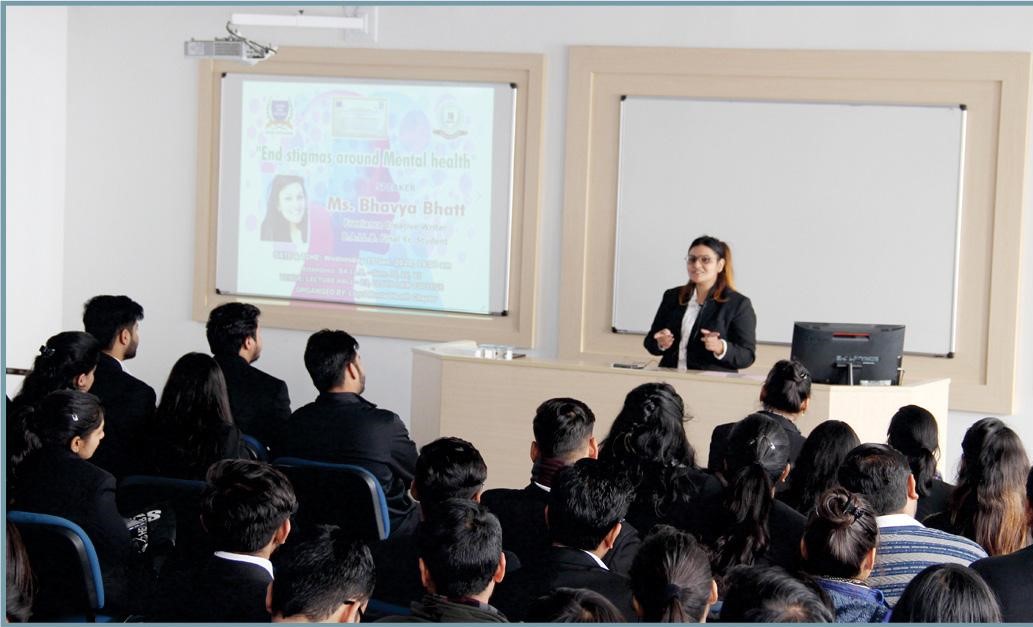
  • In this interview, Bhavya Bhatt, a Business Development Consultant, freelance writer, blogger at “Legally Herself”, answers questions by describing her own path to online freelance writing and mental health advocacy.

    In this interview, Bhavya Bhatt, a Business Development Consultant, freelance writer, blogger at “Legally Herself”, answers questions by describing her own path to online freelance writing and mental health advocacy.

    This interview has been published by Sonali Parashar. The Interview was taken by The SuperLawyer Team.


    What is your current role? How exciting is it for you? How do you describe your legal career?  

    My current role is that of a freelancer, where I am freelancing with lawyers, law firms, and other non-law companies/start-ups. My work at this point revolves around content creation, brand building, strategy, and business development. I, in all honesty, did not anticipate indulging in all of this when I passed out of law school. 

    This role is daunting with it being exciting at the same time. The reason I say this is because freelancing comes with its pros and cons, that one does not know unless they experience it first-hand. It gets challenging and I’d have to say I am still a work-in-progress because I learn through my mistakes whether it’s with client on-boarding, drafting my agreements, strategizing Workplan, or reviewing my work. The exciting part of all of this is that I get paid for my efforts without being subjected to constant stress and anxiety. I work when I feel like it, I get to do my solo trips while I work. I love the flexibility that my role provides me with. 

    Coming to my legal career, I wanted to be a Cyber Lawyer, but the Pandemic opened new doors for me and there’s no looking back now. However, I would still like to believe that I am in the game as much as my counterparts are. The work that I do is very different from what is expected out of a law graduate, but that’s why I like it. I work alongside lawyers and law firms, network with a lot of legal professionals, hence I am still in touch with the legal side. Since my work also involves legal content writing, I update myself quite often with the amendments, laws, case laws, or just legal news in general. With the dynamic role that I have gotten myself into, a legal career is a part of who I am, and there’s more to it.

    Why did you choose law as your career? How has law benefitted you in shaping your path? If not the legal profession, what would be your go-to career plan?

    I was 14 years old when I decided I would do anything and everything to not study Math in the future (I was that petrified of it). What gave the 14-year-old a purpose was an incident when I stumbled upon a book on Torts and other law-related subjects at my friend’s house. It was her sister’s.  I gave it a read, and oh boy! My mind was blown by the language I read because I hardly understood anything. 

    It was only after reading a few pages of these law books that I started concentrating on Social Sciences in school. I wanted to be in a position to understand those books I had just read.  What confirmed my decision was when I got to know I could be very far away from Math if I became a Lawyer! I guess that was all the inspiration I needed to choose law as my career. 

    Today, I am very distant from the traditional legal practice that law graduates usually indulge in and it’s the chances that I took on myself that have helped me pave my path. However, all the credits for whom I have become today, go to choosing law as a career. Joining a law school has given me that confidence, I know I wouldn’t have gotten if I were somewhere else. Five years in law school is such a long time, that you do end up contemplating who you are, and where you want to go. Studying law has made me more intellectual, practical, and rational, and it’s these qualities that have helped build me as a person.

    Coming to the last part of this question, there’s no specific answer I can give to this. My career plan right from when I knew the meaning of ‘Career’ was to study Law and become a Lawyer. Now that I am it, I am also into Business Development (Outreach), Content strategizing, Writing and I did give recruitment a try as well. So, if not the legal profession, I’d be a writer, or a Business Development Professional (which I anyway am, so…), or maybe an Artist.  

    Bhavya Bhatt

    How hard is it to branch out from your chosen profession? Do you think being labelled under one profession is burdening?

    It is hard to branch out from the profession that I had initially chosen. You become a subject of mockery, discussion because who goes to a law school for five years only to quit two good jobs and pursue professions that are nowhere close to law? It also becomes a challenge because your whole world is new out there, with new people, different work cultures, and most importantly, no one to guide you. But in all honesty, I like it. 

    I get to work with people from multiple professions, different locations. My work doesn’t get monotonous because my clients are just not from Law, but also the Medical, IT, Architecture, Real estate, Economics, Life Sciences, Fashion, Food industries. Every project of mine is so different, that I don’t feel bad about not pursuing a legal job out therLabellingeling under one profession becomes burdening if you deem your job as a burden. Like, I know a lot of my friends out there, who are pretty happy with their litigation practice, corporate law jobs. As for me, I know I would have treated my legal job as a burden because that’s not only where I see myself. I like the dynamicity of my profile, so yeah! The burden is when and if you think it is. 

    You were also a “technical content writer”. Was that challenging for you being a law student?

    I did have a few clients for whom I indulged in technical content writing. Their requirements were very different from what I was initially doing because I started with only legal content writing. As a Law student, the maximum technicality I could get into was to analyze case laws, the rationale of the judgments! That transition was a learning period I’d say. I soon started with creating how-to manuals, project plans then took to a few tech-related projects where I had to very deeply study IT-related concepts. Technical content writing was not challenging. What was challenging for me was studying technical concepts and easing it out through my writing for my clients and also studying law since it was my main hustle back then. 

    How important is mental health for an individual? How did you venture into Mental Health Advocacy? Would you like to highlight a few dos and don’ts to be followed in professional life?

    Mental Health is very important for everyone. It’s a no-brainer! One can still manage to work with an injury in the hand or walk despite being sick, but when you’re mentally unwell, even waking up can seem the biggest challenge. I did not venture a lot into mental health advocacy until I was diagnosed with Clinical Depression. The way people were around me, the way I was made to feel about my anxiety and panic attacks was how I understood the importance of mental health and the need for awareness around this. That’s how I started the Mental Health Society in my law school, and actively started taking care of my mental health, alongside helping others in understanding its importance. 

    We are all human beings after all. We have wear and tear too, but how often do we look within ourselves and realize we need to take a break or stop for a bit? I realized this in my law school itself and knew that I had to keep my grounds clear on my priorities. The legal profession is very demanding in terms of our time and efforts, so we need to know how much our plates can accommodate. 

    One could easily work for over 16 hours a day and still not have a breakdown, while others wouldn’t go beyond 8 hours. The dos and Don’ts that I list here are personal, because we all have different thresholds to stress and anxiety, and have different priorities. What one can do is,

    • Organize and schedule work every day on a whiteboard, to avoid last-minute anxieties. 
    • Be vocal about one’s work ethic because your time and efforts are equally important like that of others’. 
    • Have a break every once and then. This is a monumental move for anyone to maintain sanity. I understand all do not have the luxury of taking a break, but it was never about luxury. It is a basic necessity, like water, oxygen, money, shelter, and clothes!
    • Pick up a hobby. It helps in breaking the monotony of a taxing job, and that’s why I still pick up my Ukulele once in a while or paint or travel or explore cafes. 

    What one shouldn’t do is, 

    • Take up tasks in bulk and later procrastinate about their completion. 
    • Shy away from opening on what could work better, or pitching a strategy that could be different from what was asked. Works well on mental health because you’re relieved you’ve spoken your mind. 
    • Working even when down with a sickness or a headache. Sick leaves exist for a reason, use them.
    • Agree with a senior when you’re certain they’re wrong. Mental Health can go downhill because you suppress those emotions. But there’s nothing to be afraid of, in a real sense. There’s a way and a time to talk. Do it! 

    I resorted to all this even when I was working full time in my two jobs, and now as a freelancer. A few of you might think I am very low on experiences and life for having listed these do’s and don’ts. But you don’t need to reach a certain age or have a certain number of experiences to start taking care of your mental health. It is now or never!

    Can you walk us through your blog, “Legally Herself”? What is the main idea behind it?

    I started “Legally Herself” because a lot of publishing houses, blogs (legal and non-legal) felt my writing was not meant for them or their audience. One blog said how my writing came out a bit too strong for their audience to handle.

    I wanted to publish my poems, my thoughts, also a research article of mine. I needed a platform, something I could call my own. I was tired of waiting for someone to realize my worth, so it was just out of the blue, I bought this domain name and created my website. 

    The main idea behind “Legally herself” is for no one else to tell me how I should be or what I should write. Why give someone so much power? I was well within the legal ambit to publish my works, hence the name. I try to stay regular with posting my poems, thoughts, travel stories so there’s some fun content out there. “Legally Herself” is a virtual replica of who I am, outside of the professional world! 

    How would you describe your career up till now? Where can we expect you in the upcoming years?

    My career up till now is a ferry wheel, which hasn’t even taken a full round yet! Call me confused or non-serious for having my hands in multiple professions, but this is where I am, constantly learning, failing, and trying to get up. I don’t know where you can expect to see me in the upcoming years, because I am unaware of it too! But I can assure you, it’s going to be big!

    How does proficiency in language help in writing? Would you like to give takeaways on ‘freelance writing’ to our readers?

    Practice is the key to proficiency in anything, not just writing. The more you practice, more the proficient you become. You revisit your older works and it becomes easier to spot errors and mistakes. It is after this you become aware of how to write better, and not commit the same mistakes again. It’s only about time you use your past experiences (good and bad) to write that amazing piece of content! 

    To the readers who think they want to try freelance writing, but are unable to because they don’t have the time, or do not know how to go about it, please do not think much. There are platforms like Fiverr and Upwork where you can start writing at the comfort of your home, and get paid for it. Then there’s LinkedIn, where you start by building your brand and once people have the faith in you and your work, they can get in touch with you for their projects. You can also apply for those content writing jobs on Angel.Co, Instahyre, LinkedIn if you feel strongly about your writing skills. Things do work out eventually! 

    If you’re someone who has no writing experience but wants to kickstart freelance content writing, then write every day, stay consistent and notice the clientele coming to you in a bit. Good things take time! 


    Get in touch with Bhavya Bhatt:

  • In conversation with Srishti Chaturvedi – the choice between JAG and academics, and the road so far

    In conversation with Srishti Chaturvedi – the choice between JAG and academics, and the road so far


    This interview has been published by Sonali Parashar. The Interview was taken by The SuperLawyer Team.


    What prompted you to choose Law? Did you always want to take Law as a career? 

    Law was not my first career choice. While in school, I maintained a persistent good grade and was expected to prepare for engineering entrance examinations while pursuing my 10+2. I had never really been only into academics from the early start and was therefore also pursuing vocal music, kathak and karate competitively during the time. A major reason why I started looking for options other than engineering has been NCC though. I had been in the Army wing of NCC in my VIII and IX std. when I participated in the Republic Day Parade in Delhi; after which, I participated in the Senior Wing of Air Wing in my XI and XII std. and received a ‘C’ certificate and was also chosen as the Main Flier for the MP&CG contingent in Vayu Sena Camp. All of this led me to consider Flying as an alternate career option. My parents were not particularly keen on this and as a result, this was deferred till my graduation. I had started exploring other options though. Some of my friends who were preparing for CLAT suggested that my aptitude is better suited for law and so I prepared for the CLAT entrance intensively for a month and got through NLIU, Bhopal.

    While pursuing LLM, you appeared for the JAG exam for the Navy and cleared all the stages. What special effort does the JAG exam require? How did you manage to make out time for both? Would you like to suggest a few tips for its preparation?

    The entrance examination for JAG was during the first month of the LL.M. course and GNLU was accommodating enough to give me academic leave for the 11 days that I stayed at the SSB centre. Since it was the start of the course, I did not have to juggle two things simultaneously. 

    I was recommended for JAG and cleared the medical tests in my first attempt. I liked the experience of the 5 day SSB exam process because, in my opinion, it is one of the few entrance tests that does not promote rote learning and tests the aptitude of the candidates. Some people prepare for it through coaching centres etc. but I don’t think it is necessary. It is adequate to have a thorough knowledge of the various tests and activities that are conducted in the 5 days. The preparation for written tests can be done through any basic book of preparation for SSB (I read Arihant) and the aspirant must have a minimum level of physical fitness to go through the physical tasks of the examination. Having a basic knowledge of the composition and working of the Defence forces is usually very helpful, and having certificates in NCC and sports competitions is an added advantage. Over-preparedness does not help as the tests are structured in a manner to test the aptitude of the aspirants. 

    Do you think TA-ship is important in the LLM programme? How was your TA-ship experience? What was that one learning experience in your TA-ship that you’d credit to have shaped your career and your current role? 

    Yes, I think TA-ship is extremely important in the LL.M. programme, especially for students who want to take up academics as a career. I did my TA-ship under Dr Jagadeesh Chandra, for Law of Evidence classes in GNLU and had a wonderful experience learning about various teaching pedagogies in theory and then seeing him use them in his lectures later. It was his style of interacting with students in an open, relaxed atmosphere and actively engaging in discussions with them, that made me understand the importance of having a mentor and not just a subject-teacher in the life of a student. I have tried adapting a similar role when I am assigned a class to teach or a group of students to interact with, in any other official capacity. 

    PhD is all about extensively researching in the chosen field and gaining an insight into the subject. What new things and skills did you develop while pursuing your PhD? How strenuous was clearing the PhD entrance exam of NLIU? 

    I slightly differ on the view that a PhD is all about researching and gaining insight into a particular topic. Of course, extensive research has to be done even before a topic can be finalized and by the time a thesis is submitted, you have considerable insight into the topic of your research. But there are a lot of other skills learnt. During the course work, we learn a lot about quantitative methods of research which is not covered adequately even during masters. We learn about various statistical, citation and referencing and content-correcter tools. Since every draft is revised and corrected several times before it is finalized, it results in not just better research skills but also far better legal writing and articulation skills than we started with. Most importantly, you learn to be patient with yourself and the people around you since everything cannot be controlled directly, and you learn to work with long-term goals. For a lot of us who had already started teaching for some time before starting our PhD, the coursework period especially presents an excellent opportunity to refresh what is it like being a student and knowing their expectations, learning obstacles and preferences, from a first person’s perspective.

    The exam is honestly not very difficult if you are in touch with the basics of law. When I gave the entrance exam for NLIU in 2018, there were 3 subjective papers for Research Methodology, Constitutional Law and Jurisprudence. Since I was also preparing for UGC-NET at the time, it was not very difficult to prepare for. This was followed by a small interview session where the panel asks questions to know the proposed area of research and how the applicant plans to go about it.  

    Srishti Chaturvedi

    You have observed students very closely and from different perspectives by the virtue of being in different roles. How would you describe the modern era student’s mindset? What improvements do they need in their day-to-day activities to help them succeed?

    I think students today are extremely smart and informed, they know a lot more than we did in our graduation days. However, I also think the competition of getting successful, more and faster, than their peers is making a huge dent in their emotional well being. To study law and build a career in the middle of a pandemic, only adds substantially to this pressure. I have worked with Jagran Lakecity University, NLIU Bhopal, DNLU Jabalpur and now at RNTU in 4 years and I have found one thing which is common in all the students irrespective of all the other differences, that they are under a lot of pressure and most of them are not coping well with it. I cannot emphasize enough how important mental and emotional well being is, to succeed not just in life generally, but also in one’s profession specifically; everyone should make this an utmost priority if they want any kind of success in life.

    I don’t think that the students require a lot of tips about succeeding academically, except that they should be open to all kinds of experiences that the course offers. They should take up extra courses, write research papers, moot, participate in MUNs, present papers, become part of various committees and clubs, and intern in different places till their third year at least. This will help them discover what they like and what they want to do after graduation. The efforts of the next 2-2.5 years can be streamlined accordingly.

    You also started working as one of the founding members of CAN Foundation’s blog ‘Vedanam’ and later, as an Executive committee member of the Foundation itself. Can you tell us a bit about your role at CAN? What all responsibilities did you have? 

    My role as an Executive Committee member is primarily to focus on the execution of the 2 flagship scholarship programs of CAN- ‘Eklavya’ and ‘Dhananjay’. I work with the student committee of CAN from the inception of the project. We set the minimum eligibility criteria to apply, invite applications from meritorious students, go through hundreds of applications and sort them meticulously while also verifying their documentation. Thereafter, we have multiple rounds of meetings with the scrutiny committee and selection committee to finalize the names of the scholarship awardees. The whole process takes a lot of time and organization and cannot be done without the hard work and consistent efforts of the student committee members of the Foundation and the able guidance of Mr Siddharth R. Gupta,(CEO, CAN Foundation). Going through various applications of students who are extremely meritorious even while facing all kinds of financial hardships, since the last 2 years, has further encouraged me to realize my privilege and set long-term goals through which I can contribute back to the community in any form.

    Can you tell us a bit about your current work and role? What do you plan to achieve next in your career trajectory?

    I am currently in the final stages of completing my PhD thesis, and will probably be submitting it this year. However, I kept thinking I wanted an opportunity to do something different and most importantly, I wanted to be back in a classroom. So, I have recently joined as an Assistant Professor of Law in RNTU, Bhopal. My job profile includes teaching UG and PG classes, working on administrative rebuilding and cohesion and working with the local community as the Legal Aid Cell in charge through various projects of the University. 

    My sole aim for my career this year is the successful submission of my PhD thesis. I have been wanting to be an ‘Author’ of a book for some time, but the plan keeps being postponed due to some reasons. So after my PhD, I plan to write a book sometime soon. Working at DNLU made me realize I like taking up administrative responsibilities as much as I like teaching since I was also the Warden, the Faculty in-charge of the Legal Aid Cell and some other committees as well; so I would like to take up roles where I can work more in administrative capacity along with working on my classroom teaching skills.

    What would be your parting message to our young readers?

    My message to the readers, especially students, is to not be too hard on yourself. Read as much as you can, and not just about law, watch good movies, participate in competitions, create a lot of good memories with your friends and take utmost advantage of the facilities and opportunities offered by the University. The time, resources and opportunities that are offered during the 5 years of law school will not come again and they should be experienced accordingly. Everyone succeeds at their own pace, and as redundant as it sounds, every person should only compete with themselves. Someone might get a PPO in 4th year while you may still be giving interviews post-graduation, but that is okay. Someone might select the field they want to work in the first go, while you may have switched 2 fields already and are still not sure about what you want to do, and that is okay. Keep learning, keep exploring, keep working and take adequate breaks to breathe between all of this. Things will start falling in place one after the other.


    Get in touch with Srishti Chaturvedi:

  • What does it take to become a partner? Sahil Narang, Partner at Khaitan & Co and AOR, Supreme Court shares his 8-year-long journey at Khaitan: from junior associate to a distinguished Partner.

    What does it take to become a partner? Sahil Narang, Partner at Khaitan & Co and AOR, Supreme Court shares his 8-year-long journey at Khaitan: from junior associate to a distinguished Partner.

    This interview has been published by Sonali Parashar and the SuperLawyer Team


    Let us begin with the most important question, did you always dream of becoming a lawyer or, did it happen by chance? Also, tell us about your journey.

    Before coming to what led me to become a lawyer- a little bit about me. I hail from Abohar, a small town, about 30 km from the India-Pakistan border, in the State of Punjab. My grandfather was a local politician and social worker, and my father was a lawyer practising at the city civil courts, Abohar who, quite often, also used to attend and appear before the District Courts at Ferozepur (later at Fazilka, a border town). So, I was exposed to the field of law at a very young age. 

    Since I grew up looking at my father, working diligently as a lawyer and collecting hundreds of books for his library every year, the curiosity towards law was imbibed in me by default. However, I had a huge interest in the field of science during my school days and wanted to become either a doctor or an engineer given the trend prevalent at that time.  I went on to study science in the 11th and 12th standard and gave competitive exams such as the IIT, AIEEE, etc. to get admission into engineering courses back then. I had an option to continue that pursuit and become an engineer, however, the innate affinity towards law imbibed within me from childhood, looking at the meticulous way my father used to practise law, pushed me to pursue the study of law. Therefore, rather than getting admission in some renowned engineering college, I enrolled in the B.A.(Hons.) program at DAV College, Chandigarh affiliated to the Panjab University, Chandigarh. I passed BA with a distinction in Political Science in 2005, post which I got selected in the three-year law course at one of the oldest institutions in the region, the Department of Laws, Chandigarh, my father’s alma mater.

    Since I was inclined to continue the study of law and give competitive examinations including the judicial services exam, I got admitted to the LL.M course at NALSAR University of Law, Hyderabad through CLAT. I was actively involved in research, pro bono work and co-curricular activities at the university during the LL.M course

    During my days at NALSAR, I was introduced to various opportunities in the field of law. I also got an opportunity to attend the Private International Law Course at the Hague Academy of International Law at, the Hague, the Netherlands in 2009. Eventually, I joined Khaitan & Co. and a decade later – here we are. 

    The present focus is on advising on regulatory issues, commercial litigation, and the representation of various clients from the entertainment and multiplex industry across India. If we draw a comparison between the global and Indian entertainment and multiplex industries, were you able to predict these advancements in the legal arena?  

    The advancement in the legal arena surrounding a sector depends upon the growth of that sector. I have been blessed to get exposure to and advise and represent clients in various sectors including in the entertainment and multiplex industry during my career. The Indian entertainment and multiplex industry caters to a very different demographic as compared to the western world. Although we receive some guidance from other countries when it comes to legal issues surrounding this sector. While there is a significant amount of autonomy and minimal regulation in western countries in the sphere of entertainment and cinemas, jurisprudence is still evolving in India. We still see heavy regulation by the government in these spheres and archaic laws which are dealing with these fields. The Indian cinema industry is faced with archaic laws which need to be updated given the fast-paced development in this area. The liberalisation of Indian cinemas and the recent shift to OTT has been a game-changer on how people consume entertainment in today’s world. The recent years have witnessed a massive influx of OTT giants such as Netflix and Amazon foraying into the Indian market. This has led to an increased reliance on Indian lawyers to assist them to find their way into the Indian space and steer clear from legal repercussions. The real challenge is for the regulation to catch up with the development of this sector.    

    You were named as one of the lawyers for Legal Era’s 40 under 40 list in the field of law for the year 2020, and you also served as the Co-Chair of Competition Law & Consumer Affairs Committee of PHDCCI for Presidential Year 2021-22. Congratulations on adding another feather to your cap. What is your next goal? Is there anything you’d like to tell us about?

    I had started with Khaitan & Co as an intern in the year 2009, got a PPO and became a Partner with the Dispute Resolution practice group, New Delhi in the year 2018. I have learnt a lot during this time. Currently, I lead a team of lawyers working on the dispute resolution side with a primary focus on commercial litigation and arbitration. The year 2020 was a very challenging year given the outbreak of the COVID-19 pandemic. It brought the best out of many of us. I was very lucky to have worked on a variety of matters despite the disruption in the legal sector because of the pandemic. It was because of the wide variety of work and the client’s recommendations that helped me get recognised in recent years. 

    However, I wish to be mindful that it’s a sea out there and there is still more to be achieved. I would want to expand my commercial litigation and arbitration practice, both domestic and international, and engage more in highly complex and challenging disputes. 

    Besides this, I would also like to contribute to the development of jurisprudence in various nuances of laws including beneficial legislations made for ease of trade and commerce.

    Having received so much from the legal fraternity, I would like to take out time to render legal advice to individuals and organisations that are unable to afford legal advice and/or cannot access legal aid. Various organisations are doing good work in this sphere. However, it is particularly overwhelming to see young law students very effectively running legal aid clinics in their colleges and effectively using social media to educate people and spread legal awareness. It would be a privilege to be associated with such benevolent activities.  

    At this juncture of my career, I would want to engage with law students and young lawyers to share the experiences and learnings, which I have received in my career to date. In fact, in furtherance of this endeavour, I have been actively participating in such webinars and would certainly like to keep that going. 

    I would conclude with a famous quote – ‘Big tasks are still out there and a lot of hard work yet to be done.

    You are involved in research and have authored some extensive research on a variety of topics. How has research work helped you stay updated with the academics as well as policy and legislative changes that we see occur from time to time?

    I think the most important tool in a lawyer’s toolbox is his / her ability to research, read and write. During my time at NALSAR University of Law, while pursuing the masters’ course, I realised that one of the best things one could invest in is books, be it academic or otherwise. This habit of reading will inculcate a life-long habit of curiosity and research.  

    This helped me immensely during my preparation for the coveted Advocate-on-record exam of the Supreme Court of India. Getting admitted is a major achievement as very few lawyers qualify in this annually held examination conducted by the Supreme Court of India.

    In addition, knowing and being abreast of the current position of law gives one confidence in dealing with and correctly advising a client.  

    Further, research methodologies would generally include comparatives analysis of legislation across jurisdictions and critique of legislation and policy prevalent in various jurisdictions. This would in turn give one perspective of laws of developed countries and what legislative changes our country may see. 

    Mr. Sahil Narang, Partner at Khaitan & Co.

    Can you give our readers a brief idea of what they need to prepare for if they want to climb the corporate ladder based on your experience representing international commercial arbitration in a variety of matters?

    There is no shortcut to hard work, perseverance, and commitment. I would add that in the initial years, a young lawyer must remain open to all kinds of work whether he/she chooses to join a law firm, a senior counsel or a chamber practice for his/her training. At a later stage, one may discover their interest in a particular field of law.  

    Further, for one to excel and climb the corporate ladder, it is important to be client-centric, innovative, detail-oriented, and prolific. These virtues will not only make one solution-oriented but also will give them an edge over other contemporaries.

    In the field of arbitration, it is important to refer to commentaries of various celebrated authors on arbitration and keep abreast of recent judgments by the courts.  

    What was the one learning experience throughout your entire career that you’d credit to have shaped your career and brought you to this point?

    My family, I would say has been my greatest motivator, and has shaped my career. Seeing my father practising law at the city civil courts, Abohar, working hard, day in and day out, motivated me at a very young age to work hard and excel in academics. Further, having roots in a very small town has made me grounded but at the same time meaningfully ambitious.

    Can you take us through a typical day in your life? Is it possible to carve out time for your other interests or hobbies given your hectic schedule as a renowned Partner at Khaitan & Co?

    In pre-covid times, most parts of my day were spent either in courts or in office. Substantial time used to be spent commuting from court to office or conferences and venues for arbitration. Travelling used to take a fair share of my time, however, with most courts and tribunals going virtual, I could save a lot of time. Consequently, efficiency increased. During covid times, my day is usually spent on reviewing drafts, attending conference calls with my colleagues in the team, clients, and senior counsel. I also make it a point to read the latest case laws of the Supreme Court and other courts on dispute resolution and arbitration. Even in my hectic schedule, I make it a point to take out time for my family. I love to read books on weekends. My favourite pastime since my college days has been to watch movies in multiplexes and the latest series on OTT platforms. I have recently picked up badminton as a sport and would also like to learn to play the piano soon.  

    What career advice do you have for our readers? In my opinion, to be successful in the field of law one must inculcate a habit of reading at a young age. One thing that has helped me in being thorough in my work is that I read every document in full, irrespective of any preconceived notions. I would advise law students to read, read and read everything you can get your hands on. To put this in perspective, my favourite quote is by Walt Disney- “There is more treasure in books than in all the pirate’s loot on Treasure Island.”


    GET IN TOUCH WITH SAHIL NARANG: