Tag: Counsel

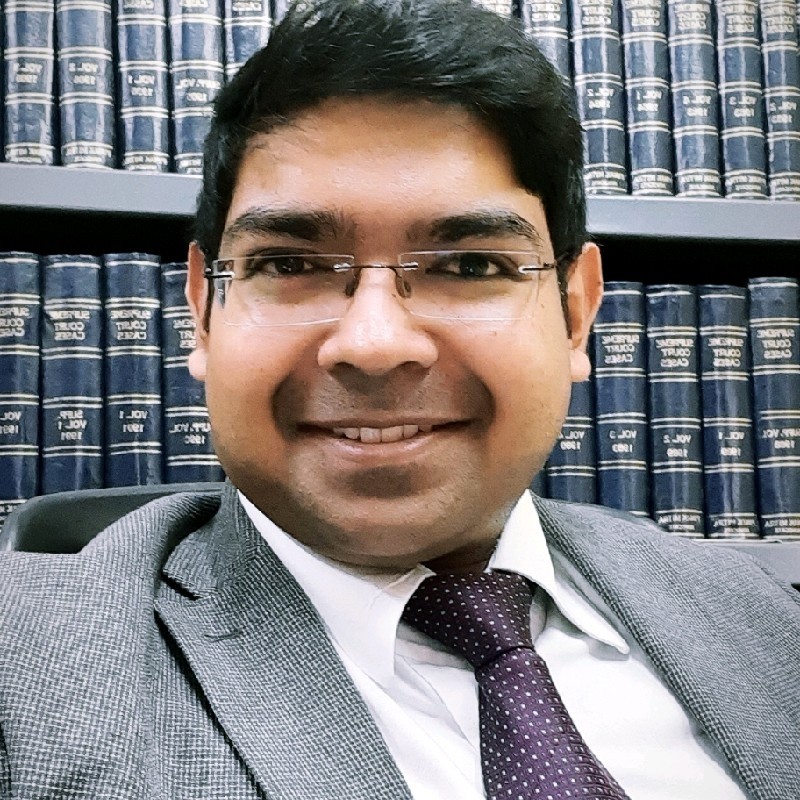
  • “Knowledge, reputation and success are built slowly, case by case, argument by argument.” – Tejasva Mehra, Practicing Advocate at Supreme Court of India.

    “Knowledge, reputation and success are built slowly, case by case, argument by argument.” – Tejasva Mehra, Practicing Advocate at Supreme Court of India.

    This interview has been published by Anshi Mudgal and The SuperLawyer Team

    With almost a decade of experience and an established practice today, what initially inspired you to pursue a career in law? Was becoming a lawyer always part of your plan, or did you come to it gradually over time?

    I decided to pursue law relatively early in life because I always felt a deep desire to do something meaningful for the society at large and to create a real impact. I grew up witnessing my mother devoting 16 to 18 hours of her day in public service. I would wake up every morning to find our drawing room full of people who had come to discuss their concerns and problems. Watching her tirelessly listen to them and help them find a way forward left a profound impression on me. It taught me the value of empathy, responsibility and standing up for others.

    Although I am a first-generation lawyer and had no direct access to the legal world, I was fortunate to interact with some of the finest lawyers in the country. I was always in awe of their distinct personalities and eloquence, their command over the law, awareness of the social issues and the sheer force of conviction with which they carried themselves. Their work inspired me and somewhere deep within, I knew this was the path I wanted to pursue. 

    But perhaps what sealed my destiny was my Nanaji, who always dreamed of seeing me as a practicing lawyer. He was a great admirer of Sh. Nani Palkhivala, and he often spoke of his brilliance, his courtroom charisma and the respect he commanded. That admiration became a seed that grew within me. It aspired me to follow in the footsteps of those who use the law not just as a profession but as a powerful instrument of change. 

    After completing your law degree, you pursued a Master of Laws (LLM) at the University of California, Los Angeles, specializing in Entertainment, Media, and Intellectual Property Law, along with Pretrial Criminal Litigation. What motivated you to choose UCLA and these specific specializations? How did your education there differ from legal education in India, and were there any challenges you faced during the application process?

    I chose to pursue Intellectual Property and Entertainment Laws for my master’s because these areas of law have an increasing global importance and have a universal character, often protected and harmonized through mutually signed international treaties. Its global relevance and increasing demand particularly appealed to me. 

    I chose Criminal Pretrial Advocacy as my minor because I have always been deeply interested in understanding the criminal justice systems across different jurisdictions. It gave me an insight to the jury system followed in the US and for our assignments, I also got a chance to visit the LA County Superior Court to witness trials of the ongoing cases. 

    As for my choice of UCLA School of Law, the decision was significantly influenced by the advice of my Guru, Hon’ble Justice A.K. Sikri. He guided me to prioritize the strength of the faculty of an institution. UCLA offered exactly that – an exceptional faculty with real world experience, especially in the fields of IP and Entertainment Laws. Being located in the heart of Hollywood, UCLA provides unparalleled access to professors who have worked with major studios and production houses, offering a practical and industry-oriented education. It also offered unique networking and internship opportunities. 

    In terms of education, there was a significant difference from India. I felt that the curriculum and teaching at UCLA emphasised more on critical thinking, in depth research and practical application than the rigid curriculum followed in India. The lectures at UCLA were more interactive with active participation of the students, critical analysis and continuous assessment through assignments, mock trials and presentations. Also, the strictness towards plagiarism is something which I feel needs to get implemented in our Indian education system. 

    The early stages of a lawyer’s career often shape one’s understanding of the law. Looking back at your journey, whether as a legal researcher/ law clerk under Justice A.K. Sikri at the Supreme Court of India or as a Legal Associate at Shakti Vahini NGO, what are some of the pivotal experiences that helped form the foundation of your legal career?

     I feel blessed and honoured to have worked under Justice A.K. Sikri as his law clerk/ legal researcher. The experience was not just professionally enriching, but deeply transformative on a personal level as well. Other than the fact that I got to work on some of the most sensitive and high profile cases at the time, I learnt a lot about being humble in life and honest towards your work. Justice Sikri carries a rare blend of deep legal wisdom and an open inquisitive mind. Despite his towering stature in the legal field, his extremely hectic and intense work schedule, he was always approachable and would often encourage a discussion and be open to an independent thought. He fostered an environment where I felt valued and confident even though I was fresh out of law school. I truly believe that my time working as a judicial clerk under Justice Sikri was the perfect start to my legal journey – a rare combination of rigorous legal work, inspiring mentorship and invaluable interactions. My time working under him really helped me boost my confidence and learn the most important lessons of life – work hard and be humble. 

    As I said, I always wanted to serve the society and make an impact, Shakti Vahini helped me to achieve that and the experience I got was profoundly transformative. Shakti Vahini is working towards strengthening women and child rights in India. During my tenure working at Shakti Vahini, I got an opportunity to work on several cases involving minors who were trafficked in Delhi from all parts of the country and exploited for prostitution, child labour and child marriages. I provided legal assistance and representation to these victims once they were rescued and also got an opportunity to be a part of various rescue operations, their counselling sessions and rehabilitation process. I also engaged in legal research and authored papers assessing the shortcomings in our legal system and proposed reforms aimed at making the justice system more efficient, accessible and sensitive to the needs of these minor victims who are extremely vulnerable. I had just returned from the US after completing my masters when I decided to commit my time to pro bono work and got this opportunity. This was a real eye-opener. It reshaped my perspective and exposed me firsthand to the disturbing realities faced by society’s most vulnerable, deepening my commitment to justice and reform. 

    During your time as a Senior Associate at Rajiv Mohan Law Offices, you were involved in high-profile criminal cases. Could you share some of the most challenging aspects of handling one such complex case, particularly with respect to the legal intricacies of laws such as the IPC, NDPS Act, PC Act and PMLA?  

     During my time working under Sh. Rajiv Mohan, I received hands-on training in the nuances of criminal trial practice which included right from preparing for bails, arguments on charge to crafting effective cross-examinations and strategically developing a defence throughout the course of a trial. I also got an opportunity to work on appeals in several high profile cases where the accused were convicted of most heinous offences. His meticulous approach to each stage of a criminal case gave me an invaluable foundation in trial advocacy. One of the most enriching aspects of this experience was the open discussions and brainstorming sessions every evening. The evenings before witness examinations were spent drafting and refining questions often dictated by him with great precision and purpose. It was during these sessions that I truly grasped the art of cross-examination. He often emphasized: “Always know what not to put to a witness.” That single line has stayed with me and shaped the way I think about courtroom strategy. His deep knowledge of medical jurisprudence added another layer to the learning. As a former Senior Special Prosecutor, he brought with him a rare insight into how the prosecution builds its case which helped me learn how to analyze a case not just as a defence lawyer, but from the perspective of the State as well. This dual perspective greatly sharpened my analytical abilities. Mr. Rajiv Mohan also mentored me in navigating cases involving special statutes and complex areas like bail under NDPS Act for commercial quantity or under PMLA, helping me understand how to overcome the stringent twin conditions laid down under Section 37 and 45 respectively. Additionally, as the jurisprudence around the PMLA was evolving at the time, he explained the developing bail laws and the strategic nuances involved in those cases. 

    Among all the cases, it was the murder trials or appeals that intrigued me the most. Observing and participating in the cross-examination of eye witnesses, medical and forensic experts, and investigating officers gave me a deep appreciation of how facts, law and courtroom psychology converge in a trial.The four years that I spent working under Mr. Rajiv Mohan taught me that in the courtroom, it is not just about law, it is about human behaviour, precision and above all, preparation.

    Would also like to mention and thank Mr. Abhimanyu Kampani for playing a pivotal role and trusting in me.

    Having worked with various legal entities, what ultimately drove you to establish your own legal practice? What challenges did you face when starting out, and how did you overcome them?

    Starting my independent legal practice was undoubtedly one of the toughest decisions I have made in my professional journey. In the legal field, there is no clear benchmark that tells you when the “right time” to branch out on your own has arrived. I feel in our profession the decision is highly personal and often requires you to look inward, trust your instincts and take a leap of faith.

    For me, the decision came after a lot of careful thought and self-assessment. I was fortunate to have built a decent clientele base and had secured a couple of clients on retainer basis, which provided a much-needed cushion of financial stability. This base was extremely important because it gave me the confidence that I would not be starting from absolute scratch as I had work that could sustain me as I navigated the uncertainties of independent practice.

    That being said, the journey has not been without its hardships. There were times when I was appearing only two-three times a week in contrast to two-three times a day while I was working with Mr. Rajiv Mohan. There were moments of real struggle and self doubt. However, I have come to realise that the only way forward is to believe in yourself, stay honest and work hard. 

    I firmly believe that the support of one’s family, particularly that of my mother and my wife has been absolutely crucial. Their unwavering encouragement, emotional support and constant belief in my abilities have provided me with the confidence and clarity needed to pursue this challenging path. Their presence has not only been a source of personal reassurance but has also allowed me to remain focused and resilient at times of professional uncertainties.

    Another major factor that encouraged me to take this step was my appointment as a Legal Aid Counsel on the Sessions Court panel with Delhi State Legal Services Authority (DSLSA). I genuinely feel that this appointment was a game changer. Not only did it allow me to gain access to a wide variety of cases including many heinous and high-stakes matters but it also gave me the invaluable opportunity to serve those who truly needed help but lacked the resources to hire legal representation. Representing underprivileged litigants added a new dimension to my practice and brought a deep sense of purpose to my work.

    Looking back, I realize that starting my independent practice was not just a professional move but it was a test of belief in myself. At some point, you have to back yourself, trust in the foundation you have built and have the courage to step into the unknown. It hasn’t been easy but it has been deeply rewarding.

    In cases involving the Prevention of Children from Sexual Offences Act (POCSO), what are some of the most significant challenges you’ve encountered while addressing the complex legal aspects of such sensitive cases?

    Defending a POCSO (Protection of Children from Sexual Offences) case is extremely challenging and demands high emotional quotient. One of the primary reasons is the statutory reverse burden of proof under Section 29 of the POCSO Act. This provision presumes the guilt of the accused once certain foundational facts are established, thereby shifting the burden onto the defence to disprove the allegations. This is a significant departure from the general principle of criminal law where the burden of proof always lies on the prosecution to prove the guilt beyond resoluble doubt. As a defence lawyer, this reversal requires you to strategize your case very differently which means every piece of evidence, every inconsistency and every contradiction must be highlighted with utmost precision.

    Moreover, POCSO cases involve victims who are minors and that brings its own set of sensitivities and responsibilities. Cross-examining a child witness is one of the most delicate tasks a lawyer can undertake. Unlike regular cross-examinations where a more aggressive or confrontational approach may be employed to test the credibility of a witness, here, you have to strike a fine balance. You must be extremely respectful and gentle in your demeanour while still being assertive enough to bring out inconsistencies, contradictions or improbabilities in the testimony. It requires a heightened level of alertness which means that you need to listen very carefully to the nuances of the child’s statements, their body language and the overall circumstances under which they are testifying. Further, courts are also far more protective of minor witnesses, and rightly so. Thus, every question must be carefully framed, keeping in mind the emotional and psychological vulnerabilities of the child. Working on such cases requires not just sharp legal skills but also a great deal of emotional intelligence, patience and empathy.

    As Senior Panel Counsel for the Union of India, you’ve represented various ministries before the Delhi High Court in several legal proceedings. What are some of the most complex legal issues you’ve faced in this role, and how do you manage the intricacies of government representation?

    My appointment as a Senior Panel Counsel is a relatively recent and significant development in my career. It also marks my formal debut into civil litigation. Most of the matters I handle in this role are service-related cases i.e. disputes pertaining to appointments, promotions, transfers, disciplinary actions, pensionary benefits and other service related disputes involving government employees.

    Engaging in civil litigation, particularly service matters, brings with it a whole new dimension of legal practice. These cases require a deep understanding not only of legal principles but also of administrative procedures, departmental rules and government policies. Preparing for these matters involves careful scrutiny of service records, government orders, circulars and applicable service rules. Every case demands a meticulous approach. What makes this responsibility even more serious is that, as a Senior Panel Counsel, I am representing the Government of India and hence it carries immense responsibility and expectation. Every appearance, every submission and every argument must reflect the highest degree of professionalism, preparedness and integrity because it is the sovereign that you are representing. You are expected to defend the government’s actions wherever they are legally sustainable and also to fairly advise when a case ought to be conceded or settled in the interest of justice. 

    One of the unique aspects of this engagement is the presence of departmental officials from the concerned Ministry or Department who are often present to assist during the preparation and hearings. Their assistance is invaluable as they provide important background information, factual clarifications and access to departmental records which might otherwise be difficult to obtain in regular litigation. At the same time, as counsel, I have to exercise independent judgment in assessing the strength of the case, guiding the officials and ensuring that the position taken before the court is legally tenable. This new role has been both challenging and exciting.

    With your background you’re committed to serving the people of India in alignment with the principle of ‘Satyameva Jayate.’ How do these values influence your approach to legal advocacy? Additionally, what advice would you give to aspiring young lawyers who hope to achieve similar success in the legal field?

    In a profession where the pressures are immense and the temptations to take shortcuts can be strong, staying true to the pursuit of truth ensures not only professional integrity but also personal satisfaction and long-term success. Hence, my belief in the principle of “Satyamev Jayate” (which translates to “Truth Alone Triumphs”). It is the very foundation upon which I approach every case, every client interaction and every argument in court.

    To all young and aspiring lawyers, my sincere advice is simple yet uncompromising: there are no shortcuts in this profession. Legal practice demands a tremendous amount of patience, perseverance and hard work. Knowledge, reputation and success are built slowly, case by case, argument by argument.

    Be humble, Be honest and work hard. 

    With your demanding professional commitments, how do you maintain a healthy work-life balance and prioritize your personal well-being while managing such a wide range of responsibilities?

    Maintaining a healthy work-life balance is something that is crucial, especially in a profession as demanding as law, where we have frequent long work hours and constant deadlines. It is essential to understand that while dedication to your work is important, your well-being is the foundation that supports everything else including your performance, your relationships and your long-term success.

    To be honest, at this point in my career, I have not been able to maintain the kind of balance I would ideally want. Building an independent practice, handling sensitive matters and representing clients to the best of my ability have often meant that personal time, fitness and mental relaxation have taken a back seat. However, with time and experience, I have realized that burnout is real, and without consciously making space for your own health both physical and mental it becomes difficult to sustain the level of excellence we all aspire to achieve. I am now committed to prioritizing myself and my well-being more consciously which means setting clearer boundaries. I recognize that nurturing my health is not just good for me but also essential for the quality of work I deliver.

    Get in touch with Tejasva Mehra –

  • “My need for intellectual challenge and a sense of justice led me to law, and with dual qualifications, I can now bridge different legal systems and cultures, offering nuanced advice to both domestic and international clients.” – Gunjan Chhabra, Partner at MRP Advisory

    “My need for intellectual challenge and a sense of justice led me to law, and with dual qualifications, I can now bridge different legal systems and cultures, offering nuanced advice to both domestic and international clients.” – Gunjan Chhabra, Partner at MRP Advisory

    This interview has been published by Namrata Singh and The SuperLawyer Team

    Congratulations on your new role as a partner at MRP Advisory. Could you share some insights into your journey from Law School to becoming a dual-qualified legal professional? What inspired you to pursue Indian and UK qualifications, and how will these qualifications enhance your role at MRP Advisory?

    My journey into law began unexpectedly from a science background, where I initially aimed to become an engineer. However, my need for intellectual challenge and a sense of justice led me to law. The pursuit of both Indian and UK qualifications was driven by a desire to gain a comprehensive understanding of global legal systems and to enhance my ability to handle complex cross-border disputes. These qualifications not only broaden my legal perspective but also allow me to offer nuanced advice that bridges different legal systems of law and cultures. At MRP Advisory, this dual qualification will enable me to better serve our domestic clients in contracts with foreign substantive law and international clients, ensuring expert navigation of diverse legal challenges with a well-rounded approach.

    With over a decade of experience in commercial litigation and arbitration, what motivated you to join MRP Advisory at this point in your career? How do you anticipate the firm’s focus and resources will impact your work in the arbitration landscape, both in India and internationally?

    Joining MRP Advisory is an exciting new chapter in my career, motivated by the firm’s reputation for innovation and its robust approach to construction and infrastructure disputes. The firm’s emphasis on leveraging cutting-edge resources and its commitment to a global perspective align perfectly with my background in domestic and international arbitration. At MRP Advisory, I anticipate that our collective expertise and resources will enhance our ability to tackle complex arbitration disputes and further strengthen our position in both the Indian and international arbitration arenas.

    Given your extensive experience representing clients before both national and international arbitration tribunals, how do you plan to leverage this expertise in your new role at MRP Advisory? Are there specific strategies you intend to employ when handling disputes in different arbitration forums, such as ad-hoc versus institutional arbitration?

    In my new role at MRP Advisory, I plan to leverage my experience by adopting a tailored approach to different arbitration forums. For ad-hoc arbitration, I will focus on flexibility and adaptability, ensuring that our strategies align with the specific needs of each case. For institutional arbitration, my approach will emphasize utilizing the established rules and procedures to streamline the process and enhance efficiency. By combining these strategies, I aim to deliver effective resolutions and uphold the firm’s high standards in both national and international disputes.

    Your profile highlights significant expertise in FIDIC contracts. How do you see your knowledge in this area contributing to MRP Advisory’s practice, especially in the context of construction law and dispute resolution? 

    I believe that my expertise in FIDIC contracts will significantly contribute to MRP Advisory’s construction law practice by providing deep insights into the complexities of international construction agreements. FIDIC contracts, with their intricate clauses and global usage, often present unique challenges in dispute resolution. I hope that my knowledge will help the firm navigate these complexities, ensuring that we offer precise and informed advice. This expertise will be integral in managing construction disputes effectively, enhancing our ability to represent clients in both contract management, contractual negotiations and dispute resolution processes.

    Having served as an arbitrator and mediator at various organizations, including the Court of Arbitration for Art and Sama, how will these experiences influence your approach to mediation and arbitration in your new role? What key factors do you believe will contribute to successful outcomes at MRP Advisory, and how will you ensure impartiality and fairness?

    My experiences as an arbitrator and mediator have provided me with a nuanced understanding of the arbitration process and the importance of impartiality. In my new role I hope that these experiences will guide my approach to mediation and arbitration, ensuring that I apply best practices and maintain fairness throughout. Key factors for successful outcomes include a thorough grasp of the subject matter, effective communication, and a commitment to neutrality. I will continue to uphold these principles by carefully balancing the interests of all parties and applying a detailed and reasoned approach to each case.

    You were honored with the “Pioneering Women Leadership Award.” What challenges have you faced as a woman in the legal field, and how have these experiences shaped your approach to leadership and mentorship at your new firm?

    The “Pioneering Women Leadership Award” is a testament to the challenges I’ve faced and overcome as a woman in law. I plan to continue to foster a culture of inclusivity and mentorship. 

    Considering your extensive background in arbitration and mediation, What trends or factors do you believe will drive this shift, and how will the firm position itself in this evolving landscape?

    Yes, the increasing complexity of disputes and the desire for more efficient, cost-effective resolution methods are driving this shift. ADR, particularly arbitration and mediation, offers flexible solutions that can accommodate the needs of modern businesses. We are well-positioned to leverage these trends by continuing to enhance our ADR capabilities and adopting innovative approaches to meet the evolving needs of our clients.

    Outside of your legal career, what hobbies or activities do you pursue to unwind and stay balanced? How do these personal interests contribute to your overall professional life, and do they influence your approach to your new role at MRP Advisory?

    To maintain balance, I believe it is important to engage in mindfulness practices, exercise, and creative activities such as painting. These activities can help manage stress and maintain a clear, focused mind. This in turn contributes to effectiveness in handling complex legal matters. Creative pursuits offer a valuable outlet for relaxation and creative thinking, which enhances overall problem-solving abilities.

    Get in touch with Gunjan Chhabra-

  • “The reality is that law isn’t about flashy suits or truckloads of money; it’s about resilience. The initial years are tough, but perseverance will always reward the committed” – Pinak Mitra, Partner at DMG India Law offices LLP

    “The reality is that law isn’t about flashy suits or truckloads of money; it’s about resilience. The initial years are tough, but perseverance will always reward the committed” – Pinak Mitra, Partner at DMG India Law offices LLP

    This interview has been published by Namrata Singh and The SuperLawyer Team

    Hello and welcome, everyone! The SuperLawyer’s team is excited to bring you yet another insightful session today. If you are seeking inspiration through diversification and unwavering dedication, look no further—today’s guest embodies both.

    We are honored to welcome Advocate Pinak Mitra, a respected figure in the legal community.

    For those joining us today, let me briefly introduce our esteemed guest. Advocate Mitra is a distinguished lawyer at the High Court of Calcutta, serving as Counsel for the State of West Bengal. He is a distinguished Member of the International Council of Jurists and a National Board Member of the Indian Lawyers Association—yet this is just the beginning of his impressive journey.

    With a dynamic practice spanning criminal law, constitutional law, consumer law, medico-legal issues, family law, and matrimonial disputes, Advocate Mitra’s legal expertise is truly vast. He continually upskills himself, delving into intellectual property law, and navigating the intricacies of economic offenses.

    We are thrilled to have you with us today, sir. Thank you for graciously accepting our invitation and joining us to share your knowledge. Welcome, Advocate Mitra!

    Thank you so much, Akash.

    Sir, let’s begin with a topic that resonates with many young lawyers. Litigation, as we know, is a challenging path, and it can feel overwhelming, especially for those just starting out.

    Given your remarkable achievements in this field, could you share with us how you navigated this journey and what drew you to pursue a career in litigation? We would love to hear about your experiences and the key insights that shaped your path

    Actually, for me, law was never my first choice. I wanted to study medicine and become a doctor. Law was my second option. The reason I chose between medicine and law was that I wanted to be a professional and not have a job where I worked under an employer. I didn’t want to be just another employee. That’s precisely why medicine and law were my two options. After failing to crack the medical exams, I shifted my focus to law.

    I managed to get into law, took the entrance exams—though without much preparation—and got into the Department of Law at the University of Calcutta for a five-year BA LLB course. Initially, it was very boring because we had several papers related to humanities, and I came from a science background. The first and second years were especially dull since we didn’t have semester exams at that time in Calcutta University. But once we started with the law subjects, things slowly became more interesting.

    After graduating and joining court, I realized the stark contrast between what I had heard, seen on TV, and the reality. It’s very different from the common notion that lawyers are flashy people earning truckloads of money. The reality is that it’s a tough nut to crack, especially in the initial years, where you need a lot of resilience to sustain yourself.

    I’ve seen many of my batchmates join court after graduating from law school, but within two or three years, their initial energy fizzles out. The struggle is real, especially when you see friends from other fields, like engineering or MBA, earning decent salaries, enjoying job security, buying cars, and investing. Meanwhile, someone who studied law and joined litigation finds it incredibly difficult, not just to sustain themselves, but even to ask family members for basic expenses to travel to court.

    It’s quite embarrassing to ask for small amounts of money just to sustain yourself when you’re 24 or 25 years old and should ideally be independent. And when you see your friends with steady salaries, negativity can easily creep in. It’s challenging not to get depressed or bogged down by these realities and to just keep going. This is why some people, despite their potential, eventually give up or lose the patience to hang on after a few years. That’s the biggest challenge anyone entering litigation has to face.

    Thank you, sir. Your insights are truly grounded in the practical realities that many face at the start of their careers. I believe the motivational mantra you shared at the beginning of this interview—to persist, remain resilient, and stay dedicated—will resonate deeply with everyone listening today.

    Now, moving on to the next question: Your career has spanned the judicial hierarchy, from the trial courts to the High Court and eventually to the Supreme Court. Could you share with us your journey through these stages? Any memorable experiences, key moments, or valuable insights you’d like to pass on from your progression through these courts?

    Yes, so I’ll tell you. During my five-year tenure in law school, I only did two internships. The first was as a judicial intern under a Supreme Court judge, and the second was in a trial court for three months. I didn’t have the chance to intern in the high court. There was a stark contrast between my experiences in the Supreme Court and the trial court.

    I really enjoyed my time at the Supreme Court, watching the stalwarts of law argue, and I learned a great deal from them. On the other hand, when I returned to the trial court, especially in West Bengal, I found it very difficult to understand what was happening. What I was reading in my books didn’t seem to align with the reality of the trial court. There wasn’t much synchronization between the two. I’ve even heard judicial officers mention that each trial court seems to have its own separate procedures, which, as a law student, was quite shocking for me to hear and witness.

    Now, that’s one side of the story. As far as the High Court and the Supreme Court go, particularly the Calcutta High Court, the standard there is exceptionally high and has been maintained over the years. Bengalis, as a community, are very academic in nature, which leads them to always engage in legal discussions and have a deep understanding of the nuances of law, both in letter and spirit.

    In my opinion, if you’re practicing in the Calcutta High Court, dealing with complex legal issues or arguing a matter in the Supreme Court becomes relatively easier because of the high standards upheld here.

    Now, coming back to the trial courts—without any offense, I have to say there are some brilliant trial court advocates in our state and across India. However, the problem is that their work often goes unrecognized because the judgments from trial courts are rarely reported. Even though they sometimes do a fantastic job, trial court lawyers don’t receive the recognition they deserve.

    That’s another side of the story. The second aspect is that a law student or candidate must decide early on which area of practice they want to pursue. For example, if someone is interested in constitutional law, then the trial court is not an option, and they must focus on building their practice in the High Court or the Supreme Court.

    On the other hand, if someone is passionate about trial court work, including examination and cross-examination, they should focus on trial courts or the original side of the High Court, where suits are filed and heard. So, it all depends on personal preference. One should first choose their area of practice and then make a decision accordingly. Also, gaining some internship experience in both trial courts and high courts is crucial to understand if they like the setup and environment because, ultimately, after graduation, they need to blend into that environment and become part of it.

    In order to make an informed decision, it’s important to get a heads-up about these things beforehand. Otherwise, one might spend three or four years practicing in the High Court only to later realize they prefer trial court work. In such cases, they could end up losing two or three years of their practical life, even though they would have gained valuable experience.

    That’s the problem. Experience-wise, they would certainly benefit, but in terms of establishing their own practice, they might lose those crucial years.

    Sir, how was your experience when you first argued, represented, or took on a matter in the Supreme Court? Could you share what it was like transitioning from the state level to the Supreme Court?

    During my internship at the Supreme Court, I had the unique opportunity to see a side of the Court that most lawyers don’t—working behind the scenes with a Supreme Court judge. This was especially insightful before the miscellaneous days, which are Mondays and Fridays. I saw firsthand how the research is done, and I gained an understanding of the level of preparation and efficiency involved when judges handle SLPs (Special Leave Petitions).

    Usually, these hearings last just a few seconds, and at that time, we had to prepare a short note outlining the legal point involved so that the judge could quickly frame his mind. Everything moves very fast, and this experience was incredibly valuable during my internship.

    The second significant experience was when I joined the bar at the High Court. At that time, the Criminal Motion Bench was headed by Justice Bagchi for a considerable period, and he was extremely fast. We had to be quick and precise in presenting ourselves, and that definitely helped me when preparing for SLP admissions as well. The way Justice Bagchi conducted motion admission hearings at the Calcutta High Court was very similar to how the Supreme Court handles SLP admissions.

    This experience proved invaluable. You must know your brief inside out because you won’t have time to fumble through papers during the hearing. Even in a heavy matter, you might only get one minute to present, and there are always super seniors in the field of law arguing.

    As a young lawyer, it’s particularly challenging to get an audience with a Supreme Court judge. You have to make an impact right away, like hitting a six on the first ball. That’s my approach to it.

    Thank you so much, sir, for sharing these insights. This discussion feels like a technical workshop with all the nuances you’re imparting. I’m certain that individuals in independent litigation practice who aspire to reach the highest levels will greatly benefit from the wealth of experience you’ve brought to this session today.

    Sir, your experience extends beyond India, encompassing both local and global perspectives. If your awe-inspiring trajectory were to be anchored in specific professional virtues, what would those virtues be? And would you be willing to share them with junior professionals?

    When it comes to professional virtues, I would highlight three key qualities. First is discipline. There is no substitute for discipline; you need to maintain a fixed routine and adhere to it. This principle applies across all fields—law, politics, Bollywood, and beyond. Successful individuals, regardless of their profession, follow a rigorous and disciplined lifestyle.

    The second quality is hard work, coupled with staying updated. Hard work is crucial, and it includes keeping abreast of developments in your field. Nowadays, we don’t wait for a Supreme Court bound volume to arrive; updates are provided through various websites and legal articles. Supreme Court decisions are reported within the same day. Embracing technology and staying informed is essential; otherwise, you risk being outpaced by your opponents if you aren’t up-to-date.

    The third quality is the ability to build good public relations skills. In the legal field, especially as a lawyer, connecting with people socially is vital. Initially, clients may come through your relatives, friends, or referrals from teachers. Your network grows over time through these connections. Just as in medicine, where a patient’s choice of doctor is influenced by reputation and referrals, the same holds true for law. Effective social skills help in client acquisition, which in turn drives your success.

    To summarize, discipline, hard work, and strong interpersonal skills are interconnected. Discipline ensures you stick to your routine, even on slow days. Hard work involves both effort and staying updated. Building social connections helps in gaining clients, which requires continued hard work. Each quality supports and enhances the others, creating a successful professional path.

    Given that you have continually upskilled yourself through various courses and degrees, and considering the current legal landscape with its transformative changes across sectors, what are your thoughts on the legal and technological upskilling of lawyers? How should they adapt to these changes, and how significant is this process within the legal profession?

    Regarding the integration of technology into the legal field, I believe it is no longer a choice but a necessity. Whether we like it or not, we have to adapt.

    For instance, I recently visited the Supreme Court, which has nearly gone completely paperless. In contrast, the Calcutta High Court still relies heavily on paper and bulky briefs. During my recent appearance at the Supreme Court, my advocate on record provided me with a digital copy of the SLP. Even though I have a tablet and a MacBook, I am accustomed to holding a physical brief. Nonetheless, I tried to go paperless and use the digital copy.

    It’s a matter of habit; initially, it was a bit challenging. I can only imagine the difficulties faced by senior members of the bar, who have been trained to handle physical books and documents. Personally, I still prefer having an SCC (Supreme Court Cases) in hand rather than reading judgments on a screen. It may be easier on the eyes, but we must embrace technology.

    Furthermore, technology helps us stay updated. Without it, we would miss out on current developments. For a lawyer to grow and evolve, accepting technology is essential.

    During the COVID-19 pandemic, courts adopted a hybrid model of physical and virtual hearings. After the pandemic, some high courts moved away from this model, but the Supreme Court mandated that hybrid hearings continue. This has been beneficial, though there is still some resistance to accepting virtual appearances. However, technology allows lawyers who are unwell or cannot afford junior lawyers to participate virtually and seek adjournments without harming their clients.

    Technology has also improved court processes. Orders are now uploaded to the high court servers and e-courts, eliminating the need for certified copies. Additionally, we can now view which cases are being heard in which courtrooms via our phones, which was not possible in the past. This advancement saves time and effort compared to earlier practices where one had to physically check courtrooms or rely on clerks.

    Another significant benefit of virtual hearings is that clients can observe their representation and proceedings. This transparency helps address issues where clients have been misled about hiring senior advocates or other concerns. Clients can now view hearings and understand the proceedings better.

    In summary, technology is crucial in the legal field today, and there is no way to proceed without it in the current age.

    Sir, what is the constant drive or motivating force that sustains you in your profession? Is there a particular philosophy or mantra that you believe in?

    I have been quite inspired by the story of Mr. Ram Jethmalani. He has been a guiding force for me. During my internship days, I saw him argue a case in the Supreme Court on the principles of bail, and I was awestruck by his aura. After that, I read about him—his struggles and his journey as a lawyer—and I was fascinated by how he transformed himself.

    Outside the realm of law, I would also say I have been inspired by the journey of Mr. Shah Rukh Khan. He has been a role model for me, not just as an actor but as a personality as well. His journey is incredible. These people have had a profound impact on my journey as a lawyer. They have motivated me, especially when I see how they faced failures and bounced back.

    If you look at the trajectory of any successful person, they go through ups and downs. Even Mr. Amitabh Bachchan, the legend of Bollywood, experienced highs and lows, and his transformation later in life is remarkable. Figures like these—successful individuals in their respective fields—should serve as a motivation for others. Whether it’s sports, Bollywood, film, politics, or the legal field, their journeys and the challenges they faced can guide and inspire aspiring individuals.

    Their stories have been a tremendous source of inspiration for me and have helped me in my own journey.

    On that note, sir, a demanding profession like law can certainly take a toll on mental health. How do you manage the pressure of work while maintaining your personal space? Are there any hobbies, interests, or general routines you follow to strike a balance that you’d like to share?

    Yes, law is very taxing. It is extremely demanding on our mental health as well, because it takes at least 14 to 15 hours of our daily life. Apart from that, you need time for your daily activities—sleep, rest, and spending time with your family. Unfortunately, if you’re in the field of law, especially as a litigating lawyer, you don’t get much time with your family. That is one of the hardest parts. You don’t get time to hang out with friends either.

    Initially, you might, but as you become busier, the profession consumes a lot of your time, so you won’t be able to do that. Sometimes it becomes overwhelming. You might feel like taking an evening off to watch a movie or go out with friends or family, but then you remember you have cases the next day and need to study. You’re forced to study, and it can become very difficult and, at times, even depressing. I wouldn’t say it doesn’t. That’s one aspect—if you’re busy.

    The other aspect is if you don’t have work, which many lawyers experienced during COVID. The pandemic was a huge eye-opener for everybody. Most courts weren’t functioning properly at first, though they eventually moved to a hybrid model and virtual hearings. But initially, it wasn’t like that.

    So, for almost two years, many lawyers didn’t have work. At that time, it was very depressing and mentally challenging for lawyers to sustain themselves and take care of their families. Our profession is already very uncertain. I might have a very busy week now, and the next week, I could be completely without work.

    During that free time, how you channel your thoughts is very important. It takes a huge mental toll on every serious lawyer because the insecurity looms large. As for me, I used to enjoy reading as a hobby. But after joining litigation, the profession has taken that hobby away from me. Now, in my free time, I hardly read books because I’m already reading so much during the day. So instead, I’ve taken to watching a lot of content on OTT platforms, which I enjoy.

    Another principle I’ve maintained during my 10 years of practice is not going to court during the vacations. Many people work through the vacations, but I’ve made it a point not to work during the three vacations we have in Calcutta. For the good part of that time, I spend it with my family.

    I love traveling a lot, so whenever I get the opportunity, I leave the city and go somewhere to spend some time. Traveling helps keep me refreshed. We have such an amazing country with so much to offer, and I love exploring the length and breadth of it. So, that’s how I unwind.

    Since you’ve been involved in various editorial and pedagogical activities, where you’ve interacted with both students and practitioners, how do you think this involvement has enhanced your legal acumen and expertise? Additionally, how much do you enjoy these activities alongside your primary role in litigation?

    Yes, actually, I would say it is very helpful, even for the growth of an individual as a lawyer. Let me share an anecdote: during my early years of practice, and even more recently during the COVID period, I used to mentor some law students, including my interns. Apart from them interning with me, I would teach them about the practical aspects of the legal field and different statutes that aren’t covered in their syllabus.

    I also gave them basic insights into how cases are filed, conducted, and so on. In addition, I was involved in editing journals for CHN at one point in time. This experience was helpful in two main ways. Firstly, for the purpose of editing, I had to go through judgments passed by various courts. In the process of reading those judgments, I was constantly updating myself as a lawyer.

    Secondly, reading judgments for editing purposes allowed me to cover a lot of material in a short span of time. This not only increased my reading speed but also improved my ability to quickly identify the key portions of a judgment.

    Thirdly, dealing with different aspects of law—whether with law students or fellow lawyers—helped me revise what I had learned earlier, either during law school or later in practice. For example, while I may have studied the Domestic Violence Act or the Negotiable Instruments Act thoroughly during my college days, in practice, we mostly focus on a few sections like Sections 138 to 143, 143A of the NI Act. However, when discussing the entire statute with a student or fellow lawyer, it forces you to revisit and refresh your knowledge of the full text.

    In a way, by teaching others, you’re also learning and revising. This helps to reinforce your understanding of the law and ensures you don’t forget important sections. So, it definitely aids in personal growth and keeps you sharp as a lawyer.

    Thank you, sir. As a concluding note, could you please share your long-term plans, particularly in light of your impressive involvement with various professional legal groups and associations? What are your long-term goals?

    This is a very difficult question for me to answer. In terms of long-term plans, as an individual, I aim to advocate for the cause of law to a certain extent. I also plan to author a few books in the field of law, which I will likely begin working on soon. These books will offer a more practical insight into certain aspects of law, focusing on topics that I choose. The goal is for these books to be beneficial not only for law students but also for legal practitioners.

    There are numerous books on various legal topics available in the market, but I’ve observed that some of them exist just for the sake of being there. They don’t provide a proper or meaningful insight into the areas of law they cover. That’s one side of it. On the other hand, I have a long-term plan to establish a legal institute that imparts practical legal training to students.

    When or how this institute will materialize, I can’t say. It may never happen, or it could happen in the near future, but I believe it’s very important. Many people who enter law school are not from legal backgrounds, and the five years of legal education often don’t provide sufficient practical knowledge. That’s my perspective on that.

    Additionally, many law colleges today focus on ensuring students complete a set number of internships, but it doesn’t necessarily mean that students are learning anything valuable during those internships. It has become more of a target-oriented task—complete the internship, get the certificate, and move on.

    However, in reality, interns who come to courts or law offices aren’t truly learning much. I regularly have interns at my law office, and it’s a practice in my office to interact with them after a week or so. I make sure to ask for their feedback on their previous internships—whether it was in someone else’s chamber or a law firm—and also about what they have learned while working with me. If they come here, they should leave with something productive that will help them in their careers.

    These are the aspects I want to focus on as part of my long-term plans in the field of law. So, let’s see where this journey takes me.

    A very big thanks from the entire team of SuperLawyer. Thank you so much. 

    Thank you, Akash, for having me. It was truly a pleasure to discuss various aspects of our day-to-day professional lives and to share a glimpse into how I maintain balance in my personal life as well. I’m confident that young lawyers will find value in this, as it will help them gain a better understanding of the practical realities in the legal field. Thank you once again for having me.

    Get in touch with Pinak Mitra-

  • “Focus on building a strong foundation by gaining practical experience and learning from every case and client interaction, proactive engagement and continuous learning are key.” – Juhi Chawla, Partner at Dua Associates

    “Focus on building a strong foundation by gaining practical experience and learning from every case and client interaction, proactive engagement and continuous learning are key.” – Juhi Chawla, Partner at Dua Associates

    This interview has been published by Namrata Singh and The SuperLawyer Team

    You’ve had a remarkable career spanning over a decade in Civil & Commercial Litigation, Arbitration, and Protection of Intellectual Properties. What initially drew you to pursue a career in law, particularly in these specialized areas?

    Reflecting on my journey, it’s incredible to see how far I’ve come since my early days. My interest in law began in an unconventional way. As a science student, I realized that engineering wasn’t my path, supported by my teacher’s advice to explore other options. This pivotal moment led me to law school, where I found myself torn between corporate law and litigation. Ultimately, my passion for the dynamic and strategic nature of litigation drew me in.

    During my time with Justice Rajiv Sahai Endlaw (Retd.), I had the privilege of observing numerous court proceedings. This experience deepened my appreciation for the intricacies of Civil & Commercial Litigation, Arbitration, and Intellectual Property laws. The strategic thinking required in these fields captivated me, particularly the dynamic nature of the work, which allows me to serve a diverse client base. Working on matters deeply entrenched in business operations demands meticulous examination, precise contract interpretation, and strategic planning. This complexity and the need to understand different business operations truly cemented my decision to specialize in these fields.

    My journey in litigation truly began when I found myself managing several matters in a litigation chamber. The immense challenge pushed me to my limits and beyond, but it also provided vast growth opportunities. Winning independent cases built my reputation and boosted my confidence.

    Joining Dua Associates marked a significant milestone in my career. Here, I found a place that resonated with my values and aspirations. Each dispute I handle presents unique challenges with intricate questions of fact and law. I thrive on the intellectual rigor required to navigate these complexities and derive immense satisfaction from crafting innovative legal solutions that align with my clients’ best interests.

    You’ve been involved in a wide range of high-stakes cases, from defending Fortune 500 companies to representing public sector undertakings. Could you share with us one of the most challenging cases you’ve handled and how you navigated through it?

    One of the most challenging cases I handled was defending a Fortune 500 company against an injury claim that arose from a chemical disaster. The brief provided in the case was very unique and extremely challenging, posing very peculiar factual and legal questions for determination—questions that had not been previously considered or dealt with. This one-of-a-kind case involved multiple jurisdictions, requiring an in-depth review and examination of a voluminous record dating back nearly three decades.

    The case also necessitated a thorough study and examination of key principles concerning jurisdictional arguments, particularly from the US standpoint. I played a key role in developing the strategy, coordinating with external counsels, and managing the litigation process. My approach was meticulous, ensuring that every detail was scrutinized and every possible defence explored.

    This experience taught me the importance of strategic planning and thorough preparation. Ultimately, our team secured a favourable outcome for the client, which is now one of the leading cases of the Constitution Bench of the Supreme Court. This outcome was a testament to our rigorous and coordinated efforts, and it reinforced my belief in the power of teamwork and meticulous legal strategy.

    Your profile highlights your involvement as Amicus Curiae with the NCDRC and your recommendation by Legal 500 Asia Pacific Guide. How have these experiences influenced your approach to legal practice and your career trajectory?

    Being appointed as Amicus Curiae by the NCDRC was a significant milestone in my career. Having the privilege of working on several consumer disputes, this appointment was a testament to my consistency before the forum. It allowed me to provide impartial advice and support on complex service-deficiency appeals, enhancing my understanding of consumer protection laws and judicial processes. This role honed my analytical skills and reinforced the importance of ethical practice. I hope to make a significant impact on consumer jurisprudence through my continued efforts in this area.

    Similarly, being recommended by the Legal 500 Asia Pacific Guide for ‘Dispute Resolution-Litigation’ was a recognition of my expertise and dedication. I am grateful for the springboard provided to me by SKV Associates and the platform Dua Associates, which have both played crucial roles in honing my skills. Recognition such as this helps enforce the belief in one’s abilities. But I firmly believe that wins, whether big or small, do not necessarily equate to favourable outcomes. Often, an acknowledgment from the presiding judge, adversary counsel, or positive client feedback can be equally gratifying.

    Dispute resolution often provides instant gratification, whether it comes from a favourable ruling or a simple nod of respect from peers and clients. These moments keep me motivated and committed to my work, driving me to pursue excellence and integrity in every case I handle.

    With such extensive exposure across different courts and tribunals in India, including the Supreme Court, what have been some of the key lessons you’ve learned about effective litigation management and strategy?

    One of the key lessons I’ve learned is the importance of preparation and adaptability. Effective litigation management requires a deep understanding of the case, meticulous preparation of evidence and arguments, and the ability to adjust strategies as proceedings develop. Collaboration with clients and colleagues is crucial to ensure all perspectives are considered and the team works cohesively.

    Being thorough with the facts is essential. Detailed notes and a list of important dates, especially in extensive briefs with multiple orders, assist in memory recall and guide the presentation of correct facts before the court. Clear and concise communication, written and oral is vital for presenting compelling arguments and ensuring the court understands the case’s nuances.

    Sound and comprehensive pleadings must be backed by thorough legal research. While legal arguments can evolve, their foundation should be in the pleadings. Pursuing litigation with vigilance and attention to detail is crucial, as some cases are won on finer points. It’s important to focus on research, know the case against you well, and be prepared to distinguish facts if necessary. Always run an authority check before citing cases.

    Strategically, it’s crucial not to lose sight of the long-term objective while pursuing interim reliefs. Always know the end goal from the client’s perspective while developing your strategy. Adapt strategies as proceedings develop, and don’t reveal all your arguments at once. Hold back some arguments for the right stage in the proceedings. Learn from setbacks and remain practical.

    These lessons have been instrumental in achieving favourable outcomes for my clients and have reinforced my commitment to excellence in litigation management and strategy

    You’ve also delved into trade remedy laws and anti-dumping investigations, securing significant outcomes for your clients. Can you explain the intricacies of these areas of law and how they impact your clients’ business operations?

    Trade remedy laws and anti-dumping investigations are critical for protecting domestic industries from unfair trade practices. These areas involve complex legal and economic analysis to determine whether imports are being dumped and causing injury to the domestic industry. This specialized field requires a deep understanding of legal frameworks and industry dynamics.

    Anti-dumping duties are imposed when foreign companies sell goods at prices lower than their home market or production cost. These duties typically last five years but can be extended or revised if a review investigation finds the conditions for duty imposition continue to exist.

    In any anti-dumping investigation, a proactive approach is essential for exporting companies to defend their interests, mitigate risks, and maintain their competitive position in the global marketplace. The concepts of dumping and injury are central to assessing the impact of imports on the domestic industry and determining the need for anti-dumping measures to restore fair competition and protect domestic producers.

    Dumping occurs when a foreign company sells its goods in an export market at a price below the price it charges in its home market or below the cost of production. “Injury” refers to the harm or adverse effects suffered by the domestic industry as a result of dumped imports. When determining whether to impose anti-dumping duties, the authority assesses whether the domestic industry has been materially injured or is threatened with material injury due to the dumped imports.

    To evaluate injury, the authority examines various economic parameters of the domestic industry, including production, sales, market share, and profitability. The third relevant criterion for recommending duty is the causal link between the dumped imports and the injury.

    My role involves representing clients in investigations, preparing detailed submissions, and regularly appearing before the authority. Favorable outcomes, such as duty waivers or reduced duties, significantly impact my clients’ business operations by protecting their market share and viability.

    Trade remedy investigations and appeals are not just about legal principles but also involve detailed facts, data analysis, and presentation. An in-depth understanding of production processes, industry-specific dynamics, and the ability to gather material information by closely working with clients on data assimilation and analysis is crucial.

    Being part of the actual investigation process provides an edge in cases where appeals are filed before competent Tribunals and higher courts. Navigating these intricacies demands meticulous legal and economic analysis, a thorough understanding of the client’s industry, and strategic thinking. By mastering these complexities, I have helped my clients achieve favorable outcomes and protect their business interests in a highly competitive global market.

    Transitioning from an Associate to a Partner at Dua Associates is a significant achievement. What advice would you give to young lawyers aspiring to advance their careers in law firms, especially in competitive fields like litigation and arbitration?

    For young lawyers, proactive engagement and continuous learning are key. To build expertise in your chosen field, dedicate yourself to tackling challenging cases and stay updated with the latest developments through regular reading. Take advantage of technology for efficient research even during court waiting time.

    Specialization is increasingly important today. Identify your area of interest early and seek mentorship from experienced colleagues. Stay current with legal trends and enhance your skills through practical experience. Consistency, a strong learning attitude, and initiative are vital.

    Networking and fostering professional relationships are equally critical. Showcase your value with consistent, high-quality work and reliability. Balancing professional growth with personal well-being ensures sustained success and fulfilment in your legal career.

    You’ve published articles on Intellectual Property Rights, Arbitration, and Trade Remedies Laws. How important has thought leadership and staying updated with legal developments been in shaping your professional journey?

    Thought leadership has been crucial to shaping my professional journey. Publishing articles on Intellectual Property Rights, Arbitration, and Trade Remedies Laws has kept me abreast of legal developments and enabled me to engage deeply with emerging trends in my fields of expertise. This commitment to staying informed allows me to provide cutting-edge advice and innovative solutions to complex legal challenges for my clients.

    Moreover, my thought leadership has cultivated a strong passion and enthusiasm for the intersection of technology and law. Areas such as data privacy, navigating challenges within current criminal laws in the context of artificial intelligence, responsible adoption and policy frameworks for AI, and the interplay between intellectual property and AI, including gaming laws, have become focal points of interest for me. This exploration fuels my continuous learning and enhances my ability to contribute meaningfully to the evolving legal landscape

    Finally, for fresh law graduates entering the legal profession today, what advice would you offer based on your own experiences and the evolving landscape of legal practice?

    To fresh law graduates, I would say that the legal profession offers immense opportunities for those who are passionate and dedicated. Focus on building a strong foundation by gaining practical experience and learning from every case and client interaction. Embrace the evolving landscape of legal practice, particularly the integration of technology and data analytics, which are becoming increasingly important. Develop strong research, analytical, and communication skills, and be open to continuous learning. Networking and building professional relationships will also play a crucial role in your career. Most importantly, uphold the highest standards of ethics and integrity, as these principles will guide you throughout your career. I’ve learned that success often arises from unexpected situations and that embracing change is a vital part of growth. To all the young lawyers and aspiring legal professionals out there, remember that your path may not always be clear, but every step forward, no matter how uncertain, is a step in the right direction. Embrace the challenges, seize the opportunities, and keep moving forward with unwavering determination. Your journey may surprise you in the most wonderful ways.

    Get in touch with Juhi Chawla-

  • “The profession of law was love at first sight, and the bond between me and the legal profession has only grown stronger over time. There has been no looking back, not even a moment of doubt. I have thoroughly enjoyed it.” – K G Raghavan, Senior Advocate at High Court of Karnataka.

    “The profession of law was love at first sight, and the bond between me and the legal profession has only grown stronger over time. There has been no looking back, not even a moment of doubt. I have thoroughly enjoyed it.” – K G Raghavan, Senior Advocate at High Court of Karnataka.

    This interview has been published by Namrata Singh and The SuperLawyer Team

    Coming from a family with a strong legal background , did you ever consider pursuing a career outside of law?  How did you eventually decide to follow in our family’s footsteps, and what challenges did you face in your initial days as a lawyer?

    I believe each person must carve out a profession for themselves based on their capabilities and interests. However, it is a reality of life that, when making a career decision, individuals are consciously or unconsciously influenced by the career choices their parents have pursued. I was no exception. My father was a leading and well-known lawyer during his time. I saw him put in long hours of hard work and be sought after by many. But what influenced me significantly in my career decision-making was the great respect and influence he commanded across a cross-section of society. I believed this was because of his position as a lawyer. In later years of my practice, I realized this was true. My father conveyed through his career that the legal profession was unique in various ways. It was intellectually elevating and honorable in its practice; lawyers were highly respected and commanded a following. I closely watched my father’s analytical skills, which he applied to matters of public importance, domestic issues, philosophical and religious thoughts, and more. I admired his approach to men and matters, which I attributed to his being a lawyer. My father did not actively promote the idea that I should pursue the legal profession; it was my decision, which he supported. Considering my father’s quality of life, I must frankly admit that I did not even consider a profession outside of law. The profession of law was love at first sight, and the bond between me and the legal profession has only grown stronger over time. There has been no looking back, not even a moment of doubt. I have thoroughly enjoyed it.

    Being a lawyer’s (later a High Court Judge’s) son had both benefits and challenges. The benefit I derived at the operational level was not very significant because there was a large gap between the time my father stopped practicing and when I started. Nonetheless, the benefits were obvious—infrastructure and the reputation of being so-and-so’s son. However, the challenges were quite intimidating. First, every action of mine and every expectation from me would be compared to my father’s. Any slight deviation would be met with skepticism. Second, I faced the overwhelming challenge of proving myself worthy of being my father’s son. I realized fairly early in my career that no one can ride on the reputation of another, no matter who the other may be; you have to prove your worth. Clients will not stay unless they develop confidence in you. A father’s reputation can take one up to a point and no further. In this profession, everyone has to carve out a niche for themselves.

    How did your father’s career as a judge influence your approach to law and justice?

    As a judge, I have noticed my father being equally concerned with the problems of a small person and a matter involving high stakes. He would tell me how, in reality, that small person had more at stake in the litigation than the so-called big one. For the former, it was a case of livelihood, while for the latter, it was generally not. Sympathy for the less fortunate was his guiding factor. This has had a significant impact on my approach to my career. This perspective has always remained in the background, even while being deeply involved in commercial law practice.

    For example, as a legal advisor for a large public sector corporation, I would receive numerous files for opinions regarding the title for granting house loans to Class IV employees. If I had strictly applied all the rules of title due diligence, none would have qualified for the loan. That would have shattered the dreams of these families to buy or construct a small home. My heart did not permit that approach. I relaxed the rules and cleared the titles on a “by and large basis.” This approach was largely influenced by my father, balancing law and humaneness. I am thankful for that.  

    During your tenure as partner at Dua Associates, you managed a large team and handled litigation practice nationwide.  What were the key lessons you learned from that period which you still apply today, and what led to your decision to leave the firm and become Senior Advocate?  What were the main factors that influenced this career move?

    During my tenure as a partner at Dua Associates, I interacted with numerous lawyers across the country and beyond. I also dealt with several in-house counsels of multinational corporations. This experience broadened my horizons. I realized that everyone has their unique way of approaching and solving problems, and no one was 100% right or wrong. Incorporating thoughts from all quarters, from senior to junior, enabled us to find the best possible solution to a problem. This was especially true because the lawyers came from different backgrounds and jurisdictions. Some adopted a legalistic approach, others a commercial approach, and a few a practical approach. Each one had their domain expertise. This opened my eyes to the fact that team effort is always more beneficial than when a problem is handled by a single lawyer. No one can have knowledge in all branches of law, and invariably, legal issues have different angles. This exposure humbled me to realize that no one can claim to be superior to another, and each has their role to play, which is as important as the others. This experience has stood me in good stead even today as a Senior Advocate, as I have continued to respect the approach and views of lawyers and in-house legal counsels.

    Counsel practice is an art in itself. I realized that my strength lies in that field. I wanted to spend more time sharpening my skills rather than spending time in the actual preparation of briefs through direct client interaction. This is what influenced me to change the course of my practice, even though I have always enjoyed client interaction and strategizing. My stint at Dua Associates has been the most enjoyable phase of my career. Designation as a Senior Advocate during my time was by invitation and not by application as it is today. Generally, when one is invited to take the silk, it is considered an honor and recognition and therefore not refused. Once conferred with the designation, in my view, continuing as a partner of a law firm was not an option.

    Since being designated as a Senior Advocate in 2008, how has your approach to handling cases evolved? What are the unique challenges and responsibilities that come with this title?

    The first challenge of being a Senior Advocate is to sift the grain from the chaff. That is what I have consistently applied in my role as a Senior Advocate. The briefing counsel will, of course, tell me all the facts and issues involved in the case as they should. It is up to me to pick the best points and highlight them to the court. The second challenge is the manner of presenting a point. It is essential to present it in the most persuasive manner. This requires quiet and deep deliberation even before entering the courtroom. I have rehearsed the opening sentence of a case in my mind several times before uttering it in court. If you engage the judge in your case within the first few minutes, a large part of the case is won.

    Duty towards the court and the client is common for all advocates, whether designated or not. The unique challenge and responsibility of a Senior Advocate is towards the briefing counsel. It may be that the briefing counsel is not yet experienced or is lacking in preparation. I would not highlight this in a conference where the client is present, as it would damage the interests of the instructing counsel and/or demotivate them. The art is to gently suggest a corrective course without injuring anyone’s interests. In many instances where I found a fundamental error in the approach or advice of the counsel on record, I have separately called the lawyer and pointed out the error, suggesting corrective action. I believe this to be the duty of a Senior Advocate towards the briefing counsel, in addition to the duty and responsibility towards the court.

    As the Chairman of the Bhavan’s BBMP school, you are deeply involved in educational initiatives for underprivileged children.   Can you tell us more about this role and its impact on the community?

    Our school has over 850 children, most of whom come from the neighboring slum areas. Facilities like electricity, water, and internet connection, which we tend to take for granted, are a luxury for them. The parents come from economically and socially disadvantaged sections of the community. A school-age child is considered another working hand and a potential earning member. In this atmosphere, it was initially a challenge when the school was started to promote the concept of education among that community. After 15 years, we have come a long way. Today, the parents and children are very enthusiastic about the school. Promptly at 8 am, the children arrive at the school, neatly dressed in their uniforms and well-groomed. Seeing these enthusiastic children at school, who might otherwise have been directionless, is a divine experience. The school is an English-medium institution with a CBSE curriculum. The school and the children always remind me that if given the opportunity, children will grow up to be responsible and civil citizens. The biggest mistake and crime is in not providing opportunity, and this thought has always haunted me. In fact, before our school was established, the area was noted for its high crime rate. Now, the police authorities tell us that the crime rate has significantly decreased because the children are the best change-makers.

    You regularly contribute to Deccan Herald and other publications on legal and philosophical topics. How do you find time for writing, and what motivates you to share your insights through these platforms?

    If one has the interest in doing something, finding time is the least of the impediments. What motivates someone to do something is a genuine interest in that activity. That is the simple answer to the question: how do you find time to write? The sheer desire to write and engage with a reader of average intelligence is what truly motivates me. My target is not the learned or the wise but those who have the interest but don’t know how or where to begin. My desire is to kindle their interest in both the subject and the art of communication. In other words, to provide food for thought.

    Looking ahead, what are the areas of law that you believe will be most critical in the coming years, and how should the legal profession prepare for these changes? What advice would you give to the young law students and budding lawyers who aspire to make a successful career in law? What skills and qualities should they focus on developing?

    Roscoe Pound famously said, “Law is social engineering.” This has always been true, and it is even more relevant today and in the future as times change. The aspirations of people and social norms are evolving rapidly. Gender equality, same-sex marriages, live-in relationships, LGBTQ rights, privacy obligations, and other issues now occupy center stage in public debate. Notions of morality that were once accepted and taken for granted are changing, and the law must keep pace with these changes.

    In my view, these issues will be critical in the coming years, and lawyers and law students must think outside the box to find legal solutions to complex social problems. Additionally, the changing demands of growing technology and transborder relationships—whether personal, business, or professional—must be addressed. The world is becoming increasingly interconnected, and relationships are becoming more seamless. Lawyers and legal researchers can facilitate this change and make the world a better and more peaceful place.

    Focusing on these and other emerging branches of law will enable a budding lawyer to succeed in their career. To achieve this, one must develop a thirst for knowledge from all over the world. A successful lawyer should excel not only in the legal field but also cultivate an interest in subjects unrelated to law. It is essential to remember that one is a human being first and a lawyer second. Developing the quality of being a good human being is fundamental.

    Furthermore, a lawyer should develop effective communication skills. Learning languages without any mental blocks is crucial, with English being a must. Knowledge and communication skills should go hand in hand with analytical skills. Analytical skill is an art that one can develop only through conscious practice. This can happen if you commit to understanding an issue fully before proceeding further. Finding a solution is the next step.

    With the rapid advancement of technology, how do you see the role of technology influencing the practice of law? Are there any particular tools or technologies that you find indispensable in your work?

    Technology today has permeated all aspects of our lives and activities, and the practice of law is no exception. In fact, the practice of law should embrace technology more and more so that we lawyers become more efficient in providing services to our clients and assist the court in dispensing quicker justice. I have personally benefited from technology. I am able to present arguments in court without physical papers as I have fully adapted to technological tools like Liquid Text. I find myself faster and more efficient in locating a particular document or fact in a large brief using this technology. The adage “Change or Perish” is truer today than ever before. However, a warning: Technology should supplement our intelligence, not supplant it. Innate intelligence, not artificial intelligence, is the core strength of a lawyer.

    Over 45 years of practice, you have represented numerous high profile clients.  Can you share a particularly memorable case that had a significant impact on you personally or professionally?

    “It is difficult to pinpoint a particular case among the many I have handled in my career. I am who I am today, both as a human being and as a lawyer, because of the amalgamation of lessons learned from various cases. It has been a profound study of human traits and behavior. No case is too big or too small; each has its own lessons and morals to impart, aiding in personal evolution. This defines my approach and personality.”

    With such a demanding career, how do you unwind and relax after a long day in court?  Do you have any hobbies or routines that help you maintain a work life balance?

    The legal profession is a demanding endeavor. Therefore, one must be vigilant not to become so absorbed as to lose the joys of life. I am fortunate to have largely mastered the skill of drawing boundaries, although my family might disagree. Early in one’s career, one should enjoy what they do; as one progresses, they should do what they love. This is a nuanced art, and I am fortunate to have made significant strides in that direction. Whether one likes or loves their work, nothing becomes a source of stress. This is the key to unlocking relaxation and alleviating stress. Writing, reading, religious, and social activities are my ways of unwinding. I particularly enjoy traveling and sightseeing. As I mentioned before, when you are passionate, time never feels like a constraint. 

    neigneighbour

    Get in touch with K G Raghavan –

  • “There are quite a few challenges. IP, especially prosecution of applications, has become highly commoditized and almost become a packaged service, with costs being a race to the bottom. A lot of the advice that we see is very vanilla advice without real time being spent to determine what is best for the client’s business needs and goals”- Bharadwaj Jaishankar, Partner, at IndusLaw

    “There are quite a few challenges. IP, especially prosecution of applications, has become highly commoditized and almost become a packaged service, with costs being a race to the bottom. A lot of the advice that we see is very vanilla advice without real time being spent to determine what is best for the client’s business needs and goals”- Bharadwaj Jaishankar, Partner, at IndusLaw

    This Interview has been published by Pragya Chandni and The SuperLawyer Team

    Could you share with us what initially sparked your interest in intellectual property law, and how did you decide to pursue it as a career?

    I was lucky enough to get an internship, in my 4th year of law school, with K&S Partners (a leading IP firm in India). I had dabbled in some IP work in my previous internships, and my interest around brands and how they are protected and commercialized was piqued. However, it was at K&S Partners where this interest really became a passion. Based on my internships at K&S Partners, and the type of IP matters and issues I was exposed to, I was clear that I wanted to build my career within IP. I was fortunate enough to get an opportunity to join K&S Partners upon graduation. In my career so far, I have made it a point to get different perspectives on IP, right from working with boutique IP works to working in house, in an IP role, to now working with a full service firm. This all-round approach and experience, particularly working as an in-house counsel, helps me tremendously in my role at IndusLaw. 

    With your extensive experience across various law firms and organizations, could you highlight a particularly memorable case or project that significantly shaped your understanding of intellectual property law?

    There have been several memorable matters I was lucky enough to be a part of and it will be difficult to pinpoint one specific project. That said, working on geographical indication (GI) matters, for the Government of India and for foreign GI owners, was incredibly important and special. GIs, unlike other IPs, are collective communal rights and require a slightly different mindset. I would also say that my stint as an in-house counsel afforded me some incredible opportunities and moments to learn different facets of IP law, including from a commercial lens. The learnings, as an in-house counsel, and seeing IP from the other side of the fence, was an immense learning experience; something which I cherish a lot. I would also say that working, in the past, and, even now, on matters that intersect with technology and IP has been extremely rewarding with a lot of learning opportunities. 

    Given your role as a visiting faculty at a leading law university and your participation in national and international conferences, how do you approach staying updated with the latest developments and trends in intellectual property?

    The simple answer is that time must be made to read and be in touch with new developments and precedents. It is easy to say that calendars are full and there is no time to read. However, if one really wants to keep up-to-date on new case laws and developments, time needs to be carved out. Especially in IP, where issues can be grey, and oftentimes  case laws can be seemingly conflicting with each other; that effort to read and stay updated is a must. I do ensure that, at least during work days, I try and get about 45 mins to read news and key case law updates. On weekends and holidays, I do take out more time. Additionally, within our team, we have a system of daily news updates, that are relevant to our practice, which are shared every evening, which I ensure I read before logging for the day. Another important aspect is also to speak regularly with your peers, clients and, even foreign counsels, to understand trends and developments. It, therefore, does take a combination of sources, coupled with a dedication and discipline to keep learning and staying updated. I also find that, in interacting with universities and students, one can also learn and stay updated as students are also equally updated with new trends and cases and it, therefore, does become a fantastic two way street.     

    Transitioning from working with leading law firms to being the IP and Innovation Counsel for a global FMCG organization must have been quite a shift. What insights did you gain during this transition, and how did it influence your perspective on intellectual property issues?

    The shift from private practice to an in house counsel was certainly very interesting with a lot of learnings and mindset shifts. A couple of the biggest shifts included learning how to become a commercial enabler and adjusting risk profiles. Being an in-house counsel required me to be a business partner, who was incidentally a lawyer. You get into a position where you can’t present options to other teams and say “choose which works for you”. You have to take a call, and that means collaborating and understanding commercial needs. This stint as an in-house counsel is immensely helpful to me now when I work with clients- the idea being an extended arm of their team or an extended arm to their in-house legal team. More and more, especially in IP, clients require external counsels to help them make a decision, rather than just presenting options. This has been one of the biggest shifts in approach for me- how can I, as an external counsel, help my clients meet their business goals.

    As someone deeply involved in protecting and enforcing IP assets, what are some common challenges you encounter in this field, and how do you typically address them?

    There are quite a few challenges. IP, especially prosecution of applications, has become highly commoditized and almost become a packaged service, with costs being a race to the bottom. A lot of the advice that we see is very vanilla advice without real time being spent to determine what is best for the client’s business needs and goals. We also see clients viewing IP as an expense, rather than as an asset which will mature over time. It isn’t uncommon to see IP being compromised or undervalued at the altar of costs. If India really wants to take advantage of the tremendous innovation and talent currently being seen, IP needs to be viewed maturely and beyond just as an expense outlay. This also calls for clients to be smart about who they engage with for their IP advice and strategy. IP forms the backbone of almost all businesses and it isn’t just about filing an application. A strategic mature approach needs to be brought by external counsels when counselling clients on their IP strategies.    

    With your passion for brand building and extensive experience in advising on brand-related matters, could you share some strategies you find particularly effective in nurturing and safeguarding brands in today’s competitive landscape?

    As mentioned before, taking the time to understand clients, their business and their objectives should form the basis of any IP strategy. There are so many intricacies and nuances, even to something as simple as filing a trade mark application. Fitting the legal strategy into the four walls of business objectives is really important. Another bit is not assuming that external counsels know more than clients or in-house legal teams. It pays to listen more. Part of our job is also to get clients to do some homework as well and get them to look at IP as an asset. For me personally, the focus is on building trust and reliance with the client and getting clients comfortable in our interactions and dealings. Today’s landscape does require a great amount of flexibility and transparency in our approaches. 

    Lastly, drawing from your wealth of experience, what advice would you offer to fresh graduates aspiring to build a career in intellectual property law and commercial law?

    I have a few pieces of advice: 

    1. Be ready to put in the graft in the first few years and avoid having an entitlement approach. The first few years in the profession are particularly taxing and there is no substitute other than hard work and graft. 
    1. Invest time in an organisation and avoid making quick shifts from workplace to workplace. The longer one stays at an organisation, especially the right place and with the right approach and attitude, can offer tremendous growth opportunities down the line. 
    1. Take the time to learn about the practice, the landscape of firms and how IP is viewed by law firms and in-house counsels, and then make an informed choice on how to build a career in IP law. In today’s world, the more you are informed (and the more the prep work), the easier it is to figure out the best path to take. 

    Get in touch with Bharadwaj Jaishankar-

  • “My thrust in the use of Artificial Intelligence is to see one day an autonomous body of knowledge, uninfluenced of facts and free from political and personal malaises, to provide a support system to the legal community on the merits and demerits of a lis to enable not only the legal practitioner but also all the stakeholders to understand where a judgement can possibly go”- Dr Sarosh Sam Bastawala,  Senior Lawyer & Arbitrator, Argueing Counsel in Superior Court & Tribunals

    “My thrust in the use of Artificial Intelligence is to see one day an autonomous body of knowledge, uninfluenced of facts and free from political and personal malaises, to provide a support system to the legal community on the merits and demerits of a lis to enable not only the legal practitioner but also all the stakeholders to understand where a judgement can possibly go”- Dr Sarosh Sam Bastawala, Senior Lawyer & Arbitrator, Argueing Counsel in Superior Court & Tribunals

    This Interview has been published by Pragya Chandni and The SuperLawyer Team

    Could you share with us what initially inspired you to pursue a career in law, and how your early experiences shaped your path?

    I cannot say that law was the first choice for a profession, but it was the unanimous opinion of my elders that as conditions for landowners were becoming difficult in the country, an In-house lawyer was required for a land-owning family, and so I was dumped in the quadrant of law. I have a principle in my life that if I must do something I should do it well, so I immersed myself in the study of law with great diligence and unlike most of the lawyers my favourite subject always was Jurisprudence i.e. to understand the philosophy and logic that goes behind all laws. They said that the first laws of the world were the ten commandments, handed over to the Prophet Moses by God himself. Scholars in antiquities like Plato and Manu interpreted these and with the liberal assistance of the British who saw it fit to impose the Anglo-Saxon system upon us.

    During the early part of my career, (if I remember correctly), I was a Junior with a senior lawyer who was then the Standing Counsel for the Department of Home Affairs in the State of Andhra Pradesh. However, within six months my Senior was elevated as a District Judge and for a better part of a decade took over his job of standing council for the department of Home Affairs. Later in the early 1990’s, I took up independent practice.

    Your educational background is quite extensive, with degrees in commerce and law, as well as research in artificial intelligence. How did your academic journey influence your approach to the legal profession?

    On the academic side immediately after LL.B., I joined LL.M. with “Jurisprudence”, as the main subject. However, after LL.M. there was nearly a decade when I undertook the then seemingly impossible subject of Artificial Intelligence with a research topic of “The Human Quest for Assurance in the Dispute settlement mechanism. A study of the Doctrine of Certainty in the Judicial Process”. At a time the subject of Artificial  Intelligence was then in its very nascent stage and even though the term Artificial Intelligence, was coined between 1956-1960, and were called “expert system” in the late 80’s. In the early 1990’s the concept of the Heuristic based model of creating a tree of knowledge was proposed and this was the best suited for legal research.  Then in Chicago a company called Mead Data Central had managed to convert thousands of American reports into computer readable form and were offering the same to lawyers over various rudimentary tools over FTP and other protocols available then.   Mead Data central went down to become the Lexis Nexis of today.

    My degree in commerce may have only sharpened my business acumen, not that I can speak about it much. My law degree, being a lover of history, I made it a point to know and understand the rationale and the logic behind every rule of law and its development from the simple societies of antiquity to the complex ecosystems today. My quest in the field of Artificial Intelligence was mostly focused on seeking  a sense of certainty in the dispute resolution process for any prospective litigant and practitioner, for in fact this is now enveloped in uncertainty, mainly due to the length of the litigation, the abilities and perception of various parties and lastly the most uncertain area is the exercise of discretion by the court. Sadly, my profession does not use Artificial Intelligence, for its true purpose and purport, and is mostly used to drive home a point, even if the same is wrong or misconceived.

    With over four decades of experience in litigation and dispute resolution, what have been some of the most challenging cases you’ve worked on, and what did you learn from them?

    As mostly a lawyer in commercial and contractual disputes in private practice my career has been confined to mundane interpretation of civil and contractual laws. In one matter which was for the forbearance for the invocation of Bank Guarantee, a very early case in this country were Courts at that time held that the duty of the bankers to fulfil his obligations was sacrosanct, the doctrine of Egregious frauds was invoked, to put on hold a so-called performance of the bank in favour of the fraudulent beneficiaries. Another Grey area of contractual law is the interpretation and enforcement of written form contracts, that is printed contracts normally thrust upon unsuspecting customers mostly by bankers, insurance companies, and large organisations. The classical theory of contract is an agreement between two persons who have similar bargaining power to arrive at a Consensus Ad idem, or meeting of minds, to form a contract, but this is absent in the matter of Written Form Contract, where the conditionality in the clauses are predetermined by one party.  Where one powerful party imposes and dictates terms to a significantly weaker party with no bargaining power this needs to be regulated by Law.

    You have significant expertise in international arbitration and mediation. How do you navigate the complexities of framing contracts with enforceable arbitration clauses, especially across different jurisdictions?

    In International Commercial Arbitrations, particularly where invocation or denial of insurance claims are concerned, the practitioner must put in a certain degree of his mediation skills into practice also. Enforceability of cross border contracts, particularly were jurisdictional courts are perceived to be biased, careful steps have to be taken first to bring the contracting party to a common forum of arbitration, conduct the arbitration obtained the award in whatever it may be and lastly the sheer vulgarities of domestic Courts and tribunals for the enforcement of the award and the loose seemed framework of the ICC is grossly inadequate to deal with belligerent parties.

    Your profile mentions various specialisations, including maritime law, aviation law, and commercial law. What drew you to these particular fields, and how do you manage to stay updated with the ever-evolving legal landscape?

    Many of the International commercial disputes, particularly when they deal with goods in transit require knowledge of laws of that particular mode of transportation like by sea and air sometimes in adjudication of contributory negligence and other related defences known to the law of torts.  Intricate knowledge of systems of applicable law to the subject as well as territorial application are in play, ascertain aspects of maritime law are also relating to conditionalities.

    As the chairman and founding trustee of The Heuristic Foundation and trustee of the Zal Maneck Foundation, how do you balance your legal career with your responsibilities in these educational and real estate management roles?

    It was during the formative years of the 1990’s that the Heuristic Foundation was created for the advancement of knowledge in various disciplines and a few institutions are aided by this foundation. In the matter of the Zal Maneck Foundation this is purely a family land holding trust, controlling and managing various vast bits of a Real estate owned by my family personally. After the passing of all my elders, I now head this organisation.

    You’ve conducted research on artificial intelligence in law and authored several works. Can you tell us more about your research interests and how you see the role of AI evolving in the legal field?

    My thrust in the use of Artificial Intelligence is to see one day an autonomous body of knowledge, uninfluenced of facts and free from political and personal malaises, to provide a support system to the legal community on the merits and demerits of a lis to enable not only the legal practitioner but also all the stakeholders to understand where a judgement can possibly go.

    Finally, with your extensive experience and knowledge, what advice would you give to fresh law graduates who are just starting their careers in the legal profession?

    As my journey also, has been one of very hard dedicated work, any new entrant in this field, particularly first generation lawyers should know and understand that hard work and thorough knowledge of the particular subject, along with the historical background, and all  surrounding circumstances should be well ingrained in the mind of the lawyer, as he stands up to face the bench or when he drafts a contract.     

    Get in touch with Dr Sarosh Sam Bastawala-

  • “Pro bono cases are like repaying the unseen debt from society. It’s our obligation to give back.” – Prabhu Prasanna Behera, Central Government Counsel & Founder at Office of Prabhu Prasanna Behra and Associates

    “Pro bono cases are like repaying the unseen debt from society. It’s our obligation to give back.” – Prabhu Prasanna Behera, Central Government Counsel & Founder at Office of Prabhu Prasanna Behra and Associates

    This interview has been published by Namrata Singh and The SuperLawyer Team

    As a first-generation lawyer, what motivated you to choose law as your career path? Were there any particular mentors or figures who played a significant role in guiding and supporting you on your journey to success?  

    When I was in School, particularly in Std. VI, we were taught about three pillars of Democracy. Thus from there I had an idea that when someone has the Law degree, then only he can touch all the three pillars like, Executive, Judiciary and Legislative. 

    Secondly I had an opportunity to interact with Hon’ble Justice Rangnath Mishra, The Former Chief Justice of India and Member of Rajya-Sabha. He  had visited our School namely Sri. Aurobindo School of New Thought, at Cuttack as the Chief Guest. That time he was the Member of Rajya Sabha. I had the honour of receiving the Best Student of the School award from him and hence could share a few minutes with him in the office of the Principal. Seeing his profile I felt that I would definitely study Law.

    Then when I completed my +2 Science, I joined 5-years B.A. LL.B (H) Course in Madhusudan Law College (Now Madhusudan Law University) as I used to read about said Institution in News Paper. Of course I was / am also impacted with the Life of the Great Hero of Odisha Late Madhu Sudan Das, popularly known as Utkal Gaurav Madhu barrister. 

    To answer the second part of the question,  I humbly believe that I am yet to achieve Success. It is because, I think Success is the journey and not the destination. Every day I feel that a lot to be done and people who we idolise also have the same hour of work maximum up to 24 hours a day but they are doing so much. So I always wonder about learning and I humbly think that continuous learning is the only option we have. 

    It is also a fact that many seniors and teachers have contributed to my professional career to have been shaped. I am always obliged for their contribution. 

    Considering your extensive experience and successful practice in various courts, did you ever contemplate joining a law firm, or was independent practice always your preferred path? If so, what factors influenced your decision to pursue an independent practice from the outset of your career?  

    Honestly I have never thought of joining a Law Firm or for that matter having my practice in such a design. There is no specific reason as such. 

    Maybe in the state of Odisha there is no such environment or such style of practice. We may not find many Law Firms in Odisha. 

    If I think a little more I would like to state that, I had the humble opportunity to have been engaged by a few Law Firms in some cases in Odisha. Then I had developed a good rapport with the firms so probably could not think of joining a firm for my practice. 

    To the second part of the question, My Senior Mr. Aswini Kumar Mishra was always stating that the day you join the bar, you should always feel like an independent practitioner and develop yourself like that. That gives you a sense of responsibility and you become more and more responsible. Thus I have always been inclined towards Independent Practice. 

    My idea of Independent Practice is not just having an Independent Office, Independent practice starts from the point when start doing a case or dealing with a client independently winning his confidence till the end of the litigation. That can also be done when you are working with a senior.

    You have authored and published a law book and are working on several other compilations. What drives you to write, and how do you think your publications contribute to the legal field?  

    I humbly believe that the Law Students, Lawyers and each one of us are like a ship in the ocean of  Legal profession. In order to reach the destination or the port, the ship requires a strong radar. The more effective the radar, it will be easier to reach at the destination.

    Therefore writing articles, research papers, books, compilations are like a radar for the individual professional or student. You stand out and make a different identity for yourself in the fraternity. 

    Secondly it is also helpful for legal research and helping people learn the Law. 

    For example many judges are known and remembered for their books may not be for the judgements. Many exceptional lawyers who are stalwarts in Law are remembered for their erudite books not just for the arguments advanced in the courtRoom. 

    Lastly, writing and researching keeps growing and we never feel complacent.  

    More than eight of your juniors are now in independent practice. What do you think are the key qualities or skills that you have imparted to them that have contributed to their success?  

    स तु दीर्घकालनैरन्तर्यसत्कारासेवितो   दृढभूमि :

    sa tu dīrgha kāla nairantarya satkārā ‘‘sevito dṛḍhabhūmiḥ

    This is the famous sutra from Paranjalai Yoga Sutra which defines “PRACTICE”. 

    It says 

    “ sa tu dīrgha kāla” Which means For a Longer Period

     “Nairantarya” which means Without any break/interruption 

    “satkārā ‘‘sevito” which means With Honour and Respect.

    Further Honour and respect means – Giving 100% in what you do at a given point of time. 

    That is Practice. 

    What we all try to do is to continuously be in the learning process, without any break and with honour and respect. 

    On the other hand I always tell my associates that People come to Lawyers and Doctors when they are in trouble.

    So we need to be careful and empathetic towards their problems. For some persons, Magistrate’s Court or The District Courts are the last hope. They do not know the High Court or Supreme Court. They cannot afford to reach also.(Although we have Legal Aid)

    So we need to be extra cautious in our professional work and try to be honest and deliver the service .

    Lastly My associates are trained with a particular line which is “We will not say what sounds good, we will tell what is Good and more particularly what is good for the Client and his case”. 

    This helps us in winning the confidence of clients. They remain with us for all time to come. 

    One more thing we always try to do is SWOT analysis. i.e. Strength, Weakness, Opportunities  and Threats. (I believe there is no Threats.It can be replaced with “Challenges”). 

    You conduct “Pro Bono” cases. Can you discuss the importance of pro bono work in the legal profession and share any memorable experiences from your pro bono cases?  

    Pro bono cases are like repaying the unseen debt that we have received from the society. When we were studying Law or any other course in school or colleges, the amount of financials/money involved and spent by the institutions are much higher than that of the fees we paid to the said institution. Therefore the extra amount which the institution has spent for us is taken from the society. Hence when we start earning from the formal education received from that educational institution it becomes our obligation to put our efforts to repay the debt that we have received from the society by doing some good work. And pro bono cases can be one of these small steps towards the repayment of unseen debt.

    On the other hand receiving remuneration from the cases is like “LAXMI”. When people receive money by false promise and illegal manner that is like “AA-LAXMI”. When professional help the needy people honestly and receive blessings as may be little amount that is like “MAHA-LAXMI”

    LAXMI- Comes and Goes, it’s the Most Dynamic.

    AA-LAXMI- Come in abundance and definitely will go making everything Empty or will Attract negativity. 

    MAHA-LAXMI- may come slowly but will always remain with you and it  will grow not just in terms of Money and objects but also in terms of good will as well as blessings. 

    Reflecting on your legal career, what have been some of the biggest challenges you’ve faced, and how have you overcome them? Additionally, could you share your future goals and aspirations for your legal practice and your contributions to the legal community?  

    The biggest challenge has been the resources such as the library and recognition in the bar as a good lawyer. When you argue well then automatically people assume that you must be the second generation lawyer and the son/daughter of some senior advocate or judge. Secondly, when you compare your counterparts, your friends from school and colleges who are working in other sectors and also in law forms, the remuneration that they receive is much higher than what you get in litigation. In a middle class family that too when you have nobody in the profession there is a constant pressure for joining services like judiciary, law clerk or teaching. Of course teaching was my second preference and I have been teaching till date also. But primarily I would say there has been no such big challenge but the challenges are the opportunities to learn to make yourself a better person and a better professional. 

    As far as overcoming the challenges are concerned the only thing which I strongly believe that helps is continuous learning, dedicated work, ignoring the negative thoughts and ideas as well as negative factors of course by recognising it properly.

    It is said “Jag Mein jiye to kaise jiye… jaise JAL Mein Kamal ka phool khile”

    It means like a Lotus that blooms in water, but its roots are in mud. When you take it out, it is unaffected by the water or by the mud.

    Thus I strongly feel that we should not be affected by the difficult times and negativity. Rather we should be focusing on the work.

    We’ve heard that your office warmly welcomes students for learning opportunities. Could you tell us more about your internship program? How can students connect with you for internships, and what specific skills or qualities do you look for when considering interns for opportunities in your office?  

    As I said in the above question, internship programs are like fixing your ladder and finding out the place where you can think of a career in your future. Students should be open in learning from various organisations not just the legal aspect but also the functional and organizational structure of the institutions where they are Interning.

    I remember when I was in law College, at that time we noticed that there were neither internships programmes nor any organization used to allow law students to join as an intern in their organization.

    I along with one of my friends had to work hard and by requesting the then chairperson of Human Rights Commission, Women Commission, and other organizations like NABARD, companies like NALCO, we introduced internships program in their work schedule.

    Now we see that the students are highly benefited with such internships programs in those organizations. 

    In so far as working as an intern in our office is concerned the only criteria that we look for is the interest of the student. If somebody is interested and has an honest urge to learn, we would love to make him or her a part of our office.

    One thing I always tell that once somebody is interning with us, we make sure that he or she becomes a part of our family and we would always stand for the student and the student should feel that he himself  is a part of the team so that he would never feel that he has nobody to guide or no scope to learn or he has just worked for a month or two only for a certificate.  

    Managing a diverse legal practice, teaching, and engaging in spiritual activities must be demanding. How do you maintain a balance between your professional and personal life?  

    As I have mentioned above that everyone has 24 hours, accordingly we need to schedule and balance our work. Legal practice is the profession, teaching is the passion and spiritual activity is a way of life which does not require a specific time; rather it is an inherent, unseen as well as coexisting factor which remains always with you in whatever and whichever position you are. I believe everyone is connected to spirituality somewhere or the other. Therefore for spiritual practice no specific time is required or you need not think that it is going to take a lot of time from the day to day activities.

    You’ve mentioned your interest in researching Indian Knowledge Systems. Could you share with us how you integrate insights from Indian Knowledge Systems into your legal practice, and how does this unique perspective enhance your approach to legal issues?  

    I have participated in a course conducted by Sri Sri University, Cuttack, designed by Prof. Dr. Richa Chopra, working in IIT Kharagpur, namely “Human Development and Psychology Vedic and Modern Perspective”. The said course is like a bouquet of knowledge and helps in introspecting and knowing the impact and impressions on human life of various factors such as art, science, music, astrology, mathematics, chemistry, ayurveda, embryology, social life, family life etc. The course helps in knowing “why I am the way I am”. From there I could gather that there is a lot to be learnt beyond the parameters of the syllabus.

    Further reading of various texts and more particularly after introduction of National Education Policy, I believe that every subject which we study in the institution as a part of the syllabus is connected to the Indian knowledge system and has its source from the Indian knowledge system. 

    If we study that and try to connect with the same, then it might not be so helpful in academics but it will definitely enlarge the ideas thoughts as well as define the views on that particular subject.

    Directly a professional may not get some tangible benefits from the study of the Indian knowledge system but I believe that in a long run it would be definitely beneficial. 

    Get in touch with Prabhu Prasanna Behera-

  • “Embracing technology tools and resources, such as legal research platforms, case management software, and artificial intelligence applications, streamlines workflows and facilitates efficient information retrieval in diverse legal areas”- Ajinkya Patil, Senior Legal Counsel – Dentsu

    “Embracing technology tools and resources, such as legal research platforms, case management software, and artificial intelligence applications, streamlines workflows and facilitates efficient information retrieval in diverse legal areas”- Ajinkya Patil, Senior Legal Counsel – Dentsu

    This Interview has been published by Pragya Chandni and The SuperLawyer Team

    Can you share a pivotal moment or experience from your early career that solidified your decision to pursue law as a profession?

    My grandfather was a significant influence on my career path! He was a Prothonotary and Senior Master in the Bombay High Court. On summer vacations when I used to visit his place, he used to tell me how his day at work was like. Just seeing him get all decked up in crisp formals and a coat with his suitcase ready to go to work is what inspired me to pursue law. The discipline in life which comes along with it is just an icing on the cake.   

    You’ve had an extensive journey through various law firms and corporate positions. What motivated you to transition from law firms to corporate roles, and how did each experience shape your expertise?

    Transitioning from law firms to corporate roles was motivated by a desire for a different perspective and new challenges in my career journey. Each experience has played a significant role in shaping my expertise in different ways. Starting in law firms provided me with a strong foundation in legal practice. In this environment, I honed essential skills such as legal research, writing, and advocacy. Working on diverse cases and projects allowed me to develop a broad understanding of various areas of law and learn to navigate complex legal issues efficiently. Additionally, collaborating with experienced attorneys and receiving mentorship helped me refine my approach to legal analysis and client representation. Also, as it is necessary to have a strong foundation before constructing a building, I always believed the law firm experience provides with that strong foundation and basics at the starting point of your career. 

    Transitioning to corporate roles offered a unique vantage point to apply my legal skills in a different context. In a corporate setting, I gained insights into the business side of legal matters, including contract negotiation, regulatory compliance, and risk management. Working closely with internal stakeholders, such as executives, department heads, and cross-functional teams, enhanced my ability to align legal strategies with organizational goals and priorities. Moreover, navigating corporate environments provided me with valuable experience in understanding the interplay between legal considerations and business objectives, fostering a more holistic approach to problem-solving.

    Each experience, whether in law firms or corporate settings, has contributed to my growth as a legal professional. 

    With your background in handling litigation matters across different forums, could you highlight a particularly challenging case you managed and the strategies you employed to navigate it successfully?

    I strongly believe that each case has its own complexities and challenges, and it cannot really be segregated to the most and the least challenging. However, one case which stands out particularly is an international arbitration before the Swiss Arbitration Centre. I chose this one not because of the complexities involved (though it was extremely complex) but considering that it was my first international arbitration involving a completely different process altogether. I had to collaborate with a top tier law firm of Geneva for assistance and working with their team was itself very challenging and at the same time a big learning experience. To navigate this case successfully, several key strategies were employed:

    • The first step was conducting a comprehensive analysis of the facts, contracts, and applicable law. This involved reviewing extensive documentation, including contracts, emails, financial records, and other evidence, to gain a deep understanding of the case’s nuances and intricacies.
    • Based on the analysis, a strategic litigation plan was devised to address the various legal and factual issues effectively. This plan involved identifying strengths and weaknesses in our position, anticipating opposing arguments, and formulating proactive strategies to mitigate risks and maximize favorable outcomes.
    • Diligent Discovery: Given the complexity of the case, diligent discovery was crucial. This involved conducting thorough investigations, propounding targeted discovery requests, and strategically responding to discovery demands from opposing parties. Leveraging electronic discovery tools and expert assistance facilitated the efficient management of voluminous documents and data.
    • Collaborative Approach: Collaboration with colleagues, experts, and clients played a pivotal role in the successful management of the case. Regular communication, teamwork, and coordination ensured that everyone involved was aligned with the litigation strategy and working towards common goals.

    I will always remember this case as I got the opportunity to work with one of the best law firms in Geneva and in the process gained sight of their working ways and culture and made some lifelong contacts. 

    Your experience spans across diverse legal domains such as civil laws, corporate laws, real estate, and arbitration. How do you manage to stay updated and proficient in such a wide array of legal areas?

    Staying updated and proficient across diverse legal domains requires a combination of ongoing learning, strategic focus, and effective resource management. My senior always used to tell me that ‘Reading’ is the key and that it is never enough and one has to keep reading more and more. This has stuck with me ever since and I make sure to take time to do that. It does not specifically mean that one has to read Law books and commentaries. A simple novel, newspaper, articles are enough. I prefer to categorize the reading process in the following manner. 

    • I prioritize continuous learning through various channels, including legal seminars, webinars, workshops, and professional development courses. These opportunities allow me to stay abreast of legal developments, emerging trends, and best practices across different practice areas.
    • I dedicate time to conducting legal research regularly to stay informed about recent case law, statutory changes, and regulatory updates relevant to each legal domain. Leveraging online legal databases, scholarly journals, and reputable legal publications helps me access timely and accurate information.
    • Engaging with colleagues, mentors, and legal professionals across different practice areas fosters knowledge sharing and collaboration. Participating in professional associations, bar committees, and industry forums provides valuable insights and perspectives from peers and experts in various legal fields.
    • Embracing technology tools and resources, such as legal research platforms, case management software, and artificial intelligence applications, streamlines workflows and facilitates efficient information retrieval in diverse legal areas.
    • Seeking guidance from experienced mentors and senior colleagues provides invaluable support and guidance in navigating complex legal issues and expanding expertise across different practice areas.

    As someone who has held leadership positions, including leading teams and managing departments, what strategies do you employ to foster effective teamwork and collaboration within legal environments?

    The teamwork and collaboration should not be restricted only within the legal team. The key in a corporate setting is to be a business enabler rather than just finding legal solutions to the problem. The first and foremost thing I tell the team is that working in the corporate sector is completely different from that of a law firm (from experience!) and the objective is to find a solution which is viable for the business and one which does not put the company exposed to any potential liability or conflict. I make sure to set up weekly catch-up calls with the business leaders and stakeholders just to discuss casual business and their expectations from the legal team. Likewise, acknowledging and celebrating team achievements (legal and business), both big and small and seeing failures as opportunities for learning and improvement help in the long run. 

    In your role as a legal professional, you’ve undoubtedly encountered complex contract negotiations. Can you share some insights into your approach to negotiating contracts and ensuring favorable outcomes for your organization?

    Absolutely! Negotiating contracts can be intricate and demanding, requiring a blend of legal expertise, strategic thinking, and effective communication skills. Before entering into negotiations, conducting comprehensive research and analysis to fully understand the terms, conditions, and potential implications of the contract is important. This includes reviewing relevant laws and regulations, understanding industry standards, and gathering information about the other party’s preferences and priorities. Working closely with stakeholders to understand their objectives is equally important. Clear and concise communication is essential throughout the negotiation process. Effective communication helps build understanding and facilitates productive dialogue.

    Given your involvement in Mergers and Acquisitions, could you discuss some of the key legal challenges you’ve faced in such transactions and how you navigated them to ensure compliance and success?

    Certainly! Mergers and acquisitions (M&A) transactions present a plethora of legal challenges, ranging from regulatory compliance to contractual issues. Here are some key legal challenges I’ve encountered in M&A transactions, along with strategies for navigating them to ensure compliance and success:

    1. Regulatory Compliance: One of the foremost challenges in M&A transactions is navigating the complex web of regulatory requirements and obtaining necessary approvals from regulatory authorities. This includes antitrust regulations, securities laws, foreign investment regulations, and industry-specific regulations. 
    2. Contractual Issues: M&A transactions involve negotiating and drafting numerous contracts and agreements, including purchase agreements, shareholder agreements, and employment contracts. Ensuring that these contracts accurately reflect the parties’ intentions, protect their respective interests, and comply with legal requirements is critical. 
    3. Intellectual Property (IP) Issues: IP considerations are often paramount in M&A transactions, particularly in technology-driven industries. Identifying and assessing the target company’s IP assets, including patents, trademarks, copyrights, and trade secrets, is crucial to evaluating the transaction’s value and mitigating risks. 
    4. Employment and Labor Law: M&A transactions can have significant implications for employees, including potential changes in employment terms, benefits, and job security. Ensuring compliance with employment and labor laws, including regulations governing layoffs, severance pay, and employee benefits, is essential to minimizing legal risks and maintaining positive employee relations. 
    5. Data Privacy and Security: In an increasingly digital world, data privacy and security considerations are critical in M&A transactions, particularly when handling sensitive personal or proprietary information. Ensuring compliance with data protection laws and regulations, such as the GDPR and CCPA, is essential to protecting both parties’ interests and mitigating potential legal and reputational risks.

    By proactively addressing these and other legal challenges in M&A transactions, I aim to facilitate smooth and successful transactions that create value for all stakeholders involved while minimizing legal risks and ensuring compliance with applicable laws and regulations.

    Drawing from your extensive experience, what advice would you offer to fresh law graduates stepping into the field today, especially regarding career growth and navigating the complexities of the legal profession?

    For fresh law graduates entering the legal profession, here are some key pieces of advice to consider as you embark on your career journey:

    1. Continuous Learning and Skill Development: The legal profession is constantly evolving, so it’s essential to prioritize continuous learning and skill development throughout your career. Stay updated on legal developments, industry trends, and emerging areas of law through ongoing education, professional development programs, and networking opportunities.
    2. Seek Mentorship and Guidance: Find mentors within the legal profession who can offer guidance, support, and advice as you navigate the complexities of your career. Mentors can provide valuable insights, help you develop professionally, and offer perspective based on their own experiences in the field.
    3. Embrace Technology and Innovation: Embrace technology and innovation as valuable tools for enhancing your legal practice. Stay abreast of advancements in legal technology, such as case management software, research tools, and e-discovery platforms, and leverage them to streamline your work processes, improve efficiency, and deliver greater value to your clients.
    4. Cultivate Professionalism and Integrity: Uphold the highest standards of professionalism and integrity in all aspects of your legal practice. Adhere to ethical guidelines and codes of conduct, maintain confidentiality, and always act in the best interests of your clients while upholding the rule of law.
    5. Develop a Strong Work Ethic and Resilience: The legal profession can be demanding and challenging, requiring perseverance, resilience, and a strong work ethic. Be prepared to put in the time and effort necessary to excel in your career, and don’t be deterred by setbacks or obstacles along the way.
    6. Stay Flexible and Adapt to Change: The legal profession is dynamic and constantly evolving, so be prepared to adapt to change and embrace new opportunities as they arise. Stay flexible in your career trajectory, be open to new experiences and challenges, and seize opportunities for growth and advancement along the way.

    Get in touch with Ajinkya Patil-

  • “Every lawyer has their own trajectory, there is no competition. My only contact is God, the rest everyone I meet in the journey is a blessing.” – Esha Mazumdar, Advocate on Record at the Supreme Court of India & Founder of Curare Legal

    “Every lawyer has their own trajectory, there is no competition. My only contact is God, the rest everyone I meet in the journey is a blessing.” – Esha Mazumdar, Advocate on Record at the Supreme Court of India & Founder of Curare Legal

    This interview has been published by Namrata Singh and The SuperLawyer Team

    As a first-generation lawyer, could you walk us through your journey? What was your motivation or inspiration for pursuing a career in law? Additionally, can you share some insights about your childhood and any experiences that shaped your path? What is something unique about you that our readers should know?  

    I think not only for a first-generation lawyer but for every lawyer the journey is very unique in itself. Every lawyer has their own trajectory, there is no competition. The only difference for a first-generation lawyer is the initial years where you build your reputation, where you make a conscious choice regarding your future. The profession no doubt demands a lot of sacrifice especially if you are practising independently. For me personally, discipline and hard work are the most important things. Lot of people advice me that I should build my contacts, my only answer to them is, my only contact is God, rest everyone I meet in the journey is a blessing.

    My father in fact wanted me to become a lawyer, it was he who always encouraged me to start an independent practise. He always taught me that honesty and hard work never go in vain.

    My childhood has played the most important role in shaping my path. I belong to a family of Army and Air Force Officers. The discipline that has been imbibed in me because of my background has stayed with me and discipline in any field takes you a long way. My mother who has been a homemaker has always stressed on the importance of being financially independent.

    Unique I’m not sure but I have come to experience, if I take up a task I do not leave it mid way, I take it to it’s logical conclusion.

    You have acquired your LL.M. in International Business and Commercial Law from the University of Manchester, but as we know, dispute resolution has always been your first love. How has this international LL.M. helped shape your legal perspective and approach to dispute resolution?  

    LL.M. from Manchester has given me immense exposure and on a lighter note, I can proudly say I have friends (who are lawyers) all around the world. That apart, the understanding of different cultures, the idea of seeing things through a wider lens definitely helps in litigation. Litigation is not just about the one case that you are doing, there can be various perspectives, you just have to see which one is best suited for your client.

    Having studied and worked in the UK, what international legal trends do you think could be beneficially adopted in the Indian legal system and What changes or improvements would you like to see in legal education to better prepare future lawyers for the challenges of the profession?

    Legal education should be more practical, industry oriented and should be focussed more on creating independent thinking.

    How do you balance the varied demands of independent practice, being a founder of Curare Legal, and your past role as a Government Counsel? Please share some insights on challenges you faced since you started your firm.

    Well I was a Govt. Counsel for about 4 years, I used to be quite overburdened with Govt. work, not leaving me with much time for private matters. Having said that, I thoroughly enjoyed my work as a Govt. counsel also, I got an opportunity to work with some of the brightest officers. It gave me an opportunity to look at things from a very different perspective. I think every independent practitioner at some point should work on some Government panel. Not to mention I was amazed to see the knowledge that the Section officers or dealing hand had about the matter. It was an amazing experience.

    Independent practise only demands one thing, that is consistency. Consistency is key, be it hard work, be it not giving up after you have had a rough day in Court. The right balance between being open to ideas from your clients and filter when you present your case in Courts.

    The biggest challenge of course was to break even when I started the firm,  and then increase revenue enough to expand the infrastructure and to be able to pay a respectable amount to Associates, paralegals, etc. Even now in fact every month is not the same, so revenue can be a struggle in some months.

    You were the counsel in a landmark case under the new Land Acquisition Act decided by the Delhi High Court. Can you discuss the significance of this case and its impact on land acquisition laws?  

    Yes, that was a case under Section 24(2) of the New Land Act, 2013. Much water has flown since then and the recent Constitution Bench Judgment in Indore Development Authority vs. Manohar Lal & Ors. has brought about some changes in so far as the interpretation of Section 24(2) is concerned. But yes, the impact is that the acquisition under the current regime is much more difficult as it requires social impact assessment etc and even the compensation is much higher that what was provided under the 1894 Act, which was more exploitative in nature.

    What were some of the most challenging and rewarding aspects of your tenure as Additional Standing Counsel for the Government of Delhi?

    Challenging of course the entire work of a Govt. counsel is very challenging. I was handling quite a few matters every day, so waking up at 4 AM in the morning every day, going through the brief thoroughly because as Govt. counsel we mostly defend the interest of the public at large, secondly there’s always a sense of urgency in private clients regarding hearing of their matters, so it’s difficult to get an adjournment as a Govt. counsel.

    Rewarding aspect, of course the grind that I went through has sharpened me to prepare more than 2 briefs for lengthy arguments in about an hour or so. Also I always measure success by the people that we win and my reward is the number of officers and various staff of Departments who are still in touch with me.

    After serving as government counsel, what motivated you to return to private practice in 2021, and how has the transition been for you?   

    So honestly, as a Govt. counsel I was doing only one kind of matters. Since time was still on my side, I wanted to explore a little more and do more variety. As fate had it, I was also blessed with a daughter after I left the panel and I could effectively manage both sides i.e., taking care of my daughter and the independent matters.

    Your first independent matter was a PIL for increasing compensation for rail accident victims. What challenges did you face, and what did you learn from this experience? Being your first case, what was your overall experience, and how did it shape your approach to future cases?

    I have done two PILs, one for increasing compensation for rail accident victims and one for free sanitary pads and education on menstrual hygiene to Govt. School girls, both are very close to my heart. There were no challenges as such but PIL requires a lot of research, so doing all of it at a time when we did not have associates or interns to help with, one of the initial cases being a PIL would mean that we were paying even our office rent from our pocket but as it is said do good and good will come to you, I guess that is what happened with us. The 1996 Rules were amended, the compensation amount payable to rail accident victims was doubled.

    So far as the overall experience is concerned, I think Delhi High Court has this very unique feature of being extremely welcoming towards younger counsels. The warmth, the seriousness with which the Judges take your arguments if you are well prepared, this really helps in boosting your morale. I remember once on the Original Side, we were young, the brief had just come a day before and we were not prepared, in fact we had just gone to seek an adjournment since certain documents were yet to come. So the Judge started recording whatever we would say in the Order sheet including that we are not prepared to argue and all I said was we are very young in the profession, Lordship may kindly remove the observations, just saying that was enough and the observations were removed. So we have the most compassionate and wonderful Judges here, it’s just about having the tact and being honest to yourself and to the Court.

    Given your demanding career, how do you manage work-life balance, and what tips would you offer to other legal professionals?

    Ok I get asked this question a lot and I will not lie here, I have the most wonderful husband who is also a lawyer. He encouraged me to give the Advocate on record exam after we were blessed with a daughter and I qualified it in the first attempt. I think if you are married, having a supportive life partner is a real plus. 

    Secondly, online hearing which is constantly being encouraged by the current CJI, is of great help to women mostly. 

    Tip: I can only say keep the mental state right, as long as you are mentally fine you will sail through one additional hobby, it can be sports, photography, music, movies anything at least once a week, because the profession is very demanding, you cannot limit it to 9-5. It affects you mentally even before you know, so maintain your sanity.

    For young lawyers contemplating a specialization in their legal careers, what factors should they consider, and how did you decide on your focus areas?  Please share some tips for them to excel in their field.

    For younger lawyers, I think firstly please do not focus only on money. You have to know your work first, money will not be a problem thereafter.

    Secondly, one should not just stick to one kind of practise initially, i.e., just criminal or only civil laws. There is a lot of scope and opportunities, give yourself some time. Try different areas before you finally know what you like.

    My focus areas actually just happened to me by the kind of matters that came to me and I am still open to trying different areas. A lawyer never stops learning.

    Lastly for the younger lawyers, just have faith in the process, go through the grind, you will get there gradually.

    Get in touch with Esha Mazumdar-