Tag: Counsel

  • Vipin Puran Singh, Circle Legal Head of Tata Teleservices on appointment and work

    Vipin Puran Singh, Circle Legal Head of Tata Teleservices on appointment and work

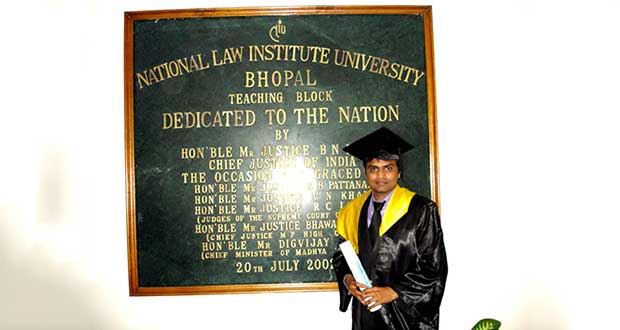
    Vipin Puran Singh graduated from National Law Institute University in 2010. He has recently joined Tata Teleservices Ltd. as Circle Legal Head (MP-CG region). This in itself is a huge achievement at his age, given that his counterparts are having at least 16 to 17 years more experience than him. Prior to Tata, he has worked with different organizations including Mahindra & Mahindra and Viom Network Ltd.(Tata Group). Apart from this, he has also been associated with many educational institutes.

    In this interview, he talks about:

    • Importance of academics and internships
    • His journey from Legal Consultant to Circle Legal Head at Tata Teleservices Ltd.
    • Recruitment process at Tata Teleservices Ltd. for Circle Legal Head


    Given that most of our readers belong to legal fraternity, how would you introduce yourself to them?

    Dear Readers and the Super Lawyer team thank you so much for providing me with this opportunity to share my thoughts & experience. My journey as a Lawyer started from 2010 when I graduated from National Law Institute University –Bhopal. Presently I hold position of Circle Legal Head at Tata Teleservices Ltd (Docomo). My previous work associations were with Mahindra & Mahindra, Viom Networks Ltd (Tata Group) & office of Asst. Solicitor General of India.

    Apart from being professional works, I take time out for community/ social work with Utho-Jago (NGO). My leisure time is dedicated to my family and friends who I consider my life’s strongest pillars. It had been a great journey so far and I feel there is a lot to come to make it far more interesting, meaningful and worth as individual & professional.


    How did you gravitate towards law? Why law and not engineering or medical studies?

    I am answering this question from my entrance exam days. Well this is most probable question indeed an interesting one to answer. Decision to pursue law, was one of the most difficult decision of that time. During my last few days of school, I had decided to do engineering like every maths-science student plan to do.  To be modest, pursuing  law was my dad’s advice, he always used to discuss about Law Universities  like NLS, NALSAR and NLIU but then, I could not imagine anything else but boring lawyers, Court’s Buildings and life time obligation of reading and studying. So, I did not take any interest in it until the day I read an article in newspaper regarding 100% placement and beautiful Library of NLIU!!! It struck my eyes! I did R&D on these universities and asked few of my seniors and the response was overwhelming. So here I am giving an interview as a Lawyer.


    As a law student which activities did you participate in?  Tell us about your law school journey from the 1st year till your final year. Did you have any guidance on how to go about your academics, co-curricular activities and internships?

    Five years at law school are the most valuable years of life for every law student for the purpose of personal and professional development; it makes you a mature professional from a immature teenager. Like every law student, my journey of five years at law school was very topsy-turvy and consist of highs and lows, friendship, love, drama, emotion everything you call feeling   If I start from my first year, it was the most difficult year of my law school life, I have studied from M.P Board where seldom you find English speaking friends even teachers never interacts in English and then I reached to law school where everyone was so fluent with their language and speaking skills. To be honest I used to be very scared of public speaking and I did not like giving  presentations before the class but this is what Law School teaches you by putting you in to the situation where either you will drown or you will learn to swim an survive. And I had no choice but to improve myself and overcome the weakness. It took me two years to come to the so called main stream!

    Where I can consider myself confident enough to handle the law school pressure. I was the students who have gone through every kind of excitement of law school from Repeats, Re-repeats and debarring from exams due to short of attendance. I have enjoyed my law school life at uttermost and have no regrets because today I am doing well in my own way. My advice to every law student that there is no harm in bunking the classes or may be exams because these would be the moments you would be cherishing for lifetime not your class room lectures. I was also involved in many co-curricular activities, I was the General Secretary of Environmental Research centre at NLIU, which has conducted National and International Environmental meets, Also made a documentary on global warming, I used to be amongst the few dancers of college. So my suggestion to aspiring lawyers is make the most of your law school days to groom themselves  and never give up to your past and do everything at your best from legal studies to loving your girlfriend. Face the current standing being head strong and don’t miss the fun of being a law student, that life never comes back live it every moment.


    What kind of internships did you do while you were a student? Any remarkable experiences during your internships that shaped your career choices later?

    Internships are the most important part of our curriculum,  I was always focused on my internships; I had got an opportunity to work with good organisations, law firms and corporate like Industrial Finance Corporation of India (IFCI), Minerals and Metals Trade Corporation(MMTC), Bharti –Airtel , M.V. Kini and Co.and few NGOs. My advice to every law student is that last two and half  years of internship works for you in placements because recruiter is always interested in your last 2 years of intern/work and first two and half years interns/trainings should be at places where you wish to visit (trust me!).  My most remarkable internship was with IFCI Ltd. I had worked with them for almost 3 months, where I had really learned the meaning of responsibility you possess being a legal advisor of the company, which relies on your opinions and decision, which would be of rupees more than thousands of Corers and Yes!! That is the reason you draw hefty salaries.

    All my internships had taught me something or the other but one thing I suppose I have learnt is to be honest and professional with your organisation and clients. It is the most important thing in this profession. My advice to every law student that do anything you wish to do in college life but be diligent and fair while going through internships because your work and appearance reflects your college reputation and your casual approach towards work may close the doors for your other batch-mates, juniors and for your university. Be passionate to work while going through internships which will open the doors for you in future and remember it’s a small world whose reference may take you to heights or land you in trouble.
     

    vipin-singh-3

    Did you find that your law school education had prepared you sufficiently for the many tasks you were required to execute during your internships and later at your job?

    Absolutely yes! Law school taught me many things from my intellectual skills to appearance. Researching and drafting was the most imperative skills which made my internships successful. When I say successful, that means I had come up with desired result which was expected from me during all the internships, secondly law school developed and polished my presentation skills, a prerequisite for any internship because at the end you are always required to justify internship and there your presentation skills works for you, I have always managed to present more than I worked because that’s the lesson I learned from law school studies, present anything at its best!!  One of the most important skill which, later on became a key for my success was drafting skills, from any mail communication to any legal notice reply or any litigation document, all you need, is perfect drafting of matter/issues. I think, its one area, where you always have a scope of improving and I am still working on it!


    You practiced for one year before joining Tata Tele Services Ltd., Bhopal. What made you to choose litigation and what prompted you to leave it?

    Well a bit painful question Corporate was never my dream though I am proud to be associated with Tata Group, I have started my from the office of Asst. Solicitor General of India, who was father of my senior and gave me this opportunity to work in his office. I have practiced almost one year, learned many finest arts of being an advocate and started practicing alone with two offices at Bhopal and Indore. But my experience as private practitioner had very mixed feedback it appeared to me – that weightage in our profession is not given to learning and knowledge alone but more to the number of years of practice. So I thought its wise enough to move on something which can justify my learning, experience and intellect hence I quit litigation. And I am happy very happy with my decision of making my career in corporate as the learning here has no limits.


    After that, you left TTSL and had worked with VIOM Network Ltd (Tata group) & Mahindra & Mahindra Financial Services Ltd. What prompted you to keep changing your job very frequently?

    I have worked with TTSL as a legal Consultant and started my first in-house corporate job with VIOM Networks, which is an Passive Telecom infra company of Tata Group as a circle legal executive which was comparatively a very small position but everyone was impressed with my work and got appreciation from everyone, all credit for appreciation goes to my boss Mr. Prashant Chauhan who happened to be my immediate senior at NLIU, I have learned many tactics on how to manage work, people and pressures in Corporate where you are suppose to deliver the work within a blink of eye.  At same time I have started getting call from other corporate houses and one fine day I got a call from Mahindra, though there was no specific reason to choose Mahindra over any other company except change in monotonous work. Best part of private corporate sector is that you can explore many opportunities, if you have guts to prove yourself to other company that if they don’t choose you it would be their mistake.

     

    vipin-singh-2You’ve recently joined TTSL as Circle Legal Head (MP-CG region). How did the switch from Mahindra take place?

    From Mahindra to Tata as legal Head was the most dramatic switch! Mahindra never wanted to leave me and I feel proud that my superiors were so much happy with my work, but I could not bear to leave the opportunity which was knocking my door and I grabbed it, In the age of 27 years, it was really a gigantic opportunity for any law graduate, my every counterpart -legal heads of other states in Tata are approximately 16 to 17 years more experienced than me , though it is very challenging because when you work on higher position you have very few people whom you can seek help and you are suppose to be ready with instant legal opinion in any critical situation. Before joining TATA as legal Head, I had gone through many rounds and interviewed very comprehensively, I had been asked and interviewed on various parameters which were mainly including of H.R rounds then legal rounds and finally intense Business rounds.

    Oh my god! That business round digged me to extreme. Sharing few questions with you like, How your presence can improve the business of company? (My thought was, am I supposed to be your marketing head?). When law expressly barred to carry out business at any place how would provide way to do business without breaking laws? (Now what is that?), well well! but after all I am a lawyer! How can I fail to impress you with my prompt answers! and yes today I am Circle Legal Head !


    Many young lawyers at corporate firms complain about the work being too exhausting, and that maintaining a work-life balance is just not possible. Could you share any advice on this?

    Generally every corporate sector’s official working hours are 8-Hrs 8.5- Hrs, and there could be no work which cannot be finished in specified timing, if we work diligently (may not apply to law firms) and every work is not meant to be finished in one day. I follow very unique strategy; I always streamline my work in different parameters like a work which can be completed on next working day. We should not sit back in office to finish that task, because remember one thing, work in corporate sector is never ending process and that is what you are being paid for. I never stretch my team to work after official hours, if something can be done on next working day it should be done accordingly.  Always keep one thing in mind, we work to make our life prosperous and if we fail to take out time for family and friends, our exhaustive working is of no use. Always try to prioritize work according to its timeline and work accordingly, once in a week if you are sitting late in office, it is justifiable but if you are sitting back in office every day after working hours than it is not work pressure it is a failure of your managerial skills.


    If you could re-live your 5 years in Law school, is there something you would do differently?

    Well, there could be hundreds of things which I would want to do! But I think whatever I did in those five years was my conscious decisions or decisions I made for myself after knowing the aftermaths of that situations. As I said earlier also, I have no regrets!


    Where do you see yourself five years from now?

    That’s a tough one, though everyone has aspiration so do I. Down the line five years I see myself more experienced and professional law personnel. I am confident that where ever I would be working I will grow with my Organization and would try to set new benchmark for aspiring lawyers.


    Lastly, what would be your message for our readers?

    My Message to aspiring law graduate is to live law school life fullest Learn! Learn! Learn. Learn to the extent that it becomes your habit, your routine and then your necessity. If we can do so world is all yours nothing can stop you from growing. I try my best to support aspiring graduates and I would say – If you think I can add some value in your learning I am just a call away.


    The views expressed on this site/article/interview are my own and not those of Tata Teleservices – Vipin Singh


  • Khushboo Priyadarshini on work as a Lecturer, job as an in-house counsel at SBI General Insurance and LL.M from NLIU

    Khushboo Priyadarshini on work as a Lecturer, job as an in-house counsel at SBI General Insurance and LL.M from NLIU

    Khushboo Priyadarshini graduated from Pune University in 2010. Thereafter she pursued an LL.M from National Law Institute University, Bhopal. After pursuing Masters, she joined Marathwada Mitramandal’s Shankarrao Chavan Law College, Pune afiliated to Pune University as a Lecturer. Later , she switched over to SBI General Insurance Co.Ltd.

    We asked her to share her experience while pursuing an LL.M from NLIU, work experience as a Lecturer and appointment at SBI General Insurance Co.Ltd.


    How would you like to introduce yourself to our readers?

    I am a law student. No, it’s not that I am still pursuing a degree… I completed my graduation from University of Pune and obtained Masters Degree from National Law Institute University, Bhopal. As of now, I am working as a legal executive with State Bank of India General Insurance Company. Yet, I still consider myself as a student because legal education for me is not just limited to obtaining a degree to use it for some end but the real essence of legal education comprises of the opportunity to update one’s knowledge and skills during continuation of one’s profession.


    Why and when did you decide to do law? What interested you most about the subject at the time?

    The period, when I had to make this choice, was one which although offered multiple career options but everyone’s mindset was limited to only two fields – engineering and medicals. And I did not want to be a part of the crowd. Also, I firmly believed that whichever field I would want to make a career in, should be one which provides me the learning space, where application of mind and not just fixed formula or theorem, is crucial. I perceived law as one such subject, as with every case, every situation, there is opportunity to learn something new and today, I can say that I am glad what I perceived then to be true, actually is true in the real world.


    khushboo-priyadarshini-1You have done your graduation from Pune University. How would you describe your time there?

    I will be pretty honest here. Unfortunately, I could not get through any of the NLUs and hence, I decided to pursue my bachelors from Pune University. During my 5-year course, while I got the chance to be under the guidance of some good professors, I also had the experience of studying a few subjects all alone because there were no teachers or lectures for those subjects. I managed to clear every semester with good grades. And when I held my degree on the day of convocation, I felt grateful to everything that happened to me during my course – the good as well as the not-so-good aspects because that’s what made me capable of completing one important stage of my life.


    What do you have to say about the supposed ‘elite’ tag attached to certain law schools? Do you believe branding is something that’s very relevant/ important at any stage in a law student’s career?

    The sad truth of our society is that yes, the ‘elite’ tag attached to schools plays an important role at least at the establishment stage. The perception of the real world about a student’s knowledge and skills is reflected by the brand which the student is associated with. I personally do not believe in this coz ultimately it’s your knowledge that will help you survive and not the brand.


    When and how did you decide to pursue Masters? Was it a professional requirement or a personal endeavour?

    I would say, it was a personal endeavour as well as a professional requirement. As I mentioned earlier, during my graduation period, the kind of experience I had in terms of availability and non-availability of good faculty, which created the interest within me to get into academics, which calls for a Master degree. So, the personal endeavour led me to take it up in order to meet the professional requirements.


    How did you prepare for CLAT?Did you join any coaching?

    No, I had not joined any coaching class. The notes I made during my graduation course really helped me in the preparation.


    You have done your LL.M. from NLIU, Bhopal. What was your specialization? Why did you choose that particular subject?

    I specialized in Business law. I chose this subject because of the scope it offers in terms of career options. It doesn’t limit me to one field. I took up teaching and now I am working in the legal team of SBI General Insurance. So the point I wish to emphasize here is that one has to liberty of choice, to get into academics, practice or corporate sector.


    Can you please share your experience at NLIU?

    In one word – fabulous! I got the opportunity to be under the guidance of learned professors who gave us insight about the real world apart from imparting the theoretical knowledge. And this blend got its magical touch from the heart and soul of the university that is the library – “Gyan Mandir.” Every day was an enriching experience for me and I shall always be grateful to NLIU and the teachers for that.


    Have you considered Doctoral Studies?Any university you have shortlisted for it?

    Yes, it’s certainly in my list. But as of now, I have not shortlisted any university but I plan to do it from one of the nationals.


    How would you describe your legal education? Did you dream of changing the society or working on a revolutionary legal principle while as a law student? Did your legal education prepare you for the real world practice of law?

    I would like to quote Christine Gregoire who said that Education is the foundation upon which we build our future. And to add to it, it also enables us to play a role at times in shaping others’ future.

    I may not have dreamt of bringing about a revolutionary change. But yes, I believe in the power of this foundation. I have and will always try to work towards the benefit of the people I work with.


    What are the main essential qualities of an Academician? What do you think differentiates between lawyers who chose academics from those of other professions?

    Sharing your knowledge is what differentiates academicians from other professionals. While others use their skills and knowledge for their own and the beneficiary’s good, academicians share their skills and knowledge to make others capable of achieving their goals and they also try to keep this cycle moving.

    The job demands one to understand the needs of every student and ensure that not a single student leaves the class without learning. Patience, diligence and continuous learning are the qualities which an academician must possess in order to impart knowledge to the students.


    You worked as a Lecturer for one year. What subjects did you teach there? How was the experience? What kind of skillsets proved to be useful for you during this period?

    I worked with Marathwada Mitramandal’s Shankarrao Chavan Law College, Pune afiliated to Pune University. In a short span of one year I got an opportunity to teach Arbitration, Administrative Law, Criminology, Family law and Jurisprudence. “The one exclusive sign of thorough knowledge is the power of teaching…” I can’t agree more with this statement because as I have mentioned in the previous questions also, teaching is a job which provides the learning space. Also, I think the best job for one is that which leaves a smile on one’s face every day. It has been almost a year and a half that I left working there, yet the students still remember me, call me to share their doubts, their achievements and it is a great feeling. It makes me feel that I was able to do something good.

    In terms of skill set, I updated myself with information; new examples related to subjects and imparted it to the students as required.


    You are currently working at SBI General Insurance Co. Ltd. How did this switch over take place?

    God always has a different plan for you. I still want to be in academics but somehow after my marriage, the things weren’t favourable for me to take up teaching. But the offer from SBI General happened and I made a choice to experience this phase of life also with the belief that one can connect the dots only looking backwards.


    Why SBI General Insurance Co. Ltd? How did you go about achieving this? Please tell us about the recruitment process at SBI General Insurance Co. Ltd?

    There was no plan in my mind to achieve this. I just kept going with the flow and things happened.

    About the recruitment process at SBI general insurance, whenever there is a vacancy, the HR consultants and recruitment agencies shortlist candidates from various portals and the process is taken ahead. My selection consisted of 3 rounds – interview with the Head of Department, Group discussion with fellow candidates and interview with the HR.


    What do Insurance Companies look for in prospective employees? Is the induction process any different from Law Firms?

    The companies look for the candidate’s knowledge about insurance and related laws. I haven’t had any experience of the induction process of law firms so will not be able to comment on the difference. But the induction here includes briefing about the insurance sector, working methodology and certain guidelines which are to be followed for all the tasks.


    What amount of legal work is there? What kind of work you are supposed to do there? How is the experience so far?

    The job profile is strictly related to legal stuff – handling the agreements the company enters into with various service providers, consultants, etc. It also includes negotiating, drafting, vetting of the agreements. I handle the litigation part also which includes cases before various courts, ombudsman matter, arbitration matter to which SBI general is a party.

    The experience so far has been enriching. It helps me grow professionally. I am able to witness implication and application of law in this sector.


    There is a phenomenal obsession amongst law students with maintaining a very high CGPA. How important according to you is this in securing a job?

    It’s a tricky question. I mean it is kind of obvious that sound knowledge and practical experience are important and not just securing good grades. But in our society, good grades are proportional to one’s knowledge. So you have to work accordingly. I hope the scenario changes in the future though.


    What are your long term objectives? Where do you see yourself by the end of five years?

    Pursuing PhD is a priority for me. I just want to keep going with the flow as when there is a set plan, the surprise element gets lost and I want life to constantly bring in surprises for me. I will keep connecting the dots with the hope that the end result is positive.


    Lastly, what would be your message to our readers who are mainly young lawyers and law students?

    Keep reading; keep comprehending because it is the only thing which will take u ahead.


  • Vishaka Deshwal on maintaining CGPA, research papers and recruitment at WIPRO

    Vishaka Deshwal on maintaining CGPA, research papers and recruitment at WIPRO

    vishakha-deshwal-1Vishaka Deshwal is one of the most diligent and illustrious scholars of the 2015 batch of NLIU, Bhopal. She has participated in various co-curricular activities and has multiple publications to her name. With such a dynamic profile and her dedication to work, she has recently received a job offer from WIPRO. We asked her to share her experiences and strategies she used over the years.

    In this interview, she talks about:

    • Maintaining a decent CGPA
    • Importance of co-curricular activities
    • Writing research papers
    • Recruitment process at WIPRO


    How would you introduce yourself to our readers who are mostly law students and young lawyers?

    I am currently undergoing my final year at the National Law Institute University Bhopal. I would like to take this interview as an opportunity to share my views and insights on life in a law school and career decisions that a law student has to take.


    How did you decide to study law? Did you have lawyers in your family? Why law and not engineering or medical studies?

    There are no lawyers in my immediate family. I used the elimination method while deciding the subject of graduation because I knew what I did not like.

    I got to know about the Common Law Admission Test (“CLAT”) while reading something online and I liked the concept of an integrated law course. The more I read about the National Law Schools, the more I got interested in getting into one.


    As a law student which activities did you participate in? Did you have any guidance on how to go about your academics, co-curricular activities and internships?

    I did not devote my time to only one co-curricular activity. I tried my hand at Parliamentary Debates, Moot Courts, Mediation Competitions, Paper Presentations, etc. I did not want to miss on anything so I made it a point to at least try out most of the activities.

    From the first year onwards, I participated in Mediation Competitions, Client Counselling, Debating, as these do not require any prior substantial knowledge of law. I participated in moot courts and also tried my hand at writing research papers. I have also been associated with the Alternative Dispute Resolution Cell in the college since my first year.

    All in all, I tried a bit of everything and every activity turned out to be an add-on to my skills. Our seniors were always welcoming and helpful in guiding us on how to go about participating in various co-curricular activities.


    One can find it difficult to manage continuous evaluation through trimester exams, projects submissions, etc. in a law school. How did you manage to keep up your grades

    I think continuous evaluation through trimester system is not as difficult as it may seem from the outside. After a point, you just get used to making projects and writing examinations every three months. It is just that one needs to be regular so that the projects or submissions do not get piled up and become unmanageable. Although, I am not the topper of the class but I managed to keep my grades consistently above average. I was not always attentive in the classes but still managed to sail through. Scoring good grades is not a very difficult thing I realised.

    There is enough incentive to keep up your grades in a law school. Good grades are like cherry on the top. Sometimes, grades may even help you get through good internships.


    You have published a lot of papers in various prestigious journals. Can you give us a few tips to ace the art of paper writing?

    Research Papers are an integral part of any discipline. As law keeps evolving with time, there are always some loopholes or grey areas which need to be corrected. Mostly research papers  aim at bringing out the fallacy in the law and suggesting the remedial measures. Therefore, I think that writing papers has a much broader relevance for a law student than just enhancing the CV.

    There are two necessary things we should remember before writing a paper. First is choosing the right topic. The topic should be specific and should highlight an important point of law that needs consideration or analysis. Second is that there should always be a new proposition or suggestion at the end of the paper.

    Rest, I think all law students know about the basics of researching. The more you read up, the better understanding you would have about the topic.


    Your internships at law school have mainly been with top tier firms. Our readers would be quite curious to know how you went about securing these internships.

    I was prompt in applying for the internships especially internships at law firms. Also, I made it a point to follow up with the HR to know about the status of my application. I also got through some of the internships through the Placement Co-ordination Committee of our College. I think the key is relentless punctuality.

    I think there is nothing wrong with interning at law firms from the very beginning provided that you have made up your mind about joining one after college. I think it depends from person to person, if you are not sure which career option is best suited for you then it is better to try out all possible options and then make up your mind.


    Did you plan out your internships throughout law school or did it all just happen by chance?

    I did not plan my internships as such. I took up whatever came my way. The only thing that I made sure was that I get to work with different kinds of organisations be it- NGOs, Government Departments, Law firms or Office of Senior Advocates.

    I think one should try and narrow down the options by start working with different kinds of organisation form the first year only.


    How relevant did you find your law school education with the kind of work you were required to do at law firms?

    I think what we are taught at the law school is very much relevant. The research and interpretation skills that we acquire at the law school help us through the internships.


    How has your mooting experience been?

    I am not a hard-core mooter. I did one International Law based moot court in my fourth year and one National Moot Court in my second year. The kind of in depth study and research that we undertake while preparing for Moot Courts is incredible and makes the whole effort worthwhile.

    Although, I really liked mooting and it taught me a great deal, I found it very time-consuming. That is why I participated in a limited number of Moot Court Competitions.


    You have been a member of multiple committees while in law school. Do you think these enhanced your skill-sets? Please share a few of your memorable experience.

    I have been a member of the Alternative Dispute Resolution Cell (ADRC) form the first year itself. Mediation is one of my favourite areas of law and I enjoyed participating as well as assisting in organising Mediation Competitions as a member of the cell.


    Recently, you secured a job offer at WIPRO. How did you go about achieving this? Please tell us about the recruitment process at WIPRO?

    WIPRO had come down to our campus for the first time, for recruitment purpose. The process was divided into three stages: first of all, an extempore was conducted. Some of the candidates were eliminated at this stage. Next, there were two rounds of interviews with different panel of interviewers. While the focus of the first interview was personality assessment, the second was majorly limited to legal questions. After the two set of interviews, there was further short-listing. The selected candidates were given a written assignment which was to be submitted the next day i.e. the day of the final interview. The final interview only comprised of questions relating to personality assessment.


    How did you prepare for the job interview? What kinds of questions were asked to you?

    While preparing for an interview, it is of utmost importance to be thorough with your CV. Mostly, the interviewers ask you about areas of law that you have worked on in your internships and seldom about your publications or other co-curricular achievements. Therefore, reading up the topics that I had mentioned under my internship experiences was the first thing I did.

    While making my CV, I made it a point to states the title of the work that was assigned to me on the internship (specifically mentioning the provision or name of any case law involved) leaving no scope for any vagueness or open-endedness. This way I was able to limit the number of probable questions.

    The bottom-line is that most of the questions can be anticipated and prepared for well before. By doing so, you feel confident while articulating your answers during the interview.


    Many law students strongly believe that getting a job at one of the top 3 law firms is mostly about securing a high GPA. Would you agree?

    Good grades or co-curricular activities alone are not enough. It is a combination of the two that projects you as a dynamic lawyer. Maintaining grades is important as that is the core of law school curriculum but we should not limit ourselves to writing exams and securing good marks.

    Many people believe that working as an in-house counsel affords more work-life balance and is less demanding. What is your opinion?

    Compared to working at law firms, job of an in-house counsel is less demanding thereby it affords more work-life balance. However, one should always strive to achieve work-life balance irrespective of the nature of the job.


    If you could re-live your 5 years in Law school, is there something you would do differently?

    I do not wish to change anything about my time spent in the Law School. I think even the mistakes that I made eventually helped me improve in some way or the other.


    Lastly, what would be your message for our readers?

    I think we should never stop exploring because there is always a plethora of opportunities out there; we just need to have an open mind.

  • Stuti Shrivastava on securing top-notch internships and a job offer from WIPRO

    Stuti Shrivastava on securing top-notch internships and a job offer from WIPRO

    stuti-shrivastava-1Stuti Shrivastava is currently a student of NLIU, Bhopal and shall graduate in 2015. She has an enviable academic record and has an excellent series of internships at top law firms. She has participated in various moot court and debate competitions. Her diligence paid off when she received a job offer from WIPRO.

    In this interview, she talks about:

    • Importance of mooting
    • Securing top-notch internships
    • Recruitment process at WIPRO


    How would you like to introduce yourself to our readers?

    I am currently pursuing my final year in Law from National Law Institute University, Bhopal. I would be joining Wipro next year. I would take this opportunity to reach out to the readers of SuperLawyer and share my experience as a law student and the opportunities thereafter.


    Why and when did you decide to do law? What interested you most about the subject at the time?

    I decided to pursue Law while I was in high school. It was just a couple of years back that the format of CLAT had been introduced for five year law courses. While deciding my career options, a five year law course seemed a good choice, firstly, because the demand for lawyers was on the rise and still is, and secondly, because there are a lot of avenues open for a lawyer as far as both private & public sectors and independent practise are concerned.


    How would you describe your time at NLIU-Bhopal?

    At NLIU, Bhopal we follow a trimester system which gets a little hectic sometimes. It might get slightly difficult to go through all the projects, mid-terms and end terms every trimester. But if you have a nice group of people to hang out with, college life at NLIU is really fun. I always had good friends here and that is what made my time here so great. I also learned a lot through academic and co-curricular activities like mooting.


    One can find it difficult to manage continuous evaluation through trimester exams, projects submissions, etc. How did you manage to keep up your grades?

    Honestly, I am not really at the top of the class as far as grades are concerned. However, I have always managed decent grades by studying a few days before exams. I don’t think there is a universal mantra for scoring well. It’s very subjective. Some students study all through the trimester while others study a night before the exams. However, students should be mindful that they do not enter ‘the vicious cycle of repeats’.


    Your internships at law school have all been with top tier firms. Our readers would be quite curious to know how you went about securing these internships.

    I acquired internships either through independent applications or through the college recruitment committee. While applying independently, I always made an effort to apply well ahead of time at various firms and to stay in touch with the HR department.


    How relevant did you find your law school education with the kind of work you were required to do at law firms?

    The laws that we study at law school form the basis of all the work that we do at law firms. Having said that, the practical scenarios that we face at internships are far different from the theoretical situations taught to us at law school. At internships, we are required to look into the practical application and interpretation of laws.


    Did you learn any skills while interning? What are these skills and how did you acquire them?

    I think the most important skills that I learned at internships were the analysis and practical application of laws. I acquired these skills by researching on practical legal situations and by analysing the interpretation and application of laws in such situations. Every assignment that I was given involved a new query which required me to thoroughly understand the law its application.


    You have participated in various moot court competitions including Willem C. Vis (East) international commercial arbitration moot, tell us how important is mooting and what effect does it have on one’s CV?

    Legal Education is not just about theoretical knowledge but also about practical application of law. Mooting helps a student get a taste of practical scenarios and assists in development of analytical skills. When mentioned in a CV, it shows that the student is not merely engaged in classroom activities but also makes an effort to branch out and participate in other co-curricular activities. Additionally, International moots like Willem C. Vis give the students an opportunity to interact with law students and jurists from top universities all over the world.


    How helpful do you think is mooting for a law student? Does it serve a real purpose or is just another way to crowd up the CV?

    Apart from developing analytical skills, mooting also helps in the development of oratory skills and in instilling confidence in the student. It is also a good way of acquiring research skills and increasing one’s pool of knowledge. In addition, the competition is a very good platform for meeting other law students from various universities and it facilitates exchange of ideas.


    Apart from mooting and academics what other co-curricular activities did you engage yourself in?

    I have participated in seminars and presented a legal paper.


    What do you have to say about mooting at law school and legal writing for journals? Are these activities that help with development of real world skills and do they have any ‘bonus’ value when seeking jobs?

    These activities certainly help a student in expanding his/her horizon of knowledge and legal skills. Also, while seeking jobs, these activities go on to show the interviewer that the student is a keen learner and is versatile.


    Recently, you bagged a job offer as in-housel counsel at WIPRO. How did you go about achieving this?

    I read up on all the assignments that I had mentioned on my CV and made sure that I knew them in and out. I also read up the basic laws and prepared the most anticipated HR questions.


    Please tell us about the recruitment process at WIPRO?

    The recruitment process was spread over a period of 2 days. On the first day we had an extempore and two rounds of interviews where we faced different interviewers. We were asked both, general legal questions and CV related questions. At the end of the day we were also given some legal and other assignments. On the second day we had a single round of interview where we were asked personality assessment based questions.


    Tell us about your interview? What kinds of questions were asked by the interview board? Any tips on how one should go about framing a C.V. and prepare for an interview?

    On the first day, I was asked basic legal questions and CV related questions along with HR questions. There were some questions based on general knowledge. The interview on the second day was solely based on personality assessment questions.

    One should always make sure that the assignments mentioned in the CV are precise and that there are no frivolous points in the CV. Preparing all the anticipated questions before the interview is always helpful.


    There is a phenomenal obsession amongst law students with maintaining a very high CGPA. How important according to you is this in securing a job?

    Grades are important but they are not the only thing that helps in a job interview. Thorough and clear understanding of the areas that one has worked in and is very important. Apart from knowledge, interviewers also look for other qualities in students like confidence, versatility, ability to work in a team and capacity to handle pressure. Students should also work towards developing these skills.


    Many people believe that working as an in-house counsel affords more work-life balance and is less demanding. Would you agree?

    Having interned at various law firms, I have firsthand experience of how demanding life is at such firms. In most of the places you are often required to work late and there is always high pressure to finish assignments on deadlines. In comparison to that, the job of an in-house counsel is not as demanding and therefore, it may provide a better work-life balance.


    Lastly, what would be your message to our readers?

    I would like to ask all the law students to not restrict their outlook as far as career after law is concerned. They should intern at different places and participate in various co-curricular activities before they decide to settle down on anything. Also, along with academics they should try and have fun with their friends and make good memories in college.

  • Kinat Sisodia, Legal Manager, Star India, on being a media and entertainment lawyer, and work at Radio Mirchi

    Kinat Sisodia, Legal Manager, Star India, on being a media and entertainment lawyer, and work at Radio Mirchi

    Kinat Sisodia graduated from Hidayatullah National Law University, Raipur, in 2008. After spending years with Shemaroo Entertainment and Radio Mirchi, Kinat has recently shifted to Star India in capacity of Manager – Legal for its channels Life Ok, Star Jalsha, and Jalsha Movies.

    In this interview, we speak to him about:

    • Working for radio and television
    • The Indian entertainment law regime
    • Striking work-life balance

    What motivated you to choose law as a career?

    My family as most other families laid emphasis on education with freedom for each member to pursue their own educational interests. My father studied pharmacy, which was an unconventional choice of education at his time, and my elder brother went on a completely different tangent to opt for hotel management later. In a similar way, my calling for law came with the opening of National Law University in my hometown Jodhpur. I researched on the changed scenarios for law as a growing choice for a profession and then followed my family tradition of pursuing my own education path.


    How did you come to join Universal Legal?

    I was introduced to Universal Legal by my mentor Mr. Venkatesh Prabhu, with whom I had the honour of undertaking an internship during my final year of college. Under his able guidance and advise I interviewed with Universal Legal’s offices at Delhi and was shortlisted to join. But due to recession, the hiring got frozen. I was later given an option to join their Chennai offices, which I happily availed and joined the firm in February 2009.


    You left a lucrative law firm job and had joined Shemaroo Entertainment as an in-house counsel. What prompted this switchover?

    My move from Chennai was majorly based on sentimental grounds of being away for too long from home, folks and friends. I never planned to make a switch from a law firm to an in-house role, but the chance to be part of glamour and Bollywood was part of the initial appeal for me along with the option of staying close to family and friends.

    After joining Shemaroo, I realized the workload as an in-house counsel demanded almost similar timelines like a law firm. The major practice areas there were contractual drafting and to devote a time and focus on understanding copyright aspects for such drafting.


    How did you get inducted into an FM Radio company?

    (After working with Shemaroo for almost a year Kinat joined Radio Mirchi.)

    Media industry lacks lawyers and therefore with my one year of media experience I started getting couple of job offers. Amongst those offers, I got intrigued by an offer to experience and be part of the events business as part of Radio Mirchi. This gave me a chance to be part of organizing large scale events, viz. Mirchi Music Awards and Spell Bee school competitions to name a few and handling various intellectual property aspects in relation to organizing events.


    What were your primary responsibilities as Senior Manager – Legal at Radio Mirchi?

    I started my stint at Radio Mirchi as part of their events business. Then I also worked for the core FM Radio business for routine compliances, music licenses while negotiating and drafting several different commercial deals. I was also majorly involved in advising and representing the company’s concerns before various forums and courts in relation to changes in the legal system with the introduction of the Indian Copyright Act, 2012.

    With experience in establishing the legal implications for the FM Radio business, I, along with my senior, were also asked to help a sister company for building the FM radio model on the evolving internet radio broadcast business.


    kinat-sisodia-1

    Tell us about your venture into TV.

    That’s a standard interview question I have faced at several times in my career so far. I believe my journey in the media industry started from dealing copyright content (by way of (acquiring/ creating/ licensing) at Shemaroo; later as part of my work at Radio Mirchi I was helping in exploitation of copyright content on the FM Radio and internet platforms on an audio only mode. The logical next move for me therefore was to move towards a platform for exploitation of copyright content on an audio-visual basis and hence television.

    This belief was fueled in the right direction when I was approached to move from top of the FM Radio players to be part of India’s top television network for its relatively new channels Life OK and Bengali channels Star Jalsha and Jalsha Movies.


    How different is the experience of working with a television conglomerate as compared to a FM Radio Company?

    It’s actually a very short time to make any comparisons since I am barely three to four months old at STAR. The significant difference I feel for now while working for television is to be involved in larger projects which have a larger impact on the audience. Also, the functioning and processes for a television conglomerate are many folds since the broadcast happen simultaneously in the entire country as opposed to FM radio where each city has its separate localized broadcast.


    How do you distinguish your role and responsibility as an associate in a law firm and as that of an in-house counsel?

    Working in-house for almost 4 plus years, I have realised that being in-house, lawyers are required to understand the exact requirements of the company not only from immediate legal point but also from a long time business perspective. This becomes a little different for lawyers in law firms since they cater to requirements of multiple clients across different industries on a regular basis. Further, growth for an in-house lawyer is not only on basis of legal knowledge but on an overall understanding of company’s business to support the company’s visions.


    Do you think courts in India are equipped to handle entertainment and media law cases?

    The High Courts of the country are witnessing unique intellectual property cases these days and are dealing them in a commendable way. However, a nation-wide understanding on similar approach remains desirable to effectively mitigate the new intellectual property issues that keep arising.

    The major concerns for all digital platforms are monitored and effectively dealt by a special designated tribunal in India, the Telecom Regulatory Authority of India (TRAI). TRAI not only provides regulatory framework for all digital platforms, but also takes inputs of the stakeholders from such digital platforms to effectively protect the concerns for each platform.


    How do you maintain a work-life balance?

    I feel it can all be handled well if you are able to segregate your work time and family time. It may be little difficult to practice this in the early stages of your career, but it is very important not to carry any work stress once you leave your workplace. In fact, I am pretty sure all of us have handled time crunch in our college lives as part of project deadlines or exams. None of those things bothered us much then because we didn’t carry the stress back, and the same approach needs to be adapted to work life.


    What are your long term objectives? Where do you see yourself by the end of five years?

    Honestly, I didn’t plan my career path to move in any particular way, but here I am after five years in the media and entertainment industry. Nevertheless to answer your question, I would like to make a point that I have been involved in giving suggestions before the passing of the Indian Copyright Act, 2012 in the beginning of my media career. With the way the Indian Copyright Act, 2012 is now being interpreted, I foresee a lot of excitement and challenge to keep me engaged in the media and entertainment sector for the next 5 years hopefully.


    Lastly, what would be your message to an Indian student pursuing a law degree?

    Law is an amazing field and has a plethora of opportunities for everyone. Just maintain your focus for what opportunity you want to aim for and not just because the majority is doing it. Hard work and dedication will take you where you will be content in the long run.