Tag: Counsel

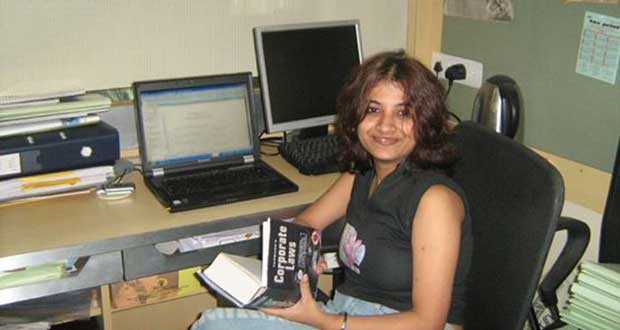
  • Natasha Fernandes, Legal Head, B4U Television on a career in Media Law

    Natasha Fernandes, Legal Head, B4U Television on a career in Media Law

    Natasha Fernandes graduated from Government Law College, Mumbai in 2002 and had thereafter worked as in-house counsels of large corporate houses. She currently heads the Law department of B4U Television Network India Ltd.

    In this interview, she talks about:

    • Building up a career in media law
    • Strategies which she used while working with different places
    • Journey from an Assistant Legal Manager to Legal Head at B4U


    Given that most of our readers are law students and young lawyers, how will you introduce yourself to them? What motivated you to choose law as a career?

    Hi friends, this is Natasha Dsouza.. I head the legal for B4U Television Network India Ltd. Been here since 9 years, with a total rich legal exposure of 12 years.I pursued the 5 years law course from Government Law College, Churchgate. Having no family background in law, the hunger for knowledge was the only factor that kept me going. To be honest, Law was not a career stream for me, rather the interest to know the law of the land so that people could not take me for a ride was the motivation to learn law.


    natasha-fernandes-1

    What all activities did you participate while in your college? What were your areas of interest during your graduation?

    College life was very simple, but fun. Did my 12th from P.D Lions College, Malad and then joined GLC, Churchgate for the 5 year law course. I had a lot of fun with friends but within the four corners of discipline. These years have some of the best memories and friends. College was merely education and fun. All the expertise and practical knowledge was post my completion of law.


    Did you do any internship during the course of your studies? What kind of work did you come across during your internships?

    No, unlike others I did not take up any internship during college. I started my career only post my graduation in law.


    Many lawyers say that the first year after graduation is the most difficult year for young lawyers. How was your first year after graduation?

    I had lived a very simple and protected life, home to college and college to home, never journeyed beyond, rather had always depended on friends or folks to travel to a new place.

    When I joined the law firm after my graduation, I had to appear in all courts all over Mumbai. With no knowledge of routes nor any internship training, had no knowledge about appearing in matters, it was a new world with a plethora of experience, especially with the strict judges who were not very supportive of juniors appearing before them. It was a do it and learn it yourself affair, but a journey that made me independent.


    You had started working at P. V Nichani & Co. right after graduation, and thereafter you joined Shapoorji Pallonji& Co. Ltd.. What led to this shift?

    I always wanted to work for a corporate. I started my career with G.P Consultants and Developers immediately after my graduation in law. On working there, I did feel the need to have procedural and court exposure and hence started my journey with P. V Nichani & Co. Worked there for a year, appeared in all Metropolitan courts in Mumbai, Small Causes Court, City Civil as well as in the Bombay High Court. After a year of enriched experience and exposure, I was approached by Shapoorji Pallonji& Co., and I took up the offer on selection.


    You left SP & Co. Ltd. to join Star India Pvt. Ltd as a Legal Executive. What motivated this shift? What does it take to get job at Star India at that stage?

    STAR motivated this shift. As far as getting a job is concerned, it’s always a matter of confidently marketing your experience and exposure in a way that suits the need of the Company interviewing you. It is very important to know about the job profile and whether you can handle the requirement and an honest answer to everything. It is always good to confess what you don’t know rather than to beat around the bush or lie. Coz even if you sail through the interview, any lie will make you fall flat on your face when you start work.


    Thereafter you started working at B4U Television Network India Ltd. Having been at B4U since 2005 as an in-house counsel, you were promoted to Legal Head; what qualities do you think helped you to achieve this status?

    I joined B4U as an Asst. Manager in 2005 and have been working here since 9 years. My qualities that helped me achieve it, is what every growing employee has..

    • Honesty and sincerity towards work;
    • No saying NO to any work;
    • Constant learning and research. No one knows everything and everyone needs to learn, so never felt ashamed to ask when I didn’t know something. It is better to ask than to make mistakes;
    • Eye to details and re-checking everything that is done;
    • Time management and prioritizing work to achieve within set timeframes
    • And above all my Drafting skills and perfection towards work


    Many lawyers would say that the actual learning takes place in the years of practice. How far would you say it is true? What was the case in your situation?

    Not true in my case. Actual learning takes place wherever there is an intention to learn. You face various challenges as an in-house counsel and also working with a corporate divides your exposure between litigation and non-litigation. Both give you a lot of learning and learning never ends.


    What would be your message to our readers who are budding lawyers and law students?

    • Believe in yourself
    • Be attentive to details
    • Never feel shy to ask what you do not understand
    • Stay positive and self-motivated, focus always on your goal, nothing else matters, no negative comments, no politics, when you know you are working with honest, giving your all, just stay focused, let people not bow you down.
    • Never keep ego at work.


  • Smrity Sudan, In-House Counsel, UD Group, Dubai on her experience in Corporate Law

    Smrity Sudan, In-House Counsel, UD Group, Dubai on her experience in Corporate Law

    Smrity Sudan graduated from CLC, Delhi University in 2007. She holds a B.Com degree also and is a qualified Company Secretary. She has a very rich experience of working in India and Dubai. After graduation, she started working at Bharti Airtel Ltd. and later, switched over to DLF Ltd. Thereafter she moved to Dubai and worked initially at Emirates Legal FZE and then at, Dubai Legal Eagle (Al Dhaheri International). She has recently joined UD Group, Dubai.

    In this interview, she talks about:

    • Working for Bharti Airtel Ltd. and DLF Ltd.
    • Working in Dubai as a Corporate Lawyer


    How would you like to introduce yourself to our readers who are mainly law students and lawyers?

    I am a Corporate Lawyer having experience globally in legal drafting, compliances and International Arbitration.


    When and how did you decide to study law? Which universities did you consider for your legal studies? How did you settle for CLC, DU?

    I decided to do law during my graduation. I enrolled myself for CS in 2003 and acquired interest in law subjects. I always considered CLC to be the most appropriate law college for me. Apart from being a well known university, CLC is the best law college in Delhi.


    Having graduated from a non-premier law school, what would you say to the future graduates of DU regarding this?

    Hardly few people manage to do law from the NLS, Bangalore. Only those who choose law as a career quite early in their lives aspire to join NLS. NLS is not the end. Look beyond and see many successful lawyers from other universities. Soli Sorabjee had graduated from Government College, Mumbai. Harish Salve did his LL.B. from Nagpur University, Mukul Rohatgi from University of Mumbai.


    Many lawyers say that the first year after graduation is the most difficult year for young lawyers. How did you learn the ropes and what were the biggest challenges you faced?

    Facing challenges means you are alive. You will find it in every step of your professional life. People find being exposed for the first time to the professional world a little challenging. As far as my first year of professional life is concerned, it was pleasant being associated with Bharti, a well-known brand, having great HR Policies and highly professional yet empathetic boss. First year of your work life is the year to learn the most when people are more than willing to help you learn. After that expectations begins and you are considered to be an expert. Learn and learn should be the agenda.


    How did you decide to shift from Bharti Airtel to DLF Ltd.?

    As I said, be open to learn the maximum in the initial years. Do not be stuck in the field you don’t find interesting. My reason for change was to learn more of corporate legal work in DLF as my profile was more of secretarial compliances in Bharti. Both are great places to gain valuable experience.


    You left DLF to join Emirates Legal FZE, a law firm in Dubai. What motivated this shift? How did your appointment take place?

    It was a personal reason. After getting married I had to shift to Dubai with my husband. He had secured himself a great job in Dubai and we were excited at the prospect of exploring international work life.

    But, only after 6 months of struggle Emirates Legal was the first break I got in Dubai. I felt that at that time finding a suitable job in Dubai was not easy. Despite having more than four years of experience, I was considered as a fresher. Yes, I was a fresher to a Civil Legal System and to UAE laws.


    Thereafter you worked as a Legal Consultant at Dubai Legal Eagle (Al Dhaheri International). How did the switch from Emirates take place? How was your experience?

    It was a right decision as I was not satisfied with the profile. Dubai Legal Eagle, an International Law firm gave me exposure to International Arbitration. It is an interesting profile for those who possess analytical abilities, enjoy arguing cases before a Tribunal consisting of members appointed from various parts of the world.


    You’ve recently joined UD Group, Dubai. Which events led to your induction into UD Group? Were there any interviews or selection processes?

    Being a Company Secretary and someone who has no interest to litigate, a Corporate Lawyer profile is where I find myself well fitted. Fortunately, the option of UD Group came to me through a consultant and I went through the 3 stages of interviews that lasted for almost 2 months.


    What does your current work profile at UD Group consists of? How is a typical workday like? Can you tell us about a few of the most challenging problems you have faced thus far?

    My work profile at UD Group consists of typical in-house counsel profile, which includes drafting of commercial contracts, negotiating transactions, Merger and Acquisitions, Restructuring, compliances etc. The most challenging part is to think on the lines of Civil Law System since my law degree is on subjects based on Common Law System.


    Tell us a bit about work culture in Dubai.

    The work culture is equally stressful because of long working hours. Magic Circle Firms and MNCs look for people who have acquired degrees from USA, UK, and Australia etc.


    How difficult was the shift to a foreign law firm?

    It was not very difficult rather it poured more confidence to deal with people from different countries and background.


    How has been your B.Com degree helpful in your career?

    Yes, my B.Com degree has indeed been quite helpful in understanding the commercial and business aspects of the transactions.


    Can you give us advice on applications and interviews, especially with foreign law firms?

    Build good CV. Approach consultants and apply directly on the websites of the Companies where you would like to apply. Register on LinkedIn and interact with people. Register on various websites offering services to find jobs like Legalweeks.com, Totallylegal.com.


    What made you gravitate towards this field of Corporate Law?

    I have always wanted to be a Corporate Lawyer. I followed my instincts and not the general perception of the society. I am happy to overcome the challenges coming my way.


    Lastly, what would be your parting message for our readers?

    Believe in yourself, trust your conscience and follow your dreams. Be a winner in the field of your interest. That’s what success is.


  • Hiral Vimadalal, Assistant Manager-Legal, Viacom 18 on work at law firms and in-house

    Hiral Vimadalal, Assistant Manager-Legal, Viacom 18 on work at law firms and in-house

    Hiral Vimadalal graduated from Pravin Gandhi College of Law in 2009. She is one of the founding members of Moot Court Society at Pravin Gandhi College of Law. She started her legal career as an Associate at ‘India Law Services’. Thereafter she worked at V.A. Associates and Wockhardt Limited. She has recently joined Viacom 18 Media Private Limited as an Assistant Manager – Legal.

    In this interview, we asked her about:

    • Law School experience
    • Importance of internships and co curricular activities
    • Strategies used while working with different law firms and companies


    Why did you decide to study Law? What inspired you to do so? How did you get through to Pravin Gandhi College of Law?

    How the idea of studying law crossed my mind is a very difficult question to answer! Ever since I was a twelve year old, I had pretty much made up my mind to study law. As a twelve year old I had practically zero exposure to what it would be like; but then languages, debates and drama were strong points of interest throughout my school time. I guess law was an extension to doing what I loved the most!

    Well, I guess it was one of those strong intuitive decisions which guide you and shape your future that might’ve inspired me.

    I missed getting into the premier law college in Mumbai and took up admission at another law college closer to home with the intention of working hard in the first year and then getting into that particular premier law college in my second year. However, two months into the course, PGCL (then known as SVKM’s college of law) published an advertisement that admissions for their new five year course were open. Knowing SVKM’s reputation of arranging world class facilities and the best faculty for all their courses, I jumped at the opportunity and moved. I am from the first batch to have passed out of the college. Making that move is one decision I am proud of!


    What were your areas of interest during your graduation? How did you go about developing expertise and knowledge in these areas?

    My key interest areas during my graduation were Intellectual Property Rights, Cyber Laws and Media & Entertainment Laws. My sister has done her MBA in marketing and my best friend is a Creative Designer; hence, I was always over exposed to the world of brands, ads and everything related! I think it was natural for my interest to lie in these areas! A silly confession – I am a brand buff and love advertisements. I am one of the few people who refrain from changing channels during advertisements.

    I had a fabulous college life, where the principal of our college along with the great faculty, ensured that each student’s interests were shown. They arranged for guest lectures and short workshops in various areas of law to ensure that all the students made an informed decision about their future.

    IPR was taken care of in college as a part of the Mumbai University curriculum and I took up a six month certificate course in Cyber Laws from ASCL, Pune. This course provided me with an extensive understanding in Cyber Laws, cases, practical problems and solutions and of course the newly introduced (at that time) Information & Technology Act.


    hiral-vimadalal-2

    As a law student which activities did you participate in? Did you have any guidance on how to go about your academics, co-curricular activities and internships?

    Since we were the first batch, we took up the initiative of setting up the Moot Court Society in our college. I was one of the founder members of the MCS along with few of my batch mates. I have participated primarily in Moot Court competitions in college and also in Client Counselling competitions, essay writing competitions and debates.

    As the years started going by and we grew as an institute, we started taking up the roles as mentors and organizers of various moots in college. We also ensured that the best team gets to represent our college in moots held by other colleges.

    Whatever that I may say about the faculty and guidance, would be less. They ensured that we had great firms/organizations/NGOs coming in for our internships and ensured that we got good exposure in whatever field that we wanted. Of course it was difficult initially being a new college, but we did phenomenally well! We had a very transparent set-up for everything and could openly share ideas and take initiatives for everything from internships, co-curricular activities and even guest lectures.

    Our college organized a one of a kind three day festival called ‘Shartrartha’ which had a series of lectures and discussions by legal luminaries. We had screenings of several trial films followed by discussions on the practicality and applicability.


    What kind of internships did you do while you were a student? Any remarkable experiences during your internships which might’ve contributed towards shaping your career choices?

    I’ve had varied internships throughout my college years. However, I was never working straight throughout those five years since I loved being in college and was actively involved in the fests, moots, etc. I have interned at a full service law firm in my second year (when I hadn’t even started studying the legal subjects) and went back there subsequently in my 3rd year as well. The firm gave me exposure in all sorts of litigation matters, civil and criminal, the nuances of contracts and some knowledge on IPR as well. I used to do a lot of research there, which form the basis of my research skills today.

    Towards the end of my college, I interned at a full service IPR firm, which gave me faith that I could make it as an IP lawyer while reassuring my love for IPR as well. My senior in this firm gave me a lot of insight on Trademarks and the practical applications of what we learn in college. I predominantly did the drafting of replies to the objections raised by the Trademark Registry so it was a stepping stone to what was in store!

    So these internships have shaped different skills and are a founding stone of everything that followed.


    What do you feel about the perception that students of certain ‘elite’ NLU’s have a much easier time in kick-starting their career as compared to law students from other colleges? Is this true at all?

    As much as I don’t want to believe it, it is true. Due to the curriculum and demi-god statuses of the National Law Schools, they manage to get the best internships, best placements and even better salaries. And it is not only the National Schools. It is even between the premier law colleges in cities vis-à-vis the others. I know how many times I have answered questions about my college and why I was not from the premier law college and what my college did. I have seen the scornful look on the faces of prospective employers when they hear that you are not from a particular college. In fact, even after a great interview, things have not worked out because I was not from a particular college.

    I think it is high time the perception changes. People should be judged by their qualifications and talent rather than a name backing their education.


    After graduating from Pravin Gandhi College of Law you joined ‘India Law Services’ as an Associate. How did the appointment take place?

    After completing law, I was looking for a suitable job to kick start my career. I got to know through a friend that ‘India Law Services’ was looking to hire and so I sent my resume. I met the IP partner and it all fell in place.


    You left India Law Services and had joined V.A. Associates. What led to this shift? How was your experience working there?

    Joining V.A. Associates was technically not a shift. The IP partner of ‘India Law Services’ started his own practice and hence the entire team shifted with him. This experience, as I always maintain, was my college to the practical world. Mr. Parelkar is one of the most knowledgeable persons I have come across and to top it, he loves to share his knowledge. I’ve got a great exposure because of him and learned the procedural aspects of IP law, infringement suits and the works. While I was only assisting in suits, it gave me an insight into what is expected in a trademark infringement suit and what must be covered to get a favourable order. I got exposure into the functioning of the Trademark Registry and the nuances of dealing with them. This was also the first real experience at dealing with the clients and the Trademark Registry.

    To sum up, all my skills have been honed by Mr. Parelkar and I would not be what I am and where I am if it were not for this experience.


    You thereafter left V.A. Associates to start working at Wockhardt Ltd. as Senior Legal Executive. What prompted you to keep changing your job so frequently? What was the nature of your work there?

    After working with ILS/VA Associates (which as I explained earlier was not a shift), it was time to spread my wings. I was looking for an opportunity where I could get exposure to the other aspects of IP. Even though my primary interests always have been in Media & Entertainment or Technology, Wockhardt came about and I decided to take it on since Pharma was booming as an industry and lot was happening in the Pharma IP space. My profile was IPR but my responsibility grew manifold. In Wockhardt I was handling a portfolio of 2500-3000 brands and we did everything in-house. We did not engage external counsels, except for litigations.

    The working of a company is completely different than that of a law firm. We were a small team of five-six lawyers and maintained a policy of one-for-all and all-for-one. My senior Debolina Partap might have seen something in me, for she gave me exposure in so many aspects, apart from IP. She groomed me to be an in-house counsel. By the time I left, we had set up a full procedure and SOP for the trademarks/copyrights of the company, I had interacted with a bouquet of law firms internationally for our trademarks, which gave me so much exposure to the Trade Mark policies in various countries and also helped me establish a network. These experiences are really important to shape your future and take you to the next step. I have done several TM litigations, legal notices, and been a keen observer in negotiations, which have all helped me grow in more ways than I can explain. I have done Drug Litigations which involved different laws and had me interact with various government officials. It was also the first time that I got a practical insight into compliances and labour issues. Even though the exposure was limited, I had a lot to learn. I cannot sign off without thanking the organization for giving me my first ever Divestment Transaction. The myriad levels of interaction, the due diligence, IP streamlining, documentation, numerous negotiations and discussions were an experience which I cannot justify with words. Understanding the dynamics of an organization and also the correlation between departments of a company is something that I have Wockhardt and Ms. Debolina to thank for.


    You’ve recently joined Viacom 18 Media Private Limited as an Assistant Manager – Legal. How did the switch from Wockhardt take place? Did you get an offer or did you apply for Viacom?

    Viacom 18 was a dream job. I remember wishing that I somehow land a job there every time I crossed the building. As I said, Media & Entertainment laws have always been a key interest of mine. I was ecstatic when the consultant called me for an interview. While Pharma is extremely lucid and has a lot to offer, I felt it was time to finally pursue a dream job and make the switch before I got labelled as a Pharma Counsel.

    The consultant called me with this opportunity and needless to say, I jumped at it. I was extremely uncertain of landing the job, given my non-media exposure, but my boss may have seen something in me, which I am forever indebted for.


    What does your current work profile at Viacom 18 consists of? How is a typical workday like?

    I am predominantly responsible for the IPR portfolio here as well. Viacom18 is growing every day in terms of IP and the issues are completely different. I am getting more exposure in Copyright and different areas and dimensions of IPRs which are specific to the Media and Entertainment industry. We have also undertaken to sensitize our Business Units to the TM/Copyright Law and hold training for them regularly. I have also been assigned a portion of the litigation profile, which of course is very different from the litigations I am used to handling. So in that sense I am still taking my baby steps with litigation here. My boss, Thomas George is a phenomenal person and is one of the very few “born intelligent” people. He comes from a litigation background, so he is guiding me at managing the litigations like a lawyer, rather than a Manager/In-House Counsel. He teaches in a way that one will never forget for their entire lives. I have a lot to learn from him and hopefully I am taking away as much as I can from his experiences. We have a great team here which is always willing to share and help each other. Everyone is super cool and friendly. It seems like I am working with friends, which makes work twice as exciting. I look forward to every single day here.

    A typical workday is filled with lots of work and lots of fun too. Our day starts at 10.30am and is always action packed. There are several days which are busier than others if there are deadlines in terms of notices, responses to file and if there are several matters on board for that week. But we ensure to get our daily dose of fun as well. So as I said earlier, I really look forward to each day here!


    Does Viacom 18 take interns? What is the process for same?

    Yes. Viacom 18 does take interns. It is need based and we usually route it through HR. Sometimes, we can refer an intern to the team in need for one. However, we do not have a regular policy for taking interns or GTs in the team.


    Many lawyers would say that the actual learning takes place in the years of practice. How far would you say it is true? What was the case in your situation?

    It is true to the last word. While your school or college will lay the foundation stone, it is the practice and what you take out of those experiences that shape the rest of your career and future. You may study the law but will not know which provisions are applicable till you actually do a case involving that law. Further, it is not about the law. It is also about strategy, sometimes avoiding the conflict and how you tie up the interest of the Business unit/client and the facts, to put your best foot forward. Communication is also extremely important. What and how much to say and when is also an important part of the exposure.

    In my case, I believe that every experience I have had during these years has taught me something. Practical aspects of the law can sometimes be very different from what it may appear in theory. This distinction will come only as you move ahead. I have been lucky to have had some great experiences and seniors who have really helped me get till where I am.


    Lastly, what would be your parting message for our readers?

    Law is an amazing field to be in if it gives you the kick. I have never wanted to be anything else. In today’s day and age, when everything can be ‘managed’ it is important to be true to yourself and the profession. We are a big lot and have the power to do a lot if we wish!

    Cherish all your professional experiences. Every challenge you are faced with leaves a lasting impression. So I urge the readers to always be open to getting the best of the experiences, both good and bad. Trust me, the bad ones teach lessons for life! And the good ones stay with you as a fond memory and a teaching for life!

  • Aditya Chopra, Legal Counsel, Sahara India on utility of mooting and CGPA in life after law school

    Aditya Chopra, Legal Counsel, Sahara India on utility of mooting and CGPA in life after law school

    Aditya Chopra is a graduate from Institute of Law, Nirma University (Batch of 2012). He has a noteworthy academic, mooting and debating record. His diligence and mettle at work was recognized when he received a job offer from Sahara India, Mumbai in last year of law school. He currently works as an in-house counsel there.

    In this interview he talks about:

    • Academics, internships, debates and moots
    • His journey from an intern to getting job offer from Sahara India
    • Work as in-house counsel at Sahara India


    How would you like to introduce yourself to our readers?

    Hello, my friends!

    They say a lawyer needs to be a jack of all trades. I believe in it but with slight improvement. In this competitive world, where law profession is no more a family business, a budding lawyer needs to be a jack of all trades – at least in the initial five – ten years, one needs to have a multiplicity of experience to become a master of one. Post my graduation from Nirma University, I started my career with ASA Legal and thereafter, I worked with Advocate Ravi Prakash (Partner, DSK Legal, Delhi). I am currently working as the Legal Consultant to Mr. Seemanto Roy, promoter of the esteemed Sahara India Pariwar. I do not believe in a stereotypical way of ‘lawyering’. I look at a problem from a multi-dimensional angle and like to explore and test all the possibilities and alternatives for my client.


    Did you have lawyers in your family? Does a legal background help in the long run? Did any of your family members motivate you to pursue a legal career? Why did you decide to study law?

    I am the first one to break the ice in the lineage. With zero motivation from anyone in my family, it was my sole decision to go ahead in this line. Although my father did law but later on he decided to join a public sector bank. But I never ever felt hesitant or under-confident about it, as lawyering is all about confidence whether you are appearing in the Court or dealing with the clients during transactions.

    Certainly, a legal background helps. I do not deny it, be it for securing an internship to sometimes getting a job or later on for hooking the clients. But again, the merits of a lawyer or his approach towards a matter or the ability to deliver to the client – these traits always remain individual-specific and cannot be attained through heritage. So, there could be advantages to certain degrees (may be 10-20%), but in the end, in the longer run, everyone’s fate in the profession would be tested on his/her capacity to retain the knowledge (memory), maintain the immense pressure (patience) and the readiness to work (determination).

    Though I never dreamt of becoming a lawyer from childhood, but while growing up, I always used to testify everything on the touchstone of rationality and logical sense. And that’s how when I got to know that there is an extensive five-year integrated course to offer by law schools over the traditional 3 years post-graduation (this realisation was only 10 days before the last date of filling out the forms of the colleges, some even got missed), I grabbed the opportunity.


    aditya-chopra-2

    Tell us about your time at Nirma University. What all activities did you participate in?

    Spending five years in law school just after coming out from high school obviously shapes one’s identity and has indeed influenced my personality as well. It was like a leap of faith for me to join Nirma and it prepared me not only for the multi-faceted profession of law but also gave me one the most enjoyable and memorable years of my life.

    Everything at Nirma was a challenge in itself, as we were the pilot batch and therefore, we were always the subjects of the experiments conducted by the Institute on a trial and error basis. Life at Nirma was all about discipline with the most stringent rules of attendance. We were regularly assessed like any other good law school, not only on the basis of mid-sems and end-semester examinations, but in between, we also used to be bombarded with projects, term assignments, quizzes, research papers and moot courts etc. with strictest deadlines. This not only sharpened my research skills, but I also got trained to find right information at the right place in the limited time and helped enhancing my multi-tasking skills.

    I always liked to play a participatory role in all the activities taking place at the college by organizing moot competitions or conferences or lectures etc. I was lucky to represent my University in moot court competitions on national and international levels like 8th Surana and Surana International Law Moot Court Competition, 6th Leiden Air Law International Moot Court Competition and Willem C. Viz International Commercial Arbitration, Vienna etc apart from participating in various debate competitions.


    How has been your experience serving different committees while at Law School?

    I used to be really active in all the activities taking place at the Institute by being the part of the different committees in all the semesters like Moot Court Committee, Debating Committee, Organizing Committee, Cultural Committee etc.

    That’s the advantage of being part of the very first batch of the Institute, though we lacked experience in terms of strong alumni, but we hardly cared. We never had to follow any settled irrational norms of the college. We were constantly exploring, always on our toes, growing as an Institute. From collecting funds to managing huge sponsorships from the market for organizing a moot court competition to orienting juniors with mooting skills – to organize cultural events, I took interest in all. And I give a huge credit to our Director Mrs. Purvi Pokhariyal and her team to push us to every corner possible. They all mentored and supported us well during our initial times and then gave us the freedom to question and be the part of the norms set by the college.

    I think it’s really significant to work or be a part of at least some of the student committees, as it really teaches how to work in a team with the people coming from different backgrounds with different thought-processes to reach an amicable solution and if not much, it really teaches you to be tolerant to the people you may not like otherwise.


    How do you recall your internships? Did you learn many skills while interning?

    It was part of our course curriculum to intern after every semester for a month. My internship experience includes working with AMSS, AZB, Trilegal and Phoenix Legal, law clerkship with the erstwhile Supreme Court Judge – Hon’ble Mr. Justice Surinder Singh Nijjar. Since ours was the first batch, it was really difficult to secure internships as the big law firms would not recognise us due to lack of our alumni. Therefore, initially I had secured internships only through personal references and gradually I understood the pattern of the firms to accept applications for internships. One should prepare a strategy for early and well drafted applications to the appropriate firms and at the same needs to be really patient enough to accept a rejection from almost any kind of firm – big or small.

    These internships were extremely instrumental in shaping my legal career when I look back now. It provides an opportunity for students to get practical exposure of work, the application of different laws which are freshly taught in the law schools. Plus the best part is you get to interact with interns from different law schools which help in growing your network in the longer run.


    You have participated in various moot court competitions. How do you look at this exercise?

    This is one of the most delightful experiences which Nirma gifted me through mooting – I was lucky enough to travel across the country and overseas to taste its fruits.

    As, I mentioned earlier also, Nirma was extremely strict in terms of attendance. We could never bunk. I swear, I can count on my fingers the times, I got lucky.  There was literally no way anyone could excuse the classes – except mooting and debating. And when I realised this, I was game for it.

    From the very first year, we were given the opportunity to represent our Institute on the national level, but that opportunity was provided only after tough screening at the college level through an intra-college mooting panel or debating panel. Either being the member of the first team to represent the College at the 7th NLSIU Parliamentary Debate in my first year and a part of the first team to go international and participate in the Willem C. Viz International Commercial Arbitration at Vienna, Austria in my final year, it was a constant ride of learning. Due to lack of seniors’ guidance, especially in the first two years, sometimes we got confronted of our short-comings only at the venue of the competition. But I never got disappointed by that, instead learnt from the best teams, went back to college, polished myself and managed bringing laurels to the college.

    I think it is always good to participate in Moot Courts. Moot Courts are the closest experience that you can get to – appearing in a court involving a hypothetical case involving a moot question of law – you read books on different subjects, research, frame arguments, prepare memorials and appear before a hypothetical Court (where judges are always keen to take your case and officially rag you). It helps you at the student level itself to learn to identify the questions of law from the questions of fact, it hones up your research skills and finally organizing a legal argument issue by issue in the time bound manner. Mooting brings out the best in you to put across an argument, justify it with an intensive research with the combination of court-mannerism and court crafting.

    I would not say that it has helped me getting a job instantly. But mooting is in itself a cherishing experience and it certainly adds to one’s resume as a prospective employer would always go for a well-rounded person over a simple aggregation of the marks scored in all the semesters.


    You are currently working at Sahara India. How did you go about getting recruited there? Please tell us about the recruitment process at Sahara India.

    My recruitment at Sahara was an example of Talent poaching. My last office was working with Sahara’s team in a particular litigation, where I got the opportunity to interact and work personally with one of the promoters of the company. Unlike the usual selection of Sahara which starts from sourcing and interview, I was just offered the joining letter with the specified date and I embraced it. I feel privileged for the same.


    How important according to you is CGPA in building a career in the legal industry?

    CGPA cannot be the final determination to one’s legal education. But, when a law student applies for a job, the first thing would be the curriculum vitae (CV) and the attention of the interviewer would obviously go to the CGPA first. Undoubtedly, the first impression is created by your academic achievements which rightly includes CGPA, though I agree, cannot be the ultimate indicator as I never found myself convinced to run in the chase of 9 and 10 pointers.

    I would recommend a more balanced approach to the law school life, inclusive of all the flavours and opportunities a law school can offer. It’s worthwhile to focus on extra-curricular activities like mooting, debating, writing articles etc. – it all acts as building blocks in the formative years of the profession.


    Many people believe that working as an in-house counsel affords more work-life balance and is less demanding. Would you agree?

    Most of the large companies, rather than outsourcing all its legal work to law firms, have lawyers on its board to represent the company’s legal interest who are known as “in-house” counsels.

    There is a popular belief that working with companies is less demanding. I think it all depends more on the company’s legal approach. As per my experience, working with a company calls for a greater responsibility and work-life balance does not happen so easily. Unlike with the law firms, the approach towards a given task is taken with far greater concern rather than just being ‘another clients’ work’. Any advice tendered should be well founded within the contours of law while keeping in mind the welfare of the company as well.


    If you could re-live your 5 years in Law school, is there something you would do differently?

    I have done it all and had good fun and no regrets.


    Lastly, what would be your parting message for our readers?

    There isn’t a sure shot way to success in the legal profession. Everyone has his/her own unique story of success. Believe in yourself – something will surely come to you. No point in comparison and ultimately losing your heart. All you need is patience and hard work.


  • Subhojyoti Acharya, Team Manager at Credit Suisse Trust on work with Clutch Group, LPOs and HSBC

    Subhojyoti Acharya, Team Manager at Credit Suisse Trust on work with Clutch Group, LPOs and HSBC

    subhojyoti-acharya-2Subhojyoti Acharya graduated from Faculty of Law, University of Calcutta in 2008. He is a Certified LPO Professional (CLPOP) from Lawave. He is also a Certified Anti-Money Laundering Expert (CAME) and Forensic Accounting (CFAP) from Indian Forensic. Additionally Subhojyoti is member of ACFE (Association of Certified Fraud Examiner, TX, USA) and member of ACAMS (Association of Certified Anti Money Laundering Specialist, FL, USA). He is also member of Indian Council of Arbitration (ICA) and Bar Council of India (BCI).

    He started his career with Clutch Group LLC in Due Diligence services, Legal Research and Compliance, Legal Off-shoring, Document & Contract Review, Contract Management, Legal and Compliance Research & Writing, Litigation Support, ediscovery, Document Redaction, KYC research, Due Diligence and Legal & Regulatory Compliance Services, Competitor Analysis, Anti-Fraud Investigations and AML compliance.

    Later, he joined HSBC ‘s Global Banking & Markets acting as Senior Associate in Due Diligence & Regulatory Compliance Service (KYC) on behalf of HSBC Bank globally.

    Now he is associated with Credit Suisse’s Private Banking Wealth Management Division catering Credit Suisse Trust as Team Manager. He is responsible for Legal Research, Market intelligence, regulatory, legal and tax environments, AML and Anti-Fraud Analysis.

    He is familiarized with Legal and Regulatory Compliance (KYC / Due Diligence) norms, Legal & Regulatory Research and Analysis. Anti-Fraud and Anti Money Laundering monitoring, Customer Due Diligence (CDD), Sanctions Reporting, PEP Screening etc.


    Tell us a bit about your childhood. How did you decide to study law? Did you have lawyers in your family?

    I belong to a closely-knit Bengali family in Kolkata, I have always fancied the idea of becoming a wildlife photojournalist contrast to any sort of corporate captive, not to mention my keen interest in the outdoors and nature’s wonders. However, my ideas changed with time and maturity. I was enlightened further by an article ‘Career in Legal Industry’ sometime when the national law schools were making their way into the legal education system – I was hugely motivated by the fact that studying law not only meant a career in litigation in the courts, it’s far beyond, it’s open and high-minded.

    I will also like to include here my grandfather who was a renowned advocate in the Calcutta High Court which, I assume, to have further contributed to my thin line of inherited passion for the subject eventually leading to a career choice.


    Do you think having family members or mentors with a legal background help in this profession?

    Strictly speaking having a strong legal background, although is not a condition precedent to excel in this industry, nevertheless it is always a cushion of comforts for the individual planning to embark on an independent practice to have a legacy to fall back on, in terms of knowledge, exposure and ready-reckoners during the initial rough days. Standing at this juncture of time, I strongly feel that the time has come when law is not just a profession; it is a challenging career option requiring demonstration of high entrepreneurial abilities and resourcefulness.


    You have graduated with B.A. LLB.(Hons.) degree from Calcutta University in 2008. Tell us about your law school experience. Share some highlights from your college days that shaped you as a lawyer.

    Like any other govt. funded institute, Department of Law, University of Calcutta had its own pros and cons. But I had been extremely fortunate to rub shoulders with rather a few well-versed lecturers and some highly ambitious and well-informed fellow mates who were keen to explore the diverse career opportunities after graduation from a global stand point.

    As a student, I voluntarily pursued a number of internship opportunities in various environments, like, law firms, NGOs, corporates, IP attorneys and finally in the Supreme Court of India. This not only provided me with the required level of perceptibility and confidence but also helped me to align myself to a specific career objective that I was not too certain of, until then.


    What do you feel about the perception that students of certain ‘elite’ NLU’s have a much easier time in kick-starting their career as compared to law students from other colleges? Is this true at all?

    Even in the era known for the thriving presence of various National Law Schools, I consider myself privileged to be part of Department of Law, University of Calcutta. There were definitely challenges with regard to infrastructure, quality of academics, overall growth and development as compared to National Law Schools or any privately managed institutes; conversely these have always helped me in becoming a thoroughly self-motivated, highly innovative and painstakingly diligent – I could discover myself having stupendous entrepreneurial abilities at a grass root level.


    After graduating from University of Calcutta, you joined Clutch Group as a Legal Associate. How did the appointment take place? What comprised your work at Clutch Group?

    After graduation I had almost made my mind to be a part of the dynamic corporate world and to achieve this I was looking for a global brand, something that would provide an exposure and some networking opportunities with legal attorneys outside India.

    In 2008, LPO was still a developing concept in India but I thought to take a plunge and taste the untasted. One of the project leaders of Clutch had come across my profile in LinkedIn and put up a call with me for an evaluation discussion which resulted into her being persuaded by my enthusiasm, interest and hunger to learn.

    In Clutch, I started with document reviewing, much later, I shifted to contract management, legal research and quality analysis of perennial projects as a part of pre-litigation motions in US court of Law.

    It was my first company and I was overwhelmed with the opportunities to work closely with US licensed attorneys (as I initially thought, or rather dreamt) and I was learning to understand their code of professional ethics and culture.


    Thereafter you worked as a Senior Associate in the Due Diligence & Regulatory Compliance Service at HSBC Bank. What was the nature of your work over there?

    HSBC was a giant leap – indeed a turning point of my career, which in due course mended ways for me to venture into the world of regulatory compliance and Anti Money Laundering framework – something I find hugely interesting.

    The business, at that point of time, required a legal expert who could leverage upon his analytical and logical reasoning skills requiring a lot of decision making in the end. The role demanded attention to details, strong networking abilities, unparalleled risk assessment skills, a thorough understanding of various international and well as local policies, rules, legislature and global economy.

    My role revolved primarily around Client Due Diligence, KYC Screening, AML Checks and Risk Analysis for the investment banking clientele of the bank. The clients included a diverse list of body corporates, FI, NBFC, ministries, funds, SPV, trust, partnerships, charitable units and etc. across various jurisdictions.


    In the meantime, you have pursued two Diploma courses. One is from NALSAR, Hyderabad with a Post Graduate Diploma in Media Laws and another is from Symbiosis, Pune with a Post Graduate Diploma in Business Administration. What is the reason behind pursuing these courses? Was it a professional requirement to enhance more in your career?

    In short, as a professional from a dynamic industry, one always needs to constantly update and upgrade his skills, level of specialization and expertise in order to fit into any competitive environment and from a business perspective, to maintain a consistent edge over the others. A modern day business demands a multitasker along with specialised and diversified knowledge.


    You did couple of certificate courses throughout your career. Do you think these certifications have sharpened your skills more as an LPO professional? You are also a Certified Anti-Money Laundering Expert. Please tell us something about this certification in to our readers.

    Any certifications have two fold objectives. Firstly, it upgrades your basic knowledge to a specialised skill and secondly it presents one’s specific potentials under an acceptable standard to the rest of the world.

    LPO certification was achieved during my last leg of graduation which I believed to have provided some kind of superiority at the time of my on-boarding procedure in the very first organisation.

    I am a Certified Anti Money Laundering Expert (CAME) from India Forensic and also I hold individual membership at Association of Certified Anti Money Laundering Specialist (ACAMS) from the U.S. This is closely related to what I do now and it has helped me developing my improved understanding on the subject.

     

    subhojyoti-acharya-3Currently, you are pursuing a Certificate course in Wealth Management. Please tell us about this certification to our readers.

    I have completed my Certification in Wealth Management from the Association of International Wealth Management of India (AIWM).

    This certification may help the professionals (who are part of NBFC or Banking Industry) to understand the financial market and the nature of various products that are on offer, regulated and used from a general standpoint in order to be familiar with the wealth planning industry and requirement of HMWI/UHNWI.


    You thereafter left HSBC to start working at Credit Suisse in their Legal & Regulatory Compliance Research, Private Banking & Wealth Management as Legal Head. What prompted this switchover?

    As mentioned earlier I was catering to the Investment Banking sector in HSBC and was curious to understand the Private Banking landscape of a global financial service sector. As all know Credit Suisse is world’s most admired private bank hence I considered myself blessed to get an opportunity to exploit the area, to know the spirit and functioning of a Swiss Bank and the legal and regulatory environment in which the business operates.

    This was again a calculated risk to relocate from Bangalore to Mumbai, which eventually paid off in style.


    What does your current work profile at Credit Suisse consists of? How is a typical workday like?

    Currently, I lead a team of lawyers from Mumbai office of Credit Suisse Trust, which is wholly owned subsidiary of Credit Suisse Group head quartered in Zurich, Switzerland. Credit Suisse Trust a is part of Private Banking and Wealth Management Division of the bank which provides tailor made inheritance and tax planning services to its HNWI/UHNWI clientele.

    The team collaborates with trust lawyers and legal & compliance officers of the bank and supports them with complex tax research, AML alerts, trust legislation updates, data protection and privacy laws monitoring, FATCA (Foreign Account Tax Compliance Act) legislation implementation and in the area of AEOI (Automated Exchange of Information).


    You are a certified LPO professional. Would you say that the work environment at an LPO is completely different from a Law Firm?

    LPO is a complete different set up as compared to a regular law firm and therefore drawing a comparison chart between these two industries will be unfair and unjustified. A young law graduate before choosing from either of these two dimensions needs to decide how he or she wants to shape up a career in law. A frequent switch between these industries may make one’s career foundation frail, therefore not advisable.


    Any plans for an LL.M abroad? What are your long term goals?

    Right now I don’t have one as my current area of expertise and specialities may not demand the requirement of a LL.M degree, but I have kept the option open for future and would love to do that from a foreign university, but of course on a distance learning mode.


    Lastly, what would be your message for our readers?

    Well, from whatever I learnt and experienced from my six plus years of professional career is if someone can identify what he loves doing and if he can transform that dream to reality as a source to earn his living hood then sky will be the limit for him and happiness would know no bounds.

  • Albin George Thomas, Associate at Trilegal’s International Capital Markets Team on quitting ICICI Bank

    Albin George Thomas, Associate at Trilegal’s International Capital Markets Team on quitting ICICI Bank

    albin-george-thomasAlbin Thomas graduated from NLIU in 2012. He has an enviable academic record and an excellent series of internships at top law firms. He has been associated with Legal Edge Tutorials as a content developer since his college days. Soon after graduation, he started working as an in-house counsel at ICICI Bank, Mumbai where he worked for almost 2 years. He is currently working as an Associate at Trilegal.

    In this interview, he talks about:

    • Work experience at ICICI Bank Ltd.
    • Switch from in-house counsel to law firm associate
    • Work experience at Trilegal


    Legal studies are still only a backup option for quite a lot of students. What motivated you to choose law as a career? How did you get through to NLIU?

    Yes, back in 2007 (the year in which I decided to pursue law) legal studies were still considered a backup option for most students. However, I think times have changed and law as a career has now become a preferred choice for most students. Personally, being from Bhopal and due to the presence of a national law university in the city, I had opportunities to interact with students from the college and their experiences motivated me to take up law.

    Like most aspiring students at that time, I enrolled myself at Law School Tutorials, which gave me a solid platform to clear law entrance exams for various national law universities, including NLIU Bhopal.


    How did you fare in your academics at NLIU? Would you say a great CGPA is a necessity to kick-start a good career in the legal profession?

    A law university offers a student with a plethora of prospects that include curricular, co-curricular and extra-curricular activities. I did reasonably well in academics, however, my sole focus was not to merely secure top grades, but to utilize the numerous opportunities that were offered at NLIU to further my abilities. A good CGPA can act as a stepping stone for a good legal career, especially for advanced studies and for securing jobs at top-tier law firms. However, practical application of law is vastly different from what is taught in classrooms. Therefore, it would be incorrect to say that a good CGPA is necessary to kick-start a good career.


    What were your areas of interest during your graduation? How did you go about developing expertise and knowledge in these areas?

    During my graduation, I took keen interest in securities law, general corporate law, banking and finance. To further my capabilities in these specific areas, I focussed on three aspects: writing research papers on current issues, participating in moot court competitions that catered to my interest areas. Internships with various banks/financial institutions and law firms helped me gain practical insights to develop an understanding of these subjects.

    In my initial years of college, I realized that I wasn’t inclined towards litigation and therefore my focus was always on enhancing my expertise in corporate laws.


    During your college days, you had worked for Legal Edge Tutorial as a Content Developer. How would you describe your experience as?

    Legal Edge Tutorial was founded by one of my close friends, Harsh Gagrani. I was in my final year of college when Harsh was starting this venture. The biggest challenge we faced initially was to develop our course material that was unique and easily comprehensible, especially since this space was already dominated by established players. I thoroughly enjoyed preparing the course material, (especially the law based material) because the task of explaining legal concepts to young students who were new to the subject in a simplistic manner through illustrations was challenging.

    However, the most satisfying aspect of my stint with Legal Edge Tutorial was my teaching experience. Interacting with my students and motivating them to overcome their anxieties was a completely new experience for me.


    You were the convener of Centre for Business and Commercial Laws, NLIU during your 5th year in law school. What skills do you get to hone while managing such a responsibility?

    Starting out as a member of the Centre for Business and Commercial Laws (CBCL)from its inception and going on to become the convener was a fulfilling learning experience. At CBCL, we published regular e-newsletters, organized workshops on latest business and legal developments. Our aim was to ensure that students had easy access to corporate-related information.

    As convener of CBCL, I was grateful to have the opportunity of hosting a University Grants Commission (UGC) sponsored seminar for academicians and students on “Critical Issues in International Commercial Arbitration”. The seminar saw intense discussions on arbitration-related issues, and was thoroughly appreciated by participants. Based on these discussions, we submitted a list of recommendations to the UGC on changes to the arbitration legislation. Additionally, we also published a book on the subject which was a compilation of the finest seminar papers.

    During my tenure as the convener, I was given a chance to improve my leadership and management skills. Now when I look back, these organisational skills have come in handy in my professional life.


    albin-george-thomas-2

    After graduation, you joined ICICI Bank as an in-house counsel. What had contributed towards this appointment? What did you take away from your experience at ICICI?

    My interest in banking & finance coupled with internships at financial institutions played a critical role in my appointment with ICICI Bank.I joined the Corporate Legal Department of ICICI Bank at its headquarters in Mumbai. My work profile included general corporate finance, debt restructuring, e-commerce and priority sector lending. The transition from being a student to a professional was exciting. As an in-house counsel, my role was two-fold: Firstly, documentation and advisory work for transactions. Secondly, I was also required to act as a transaction manager in various cross-border and high ticket financing deals. This involved liaising with offshore counsels, negotiating with clients along with bankers to ensure timely execution of the transactions.

    What I liked most about my role as an in-house counsel at ICICI was that it gave me an opportunity to directly negotiate and manage transactions at a very early stage with limited hand-holding. During my tenure, I also interacted with a lot of senior people of the legal and business fraternity that gave me useful insights into the banking and finance industry. Apart from developing my technical skills, I also worked closely with bankers that enhanced my understanding of commercials, a skill set that I believe is fundamental for transactional lawyers.


    After having worked at ICICI for more than 2 years, how did the shift to Trilegal take place? What does your current work profile at Trilegal consist of? How is a typical workday like?

    Being involved in the banking and finance sector for more than two years as an in-house counsel, I wanted to broaden my expertise in the field of finance. Therefore, I joined Trilegal’s International Capital Markets practice group as an Associate. Unlike how it is generally perceived, for me the transition from an in-house role to a law firm was smooth.

    Capital markets practice is vastly different from the banking practice that I was involved in for the past two years. Our team advises clients regularly on a variety of capital markets transactions including debt and equity investments, initial public offerings, further public offerings, qualified institutional placements and other related transactions as well as regulatory advice. Being a heavily regulated sector, this practice area requires lawyers to stay abreast with the latest regulatory developments. Further, due to my prior banking experience, I am also involved in the banking and finance practice of the firm specifically transactions dealing with corporate debt restructuring.

    A typical day at Trilegal involves client meetings, negotiations with opposing counsels, managing matters and drafting and review of documents.


    You have had the opportunity to judge theNLIU International Mediation Competition. What did you specifically look for in the mediators?

    Alternate Dispute Resolution has become a key tool in resolving commercial disputes.The NLIU International Mediation Competition is a perfect platform for law students to develop their skills especially since most leading law firms and corporates today have a vibrant disputes resolution practice. My interest in this subject stemmed from our participation at the International Negotiation Competition organised by Harvard Law School and Leipzig Graduate School of Management at Leipzig, Germany. This was a unique competition where students from leading business schools are pitted against law students to negotiate on complex hypothetical commercial disputes. This was a very enriching experience for me. While judging at the mediation competition my prime emphasis was on the temperament of the mediator, his clarity of thought and presence of mind, especially in situations where parties got aggressive during discussions.


    Lastly, what would be your parting message for our readers?

    Please don’t just chase grades, make use of all the opportunities your college provides and remain dedicated to your interests. As far has listing 3 activities are concerned, I would say focus on your choice of internships, read as much as possible on your areas of interest and develop public speaking abilities.

  • Kalpana Garg, Deputy Manager-Legal at Hero MotoCorp on studying law after engineering

    Kalpana Garg, Deputy Manager-Legal at Hero MotoCorp on studying law after engineering

    Kalpana Garg graduated with B.Tech degree from GGSIPU in 2009. Her interest in law led her to join  Rajiv Gandhi School of Intellectual Property Law (IIT, Kharagpur) and pursue LL.B. During law school, she participated in various co-curricular activities including moot court competitions, debates, conferences. She also has a couple of publications to her name. Soon after Graduation she started working as an in-house counsel at Hero MotoCorp and currently works as a Deputy Manager-Legal there.

    In this interview, she talks about:

    • Pursuing Law after Engineering
    • Law school experience at RGSIPL, IIT Kharagpur
    • Appointment at Hero MotoCorp


    Given that most of our readers belong to legal fraternity, how would you introduce yourself to them?

    An engineer and a lawyer working as In-house IP counsel for a leading two wheeler manufacturer for the past 2.5 years handling matters related mostly to IP laws. My hobbies involve reading, writing, and traveling. I believe in Carpe Diem philosophy and live every day to be inspired by anything or everything. I love debating for hours together and gain knowledge and build my opinions over matters with diverse topics.


    Legal studies are still not a mainstream career option for a lot of students. Having done B.Tech from GGSIPU, what motivated you to choose law as a career? How did you prefer Law after Engineering?

    Before pursuing Law, I was an engineering student and quite good at that, trust me. Discussions related to varied things happening around such as criminal cases, company related matters and other legal matters during college hours and hostel hours made me realize my acumen towards legal matters. Saying I preferred law over engineering would be a misstatement as I didn’t choose law over engineering. I preferred to apply the knowledge of engineering concepts and law to understand things from a novel perspective. I completed my B.Tech from GGSIPU in 2009 and post that, joined law school (Rajiv Gandhi School of Intellectual Property Law) at IIT Kharagpur.

    During the tenure of my engineering days, till the third year, I was inclined towards pursuing higher studies in the field of my engineering. During fourth year of engineering, few subjects of second last semester were dedicated towards teaching How Patent regime affects the technological scenario; the significance of prior art and the patent system in general. Further, that was the time when TVS vs. Bajaj was in full swing, and the papers would be full of the detailed analysis of how patents were going to be the game changer. And, being an avid and voracious reader, the more I read about it, the more it convinced me that I would like to work in a field where working within IP regime would describe my passion in one sentence line.


    Were you in double minds before joining Rajiv Gandhi School of Intellectual Property Law?

    Before joining any college, any course or doing even an internship at an organization, an applicant must be sure of what he/she wants from the course/college/organization and how much the course/college/organization would be able to provide. With Rajiv Gandhi Law School, I was convinced that there would be no dearth of learning and opportunities suiting my requirements.


    How did you get through to Rajiv Gandhi School of Intellectual Property Law?

    Rajiv Gandhi School of IP Law at IIT Kharagpur conducts an extensive process to select its candidates for future at Law School. Initial rounds involve a written test with three sections Aptitude and analytical Test; Domain-based Test and Essay writing. Post that, GD/PI session is conducted for the students selected out of the written test. Group discussion round involves sharing your opinion regarding a particular legal scenario and defending your opinion in the discussion panel. Personal Interview round involves questions based on your educational domain, the reason behind aspiration to join legal fraternity, etc.

    For admission to Law school at IIT Kharagpur, the applicant should possess one of the following degrees with or without work experience.

    Degree Requirement:

    First-class Bachelors Degree in Engineering/Technology/Medicine or equivalent;

    Or, First class Masters Degree in Science Or Pharmacy or equivalent;

    Or, First Class MBA Degree with any of the above.


    What were your areas of interest during your graduation? How did you go about developing expertise and knowledge in these areas?

    During law school, I was more inclined towards Intellectual property law, Constitution and economic perspective towards law. Expertise is developed over the years and it’s an ongoing process. However, knowledge in a field is developed through committed persuasion involving writing detailed articles, papers, participating in moot courts and interning in the field of interests.

    For gaining knowledge, I participated in a National Moot Court involving IP case problem, wrote several articles for college law journal and other journals. I interned with IP law firms and IP cell of companies for understanding the nuances of IP law. Furthermore, awareness regarding the changes in IP regime related to law and disputes was one of the goals and for such perspective, followed IPAB Case directory, Finnegan case updates were my bookmarks. Try to participate in national and international conferences as the interactive environment boost your knowledge and lets you defend your opinion and make new ones in the process.


    kalpana-garg-1As a law student which activities did you participate in?  Tell us about your law school journey from the 1st year till your final year. Did you have any guidance on how to go about your academics, co-curricular activities, and internships?

    During my tenure as a law student, I always believed in maintaining a steep learning curve in lecture rooms as well as outside them. I participated in National Moot Court competition, Parliamentary debates, essay writing and conferences mostly. Experience at Law school was full of excitements ranging from extra-curricular participation to organizing moot court within the campus, from classroom assignments to attending guest’s lectures by famous legal scholars. Every activity inside and outside the law school leaves you with a quest to learn more and achieve more.

    During law school, the unparalleled support and guidance from Professors and seniors led me to expand my horizon towards academic and extra-curricular activities. Support and guidance from batch mates and friends shouldn’t go without notice.


    What kind of internships did you do while you were a student?

    Internships for a law student are as important as practical classes for a theory session. I interned with practicing lawyers, law firms and companies to gain exposure of the kind of legal work involved. Internship in law firms and with practicing lawyers gives hands on experience on litigation, case studies and how to do legal research for case laws.


    Did you find that your law school education had prepared you sufficiently for the many tasks you were required to execute during your internships and later at your job?

    Theoretical experience always differs from practical experience. Law school education prepares you for a lot of things but job or internship comes with scenarios where working involves thinking on feet, working on deadlines and sometimes explaining legal interpretations to people with non-legal background. Preparing for such scenarios begins early these days wherein internships and summer projects narrow down the gap of learning between law school and job.


    You started your career at Hero MotoCorp and you currently work as a Deputy Manager there. What had contributed towards this appointment? Please tell us the recruitment process at Hero MotoCorp.

    Recruitment process at Hero MotoCorp involves on campus and off campus placements and the overall process is consistent and transparent. I was selected by Hero MotoCorp in their on campus drive.


    Many lawyers would say that the actual learning takes place in the years of practice. What was the case in your situation?

    Litigation and working in-house are too different grounds and involves different levels of learning. Though in my personal opinion, it actually boils down to one’s passion towards a field and field of interest. I won’t say one is better compared to other however; the pace of learning is different.


    Lastly, what would be your parting message for our readers?

    First and foremost, do not pursue law as a backup option or do not pursue it because the family is full of lawyers. Pursue legal studies because you desire to be a lawyer and see yourself as no one else. And, be respectful and honest towards this profession as it gives you the power to bring justice, to bring a change in the society.

  • Aditya Khandekar on work experience at ICICI Bank and starting out with litigation

    Aditya Khandekar on work experience at ICICI Bank and starting out with litigation

    Aditya Khandekar is a graduate from National Law Institute University, Bhopal (Batch of 2012). Thereafter, he worked as an in-house counsel at ICICI Bank, Mumbai for two years. His interest in litigation led him to leave his lucrative job and start litigation. He has recently started litigating before Madhya Pradesh High Court (Jabalpur).

    In this interview, he talks about:

    • Work experience at ICICI Bank
    • Choosing litigation over corporate job


    Please introduce yourself to our readers. Please tell us a little bit about your childhood and your background?

    My name is Aditya Khandekar. As both my parents work are government servants, I spent my childhood living in Bhopal & Delhi and did my 10th and 12th from Sanskriti School, New Delhi. Having grown up in government colonies where there were a large number of kids of my age, I remember spending most evenings playing different sports such as basketball or cricket, therefore making me an outdoor person. I enjoy travelling, reading books and playing games whether on the computer or outside on the field.


    How did you gravitate towards law? Why law and not engineering or medical studies?

    By the time I passed out of school in 2007, law schools had just started becoming popular. If one sees the curriculum of a 5 year law school one would see that a law graduate studies various subjects such as economics, history, political science and of course the law subjects themselves. I was very keen to study economics but felt that law school might be interesting as there were several other subjects that could be potentially stimulating. However, the real clincher was the fact that a friend of mine recommended that I take a few trial classes at Universal coaching centre for the law admission tests. I attended the class and found it to be quite intriguing and thereafter appeared for the admission tests. I cleared the test for NLIU Bhopal and Amity University which was at that time located in Delhi and then joined NLIU Bhopal.

    Despite being a science student, I was never interested in pursuing science after class 12th, I had taken science only with the purpose of keeping my options open. I was fairly certain that engineering was not my cup of tea.


    Tell us about your years in law school. What made your journey with NLIU exciting?

    Law school was a roller coaster from the very beginning. I was an avid Mooter and Debater and took part in competitions such as the 3 on 3 Asians Debating Competition held at Bangkok, Thailand. I think I took part in almost every competition that took place in college whether it be client counselling, mooting or even dancing for that matter which I am really bad at. I also went for moots to NALSAR, NLU Delhi & GLC, Trivandrum. We won the moot at NALSAR and were the semi-finalists in a moot conducted in New Delhi. I was also involved in organising the 1st NLIU INADR mediation competition which was a great learning experience. I think what made NLIU really exciting, was the many outings that my friends and I had, whether it be to Goa where half my batch ended up going in my final year or the outings to national parks such as Kanha or Bandhavgarh. In the final holidays we criss-crossed the State of Rajasthan and two of my friends actually travelled all the way from Rajasthan to Assam.


    aditya-khandekar-2How did you fare in your academics at NLIU? Would you say a great CGPA is a necessity to kickstart a good career in the legal profession?

    I was fairly decent at academics, I ended up getting around 71% at the end of 5 years and was close to the top 10% in my batch. I think a great CGPA is necessary for applying to certain law firms such as AMSS. Other reputed firms give weightage to internships that a student may have done with them. Some places like ICICI recruit purely on the basis of a group discussion and interview. The CGPA does not guarantee a placement in such cases. Overall, I would say that to get a job from campus it is advisable to be in the top 15% of the batch. This would ensure that you get shortlisted for all the institutions visiting campus for interviews. Publications and good internships are also crucial.


    What were your areas of interest during your graduation? How did you go about developing expertise and knowledge in these areas?

    While I cannot say that I was particularly interested in any one area of law, I ended up doing 2-3 moots on constitutional law in particular dealing with the constitutional validity of certain provisions and therefore my interest gradually grew towards constitutional law. I think a person can develop interest in any field if he/ she spends sufficient time on it.


    You have worked at ICICI Bank as a Law Officer for two years. How was the experience?

    I had a great time working at ICICI Bank as a law officer. I initially began working in the Project Finance team and worked in that group for about a year and thereafter was shifted to the Structured Finance Group where I worked for about 4 months. Both these teams deal with large scale loans that are given to develop infrastructure. While project finance involves heavy documentation which at times can be very arduous, structured finance is relatively lighter in documentation and the stress is more on structuring/ shaping the deal which generally involves multiple entities and trans-boundary issues. ICICI is a place to work where one can have a good work life balance and at the same time can learn.


    Leaving a well paying corporate job must have been decisive. Were you in double minds before starting practice at Madhya Pradesh High Court? Why did you prefer Litigation over your corporate job?

    The dilemma is that a corporate job gives a handsome salary while litigation initially is not very rewarding. Since I enjoyed debating and mooting, I was very keen to at least give litigation a try. The idea of landing a corporate job after passing out of law school was that since the corporate job pays well, it would lead to savings which could be used during the first year of litigation where the pay would not be so good. I opted for litigation over my corporate job because every case is unique and poses new challenges. It is far more rewarding when a judge accepts your argument in comparison to say drafting a deed of hypothecation. Plus I was never happy with a desk job and therefore enjoy the running about which is necessary in litigation.


    Do you think your experience in mooting, debate, ADR and client counseling competitions shall help you in your litigation career?

    Yes, having done public speaking in the past, I have no hesitation while appearing before the Court and that has definitely been a great asset.


    What can the law schools do to encourage more people into litigation? Do you think the law school curriculum requires overhaul?

    Most law schools have a recruitment cell that mainly focuses on getting firms/ companies to campus for recruitment either at the end of fourth year or in the beginning of 5th year. However, these recruitment cells rarely contact Senior Advocates and Advocates on record for internships or recruitment. Many Lawyers these days have started offering competitive stipends which either match or are close to the retainer ships being offered by corporate firms. At times partners of law firms visit campuses to give lectures and conduct seminars, the same opportunity should also be given to Senior Advocates who I am sure would be able to encourage students to opt for litigation. I don’t think the law school curriculum requires a complete overhaul. What needs to be realized is that unlike engineering, law requires a much more hands on approach and therefore the curriculum needs to be aligned to the industry where both transactional work as well drafting/ litigation needs to be intertwined which can be easily done by giving more emphasis to moots, client counselling, adequate time for internships etc. I genuinely believe that internships and moots teach more than what a law student learns in class.


    How is your experience so far? What is your workday like? Are there new challenges every day or did work fall into a predictable pattern?

    My experience has been quite interesting so far. An average work day begins at 10 AM and goes on till about 4:30 when the court closes, thereafter there is drafting/ research/ preparation work in office from 8PM to about 10:30 PM. Therefore, the day is fairly long and at times even stretches well beyond midnight. There are new challenges every day, I on an average appear in 4 to 5 matters every day. These are for different public sector undertakings as well as for certain private clients. Each case requires preparation and has its own distinctive challenges.


    How necessary is it to have a mentor/guide to advise a young lawyer while still in the formative years of the profession?

    The role of a mentor/ guide is vital to a young lawyer. The courts have their own ways of doing things and tend to be very strict on procedure and it takes a while to understand the working as to how the matters are listed, the manner in which the court is addressed, how to pre-empt the questions that a judge may ask and most importantly how to dodge a tricky question/ situation.


    What were the difficulties you faced in the early days of your practice? How difficult would you say it is to build a reputed practice? How many years of hard work would it require to build a firm clientele?

    We have all seen movies where a court scene is shot and the protagonist addresses the court for several minutes trying to convince the Judge/ jury to accept his/ her argument. In realty however, the situation is very different, in the High Courts as well as the Supreme Court when a matter is listed for admission or for grant of stay/ vacation of stay, the decision whether to admit the matter or grant the stay is generally based on 2-3 quick questions which the Court asks. This process generally takes just one or two minutes. Therefore, the most difficult aspect in early days of practice is acquiring the art of giving the perfect one or two line answer which satisfies the court to grant whatever relief the advocate is praying for. This skill takes time to develop and completely depends upon the opportunity that one gets. I think it takes at least 3-4 years to build a reputed practice and a firm clientele.


    Lastly, what would be your parting message for our readers?

    Having enjoyed working in a corporate environment as well in litigation, I just want to say that neither one is perfect and every person is required to decide for himself or herself that which career suits them best. I do not wish to advocate for either of the two and believe that a lawyer must experience both and then decide whether it be through internships during college or thereafter.

  • Priyeta Chowdhury, Senior Executive Legal at Lanco on work at Corporate Bodies like Dell & Balaji Telefilms

    Priyeta Chowdhury, Senior Executive Legal at Lanco on work at Corporate Bodies like Dell & Balaji Telefilms

    Priyeta Chowhury graduated from M.S Ramaiah College of Law (Bangalore University) in 2012. Thereafter she worked as a Legal Administrative Associate at Dell International Services (Chennai) and at Balaji Telefilms Ltd. as Senior Executive-Legal. Currently, she works as Senior Executive-Legal at Lanco Infratech.

    In this interview, she talks about:

    • Law school experience
    • Work experience at Dell and Balaji
    • Appointment at Lanco Infratech


    Most of our readers are law students and young lawyers. How will you introduce yourself to them?

    Though I would prefer the day when I don’t need an introduction. But today I would like to introduce myself as a budding lawyer in the field of law or to be precise as an In-House counsel.

    My journey started in Kolkata, where my entire schooling and childhood was spent, After my completion of 12th in Commerce, and in-between all the hustle of Career decisions and determining which stream to go for, I somehow landed with the choice of studding law, Then the regular pre-law tuition classes for cracking any of the National Law schools entrance also came along. I was somehow unable to crack any of them though.

    So my last hope remained M.S Ramaiah College of Law were admissions were given on the basis of 12th Board Marks. And I somehow secured a place to be a part of the cult I belong today.

    And after my amazingly interesting 5 years of college I got opportunity to be a part of the world famous brand names in a very short span of time.


    priyeta-chowdhury-1How did you gravitate towards law? Why law and not engineering or medical studies?

    I call it a fate, being a daughter of an Engineer and also with a family history of government servants and moreover with a personal choice towards dramatics and art. I somehow landed with Law profession. It was my dad who suggested me the same and like my “parent’s obedient daughter” I thought it to be a good option among all the significant white collar jobs that were prevailing in the market.

    A reason to work for and the sheer power and the glittery gravity of the profession attracted me, though hardly there were people to guide me on this front as I have no family history of lawyers.


    First year of law school can be much challenging at times. What has been your experience?

    Agreed; but with a little personal twist, The first two years of law school decides about all the journey of next three years. My journey took off with the feeling of freedom and the power of the profession.

    Ramaiah was fun, sort of a celluloid movie that lasted for 5 years, friends, rivals, college regulations, teachers and seniors and all the law college legacy and rules.

    But among all these I found the lawyer Priyeta, the choice to pursue In-house opportunities; the choices of right internships and finally the choice of right job, which gave me the first step towards my dream carrier.


    How would you describe your time at M.S Ramaiah College of Law (Bangalore University)? What are the co-curricular activities you took part in?

    As earlier mentioned Ramaiah was like a celluloid movie which lasted for 5 years, I enjoyed my college life thoroughly, I was part of the Cultural Committee and also the sports club of my college, Being the “Miss Fresher” of my batch and part of Cultural committee member I took part in few of the inter college dance fests along with some inter college sports meets.


    What kind of internships did you do while you were a student? Any remarkable experiences during your internships that shaped your career choices later?

    I started my internship in 2nd year of my college with a law firm in Kolkata, the work was good, primarily research work and drafting, along with the opportunities to visit courts. The next few internships were with High Court advocates in the fields of Arbitration and Civil to understand the different facets and integrities of the Court culture, And then final internship with the corporate in-house team, that is Wipro Bangalore. The versatility of my internship gave me an insight as to which field of law I would like to pursue in future. As everyone I was also confused in the beginning of the law school as to which stream of law I shall chose,the major tiff was in between litigation practice and corporate practice. And then Law firms or In-House.

    But after my final internship with Wipro Bangalore I decided as to which side of the table I would prefer. Wipro also presented me with an opportunity to witness projects on Merger and Acquisition which fired my interest towards In-House practice.


    What do you have to say about mooting at law school and legal writing for journals? Are these helpful even after the student graduates?

    Personally I have no clue, how much mooting and legal writing helps us professionally. As I have never had much of keen interest on the same. In my entire law school I have attended only two moots out which one was compulsory. A lot of my friends showed a generous interest towards the moots but I somehow never got attracted towards it. On the contrary I focused on seminars and Discussions. It helped me to shape up my mind and also gave an insight about social legal issues and the thought process of our legal luminaries.


    Did you find that your law school education had prepared you sufficiently for the many tasks you were required to execute during your internships and later at your job?

    To be frank and honest law school knowledge and practical work exposure has hell and haven difference ,but yes I cannot completely deny the fact that knowledge of the law subjects are one of the essential keys to our profession. Thus I feel bookish knowledge along with the exposure’s during internships shapes ones future in our fraternity.


    After graduation, you joined Dell as Legal Administrative Associate. How did you secure your appointment? How would you describe your experience working there? What kind of challenges did you faced during this job?

    DELL INTERNATINNAL SERVICES (Chennai) was a dream come true for me, without any backing of National law school, clearing 8 rounds of interview in a span of 3 months was a challenge. Though I faced the challenge quite well, a little rigorous study over the company and its policies along with general legal knowledge, I cloud secure my position in the organisation. As a fresher the companies look into your drive to learn about the company and its business and your go-getter attitude to handle difficult corporate situations individually.


    Thereafter, you left Dell and had joined Balaji Telefilms Ltd. as Senior Executive Legal. What prompted this switchover? How did the appointment take place?

    After my span in Dell Chennai, I switched to Balaji Telefilms Limited Bombay. The professional networking sites helped me a lot. Coming from an IT company, which shaped my basics; Media was all together was and different industry, a different work culture. But as I had a very keen interest to have a flavour of the Media industry and was also getting an escape from Chennai, thus I made the choice. Though my choice couldn’t hold my interest that well. Alsocoping up with the demands of the fastest and expensive city of India for too long seemed difficult to me.


    Would you say that the work environment at Balaji Telefilms was significantly different from Dell?

    I completely agree with the difference of work culture in an U.S MNC and an Indian Company, that too especially a small production house. There’s a lot of difference in the transaction value and the policies of the companies. MNC’s are more of policy driven organisation whereas Small Indian companies are Individual driven.


    Currently, you are working as Senior Executive Legal at Lanco. What prompted you to make this choice and what made this shift possible? How has been your experience at Lanco so far?

    After Bombay, the next destination was Delhi, “Lawyers Paradise”. The city welcomed me along with my friends and a position in Lanco Infratech Limited. Again professional networking sites along with my knowledge and positive attitude towards exploring a new industry secured me the position in the infrastructure company.

    And my journey in Lanco has been remarkable; Amazing Seniors with a positive attitude of imparting the industry specific knowledge helped me to grow professionally. The company has given me exposure towards Litigations, Project Finance, Asset sale transactions and most importantly CDR process. CDR is a lifetime opportunity for an In-House Counsel to experience and along with the guidance of my seniors I handle the same.


    How different is the working environment of these three companies? How would you describe your experience?

    In my short span of career I have worked in three different Industries, brand name and cities, The work culture of all the three are quite different from each other as Dell being an U.S based MNC, Balaji Telefilms was an Indian production house and Lanco being an Indian MNC.

    But with all the experience till now I prefer to work for a policy driven organisation, where work culture is friendly and more sophisticated, and a lot of importance to the Ideas and innovations are given, thinking on one’s own feet is encouraged. And in the end the organisational culture inspires one to loyalty towards the organisation.


    What does your current work profile at Lanco consists of? How is a typical workday like?

    Being an In-house counsel for an infrastructure Company, my work profile has diverse work schedule. It includes Litigations, Transactions related to sale of Assets, Restructuring of Finances and finally CDR.

    My usual day at work start at 9 in the morning with a cup of tea, then loads of mails and lots of work for the entire day and at times the day prolongs till midnight as per the demands of the transaction. But working in the organisation is fun and the exposure that I gain with each transaction is remarkable.


    Does Lanco take interns? What is the process for same?

    We do take interns. The most important qualities that we look for in an intern is that he/she should be a leader, problem-solver, self-motivated and disciplined. A good knowledge of law is something that can be acquired over a period of time.

    An intern/College Committee shall get in touch with our Legal team or our HR team and send us an email along with a cover letter specifying the duration of the internship for the candidate that is being sought for. We encourage the applications at least 3-4 months in advance.


    Many people believe that working as an in-house counsel affords more work-life balance and is less demanding. What is your take on this?

    I personally feel that there is hardly much of difference in the work culture, yes though I have fix office hours. I do have late sittings, though may be its transaction specific but I do the same work as my external counsel would do. And to guide any external counsel I shall be well versed with the transaction first. And finally as I am the first point of contact for any Legal issues in my organisation I shall always be well aware about all the legal happening in my organisation.


    Lastly, what would be your message for all the law students reading this?

    The last few lines I would like to tell to my fellow friends who are yet to enter the fraternity, is please enjoy your college life which in our college days we used to call “Honeymoon Period”, but just maintain a balance with your internships and Studies as only fun would not fetch us what we have spent five years for.

    There is a lot of opportunities in the market for the right person with right attitude towards work. Learning is a continuous process and in our profession specifically learning never stops. So whatever it takes learn from all the rights and wrongs you do in your life.

  • Esha Chakravarty Rathod, Senior Manager-Legal at UPL Ltd. on leaving law firm and work of an in-house counsel

    Esha Chakravarty Rathod, Senior Manager-Legal at UPL Ltd. on leaving law firm and work of an in-house counsel

    Esha Chakravarty Rathod is currently a Senior Manager-Legal at UPL Ltd. a multinational Agro-chemical company. She graduated from University of Mumbai in 2008, and had thereafter worked in multiple law firms and also as in-house counsels of two large corporate houses.

    In this interview she tell us about:

    • Building up an illustrious career in corporate law
    • Work as an Associate at major law firms
    • Leaving law firms and joining as an in-house counsel


    Given that most of our readers belong to legal fraternity, how would you introduce yourself to them?

    Well, by way of an introduction, I am corporate lawyer, working in the corporate-commercial domain since the past seven (7) years, alternating between law firms and in-house roles. I have been born and bought up in Mumbai.  I completed my education, including the law degree from institutions affiliated to the Maharashtra Board and subsequently to the Mumbai University.  I took up science during my junior college year and subsequently enrolled for a five years law course in a college affiliated with the Mumbai University. I qualified as a lawyer in the year 2008 and enrolled with the Bar Council of Maharashtra and Goa in the same year.  During my undergraduate year, I had signed up articles in the year 2005 for my solicitor’s examination and started working as an articled clerk in a corporate law firm.  Therefore, right from the start of my professional life, I have always worked in non-lit general corporate-commercial domain!


    Legal studies are still only a backup option for quite a lot of students. What motivated you to choose law as a career?

    I understand that legal studies are still a backup option for a lot of students.  This, I believe, is highly unfortunate. Law, as a profession, is wrongly maligned and looked down upon because of certain misplaced conceptions. I would attribute this to a lack of professional counselling at the right age when students make important career decisions. Many of my friends in the non-legal streams regret not pursuing law when they look at the career graph of corporate lawyers and compare it with their respective professional growth. Nevertheless, it is not that I was aware of the corporate law domain when I decided to pursue law.  On the contrary, I was very keen to appear for the civil service exams after my graduation.  Right from the time when I was in class 5, I used to read Competition Success Review and other publications to understand the criteria’s necessary to clear the IAS examination. After reading series of interview of successful IAS candidates, I concluded that studying law would help me prepare for my preliminary IAS examination.  The real motivation to study law was the keen desire to appear for the IAS exams.  However, my thought process from the professional standpoint changed tremendously during my undergraduate years.  I realized I was not cut out for the bureaucratic role and chose to pursue corporate law instead.


    What were your areas of interest during your graduation? How did you go about developing expertise and knowledge in these areas?

    During the five years law course, we were taught a large number of law subjects out of which I enjoyed studying commercial and company laws the most.  I love reading and I am a voracious reader.  I firmly believe that the thumb rule to being a successful lawyer is that you have to love reading! If you do not like reading, you are not cut out for this profession! As my undergraduate years coincided with my article-ship, I used a lot of my article-ship time reading up commentaries on corporate and commercial laws.  I also use to conduct a lot of research on various corporate and commercial law issues by using the internet resources and legal websites like Manupatra and Legal Pundits on the basis of the assignments allotted to me during my article ship years.  My knowledge in the drafting of commercial contracts across various verticals and the various nuances associated with the corporate commercial negotiations started developing right from the time of my article ship years prior to graduation.  I learnt the application of law during this phase and I strongly believe that nothing substitutes the knowledge gained in practical experience.  You will gain real knowledge and expertise only when you start working on transactions and apply your reading to the challenges faced while working on such transactions.  This was the case with me.


    As a law student which activities did you participate in?  Tell us about your law school journey from the 1st year till your final year. Did you have any guidance on how to go about your academics, co-curricular activities and internships?

    I was very active during the first two years of my law college. I participated in a lot of inter-college debates and group discussions and won several prizes. I also participated in a lot of moots and other competitions.  It was a very good experience indeed!  Frankly, there was hardly any guidance and a lot of it was self learning!  We were just the second batch of my law college and hence we did not really have any seniors to look up to.  Therefore, we applied all possible permutations and combinations and relied on our own instincts and research rather than seeking external help!  But this was indeed a blessing in disguise as we went out of our way to set up various committees and putting things in place.  I was very active in all the committee work and it helped me gain a lot of confidence that I could apply to my professional life at a later stage.


    What kind of internships did you do while you were a student? Any remarkable experiences during your internships that shaped your career choices later? When did you join DPA and how was your experience at DPA?

    During the second year of my law school, I worked with a research based website, namely Legal Pundits.  This was a relatively short stint as I worked with Legal Pundits only for four months.  Nevertheless, it was a very fruitful experience as I worked in a professional set up for the first time.  After my stint with legal pundits, I got an opportunity to meet a senior counsel, Mr. Naveen Parekh.  He explained to me the pros and cones of litigation versus corporate law practice. I also happen to meet a couple of solicitors during that phase. They helped me figure out the possible career options. However, getting an article ship was extremely difficult.

    After I left Legal Pundits, I was clear that I wanted to join a corporate law firm and pursue article ship. However, I did not have any backing or contacts that could help me get into a law firm at that stage. My college did not have any active placement committee that could help me with the internship application.  I went for a large number of walk-in interviews and literally went door to door dropping resumes in several law firms for an entire week along with a friend. I finally got a call for an interview from DPA.  It was started by Ms. Deval Patel, who was a partner at one of the oldest law firm, Crawford Bailey & Co.  I got selected in DPA and got to sign my articles after six months of joining DPA. DPA was a non-lit corporate law firm. I worked there for around 3 years, out of which 2 years coincided with my 4th and 5th year of graduation and one year post qualification as an advocate.  I learnt the basics of corporate/commercial transactions at DPA.  I got the opportunity to work on great variety of matters.  This is the best advantage of working for a small set up. You are given a lot of responsibilities right from the early years! It helps you grow tremendously! I worked for a large variety of clients across various industries including, but not limited to pharmaceutical, agro-chemical, power projects, shipping corporations, franchising, real estate etc. I worked on private equity transactions as well. I participated in negotiations and picked up a lot of negotiating skills while working in DPA.  DPA did strengthen the root of my knowledge base.


    What do you feel about the perception that students of certain ‘elite’ NLU’s have a much easier time in kick-starting their career as compared to law students from other colleges? Is this true at all?

    Yes I do agree with this perception.  This perception is not entirely misplaced.  In fact, the other college students are actively discriminated against in the Mumbai Law firms in terms of pay packages and growth prospects during the initial years.  We sarcastically referred ourselves as belonging to schedule caste and the ‘elite NLU’ students as belonging to the Brahmin community in the new found caste system of the legal fraternity.  There is a substantial difference in the pre-placement offer packages of an NLU pass out and other college pass out.  In fact, at times, within the same law firm, a 5 year experienced associate is paid lower than a fresher from NLU. This is unfortunate, to say the least.  Nevertheless, this discrimination does not hold ground in the long run and at the end of the day only your calibre counts when your career advances to the next level. To conclude, NLU kids do get a great launch pad, however, in the long run, it is only your legal acumen that helps you achieve a steady professional growth.


    esha-cr-2

    You left DPA and had joined Majmudar & Partners.  What led to this shift? How was your experience working there?

    Majmudar & Partner was a logical extension of DPA in terms of my career growth. I felt that I learnt what I could in DPA and had to move out in order to gain better exposure. I therefore applied in Majmudar & Partners and joined Majmudar in the year 2010. At Majmudar , I primarily worked with Mr. Neerav Merchant, who handled general corporate, real estate and litigation. As I came from a small proprietorship background, it was a task to adjust to the rigours and discipline of Majmudar in the first year.  I must admit that I owe a lot to Majmudar in terms of my professional growth and discipline.  The firm adhered to very strict principles in terms of quality and speed of response, accuracy of advice and general professional nuances. I inculcated all these values while working for Majmudar.  I worked on a lot of real estate transactions as well and developed the confidence of running the matter on my own.  It was indeed a very good experience and I believe that if you inculcate disciple in your initial years, it helps you tremendously all throughout your professional life. This is the biggest lesson that Majmudar has taught me.


    You thereafter left Majumdar & Partners to start working at Aegis Ltd (Essar Group) as Legal Manager. What prompted you to keep changing your job so frequently? What does Aegis do and what was the nature of your work there?

    I worked with Majmudar for 3 years. While working for Majmudar I use to come across various in-house legal counsels. At times, I failed to understand the rationale behind their decisions as it appeared legally unsound. However, I realized that their decision was driven by commercial considerations.  You cannot be a good corporate lawyer until and unless you are driven by sound commercial reasoning.  I realized that in order to develop a well rounded knowledge of the corporate/commercial principles, it was imperative to gain experience from in-house perspective.  I therefore applied and got into Aegis Ltd., which is an ITES arm of Essar Group.  Aegis is a multinational corporation and it handles back-office operations globally. I joined Aegis Ltd., as Manger-Legal to handle the international corporate-commercial profile.  While working for Aegis, I was assigned the UK and South African subsidiaries.  I handled all the legal issues arising out of those two jurisdictions.  It was a brilliant learning experience as I led and closed several negotiations and even got the opportunity to travel abroad for the purpose of negotiations with some of the top ranking UK law firms.  It helped me understand the commercial rationale behind various decisions. In-house role is a different ball game all together and I picked up the finer nuances of it.


    You’ve recently joined UPL Limited, a multinational agro chemical company as Senior Manager-Legal. How did the switch from Aegis Ltd. take place? Did you get an offer or did you apply for UPL Ltd.?

    I got a call from a consultant regarding a potential opening at UPL.  I researched about the company and found the profile very interesting. I therefore went for the interviews and got selected for the position of Senior-Manger-Legal.  It was a logical progression for my career. UPL is a highly reputed agro-chemical company with extensive operations nationally and internationally. It has done a lot of acquisitions in the past several years.


    What does your current work profile at UPL Ltd. consists of? How is a typical workday like?

    I am required to assist the general counsel in all his matters. The profile is very broad based. It entails M&A, commercial contracts and general corporate matters. A typical day would consist of working on different kind of matters. I may work on one M&A transaction and thereafter get into reviewing and negotiating commercial contracts and thereafter research on general corporate issues. It varies from day to day and is highly interesting!


    Many lawyers would say that the actual learning takes place in the years of practice. How far would you say it is true? What was the case in your situation?

    As stated above, there is no substitute to practical experience. You will not learn the application of law until and unless you come across the real practical challenges. As stated above, I attribute my knowledge to my practical experience thus far!


    Lastly, what would be your parting message for our readers?

    Hard work and patience is the key to being a good professional in any stream. As far as legal profession is concerned, those attributes become indispensible. If you aren’t patient and hardworking, please do not think of taking up this profession!  There is no short cut to success and you will have to burn your midnight oil. In law, you are married to your profession, literally and figuratively!  Be prepared to give the same kind of commitment if you really want to make it work for yourself!  Lastly, learn to manage stress! It is highly important that you do not allow the matters to stress you out! You have to be detached and keep your calm in order to manage your stress levels as transactions can be very taxing at times! To conclude, I feel that patience, hard work, commitment and stress management is the key to being a successful legal professional.