Author: Donnie Ashok

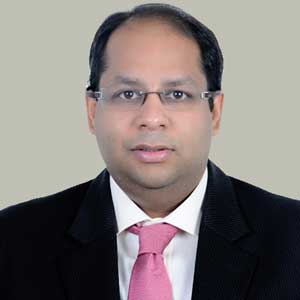
  • Abdaal Akhtar, IAS, on NALSAR, work at ITC, cracking UPSC, and experience at National Academy of Administration

    Abdaal Akhtar, IAS, on NALSAR, work at ITC, cracking UPSC, and experience at National Academy of Administration

    Abdaal Akhtar graduated from NALSAR, Hyderabad, in 2013. He has previously worked with ITC, Calcutta. He had attempted the UPSC exam twice, and this year with an all India rank of 35 he made it to the IAS. He is currently undergoing the Foundation Course at Lal Bahadur Shastri National Academy of Administration, Mussoorie.

    In this interview he talks about:

    • His years in college, and working on a passion for quizzing.
    • Working in ITC, Calcutta as an in house counsel.
    • Cracking the UPSC exam.
    • Experience at Lal Bahadur Shastri National Academy of Administration, Mussoorie.


    Given that most of our readers are law students and young lawyers, how will you introduce yourself to them? Do you come from a family of lawyers?

    I was the first lawyer in my family. My father is a Civil Servant who works for the Indian Railways and my mother is a homemaker. Taking up law, that too in 2007, was a rather unconventional choice. This was more so since I then lived in Hyderabad where Engineering and Medicine ruled the roost as preferred career options. However my parents had heard of the National Law Schools and were very supportive of my decision.


    What was it that got you interested in the legal field? How did you prepare to get into NALSAR? Was it rigorous preparation or was some luck involved?

    There was no single incident as such. Probably some of it had to do with my dislike of Math and Science. But I always had a deep interest in politics, current affairs and modern Indian history. I do not think there is any other field apart from Law that so beautifully marries these areas. Credit must also go to the erstwhile LST. Their website, and the peer group they introduced me to, went a long way in making me aware of law as a career, the various choices that I could pursue in Law School and also assuaged any lingering concerns that I had. My preparation was hardly rigorous. I was studying Political Science in Class 12th and that covered a lot of the Polity syllabus for CLAT. My GK has always been good-largely due to the excellent quizzing environment in Hyderabad. So it is fair to say I approached CLAT with a strong base. Of course there had to be a large dollop of luck involved since I had not bothered to apply elsewhere.


    Please do share with us some memories from your five years in college. Did you participate in extra curricular activities?

    The five years at NALSAR were not only the best years of my life but also fundamentally changed me as a person. It introduced me to a range of ideas, opinions and people and taught me to respect opposing points of view. I was again very lucky as far as my friends circle was concerned-all extremely bright, well read and smart individuals who helped me grow as a person. Law School was also a lot of fun-dhaba trips, mass bunks, quizzes and the good times from the hostel. Some of it had to do with the fact that NALSAR is a self-contained eco system far away from Hyderabad-so at some level you get to know your college mates much better.  Quizzes were the only extra curricular activity I participated in and a couple of us went to great lengths to take part in whatever quizzes were being held in the city.


    What according to you can make law students more interested in studying constitutional law and public policy in comparison to, the much sought after, corporate law?

    Constitutional Law and Public Policy are not subjects that you can force somebody to develop an interest in. I do tend to think, and I may be wrong, that if you have chosen Law for the right reasons, a fascination with these two subjects is a given. As lawyers, we all read the Constitution but few tend to appreciate the beauty of this document that, to quote Granville Austin, is the ‘cornerstone of a nation’. It offers none of the monetary incentives that taking commercial law courses can, but one must realise that if he/she intends to make a career in public life or litigation, a thorough knowledge of the Constitution is an absolute must.


    Did you ever take part in moots or indulge in academic legal writing? Do you feel these are activities that should be left to the discretion of students or something that students should partake in mandatorily as well?

    The great advantage of Law School is that it opens multiple doors for you. You can do absolutely anything-from activism to entrepreneurship; and Law School would equip you for it. This is because learning the Law makes you a generally better informed and smarter person. I would not wish to circumscribe this freedom by making legal writing or moots compulsory. This will only worsen the pressure that the sometimes overly competitive law school peer group engenders. For instance, moots never held any interest for me and I stayed clear of them throughout college. Yet, I have seen plenty of my friends becoming better lawyers (or law finders) just by participating in moots regularly. So to each their own.


    Were you interested in quizzing from school itself? Or was it something that developed in law school? What advice would you give our readers, to follow the love for quizzing?

    Quizzing was something I took up in school and continued throughout Law School. Quizzing is fun, informative and doesn’t make too many demands on your time. NALSAR has a very active quizzing culture and my juniors have left us far behind in the field. I am sure all law students can take a Sunday off every month and attend any of the quiz clubs in their cities. It would be totally worth it.


    You’ve had a wide variety of internships during your time as a college student. Do tell us about the places you’ve interned at and whether these were all planned or happened on the go?

    I had absolutely no guidance regarding internships. So I picked whatever I could-mostly to explore different facets of the profession. I especially remember my internship with Mr Raju Ramachandran, Sr Advocate, with great fondness. He treated me just like he would treat one of his own juniors. He was kind to a fault and liberal with his time. For a third year student, it was the best initiation into the world of litigation.


    After graduating from NALSAR you had worked with ITC Ltd in Calcutta. How did the appointment take place? How helpful do you think a CGPA is to get recruited?

    I had interned at ITC during my fourth year, liked what they did and applied for a job there largely because everybody else was taking part in the Placements process too. While my CGPA did play a role, ITC has an intensive recruitment process that comprises of a written test to check your basics in Law followed by an Interview.


    Could you please elaborate on the experience of practicing litigation in the High Court and District Courts, during your tenure with ITC?

    ITC’s in-house Legal Department is one of the best in the country as far as exposure is concerned. In litigation, for instance, we were involved in the entire process right from the cause of action to briefing the senior counsels. The bosses expect you to shoulder responsibility, take initiative and largely give you the freedom to choose your course of action. It was baptism by fire and I am thankful for it. It taught me more law than I probably learned in five years of college.


    How was the work environment at ITC? What prompted you to quit in 2014?

    I thoroughly enjoyed my stint with ITC. If I resigned, it was only because Civil Services was a long cherished ambition and one that would just pass by if I did not devote my full time and attention to it. My parents did have some reservations as I was leaving an excellent job but again they came around when they saw that I was insistent on giving a serious shot at the Civil Services Exam. I reckoned that if I were to have any regrets a decade down the line, they better be about the fact that I tried and failed at what I wanted to, rather than that I never even tried.


    You attempted UPSC twice. What was the routine you followed everyday till you cracked the exam? How long did you spend preparing for it?

    I had my first shot at UPSC while working full time at ITC. The fact that I could make it to the Railways without any serious preparation emboldened me to give another, better prepared shot at it. I resigned and moved to Delhi as my father is posted there. In the five months that followed, I spent no more than 4-5 hours daily preparing for the exam. I must add a note of caution that I could make it with this amount of preparation only because I had a strong base in GK from regular newspaper reading. I did not feel the need to join any coaching institution. A large part of the UPSC General Studies syllabus is nothing but basic Constitutional law that college had already equipped me for. The rest of it was easily managed through regular self study over half a year.


    What did you do to keep yourself abreast of all domestic and international current affairs? How did you study for static GK?

    There is no better source than newspapers and the Internet for current affairs. An Indian Express or a Hindu is an absolute must. Some people make notes. I did not. You have to choose your own approach. Static GK is best done from NCERTs and certain standard textbooks. I must add that a regular reading habit also helps your immeasurably. It does not matter what you read, as long as you do.


    Lakhs of people attempt the UPSC prelims and only a thousand get selected for the main written exam. Which are the prime skills and expertise required to crack the prelims?

    A broad and eclectic reading habit is the surest guide to cracking the Prelims. This is not something that can be mastered in a few months and only comes with a genuine interest in the broader world around you. One must be updated with the important events happening both in India and abroad-a task that the Internet makes very easy.


    What made you pick IAS over the other service such as IFS, IRS or IPS? How do you want to serve the nation?

    The IAS is the supreme generalist service. It expects you to become a Master of all Trades. Thus the challenges it throws up are varied and never ending. I thought it would be an exciting way to spend the next three decades of my life. This takes nothing away from the specialization that an IFS or IPS career expects. These two approaches have their own merits and drawbacks. Serving the nation is a misleading term. As Pt Nehru said in his Tryst with Destiny speech, the service of India is actually the service of her hungry and poor millions. That should be the primary motive of anybody aiming for a career in the Civil Services. If you cannot take the rigours of serving in the remotest corners of the country, trying to make sure that the Government’s welfare schemes benefit those they were intended for, then this career is not for you. Honesty, integrity and strength of character are today much abused and frequently bandied about terms, but one must attempt to live these ideals every day during his/her time in the Civil Services.


    Where is your training for IAS being held? What is the duration? Do give us some insight on the experience so far.

    As a probationer in the IAS, I am currently undergoing the Foundation Course common to All India and Central Services at Lal Bahadur Shastri National Academy of Administration, Mussoorie. This is a four month long course that seeks to expose you to certain basics of law, economics and political science that are a must for all Civil Servants. It also seeks to build your character and expose you to varied influences through regular treks, group activities, cultural events, village visits and lectures by eminent personalities. It is an extremely hectic yet rewarding time of any Probationer’s career.


    Do you think law students might have an edge while preparing for the UPSC exam?

    Law students have a great edge while preparing for the UPSC. As I have already mentioned, close to half of the GS syllabus is nothing but basic Constitutional Law. The ability to think logically, write crisply and present multiple sides of an issue are some other traits that lawyers cultivate and UPSC rewards in its exams.


    What would be your message to law students and lawyers who aspire to become a civil servant?

    The Civil Services as a career is extremely challenging. You have to balance your personal and professional lives with the onerous duties that are placed on your shoulders. You are accountable not to a mere boss but to the people of India. Your indiscretions and mistakes will not lead to a mere delayed promotion but will have real, lasting consequences on the lives of millions. The pay is enough for a comfortable living but is obviously nothing compared to what commercial law firms pay. So do keep these factors in mind when you decide to take the plunge. As I have already mentioned, there is only one good reason to take this up-a genuine desire to serve your country and its people with Constitutional values as your sole guide. If your reasons are different, then you will never be able to see the rewarding side of being a public servant.


  • Vineet Shingal, Associate Partner, Khaitan&Co. on the role of a partner and in-depth law firm experience

    Vineet Shingal, Associate Partner, Khaitan&Co. on the role of a partner and in-depth law firm experience

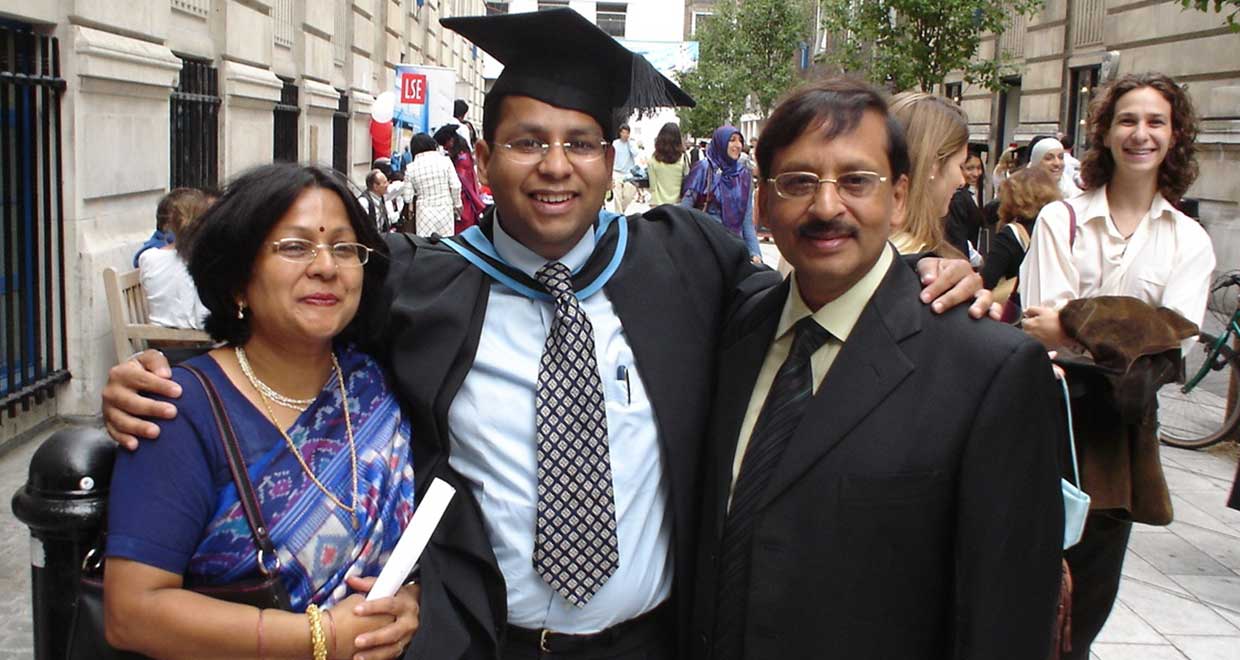
    Vineet Shingal graduated in B.A. (Hons) Philosophy from St. Stephen’s College, Delhi University and later completed his law from LSE in 2006. He secured the LSE Undergraduate Scholarship on merit and, in addition to being a lawyer registered with the Bar Council of Maharashtra & Goa, is a non-practising Solicitor of the Law Society of England and Wales.

    He briefly worked with Nagashima Ohno & Tsunematsu, Japan on a secondment as a visiting attorney. Post the secondment, he was promoted to Senior Associate at Amarchand Mangaldas. Vineet later moved to Khaitan and Co., Bangalore and is currently an Associate Partner.

    In this interview he talks about:

    • Studying law post a degree in Arts
    • Securing the LSE Undergraduate Scholarship on merit
    • Becoming a non-practising Solicitor at the Law Society of England and Wales
    • His work experience with Nagashima Ohno & Tsunematsu, Japan
    • Responsibilities as a Senior Associate at Amarchand and Associate Partner at Khaitan.


    Could you tell us a little about your family and personal background? What were your ambitions as a child, what did you dream about your future?

    I have had the privilege of a diverse and a sound academic and non-academic background largely due to my upbringing in a family that put so much stress on all-round development of the personality. While my paternal grandfather was a lawyer, some of my other family members, including my father were bureaucrats. My mother is a qualified teacher but gave up teaching to look after me and my younger brother.

    From the very beginning, the atmosphere I was raised in had always been one where learning, participation and contribution were strongly emphasized. Academically, I did very well in school, and at different stages of my school and college life, I wanted to do a myriad of things without limiting my career choices. I grew up listening to and participating in discussions on legal and political issues from quite a young age and was naturally inclined so. As such, I decided to read law when I was in college.


    University of Delhi is considered as one of the best universities in India in terms of education, culture and overall atmosphere. Please tell us a bit about your time at Delhi University.

    I read Philosophy at St. Stephen’s College in Delhi and was privileged to be a part of such an elite academic institution. We were a small batch and had three professors who taught us right through college. Professors used unconventional teaching methodologies and at times a non-classroom environment for having discussions on esoteric topics, which certainly made for effective learning and added to the pleasant memories I have today.

    I also participated in a number of extra-curricular activities including dramatics. Besides reading Philosophy at college, I also pursued chartered accountancy and worked part time as an articled clerk during my college years, which gave me a good background of corporate, accountancy and tax laws.


    What made you choose law after finishing your Bachelor of Arts? Do you have lawyers in your family?

    Studying Philosophy gave me the opportunity to apply principles of logic in a wide range of contexts, including both ethics and metaphysics. The study of Philosophy also helped me assimilate and synthesize a large amount of written material in a relatively short period, which is a great asset in the legal field. I had also gained some knowledge of corporate and tax laws because of the chartered accountancy course that I pursued. My paternal grandfather was a lawyer and greatly influenced my life and as such I decided to take up law.


    You were awarded the LSE Undergraduate Scholarship on merit, please tell us more about how you got this? How can a student go about the admission procedure?

    In 2002, the LSE admission process required us to fill a UCAS form, with one recommendation from a college professor and a statement of purpose. While I was admitted to the law course by the LSE, it was dependent on my securing an overall first class in my Philosophy course, which I did.

    Once the admission process was over, I had to fill out a separate form for an undergraduate scholarship. The scholarships were awarded partly on merit and partly on need. Post an interview with the academic council, I was awarded a tuition fee waiver. I am not sure if the admission and scholarship process still remains the same.


    vineet-shingal-2

    What all would you recommend to a law student who has an opportunity to study at LSE?

    London is a financial and cultural center and LSE (The London School of Economics and Political Science), being located in the center of London, had access to professionals from leading law firms, accounting firms, and other financial intermediaries, who would often visit the institution to mentor, and also to participate in seminars and conferences.

    LSE is an interesting mix of nationalities from all over the world and you can learn about so many different cultures. My class had 180 students from 50 different nationalities. The Socratic method of teaching, an encouraging atmosphere, and interaction with so many people from across the world broadened my horizons and led to a holistic development of my personality.

    LSE is a world class teaching institution and I would definitely recommend people to take up the learning opportunity at LSE, if they get one.


    Do tell us the procedure involved in becoming a non-practising Solicitor at the Law Society of England and Wales.

    One of the ways of qualifying as a solicitor of England and Wales is to complete two years of work experience as a lawyer and write the Qualified Lawyers Transfer Test (QLTT). This two years’ experience could be completed in India as it follows the English common law legal system. I completed the two years’ of practical experience working in an Indian law firm and then passed the QLTT.

    If a solicitor is not practicing the law of England & Wales and has not obtained a practicing certificate, such a lawyer can apply for and continue to be on the rolls of the Law Society as a non-practicing solicitor, which I currently am. I understand that the test has recently undergone some changes including the work experience requirement.


    Can you tell us a little about your experience at the law firm, Nagashima Ohno & Tsunematsu, in Japan? What was it like to work there as a visiting attorney?

    The Japanese are the most welcoming and polite people. Their deep rooted traditions, respect for each other and an honest desire to learn sets them apart.

    I was at NO&T, Tokyo for an eight week secondment program. There were four non-Indian law students and another non-Indian lawyer from a law firm in the same program. It was a good mix of cultures where we exchanged knowledge of our respective legal systems and procedures with each other as well as our host lawyers. Our host lawyers also introduced us to their legal system and working styles as well as their culture and traditions. All in all, it was an amazing experience.


    vineet-shingal-3

    What diverted you towards the field of corporate law? Share with us any experience which helped you make your career choice.

    While I was at the LSE, I took up tax and corporate law as my specialist subjects. I also had the privilege of interacting with lawyers from diverse practice backgrounds (litigators, solicitors, in-house counsels) while in London and in India through my internships.

    I had the first-hand experience by interning at barrister’s chambers, law firms and with legal departments of companies. This gave me a broad idea about each practice area and the type of work each is involved in.

    In India, I interned at AMSS and really liked the energetic work atmosphere and working on cutting-edge legal issues and deals. I wanted to be a part of it and applied for a corporate job there.


    As a Senior Associate in Amarchand & Mangaldas & Suresh A. Shroff & Co., in Mumbai, what was the work experience that you gathered?

    I started with the securities markets team but made a shift to the M&A/ corporate team very early in my career. A lot of my time in my early years was spent in legal data rooms undertaking due diligences.

    I was fortunate to work with and be mentored by some of the best legal brains that the industry had to offer. There was an unending flow of transactions, ranging from corporate advisory work to very complex M&A transactions. With seniority comes more responsibility and one has to learn to manage time efficiently.


    Presently you are an Associate Partner at Khaitan & Co., what are the main areas of law that you deal with? What does a partner have to do at a big law firm like this? What is a typical workday like?

    I focus mainly on corporate advisory, M&A and private equity investments. While execution capabilities and good technical skills are a given, a partner has to really focus more on business development, client handling and financial management.

    Keeping the team motivated and ensuring that the juniors get a good mix of work and training is also important. Mentoring thus becomes a very important aspect of a partner’s role. A typical work day would include reviewing advice, structuring and negotiations on transactions and business development meetings


    What skills and qualities do you think have helped you achieve your current position and stature?

    I can largely attribute my achievements to certain moral codes that I hold on to in life. Foremost, the values of honesty, integrity and uprightness in professional life and every day conduct have helped me observe the distinction between right and wrong, and question and reason out why things are often not as they ought to be. I would add determination, hard work and perseverance as some of the other qualities that have helped me in pursuing my goals.


    What are the skills a law student should try to imbibe to successfully carve out a niche in the corporate world? Could you give our readers some tips on acing the professional realm?

    Pursuit of knowledge and to truly enjoy what one is doing. This is true for any profession. It is also very important to be sincere and hard-working as people are competing with some of the best legal brains that the law schools have to offer. Commercial awareness as well as good communication and social skills would definitely be an asset.


    vineet-shingal-4

    Many young lawyers at corporate firms complain about the work being too exhausting, and that maintaining a work-life balance is just not possible. Could you share any advice on this?

    There have been times when I worked three days in a row with just two hours of sleep but there have also been times when I have left office at a decent hour. It is definitely important to have a work-life balance.

    I have seen a lot of people getting burnt out very early in their career and quitting. The HR and the senior management do realize that it is important to retain good talent and not let people quit due to over work.

    Khaitan & Co has a wonderful atmosphere for a work-life balance and lawyers do get their annual holidays and the time-off. There are obviously times where people have to put in the long hours due to the dynamic nature of the work we do but with good training and effective time management, it can all be managed very smoothly. Being in office for 14-16 hours on a regular basis is really not the norm any more.


    While hiring, what skills do you look for in a prospective employee? What qualities should a law graduate possess to be successful?

    A candidate should demonstrate willingness to learn, adapt and an ability to think out of the box. While CGPA is a determining factor, we also look at the overall personality and problem solving approach within a candidate besides the various extra-curricular activities that the student has participated in.

    It is important to have developed a holistic personality. It is also essential to have a strong grasp of basic subjects like contracts and company law besides keeping abreast of the legal developments taking place.

  • Rohan Mahajan, Founder, LawRato.com, on starting up and pursuing legal entrepreneurship

    Rohan Mahajan, Founder, LawRato.com, on starting up and pursuing legal entrepreneurship

    Rohan Mahajan started out as a Bachelor of Science from Hans Raj College, Delhi University in 1997, but destiny had other plans for him. Right after in 2000, he opted for law from Campus Law Center, DU, which in turn lead him to his first employment, that with Bharti Airtel Limited. After 4 more job changes from 2002 till 2013, he finally found his niche in the wonderful world of entrepreneurship – beginning his own startup LawRato.com to reach impeccable success and job satisfaction.

    In this interview, he talks to us about:

    • The conflict between the head and the heart in choosing a career;
    • The journey of establishing LawRato.com;
    • The attractive aspects of legal entrepreneurship; and
    • The necessity to choose a career that truly fulfils you.


    How would you introduce yourself to our readers? Please tell us about your pre-college days. As a young adult, what plans did you have for your future?

    A warm hug to all the SuperLawyer readers here. I come from a family of scholars, and I have two elder sisters who were quite meritorious themselves. While it certainly is a blessing, it turned out to be a tough one, as I had to not only compete with my classmates to get grades better than them, but the competitive environment was equally tough at home as well. So yes, I have been brought up with a sense of competition, and winning is in my genes – a trait quite important in the startup world, where we strive to be the best each day.


    rohan-mahajan-2

    You are a B.Sc. (Hons) graduate from Hans Raj College, New Delhi. What was the motivation behind your decision to pursue law? Are there any lawyers in your family?

    Those were the last few days of my graduation days at Hans Raj College, and I remember I was sitting quite confused in the college lawns. While my heart was pushing me to pursue an MBA and get a cushy corporate job, my mind was fighting my heart to go ahead and get into a Law college, as I was always fascinated by the authority that the legal profession enjoys, and was always annoyed by people who did not abide the laws. With my father being a practicing lawyer, I suppose I was a little biased, and ended up deciding to pursue law post my graduation.


    Was Campus Law Center, New Delhi always your choice for law school, or did you apply to other colleges as well? What was the procedure to secure admission back then in the year 2000? Was there a lot of competition?

    Well, with the heart and mind in sync, after their tussle ended up in the mind winning over the heart, the next step was to figure out where to head to in order to get my legal robes. Being a North Campus guy for 3 years, Law Fac, DU was the obvious and only choice, as the thought of continuing coming to the north campus for another 3 years was too exciting to even consider any other law college. You know, once you are sure what you are looking for, achieving it is just a few steps away. I studied hard for the entrance, and came out with flying colors to join the Campus Law Center, Law Faculty, Delhi University as a law student.


    Our readers would love to know about your law school days. Tell us a bit about it.

    Honestly, the only memories I have from my law school days are those of gorging on food (especially the mutton kebabs at Delhi School of Economics), shopping at the Bunglow Road (North Campus, DU), and helping friends contest the Law Fac elections. As far as studies go, I have always applied logics in everything I have studied, and this ensured that there were no difficulties whatsoever in moving from my science background to the legal studies.


    Your marketing career spans an impressive 15 years across various industries. How has the journey been?

    It’s said that in the end, the heart wins over the mind. Back then in my 3rd year of Law college, mobile phones were still a big deal, and were a privilege to only a few. I desperately wanted to own one, and my desire became so bad that I even started dreaming of owning one. I suppose the Almighty saw my desperation, and one of my close friends told me about a job offer with Airtel. One of the best days of my life were scripted when the HR offered me a meagre salary, but a Nokia Handset and an Airtel SIM with unlimited calls as part of my remuneration. I cannot describe in words the happiness one gets when one’s dreams come true, quite literally. This first corporate job was followed by another, and then another when I joined this Marketing agency which not only taught me the A to Z of marketing, but also made me travel half the world. This was another dream come true, when your passion becomes your profession and you don’t even know how a decade passed by.


    rohan-mahajan-3

    You’re the Founder and CEO of LawRato.com. Please tell us about LawRato. What inspired you to embark on this entrepreneurial journey?

    Back in 2009, I was working in Singapore & Jakarta, Indonesia. A legal issue cropped up during my stint, and surprisingly, I was left dangling for help. Even in the age of internet and globalization, I had no platform to seek a verified and a reliable solution to my problem. It occurred to me how there would be many more stranded like me. And hence, the seeds of LawRato were sown.

    There is no way whatsoever by which a common man can evaluate and identify the right lawyer for their legal situation. With no data available on the lawyers’ performance and track record, its next to impossible to tell which lawyer would be the right one for your need. It becomes more difficult, as unlike healthcare, where there are clear specialists for different healthcare problems (cardiologist, neurologist, etc.), lawyers take up matters across multiple practice areas and there are no defined specialists for each practice area like property matters, matrimonial matters and others.

    With 3 Crore pending matters and 17 Lac new cases filed each month in various courts in the country, there was no transparent way to get access to the right lawyer so far. This becomes graver as 1 in 5 clients seeking legal consultation files a case. This makes it a whopping 1 crore consultations each month. With most of us not knowing where and how to find the right lawyer, we end up either reaching out to someone through a close reference or finding one through local directory listings. Either of these routes have no way to promise the credibility and quality of the lawyer as references are mostly based on 1 or 2 past experiences and local listings have no control over who is listing themselves as professionals.

    A lot of clients end up in legal issues where they need a counsel to represent them in a faraway city. Be it a property situated in another city where relatives are having an illegal possession or a cheque bounce matter where the other party has filed a case in another city or matrimonial matters where one of the spouse has gone to his / her parental home thousands of miles away and pressed criminal charges in the local police station, the need to a local counsel in that city is of utmost importance to ensure the matter is handled in the most appropriate manner.

    We have top rated verified lawyers in 110+ cities in India, and one can consult with them with a click of a button at the platform. Clients needing lawyers in faraway cities have actually called us as life-savers as we not only save them the time needed to physically travel to another city to find the right lawyer, but as mentioned earlier, even if they would have travelled to the city, there was no way to evaluate and identity the right lawyer so far. In today’s world where everything is so connected and transparent, having access to top level legal support is certainly the need of the hour.

    LawRato.com ensures that this need of having access to transparent & guided legal support system is covered with their highly curated and verified lawyer listings and ratings and reviews for each lawyer on the platform. The team conducts in depth online and offline verification of each lawyer before getting them onboard which includes verification through referral. Each user consulting a lawyer on the platform gets to rate and review them once the consultation is received.


    Please explain to our readers how LawRato.com functions. How do you manage your extensive database of lawyers across cities and varying fields of law?

    LawRato.com works as an introduction-cum-Service partner for the clients and also Top Rated Verified Lawyers across any city and any court in India.

    It handholds the user right from the initial consultation with the lawyer to the final outcome of the case. The portal offers multiple modes of engagement in the form of email, phone, video calling, meeting & their home/office meetings to avail the services of the listed lawyers. The aim is to set transparency and trust in a highly cluttered and disorganized Legal Industry in India.


    Could you also introduce us to your team?

    The Team:

    Rohan Mahajan (Founder & CEO)

    • A law graduate from Law Faculty (DU), obsessed with helping solve people’s problems
    • Operations specialist with 14 years’ experience in BTL marketing across APAC.
    • Spearhead of Wizcraft’s BTL operations. Expanded Digitas’ operations in Indonesia as Country head – Handled field sales & telesales teams.

    Nikhil Sarup (Co-Founder & CTO)

    • A software engineer by education, still putting his B.Tech(CSE) degree to good use, coding open source apps.
    • 16 years’ experience in Digital & Direct marketing. Previously headed digital strategy for Razorfish & Digitas India. Deep expertise in E-commerce platforms, CRM systems, and social communities.

    The crazy duo are supported by a team comprising of 4 law graduates who handle all incoming client requirements, and 2 marketing and relationship managers who take care of lawyer onboarding, management and other PR activities.


    How do you plan to expand LawRato.com, in terms of operations, infrastructure, as well as attracting more investments? Can we expect a mobile app soon?

    We have received angel funding a few months ago, and are chasing tough targets which are reviewed on a weekly basis, since the aim is to achieve a sizeable traction before raising the next round of funding. We currently have 500+ top lawyers on-board, across 100+ cities and are targeting to take this number to 3000+ lawyers across 200 cities in 6 months from now. We are happy growing a little slow, since our process of bringing new lawyers on-board involves online and offline verification of the lawyer’s credentials, as the quality of lawyers we offer is the best in the business and that’s what sets us apart from any competition. On the User traction, we are currently getting 1500 daily site visitors and 100 client requirements per day, out of which we are able to help 5-10 clients hire a lawyer through the portal. We have been  reaching a measurement  of growth at @ 10-15% on a weekly basis, and are now aiming to handle 10,000 visitors and 1000 client requirements per day in 6 months from now. A user app and a separate lawyer app that enables onboard lawyers to answer client queries and manage their client appointments, are under development and are expected to be launched in October / November 2015.


    Will you be practicing law in the near future? Do you aim to do pro bono work?

    Honestly, practicing law is on my mind, but not for another 4-5 years, atleast. I really want to get involved in pro bono practice to take up matters of public interest. The idea is to grow LawRato.com to a level where we are able to take up CSR projects and offer free legal aid to the needy. I would love to do this in association with the Government’s legal aid program.


    What would be your message for our readers, particularly young lawyers and law students, who wish to foray into entrepreneurship?

    Entrepreneurship is for people who want to see a change in the way they lead their daily lives. If you feel that you can, in some way, impact the life of a few people, give your idea a shot and see how it works. If your prototype is able to impact even one person’s life, go ahead and get involved in full time entrepreneurship. However, also remember that there is nothing such as work-life balance if you are looking into starting up on your own.

    One of my favourite quotes is – In entrepreneurship, you live a few years of your life like no one else does, so that you can live the rest of your life like no one else can!


  • Deepa Kuruvilla, Founding Partner, Qwinlaw Legal, on experience with the JAG, the Indian Army, litigation at Bombay HC and work in Securities

    Deepa Kuruvilla, Founding Partner, Qwinlaw Legal, on experience with the JAG, the Indian Army, litigation at Bombay HC and work in Securities

    Deepa grew up in a traditional Kerala Christian family, studied at the Ernakulam Law College, under Mahatma Gandhi University, graduated in 1993 and started practicing at the Kerala Trial Court. She later appeared for JAG and worked with the Indian army for five years. She was also a part of the gender discrimination case filed by the Army nurses. After her experience with the Army, she pursued her independent practice at the Mumbai High Court and has been a panellist for SEBI before Securities Appellate Tribunal. Off late she has started her own law firm with the name Qwinlaw Legal.

    In this interview she talks about:

    • Pursuing her dreams and be where her calling is.
    • Taking up JAG and the application procedure.
    • Setting up her own independent practice and being a panellist with SEBI.
    • Establishing her own law firm – Qwinlaw Legal.


    Please tell us a bit about yourself.

    I am a consummate Legal professional with a high say do attitude who likes to meet new people and possibly try to translate the meeting into business opportunity. I am interested in willing to learn and sync present to the future. I see myself as a smart working Lawyer than a hard working Lawyer whose goal is to find opportunities in helping people who avoid litigation than fighting lengthy litigation for them.

    One can see in me a perfect blend of a daughter, sister, mother, a wife, a village girl, a legal professional, a tough army officer, a budding entrepreneur in legal industry. I enjoyed each role in its sanctity and have always done things away from my own comfort Zone!


    How has your pre-college life been like? What were your ambitions before joining college?

    I was born in a very traditional Kerala Christian family and lived and grown up in a small village called Mannoor 30 Km Away from Kochi Airport, in the plains of the pictorial perfect Kerala in a house closer to extensive paddy fields, Butterflies and flowers were my friends! Dancing around the coconut trees and painting were my hobbies! Putting legs in to the flowing streams near the paddy field and watching fishes playing with my leg and enjoying the sweetness of the westerly wind blowing from the paddy field were the most interesting thing to pass time.

    That was a world without Television sets, TV came to neighbouring house after PT USHA participated in Olympics. Most loving friends were paternal grant parents on weekdays and maternal grandparents on holidays.

    Dr. V Paulose (Mom’s Dad) was the only doctor in that Village. So, people adored the super powerful man. Dad’s dad was a hard-core farmer who had lots of bullocks and cows and hens and big courtyards in both the houses to play around, both grandmothers were beautiful and graceful, but ministers of the house, my dad, mom and I always adored, they had a good relations with all their siblings and cousins so we enjoyed the company of lots of relatives and cousins always. This was my childhood.


    Was pursuing law always your professional calling?

    Smart Advocates arguing in the court, were very attractive when seen in movies. Legal topics discussion always attracted me. My dad was Dy. Director in the Revenue Department (Survey & Land Record’s) of Kerala, legal topics were subject matter of discussions at home. I knew that my inclination is more towards Economics and Law than any other subjects.

    When I saw myself as a professional, I always found me as a smart lawyer, helping people to avoid litigation, advising Companies, than entering into lengthy litigation.


    How was your law school experience at Mahatma Gandhi University?

    Law College, Ernakulam, under Mahatma Gandhi University, where I studied was a very famous college due to the senior lots who became Central and State level Ministers and High Court Judges. It had ahuge Library, where I spent most of my time there reading Case laws and interpretations of 1800’s.


    Please tell us about your experience with regard to your first few sessions in Kerala High Court. Has it become more difficult for a fresher to achieve success?

    I worked under Adv. PM Thomas, and was entrusted mostly trial court matters in smaller courts. I used to read and prepare matters before the case presentations or trial, and if I had doubts, I used to clarify the same with my seniors in the office. I enjoyed my work,

    If a fresher observes the successful seniors attending court and the methodology they adopt very closely and learn their presentation skills, and if he or she spends time studying the court matter they handle, I think it is not difficult for him/her to achieve success. The key element is home work and the ability to control the shivers passes through the spine seeing senior Advocates in the court room standing against you. Your knowledge in the subject matter and equanimity helps you to become a David in front of Goliaths, that’s my experience.


    deepa-kuruvilla-2

    What motivated you to apply for JAG?

    Udan, TV serial which came in Door Darshan in Junior College days attracted me very much, seeing a village girl becoming Police officer and entering man’s world! I placed myself in that character and wanted to be in that spectrum in real,

    When I was in 4th year law, the first entry into Indian Army by women happened,a pet project envisioned by Yesteryears Prime Minister Late Indira Gandhi, I was so thrilled hearing about that, Employment Exchange Newspapers were the only source those days to get to know about such opportunities, I kept a watch and applied, with full desire & prayers but no iota of hope, as being competing with the smarter girls from whole of India, with my minimal village back ground. But God’s Grace I got selected.


    What is the application procedure for JAG?

    Whenever there is opening, Indian Army publishes the requirement on their website, and the methods of entry is described, one has to follow the application procedures,

    The process which was in my case was as follows:

    • The first level of selection was at SSB- (Services Selection Board)in May 1995, a written test for aptitude on the first day screening, if passed stay for another 4 days of test. (Who failed will leave )
    • 4 days continuous testing –different psychological and physical test at various levels
    • one who passes the test, will stay for the medical test, rest will leave,
    • Once pass medical test , will be called for training
    • Training at Officers training Academy, Madras for Combat training , which lasted for 6 months , Passed out from OTA Madras ( March 1996)
    • Appointment at JAG’s Branch , Head Quarters ,Northern Command as first lady officer in that office and undergone court martial training under supervision of senior officers for six months
    • Young Officers specialisation course for Military Law at Institute of Military law near Nagpur, for 4 months ,
    • Re-joined JAG”S NCHQ again, This qualified to be a JAG officer to exercise duties of an Independent JAG Officer


    What role does the JAG officer play in the Indian Army? Does the work ever get monotonous?

    JAG officer does Court Martial of wrong doers who are subject to Military Laws. Each case was unique and the Military law is stricter than the civil law, due to the nature of the exigencies of the service; it can never be monotonous.

    Moreover, the tenure in the Army is very challenging and enjoyed the attention I got. There was a charisma of being one among the first lot of lady officers of Indian Army, which made the heads turn to see the lady officer in Uniform! This attracted media attentions many times, manyof whom I met were seeing a lady officer for the first time! The attentions led to a style and attitude of myown, helped me to maintain perfect equanimity and a humble personality, though the toughness and charm of Army Officer was well ingrained.


    deepa-kuruvilla-4

    What were the responsibilities you were entrusted withwhile working as a Deputy Assistant Judge Advocate General –DAJAG (Rank- Captain), officer In Charge Army Legal Cell in Mumbai?

    Army Area Legal Cells of Indian Army defend legal cases filed against Indian Army in that particular Army Area. I took charge of Legal Cell, Mumbai, when it is set up in 1997 as first officer, and the job was to set it up to a full-fledged legal office and defending the ongoing cases against Indian army M&G Area.I was working closely with Ministry of Law,, Assistant Solicitor General of India and Central Govt. Panel Counsels in defending such cases , this included the appearance on behalf of Indian Army before Commission under Justice B.N. Sri Krishna investigating into Mumbai Riots 1993 which attracted lot of media attention.


    Why did you decide to litigate at the Mumbai High Court after working in the Indian Army for about five years? What were the other opportunities you were considering?

    I took release from the Indian Army after 5 years of mandatory services with Indian Army and started practising in various Courts in Mumbai along with my husband who was a practising lawyer and already had a set- up his office in Mumbai, I was focused, didn’t consider any other opportunity.

    Among many cases I appeared in the Mumbai High Court in the Army nurses uniform case filed for the rights of Army nurses made to wear the same uniform as male army officers, a case against gender discrimination. This attracted lot of media attention.

    I later got empanelled as SEBI panel Lawyer and appeared cases on behalf of SEBI in Securities Appellate Tribunal (2003-2005).


    What was the role of mentors in your case? How important do you think a mentor is in the field of litigation?

    Mentor is required for life, not just about litigation alone! I was lucky that God sendtough task masters as mentors in my life.

    First and the most long standing mentor in my life is my Dad! And my Mom his perfect Assistant who supported me all throughout my crazy adventures and wishes and gave me the self-confidence. I am still amazed how they trusted me in all my moves when everything I wanted was unconventional in the small village I belonged to. A girl becoming a practising lawyer- not so great; joined Army – the wildest crazy thing, one can think about a girl who is at the age right for an arranged marriage in my place.

    One example of my dad’s support: when I couldn’t take the rigorous Army Combat Training in OTA, I called my dad asking him to take me out from the OTA by paying penalty to the government for leaving the training incomplete (those days it was per day Rs. 4000/- accrued to number of days spend in the academy), some girls were already left by this method so I had hope, I lured him saying it will be high cost later on, easy to take me out now as it is less cost, he said I will take you out from the academy, if you are the last person to go out from the academy by paying lakhs, you don’t worry about thousands! He said , It was your well thought decision and you should know how to stand by your decision, you will only have choice to be successful, I will not accept failures in my house! He reminded me this while fixing stars on my shoulders on the day of passing out parade.

    My Career begin with my senior Advocate Mr. PM Thomas, as my mentor: – he gave me opportunity to argue important cases in the first year of practise itself even when the opposing counsels were very senior in the legal profession; when the pressure used to build up, and if I complain, he used to smile and ask, “so what”! ; it kept me going and many time successful! This gave a lot of Confidence!

    My Mentor to start practise in Mumbai Courts was my husband , under whom I practised law , a hard task master ,and a very intelligent lawyer, his clients vouch for it , he never used to spare me in the office , eventually I used to take revenge at home , still I was never spared !. He taught me practical wisdom and sensitivities regarding the business of practising law in a big city

    These 3 mentors of life made me my own mentor for the rest of the life.


    What are the requisite soft skills which are essential for a young lawyer to build a successful career?

    The Quest for Learning!, Humility, the ability to understand the ‘advice’ and ‘delivery’ the client require from you,A perfect Equanimity! Even while dealing with pressure while tough arguments, Success will be a bi-product even in adverse situation!


    deepa-kuruvilla-5

    How did you develop interest in these areas of law? Please tell us about your core areas of practice.

    (During Deepa’s five years of independent practice, she has handled matters on Domestic and International Securities Law, Military law and also dealt with matters on Banking and Finance Law and Arbitration.)

    This is an evolution happened based on the matters handled during independent practise with my husband; Interest developed because of the intention to deliver the best result; Analysed the subject matter and spend time in learning the specific subjects and put in the best of the effort , so the end results came successful. My interest in investing in Stock Market and the help of brother practising in Securities law was a great boost.

    The core Area what I am interested among other faculty of Law right now is Capital Market Laws.


    What should a law graduate do in his first year of graduation to establish a career in Securities and Capital Markets Law?

    This area is highly corporatized by big law firms, it is better to join one of such law firms and develop skills and learn Capital Market Laws ; However one need to understand the dynamics of the functions of the Capital Markets and its intermediaries to understand the complexities of Capital Market laws . These laws are very dynamic in amendments and the regulators are amending the laws to support the functionality of the capital Market in its practical applications and to keep it in a perfect balance with the Macro economic objectives, so it’s important to understand the users of this law than Law on a standalone basis.


    What is the reason behind pursuing certificate courses? Was it a professional requirement to enhance more in your career?

    (Deepa has taken courses on Stock Market, Mergers & Acquisitions, Technical Analysis Bombay Stock Exchange Training Institute and also pursued Certification in Investment Compliance from Securities & Investment Institutes, London, United Kingdom)

    I was a visiting Faculty to ITM- Institute of Financial Markets, Navi Mumbai to teach MBA students Securities law in the year 2007. In that process I not only taught students Securities law, but also simplified Securities law to myself, teaching forced me to read those subjects I generally do not dealt with for the purpose of Career. As I said earlier, thesecourses I attended were some of my learning efforts of the subjects I dealt with and it is continuing. Latest is that I am a student of Diploma in Entrepreneurship Administration and Business Laws by NUJS & iPleaders.


    What kind of responsibilities were you entrusted with at the organizations you worked? How different was the work environment of these two companies? How would you describe your experience in brief?

    (Deepa has worked with two organizations – B& K Securities India Pvt. Ltd. as a Legal Manager and Monterosa TSS as their Vice President of Legal & Compliance in Mumbai before moving to Qwinlaw Legal & Compliances.)

    Working with B& K Securities was the first experience for working in a Corporate office, the prime responsibility was to set up their UK Office with regulatory approvals from FSA, London Successfully set it up and made it up and running and supported the compliance functions; The other functions was to oversee the compliances of their international offices in Singapore and US.

    The role in MTSS was for Legal Due Diligence support for their clients investing into Indian Market via Venture Capital, Private Equity and FDI.

    Both experiences were enriching and helped me in continuous learning as there is lot of complex regulatory compliances to follow and lot of business negotiations to do; which also require hands on legal support.


    What does your current work profile at Qwinlaw consists of? How is a typical workday like?

    Qwinlaw is my own Law Firm. This firm specialised in Legal & Compliances function to Support the clients who invest into Indian Companies and help them to comply with India laws and ongoing regulatory filings; Support clients to assess and manage the legal risk andgive solutions to structure the business to litigation free as much as possible; there is no typical work day for own business, Delivery at the earliest is the Goal.


    How has your journey been from a fresher to being an expert concentrating on FDIs in to India and Securities and Capital Market laws?

    There was no straight line path, I have managed diversified levels in the legalCareer.However I always had an ability to find where the business is, which suited me and also trendy in the Market;I have always put an effort to learn the core subjects which translated into a level of knowledge which can make me confident for what I deal with;


    When you hire lawyers, what kind of skills and profile do you look for? Are the attributes different for working lawyers and fresh graduates?

    If I feel the candidate demonstrate an ability to perform and have an attitude to improve constantly, who can complement and support me in my work, he or she will be the right candidate.


    Do you offer internships at Qwinlaw Legal?

    So far not! It’s a start-up, long way to go.


    What would be your advice to young law students? Whether they should join a firm or practice at bar? How should they approach the legal career?

    Law student should identify themselves, where do they fit in to excel personally, that should be the choice! Both Firm and Bar have their own charm!

    Career in Law is a process of continuous learning, one should be ready for hard work and learn the practical applications than focusing only on the theoretical knowledge. This will help to build up the client trust in you and you will be able to advice/ deliver results correctly.


  • Sajan Poovayya, Senior Advocate, Supreme Court and Karnataka HC, on Poovayya&Co., managing a firm, higher studies, and litigation

    Sajan Poovayya, Senior Advocate, Supreme Court and Karnataka HC, on Poovayya&Co., managing a firm, higher studies, and litigation

    Sajan Poovayya is a graduate of the 1996 batch of NLSIU, Bangalore. Thereafter, he went on to finish his LL.M. from LSE by 2000. Sajan took the plunge and started up with a law firm Poovayya & Co. right after graduation from NLSIU. After 18 years of looking after the growth and developing the firm Sajan quit his role of Managing Partner in 2012 after being appointed as a Senior Advocate. A former Additional Advocate General for Karnataka he has also served as the Chairman of Karnataka State Council, and the Federation of Indian Chambers of Commerce and Industry (FICCI).

    In this interview, he talks to us about:

    • Experience as a student at NLSIU
    • Foreign masters, internships and meetings
    • Setting up a firm after college and taking charge of its expansion and development
    • Experience as the Additional Advocate General for Karnataka and Senior Advocate in the Supreme Court
    • Advice to those wanting to set up their own litigation practice


    What influenced you to choose law as your profession?

    Although my father is a lawyer and his court room advocacy inspired me early in life, I aspired to become a neurosurgeon, as medicine fascinated and continues to fascinate me. During my 12th standard (second year Pre-University Course as it was then known in Karnataka), I had devoted considerable time for preparation to sit the medical entrance exam. It was in the latter half of my 12th standard that I was brain washed by my father, not so much to consider law as a profession, but to consider the National Law School at Bangalore as an institution to study at.

    My father was inspired by the wonderful work done by Dr. N.R. Madhava Menon, the founder director of National Law School and he used every bit of that to convince me to sit the National Law School of India University (NLSIU) entrance exam. My elder brother was already a student at NLSIU, having entered the institution inthe school’s first batch of students. At that time, NLSIU had no campus or infrastructure facilities whatsoever and operated literally out of a few sheds in the City’s Central College campus. Despite these odds, Dr.Menon had pulled a rabbit out of the hat by building an institution which, by the end of the 1980s, had gained considerable popularity.

    During my occasional visits to the Law School to meet my brother, I had seen Dr. Menon in action. His approach was to deal with every situation hands on and decisively. I was tremendously influenced simply by watching Dr. Menon in action. Clearly, my father’s brain washing skills and Dr. Menon’s personal aura influenced me to choose NLSIU over any medical school. I sat the exam and secured admission. Once in, confusion in my mind remained for some time, but it took me little less than sixty days during the first trimester to realize that law is the profession for me. Love for the law, although not instant, was strongand I must say has remained stable.


    Please tell us a bit about your father’s practice and your initial exposure to law.

    My father has had and continues to have an extremely positive influence on me. He continues to be a very active trial lawyer at Coorg despite completing 55 years at the Bar. He is a very soft spoken person but is voracious and vigorous in court. I would, as a high school student in Coorg, accompany my father to the District Court during school vacations. Many a time, I accompanied him in what he did; as his driver, clerk, stenographer, and at times, simply as his chaperon. His court room advocacy certainly inspired me and many others.

    Although a high school student, I would be tasked with transcribing plaints, completing paraphernalia in dockets to make them ready for filing, etc., which exposed me to the practice of law in the mofussil courts. Law was not abstract to me anymore. I realized that I liked what I saw. My early interest in the law was certainly instilled and inspired by my father’s practice, though I continued to aspire to be a doctor until I saw Dr. Menon in action, building NLSIU.


    How was life as a law student at NLSIU? What was the University’s role in shaping you into the individual you are today?

    For me, life as a student at NLSIU was fantastic in every sense of the term. I owe every bit of what I am today to the Law School. When I entered NLSIU it may not have had infrastructure but it certainly had attitude. It had built a culture of academic excellence, healthy but not intense competition, and above all, a holistic approach to the study of law. It is the inter-disciplinary approach to legal education that enamoured me the most. NLSIU did not just induct me into legal studies but also shaped my character and changed my personality completely. I had the benefit of having a wonderful group of teachers at NLSIU and each one greatly influenced and motivated me. I continue to thank them at the end of each day for what they have done to me.

    My peers at NLSIU influenced me even more. They completely changed my personality from being an introvert to becoming not only an extrovert but a fighter too. I found everything that I needed at NLSIU; academic excellence, personality development, strong sense of right and wrong, and above all, true love. I have spent the last 24 years with Sanjanthi, my best friend and wife, who I would possibly have never met but for NLSIU.


    Many believe graduates from an NLU have it easier in kick-starting a legal career. How truthful is this belief? Does it make any difference to one’s litigation practice?

    It is a myth that a graduate from a National Law University will find it easier to kick start a legal career. Another astounding myth is that graduates from NLUs are always better than graduates from other law colleges. Extraordinary jewels of the legal profession have emanated and continue to emanate from local law colleges. At the same time, not all graduates from NLUs make a mark in the profession.

    I firmly believe that while institutions can equip you for your journey and provide you with good shoes, what you achieve is not dependent upon the shoes you wear but the steps you take. Being a graduate from an NLU certainly helps inasmuch as NLUs do instil an analytical approach to the study of law and a greater degree of capacity to undertake legal research. To that extent, I believe, it will make some difference in one’s litigation practice, but only that far and no further. If one has to excel as a litigator, one should continue to be determined, to provide his or her best to each brief that comes his or her way. Each brief is akin to a step for you to achieve a higher threshold in the legal profession. It is for you to take those steps, firmly and evenly, lest you trip.


    How important do you feel are moot court competitionsfor a law student who wishes to pursue litigation?

    Whilst academic and research oriented activities are very helpful in instilling in a student the capacity to work hard and dig deep to find the essence of every legal matter,moot court competitions sharpen the analytical ability and skill sets of a student. Students should participate in moot court competitionsasmuch as possible. As a student, I have enjoyed every moot court competition that I have participated in and I have emerged a better law analyser therefrom.

    Whilst moot courts necessarily do not expose you to the practicality of real life court room situations, they do provide you with some flavour as to how litigations are contested or defended. To be a successful lawyer, consistency and hard work are necessary ingredients. Hard work does not commence post enrolment at the Bar, but from the very moment you seek admission in a law school.


    What kind of internships did you undertake as a law student? Which was the most enriching internship experience for you?

    I was clearly inclined towards a career as a litigator. I therefore chose to do every internship of mine with litigators. From my second year at NLSIU, I regularly attended the chambers of my senior and guru in the profession, Mr. S. Vijay Shankar, Senior Advocate and Former Advocate General for Karnataka. I clerked in his chambers on a daily basis, post school hours, through my years at NLSIU. It enormously exposed me to the practice of law in the High Court of Karnataka. The four years of clerking for Mr. Vijay Shankar had sufficiently equipped me to deal with many nuances of drafting, filing and registry processes in the High Court. Mr. Vijay Shankar is one of the most methodical and disciplined lawyers I have known. His methodical approach indeed equipped me with sufficient skill sets. It was clearly one of the most enriching experiences for me.

    That apart, I interned with litigators in the Supreme Court during my summers through law school. One of the most enriching internships in Delhi was with Mr. V.R. Reddy, Senior Advocate and at that time the Additional Solicitor General of India. His capacity to portray some of the most complex legal propositions in the most simplest of terms amazed and inspired me.


    What challenges did you have to overcome in setting up a firm soon after graduating from law school?

    (Soon after graduating from NLSIU, Sajan established the firm Poovayya & Co. in Bangalore)

    I graduated as a gold medallist from NLSIU and late Dr. A.P.J. Abdul Kalam handed over the degree tome in the convocation. I was on cloud nine. I had to go through a year’s compulsory post qualification internship before enrolling at the Bar as per the prevailing rules(which fortunately have been changed today). No sooner did I complete my post qualification internship, Poovayya & Co. was established with enormous support from my senior Mr. Vijay Shankar and my father Mr. M. K. Poovayya. It was unusual for lawyers to set up independent chambers or law firms immediately after enrolment at the Bar. When I expressed my desire to do so, my Senior and my father did not once discourage me, they in fact supported me in this venture. I plunged into the profession for I knew in the back of my mind that my father would continue to be a safety net, not so much in terms of finances but in terms of guidance.

    The initial years for Poovayya & Co. were extremely hard but never depressing. It was hard to gain the confidence of clients and the Bench. Hard work continues even today and enormous travel across courts in the country makes it harder. But therecontinue to be happy days and never have I gone home sad at the end of the day.

    I am glad Poovayya & Co. began its journey from Bengaluru and not any other city. Bengaluru, as a city in the mid-1990s, was going through a metamorphosis with corporatization being the buzz word that helped the firm garner quite a lot of work quickly.

    The Karnataka High Court is possibly the best High Court in the nation for a young lawyer to commence a career in litigation. Through my initial years, judges were extremely encouraging. It is for a young lawyer to make the best of such encouragement and aim forhigher thresholds of excellence in the profession. It is a myth that it is hellish for a litigator during the initial years.Hard work is a requirement, no doubt, with lesser amounts of monies compared to corporate non contentious lawyers, but the sense of achievement is extremely gratifying.


    Do you still get reminded of your first case and first hearing?

    I do recall my first argument in Court. I enrolled at the State Bar Council at 11.30 am and was out for lunch with Mr. Basavaraj, my immediate senior at the chambers of Mr. Vijay Shankar. Duringlunch, he encouraged me to argue a matter in the Chief Justice’s Court post lunch at 2.30 pm. I knew the matter well on account of my continuous clerkship at the chambers of my Senior.

    Mr. Basavaraj sat beside me in Court as a fulcrum of encouragement. The matter involved a question of incorporation by reference in a legislation. I argued for about forty five minutes, my first ever as a lawyer. I lost the case but received compliments fromthe Bench headed by Mr. R.P. Sethi. A few members of the Bar enquired with Mr. Basavaraj, if I was a Counsel from another High Court, specifically briefed to argue the matter. Failure in the first case was not only sugar coated for me but also became a stepping stone to get here and go on further.


    Is it important to have prior connections within the legal field to successfully manage this?

    Prior connections in the legal field are unnecessary and many a time, can be detrimental as well. Prior exposure to the legal field is very necessary and this can be achieved with the help ofinternships and/or clerkships. Prior exposure certainly better equips you to deal with the vagaries of the profession whilst prior connections may not necessarily do so.


    What made you choose London School of Economics and Political Science (LSE) for your masters in Information Technology Law? How has your Masters from the prestigious LSE affected your career in the long run?

    I would always recommend a stint at reputed universities abroad, not so much for the quantum of law that you will learn but for the enormous exposure such stint affords you. I have been a fan of LSE since the time I read the works of Bernard Shaw and also for the fact that Dr.Ambedkar, at one point of time, was associated with the institution. I obtained a Master’s degree and thoroughly enjoyed my time at LSE. The fact that I received a fat scholarship which took care of not just academic fees but also expenses for a comfortable living in London was an added incentive. I pursued the solicitor’s programme in parallel and was admitted to Law Society of LES as a solicitor of the Supreme Court of England and Wales.


    I realized that the thresholds of academic excellence at NLSIU were as high, if not higher than LSE. Therefore, more than the academic exposure, what I gained most during my stint at London was exposure to how barristers work in the city. I was associated with a few barristers and I would regularly attend hearings (as a visitor) at the Royal Courts of London. Those experiences further reinforced my decision to remain and continue as a litigator.


    After having completed your masters in a foreign university, what made you come back to India, instead of setting up a career in the UK?

    India offers one of the most vibrant platforms in the world for a litigator. The quantum and diversity of litigation in India far exceeds anything that UK can offer. I had no doubts ever in my mind that I wanted to litigate and that too in my home country. While I did receive job offers from a few London law firms, they made no sense to me in light of what I always wanted to be, i.e., a litigator. Coming back to India to litigate was therefore a natural choice for me and I am very glad I did.


    How was your experience working as the State Government’s lawyer?Would you consider taking up such work in the future?

    (Sajan was the Additional Advocate General for Karnataka from November 2012 to May 2013)

    I officiated as an Additional Advocate General for Karnataka for about a year and was the sole Additional Advocate General for the State of Karnataka for good part of the tenure. I thoroughly enjoyed my tenure. What made it even more special for me was that my chamber senior Mr. Vijay Shankar was the Advocate General, officiating for the second term. Sixteen years prior thereto, in 1996, he had commenced his first term as the Advocate General for Karnataka during which time I was his chamber junior and had closely worked under him in many matters of importance. The opportunity to work with him again and that too as his Additional Advocate General was indeed a wonderful experience.

    I firmly believe that all litigators should, at some point of time in their careers, work for the State or the Union. The dimensions of work that you experience as a senior law officer for the State or Union far transcends the exposure that private practice can offer. Representing the State or Union as a senior law officer in the midst of multiple bureaucratic constraints makes you not just a better lawyer but a more mature human being. For a successful private practitioner, occupying such position also affords the opportunity to contribute to the profession and give a little back to the society. An efficient lawyer as a law officer can make an enormous difference to the State and consequently to the society. I will certainly consider taking up such positions as and when, and if at all, they are offered to me.


    What would be your advice to recent law graduates when they are faced with the choice between joining law chambers of a Senior Advocate, or working with an up-and-coming new lawyer?

    It does not matter whether you join the chambers of aSenior Advocate or work with an up-and-coming new lawyer. As a young lawyer, fresh off mint, one should join a chamber which has a wide variety of work. It is extremely important for a litigator to experience a wide area of contentious practice, rather than restrict oneself to a particular specialized vertical. The greater the exposure to a variety of legal work, better will you emerge as a lateral thinker. The key aspects that a lawyer should look for in a chamber are therefore: (i) variety of work; and (ii) opportunity to handle litigations completely, however minor they may be.


    sajan-poovayya-1

    Should one start out at the Trial Courts before proceeding to the High Court if one has no connections in the legal arena? Or would you recommend joining a litigation firm instead?

    Practice as a trial lawyer is crucial and sets the foundations for a successful practice. One cannot aspire to become a successful appellate counsel sans any trial experience, although there may be exceptions. I find many lawyers starting out directly at High Courts which do not have original jurisdiction or even in the Supreme Court. Whilst that may work for a few, it is not the most desirable path to tread. It is not necessary for a few years to be exclusively devoted to trial work. It has been my experience that a good blend of trial and appellate practice simultaneously helps in the overall development of a litigator.

    For youngsters who are determined to climb the vertical of litigation practice, I would highly recommend joining a reputed litigation firm which has considerable trial and appellate work.


    How would you encourage students to keep their determination to enter litigation alive instead of joining corporate firms, owing to the lack of financial stability in the former?

    Gone are the days when it was tough surviving the first few years in the litigation arena. Young litigators no more receive merely subsistence allowances. Almost all law chambers offer a fairly adequate remuneration for a young junior counsel. When I entered the profession, a thousand rupees per month for a junior was considered a princely sum, as most chambers typically offered less than half of that.

    Juxtapose to the present day, where junior litigators are paid sufficiently to maintain a decent lifestyle if not a luxurious one. Certainly, litigation initially offers far less, in terms of financial rewards, as compared to corporate law firms. However, the sense of achievement and satisfaction is unparalleled. What you need therefore is the determination to survive as a litigator. The growth curve in litigation is so steep that in a few years, a diligent litigator will not just surpass his peers in corporate law firms but also achieve far greater thresholds of professional success (and financial success too).


    How do you prepare for a good case? What would be your tips and advice to young lawyers?

    There are no good or bad cases. There are only good or bad lawyers. When one begins preparations for a brief, one should never pre-judge the matter. The case is what it is and it is for you to extract the best out of it and weave sound legal arguments around it. My candid advice for young lawyers is to prepare every brief as if there is no tomorrow. ‘Complete Preparation’ is the mantra. It is certainly not sufficient for you to prepare your arguments on what you believe are the merits of your case. The mantra for success is in being prepared with as many arguments against your proposition and in finding counters to each of those, such that you will ultimately emerge victorious. Young lawyers should also bear in mind that many a time, litigations are lost on procedural issues despite substantial merits in the matter. Never ignore procedure. I have found thirty minutes’ preparation for every minute of submission in Court to be a fairly helpful yardstick. In complex matters, however, the yardstick can extend to an hour’s preparation for every minute’s submission.


    Do you have plans for the future expansion of Poovayya & Co.? Are business development skills necessary when it comes to running a firm nation-wide?

    Pursuant to my designation as Senior Advocate, I quit the law firm Poovayya & Co. Whilst there exists debate around the question as to whether a Senior Advocate can or should continue as partner in a law firm, I have always maintained that once designated, Senior Advocates should not hold direct interests in or control law firms. It is extremely difficult for a Senior Advocate to disconnect himself from clients and client aspirations, if he continues to hold equity or proprietary interests in a law firm.

    When I quit Poovayya & Co. and demitted offices as the firm’s managing partner, I was reasonably certain that the firm has matured to a level that it would continue to grow without me. The firm’s existing partners have done a splendid job in continuing its growth in each of its four offices. Poovayya & Co. as a firm has continued to prosper with significant year-on-year growth, independent of me. Whether to expand the firm further with newer offices in other cities is for the firm’s existing partners to decide.

    On the question of business development skills, I have a slightly non-traditional view. Having run a law firm for almost 18 years, I believe that it is your work which should be your brand ambassador and the best marketing partner you can ever have. Almost the entirework being undertaken by Poovayya & Co. has come from the previous and existing clients’ references. I therefore believe that capacity to market is irrelevant for building a successful law practice.


    What do you look for when you hire lawyers under you? Can academic experience replace work experience and the ability to deliver?

    What I would see in a young lawyer during the recruitment process is the following: (i) capacity and inclination to work hard; and (ii) rational & analytical thought process.

    Academic excellence, at times, demonstrates the candidate’s capacity to work hard. It is impossible to compare or choose between academic excellence and work experience. One does not substitute the other. What you need is a combination of both.


    Do you find it easy to maintain a work-life balance? How do you unwind after a hard day’s work?

    The concept of work-life balance has been hyped in India and sometimes discussions around it are unnecessary. The debate on ‘work-life balance’ pre-supposes that you do not enjoy your work and therefore do not see ‘life’ in it. For a lawyer who enjoys his work, a lot of his life is woven around his work. If you enjoy what you do as a lawyer, you may be tired at the end of the day but are never stressed. My work keeps me packed for a good part of the day and the night. Travels between the Supreme Court and various High Courts makes it a little worse in terms of time management. That said, I do find sufficient time to spend with my family and I cherish every moment of what I get with them. The best form of relaxation is to spend time with your family and loved ones.

    I also collect and restore old automobiles and that passion helps me unwind. Strumming Carnatic classical tunes on the mandolin is another way for me to unwind.  Music is a great way to de-stress. Lawyers should plan their work in such a manner that they have sufficient time to do things other than law and spend time with their loved ones.


    What is the one advice you would like to give our readers?

    Never underestimate the power of ‘here’ and ‘now’. When at work, give all of what you have to it, in terms of sincerity, labour, time and attention. Always have an eye for detail. When you are at work, switch on ‘work’ and switch off the ‘world’.  When you are not working switch off ‘law’ and switch on the ‘world’. Doing things other than law will invariably make you a better lawyer!

    To be a superlative litigator, you should be a maverick with a strong moral fibre.

  • Divyam Agarwal, Senior Associate, J. Sagar Associates, on higher studies from LSE, cracking the AOR exam and experience in Litigation

    Divyam Agarwal, Senior Associate, J. Sagar Associates, on higher studies from LSE, cracking the AOR exam and experience in Litigation

    Divyam Agarwal graduated from Amity Law School in 2007 and went on to do a Master’s from The London School of Economics and Political Science (LSE) in 2008. Today, he is a Senior Associate at J. Sagar Associates and has extensive experience in Commercial & Civil Litigation matters as well as commercial arbitrations.

    A qualified Advocate-on-Record of the Supreme Court of India, in this interview Divyam shares with us:

    • The importance of learning the art of advocacy in law school through moot courts
    • His take on how to apply for Master’s at the prestigious LSE
    • Experience of working at a Tier-I law firm
    • The method of preparing for the difficult AOR Exam


    Please share with us how you chose to study law. Do you have lawyers in your family?

    While growing up, I had no specific inclination towards taking up law as a profession. With the passage of time and after closely observing my maternal grandfather who was a reputed taxation lawyer in UP as well as my father who is a chartered accountant, I realized that a person having knowledge of law thinks rationally and objectively in not only professional situations but also in day to day affairs of life. Though I was initially hesitant, after joining my law course, I developed a keen interest in law subjects, particularly those pertaining to dispute resolution. One thing led to another and I found my calling.


    How was your experience at Amity Law School?

    Studying at Amity Law School was a great experience. Apart from the regular course structure, we were given ample opportunities to participate in several moot court competitions and other such events. Another advantage of studying at Amity Law School was the fact that the college was based in Delhi and I got several opportunities to intern with practicing lawyers and well-known law firms.


    Could you tell us about the internships you undertook during this period? How do you believe one should structure their internships during law school to provide the maximum exposure?

    My internships were spread out evenly in the corporate sector as well as litigation. Even though my interest all along had been to pursue dispute resolution, in order to make a reasoned and well informed decision, I decided to intern in a corporate setup, so as to assess work involved therein and my inclination towards the same.

    It is advisable to evenly spread internships and gain exposure in maximum possible areas of law. This helps in identifying the right practice area. Another way for maximizing the benefits of internships is to link the internships with the nature of subjects which one is being taught concurrently in college.


    You were an avid mooter in law school. Please share with us your achievements and experiences in mooting.

    All law students must hone their oratory skills by regularly participating in moot court competitions. I represented my law school in many competitions and was fortunate to win several accolades. I was part of the team that won the national rounds of Stetson International Environment Law Moot and we represented India at the World Rounds held at Florida, USA. At the World Rounds, our team made it to the quarter finals and I was declared the third best oralist. My love for mooting continued even during my stint at LSE. I was part of the team that represented LSE at Willem C. Vis Moot held at Vienna. Mooting not only aided me in overcoming any possible unease in presenting my thoughts in an effective manner but also improved my inter-personal skills and confidence.


    What was your motivation to go abroad for higher studies? How should one go about applying for premier foreign universities like LSE?

    (Divyam pursued a Master’s from the prestigious LSE)
    Although it is a common perception that lawyers intending to practice in the dispute resolution sphere do not necessarily require higher qualification than LLB degrees and higher qualification is often considered to be a means for personal gratification, I have always been of the view that to truly understand the ethos and ever evolving dynamics of any subject, law or any other, it is imperative that one should refine their knowledge by pursuing higher education in their chosen field.

    LSE being one of the premier institutes was a logical choice. I was really impressed with the quality of the faculty for my area of interest. Also, from my research I noted that at LSE the emphasis during classes was on discussions and deliberations regarding practical application of theoretical concepts. This difference in approach was one of the key factors which made me opt for LSE. On a lighter note, the fact that I had been awarded the K.R. Narayanan Scholarship for my Master’s course at LSE made the decision a no brainer!

    Applications at LSE are considered strictly on academic merit. It is imperative to have a good aggregate coupled with mooting and internship experience. Aspirants should concentrate on preparing a focused Statement of Purpose and also obtain Letters of Recommendation from legal luminaries and academicians whom they have been associated with.


    How did you zero in on Arbitration as your specialization for your Master’s?

    Arbitration as an alternate dispute resolution mechanism has always fascinated me. In my law school days, courts were shaping the arbitration law at an alarming pace. Substantial advances had been made in foreign jurisdictions especially in the United Kingdom and the principles of alternate dispute resolution and arbitration were well established there. As such, when it came to my Master’s degree, understanding the nuances of international commercial arbitration was a natural choice.


    How was the experience at LSE? How do you think it has helped you?

    As clichéd it may sound, at LSE I had the best experience of my life. The whole spirit of LSE –taught by brilliant minds, sharing space with exceptional students from around the world and the overall vibe of the city– was really an enriching experience.

    I found my time at LSE to be both inspirational and essential formy future career. It has given me a broad understanding of the world from a legal perspective which I have found relevant to everything from work in the office to chats in the pub.


    Students wishing to pursue Master’s should prefer a chance abroad or in India?

    I believe every law student, given the opportunity, must go for Master’s abroad. The transnational exposure and interaction with lawyers/law students from other jurisdictions helps one in gaining invaluable experiences. It is definitely worth pursuing Master’s from abroad. It changes you in the way you think about everything around you.


    How did you proceed after your Master’s?

    In my final year of law school I had interned at J. Sagar Associates. During my internship, I was fortunate to receive a placement offer from the Dispute Resolution team. After the completion of my Master’s, I approached the firm and was given an opportunity to work with them. That’s how my journey with JSA began.


    How has the experience of working for the Dispute Resolution Team of a Tier I law firm been?

    (Divyam is currently a Senior Associate at J. Sagar Associates)

    Working at JSA has been an enriching experience. I have recently completed 7 years with the firm, yet each day I continue to learn something new. Each day possesses a different challenge and I look forward to the same. Initially, it was challenging to match the high standards of the organization. However, over the years I have been able to fit myself in and now I strive towards achieving JSA’s vision and mission.


    In a profession known to take its toll on one’s personal life, how do you manage to find time for yourself?

    Dispute Resolution is one of the most demanding practice areas. My day is a mix of court appearances, drafting, research work, client meetings and briefing senior counsels. The key lies in effective time management. One trick I have learnt and have followed over the years is to monitor my sleep cycle and squeeze some time either late in night or early morning and finish some chores at home. This allows me greater flexibility throughout the day and a window for attending to my family life. As Thomas Edison once said and I quote “Most people overeat 100 percent and oversleep 100 percent, because they like it. That extra 100 percent makes them unhealthy and inefficient”.


    Do Indian law firms value an LL.M. from abroad? Does the lack of an NLU tag hurt one’s chances?

    I feel in India you don’t get enough recognition or weightage for having obtained higher qualification. However, of late the trend has started to shift towards recognizing such higher qualifications, which bodes well for future aspirants who wish to pursue LL.M. from abroad.

    In so far as the lack of an NLU tag is concerned, I have not experienced any such discrimination. Unlike some firms around, JSA has a very open and acceptable culture towards other law schools. Here it is all about merit. You don’t get any extra stars for carrying an NLU chip on your shoulder.


    What suggestions would you have for aspirants looking at clearing the notoriously difficult AOR exam of the Supreme Court of India?

    (Divyam recently cleared the AOR exam and got the 4th rank)

    Be aware of the current legal position. There are so many legal initiatives which regularly notify us with new developments. Questions are often inspired by recent developments in law. Also it would be helpful to have practical exposure. Take time out and visit the Registry and Listing Branches of the Supreme Court with your office clerk and witness how court filings are actually done. This will really help you in understanding and appreciating the procedural aspect. And of course do not miss the lectures which are organized by Supreme Court Registry and Supreme Court Bar Association. They are very helpful.


    It is being debated whether there actually is a need of the AOR system in the Apex Court. What are your views on the necessity of the AOR system in the Supreme Court?

    AORs play a vital and constructive role in the justice delivery system. The court system being pyramidal in structure makes the Supreme Court as the Court of last resort, so it is imperative to have effective representation by an Advocate, who is trained and well equipped to deal with the niceties and requirements of the Supreme Court.


    Where do you see yourself a decade down the line?

    I live by what excites me in life. Presently, I am happy with what I am doing. The work continues to excite me and thus, I believe I see myself growing with the firm.


  • Shwetank Tripathi, Associate, Zeus Law, on the primary years of a lawyer

    Shwetank Tripathi, Associate, Zeus Law, on the primary years of a lawyer

    Shwetank Tripathi is an alumnus of the RMLNLU, Lucknow of the 2012 graduating batch. As a fresh law graduate, he started working in Zeus Law Associates and within a year was made part of the team looking after matters before the Company Law Board, New Delhi as well as the Indirect Tax Team.  His current work profile includes client-coordination, research on legal issues, drafting, filing, briefing Senior Counsels and strategy-making.

    In this interview he tells us about:

    • His first few months as a fresh law graduate
    • His experience in arguing matters as an advocate when he was fresh out of law school
    • How experience at an internship is different from working at a firm as a full-time employee
    • The experience and challenges of briefing senior counsels


    Please tell us about your law school days at RMLNLU. How did you balance academics and co-curricular activities?

    My 5 years at RMLNLU have been a huge learning curve for me, both academically as well as personally. Ours being a relatively new college, with only one batch senior to us, exposed us to myriad opportunities. Academics and co-curricular activities couldbe easily balanced by maintaining regularity and paying equal attention to both the areas.


    You have published papers in various prestigious journals. Can you give us tips to ace the art of paper writing?

    I believe that article-writing is a simple yet tricky task. It is very important to keep a track on the contemporary legal developments. One needs to pick a contemporary issue of interest, research upon the past legal position, analyse the present development, foresee a roadmap ahead and compile all those aspects together.


    How important do you think CPI/CGPA is in terms of one’s CV value? Is it an important factor during the recruitment process?

    (Shwetank had a fantastic CPI of 8.89/10)

    Well, no one has ever asked me yet as to what my CPI was. But having said that, I also believe that having a good grade is a safe bet. Most firms take into account grades as one of the significant factors during the initial screening. However, CPI alone cannot see you through; it has to be backed by co-curricular activities, and more importantly, the work experience at your internships.


    All your internships have been at top-notch firms.How did you go about securinggood internships and what advice would you give to young students reading this interview who want internships in topfirms?

    (Shwetank has interned at firms like Dua Associates, Amarchand, Karanjawala and Fox & Mandal)

    I have been fortunate enough to be able to secureinternships at known places. I could get most of the internships through friends and contacts. For securing an internship, it is important to prepare a well-written résumé, and maintain a constant follow-up with the concerned HR Department of the firm where the internship is sought.


    shwetank-tripathi-2

    How is the experience at an internship different from working at a firm as a full-time employee?

    Working as an intern and as an employee is a different ball-game altogether, in terms of the expectations and responsibilities. However, my internships have a big role to play in the career choice that I made for myself. I could get a first-hand experience of the challenges lying ahead, which helped me make an informed choice.


    How did you secure a job in Zeus Law fresh after your graduation.

    I had interned at Zeus for 4 months in my last year of law school. After graduating when I applied for the job, it was merely an informal meet-up and I began working immediately after college was over. The recruitment process involves preliminary screening of your résumé and subsequent personal interview.


    How tough were the first 6 months at your workplace?

    First six months are tough because you know nothing of the profession. But hard work and attentive attitude makes things simpler in no time.


    What are your day-to-day responsibilities? What is the most challenging aspect of your job? How has the experience been so far?

    Daily responsibilities include coordination with clients, drafting and attending matters before various courts. Most challenging aspect of a law firm job is the management of time. My experience so far has been enthralling.


    What is your work profile like right now?

    My current work profile entails overall responsibility of matters, including client-coordination, research on legal issues, drafting, filing, briefing Senior Counsels and attending various courts.


    Do you think that the curriculum of law schools can prepare the students for real practice?

    The law school curriculum and the actual practice are very different. However, it is very important to have a sound academic base, because once we start working, there is always a dearth of time to spend on the basics. I believe law school curriculum should be made more practice-oriented.


    How has your experience been in arguing matters as a fresh-out-of-law-school advocate? Are there any memorable instances you can share with us?

    Well, arguing matters before courts has always been the most thrilling part of mylife after law school. Although in a law firm practice you don’t get to argue that often, but I have been fortunate to get many such opportunities. Every instance when you werefully prepared, presented your case to your best and got a favourable order is a memorable instance.


    What are the benefits and challenges of briefing Senior Counsels? Do you believe they are able to add value to your clients’ arguments?

    Having a Senior Counsel on board is a big help for us as we get to learn various ways in which a case can be strategized to serve the best interest of the client. Senior Counsels definitely add value to the case prepared by us.


    What according to you makes for a strong firm culture? What do you believe leads to the high attrition rates in law firms?

    A strong firm culture mandatorily requires cohesion between the team members. I believe high attrition rates in law firms are mostly attributable to the challenging nature of the job.


    Is work-life balance an issue?

    At times, we are compelled to sacrifice on the personal front. But, there are also good leisure times. It is all about what one wants in life, and managing the personal and professional commitments with smart planning.


    If you could re-live your 5 years in law school, is there anything you would do differently?

    My 5 years at law school have been pretty satisfying. However, if I am given an opportunity to re-live those five years, I would aspire to read more.


    Where do you see yourself five years from now?

    I do not believe much in foresightedness. I aspire to keep up the motivation and continue to work hard.


    Lastly, what would be your message for our readers?

    My experience being limited to law firms, I would like to share with such aspirants that it is the easiest of the careers to pursue. Hard work and dedication is obviously required, but once you are sure you want to do this, everything else would gradually fall into place.


    This interview was taken by: Jyotsna Arora, USLLS, IP University

  • Arnab Ghosh, Counsel, Beam Suntory, on in-house experience, practicing at Calcutta HC and teaching CLAT aspirants

    Arnab Ghosh, Counsel, Beam Suntory, on in-house experience, practicing at Calcutta HC and teaching CLAT aspirants

    Arnab Ghosh graduated from RGNUL, Punjab in the year 2013. An all-rounder, he has several accolades to his name in the field of mooting, editing, writing and sports. After working under a Supreme Court judge, Arnab took a detour and started teaching CLAT aspirants, inspiring them along the way and helping them find out whether they would be able to embrace the legal profession in the future.

    He has donned the hat of not just a teacher, but also a practicing advocate in the Calcutta High Court, and now, a legal in-house counsel for a company, Beam Suntory, Inc.

    In this interview, Arnab shares his experience about:

    • Teaching as a senior faculty member of a CLAT coaching center
    • Working under a Supreme Court judge and as practising advocateat the Calcutta High Court
    • Being the in-house counsel for a company


    What was your motivation to study law? Do you have any lawyers in your family?

    Law was actually an afterthought for me. I always had an inclination towards the social sciences and made up my mind about studying liberal arts abroad. However, coming from a stereotypical Bengali family, it seemed blasphemous to take up any other subjects apart from PCMB (Physics, Chemistry, Mathematics and Biology) for 12th standard board exams and I seemed destined for a degree in engineering.

    A friend told me about CLAT, which I managed to clear. It was only after landing up in National Law School did I realise that studying law was probably one of the best decisions I had taken. For this, I have to thank my parents who understood my aptitude better than the teenager I was at the time. My father is a lawyer himself. He decided to start practicing rather late in his life but his determination and tenacity to make up for lost time is remarkable.

    My first cousin is also a lawyer who is currently working with the WTO. We may not be a family with a “legal legacy” but I am hoping that will change in the coming generations.


    How did you prepare for CLAT? Did you take any coaching? How was your experience taking the exam the first time it was ever held?

    I never felt that there was an overwhelming need to take separate coaching for CLAT. The ISC curriculum and a general academic approach equipped me to tackle the GK, English and Math sections. I was obsessed with logic and had a thorough grounding in Logical Reasoning, especially in the realm of mathematics, for which I have to thank Sanjit, my math and physics tutor (he’ll hate the fact that I called him that) in classes 11 & 12. This moulded my intellect and approach and I realized that it helped me with CLAT as well. Given a set structure and pattern, I could draw logical conclusions. In order to prepare for the Legal Aptitude section, I solved model question papers and started using the tools of logic and reasoning to answer the questions. Initially, it wasn’t easy but having crafted the method myself, with time I became comfortable with the pattern and structure of the various entrance exams which were specific to the National Law Schools prior to the inception of CLAT.

    After the exam, I felt that CLAT was the most refreshing entrance exam that I had given, especially because it was sandwiched between the IIT-JEE, AIEEE and others of the same league. The first thing that struck me about CLAT is that first and foremost, one has to be diligent towards building their general knowledge, there are no short cuts to it, it can only be built over a period through sustained efforts. It’s ludicrous to even imagine that it’s possible to mug up all the yearbooks that are available in the market. The rest of the paper is actually based on aptitude (more often than not) and while people may improve over a period of time, the logical and “legal” bent of mind can only be honed and not created.


    arnab-ghosh-2

    You have interned with a few of the top law firms in India. How did you go about securing internships at these firms? How was your experience with them?

    Persistence. As a law student, I realized something quickly, my need was greater than the firms. Law firms, by and large, can do without interns. The onus was upon me to secure these internships. Initially, I was heavily dependent on the college and over the years, I made efforts to build a CV which would, at the very least, be looked at by the firms. However, one of my best internships was when I landed up at the firm, requested a partner to meet me and then convinced him to give me an internship. The trick is to be proactive and take out time to not only apply but also keep following up.


    How did you get an internship with a sitting Supreme Court Judge? How was the experience?

    I have to thank the Internship and Placement Committee of RGNUL for securing this internship. The setup of these internships is such that you get to work from the Judge’s house itself. Every evening, His Lordship took time out to talk to us and discuss certain aspects of litigation and court practice. He candidly shared his experiences for our benefit. As far as being able to list the things I learnt, first and foremost, it gives you a clear perspective on things from the other side of the Bench. Secondly, we had to brief His Lordship which entailed reading hundreds of files and various matters. Thirdly, His Lordship would discuss certain matters with us. As a student, that is the ultimate practical guide to litigation which no other internship can provide. You get to know the types of cases that are likely to get a favourable decision and the ones which don’t and the way judges think. Going forward, if litigation is the career path one wishes to adopt, an internship with a sitting SC Judge is invaluable.


    Are there any extra-curricular activities you participated in during your 5 years at RGNUL?

    I was an avid mooter and debater. In fact, mooting was a very big part of my college life. It started with the Willem C. Vis Moot, Vienna and ended with our team being runners up at the Juris Corp Corporate Law Moot, NLIU Bhopal. Even after graduating, I’ve been associated with the mooting activities in RGNUL, who had invited me to judge the Stetson Environmental Law Moot last year and the RGNUL Moot this year.

    Apart from these activities, I was an editor of the RGNUL’s monthly newspaper, “Carpe Diem”. I was also a part of the Internship and Placement Cell and took keen interest in organizing various events and activities for RGNUL.

    Apart from academic co-curricular activities, I was very interested in sporting activities, taking part in all the events held in college, especially cricket and football and was part of RGNUL’s football team.


    How was your experience teaching law school aspirants? What were the challenges you faced? What do you think legal aspirants need to be aware about before they become professionals?

    (Arnab taught as Senior Faculty at Career Launcher)

    In all honesty, I had applied to Career Launcher for a part time position. After the interviews, they were keen on me joining on a whole time basis and the job profile attracted me so I agreed to join them. By far, it was the most enriching and exciting engagement I’ve had. Dealing with students in classes 11 & 12, I took it upon myself to foster a sense of passion in them for studying law. A lot of people join the coaching with the incentive and hope to land top paying jobs and not many are well versed with the other aspects that the study of law has to offer. My focus was to make them understand that law, unlike other disciplines is not mechanical and can only be successfully pursued with a certain degree of fervor and passion, in other words, to get them to study law ‘for the right reasons’ and assuring them that if they do the basics right, money and its corollaries will follow.

    One of the most challenging parts was teaching the aspirants the basics of subjects like contracts, constitution and criminal law. I had to dig deep and find analogies from movies like The Dark Knight to get the attention of the students so that they could understand the nuances and basic principles. This, in turn, revived my love for law and also helped me sharpen my own understanding.

    However, one cause of mild alarm is that more and more students want to pursue law because it is a lucrative career option. This may be true but not many are ready for the challenges that come in the way. Not many understand the subjects or have an aptitude for it. There is a need to sensitize the students and make them aware of all the realities, especially the difficulties of the legal profession and also to provide counselling to ascertain their aptitude and find whether they are suited for law.


    arnab-ghosh-4

    What factors made you switch from teaching to practicing as a lawyer? How was your experience?

    (Arnab switched to practicing as a Solicitor in the Calcutta High Court after his stint at Career Launcher)

    After working with CL for 6 months, I realized that it wasn’t a long term career option and that I had more or less learned everything that the position had to offer. I enjoyed teaching thoroughly but I wanted to start teaching in colleges and universities. Thanks to a dear friend, RishabRaturi, I was able to work with the Center of International Trade and Economic Laws at Jindal Global Law School on a few projects. It made me realise that although a Masters degree is not essential, it is recommended and I decided that Career Launcher will not provide me the requisite work experience to pursue the same.

    Moreover, I had been advised to start working in my hometown in order to pursue a successful career in litigation. Coupled with other personal factors, it seemed like the right move at the time and it was a rewarding experience from which I learned a lot, not only about law but also about the things I can and can’t do in the profession.


    How is your present experience of working in a legal department of a corporate firm? What is your role in the firm?

    (Arnab is presently working as Legal and Secretarial Consultant at Beam Suntory, Inc. at their Gurgaon office)

    I am working in the legal department at Beam Suntory. 70-80% of my job involves drafting contracts and agreements, getting licenses and other requirements for running a liquor business in India and other compliance functions. All our day to day work is done in-house hence that widens the scope of this job immensely. We have to interact with various excise and other departments across the country, each being distinctly different from the other.

    The alcohol industry is heavily regulated with strict laws governing business and promotion activities. Almost all marketing and other promotions have to be approved by the legal department before being implemented by the company. One of our recent ventures has been to tie up with VH1 Supersonic through Jim Beam Music CDs (one of our brands), which is one of the biggest music festivals in India and which also happens to be a project I’m personally associated with. From the courts of Calcutta to the beaches of Goa, this indeed has been a fairytale transition.

    Hence, my role in Beam Suntory is primarily legal but it has a lot of scope for cross functional projects. Currently, I have been entrusted with taking a leading role in 3 such projects for the company which amalgamates legal and other functions. While working in a company, it is your skill set and talents that play a huge role along with the degree you hold.


    What are the challenges you face as an in-house counsel? How are they different from those you faced in court during your stint in Calcutta?

    One of the generic challenges, that one faces while working as an in-house counsel is the emphasis on coming up with solutions. It is imperative to understand that the biggest responsibility is enhancement and maintenance of the business. It is not enough to say that the law does or does not allow a certain activity. We have to find ways around in order that the business does not suffer. As an in-house counsel, my clients are the various departments within the company, such as IT, Operations, Sales & Marketing, HR, Finance, etc. It is important to understand these departments in order to render effective service.

    The alcohol industry adds its own set of challenges. Every state has its own set of laws and requirements since alcohol is an entry in the state list. Some states have a corporation market wherein we do business directly with government entities, some have a private market where we deal with retailers and some have mixed markets which means that we have to deal with multiple excise laws and policies. Alcohol is also regulated by the FSSAI, Legal Metrology, IPR, Companies Act and many other laws, all of which have to be complied with.

    Another challenge, probably the biggest that we face is that we are associated with an American company. Hence, we have to adhere to strict anti-corruption laws. Any lapse on our part can lead to irreparable consequences. No matter how pressing or urgent a matter is, we cannot take any short cuts or obtain favours (monetary or otherwise) from any private or public entities. We take pride in being a company with complete transparency. As an in-house counsel, it is my prime responsibility to ensure the same.

    The main difference between working in a Court and working as an in-house counsel is the sheer variety of laws that you have to deal with. In litigation, there is a certain degree of familiarity with the laws and procedures and exposure is limited to the courts. In a company, you have to deal with other companies, entities, business partners, associate companies (in case of group companies of an MNC), various government authorities, banks, law firms, lawyers, consultants, etc. We also have to coordinate and provide support to various departments within the company. There are more deliverables every day while working as an in-house counsel as compared to working in a Court.


    arnab-ghosh-3

    What are the skills that companies value the most in their in-house counsel? How does one go about the application process?

    Adaptability, business acumen, consistency, quick interpretation of laws, swift and effective problem solving skills, teamwork, and willingness to accept roles and duties beyond your job description, these are the most important qualities that an in-house counsel needs to have. First and foremost, you have to be very good as a lawyer. However, you should also possess the skills and willingness to discharge functions beyond your job description.

    A lot of companies advertise vacancies on various internet portals. One has to keep a track and be updated with that. In addition to that, one should try and intern with various companies. It helps if the college placement cell coordinates with major companies for securing placements and internships. The application process is not very different from any other job. Networking also plays a major role in securing positions as an in-house counsel.

    Taking up additional courses and getting additional qualifications such as being a Company Secretary is invaluable and I would sincerely advise every student desirous of working as an in-house counsel to get a CS degree at the very least.


    Is the work of an in-house counsel easier than that in a firm or in litigation? Is work-life balance an issue?

    At the risk of sounding like a boring diplomat, I would have to say that both the jobs have their own challenges and difficulties. The real question one needs to ask is whether they want to work in firms/litigation or in a company. One of the biggest peeves I had about litigation is that you had to stay in the Courts till about 4 in the evening and work only began at about 5. Sometimes, the days would get wasted without any cases coming up for hearing. Conversely, the work as an in-house counsel is more organized and structured. Also, the sheer variety of work ensures that it is not monotonous. Having said that, the thrill of arguing in a Court has its charm and appeal. As I said at the outset, there is nothing easy or difficult about law or anything for that matter, one has to put in a lot of effort into whatever they do.

    One of the best things about this job is the work-life balance. I get weekends off and the latest I’ve had to stay back in office was 8 p.m. We put our heads down and work hard from 9-6 but after that we are free birds. I get to take a swim morning and evening, party and cook on the weekends and even foster a dog. I don’t think any other job could have given me this much time and freedom.


    Would you have any parting words of encouragement for our readers who would like to follow your footsteps?

    Conventional wisdom says that you have to work hard and stick to whatever job or profession you take up. Hard work is absolutely essential. However, working hard for something that does not satisfy you is very counterproductive. At times it is essential to recognize that a certain job or role might not be suitable for you and at that juncture, one has to be bold and courageous enough to quit and move on. I was very lucky that I had the support of my family and friends, especially my parents. They stood by every decision I took.

    At times, I was rash and impulsive, but I was always true to myself. It is very important to be honest with yourself and do justice to your skills, interests and passions. Also, in the early stages of your career, the importance of a good senior/boss is incalculable. I have been very lucky to have Vandana Ma’am as my boss at Beam Suntory. Not only is she an excellent lawyer and boss but a great human being as well. It is imperative to not only find the right job but also the right mentor in the early stages of your career.

    To summarize, I’d say that it is very important to work hard and work towards a long term goal. However, it is also equally important to find a job which satisfies you, which makes you want to improve and give your 120% rather than constantly harbour thoughts of finding an opportunity to quit and switch jobs. Working with a lawyer, as a Senior Faculty, as a Solicitor, and now as an in-house counsel, I have been able to sample the various flavours the legal profession has to offer and in turn understand my skills and limitations better.

    Take as many risks as possible at the initial stages of your career and let your skills and interests, rather than degrees, specializations and marks, decide what is your perfect (or at least near perfect) job.

  • Siddhant Mishra on founding Aap Vakeel Hain and lawsheet.com

    Siddhant Mishra on founding Aap Vakeel Hain and lawsheet.com

    Siddhant Mishra is  a final year student at School of Law, KIIT University, Bhubaneswar. During his law school days, he founded the popular Facebook page, Aap Vakeel Hain and lawsheet.com, a website for law students.

    In this interview, Siddhant talks about:

    • His journey through law school and the internship experiences.
    • Founding Aap Vakeel Hai and lawsheet.com
    • Challenges faced in his entrepreneurial journey

    Could you share with us for deciding to study law? Did you have lawyers in your family?

    My foray into studying law was unplanned as I do not come from a legal background and am a first generation lawyer.

    You know you are a law student when math’s is..!

    I choose Humanities as my study stream for my plus two boards; initially graduation in Arts was the only formidable option left with me. It was more by chance than by choice that I got into the Legal Profession.

    How did you choose KIIT as the law school to attend?

    Not being able to get through CLAT, I prepared for KLSAT and joined KIIT. KIIT helped in gaining exposure in an array of fields, here we learned through experimentation and from our own mistakes. On academics, we had a robust curriculum, and the standards are pretty good which helped in getting introduced to the world of legal practice. Campus has a cosmopolitan crowd & I made some of the closest friends, learnt new things (good and bad).

    What co-curricular activities have you partaken in your law school years so far?

    Being a member of committees and societies helps in building one’s personality and career; it taught me the skill of networking that is terribly underrated in our system. At KIIT I was associated with committees conducting in-house and national events which helped me stay motivated and added a good blend of work with fun.

    siddhant sl 2

    Can you talk about your internships, and how they helped you?

    Internships were a rewarding experience for me. I was fortunate enough to flavor different kinds of work experiences, having got the opportunity to work with Law firms, NGO’s, Publishing House & in the chambers of some eminent practitioners; all this helped me learn researching and drafting. I learnt time management and prioritizing, which, I believe, hold equal value in our profession. Working as an intern in the chambers of Shri Mohan Parasaran (Ex- Solicitor General of India) made me realized that my interest lies to work as a litigant or to start with something of my own & that I was never interested in working in a corporate structured firm. In my opinion internships give a wider approach to the law students.

    You’re a prolific blogger, and you run a website ‘AapVakeelHain’. Can you tell us why you started both?

    The very idea of starting a rostrum for law students came in the second year of my college when I realized the dynamic transition i.e an online interface which is about to change the legal industry; but I was confused as which model will hand in glove and build a strong community for law students . Facebook was the answer! Being a student of second year I felt I will sound mindless if discussed this idea with anyone, so I started the work by my own.  I created a page with the name “Aap Vakeel Hain” which prospected me as spellbinding and start uploading sketch works commonly referred as “memes” depicting the subtle and overt hilarity of Law School.

    “A Law Student who loves to write & marketize”

    I started writing and blogging for few websites on my propositions where I get some good replies, met with few excellent mentors and worked hard in crafting my skills, later few of my write-ups got projected in the local newspapers &it’s from here when I decided to transmute the idea of a Facebook page into a Website.

     How was ‘AapVakeelHain’ been received by the legal fraternity so far?

    Surprisingly it went in an year time, with the sketch works being liked & shared from hundreds to thousands & website blogs started receiving fair traffic in a year time. Aap Vakeel Hain is currently running with the highest followers (30k+) in this segment and has a strong and growing online presence. We have built a good name, strong networks and hosted series of events in collaboration with Law Schools across the nation. Journey so far is really good.

    What do you hope to be the future of ‘AapVakeelHain’?

    “The best way to predict future is to create it” at present I’m tied in creating a team that will be looking for the upcoming plans. Aap Vakeel Hain will be registered as a company in the near future and will be enduring many marketing & networking programs which will help in solving legal education with online solutions on which I’m active on. I wish the future comes one day at a time.

    How has a strong and growing online presence helped you? What are the major challenges you face?

    A strong online presence has developed an advanced networking skills, I have led multiple projects; developed and implemented new policies and procedures.

    Starting a website requires little money which my father pooled in, he was hopeful and happy to hear my purpose & so were my friends Aqib Alam ( Content Creator),  Nishant , Snehil, & Akshay.

    Aap Vakeel Hain was initially run and managed single-handedly which at times become troublesome in striking a balance with other ongoing work, as you have to update it daily or else the readers will lose their pursuit and page will weak its reach. I tried to find few potential administrators but then it didn’t work out and it came on my head all again.

    There came a time when I was not too sure to expand this whole Idea, thankfully I had few good tie-ups which helped in administering the tasks swiftly.

    Aap Vakeel Hain is a self sustaining and profit earning entity now.

    What are your plans after post-graduation? Is a masters in the pipeline?

    I will go for LL.M which will allow me to further specialize in Criminal Law and thus prepare me better for my career as a litigant.

    SuperLawyer.in serves the best when it comes on sharing the career insights, (specially the detailed interviews discussing about the LL.M programs & fellowships) browsing the website directory will be of great help for law students.

    Can you tell us about your new venture lawsheet.com?

    “Lawsheet.com” A website by law students for law students, is an upcoming project which runs parallel with Aap Vakeel Hain; designed with a vision to help you through Law Schools.

    This website will be maintained and written by several different law students from different schools and in different years of their studies.

    Aside from offering their tips, advice, and experiences, the bloggers will be able to use it as a sort of outlet and stress reliever from their hectic law school schedules.

    You plan to help law students with greater visibility through lawsheet.com. How do you plan to achieve it?

    • Lawsheet, among many other things, will depict entries about current events, technology and social networking as it relates to law.
    • Lawsheet aims in sharing how to decide if law school is best for you while offering what must-haves you are going to need and how and what you need to prepare for important exams.
    • Lawsheet will talks about everything – from eating habits, to studying habits, to writing papers and case briefs!

    We are on it, hopeful to launch in the coming months.

    What motivated you towards the entrepreneurial initiatives you’ve taken?

    Primary motive is the desire to start something of my own. I’m not sure what’s coming down the curve but it is a thrill. We all have that one idea running in our mind of which we are sure of, what’s required is to implement it.

    While I was scripting for my Interview I took a break and watched TVF Pitchers (an Indian Comedy Drama Series) in which Naveen (Played as CEO of a upcoming venture) highlights the difference that exists in the European and the Indian model of Entrepreneurships, where in Europe they will ask “WHAT is the Model” in India they will ask “WHY Entrepreneurships”

    This difference in the support and attribution systems requires a reformation.

    What are the unconventional career alternatives for law students out there?

    A degree in Law doesn’t guarantee you a career in Law!

    • Entrepreneur- A degree in Law will help in understanding and negotiating contracts related to the business.
    • Politics- Both house of parliament are filled with politicians pioneering a degree in Law. Few even managed with fake degrees!
    • Journalism/Writing- I have a name “Tanuj Kalia” founder of Lawctopus and a graduate of WBNUJS wrote a book “Law as a career” you may start scripting yours.
  • Sayali Phatak, Senior Vice President-Legal, Airtel, on work experience in Telecommunication Laws and the role of an In-House counsel

    Sayali Phatak, Senior Vice President-Legal, Airtel, on work experience in Telecommunication Laws and the role of an In-House counsel

    Sayali Phatak graduated in Political Science in 1988 from Lady Shriram College and thereafter qualified in law in 1991 from Delhi University. She joined JB Dadachanji & Co. soon after graduation and worked there for the next two years.

    In 1999, she joined the litigation team at Amarchand Mangaldas & Suresh A. Shroff & Co. (AMSAS as it was then called). Thereafter, she joined as a legal counsel at Airtel. Having joined and quit Accenture in between, Sayali is currently Senior Vice President-Legal at the Corporate office of the Bharti Group.

    In this interview, she talks about:

    • Her work experience at JB Dadachanji and AMSS,
    • Her work experience as a Senior Vice-President-Legal at the Bharti Corporate office,
    • The work profile and practice of an in-house lawyer.


    How would you introduce yourself in one line to our readers?

    I am a Senior Vice President-Legal at the Bharti Corporate office with experience as an in-house counsel of over 17 years. My main areas of practice include corporate litigation, transactions, and corporate advisory matters.

    I come from a family of lawyers and Law was a natural progression after my Political Science Honours from Lady Shriram College.


    Tell us about your time as a law student and your internship experiences in Delhi University.

    DU was fun and friends. There were many subjects over the period of three years. Contract law was of particular interest to me.

    We did not have any concept of compulsory internships and so I did not intern.


    Right after graduation, you joined JB Dadachanji and Co. Which practice areas did you deal with, in the years that you worked there?

    I worked at JBD for about two years from 1992 to 1994. I was in the litigation team, so most of my work included drafting, researching case law and briefing senior advocates.


    What was the experience in the firm like? What made you shift to Amarchand & Mangaldas & Suresh A Shroff & Co. in 1999?

    JBD was a great place and I am still in touch with my friends from then. They had a lot of good matters and we got very good exposure in drafting and briefing. While I was with JBD, I received an offer to join AMSAS as it was then. I joined AMSAS in 1999 after taking a break as my daughter was born in 1994. I initially worked part time there but later joined full-time.

    sayali-phatak-2


    What was your work experience like in Amarchand?

    At AMSAS, I was in the litigation team again. I got an opportunity to work in various fora, ranging from the Supreme Court, High Court, MRTP, DRT the consumer forum and the BIFR. It was a great learning ground and we worked with different clients and got an opportunity to learn drafting, preparing opinions, researching case laws all over again, and I had the opportunity to brief various senior counsel and occasionally appear in courts.


    After Amarchand, you joined the legal team of Bharti Airtel. What was the reason behind this shift, especially since you were working at a premier law firm?

    Working in a law firm helped me build a great grounding for me, but due to family reasons I shifted to in-house legal work where I felt it was less pressing.


    Tell us about a day in your life as a legal counsel. How different was the kind of work at Airtel from Amarchand?

    Being an in-house counsel has been very satisfying and challenging. The experience and learnings from JBD and AMSAS, especially in litigation, were very useful. As an in-house counsel one needs to understand the business requirement and accordingly advise the internal teams how to meet their business needs within the parameters of the law. Earlier in the law firms, I was doing mainly litigation but in-house changed to a mixed bag, of contracts, some fairly straightforward, some complicated ones and litigation.


    What attracted you to Telecommunication Law?

    Telecom is a very happening space. It has seen exponential growth and is meshed with technology to reach out to millions for a variety of issues through voice or data and thus touches all people in some manner or the other. Clearly it is fast paced and an exciting field, and this is exactly what got me interested to Telecommunications.


    Why did you shift to Accenture in 2007? How was the work experience different from Airtel?

    I got an opportunity to be the Lead Counsel for the India Domestic business for Accenture and so I took that up. It was my first experience with an MNC and it was a good learning to understand how to interact with teams across Asia Pacific, etc. and understand their processes.


    You thereafter moved back to Airtel.

    It’s always good to improve one’s skill sets. I got an opportunity to work at the Corporate Office of Bharti and worked on a lot of M&A transactions, bond issues and thus took this up.


    What is the nature of your work at Airtel presently? Is it true that work in-house is less stressing than at a firm?

    We at the corporate office do not have a lot of litigation which is mainly handled by the Airtel Team but I have been part of briefing sessions with some eminent senior counsel in some sensitive matters.

    The role of an in-house counsel has changed substantially over the last few years with many persons from law firms making the transition to in-house at various levels. As stated above the role of an in-house counsel is extremely challenging as we live with the business and have to take ownership of all matters, especially in organizations which are fast paced. Also briefing senior counsel is done for litigation matters but there is a lot of transactional and advisory work which happens internally. Further in litigation, a lot of strategizing is done in-house.


    Does working as a legal counsel get monotonous? How is it possible for one to keep experiencing new learning curves while working as a legal counsel?

    The role of an in-house counsel is far from monotonous for the reasons stated above. As regards experiencing new learning curves, as stated above, with a business which is fast paced and evolving one has no choice but to be ahead of the times and work with business to ensure that the business goes ahead.


    What would you advise law students who want to join in-house roles?

    My personal view is that young students must first do a few years of litigation and garner work experience with law firms. These would be extremely useful and would serve as an edge over others if one wishes to move in-house.

    Work as an in-house counsel requires collaborative and team effort. Each counsel is measured on how they are able to help the business achieve their objectives and thus all have to work with all teams in order to close the issue.

    Diligence, commercial insight, updated legal knowledge, attention to detail and good healthy relationships with internal customers is required if one wants to do well.


    What is your current work profile like? How do you balance work and personal life?

    I am currently leading a team of four colleagues and we provide full support to the Corporate office for all legal issues. Work life balance is something one has to achieve for oneself and there are spikes when there may be no weekends off, some with one day and some with both. If one finds one’s work exciting then all can be managed.


    What are your plans for the future?

    To continue what I am doing and learn new skill sets.


    What is the one advice you would like to give young law students?

    Law is an extremely versatile area and due to its far reach touching all aspects of life, it’s a great subject to study whether one wants to practice or teach or pursue other careers in environment, Human rights etc.