Author: Donnie Ashok

  • Umakanth Varottil, Assistant Professor, National University of Singapore, Ex-Amarchand Partner, on choosing academics over corporate practice

    Umakanth Varottil, Assistant Professor, National University of Singapore, Ex-Amarchand Partner, on choosing academics over corporate practice

    Prof. Dr. Umakanth Varottil is an Assistant Professor, Faculty of Law at the National University Singapore (NUS). He is an alumnus of the National Law School of India University, Bangalore, graduating in the year 1995. Soon after graduation, he joined Amarchand & Mangaldas & Suresh A. Shroff & Co. (AMSS), where he soon saw promotion to the post of a Partner. While at AMSS, he was ranked as a leading corporate/mergers & acquisitions lawyer in India by the Chambers global guide. He then went on to complete his Masters from the New York University School of Law (NYU) in 2007, and then his Ph.D. from NUS in 2010. He has since taught on a visiting basis at the Fordham Law School, New York, University of Trento, Italy, and at various law schools in India. He is the recipient of several academic medals and honours. At present, he is an Assistant Professor of Law at National University of Singapore (NUS).

    In this interview, he talks about :

    • His experience and journey from an Associate to a Partner at AMSS;
    • What made him leave AMSS for a life in legal academia;
    • His experience at NUS and NYU;
    • His PhD on the role of the independent directors in corporate governance;
    • Life as a Professor at NUS.


    How did you decide to study law? Were any of your close relatives lawyers?

    Since my late father was a lawyer, I was exposed to the legal profession from an early age. However, it was only after high school that I decided to follow his footsteps and take up law as a career choice for myself.


    How did the opportunity to study at NLSIU, Bangalore feel like? Do you recall your first day at the Halls of Residence? Would you like to share any observation/memory from those days?

    Securing admission into NLSIU Bangalore at that time was an entirely different ballgame from what it is today. At the time that I joined the law school, it was only two years old, with a great amount of uncertainty as to what lay in store for its students and graduates. Nevertheless, we were fortunate to have an eminent legal personality in the form of Dr. Madhava Menon at the helm of affairs, who led an able and dedicated team of law professors, which left no doubt in my mind that our professional future was not only secure, but also promising.

    Some of my early memories relates to my initiation into the study of law, which revolved around analysing various social issues from a legal perspective, and debating them in hope of arriving at a solution to real world problems. As any student would experience in the first year of law school, there are no definitive answers to questions or problems, and each issue is capable of being viewed from multiple points of view. Added to this was the Socratic method of teaching adopted in the law school, which tends to confound problems in the minds of students than to clarify or resolve them. It is much later that I realised that this phenomenon was by design, and not an accident. As I was a resident of Bangalore, I did not stay in the Halls of Residence. Since NLSIU was still in its initial stage of establishment and hostels were yet being constructed, residence on campus was not compulsory. As it turned out, most of us “day scholars” spent long hours on campus, which helped us partake in the community aspects of law school.


    umakanth-varottil-3

    How did you always keep ahead of your batch as a student at NLSIU? What would be your message to those people who never score much but do well at internships and moots?

    In describing academic life in an Indian law school such as NLSIU, I have previously used a metaphor, which is that it is like playing Test cricket. Student life involves sustaining oneself over a five-year period with equal energy and drive, and the ability to handle countless exams, assignments, presentations and other commitments that law school demands, not to mention co-curricular activities such as moot courts, debates, and the like. Hence, it involves a great deal of patience and perseverance. I must add that I have been enlightened about these characteristics more as a matter of hindsight, and it is not as if I designed and implemented any specific plan or strategy while in law school.

    For the lack of any alternative methodology for assessing the competence and capabilities of law students, grades do continue to matter a lot. But it is also important to develop an all-round personality, which can be attained through co-curricular activities. While performance in law school (academic or co-curricular) matters to some extent, it often tends to have a limited bearing on one’s professional progress and success, which might depend on other factors that a graduate may imbibe after law school.


    Have you been in touch with your batchmates? Is it true that all graduates from NLSIU do extremely well in their careers? Do you find differences between graduates of NLSIU, other NLUs and other premier law institutes?

    Apart from imparting legal skills, NLSIU helped me forge very strong relationships with a wonderful group of batchmates (as well as seniors and juniors), which I continue to cherish to date. It is true that the NLSIU alumni network is a tight-knit one. In fact, my batch is celebrating its 20th year reunion at the end of this year, where we will be spending a weekend together along with our families.

    While there could be some differences between the graduates of NLSIU and other premier law institutions in India, I do not believe that they are significant. Ultimately, the top students from all of these institutions form part of the same crop, and have been successful in similar ways. It might be the case that more number of students from some law schools may have demonstrated a higher performance compared to the others. Over the years, I have developed professional relationships with graduates from several law schools around India. In my view, while the institutional quality and background are important, it is the capabilities and determination of individuals that matter more.


    You joined AMSS early on as an Associate. How was your journey from an Associate to Partner? Was it mostly about legal knowledge, or did it include business development as well?

    My early years as an associate at AMSS involved gaining experience in corporate transactions. I was fortunate not only to be working with a leading law firm in India and its managing partner, Mr. Cyril Shroff, but I was also the beneficiary of an unending flow of transactions following India’s economic liberalisation that witnessed several novel legal issues being considered in-depth. Of course, being made a Partner carries along with it, different demands, which include client management as well as human resource management (that takes a great deal of people skills).


    You must have been very young as a partner. As a law student, it’s very difficult to imagine joining the ranks of a partner in just 5-6 years of work. What all does it take to become a partner?

    At the outset, technical skills do matter, i.e. the knowledge of the law within one’s practice domain, which includes both substantive and procedural matters. In addition, skills such as conflict resolution, problem solving and acting as a “trusted” advisor to clients, are a hallmark of a competent partner. Then come other skills such as business development, human resources, and even financial management.


    Is it possible for a person who is not exceedingly well versed with Business Development and is not good at drawing clients to get promoted to the ranks of a partner? Would it take more time?

    It is ironical that while law schools teach the knowledge and skills pertaining to matters of law, the other skills, such as business development, are required to be developed by lawyers on the job. Some lawyers are excellent in technical legal skills, but they either do not have the capabilities, or are uninterested in the managerialaspects. In those scenarios, of course, there could be some constraints when it comes to promotion. Ultimately, this could depend on the policies of individual law firms. But, I do believe that there is always space for lawyers with good technical skills, and law firms and legal practices may ignore them at their own peril.


    umakanth-varottil-2

    When did you actually find yourself getting drawn towards academics?

    This is a question I get asked all the time. When I was at AMSS, Bangalore, during weekends,I used to co-teach a seminar course on Mergers & Acquisitions at NLSIU along with Professor M.P.P. Pillai. The discussions in class,surrounding the theoretical and policy-level issues on areas that I was closely connected with in practice, attracted me towards taking up a full-time career in academia. Although I embarked on an academic career with a view to teaching, I discovered along the way that substantial emphasis is also placed on research and publications. I enjoy this combination of teaching and research in the areas of corporate law, corporate governance, mergers and acquisitions, and related subjects.


    How hard was the decision of leaving a well-established career as a partner of the largest law firm in the country, to take a plunge into academics?

    I was quite determined about embarking on a career in academia. However, given that I was leaving the profession after spending over a decade in it, many of my colleagues and friends felt that I was more likely to flirt with academia for a couple of years, and then promptly re-enter practice. But, that did not occur: I remain committed to the legal academy, and have not felt the urge to return to practice. At the same time, I continue to remain in touch with the profession through various means that helps me stay up to date with developments in practice.


    How did you select New York University School of Law among others? Was it any specific combination of modules that attracted you there?

    I chose the New York University School of Law (NYU) due to its focus on some of the key areas I was interested in, namely corporate, securities, and financial services law. Moreover, located in the heart of New York City, it also has access to professionals from leading law firms, accounting firms, and other financial intermediaries, who would often visit the institution to teach, and also to participate in seminars and conference.


    What was your topic of research for LL.M? Why did you choose that subject for research?

    Although I did an LL.M by coursework, I was required to write research papers on a couple of courses, which I found to be a valuable experience. In a seminar course titled “Topics in Corporate and Securities Law”, I wrote a paper on the role of independent directors in corporate governance. This has been a significant topic of interest world-over, not least in India. This paper also acted as a stepping stone for my PhD thesis on the topic subsequently at the National University of Singapore (NUS). At NYU, in another seminar course titled “Financing Development”, I wrote a paper on the use of the pari passu clause by lenders in sovereign debt documents, to block the debtor countries from making payments as part of a sovereign debt restructuring. This issue, as well, continues to hold sway till date, with litigation pertaining to Argentina under this clause making headlines, especially as they have been considered extensively by the US courts.


    How do you recall the faculty and facilities? Which other universities would you recommend for someone who cannot make it to NYU?

    I learnt considerably from my courses at NYU. Having practised Corporate Law in India for several years, it was a wonderful opportunity for me to compare the Indian law and practice, with those of other jurisdictions studied at NYU, including Delaware. Some of the professors and their teaching methodologies have had a significant impact on me, in that they have helped shape my own teaching philosophy and style.Apart from NYU, there are several other leading law schools in the US, UK, Singapore and Hong Kong, that have strong corporate and financial services law offerings.


    How did you choose NUS for your doctoral research? Tell us about your Ph.D thesis. Why did you choose that subject in particular?

    When I was at NYU, I came to learn a lot about NUS, as there was a collaboration between the two Universities for a joint LL.M programme. This was also consistent with my desire to stay in the Asian region, and closer to India. Hence, after consulting my classmate Arun Thiruvengadam, who was then teaching at NUS, I decided to apply for the doctoral programme there. As mentioned earlier, my PhD thesis dealt with the role of the independent directors in corporate governance, wherein I examined board independence in the context of emerging economies such as India and China, as it had previously been studied in the context of developed markets such as the US and the UK, where the agency problems relating to corporate governance were largely different. I chose that area in particular, as the concept of independent directors has confounded academics for some time now, with incomplete understanding of the utility of that institution in enhancing corporate governance. The concept continues to hold importance in India even now, with extensive codification in the Companies Act, 2013.


    Having taught at many universities in India, how would you compare it with the facilities and environment that NUS provides you? Do you find stark differences in administration between Singapore and India?

    NUS provides an excellent environment for both teaching and research. It has a diverse faculty and student body. While the LL.B students are mostly from Singapore, the LL.M students are from several countries around the world (including from far-flung areas such as Latin America), which makes teaching here truly global. There are indeed perceptible differences in the administration between Singapore and India. For example, the law school at NUS is situated within a larger University, which is over 100 years old and therefore endowed with significant experience and resources. On the other hand, the leading law schools in India are standalone establishments that are relatively younger, with greater flexibility in determining their own destinies.


    Is it possible that you may come back to India to teach? Do you look forward to that in near future? What all could probably could be the impediments, if at all you wished to come back?

    Of course, it is hard to make predictions for the future, but for the present, I offer short courses and guest lectures at various Indian law schools each year, which I thoroughly enjoy. Even though I am currently based in Singapore, I continue to remain closely connected with Indian legal education.


    What subjects are you currently teaching? What are your current research interests? Have you involved your students in your research?

    At NUS, I teach three courses. One is Company Law, a compulsory course for LL.B students, that involves teaching Singapore law, which is similar to Indian company law at a broad level (with both Singapore and Indian having originally inherited English company law), but with significant differences when one drills down into the details. The other two courses I teach are upper-level electives, namely Mergers and Acquisitions (M&A) and Indian Business Law. Elective courses are attended by third and fourth year LL.B students as well as LL.M students.

    My research interests are also on similar lines as my teaching. While my work is comparative in nature, I focus considerably on the laws of India and Singapore. I do involve research students in my work. While most of the research assistants tend to be NUS students (both LL.B and LL.M), I also often avail the services of students across various Indian law schools, particularly when the research material for a project is mostly available in India.


    Having won quite a few awards and honours for academic excellence and teaching, what would be your message to young professors?

    An academic career in law is an exciting one. It provides considerable freedom for young professors to delve into areas of their interest, both in terms of teaching and research. Several professors in India have established themselves as authorities in their respective fields, thereby garnering wide acclaim. They are also sought after by practitioners, policy-makers, and the Government. They have accomplished this through extensive research and publication of their work in leading academic journals, as well as through op-eds in the popular press that ensure a wider reach. My advice to young professors would be to identify their interest areas, and then build up domain expertise in those.


    Students often complain about high-handedness of faculty and administration in India, how do you propose we either find a solution to it, or change our own perspective?

    As I have already mentioned, Indian legal education continues to be moving along a steep learning-curve. The experimentation that began with the establishment of NLSIU, continues in one form or another. Given this trajectory, the path is not likely to be smooth. It would be presumptuous on my part to offer any solution, as the circumstances are rather complex. However, the key would be for the administration, faculty and students to work collectively to address various problems that are currently being faced. To go back to an incident that occurred when I was a law student, a proposal by the administration to raise tuition fees at NLSIU was met with stiff resistance from students, resulting in a deadlock. However, following successive rounds of negotiations between students and the administration, an acceptable solution was found, and the institution marched forward. Constant engagement between various constituencies within the legal education sector would be the key.


    Shifting to moot courts, how does one draft a winning memo? According to you, what is the difference between a great and an average memo?

    A good memo is one that is well-researched and expressed clearly. The grasp of the writer over the subject matter tends to be quite evident from its content and form. A great memo is also one that is very convincing. Ultimately, even in practice, a judge would decide a case based on (among other things) the written submissions of counsel, which must be clear, cogent and persuasive (supported by authorities).


    Do judges actually expect mooters to know everything about the law, or is there something else at play, as well?

    Successful mooting involves a combination of factors. Apart from knowledge of the law relating to the subject matter of the moot, it is necessary to master the facts (which often form the bone of contention). Thereafter, it is necessary to logically structure the arguments, which must be presented clearly. More importantly, mooters must be prepared to wriggle themselves out of a situation when they are caught off-guard by the judges. They must be able to think on their feet. Patience is another virtue that would come in handy in such situations.


    Lastly, what would be your message to people who want to take up a career in teaching?

    According to me, the idiom “Those who can’t do, teach” cannot be farther from the truth. It is no longer true that teaching is the last resort for a graduate in India. The academic world has attracted bright lawyers, and several excellent law students at their very early days, who have indicated their interest in teaching,and followed their single-minded pursuit towards attainment of their goals. Hence, I would encourage law students to consider an academic career. From my own experience, I have found academia to be extremely enriching and fulfilling.

  • Rahul Bhattacharjee, Attorney – Middle East, Schlumberger, on the role of a Corporate Counsel in an MNC

    Rahul Bhattacharjee, Attorney – Middle East, Schlumberger, on the role of a Corporate Counsel in an MNC

    Rahul Bhattacharjee graduated from West Bengal National University of Juridical Sciences (WBNUJS) in the year 2005. He was then recruited by the Development Consultants – Kuljian Group, where he worked for two and a half years. He then moved onto be an in-house counsel with Khadim India Ltd., where he again worked for two and a half years. He then went on to join the Legal Counsel team of DSM India, however, after a short stint of seven months, he finally shifted to his current job with Schlumberger. After working at both the Delhi and Mumbai offices, with a PQE of ten years Rahul has been now promoted to the post of an Attorney – Middle East and works out of the Dubai office currently.

    In this interview, he tells students about:

    • The importance of the Cumulative Grade Points Average (CGPA)
    • Making career choices when opportunities arise
    • What the work of an in-house counsel is like
    • The advantages of joining an in-house counsel team


    How would you like to introduce yourself to our readers? Please share your academic and professional background.

    I would like to introduce myself as an in-house lawyer who views his role as a business enabler. I have always worked in-house in companies, and through my experience of just over a decade now, have realised that one’s understanding of the business and its operations is of the utmost importance. I completed my degree in law from NUJS in 2005, and was privileged to be a member of the first graduating batch from that institution. The followings questions would cover my career progression.


    Tell us a bit about your childhood, your hometown and your pre-graduate life as well.

    This one is a bit tricky!! My father was employed with the State Bank of India, and he had a transferable job. Hence, by the time I had finished my Standard VIII, I had studied in 4 different schools, having been through 5 transfers. Thereafter, in 1996. my parents took the tough call of settling the family in Kolkata without my father joining us; he ultimately got a transfer to Kolkata only in 2001-2002 (i.e. after I had joined NUJS). Hence, I cannot call any particular town my hometown. However, during the period up to 1996, I had spent the maximum time (9 years) in Bhagalpur, Bihar, and thereafter settled down in Kolkata and studied through Standard IX to XII in a school called Saifee Hall, situated on Park Lane, in the vicinity of Park Street. So currently, I call Kolkata my hometown.


    The career of a lawyer in India is still just a backup option for most students. What motivated you to choose law as a career?

    I think the choice of taking up law as a career came more vicariously to me. My elder brother had wished to study law from NLS (he had read about the institute in its early days, but unfortunately, could not prepare for, or take the test himself, for want of information. Would you believe that? Those were the days before the internet). I was luckier than my brother in that respect. His dream kind of passed on to me.

    I always had a knack for argumentative thinking, or so I’d like to believe. Though I have never been a very good public speaker, I did have a knack for clarity and precision in written communication, and so people who mattered, acknowledged me. Somehow, the engineering or medical professions did not appeal much to me. I was a decent student, not great. I did well in the subjects that I liked. Though I had taken up science in my ISC, I was convinced by then that I’d like to do law. The range of career choices that an education in law provides, also helped me in my decision.

    I took the entrance tests for NUJS and NLS, and honestly, without much preparation.  I guess I got lucky getting through NUJS!!


    rahul-bhattacharya-1

    Kindly acquaint us with your college life and your aspirations in college. What activities were you involved in, apart from the regular academic curriculum?

    Well, my indulgences in the first year in law school were anything but academic. I had a lot of fun with new found friends and freedom. That did take a hit on the CGPA, which did not quite mend dramatically over the next four years, though I did have fun and thoroughly enjoyed. I have no regrets, since I made the best of friends for life.

    It was second year onwards that I paid a little more attention to academics. I think I always did well in subjects that I liked, which typically were those which required more logical thinking and less mugging up. Invariably, the core arts papers were not my cup of tea. Outside the curriculum, I enjoyed research oriented work. I had worked on a couple of projects associated with two of NUJS schools – one involving a research for drafting of the Economic Offence Code (School of Criminal Justice & Administration),and another involving Farmers and Breeders Rights in relation to Valuation of IPR for HYV Seeds (School of Economic & Business Laws).

    I was also an active participant in the activities of the Legal Aid Society, and there I found that unlike my limitations in public speaking, I could act in front of an audience. I participated in some plays for social awareness as an actor.

    I also took keen interest in organising and student affairs. During my days in the University, through the years, I had served as a member of the first Mess Committee responsible for setup of a full-time mess in the hostel, as the Co-convenor of the Library Committee, and as the Secretary to the Student Juridical Association, the NUJS Students’ body.


    What kind of internships did you do while you were a student? Are there any remarkable experiences during your internships that shaped your career choices later?

    Interestingly, for a very long time, I had actively contemplated pursuing the career of a litigation lawyer or counsel. I did my internships with the Litigation division of one of the oldest law firms in Kolkata, named Sanderson & Morgans, and in the following years, in the Chambers of Mr. Krishnan Venugopal, (now) Senior Advocate and Mr. Abhrajit Mitra, Advocate. The internship at Sandersons’ was more a passive one, considering I had just finished one year in the university. However, I obtained some first-hand impression about court proceedings, and the procedures involved in litigation. My internships with Mr. Venugopal and Mr. Mitra were more intensive. I researched on issues involved in the highest level litigation at the Supreme Court, Tribunals and the High Courts. Researching on case laws and preparing notes for arguments gave me a real insight into the nuances that play a critical role in the adjudication of matters. These experiences have held me in good stead even in my career, though I eventually did not get into a litigation practice.


    How did you fare in your academics at NUJS? How was the academic pressure? Do you believe that excellent CGPA is the key to all success?

    As stated above, my first year’s exploits did not help my academic scores! I ended up with a CGPA which would have placed me somewhere in the middle of my class; all in all, I would like to believe that I was an average, or just above average student. I truly believe the CGPA has hardly any role to play in your professional life. However, I would like to make myself clear here – I do not mean academics have no role. You see, CGPA is not always reflective of one’s academic abilities. One should comprehend the core fundamentals, like the understanding of the legal framework of the country, the basics of laws of contracts or rather commercial laws, which are critical to your survival. When a fresh graduate starts working, no one expects him to know “the law”, but one needs to develop the skill to ask the right question and know where/how to find the answers. The CGPA can help on one front for sure though, that is creating opportunities at the beginning of your career. For the potential head hunters, this is one of the differentiating factors. A good CGPA does imply a student’s commitment, which everyone values.


    After graduation, you joined as their Legal Assistant Manager for the Kuljian Group. How did you secure your appointment? How would you describe your experience working there?

    I was interviewed by the Development Consultants – Kuljian Group through an off-campus placement conducted by the NUJS Recruitment Committee. I joined as an entry level lawyer (Executive – Legal) for the group reporting into the Executive Director – Corporate Affairs, who headed the function. It was a steep learning curve. At the beginning it was a slow supervised induction into the matters handled by the department, and thereafter, with experience I got into more independent responsibilities. During my stint there, I was exposed to the drafting and reviewing of a lot of commercial contracts, advising on new business initiatives and handling litigation. This was a foundation of sorts which gave me the perspective about the role of an in-house lawyer. During my tenure, I was promoted to the position of Assistant Manager – Legal.


    rahul-bhattacharya-3

    Thereafter, you left Kuljian Group and  joined Khadim India Ltd. as a Legal Manager. What prompted this switchover? How did the appointment take place? What comprised your work at Khadims?

    As much as I learned from my first job, there was a sense of stagnation in terms of the range of issues I was handling. There was, of course, the incentive of a monetary benefit associated with a change of job. Khadim’s is a well-known brand in the eastern part of India, and as a business, it is a very profitable and prominent organization. I secured an interview with Khadim’s through their HR function tracking my resume from a job site. The role was very interesting, and offered a mid-level seniority, where I’d have been expected to take responsibilities of actions of others in the team. For a person with about 2.5 years’ experience, this was a good challenge. The monetary terms suited me and I decided to take the plunge.

    The experience at Khadim’s was a really valuable one which shaped my career beyond the learning phase, and took it to the phase of being a performer. The role here was more integrated withthe business. I could see my work product shaping decision making, and that can give you an incomparable sense of satisfaction. I got a lot of exposure in commercial transactions, company law, property transactions, IPR, and capital markets, to name a few. I could also add value to the functioning of the team by contributing to the preparation of SOPs, and standardising commercial agreement templates.


    You thereafter left Khadims to start working at DSM India as their Legal Counsel. What prompted you to keep changing your job so frequently? What does DSM do and what was the nature of your work there?

    The two biggest motivators for job changes(and I believe this is largely universal),are one’s quest for increasing and developing one’s skillsets, and the chances to increase one’s remuneration (actual and potential). DSM was the first job I opted for outside my hometown Kolkata. DSM is a multi-national organization, and the role would potentiallyincrease my horizon as a professional to legal issues not yet encountered by me, and also provide me with an exposure to cross-border transactions.


    After having worked with DSM for 7 months, you joined Schlumberger– the world’s largest oilfield services company as their Senior Contracts Analyst. How did the switch from DSM take place? Did you get an offer or did you apply for Schlumberger?

    Honestly, I had not expected to leave DSM so soon, and if the opportunity with Schlumberger had not arisen, I might not have. I became aware of the opportunity through a classmate of mine from NUJS, who in turn had come to know of the same thorough someone he knew in Schlumberger. The factors that prompted me to apply for the job were the fact that Oil & Gas is by far one of the world’s largest and most profitable industry, where Schlumberger was a leader in its domain; Schlumberger is renowned across the globe as a truly multi-cultural organization which strives to give its deserving employees an international career, and most importantly, the role was a very focussed role of Contracts. I would like to explain the importance of the role in my deciding to switch job. Unlike many other organizations, Schlumberger has Contracts as an independent sub-function within the Legal Organization, which is focussed on reviewing and negotiating the contracts for the company. With a little over 5 years’ experience behind me, this role offered me a different level of professional expertise in the domain of commercial contracts and negotiation. The role also meant working very closely with the business, thus ensuring closer integration with the organizational goals. I started off in Gurgaon as a Senior Contracts Analyst, taking responsibility for contracts that the company had signed/negotiated with Clients based in the North and North-East of India.


    Before moving to Dubai this February, you have worked as a Geomarket Contracts Managerof India, Bangladesh & Sri Lanka at Schlumberger [Mumbai office] for more than one year. What are the responsibilities you were entrusted with during your stint at the Mumbai office?

    After a couple of years in the previous role, I was promoted to the position of Geomarket Contracts Manager, heading the function for the businesses in India, Bangladesh & Sri Lanka. In this role, I led a team of 6 contracts and bid resource persons with the core objective of minimising the operational liabilities and commercial risks for the company in its business contracts. My job involved reviewing tender and contracts terms along with my team, to highlight potential exposures, suggesting changes to those terms, and advising on and participating in negotiations on those terms along with the operations and business verticals.


    What led to the shift to Dubai office and this promotion?

    (After moving to Dubai office of Schlumberger, Rahul is working as an Attorney and providing legal support to operations in various countries across the Middle East region.)

    As I had mentioned above, Schlumberger as an organisation believes in providing opportunities for an international career to its employees. Based on my career preferences, performance and company’s business needs, I was offered this position.


    Our readers would like to know about your current work profile. Plus, what is a typical workday like at your office?

    The Attorney’s role is to support the Legal Counsels, who head the legal function in the respective business units, and to provide legal support and advice to the company’s management. Unlike the Contracts role, the Legal function cannot be defined by a boundary. My job involves advising the management on various issues on laws ranging from employment and immigration issues to corporate laws, advising on strategic contracts, advisising on IPR related business contract provisions, ensuring ethics compliance, supporting claims and defence of claims (litigation or arbitrations), and compliance with statutory regulations, and so on.


    Would you say that the work environment at Schlumberger is significantly different from other companies where you have worked?

    An emphatic yes!!

    Schlumberger is a truly multi-cultural organization with no favouritism on the basis of nationality, at any level of management whatsoever. It’s very usual for one to be working with a group of people having varying nationalities. As an organization, it is not hierarchical in the typical traditional sense, and everyone is given due respect for their individual roles, and also expected to take responsibility for his/her actions.


    You have over ten years of experience in Contract Drafting & Negotiation, Contractual Risk Management & Mitigation, General Legal Affairs, R&D, Liaison, Corporate Consulting etc. How would you describe your experience so far?

    Well, no matter what one does in his/her career, it is a never ending learning curve. What I have learnt over the years is that it is critical to be able to judge the business needs of an organization, and you cannot do that without understanding the business operation itself. So, it is essential that you are inquisitive enough to understand that. Further, with the in-house role, unlike as an external counsel (read law firm), you cannot stop at advising. The management expects you to participate in decision making, hence your advice is expected to be a firm one, with clear focus on probable consequences of an action taken by the company based on your advice.


    Many people believe that working as an in-house counsel affords more work-life balance and is less demanding. What is your take on this?

    I do not agree that the job requirements in an in-house role and that in a law firm necessitates such a distinction. From my experience, my work-life balance has been fair over the years. There have been occasions where I have had to burn the “midnight oil” for an issue but that is not as frequent as I hear it is in the laws firms in India. I understand the question comes from the perspective of a culture in the Indian law firms where there is an absolute indifference to an individual’s personal space, and often spending an abnormal amount of time in office is something one brags about. That, with all due respect, is neither professional nor healthy. If you look at the trend in the global sphere, the suggestion that you have made in the question, does not hold true. As professionals, you hold utmost importance to the organization that you work for, and your responsibilities and organizational needs at a given point of time determine the time you can take out for yourself and your family. If that balance is lop sided for extended periods of time, that implies inefficiency, personal or organizational, and has direct consequences on the productivity of an individual.


    Would you like to work for law firms anytime in future?

    That is something I have not given much thought. Come to think of it, that seems unlikely, owing to the fact that the role in a law firm would require some different skillsets and mindset, than those I have spent 10 years to acquire. Logically, I am a better fit at an in-house role, and that is where my experience would count more.


    Last but not the least, what would be your message for law students?

    Primarily, enjoy the experience and build relationships, this is probably your last chance to make friends for a lifetime. Develop the basics on the academic front, since if that helps to push your CGPA, that’s an added premium. Indulge in the co-curricular or extra-curricular activities that interests you, not what makes sense to stitch together a career. How your career will shape depends on a lot of variables that you cannot control, hence enjoying what you are good at will help you build your personalities more than anything. Choose your internships well, you will learn a lot more there than in your classes. Most of all, once you are in the professional world, there are no substitutes for hard work. Have the humility to learn, hunger to know, and drive to deliver.

  • Simar Singh, LAMP Fellow, on all about the LAMP Fellowship

    Simar Singh, LAMP Fellow, on all about the LAMP Fellowship

    Simar Singh studied law from Amity Law School, Centre-II, Noida and has graduated recently. During his years of law school he has interned under Adv. Guru Dutt Sharma who was the Additional Standing Counsel for Government of India in the Dwarka District Court and also Adv. V. K Aggarwal who was also the former Law Secretary. Simar also won the Achiever Award for displaying leadership qualities by the University’s Founder President. He is also a fellow of LAMP (Legislative Assistants to Members of Parliament).

    In this exclusive conversation with Simar, we talk about –

    • His journey through Amity Law School, Noida and the internship experiences.
    • Achieving the Achiever Award for displaying leadership qualities by his University.
    • Receiving a letter of appreciation for efforts and conduct in International Seminar on Global Environment and Disaster Management from Hon’ble Justice U Tha Htay, Judge Supreme court of Myanmar.
    • Being chosen as a LAMP fellow (Legislative Assistants to Members of Parliament).
    • The work performed by a LAMP fellow and the learning acquired from it.


    How would you like introduce yourself to our readers who are mostly law aspirants, law students and young lawyers?

    I am Simar Pal Singh. I am a recent Law graduate from Amity Law School, Centre-II, Noida. I am a very passionate reader, especially biographies and autobiographies of different lawyers and eminent jurists. I also like to participate in debates and discussions. I am a LAMP Fellow for year 2015-16.


    Tell our readers a bit about your childhood and pre-college life as well as educational background. Do you have lawyers in your family who motivated you to pursue a career in legal field?

    I was born into a family of Government Servants. Both my parents were in the paramilitary force C.R.P.F and therefore my childhood was all about seeing one or the other parent going to a different State away from the family and serving the country. I did my schooling from CRPF Public School, New Delhi. I had always been an average student in academics but was always interested in sports activities. I was in the football team of my school and won many inter school tournaments. I was also a National Level Athlete and represented my school and my State in various sports meets and won many medals in 100 m and 400 m races.

    There were no lawyers in my family but my father did his LLB while working and used to tell us about his subjects. He never pursued law as a career but his talks on law as a subject and its importance in our society did intrigue me. I think this was the trigger which got embedded deep inside me and eventually got activated after my 12th  and that’s why when I decided to pursue a career in law, my parents were very supportive.


    What inclined you towards the field of legal education? Can you recall any specific incident that made you choose law as a career?

    After scoring well in my X boards, I took science stream on the advice of my family and teachers who according to the set convention told me to go for engineering. During my 11th and 12th I took coaching for getting into a good engineering college but It is a fact that it was all about just going with the flow and not accessing that whether I was actually interested in becoming an engineer or not.

    After 12th, most of my classmates took admission in engineering, B.Sc., hotel management, etc. I also joined the segment and, after clearing the entrance for Hotel Management got myself admitted in hotel management course in IHM Chandigarh and I think this was my life changing incident. It was my second day in IHM and it suddenly dawned on me that this is not the place where I belong. My parents have served this country all throughout their life and therefore I too have to be in a profession where I can serve the system and the country. This is when I thought of pursuing LLB.


    You graduated from Amity Law School, Centre-II, Noida in the year 2015. How would you describe your experience as a student aspiring to be a professional there?

    With no prior family background in law and practice, I would say the initial journey in the law school was little strenuous. When your batch mates know where they will intern and work during their course work and you on the other hand have absolutely no pointer as to how to cover up with them. And since I was from science background, I also had trouble in adapting the writing pattern for my law exams.

    But as it is said, with plethora of problems comes the opportunity to overcome them. One simply has to keep trying. After I realised this, things became much better. I studied hard and not just the prescribed course books but various books by foreign authors to gain insight on a particular subject, various biographies of those famous in our field to acquaint myself with working of the greats and current legal judgments to keep myself updated on the contemporary issues in our field. With sustained hard work and support of college, I was able to grasp on my subjects and do justice to them. It was a long and challenging journey where I started as a complete stranger and ended up discerning the calling for my life.


    simar-singh-4

    How instrumental was Amity Law School, centre-II in shaping up your legal career. Did you grow an interest in policy making in law school itself.

    Since ALS-II was the very first platform of my legal career, I’d say that it had a key role in moulding me and my career. I had very encouraging teachers who were always there to guide me and support me in my choices. I constantly, used to take advice from them which turned out to be invaluable in making career selection. I had commendable batch mates some of whom turned out to be my very good friends and healthy competitors who always strived me to do better. I wouldn’t say that I had an interest in the policy making per say in the college itself because I was completely focussed on law but I always did make an effort to be continuously in touch with the happenings in our country through newspapers and to keep a track on all the news bills that were being introduced as the process was part of our law itself.


    Tell us about your experience as a law student at ALS.

    Till my first year, I was also like the others a mere observer, watching activities happening but too nervous to come forward. But from second year I guess I grew into my fears and decided to take a leap towards them. I started participating in various moots and debates, representing my college all over India and before I knew it, I was assigned the responsibility of looking over these activities as the head of various societies. Participating in the various moots was always fun. It used to be like a trip with friends, exploring new colleges and meeting some of the best legal minds from all over the country. I think, public speaking and debating are very important for a student today especially a law student to gain confidence and come out of his shell but it is not the only important thing. I personally know a lot of brilliant law students who never did any mooting but are still very good in their arguments so it depends on the person.


    simar-singh-1

    Tell us a little bit about your internships and work experiences in the law field.

    My first internship was with Advocate Guru Dutt Sharma who was the Additional Standing Counsel for Government of India in the Dwarka District Court. Initially I simply used to observe the court proceedings and eventually I started reading out cases, preparing their briefs and following them up in the hearings. It turned out to be an illuminating experience as I saw the practical side of legal profession for the first time and realized that this was what I meant to do all along. The pleadings, the arguments and the decorum of a court, all of it captivated me and I did my internship with such dedication and enthusiasm that I was offered a part time employment by the Counsel to assist him with the cases which continued for three years of my law college where I saw myself being transformed into an Advocate much before my graduation.

    I also interned with Advocate Dr. V. K Aggarwal who was also the former Law Secretary and had drafted the Arbitration and Conciliation Act, 1996 where I got the first-hand knowledge on arbitration proceedings and their conduct. I observed the proceedings of various arbitrations, prepared briefs on various cases and performed extensive legal research on SEBI Regulations, Telecom Laws and Company Laws. But most importantly, I got the opportunity to gain prodigious knowledge about Arbitration as a subject from V K sir.


    Tell us about being awarded the Achiever Award, and your experience with Justice U Tha Htay.

    (Simar has two major achievements namely Achiever Award for displaying leadership qualities by the University’s Founder President in the presence of Hon’ble Chancellor and Vice Chancellor of University and a letter of appreciation for efforts and conduct in International Seminar on Global Environment and Disaster Management from Hon’ble Justice U Tha Htay, Judge Supreme Court of Myanmar.)

    I was deeply obliged with the fact that I was bestowed with that award and that my University thought I was worthy of it. After all the great learning, valuable mentors in the form of teachers, wonderful friends and many good memories, I owe Amity Law School II a lot and this award is simply an acknowledgement of the fact that my efforts and achievements have been supported and honoured by my college. Experience of college is one of the paramount experiences that one goes through life and for me my college journey has been simply astounding.

    My experience with Hon’ble Justice U Tha Htay was extremely enriching and enlightening. I was chosen to represent my University in this seminar and after a personal interaction with all of us, fortunately, the organizers found me competent to assist Hon’ble Justice U Tha Htay during his stay in the conference. I assisted him with his seminar briefs and meeting schedules throughout the seminar after which I was given a souvenir from Myanmar and a Letter of Appreciation for my work from the Hon’ble Justice himself which was a rare and privileged honour for me.


    Being a LAMP (Legislative Assistants to Members of Parliament) fellow is a great achievement indeed. What all did you have to do in order to get selected?

    Before answering this I like to share my gratitude to my previous faculty Dr. Sam Abraham. He was the person who pushed me to fill LAMP application and made me believe that I can get through this.

    In order to get selected, I had filled in my form with due diligence and made sure that I stick to the word limit that I was asked for. Once my application was accepted I was called for the personal interview before the panel three experts. For this I made sure that I speak only what I know and remained calm and confident throughout the whole interview even when I did not know the answer to any question.


    Tell us about the SoP you submitted for the LAMP fellowship?

    I did not prepare any SoP in advance and had filled my form spontaneously so I don’t have my SoP exactly but in that I had broadly mentioned that as a lawyer we generally see how Courts makes use of our existing laws to deliver justice. Till now I had seen law getting declared, but this fellowship would get me the experience as to how law and legislation is actually born and how the legislature of largest democracy in the world works. Further from this fellowship I intend to get insight the working government mechanism since it is directly responsible to our parliament.


    simar-singh-2

    How does one apply for the LAMP fellowship? Tell our readers about the process, requirements and finally your suggestions to our readers who aspire to become a LAMP fellow?

    To apply for LAMP, one has to be very vigilant. The online application for this fellowship opens around the starting of year and it is open for around 20 -25 days. One can find the link of application on LAMP website. Any person who is of age below 25 years can apply for this fellowship provided he is a graduate. My suggestion to anyone who wants to become a LAMP fellow is that keep your article on policy issue ready in advance. Also keep asking yourself that why you actually want to pursue this fellowship because in the SoP you should write what you actually intend and not what will constitute a right or good answer (There is no good or right answer). For interview I would suggest that the aspirant should know what they have written in their application form, few basic knowledge on the structure of parliament and current affairs.


    LAMP fellowship provides an excellent opportunity to interact with Legislators at a personal level, and to understand the policy process. What have you learned in your stint as an LAMP fellow?

    Well LAMP fellowship has just started and I feel each day is new opportunity to learn and this is the ultimate objective of this fellowship. You learn and experience things which you don’t know and which you can never experience in your normal routine work. I have learned to be more responsible and now I know that unlike the judgmental view, Hon’ble Member of Parliament actually works a lot.


    Tell us about working with your MP. What is the experience like? Please tell us about the kind of work a LAMP Fellow is required to do in a typical workday.

    I won’t be able to tell you the name. However the experience has been extremely delightful and knowledgeable. The work of LAMP fellow is nowhere strictly defined or codified. He is there to assist his Hon’ble Member for the work related to parliamentary affairs. In a typical day when Parliament is in session, he has to go through around 6-7 newspapers for getting updates on current affairs of country. He has to read each of the documents tabled in parliament and then prepare briefs about them. Further he draft’s starred, unstarred and supplementary questions for his allotted Hon’ble member which could be asked to the government. Preparation of Private Member bill and researching on topics on which the Hon’ble member has to speak in parliament is also the part of the job.

    The work is slightly different when parliament is not in session. Here the work is mostly related to research for the policy issues which your member is interested in, attending various conferences, seminar, committee meetings etc.


    Do you have any plans to pursue higher education in the future?

    Yes I am planning to pursue my higher education from a foreign university after the completion of this fellowship, most likely in the public policy.


    Is there any message you would like to share with our readers?

    My only message to all would that do whatever you like with utmost sincerity. There is not just one path that is right as prescribed and you don’t have to follow what others are doing. In fact, most of the times, the path that is less travelled often leads to the most fulfilling and fruitful journey.


    Finally tell us in which specific role you would like to see yourself the role of a lawyer, policymaker or a reformist of the society we live in.

    Well why not in all three. I would love to keep my roots as a lawyer first and then I wish to contribute my experience in policy making. I believe if I can discharge my previous mentioned roles honestly then surely the third role of reformist will get fulfilled itself.


  • Manojna Yeluri, Founder, Artistik License, on IPR awareness and LL.M in Media and IPR from UCLA

    Manojna Yeluri, Founder, Artistik License, on IPR awareness and LL.M in Media and IPR from UCLA

    Manojna Yeluri is a graduate of the 2010 batch of National Academy of Legal Studies and Research University (NALSAR). She started working at the Bangalore office of Amarchand & Mangaldas & Suresh A Shroff& Co. (AMSS), right after graduating. She soon left her job to pursue her Masters in Entertainment, Media and Intellectual Property Law at the University of California, Los Angeles (UCLA), in the year 2011.

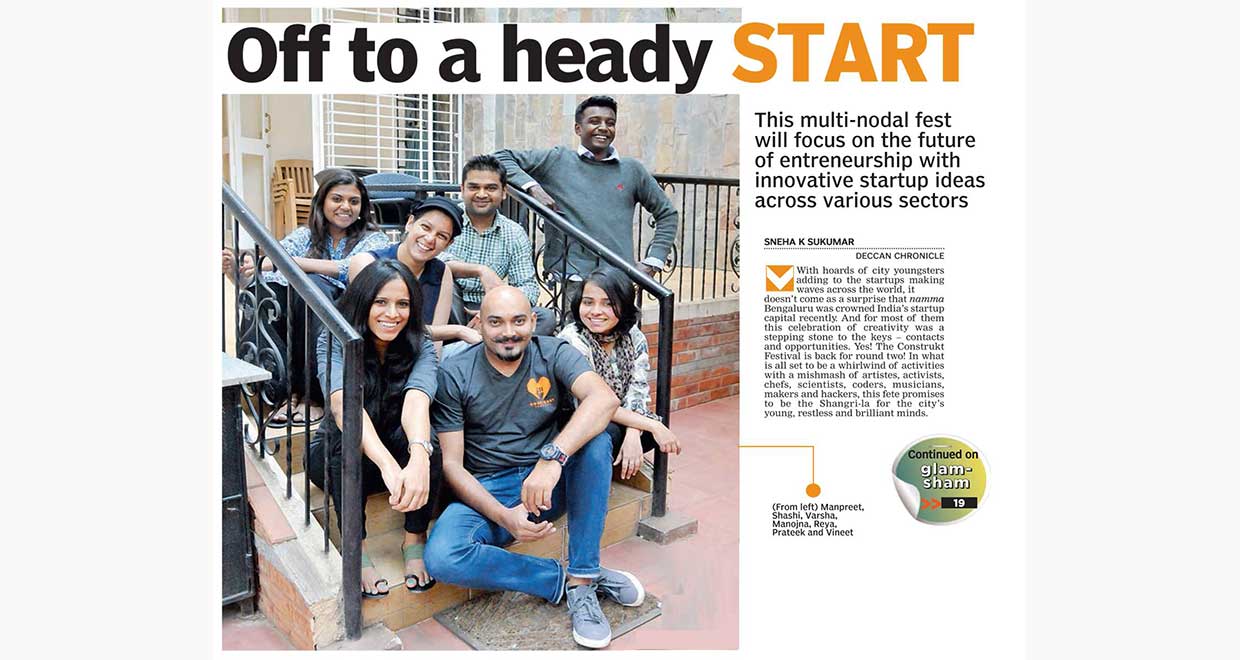
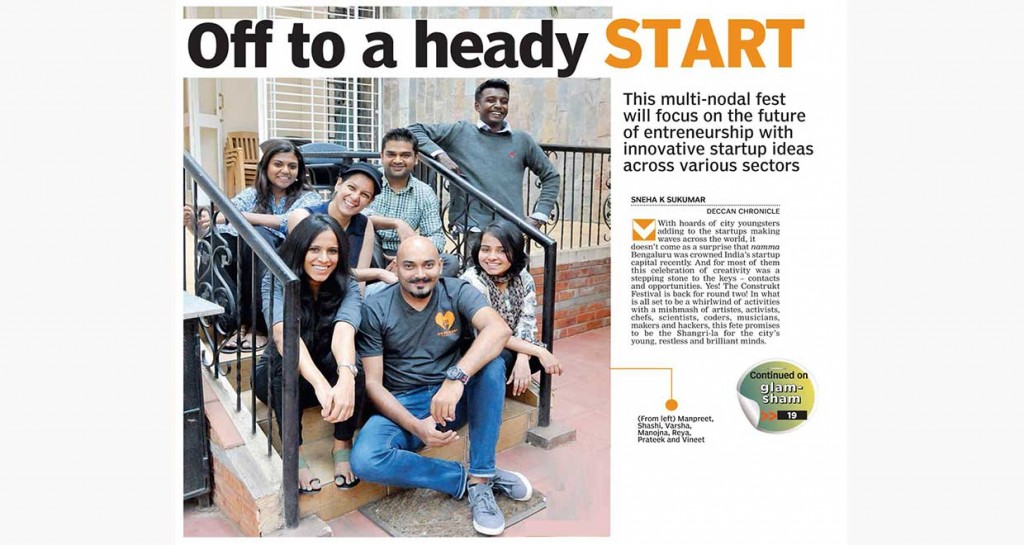
    Since returning, she has founded Artistik License, an organisation specialising in the rights of artists, entrepreneurs and other creative professionals. She is also a Business Development Consultant at Vahura, a legal recruitment firm, and this year, she held the post of Content Curator and Co-ordinator at Construkt Festival 2015.

    In this interview, Manojna opens up about:

    • What made her choose to pursue Entertainment and Media Law, despite having a job at the largest law firm, AMSS;
    • The application process to UCLA, as well as the importance of a Statement of Purpose (SoP);
    • Her work experience at Artistik License, Vahura and ConstruktFestival 2015.


    Whatmade you choose Law as your profession? Is there anyone else in your family who works in the legal field?

    To be fair, pursuing a career in law was not my first choice. Growing up, I was led to believe that I could pursue a career in any field so long as I worked hard at it and made a good living from it. By the time I decided to give law school a shot, I had already thought of becoming a biologist (a thought I abandoned after my 10th standard experience with Chemistry and Physics) and later, I sincerely wanted to pursue a career in Sociology and Psychology. Things didn’t quite work out the way I planned, which just goes to show you that you can’t always foresee and plan for everything. Following my 12th standard Board Exams, I ended up moving to Bangalore because of my father’s job, and during a very very brief stint at Mount Carmel College, decided that perhaps law school would provide me the kind of opportunities I wanted, particularly in the realm of Humanities. My father and grandfather (my dad’s father) are both law graduates who did not practice, but ended up using their legal knowledge in their careers as Government officials. My other grandfather (my mum’s dad) is a retired Police officer, who has always had a strong love for criminal law. I do have family in the legal profession – specifically my cousins and my father’s uncle (an astute man and a retired Judge),who have all made, and are continuing to make an impact in the legal world through their own efforts and contributions.

    For all practical purposes though, I really am a first generation lawyer in my tiny nuclear family.


    What was life likeas a law student at NALSAR? How did your five years in the university influence your personal growth?

    My years at NALSAR are definitely some of the most eventful and insightful, and I pretty much carry memories and lessons from my time at law school, into everything I do. When I was studying at NALSAR, things were a bit different  – we were a lot more interested in actually meeting one another and since we were so far away from thecity (nearly 35 kms away) and living on a student budget, I think many of us found ourselves more deeply involved in campus life than we expected to be. For me, it was a wonderful and scary time, since it was the first time I was staying in a hostel, but any hesitations I had were eradicated thanks to the friendships Imade – some of which have evolved into strong relationships that I turn to in times of joy and crisis.

    One of the most important lessons I learnt in NALSAR is that life is what you make of it. As individuals, many of us have access to several opportunities, however,there are only a few who choose to truly make the most of them. Looking back, there are a few things Iwish I had done, and there were many batchmates, seniors and juniors who displayed enthusiasm, initiative and creativity that I never thought was possible – so I have to say that law school can be quite an inspiring place so long as you know where and who to look to.

    As an institution, NALSAR offers its students a wide array of opportunities, but then again, as I mentioned earlier, it’s upto you to make the most of it. Besides my time on campus, I also ended up learning a great deal about myself thanks to a Student Exchange Programme I took part in just as I entered my third year of law school. I had a blast at Griffith University, Brisbane and it was really a professor there and his courses that sowed the seeds for my fascination with entertainment law.


    Did you take part in moot court competitions? How important do you think are such competitions for getting acceptance for Masters in the USA?

    I was not a mooter. I’ve admired mooting, but only from a distance. In my experience, mooting requires a skill set and an emotional endurance that I’m not sure I had, or was really interested in developing. When I was in law school, I remember hearing that conferences and publications were far more important than Moot court competitions when it came to applying for a Masters, however as we all know, that’s not always true. Moot court competitions help develop certain qualities that are very important to a career in law, however, as is the case with everything, I’m not entirely sure that there’s a fixed formula that states that Moot courts or conferences might considerably increase one’s chances of admission into a Masters program anywhere – I think what matters is ensuring that one’s Statement of Purpose is tight, sincere and clear.


    At a time when most people primarily focus either on Litigation or on Corporate Law, what turned you to Entertainment, Media and Intellectual Property Law?

    It’s funny that I embraced my fascination for Entertainment law and IPR only after I left law school, since I might have been able to do more while I was at NALSAR. I did bite the bullet and make the initial foray into the world of corporate law for a very brief period of time. Isat for recruitment and was picked up by AMSS (Bangalore) and believe me when I say that at the time, Iwas overjoyed and excited because I thought “Hey! My life is set now”. Shortly after joining AMSS, I found myself increasingly reading up on Entertainment law and IPR and when finally my curiosity couldn’t take it anymore, I chose to leave to pursue a Masters in either Entertainment or Media law. It wasn’t a very easy decision though – working in corporate law brings with it, its set of privileges, like a solid income and respect, and foregoing that, especially when you’re a fresher in the job market, seems a tad bit risky. However, I did receive a great deal of support from my folks, particularly my mom, who really helped me during such a difficult transition.


    Were your internships mostly related to Media/IPR law? Which was the most enriching internship experience for you?

    Most of my internships were not consciously oriented towards Media/IPR law because all through law school, I had convinced myself that I was probably going to become a corporate lawyer. I had interned in almost every holiday break and because I always wanted to keep my options open and balanced, I ensured I did one corporate internship followed by one NGO internship. My most memorable corporate law internships were at JSA, Bombay and Luthra&Luthra, Bombay because of the kind of experiences and learning that happened. With respect to non-corporate internships, my internship at Majlis, Bombay (run by Flavia Agnes) and Loksatta, Hyderabad were instrumental in teaching me a lot about the interaction between law and content-creation. My serious Entertainment/IPR law internship only happened years later during my time at the University of California, Los Angeles (UCLA), at an independent film studio (NuMedia), run by a lawyer. Nestled in the middle of Hollywood, it was a pretty cool way to learn about entertainment lawyers and the industry.


    How did you choose to pursue your masters at University of California, Los Angeles?

    The University of California, Los Angeles or UCLA is considered the best school in the world for the Entertainment, Media and IPR law programme. To be honest, that’s one of the major reasons I wanted to pursue a masters there. I had applied to two other schools that year – SOAS and LSE, and I was fortunate enough to have gotten accepted into both but my heart was set on UCLA because of how well structured its Entertainment law program and department was.

    I think that it’s always important to choose to pursue a Masters or any degree at an institution that has developed a great reputation and infrastructure to teach the subject that one wants to pursue a higher education/career in. A lot of people wondered why I had chosen UCLA, and the answer is actually very obvious – it’s the best place in the world to study Entertainment law. UCLA had an entertainment law department that had some wonderful faculty who brought years of experience from Hollywood and other international entertainment industries, into the classroom. Imagine being able to study about being a lawyer with a record label from someone who actually worked with Capitol Records and works with Warner Brothers – that’s exactly what UCLA offered me, and in my opinion, it’s that kind of specialized focus and infrastructure that actually helps students gain a more informed and insightful understanding of the area of study they are focussing on.


    How did you go about your application to UCLA? What are the prerequisites to applying to a university in the USA?

    I would love to say moots, conferences, publications, solid recommendation letters, extra-curriculars during law school, internships – the works, but I think at the end of the day what matters the most is clarity. One needs to be very clear about why one wants to pursue higher education at a university in the USA and that clarity needs to translate itself into a well structured, well written and sincere Statement of Purpose. I’ve always been a bit of a nerd and so pursuing a Masters was always something I wanted to do, and perhaps accordingly, I ensured that I had a fair balance (not a lot – emphasis on the word fair) of conferences and internships, however even the greatest recommendation letter in the world cannot substitute for a good Statement of Purpose. I definitely took time out to focus and re-write my SoP which I think also had a huge role to play in securing some financial assistance for my education. It’s also good to understand why you want to study further – a few people I know have referred to their LLM year as a holiday year- I have no idea what they are talking about. Studying abroad is a memorable but potentially difficult experience where you have to get used to studying a whole new jurisdiction while ensuring that you cook edible meals and live on a shoe-string budget.  However, coming back to the prerequisites of applying to a US university, it’s always good to focus on a good SoP, good and relevant recommendation letters and research.


    After having completed your masters in the USA, what made you come back to India, especially since Entertainment, Media and IPR Law is a more established arena there?

    I’ve always been an art-lover at heart and I’ve been fortunate enough to know and meet some wonderful artists living and working in India. While I love to travel and experience new cultures, a part of me always has to come back to India so in a way, I’m a bit of a boomerang. A career in Entertainment law in the US, particularly LA would have definitely been a lot more sensible and exciting in some ways, however there were many practical and cultural factors that influenced my decision to head back. For starters, opportunities in theUS legal market were scarce and I felt that the efforts to pursue a career there far outweighed the benefits. India also offered so many opportunities with its own big entertainment industry, my relationships with artists and creatives back home and most of all, thechallenge of doing something a little different in your own backyard.


    How has your Masters from UCLA affected your career in the long run? Do you think a person without a similar Masters degree from a foreign university would face significantly lower chances of success in the Indian market?

    Contrary to popular belief, there are quite a few Entertainment and Media lawyers in India and we are not an endangered species at all. There’s an age old debate about whether higher education outweighs experience or vice versa, and the truth is the best chance one has is by achieving a balance of the two. My LLM at UCLA has had a profound impact on the work I do because of many things I learnt and experienced during my time in LA. Whether it’s having achieved a deeper appreciation for artist rights, a more wholesome understanding of copyright law and licensing, or just a greater awareness of all thedifferent kinds of law that Entertainment law encompasses (IPR, Labour law, Contracts, OSH, Tax), my masters from UCLA has definitely shaped the way I perceive issues facing my clients and theindustry I work with. Having said that, I can’t say for sure if a foreign degree would necessarily increase the chances of success in the Indian market, but it might provide one with much needed perspective.
     

    manojna-yeluri-1

    After returning to India, you founded Artistik License. Please tell us more about it. How was the experience of building up your own start-up?

    I’m still building it up, and I think it’s going to be a lifelong project of mine. After returning to India, I chose to work with CLPR – a research think tank based out of Bangalore, in order to gain more experience as a research associate. However, there came a point where I felt I ought to be doing more work in Entertainment law, and while Ilooked out for opportunities in Entertainment law firms and companies, nothing came close to what I really wanted to do – work with content creators, artists and creative entrepreneurs directly. So, after a lot of searching I decided that it was time to take a leap of faith, and start working independently. Artistik License started off as a blog or a repository of legalese for artists working in India – something which it still serves as today, but after some hard work and lessons, has evolved into a consultancy where I advise artists and creative startups on their rights, as well as provide them with specialized legal services. What really makes Artistik License different, is its focus on independent artists and startups. As an organization, it focuses on two tracks – enabling the independent artist and entrepreneur’s business by way of specialized legal advice as well as by empowering artists, and creative entrepreneurs through rights awareness workshops, discussions and research work.

    Although I was really frightened at first, I think entrepreneurship was something that I was designed for. I had a great support system, comprising of my folks and my friends, who shared my fears and joys, and were a great sounding board for all my ideas. Building your own startup from scratch can be scary but rewarding,so long as you don’t bite off more than you can chew. Considering Artistik License’s niche focus, there was, and might always be, a certain amount of risk involved in what I do, however I can’t think of anything else I would rather be doing. The past two years have seen Artistik License’s clientele grow, and I’ve been invited to present my work at various domestic and international music markets, conferences and events.


    Are artists generally aware of their rights? How can such awareness be increased?

    Some are, and some aren’t; even then, the awareness can be incomplete. There are many factors that contribute to this situation of imperfect knowledge, including access to information and the communication of important information. It’s critical to ensure that artists are made aware of the need to understand why rights awareness is important, but then it’s just as important as law people, to enable that awareness in a manner that is chilled out, and not steeped in legal jargon. There are many ways in which awareness can be increased, and I work closely with many non-law organizations who want more artist rights empowerment. Workshops, discussion groups and online articles are a great way to get this valuable information across. Besides the Artistik License blog, I also write frequently for Campus Diaries (for the younger artists and entrepreneurs) and Indiearth (a platform dedicated indie artists in the Indian ocean region), on topics that might be of potential interest to artists and entrepreneurs alike.

     

    manojna-yeluri-2

    Artistik License also organises workshops for disseminating knowledge on the subject. Would you consider engaging young law students in these workshops to help them learn along with the artists?

    Of course! I can see creativity and entrepreneurship being an integral part of the law school experience, and it’s always a pleasure to engage and talk to law students from anywhere. I’ve been fortunate enough to have a wonderful time with some very intelligent, very quirky young law students from Christ College, Bangalore and NALSAR, who have been wonderful and so helpful by interning with Artistik License.


    In between all this you have also been working at Vahura. When and how did you join Vahura? Please tell us about your work profile there.

    My relationship with Vahura is both a new and old one. A few years ago, I worked with Rainmaker as a features editor, and a few months ago, I had the opportunity to start working with Vahura and its amazing team. At Vahura, I work with the Business Development and Clients Solution vertical, where I especially focus on business in the South Indian region. I enjoy the unique position of being able to interact with some of the smartest legal professionals and some of the best businesses and law firms in thecountry. A great deal of what I do involves networking and making connections – something I can’t get enough of. As an organization set out to help lawyers do good work, Vahura offers many services besides legal, tax, compliance and governance searches. It also provides strong counsel and research through its mentorship and consulting verticals. While we all help each other out at Vahura, another area that I work closely with is Vahura’s Engage vertical, which provides the legal community opportunities to interact with each other through various professional and community events.


    What insights you would like to share with our readers from your experience in legal recruitments at Vahura?

    My insights into legal recruitment are quite limited at this time, because a great deal of what I do concerns the overall legal market and business. There are others at Vahurawho have a more nuanced understanding of legal search business, and I would be more than happy to put any of your readers in touch with them. I can say this much – these are some exciting times for the law graduate, since I think we’re smack in the middle of an era where there really is something for everyone. So whether you want to be a corporate lawyer, a litigator, a legal academic or a legal entrepreneur, the industry is currently offering a lot of opportunities to pursue any career you wish, and if it’s some counsel and direction you’re looking for, we at Vahura are happy to help. This is probably my biggest learning from Vahura so far –an understanding that we’re far more focussed on helping legal professionals discover their full potential rather than simply place them in suitable positions.
     

    manojna-yeluri-4

    You held the post of Content Curator and Co-ordinator at Construkt Festival 2015. How may startup festivals such as this prove to be important for a law student?

    I was thrilled for the opportunity to work with Construkt 2015 and must express my gratitude to the festival’s founder, ShashiKiran, who is nothing short of an entrepreneurial powerhouse. Working with him and the Construkt team so closely taught me a great deal about entrepreneurship and the ways in which the right kind of platforms and infrastructure can truly help nurture a great innovation eco-system. I definitely think that more law students need to be open about attending such festivals where entrepreneurship is not only encouraged, but celebrated. For instance, Construkt 2014 and 2015 both celebrated legal entrepreneurship and innovation, by hosting talks by lawyers working in the field of law and technology, entertainment law and startup law. As the content curator for this year’s edition, I had a great time sifting through some amazing content by speakers, but it would be super if we could get more inputs and entries from the legal community as well.


    How do you manage time between your two roles? Are you able to find a work-life balance?

    A few days ago I heardsomeone say that we’ve almost taken it for granted that we’re supposed to struggle, hate our bosses and hate work. The truth is, that if we’re doing something we like,then we don’t even think about things like over-time, and being over-worked. At this point in my life, I am extremely grateful for the opportunity to be more than one person, and to do more than one thing. I’m surrounded by a number of inspiring people from the legal and creative communities (not that the two need to be exclusive), and I find a great deal of joy in what I do. Sure, it’s overwhelming at times and there are days when I just want to throw things at people, but I think the key is to achieve balance in whatever one does, and to remember that we are the best judges of our own situations. I also find that taking care of one’s body and mind goes a long way in ensuring that one can get more out of life. I’m not the fittest fiddle in the world, but over the past year, I’ve noticed that I consciously try to eat healthy, lead an active life and pursue my other interests including creative writing, glass painting, accompanying my musician friends to their shows, and understanding how to lead a more cruelty-free life. I’m a bit of a hippie at heart.


    What is the one advice you would like to give our readers?

    There is no formula to success. Years of conditioning in law school teaches us to assume that we need to fit into one mould or the other, but the truth is there really are no restrictions to the kind of opportunities one can tap into these days. It’s important to be brave and to seek good counsel, and to remember that it’s okay if you don’t fit into the traditional structures and expectations created by your family or the legal fraternity. It’s important to be honest in the work that one does, and to push aside the drama, no matter how tempting it is to overanalyse it. You can be a SuperLawyer just by being yourself, and working hard.

  • Sudhir Reddy, Founder, Reddy & Reddy Advocates & Legal Consultants, on LL.M from Cardiff and Mediation course from Oxford

    Sudhir Reddy, Founder, Reddy & Reddy Advocates & Legal Consultants, on LL.M from Cardiff and Mediation course from Oxford

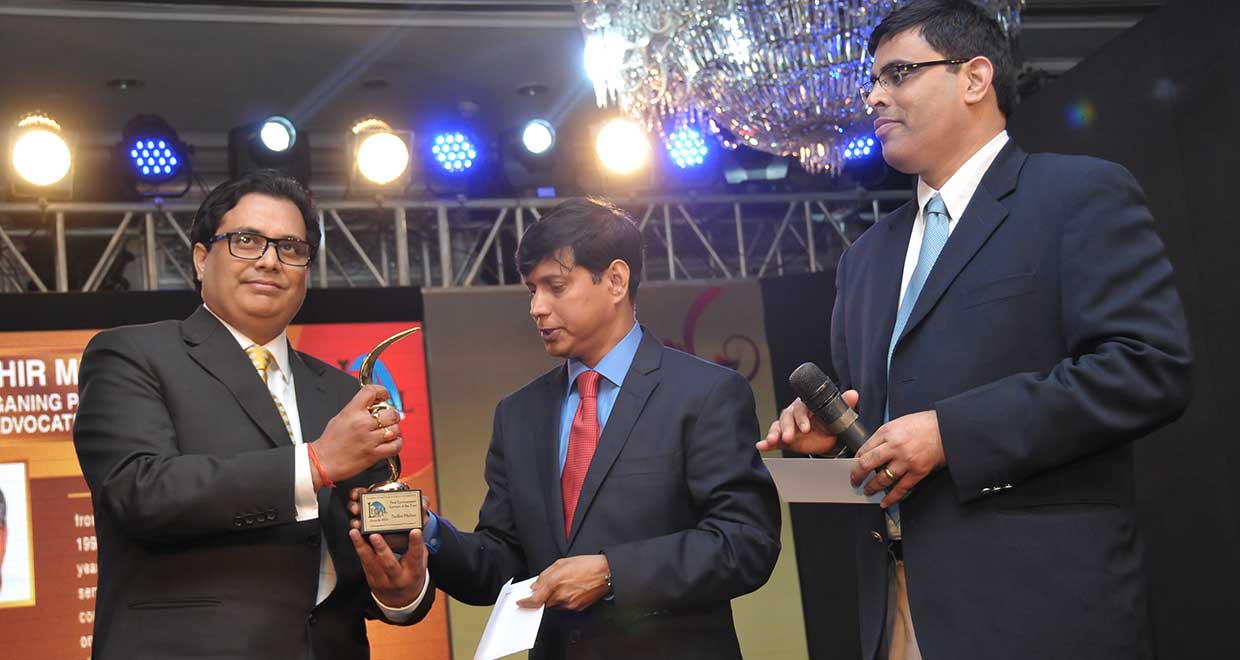
    Sudhir Reddy graduated in LL.B from DES Law College, Pune University in 2009, after which he pursued his Masters from Cardiff University, United Kingdom. After completing his degree in Masters he worked in a law firm called Thodur Law Associates as an Associate Advocate. He also pursued a course of Civil/Commercial Mediation from Oxford and became an Accredited Mediator in 2014. At present, he operates his own law firm which has a practice of both litigation and corporate work.

    In this interview we talk about –

    • Choosing International Commercial Law as his specialization for LL.M
    • Pursuing a course of Civil/Commercial Mediation from Oxford
    • Becoming an Accredited Mediator by 2014
    • Starting his own law firm “Reddy & Reddy Advocates and Legal Consultants”


    Given that most of our readers belong to legal fraternity, how would you introduce yourself to them?

    To start with I am a practising advocate mainly practising in the Pune courts and the Mumbai high court. I completed my LLB from Pune University and my LLM from Cardiff University, United Kingdom. I am also a certified civil and commercial mediator .I run my own law firm in Pune which deals with litigation as well as corporate work. However before starting the law firm I did work under senior attorneys at different High Courts so that I could earn some practical experience and confidence to start my own firm. My experience in Law is not just confined to the Domestic laws but I have also gained experience in mediation and negotiations in United Kingdom after completion of International civil and commercial Mediation course from Oxford.


    Having done B.Com, what motivated you to choose law as a career? Or did it just happen?

    To tell you guys the truth, my foremost aim was to become a lawyer but being from a business class family I had to learn certain aspects of commerce mainly accounts so that I would be able to put in my efforts in the working of my father’s established business. Also having knowledge in commerce helped me cater to my corporate clients in taking managerial decisions.


    As a law graduate of Pune University, have you faced any comparison with NLUs? What would you say to the future graduates of Pune University regarding this?

    I personally feel that these are all pre conceived notions that only the NLUS can provide the needed exposure to its students. Ultimately the laws are the same it’s up to the student how he/she decides on to shape up his/her life. I personally took the needed effort to attend various seminars and small conferences pertaining to law, held during my period at the law school. It’s the knowledge you imbibe that matters which should be practical as well as theoretical knowledge.


    What were your areas of interest during your graduation? How did you go about developing expertise and knowledge in these areas?

    As a law student I never wanted to confine myself to any particular area of law. My main aim was to absorb and learn everything which was taught to me during my classes and my internships .But I had always enjoyed negotiating and mediating any disputes and I realised I was good at it because I was always successful in solving a dispute. This made me realise that I had an inclination towards solving disputes in a peaceful and non-stressful manner. I did have keen interest in alternate dispute resolution systems and outside court settlement procedures and so I become a mediator.


    What are your thoughts on activities like mooting, debating and publications in journals? What skills do law students acquire by engaging themselves in such activities?

    I have always been of an opinion that in an all-round development of a student activities like mooting, debating play a crucial role. This is where the student develops its confidence and learns legal interpretation .Also these activities will help students in inculcating good research skills. The students also realise what exact field they should be taking up after college after doing these activities.


    Right after graduating, you went for LLM. Why did you decide to go for higher studies?

    Going for LLM right after graduation was my game plan since the time I joined my LLB course .My main intention for pursing LLM was to well equip myself with the international legal scenario.UK being a common law country I was sure that this experience will benefit me in expanding the horizons of my legal knowledge internationally .


    How did you choose Cardiff University over others? How did you go about choosing a university?

    The main reason to choose Cardiff University was that it is one of the royal charter universities and also one of the well ranked universities in UK. Along with that it had a beautiful campus and an apt course that attracted me to choose this university over others.


    Why did you choose International Commercial Law as your specialization for LL.M? What motivated you to pursue your LL.M in International Commercial Law?

    My course comprised of variety of subjects like international banking, competition laws, international corporate governance and World Trade organisation, which were entirely different than the regular curriculum taught to law pursuants in India. Also there was a wide range optional modules we could opt for hence I chose to peruse International Commercial Law.


    What advice would you give to people who are trying to decide which area of law to specialise in?

    Do your internships in all the fields. Participate in moots, debate, paper presentations and client counselling competitions. All this will help you understand your weak points and make you sure on what areas of law you like and what kind of practise you are good at.


    After completing your Masters, you worked at Thodur Law Associates for an year as an Associate Advocate. How did you secure your appointment? Did you apply or got an offer from the law firm?

    After my LLM I wanted to gain practical experience for getting myself acquainted with the procedural part of a legal proceedings, Thodur Law Associates is a law firm based in Mumbai practising at High Court hence there were larger chances of me getting a vast experience.

    I had gone to Mumbai after I was back from United Kingdom to search for prospective law firms where I could actually gain practical experience. Coincidentally I met the senior partner of the firm, I narrated to him my reason for applying in the said firm, he was very impressed seeing my urge to learn and I was told to join right from the next day at their firm.


    How did you overcome your initial jitters in a courtroom full of experienced lawyers and judges? Tell us about the highs and lows.

    I am a supercharged guy since childhood, talking to unknown people, making new friends or being at a new place with new surrounding was never a challenge to me. But I still remember the first time I appeared in front of a judge was at the Bombay High Court. As soon as I stood up to mention the said matter I went blank and stood right in the same position for good one minute without a single word spoken. The judge sort of understood that I have frozen so he sort of covered up for me and told me to come next day.

    And since then till now I have changed tremendously .Now I wait eagerly to appear at the court and to prove my point.


    sudhir-reddy-1

    Thereafter, you have started your own law firm Reddy & Reddy Advocates and Legal Consultants and currently you are the Managing Partner of the firm. What prompted you to make this choice and start your own law firm?

    It’s my father’s confidence in me which gave me the courage to start my own law firm. He has been the backbone of the firm since the day of the inception of Reddy & Reddy, Advocates and Legal Consultants. He has supported me when I needed encouragement and confidence the most. To be frank there were many to discourage but few to encourage. But somehow the voice inside told me to go ahead and prove it that I can do it.


    Please tell us a bit about “Reddy & Reddy Advocates and Legal Consultants”. What is a day at work like? Is it easy to have a work-life balance?

    My day at work starts with my morning prayer and then a quick workout. I am in the office quite early because I need to take quick updates about the distribution of the work to the associates for the day. I then go ahead and start with all my client meeting and if I have an argument for the day I take a quick look at the case and have fun leading the argument at the court. There are times when I spend the whole day in the negotiation for my corporate clients but having a remarkable team keeps me relived that my office functioning at its peak. I end my day at office by taking updates from all my associates along with a nice cup of coffee.


    Tell us about the practice areas of Reddy and Reddy Advocates and Legal Consultants.

    Reddy and Reddy Advocates and Legal is  Based in Pune, it offers a full range of legal services on all aspects of the Indian law to a diversified client base, including well-known multi-national corporations functioning in India. In addition to serving our clients directly, our lawyers serve as experts of Indian law in both transactional and litigation matters. In particular, the firm has a strong practice group that specializes in mediation and negotiation, credit management, real estate, property & land laws. We are dedicated to our clients’ needs and we strive to achieve total satisfaction for our clients by legal excellence.


    Our clients include major Banks, Non-Banking Finance Companies, Real Estate, Multinationals, Industrial Houses, and Software Companies.

    The firm’s lawyers have an average experience of over 5 years in handling complex legal issues touching on almost all aspects of Indian law. We combine a personal approach with high professional standards and aim at providing comprehensive legal services to our individual, corporate, financial and commercial clients.


    In the meantime, you have pursued a course of Civil/Commercial Mediation from Oxford and became an Accredited Mediator in 2014. What prompted you to pursue this course and became a certified Mediator?

    Mediation is the next revolution in the legal field. Since our country is evolving in a very fast pace the people of our country want every issue to be resolved as fast as possible. Being a lawyer I have practically seen how burdened the court is with numerous cases. Before going for the course few of my clients had asked me if I knew any commercial mediator and that is when I decided why not me. I looked for few courses and I found the one in Oxford is what suits my requirements perfectly.

    Meditation is already a very upcoming requirement for the multinational companies because they have clients all over the world and solving disputes outside the court is more convenient for them. Mediation is immensely into existence in the European and the western legal system. So it’s always better to do a course on mediation and negotiations it will surely help them in the future.


    You have a couple of orders to your credit. Do they change one’s recognition?

    (Sudhir has orders to his credit in criminal litigation, consumer disputes, land disputes, family disputes and outside court settlements in labour and industrial disputes)

    It just makes me want to work even harder because I want to keep my clients always satisfied. My only aim is that when the client agrees to take services from us he/she attains the best of the services which my firm can provide.

    Regarding once recognition, yes it does change the recognition as it shows experience a person has and the dedications the person has put in to get the desired results.


    What were the difficulties you faced in the early days of your practice? How difficult would you say it is to build a reputable practice?

    Early days were relaxed and peaceful. I did have work from the day I started my own office but the stress of uncertainty was always there. Although it will be wrong to say that the uncertainty is not present anymore because our firm is still in its growing stage.

    I also want to say that it is quite difficult to build a reputation and then harder to maintain it, one really needs to have lot of patience in order to raise your own organisation from one level to another.  You need to have a good team with you to run the show and thankfully at this point of time I have an awesome team who helps me, guides me and back me up everywhere.


    Do you take interns? What do you look for in a prospective applicant?

    Yes, we do take interns. When we get an application for internship we usually don’t see the scores and credentials of the student because we understand different universities have different ways of marking. We usually see the cover letter and the practical experience the applicant has provided in the application and most importantly the urge of the applicant to work and learn.


    What would be your message to law students who dream of having their own law firm one day?

    Never give up. Enjoy your failure because this is the way you are learning and this is how you grow as a person. According to me there are 4 stages involved if u want to start your own firm. At the first stage you have no work no money ,second stage only work no money at the third stage good work good money and finally the fourth stage less work only money.

    Not necessarily it has to go the same way but that’s what it is like in the holistic picture. Be confident and kick off.


  • Chinmay Bhosale, Advocate, Bombay High Court, on working with reputed Senior Advocates, Criminal Law practice and choosing litigation

    Chinmay Bhosale, Advocate, Bombay High Court, on working with reputed Senior Advocates, Criminal Law practice and choosing litigation

    Chinmay Bhosale is a graduate from ILS, Pune 2010 batch. He has been a consistent topper of his batch at University of Pune, he had also been selected in the final list of Rhodes Scholarship 2010.

    It has been five years since he joined the Bar and he has worked on high profile cases with intense legal issues like the 2G case, Hawala Scam Case, Maval Police Firing Enquiry Commission, Adarsh Commission, etc. Currently, he is pursuing his Ph.D and the topic for his thesis is ‘Malicious Prosecution’.

    Chinmay talks about :

    • His experience interning under Ashok Mundargi, Senior Counsel and Adv. Shreekant Kanetkar, Ex-Chairman, Bar Council of Maharashtra and Goa.
    • Choosing to litigate as against pursuing post graduate studies.
    • Criminal law practice in India.
    • Working on high profile cases.


    Given that most of our readers belong to legal fraternity, how would you introduce yourself to them?

    Chinmay Bhosale, to be brief J. A confident lawyer with an eidetic memory, who eventually wants to contribute to the legal profession, education and jurisprudence in my own maverick way.


    Legal studies are still only a backup option for quite a lot of students. What motivated you to choose law as a career?

    Choosing law as a career came very naturally to me. I come from a family which has acclaimed legal luminaries who have achieved success in varied fields and capacities; be that of a Senior Advocate, Chief Justice, Vice Chancellor or even a Law Minister. So, I have always felt very humbled by my surname and have had a natural awe towards law.


    What were your areas of interest during your graduation? How did you go about developing expertise and knowledge in these areas?

    I had fleeting interest in International Law at once, which led me to pursue and win a National Moot Court relating to the subject. However, my major and “only true love” has been criminal law. Apart from having immense interest in subjects like IPC, Cr.P.C. and Evidence Act, as a student I even tried to cover peripheral sub-areas like human rights, medical jurisprudence and forensic science by way of diploma courses. Also, three out of five years of my law school life I interned with Senior Advocate Ashok Mundargi, one of the giants of the criminal bar at Bombay. The internship gave me great insights into the ‘practicality’ of criminal law and the profession.


    Tell us about your law school journey from the 1st year till your final year at ILS Law College, Pune.

    My 5 year journey at ILS Law College, Pune was quite eventful. I had my share of highs and lows. I entered as an low-on-confidence novice, and emerged as a confident and ‘borderline arrogant’(as some would say J ) advocate. In this transition I tried to do a bit of everything from topping the University thrice in my five years, winning a national moot court, being the Student Representative of my batch for three years, being a part of the Student Council of ILS Law College, Pune, completing four diplomas, interning with Senior Advocates and even being amongst the final 15 students for Rhodes Scholarship, India. However, the most humbling and learning experiences were my failures, which were quite a few J


    Tell us, what kind of work did you do in your internships with Senior Counsels?

    (During his law school Chinmay has interned under Adv. Ashok Mundargi, Senior Counsel and Adv. Shreekant Kanetkar, Ex-Chairman, Bar Council of Maharashtra and Goa.)

    I was almost like a permanent intern with Senior Adv. Ashok Mundargi, as every vacation I used to be working in his chamber. Most of my time at his chamber was spent observing his arguments and interactions at client conferences; and partly trying to contribute to his arguments. My experience with Adv. Shreekant Kanetkar was quite enlightening, more because I understood that I had little or no liking towards civil laws. However, at his chamber I learnt the art of productive and crisp research, as most of my time was spent trying to learn the concepts of civil law.


    What is your advice to budding mooters?

    (Chinmay has participated in various National and Intra-College Moot Court Competitions and he was a part of the winning team of the Technology Law Moot Court Competition, IIT Kharagpur (Rajiv Gandhi School of Intellectual Property Rights), 2008.)

    Well, I never was a great mooter, so it wouldn’t be appropriate for me to give any advice on that. However, I would definitely like to say to all the budding mooters out there that please do not consider moots as the whole and sole of your life at law school. Moot courts are bereft of reality, and there is a lot more to your life at law school than mooting.


    How important do you think are co-curricular activities in shaping the legal career of a law student?

    I think co-curricular activities play a major role in shaping the legal career of any student, especially of those who wish to be a part of the action in the Courts. Quite often, it’s the persona of the Lawyer which stands out than his knowledge of law. Co-curricular activities play a major part in honing that persona. For me, I was an avid trekker, a national level sportsman and had varied interests like playing tabla, learning graphology etc. All these activities have definitely helped me in succeeding at the bar.


    chinmay-s-bhosale-1

    How was your first year after graduation?

    It was quite an internal struggle. As a law student I had an inkling towards pursing my post graduate studies from U.K. and I had admission letters from majority of the elite universities like London School of Economics, University College of London etc. However, I chose to enter the Bar straight away, as that is what I always wanted to do. So I started out in Mumbai, a city which has taught me a lot. I continued as a junior advocate at the chamber of Adv. Ashok Mundargi, where I had already interned for three years. Thereafter, I joined the chamber of Adv. Satish L. Maneshinde.


    What comprised your work at the chambers of Adv. Ashok Mundargi and Adv. Satish L. Maneshinde?

    Working as a junior advocate at the chamber of Adv. Ashok Mundargi came as a natural continuation, as I had worked previously with him. However, at some point I felt the need to learn the nuances of criminal trials. Adv. Satish L. Maneshinde is the biggest personality in Bombay when it comes to criminal trials. I always had a desire to work with him. It was at his chamber that I learnt that a legendary advocate is also a legendary persona. My experience with both of them was quite antithetical, however equally enriching.


    Please give us some highlights of the high profile cases you worked on for the benefit of our readers.

    (Chinmay has worked on high profile cases with intense legal issues like 2G case, Hawala Scam Case, Maval Police Firing Enquiry Commission, Adarsh Commission, etc.)

    I have been very fortunate to have had the pleasure of working with three Senior Advocates viz. Adv. Ashok Mundargi, Adv. Satish L. Maneshinde and my father Adv.Dr. Sureshchandra Bhosale. I got to work on endless high profile and intense cases. In cases like 2G scam and Adarsh Commission I played an assisting role, gaining a world of knowledge. On the other hand, in cases like Maval Police Firing Commission I had a very active role in recording of evidence of numerous witnesses and arguing the matter, where I defended the Maharashtra Police successfully. Apart from the love of law, one also needs to have a healthy affection towards tireless reading in order to succeed in such intense cases.


    You have started your criminal litigation practice. What influenced your decision to start criminal practice after graduation? Why not civil litigation or corporate law practice?

    As I have stated earlier, I have always had a great liking towards criminal law. It is, as they say, in my blood. My father is one of the topmost and famed criminal lawyers of Maharashtra, and that worked as a catalyst for my decision. Also, having interned with a Senior on the civil side had given me a clear idea that I did not have any inkling towards civil or corporate law.


    Please tell us about your experience with regard to your first few years in Court. Has it become more difficult for a fresher to achieve success?

    Your first few years at the bar are majorly spent observing the proceedings, and it wasn’t very different for me either. Almost all the freshers undermine the necessity of this period, and pretend to be observing. However, this is the period which will define the trajectory of the life at the bar. As rewarding and fulfilling your life can be at the bar once you are successful and a known figure, it can be equally tiring and frustrating in the earlier stage. I would advice all the freshers to patiently outlive this difficult phase, without compromising the “observing”.


    Your main area of practice consists of criminal litigation. Please elaborate on the cases you normally deal with.

    My 75% work consists of criminal litigation, rest 25% is criminal consultation what they call “white collar crimes”. Thanks to the repute of my chamber, I have the good fortune of dealing with intense criminal cases day in day out in the Courts. They range from cases of murder, attempt to murder, marital cruelty, cheating and forgery, cases under the TADA, MCOCA, Anti- Corruption etc. Apart from that, there is a heavy inflow of corporate or white collar crime cases which are majorly economic in nature.


    chinmay-s-bhosale-3

    You are also pursuing Ph.D. Your Ph.D. thesis is on ‘’Malicious Prosecution’’. Why did you choose this particular topic in particular?

    Even though there is a plethora of cases that I myself defend every day, the truth is that accusations in 90% of the cases are baseless. In my 5 years at the Bar I had to face a conviction only once as a defence counsel; and that led me to choose my Ph.D. thesis topic. In India criminal prosecutions are handled very irresponsibly, as making allegations is free in our country. At the end of the trial, the accused is only handed over a judgment of acquittal. However, the loss of reputation, business, peace of mind, time, etc. are never accounted for. It is my endeavour to make extensive study of the concept of “Malicious Prosecution” and put forth suggestions for effectively preventing the same in India.


    Indian criminal law is, to a large extent, influenced by its British counterpart. Do you think if Indians would have framed our Penal Code, it would have been better?

    It is not largely influenced, it is entirely prepared and influenced by the British. However, it would be very harsh to say that Indians would have done a better job. I feel the law commissions of 1833 and 1853 have done an exceptional job, which eventually materialised into the Indian Penal Code. Since 1860, it has required far lesser amendments than what our very own Constitution of India has needed since 1950.


    If you were asked to suggest some changes to the present Indian Criminal law, what would they be?

    It would definitely be adding a chapter relating to ‘Malicious Prosecution’ in order to curb the vexatious litigations. Also, to have an effective change in the lives of common people, the fine component of all the crimes should be substantially hiked in order to have a deterrent effect as was intended.


    Tell us about a case that you are particularly proud of. What steps do you take to prepare for a difficult case?

    I am proud of all the cases that I have handled, as I would like to believe that I put in equal amount of hardwork in each and every one of it. In order to succeed at the criminal bar, it is absolutely essential to know each and every nuance of the criminal law, majority of which is now defined by plethora of judgments. Minutest of the aspects can lead to an acquittal or conviction. Hence, I start my preparation the other way round. After reading the chargesheet, I first get well versed with the possible intricacies of criminal law involved and the settled case laws on every such point. Thereafter, accordingly I prepare for my cross examinations. If you successfully follow this approach, arguments remain as a mere formality.


    How is your experience so far? What is your workday like? Are there new challenges every day or did work fall into a predictable pattern?

    It has been a fulfilling journey so far. Eventually, how is your experience at the bar, is totally dependent on your mindset. Even our planet has to go through various seasons, it’s not too different for the lawyers J .


    Beside your professional achievement, you are also active in many other activities. Please tell us about them.

    (Chinmay has been a national level player of Netball and state level player of Basketball. Chinmay is also trained in Graphology (Hand writing analysis) by world renowned graphology expert Mr. Milind Rajore and a certified student of his institute.)

    I always had a penchant for sports, and was very good at it too. This led me to participate at a competitive level both at State and National Level. As far as Graphology is concerned, I am a very curious person. So it was simply out of the curiosity to know more about hand writing analysis that I started learning it from a renowned graphologist. It did help me in quite a few cases involving forgery too.


    You are also engaged in social service activities. Could you enlighten us, in brief, about your role.

    I was briefly involved with MAD(Make a Difference) Organisation wherein I taught English to under privileged and slum children. Also, I am associated with an organisation named CFC (Contribute for Change) where we economically aid people for varied things like medical treatments, education, sanitation, tree plantations etc. I strictly believe that I should be living my life in a way that I can reach a vantage point, from where I could bring about some change in lives of as many people as possible.


    What do you look for in the profiles of the people you collaborate with?

    Confidence is utmost important for me, as the members of my team have to interact in the Court on a daily level. Moreover, the thirst for knowledge should be apparent alongwith the confidence. Either of the two, single handedly, are not of much use.


    What would be your parting message to law students who want to litigate just after graduation?

    Well, choose litigation only if you have tonnes of patience and an unshakeable will power. However, for one who possess both these qualities, life at the Bar will be very rewarding.


  • Anuroop Omkar & Kritika on authoring The Art of Negotiation and Mediation

    Anuroop Omkar & Kritika on authoring The Art of Negotiation and Mediation

    The authors Anuroop Omkar and Kritika are graduates of Gujarat National Law University (GNLU), Gandhinagar and are presently working in the Corporate Department of Lakshmikumaran & Sridharan. They have donned many hats. They jointly run a social service award Bauribandhu Mohapatra and GNLU Award for Social Service, co founded the company Bridge Mediation & Consulting Pvt. Ltd. and have been working tirelessly to spread the concept of mediation among the common masses and commercial groups in India. To give the subject more prominence and acceptance both among the masses and scholars, they decided to pen down a book on negotiation and mediation with LexisNexis. The book is extremely simple in terms of language and international in terms of quality and content. The concepts of negotiation and mediation have been explained with real life examples, childhood learning, mythological anecdotes and case studies of commercial negotiations. The book is titled ‘The Art of Negotiation and Mediation- A Wishbone, Funny Bone and a Backbone’ and is presently available on Flipkart, Amazon and LexisNexis.


    Tell us a bit about your law school experience of preparing projects and dissertations. Did the practice help you to in writing a legal book?

    If you make projects even a little seriously in law schools, they contribute to your knowledge base and enhance your research skills. According to us, making projects becomes interesting only if you choose an interesting topic, a real research area of law. Of course, it is not always possible, but at least in the subjects that you wish to specialize, you can always try to choose a critical area of research. Projects and dissertations help you evaluate what is your area of interest. We know many of our friends from law school who became interested in their practice area after they researched on the subject for a research paper at law school or during an internship.

    Making projects and dissertations was different from writing a book in many aspects. Projects and dissertations were purely law based where we presented the existing laws and gave our interpretation and suggestions. Our book is our attempt to bring law to the common masses. We have tried to present the practice of negotiation and mediation in a way that people who don’t practice law can also easily understand. Additionally, we have also tried to bring in the commercial aspects for businessmen and practitioners. We have also discussed business case studies where applicable.

    Lastly, I (Anuroop) always wanted to write on a subject where I was so comfortable that I would not have to footnote every sentence I write. While it was obligatory for us to footnote everything in our projects, our book is our own take on negotiation and mediation in India. We have made minimal use of footnotes by writing our original thoughts and interpretation. The book has helped me achieve my law school dream of minimalizing or even doing away with footnotes by promoting original thought and innovation.


    Can you please explain to us the sub title of your book ‘A Wishbone, Funny Bone and a Backbone’?

    We use techniques of negotiation and mediation regularly yet without consciously being aware of it in everyday life. Sometimes, the techniques don’t work to our advantage because we have the tool but we don’t know how to effectively use it. The book explains these techniques by relating them to stories, anecdotes or facts we already know but did not realize that they taught us something about mediation or negotiation. So, coming to the subtitle, if you wish to summarize the main attributes of a successful mediator or negotiator he should have a wishbone, a funny bone and a backbone.

    Our subtitle is best explained in our preface. Hence quoting:

    You need to have dream clouds floating in your head. You need a clear vision for what you want. You need drive and an innovative thought process. Or simply an idea that is so simple, it is out of this world. You need a wishbone.

    You need the will power to sustain the setbacks in life. You need to know how to turn a frown upside down. You need optimism to see every situation with a positive twist. You need hope. You need cheer. You need a funny bone.

    And finally to complete the vertebral column of dealing with disputes; you need a backbone. You need to know when your demands are reasonable. You need to know when not to allow someone to take you for a ride. You need to know when not to back out. You need to stand up for the fundamental principles of your life.

    You need a wishbone, a funny bone and a backbone to be the alchemist who comes out of disputes with more than what you had when you plunged into it.


    anuroop-kritika-1

    Both of you being full time Corporate and Transactional lawyers, how exactly did you write a book on ‘The Art of Negotiation and Mediation’?

    Apart from our active legal practice, we also run Bridge Mediation and Consulting Pvt. Ltd. (BMCPL). BMCPL is one of the pioneers in organized international mediation and multi-cultural negotiation training and practice in India. BMCPL is in the process of providing comprehensive, world class training for students, corporate professionals, social workers, diplomats and bureaucrats in India. The training is presently provided in collaboration with Media Logos, Italy who bring in international mediators as trainers. We have held trainings for students and professionals with Tata Institute of Social Sciences (TISS), Mumbai, Gujarat National Law University (GNLU) and National Law University Jodhpur (NLU-J). So, along with our practice, we have been always interested in increasing awareness and promoting the practice of mediation in India.

    Negotiation also, is the main component of every one of our transactions. The terms of a negotiated agreement vary broadly based on practical needs of the client, feasibility and durability of the terms negotiated through the agreement and legal tenability depending on various jurisdictions and sector of business.  If an agreement is well negotiated, the dispute resolution will never have to be enforced by the contracting parties. A fine tuned agreement with clear negotiation based on the abovementioned criteria hardly ends up triggering the dispute resolution clause. Even if in the worst case scenario, if there is a dispute between the parties, a very strong and a reliable mechanism of third party mediation in confidentiality should be resorted to resolve the disputes without washing dirty linen in public.


    Explain to us a bit about the process of mediation.

    In mediation, a third neutral party manages the interaction between disputing parties. This ensures constructive negotiation between the disputing parties and helps them to agree on a resolution that is fair, durable, and workable. It is the disputants and not the mediator who creates and finally agrees on how the dispute needs to be resolved. In a way, mediation is nothing but the use of negotiation to resolve a dispute outside the traditional dispute resolution framework.

    In mediation, the parties retain control over the dispute and its outcome. This central feature of mediation- self-determination by the parties- is a facet of democratic process that the voice and wisdom of people can shape outcomes responsive to particular situations. In this respect, mediation is fundamentally different from litigation and arbitration, where power to determine the outcome is ceded to an arbitrator, judge or jury.

    Many myths surround mediation that mask its benefits and prevent its popularity in the marketplace. There is a common belief among business professionals that mediation lacks closure or binding authority. However this is not the case. A settlement agreement executed by the parties post mediation is as binding as all other contracts.


    There are so many other books by international authors on negotiation and mediation. How do you see your book contributing to the existing literature?

    As you have rightly pointed out, there is good international literature available on negotiation and mediation. We have referred to many of these good books like ‘Getting to Yes’ by William Ury and ‘The Middle Voice’ by Lela Love (who also happens to be one of my (Anuroop) trainers at the program I attended at CEU Hungary). However, cultural variations and cross cultural confluence plays a key role in the process of negotiation and mediation.

    We wanted to elaborate on the concepts and international practices with an Indian flavour. It is important for us to understand that negotiation and mediation are not alien, Western concepts. They have been part of Indian culture since time immemorial. There are so many examples on use of negotiation, mediation, related techniques and concepts in the Aesop Fables, Jataka Tales as also in the Indian epics of Mahabharata and Ramayana. We have tried to introduce these concepts to our Indian readers by co relating these numerous stories we have heard since childhood but did not know had so much significance in our adult life.


    Is the book India specific or does it have any global significance?

    Apart from the easily affordable price of the book in the Indian market and the Indian anecdotes and case studies, the practice of mediation and negotiation has certain established best practices which have proved to work worldwide. However, the psychology, approach, expectations and cultural practices in negotiation and mediation vary significantly in every country. We have tried to present mediation as it is understood in most regions of the world where it is practised widely like USA, Europe and Singapore. So, the book definitely has global significance. Additionally, India is the next global market and the book will be useful for any person who wishes to establish business connections in India and wishes to understand Indian psychology towards negotiation and dispute resolution.


    How is a 40 hour mediation training different from the regular ADR classes attended by law students across various law schools in the country?

    The ADR classes in law schools are definitely very useful in preparing a base for future alternate dispute resolution (ADR) practice. The classes introduce us to the basics and lay the foundation upon which we can specialize and build a sky scraper if we wish to. But Indians presently associate ADR practice with only arbitration and the same reflects in the course curriculum at law schools. Students end up studying the Arbitration and Conciliation Act, 1996 in great detail. A class or at the max two are devoted to mediation. Negotiation is not yet acknowledged as a mode of dispute resolution although lawyers have been informally settling matters outside court since the time court system exists in India. To top it all, ADR is an optional subject in many law schools and students many times end up choosing subjects which are more ‘scoring’ or require ‘less effort’.

    An internationally accredited 40 hour mediation training focuses more on skill development rather than legal interpretation. The training is generally conducted in a round table discussion format and provides participants an insight into not just mediation best practices and procedures but also related psychology, neurosciences, communication and body language. After attending the training, participants tend to approach everyday life differently. The participant’s perception of every conversation and difficult situation changes after the training. Of course, the willingness of a participant to absorb information and practice skills is another matter. That being said, being a good negotiator or mediator is more about a mindset adjustment rather than knowing the law. Most importantly, you do not need to be a qualified lawyer, psychologist or social worker to be eligible to apply for training and be a successful mediator. For instance, the housewives saved India from the impact of global financial crisis through their savings habit without being an economist. These housewives who undertake crisis management daily can also be very effective mediators.


    Can the experience of a lawyer or a judge be a good enough criterion and experience for being an excellent mediator?

    As we said earlier, it is not your qualification or experience in law which makes you a good mediator. What makes you a good mediator is your outlook towards disputes and life in general. For anybody to be a good mediator, you first need to step away from the adjudicatory mindset. You need to dip into the age old Vedic knowledge and be detached from the disputing parties and their conflict. You need to help disputing parties clear the cobwebs of their hurt and aggression to arrive at the real issues underlying the dispute which need to be resolved. A mediator should always approach mediation with an attitude of fortifying long lasting relationships and maintaining public goodwill of the disputing parties. We all know that an emotionally agitated person can never make good decisions. An excellent mediator calms down agitated disputants and helps them achieve an objective outlook of their dispute. Indians have a typical habit of thinking that they can solve anybody’s disputes and that their suggestions are absolute. A good mediator never succumbs to this temptation. He brings the disputants to a position where they themselves chalk out a solution. Only when the disputants themselves come up with the solution, they actually implement it instead of again objecting or appealing the outcome in a court. More and more people are refusing to accept terms being dictated to them by someone else. The rejection of debt terms by Greek public referendum is a strong indication of this changing outlook.

    Also, disputants generally come with very strong emotions and positions on a mediation/negotiation table. But the tight rope walk of a mediator requires him to not be affected by the strong emotions and positions being radiated by a disputant. If the mediator is himself not objective, neutral and highly pragmatic, how will he help the disputing parties?

    Bottom line-anybody can be a mediator if the person can inculcate these qualities and streamline them through training and practice. Your aptitude plus training by the right resource who is knowledgeable in international practices is key.


    Does mediation have any kind of legal sanctity in India?

    Presently, matters at court are being referred to mediation under Section 89 of the Code of Civil Procedure. Similar mechanism for commercial disputes is provided under Section 442 of Companies Act, 2013 but the provision and rules have not been notified yet. Indian laws provide for mediation only after parties approach the courts. Pre-litigation mediation is not governed by any laws in India presently. However, I wish to clarify here that the settlement agreement even in a pre-litigation mediation is binding under the Indian Contract Act, 1872.

    The Arbitration and Conciliation Act, 1996 provides for conciliation but not mediation. It is important here to note that conciliation is not the same as mediation. ‘Conciliation’ implies a stronger form of intervention. The conciliator, not the parties, often develops and proposes the terms of settlement. In conciliation, the conciliator is usually seen as an authority figure who is responsible for figuring out the best solution for the parties. The parties come to the conciliator seeking guidance. In this regard, the role of a conciliator is distinct from the role of a mediator who is more like a referee. Mediation is nothing but assisted negotiation.


    What do you mean by ‘international best practices’ of mediation as referred in your book?

    Mediation is being practiced professionally in United States of America since almost the eighteenth century. Pre-litigation mediation is practised extensively in civil matters in the European Union. Due to this extended practice of professional mediation, these practitioners have come up with certain principles and practices which increase the success rate of mediation. These rules are universal and have worked across the globe. Extensive research and market analysis on how mediation works best has been conducted. In Russian there is a ‘Kahavat’ as we say in India: The wise man learns from someone else’s mistakes, the smart man learns from his own and the stupid one never learns. When the world has already set standards based on trial and error, these standards should first be adopted and implemented by us to build the foundation of mediation in India. At the next level, we should customize these standards based on our own empirical research and innovate further.

    One of the best examples of an international best practice is maintaining confidentiality. The names of the disputing parties, the facts of the dispute, the mediation proceedings and the outcome of the mediation should be guarded by confidentiality. This helps disputants preserve goodwill and resolve their disputes in a way they think best without the pressure of public scrutiny and expectations.


    Has your book been launched officially? If not, when is the official launch of the book? Can the readers attend your book launch?

    Our book is presently available on Flipkart, Amazon and LexisNexis for the readers. But the official book launch is at India International Centre, New Delhi on 7th August 2015. Interested readers who wish to attend the book launch can definitely drop us a mail at omkaranuroop@gmail.com on or before 21st July 2015 and we would love to have them at the launch subject to availability.


  • Appanna Poonacha, Senior Manager – Legal, Ocwen Financial Corporation, on work experience at Manthan LPO and ISGN Bangalore

    Appanna Poonacha, Senior Manager – Legal, Ocwen Financial Corporation, on work experience at Manthan LPO and ISGN Bangalore

    Appanna Poonacha graduated in law from University Law College in 2006. Right after the completion of his graduation he joined Manthan Legal. After working at Manthan for almost six years, in 2012 he started working in ISGN, Bangalore. At present he is working as the Senior Manager – Legal of Ocwen Financial Corporation.

    In this interview we talk about –

    • His journey through years of law school.
    • His work experience at Manthal Legal and ISGN, Bangalore.
    • His role of work at Ocwen Financial Corp.
    • Pursing Masters in Business Laws (MBL) program from NLSIU, Bangalore.
    • Certificate courses on banking and financial services


    Please introduce yourself to our readers. Where did you grow up and complete your initial education? How did you decide to take up law?

    I am Appanna Poonacha. I am a Bangalore based corporate lawyer. I currently work with Ocwen Financial Corp. as a Senior Manager – Legal. In this role I am heading the company’s legal contracts functionality and oversee all commercial transactions at Ocwen’s India offices. I was born into a family of lawyers at Coorg, a place which is popular for its coffee, spices and picturesque landscape. I grew up watching my dad practicing law. I completed my schooling at Coorg and then pursued my Pre-University at St. Joseph’s Arts & Science College, Bangalore. I graduated in Law from University Law College in 2006.


    How was your law school experience? What activities were you involved in law school?

    Law school curriculum offers exposure to various subjects in law. This is the first step towards understanding each subject in depth. Moot courts and internships churn you towards the practical side of law practice. I actively participated in these activities which provided exposure to various challenges you come across as a lawyer. You also build skills related to leadership, teamwork and conflict management.


    rohit-appanna-2

    Upon graduating, you started working at Manthan Legal. What exactly does the company do, and what did your work profile involve?

    Soon after graduation, I got an opportunity to work with Manthan Legal, an LPO which then specialized in providing litigation services to law firms in the United States. Joining an LPO back then was like exploring a ‘road less travelled’. There weren’t many players in this field. Manthan gave a platform for me to work with attorneys in a global set up. This was my first stint in a corporate firm. Here I successfully managed revenue portfolios close to 1Million USD, leading a large team of attorneys catering to these law firm clientele. I was responsible for delivery operations, accounts’ management, client relationship management, business development and growth strategy of the BU.


    In 2012, you started working at ISGN, Bangalore. What did your work at ISGN consist of?

    After 6 years of working at Manthan, I got an opportunity to work with ISGN as an in house counsel. ISGN is a provider of mortgage technology and services for lenders, brokers and servicers in the US Mortgage industry. I was primarily responsible to oversee litigation & contracts for company’s regional office at Bangalore.


    Currently, you are Senior Manager at Ocwen Financial Corporation. What do your responsibilities include? What does an average day of work at Ocwen look like, for you?

    Ocwen is one of the largest providers of residential and commercial mortgage loan servicing, special servicing and asset management services in the United States. I am currently heading the Contracts team at Ocwen’s offshore facility in India. On a normal working day, my work involves liaising with internal teams, negotiations with clients and assisting the business with legal support in contracts.


    What do you look for in potential candidates while recruiting them? Please describe the management and HR policies that Ocwen follows?

    For me a potential candidate shall possess high values of work ethic, a drive to achieve and willingness to learn. Knowledge and skills are personal assets which qualifies an individual to grab opportunities. Ocwen is a workplace that believes in Customer Centric Quality, Inclusive Meritocracy, People, Integrity and Teamwork.


    Do you agree that law firm atmosphere is more competitive and challenging? Has your work been an exception to this notion?

    I would not buy that thought. Every profession has its own challenges. In today’s global environment, it is unfair to make comparisons.


    What are the essential requirements that a law student must fulfil in order to pursue a career in financial services? Do you think additional degrees like CA or CS help in this regard?

    Every day is a learning opportunity. There is no one success formula to be successful professional in any industry. Knowledge that you gain as a student, as a young professional will contribute towards personal/professional growth and success in your career. Additional knowledge and skills are always an added advantage.


    Has the Masters in Business Laws (MBL) program from NLSIU, Bangalore helped enhance your skills and abilities in a professional capacity?

    Absolutely! Knowledge in any form has no boundaries or limitation. I was privileged to get enrolled for MBL from NLSIU. It provided me access to some of the best legal academicians and resources of law in this country. The program itself was targeted to corporate professionals.


    How did completing a few certificate courses in banking and financial services help?

    Financial Industry at the United States is highly regulated. These certificate courses helped me to understand the various laws related to compliance in the day to day functioning of these corporations.


    Lastly, what is your plan for the future? What advice would you give law students wishing to pursue a career in financial services?

    My goal is to be a General Counsel of a large multi-national corporation. My sincere advice to law students is to utilize the various opportunities provided to them during their law school tenure, dedicate your time to gain knowledge and skillsets. Always aim for the sky!

  • Roshan Gopalakrishna, Chief Legal Counsel, Copyright Integrity International, on work in sports and entertainment law and law school experience at NLSIU, Bangalore

    Roshan Gopalakrishna, Chief Legal Counsel, Copyright Integrity International, on work in sports and entertainment law and law school experience at NLSIU, Bangalore

    Roshan Gopalakrishna graduated from NLSIU, Bangalore in 2008 with a keen interest in sports and entertainment law. He is currently the Chief Legal Counsel at Copyright Integrity International and Senior Associate at the Law Offices of Nandan Kamath. He has advised the International Cricket Council on rights protection and is also a member of the Taskforce set up by the Karnataka Knowledge Commission to draft a comprehensive Sports Policy for the State. In this interview he talks about:

    • Pursuing sports and entertainment law.
    • Representing India at the Australia-India Youth Dialogue 2015.
    • Working at CII and the Law Offices of Nandan Kamath.


    Our readers consist of law aspirants, law students and young lawyers. How will you introduce yourself to them?

    Hello everyone. I’m a sports and entertainment lawyer with 7 years of experience in advising various stakeholders in sport. I graduated from the National Law School of India University in 2008. A large part of my life revolves around sport, and I hope it continues to stay that way!


    Tell us a bit about your childhood and pre-college life as well as educational background. Do you have lawyers in your family?

    I was born in the coastal town of Karwar, Karnataka. Apart from being a place of great natural beauty, (the Western Ghats, the Kali river and the Arabian Sea all meet here) Karwar is famous for two things (i) Project Seabird – which will develop into the largest naval base east of the Suez Canal (ii) inspiring Rabindranath Tagore to pen Prakritir Pratishodha (Nature’s Revenge). Tagore’s brother Satyendranath was a district judge in Karwar in the 1880s. In Tagore’s words – “The sea beach of Karwar is certainly a fit place in which to realize that the beauty of Nature is not a mirage of the imagination, but reflects the joy of the Infinite and thus draws us to lose ourselves in it. Where the universe is expressing itself in the magic of its laws it may not be strange if we miss its infinitude; but where the heart gets into immediate touch with immensity in the beauty of the meanest of things, is any room left for argument?”

    I was born into a family of doctors on my mother’s side and civil servants on my father’s side. There were absolutely NO lawyers on either side of the immediate family. As my father was a civil servant, we were able to experience life in many districts across Karnataka. As a devout follower of the state syllabus, I completed the SSLC from Sri Ramakrishna Vidyashala Mysore, one of Karnataka’s best residential schools for boys, and II PUC (Science Stream) from the Government PU College, Chikkamagalur.


    In India there is bit of resistance towards legal education even now. What motivated you to choose law as a career?

    I think I realised early on (around 8th standard – I was an early thinker!) that I did not have the aptitude required for a career in medicine or engineering. The larger issue was that it took an additional 2-3 years for me to figure out what exactly it was that I wanted to do. At boarding school in Mysore, the correspondent Rev. Sw. Muktidanandaji and the warden Rev. Sw. Atmashraddhanandaji suggested that a career in law and specifically at NLSIU would be a good option given my inherent qualities.

    My parents were extremely supportive of my decision and it helped that my father was aware of NLSIU’s reputation from his time as the Registrar of Bangalore University in the 90s. After that it was a matter of focussing on the NLSIU entrance and hoping for some divine intervention.


    How did you get through to NLSIU?

    Ah, after two years of trying!

    I attempted the NLSIU entrance exam in 2001 for the first time, and ended up with a rank in the top 100 or so, but missed the cut-off of 115 by about 4-5 marks. It was particularly devastating as I had no back-up option and I knew that some of the haste that I showed in the last 15 minutes of the test had proved to be my undoing. So while my father was posted in Chikkamagalur district, I basically just spent a whole year reading, playing cricket and badminton, and ‘preparing’.

    Wiser, I attempted the NUJS and NLSIU entrance tests in 2002. The result of the NUJS entrance test was shocking to say the least. I ranked second overall! While I was undoubtedly pleased as punch, unfortunately, it also brought out one of my worst qualities – hubris, and I just assumed that I’d waltz through the NLSIU entrance as well. The NLSIU entrance test of 2002 was probably the toughest in the history of the institution. The topper scored 99/200! Yours truly was ranked 62, basically bottom of the waiting list.

    The academic term at NUJS started a month in advance of the term at NLSIU.  As I had already paid the fees, I joined NUJS in June 2002 (Kolkata during the 2002 FIFA World Cup that Brazil won, beat that!). As fate would have, an opening at NLSIU in mid-July meant that I was able to join NLSIU at last, by the skin of my teeth no less.


    Tell us about the places you have interned at. Did you plan your internships throughout law school?

    At NLSIU, the 2-month break internships are largely structured as follows – first year and second year: usually NGOs or non-legal, third year: trial courts, fourth year: appellate courts and fifth year: usually with a law firm or a company.

    I followed this roadmap for the large part. More so since at NLSIU the trial court + appellate court + fifth year internship count towards a grade. Once I realised that my interests were in the sports ecosystem, I pro-actively sought opportunities to work at sports management companies, leading to internships with Mahesh Bhupathi’s Globosport, the Organising Committee of the Sony Ericsson International Bangalore 2007 (a WTA tier 3 tournament) and with Mr. Vinod Naidu – Sachin Tendulkar’s manager. Further, I was also able to convince members of the faculty at NLSIU to include sports related topics in the list of project topics allotted to students (IPR, ADR, Business Contracts, etc.). I guess this was a fun way of getting the most out of your passion and your profession.


    roshan-gk-2

    Currently, you are working at two boutique firms CII and The Law Offices of Nandan Kamath that are now widely regarded as the best firms for IPR protection and sports law in India. Please walk us through your work profile in both of these organizations.

    I joined CII and LawNK on June 1, 2009. On graduation from NLSIU in 2008, I headed to Melbourne to work with a law firm. Changes to the requirements for Indian lawyers to qualify locally in the state of Victoria (studying 11 Australian law subject to qualify, as opposed to 3-4 in 2007-08) meant that I headed back to familiar shores earlier than I had planned. I also managed to gain 2-3 months of experience consulting for an advisory company engaged in the Australia-India space.

    At LawNK, I was the firm’s first associate. At CII I was given the opportunity to build the company’s trademark monitoring practice. The clinching factors were (i) the opportunity to work in Indian sport (ii) a chance to work with Mr. Nandan Kamath, India’s premier sports law practitioner.

    Both choices have been equally rewarding! I currently occupy the role of Chief Legal Counsel at CII and Senior Associate at LawNK. In addition, I also provide pro bono legal assistance to the GoSports Foundation. CII is now one of the world’s premier rights protection agencies, and LawNK has been ranked amongst the 50 best boutique law firms in Asia, the 50 best IP law firms in India and was officially appointed to provide legal advice to the ICC on commercial matters during the CWC 2011.


    You have advised ICC [International Cricket Council] on anti-piracy and rights protection its flagship events (CWC, Champions Trophy, World T20). What has your experience been?

    CII has been the ICC’s Rights Protection Partner since the ICC World Twenty20 2009. Our mandate is simple. We work with the ICC’s legal team in protecting the legal sanctity of the ICC’s 3 major revenue streams – ticketing, broadcast and sponsorship.

    Typically for an event such as the CWC, our work starts about 4-5 months in advance of the event. We dedicate teams of between 2-8 individuals for specific online, off-line and on-ground monitoring roles – monitoring live broadcast, highlight videos, trademark infringement, etc. and look to resolve infringements without the need for litigation. A large part of our efforts are focussed on educating the public on the permissible and impermissible use of the ICC’s IPR. Towards this end, we issue various public advisory documents and articles in newspapers. Personally, I have been able to lead the on-ground efforts at stadia in Bangalore (CWC 2011) and Chittagong (WT20 2014).


    Tell us about your experience, being a part of the Taskforce set up by the Karnataka Knowledge Commission to draft a comprehensive Sports Policy for the state.

    Well, for one, this has made my parents, in-laws and wife (in no particular order!) extremely proud!

    The Karnataka Knowledge Commission is a high powered commission constituted in September 2008 under the Chairmanship of Dr. Kasturirangan with an overarching aim of transforming Karnataka into a vibrant knowledge society. Each state in India now realises the importance of sport, and the taskforce is certainly the first concerted attempt by the GoK to address the lack of a comprehensive policy on the subject. The focus of the policy is to enable citizens to start, stay and succeed in sport, at various levels and support excellence, while using certain parts of Karnataka’s proven strengths (IT, BT, ITes, higher education) to create a strong system to administer and develop sport in the state. We hope to release the sports policy in a few months.


    What contributed to your selection as an Indian delegate for the Australia India Youth Dialogue 2015?

    The AIYD is the pre-eminent track two dialogue between young leaders from Australia and India. It was set up in 2009, around the time that Indian students were falling victim to attacks in Australia, with a view to get young leaders in both countries to interact and, in the long term, to increase cultural exchange and awareness. Each year AIYD brings together 15 Australian and 15 Indian young leaders who are experts in their fields of business, arts, academia, diplomacy, government, science and sport to discuss opportunities and challenges significant to the Australia-India relationship.

    As sport is one of the focus areas for the AIYD, and we have a lot of blue-chip sports clients based in Australia, I was able to indicate consistent engagement in the Australia-India space, and an ability to contribute to mutual co-operation (Australia has released a Sports Diplomacy Strategy 2015-18 which presents huge opportunities to develop sport at various levels in India). My Australian counterpart (on the sport side) was Lisa Sthalekar, arguably the greatest female cricketer of all time!


    You are a regular contributor to SportzLaw Monthly and lawinsport.com on issues relating to law and sport. How do you keep yourself updated of the recent developments in the field of Sports law and Intellectual Property Rights?

    Just to clarify, these are not research papers or academic articles! The articles that the team at LawNK has published are an attempt to capture the present position on the inter-play between Indian law and sport on various issues, and to explain the position in a manner that is easy to read for students, marketers, etc. We’re happy that our articles go some way in bridging the knowledge gap when it comes to law and sport in the Indian context. For those interested, the articles are available at – https://lawnk.wordpress.com.

    Twitter is my favourite source for information on sport, law and business.


    As a concluding message, what would be your suggestions to law students/younger corporate lawyers?

    Thank you for giving me this opportunity. I hope your readers find it informative. The sports, media and entertainment industries in India need good, motivated, knowledgeable and commercially savvy lawyers. To end, I’d like to quote Wayne Gretzky – “you miss 100% of the shots you don’t take”. So got out there, and take your shot!


  • Amrapali Satpathy on studying LL.M from Cornell University, being a Summer Associate at Clifford Chance and experience in litigation

    Amrapali Satpathy on studying LL.M from Cornell University, being a Summer Associate at Clifford Chance and experience in litigation

    Amrapali Satpathy graduated from Delhi University with an LL.B degree before practising at the Supreme Court. She was awarded with the “Scroll of Honour” for “Promising New Advocate of the Year” by the Hon’ble President of India at the International Conference of Jurists. She then worked at United Lex, Gurgaon, followed by the Law Offices of Ireneo A Reus, Los Angeles and Clifford Chance LLP, New York. She is currently studying for her LL.M from Cornell University.

    In this interview she talks about:

    • Studying law at Delhi University.
    • Being a Senior Associate at CPA Global.
    • LL.M from Cornell University.


    How would you like to introduce yourself? Tell us a bit about your childhood and pre-college life as well as educational background.

    I am a simple girl who believes in traditional values while possessing a modern outlook. I am from Cuttack, Odisha. As a child I travelled quite a bit, and got to visit a lot of countries since my father is a Merchant Navy Captain. Travelling all over the world from such an early age helped me to develop a very wide and tolerant perspective about life and people in general.

    During the course of such travels I also made many friends globally and understood different cultures and way of life. At the same time my values as imparted by my parents, helped me to be very grounded and from a very early age I learnt to take deep pride in the diversity and magnitude of our Indian culture and traditions while respecting every other culture in the world. Part of my primary schooling was in Singapore from the Siglap Education Centre. When I was seven, we shifted back to Bhubaneswar, Odisha where I completed my higher secondary studies and was the state topper.

    Later my family shifted to Delhi. My inherent love for English made me complete my higher studies in English Literature with Honors and distinction and my childhood desire to be a lawyer made me study LL.B, which I passed with good grades and high merit. Currently I am completing my Masters in Laws (LL.M) from Cornell University in New York, USA.


    How did your interest gravitate towards law?

    My family has always encouraged me to be a lawyer. Two of my uncles are lawyers, and so was my grandfather. Books have always been my greatest influence after my parents. The subject of law and imparting justice has always fascinated me through my readings of various books on the subject. As a child I was absolutely caught up with Sherlock Holmes, Hercule Poirot, and Perry Mason while as a teenager I enjoyed reading Catherine Barnard’s ‘What About Law’ and Amartya Sen’s ‘The Idea of Justice’. Back then I perceived the law as an indestructible, infallible weapon which had the power of liberating the society from all kinds of misdeeds. Although as a teenager I did get a little cynical about the judicial system, nevertheless I always had this belief, which was strengthened as an adult, that no matter what, the law when used by the right people in the right manner has tremendous potential to bring forth the right result and guide society in the right direction. I could join my father’s business, I could be an astronaut, an actress, a model, an engineer etc. In short I could do anything and be anybody. But if there was any profession which allowed me to be in control of my life and at the same time possess the power to help people and society, it was the legal profession. As a lawyer I could have the freedom of interpreting the law in the manner I wanted and then implement it for the betterment of society. And that’s the very reason why I chose this profession.


    You have completed your law graduation from Delhi University. Tell us about your law school experience and the co-curricular activities you took part in?

    Studying law at Delhi University was one of the best and most memorable experiences of my life. More than anything else, it brought me in contact with people from extremely diverse ages, economic backgrounds and social beliefs. One of my classmates at the Faculty of Law was a 69 year old gentleman who was a doctor by profession, but wanted to study and understand the Indian law since he was going through some property dispute with his brothers. Then there was this lady who was a teacher at a primary school but wanted to study law so as to get a better paying job as a lawyer in order to support her family, who were entirely dependent on her. My educational experience at Delhi University was truly an eye opener for me, in the sense that I got to see and understand different people, all belonging to the Indian society yet each was so different from the other.  Their differences added colour and variety to the atmosphere at Delhi University, which I don’t think can be found at any other educational campus. I was the convenor for the legal aid society and also headed the dramatic club. Both these roles were extremely enriching. As the convenor of the legal aid society I arranged legal aid camps for the slum dwellers at Yamuna Pushta and as the head of the dramatic society I arranged street plays addressing sensitive, yet less talked about issues in our society like female infanticide, domestic violence and incest. I love debating and was in charge of the debating society for some time where I participated in and arranged college and inter-college debate competitions.


    What skills did you get to hone as the Secretary of the Student’s Debating Association and Dramatic Society and also as a   Convener of the Legal Aid Society?

    More than anything else my involvement in these societies made me a people’s person and a team player. Today these are the two skills which have helped me forge lasting friendships and be a good listener while being able to work effectively as a lawyer amongst different kinds of people.


    After your graduation, you worked in the Supreme Court. What has been your perspective of litigation in India? Have you found in overrated in any way?

    Sadly the field of litigation in India is quite gender biased and dynasty based. Gender biased in the sense that even today while the courts give judgments for empowering women, yet the very same lawyers at these courts look down on practising female advocates and belittle their talent and knowledge. Unless you are a woman belonging to a very reputed legal based family, it is almost extremely difficult to make a decent entry into the field of litigation. Which reminds me of the admiration, adulation and work opportunities which are bestowed on some freshers, only because of their connection to such reputed legal families, while there are lawyers who slog away their entire life finding clients willing to pay them a decent amount in exchange for their services. Still, I don’t think litigation is an overrated career option. There are always exceptions to the rule and I also firmly believe in hard work paying off sooner or later. Like I said earlier that no matter what, the law when used by the right people in the right manner has the tremendous potential to bring forth the right result and guide society in the right direction. What matters is that the right people should not give up.


    Please tell us about your experience with regard to your first few sessions in court. Has it become more difficult for a fresher to achieve success?

    There is an immense sense of responsibility, pride and self satisfaction when you are standing in front of a judge to a packed courtroom and fighting for your client’s rights. In the current scenario, yes it is definitely becoming more and more difficult for freshers to achieve immediate success in this field, unless you are extremely well connected. However, hard work, patience and perseverance coupled with ambition always bears fruition in the long run, if not immediately.


    What was the role of a mentor in your case? How important do you think a mentor is in the field of litigation?

    Frankly, I had no mentor, except my parents who have always been my greatest source of motivation and support. Since I had no mentor, I personally cannot speak about it, since I personally don’t know about it. But yes, speaking pragmatically, a good word of recommendation always helps in advancing your career in any field and the field of litigation is no exception to this rule. But then again, if you are talented, ambitious and hard working you can still make a mark without any mentor.


    What motivated you to leave your litigation practice and join United Lex an LPO?

    Although my family is extremely well connected both politically and many of my family members hold reputed positions in the legal field, yet my parents were absolutely clear from the day I joined the legal profession, that no matter what, they would never ask any of their connections for any professional assistance for my career. I agreed with my parents and respected them for this decision. At the same time it was extremely difficult for me to get interesting cases in order to further my career, because without having anybody to vouch for my credentials it was extremely difficult to get important cases. Also, truthfully speaking I was getting bored with the simple quality of the cases I was asked to deal with, while my seniors took charge of the more challenging ones. It was at this point that I got an offer from United Lex asking me to join their corporate department and provide legal services to their overseas client British Telecom. Apart from being extremely interesting, the job profile was something which I had not done before. Hence I took the bait and joined United Lex as Associate for Contract Management.


    You have worked for one year at United Lex. What had contributed towards this appointment? Tell us about your work profile at United Lex.

    LPOs have a very tight budget which depends entirely on their international/national clients. Depending on this budget LPOs determine the salaries of their employees. That’s one of the reasons why LPOs rank number one in hiring freshers because then they do not have to pay these freshers higher salaries. Since I was in the litigation field and had no corporate experience, I was treated as a fresher by United Lex and my remuneration was paid according to the industry standards of a fresher. At the same time I had the knowledge and confidence required for this role and that contributed towards my appointment.

    Working at United Lex was a very good experience. As an Associate of Contract Management, my responsibilities encompassed handling the entire contract lifecycle management process which included reviewing of complex agreements, and drafting and negotiating a wide variety of agreements ranging from NDAs, MSAs, Procurement Agreements, Framework Agreements, Software License Agreements, etc. each of which were unique in their structure and level of complexity. The work experience at United Lex was very dynamic and interesting.


    After United Lex, you went on to the University of California, Los Angeles (Los Angeles, California, U.S.A.)  as a  Visiting Scholar. How did you get appointed at University of California as a visiting scholar? What was your role and what are the responsibilities you were entrusted as a visiting scholar?

    As a legal counsel for my father’s business venture, I had to travel a lot to Los Angeles where one of our clients had their offices. While there, one of my relatives told me about UCLA’s course for visiting scholars. Since I had to be there for many months at a time, I decided to look this up online and later visited the campus. The course was fast paced and quite interesting. It would add value to my Resume apart from increasing my knowledge. There were no formal certifications as such, except a transcript of all the subjects which I studied there. Since I was not getting any formal certification, yet I was taking classes with the LL.M and JD students and I was also giving the exams, my designation was that of a Visiting Scholar. UCLA comes up with these exchange programmes and summer courses which are really good because you get to learn about international law without getting hassled about degrees and certificates. Since I was in Los Angeles primarily as legal counsel for my father’s organization, I really didn’t have too much time to take on added responsibilities at UCLA. It was mostly work, study and seeing the lovely places in Los Angeles. It was a cool experience and Los Angeles was a beautiful place.


    amrapali-sathpathy-3

    You have also worked at the Law Offices of Ireneo A Reus (Los Angeles, USA) as a paralegal for four months. How did you apply? What did your work profile consist of?

    While at Los Angeles, I thought it would be a good idea to work for an international law firm and get an idea how the legal process works in the US. I looked up for any vacancies at law firms in Los Angeles through online U.S. employment portals and came across this opportunity at the Law Offices of Ireneo A Reus. I applied online and was selected after being interviewed. My work profile involved mostly researching on core  legal issues and assisting the senior attorneys with drafting and vetting of complex legal contracts, conducting comparison, risk analysis, and due diligence of complex contracts.


    What does being a Paralegal mean? How different is it from being an Associate at a law firm?

    Paralegals are not allowed to offer legal services directly to the public on their own and must perform their legal work under the supervision of a senior associate. Usually lawyers who work in a foreign country are initially hired as paralegals because they do not have the requisite knowledge and understanding of that country’s law and legal process. Hence they are not permitted to give legal counselling or take up cases in courts for the clients. Where an associate is expected to deal with the entire legal process at an organization, from counselling clients, to going to courts and drafting contracts and negotiating, a paralegal’s work is only limited to giving assistance to the associates on various legal issues.


    Thereafter, you have also worked as a Summer Associate at Clifford Chance LLP (New York, USA). What does Summer Associate mean? How is this position valuable to a law student?

    A summer associate is just another synonym for an intern in the US. As a designation, a summer associate of course sounds cooler than an intern. Summer associates are current law students who are interning at a law firm or organization for the summer. Summer associates have not passed the bar exam and are not lawyers. This position holds the same value as that of an intern. It’s not a job guarantee but if you are interning at a reputed law firm or organization, the brand name looks great on the Resume and can attract prospective employers into calling you for an interview. Also if you have worked really diligently you can even get hired by the same firm for which you interned, provided of course there is a current vacancy, which is usually rare because the attrition rate at such reputed firms is very low.


    Also, please brief us about your work profile as a Summer Associate at Clifford Chance LLP.

    My job profile as a Summer Associate with Clifford Chance LLP involved assisting the senior attorneys on structured debt including CLOs, securitization, small balance commercial mortgages, RMBS and covered bonds.


    Meanwhile, you were also associated with Amrapali Exports Pvt. Ltd. [your father’s startup venture], as a Legal Counsel. What does Amrapali Exports do? Tell us about the nature of work you were entrusted with therein.

    Amrapali Exports provides legal solutions to a Singapore based corporation. My responsibilities included managing multiple client environments and various accounts as Legal Counsel for my father’s startup venture. I dealt with prospective clients by interacting with the key sponsors in various multinational companies and drafted corporate and commercial agreements. I also extensively advised on post execution enforcement issues, exit options under joint venture agreements, compliances under the companies’ law and FDI regulations.


    After serving at your father’s startup venture, you have joined CPA Global as a Senior Associate. Please walk us through your appointment procedure and interviews. Also, tell us about your work profile at CPA Global.

    The HR Manager at CPA Global contacted me after going through my work profile on a leading online Indian employment portal. They briefed me about the job description which involved giving legal solutions to a leading overseas metal and mining corporation. The work was challenging and interesting. Also since my father’s startup venture was doing really good, I was interested in seeking further challenging opportunities with global organizations so as to further increase and enhance my knowledge. I was selected after the requisite number of interview rounds. My responsibilities included contract drafting and database maintenance, contract review and redlining, contract template creation and revision, contract negotiation and approval support.


    Were you doubtful before joining Cornell University? Why did you prefer Masters over your job?

    I have been interested in a Master’s degree in Law ever since I was studying for my LL.B degree at Delhi University. It has been on my mind for the longest possible time but somehow the time was never right. I didn’t simply want an LL.M degree to adorn my already quite impressive repertoire. My desire for pursuing an LL.M degree was to further complement my existing knowledge with an understanding of how to implement my knowledge on an international platform. For that, I obviously needed to gain practical work experience as a lawyer. That was the reason I waited for a few years and got the necessary experience before venturing out to get the much coveted LL.M degree. A Master’s degree in Law, from a reputed university can do wonders to your career prospects, provided you know how to use the knowledge you have gained in order to further your career by putting yourself at par with other globally acclaimed lawyers at an international level.


    How did you choose Cornell University over others? How did you go about choosing a university?

    Cornell University is an Ivy League University which is one of a kind just as Harvard, Colombia, Upenn, Princeton and Brown Universities. My criteria for choosing which universities to apply at was primarily based on the institution’s intrinsic reputation, online reviews and from what my seniors who had completed their LL.M abroad, told me. I was selected at the London School of Economics, the National University of Singapore, both Colombia University and University of Pensylvania. However, I chose Cornell because of its reputation for conducting an extremely limited, unbiased and exclusive selection process based entirely on a student’s merit and intelligence. I was also quite keen to study at Cornell, because of its reputation of offering interesting legal courses coupled with the freedom to choose the subjects depending on a student’s individual interests. Cornell also has some of the world’s best teachers in the field of law. Luckily due to my incessant hoping, the blessings of my parents and God’s grace, Cornell selected me and I was offered a place in its prestigious LL.M degree.


    How did you go about writing your SOP? Are there any key factors which one should keep in mind before writing the SOP?

    While writing my SOP, I stayed clear of artificiality and repetitiveness. I was honest to myself and tried to convey my career goals and my interests as lucidly as I could. SOP is giving the other person an insight into your career goals, your interests and motivations and most importantly an insight into the kind of person you are. It’s important to be true to yourself and your goals while writing an SOP. The same should be conveyed in a simple yet dynamic choice of vocabulary. Simplicity of language is one of the key factors while writing an SOP.


    How about recommendation letters? Who all recommended you to pursue LL.M?

    Recommendation letters are an essential requirement while applying to universities abroad. My teachers at Delhi University very kindly recommended me for my application to the LL.M degree course abroad.


    What is your topic of research for LL.M? Why did you choose that subject for research?

    I chose two major topics for my research dissertation while studying for my LL.M degree. Both were original research papers for which I was awarded High Honors and was applauded by my teachers at Cornell University. My first topic of research was on the ‘Global Financial Crisis of 2008 and its effect on Legal Process Outsourcing.’ Though a lot of research has been conducted on the reasons behind the financial crisis of 2008 and its aftermath, yet I found that there was no satisfactory research which explained the connection between the financial crisis and the growth of the LPO industry. My second topic of research was ‘Seeking A Permanent Solution to the Rohingya Crisis.’ The Rohingya are a stateless population belonging to the Northern Rakhine State (formerly Arakan State), who are amongst Burma’s ethnic, linguistic and religious minority groups. The Burmese government has consistently denied this community citizenship status. Their exceptionally harsh treatment by the Burmese authorities and their condition as a persecuted minority has been a topic of international discussion. What amazed me was the fact that this issue had been so prolonged and without any solution still. I gradually conducted a lot of individual research on this issue. Apart from helping out with various non-profit organizations working for these refugees, I also ensured that I took active interest in letting the general public know about this problem. My inherent interest in international law and human rights has ensured my continuing interest in this cause.


    Please tell us a little about your academic schedule and the general experience of studying abroad? How different do you think it is from the pedagogy that Indian Universities follow?

    The academic schedule at Cornell University is very well charted out, giving the students enough time to conduct self study and participate in various scholastic as well as extra-curricular activities. Depending on what subjects you take your classes can start as early as 8:45 in the morning and end at 10 in the night. Since students are not encouraged to take more than 13 credits per semester, most students have an easy schedule. I personally had 18 credits for one semester, but due to the amazingly co-ordinated manner in which the classes were scheduled, I found that I still had ample time on my hands to do as I pleased. Indian Universities put a lot of value on study by rote method, which is not the case at Cornell. At Cornell rather than remembering cases and citing important legal judgments, we were expected to give our own personal opinion on whatever we studied. That opened up a lot of opportunity for thinking as a lawyer while still preparing as a student. Also before each class, we had assigned readings to do so that we would be able to get what the teachers are saying in class. The teachers, as a rule do not teach from the book. Rather, they have a Socratic manner of imparting education, whereby each student is called and asked for an opinion on the topic assigned for that particular day.


    Does Cornell University provide students with scholarships? Are there any other institutions, which provide scholarships?

    Cornell University does provide financial aid to deserving candidates. I am not so sure about scholarships though. Usually educational institutes abroad do not provide scholarships, but there may be exceptions. Instead, they give financial aid as and if required by an applicant. For this the applicant needs to show proof of requirement for the financial aid.


    You are about to finish your LL.M from Cornell University this year. So, what next?

    I am planning to take the New York State Bar exam soon. In the mean while, I do have a few job offers, two of which are from reputed software companies in India for the position of Legal Counsel, one is from a leading law firm in Singapore, and two are from real estate companies in the US. I also have a job offer from a newspaper publication in the UK, but for that I need to take a few exams in order to be eligible to practise law in the UK, and I am not too keen on that. And yes, I have an offer from Google but the position is based out of Tel Aviv, Israel. Depending on the circumstances and the remuneration offered, I shall make a decision soon.


    What led to your academic and professional achievements?

    (Amrapali was awarded “Scroll of Honor” for “Promising New Advocate of the Year” by the Hon’ble President of India, at the International Conference of Jurists while pursuing her graduation from Delhi University. She was also awarded High Honors for writing original research papers on “Global Financial Crisis of 2008 and its effect on Legal Process Outsourcing” and “Seeking A Permanent Solution to the Rohingya Crisis” at Cornell University.)

    My academic and professional records have been flawless. I have always been an exceptionally bright student scoring good marks throughout my academic career. As a lawyer I have always given my best to all my legal assignments. During the course of my education at Delhi University and my then ongoing internship at the Supreme Court of India, my name was recommended for the “Scroll of Honor” by my teachers at Delhi University and my seniors at the Supreme Court of India. As for being awarded High Honors for my research papers at Cornell, both my papers were original in their subject matter and analysis, apart from discussing issues of international relevance.


    Could you enlighten us, in brief, about your role at Arakan Project  and  Samarpan Foundation as a part of your Volunteering activity beside your  professional life.

    As a volunteer for the Arakan Project, I mostly worked towards ensuring that the Rohingya refugees in India were being given a decent lifestyle with access to health and education facilities. While volunteering at the Samarpan Foundation, I worked towards giving proper legal aid to the erstwhile refugees at Yamuna Pushta.


    Where do you see yourself five years from now?

    Five years from now I see myself having started my own law firm or legal consultancy. That’s a dream which I hope I can achieve. Let’s see.


    Lastly, what would be your parting message for our readers?

    No matter which ever profession you are or choose to be in, make sure you enjoy what you do. If you love your work, 60% of the battle is won. The rest 40% depends on your hard work, patience and passion. And of course as in everything in life, 1% depends on God’s grace or luck, but this 1% can actually go towards making or breaking your career. You will see the signs. If in spite of giving all your hard work and dedication, you are still not reaching that desired point in your career then maybe it’s time to do some serious thinking and perhaps make a career switch. It’s never too late for that. On another note you will meet a lot of people. People will try to pull you down and there will also be people who will encourage you. My advice is to greet all kinds of people with a smile on your face and to always be cordial to everybody. Be dignified at all times and never ever compromise on your ideals. Keep your calm in the face of all odds and don’t let failure touch your heart or success go to your head. All the best.