Author: Donnie Ashok

  • Bijetri Roy, Associate, Banking and Finance, Orbit Law Services, on LL.M from Queen Mary and studying law at Calcutta University

    Bijetri Roy, Associate, Banking and Finance, Orbit Law Services, on LL.M from Queen Mary and studying law at Calcutta University

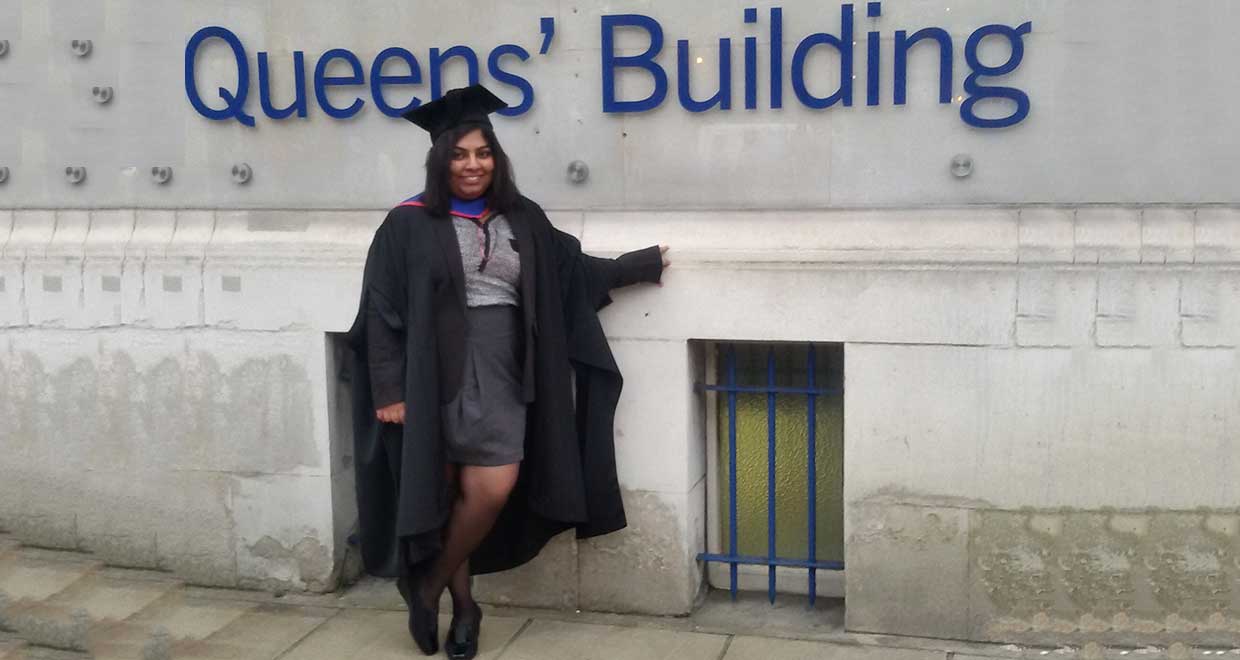
    Bijetri Roy graduated from Department of Law, Calcutta University with B.A. LL.B (Hons.) in 2013. During her law school days, she wrote more than eight research papers. After graduation, she pursued an LL.M from Queen Mary, University of London, where she was also a member of the Editorial Board of the Queen Mary Law Journal. She currently specializes in banking and finance laws among others at Orbit Law Services, Mumbai. In this interview he talks about:

    • Studying at Department of Law, Calcutta University with B.A. LL.B (Hons.).
    • Application, SOP and Recommendation Letter for Queen Mary, University of London.
    • Recruitment and work at Orbit Law Services, Mumbai.


    Given that most of our readers are law students and young lawyers, how will you introduce yourself to them? What motivated you to choose law as a career?

    I am Bijetri Roy, a Bengali by birth, brought up in the royal Awadh city of Nawabs, Lucknow. My father has a transferable job and I have had the opportunity of staying at many beautiful places (most of them being famous for their food and culture!). London became my home away from home in just a year. I currently live with my parents in Mumbai and I am working as a Banking and Finance Lawyer at Orbit Law Services.

    I am the first lawyer in my family, belonging to a household of a banker and economist father and an English teacher mother. I started reading Perry Mason at the age of 12 and the sleuth-attorney influenced my young mind to take up law. Law became my first choice and my parents encouraged me to take it up seriously. I completed my ISC in 2008 and took the Calcutta University entrance examination in May 2008, secured a good rank and enrolled at the Department of Law.


    Tell us about your law school experience at Calcutta University. Share some highlights from your college days that shaped you as a lawyer.

    Though a lot of people warned me against studying law at a traditional university instead of an “elite NLU”, I decided to take my call on the matter, and it was the best decision of my life to enrol at a simple law school. I agree we didn’t have the “right” infrastructure, no placement cell and too many people cramped in each batch (we were 200 people in the 2008-13 batch), but despite these issues, the five years at the law school gave me the some of the best days of my life. Classes were irregular at times, but interesting and regular lectures by Prof. S.S. Chatterji (IPC, Contracts) and Dr. J.K. Das (Constitutional Law, Human Rights Law) made me forget the drawbacks of the college. The high point of my law school days was getting selected for Honours after 2nd year (my average of 3rd to 5th year shot up to a good first class). The selection was purely on merit basis and there were only 50 seats for honours in a batch of 200. Getting to study a wide variety of subjects ranging from Law and Child, Criminology and Gender Justice to Law and Public Servants and Legislative Drafting was an enriching experience for me.


    What do you feel about the perception that students of certain ‘elite’ NLU’s have a much easier time in kick-starting their career as compared to law students from other colleges? Is this true at all?

    I would not like to comment much on this because it is quite a subjective perception. Though a certain “class” of students easily get internships and jobs at the top firms and organisations (as per hearsay – I don’t know many people from the NLUs so I am not sure about it), it is ultimately merit, basic foundation and most importantly, interest in that area of practice that matters. But yes, if one goes by the current market trends, top tier firms and big companies prefer to hire the “elite” ones! But then again, trends are never constant, right?


    Are you still involved in research and writing papers? Which are the latest ones you have submitted and where?

    Till now, the count is over 12. Last month I submitted a research paper titled “Financial Inclusion in India: Policy Framework for Inclusive Growth” for a forthcoming conference at IIM-Bangalore. This month I submitted an abstract for my research paper titled “Corporate Governance and Investor Protection – Importance of Legal Audit” for the India Finance Conference to be held at IIM-Calcutta.

    I have presented more than 8 papers during my BA-LLB days including at conferences at the top NLUs like NLIU Bhopal and NALSAR Hyderabad. Recently, I presented 2 papers, one at ILS Pune at the National Conference on Revisiting Freedom of Religion and Personal Laws from Liberty and Equality Perspectives and the other one at the International Conference of Jurists and Writers which was held in Mumbai.


    bijetri-roy-1

    What was your motivation behind pursuing LL.M. right after your under-grad? How did you finally decide that you need to do masters?

    During my 3rd year, I decided I wanted to do my masters in law immediately after my undergrad. I took this decision because I did not want to have any gap in my academics and once you take up a job, it is very tough to take a break and pursue higher studies.


    How did you choose Queen Mary, University of London over others? How did you go about choosing a university?

    I applied to Queen Mary, University of London based on its rank in UK for law (when I went there in 2013, it was among the top 10, currently it is ranked number 3 in UK right after Cambridge and Oxford, and number 1 in London – The Guardian 2014-15, 2015-16 rankings for law). I had decided from day 1 that if I study in UK, it has to be in London University. By the time my 4th year results were out, I had offers from Queen Mary, Westminster University, Birkbeck School of Law under London University and Brunel University (these were the only places I had applied to – I was lucky enough to bag offers, including an unconditional offer from Westminster University even before getting my final BA-LLB result!). I had my dream come true moment when I got an unconditional offer from the place of my choice – Queen Mary.


    How did you go about writing your SOP? Are there any key factors which one should keep in mind before writing the SOP?

    SOP (Statement of Purpose) is nothing but an essay about yourself. I used the first paragraph to talk about myself in general, then moved on to my academic achievements and extra-curricular activities. Next I laid emphasis on why I wished to study LLM, why UK, why London and why Queen Mary. I used the last paragraph to talk about my career goals (try to be as honest as possible; do not inflate your goals while writing the SOP).


    Please tell us about your recommendation letters.

    While most colleges ask for 2 recommendation letters, Queen Mary is flexible with it. I was able to manage only 1 letter during my application process and that did not hinder my offer from Queen Mary in any way. A professor wrote my recommendation letter.


    Tell us about your LL.M year at Queen Mary, London. How did this influence your career?

    My experience at QMUL was the best I could have ever dreamt of. Professors are very approachable because they do not follow the age old notion of differentiating teacher from students.  During my study, I had the opportunity of regular interaction with world class professors like Dr. Rafael Leal Arcas,  Dr. Alexandros Ntovas, Dr. Gomula (a visiting professor from Cambridge), Prof.Spyros,  Prof. Anne Flanagan to name a few.

    My specialisation was public international law. Queen Mary offers a wide range of modules to choose from. I took up modules which mainly belonged to other specialisations. I studied International Economic Law, International Law of the Sea and Climate Change Law and Policy. Apart from academics, a lot of emphasis was laid on overall development; I was suddenly all over the place, working as a Media and Communications Coordinator for the QMUL School of Law, attending meetings and sharing ideas (and pizzas!) with the academic and non-academic staff as a member of the Student-Staff Liaison Committee, as a postgrad member of the QM Law Journal to name a few.

    Classes were 2 hours thrice a week, so I got the opportunity of exploring the beautiful city of London and places around London. When I wasn’t exploring places (and trying out different cuisines!), I spent my time at the Institute of Advanced Legal Studies (IALS) Library and the QMUL Mile End campus.


    What was your topic of research for LL.M? Why did you choose that subject for research?

    I did my dissertation on the topic “Trade Liberalization and the Poor – a policy framework with special emphasis on India”. I chose this topic because it gave me the chance of researching beyond the syllabus of WTO in the Economic Law module. I had the opportunity of doing my dissertation under Professor (QC) Geraldine Van Bueren. . I scored pretty well in it too!


    bijetri-roy-3

    How difficult was studying abroad in terms of finding accommodation, finances and settling in?

    I was lucky enough to get a food inclusive accommodation at the London University intercollegiate halls (Hughes Parry) just a few blocks away from Kings Cross station. I am not very fond of shopping so I saved almost all the money I had taken with me (the only things I spent on were text books, boots, eating out and for my trips to places within and outside London).


    How was your experience as a member of the Editorial Board of the Queen Mary Law Journal?

    As a member of the Editorial Board of the Queen Mary Law Journal, I was able to get a clear idea of how papers are peer reviewed and selected. I had the opportunity of reading some of the best research papers and articles by masters and PhD level students from different countries and various universities.


    After returning to India, you started working at Orbit Law Services as an Associate. How did you go about bagging this job?

    I was looking for boutique law firms specialising in banking and finance and came across the website of Orbit Law Services. I applied by sending a cover email and my CV, and I got a call from the partner within 3 days (this was like an indication from Lord Ganesha that I was almost in there!). I was called for an interview which was conducted by 4 partners, and after a day I was informed about my selection. The selection process is very transparent. The firm prefers to give opportunity to graduates from traditional universities over NLUs.


    Tell us about your current work profile and why did you choose to work with Orbit Law Services?

    I am an Associate at Orbit Law Services, Mumbai. I always wanted to join a boutique law firm which specialises in Banking and Finance laws, and for me this is the best place to start and grow professionally.


    What are your main practice areas?

    My main practice areas are Banking laws, Project Finance, Infrastructure,Power projects, Energy projects, Corporate and legal due diligence (I recently conducted a 3-days legal audit at an asset reconstruction company in Mumbai on behalf of my law firm).


    bijetri-roy-4

    How is your experience so far? What is your workday like? Are there new challenges every day or did work fall into a predictable pattern?

    The best thing about Orbit is the fact that Partners personally guide me. All 5 partners have decades of experience and have been associated with well-known banks and big corporate houses.

    Apart from the usual “lawyer” work, I am involved in business development and knowledge enhancement work as well. So along with learning the core work areas, I am also learning overall entrepreneurial management. Due to the encouragement of the partners, I have been able to whet my research and writing skills further (I regularly write articles for our firm’s internal news circulation and discussions with everyone during lunch time).

    Every day is a new day in terms of work; I get the opportunity of learning new things on a daily basis, whether through core legal matters and assignments which come my way from clients (mostly big banks, NBFCs and authorities etc.) or through research suggestions by partners for my personal development.


    What are your future plans? Where do you see your career in the next 5 years?

    I plan to continue here at Orbit for the next 4-5 years. I see myself as an expert (and maybe a Senior Associate by then!) in Banking and Finance laws by the time I am 30!


    Lastly, any suggestions for aspiring first generation lawyers like yourself?

    Take up law only if you want to, not because your peers or seniors have taken up law! Law is a vast ocean, and whatever is taught during undergrads is merely a few drops! Choose your law school wisely. During your undergrads, attend at least 2 to 3 conferences and present papers, the claps that you get from the audience comprising professors and stalwarts will be like a boost for your confidence. Even for your postgrads, choose the course, institution and country (in case you wish to study abroad) wisely, don’t hurry with your selection.

    All the best to all the readers, and thank you Super Lawyer!

  • Pratyush Nath Upreti, Advanced Masters, (LL.M) Intellectual Property Law & Knowledge Management at Maastricht University, on pro-bono work and the KIIT Law School experience

    Pratyush Nath Upreti, Advanced Masters, (LL.M) Intellectual Property Law & Knowledge Management at Maastricht University, on pro-bono work and the KIIT Law School experience

    Pratyush studied law from KIIT Law School, Bhuvaneshwar, he graduated in 2013. Being a citizen of Nepal, he chose India to pursue B.Sc. LLB. After the successful completion of his bachelors, he is pursuing Advance Masters (LLM) in Intellectual Property Law & Knowledge Management from Maastricht University, Netherlands on a scholarship. He had interned extensively through the years of law school and published nearly 30 articles in The Kathmandu Post. In this exclusive conversation with Pratyush, we talk about:

    • Education and experience at KIIT Law School.
    • Selecting the appropriate publishing companies for his journals.
    • Interning at Asian Network for Free Elections (ANFREL), Bangkok,
    • Being a Member of New IP Lawyer’s, a wing of School of Law and its research centre called SCule (Science,Culture and the Law) under the University of Exeter, United Kingdom.
    • Undergoing exchange programmes at The Office for Harmonization in the Internal Market of European Union (OHIM), Spain
    • Pursuing LLM in Intellectual Property Law and Knowledge Managment from Maastricht University, Netherlands.


    Tell us a bit about your pre-college life. How did you choose to study law that too in India? Did you have lawyers in your family?

    I come from the Biratnagar, city of influential leaders in Nepalese politics. Being the youngest child of my parents, I began the journey of my student life by following my elder sister’s footsteps to one of the most prestigious schools of the city. In school, my inquisitive mind as a young student ran into almost all nooks and corners of the colorful life. I was not a great student but lived my life into the realm of education.

    When I finished my intermediary, civil war in the form of a Maoist insurgency ended with the signing of the comprehensive peace agreement and formation of a Constituent Assembly. Nepal was in transitional phase(still in transitional phase), we were taking the first step towards building a constitutional democracy. During the phase, many friends opted to go abroad for higher studies which were never an option for me.

    When I decided to peruse law there were very limited option in Nepal. Moreover, India is also not far away from Nepal, it was a convenient option. I was also attracted by the unique integration of law and science. So, I decided to join the B.Sc.LLB(Hons) stream in KIIT Law school, a newly born law school with a colourful dream, like that of mine of marking a mark of its own in the highly competitive legal arena.

    Yes, I belong from a legal background, my father is a senior advocate practicing in Nepal and my grandfather served as a Judge of Nepal. I think I represent the third generation of lawyers in my family.


    While in KIIT Law School you selected B.Sc. LL.B as your stream. What would be your advice to law aspirants about choosing a stream? Did it give you an edge over B.A. LL.B graduates? Does it have a long lasting effect?

    In recent years, legal education has rapidly changed. The unique integration of law and science is an attractive career option. The law and science offer plenty of opportunity in the sector of forensic science and Intellectual property law. During my short working experience, I have felt that there are high demands for lawyers with scientific/technological backgrounds. Anyone interested in B.Sc.LL.B should keep in mind the course structure of the college offering the course. Make sure they have good science faculty and if you are interested in taking biotechnology as a major then well-equipped laboratory is important. I was the first batch of B.Sc.LL.B(Hons) course in my college, but I had some laboratory works. Fortunately, My university had separate well-equipped Biotechnology faculty which was an additional advantage for me. Since, there is not much of crowd of lawyers with knowledge of both the field, a B.Sc.LL.B(Hons) graduates do have an advantage from a job perspective.


    pratyush-upreti-1

    If I were a young law student who never wrote an article, how would you advise me to get started given that you yourself wrote a lot?

    To be honest, I never pre-planned to write an article. Most of my articles are the outcome of my project which I did during law school or internship. Choosing a topic which is contemporary is important for publishing an article. I suggest law student to identify contemporary legal issues and continue as a project for the course. If you do your research honestly, then certainly you will end up publishing.


    How would you select a specific journal and approach them for publication? What are the things you look for in a journal before sending them your article for publication? Can you tell us the steps involved in researching and structuring an academic paper?

    Selecting a Journal is not easy, there are two important things, which I look before sending an article. Firstly, the journal timeline for a review process. When you research honestly, you get ambitious about the project and really want to publish in good Journal. But sometimes, a long review process of the journal is really frustrating. There were few Journals who replied me after a 15 months. It was really painful! But as a student you should never be discouraged by rejection or late replies. Before sending your article, it is important to know about the Journal well( just email and ask about timeline for review). Secondly, I see the focus area of a journalif your topic matches those area’s or related contemporary issues than your acceptance chances are really high.

    There are generally accepted ways of researching and structuring the paper. For me research is important, I try to gather as much of information from various sources like books, Journal, reports, internet etc. Once I gathered information, I tried to find contemporary issues/problem involved and put my thoughts in a logical way and roughly draft a research outline which will help not to divert from focus area. For any writing may be a newspaper or academic journal structuring is important. Your writing must reflect you thoughts and every section need to clearly link. Mostly importantly for academic writing reference/bibliography/footnote is very important. Generally, accepted standard structure includes Abstract, Introduction, research question, discussion (arguments advanced), conclusion/recommendation and bibliography.


    How did you plan your internships and how did you go about applying for these internships?

    (Pratyush has interned quite extensively through his 5 years at law school. Some noteworthy mentions are Anand and Anand; Asian Network for Free Elections (ANFREL), Bangkok, Thailand; Singh & Associates, Advocates and Solicitors; Sycip Salazar Hernandez & Gatmaitan Attorney At-Law, Philippines; The Ministry of Home Affairs, Parliamentary Affairs, Constituent Assembly and Culture, New Delhi, India; Enviro Legal Defense Firm, New Delhi, India and other places as well.)

    Early planning is very important to secure a good internship. Mostly, I planned my internship at least a 6-8 months before. This is important because, you can never depend on one organization or law firm. You need to file a several application. The application process depends completely on the institute which you intend to apply. Most of the organizations where I interned had similar recruitment pattern, I just applied online with a short cover letter and resume.


    What kind of work did you typically find yourself doing as an intern? Did your experiences vary significantly with the internships?

    I had a diverse internship experience. My task and workload as intern completely depend upon where I was interning. In law firms, I had long working hours and mostly I ended up doing a lot of draftings, research on several issues and assisted litigation team. Some of the research which I did in the law firm was published in law firms in-house Journals. On the other hand, in an organization you mostly do research work, they will make you involved in the ongoing project. During my school, I was fortunate to do two international internships. First, at Sycip Salazar Hernandez & Gatmaitan Attorney-At-Law, one of the biggest law firms in Philippines where I was involved in commercial and Intellectual property division. I mostly assisted the team with the prosecution of trademark, patent registration, review of technology transfer arrangement, franchise and distributorship agreement etc. Second, at ANFREL, I researched on several electoral issues and assisted drafting team of ‘Bangkok Declaration of Free & Fair Elections’. During my stay, I also got an opportunity to observe the election. It was a great learning experience.


    What comprised your work profile as a Legal Researcher at the “Forum for Protection of Public Interest (Pro-Public)”? Please share with our readers.

    Forum for Protection of Public Interest (Pro-Public) is one of the reputed organization in Nepal. It has a long history of contribution to socio-legal development in Nepal. Pro-public gives an opportunity a law student to voluntarily associate with the organization in different capacities. I was fortunate enough to associate myself with the organization during law school.

    During my undergraduate, I had an experience of research work. At law school, I worked as research assistant in University Grant Commission (UGC) main project titled “ Use of Forensic Science in Criminal Justice System: A futuristic Project”. Similarly, I did some research work for Cobalt Business Counsel Professional Corporation, Ontario, Canada for few months. Furthermore, my research internship with Enviro Legal Defense Foundation, Nepal Law Commission, and The Ministry of Home Affairs, Parliamentary Affairs, Constituent Assembly and Culture, was largely based on legal issued related to Nepal. Maybe this gave me an edge than other candidates during the recruitment process.


    Thereafter, you have joined Asian Network for Free & Fair Elections (ANFREL) as their Legal /Liaison Officer. Do you think, it became easier to get appointed because you have interned earlier at ANFREL?

    I don’t think so, internship experience helped me to get the position at ANFREL. ANFREL is a professional organization, they have transparent and heavy recruitment process. I came to know about the vacancy through a Newspaper. I did go through a screening process and had a very long interview by ANFREL Secretariat. Luckily, I got through the interview.


    pratyush-upreti-3

    What kind of work does ANFREL do? Please brief us about the nature of work and responsibilities you were entrusted at ANFREL.

    The Asian Network for Free Elections (ANFREL) was established in 1997, as Asia’s first regional network of civil society organizations focused on elections and election monitoring. It strives to promote and support democratization at national and regional levels in Asia. Since it was founded, it has served towards strengthening the democratization of countries such as Sri Lanka, Nepal, Thailand, Malaysia, Cambodia, Pakistan, Bangladesh, East Timor and Indonesia.It is one of the most trusted and reliable International Election Observation Group globally. They mostly focus on three area: (i) Election observation (ii) capacity building (iii) campaigns and advocacy.As Legal/Liaison Officer, I was involved in providing legal assistance to the ANFREL Election Management/Observer team. During my tenure, I reviewed national electoral law and assisted the ANFREL team in making Observation manual and reports. In addition, I was also involved in organizing and co-ordinating meeting with several stakeholder, civil societies, and politicians and also observed Constituent Assembly Election. I must say, I had a wonderful experience working with ANFREL. They have great working culture and ethics.


    Right after ANFREL, you went for LL.M. Why did you decide to go for higher studies?

    Initially, I wanted go right after my graduation but later decided to take a break of a year. There is no reason as such, I always wanted to continue my studies and then focus in practice.

    How did you go about choosing which college to go to for your LL.M. and did you ever consider Indian colleges? Was it the course or the university which mattered for you?

    I was very clear that I want to do LLM in Intellectual Property Law from abroad. Since, I have spent five years at law school in India so I didn’t want to have similar quality of education. So, never considered Indian colleges. The First thing I did was listing of colleges which offer LLM in intellectual property Law. I applied to three universities; School of Law University of New Hampshire (formerly known as the Franklin Pierce Centre of Intellectual Property) USA, Queen Mary University of London, UK and Maastricht University. I was accepted in all three. I got the scholarship from Franklin Pierce and Maastricht University and opted later.


    Tell us about your LL.M year at The Maastricht University, The Netherlands which you are currently pursuing.

    I am doing Advanced Master in Intellectual Property Law and Knowledge Management. It is a unique master program for lawyers, non-lawyers, and those with a degree in science of technology. It is popularly known as IPKM. The Advanced Masters IPKM are fully accredited by the Accreditation Organization of the Netherlands and Flanders (NVAO). The IPKM MSc is furthermore accredited by the European Patent office (EPO) for EQE remission. In addition, IPKM is a member of the European Intellectual Property Institutes Network (EIPIN) and a founding member of the Pan-European Seal Professional Traineeship Programme.

    Maastricht University is known for the problem-based learning environment where students are personally responsible for their academic education. The IPKM is taught in a very closed group, where the student analyzes the problems through discussions, exchange knowledge. The programme is taught in socratic teaching, often using real-life cases, mock trials and assignment (mind it, it’s not a piece of cake, it will dig you into the subject matter which we need to submit before class). The tasks are further discussed and analyzed along with lectures during class. Basically, it was fun working within a diverse class, amazing study visit. To conclude, IPKM provides a lot of opportunity for learning and networking. If you want to excel in Intellectual property, IPKM is the right choice! Go for it!!


    How difficult was studying abroad in terms of finding accommodation, finances and settling in? Are there any scholarships for studying at the Maastricht University?

    Not at all! Particularly, at Maastricht we have a very friendly student service center (SCC) which helps the international student in finding accommodation if needed. I didn’t have a problem as such, I found accommodation through online. There are facebook pages which provide information on accommodation, and most of them are very reliable. Maastricht University do provide Scholarships for International Students which are available on University Official website. I was lucky enough to get a UM High Potential Student Scholarship, which really made my life easy.


    How is the faculty & academic schedule (your typical day) at Maastricht? Given your experiences how would you pit Indian students with their foreign contemporaries?

    The faculty staff in the IPKM are very diverse and immensely supportive. It includes professor and practitioner from different jurisdictions, most notably Europe, Asia, and the United States of America. We had a very intense module on US Copyright Law taught by Professor Edward Lee, Director of the Program in Intellectual Property Law, Chicago-Kent College of Law, United States. Similarly, some of module was taught by Professor of Queen mary University, the University of Nottingham, and few class were taken by European Patent attorney etc. In addition, we have series of IPKM expert lectures by practitioner’s which enlighten us on contemporary IP issues. My day starts with waking up, and riding to the library, preparing for classes and assignments. There is always a number of readings for class, which are expected to be discussed in class. Generally, I return very late from the library in fact library is my sanctuary) and then I have to try and cook which I really hate.


    Was there time enough for non academic pursuits at Maastricht? How did you find the study-life balance to be?

    Not really! IPKM is very hectic!! (That’s what you expect from competitive course) we get few days off in Christmas. But Maastricht is a beautiful place, there are several things to do besides academic. On balancing study-life, I am the right person to answer that, I always struggle.

    Tell us about the course structure of an Advanced Master (LLM) Intellectual Property Law & Knowledge Management at Maastricht University.

    The Advanced Masters in Intellectual Property Law and Knowledge Management (IPKM ) offered at Maastricht University Faculty of Law are designed to train graduates to work as legal practitioners or management in knowledge-intensive industries and research institutes. The IPKM offers two distinct degrees:

    (1) A LLM degree focusing on comparative IP litigation and/or entrepreneurship, valorization and IP management

    (2) A MSc degree for graduates of science and technology aspiring to become IP specialists, knowledge managers, or patent attorneys.

    The IPKM course is designed in three main pillars

    (1) the common course for both LLM and MSc student are taught together

    (2) mandatory course for both LLM

    (3) mandatory MSc track.

    Some of the intensive modules offered is Intellectual Property in USA and Asia, patent drafting, IP enforcement, Intellectual Property & Life science among others.

    For more information, you can visit

    (http://www.maastrichtuniversity.nl/web/Faculties/FL/AdvancedMasterInIntellectualPropertyLaw).


    How did you benefit from the different programmes you took up after admission to IPKM?

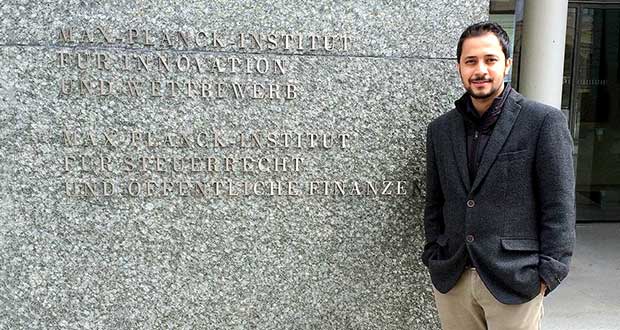
    (Pratyush underwent a couple of training and exchange programmes after he had secured admission at Maastricht University, some of which are Module on Community Trademark at The Office for Harmonization in the Internal Market of European Union (OHIM), Spain; Study visit at European Patent Office, Hague, Netherlands; Attending Congress of European Intellectual Property Institute Network (EIPIN) organized at Maastricht University and Max Planck Institute for Innovation and Competition.)

    IPKM as well designed course which aims to provide plenty of learning opportunities for the student. I had one module in University of Alicante in The Office for Harmonization in the Internal Market of European Union (OHIM), Spain, it was a great experience. The modules were taught by European trademark/design examiner and practitioners. Similarly, Congress of European Intellectual Property Institute Network (EIPIN) held at Maastricht and Max Planck Institute for Innovation and Competition/European Patent Office were two days intense discussion on contemporary Issues of Intellectual property Laws. In both, the event sessions were addressed by scholars from Europe and The United States. Personally, I really enjoyed these events, you get to know emerging issues in IP Law and also an opportunity for networking.


    Please share a few words about you being Member of New IP Lawyer’s, a wing of School of Law and its research centre called SCule (Science,Culture and the Law) under the University of Exeter, United Kingdom.

    New IP Lawyer’s is a network of young academic and practitioner in IPR. It is the initiative of Ph.D. student at the University of Exeter and have network representative at the University of Oxford. The network aims to encourage and facilitate discussion of the issues related to IP law both by lawyers and non-lawyers. Recently, the network successfully held the first annual conference: who owns the Arts and Sciences? At the University of Exeter where renowned academic like Professor Lionel Bently(University of Cambridge), Professor Charlotte Waelde among others were key speakers. The Newtork is relatively new, in a very less time it has received overwhelming support. New IP Lawyer’s is also aiming to organise seminar series and several academic event. Stayed tuned at http://newiplawyers.wix.com/newiplawyers


    Is writing is your hobby? How do you manage to write for newspaper on various issues beside your LL.M studies and other engagements?

    (Pratyush has published approximately 30 newspaper articles till date at The Kathmandu Post& among others, on various issues.)

    I enjoy writing it connects me with readers. I never took writing as a hobby, I started writing during my undergraduate. When I was studying in India, I always wanted to involve in socio-legal issues and give my opinion on such matters. The newspaper was the perfect forum to share my thoughts and involved in several issues happening in Nepal. After law school, I continued writing and still I regularly contribute on socio-legal/political issues in Nepal. It makes me happy when readers send feedback or point of disagreement on issues and it also helps to improve writing. I never take writing as a burden, whenever we come across interesting issues we always have an opinion, just that I gather my thoughts and write. Most important, writing gives me a lot of pleasure; I feel a sense of freedom.


    What is your responsibility as a student member of Maastricht University for European Intellectual Property Institutes Network (EIPIN).

    IPKM is a member of the European Intellectual Property Institutes Network (EIPIN). Every year few students are selected to represent as a student member of EIPIN where we get the opportunity to attend EIPIN congress and participate in the group projects. I was assigned with team project which consists of five student from Queen Mary Intellectual Property Research Institute(University of London), Munich Intellectual Property Law Center (MIPLC), Centre for International Intellectual Property (CEIPI) University of Strasbourg, Magister Lvcentinvs (University of Alicante). My team has already submitted our research project titled “Permitting Transformative Use and Copyright Law: The Case of Parody as Innovation” to EIPIN committee. It had a great time working together with fellow students.


    What are your future plans? How do you plan to use the experience and the knowledge gathered at Maastricht?

    I successfully defended my thesis, just winding up my course at Maastricht. Most probably I will be returning home in August, and practice litigation. Although, Intellectual Property regime is not very well developed back home which makes it more challenging to take IP as a career but again it give an opportunity to participate in the process to develop the field. The experience and knowledge gathered at Maastricht surely have given me in-depth knowledge about global IP practice which will surely help in instituting policy reform in Nepal.


    And any word of advice for all the young law students out there?

    Learn, question and make the most out of the law school. Make sure you enjoy your student life as well. Good luck!


  • Gaury Shetty, Founder, ADEPT on Legal Recruitments Consultancy and law firm job requirements

    Gaury Shetty, Founder, ADEPT on Legal Recruitments Consultancy and law firm job requirements

    Gaury Shetty is the founder of Legal Recruitment Consultancy firm, ADEPT. After completing her B.Sc. from the University of Mumbai, she was a client account manager at Adecco India and was simultaneously pursuing MBA from NMIMS. After leaving Adecco, she joined Executive Tracks Associates (ETA) as a Senior Consultant and further went on to become a Practice – Head at Hays Specialist Recruitment in their Legal / Accounting & Finance department. Her last assignment before ADEPT was as a Director at Unify Search Private Limited.

    Having such a diverse background made her ultimately choose the path to pursue her passion. In this interview she talks about:

    • Her graduation and MBA;
    • Her experience at Adecco, ETA, Hays and Unify;
    • Her motivation to start ADEPT; and
    • What law firms look for in their potential candidates.


    Please introduce yourself to our readers by telling us where you grew and attended your school.

    I am a passionate and innovative soul. I am not made for the mundane and I realised this early in my career. I have been in Mumbai all my life, and did my entire education from here.


    Tell us about your graduation in B.Sc., IT from University of Mumbai. Also, please tell us about the Honours program and your college life experience?

    After high school, I wasn’t too sure what I wanted to do, but I was sure that I didn’t wish to pursue a normal graduation program. I had friends who were not sure about engineering.IT interested me and I picked up a B.Sc., IT program. IT was quite a boom then and I was part of the first batch to graduate from the program. We, being the first batch, were part of the learning curve along with the faculty involved. My college life taught me much about group studies, college festivals, sponsorships and moving on. It was then that I realised I was decent with selling – grabbing a few sponsors felt quite an achievement.


    After your graduation, you have joined Adecco India as a Client Account Manager. How did you secure your appointment? What does Adecco do and what was the nature of your work there?

    Adecco just happened to me. I had visited their office for a job and they hired me for an internal role. I had joined PeopleOne Consulting which got acquired by Adecco. I had joined there as a Recruitment Consultant and gradually moved up to become Client Account Manager in four years. Adecco is the largest staffing company worldwide. They are into HR solutions and operate in more than 60 countries.


    In between, while working with Adecco you have pursued MBA in Human Resource from Narsee Monjee Institute of Management Studies. What prompted you to pursue MBA in HR? Does an MBA degree after graduation help you in your domain?

    When I started working, I realised that I am passionate about people. I had decided to pursue a part-time course as I could not invest in a full-time course since it was expensive. The only thing that I had to decide was the stream of management that I would want to pursue, which was made easy through Adecco. I had quite a few seniors who were pursuing management and helped me make a decision.

    MBA in HR definitely adds value to the work I do. Being a Recruitment Consultant, I need to understand the language HR speaks, add value to my service and it definitely comes from management. We are “people-persons” and thus it’s important to realise different dimensions that the business demands. My knowledge and insight grew tremendously as I had classmates from varied HR backgrounds and they had so much to share. The faculty was great and NMIMS has a trimester system which allowed us to cover lot of subjects.


    You have worked at Adecco for more than 4 years and gathered considerable amount of work experience. How was your experience working there? Also, tell us what prompted you to leave Adecco?

    I started working in the ITeS space, looking for Customer Support Executives. I was moved to the Telecom space after the first six months, where I worked in Sales and Finance. Retail was booming in 2007, we started a new practice called Consumer Services and Retail. I started to manage Sales & Finance roles for Consumer Clients, e.g. Colgate Palmolive, Heinz, Cadbury and then penetrated into the Retail Market.

    We underwent an internal restructuring and my new team was not very welcoming. My team mates could not work in teams and it was stressful to reach out to such people. I find it extremely difficult to invest energy in people who can’t think beyond themselves. I have always believed in teams and collaborations. Thus it was a letdown and I decided to move on.


    Thereafter, you joined Executive Tracks Associates as a Senior Consultant. Tell us, how did your appointment take place at ETA? What kind of responsibilities were you entrusted with?

    I had a friend who started working with ETA, and he referred me to the MD. I was on my way out when this opportunity came by. My discussion with the MD was fantastic; it was that initial feeling that helped me join ETA. They had great plans and I was keen to learn executive search. I started to manage senior roles in Engineering, Telecom and Manufacturing.

    I worked closely with the MD to help him identify senior talent in these spaces. I was entrusted with the role of identifying great talent and helping them understand the job role. I was extensively involved in headhunting and mapping activities for specific roles.


    gaury-shetty-1

    You left ETA and joined Hays Specialist Recruitment in their Legal / Accounting & Finance department as a Practice – Head. What consisted of your work profile at Hays?

    I joined Hays as Senior Consultant for Accountancy & Finance Vertical. My role there involved collaborating with all the teams and assisting them in placing finance & accounting personnel (in-house roles). It was my responsibility to expand the practice base by looping in consulting firms and private practices in the domain.


    What does Hays look for in potential candidates for In-house Legal Department before recruiting them?

    (Gaury has worked on various In house Finance & Legal roles for clients across industries (Sectors like Life sciences, Engineering, Captives, FMCG, e-commerce etc.) while working with Hays [Recruiting experts Worldwide])

    What a recruiter looks in potential candidates is the USP of the recruiter. Hays or any other recruitment company provides you with a platform to function better.

    • Technical Fitment (desired skill set)
    • Cultural & Aspirational curve
    • Realise the NEED
    • Offer a SOLUTION


    Tell us about your achievements at Hays?

    (While working with Hays, Gaury had got three nominations which are Consultant of the year 2010 – 2011; Hays Elite Winner 2010 – 2011 [where Hays Represented Hays India for CeROW Elite trip to Budapest] and also nominated as a Consultant of the Month [Highest biller for Month])

    These achievements were the result of being extremely passionate about learning and delivery. I am an extrovert and at times people perceive it differently at work, they doubt your work capability.

    I wanted to differentiate myself from others. I grabbed every opportunity that came my way to create a measureable result which reflected in my targets. I was the Social Secretary as well – I overlooked team meetings, marketing and acted as a link between the Corporate Office in London and India Business for communication and data gathering that reflected on our intranet.

    I wanted to be part of the global platform and I knew Hays Elite was the way. My goal was clear.


    How did the switch from Hays take place? How did you secure your Directorial position at Unify Search Solutions Pvt. Ltd?

    (Gaury left Hays and joined Unify Search Solutions Pvt. Ltd. as their Director.)

    Hays underwent major restructuring. It was difficult to understand ownership and each location (i.e. Mumbai & Delhi) was striving to keep up with expectations. I got stuck between both the locations, and subsequently  decided to move on as it was difficult to fit into the frame of things that were planned.

    After I left Hays, I took a break for a month to think about what I wanted to do further. It would have been easy to take up another job but I allowed myself to look beyond. I wanted to experience fulfilment. The answer was creating something that combined my values and business understanding. I wanted to create a bigger picture.

    Unify is run by my friend and it was a conscious decision to come together and create an organisation. I had a brief discussion on a working model and some basic arrangements.

    It was great to go with the flow and fine tune along the way.


    What consisted of your work profile at Unify Search Solutions Pvt. Ltd. as a Director? What was the nature of your work over there? Please share with our readers.

    In my first year I started to develop the legal practice with a small team of consultants. I decided to head operations for the entire organisation in my second year along with managing my legal practice.

    My role involved

    • creating a business plan and tracking it closely,
    • streamlining processes,
    • ensuring efficiency and productivity,
    • identifying business gaps and addressing those gaps,
    • employee engagement and managing grievances, and
    • Human Resource activities.


    What motivated you to start ADEPT Consulting Partners? What is the story of your start-up?

    (After working for more than two years with Unify, Gaury founded ADEPT Consulting Partners – Legal Recruitment Specialist.

    After two years with Unify, I realised that what I thought was a great idea was not good enough. A business partnership is no less than a marriage – if either partner feels discomforted beyond a point, they need to part and so I did. Back at Unify, we were great friends but possibly we were not able to respect each other’s opinions and channelise ourselves in same direction. And so ADEPT was born. I have done legal recruitments for a major part of my work life, and we realised a need for an organisation completely dedicated to it. Legal recruitments are different and need special attention. We knew our competition to some extent and there is a lot of opportunity in the legal space. We wanted to make a difference along with being consistent.

    ADEPT’s foundations are laid on passion, customer service, being specialist and curious.


    What do law firms in India look for in potential candidates? What must a law student do to get hired in a top-tier law firm?

    Law firms want lawyers who are dynamic, open and keen to learn. Law is all about articulation of what you studied and how much do you get to work with the firm.

    A law student must have no reservations with the kind of work they do and should be open to learning new things. One cannot have reservations with work-life balance initially. They need to be enthusiastic about learning. Tier 1 law firms have high momentum and fresh lawyer needs to catch up quickly.


    What are key roles/positions or domain that your consultancy firm look for recruitment? What kind of clients do you usually get and what is their demand regarding hiring legal freshers?

    We largely look at work from law firms. Though we are mostly engaged with Tier 1 firms, we assist everybody in the law firm market. We have looked at a few partner placements but we are masters of Associate to PA level hiring. Most of the legal freshers are hired from campuses for most of our clients. We do present fresh lawyers to practices if desired, because usually firms mention to us about campus hires.


    What would you say contributes to the high attrition rate of many top law firms?

    The legal market has matured in the last six years, from being more of reference based recruitment to attracting the best talent in the space. Of late, it is a war for talent. Opportunity is huge and lawyers don’t mind looking at a better role and opportunity. Firms have to match with the market standards in all aspects to keep the attrition in control. Money is an important aspect as well.


    What essential skills are required to work as a Legal Recruitment Specialist?

    A legal recruitment specialist needs to be knowledgeable and keen to learn. Legal recruitment is a lot about references and networking. We constantly need to be in the market all the time.  Being enthusiastic is one of the key skills.


    Please give some advice on CV-building, extracurricular and internships that law students must keep in mind to get recruited by any big law firm.

    Law students should mention an area of interest to learn more during internships. Firms don’t give an option but an interest will help them focus. Make a profile where you make a mention of subjects you enjoyed the most. Extracurricular activities help you develop people skills and realise the management aspect of business. If you get an opportunity, be a part of such events.


    What is your average day look like? Also, tell us about your brief role at “Teach for India”.

    My average day starts with planning important things to do that day. I then strike off every activity one by one. I call at least one client each day to ensure the quality of work is maintained, and at times just to say hello. Each day I try to spend some time with my team, which helps me stay close to business and address their issues if any. I try to look at achievements at the end of each day. “It is nice to see what I did differently today and whether I have moved a step further,” is my motto for each day.


    Five years from now, where do you see ADEPT Consulting Partners?

    Five years from now ADEPT Consulting Partners will emerge as a specialist firm managing Legal, Compliance, Regulatory, Accountancy and Finance. We will create a niche in said areas. We strive for consistency and top class customer service and we focus on these values solely. In five years we expect to be a strong competition in our field. We will become a known brand in the recruitment space.


    What would be your message to law students who dream of having their own Legal Recruitment Consultancy firm one day?

    If any law student dreams of having a legal recruitment consultancy, they can come to us. And I mean it – we are happy to welcome interns. Recruitment is all about passion and loving people. A specialist has more technical knowledge and know-how, but it needs to be polished by speaking to more and more people. Because law doesn’t teach you management you should learn it yourself. There are lot of opportunities for lawyers who want to move to recruitments. Just reach out and you will have a job.


    Many law students aspire to join law firms today. It will be very helpful for them if you throw some light on recruitment process of tier 1 and tier 2 law firms.

    Lawyers today need to be adept with overall industry and should be able to articulate their thoughts on career and practice. Interview processes at most of the firm are similar – Fresh Law Students are usually met by Senior Associates or Principal Associates or equivalent to realise their technical ability. Once they get through this meeting at times there is a written technical test post which the concerned Partner meets up to take a final call on the applicant. In some cases the HR person meets up for salary negotiation and offer. Nowadays firms reach out to specialist like us to look for freshers too in case they miss the campus hiring, so being in touch with few consultants will also help you.


    Many law firms have interviews as a part of their selection process (e.g. Shardul Amarchand Mangaldas & Co.). How should one prepare for these interviews and what do the recruiters expect out of these interviews?

    In my interactions with many law firms, I concluded that quite a few lawyers fail the interview as their basics are weak, it is very important as fresh lawyers to have very strong know how of the basic Law (for e.g.. At times people cannot explain the Company Law too). Recruiters expect you be Jack of all, they expect you to be open and willing to burn out. It is important to know for which practice area are you getting interviewed before you walk in for a meeting, as a Fresh Lawyer you might not get a choice but your preparation has to be strong in areas other than your choice of practice (for e.g. – drafting is essential for litigation, knowledge of company laws is importance for General Corporate, Lending and borrowers knowledge is essential for Banking).


    How much importance do the law firms give to participation in co-curricular and extra-curricular activities?

    Law firms don’t necessarily look at extra-curricular activities much. At the initial screening what matters are the grades.

    Law Firms are partial with the college you pass out from, it is an understood fact that if you are from NLSIU, NALSAR or any other National School, you are an excellent student.


    Do you think that the law firms should evolve their selection process by also giving some importance to factors other than grades, moots, research papers, etc?

    I feel the selection process needs refinement as current processes are more technical in nature and they do not necessarily define quality. While hiring a ranker means a lot but not evaluating the rest would be unfair. I feel the associate band needs to be redefined a bit with some firms as the learning curve needs to get sharper.


    Please share your thoughts as to what is the future in working in the law firms today. Where does the hiring market stand right now?

    Law Firms today are way more competitive and challenging. The market has disrupted in last twelve months creating lot of opportunities for all. Working in Law firms will be a choice one has to cautiously make and take it up with full conviction to perform and learn. It is no longer an option to try and then decide. The market is edgy as the supply is more than the demand, with so many law colleges, lawyers will have to go an extra mile to secure roles and progress with firms.

  • Rishab Kumar, Junior Associate, David Polk & Wardell, NY, on experience at GLC, Mumbai, the cost of an LL.M from Columbia University and International Law Firms

    Rishab Kumar, Junior Associate, David Polk & Wardell, NY, on experience at GLC, Mumbai, the cost of an LL.M from Columbia University and International Law Firms

    Rishab Kumar is working as a Junior Associate at David Polk & Wardwell LLP. He had graduated from Government Law College, Mumbai in 2009. While in college, he interned as a law clerk with Justice Cyriac Joseph and worked at diverse places such as Reserve Bank of India and Majumdar and Partners. Later, he went on to join the chambers of Mr. Darius Khambata (Additional Solicitor General of India at the time) as a Junior Attorney. After working for a year, he entered into a two year training contract with Linklaters. Thereafter, he went to pursue an LL.M from Columbia University where at the end of his course, he was offered a job at David Polk & Wardwell. This interview brings out the journey of a law student to become a corporate lawyer working in one of the leading law firms in the world.

    In this interview, he talks about:

    • His experience at GLC, Mumbai – being a founder member of GLC, Debating Society and conceiving GLC Policy Debate;
    • His internship experience with Justice Cyriac Joseph, Reserve Bank of India and Majumdar & Partners;
    • Linklaters and his training contract with them;
    • Doing LL.M from Columbia and then joining David Polk LLP.
    • His experience as an expert in Merger and Acquisition between India and China.
    • The merits and demerits of both corporate lawyer and a litigating lawyer.


    How will you introduce yourself to our readers? What motivated you to choose law as a career?

    To introduce myself, I would start by saying that I was born and raised in Bombay (as it was then called) and I went to school and college there. I took to law because it was a field that gathered within itself two possibilities: intellectual stimulation and a rewarding professional career (and also because I wasn’t any good at mathematics). I always enjoyed debating, model UNs and was drawn to the humanities subjects generally, so it seemed like the right choice to me.


    What activities were you involved in as a student? Looking back, is there anything you wish you had done differently?

    Given the way the five year law course at GLC is organized, I always saw it as an opportunity to explore various aspects of the legal profession. Being in Mumbai, I was able to intern at law firms, with senior counsel, at the RBI and law clinics, all with the aim of getting a broader perspective on the industry.

    In college, I spent my time mooting, debating, writing articles and serving as a student editor on the GLC Law Review. All these activities really help developing the skills required to be a good lawyer.

    Looking back, I wish I had better grades through law school, because that’s something you’re always answerable for in black and white. But, it’s not an insurmountable obstacle. I devoted time to co-curricular activities and I don’t regret that – it’s important for everyone to find their own balance.


    What motivated you to start a debating society and why did you decide to organize the ‘GLC Policy Debate’?

    (Rishab was one of the founders of the GLC Debating Society, and also conceived and organized the ‘GLC Policy Debate’.)

    GLC already had a very vibrant community of intellectually curious students who were keen to debate everything from Plato to Pluto. The debating society was meant to be a structured outlet for these discussions and to provide students a platform to express their views. It instils public speaking confidence in those who lacked it. It was a particularly rewarding process because GLC, as a government college, has students from a wide range of backgrounds and this led to a remarkable diversity of opinion.

    The GLC Policy Debate was formed along the lines of the Oxford Union policy debate which used to be framed as “This House has No Confidence in Her Majesty’s Government”. We adapted this to the Indian context and invited noted bureaucrats, academics and journalists to defend and oppose the government’s policies. The debate was conducted on the steps of the Asiatic Society Library, for its symbolic significance as the former Town Hall of Mumbai. This was a unique event in India in that it was a fair and frank assessment of the government’s policies by an intelligent audience, with students voting at the end.

    The most challenging part of organizing this was obtaining the infinite government permits and approvals required to hold this event in a public space – particularly given the controversial topic.


    Please describe your internship experiences for our readers.

    (During Rishab’s time at law school, he interned with Justice Cyriac Joseph, Supreme Court of India, as a Law Clerk; Reserve Bank of India as a Research Intern and Majmudar & Partners as a Trainee.)

    With its early morning classes, the five-year course at GLC allows students to spend time working as an apprentice during the afternoons and gain a very real initiation in the practice of law. Students can either choose to be at one firm/organization for the duration or do a variety of different things. Both paths have their merits, but I chose the latter. The range of experience I gained offered me a unique perspective in that it allowed me to read and research a wide variety of subjects and learn how they were applied in practice. I was also able to meet some extremely inspiring people at these organizations, some of whom remain mentors till today. Most importantly perhaps, this variety in experience was useful to me when I applied to foreign law firms and LL.Ms.

    Clerking in the Supreme Court was a fantastic experience because I was able to witness some of the great lawyers of our time arguing the most significant legal issues of the day. Working as a research intern at the RBI, I learnt to value the role of a central bank in the economy and caught a small glimpse of how policies are formed at such institutions. At Majmudar & Partners, I gained my first experience working at a corporate law firm and interacting with clients. All these experiences gave me a solid foundation and held me in good stead going forward.


    Please tell us about your experience working with Mr. Darius Khambata.

    (After graduation, Rishab joined the Chambers of Mr. Darius Khambata (Additional Solicitor General of India at the time) as a junior attorney and worked there for 1 year before leaving to start a training contract at Linklaters.)

    By the time I joined the Chambers of Mr. Khambata, I knew that I would be leaving in 8-10 months to start a training contract at Linklaters in London. Mr. Khambata was kind enough to let me follow him around during this time. He is a towering figure at the bar and an inspiring human being. Working in his chambers was an extremely rewarding experience.

    My general duties were to research and assist Mr. Khambata in court. Mr. Khambata was the Additional Solicitor General of India at the time, so I was able to research and follow matters that involved constitutional law issues, administrative law issues, international and trade law issues – a variety of interesting subjects. This was really a dream assignment, because as a junior lawyer you typically don’t get to write research memos and spend hours reading Supreme Court cases to formulate and test arguments on such fundamental matters. But this was what I did during my time in chambers and it was a tremendous learning experience. I also enjoyed the camaraderie and tradition of working on the original side of the Bombay High Court.


    When did you start thinking to opt for a training contract from a foreign law firm?

    I started first with the idea of doing an internship abroad, because I thought it would be a valuable experience and good for my CV. At one point, I might have written emails to over 50 firms all over the UK. I didn’t get a single positive response. That’s when I learnt about the Linklaters India Internship program. I had missed the deadline for that year, so I decided to apply the next year. The application process for the internship was quite detailed. I spent a considerable amount of timing drafting and finalizing my application.

    I was thrilled to be offered the internship, which turned out to be more fun than I had expected. Living in London and being wined and dined every other evening was really an enjoyable experience. You also get to do some real work and get a glimpse of what life as a trainee is like. At the end of the internship, you’re invited to interview for a training contract. When I was offered the training contract, I thought that if I was going to practice corporate law, what better place to start than Linklaters in London – the work is exciting, the training is excellent and the compensation is very attractive.


    International Law Firms stress on commercial awareness. What sources, materials, books, newspapers or blogs did you read to crack commercial awareness?

    International firms do stress about this. But, reading the business newspapers and perhaps the Economist should hold you in good stead. You’re not expected to know the closing share price of Infosys the day before – just a general awareness of what’s going on in the world with a particular emphasis on things that would affect the practice of a global law firm.


    Describe your experience applying to Linklaters. Is there any specific point to keep in mind while writing the application process?

    The application process for the internship was quite detailed. Several essays, two rounds of interviews and an aptitude test. My advice to anyone applying is to take the application seriously. Spend time to read it, re-read and then proof-read it. I remember the recruiting department used to say, if an application contains more than three obvious typos, that’s probably a straight cut.


    How did you prepare for the Aptitude Tests in connection with your application? Do you recommend to undergo proper training for this?

    I’m quite certain that the Aptitude Tests don’t require any specific preparation – and that’s part of the objective. It’s probably useful to sample a few IQ tests and maybe the Watson Glazer critical thinking test, but only to get a sense for what to expect. It’s not a test that you’re expected to prepare for. The only thing that can hurt you on this test is to stress about it.


    Could you briefly describe the interview process for us?

    The interview is typically a casual conversation about your past, what you have done with your time and why you’re interested in the firm. Always have a story and explanation for every item on your CV because, if it’s on your CV, an interviewer is entitled to ask you about it. You’ll rarely be tested on a point of law, and even if you are, if you reason your answer correctly, not knowing the actual provision of law is completely acceptable. Research the firm and the interviewer – it’ll help you understand what they’re looking for. Ultimately, it’s just about making intelligent conversation and showing that culturally, you will be the right fit.


    Describe your time at Linklaters during your Training Contract. Also, briefly describe your work experience in various practice areas while undergoing Training Contract at Linklaters in London.

    The training contract is a 2 year contract where you rotate through four different practice areas. I chose to work in Capital Markets, Litigation, Banking and Corporate (M&A). The work you do in each practice area depends on the people you work with and the nature of the transaction/case. In most circumstances, you will play the role of a junior lawyer on the transaction/case, which may involve some tedious work (due-diligence, document review etc.), but you’ll also get asked to do interesting research and even get the opportunity to interact with clients. The people you work with are extremely intelligent and inspiring and the quality of training is really excellent. It’s also exciting to work on the most high-profile cases that you read about the next day in the newspapers. At the end of the training contract, trainees are expected to choose a practice area to ‘qualify’ into and this is a question of preference and a person’s area of interest.

    I enjoyed my time most in the Corporate (M&A) department because out of the various corporate groups, it seemed to me, the most tangible and relatable – a company buying or merging with another company. Every task that you perform is in furtherance of this objective and that simple context makes your work understandable and rewarding.


    What motivated you to leave Linklaters and pursue LL.M. at that point of time?

    (After completing Rishab’s Training Contract, he went on to pursue LL.M. from Columbia University School of Law, New York.)

    I had always wanted to do an LL.M. simply because I wanted to study further. There were a lot of subjects that I wanted to learn more about and to immerse myself in an academic environment. I knew that this would not be possible while working at a corporate law firm. The end of the training contract is a clean break and gave me the opportunity to get away and study for one last time.


    How did you go about writing your SOP for Columbia? Are there any key factors which one should keep in mind before writing the SOP?

    Writing an SOP is a deeply meaningful and personal exercise and one should treat it as such. It’s a process that cannot be rushed – I remember when I applied to Columbia, I had probably started writing my essay in June for a November deadline. I think the most important thing to do with an SOP, is to read the question. Each university has a different format and rather than viewing them all as the same essay, it’s better to look at the specific question and answer the question.


    rishab-kumar-2

    Tell us about the cost of an LL.M. at Columbia Law School? Did you receive any scholarship? Does Columbia Law School provide students with scholarships?

    The cost of an LL.M. at Columbia Law School is approximately US$80,000 (including tuition, rent and reasonable living expenditure). I know that Columbia Law School offers a number of scholarships, but I wasn’t offered any that year and I financed my LL.M. through a student loan. There are several educational trusts in India that will offer scholarships to students, but many of them are in the form of an interest free loan. If a scholarship is not forthcoming or feasible, the cost of an LL.M. is a factor that one should consider thoroughly. It is not easy to find a job after an LL.M. that will pay a salary which allows you to pay off that amount of money fast.


    After completing your LL.M., did you face any obstacles towards finding a job in the US? What is your opinion on LL.M. recruitment vis a vis  J.D. recruitment?

    Whether it is difficult to find a job in the US is often a function of market conditions which cannot be predicted. In 2013 when I graduated, market conditions were not great and there were few jobs for international lawyers.

    However, the key obstacle is the recruitment cycle. The JD program is a three year course. Students interview for summer associate positions during their first and second year and at the end of their second year, law students will intern at a law firm over the summer. Law firms usually finish their first year recruiting from this cohort of summer associates and by the time LL.M. students arrive in the fall, all law firms have completed their recruitment for the following year. This means that unless a specific position opens up, it is very difficult for LL.M. students to find jobs at US law firms.

    That said, if market conditions are favourable and if you are diligent with your search, it is possible to break in; especially for someone who is able to demonstrate a substantial amount of relevant work experience.


    After the LL.M., you joined Davis Polk & Wardwell as an Associate. This is one of the most prestigious and sought-after law firms in the US- how did you come to be offered this position?

    Davis Polk & Wardwell is one of the few firms with a strong India practice and the firm was looking for someone with my profile to do US and Asia cross-border M&A work. At the time, their India practice, as part of the broader Asia practice, was operated mainly out of the Hong Kong office and so I was hired for that position. The firm was a top choice for me and I was extremely fortunate to be offered the position.


    After starting in the New York office, you shifted to the Hong Kong office of Davis Polk. What led to this shift?

    I started in the New York office as any US associate, I worked on a few transactions and went through the introductory training program before moving to the Hong Kong office as always planned. The cross-border India, Asia M&A practice in Hong Kong was the right fit for me at the time and so, I moved to the Hong Kong office.


    rishab-kumar-3

    Your core practice area is Cross-border M&A and PE/VC investments. How did you come to choose this practice area? What skills does one require to be a lawyer in this field?

    I had always been interested in international and cross-border work. But my focus in M&A was developed during the course of my LL.M. The US jurisprudence (Delaware in particular) around corporate M&A transactions is extremely sophisticated and I was drawn to it. Several of my classes were in this field and I enjoyed the nuanced discussion on fiduciary duties, business judgment and shareholder value. I was particularly attracted to the idea that this academic discussion was directly related to the practice of M&A at a US law firm and was constantly evolving.

    Moreover, no two M&A transactions are the same and there is no cookie-cutter method to a transaction. You start with a clean slate each time and tailor your work to the specific context and the client’s objectives. This makes each transaction intellectually stimulating.

    In practice, the role of an M&A lawyer is often to play quarterback to various specialty groups. In any given transaction, there may be labour/employment law issues, tax issues, IP issues, environmental law issues, anti-trust/competition law issues etc. The corporate lawyers have to coordinate and synthesize the advice from such specialist teams and reflect it in the terms of the main transaction documents.

    Ultimately, as an M&A lawyer clients look to you to find solutions. So, thinking on your feet and problem-solving are two crucial skills that a lawyer must possess.


    At Davis Polk, you are working on some challenging and highly complex M&A transactions, especially in relation to India & China. Can you tell us about this experience?

    Working at a firm like Davis Polk is a privilege. You work with extremely intelligent people on cutting-edge transactions. Much of my practice today is representing strategic companies or private equity funds in their acquisitions/investments in India, China and South East Asia. Foreign direct investment transactions in these countries are quite challenging to execute and there is always a higher level of risk. One has to be familiar with the local regulations and work closely with local counsel in the target jurisdiction to come up with a viable transaction structure. However, businesses in these regions are growing at exponential rates and the reward for patient and diligent investments can be quite high. These challenges make the work extremely interesting and serve as a great learning experience for a junior lawyer.


    You have practised law in Mumbai, London, New York and now Hong Kong. Give us some highlights of India practices at International Firms in USA, UK and Asia.

    Logistically speaking, many international firms have their India practices operated in Singapore, Hong Kong or London. The time difference between India and the US, makes it more difficult to service clients and negotiate with the other side during a transaction from New York or the west coast.

    However, law firms are ultimately professional service firms that are responsive to client needs. India practices at law firms are a good example of this. Firms have India practices only to the extent that clients are interested in doing business in India which is in turn dependant on prevailing economic conditions. It is difficult to sustain a practice solely on inbound and outbound transactions related to India and few firms will hire an associate to do solely India work. From an associate’s perspective, while working at an international law firm, it is important to branch out and be a general corporate lawyer with some India experience. If you want to practice solely Indian law, the place to do it is at an Indian law firm in India.

    There was a time when firms operated India practices outside of India in anticipation of the legal markets opening up in India, but that is not the case anymore as there is no clear indication that the market will open up. This event has been 2 years away for 15 years now.


    You have worked with two Top International corporate law firms. Tell us about the work culture of both law firms, their work-ethics, salary package and also comment on the diverse practice areas.

    Linklaters and Davis Polk are both extremely prestigious firms with extremely capable lawyers. They are also both very large organizations and it is impossible to generalize the culture. Both firms demand the highest levels of professionalism and also exhibit tremendous team spirit and work ethic. In terms of offices, magic circle firms tend to be larger and more international than US firms. But, both firms are full service law firms with top-tier corporate practices.

    At a magic circle firm, the first recruits are trainees and most associates were trainees at the firm. The training contract system is a very good start to a legal career. You rotate across departments for two years and that gives you the time to adjust to life in a corporate law firm and sample various practice areas. Coming straight from an Indian law school, this system is an excellent first step to take. A typical magic circle firms pays approximately GBP 40,000 to trainees and approximately GBP 60,000 to its associates (who qualify after two years of training).

    At most US firms, the first port of entry is a summer associateship at the firm between the second and third year of law school. This is much shorter than a training contract and is premised on the fact that by the time students finish their JDs, they are more polished and ready to start practising law. Because, unlike the LL.B. system in the UK, the JD program is a post-graduate program and law graduates are older and have often had some prior work experience. As a result, US law firms typically don’t recruit outside of the JD circuit and international students find it hard to break into the system directly, especially without a US LL.M. However, once you are able to break in the system, a first year associate at a top New York firm will start at US$160,000.


    What is your take on Corporate v. Litigation?

    I believe that practising litigation (as a counsel) in India can be challenging without the support of a mentor. It is difficult to get briefed as a junior counsel without that support and as a result, at a very crucial age in life, you may not have a steady source of income. If you have the financial means and the talent to overcome this barrier, then litigation can be a highly rewarding experience, especially in a place like Bombay where the tradition is for seniors to support juniors and mentor them. The actual day to day work is intellectually stimulating and you are an independent professional, not constantly answerable to a senior.

    Working at a corporate law firm offers you financial stability and can be less daunting to start with because you work as part of a team and are sure to be offered the training and assistance to grow. Also, corporate law often involves problem solving and over time, you can feel like you’ve help build something, whether it’s a company, a power plant or a new product. However, with that stability and sense of accomplishment, comes long, unpredictable hours of a stressful environment.


    Life at a corporate law firm can be very hectic at times. What is your take on work-life balance? How do you unwind?

    Life as a junior associate at a corporate law firm is indeed quite hectic and stressful. However, sometimes, it’s important to step back and look at the bigger picture. My wife is a doctor and she always reminds me, if nobody died or suffered physical pain, it’s a good day.

    Playing a sport has always been very important to me – it’s a complete escape from everything else. So, playing basketball on the weekends is almost a religious activity and I rarely let work come in the way of that.


    Any advice you’d like to give to young lawyers who hope to follow in your footsteps?

    While in college, it’s important to cultivate an intellectual curiosity and let that drive you. Do what you feel passionate about, stick with it and work hard towards it.

  • Kriti Sharma, Research Fellow, Council for Social Development, on all about a work profile in Human Rights Law

    Kriti Sharma, Research Fellow, Council for Social Development, on all about a work profile in Human Rights Law

    Kriti Sharma is an alumnus of NALSAR, Hyderabad (2012). In 2011, she underwent an exchange programme with Redzyner School of Law, Interdisciplinary Center Herzliya, Israel. Thereafter she worked as a research assistant to Justice Dalveer Bhandari and as a judicial clerk to Justice Khanna.

    In this interview, we focus specially on her experience at Council for Social Development, and how she chose this career path in Human Rights. We also try to trace back her journey to NALSAR, her experience at IDC, and her job of a law clerk. At present, she is working as a research fellow at Council for Social Development.


    Please introduce yourself to our readers. Please tell us a little bit about your childhood and your background?

    Fairly simple background, artsy atmosphere as my father dabbled successfully with Hindi poetry, writing and theatre direction. I formed a companionship with books early on since my mother managed the Ramjas Foundation’s library. I grew up mostly in Delhi, except for a few years in London due to my father’s posting.


    How did you gravitate towards law? Did you have someone who inspired you to study law?

    It seemed a good option after studying humanities along with civil services and journalism. Having arrived from England I was not aware of competitive exams but a classmate prodded me on. I grew up sensitive to social conditions and always voiced my opinion against gender discrimination that I saw in practice. In hindsight, law provides a perfect platform to engage with such issues.


    How was your experience at NALSAR, Hyderabad?

    NALSAR undeniably opens a spectrum of opportunities for individuals and is arguably, the best law school in the country. I wasn’t so excited though, as overall the faculty and course options back then were not as impressive and diverse as they are increasingly becoming now. Discussions on raging issues were fodder to my mind, yet at the same time its location denied me the opportunity to pursue extra-curricular activities as much as I wanted to.


    You underwent an academic exchange programme with Redzyner School of Law, IDC, Herzliya, Israel. What did you benefit from the student exchange programme?

    Going on an exchange involves a considerable cost. Therefore I was only willing to take it up if I got my first choice- Israel. I was made aware by a visiting professor from Berkeley that IDC invites distinguished faculty from U.S.A and Europe for lectures, providing me an insight into graduate academic life abroad. I was also personally interested in understanding geo-political and historical situation of the region, for which I extensively travelled through Israeli-Palestine and Jordanian territories and engaged with the local people, apart from taking up academic courses on Arab-Israeli conflict and peace process.


    Also tell us about your experience working as a Research Assistant of Dean Ron Harris, Law Faculty of Tel Aviv University during your Law school days.

    I have had an interest in legal history and wanted to discover what kind of work really happens in this field. I happened to mention my interest to a professor who forwarded my CV to Professor Harris. Professor Harris had been writing a book for publication by Princeton on the ‘Organisation of Early modern Eurasian trade’ for which a Chapter on ‘Early 15th-17th Century Laws of Maritime Trade in India’ required primary and secondary research in Indian archives, museums and libraries. Upon return from the exchange, I researched on this topic- looking closely at the impact of society, family, women and slaves on indigenous trade which was thriving at the turn of 16th century, before the arrival of foreign powers.


    You have interned under Justice Dalveer Bhandari of Supreme Court of India twice when you were at Law school. How did you obtain this golden opportunity to intern twice under him? What kind of work you came across?

    Justice Dalveer Bhandari, who is presently a member of the International Court of Justice, took active interest in training and educating young lawyers. His office was very welcoming and encouraging to interns but also demanded high quality work, without exception. He gave us an opportunity to work on important cases such as Novartis, Bar Council exam case etc. and since I was interested in gender rights, I also worked on an international sexual trafficking case. Apart from this we were expected to brief him on fresh matters every evening, which really was a test because his legal acumen and experience were unmatchable. For internship, one had to simply send a CV to his office secretary and selected candidates were informed for each internship session. Drafting a good request letter is the key, I highlighted his judgments on right to education and caste violence and why I was keen to work with him.


    Almost all your internships were focussed on non-profit and research work involving primarily matters of Human Rights Law. Were these all planned internships or did you just take them up as they came along?

    I followed what interested me. The classroom teaching was mostly academic but field internships in slum areas of Delhi (with Parivartan) and southern tribal belt of Rajasthan (with Mazdor Kisan Shakti Sangathan) made me understand how the law actually affects daily lives of people. In my third and fourth year I carefully explored all options available to a law student – viz. interning at a law firm, a lawyer’s office, Law Commission of India and the Supreme Court, for me to make an informed choice after graduation.


    How do you think the experience of being a clerk is now helping you in your career path?

    (Kriti was engaged as a Law clerk-cum-Research Assistant in Delhi High Court under Justice Sanjiv Khanna specializing in Criminal and Writ Petitions Roster after her graduation.)

    I wanted a right mix of advocacy and research for my career. I was inspired by Flavia Agnes’s work in the courts on gender rights and was interested in working in a Habeas Corpus roster, which in India mostly deals with family matters and elopement cases. Justice Khanna handled these cases with required sensitivity and often the mediation wing of the High Court was also involved. The criminal appellate roster also dealt with terrorism, juvenile justice and other life imprisonment cases which required regular case preparation and drafting. Evidence in each and every criminal case has to be very carefully evaluated as it is a question of an individual’s life and liberty. I also utilised the court exposure to compile an ethnographic report on hostile witnesses. The centuries old criminal system would do well with reforms and I have certain observations regarding this which can be discussed at length some other time. I also learnt that while working with litigants in gender cases, one cannot take an extremely idealised approach, as in practice things work out differently.


    Is it difficult to get a judicial clerkship with a Delhi High Court Judge? What sort of people would you advise to do a judicial clerkship?

    The Supreme Court follows an organised process of recruitment for which one has to apply through the university in the final year of studies. For High Courts, a few of them have a centralised process but individual efforts need to be made. Previous internship with the judge, networking with college seniors, lawyers and court staff and active pursuit helps and if one has good credentials, ways open out on their own. Students who desire to join litigation can gain from experiencing the other side of the courtroom. The academically oriented students of course find it opportune to engage with real time legal questions and gain practical exposure.


    How did you start working as a Legal Researcher in Council for Social Development (CSD), Hyderabad?

    At the end of the clerkship tenure, I decided I wanted to plunge into active advocacy and research on gender rights issues. I was aware of Professor Kannabiran’s work in this area alongside probes into colonial, constitutional and criminal questions relating to subalterns. This perfectly matched my interests and the Organisation also promised me a platform for interdisciplinary studies. I applied by sending an email detailing my motivations, works and aspirations and how I hoped to contribute to the objectives of CSD. I was called for an interview and thereafter received a confirmation.


    What motivated you to write a book on Tribal Advocacy? Can you illustrate us on your book to our readers.

    (Kriti has co-ordinated the “Training and Fellowship Programme for Tribal Advocates” which focuses on advocacy amongst Koya and Chenchun tribal people, training them in law and writing a book on Tribal Advocacy. Her forthcoming book on tribal advocacy is yet to publish.)

    Council for Social Development has a long track record of working closely with adivasis of Koya, Chenchun and other PVTG communities. In 2012 CSD launched a yearlong training programme for tribal advocates from this community. Through this, I learnt about the ground realities in the tribal villages and their struggles in the face of an apathetic administration. Apart from seeking solutions to our local problems, we tried to relate to tribal situation at national and international level and expand our horizons. I particularly tried to sensitize them on other struggles e.g. situation of tribal women within these communities by teaching gender related laws, policies and cases. I even poked them on homosexuality and we had a refreshing debate. In the whole process, an important realization was that there was hardly any legal literature available to deal with tribal cases. Thus, the idea of writing on tribal advocacy based on street law concept for litigators and social activists. The tribal advocates, of course are now successfully fighting human rights cases and bringing awareness to their communities through para-legal courses.


    What kind of response did you get after presenting a report on pending disability bills to the Parliament of India?

    (Kriti has also drafted and presented a report addressing the Standing Committee, Parliament of India on pending disability bills, reflecting deliberations held during the ‘National Consultation on Disability Rights’.)

    Parliament’s conduct rules prohibit discussion of the meeting outside but the Standing Committee has now forwarded its report to the Parliament and it is heartening to see that many of our suggestions have been included. We hope the Parliament will look at these suggestions closely and pass an effective Act. We had months of deliberation with various organisations before we submitted our findings. One key area of my concern was education. For instance, during my empirical study on minority schools I had observed that disabled children are not being admitted to schools in the first place and, therefore, I had recommended that surveys to identify disabled children should not be conducted only within schools but at community level. It was heartening to see that suggestions like these from civil society have been accepted and forwarded to the Parliament. Overall it was a good learning experience and I am grateful to CSD for giving me this opportunity at such a young age.


    You have also conducted field study on impact of “Right to Education law on India’s backward minorities”. What inspired you to take this initiative?

    I had been thinking of conducting this study since college but only the senior academic staff at CSD could provide me the guidance and support to go ahead with it. I am very inspired to work on education in India and it concerns me that certain sections are evidently lagging behind but not enough efforts are being made to bridge this gap. The study area is Kishabagh- an urban slum and a riot prone area at the outskirts of Hyderabad where Sikh-Muslim riots happened last year. I did not face any hindrance during the month that I spent in the field. The informers- school/madrasa staff, students and parents were very welcoming and involved with the whole interview process. The heart wrenching parts were when for e.g. girls revealed that due to impending marriage or economic situation they would not be able to continue education. Once we went to a junior class room and asked how many students worked after school and nearly the whole class put their hands up.

    The most sensitive interview I conducted was with a girl whose young brother was a victim of the quarrel which started the riot. Suffering from fresh wounds, she narrated her family’s perspective on the situation. Overall, I feel students have aspirations but societal pressures and situations quell them and the right kind of guidance is unavailable as even schools/madrasas operate with particular economic/religious motives. It was discomforting to see sub-standard education being meted out to such bright and promising students. My paper is a work in progress but I hope to deal with various aspects and I am going as far as to argue for recognition of madrasas under the right to education legal movement, keeping in perspective each child’s right to education. I hope it will be well received.


    Please share your experience working with CSD for 2 years till now. What is your workday like? Are there new challenges every day?

    Council for Social Development is a unique place to explore interdisciplinary studies. It is an academic institution which houses international and national academicians from varied social science fields and this makes for interesting coffee conversations and discussion programs. We have a well disposed library on South Asian studies and I have tried to make a good use of it. The work day technically is 9.30- 5.30 P.M., five days a week but it is open till 8.00 P.M. I am most grateful for the freedom the institution provides to its writing staff to explore their creative ideas. The opportunity to work with Prof. Kannabiran has been exciting and insightful at many levels. We have interesting projects happening all around the year and in fact I constantly feel there are so many opportunities and such little time.


    How can one apply to CSD for internships?

    It depends on our project requirements. Please do check by writing to us at secretariat@csdhyd.org. You can check out our website www.csdhyd.org for more information and opportunities.


    It is a common belief that working in the areas of human rights and policy research doesn’t pay well. How much of a hindrance is it for people joining this area of work?

    I wouldn’t tell you otherwise. One has to be mentally prepared for that sort of struggle and plunge into this only if there is genuine interest otherwise it is difficult to sustain. The plus side is there are many people to mentor and guide you through. I have had terrific bosses and encouraging seniors from NALSAR throughout. I cannot juxtapose this against law firms, as both jobs serve different purpose and carry different rewards.


    What would be your message to law students who are research enthusiasts?

    It doesn’t help to follow any ‘rules’ that one should do x,y and z things as a law student. I see many law students writing articles for enlarging their CV. Quality matters more than quantity, so no point cluttering space. People should engage in issues that really interest them and feel they will be able to bring out an interesting analysis. There is no set way to write but passion for your subject matters.

  • Tanvi Dubey, Associate, SAM & Co., on her internship experience with legends like Ram Jethmalani, J. Dipak Mishra and Mohan Parasaran and on bagging a job

    Tanvi Dubey, Associate, SAM & Co., on her internship experience with legends like Ram Jethmalani, J. Dipak Mishra and Mohan Parasaran and on bagging a job

    Tanvi Dubey is a recent graduate (2015) from Department of Legal Studies and Research, Barkatullah University. She has secured a job at Shardul Amarchand Mangaldas & Co. During her time in law school, she focused on co-curricular activities, and had consistently been a great performer. She has spent considerable time in writing and presenting research papers and in securing good and diverse internships, etc.

    She has interned with legends such as Ram Jethmalani, Justice Dipak Mishra and Mohan Parasaran. She had also interned twice at AMSS and worked on issues of Corporate Fraud and Buy back of shares.

    This interview shall serve as an anecdote of tenacity and diligence and the fact that no matter where you study law, there will be opportunities always and you have to make the best of them to succeed.

    In this interview she talks about:

    • Her experience from the internships with Ram Jethmalani, Justice Dipak Mishra and Mohan Parasaran;
    • Certificate courses that she did in her law school on Consumer Rights, Human Rights, Course on Law and the Entrepreneur, etc;
    • Importance of enhancing your CV for jobs in law firms and tips regarding the same; and
    • Things one must do at law school.


    Tell us a bit about yourself. How would you like to introduce yourself?

    The Story of my life – I was born and brought up in Bhopal (M.P.). I did my schooling from St. Joseph Sr. Secondary School, Bhopal. I belong from a family of lawyers. My Grandfather is a retired D.S.P. Officer and a renowned layer in Bhopal. My mother is Post Graduate in Home Science. She has always inspired me never to stop and move forward towards my goal. Finally and perhaps most crucially the person who inspires me the most is my father. He is a Legal Practitioner and Legal Advisor to various companies. Pursuing Law looked like a destined path. From the first impression of my grandfather’s library to desperately wanting to be my father’s daughter, I grew up romanticizing the legal profession.

    Five years ago, when I entered the law school challenges were many. But my genuine fondness for law made me excel in this beautiful law school journey. I have been keen to use my legal ability for the unempowered and the youth. I am associated with many Youth Foundations, like the Esteem Youth Foundation to help young minds to be the Changemakers for the future generations. My association with Indian Classical Music has contributed immensely towards my self-discipline, presence of mind and concentration. I have performed nearly 50 Vocal Concerts. Despite these commitments, I have been maintaining my academic standards and I have mostly been a high scorer. I should mention that I learned to prioritise, manage time and work under pressure from these exercises. I also got the opportunity to record two music album covers with Radio Mirchi and My FM which are uploaded on Youtube.


    Legal studies are still only a backup option for quite a lot of students. What motivated you to choose law as a career?

    I have always been inclined towards the purpose the law serves, i.e. justice and hence was forced by myself to study law. Not denying the requirement of an observant and analytical approach which the profession mandates for a person to have, I strongly believe myself possessing the same to fair extent and hence most suitable for the profession. Also, since the profession requires hard work and I have no hesitation in so, I thought it to be the profession made for me.


    tanvi-dubey-4

    As a law student which activities did you participate in? Did you have any guidance on how to go about your academics, co-curricular activities and internships?

    Every moment spent in law school was a long chapter added to the personal history of happiness, joy, anguish and secret sorrows. I loved each day of this journey. I loved the place and the people for what they made of me. I fought my insecurities and struggled for my identity. Law school was not about academic record hopping from grades to grades. Although it took a while to realise that the little revolutionaries in our heart were always restless. We too were restless till we put across our ideas, created some noise and drew attention to what matters the most. There were zillion lectures that I deliberately lived through.  Each mile in this journey transformed me beyond what anyone could have ever imagined. That was the Law School for me.

    To be specific about what I did –

    • Got my Paper published in the national and International Law Journal.
    • Got the brilliant opportunity to intern with the legends like the revered Mr. Ram Jethmalani, Hon’ble Justice Dipak Mishra, Judge Supreme Court of India, Mohan Parasaran, Revered Solicitor General of India. I also tried my internships with the trial court and the District Consumer Forum, which gave a much experience about drafting in the lower courts. I also got the opportunity to intern twice with the litigation Department of AMSS.
    • I am associated with Esteem Youth Foundation, which is involved in organising regular programmes to encourage youth like the Yuvashaktikaran programme, The Changemakers Confluence and many other symposiums.
    • I did many Certification Courses to boost up my CV. These were on various areas of law covering Human Rights, IPR, Consumer Rights and also Business Laws.


    tanvi-dubey-6

    What do you feel about the perception that students of certain ‘elite’ NLU’s have a much easier time in kick-starting their career as compared to law students from other colleges? Is this true at all?

    Well, I think that at the end of the day, it is one’s determined effort that matters. Make your effort count for something. Keep going and don’t slow down until you’re well past the goal. If a student is determined from the very first year of law school to do something great and he/she moves forward towards his goal then I don’t think there is a huge difference between a student graduating from a traditional University or an NLU.

    My advice to the students from traditional universities is:-

    • To focus on good internships and to do additional course as only studying law and getting a degree is not going to be enough.
    • Make the most out of time. Try and do whatever you can by the end of fourth year to be well placed.


    What were your reasons for taking up so many certificate courses?

    (Tanvi did a couple of Certification Courses on Consumer Rights, Human Rights, Course on Law and the Entrepreneur and also attended a Summer Course organized by The Indian Society for International Law.)

    These courses help a student to develop valuable personal and professional skills. The Certification Courses are designed to give junior law students an understanding of the major areas in law, so that they can get a head start in their future careers in corporate law by excelling at their internships and interviews and gaining an understanding of real-world legal practice. I did most the courses to boost up my CV and to get detailed knowledge about the subject matter.


    You have published legal articles in multiple journals when in law school. Do you feel this activity just contributes to building a polished CV or has relevance beyond that?

    There is nothing more important in the practice of law than your ability to put together quality written work. It is important not only for boosting up your CV but also increasing your knowledge in a particular area. Researching skills are incredibly important throughout one’s legal career.

    Firstly, researching skills prove to be a great asset during one’s internships and plays a pivotal role in getting a call back.

    Secondly, you get to keep yourself updated of legal aspects of contemporary issues as most of the research papers are on the contemporary issues.

    Thirdly, publication plays the most important role if one desires to go abroad for his LLM. Most applications for the masters are successful on the basis of the quality of research work he/she did.

    Editing, writing and presenting papers instilled a great amount of confidence in me and improved my research and speaking skills which are very important for any and every law student. I still remember the joy I had when I presented my first paper at the auspicious occasion of completion of 25 Years of Consumer Protection Act at National Law School, Bangalore.


    Our readers would be quite curious to know how you went about securing your law school internships.

    (Tanvi’s internships at law school have all been at different places like AMSS, Chamber of Ram Jethmalani, two Judicial Internships, M.P. State Consumer Dispute Redressal Forum, Directorate of Women and Child Development of Madhya Pradesh and JurisConsultus, a Law firm in Bhopal.)

    I have always applied for my internships well in advance and followed up regularly. It’s also important to keep your CV updated. If a student from the very beginning is interested in Corporate then he must try and intern with the top notch firms. One must also try for an extension and a call back internship. For a call back one must be particular about finer details like formatting, good presentation etc. These are things which can set you apart from the other interns. Diligence as well as intelligence plays the most important role in getting a call back internship. Deliver work on time and once you’re done you should be able to go and brief the person who allocated the work to you in the best manner. My heart was set at Amarchand from the very beginning. I realised that rather than get more ‘names’ on my CV, I intern at the same place again, because that allowed me to get better work, and learn a lot more, as then they trust your capabilities.


    tanvi-dubey-1

    How did you go about securing your internship at the Chamber of Shri Ram Jethmalani? What was the nature of your work at Jethmalani’s chamber?

    I applied at the Chambers of Mr. Ram Jethmalani well in advance by the regular process by sending my Resume as well as my covering letter to his email address. I found myself introduced to a new world of law – better than one I romanticized and more dominant than what I read about in college – when I got the brilliant opportunity to intern under the Legend of Indian Bar, Mr. Ram Jethmalani. His words are constant source of inspiration to me. He always praise that “success comes with lots of hard work and knowledge” that inspires me to work hard and achieve my goal. Ram sir’s way of reading each case, questions asked by him in the conferences amazed me every time. At the age of 92 he is more active than anyone else in his office. Hearing Ram sir taking cross-examination was an enriching experience. I can still not forget the fear on the face of the witness being cross-examined by the undoubted champion of cross-examination.


    Share your experience working with Justice Dipak Mishra, and also with the ‘Solicitor General of India Mr. Mohan Parasaran. What kind of work did they assign you during your internship?

    When you work under a judge of apex court, you feel distinguished from others. Sitting with His Lordship was quite an experience. You have to go through cases and make a detailed analysis on each law interpreting it with your assumptions and comparing with the present law. The work culture was too strict as it was the decorum of the court which was to be maintained. His Lordship is very friendly and down to earth. As he is a well-wisher and also a regular visitor to our University, we had a lot of time talking over many different issues. Office staffs were also very cooperative. Task was allotted to us by His Lordship himself or by his personal secretary or by the permanent JCs working at the office. It basically included creating briefs about all the cases happening in Judge’s court, ranging from civil, criminal, corporate, bail matters, WPs, etc.

    The best part was the keen interest of His Lordship in teaching the interns about the intricacies of court procedure, court manners, judgment writing and delivering, and clarifying the question of law, whenever and wherever we were stuck.


    tanvi-dubey-2

    What do you have to say about the law students pursuing only law firms?

    Well, one must start out with a Trial Court internship in my opinion. If you intern at a firm in the early years, it won’t really be a mutually beneficial experience, that is to say that the firm might not really gain from your contribution, but it is indisputable that you will. If one is determined for corporate than he must to get an internship in the top notch firms and try for a call back. To get a call back, I’d say there is nothing like a good dose of curiosity! Don’t shy away from asking the lawyer the background that they want the research in, it’ll give you a deeper understanding of the way things work. If one is inclined towards judiciary then firm internships do not really matter. He can rather intern under the National Judicial Academy or try for Judicial Clerkship.


    tanvi-dubey-7

    You have interned twice with the Litigation Team of Shardul Amarchand Mangaldas & Co. What do you think contributed towards your appointment for the 2nd time as an intern?

    I had the finest internship experience at AMSS mostly because of the people I worked with and the quality of work I got during internship. I was constantly guided by my team, which allowed me to learn immensely.  I have interned twice in AMSS. During both of these internships, I did my assignments sincerely. I sticked to the deadlines and never hesitated to ask my team members any doubts that I had while doing the research work. Soft skills are very important. In my second internship, I prepared a corporate law PowerPoint presentation. In AMSS, the presentation holds a lot of weightage when it comes to recruitment. Therefore, it’s important to prepare it with diligently. I primarily worked on Corporate Frauds and Buy back of Shares. I also had to submit a detailed report on the various corporate law scandals. For the interview stage, I brushed up my CV and basic concepts of corporate law, contracts etc.


    Did you plan your internships throughout law school did it happen just by chance? How relevant did you find your law school education with the kind of work you were required to do at law firms?

    I was initially inclined towards judiciary. I have been preparing for the Judicial Services from the very first year. The pattern of teaching followed by my college is truly made for judiciary. But, destiny played its role at this place. During my first Supreme Court internship with the Revered Solicitor General of India, I was introduced to a new world of law. Internship under Ram Sir was again an unforgettable experience. Finally and most crucially my internship experience at AMSS changed my mindset and I was very much influenced to work with the brilliant legal minds around. I was looking for varied and challenging work and AMSS provides the best platform to experience the cream of legal work in the country.

    In this journey, I would especially thank SuperLawyer for sharing the profiles of brilliant law students, who have always encouraged me to work hard and instilled the much required confidence in me that I am no less than an NLU student. This had immensely helped me to secure some brilliant internships and prepare for interview.


    Did you learn any skills while interning? What are these skills and how did you acquire them?

    I learned to be focused. I always submitted my work before deadline and this helped me to manage and priorities, time and work. I can assure myself at this moment that joining the firm will grant me contentment in every sense meaning thereby, work culture and experience, exposure, as well as financial security.


    You have also secured a job offer from SAM & Co. Tell us how did your recruitment happen?

    It was a long recruitment process. It started with the questionnaire that I was required to fill up followed by a Legal problem on Arbitration on which I had to give my Legal opinion. After few days I was called for Interview Rounds which started with a Group Discussion, followed by Technical Interview. And the guys who were shortlisted in the technical rounds had to give a final interview that is HR Interview. For the interview, you should not miss out on reading up even a single topic which you have mentioned in your CV. You should also be able to readily answer any question regarding the field of law you would like to specialize in, which should be supported by your CV (you should have written papers/articles or participated in moot courts/conference relating to that field of law). These would significantly help you in preparing for an interview.


    Did you have to undergo an interview before securing your recruitment at SAM & Co.? Any tips on how one should go about framing a C.V. and prepare for an interview?

    Honestly, one mustn’t frame their opinion about interviews based on what others tell them. The reason is that every interview is unique. However, be thorough with your CV, and basics of corporate law, contracts, property law, banking etc. Customize your CV according to the firm/company/lawyer you are applying for, and stress on those parts of your work experience which hold value for them. If your CV is heavily loaded with co-curricular activities, you can cut down on the section of extra-curricular activities in your CV. I was asked questions based on my CV, general corporate law and a couple of HR questions as well. My advice to all reading this is that there’s one thing you constantly need to question- “Why me”. Why should they pick you out of the hordes of applicants?


    How did you manage to keep up your grades?

    Sincerity and dedication are one of the most essential factors to be considered. One need not entirely focus on reading the course material. It might even be tedious at times. A rather interesting approach, which worked well for me, is to read latest judgments on the subject. I tried to make every subject interesting by adopting some different approach towards it like for example I read the comparative analysis in a tabular form of the Companies Act 1956 and Companies Act 2013, which helped me to learn and remember things in a better way. I think regular studies play a very important role in maintaining grades in college.


    There is a phenomenal obsession amongst law students with maintaining a very high CGPA. How important according to you is this in securing a job?

    Grades are extremely important in getting good placements. However, a number of other factors like internships, Certification Courses, Moot Experience co-curricular and extra-curricular activities also add up. Therefore, one must try to be an all-rounder rather than just focusing on grades.


    tanvi-dubey-5

    What should one law student aspiring for a job at top law firms do? How would you recommend they prepare in their last 2 years at law school?

    From the very beginning a student must be very well focused. He must to the additional Courses, do some brilliant internships and MAKE THE BEST OUT OF TIME. He must have an excellent CV by the end of fourth year in order to get a job at a top Law Firm. There is no substitute to hard work. A student must know the right websites to keep him updated and I think everyone will have the right concoction. Try everything that you possibly can, in these five years – participate in competitions, write research papers, volunteer for events, go for fests, and try bring out the real you at the end of this law school journey.


    Lastly, what would be your message to our readers?

    To be able to work with devotion at something one likes can be the greatest and most enduring source of human happiness.”, said Justice M.C. Chagla,

    You must make the most out of your vacations. Intern with a lawyer/firm whenever you get an opportunity to do so, for you will learn the practical aspects of what you read in law school, which will give you an edge over others.

    Strive to have an all round CV. Intern with different courts, companies, law firms and do it early so that when you make a final decision, you are sure about it. Represent your university in at least one moot, be part of at least one committee for 2 years, present at least one paper at a conference and have at least one publication. Also, manage your time wisely and do take out time for your hobbies/sports, so that you enjoy your time while in law school.

  • Sibichen Mathew, Advisor (Joint Secretary level), TRAI, on the role of a Senior IRS officer and being an author

    Sibichen Mathew, Advisor (Joint Secretary level), TRAI, on the role of a Senior IRS officer and being an author

    Dr. Sibichen K Mathew is an Indian Revenue Service (IRS) officer of the 1992 batch. An alumnus of the Indian Institute of Management- Bangalore and the Jawaharlal Nehru University, he currently serves as Advisor to the Telecom Regulatory Authority of India (Joint Secretary Level). Apart from his role as a Senior Civil Servant, he is also a leadership trainer, blogger, author, sociologist, and a policy researcher.

    He is the recipient of the UGC Research Fellowship and has been awarded gold medals from the National Police Academy and National Academy of Direct Taxes. He is the author of the books, “Making People Pay: The Economic Sociology of Taxation” and “When the Boss is Wrong”. He was also the college topper of the Bachelor of Law degree from the Karnataka State Law University.


    What brought you into legal studies after having extensive experience in Academics?

    (Sibichen holds a Bachelors in Chemistry, Masters in Sociology from Kerala University, an M.Phil from Jawaharlal Nehru University and a Ph.D from Bharathiar University, Coimbatore.)

    I believe that learning is a continuous process. It never stops if we are in search of wisdom. The more I learn, I understand that how ignorant I am. That shatters my ego.

    Of all the courses I pursued, one that gave me immense satisfaction was my LLB course. Law is one discipline which instantly gives the student a feeling of empowerment. I always felt that a formal schooling in law can give us tremendous confidence in dissecting the social reality sensibly and will give the necessary courage to fight for justice. Law and justice are inextricably intertwined.


    Being a topper in LL.B please give us a few actionable tips on scoring higher grades.

    (Sibichen has received his LL.B degree from Karnataka State Law University in 2012 where he was a college topper and a rank holder.)

    Once you enrol for an LL.B course, the first thing you need to do is to connect and approach whatever you see, read and hear with a legal perspective. Even when one reads the daily newspaper, an alert and keen law student would link the facts and incidents narrated there with the extant legal provisions and judicial positions he learnt. For example, a typical newspaper contains a number of reports about crimes happened across the world. An easy way to learn the discipline is by linking each such incident of crime with the corresponding sections of IPC, Cr PC, etc and other specific Acts. You will not forget the sections later-on.

    The second tip is to cultivate a habit of quickly glancing at the important decisions of the Supreme Court, various high courts and tribunals reported in the online and offline sources at least once a week if not on a daily basis. By subscribing to various news aggregators, you can get instant access to your chosen fields in your smart phones.

    Thirdly, liberally quote the case laws and the gist of the decisions while answering your questions during the examinations.

    Please note that there is no alternative to bare Acts. One has to read and understand every word used in a particular section. Commentaries can be read later. And, refer the guides only for revision. Prepare your own notes after reading the bare Acts and the commentaries. Include the latest case laws in the answers you prepared. Please quote connected incidents and the judicial observations reported recently by media to illustrate in your answers.


    sibichen-mathew-3

    Tell us about your B-School experience and also give some highlights of your course which you pursued from IIM-B.

    (Sibichen has also pursued a full-time post-graduation in Public Policy and Management (PGP-PM) from Indian Institute of Management, Bangalore (IIM-B).)

    The course at IIM-B really opened up my world view beyond what I learned and did before. It was a course that inducted me deeply to various areas such as international trade, global public policy, international regulatory institutions, public finance, decision making models, business laws, business process flow and human resources management. The teaching methods and evaluation were extremely rigorous but of very high quality.


    Was it a professional requirement to pursue courses in Public Policy and Taxation to enhance more in your career?

    (Sibichen has pursued courses on International Public policy and Corporate Taxation & Advocacy Skills from the Syracuse and Duke Universities respectively.)

    Though it was a professional requirement, I could use the opportunity to gather data on some of my pet subjects such as transnational tax evasion, money laundering and white collar crimes. I could interact with experts during my stay in the universities and there are vast resources available in the libraries of these universities. Law students should try to pursue a post graduate degree in any of the best universities abroad.


    Please comment on the quality and structure of these courses. How much practical knowledge did you gain from it?

    The learning happens in a very liberal academic environment. The process is not one way, from teacher to student. The students learn from each other. The teachers also learn from the insights shared by the students. The nature of evaluation is also based on the choice of the students. One can give weightage to the assignments, projects, written examinations and oral presentations as per their choice. The global exposure is essential for a law student in an increasingly globalized world where businesses and entities function without borders.


    After your graduation, which are the competitive exams you have taken?

    While pursuing my graduation, I started writing many competitive examinations. I qualified a few examinations for jobs offered by the state government. I qualified for the UGC-JRF in my subject and I was the only student to get the fellowship in my subject from my university that year. Though I started preparing for the Civil Services Examination after I completed my graduation, the real push came only when I got admission in JNU as I saw many students studying more than 16 hours every day for it.


    What motivated you to appear for UPSC? How was it cracking the UPSC in the early 90s?

    (Sibichen is an Indian Revenue Service (IRS) officer of the 1992 batch, he is now in the ranks of Commissioner of Income Tax.)

    To pass the civil services, one has to be jack of all trades, but master of none. That means, one should have some idea about all subjects under the sun. One has to open his eyes and ears to whatever happening across the globe. Read whatever you get. Have your own view on the affairs and policies of the institutions and the governments. Be systematic in the preparation. Be focussed while writing the answers.


    Tell us about your experience working with the Income Tax Department of Government of India, in various capacities starting from Assistant Commissioner of Income Tax, which was your first post.

    Indian Revenue Service offers challenging assignments to all the officers. There are diverse jobs within the career: Assessment, Criminal Investigation, Judicial roles, Administration, Systems Management, etc. One will get exposure to all types of businesses, tax laws, economic offences, innovative techniques of investigation, transnational tax practices etc. The job gives tremendous satisfaction and there is a culture of very high level of professionalism within the department. I could succeed in busting large rackets of organized tax evasion and received recognition from the Central Board of Direct Taxes, Ministry of Finance, Government of India consecutively for five years for contributing to the department by way of best practices at work.


    In the meanwhile, you have authored two books titled “Making People Pay: The Economic Sociology of Taxation” and ‘’When the Boss is wrong’’. Please give a brief insight of these two books to our readers.

    My first book, ‘Making People Pay: The Economic Sociology of Taxation’ is the result of about six years of research. My second book, ‘When the Boss is Wrong: Making and Unmaking of the Leader within You’ took about three years to write. It was difficult to get a good publisher for the first book, as it happens for any first time authors. The going was easy once the first book did extremely well in the market.


    Why do you think “Making People Pay” attracted the readers so much? What kind of feedback you are getting regarding this book?

    (Sibichen’s book “Making People Pay: The Economic Sociology of Taxation” has been reprinted thrice and very widely circulated across the globe.)

    It was not clear for me why a country with considerable tax elasticity and tax potentiality found it difficult to attract more people to its tax rolls and gain more money to the direct taxes kitty. So I started my search for the answers and I realized the need for a systematic macro analysis of the issues. I was in fact plunging myself to what many call ‘research’ on the subject. Is tax aversion unique to some countries? My analysis proved not. There are several historical, political and sociological factors that deter people from paying taxes globally. It is not just economic factors that determine tax compliance as it is widely thought off. Attempt in this book was to analyze those factors. It threw open certain valid questions. Why people in some countries comply better than others? Why tax evasion is not frowned upon in some countries and disgraceful in some other countries? Any theoretical analysis on the behaviour of people is incomplete without analysis of primary data. Therefore a unique attempt was also made here to understand tax evasion and tax enforcement through a study of tax evaders (or who were branded so) themselves.. The interviews and case studies with them have, without exception, cumulatively and intellectually enriched me as they helped me to understand the behavioural pattern, attitudes, perceptions and expectations of taxpayers in general.


    sibichen-mathew-2

    Are you planning to publish more books in future? Do you think your books will influence and attract young readers as well?

    (Sibichen’s books were appreciated by M.N. Venkatachaliah, Former Chief Justice of India, Mr. Cyrus P. Mistry, Chairman Tata Sons; Mr. N.R. Narayana Murthy, Chairman Infosys Ltd; Mr. Abhinav Bhaduri, Chief Learning Officer at Wipro Limited; Mr. Anand Surana, Director Micro Labs for your published books.)

    I have got appreciations not only from very eminent people but also from many young persons, students and retired people for both books. In the book, ‘When the Boss is Wrong’, I have presented 50 different dimensions of bad leadership and their ramifications for the people and the organization. There is also an attempt to suggest certain precautions and prescriptions for persons (both in their roles as a team member and a boss) and some precepts for the organizations concerned.

    I have a blog named ‘Cyber Diary’ and I will be focussing on writing more articles in that for popular reading. Many times, blog posts are more powerful than published books.


    How did you go about so many awards in your career?

    (Sibichen is the recipient of a Gold medal from the University of Kerala for topping the Post Graduate Examination, a Gold medal from the National Police Academy, a Gold Medal from the National Academy of Direct Taxes for extracurricular activities, for securing “A” Grade for the post graduate courses which he completed from Jawaharlal Nehru University and Indian Institute of Management, for recognition for his work at Central Board of Direct Taxes for five years consecutively, UGC Research Fellowship and he was also nominated for Commonwealth fellowship and ICSSR /ISEC Fellowship.)

    I don’t know. Maybe it’s a little bit of hard work, some strategic planning and a lot of blessings.


    How was your experience serving as a Deputy Commissioner of Coimbatore as well as the Deputy Director (Investigation), in the Investigations Directorate working in the Tamil Nadu cadre?

    The key duties in the above roles were to investigate tax evasion, detect black money and raise tax demands and penalties. I was successful in unearthing a few complex and organized tax evasion practices.


    Can you share any memorable or interesting experiences in your stint as a Senior Authorized Representative at ITAT?

    (Sibichen has worked mostly on money laundering and tax evasion cases while he was serving as the Senior Authorized Representative of the Department at the Income Tax Appellate Tribunal, Bangalore and as the Additional Commissioner of Bangalore (Investigations))

    More than the opportunity to defend cases for the government, I got benefitted from the unique experience as a counsel. It sharpened my skills in advocacy and acquisition of legal knowledge, and gave tremendous confidence in arguing cases against the submissions of acclaimed legal experts.


    What kind of cases you are dealing with at TRAI? Give some insights on those matters.

    (Currently Sibichen is working as a Regional Head and Advisor in the Telecom Regulatory Authority of India (TRAI).)

    My duties include monitoring of regulatory compliance by telecom, broadcasting and cable companies. I am also in charge of conducting regular meetings with all stakeholders in the states of Maharashtra, Goa, Karnataka and Kerala. Currently, the focus is on digitization of cable TV. We also collect feedback from the public on various policies and issues. Current discussions on platform services and net neutrality are some examples of such consultations with public.


    You have so many landmark achievements in your life. Now, tell us what have been your failures and successes? What were the biggest hurdles and challenges in your life till date?

    If I have failed anytime the blame should go to me only. Proper utilization of time, prioritization, sincerity and devotion to work, and goal setting are the keys to success. I feel that a person can become a successful individual and an acceptable personality in society by acquiring emotional intelligence, social intelligence, communication intelligence and cultural intelligence. These are the four pillars of success. I have mentioned this in detail in my latest book, ‘When the Boss is Wrong: Making and Unmaking of the Leader within You’.


    If someone does not go to a top law school, would you say he still has a shot at a great career in law? What should such a person do to develop necessary skills and profile?

    Please understand that the last time the name of the institution you studied your law matters is only when you get placed for the first time. From the second day of your career, your background is immaterial and irrelevant for all. They look at your: technical competence, professionalism, attitude, managerial and social skills and willingness to learn.

    I am sure, a student who is not from a top national law school can get recognized and excel with the above in right proportion. If you are not from a high ranking law school, you may try to participate in national level law seminars, debates and moot courts and also write a few research papers in national or international journals. You will definitely get good placements.


    What would be your advice to our readers who are budding lawyers and law students?

    Never stop reading articles that can not only enhance knowledge, but also inspire you to achieve your goals. Prioritize your time.

    My motto is ‘Promise Less; Deliver More’. I urge you also to earn a reputation of fulfilling the promises and sticking to deadlines.

    My contact details:

    FB: Sibichen Mathew

    Website: sibichen.in

  • Rishabh Chopra, Senior Consultant, Vahura on requirements of the industry and work in Legal recruitments

    Rishabh Chopra, Senior Consultant, Vahura on requirements of the industry and work in Legal recruitments

    Rishabh Chopra graduated in BBA.LL.B (Hons.) from National Law University, Jodhpur in 2010. Thereafter, he worked at Amarchand Mangaldas (Delhi office) for a year and then switched over to Vahura, a legal talent recruitment and management company as Senior Consultant in Private Practice & Funds. During his college days, he had participated in several national and international moots, and has been a judge at prestigious moots such as Oxford Price (South Asia), BCI moots and Willem C. Vis (East) moot in Hong Kong.

    In this interview, we cover his journey as a lawyer till date, while focusing on:

    • His experience in law school.
    • Importance of moot court activities.
    • His work experience at Amarchand and Vahura.
    • Industry requirements for Vahura placements


    Please introduce yourself to our readers. Where did you grow up and attend school? How did you decide to take up law?

    I grew up in Ambala and finished my schooling from Army Public School, Ambala Cantt. At APS, I always kept myself engaged in various co and extra-curricular activities such as Debates, Declamations, Quizzes, Music etc and topped the commerce stream in Class XII because of my interest towards accountancy and economics. This helped me gain admission into one of the top 5 colleges in University of Delhi where I pursued B.A. (Honors in Economics) for a year before taking the law school entrance exams. Although I come from a family of lawyers, law as a career option was not very fascinating (because of this entire notion of doing something different!) until I witnessed the finals of the Raj Anand Moot in 2004. That experience helped me get in touch with Sachin Malhan (founder of LST) who in turn encouraged me to take the law school entrance exams.


    You graduated from NLU Jodhpur in 2010 with a B.B.A. LL.B (Hons) in Business Law and Management. Please tell us about the Honours program and your general law school experience?

    One of the key reasons for taking up a course at NLU, Jodhpur (or NLU-J, as people like to call it now J) over another premier law school was a dual degree in law and management. Given that I always had a bent of mind towards management, a degree with this combination was exactly what I was looking at. I definitely enjoyed the managements subjects like accountancy, managerial economics, human resource management and marketing to name a few. As far as my honours program is concerned, I am glad I took up the business law subjects in my penultimate and final years of study as I was able to study the fundamentals of investment laws, mergers and acquisitions, banking and finance. I will be honest- it would have been better if these subjects were taught in a more practice-oriented manner but nevertheless the course helped me understand the basics of corporate law which were quite useful when I joined Amarchand.


    rishabh-chopra-2

    You have had considerable mooting experience in law school. Tell us about your achievements. What, according to you, are the essential skills of a good mooter?

    As you may have noticed, it was the Raj Anand moot’s experience as an audience member that convinced me to go to law school and thus, I took up mooting quite seriously. Mooting was extremely competitive at NLU, Jodhpur- which always meant that we all had to work hard in most of our court room exercises (intra section moots) to reach the intra university competition. In total I did 5 moots- ranging from public international to competition law, from CISG and international commercial arbitration to IPR and then international humanitarian law. I have really fond memories of all these moots not only because of the amount of knowledge I gained by participating in them but also because of the fantastic team members in each of these competitions.

    Going for the Vis East moot (Hong Kong) in my second year of law school was quite an achievement back then and so was being adjudged runner’s up at a competition law moot (which in turn helped me secure an internship at a prominent law firm in my 3rd year of study). Then came the Jean Pictet competition, where our team was the only Indian team to qualify for the international rounds that took place in Evian, France- this competition was definitely a very interesting one- very different from a regular moot and I would strongly recommend it to all law students (for the kind of practical experience and exposure it provides in the field of IHL).

    During my final year of study, I still wanted to be connected to mooting and hence, took up a national moot in Delhi (since the top 10 international moot we were supposed to participate in got postponed for the next year)- where we were adjudged winners. Apart from one moot, I was quite fortunate to receive a citation (individual and/or team) in every competition.

    As far as I am concerned, I could only moot well, if the research was thorough and I knew the loopholes from both sides of the problem. This strategy helped me in preparing for any kind of question that could have been posed during the various rounds of the competition and the same was also helpful from ‘thinking on one’s own feet’ perspective. In addition, one of the biggest takeaways for me from mooting was team-work and organisational skills- I consider these two as the foremost essentials to be a successful mooter apart from presenting your case in a confident and persuasive manner. Using a little bit of wit in arguments and rebuttals is also not a bad idea as long as it doesn’t embarrass the bench or the opposing counsel in any way whatsoever!

    To be fair, mooting is still close to my heart- it’s just that I have moved to the other side now. I have been a regular judge at the Oxford Price (South Asia) and BCI moots and this year also went on to judge/arbitrate at the Willem C. Vis (East) moot in Hong Kong. I personally feel whosoever has enjoyed mooting in law school, should done the hat of a moot court judge- it’s just like giving back to the legal community.


    rishabh-chopra-3

    What was your work profile at Amarchand Mangaldas? What did an average day of work look like?

    At the Delhi offices of Amarchand Mangaldas, I worked as an Associate in the General Corporate, M&A and Insurance team. I was quite fortunate to work in this team as I really learned a lot from my partner (Shailaja Lall) and colleagues (Deepa Mookherjee and Ashish Teni) and those learnings have helped me to a great extent so far. Just like any other corporate lawyer, I worked on various corporate transactions (M&A, JV transactions), incorporation, entry and exit strategies apart from providing clients with general corporate advisory in relation to foreign investment laws, corporate and commercial laws, stamp duty regulations and insurance laws. The reason I say I was quite fortunate to work in this team was because the team gave me tremendous scope to grow as a corporate attorney- I was client facing, was able to speak with clients with minimal supervision from the partners on corporate and insurance matters and because of this trust had a good learning curve from a practice perspective,. In short, I really enjoyed my team and the matters I worked on during my stint at Amarchand even if it meant working for really long hours (thanks to technology)!


    After a year at Amarchand Delhi, you joined Vahura, a legal talent recruitment and management company as Senior Consultant in Private Practice & Funds. What does your work at Vahura mainly consist of?

    As I mentioned earlier, I really enjoyed my experience at Amarchand Delhi but I really wanted to be on the business side of the law ever since I met Sachin Malhan (who used to run Law School Tutorials (LST) back then). When he moved and co-founded Rainmaker, I was really intrigued and followed the team’s entire journey from MyLaw.net to Mootopia (similar to what we call Mooting Premier League now). One day, when I noticed Vahura spinning off from Rainmaker only to focus on the legal talent space in India- I knew I wanted to be a part of this journey!

    At Vahura, I lead the search practice for law firms in the northern region. I typically focus on partner and pre-partner level recruitments for our law firm clients and so far have helped law firms grow organically and inorganically. I am also a key member of the law firm recruitment group that focuses on recruiting mid and senior level legal, IP and tax professionals for law firms and funds in the APAC and MEA regions. We now have various top international and regional law firms looking to recruit Indian legal talent as our clients in Dubai, Bahrain, Singapore and Hong Kong. On the research and consulting side, I closely work with top law firms and In-House legal teams on consulting reports on strategy, practice structuring, business development, remuneration structure and partnership restructuring.


    What do law firms in Asia-Pacfic,Middle-East & Africa look for in potential candidates? What must an Indian law student do to get hired in these regions?

    In the law few months, we have seen various foreign law firms show keen interest in the Indian legal talent again (thanks to the Modi wave internationally, probably!). On a serious note, this interest has been on the capital markets side as well as on the M&A side. Laterally, most requirements need a US/UK LL.M and a top law firm experience in the past.

    As far as a training contract is concerned, a law student by the end of his/her penultimate year of study, should definitely have good (and consistent) grades apart from being involved in various law school committees/centres. Publications in journals of repute along with laurels in international and domestic moots definitely add to the credentials of an applicant as they showcase his/her good research and oratory skills. Hence, importance of a well rounded and drafted CV cannot be emphasized much. Moreover, what is also critical is the clarity of thought apart from good written communication skills- these two skills can be easily judged from the applicant’s application material (generally in form of a questionnaire) and a well drafted application material therefore is a battle half won (another small tip- be consistent with your answers/responses, when you respond to the questionnaire as well as during your interview). Additionally, students should not only be aware of what is happening around the globe but also understand the implications those changes can have on the business and regulatory environment domestically as well as internationally- this awareness can help them in fetching some brownie points during group discussions and interviews. As far as internships are concerned, it is not important to have 10 or 12 internships on the CV- a few (say 5 or 6 in number) quality internships (ranging between 4 to 8 months) are more beneficial than a lot of 2 week internships.


    What essential skills are required to work as a legal talent and management specialist at Vahura? Does an MBA after law help in this regard?

    If someone is considering this role/profile, it becomes imperative for that person to have a consultative mindset towards approaching a situation (it probably comes naturally after having spent five years in a law school with so many negotiations/ consultations/ dialogues/ debates/ discussions with faculty, administration and peers). Also, it would be disastrous to make a move from the industry to the talent management industry by considering the profile of a recruiter as cushy- you not only have to be aware of the changes in the legal talent market and be great at mapping but also need to have that “hunter’s mentality” enabling you to work 24×7- yes, I tend to clock in more hours at work (not necessarily in office) than I used to at my previous organisation. The main reason for this is that you need not be just social but also be able to cultivate, build and leverage relationships (which is easier said than done and takes considerable time especially from a trust building perspective). Another key thing to remember is that apart from having great marketing skills (to market your own organisation in front of prospective clients, to create a marketing pitch for your candidates in front of your clients, and to also promote yourself/your organisation in various social events/social media- you got to do it all!), you need to be a great listener (as a recruiter you should not just listen but “hear” your clients and candidates extremely well).

    As far as an MBA degree is concerned, I don’t consider it a must but it definitely assists you in honing your strategic and managerial skills. But remember, it’s favourable to do an MBA only after gaining some experience in the industry- this is exactly what I did this year when I successfully completed an executive program in management from a leading Indian B-school with a specialisation in HR.


    Lastly, what are your plans for the future? What advice would you give law students wishing to work in the same sector as you?

    My definite aim has been to create a positive difference in the Indian legal talent management market and this was a key reason to join the young and dynamic team of Vahura after gaining some experience at Amarchand. As a team, we have been able to successfully achieve this objective in India and hence, are now also concentrating on the APAC and MEA regions. My plans are so far in sync with the vision we all share at Vahura- to make it the sought after ‘Indian legal and governance talent management and consulting firm’ not only in India but internationally as well. So that is exactly what I am working towards- to be the go-to source for Indian legal talent requirements- domestically as well as internationally (which is going to be challenging and exciting at the same time).

    In case anyone is inclined to work in the same sector as mine, I would advise them to take it up only if they are passionate about it and that too after gaining some experience in the legal industry- this industry’s experience definitely helps a lot during as well as after the transition- from being aware about the legal ecosystem in a holistic manner to understanding client’s requirements in an excellent manner for leveraging the network one creates while working! My good wishes to all those who aspire to work in this field and I am happy to connect over LinkedIn for any queries that you may have towards the opportunities in this sector.

  • Prateek Shanker Srivastava, Sr. Legal Executive, Hindustan Unilever Ltd., on job profile at Vahura and work experience in FMCG

    Prateek Shanker Srivastava, Sr. Legal Executive, Hindustan Unilever Ltd., on job profile at Vahura and work experience in FMCG

    Prateek Shanker Srivastava graduated from RMLNLU, Lucknow in 2012. After graduating, Prateek joined the Vahura Legal Talent Specialists in the Law School Engagement Team. During his work period there he helped to build the Campus Placement Consulting vertical of Vahura. At present, he works at Hindustan Unilever Ltd. as a Senior Legal Executive.

    In this interview we talk about his:

    • Law school experience at RMLNLU, Lucknow
    • Work with the Vahura Legal Talent Specialist
    • What recruiters look for in future employees (the Vahura perspective)
    • His present work profile at Hindustan Unilever Ltd.


    How would you introduce yourself to our readers? How did you gravitate towards law?

    To introduce myself, this is Prateek Shanker Srivastava, having graduated in 2012 from RMLNLU, Lucknow with a B.A. LLB. (Hons.) Degree and currently employed with HUL as a Sr. Legal Executive.

    I was indecisive of my career path till the fag end of 12st Std, but I was very certain that I did not want to follow the line for pursuing Engineering as a career option, although being a science student by choice. I was always fascinated by the study of Civics as a subject in school, which somewhat provided the knowledge base to my career in law. After passing out from school, I was on a hunt for courses in Management as I believed I had an entrepreneurial steak within me. This search guided me to the B.B.A. LLB (Hons.) courses at various reputed colleges and in turn exposed me to the relevant study material solely focused on elementary knowledge of law. Soon I felt that with the limited knowledge of the field I could gather, it was my calling.


    You graduated from RMLNLU, Lucknow in 2012 with a B.A.LL.B (Hons) degree. Tell us about your extracurricular activities. Is there anything you wish you had done differently?

    My experience at law school was such that by the end of the course it made me tired but proud. There is a popular belief that the choosing to study at the budding NLUs is not a safe career bet especially when eyeing placements with top tier law firms/PSUs/in-houses etc. However through my personal experience I see a silver lining to this dark cloud. These fairly newer law schools nurture talent in its innate form. In the surge to compete with the best law schools across the country and adapt best practices these newer law schools give its students both competitive exposure and motivation from the initial years of study.

    In law school, I was not an outspoken student. Instead I preferred being nestled and working within my close friends and other resources. I had participated in various national moot court competitions, a few conferences but the most engaging co-curricular activity for me was writing and getting my articles published both in print and online journals. Writing and publications gave me further motivation to pursue when some articles even fetched an honorarium.


    Please tell us about your most influential internships. How important is it to have big names on your CV?

    Throughout my tenure of study, I had interned with various top tier law firms such as AMSS, Luthra, Anand & Anand, DM Harish etc. These gave me an edge over my peers, but the feather in the cap was my internship with RBI Legal Cell. This certainly was special because the criterion for selection was not only the resume of the candidate, but it was to be followed by a panel interview chaired by the Regional Director, RBI. More so, the competition was not only between law students but also graduates/students from other streams such as management and engineering, all placed in a single selection pool. Around 35 candidates were contesting for five slots and I was fortunate to earn one for myself.

    Tables have turned since then, and now I am involved in selecting interns for my office. What I have learnt out of this transition is that our legal fraternity is a very small world. Wherever you intern irrespective of the fact that it is one of the Big Six or not, the review of your work is not contained in that firm. It shall be available to the legal community as a whole.

    Hence the key is to give every internship your fullest, and unlearn, learn, and relearn during your internship. Your prospective recruiter will be more interested in gauging the knowledge capital that you have on offer with your candidature for the relevant opening than the flashy names of your resume.


    Upon graduating, you secured a placement with Vahura Legal Talent Specialists in the Law School Engagement Team. What does Vahura look for in potential candidates before recruiting them? What consisted of your work profile?

    With sole individual interest I developed a habit of preparing a database of all possible avenues for placements for law graduates and relevant contacts in that organization. This activity helped me immensely to understand the legal recruitment landscape for the country. Further I aligned with fellow law students across all major law schools either through personal interactions in competitions or through social media or collaborative forums like Lawctopus and the likes to understand the recruitment committee setup, recruitment scenario and recruiter engagement initiatives at their college. By the end of my course, I had gained substantial knowledge about the ‘what and how’ of this process.

    Vahura at the same time was branching into the business of counselling students and managing recruitments for law schools in India. A blueprint of the proposals to various colleges was being sketched, and maybe that necessitated the need for a database and student perspective. The Vahura team, with whom I had earlier had certain formal interactions through of me as the guy best for the job and on-boarded me to the ambitious venture, this was certainly an ad-hoc skill based opening, and hence there are no set guidelines to follow to land a position within this team.

    My primary role at Vahura was to sync and develop my database using the recourses of the team and its brand. I was an integral part in framing SOPs and guidelines’ for the clients over recruitment and capability building.


    You helped build their Campus Placement Consulting vertical. Please give some advice on CV-building, extracurricular and internships that law students must keep in mind.

    I have always believed that in a law school you are not in simpliciter taught the law but what you learn is the art of reading the law. In my view, we may have a personal preference to reading a branch of law within/beyond our curriculum and that should always be developed. However, while drafting the resume one should give an impression of oneself as a generalist rather than a specialist with focus on the practice area of the intended organization. This gives the prospective recruiter a holistic understanding of your legal acumen and better flexibility to fit you within the available openings.

    The common mistake that students often make is to make exhaustive resumes running into multiple pages. The ideal resume should not be more than two pages. Also, the contents should be objective, bulleted and well formatted to catch the eye.


    After a few months, you joined Hindustan Unilever Ltd. as Senior Legal Executive. What consisted of the recruitment process?

    My resume was referred to through one of my acquaintances to HUL. Upon passing the screening process, I got a call for an interview. The opening on offer was of a Sr. Legal Executive to be working out of the West Branch. The process involved a three-tier interview with the top-brass of the legal team. The selection process at HUL is an industry benchmark as it not only tests your functional skills but also your virtues and ethics that should sync with the well guarded values of this company.


    What consisted of your work at Hindustan Unilever Ltd.? What does an average workday look like?

    My primary responsibility in the current role is defined on three pillars namely, litigation management, overseeing statutory compliances and business partnering with various verticals of the organization such as sales, finance, supply chain, HR etc. My ideal day involves interaction with advocates spread across states handling cases about civil, criminal, labour, consumer, functional (LMA/FSSA,D&C) profiles and strategising them towards disposal. My job involves frequent travel to courts. The other vertical of work is advising the business on all issues with legal implications and ensure the compliance of the relevant laws in all activities.


    It is a common notion that in-house counsels of companies are not given as much responsibility or work as law firm lawyers. Do you think this is true?

    This notion needs to be dispelled in the light of the prevailing legal landscape. We are now in a time when all major in-houses are expanding their legal teams and substantially reducing their outsourcing operations. This is being done to save costs and at the same time not to compromise on the quality of deliverables. The in-house lawyer is in that sense has an edge of better understanding of business and priorities that are to be met.


    prateek-shanker-2

    What should an employee do to get noticed in a big company like HUL, out of thousands of other employees?

    (In 2014, Prateek was awarded a Certificate of Appreciation in recognition of contribution towards reduction of high risk / personal liability cases for the company, and he was also the recipient of the Regional Manager’s West Dream Team Award for outstanding performance in the September Quarter.)

    Recognition in any form motivates you to develop and think out of the box. There is no set rule to achieve it. In my view timely delivery of the goals set by you or delegated to you backed by realistic and practical planning becomes your USP and makes you visible to the stakeholders.


    Tell us about your experience in publications.

    Out of the many articles that I have succeeded in getting published, only a few were researched ad-hoc. I had always followed the principle to extend the scope of the assigned curriculum project or internship assignment to my articles/research paper. Thus, it helped me save a lot of time and not reinvent the wheel every time.


    Lastly, what advice would you give to law students interested to make a career in the FMCG sector?

    If someone is desirous of serving in the FMCG/Manufacturing sector, the focus should be on the functional legislations like the Legal Metrology Act, Foods Standards & Safety Act, Drugs & Cosmetics Act and Intellectual Property Laws. Knowledge of Labour laws and its procedure will set you apart from the rest at any given day.

  • Somasekhar Sundaresan, Partner, J. Sagar Associates, on work of a transactional lawyer, responsibilites of a Partner, and his transition from Journalism to Law

    Somasekhar Sundaresan, Partner, J. Sagar Associates, on work of a transactional lawyer, responsibilites of a Partner, and his transition from Journalism to Law

    Somasekhar Sundaresan graduated in B.Com and then chose to study LL.B from GLC, Mumbai. He graduated in Law in 1996. He joined Times of India as an Assistant Editor in the Business Editorial section as a law student and had continued his work there for two and half years after graduation.

    With his experience in Journalism he moved on to the practice of law. His legal career began after joining work under Berjis Desai who was then a founding partner of Udwadia, Udeshi & Berjis. He worked at UUB as a partner and then moved on to his current role at J Sagar Associates, as their practice at UUB got merged with JSA.

    He started work as a port sector lawyer and later built up his practice in Securities Law and Financial Sector Regulatory at J. Sagar. It has been almost twelve illustrious years of his practice at J. Sagar, we have taken this opportunity to talk about a few very pertinent questions about the law and legal practice from his experience.

    We ask him about his:

    • Law school journey through GLC, Mumbai.
    • Work with Times of India and transformation from being journalist to a lawyer
    • Years of work experience in transaction, securities and the financial sector
    • Work at UUB and JSA as a partner and a core practitioner.
    • Necessary skills of a lawyer which can transform an Associate into a Partner


    Tell us a bit about your pre-college life as well as educational background. Did you have lawyers in your family?

    I have a Bachelor’s degree in Commerce, majoring in accountancy. I am a first generation lawyer. My father was a communications professional in the Tata Group while my mother is a major in English literature and a home-maker. I did not have other lawyers in my family.


    How did you decide to study law?

    I enrolled to study law because that is something I believe every human being should do. For me, the study of law was not really driven by a choice of career. Each one of us should be fully conversant with the rules of life, which is what law is. I got into journalism within months of enrolling for law, and thereafter my study of law was driven by the need to be a better-informed-and-more-legally-aware journalist. Over time, when things changed in journalism, I wanted to test my professional skills before it got too late. I thought I could always go back if the legal practice did not turn out to be good for me. I was lucky to meet the right person at the right time – Berjis Desai, now the Managing Partner of JSA. He is an extraordinary mentor, nurturer of human values and an open-minded leader who can promote, spawn and manage multiple lawyers without the slightest tinge of insecurity. His acceptance of my proposal to try my hand at law, and entrusting me with opportunities, was a motivating factor too, particularly when I was a complete stranger to the profession and to its noted and reputed members.


    Please share your law school experience at GLC, Mumbai. What do you think law schools, in general, can do to increase career-readiness among law students?

    GLC is an excellent institution and has given birth to many notable jurists who have served India’s legal system well. This ranges from the likes of Dr. B.R. Ambedkar to Mr. N.A. Palkhivala, and then to more recent alumni who sit or have sat on benches of many a high court and the Supreme Court of India. There was a sense of awe about the heritage when one walked into the college portals – to see Dr. Ambedkar’s name in the list of principals. GLC has had its challenges, of being a state-owned institution but some motivated faculty members and the students of the college keep its flag flying.

    When I studied law, a new national law school had been set up in Bangalore, and it had gained a strong reputation for its teaching infrastructure and the scale of its campus.

    GLC had two batches – one that would start very early in the morning until about 9:30 am and another that would start then and go on until a little around noon. Studying jurisprudential concepts so early in the morning, participating in moot courts, class debates and studying the library, marked the student life in GLC. I was part of the Legal Aid Clinic, and exposure to poor people without legal aid was an eye-opener component of the training.

    Study of law in Mumbai could be very solution-driven with pre-digested examination-oriented tools such as “Three Test Papers” and law summaries published in “Jhabvala” editions being in vogue. GLC was pretty much accepting of all – those who would choose these tools to getting past exams; and equally, those who would want to sit in the library and pull out case law and pore over treatises and come up with studied propositions.

    I think law schools today are already very “career-oriented”. The success of a law school is determined by the placement of its students in institutional employers or law firms. Some Vice Chancellors are focussed on getting star placements for their students and seem focussed on gaming the recruitment system. The relatively expensive fee for studying law drives students towards being focussed on money as a driver of career choices. The good students who get good placements in good firms and in institutional employers such as banks that pay large remuneration, are therefore becoming typical employees doing a day job that helps recover the considerable expense of getting educated.

    The practice of law is now less of a profession and more of a day job. Therefore, the law course resembles an MBA in more ways than one.

    I would, therefore, say law schools have to make some interventions to nudge the student’s mind slightly away from single-minded career focus.

    Law schools also need to engage with law firms and work out a reasonable institutionalised means of providing internships and practical training to students from varying backgrounds. It pains me to see the old-boy-network ruling the roost in internships now, just the way it did for the law as a career in the 1990s. Today, the entire process is very unscientific. Students are busy picking up internships with two or more firms in every vacation, gathering names of multiple law firms on their CV without any reasonable or realistic learning in that short time. For law firms too, such internships mean nothing, and truly the students gain nothing concrete spending just a few weeks in one firm. This clearly is an area that the profession needs to work on to improve matters for the state of the ecosystem.


    What were the biggest hurdles and challenges in your legal career in the first few years of graduation? How different would you say it was from those who had graduated a decade earlier?

    For about two and half years after I graduated, I continued working as a journalist. I made the shift late. This came with its package of challenges and hurdles. When I began, I had not truly spent a single day in a law firm even as an intern. Every challenge pushes one to realise one’s own inner strengths and helps in gaining confidence. I read old files and opinions voraciously. I read different types of agreements in varying situations.

    The Internet had become more widely available by then, and one could read agreements from across the world that were publicly filed with regulatory agencies. There are websites that provide so many precedents of real documents that have actually been executed by real parties in real-life situations. Therefore, the challenges were lower than what lawyers, say five to ten years elder to me would have faced when they had graduated.


    Please tell us about the transition from working as an Assistant Editor at The Times of India to working as a lawyer.

    The transition was tough and fun all at once. As a journalist, I used to focus on breach of trust by human beings, harming other human beings and the rest of society. The healthy scepticism expected of journalists played a major role in moulding my psyche, and I would treat everyone with distrust. Moving to practise law in real life taught me that one must presume bona fides in the conduct of other human beings. I realised that commerce can only occur when there is trust in one another, no matter how well one drafts the agreements that one signs. Contrary to popular belief about law and lawyers, real-life practice of law exposed me to a different dimension of human behaviour and I realised how truly trusting one has to be of others, and indeed be trustworthy, to be able to do well in the world of commerce. Accepting and acknowledging the pain of the counterparty is the only way one can bring about a reasonable bargain and balance of rights and obligations in transactions one handles as a lawyer.

    On the personal front, being an Assistant Editor in one of India’s largest newspapers brought with it a considerable reputation, recognition, and even fearsomeness. Chucking it all up overnight to start from scratch in a new profession required one to bring to bear one’s humility and abandonment of some delusions of grandeur that a powerful position tends to bring into one’s character. The transition was also eased by the fact that my “beat” as a journalist had been securities regulations. I had spent a lot of time and energy in understanding this area of law even as a journalist. Seeing the real impact of these regulations on businesses from close quarters as a journalist helped the transition to be a smooth one.


    somasekhar-sundaresan-1

    What were your responsibilities at Udwadia, Udeshi & Berjis? How did you move on to J. Sagar Associates later on?

    (Somasekhar worked at Udwadia, Udeshi & Berjis for the first four years of his legal career before joining J. Sagar Associates.)

    I had joined Berjis Desai who was one of the founders of UUB. He had told me that I should absorb as much as possible in my initial time and soon I would sink or swim along with my clients. He used to read all the drafts of the documents I initially wrote in that phase of my career. I learnt a lot from his revisions and corrections. He had his own style of handling inter-personal conflicts in aspirations among team members. Studying how he resolved them or even watched as they resolved themselves, helped me learn how to appreciate conflicting aspirations of other people.

    I began as a port sector lawyer and did a lot of work on container terminals managed by P&O Ports, a smart and commercially-savvy private ports operator led by an aggressive business leader called Captain Jimmy Sarbh. I learnt enormously from this relationship and it helped build my confidence. While I was earning my bread and butter from port-sector work, I also got many opportunities to represent clients in relation to securities laws, with appearances before the Securities and Exchange Board of India led by the then Chairman D.R. Mehta, and before the Securities Appellate Tribunal, then presided over by Mr. C. Achuthan, a remarkable judge. Each of these individuals was as compassionate as strict, and their treatment of cases I represented taught me a lot. My first very own client was the National Securities Depository Ltd., whose Managing Director C.B. Bhave, I had interacted a lot with as a journalist when he had been Senior Executive Director in SEBI. He reposed confidence and trust in me and encouraged me to focus on securities laws. He gave me my first “own” assignment, indeed trusting the firm I had joined, and me to do justice to his work.

    Over time, I got to build up the securities law practice thanks to the operational freedom that Berjis gave me. In 2002, Berjis met Jyoti Sagar of J. Sagar Associates. Their values and culture resonated so well that they decided to merge their practices. We were being wooed by other peer firms too, but the value fitment with JSA was wonderful, and remains so till date. Our team led by Berjis moved our practice into JSA, which gave us a national platform. At that time, JSA was present in Delhi and Bangalore, with a fledgling presence in Mumbai. We got a national platform to build on, and Jyoti, another exceptional human being, chaired the firm as a Founder while Berjis became the Managing Partner of the merged practice. Since then, it has been a long journey at JSA, a truly unique professional Indian law firm that has built and nurtured itself on certain core inner strengths to meet the typical challenges that any Indian law firm would face.


    What, according to you, are the skills required of an advocate aspiring to build a successful career in corporate law? How do we boost the faith clients keep on us?

    The first and foremost is to appreciate that the client is at the core of the practice. All that we do is linked to the existence of the client. Without the client, there is no practice possible, even in hard-core non-commercial litigation. Every lawyer should internalize the principle that the profession is not about himself but about the client. Yet, this does not mean pleasing the client against the client’s interests. This is a profession where you are paid to watch out for the client and tell him that he is wrong. Building this strength and the capacity to resist being a yes-man is the second critical skill that one has to develop. Third, it is important to build a pleasant and firm approach to negotiation. Be it litigation practice of transactional practice, being pleasant to other lawyers both within your firm and to those doing their job for your client’s counterparty, is a very important skill for success in law. When clients and counterparties see that you have a method to your approach and that you are not wasting time trying to win brownie points, they will enable you to succeed.


    When you see that a candidate you are considering to hire, is good at mooting, debating and has a few publications, how does it influence your decision?

    These are important skills because they would help me determine if the candidate is articulate, figure out how he thinks and what measure of professional circumspection he is able to bring to bear.


    How much noteworthy would you say CGPA is? Can work experience replace grades? Would you consider people who have worked efficiently but had a few repeat papers?

    Grades are merely a screening tool for entry into the profession. At JSA, we have never been big recruiters on campus in any case. To me, nothing can replace real work experience. One knows of academic toppers who are bad practitioners, and equally, of lawyers with unspectacular academic credentials having built enormous professional skills. This is not to say that those with academic proficiency are necessarily misfits for a good practice. One also knows of some delightfully academically-proficient lawyers, who are extremely successful and effective practitioners. If you are really good at your work, over time, it would show. After five to seven years in the profession, whether you had had a few repeat papers when you were in school would be irrelevant. Although, I must caution that the profession is headed in a direction that getting a good break into a career path would get increasingly difficult if you have repeat papers on the CV.


    somasekhar-sundaresan-3

    What are the skills that you look for when you hire lawyers under you? How do you reckon that law students should develop these skills?

    Apart from looking for the skills that I say above that lawyers need to have to succeed, I would really look for comprehension of core issues that are in vogue and the ability to connect the dots across different segments of laws and across practical factual realities. This is easier said than done. However, what I really look for is a strong emotional quotient. A lawyer is only as good as his emotional maturity. The intelligence quotient and intellectual capacity is to be taken for granted. The most intelligent lawyer who cannot handle others with compassion is of no value to me. Students should develop these skills by simply mingling a lot more with students from completely variant backgrounds and classes of society on campus. Travel and meeting people from around the globe is a critical contributor to emotional maturity.

    When you join a law firm, you earn a lot of money to enable travel. Whether you blow up your money over drinks every weekend or save something wisely to fund travel, is a matter of choice. When you meet people of varying background, you realise the commonality of dreams across humankind, and it will help break down prejudices. The alternative to travel is reading. Reading what others write exposes you to the same experience, and you gain from the story-telling by writers and are able to picture other people’s stories and relate them to your own. I would recommend a self-imposed mandatory quota of non-law reading hours per week, throwing in fiction for good measure.


    What all does a partner at a Law Firm like J. Sagar Associates have to do? What falls within the scope of your responsibility? Please tell us about a typical work day.

    A partner at JSA has to be a multi-dimensional personality to enjoy his work. He has to be able to connect with his team members and their aspirations. He needs to have the right balance between promoting everyone blindly to being so harsh that no one likes to stay back with him. The role ranges from developing trust in clients to be able to command work, to discharging his duties well, and to thinking about the welfare of his attorneys. Unidimensional lawyers tend not to do well at JSA.

    As the head of the securities law practice, I have to lead my team’s efforts in the practice and mentor teammates. I try to lead by example and help observant attorneys to learn by studying how I work.

    A typical work day starts early morning when the phone starts ringing with the Far East having gotten into work. It ends late in the night when the United States is getting neck-deep into the work day. On days when I have hearings at the Securities Appellate Tribunal, there is also a need to orient oneself before the hearing and there can be some uncertainty about when one would finish a hearing. Managing expectations of transactional clients in parallel can be quite demanding. Of course, one can make time for other interests to be accommodated within the work day, with some degree of social media exposure thanks to smartphones, but the profession can be highly demanding. The world normally just sees the glamourous side of the legal practice, choosing not to see the very hard work and effort that it entails to be able to buy the glamour.


    What is the transformation from being a retained partner to equity partner like? Are business development skills mandatory at such higher roles?

    A commercial firm at the end of the day has to run on commercial lines. It has to earn enough for the longevity of the institution and to continue to provide a financially secure environment for its stakeholders. Therefore, it is critical that a leader of a professional firm should have business development skills. If you cannot command the trust of existing clients for getting newer work, or the respect and trust of new clients, how do you run a practice? It is fallacious to think that one can be an equity partner without the capacity to be a thought leader in the market place. Therefore, one should develop the cutting edge skills of improving the command over other people’s trust in you, which is at the core of business development skills.


    When you accept interns under you, what kind of qualities do you look for? How do you say interns should go about their work so as to get noticed in a positive way in the limited time they have?

    I do not screen interns at all. JSA has an internship policy, and we have managed to build a professional HR policy towards internships. Increasingly, this has moved from the old-style of internship being a tool to please clients and stakeholders to one where we can derive value from human resources, and attract new quality talent for future leaders of the firm.

    First, interns should seek out a longer internship. Second, they should do so in advance. Even in this day and age, I get requests in May for internships in June. These are very difficult to accommodate in a manner that is of any meaning to the intern or to the firm. An ideal internship period would be of eight weeks. During an internship, the student should be a sponge and absorb everything that can be absorbed. Even if there is no specific work assignment that one is roped in, the access to a firm provides valuable access to how various professional work streams are handled – due diligence, research for opinions, contract-drafting, litigation filings etc. Interns have to seek to find opportunities to work and learn.


    somasekhar-sundaresan-2

    Tell us about the changes that occurred in your life after you became a partner. Did you ever feel that the workload had increased considerably? How do you maintain the work-life balance?

    The profession has become more and more demanding. The key to being a successful partner is in meticulously planning and working on making oneself redundant by building human resources and future partners who are worthy of clients’ trust. Shunning insecurity is a critical element to enable greater exposure of colleagues to clients and in building clients’ trust in one’s colleagues. Keeping an overall oversight of work delivery and quality is where a partner should focus on. Yet, gauging what the client wants in each situation and ensuring that the expectations are being met is a very important aspect of managing a practice. Even with all this, the workload can only increase, and one has to be disciplined about handling it.

    My work-life balance typically comes from writing my columns (weekly for the Mirror publications and monthly for the Business Standard) through the year, and more importantly from my travel both on work and on vacation. I ruthlessly take two to three weeks off annually without access to telecommunications so that I can recharge and re-balance myself.


    Your core practice area includes securities laws, mergers and acquisitions, and foreign investment in India. How do you keep yourself updated of the recent developments in the same areas of law?

    This is the era of information technology – it is not so difficult to find information on recent developments. Google alerts, RSS feeds and push services even from regulators can ensure that every recent development in your practice area lands up in your inbox every night. One has to keep the discipline of reading what needs to be read and ruthlessly sparing one’s eyeball time by shunning any reading of unnecessary stuff that digresses attention. The power of information technology makes the latter a challenge too. There is so much that social media throws in your direction that you have to be really disciplined in being discerning on what to read and when. This too is easier said than done.


    Please share a few words about your contribution to public policy in the financial sector.

    (As an active contributor to public policy in the financial sector, Somasekhar has been a member of organisations such as the High Level Committee to Review SEBI (Prohibition of Insider Trading) Regulations, 1992 and the Committee to Review Policy on issuance of Global Depository Receipts.)

    I am grateful for these opportunities. I have been lucky to have had excellent Chairmen in each of these committees – Mr. C. Achuthan for the takeover regulations, Justice NK Sodhi for the insider trading regulations, Justice B.N. Srikrishna on work relating to the Financial Sector Legislative Reform Commission, Dr. P.J. Nayak for the committee on corporate governance in the banking sector, to name a few.

    When you write law and policy, you realise how non-partisan one needs to be, and how one has to think of the larger interests of the nation and society. The law and policy govern multiple stakeholders, many of whom have conflicting objectives and desires. Good law is one that is easy to administer and respectful of the interests of various stakeholders. Working with this approach is also a big chance to think of the big picture in everything one does. It makes one a far more responsible professional.


    You’re also an Independent Director at Oxfam India. What has the experience been like so far?

    It is an excellent window of opportunity to do something concrete with the skills picked up in the profession. The lessons one learns at the Board of a well-run-and-intentioned NGO are invaluable. The exposure to professionals in the NGO space and their thoughts and ideas is a refreshing one. At the end of the day, any lawyer worth his salt is one who is conscious of the protections that the law affords to a people. Advocacy in the shaping of the law, enforcement of the law and indeed assistance in the governance of an institution are all complementary to a lawyer’s skills.

    For example, working with the Reserve Bank of India and the Government of India to secure approvals and shape India’s policy towards enabling Indian civil society and NGOs to respond to the calamitous earthquakes in Nepal has been a very rewarding experience. It is intellectually challenging as a matter of law and policy and at the same time, very satisfying emotionally for being able to add value to humankind beyond what one does as a normal commercial lawyer.


    What kind of effort should a young associate put into work to get appreciated? What distinguishes an associate with a partner when it comes to work?

    Attention to detail is the critical element. Research and insight into applicable law is a given. An associate who has basic diligent application to work would stand out. For example, one that weeds out definitions that are not used through a document, or non-capitalised usage of a defined term, cleans up repetition of an entire definitional phrase despite the term having been defined, would stand out for his attention to detail. On the other hand, an associate who does not pick these things up and merely reflects corrections made by the partner without uniformly pro-actively implementing the principle even in instances where the partner misses things out, would stand out as a below average resource.

    To me, the level of attention that an associate gives in a meeting or conference is also very important. If an associate takes no notes, behaves like a senior counsel, does not come back to you after a meeting with what is required to be done by the team, and instead waits to be told what to do, he would stand out as a below average resource.

    There are bright sparks who are really clued in, summarize what was discussed and what needs to be done and assist the partner to deliver value, and they have a bright future with me.


    Please tell us about the work environment at J. Sagar Associates. If a young associate commits a mistake or an error what course of action do you follow as a partner?

    We are considered to be a very benign and chilled-out workplace. To err is human and to forgive is divine. Of course, that does not mean I would not scream and shout when these human propensities in me are provoked. I have increasingly started focussing on teaching youngsters of my team about the specific mistakes they make in their draft documents rather than just clean up and correct the mistakes without investing time in explaining the mistakes. If mistakes are not picked out and explained, the young associates accept all the changes you make, and focus on delivery to the clients rather than learn about what went wrong and how to adapt the lessons for future assignments.

    A leader of the team should make this investment in the youngsters. Indeed, there are days when I could be perceived as being in a dangerous mood. I am told on those days my door is entered with trepidation. Yet, everyone in the team equally knows that my recovery from a temper tantrum is rather rapid!


    As a concluding message, what would be your suggestions to law students?

    Never lose sight of first principles of law. Every single time, go back to the first principles, the objects, intent and purpose of the law that you are handling, and you will never go wrong. Read the bare provisions of an applicable law every single time you consider a situation to which they apply. Do this every single time. Do not adopt the “boss is always right” attitude – it will not get you far and on the contrary it would erode the lawyer in you. This is a profession in which having your well-reasoned concurrence or dissonance is what is expected of you. Do not abandon reason at any time in your approach to the practice. “Because I say so” is one phrase that is alien to this profession.