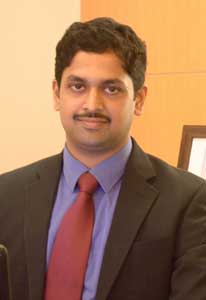
Author: Donnie Ashok

  • Yuvraj Narvankar, Advocate, Bombay High Court,on cyber law, cyber forensics, and his experience

    Yuvraj Narvankar, Advocate, Bombay High Court,on cyber law, cyber forensics, and his experience

    yuvraj-narvankar-2Yuvraj Narvankar graduated from ILS, Pune in 2010. He has already set up a reputed practice at the Bombay High Court. His expertise in Cyber Law and Cyber Forensics has led the Mumbai Police to consult him in various matters from time to time.

    In this interview we speak to him about:

    • The role of a mentor in the first few years of graduation,
    • Importance of grades
    • Working on important cases


    Tell us about how you decided to study law.

    My father is an advocate practising in District Court. It was possibly those interesting discussions in my home about court life and clients which made me choose this profession.

    I was always fascinated by people who have the gift of the gab and I always thought of this profession as noble and very influential. I always liked to speak and convince people on some topic and my participation and accolades in several elocution and debating competitions were out of my desire to talk to people than any urge to win.

    The fascinating thing which I liked most about the law was its nature. I always felt that law is not alien to our life but every part of it is a law. Law is nothing but a codified common sense. If you think that something should be this way and if your logic is correct, you would inevitably find law or case-law to that effect. So the power of thinking on your own legs is something which makes this faculty most interesting field to study and explore.


    Have you even been motivated by the desire to revolutionize the legal regime in the country?

    I was very active in the field of Legal Aid and was given an award for my contribution in Legal Aid. When I interacted with people from rural areas, I realized the gross ignorance of laws and exploitation of this very ignorance by a few prominent people. And when I entered the profession, fortunately, I was able to espouse several social causes and they also turned out to be milestones in my career.


    What are the tips and strategies you would like to share with our readers who are currently law students?

    (Yuvraj has been among the top rankers in LL.B from Pune University and LL.M from University of Mumbai.)

    For me every subject of law was interesting. In my college days, I was fascinated by books by Lord Denning and writings of other authors like Bryan Garner, Blackstone. It’s interesting to study the genesis of concepts which have shaped legal regimes over centuries. I always wondered about the sophistication of faculty of law in the countries like UK and USA. Just for example for us drafting is all about the precedents and forms but that that is a craft in itself and has to be treated like one. Even oral submission and persuasion are amazing arts and can’t be left to be learnt at an advanced stage of your career. In fact law college is such a platform where you can test all your skills without fear of any professional blunder or injuring your clients’ interests. It’s like the more you sweat in the practice, less you will bleed in the war. I think the best strategy or tip to study law is to study it out of interest and not because it’s in your syllabus. For example, if you are reading a section, put yourself in the role of the client who would be in the trouble which the section seeks to redress and then read the Section again. The section in statute/Article is like key and the problem/case is like a lock. The problem with our educational system is that we are taught to use the key without lock and when you have to actually open the lock (A case in your professional life) you would have forgotten about the key.

    So the best way out is to apply every section practically or look for a situation in your life where you can apply any proposition of law you have learnt. This way you would imbibe law in your thinking and law would be no more in black and white but would be a an amazing colourful spectrum and a panacea for all your problems.

    And I firmly believe that any rank and Gold Medal is a mere by-product of your studies. It may follow or it may not but the actual capital you gain is your habit of hard working, knowledge and thinking process. The knowledge of law does not mean knowing a law by heart but to know how to interpret the law.


    Do you think top notch grades have given you an advantage over others in your arena of litigation?

    Possibly. As Steve Jobs says, it’s all about connecting the dots. Today standing in a court of law while arguing a matter, no one bothers about my rank or medal. But to get here I had to find some mentor, and the ranks helped me to get good mentor and seniors. So it won’t be wrong to say that the ranks did help me to get along with the right persons and at the right time which paved my way to a career in litigation. Because, though unfortunate, rank or marks is the symbol of your capability which can testify about your capacity to some stranger. And once you get a good launch pad, your performance will speak for itself and you have to put your medals and certificates in the cold storage. Gold medal, certificate, or law degree is like a driving license which allows you to drive the Car. Once you get behind the wheel, its your performance that matters and gets you to the destination and not your License. Because when you drive a car, what helps you is the knowledge you gained for obtaining the license and not the license.


    How difficult would you say the first few years after graduation was for you?

    The first few years after graduation are really tough and I won’t describe them as we all know about them. Particularly the starters in litigation know this feeling. In fact, since I always aspired to work in Litigation, I didn’t go for campus placement as I was looking for some hands-on experience in litigation. After my graduation I could make it in one Litigation Firm so I could sustain in Mumbai. This was the time when I did all kinds of matters and appeared extensively in all forums. In fact, all the senior members of the Bar are your mentors and teach you something. Even some Judges teach you law very well. The Court Room is the best class room a law student can get but unfortunately he gets it after he graduates.

    After my stint in the law firm, I took a bold decision of resigning and joined the chambers of Mr. Rafique Dada, former Addnl. Solicitor General of India. It’s only after you move out of your comfort zone and take a plunge into uncertainty that you can achieve something. You must have the guts to move out when you know the ‘cheese’ is turning ‘stale’ though the journey to the unknown is scary.

    It’s because you have to manage without any fixed source of income and what is more deadly is to be without any work. I could learn a great deal of court craft with my senior who is one of the living legends of Bombay Bar.

    My bolder decision came when I decided to even leave his chamber and start on my own without having any place to operate and firm client base. But I always had strong sense of urgency and strong urge to see this world of Litigation without any shelter of firm or senior over my head. Soon I found myself struggling with all odds.

    But I always kept moving ahead somehow and it would not be fair to boast that all my efforts were directed to achieve some goal or aim. Frankly speaking those were only efforts and one must keep walking and one day he would be able to connect the dots. So it would be unfair to other possible modes of walking if I illustrate mine. Only one thing is at the core and that is faith in yourself and in your capability.


    Can you tell us about the law diploma you pursued from NUJS offered by iPleaders?

    Yes. I have taken up several courses like Cyber Law, Housing Law, etc and the latest one being business law course from NUJS. Firstly, any course keeps your learning faculty agile which may otherwise die because soon we get the feeling of contentment. What I liked about the course of business law from NUJS is the curriculum and practical approach of the faculty. I found all the faculty very knowledgeable and very pro active. In fact iPleaders should go ahead and try to make this course part of curriculum in colleges which would benefit students who aspire to become a litigator or a law firm lawyer.


    How difficult would you say it is for a fresh law graduate to get inducted into a litigation firm?

    Yes. It is a challenge for someone like me who doesn’t opt for campus placement because PPOs can make things a lot easier. If you start early and prove your mettle, the law firms would certainly welcome you. Your rank and merit also goes a long way in securing a good position in a law firm. If your basics are good, nothing can stop you.

    The one who wants to make it in litigation, must make it a point to work in a trial court, howsoever uncomfortable it seems at the outset. Because, that is the first step of ladder and it gives you an edge over others when you argue in High Court and Supreme Court.


    How helpful has been mooting in litigation?

    Tremendously helpful. Moot Court is like training on simulator. You learn without any casualty. I did several national and state level moots and I really learnt a lot from them. Only make it a point to learn from every moot. No academic/moot performance should be the same as the previous one. It’s a race with yourself and not with anyone else. And you have to come out of this ‘illusion of competition’. I think one must focus on making oneself better every day and small daily professional improvements will pile up and take one to the Zenith.


    How did your first hearing as an independent practitioner go?

    First thing which I would like to share is about the cases a junior gets to handle. One must remember that you can’t get open and shut cases in the beginning and rather you would get hopeless cases to argue and the briefs which others have said no to. But make it a point to sweat on the small stuff and get into details and try to make something out of those cases. It may seem very hard at first,but once you are master of these ‘messy causes’, you would enjoy working on good briefs.

    For an arguing lawyer every case is close to his heart but to mention a few:

    To begin, within a month of joining the Bar, I had an opportunity to argue a very interesting case on a preliminary issue of Jurisdiction (S.9A of CPC) against one giant at the Bar. It was a very interesting case to argue as there was one Apex Court Judgment against us and issue was narrow and no more res integra. But after hearing me for a  whole day, the court dismissed the opponents’ application for framing preliminary issue. To my interest, this was the case which reaffirmed my faith that law is all about your own thinking and you can turn the case if you think a little outside the box and genuinely convey your emotions to the judge without hurting the ego of the senior advocate for the opponent.

    In fact this case in the first week itself, gave tremendous boost to my confidence and went a long way in shaping my career.

    Later, I appeared in the much spoken about Air India employees case on behalf of the Cabin Crew members and it was a great learning experience.

    When I was working with my senior, I had an occasion to work on BCCI/IPL matter, Coal scam matter and Goa mining case in Supreme Court.

    Then, I had an occasion to conduct some good criminal trials and conducted cross examinations of the witnesses leading to acquittals of my clients. The well conducted cross examination is sheer joy and great learning experience and gives insight into human mind and interplay of emotions.

    Then, I had an interesting case of bogus multiple Development Rights Certificates (TDRs) obtained on the same piece of land and the same was done very cleverly by the concerned revenue officers in connivance with developers. As most of the TDR/DRCs were sold in the open market and already purchased and consumed by the builders, several Senior Counsels were roped in to defend the case. I had to study a truckload of documents to exactly know, where the things went wrong and put in equal amount of efforts to convince the High Court about it, as the High Court is never willing to go into factual details in Writ Jurisdiction.

    Finally, I succeeded and irrespective of huge financial stakes, the High Court set aside all the TDRs/DRCs. This case received very wide media coverage and acted as deterrent to Land Mafias.

    The next interesting matter I argued was of ‘Collection of Toll’ issue in Western Maharashtra. In fact, this issue was very sensitive due to widespread opposition and local violence. As the project was on the verge of completion and the builder had already invested thousands of crores of rupees there was tremendous opposition in the Court of law and the courts were very reluctant to give any interim relief as this was a financial matter. Due to vital constitutional issues, even Advocate General of Maharashtra was issued notice and he appeared and argued extensively. I had to give all my devotion to this case to understand several technical and financial intricacies of PPP. I argued the matter for three consecutive days and the counsels for respondents also took equal time to respond.

    Finally the Judgment was in my favour and first time the unconditional stay was given to the collection of Toll.

    I also represented the students of engineering where we challenged the vires of the one arbitrary provision of the regulations framed under the parent legislation and finally succeeded to the big relief for the students.

    Recently, I appeared in the illegal hoarding matters wherein substantive directions were issued by the High Court, on the lines of Vishakha Judgment, for immediate removal of the illegal hoardings and political banners in Maharashtra and Goa.

    One interesting criminal case I argued was on the illegal detention of the person where after taking the court through the historical meaning of the term custody and concepts related thereto, I could drive home my point and succeed.

    Recently four of my judgements were reported in Arbitration Law, Port Trust laws and Civil procedure law wherein some trend setting judgments were passed by the High Court.


    What is your workday like?

    When you are working in a firm the chances are great that work may fall in predictable pattern. But if you pursue an independent practice, every moment is new and challenging. My day begins at around 8 a.m. and my office remains open till 11/11.30 p.m. Unlike a firm, you have to set your own deadlines and it’s entirely upto you to have your work-life balance. Fortunately my staff is competent and the same is very necessary to operate an independent law office.

    The day in court is always full of challenges and you never know what may come from the bench and also from the Counsel appearing against you. Full preparation and mastery over facts is the best assistant you can ever have in the Court; rest of the things fall in place. This is the world of ‘No-Excuses’.


    What prompted you to leave a firm and start independent practice?

    I would say it was my own gut feeling which prompted me to leave a firm and the same turned out to be the big decision for me. Today when anyone comes to me to join my office, my advice is to learn the basics of drafting and pleading from a litigation firm because unfortunately, though seniors in Bar are very competent, tremendous workload makes it impossible for them to take some time out and teach the junior. Whereas in the Firm you are made to work and you realize the importance of Discipline. Sometimes to maintain a proper file may matter more than arguing the matter.

    But working with an independent practitioner has its own advantages and if you can keep your eyes open, that is the most fertile ground to learn and excel. Start appearing as early as possible.

    And finally you can’t swim by watching others swimming so get into the water, although it may seem rough.


    How is your experience presenting lectures on subjects like Cyber Law and Cyber Forensics?

    (The Mumbai Police Dept. consults Yuvraj on Cyber Law issues from time to time.)

    Yes. I have delivered several lectures across Maharashtra in Bar Associations, Rotary Clubs etc. My subjects vary from Cyber Laws, Succession among Muslim laws, Euthanasia etc. I have completed my advanced course in Cyber laws and Forensics with 1st rank. I have represented the police department in several matters involving cyber law issues and forensic investigation. In one of the recent cases, the accused was refusing to cooperate and refused to give access to his laptops and approached High Court espousing his right of privacy. We contested the case on merits and we succeeded. Maybe it’s the faith you gain in course of time which makes people come to you and entrust their cases.


    Many notable jurists have stated that it is important to know the judge more than the case. How much truth do you find in this?

    So true, but not more than your case. You have to read the Judge and give what he wants and not what you want to give. Don’t suppress anything and be absolutely fair to the Judge.

    I would go a step further. You have to know every person you are dealing with and should be able to express yourself accordingly. At one moment you may be talking to some Law Firms’ partner you are briefed by and the next moment you may find yourself advising a client from distant rural area. You must be able to connect with and adapt yourself to the person you are dealing with.


    How difficult would you say it is to build a reputed practice?

    It depends on what kind of matters you have argued and how much you are known within and outside your circle. Fortunately, I had an occasion to argue some good matters which went a long way and also got me firm clientele. Hard work is something I would not comment on as it is something which is not some special quality for a lawyer but has to be a part of his nature.


    What would be your parting message to law students who want to litigate just after graduation?

    Keep your eyes open and you will see abundant opportunities floating around you. Work hard and read beyond the books as a lawyer cannot sit in an ivory tower and operate. Litigation is fun and a way of life. Focus on your strengths and work on your weaknesses and excel. You must not restrict yourself and build walls around you. Only one word of caution, in the early days of success, many unscrupulous people (Which are many in this profession) may try to use your knowledge or expertise to get something which is unfair or unethical etc. So a junior lawyer must have the guts to say no to such briefs and be always loyal to the court and dignity of this noble profession. Delayed success is always better than the tainted one.

    Best of luck !

  • Kumar Rahul, Law Graduate, NUJS, on cracking the MP Judiciary

    Kumar Rahul, Law Graduate, NUJS, on cracking the MP Judiciary

    Kumar Rahul graduated from  NUJS, Kolkata, in 2012. After working for some time he quit to join his true calling, the judiciary. He cracked the MP Judiciary exam, being ranked 4th in MP. His preparation comprised taking mock tests, studying the basics of his law school curriculum, and going through the previous papers of MP Judiciary.

    In this interview he talks about:

    • Preparing for the Judicial Services
    • Books and other knowledge sources helpful in preparation
    • Staple questions which are asked


    What motivated you to appear for judicial services?

    Coming from a small place called Dumka in Jharkhand, I was lucky to have completed my graduation from NUJS. When I was studying law at NUJS, I always thought about pursuing something which would have a direct bearing on the society and people. However, after graduating I joined a corporate firm which I left to join a Public Sector Company but the same did not work out owing to certain exigencies. So, at this stage I had the option of going back to a law firm job or doing something which I had always dreamt of doing. Then, I zeroed in on the two most prestigious services in the country namely-Civil services and Judicial Services. But the higher degree of uncertainty with respect to civil services and my earnest desire to remain associated with the field of law had cleared the dilemma and I started my preparation for judiciary.


    How did you prepare for the judicial services examination?

    I took coaching classes. Coaching helps immensely in saving time as going by the vast syllabus, one may need more than a year to prepare notes while the same is done exhaustively at coaching within ten to eleven months. The second biggest advantage of coaching is that it enables one to focus on core areas and thereby facilitates strategic preparation and the mock tests for prelims as well for mains provide a platform for regular assessment. Apart from this, the environment also keeps one motivated as there are regular interactions between like- minded individuals pursuing a common goal. However, I must say that coaching is not indispensable for preparation but a good and committed coaching institute polishes your concepts and nurtures the judicial bent of mind required for clearing the exams. But one may always prepare on their own with hard work and proper planning.

    I took coaching from one Rahul’s IAS from Mukherjee Nagar, New Delhi. I would definitely recommend this place if anyone wants to join coaching for judiciary.


    Did you take mock tests during your preparation?

    Yes, I did. Mock tests help an aspirant to test if he is able to execute his strategy which includes important aspects like time management, prioritising questions, finding out weak areas and keeping a check on the scores. Sometimes, questions which one has attempted in Mock tests are repeated in judicial examinations as one practices an inventory of questions. Since each mark is important so even if there are three to four questions which are exactly the same as that of the mock test then it provides an edge over the other candidates.


    When did you start preparing for the exams?

    Since I had not decided to write Judicial exams during my college years, I started preparing for the same when I left my job. I think this exam requires one year of preparation and therefore, if anyone wants to sit for judicial service exams, he/she should start preparing for the same during fourth or fifth year of law school.


    How many hours did you put in for your preparations every day?

    I never followed a set routine for everyday during my preparation. I did not study much in the beginning but within five months of my preparation, the notification came for the exam and the number of hours subsequently increased but I would like to mention that one should have fixed targets for the day or a week and not go by the number of hours.


    How much time did you give to each subject?

    I haven’t allocated any fixed time but subjects like CPC, CrPC, IPC, Evidence require more time as compared to less voluminous subjects like SRA, Limitation, etc.


    What approach did you take to remember the sections of the acts in syllabus?

    I have heard from many people that the judiciary exam is all about how much you can remember sections and language of Bare Acts. However, this is a common misconception among the aspirants. The exam primarily tests your concepts and knowledge of law. With the sound understanding of the concepts it is easy to retain important sections more effectively. There may be very few direct questions on a Bare Act in prelims exam. Therefore, only mechanical reading of Bare Acts will not suffice.


    How much of a case law do you need to remember?

    For prelims, one has to remember landmark cases in subjects like Constitution, CPC, CrPC, IPC etc. However, case laws help in writing answers for mains as they develop one’s ability to think like a judge and enhances the application of judicial mind. The quality of answers also automatically improves when we substantiate our answers in mains with the help of case laws.

    One should be updated about the cases which are in news for interview.


    What strategy did you adopt for preparing the subjects you had studied in college?

    Since, the ambit of law is very broad, it becomes important to know what not to read for any competitive examinations. It is humanly impossible to learn everything in all law papers. Therefore, it becomes very important to plan a strategy for preparation. I made a strategy based on the previous year paper and focussed more on important topics.

    Truly speaking, I have not studied subjects like CPC, CrPC, Evidence, IPC properly etc during my college and since, these subjects are very important for judicial service exams, I focussed more on these subjects.

    It does help in your preparation if you have studied in college. I shall advise the judicial service aspirants to make a habit of reading Bare Acts and Case laws. This exam does not require research on any topic but instead,  you have to be very smart with your preparation. You may study less but you should revise regularly whatever you study.


    Which books/materials did you rely on while preparing?

    Since, I got immense help from the notes which I prepared during my classes at coaching institute; I referred to books only for clarifications on few topics.

    However, here is the list of books which one may refer:-


    Subject Book(s) Recommended
    Constitution of India Bare Act, Pratayiogita Darpan (Polity issue), M.P.Jain
    Code of Civil Procedure Bare Act, Takwani
    Transfer of Property Act Bare Act, Poonam Pradhan (lexis Nexis)
    Indian Contract Act Bare Act, Avtar Singh
    Specific Reliefs Act Bare Act, Avtar Singh
    Limitation Act Bare Act, J.D.Jain
    Indian Evidence Act Bare Act, V.P. Sarathi, Batuklal
    Indian Penal Code Bare Act, K.D. Gaur
    Code of Criminal Procedure Bare Act, Kelkar
    Negotiable Instruments Act Bare Act
    MP Accommodation Control Act Bare Act
    MP Land Revenue Code Bare Act


    Which books/material did you use for preparing for the general knowledge section?

    For the static part, I referred to Upkar, Lucent’s GK and Arihant’s GS for MP and for current GK, I referred to a Hindu newspaper and monthly issue of Pratyiogita Darpan.


    How would you recommend one should prepare for the English knowledge and computer knowledge sections?

    One may refer to Objective General English by R.S. Aggarwal and Lucent’s Computer for questions relating to computers.


    Did you regularly read newspapers?

    Yes, I regularly read the Hindu and it helped in attempting General knowledge questions and writing the essay in mains paper. One should at least spend an hour everyday to read any good news paper and if possible, he/she should note down important points. The editorial part regarding legal developments is a very good source for essay.


    How would you rate the preliminary examination question paper on difficulty?

    I honestly do not consider prelims to be difficult provided one prepares with hard work and diligence. Since prelims is gateway for mains and interview, it becomes really important to focus properly on the bare act and one cannot afford to be selective in his preparation for prelims as even a single question can make a huge difference. One should practice questions from a standard book on each subject.


    How did you prepare for the segment on certain state acts passed by the M.P. legislature, since they are not taught in law schools?

    There were two local Acts which are asked in MP Judiciary: – Rent Control Act and Land Revenue Code. I have analysed previous year papers and found that the questions were almost from Bare Acts. Therefore, I have referred to Bare Acts and a few High Court and Supreme Court cases on important topics.


    During the main exams which consist of four papers, you are given two question papers simultaneously. How did you divide your time between the two?

    I gave equal time to all the papers as the marks allotted to each were identical.


    How did you manage your time among the questions in each paper?

    Since, in the first paper, all questions were from law carrying equal marks, I gave equal time to every answer. In the second paper, I divided my time according to the marks allotted to the questions asked in the paper.


    Would you say some of the sections are easier to score compared to others?

    The questions on essay writing, precis and translation do not require as much effort and with weekly preparation also one can excel in those areas whereas the questions of law are more demanding as they require regular revision and brushing of the concepts.


    What structure did you follow for answering a question in the main exam?

    There were mostly theoretical questions from law in Paper I and therefore it becomes very important how you write your answer in mains within a very limited time. I have tried to include object, policy and landmark cases as I believe that these are the requisites of a good answer.


    Did you practice writing the answers?

    I practised writing answers to almost all questions of last ten years which helped me immensely while writing answers during exam with respect to content and time management.


    Had you prepared some topics in advance for the write up section?

    I had chosen a few topics based on the questions asked in previous year.


    How did you prepare for the summarization exercise for the exam?

    The question on summarization exercise was pretty simple. I have not referred to any book for the same. I practised a few questions asked in previous years.


    Did you practice reading lengthy court documents to increase your reading speed and comprehension?

    No, I did not refer to any such documents. However, I read few judgments of MP High Court for judgment writing in mains.


    What is the level of Hindi proficiency required for the translation exercise?

    Since Hindi is mostly used in the lower courts in MP, one should have fair understanding and at the same time the ability to write in Hindi. If one wants to refer to any textbook then Sighal’s guide is a decent book available in the market.


    Did you practice translation exercises during your preparation?

    Yes, I practised a few questions which were asked in previous years.


    How did you prepare for the judgment writing exercise?

    Judgment writing is very important to clear mains. Out of 200 marks in mains, 50 marks have been allotted for judgment writing. This is the part which many students ignore and since there is a minimum cut-off for each paper, it becomes very important to get a good score in judgment writing.

    There are two judgment writing questions asked in the mains- one on civil law and another on criminal law. It is advisable to follow the format of trial court of MP for judgment writing. The main part is how you appraise evidences in a given factual situation. You may decide the case in anyone’s favour but your reasoning should be sound and cogent.

    For judgment writing, I practised previous year papers and read a few High Court judgments.


    How would you rate the main exam question paper on difficulty?

    The exam is not difficult as such provided one has prepared well with a good strategy.


    Did you appear for mock interviews?

    Yes, I attended a few mock interview sessions organized by my coaching institute. These mock interviews helped me a lot in building confidence.


    Any specific strategy you used during the interview?

    I haven’t adopted any specific strategy for my interview preparation. I simply revised all my notes before the interview and prepared questions based on my background, home town, college, work experience, recent legal developments etc.


    Do you remember any of the questions asked during the interview?

    Questions were mostly from simple concepts of procedural law (CPC, CrPC) and local Acts and my background. Some of the questions which I can recall:-

    Why do you want to work in MP?

    Where have you worked previously?

    Why the Judiciary?

    How are issues framed in Civil cases?

    Provisions and safeguards regarding arrest under CrPC

    What is an interpleader suit under CPC?

    Question on power of court under S.313 CrPC.

    Questions on 2013 CrPC Amendment Act.

    Who is a pauper according to CPC?

    Difference between inherent powers under CPC and CrPC.

    Whether accused can be acquitted after prosecution evidence in Court of Session trial?

    Questions relating to Nistar Patrika and Wajib-ul-arz as given under the MP Land Revenue Code.

    Can there be an investigation in a complaint case?


    Lastly, what message would you like to give to graduates aspiring for judicial services?

    Graduates aspiring for judicial services should not be in awe of this exam but move ahead with confidence and a positive attitude. This exam requires constant absorbed hard work with proper planning throughout the preparations. One should be able to identify the core areas of the subject and focus more upon them. Candidates should have their own strategy whatever suits them and stick to it.  They need to stay focused and shall remain detached from any distractions especially the ones coaxing them to think about other career options. Aspirants should never get paranoid about the time they spend while preparing as at the end of the day all their efforts will reap sweet fruits of success. No hard work goes in vain.

  • Manveen Singh, Research Associate, JGLS, on pursuing a PhD in Patents, and a career in academia

    Manveen Singh, Research Associate, JGLS, on pursuing a PhD in Patents, and a career in academia

    Manveen Singh graduated from UILS, Panjab University, Chandigarh, in 2012. He then went on to pursue his Masters from UCL in Intellectual Property Law. He is currently working as a Research Associate at Jindal Global Law School, Sonepat . He enjoys teaching and plans to pursue a PhD in Patent Law (Intellectual Property) this fall.With six international participations, nine internships, five research papers, one book chapter, sixteen national conferences, he was an extremely hard working, consistent and brilliant law student.

    In this interview we speak to him about:

    • Studying abroad
    • The legal education regime in India
    • Pursuing a future in academia

    Tell us something about yourself.

    Well, I am someone who is very honest, emotional and passionate about everything I do. I am a firm believer of destiny and I also believe that if you have your heart set out on achieving something there is absolutely nothing that can hold you back.
    What truly unwinds me is football. Manchester United is well, the love of my life. Besides that I love travelling, reading and listening to music. One thing that has always given me peace is photography.


    When and how did you decide to pursue law?

    Before joining law, I was basically a science student. However, my shifting from science stream to humanities was purely co-incidental with my father’s taking up a prestigious assignment as the founder Vice-Chancellor of one of the reputed National Law Schools of the country. Though my father never wanted me to study directly under his supervision and stewardship, lest it could affect my independence and academic blossoming, his constant hammerings for my understanding of the basic concepts of law and for an in-depth study and critical analysis of some of the legal doctrines nevertheless inculcated in me the strong and never ending desire for taking up legal studies as a means to embrace the ever challenging and exciting career in the field of law, the decision that I feel proud of having taken when I sit back and reflect pensively


    Tell us something from your days at UILS!

    I have very fond memories from my time at UILS and Panjab University. My graduation from such a reputed university, rather the best Indian university in the world (as we may call it now, based on the latest rankings) and my five year long and close association with some of the most committed and dedicated teachers showing paternalistic interests in me inculcated in me the never ending quest for more and more knowledge. I was always an active participant in all the legal as well as other academic events that took place at UILS and the University and not to forget, good in studies too.

    Besides that, college life gave me friends, friendships and more that shall stay with me for the rest of my life.


    What made you pursue your LL.M in the UK?

    I always wanted to go abroad for my post-graduation; the only dilemma being whether to go straight after law school or work for a year or two and then go. It was not until I entered into the final year of my undergraduate degree that I made up my mind and applied to all the top universities in the UK. My parents and teachers were unanimous in their advice to the effect of my going in for my masters straightaway.

    For me it was always going to be the UK over the US. Also, my father did his PhD. from the UK so there was always that connection and motivation towards handpicking UK over other countries.
    I applied to a number of UK universities including University College London, King’s College London, London School of Economics, Queen Mary University of London, School of Oriental and African Studies (SOAS) as well as University of Oxford. I got through to all of them with the exception of Oxford. I had my heart set on UCL and as destiny would have it, UCL it was.


    How should one zero in on the law schools? Should consideration be paid to living expenses in that particular place?

    There are multiple factors that you need to take into consideration while zeroing in on the right law school. Ranking, of course plays its part but besides that you have to be sure of the area you wish to specialize in, whether that university offers you that specialization and lastly, the concerned faculty. As far as the living expenses are concerned, when you pick a country there is not too much difference in terms of the living expenses within the different cities. On that front you would rather adhere to the overall profile of a university and then come to the advantages of being in a particular city.


    Tell us about the course structure and specialization of Master of Laws at University College London?

    Well, UCL offers you the chance to specialize in a whole lot of areas of law. I personally, have always been very fascinated by Intellectual Property Laws so one of the reasons behind my choosing UCL for specializing in IPR was the fact that the Faculty of Laws at UCL has arguably the best IP faculty in the UK.


    How diversified was your batch at UCL?

    Well, my batch at UCL was one of the most diverse ones out there. The quest for learning bringing together all these people from different parts of the world to brainstorm and share their ideas and expertise in the various fields.

    Most of them are now back in their own countries plying their trade while some of them stayed back in the UK as they were hired by some of the Magic Circle law firms. Some even made it to the UN.


    Do you think that nowadays, some students do an LL.M because it seems the “right thing to do” and not because they know what they want to study or why they want to?

    Well, to be honest, I don’t really subscribe to that view of it being the “right thing to do” or not. At the end of the day, it’s a matter of choice whether or not one wants to go in for his/her masters. If you’re up for it, just go for it. There’s no looking back.

    I would like to add a quote here, “If you force yourself to go outside, something wonderful always happens”.


    What do most foreign universities look for among candidates?

    Most foreign universities require a well drafted SOP and a couple of LORs besides good grades.


    What is the key ingredient of a well written SOP?

    A well written SOP is one which truly reflects your thoughts and intentions behind pursuing a master’s degree and how it is going to be beneficial for your career interests. You can, of course make it personal but the language must be formal. One thing that is highly appreciated by foreign universities is community work. Surely, that has got to be one of the key ingredients of an SOP.

    An honest tip to those making their SOPs would be to be as honest as possible and not cook up things or achievements. That’s the most common mistake people tend to make which has more chances of landing one in trouble than not.


    Do you think that having your recommendation letters written from distant acquaintances with influential position may backfire against you while making your application?

    Essentially, every foreign university requires two academic LORs, preferably from the professors who have taught you during your undergraduate degree. In addition to that any other LOR is considered as a supplementary document and the role it would tend to play in the success of one’s application is very subjective and depends from university to university. So there is not too much you can do with the standard established protocol.


    How do you think one should go about their chances of securing a scholarship for an LL.M program?

    Securing a scholarship at a foreign university is one of the first and foremost things that every Indian student tends to look at and with the cut-throat competition out there, it has become more of an uphill task in recent times. Good grades coupled with practical internships and community work is the key to securing a scholarship for an LL.M. program.
    UCL has quite a few categories of scholarships available to students all over the world. If we talk about the scholarships for Indian students at UCL, there are two awards; one being the Master of Rolls Scholarship for Commonwealth Students (one award for a student from the commonwealth nations) and the Chief Justice Scholarship. I was a proud recipient of the former for my LL.M. studies at UCL.


    What are the criteria for an LL.M graduate to enter the teaching profession in India?

    The minimum basic requirement for entering into academia is a master’s degree. Most of the universities require you to be NET qualified while at the same time there are some that allow you clear it while in service.


    How are you going ahead with the PhD application procedures?

    Yes, I wish to start off with my Ph.D. as soon as possible and shall put forward my candidature at various universities as soon as the applications open this fall.


    Describe your teaching style.

    I would say it comes to me naturally since it runs in the genes. My father is an academician and so was my grandmother. Now that I look back and try to find the inspiration behind my joining academia, I would have to give a major chunk of the credit to my friends since I taught a few of them during my university days and they would always encourage me by  telling me how good I was at it.
    One thing I still can’t forget is the fact that I taught a friend of mine and he outscored me in one of the semesters. I think that did it for me.

    Well, I am someone who tries to give his 100% in every lecture while at the same time try to get the best out of the students. Not every student is the same so my endeavor always is to reach out to every student and make them comfortable with the subject that I’m teaching.

    I try to use as much of practical and real life examples as possible besides the conventional theoretical methodology in order to make every lecture as interesting as possible. Although I give my students PowerPoint slides for every lecture but while teaching I want them to listen to what is being taught for I think that is the only way for them to master the concepts.


    What do you like best about teaching at JGLS?

    There are a couple of things that I like about JGLS. Firstly, I feel that the academic freedom you possess as a teacher and more so as a young faculty member is something that is very important. JGLS gives you that freedom and so much so that the only way you can repay it is by doing full justice to your job. That is something I cherish day in and day out.

    Secondly, it’s the students. They just get the best out of you as a teacher. Every day is like a new challenge for me. There are so many things that you as a layman would not be inspired to read or write on but the ideas that flow from classroom teaching are unparalleled. If the students are smart and intellectual, it will inevitably push you to give your best as a teacher and I think that is one thing I like the most about the students at JGLS. The sense of satisfaction that you derive out of standing in front of 60 students and delivering a good lecture is absolutely priceless

    I have been teaching for close to ten months now; all of those at JGLS.


    Which subject(s) do you teach?

    I have only taught a couple of subjects as yet; Labour Law being one of them. I am mostly interested in commercial and criminal law subjects. The one subject that interests me the most is of course, Intellectual Property Law (IPR) since that is the only subject that keeps me connected with science while at the same time being a commercial law subject. I shall be teaching Law of Evidence next semester and I am already looking forward to it.


    After your experience abroad, why do you think LL.M in India is a little less sought after?

    I think it flows from the fact that the two systems are quite different. Firstly, the biggest reason for students preferring to go abroad for LL.M. was in India being a 2-year degree. Secondly, the overall structure, the breaking down of the modules, the style of teaching and the tutorial system are so different from that in India that it is quite difficult to compare the two.


    Do you think legal education in the country needs an overhaul?

    I don’t think there are any drastic changes that need to be made in the existing system but something that can surely be done is to change the conventional orthodox system of legal education and adopt a more practical approach or rather strike a fine balance between the two and enable the students in competing with their contemporaries from around the world.

    Do you opine that law schools have become largely expensive?

    Yes, I do think some of the new law schools are relatively expensive as compared to the traditional universities but at the same time, I strongly believe that the kind of exposure and the opportunities that one would get at some of these privately funded or national law schools is incomparable to that being offered by the traditional universities.


    What would be your message to our readers?

    For those of you who are really keen to pursue an LL.M from abroad, remember what I earlier wrote: ‘If you force yourself to go outside, something wonderful will always happen.’ It’s a new and different exposure to behold. I wish all the very best to others in their endeavours.

  • Navneet Brar, Masters candidate, University of Bristol, on scholarships, SOPs and higher studies

    Navneet Brar, Masters candidate, University of Bristol, on scholarships, SOPs and higher studies

    Navneet Brar graduated from University Institute of Legal Studies (UILS), Panjab University, Chandigarh, in 2012. She holds an LL.M in International Law from University of Bristol. She was also awarded a scholarship to pursue International Winter Course on Human Rights and Asia, at the Seoul National University. She is keen to pursue further research in “International Human Rights law or International Criminal law” this fall.

    In this interview we speak to her about:

    • Studying in Bristol
    • The Indian legal education regime
    • Plans for the future

    Tell us something about yourself.

    Well, I would describe myself as someone with a sanguine disposition and one who is always striving to materialize her dreams. I believe in maintaining an open mind with an unprejudiced attitude.
    In my spare time, I love to try my hands at photography. Besides that, what truly unwinds me is traveling and reading about new places and diverse cultures. In terms of my strengths, I think my independence and will power have always been the biggest boon to me. But I have a tendency to get stuck up on trivial details and loose time.


    Tell us about your childhood and family.

    Sports! That’s the first thing that strikes my mind. I have been a National level skater, State Volleyball player and also tried my hands at fencing, basketball, cross country racing. I was always into extra-curricular activities. So, quite evidently I was the kid seldom found in the classroom.
    Regarding my parents, my father is a PCS officer working in the Punjab Co-operatives Department and my mother is a subject expert with the State Council of Educational Research and Training, Punjab. Thankfully, both of them have always been very open and supportive of whatever I wanted to pursue.


    What made you pursue law?

    Honestly, growing up, the legal field never crossed my mind. I have no one in my distant relatives involved in the legal profession. In fact after 12th grade, I had started undergraduate studies with Geography and History as my major. However, when I was towards the completion of my first year, I started feeling very dissatisfied with what I was doing. I discussed my concerns with my parents. A very good friend of mine, who was pursuing law at Symbiosis, Pune at that time hatched this idea to try the legal field. It sounded quite appealing and I took the plunge. So, here I am! Still very content with my decision.


    How would you describe your five years of law school?

    I started studying in UILS in 2007 and graduated in 2012. I must say I had a lot of fun during these five years. In fact, Panjab University was like a second home for me.

    When I joined UILS, it was very new, as the first batch was still to graduate. In spite of that, the institution had made quite a good name for itself. As I look back now, it has come quite a long way in a very short while. With the new students bringing laurels to the institute each day, I expect to see UILS as one of the top law schools in the coming years.


    Tell us about few legal luminaries or other persons that you highly admire.

    I greatly admire Justice J.S. Verma. He truly was the face of judicial activism in India. Though he has always been the champion for the expansion of fundamental rights and women empowerment but I gained the utmost respect for his thought and ideas while I was working on my LL.M dissertation on criminalization of marital rape in India. The content of the comprehensive report which was submitted under his supervision is commendable!


    When and how did you decide to do your LL.M?

    Frankly, it wasn’t an instant decision. Over the law school years, I got a small taste of the litigation world while doing my internships. I had decided there on that I would instead like to go into academics and legal research. Even so, I always wanted to have an experience of studying in a foreign university.


    How did you choose University of Bristol? What was the application procedure?

    Well, firstly I was certain that I wanted to apply for UK only and secondly that I didn’t want to spend my masters living in London. The London part might confuse some people (it usually does!) but having lived in both London and Bristol, I would still never choose London!

    Besides, University of Bristol is one of the top 30 universities in the world and Bristol Law School is also amongst the best law schools in UK. The application procedure is the standard as any of the UK universities. Applicants are required to have a minimum 2:1 degree and need to submit a Statement of Purpose along with two reference letters.
    Image: Wills Memorial Building, University of Bristol, United Kingdom


    How did it interest you to learn the nuances of International Law and Legal Studies?

    During my days at UILS, Human Rights Law was one of my favorite subjects. Besides, I never studied public international law ‘formally’ as a subject during my undergrad but developed quite an interest through non-curriculum readings. So, I opted to do my specialization in it.


    university-of-bristolTell us about the course structure and specialization of LL.M program at the University of Bristol.

    Well, my study modules included International and European Immigration and Refugee Law, International Law and Human Rights, International Law and Armed Conflict and General Principles of International Law. Teaching includes tutorials and interactive small group seminars which are carried out each week. Marking was done on the basis of a written annual examination as well as written coursework, each depending upon the subjects of choice.


    Was the academic year very taxing and rigorous? Was there ample time for extracurricular activities?

    I think the best part about foreign universities is that they put fewer burdens on the students and instead encourage independent thought and self-motivated research. So, yes the academic year isn’t too intense and instead provides students ample time for independent research as well as extra-curricular activities.


    Give us an insight into the extracurricular activities. Are there any clubs or societies?

    Oh there are tons!! Usually in the fresher’s week, the universities organize fresher’s fairs where the freshers can approach the heads and members of societies and clubs available at the university. They all put up their respective stalls. These range from law, sports, cultural clubs to debate clubs; they are endless!


    How diversified was your batch at University of Bristol?

    It was quite multifarious. Apart from local British students, there were many from Greece, France, Cyprus, Kenya, Nigeria, Germany, Spain, St. Vincent, Sri Lanka, Vietnam, Mongolia, Thailand, etc. Currently, most of my colleagues are either working in international law firms or practicing in their respective countries, while some of them have opted for further studies and research.


    Tell us about your work experience.

    During my undergrad, I was involved in various legal internships under established senior lawyers at Punjab & Haryana High Court. Besides that, I have also been a National Service Scheme volunteer for two years and also delivered lectures on drug de-addiction and HIV/AIDS. Thereafter, when I was doing the LL.M course I also tried my hands on part time work with River Island in Bristol.

    After, finishing my LL.M I moved to London for a few months and worked as a fundraising officer at Pell & Bales. Through Pell & Bales, I got the chance to work on behalf of various organizations such as UNICEF, RSPCA, Cancer Research, British Red Cross, WWF, etc. It was the most humbling experience for me.


    Did you have any Indians in your batch?

    Contrary to the Indian students’ ratio in UK universities, we were just three Indians in the entire LL.M batch! However, there are different societies at UOB such as the ACS which bring together all the Indian students at the university for various cultural and religious celebrations. So, one doesn’t really feel too far away from home with all the festivities.


    What is the status of placement and recruitment available for overseas students?

    Placements! This is something that I have been asked by a lot of juniors. I hate to break it to them but ‘placements drives’ in the sense of what we have in India are not the same in UK. Yes, although hundreds of firms do visit the campuses but they do not offer direct placements. Such career conferences and seminars are good platforms for networking. An LL.M does not guarantee you a job in a firm in UK! One may apply for internships and has a fair chance of getting through. But, if one wants to work as a trainee/ solicitor in a firm you have to either undertake a LPC or pass QLTS.


    Best/Worst things about University of Bristol?

    I would only complain about the steep mountainous road called Park Street that one has to climb to get to classes! (Sorry, it’s just a common Bristolian joke!) Drollery apart, I think UOB has tons to offer to everyone. It has a very experienced and highly qualified faculty, with a great infrastructure to cater to everyone’s needs. It’s located in the heart of Bristol with everything just a short walk away. Besides that Bristol was voted as the best city to live in the UK this year!


    How expensive was the degree at UOB?

    Tuition fee for international students is almost three times that of what is charged for UK/EU students. So, yes it’s quite expensive keeping in mind that the tuition fee experiences a significant hike of up to 500 GBP each year. The fee generally ranges from 13,000 GBP to 18,000 GBP per year depending upon the choice of university.


    Should consideration be paid to living expenses in the place where you are going to pursue LL.M?

    Yes, definitely I would advise one to plan their expenses accordingly as the cost of living in UK is quite high, especially the rent.

    But, thankfully there are plenty of part time opportunities available for international students both on campus as well as off campus. If one wishes to work, they must first apply for a National Insurance Number with the HMRC. The kind of part time employment ranges from paid internships in law firms to various on – campus opportunities. The on – campus opportunities generally offer a higher rate of pay from 8-10 GBP/hour. However, if one wishes to work off campus, there are abundant part time job opportunities to explore.


    Tell us about the UOB scholarships program.

    Each year, UOB offers a range of scholarships to international students. These scholarships provide assistance in the form of full/partial fee waivers to covering monthly living costs in the form of annual stipends. One can explore the forms of funding available at UOB by checking the following link: http://www.bristol.ac.uk/studentfunding/financial-help/search/

    Tell us about the International Winter Course on Human Rights and Asia, at the Seoul National University.
    I was awarded a full scholarship for the SNU course which covered the food and accommodation costs. The SNU was an intensive course which aimed at critically addressing Human Rights issues in Asia through various international human rights mechanisms (since there is an absence of a regional body apart from ASEAN).
    The course was taught by an esteemed faculty comprising of UN Independent experts, members of UN Commissions, UN Special Rapporteurs and experienced professors from various universities, who shared their practical knowledge related to the field.
    Besides, I got an opportunity to interact with students and professionals from all parts of the world regarding HR issues in their respective countries. More information can be found here : http://hrc.snu.ac.kr/eng/research/asia.php


    How did you apply for the SNU Course?

    I applied for the course on my own. Candidates were selected and respective scholarships were awarded on the basis of a candidates’ level of education/degree, field of specialization and any previous work/ volunteer experiences related to the theme of the course.


    How are you going ahead with the application procedures for your PhD?

    Yes, I want to pursue further research in International Human Rights law or International Criminal law. So, far I have submitted relative research proposals to various universities. Honestly, the application procedure can be quite taxing with all the writing samples, research proposals, reference letters, motivation letters that are to supplement the applications. And even though studentships are highly competitive, yet I’m being positive for a favorable reply.


    Would you like to tell us about the universities you are targeting for your PhD?

    PhD applications are a whole lot different because one needs to find an institution offering the similar area of research. So far, I have applied to Dublin City University, Ghent University, University of Liverpool, University of Sheffield and there are a couple more which I still have to finish with.


    How do you expect your PhD to influence your further career goals?

    I want to establish myself into academics as an avid legal specialist/researcher. A PhD opportunity would take me a step closer to my goal by giving me a chance to extend my knowledge and specialization in my desired field of law.


    Would you say an LL.M abroad is worth the expenditure?

    Yes, I agree an LL.M abroad quite truly can be a very expensive investment that may or may not rake out the same output in terms of remuneration. Therefore one should always give good thought and weigh all the pros and cons before taking the plunge. But, honestly if one can afford the expenses without any bursaries, it’s very much worth the entire exposure and experience.


    Do you think that nowadays, some students do an LL.M because it seems the “right thing to do” and not because they know what they want to study or why they want to?

    I won’t rule out that statement because it’s the truth in a few cases. I think it’s very important to be aware of the repercussions of such ‘casual’ steps as one might regret ‘wasting’ a considerable amount of time/money on something that they don’t put their heart into. It’s always good practice to have an open discussion with professors, professionals or parents when one is not sure about the next step.


    What do most foreign universities look for among candidates?

    Besides good academic potential, they desire candidates who are proactive and have significant practical experience in the form of internships or who have been involved in significant voluntary work.


    What is the key ingredient of a well written SOP?

    In my opinion, adding a personal touch to the SOP will definitely work in one’s advantage. All universities receive thousands of applications each year and they are always on the look for candidates who strike as different and interesting from rest of the lot. Thus, candidates should try to highlight their potential in a way that sets them apart from the rest.


    Do you think that having your recommendation letters written from distant acquaintances with influential position may backfire against you while making your application?

    It most certainly will backfire! Applicants should refrain from such practice as the universities consider a ‘strong recommendation’ to be from a referee who has known and closely supervised the applicant’s work for at least 12 months. Thus, the best option is to have recommendation letters from university professors or a significant employer.


    After your experience abroad, why do you think LL.M in India is a little less sought after?

    That’s quite a debatable topic actually. In my opinion, comparing both the education systems with each other won’t do justice to any of them. Both of them are incomparable, with each having its pros and cons. I agree however, that foreign universities appreciate and support innovative and individual thought process more.


    Why do you think it is utmost important these days to have a LinkedIn account?

    I think LinkedIn is a great source of networking and keeps users updated about the vast number of employment opportunities available. I think we are way past the newspaper classifieds era as they only cater to limited regions.
    In my opinion, one should most definitely add the LinkedIn account URL in their CV! The reason being that majority of recruiters today use social media and especially LinkedIn to research candidates. However, one should refrain from doing so if their LinkedIn profiles are either not complete or blatantly mention the same things as their CV. In fact some of the foreign universities encourage for applicants to enlist their LinkedIn accounts while making applications. Personally, I remember making an application to one of the European universities and they actually had an option to make the application by connecting my LinkedIn account.


    Do you think legal education in the country needs an overhaul?

    Not an overhaul in the sense, but a few minor changes would be welcome. I think law schools in India should offer more international exposure to students along with introducing a practical course structure.


    Do you think legal education continues to remain relatively inaccessible to several, owing to the fee structure?

    Yes, I agree that many law schools nowadays are comparatively expensive. In my view, this applies more to law schools which are privately funded. But, some of them actually do provide better facilities and have established quite a good reputation amongst students as well as employers.


    Do you think that the country’s law schools have a lack of adequate student representation in the decision making that affects the students?

    Yes, I strongly feel that there is an absence of student legal bodies that have direct participation in decision making and putting forward the larger interests of law students.


    Do you think it can help in improving the quality of law schools across India?

    It most definitely will! I think the students know best about the short comings of their respective institutes or legal education system in India on the whole, as they are the ones at the receiving end of it.


    Could you please share your feedback on SuperLawyer’s initiative?

    I was introduced to this platform by my junior and interviewer. I’d like to say that SuperLawyer certainly has become a lucrative way for those who are in a fix to decide what path they have to choose ahead. From the experience and future expectations shared by others on this portal, it is a great one stop station for law students to have an insight into the academic, professional, scholarships. By sharing their relative experience, professionals are able to render effective career advice. So, it’s a very welcome initiative.

  • Harsh Gagrani, Director, LegalEdge, on being author, entrepreneur, and lawyer

    Harsh Gagrani, Director, LegalEdge, on being author, entrepreneur, and lawyer

    Harsh graduated from NLIU, Bhopal, in 2011. He is the director of LegalEdge Tutorial. He also recently authored The Pearson Guide to the CLAT.

    We asked him about:

    • Starting up on his own with LegalEdge
    • His advice to law students who couldn’t make it to top NLUs
    • On CLAT 2015 and writing The Pearson Guide to the CLAT

    Kindly acquaint us with your college life and your aspirations in college.

    Studying in NLIU was one of the most profound experiences of my life so far. It helped me break out of my comfort zone, and hone my basic skills as a person. The students in NLIU are the chosen best from across the country, and my illusion of being at a higher pedestal in a few activities I have always been good at (quizzing, writing) were shattered right in the first trimester. Thankfully, leaving my comfort zone helped me prepare for the bigger battles I face every day now.

    As for other activities, as ironic as it may sound, I was never into anything that involved speaking (moots, debates et al), even though I’m a teacher now! I experimentally wrote an article for a website in the first year, and got seriously hooked to writing. Over the next few years, I wrote and got published close to a dozen articles, winning a couple of essay competitions on the way. Somehow, and this goes against popular wisdom, mooting never gave me the high that a publication did.


    Any fond memories which you would want to share with our readers related to your days in law school?

    A couple of them actually. The first was the publication of my first article, on a pretty obscure website. The article, when I read it today, seems like a complete piece of trash. Even a website publication barely added any value to my CV. But more importantly, it got me started and developed my fascination towards writing, which has helped me to this day.

    The second, astonishingly, would be the moment when I decided against going for a job and starting my own venture immediately after graduating. In my final year, I did sit for placements and sadly (read: thankfully), got through none. As the end of college life was approaching, I had casually decided upon starting my own venture, but half-heartedly sat for placements to gain ‘work-ex’ of a few years, as that’s what the conventional wisdom said. Not getting through the placements came as an eye-opener for me, and I re-evaluated my plans. Luckily, my peers and family supported my fanatical plan of starting the venture without any experience. It has worked well for me so far.


    What motivated you to start Legal Edge Tutorials?

    As I’ve already stated, I zeroed in on starting my venture sometime in my final year. However, I was entirely clueless as to what I would start. I toyed with a few ideas, all of them requiring some prior experience, which I lacked. This included starting an e-commerce company (with absolutely no tech experience), starting an Indianized version of SSRN (if anyone is interested, I’m still game!), a virtual stock exchange (seemed promising then, seems absurd now) etc. I researched on all these ideas, met people, prepared business plan, spoke to interested parties and conveniently shelved the idea, seeing a lot of pitfalls in all of them.

    The idea of starting a law test prep coaching was given by a good friend. Bhopal had matured well as a go-to destination for law aspirants from all over India, and regretfully, the feigned best in coaching business still yielded highly dissatisfied aspirants. We saw an opportunity and started working towards it. Luckily, we didn’t have much time to ponder over the idea and finalize business plans, as the ideal time to launch batches was already around the corner, or I’m sure I would have shelved this idea also. We set the ball rolling and launched within a month of writing our last examination in NLIU.


    What makes Legal Edge Tutorials different from its peers?

    The competition in CLAT prep industry, especially in Bhopal, is very tense. The city already has old guards maintaining their presence, brands spreading their presence and new players establishing their presence. Luckily, we’ve been able to carve a niche for ourselves. Why we’re different? I’ll deviate from clichés like ‘personalised attention’ and ‘best infrastructure’ and get straight to the point:

    • We never compromise on faculty, which in my humble opinion, is the single most important determinant of any student’s success.
    • Extremely high focus on developing great content. The content we give to the classroom students has been regenerated to develop best-selling books, twice.
    • New modes of learning. I take close to 30 internal current affairs quizzes in a session, we regularly take newspaper reading and magazine reading sessions and conduct tons of inter-batch competitions. All these activities play a major role in getting even a disinterested student involved in the learning process, by making the process more fun and exciting.

    Also, while we’re growing rapidly and trying to establish presence in various cities, we try not losing sight of the importance of our job. Students and parents trust us blindly. They swear by us in choosing what exams to take, what colleges to go for, what books to refer to and the like. These decisions potentially make or break careers. The constant realization of this incalculable responsibility, and the delicateness with which we try to deal with the same, truly differentiates us from the peers.


    Five years from now, where do you see Legal Edge Tutorials?

    A student I taught in the first year of LegalEdge, who missed securing a seat in National Law Schools by measly three marks, recently came up to me and told me that he is now preparing for UPSC. The habits he had developed while studying at LegalEdge, especially the reading habit, speed reading tricks and fascination towards subjects like GK, has been with him ever since. He says it has vastly helped him in his preparation for other examinations.

    I’d like LegalEdge to replicate this for thousands of students over the next five years. Opening more franchisees and expanding our presence is a given, but I’d like LegalEdge to be an experience of a lifetime for students.


    Do you think CLAT scores are truly indicative of a student’s potential?

    We’ve been lucky enough to have hundreds of students every year who work to their full potential and give CLAT their best shot. However, due to the very nature of competitive examinations, not every student, and not even every brilliant student, necessarily cracks a good National Law School.

    Message to those students- I’ve seen most of the non-National Law Schools, especially the newer ones, working even harder than National Law Schools to establish their presence. They get the best competitions organized, liaison with established authorities to deliver lectures in the college and connect with the students, devise a strict curriculum, help the students in getting internships and try hiring great faculties on a regular basis. If you haven’t cracked a National Law School but are lucky enough to be  part of such a college, you’ve got pretty much everything a good college has to offer, National or otherwise. Be proactive. Participate in multifarious activities. Establish a good network. If you waste the fantastic opportunities coming down your way, the blame for failures later on in your life should then be reserved only for yourself and not your college.


    CLAT 2015 is probably going to be online; how do you think students should get themselves prepared for an online exam?

    The whole hullabaloo of CLAT going online has been due to an interview which the Vice-Chancellor of RMLNLU (CLAT 2015’s conducting authority) gave sometime in June, 2014. Since the official notification isn’t yet out, I’d suggest against going for online mocks for now. The notification, clarifying the online conduction of CLAT, should be out by November. Students at any level of their preparation would then have sufficient time to go for online mocks, and acclimatize themselves with this completely different test taking pattern. Till then, I’d say stick with offline mocks.


    Do you provide any work opportunities for law students?

    As a matter of practice, we do not hire undergrad law students as faculty. We’ve been fortunate to have some great NLIU, Bhopal alumni as faculty, including Kapil Duggal (’14 Batch), Swapnil Verma (’10 Batch), Shreya Dua (’14 Batch) and Shivendu Joshi (’11 Batch). However, we’ve hired some really good undergrad students in the content development team from five to six National Law Schools, with some of them working with us since the past three years now.


    Please tell our readers, when and how you decided to write a book.

    Sometime during the end of our first year, we realized that our Current Affairs section was becoming extremely popular among students, when we received dozens of inquiries for the same in a short span of time. It was then that I decided to compile the questions in the form of a book. Since we had most of the content, it didn’t take us much time to release the book. About 500 copies of the book were printed, which were sold out in a month’s time, about 90% of them only in Bhopal. It was then that I realized this big gap in CLAT preparation guide market.

    I sent a few copies of my first books to about a dozen good publishing houses, of which Pearson and Macmillan replied. After the initial contract was signed, it took close to nine months for our team to deliver the content and come out with this 700-pages long CLAT guide. We’ve been fortunate enough to get rave reviews about the book from students, teachers and the publishers alike. Work on second edition of this book has already begun and it should be released sometime in January.


    How is writing a book different from writing a blog?

    Flexibility is what differentiates the blog writing experience from the book writing one. A blog can be written to cater to the needs of different target markets within the same segment. This doesn’t necessarily apply to the book writing experience. Which brings us to the point of aspects to be considered while writing a book. In my humble opinion, they are as follows:

    Define your target market neatly: A book meant for all is a book meant for none. An author should always decide beforehand an ideal reader for whom the book will prove to be a boon, and ignore everyone else. My book is primarily meant for students at the beginning of their preparation journey.

    Giving a strong answer to the ‘why’ question of buying your book: Think about the strongest reason why would you want your potential reader to buy your book over others. While working on the book, stay true to that reason. In our case, it was highly original questions. It sure took us much more time, but the effectiveness of the end product made it worth the efforts.

    On requiring external help: In my opinion, bringing more people on board helps in churning out a much better work than working alone. However, don’t lose sight of the second point (staying true to the reason) while deciding upon the people to include on your work.


    What does it take to be an entrepreneur?

    Even more than the guts to start and invest, being an entrepreneur involves guts to carry on when the tides aren’t exactly in your favour. There are times when even your closest ones don’t really believe you can make it big. The self-belief shown during those times can sometimes make all the difference. Other than perseverance, here is a list of three most important skills an entrepreneur must possess:

    Not compromising – Each business has at least one aspect which cannot be compromised, come what may. In coaching industry, this aspect is hiring great faculty. Infrastructure, material, other staff, location et al can all be compromised on and a prep centre can still work like charm, only if the quality of teachers is not compromised, though it is never the other way round. An entrepreneur should start his venture keeping in mind this uncompromisable aspect of his business.

    Seeing the Bigger Picture – This is primarily what differentiates a follower from the one being followed. An entrepreneur should be able to see through the daily clutter the business generates, and broaden his horizons as far as possible. Business book E-Myth Revisited summarizes this aptly, “Work on the business, not in it”.

    Ability (and willingness) to toughen up – Being a new entrant in the industry, we’ve screwed up the way any new venture does. But I’ve always made sure we face even our critics as they help us improve in a way a satisfied customer can never do. Actively solicit reviews to products and services, and have the courage to face the negative ones as well. They’ll help you improve beyond imagination.


    Lastly, what would be your message to law students and young lawyers who want to pursue entrepreneurship?

    Legal Entrepreneurship took its time to take off but has now certainly left its nascent stage. We’ve seen some great ventures taken up by law students/graduates in the past half a decade, including iPleaders, Lawctopus, CLATapult and LiveLaw. Here’s the message to budding entrepreneurs of legal sector:

    Start soon, and start with something small. A blog. A YouTube channel (and keep updating it with relevant stuff), a social organization, a website to help CLAT aspirants (Joking! We already have quite a lot of those). You got the point.

    Find a mentor. You’ll find people who have been there, done that, in every field. Connect with them. You’ll learn bucketful of relevant things with every conversation you have with them.

    Do it for profits. There, I said the unspeakable. Take up a venture for the profits. Don’t make it your primary purpose, but don’t ignore it either. Profits are like oxygen for any venture. A venture should not be existing solely for profits, but in absence of profits, it’ll die down soon. The problem is that I see a lot of initiatives coming up with no definite profitability plan even after many years. They start-up for the sake of starting-up. Unless you don’t make profits as one of the purposes of starting-up, your motivation will die down soon and the venture will appear like a liability, serving you and your customers no good.

    Final message- If you’ve been thinking about starting up, do it. Right now. Not after graduating. Not next month or next week. Start anything up right now. It doesn’t have to be big (it cannot be at this stage, anyway). But it’ll kick-start your entrepreneurship journey and prepare you for handling bigger ventures. And let’s connect if you need any help!

  • Animesh Sinha, Partner, Animesh Sinha and Partners, on independent practice, mooting, and his experience

    Animesh Sinha, Partner, Animesh Sinha and Partners, on independent practice, mooting, and his experience

    Animesh Sinha graduated from Amity Law School, Delhi, in 2008. He started practicing right after graduating from law school. Currently he has his own team at Animesh Sinha and Partners for the last two and a half years. In this interview, we asked him about:

    • His mooting experiences in his law school days
    • His experiences as a founder of a law firm
    • Internship experiences and their value in a law student’s career.


    Tell us a little bit about your childhood and your background.

    I have been practising law since 2008 after graduating from Amity Law School, Delhi. I started my career with Karanjawala & Co.. After that I went independent and founded Accendo Law Partners. In 2011 I joined Advani & Co as an equity partner. Presently I have my own team at Animesh Sinha & Partners for the last two and a half years.

    My father is in a transferable job and I finished my schooling over many schools. I was a good student throughout. Thanks to the efforts of my family consistent good grades allowed me to jump a batch ahead of my batchmates. I was heavily inclined towards extracurricular activities and actively participated in several international and national level debate competitions, science fests and sports events. I was also the president of many clubs and my house contingent in school. I am also very proudly a Rashtrapati Scout. I come from a normal middle-class family and my childhood included the ordinary activities of cricket, vacations, parental push for excellence and other such activities.


    What prompted you to take up law as a career?

    I am a first-generation lawyer. It is difficult to identify what prompted me to choose law as a career. I was headed towards engineering but was not too excited about it. I believe my father gauged that and considering my background in debating he decided that I write for some law schools. By the time this decision was taken it was too late and I could only apply for GGSIPU (to which Amity Law School is affiliated) and NLS, Bangalore. Even then my primary attention and preparation was for the engineering entrance exams. When the results were out my father suggested I take up law instead. I guess it was my destiny.


    As a student were you only focused on academics?

    I was good at academics. But academics did not constitute more than a quarter of my time at law school. While I continued to get good scores I grew disillusioned with the system of evaluation at the University. I would like to thank my classmates Ankit Khushu and Bikram Chaudhury for ensuring that I did not let my grades slip.

    I spent a lot of time at law school mooting and debating. But what I enjoyed the most was the opportunity to read law without any deadlines and purpose. I spent a lot of time in law school reading law without any immediate objective. This allowed me to read more and develop a good grasp of first principles. I did not realise the benefit then but I deeply cherish it today.


    What extra-curricular activities did you take part in that helped you shape up your career?

    My grounding in extracurricular activities from school automatically prompted me to continue with extracurricular activities in law school as well. I was an active debater and participated in debates through most of law school. A major chunk of my time at law school was consumed with moot court related activities. I participated in several moot court competitions including Philip C. Jessup, Manfred Lachs, Commonwealth and Heanry Dunant. The experiences and the recognition that moots brought played an important role in developing the lawyer that I am today. These experiences are not limited to legal skills alone but it taught me life lessons on teamwork and human behaviour. Even today I stay in touch with moot courts judging competitions across the country, drafting moot court problems and generally interacting with moot court teams.

    I do not believe excellent CGPA is the key to ALL success but I believe it is important to respect any evaluation system as it ensures you do not slacken.


    What is your mantra for success in academics?

    (Animesh has received the best student award at Amity Law School, Delhi for two consecutive years.)

    I do not think it is possible to cast any mantra in a mould. It may sound cliched but then the key components for success in academics according to me are passion for the subject, hard work, diligence and particularly in these times of digital distractions good time management skills.


    What were your areas of interest during your graduation?

    In law school I just fell in love with some subjects. Contract law was the first legal paper I studied. I was so excited that I coaxed my father to purchase the practitioner’s commentary by Mulla. Till today it is one of the most prized possessions in my library. Almost all the moot courts that I participated in were on public international law. Naturally it became my favourite subject. I even chose international law on outer space as the topic for my dissertation. I still crave to study public international law. However it has become difficult with court practise. Now I look forward to invitations to judge moot court competitions on public international law. It is a great stress buster.

    To develop expertise and knowledge in any area one must read voraciously and take some time out to analyse the law and visualise how it applies to practical situations. It is important to provide a context to what you read.


    How did you manage to excel in both studies and mooting which seem to eat into each other’s time?

    (Animesh has received several prizes and accolades in international moot court competitions including Manfred Lachs, Commonwealth and Philip C. Jessup.)

    I do not think they eat into each other’s time. If you plan well there is enough time for both and other activities. I think what helped me most was prior preparation. The memorial submissions for the Commonwealth Moot Court Competition coincided with examinations. We could foresee this and we studied for the examinations in advance. I would also have to credit my friends in law school for helping us out in such times of conflict. But what is most important is that there must be a push to excel. I believe if you have the will to do it you will make things work.


    What do you look for in a good mooter?

    (Animesh recently drafted as well as judged a recently held National Moot Court Competition.)

    Lots of things. It will be difficult to exhaustively enlist all of them here. What I like most are well prepared mooters. I believe the difference between a good mooter and a mooter who wins is prior preparation. A winning mooter will always imagine and rehearse for different situations from beforehand. This prior preparation alone can help a mooter present accurate answers, maintain calm, be aware of material at hand and be better equipped to deal with different kind of judges; amongst dealing with other trials and tribulations faced by mooters.

    I have recently written a chapter for a book on moot court which is due to be published by end of this year. It may be helpful if mooters are looking for an exhaustive answer to this question.


    How did you muster the courage of starting independent practice at 24?

    I confronted myself and reconciled with the fact that it is good to have jitters. I do not think they completely go away. And I believe the jitters keep lawyers on their toes. So it is a good thing and does not require to be fought.

    I must concede that my background in mooting and debating helped me a great deal. Mooting taught me the importance of prior and in-depth preparation. It is also important for me to acknowledge what I learnt at Karanjawala & Co. While at Karanjawala & Co I got invaluable experience of observing some of the finest senior advocates at the bar. There was just so much to learn.


    Tell us about your experiences of starting your own firm.

    My first endeavour to start a law firm was at Accendo Law Partners. We eventually merged Accendo Law Partners with Advani & Co. I started Animesh Sinha and Partners in 2012.

    It is an exhilarating experience setting up your own firm. It brings with it several challenges. Infrastructure of the office needs to be developed; you need to be able to hire, retain and pay for lawyers and staff; manage the administration; build and maintain clientele; and above all deliver good quality work. For those wanting to set up their own firm I would like to share some key points. First of all, be sure why you have decided to set up your own firm. The commitment of having your own firm has to survive through tough times and temptations. Secondly, be patient for things to develop. Infrastructure, resources, lawyers, clientele and ability to run your own firm comes over time and with experience. Thirdly, be sure of what kind of services your firm would deliver. This is particularly difficult for young lawyers who are still finding their grounding. For law firms with young teams the burden to work hard is very high and it is very important to have preset goals and a vision for the firm. I would like to encourage students to think ambitiously and develop and sustain the energy and ability to realise their ambitions.


    What does a day at work look like for you?

    ASP (Animesh Sinha & Partners) is a multidisciplinary law firm. We have considerable experience in dispute resolution, contract preparation and corporate advisory. We particularly specialise in insurance and construction. Our network of clients includes several public sector undertakings, corporate houses, small and medium enterprises and individual litigants. We are a young team of lawyers who are enjoying the process of finding a place in the profession.

    A day at work entails attending court and arbitration proceedings and working on different assignments once in office. Running an office demands time for business development and administrative work – sometimes it is drudgery, sometimes exciting.  We are very passionate about law and often engage ourselves in academic activities at conferences, law school events and executive training programs.

    I would say being a founding partner of a law firm is quite interesting. It can be challenging and stressful at times and different factors may contribute towards it. To identify some- its challenging to sustain work quality; take care of the aspirations of your team; and maintain probity and clear communication with clients. It provides immense opportunity for learning varied things. There is so much more to law than the law itself.

    I would like to believe I am maintaining a good work-life balance. Having said that I often have family and friends complain that I am stuck at work. Law as a profession consumes a lot of time. It is important to enjoy it. It is also crucially important to periodically reward oneself with family time, hobbies and fun. I always advise lawyers younger than me to maintain timesheets. It is a good tool to assess work input and it also helps maintain a good work-life balance.


    How is the work culture at ASP?

    It is natural to commit mistakes. We all do. Fresh graduates often find themselves at the wrong end of the stick for mistakes which seem downright silly and obvious. A lot of this happens because of poor instructions from seniors or because it is the first time a fresh graduate works on a particular kind of assignment. We believe in careful review and revision before we send out any work to the client. It becomes particularly challenging when the time deadlines are stiff. It is important to be patient and mutually complement each other’s strengths and weaknesses. It certainly does not help to browbeat or yell at anyone.


    How is internship helpful for a law student?

    Internships do help tremendously. My belief is more in favour of interns seeking long-term assignments with fewer offices rather than seeking many short-term assignments with different law offices. This is because long-term assignments allow an intern to learn more, leave a deeper impact and increase one’s chances of being absorbed.

    Internships provide invaluable experience regarding several aspects of working in an office including working on real legal assignments, office mannerisms, time discipline et cetera. With every year of added legal knowledge internships provide a scale to judge oneself on one’s ability to analyse and apply the learnt legal knowledge on real-life assignments.


    Does ASP take interns?

    At the moment we are not taking interns. However we strongly believe in internship programs. I have personally been in charge of internship programs at all the offices I have worked previously. We hope to continue our engagement with interns by resuming the internship program shortly.


    What would be your message to law students who dream of having their own law firm one day?

    It is very important to continue to dream. Meet your dreams with hard work and dedication. This may sound clichéd but then there are no shortcuts. What is important is to deliver credible and qualitative legal services and not just start an office. Today not every graduate is getting absorbed at law offices of their choice. Consequently, a lot of them claim to be independent. I believe to be able to have a firm of your own it is important to first learn how to work on assignments and deliver credible and qualitative output. Building an office of your own is not about independence of time and independence from command – on the contrary you may find yourself crunched for time trying to bring in work as well as delivering it. It is therefore very important to have a good grounding in the profession first. My message would be to work hard, follow your dreams and continue to work hard and learn for the sake of your dreams.

  • Abhishek Singh, Law Graduate, NALSAR, on bagging a trainee contract from Linklaters and experience at University of Illinois

    Abhishek Singh, Law Graduate, NALSAR, on bagging a trainee contract from Linklaters and experience at University of Illinois

    Abhishek Singh graduated in the 2014 batch of NALSAR, Hyderabad. He has participated in the international student exchange program of NALSAR with University of Illinois, Urbana Champaign and has secured a trainee contract from a magic circle law firm.

    In this interview we ask him about:

    • Experience as a part of an International Student Exchange program
    • Cracking the rigorous online tests and interviews of a Magic Circle Firm
    • Bagging a Training Contract from Linklaters


    Tell us a bit about your childhood, your hometown and your pre-graduate life.

    I was born in Siddarthnagar. Due to the transferable nature of my father’s job, I was brought up in different cities across U.P. When I was in Class VII, our family took a conscious decision of settling in Lucknow for a while so as to focus on my brother’s and my education. I completed Class X and XII from St. Francis College, Lucknow.


    Why did you decide to study law?

    I studied Science with Maths in class 12. Frankly, I was never interested in studying Science hence after an unsuccessful attempt in the engineering entrance exams I began looking for other career options. My initial plan was to study Economics or Political Science and even took admission in Delhi University. However, during this time I came to know about the Five Year Law Program. I did some research, spoke to my family members and decided to take the plunge. The technicality of law and its close relationship with other social sciences like Economics, Political Science attracted me towards it.


    What were your areas of interest during your graduation?

    My area of interest always evolved during my graduation. This is because I had never given a serious thought about what I would want to do after graduation. Until my second year I wanted to do an MBA after law school. Hence, I interned with LLC, one of the India’s first organizations which provides consultancy to law firms.

    Even my law interests were always varied. I liked studying criminal law and Corporate Law. To this end I always utilised my internships well and tried to intern in places where I could know more about these areas.


    Tell us about your student exchange program?

    I went to University of Illinois, Urbana Champaign (UIUC) in my third year where I studied International Tax, International Criminal Law, International Commercial Arbitration and Comparative Law. Apart from the cultural exposure, in all forms, that a student from India is exposed to, being taught by some of the renowned law professors like Prof. Garoupa and Prof. Dharmapala was one of the most academically satisfying experiences. The courses and the professors challenged me to not just adjust quickly in a new country but also work towards getting grades in tough courses.


    In terms of academics how will you distinguish University of Illinois with NALSAR?

    I went on exchange before NALSAR had introduced choice based credit courses. Hence it was amazing to see the diverse number of courses on offer in a semester. The focus was more on exposure to the practice of law which is actually required in a commercial set up than the black letter of law, which one can always read from the books. For example, my International Arbitration Professor was a practising arbitrator. He took great efforts in explaining the qualities one should look for while a party is looking for an arbitrator and the consequences of a ‘bad choice’.  Normally, one would not find such things in a book.


    When did you start thinking in law school to opt for a training contract from a foreign law firm?

    Having gained substantial experience by the end of the third year, I was clear that I wanted to work in a commercial law firm but the thought of applying for a training contract never occurred to me. It is only when the application process for foreign firms started and I saw my friends applying for it, I decided to give it a chance.


    What sources, materials, books, newspapers or blogs did you read to crack commercial awareness?

    Linklaters, like all other magic circle firms pays a great attention towards commercial awareness. It is basically about putting yourself in the shoes of your clients and think what decisions you would have taken had you been in his position. It is what drives decision making in any deals that you are going to work on in any commercial law firm.

    The best place to start is by reading the business section of any daily newspaper. Pick up one or two deals that are currently happening and try to get as much information about them as you can. It will help you in understanding the thought process of decision makers.


    How was your experience in applying to Linklaters?

    The application is the most important thing in the whole process. I found that the application process is intensive enough to require you to first, introspect about your whole life and career and subsequently present it in a form that the firm requires. Hence, before writing the application, do make an effort to read as much as possible about the firm and its practice areas. In an effort to make the application unique some people try to unnecessarily complicate it by throwing unnecessary legal jargon. I would say write simple and succinct answers. Before submitting the application, proofread it thoroughly as silly mistakes are unpardonable.


    How did you prepare for the Online Aptitude Tests post your application? ?

    Post application, the firm invites a select group of candidates to appear in a critical reasoning test called the Waston Glaser Test. The questions are more or less similar to the ones that are normally asked in the CLAT Logical Reasoning section i.e. deductive Reasoning, Inferences, Recognizing Assumptions etc. I don’t think any special preparation is required for it. A sample test is however available on the firms’ website for practice.


    Could you briefly describe the interview process for us?

    The interview process is divided into four rounds. First is a two part e-tray test. The first part is a work stimulation exercise where you will be given background information about a deal and will have to answer emails arriving in your inbox relating to the deal. In the second part you need to draft a written response to a query emailed to you by your partner, which is discussed at length in the partner’s interview round. In the second round, one has to reappear for the Waston Glaser Text but this time in a controlled environment. Next is the HR Round followed by a one-on-one interview with the Partner. The partner usually asks question based on your written response and later general questions based on your application.


    Did you prepare for some stock questions ahead of time for the HR Round?

    For the HR round I read my application well and also gave good thought as to why I wrote a particular answer. This was because questions like Why Law, Why Linklaters, Why Commercial Law are most likely to be asked in the interview process and you should be very clear in your mind about each one of them.


    How was the social environment during the vacation scheme?

    The graduate team plans a lot of social events so as to ensure that we get to know the firm, its people and other vacation schemers at an informal level too. As part of that, we visited most of the touristy places in London.  We also attended the firms’ 125th party which luckily coincided with our time in the firm.


    What is the evaluation process for the Training Contract?

    During the vacation scheme, a person usually works in two different departments of the firm for 7-8 days each. At the end of each seat there is an appraisal of the work that you did. Interestingly, the Principal (your reporting Association/MA) explains his reasons for his assessment and gives you a feed back on what you can do to further improve. There is also a project component which is discussed with a Partner during the final interview.

    Hence, the two appraisal reports, Project and Partner’s interview decide whether one is getting a training contract or not.


    What was your experience while interacting with law students from different universities?

    It was a great learning experience to interact with students from Oxford, Cambridge, ULC, LSE and other prestigious universities from the U.K. The focus during three years in the university is on learning theoretical and foundational aspects of Law. Post graduation, all Law students have to compulsorily  complete LPC, where the focus is on learning practical aspects of law. Hence role of each institution is clearly defined unlike India where our universities in an attempt to play the dual role, often could not do justice to either.  I found the UK system to be a tad better than ours.


    Lastly, what would be your parting message for our readers?

    Don’t hesitate to take risks, enjoy each and every moment of you law school life and work extremely hard.

  • Funmi Oyeneyin on LL.M from UCL, work at Ernst & Young and at Adam & Partners

    Funmi Oyeneyin on LL.M from UCL, work at Ernst & Young and at Adam & Partners

    funmi-o-2Funmi Oyeneyin graduated with an LL.B from King’s College and thereafter pursued an LL.M in International Law from University College, London. She came across the opportunity to intern at the UN.

    Funmi worked as a corporate tax adviser at Ernst & Young and  is currently working at Adam & Partners.

    Read more about her career choices while working at different international firms.


    Given that most of our readers are law students and young lawyers, how will you introduce yourself to them?

    I grew up in Scotland with Nigerian parents, having dual nationality from birth. Suffice to say internationalism also plays a key role in my work, the focus of which is international commercial law. I also have an academic interest in Public International Law, specifically WTO and investment treaties.


    Amongst the various career options, what motivated you to choose law?

    At the age of 16 I participated in a mock trial of Tom Robinson (To Kill a Mocking Bird). The seed of legal aspiration was sown. I relish the academic challenge of the law and the process of analysis to reach evidence based conclusions.

    Moreover, the law plays a pivotal role in society. For me, to have the knowledge so as to have a real impact in people’s lives and in turn shape societal norms, hopefully for the better, is important.


    You pursued your undergraduate (LL.B.) degree from King’s College. What was the application procedure? Are there any entrance tests?

    I applied through the Universities and Colleges Admissions Service (UCAS) application process. UCAS is the British admission service for students applying to university, through which students can apply to five universities.

    “In my day” there were no entrance exam requirements for an LL.B at Kings. I believe all applicants must now sit for the National Admissions Test for Law (LNAT)


    What prompted you to choose KCL for an LL.B. degree? Were there any other Universities in mind while applying at KCL?

    I focused my L.LB application on the top tier law schools as per the published ranking, applying to Cambridge, Durham, King’s College London (KCL), Edinburgh, and Glasgow. I was fortunate that all, barring Cambridge, accepted my application.

    Initially, Durham was my first choice. However, on attending the open day for King’s, I literally changed my mind that same day. Perhaps it was its proximity to the Royal Courts of Justice or the grand Maughan Library, but ultimately it was a gut feeling. One would expect a more logical answer from a lawyer but it really was that simple. A decision I have never regretted.


    You had started your professional career with Ernst & Young as a Corporate Tax Advisor. What was the application procedure? What did your work profile consist of?

    Application Procedure

    It was a three stage application process.

    Stage 1: an online application. A minimum 2.1 degree was required to qualify to complete the online application.

    Stage 2: A telephonic interview.

    Stage 3: An assessment day at EY’s office in More London. It consisted of a group exercise, an interview with HR, and a final interview with a partner.

    Work profile

    At Ernst & Young, I trained and qualified as a Chartered Accountant, qualifying into International Tax Services (ITS) where I advised UK and foreign multinationals on tax efficient structuring and solutions. My work profile was both finance based, in that I collated and analysed financial information, and legal such as substantial research into complex UK tax law, ECJ judgments and International Treaties.


    Why did you choose to go for an LL.M. in International Law? Was it a job requirement in any manner?

    The LL.M was not a job requirement. International law has always fascinated me, having studied Public International Law at King’s, and then subsequent experience in the application of international tax treaties at EY. I decided to undertake an LL.M in international law to further engage this interest and progress my career to involve a broad international remit.


    How did you decide on University College London? Did you consider any other colleges?

    Once again I focused on the reputation of the law school and international law departments. Wanting to remain in London, I considered LSE, King’s, and UCL. I decided on UCL due to the available courses and the tutor Philippe Sands, a world-renowned international lawyer.

    As a King’s alumni, defecting to the “godless institution on Gower Street” was difficult. However, UCL’s current worldwide ranking has gone some way to help ease the shame of my betrayal to King’s.


    How does one prepare to get admission in University College London? Does the admission procedure involve several levels?

    The admission process for UCL’s LL.M programme was straightforward. It was done via an application form and required a minimum 2.1 LLB degree to qualify to apply.

    I spent a fair amount of time on my personal statement so as to convey my genuine interest in the subject. Outside academic aptitude an interest in the subject matter is important for a postgraduate degree.


    What are the top 3 things you kept in mind while selecting a university for LL.M.?

    The reputation of the law school and faculty.

    Availability of subjects in line with areas of interest, international law.

    Purpose of the LL.M – purely academic or to enhance employment opportunities.


    Education in the U.K. must have been very expensive. What are the scholarships available?

    The Scottish Loan authority provides student loans for university. Similarly banks can provide student loans for Bar School. Furthermore scholarships are available through the Inns of Courts.


    You had interned at the U.N. for about 3 months. How has your experience been? What did you take away from such an internship?

    It was a fantastic experience. Given my longstanding interest in international law, working at the international organization gave me unprecedented access to see how international laws and rules are applied in practice.

    My take away was that the purpose of the UN, in facilitating international cooperation in an increasingly interconnected world, remains fundamental even if it may suffer from bureaucracy inherent to civil service.

    Additionally, I worked with interns from all over the world and the obvious similarity between us all stemmed from a comparable social economic background. Showing that access to opportunity plays a greater role than race or culture.


    Would you say that the work environment at Adam & Partners Investment Advisors LLC was significantly different than Ernst & Young?

    EY is large organization and required an element of regimented hierarchy so as to function efficiently. Furthermore, it allowed for specialism in one area at an early stage.

    On the other hand, Adam & Partners, as a smaller organisation, allows for more autonomy and flexibility. The area of work is wider ranging.

    I received fantastic training at EY however I am personally better suited to the flexibility and autonomy of working with clients such as Adam &Partners.


    Would you say your LL.M. from UCL helped in being successful at Adam & Partners?

    In general, legal training helps to develop the ability to absorb a lot of information, analyse it and come to a conclusion. It also develops effective communication skills. These skills are helpful for any position.

    Further, friends made at UCL, a lot of whom were lawyers from other countries, have become a useful network.


    Having been part of a multi-cultural set-up with international clientele, did you face any cultural challenges? How did you address them?

    From birth, having dual nationality, I have been comfortable in a multi-cultural environment but acknowledge that there are inevitable cultural tensions. However, in a professional environment I have found that any such hostility tends not to be openly aggressive. The main issue I encounter is that of lowered expectation, not based on my qualifications but rather preconceptions.

    To address this, it has been important for me to remain confident in my ability and remain appropriate at all time. Furthermore, positive and consistent achievement tends to negate any such assumption.


    Since you are now on the other side of the table, can you give us the ‘recruiters’ point of view’, as to what they look for in a potential hire?

    Intellectual aptitude is a must. The law is academically challenging and the ability to analyse and interpret it is fundamental.

    That being said, soft skills such as good judgment, tenacity, and emotional intelligence are equally important.

    Work experience is also valuable. Be it legal internships, or simply a part time job at a coffee shop – something that demonstrates an ability to interact successfully with others in a work environment.


    What would be your parting message to our readers who are mainly law students and young lawyers?

    Get the grade. Rightly or wrongly, one of the most objective ways employers judge intellectual aptitudes is academic grades. Every aspect of your journey into the law has a minimum academic requirement.

    Undertake a legal internship/paralegal, even if it is unpaid. It will do two things. First, demonstrate your ability to apply legal knowledge to real life situations. Second, it will allow you decide if you actually enjoy working as a lawyer. Often the practice of law is different from academic study.

    Be flexible. The current employment environment is rather difficult for law graduates, with limited traineeships being offered. In order to best navigate this do not be discouraged by rejections, instead make a list of why the law and what you want from a career in law. Be willing to be creative to access and develop the skills needed.

    Finally, be positive and good luck.

  • Amit Singh Chauhan on LL.M from Harvard, diploma course from NLSIU and LSE

    Amit Singh Chauhan on LL.M from Harvard, diploma course from NLSIU and LSE

    Amit Singh Chauhan graduated from Delhi University in Economics and Law in 2009. Thereafter he worked at the chambers of Gopal Subramaniam for 2 years and then went on to pursue an LL.M from Harvard.

    He has cracked the New York Bar Exam and is currently working as an associate at the chambers of N. Hariharan.

    In this interview we asked him about:

    • Experience of diploma courses from NLSIU and LSE
    • LL.M from Harvard and cracking the NY Bar


    Tell us a bit about your childhood and pre-college life as well as educational background. Did you have lawyers in your family?

    I did my schooling from St. Columba’s School, New Delhi.  After the class X boards, I was offered a scholarship by CBSE for securing an almost perfect score (99/100) in science and also received the Vedanta Mehra Memorial award for the same. I chose to pursue science with economics and later on, went on to do B.A. (Hons) Economics from the University of Delhi. Apart from this, I was actively involved in various extracurricular activities. I represented my class in swimming, cricket, quizzing and have also played chess at the state level.

    I do have lawyers in my family. My father, Mr. Ram Singh Chauhan, is a practising advocate in the Delhi High Court and Supreme Court of India and I am also married to a lawyer.


    Tell us a bit about your work life, your dreams and aspirations?

    I am presently working with Mr. N. Hariharan, Sr. Advocate and practicing mainly criminal law with him before various judicial forums in Delhi. He ensures that his juniors burn the midnight oil. An average working day for me is 14-15 hours. Whatever little time I get when the courts are on vacation, my father ensures that I help him with Civil Litigation and Arbitrations. Overall, I am a pretty ambitious person. My aim is to be a leading arguing counsel in this country and I ensure that I put in the effort required to be one.


    How was your experience of studying in a college that has churned out many eminent lawyers, judges and academicians?

    In one word it was ‘great’. The professors are highly accomplished and recognized nationally as the best in their respective fields. They are easily accessible and always willing to help. Apart from academics, there are a lot of extracurricular activities on offer like mooting, legal aid clinics etc. Further, you are encouraged to participate in social, political and cultural activities which the Delhi University has to offer. I believe all of this helps in the overall development as an individual and in becoming a better lawyer.


    After completing your LL.B, you pursued Diplomas from NLSIU and LSE. According to you, what value addition do diplomas do to a law student/lawyer?

    I pursued these Diplomas while I was pursuing my LL.B.  At NLSIU, I pursued a post-graduate diploma in Intellectual Property Rights and at LSE, I attended the summer school for Introduction to Corporate Law & Governance and Intellectual Property Rights.  These Diplomas, apart from providing you an edge in terms of employment, are greatly helpful if you intend to specialise in a specific field.

    My aim in pursuing these Diplomas was a bit different. I always knew that I wanted to be a litigator. I believed that I should be adequately equipped to argue or assist in any and all  kind of matters. It is for this reason I pursued these Diplomas.


    You also worked in the chambers of Mr. Gopal Subramanium for more than 2 years. How was the experience of working under such an eminent advocate?

    Working closely with  Mr. Gopal Subramanium, former Solicitor General of India  in advising and representing the Government of India, State Governments in India and major public sector undertakings involved in the Power Sector, Oil and Natural gas, Mining and Extraction, Telecommunication, Insurance and Finance etc., has helped me acquire sound knowledge of different laws and regulatory frameworks in India and abroad. Mr. Subramanium is a great mentor and ensures that his juniors are constructively employed while they are a part of his chamber. He is easily accessible to his juniors and goes out of his way to help them. I consider myself very lucky for having been granted an opportunity to work with him so early in my career.


    It is often said that classroom education and college mooting is totally different than actual court practice. What are your views in this regard?

    Classroom education and college mooting are essential in acquiring the basic understanding of law and practice. However, it is also true that Classroom education and college mooting gives you only a bird’s eye view of what actual practice is like. The pressures, stakes, strategies and technicalities of real practice are far more complicated than Classroom education and college mooting.


    amit-singh-chauhan-1After that, you went on to pursue LL.M. from Harvard Law School? How did you choose the universities that you applied to? What were the other universities of choice?

    After working with Mr. Gopal Subramanium for over two years I went on to pursue my LL.M. at Harvard Law. I wanted to pursue a General LL.M. so  I chose the universities in the following order: by their rankings, the subjects which I intended to study, and the faculty. In the UK I had applied to Oxford and Cambridge, and in the United States, I had applied to Harvard, Stanford, Cornell, Columbia, UPenn, and NYU. My advice to people who intend on applying for a LL.M. is that not only the subject you intend on studying matters but also, the overall reputation of the university.


    How was your experience and what courses did you study at Harvard?

    From day 1, Harvard was overwhelming in terms of academics and the sheer amount of activities which were on offer. You would wake up in the morning with emails from different societies and departments informing you about the events/guest lecturers for the day. Even if I wanted, I still could not attend to all which I wanted to. My only regret is that I did not have more time at Harvard.

    I studied courses on Constitutional Law, International Arbitration, Mergers & Acquisition and  White Collar Crimes amongst others. The teaching methodology involving mock transactions, trials and investigations greatly enhanced my abilities in understanding the finer points of a legal transaction. I went on to receive Honors in my International Commercial Arbitration class and my Paper on White Collar Crimes.


    Did you consider taking up a job in the USA itself? What were the opportunities available to you?

    I was always keen on coming back to India and practice. However, the only time I did consider taking a job in USA was after the Bar exam, which by all standards was late.  I did manage to get interviews with a couple of leading law firms in New York and Washington, D.C..

    LL.M. students have the New York job fair in January. However, most are looking to hire from countries whose legal market is open unlike India. For an Indian, it is double the effort if he/she is looking for a job and even after that there is no surety.


    You have also done B.A. in Economics (Hons.) from Delhi University? Has this specialization in Economics helped you in any way in your legal studies?

    Yes, I have. It was particularly helpful to me while developing or considering policies/laws and their impact on individual and society while working with the Solicitor General.  It also comes in handy from time to time, when I am involved with Banking, Finance or other commercial matters.


    You have recently cleared New York Bar Exam, it is said to be the world’s toughest bar exam. How strenuous would you say it was preparing for the exam? What are the rules and strategies you followed in order to crack the exam?

    It was quite strenuous especially as I started late and I knew it was my first and final shot at it. Further, it becomes more strenuous by the fact that you have about 50 days after you graduate to prepare 56 subjects/topics. I would actually give credit to my wife, Shikha, who was there to support me and ensured that I kept my cool.

    To prepare for the Bar I took classes offered by Barbri. There are others like Kaplan etc. who offer preparatory classes for the Bar. I followed their schedule as much I could and also, ensured that I had enough time for left for self study.  Since, I started my preparation later than others I had to put in 14-16 hours a day to prepare for the Bar. People who are serious about the Bar should start preparing immediately after the exams to ease the pressure.


    What are the minimum educational qualifications for an Indian to be eligible for the New York Bar exam? What are the job opportunities available after clearing it?

    I believe a year of education from ABA accredited institute is the minimum qualification for an Indian. Also, you are required to study specific subjects and have a minimum number of credits before you can sit for the Bar. I think people interested in taking the NY bar should check the New York Bar website for the pre-requisites.

    (The requirements could have changed. Kindly check with the NY Bar/website for the exact requirements)

    Your chances of securing a job improve greatly. However, this does change the fact Law firms prefer J.D. students and international students from countries whose market is open. Thus, for Indians it will still be difficult.


    What would be your advice to law students from traditional universities who want to do well in their career?

    I am going to keep it short as I am too young to advice anyone. My advice would be to work hard, work smart and be creative in your approach. Test your limit every time you think you have done your best.


  • Swati Shanker, Law Graduate, NLIUB, on preparing for interviews and appointment at AMSS

    Swati Shanker, Law Graduate, NLIUB, on preparing for interviews and appointment at AMSS

    Swati Shanker is a student from National Law Institute University, Bhopal, batch of 2015. She has interned with top notch law firms and was placed with Amarchand & Mangaldas & Suresh A. Shroff & Co. during campus placements.

    In this interview we speak to her about:

    • Managing Grades in a trimester system
    • Excelling at moot court competitions
    • Securing a job from Amarchand


    How would you introduce yourself to our readers who are mostly law students and young lawyers?

    Firstly, I would like to congratulate the Super Lawyer team for initiating this informative web portal. I think it by sharing first hand experiences of lawyers and law students pertaining to various law school activities and higher studies provides valuable insights to law students and will help them decide their career path and objectives accordingly.

    Talking about myself, I am a fifth year law student of National Law Institute University, Bhopal. I am a first generation lawyer. My law school journey till date has been a valuable learning experience. As a law student, I have always tried to excel in both academics as well as extra-curricular and co-curricular activities like mooting, authoring research papers etc.  This has helped me learn not only the theoretical aspects of law but has also helped me inculcate legal-analytical approach and hence the practical application of the subjects.

    My area of interest is corporate law and in furtherance of my interest I have interned at some major corporate law firms like Wadia Ghandy, AMSS. I have also authored various articles on current corporate topics. I look forward to establish myself as a successful corporate lawyer and make significant contributions in this sphere.

    I like reading novels. I also have an inclination towards meditation and have trained myself in various forms of the same. I like travelling and exploring new places.


    How did you decide to study law?

    Being part of various social welfare organisations and having been involved in various social activities since my school days, I developed an inclination towards law at a very early stage. However, I never considered of pursuing a career in law initially and opted for science after 10th boards. In my standard 12th I came to know about the Common Law admission Test (CLAT) and it appealed to me a lot as I perceived it as an opportunity to nurture and develop my interest in law. Being a first generation lawyer my parents had apprehensions towards legal career and hence I had no option of quitting science altogether. So I started preparing for engineering and law entrances simultaneously and cracked both. Despite of being offered national engineering colleges my parents being very supportive allowed me to pursue my dream career and hence I ended up landing in law.

    I am a first generation lawyer.


    How did you manage to keep up your grades?

    I found trimester system to be easy going and more helpful in improving grades. Continuous evaluations in a trimester system can make one realise his or her strengths and weaknesses and hence improve performance with each trimester. I managed to keep up my grade by paying attention to class room lectures and self study. Class room lectures not only help you keep a track of the course but also in a broader manner portray the content and the manner in which questions should be answered in an examination. I treasured valuable experiences from each trimester, employed them in subsequent ones and managed to excel my performance with each trimester.


    swati-sanker-1Can you tell us about your mooting experience?

    (Swati has won Stetson International Environment Moot (South Rounds) and represented the university in Stetson International Round.)

    Winning Stetson and getting an opportunity to represent India was one of the most valuable law experiences of mine.  The moot provided me a huge exposure to international law and its facets. Both national rounds and international rounds require an individual to be aware of each and every minute details of the problem. However, international law differs from national round in one aspect that the judges put extreme weight age on mannerism and courtesy.  The moot was not only helpful academically but also provided an opportunity to interact with various national and international teams.


    In your opinion, what would it take to excel at moot court competitions?

    Intelligent and diligent team work guarantees success at moot court competitions. Mooters should have an eye for each and every detail, as a single word can change the whole game. To excel at moot court competitions one needs to follow following steps:

    • Be well versed with the problem
    • Research should be exhaustive and meticulous
    • Memorandum should be neatly drafted and formatted.
    • Oral arguments should be properly structured and logical.


    Our readers would be quite curious to know how you went about securing your internships.

    Yes, I have interned with some major corporate law firms. I secured theses internships through both personal applications and college’s recruitment committee. A well drafted and tailored CV plays a significant role in fetching an internship. Further, getting an internship through personal application requires one to prepare a well drafted cover letter and vigilant follow up.


    How relevant did you find your law school education with the kind of work you were required to do at law firms?

    I consider internships as a great learning experience as it provides a practical exposure to diverse areas of law and helps an individual find his area of interest. Internships were always a deliberate plan for me because I considered it as a tool of exploring my area of interest and decide my career objectives. In furtherance of the same, in my initial years at law school I interned with various high court and Supreme Court lawyers, commissions, litigation law firms and corporate law firms. Of all these internship experiences I found corporate law to be very appealing and decided to pursue my career in the same.

    Law school education focuses mainly on the theoretical aspects of law whereas internships are more about practical application of law. However, law school education helps in developing a fundamental understanding of law and sets a broader picture of law. Based upon my practical experiences, I found law school education to be if not sole but a contributing factor for having a successful internship experience.


    What do you have to say about law students interning exclusively at law firms all through their undergraduate years?

    Law being a diverse field, a well informed decision as to area of interest is a prerequisite condition for a successful legal career. Internships assist an individual in arriving at such informed decision. Rushing forth to intern at law firms since the very first year frustrates the objective behind internships. Hence, I would advise that rather than opting this attitude law students should strive for diverse internship experiences at vivid places in their experiences and then take an informed decision.


    Please tell us about the recruitment application process at AMSS.

    Yes, I have been offered a job at AMSS through campus placement.  I have interned twice with AMSS. I applied for these internships through the college’s recruitment committee. The recruitment application process at AMSS involves majorly two steps. First stage involves short listing of C.V.  and the shortlisted candidates are then asked to fill a questionnaire providing various personal and academic details. This is followed by the final and deciding round i.e. personal interview.


    How did you prepare for the job interview?

    My job interview preparation was based primarily on C.V, general corporate laws and HR questions. My AMSS job interview was primarily C.V based. In order to crack the interview one needs to be very thorough with the C.V. Hence, it is advisable that the C.V. should be drafted properly and should contain only those things about which you are confident. Further, while reading C.V. you should also try to find out any recent development in the area that you have mentioned in your C.V. Thus, a C.V. reading should be both vertical and horizontal. Further, overview knowledge of various major corporate laws subjects like, Contract, Companies Act, Transfer or Property, Partnership and securities laws are advisable.

    Yes, HR questions were also asked in the interview. The HR questions asked in the interview were usually repetitions of the AMSS questionnaire that one is supposed to fill after the short listing stage.

    One more thing that I would like to add here is if you have interned with AMSS previously always be thorough about the team with which you have worked. In the interview you might be asked the name of the team and the partners you have worked for. Also one is advisable to be updated on the recent developments in the firm.


    Are grades of critical importance in securing a job?

    To some extent this assertion is correct. CGPA plays a determinative role in securing a job for some of these law firms. However, it is not necessary that in order to get placed here you need to have extraordinarily high grades. Decent grades (among top twenty rankers) coupled with significant extra-curricular activities will also achieve the purpose.


    If you could re-live your five years in Law school, is there something you would do differently?

    I have balanced my law school life by placing equal importance on both academic and extra-curricular activities. In five years at law school I have managed to win moots, author research papers, however, I never got a chance to spend considerable time on sports. So, if given a chance to re-do my five years in law school I would like be more active in sports and would like to represent my college at various sports fests.


    What’s the next goal on your list?

    Currently I do not intend to do an LL.M because at this juncture I am looking forward to working with AMSS and learning the practical aspects of corporate law.  However, in order to broaden my domain of knowledge, I might consider doing an LL.M in corporate laws from abroad.


    swati-sanker-3Lastly, what would be your message for our readers?

    My message to readers would be that “intelligent hard work always pays off”.  Success demands dedication and consistency. Further, you should be sure about your career goals and objectives. As per my practical experiences success at law school is a four step process:

    Maintain good grades

    Intern with diverse institutions  and find out your area of interest

    Undertake various extra and co-curricular activities, be it mooting, papers, sports.

    Develop social and communication skills

    To sum up my law school experience:  “Law school journey is like a roller coaster ride, enjoy the rises and falls.”