Author: Donnie Ashok

  • Dharmendra Chatur, Advocate, King & Partridge, on choosing law over engineering, topping his batch in law school, and plans for the future

    Dharmendra Chatur, Advocate, King & Partridge, on choosing law over engineering, topping his batch in law school, and plans for the future

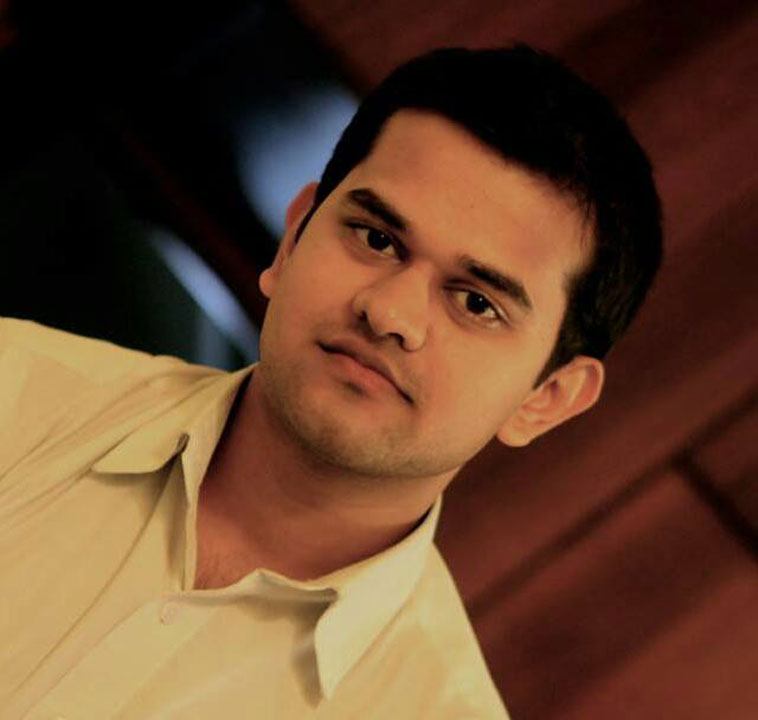
    Dharmendra Chatur graduated from Christ University School of Law, Bangalore in 2013, where he was class Valedictorian and was awarded  the Basant Kumar Sarala Birla Gold Medal for being the Best Outgoing Student. Currently he is an advocate at King & Partridge.

    In this interview we speak to him about:

    • His experience
    • Requisite skills for being an efficient litigator
    • How to apply for internship at King & Partridge  and research assistantships


    How would you like to introduce yourself to our readers?

    I’m Dharmendra Chatur. I’m currently working as an Advocate at King & Partridge, which is one of the oldest law firms in India (established in 1904). During law school, I was an active mooter and published a few articles in international and national journals. I had a brief stint with debating as well. Being interested in academic writing and research, I was involved in research on and continue to be interested in the fields of law and public policy. I currently follow developments in the areas such as legal and judicial reforms and health and medical law.


    dharmendra-chaturWhy did you decide to study law?

    Honestly, studying law was never a career choice during school. I took up Science in my 11th and 12th and had decided to do engineering (following the herd!). In fact, I enrolled myself into the Mechatronics Engineering programme at Monash University, Australia (Malaysia campus) and spent one month there (February-March 2008) before deciding to call it quits. The realization that I did not want to be an engineer dawned upon me only after I began my engineering courses! However, I had a great time being an international student at Monash – although for a limited time.

    After I returned to India, I did a bit of soul-searching and introspection and thought of giving law a try. Being a first generation college-goer (in any course), I was fortunate to have no family pressure to choose a particular course. The lack of pressure therefore allowed me to explore possibilities with my career choices. I joined LST for a one month crash course to see if I would be interested in law; and prepared for the first edition of the CLAT. Being unsure if I had done well in CLAT, I enrolled myself into Christ University mainly because of the excellent faculty and campus facilities there.


    According to you what are the qualities of a good lawyer?

    Speaking from my limited exposure to the legal profession, a good lawyer must have three qualities – at the very least – firstly, he/she must be sociable and polite; second, he/she must have a good grasp of legal knowledge (both theoretical and practical); third, he/she must aspire to be independent in thought, inclination and action to develop a dispassionate mind.


    What were your areas of interest while you were studying law?

    I was interested in public law generally and a few subject areas in private law especially company law, law of contracts and so on. In addition, I was also fascinated by public international law and conflict of laws.


    You are working with King and Partridge right now. What is a day at work like?

    As I am a practicing Advocate at King & Partridge, my work day involves preparation for and assisting my senior colleagues with appearances in the High Court of Karnataka/Civil courts/Arbitrations in Bangalore.


     What skills and attributes are important according to you to hold a job like yours?

    I believe three skills are important for any litigation job in an Advocate’s formative years: strong grounding in basic aspects of the law, immense patience to learn and grow and learning by observation.

    To law students, I would suggest that they must make consistent efforts to understand certain basic concepts in all areas of law – this will hold them in good stead when they begin (a beginner’s advantage, in a way). In addition, you must better your research, critical thinking and argumentative skills – all of which you can learn by mooting, debating etc. In essence, please utilize every opportunity law school provides you to become your own person – with a voice to be heard.


    What is the most challenging or stressful part of your job?

    The transition from law school to law practice is both challenging and illuminating. Challenging because law schools do not prepare students to face a practical world (which is why some Advocates shine without having attended many classes in law school). However, I believe that time well-spent at law school can only make one better equipped. My transition was illuminating because you get exposed to a very different world which requires strategic planning, execution among other things. Also, you figure that law and justice are ‘personal’, in the sense that from different judges, the same facts and circumstances may elicit responses. Therefore, a successful Advocate is, in my opinion, is a person who can gauge what a judge requires and prepares/presents a case accordingly.


    Is it easy to have a work-life balance in this profession?

    Successfully managing a work-life balance in this profession is very subjective as it is dependent on a variety of factors. These factors may be the firm’s environment, your commitments and so on.

    At King & Partridge, we are fortunate to have a culture that encourages a solid work ethic permitting enough time to rejuvenate so we can be enthusiastic to get to work every Monday morning.


    How do internships help law aspirants?

    Internships are essential to ascertain what kind of legal practice one would be suited to. Although figuring that out may take some time, pursuing a variety of internships will only help a law student decide his/her career options.


    Does your organisation take interns?

    Yes. The interns may apply to the following e-mail address: kingpart@vsnl.net with their CV and a covering e-mail for an internship. Based on availability of slots and an assessment of the profile of the applicant, internships would be confirmed. It usually takes a week to respond to internship applications/queries.


    How does a good academic background help in the profession?

    A sound academic background helps an Advocate in developing legal arguments from a variety of angles. Having said that, it is not necessary that only people will good academic backgrounds can succeed in the profession – because the skill set required to succeed is very different than mere academic merit.


    How important are extra-curricular activities for a legal career?

    (Dharmendra has won moots and published papers in various journals as a student.)

    Moots helped me get over my stage fear and develop confidence as a speaker. They are also helpful in developing research and argumentative skills which are skills useful in a legal career.

    Publications in journals helped me learn good legal writing and developing arguments in writing.

    Having said that, I believe that both moots/publications/ other extra-curricular activities are just ‘kick-starts’ and becoming a good Advocate is only possible by developing an attitude of constant learning and re-learning.


    How was the experience of being a Research Assistant at Centre of Law and Policy Research and Azim Premji University (Law, Governance and Development Initiative)?

    My Research Assistantships at both CLPR and AzimPremji University were an attempt to explore if I could develop an aptitude for law and public policy research. They are both great places to intern/work at if one is seriously considering a career in law and public policy analysis/research. The details for applying for internships/research assistantships are available on the respective websites of the organizations: http://clpr.org.in and http://azimpremjiuniversity.edu.in/lgdi


    What career goals have you set for yourself?

    I aspire to be a good and respected Advocate. I am aware that this will be long journey and perseverance is the key to be focused and never lose hope.


    Is there any success mantra that you follow which you would like to share with our readers?

    Doggedness. Diligence. Dispassion.

  • Sumeet Malik, Director, EBC, on studying at Franklin Pierce, the publishing business, and his experience

    Sumeet Malik, Director, EBC, on studying at Franklin Pierce, the publishing business, and his experience

    sumeet-malik-2Sumeet Malik graduated from NLSIU in 1999. Thereafter he worked briefly for nine months in Mr. K K Venugopal’s chamber and then decided to pursue an LL.M in Intellectual Property from Franklin Pierce. With his legal training and specialisation in Intellectual Property Law, he joined his family-run Eastern Book Company. Currently he is the Director at EBC and manages overall Content and Editing for EBC. We asked him about:

    • Graduating from NLSIU and from Franklin Pierce
    • Work and typical day at EBC
    • Integration of a ‘lawfirmite’ in a publishing house


    Tell us a bit about your childhood and pre-college life as well as educational background.

    I did my schooling from La Martiniere College, Lucknow, an over 150 year old institution. Law was very much in my blood – I was born in a law publishing family. My grandfather, Shri P.L. Malik who was educated only till class X, had by the dint of hard work and perseverance, compiled a book called ‘Industrial Law’ in 1950. It is today the most authoritative book relied on by Industries and Industrial houses in India. My father completed his law from the law faculty, Delhi as a gold medalist and went to do his LL.M. from Columbia University, New York. So yes, there was quite a lot of law in my background.


    The image of a lawyer back in ’94 was neither inspiring nor attractive for most students. What motivated you to choose law for a career?

    Coming from a law publishing background one would imagine studying law to be the choice, but it was an informed decision.


    How was your experience in NLSIU?

    It was a great learning experience. I met many wonderful people but everyone whom I interacted with taught me something. It would not be out of place to mention Prof. Menon and Prof. NS Gopalakrishnan to have had the most influence on me. My biggest academic takeaways from law school were my ability to research the law and how to think like a lawyer and this is what I try and tell all law students today. The law that you study while in law school will change but if you have the skills I mention then you are prepared for the rest of your life.


    Right after graduating from NLSIU you went for an LL.M. in Intellectual Property from Franklin Pierce. How was your experience with faculty and academics there?

    Actually, I worked in Mr KK Venugopal’s chamber for nine months before I went for my LL.M. Those nine months too were a great learning experience. Franklin Pierce has a great faculty. The teaching style is a little different from NLS. There is a greater emphasis on writing papers and class room discussion. The level of academics is quite high in Franklin Pierce. I would say most definitely so. My class had so many people from all over the world and I think I learned from all of them, some a little, others more.


    Would you recommend an LL.M. from Franklin Pierce to people who want to work in the Legal Publishing Industry?

    I think doing an LL.M. or a Masters programme helps in the overall development of a person. You gain a lot of exposure. An LL.M. at Franklin Pierce or any other US law school should be an added bonus for working in the Legal Publishing Industry.


    What does a Director at a publishing house like EBC do?

    EBC is a family run and managed business so each of us have our own responsibilities. My most important responsibility is content development, so whether it is enhancing content for SCC Online or co-ordinating with Authors for new titles. I edit/compile/write fifteen books in a year. Human resources for one division of the group is also looked after by me. It’s a little difficult to tell you about a typical day since each day brings different challenges. In the last year I have also travelled extensively, so there is something new that happens daily.


    What are the top three challenges you faced as a Director of EBC?

    I think that the greatest challenge is in the implementation of systems. Other challenges include the hiring and retaining of the right talent. There is a lot of expectation from the EBC group for making available high quality legal resources and quickly too. So it is important to meet those expectations.


    What would you say are the primary similarities between a conventional law firm and a publishing house?

    I would think that there is little similarity between a conventional law firm and a publishing house. The pace, expectations and deliverables are completely different. A lawfirmite can integrate into the EBC work environment but they will have to readjust all three – the pace, the expectations and the deliverables. Each project on which legal editors work has something new to offer. Learning and personal satisfaction and fulfilment are placed at a premium when working at EBC.


    When you hire law graduates, what kind of skills and profile do you look for?

    When hiring law graduates it is important to gauge their compatibility to the work i.e. of being a legal editor. Good analytical and research skills are needed to work as legal editors and since English is the medium through which this knowledge is communicated good English skills are a must. Some of the requirements are part of a person’s nature and others can be developed through practice and effort.


    What kind of effort should a young associate put in to work to get it appreciated?

    It’s hard to point out the kind of effort required to be appreciated, but honest hard work cannot remain unnoticed for long, so the emphasis should be to complete the task to the best of one’s ability and for the personal satisfaction of one’s self. No one can ever take that away from you. A young associate will usually perform tasks that have been allotted to them and a director will usually be involved in policy formulation and implementation of that policy.


    What is your impression of the current crop of young lawyers?

    There is a lot of casual attitude towards the learning process. A lot of students believe that having got into a prestigious law school is enough to land them a job or success in their lives. That’s not how it works. Develop your legal research skills. The law is ever changing. Also, get the basics right. Always think in first principles.


    Do you offer internships opportunities at EBC?

    We welcome internships at EBC. Those interested can send in their CVs to hr.manager@ebc-india.com. For us if you are willing to learn and utilize the internship for learning you are welcome to EBC.


    What would be your message to a student aspiring to join a publishing house?

    My advice to all such law students shall be: Take your learning seriously.

  • Punya Varma, Graduate, NLUD, on bagging a training contract from Linklaters, and plans for the future

    Punya Varma, Graduate, NLUD, on bagging a training contract from Linklaters, and plans for the future

    punya-verma-3Punya Varma is a graduate of NLU Delhi’s 2015 Batch. He has an enviable academic record and has an excellent series of internships done at top law firms. Having done the Vis Hong Kong moot twice, he has gained useful skills in commercial laws. He recently bagged a training contract from Linklaters. In this interview he takes the reader through the five phases of getting a training contract.

    • The process of getting a training contract
    • Her experience as an undergrad
    • Plans for the future

    What prompted you to pursue law?

    If I were to answer this question absolutely honestly, I did not know of the existence of magic circle law firms even until my second year. I was introduced to these firms when my friend was offered a Training Contract with Linklaters. It was then that I decided to apply for the same. Thus I got lucky with the course that my CV took. However I would suggest all law students to acquaint themselves with the backgrounds of these firms so that they can make an informed choice about joining them. It is very important to tailor your CV towards securing a Training Contract.

    The firm prides its international stature and thus looks for people who can easily mix with people from different jurisdictions and work in such an environment. It is thus important to have international exposure on your CV. This may be in the form of an international moot, international publication and conference or simply an exchange program. This is the one thing you will find present in CV’s of all students who have secured a Training Contract with a magic circle firm, apart from technical proficiency and commercial awareness which are a given.

    While I have given more importance to mooting in my law school career, some students prefer to publish papers. There is no one fixed activity that must be given priority, however one must make sure that whichever activity one chooses, it gives them exposure to commercial law, helps them work as a team and develops one’s personality holistically. It is not important that your grades be very high. People with relatively low grades have also managed to secure Training Contracts. A holistic personality, on the other hand, is very important in the application process. The firm can gauge whether the applicants really know their stuff or not.


    Did the Vis moot help in your preparation for the entire process?

    The Vis moot was instrumental in piquing my interest for commercial law. I was a merits speaker and thus got the opportunity to delve in the legal issues of international transactions and learn and enjoy commercial law at its core. The knowledge of CISG (Convention on Contracts for the International Sale of Goods) I gained by doing two editions of this moot pushed me further towards wanting to work in the field of commercial disputes. This also functioned as a good showcase of the international exposure I had achieved especially having worked on the commercial side.


    How did your internships contribute in your decision to do this?

    While the Vis moot was instrumental in providing me with theoretical knowledge, it was the law firms I interned with that helped me understand the everyday working of commercial laws. Having interned at some firms in the country I wanted to try the same experience at the international level with the largest and most complex deals. Such an experience is only possible with magic circle firms.


    What specific skills did you focus on in first three years of your law school life?

    Research and writing are skills absolutely essential for a law graduate be it any area of law they wish to practice. It is very important that one develops these skills early on in the law school so as to utilize the different internships to their fullest. It is further important to keep up to date with the latest happenings and in general have an understanding of how things work in the commercial world.

    Another important skill that I focused on was teamwork. The firm looks for applicants who know how to work and succeed as teams. This can be developed by taking part in team-based competitions or even simply by organizing events. Working in a team is a valuable learning experience that no one should miss out on.


    What sources, materials, books or blogs did you rely on to crack commercial awareness?

    Linklaters highly values commercial knowledge in an applicant. An applicant is expected to know how a commercial deal works and what the role of a law firm is while advising its clients. An applicant is also expected to know the general functioning of the market and the latest deals to have hit the market.

    I relied mostly on a daily reading of the newspaper with special focus on the business section. Linklaters does not look for experts in commercial law; they only look for a basic level of awareness and a commercial approach to providing any legal advice.


    List five things one can do in their third and fourth year of law school to drastically increase their chances of landing a training contract.

    • If you haven’t already had some form of international exposure, now is the time to get that on your CV.
    • Do internships aimed at developing skills that would help you solve commercial disputes.
    • While high CGPA is not something the firm specifically looks for, it makes for a good impression if your CGPA is respectable. Thus now is the time to work on improving your CGPA as much as possible.
    • Before going for the Vac-Scheme, vac-schemers need to clear their concepts especially related to basics of commercial laws.
    • For those of you like me who are socially awkward, its time to learn to let go of that and learn to strike up conversations.

    Can you please describe the application procedure for Linklaters India Internship Program and the subsequent Training Contract for the London office?

    Applications for the Linklaters Indian Internship program are open for all students in the penultimate year of their law course. It is a three-step process starting with the completion of the application form. The application form requires the applicants to fill details of academic, extra-curricular and co-curricular activities undertaken. It also includes certain subjective questions, which need to be filled.

    Linklaters then shortlists the best applications it receives in that year and asks the shortlisted applicants to complete an online Watson Glaser Test. This is the second step in the application process. A practice test can be found on http://www.pearsonvue.com/nphstr/wg_practice.pdf.

    A further shortlist is done depending upon the cut-off that Linklaters decides and the shortlisted applicants are invited to Mumbai for the technical interview round.

    The third step is the successful completion of the interview process. The Interview Day can be exhausting. It starts with an hour-long Watson Glaser Test followed by a three hour-long E-Tray exercise. It is then followed by an hour-long HR interview and an hour-long Partner interview. Linklaters then selects the best candidates among the shortlisted candidates and makes an offer of the Summer Vacation Scheme to them.

    During the Vac-Scheme, each student is placed in two seats of their choice and is also expected to complete a written project. At the end of the Vac-Scheme, there is another hour-long Partner interview based on the written project. It is upon the completion of all the above steps successfully that the firm makes an offer of the Training Contract to the applicant.

    The entire application process can also be found here: http://www.linklatersgraduates.co.uk/application-process


    Did you face any particular difficulties or found anything particularly challenging while applying online?

    The Linklaters application form is fairly clear and straightforward and the applicants should find no difficulty in understanding the instructions. Please do visit their graduate recruitment website for further guidance- http://www.linklatersgraduates.co.uk/


    Are there any specific pointers to keep in mind while writing your CV on the law firm website during the application process?

    The application form does not directly ask the applicants for their CV. It is upon the applicants to showcase the highlights of their CV within the subjective questions that the form asks them to complete. It is very important to bring out all the qualities that I mentioned earlier on through these questions so that you can show the firm that you are the correct fit for them. Please make sure that all parts of the questions are answered. The format in which the question is to be answered depends upon the question itself; hence it is imperative to understand the question clearly and to also understand what the firm expects from the applicant.


    How did you prepare for the Online Aptitude Tests post your application?

    The Watson Glaser Test is a fairly universal Aptitude Test and thus applicants can find practice tests online. I have already provided one such source in the above question and another source to be accessed is http://www.linklatersgraduates.co.uk/application-process/critical-thinking-test.


    The Telephonic Interview/ video conferencing is the first level of shortlist for the Herbert Smith Freehills application procedure. How did you prepare for it?

    The HSF process involves a telephonic interview, which lasts roughly twenty minutes. It is a basic HR test conducted by a member of their HR team. It involves simple HR questions like answering why you wish to join a foreign law firm, why you wish to relocate to London and why do you specifically wish to work with Herbert Smith Freehills. It is also a test of whether the applicant has basic proficiency in spoken English.


    Are there any specific technical issues that you faced?

    The telephonic interview isn’t a very tough part of the HSF selection procedure. Make sure that you have read up on the firm and that you are in an area with sufficiently good connection and you’re good to go.


    The interview day can be quite nerve racking, did you take any particular steps to calm yourself?

    I made sure that I had a good night’s sleep before coming for the interview. It is very imperative that one has a clear head during the interview day as it is rather long and tiring. Prepare well and take a good night’s rest before going for the interview day and it should go absolutely fine.


    What was your strategy for the E-Tray exercise?

    The E-Tray exercise is a simulation of an office work environment. The first 30 minutes are reserved for reading a package of information based on which you have to complete the exercise. The next two hours comprise responding to emails that arrive in your inbox. This involves a multitude of tasks and is essentially a race against time. At the end of the task an e-mail has to be typed with your conclusions for the Partner Interview.

    This exercise is essentially a race against time and hence time management was on the top of my list while attempting it. It is a good idea to acquaint yourself with the working of the exercise before actually attempting it. A practice test can be found here: http://www.cubiksonline.com/Cubiks/Etray3/PracticeEtray/?clientID=93642980-3145-4DDE-A11C-AB99C1A6BB76&locale=en-GB.


    Did you prepare extensively on Indian Corporate Laws?

    The Interview does not require you to know Indian Corporate Law extensively. You must know your CV in and out and you also must have your basics in Contract Law, Property Law, and Competition Law etc very clear as the technical questions are also based on them. It is also helpful to know the basics of mergers and acquisitions and the various methods in which the same can be done. Any book, which provides the basics on this, can be referred to.


    What newspapers/blogs/magazines would you recommend to stay prepared for the day?

    Reading the business section of the newspaper on a daily basis and making a concerted effort to understand concepts that you don’t in one go. A very important aspect that Linklaters tests the applicants on is their knowledge about the firm. It thus makes sense to completely scan the Linklaters website thoroughly before going for the interview. Important things to be noted from the website are the locations of their offices and the values that they subscribe to.


    Did you prepare for some stock questions ahead of time for the HR Round?

    It is very important to prepare basic HR questions before hand. While it is counterproductive to sound too rehearsed, it also doesn’t make sense to go absolutely unprepared. Thus all applicants must have a general idea of what to say in the event of a particular question. These involve quoting instances from your life when you have depicted teamwork etc. and answering questions like “why London”, “why Linklaters” etc. It usually helps if you work along with someone. I found it really helpful to work with my friend who had also been shortlisted for the interview and practiced the questions with him.


    punya-verma-1

    How did you prepare in the run up to your London Trip?

    There is no specific preparation required for the Vac-Scheme. You should prepare for the trip like any trip to a foreign country. However the clothes you wear to the office need to be absolutely prim and proper. The dress code is formal and hence choices must be made accordingly. In an office environment, one’s dressing sense speaks volumes about one’s capabilities and hence the same must be kept in mind.


    How was the social environment during the vacation scheme?

    The Vac-Scheme usually has two socials per week wherein the firm takes out the vac-schemers for an activity and a dinner. It involves social interactions with Trainees, Associates and Partners at the firm. Since these socials form part of recruitment criteria it is advisable to make an extra effort to be social, to mix with people from different cultures and to ask questions. It may be something completely outside of one’s comfort zone (me for instance), however it is an important criterion for selection and hence the effort must be made.


    Describe a typical day as a Vacation Schemer?

    A typical day for a vac-schemer started at 9:30 am and ended at 5:30 pm. It was usually filled with a lot of training sessions and departmental presentations. The rest of the time we were required to be at our seats finishing any work that may have been assigned to us by our Principals or Trainee Buddies. The Grad-Rec team assigns Trainee Buddies to each vac-schemer who helps the vac-schemer with any query that they may have. The day usually ended with a social or an activity in ‘Silks’- the cafeteria named after the street in which Linklaters has its headquarters- Silk Street.


    What in your opinion are the aspects that the firm is evaluating you on during a Vacation Scheme?

    As vac-schemers we complete two seats during our Vac-Scheme wherein we are given work by our teams and ultimately our Principals provides a seat appraisal. The two seat appraisals are an important indicator to the firm of our working style and also tells them whether we are a right fit for the firm or not.

    We are also assigned a research project on the first day and the same is to be completed within two weeks. The technical interview with the Partner is heavily based on the research project we submit hence it is important that we work hard on this. The interview itself is also assessed and can prove to be quite a grilling experience.

    Apart from these, the Grad-Rec team also assesses our social skills during each social that we attend. Networking is of utmost importance to the firm and hence they only wish to hire people who can easily communicate with others and network for the firm.


    What were your learnings while interacting with law students from different universities?

    Interacting with students from different universities is always a fun exercise. You get to learn so many new things and learn to look at things from a different perspective. The vac-schemers are not necessarily from law schools and could simply be doing a course on classics. Once hired, they complete their conversion course in law and join as a Trainee.

    The UK students are as professional and their approach to work is as methodical as the Indian students, however they tend to exceed the Indian students in their social skills. That also might be because they remain firmly in their comfort zones in terms of social interactions (since they have to majorly interact with other Indian students) while the Indian students have to break out of their comfort zones to make conversation with everyone.


    What difference did you feel was there between your Vacation Scheme Interview and Training Contract Interview?

    While the Vac-Scheme Interview is based upon the final E-mail to the partner at the end of the E-Tray exercise and the knowledge of the firm that you have attempted to gain, the Training Contract Interview is based on the research project and the actual experiences in Linklaters. Thus the latter is definitely more grilling and technical and seems more exhausting than the former.


    What approach should a vacation schemer follow to get the best of out the entire experience?

    I think the best approach any vac-schemer can follow to get the best out of the Vac-Scheme is to just flow with the entire process and to enjoy the process. Once selected for the vacation scheme, the firm changes track and instead pitches the firm to the vac-schemer as opposed to the other way round. Thus I would strongly advise all future vac-schemers to enjoy the process fully!

  • Dr. Kumar Askand, Professor, RMLNLU, on studying law after science, his passion for academia, and the Criminal Law regime

    Dr. Kumar Askand, Professor, RMLNLU, on studying law after science, his passion for academia, and the Criminal Law regime

    Prof. Dr. Kumar Askand graduated from Deen Dayal Upadhyay Gorakhpur University, Gorakhpur. Askand has been teaching for the last ten years. He started his career as a teacher at WBNUJS, Kolkata and thereafter went on to teach at RMLNLU, Lucknow.

    In this interview we asked him about:

    • Studying LL.B after graduating in B.Sc.
    • Studying in a traditional law college in comparison with an NLU
    • The Indian Criminal Law regime and changes


    How will you introduce yourself to our readers?

    I was born in a sleepy eastern Uttar Pradesh town named Basti and received all my pre-university education there. Interestingly, I was first admitted in a Christian Missionary School, then moved to a right-winger Hindu school and finally ended up in a Muslim minority institution for my 10+2. I often think that this unplanned move has a lot to do with what I am today or what I am not. I had a normal childhood in a middle class family with a professor father, homemaker mother and a younger brother.  I obtained all my university degrees from Deen Dayal Upadhyay Gorakhpur University, Gorakhpur (DDUGU) and my Ph.D. (Victimology) from RML Awadh University, Faizabad. I had already cleared the National Eligibility Test for Lectureship during my LL.M. days. Since the day that I got my LL.M. Degree, I have been teaching.


    Why did you decide to study law after a B.Sc.?

    I did B.Sc. as my father wanted me to pursue the degree after he failed to convince or motivate me to do engineering which almost everyone around me would be doing. Given a chance, I would have studied literature, preferably English literature. My father was a professor of literature and as a child I used to see a lot of Hindi literature scattered in my house. I wrote and published my first poem when I was eleven and before I turned twelve, with two of my school friends, I started a children’s magazine. So literature of every kind became my constant companion since early childhood and I even started dreaming of becoming a poet.

    However, I soon realized that poets and writers also need to work for a living and it was during my B.Sc. that I decided to study law. In hindsight, I believe it was during these days that instead of solving problems of physics and chemistry, I became fascinated with law. So, joining law after B.Sc. was a conscious decision, though it was a period when legal education was considered the dust-bin of higher education in India. As there were many lawyers and judges in my extended family, my decision to study law was not resisted by my parents. What amuses me a lot when I look back to my LL.B. days is that a few of my father’s friends would sheepishly enquire “why did you join law, I know you were good at studies”. And this is how law was looked at even by university professors.

    Doing M.Sc. in chemistry was always an option as in spite of my fascination with all issues legal, I still managed a first class in B.Sc. The decision to study law was a case of the heart winning over the head.


    Tell us about your college life.

    It was not very different from the present-day life of my students I believe, except that we had a very vibrant (some may say rowdy) culture of student politics. Eastern Uttar Pradesh is considered the crime capital of Uttar Pradesh and there were many students with criminal antecedents in the garb of student leaders. I actively participated in student politics though I never contested any student-union election. So, I have been there and seen it all.

    Academic Sessions were often delayed by a year or two and a three-year law course would usually take four years. LL.M. or other masters programmes took almost three years.

    If you leave aside the late academic sessions and all, the law faculty of DDUGU had a great reputation as classes were held very religiously (not a usual feature in many other departments and universities in U.P.) and year-after-year scores of students would qualify in competitive examinations for judicial services etc. At a time when annual examinations were the norm in all the universities, DDUGU had a semester system.  We would not miss even a single class except the C.P.C classes and C.P.C. still remains my weakest area. The faculty was fabulous and we had some great teachers. Prof. Udai Raj Rai, who later became Chair Professor in NLSIU and is currently holding the Ford Chair on Human Rights in NUJS, was the Head and Dean of DDUGU when I had taken admission there and taught me Constitutional Law. My Head and Dean during my LL.M. days Prof. Anirudh Prasad is currently Dean (Academics) in RGNUL. The only regret which I had was that most of the classes were conducted in Hindi and the number of English medium students could be counted on fingers. Not that the professors were not capable, but as the majority were Hindi-medium students, they would force the professors to speak in Hindi.

    Things improved in LL.M. but it was still a largely Hindi-dominated class. However, I never felt that I am at any disadvantageous position due to lack of instructions in English. Contrary to what many believe, I believe that law is not a slave of any particular language. Though I was an English medium student, I used to have fierce discussions on legal issues with my Hindi-medium mates.

    My heart goes out for those students in RMLNLU who join us after having cracked the CLAT but suffer in their classes due to their educational background. Hindi-medium students suffer emotionally and psychologically in a predominantly English-speaking peer group and these sufferings often reflect in their grades. As a student, I never enjoyed any special status or privilege due to the fact that amongst the Hindi-medium students I am the only one who studies law in English-medium. There were many Hindi-medium students who knew law better than anyone else. Regrettably, in NLUs, your competence in law is judged by your fluency in spoken English.


    Please give us a few actionable tips on managing higher grades.

    (Dr. Askand was one of the exceptional students during his college years.)

    Rather than giving any tips on managing higher grades, I would say that grades don’t matter much. Many of my batch-mates who did not score good grades are doing very well as lawyers and judges. Your grades in law school may give you a star status amongst your peers but in the long run, it is your in-depth understanding of law and legal issues which counts. More than feeling great about obtaining the first position in the university in LL.M., I feel proud of being the first LL.M. from DDUGU who was offered lectureship in the prestigious NUJS. So instead of worrying about grades, be a trail-blazer.


    Law, now and then-how would you describe the change?

    Do you really think that law has changed since my student days? I find the same law today which we studied. The changes are only cosmetic and nothing much has really changed.

    If you mean “legal education, now and then!” my answer would be that a lot has changed for good. In 1995, when I started my three-year law course in DDUGU, the five-year law programme was seen with a lot of skepticism. Though NLSIU was established in 1987 (and remained the only NLU till 1997 when NLIU was established followed by NALSAR and NUJS), no one believed that legal education shall be one day at par with engineering and medicine. Honestly, it was only during my first year in LL.M. that I realised that the NLUs have arrived with a bang on the legal landscape of the country and also secretly harboured the aspirations of teaching in one of them someday.  In our days, law was by default. Today, it is largely by choice. The pedagogy, the approach, the method, the infrastructure and above all, the attitude of the people towards law has undergone a complete metamorphosis. Believe me, the law faculty of DDUGU stopped subscribing law reports in 1996 due to financial crunch and when I was writing my LL.M. dissertation on euthanasia in 2001-2002, law reports only up to the year 1996 were available in the library. Can you imagine that in a NLU? Accessibility of quality legal material was the biggest challenge of our days in DDUGU.

    Then, whoever excelled in law, excelled through grit and conviction fighting against many odds which the students of today, especially from NLUs can’t even imagine in their wildest dreams.


    How relevant do you think are internships for a present law student?

    In our days, internships meant going to a lawyer’s chamber in the evening where you would not be taken seriously and if you still have the perseverance, go ahead. Today, it’s all about internships. See in law schools other than NLUs, a job in a law firm or a corporate house is not the prime motivator. Almost everyone is interested in a government job in judicial services, state prosecution department, PSUs etc. For these jobs, your internships don’t matter much.

    Interestingly, when I joined RMLNLU in 2006, I was given the responsibility of Internship and Placement Committee which I discharged till 2013. As a faculty advisor to the Internship and Placement Committee, I have seen a lot of benefits accruing from internships. Internships not only expose you to the functional aspect of law, these widen your horizons of thought and make you complete. Irrespective of what one wants to be after law school, one must do internships during session breaks.


    Why did you not go for practicing law or some other career in law?

    One practices law not only when one argues in a court but also when one teaches and researches. Am not I an academic lawyer? It may appear a bit saintly but since my graduation days, I knew that academics was my calling. It may not be very lucrative in comparison to other jobs with a fatter pay packet but immensely satisfying. It gives you creative freedom and it is fun inspiring young people, many of whom look up to you crucial life decisions.


    Why did you take up teaching at RMLNLU, given the fact that RML was still at its foundation years, while NUJS, a renowned university?

    Ah, when I joined NUJS it was also at its foundation years. The first Batch of NUJS graduated in 2005, a year after I had secured a lectureship there. So I have been part of NUJS faculty in its formative days and still cherish this association.  Leaving NUJS in 2006 was a difficult decision and the reason for doing so was purely personal.  Closely watching RMLNLU grow by leaps and bounds has compensated the so called loss of leaving a renowned law school.


    Which subject do you enjoy teaching the most?

    (Dr. Askand has taught a number of both traditional legal subjects and the trending ones from Criminal Law to Science Technology & Law to IPR to Banking Law and Policy.)

    Teaching non-traditional subjects like Science Technology & Law, Biotechnology Law and Media Law was a real challenge for someone who had never studied these subjects as a student. In NUJS, I taught these subjects to a very bright bunch of students and immensely enjoyed doing that. However, everyone knew in NUJS that my heart lies with Criminal Law. I fondly remember Late Prof. D. Banerjea who was heading the School for Criminal Justice Administration (SCJA) in NUJS, inviting me to all the SCJA meetings though I was associated with School of Legal Practice and Development (SLPD).

    After I joined RMLNLU as a founding faculty member, Criminal Law was an obvious choice and to this day, I am stuck in love with it. So, it is Criminal Law of all hues and variety that I love teaching most. Media Law shall be the next best thing to discuss, teach and research.


    How has the experience been participating in as well as organizing a number of conferences, workshops and other events?

    Fabulous, to say the least. I have been fortunate to have been part of organizing committees which meticulously organized some academically enriching seminars and conferences both at NUJS and RMLNLU.  The International Seminar that we organized at RMLNLU in 2010 to mark the completion of 150 years of the Indian Penal Code takes the pride of place.


    Do you think if Indians would have framed our Penal Code, it would have been better?

    NO. Period. Who would have done that for us? India of those times was geo-politically an entirely different entity and everyone knows what the state of penal law was during the times preceding IPC. After we became independent, successive Law Commissions have suggested changes in the IPC but none have suggested any changes in the core values which the statute embodies. Macaulay must be credited with producing the mammoth statute minus the superfluities of English law. If today, the Parliament decides to have a new penal code for India, its structure and core principles shall remain intact. We have seen that happening when the Code of Criminal Procedure, 1898 was replaced by the 1973 statute.


    If you were asked to suggest some changes to the present Indian Criminal law, what would they be?

    Not the law, it is the criminal justice system which requires a change. Let me briefly explain this: Laws are not good or bad. It is the manner of their implementation and enforcement which matters more than their content. Most of the issues plaguing the criminal justice system in our country are systemic. From 2010 to 2012 we at RMLNLU, undertook a massive research study of the functioning of the prosecution system of Uttar Pradesh. The findings of the research- a 600 pages strong Research Report, which we submitted to the Government of Uttar Pradesh and the Prosecution Directorate are shocking. The prosecution apparatus is on the verge of collapse and no one seems concerned.


    If one wants to become a great criminal lawyer, what course of action should one follow?

    I don’t think I am the right person to answer this question. However, let me try. Most of the people in the profession think that practicing criminal law is all about securing bail for their client. This is a myopic vision of criminal law advocacy. I understand that the snail-paced justice system offers great incentives to criminal lawyers who are in reality mere “bail managers”. I am also not undermining the importance of bail for the stakeholders. What I am pointing out is that real criminal law advocacy is much more than just securing bail.  My ideal criminal lawyer shall be the one who has in-depth knowledge of both the substantive and procedural criminal law and is also well versed with the constitutional law. This requires a lot of perseverance, patience and practice.


    Lastly, what would be your message to people who want to take up a career in teaching?

    My message shall be “welcome to the family”. Legal academia requires you much more than ever. Come to the profession well equipped, in letter and spirit, and conquer the world. If someone like me who comes from a not-so-impressive academic background, with no fancy foreign degrees, can make it to NLUs, anyone and everyone can.

  • Rohini Sen, Assistant Professor, on LL.M from Leeds, pursuing academics and teaching experience at JGLS

    Rohini Sen, Assistant Professor, on LL.M from Leeds, pursuing academics and teaching experience at JGLS

    Rohini Sen graduated from GNLU, Gandhinagar in 2011 and thereafter she went for an LL.M to University of Leeds. Presently she is an Assistant Professor and teaches at Jindal Global Law School, Sonepat.

    In this interview we speak to her about:

    • Studying B.Sc.LL.B from GNLU, Gandhinagar
    • Pursuing an LL.M. in International Law from Leeds
    • Experience as a teacher at JGLS


    Tell us a bit about your work life, your dreams and aspirations.

    I must congratulate you on this rather interesting and enterprising endeavour. SuperLawyer is very informative for those who need a form of guidance to see them through five years of law school and has a relatable touch to it as well. I am always on the lookout for such creative ideas and that is a good place to start when it comes to me. I am a big believer of constructive communications, collective problem solving and creative dialogues and, academia allows me to experience all of them. Through my academic journey, I hope to bring about some relevant changes in the Indian legal education system. Rote learning has eroded our ability to synthesize information and be mindful of their significance. I want to facilitate the process of independent, interdisciplinary thinking and help students integrate into a knowledge society with ease (I include myself in the student category because I learn new things almost every day through the lessons). I also hope to be able to contribute substantially to international law someday – global identity and perspective being my reference frame.


    Do you reckon any incident that motivated you to choose law as a career?

    No special incident as such, but to bring a perspective I should mention that I come from a family of academicians and have grown up amidst books, liberating discussions and topical debates. Having spent the better part of my childhood and adolescence questioning norms, I always believed that I would be an author and write profusely to make emphatic statements. I knew I wanted to be heard and be famous but I was never quite sure how that might happen! The idea of doing law never crossed my mind until my father picked up a form for GNLU and sent it my way. I was in that indecisive transition stage when he told me about these national law schools and that GNLU’s was the only entrance examination left. Three days later, I wrote the exam and the rest, as they say, is history. It was only when I started college did I realize that others prepare quite meticulously for such entrances and doing law is serious business. Well, law is a subject that requires you to stay on top of things all the time and ensure that any information you possess is absolutely updated. As a result of this constant input, lawyers seem to be generally (I don’t endorse generalizing though) more aware about things and events. This definitely gives you an edge.


    Tell us about your time at GNLU.

    Summing up my time in GNLU in a paragraph is nothing short of sacrilege! I have learnt so much from my time there. My five years of law school have taught me to think like a lawyer when the need arises, be tolerant to contrary opinions and ideas (as long as they do not represent ignorant/harmful practices), to nurture my fondness for creative thinking and diverse subjects. I have learnt something from each and every individual I have met in GNLU and cherish the collective experience. I have several interesting stories and highlights from my GNLU days. But one that stands out the most was winning the Henry Dunant Moot Court Competition at the national and international levels (we won the national and South-Asian rounds and were runners-up in the finals of Asia-Pacific). The moot helped me realize my immense fondness for International Law and IHL and set an invisible marker for the general direction my career would take. I also made some incredible memories and friends in course of the moot –people across the globe who have helped me grow as an individual.


    Can you tell us about B.Sc. LLB course and its advantages?

    That is an interesting question actually. As you correctly pointed out, the Indian universities are yet to pick up that trend. I was a student of science in school and that made B.Sc a fairly natural choice. I was (and continue to be) of the opinion that one can read the BA subjects simultaneously or subsequently, but, B.Sc allows you to have an added edge. The course consisted of the three basic science subjects and interesting law-related additions that possessed bio-chemical and forensic components. As far as I am concerned, this intensive science degree always gives me a well-rounded perspective on things. It allows me to engage deeply with certain topics of IHL (such as weapons, their nature and use, strategic international conflicts/disputes) and environmental law (science-based procedures and mechanisms) because of the technical components. I do think that it is essential to understand the background and context before delving into the law and my B.Sc LLB degree allows me to do that with comparative ease.


    rohini-sen-5

    How did you balance academics with mooting?

    (Rohini has been part of the winning team of the 8th Henry Dunant Memorial International Moot Court Competition.)

    Well, as I already stated, winning Dunant was momentous for me. It pretty much drove me to where I am today. We put in a lot of effort for the moot and that, coupled with our natural flair for the subject helped immensely. We were very determined to win and spent hours in the ISIL and ILI library reading books for background and references (something that few moot teams do these days). This is a practice that all mooters need to inculcate and something I tell my students as well. If you know your subject and its background well, you will have answers to even the most obscure questions.

    The confidence that you gain from reading and good oratory skills will see you through the rest. Balancing academics and mooting is not very difficult actually. I’d recommend that one takes it with stride. The minute you think of these as something that you must balance, it looks a lot more daunting than it really is. My advice would be to instead think of it as something you like doing and devote time to it as you would to any other hobby.


    rohini-sen-4Any incident which is stuck in your mind from Henry Dunant?

    Actually, there is something interesting that I took away from the experience. Right from day one, our only goal was to win and we would psych each other up by saying so on the occasional bad days. The power of this brand of thinking has impressed itself upon my mind rather well.


    Tell us how has being associated with committees helped in building your personality and shaping your career?

    Oh yes! Being an active part of committees and societies is very integral to one’s overall development. It teaches you teamwork which is often dismissed as a clichéd skill but, is very useful when you enter the professional domain. It also teaches you how to network –a skill that is terribly underrated in India and often relegated to the status of “unfair” simply because you choose to use your communication skills in addition to your talent. Of course, one must make the distinction between networking and seeking undeserved favour. And this is something the institutions can teach our law students.

    In GNLU, I was associated with committees that conducted university related activities as well as committees/clubs that involved a lot of social and cultural engagements. The quiz club was a particular favourite and continues to be of immense interest. All these activities were a good blend of work and fun and helped me stay updated and motivated.


    What prompted you to choose the University of Leeds from the plethora of options available?

    The decision to do an immediate LL.M was made a long time ago, but, Leeds happened through some serendipitous and some pragmatic engagements. When I was a child, I had met a Barrister from Leeds and something about that reputed, old world, charismatic and Anglian intrigue became a part of my system. Leeds is one of the oldest and top universities in the UK and when the time came to make applications, it was but a natural choice (The only other university in UK I applied to was Edinburgh). Another important thing to remember is your subject of choice and to pick an institution that offers the subject and is reputed in that domain. When the offers arrived, I had to make a tough decision between NYU, UCLA, Chicago, Edinburgh, Leeds and Pace and Golden Gate. The American universities were expensive and the scholarships afforded by them were far from sufficient. I was fresh out of college and determined to get into academia post my Masters and these factors played an important role in my university selection. I was very reluctant to take a student loan because I wanted financial mobility after graduation. Academia is not really a money making profession yet and I did not want to be stuck in a job just to ensure loan repayment.

    Having eliminated the American universities, Leeds was a very easy choice. I understand that brand name is often a concern for most people. But, having undergone the process and being where I am today, I can safely say that it really is not very relevant. At the end of the day, all that matters is how well you have done and how enterprising you can be.


    rohini-sen-2Tell us about your time University of Leeds.

    I loved my time in Leeds. Given my academic family background and previous travel experience, I was not unfamiliar with global education practices. This helped me ease into my LL.M program well. Indian law schools do not encourage independent thinking or intense research at the undergrad level.

    At Leeds, I was exposed to a system that takes its readings very seriously. It was both liberating and challenging. As a Masters student, we were required to not just read hundreds of pages every week, but, to also ruminate on them. I enjoyed this practice very much and it has allowed me to hone my writing and teaching skills in the process. We engaged in seminar style discussions with each other and the faculty instead of lecture style classes and found that particularly refreshing and valuable. This is a practice that the Indian higher education system should definitely try and emulate. In a Masters class, there is a diverse presence of people from all kinds of backgrounds and age groups who have a lot to share. Everyone, especially the faculty, can learn a lot from this exchange.

    In India, we overemphasize the faculty-student distinction much more than the necessary. In the UK, there is a lot of ease and the faculty make themselves a lot more approachable. So yes, the systems are different, but the difference is not daunting. If you are considering a LL.M you must be prepared to read and think – habits that can only stand you in good stead. Also, a traditional yet innovative university like Leeds takes its dissertation and research very seriously. This emphasis on quality has allowed me to make my work comprehensive and publishable. A year of studying abroad is necessary for everyone for several reasons. It helps you grow as an individual both professionally and personally. And while you figure your way out through the lessons, it is extremely important to have a lot of fun as well. Immerse yourself in travel, cultural exchange, sports, parties and meaningful conversations. You will be surprised at how much you can learn from a mere five minute exchange!


    How did you manage funding and expenses for the LL.M?

    Scholarships for LL.M are quite hard to come by actually. There are merit scholarships as well as need based scholarships, but the numbers are limited. I was given a partial merit scholarship by the university and the rest of it was paid for by my parents. Studying outside the country is an expensive process and I would advise all those who wish to pursue their LL.M to be very judicious in their decision making and take into account all possible scenarios post LL.M. There are some competitive scholarships available within and outside the specific universities. You can apply for the university scholarships while making your applications. If you don’t qualify for the merit scholarship, you may make an application requesting financial needs and stating your reasons for the same.

    The universities will consider your request and grant you aid accordingly most universities follow this pattern. The external scholarships, such as Commonwealth, Chevening etc. are extremely competitive and merit based. But there are few others along those lines and you can keep your eyes open for as and when they come (I missed the deadline for all of them). Also, organizations such as Rotary, Ford Foundation and TATA provide scholarships for prospective graduate students in relevant areas. You just have to be enterprising and be on the lookout for such opportunities.


    What prompted you to choose teaching as a career?

    I have wanted to be an academic for as long as I can remember. Coming from a family of academicians made it a very easy choice. I have grown up observing some of the most brilliant professors, liberal thinkers and inspired individuals. This exposure constantly helped me to be my own person and think of a way to transfer some of what I have learnt and loved to others as well. Academia was the perfect vehicle to do that.


    Tell us about your teaching methodology.

    I would like to believe that my teaching methodology is fluid and anecdotal. I try to simplify the subject as much as I can and attempt to bring in relevant and contemporary references. As a teacher, proper communication of ideas is very important to me. I strive hard to make sure that most (if not all) have understood the very basic concepts.

    Having been a student in the recent past, I try to think from the student’s perspective as much as I can. They sit through a variety of lectures all day and the mind tends to get saturated and distracted. Keeping that in mind, my goal is to make the classes interesting and informative, while keeping the subject structure intact. It is not easy and I try to think of new methods to do so as often as I can. As teachers, we often forget what it was like to be a student. And having seen both ends of the spectrum, I think that academics should never forget the trials and challenges of their student days. This perspective helps in making the lessons more relatable. I am also not a fan of this emphasized distinction between faculty and students. This is a personal opinion of course. I try to soften the barriers in order to make room for better exchange.

    I do not encourage taking notes, but, I am comfortable with the idea of jotting down skeletal points of importance interest. I do ask my students to read and come so that a conversation is possible and try my best to engage them in debates, discussions and other class activities. I also send them any reading that I think is interesting or vaguely connected to the subject. I am afraid I am quite the spammer in that department! I am extremely happy when they ask questions or take interest in a topic. Through these questions, I get to learn new things from them.


    Could you give our young readers certain tips on excelling in academics?

    I really don’t like the idea of quantifying academics and comprehension of subjects. The best way to excel is to read voraciously (all kinds of books), be interdisciplinary and always take time out to reflect on what you have read. This is my overall mantra to doing well. As a teacher, I would recommend spending time with what one has read in order to absorb the basic ideas and concepts. This is very important. If you have understood the essence of a topic or an article, you will be in a position to write a skeletal answer and build upon it from memory or references. Last minute rote learning may help you get the grade, but, if you spend a few more days with the subject you might grow to like it as well. In addition to that, be lucid and simple when you write. If your opinion is contrary to the teacher’s do not hesitate to share it and justify it.


    What do you feel about the Indian legal education system?

    The Indian legal education system is intense but relies unnecessarily on rote learning in some subjects. To be fair, my Indian undergrad helped me stay ahead in my LL.M class all throughout. We cover an impressive spectrum of topics and subjects. However, barring a few instances, the teaching methodology needs to change. Asking students to memorize sections of Bare Acts is redundant since as a practitioner, you will refer to it anyway. Also, it is not at all helpful in simplifying concepts. Instead of such teaching methods, we need to generate more discussions, be more contemporary, practice oriented and analytic.

    Having said that, I must state that the quality of discussions/debates in an Indian classroom is no less than reputed UK or American universities in any aspect. We just need to find a way to channel and hone these diverse minds and interests. We need young academics, a blend of old and new ideas and we need to dismantle bureaucratic practices in the legal education system.


    What would be your message to our readers?

    Read, travel and meet new people. Education is just one of the many components that help you grow and it is much more than a means to employment. Allow it to enhance you and not stifle you. And I’d encourage more law students to join academia in this time and day. Some of us braved it despite the comparatively less financial incentive while others had to settle for more lucrative prospects, despite an academic bent. Do not let that stop you. We are on the road to make change.

  • Jeet Bhatt, Advocate, High Court, Gujarat, on an LL.M from QMUL, and leaving a lucrative career in corporate law for litigation

    Jeet Bhatt, Advocate, High Court, Gujarat, on an LL.M from QMUL, and leaving a lucrative career in corporate law for litigation

    Jeet Bhatt graduated from the first batch of GNLU, Gandhinagar, in 2009. After working for almost a year, he went on to pursue an LL.M in  Corporate and Commercial Law from Queen Mary University of London. After finishing his Masters he had the opportunity to work at Mark & Co. in property matters.

    He later quit Mark & Co. and came back to Gujarat and joined full-fledged litigation practice.

    In this interview we speak to him about:

    • Requirements and selection procedure for an LL.M program at QMUL
    • Work experience at Mark & Co., London
    • Starting up with litigation practice at Gujarat High Court.


    How would you introduce yourself to our readers?

    I am a lawyer practicing in the High Court of Gujarat. I graduated from Gujarat National Law University in 2009 and got enrolled in the Bar. I practiced Law for a year and then went to London in 2010 to pursue my Masters in Corporate and Commercial Law from Queen Mary University of London. I completed my Masters in 2011 and came back to join litigation. It has been five years since I began my journey as a Lawyer and ten years since I joined Gujarat National Law University and I am going to share with you my vivid and some not so vivid experiences in the Legal Profession. I do belong to the Family of Lawyers for it runs in my blood since three generations.


    How were the formative years of your schooling?

    Formative years of my schooling were similar to that of an average guy less interested in studies and more interested in everything else than studies. I was always interested in sports and used to play cricket for my school. I had opted for Science in Higher Secondary and it turned out to be the greatest challenge of my life. Though I could not pass out with flying colours, with the marks that I got in my 12th Standard, my life surely started looking Black and White with Graduation in Arts the only formidable option.


    Why did you choose law as a career?

    I believe it was more by chance then by choice that I got into the Legal Profession. While I was still considering the few options that I had, I decided to go to Courts and spent a day observing what my father did for a living. He took me to the Court. Without understanding anything about law I was certainly lost in this Fort like High Court of Gujarat. I saw my father presenting a matter before the Judge and that point I thought to myself that it is the easiest thing to do in this world (I did not knew then how wrong I would be proved later). So that was it by the stroke of that midnight hour I did have the tryst with destiny and I started considering myself to be a lawyer. Fortunately GNLU started in 2004 and as it was at its nascent stage somehow by god’s grace I cleared the entrance examination got myself admitted and then there was no looking back.


    Tell us about your years in law school.

    Being the first batch of GNLU everything about it was exciting. Being the first batch there were no seniors and therefore no one to help if you end up at the wrong place doing the wrong things. But we managed and we learnt from our own mistakes. Fortunately for us we had some great faculties and teachers who really inspired us to learn law and made our academic life interesting. Learning the Law is not just about sitting in class and attending lectures, it is not just reading the provisions and rules it is much more than that. It requires an interdisciplinary approach and a constant aptitude for learning. It requires asking questions and finding answers. GNLU provided us that platform where we could build a strong foundation. Law School is all about acquiring the correct skills required for the Legal Profession. It is about investing your valuable time in the right direction. GNLU focussed on research and that immensely helped us in improving our research skills. With internships ranging from NGO’s to Law Firms to Courts and International Organisations being part of the curriculum it truly helped in gaining the first hand experience of the Legal Profession. Internships should be done very seriously as it can open up lot of avenues for the students.

    Time at law school should not just be restricted to academics and studies. One has to find time for extracurricular and cultural/other activities for it helps in developing the overall personality which is very important in today’s competitive market.


    When did you decide to pursue Masters?

    I decided in my last year at GNLU that I would still like to pursue higher studies before getting into full time litigation. When I graduated in 2009 I did start asking lawyers in the High Court that whether an LL.M from Foreign University would be helpful in Litigation. Majority of them said it would be a waste of time and money and you would lose a valuable year in Litigation. I then asked few lawyers who had been to foreign Universities for higher studies and they motivated me to go and pursue masters from Foreign University. Despite of all adversities I was firm of pursuing my academic interests.

    My reason for studying abroad was both personal and professional requirement plus LL.M in UK is a one year program whereas in India it was two years at that point in time. Arbitration was one subject which I was really keen on studying and therefore considering that London being the hub of Arbitration I decided on doing my Masters in a University located in London.


    How important are grades for an illustrious LL.M degree? What is more important for a successful candidature: grades or work experience?

    Grades are most important for getting admission in a reputed University abroad. You need to have a distinguished academic career to be placed in the top Universities abroad. They require you to have a good academic record but good internships and recommendation letters do help. Work experience is not a requirement for Universities but I would certainly recommend students to work for few years, gain considerable knowledge of the subject in which they want to pursue masters and then apply to universities for further studies. Experience helps a lot and it makes more sense to go abroad after having a few years work experience. LL.M programs in Universities abroad are basically structured to cater the needs of foreign students and therefore experience of few years really helps a lot as most of the students coming from other countries have around three to four years working experience. Therefore having work experience prior to going abroad would be certainly beneficial.


    Can you tell our readers about how you shortlisted universities for your masters?

    The first and foremost thing to do is to know in which subject you want to pursue your masters. The Universities abroad give a wide range of subjects which one can choose and therefore depending on which area of law one needs to specialise accordingly you must decide the University. I was very keen on specialising in Arbitration laws and therefore I chose Queen Mary University of London as it has the best faculties in UK for Arbitration. School of Arbitration in QMUL has an excellent program for LLM which is considered better than KCL, UCL as well as LSE and therefore I chose QMUL over other Universities. One has to do a preliminary research and be sure where he wants to study and in which subjects depending on that they must apply to Universities. Application procedure is simple and that the Universities websites provides all the necessary details regarding the same. But one must start this entire exercise one year in advance.


    Tell us about your time at Queen Mary.

    What happens in Queen Mary stays in Queen Mary (jokes apart) but yes I will surely share my academic experience. My time at QMUL was truly enriching and enlightening. I was exposed to 500 other students who had come to pursue LL.M from more than 100 countries. It took one week to get introduced to each other. From graduates to people having more than 10 years experience in top law firms to some having their own firms in different countries were my batch mates. With one year experience in Litigation I tried my best to match to them and to adjust to such an intellectual environment surely took a toll but after meeting fellow Indians I knew I was not alone (no offence meant). The first few weeks are popularly known as shopping weeks where we are allowed to attend all the classes ranging more than 100 subjects of law starting from Arbitration to Banking to Copyright to Design, Finance and you name it. Out of all the varied modules that were offered we had to choose 4 modules which was again a hell of a task. Having worked for more than a year, again attending classes and going to college did seem a task but by the end of the first month it all sinked in and I found the new educational system quite suited to my expectations and I got a lot of time for myself where I had the luxury to read and study the subjects I was interested in. Honestly I did not want academic pressure as I wanted to have the freedom to choose what interested me and I got the perfect academic environment. Being in QMUL you get the access to the Institute of Advanced Legal Studies (IALS) which has the best library in the World.

    Having 4 classes to attend in a week it didn’t seem much of a pressure initially and having just moved in to a city like London you need free time to know the city (it is very important). I really enjoyed the tutorial system where for a batch of 10 students there is one tutor with whom you do lot of case studies. It was unique in the sense that you get so many different perspectives from students coming from different jurisdiction and it was truly enriching in every possible manner. It was a different reality and one must surely experience it. If today someone asks me for my advice on studying abroad I would definitely recommend that, provided you make the most of it.

    QMUL Campus is like a lively city within the University. Students Union is one of the most powerful Unions in UK and is bustling with so many activities. From volunteering to learning different languages to teaching to sightseeing everything you need you get it. It is so well connected to all the Universities and colleges and you get the chance to interact with people from so many nationalities. Living in the University accommodation has many advantages though it might be bit expensive but it is definitely worth it. Socialising and communication is a very important aspect of the program it helps tremendously in our profession.


    jeet-bhatt-1

    While pursuing LL.M could you intern at any firm in London?

    Yes I did get a chance to participate in many other activities happening in London and around the campus. I did attend a study tour to Brussels to visit the European Union and its parliament and to visit the International Court of Justice in Hague as well as the International Criminal Court and did get to see the proceedings going at the court. There are opportunities to intern during the course but one has to choose the timings wisely as it should not end up affecting your classes and tutorials.


    How did your appointment at Mark and Co. Solicitors take place?

    I would say I got lucky to get an appointment at Mark & Co. Solicitors. I happened to meet the partner of the firm at the airport through a common friend. We stuck a good chord and that was it. I had the opportunity to work in a Law Firm in London. I worked there for a few months before I decided that I want to get back to litigation in India. Mark & Co. had a lot of NRI clients, it dealt with a lot of property issues. One important aspect of firms in UK and lawyers in particular is that they certainly want to avoid litigation and going to courts would be the last option. It certainly is very different from our approach as we want every possible dispute or no dispute to go to courts for adjudication. I could not resist the charm of being in Litigation in India and I decided I wanted to get back in Gujarat High Court.


    What influenced your decision to work in the litigation sector?

    Though I did work in a Leading Law firm in Gujarat for a year and I am still associated with it but I purely deal with Litigation. I tried to do both but Non-lit corporate work is not my cup of tea. I like to be a part of all the action that is going on in the Courts. Being in litigation should not be treated like being in a job. It is surely not an employment it is much more than that. One requires a lot of perseverance and patience along with passion to do well in litigation.


     Is it better to work in the corporate sector for a few years before starting litigation?

    Certainly corporate jobs are much more lucrative and why shouldn’t a student prefer it over litigation? Being in litigation is a very tough decision to make and to survive in litigation is even tougher. One has to devote himself completely to do well in litigation knowing that it does not pay well in the initial years. My first salary was Rs. 2500/-pm. I do not want to discourage students from entering litigation but it has to be a very conscious and well thought decision. One needs to be absolutely sure to be in litigation. Litigation is something that you need to learn from scratch. Learning the law and practicing law are at different ends of the spectrum. It requires completely different set of skills and temperament which comes only through experience. Real court room is completely different from moot court rooms. Being a good mooter to becoming a good litigating lawyer is a different ball game altogether.


    What can the law schools do to encourage more people into litigation?

    Law Schools have made their purpose to encourage students to get into Corporate Sector. The purpose of Law Schools should be to make students good litigating lawyers. It does require a paradigm shift in its approach. Students are taught to run after big packages and plush offices and it certainly takes away the cream into non-lit sector. Students need to be taught how to survive in Litigation and how to do well in it. If they are encouraged to be in litigation they can surely do well.


    What were the difficulties you faced in the early days of your practice?

    Even after five years I still feel I am in the early days of my practice. Every day is a new learning day. Coming from a family of lawyers surely helps at the entry point. You do get guidance and work but then you have to build it on your own. I did face lot of challenges in understanding the procedures and functioning of the courts and the registry. From extracting the relevant information from clients to filing of the petition is a long drawn process, presenting the matter comes last. One has to know this nitty gritty of filing a case and availing the right remedy in law before hand. Getting the eye for details and getting to the crux of the matter is very important and it comes gradually. Sitting in Court and observing the proceedings is a must in the initial years. Presenting the matter before the court is also an art which requires a lot of training and experience. Many times after arguing I felt that I should have said this or said that or I missed to show the important facts or law on that matter. Litigation is full of challenges and I have faced some very tough times in court. Fortunately I have had good mentors and the seniors in the Gujarat High Courts are very supportive and helpful. To sum it up my five years experience in the High Court has been very satisfying. Though small but I have had some significant moments in my career, Senior Judge of the High Court was so impressed with my arguments in one matter that he went on to record it in the order although I lost the case but that went a long way to build some reputation. Few judgments where I appeared got reported in law journals and in few, law was settled.


    What would be your message to law students who wish to start their own litigation practice?

    There is no short-cut to hard work, no over-night success stories in this profession. You have to build your career slowly and steadily. Choose a good senior and prove your mettle to him. Figure out your strengths and start working on your weaknesses. Acquire the correct set of skills required and keep on improving them. Read and be up-to-date with judgments. Prepare thoroughly. Be humble and never forget you are in a noble profession. Work ethically and wait for the right opportunities. Remember what my senior always told me “Don’t just strive to become a successful lawyer strive to become an eminent lawyer”.


  • Rahul Bajaj, Undergraduate Student, Nagpur University, on being an Indian Delegate to Harvard, battling visual impairment, and braving all odds

    Rahul Bajaj, Undergraduate Student, Nagpur University, on being an Indian Delegate to Harvard, battling visual impairment, and braving all odds

    Rahul Bajaj is currently studying at  Dr. Babasaheb Ambedkar College of Law, Nagpur. Rahul interned with us for sometime, and he did exceptionally well. He is visually impaired from birth. Rahul scored 97 per cent in Class X and 95 per cent in Class XII, for which he was awarded the Dhirubhai Ambani Scholarship from Reliance Foundation and another scholarship from the Director of Higher Education, Govt. of Maharashtra.

    In this interview we speak to him about:

    • Braving the odds
    • His connection with Harvard Law School as an Indian Delegate and a student of HarvardX outreach program.
    • Future plans regarding his career


    How would you like to introduce yourself to our readers?

    I am a nineten-year-old law student and am currently in the second year of my law course at Nagpur University. I also happen to be blind since birth, with a rare retinal condition called Leber’s Congenital Amaurosis (yes, that’s quite a mouthful).
    I studied in a mainstream school and junior college in my hometown, Nagpur. I enjoy reading books, learning new languages, travelling and learning about different cultures.


    Why did you decide to study law? What were other options you were considering?

    As I am blind since birth, I realized the importance of self-advocacy at a very early age. And, once you learn to advocate for yourself, the logical thing to do after that is to learn to advocate for others. After my 10th board exams, like most other students, I began seriously considering my future options. I belong to a family of doctors – everyone in my family is, or wants to be, a doctor. I have always admired doctors but have never wanted to be one myself (ironic much?). I opted for the commerce stream in junior college; most of my friends were planning to pursue the chartered accountancy course and many people persuaded me to do the same. However, nothing appealed to me the way the legal profession did – I have always been fascinated by the power of the law to empower even the most powerless.


    What kind of study schedule do you follow?

    This might sound cliché, but I have always believed in maintaining consistency. Therefore, I generally allocate a few hours every day for studying. If you study regularly in a diligent manner, you can do very well in academics. I cannot emphasize enough the importance of maintaining a healthy balance between one’s academic and other pursuits; I don’t see any point in excelling in academics to the exclusion of all else. In fact, one of the primary reasons why I decided not to study in a national law school was because I believe that most national law schools, notwithstanding their brilliance, stifle creativity and do not allow students to focus on other things apart from figuring out how to stay in the rat race.


    How do you organise the entire activity of learning something, producing academic content and preparing for exams?

    I use an application known as a screen reader on my computer – a screen reader reads aloud the text that is given on the screen in a human-like voice. I scan all my study material onto my computer and then read it with a screen reader, so I highly rely on assistive technology. In addition, we have appointed two readers who read the study material to me and even help me to learn it.


    How do you write exams?

    I write all my exams with the help of a scribe who reads out the questions to me and writes the answers as per my instructions. Normally, I have to take several mock tests with the writer in order to build good coordination. As this is an arduous process, I get twenty minutes per hour extra for solving all my papers.


    As a visually impaired student, do you come across additional challenges, while studying in law school?

    Yes, I do have to encounter myriad challenges. Blindness permeates everything that I do, so it is always a force to be reckoned with. My uniform experience has taught me that the biggest challenge is dealing with the attitudes of those who believe that blind people are mere objects of charity and sympathy. People often have a fixed mindset, and it is very hard to convince such people that I can compete on a footing of equality with others. Lack of access to study material in an accessible format, finding a good writer for writing my exams and lack of access to important material for preparing for moot court competitions, research paper competitions, etc are some of the biggest challenges. The challenges are not just limited to law school, but also extend to other professional and social settings. During my internships, for example, I am always the elephant in the room, at least for the first few days. Most people do not have any past experience of interacting with a visually impaired person, so they do not know how they should engage with me. As a result, despite your best efforts, you do sometimes stick out like a sore thumb. That being said, I have generally had very positive experiences and have realized that people are more than happy to make reasonable accommodations if you tell them what you precisely require.


    Did you find the legal education system in general and your college in specific to be sensitive to the needs of the visually impaired students?

    All my professors have always been very supportive and encouraging; they always try to help me in whatever way they can. Forgive me for my lack of modesty, but I am mindful of the fact that this can also be attributed to a large extent to my good academic record. It is difficult for an average disabled student to thrive without asserting his/her needs. A lot still needs to be done to make legal education more accessible to the disabled in India.


    Would you encourage visually impaired high school students to pursue law?

    Law can certainly be a great profession for a visually impaired person, but I wouldn’t advise anyone to go for law just because he/she is visually impaired. My approach has always been to first decide what I want to do and then to figure out how to deal with the challenges that my visual impairment entails. This approach, in my view, is better than doing something just because it would be comparatively easier for a visually impaired person.
    That being said, if you are genuinely interested in the field of law, you should definitely go for it! I earnestly believe that the battle to compete in a world which has largely been designed to cater to the needs of the sighted greatly enhances our problem solving skills and the ability to think out of the box and every lawyer needs to have these skills in order to succeed in this profession. Moreover, like have I said before, as a visually impaired person, you do always stand out whether you like it or not. This can be a blessing in disguise, as it affords you an opportunity to change people’s perceptions, forge good friendships and above all, it allows you to have a more enriching experience than an ordinary student.


    How can other visually impaired students increase their academic performance?

    The most important thing is to learn to believe that you are not a blind student, but a competent and intelligent student who happens to be blind. In other words, you should not allow your disability to define you. It is also essential to set high goals – if you have mediocre goals, you will only end up being mediocre. The society generally has very low expectations from visually impaired students and visually impaired students often end up inadvertently internalizing these messages. You have to wholeheartedly believe that you can achieve anything that you set your mind to. I know that this is easier said than done and I sometimes still struggle to maintain this level of self belief, but you have to try. As T.S. Eliot once said, “Only those who will risk going too far can possibly find out how far one can go.”
    Contacting other visually impaired people in India and abroad who have excelled in the same course is another useful way to learn many small but significant things. Once you find out that there are other people who have overcome similar hurdles, you realize that you can do it, too.


    You are a Delegate at The Harvard Project for Asian and International Relations. Please tell our readers about it.

    The Harvard Project for Asian and International Relations, or HPAIR as it is popularly known, is a conference conducted by Harvard University which seeks to bring together roughly 500 delegates from all Asian countries to discuss contemporary socio-economic challenges relevant to the Asia-Pacific region. The conference is conducted twice a year – once at Harvard University and once in an Asian country. The conference for which I have been selected will be conducted in Tokyo in August.


    How did you become a delegate for this Harvard project?

    Actually, a couple of my friends attended the last HPAIR conference and told me that it was an amazing experience. So, I decided to test my luck and applied for the Tokyo conference. Much to my surprise, I got selected for the interview, which was conducted over Skype, and, the rest, as they say, is history. On another note, the application window for the Tokyo conference is still open. Those who are interested in applying for the conference should go to hpair.org.


    You have also been selected for a Copyright Law programme by Harvard Law School. How did this happen?

    Harvard Law School, through its HarvardX initiative for distance education, conducts an online course on copyright law every spring. Around 525 students are selected from across the globe for this course. One striking feature which sets this course apart is the fact that all the students are divided into 21 sections, and each section, roughly consisting of 25 students, has weekly online meetings and discussions. Personally speaking, this is certainly the most intellectually stimulating course that I have attended so far. The course not only allows you to learn copyright law from the best in the business, but also affords you an opportunity to acquire a deeper understanding of what it actually means to study at Harvard Law School, which is something that I have always dreamt of doing.


    What are your future career plans?

    My aim is to work as a transactional lawyer after completing my education. I would like to work in a Magic Circle firm in the U.K. or in a Tier-1 law firm in India. The main reason for the choice is that transactional lawyers are able to prevent disputes from occurring, whereas litigating lawyers essentially have to prevent an already bad situation from getting worse, so I believe that this would suit my personality well.


    What message would you like to share with our readers?

    We all have our unique flaws – some are more apparent than others. So, we should learn to appreciate and celebrate diversity instead of cringing away from someone who is not like us. However, you can learn to appreciate someone else’s flaws only once you learn to accept your own flaws. You should never stop believing in yourself, because if you don’t back yourself, who will?

  • Ketan Mukhija, Senior VP, SREI Ifrastructure Finance, on working at Herbert Smith, and his diverse experience

    Ketan Mukhija, Senior VP, SREI Ifrastructure Finance, on working at Herbert Smith, and his diverse experience

    Ketan Mukhija had graduated from NALSAR, Hyderabad in 2007. He was the first person from his batch to get placed in a foreign law firm: Herbert Smith. Thereafter, he returned to India and worked as a Principal Associate in a leading law firm for almost two years. At present, he works as the Senior Vice President of SREI Infrastructure Finance Limited, one of the largest Infrastructure Financing firms in India.

    Having a niche in the Corporate Sector and Capital Markets, we asked him about:

    • Internships which propelled him in his career.
    • Work at Herbert Smith and at foreign law firms.
    • Responsibilities at SREI, and various internship opportunities.


    How would you introduce yourself to our readers who are mainly young and enthusiastic lawyers?

    Proliferation of knowledge encompasses an idea of disseminating information what we have gained at the platform where young, deft brains converge. They say that an idea is short-lived if it is bounded. The world has set itself to reap benefits of the knowledge economy, and thus, ideas need to be spread. After all, an informed judgment speaks a lot about itself. I am inclined to place this term somewhere between suspended judgment and premature judgment. The synchronization of radical and traditional approaches in judgments and intentions need to be put under the lens. Also, adopting a multi-disciplinary approach in tackling with problems requires thoroughly researched and genuine arguments. So, originality and innovation would be the key words, and meticulousness always pays. Little things make perfection, and perfection in itself is a very big thing. And once the leader, be a person who knows the way, shows the way and goes the way!

    I have consistently believed and acted in sync with the above and attempted my bit to balance the interests of academic and extra-curricular activities through effective time management and meticulous planning, and will strive and continue to chart the same path.


    Tell us about your life before law school.

    At school, I scored high marks throughout my academic career and managed to position myself among the top three in class. I secured the third rank All-India in my Intermediate Board Examination as also in my Tenth Board Examination. During the final two years in school, I was awarded the Best All Rounder award consecutively. I was the General Captain during my final year at school, and led the school football and swimming teams in a host of District and State Tournaments. Apart from sports and curricular activities, I have consistently and actively participated in literary and debating activities.

    There are no lawyers in my immediate or extended family; and a career in the legal field, honestly, happened to me more as a matter of chance than choice!


    What inclined you towards the field of legal education?

    I had a good academic record in school, and being ambitious enough, I have always wanted to make it big in my professional career, through healthy competition, commitment and integrity of character. We know that in any sphere, there are valuable human, economic, social, physical, natural, cultural, and institutional assets that can be leveraged for vitalization efforts. What ties competitive advantage and these assets together is one’s entrepreneurial drive. Our preference is to think of a pyramid, where the most efforts and resources should be spent at the base, on entrepreneurship, creating an environment of encouragement and support for initiative and creativity; this, in turn, improves the ability of people and communities to retain and expand existing structures; which in turn makes the same regions and communities attractive to incoming businesses and investments.

    The cohesive element in the entire process always being in a good team working and perfectionist attitude, which I feel I am endowed with. Such and other characteristics are well rewarded in the legal profession!


    How instrumental was NALSAR in nurturing your legal career?

    While at NALSAR, I held the position of the Editor-in-Chief of The EDICT, a reputed student-managed law publication. I also availed an opportunity to pursue studies for a semester at the University of Western Ontario, Canada, as part of the Academic Exchange Programme, based on my academic performance. I was further awarded academic scholarships instituted by NALSAR for three years consecutively, on the basis of merit. I attended the Summer Session of Private International Law course on a scholarship basis, conducted by The Hague Academy of International Law, Netherlands. I also held the position of the Convenor of Centre of Environmental Studies.

    These, and various other avenues that NALSAR conferred on me and threw open, clearly aided proliferation of diverse rational thought and its advocacy, sculpturing informed judgment. In a word, I rarely had an opinion earlier about several facts and facets, now I do – for a way or the other !


    Which ingredients of your college life moved to such a superlative position?

    There is quarrel, loyalty, workmanship, indifference, maturity, seclusion, and an effective adhesive for these is leadership. That there is an inevitable growth of human mind in the positive direction, may not always be true. And hence, it becomes essential that enthusiasm of team members is consistently maintained. Hence, an aspirant with a high degree of motivation but low in ability may, at times, be placed higher than a counterpart with lower degree of motivation and higher ability.

    I was encountered with numerous instances while at the law school, when I was benefited from the aforesaid line of thought ! Prolonged argumentation, brilliant infrastructure and educational ambiance, coupled with all possible avenues to release one’s capacities, develop analytical abilities and confidence, goal setting and also achieving core competencies – NALSAR did inspire awe and discipline from all of us.


    What are your thoughts on activities like mooting and article writing for journals?

    I believe mooting is an extremely rigorous activity which on the one hand teaches the mooter research skills and the techniques to draft and present legal arguments, while on the other hand also inculcates essential public speaking skills, court craft, and the ability to strengthen one’s written case with oratorical skills. This may however, not be as easy as it appears. An in-depth research on the subject matter and the applicable laws gives a student the requisite understanding which enables him or her to frame arguments and present them in a manner that shall convince a judge to understand those. This is where one needs to realize that a moot court competition is not about a monologue, but a comprehensive dialogue between the bench and the advocate/counsel to understand the issues and arrive at inferences wherein the advocate serves as an advisor to the court and educate the judges about the case.

    A lawyer, whatever be his area of work, must know where the law is and how to find it out. He also must have the capacity to undertake the rigour of research.  He has to have a comprehensive knowledge of substantive law and legal theories, in order to quickly appreciate the legal point of view. And that’s where the art of writing pieces and stories for journals and newsletters comes in handy !


    Tell us about your internships.

    Law Firms: I have been exposed to the functioning of some of India’s leading corporate firms, and had first-hand experience of conferences with Senior Counsels, concerning important corporate matters, and also both transactional and advisory of significant importance in the contemporary corporate/ financial marketplace.

    Government Authorities: I was also exposed to working of the premiere law authorities like the Law Commission, wherein I worked on various topics relevant to global economic and business trends.

    Think Tanks: During my internship with Centre of Civil Society, I gained experience not only in real life application of economic, political, and social theories and principles, but also honed up my skills of research, analysis, and writing.

    Others: I have done a judicial clerkship under Hon’ble Dr. Justice A.R. Lakshmanan, Supreme Court of India, during which I observed proceedings in important matters in the Apex Court of India. I also worked as a trainee lawyer under Mr. K.T.S. Tulsi, Sr. Advocate, where I gained considerable experience in the drafting and filing work with respect to matters pending adjudication. I further worked with Mr. Sushant Kumar, Advocate in the High Court of Delhi, and Mr. K.L. Saraswat, Advocate, Agra District Court, during which time I was exposed to functioning of trial courts, the process of institution of suits, the examination/ cross-examination of witnesses, arguments, along with the enforcement of decrees, etc.

    All the above experiences and more taught me to be adaptive and acquire a flexible bent of mind, thus, helping me to perform above expectations in odd situations that one is confronted with. At the same time, I can conveniently locate my focus in business and commerce, which have continued to fascinate me till date.


    Could you share with us the series of events that took place before your appointment at Herbert Smith?

    It all started in the campus placements at NALSAR. I was the first one in my batch to get through a foreign law firm. During the second semester of my fourth year, I filled in the application form for Herbert Smith. Once the application form was selected , I was asked to take an online test and once I cleared the online test, I was called for an interview in London and that’s how the appointment took place.


    Could you throw some light upon your experience at Herbert Smith?

    At Herbert Smith, I was in the equity capital market division so my basic work revolved around alternative investment market and London stock exchange listing. I took care of a lot of big transactions in the capital market. Indian Law firms are different from foreign law firms in a lot of aspects starting with their strength. Foreign Law Firms have huge setups, say, for example, any law firm in U.K has around 700-800 lawyers working in the same building ,whereas, in India, a tier I law firm would have a maximum strength of around  200 lawyers. Another very important factor where the foreign law firms are different from their Indian counterparts is that they are super specialized. Say, for example, a firm has a Labour Law department; there will be different sections in that department like the Pension fund department, contract labour department, employment department. But, in India, the law firms are not that super specialized, and there are mostly general sectors in every firm, like the General corporate sector or a general capital market sector. When I was in London, I had a focussed work experience but when I started working in India, I had a more general experience which is good in a way because it is more comprehensive. Foreign Law firms are very formal and structured but in India you have the scope of creativity to deal with not so sophisticated clients.


    The proposition of litigation taking the backseat when law firms come as a choice, seems to be the general notion. What is your take on it?

    I am reminded of an excerpt from the Law Commission Report on Reform of Judicial Administration. Although, published in 1958, it articulated the conditions of legal profession quite harshly, the products of which were “…a plethora of LL.B., half-baked lawyers, who do not know even the elements of law and who are let loose upon society as drones and parasites in different parts of the country.”

    Yes, there was a period when law firms constituted the priority choice among graduating law students but I note that the trends have been constantly changing and more budding lawyers are taking up a career in litigation and even starting their independent practices. After all, the legal system is essentially a multi-disciplined, multi-purpose one that can develop the human resources and idealism needed to strengthen the polity as a whole.


    How do you manage the workload and your personal life?

    Well, I have consistently followed global economic trends and have found tremendous interest in the same. It is important that your workplace not only provides a competitive environment, but also a challenging atmosphere for your growth and development as a professional. Thankfully, I have been lucky in this regard and I plan to continue and contribute my best in whatever tasks I am entrusted with. The key lies in not letting your Mondays be dreary, enjoying your work and aligning your incentives with that of the organization that you work for ! Having said this, I do not believe in putting large number of hours, rather investing quality intensive deep-dived hours to effectively achieve headway and closures on the tasks that I handle.


    What does your role as Senior VP entail?

    My role at SREI is to understand all the contracts, and also structuring deals without much negotiations and obstacles from the other side, to make sure that we do not end up in trouble later on. It is a much more responsible role. I come from a law firm background and this is altogether a different experience. While you are with a law firm, you are only dealing with the legal side of the work but here at SREI, it is an intermingling with the commercial side. Here we don’t have external clients; the client is our own commercial team, our own project team, our own investment team, and we are catering to the business, so here you need to know the commercial logic and the business theory and you have to add value to it. The idea is not just to cut down the costs, but is to streamline and rationalize the entire system so that it works in a way that it increases the synergy. You have to work very closely with the business, technical and commercial teams.


    Does SREI take legal interns?

    Yes, the firm takes a lot of interns. We have a full fledged HR department which takes care of the internship process. The application gets vetted in the HR department there and then, depending on the needs of the firm and the competencies of the intern, we put the legal intern in the required department.


    Where do you see yourselves ten years down the line?

    At the moment, I am very happy with the work I am currently doing; the reason being that it is much more educative and we are trying to get into a lot of managerial work and responsibilities. Couple of years down the line, I probably find myself working in the same company, doing much more responsible work. Regarding higher studies I feel that being in the field teaches you much more than actually studying somewhere. I’ll rather be in the market and learn from my own experiences.


    Last but not the least, what would be your message for law students?

    I have always believed that everything worth achieving in life can be reached only through hard work and diligent effort, and that great things are possible if necessary steps are taken and no stone is left unturned. Typically, the successful people are hard-working and/or inherently smart – belonging to the former certainly constitutes a matter of volition and willingness, so there!

  • Srirang Sapre, Law Graduate, GNLU, on maintaining CGPA and getting a PPO from AMSS

    Srirang Sapre, Law Graduate, GNLU, on maintaining CGPA and getting a PPO from AMSS

    Srirang Sapre is a student of GNLU, batch of 2015. During his time as an undergraduate, he has interned with the likes of AMSS, Wadia Ghandy & Co., Jani & Co., Y J Trivedi & Co., among others . He has received a pre-placement offer from AMSS.

    In this interview we talk to him about:

    • Maintaining a good CGPA and building a CV
    • Working diligently and receiving a callback
    • Sailing through the interview and getting a PPO from AMSS


    Tell us about your pre-college life. Did you have lawyers in your family?

    I was lucky to be born and brought in the beautiful city of Ahmedabad. I did my schooling from Best Higher Secondary School, Maninagar, Ahmedabad. I being from a school which had always pressed on academics and extra-curricular activities equally made it easier in later years for me because I was competent to handle both academics and extra-curricular activities together. As far as having a law background goes I have none. I am the only one in my family to have chosen a career in law.


    Should scores of SSC and HSC affect your decision to take up law course?

    Personally, I do not think percentage scored in SSC and HSC should have any bearing on decision of getting into a law course. Getting into law only requires you to have a brain that can think logically and rationally. Apart from that you need to have the dedication and should be willing to work really hard to achieve your goals, that is I think what you should look for when you think about pursuing a career in law. I don’t think there is much of an edge for students having Commerce background or Science or Humanities. But every once in a while I have found myself to getting hang of few topics taught in law school better and faster because the basic concepts of Commerce grasped in my 10+2 education were strong. Further if you are interested in Corporate Law or taking up Company Secretary Course I think having Commerce background will help a lot.

    How should a fresher go about his initial journey in a law school?

    When you step into National Law University as a fresher it’s a start of a whole new chapter in your life. It is a bittersweet moment because you are happy that you cracked the CLAT and terrified that others around you have done the same too and that to may be with better scores. But you soon get used to this new world and its rules. Also be very cautious while choosing your peer group as in a Law School getting carried away or swayed is easy. Friends are very important during your journey here. Some of those friends will be for life.


    How should one prepare for continuous evaluations and end semester examinations?

    Doing smart work is more important and not hard work. One should always bear in mind that there is no straight-jacket formula to go about all subjects offered in a particular semester. You need to think on your feet and assess as to what all is required by the subject and what all points does the faculty expect from students to be covered in the answer. I also recommend group study since it is beneficial in a few law subjects which have vast syllabus and it is not always possible to complete every bit of it single-handedly. Scoring consistently well is extremely important. It should not be a one-semester-show but that also does not mean you need to top every semester, you just have to maintain your average and strive to make it better and better as you make your progress in the law school.


    How important is it to get published in order to build a CV?

    I think to having an all round CV is very important. A couple of articles published in reputed journals/newsletter/websites will take you a long way. All articles can have something to do with any of the various law subjects that you study. However if you want you can also try to streamline your C.V. in a particular direction by writing on similar areas of law. I for one have written on very diverse topics ranging from entrepreneurship to anti-piracy. So to sum it up I feel that getting “articles” published and not just “legal articles” will help in the long run. This shall also help you to achieve command over English language which is like inevitably important in legal profession.


    You have been a member of multiple committees while in law school. Do you think these enhanced your skill-sets?

    It is important to lay strong foundation to aid your progress in crucial final years. According to me being a member is various committees is equally important along with constant focus on academics. There are many on-field experiences and instances which makes every committee I have joined a memorable experience for me. Instead of giving specific occasions as to where it helped me I would rather state that it has immensely helped me to develop my overall personality especially on social front. Also the level of exposure that you get while working in each of these committees is superb. Lastly, it is again a matter of choice you may stick to certain committee(s) or join no committee at all but personally I think positions of responsibility adds considerable credit and weightage to the C.V. which recruiters do look at as well.


    Can you tell us about your internship experience?

    (Srirang has interned with top tier firms such as Udwadia Udeshi, Amarchand, Wadia Gandhy.)

    Frankly speaking, coming from non-legal background it was quite a herculean task for me to secure such internships. Going to any of these firms before III year is not that productive both for the firm and the student since you are still learning commercial laws and are not aware of its intricate topics and hence once I was done with my sixth Semester I started applying personally via emails and following up on status of the application via calls. However it becomes simpler to secure internship in your IV and V year since Internship and Placement Division (IPSD) at GNLU takes up the task of placing students at various firms and I am extremely thankful to IPSD for facilitating me in securing internship at these top-tier firms that eventually culminated into a PPO from AMSS, Mumbai.


    Did your law school education find relevance with the kind of work you were required to do at law firms?

    I was lucky to have seniors to help me plan my internships and other things from time to time. But, I was clear on one thing that I will not just sit idle in any of the breaks and hence made all efforts to secure some or other internship. One should be ready to intern at middle and local firms too, trust me your get to learn a lot. Law school education did help me to start off my work in the law firms but I certainly think many practical aspects can be brought in the syllabus or the teaching methodology across all the NLUs. By that I mean to say for an instance while teaching the transfer of property act some aspects of stamp duty calculation etc can be also made known to the students. However the notes that I used to take down in the class came very handy when I was given a completely new topic to research on. So yes law school education is the first step to the research accomplishment ladder and then it depends on person to person to dig deeper.


    What kind of work did you have to do during your internships?

    Since I started off with an NGO internship, a property law firm and then went onto intern at top tier firms of India that itself reflects that I had excellent opportunities’ coming my way to work on diverse topics such as alternative dispute resolution laws, property law, admiralty law, state specific statutes and of course corporate law to name a few. Well, as far as memorable moments goes highlighting a couple of moments would render others as less memorable and cause injustice too hence every internship that I undertook had memorable moments as each day I got to learn something new of which I was absolutely clueless until just the  night before.


    Have you ever seriously considered engaging in pro-bono humanitarian work?

    Yes. When you get into this one of the most glamorous, challenging and powerful profession and dream of yourself getting close to most prominent lawyers, honorable judges and social activists who fight for making India a better place to live  such a thought  would naturally cross your mind/ and I am  no different. I got this very good opportunity to work on something unique and i.e. framing guidelines for food waste management which is currently very serious issues at global and national level as well. I think if this problem is curbed then social evils like poverty, starvation, malnutrition can be reduced greatly and that shall eventually raise India’s HDI. I do wish to continue giving back to the society in whatever way I can contribute in future also.


    Did you ever plan as a young law student to pursue any socially relevant legal work?

    Certainly I had thought about it and I did take a step by joining Legal Services Committee at GNLU which has been established to render legal assistance to the section of society which is uninformed about legal system or rights as the case may be. I did see ground-reality at villages around my hometown and such low levels of legal awareness existing there moved me. I did try and assist in the process as much as I could. Further, in future as well I look forward to making myself available for social work opportunities that come my way.


    What do you think an intern should accomplish in the course of their internship to get a “callback” or “PPO”?

    I was directly shortlisted for a PPO after my first internship itself at AMSS but I had received a call back at other firm where I interned in my third year hence the dynamics are pretty much the same but the difficulty level gets tougher and tougher as you intern in tier-one firms. For bagging a ‘call back’ or ‘PPO’ there is no simple formula since every single firm look out for different set of qualities in the interns that they select. Plus nowadays every firm has started conducting telephonic or VC interview in intern selection process hence it is very important for each of the applicant to be well-prepared and impress at the internship interview itself. Though I personally do not believe in the saying- “First impression is last impression” but yes first impression do have a lasting impression and hence it is  important and sometimes if you are not lucky enough circumstances might just not give you second chance, moreover an impressive first shot can do wonders for you. Nevertheless the qualities like punctuality, sincerity, humility, thinking on the feet attitude and last but not the least – being genuine (yes genuine not genius) will give you the upward thrust on your ladder to success.


    How important according to you are grades in securing a job?

    Who doesn’t love to score good marks? I guess each student prays to God when exams are around to bless him with good marks in the examination. I must confess I was obsessed to score better marks in every examination and I honestly think controlled obsession for good things always works in your favour and is sometimes necessary to promote healthy competition but you should never let it turn into jealously in case you don’t score well. I was fortunate enough that my efforts were suitably rewarded and I pulled up my average higher. CGPA is not the only parameter for securing the job but I won’t be wrong or unjustified to state it is a very important parameter. On the other side not being able to top is also not a lost affair there are ample of firms that look at consistency and not the always high going CGPA graph.


    Did you have to undergo an interview before securing your PPO?

    You have to undergo interview process and not just that, there might be other layers of shortlisting before one reaches the personal interview level. Tailoring your CV is an extremely important task for any candidate sitting for a firm interview. For interview you need to be thorough with every word printed on your CV and if you can answer any question from and on the basis of CV I think the game is pretty much on your side. Asking someone to take mock interviews also helps to get over nervousness. CV is a tool that will help you market yourself better just think of it as a brochure that describes/explains/markets you in the best manner possible .One small mistake or bluff on your CV can make you pay heavy cost and ruin four to five years of hard work in the interview room. Drafting CV is also an art as you need to make sure as to what firm is looking for and highlight those points in your CV.


    Lastly, what would be your message to our readers?

    My message would be that first learn the rules of the game. Remember that nothing is too BIG or too SMALL to be accomplished and ensure that whatever you do, you do it with all your heart or else all efforts would count for nothing. To conclude trust your guts. Maintain a good CGPA. Strive to be “Jack of all and master of one or more laws”.  There is no harm/shame in taking help of  your elders, seniors, batchmates and the faculty of course for any  turbulence. Be determined towards the goal and keep putting in cent percent efforts and success will certainly knock your door.

  • Naman Joshi, Law Graduate, NLUD, on induction into Karanjawala & Co., mooting, debating, and litigation

    Naman Joshi, Law Graduate, NLUD, on induction into Karanjawala & Co., mooting, debating, and litigation

    Naman Joshi graduated from NLU, Delhi in 2014. He is currently an associate at an illustrious litigation firm, Karanjawala & Co. He has been quite involved in Debating and Mooting as a student, and coached the NLU Delhi Team which went on to win the 12th Henry Dunant.

    His engagement in sport, community service, and extra-curricular activity has also been recognised by the H. R. H. Duke of Edinburgh, Prince Philip.

    We asked him about:

    • Being the Best Debater at Outlook SpeakOut North Rounds
    • Coaching the NLU Delhi team to success at 12th Henry Dunant
    • Receiving the Gold Standard of the International Award for Young People

    How would you like to introduce yourself to our readers?

    I am a lawyer who in my free time, likes to read, watch reruns of Friends and Two and a Half Men, and play FIFA.

    I do have lawyers in my family. My mother is one, but she did law late as an afterthought and partly out of boredom. She was working earlier as a consultant and decided she needed something new to do. Apart from that on my paternal side I have two lawyers.


    What brought you into legal studies?

    I did not consider engineering as a career. It never appealed to me. Medicine on the other hand did sound fascinating, especially because I read up a substantial amount about the human body when my father underwent a bypass.I was in 6th Class then and being a surgeon sounded nice. But to be very honest, I neither had the math skills nor the scientific acumen to pursue it at the highest level. It’s not just about being a doctor or an engineer. It’s about being good enough to rise to the top of your game. Law was a conscious choice from quite early on. I’d say about 9th Class onwards. When it came to second language options, I chose Hindi instead of French (lot of lower court proceedings are in Hindi). When it came to choosing subjects in 11th, chose History, Political Science, Economics, and Maths (these subjects barring maths, are taught in law school and are actually helpful when practicing law). Law also gelled with the other things I was doing in school – debating, writing, hosting a TV show on DD Bharti, community service etc.


    naman-joshi-3

    What would be your advice to someone who has never debated earlier?

    (Naman has been awarded the Best Debater spot the Outlook SpeakOut Debate.)

    Honestly, I can think of at least three debaters better than me in my own class from college itself. In fact, I have never even won a debating tournament since I have stepped into college.

    Partly, because the Parliamentary Debate format didn’t feel as comfortable as Oxford-Style did and partly, because I didn’t work on it because I was mooting extensively. So no advice as far as acing a debating tournament is concerned. As far as someone who has never debated earlier is concerned, my only advice would be, give it a shot. What’s the worst that could happen? It is a fun activity where you get to travel along with a couple of your college mates and the downside is missing college for three days or so and the upside is winning some serious cash!


    What separates a good mooter from an average mooter?

    (Naman has represented India at the 53rd and 54th Philip C. Jessup International Law Moot Court Competition. You have been also been ranked the 30th Best Oralist at the 54th Jessup.)

    A good mooter is one who masters not only the brief he or she has prepared but also everything around it and is ready to have a conversation with the judges. An average mooter prepares a brief and goes ahead and argues it. The former understands the context in which the arguments are placed. The reason they are being made at all. The latter looks at the last page, sees the questions of law and opens up a book to cite authorities.

    Mooting is not just an activity you should participate in because it is a check box in your ‘things to do in law school’ book. Do it because you like the activity. Do it because you want to read, write, and talk about a particular thing. For me that happened with international law. Even though I am not mooting anymore and my work is far divorced from international law, I like to stay in touch with the subject because I like it.


    What would you say contributed to the huge success of the team that you coached for the 12th Henry Dunant rounds?

    I think what contributed to the huge success of the team that I coached was the very hard work they all put in. Dhruv, Utkarsh, and Natasha were absolutely dedicated to the cause of winning and they did everything they had to, to do so. Including roping me in as coach, which can be a decision one can later regret (I am sure they all did at some point or the other) because I can be very unpleasant to work with. I expect people to function in a particular way, am extremely pedantic about minute things and easily lose it. Thankfully the team took it all in their stride and it worked out well. They went on become the first Indian team to have ever won the Red Cross Moot and I am extremely happy that I was a part of that. Plus, it has always been a wish of mine to do an international criminal law moot. I never found time for it myself, so vicarious pleasure.

    As far as the difference between them and the teams they faced in each of the finals, I’d say fine margins. At the highest level, everybody works incredibly hard. But if I had to split hairs, I’d say:

    1) the team was better prepared for the questions. They knew what was coming and they had already practiced how to knock a particular question out of the park.

    2) They had contextual understanding. I remember this issue of hate speech coming up in the India rounds and how the team answered the question not only with the international criminal law standard but also how hate speech is understood by national and international human rights courts and adjudicatory mechanisms.


    Tell us about being the Recipient of the Gold Standard of the International Award for Young People, 2009 awarded by H.R.H. Duke of Edinburgh, Prince Phillip.

    Essentially the programme requires you to fulfil certain mandatory hours of engagement in a sport, community service, and extra-curricular activity. There are three level – Bronze, Silver, and Gold.

    As you keep excelling in the respective activities, you keep rising through the levels. So in my case, I played tennis, was President of Interact Club in my school (the Club is affiliated to Rotary International), and was an avid photographer. It is a fulfilling experience and I’d say if your school is a part of the programme, you should definitely participate.


    Tell us about your summer school experience.

    The courses were extremely helpful. There were three:

    – Corporate Law at LSE,

    – International Criminal Law at Leiden University, and

    – Comparative Constitutionalism and European Competition Law at Trinity College, Cambridge.

    I can assure you that anything I know about corporate law is more likely from the three weeks at LSE with Prof. David Kershaw than two semesters of corporate law in college. International Criminal Law, of course, doesn’t get much attention in college. But it came in handy while coaching the aforementioned team. The Cambridge courses were partly academic curiosity and partly a way to test if I want to pursue a LL.M immediately after college. The answer was in the negative for now. But both of them have definitely enhanced my understanding of how I look at constitutional law and competition law.

    Application procedure is fairly simple. These universities have extremely user friendly websites. You can just log on. Complete the form. Scan and attach the relevant documents. And you are good to go.

    The question of institutional support (parent institution) didn’t arise because all these courses were in the vacation. Though the Vice-Chancellor did appreciate what I had learnt abroad and allowed me to use what I have learned abroad effectively by allowing me to coach a team officially. Until then no team had had a university appointed coach.

    I already said before how highly I rate Prof. Kershaw’s corporate law classes. And I think the same applies across to board to all the classes I took abroad. There is no doubting that those classes beat most of the classes that are being taught in any university in India. That said, I did have some seminar classes (elective courses) where the quality of teaching was at par if not better. So I guess it comes down to

    1)      teacher’s understanding of the subject;

    2)      ability to get that understanding across; and

    3)      class size.

    Class size I think is a huge factor so we can’t really blame our teachers. They are doing the best in the situation. In fact I’d say my college is doing better than most considering the recent faculty recruitment and the very serious qualifications these teachers come with National Law University, Delhi.


    How did you manage funding for these courses?

    My parents have been extremely kind. They will not buy me a Playstation or plan a trip to Thailand, but if it comes to down education or professional development, they have never said no, regardless of the amount of money involved. But for those looking for alternate sources of funding, these universities sometimes do have funding available. Getting in touch early on with them is a good idea.


    Did you ever plan to join a corporate law firm?

    No, I did not plan on joining a corporate law firm. One of the reasons is I don’t frankly like corporate law as much. Can I work in the litigation department of a corporate law firm? Sure. Can I standout in an M&A team? No. Moreover, I need the thrill of the courtroom. I need to put on the gown and stand before a judge and argue a case. So litigation was always the thing that I had in mind; that is why I never even interned with a corporate law firm. Plus my first real legal internship was with Mr. Gopal Subramanium when he was the Solicitor General of India. The experience that I left with a month later assured me that this is what I want to be doing. Future plans are fairly straightforward – practice law in the courts and hopefully be recognized for it.


    How did your appointment at Karanjawala & Co. take place?

    My appointment at Karanjawala & Co. was actually a last minute one. While I had interned with them earlier in the summer of 2013, I was already placed at the Chambers of Mr. Gopal Subramanium, Senior Advocate and had never applied for a job at Karanjawala. When Mr. Subramanium’s name came up for elevation to the apex court, I decided to look elsewhere because I assumed that Sir would be elevated to the Supreme Court pursuant to a recommendation of the Collegium (Of course there were certain unbecoming actions of certain persons and entities which rightly led him to withdraw his name.)

    When I started looking for a job I didn’t want my parents or for that matter even Mr. Subramanium to just make a call on my behalf. I wanted to get a job on my merits. So I asked Mr. Trideep Pais who is an advocate in the Delhi High Court and who has taught me criminal law in college to let me know if anyone is hiring so that I could send them my CV and seek an interview. I also asked other persons I knew from college like Mr. Alok Prasana, Mr. Rishabh Sancheti and Mr. Rajshekhar Rao. All of them were extremely helpful and gave me leads about persons they knew who were looking to hire.

    One lead that Trideep Sir gave me was Karanjawala & Co. I went and interviewed with Ms. Meghna Mishra who is a Partner at Karanjawala. Luckily for me she had seen my Karanjawala worksheet and had spoken to other people at the office, all of whom had said kind things about me. She told me she’d get in touch with me soon and that it looked good. I didn’t get a call for few days and I was getting anxious. A few days later I got a call saying Mr. Karanjawala wanted to meet me. I met him, he saw my CV and previous certificates of work, looked at me and asked me if I wanted to work at Karanjawala and when I said yes, he told me told me I am hired. Now I have been working at Karanjawala for a month and it is a great office with a lot of great people plus the office undertakes huge volumes of litigation. In my first month here I have been working on a couple of arbitrations, drafting pleadings, appearing in the High Court, and have even made a solo appearance before the Debt Recovery Tribunal.


    Do you think your experience in mooting shall help you in your litigation career?

    It already does. Mooting teaches you how to critically analyse a legal problem, building up a story using the facts you have around it, pruning out the negative facts or figuring a way of colouring them positively, researching, drafting a brief, arguing it, and answering any questions a judge might have. That’s pretty much what you do when a client comes to you with a problem and wants you to argue for him or her in court.


    Would you consider pursuing an LL.M from a reputed university?

    I would love to go study at Oxford or Cambridge. But let me be very honest. With a CGPA of 4.9/8, I am not very high on their list of prospective candidates. Moreover, I don’t want my parents to pay for it. So, maybe in a couple of years after I have some money of my own and my work experience can supplement my CGPA.


    What would be your message to law students who want to ace in moots?

    Choose a moot for the area of law and not the area of the world where it is held. A lot of students, unfortunately even in my university, want to do a particular moot because the college is paying for the trip abroad. That’s the wrong kind of attitude to begin with.

    Start reading up on that area way before the moot problem comes out.

    Put your fingers to the keyboard from Day 3.

    Start writing based on whatever you understand. You can always polish later.

    In fact you might not even use an argument you thought of early on, in your final brief, but that junked argument is very essential. Either it will tell you what not to say and take down an opponent, who has unwittingly said it, or it will provide you a way out when the argument you actually used didn’t work and you need a Hail Mary pass.

    Whatever research you have done, make notes so that you later remember you read what where. A lot of research is recyclable in a moot problem. You might not need it but that’s exactly what your teammate does.

    Lastly, think of it as real. You have to believe you are the agent/counsel for a particular state/party. If you don’t believe in the cause of a nation bombing another to establish democracy and promote peace or a nation that is sinking because of climate change, you can bet the judge won’t either.