Author: Donnie Ashok

  • Rachit Ranjan, Research Fellow, WTO, on studying at UC-Berkeley, and his passion for academia

    Rachit Ranjan, Research Fellow, WTO, on studying at UC-Berkeley, and his passion for academia

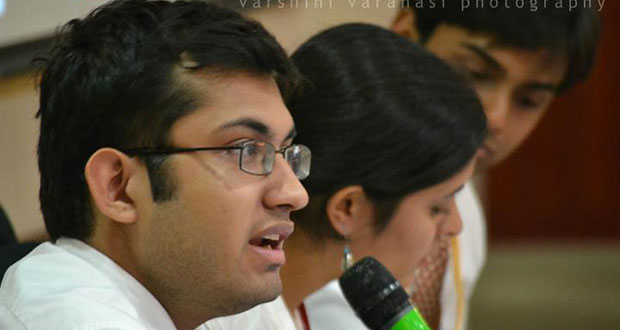
    rachit-ranjan-1Rachit Ranjan graduated from WBNUJS, Kolkata in 2010. He had finished his schooling from the USA and France to join NUJS for legal studies. After graduating from NUJS he had the opportunity to teach at CNLU, Patna for more than a year. Thereafter he left to pursue his LL.M from University of California, Berkeley. Later he also had the opportunity to teach at Jindal Global Law School, Sonepat and is currently working at the WTO, committed to pure research work.

    In this interview we requested him to share:

    • The differences between academic culture of India and other countries.
    • Teaching experience at CNLU, Patna and JGLS, Sonepat
    • His experience at UC- Berkeley while pursuing higher studies
    • Research work at IIFT and at WTO


    Tell us a bit about yourself.

    At the outset, let me congratulate you for this wonderful initiative. I only wish that there was this sort of guidance at our disposal during my law school days. I would also like to mention that I am not deserving of the tag of superlawyer yet but would like to thank you for allowing me to share my thoughts with your readers. I hope that my experiences will encourage some students to pursue academia as a profession. I graduated from NUJS in 2010 and did my LL.M. from UC Berkeley in International Law. My career decisions are small platforms, which may (or may not) help me in realizing my ultimate goal of becoming a reputed academic.


    What differences did you find between the education systems of India and US?

    Both systems have their pros and cons. I moved to France in 9th grade because of my father’s job. Coming from an Indian education system, the American curriculum and pedagogy was a refreshing experience. I believe the greatest tragedy that plagues the Indian education system is the ubiquitous culture of rote learning. Although the Indian education system had prepared me well to adapt to a completely new system, it did not allow me to adapt easily to the immense focus on logic and analytical thinking which is encouraged in the American curriculum. I believe it is a practice which will help any student in the long run regardless of their career choice. To that extent, I feel India must eschew the culture of rote learning and start treating students as co-creators of knowledge rather than blank slates.


    What was your motivation behind pursuing law?

    My career choices have been nothing short of a serendipitous discovery. I had never considered law as a career option. In fact, I was planning to study biotechnology in the US or Canada but due to the high tuition fee I had to reconsider my options and move back to India. My cousin, who was at NLS Bangalore, encouraged me to apply for law. She did a mighty fine job at selling national law schools and what they had to offer. At that time, my idea of a lawyer was a person in an expensive suit driving a fancy car. I must admit this is what drove me to choose law. I wasn’t really passionate about law when I began preparing for the entrance examinations. I applied in the pre-CLAT era, when all these institutions had separate exams.

    NUJS happened to be the first one in the series. I was really keen on joining NUJS because I heard great things about the place from my cousin and my uncle, who is a lawyer. Naturally I put in the most amount of hardwork for the NUJS exam and was lucky enough to crack it. Upon receiving confirmation about my selection, I made up my mind that I wanted to move to Calcutta and did not put much effort in preparing for other entrance examinations.

    It was only after I joined NUJS that I got a real taste of law. I was intimidated initially but the constant intellectual rigor was something which appealed to me. Even though many of my peers have completely moved away from law, my passion for this discipline keeps growing stronger. This passion stems from a sense of intellectual and moral satisfaction, I receive from this discipline.

    What motivates me now to uphold my decision is how well I am equipped to explore issues that confront the global community today, where lawyers have a definite and positive role to play Inter aliaissues relating to human rights, environment, global trade and intellectual property rights. Owing to the training I have received as a lawyer, I am confident about dealing with such issues, which bear a direct impact on our society.


    Tell us about your time at WBNUJS.

    Unfortunately my law school experience isn’t one which I would wish upon anyone. I have battled great adversity to complete my legal education, which severely affected my ability to be active in extra-curricular activities. From 2005-2010, I suffered from four extremely severe bouts of Hepatitis A, which would render me incapable of attending classes or partaking in any event. My illness prevented me to gaining a holistic law school experience.

    Out of 10 semesters in NUJS I was sick for six. Nevertheless, I did not let this affect me adversely and took part in extra curricular activities, whenever I had the time. Perhaps the proudest moment of my college experience was being part of the organizing committee for the ILSA International Conference. At that time, no law school in India had managed to host a conference of this scale. We won the bid for the conference by virtue of networks made by my batchmate Kinshuk Jhunjhunwala, when he went to present a paper at the ILSA Conference in 2007 (co-authored by me).

    Although NUJS had already gained international recognition in mooting and debating, the conference helped the institution to achieve immense adulation and respect among some of the foremost international law scholars of the world. I believe it assisted the institution immensely in establishing itself as a law school, which engages in serious scholarship. To be an important part of institutional development was exhilirating and humbling at the same time.


    What are your thoughts on these activities like mooting, debating and publications in journals?

    As mentioned above, the debilitating circumstances during my law school prevented me from partaking in many of these activities. In fact this is part of the reason why I chose teaching law as a profession. During my stint at CNLU and JGLS, I actively engaged in mooting activities by coaching certain teams for competitions. I coached the JGLS team, which won the NLS Arbitration Moot recently ( although all the credit goes to them). All these activities are extremely important and every law student must engage in them.

    Although real court procedure is very different from mooting, the essential reason behind this activity is to teach you legal research and argumentation. It is the ultimate training program to help you to “think like a lawyer”. Debating requires you to be updated with the latest developments across the world and further allows you to dissect these issues by engaging in reasoned discourse. This is another element, which is extremely important in order to become a good lawyer.

    As for publications, I have always maintained that if you want to understand a subject in-depth, you should write a paper on it. Much like mooting it teaches you legal research and argumentation. However, legal scholarship goes a step beyond and allows you to engage with the subject in a more nuanced manner. It will consolidate your foundations and prepare you to “think outside the box”. There is far too much focus in law schools about the “CV value” of these activities, which in my opinion is very unfortunate. I believe there needs to be a major overhaul of this mindset and both students and faculty should espouse such practices not because of their respective “CV value” but as a personal(ity) development initiative.


    Please tell us any remarkable internship experience of yours which shaped your legal career?

    My internship experiences are more or less comparable to any other law student’s experiences. I wanted to experience each and every avenue, where lawyers had a role to play before making a final career decision. What distinguishes my experience from majority of the law students is a focus on international organizations.

    I have always been fascinated by international affairs and am quite the international relations nerd. To this extent, I always wanted to explore how international organizations functioned, the dynamics at play re the political and structural constraints of these institutions and of course, the role of law. I interned with INTERPOL and UNODC, to understand issues relating to international money laundering, drug trafficking and financing of terrorism. I engaged on a special project with UNICEF as a lead researcher to study the implementation gap in Bihar re child rights legislation and India’s international commitment regarding the same. All these experiences allowed me to gain a better understanding of the expansive contours of international law and international affairs, a discipline which I intend to pursue in the long run.


    Why did you choose teaching as a job and not a corporate job?

    As mentioned before, my career decisions have been nothing short of a serendipitous discorvery. I moved to Patna upon my graduation to prepare for the the Civil Services Examination with a “dream” to join the Indian Foreign Service. Despite knowing that joining the government would severely curtail my ability to voice my dissent on pressing international issues, I was convinced( and am still partially) that it is the best platform to understand geopolitics. I joined CNLU, with the objective of using the university’s resources for my preparation.

    After an interview with the Vice-Chancellor, I was given the opportunity to join the University as his teaching assistant. My work profile ranged from handling the student recruitment/internship intitiave to delivering lectures on certain aspects of public international law and international trade law. This was my moment of epiphany and I am most thankful to the institution for this experience as it allowed me to discover my passion.

    Whenever I delivered a lecture, there was a feeling of self gratification and intellectual empowerment. The adulation I received from my students further assisted me in realizing that this was my calling in life. Ever since then all my career moves have been strategized to realize the ultimate dream of becoming most importantlya good teacher, and an authority in my field of specialization.


    What prompted you to join IIFT?

    (Rachit went on to join the Indian Institute of Foreign Trade as a research fellow.)

    A very renowned jurist told me that If I wanted to excel in academia, I must understand how each functionary of that discipline operates (i.e. academic/government/practiotioner). Since my area of primary interest was trade law, I wanted to join a government department to gain hands on experience on how policies are deliberated within such departments.

    I joined the Centre for WTO Studies at IIFT, which is a government think tank mandated with the task to assist the Ministry of Commerce and Industry on issues relating to international trade and investment policy. My work at the Centre ranged from writing policy papers for government officials to offering legal advice on international trade disputes and policies at the WTO.


    When did you finally decide to pursue masters?

    Since I was certain about pursuing academia, pursuing an LL.M. was a professional requirement. I concentrated on the top 15 schools in the U.S.  because after doing a lot of research on the LL.M. program in general,  I reached the decision that U.S. law schools offered a far greater level of academic rigor than U.K. or Indian law schools in their respective advanced degree programs.


    How did you get through the selection process of UC Berkeley School of law?

    I feel extremely fortunate about being admitted to a great institution like UC Berkeley. I don’t believe there are set criteria, which will decide your success in securing admission into such institutions. I certainly believe, that grades do play an immense role when you are aiming for the top institutions. However, even if you don’t have a stellar academic record, you can very well make up for it by your work experience, extra curricular activities and mostly importantly you statement of purpose.

    I have researched in great detail on how to prepare the best LL.M. application and will not be able to do justice to this question in the limited space. Perhaps I could write another piece on the aspects you must focus on while applying for your LL.M. If I had to sum it up, it all boils down to how well you are able to sell your achievements, interest in law, interest in the institution and how you fit in with the tradition of the respective institution coupled with the designation and background of your referees and the content of the recommendation.

    Click here to download the Personal Summary

    Click here to download the Statement of Purpose


    rachit-ranjan-2Tell us about your time at UC Berkeley.

    An LL.M. abroad is what you make of it. If you want to treat it like an extended holiday, it would be a fantastic holiday albeit very expensive. I was certain about what I wanted to attain from this experience. I went on the thesis track at UC Berkeley, which required me to write a dissertation of publishable quality. Naturally, this required a lot of research and background reading followed by grilling sessions with my supervisor.

    Apart from my thesis, I took international law courses at Berkeley. This was the first time I was exposed a proper socratic style of teaching, which required me to read about 200 pages on any given day. Initially, it was difficult for me to adjust to this practice but with time I managed to find balance between work and play and really enjoyed the assigned readings.

    I may add here for the voracious readers that legal reading is far more time-consuming and intellectualy exhausting than reading a novel.  I must admit that, by my own experiment, the socratic method is an extremely effective pedagogical tactic and must be implemented by every faculty in Indian law schools.

    My time at Berkeley is one of my most cherished memories. It was the first time, I had a complete college experience, where I actively participated in social and academic events. The faculty, staff as well as your peers from across the world made the task of settling in a new country and new education system extremely easy.


    How did the opportunity of teaching at Jindal Global Law School come to you?

    Upon graduating from Berkeley, I returned to India to pursue teaching while awaiting the decision on my application for internship at WTO. I heard great things about JGLS from many academics and decided to join the institution. My experience at JGLS was my first real exposure to teaching law. I was assigned to teach Alternate Dispute Resolution to third year students. I was also attached with two research centres within the institution. I believe JGLS is an institution with great promise provided they find a way of retaining talent. They certainly offer unprecendented incentives to aspiring academics but there remains a serious mismatch between the vision of the institution and its implementation. Nevertheless, my stint at JGLS was wonderful because it reinforced my decision to pursue academia. I met some brilliant academics and students there, whose support is essential for my development as a teacher.


    What do your responsibilities at the World Trade Organization, Geneva entail?

    The WTO has a very robust and an extremely competitive internship program. I had applied for an internship during my LL.M. (internship programme only selects professionals holding a masters degree) and decided to pursue teaching in the meantime to enhance my chances of securing a good PhD program.

    As a legal intern, my work can range from anything as mundane as updating footnotes on dispute reports to as interesting as providing legal input on an ongoing dispute at the WTO. I have been involved in formulating e-learning modules for delegates of Member States to working on thematic research papers, which study the dynamics between diplomacy and litigation with respect to disputes at the WTO. Till now, my exposure to trade was very academic but the internship has filled the void and allowed me to witness the day to day functioning of this institution and learn how trade deals/disputes are negotiated and executed at the highest level.


    What are the factors you consider while making a crucial decision?

    As mentioned above before I can call myself an full fledged academic, I must have an understanding of how each functionary of this discipline operates. I have made these career moves with this backdrop. I firmly believe that between you and your ultimate goal there is no room for complacency or satiability. As the American humorist Will Rogers quipped:

    “Even if you’re on the right track, you’ll get run over if you just sit there.”


    What are your long term goals?

    I intend to become a full time academic with a focus on international law in general and international trade and investment law in particular. Through this position and my work,  I intend to establish myself as an authority in my respective field and engage in policy making with governments across the world. The truth about law is, regardless of which avenue you choose to pursue, it will be an incredibly long and tedious journey towards your ultimate goal but the trick is to enjoy the process and the immense opportunities at your disposal.

  • Varun Chauhan, Law Graduate, GNU, on being the batch topper, a sports enthusiast and receiving a PPO from AMSS

    Varun Chauhan, Law Graduate, GNU, on being the batch topper, a sports enthusiast and receiving a PPO from AMSS

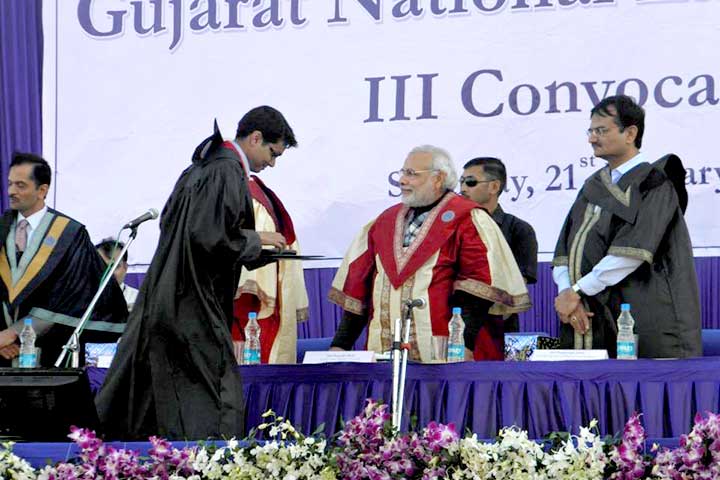
    Varun Chauhan is a student of GNLU, Gandhinagar, batch of 2015. During this time has has interned with Singhi & Co., Unmesh D. Shukla, Gujarat State Petroleum Corporation Ltd., Vaish Associates, AMSS, Khaitan & Co., and Shardul Amarchand Mangaldas. He helps organise ‘Justice League’, the university’s sports fest, and he is also a mentor in the Sports Committee of the university.

    Varun was most recently offered a pre-placement offer from Amarchand & Mangaldas & Suresh A. Shroff & Co.

    In this interview we speak to him about:

    • Topping his batch in GNLU
    • Being a sports enthusiast and his involvement in the Sports Committee
    • Getting a ‘callback’ and a PPO from AMSS


    As a child what were your ambitions?

    As a child I wanted to be many things but when I really started exploring my career options, I decided to become a lawyer. I found law to be very interesting and challenging. It was something that was logical, yet it demanded critical and analytical reasoning. I am going to be a first generational lawyer.


    Tell us about your pre-college life as well as educational background.

    I did most of my schooling at St. Xavier’s Loyola Hall, Ahmedabad. There I was introduced to sports. I became a member of the school football team and represented Ahmedabad District-Urban in the U-14 level. Apart from football I used to represent my class in cricket and basketball. Another part of the school was the leadership camps that were organized by Fr. Charlie. These camps were held every year and it is here that I developed my first lessons in leadership, responsibility and oration.


    How did you plan your academics and other activities as a freshman?

    I consider myself to be extremely lucky to have an amazing set of seniors who were always ready to offer their advice and help. It is their advice and help which allowed me to plan my first year of law school. Since on the first day, they told me to lay most of my focus on academics and then to build an all-round CV. It is under their advice that I have planned all my semesters in GNLU. I still recall that at the end of my first semester, one of my senior’s, told me of how when he was finally preparing his CV to submit to the Committee on Recruitment Affairs-he and his friends had a difficult time in chopping down their five-six page long CVs’ to the three pages. I decided to make this my goal and it really helped me in developing different skills and laws.


    How do you organise events at your university?

    (Varun is an active member of the GNLU Sports Committee and have been majorly associated in organizing Justice League, the first inter college sports fests at GNLU.)

    I remember the day like it was yesterday when Mr. Surya a senior then in his fourth your saw me playing football and asked me to join the Sports Committee. Since, then I have never regretted that decision nor have I ever looked back. I have spent most of my time outside of academics working for the Sports Committee. I rose from a member in the first year to a Secretary in second to a Co-convenor in third and finally, last year I took the role of a Mentor. I believe that working in the Sports Committee has helped me immensely in becoming a person more well acquainted with the real world. My duties since joining, has been to balance the budget, to get permissions and authorizations for Sports Infrastructure, to organize Intra and Inter-University tournaments. I have spent many nights finding ways to balance budgets and to cut costs to get the best Sports Infrastructure. These challenges have helped me grow immensely and they have given me an exposure to the harsh practical realities of life.


    How do you manage to eke out time for sporting activities?

    If you love something, you will always find time for it. I planned my semesters according to the sports calendar. And planning over here means that, I had to decide on what to do and what not to. Which activities could be sacrificed and which couldn’t. There are many things that I had to miss out on but in the end it was all worth it.


    GNLU runs an academic support programme in which you work in the capacity of a teaching assistant. Tell us about the programme.

    I have been a founding member of the Academic Support Programme (ASP) since the idea for it was conceived and executed by Mr. Prashanth Ramdas. The ASP is a program where students from senior classes take sessions for juniors on their request for such sessions. These sessions are mostly requested by students who require more understanding of any particular concept or face a language barrier. I remember that I took a session where everything I said, had to be repeated by me in Hindi so that a student facing difficulties in English could understand.


    Tell us how you managed to excel in academics and also give time to your sporting activities.

    As I said, I was lucky to have seniors who gave me the right advice. So, since Day 1, I knew that I had to be the batch topper. The only way to manage time is to put value to it. If you are studying then put 100% to it, if you are playing or relaxing, then put 100% to it. If you are in conversation or an activity where you are not putting your 100% or where you are not enjoying, walk away from it. You need to learn to prioritize. The beauty or should I say the tough side of learning to prioritize is that the only way you can learn to prioritize is if you take on two to three things at a time. In my first year apart from being in the Sports Committee and ASP, I did not undertake any extra-activity except for a brief Vibrant Gujarat Discussion Core Committee. However, in my second year apart from Sports Committee and ASP, I presented a paper in two conferences and was part of the Maritime Conference Core Committee and did much more extra-work. The third year I did the iPleaders Entrepreneurship Administration and Business Laws course, Bridge Mediation course, a moot and of course Sports Committee and ASP. So you basically get the idea. As I got better at prioritizing, I took on more work and that in itself helped me to get better.


    What is your view on taking notes in class?

    Honestly, it depends on one’s personal choice. Initially I used to take notes in all classes. But, now I am very selective about it. It depends on the subject being taught and my ability to take notes in that subject. Sometimes when you take notes, you stop understanding the concept being taught, so it’s more of a personal choice of what suits you.


    Did you also study from books other than the prescribed ones?

    Yes and no. Again it depended on the subject and more importantly the concept. If I would find a concept to be tough, then I would even go to the extent of reading the commentary on that particularly concept. But, again this is your personal choice. You need to be smart with this.


    Has there been a change in your study schedule after joining law school?

    Yes. I used to spend almost every weekday of my first semester in the library for at least two to three hours. I used to read on jurisprudence and other legal issues which were relevant at the time. On Sundays’ I used to go through my notes of the week. I used to do this as I felt I was new to law and that concepts were at first hard to understand. However, since my second year the time that I spent in the library kept on decreasing and so did my Sunday’s reading. This in no way affected my ability to understand and learn the subjects being taught. The point I am trying to make is that if in your initial years you spend a lot of time in trying to understand law, then later learning different laws becomes really easy.

    It’s like the Latin motto that my school had: A Teneris Impende Laborem– Apply yourself to hard work from an early age.


    What is your take on peer pressure?

    Peer Pressure can make or break you in law school. Its very important to be friends with the right people. Any wrong step and it has a butterfly effect. I was lucky to have a set of friends who always helped me with my concepts, with notes, with having fun, so on and so forth. Its very important that you don’t fall prey to “peer pressure”. Something that maybe right for someone else may not be right thing for you. You are in law-school and its the time to grow up-stay young and innocent while learning but when it comes to making choices and taking tough decisions, make sure you do that with all of your own mind.


    varun-chauhan-2

    How practical do you think are the shows like The Practice, J.A.G., Boston Legal, Suits, etc. and movies like 12 Angry Men, Philadelphia, etc.?

    I would recommend watching them only after you are sure about doing law. You don’t want to be attracted to the glamour as shown in these shows. There is a difference between reality and what really happens. Nevertheless, there are a few benefits if you watch them:

    • It’s good for a conversation because most lawyers watch these shows
    • You get somewhat of a basic idea of the US legal system
    • You learn about different cases and creative lawyering
    • There is some law that you can always learn from these shows if you look closely. I learnt the Crown Jewel takeover defence from Suits.


    What brought you towards Corporate Law?

    My internships at Amarchand & Mangaldas & Suresh A. Shroff & Co., New Delhi brought me towards Corporate Law. I interned here twice before getting my Pre-Placement Offer. The work that I did in Corporate Law here challenged me to analyze problems practically and critically. It intellectually stimulated me to think harder to find solutions to the issues that a transaction could face.


    Please tell us about the Corporate Governance course you undertook under Prof. Umakanth Varottil.

    The Corporate Governance course was organised by my university. Prof. Umakanth Varottil was invited to deliver the lectures. It is one of the best courses that I have attended. Prof. Varottil used the Socratic method of teaching which meant that we had to read and come for class. This allowed for more fruitful discussion and discourse in class.

    The questions posed by Prof. Varottil in itself challenged you to think critically and to analyze solutions to the Corporate Governance problem. This course was really helpful and it gave me a deeper understanding of Corporate Law.


    What are the things you consider sine qua non for positive feedback from an internship?

    An intern needs to be ready to do all kinds of work. Take all work given seriously. Don’t underestimate the importance of a single comma or full stop. Proof reading and due-diligences teach you a lot about the different types of contracts that exist and the way they are drafted. They teach a lot of how businesses run, grow and die. The best place to learn contract drafting is at an internship. It is really important to have a good all round personality. But, the most important of all is the way you speak and have a conversation in English. It is extremely important that you focus on this skill and be fluent in English. Another important virtue that you need to posses is the quality of being humble at all times. While these help you make a good first impression, the next two skills are the ones that make the entire difference when your evaluation is being filled:

    • Research Skills and
    • Eye for detail.

    Most of the work that anyone will receive at any internship is research. To work on your research skills, one should moot, write papers, intern in places where you will primarily be given more research work. To develop an eye for detail is much harder. To develop it, I recommend that you be part of committee organizing a conference or an internship committee or journal review board. One of the tasks in these committee is proof reading and editing. Initially you will be slow but with time, you will get strong at this skill.


    Any tips on how one should go about framing a C.V. and prepare for an interview?

    If a person is applying on their own then they should draft their CV in such a way that it stands out in a professional manner. Put your academics first and then put any moot win or huge publication or award or scholarship you received. Then comes internships. Be as specific and as to the point as you can on the work done in your internships. The top two internships should have at least four to five specific points of the work you did in those internships.


    Keeping academics a priority, what are the things you would say that a student should try other than academics?

    Strive to have an all round CV. Intern with different courts, companies, law firms and do it early so that when you make a final decision, you are sure about it. Represent your University in at least one moot, be part of at least one committee for two years, present at least one paper at a conference and  have at least one publication. No doubt, this will give you an allround CV, but more importantly you will have had different experiences and perspectives of working and thinking about law. These experiences are very valuable in learning and discovering strengths that you never thought you had or you could develop.

  • Assistant Judge Advocate General, Indian Army, on preparing and clearing the Services Selection Board

    Assistant Judge Advocate General, Indian Army, on preparing and clearing the Services Selection Board

    judge-adv-general-1We got to connect with someone who recently cleared the Service Selection Boards exam and got recruited into the Indian Army as an Assistant Judge Advocate General. This is a much rare career insight which we have the opportunity to feature.

    We had requested her to share her insights with us while promising her the much required anonymity. Therefore we had to also skip on many insights of her achievements as a law student and internships.

    We asked her about:

    • Life at Kerala Law Academy
    • Preparing for the SSB and getting inducted into the Indian Army
    • Job of a Judge Advocate General


    Tell us a bit about yourself.

    I am a very talkative, extrovert, fun loving person who loves to travel and enjoy one’s life. But when it comes to work I am equally serious and dedicated to it. So I think it’s a nice mix!!!


    Tell us about your pre-college life and about your family.

    My family includes my parents & younger brother. My father retired as Deputy Inspector General of Prisons and my mom is a teacher. My brother is pursuing his engineering degree from Kerala. I have done my schooling from Holy Angels & St Thomas School Tvm. I always had the ambition of joining the prestigious Civil Services.


    Was pursuing law always your professional calling?

    I would be lying to you if I say that a career in law was on my cards. In fact, I never had it on my list. It just happened. But I was an Arts student. I had opted for Humanities for my +2 so never had Engg/Med thoughts. But I wanted to take up Political Science & Journalism. But landed up in law as it was a much wider option and I thought that it will encompass everything within itself.


    Did you have a legal lineage that motivated you to choose this field?

    [sociallocker]I come from a non-legal background. I decided on law, firstly I loved the subject, secondly it would give me a professional degree and I could take up law as an option for Civil Service Examination, as I was a Civil Service Aspirant.


    How were you years at Kerala Law Academy College?

    College was fun with all the moot courts. I had participated in around fifteen Moot Courts including Vienna Arbitration Moot, Jessup & Stetson to name a few. We grabbed lots of prizes as a team including individual prizes for myself as Best Lady Adv, Best Student Adv, Best Speaker etc. After graduation I started with my civil service preparation. I had enrolled myself at Rau’s IAS Study Circle before joining Army.


    During the five years of your law school what kind of internships did you do?

    Well, our college never had any internship plan or scheme. It was on individual interest. I kind of did internship on all fields as I wanted to explore and analyse my interests. I did corporate, litigation and NGO internships. That is when I realised that corporate law is not my cup of tea. I enjoyed NGO & litigation work. But was not prepared to settle down in any of that because, I had my Civil Service dream intact with me then.


    Prior to entering law school, did you ever wish to join army?

    As I said before, I was preparing for civil service when I had applied for the same. The notification in the papers asked for law graduates and I applied. I was not really serious about it till the day of my selection. I was seeing the SSB interview as a practise session for me before my civil service stint. But then things just happened.


    Tell us about the application procedure for JAG.

    The application process is kind of simple. They issue notification for JAG entry based on the vacancies. Presently the vacancies are less but in the next five to ten years the vacancies are going to increase tremendously. Minimum 55% marks in a recognised law course is the eligibility. Then there is the SSB process where you are scanned at various stages by various authorities. SSB does not require any preparation, that is what I personally feel about the same. It is all about the right attitude and confidence. Be yourself, don’t try to copy anything or give stereotype answers, try to bring in individuality in your answers.


    What advice would you give to our readers for successfully cracking SBB?

    Well, I beg to differ. SSB is a psychological test where they test your abilities to lead and command a body of troops. They search for leaders, people who can give orders and take orders. That is why I said it is about the right attitude. Furthermore, for JAG interview they might just come up with some legal question. So if you are convincing enough, which any law student will be, then one can easily crack SSB.


    Tell us about your time at Officers Training Academy, Chennai.

    BAD, I mean real bad.

    I was a kind of person who never got into field or was never a sports person. So it was very difficult for me. The basic training for all is the same so one has to undergo eleven months of basic military training which involves a hell lot of physical activity. You can refer to the Lakshya movie for easy reference.  But nothing is impossible. If a person like me who has never attended a sports day in school can complete it, then everyone can.


    After the training period, where was your first posting?

    After eleven months of rigorous training, finally you will be commissioned into the Indian Army. The feeling was great indeed. It was a proud moment when I finally became a part of the Olive Green community. Well I can’t disclose my posting details due to security concerns and existing instructions on the subject.


    What role does the JAG officer play in the Indian Army?

    JAG officers play advisory role in the Indian Army. We are the legal advisors to our commanders in military, discipline and other allied matters. After the basic training and induction into the Dept we will be made to undergo a course in Military law which is like our Bible in day to day functioning. My typical work day is like any other day in a corporate office or firm, just that you are in uniform and of course minus the work pressure and targets that exist in the outside world. Every work has its own advantages and disadvantages. Sometimes it does get monotonous but I think that is the part of any work. But it is also a challenge one has to face every day. We mainly deal with offences committed by members of Army. So, if one likes criminal law and framing charges, then this is the place to be.


    After how many years of practice is one offered the position of Judge Advocate General?

    Judge Advocate General is our top most position. So it will take another 25 more years for me to reach there. I am performing the functions of Asst JAG.


    What difference do you find in the working of Armed Forces Tribunal and other courts?

    Yes, AFT has been set up to provide as an appellate forum for Armed Personnel.  But it has got original jurisdiction also. It deals with service and disciplinary matters. It’s akin to High Court and an appeal against its order lies to SC. It consists of a judicial member and administrative member. It has been set up as a relief measure to armed forces whose litigation has been otherwise pending in the high courts.


    What would be your message to our young readers?

    I don’t think I have achieved anything to provide a message to anyone. Enjoy your life but remember one thing that it is your five years of effort in law college that is going to determine your future address in this world. It’s your hard work as law student that is going to determine your identity. So it’s up to you to determine who you want to be.[/sociallocker]

  • Rohit Pothukuchi, Affiliated Fellow, Harvard, on Standard Indian Legal Citation, work with White & Case, and speaking at UNESCO

    Rohit Pothukuchi, Affiliated Fellow, Harvard, on Standard Indian Legal Citation, work with White & Case, and speaking at UNESCO

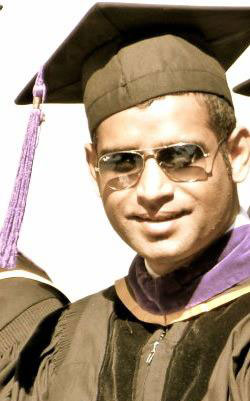
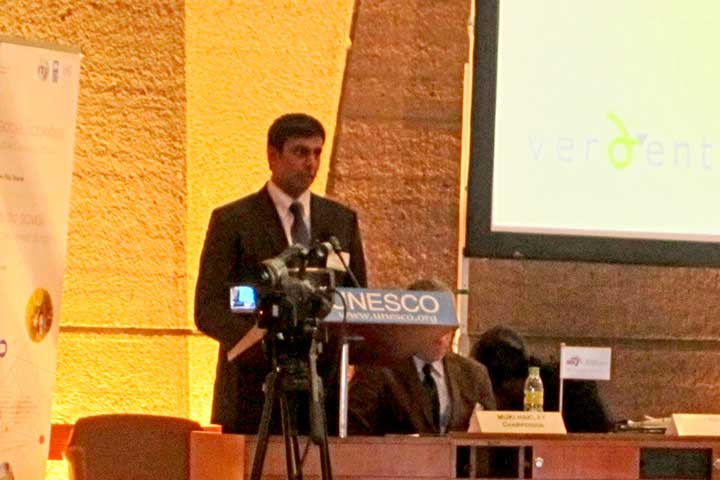
    Rohit Pothukuchi graduated from NALSAR, Hyderabad, in 2013. Subsequently he went on to pursue his Masters from UC Berkley School of Law. He is the Founder and Chief Editor of Standard Indian Legal Citation (SILC). He serves as an Affiliate Student Research Fellow, Harvard Law School Program on the Legal Profession. He will soon be joining White & Case LLP as an associate in NY. In 2013, Rohit was invited to speak as a panelist at UNESCO headquarters in Paris. Rohit will speak to us about:

    • Founding and being Chief Editor for Standard Indian Legal Citation (SILC)
    • Speaking at the UNESCO
    • Joining White & Case, NY as an Associate
    • Serving as an Affiliate Student Research Fellow, Harvard Law School Program on the Legal Profession


    How would you describe your childhood, pre-college life and educational background?

    I spent most of my high school years in Kodaikanal, TN, where I attended the Kodaikanal International School. When I was accepted to NLSIU Bangalore and NALSAR, I chose to attend NALSAR, primarily to spend more time with my family, parents and grandparents. Law and policy have always interested me. Although I almost chose to pursue a career in medicine or finance, I chose law because its such a versatile subject,and it affects so many aspects of society.


    What are your responsibilities as the Chief Editor and the Founding Editor of the Standard Indian Legal Citation (SILC)?

    (Rohit has been a pioneer in creating and promoting our own Indian citation format. SILC now has registered users at over 85 law schools, numerous firms, and courts across India. )

    There was a strong requirement for an Indian citation system. Researchers were frustrated with the difficulty of finding appropriate citation standards for Indian legal sources, most of which are not covered by foreign citation systems. Foreign manuals could be hard to find, expensive, and were just not tailored for India. You have to keep in mind, most of these foreign systems were created for their respective countries (the UK, the US, etc.)—it was time for a change. Debanshu Khettry, Shambo Nandy (the other two founding editors), and I first started discussing this idea when we were doing our B.A.LL.B. At first the task looked very daunting, and even impossible. Convincing the Indian legal community—a group of some of the most argumentative individuals I know—to change their practices is by no means an easy looking task. I didn’t think we could reach a wide enough audience.

    However, I felt it was the right thing to do and that we should put in our best effort. I took leadership as Chief Editor. We have truly been lucky to reach the nation -wide audience that we have, and I am so thankful to all of the practicing lawyers, faculty members, and students who have started using SILC and have taken the initiative to join us in this national movement. SILC has truly been a team effort, Before I speak about my responsibilities, I would like to acknowledge the efforts of our entire team of hard working editors from across India and our phenomenal advisors. SILC would not have taken off without them.

    I especially acknowledge Vikrant Pachnanda, Akshay Sreevatsa, and Megha Mathur, senior editors of SILC, who have put in tremendous efforts and bounds of time to make this citation system a reality. As Chief Editor I was responsible for overseeing all aspects of the citation system. Particularly, setting a vision, building a team, being involved with drafting the citation system, and the daunting task of getting this to a nation-wide audience. I had to think of ways to build an India-centric citation system that was easy and appropriate for a variety of uses and user groups ranging from practicing lawyers to law students to even non-lawyers reading legal material. Seeking the right guidance and building the right team were critical aspects in doing this. As a recent graduate, you can only possess so many skill sets. But in the aggregate, as a team, you can put together the skills needed to create an appropriate citation system. Once our core team of senior editors came together we were able to do this. I reached out to some of the nations leading lawyers and academics to try and get insights on how to make this citation system practical and useful for India—many of them were kind enough to join our advisory panel. Subsequently we added editors from across India who had great experience with journals at their law schools and with legal research.

    I came up with the name “SILC”, because it was catchy and appropriate. Almost everyone I spoke to loved the name, and we stuck with it. I first created the logo on Microsoft word, and eventually ended up providing rough sketches and designs for most of the web-site to our web developers. Our entire team of editors and advisors unanimously wanted a citation system that was not exclusively built and just put online. We wanted this to be a movement of lawyers and students across the nation who are choosing an India-centric citation system that is more suited to the nation’s needs.I hope we have made a move in this direction. We launched a “working draft”, precisely because we wanted to get input from as many practicing lawyers, faculty members, and students as possible. This is, after all, a system built for the Indian legal community, and we wanted to hear from that community before a version 1. Additionally, we wanted this to be accessible to everyone—some foreign citation manuals really can be expensive for Indian audiences and hard to find—cost should not be one of the reasons that deters a student from research.

    If you are interested in learning more, I have spoken about SILC in a podcast/interview with MyLaw, which you can listen to here: http://blog.mylaw.net/a-new-citation-system-for-uniquely-indian-legal-material/


    What is the vision going forward?

    The “working draft” is in circulation and we are getting input from as many students, faculty, and practitioners as possible. I am also conducting a survey for some research, its not directly related to SILC, but is related to citation practices across India and will help us understand areas where citation standards needs to improve. I am thankful to everyone who is able to take it. It can be accessed here.


    What has been the most gratifying moment for you with regard to SILC?

    I think the first few days, launching the citation system, and getting such a fantastic response was frankly a very very happy time for me. I never would have expected registrations from across the country, and such a positive response from academics, students, and practitioners alike. Students from more than 40 law schools registered in the first few days, and we got so many great responses. It’s truly a wonderful feeling to see your vision come to reality. I have to say, I was very nervous before the launch. We still have a long way to go, and our team is committed to working very hard to make this the best it can be.


    rohit-pothukuchi-2

    How was the experience of being invited to UNESCO headquarters to speak as a panelist at the World Summit on the Information Society Review Committee Meeting?

    It was an incredible honor and one of the greatest experiences of my life. The World Summit on the Information Society meetings took place in 2003 & 2005, and came about after the UN General Assembly approved resolution 56/183 resolving for the need for such a summit. The summits were the major effort of the UN to discuss the global information society, access to the internet, the growing digital divide, communication policy, and other issues, amongst nations of the world. The Summits have lead to the establishment of the Internet Governance Forum, and in a sense have helped develop the global vision ahead for dealing with the internet and technology—Wikipedia has a nice summary.

    The Review Committee Meetings which take place pretty much every year look at the issues and upcoming trends as well as developments after the summits. I spoke at one of these Review committee Meetings. A very senior official at UNESCO learnt about some of my work, and subsequently, I received an invitation to speak. Frankly when I saw the email I couldn’t even believe it. I spoke about e-science trends in India, and about Verdentum a non-profit social network I will be launching in Fall this year, which hopes to connect policy makers with students around the world. A portion of my presentation at UNESCO can be found on the UNESCO web page here.

    More information on Verdentum can be found at www.verdentum.org . I never thought I would be invited to give a talk to an audience that would be simultaneously translated into several languages while I was speaking. I kept looking at the translators—I was absolutely baffled. I was a bit nervous, and one of my personal role models, the former head of the Intergovernmental Panel on Climate Change was in the audience, which made it worse! He was speaking on a related panel. Thankfully, I had very positive responses, and I think the talk was well received. Of course, it was such an amazing experience, and I was very very lucky to have been flown there, put up, and have had this opportunity. Paris is a wonderful city.


    How is White & Case different from  top-tier Indian law firms?

    It has been thrilling working with White & Case at three of their offices. The work is some of the best I have seen in any of my internships and experiences–it is truly international, cutting-edge, and exciting. I think there are very few places where, as an intern, you get to help with multi-billion-dollar deals involving 5 or 6 different jurisdictions, and some of the worlds leading corporations, banks, and government bodies. This was especially true at the Abu-Dhabi office, a relatively smaller office, where I had the chance to be involved with the project finance, capital markets, and M&A groups and some of their transactions. Just being able to read through some of the documentation, and having lawyers who care about teaching you the dynamics behind a deal, one can learn so much.

    I thoroughly enjoyed being able to meet and interact with extraordinary, industry-leading lawyers. I never thought I would get to meet some of the lawyers who have truly shaped areas of law, or whom I had read about because of their involvement in prominent deals and transactions. White & Case has an incredibly open culture, most of the doors are open, and even senior associates and partners are really happy to talk about their work, and guide you. I think being in such an environment inspires one to be more involved with his work, and take the extra step. Being at the NY office was an experience in itself, you really cant beat walking into a sky-scraper next to Times Square every morning. I feel incredibly lucky to be joining such a fantastic firm, and to have had these unique experiences. I think the volume of highly international work at White & Case differentiates it from any other firm I know of.

    With that said, the firms I have had the privilege of interning with in India have been outstanding, and I have learned a great deal from being at those firms for even brief periods of time.


    Can you give us advice on applications and interviews, especially with foreign law firms?

    I think that it’s important to tailor one’s application specifically for each separate firm or organization. Many students provide relatively similar or generic answers to most applications. Read through the firm’s web site and identify their core values and principles, ask yourself if your application is in line with those; tailor your answers specifically.

    I think it’s also helpful to ask the question “do I fit into this organization?”—take a look at the lawyers there, their careers, and their achievements, I think that reveals a wealth of information about what the firm is looking for, and what you need to do/work-on to be there. Another piece of advice: build relationships. Don’t just expect to apply one day and get a job, continue to intern there, work with lawyers there to genuinely learn more in fields that interest you, do some research if possible, and have a positive attitude in whatever work you are given. I have interviewed with White & Case, a magic-circle law firm in London, and several international companies/ organizations. I would say do some thorough research about the firm and the deals they are involved in. This information is not easily revealed through the firm’s web-site all the time. Sometimes it helps to talk to lawyers at the firm.

    Know how the firm you are interviewing with is different from other law firms. They will usually have an area of law where they are the absolute best, or particular cases where they have distinguished themselves. Be familiar with the firm’s strategy and vision for the future if possible, ask yourself how you fit into that. I learnt that it really pays off to know a bit about the lawyers interviewing you—the major deals and areas they have worked on. These areas could occasionally come up in your interview.

    Know your CV thoroughly; be ready to answer questions about internships, and research that you have worked on. Additionally, be pleasant and be respectful of your interviewers’ time. Another note: It’s ok to say that you don’t know sometimes. You can’t know the answer to everything, and I don’t think you are expected to always know the answer. Additionally, try to stay positive. The application and interview process can be difficult, and everyone gets at least a few rejections (in my case I got many). As much as there are very low points in this process, learning from those experiences and bouncing back with improved applications is important.


    How did you go about applying for and getting these foreign internships?

    (Rohit has interned with numerous organizations in 5 different countries such as Oracle in Australia, the California Earthquake Authority, Worley Parsons; in India, AMSS, Tatva Legal, SKS Microfinance, and numerous other places.)

    It was very hard getting internships, especially abroad. I had a lot of difficulty. I was an ordinary law student from India, and I didn’t have any contacts who could help me. I had to work very very hard. You are up against candidates who are better suited, are usually graduate students with more experience (because you study law after an undergraduate degree in the US), etc. When I tried getting an internship abroad during an exchange program at Santa Clara University in my 3rd year I think I got rejection letters from most large law firms with offices in the bay area, and most small law firms I applied to as well. Im pretty certain I had at least 30 to 40 rejection letters in my inbox at some point. A litigation-oriented law firm in San-Francisco’s financial district finally gave me a chance.

    The lawyer who gave me the internship was one of the nations leading plaintiff’s attorneys, and truly an inspiring figure, she guided me with my work and we continue to stay in touch today. I’m very thankful for the chance I was given. For the first time I got the feel of a US litigation environment. I got to do hands on work and be involved with real matters. I have to add—it was so awesome working in a sky-scraper in downtown SF. I worked as hard as I could, I tried to catch up on relevant law. I used to travel about two hours by public transport to SF, early in the morning and two hours to come back go to class, and then study till late in the night. I tried to work on research in different areas I was interested in during my second-third year in NALSAR and I tried to seek the guidance of professionals that were in those fields I was interested in.

    Slowly but steadily my internship opportunities increased, and I was very lucky to get the kinds of opportunities I had. I really wanted to travel and see different work environments around the world, and I was able to get foreign internships that paid me enough that I was able to do that. It is possible, it requires perseverance and hard work. My advice is to work hard, build relationships with people and firms that are focused on areas you are interested in, and be perseverant. I have had several mentors from my internships who over the years have given me incredible guidance. Im thankful for their kindness. I think students should seek out mentors who can give them the right advice. If you have a positive attitude and a willingness to work, I think people will help you. I got so many rejection letters, again and again and again, but I kept at it.


    Could you tell us about your current research program at Harvard?

    Headed by Professor David B. Wilkins (Vice Dean for Global Initiatives on the Legal Profession), the Harvard Law School Program on the Legal Profession is a research think-tank which seeks to make a substantial contribution to the modern practice of law by increasing understanding of the structures, norms and dynamics of the global legal profession. As part of it is major, multi-national, multi-diplomacy research on Globalization, Lawyers, and Emerging Economies (GLEE), PLP is actively engaged in examining and understanding the Indian legal profession.

    The GLEE India research team is comprised of scholars from a host of leading universities, research institutions, and law firms in India, the United States, United Kingdom, and Singapore. The GLEE India research team is pursuing the first comprehensive set of studies examining the changes in the Indian corporate legal sector and its effects throughout the legal profession. This includes studying Indian and foreign law firms, in house counsel, legal process outsourcing, trade law capacity and capacity building, senior advocates, legal profession regulation, legal education, the role of gender, small town lawyers, diversity concerns, and pro bono and public interest lawyering.

    Using surveys, interviews, participant observation, and archival research, GLEE’s India research contributes to a richer and more textured understanding of the substantial changes to the corporate sector of the Indian legal profession as well as its relationship to the developments in the legal professions in Brazil, China, and other emerging economies. You can learn more about GLEE – and all of PLP’s research projects – on its website. My current research is focused on citation practices and experiences of lawyers and law students in India, I am currently circulating a survey for my research, the survey can be accessed through this link. I would be thankful to any members of the legal community willing to fill it out. I intend to expand my research to more areas in the future.”


    Tell us about your editorial experience and how it has benefited you as a lawyer.

    (During his time at NALSAR Rohit helped establish the ADR Review and Media Law Review, and served as the highest ranking student editor of two journals simultaneously.)

    I have indeed learnt a lot from this process. As far as the future is concerned I can say that our editors who are in charge are working hard and continuously improving the journals. We are looking at the growing importance of the blog, digital formats, and involving more practitioners. We want to make these journals as relevant as possible to a modern Indian audience. Of course it’s tough getting journals off the ground, but getting experts in the relevant fields to write and being perseverant is really important.


    How were these teams built and what draws students to write an editorial board test for these two journals?

    (Both journals have a truly impressive board of editors that have included winners of prestigious moots such as VIS, Oxford Media Law, etc., associates at leading law firms abroad and in India.)

    We follow a very different approach at the ADR Review & NMLR when it comes to journal leadership and governance. There is hardly any hierarchy. Our editors stay on for the entire period of time at law school. It’s very difficult to be selected, we have a very small intake, but our editors take their job seriously. We also believe in a holistic approach towards selecting editors. As much as the ed-board test plays an important role, we care about leadership and initiative, and people who care about the journals and the subjects—not just people who want to put things on their CV. We strongly believe that it’s difficult to learn enough about a subject and editing in a 1 year period—which is the time span many journals in India continue to keep their editors. We also encourage editors to creatively be a part of the management process and try to actively improve the journals. We are still pretty young, but I believe we have a bright future ahead. We are planning to initiate a mentorship program for editors of our journals, with alumni editors who have graduated, so they can get guidance early on and have access to more career resources in India and abroad.


    How did you manage extracurricular interests with academics?

    (Rohit was a finalist of the Habitat National Geographic Young Visionary Award in your 2nd year, getting through the semi-finals at IIT Chennai.)

    I was pleasantly surprised to have made it through, some of my ideas were climate-change related. I was lucky to be a national finalist. I believe the competition and Award have been discontinued in recent years. I served as the Moot Court Committee Representative to the NALSAR Student Bar Council in my 1st year. I was a bailiff for so many moots, that I never wanted to enter the moot court hall again!

    Well, I guess it’s important to work on what you like. I always did stuff I enjoyed, so it didn’t feel like a lot of work. I had awesome friends through law school. And with some bias I have to say the graduating batch of 2013 is THE best batch NALSAR ever has had and ever will have!! I’ve also gotten to know so many great juniors and seniors. So, spend time with friends. It was a lot of fun taking trips and wasting countless afternoons at local dhabas, driving around the city aimlessly, eating bhajjis on the side of the road, etc. — you need to make time for these kinds of things.

    Also, I would say plan ahead. Just know what you want to do and where you want to be and make schedules (I have to admit I didn’t always do this, but wish I had). You will find that you are hitting your targets and doing what you want to do. Additionally, I tried not to let go of some of my hobbies. I think a lot of people do this, they love to play an instrument or sing, or do something else, and this disappears when they get to law school. Hang on to your passion and continue with it. I tried to continue painting and this really kept me happy. I completed a series of sixteen pieces titled “Shattered Perspectives 1-16”, which are mixed media on paper. I created them for the Disability Law Center at NALSAR, and they are now a permanent installation there. The series of pieces portray the importance of law in piecing together the “shattered perspectives” of society towards persons with disability.


    What would be your message to students who wish to pursue a legal career in a top-tier U.S. law firm?

    I don’t think I’ve come far enough in my career to provide this advice. However, I would say: Start thinking about your goals very early on and seek the right guidance. I wish I had done this earlier. As early as the end of 1st year. I think by the time you reach your 3rd year you realize you’ve lost a lot of valuable time that you could have used towards internships, experimenting in different areas of law, figuring out what you like. Do this early on. Talk to seniors and graduates, find the right mentors, and work on what you love. I think that will take you where you need to be.

  • Kartikey Mahajan, LLM Candidate, Harvard, on mooting, practice at the Supreme Court, and plans for the future

    Kartikey Mahajan, LLM Candidate, Harvard, on mooting, practice at the Supreme Court, and plans for the future

    kartikey-m1Kartikey Mahajan graduated from NLU, Jodhpur in 2011. He has been practicing as an Advocate at the Supreme Court of India, after a stint at Luthra & Luthra. Recently he got admitted into an LL.M. programme at Harvard Law School, with a 50% tuition waiver.

    We took this opportunity to ask him about:

    • Being among the Top Five Oralists at the  World Finals of Stetson Environmental Moot Court
    • Practising as an advocate at the Supreme Court of India
    • Pursuing an LL.M from Harvard Law School


    How would you like to introduce yourself to our readers?

    I did my schooling from Delhi Public School, Mathura Road, New Delhi. Thereafter I decided to pursue law as a career and joined National Law University, Jodhpur. Law school provided me with a platform to participate in a number of moot court competitions and be a part of different committees in various capacities. Law school also made it possible for me to intern with some of the biggest names in litigation and as well as the biggest law firms of the country. These opportunities exposed me to different facets of law and also helped me develop a deeper understanding of our society. It also exposed me to various sectors of our economic functioning. After law school, I joined the Project Finance team of Luthra&Luthra Law Offices, Delhi that was one of the coveted teams to join in the country for corporate law at that time. At Luthra&Luthra, I worked on high profile transactions as well as did a lot of policy work for Planning Commission of India in terms of drafting model PPP documents. After Luthra&Luthra, I joined the chambers of Additional Solicitor General of India where I worked on government matters before the Delhi High Court and Supreme Court of India. The ASG allowed me to take my own private briefs which also helped me learn a lot about handling the matters without anyone else’s supervision. Now I am leaving for my masters at Harvard Law School this fall and intend to concentrate on litigation and arbitration related subjects during my LL.M.


    Did any of your family members motivate you to pursue a legal career?

    Both my father and mother are doctors in New Delhi. My father is in private practice and my mother is with a government hospital. I believe a legal background always helps a lawyer in his early days be it any field of law. Although, I didn’t even remotely have a family member in the legal field, my father always wanted me to become a lawyer.

    In litigation particularly, the benefit of having a legal background becomes more tangible early on, as you can land few clients or have an established office space. However, with respect to any field of law a having a legal family background helps understand the law better, as a person can always take help of his/her family member’s experience to understand the nuances of law. But I am strongly of the opinion that in the long run it’s the individual’s hard work and determination, which helps him. Any person can get those easy breaks when he has a legal background but to sustain it over a long period of time and establish oneself as a reputed lawyer, it is always the competence of that person alone.


    How did you manage being an all rounder in school?

    (Kartikey was awarded the Academic Excellence Award Scholarship in school and was also awarded various awards for playing guitar and drums.)

    Well quite frankly I will not call myself an achiever in school. I hardly used to study in school until 9th grade and I was always involved in extra-curricular activities like playing guitar, drums and being part of cricket and basketball teams. It was only during 9th grade that I started paying attention towards studies as the board exams were due next year, therefore my father asked me to pull up my socks. I consequently, started excelling in studies, which helped me secure Academic Excellence Award Scholarship for the next three years. By the time I started concentrating in studies, I had already acquired the skills of playing sports and recreational activities like guitar and drums, which enabled me to continue these activities without spending that much time which one usually requires for learning a skill. So being an all-rounder came quite gradually over a period of time and just required a little bit of time management. It is this time management skill, which I can say that I learnt at school, which is still helping me engage in multiple activities at the same time.


    Were your sure about pursuing a career in the legal field from the beginning?

    I was always fascinated with doing something different from my parents. Initially I started preparing for medical entrances in 11th grade and since I really enjoyed science, I used to excel at the exam preparation courses at Akash Institute in Delhi (an Institute which helps you prepare for medical examinations). But like I said I was always fascinated with doing something different from my parents, which always made me think about exploring different options and law was certainly one of the options which I had in mind. Then in the beginning of 12th grade my school organised a mock moot court for the students and I participated in the same as a speaker. It was during the preparation of that competition that I realized the thrill and excitement associated with the field of law and I knew that a career in law was right for me.


    Tell us in detail about your time at NLU–J.

    During law school, I participated in a number of moot court competitions like Vis East, Stetson Environmental Moot, Henry Durant and ICC Trial. Mooting was one activity, which I extremely liked during law school and I always wanted to perform better every time I participated in a moot. Besides mooting, I published a number of articles in leading national and international journals and as well as periodicals. Whenever, I got time, I also played basketball and cricket to unwind.


    What skills did you acquire while serving various committees at NLUJ?

    I was fortunate enough to be selected in a number of student committees by the faculty at NLUJ for various important positions. All these roles and positions helped me grow as a professional and as well as an individual. This is because working in any committee always involves coordinating and organising important events. This makes you more patient while dealing with your peers and as well as the University staff and outside organisations. Working for events also enables you to handle pressure without taking too much stress. This is true of every committee whether be is Sports, Cultural, Academic Support, Moot Court etc.

    Well I think my fondest memories of working in any student committee were during my fourth year when I was the Secretary of Legal Aid Committee. During the short stint of one year we organised numerous awareness camps on legal issues in nearby villages of Jodhpur. Rajasthan as you would know is a very conservative state, which has practices of dowry, female foeticide etc. prevalent almost in every part of the state. Before my stint at the committee, I always saw those problems from only an academic point of view. My involvement with the committee was the first time that I saw these sensitive issues up close.  These events certainly had a lasting impact on me and really helped me while dealing with the pro-bono cases at the Delhi High Court Legal Services Committee. I would say that I really absorbed a lot of practical nuances when it comes to common societal problems during my stint at the Legal Aid Committee which made me more sensitive towards these issues of dowry death, child rape etc.


    What difference did you find in the Indian and the world rounds?

    (Kartikey was awarded the Fifth Best Oralist Prize at World Finals of Stetson Environmental Moot Court Competition and also the third best oralist at Northern Rounds of Stetson International Environmental Moot Court Competition.)

    There is a marked level of difference in the judging standards of Indian and world rounds. While at the Indian rounds you will routinely find judges who are alumni of the law schools who tend to grill you on the legal points. So they basically tend to give marks based on your legal knowledge. I have been a judge in few competitions like Jessup, Stetson etc. post law school and I have noticed this tendency amongst the Indian judges to mark the students on the basis of their legal knowledge. Basically if you are good in legal knowledge then mostly you will get higher marks in other sections of the scoring sheet like style, etiquette etc. However, in the international rounds of any competition, the emphasis is mostly on the speaker’s speaking style and his ability to answer the questions with poise and clarity. While legal knowledge is relevant during international rounds, but other sections become equally important.

    Well during the World Finals of Stetson, my team members who were in the Indian rounds could not manage to come with me to Florida due to Visa and Financial issues. So ten days before leaving for the World Finals, I had to speak to the national and international organisational members of the competition to amend their rules and allow me to induct a new member from the University who had a valid US Visa. When the permission was granted, I managed to induct a new partner (Rashi Ahooja) for the World Rounds and she prepared everything in just five days and managed to secure the 6th Best Speaker at the World Finals. The entire period after the Indian rounds until the culmination of the World Finals was an exciting period which involved a lot of challenges and made me learn a lot of things like acting under pressure and petitioning the organisations to amend their rules.


    Can you give three essential tips to our readers who wish to ace the oral rounds of an international moot?

    The First tip would be to know your proposition, memorials and the relevant legal issues thoroughly. You cannot not know the above things. A person should equally devote a substantial amount of tine writing down the structure of his arguments and rehearsing them until you master them. In any moot court, a judge would try to deviate you from your structure but a good mooter would always come back to his structure of arguments after answering the judge’s question. Lastly, always remember to speak slowly when it comes to arguing before international judges, as Indian accent tends to be really fast which the judges may not understand. I essentially followed all the above rules while preparing for any round.


    What kind of internships did you do in your law school?

    During law school, I managed to intern at many different places like law firms, counsels, consultancy firms and corporate organisations. This helped me get exposure to different realms of law and different work environments.

    There used to be institutional support for procurement of internships at law school from third year onwards. However, I always managed to secure an internship for myself without relying on the Placement and Internship Cell.


    Did you plan out the course of your internships?

    I did plan out my internships as initially I interned with counsels to try and understand the basic fields of law like contracts, constitution and procedure statutes including arbitration. Then from third year onwards I interned in law and consultancy firms to get an experience of corporate laws.

    I think it is extremely important for a law student to plan the course of his internships as certain internships like a corporate law related internship can be understood better only when one has read and worked on contract law related issues. So basically doing a corporate law internship in the beginning of second year will not make much sense for a law student. Also, if a person is thinking of applying for LL.M, then he must undertake internships, which will help him show his focus towards the field of law that he wishes to pursue in LL.M.


    Can you give us a few tips to ace the art of paper writing?

    Well there is no tip for writing a paper as such. One just needs to start writing and the person becomes better with time. What I would say is that a person should always pick up a novel topic to write, as there is no point writing on something on which already a lot has been written. I have always picked up topics on which I can add to the scholarship of the subject by highlighting my own original viewpoints.


    Tell us how has moot court participations and paper publishing helped you in acquiring skills that are important for a successful legal career?

    They certainly have. Moot courts made me develop the requisite confidence to appear before a judge in litigation. Although many would say that moots are not at all like a real case, to which I would agree as well, but moots give you a style of presentation and help you being thorough. I am so used to appearing in Court without looking much into my file as I acquired this habit while preparing for moot courts. I have also handled an international arbitration in Singapore and I must say that my mooting experience at Vis moot was extremely relevant for that arbitration interms of my presentation style. Legal writing although did not seem to have contributed to my drafting skills, but it helped me develop thought process and delve deeper into certain legal issues.


    How did you manage your academics, curricular and co-curricular activities?

    Well… I was always interested in basketball and cricket, but it was mostly in my first and the last year that I played these sports on a regular basis.

    Like I said before, time management came naturally to me from school itself and it was never hard to manage all these activities at law school.


    Tell us about your experience at Luthra&Luthra?

    I was offered a job at Luthra&Luthra through campus placement. The experience was very interesting as I got to work in one of the most exciting teams in the country for Project Finance. I worked on few huge transactions, which helped me realise the need of a lawyer to pay attention to detail. Also, the experience helped me read very long documents in lesser time and improve my drafting skills by the end of my stint at Luthra&Luthra.


    Why did you switch from a corporate job to a job of a practicing lawyer?

    (After working in a law firm Kartikey started working as a practicing advocate under Mr. Rajeev Mehra, Additional Solicitor General of India.)

    I switched because I always wanted to pursue litigation and arbitration and argue before the courts. I started with Luthra&Luthra because I wanted to save some money to help me tide over the initial years of litigation and at the same time become familiar with commercial documents.

    The initial major challenge was to remain physically standing by the end of the day. Litigation unlike corporate work, involves a lot of running around the courts and even outside the court to conduct client meetings etc., so after working in a corporate firm one looses touch at being that physically active. Then obviously making new clients is always challenging in litigation as clients usually don’t place confidence in young lawyers to handle their cases. I must say that everyday in litigation is a challenge, which comes with its own set of thrills and excitement. You never know what problem can crop up like a small mistake in filing because of which the registry doesn’t put up your matter, like managing multiple courts on the same day, tackling judges on their bad mood days etc. So basically the uncertainties increase in litigation manifold and it was basically understanding that these uncertainties were very much possible on an everyday basis was the initial challenge.


    Tell us about your work at Supreme Court of India.

    I have majorly handled cases at the High Court and then at the Supreme Court. This is because I was associated with the chambers of Additional Solicitor General of India. The government work is really interesting and at the same time very time consuming not allowing you to find enough time for your private matters. So basically I used to handle atleast 8-10 matters a day for the ASG, which also sometimes turned out to be 15-20 matters per day. Obviously not all of them came up for arguments, many had just small applications or asking times for filing rejoinders/counters etc., many had adjournment motions or many required usage of court craft to ensure that the matter was passed over or put at the end of the board so that it can be rolled over to the next day. But what all these matters put together tested was the organisation and coordination abilities of the juniors as we had to coordinate with the government departments and as well as the Standing Counsels for their instructions. Many a times a 500 to 1000 page brief used to arrive in the office at 9 pm with instructions to appear next morning (We all know how disorganised and lethargic government departments can be). So this helped me read the files faster and understand what the relevant points can be in a short span of time. Whenever I used to have a private brief, then I had to face the additional problem of managing my workload.


    Why did you choose Harvard Law School?

    (Kartikey was awarded Jagdish Bhagwati Fellowship (Columbia Law School) Willams Papsworth Studentship (University of Cambridge) Graduate Dean Award (New York University School of Law), all of he declined to pursue an LL.M at Harvard Law School.)

    All these scholarship applications are basically included in the application procedure for the LL.M Programme. Cambridge had a separate scholarship question in which you basically had to state your reasons for applying for a scholarship. NYU had a question on describing a legal issue facing a country or the world and proposing solutions to address the same. As far as Columbia was concerned, it did not have any separate question.

    Harvard has also offered me a tuition waiver of almost 50%, its just that its not a named scholarship like that of Columbia, Cambridge or NYU. I chose Harvard primarily because it has the best faculty for the courses that I am interested in, like Constitutional Law and Policy. Also, candidly speaking, I intend to return to India post LL.M to continue pursuing dispute resolution for which a Harvard LL.M offers intangible benefits over the other LL.M programs.


    What are the necessary traits required to bag a scholarship?

    I think it’s not only about law school but your overall profile. Curiously, I am still not sure as to what did the admissions committee like about me at every college that I got so many scholarships. I think this question is best suited for admission officers to handle.

    But I would like to say that if I have to think of some factors which would have helped me then I would say a good rank at law school (top 2% is a must), international awards at moots, international publications and both government and corporate work experience would be the factors which could have probably helped. But like I said before, I am not even myself sure to give two cents about this.


    kartikey-m4

    Tell us what motivated you to go for a master’s programme?

    I always harboured a desire to do an LL.M since law school. Its just that I didn’t know what I wanted to study during an LL.M. So that’s why I think that work experience is really important for most people as they get better clarity interms of what they want to study and how they want to utilize their time at LL.M which is just for 9 months.

    The reason why I didn’t opt for an LL.M at Indian University is because I have already studied at one of the best law schools of the country and I didn’t think that pursuing an LL.M at another good Indian law school would enhance my skill set or knowledge base. I think an international LL.M programme always helps you develop different perspectives about a particular legal topic as there is a presence of diverse viewpoints of people from around the world. Additionally, studying your interest areas from the best professors of the world and not that of one country, obviously helps you delve deeper into that subject area.


    What is your area of study at Harvard?

    I intend on pursuing Constitutional Law, Negotiations, Civil Procedure, International Commercial Arbitration and other litigation related courses. I also intend to get involved with trial workshops/clinics and learn the American way of litigating.

    From what I have heard from my friends who are Harvard alumni, I think the educational culture at HLS is really intense and demands a lot of time. This is chiefly because of the Socratic method of teaching which is followed at all US Law schools that involves a lot of reading up before coming to class and the class itself involves only discussion with the professor. Lets not discount the fact that a classroom at Harvard would be filled with some of the brightest minds so you can obviously expect a lot of cross-exchange of indepth analysis of legal issues. I think that’s where the fun lies.


    What are your plans after LL.M.?

    I intend to continue with my Litigation and arbitration practice. As far as a job in corporate sector is concerned, that is definitely not cut out for me. Although, I certainly love corporate laws and I intend on continue doing commercial litigation.


    Lastly, what would be your message to our readers?

    I don’t think I am in a position to offer any advice or a guiding principles to anyone at this time. However, I have always tried to follow what my father used to tell me since I was a child which was that one should pursue whatever he or she feels like. There is no set career path for anyone whether be it litigation, law firms or corporate organisations or NGO’s etc. If one really likes whatever he does, he will never get bored of it. People should ask whether they are willing to get up every day and do that kind of work that they are doing. If not then Quit! If yes then I feel possibilities are limitless.

  • Shezin Hussain on comparative Legal Practice of Bangladesh and India and organising Women’s T20

    Shezin Hussain on comparative Legal Practice of Bangladesh and India and organising Women’s T20

    shezin-h4Shezin Hussain graduated from NUJS, Kolkata in 2009. Being a Bangladeshi citizen educated in India she has the insights of the legal systems of both the countries. After graduating from NUJS, she completed her LL.M. from Southeast University, taught as a guest lecturer at Metropolitan University, Sylhet, and has been a practicing lawyer at the Judges’ Court at Sylhet.

    She has also been an Investigation Officer for BRAC which is the largest NGO in the world. Most amazingly being a passionate sportsperson she has had the opportunity of organising the latest ICC Women’s T20 World Cup 2014 among all her commitments.

    In this interview she has talked about:

    • Life at NUJS and interning at places in India and Bangladesh
    • LL.M. from Southeast University, Dhaka
    • Organising the ICC Women’s T20
    • Being an investigation officer at BRAC
    • The comparative legal practice of India and Bangladesh


    Our readers mainly consist of young lawyers and law students, how would you like to introduce yourself to them?

    Hi, I am Shezin W. Hussain residing in Sylhet, Bangladesh. Currently I am practicing as an Advocate at the Judge’s Court, Sylhet. Apart from that I’m working as guest Lecturer for the Department of Law & Justice, Metropolitan University, Sylhet and a political fellow for Democracy International, a USAID Agency.


    You finished your schooling in India. What prompted you to pursue your education in India? How were your formative years as a school student? Did you partake of all activities in school?

    It was solely my parent’s decision to send me to India to complete my schooling. Both my parents were involved (Mom is still involved) in politics, due to which they couldn’t spend much time on me and my siblings, hence they sent us away to boarding schools for better education.

    During my early school days, I focused more on my academics; hence I worked on my grades instead of concentrating on other activities. Eventually, when my grades started soaring upwards, I started participating in various co-curricular activities.


    How did the thought of pursuing a career in law cross your mind? Did you have lawyers in your family who motivated you to pursue a career in the legal field?

    I never thought of entering the legal profession, it was my dad’s decision that I take up law as a subject after I had completed ISC in 2004.

    My grandfather was a practicing Advocate in the Judge’s Court, Sylhet but I had lost him while I was in Standard VI, so I wasn’t actually motivated by him. It was more of my dad’s decision. Now that I don’t have my father to see me pursuing my career, I feel lucky to have had a father who anticipated the potential in me and asked me to tread the path of the legal profession.


    What prompted you to consider NUJS, Kolkata for your legal studies? How did you get to know about it? Which other universities were in your shortlist?

    My mother, while visiting Kolkata in November 2003, came to know about this University in some newspaper. She had visited the University and collected the application form, which she later posted me. I was preparing for the ISC exam, scheduled in March 2004, I was asked to fill up the application form and post it back to the University. This was the first and last University I had applied for. I didn’t consider looking for any other Universities.


    Please share some of your memorable experiences at NUJS, Kolkata. What made your college life exciting? How well do you think your education at NUJS prepared you for the real world practice of law?

    Securing a place along with other meritorious students made me wonder how I ended up there.

    Initially life in NUJS was hectic, nerve wrecking & challenging. I was not a brilliant student but more of a mediocre student; hence I had to struggle with the study pressure in the beginning. Eventually, when I had settled in, things started to fall into place. My grades stabilised and I could engage in other extra-curricular activities.

    The years I spent at NUJS have been the best 5 years of my life, I made wonderful friends, discovered the vast arena of legal education, and ventured the city of Kolkata in every possible way. Overall, it was a great experience.

    The legal education that I received from NUJS, has helped me imparting knowledge to my students during my teaching experiences. It has also equipped me to deal with the legal complexities of litigation.


    Tell us about your internships. Any remarkable internship experience which shaped up your career? How would you recommend students to go about choosing their internships?

    I have done several Internships, under the Advocate on Record of Supreme Court of India, Kanga & Company, Jyoti Sagar Associates, Mumbai, Senior Advocates of Judge’s Court in Sylhet, Bangladesh. All, these internships have given me an opportunity to experience different aspects of the legal profession. Corporate culture, litigation gave me an opportunity to decide what kind of a career I’d like to pursue. Unfortunately, in my country, there isn’t much scope for students to carry out internships. The sole reason is that the corporate culture in Bangladesh is still developing and  the universities in the country don’t emphasise on Internships, due to which many students are unclear about their careers after graduation. Indian students already know what they’d like to pursue after completing their graduation but  it is important to focus on law firms that you’d like to work with in the future while choosing your internships. A good internship definitely reflects well on your C.V. while recruiters hire you.


    What was your motivation behind pursuing LL.M.? Was it a personal endeavour or a professional requirement? Why didn’t you opt for Indian Universities?

    I wanted to pursue LL.M from the U.K but due to personal anomalies I couldn’t do so. Later, pursuing LL.M was more of a professional requirement than a personal endeavour. I didn’t opt for Indian Universities as they don’t offer specializations in subjects; plus, since the duration is of 2 years, it didn’t seem very encouraging to me.


    You completed your LL.M from Southeast University, Dhaka, Bangladesh. What all did you consider before choosing your subject for Masters? What are the differences you found between Southeast University and NUJS?

    As I said, since it was more of a professional need to pursue LL.M, I opted for Southeast University. Since there was no specialization, it was a general LL.M, and hence I didn’t have the option to choose any subjects.

    There are numerous differences between NUJS and South East University. I cannot compare NUJS with any Private University. If I ever get an opportunity again, I’d like to pursue my LL.M in a foreign country.


    shezin-h3

    You were closely associated with the ICC T20 Women’s World Cup 2014 and the South Asian Games 2010. How was your experience organising these events? Have you been a sportsperson? What draws you to sports?

    I was the MC for the South Asian Games 2010. It was definitely a great experience. That was the first time I faced thousands of people. This experience has definitely added as a boost to my experience during the ICC T20 Women’s World Cup 2014. I worked as a Local Coordinator for the women’s teams along with being the MC for the player of the ceremony after each match. Dealing with ten teams was super challenging and hectic. The event was scheduled for more than a month. It was an eye opening experience as I came in contact with hundreds of officials and employees of the International Cricket Council, the Bangladesh Cricket Board, famous players and match officials. I feel extremely lucky to have been a part of such a stupendous event.

    I was more into sports during my school day and college life. I have played almost all kinds of sports and was a part of the football team and cricket team while at university and the basketball, hockey teams during school days. It’s rejuvenating and I enjoy playing sports.


    You worked as an investigating officer at the Gender Justice & Diversity Section, BRAC, Dhaka, Bangladesh. Tell us what your job profile was all about, what comes under the responsibility of an investigation officer?

    The job as an Investigation Officer in Gender Justice & Diversity at BRAC was interesting and challenging. Basically this job profile was focussed on working with sexually harassed men/women at work place. A grievance cell was created whereby those working with BRAC if they faced any sexual harassment at work place could launch complaint with SHARE Unit, (Sexual Harassment Elimination Unit). After receiving complaint from SHARE, two investigation officers are given the task of visiting the place of occurrence and carry out investigation. After returning back from investigation, report has to be prepared and handed over to the Team Manager. Later Team Manager along with the head of SHARE Unit would decide upon what action to be taken. The punishment could range from termination, temporary suspension and warning. An aggrieved person if not satisfied with the awarding sentence could approach to Ombudsman. The decision of the Ombudsman is final.

    So, as an investigation officer, I had to investigate the matter by visiting the place of occurrence, take statement of the victim, accused and witnesses. It was very challenging job because sometimes the accused would turn hostile, the witnesses would refuse to meet. Most importantly basing on my report following actions would be assigned. So since it was sensitive issue dealing cautiously was essential.

    BRAC’s GJ&D had formulated Sexual Harassment Elimination (SHE) Policy in 2004, following which BRAC was committed to follow the High Court Division’s Guideline against sexual harassment that was promulgated on May 14, 2009.


    Given the Law firms where you interned offer a lucrative pay package and a prestigious career, how did you decide to return back to Bangladesh and start practice? Have you always thought of litigating from your days of being a law student?

    It was simply my father’s decision that I come back to Bangladesh and start working here. Since 1994, I have been in India for education purpose, hence my father wanted me to return back just as I had completed my graduation in 2009. I didn’t think of taking up litigation while I was a law student. The circumstances lead me to opt for this path.


    You are currently working as an advocate at Judge’s Court, Sylhet, Bangladesh. How is the court atmosphere in Bangladesh? Can you share some of your experiences in the first few sessions of the court?

    The Judge’s Court scenario is pretty much different. Though initially I didn’t like the atmosphere but gradually over time I got used to. The first few sessions of the court was challenging as most of the time while appearing for any matter, I am facing a senior opposing counsel. I was nervous at the beginning but over time I have grown confident and hesitation don’t take over me.

    Also, immediately after graduating in 2009 I couldn’t start practice straight away. In the legal system of Bangladesh one has to pass the bar examination before practicing as an Advocate. Passing the bar exam is really challenging as one has to face more than 15,000 or more examinees from all over Bangladesh every passing year.


    Can you tell us about a few highlights of the legal system of Bangladesh? Do you find any major differences between India and Bangladesh?

    The legal System in Bangladesh follows the Common law. The Judiciary is independent. The Supreme Court of Bangladesh is the Apex Court with two divisions, The Appellate Division and the High Court Division. Appellate Division hear and determine appeals from judgments, decrees, orders or sentences of High Court Division. High Court Division has both Appellate and Original Jurisdiction. It hears appeals from orders, decrees and judgment of subordinate courts and tribunals.

    The laws and acts are all most similar except that amendments have made certain changes. The personal law is different than that in India. Also, unlike the Indian System, one has to qualify the bar examination in order to practice in the Judge’s Court in Bangladesh. For enrolment in High Court, minimum two years practice in lower court and if the candidate has LL.M that he /she can sit for enrolment examination of High Court.


    What are the primary requirements of a practicing lawyer in Dhaka? Is it possible for an India educated lawyer to start practice in Dhaka and vice-versa? Do you consider practicing law in India ever? How would it be for you to adjust your career in a city like Delhi or Kolkata?

    Primary requirement for a practicing lawyer is that he/she has to be enrolled after passing the Bar Council Examinations. It is not possible for an Indian Lawyer to practice in Bangladesh unless he/she is a citizen of this country and vice-versa. I had considered practicing in India but since I am not an Indian Citizen, hence I cannot practice. If I would have the opportunity I would comfortably adjust my career in Kolkata, as I’m accustomed to the life in Kolkata after staying there for 5 long years.


    shezin-h1

    Is legal practice in Dhaka as lucrative as in Kolkata? What are the primary challenges in establishing an illustrious career there?

    If you consider the High Court practice, then I would say both Dhaka and Kolkata are on same footing. Even though primarily it’s very tough to build up this career in litigation but with time one can blend in.

    The primary challenge in litigation is being a woman. If the family is not supportive than pursuing litigation, maintaining family could be pretty challenging. Though now days the families are less conservative so this makes the chances a bit better to opt for litigation. And of course competition is there considering clients prefer Barrister-at-Law than other Advocates. This trend has been since there after independence and till date it continues. People have the notion in Bangladesh that if you become a Barrister you are much more qualified than ordinary advocates who are in practice for long years. The trend is changing though, after realising that not all Barristers are worth the penny.


    You have worked in India as an intern in various law firms and under various famous advocates, do you find any difference in the working cultures of India and Bangladesh? How different are both the countries in terms of work culture?

    The work culture is much more different in Bangladesh in comparison to India. The education I got from NUJS has given me an upper hand. In comparison to other graduates from certain private universities and public universities in Bangladesh, I think I had a great exposure in this profession. The experience that I have gained has pushed me ahead in my profession. As a result, I am pursuing litigation along with teaching and also being a political fellow for Democracy International, a USAID agency. Also, the corporate culture is not yet full-fledged in Bangladesh unlike India. It will take another few more years to form the corporate culture like that of India. Also the political instability has direct influence in our legal system, so that works to as a barrier for companies coming in and investing in Bangladesh.


    Lastly, what would be your message to a law student who wants to excel in the legal profession?

    For the law students, please utilise your time wisely while studying and try selecting the good law firms for internships. The internships reflect a lot in what you are capable of pursuing as a lawyer while you will enter professional field. Most importantly, let your heart follow what you want to pursue, don’t follow anyone because making your own identity will always lead you ahead in life no matter what you chose. Good wishes to all the upcoming lawyers.

  • Prashant Mishra on being ranked 64th at UPSC while drifting away from the mainstream legal career

    Prashant Mishra on being ranked 64th at UPSC while drifting away from the mainstream legal career

    prashant-m5Prashant Mishra graduated from the Gujarat National Law University in 2011, after which, he spent a year working at Universal Legal. However, he decided to quit his comfortable lifestyle instead and pursue the UPSC. After two years of training, he scored the 64th rank in the All India Civil Services Examination, 2013. We have taken this opportunity to ask him about:

    • His experience as a law student at the Gujarat National Law University.
    • His time as an employee at Universal Legal.
    • Circumstances that prompted him to give up his secure job and pursue the UPSC instead.
    • Tips on clearing one of the toughest examinations in the country.


    Tell us a bit about yourself as an introduction. Do you come from a family of lawyers?

    Hi! I am Prashant. I come from a middle class family. My father is a government servant and my mother is a home maker. I did my schooling from Patna and went on to join GNLU after that. I do not come from a family of lawyers. I am the first lawyer from my family.


    What got you into legal studies? How did you get through to GNLU? Was it all planned or something that just happened by chance?

    It was in class tenth that I was introduced to law by my father. I did some basic internet research about law schools and decided to pursue law after the twelfth. I appeared in entrance tests for almost all law schools and got through to GNLU (3rd Rank) and HNLU (5th Rank). So, yes it was all well planned out and with quite a bit of preparation.


    prashant-m3

    Please share some of the memorable experiences from your GNLU days. What made your college life exciting? What were the various activities you partook of?

    I enjoyed every bit of my stay in GNLU. I partook of various moots, conferences, etc. Hostel life was real fun and the fact that we lived in a campus which was in the heart of Gandhinagar made our lives really easy as everything was accessible.

    I remember our group ‘addas’ with lots of dear friends. There are so many memorable moments; it’s difficult to pick one out.


    What were your major interests as a student of law? Did any specific legal subject interest you more than others?

    I liked legal studies a lot. It never got me overburdened with lots of academic work. Unlike science or humanities, corporate laws, arbitration and jurisprudence were the kind of subjectsthat I knew would interest me.


    You were awarded four gold medals on graduation, which is a goal for many students. Please share some tips on scoring well.

    All the four gold medals which I was awarded were not a result of meticulous or competitive planning. I got those medals in the subjects that I loved to read (quite the subjects mentioned earlier).

    I would suggest that students should enjoy what they read, instead of studying simply for the sake of passing; also one shouldn’t study simply with the intention of becoming the topper.

    It’s important to study at one’s own pace; recognise subjects which are your favourites.

    I was also lucky to have a friend who used to make wonderful notes and more importantly, share all of those notes with me before the exams.


    You were also the Managing Editor of The GNLU Law Review. How was your experience as the Managing Editor of such an academic journal? What did you get to learn from this experience?

    Being a part of TGLR was a wonderful experience. I had the duty of reviewing articles of my peers. I came across some extremely well written pieces which helped me to learn and emulate the art of writing.

    Along with learning teamwork and multi-tasking, I also learnt how to refuse people politely.


    Almost all your internships were at top-notch law firms. Were you expecting to join a law firm even as a student or did these just happen on the go?

    As a matter of fact, I hardly thought about civil service during law school. I was interested in corporate laws and I was also pursuing the Company Secretary course, so that was what I expectatedto do and also, it made perfect sense for me to join a law firm. I used to plan my internships and enjoy the experiences that came along with them.


    prashant-m1

    After graduating from GNLU you had worked at Universal Legal for almost a year. How did the appointment take place? How helpful do you think CGPA is when it comes to getting recruited?

    I applied to UL on my own and got recruited after thorough interviews with them.

    I don’t think law firms use CGPA as a benchmark anymore to select a group of prospective employees.

    It is the interview and substance in the student which actually makes the difference.


    How difficult would you say it is for freshers to get recruited in law firms now,given the increased number of law students graduating every year?

    I do not agree with the proposition that with more number of law students graduating, there shall be an increased difficulty in finding jobs. There are plenty of opportunities for good people in the legal field.


    How was your work environment at Universal Legal? Could you maintain a proper work/life balance? What prompted you to quit it in August 2012?

    The work environment at UL was pretty balanced. I never missed any deadlines and the work pressure was quite sustainable and reasonable. Even as a fresher, I could directly interact with clients which helped in creating a lot of confidence in myself.

    Time was still the luxury that I enjoyed the most and as compared to other law firms, it was quite different.

    I decided to quit because I realised that the work was settling into a predictable pattern and that life had stopped testing my limits.


    Leaving a comfort zone with a secured lifestyle to study and prepare for the UPSC must have been quite decisive on your part. What made you want to study for the UPSC?

    It wasn’t about leaving a comfort zone. I never considered studying to be a difficult task, and most importantly I had all the support I needed from my parents. So, it was not that difficult to decide on studying for the UPSC.

    I also never thought I would have come along this far. At the outset, the idea was to take a whole hearted attempt and give it my best. And in any case I was a lawyer, I had my legal career to bank upon.


    You came to Delhi for your Civil Services preparations. Were you looking for good Civil Service Coaching institutions? Why Delhi and why not your hometown Patna?

    Delhi has a lot of coaching institutes which provide professional guidance. Also, accessing study materials was never a problem for me.

    In any case, after being accustomed to staying away from home for 6 years, I would not have returned to Patna.


    How valuable do you think coaching institutions can be for UPSC preparation?

    Some of the coaching institutes are really good. They provide you with a platform which you can quickly build on. However, it is not indispensable and with proper guidance, one can clear without taking any coaching.


    You prepared for the UPSC for almost two years. What was the routine you followed everyday throughout these years?How did these two years work out for you?

    I did not follow any set routine. At least that was the whole plan – to stay away from routine. Initially, I did not study much. With exams approaching, the study hours automatically increased. These two years went in a jiffy. At times you tend to get bored, you feel like your competitors are taking great strides, while you are stagnated. However, now I can say that it was all worth it.


    It invariably requires huge mental strength and focus to pursue one goal single-mindedly. What is your experience preparing for the UPSC?

    As has been rightly pointed out by you, the examination process is a long drawn affair and it takes minimum one year for it to get over. In retrospect, I think having a strong will-power and motivation is the key to maintain your sanity.


    What did you do to keep yourself abreast of all domestic and international current affairs? How did you study for static GK?

    For domestic and international current affairs I solely relied on The Hindu, and I used to  religiously read it every day. The current exam pattern of UPSC has very little reliance on Static GK.

    I also subscribed to Yojana, Kurukshetra and Frontline apart from my regular reading of standard text books.


    Lakhs of people attempt the UPSC prelims and only a thousand get selected for the main written exam. Which are the prime skills and expertise required to crack the prelims?

    Even though lakhs of people may attempt it, I think there are only 50,000 who take it seriously. Being a competitive exam, it is the relative knowledge that matters. You need to cover a vast syllabus in a limited period of time and retain and analyse a lot of information.


    Could you please share your views on the questions asked in the prelims?

    In the prelims, questions were asked mostly from Indian history, geography, polity, art & culture, science & tech and economics. I did not read on Science and Tech much, those you can say were difficult for me.


    What kind of posts have you opted for in the UPSC enrolment form? How do you want to serve the nation?

    My preferences for the civil services were:

    IAS – IFS – IPS – IRS in the decreasing order.

    I would like to do the kind of things that I always expected from the people who were already there. I would use my knowledge of law to play a major role in administration.

    Right now, I have not planned much. I intend to assimilate as much as I can and give my best in whatever capacity I am put into.


    What would be your message to law students and lawyers who aspire to become a civil servant?

    Purely from an examination perspective, I think law as an optional has a lot of potential. It helps a lot in civil service. I think it is not as difficult as people project and with intelligence, diligence and hard work, it is possible to clear the so called ‘mother of all exams’.

  • Protik Prokash Banerjee on dealing with success and challenges of a litigator, mettle of law students and opportunities at the Calcutta HC

    Protik Prokash Banerjee on dealing with success and challenges of a litigator, mettle of law students and opportunities at the Calcutta HC

    protik-banerjee7Protik Da talked to us earlier on studying law, career of a litigator at Calcutta High Court and building clientele. This time we requested him to delve more deeper into the nuances of the legal profession. Success, failure, challenges and how he took them on his stride.

    In this interview he shares his insights of:

    • Dealing with challenges and successes
    • Having a few landmark judgments to his credit
    • Difference between the regular and the ‘elite’ law students
    • Opportunities at the Calcutta High Court for an young lawyer


    It is 19 years of your illustrious practice at the Calcutta High Court. You must have encountered difficulties few and far between your successes. What were the most taxing challenges you ever faced? And how did you overcome them?

    The worst challenge I faced was in my early years. I had to appear to argue a Second Appeal before a Division Bench presided over by a very conservative Judge who had, before elevation, a roaring civil practice. The gentleman was so old school that he believed that no junior should argue a second appeal at the stage of Order 41 Rule 11, Code of Civil Procedure unless he had at least ten years’ practice; by that time of course, you were not a junior anymore. He also felt that juniors should lose in his Court at least thrice before they were entitled to an order. The first might have been justified considering the difficulties involved in arguing a second appeal at the Order 41 Rule 11 (popularly but wrongly called ‘admission’) stage, but the second was really tyrannical. I was constrained to argue the matter because the client was standing in the Court room and did not want me to take an adjournment on the ground of the absence of the learned Senior Advocate who had been briefed to lead me.

    The Hon’ble Division Bench first asked me whether I wanted an adjournment; naturally I said I would argue, though I was led by a Learned Senior Advocate. The Judge became very irritated and asked me whether as a Junior I thought I knew enough to argue on a substantial question of law. When I persisted politely, he visibly gnashed his teeth and asked me to begin. He did not look at me or the brief but kept staring out of the window. After gamely going on for an hour, I stopped. He asked me if I had anything more to say. I naturally said that I had completed. He dictated a judgment which did not reflect anything I had argued. It was a rather brief Order by which my second appeal was dismissed on the ground that no substantial question of law was involved. He was the Senior Judge. The Hon’ble Junior Judge, as is customary unless there is strong reason to dissent, indicated his agreement. I came out of the Court Room almost in tears. My client went to Supreme Court. He won there.

    Another time was when I confessed before a Court that my client really had no point on merit but only technical grounds to justify his refusal to allow his tenant to have a separate meter in his name. My client had issues with the tenant and wanted to evict him. The Court became livid since according to it, I was no one to judge whether or not my client had any point on merit, but that it was his duty as a Judge. He recorded my submissions and allowed the writ petition (where I was the private Respondent) and ordered that my client was to pay costs assessed at Rs.5 lakhs each to each of the Respondents and the writ petitioner.

    There were eight respondents apart from my client and one writ petitioner so in effect it was an order for payment of Rs.45 lakhs. This was in the year 1999. It was a big sum in those days. I came out of the Court room stunned, and sat down on a chair outside. I was still dazed when a learned Senior Advocate of our Court, Sri Bikash Bhattacharya, put a hand on my shoulder. I jumped up, to offer him the seat but he forced me to remain sitting. “It’s a blessing in disguise”, he said “now you will easily get a stay from the Division Bench. You can’t just appeal against costs so you will have to appeal against the entire order. Normally with your case you would have lost anyway. Yet now the amount of costs will make the Division Bench be sympathetic.” It worked out exactly in that way.

    My difficulties – then and now – can be summarized in two words. Bad habits. These have ruined my health. Working without sleeping, sometimes without eating and mostly eating the wrong sort of food at odd hours have made it impossible for me to attend Court as regularly I would have liked. Then again, because of my late hours and the consequential effect on the offices of privy, I do not always come to Court on time. These made many learned advocates feel chary about briefing me. Perhaps the worst thing was my substance abuse. I used to drink very heavily and there were times till 2001—2002 when I drank a litre of single malt every day and two litres on Friday evenings. I used to work on, but naturally people get very anxious if they come to brief a lawyer and find him reeking like a distillery. Together these things brought my practice down to nil thrice in these last nineteen years. The fourth time was deliberate, when I became the Standing Counsel for the State of West Bengal. I took a conscious decision to limit my private practice to drafting pleadings, petitions and affidavits in matters where the state government or its agencies were not parties. These three years the challenge was subsisting on the meagre amounts that the government paid, very irregularly, without bringing down my accustomed standard of living. My bank account took a huge blow from which it is yet to recover!


    You became a Govt. Counsel in 2011. What does it take to represent the Govt.? What were the main areas of your expertise you were banking on as a Govt. Counsel?

    I do not claim expertise in anything at all. I am a competent draftsman, and I can speak in English. I read a lot. These are what any lawyer would require to practise law. I had some experience in banking law and interlocutory matters (applications made while a suit is pending, seeking receivers, injunctions and various other interim reliefs and relating to the suit) and I had done some arbitration and winding up proceedings, and I had appeared in quite a number of writ petitions, but these were not what I banked upon. I relied upon my basic honesty and the willingness to learn from anyone.

    I do like the complex laws relating to land in West Bengal. I was briefed in matters of various types, but of these I liked to do land matters most. At one point of time I was briefed in almost all the important land matters of the day. I was also involved in a lot of police inaction or police harassment cases where in my own way I tried to ensure that justice was done and even the writ Petitioners accepted that the State was fair in its treatment.

    To represent the government you need to develop the ability to work for very long hours without getting paid, working on sketchy instructions given by pen-pushers to whom either nothing matters or who are so committed that they stay awake night after night trying to help counsel though they do not get paid anything extra for it. You need to have patience and good manners so that the officer who has come to brief you and who may be your father’s age, does not feel insulted by your behaviour. He calls you sir because your position demands it, but you should also show him the respect that a man of his age or designation is accustomed to. Many of my colleagues working for the government took pride in the fact that they treated Secretaries of Departments and Directors of Directorates like dirt. The way they behaved with lower division clerks – who in most cases know more about the law relating to their department than qualified lawyers – would make you puke. I tried, during my tenure, to treat them exactly as I treated any other client or client’s officer from my days of representing corporates. Perhaps it helped.

    When I left my government position I was humbled by the number of people who expressed their regrets – from my juniors in the government panel of lawyers to the high officers of State whom I had represented and even the staff of the Advocate General’s and Standing Counsels’ offices. This is what I carry with me – the good wishes and blessings of those with whom I have worked. In the end – apart from character and providing for your family – perhaps it is all that matters.


    You have a few landmark judgements to your credit. One which I can readily recall is about amenability of arbitration to the High Court. How does it feel to have a landmark judgment to your credit? Do you think achievements like this can change one’s recognition drastically?

    Landmark judgments do not do much for the client except immortalize his name. Most of the landmark judgments result in a loss for the petitioner. Look at Keshavnand Bharti, Maneka Gandhi or even Olga Tellis. In each of these cases important principles of law were laid down, extolling the Rule of Law, Natural Justice, Basic features and the right to livelihood. Yet after laying down these principles which are vital for any libertarian democracy – the petitioner lost the particular case. Maneka Gandhi’s grievance was held to be one which could be redressed by a post-decisional hearing, the eviction of the squatters was upheld in Olga Tellis and even in Keshavnand Bharti, in the ultimate analysis, I think the Petitioners lost. That is my view.

    The one you referred to is Unik Accurates—v—Sumedha Fiscal. It was the first time that a High Court decided that an arbitral tribunal is amenable to the jurisdiction of the High Court under Article 227 of the Constitution of India. Of course now it has been modified somewhat by the larger Bench of SBP—v—Patel Engineering, where the Supreme Court has laid down that so long as the arbitration proceeding is pending High Courts ought not to intervene due to the existence of an alternative remedy and the statutory scheme, but that does not take away the principle of law settled by the High Court, that under the Arbitration and Conciliation Act of 1996 an arbitral tribunal is a tribunal for the purposes of Article 227 of the Constitution of India, therefore the arbitral tribunal ought to be so also.

    So far oft cited judgments where I appeared are concerned I’d rather not talk about them. They are there online and in law-reports and I am sure if anyone is interested they can be found. I remember fondly only one of them, the case of Labonyamoyee Chanda where a widow of a country doctor was refused treatment and admission by a reputed government hospital on the ground of lack of ‘bed’ though she was in a moribund condition as certified by that hospital while a lady referred by an important politician was admitted immediately, just half an hour later without any bed having been vacated in the meanwhile. My client survived due to charity of people who contributed enough money to have her treated in a private establishment. What made my blood boil was that this lady’s husband, while alive, had given up a lucrative medical career in the city and had devoted his entire life as a doctor in a government hospital treating the poor and indigent but after his death without issues, his wife was treated like a pariah.

    I argued that ‘passing the patient’ was not a game that any hospital could play particularly when she was in a moribund condition and if beds were not available, she ought to have been accommodated on a trolley bed and treated immediately. We won, not merely compensation but also the price of the pace-maker that had to be installed. We were also awarded costs.

    I do not feel particularly different just because a matter which I argued later on became celebrated or is cited very often not just in Calcutta but elsewhere. I will not lie, they make me very happy – but let me make one thing very clear: celebrating reported judgments as landmarks by the lawyer who argued them is like resting on one’s laurels – and that is not the part of the body on which laurels were meant to be worn.


    protik-banerjee5

    You have indiscriminately mentored a lot of students and provided invaluable guidance to many. What are the differences that you found between students of the ‘elite’ law schools and students from other law colleges and traditional universities?

    Those who come from ‘elite’ law schools are also divided into two parts: CLAT and non-CLAT. Those from other law colleges – such as mine – feel that they have a lot more to prove and when they do internships, by and large they are far more open to new ideas and think out of the box. They are taught very little in their colleges and so they know that there is a lot to learn. They keep on ruing that they do not get well paid jobs immediately after graduation, but they are eager to practise for a few years so that ultimately they are picked up by law firms and bodies corporate who want experienced junior litigators to look after procedural matters.

    The students of CLAT law schools, by and large, are very well up on the theory of law. I have had the honour of teaching successive fourth and final year students at the NUJS and have had students from almost every national law school intern with me over the years. Most of them are very good at researching principles of law and cases, even when doing their 3rd semester. This year I wanted to see how their first year students do and though it’s too early to comment, most of them have that brightness in the eye which I want to see in every student. The one thing that I do dislike in the CLAT law school students, though, is their unconscious assumption of superiority just because they have qualified in the CLAT. As I keep on saying an examination is only a test of what you could remember and write on that day. Law as a profession demands consistent excellence every day in the year and not just one day for four or five hours. A lawyer must study. Studying is what you can do equally well while doing a correspondence course so long as you are online. Yes it is true that CLAT law schools have the best libraries I have seen. I am fascinated by the NUJS library which has both reference and text books and journals and which also has a lot of the literature of law. The students are enriched.

    The non-CLAT elite law schools leave me perplexed. Some of them charge almost what a High Court judge makes a year, boast of certifications and collaborations from foreign universities and have their own entrance examinations. They are comparatively new. I know for a fact that their faculty is usually of sterling quality but to afford the fees either you have to be uber-rich or hock your patrimony! I have trained a few students from those law schools and despite the innate goodness of children – for that is how I think of them – I have either smelt the crass stink of easy and new money or the desperation that arranging for student loans entails. I keep asking them, why do you choose to study in those places where neither top-tier jobs nor excellence in practice is certain? They really have no answer.

    I cannot conclude my answer without taking two names: Arun Krishna Dhan, whom I taught in 2006, from NUJS and who knows more Constitution of India and precedents than I did then or would ever know; Koushik Layek, also from the same batch who was the most complete (though a bit of rogue) lawyer I have ever seen. Both showed rare courage in first taking very highly paid jobs in one of the top-tier law firms in Delhi, achieving great heights of both salary and position and then remembering what I had told them about private practice, paying off their student loans, and chucking the jobs to start a private practice. Both are doing well, by God’s Grace.

    Please do not think I am partial to NUJS. I started out hating all National Law Schools, coming as I do from a law college which has a storied past but is nowhere now compared to these law schools. Yet after I went to teach at NUJS as a guest lecturer, I saw these kids first hand, participated in their joys, sorrows and aspirations…and I found something terribly strange: law students the world over are the same; unsure of the step they have taken, the so called glorious uncertainty which can change so quickly into utter failure and mediocrity. Yet they persevere. This experience made me look at National and in fact all law schools in the present light. They are what you must go through to become a lawyer and you cannot be too harsh, for life is short and as Joan Baez sang, nothing is given to man.


    What do you look for in your interns when they apply for a position to work with you? If there is someone who wants your guidance, what should she do?

    Very briefly, I do not like interns who think that they will be able to contribute to my practice or think that they know this field or that very well or want to use this opportunity to hone their skills. I like honest, brief curricula vitae (which I rarely read) and an impression that he or she wants to learn. I want my interns to work very hard when I work hard or ask them to, to play even harder when we are not working, to enjoy internship and think of chambers as a second home. It helps if they mail me or send a private message on Facebook telling me about themselves because ultimately it is a student and a teacher relationship and unless we can respect each other, there would be no process of learning as from a Guru.

    I may not answer telephones but I answer all electronic mails and Facebook and text messages. Sometimes, if the work load is brutal, it might take a few days, but I answer everyone personally. If someone has a query, and it is something I can help them out with I answer questions online personally; they do not have to intern with me for that. Yet with each intern I demand two commitments which persist even after the internship is formally over: they must keep in touch with me so long as I am alive and keep me posted about their work and they ought never to disclose what happens in chambers outside, even to their parents or best friends. This is because critical, confidential and often matters of state importance are discussed in my chambers and except for matrimonial cases I ask my interns to sit in on the conferences. If these leaked out then my clients – especially in high stake matters – would be compromised. Thankfully each of my interns – even those who did not part with me on pleasant terms – has kept this covenant.


    There have been quite a few booms and busts in the legal industry. What do you think about the future of legal education in India? How do you say a student can manage to stay ahead of the ‘rat race’?

    I do not accept that there is a legal industry in India. There is only a profession. A profession is a perennial stream. There is neither a boom nor a bust. There are only professionals who painstakingly and conscientiously do their best for their clients while jealously and vigilantly guarding the rule of law. Those who call themselves lawyers but do not do this, or are only interested in the money have no business being in this river. For them I have only contempt and disgust. These profiteers and speculators in law are the detritus and decay that every institution generates. Let them be relegated to the garbage dump of experience.

    Naturally, in the light of what I feel, the question of staying ahead in a rat-race does not arise. A student must study and acquire and assimilate knowledge. He or she must do a lot of internships to learn the practical side of law. Depending upon proclivities, the student may choose to do more corporate internships or more litigation based internships. The work that a student does imprints itself on the person who checks that work. If the work is good and the student is not obnoxious, the student will get good certificates, good recommendations and most importantly, help which is very important to a young graduate starting out on his career.


    How is the work atmosphere at the High Court presently? Do you think it has become more difficult for a fresher to be successful? What would you advise a fresh graduate as he enters the world of litigation today?

    The opportunities today in the High Court at Calcutta are tremendous and far more than before. Judges accept with good grace juniors submitting before them even on high stake matters. Youth has been given encouragement by our Full Court this year by designating several lawyers with less than 20 years practice as Senior Advocates. All that a fresher needs to know is procedure and there are many older lawyers who are helpful and will guide the junior. For this they neither charge fees nor demand a brief. I guess it is because we all know that freshers are the future of our profession and if we cannot train youngsters to be better than us then the profession as a whole would lose its lustre.

    I would advise him to read and follow knowledge like a sinking star, and perhaps to catch up with it; to learn the procedure and watch as many cases as possible to learn court craft. It would be very helpful if he devilled with a senior in chambers for a year because he would have the benefit of a guidance which I lacked. He should never put on airs, before a Judge or otherwise, but state his case simply and with conviction. If he decides to practice as an advocate on record, it is imperative to work with a solicitor/advocate on record whether a sole practitioner or a law firm, for at least an year or two and follow the solicitor’s clerk to the Department and learn the procedures of filing and taking steps first-hand. I would ask him to analyze all drafts he can get his hands upon to learn the different styles and formats for different proceedings. I would ask him, most importantly, to have patience and not lose faith. Things will work out in the end.


    You must have considered trying out different legal avenues? What are your thoughts about becoming a judge or an arbitrator?

    I have been part of an arbitral tribunal on many occasions. Sometimes I have been a sole arbitrator. Arbitration is a useful way of resolving disputes though being a lawyer in an arbitration is more lucrative than being an arbitrator. I will not recommend becoming an arbitrator by profession. It is something that a lawyer does as part of his profession but it cannot be the only profession of a practising lawyer. Retired judges make very good arbitrators since they are used to judging between man and man.

    A judge is not something one chooses to become in this country. One is asked if one is considered to be worthy. I have no thoughts of it at present except that if asked it would be an honour.


    What would be your advice to all the law students and lawyers regarding success?

    Success is relative. Everyone I know measures success in different terms. Most find success in money, some in fame and a few more in the number of people whose lives they have touched. I can only share with you my life’s lesson: read as much as you can, work hard and do your best even if it be at the cost of your health – leave the rest to God.

    In te Domine speravi non confundar in aeternum.


    You can always reach out to Protik Da on Facebook

  • Fatima Quraishi on application and work of the post of a judicial clerk at Supreme Court

    Fatima Quraishi on application and work of the post of a judicial clerk at Supreme Court

    fatima-s4

    Fatima is a graduate of 2013 batch of RMLNLU, Lucknow. She has extensive experience of the Supreme Court atmosphere and has worked as a judicial clerk just after graduating.

    In this interview we asked her in depth about her experience of working as a judicial clerk under Justice T.S. Thakur, the application procedure and the future prospects of her legal career.


    How would you like to introduce yourself to our readers who are mainly young and aspiring lawyers?

    I’m a 2013 Batch law graduate from Dr. Ram Manohar Lohia National Law University, Lucknow (RMLNLU). I recently completed my contract as a Law Clerk to Hon’ble Mr. Justice T.S. Thakur, Judge, Supreme Court of India. A first generation lawyer, I am very enthusiastic to join the development sector.


    Do you feel that there is a bit of resistance towards legal education in India? How did you incline towards a career in legal field? Do you reckon any specific incident influencing your choice?

    Engineering and Medical studies were sought after because our parents were brought up in that environment and they have continued to have that mindset until now. They could only picture traditional litigation in their heads and were insecure about letting their kids, especially girls join that community.

    Currently, there has been a wave of change in which parents have encouraged this profession because they see dispute resolution in a different light. The working conditions are much more civilised and there is scope and variety in the different roles a lawyer could play. This change has been brought about by the zeal of our generation who was genuinely interested in the profession and took it upon themselves to change opinions. There are Law Firms, Companies, Think Tanks, Non-Government as well as Government sector that absorb the major chunk of law graduates. The most crucial insecurity about the profession is to a great extent addressed with an improvement in job security. For example a litigator who mainly deals with civil/criminal matters has a retainer client for a regular source of income.

    I belong to a family of doctors so law was never on the cards until class 11th where I got introduced to the profession by Mr. Sachin Malhan who visited my school, Loreto Convent to promote LST. Thereafter, things just took shape with my family being ever willing to let me follow my calling.


    fatima-s3How would you describe your time at RMLNLU? What kind of co-curricular activities did you participate in?

    Frankly speaking, I was a very laid back student who just enjoyed the ambience that Law School provided. I had a small bucketlist of things to do in Law School. Moot-check, conference-check, publishing-check but never pursued one thing for long. I hated monotony in my work which has trickled down to my career objective too. I was always inclined to venture out and do different things. I was part of the Placement Cell initially and then switched to the Legal Aid and Welfare Committee. The only thing I was very particular about was internships which provided me a great opportunity to learn and network. I thoroughly enjoyed RMLNLU for its independence, flexibility and facilities.


    Which are the law firms and other places where you interned? Which internships would you consider to be right at the top and why? Tell us about the variety of work you were given during your internships?

    In my first year, I interned with U.P. State Legal Services Authority and Greenpeace which was a very good social sector introduction. Subsequently, I moved on to law firms like Anand & Anand, Remfry & Sagar, JSA,  M.V. Kini & Co., Vaish Advocates Associates and Khaitan & Co. where I mostly worked on Intellectual Property Rights (IPR) issues which was my interest area then. The kind of work I got at each firm depended upon who I was directly working under. It’s always a good option to use every opportunity to directly interact and get work from the partners. I did quite a lot of drafting at Remfry, infrastructure related work at M.V. Kini and prepared presentations on law governing video games in India at Vaish. The rest of the work at my internships was research based.


    Interning at a top-notch firm is a dream of every law student. How did you procure your internships? Can you throw some light on the application and follow up process?

    Although, all law firms have an internship portal or email ID displayed on their website, in reality it’s difficult to get through, considering how all law schools have vacations practically at the same time. I got most of my internships through contacts. Importantly, most of these networks were my own that I had managed to form during my previous internships and conferences. It’s a good strategy to be referred and one can very well ask alumni and seniors for help.


    You have a Diploma in Entrepreneurship Administration & Business Laws. Tell us how helpful these courses have been in your career? Why did you choose to pursue diploma in corporate laws?

    It’s a fantastic course. It’s as good as a senior mentoring you at a law firm without any howler. It’s a study at your own pace program which explains practical aspects of business law lucidly. Career wise, I’m still to use this skill set which I have had no opportunity to use during Clerkship where I was mainly concerned with Criminal and Service law matters.


    Considering the fact that most of your internships have been in corporate firms, what drifted you towards the career of a judicial clerk?

    Clerkship was not my first career option. I was interested in IPR throughout my college days and somehow my law firm PPO in IPR did not work out. Alternatively, I had applied for Clerkship where I got through. I am extremely glad about the way things transpired. It’s an excellent first job experience which I would recommend all recent graduates to pursue.


    How did you obtain the Judicial Clerkship? What is the standard procedure to do so?

    The Supreme Court Registry annually publishes an advertisement inviting all final year National Law University students to apply. I applied through my Internship & Placement Committee at College wherein all applicants were required to send their application form, CV along with attested documents to the Supreme Court Registry.

    Thereafter, short listed candidates were called for an interview and results of the first list were declared within a month from the date of the interview. The list of successful candidates is not published and all selected applicants get individual phone calls from the Registry. As and when a vacancy for clerks arises, calls are made to the rest of the people on the list in accordance with merit. Once one confirms his/her availability for joining, the Registry asks them to report to the Supreme Court at a certain date wherein the person completes all paper work and then is informed about the Judge one is to assist for a term of roughly 10 months. Clerkship can be extended for a further period in consultation and by the approval of the Judge one works with.


    Tell us the daily routine of a judicial clerk? What is the kind of work you come across? How different is it from the corporate field?

    It will be patently wrong on my part to generalize my Clerkship experience as it totally depends on the Judge one is assisting, which continues to be a surprise till the last minute of joining. Speaking for my own self, I had flexible work timings and attending Court proceedings was not mandatory unless there was an important matter for which His Lordship required me to take notes. The office staff was extremely friendly and co-operative and provided me a conducive environment to work. I mostly worked on reserved matters or part heard matters as His Lordship was not inclined to let me make briefs only. The USP of the job was the daily discussions with His Lordship on nearly all matters that came before him. There were also other perks attached to the job which I think are part of the experience if you’re lucky to get a Judge who accommodates it.

    The experience can’t be compared with anything close to what one does as a lawyer, let alone exclusive corporate practice. Since you work for a Judge, your perspective on every matter is very holistic as you have the unique opportunity of weighing both sides of the matter and not be prejudiced. Your aim is the dispensation of justice rather than getting relief for your respective client.


    fatima-s2

    Tell us about your work mantra? What do think are the most essential things required to excel in clerkship?

    I have never followed a rule book but patience, hard work and optimism has worked well for me. For law clerks at The Supreme Court of India, one has to make the best of whatever one gets since there is no certainty. Generally speaking, I feel it will be sensible if one could be flexible enough to mold himself/herself according to the work requirements of the Judge, be cordial to office staff and impeccable with the research notes submitted to His Lordship. Half-heartedly done work is easily detected. It is also helpful if one keeps a track of the Judge’s recent pronouncements, part heard and reserved matters. One will hit solid gold if he/she is fortunate to share a similar passion/hobby as His Lordship because then one will be able to interact with His Lordship on an informal basis.


    Do you consider pursuing an LL.M abroad? A lot of LL.M aspirants opt for judicial clerkship before higher studies; what is your thought on this?

    Writing a recommendation letter is completely the discretion of the Judge. One should be prudent not to bank upon it. Clerkship experience independently is very enriching and has no causal connection towards higher studies except in cases one is pursuing Clerkship only to be referred.

    In my case, I am inclined to go for a Masters Program for Fall, 2015 after working for another year.


    What will be your suggestions to our readers who wish to be a judicial clerk?

    Judicial Clerkship is a privileged short term contractual job that gives you an insight into the way the Bench works, that one can never hope to get otherwise at this age. It’s an opportunity to be mentored by one of the finest fraternity in the Country. No matter how clerical things seem initially, it does inculcate life skills. The experience provides an optimum amount of pressure, moulds, evolves and prepares you to be better equipped on the other side of the Bench.


  • Abhishek Srivastava on moots, requisites of arbitration work and experience at KLRCA and LCIA

    Abhishek Srivastava on moots, requisites of arbitration work and experience at KLRCA and LCIA

    abhishek-srivastava2Abhishek Srivastava graduated from HNLU, Raipur in 2010. After having explored his options at being an in-house counsel, working with a firm and a litigating lawyer, he joined Kuala Lumpur Regional Centre for Arbitrationas a Case Counsel (KLRCA). He then went on to become the Deputy Registrar at the London Court of International Arbitration, India (LCIA-India).

    Most amazingly, his is not the usual path of success, of a brilliant CGPA and high profile internships, but of learning in life as it comes and then acing  it with all the dedication and go-getter attitude that is asked for.

    We take this opportunity to ask him about:

    • The utility of having participated in moots in his profession
    • Working for two major arbitration institutions, i.e. KLRCA and LCIA-India
    • Requisites for making a career in the field of arbitration


    Given that most of our readers are law students and young lawyers, how will you introduce yourself to them?

    I had graduated with a CGPA of 5.1 from HNLU, and thereafter I have been employed in varied job profiles, ranging from an in-house counsel for ETA Star Properties, to working under a lawyer, then working at Kuala Lumpur Regional Centre for Arbitration, and currently being appointed as the Deputy Registrar of London Court of International Arbitration, India.

    I want law students to know that even with this score, I could make it this far. Having said this, I’d like to give out the message that all the people with round about similar CGPA, should never feel that that it is even remotely the end of making a good career in this discipline. CGPA will not be the criteria to determine your success in this field, as long as you are ready to offer the best of your services. One might be an 8 pointer, and that could give him a head start with AZB & Partners or AMSS, but if he doesn’t have the calibre, there is no way he will be able to survive that place beyond six months or one year.


    Why did you decide to study law? Did you consider the conventional options of medical studies or engineering?

    At the very outset, I would like to mention, that studying law happened to me because it was recommended by a school friend — Vidisha Nandi. She was the one who  enlightened me about the potential of this field. And, I knew that had I done engineering or medical, I would not have had the caliber to go further in these domains, because my Maths was weak, and Biology was even worse. Honestly, I wanted to enroll for the flight steward programme, but got confused upon being advised to take up law.

    My father thought it was better to go for law, wherein my mother was still considering the old age adage–people who are not able to make their mark elsewhere, take up law. It took a lot of effort to convince them to allow me to pursue this field, and get an opportunity to explore my options. As a result when I started, I did not have much knowledge about this particular field. I had first applied to Mumbai University, since I had no clue about any of the conventional law colleges or NLSIU and the likes.this was also during the time when there was no CLAT, but  separate entrance tests for each of these colleges instead.

    Amidst all this exploring, just six months down the line, I was already considering giving up on this field. It was around that time, that I happened to read about the entrance exam to be conducted by HNLU, and thus started my journey in this realm. It was after joining HNLU, and interacting with teachers like Professor Shantakumar, and Professor Uday Shankar, that I could realize what law was all about, and what was expected out of me in this profession. This was how I developed an interest in law, and the Jurisprudence classes further went a long way in helping me comprehend this field better.


    Being a first generation lawyer yourself, do you think it is a disadvantageous position to be in? What would be your advice to other people who are similarly placed?

    My grandfather and father, both pursued the course of LLB, but none of themwent on to practice law. In the beginning, I thought that even I would be carrying forward this tradition of just studying law, and not looking back at it thereafter. Now, I feel that even they should have pursued law further, as it would have definitely provided me with many more opportunities. However, I am glad that I have been able to figure it out for myself, and realize that this is my true calling.

    However, there are a few things that a first generation lawyer should keep in mind, right from the time he begins to think about this profession. In my several interactions with CLAT aspirants, I have come across students who are passionate about taking it up, but give higher preference to factors like staying back in the home city, not having to stay in hostels etc., while choosing a college. If one is not ready to compromise on suchsmall things, then he should not take up law at all, for the struggle after graduation is going to be much more than this.

    Also, for the convenience of all the first generation lawyers, I must mention, that whatever be your area of specialization, in order to excel in this field in India, one must be ready for multi-tasking, and not just stick to your one field of specialization. For example, if one wants to make a career in arbitration, he should be well versed with Corporate Law, requisites of litigation etc. as well.


    How did you go about your journey of job-hunting after graduation? How did Kuala Lumpur Regional Centre for Arbitration happen?

    With the kind of CGPA that I had, and  not a great number of good internships as a result thereof, there was only one way to secure a job—getting out in the field and treading the hard way. Hence, right after my graduation, I came down to Delhi, and used to walk into all the law offices that I could get to know of, with my CV. There were only a few good offices that actually entertained this, and were kind enough to conduct interviews. At the same time, I was still confused between taking up a corporate job, or litigation, orexploring many other options that this field could offer.

    In the process, I approached Ramni Taneja, who was associated with Little & Co. at the time. She forwarded my profile to one of her colleagues Mr. Jithesh Thilak, who was the then head of ETA Star Properties in Dubai. Thereafter, I started with my first job as in-house counsel for their company in India, and had to move to Dubai for the required training. It would be interesting to mention over here, that my interview for this job was conducted in a personal meeting with Mr. Jithesh Thilak at Khan Chacha Rolls, when he had come down to India, due to paucity of time on his end.

    Subsequently, I took up my second job under a lawyer, Dr. Adish C. Aggarwala. Coincidentally, it was then that I found my way to KLRCA. He had gone to adjudge the Law Asia Moot Court Competition, and upon his return from there, was carrying a huge compendium. In that compendium, I happened to find the business card of Professor Datuk Sundra Rajoo, Director of KLRCA. It gave me the idea of exploring this new field, and I decided to send across my CV to him.


    What was the application and interview procedure that you had to follow for KLRCA? What did your work profile as a Case Counsel at KLRCA consist of?

    After I had sent across my CV, to my utter surprise, I received a reply from him the very next day. He  told me about the available vacancies in KLRCA, and that they were interested in taking in people. Thereafter, I was interviewed through Skype. I was selected on the basis of this interview, after which I was told to come down to Malaysia immediately.

    As a Case Counsel, I was entrusted with the task of managing the international arbitration cases, which involved one Malaysian party and other international party/ parties. Accordingly, I had to look after things like—the requisite authorities before which the case had to be presented, and routing of funds from the parties etc. Even though I was looking after international arbitrations, I had to be extremely thorough with the Malaysian Arbitration Act.

    Along with this, I was also closely involved with their product development exercise, which required me to assist the Head of the Department in making the fast track rules for the institution. I was also involved in comparative analysis of arbitration procedures worldwide, and the marketing activities of the institution. This provided me a very well rounded job, rather than just being at a 9 to 5 desk job.


    abhishek-srivastava

    How did the huge leap to becoming the Deputy Registrar of the London Court of International Arbitration happen? How is it different from working at Kuala Lumpur Regional Centre for Arbitration?

    I had applied to LCIA-India in accordance with a vacancy notified by them. Thereafter, I was interviewed by the then Deputy Registrar, along with other candidates. Accordingly, candidates were shortlisted on the basis of this interview, whereafter the shortlisted candidates were again interviewed by the Director General of the London office. The final selection for the post was done on the basis of this interview.


    Having been an avid mooter throughout your college life, do you think it assisted  you in this field?

    I believe mooting helped me a great deal, and played an immense role in my performance at different levels. For example, the first opportunity wherein I got to speak in public, apart from law school, was at KLRCA. I strongly believe that while speaking in front of so many arbitration experts, the only thing that aided me in knowing what to say, and the manner of delivery, is my thorough participation in moots.

    So, in order to know the soft skills required during written or oral conversation, I strongly believe that participation in moots goes a long way.

    Specifically, in my case, I was able to project my interest in arbitration to KLRCA, on the basis of two of my moots—International Maritime Arbitration Moot Court organized by Murdoch University, and Willem C. Vis International Commercial Arbitration Moot in Hong Kong. Since I had not taken up any specialization in arbitration, or an LLM, my thorough knowledge in arbitration during interview came from these two moot courts.


    What are the internships that law students can take up, if they want to make a career in arbitration?

    To be able to make a career in this field, one must know what arbitration is all about, which includes—the bare provisions of the Arbitration Act or procedure, and how the entire arbitration process starts, proceeds and ends.

    In order to be able know these intricacies, one can intern with an arbitrator, or with an institution, say KLRCA, LCIA etc., or with an arbitration lawyer, or with a firm having an arbitration department. These internships will help you know about the procedures of arbitration, like request for arbitration, its processing, and when do the actual hearings come into play.

    Also, as one will start working at the aforementioned places, misconceptions about arbitration will draw away, like—arbitration is similar to litigation, except that it happens outside the Court. There are arbitrations where hearings do not take place, instead everything is decided on the documents itself, which does not leave any opportunity for the arbitration lawyer to argue at all.


    What advice would you give a law student who wants to pursue a career in your field? Since you are now on the other side of the table, can you give us the “recruiters’ point of view”, as to what they are looking for in a potential hire?

    What would be looked in for a potential hire in this field is, how well they can project their interest, which could be by way of thorough knowledge of the field during interviews. For example, my question to all those who claim to be interested in the field is – Have you read the BALCO judgement?

    To start with, a potential employee must know the basics of international commercial arbitration, like compositeur, doctrine of separability, etc. And since we are from India, he must also be clear about the basics of the Indian arbitration, especially the landmark judgements.

    Other ways of reflecting interest in the field is by taking up suitable specialization at graduation and post-graduation level. One could pursue an honours in International Commercial Arbitration at graduation level. At the same time, one could also pursue various courses being offered by Chartered Institute of Arbitrators (CIArb), which entails one to membership of the institute in capacity of an associate, a member, or a fellow, depending upon the course that one pursues. Since I had pursued their course in Malaysia while working with KLRCA, I had the opportunity of being taught by some of the best faculties from around the world.

    After graduation, one could pursue an LLM in International Commercial Arbitration, which could open doors directly into the Permanent Court of Arbitration, Singapore International Arbitration Centre, and other similar institutions.


    Where do you see yourself ten years down the line? Do you aspire to be like somebody from this field?

    I would want to be actively working as an arbitration lawyer, arguing before the arbitration panel on behalf of my clients. I would then be able to use my intensive knowledge of rules and procedures of arbitration that I have gained from my current recruitments.

    Also, having worked with these arbitration institutions, I have witnessed a lot of amazing foreign lawyers incorporating some really ingenious methods, while arguing before the panel. So, I will be able take all of that along with me.

    Very humbly, I would want to be like Professor Jan Paulsson. He is one of the leading authorities in the field of arbitration. If one aspires to be an international commercial arbitration lawyer, one must follow him diligently. If somebody has read his works thoroughly, there are absolutely no chances that they would have missed out on anything.