Author: Donnie Ashok

  • Aman on pursuing BCL from Oxford, working with International Organisations and getting higher grades

    Aman on pursuing BCL from Oxford, working with International Organisations and getting higher grades

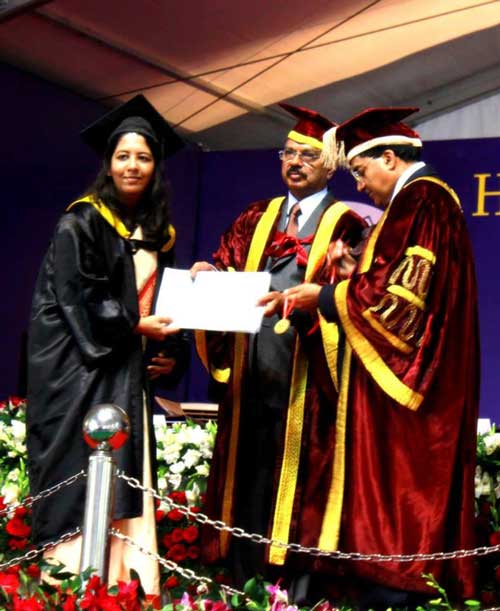
    aman-cb-4Aman, a graduate of National Law University, Jodhpur, of the 2012 batch, talks about his spectacularly awe-inspiring journey as a Law student. Not one to be charmed by the glamour of law firms, as most University-toppers admit to be guilty of, Aman chose to pursue his academic instincts further, by completing his BCL degree from Oxford University, with a focus on International Law, and then moving onto complete a prestigious internship at the International Criminal Courts, The Hague. All set to join Palestinian Center for Human Rights in Gaza, he shares with all Law Students, the following :

    • What went into winning the Trilok Chand Mangilal Sancheti Gold Medal.
    • The importance of balancing academics, moot courts and extra-curricular activities
    • The significance of choosing the appropriate internships
    • Why one should choose to pursue higher education
    • The experience of studying at Oxford, and of interning at the ICC.


    Most of our readers are law students and young lawyers. How will you introduce yourself to them?

    I am yet to figure out a good response to this question! Anyway – going the conventional way – I finished my undergraduate studies in law and policy sciences from the National Law University, Jodhpur in 2012. Pursuant to that, I proceeded to Oxford where I completed my BCL with a focus on Public International Law, Equality Law, Jurisprudence and Political Theory. Post Oxford, I had been interning at the Trial Chambers at the International Criminal Court, The Hague till March this year. I am preparing to join an organization called the Palestinian Center for Human Rights in Gaza this month.


    How did you gravitate towards law? What interested you most about the subject at the time? Is that interest still intact?

    I have grown up in an environment – both at home and school – where I have been exposed to and sensitised about various social issues. I wanted an education that helped me do something about such issues. Law was one such option (along with Medicine and Journalism)! However when I decided on pursuing Law, I did not have a very clear understanding of how the study of law would be directly instrumental in working towards the issues that motivated me. It was perhaps the interest in gaining more familiarity with social policies and laws; the attraction of the inter-disciplinary approach to legal education that the five year law schools promised; and discussions with a few people who studied/were studying law that convinced me to pursue it.

    The motivation is intact today (though the focus is on fewer issues!). In fact, the interest is much stronger since I have grown to know how the study and the practice of law, through litigation, policy and academia, help in dealing with a variety of problems plaguing the society.


    You have won the Trilok Chand Mangilal Sancheti Gold Medal. Surely a lot of effort must have gone into coming first in BA.LL.B (Hons.). Please provide us with some actionable tips on how to get good grades.

    To be honest, to top the class was never a primary motivation and the effort was never directed towards that. I really enjoyed what I did and, possibly, that was the reason I put in effort in making projects, working on court room exercises, and making assignments/presentations. There were also moments where I did not sit for tests, missed classes (and consequently lost marks that used to be allocated for classroom attendance in the first few semesters at law school) to work on things/participate in events that I enjoyed! Though it did cost me a few grades, I don’t regret it. I just feel it’s best to put in effort and explore the things that we enjoy – the results will automatically follow!


    How did you keep your law school life exciting? Share some memories with us.

    Luckily, I was involved with a lot of things in law school and never really sensed the monotony some of us complained about. Besides dealing with regular tests and assessments, extra-curricular activities like mooting (both as a participant and as an advisor), debating kept me busy. From my first year, I was involved with college committees and editorial boards which also kept me occupied. With time, the responsibilities in these committees also increased! I also found myself actively involved in the organisation of intra university sports fest, literary fest, and cultural fest and moot court competitions at the University. There were also a couple of initiatives by some of us – some of which I had to discontinue my association with because of the time crunch! Basketball was an excellent source of recreation – especially in my fifth year! I also enjoyed taking part in the regular cultural, literary, sports events organised in college.


    You have participated in moot competitions as a participant, advisor and even as a judge. How do you feel a student should go about a moot in order to reap the maximum benefit from it?

    From the time I had been introduced to moot courts, I found it to be an excellent learning experience. Not only does it help one in getting a good grasp over the area of law on which the moot proposition focuses but it also helps one develop researching, drafting and advocacy skills. It won’t be incorrect to say that being a participant at moot court competitions was probably the most rewarding experience! It is perhaps the things that I picked on the way as the participant – through my experience or the wisdom of others – that helped me serve as an advisor or judge moots now! Even as an advisor or a judge I continue to feel the same about moot court competitions and still find it to be a learning experience for me!

    As to how students should go about moots – I am not sure if I am in a position to suggest anything but I always felt that one should take up a competition if they are really keen on mooting. It is definitely not something that has to be mandatorily done in law school. However, if one picks it up – it is essential that one takes it up with all sincerity and gives the proposition the due time it demands – for research, drafting and oral practise. By my experience, I also feel that having someone to guide you in the area of law, drafting and for the oral rounds also helps a lot.

    I also did a bit of debating and played a bit of basketball.


    As an undergraduate student, you have done a variety of internships. Did these happen by chance or did you consciously choose to pursue such internships?

    No, all of the places were consciously chosen. However the guidelines of the placement cell (i.e. to work with X institution at the end of Y semester) was kept in mind. HRLN was an obvious choice when I was looking for NGO options to work around home at the end of the first semester. The internship here introduced me to the MGNREGA. The legislation sparked a lot of interest in me and was the reason that I participated in the said survey under the supervision of Professor Jean Drèze and Dr. Reetika Khera.

    At the end of my third semester, I was keen on working with an advocate practising in appellate courts and ended up working with Mr. Prashanto Sen in New Delhi. The choice of a relatively small office was again a conscious one – it helped me get exposed to a variety of matters and be directly involved at every step. Despite my age back then, the internship helped me gain a great familiarity with the work of a practising lawyer.

    I was also keen on working with a judge at an appellate court and hence the clerkship. Since I stay in Allahabad, the working of the Allahabad High Court was also something I wanted to see.


    You had worked as a Student Teaching Assistant and later with Professor Jean Drèze. These were definitely a bit unconventional. How did your experiences at these places help with your skill development and shaping you as a person?

    I was always very keen about teaching and have given it very serious thought as a long term career option. In fact, the revival of the Student Teaching Assistant Programme in college was with the efforts of some of us. I really enjoyed the experience of teaching public international law to my juniors. This also helped me realise some of the challenges one can face as a teacher in a law school like mine!

    Working with Professor Jean Drèze again was very rewarding. Post my internship with HRLN, I had developed an interest in the Right to Food Movement. After law school when I got the chance to work on a study related to Pubic Distribution System (of food grains), I readily took it up. This involved a field study on the drawing up and the management of BPL lists used for distribution and also focused on the problem of the leakage of grains. This greatly helped me understand some of the problems at the ground level; and the reach, working and the shortcomings of PDS in dealing with hunger. This is one area that I really wish to continue working on!


    When and how did you decide to pursue higher studies?

    I was very keen about pursuing higher studies right from the beginning of law school. I had heard that it opens more avenues – which I later found to be true. Like most people, I was also attracted to the prospects of studying in some of the dream institutions! However, it was only by the end of my third year that I gave it a very serious thought. By then, I had a discovered my inclination for public international law and some areas of public law; I also had some sense of what I wanted to do in life (academics, policy, diplomacy, politics and developmental work). These factors necessarily led me to consider higher studies. By this time, I also had an idea about which institutions were reputed for the courses I was eyeing.


    aman-cb-2

    What was your motivation behind pursuing BCL? Would you say the purpose was well served?

    As I pointed earlier, I was very keen on developing stronger foundations in the areas of law that interested me. Oxford was definitely one of the places high on my list considering the extensive focus BCL offers in the four courses one chooses to study through the year. This was a great motivation and I was very happy to have studied courses like equality law, international law and armed conflict in such detail. Also, as I mentioned earlier, I was looking at postgraduate course with the hope that it would openavenues that were not open or visible to me otherwise. This purpose was also duly served as I do not think it was possible to know of/get internships at the ICC or the PCHR without Oxford. In fact, grants/awards by Oxford Law Faculty also helped/are helping in funding these internships.


    Many law students would want to pursue higher studies from abroad. What would be your suggestions to them?

    If one is interested, I feel it’s good to start considering the LL.M. option at the start of the penultimate year of law school and also take a call if one wishes to apply in the final year (or subsequently). A good way is to talk to seniors who are pursuing/have pursued higher studies abroad and read about the Universities one wishes to apply to. This gives a good understanding about i) the law school – renowned faculty and courses, prospects pursuant to an LL.M from a particular University; ii) what the selection entails and how should one go about the specific application for a particular University; iii) any specific requirements like TOEFEL etc.;  iv) and even scholarship opportunities.

    As for what it takes to get in – it’s difficult to give suggestions! Every LL.M. candidate I met had different experiences and approach towards the application. Perhaps the connecting factor would be a good academic background! Speaking for myself – besides maintaining decent grades, I put in effort in doing all the things I enjoyed all through law school.  I tried to reflect the same through my application. I guess, broadly, every person tries to do the same.


    Does Oxford provide students with scholarships? Are there any other institutions which provide scholarships?

    Oxford offers a couple of scholarships – some are offered by the University, some by the Law Faculty and some by the Colleges at Oxford. A list of such scholarships is available on the website of the law faculty (click here).

    Besides the ones by Oxford there are a few other funding avenues. The popular ones like Rhodes, Felix, Inlaks and Commonwealth are known to all. There are a few less known options which give partial scholarships/ soft loans which one should also explore. These include – KC Mahindra Scholarships for Postgraduate Studies Abroad, Aga Khan Foundation Scholarship, Narotam Sekhsaria Scholarship, Oxford and Cambridge Society of India Scholarship. One must research more on these funding avenues – especially the smaller ones!


    Did you undergo a rigorous academic schedule? How was that different from your under-graduate course?

    Yes, BCL was very demanding. Unlike most classes during my under-graduate course, one had to necessarily prepare for the classes which involved completing a reading list assigned for the said class/seminar. It is difficult to appreciate, and at times follow the discussions in the class hours if one does not complete one’s readings (thus making the limited amount of class hours futile). Besides the regular preparation for the seminars, we also had tutorials spread through the three terms. These were sessions beyond the regular class hours where students discussed their essays/ specific topics with their tutors and a small group of students who had also taken the course. Though it was difficult to work on these tutorials along with the regular readings for class, these tutorials were academically rewarding. Also, unlike law schools back home, Oxford grades depend solely on an end-of-the-year, closed-book examination which makes the preparation for it quite rigorous. In fact, I never felt that there was a concept of a break – as one is busy with reading during both term breaks!


    Oxford is well renowned for its brilliant faculty. How was your experience with the faculty?

    One of the primary motivations to study at an institution like Oxford was to get the chance to interact, and even brainstorm with some of the most renowned scholars in the areas you are studying. Besides the interaction in classes, I greatly benefitted from the one-on-one interactions during tutorials, or the feedback received on my work from my teachers like Dr Dapo Akande, Prof. Sandra Fredman, Prof. John Gardner, Dr. Nicos Stavropoulos, Dr. Tarunabh Khaitan and Dr. Antonios Tzanakopoulos. It was also great to see how they received my ideas and encouraged me. Some of the faculty members had also helped me take some career decisions!


    How difficult was studying abroad in terms of finding accommodation, finances and settling in?

    Not to sound intimidating, but all three were indeed a bit difficult for me.

    I had not got College accommodation and was slightly apprehensive about finding a place in the beginning. Eventually, I did manage to find a great place offered by the University Accommodation Offices (the next best alternative to on-site college accommodation) before the start of the term, but it was slightly far off from the Law Faculty.

    Finances were another issue. Since I could not manage a full scholarship, I had to rely on a student loan.

    Settling in was not that big a problem as compared to the other two. However, it took me some time to adjust with the academic pressure, weather, lifestyle, and also to get used to cooking etc.


    What difference did you find in the pedagogy of Oxford relative to an NLU?

    There is a huge difference! As mentioned earlier, one was expected to read extensively for the seminars – which were more discussion oriented. At NLU the focus was more on class room lectures as opposed to discussions. However, I find the comparison a bit unfair. Though I have my reservations about the way legal education is administered in many Indian law schools, I feel the focus of undergraduate education is to develop an interest in law and should involve more lecturing and it’s not very wise to expect all students to read as much for classes as we were expected to at Oxford. A postgraduate course like BCL is designed on the premise that the candidates have an interest in the study of that area of law and aims towards developing an advanced understanding of the chosen area. That said, it would be nice if the reading component is given some focus which is largely absent in many law schools today.


    How do you think the BCL programme will help you in your career?

    It is difficult to predict how it will help me in my career! I can just say that I feel that I have developed a stronger foundation in some of the areas that interest me and will definitely help me if I am to pursue a career that involves an understanding and application of these areas. BCL has also helped in developing my analytical and writing skills – something that will be useful in whatever I choose to pursue. Besides academic foundations, I also feel that Oxford has made visible, and, in situations, accessible, options that were not visible/accessible otherwise – be it international firms or international courts and originations. For example, it would not have been possible to get an internship at the Trial Chambers ICC without BCL, where I had taken up specific courses on dispute settlement and armed conflict.


    There has been a recent trend amongst Indian law graduates to pursue higher education abroad. Why do you think this is happening?

    Another tough one! There could be multiple motivations. However, I feel that to some extent it’s a result of the exposure that students get these days. A few years back, pursuing LL.M was not really a well-known/advertised option. With more people opting for it, a lot many get exposed to the prospects of an LL.M, and now think of it as another feasible option after their undergraduate studies. Also, the breaking of the myth that an LL.M. is necessarily for those who wish to pursue academics has led many to aim towards specialisation in their practise areas. Many of my friends intend to take up higher studies for this very reason. Some are also interested in exploring opportunities abroad.


    You have recently completed a clerkship at the International Criminal Court, Hague. How did you get it and what prompted you towards it? How was the experience?

    I had applied for this clerkship while I was at Oxford. Desirous of building a career in international dispute resolution, I was looking at some international courts/tribunals back then. Besides the ICC, I had also applied for the ‘ICJ Traineeship Programme’ that is offered to graduates from of a select few universities around the globe (Oxford being one). However, I was unable to get the final offer despite making it to the final shortlist from Oxford. The other option was the ICC. Having taken up a course on International Law and Armed Conflict at Oxford, I was especially keen on working there.

    For the same, I had to make an application which involved completing the application form available on their website. I was also required to send a sample of my written work, a statement of purpose, a copy of my resumé and arrange for two referees who had to send their recommendation letters. This was followed by an interview by the Judge who I eventually worked with.

    I really enjoyed my stay at the ICC. I worked with Judge Eboe-Osuji (Trial Chambers) and the set of legal officers assisting him. While I was at the Court, I assisted the Judge in drafting a number of decisions and separate opinions; prepared memorandums; assisted in the preparation of witness summaries; and helped the judges and the legal officers in other trial procedures. Besides the feedback on my work, I greatly benefitted from the discussions with my judge and the legal officers.


    You have recently taken a series of lectures at NLU, Jodhpur in the subjects of Jurisprudence and Constitutional Law. Can we say you may gravitate towards an academic career in the future?

    I am quite keen! As I mentioned earlier, I was always very keen about teaching and have given it very serious thought as one of the options I wish to pursue in future.


    You are joining the Palestinian Centre for Human Rights in Gaza. Tell us something about this.

    The Centre is a non-profit company, dedicated to protecting human rights, promoting the rule of law and upholding democratic principles in the Occupied Palestinian Territory. It also supports all the efforts aimed at enabling the Palestinian people to exercise its right of self-determination.

    I am expected to be assigned to the International Unit at PCHR which has experts on international law, fundraising and advocacy. The Unit supports other Units of the PCHR in carrying out their work as well as producing reports, position papers and press releases.  Staff in the Unit are often involved in conducting field-visits as part of their advocacy programme or field-research as part of the research programme, and are involved in building relationships between Palestinian, Israeli and international NGOs who work on human rights issues.  The International Unit also produces interventions to international bodies – including the UN. Interns are involved in all these tasks. Considering the small size of the organisation and my background, I am informed that I might also be involved with the work of the Legal Unit (composed of a team of lawyers who give free legal aid and counsel to individuals and groups, especially Palestinian prisoners in Israeli or PNA custody), Democratic Development Unit, Economic and Social Rights Unit and Women’s Unit.

    However, things are still in the pipeline. Though I have been offered the position, I am still waiting for all the clearances that are needed to enter Gaza. I hope things work out soon!


    What are your long term objectives? Where do you see yourself in 5 years’ time?

    It is very difficult to say whereI see myself in 5 year’s time! I am quite keen about pursuing a career in a number of areas and am not blocking any option at this stage. However, if I am to broadly categorise – there is a good chance that in the long run I will be associated with academics, policy making, diplomacy, politics, developmental work, international/domestic dispute settlement or even a combination of a few of these. A lot depends on the opportunities that come my way!


    What would be your message to law students who want to pursue a BCL from Oxford?

    There is not much that I can say to people who wish to go to Oxford! They probably know about the place and all that it has to offer. I suppose it is best for this motivation to stay alive (right till the application stage which can be pretty daunting!) while one continues doing whatever they enjoy doing, with all sincerity!

  • Medhavi Singh on winning Best Oralist at Leiden Sarin and LL.M. from NYU

    Medhavi Singh on winning Best Oralist at Leiden Sarin and LL.M. from NYU

    Medhavi Singh talks about her journey as a Law Student of National Law University, Delhi. She had been awarded the Best Individual Oralist at the Leiden Sarin Air & Space Law Moot Court Competition. She has recently been accepted for a Masters in International Business Regulation, Transnational Litigation and Arbitration at New York University.

    In this interview, she tells us about:

    • The essentials of mooting every Law Student should keep in mind
    • What goes into excelling an International Moot
    • The importance of an LL.M from a foreign University
    • The application process for an LL.M in the U.S.


    How would you like to introduce yourself to our readers? Tell us a bit about your childhood, your hometown and your pre-graduate life as well. What motivated you to choose law as a career?

    I am a student of Delhi Public School, RK Puram. Originally, I am from Patna City, Bihar but have been brought up in Delhi. It was in Grade 7 that I first came across abook written on the subject of law. It was “The Colour of Law” by Mark Gimenez. The protagonist of the book was so inspiring that when I finished reading the book, I immediately knew I had to become like him. Of course, I think differently now since his practice in the book was criminal, but yes, that was my first ever motivation to pursue law as a career. Having this in mind, I took up Humanities with Maths in class 11th and 12th. I knew that subjects such as History and Political Science are tested in the National Law School exams and thought that taking these subjects would definitely be advantageous, which they actually turned out to be! For example, taking up Political Science was extremely helpful in understanding the political system of India as well as the Constitution of India, which is an integral subject from the view point of the entrance examinations.

    None of my family members are lawyers and I didn’t even know anyone who was a lawyer at the time I had decided to take it up. Thankfully, my family gave both my sister and me enough freedom to decide what we wanted to do with our lives, so they were pretty content with my career-goal.


    How did you gravitate into mooting? When did you decide to take up mooting seriously as a law student?

    At the outset, I would like to say that there is probably nothing more fun than mooting when you’re in law school. It’s hard work, for sure but the excitement it brings to a person at law school is absolutely unparalleled. I’m not sure how I ‘gravitated’ into mooting but I guess it’s something that most of the people in law school try anyway! I liked it so much after my first try that I couldn’t stop even when I was in my fifth year! For me, mooting was always a serious activity. It was fun but only as long as the results were positive, for which you needed to be serious about your work.

    I got drawn towards mooting especially when my team reached the finals of the KK Luthra Moot Court Competition on International Criminal Law in 2011. I remember being extremely nervous about not making it to the next round right from the first round but thankfully, it worked out well for us. Arguing in front of distinguished judges, finding loopholes in settled law as well as arguing on and learning about contemporary issues with no settled law seemed extremely exciting!


    medhavi-s2

    You have been the Best individual Oralist at the prestigious Leiden Sarin Air & Space Law Moot Court Competition held in Romania in March this year. Please tell us about your overall experience there regarding the competitors, the judges and other ancillary things.

    This moot was the best experience possible. I had been attempting to go for this moot since the second year of college and for some reason or the other, I couldn’t go until my last year – either I didn’t make the cut or the moot wasn’t included in the list. But anyway, I finally managed to go!

    This moot was special to me because I was very fond of Aviation Law as a subject of law. It was a field of international law that was always on the ‘move’. I must commend the Leiden-Sarin Organisers on the judges that had been called for the moot. During the entire moot, not once was I asked to state the facts and the questions that were posed to my teammate and me were precise, to the point and relevant to the problem at hand. What was more exciting about this problem was that it was based on a topic which has not yet been resolved, which meant that there was scarcity of material on the topic, which in turn helped us to make innovative and new arguments, applying not only to Aviation Law but also to different facets of International Law.


    How much preparation did you require for this success? Did you burn the midnight oil to excel in this moot? How much dedication and hard work was necessary for to ace Leiden Sarin?

    I’m not going to make it sound easy because I don’t think that’s honestly possible. Preparing for this moot was insanely hard. NLU-Delhi has a policy that all students must remain on campus through the week, even if you are from Delhi and I was known to be the one going home all the time for some reason or the other. I can vouch that it was during the time that I was preparing for this moot that I stayed the longest on campus, that too in the December-January winters. So yes, it’ a lot of work, but I am not complaining. I actually enjoyed myself, minus the sleep deprivation!


    What would you say differentiates between the best oralists and the rest? What are the top three things you consider sine qua non for being a great oralist?

    I think the most important criterion for being a great oralist is to be able to read the judge and understand what they’re looking for. We all do our homework in the sense of learning pleadings, facts, authorities etc. but ultimately, it comes down to how you can satisfy the bench before you. A judge may or may not know the problem very well, so it’s extremely important to answer his/her questions in a satisfactory manner, otherwise you end up losing the rapport that you’ve built with him/her. So according to me, on the top it would be understanding what the judge is asking for – for example, either answering questions in a precise manner or a detailed manner-and delivering the same.

    Secondly, I would want to emphasise on the importance of using relevant and contemporary real-life examples to back your case. It’s extremely important to let the judges know that what you’re arguing is in fact being practised at that very moment. I think it creates a huge impact on them.

    Thirdly, it is undeniably important to focus on you mannerisms. When it comes to mooting, most people will have the same amount of knowledge as you do and the only edge that you’ll ever have is to be able to display that knowledge and deliver your arguments effectively and differently by enhancing your mannerisms.

    For the most time that I was practicing my pleadings for the Leiden-Sarin Moot, I was concentrating on speaking slower (owing to the fact that all the judges were going to be from a foreign land) and remaining composed while answering questions. The best way to remain composed is to think of the whole procedure to be a meaningful conversation between the judges and yourself and to not let yourself get intimated by them; you probably know more than them about the problem at hand if you’ve done your research well!


    What prompted you to apply for an LL.M. abroad? Does it help given the career you have chosen? Why didn’t you opt for an LL.M. from India given that now we have 1 year LL.M as well?

    I experienced dispute resolution on an international scale for the first time at the Global Young Leadership Conference held in the US, where I was selected to represent India. Here, I was exposed to the tactful methods of negotiation rendered by people in addressing world issues. To further delve into the realm of international dispute resolution, I took part in Model United Nations, representing different States in various committees. I believe both these events formed the initial basis of my interest in dispute resolution on an International scale.I was drawn to International Law right from the beginning when I took part in the KK Luthra moot and ultimately by the fourth year narrowed down my liking to transnational litigation and international arbitration.

    The reason why I applied to foreign universities as opposed to an Indian one is definitely the courses that were being offered by the foreign universities as opposed to the one that were being offered in India. NYU was one University that offered a course on International Business Regulation, Transnational Litigation and Arbitration. I was excited to apply for this course because it befitted my aspirations perfectly and I wasn’t getting such an option anywhere else.


    You have got through to an LL.M. programme at the New York University. What do you think clicked in your favour during the selection process? How did you plan your Statement of Purpose for NYU?

    I think what worked for me was the clear picture that I had in my head with respect to what subjects I wanted to study as well as what benefit I would derive out of studying those subjects and how I would be able to apply the knowledge acquired by studying those subjects to fulfill my career-goals. My SoP had clear indications of what inspired me to choose this field, how I have already started worked in this field by means of internships, research papers etc. and how studying it would help me achieve my future plans.

    I know for a lot of people, LL.Ms are just ‘further studies’ but I think it’s much beyond that. I know it’s not a pre-requisite for any activity that you would want to undertake after law school but I feel that sometimes, it is quintessential to get expertise in niche areas, especially when you want to specialise in the same.

    Building up on your profile from the view point of an LL.M is essentially maintaining excellent grades through law school. The competition can get to you sometimes but it’s not impossible. Other activities could include mooting, debating, writing papers and even being members of relevant groups at your law school.


    For an LL.M you needed to have a student VISA. What are the requirements for a successful VISA application? As a lot depends on the VISA application did you prepare for the interview?

    The Visa application is a long drawn one month procedure. I can answer this question for the US Universities since that’s the procedure I am privy to. You need to first apply for your I-20, for which your University will provide you with details. The US University would then send you a hard copy of your I-20 which you must keep extremely carefully. After having done that, you must pay a fees online called the SEVIS fees and must keep multiple receipts of the same. Then you have to fill out the DS-160 form and make the visa application fees in cash to the specified banks (Axis or PNB). At the bank, they would generate a number for you which you have to use to schedule an appointment with the US Embassy. Once you have received your I-20 and paid the SEVIS fees, the visa application becomes easy and there’s not much you can do. My interview was a one line question where I was asked why I was going to NYU and which subjects I was specialising in. I was asked to pick my passport up with the visa the very next day! So no, not much preparation is required for the interview. But it’s always safe to carry all the documents with you just in case you’re asked for them.


    What would be your message to law students who look forward to an illustrious law school life?

    I would say it’s about maintaining excellent grades in law school and having a clear picture about what you want to study and why. It’s important to ask yourself these questions to be able to figure out whether you really want it or not. Apart from this, I would recommend all of you to have at least three teachers in mind, who have credibility and are somewhat renowned in their respective fields, who would be willing to help you out with your letters of recommendation. These letters have a huge influence on your application and must not be taken lightly! The whole application procedure seems daunting and you could feel lazy at times but trust me, in the end, it’s definitely worth it!


  • Pankhuri Mehndiratta on working for International Human Rights Organisations and insights of a career in research work

    Pankhuri Mehndiratta on working for International Human Rights Organisations and insights of a career in research work

    pankhuri-a-m-4Pankhuri Anuradha Mehndiratta is a NUJS graduate of the Class of 2014. She has recently joined the Centre for Legislative Research and Advocacy as she is keenly interested in International Human Rights and Public Policy. We have taken out this opportunity to ask her about:

    • Specifically choosing internships that help in Humans Rights Law.
    • The importance of taking up courses that have an impact on one’s career as a Human Rights Researcher.
    • Things to be kept in mind while compiling a research work.
    • Insights for law students who aspire to work for international non profit organisations.


    Most of our readers are law students and young lawyers. How will you introduce yourself to them?

    Hello! I am Pankhuri Anuradha Mehndiratta. I am a graduate of the Class of 2014 from NUJS. I am keenly interested in International human rights and public policy. I have just joined the Center for Legislative Research and Advocacy as a Project Associate.

    I was born and raised in Jaipur and did my schooling at Maharani Gayatri Devi Girls’ School .I trained as a kathak dancer from a very young age and was also the Cultural Head Girl of my school. I love to read, travel and am also a licensed Scuba Diver. I enjoy my adventurous streak. I like to learn new languages and am pursuing French as a foreign language at the moment.


    You studied Humanities before finishing your schooling. How did you gravitate towards law thereafter? Did you have someone who inspired you to study law?

    I took up Humanities in school owing to my inclination towards it. I had always been interested in subjects that relate to the human behaviour and relationships.

    I come from a family of doctors and thus the importance of a profession that adds value to society had been instilled in me at a very young age.The pursuit of law not only trained me to think critically but also gave me the tool to make the change I wanted to see in the world in however small a measure. I am a first generation lawyer and in that sense did not have any person who I looked up to at the time I entered law school. However, along the way I met many admirable individuals in capacities of mentors, teachers and peers who enriched me immensely.


    pankhuri-a-m-3Barring one or two exceptions almost all your internships at WBNUJS were focussed on non-profit and research work involving primarily matters of Human Rights Law. Were these all planned internships or did you just take them up as they came along?

    I do not believe in coincidences. I consciously opted for subjects that exposed me to the various facets of Human rights. I backed my theoretical knowledge with practical and on the job experiences at various national and international organizations through my internships. Apart from one corporate internship which helped me be sure of the fact that I did not want to tread the path of the corporate world, all other internships were consistent and conscious choices.


    Your work shows a great enthusiasm and interest in the field of Human Rights Law. What brought you into Human Rights? Were there any incidents which inspired you into it?

    Thank you. As I said it always has been very important to me that the work I do has a direct and positive impact on the lives it touches. I have never been one to accept things on face value and have always intellectually pushed the limits of what the apparent status quo is in my sphere.

    As for what inspired me, there was not any one definitive moment that did. It was the steady and gradual realisation of how much discrepancy that lies between ‘what is’ and ‘what should be’ which inspired me to work towards bridging that gap.


    You interned at The Office of the Prosecutor, The Special Tribunal for Lebanon, at The Hague. How was your experience as an intern? What work did you get to do there? How did you come across such an opportunity?

    It was truly enriching. Each day was packed with immense experiential learning. The level of mentoring and guidance to the interns was stellar .The STL was at the Pre- trial stage at the time and I got to do lots of research and drafting on topics of International Criminal Procedure as well as Human rights that apply to the victims of terrorism. Since the nature of the work was sensitive and confidential, it is best not discussed on public forums. But most importantly, I got to witness the workings of the various echelons of International justice up close and that to me, was a reward in itself.


    pankhuri-a-m-5

    What are the courses you have taken up as a law student? And which are the ones that may have a long-lasting impact in your career as a Human Rights researcher?

    My university offered quite a few optional as well as credit courses. I took up a few on Human rights and its relations with many aspects of life as and when they were offered. Unfortunately, the practice of offering of the Credit courses is not very regular in most law schools as it is basically dependant on availability of experts in a field and the liasoning of the university with them. Hence, you just basically make your choices based on the available options at the time. I feel each of these courses that I took gave me an added perspective on human rights and its various facets and helped me understand the corpus of International human rights and its various off shoots from different angles.


    What has been your most memorable incident working for these NPOs?

    I think the best part about the field of human rights is the fact that you have your memorable incidents everyday! Considering how I have human rights internships spanning my whole law school career, skimming out only one such incident would be grossly unfair. Suffice it to say that the satisfaction you get after back breaking effort to entitle someone to a better life is mighty addictive.


    What is it like researching for so many International Organisations? How hectic is it? Are there new challenges everyday or has work settled into a predictable pattern?

    I researched for a couple of International and Non Governmental organizations during the course of my law school. It used to be hectic but it was not an impossible task to make time. Most of the work is project based and spanned over a duration of weeks/months. On a lighter note, what else have we learnt in law school if not time management?


    Most of our colleagues would say they need a higher pay package than an NPO can offer to sustain themselves. Do you think remuneration is a serious impediment to pure research based work?

    I strongly feel that research and innovation is a grossly undervalued professional arena in our country and it can be very difficult for people to sustain themselves with the pay packages that NPOs offer and in turn the NPOs lose out on brilliant people as a result of the same. However, it is also true that should one go through the rigours and hardships of the first few years, the experience gathered is unparalleled and the remunerations follow in due course.


    What are the top three things you keep in mind while compiling a research work? How do you suggest we become efficient at it?

    Firstly, the researcher must get acquainted herself with the topic across a range; starting with something as banal as a Google search on the same.

    Secondly, the sources are what differentiate a good research piece from a bad one and it is for this purpose that one should be very sure of the source of the information and its authenticity and admissibility.

    Thirdly, after the information is gathered from eclectic sources and duly analysed, a logical skeletal structure for its presentation must be kept in mind.

    Lastly, the end product/report should be aimed towards the audience and at all times be concise, precise and comprehensive.


    Where do you suggest one can intern or apply for research opportunity if she is interested in working for Human Rights issues?

    There are various levels of organisations at the national, international, micro as well as macro levels. Since the arena of Human rights law is vast, the best thing to do is to identify an area of specific interest and then go ahead and look for available opportunities.


    What is the best possible course of action for a law student who aspires to work for international non profit organisations?

    In my opinion, the peculiar thing about the arena of International law is that it follows the rules of Calvinball. That is to say, that there are no set rules or course of action since it is a very niche area. That being said, the best thing to do is to gather as much experience at various levels and be consistent in your endeavours.


    Where do you see yourself by the end of the coming five years? What are your long term objectives?

    At the end of five years, I see myself as a specialist in International Human rights, making a significant contribution as part of an International Organization.


    What would be your message to law students who are research enthusiasts?

    I would like to tell them that as future lawyers they have a very powerful tool to effectuate social change and that they must use it to its fullest potential. Even though the field of International human rights might look very glamorous from the outside, it requires immense emotional maturity and objectivity. That being said, if anyone is fortunate to have it as their calling, they must absolutely pursue their dreams. In the current law school set up in India, it can feel like a lonely path in the absence of proper mentorship, counselling, guidance and placement efforts, not to mention the assessment of your worth by the pay package you land by your peers. However, they say the roads less taken most often lead to beautiful destinations and that’s the road to take for anyone aspiring to be an International Human rights lawyer.


    Pic credits: Arghya Brata Mandal
  • Ashitha Bhagwan on being an Attorney at Royse Law Firm, LL.M. from NYU and the American Legal Industry

    Ashitha Bhagwan on being an Attorney at Royse Law Firm, LL.M. from NYU and the American Legal Industry

    Ashitha Bhagwan graduated from University Law College, Bangalore in 2007 and subsequently completed an LL.M. from New York University. After working in India and Singapore, she is currently practicing in California. Being a dual licensed corporate attorney focusing on start-ups and mid-market companies, she regularly counsels on a wide range of corporate issues such as formation, equity structure, employment, general corporate governance, intellectual property protection and commercial transactions for domestic and international clients.

    We took this opportunity to ask her about:

    • Her experience at New York University
    • Work atmosphere in the U.S.
    • Working as an attorney at Royse Law Firm


    “Law school”, have become synonymous with the NLUs. Have you faced any such bias during your career? What would you say to the future graduates of ULCB regarding this?

    You will realize as you grow into the profession that what matters is what you made out of the school that you graduated from. And as you are well aware, opportunities that present themselves to the legal student community are open to all students, irrespective of the school. The school that you graduate from cannot really hold you back – you are at liberty to be as involved in this profession as you would like to be.

    I didn’t let the comfort of life at law college get to me while I was completing my course. I used every opportunity I got to explore and build an identity beyond the shadow of my college. The legal community is a closely knit profession so it’s important that you network among your peers, focus on your courses and make the most of the internships/moot courts that you are given an opportunity to participate in.


    After graduating from ULC you had taken up a Post Graduate Diploma in Intellectual Property Rights from NLSIU. What attracted you to this course? How has it impacted your overall career trajectory?

    [sociallocker] I wanted to get some background and insight into Intellectual Property (IP) laws since I was interested in corporate laws, and IP and corporate laws intersect at various junctures. I completed this course alongside my ULC degree, so it was twice as much pressure but I managed to learn quite a lot from the course. It helped me master the basics of IP laws which have proven imperative in my day-to-day practice.


    Of all the internships that you have done, which ones do you think really enhanced your chances of getting admission in such a prestigious University? How would you recommend students to go about choosing their internships?

    The thing about internships is that it is not so much a single stint that will lead to your LL.M admission, as it is a holistic view of your entire career as a law student. I enjoyed all my internships since each one gave me an opportunity to explore a new facet of law. In the end, it became clear to me what I wanted to pursue in future.

    Since most students in India are enrolled in the five year course, they have at least 8 breaks (short and long) in which they could potentially intern. It is important that you show for these times when you are not required to be in class, and they all add up to your end goal. You could certainly spend a break or two doing something you like, unconnected to your end goal, but for a post graduate degree, it is important that your resume tell a story that leads up to the LL.M.


    How did you decide upon New York University School of Law for your Post-Graduation, from the plethora of options available in the United States?

    It was a really simple choice – I had applied to 6 schools (in US and UK) and got admitted in 5, and NYU was simply the best of them all. It was located in NY (which is the financial hub), the faculty was awe-inspiring (we had professors coming in from all over the world, even legal luminaries that I had only read about as a student), and it was in the top 3 when I enrolled. Also, I knew that I would have the most fun living in NY.


    How did you get through the selection process of NYU? What would you say increased the probability of your candidature? What are the things one should do while at law school to have to sail through these selection processes?

    As any other potential post-graduate student, you need to show that your application is different from the thousands that the school receives that year. What helped me was top grades, a solid set of internships, publications, and victories at national level moot court competitions.

    Make sure that your 5 years in law school count – pursue internships/clinics that are of interest to you, participate in moot courts, write articles, work with your professors (if possible) on articles they may need research assistants for, and, most of all, make sure your grades don’t slip. Universities generally look for well-rounded individuals to mould into lawyers – if you can show that the natural next step after your time in law-school leads up to the LL.M., I think you would have better chance.

    Also, you should tailor your resume/application for the specific school – some prefer work experiences, some are more academic oriented so, keep that in mind while preparing an application.


    How was your time in NYU School of Law? How is the academic workload there?

    I enjoyed it! Workload was heavy, takes getting used to, but you learn pretty quick when you’re there – the adrenalin and the need to catch up is pretty high, so you will be fine. Prepare to study hard, and party harder!


    How difficult was it for you, as a student who had theretofore been used to the Indian education system, to adjust to the environment of a US University?

    It was very different from what I was used to, but as I said, you become a quick study when you are there. I suppose you learn to swim when you are thrown in the water! You also have a lot of flexibility (with courses, timings etc.) which gives you the opportunity to be creative with your courses.


    Corporate Law is oft seen as a dry arena of Law, sometimes with humongous workload. What made you gravitate towards this field?

    It is all about perspective. The way I look at it is that I have an opportunity to facilitate deals. One of the things which makes it very interesting for me is that I have the opportunity to work with entrepreneurs working on exciting products and help those products reach markets where it might have never reached a few years ago. My clientele is primarily from the technology sector and being part of the ever-changing advancing landscape of technological innovations in the Silicon Valley is a great opportunity.


    ashitha-bhagwan1Before starting work as an attorney you had to clear the Bar exam at California. Given that it is one of the toughest bar exams what was your experience?

    The California Bar Exam is the toughest exam that I have ever taken. It required my undivided attention and focus, and I am so glad it is over! If you are planning to crack this exam, remember that you have to give it your all – one hundred and ten percent. I know of people who have attempted this multiple times and failed. The volume of material is overwhelming but tackle it in small sections and you will be able to get through it.


    Which events led to your induction into Royse Law Firm? Were there any interviews or selection processes?

    I have always been looking for opportunities where I would not be stuck to a desk, but be able to meet new people and interact with clients on a regular basis. The Royse Law Firm presented itself as the perfect opportunity. It happened by being at the right place, at the right time. After meeting with team I was convinced that there was a great potential for me here, and I have enjoyed my time here ever since I joined.


    What is it like working in a law firm? How hectic is it? Are there new challenges everyday or has work settled into a predictable pattern?

    As a lawyer, there is never a dull moment. It is pretty busy – entrepreneurs always have interesting challenges and it’s our job to come up with even more interesting solutions. Being innovative is part of the job, and I love that I have the opportunity to do that.


    Tell us about your work at Royse Law. Can you tell us about a few of the most challenging problems you have faced thus far?

    I work with start-ups and mid-market companies. Since my practice encompasses cross border transactions, I am often required to reconcile the different jurisdictional implications of a single transaction. We work on strategizing the best way to ensure that the product can be accessed in the same way in a foreign jurisdiction, as it would be in the US. What I love is that I get to oversee a well-rounded perspective of working across multiple jurisdictions – tax, IP and corporate all of which are an integral part of a corporate lawyer’s career.


    How different is the work environment in the USA, from that in India?

    One thing I have noticed is that there is a clear line between your professional and personal life in the US. I find that that line in India is a little blur. Other things that are more specific to the US work environment are that it is more formal (people love setting up meetings), a little impersonal and is extremely professional.


    What are your plans for the next 5 years in the various fields of Corporate Law?

    Corporate Law is a broad term, and I have had the opportunity to explore various facets of it. I will probably be in the corporate law practice in the foreseeable future.


    What would be your word of advice to Law Students who want to practice law in the US?

    Read. Be well informed before you make any decision. Information today is very easily accessible and there is no reason that you should not make use of that.

     
    If you would like to reach Ashitha Bhagwan, Esq., feel free to connect with her on LinkedIn, alternatively you can also email her at abhagwan@rroyselaw.com

    [/sociallocker]

  • Divya Chawla, LL.M. candidate, University of Pennsylvania, on joining Linklaters and her internship experience

    Divya Chawla, LL.M. candidate, University of Pennsylvania, on joining Linklaters and her internship experience

    divya-chawla2Divya Chawla graduated from NLU Delhi, batch of 2014. She has just been accepted to the University of Pennsylvania. And soon after completing her LL.M. she shall be inducted into Linklaters, London.

    We took this opportunity to ask her about:

    • The process of application for LL.M. to an Ivy League University
    • Planning a successful Statement of Purpose for LL.M.
    • Internship and job offer from Linklaters


    What motivated you to choose law?

    It took me a long time to decide what I really wanted to do, so much so that to buy time I joined Delhi University after Class XII. I studied Political Science Hon. at Jesus and Mary College for a year during which the idea of studying law grew on me gradually. While there were no lawyers in the family, it really helped that my elder brother was studying law at that time. I was able to make a first-hand comparison between the prospects and scope of a traditional graduate degree and a professional degree. In retrospect, the gap year really helped me identify what I wanted to do and I was glad I didn’t rush into something immediately after Class XII.


    Please share some of the memorable experiences of your college life.

    The exciting aspect of being part of a fairly young institution is that one gets the opportunity to be a part of many ‘firsts’ of the University. I had the opportunity to be a part of the editorial board for the first edition of the NLUD Student’s Law Journal. Subsequently, as a member of the RCC, even the recruitment process had to be envisaged and managed from a fairly rough foundation. While the lack of guidance can be daunting, such experiences strengthen character and enhance leadership ability.

    Further, in terms of co-curricular activities I was lucky to be a part of the team representing the University at our first ADR competition endeavour, the Brown-Mosten International Client Counselling Competition in 2011. Mooting was also strongly encouraged right from the start and this helped me improve my research and oratory skills immensely through college.


    What triggered your interest in Arbitration and ADR?

    My initial interest in ADR competitions developed from the unique format. Participation in ADR competitions helps build valuable skills such as strategising, negotiation and problem-solving.  Moreover, these skills are relevant to any path you choose after graduating and are not confined to the career of a negotiator or mediator.


    How did you secure an internship at the Planning Commission of India and World Bank?

    The Planning Commission and the World Bank regularly list internship opportunities on their respective websites. While the Planning Commission internship is a standard program structured over a month, internship opportunities at the World Bank are on a more ad-hoc basis. Both the internships involved working on a research project under a supervisor.

    These internships helped me look at commercial issues from different stand-points. At the Planning Commission I worked on legal issues faced by the Government in airport modernization through public-private partnerships, while at the World Bank I got to analyze an industry perspective on the regulation of the microfinance sector. So this helped me understand different facets of commercial undertakings/projects.


    How does an Indian student get an internship in London?

    International firms such as Linklaters, organize a vacation scheme program each year for penultimate year law students, which is essentially a three week internship at the firm’s London office. As part of this program, the firm focuses on selecting a certain number of students from Indian universities. It is an exciting opportunity but the selection process is quite rigorous and competition is fierce. I think the key to be a successful applicant is to show genuine interest in commercial law and a commitment to the idea of working at an international firm. Relevant internships would demonstrate exposure to the practical side of commercial law. It would also help to highlight any publications relating to commercial issues or an elective/ short-course/ certificate program taken up. This reflects a sincere attempt at developing one’s understanding of the field. Awareness of international deals and business events and an enthusiasm to get involved in cross-border matters helps fortify the commitment towards working at an international law firm.


    How did your internship transform into a job offer?

    At the end of the vacation scheme, the opportunity to interview with a Partner for a training contract is automatically offered. This interview is based on an assignment that is prepared individually during the scheme and involves identifying legal and commercial issues in an international business deal.

    In a nutshell, the scheme provides the opportunity to intern in two different practice areas under an experienced Principal, and also affords a great learning experience through a range of professional development sessions. These sessions are designed to provide a broad understanding of the Firm’s global business strategy and practice areas, as well as the chance to develop skills like mediation and pitching to a client. For me, the best part of the program was when as an intern in the Banking team I got the opportunity to visit Lehman Brothers’ Canary Wharf office and get involved in the insolvency administration.


    What prompted you to apply for an LL.M. abroad?

    The prospect of being able to get an in-depth knowledge of subjects that I was interested in prompted me to apply for a Master’s Degree. Moreover, the Masters program can be structured to suit career goals, like a number of Universities provide a choice between practical skill-intensive courses and research-oriented courses. Some Universities are particularly good for undertaking cross-disciplinary study like NYU, University of Pennsylvania and Northwestern University. So it is basically a year of study focused on subjects that one is keen to pursue further professionally and at the same time there is the fabulous experience of being taught by distinguished professors in a multi-cultural environment.

    Further, an LL.M. provides the opportunity to gain more knowledge of the international market, thus adding a global outlook to one’s perspective. Since I am looking at working in an international legal environment I decided that opting for an LL.M abroad would be more suitable in terms of my career goals.


    What do you think were some of the contributing factors that helped you get into UPenn?

    From my experience with the admissions process I believe US schools are not purely focused on a student’s rank or GPA. It is a more comprehensive selection process which seeks not just ‘intellectual potential’ but also something that sets a candidate apart like volunteer work, leadership experience or professional accomplishments. Despite the obvious upside to this approach, this does bring in a huge amount of subjectivity into the process which makes it all the more difficult to espouse a formula for getting through an Ivy League School.

    It certainly helps to be an all-rounder with achievements across a range of academic subjects and extracurricular pursuits. This is viewed as a definite indicator of future success which to the admissions board is important to assess your value as an alumnus of their University. However, if one falls short of being an all-rounder there’s no need to lose hope! Showing extraordinary caliber in a specific area of interest that has been consistently pursued coupled with a definite future course of action would also make a strong application.


    What other courses and universities did you apply for?

    I applied for the BCL at Oxford and the LL.M at University of Pennsylvania, Harvard, NYU, and Cambridge. An obvious parameter for choosing a University is the brand name, because resume enhancement is a huge plus. On a more subjective front, it’s a good idea to identify what feature of a particular University or program ties in with your career goals, not only for the purpose of making a choice but also to highlight that your application is not a generic submission made to all Universities, but has in fact been carefully thought through.

    Personally, I believe it’s a better idea to opt for a school depending on its ranking in your intended subject area rather than a general ranking. I opted for Penn Law because it has a strong reputation for corporate law which I was interested in studying further. It also has a great cross-disciplinary program for LL.M students called the Wharton Business and Law Certificate (WBLC). Wharton is UPenn’s business school and is ranked as one of the finest. The WBLC offers law students the opportunity to learn about fundamental business, financial and management concepts in a legal context.


    How did you plan your Statement of Purpose?

    How a SOP is planned differs depending on the University. While some schools require that applicants address specific questions in the SOP, others follow a more general and open-ended theme. Typically, it should cover the applicant’s background; academic and professional interests, a persuasive reason for choosing the University and program of study and lastly how this choice ties in with career goals and ambitions. This means being concise is key, because information about your past, present and future must be condensed into a limited word count and must make for a compelling read. So be prepared for endless drafting and editing! Also, a conclusive future course of action that ties in with the applicant’s past and present experiences, and envisions a positive impact in a specific field (could be law, politics, business, the social sector, etc.) shows determination and passion.

    Broadly, my SOP was focused on how my background shaped my ambitions, my experience in commercial law through academics and internships, and how the LL.M. would prepare me for an important role in a trans-national legal environment.

    I’m looking forward to getting a sense of the US legal system and particularly look forward to taking up courses at Wharton during the LL.M. I expect there to be a substantial value addition to my academic credentials and a smoother transition from being a student to working in an international law firm. Finally, I’m excited about being part of a culturally diverse class and hope to build strong relations through the course.


    Which are the scholarships one can apply for at UPenn?

    Penn law is certainly on the expensive side as there aren’t too many options for obtaining financial aid. Applicants belonging to a few specified countries (including India) are automatically considered for financial assistance on a merit basis. There are a few such scholarships but the exact number that is awarded is discretionary and financial need is not a criterion in arriving at a decision. Further, only a part of the total cost incurred towards the LL.M is covered. However, if you are focused on human rights issues there is a dedicated human rights scholarship.

    In addition, in India there are some foundations which accept applications for education-related travel grants, like the Sir Dorabji Tata Trust. Such grants typically cover the cost of travel, insurance and visa fee. Another option is to apply for an interest free loan from the Narotam Sheksarai Foundation which selects awardees based on merit.


    Lastly, what would be your message to all the law students who aspire to work in one of the Magic Circle firms?

    From a technical point of view, I think the most important skill to work on consistently is commercial awareness, preferably of the international market. Equally important is sharpening professional communication ability and social skills.

  • Chitrrangada Singh, Legal Assistant, Appeals Chamber of International Criminal Tribunal, on LL.M. from UC Berkeley and practice at The Hague

    Chitrrangada Singh, Legal Assistant, Appeals Chamber of International Criminal Tribunal, on LL.M. from UC Berkeley and practice at The Hague

    chitrrangadaChitrrangada graduated from University Institute of Legal Studies, Panjab University in 2010. She took a certificate course in Arbitration and Mediation from the WIPO Academy and thereafter in 2011 she went on to pursue her LL.M. from University of California, Berkeley.

    Chitrrangada is working as a legal assistant in a defense team at the Appeals Chamber of International Criminal Tribunal for the former Yugoslavia. Her job entails researching for and defending people who are indicted of international crimes. She has also worked in various high level and landmark cases at The Hague.

    In this interview we asked her about:

    • Studying at UC, Berkeley
    • Interning and practicing at the Appeals Chamber of International Criminal Tribunal (Yugoslavia)
    • Working in landmark cases and representing people indicted of international crimes


    How will you introduce yourself to our readers?

    Hi, I’m Chitrrangada. I’m a lawyer from India. After getting my license to practice at the Punjab & Haryana High Court, Chandigarh, I successfully completed my LL.M. at University of California, Berkeley. Since then, I’ve been working and living in The Hague for the past three years.


    Did you ever feel that not being from an NLU was a disadvantage?

    I graduated from the University Institute of Legal Studies at Panjab University in 2010. Itwas, at the time, the newly established institute setup by the university to offer a five-year B.A. LL.B degree. The faculty and administration, under the leadership of Prof. Dr. R.S. Grewal, was different from the three-year graduate degree in Law offered by the Department of Laws. The batch that I was a part of was the second batch to have graduated from this institute. At the time, we could not boast of a well-connected career placement programme. This experience would resonate with most newly established law schools in India and not just non-NLU schools.

    Further, as I did not graduate from a National Law University, it would be unfair for me to make assumptions about the experiences of an NLU graduate. However, I would say that I did find myself somewhat disadvantaged when it came to opportunities in commercial firms.

    Nevertheless, it would also be too simplistic to say that there is a bias against non-NLU students when it comes to professional opportunities. In retrospect, I think that the avenues, which each of them offers, are different. Therefore, what one can make out of the experience is also different. While the lack of facilities and the bureaucratic hurdles in state universities can threaten one’s chances, strangely, they also make you resourceful, resilient, and patient.

    I believe that, having lived and worked in Chandigarh both at the district court level and at the High Court within a Chamber, helped me immensely during my assignment as an intern and legal assistant at ICTY defence. I was able to integrate faster within the daily court functioning and minimize the adjustment period greatly. More importantly, I was able to observe and learn from seasoned criminal law professors at university and work closely with trial lawyers at the district court level over a period of two years. This gave me invaluable experience, which I was able to obtain by virtue of being at Panjab University.

    My law school experience varied a lot because of the subjects that were being taught each semester and the kind of projects I had aligned myself with every year. I was a mooter and that always kept things interesting. On an average, I was able to fit in a moot and a half per year in my schedule.

    A large part of one’s experience at the university level is determined by the expectations one has of oneself and their career – and then to make the best out of the opportunities available. For me, while it was tempting to work in a high profile commercial law firm in India, I knew that I would miss the daily rush of being in court and working on criminal law cases. I worked from that bottom-line, upwards.

    The institute faced a lot of logistical challenges on account of being newly established. However, overall, I would say that it was a positive experience.

    In conclusion, I think the nature of the law school, in and by itself, cannot change much of your career path if you are aware of what your bottom line is.


    How did tge certificate course from WIPO help your career?

    I took a certificate course from the online WIPO Academy on Arbitration and Mediation Procedure under WIPO Rules under their Distance Learning Program. This program offers different courses on topics related to Intellectual Property over one year and most of them are free of charge. The courses being offered currently are available online here while the full list of the courses offered by this academy can be found here. This course had a fee but it was subsidised for students from developing countries. The course required a good knowledge of the fundamentals of IP law and I had already taken their General Course on IP.

    Reading this course was quite fun actually. It covered three aspects:

    • main features and advantages of the procedures designed by WIPO Arbitration and Mediation Center;
    • selection of an appropriate means of dispute resolution; and
    • drafting appropriate dispute resolution clauses for the purposes of a formal agreement.

    I liked how it focused on the procedural aspects of IP dispute resolution. However, what I liked best about this course was that it helped me look at dispute resolution further in a better way. The course material covered the basics comprehensively and was quite interesting to read. I would recommend taking this course if you’re at all interested in exploring this area of law.


    How did you decide to pursue an LL.M.?

    Having a Master’s degree is almost a requirement for one to entertain the idea of a career in international law. Therefore, I’m glad that I was able to conclude that step at the first given opportunity before seriously building my professional experience around that goal. However, I do think that having some amount of professional experience before beginning the LL.M. helps one make more informed choices about how best to maximize on the one (or two) year(s) of study.

    Further, successfully completing an LL.M. was important for me personally to understand whether or not a life lived abroad was for me. Even though it was at a big financial cost, I think that my experience at Berkeley was instrumental in shaping my life and career for the long term. I would have had a different opinion, had I decided to go back and work in India.

    I had applied for admission into LL.M. in my final year of law school. I did not have vast amounts of practical experience as an advocate to boast of except for numerous mooting stints and internships as a student.I had planned the application in a way that would allow for the examiners to know about me as a person as much as possible. I used my application to show that I had made the best of my situation and would do the same with the opportunities available at Berkeley.


    How different has Berkeley been when compared to your graduating university?

    Both the universities were unique in their own respect, especially in how they shaped me as a professional. In retrospect, I am grateful for the experiences in each of these universities, as they were big stepping stones in how my career developed. Berkeley was different from Panjab University in a lot of ways. What I appreciated the most was the flexibility in planning one’s own curriculum. During the one year of the master’s programme, I was able to pursue both thesis and course track, along with the asylum law clinic, and take courses ranging from foreign investment law to mediation etc. to humanitarian law. This was quite beneficial to me as an entry-level professional; I was able to expand on my substantive learning and build upon my research and writing skills, while graining practical experience in dealing with clients, especially those that don’t speak your language.


    Anything memorable that is stuck in your mind?

    The year at Berkeley was quite memorable and it is difficult to isolate one experience out of the many. The course on International Business Transactions taught by Professor Buxbaum was a delight. The majority of the students in that class were LL.M. students who, apart from the class discussions and readings, were given specific problems to discuss. Personally, I found it quite exciting to observe the various ways and means of problem-solving from the perspective of 20-30 lawyers from around the world. Before this, I was wary of the differences but not of the manner in which they operate in terms of how a problem should be approached, researched, and solved as well as how the solution must be offered and expressed to the client. Not only was this class testing you on the laws governing international transactions in business, it was also preparing us to handle the geographical and cultural sensitivities in the legal profession. I thought that was great!


    How did you apply for an internship to the Appeals Chamber of International Criminal Tribunal for the former Yugoslavia?

    A fellow student from Boalt Hall had successfully completed a six months internship at the ICTY. I spoke with him about his experiences and the life in The Hague. After that, I decided to apply for an internship as well. The online application system on the ICTY website is fairly simple. I applied during my first semester of the LL.M. almost one year in advance of the starting date of the internship. This also gave me time and space to look for other opportunities during the LL.M. career fairs. When I got an offer for an internship at the ICTY, I also had an offer to intern in Los Angeles where I would work on community mediation projects and an offer to stay in Berkeley in pursuance of the J.S.D. degree. I was not able to obtain financial grant for the L.A. internship as well as the J.S.D., so I decided to defer my admission to the J.S.D. and take up ICTY.

    While in The Hague, I was constantly exploring funding options and was able to obtain a grant from Sir Richard May Trust to cover my living costs for the duration of my internship. This went a long way in being able to extend my stay and look for further opportunities.

    As an intern for the drafting team in the case of Prosecutor v. Lukic and Lukic, this was my first experience in a truly international working environment (Case Information Sheet, available here). I had a wonderful team to work in and everyone was very encouraging and supportive. I learnt a lot at this stage about the laborious process of judgement-writing in the appellate stage. Most importantly, I learnt that as a lawyer, one can never underestimate the significance of a carefully thought-out format. I worked on the preparations for the appeal hearing, including the deliberations between the judges.


    You also worked as a Pro-bono Legal Assistant, Defence, Trial Chambers at ICTY. How did you get this opportunity?

    I was recommended for this opportunity by my work supervisor at my internship in the ICTY Appeals Chamber. I applied right away and was selected for an interview. I was interviewed by a Senior Legal Assistant of the defence team. After having received an offer, I was able to start right after concluding my internship. I remember being quite excited about this opportunity. Criminal defence work at the international tribunals is quite hands-on and there is a lot of scope for learning and growth.

    My work included substantive tasks like writing research memos on specific questions of international criminal law, statute of the ICTY, Rules of Procedure and Evidence; reviewing submissions to be filed before the Trial Chamber, as well as case management tasks like organisation of evidence and providing technical and research support to the Case Manager and the counsels during court hearings.


    You are currently working at the ICTY as a part of the defence team. How is the work environment? Who are you representing? How did you start working on this case?

    I am part of the defence team representing Jovica Stanišic in the case of Prosecutor v. Stanišic and Simatovic under Counsel Wayne Jordash and Co-Counsel Scott Martin (Case Information Sheet, available here). Mr. Stanišic was the head of the State Security Service within the Serbian Ministry of Internal Affairs during the regime of Slobodan Miloševic. I started working on this case in February 2012 when I was taken up as a Pro-Bono Legal Assistant in their team. I was hired as Legal Assistant four months afterwards.

    In terms of the work, there was a steep learning curve in the beginning as this case covers very complicated aspects of the five-year conflict. However, I was lucky to have found myself in a team that was very dedicated, motivating, and good-humoured. They came through well together even during the most work-intensive and stressful times during the case. There is not one member of the team, who I have not learnt a lot from.


    You also worked as a junior associate at Global Rights Compliance. What do they do? What was your job as a junior associate?

    Global Rights Compliance, LLP provides international advisory services to business and government, including those operating in conflict-affected and other high-risk areas of the world, to identify, prevent, and mitigate adverse human rights impacts. Details of their recent projects can be found here. They are one of the very few pioneer firms that provide specialised services in international human rights law and responsible business practices, including public international law, international criminal law, and international trade and development.

    My job as a Junior Associate involved conducting intensive research and drafting memoranda on international human rights law and regional treaties, UN Guiding Principles on Business and Human Rights, and complaint mechanisms under the OECD Guidelines for Multi-National Enterprises. I also assisted in preparation of training material on business and human rights and conducting country-specific due diligence on their human rights record and compliance with international human rights standards.

    Earlier this year, I was also able to assist in the two short-term intensive training courses that were undertaken by Global Rights Compliance at NALSAR, Hyderabad on Business and Human Rights and International Criminal Law.


    What is it like working to defend persons indicted of war crimes and crimes against humanity?

    The work of the prosecution is complex, painstaking, and rigourous at any given situation. However, it is still incomplete without a well-functioning defence.

    The criminal justice system is based on respect for human rights, among them being the right to a fair trial. To limit criminal justice solely to a severe contest between the prosecution and the defence and/or the victim and the accused amounts to undermining its objectives. Its objective is to aid the restoration of the imbalance caused by violation of human rights by ascertaining and affixing guilt under law. That restoration can not happen at the cost of the human rights of the accused.

    It is honourable to be working towards assuring that a person, irrespective of their charge, is able to access his right to a criminal defence. Contrary to what is sometimes assumed in respect of the ethical issues relating to this aspect of legal work, I find this work quite meaningful and fulfilling. I don’t see criminal defence as more perverse (or hallowed for that matter) than any other job description in the legal field. It is an exciting,albeit delicate, job and it deserves to be done to anyone’s best of abilities.


    Lastly what would be your message to all the law students who aspire to work at the International Criminal Tribunal?

    I don’t have anything new to say because there is no generic formula for this. In my case, I sometimes feel like I’m making it up as I go along. But there is no right way of doing it. I would, however, advise not to shy away from applying to opportunities that you think you’re suitable for.

    For a long-term career, you will almost definitely require a master’s degree. However, if you’re determined and hardworking, you will get there; to make life easier, it’s best to choose an LL.M. program that can provide you that opportunity. It is important to be mentally prepared to invest a good amount of time and energy in the initial few years; it can be quite a struggle.

    Few of the internships are paid, for example, sometimes the Special Tribunal for Lebanon and the Extraordinary Chambers in the Courts of Cambodia offer stipends. However, most of the internships are unpaid but it’s possible to obtain grants for the entire duration or part of the internship.After my grant dried out and before a job came about, I was babysitting and dog-sitting after work as well.

    I also know of some very determined people who have worked an extra job while interning in order to fund their stay.Lastly, it’s helpful to learn French and to be able to use it fluently. More obviously, it’s very important to like the work and to be committed to it, especially working in criminal law. And once you’re there, you should continue working on yourself.

  • Nishad Vaidya, Law Graduate, on being a Cricket Correspondent at CricketCountry, and moving from law to sport

    Nishad Vaidya, Law Graduate, on being a Cricket Correspondent at CricketCountry, and moving from law to sport

    Nishad Pai Vaidya graduated from NLU, Jodhpur in 2013.  But he then decided to forgo a career in law to pursue his passion, sports journalism. He has been a freelance writer for the Mumbai Indians IPL team, studio lecturer for Banquet Sports, and a cricket correspondent for CricketCountry.com.

    In this interview we speak to him about:

    • Studying in NLUJ
    • Making the transition from law to cricket
    • His experience as a sports journalist


    How would you like to introduce yourself to our readers?

    At present, I am a cricket correspondent at CricketCountry.com. I cover the matches, follow the events etc. I am a graduate of, NLU Jodhpur. I spent five of my years there, and got a degree in B.A. LL.B Hons. And currently I am a full time sports journalist.


    What motivated you to choose law as a career?

    I was originally a science student. I took up science just like my friends.. We all tend to get brainwashed at that age and are convinced that it is best to take that path and become a doctor or an engineer. Ultimately, once I took up science, I realized that it wasn’t my cup of tea. I had to do something where I really, perhaps, could have the chance to shine. So, in my mind even when I was just 16 or 17, I always wanted to do something related to cricket in the media. I could have gone for media science, but then my parents impressed upon me the need to have a solid degree that would add value. I went through a lot of literature about law, and what lawyers do. I was attracted by it all.


    nishad-vaidya3

    In retrospect, how would you compare NLUJ with other premier law institutions of the country?

    I wouldn’t exactly compare NLUJ to other law schools, but I feel that it was different in terms of the infrastructure we had, and the number of courses we had. At that time, NLUJ was the only college offering BBA.L.L.B. The campus was nice and quiet, with a lot of space for sports. That was what allowed us to host an All India Law School Sports Meet called Yuvardha, which is now a biennial event. We had our own individual rooms, which gave us the space we needed in a typical day. That is why we felt that we had an edge over other law schools. There was a person in our batch who had obtained a really high rank, and could have gone to NALSAR or any other popular law college, but he chose to be at NLU Jodhpur because of the whole package. People talk about academics, but that is just one part of life. There are so many things which can’t be taught in class. You have to go out there and figure it out, all by yourself. When you come to law school you are just a kid, and you start learning how to manage yourself; you learn from your bad days; you realize how to manage time and studies. Over the years you learn a wide range of things, apart from academics, which contribute in shaping you into a complete individual. One thing which is very important at this stage is writing projects and making presentations. In law school, I always started writing a project from scratch. The learning curve which you achieve during such research works is unparalleled. This is also something you would be required to do as a lawyer.


    What internships did you pursue when at law school and what influenced your decisions to do so?

    I did two internships at law firms; these were experiences that I enjoyed, but when I saw lawyers drafting case memos, arguing for their clients, etc. I knew that my heart was not in it. So after my third year, I just stopped doing law internships. And then I completely switched over to journalism. As far as law internships are concerned, they do help you in dealing with reality. For example, even in my second year, I used to feel that courts worked the way they were depicted in movies and TV shows. They were supposed to be glamorous places. But the first court I went to left me shocked. I came to know what goes into becoming a lawyer. I didn’t want to be one of those conventional lawyers. And in my 3rd year, I went to intern at CricketCountry.com and have been there ever since.


    How did you approach CricketCountry.com for an internship?

    It was quite interesting. Today, we are in a world that is connected through internet where nothing can be hidden. In a way it’s good because we have so much exposure, as compared to our parents’ generation. I knew that I was not going to end up as a routine lawyer after my last law internship. I decided that I would never step into a law firm for an internship again. I felt that even if I would work in the best law firm of India, I would be a miserable guy. It would also not be fair to someone who deserved the internship more than me. Thereafter I started writing a blog during the 2011 World cup. One of my friends introduced me to a veteran journalist, Mr. H Natarajan. He is one of the biggest names in the field in the country, and used to be the Sports Editor of IndianExpress at one time. I connected with him on Facebook, and sent him my blog link. I also messaged him, telling him that I needed someone for guidance. He replied the next day, saying that I could write, and that CricketCountry was a platform that was there for me. He became my mentor and guide since then. This was during my 6th Semester- that’s when I started writing for them. Soon after, there was this one particular match during IPL 2011, where Sachin Tendulkar was declared to be out based on a wrong replay. I was the only one who spotted the error and I wrote an article about it and sent it to CricketCountry. When the article was put up, it went viral! news channels, online media – basically everyone was talking about it.They were also putting across the fact that a twenty year old law student picked up this mistake. A lot of things changed after that. Later, Mr. Natarajan congratulated me. At that time CricketCountry was just starting up, thus it benefited me, and it benefited everyone else. I requested Mr. Natarajan for an opportunity to learn along with him in the upcoming summer vacation, and he gladly accepted my internship request. I learnt how to frame, compile and edit news reports; how to cover a typical cricket match. That is how I applied for an internship at CricketCountry and I have been a part of it ever since.


    How did you make up your mind to pursue sports journalism?

    Life is not just about following what others do, and what path others have taken. So many beautiful things have happened when people have dared to go and chase what they want. On the one hand people tell me even today that if I were in a law firm, I could have seen huge financial success, but then I have to ask myself :would I have been happy in terms of my work? Even now, I work for most of my day, but while doing that work I am happy. I enjoy what I do, and there’s always something exciting in store. With my colleagues, I am always discussing Sachin Tendulkar, Shivnarine Chanderpaul, Sourav Ganguly and others during work hours, which other people get to talk about only during their tea time. For me, it is this fresh excitement at work I feel every day that motivates me. Initially, it was tough. People used to constantly ask me why I had chosen this path. However, then the years at college passed by and in my fifth year, I was penning down articles every day. With the guidance of Mr. Natarajan, I improved in whatever way I could. One and a half years later, I started getting noticed. We created a YouTube channel and I was anchoring videos. Soon after that I was called for a programme on national television, where I was involved in a cricket talk-show for an hour. This is what I had dreamed of since long back, and ultimately I realized it. Also, fortunately, I have featured in a few more since then. And if I could do it once, I realized that I could do it again. To try new things is not easy; it tests you mentally, physically and emotionally, pushes you to your limits. I have been blessed to get good exposure early in my career, and it is up to me now to work hard and persist with it. This is just the start.


    How did CricketCountry work out?

    As lawyers you tend to do mainly procedural jobs. But in the larger frame of life, there is no such procedure. So what works for me might not work for somebody else. The least one can do is to exercise the right to write a blog, you have the power of YouTube, Facebook and Twitter. You should reach out to people with what you are doing, promote yourself. And ultimately something or the other will work out. I have been very fortunate to meet Natarajan Sir. There isn’t any set procedure; you can do it your own way using the power of the internet. You have to build contacts, you have to reach out to people, that’s how you can head on to any field today.


    Do you think there is a scope for lawyers in the sports journalism arena?

    There is scope of law in sports journalism, but in a very general sense. You have to be very sensitive while writing stories. Your words have to be perfect. If you miss one word here or there, the meaning of a sentence can change, and you may come under some legal fire. Things like defamation, copyright, match fixing, are being dealt with everyday. In a way there is scope, but of course you are a journalist first, being a lawyer can be an added value.


    Do you feel like your training as a lawyer has helped you in any way?

    Yes, truly. Whatever I learnt in those five years at Law School – it does help me. You read something and you how it can be expressed in exact words. For example, being a lawyer, you know how important the word ‘alleged’ is. Also I would say that I wasn’t a good writer when I joined college, but writing all those projects helped me grow.


    nishad-vaidya2

    Tell us about your workplace and what a typical workday in your life looks like?

    When it comes to workplace, it depends. I have played different roles. As far as our YouTube channel is concerned, when I have to make videos for that, then a workday would include getting the footage in place, getting the shots ready, getting yourself ready for the shoot, and then once the shot is done, sitting for another day getting the shots edited. When it comes to the news desk, you edit the copy, you see what the flow of news is like, and then you write down an article describing whatever happened. And legal side of sports controversy – yes I do get to work on that. For example, when the controversy broke out last year during the IPL, I did a few articles on why spot fixing is not an offence under Indian Law, and what exactly is an offence, among other things. It also includes opportunities to interview experienced lawyers. I feel great to do that as far as sports controversies are concerned. It’s not only the law of the place, but even the laws of cricket that I work on. The educational background I had makes it easier to interpret those laws.


    How do you deal with rough patches?

    So far I have not faced any controversies, as such. However, what happens usually is that when you have a story, you have to be absolutely sure about it. It also depends on whether your interviewees are conversing with you on the record or off the record. Suppose that during your interviews, an important person says something a bit controversial. If this was said on the record, then it is brilliant, if not then you can still check with such persons, showing them what they said, and asking them if that is what they truly meant. If they assent to what has been quoted, then you can move ahead with publishing the same. If someone had commented on something then it’s your responsibility to make sure that it is on the record and it is clear. Partly, I am lucky that I didn’t have to experience such rough patches and partly because I have been guided very well. It is important to be honest with the job.


    Where do you see yourself five years down the line?

    It’s very difficult to say. I just look back at my five years, and catch sight of where I was when I was eighteen, and I realize that at that point of time, I was still very serious about my law career. I couldn’t imagine that at 23 I would be doing what I am, currently. Five years down the line, I would certainly like to still be connected with sports journalism. But how I do that, and where I reach is not something under my control. At most, I can give my 100% – I can give my best shot, and leave the rest to God. I haven’t even taken my bar exam, in fact. So, I won’t return to law career.


    What would be your suggestion for law students keen on taking up a job in the world of sports journalism?

    The best suggestion I can give all students is that if you are, say, a football fan, or a basketball fan, or a formula one fan, then you should probably start writing about it. Promote those articles; maybe reach out to people who matter. Start contacting those websites which allow you the opportunity to showcase those articles. It’s very important to be on the web, what with the kind of influence you can have on the web. If you are interested in video journalism or something similar, then you could possibly start your own YouTube channel. The possibilities are endless. You can create your own niche; create your own way to reach your destination. My advice would be start writing if you are really into it and follow it diligently.


  • Manan Bhatt, Advocate, on studying in Westminster University, his internship experience, and litigation

    Manan Bhatt, Advocate, on studying in Westminster University, his internship experience, and litigation

    Camera 360

    Manan Bhatt graduated from Maharaja Sayajirao University of Baroda in 2010. Thereafter he went for an LL.M. in International Commercial Law to University of Westminster. He practises as a litigator and is registered as an Advocate. He also had the opportunity to judge the 10th Willem C Vis Arbitration Moot.

    In this interview he talks to us about:

    • Days at MSU and differences between MSU and Westminster
    • Comparison between an Indian LL.M. and an LL.M from the UK
    • LL.M. experience, faculty, facilities and overall academics from Westminster University.


    How would you like to introduce yourself to our readers?

    Hello, you are reading an interview of a person who is experiencing the field of law since 2005 and actively learning the Law since 2010. I did my undergraduate in Law (B.A, LL.B) from Faculty of Law, Maharaja Sayajirao University of Baroda. In 2010 I graduated and my name has been entered in the roll of advocate of Bar Council of Gujarat. I started my practice as an Associate with the Chamber of Hriday Buch which has its presence in High Court of Gujarat. After practicing before High Court of Gujarat for more than a year and a half, I went to UK to pursue LL.M in International Commercial Law from University of Westminster. Currently, I am honing my Legal acumen under the guidance of Mr. Asim Pandya.


    What motivated you to pursue law?

    One or the other reasons did not allow me to stay in the same school for more than three years. I got good exposure by having education from various different schools situated in different areas of Gujarat. My primary education was from Government Primary School, Kheda. Then my father relocated in Gandhinagar and I got secondary Education from Mount Carmel High School, Gandhinagar. I successfully finished my XII – Commerce from Sheth C. N. Vidhyalaya, Ahmedabad. In this manner, I consider myself very fortunate that I have lived, experienced and seen rustic life as well as City life in a very early age.

    I am the ‘first-generation’ lawyer. My entire family is from the education field. So, it was a difficult task to choose a career path. Though, my mom always inspires me to be a lawyer as she believes I am good at arguing (being a victim of my argumentative skill!). Jokes apart, I always believe to be in a field where I can get opportunity to communicate with people and observe every sphere of the Society.

    In fact, I scored very well in XII – Commerce even I got full marks in Business Math in my Board Examination. So, many of my relatives and well wishers impressed upon me that I should become CA. unfortunately, I did not fall prey to their choice of career and got myself admitted in St. Xavier College, Ahmedabad for F.Y. B.A. (Psychology). In the same year Maharaja SayajiRao University announced five year integrated Law course and I opted in. In a sense, I can’t say that law has been my career choice from the beginning at the best I can say that I have inclination towards law from my early years of the school.


    What kind of internships did you do while you were a student?

    From the very first year of our under graduation we required to attend court proceedings as a part of our academic calendar. I did various internships at various different organisations that include Chambers, NGOs, MNCs, Solicitor firms, etc. It helps me to gather first hand information of the legal field. Being a first-generation Lawyer internship is the only source to get to know about the profession. I have read a few autobiographies of Law Legends, but I could have not known the profession and its true color had I not done internships.

    When I was doing my internship with Mr. Majumdar a lawyer and Public Prosecutor in Ahmedabad district Court, I was given an assignment to draft an Appeal for Consumer Matter. I suppose it was a Pro bono brief. One fine day that client came to get the copy of his Appeal. He thanked Mr. Majumdar for his help. Mr. Majumdar called me in his chamber and told the client that he has drafted your Appeal. In a literal sense the client touched my leg and thanked me. This was happened when I was in my second year, I was so embarrassed and at the same time happy to see the happiness engraved in the eyes of that client. From this incident I learnt a lesson in life that the lawyer’s duty is not just give his client a best possible professional advice but, it is also the duty of every lawyer to generate sense of confidence in his client so that he can feel that he is in the safe world.


    How did you go about securing internships under people like Mahesh Jethmalani?

    Faculty of Law, M. S. University gave a large number of legal doyens to the profession. In the year 2005, as many as nine Justices were alumnus of Faculty of Law, M. S. University. It also gave many Chief Justices to various High Courts. Even many of its alumni have been elevated to Supreme Court of India. So, the brand name ‘MSU’ plays very important role to secure Internship in good organisations/chambers/firms.


    What stark differences did you find between MSU and Westminster University?

    We are the first batch of Baroda School of Legal Studies. Being a first batch of Five Year Course has its own merits and demerits. I believe infrastructure was the biggest hurdle in MSU. Though, we had renowned faculty member. There were many practicing lawyers who came as a visiting faculty and which helped us immensely.

    The stark different between MSU and UoW is infrastructure and library. In UoW, we have library which runs in five floors. Not only books but we also have a facility to borrow laptops from our library. We can access full version of many web portals such as WestLaw, LexisNexis, HeinOnline, Jstor, etc. We do not need to visit the campus just to renew the books which we have borrowed three weeks back. This helped me a lot while I was making my dissertation. In MSU you are constantly in a pressure to find out the sources for your research. Expensive books are not available and if available then only for the reference purpose. This all have very bad impact in your research quality.


    What was your motivation behind doing an LL.M. abroad?

    This is the question which I have answered zillion times. Invariably, every person asks this question why not an LLM in India. The answer is simple. I was convinced that I am litigation material and hence, I want to expand my knowledge base that too in a short span as I want to rejoin the profession again. In India at that time LLM courses were of two years. And in UK it does not consume more than 9 months. This is the first reason.

    I am not a ‘DEGREE CENTRIC’ person. I want to expand my knowledge more particularly; I like courses which require intensive research and a more independent approach to working towards DEGREE without the constraints of attending timetabled lectures. In India, we are obsessed with attendance and ‘text book–based–examinations’. This is what I hate the most and hence I decided to pursue LL.M from UK.


    How did you choose the universities that you applied to?

    Actually, I had three countries in my mind for pursuing my LL.M i.e., UK, USA and Singapore. Then I contacted many LLM students through LinkedIn that helped me massively to zero down on UK.

    After I decided that I will be going UK, the task became easy and I surf, read, research and talk with many people. Here, I would like to give an unsolicited advice don’t hire any agent for a help to make your research and application. DO NOT believe what they say; use your own mind and do your own research. Contact Admission Office of any of the universities of your choice and ask every single query your mind has cultivated.

    As I said earlier I want to join some Research University. I have applied in SOAS, Kings College, Queen Mary, Durham, Leeds, and Leicester. I received offer letter from Kings College, Queen Mary and Leicester University.


    How did LL.M. at University of Westminster happen?

    It all happened very hurriedly. I decided to go for higher education in May 2011 when we have Summer Vacation in the High Court of Gujarat. Though, I have already made research on ‘LLM -IN –UK’. Hence, I knew that I was late in applying. I have applied University of Westminster through UKPASS. I was in touch with the Admission office of UoW. They guided me with my application process.


    How is the recruitment for overseas students?

    I personally, do not believe that ‘Foreign – LL.M’ improve my chances of employability. At the same time, recruiters do call you for an interview by acknowledging your foreign degree mentioned in your CV. After all it’s all about Confidence and rapport you share with your interviewer which might help improving your chance to employability. Miss Swethaa Ballakrishnen has written a paper viz. “Homeward Bound: What Does A Global Legal Education Offer The Indian Returnees?” on chances of employability of an LL.M holder. I recommend all the aspirants to read this paper. It will provide crucial insights regarding LL.M and Employability.


    How was your experience in Westminster?

    One of the main reasons I chose UoW is its faculty members. John Flood, Reza Banekar, Richard Earle, Joseph Tanega, Adam Samuel, Simon Newman to name a few, are our faculty members. They are reservoir of knowledge, very active and attentive, ready to help and they are the Professor in its true sense and spirit. They respect knowledge and talent. They made me strive for knowledge.

    I could not find a single reason for which I can say that paucity of resources in UoW hampered the quality of my research/overall outcome of my result. We have good library. The central library system in UK allows me to visit any library situated in UK. In fact, I used to visit LSE’s library for research. They have online database. Prompt reply from faculty members is the rule. So, there is nothing for which you can blame UoW for your bad quality of research. They help you in settling up interviews if your research demands interviews of various stake holders of the society. These all facts make you to concentrate on research only. The administrative side has been looked into by UoW. This helped me a lot.


    manan-bhatt3

    What do you suggest one should necessarily do while at the Westminster University?

    The Cinema in Regent Street London is the part of UoW.  You are not an alumnus of UoW if you have not experienced the Cinema. “Walking Tour of the Neighbourhood” guided by Adam Samuel should not be missed out. One should join Adam Samuel to know food joints around the neighbourhood and history of the neighbourhood.


    What did you specialise in?

    I did my LLM in International Commercial Law. Foundation in International Commercial Law is a mandatory module for the Student of LL.M-ICL. International Commercial Arbitration, Comparative Commercial Arbitration: Law and Practice, Research Theory and Practice, International Commercial Litigation And Corporate Social Responsibility Issues in Business and Law are the other modules which I had opted for and successfully cleared.

    My first love is Litigation rather, Dispute Resolution. Arbitration and litigation is therefore, natural preference. I took Research Theory and Practice because I thought and which also became reality, that it will help me to make my research more effective. The selection of these modules paid well in terms of marks I secured 65 marks in the dissertation. I wrote my Dissertation on “Interim Measures of Protection in International Commercial Arbitration and its Practice in India.” Corporate Social Responsibility module had been chosen just because I find the name of the module somewhat fascinating.


    How was the academic schedule?

    Our Course is based on 180 credits. 60 credits for Dissertation and rest of 120 credits are divided in to twenty credits per subject that comes to six subjects in an academic year. I studied five subjects in the first semester of my post graduation. I must admit that the first semester was more hectic than the second one as in the second semester I have only one subject and Dissertation. But, in the last it helped me because in second semester. I got ample time to set my focus on Dissertation. So, the academic work depends on how you choose your modules.


    How’s the Indian fraternity over there? Are there many Indian students?

    There are many Indian students and if we count south Asian students then I believe they are more than English students! My course had three Indian Students including me. So, around the university there were many Indian students but in my course we have not that luxury to have 75% Indian Students unlike Queen Mary or Kings’ College.


    What about accommodation?

    I have not stayed in a hostel or dorm. I was staying in Private accommodation. Private Accommodation is economical.


    Where do you see yourself in five years’ time?

    Five years down the line I would be more mature in terms of Law as well as life.


    How has your life been after the LL.M. from UoW?

    After LL.M I got the occasion to represent a client in International Arbitration. It was an ICC Arbitration held in Geneva. I was invited to judge/arbitrate Tenth Willem C. Vis (East) International Arbitration Moot held in Hong Kong on 11th – 17th March, 2013. I was invited to judge 3rd ILNU International Moot Court Competition 2014. At present I am working on various domestic Arbitration brief.


    What would be your advice to law student interested in going for higher studies?

    Do your research by yourself, Cross check what you read online. Get your priority straight. Define your purpose for higher studies. If the only purpose is to open up more avenues then think twice. If you want to do pure legal work in other Jurisdiction. Better you give Bar Examination i.e. In UK QLTT, LPC or GDL; USA New York Bar Examination etc. It is economical and it will increase your chance of employability.


    Lastly, what would be your message for law students?

    Read. Re-read. Analyse. Think. Write. Listen. Pay Attention. Observe. Speak.

  • Vini Singh, Advocate, on being a Company Secretary, studying in London, and taking the Judicial Services

    Vini Singh, Advocate, on being a Company Secretary, studying in London, and taking the Judicial Services

    Vini Singh graduated from HNLU, Raipur, in 2012. She then went on to pursue her Masters from UCL. During her time as an undergraduate she has interned in the Chambers of Mr. P.S. Koshy, Multiple Action Research Group – MARG, been a Judicial Clerk to Justice S.K. Sinha, High Court of Chhattisgarh, interned at Chambers of Mr. Shanti Bhushan, Sr. Advocate, Supreme Court of India, Chambers of Mr. K.T.S. Tulsi, Sr. Advocate, Supreme Court of India, Chambers of Mr. K.K. Venugopal, AZB & Partners, and AMSS. She is also a Company Secretary. 

    In this interview we speak to her about:

    • Getting an LL.M. from UC, London
    • Being a Company Secretary
    • Taking the Chattisgarh Judicial Exam

    Tell us about your life before college.

    I did most of my schooling from Indore except for the final three years which I completed in Raipur since my family had moved here. I was a science student and very keen on becoming a doctor like my father. After I finished my schooling, I took a year off to prepare for pre-medical exams and appeared for many of them at the end of that year. Never in my dreams had I thought of choosing law as a career, but a few of my friends convinced me that I should have a back up plan and there was no harm in giving an entrance exam. So I filled up the entrance exam form for HNLU and appeared for the exam with just two weeks preparation. To my surprise, more than 50% of the question paper contained exactly what I had studied, and not only did I clear the exams, I secured 4th rank as well.

    Meanwhile, I was also offered a seat in a medical college, but since their sessions start late, I decided to give HNLU a go. I attended classes for almost a month and it would be wrong to say that I chose law; I would rather say that law chose me.


    How will you describe your college life?

    My college life was a lot of fun. I had a great group of friends, we studied together, went on a lot of trips, celebrated birthdays and festivals, occasionally played badminton etc. Apart from academics, I participated in a few activities and competitions organised by various committees, helped organise conferences as a part of legal and social services committee and worked for the library and academic committee.


    vini-singh2How would you say a student can go about studying and having distinction in a few subjects?

    (Vini has bagged gold medals in Constitutional Law, Economics and Political Science. These are invariably some of the most lengthiest and difficult papers.)

    I am someone who has never adopted a certain strategy to tackle coursework or a gain a certain percentage of marks. I would say that I was able to do well academically only because I really wanted to learn. If I found something worth a read I went for it, irrespective of the fact whether it was prescribed material or not, which is why I ended up reading a lot of additional stuff such as Plato’s allegory of the cave or Dworkin’s Law’s Empire. All this additional reading eventually helped me a bag outstanding grades and those gold medals.


    How was your experience interning with SC lawyers?

    (Vini has worked as an intern for two great SC lawyers – Mr. Shanthi Bhushan and Mr. KTS Tulsi.)

    It was great working with such eminent SC lawyers, both internships gave me an opportunity to closely observe the pros and cons of litigation as a career choice. Mr. Bhushan is very approachable; one can discuss anything with him right down from movies to politics to any complicated legal question. My internship with Mr. Tulsi was even better because I got to work on not only criminal cases but also on arbitration matters and I also learned a lot from his team. I was placed with Mr. Bhushan by our Internship Coordination Committee, so I just had to send my resume to him for securing the internship. I applied to Mr. Tulsi’s office personally by approaching one of his juniors and requesting him to give me an internship opportunity.


    What did your work at AZB & Partners entail?

    Working with AZB Partners was a really good experience. I got work on a variety of matters since they do not assign interns to a particular team. So, if my morning began with say a research on FEMA, my night ended with verifying documents for an arbitration matter. However, as I was really interested in Competition law, I took initiative and more often than not sought work from that team. They were filing the then recently introduced Form I of the Combination Regulations at that time and I learnt a lot while working with them.


    What inspired you to pursue an LL.M?

    The academic experience was one my major reasons for pursuing an LLM, besides that I really wanted to challenge myself, that is why I decided to go for higher studies.

    I had to write a letter of purpose as a part of my LLM application explaining why I wished to pursue an LLM and what my expectations were. I believe that my application successfully convinced them that I was a deserving candidate, which is why I was given a seat in the programme. I think that it is really important convey a genuine interest in pursuing further studies to get selected in any LLM programme.

    While selecting a college to pursue my LLM, I considered the courses offered, the faculty and the total cost of my education. I chose UCL because they offered good courses in the areas I wanted to study.


    Why did you choose to go for UCL?

    As I mentioned earlier, my prime consideration for choosing UCL was the courses I wished to take, apart from that the reputation of the university was also a major factor. I did consider other colleges in UK such as Kings, LSE and Queen Mary, but I did not consider Indian colleges because I wanted to experience life abroad and I did not wish to spend two years pursuing a masters.


    Tell us about the accommodation, financial requirements and campus life at UCL?

    UCL is located in Central London and has very good accommodation facilities for the students including facilities offered by the University of London. However, if someone does not wish to stay in university accommodation one can always get a flat share in areas nearby the university at decent rates. Campus life at UCL is fantastic, there are several activities and plays that are always going on, there are a lot of places to eat, drink, hang around, karaoke, kickbox etc. The university has also got its own gym facility for people who are conscious about their fitness. I did find a lot of people from the Indian fraternity and we also had an Indian society that held many events, cricket match screenings whenever India played and celebrated various festivals such as Navratri and Diwali.

    Apart from the tuition that has recently increased and the accommodation costs that come around to 150 to 250 GBP per week, one can easily enjoy London at 500 GBP per month, plus it is not very difficult to find and manage a part time job, so it is not very costly. Plus UCL automatically considers you for many scholarships including a scholarship offered by the Chief justice of India.


    Tell us about the academic pressure and the faculty at UCL.

    The academic environment at UCL is very different from our law schools. There the classroom is a place for discussion and not the place to learn basics. If a student is not up to date with his/her readings, it will be very difficult for them to get anything out from the class and they may even have to face embarrassment.

    The reading list is huge, if one does not follow a proper schedule, it can be almost impossible to deal with the course load at the end, so even though I was not very regular in my studies here, I had to force myself to change this habit and only then did I manage to cover my course material.

    Faculty at UCL is very cooperative and they are usually available to clear any doubts and discuss issues in person as well as online by mail or by UCL’s electronic platform moodle.


    How is the recruitment/ placement for overseas students?

    The placement scene for overseas students is not very good at present. I would not deny that the tag of a prestigious university does open doors but if you are already qualified in your country, and you do not have many years of experience with you, it is very difficult to get a job. Plus you would also have to clear QLTS at your own expense since your law degree is considered as non law in the UK.

    It is comparatively easier to secure a training contract, if you have not yet qualified in your own country, however, you still need to write an exceptional application and clear six or seven rounds of assessment to get through.


    What do foreign universities look for in applicants?

    Excellent academics is definitely a must, however foreign universities do look for other qualities in their candidates such as any contributions to their society by volunteering etc, organisational skills, publications and sometimes achievements that distinguish you such as maybe your exceptional capability in a dance form.


    Tell us about the Chartered Institute of Arbitrators Award for Best Performance in International Arbitration that you received.

    As a part of my LLM programme, I undertook a course on International Arbitration. This course is recognised by the CIArb, therefore they give an award for excelling in the course in association with the Faculty of Law. I was given this award for securing a distinction and I suppose the highest marks in the course.


    What were your subjects in LL.M. and what made you choose them?

    I decided to choose my subjects based on my interest rather than any commercial advantage. I studied a mix of commercial and public law subjects so while on the one hand I took up International Arbitration, Cross Border M&A and Comparative US Antitrust v. EU Competition Law, I also took courses like Comparative Constitutional law and Principles of media Regulation. My dissertation focused again on International Arbitration, since I find that area interesting.

    I am currently litigating; however I do plan to get some experience in the areas I have specialised in.


    How was the Summer School at London School of Economics?

    Summer School at LSE was fantastic and very hectic at the same time. I studied EU Competition Law there and the course really helped me lot in my undergraduate Competition law course and also during my post-graduation. However, I would only recommend such a course to someone who is already a bit familiar with the basics and ready to burn the midnight oil for those two months. I was visiting London for the first time hence I was more interested in sightseeing, but still, I did attend all classes, if not tutorials and got a lot out of it.


    How has the Company Secretary course helped you as a lawyer?

    The Company Secretary course has been very helpful thus far. My concepts of corporate law, taxation law, securities and finance are a lot more clear since I undertook the course. Also I think that a little bit of company accounts and management studies can do no harm to a lawyer. So, I would definitely recommend this course, if not much, you do get another degree with just a little bit more effort that you are already putting in for law school.


    How was your experience writing the Judicial Services Examination in Chhattisgarh?

    I recently gave Judicial Services Examinations in my state. I did not have to prepare much as I had already studied all the core subjects in depth for the bar examination. So for my preparation, I revised all the key concepts again and studied local acts prescribed in the syllabus.

    The exams however turned out to be a huge disappointment as there were hardly any questions in the exam paper that required application of any legal concept. Most of the questions were regarding the dates on which a certain Act or amendment came into force, the number of sections or chapters in a certain Act, or the chapter no. of IPC or Evidence Act that contained so and so provisions. So unfortunately my preparation strategy was not very helpful. However, after having a look at question papers of other states, I can say that it is important that your concepts are clear in order to succeed in such a competitive exam.


    What would be your message to our readers who aspire to go for an LL.M. abroad?

    Dear friends, all I would say is please do not chase grades, aspire for knowledge instead, be curious to learn, the grades and success would automatically follow.

  • Protik Prokash Banerjee, Advocate, High Court, Calcutta, on litigation, and his diverse experience

    Protik Prokash Banerjee, Advocate, High Court, Calcutta, on litigation, and his diverse experience

    protik-banerjee3Protik Prokash Banerjee had graduated from Calcutta University in 1994. Thereafter he joined the Calcutta High Court. With two decades of experience as Advocate, Protik Da, as he is fondly addressed by peers and juniors, has several landmark judgments to his name.

    In this interview we spoke to him about:

    • His career as a young lawyer at the Calcutta High Court
    • Learning from his father
    • Studying in Calcutta University


    We had far too many questions to ask him, we have published the rest of the interview here: Protik Prokash Banerjee on dealing with success and challenges of a litigator, mettle of law students and opportunities at the Calcutta HC


    What motivated you to pursue law?

    My father and mother were both lawyers.  Normally this would have been an incentive to follow in their footsteps but in my case they did not want me to be a lawyer at all.  My father wanted me to fulfil the dreams he had abandoned in order to provide for his family – father, mother, brothers and sisters.  He wanted me to be a doctor.  Like Walter Mitty, I wanted to be a Nobel Prize winning author, the Prime Minister of India, an Indian Kal El, the man who won the Nobel Peace Prize by fostering disarmament, a scientist who found the cure for cancer, AIDS and the million ills a flesh is heir to – I had also wanted to be a pilot, an engine driver, an athlete (though my immensely uncouth obese body precluded anything that physical almost at the outset) and on certain occasions both Captain Ahab and the Whale simultaneously.

    From the time that I found myself, and that was a very long time ago, I had wanted to be a professor of English Literature.  I wanted to teach English, its nuances, the stories of the world and its civilization, the fascinating myths that make up humanity and somewhere along the line I had wanted to write.  I wanted to read everything that had ever been written, etched, sculpted, typed or printed.  All of that needed money.

    My father, a Senior Advocate of the Hon’ble High Court at Calcutta, told me in Class X that I could do all of that, of course, but while he would leave me something, it would never be enough to fuel a lifestyle that could afford all of those things unless I did something sufficiently remunerative. He pointed out that a professor did not really make much money – we are talking about 1986, when it was still a Congress Majority, Rajiv Gandhi led government – and what I wanted to do needed a lot more than a salary.

    He had always wanted to be a doctor, but for financial constraints had studied law instead, and law was a good living but he did not want me join law; he said that this profession was a graveyard of many talents, and that there were few other places where there were so many educated beasts.  He wanted me to be a doctor or an IAS officer because in those days the perquisites of the latter allowed a pleasant lifestyle.

    I took a deep look at myself and found that there were only three things that I could actually do – read, write and speak in English.  All of these, including the debates I used to revel in, told me that I might make a go of a career in law.  So I decided, way back in 1986 when I was still in Class X, that I would study law and become a lawyer and practise in the High Court.

    I never told my parents this, because my father had his heart set on a medical career.  I went on to qualify in the West Bengal Joint Entrance and was just about eligible to make it to some small Medical College in the boondocks (in those days all were government colleges here) but ultimately did not submit the form at the time of counselling.  My parents ranted and raved, but I persuaded them that law was what I wanted to do and I would not have been happy as a doctor.


    How did your father’s career influence yours?

    My father practised essentially in the civil and constitutional writ jurisdictions in the High Court at Calcutta.  He was a Senior Advocate.  He met my mother in Court where she practised in the civil side and after six years of courtship they got married and she left the profession and became a homemaker.

    There are so many things that I remember about my father, as a man, as a father, as a professional (though I did not have the opportunity to work with him except in two cases), that it is difficult to choose one memory over the other.  My father’s watchword was “Maaliker Daya” (The Grace of God) and this was his favourite greeting and his answer to anyone who asked after him.

    As a father, I always thought he was the best that a boy could have.  He was a busy advocate, but in my childhood, I never found that to be an obstacle to doing things with him.  He would always keep Friday evenings free for us; that would be an evening when he would take us for a show, whether a play, a show, a music recital or motion picture, and dinner.

    When we came back, he would sit up with me and tell me stories from the books he had read.  He read quite a lot even outside law.  In fact, my long term love affair with books started because I wanted to read the originals of those fascinating stories he would tell me.  The originals were always pale copies compared to the rich tapestry that my father, a story-teller of almost Bardic imagination, would weave for me.  He would adapt the toughest of books, the most adult of themes, to a one person audience: his son.  Saturdays he would work through, but Sunday afternoons he would play cards with his friends.  He regaled us with stories about court-room battles at the breakfast table and dinner and I picked up words like ‘interim order’, ‘status quo’ and ‘caveat’ and when we fought I would say ‘You have no jurisdiction to say this’ or that “I have a right to be heard”.

    He never worked beyond 1 AM, and would, almost religiously, read fiction and philosophy, every night until 3 AM, till 2004.  Nevertheless he would be awake every morning by 5 AM, go to the market and still be in Court by 10:15 AM.  He had three passions apart from his family: books, travelling and going to the market every morning.  Later on, when he had stopped going to Court, he still kept on going to the market, but once a week instead of every day.

    For a man who idolized his father, and who in the ultimate analysis (as I understand now) chose law because he wanted to be like his father and not just for fueling a lifestyle (yes I know that I contradict myself, but I am human and what seemed to be the motivation when I was sixteen or seventeen years old, is not what I found was the real inspiration behind what I became) what happened between my eighteenth year and my thirty second?  I do not know.  For some reason, that is unclear to me even today, though my love for him did not diminish one bit, the distance between our minds grew.

    For these fourteen years, though we shared the same roof and table and went out together and shared space, it seemed to me that he did not love me.  After becoming a lawyer, he threw me out of his chambers within two months, I am sure for just cause, and refused to work with me on any brief; he refused to recommend me to anyone and in fact asked learned advocates on record who wanted to brief the two of us together to take back one of the briefs.

    His most tender comment to me, in those days, when I was hurting after having lost a case or having been lambasted in Court, and knowing that there would be no sympathy still I would grudgingly ask him where I was wrong, was not an analysis of the case and what I should have done, but a seemingly unfeeling “It’s your profession and your case.  You find out what went wrong”. He would of course blandly say what he said to everyone else “When I came to the profession, I had a skin.  Now I have a hide.  Develop a hide.”

    I thought in those days that this was rejection.  Now I know it was not.  He wanted me to make it on my own.  For a long time I thought I had.  Then I re-discovered that every breath I took, I owed to him, and not just my flesh and blood.  I discovered that the books I had read I had first found in his Library.  I discovered that the principles of law I researched and that I argued, I had first heard and retained in my sub-conscious at the dinner table; I did not really have an identity.  To most people I was still “Mukul Da’r chhele” (Mukul da’s son).  I used to resent it then.  I am proud of it now.

    I never heard a word of praise from him till 2001.  In 1998, when I had been practicing for only three years he stopped attending Court regularly, saying that he had worked enough and now it was my turn;  but from 2002 he hardly attended Court and after 2004 when he had his first heart attack, he never visited the High Court again.

    I resolved my issues with him on May 26, 2001.  I remember the date.  That too, was his gift to me.  It was he who initiated the process that brought his prodigal son back to him.  The first word of praise I heard from him was the greatest.  In September 2009, the West Bengal State Unit of the Indian Law Institute was kind enough to award me the Advocate General’s Trophy for Outstanding Emerging Lawyer.  My father had been too ill to attend so I came back with the trophy and showed it to him, ready for some disparaging remark.  The frail old man, my father, rose unsurely from his bed and embraced me.  He said “You have made our family proud.”  There were tears in his eyes.  This was the best, the highest and the most treasured compliment.

    His words of advice were “Read your brief, do not mislead the Court, do your best and the rest is upto the Court.”  I have tried my best to live by these three principles and though, unlike him, I do not refuse a case because the client is not morally in the right, I have always tried, as I once said to an opposing counsel who was elevated later on, and who accused me of only defending bad men and their acts, “My client may be a bad man, but even a bad man is entitled to equal protection of the laws.”

    Lawyers like him are rare.  A gentleman with the same humane treatment for everyone, and an unshakeable sense of what was right, with an integrity that was incapable of being dented and who never supported what he thought was unjust, in life or in law.  I know I can never be like him nor acquire one tenth of his professional stature or status.

    It was only years later that I understood that he had done all this so that I could develop on my own and not have to worry about being in his shadow.  I know now, that I can never be out of his shadow and frankly, I do not want to be.  I’d rather have him alive, casting those long shadows, than be without him.


    You graduated from Calcutta University in ’94. What was the legal profession like back then?

    The High Court at Calcutta was a wholly different place in 1994.  No junior advocate, whether he started out in the Appellate Side or Original Side, would dare to embark on his professional journey without having attended Senior’s Chambers as a pupil for at least two to three years.  Most stayed on for at least five years and did not open their mouths to argue cases until the end of that time, contenting themselves with seeking adjournments and pass-overs of matters for their Senior.

    They spent their time in the Chambers reading law from the law-reports and the text books and bare Acts, working out the cases in which their Senior had been briefed (including preparing a List of Dates, jotting down the page numbers where the material facts were pleaded and the material documents were annexed, and attempting to summarize the points of law involved and the case-laws on the point) for the first five years; if they were devilling with a learned Advocate on Record they usually accompanied the Clerk to the Department to get to know the procedure first hand.  Otherwise, they would attend Court with their Seniors and stand to one side and follow the proceedings or assist him if he so chose.  The present trend where young law graduates enroll themselves, crack the AIBE, put on their bands, morning coat and gown (most do not use wing collars like we do) and accept arguing briefs or cases from the first day, or expect to get cases from the first day and to earn from day one, was unthinkable. For me it still is.

    None of our law-schools or colleges teaches the practice of law.  They only teach the theory and in some cases the law itself.  Litigation cannot be taught in class room.  It is a profession and thus must be learnt by following the practitioners in real life.  One month long internships are not sufficient though they are a start.

    Of course as usual I did not practise what I now profess.  Since I was thrown out of my father’s chambers within 2 months of enrollment (as I wrote in the answer to an earlier question) I had to shift for myself.  I took on cases, shocked seniors with my precociousness and the arrogance of ignorance, made mistakes, got bawled out by Judges and other advocates alike, but corrected them myself after reading the law.

    In 1994 there was another thing that was different from today.  By and large the Original Side of the High Court comprised people who practised exclusively in the Original Side and those who practised in the Appellate Side tended to do so exclusively.  Of course there were glorious exceptions, but from what I saw it was very difficult for a junior lawyer to get briefed in an Original Side matter as junior counsel unless he practised exclusively as counsel in the Original Side or a junior lawyer to get briefed in the Appellate Side as junior counsel unless it was his case and he had signed the vakalatnama.

    I remember only the warm welcome that I received when I, having no background in the Original Side, started appearing in suits and interlocutory matters briefed by a young advocate on record who had just become a member of the Incorporated Law Society.  I would like to flatter myself that I was part of the change that happened.  Now the distinction between the sides and the practitioners has blurred so much that we are all advocates first.  This is a welcome change.

    Another thing that has changed is the plight of first generation lawyers.  As you may understand, law reports, journals and law books are very important for a lawyer to train himself.  Those who have lawyers in their families tend to have it easy because their forbears or relatives already have a rich library.  In 1994, those who did not come from such a family had no access to such books, often rare and very old (such as Indian Appeals of the late 19th century) and there only hope was to find chambers which allowed juniors access to the library even for their personal work.

    These were not rare, but getting into them was difficult.  Now, with the internet and legal software and most particularly Indiankanoon (no they did not pay me to endorse them!) it is no longer a problem.  So long as a young man is prepared to work hard and go through the documents and the digital records, he can access almost any judgment, any case and any principle of law that has been uploaded and most have been, in one archive or another.

    I do not have friends.  I used to have them when I left school but I was the only boy from my batch in Calcutta Boys’ School who had chosen law in 1988.  As I wrote in the answer to an earlier question, I had made it very clear from 1986 that I would study law to become a lawyer, and so my friends were not surprised.  They were surprised though that I adhered to my decision even after cracking the West Bengal Joint Entrance Examinations in the medical stream, however lowly my rank was.

    Very frankly, in the preliminary years of law college I thought that the Code of Civil Procedure which I kept on reading was the most boring thing on the world and the Constitution of India was a very presumptuous document ‘copied-pasted’ from foreign sources by overbearing lawyers with a colonial hangover and chips on their shoulders to try and show-off before the world “See how civilized, liberal, secular and enlightened we are.”  With time my ideas have undergone a change.  I now understand that they were trying their best to guide a largely disempowered multitude from the centuries of forced darkness into light.  I now feel that the Code of Civil Procedure is the most fascinating labyrinth which can exercise our minds.  Apart from the Original Side Rules, that is to say!

    My initial ambitions?  I wanted to be the best arguing lawyer in the country.  To help bring justice to those who could not afford it.  I understood that drafting was important only after an year!


    How was your experience as a student of Calcutta University in the midst of an enlightened community of people?

    The atmosphere in the University College of Law (Hazra Campus) was politically charged but hardly violent.  This is because we had only one party – the Students Federation of India, which ran the Union and for most of my college life, got candidates it supported, elected unopposed.  All our festivals and programmes were given a definite Leftist political slant and while India was facing a balance of payment crisis and was debating entering the open market, we were still discussing the merits of the education system in Cuba over that of USA.  We were discussing the imperialistic aggression of the Allied Forces against Iraq but hardly bothered about the fact that because of V.P. Singh and his ill-judged attempt to create a mark on history, people were burning themselves over reservation for “Other Backward Classes”.  I consider the politics of those days to be puerile, immature and ultimately pointless.

    By and large students participated in politics because they had to and because it allowed them to taste the gravy train of attendance percentage without attending classes, get cheap recognition when they had done nothing to deserve it, because they were friendless and in some cases because they wanted a career in politics and this was the stepping stone.  I was no exception. I mouthed the platitudes, tried to avoid going out in ‘processions’, but used the union connection to get my percentage of attendance without actually attending all the classes.  Those things have ended, now.

    Now, I am told that the administration has become very strict and unless you actually attend classes, you are not shown to have been present. I will not call the community of people at College enlightened.  Some of them were, as they are everywhere, but most were ordinary people like you and I.  It was nothing like your national law schools with the high drama and passion play and moots and what not.  We just served time till we got our degrees.  We learnt very little at College except about University life.  I used the time for binges, orgies and having fun.  Studies were for one month before the examination.  That was sufficient. Of course, I kept on reading a lot throughout college life, not necessarily law.


    What were your plans after graduation?

    I always wanted to practise law. My plans were to join my father’s chambers and start practising in High Court.  Both my plans came true.  However the first ended in two months as I have answered you before.  The second is still continuing.  I never thought of doing anything else.

    In 1994 a fresh law graduate could practise law in the courts or the fast burgeoning tribunals.  He could gather a few years’ experience and sit for his judicial service examinations and become a judge in the subordinate judiciary. He could also sit immediately for the Civil Services examinations where he would get exemption in the law papers. He could become a law-officer in a government concern, but in those days that needed a few years of experience.  He could also take a job in the legal department of business-houses and corporates, but normally these were based on recommendation and contacts and not on merit.

    Of course he could take a job in a solicitor firm (they were not called law firm in those days and most lawyers looked down upon them, yes, even the top tier law firms of today were just ‘solicitors’ to most advocates) but the pay was not very high in those days.  By and large people studied law to become lawyers and practise law and not sit behind desks and get a salary while they specialized in doing research for partners or clients without ever having to argue in court.

    You did not do a ‘fee quote’ or get mandates from your client; your client engaged or retained you and executed a vakalatnama in your favour or wrote a letter retaining your services and paying you an initial retainer or conference fees.

    You yourself took responsibility for what you did and did not hide behind paragraphs of disclaimers and the anonymity of a team.  You learnt procedure and did what lawyers do instead of knowing the theory and hunting around desperately for someone to tell you how to write a petition for adjournment in the lower court.


    Back in ’95 just out of college, how did you manage to get a mentor for yourself?

    As I said, I started out with my father.  That ended two months into my profession.  So that is how I found my mentor and lost him. Thereafter my only mentors were my books and the learned Seniors I was briefed with.  You might say that I was more of an Eklavya than an Arjun.

    Seriously, I think that the only things that distinguish a senior from a junior are knowledge and experience, the latter including court-craft.  Experience you cannot gain without actually putting in those long years of work and doing a lot of cases.  Yet knowledge is something that both seniors and juniors get from the same books.  So long as you have access to books I think you can get by, given the calibre and high quality of law students today.

    In retrospect, I could have done much better if I had a mentor.  If I had devilled under someone like Mr. Anindya Kumar Mitra or Mr. Saktinath Mukherjee, learned Senior Advocates, today I could have been a complete lawyer.  I take those names only as examples, iconic though these learned Seniors are.  In my formative years, I worked a lot with Mr. Bimal Kumar Chatterjee (presently the learned Advocate General of West Bengal), Mr. Pratap Chatterjee, and then Mr. Anindya Kumar Mitra, learned Senior Advocates and Barristers-at-Law.

    After a few years experience I also worked with Mr. Shyama Prasanna Roy Chowdhury and Mr. Ashok Banerjee, learned Senior Advocates and after ten years of practice, with Mr. Kalyan Bandyopadhyay, learned Senior Advocate.  I guess if I had been fortunate enough to have any of them as mentors today I would have a far better grounding in law, court-craft, etiquette and the profession.

    You need a mentor to guide you in the profession, to protect you from the consequences of your mistakes, both in your cases and in the profession.  If you are a first generation lawyer you need a mentor to show you the way in which a case is to be approached, the way in which strategies are formulated, and the manner in which a point of law is formulated and even for the law-resources such as rare law reports, text books and journals.

    Sometimes it is as basic as knowing the format for a draft.  A mentor, a Senior as we call them, in the profession is like a Guru of ancient times.  Junior lawyers must learn how to sit at his feet (figuratively if not literally) and learn from him, what he does and how he does it.  There should be absolute humility, obedience and surrender.  Reminds me of an album by some of my favourite artistes – “Love, Devotion, Surrender”.  Remember, unless you can approach your Teacher with absolute humility and consciousness of your own ignorance, you will never learn; if you are already too full of yourself and what you think you know, nothing new will percolate.

    Remember, litigation means appearing before an adjudicator.  He is only human.  It is the Mentor, with his vast experience, who can guide you and teach you how adjudicators can be lawfully persuaded and what are the ways in which you can train yourself to do it instinctively.

    These are the reasons why a Mentor is still indispensable in the world of litigation.


    How valuable would you say your legal education was at Calcutta University?

    All my theory I learnt from books, some of which I read while at the University.  All of the knowledge of law, the practical field of litigation I learnt while practising in High Court, observing others and from my own mistakes and while doing cases.  I must confess that I learnt almost nothing of law at the University College of Law – not because there was nothing to learn, but because except for a learned Advocate who took us in Legal Language and Drafting, none of our teachers of law actually knew much about what they were teaching.

    Our legal language and drafting lecturer was a practising solicitor of some reputation and he could teach us Conveyancing without referring to any book whatsoever.  He did refer us to one book, De Souza’s Conveyancing, which was an invaluable treasure.  The others just read out notes or from the bare Act which we could have done by ourselves sitting at home.  So I would say that the only reason why the University was important was because I had to go through it to get a degree which enabled me to enroll myself as an Advocate.  I would tend to agree with the people who say that all they have learnt is in their years of practice – with one caveat.  They must have studied in institutions like mine.


    protik-banerjee1

    How was the court atmosphere back then?

    We must make one thing very clear.  Litigation is not about oratory.  It may have been in the years of Cicero and Caesar but not now, not here.  Judges are there to adjudicate cases and lawyers assist them.  Our job is to present the facts of our case as concisely and completely as possible, indicate the questions of law which arise, show the law and precedents if any, on the points and urge why our client should have judgment entered in his favour.  The opposing counsel does the same, while trying to rebut the points we have taken.

    Of course it is important to articulate and to speak in such a manner as would not detract from its content – for example very few lawyers speak English (the official language of our High Court) like an Englishman and many of them speak with a decidedly Indian or Bengali accent but that does not prevent the Judges from understanding them; again, most lawyers in our High Court speak English indifferently, giving scant respect to the rules of grammar and syntax. Yet as long as the Hon’ble Judges understand them justice is usually done.  It is only when someone speaks in such an idiosyncratic manner that it becomes painful or amusing that the delivery starts to damage the content.

    Of course it does not hurt if you speak very well, but you should take care that your flight of oratory does not irritate or bore the Judge who after all has several cases to hear and dispose of, and so your oral submissions should not be so long-winded that they become repetitious or monotonous. I guess the golden mean would be to speak fluently, pleasantly and grammatically, if possible, without putting on any airs.

    Judges took kindly to any advocate who spoke sensibly, briefly and to the point in those days.  They still do.  Sometimes, when it has been a long day and the Court has been listening to similar type of cases all day long, it pays to enliven the tedium by digressing into literature, anecdote or even by presenting the facts of your case in a novel manner, which requires a degree of oratory. Normally the Judges welcome this from lawyers with some standing in Court but discourage it among juniors, since they are afraid that encouraging light-heartedness from those yet to earn their spurs could lead to facetiousness or flippancy, as one Hon’ble Judge (now retired) actually said to me.  It was a company case and my client, an intending auction purchaser, was seeking inspection of the assets of the company being wound up.  The Official Liquidator’s department, which had custody of the movables, was notorious in those days for carelessness and allowing pilferage.

    So, when His Lordship seemed inclined to refuse my prayer and asked me “But they are in the custody of the Court through the Official Liquidator, so why are you bothered?” and I responded with lightning speed, “But that is precisely the reason for my client’s apprehension, My Lord”.  For a moment the entire court was dumbstruck and then everyone broke out in laughter, including the Hon’ble Judge.

    However, in a moment His Lordship turned somber and menacing and said “This Court does not appreciate facetiousness from counsel”.  I was suitably abashed and tendered my apology.  I got the order I wanted after that.  The lesson to be drawn is that the Court understood what I said was perfectly correct and would have probably accepted it in that form if I had been a little more senior, but expected that a junior counsel would rephrase the submission.

    My experience in the first few sessions was ghastly.  The first time I spoke in Court, I choked up for a moment.  This was despite the fact that I had done a considerable amount of public speaking and the Presiding Judge was someone who had been affably chatting with me the evening before, at a soiree, where I had been mixing the music for the performers.  He was the guest of honour.  I ought not to have been afraid.

    Yet the atmosphere, the feeling of being in robes, stiff, wing collars, bands and with the Judges looking down upon you from a great height, the high ceilinged rooms, almost like cathedrals, these create an ambience that is intimidating, to say the least.  It got better after that, but even today, when I rise to speak for the first time in a case, I feel a familiar tingling in my palms, sweat on my brow and a slight trembling of the knees.


    How did you build up your client base?

    I do not have a client base.  I was briefed by learned advocates on record who had a client base.  These advocates on record briefed me because they liked the way I submitted in Court – effective but also cost effective because in those days the others who spoke like I did charged much more than I did.  In our Court there is an understandable but wholly erroneous impression that if you argue well you must also know how to draft well.

    So, I got drafting briefs.  I drafted very quickly, typing them myself, so the solicitors got their work on time without the trouble of stenographers delaying or making mistakes which were required to be corrected.  So they gave me a lot more drafting briefs.

    The more drafting I did I got better at it, until I became, in my estimation, a competent draftsman.  Once it was found that I could draft and speak, those who had briefed me once, continued to brief me.  Yes, many a time my eccentricities, moods and half crazy working style, my irregularity in Court drove my solicitors away.  It once got so bad, I had no case at all for a month, just a few months after my daughter had been born.  It was all savings for a few months.  Then for a few years I gave up private practice and was retained by the Government of West Bengal as its Standing Counsel.  I came back to private practice in March, 2014.  I again started getting briefed by a new generation of lawyers, who had seen me arguing for the government and had heard of me from their seniors.

    A firm clientele base is something that is very enviable and I do have a few clients who keep on coming back to me for everything – whether it is a draft, a conveyance, a case in Court or just an opinion.  These are usually clients who had some business related case where their learned advocate had briefed me once and by God’s Grace we had succeeded in it, and thereafter they insisted that I be briefed in everything that concerned them.

    This therefore is a result of results – in other words, if you work hard and your lay-client appreciates it, chances are that he will ask his learned advocate on record to go on briefing you.  There is, therefore, no hard and fast parameter of any number of years of practice for building up a client base – there is only work that you have do and give your best; my advice would be, forget about getting a client base, and do whatever work you get as well as you can.  The rest will follow.


    protik-banerjee4Did you build everlasting relation with your clients?

    Everlasting relation with my clients!  Are you mad!  If you build an everlasting relation with your clients, better make him your friend and do his work for free.  Why do you think a client does not usually do his case himself?  He knows the facts of his own case better than any lawyer ever can or would.  If he is educated and intelligent he can read the same cases and research the law on the internet.  Arguably, apart from intricacies of jurisprudence, he can put up as good a fight as any lawyer, yet he engages advocates.

    He does this because as a client he is indelibly imprinted with the justice of his own cause and try as he might, he always sees the facts from his own point of view and allows his emotions to cloud his perception about the facts or the defence of the other side.  A lawyer is trained to be dispassionate.  Of course he ought to believe in the merits of his client’s case, but that does not mean identifying with the client.  Yet, if you have an everlasting relation with your client (like a friend of the family so to speak) you lose that element of dispassionate analysis which alone sets you apart.  Besides, as they say in Hindi ‘ghoda ghaas se yaari karega to khayega kya?’

    It is possible for a counsel to build a long term relationship with his advocate on record but that is based on mutual respect and the results that each produce.  Personal friendship is a wholly different matter, and happens between and among people and not necessarily between lawyers and clients.

    I discourage personal relations with my clients.  Yet I treat each client in the same manner as I would treat any other person of his age.  I maintain a line, a very thin line yet a line nonetheless between them and myself.  That is the line which protects the dignity of the advocate from over-familiarity on the client’s part.  Take an example – imagine the same set of clients are briefing you over a period of years because you have worked hard for them in the past and produced results.  In time they have come to know of your daughter’s birthday, your birthday and your anniversary (because you politely declined to sit for a conference with them on those dates), your health and the plans for your vacation.

    So they bring you a cake for the birthday, an expensive sari and a suit-length for your anniversary and three air tickets, business class for your vacation.  You will be perfectly justified in accepting the first, demurring at the second but accepting them with a caveat that this should not be repeated and refusing the last.  If you do accept a gift, make sure that you present something in turn, as you would do in case of any other social occasion.  If they bring you gifts of rare alcohol, do not refuse them.

    Make sure that you send them something good that they appreciate. If they invite you to a wedding in their family, humbly accept the invitation, promise to turn up but do not – repeat, do not – make some excuse, send your juniors or even your most trusted junior along with gifts, but do not yourself accept such invitations.

    You may think that this will be impolite or even alienate your clients, but please remember, they do not fraternize with you or want to socialize with you because of your fascinating personality or your singing voice.  In the final analysis it is your talent and acumen as a lawyer they treasure, and so long as you have that and give every work they bring you the best that you can, they will gladly be with you forever.  They will ultimately end up respecting you for your principles.

    Do not even make the mistake of thinking, because of the above, that you are a service provider such as a driver or a milkman or a cook.  You do not serve your client, if you are a lawyer.  He does not even hire you.  He engages you by the hour or for particular assignments or work, for fees that he pays you or your learned advocate on record and he does it because you are a professional.  It is a profession as defined by the Hon’ble Supreme Court and it is not a part of any service industry.

    Even the government appreciates this distinction by leaving individual practitioners outside the dragnet of service tax.  It is the businessmen of law – the law firms – who render service.  Counsel and individual advocates do not.  We do our clients a favour by accepting their briefs.  The taxi-cab rule does not apply to us.  Come to think of it, the taxi-cab rules do not apply even to taxi-cabs in Calcutta.

    Being an advocate is a very heavy responsibility.  As you grow older you will appreciate it does not consist only of wearing a black coat and bands and doing “Judge Saab” like Sunny Deol in a Bollywood blockbuster or rushing to the police station with a bulging brief case to bail out your gangster client.  It requires a dedication to the rule of law, the ineffable yet ineradicable principles of justice and a commitment to the dignity of the most impartial wing of government, the last bastion of liberty and democracy in an age of increasing commercialism, capitalism and authoritarianism – to the judiciary which is forever a sentinel on the que vive.


    We have published the rest of the interview here: Protik Prokash Banerjee on dealing with success and challenges of a litigator, mettle of law students and opportunities at the Calcutta HC