Author: Donnie Ashok

  • Diwakar Kishore, Advocate, Patna High Court, on his engagement with IDIA, litigation, and working at Luthra

    Diwakar Kishore, Advocate, Patna High Court, on his engagement with IDIA, litigation, and working at Luthra

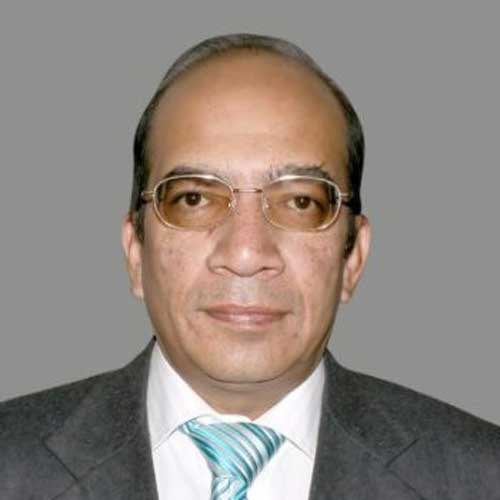
    diwakar-k4Diwakar Kishore is a graduate from NLSIU, batch of 2012. After working at Luthra for about a year, he quit it to become an independent practitioner at the Patna High Court. Presently he practices litigation at Patna High Court and also takes out time as a director of IDIA

    In this interview we talk to him about:


    Tell us a bit about life before college.

    I finished my schooling in Patna, Nainital and Kota. I went to a boarding school at an early age and it helped me a lot as an individual and gave me many wonderful friends.

    My father is a lawyer, and I grew up in a house full of AIR-SCC volumes. My sister also took up law after high school and had married a lawyer. So yes, law was a familiar field.


    What motivated you to pursue law?

    As I said, my father is a lawyer, so it was not a field that was unfamiliar to me. After spending a few months preparing for IIT and truly realizing how much I hated chemistry, I did a bit of soul searching and drifted towards law (not NLS). I was (just) fortunate to make it to NLS.


    What do you have to say about mooting at law school and legal writing for journals?

    Mooting is generally an activity that one lets go of on graduating from law school, but this does not mean its utility doesn’t carry over into the real world. In addition to providing a rigorous training that examinations or mere academia cannot offer, mooting and activities like writing for academic journals provide you with experience and skills that are invaluable in legal practice, such as clarity of thought, time management, clear argumentation and the ability to work under immense pressure. These are skills that would never be redundant to lawyers, in law school and out. While the actual law may be ever changing, these are skills that will always be useful.


    What do you feel about the perception that students of certain ‘elite’ NLU’s have a much easier time in kickstarting their career as compared to law students from other colleges?

    Certainly it would seem that some firms have a slight bias towards students from top NLUs. However, the beautiful thing about a field as diverse as law is that there are umpteen opportunities and options available to young graduates, from litigation to corporate law to social work to advocacy, teaching and academia and much more. Law as a field is growing every day, and its effect is seen in so many spheres that there are always meaningful ways and opportunities to work and engage with the law.


    Tell us about the trimester system at NLS.

    NLS has the unique trimester system followed by very few colleges in India. Rather than having two semesters every year, we have three trimesters a year. I think it is a very effective model. We did four courses in a span of three-four months. Now, even though the time-span seems short, the well structured organised course at NLS helped us cope with the trimester system threw at us.

    I am yet to meet a student (from any discipline) who tells me that that the academic system and faculty at his/her college is impeccable. As far as the question of the freedom that the trimester system offers to law students goes, I think the recent success of NLS students at national and international competitions is testimonial to the fact that you can do enough and more to develop yourself in any system, if you really put your mind to it.


    Which internships did you pursue during your graduation?

    I pursued a variety of internships at law school. I interned as a teaching assistant in several colleges, worked under practicing lawyers and did a few corporate internships. I looked at internships as an opportunity to test and sample various fields of law, to see if we were suitable for each other. College is one of the last places where one has the opportunity to just try various things; I looked at internships as one such opportunity, which is why I tried to take up as many different internships as possible.


    Were these internships all planned or just happened on the go?

    Some were planned, others came along the way. My training at law school proved to be useful, but I tried to regard internships as opportunities to learn more, as opposed to exhibiting what I do know. There are certain tasks unique to working life that college cannot hope to prepare one for, and good internships bridge this gap perfectly.


    Tell us about working at Luthra & Luthra.

    I was offered a job at Luthra through campus placements while I was in my fourth year of college. It was surprising for me and for a few others as I had never interned at a top law firm neither did I have the grades to be called the crème de la crème  of my batch. I think my teaching experience along with the practical knowledge that I had acquired during my internships came to my rescue.

    Corporate lawyers are required to do a variety of things during the course of the day. Documentation, research, negotiations, coordinating with clients, counsel of the opposite side and government agency; one might be required to do any or all of these things in a single day (and night) at a law firm. It is slightly difficult to describe a typical day at work at a law firm.


    diwakar-k2How did you get involved in IDIA?

    While the work at Luthra was challenging for sure, I was not happy with the extremely limited engagement with real law that such job provided. I left Luthra to be more involved with public law and hence, my obvious destination was litigation. I started practicing in Patna High Court after Luthra. While it’s true that early days in litigation is anything but ‘lucrative’, but I found the work to be more fulfilling. However, after practicing law for a few months, I realised that ‘justice’ in a court room does not necessarily translate into substantive changes at the grassroots level. Coming from one of the poorest states in India and after studying in one of the best colleges of this country, I felt the need to be more closely associated with my community and that is why I joined IDIA. Along with litigation, I am excited to work with the law in a different and useful way that brings more people into rather tightly-knit legal fraternity, and IDIA does just that.


    What is it like being an independent legal practitioner at the Patna High Court?

    Compared to a corporate job, in the initial day’s litigation posses very different set of challenges: (i) pay is bad, (ii) clients are rare, (iii) there is a lot of running around and dealing with a variety of people from different strata’s of society, and (iv) there is a lot of uncertainty – you might lose a great case because the judge feels differently. However, few and far between, when you do win a case all by yourself, that moment of joy is priceless.

    I believe that having a personal mentor is invaluable in any profession, not just litigation. It provides unparalleled professional guidance, and there are certain skills, tips and tricks that come only with professional experience. Having a mentor not only familiarizes you with the profession, but is also a way to make your skills, merit and services more well known amongst the others in Court. Having a good mentor often works as an additional affirmation of your skill and ability, both to other lawyers and clients.


    diwakar-k1How is the environment at Patna High Court? Do the judges take kindly to the young lawyers? Any experience at the HC you would want to share?

    I found the Patna High Court to be an interesting place. Several judges have been extremely supportive, and actively recognize and encourage young lawyers such as myself. It’s really quite encouraging when a judge notices you or your arguments, and I’ve seen several judges make it a point to drop a word of praise or encouragement to young lawyers such as myself.

    Justice Tripathi, of the Patna High Court, once stopped me during my arguments to ask me which college I studied law from. I was taken aback at his question but when I finally told him that I had studied law from NLS, Bangalore, he smiled and said: “It seemed like it”. It was a very unusual thing to happen in a court room but something that I will cherish for a long time.

    A perception that deters many students from pursuing a career in litigation instead of at law firms is deemed to be the initial grind that has to be undergone for the first few years. From your experience is it really such a rough journey for a new lawyer in the legal profession?

    New litigators certainly do not have it easy, but then again, no new job is a cakewalk! Every good profession requires a foundation of at least a few years of solid hard work, and litigation is no exception. It’s difficult to weigh a profession in terms of pros and cons and decide which the “best” option is: there really is no such general answer, one must merely find the career option that suits your skills and interests best. I find litigation to be exciting, challenging and fulfilling, which, for me, more than adequately compensates for the “grind”.


    Where do you see yourself five years from now?

    Five year plans does not work in most systems. For me, it’s more realistic to function on an annual basis: priorities might alter five years down the line and there is no reason to stick to a plan that I made as a different person altogether.

    While today I feel, I should go back to teaching sometime in the future, this coming year, I would like to continue my practise of the law along with the work I do for IDIA. I enjoy working for disenfranchised and it gives a sense of purpose and meaning to my life right now.


    Lastly, what would be your message for all the law students reading this?

    If at all, be in the rat race after tiring out many things and enjoying the company of the rats, the most. It’s rather stupid to want to work somewhere because others around you say that they would like to work there. Do not waste law school by worrying about the life after. Be kind to yourself and have some fun with the law and the friends that your college has to offer. You will miss them once they are gone.


  • Murali Neelakantan, Global General Counsel, Cipla, on being a first generation lawyer, mooting, and his diverse experience

    Murali Neelakantan, Global General Counsel, Cipla, on being a first generation lawyer, mooting, and his diverse experience

    murali-n3Murali Neelakantan is a graduate of NLSIU, batch of 1996. He was one of the first India educated Lawyers to have become a partner in an English law firm. Murali had worked as a Senior Partner at Khaitan before joining Cipla as a Global General Counsel. At Cipla he imparts leadership training and his work entails solving critical problems in times of conflicts. Murali has also been mentioned in the Who’s Who of the World 2004 – 2009.

    Murali had a lot of interest in moots while he was a student at NLSIU and presently he takes time out to judge prestigious moots like Manfred Lachs and Phillip C Jessup.

    In this interview you will get to read what he has to say about:

    • Being the first Jessup team from India and winning the BCI moot
    • Judging Manfred Lachs and the critical elements of a mooter.
    • Being a Global General Counsel of Cipla


    We have more advanced career insights to share from him in the next interview.


    Tell us a bit about your life before college.

    There were no lawyers in the immediate family and the whole family had very mixed feelings about a career in the law. They obviously knew of the legends like Nani Palkhiwala, Ram Jethmalani, Soli Sorabjee, and K. K. Venugopal but also of the many lawyers loitering around the city civil courts. My father was an engineer and others in the family were civil servants or officers in the armed forces. My parents would very much have liked me to have become an engineer or joined the armed services.


    The image of a lawyer back in the ’90s was neither inspiring nor attractive for most students. What motivated you to choose law as a career?

    I had given up on a career in medicine after Class X and studied Physics, Chemistry, Math & Electronics during Class XI and XII. Those were the days when reservations of seats in academic institutions were at their very peak and very few places were available in the leading medical and engineering colleges in the merit category even though I scored reasonably well in the Common Entrance Test. I took keen interest in the Armoured Squadron of the NCC for three years where I was quickly promoted and also won medals. It was really the first opportunity for me to demonstrate leadership and a career in the armed forces was definitely on the radar.

    The National Law School had been in the news since 1988 and I had been impressed by a few of its students at the inter college festivals where I was a regular. There were also a couple of kids from my neighbourhood in Bangalore who had joined NLS before me. There was quite some buzz created by the vision that the government had for the National Law School to be like the IIMs and IITs. A few lawyers that my family knew felt that if one was keen to study law, NLS was a good idea. I was a good public speaker, a logical thinker who liked reading and writing and that, at the time, seemed good enough for a career in the law. So despite opposition from the family, I wrote the entrance exam and got through. It was also very much cheaper to study law than either engineering or medicine.


    murali-n2How did you get into mooting?

    (Mr. Murali represented India at Jessup and had also won the BCI Moot Court Competition.)

    The extra-curricular activities that interested me in the first two years were volleyball, cricket and athletics. I discovered very quickly that merely being a sportsman really didn’t get the attention of the girls. My experience of moot courts began in my second year where I helped my classmates win the inter class moot court competition. It was not until the third year at the insistence of one of my closest friends and senior at NLSIU, Dayan Krishnan, now Senior Advocate who was a very keen mooter that I really began participating in the university selection rounds. There were really only about seven moot courts and it was an honour to represent the university at a moot court competition. I came fourth in the first of three selection rounds and that was really the encouragement I need to take this on. At the end of the selection rounds, I got the opportunity to represent India with Sandeep Farias and Sanjoy Ghose at Jessup. That was really my first competitive moot court! The next moot court for me was the Bar Council moot court which was the toughest moot court at the time and was therefore the most prestigious national moot court.

    When we got back from Jessup we realised how far behind the world we were in terms of support for moot courts. Sandeep Farias and I started the first novices moot where those who didn’t want to moot competitively got the opportunity to try it out in camera. This student initiative continues to be popular even though there are many moot court competitions and everyone who wants to participate gets the opportunity very easily.

    I would encourage every law student to moot as often as they can. The most important lesson it teaches is that there are two equally true sides to every story and clients don’t come to lawyers with facts that will guarantee a win. Research is critical to success in a moot court and while it is easier to search these days, one is unlikely to find a decision of the Supreme Court that fits the facts before you perfectly. Formulating the key legal propositions and finding support for them is a skill that is indispensable to every lawyer. Finally, mooting is about persuasion. The days when one wins by confusing the judge are few and far between. One needs to be articulate to be persuasive. This is a skill that is used both inside and outside the court room. In a court room, one has the benefit of a neutral judge. In a negotiation, one is up against another lawyer who is naturally inclined to disagree with you. It is here that the powers of persuasion are tested most. Articulate and persuasive lawyers also put these skills to use while advising a client on a course of action when a client may have an incentive to take an alternative course.


    If you see that a person you are considering hiring is good at mooting, does this influence your decision?

    While I look at grades closely and usually have a CGPA cut-off, I also consider all the extra-curricular activities that interested a potential hire. I would definitely interview a student who won moot courts, played team sport, published a paper or had been committed to IDIA (Increasing Diversity by Increasing Access), even if the CGPA was below the cut off for interviews.


    As a judge what are the specific skills you look for among the mooters?

    1. Clear legal propositions fully backed up with authority and the ability to anticipate the propositions and authorities of the opponent. Most of this is easily done with thorough research and attention to detail. I expect the participants to know more than the judges.
    2. Clear articulation that persuades me that no one could have argued this case better is perhaps the best description of the winning team. Preparation is the key here so that there are no surprises. If one does find a judge taking an unexpected view, it is an opportunity to demonstrate the breadth of one’s knowledge of the law and facts and quick thinking.
    3. A good sense of humour makes it easier for an advocate to make a connection with the judges; bad timing or poor taste could ruin it though. Quickly evaluating the bench is therefore a key skill. That will tell you what the winning strategy is, how to articulate a proposition so that it rings true to the judges, which authorities are likely to have an impact or when not to press on an issue even if you think you have a good argument.
    4. I have seen students treating moot courts like an elocution contest, reciting to me their memorial. That perhaps works if the judges do not interrupt the speech and I know many judges who will not allow the monologue to last for more than a few minutes. If moot courts are opportunities to prepare for a life in the law, the ability to recite 20 pages of the memorial is not the most valuable skill.


    If someone does not go to a top law school, would you say he still has a shot at a great career in law, at the top of the practice?

    Like any other profession, a good education, by which one assumes graduating from a leading academic institution, is merely a good starting point to launch one’s career. It is not necessary for success as a lawyer to have graduated from the leading law schools in the same way as those who did not graduate from one of the top IITs can, and have, succeeded as engineers.

    It is a myth that the top law schools have the monopoly over excellent faculty or infrastructure. With technology that is widely available these days, I believe that the playing field has been levelled and students from every law school have a fair chance at being the best. No judge in a moot court knows which university a student represents. Quality of the memorial and the arguments are the only two qualities that are evaluated. I would find it difficult to ignore a student who did well at Jessup, Manfred Lachs, Stetson or Willem C. Vis. Similarly publication of research papers is another opportunity to demonstrate ones abilities. When I went to London in 1999, almost no one there had heard of the National Law School and it gave me no advantage at all over my Oxbridge educated peers.


    What does a general counsel at an MNC like Cipla do?

    The role of a Global General Counsel does not exist in all companies and even in those companies who have it, the roles are not defined uniformly. It all depends on how the company sees the legal function and the organisation structure. Cipla’s legal team is really led by the Chief Legal Officer who manages all the lawyers around the world. I am merely the coach of the legal team and a resource that they can use where there is a critical judgment to be made on conflicting courses of action.

    My main function is to be counsel to the CEO and the management team so that they have someone who can identify, allocate and mitigate enterprise risk in the decisions that are being taken.

    For example, strategic decisions like whether we invest in vertical integration or have long term supplier arrangements.


    When you hire lawyers, what kind of skills and profile do you look for?

    Unless one is a sole practitioner, the practice of law is about teamwork. One can learn the law but it is very difficult to change people’s character and personality. The critical quality for me is happiness. I will just not hire a person who I feel is not happy. Energy and enthusiasm are essential for a team to work well. Good grades tell me that the person has been hard working and diligent through law school. Many of the subjects may not be fun but knowing that it has to be done well is a good lesson to be learnt in law school. Most of the work we do will not be interesting every day and I would like to be sure that every person in the team will do it well even if it is not fun. We are presented opportunities to learn everyday and that’s a habit best learnt in law school. Participation in moot courts and team sports, for example, tells me that the person knows what one needs to do to succeed, has seized the opportunities presented to them, works well in a team, is well organised, takes risks but also knows how to prioritise and make good choices.


    We have published the rest of the interview here.

  • Iram Huq, Juris Doctor Candidate, Harvard, on interning at the UN, working pro-bono, and working in the US

    Iram Huq, Juris Doctor Candidate, Harvard, on interning at the UN, working pro-bono, and working in the US

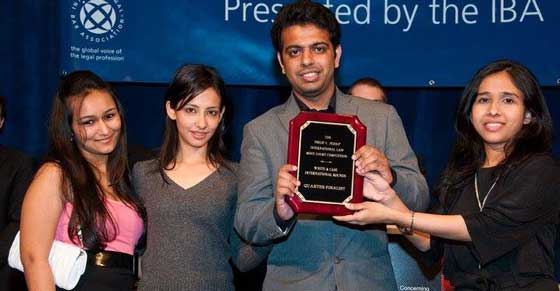
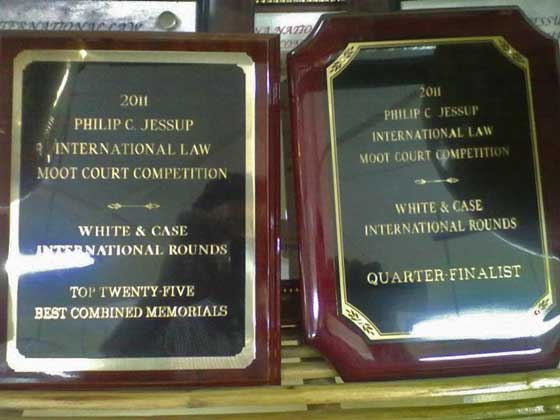
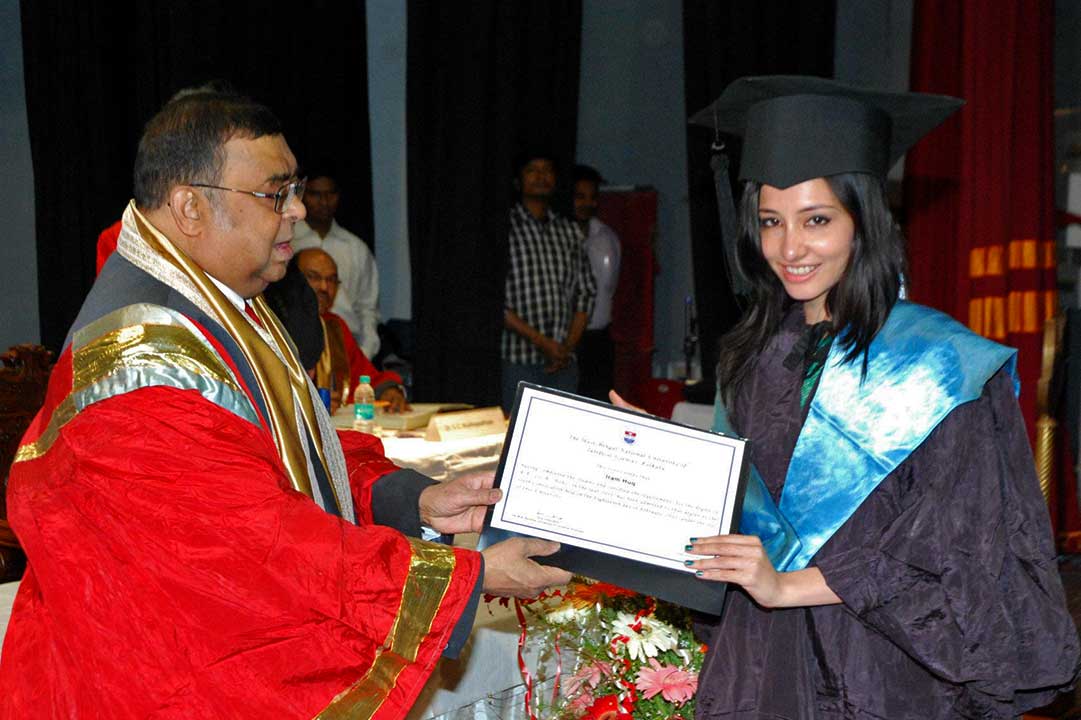
    Iram Huq is a graduate from WBNUJS, Calcutta, batch of 2011. She was a top ranker as an orator at the Phillip C. Jessup International Law Moot. She is currently a Doctor of Law at Harvard University, where she is also student of the Moot Court Board (2013-2014).

    In this interview, we speak to her about:

    • Getting a JD from Harvard
    • Interning at the United Nations
    • Taking time out for pro-bono human rights cases

    Tell us a bit about your life before college.

    I went to La Martiniere for Girls in Calcutta and was in the school’s debate team. That inspired me to write the law school entrance exams. I had studied science in plus two, and I liked Physics and Maths. Occasionally, I wish I had taken those subjects more seriously. I really enjoyed them conceptually, but I never saw myself as having a career related to either of those subjects.

    I think that my debating and science background helped me to develop a more objective view of the world. I appreciate the subjective aspects of the law, but I can’t help feeling that our legal system tends to reward sophistry and obfuscation instead of real analysis. I do not have lawyers in my family.


    What motivated you to choose law as a career?

    I wasn’t really paying attention to what people thought would be an ‘acceptable’ career. My parents were very encouraging, and my teachers also thought that law would be a great choice, given my skill set. It helped that a lot of people graduate from national law schools with excellent, respected jobs.

    I think middle-class Indian parents tend to be very conservative in estimating what careers are satisfactory for their children. However, I have learned that it is very hard to be successful at things that you do not enjoy. I am glad I was never pressured into choosing some other career.


    iram-huq3

    Did your debating skills help you at Jessup?

    Yes, that is absolutely correct. Debating is a great platform to learn public speaking. Once you understand how to put forward an argument in a clear and convincing way, you can apply that skill to any number of activities, including moot court. My father was also in debate teams of La Martiniere and St. Xavier’s so he was a great help. We had a teacher to coach us in school.

    I will say my ‘mentors’ for moot court were my friends and teammates, Deepak Raju and Rukmini Das, who helped me understand the basics of moots and coached me during the initial auditions for the moot court team. (They were both excellent mooters before I had even considered moot court). I also learned a lot from my experience in Vis Vienna, and could apply those lessons to Jessup. Deepak and I were on a debate team together, and that’s how we started working with each other. It was a pretty organic process, and I would like to believe that all three of us learned a lot from each other. I am not a fan of hierarchical team structures where the senior mooters mentor the junior mooters: the best teams are those consisting of friends.


    iram-huq4What are your thoughts on activities like mooting and article writing for journals?

    I think that writing for journals is a wonderful educational activity, if you can do it. Unfortunately, I was always too bored of academic articles to attempt to write them (but that was a personal preference). I liked mooting because, in addition to the academic part, it allowed me to travel and work on a single, practical project. Jessup (and Vis, Vienna) helped me understand how the rest of the world views different aspects of international law, improved my analytical and writing skills, and taught me how to network in professional settings. I definitely think that law students should try either mooting or writing for journals, if not both.


    Did you get any institutional support for internships from your college?

    No, I did not. NUJS was remarkably reticent when it comes to helping its students get good jobs or internships. It left everything in the hands of students, which was a good thing since the administration was both languid and incompetent. I did network with some of my seniors in law school, who recommended places where I applied and later interned. On two occasions, I secured internships through personal contacts. Young students should not be ashamed of using their contacts to secure internships. It is a perfectly natural process. If you don’t believe me, watch this TED talk


    How well do you think your education at WBNUJS prepared you for real world practice of law?

    Honestly, I think we could do with less compulsory classes and more optional classes in law school. It is absurd to think that someone who only wants to be a securities transactions lawyer should be required to study jurisprudence or intellectual property. We were required to study so many things that were absolutely useless to me when I finally began clerking at the Supreme Court. And yet, I never had the opportunity to learn subjects that would become really important in my job, like lower-court trial procedure.

    Additionally, our subjects were often taught in a completely academic manner, devoid of any instruction on how the law actually worked in practice. Finally, we never had clinics or any other option to learn through practical work. If not for moots and internships, my law school experience would have been completely inadequate.

    I do have to say that I had some excellent professors, and their teachings proved to be very useful for me later on in my work. I think law schools need to work on rewarding quality professors.


    iram-huq2

    Do you think being from WBNUJS helped your career in any way?

    Yes. Even though I complain a lot about NUJS, I have to say that I was surrounded by very intelligent students and studied under some wonderful professors. Compared to other law schools in India, NUJS has an institutional presence that reinforces an academic spirit and encourages its students to learn the law. I’m very grateful to my peers for challenging me and helping shape the direction of my legal career.


    Tell us what factors contributed to your decision to purse Juris Doctor from Harvard?

    I did not want an academic degree, like the LL.M. I was certain that I wanted to work in a law firm in the US. I was applying at a time when the rate of legal hiring was depressed (it still is), and so I concluded that the JD degree was the best option.


    iram-huq1What is the application procedure for a JD from Harvard?

    Applicants have to sit for the LSAT, and submit a couple of essays (a personal statement, a diversity statement, and any other essays they want the admissions officer to consider). Needless to say, successful applicants usually have good LSAT scores and compelling essays. Quite a few people have asked me similar questions, and it’s hard for me to explain what constitutes a ‘compelling essay’. But there is a lot of information available on the internet and on LSAC.

    I do not think that anyone can ‘hack’ their way into Harvard. My only suggestion is that applicants should be able to demonstrate a real vision of what they want to do with their Harvard Law degrees once they graduate. I do not think my own essays were particularly good, but I was able to make up for it during the phone interview. That is why I think that some imagination goes a long way.

    The application also requires at least two recommendation letters. Applicants should make sure that they get letters from teachers/employers who really know them and are willing to bat for them. But some institutional weight is also a good thing. I had a letter from Justice Patnaik, for whom I was clerking at the time I made my application. I highly recommend that graduates clerk after law school. It’s a great opportunity to learn how judges and the justice system works. And if you do good work, you’ll have a recommendation letter from a high court or supreme court judge, which is invaluable.

    As for scholarships: I am on a need-based grant at Harvard. Harvard Law does not have academic scholarships, as far as I know. Once you get in, you have to submit a lot of documents about your parents’ income and assets, and they assess a grant package. The whole process is very transparent, and applicants can find all the information on the Harvard Law website.


    Do you plan to have a career in the USA?

    Yes. I am currently working as a summer associate at WilmerHale’s New York City office. I hope to secure a job offer by the end of my internship, if everything goes well.


    You have been a Chayes Fellow for 2013-14. What does the fellowship entail?

    The Chayes Fellowship is awarded to first-year Harvard Law students who travel internationally for public service work. More information can be found at Chayes international public service fellowship


    As part of your Chayes fellowship you were an Intern at United Nations Assistance to the Khmer Rouge Trials. Please share your experience of working at Cambodia.

    Yeah, that’s what I did last summer for ten weeks. It was a great experience—I enjoyed working for the UN in Cambodia. I was working on the prosecution of senior Khmer Rouge leaders. I wrote a blog post about it: Blogs.law.harvard.edu


    I gather that most of your internships have been concentrated in and around Human Rights organisations. Is it planned or they just happened?

    I was looking for internships where I would get real experience in research, drafting and filing. It just so happens that large law firms in India rarely let interns shoulder much responsibility. Working for human rights organizations gave me a sense of purpose and also the opportunity to be far more involved in the projects to which I was assigned.

    The firm where I work at present is WilmerHale; it has a large pro bono practice with substantial human rights work. One of my projects is an asylum case. WilmerHale’s pro bono practice allows younger lawyers to shoulder greater responsibility and learn the art of appearing in court. No firm can afford to provide these opportunities in high-stakes litigation, and so human rights work is a great way for younger lawyers to acquire this experience.


    How do you manage Human Rights activities alongside the corporate world?

    I am committed to Human Rights work, but I am not a fulltime Human Rights lawyer. My goal has been to work in the corporate world for quite some time now (I have to say that I joined NUJS hoping to be a human rights lawyer). I guess I am privileged, because a few US law firms allow you to do corporate litigation work while still fighting Human Rights cases. I do not think that the two goals have to be mutually exclusive: many US law firms are very profitable even though they allow associates time for different kinds of pro bono work.


    Lastly, what would be your message to law students who want to pursue a career in human rights?

    I would say that they should go for it. Personally, I find the Human Rights ‘world’ to be a little oppressive: there is a constant sense of urgency and sadness associated with Human Rights work which interferes with my ability to objectively go about my work. But God knows we need more people dedicated to this field. I respect Human Rights lawyers for their courage and tenacity in the face of all odds. I will acknowledge that money is important, and there is not much of that in the human rights world. But we would be wrong to conflate wealth with success. If there are people who are willing to dedicate themselves to this field, we need to respect their legal skills and talent even as we respect rich and powerful lawyers.

  • Kailash Gupta on a dual degree (JD+MBA) course from Cornell, work as a paralegal and the US Legal Industry

    Kailash Gupta on a dual degree (JD+MBA) course from Cornell, work as a paralegal and the US Legal Industry

    Kailash Gupta is studying for a dual degree course from Cornell Law School. The course will certify him as a JD and as an MBA on completion. Having been educated in the US he has deep insight of the US education system which he shares with us in this interview.

    In this interview he tells us about:

    • Working as a paralegal at NOVA IP Law firm
    • Studying and clearing for LSAT
    • Studying for JD/MBA from Cornell Law School and Johnson Graduate School of Management
    • The top prerequisites for a legal career in the US


    Given that most of our readers are law students and young lawyers, how will you introduce yourself to them?

    Hi! I am Kailash and I am currently a JD/MBA Candidate at Cornell Law School and the Johnson Graduate School of Management.  I plan to work in a New York City law firm as a transactional attorney.


    Amongst the various career options, what motivated you to choose law?

    My decision to pursue a career in law came after exploring many different career paths as an undergraduate.  I have an undergraduate degree in Economics and pursuing a degree in law, with a focus in business law, seemed like the best way to satisfy both my intellectual and analytical needs.


    You have been educated in the United States. How difficult would it be for others to integrate into the education system of US?

    I was born and raised in New Jersey and have not completed any sort of formal education outside the United States.  That being said, integrating into American undergraduate institutions or law schools should not be an issue for international students.  At Cornell and other top ranked universities, school administrators and admissions officers have recently put a greater emphasis on attracting top talent from abroad.  I commonly hear several different languages being spoken as I walk through campus (including my native Telugu).  International students have several student groups on campus and many US-born students are eager to make connections with students from abroad.


    You are pursuing Juris Doctor Degree from Cornell Law School. What was the application procedure? Are there any entrance tests?

    Cornell Law School, along with the majority of other US law schools, require applicants to write a two-page personal statement along with optional essays, including addendums to explain any issues or weak spots in one’s application.  Furthermore, each applicant is required to take the Law School Admission Test (LSAT).


    How did you prepare for the entrance test? Please tell us about the top three things you kept in mind while preparing for the test. Would you say it was difficult to take the test?

    The LSAT consists of a total of six 35-minute sections.  The sections include one writing sample, two logical reasoning (LR) sections, one reading comprehension (RC) section, one logic games (LG) section, and one experimental section.  The experimental section is either a LR, LG, or RC section and does NOT count to the overall score.  The writing sample is also not incorporated into the overall score, though each school to which one sends his or her score will be able to view the essay.

    Top US law schools have trouble comparing candidates across different undergraduate universities and majors.  Unlike other graduate schools such as medical school, law schools do not require students to take specific undergraduate classes before applying.  Therefore, law school admissions officers primarily compare students based on their LSAT scores.  An applicant’s undergraduate GPA, major,and institution are secondary to one’s LSAT score.  Work experience comes in as the third most important criterion.  Therefore, high performance on the LSAT is imperative for gaining admission.

    My basic approach was to first learn the strategies of taking the exam.  Investing in exam prep materials is highly encouraged.  Secondly, once I was equipped with the basic strategies of how to tackle each question type in each section of the test, I spent significant time taking practice sections and full-length tests.

    After each test or section, I would review the questions I got wrong, identify the question type, and practice those specific types until I was able to consistently answer them correctly.  A final point to remember is the exam takes over four hours to administer.  Test-takers should prepare for the mental marathon that is taking the LSAT.  The best way is to take full-length tests leading up to the exam date.  Still, be careful not to burn out and make sure to be well rested on exam day.


    What prompted you to choose Cornell for a JD? Were there any other Universities in mind?

    I was fortunate enough to be choosing between two highly ranked law schools, Georgetown University Law Center and Cornell Law School.  GULC and Cornell each have their strengths.  GULC is located in Washington D.C., the nation’s capital.  Its location puts it in close proximity to some of the greatest legal minds of the country, which include legislators, practicing attorneys, and even the U.S. Supreme Court Justices.  Furthermore, Washington D.C. has more lawyers per capita than any other city in the country.  Cornell, on the other hand, is a small school with a tight-knit community.  Ultimately, its small size, elite faculty, extremely strong placement into big law firms, and strength in business law made it the ideal fit for me. I also completed my undergraduate degree at Cornell so I was fully accustomed to Ithaca.


    You had received the ‘CALI Excellence for the Future’ Award. What qualified you for this recognition?

    The Center for Computer-Assisted Legal Instruction is a non-profit dedicated to facilitating computer assisted legal education.  The CALI Excellence for the Future Award is given to students who receive the highest grade in each course, each semester, in participating law schools.  I received the award in my first semester for the Torts and Lawyering courses.


    What does it mean to be on the Dean’s List at the Cornell Law School?

    Dean’s List is given to students who stand in the top 30% of the class for each semester of grades.


    How important do you think are internships in shaping up the career of a person?

    Pursuing internship(s) as a law student is imperative in securing a job post-graduation.  I am in a unique situation because I am pursuing the dual degree.  Dual-degree students are required to take summer classes at the business school instead of pursuing a first-year internship.  Most pure JD students either do research for professors or intern for a judge, government agency, or non-profit during their first year summer.  At the end of the second year of study at the law school, most students, including the dual-degree students, pursue a summer associate position at a law firm.

    The second-year internships are very important in securing a job post-graduation because the vast majority of big law firms extend full-time employment offers to their summer associates.  While many law students do not plan to work in big law firms in the long run, many nonetheless pursue these second-year summer associate positions and even accept full-time offers.  The reason is that it is generally believed that work in big law firms prepare you for a career in government or business.


    You are also pursuing an MBA from Johnson Graduate School of Management. What motivated you to take it up? Would you say an MBA would better equip you in a legal career?

    As a law student with aspirations to work as a transactional attorney, pursuing an MBA was a no-brainer.  Transactional attorneys are constantly poring over business documents in their daily work.  Furthermore, transactional attorneys are often called upon to advise their clients in making decisions that directly affect a client’s business.

    Having a working knowledge of how large businesses operate, which an MBA will undoubtedly provide, is a major benefit when beginning your career as a transactional attorney.  Furthermore, the opportunity cost of one-year’s worth of salary normally associated with pursuing a dual degree program does not exist in Cornell’s three-year program.


    You began your professional career with NOVA IP Law as a Paralegal. How did you apply? What did your work profile consist of? Did it require knowledge of law?

    I applied for the position through Cornell’s job posting website prior to graduation as an undergraduate.  The position did not require any prior knowledge of law.  Working as a paralegal is a great introduction into the legal field and serves as an opportunity for one to really decide if a career in law is the right one.

    I worked in a small firm outside Washington D.C. and the experience solidified my desire to pursue a career in law.  I assisted attorneys in legal research, edited and wrote contracts and court documents, and also took on all the clerical tasks associated with office management.  Other than that, I also had the opportunity to manage several attorneys and paralegals working on a short-term basis in a document review project.


    What does being a Paralegal mean? How different is it from being an associate at a law firm?

    A paralegal is a legal assistant and serves essential functions in a law firm.  Paralegals are often divided into two distinct categories, career paralegals and short-term paralegals.  Career paralegals pursue the position as a career while short-term paralegals are often recent college graduates who are looking to work in the legal field before pursuing a law degree.  Because I worked in a small firm I was able to take on some of the tasks that normally would be reserved for career paralegals in larger firms.  A friend of mine worked as a paralegal in a large firm in Los Angeles and told me that several of the career paralegals were highly sought after by the firm’s partners when staffing different projects.  Whereas first-year and second-year associates have minimal practical understanding of real world law practice, most career paralegals more often than not have a better working knowledge of the law.

    Even in our Law course, our professors constantly reminded us to turn to the staff paralegals as sources of help when navigating the big law waters as a fresh-out-of-law-school associate.


    What are your plans for the coming five years?

    I plan to finish my degree program in 2016 and work as an associate in a law firm in New York City for the foreseeable future.


    What are the top prerequisites for a successful legal career in the U.S. for people from other countries?

    Depending on your career goals and aspirations, the unfortunate truth for international students aspiring to work in the US as a lawyer is that they must pursue a JD.  Most LL.M. students I speak to tell me that it is very difficult to secure a job with a big law firm with just an LL.M.  Many LL.M. students sit for the New York bar at the end of their programme and utilize their bar admission through international deals or litigation.

    Beyond the degree itself, law firms look for strong oral and written communication skills and top grades regardless of the fact whether you are an international or a domestic student.  International students should stay updated on the status of US legal employment market.  The past seven years have been especially tough for law students in finding employment and a huge bracket of unemployed law graduates exists. The fair logical leap is that most firms, regardless of size, are going to choose a domestic candidate as the more costly international ones need to be paid higher.


    Give us a few tips on finding out the right university for a J.D or an LL.M.

    If any readers are interested in pursuing a JD or LL.M. at a US law school some helpful sources include:

    top-law-schools.com:  This website has helpful information on constructing personal statements, school profiles and rankings, LSAT preparation, etc.

    lawschooltransparency.com:  This website has helpful employment statistics for easy comparison between U.S. law schools.

  • Jaiveer Shergill on being a spokesperson for INC, career in politics and practice as an SC Advocate

    Jaiveer Shergill on being a spokesperson for INC, career in politics and practice as an SC Advocate

    jayveer-shergill1Jaiveer Shergill graduated from WBNUJS, Kolkata in 2006. Thereafter he worked as an associate for Economic Laws Practice, in their Corporate Commercial/Indirect Tax Team in Delhi for some time.

    In June, ’12 he made his entry into Politics by joining Indian National Congress and then he was appointed as a spokesperson in January, ’14. He has been the India Representative of Young Lawyers Committee at International Bar Association and presently, he is working as an independent practitioner in Supreme Court of India.

    We asked him a few questions about:

    • Choosing a specific arena and establishing a legal career
    • Being an independent practitioner at Supreme Court
    • Career options for a lawyer in politics
    • and many other questions relevant to a successful legal career


    How should a student structure his internship during law school?


    How to make a conscious career choice – corporate vs. litigation?


    Who are going to be the best teachers in a law firm?


    How far is theoretical knowledge in law schools consistent with the practical arena?


    Which forum will give the best exposure? What are most important skills required for subsistence?


    When is the right time to decide whether to become drafter or pleader?


    What can you expect to learn from a senior counsel?


    When is the right time to consider practicing independently?


    What does going independent really entail?


    How do you measure success? What should be the milestones?


    What are the paybacks of practicing independently?


    Should you choose what kind of matters to take between civil and criminal?


    What are the career options for lawyers in politics?


    What are the options in corporate transactions? Is seat-hopping more beneficial in litigation or corporate?

  • Dwijen Joshi on being an exceptional scholar, LL.M. from NUS and a career in International Arbitration

    Dwijen Joshi on being an exceptional scholar, LL.M. from NUS and a career in International Arbitration

    Dwijen Joshi is an exceptionally meritorious student of 2013 batch of GNLU, Gandhinagar. He has been a gold medalist in Arbitration. His interest in arbitration and litigation led him to pursue an LL.M. from National University of Singapore. He talks about the Arbitration proceedings in Singapore and he has a lot to say about the opportunities there.

    We asked Dwijen about:

    • Winning a gold medal in Arbitration and scoring well in exams
    • Studying LL.M. for a career in International Arbitration
    • Faculty, Finances and overall academics at NUS
    • Developing interest in Arbitration and ADR
    • Scope of Indian Lawyers in Singapore


    Most of our readers are law students and young lawyers. How will you introduce yourself to them?

    I completed my under graduation from Gujarat National Law University in 2013. Immediately after completing my undergraduate studies I headed to National University of Singapore to pursue Masters in Corporate and Financial Services Law. Within the broad legal sphere I have carved out my interest for Arbitration Law. Other than Law, I am very passionate about Music. I have been learning/playing Tabla since my childhood. During my time in GNLU I was part of a talented bunch of musicians in the Music Club.


    How did you gravitate towards law? Why law and not engineering or medical studies?

    I chose Law as I think there is no other field that has a convergence with all walks of life. I never saw myself as doing anything else other than being a Legal Professional. This is a profession, which tests your assertiveness and sensitivity to the aspects of society, which requires some attention or examination. I believe law is as much about contemplation and thinking as much as it is about voicing out your stand.

    It is the most dynamic profession that gives you the liberty and tools to question things that would not seem obvious to someone not trained in law. Though there are different branches of law dealing with two main building blocks of society – Government and Corporations, there is one general theme running in the undercurrents and that is of ‘fairness’. I have always been fascinated by this word.

    My family background also influenced my decision to study law. At a very young age, I began to understand the nuances of Law from my father and grandfather. Though, I always had family support in whichever field I joined, learning law was a very natural process and I took the plunge.


    You were one of the most exceptional students at GNLU. It’s not every day that someone bags gold medals! Please give us a few actionable tips on managing higher grades.

    Thanks for a very generous description! I am very grateful to GNLU for awarding me the ‘Late Mr. Milon Kumar Banerji Gold Medal’ for Alternative Dispute Resolution (Arbitration). It is a very heartening recognition.

    As far as studies are concerned it is a very personal thing so what worked for me may not be best for others. Therefore my advice is very holistically directed. I think hard work is sine qua non for good grades. Life in law school is like a marathon you have to keep running till the last semester and closely watch your pace throughout the five years.  I believe that higher grades are the by-products of the grit and passion that you show towards learning and therefore, learning should be the goal and not the grades. This will make studying enjoyable.

    I always preferred to study from my own notes as it narrows down your area of focus and can be helpful for revisions during the exams. It is very important to maintain a good mental outlook throughout the whole process. Also, I would say smart work is more important than hard work. Try to identify more relevant areas and focus on them. Regular studies will help manage your time better throughout the semesters.

    To save myself from falling into nerdy bracket, in my defense, I believe five years is a golden period to enjoy to the fullest. For some it will be the last few years as a student. So it is more important to have fun, engage in extra-curricular activities and have a balanced routine. I have been fortunate to meet amazing people here and forged relationships for lifetime.


    What was your motivation behind pursuing LL.M.? When did you finally decide that you need to do Masters?

    The decision to pursue LL.M. was the most important decision that I made in last two years. It was in my fourth year of undergraduate studies that I felt I still had one more year of student life left and took the decision. Therefore, I did not get myself registered with Committee on Recruitment Affairs (CRA) for placements. My motivation to pursue an LL.M was to have an exposure of studying law in a top ranking International Law School. It was a risky decision as it was an investment of time, energy and money. And I had again exposed myself to academic judging for sixth year in a row. But it was my passion to experience the intellectual rigour of a Law School such as NUS, which kept me driven.

    I had planned to build specialized knowledge base and skill set through an LL.M, which was not possible through an undergraduate degree. An LL.M provided me with a head start into such complex legal concepts which otherwise would be possible only after two or three years of practice.


    How did you choose NUS over others? How did you go about choosing a university?

    I followed bottoms-up approach while making the applications. I sorted out my areas of Interest and my expectations from an LL.M in terms of knowledge and skill-set. Then I went about choosing the universities, which are reputed I was interested in. Finally I had short-listed only five universities where I eventually sent my applications. All were UK based except for NUS.

    I chose not to apply to US, as pursuing LL.M there is little expensive affair. In London-based universities one gets to study four modules throughout the LL.M. whereas NUS requires completion of total 40 credits, which means one has to study 10 modules of four credits each. I chose to go to Singapore also because of my interest in Arbitration Law and increasing popularity of Singapore as a Hub of Arbitration in Asia.


    Does NUS provide students with scholarships? Are there any other institutions, which provide scholarships?

    NUS does provide for scholarships. The criterion for selection is competitive. I am not sure if they have instituted scholarships especially for Indian students. There are some scholarships awarded by British Council for UK universities. Felix and Inlaks scholarships are also very famous amongst law students. The former is only for UK universities. Ministry of HRD also has some scholarship schemes that keep changing so one has to look for it constantly.


    Did you undergo a rigorous academic schedule? How was that different from your under-graduate course?

    Life in NUS was rigorous in comparison to the under-graduate course. Time management is the key to grapple with the demands of the respective modules chosen. The faculty will expect you to go through the reading materials before each class. For some modules the assigned reading for each seminar may be painfully long and may run up to nearly hundred pages or more. The class hours are also very long. One Seminar will be three hours long.

    The class contains a very diverse group of people. Some of them will have had experience of working in law firms in their home jurisdictions on the issues being discussed in the class. So for some modules the faculty recommends to have some foundational understanding. The assessment patterns for the courses are diverse. The assessments are split across the semester and the submissions may fall within close dates. Evaluations include class presentations, research paper submissions, group exercises – I also had a chance to appear in an Arbitration moot for one of my courses.


    NUS is well renowned for its brilliant faculty. How was your experience with the faculty?

    The NUS law faculty consists of professors who have established an international repute for their contribution intheir respective areas of expertise. The best part of NUS is that it invites professors from different universities across the world to come down and conduct intensive courses in NUS itself. Intensive modules last for about three weeks. I had an opportunity to undertake Word Trade Law seminars conducted by Prof. Joseph Weiler. He is currently President of European University Institute, Florence. He is a world-renowned academician in the field of Trade Laws. He is also a distinguished panel member of World Trade Organization. I took a module on International Investment Law taught by Prof. Loukas Mistellis. He is the Director of International Arbitration at Queen Mary University, London.

    Some courses have very high demand and usually oversubscribed including the Mergers & Acquisition course conducted by Prof. Umakanth Varottil. He is an ex AMSS partner who is revered for his expertise in Corporate Law. The way stalwarts like them conduct the seminars sometimes becomes very exhilarating. As, some may follow Socratic method of teaching. In Prof. Weiler’s class it is suicidal to go unprepared. His random questions thrown at you compels you to spontaneously frame complex legal arguments and make you think on your feet. An unanswered question may bring embarrassment. It is this unique learning experience, which helps one develop exceptional skill-set necessary for an international lawyer to be. Some professors prefer lecture method of teaching and the class aura is cool with such professors.


    How difficult was studying abroad in terms of finding accommodation, finances and settling in?

    Finding an accommodation is not an issue at NUS. The university has built state of the art accommodation infrastructure called UTown. It is situated at Kent Ridge campus that is few metro-stations away from the Bukit-Timah campus where the law school is situated. The policy of NUS is to give preference to research students pursuing a doctorate and exchange students while allocating accommodation. Nevertheless, many people are able to successfully get accommodation within the university accommodation itself.

    NUS provide internal bus service to shuttle students between Utown to law campus.  Other than that, there are private hostels, which are just walking distance away from the law campus. Two such places popular amongst LL.M students coming to NUS are Evans Hostel and Singapore International Campus. I was putting up at College Green Villas, which was just a stone’s throw away from the law campus. As for finances my parents supported me.


    You were involved in a Bilateral Investment Treaty (BIT) case last year. What was this all about? How did you get to work on this? What did your job entail?

    International Arbitrations can be broadly classified into International CommercialArbitration and Investment Treaty Arbitration. India is signatory to several Bilateral Investment Treaties (BIT) with various countries. A foreign investor from the country, which is Signatory to a BIT with India, can invoke Investment Arbitration against India under such treaty. This is a developing area of Arbitration and the law is still in formative stage. The issues pertaining to jurisdiction and enforcement are most likely to come-up in such cases. I knew of a law firm in Delhi – Dutt Menon and Dunmorrsett that dealt with the famous Vodafone Tax case. They provided me an opportunity to work with them on a BIT arbitration issue. It was a very exciting opportunity and a constructive engagement before heading back to NUS.


    What are the internship opportunities in Singapore?

    It is possible to get internships in Singapore-based law firms provided the applications are sent at the right time to the right firm. For those coming to NUS for LL.M it will be helpful to them if they prepare a list of the firms where they want to intern before coming to Singapore. During the course of the semester managing internship applications alongside the usual coursework tasks, becomes little edgy.


    How did you develop interest in Arbitration? Where do you see yourself by the end of the coming five years?

    I had an interest in Dispute Resolution especially litigationeven before joining law school. At that time I did not know much about arbitration. My first initiation into the subject was when I chose to write a paper on it in my first year of Law School itself. Gradually with internships, interactions with the experts in the area and of course with formal initiation into the subject in GNLU, I realized that I have a knack for this area. Five years down the line I see myself as a counsel involved in Litigation as well as Arbitration. In the long term I see myself as working in Dispute Resolution practice area of an Indian Law firm. Moreover I see myself as an Indian lawyer qualified to practice in UK and Singapore after having cleared QLTS (Qualified Lawyer Transfer Scheme) and FPE (Foreign Practitioner Examination) for the respective jurisdictions.


    Do you think that Singapore is gradually becoming the hub of Arbitration in Asia, especially for Indian Arbitrations? What are your thoughts on this? What are the opportunities for Indian Lawyers?

    Singapore is becoming a favorite destination for the Arbitration Practitioners across Asia including India. The number of Arbitration agreements involving Indian parties, stipulating Singapore as a seat of Arbitration is increasing. A lot of sophisticated Indian Arbitration disputes are being settled in Singapore International Arbitration Center. It is a preferred destination also for ad-hoc arbitrations as Singapore courts have adopted a very favourable arbitration policy. Many Indian companies have their investments in Singapore so it becomes easy to enforce the award. In Singapore, Foreign-qualified lawyers who pass the Foreign Practitioner Examinations (FPE) can apply for a Foreign Practitioner Certificate (FPC) from the Attorney General to practice in permitted areas of Singapore law.


    Lastly, what would be your message to people who want to take up a career in Arbitration?

    I will say it is an exciting career option.  It is also very challenging at the same time. Arbitration and Litigation are two sides of the same coin. So if one enjoys spending more time arguing cases outside the office comforts, this is where they should see themselves. The skill set required for a counsel arguing before a court and before an Arbitration Tribunal is same. Except in the case of International Arbitration, the style of arguments differs if the Tribunal consists of experts trained in Civil Law in which case the style of arguments is substantially different from what Common Law lawyers like us are trained to use.

    Lastly, I will say for those who do not have a legal background in their family and want to pursue litigation as a career option, just go for it if that is your calling. There will be hardships in the beginning, the incentives are less but in the end it is your passion, which will drive you forward towards success – so that in the end you can proudly say ‘And that has made all the difference’.

  • Raghul Sudheesh on starting up with LegallyYours, career in legal journalism & being an RTI activist

    Raghul Sudheesh on starting up with LegallyYours, career in legal journalism & being an RTI activist

    Raghul Sudheesh needs no introduction. He is popular among the legal fraternity as someone who used to work at Bar & Bench and later started up with the only Legal newspaper in India: LegallyYours.

    We talk with Raghul about his:

    • Starting up with LegallyYours
    • A career in legal journalism
    • Experience as an RTI activist and importance of RTI


    Tell us about yourself. What were you doing before Legally Yours?

    I graduated from NUALS, Cochin in 2011. While at Law School, I was never interested in a corporate or a law firm career. From my second year till the end of Law School, I interned with Advocate M A Rashid who founded the web portal Answeringlaw. Answeringlaw was a new experiment and was started even before Indian Kanoon; and was providing daily Supreme Court judgment updates along with other relevant legal news updates. It was the turning point in my law school life as it sparked my interest in blogging and my blog Stripped Law<www.strippedlaw.blogspot.com> was my first step into legal writing.

    I was planning to pursue Masters from abroad till my final year; but then things changed suddenly. I decided to work for few years and then pursue Masters. It was Prof. Shamnad Basheer who suggested that I should try my luck with legal journalism; probably he might have felt so after seeing my blog posts. I applied to Bar & Bench and got through because of Prof. Basheer’s reference. From then, there was no looking back. I stayed with Bar & Bench for almost two years covering courts, judiciary and law schools. It was a very fulfilling and heart warming experience!


    legally-yours

    What is Legally Yours and how is it different from working at the other places?

    Legally Yours is focussed on print and is not an online publication. We will have a website soon but the focus is on hard copies as of now. We are a monthly and my challenge is to make it a fortnightly. Also the circulation has to be improved from 10,000 copies to a six digit number. I take this as an exciting opportunity and the Managing Editor, Siby Sudhakaran is an entrepreneurial person. Siby comes up with lot of exciting ideas. Recently, we launched India Law Schools Index [ILSI]. ILSI aims to facilitate and help law aspirants in making an informed decision about a college. ILSI lists all law schools in the country with relevant information. I feel fortunate to work with this young and dynamic team. You don’t get to do that always!


    What is your advice to legal entrepreneurs?

    I would advise them to start small and grow big, rather than going for investors in the initial stages. If you have an investor in the initial stages, it can lead to a situation, where the investor takes the company from you. You will need to have total control over your business and that is very essential. However, in certain cases investors become inevitable. There you need to be very clear on your terms and conditions. Arrange your finance wells in advance. I know start ups where investors went back on their promises and never gave funding as promised. So please don’t wait till funds become so urgent.


    Do we need mentors to be successful in a legal career?

    I do not believe mentors are inevitable for success in law school but guidance is however good. If you see my career, I have had good people to advice me like, Prof. Shamnad Basheer, M A Rashid, Richa Kachhwaha and many others.  I used to reach out to people in the industry and maintain good rapport with everyone. That has always helped me a lot. I would advise my juniors to do the same. Keep networking and speak out to people. Ask them about all the queries you have and they can turn really helpful at times. Also, maintain good relations with peers from other law schools, which can also help a lot!


    What do you have to tell those who want a career in legal journalism?

    My simple advice would be to keep reading and keep writing. Your reading has a direct influence on your writings. This is the best thing you can do to improve your writing skills. This can help a lot, at least that is what my experience has taught me. Writing scholarly articles on law and doing legal journalism are entirely different things. Some people tend to mix up the two. I would suggest following Indian legal news portals, the international ones and prominent newspapers regularly. You need to start writing / freelancing from law school days, so by the time you pass out, you are a familiar face in the legal journalism circle. Legal Journalism – on print and web is growing at a fast rate. I am sure there will not be any dearth of openings. Five minutes before this interview started, I got a call from a Senior Journalist, asking if I can recommend any good legal journalist for their news portal!


    Are you hiring? What kind of people do you need?

    We do not have any major openings as of now but I am looking for a pro active law student as my Research Associate at Legally Yours. The person will have to assist me in all my works and in addition to that the person will be assigned other tasks. If anyone is interested, please mail me: raghul@legallyyours.in


    What role do you believe legal journalism will play in the coming five years?

    As of today, our profession is very rotten. CLAT is full of goof ups, AIBE has been a mess, corruption is even creeping into Judiciary, litigation is much expensive and what not! These are issues which affect law aspirants, law students, advocates and judges. Anything that affects the legal fraternity is likely to impact the society and the country directly or indirectly. Hence, we would be focusing on such issues. Our aim is to bring in more transparency and there by cleaning up the whole system as all the democratic institutions, particularly the judiciary, need to be strengthened.


    How indispensable is RTI for an investigative journalist? What are your thoughts on the proposed RTI Amendment? How has been your experience being an RTI activist?

    RTI Act is an indispensable tool for a legal journalist. We pick many stories from RTI replies and the Act is a must for transparency in this country. The process as of now is simple but there are attempts to make amendments and weaken the Act. Especially, there is an attempt to put a limit on number of words you can ask in your query. All these will make the Act ineffective. I think the Act should continue in its present form and protection for RTI activists must be provided.

    Once I filed an RTI application at a top law school asking details about the expenses of the law school, particularly the Vice-Chancellor’s expenses. One day, when I reached my office at morning, I saw a policeman standing outside and the receptionist conveyed that he was waiting for me. The policeman came to check who I was and what I was doing. They also delivered the RTI reply from the law school in person to me. The Sub-Inspector (over phone) conveyed that the Vice-Chancellor (through the Commissioner’s office) asked to deliver this to me as they could not find my address. I receive more than 10 letters at my office on a daily basis, so I don’t believe their version that they could not trace my address. I found this to be very awkward and an attempt to intimidate me. Had I not been a journalist and the place my office, the situation would have been different. If this is what a law school does to an RTI activist, you can imagine the situation of activists seeking information from government offices! And as of now there is no protection for RTI activists.


    What would be your message to law students?

    My humble advice would be to pursue what your heart says. Do not do something that’s just mechanical and do not just follow what others do. Please stay away from the herd mentality at law school. Just because someone is doing something, you do not have to follow it. Believe in your talents! All the best!

  • Prashanth Potluri on being a LAMP fellow, career in policy work and taking time out for football

    Prashanth Potluri on being a LAMP fellow, career in policy work and taking time out for football

    Prashanth Potluri is a graduate of 2011 batch from School of Law, Christ University. He has been a LAMP fellow and till recently he worked as a Senior Specialist in Public Affairs and Advocacy at Genesis Burson-Marsteller. He is famous among his colleagues as a passionate footballer and most amazingly he could take time out from a busy schedule for football as a law student and even after joining work. In this interview he talks about:

    • Taking time out for football from a busy schedule
    • Working as a legislative and research assistant for HRD Ministry and being a LAMP fellow
    • A career in Policy
    • Work experience at Genesis Burston-Marsteller and ThoughtWorks


    Given that most of our readers are law students and young lawyers, how will you introduce yourself to them?

    I am a graduate from the 2006 – 2011 batch of the School of Law, Christ University (SLCU), Bangalore. I went on to pursue the LAMP fellowship after graduating, shortly after which I completed a course in Leadership Development at the Indian School of Business, Hyderabad. I am an avid football fan and the game of football has been my biggest teacher.  I have always been very clear since my initial days at law school, that I would want to make a career in a field that isn’t directly related to the law and the two things that I have always loved were football and politics.


    Amongst the various career options, what motivated you to choose law?

    Frankly speaking, I didn’t have too many options. I was a mediocre student in school and I was in the commerce stream. I only did well for myself in the Social Sciences. This gave me an indication as to where my interests lie. I have been fascinated with politics since a young age and a law degree felt like a useful tool for me to have to pursue a career in politics and its allied fields such as policy studies, public affairs and administration etc. I have never wanted to be a lawyer during my time at law school and after graduating either. I chose law as a means to my political ends and also because I knew it would enhance my ability to think in a different and more holistic manner.


    How was your law school experience? What did you do to keep the monotony off the law school?

    I had a very rough start to my law school experience. I was frustrated that I did not get into any of the top 3 national law schools, which I believed I deserved at that time I made up my mind that I would take the entrance exams the second time. Having failed to get through the top 3 schools again, I realized that I would spend the next 5 years here and that’s when I decided to embrace my fate. In retrospect, it’s the best thing I have done because, I ended up having the best 5 years of my life from 2006-2011 and I had the fortune of meeting some of the best people there and building relationships that I know will last a lifetime. I realized that a law school experience is only as good as the people you are surrounded by and we had some very intelligent and fun-loving people at SLCU. I made sure I took part in quite a few extracurricular activities such as football, quizzes, debates and music and this made sure my mind was active and constantly challenged and there was no room for monotony. I was never much of a mooter and the few times I did moot, it was because I had no other choice or because a friend’s team could have used a researcher. If I sensed any kind of monotony kicking in, I would make sure I start doing something new and fun to keep me entertained and living in a fantastic city like Bangalore definitely helped my cause!


    How did you manage time to pursue your passion for football while pursuing a law course?

    I made it very evident to my family, faculty and peers that football was, is and always will be my first love and passion and I wouldn’t treat it as an ‘extra activity’. This didn’t go down too well with my faculty and college staff, but this was a decision that I was entitled to make. The manner in which I managed football and the pressures of a law school was not done in the best way possible, but I managed nonetheless. The classroom chatter included football talk, match analysis and sometimes even sneaking in the occasional YouTube clips during class hours. Once the exam dates were announced, I’d go back to my books and ensure I put in enough hours to get good score. I never missed a football game even during exam time though. In the words of a very wise boy (Calvin), last minute panic served as the best kind of motivation to make sure I did well for myself academically in law school.


    Do you still play for or manage football clubs? Please share some tips on time management.

    I don’t play football as often as I would like (everyday) due to commitments at work, but I make sure I play once a week. I was recently offered a trial with Histon F.C., an English club that play at the Ryman Premier Level and I have decided not to pursue that as it didn’t seem pragmatic in many ways. I currently don’t manage any teams although I did so for 5 years at law school with the college team and this experience has taught me critical life skills such as leadership, managing people, identifying talent and nurturing it, managing deadlines etc. and I am truly grateful for that experience. I couldn’t have managed a football team so well without the efforts of the team itself. We were a self managing unit of sorts and I was just leading the way, but on a day to day basis, everyone did what they were expected to. I clearly laid out the expectations I had from them and they always delivered. Everybody played a critical role in making sure there was a sense of camaraderie and family in the team. This ensured on-the-field success and off-the-field friendships. My tip on time management would be to have a clear agenda for your day, allocate specific time for each activity and make sure you are well rested so as to be physically capable of doing what you have planned. Sound sleep, nourishment and clarity of thought in managing your time is very important.


    You worked as a Legislative and Research Assistant for the HRD Ministry in your fifth year. How did this happen? What was the application procedure?

    This was a classic case of being at the right place at the right time. I had not formally applied to it and there was no opening per se. I was very interested in education and public policy at that time and thought it would be a good idea to work at the HRD ministry. I later met a family friend who helped me get the opportunity to work in the ministry.


    You became a LAMP fellow just after graduation. What are the criteria to apply? How did you go about your application process?

    The LAMP fellowship requires you to be a graduate and within 25 years of age, – from a relevant academic background and expects you to commit yourself for a period of one year. I received an e-mail regarding this fellowship through the college and I looked it up, it was very compatible and accurate with regards to what I wanted to do in my career, which was politics. The LAMP fellowship was a very tangible step I took to ensure I built myself a career in politics and public policy.


    What was your work profile as a LAMP fellow? How did it help build your career in Policy?

    I worked with Mr. Tiruchi Siva from the DMK who was a Rajya Sabha MP and the Chairman of the Parliamentary Standing Committee on Industry and a Member of the Joint Parliamentary Committee on the 2G Spectrum Allocation.My daily tasks consisted of intensive research that facilitated his day to day parliamentary duties and ensure that he was well equipped for his parliamentary debates, standing committee meetings etc with the best possible research.

    Working closely with an MP gives you the kind of insight into policy making that no other job does. You get to witness a policy from an idea to an actual policy that gets implemented. This is very useful in pursuing a career in public policy in the long run.


    We often hear that more lawyers are getting into ‘policy work’. What does this actually involve? What is it that policy lawyers do?

    Public Policy professionals are a bit different from lawyers with regards to what they do on a daily basis. Policy work relates to the study, understanding, drafting and interpreting of rules pertaining to a very specific subject unlike a statute/legislation which is meant for a broader and more generic set of circumstances. This is why lawyers do well for themselves in this field. Every organization has a set of internal policies, every ministry in the government have a set of internal policies that facilitate the working of the larger statutes that come under their purview and lawyers are equipped with a foresight and thought process that lets them know what a comprehensive policy should entail, better than people from other academic backgrounds. Public policy professionals spend a lot of time researching on policies of other countries and organizations and get a comprehensive understanding on what the most suitable policy would be for their specific need. It does have a lot of overlapping with what lawyers do which is why lawyers are most preferred in this field. We get to research, draft and interpret policies on a gamete of issues minus the task of going to courts and presenting our case. We let the lawyers do that for us 🙂


    You also worked with Genesis Burson-Marsteller. What was your job profile there? What was a normal workday like?

    I worked as a Senior Specialist in Public Affairs and Advocacy at Genesis Burson-Marsteller and I was based at Delhi/Gurgaon. It was the best experience I had as a working professional dealing with a variety of corporate and political clients. Normal work days varied depending on whether I was working on a corporate or political client. With regards to corporate clients, my job entailed me to map out a comprehensive list of stakeholders, profile them and prepare an outreach and advocacy strategy for the clients. We also had meetings and calls with our clients which ensured we constantly had something to do. Political clients were a completely different ball game and this was the part of my job that I cherished the most. I got to work on a few election campaigns including the recently concluded general elections and my tasks included constant research on various talking points, drafting speeches, articles, talking points for the client, undertaking surveys to assess how much we have progressed, prepare a comprehensive strategy on how to best utilize the resources in hand etc.


    You completed a course from Indian School of Business on Leadership Development. Please tell us a little about it. How did you decide to take it up? How effective was the course for your career?

    The leadership development course at ISB was a part of our LAMP fellowship. PRS, the organization that undertakes the LAMP fellowship tied up with ISB that year to undertake a course in Leadership Development so as to supplement and enhance the skill set we had already developed on the job. I had a fantastic time doing this course and it has definitely been a huge value addition with regards to my career options. It taught me to clearly articulate my thoughts and carefully execute a vision and motivate my colleagues during testing times which has proven to be very useful while working with different organizations.


    You had worked with ThoughtWorks for some time. What was your job profile there?

    It was a research centric job which taught me a lot on market research and fine tuned my ability to make and give presentations. It was not a conventional policy job but it was fun working there as it provided me with a lot of insight on various business verticals and business trends. I worked with some amazing people there and it gave me a more global perspective on a lot of issues and taught me how to manage expectations with the people I work with.


    What would be your message to our readers who would want to take up a career in Policy?

    To put it quite simply, do it. It is a very rewarding and viable career option for lawyers and non-lawyers alike. I hope law students stop looking at this as an ‘alternative career path’ and look at it as a conventional career choice in the future. From my experiences in this field I can vouch for the fact that it is a challenging area to work in and it requires a lot of dedication and an ability to think in a holistic manner with proper foresight. The ability to think and articulate yourself is very important in the field of public policy and its allied areas. There are tons of career options and if anyone is interested in taking it up, I would be glad to provide any kind of clarity they may require.

  • Aditya Parolia on being a partner at PSP Legal, LL.M. from NUS and transition from associate to partner

    Aditya Parolia on being a partner at PSP Legal, LL.M. from NUS and transition from associate to partner

    Aditya Parolia graduated from Guru Gobind Singh Indraprastha University, Delhi in 2011. Thereafter he pursued an LL.M. in Corporate and Financial Services from National University of Singapore. Later, he had worked as an associate at Advani & Co., and at present he is a partner at PSP Legal.

    In this interview we asked him about:

    • Faculty and academics at NUS
    • Transition from an Associate to Partner
    • Requisite skills for a successful legal career


    Tell us a bit about your childhood and pre-college life as well as educational background. Did you have lawyers in your family?

    I did my schooling from St. Peters College, Agra in Science & Computers, where I was more inclined to pursue my career as a Bio-tech Engineer. During my school days I was an average student, however, I tried my best to pay equal heed to academics, sports, debates, quizzes and other extra-curricular activities. I always had that inquisitiveness to learn something new, which turned out be a major reason for me to pursue law.

    Sports and extra-curricular, were really helpful for me when I chose to pursue law, because as a lawyer and a law-student I was not only required to have a mugged up knowledge of law but be spontaneous, a team-player, social, curious to learn and many other things which you can only grab if you have been active in other spheres as a student.

    I am a first generation lawyer and I am thankful for that, if there were lawyers in my family knowing myself I can say I could have been complacent and would have restrained my ability to think out of the box.


    What motivated you to choose law for a career?

    Always being more inclined towards science and computers, law as a career option never crossed my mind. Also, Agra not being a metro city did not show much promise for law as a profession and more importantly there was hardly anyone to guide students to various options that are available to them post matriculation. The trend was more towards engineering or medicine.  A lawyer for me, as a child was so stereotyped that it only meant a person wearing a black coat, sitting under an umbrella with a type writer. Law schools were revamping them self and Nationals Law Schools have just entered the academic regime and not many knew about five year law courses.

    Luckily my father had to shift to Delhi for few months, when I was just done with my 12th board exams; there I got to meet a few lawyers who gave me an insight towards law as a profession and five year law course. I always had interest in Political & Social Sciences and the close nexus between law and these subjects made me interested and everything else just fell into place.


    Tell us about your internships experiences. Were they all meticulously planned or did they just happen to you as you went through law school?

    Well, being in a law school in Delhi turned out to be very advantageous for me. I got an opportunity to work with many law offices/firms during my LL.B., which included tier one law firms in the capital, Solicitor General of India, two Additional Solicitor Generals, Senior Advocates, and a Judge of Supreme Court of India. This gave me a good insight about various areas of practice in legal industry and most importantly it introduced me to some practicalities of the profession. Additionally, as an intern you get to share and learn from other interns a lot, this I must say is very important part of internship, which is mostly ignored by students. I am thankful to many of my co-interns of introducing me to possible internship opportunities, law journals, online-courses, higher studies and many other such things. Internship is very important and must for law students, if not for being introduced to laws but at-least for being introduced to the profession.

    My plan all along was not to give any particular practice area priority but to gain as much experience as I could from these internships and then reach any conclusion, if possible. As for planning internships I always tried to apply at least 8-9 months in advance so that I have options to choose from as per my convenience.


    Did you have an opportunity to study the subjects you chose to specialize in your LL.M. when at college in India? What influenced you to study abroad?

    You never know what will make you change your decision in life, you can have all planned but then you may be introduced to something in absolutely different direction that will make more sense. I found myself in a similar situation, I chose all those subjects which I had studied before so that it would be comparatively easier for me and I could easily grasp their global perspective.

    But I thank my Dean Prof. Simon Chesterman for giving wonderful introductory speech and explaining us why not to choose subjects we have already studied, I ended up taking subjects like Aviation Law, Construction Law, Negotiation and Drafting of Commercial Contracts and Mergers &Acquisitions  which were absolutely new to me.

    I was out of my comfort zone I had to work hard and be prepared before every seminar/lecture. This required daily hours in the library reading some of the best authors on these subjects, which brought the best out of me. Also, after reading these subjects I can claim to have gained a new area of practice.

    Well I cannot say I had lack of influence to go for higher studies abroad, I always wanted to do so. But yes I have few of my seniors from law schools to thank for guiding me to my way there, especially Mr. Shashank Garg.

    However, we cannot ignore the lack of guidance in India for a law student who wants to pursue his/her higher studies abroad. People misrelate higher education abroad as an opportunity to find a good job there or in India, it is a misconceived notion. LL.M.s are purely academic in nature, they enhance your knowledge of law and give you different perspective to practice law.


    aditya-parolia1

    How did you go about choosing which college to go to for your LL.M.? Did you ever consider Indian colleges for LL.M.?

    Initially I chose colleges and jurisdictions where I wanted to pursue law followed by expense that was to be incurred for pursuing them. For example, I did not apply to any college in US, for sole reason that it was not in my budget. You need to know where you stand and then weigh pros and cons. As I said, LL.Ms are not something you do to get a better job, you do it to do better in your job.

    When I got an offer letter from NUS, I decided to accept it immediately and reject others, for many reasons.

    The major reasons were:-

    If you want you can read Indian laws; NUS has options like Indian Business Laws, Indian Penal Code, and Contemporary Indian Laws to name a few.

    It is commercially viable as compared to UK and States.

    The legal industry is open and promising for Indian Lawyers. Nearly half of our batch, including me, had offer letters in their hand before the final results were out.

    Also, since NYU was also offering LL.M. course in collaboration with NUS we got to read many modules provided by NYU and learn from many renowned NYU professors.

    I wanted to learn arbitration and Singapore being a major centre for Indian parties showed lot of promise. Further, studies in arbitration at NUS give huge importance to Indian practice & case laws etc. And not to forget that they have Professors like Mr. Gary Born, Mr. Lawrence Boo and Mr. M. Sohanrajha to teach the subject.

    No no doubt it is one of the top most universities in the world and has an excellent dedication towards the students. I can write pages to explain this dedication of NUS.

    No, I did not consider Indian Colleges for LL.M., no disrespect to them but it time that we revamp our higher education system. Indian Colleges rather than focusing on specialized/ super-specialized areas are still majorly focusing on subjects being taught in LL.B. The approach has to be changed, it’s not like we do not have good teachers or law schools. We have alumni who are not reputed lawyers of the country and will be more than happy to contribute.

    For instance, I was taught Mergers & Acquisitions by Prof. Umakanth Varottil at NUS, he is an NLSIU alumnus, former partner of AMSS, ranked as a leading corporate/mergers & acquisitions lawyer in India by the Chambers Global Guide and no doubt an authority on the subject.  I have seen students, in a three hour seminar, willing to stand throughout and learn from him. I had no inclination for M&A and today it’s only because of him that I am advising companies on the subject. It is simply the method and atmosphere that International Universities create that grows that willingness in a student to learn something new.


    How difficult was studying abroad in terms of finding accommodation, finances and settling in? Are there any scholarships for studying at NUS available to Indian students?

    I was working for a while before leaving for NUS and since studies at NUS was not that expensive finances was not much of a trouble though I had seek some help from my parents for the second semester.

    NUS has recently come up with a state of the art residential campus, UTown, for international students, which is fully equipped with all the required amenities, including shopping centres, food courts, restaurants, sports complex and not to miss excellent education resource centre. Also since Singapore has huge population of people of Indian origin you do not feel away from India, every food court mandatorily has an Indian food stall and shops are full of Indian food supplies. If one is applying to NUS I will advice that one should apply for hostels provided by NUS they are comparatively affordable and has transport facilities linked to them.

    Every student selected for NUS gets automatically eligible for the university scholarship. To my knowledge NUS awards three from each batch and same it communicated at-least a month before the session starts. I am not aware if there is any scholarship specifically available to Indian students.


    How was the faculty & academic schedule at NUS? Was there time enough for non-academic pursuits at NUS? How did you find the work-life balance to be?

    You can find authorities on the subjects teaching at NUS, like Gary Born, M. Sonarajha, Simon Chesterman, Umakanth Varottil, Stephen Girvin, Alan Tan, Franco Ferrari, to name a few. It will be wrong for me to even explain their credentials. The manner in which the faculty communicate and reach the students is unheard of. Then within the especially dedicated campus of NUS Law School you have LKY School of Public Policy, where you find lectures delivered by eminent world leaders every other day. We had opportunities to hear lectures and interact with renowned personalities like Mr. Pascal Lamy, Mr. SashiTaroor, Mr. Henry Kissinger, Mr. Kofi Annan and many others.

    The methodology adapted by NUS in their academic schedule is quite innovative. You generally have 5 subjects a semester, having a three-hour seminar for each subject a week. You are given academic calendar and class-schedule prior to your selection of subjects. So if one wants he can have just 2 or 3 days a week of classes, based on his selections, and rest of the week can be used by the student as he wants. In my batch that we traveled throughout Southeast Asia during our studies and it was hardly a burden on our academic schedule.

    However, since for each subject you have to write an article you will have to put hours in library from these non-class days and manage accordingly. Yes if you ask me that if you can pursue a part time job that is not possible. The modules are very demanding you need to be prepared before sitting for each lecture. The classes are also very interactive you cannot simply go unprepared. NUS had developed special software IVLE to provide students all the required readings for a lecture at-least a week in advance. The Integrated Virtual Learning Environment (IVLE) is a NUS’ custom designed and built course management system for the NUS community. It is designed to facilitate and supplement teaching at the NUS.


    Do you think higher studies help shape a successful legal professional? What would be your advice to law students who plan to go for higher studies?

    Yes I believe they do to a huge extent. I cannot say all that I learnt during my LL.M. has been put to test in practice, but surely it enhances you as a person and a lawyer. The way you see or study a subject and write on it changes to a great extent. Further, since you have to settle quickly in an alien land you become more independent and responsible.

    For me, it was a correct decision. Had I not been there I would have never shifted from my orthodox approach of law and have stayed just a litigation lawyer. Thanks to LL.M. that I now advice companies in FDI, Aviation and M&A apart from appearing in courts.

    Well I can just advice that if you are going for higher studies don’t think that you will land up getting a big job there or here in India, one might get it but that is not the purpose of higher studies. One should go for LL.M. to learn new possible approach towards law, how other legal system implement their laws, what can be possible changes that we can bring in legal system. The purpose of doing LL.M. should purely be academic and self-growth.

    Since today we have major multi-nationals coming in our country, they are very demanding and require you to work as per international standards. Until we have that experience it will be difficult for us to meet their expectations.

    Also, if I may suggest please choose few subjects which you have never studied before, it will be worth it. I should also warn that if you are thinking that LL.M. will be cake walk please be aware that you are absolutely wrong, rather it is very demanding and have high expectations.

    Plan well in advance. To start with, prepare your documents and references at least during April/May and make sure to choose your colleges wisely. Seek advice only from people who have gone for higher studies as I don’t believe it will be proper for someone to be a critic of something without experiencing it first.  If possible, work for couple of years and then go for higher studies, you will be on a better footing.


    aditya-parolia2What kind of effort should a young associate put into work to get it appreciated? What are the major differences between a young associate with a partner?

    A young associate is required to be sincere and hard working, nothing much. It will be wrong to say that he should have deep knowledge of laws and procedure, this is not possible; you get to learn them eventually, books and practice rarely co-relate in fact. But, yes you need to be aware of things and development in laws, ignorance cannot be an excuse.

    Being a partner you will have to be more responsible and a team leader at all times. Your juniors’ mistake is your mistake you cannot at any time use your juniors as a shield. As a partner you have additional responsibilities which might affect the speed of your delivery but these are essential for the job, like socialising, management, delivering lectures et.al.

    I believe responsibilities make you grow as a person, the earlier you have them the better.


    When you hire lawyers, what kind of skills and profile do you look for? Are the attributes different for working lawyers and fresh graduates?

    We just require few things in a candidate, sincerity, willingness to learn and ability to think out of the box. Candidate’s marks or which college he graduated form does not matter to us.

    Of course experienced professionals have to be scaled separately; you cannot have a set formula. If one is adding value to the firm he/she is always welcome.


    Do you offer internships at PSP Legal? What is the application process and what do you look for in a cover letter and CV?

    No currently we are not offering internships. Recently our work has grown well and our lawyers are keeping busy meeting the deadlines.  It’s not that we do not offer internships, it’s just that we have closed it for this summer.

    We believe if we have interns it is our responsibility to provide them enough exposure and give adequate time to their queries and explain them the work process. We make it a point to deliver a lecture for them, at-least once a week, explain to them about the profession.

    However, we might soon put up notification on our website for internship opportunities.


    Given a chance to turn back the clock would you have done anything differently from what you’ve done?

    You learn from your mistakes and then they become experiences in life. Experiences are said to be the most valuable things, why would you take a chance to lose it.

    And as for me, I do not really know what and how things have worked for me till now, the pieces just seemed to have fallen in right places.

    So, I am not sure that I would like to change something from past.


    Lastly, what would be your message to a student pursuing a law degree?

    Whether you are are from a NLU or not doesn’t have any bearing in your long term legal career. All that matters is your hard-work and sincerity. You have to build your own path, just keep your eyes and ears open and keep learning. Every time you put yourself out of that comfort zone you gain/learn more and emerge as a winner.

    Lastly, try to be as active as possible in extra-curricular activities it’s not about winning a moot or debate, you learn a lot in the process. This displays your ability to try things.

  • Anuroop Omkar on truth of law school life, career in mediation & work as a junior partner

    Anuroop Omkar on truth of law school life, career in mediation & work as a junior partner

    Anuroop Omkar is a graduate of 2012 batch from GNLU, Gandhinagar. He has earned a lot of repute in the domain of Mediation and Dispute Resolution in a very short period of time. Presently, he is a Partner at K. R. Chawla & Co, the Managing Director of Bridge Mediation India which is partner of the Media Logos Italia and conducts Mediation for Delhi Dispute Resolution Society. This interview is for all those law students who had sleepless nights, nervous breakdown, anxiety, and lack of appetite, worried about their legal career after reading the earlier interviews.

    Anuroop would tell us about:

    • His unconventional (or rather the most commonplace) law school experience
    • The change from an ordinary student into a mediation enthusiast
    • A career in mediation
    • Being a Junior Partner at K R Chawla & Co.


    Why law and not engineering or medical studies? Was it fate or a deliberate choice?

    I was never good at Chemistry merely as a subject so that did not allow me to pursue a career in either medicine or engineering. I was hell bent on entering a premier institute- IITs, AIIMS, other CBSE medical colleges as an option was ruled out. The only few options along with a premier institute tag was limited to NLUs and NIFTs. There are a couple of premier institutes relating to various other domains of education but I was not well informed those days.

    Moreover, I am a true example of being a deviant, adamant and argumentative Indian. My parents spotted it early on; I fervently desire the world to recognize it in the near future. So even my parents agreed to allow me to pursue my career in law because they felt I will be able to excel in the field. I am really not able to answer whether it was a matter of fate or deliberate choice (choice- rule out other options, fate- not good at chemistry so landed up here).


    How was your law school experience? What do you have to say about moots and academic legal writing?

    My career in law school was extremely dramatic. While writing this interview I was having a chat with my girlfriend. She laughed aloud, agreed and said, “Omkar, you didn’t even give me a moment to breath. It was too dramatic…” I began my series in law school with five ducks and four runs in one match (5 attendance backs and one paper with 4 CGPA on a scale of 7). My point of telling you this is that those days GNLU had a rule that students with back papers could not participate in moots. By the end of third semester when I managed to clear all papers, I had really lost interest in mooting and I decided to continue without any moots on my CV, I was sure that I would anyway crack a job which I managed to do being the first one to get a PPO in my batch in third year.

    However, on the request of my beloved girlfriend, to have something on my CV, I participated in one Corporate law moot where I definitely did not come up with flying colours (all thanks to KK and Surabhi Gupta presently 5th year GNLU for drafting the memo and preparing the compendium as well). Off the record – as I was not well prepared apart from my desire to visit Bhopal, I made a fool of myself during the rebuttal. It is only when you make a fool of yourself in public that you truly realize the importance of preparing before a client meeting. However, I must clarify that I turned a little hardworking in my later series (semesters) and ended my law school with a CGPA of above 6 on a scale of 7 in the last four semesters out of ten.

    I am a strong believer in ‘Non CCPs (Cut Copy Paste)’. I believe many of the articles written by various law school students is merely a subject of cut-copy-paste and a CV building exercise. Write when you feel the urge to write and you believe your write-up can be the best piece with a completely different analysis about a particular issue of law. I am still in the quest of creativity to dawn on me which allows me to write a master piece.

    However, I must honestly admit mooting and legal writing enhances three essential acumen in lawyers – drafting, legal analysis and court craft. May be that is the reason why my friends are doing much better and are way ahead of me in the legal profession. So guys, it’s up to you to decide.


    You have had a wide variety of internships during your time as a college student. Do tell us about the places you have interned at and whether these were all planned or happened on the go?

    As I did nothing during the semesters I decided to learn law during the holidays. Hence, I interned. My internships taught me everything ranging from professionalism, interpreting law from a practical point of view and being a more convincing and deadline-driven individual. I wanted to pursue a career in corporate law. Hence, my internships were somehow planned. I kept my internships limited to corporate law firms as I wanted to grab a PPO (Pre Placement Offer).


    Did your internships help you discover and further develop your interests in the field of mediation law or was this something that happened independent of them?

    My internships had nothing to do with mediation per se. My interest in mediation was fostered through GNLU’s strong focus on international collaborations. Mr. Stefano Cardinale was those days an international visiting faculty to GNLU and also founder of Bridge Mediation Italia. He selected me through an interview process to be sent to USA for a two month extensive mediation training and internship on a full scholarship basis.

    Post my return from USA, I realized that mediation is an amazing route or mechanism to resolve disputes but has not been implemented properly in India. Hence, I decided to work on bringing awareness among the people about international mediation best practices in India.


    You have acquired an Advanced Degree in Mediation from the Central European University & Certificate Degree on Mediation from Bridge Mediation. Was it professional requirements or personal desires which prompted you to do so?

    I think it was a combination of both- personal and professional desire. My personality as a person is such that even when I am trying to resolve personal disputes I like creating a win-win situation for both disputing parties. All relationships, business and personal should never get stuck in the vicious competition of ‘winning an argument’ or ‘having the upper hand’.

    Moreover, I have always found the perception of right and wrong to be very misguiding and confusing. What is wrong here may not be wrong somewhere else. What is right today may not be right tomorrow. Disputes and conflicts are merely outcomes of conflicting views and miscommunication. I realized the importance of this mindset and wanted to introduce it as a professionally managed dispute resolution procedure.


    Further, professionally what are your outlooks on the future of this particular line of work?

    Barring Criminal law practice, mediation can be implemented in all other spheres of law in India as it is more about understanding a human’s psychology and the roots of the dispute rather than just focusing on the delivery of justice. The future of mediation in India is very bright. With the legal awareness coming up in India, people prefer to avoid or delay using the mechanism of litigation. Even the mechanism of arbitration is slowly failing due to factors such as cost, time and corruption. Recent instances of corruption in the judiciary and one sided arbitration awards constantly appealed in the courts is slowly putting off disputing parties from litigation and arbitration.

    The factors which make mediation somehow better than litigation and arbitration in India are comparatively low costs and lesser time required for resolution of any dispute. Litigation and arbitration are not focused on finding a solution. They are a public process where both disputants lose face and more commercial information about the parties becomes public. Mudslinging is common. However, mediation is a completely confidential process where no party is tainted and goodwill is preserved.

    It allows the parties to go beyond the issues that appear on the surface and many times make their relationship stronger than it was before the dispute ever surfaced. Mediation works as a catalyst to promote healthy, positive, sustainable and feasible solution to both parties.

    The new Companies Act, 2013 recognizes mediation and provides for mediation of corporate disputes. Various government setup mediation centres have been very effective in peacefully resolving family disputes and debt recovery disputes for banks.

    More and more people now wish to take control of the outcome of disputes rather than allowing a third person to decide for them. I think mediation is slated to play a very important role in the dispute resolution system of India. Mediation of civil and commercial disputes before approaching courts is already mandatory in Europe. I think India should also come up with such a law. It will go a long way in reducing the backlog at courts and making India a business friendly nation.


    Tell us about your work at the Delhi Dispute Resolution Society?

    DDRS practices pre-litigation mediation in India. Mediation before resorting to litigation is the most effective way of practicing mediation. At that stage, the parties are more open to the idea of finding a solution. They talk more openly about the ‘real reasons’ of the existence of the dispute. They more readily admit to mistakes because no documents or affidavits have been filed before a judicial forum which generally is strongly worded to reveal how a disputant is ‘right’ and the opposite party is ‘wrong’. So, you really get the satisfaction of implementing all skills as mediator. Mediations at DDRS conducted by mediators including me have a high success rate because prevention is better than cure.


    Do you feel the extent of preparation provided at law schools for alternative modes of dispute resolution are adequate to meet real world needs? Where do you feel they need improvement?

    I think mediation to be really effective requires a mediator who has had practical, skill based training by other practicing mediators. Presently, mediation is taught as a part of courses titled ‘Alternative Dispute Resolution’. The curriculum lays a lot of focus on arbitration since it has been legislated upon in India (Arbitration and Conciliation Act, 1996). Of course the Act also has a portion on ‘conciliation’.

    But internationally, conciliation and mediation are two different things and this difference needs to be really stressed on to ensure effective use of the methods. Very few hours are devoted to mediation and the training is not skill based. Hence, skill based training with practical exposure is the need of the hour for law students interested in ADR.


    anuroop-omkar1
    Le Meridien, Delhi – Mediation hot spot.


    In your experience working at Bridge Mediation & Consulting where you’ve conducted many training sessions at law schools what are the qualities and skills you have Indian law students lacking in?

    Students perform differently when they find out that the training requires them to really focus on modifying their personality, developing and adopting skills rather than reading some course material and merely writing an examination.

    I find many law school students lack practical insight into application of law. They require more exposure in the commercial aspects of business transactions as well as emotional aspects of messed up personal relationships. They are very goal oriented and lack empathy. They are focused on creating innovative opposing arguments and hence, it takes them time to switch to instead creating innovative solutions. I find them very theoretical both in the application of law and the problems of life and society in general.

    We as law students should humbly accept that we are an ancillary part of the society and not paramount. We are not all pervasive nor are we big enough to make important decisions for others. Most importantly, we need to keep changing with the demands of times and situations.

    Students need to focus more on being creative and out of the box rather than just interpreting legal provisions and precedents.


    You are a junior partner at KR Chawla & Co. Tell us how your journey has been in this regard and the nature of work you deal with it at this stage in your professional career?

    I have just been lucky to get few good seniors right from my law school days who taught me, guided me and are my well-wishers too. To name a few- Manoj Menon, Partner Dua Associates Bangalore, Ekta Behl, Partner Tatva Legal Hyderabad, Gerald Manoharan, Partner JSA Bangalore, Bikash Mohanty, Managing Partner Lis Partners and my present boss and a very renowned name in the field of corporate law – Dr. Harvansh P. Chawla.

    Presently, at KR Chawla, I deal with a wide variety of legal works including private equity, M&A, joint venture, intellectual property rights, direct taxes, arbitration and competition laws.


    You have seen many interns in your line of work. What advice would you give them so as to make themselves stand out?

    Believe in yourself.


    You are the founder of Bauribandhu Mohapatra & GNLU Award for Community Service. How did you conceive the idea?

    Getting into law school pushes you into a mad rat race. Though the grinding process brings out a very successful, efficient and dynamic lawyer, the process of churning sucks out a great deal of basic human empathy and fellow feeling. Being a successful lawyer definitely entails being a good human and having a sense of giving back to the society. Law schools over the years have recognized talents in the field of moots, high scorers, and good legal writers, everything that adds up to make a good CV. But somehow, the law schools had left out the core of legal system that is all about serving the society.

    From my first year, I saw one of my friends Mr. Konark Rai work tirelessly in the field of social engineering through his NGO Calyphso. However, I never felt he got the due recognition for what he did. This inspired me to come up with this concept of which does not absolutely focus on those certain sections of selfish people who score for themselves, grab a high paying job and only make money for themselves but focus on those people who though try to make their life standard better but alongside do something for the betterment of the society and care for the world.


    Any message you would like to be passed on to the law students reading this?

    Guys, don’t worry for building a strong CV but please try and improve your intellect. If you want to be a successful lawyer, not just merely a retainer with any legal concern, read the legal subjects with utmost passion and a desire to learn. Law is definitely not a set of rule books.

    Practice of law requires an absolutely practical mind which can understand a particular situation and find the specific solution for it compliant with the law. Law requires a reasonable, human approach to a particular situation rather than a black and white legal analysis. Get into the shoes of the person raising the query. Empathy works better than sympathy.