Author: Donnie Ashok

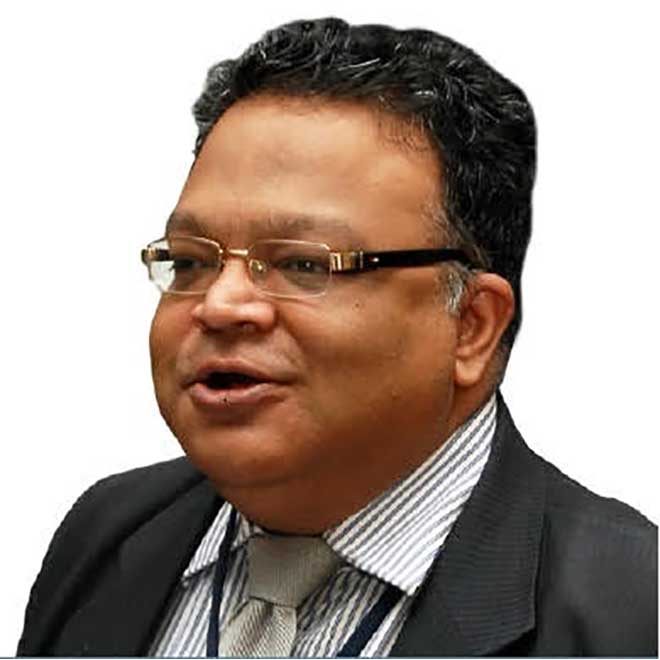
  • Dr. Anindya Sircar, Intellectual Property Professional, on getting two doctorates, his journey from science to law, and the scope for IP law

    Dr. Anindya Sircar, Intellectual Property Professional, on getting two doctorates, his journey from science to law, and the scope for IP law

    Dr. Anindya Sircar has a unique distinction for holding two Ph.Ds, one in science and the other in law. He got his doctorate in Intellectual Property Law from NALSAR, Hyderabad, in 2007. After pursuing a doctorate in industrial microbiology, Dr. Sircar had a long stint heading the Intellectual Property Department at Biocon Group, which he was also instrumental in setting up. He is currently engaged in consulting, strategizing, teaching and conducting training programs in the field of Intellectual Property management. His last employment was as AVP and Head of IP with Infosys Limited where he was responsible for all IP activities of Infosys Limited and its subsidiaries. Additionally, he is visiting faculty on Intellectual Property to several universities and law schools.

    In this interview we talk to him about:

    • His journey from science to law
    • The scope and prospects for intellectual property law in India
    • His teaching experience and what he would like law schools to do differently in their approach to IP law


    You were deep rooted in science and got into the field of law for your Ph.D. How did you manage to acquaint yourself with legal terms and processes after being in the field of science for so long?

    I had started off my career in scientific research after my Ph.D in Microbiology. In fact, I had joined the API research unit of Biocon Limited. Exposure to Intellectual Property at that stage was limited to only reading and understanding patents. Moreover, IP was not looked upon as a viable career option in India in the late 90s. It was at that time that the company got involved in an IP issue with another leading pharmaceutical company and I was asked by the CMD to handle the case with the help of external counsels. That was the first time I got an insight into the world of IP. The heat of the case died soon but my passion for IP continued to only grow.

    I went ahead and started an in-house IP Department for the company. I had spent a lot of time with leading IP practitioners of the west. I stared reading relevant stuff and also took up courses, which finally ended up in my 2nd Ph.D. – in Law, specializing in IP. It was around that time Indian had joined the PCT and so there was some buzz in the air. The transition to IP had been quite smooth and my background in science has always been an added advantage in handling complex technical issues that often arise when dealing with IP. In fact it has been a lovely journey and the journey is still on.


    After being involved with Chemistry and Microbiology at the graduate and post- graduate level, at what point did you decide to go for a Ph.D in Intellectual Property?

    I had been heading the IP Department of Biocon at that time and was also teaching in leading law schools and management schools. My days used to be completely engrossed with different facets of IP, both business and academic. Additionally, my reading habits continuously kept feeding me with the recent developments in IP. At this stage, I happened to see an admission notice for Ph.D. and decided to go for it. The then Vice-Chancellor and Registrar of NALSAR were both extremely helpful and in fact the former ended up as my research guide.


    You received your doctorate in Intellectual Property in the year 2007. We are in 2017 now. Can you see significant developments in this area over the decade?

    There has been tremendous development in the field of IP both in India and rest of the globe – more so in India. In India at the policy levels there have been several amendments to existing Acts, compliance with TRIPS, India becoming an ISR, the IP Policy, CRI Guidelines and many more. Needless to say, numerous workshops, conferences and awareness programs focusing around IP have taken place. The most encouraging fact is that today many students are coming forward to study and specialize in IP and there are several courses available too. The biggest achievement in India is that today people consider it a viable professional choice and the field is being sought after.


    If Intellectual Property must be properly understood, what are the factors that one must necessarily have knowledge of? For instance, in studying law, politics plays an important role. Is there any such thing that goes hand-in- hand with Intellectual Property and Patents Law?

    In today’s world there are several super-specializations in Intellectual Property – prior art analysis, drafting and prosecution, analytics and intelligence, infringement studies, audits and due diligence, opinions, free and open source management, contracts, M&As, litigation and a few more. The requirements are really not the same for each of them. A proper blend of scientific and technical understanding and relevant legal knowledge can always prove beneficial. There is enough scope and space for representatives from both scientific/technical and legal fraternities to coexist.


    You are visiting faculty to a number of law schools and you have also had the experience of working in corporate companies at top positions. What is the difference between the academic learning of IP and Patents and its practical application?

    Most law schools have now incorporated IP in their curriculum. This is very encouraging but several needs of the industry in terms of skills do not get adequately addressed. Internships, which are mandatory in law schools, are an effective means of bridging some of these gaps. Some law schools run specialized courses in addition to the regular undergraduate and postgraduate degrees focusing on some of these skills. Many of the sessions in such courses are taken by industry representatives and practitioners. I am personally connected to some of them and strongly feel that some of the skills needed by the industry get taken care of. But requirements of the industry are obviously much higher.

    There might be disputes between companies that are incorporated in different countries. Where does adjudication of the matter happen in those cases?

    This is primarily as per the statute or as governed contractually.


    Do disputes arising out of IP & Patents Law violations resolve through negotiation and arbitration predominantly?

    Statistically, most of these IP disputes land up in the court. Some may get settled out of court, similar to litigation in other areas. Arbitration however is not very common in IP disputes.


    A purely academic question- what are the grey areas in the framework of IP & Patents Law in our country that need immediate attention and rectification?

    The framework and the statute for IP in India have been constantly evolving and more so in the last decade. Although, the CRI Guidelines are out, there are several ambiguities in the document. Additional clarity is desired, the faster the better. This will be of immense help for the ICT and related industries.


    Students of law typically prefer working in corporate law firms or decide to get into litigation. How does the application of Intellectual Property differ in these career platforms?

    There are numerous Corporate Law firms which deal in Intellectual Property. In fact there are several firms which specialize in IP and handle only IP matters. Corporate Law firms mostly deal in all aspects of IP, including litigation. However, the main focus for IP Law firms remains IP prosecution and IP management. Litigation involving IP in India currently is not very high. There are quite a few trademark cases but those involving patents or copyright are low. Additionally, corporates too employ a sizable number for their in-house IP departments.


    You were AVP and Head of IP Cell at Infosys, and have earlier been Global Head – IPR at Biocon Limited. What responsibilities do these roles entail?

    There could be a detailed JD made available for this. Primarily as a head, one is responsible for the overall and complete IP management of the company and its subsidiaries. In layman terms, this involves – IP Value Management, maximising the IP value for the company, and IP Risk Management, minimising the IP risk for the company. I was lucky that in the organizations that I worked, I always had a brilliant team which not only made my work easy but interesting too.

    Assuming that you have to make hiring decisions for in-house or ad-hoc roles, what do you look for in a lawyer’s profile?

    This will primarily depend on the role for which the hiring is being considered as the work scope and expectations will differ greatly. More than academic records I am keen on the internship learnings when it comes to a fresher. Another aspect which influences me is the ability, and more so the interest to learn. There is no room for short-cuts.


    As part of your work profile you must have had to talk to practising lawyers on IPR. Did the thought of practising law ever cross your mind?

    I have been interacting with several practising lawyers for the last two decades and in fact many of the leading lawyers of the country have become good friends. I find the world of IP very absorbing and challenging and never thought of practicing law yet. Now that you have asked this question, I may start thinking.


    What would be your message to our readers who are mostly young law students and lawyers?

    Decide which branch of law you would like to practice, make an early choice, and stick to your choice. Choice of branch should be only on liking and passion and not any other criteria. You can’t do well in something if don’t love the same, hoping that you will be practising that branch every day for the rest of your life. Growth and success are bound to come. And most importantly, there is no short-cut to reach the top.


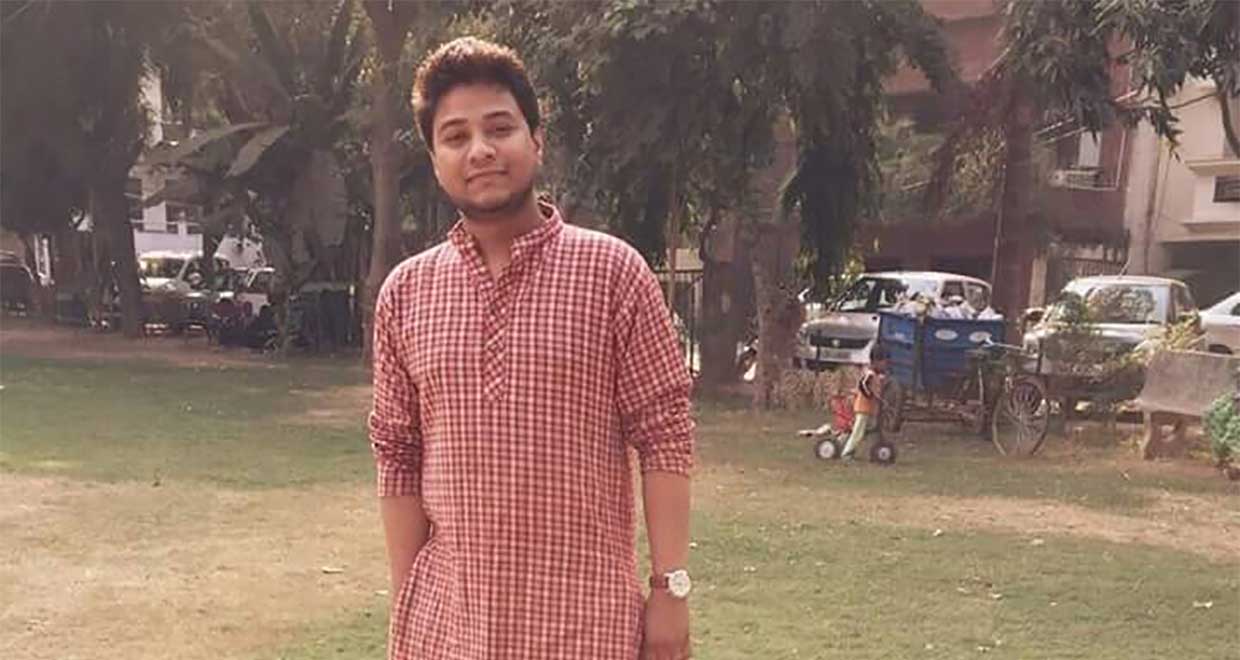
  • Kushal Kumar, Associate, Central Government Standing Council, on looking beyond NLUs and the importance of debating

    Kushal Kumar, Associate, Central Government Standing Council, on looking beyond NLUs and the importance of debating

    Kushal Kumar is a graduate in law from Law College, Dehradun, batch of 2013. He subsequently went on to pursue a postgraduate diploma in International Trade and Business Law from The Indian Society of International Law, Delhi. Kushal has always been an avid debater and public speaker, representing his alma mater at numerous national level events. He currently serves as associate to the Central Government Standing Counsel.


    In this interview we speak to him about:

    • His alma mater and breaking the NLU myth
    • His extracurricular accomplishments and how they have contributed to his skills as a lawyer
    • The importance of internships during law school


    How would you like to introduce yourself to our readers?

    I would like to say that I am a passionate litigation lawyer. I have been enthusiastic and passionate for arguments and addressing the court. Therefore, I have argued in almost every jurisdiction. I have wanted to be a spokesperson for the people and debate from a very early age. My insatiable curiosity makes me knowledgeable in fields besides law as well. I feel strongly for the disprivileged, which is why I have fought numerous cases pro bono, and will continue to do so. I feel. As a national debater I have been fortunate enough to articulate my thoughts in different parts of the country. I want to thank my parents and especially my elder brother who has always supported me for whatever I have done.


    What has your experience with legal education been and how has a degree from a relatively smaller law school, if at all, affected your career prospects?

    I have always been a passionate public speaker who is well read about current affairs. I always wanted to be a lawyer as I wanted to be a voice for the voiceless. Legal education is the best education I feel in this world. In my college, I was one of the more meritorious students and very close to my teachers and my fellow students. It was a central university so getting good grades was very tough. During my law education I got to know about my rights, values and responsibilities towards society. I used to have stimulating political discussions with my friends and we used to study together before exams which helped me to learn about team management. My favourite subject was Political Science and I used to help my peers in the same as well. I would like to use this platform to extend my heartfelt gratitude to some of my teachers who have been a great source of inspiration. Mr. Ashutosh Kumar, Dr. Poonam Rawat and Dr. Chandra Bhushan Nagar have had the most profound influence on me. I am honoured to have known them and be taught by them.

    My college had a strength of approximately 2000 students. The point is, irrespective of the name of the law school, what matters most is your personal effort and hard work. I would like to say that I got ample opportunities to showcase my skills. What matters more than the stature of the college is the environment it breeds. What matters is what you want to be and how much effort you are willing to put in to achieve that. I have represented my college at several national level events such as debates, moots, etc. and even emerged victorious as these competitive events.

    When you are arguing in court before a judge what counts is not how reputable your college was, but how adept you are as a lawyer.


    What differences, if any, would you say there are between lawyers from well reputed NLUs and the rest?

    It depends largely on your area of interest. The only difference it makes, to my knowledge, is the that the exposure an NLU offers to its students far outreaches the exposure a student at a lesser known college gets. But as a litigation lawyer, your alma mater plays only second fiddle to your competence as a lawyer. When you are in court, it is your mastery over the law and your command over the language that eclipses your academic credentials. All great lawyers of India are not from NLUs.


    What internship experiences do you believe are crucial? From personal experience, what can you tell us about the exposure an internship during college gives a student?

    During one’s time as an intern, they understand the decorum of courts and the interaction between judges and advocates. They are a learning curve for aspiring and young lawyers.

    When a law student is involved in any judicial internship, the intern should make the most of it as exposure to court room sessions teach young students a lot. Being a part of client-advocate meetings are also a great experience. I would like to say that I was awarded with the ‘Best Intern award’ during my internship with Biz and Legis, Kerala.

    As a student with average grades, how would you say academic excellence or the lack thereof in an institution translates to the professional workspace?

    I feel academic excellence is just a part of your CV. Being a student of a central university, one just needed to pass the examinations to earn the degree. What matters is being diligent, being kind and sensitive, respecting your peers, seniors and your subordinates. It is these qualities that make you a good person and a good lawyer. Good grades don’t make you an efficient worker or a good team player, it is your personality which does.


    As an avid debater, what would you say your greatest learning is from the activity? How has it impacted your career trajectory if at all?

    I tend to get quite competitive when it comes to debates, which is why my friends and families keep telling me that I should join politics, as I never want to lose.  When I was younger I used to deliver the inaugurating speech at Ram Krishna Mission Ashram on their National Youth Day. I have been awarded as ‘Best Sanskrit Speaker’ for one of my speeches. I recall that my childhood friend, Pratika Shankar who is also a Lawyer, and I, used to win all the prizes in debates at various platforms. I am honoured to have met former President of India Late Shri Dr. A.P.J Abdul Kalam during my school days and I got an opportunity to speak about my school and state in front of him.

    During my college days, I was fortunate enough to represent my college at national debate platforms, which I think were close to sixteen in totality. I am very grateful to my college that they gave me a chance to adjudicate the first National Parliamentary Debate in my college. I helped my fellow students in debates and used to explain to them the technique of delivery. These opportunities and honours have moulded me into the lawyer I am today, confident and diligent.

    I correct people whenever they get their facts wrong. Many young lawyers hesitate to speak up. To this I would like to say that when you are on stage or at the podium, one must speak from the heart and say everything that they have to say. Keep trying and you shall be able to accomplish this. Practice makes perfect.


    Between your work experience at United Lex, S.L. Gupta & Partners, and Monika Arora & Associates, what was your greatest take away from each of the experiences?

    Every work place has its own pros and cons. But ultimately what matters is what you earned and implemented in your life. Unitedlex was my first job. It was an LPO, but since I was among the few fortunate who got placed from my college, I considered it a blessing. I worked there for a few months but then realised that LPO was not my cup of tea. Therefore, I decided to move and went to another law firm where litigation was practised more seriously.


    As an associate to standing counsel for NCTE, UOI, etc. at various levels of  the judiciary, what have been the defining moments of your career so far?

    To be honest, there have been several instances which played a key role in shaping me as a lawyer.  But I think working for the Union of India is a key factor for me. We have lot of cases marked everyday and there are a lot of appearances before different courts daily. I have been a part of many landmark judgments, the latest being the matter of Sushil Kumar, the wrestler who was trying hard to get through the Rio Olympics but coudn’t. Apart from that I have been actively working for NCTE, MCDs and various other panels. It is a simple formula; the more you appear in courts the greater experience and exposure you get. Furthermore, I would like to say to all those who want to pursue litigation as a career, first go to district courts as you learn the basics of advocacy only at the grassroots level.


    As a lawyer who is constantly exposed to the bare functionings of legal systems across India, what would you like to share about the same with aspiring law students and those looking to pursue a career in the same?

    The exposure to the legal functioning of courts across India is more or less uniform.  The only difference is with the jurisdiction of the courts.  As a lawyer, one should have great respect for the Bench and should maintain the decorum of the court. This is the most important thing which is to be learned by lawyers and law aspirants. One should know his facts accurately but state them without a shred of arrogance. That would be my only suggestion to young lawyers.


    Finally, do you have any other advice for our readers, most of whom are college students?

    I would like to say to college students that one should not forget to enjoy college life in the race to secure good grades. The day you get a degree in law and you became a lawyer, that is when the real struggle begins. You face challenging situations and undergo difficult times. But it is your passion for law that makes you exceptional. A law student has to understand four steps of advocacy in particular, i.e. a lawyer must know the facts of the case, make a good draft on the basis of those facts, make a thorough research of judgments, and then deliver his argument in court. I would like to add that as it happens with me, when you appear in court it doesn’t matter who is on the other side. It is important to not be intimidated by seniors and renowned advocates. All that matters is communicating your end of the argument to the judge through foolproof research. In conclusion I would like to say that fortune only favours the brave.


  • Rahul Miranda, Masters candidate, Swansea University, on pursuing Maritime Law, niche legal fields and plans for the future

    Rahul Miranda, Masters candidate, Swansea University, on pursuing Maritime Law, niche legal fields and plans for the future

    Rahul Miranda is a graduate in law from SLS, Pune, batch of 2014. Since then he has worked with Senior Advocate V.J. Mathew in Cochin for a year before securing a judicial clerkship at the High Court of Delhi. He is currently a masters candidate at Swansea University with a focus on maritime law, marine insurance and energy laws

    In this interview, we speak to Raul about:

    • Pursuing a legal avenue as niche as maritime law
    • His curriculum at Swansea and his decision to go there
    • Being a judicial clerk at the High Court of Delhi


    You were excellent at academics while simultaneously being an avid and successful mooter during your time at SLS, Pune.  How did you manage your time and prioritize effectively?

    Learning to manage time and prioritize your tasks is an essential skill for any lawyer. My absolute favourite thing about SLS, Pune is how well they prepare you for the real world in this regard. Numerous opportunities are made available but never pressed upon you. It was completely up to you to decide on the load you wanted to take on. You could either easily breeze through with minimal effort or be so heavily yoked that you’d kill for Hermione’s time-turner.

    I managed to find a balance fairly quickly during my time there and thoroughly enjoyed being able to switch between my academic commitments and co-curricular interests.


    You spent a semester on exchange at Queens University in Kingston. What was your experience like? What were the challenges and opportunities that you faced in making the transition between the two academic environments?

    My Semester at Queen’s was the best! Under the auspices of the Ontario-India Exchange Program, I got to take a full course load of upper year JD courses at Queen’s University and was even required to sit through the exams and compete with the home students for a GPA. The quantum of reading and research that was expected was immense and the professors demanded a comprehensive understanding of the course material. As an exchange student who just wanted to travel and take in the new experiences, this was an extremely daunting prospect. I did manage to get through relatively unscathed though and I even managed to squeeze in quite a bit of travel.

    An exchange program is something I highly recommend to anyone who has an opportunity to be in one. Apart from the obvious opportunity for professional and personal growth, it gives you a fresh perspective and teaches you to look at an issue from several angles – an essential skill for any successful lawyer.


    Given that maritime law is a niche area of practice, we would like to know how you developed an interest in the subject and have come to choose it as your core area of practice.

    Shipping is the lynchpin of international trade and brings together the eternal triangle of producers, manufacturers and markets. As the most cost-effective way to move goods and raw materials around the world, shipping accounts for over 90% of the world’s trade. Considering its obvious importance to a developing country like India, I believe the field has a lot of potential for growth and wanted to contribute to this. The government recognizes this potential and is promoting investment in this sector through initiatives such as the Maritime India Summit which was held in Mumbai last April.

    As a law student I was intrigued by the several unique challenges and opportunities that this field offered. I took up an internship at Bose & Mitra & Co. and my time there under, the able guidance of the managing partner, Mr. Majumdar, and the rest of his fantastic team truly fanned the flames and got me hooked to this area of practice.

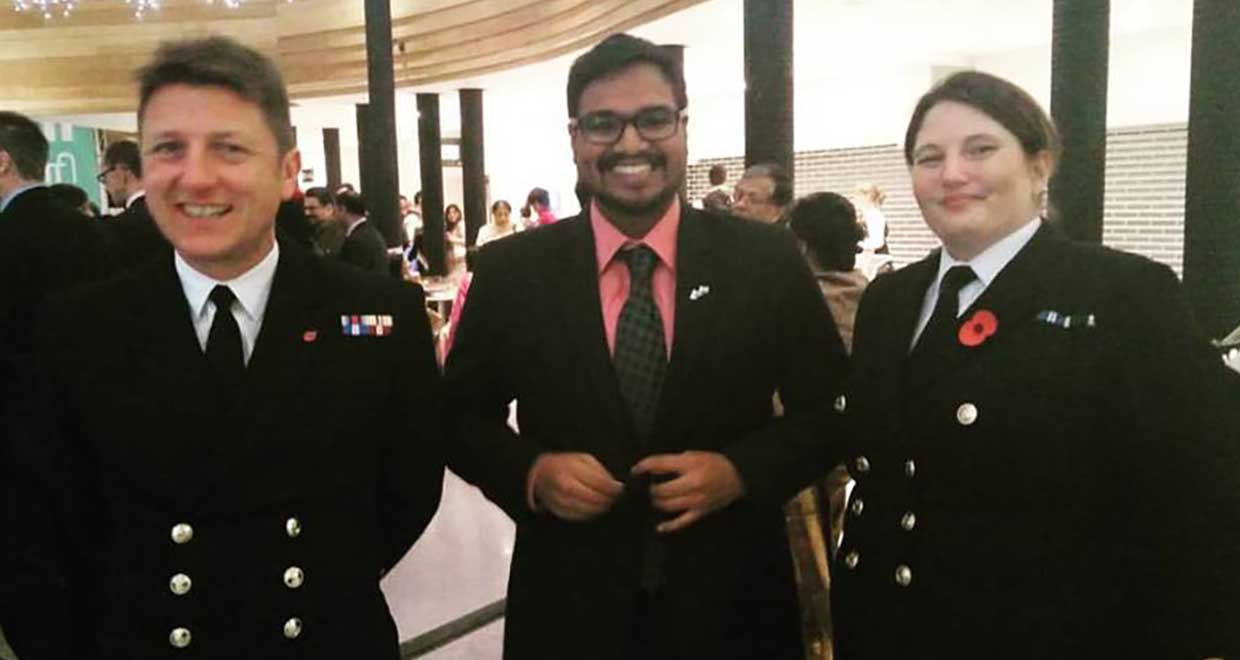
    With the crew of the Royal Navy


    How did you secure your first job as an Associate at V. J. Mathew & Co.? What was your experience working there like?

    I applied for an internship there and was assigned with some very interesting assignments. I was impressed by the quantum of maritime law work that the firm handled and the professional manner in which they functioned. At the end of the internship, I was offered a position and grabbed the opportunity with both hands.

    My time at the firm was a period of immense learning and it was a baptism of fire of sorts. Being a boutique firm, I had the opportunity to work closely with the partners on most cases and was made to feel like a valuable part of the team. I am very grateful to Senior Advocate V. J. Mathew for playing the role of a mentor and for trusting me to argue important cases before the Kerala High Court so early in my career. He is also a strong advocate for positive reform in the maritime industry and often got me involved in his research preparation for a big conference or an important paper.

    Being a judicial clerk at the High Court of Delhi, what have been your tasks and key learning experiences?

    I had always wanted to do a judicial clerkship and so when I got the opportunity to work with Hon’ble Mr. Justice Najmi Waziri I was overjoyed. For those of you not familiar with the concept, a clerkship involves working closely with a judge and attempting to ease their workload by helping with case briefs or research propositions.

    In my case, this basically meant trying to learn as much as I could while being as little of a nuisance as possible. And I say this only half jokingly as it’s truly incredible how adept Justice Waziri was at identifying crucial points in the case and I was often out of my depth when trying to brief Sir on a case or while sharing a point of research with him. What the experience did give me was an opportunity to observe from close quarters what it takes to be successful in this field and the level of commitment, hard-work and professionalism that it requires. Justice Waziri is truly a role-model for me and I’m immensely grateful for the opportunity to have been able to learn from him.

    Rahul Miranda with Hon’ble Mr. Justice Najmi Waziri


    You are currently pursuing a master’s degree in International Maritime Law from Swansea University. How did you decide on the university and why were you keen on getting a masters degree?

    The peculiar nature of ships and the shipping industry means that the law governing it also has several peculiarities. In order to fully understand these intricacies in the law I felt that it was necessary to study the subject in depth. Furthermore, a Masters in Law is obviously a lot more than just the degree and offers the opportunity to meet like-minded people from around the world and to participate in conferences and networking events which bring with it a plethora of opportunities.

    For this reason, picking the right university to pursue your course from is vital. I was accepted into several programs but finally decided on Swansea University based on the almost singular focus of their program on commercial maritime law, the reputation of their professors within maritime circles and its very strong alumni network. It’s probably also wise to factor in fees, scholarship opportunities and cost of living while picking a course.


    What are your career plans after this?

    To be honest, I haven’t really thought too much about this yet. I’m looking for an assignment which will challenge me and give me a chance to apply all that I have learnt during my course. I’m going to have to work very closely with the career services office at the university over the next semester to explore my options and find the perfect fit.


    Do you feel that adequate exposure is given to students in niche areas of law such as maritime law? What would be your advice to students who are inclined towards a career in the field?

    While I was at law school there wasn’t really any exposure to this field of law. Over the last couple of years, however, I have noticed that several law schools are conducting symposiums, conferences and even moot court competitions dedicated to issues involving maritime regulations. I have been invited to speak at these conferences and judge these competitions a few times and remember being impressed by the quality and quantity of participation. If students are interested in this field they should definitely check for these events and participate in them as they offer a good opportunity to get a feel for this area of law and also to network within the field. Applying for internships with firms that deal with maritime matters is obviously another way forward.  I wish them the best of luck and will be happy to help them with any further queries they might have.


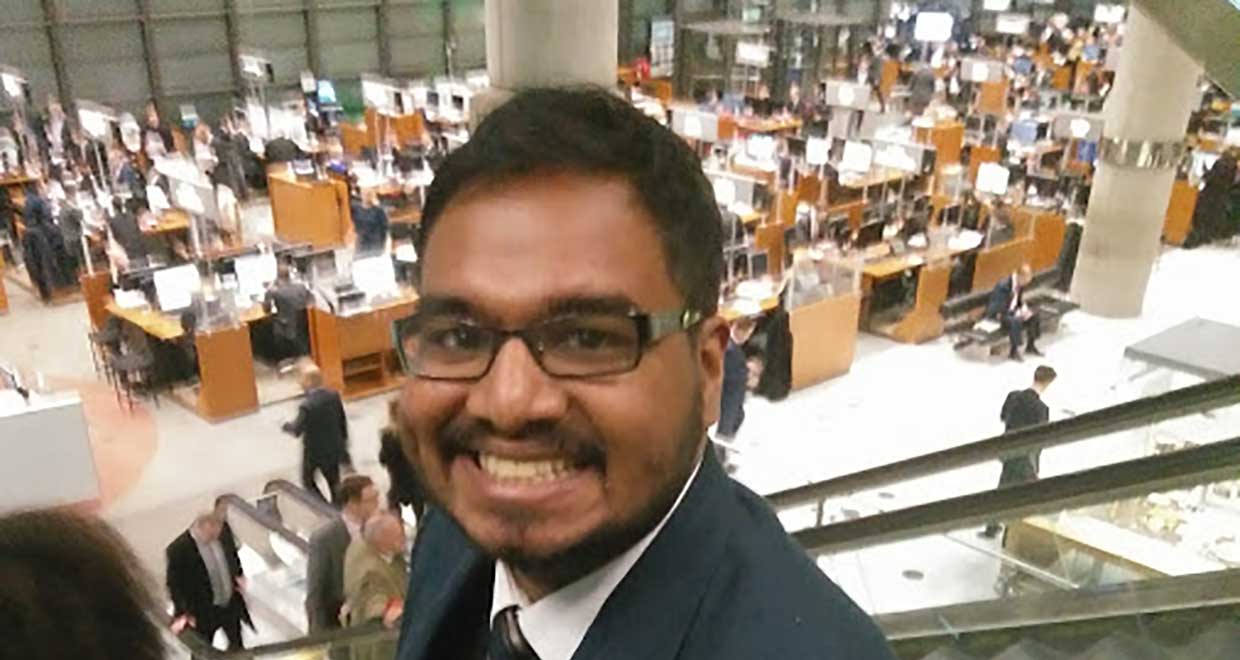
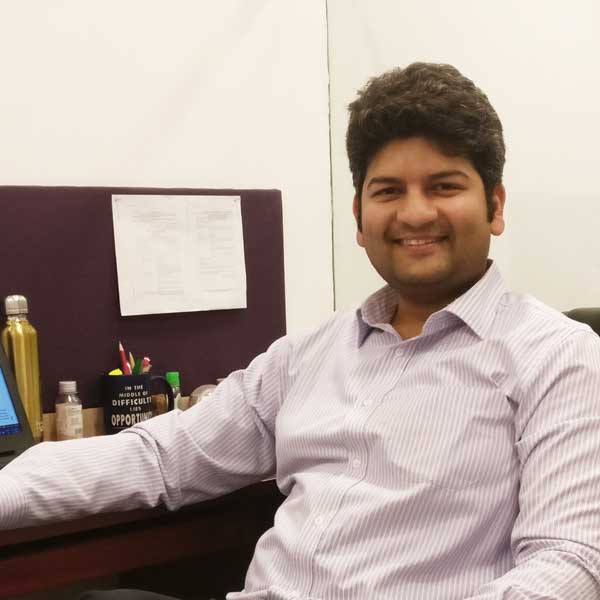
  • Shivendra Singh, Senior Associate, Dutt Menon Dunmorrsett, on M&A, corporate law and the potential of start-ups in the legal industry

    Shivendra Singh, Senior Associate, Dutt Menon Dunmorrsett, on M&A, corporate law and the potential of start-ups in the legal industry

    Shivendra Singh is is a graduate from NLIU, Bhopal, batch of 2008. Shivendra has extensive experience in handling Mergers & Acquisitions, Joint Ventures, infrastructure projects and Private Equity deals. He has also been part of several real estate transactions, due diligences, including due diligence on portfolio of assets of banking companies, financing arrangements with banks, and investment in multi-brand retail trading sector. During his professional career, Shivendra has practiced a wide range of laws, such as law of property, companies law, laws pertaining to foreign exchange in India, securities regulations, Sick Industrial Companies Act, trust laws, laws governing education sector, and employment and labour laws. He has regularly contributed several articles to leading law journals and magazines.

    In this interview we speak to him about:

    • His time at NLIU, the curriculum and his extracurricular interests.
    • His decision to move from an established firm like AMSS to a startup, Sarthak Advocate & Solicitors.
    • His experience practising corporate law

    How would you introduce yourself to our readers in one sentence?

    A professional who likes to keep it simple and deliver high quality.


    What attracted you to Law? Is anyone in your family from the legal fraternity?

    During my 12th standard days I stumbled upon a book shelf that belonged to my great grandfather in our ancestral home in Eastern UP. It had a few old law journals. The old collection of books had remained unused as there were no lawyers to come from our family for the following two generations. As a humanities student, I was very excited to discover such an extensive book collection. That was the first time that the thought of being a lawyer crossed my mind.

    Few months later, I came to know about a distant cousin who was in NLSIU, Bangalore and just got placed in Amarchand Mangaldas, Delhi. I can say this event led me and my family to seriously consider law as a viable career option and I ended up applying for few universities.


    Tell us about life at National Law Institute, Bhopal. What was the academic atmosphere like?

    NLIU, Bhopal is a very vibrant campus, where we had space for students who excel not only in academics but also in other extracurricular activities, like moot court competitions, model United Nations competitions and have publications to their name. We even had students who loved to read beyond the prescribed curriculum; they read the likes of Karl Marx, Kafka and other noted philosophers.  .

    I think our university gave everyone a chance to explore themselves in their first three years and then gun after their goal in their last two years. This is why our alumni have made their mark not only in the field of law, but also as social activists, diplomats, bureaucrats and entrepreneurs.


    You have taken part in three moot court competitions, performing well each time. How important is participation in moots?

    I personally consider that moot court competitions teach one how to apply law to a practical scenario. After all, this is what a lawyer does for rest of his life. Participation in such competitions enhanced my research skills, drafting skills, presentation and most importantly, the art of articulation.

    One should definitely experiment with different subjects in moot courts during college. It takes you out of your comfort zone. Then you don’t hesitate venturing into any kind of law because you believe in your core skills as a lawyer. I participated in various moot courts dealing with issues relating to public international law, minority educational rights, cyber law and space law.


    What subjects interested you the most while in law school? Which kinds of internships did you complete while at law college?

    As I mentioned above, I didn’t have any favourite subject consciously but you can say I had an inclination towards public international law owing to my interest in contemporary European history and international relations as an arts student.


    You joined Amarchand & Mangaldas & Suresh A. Shroff & Co., Delhi, soon after graduating in 2008. How did you procure employment there? What was your experience there like?

    I was selected for a four week long internship through the university placement programme. My internship was extended for two more weeks at my request. Few months later, a few other people who had interned there, and I, got a call for an interview. I was selected at that interview.

    Working at AMSS was a wonderful experience. You suddenly find yourself making a small contribution to a headline deal. It was my first job so it will always remain special. An organization that turned a law student into a beginner lawyer, teaching him the nuances of professional life.


    Soon after, you left AMSS to join Sarthak Advocate & Solicitors. What made you shift, especially since AMSS is a leading corporate law firm?

    That was the time of start-ups in law firms. You had success stories coming from every corner. It was an exciting move, where we hunted for our own office and own furniture. It was a fulfilling experience and a risk which a young and carefree lawyer took at that time.


    During the four years you worked there, you moved into the Senior Associate position, and you have continued to hold the position in your present job at Dutt Menon Dunmorrsett. What goes into becoming a Senior Advocate Associate?

    Your responsibility increases manifold when you move up to the position of a senior associate. You are in the driver’s seat of a transaction and the partner would rely on you completely. I have always tried to take as many legal calls as I could with my experience. Number of hours don’t necessarily increase but the timing of those hours does change. You are working or taking calls anytime and anyplace like on the road, in the gym, in the restaurant etc.


    What are your practice areas at Dutt Menon Dunmorrsett? Which kinds of transactions do you like dealing with the most?

    I have always been a general corporate and M&A lawyer. At DMD Advocates, we have a great mix of corporate transactional practice and general corporate advisory. In the last few years, India has seen so many start-ups, a few succeeded and a few failed. At DMD, I got a chance to work with these budding entrepreneurs, almost like a legal incubator, till they reach the angel and institutional rounds. It’s very satisfying to see their journey from a mere business plan on paper to a stage of operational expansion.

    Simultaneously, away from the M&A arena, our other clients who seek day to day advisory on a whole range of laws, such as the Companies Act, FEMA, Aviation Laws and SEBI laws keep us close to the challenges faced by a corporation in its day to day life.


    What are the building blocks for a great practice in M&A? Do you have any advice for young lawyers aspiring to make a mark in this area?

    As is true for any other practice area, providing legal solutions is at the core of M&A practice. Clients appreciate a straight and unqualified view. As an M&A lawyer, you have to completely give yourself to the transaction which goes on for months. You are the anchor for the documentation process and you will be the go-to guy for your client throughout the process. You will have to chase the client for sorting out the commercials between the two parties and keep things moving.

    For young lawyers, my advice is to understand your client’s business and commercials as much as possible. We are business lawyers. We are involved with clients in their day to day life and not only when their dispute reaches court. Therefore, understanding their business challenges is key to solving their problem.


    According to you, which are the arenas of law showing most promise for the near future, and which students should consider taking up law as a career choice?

    India is growing every day and lawyers have a big role to play in this growth story. Corporate law, IPR and Alternate Dispute Resolution will remain at the core of the legal advisory in the times to come. From a start-up to a big corporation, everyone is realizing the value of a commercial lawyer, something which was historically handled by a chartered accountant or a litigation lawyer.

    There is great potential for a corporate lawyer in tier two cities, which are still untouched by corporate law practice. In this age of e-mail, teleconference and video calling, corporate lawyers can disrupt and penetrate cities like Ahmadabad, Kanpur, Indore, Vizag, Kochi, Manesar, etc.


    Which reference authorities do you rely on for your work in the corporate area, as well as for competition law?

    As far as advising the clients on their regulatory matters is concerned, including corporate laws and competition laws it is advisable to rely on the latest printed bare acts and regulations available on the official websites of the regulators. But beyond a point when it comes to more complicated issues, one can refer to a comprehensive commentary and case law research as well.

    For FEMA related issues one can consult updated regulations (Taxmann publications) and Consolidated FDI circular. For competition law advisory, a lawyer can also consult the advocacy booklets published on CCI’s website.


    You were asked to express your views on The Registration (Amendment) Bill, 2013 by the Parliament’s Standing Committee on Rural Development. What was your experience like?

    It was a very enriching experience where I got to share my views with an esteemed panel comprising Rajya Sabha members such as Prof. Saifuddin Soz and Mani Shankar Aiyer. As a real estate practitioner, we apprised them of some practical difficulties faced by people given the archaic nature of the century old legislation. There was a parity of thought on both sides of the table with few common objectives such as ease of registration procedure, prevention of fraudulent transactions, computerization of records and compulsory registration of certain documents.


    How would you suggest students may hone their research skills? What is the secret behind a good quality research paper?

    Perspective, I guess. A quality research paper should reflect clarity of thought backed by comprehensive research. It should give little more than what is already available in the public domain. That little contribution can be in the form of additional facts and information which one has gathered through empirical exercise or in the form of a viewpoint different from what already exists and is well documented.


    What is the one piece of advice you would like to give young law students?

    For the first few years, discover yourself and your inclinations. Experiment as much as possible. You have nothing to lose. Once you know what you want, go all of for it. Most importantly, have lots of fun and make full use of your campus life. Those days will never come back.


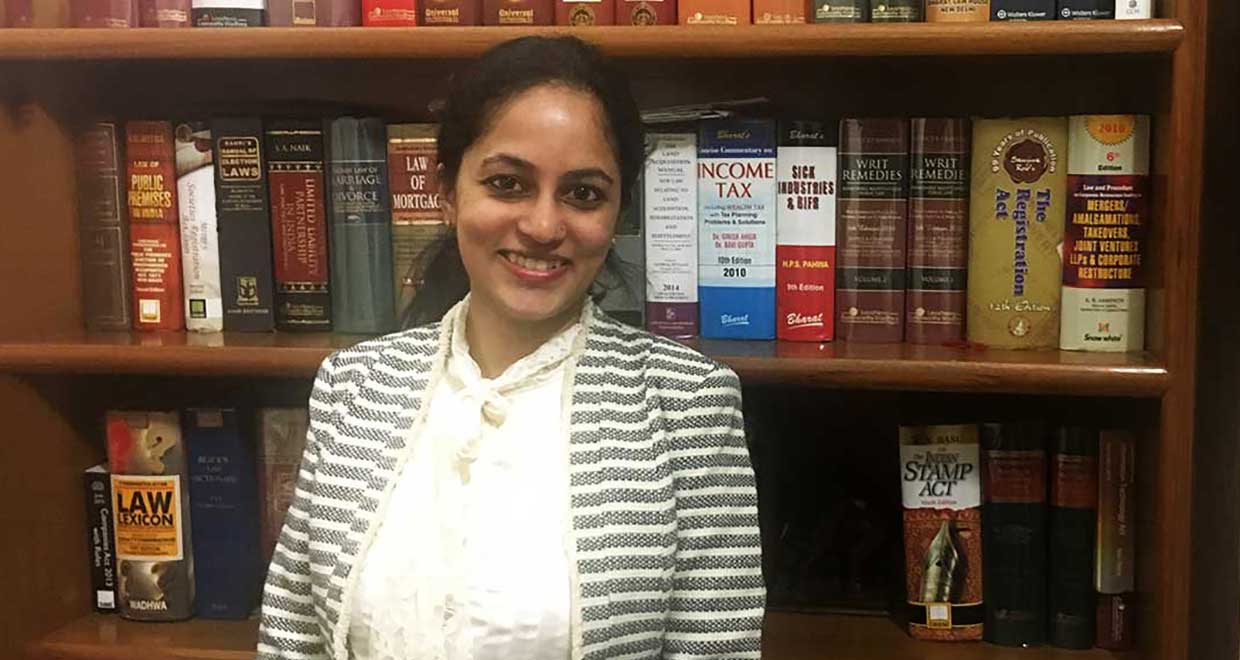
  • Goda Raghavan, corporate-commercial practitioner, AK Law Chambers, on being a lawyer, company secretary, author and illustrator   

    Goda Raghavan, corporate-commercial practitioner, AK Law Chambers, on being a lawyer, company secretary, author and illustrator  

    Goda Raghavan graduated in law from University Law College, Bangalore in 2010. She went on to pursue her Masters in Law from the prestigious London School of Economics, batch of 2011. She is also a qualified company secretary and was awarded the gold medal for securing the highest marks in the foundation examination from the state of Karnataka. After working with GMR Infrastructure Limited, Bangalore, as their management trainee for two years and with HSB Partners, Chennai for four years, she quit to set up the corporate-commercial practice at AK Law Chambers. Additionally, she is also a freelance illustrator. She draws a comic strip called “Pickles & Lota” and has illustrated several strips on legal humour.


    In this interview she speaks to us about:

    • Her courses and curricula at the London School of Economics
    • Managing being a company secretary alongside with being a lawyer
    • Her experience working with diverse firms in India and abroad, and building corporate-transactional practice


    You said you’re a third generation lawyer? What was it like growing up in a family with so many lawyers and how has that influenced your career and practice?

    Being a third generation lawyer brings with it a lot of advantages as well as a lot of responsibilities and extremely high expectations. You are judged on a daily basis and quite easily written off for even small stumbles. Yet I am fortunate to be carrying on the family ‘tradition’, if I may call it. My grandfather Justice K.R. Gopivallabha Iyengar was a judge and my father Mr. K.G. Raghavan is a designated senior counsel of the Karnataka High Court. To say that I wasn’t influenced to take up law and that this was a completely independent decision would be a lie. On the contrary, it was a positive influence on me. Immediately after the 10th standard board examination, I specifically opted for commerce to benefit from the courses in economics and business studies to assist me in the five year law program thereafter. As luck would have it, I married Anirudh, who is also a litigating lawyer. It was only then that I decided to focus on transactional work, an attempt to not “duplicate resources” within the family.

    You have a publication “Breach of Representation and Warranties in M&A: A Buyer’s Guide” to your credit? What role do you think writing and research have played in your career? Did you write many papers when you were in law school?

    According to me writing is a very crucial part of being a lawyer – be it writing in the form of drafting or writing for research articles. My schooling has added vastly to my skill in the use of words to convey my thoughts and that has greatly benefitted me in drafting agreements, opinions and pleadings as well. While I presented several papers on corporate laws for the legal and secretarial group meetings that were held monthly, during my training period at GMR Infrastructure, I was hardly left with any spare time between balancing my courses and exams at law school and the company secretary course. I believe that the most important skill of a lawyer lies in articulation- written (be it drafting a pleading or an agreement) and oral.

    What were your priorities during law school? Did you always know which area of law you would set up a practice in or did you decide later?

    During law school, I focused a lot on internships and also on completing my company secretary course. To this effect, I interned at various offices and companies and got an idea of the various kinds of work involved. At the end of five years, I also successfully completed my CS course.  When I started off at law school, the only area that I was exposed to was litigation because of my father. It was only when I began my course at the LSE — by which time I had finished by company secretary course — did I realise that I might be interested in pursuing a career in corporate transactional work. Backed by my experience at GMR Infrastructure, I joined HSB Partners, Chennai, which I believe has one of the best transactional practices in the city. Mr T.K. Bhaskar is a fantastic mentor to have. The exposure to direct client interaction at HSB is a huge advantage and boosts your learning curve and confidence. The interplay of law, finance and business while working in this area intrigued me. All of this led to my decision to set up corporate practice at AK Law Chambers.

    Tell us a little about your course in LSE, please. What are your views on both, pursuing an LLM and studying abroad for Indian law students, from a career point of view?

    At the LSE, I took courses on dispute resolution, project finance, contracts, international business transactions and trademark law. I was particular about taking courses that teach the law as a jurisprudential concept and not courses that are legislative specific to that region. While a one year program does not enhance one’s knowledge of the law drastically, there are three invaluable skill sets that one picks up, especially while studying in one of the best institutions in the world: One is the method in which you approach the situation on hand as taught by the some of the most qualified professors in the world at the university, two is the way in which fellow students from various jurisdictions, who are all top of their class at their universities, approach the same situation, and three is the drafting skill. In addition to the education, the program encourages you to live independently, manage your own finances and travel. All of this adds to the overall personality of a person and this shows in the way one handles a client, their drafting and presentation skills. Even though I went to the LSE straight after college, I would believe that pursuing an LLM after a couple of years of work experience would be a lot more beneficial.

    You interned at Allen and Gledhill LLP, Singapore. How did you choose and apply for that internship and how do you think it shaped your perspective?

    During my term at law school, I had interned with Mr. Uday Holla at the advocate general’s office, the National Human Rights Commission, New Delhi and Crest Law Partners, Bangalore. After working with offices that engage in different types of legal practice and gaining exposure to a variety of domestic legal work, I was keen on working with a foreign law firm to get international experience. Mr. Nakul Dewan was kind enough to accept me as an intern at Allen & Gledhill LLP, Singapore on their dispute resolution team. It was the first time that I lived by myself and worked outside the comfort of my home country. The internship taught me the work culture of a foreign firm, their attention to detail, the meticulous manner in which documentation is done and their focus on specialization.

    What work did you do at HSB Partners?

    At HSB Partners, over a period of four years, I worked in Mr. T.K. Bhaskar’s team. I was involved in private equity transactions, advising promoters and funds, joint ventures, mergers and acquisitions and also general corporate advisory work across several sectors including e-commerce, seaports, automobiles, technology and manufacturing services.


    You are a certified company secretary. What prompted you to pursue the degree?

    I had a fractured leg and was lying in bed when my father brought me a few forms and asked me to sign on it. Few days later he handed me some books for the company secretary course and said that the classes would start in a couple of days. That was how my tryst with the course of company secretary began! I believe that my CS qualification strengthens my knowledge on procedure and secretarial compliance of the companies act, SEBI, etc., which is an aspect that is often not delved into adequately by litigating lawyers.


    Tell us a little about AK Law Chambers.

    AK Law Chambers, a boutique law firm set up in the year 2013, focuses on litigation, arbitration and real estate work. I am now building the corporate-transactional practice. AK Law Chambers comprises fifteen lawyers and four partners, with offices in Bangalore and Chennai.


    Do you have any insights you would like to share with law students on a general or specific note, with respect to getting through law school?

    The most important thing during law school and early years of your career is to keep an open mind and focus on learning everything you can. Give every opportunity its fair share of time. Don’t let preconceived notions come in the way of learning.


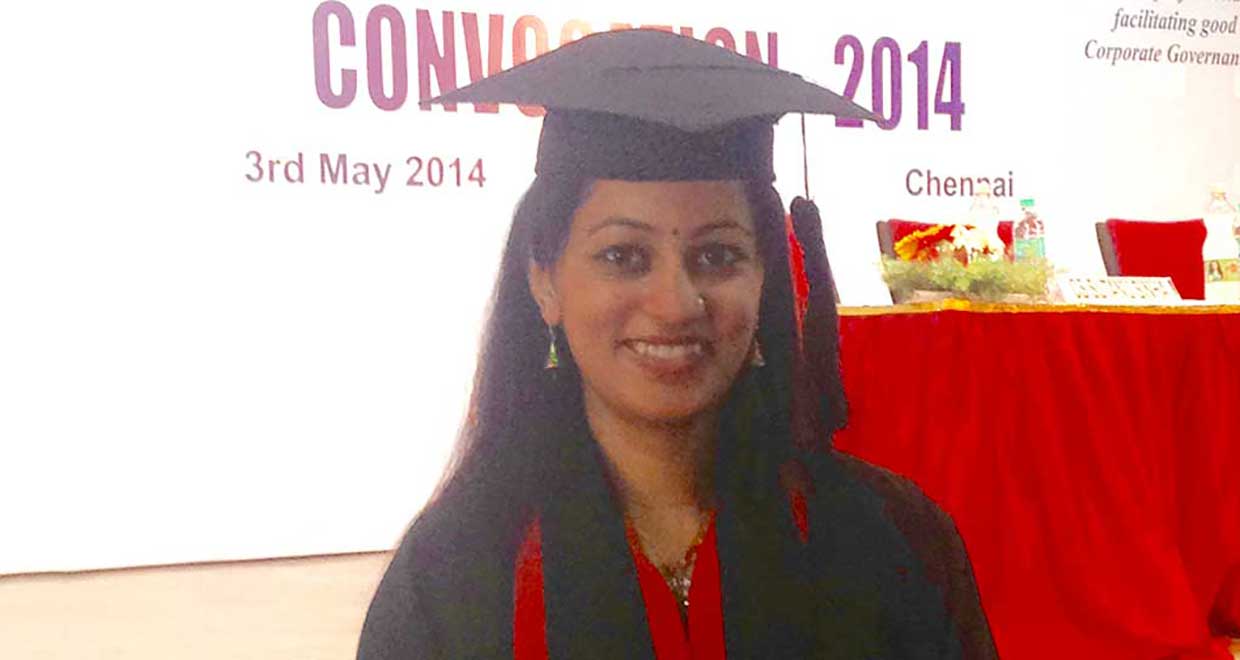
  • Mary Kavita Dominic, Rhodes Scholar, on receiving the coveted honour and writing the perfect Statement of Purpose

    Mary Kavita Dominic, Rhodes Scholar, on receiving the coveted honour and writing the perfect Statement of Purpose

    Mary Dominic is a graduate from NUALS, Kochi, batch of 2017. She is the first student from her university to secure the prestigious Rhodes Scholarship. Mary has always been a passionate advocate for human rights. She has volunteered at a legal aid camp in the Attapady district of Kerala, which sought to enable the indigenous tribal community of the region. She has also interned with HelpAge India and participated in a National Human Rights Commission Survey, in order to fight for the rights of the elderly. She has pursued an online course on International Human Rights by Professor Olivier De Schutter of the Université catholique de Louvai. At Oxford, Mary will read for the Bachelor of Civil Law, focusing on international criminal law and comparative human rights.

    In this interview we speak to her about:

    • Writing the perfect SoP and getting letters of recommendation
    • Striking a balance between academic merit and extracurricular interests
    • Her programme in Oxford and her plans thereafter


    First of all, congratulations for bagging the prestigious Rhodes Scholarship. How and when did you decide to apply?

    I was always in awe of Rhodes scholars, even prior to taking up law. But somehow, I always felt that such a prestigious scholarship was beyond my reach. It was my mother who suggested that I apply for it when she read about it in the newspapers.


    The Rhodes Scholarship is celebrated for its tedious application procedure. Could you take us through it?

    Firstly, you’re required to send in your CV, personal statement and six references (at least three of which should be academic) along with other personal details to the given mail ID. You can also send it by post. Based on this, some applicants are shortlisted for the preliminary interview. I had mine in Delhi. But I hear there were other centres too.

    The preliminary interview is a technical one where the panellists are most likely to be experts in your field. Since I’m a law student, I was interviewed by a legal panel. Likewise, there are panels for science, economics, political science, etc. Based on your performance in the preliminary interview, around eighteen applicants are shortlisted for the final interview. Here, the panel will comprise experts from varied fields. They’ll mostly question you on your area of interest. I think they try to gauge your passion for your proposed area of research.


    When is the appropriate time to apply for the Rhodes Scholarship?

    If you are currently pursuing a degree, you should ideally apply when you are in the final year of your course. Applications generally open in June for Indian students.


    What is the significance of the Statement of Purpose and how long did it take to write yours? Do you have any tips for prospective lawyers out there currently working on their own?

    Personal statements are crucial since they help communicate your passion and why you are a suitable candidate for the scholarship. It also helps them evaluate whether or not you possess any of the qualities that are expected of Rhodes Scholars.

    I must have spent a week contemplating what exactly to include in my personal statement. But the actual writing should have taken two days. I made a couple of drafts before sending out the final one.

    Before writing the personal statement, I watched videos of previous Rhodes scholars that are available online. One thing that all of them agreed on was that there is no straightjacket formula for writing a good personal statement. They do, however, advise you to be honest and explore your own creative self. That would be my suggestion as well.


    How do you go about writing a good Statement of Purpose?

    Like I said, there is no formula. Everyone has different interests and the Statement of Purpose should reflect those individual interests. Your personal statement should convey your passion for your subject and your research. You can talk about a personal incident that inspired you to pursue a particular field of study, or a specific sport that you draw motivation from. It is completely subjective.


    Moving to referrals – how much of a role did they play in your selection? Can you take us through the procedure involved?

    You will need to have 6 referees in mind. At least three of them should be academic referees i.e. professors who are teaching you in your current course or have taught you in your last completed course. There is an online application portal where the referees will have to register personally and upload their references.


    How important are good grades in order to bag the Rhodes Scholarship?

    Academic consistency and reasonably good grades are extremely important, as far as I understand. Since you will be sending in your CV along with other documents, your academic grades will be given sufficient weightage.


    How would you describe a well-balanced CV, one that has the potential to make the cut?

    It is important to have a good mix of both academic as well as extracurricular interests. I mostly had debates and moot court achievements to show for extracurricular achievements. I used to play the electronic keyboard, which was another non-academic activity that I had included in my CV. Before the final interview, I met other applicants, some of whom were national level dancers or sportspersons.

    But most importantly, I believe that the social work you do is extremely relevant because it demonstrates how you propose to give back to society. Internships with NGOs, participating in legal aid camps and volunteering for charitable organisations could have possibly enhanced my application.


    Are moots, or any other activity in particular, given significant weightage?

    Moot Court experience is definitely adds to your application and equips you to handle questions with confidence and clarity. It supplements your research credentials as well. But not having any significant achievement, will not, by itself, be considered a major deficiency in your application. Most importantly, it is the experience that counts.


    How did you prepare for your technical interviews? Describe your most memorable one.

    I had indicated in my personal statement that international criminal law was my specific area of interest. So, I focussed primarily on that area. I had already done a few moot courts dealing with the subject, so I revised the basics of what I had learnt. I had also brushed up on recent developments in that area.

    During the interview, while I was asked certain questions about international law, I was also asked general questions about current issues. One of the questions was about the alcohol prohibition in Kerala and my views on the same. I remember our discussion not being purely legal in nature, but also slightly political, which I rather enjoyed.

    Another question that I distinctly remember and which made me think quite hard was regarding the formation of Telangana and the legal issues surrounding the same. The interview, though challenging, was more like a discussion with the panellists, which was rather enjoyable.


    What are the qualities that are being sought in candidates, and do you have tips on how to hone them best?

    I am not exactly sure what they look for in the interview. Personally, I tried to answer the questions with confidence and clarity. I essentially thought through the entire discussion and tried to make my arguments logically coherent.


    The final round of interviews are notorious for being the most gruelling. What were some of the broad topics touched upon?

    You know, the final interview is not strictly a technical one. However, I found it equally nerve-wracking. Our final interview was chaired by Mr Kumara Mangalam Birla, along with nine other eminent panellists. It was a daunting task to hold your own and not be intimidated in the presence of such distinguished personalities.

    They asked me a wide range of questions from “Where do you think human rights come from?” to “Would you support the sterilisation of women who are likely to give birth to crack babies?” I also remember being asked about the protection of intangible cultural heritage.


    Are the questions random in nature or was there a general broad base where they stemmed from?

    Your CV and personal statement form a broad base for them to question you from.


    Do they prefer someone whose proposed area of research is interdisciplinary in nature or are they looking for someone who is remarkably accomplished in a more specific field of study?

    That is a difficult question to answer. Either way, it is your passion for the subject that really matters.


    Did not having any past Rhodes Scholars in your college pose a challenge while applying for this scholarship?

    To some extent, yes. I was not sure as to whom to approach for advice regarding the personal statement. But I had plenty of support from the faculty who were always honest about the areas that I could improve on and this proved to be extremely helpful. I was assisted by my friends as well as my seniors who had passed out. Some of them even offered to put me in touch with previous Rhodes scholars they were acquainted with.


    What do you wish to do post Oxford University?

    I hope to work at the Office of the Prosecutor at the International Criminal Court in Hague. But ultimately, I want to come to India and be a part of the Legal and Treaties Division under the Ministry of External Affairs.


    Any final tips that you have for juniors who may have already started the application procedure?

    A reasonably good academic performance, participation in extracurricular activities and sparing time for social work is important. For law students in particular, moot court experience and one or two publications might be helpful. However, this does not mean that this is the only way in which you can secure the scholarship. These are merely one or two options that you could consider. Most importantly, try to work on what you think you are passionate about and be honest in your application.


  • Priya Rawal, Senior Executive-Legal, Roche Diagnostics India, on healthcare regulations in India, family law and her work experience

    Priya Rawal, Senior Executive-Legal, Roche Diagnostics India, on healthcare regulations in India, family law and her work experience

    Priya Rawal qualified in law from Pravin Gandhi College of Law in 2010 and worked at Dave and Girish as a paralegal and as an associate after graduation. Later, she served at a top tier law firm, Economic Laws Practice before she started working full time with renowned family law expert, Mrs. Mridula Kadam. She eventually steered into the role of a business lawyer and has worked with leading healthcare companies. She is also a Certified Life and Wellness Coach from the Symbiosis Coaching Institute (accredited through the International Coach Federation and the Certified Coaching Alliance). She is currently Senior Executive – Legal with Roche Diagnostics India Private Ltd.

    In this piece, we talk to Priya about:

    • Her experience with assuming varied roles in the legal industry
    • The legal standards and practices upheld by the healthcare sector in the country
    • The difference between being a practicing lawyer and in-house counsel
    • The importance of trying one’s hand at different kinds of law before settling for a particular role

    Tell us a bit about yourself; what inspires you?

    Born and raised in the city of dreams, I am an enthusiastic and ambitious person by nature. That reflects well in the choices I make, both personally and professionally. I trust my instincts and follow the path they take me along, believing that every experience is a stepping stone to the goals I wish to eventually achieve, in terms of my career and life in general.

    My inspiration for everything continues to be the most dominant personal quality of my mother, which is happiness. I follow everything that brings me happiness and with that I can easily say my mother is the biggest inspiration of my life.


    What led you to become a lawyer?

    My decision to pursue law was more of an accident than a choice. I was born into a family of lawyers and for as long as memory serves, I remember watching members of my family read, draft cases and even argue, as much about law as about life. My father has been a major driving force in encouraging me to pursue law as he had immense faith in me. He was always encouraging of my inquisitiveness and thought I was a go-getter.


     How was your first experience working in a law firm?

    My first working experience in a law firm was an eye opener. Before you start working, you don’t completely understand the distinction between theory and practice. I have been fortunate enough to start my career as a student with a law firm that provided me with working opportunities at par with other senior lawyers and also encouraged me to handle challenging roles.


    Tell us about your experience of practicing in the Family Court?

    After around three years of working experience with law firms, I got the once in a lifetime opportunity of working with Mrs. Mridula Kadam, the distinguished family lawyer. Under her leadership, I grew not just as a lawyer but also as a person.

    Being a family lawyer isn’t easy; you need to be empathetic, strong, strategic and reasonable; and sometimes, all at once. You have a larger role to play as it involves life changing decisions for your clients. Practising family law has definitely been one of my best working experiences.

    Moreover, for a well rounded career in law, it is important to understand the judicial system, appear in courts and learn the nuances of arguing, drafting and negotiation in a competitive environment. Dealing with different people is another aspect which plays a huge role in enhancing a lawyer’s emotional intelligence and there is no better field than family law to closely understand the wide spectrum of human psychology.


    How did the transition from practising family law to being an in-house counsel take place?

    The transition was never planned. It just happens when you are open to new experiences, taking certain risks and keen on exploring alternative markets and working environments. I would emphasize that the younger you are, better are your chances at getting a 360 degree overview of the way things operate in different markets. I consider myself fortunate to have experienced working across such diverse fields because it has helped me understand what works for me and what doesn’t.

    Help our young lawyers understand how a typical day in a law firm would be different from being a practicing lawyer or an in-house counsel?

    That’s an interesting question. Let me just say, there is little common in the working environment apart from the fact that all roles deal with the legal issues of one’s clients. A day in a law firm would perhaps comprise a series of highly urgent matters, placed back to back for the lawyer to tackle. The day would most likely be challenging in terms of juggling tough deadlines and quality output. The working hours in a law firm are also very erratic.

    A practising lawyer’s day is relatively far more organized, though they operate within a rather unorganized system. They are usually aware of the nature of the hearing scheduled in court and their appointments post court hearings. All they are never sure of, is whether the court proceeding will make substantial progress or just be adjourned to another date.

    An in-house counsel’s day would be better planned. They are occupied in meetings with the business stakeholders to understand their legal requirements. Having said that, the expectations are higher from a business lawyer as not only does it require understanding the law but also ensuring that the business operates efficiently within the framework of stringent regulations.


    Which statutes regulate the healthcare industry?

    The healthcare industry contains several other industries within its fold, and therefore different laws are applicable to these different industries. By and large, the Drugs and Cosmetics Act, 1940, read with the rules, Legal Meteorology Act, 2009, Voluntary code – Uniform Code for Pharmaceutical Marketing Practices, Medical Council of India (MCI) rules and regulations, Drug Price Control Order, 2013, Drugs and Magic Remedies (Objectionable Advertisements) Act, 1954, healthcare industry codes are some of the important legal statutes that apply to healthcare companies.

    What are the legal challenges involved in the promotion and marketing practised by healthcare organizations?

    Provisions under the Drugs and Magic Remedies (Objectionable Advertisements) Act, 1954 and rules there under, primarily govern the advertisement of drugs. Uniform Code of Pharmaceutical Marketing Practices (UCPMP), a voluntary code, came into effect in India in  January, 2015 after years of deliberation, and laid down key provisions dealing with promotion of a drug, claims and comparisons of a drug, dealing with healthcare professionals etc.

    The challenge as I said is to be within the framework and make business initiatives happen by striking a balance between legal mandates and business requirements. Dealing with HCPs is undoubtedly one of the most sensitive issues handled by healthcare organizations today and they are taking utmost care to manage the same by adopting watertight measures to ensure transparent collaboration with the healthcare professionals.


    What inspired you to take up a Legal & Compliance driven role in your current organization?

    For me, it has always been quality legal role over anything else. In my current role, I am a critical stakeholder in ensuring that marketing/promotional initiatives take place within the framework of Indian laws and regulations. There is a dash of everything, be it strategizing litigation matters, drafting, negotiating and advising on contracts, drafting policies that are business-centric and in compliance with the laws and regulations and also working on audits and global and regional projects. I must emphasize that minimum outsourcing of legal matters to law firms makes the experience even more enriching.

    I enjoy working in an environment which provides room for discussions, debates and opinions. I try my best to leverage my learning as a Certified Life Coach and use it optimally to deliver high performance and mentor myself too.


    What would be your advice to the aspiring lawyers?

    Invest time in discovering your core strengths and which field of law interests you passionately. Experience of working full time with a practicing lawyer and a law firm, undoubtedly lays a strong foundation and provides a holistic overview. Make the most of the opportunities available at law schools by participating in debates, moots and related legal curriculum activities. Do not rush into anything only because it will pay you well or will look good on your résumé.

    One of my other personal experiences is that it is extremely important to understand the ‘why’. When you understand why you are doing something and how it impacts the firm or your client largely, work will become service and providing quality output will become ingrained into your system. Self awareness upon introspection or through coaching/mentoring will help you know yourself well; the rest is mere implementation and tracking the little milestones. I urge the young lawyers and students to use the coaching services available, which will benefit them motivate them to reach their fullest potential. It will acquaint them with the behavioral and technical skills that are required of a lawyer to succeed in their field.


    Disclaimer: The views expressed by the interviewee are personal to the interviewee, and do not represent that of the organization she works for.

  • Dilip Annasaheb Taur, Advocate on Record, Supreme Court of India, on humble beginnings and work experience in Criminal and Civil Litigation

    Dilip Annasaheb Taur, Advocate on Record, Supreme Court of India, on humble beginnings and work experience in Criminal and Civil Litigation

    Dilip Taur is a graduate in law from MP Law College, Aurangabad, batch of 2003. He subsequently went on to pursue a master’s degree in law from Mumbai University. Born into a family of agriculturalists, Dilip braved all odds to become a first generation lawyer. Astute in both civil and criminal law, Dilip has fought and won several crucial high profile cases in the past. He is perhaps known best representing former Maharashtra Home Minister Madhav Kinhalkar in the controversial case of paid media charges pressed against former Maharashtra CM Ashok Chavan.

    With an illustrious career spanning over a decade and a half, Dilip has had experience in all levels of judiciary in India. Currently, Dilip owns and heads Dilip Taur & Associates, a legal firm that deals in filing cases at the Supreme Court of India, High Court of Delhi, National Green Tribunal, Delhi (NGT) and the National Consumer Redressal Commission (NCDRC).

    In this interview, we speak to him about:

    • The importance of getting a hands-on experience in legal procedure versus classroom curricula
    • His experience practising before numerous fora, across all levels of the judicial hierarchy
    • Battling pressure in high profile lawsuits
    • His inspiring journey from a small village in Maharashtra to the Supreme Court of India


    You graduated from MP Law College, Aurangabad. Can you tell us something about the experience?

    I hail from the rural pocket of Marathwada. MP Law College was one of the only options available to me, owing to lack of resources and its proximity to where I lived. The college was not at par with other law colleges in the state such as GLC Pune or Mumbai. I was also fairly irregular in class as I was trying to focus more on practice-based learning by attending court sessions frequently.


    How did attending court proceedings regularly, as opposed to attending class, impact your learning?

    During my college days I would regularly attend JMFC and sessions court. I used to maintain a court diary and would follow senior advocates’ case dates without even knowing them. I used to attend every hearing of important cases. In fact, this experience helped me a lot with my education. The impact of court attendance was such that I was very confident while taking my college exams. I never felt like I was missing out on much by not attending classes in college.


    What is the importance of regularly reading judgments?

    Reading judgements has helped me understand the law, technical difficulties and procedural lapses while dealing with cases. It helped me grasp the various nitty-gritties of law and established legal principles which have been upheld by the Supreme Court. It boosted my confidence when I was drafting cases on my own. Law is constantly evolving and reading judgements helps you stay updated on ongoing developments in the field. I would advise all students of law and amateur lawyers to read judgements regularly in order to understand legal procedure better.


    You thereafter practised in the chamber of Mr. Raja Thakre in the Mumbai High Court. Tell us about the most memorable case you dealt with there.

    One of the most memorable cases I dealt with under the tutelage of Mr. Thakre was an application seeking custody of my client’s stolen property. Mr. Thakre guided me through the procedure and was very encouraging. He also gave me the chance to make an appeal to the High Court, which was my first appearance in the High Court.


    How did working in the chamber of Mr. Raj Thakre make you aware of the difference between being an intern and being a practising lawyer?

    During my time working in his chamber I realised that I should concentrate on drafting cases and work on my arguing skills. I would listen to him with rapt attention whenever he was arguing in court. I also learned a lot from my other senior colleagues whose expertise in the field of criminal law was edifying.


    Tell us about the skills you picked up during your time with Mr. Thakre, and how that paved the way for your litigation career.

    When I joined Mr. Thakre’s chamber I was an amateur with raw skills. Mr. Thakre’s working style influenced me to a great degree. I was always eager to hear his arguments. Initially I used to attend magistrate court sessions with him. Then I started attending sessions court in Mumbai. While working there, I was thoroughly impressed with the drafting skills of his colleague, Mr. Chimalkar, who continues to remain an authority in criminal drafting. I was fortunate enough to learn the craft from the best. In Mr. Thakre’s chamber I attended full-fledged trials, right from framing of the accused till the pronouncement of judgement.


    You had a sudden change of heart and decided to try your hand in the civil and corporate field. What made you make the switch?

    After working for almost two years in criminal law, I realised that criminal law has its limitations and it is restricted to the IPC, CrPC and Evidence Act. So I decided to move to the civil and corporate field.


    Being someone who has practised both civil and criminal law, what are the factors aspiring lawyers should take into consideration before making a choice between the two?

    Someone who has had experience dealing with both sides of the coin will find himself at an advantage during a court proceeding. It helps you identify the criminal element in civil litigations and civil matters in criminal cases. I would personally advise young lawyers to familiarise themselves with both kinds of law in their initial days, before making a definitive choice.


    You have practised before numerous fora including the Supreme Court. Describe one memorable case you have dealt with.

    One of the most memorable cases I handled in the Supreme Court was the infamous case of paid news in the matter of Ashok Chavan, former Chief Minister of Maharashtra and my client Dr. Kinhalkar, former Home Minister of Maharashtra. This case was very challenging and I worked very hard on it. I had briefed the erstwhile Sr. Counsel Uday Lalit (now a Supreme Court Judge) that the opponent was led by stalwarts like Kapil Sibal, Abhishek Singhvi and Mohan Parashar. I handled this case for three years before the Election Commission of India, then handled it for two years before the Delhi High Court and further two years before the Supreme Court of India. We won the case before all the fora. This case gave me the opportunity to closely work with Sr. Counsel Uday Lalit. During these five years of litigation I have worked under immense pressure but never succumbed to it. This case is very close to my heart and I will always cherish it.


    Another forum you deal with is the NGT. What is your view on tribunalisation of justice in India?

    Tribunalisation of justice has been a successful endeavour in India. Tribunals reduce the burden on the High Court and Supreme Court. Also most of the crucial issues related to obtaining environmental clearance for mining projects or disputes pertaining to the same are now being promptly resolved because of the NGT. Earlier, these files would just pile up in the offices of the High Court and Supreme Court, with no action being taken for years.


    For a prospective lawyer looking to go into litigation, how important is it for them to have prior contacts to help guide them?

    For a prospective lawyer I don’t think prior contacts are the only way. Yes it does matter, but all of it is secondary to your competence in the field. The briefing lawyers will identify you and can send the counsel briefs. In this way you can make contacts. Also by joining the chambers of senior members of council you can build contacts. I am the son of a farmer, I had to start from scratch, with no resources at my disposal. That should be testimony to the fact that it is your ability that takes precedence over everything else.


    Did you have such contacts? How did it positively affect your career?

    I started off with no contacts. My only priority was so work hard and in the process I made the acquaintance of some very influential people. Knowing them has helped my career in litigation.


    Do you believe in arguing cases you have don’t agree with morally? Have you ever done it?

    That differs from case to case. As an advocate, I believe I am obligated to fight every case that comes my way. I was morally conflicted during a rape case that I was handling, but that case got dismissed altogether eventually.


    How do you cope with pressure in case of high profile lawsuits?

    During my sixteen years of experience in litigation (three year as an intern and thirteen years of practice) I have handled various high profile cases. There was enormous pressure but I always found myself handling it with relative ease. I love the adrenaline rush of a high profile case. It pushes you to outdo yourself, it keeps you motivated. I actually look forward to sleepless nights; I find that it helps me stay at the top of my game.


    From being an intern to having your own firm, you have done it all. What, in your opinion, are the defining characteristics of a successful litigant?

    I have appeared before all fora from quasi-judicial authorities such as the tahasildar, collector, commissioner, minister and from magistrate courts to JMFC, sessions court, civil courts, High Court, consumer forum, tribunals and finally the Supreme Court. Nowadays lawyers start practice directly at the Supreme Court. I firmly believe that all lawyers should practise before lower courts for at least ten years before moving on to the Supreme Court, as it is in the lower courts that you learn the most.


    If you had to give one piece of advice to our readers, what would it be?

    My only advice to readers is that if you want to become a successful lawyer, work hard. Have experience before quasi-judicial authorities, lower courts. Follow at least 5 full-fledged trials before joining higher courts. Furthermore, work with honesty. Nowadays, even litigants are in pursuit of lawyers who are honest, rather than successful. If you are honest, success will follow.


  • Vikram Raghavan, Lead Counsel, World Bank, on work experience and authoring legal books and articles

    Vikram Raghavan, Lead Counsel, World Bank, on work experience and authoring legal books and articles

    Vikram Raghavan graduated from NLSIU, Bangalore with eight gold medals in diverse fields of law in the year 1997 and then went to pursue his masters from New York University. Right after that he started work as an attorney at O’Melveny & Myers, an international law firm in New York City.

    Currently Vikram is currently a Lead Counsel at the World Bank in Washington, DC, and he advises on conflict, fragility, refugees, and macroeconomics. Among other things, he provides legal advice about military coups; United Nations sanctions; debt relief; and loan conditionality. He has authored a book titled Communications Law in India (LexisNexis, 2006) and co-edited a volume of essays: Comparative Constitutionalism in South Asia (Oxford University Press, 2013). His articles are reflected in The Hindu and Economics and Political Weekly.

    In this interview he talks to us about:

    • Choosing law as a profession and his experience at NLSIU, Bangalore and New York University;
    • The art of managing life at law school and to develop interests in different curricular activities;
    • His formative years as a lawyer and his time at O’Melveny & Myers, New York City.
    • His early life at World Bank as a counsel and moving ahead and becoming the lead counsel at the World Bank.


    What made you opt for law as a career?

    Well, I was always interested in argumentation. My father was a lawyer and my grandfather was a lawyer as well. But the family profession, so to speak, influenced my decision only so much. When I was about thirteen years old, I read Prashant Bhushan’s book “The Case That Shook India.” I always wanted to do what he did and what he described about the court room drama.

    However, it wasn’t an easy decision because at that time law was not considered to be a prestigious profession. The National Law School had just started and not even a single judge had graduated. So, there was a lot of uncertainty about it and ultimately, the fact was I didn’t want to do science. I had taken commerce and my only options were doing economics, commerce or something else entirely. So, law looked like an attractive idea because NLSIU had just started. I gave myself a year to see if law suited me, if it had not- I guess I had an option of coming back to economics.


    Could you tell us about your life before you joined college? Where did your interests lie during your school days?

    During school, I was a stamp collector first and foremost. Philately, as a hobby, shaped my interest in world events and in general knowledge. I also obtained a lot of confidence in public speaking by speaking at the South India Philatelists Association’s second Sunday meetings in Madras. Everyone who attended had to speak. So it was a nice way to get rid of adolescent stage fright.


    What curricular and extra-curricular activities did you participate while being in university?

    Well, it was an intense period of five years. The schedule of studies, as you would know, at any National law school is quite demanding. There are deadlines for something or the other, every other week — project submissions, moot courts, mid-terms, and end terms. So I spent most of time by trying to catch up and be on top of the different deadlines that would come.

    Of course, when I was in college, there was no proper Internet. The campus itself did not have many facilities besides the library, which closed at 6.00 p.m. And you could borrow only three books. So I couldn’t say I was very productive. But during those five years, I tried my hand at different things. In my first two years, I did judo at the Sports Authority of India campus near the Law School. I tried my hand at quizzing, but there were much better quizzers at the law school than me. To be sure, there were other extra-curricular activities at NLS like sports and debates. But then again the school was filled with many talented students from the best schools in India. I simply did not have the background or training in high school to compete with them.

    The incentive system in the law school was also skewed in favour of mainstream academic excellence. There were three big things you did if you wanted to be noticed: moot courts, grades, and articles. So, basically I spent those five years trying to get good grades. And you know I don’t regret those five years. What I am today is due to those five years of hard work.


    vikram-raghavan-2

    Could you tell about your internship experiences? What sort of internships did you prefer and what learning experiences did you gain from it?

    Well, I did four internships in those five years. The first one was an internship with  R. Gandhi, which involved working on a lot of constitutional law matters. Among others, I worked with T. Sivagnanam, who is currently a judge at the Madras High Court and on the law school’s governing council as well I think. I also interned with N. Paul Vasanthakumar, the current chief justice of Jammu and Kashmir as well Ravi Chandra Babu, who is also now a judge. These judges were the three lawyers who I worked most closely with during my first internship. The second internship was in the Madras High Court focusing on criminal law under N.T Vanamamalai, a senior advocate. In my fourth year, I worked with K.K. Venugopal and in my fifth year I went to Sri Lanka to work with the Tamil leader, Dr. Neelan Tiruchelvam on the constitution-making process.


    Straight after your under-graduation you went abroad to pursue masters at New York university. What was your experience at NYU and what all differences did you notice in quality of education at NLSIU and NYU?

    Well, obviously the facilities over NLSIU were rudimentary. New York University had a lot more facilities. The library was out of this world and the NLS library in those days was still getting built. In those days, we didn’t have the internet so, you know things were different. Also American law schools are rigorous. They put a lot of effort into preparation before class. So, if you don’t read up and come to class then it would be difficult for you to follow.


    Could you please tell us about the skills and preparation needed for the moots, building arguments and the way to read a judge’s mind and what are the criteria’s a judge chooses to mark the participant?

    (Vikram has represented India at Philip C. Jessup moot court competition and he also served as the executive council member till the year 2011.)

    Mooting is something that I strongly recommend because I think it really helps in court craft and you it helps you dig deep into a legal subject. When I was a law student there weren’t so many moots like you have today. More number of moots are opportunities for people to learn and explore. Eeveryone at NLS has to compete internally first for it, and the internal competitions were in itself very intense. These competitions conducted across the different classes, which meant you had to argue against the seniors who know more law than you do.

    This was a good process, because it forced you to basically go out of your comfort zone and learn new things very quickly. Participating in the Jessup, no doubt, enhanced my interest in international law. Probably my career today is based on that experience.


    You have been an associate at O’Melveny & Myers LLP, An International Law firm. Could you please tell us the experience there?

    That was just after NYU. I spent three years at O’Melveny. I worked on corporate and transactional work and also some litigation, basically international arbitration. It was a very intense experience, because U.S Law firms practice law in a way that is very demanding.  I think the main thing for me was to be able to practice law with very smart lawyers and clients.


    You were the editor of NYU Journal of International law and politics. Could please tell us the role you played and what all things did you achieve during your tenure as an editor?

    I wasn’t the editor. A friend of mine was an editor. I was just a graduate editor. If you look at the cover page it has many editors and editor is mostly just a title. I was involved in proof reading some of the articles. I don’t know what the editorial process is like now in Indian law school but it was certainly different from what we did at NLS. At NYU, a lot of care and attention was taken to ensure that the articles are selected properly and carefully formatted and cross-checked. It is a very rigorous exercise.


    Could you please tell us about your recruitment at the World Bank and initial days of work? Is it possible for a law student to get an internship at the World Bank?

    (Vikram started at World Bank as a counsel and now he is the lead counsel of operational policy at the World Bank.)

    After three years at a law firm, I applied for and got hired as a counsel at the World Bank. When I came first here, I was given Sri Lanka and Nepal and later Afghanistan and Iraq. That experience was really worth in a way shaped my profile at the bank, working with conflict prone countries, and more unstable countries. I think it was an exciting portfolio for any lawyer to do because it has a mixture of law and policy. Working on a World Bank project is, in itself, a very challenging and rewarding thing. Sadly, we don’t offer regular internships at the World Bank’s legal department. Most of our interns come from institutional partners like NYU who pay the students a stipend. The World Bank does not have the budget nor can we take unpaid interns.


    Could please tell us how to develop writing skills to our readers who are mostly law students?

    (Vikram has authored a book on communications law in India and co-edited volumes of essays on comparative constitutionalism in South Asia, his articles are reflected in the editorial columns of The Hindu and Economic and Political Weekly.)

    I would recommend students read the work of Bryan A. Garner. He advocates writing simply and elegantly. Read his work. And you will write very differently. I guarantee it.


    How did you to continue to maintain the love for history, economics and law, despite such hectic schedule in life?

    It is always a challenge. Every day, every minute you have to find time to do different things.


    What would be your message to the young law students and budding lawyers?

    Well keep working hard, and I believe whoever keeps working hard basically succeeds. It doesn’t matter what school you go to or what grades you get, your hard work helps you. Gain expertise in the subjects that interest you. Build a brand for yourself.

  • Satish Kumar, Global Head – Legal, Ramco Systems, on a career as an in-house counsel

    Satish Kumar, Global Head – Legal, Ramco Systems, on a career as an in-house counsel

    K Satish Kumar graduated in B.Com and thereafter qualified in law in 1995 from Sambalpur University, he is also a Certified Management Accountant from ICWAI. Having worked at multiple corporate bodies as an in-house legal counsel, Satish is currently the Global Head – Legal at Ramco Systems in Chennai. Satish additionally has several publications to his name and has done much work in the way of Pro Bono activities to give back to society.

    In this interview, Satish talks to us about:

    • His introduction to the legal profession, and his experience as a lawyer since then.
    • His plethora of publications, and his advice on the best way to go about writing and publishing articles
    • Pro Bono work, giving back to society, and the ways in which he keeps up to date with the ever-changing subject that is Law


    How did you choose Law? Did you always know that this was what you wanted to do?

    In fact my choosing law was not deliberate and intentional. I started my career as a Finance Professional after completing my ICWA (currently known as CMA). I had parallely completed my Law Degree as well. However, Finance and Legal being closely related, I found out that I had a good aptitude for Law. That is when – even after starting my career in Finance – I switched over to Law, and with God’s grace, I am doing well and creating a niche for myself in the Legal Profession.

    In any organization, the Legal Unit are always regarded as the “Deal Makers”. You also resort to Legal when you have to be bailed out of any crisis. Legal plays an important role in “Crisis Management”. So the Legal Unit becomes most important either way – be it bringing revenue to the organization or pulling it out of some crisis. These are some of the selfish reasons which made me swing sides to Law.


    You have a lot of work experience, from working at a vast array of places. Can you tell us a little about your career graph up to this point?

    satish-kumar-4Yes, I carry more than 20 years of rich working experience in multiple MNC’s. I am very passionate about Law and that is what made me a Successful Professional.  I have working experience from Fortune 10 companies to Indian grown or growing companies like, HCL Technologies, Polaris Financial Technology (later on the product division split to Intellect Design Arena Ltd), Ramco Systems Ltd. I was fortunate to get the right breaks at the right time. I also carry some critical experience working abroad. So truly, I became a Global and a Cosmopolitan Professional.

    However, initially I started off my professional working in few indigenous companies in India. But I was fortunate to work with some industry trendsetters.  My desire to learn new businesses and passion to explore all new possibilities has helped me in my career growth progression.


    You have received lot of awards in your career. Can you please tell the young lawyers few things about it, please?

    Yes, I am the proud winner of many awards during the progression of my career, both abroad and in India. I have successfully negotiated and closed many contracts, structured and finalized joint ventures, cross border investments etc. I was also successful in closing many litigations. There was a time when my colleagues used to call me “the person with Midas’ touch”. In Polaris I was also called “The Deal Maker”.

    For all the achievements mentioned above and others, I was the proud winner of awards like


    • Konark Excellence Award
    • Gem Award
    • America’s Most Wanted Person by US Sales Team
    • Annual Excellence Award
    • Person Making a Difference


    You have a great deal of publications to your name. Do you write about things you think are relevant and have scope for research, about things that interest you personally, or is it a blend of the two?

    Yes, this is a very interesting question. I am happy to have many publications to my credit. I love writing – writing on relevant current Legal topics. I have written on Risk Mitigation, Open Source, Rent Control Act, etc. Some of my writings are also published in National and International Business Journals. Someday, I am sure my wish of publishing my own book on Legal topics is going to come true. Some of the links to my publications are given below.

    • Article on “Software companies can hedge against risks, with insurance cover.” Published in Business Daily “Business Line” dated April 6, 2009


    http://www.thehindubusinessline.in/ew/2009/04/06/stories/2009040650090300.htm


    • Article on “Closure of Business Deals” Published in Business Daily “Business Line” dated August 20, 2007


    http://www.thehindubusinessline.in/ew/2007/08/20/stories/2007082050100300.htm


    • Article on “Open Source Software – sans the risk” Published in Business Daily “Business Line” dated November 19, 2007


    http://www.thehindubusinessline.com/ew/2007/11/19/stories/2007111950090301.htm


    Could you also please tell our readers interested in publishing their own work what you think the best way to go about the same is?

    You should first start writing on subjects that is of interest to yourself. Writing on things you are passionate about will help further to strengthen your grasp of the subject. One may start first writing blogs and over a period of time these blogs can be converted to articles and reports in business journals. You should take care of the following while writing.

    As a first step you should select a topic that interests you, and focus on it for at least a week or two. Write a rough draft, including everything that you can think of. Stay loose, avoid getting analytical and enjoy the process of sharing what you know. You will then be surprised to see that you have a rough skeleton of the draft that you proposed to write.

    As a second step you should address your audience’s needs. You already have a skeletal draft. Now change sides and think of yourself as the reader of the draft piece of work that you had written. You should pick few words to describe the audience you want to address. For example, “young legal professionals”. Now, as a young legal professional, what are the questions you would like to ask? Note down these questions.

    As a third step you should start doing research. Now start doing a research to get the answers for all your questions noted down above. You should collect everything you have gathered and put it in a folder, or an electronic document, a notebook. You may also want to note the track of the sources so that you may refer them in future when you need it.

    As a fourth step you should refresh your draft. Now you may sprinkle the research in the draft that you have already drafted for the right audience. You may just want to revise what you have as you proceed, retaining a nice conversational tone by directly addressing your audience.

    As a fifth and final step you should review your draft. You should read, revise and repeat the process a couple of times after giving yourself some time in between the repeat processes. You will be surprised at what you have written and the changes that you keep making to the draft while re-reading it. Publishing the writing in the journals will be tough initially but once you start publishing the process will be set in your mind and it will be easier for you to write and publish in future.

     

    satish-kumar-3

    You strongly believe in spreading legal awareness to both laymen in the field of Law, as well as the younger generations of upcoming professionals in the legal field. Could you tell us a little about why Legal Awareness is so relevant?

    We usually ensure that our wealth gets transferred to our next generation through whatever way possible, like filling nomination in our Bank accounts/insurance accounts, Will writing, settlement deeds etc. But seldom do we think of transferring our intellectual wealth to the next generation. If the intellectual knowledge of Aryabatta and Einstein were transferred now to the next generation then we would be sitting rich on various inventions and patents and the world would be completely different now with many more such Aryabattas and Einsteins. But that is not the real scenario. Hence, it is very critical that our intellectual knowledge also gets transferred to the next generation. This is only possible if you transfer your learnings to your teammates and other budding professionals in the field. There are many nuances that we learn from experience, and it is worthwhile to transfer this to the next generation so that the profession becomes richer and more valuable with the passage of time.


    Tell us a little about your Pro Bono Activity. You have amassed a huge followers for the same. What kind of queries do you usually address?

    We derive a lot of benefit from this society. The society has made us what we are today – experienced professionals. We have an obligation towards the society. Everyone in their lifetime has one or other legal problem. But everyone may not be able to afford the best lawyers in the world. That is where we can step in and make a difference. A piece of genuine advice, counselling, direction, opinion will make a world of difference to these people. For me it doesn’t really cost much. But it gives me immense satisfaction when I see the smiling face at the other end after my counselling or legal advice.

    But I have to reach the people. That is when I decided to reach people through social media. Facebook, Linkedin, Twitter, Google+ were some of the mediums which I adopted to reach the people. I was surprised at the response levels. In a very short period, I had a fan following club of over 6000 people. People approached me with different problems. Some wanted to know the process to adopt a child, some wanted to reconcile with their spouse, property disputes among legal heirs, child abuse, work place bullying or abuse, sexual harassment etc. I ensure that just as I give some time to my family, I also give some time to the society. This has given me a lot of moral satisfaction.

    Pro bono makes me happier. Participating on such activities also provide opportunities to make personal connections with people who share your interests. Indeed, social connection is the greatest predictor of happiness.

    The very purpose of pro bono work is to assist those who desperately need help with something that’s really important, but for which they have no resources themselves. We are fortunate to be lawyers. We are among the lucky few to survive all the obstacles of becoming (and staying) lawyers. We are among the few who can make the legal system work for people who have nothing to give us but their gratitude.

    It helps to pursue my own interest and passions while helping others.

    During my early phase of career such pro bono legal work provided me a training ground. I was a junior lawyer earlier and did not have much autonomy for several years. Such Pro bono work in the initial phases of my career provided early opportunities for depositions, building client relationships, arguing motions, first-chairing trials and other valuable work experience to build skills and confidence.

    Charitable and pro bono legal work provides me opportunities to meet people with very different backgrounds and interests whom I may not otherwise meet in my daily life. Fundraising for charities, serving as a board member for a nonprofit organization and the like connected me with local business leaders and lead to new friends.
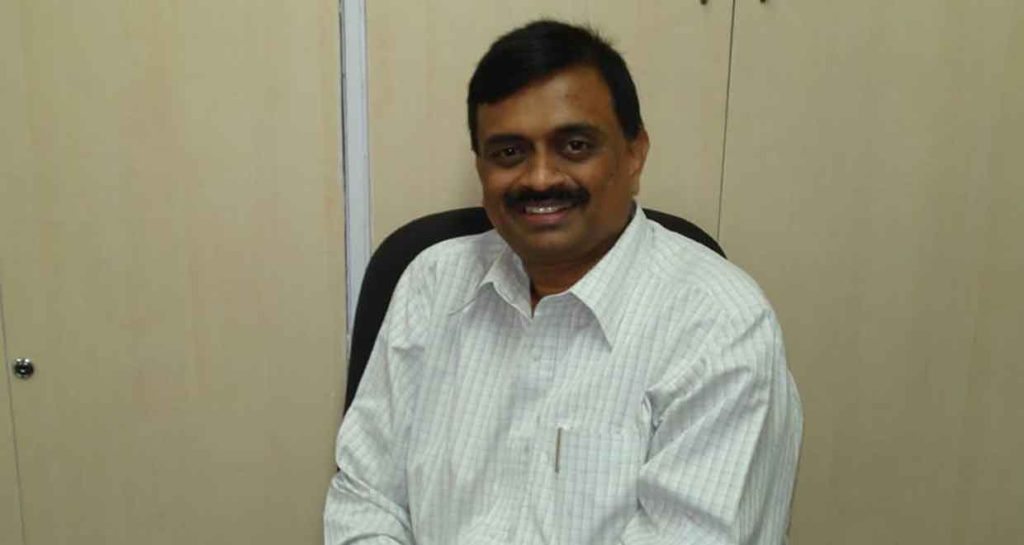
     

    satish-kumar-2

    How do you stay updated with the happenings not only in the world at large, but also with the relevant happenings in the legal field?

    I have joined many legal professional associations both in India and international levels. These associations are large number of similar professionals who are successful in their own fields. Interacting with them is very useful in developing ourselves.

    I have also subscribed to various legal bulletins. Laws are constantly changing and what was right yesterday could be illegal today. I keep myself updated reading legal decisions, and legislative and regulatory news and changes. They help me a lot to keep up to date with the dynamic legal field.

    There are various E-law tools which publish their own exhaustive law guides. The E-Laws Advisor tool simulates the interactions that a client might have with a professional. I can ask questions and it provides answers. I have privileged access to such E-laws tools.

    I also attend conferences across the globe. I interact with various professionals from Legal and other fields. This is a constant learning process and helps me understand their views too. The key benefit of attending this kind of conference is that I will be able to network and interact with key legislative decision makers and can make my views known to them.

    There are range of resources and communication channels for any professionals in order to both familiarize themselves and remain up to date with current law and trends. New technology is making it possible for this to be accessed on demand via the internet or “pushed out” to professionals via newsletters or tweets or other social media. One should only have desire to learn and keep the mind open. I make it a point to learn at least one new law every day.


    In your opinion, what should young students of Law prioritize as they lay the foundation for their career?

    Fresh law graduates and young students must, first of all identify the career of their interest before initiating actions in specific direction. For example, judiciary might interest some students and some might be interested in being in corporate working as a legal consultant or in-house legal officer; others might be interested in opting for litigation as a professional career. Hence, it is very important to find out what career path attracts one the most.

    Another crucial thing is to identify the area of their interest: it is very important for a student to know  which specific field of law is most suitable for them, based on their level of understanding in particular subjects. Some students might be very good in understanding criminal laws whereas comparatively weak in understanding commercial and business laws. Such students must consider their incline towards criminal law while choosing career options for themselves. Such students may opt for litigation or working under a lawyer who deals with criminal law. While students who have better understanding of taxation laws, company law, labor laws, intellectual property laws, etc. should prefer working in corporates or as an IP attorney or under a corporate lawyer.

    Once after a student has decided the chosen field of law and to start his / her professional career, he / she must join an organization or a lawyer with which / whom he / she can get enriching professional experience. First work experience is very important specifically for a legal professional as it implants the roots of one’s entire professional career. Student must give first consideration to the quality of work his/her chosen career option can provide. Further professional developments majorly depend on one’s first career decision and the learning experience during initial years of one’s career.

    From a different perspective, students should also be aware and mentally prepared of the fact that theoretical understanding and practical application of law widely differs. It is very usual for a law professional to come across dicey situations every single day. Thus, it is necessary for a student to develop a habit of thinking in order to find an amicable solution of any problem keeping in mind both legal acumen and practical feasibility. In this aspect, a few internship experiences in addition to legal studies from a reputed institution can be an added advantage.


    What kind of audience do you typically see at your seminars? What kind of awareness do you usually direct at them?

    (Satish actively participates in Legal Seminars conducted in various cities all over India in an endeavor to bring awareness to the young generations of lawyers and other professionals in the field of Law.)

    Yes, I am regularly invited by “The Associated Chambers of Commerce & Industry of India” (ASSOCHAM), “Confederation of Indian Industries” (CII), other Legal bodies to spread disseminate legal knowledge among the next generation lawyers.

    This is also a good platform to identify young and bright lawyers who require mentoring. I can easily identify the desire and passion in them as they keep coming to me with various intelligent questions and try to enrich themselves. Such bright lawyers should be given an opportunity to grow – to take advantage of all the experience that I have developed over the years.

    I also get an opportunity to interact with inventors, industrialists, scientists, authors, businessmen, investors, financiers, etc and get different viewpoints on the same topic.  This helps us to re-look, re-think and reposition ourselves on any topic which has various stakeholders. I learn through this process of interacting with top professionals. In order to keep ourselves abreast of new developments, we have to constantly learn. Such seminars play a useful role and are beneficial to me too.


    In your opinion, what are the most important skills any young lawyer should cultivate?

    As a young lawyer, when you are just starting your career in law, it can be a challenging to stay on top of everything. There seems to be an endless list of new skills and information that you need to learn. It is in fact all about getting back to basics.

    As a young lawyer, you should be a good listener. When given instructions by a client or another member of your team, listen carefully. It is important that you understand what you have been asked to do. You may ask plenty of questions, take detailed notes. This may help in giving a proper response.

    As a young lawyer you should develop a good communication skill: The success of a lawyer depends on the communication skill. You are as good as you communicate. You should develop good written and oral communication, paying attention to details, listen while others speak, professionalism, using office technologies like email and word processing, critical reading and comprehension, synthesizing facts and law, legal reasoning, organizational skills, interpersonal skills, working within established time constraints, issue spotting and finally decisiveness.

    As a young lawyer you should learn to maintain written records. Keeping good written records can save you in times of trouble. So it is a vital discipline to learn to maintain written records.


    What are the biggest challenges faced by the modern day lawyers?

    The legal profession is a competitive one. Yes, it always has been, but these days—with rapid changes in the way we practice law, it seems to be even more so. The integration of worldwide financial and commercial markets has occurred at an astonishing speed over the last couple of decades. Market participants now routinely lend, borrow, invest, trade, hedge and pledge and do business in jurisdictions other than their own. They expect their lawyers to tag along with them in these global adventures.

    For the lawyers, compulsory cosmopolitanism can be discomforting. It isn’t just that laws and judicial procedures differ from one jurisdiction to another. It is something more subtle. Lawyers trained in different legal systems may approach legal problems, client relations, professional etiquette, ethical questions, legal drafting, and correct professional demeanor in remarkably different ways.

    Nowadays, the clients’ expectations are more than ever sky high and on-demand. Access to the internet provides potential clients with access to legal information at their fingertips. They are empowered by technology, and they expect that their attorneys will be proactive in finding ways to be efficient and offering options and solutions in terms of results. This can strain relationships between lawyers and their clients, which puts additional pressure on lawyers to find ways to meet these expectations.

    With the access people have to information today it’s becoming more common for legal clients to have done research on their own prior to speaking with their lawyers. This has changed the role of the lawyer to educating the client in new ways like sorting through reliable and unreliable information the client may have found in their research.

    Technology has also allowed for the creation of various cheap legal service providers from paralegal. There is a gross oversupply of law schools and this glut still plagues the legal profession today.

    These paralegal have cropped up all over the internet, city, offering low-cost legal services at very attractive proposition for those seeking what they know can be costly services.

    Globalization and competition are another challenge that the lawyers face.

    In today’s global economy, lawyers may face barriers in expanding practices overseas.

    Countries around the globe are asking themselves if easing rules for attorneys to practice in foreign countries is helpful or hurtful. There’s no clear answer, and countries are handling it in various ways.

    New regulations and laws constantly come. Law is an evolving subject. Lawyers have to constantly update themselves so that they are not left behind.


    What is the future of Legal Profession?

    Law is a dynamic field. The practice of law is changing, but it has always been changing. In the 19th century, there was a major transition from small sole practitioner type of firms with law clerks to the beginning of the modern larger firms that specializes in certain areas. With the development and invention of technology like typewriter and telephone, computer etc, the profession of law also developed in equal pace. Now modern technology allows all sorts of legal matters at one’s fingertips. A good computer with access to legal research is a great leveler.  But, this world of informational technology has taken away the quality of life from many lawyers. Lawyers are bombarded with emails and other types of electronic messages from clients 24 hours a day. Going on vacation becomes almost an impossibility—at least on a vacation where one gets away from their work. Essentially law is a 24/7 practice with emails coming in day and night, on all holidays, weekends, etc. This massive and useless over-communication takes a huge amount of time, and at the same time is unproductive.

    With the technology, the nature of the practice of law has begun to shift. What the future of law will look like in the next 50 years remains unknown. The fear is that it will driven by technology and not the human side. Will law remain a profession, or will law change to be a business driven by technology? Only time will be able to answer this question.


    What message would you like to leave our young readers?

    Be open and try to absorb and learn as much as possible. The early phase in your career is a learning phase and later on you can only get better. The more you learn, the more experience you gain. You should also try to get a good academic record and in parallel maintain good extra-curricular activities. Try to get good internship experiences.