Author: Donnie Ashok

  • Enatoli Sema, on being the first from Nagaland to crack the AOR exam and work experience with Mr. Neeraj Kishan Kaul

    Enatoli Sema, on being the first from Nagaland to crack the AOR exam and work experience with Mr. Neeraj Kishan Kaul

    Enatoli Sema graduated from Campus Law Centre, Delhi University in 2005 after completing a Bachelor of Arts degree from St. Stephen’s College. In the pursuit of her determination to do litigation, she joined the chambers of Mr. Neeraj Kishan Kaul, Senior Advocate before starting her independent practice in the Supreme Court. Being the first from Nagaland to have passed the AOR examination of the Supreme Court, she talks in this interview about:

    • Her decision to pursue law
    • Experience at Campus Law Centre
    • Professional and personal challenges after graduation
    • Working at the chambers of a Senior Advocate
    • Cracking the Advocates-on-Record examination
    • Following her passion for litigation


    Please introduce yourself to our readers. Where did you grow up and attend school? What was your initial career plan?

    My name is K. Enatoli Sema, I come from the State of Nagaland. I grew up in Kohima and that is where I did part of my schooling and then shifted to the Convent of Jesus & Mary, a boarding school in Shimla.


    You completed your Bachelor’s degree from St. Stephen’s College in Delhi University, which is a very prestigious and difficult college to get admission into. How was your college experience? Did you decide from the beginning to study law after graduation?

    I feel privileged and blessed to have attended this prestigious college during the most crucial years of one’s life. It is during this period that I was constantly faced with situations and circumstances that questioned my roots, faith, identity, foundation and my core values. At first, I did not know how to respond to them but as a result I was forced to grow up and decide who I am and who I want to be rather than being defined by others.

    Studying law was also an option for me because of my family background but I was not too sure if I really wanted to do it immediately after graducation. In fact, after graduating from St. Stephen’s and after a year in CLC, I took a gap year just to be sure that I really wanted to study law.


    How was your law school experience? Looking back, do you wish you had done anything differently?

    (Enatoli graduated from Campus Law Centre, Delhi University in 2005)

    CLC was a very different experience altogether, something I wasn’t prepared for. I realised how sheltered and protected I was in St. Stephen’s. At first it was overwhelming, the sheer number of students in the class was enough to make you feel small and insignificant. There were some classes I enjoyed more as compared to others. We had execellent faculty members because of whom my love, interest and curiousity for law started. The one thing I wish I could have changed about law school was probably being more active in campus. I would usually try and find a quiet place in a corner and read and did not interact much.


    How was your first year after graduation? What were your thoughts and in hindsight how did they work out?

    The first few months after graduation was difficult for me. Nothing prepares you for what you are going to face especially if you choose to do litigation. There is no similarity between the theory and practice and it takes time to get used to it. As time passed, I grew more intrigued with the drama and process of how law evolved in court room proceedings. My first year went just fine, there is nothing I would like to change about it. But yes, I wish someone would have told me that it is OK to feel lost and clueless in the first few months of practise and that everyone goes through it.


    enatoli-sema-2

    You worked as an associate in the chambers of Senior Advocate Neeraj Kishan Kaul from 2007 to 2009. What did your work consist of? Were you free to take up your own cases, independent of the ones your senior allotted you?

    Joining the chambers of Mr. Neeraj Kishan Kaul, Senior Advocate, was the one of the wisest steps I took as a young lawyer who was interested in doing purely litigation. Being in the chamber of a Senior Advocate, the work of the junior associates mostly revolved around legal research, analysis and assisting him with our notes and preparations. Working in his chambers trained and exposed me to the basics of law in a variety of subjects within a short span of time. In his chambers, I was not only taught law but I also learned professional ethics and discipline which is crucial for any Advocate who views this profession seriously.

    Mr. Kaul’s chamber was very demanding as working in any top notch Senior Advocate’s chamber would be so there was really no time to take up any independent cases and since I was just freshly out of law school, I don’t think I had the experience to take up cases on my own.


    You became the first from Nagaland to pass the AOR exam of the Supreme Court. How did you prepare for it? What do you think are the reasons that no person from your state has ever passed it?

    As I started my independent practise in Supreme Court, I realised that it was very important for me to take the AOR exam. I was encouraged and guided by AOR’s who had taken and passed the exam. I was blessed to get sound advice and guidance by fellow colleagues who were already AOR’s.

    There are very few lawyers from Nagaland practising in Supreme Court and partly that is the reason why there were no AOR’s from Nagaland. I hope that in the coming years there will be many more AOR’s from Nagaland.


    Please tell us more about the AOR exam. When do you think one should start preparing for it and attempt it?

    It is important to familiarize yourself with the syllabus and the study material that is available for taking the exam. I started preparing for it around the month of February-March since our exam was in June. It is always better to start preparing earlier because you have to juggle your work and studies at the same time. Sitting for an examination after years of gap did not help but the idea is to remain focused and hydrated in the Delhi heat! For me attending the lectures given by the examiners helped a lot while studying because they give you an insight of what to expect.


    Currently, you are Standing Counsel for the state of Nagaland in the Supreme Court of India. What do the duties and responsibilities include?

    Being a Standing Counsel for any State is a matter of great honour and a privilege. Since I have been away from Nagaland for so many years, personally I see it as a chance to stay connected to my people. I also see it as an opportunity to contribute towards my society as a legal professional. The duty and responsibility is to ensure that your State is effectively represented and that the Government is given sound legal advice and guidance at all times.


    What are your plans for the future?

    As of now, the only plan is to be a lawyer whose work is respected.


    Lastly, what advice would you give to law students wishing to make a career in litigation?

    Litigation has its share of fun and adventure but it is also taxing. Choosing to do litigation while your other friends from law school may be joining fancy law firms is certainly tough. But if your heart is in litigation and that is what you want to do, then don’t let go of your dream and be prepared to slog and work hard towards it.

    When I expressed my desire to do only litigation after a year into practise, I was advised and warned by a wise man to be prepared to put in a lot of hard work for at least 10 years. As a naive young lawyer, I thought that that his ‘old school’ philosophy talking. I now understand what he meant. This profession, specially litigation will also remain ‘old school’ and I hope that it continues to do so. There is no short cut if you want to be someone who truly works for justice.  So, take your time to decide if litigation is really what you want.

  • Seema Pujani, Indian Foreign Services Officer, AIR 37, 2014, on cracking the UPSC, preparation, and preferring Foreign Services

    Seema Pujani, Indian Foreign Services Officer, AIR 37, 2014, on cracking the UPSC, preparation, and preferring Foreign Services

    In this interview, we talk to Seema Pujani, a graduate of NLSIU, Bangalore in the Batch of 2011. After graduating from one of the most premier law schools in the country, she decided to pursue a career in Civil Services. She talks about her double training experience, firstly at the Indian Institute of Foreign Trade after being assigned the Trade Services initially, and secondly at the at Lal Bahadur Shastri National Academy of Administration for the Foreign Services. She shares her valuable insights with our readers on her experience with the UPSC and her fascinating career graph along with advice on how to crack the toughest exam in the world. This interview includes:

    • Her reasons for choosing the UPSC exam and rejecting an LL.M opportunity.
    • Her reasons for joining the Foreign Services over the Trade Services.
    • Experiences and training at the Lal Bahadur Shastri National Academy of Administration.
    • Her advice for our readers on cracking the UPSC.


    How would you like introduce yourself to our readers who are mostly law aspirants, law students and young lawyers?

    A simple person who with some determination finally made diplomacy her calling. A lawyer by education and training but not at heart.  Also enjoys books, music and movies.


    Tell our readers a bit about your childhood and pre-college life as well as educational background. Do you have lawyers or bureaucrats in your family?

    My father retired from the Haryana Civil Services. He was a lecturer in English in D.A.V College, Amritsar prior to joining the services but completed his graduate and post-graduate studies in law during the course of his career. Currently, he is a legal consultant in Gurgaon. There are some other lawyers as well in my extended family. One of my cousins is a Professor of Law at Osgoode Hall Law School, Toronto, Canada.

    I received most of my schooling in Faridabad. Before the pressure of Board examinations and academics made its headway into life, I used to actively participate in all extra-curricular activities organised in school. To name some: quiz, elocution, recitation, declamation, art and ‘mehendi’ are some of those. Though I never excelled in any sport, I enjoyed swimming. However, academics had always been a priority in the household. Both my elder sisters are doctors specialising in Pathology. Gearing to be an engineer, I had chosen the science stream after class 10th. However, I soon realised that my interests lay in the social sciences and languages that helped me make sense of the world around me. Words also held a peculiar appeal. Thereafter, the decision to appear for law entrance examinations was made in class 12th. A family friend bought me the course material from ‘lawentrance’ and with some preparation, I made it to my dream college.

    You graduated from National Law School of India University, in the year 2011. How would you describe your experience as a student aspiring to study at an NLU? How would you describe your academic life in NLSIU?

    Like the story of the blind men and the elephant, each person has a unique experience in law school to share with others. NLSIU and all other reputed NLUs have a very wide range of opportunities on offer to engage students and hone their personalities. While some take to mooting and debate, others enjoy reading and writing for different journals. Event management, lively interactions, book discussions and movie reviews ensure the plate remains full for all.

    The training here is not just rigorous but the process and content of study deeply influence a person in ways other institutions may not have. Staying in a multicultural environment away from home sharpens one’s sensibilities. I am pretty sure today that the single biggest event of my life so far has been my selection into this premier institute. Owing to the challenging experience, I ended up with such strength and endurance I barely knew myself to be capable of. It is true that most people acquire valuable skills like critical thinking and analysis that can be put to use in a wide range of disciplines. It is rightly said that if you survived law school, you will survive anywhere!


    Did you apply abroad for masters?

    I applied only in the Masters of Law and Business program at the Bucerius Law School, Germany and got through the course that was to start in August, 2011. However, three months before joining I took the decision to defer studies in order to appear for the Civil Services entrance examination. It was a painful and difficult decision that haunted me for a long time to come.


    You were allotted the Indian Trade Service initially. Why didn’t the Trade service appeal to you?

    The only motivation for me to put my life at a standstill, reject all opportunities that came my way over the long duration of preparation and put in hard work was the dream of entering into India’s diplomatic corps. Therefore, no other service but the IFS appealed to me. I had given a high preference to the ITS while filling out the form in 2013 owing to its job content. It was a rich learning experience.


    How was the training at the Indian Institute of Foreign Trade?

    It was great to be trained at a reputed academic institution bustling with energy by experienced faculty and practitioners. Under the aegis of Vijaya Katti Ma’am, Chairperson, Management Development Programme we were exposed to varied aspects of macroeconomics, trade, customs’ procedures, Indian Foreign Trade Policy and law. We even acquired basic skills in French.


    What were your Service Preferences?

    Both in 2013 and 2014, I had filled IFS as my first preference followed by IAS.


    When and why did you decide for the civil services?

    As a child, I had changed my plans for the future as freely as my imagination let me. Since I grew up with dogs and loved playing with them, I had first set my eyes on becoming a veterinary doctor. Thereafter, I thought of becoming an administrator like my father but growing up, I had come to dislike routine transfers. Joining the civil services was not on my mind as a young law school student. I was interested in social reform, international and humanitarian organisations. In 2009, two seniors happened to visit campus. One of them an IAS officer, Mr Srikar Sridhar and another an IFS officer, Ms Aparna Ray. It was then that the idea popped back in my head. There did not seem to be any equivalent to the job and life of a diplomat. To my mind, it wasn’t just a great career to have but truly an honour to serve the nation as part of the hallowed Indian Foreign Service.


    You have secured a very high rank in the UPSC Exam. Tell us a bit about your preparation routine.

    Phew. More than a year after the results came, this is a tough one to answer. There is an interview of mine on YouTube where I elaborately speak on the subject and it is best the readers watch that. I believe one does not plan for or work aiming at a particular rank. The idea is to figure out where one is making mistakes, to correct those and give one’s best. A well informed strategy, reading list and persistence help.


    Tell our readers about your current training experience at Lal Bahadur Shastri National Academy of Administration.

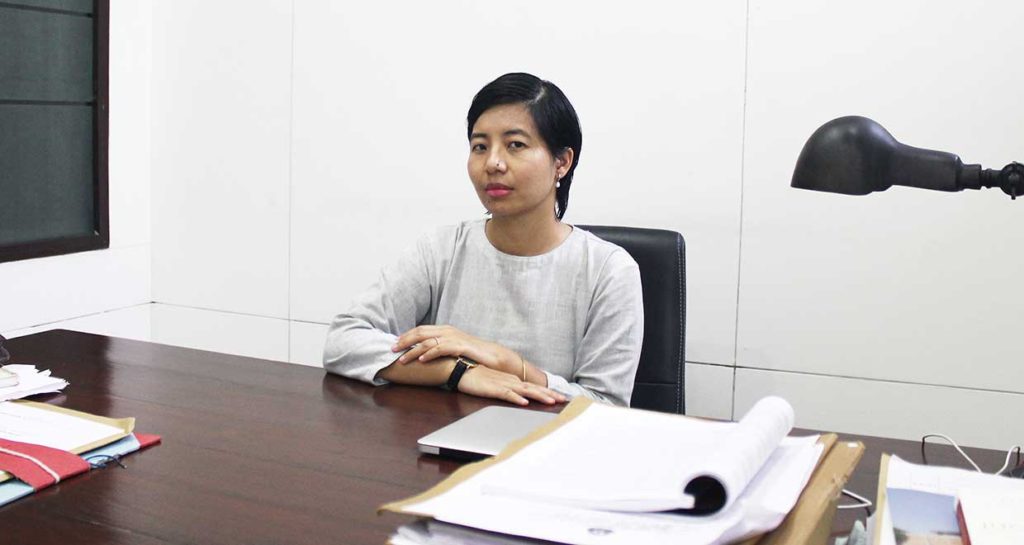
    seema-pujani-3It was an amazing time spent at the Academy. The place is very professionally run and the curriculum is carefully planned in advance. The emphasis in the Foundation Course is on interaction between Officer Trainees who come from different civil services. Officers from Royal Bhutan services also undergo training along with us. I never thought I would go on a nine day Himalayan trek or be a coordinator for a big cultural event in the course of my 3.5 month stay there. The course and the Academy pushes everyone’s limits and inspires excellence. We were kept on our toes from the time we woke up at 5 for morning PT till we dropped dead at night.


    What is the job profile of the Indian Foreign Service?

    The most inspiring and also the most onerous of a diplomat’s duties is to be a representative of the country and its people abroad. One needs to be mindful of her actions, words and behaviour. Today our job involves the entire spectrum of work ranging from political, cultural, consular to commercial and economic diplomacy. We are the spokespersons for the government and its people on any matter of foreign policy. In countries torn by violence, rescue operations such as ‘Operation Raahat’ to ensure safety of our nationals have brought succor to the stranded.

    In a globalised world with significant Indian footprint abroad, any matter that involves the country’s interests is our concern. Be it negotiating agreements, pitching for investors to come to India or doing marketing for different states abroad, the importance and functions of a diplomat are on a constant rise in today’s world. We also come up with useful publications, organise events in India and abroad on a range of issues that come under the purview of the Ministry. As budding diplomats, we report back on developments of political, economic and strategic significance in the host country.


    seema-pujani-2

    How has your training as part of IFS been so far and what is the work assigned to you in the MEA?

    Upon completion of the Foundation Course in Mussoorie, Officer Trainees belonging to different services report to their respective Academies. Ours is the Foreign Service Institute situated very close to IIT and JNU in South Delhi. Starting with the batch of 2015, the duration of our training has been significantly reduced. Therefore, the entire duration of our association with FSI has been reduced to about five and a half months. In this period, not only did I go through classroom training in international relations, foreign policy, international law and the like but also travelled the length and breadth of the country as part of Bharat Darshan and attachments with Army, Navy, Air Force. I also travelled to Myanmar to learn about the working of the Indian Embassy and Consulates.

    In the first week of June, we joined the Ministry of External Affairs as Under Secretary (Officer Trainees). I was allotted the Investment, Technology Promotion and Energy Security (ITP & ES) division therein. My Head of Division is Mr. K. Nagaraj Naidu, IFS batch of 1999. I am fortunate to have been associated early in my career with an officer of his work ethic and sense of duty. Under his able guidance, the division facilitates foreign investment flows and handles all issues relating to energy security in close coordination with other central government Ministries and departments. The Division represents MEA on all issues relating to agriculture (including food processing), civil aviation (including bilateral ASAs), energy (coal, oil, gas and renewables), investments (BIT), social service agreements (SSAs), shipping, ports, highways, railways, telecommunications, electronics, services, tourism, pharmaceuticals etc. The Division supports activities of leading business chambers, media houses and consultancy firms. It works closely with other respective state governments in their international outreach activities. On 30th of July, the Division organised the 6th Pravasi Bharatiya Divas Panel Discussion on the theme “Diaspora: Transferring Knowledge and Encouraging Innovation (Science & Technology, Education, Start-Up India)” that was chaired by the Honourable Minister for External Affairs, Smt Sushma Swaraj. It saw participation from eminent educationists in the country and leading NRIs in these fields. Meaningful discussions held here would form part of a report with recommendations that would be released on Pravasi Bharatiya Divas in January, 2017.


    Finally tell us in which specific role you would like to see yourself after 10 years.

    It is hard to say if any role necessarily stand distinct from each other 🙂 I would just want to be alive and kicking and be doing meaningful work.


    Please give our young readers and followers some tips to help them face the mighty UPSC.

    Each person is unique. Know yourself well and play to strengths. It is not the number of hours one puts in but the quality of output that matters. Neither success nor failure in this exam is the end of the world. One can contribute immensely to the society in multifarious ways. Wishing everyone all the very best! Rise and shine!


  • Zaryab Rizvi, Partner, LCZF, on starting up with independent litigation and building clientele

    Zaryab Rizvi, Partner, LCZF, on starting up with independent litigation and building clientele

    Zaryab Rizvi graduated from Symbiosis Law School, Pune in 2005. He started practicing law in Delhi right after graduation and has been independent from the very beginning, Zaryab is one of those who started out with their first few matters of legal career without a mentor or guide.

    He is the Founding Partner of LCZF (Law Chambers of Zaryab and Firdouse) where they provide varied legal solutions to their clientele across the country and provide solutions in litigation, corporate jobs, compliances, IPR, ADR etc. Their clientele is diverse and includes MNCs, banks, shipping companies, government entities, private individuals etc.

    In this interview he talks to us about:

    • His experience at SLS, Pune.
    • Importance of internships in shaping his career.
    • His experience of first time court appearance.
    • How he overcame the initial hurdles.

    How would you like to introduce yourself to our readers?

    I will prefer to call myself a learner who is in search of excellence and for which purpose I have put in my best efforts. I have done my schooling from the great city Lucknow, after which I joined Symbiosis Law School, Pune. After successful completion of law degree, I decided to work independently and ever since have pursued my passion. Being a first generation lawyer, the decision to work independently in an unfamiliar city of Delhi had its share of challenges, but my strong determination and focus never made any kind of pressure to halt and change my decision. My position or you can say mindset can be described aptly in the following words: “I just hate losing and that gives you an extra determination to work harder”- Wayne Rooney. I am the founding partner of LCZF (Law Chambers of Zaryab and Firdouse), which is a full service law firm. Our Head Office is located in Delhi, but we are operational all across the country through our wide number of associate offices. The firm is a one-point destination for all legal requirements of a client, where we ensure that tailor made solutions are provided to client’s each requirement in the legal domain.

    What prompted you to think of law as a career? If not law, what other options would you have considered for your career?

    Choosing a career is one of the most important decisions of an individual’s life, as it determines ones entire future life. Although there are several occasions, when a person may have to take up a call on the future profession, but the first of such a significant instance is at the time of selection of subjects/stream after the high school results. Fortunately, the power to take such decision, like all other important decisions of my life was given to me by my parents, after providing the insights and guidance about various options. I acknowledge the importance of all other professions, but I would say that many people make such an important decision of life just on the basis that, many others are deciding in favor of a particular stream of education and they should follow the same. The profession of law has been a noble profession, but the problem with the profession has been the deteriorating standard of lawyers between the periods of 1980’s and 1990’s. The said concern has been raised and discussed by multiple Courts, Judges, Bar Council of India and in this regard various measures have been taken for improving the standards. I believe that a person should consciously choose a profession and the same shall not be by default, but the irony with the legal profession for years has been that many people end up in profession by default and not by choice.

    There are several reasons responsible for my inclination towards the legal profession, some of the prominent reasons are:

    A) Desire to be able to provide assistance to many persons who are caught on the wrong side of the law and who do not have sufficient resources to defend themselves.

    B) Recognition of the fact that a good lawyer is a person who possesses attributes like sharp mind, eloquent speech, command over the law, credibility in society, honesty and a rich taste in life, placing such lawyers in the elitist and distinguished class of the society. C) Apart from the above positive aspects, I also had certain bad experiences, with some unprofessional lawyers, while assisting my family in some of the civil disputes. Such instances also made my resolve stronger to be a part of the legal profession and make endeavor to raise the standards of profession by lifting my own personal standards.To answer to your second part of the question regarding options, which I had or considered apart from law, I will only say that although there were all the fields available to me, but I do not believe in options.

    Describe your experience at Symbiosis, Pune as an undergraduate law student. Any highlights and incidents you would like to share.

    I believe that all the educational institutions are respectable and knowledge imparted to students there is also good. However, having said that, I want to further add that, an educational institution is not only about imparting knowledge from the books, but such institutions are also responsible for giving a vision to the students. A student during the process of learning evolves his choices about his future course of action in the professional life. I believe that an educational institution should have conducive environment for the learners and shall provide all resources to the students, which eventually develops their skills and vision. For me, Symbiosis Law College is not just a college, I share a nostalgic relationship with the institute and all its members, be it the academic staff, administrative staff, support staff, fellow students as also senior and junior students. Moto or the central ideology of our alma mater is “Vasudhaiva Kutumbakam” which means the ‘whole world being one family’. I was 18 years old, when I joined the Law College in Pune, about 1500 kilometers from my home.

    There never arose a situation where my parents had to worry about me in the then alien city. The college truly lived up to its Moto and I never felt that, I was in a city where I have no roots. I clearly remember that several times some of the political outfits created ruckus in the city, about the people (students) from outside the State. But on every such instance the college management and Local Teachers/Students stood in firm support of all the students from other states, which action was not just in conformity with the Constitution of India but also was inline with the core ideas of the institution “Vasudhaiva Kutumbakam”.

    Our college was headed by Prof. Mrinal S. Raste, who was the principal of the College during the period of my academic journey in the College. Prof Raste went on to become the Vice Chancellor of the Symbiosis University (Deemed University) and along with the Management of the College, was responsible for enhancement of the Brand of the College. We were privileged to have academic faculty, which not just possessed immense knowledge of the Law subjects, but were very friendly and easily accessible to all the students. Although, all teachers were great but amongst them, my favorite guide and mentor was our torts professor, Prof C. J. Rawandale. He holds a respectable position in eyes of every student, as he is a knowledgeable and friendly person with a pleasing personality and is a “go to” person in every crisis situation, be it academic or otherwise. My connect and association with Prof Rawandale, did not end with the conclusion of my academic period in Symbiosis, Pune, but even thereafter it became stronger year after year. At present Prof CJ Rawandale, heads the Noida campus of Symbiosis, as its Director and because of him the doors of the Noida campus are always open for the Alumni of the college, which is quite helpful for all of us. Prof. Rawandale is putting immense efforts in bringing alumni closer to each other as also to the current students of the college, by organizing several events, paving way for colossal work opportunities to each and every one who has been and is part of my alma mater. Such a thoughtful faculty makes my alma mater, one of its kind. Symbiosis is a part of my life, which I cherish the most and I am thankful to the Almighty for granting me such an opportunity, which completely impacted and changed my life for good.

    Where did you do your internships while at law school? How important were these internships in shaping your career?

    During the breaks in the academic session, I used to join Law Offices situated in Delhi for internships. I interned at several places. All Internships I took up, were very helpful as I not just got opportunity of learning and understanding about the practical aspects of the functioning of Justice delivery System, but such internships also helped me to make informed decision about my future. It became relatively easy to choose between various avenues like job in a company/ law firm/ corporate work/ litigation etc. Amongst other internships, I also interned twice with Mr. Atul Sharma, (Founder, ASA Law Firm). I will say that my decision to choose litigation as my career was influenced to a great extent from my first hand experience with high profile litigation in his office. My first internship was in my second year of law and on the very first day, I attended proceedings in Hon’ble Delhi High Court, where we were seeking anticipatory bail for one celebrated singer accused of illegal immigration scandal. After being granted the relief, the moment we moved out of court, media surrounded our team and standing in a corner, even my face was telecasted across the globe. My parents were relieved that their son has actually joined work. Such small moments always remain special, although I have made numerous television appearances since I joined profession, but that appearance of few minutes will remain my best and most cherished one. I will say that the present generation is even better and are taking profession in a much more serious manner. I believe that such approach by young students is not only helping skill enhancement of the students, but at the same time is also having a positive impact on the larger scenario, as the quality of lawyers is improving with each day.

    How did you overcome the initial jitters in a courtroom full of experienced lawyers and judges, as you started out independently?
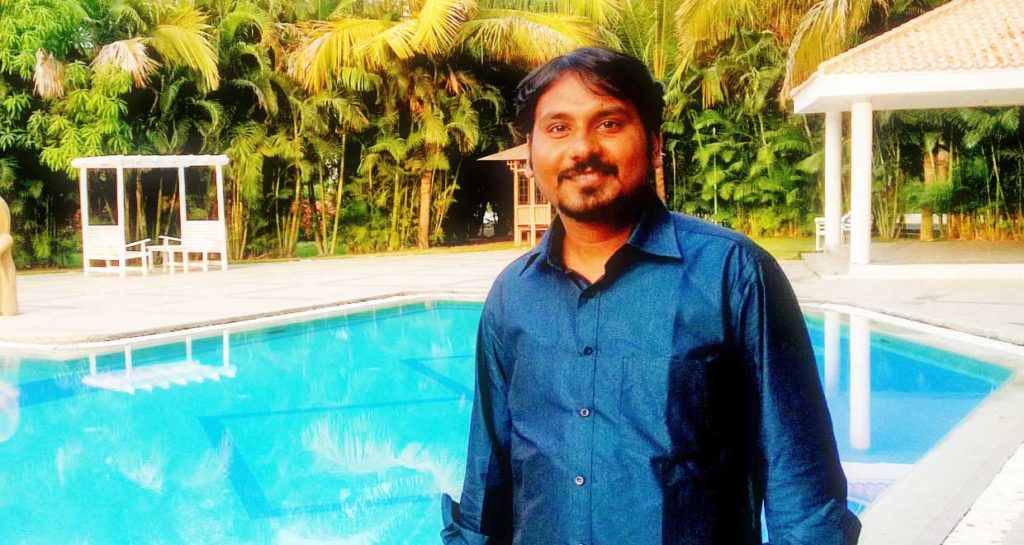
    zaryab-rizvi-1It is indeed a very pertinent question, why and how I started working as an independent practitioner in an unconventional way at the initial stage of my professional life. In the lighter vein I will say, that I still wonder and look for answers even today for the above question. But probably had I not taken such decision I may not have got to answer such an eccentric and rare question. On a serious note, it is true that I decided to work independently from the day one in an unconventional manner against the usual trend. I was fully aware that I will have my own share of challenges in pursuing the said decision and it would not be an easy sailing for at least a few years.

    Trust me I was not wrong and there were ample challenges throughout the journey. I was not born in the profession with the silver spoon in my mouth, as I am a first generation lawyer, who decided to work in an alien city where I had no roots as such.Every aspect of the professional life and work, be it the simplest of jobs was a challenge and gargantuan, as there was no one whom I could have asked solution for my queries. I will say that my feeling on finding solution to a simple thing used to be same as of “Early man” who discovered fire accidently by striking stones together. It is true that the challenges were huge but my desire to pursue my aspiration, gave me inspiration to face all these challenges and I believe once you decide that “YOU CAN” surely “YOU CAN”. As I said earlier that, I don’t believe in options, for that reason I had no other option but to perform.I never had any fear of any senior advocate, judge, or advocate having more experience than me. As I always believe that if I had done justice to my work I will get justice in return. The only pressure I felt has been of miscarriage of justice for my client because of my adventurism (as some people used to term it in my early days). But in the past 10 to 11 years I have a success rate of over 99% in the cases, which I have handled. I always ensured that my decision to start independently should never be an obstacle in putting my best foot forward, when my client’s interest is involved.

    Describe your experience when you appeared in the court for the first time?

    My first appearance in the professional life was before the Hon’ble Supreme Court of India. I could not have expected a better first appearance. Although my role in the said case was very limited as there were many other parties in the said case, but for a first generation lawyer who decided to practice independently and who practically had no experience, this opportunity to commence professional life before the highest court of the country was in itself a privilege. I think it is not very difficult to imagine my situation at such time. However, after appearing before Hon’ble Supreme Court in the very first instance, appearances before all other courts appeared to be relatively easy. Many years have passed since then but the memories of that first appearance are still fresh in my mind.

    Did you ever have any other plans other than litigation? What are your views on LL.M.? Do you think Indian Legal Education needs to improve?

    Litigation has always been the first love but apart from litigation I have been involved in a lot of Corporate work, which includes drafting/vetting Commercial Agreements, Contracts, MOUs, advisory compliances, incorporations/mergers/acquisitions etc. I have also imparted training on Sexual Harassment of Women at Workplace (Prevention, Prohibition and Redressal) Act, 2013 to various representatives of the corporate world in Delhi, Bangalore, Hyderabad, Noida, Gurgaon and Lucknow. Apart from the above, my several articles on different subjects have been published in some leading Magazines. The evaluation of the education system can only be done by examining the developed products of that system and in the present case the product is a lawyer. If I say that the education system is bad, the same would be absolutely wrong as the products of the same system have made not just the fraternity proud by their knowledge but have also got recognition to the country’s legal acumen at the international stage. However, I agree that there is scope for improvement. In the present system, brilliant students of the top law schools are somehow more inclined towards non-litigation assignments. I believe that the exposure to litigation should be encouraged during the academic course, so that these students are better equipped to take up litigation assignments and jobs.

    Tell us something about LCZF (Law Firm).

    LCZF came to be formed by me along with Ms. Firdouse Qutb Wani (“AOR” SCI), with a thought that a client looks at it as a trusted resource. The name LCZF stands for Law Chambers of Zaryab and Firdouse. We wanted to be a one-point destination for all the legal requirements of a client and ensure that a tailor made solution is provided to the best of their interests. Today with the support and efforts of our able team of lawyers and Para-Legals, we have achieved this goal successfully. LCZF provides legal support to various private Corporates, Government Establishments as also to individuals. We provide legal solutions even in the remotest parts of the country and it has become possible through our wide network of capable associates across the Country. Further details can be checked by the readers on our website, www.lczf.in. We also take up Pro bono assignments, because I always feel that one should never live with regret that due to lack of financial resources, he/she could not seek justice. Furthermore LCZF, believes in giving opportunity to young law students, to taste the life of lawyers and learn the tactics of the legal practice, while they are still in cocoon, hence we have created an independent department in our Firm, which completely deals with the Law interns and round the year several students get benefited by the same.

    Please tell us about your current occupation. What do your main tasks and assignment include?

    During the course of my professional life I have handled assignments of diverse nature, as I have never restricted my professional abilities in small compartments. Presently, I will say that I am undertaking multiple litigation assignments which includes corporate crimes, service matters including writs, commercial arbitrations, matters emanating from Arbitration and Conciliation Act, matters under Companies Act including winding up, civil and criminal writs, petitions under Section 482 Cr.P.C, Bails, matters under SARFAESI Act, cyber-crimes, matters under labour laws, matters under Negotiable Instruments Act, matters pertaining to marriage, sexual harassment cases to name a few. I am also involved in advisory functions to start ups, factories, MNCs and Banks. My corporate assignments include drafting/ vetting Commercial Agreements, Policy Formulation, Contracts, MOUs, compliances, incorporations/ mergers/ acquisitions etc. I also give sessions/training on Sexual Harassment of Women at Workplace (Prevention, Prohibition and Redressal) Act, 2013 to various representatives of the corporate world in Delhi, Bangalore, Hyderabad, Noida, Gurgaon and Lucknow. Apart from the above, my several articles on different subjects have been published in some leading Magazines.For catering to the above assignments, I have responsibilities at LCZF. I aim for perfection in every assignment that LCZF takes up and for that purpose every document that is prepared by our team which of consists hardworking and capable professionals, has to come to my desk for settling before it goes to the Client for approval or is filed in the concerned court or Tribunal, as I want to ensure that no error is on part of LCZF. We believe that we as Lawyers have great responsibility on our shoulders to safeguard the interests of our clients and our small error or oversight can change the course of future of our client. My main work includes arguing matters in court, advising clients as per the requirement, supervising all the heads of the concerned departments, meeting clients and forging alliances with other Law firms.

    Many law students aspire to secure a job. What do you think most are doing wrong, from your observation?

    Most of the times life gives us multiple options and the choices that may determine our future. Similarly a law student has multiple options at the time of graduating, broadly we can categorize the same as: –

    1. Option in the corporate side as legal manager.
    2. Options with law firms handling corporate assignments.
    3. Options with law firms handling litigation.
    4. Options with small law firms/ Lawyers.
    5. Other non-traditional avenues.

    In my view all options are good and a person who joins any of the above has a good future. I’ll say a person shall make the choice after considering the benefits and the challenges that one may face in the stream of his choice. I believe that the focus of an individual should always be towards satisfaction in the work that the person is undertaking as if a person is satisfied with the work he is undertaking his/her quality of work will always be good and for that reason he/she need not worry to secure a job as his/her work may have taken care of securing a job. I think many of the professionals take up assignments which they don’t want to take but they land up in such domain due to choices driven by glamour, monetary benefits, family pressure, peer pressure, false evaluation, under estimating the challenges. In my view if we make a choice for reasons other than passion to do such things we are bound to be dissatisfied after a short span of time, as when we are passionate about a decision, we take every difficulty, which we face as a challenge and not as a dead-end. To conclude I’ll say that aspiration to secure a job is not wrong, but the legal profession requires patience, determination, dedication, hard work, sincerity and perseverance which maybe difficult if we have made our choice for any other reason or consideration other than our passion.

    What helped you shape your current profile within the field?

    As they say, “Rome was not built in day” similarly I cannot single out one factor which is responsible for shaping my current profile. There have been several factors over the years, which have played important role at relevant time.As a first generation lawyer, I started to work in an alien city since the very beginning. I had no one to guide me, I learnt a lot from observing the masters of the profession in courts and at every opportunity. I’ll not say that a Dronacharya had closed his doors upon me as I never knocked such doors, but yes, its true I learnt a lot while adopting Eklavya’s way of learning.  Over the years I have had many people from whom I’ve learnt a lot, one such name is of Mr. C. Mukund (Advocate). I have had numerous opportunities to interact with him and every interaction has been of immense learning. I’ve not only benefitted from his knowledge of law but I am also influenced with his humility, humbleness, down to earth attitude and generosity.

    Where do you see yourself by the end of coming five years? What are your long-term objectives?

    Every individual must have goals in his life, as without destination we do not have a path, which we have to follow. I since the very beginning have set goals for myself, both short term goals and long term goals. The short-term goals are usually milestones in our journey to achieve long-term goals. I have set timeline to achieve such goals, as without timeline goals are rendered meaningless. In the coming 5 years I wish to work on assignments which test my abilities to enhance my legal acumen. As I said, I am learner, I would like that in the coming 5 years, I use such time to gather as much knowledge as I can, while putting such knowledge to good use and obtain good results for my clients. Although I have many goals in the long term, but if I look at the ultimate goal of my professional life, I would say that I want to be some one, fondly remembered in the legal fraternity.

    What would be your parting message to our readers?

    To the law students, I would say that, make a choice of your profession wisely and put your best efforts to continue chasing your goals. Do not quit the pursuit, due to any reason as the momentary troubles and roadblocks will vanish if you confront them, but if you quit, you will always regret taking such a decision and there will be no respite available to you, throughout your life. To all other readers, belonging to the legal fraternity, I would say, we all should make our best efforts to serve the Justice Delivery System, in a manner in which we ensure that speedy Justice is delivered and for which purpose we all should continue our best efforts, to further raise the standards. To conclude, I’ll say that every professional associated with the domain of Law, be it an academician, Judicial officer, Legal Manager in a Company, a practicing Lawyer, Journalist involved in Legal assignments, organisations dealing with legal search tools, all are important and without any of them, the Justice Delivery System may come to a standstill. We all owe a responsibility towards the profession and we all should do our best to keep the Noble Profession, Noble”.

    Md. Zaryab Jamal Rizvi

    Founding Partner – LCZF (Advocates and Solicitors)

    Correspondence Address: LGF, E-102, Kalkaji, New Delhi – 110019

    Website: www.lczf.in  E-mail: zaryab@lczf.in  , advocatezaryab@gmail.com

    Landline Numbers:  +91-11-46078301 – 02  FAX:  +91-11- 46078303

  • Zubin Pratap, New Business Development Manager, Telstra, Melbourne on varied work experience in Corporate firms and MNCs

    Zubin Pratap, New Business Development Manager, Telstra, Melbourne on varied work experience in Corporate firms and MNCs

    Zubin Pratap graduated from NLSIU, Bangalore in 2003. After working at Amarchand & Mangaldas & Suresh A Shroff & Co for one and a half years, he moved to Luthra and worked there for a short period. Thereafter Zubin moved to Melbourne and in 2007 he found a role at Baker & McKenzie where he went on to join General Motors in a secondment, Zubin continued at Baker & McKenzie till October 2010.

    Soon Zubin joined Telstra and is currently a New Business Development Manager there, he has been in the organisation for the last six years.  He has served as a Board Member at Communication Rights Australia. He founded NobleGenie which seeks to change the way we seek and obtain specialised information from qualified experts by being the first step in a search for quality advice and information from an ecosystem of professionally qualified advisors, and recently Zubin also created an app called Remynd which works as a mind mapping software.

    In this interview he talked to us about:

    • Interning at the United Nations office of Drugs and Crime in Vienna
    • Balancing his passions and his interest in music and stand-up comedy along with work
    • His journey from working at a corporate law firm to moving to Telstra
    • His experience as an Indian lawyer working in Australia


    Could you tell us a little about yourself please? Just by way of introduction to our readers.

    Well, my name is Zubin Pratap. I was born in Bangalore, raised in both Bangalore and Delhi and went to NLS to study law. I love music, still play the guitar and sing and I read a lot – mainly in science, philosophy and psychology. I am a nerd, and proud of it! I love dogs. I had a relatively privileged childhood – good education, stable and doting family, great friends and no real hardships to speak of. I moved to Australia nine years ago, and am now settled in Melbourne.


    You were an international moot participant and debater while at NLSIU and took part in many extra-curricular activities. How did you ensure you maintained a balance with academics?

    Balance? Ha! I’m sure some of my classmates would question my “balance”! I did what I enjoyed and felt passionate about, be it academics or otherwise. But I always had high energy and drive.I believe that having fun makes work more playful. That pretty much became my guiding principle – if I am not having fun, why am I doingit? And if I am having fun then long hours melt away and the efforts you put in are hardly tedious.


    At present you are pursuing an Exec MBA from IE Business School in Madrid. What was the thought process behind choosing that course and that business school?

    After 11 years in corporate law I was at a crossroads – I had to choose between continued success and “seniority” in law and putting myself in the way of new opportunities. By then I had also come to question what it was that truly motivated me. The pursuit of excellence drove me to NLS, but at 17 you’re far too young to intelligently realise what you mean to do with your life. I wanted to push myself in new directions because I have a strong curiosity and am relatively fearless about failure. I’ve discovered that I’m most happy when I’m slightly out of my comfort zone and learning something very new.

    When I was offered an opportunity to move into the business side at Telstra, I felt it was an opportunity to re-invent myself. I was curious – what would happen? What would success look like? What would disaster look like? Would it be as risky as people said? Would it be as scary as everyone promised? Will I love or hate it? But to optimise my ability to switch careers after a decade, I chose a program that let me study and work at the same time. It was an accelerated program that I had no choice but to complete in a short, 15 month sprint. It literally is sink-or-swim at the IE Global Executive MBA program. Its top 6 ratings, the calibre of the cohort, and the fact that it emphasises a more holistic view of management and growth (as opposed to only rapacious profiteering) appealed to me immensely. Once again, I feel privileged to be a student with some incredible achievers. It is, however, the hardest test of discipline and intellectual stamina I’ve ever undertaken. But if you’re not slightly daunted by your choices, you’re too comfortable. Right?


    You recently created an app, Remynd! What inspired that and what does the app do?

    Two things impelled me to do it: First, when I finished school in ’98, the internet wasn’t really a huge thing yet. Google was still a box mounted on a Lego frame. The world really was different. I’ve always regretted that I never learned to code. So I did. Well, a little bit.

    The second factor was that I had noticed that the busy-ness of life imposes a giant burden on our short term memories, which are notoriously short term. This is a feature of “cognitive load”. We are literally loading our brain with all kinds of working memory tasks that are tiring. I really believe that technology requires us to remember less but process a great deal more – and for that you need to free up brain power (like CPU power). Our minds should be augmented by the tools we use. I decided to do something about it. So ReMynd was born. I was working in Jakarta on a JV at the time and kept forgetting all the things I wanted to say to my boss, back in Melbourne, each time we spoke! There was just so much going on! And emails added to inbox clutter. I realised that there is nothing out there that brings up a specific mental note when a specific person calls or texts. ReMynd solves the problem of forgetting “notes to self” where you need to say something to someone when you next communicate with them. Its on Android for now and I’m working on newer features. But it is more of a way for me to learn and do something new – not really a startup.


    When did the interest for music and stand-up comedy grow? Were they areas you were able to sustain while studying?

    I’ve loved music since I was a baby. I was literally named after Zubin Mehta for that reason! I learned the guitar in my teens (but I regret never having learned to read music). I love performing and public speaking. And in the 90s, and early noughties, stand up wasn’t a feature in the Indian pub and bar scene. I’d always been very curious – litigation felt easy compared to stand up. A stand up gig and a courtroom have very different kinds of judging going on! Melbourne has an active scene and it was a really fun way for me to meet people, sharpen my performance skills, be creative, and say things on stage that I cannot usually say at the dinner table. It was a license to speak plainly – how could I resist? As for sustaining these things – taking time off study is as important as studying. Very few things soothe the soul like friends, music or laughter. Nothing dissipates stress like a good chuckle or a great tune.


    We see that you rehabilitate racing grey hounds once their careers end. Would you urge every student to take up and promote a cause?

    Yes I used to be a rescue and foster carer for greyhounds. I no longer have the right circumstances to foster but I do remain active in promoting awareness.  I think every human being should believe in making a change somewhere. But what they choose to make a change in is entirely up to them. I don’t like people who treat causes as though they’re a badge of honour or a way to distinguish themselves. Believing in something and trying to make a difference is a deeply personal thing and ultimately it’s got to align with whatever you value. I would urge people who feel that they have something to contribute, to contribute – no matter what it is. Don’t judge yourself and give yourself permission to believe in what you do. Just remember J.S. Mill’s words: “Your liberty to swing your fists ends just where my nose begins”.


    Tell us a little about your stint at the UN.

    It was an internship at the UN Office of Drugs and Crime, in Vienna. The UN Convention Against Corruption was in its final stages of negotiation at the time, and it was a fantastic experience to witness world leaders negotiate delicate matters that had cultural, economic, political and linguistic nuances. It was also my first time working overseas for a longer length of period and I had a fantastic time. Most importantly I realised just how necessary a good, strong education is for one’s confidence and that how Indians are really quite impressive even with structural and infrastructural disadvantages – somehow we manage to win with less and that creates confidence.


    When did you decide on corporate law and why? Were there any particular measures you began to take to prepare yourself for success in the field?

    I found myself slightly disillusioned with litigation in India after about 2 years of practice. I also developed an urge to see how others lived and worked in other countries. I was deeply ambivalent about corporate law. I had mistakenly bought into the disdain that was popular in the 90s that corporate lawyers weren’t “real” lawyers. But I absolutely loved it. It appealed to my need for quick, conclusive results and a sense of impact. I also loved that negotiations required finesse, EQ and persuasive logic. It was a big change from the primacy of precedent – and I found that I could be creative in my advice to clients. I then got an opportunity with Baker & McKenzie in Melbourne and that was my “big break”. It brought me closer to business and prepared me for the tech revolution that followed.

    Had I remained in litigation, I don’t believe I would have had quite the ring-side view of the revolution that was taking place in the mid 2000s. I guess, in hindsight, I didn’t really have measures to prepare myself for success. I just stayed true to myself – I did what I really wanted to do, even if it was unorthodox, and enjoyed myself thoroughly and that brought modest successes, new opportunities, learnings and skills.  I think that is something we could do better – be true to ourselves. Too often we make choices that others will approve of and follow convention because we assume that people older than us know a great deal more about what makes us happy. But while we choose to please others in our acts, we are alone in managing the consequences. Ultimately, it is our life. If we take ownership over our life, then we make choices true to ourselves, even if others disagree.


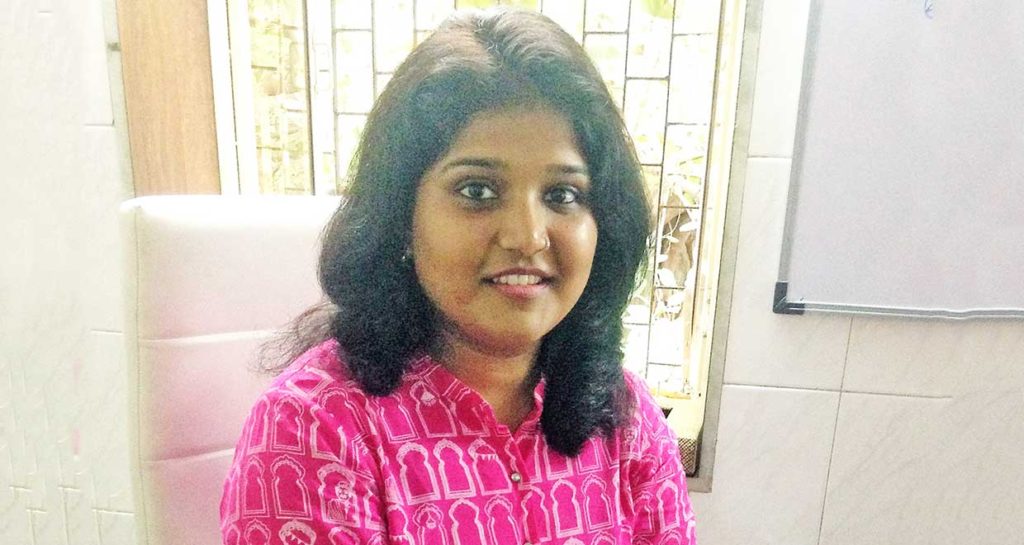
    zubin-pratap-2

    As a highly commended team leader, would you please share a few pointers on how to do the same effectively?

    This is old wine in a new bottle – but it is 100% true. You can’t lead well unless you’ve followed well. To follow well you must be self-aware –know what drives you, what upsets you or impairs you, what you love and what you merely tolerate. Knowing these things help you to understand just how hard it is to lead people – because ALL people feel these things, but in different ways. Therefore, to lead well you need to have an excellent memory of how YOU felt when you were poorly led or poorly motivated. That will give you empathy to perceive the consequences of your words and actions on those that follow you and remind you that people have feelings and feelings are powerful motivators or impediments.  If you lead people with emotion backed by reason, people will outdo themselves. And that is the goal of every leader – to help others outdo themselves.  The best feeling is when you see the surprise in their eyes – when they’ve literally surprised themselves with their ability and achievement. There is no greater professional joy.


    What areas do you focus your reading on? How, in your opinion, should law students approach the task of selecting their reading material?

    I read whatever is of interest. I don’t follow politics very closely. I am partial to science, philosophy, psychology and tech. I think it’s harder than ever to decide what to follow. But everyone needs to realise that it’s like drinking from a firehose now. So you must accept that a choice is inevitable. Prioritise what matters to you (its personal and always valid  – don’t let people con you into thinking there is superior reading and inferior reading). Ultimately YOU must get value out of it. That’s the only test of your choices – do you get satisfaction out of it.


    What work do you currently do for Telstra?

    I’ve actually just taken on a new role. I now do New Business Development – my mandate is to help identify, partner, prototype, validate and commercialise new business opportunities that will drive new revenue growth for Telstra. It is, quite literally, the most exciting thing I could do right now with my life and energy. Every day I will get to work with brilliant people, building and testing ideas, gunning for excellence and doing some new, innovative and game changing businesses. I left the law about 18 months ago. In the interim, I was in channel and commercial management – running deals with our distribution and channel partners.


    In 2014, you founded NobleGenie. Will you elaborate a little on that please?

    It was a brief experiment. I had started teaching myself about tech, startups, entrepreneurship, design thinking, innovation and problem-solving. I had also just bought a house. I realised that in Australia property is a big part of the “story” of a person’s life – up there with graduation, turning 21, finding love, etc. I also noticed that you need an ecosystem of professionals – an advice marketplace – of lawyers, conveyancers, accountants, financial advisers, mortgage brokers etc. NobleGenie was going to be a platform that brought together these professionals to respond to client queries as a way to win the confidence of clients.  Professional services is a “credence good” – we can never really know the quality of the service (advice) and we are totally dependent on trust when handing over our money. It is not like a car that you can test drive. By having peer reviewed interactions to discrete queries, I felt a system could be designed whereby clients can “test” their professional advisers-to-be. It also helps professionals to build their profile and for the legions of practitioners who want to freelance or work flexible hours, to build their practices. Sadly, i couldn’t spend the time that was required of me on it due to my work commitments (in Jakarta for 2014!) and after completing the coding for the site, I elected to move on to other projects.


    What was it like as a Board Member of Communication Rights Australia and how were you placed on the Board?

    I wanted to volunteer my skills for an organisation that could do a lot more with it than I could on my own. I applied, interviewed for the position and joined the board. What amazes me about the NFP sector is that people are so passionate and motivated about causes  and they aren’t even paid for most of it. Its volunteer based. As a leader, it presented me with a fantastic way to observe how people are motivated without financial gain. There are many studies that show that monetary incentives actually impair the quality of work done. Intrinsic motivation is dramatically more effective – and I can empirically confirm this! I also learned that it doesn’t matter how “senior” or “accomplished” a person is – they are very human, with frailties, foibles, weaknesses, blindspots and flaws just like any of us. That gave me confidence that there is no “secret sauce” or mysterious ability – we are all perfectly capable of excellence and our beliefs limit us more than our abilities.


    Now you live in Melbourne. What is your experience as an Indian lawyer in Australia?

    I have had a great experience here. Most of all I’ve learned about competing globally, and not being parochial. Things have changed a lot since 2007 when I moved here. Globally, it’s become harder to move as a lawyer. It’s actually harder for all jobs really, but law has the added challenge of requiring re-qualification in each new jurisdiction.


    What would be your message to our readers who plan on launching a career abroad?

    For those who want to try and work overseas, I would say think very carefully whether you want to stay in the law or not. Living overseas and experiencing the cultures the world has to offer is (for some) more valuable than a given profession. It’s very hard to move as a lawyer – there are only 2-3 places you could go to realistically. And it’s a lot of effort. If you decide to leave the law do it early – it gets exponentially harder after 5 years. If you’re staying in the law, then start by moving to a place that recruits foreign lawyers actively – but recognise that it is a long hard slog and presents much more uncertainty.

    If you want to launch a life or career or project abroad, the best advice I can give is that the world and the people are not what you think they are – some are better, some are worse – but it’s always different. So don’t take your plans and yourself too seriously. And be adventurous. Your rewards are rarely what you aimed for, but that makes them more interesting.


  • Shabbeer Ahmed, Principal Associate, Kochhar & Co, on Corporate Law experience at top law firms

    Shabbeer Ahmed, Principal Associate, Kochhar & Co, on Corporate Law experience at top law firms

    Shabbeer Ahmed graduated from National Law Institute University (NLIU), Bhopal in 2008. After this, he was working in leading corporate law firms such as Amarchand Mangaldas Suresh A. Shroff & Co. (AMSS), Mumbai and Fox Mandal & Associates, Hyderabad. He is currently a Principal Associate at Kochhar & Co.

    In this interview, he talks about:

    • His time at National Law Institute University, and how to prioritise your commitments there. The importance of keeping yourself motivated and also keeping company of similarly motivated individuals.
    • How to go about getting publications, and how to pick topics and issues appropriate for you.
    • His work experience at the firms he has been employed at as well as his internships, and what to expect from such professional environments.


    How would you like to introduce yourself to our readers?

    I am currently working as a Principal Associate in the Litigation team of Kochhar & Co., Hyderabad. I have graduated from National Law Institute University (NLIU), Bhopal in the year 2008 and previously worked with prestigious firms such as Amarchand Mangaldas Suresh A. Shroff & Co. (AMSS), Mumbai and Fox Mandal & Associates, Hyderabad in the positions of Associate and Senior Associate respectively.

    Was it a childhood dream to take up law? What motivated you to pick this field?

    I have always dreamt of becoming a civil servant like my father. Law happened to me by accident. I was never interested in pursuing a career in law.However, my father has a great fascination for law. It was only in deference to my father’s wish that I  chose law. However, I have no regrets about it now. I owe my success to my father as he has been a great inspiration for me. My interest in law has picked up gradually. Law began to interest me more when I started excelling in co-curricular activities such as moot courts and publications.


    As it is popularly said, “All is well that ends well”. I am currently at this position – enjoying every bit of it – rendering legal services to a variety of clients on a wide range of areas of law.

    Tell us about your time at NLIU. You were involved in a number of co-curricular and extra-curricular activities. How did you divide your time amongst them while also maintaining a stellar academic record?

    Law school days were the most memorable days of my life till date and whenever one takes the name of my college, I become nostalgic and I can go on speaking for hours,reminiscing the wonderful time spent there. It’s very important to have a good circle of friends who are all focussed in college. I have seen many students with brilliant academic records till 12th standards, who managed to crack some of the toughest entrance examinations in the country and joined reputed colleges, only to get distracted. They would also become involved in many other avocations, all because of the circleof friends they fell in with. I was fortunate to have a good bunch of friends who are quite academic and career oriented since the very first year of the law school and we used to exchange each others’ notes and involve in combined study during our examinations. We all have been fortunate to pass out from law school with placements in top tier law firms of the country, and we owe this to our parents and also the wonderful faculty we had in our college those days. Your focus on studies and the activities you take up in law school largely dependson your own motivation as well as the company you keep. One should never forget that these are the most important and constructive days of your life which would pave a path for your glorious career ahead. Needless to say that apart from being engaged in academic and extra-curricular activities, I had a gala time hanging out with my group of friends on and off the campus. The location of NLIU campus amidst greenery with thick forest cover offers a wonderful scenic view from the windows of your class rooms and also hostel rooms and you feel like you haven’t had enough of it even after 5 years.

    Coming to managing both academics and co-curricular activities, it’s definitely a difficult task – especially if you follow the trimester system in law school – however, it’s not impossible to manage. One should give equal importance to both academics and extra-curricular activities such as participating in moots courts, seminars, conferences and organising activities on behalf of internal committees.However, if there is a conflict at any point of time, academics should take precedence over the extra-curricular activities. It all depends on how one manages their priorities. I used to plan ahead and opt for those moot courts which would take place just after winter or summer vacations so that they did notclash with either my examinations or internships. Generally, when college reopens, there would not be too much pressure inthe initial few days on the academic front. I also used to allot some of my timeduring my internship on carrying out research on the moot problem. Further, I often converted the project assignments which I undertook and presented during the course of my internships in the law firms into a research paper and tried to get them published in reputed journals. In most law schools, there is a system of submission of project report on a topic in each of the subjects you study in a particular trimester or semester. In case a student works on atleast 5 projects in a semester or trimester, he can work seriously on atleast one out of the five projects by choosing a topic having contemporary relevance and carry out an in-depth research on the issue. Such project reports(being a piece of original work) can later be modified into a well drafted research paper with proper footnoting of sources and bibliography and send them to legal journals and magazines for publication. Participation in moot courts and involvement in article writing / research papers would hone your research and drafting skills, which is very crucial for the legal profession. Therefore, one can manage activities such as moot courts and publications by planning things in advance like choosing of moot court based on its schedule and conversion of project assignments in college and internships into research papers so that such activities would not eat out the time meant for preparation of academic exams.

    Further, I was also part of many internal committees such as Moot Court Committee, Cell for IPR and Cell for Research in International Law at different periods of my law school. I was also one of the editors in a student-run legal magazine called ‘The Edict’ for a brief period. By being part of such internal committees and groups, one would learn the art of organising college level and national level conferences and competitions and it further broadens your exposure and outlook as you would get to interact with students and faculties from various colleges and also some legendary guests participating in such events which would mould you into a highly motivated team player at the end of the day.

    What sort of activities must a student take up in law school to not only enhance one’s CV, but to also become a well-rounded graduate?

    One should have a balanced approach towards the academics and co-curricular activities in the law school which would result in maintaining a balanced CV. A candidate with wholesome CV with equal proportion of everything (curricular, co-curricular and extra-circular) is always the desired choice for both campus recruitment and also for getting admission into LLM in foreign universities. The top tier firms which come for campus recruitment would look for a candidate having a CV which reflects his overall development and not just the academics. Though I was never the topper of my batch, I had maintained a consistent academic record and managed to be among top 10 percentile in the batch and complimented that with my achievements in co-curricular activities such as moot courts, seminars and publications and this really mattered a lot during my campus interview with AMSS.

    For achieving a balanced CV and becoming a well rounded graduate, consistency in performance is very important. One should never neglect academics and try to manage to be among top 10 or 15 rankers of the batch. Further, participation in moot courts, seminars and paper publications would hone your oratory, research and drafting skills. As I stated above, the experience of being part of internal committees in the university and organising various events would motivate you to be a good team player, which becomes crucial once you join a law firm or corporate house. Last but not the least, having good internships from reputed law firms would definitely have an edge in securing a good campus placement or bagging a pre-placement offer. Candidates should chose internships especially from fourth year onwards based on the career path they chose. A candidate interested in working in corporate firms should aim to work at best possible law firms while the one who wants to pursue litigation practice is advised to intern with trial court or high court advocates. And there is no harm if a candidate who is seriously interested in pursuing civil services does not do any internship provided he utilises the vacation period in building his basics strong in terms of general knowledge, law and also reading NCERT text books and magazines related to competitive exams.

    You have completed an LL.M program in Constitutional Law. When did you develop an interest in this field and what drove you to pursue an LL.M in the same? You did your LL.M program in an Indian institution, which is not usually considered by most NLU students. Can you explain your rationale behind doing an LL.M in India as opposed to going abroad?

    I have done my LL.M through distance education from Acharya Nagarjuna University while I was preparing for civil services after quitting AMSS. Constitutional & Administrative Law has always been my favourite area of law since college. In fact, all my moot court competitions were on the subject of Constitutional Law. The primary reason for pursuing LL.M is that if I would ever retire from this profession, I might end up being a faculty in some law school and I would then love to teach Constitutional & Administrative Law. As per UGC norms, one is required to have qualified NET (National Eligibility Test) conducted by UGC every year to be eligible to become a faculty (Assistant Professor) in UGC recognised universities. The eligibility for appearing in NET exam is to have a post graduation degree from a university recognised by UGC. Therefore, I had chosen to do LL.M (post graduation) from an Indian University (recognised by UGC) and also subsequently qualified the NET exam in Law. I am now eligible to apply as a faculty in any university for teaching law. I am not against an LL.M degree from a foreign university, however, the law firms in India would mostly prefer a candidate having good work experience in a specialised area of law to a candidate who has just returned with an LL.M degree from a foreign university. Moreover, a candidate who wants to pursue LL.M in a subject like Constitutional Law and further intends to practice in either a High Court or the Supreme Court, or teach in an Indian University is advised to pursue it from an Indian universityas different countries have different constitutions. Besides, as we all know, India has the longest written constitution in the world.Where else one can learn better about constitution if not in India?

    shabbeer-ahmed-1

    You have to your credit publications on a wide variety of topics. Do you feel it is better to play to one’s strengths and only publish on a particular subject, or to diversify and explore various aspects of law?

    Writing and drafting skills is one of the most prominent aspects in legal profession and especially in corporate law firms. What to write and what to avoid is another essential element in drafting of pleadings to be filed before the Court and preparing legal opinions for the clients. It is better to have one’s drafting and research skills honed during law school days by writing articles or research papers. It depends upon one’s choice as to whether the candidate wants to have publications only on a particular subject or diversify and explore various areas of law. For example, for a candidate who intends to pursue his career in IPR, it is preferred to concentrate in having publications only on IPR related issues, which would fetch him good opportunities in the career path he has chosen. I write mostly on contemporary issues which interest me. I am an ardent reader and follower of daily newspapers and news channels and try to be uptodate with the current affairs. My way of reacting to the happenings in the society or to a latest legal development is by writing short articles. Coming to publication of research papers, most of those are the modified versions of project reports which I have prepared as part of my curriculum in college or during the course of my internships, as stated above.  I have always been interested in Litigation, due to which I have publications on a wide range of topics such as law & sociology, criminal law, partnership, Arbitration etc. It’s easy to get publications in legal magazines if one chooses topics having contemporary relevance or a burning issue during a given point of time or an issue in which the law is still unsettled.

    You have won many awards at various Moot Court competitions. What should students focus on to achieve success at such competitions, especially if it is the first time they are participating in such an event?

    Mooting was my passion in law school. Even now, I visit NALSAR and other local colleges to judge state and national level moot court competitions. I never won a moot court competition; however, I was finalist in all the moots I have participated in. I won best speaker in KLA Constitutional Law moot court competition and won best memorials in all the moots that I have participated in. I was fortunate to have wonderful team members (Abhijeet Swaroop, Amar Pratap Singh, Smarika Singh & Gaurav Gopal),and team work really matters in moot court preparation. The first and foremost element in preparation for a moot court competition is to read the moot problem as many times as possible, understand it thoroughly and identify the issues involved in it. One should inculcate the habit of reading between the lines in the moot court problem and try to find tricky points. Once the issues are identified, one needs to carry out thorough research on the said issues and compile all the research material relevant to the issues consisting of both primary and secondary sources of law. Thereafter, based on the accumulated research material, one needs to prepare the line of argument to reach a particular conclusion on the identified issues. Such arguments supported by research have to be captured well in a language that is easy to understand in the Memorial. Citations and footnotes have to be incorporated in accordance with Bluebook. If you are thorough/well versed with your research and what you have written in the Memorial, you can advance oral arguments with ease. One needs to rehearse oral submissions as many times as possible and try to anticipate questions from the judges and prepare answers accordingly. The Oral submissions have to be precise and to the point and one should aim to cover all the submissions within the prescribed time limit. I personally feel that you need to be as humble as you can and be clear in your presentation while addressing the bench. Without having regard to the result, participation in moot competitions and arguing the cases before judges (who are at times sitting or retired Judges of High Court and Supreme Court) would enhance one’s confidence levels and you would easily get rid ofany stage fear, or even develop an interest in public speaking.


    You are currently a Principal Associate at Kochhar & Co. Can you tell our readers about your responsibilities there? Does it vary majorly from the responsibilities you had at Fox Mandal & Associates or at AMSS?

    I am currently taking care of the litigation vertical of Kochhar & Co., Hyderabad which is overseen / supervised by the resident partner, Ms. P.V. Aruna Kumari. My team consists of one Senior Associate and three Associates. I primarily take care of the execution of work in litigation. I am fortunate to have a partner who gives me enough independence to handle the matters from start till end. I involve myself in all the litigation related work, from holding initial discussions with the client to strategising the case, suggesting way forwards, drafting pleadings, briefing of counsels, and representation before courts. I also delegate the work among my teammates with respect to drafting of pleadings and representation before courts. At Kochhar, I have got the opportunity of independently conducting the case from start till end including arguing and winning few cases without the engagement of senior counsels.


    At Fox Mandal, I joined as an associate with just one year of post qualification experience and most of my practical learning has happened at this place. I rose from a junior level to senior position at this place, winning the confidence of my seniors and partners from time to time. I had also interned at this place during the third year of my law school. At Fox Mandal, I used to be a major support to my litigation partner in the form of drafting pleadings and legal opinions. My senior used to appreciate my drafting & research skills, pro-active approach in taking up assignments and out of the box thinking quality on the issue at hand which has developed confidence in my abilities. I have grown as a professional during the span of my 5 year tenure at Fox Mandal.


    Coming to AMSS, I was recruited for its Mumbai office through my campus placement and worked there for about a year. AMSS has offered me a great learning curve and exposure at the very nascent stage of my career. Working with the best law firm of the country at the initial stages of your career and trying to cope up with the demands and pressure of such top tier firms would make you strong enough to take up challenges with ease going forward. I used to mostly be involved in drafting and research work and also used to accompany my seniors and partner for briefing sessions with the senior counsels.


    You have worked with some of the best firms in the country. Could you tell us about the atmosphere in each of the places and what one should keep in mind before joining?

    It depends upon whether you are joining as a fresher or a lateral with good amount of post qualification experience. Work atmosphere in almost all the leading firms is similar, and it largely depends upon the team you are placed in and the kind of senior you would be attached to. I was fortunate to have wonderful seniors who guided and motivated me well at all the places I have worked at so far. As a fresher, it’s important to get into a job though it is in a mediocre firm with less pay. One or two years of practical experience at mediocre firms may fetch you good opportunities at tier one firms. So, at the initial stage, one should concentrate more on learning rather than earning. Money comes in with experience. It is always advisable to join a firm where you have work life balance.


    Any parting words for our budding lawyers?

    Love your work. Only dedication, consistency and perseverance can take you to reach greater heights in your profession. If you win the confidence of your senior / partner by taking up initiative at work and possess good analytical skills in strategising the cases more so in litigation, then rest assured that the sky is the limit for you. Needless to emphasise that you must have a work life balance and give sufficient time to your family. Having said that, I must thank my wife for being quite patient, supportive and understanding since I give a miss to work life balance on several occasions J

  • Vibha Mane, Founder, Law Matters on experience in research work at JGLS and TISS and LL.M from Univ of Glasgow

    Vibha Mane, Founder, Law Matters on experience in research work at JGLS and TISS and LL.M from Univ of Glasgow

    Vibha Mane is a 2006 graduate of Symbiosis Law College, Pune and did a Diploma in Alternative Dispute Resolution from the Asian School of Cyber Law. Thereafter in 2008, she earned a Master’s Degree in International Commercial Law from the University of Glasgow, United Kingdom. She worked for a while as a Research Manager at Rainmaker and then as a Legal Assistant at IC Legal, Advocates and Solicitors. She also worked as a Senior Research Associate at Jindal Global Law School and as a Research Officer at TISS. At present, she is the Director at Law Matters, a company that she founded.

    In this interview she explains to us:

    • Suggestions on engaging in extra and co-curricular activities during law school and how to plan internships
    • Her various job experiences
    • Setting up and working at Law Matters
    • Studying at the University of Glasgow


    How would you like to introduce yourself to our readers?

    I am the Founder & Director of Law Matters LLP based out of Mumbai. Some other terms that are often used to describe me are- a teacher, trainer, researcher, writer, lawyer who doesn’t practise and an entrepreneur by chance!


    Why by chance?

    In ten years of work experience, I tried litigation, law firms, and the state electricity commission. I also worked as a content creator, trainer, teacher and researcher. Of all these experiences, I could relate to academia as my core field of work. I had the opportunity to work with some big educational institutes like Jindal Global Law School and Tata Institute of Social Sciences. These work profiles allowed me to understand my career strengths – content, research and teaching/ training. I realised, my work has a broad spectrum and I could freelance. So, in 2014 Law Matters was emerging as an idea and honestly, it was my husband who encouraged me to think big and take the bold step of setting up Law Matters. I had my inhibitions about this whole ‘starting up on your own’ concept! But it was worth taking a chance.

    Together, we spent a year studying market trends in the legal field, met many principals and vice chancellors, gathered their feedback on lacunae in legal education and Law Matters was conceptualised by February 2015!


    Tell us more about Law Matters.

    We have four faculties- content, training, policy analysis and social projects. We create various courses for law schools and even management schools. We train law students on career options in law, career combinations with law, research methodology, effective communication and writing, soft skills, resume crafting, mock interviews and a lot more. We assist law schools with course content assessment, students’ calibre tests, organising seminars, getting their students job ready etc. Our team also undertakes policy analysis on various topics and we have some interesting social projects lined up. While the first two faculties generate income for us to sustain, the other two faculties are more out of interest for these causes. Law Matters believes that a healthy legal change equals a better social tomorrow and hence these initiatives.


    So how has it been for Law Matters? What challenges did you face?

    vibha-mane-3We are already a year old and are perceived as a finishing school for lawyers. In the first year we did more of training in Pune, Delhi and Satara but this year we are being approached a lot for content from Bangalore, Haryana and Delhi. I am very happy with our progress and particularly with this shift in demand. My biggest challenge has been to make law schools understand that we need to change our traditional methods of teaching law. A mere ‘Drafting, Pleading and Conveyancing’ (DPC) class doesn’t equip them with the skills they need to be ‘employment ready.’We need new and practical courses for law students.The standard courses that one takes through three or five year courses are redundant. Today’s students are always on the lookout for some diploma / certificate courses on upbeat topics. So why not provide them with those? Quality content is critical if we want them to stay up-to-date with changing trends and acquire skills for a good caree start.


    What would you like to share with us about your college time and the impact it had on your views of law?

    My views on law were very dramatic. My family has many lawyers and I was always in awe with their work and reputation.  As a child I gathered soon that lawyers, like police are quite important people! So studying law was natural for me. I had thought, I will get a law degree and then practice in courts, as is the family trend.

    Five years at Symbiosis Law School, Pune made me realise that being a lawyer was quite a task. What I loved most was the pattern of logic and reason that law holds. This makes it so interesting. The course was vast, yes! But thankfully, studying law didn’t seem tough.


    While there, what co-curricular or extra-curricular activities did you indulge in? How did you plan your internships? How did the same affect your overall take away from law school?

    I enjoyed legal-aid workshops and street plays on socio-legal issues. Honestly, I was not much involved in moot courts and elocutions at law school. This is one aspect that is often considered important on a fresher’s resume. Though, its absence never affected my career, it is one of those college things, I still regret not having done. I think, participating in such activities gives a boost to your confidence, it is through these activities that you can actually practice some research and presentation skills.  It also aids in improving your rapport among the social circle.

    About internships; no one ever recommended that I should intern with law firms or corporate houses. I toiled in district courts and the Bombay High Court learning procedural laws. During this time, I got a reality check- law is not as fancy as it seems in cinema! So, unfortunately, my internships lacked planning. This I often see as my career drawback. Learning from my own experience, I suggest that students should get a variety of internships at companies, law firms, NGOs and even start-ups, as they offer a hands-on learning base.


    vibha-mane-2

    What motivated you to pursue an LL.M in Glasgow after graduation?

    I saw this coming!!! You see, my career wasn’t working the way I saw it – in courts. Post degree, I again tried to give litigation a chance in the Bombay High Court but I wasn’t enjoying it. The clueless, ignorant and vulnerable crowd at courts made it even less interesting. I felt I just can’t be practicing law. This self-realisation was scary and difficult to deal with. I obviously wanted more time to think about my options. The senior lawyer I was working with; Advocate Deepa Chavhan, suggested that I do an LLM and appear for QLTS (solicitors’ exams). At that time, I wasn’t sure what it means to be a solicitor but the prospects looked promising. Thus, I began applying for UK universities for Masters in Law. I was happy to get through to the University of Glasgow. Ranked in the top 1% of world universities, it is considered the university of world changers– Adam Smith, James Watt, seven Nobel Laureates and a rich heritage of over 560 years. Besides, I was fascinated with Scotland!


    How did the degree change your perspective on legal practice and development within the country?

    I am truly grateful for the exposure I got while doing a Masters in Law. Within the first few months, I realised I wasn’t equipped or trained to do systematic research, my writing lacked clarity and did not justify the research methodology I had used, and my critical analysis had to be a lot stronger and supportive of my arguments. This was the case with many Indian students studying law there. We weren’t taught these things. We weren’t groomed to be researchers and effective writers. I had to unlearn to write volumes about a topic, instead I struggled to put my point across crisply, in one or two lines. Funny but true!  I also realised that soft skills are a very crucial part of a lawyer’s personality and practice, and Indian law schools were missing the point completely. Our law schools have begun focusing on these issues only recently.


    Your work with Rainmaker stressed on content creation and streamlining legal research skills and techniques. What sort of a gap did you believe existed in the ability of trainees?

    Rainmaker offered great intellectual freedom. The team was committed to bring in a much needed change in the legal field- teaching, training and talent management.  This job helped me execute all that I had learnt during my Masters’ degree. I enjoyed creating content on varied legal topics and training was equally fascinating. Initially I was sceptical about training law students only a few years younger than me and law professionals quite older than me! But most of these trainees – young and old, acknowledged the fact that I knew things they wished to learn, this made my task easy. The biggest gap however, was of virtual intelligence! Being able to type a word document, or writing emails, or having LinkedIn accounts doesn’t mean we are virtually intelligent and technologically effective. There are a zillion little things to make a lawyer’s work look more professional, serious and authentic. So yes, there is still a huge scope for improvement there.


    At the prestigious Jindal Global Law School, what were the finer points of your research projects? What did the process of publishing your work from there entail?

    My year and a half at JGLS was loaded with research on topics like election laws, police reforms, prison industry, laws relating to women, inter-relations between law, society and cinema; right to religious freedom, torts, ragging and a lot more. Some work was published as articles, some as reports. During this time, I also worked as the Managing Editor of the Jindal Global Law Review, for the September 2010 issue. This responsibility proved to be a good opportunity to learn the intricate process of making a piece publishable. It really takes practice to go over the same piece again and again and to fix faults each time. And it is so good to see law students taking keen interest in publishing their work in various law journals. We as teachers and trainers, must encourage them to publish more.


    From your experience of teaching, what would you like to say about the newer generations of law students?

    There are quite a few things I like about this generation of law students- they are open to new ideas, they like mixing law with literature, poetry, documentaries, designs, humour and more. A curious class makes the teacher bring in something new to the desk, always! Plus, these students are aggressive about their career growth. They are sure of their choices. However, they dedicate all their five years towards building one particular resume that supports only their liking, not their ability! And see, this is also something that I have done myself. So, I know what it leads to.

    During our career counselling sessions, we often handle a lot of confusion. For instance, “Can I do CS even if I am weak in my accounts?” The question is how you see CS complimenting law and future prospects. Or something like, “I want to study for a Master’s degree but I am not sure whether to pursue an LLM or MBA.” Again, the answer to this question depends on why you think you need a Master’s degree in the first place and which areas do you want to work on.

    Another prominent trait of this generation is that these kids are setting very high standards for themselves at the very beginning of their career. This quite often leads to disappointment. They usually fail to do a reality check.


    Would you say their education varies from your own experience in college? If so, how?

    Oh yes, certainly! The exposure that law schools offer to their students has tremendously increased. Of course, even we had industry experts teach us. We had active placement cells too, but the law schools were few then. Now private universities are offering world class facilities, state of the art infrastructure, and global faculty! Ten years ago, many practicing lawyers acted as visiting faculty for several law schools. Only a few teachers were committed to teaching law the way it should be taught! No one taught us howto use LexisNexis, Hein Online, Westlaw, JSTOR etc. We learnt these things on job. These days, more or less all law school libraries offer free access to these databases.Besides, earlier; for moot courts, students prepared themselves. Now law schools put up a whole team of industry experts to make students ‘moot ready’ and that’s great, isn’t it?


    Law, Development, and Social Change was the core focus of your work with the Tata Institute of Social Sciences, (TISS) Mumbai. What would you like to tell us about the need and aspirations of the same?

    Every institute has its own unique agenda. Social commitment was an integral part of the proposed LLM course for TISS. So while creating content I had to make a course that evolved around poverty, religion, gender justice, vulnerable groups, alternate advocacy, economic law and development, legal reforms and court and case management. As a lawyer, knowledge of these subjects is indeed crucial but interest in these topics cannot be forced, you have to be passionate about it.

    An emotional quotient is important for lawyers but the levels may vary for everyone. When one has flourishing options to consider from property, real estate, maritime, space, sports, media, arbitration, etc. one tends to favour these topics over the social reform aspects of law. Having said that, I am, by no means, generalising the choices. We still have a good number of law students extremely keen on topics like refugee laws, immigration issues, torture, armed forces’ powers, animal rights, peace treaties, child rights, LGBT and so on.


    From an aspiring SuperLawyer to the Founder of Law Matters LLP, how does the specific skill development you envision set someone apart from the current crop?

    With Law Matters, I and my team are attempting to bring in the desired change in current legal educational environment through new content and innovative teaching techniques. The skills that we envision all lawyers to acquire are very crucial. It is his research and writing ability that helps a lawyer win his bread. Research allows you to get to the details, and writing teaches you to value the information. Most of these professionals and students alike, realise that we are assisting them with acquiring important skills that aren’t taught elsewhere. Basics like how to effectively draft a document, how to use search engines for accurate legal research, what search terms to use -when and where, how to break an issue to reach the most convincing argument, what other technological tools a lawyer can benefit from etc.are gaining popularity and acceptance.


    Finally, do you have any other advice for our readers, most of whom are college students?

    I would strongly recommend they take soft skills seriously. They should focus on developing a good resume from the very beginning. Reading for class and beyond class material is one good habit that they should try to inculcate. Also, a clean and responsible virtual presence adds a lot of credibility to your personality.  Lastly, your years at law school are equally important as your internships. So, don’t get so busy learning the tricks of the trade that you forget to learn the trade.


  • Srinath Sridevan, Founding Partner, HSB Partners, on leaving Magic Circle and starting up

    Srinath Sridevan, Founding Partner, HSB Partners, on leaving Magic Circle and starting up

    Srinath Sridevan is the founding Partner of HSB Partners, Advocates & Solicitors, Chennai. Srinath graduated with a Gold Medal in Law from Madras University in 1996 and then went on to pursue his masters from New York University in 1997. After graduation he got an offer from Allen and Overy, London and started working there. Later he moved back to India & started out with a new Law office, named – ‘HSB Partners’ at Chennai in the year 2004. He possesses an experience of over twenty years in the legal Industry with specialization in different aspects such as mining law, arbitration, corporate law etc.

    In this interview he talks to us about:

    • Choosing law as a profession and his experience at New York University.
    • His formative years as a lawyer and his time at Allen and Overy, London.
    • Experience of establishing his own firm with his friends.
    • Criteria for selection of associates while recruiting.
    • HSB Partners and its rapid expansion.


    What incidents, influences or interests prompted you to think of law as your career and what other options would you have considered for your career?

    srinath-sridevan-1I am one of the fortunate people who came from a family of lawyers and therefore Law was something apparent to me since I was in school. I also had an interest in science and astronomy especially, and I suppose if I had not gone into law I would have gone into astronomy. I had studied BSc(Physics) before I got acceptance from Madras Law College.


    Tell us about your experience in Dr. Ambedkar Law University.

    See, that time it was Madras University it was not Dr. Ambedkar University. The college itself is a century old institution and therefore, the building is spectacular, the library has books which we only dream of. For example I have seen with my own eyes a two hundred year old copy of the Hedaya by Bailee, which was one of the most classical texts in Muslim law. But unfortunately the university suffered due to government laps and negligence. Therefore, classes were conducted in a haphazard fashion. In such a situation you are forced to learn for yourself and that’s what I did.


    Could you tell us about your experience at New York University? What all were the differences that you found the Indian form of legal education and the other form of legal education?

    Everything was different. I don’t even know where to start In the Indian form of teaching specifically at Madras Law College, the professor would come in, cover their portions and leave at the end of the hour. Some professors took a little bit more interest and tried to make the class more interesting, so it was only the frontbenchers who really gained anything, because we used to study out of our own interest, and also used to take notes in class. But at New York University, the scenario was completely different. The entire class was completely participative. The professor started a discussion and he guided the discussion. So, at the end of the hour the entire class would participate in the discussion. So as a result the entire portions were covered. And apart from that there would be seminars. So, in a semester you had one hour of discussion per week with a professor, where you would jointly research on some of the subjects. The amount of learning you got in these seminars was unbelievable. Of course, the quality of the professors at New York University was also very high. Some of the professors I learned from are known the world over. So, you really can’t compare the two. The experience at NYU was quite amazing.


    You received a scholarship for applying to New York University. What factors should be kept in mind while applying for LL.M in different foreign universities?

    First you have to look at what you actually want out of your LL.M. Students go overseas for masters degree for different reasons. Some of them are extremely focused and they see a masters degree as a stepping-stone for a further career progression. Some students do a masters degree simply because their friends are doing it. Some people do it because they want a year before the reality of life hits them. So, it depends on what you want out of it. Let’s take the first category, the people who are extremely focused. They need to think about what they want to do after their Masters. If one thinks of working at the UN or some international body, then you need to apply to those universities like George Washington, NYU, and Columbia etc., which have very strong relationships with international bodies. And if you do your Masters there, it is easier to get positions and fellowships from international bodies. So, that’s one. Similarly, if you are looking to work at a law firm in the US, then you should look at the universities in those states of the US, where you are permitted to take the Bar exam with just a masters degree. So, for example you choose a State like New York, or California, where you actually can consider taking a job after taking the Bar Exam in the US. In the UK, you have to look at the universities that give you best access to QLTT.

    The second and third categories of people are those who are going for an LL.M because they can, or because they want to discover themselves, or something like that. They need to choose a city that enables them to enjoy life there to the fullest. If funding is an issue then you need to choose the universities that are really rich and which are able to give large R.A.s and T.A.s or fellowships.


    srinath-sridevan-5

    You have interned at Deacons, a foreign law firm and you have been an associate at Allen and Overy. How your experience there was and what differences did you find between foreign law firms and Indian law firms?

    I was very young when I interned in Deacons, so everything was new to me when I was there. So, on a couple of occasions, when I got to work directly with the partner that was like a high for me that lasted for the entire day. Therefore, since every experience was new, the internship itself was an eye-opener for me. What I got out of it I cannot say but it was a life changing experience for me. You learn how large these firms are. I was three years into the profession when I got an opportunity to work at Allen and Overy. So, I was more settled and I had clearer legal views. At Allen and Overy what interested me was my access to global transactions and global working practices. So, I learnt a lot there as well.

    Coming to the Indian law firms, in the last five years, they have got most of the good practices that these foreign law firms have. So, you have well established drafting and conveyancing techniques, clearer career paths for the Associates etc.


    The Government of India is planning to allow foreign law firms to enter into India. Do you think the Indian law firms will be confronting to fight with the tough competition foreign law firms entering into India?

    You, have to understand that you are asking this question to a law firm based in Chennai. I do not believe that law firms based outside of Delhi and Mumbai will be affected at all, because whoever is in Mumbai or Delhi will always need local legal support from a good law firm in Hyderabad, Bangalore or Madras. So I personally do not think that a law firm in Chennai will be affected at all.

    Further, even as per what I have read, foreign law firms will be permitted to enter only for the purpose of advising on foreign laws aspects of transactions.


    It is a general assumption that the fresher graduates have to struggle a lot during the initial years. What was your experience?

    Look, you use the word struggle as something bad. From my first year, I spent all my free time reading Bare Acts and judgments whether I understood them or not. The first few months, especially the first three months, were quite boring and it was really difficult to sustain the interest. But at some point of time the interest kicked in. Once the interest comes in, it’s a matter of pleasure to keep learning. Even now when I am bored, I pick up a law book and read. It’s not a “struggle”. I find it very pleasurable.


    srinath-sridevan-4

    What made you to venturing into a law firm than setting up an independent practice?

    All the three partners at HSB are all the same age. We all hail from families of lawyers. After we finished our bachelor’s degrees, we all went to the US for our Masters’ degrees. I went to NYU, and my partners went to Northwestern. After we finished our respective degrees, my two partners worked in Chicago and New York respectively, and I went to work in London.

    Over the next few years we kept in touch through e-mail. We were always talking about returning to the motherland and being with our parents.

    By 2002, one of my partners, Harishankar, and I started a firm and we commenced working together.

    By 2004, we spoke to Bhaskar and informally we joined together.

    And on first of April, 2005 we formally united as HSB partners.


    How was your journey during the initial days of HSB? Why do you think that HSB has won the best law firms award in the year 2012 in corporate and commercial laws?

    These awards do not matter much. You can get one every year from someone or the other. I personally don’t give much importance to these awards.

    The initial years were very exciting because it’s great to be working with your friends. There was a lot of sharing of knowledge. You know every day me Hari, Bhaskar and I used to discuss our respective cases. So, that was extremely exciting.

    We also got to learn transition from being the sole proprietors of our family firms to actually being one single firm like HSB.


    While hiring lawyers, what kind of skills you look for in their CV?

    srinath-sridevan-3Speaking for myself, I look for three things.

    The first being the university where the candidate has studied; whether it is a recognized one or not. I look for academic scores.

    Then I look for the places that this person has worked or interned at and the kind of work the candidate has done.

    Most importantly I look at the extracurricular and co-curricular activities because that is the real test of character and if I see something interesting there then I usually invite the person for an interview.


    What do you expect from a first year associate or an intern?

    I usually take interns from their second year. I ask them minor questions to see if the candidate shows interest. If a candidate shows initiative, then I give more responsibility.

    So from my perspective, I give as much work to a person as that person wants. Each person depending on how much interest they show can grow.


    What do you find admirable in present generation of lawyers compared to that of your generation?

    They are lot more prepared, prepared in the sense, bold and willing to state their opinions. For example: when I was in my fourth year of law school I don’t think I could have expressed my views as boldly and candidly as many of the interns do nowadays.


    What is your thought about the traditional ideas of specialization in single core areas of law as opposed to the contemporary broader approach with wider field with multiple specialties?

    I am biased because I myself have several areas of interest. So obviously I will say it’s better to have a broader field of knowledge. I don’t think you can be an effective lawyer if you know only one very narrow vertical.

    You can be an effective lawyer only if you know the general principles of all laws and you have a very wide-ranging interest in other fields of life as well.


    Do ever want to be a senior counsel or judge?

    Senior counsel: Yes, that is something I would like. When, I don’t know. The rules in Madras High court for designation of lawyers by senior counsel have now been changed. Now, it’s only by invitation. So, that may arise if and when am invited.

    Judge, probably not.


    What kind of internship would you recommend for a law student to opt for, to start building versatility and a wide range of law that you are well versed with today?

    I would recommend a litigation internship with lawyers or a firm that has a very substantial practice, that too when a court is in session. This is what will expose an intern to the widest possible range of laws in a shortest possible time. Unfortunately, most of the applications for internship are for the months of May and December when the court is not in session. So, those interns don’t get very much out of their internships. So to get the broadest ranging experience, I would recommend interning under a very busy lawyer or a very busy firm when the court is in session.


    What would be your advice to the budding lawyers?

    Nothing but Enjoy yourself.


  • Ekagra Jain, Associate, Wadia Ghandy & Co. on mooting, academics, and bagging a job

    Ekagra Jain, Associate, Wadia Ghandy & Co. on mooting, academics, and bagging a job

    Ekagra Jain graduated from the Institute of Law, Nirma University in 2016. From being the Best Oralist in 4th NALSAR-NFCG Corporate Law Moot Competition, 2015, to being the Best Emerging Player while representing his University in sports, he made sure that he explored every opportunity which came his way. He is inclined toward Corporate Law and Competition Law and is currently working in the Banking & Finance Department at Wadia Ghandy & Co., Mumbai.

    In this interview he talks to us about:

    • His experience at ILNU, both inside and outside the classroom and the decision to peruse law.
    • The importance of balancing academics and the co-curricular and extra-curricular activities.
    • Work experience at Wadia Ghandy & Co.
    • His views on building a successful career graph in the field of law.

    How would you introduce yourself to all our readers?

    To everybody reading this, I am Ekagra Jain, a 2016 Graduate from Institute of Law, Nirma University, Ahmedabad. I have been recruited by Wadia Ghandy & Co. through college placements and have been working in the Banking & Finance Department, Wadia Ghandy & Co., Mumbai. Born & brought up in Jabalpur, I am a passionate reader who is still ‘learning’ in life and believes in being the change you wish to see in the world.

    Why did you choose law as your career, who and what were your sources of inspiration?

    To say that I wanted to be a lawyer for a long before would surely be fallacious. However, I was an avid debater during my school days which inclined my interests towards journalism in the beginning. My family had always given me full liberty to choose the venture I sought to enter into and thereby gave me a chance to break the stereotype of following ‘engineering’ as a career option. I had always been fascinated with legal education and the scope that existed beyond the four walls of the court room. However, with enhanced research and reading, taking into account career growth, I decided near to the end of the 12th standard that I wanted to be a lawyer. The  source of my inspiration is primarily my grandfather, who studied at BHU and was a Public Prosecutor for 11 years. In addition, my family trusted in me and what I wanted to do and the results have not disappointed them since. To the contrary, what scared me the most before entering law was the volumes of books that a lawyer is required to refer to. However, with the passage of time and dedication, to say the least, I have acclimatized myself to this profession and my inclination towards law has only escalated since then.

    How was your law school journey like- could you share your experiences with us? What were your favorite subjects and your areas of specialization?

    To say that my experience at Nirma University has been fabulous would be an understatement. Summing up a period of 5 years within 10 lines is an arduous task. Nirma gave me the perfect platform to groom myself personally and professionally. For me, when you barge into the entrance of a law school, you should keep your arms wide open towards actively participating in all activities that happen in a law school because that in turn lets you find what your interest lies in and also lets you adapt to itchy and uncomfortable situations. From focusing on academics, the submission of assignments, writing research papers, participating in moots, attending classes on a regular basis, to playing football representing the University, I made sure I didn’t have any regrets and enjoyed myself during the voyage of ‘learning’.  I am very thankful that I did law as it has made me think outside the box, meet some charismatic personalities who have helped me down the line and helped me improve as an individual. During my whole law course, I showed dedication towards all fields and made sure I did not overburden myself and left time for leisure with friends as well.

    My Area of Specialization is Corporate Law Honors and I had been inclined towards Corporate Law & Competition Law therefore, I gave the Company Secretary Exam a shot and also the NALSAR Moot on Corporate Law. Additionally, I guided moot teams for their preparation primarily on corporate related Laws. I also have an interest towards International Laws namely Public International Law and International Trade Law to name a few.

    You being one of the all-rounders of our college, kindly share with us your academic as well as extra-curricular experiences that have helped build your personality? What were your biggest achievements in and outside law school?

    As they say, the more you sweat in training, the less you bleed in war. For me, my basic approach had always been to ensure Balance and train myself rigorously within all fields. Academically, I have always maintained above average pointers with my CGPA for the 5 years at around 8.7. I have also cleared the Executive Level of Company Secretary and will be attempting the Professional level soon. I have also obtained a Cyber Law Diploma Certificate from GLC and Asian School of Cyber Laws with a view to expand my knowledge.

    With respect to Internships, I made sure I interned at all platforms and kept a planned approach towards it. I maintained a steady start originating from NGOs to Trial Courts to High Courts. I also interned under the Assistant Solicitor General of India. Moving on to Supreme Court, I interned under Mr. Shanti Bhushan, Former Union Law Minister and Senior Advocate which gave me a glimpse on the Supreme Court functioning and the clash of all high-rated arguments which flow. I have also interned in S & R Associates, Bharucha & Partners, Link Legal India Law Services, to name a few law firms. Owing to my interest as highlighted earlier towards International Law, I also interned at International Trade Law Consultants, New Delhi where I was offered a position in the long run.

    With respect to Moot Courts, I have been adjudged as the ‘Best Oralist’ for the 4th NALSAR-NFCG Corporate Law Moot Competition, 2015. We also bagged the ‘Best Memorial’ and we were ‘Semi-Finalists’ for this moot. I have also represented my University at the Asia-Pacific Rounds of ELSA WTO Moot Court Competition in Philippines, Manila and International Maritime Moot organized by VIPS, Delhi. Additionally, I guided various teams representing the University at the National and International Level. I have also written various research papers and made paper presentations. I was also the Co-editor for Law Mantra for certain years and worked as a Research Associate with Grayscale Inc.

    For all the time I managed in between all that I did above, I tried my best to utilize it towards Football and fun with friends. I was awarded the Best Emerging Player of the Tournament from the University in 2013 and was also the Vice-Captain of the Team representing Institute of Law. In addition, I played in Yuvardha and for S & R Associates as an Intern at the Football Cup, Mumbai. All these all round experiences and their management have helped me in building my personality in the long run.

    Tell us about your approach towards the long term and the short term goals you had set during the academic period and how were you able to manage it?

    A goal without a plan is just a wish. I planned certain things way back to avoid panicking when the time arrived. With respect to scoring well in academics, I didn’t keep it as my utmost priority. All I always focused on was realizing the subject, its importance and getting the interpretation of law at its true essence. Exams weren’t and shouldn’t be an Integral goal. At the end of the day, even if you are a 9.6 pointer and could not answer the difference between hypothecation and pledge through an example, you still didn’t learn the way you should have. So my short term goal was always to get things in mind with appropriate logic. P.S.: If you have understood a topic, the exam pointers are always on your side.

    Apart from academics, my short term goals were mainly to balance all extra-curricular activities in a manner that does not deteriorate the level of education I wished to attain. During my 1st & 2nd year, I would attend classes, play scheduled football match at lunch, and give an exam, complete assignments, research for moot all in a day.  It is a tough task at the start but soon you get to acclimatize yourself doing all things some way or the other.

    With respect to long term goals,  most of the students and I would include me within this ambit are often stuck up in the starting years figuring out what seeks to be the apt future and where should we be heading at the end of 5 years and that is normal. Though I could see certain glimpses of where I will be heading towards the end, I fell short of being firm on my decision. By my third year, I was certain towards heading to the corporate field where I also attempted the Company Secretary exam and cleared it easily. I worked on my CV and did internships at places I was inclined to. Additionally, I also read up various articles on Corporate laws to augment my knowledge with all the current debates.

    Wadia Ghandy & Co, Mumbai was the first law firm arriving for recruitment in my Batch and had a three step procedure for recruitment. It started with a written submission followed by Skype Interview and Final Round Interview at Headquarters, Mumbai. I had my basics clear and worked hard for the Final Round Interview. Finally when the moment arrived, I made sure I was well prepared to seize the opportunity thereby.

    To sum up, plan beforehand on how you are going to take off. After law college you ae left at the midst of a highway where you see roads going off in divergent directions. Additionally, I was at my toes with backup options if things didn’t work out as you expect them to. The goal should always be to maintain consistency, trusting yourself and improving yourself. Also, the trick is to understand what is expected out of you when you step out and to learn the nuances which may help sustain you in the long run.

    How far do you see your university as being the contributor in preparing you for what you are right now? Does ‘specialization’ in any field of law, as provided by your college, help in the early stages of one’s career?

    For all that I stand today, I am indebted to Nirma University for graduating me not just in law, but in life too. Being a Private Law University set up just in 2007 and directly competing with the National Law Universities, we have made a place in the top most law institutions. We have had some astonishing faculties who have helped us down the line when it mattered most. An Institution is normally represented by its students and the students have left no stone unturned in brightening the name. From acing BCI Moot 3 times in a row (& various other moots too) to having record breaking placements as a Private University, the Institution has provided immense support to the students to rise on their own feet within the legal arena. As a Student run initiative, the Institute also supports Judiciary coaching for students who seek to do so. (I attended this to brush up all my laws). Having said that, we are still a growing institution and despite the positives as highlighted above, we still fall short on certain matters and have a long way to go.

    With respect to specializations, I did specialization in Corporate Law and this has helped me to flourish and intensify my knowledge in corporate law. It has facilitated me also to work at ease and has also catered to my clearance of CS Executive.

    Tell our readers about the goals you have set for yourself for the upcoming years? What do you see yourself doing ten years from now?

    As of now, my goal is to learn and improve myself by the practical exposure I get in the shortest time possible. Other than my occupation, I am more committed towards successful completion of Company Secretary – Professional level exam due in December. I am not really certain for 10 years down the line, but if things go as planned, I see myself giving another interview to Super Lawyer 10 years from now as Partner of one of the leading firms 😉

    You are working with Wadia Ghandy & Co., one of the oldest law firms of India, tell us about your working experience? What is the real world like- are you facing difficulties carrying personal and professional life together now?

    Currently working at Wadia Ghandy & Co., I’d say I have been working under a very experienced team where I have been learning the practical nuances of Law. Presently, I work in the Banking and Finance Department under Ms. Shabnam Kajiji, who has had years of experience in Banking and Finance Sector. My working hours normally begin from 10 in the morning and may stretch up to late at night, depending upon the work allotted and the reporting deadlines.

    With respect to maintaining balance, I’d say we are all aware of the fact that in order to achieve something in life you have never had, you must be willing to do something you have never done which includes sacrificing personal life at times. Straight roads do not make skillful drivers. Working in a law firm is a challenging task and that’s what lets you grow and overcome them. Despite the long working hours which I may succumb to “occasionally”, I do have the sufficient breaks which let me enjoy my life too. And as they say, If you love what you do, you’ll never have to work a day in your life. Keeping the broad ideologies intact, I make sure I keep learning during my work and improving myself day to day, in order to reach where I intend to.

    Considering the nature and importance of this profession what according to you should be the focus of the law students at the Law Schools? What are the important factors which students should keep in mind while building their potential career graphs?

    Having seen and experienced the different facets of law, the focus of law students primarily should be towards seeing them grow. Experiencing and participating in different activities, indulging into healthy discussions and making sure that you are not only changing your CV to suit the firm needs, but changing yourself in a positive manner too is an integral factor which every law student should keep in mind. Additionally, what is of utmost importance is to realize the need to not only learn things by heart but to solve a complex situation by the practical application of law.

    For building potential career graphs, there is no straight jacket formula to be followed upon by every law student. Every student has their own understanding, working patterns and their future goals. For people focused towards corporate, every law student shall develop his knowledge towards corporate laws, read up on corporate issues and should maintain a decent CV containing good Academic Credentials, Moot Certifications, Paper Publications, Internship Experiences to name a few, depending upon an individual’s interest and priorities.

    Law school is an amazing time period where you have five years to read upon laws you have never done, participate in varied activities, get out of your comfort zone, work hard, trust yourself and chase your dreams. Dreams don’t work unless you do. In addition, every law student shall keep in mind the desire to chase the vision, not the money. The money will end up following if you have had the proper vision and worked on them accordingly.

    In the end, what would be your 3 biggest pieces of advices for the students as well as fresh graduates who are all set to begin their professional lives soon?

    My biggest advice for people who strive to set their foot into law firms or to the legal profession in general are the following. Firstly, don’t let the desire to learn end! Intelligence without ambition is like a bird without wings. Yes, you read that right. Many graduates often have that tendency to consider themselves at the epitome of success such that they inhibiting within their minds the practical knowledge that should come forth. For a lawyer, I’d say the road to learning is never ending. The farther you go, the better off you’ll be. Secondly, Think before you speak, read before you think. Recruiters have ‘experience’ and know how to analyze your knowledge within the ambit of law. For everybody applying for jobs, bluffing is not really an option. Make sure you have read upon the basics well and your answer should match what the recruiter seeks to ask and the rest shall be history.  Thirdly, Learn, Discover and Explore. Do not restrict yourself. There are various options emerging after you graduate. And as they say, do not blindly follow the Masses. Sometimes, the M is silent. Choose the one where you can deliver the best, carve a niche for yourself and prosper.

  • Lawrence Liang, Human Rights Activist, on academic legal research and co-founding Alternative Law Forum

    Lawrence Liang, Human Rights Activist, on academic legal research and co-founding Alternative Law Forum

    Lawrence Liang graduated from National Law School of India University, Bangalore in 1998 and has been the co-founder of Alternative Law Forum. He is based out of Bangalore, and is widely known across the legal fraternity for his campaigns on issues of public concern, especially on conflicts of Intellectual Property and medical accessibility.

    Soon after his graduation he received the Chevening Scholarship and did a Masters in Law and Development from the University of Warwick. He holds a Ph.D in Film Studies  from Jawaharlal Nehru University and a Post-graduate Diploma in Cultural Theory from Centre for Study of Culture and Society, Bangalore. Over the course of his career he has immersed himself in human right issues, media law and legal writing. He is currently a visiting faculty fellow at Yale.
    In this interview he talks to us about:

    • His time at NLSIU and Warwick and his educational qualifications
    • His various experiences as a Fullbright Scholar, Henry Hart Visiting Faculty Fellow, and the Hughes Visiting Scholar.
    • Alternative Law Forum
    • His work with iCommons, the Sarai Institute and Public Access Digital Media Archive (Pad.ma) and Indiancine.ma.
    • How he combined media and law
    • His experience as a member of the Drafting Committee of the Colombo Declaration on Free Speech and Media in 2008
    • His views on human rights advocacy


    What could be a short introduction of yourself?

    Hi, my name is Lawrence Liang and I am a legal researcher and writer based in Bangalore. I was one of the co-founders of the Alternative Law Forum, a collective of lawyers working on public interest issues and I have been involved with ALF for around 15 years. I left ALF in 2015 and I am currently a visiting faculty fellow  at Yale.


    You received an English Honours in English Literature from St. Joseph’s College, Bangalore before graduating with a law degree from NLSIU. What prompted the choice to study law?

    An early fascination with law – possibly prompted by popular culture – drew me towards law, but more than a clear idea of wanting to do law, I was clear that I had no inclination towards the sciences and at that point of time pursuing my first love – literature – didn’t seem like a feasible career option. Also it was the time that the National law school had just been set up and we started encountering a number of the NLS students in the quizzing and debating circuit and they seemed like some of the brightest people we had met. On inquiring further we figured that the law school was an an incredible experiment to revamp legal education and appeared to be the most exciting place that one could be in. My English Honours was actually alongside my time at law school. This was at St. Josephs’ where the department used to offer English Honors programs open to all, and in many ways doing this alongside the law shaped many of my subsequent interests in inter disciplinary studies, and in law and literature. While we we were studying subjects like copyright in law school, we were also being exposed to critical theory at Josephs, and one could start seeing the connections between ideas of authorship which were so central to copyright but being differently interrogated by thinkers like Michel Foucault and Roland Barthes. It convinced me of the need to have a wider approach to the law than just legal formalism.


    What work did your masters in Law and Development involve in Warwick?

    The Law in development program was attractive to those of us interested in a critical perspective mainly because Prof. Upendra Baxi taught there, and his scholarship had been very important to us. Warwick has a wonderful history of a engagement with law from a global south perspective and while there, my main learning was to develop a sharp ideological understanding of law and political economy especially in the way that it impacted questions of justice.


    As a recipient of the British Chevening Scholarship, what opportunities did that open up for you? Was there a process for application for the scholarship?

    The Chevening scholarship was literally the only way I could have afforded doing a Masters in the UK and we were lucky at that time that they had two scholarships for people interested in law and development. There was an application and interview process and the interview was a bit of a disaster, so I was rather lucky that I actually managed to get the scholarship. My time at Warwick helped shape an interest in activist lawyering and I started thinking about the need to set up a space after returning. I also took the opportunity to do courses that allowed me to dive into the continental philosophical tradition which significantly shaped my intellectual and political outlook.


    You were the Best Outgoing Student at Warwick! What activities did you engage in there besides academics?

    It is amazing that I got any work done there actually considering it was also a year of being passionately in love. But since cross border romances are best conducted under the shadows of culture I managed to watch many art house films and plays which I did not get to see in India, and the summer was one long cricket match rudely interrupted with thesis and course work breaks.


    You have a Ph.D from the Jawaharlal Nehru University Film Studies Dept. and a PG Diploma in Cultural Theory from Centre for study of Culture and Society as well. How did you come to cultural studies? Did it have an impact on your approach to law?

    Strangely enough while I turned to cultural studies and film studies from a boredom with law, they also enabled me to return to the law with renewed interest, but with a slightly modified perspective. My interest in cultural theory allowed me to read the law not merely from within its internal logic of rules and norms, but through a symbolic register where one could read law as culture. In recent times it is the discipline of anthropology which has been most exciting for me and the work of legal anthropologists like Pratiksha Baxi, Annelise Riles, Perveez Mody in domains as varied as rape law, international finance and the Special Marriages Act have been very exciting and inspiring for anyone interested in the workings of the law both in theory and practice.


    As a Fullbright Visiting Scholar in Columbia University at the Anthropology Department, what did your work entail?

    My time at Columebia offered me a chance to finish work on my doctoral thesis, and being at the anthropology department was to be a part of a fantastic intellectual community which allowed me to interact with many people whose work I have admired over the years. Brian Larkin who has worked on an ethnography of media piracy is a kindred spirit and he was my host while I was there. In some ways anthropology has emerged as the intellectual refuge for many disciplines and the number of law graduates who have becomes anthropologists is a good indication of what a fertile field it is especially in a country with as complex a legal system as India where numerous legal traditions and temporalities coexist and collide with each other.


    Now you are the Henry Hart Visiting Faculty Fellow, at Yale Univ. for the academic year 2016-17. What do you focus your teaching on?

    I am teaching two courses, one is a cinema course where I look at the social life of cinema in India moving beyond the cinematic text to focus on spatial and technological histories, fan clubs, labour histories etc. The second course I am teaching is on the Trial and its public effects in India where I look at key trials that captured the public imagination in India in the colonial and postcolonial context. I move between cases like the Tilak trial, the INA trials to the Nanavati case and the Arushi trial as a way of looking at the public life of law in India, and the way that trial becomes a critical event that recalibrates ideas of politics and public morality. It also becomes a story about the intersection between law and media since these very public trials become a theatre of justice constantly mediated by different technologies of mass media and legal trials become an effective site for the staging of dramaturgies of justice.


    As the Hughes Visiting Scholar, Centre for South Asian Studies, University of Michigan University in 2014, were there any interesting conclusions to your work then, that you could share?

    Michigan was a brief stint in which I got to test out some of the ideas that I had been working on at the time especially on ideas of forensic imagination and the rise of forensics in legal process. I was interested at that time in the idea of the doctored image, narco analysis etc and my friend Joyojeet Pal who teaches at Michigan is also interested in information politics so there was a superb synergy. I was there just after the Polar Vortex which meant that the extreme cold ensured that you just lock yourself up and do your work without any distraction. Ann Arbor represents the best and worst that a life in ideas could represent- the Ivory tower you are confined in because it is just too snowy to step outside but where you keep warm in good intellectual company.


    You were a Co-founder of ALF. How did the idea develop to start that?

    lawrence-liang-2ALF was both the result of many years of conversations with friends as well as strangers who were as excited about the possibility of the experiment. Most of us had done some time with human rights lawyers or organizations, and while we were inspired by the legacy of critical lawyering India, we also felt the lack of a space that brought together litigation, activism and academic research. ALF was born out of a belief that there was a need to bring together these in a way that broke the barrier between theory and practice, and to a certain extent we were successful even if this was not without its attendant difficulties. The temporal nature of litigation and activism is always about the immediate and the urgent while research has a longer durée, and sometimes these can be in conflict with each other. But at ALF I was lucky to be in the company of extremely passionate and committed people, and I learnt that one’s political stances are not just learnt from the outside world but equally in these small experiments at collective living and working. To believe in an abstract idea of the right to equality is one thing, to actualize it in your practice is much more difficult, but in trying to do so you learn more about the abstract value as well.


    What work does ALF focus on? Is there a unique work culture that volunteers or employees are expected to adhere to or anything in particular that is expected from them?

    ALF works in a variety of areas from access to the criminal justice system, the politics of intellectual property, sexuality, labour etc. From the start we were committed to the idea of a non hierarchical workspace which was organized on the basis of collective responsibility- again much easier in principle than in practice- but I think an informal ethos and a respect for each other’s work is what attracted people towards ALF. Given the relatively modest salaries that we were offering, what made ALF attractive for many people was that it offered a vibrant intellectual and political environment, a collegial space underwritten by friendship and the chance to do work which you could see had some impact at least  on the lives of people.


    What impact has working at ALF had on your life outlook?

    This one will probably need more space than I have, but one simple one is a recognition that while the law is often a leaky umbrella, often it is the only one we have. And the real challenge of an ideological critique of the law is not to disavow it, but to deploy as effectively as possible using its own logic to work for those whom it normally works against. Apart from the professional side, it has shown me via the words of Neil Gaiman that inside everyone are strange and surprising universes and to work together is to be invited to universes that one would not normally be a part of.


    Tell us a bit about the Public Access Digital Media Archive (Pad.ma) and Indiancine.ma.

    Pad.ma is an online archive of video and documentary footage. It seeks to create a visual archive of densely annotated clips and Indiancine.ma tries to do the same for Indian films. These are collaborations with a fantastic group in Berlin, Pirate Cinema and Camp in Mumbai. They arise from a simultaneous interest in visual culture as well as in the radical potential of open access.


    You have shown remarkable commitment to a variety of causes over the years. What are the major causes you espouse? Did you always know what issues you wanted to work on or did that happen with time?

    While one always has a vague sense of values that one is committed to, the commitment to specific issues often arises from a particular context. For instance while I was generally interested in media laws, it was through the process of working with Vikalp (A group of documentary film makers who came together to fight censorship) that you are then forced to dive into and in some sense try and master a particular field. Similarly with issues of access to knowledge, the specific context of the DU photocopy case both confirms the importance of a politics of knowledge even as it refines the political stance you had through the technical prism of law. To be simultaneously committed to things you believe in even as you remain open to contingent forces that change or alter your politics is both exhilarating and inspiring. There is a lovely saying that revolutions should be born out of joy not sorrow, and I think we often derive out vitality from the energy of those we see around us, who in the face of extreme injustice are still defiantly hopeful for a better world.


    Tell us how you have managed to combine media and law?

    We live in a mediatized world where it is difficult to imagine any aspect of our lives which are not touched by media. From cinema to the internet, media occupies and shapes our consciousness, so it no coincidence that the world of law becomes crucially enmeshed with that of media. In a narrow sense that would mean the regulation of media, but in a broader sense it also means the transformation of law itself where law also becomes mediatized. The emergence of sting operations, the prevalence of trial by media are crucially media effects even as they are legal events, and to think of the contemporary is to think of media. Ravi Sundaram whose work has been very influential for me has a book which theorizes India ‘after media’ and in a sense he posits that everything changes after media and as a legal scholar you are bound to account for what that means in the legal world.


    What is you role in iCommons? What do you strive to achieve there?

    The Creative commons movement was a very important moment that showed us the possibility of what an alternative imaginary to the closed world of copyright could be. It expressed a philosophy of sharing and the creative potential of it contrasted with the diminishing of the public domain by strong IP regimes. It was also beset by its own limitations being enshrined within the idea of liberal legality, and for someone coming from India, where you could see the democratizing potential of illicit practices such as piracy, my own role was to contextualize what something like the CC movement meant in the global south, but also to nuance the debate with an understanding of the social and cultural worlds of knowledge sharing beyond the law.


    What work have you done in collaboration with Sarai?

    Sarai was one of the most exciting and important media and cultural spaces that emerged in early 2000’s which opened up all kinds of possibilities in the public discourse around art, media and urban space. It was set up jointly by the Raqs media collective and faculty members of CSDS and they supported the most cutting edge work in theory and practice for many years. The range of fellowships they offered, the legacy of the work they supported (from artists to graphic novelists) has been phenomenal. I started collaborating with Sarai in 2002, and it was a combination of boldness and generosity on their part which also helped ALF in its formative years. They saw a bunch of passionate and smart lawyers who wanted to try something new and supported us (intellectually and financially) helping us set our foundations. In 2005 we organized a global conference on intellectual property called Contested Commons and Trespassing Publics which I think made a significant impact on the global discourse on IP. We also co organized an event called World Information City that brought together artists and theorists thinking about idea and politics knowledge era as they played out in the lives of cities. My conversations with Jeebesh Bagchi, Ravi Sundaram, Ravi Vasudevan, Shuddhabrata Sengupta and others opened up ways of thinking from the diverse worlds of art, cinema and technology. Sarai, I think, allowed for us to see the various expressive forms that thought can take, and the traditional academic form of scholarship was both something they showed the limits of even by pushing the boundaries of how scholarship could be creatively and energetically expanded.


    You have several publications to your credit! How do you choose when to write about what? Do you think research and publishing is very important for a law student?

    Sometimes you choose to write because you are following an intuition, a curiosity and an intellectual itch. Other times a specific areas chooses you by virtue of its immediacy. At any rate for academics to write is to think and even though the act of writing is often a painful process every once in a while in the midst of writing you realize you are expressing thoughts you didn’t even know you had. So yes writing is crucial for law students, and I am grateful for the endless projects that we had to do as law school. I don’t think law school really teaches you law, what it does teach you is how to think about the law, how to forage for research material and how to put together an argument. What I do think is important is to fight the very real possibilities of writing becoming a painful drudgery (often the case with academic writing) and to experiment with different forms which retain the joyfulness of writing. For me writing in a range of forums from art journals, newspapers and academic spaces has been the key to maintaining my sanity since the joy of writing can easily be assassinated by footnotes. But more than a writer I think of myself as a reader, and writing for me is often is an excuse to make sense of what I am reading and to have imaginary conversations.


    Please tell us about your experience as a Member of the Drafting Committee of the Colombo Declaration on Free Speech and Media in 2008?

    This was a considerably difficult period in Sri Lanka, the civil war was at its peak and one of the immediate casualties was free speech. Journalists and editors were being targeted – often killed by the state as well as the LTTE. It was humbling to learn of the incredibly difficult circumstances under which journalists were doing their work and as members of the drafting committee we were privy to a remarkable set of testimonies. It reminded me of Foucault’s idea of parhessia- an idea that preceded the idea of free speech and referred to fearless speech- reminding us of the high stakes involved in speaking truth to power, and the small role that lawyers can play in nurturing a safe home of fearless speech. The experience really shaped my understanding of free speech laws in India and to appreciate the relatively good jurisprudence that exists on free speech in India. All the more crucial in these days when sedition charges are thrown about like cheap change and when shrill blood hungry media anchors become the greatest dangers to free speech.


    What changes do you hope to see in human rights advocacy in India over the next decade?

    With the mushrooming of law schools all over India, I hope that we in addition to producing lawyers for law firms, we also produce a generation of lawyers who continue a critical tradition. The law students I meet today are remarkably bright- certainly smarter than we were- they are born digital and command an enviable ease with all kinds of online research skills, and what would be fantastic is to have more lawyers who are able to engage with human rights issues not just in a generic sense of political empathy, but to deploy their legal skills in understanding and critiquing mainstream areas of law. What the human rights movement needs are more lawyers who know corporate law, insurance, taxation etc. In other words we need lawyers who understand the belly of the beast but also understand that the beast preys upon those who are most vulnerable and to be an effective human rights lawyer means internalizing Part 3 of the constitution, but also understanding how corporate governance can affect the same Part 3.


  • Bhagavath Krishnan, Associate, HSB Partners, on work experience in litigation at HSB Partners

    Bhagavath Krishnan, Associate, HSB Partners, on work experience in litigation at HSB Partners

    Bhagavath Krishnan is a 2013 graduate of KIIT Law School. During the course of his education, he interned with several reputed firms including Wadia Ghandy & Co., AZB Partners, Kocchar and Co., Vichar Partners, Iyer and Thomas, Blue Cross and APSHRC. Immediately after graduation he joined the litigation team at HSB Partners as an associate.

    In this Interview Mr. Bhagavath talks to us about:

    • His time at law school
    • How he chose his various internships
    • How to climb the ranks in a litigation firm
    • Working as an associate of a litigation team


    How would you like to introduce yourself to the legal fraternity?

    A small time, happy-go-lucky Vakil with big dreams.


    Why did you decide to choose law as a career? Is there anyone in your family who motivated you to opt law?

    My father was a lawyer. He doesn’t practice now, though.

    So, when I was a kid, I would hang out at his office after school and would act as if I am the senior there. My morning chore was to check the cause list for him and underline wherever his name appeared. I would take his books and mark as if I am correcting an exam paper and sometimes I would just sleep on his lap when he is in the middle of a meeting.

    Naturally, when I had the option to choose a career, I wanted to do what my dad did for a living. He didn’t like my choice of profession though. But I want to be better than my father in his own game. That is why I chose law.


    How was your life at KIIT School of Law? Did you find that your law school education prepared you for your current life?

    Oh yes! Life at KIIT was the best I could ask for. I was part of a very lucky batch which was privy to some fantastic professors. I still remember how Prof. Ajjappa taught us how to write a citation! Constitution classes by Mr. Mustafa with his Urdu couplets (with translations from my friends) are unforgettable. I believe when you are in classes where such stalwarts are teaching, your tool-kit is in place.

    But I think more than the classes, the people I met changed the way I think. There were students from all over the country. From the interactions [academic – 10% or otherwise – 120% (brilliant math!)] with them, I understood that a lawyer’s best tool is to gauge what the other person wants.


    How did you choose your internships? Are there any such specific things that one should keep in mind while applying?

    bhagavath-krishnan-2My boss has always told me that one should always have an end-game. My idea was very simple. I always knew I would be practicing in Chennai. I had to muscle all the contacts I could. So I made sure I did most of my internships in Chennai.

    I was very lucky to meet so many lawyers (including my current boss) who guided me. I am grateful to all those who gave me work when I stood near their cabin/cubicle asking “Sir/ Madam, is there anything I may work on?”.


    How would you advice a law student if one has to start on to preparing for a career while in college?

    To be frank, I am not the best person to advice someone. I think everyone has their own way of working their career out. There is no straight jacket formula. The fun part in this profession is that you can chart your own path. So, one heads-up (not advice!) I would like to give to law students is to be sincere at work. I still churn out wrong drafts, but I am sincere at correcting it and getting it right the second time.


    Could you tell us a bit about your internship experiences?

    I think I enjoyed my Internships more than the actual classes. All my internships were very interesting. I think I was very lucky that I interned with lawyers who were very patient with me. They taught me how to research, how to draft. Most importantly, I learnt how Madras High Court works.

    Like I said earlier, internships are very important and I made the most of all of them.


    You had interned in HSB Partners, Chennai in second year of law school. From an intern to associate at HSB Partners, how did it happen? What are the important attributes for a fresher to work on?

    I manage to do most of the litigation work because I love doing it. I just happen to work alongside a great team of lawyers who are good colleagues.

    My HSB experience cannot be explained in words. My boss, Mr. Srinath Sridevan is someone I admire and look up to. Although there have been many instances where I have wandered off, he has helped me focus. The opportunities that he gave me changed my life.

    HSB is a place where you can learn a lot. So as a fresher, you can make the most of it. My colleague advised me in my first year not to restrict myself to one field. He told me that as a fresher, one can work on anything one wants to. Luckily, HSB provided me with all the opportunities I asked for.


    Being head of the litigation team, how do you manage the Court schedules and office work? What all methods do you adopt to deal with the clients?

    I don’t think it is difficult to manage court schedules and office work. I agree that at first, you will be overwhelmed by the situation and the days’ work. But one will get used to it after sometime.

    With respect to clients, I understand that most of them are anxious and nervous when they come with the brief. So, I found that they appreciate it if you tell them the plan of action and how it is going to be carried out. There is no point fighting with them – after all they came to you because they have a problem. I try not to add myself as a problem.


    With these hectic schedule at work, coming to office at the earliest and leaving the office last, how do you balance your work and life?

    I appreciate that you have gone through the office register.

    Also, the work I am doing now is just half as much as my seniors (at HSB and others) did in their initial years. I just hope I get to do more work. Everything else will fall in place. So, I just give my best.


    Are you planning to pursue your higher studies sooner or later?

    No. I don’t think I can take a break from going to Court. I am used to the Ten-Thirty Tension. So, that’s not my cup of tea for now.


    What would be your parting advice to our readers?

    Heads up. Life as a lawyer is fun. It is best experienced when you are not scared of failure. So go ahead and give it your best.