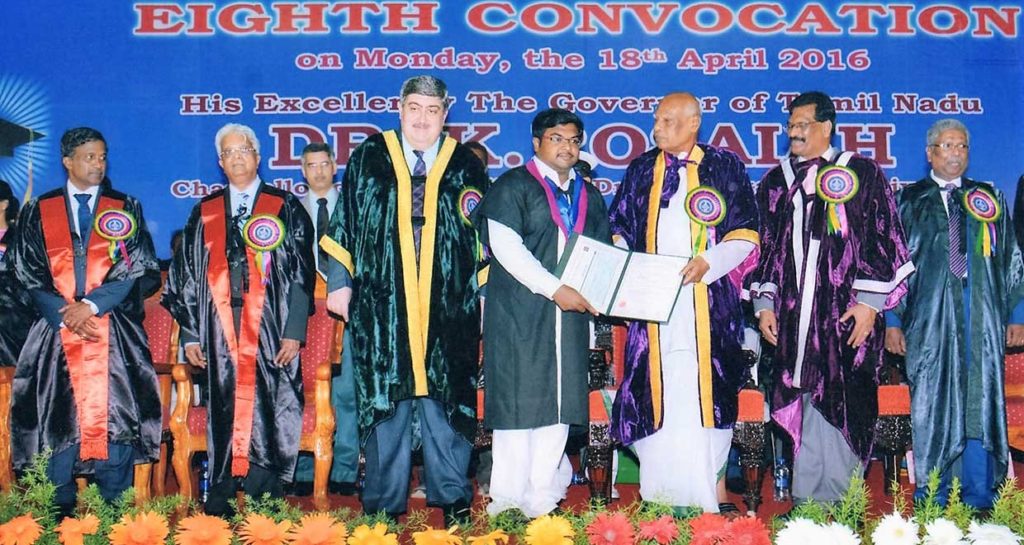
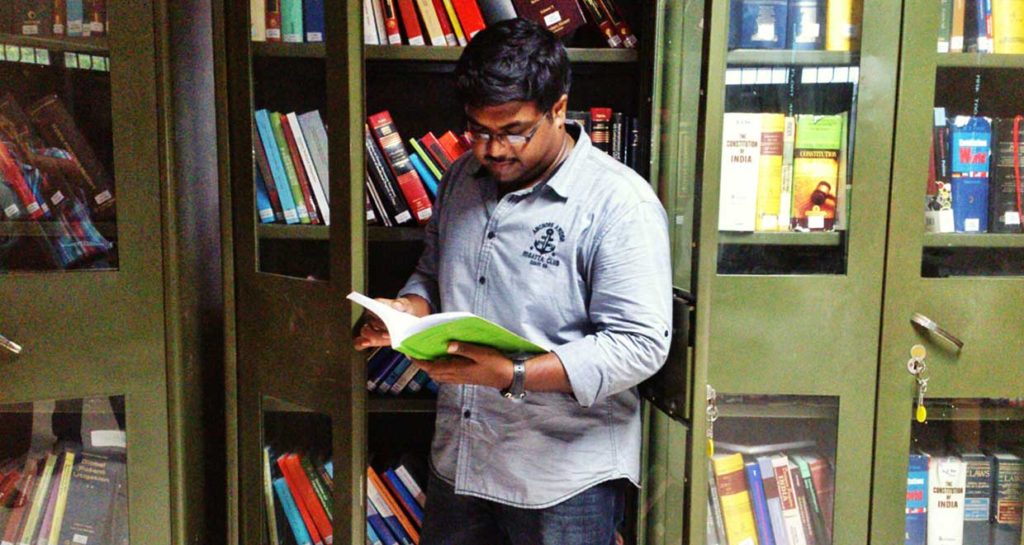
Author: Donnie Ashok

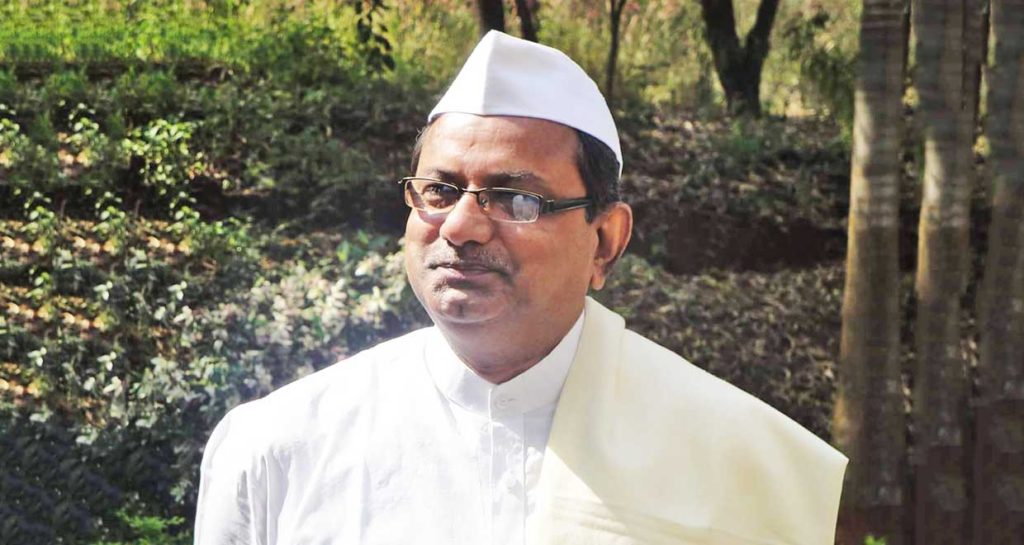
  • Dr. J. S. Patil, Vice Chancellor, NLUJA, Assam, on a career in legal academics, role of a professor and research work

    Dr. J. S. Patil, Vice Chancellor, NLUJA, Assam, on a career in legal academics, role of a professor and research work

    Dr. J.S.Patil qualified in law from Karnataka University, Dharwad in 1977, and thereafter went on to pursue further studies from University of Mysore, and earned his Masters in 1979. In 1997 he also finished his Ph.D studies from Saurashtra University, Rajkot.

    Dr. Patil served as a professor in the department of post graduate studies and research in law at Gulbarga University from 1995 and had deputations to other colleges including his stint from 2009 to 2013 as the Vice Chancellor of Karnataka State Law University. He is currently the Vice Chancellor of National Law University and Judicial Academy, Guwahati.

    In this interview, he talks to us about:

    • His love for the law and positive changes he has witnessed in the evolution of law
    • The challenges he faces as the Vice Chancellor of NLU Assam and those that he faced in KSLU
    • Advice on various facets of the legal profession and on acing law school
    • The divisions he believes exist between NLUs and other law colleges
    • His vision for legal education and NLU Assam


    Tell us a bit about your childhood. Looking back, what are the most important lessons that you learnt as a young student that shaped your personality.

    My school days were very important days of my life. There was a small government primary school in my locality known as Konapupet in a small town called Manvi in the Raichur District of Karnataka, where I had an excellent head master always dressed in a sherwani and fur cap, known for strictness and discipline. His personality influenced me to a great extent especially in meticulous dressing. When I was in the 4th Standard in middle school, I was chosen to deliver a short speech on Independence Day on 15th August 1964. My oration started from then onwards. In high school, I had some excellent teachers who were responsible for shaping my personality and future. All the schools I studied at were government schools, but satisfactorily qualitative with committed teachers. I was one among five students out of 150 who passed SSLC or 10th Standard in 1970. It was so difficult to clear the matriculation during those days, passing matriculation was taken as a prestigious one. My parents were very pious and humble and their dream was to provide maximum education to their five children. They were from the lower middle class strata of society; they were unlettered and farmers, yet because of their commitment, four of their children could get a good education. This has taught me a great lesson – to work hard and worship work. They were my greatest teachers and my inspiration in my childhood. Along with my elder brother, I established a small library of Kannada literature at home, especially novels from Kannada litterateurs. I was fond of reading novels and lent the books to others by charging ten paise per day and buying books with the revenue. We were able to build a culture of reading among our friends in the mohalla by this initiative.


    Why did you decide to opt for the profession of law? As a young student, which aspects of the law fascinated you the most?

    When I joined the law course, I had no clarity in my mind as to career. Coming from a rural background, it was difficult for me to take decisions as we (my brothers and I) were the first generation educated people in our family. I joined law only because my other friends had also joined colleges for law. But later on, during the course of my study, I realised the importance of legal education. As a young student, I was deeply influenced by my principal and wanted to be a teacher like him and also an administrator like him. Teaching became my passion over a period of time.


    Sir, you have pursued your law at Karnataka University. What were the highlights of your journey as a law student? Which legal subjects did you enjoy studying the most?

    To study under great teachers like Professor G. V. Ajjappa, Principal, University College of Law, Dharwad and other very eminent teachers in the college was a memorable and privileged aspect of my life. As I was deeply influenced by the imposing personality of the Principal, his favourite subject, Jurisprudence, was an obvious choice as a subject I loved the most and continues to be so even today. I was an average student at the LL. B. level. When I moved to the Department of Studies and Research in Law at the Manasagangotri Campus, University of Mysore, I took to studies seriously and was often described by my teachers and library staff as a model student on campus. My serious commitment to legal academics during those days transformed me into a law teacher.


    Did you ever have doubts back then about your ability to stand out in the legal profession? What, in your view, are the qualities that a law student should strive to possess in order to raise a notch above the rest?

    j-s-patil-1When I came to Dharwad from my native place to prosecute higher education in 1970 for PUC, I had an inferiority complex. I was able to get over it during my LL.B. studies. I could not enrol as a lawyer due to economic problems. I got an LL.M. seat in the University of Mysore and joined. The problem of inferiority set in again as there were very good students with backgrounds of having ranks and other laurels to their credit, while I had none. Slowly I was able to get over it and developed confidence. I had very good classmates who encouraged me and helped me in my studies. We were like one family and had an excellent atmosphere in the Department. Because of my dedicated hard work and support from friends and the faculty, I could come out with flying colours, by getting the first position with a first class in the international law branch and getting the second rank in the entire department. That was the beginning of my academic career and I never looked back after that.

    The legal profession demands hard work, regularity, punctuality, research, updating, good language and drafting skills, good communication and other soft skills, adaptation of modern IT tools and of course social and professional networking. Every law student should try to inculcate these qualities that will go a long way in building an excellent legal career.


    How should law students go about selecting topics for research publications?

    j-s-patil-4UGC regulations require a law teacher to take 18 hours workload of teaching. This takes away much of their time for teaching. Research takes a back seat as a consequence of this. Quality research has become a scarce commodity in the legal domain due to many reasons. The major reason, in my opinion, is the difficulty we are encountering in decolonising our consciousness. This problem is seriously interfering in understanding legal problems that we face in our country. Teachers need good training in customised research skills in the domain of law rather than routine research methods. Research and legal writings will become meaningful only if these are of relevance in providing justice to the common man. Competition to publish, due to the UGC requirement of API score, has encouraged law teachers to write and publish in research journals. It has also given rise to commercialisation and mushrooming of research journals raising question marks on the quality of research articles published in some of these journals. More attention to attend seminars and conferences, present papers, write research papers and publish have added to the overall personality of law teachers. It is also providing them with that additional input necessary to bring dynamics in their teaching.

    Students must select research topics based upon the hard realities of the need of the time, the problems our people face and difficulties they encounter in their lives vis-à-vis legality. Problems taken up for research need not be big and impressive but they must be pragmatic and practical. Solvability of the problem should be the hall mark of research topics.


    What are the biggest challenges that you have had to grapple with as the vice chancellor of NLU, Assam as well as KSLU? What have been the biggest successes so far?

    I have just started my innings in NLUJAA, Guwahati. The faculty and students here are wonderful. An urgent issue that I have had to deal with is shifting the University to the new campus. This will take a couple of months. The administrative building and law school building are ready for occupation. The construction of the Boys’ and Girls’ hostels is nearing completion. Construction of the Library, Judicial Academy and other buildings is also being taken up.
    j-s-patil-3

    We need to customise some of the course content to reflect regional aspects of the North East. We have to use A-VIEW (Amrita Virtual Interactive E-learning World) in our class rooms for more effective teaching and to ensure transparency. We have to launch some regionally relevant research projects on local cultural laws, the Brahmaputra River water management system, Legal regulation of mega biodiversity, legal regulation of petroleum and other energy resources. An ambitious project that I have in mind is the reconstruction of Indian Jurisprudence based on Indian experiences since the inception of the Indian civilisation. Consultation with stalwarts in the field like Professor Upendra Baxi and Professor G.V.Ajjappa has already been initiated to build the project.

    At KSLU the greatest challenges that I faced as the founder vice chancellor, were to acquire land, prepare the master plan and construct buildings. The other challenges were to bring 95 law colleges affiliated to various universities in Karnataka under one umbrella of KSLU and build a uniform curricula, examination system, etc. I have been able to do all these things successfully. Innovative steps taken at KSLU include the introduction of Khadi uniform on every Monday and singing of the national anthem every day in the morning before commencement of the classes and administrative activities of the University. This is to realise the dream of transforming KSLU into the peoples’ university with the punch line ‘Indian roots and global heights’.


    Do you feel that the legal profession has significantly changed from when you decided to study law? What are some of the changes that have positively impacted the profession and legal academia in your opinion?

    There have been some important changes in the legal profession since I started studying law. When I joined law, the legal profession was limited to civil and criminal practice. As time passed, there has been a tremendous expansion in legal professional activities in a variety of new and emerging areas like corporate and business laws, intellectual property rights, information technology law, entertainment and sports law, press and media law, environmental law, bio-diversity law, wild life and forest law, family law, consumer protection law, human rights, women and child rights, vigilance practice, legal process outsourcing, etc. The Legal profession has become one of the most sought after professions today. Every establishment needs to have a legal cell and recruit legal professionals. The union and state government departments, banks, corporates, NGOs, associations and unions, cooperatives, entertainment houses, press and media, etc. are establishing their own legal departments to address legal issues. The practice of law has gradually shifted from advocate chambers recruiting juniors to LLPs and LLCs and young lawyers joining these firms as employees or partners rather than juniors.

    There is a massive change in legal academics as well. We witnessed the introduction of a five year LL.B. programme, which runs parallel with the three year LL.B. programme. The introduction of semester (trimester in some national law schools) and choice based credit and grades points system have brought significant qualitative change in legal education. Introduction of new teaching-learning IT tools and e-library have added new impetus to legal education. NAAC accreditation is an important step that forces law colleges and universities to document their activities systematically and to conform to the requisites reflected in seven domains of NAAC proforma. This process is helping in activating activities in legal educational institutions.

    There are many types of legal educational institutions in our country. National law universities, Indian Law Institute, state law universities (Tamil Nadu and Karnataka), private law universities (O P Jindal), Law Schools in IITs, Law schools in private universities, government law colleges, university law colleges, private aided law colleges, private unaided law colleges and autonomous law colleges. With the establishment NLSIU in Bangalore and other law universities in the country, legal education has become a sought-after education for students. The competition among various players has contributed to the enhancement of quality in legal education. At the same time, it has also led to commercialisation of legal education which cannot be undermined.


    As a law student, you consistently excelled in academics. What are the most important tips that you would like to share with law students for consistently excelling in academics?

    One has to be regular to classes, punctual, hardworking, and complete the portion covered by the teacher that day itself. A student has to actively participate in moot courts, debates and other competitions. He should be in the library after class hours for studies and make effective use of e-library. He should regularly consult teachers for clarifications without shying away. He should promptly refer to dictionaries and encyclopaedias for understanding difficult words. He should not proceed further without understanding the sentence or paragraph he is reading. He should make notes and make periodic revision of the areas he has already covered. He should work with reputed lawyers, judges and firms as an intern. He should be active in the class, with friends, peers, teachers and everyone connected with law. These are tips to students to excel in academics.


    j-s-patil

    Do you feel that there are differences between students of ‘elite’ law schools and students from other law colleges and traditional universities?

    There is a gap between students in elite law schools and others. However, this is not to overlook some of the excellent students in other law colleges. Most eminent lawyers and judges of the country are from traditional law colleges. Students of elite law colleges have many advantages. They have good infrastructure, faculty, library, opportunities to participate in moot court and other competitions, etc. Their elitist background and environment also helps them in performing better. Sometimes this background itself may become a disadvantage. There is a possibility of elitist students becoming overconfident and slipping into undesired activities.


    What are your views on the future of Indian legal education? How would you suggest that the legal fraternity manages to stay ahead?

    There is a wide scope for legal education in India not only for our students but also for those coming from abroad. India has become an education destination for students coming from third world countries. The legal fraternity is required to build and continuously work on various areas of legal education by updating curricula and pedagogy, updating of library, honing professional skills, building vibrant professional networks on social media and professional online platforms, building a network of alumni and professionals, entering into collaborations and MOUs with reputed institutions and above all, to keep continuously working on every aspect of legal academics to stay ahead in this highly competitive world.


    What would be your advice to young law students? How do you think that they should approach their career?

    Law students in India are becoming more and more smart and career oriented by making good use of e-libraries and internet. Every student should have a clear perception about his career. He must develop alternative plans (Plan-A, Plan-B, etc.) so that frustration does not creep in. In the new e-environ, they should not forget to read physical books and write and keep their reading and writing skills intact. This will take them into their careers in a better manner. Students should strive to get into litigation as a first priority so that courts get qualitative lawyers. As many NLU products are opting for corporate jobs their latent talent and skills are not expressed fully. Furthermore, they stagnate in their career after some time leading to frustration. Therefore, entering jobs should be the next priority. They can also think of establishing law corporates by finding venture capitalists and angel investors and think of working in ADRs, LPOs and many other para-legal domains. Students should do independent research, take counselling from peers and teachers and inputs from their friends before making any decision. Of course, at the end of the day, the decision must be theirs.


    You have worked both in NLU’S and NON-NLU. Can you share your advice “How a law student can bridge the gap between NLU’S and NON-NLU”.

    There is a typical status and aura about NLUs in the country. There is a separate test, CLAT, for admission into NLUs, paving way only for the creamy layer students to enter into these institutions. Expenses also forbid others from entering NLUs. Hence, NLUs have become elitist legal education centres and islands of excellence (not all of them of course). Others are essentially non-elitist; but there are some very good law colleges in this sector also, not just competing with NLUs but also marching ahead of some of the NLUs. Newly emerging private universities are posing a big challenge to NLUs. Pace has already been set with regard to tough competition between NLUs and some of these other legal education institutions. The real gap is between NLUs (along with other elitist law schools in the urban) and the other law colleges (including the ones in rural areas). This gap can be plugged by using the benefits available under projects like NME-ICT (National Mission for Education though Information and Communication Technology) and NKN (National Knowledge Commission). These projects of the central government are launched to bridge the gap between rural and urban educational institutions by establishing virtual class rooms, weekly discussions, retrievable AV content, etc.


    Any time management tip for Law students?

    Students should build timeline for their studies, get up at 4 or 4.30 in the morning, do some exercises and yoga to keep the body and mind fit for the day, jot down the tasks for the day, earmark a minimum of six to eight hours to study, use with restraint mobile phones and social networks, spend more time online in perusing legal professional networks and platforms, develop effective online reading skills, spend some time with friends, faculty and peers, involve in sports and cultural activities so as to develop total personality. While going to bed in the night reflect whether the tasks jotted down in the morning are completed.


    What is your vision for NLU Assam? Where would you like to see NLU Assam 10 years down the line?

    NLUJAA is a young and emerging institution with some unique advantages. Its campus location is wonderful with the Brahmaputra River flowing on one side and an imposing mountain with woods on the other side providing a serene atmosphere to conduct academic activities and also to develop it into a green campus. Another unique feature is that National Law University Assam has Judicial Academy Assam on its campus providing an additional advantage to the faculty and students to interact closely with the judges and judge trainees.

    My vision of NALUJAA is to build it into a world class legal education institution with an avowed objective of leading from the front multi-task projects aimed at transforming Assam and the north eastern India into a legally conscious society and develop an atmosphere of respect for rule of law. Towards achieving this, the University will make all efforts to provide quality legal education at under graduate and post graduate level; and build an army of law graduates who will dedicate themselves in building India as a legalitarian-egalitarian society, by putting service before self wherever possible. Various law centres (17 of them are already established in the cutting edge knowledge of law) established in the University will undertake research projects in the focussed areas in the concerned discipline of legal knowledge and work in close liaison with public institutions, NGOs and civil society with the commitment to provide legal knowledge and legal literacy to the people of north eastern states in particular and the country as a whole in general. The University aims at building customised research projects that are socially relevant for the north eastern region such as Brahmaputra water management and regulation, legal protection of mega-biodiversity of the region, local cultural laws, Indian jurisprudence, regulation of petroleum and natural energy resources, legal protection of indigenous knowledge through intellectual property rights, issues relating to promotion of regional international business, trade and commerce, issues relating to labour and child labour specially in tea estates, problem of child trafficking, legal aid and legal literacy, etc.

    Our dream is to build a vibrant national law university that caters to the law and justice needs of people in the north eastern region in particular and the country in general by providing qualitative legal education through usage of the most modern IT tools to access legal knowledge domain.

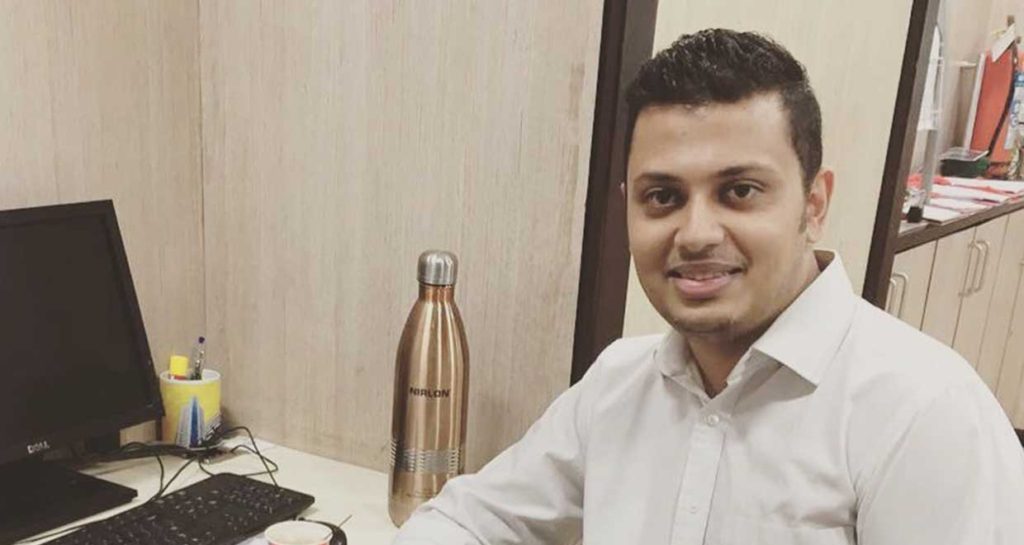
     

  • Alok Shah, Senior Manager – Legal (International Business) at IndiaCast Media (TV18 & Viacom18), on a career in international media distribution

    Alok Shah, Senior Manager – Legal (International Business) at IndiaCast Media (TV18 & Viacom18), on a career in international media distribution

    Alok Shah qualified in law from Pravin Gandhi College of Law in 2010 and worked at Kanga & Co. first as an Article Associate and later at Hariani & Co. as an Associate before pursuing a post-graduation diploma in Media and Entertainment law from NALSAR, Hyderabad in 2014.

    Immediately after that he got recruited at IndiaCast Media Distribution Pvt. Ltd (TV18 & Viacom18 Venture) as an Asst. Manager Legal of their International Business. Alok grew in this role and he is at present Senior Manager – Legal (International Business) at IndiaCast Media Distribution Pvt. Ltd. (TV18 and Viacom18 Venture).

    With his work experience in the international media distribution industry Alok shares talks to us about negotiation of contract with international lawyers, their interpretations, their contractual skills, and their drafting techniques amongst others.

    • His shift from law firm to in-house and private equity/real estate to media and entertainment.
    • How the Indian media and entertainment market has evolved and the dynamics of the media.
    • Challenges young lawyers might face in the media industry and the challenges he faces in dealing with international lawyers.


    Tell us a bit about yourself, and what drives you?

    Born and brought up in Mumbai, I breathe the spirit of this city.  From my childhood, I was interested in the fields of Political Science, Media, Sociology and Political Affairs. My father is a businessman and my Mother is a successful entrepreneur. Hailing from a family that is passionate about what they do, I wanted to choose a field in which I could truly excel – and that’s how I ended up pursuing law.

    My ambition and thirst for knowledge have been the driving forces in all my endeavours.


    How was your experience of legal education? Have you thought of higher studies?

    My experience in legal education was both a mix of academics and work experience. I was in Pravin Gandhi College of Law which is affiliated with Mumbai University. I enrolled for an articleship to pursue solicitors in my fourth year of law school with a reputed law firm. I was working with the youngest partner of that firm who specialised in Real Estate and Capital Markets. For me back then, work experience was a priority over higher studies, so I kept my focus on gaining as much work experience in multiple legal areas so as to ensure complete grip on the practice. At present, after completing 6 years of work experience in this industry, I plan to enrol in a business school to enhance my expertise in this industry.


    alok-shah-2

    What did you do in the year right after graduation?

    After graduation, I had an opportunity to either continue with the same firm or join another reputed law firm. This was during the time India was still reviving from the collapse of the Lehman Brothers shock, and I decided to move out of capital markets, considering the change in the market scenario. At that stage, I decided to join another cross functional law firm which had remarkable presence in multiple practice areas. I was excited to learn about new fields and wanted to take my time to decide what drives me to my best.


    What was your reason to change from a law firm to in-house?

    Well, now that was one of the most path breaking decisions of my career. I realised that it is difficult to understand the dynamics of the industry, being an external counsel who would be approached only in the event of a legal dispute. I had to be an ‘industry insider’ to understand the grassroots of the business. To summarise – I felt the need to move from ‘execution’ to ‘Strategy and Decision Making’ and that’s where my decision to shift as in-house counsel stemmed from.


    What about your shift from private equity / real estate to Media and entertainment?

    My goal to work as an in house counsel was not only to assist in legal matters but also to understand the nuances of the ever changing and complex business intricacies. Considering that I was primarily involved in private equity and real estate matters, it was not possible for me to enter a hedge-fund or a real estate conglomerate only with a law degree. My law firm had a full-fledged Media and Entertainment team as well. Call it a wonderful stroke of luck or destiny, I was involved in one such transaction and since then there has been no looking back. I gauged that Media is one of the fastest growing industries and is far more challenging in the dual avenues of law and business.


    alok-shah-3

    What is so different in Media compared to other areas of law?

    The media is one of the most revolutionary industries of this century. What is new right now may become old in the next 6 months. With new inventions, changes in technology and fast-paced innovations, it becomes very challenging not only for industry experts, but also for lawyers to keep pace with this ever growing sector. In this field, in addition to keeping a track of new legislations, a lawyer also needs to understand new technology (which is quite unlike any other field of law) – its dynamics, relevance and functionality. Moreover, Media law itself has so many different areas of practice such as distribution, licensing, acquisition, film production, artist management, merchandising etc. which makes this industry far more dynamic and specialized.


    What are the challenges that a young lawyer may face after joining this industry?

    I believe that legal education in India does not completely cover all aspects of media and entertainment laws considering that it is one of the most evolving and dynamic areas. Though Intellectual Property Rights (IPR) is one topic in our curriculum which tries to cover basic understanding of this field, I still believe that it is a limited resource to enable young graduates in understanding this industry. To overcome this challenge, I did my post – graduation diploma in Media and Entertainment laws from NALSAR University, Hyderabad. I would advise every young lawyer who is keen and passionate to enter this industry to enrol in some course enhancing knowledge in the field of Media and Entertainment law. Also, they can subscribe to magazines, web portals, newsletters concerning this industry to get a first-hand insight.


    How did the Indian market in Media and Entertainment evolve?

    Traditionally, in the pre-2000 era the Indian Media industry was not institutionalised and unregulated, under which films were funded by private money lenders, often by underworld gangsters, primarily interested in the collections from distribution rights or the box-office collections. But after it was accorded the “industry status” in 2000 by the Government of India, the following years saw the Indian films receiving funding support from the banks, Indian corporate and foreign studios thereby giving rise to more sophisticated digital production and postproduction techniques.

    As far as distribution is concerned, the Government’s move towards digitalization and addressability for cable television by 2016 is expected to provide an impetus to Direct to Home and digital cable growth. The Media and Entertainment industry is at a convergence point with digital being the buzzword and perhaps that is the reason television screens are being replaced with smart phones. From receiving news bulletins on Doordarshan to twitter updates – the Indian Media industry has come a long way.


    How is the Indian media and entertainment market different from international market?

    As far as media distribution is concerned, India is a highly regulated market as compared to other countries. In India, a broadcaster cannot have an exclusive deal with any platform since the same is prohibited under the Telecom Regulatory Authority of India (TRAI) regulations. However, the international market operates quite differently. In many western countries, the platforms insists on exclusive deals and that’s where the role of a lawyer becomes crucial, giving room for extreme and sometimes crass negotiations. In such deals, the discussions are quite pro-longed since the contract is not subject to any regulations of any territory (barring few clauses), but are based on pure commercial negotiations in which both – the distributor / broadcaster on one side and the platform on the other side try to grab the best deal for themselves.

    There are few contracts which may take more than a year just to reach a logical end during negotiations.  To summarise, in the international market the broadcaster’s main task is monetary exploitation of content, whereas in India, the broadcaster looks for maximum penetration of its content among masses.


    In how many countries is Indian Content available?

    In foreign countries, Indian content in Hindi language would not just attract the Indian community but the entire South Asian fraternity. Also, content from Indian regional languages have found substantial prominence in countries which have the presence of Indian regional audience. As far as Indian movies and television shows are concerned, they are available in more than 120 countries. It is pertinent to note that our content is dubbed and subtitled and broadcast on different foreign channels. People will be surprised to know that even in remote eastern European countries such as Georgia and Kazakhstan, our content which is dubbed in local languages is quite popular.


    Approximately how many foreign lawyers have you interacted with?  Can you share your experiences with a few of them?

    I have been involved in negotiations with approximately 20-25 foreign lawyers from different nationalities (such as US, UK, Canada, Bangladesh, Sri Lanka, Australia, New Zealand, Singapore, Russia, Pakistan, Egypt, UAE, South Africa, Brazil, Caribbean Islands etc.). There are times when there are strenuous negotiations involved especially when the first draft of the contract is shared by or with the other side whereas there are some transactions which are quite smooth since there is an existent commercial understanding in place. My personal experience has been both – enduring and challenging in dealing with lawyers from different nationalities. I have felt that the drafting skills of lawyers of western countries are worth appreciating, whereas as far as negotiations are concerned, lawyers based in Middle-East territories can give sleepless nights since they are hard to convince.


    What are the challenges you face in negotiating with foreign lawyers?

    Considering that the Media and Entertainment industry is evolving at different pace in each country; one of the most challenging aspects is to understand the technology prevalent in that country. When we are negotiating with platforms based in developed countries like US and UK, it is a daunting task as these countries are at least 5-10 years ahead of us when it comes to technology and technical know-how. As a lawyer, we need to imagine and understand how technology functions before we start with our negotiation process. Also, working in different time-zones can be quite taxing but the thrill makes it all worthy.

    Moreover, when you cannot have face to face communication or video conference, it is difficult to understand the body-language of the opposite lawyer and that makes the process more time consuming. Their language, interpretation, pronunciation and accent are another set of barriers which a lawyer may face during the negotiation process.


    What are the legal issues you generally face in negotiating a media contract especially while negotiating with international lawyers?

    There are certain legal issues pertaining to payment of royalties, indemnity, jurisdiction and governing law which are contentious to negotiate in an international distribution and acquisition contract. Limitation of liability is another thorny issue between the parties considering that in the event of any dispute the company should not be exposed to unlimited liability, that too in a foreign court of law. Negotiating a clause on payment of royalties in an international distribution contract is a tough job for an Indian lawyer due to ambiguity in the current copyright regime in India. These clauses are sometimes real deal breakers.


    How important are lawyers in this industry?

    Over time, the role of a legal department in a company has transformed from merely being a support function in an organisation to a full-fledged in-house counsel, which means that we are advisors to the senior management.  Especially in this industry, which is quite niche, I see the role of lawyers expanding specifically in international business. The CEO’s and business managers are now more than willing to rely on people with legal background for complex issues. In USA, there are many managers and business leaders in media and entertainment sector who have their origin in legal industry. In India too, the trend is changing – lawyers have been given role as business managers since they have the dual advantage of understanding and assessing the risk as well as ensuring maximum profit for the company.


    What would be your advice to young lawyers who would want to join this industry?

    There has never been a time more suitable than today to join this industry. It is exciting, fast paced and dynamic just like the present generation. Technology is set to change the world and its rapid consequences on the law cannot be ignored. There is no age limit for academic centric goals since we are in a field where one has to keep abreast with day to day developments in their respective area of practice. My advice to them is that they should not be satisfied with only becoming a better attorney but go a step ahead and get a perspective of the business world. The key to the next few decades of business operations, Indian or international rests in the hands of the lawyers of today, they only have to realise their pivotal role.


  • Pradeep Jain, Managing Partner, Singhania & Co., Mumbai, on all about managing a full service firm

    Pradeep Jain, Managing Partner, Singhania & Co., Mumbai, on all about managing a full service firm

    Pradeep Jain qualified in law from Devi Ahilya Vishwavidyalaya in 2000. Thereafter, he joined Singhania & Co. in 2002 and was soon rewarded with partnership in 2004 for his excellent work in the Corporate Practice & Maritime Laws. He has played pivotal role in a number of big joint ventures and corporate takeovers. He is also regularly engaged by the Institute of Company Secretaries of India, New Delhi, to deliver lectures on various subjects related to law.

    Pradeep frequently advises clients on matters relating to the development and control regulations, policy and regulatory matters, compliances relating to Securities Exchange Board of India, Reserve Bank of India, Insurance Regulatory & Development Authority and Foreign Investment Promotion Board. He regularly advises vessel owners, charterers and P&I clubs on various maritime laws. Pradeep also represents his clients in international arbitrations under the Singapore International Arbitration Centre, Singapore Chamber of Maritime Arbitration and London Maritime Arbitrators Association. He is vastly renowned for his acumen in liasoning with the Foreign Investors Promotion Board (FIPB)/ Secretariat for Industrial Assistance (SIA) in the matters related to Transfer of Shares from Resident to Non-resident, foreign technical collaboration, liasoning with the Securities Exchange Board of India (SEBI) filing various form or Report in the matters related to Takeover, Mutual Fund, Assets Management Companies, Trusteeship, Custodian, Foreign Institutional Investors etc.

    In this interview Pradeep talks to us about:

    • His experiences working with Singhania & Co.
    • The importance of a mentor in a junior lawyer’s life, and important traits any law aspirant should cultivate
    • Networking and the legal profession, and
    • His valuable advice to all the young lawyers/students/aspirants out there.


    How would you like to introduce yourself to our readers?

    A lawyer by profession, I am the Managing Partner of the Mumbai office of Singhania & Co. I come from a family of businessmen; however, my fondness for academics led me to gathering multiple degrees in the fields of science, mathematics and law and finally pursue a career as a lawyer. I joined Singhania & Co. in the year 2002, and actively worked under the tutelage of Mr. D.C Singhania, the Founder of Singhania & Co. and a veteran lawyer widely recognised for his dexterity in the areas of litigation and arbitration. Thereafter, in a short span of 2 years I was promoted to Partnership and there has been no looking back ever since.


    Going back to your graduation days are there any anecdotes you would like to share?

    It was a very interesting journey. You would be surprised to know that I never wanted to be a lawyer, but my Mom was convinced I would be a litigating lawyer, as I would always grab opportunities to show case my oratory skills, and of course pick up arguments.

    I loved studying mathematics and science and wanted to pursue a course related to these subjects. So my first effort was to appear for medical examinations and be a doctor. Unfortunately, I couldn’t sit for the exams due to personal exigencies. Thereafter, I decided to not waste a year and ended up pursuing a degree in mathematics and went on to pursue my Masters in it.

    I didn’t want to stop studying so I undertook the company secretary course during which my mentor Mr. Sunil Jain, advised me to explore law as a profession.

    I took his advice and I have loved every moment of this profession!


    How do you recall the first few years after qualifying in law?

    I have always felt that I have been fortunate and lucky in a lot of scenarios in life. I have been lucky to get picked first, or noticed in a group, and this is what happened with me in Singhania.

    The first few years of my career were nothing short of absolute delight.

    My partner, Mr. Sameer Rastogi, whom I was assisting in the initial days of my career at Singhania in 2002, liked my research skills and ideas of solutions to client issues and legal opinions drafted by me. He ensured that I was a part of important client mandates. He never failed to mention my name in other offices which helped me work and interact with different offices of the Firm and definitely aided my quick promotion to Partnership in 2004.

    Everyday brought in new avenues to learn and grow. Luckily, I was part of a firm that pushes lawyers to get out of their comfort zone and handle matters with independence. We were not treated as “Associates” working for a monthly compensation; we were instead treated as active, thinking and performing individual professionals who have the capability of servicing clients with minimal supervision.


    Please tell us about the relevance of a mentor as a young lawyer, how did you find your mentor?

    Having a mentor in the formative years of your career is definitely important. When we enter a new professional field, especially the legal industry, we have certain ideas about the profession in our head, and it is easy to face disappointment if we do not have a guide to help us understand the profession. Mentoring helps individuals understand the practical aspects of law and provides necessary guidance to assist individuals in making rational career decisions.

    At the cost of repetition, I would say I was fortunate to have Mr. D. C Singhania as my mentor. I was extremely surprised at the humility of one of the most sought after lawyers in India and his down to earth personality. Besides honing my legal acumen, he has helped me understand the importance of the nobility of our profession. He encouraged each and every lawyer including interns to express their opinions on matters and be independent in handling matters. If you trace the history of our Firm, you will know that through his mentoring he has instilled the confidence in many lawyers who are now running their own firms or are successfully handling Partnership positions.

    I never thought that I would end up as a Managing Partner of a firm, however, as mentioned before, it was through the guidance of my mentor that I learned about my capabilities and my true potential as a lawyer. I was guided to take initiative and encouraged to shoulder both legal and managerial responsibilities leading me to where I am today.

    Even today, Singhania & Co. actively encourages all young lawyers to aim at being independent and self-sufficient. Our Firm follows an active policy of mentoring freshers and interns into confident professionals who possess the capability of sourcing and servicing their own clients.


    What role does academics play in the legal profession? Given that maritime law requires a lot of reading, how has it been in your case?

    It goes without saying that an affinity to read and keep yourself updated is mandatory in our profession. A student who is academically bright showcases this ability and therefore has a better chance in terms of placements.

    Having said that, academics is one of the many ingredients that make a good lawyer. One needs to be interesting enough for clients to notice you and that involves having great people skills. Being persuasive, having a flair for writing, ability to network and socialise professionally are some of the other key components that will give young lawyers an edge over the others.

    A popular lawyer is usually a person who is blunt, bold and can mesmerise the court or audience with his words.

    To have such qualities you must have knowledge of history, philosophy along with knowledge of statutes. The more you read more confident you are to interact with your clients and fellow professionals.

    I always tell students, juniors that when you are younger, you will get time to read. So please learn as much as possible because as you grow, no matter how much you are earning, you will not get time to read.


    You are noted as one of the leading maritime lawyers in India. Very few students focus on maritime laws during their formative years. Could you tell us more about maritime practice in India?

    Hahaha (blushing).

    Shipping laws require extensive reading and research. Moreover practice of maritime law is not restricted to one country and in most of maritime arbitrations we deal with, English laws are applicable and one must be aware of the laws, rulings and authorities to be fully prepared for arbitrations.


    Founded in 1969, Singhania & Co., has been one of the very few law firms to have maintained a steady practice for all these years. Tell us more about the firm and its heritage.

    Singhania & Co. as mentioned earlier was founded by Mr. D.C Singhania in 1969. Mr. D.C Singhania is a highly respected lawyer with over four decades of experience.

    He was very well aware of the industry and its potential. He also recognized the importance of treating the profession as a service and keep the clients interest at paramount. He always emphasized on delivering good service to the Client.

    Mr. D.C Singhania, was innovative in his approach and avoided a lot of stereotype functioning of firms back then. While the popular trend was to be recognized for practicing in a particular court, he went on to successfully argue in various forums and didn’t restrict himself just to the High Court or Supreme Court.

    This is also why world best lawyers associations like “Lex Mundi” and “Terralex” felt announced Singhania & Co as first Indian member law firm.

    Over the years our Firm has been in involved in various noted arbitrations such as Western Company of North America v ONGC, and Alsthom v Railway Board of India amongst others. Our Firm has represented over 1000 international client organizations with their matters in India or abroad including fortune 500 comp

    Currently, Singhania & Co. operates out of 10 offices including an office in London. In India we have offices in New Delhi, Mumbai, Hyderabad, Indore, Bangalore, Kolkata, Chennai, Ahmadabad

    The breadth of our practice includes Admiralty, Anti-Dumping, Aviation, Arbitration & Dispute Resolution, Banking, Securities and Financial Services, Corporate &; Commercial, Infrastructure, Intellectual Property, Joint Venture & Technology, Litigation, Mergers & Acquisitions, Technology Transfer, Project Financing, Capital Market, Private Equity and Fund, Securitization & Structured Finance and Taxation laws.


    Please tell us about your journey at Singhania & Co.?

    My journey in Singhania is as dramatic as my entry.

    Interestingly, I had to go the ICSI regional office and I ended up at the office of Singhania & Co. Once the seniors spoke to me and heard about my profile, they decided to take an interview and I was hired!

    Since then, it has been a wonderful journey. I have learned a lot about the profession and I guess I am still learning!


    We are very curious to find out how do you find time for yourself despite heading busy offices in Mumbai and Indore? What would be your tips to the young lawyers on time management?

    Haha. My friends never find me reading and my clients never see me executing works except on meetings. In fact I don’t take up my role as a Managing Partner as work.

    I like doing it and I treat it as fun and I end up having fun. I love the energy and rush involved in solving legal issues and that is why I never feel tired. I believe that if you enjoy your work and don’t take work as a task and then you will see that you are full of positive thoughts and energy.

    It is very simple. If we can sincerely work (with minimal or no distractions like calls/facebook/whatsapp etc.) for at least 8 hours a day, we can accomplish a lot more than we imagine. Being busy is dependent on how sincerely you manage your 24 hours. As a junior, my job was to be well equipped with my research and ensure that all deadlines are met. I therefore dedicated my time in office towards working and/or reading up in case I was free. That way, I would always have time for myself when I was back home. My role as a managing partner requires me to delegate and ensure that the work gets done. I also shoulder the responsibility to keep my clients and my team happy. I dedicate my time in office towards the same and still find time to pursue my interests.


    We have seen that many law students are faced with tough choice between attending classed and pursuing internships. What, according to you, should be the correct balance between academics and practical exposure?

    I would suggest students to take time out from their courses to intern as much as possible, as it provides a lot of practical experience and knowledge about the legal industry which cannot be learnt through books but at the same time they should not make life too serious and try to find ways to maximize once output in lesser time.


    Due to developments in technology and advancement of social media, networking and connecting across globe has become much easier. How have these developments affected the legal profession and the way in which lawyers have been working so far?

    Absolutely! Much has changed in terms of technology and for the better!

    It is much easier to network now than it was 15 years ago. It is easier to interact with a lawyer/firm you intend to work with even before you have met the Firm. It is much simpler to verify details about a particular firm/person now than it was a few years ago. That is how much technology has evolved.

    Networking sites allow lawyers to not just network but also freely exchange and share knowledge and insights on various laws and its impact.

    If used wisely, it is a very strong tool for a lawyer and can help us make our noble profession nobler but it has some draw back as well which should be fixed. I see young generations spend a lot of time distracting themselves on social media which eventually decreases their productivity and also sometimes explains unnecessary longer working hours!


    Finally, any word of advice for all the young and aspiring lawyers?

    Be bold, blunt and honest. Pursue power through your hard work, knowledge and never forget your responsibilities towards society.

    Self-evaluation helps you become a better professional and to excel when pitted against both contemporaries and seniors!

    Life is not a race but definitely a marathon so invest in yourself and in knowledge and not money in your early years.

  • Varchasvi Gagal, CEO, LegalSpell, on starting up in legaltech and creating a drafting tool

    Varchasvi Gagal, CEO, LegalSpell, on starting up in legaltech and creating a drafting tool

    Varchasvi Gagal graduated from Jindal Global Law School recently in 2016. After witnessing a wide array of legal cultures through global legal education in college and on exchange at Baltimore School of Law, University of Baltimore, he has been researching the use of legaltech to transform Indian Legal drafting methods, for the past 2 years. He worked at the Legal Clinic of his college to understand the need for documentation among people at the grass roots level.

    Varchasvi has recently launched India’s first DIY document drafting platform for all called LegalSpell. He has been working on his start-up for more than a year ago. His vision is to revolutionize the way document drafting is done in India.

    In this interview he talks to us about:

    • What is LegalSpell and how it is one of its kind.
    • His motivations and inspirations in life and in creating LegalSpell.
    • His journey from a simple law student to the CEO of LegalSpell.
    • His vision to do something path breaking with LegalSpell.
    • Future plans and taking Document Drafting towards a much needed evolution.


    Tell us a bit about yourself. What drives you? What is one achievement you would be most proud of today?

    I come from a background, which involved my upbringing in a small town (Alwar) in a joint family. I have been molded in such a way that commitments are considered to be of the utmost importance.  Being from a business family, I have always admired my father. Watching him work inspired me in so many ways. He struggled hard and created an industry all by himself.

    He drives me towards becoming a better man.

    I like to be honest. I am a straightforward person and in a lot of ways, direct and practical. And maybe that is why I never back out from my commitments. I like to keep things clear, and law taught me that in order to do that, it’s better to do everything legally. And maybe that is why I never back out from my commitments. That was my motivation towards LegalSpell.

    When you are working towards something that you believe in, you just don’t want to stop. And that has made me a workaholic. I just love to work and I can’t sleep until I am satisfied with the inputs I am giving in to achieve my goals.

    Although it took me more than a year to analyze the needs of people, one thing I am proud of today is that, I have finally created something that I once imagined. We created a user interface, which would not only revolutionize drafting, but will cater to anyone and everyone. The tool was specifically designed to adapt to the user, keeping in mind a professional as well as a layman. I am proud that LegalSpell will work directly and indirectly towards legal awareness and safety.


    Tell us a bit about your law school days, and your internship experiences?

    Law School for me was a joyride. It has transformed me in so many ways and yet it was a home away from home. Spending half a decade in a place is not a piece of cake. But Jindal was an experience of a lifetime. The 5 years have taught me so much, made me aware about the world, and has witnessed my transformation in many ways. I was taught by few of the most renowned faculty in India and on the other hand I made friendships to last for a lifetime. The semester exchange program opportunity gave me so much of an insight into the legal cultures of the world.

    Also, I thank my college for giving me some wonderful friends and seniors. Samridh, Ojasvi and Harsh Aggarwal have been my constant support throughout. My seniors, Advocate Jayant Malik and Arjan Sharma have guided me in shaping LegalSpell as a product. In fact, my friends and an integral part of team LegalSpell, Namon, Karan and Hrideja are also from the same college.

    As far as my internships go, I thoroughly cherished interning at Impact law venture. That was the time when Mr. Pankaj (the owner) gave me some brilliant insights into start-ups.


    When was the moment you decided to not pursue the mainstream legal career and dive into entrepreneurship?

    My exchange semester along with the internships played a huge role in my decision in choosing a non-conventional career. I gained a lot of experience at my internships, and a lot of knowledge in my college, however there was always something that was missing. There was always the will to do something path breaking.  Something that not only creates an impact in the legal sphere, but transforms it forever. And when it clicked, nothing was the same ever again. The drive that it brought has borne its fruits in the form of LEGALSPELL.


    What is LegalSpell?

    LegalSpell is an online drafting platform for lawyers, corporates, entrepreneurs, start-ups, freelancers, designers, chartered accountants and laymen alike, a tool facilitating an instinctively easy drafting. LegalSpell ensures a time-efficient and cost effective user experience. Having been designed to automatically customize and personalize the document drafts for the user, this novel drafting platform has convenience imbibed in its core. A user can prepare their customized draft simply by answering a few questions and thereafter, use the drafting platform to personalize their draft to better suit their needs. While using this platform, the user has the flexibility of hand-picking clauses from LegalSpell’s automated draft prepared on the platform or add pre-drafted clauses specifically tailored to suit their draft from the Referrals tool. To add to the user’s experience, the drafting tool also incorporates features like an onscreen Google search and drafting notes, amongst others. The orientation of the drafting platform has been kept well aligned with that of the conventional drafting tools to instill adaptability and for enhancing the user’s ease of use.

    For instance, if a lawyer needs to draft an application under Section 34 of the Arbitration Act (filed for setting aside an arbitral award), all he needs to do is answer a few specific questions and LegalSpell will automatically prepare the draft by creating the Index, Memo of parties, List Of dates, Affidavits and Vakalatnama in just one go.


    What is legaltech? How does LegalSpell use legaltech?

    Legaltech is nothing but a step forward towards a future where the legal fraternity goes hand in hand with technology to attain more efficiency and productivity in legal work. The idea is to revolutionize the legal sphere with advancements of technology to foster the legal needs of people with utmost convenience.

    LegalSpell is driven by the application of technology to redesign the conventional document drafting practices into a neoteric and more sophisticated system of drafting. Our vision is to strive towards efficient and hassle free document drafting through the use of legaltech. Our goal is to innovate and develop technology to make the legal system much smarter, faster and efficient. We believe that while all other spheres of our life have been transformed through the means of technology, the legal system has remained deprived of such transformation. By introducing LegalSpell, we are reshaping those conservative and conventional methods by the use of technology.


    Who all does LegalSpell cater to?

    LegalSpell not only caters to Lawyers, CA’s, Corporates, Start Ups, Freelancers but to layman as well. It is so easy to use that through an easy 5-step process, a highly intricate and complex document can be drafted within minutes. With our initial offerings, LegalSpell provides a platform to draft more than 120 documents, which are divided among Court Related documents, Agreements, business related documents and personal documents. In fact, with the course of time, we are aiming towards a repository of 250+ documents by the end of October. With all that in the cards, we are just getting started. Our goal is to provide our customers with a choice of each and every single document possibly required under the Indian legal system.


    How is LegalSpell of aid to the legal fraternity?

    Being a company started by lawyers, we realized that due to increased cost and time pressure in a highly competitive industry, it had become imperative to invent a cutting-edge solution to the highly cumbersome document drafting methods. LegalSpell serves as the perfect tool to solve these issues.

    The amount of time it takes to create an ironclad document is far beyond imagination for a layman. Be it a lawyer or a paralegal, drafting is and has always been a cumbersome process. But not anymore; LegalSpell caters to the needs of legal fraternity, where it not only saves time, but is also cost effective. No more drafting hassles, instead after a mere work of answering few questions, the user will be served with an automated draft of the selected document in one go.

    Moreover, LegalSpell not only provides the lawyers with a means to increase efficiency and work productivity, but also helps them to expand their horizons into different aspects of law with the diversity of documents that it offers.


    How did LegalSpell come about?

    After spending a whole semester in Baltimore School of Law, studying the functionalities of law in the global sphere and experiencing the digitized legal culture there, I realized how India lagged behind from global standards of fast and efficient document drafting. Being a legal student at that time, it perturbed me that there was no dedicated document-drafting platform in India to cater to the documentation needs of people.

    I realized that the nuances of the legal world have been changing at a pace faster than ever and range into multiple shades of an otherwise black and white regime. The idea behind LegalSpell was to empower everyone to keep up with this change. While technology has transformed the way professional needs and demands are met, the realm of documentation lacks a smart and efficient use of technology to fulfil its demands. By creating a tool for document automation and customization, we are reinventing a smarter and more productive way of generating high quality documents with utmost ease and convenience.

    As a result, I, along with two brilliant lawyers set upon to create LegalSpell, to foster the documentation needs of people.


    varchasvi-gagal-1

    Who are behind LegalSpell?

    Driven by the pursuit of spreading awareness amongst people, LegalSpell was conceptualized by myself with the support of Mrinal Gagal (Entrepreneur) and was, thereafter, pragmatically augmented and developed by two lawyers, Jayant Malik and Arjan Sharma. Our Team Consists of Ojasvi Singh (Advocate), Meghanjali Routh (Economic Strategist), Karan Dhingra (Law Student), Namon Deep Jain (Law Student) and Hrideja Shah (Law Student).


    What were the problems faced while bringing about LegalSpell?

    Everyone believes that a good idea is all that is needed to establish a successful start-up, but take my word, that is merely the beginning. Maybe that is why there’s no copyright on the idea but on its expression.

    The number of hurdles faced over the course of time in the creation of LegalSpell are innumerable, however one of the biggest challenge was to develop an instinctive platform that could respond to all the needs and necessities of the user. The research and development invested in the creation of LegalSpell, is one of the most significant reasons why LegalSpell is one of its kind. It took us a whole year, just to research and analyze the needs and demands of the consumers.

    Also, our I.T. team along with our Legal team faced countless problems while trying to incorporate technology in creating flawless drafts. However, they did a commendable job by working day and night to create a dedicated DIY document-drafting platform.


    Why a start-up over a conventional job or an independent legal practice?

    I am and have always been passionate about law, and at the same time I have always been taught by my father that progress is the key to everything. The idea behind LegalSpell was to create something in the field of law that proves to be a definitive step towards a progressive legal culture.

    Don’t think of LegalSpell as just another product in the market. It is much more than that, it stands tall on the foundations that are built on much higher principles. As a law student, my inspiration has always been backed by the habit of need for quality and excellence, that was instilled in me in my early years of law school. As Aristotle has said “we are what we repeatedly do, and excellence, then, is not an act but a habit.”

    By creating LegalSpell, we are not only progressively catering to the needs of fellow lawyers, but are creating a legal environment where anyone and everyone has access to quality documents which helps them stay legally sound in their respective professions.

    Why serve only yourself by doing a conventional job, when you can serve the whole fraternity by making their work more productive and efficient.


    What can we expect from LegalSpell in the near future?

    This may sound a little over-confident, but we are just getting started. Not only are we planning to come up with three new services by the end of this year, but we are already working on adding a wide array of documents related to every profession, so as to cater to the legal documentation needs of as many people as possible.

    We already have a document offering of 110+ document drafts, and our goal for 2016 is to take it to 500+ documents by late December. On the top of that, our R&D team is constantly working on making LegalSpell’s drafting platform more instinctive, more responsive and even more user friendly, based on the feedbacks from our existing customers.

    If all goes as planned, LegalSpell will transform the way documents are created in India.


    Is LegalSpell intended for the Indian Markets only?

    The answer to the question whether it is “intended” only for the Indian markets won’t do justice to what the future holds for LegalSpell.

    As of now, LegalSpell is specifically focused on catering to the needs of Indian users. It is designed to respond to each and every need of the user while drafting their intended document. The documents are fashioned according to the Indian Legal System to provide utmost precision.

    However, as I mentioned earlier, that we believe in progress and we are not denying the fact that somewhere down the road, LegalSpell might include international documents under its ambit.


    Where do you see LegalSpell in the coming years?

    We believe that with the inception of LegalSpell, we have created something truly incredible. It holds the potential for an endless number of possibilities. We have and still are striving towards revolutionizing the Indian Legal System, and we won’t stop until a truly remarkable revolution is witnessed by our legal system. We take pride in the fact that we are instrumental in doing so.

    We already have plans for the coming years, however they are still in their initial phase, and right now we are working on our plans for the near future, moving forward one step at a time.

    As they say, “the sky is the limit”, but for us, we don’t believe in limits, and that is why “the sky is where we start from.”


    What would be your message to readers?

    Believe in what you do. I believe law, as a career is just not limited to litigation or corporate life. In today’s world especially when India is moving at such a fast pace towards digitization, a law student has multiple avenues to choose from. I believe that in order to sustain or to be successful in such a competitive and fast moving environment that we live in today, one needs to be innovative. We are just at the inception of innovation in the legal field and there is a long way ahead. Courses we study in our law school shape our reasoning abilities. Once we graduate only then do we realize that there has been a significant change in how our reasoning and logical abilities have been boosted. At the end of the day, the only thing that matters is one question, “Are you living your profession” and my answer to that question is YES I Am.


  • Kapil Sankhla, Founder, Sankhla & Associates, on litigation and managing a firm

    Kapil Sankhla, Founder, Sankhla & Associates, on litigation and managing a firm

    Kapil Sankhla qualified in law from Campus Law Centre, Delhi University in 1999 after gaining a B.Com degree from Shri Ram College of Commerce and another degree in Hotel Management from IHM, Pusa. For the better part of his law school, he engaged in a long term internship which prepared him to take on litigation with ease even as a fresh graduate. He is the Founder and Managing Partner of Sankhla & Associates, based out of New Delhi.

    In this interview he talks to us about:

    • His pre-law school days and passion for debating
    • Decision to pursue law and the inspiration behind it
    • The importance of reading as a habit and a passion
    • His life at law school
    • Starting up with Sankhla & Associates


    How would you like to introduce yourself to our legal amateurs and professionals?

    The learning never stops and I believe that I too am a student of law, albeit a few years your senior! I practice and perform not in a moot court but in real life courts and like any other student of law, I compete and collaborate every day. As a first generation lawyer, I have gone through my share of self doubts, trials and tribulations and have realised that the journey is its own reward. It has been a beautiful journey so far mixed with struggles, success, challenges, more struggle and more success and the graph continues to waver. I have realised, the harder I work on the basics of law, the simpler things get. I am enjoying every bit of this amazing profession where I get to understand various levels of issues and strategise and grapple with various aspects of law every day.

    As a lawyer, my mantra, my life philosophy, and the philosophy of the firm which has worked in Court battles against the biggest and the strongest opponents, and which I would like to share with our young readers is -tenacious resolve, which means stick on-hold tight, despite all odds, and your time will come.


    Tell us about your childhood and pre-college life. Was it your all time dream to be in the legal profession?

    I was an average student which, according to teachers would mean not very bright, but I loved (and still do) to read and was a very imaginative child. I believe that it is your education and not your studies that make a success out of you. If I had to advice, it would be-keep reading, it doesn’t matter what you read, just keep reading, and trust me all that information, however random is churning and stirring up ideas and dialogues which will hold you in good stead in the profession, irrespective of whether you become a litigator or do chamber practice.

    As a child, I think I wanted to become a writer, which I realise I can very well do even now, and best part is, there cannot be a better profession than this!


    What incidents, influences or interests prompted you to think of law as a career?

    I remember the first time I saw legal luminaries like Mr. Ashok Aggarwal and his famous interview where he chose morals over a client, got me interested in law as a profession and got me hooked on to it; Mr. Ram Jethmalani being in the news with Harshad Mehta made me want to stay in the profession; reading about Mr. Nani Palkivala made me want to reach for the stars and briefing and interacting with (now) Justice U.U. Lalit ensured that my faith in honesty, fairness and humbleness is firmly anchored. Most lawyers don’t join law to become lawyers, for most, it is a stepping stone for something else. Fortunately, I am a part of the minority, as law chose me.


    Tell us about your experience at Delhi University. What all curricular and extra-curricular activities did you participate in?

    I have a very chequered past vis-a-vis the time post school. I got through SRCC but realised early on that it wasn’t for me, so I got into Hotel Management, a field where I did quite well. Throughout my college life, I was very active in theatre and debates and it was my passion to always speak against the motion and see how I am able to convince the audience. This caught my interest towards law as a field and I took the entrance, thinking ‘what’s the harm in trying?’ I didn’t think of law as a profession, when I took the exam, but when I did get through Campus Law Centre, DU, I took it up seriously and also interned with a lawyer for more than two and a half years while I was in college. This proved to my advantage as by the time I was in my third year I was confident about court visits and in-fact upon graduating as a lawyer, I handled a final argument matter within 19 days of registration.


    What would you advise our readers is the ideal things to look to get out of university, other than a degree?

    A university one looks for to study should definitely have a good name and reputation. It should encourage real life examples in terms of case research and also encourage participation in moots, etc. Any university which promotes practical learning as well as theoretical learning is an ideal University to be in. Alumni of the university and their performance in the real world also has a bearing on whether the University would be able to provide what one is looking for.

    I would advise you to enjoy yourself to the fullest. Be foolish, make mistakes, learn and enjoy. Participate in whatever activity takes place, you’ll never have the opportunity to probably get away with mistakes once you become a lawyer. Enjoyment is integral to being a college student, it is indeed a time wherein one needs to relax as once we are thrown in the profession one must not forget what the stars of the legal profession have said again and again “Law IS a jealous mistress!” and there shall be hardly any time for leisure as such!


    You founded a law firm that is doing very well today. What challenges do you think someone who wishes to start a firm or independent practice is likely to face? What would you advise them to do to mitigate such circumstances?

    It is not easy to build a practice in law, yet not impossible either. The challenges one faces are manifold. Convincing clients to assign and engage a new firm/independent lawyer is the most important one. It is imperative that the clients approaching a new firm/lawyer should be able to get a level of comfort to be able to engage the firm as their lawyers. Necessary infrastructure to work from is also required. A decent library and efficient work staff goes a long way to enable a lawyer to concentrate on his job, leaving aside worries of billing, file management, correspondence and follow up with clients. A good support team to handle such issues coupled with dedication and hard-work should help any lawyer achieve pinnacles of success.


    Presently you are the Managing Partner of Sankhla & Associates. What falls within the scope of your responsibility?

    As the Managing Partner of the firm, I have the responsibility to bring in new clients, hire new Associates, make alliances with international and national firms to enable a global presence of the firm. Motivating my team and encouraging them including pointing out spheres of improvement also constitutes a large part of my role. I have to ensure that not only does the team work to their optimum potential and a bit more, but also that they get their fair share of fun, recreation and feel connected to each other as a team and a family. This ensures all round development of the firm and relations therein. The growth and success of the firm is a team work with the Managing Partner at the helm of all affairs.


    While hiring new lawyers what kind of skills do you look for in them?

    A promising CV entails besides a good grade, involvement in moot courts, research and an active college record. As a student, it does speak volumes if your CV boasts of a reputed college, a healthy participation in moot courts and debates, internships involving firms and lawyers handling various aspects of law and published papers and articles, if any.

    However, apart from the aforesaid, the interview matters in itself which would be the ultimate judge of what is written in the CV and the impression that one carries to the interviewer. Be honest about what you put in the CV. Knowledge of different subjects and specially the one which is a preferred choice does really go a long way to secure a job in the place of choice.  But above it all, the one thing that we really look for when we hire someone is the hunger to win and the desire to make a difference. If someone has that, then really, nothing else matters!


    What kind of effort should a young Associate put into work to get it appreciated? What distinguishes an Associate from a Partner when it comes to work?

    Besides hard work and dedication, self-motivated effort and initiative definitely invite appreciation. A young lawyer who takes initiative to draft out matters, research and provides innovative suggestions and a different solution to a matter, would always get appreciated.

    An associate is expected to do all the base work from research to initial drafting, coordination with interns, junior associates and clients, if necessary. He will make sure that the strategy as has been suggested by the Partner and all points discussed in the Partner-Associate meeting are followed and put it on paper. Thereafter the Partner takes over to give a final check to the draft, strategy check and additions wherever required. Partners bring in work and are instrumental in firm management, its promotion and alliances: both national and international. They are expected to bring in work, infrastructure and the support needed by the team for execution of work.


    What would be your advice to our readers?

    Choose what you want to do. There are many lawyers who want to be researchers, conveyance and pleading solicitors, arguing counsels all rolled into one. The rest are dreamy eyed and want to become Corporate Lawyers because it pays well. Work on your strength and choose the facet of law. Polish it every day, enjoy it to the fullest and work hard- very hard and the world is your platform and sky is the limit.


  • Ajay Verma, Founder, Juris Chambers, on litigation, human rights and International Bridges to Justice

    Ajay Verma, Founder, Juris Chambers, on litigation, human rights and International Bridges to Justice

    Ajay Verma graduated in law in the year 2000 from Agra College affiliated to Dr. B.R. Ambedkar University (Formerly. Agra University) after pursuing a bachelor’s degree in science. In his final year, he interned under Mr. Jayant Bhushan, the then Standing Counsel to the Central Government and joined his Chambers after graduation. After a few years of core litigation practice, he started his law firm Juris Chambers in 2003.

    In this interview he talks to us about:

    • His pre-law school days and experience with the National Cadet Corps (NCC)
    • Decision to pursue college against pressure to join the family business
    • His interests, activities and internships in law school
    • His learning experience under Mr. L. Nageshwara Rao, former Senior Advocate, presently a sitting judge of the Supreme Court
    • Starting up with Juris Chambers
    • His passion about human rights and involvement in the International Bridges to Justice as a Senior Fellow
    • Completing the International Investigator Course from the Institute of International Criminal Investigations and being accredited as a War Crime Investigator


    Please introduce yourself to our readers. Where were you born, brought up and completed your basic education? What was your initial career plan?

    I was born and brought up in Agra. I did my Bachelor of Science and LL.B. from a very old institution called the Agra College, which was established in 1823 by the endowments bequeathed by Pandit Gangadhar Shastri Ji, a renowned Sanskrit scholar in the service of Madhav Rao Peshwa of Gwalior. It is the oldest and biggest educational institute of northern India. During my college days I was actively involved in the National Cadet Corps (NCC) which motivated me to join the armed forces. I was an Aeromodeller during that time.


    You completed a B.Sc. (PCM) and also completed NCC Certificate (Air Wing) with Grade A. When you had a strong background in science and defence, why did you decide to take up law?

    Being a son of a jeweller, I had a lot of pressure from the family to join business. When I joined college, children of my relatives joined their respective family businesses. I was criticized by my relatives for not following this tradition. When I was applying for Air Force and Army through NCC direct entry, I realized that I must continue with my studies. Till the time I joined law school, I was not aware of its importance. However, once I started learning about law and the role of a lawyer in the society, I became passionate about legal practice. During my college days I participated in Indo-Nepal Cycle Expedition from Agra-Kathmandu-Agra for approx. 2500 KM organized for International Peace and Unity by the NCC. This expedition inspired me to continue towards pursuing my goals in life.


    ajay-verma-2

    How was your law school experience? Looking back, is there anything you wish you had done differently? What activities were you involved in when in law school?

    (Ajay pursued law from Dr. B.R. Ambedkar University [Formerly Agra University] and qualified in the year 2000)

    The biggest challenge we faced during law school was with the curriculum, where only theory was taught. It was really challenging for a student of science to start learning about law. The best opportunity we got during our college days was our study circle which was created by our Principal Dr. Mukhtiyar Singh and Dr. N.K. Gosh, a very competent professor of English Department. Additionally, I used to participate in various debate competitions. We also wanted to conduct moot courts but we were not equipped enough in terms of the infrastructure.


    Did you complete any internships as a law student? Please describe each of them and your reasons for taking them up.

    In the year 1999, during my final year I joined the Chambers of Mr. Jayant Bhushan, Senior Advocate as an intern, who was the Standing Counsel to the Central Government at that time. During my internship, I learnt many skills from Mr. Bhushan, who was not only a good orator but also one of the finest Senior Advocates in the Supreme Court of India.


    How have additional  diplomas been useful to you later in your career? Do you think such additional certificate courses and diplomas are essential for a law student?

    (Ajay completed a Post Graduate Diploma in Cyber Laws and a Post Graduate Diploma in International Trade Laws from the Indian Law Institute, New Delhi.)

    Yes, I feel additional certificate courses and diplomas help students to expand their knowledge from traditional law curriculum to a specialized field of law. Interestingly, while I was interning under Mr. Jayant Bhushan, I joined these courses. Initially it was tough for me to handle internship in Delhi and college in Agra at the same time.  So I decided to travel from Agra to Delhi thrice a week to attend the chamber of Mr. Jayant Bhushan besides my evening classes at Indian Law Institute.


    How was your initial experience in litigation? Did you plan to continue with litigation at that time?

    (After graduating, Ajay worked at the Chambers of Advocate Jayant Bhushan followed by Sikri & Company and thereafter at the Chambers of Senior Advocate L. Nageshwara Rao, Supreme Court.)

    While in the office of Mr. Bhushan I decided to shift to Delhi to practice law. After Mr. Bhushan’s office my experience with Sikri & Company was also very good where I learnt about service law and industrial law. This office had a very good learning environment. I planned to continue with litigation and with the urge to learn more I joined the office of Mr. L. Nageshwara Rao, Senior Advocate, Supreme Court.  Those were my golden days of learning when I was with Mr. L. Nageshwara Rao Sir who is now a sitting Judge of the Hon’ble Supreme Court of India.


    ajay-verma-3

    In 2003, you established Juris Chambers, a full-service law firm in Delhi. Please describe your experience of starting a law firm. What were the main challenges you faced? What important steps must one follow for setting up a law firm?

    Juris Chambers was started by me to work in litigation and it is not easy for a first generation lawyer to start up a firm independently. In spite of all the challenges I started this firm which not only focused on litigation but also advised many corporate clients on complex issues.


    What does Juris Chambers look for in potential candidates before recruiting them? What are the main management and HR practices that Juris Chambers follows?

    Before recruiting we look for the competency of the candidate after evaluating his/her cv. The applicant’s interests in various subjects of law and commitment play a major role in the evaluation. We normally hire a person on probation for six months thereafter subject to mutual understanding hire them full time.


    You have been a Senior Fellow at the International Bridges to Justice. What do your responsibilities include?

    Let me first explain what is International Bridges to Justice (IBJ). It began its journey in 2000 and was founded by Karen Tse who is now the CEO of the organization. IBJ was created to promote systematic change in the administration of criminal justice at the global level. Karen Tse has been a public defender and graduated from UCLA Law School and Harvard Divinity School. IBJ is presently headquartered at Geneva, Switzerland.  IBJ is a non-governmental, apolitical and independent organization. It is registered as non-profit organization in the USA and in Switzerland. IBJ has spread its wings through various countries such as Burundi, Cambodia, Vietnam, Rwanda, Zimbabwe, Myanmar, China, India, North America and various other countries from Europe. IBJ visualizes in helping make a world where the rights of every man, woman and child is respected in case of an arrest, where torture is eliminated as the cheapest mode of confession, where competent legal representation is provided, where everyone is aware about his/her rights and where international human rights are respected as local laws. IBJ’s approach is very simple and functions on three very basic principles: Defender Capacity Building, Criminal Justice Reform and Rights Awareness.

    As a Senior Fellow I am currently on the board of IBJ India and working towards the promotion of constitutional rights and other rights of people. I am also working towards improving the capacity of the Lawyers Representing poor persons/person in prison before various criminal courts.


    You have also completed the International Investigator Course from the Institute for International Criminal Investigations. What is the course about? What exactly does the course teach and how has it helped in your work at Juris Chambers?

    Well I have always been passionate about working for human rights so I attended this course. It teaches about War Crime Investigations. After completion I became a qualified International War Crime Investigator and by virtue of the same I have been taken on the roster of Justice Rapid Response (JRR) an organization based in Geneva. Justice Rapid Response (JRR) manages the rapid deployment of criminal justice and related professionals from a stand-by roster. These deployments can be requested by the international community to investigate, analyze and report on situations where serious human rights and international criminal violations have been reported. I love to work as volunteer for these causes whenever I get time from my actual court practice.


    You were a part of the Harvard – Kennedy School Executive Education and received a Certificate in Leadership. Please describe your experience at the academy.

    Attending this course helped me in understanding the importance of leadership and in clearing  many misconceptions about leaders. Prof. Marshall Ganz, a famous professor was our mentor who taught us about Leadership, Organizing and Action: Leading Change. In this course, participants practice leadership by organizing a leadership team to work with him or her to mobilize members of a “constituency” to work together to achieve specific outcomes in the pursuit of a shared purpose by the end of the course. Participants learn five core leadership practices: building committed relationships; using narratives to translate values into the capacity for agency; turning resources into power by strategizing; turning intentions into effective action; and structuring organization so as to develop leadership, engage constituents, and achieve goals.


    Lastly, what is your plan for the future? Would you like to give any advice for the current lot of law students?

    Besides expansion of practice of the firm I plan to be a lawyer who can work towards the improvement of the society, because whatever I am gaining is from the society and I have responsibility to contribute to its improvement. There are many areas where law students can become change makers by involving themselves in social activities. I also plan to promote the pro-bono culture in legal profession.  Law students during their college time may focus on their goals and work towards in achieving the same. They must utilize their time towards skill improvement by attending as many internships and courses as they can. In my view a true lawyer learns about law and skills throughout his/her life.

  • Andrea Chavarria, Founding Attorney at The Chavarria Law Firm, Dallas, on practicing in international immigration law

    Andrea Chavarria, Founding Attorney at The Chavarria Law Firm, Dallas, on practicing in international immigration law

    Andrea Chavarria is an American lawyer and business owner who works on immigration issues at the Chavvaria Law Firm in the Dallas/Fort Worth Area. Andrea after completing her Bachelors on Journalism in 2004 from University of Texas, went ahead to pursue a year long masters program in International Law and Diplomacy from Schiller International University. Thereafter Andrea joined the Juris Doctor programme at Thomas M. Cooley Law School and qualified in law in 2009.

    Andrea pursued a few more short term courses at University of Geneva, the Hague Academy of International Law and at the School of Advanced Study, University of London.

    In this interview, she speaks to us about:

    • What motivated her to pursue law and take up immigration issues
    • How her experiences at the Hague, the University of London and the University of Geneva impacted her
    • Her pro bono work with CARA
    • Her views on the immigration issues and refugee laws, as well as her expectations about the evolution of policy in those areas


    How would you like to introduce yourself to our readers?

    I was born in Mexico and raised in the United States. I am an attorney and business owner in Texas. I love traveling, reading, listening to live music, and tacos.


    Growing up in America, what motivated you to take up and pursue a career in law?

    As a kid, I would watch my mother help out people in our community. They were usually people who had just moved to the United States or who didn’t speak English. I knew that I wanted to help people as well. It wasn’t until I got to college that I realized that I wanted to become a lawyer. As an immigration attorney, I have the opportunity to help people in a way that positively changes their lives.


    What prompted the switch from journalism to law? How do you think the two professions differ with respect to the impact you can make towards social justice and change?

    I originally wanted to become a journalist so I could write about politics, laws, and human rights issues. I was taking a lot of political science classes in college and that’s when I realized that I wanted to work directly with people and the law rather than write about it.

    The two professions differ but both professions are necessary in order to have an impact on social justice and change. Immigration attorneys can have a direct impact on someone’s life, which in some cases can be a matter of life or death. For example, I represented an individual who, if returned to his home country, would be persecuted by his home country because of his religious beliefs. We won the case and the individual was able to remain in the United States where he can openly practice his religion.

    Journalists are important. They can have a broader impact because they are able to present an issue to a wider audience. There was a particular judge in an immigration court who was known to be ruthless towards children in removal proceedings. Complaints were filed by several attorneys, but nothing changed until a newspaper published an article about the behavior of the judge. Soon after, all of the children cases were removed from the judge’s docket. That’s just one example of how journalism can have an impact on social justice and change.


    Consequently, how did your experience as a legal assistant/intern change your views on the ground realities of the practise?

    It wasn’t until I worked as a legal assistant and as an intern that I realized how much work goes into one case and how important it is to have a good team working together. Attorneys generally get the credit, but assistants, paralegals, interns, and other staff members deserve credit as well. It really is about teamwork.


    Your extensive work as a volunteer covers refugees, family detention, mentoring, etc. What motivated you to take up these causes?

    Through my practice, I realized that there was a great need to help certain individuals who were fleeing their countries, but who did not necessarily have the funds to hire an attorney. In the United States, individuals who are in removal proceedings are not afforded an attorney. Even children as young as three years old are not provided an attorney. These individuals are often seeking asylum. Having an attorney can often make a difference in someone’s case. Everyone deserves to have the right to put forth the best case possible. That’s one of the reasons why I am an advocate for volunteering and working with refugees and fighting against family detention centers.

    I also do volunteer work through the Dallas Bar Association and Dallas Hispanic Bar Association. I enjoy volunteering with these organizations because I get to help my local community. It’s important to give back to your community.


    andrea-chavarria-2

    To what extent did your education at The Hague Academy, the University of Geneva, and the university of London augment your perspective on the immigration laws and other related issues within the U.S.?

    My time at those institutions has taught me how intertwined the U.S. immigration laws are with international laws and human rights principles. When working on an immigration case, it’s important to not only look at our current U.S. immigration laws, but to also look at our international principles and obligations. In the immigration field, we have seen situations where the United States failed to adhere to its international obligations. We’ve recently seen this happen with the detainment of Central American women and children. The institutions mentioned above have helped me gain a better understanding of our international laws, obligations, and the complexities of enforcing these laws and obligations.


    What would you like to tell the readers about your pro bono work with CARA?

    I previously did some volunteer work with the CARA Family Detention Pro Bono Project. CARA was created due to the Immigration and Custom Enforcement’s (ICE) significant expansion of its family detention centers in Dilley, Texas and Karnes City, Texas. Women and children, who are often seeking asylum, are being detained in facilities that are inhumane and inconsistent with a fair and just legal process.

    andrea-chavarria-1I spent some time at the detention center in Dilley, Texas where I assisted in representing women in their bond hearings, preparing them for their credible fear interviews, and informing them of their legal rights. All of the women I spoke to fled their home countries because they feared for their lives or the lives of their children. Some of the women had been in the detention center for months because they could not afford to pay the bond the immigration judge issued. Some of these bonds were as high as $15,000. Many of the women felt hopeless. A majority of them were traumatized. Others were stressed and worried about their children who were also in the detention center. Some children weren’t receiving adequate medical care. Other children weren’t eating properly and losing weight. It was shocking and heartbreaking to see women and children, who had fled their countries due to fear, be treated in such an implacable way. Unfortunately, these family detention centers still exist. Women and children continue to be detained in this centers. If it weren’t for CARA and the help of volunteers, many of these women and children would not know their legal rights. To learn more about CARA visit their website: http://caraprobono.org.


    What drove you to establish your own firm in 2010?

    It was a culmination of things. I was working for a particular law firm and realized that it wasn’t the right fit for me. I wasn’t sure what to do next, but I knew that I still wanted to work in the immigration field. I relocated to Dallas and soon after I realized that there were many people who were in need of immigration assistance. Both of my parents are business owners so I grew up with a business owner mentality. It was with their help and support that I made my decision to start my own practice.


    Given the socio-political atmosphere within the country owing to the upcoming elections, how do you think immigration and refugee law and policy will evolve in the near future?

    I would like to think that in the future we will have sound immigration laws and policies, but I don’t foresee it happening in the near future. In the last couple of years, I have seen how fear and xenophobia have affected refugees and immigrant communities. The state of Texas tried to block Syrian refugees from entering the state, which the federal government said it can’t do. That’s just one issue, but there are so many other issues that we have to deal with in the immigration field.

    Overall, our immigration laws are complex. Advocates have been trying to push for some type of immigration reform for more than ten years. Congress has repeatedly failed to pass any type of immigration reform. The Obama Administration has deported more individuals than any other president. Recently, the United States Supreme Court issued a 4-4 split decision in U.S. v. Texas, which was a lower-court challenge to the expanded Deferred Action for Childhood Arrivals (DACA) and Deferred Action for Parents of Americans and Lawful Permanent Residents (DAPA). The deadlock means DAPA and the expansion of DACA will not move forward.

    There are numerous issues that need to be addressed within immigration law and the outcome of our next presidential election could gravely affect how our laws and policies evolve. Depending on who wins, we may see harsher policies and more deportations or we may see a push for comprehensive immigration reform. At this point, I’m unsure of what our future immigration laws and policies will look like.


    As a lawyer, do you believe that it is a responsibility of those well versed with the legal statutes and policies to aid those without the resources to access this due procedure?

    Yes, I strongly believe that individuals, such as attorneys, who understand the law have a responsibility to provide assistance to those without resources. One of the best ways to assist is by providing pro bono services through a non-profit organization or local bar association.


    Summing up, what do you believe are the main obstacles to progressive immigration laws?

    One of the main obstacles is Congress and its inability to pass a comprehensive immigration reform bill. Congress has been deadlocked over the issue for the last few years. On November 20, 2014, President Obama announced his executive action plan, which would grant deferred action to certain individuals. Some members of Congress believed that his actions were beyond the scope of his authority. His plan to bypass Congress was met with some controversy and once again, Congress killed any chance of passing a sensible immigration reform bill. Will Congress remain at a standstill? Only time will tell.

    Another major obstacle is the misconception of immigration laws. There’s the rumor that giving birth to a child in the United States grants automatic citizenship to the parents. It does not. I’ve been asked why undocumented individuals don’t just get in line to obtain legal status. There is no one line. Some individuals may not have a qualifying relative to petition for them. In other cases, it can take more than 20 years to obtain legal status through a family member. The process isn’t as quick and easy as some might think. Another common myth is that most immigrants are in the United States unlawfully. While there are some undocumented immigrants, there are also various other immigrants who are legally residing in the United States or who entered the United States lawfully. All these types of misinformation are harmful because it undermines public support for immigration reform.


    How do organizations such as AILA help change the status quo?

    Change comes through advocacy. Organizations, such as the American Immigration Lawyers Association (AILA), play an important role in advocating for reasonable changes in immigration law. In April, I traveled to Washington, D.C. to participate in AILA’s National Day of Action. Several AILA members and I visited Congressional offices to explain why comprehensive immigration reform is necessary. This type of advocacy is important because it’s an opportunity to highlight the problems plaguing our current laws. It’s also a chance to give members of Congress and their staff examples of how our existing laws have affected immigrants, their family members, and their communities. Since it’s the role of Congress to pass legislation, it’s crucial to inform its members why certain laws aren’t working.


    Finally, do you have any other advice for our readers, most of whom are college students?

    You will make mistakes. We all make them. However, learn from your mistakes and always own up to your mistakes.


  • Shubhi Sharma, Freelance Social Media Expert, Cartoonist on law school and pursuing LL.M from King’s College, London

    Shubhi Sharma, Freelance Social Media Expert, Cartoonist on law school and pursuing LL.M from King’s College, London

    Shubhi Sharma graduated from Symbiosis Law School, Pune in 2007. She then completed her Master’s with a focus on competition law, arbitration and finance from King’s College, University of London. She worked at Vahura as a Talent Management Specialist and a Social Media Artist before moving on to working as a freelancer creative social media manager. In this interview, she talks about:

    • Her decision to pursue law
    • Experience at Symbiosis Law School and Master’s at King’s College
    • Exploring her creative side and eventually taking it up as a full-time profession
    • Decision to not pursue a traditional job in the legal profession
    • Balancing work with personal life
    • Following her passion against all odds


    How would you introduce yourself to our readers in one sentence?

    I am the ‘mother of Egg-Heads’ (popular name for my cartoon characters), who, after a law degree from Symbiosis Law School and a master’s degree from King’s College London, is now practicing the humorous side of law.


    What made you choose law for your graduation? Was there any pressure to join this field?

    Will you believe me if I say that it was an influence of movies and TV shows?  From ‘Meri Jung’ to ‘Ally McBeal’, I was influenced by all of them. However, it was probably my genes that pulled me towards law. My father still is my biggest inspiration and I grew up watching him practice. As a matter of fact, I grew up in an environment where intense discussions were a part of our daily routine. As kids, we were expected to be aware – socially and politically. In addition to that my time at Welham Girls’ School, further enhanced and shaped my debating skills. After winning series of awards in both debating and dramatics, I felt the next best thing was to study law. To be sure, I underwent the necessary career counselling sessions, and my choice of profession seemed in sync with my attributes.


    Tell us about your life at Symbiosis Law School, Pune.

    One thing about the five years at Symbiosis Law School, Pune is that they just flew by. We were the first batch of Symbiosis Deemed University and our management wanted us to have the best of everything. The batch of 2007 was extremely special, each one of us came with our own special traits – focused, diligent, unconventional, highly ambitious and a lively bunch.

    Our classes usually got over by noon, which left us with ample time to do things we liked. This was one of the advantages of a non-residential college. While most of my friends spent time in the library, I was busy converting our study material into humorous study notes- something like a story made from the content of the subject. That was my unique way of preparing for exams. In retrospect, I guess that’s where the seed was sown. This content was an excellent way to study, and was often used by my study group as the last minute resort to memorize for exams – you know – no-body forgets a good joke! Probably it was this interesting style of preparation that helped me win the prestigious Ram Jethmalani Award for Excellence in Law of Evidence.  On the other hand, I also utilised my free time by opting to help a new advertising firm with their IPR queries, but instead, ended up working with their creative team.

    Another interesting thing about Symbiosis was its campus. We had other courses running on the same campus. That gave us the opportunity to befriend students pursuing other courses and expand our knowledge.


    How involved were you in co-curricular and extracurricular activities?

    A lot more than I was involved with books! I did a lot of theatre and debating in my early years.  Being on stage brings out the best in me, it is therapeutic. I wasn’t called ‘Drama Sharma’ for no reason. On the other side, I was very active in contributing ideas to an advertising firm. I can proudly say that my ideas were used in various ad campaigns in and around Pune.


    Why did you choose King’s College, University of London for your Master’s? What was your area of specialisation?

    I was always keen on doing my higher studies outside the country, UK being the priority.  It was about gaining international exposure, meeting fellow students from across the world, and experiencing a different education system. When I was shortlisting colleges, my priority was the ranking of the college, curriculum it offered, and its faculty.  KCL is not only the one of the top ranked colleges, it is also known for its incredible faculty –  Prof Richard Whish, Prof Tennekoon, Toby Landau QC, to name a few. I consider myself lucky to have studied under their guidance.

    My LL.M. was focused on competition law with additional subjects of arbitration and finance.


    How was your experience there? What was your biggest learning experience?

    My LL.M. at KCL not only taught me the intricate details of syndicated loans or gave me the in-depth insight on per se rule in EU Competition law, but it also changed the way I thought. The pedagogy followed at King’s is different from the one in India. It forces you to think beyond the regular. It was intriguing to observe the mix of minds in the class; everyone came with their own opinions, experiences and perspectives. Unlike my previous batches from school and college, my class at KCL had a few students who were way senior to me. Learning about their professional lives and experiences made me realise that we, at the start of our careers, restrict ourselves to walk down a particular paved path. Today, when I look at a few of my class mates from KCL, I see a Competition Law lawyer turned into a full time travel photographer and an associate from a Magic Circle law firm as a legal journalist. To cut the long story short- KCL and the people I met there taught me one thing –  to think beyond the regular.

    My LL.M. was not all about the curriculum, it was an overall experience.  My stay in London gave me the opportunity to travel. I backpacked across half of western and southern Europe with students from across the world!


    shubhi-sharma-2

    After completing your Masters, you started working with Vahura, a legal talent specialist firm. Why did you choose to move away from pure law work in a law firm?

    The original plan was a regular one –  apply to the law firms and make a career. Luckily, I came across Vahura. What really attracted me was their business offering: they are unique in their solutions and the best in the industry. When I met Ritvik Lukose (CEO, Vahura), I was floored by his sense of vision. The concept of Talent Development Service excited me. It was relatively new at that time, and I knew I could contribute a great deal there. I felt I could use my creative side to this project too, which I did. The best part about Vahura was that I could retain my creativity and identity. Ritvik gave us complete freedom to run the show our way and that helped me grow personally as well as professionally.


    Did you ever contemplate joining a top corporate law firm, or even become a litigation lawyer, while a law student?

    I suppose we all grow up the same way and compare ourselves with what our friends or seniors are doing. ‘Career’ becomes all about taking up a secure job. I too belonged to this line of thought.  I would be wrong in saying I am not ambitious, it is just that with time my goal changed. I wanted to be successful and be known for what I do best. Even though I tried, I didn’t see myself fit into closed spaces and a structured environment. I needed the freedom to explore and shape my own identity.


    Please tell us about your work as Talent Management Specialist & Social Media Artist at Vahura.

    At Vahura I worked for the Talent Development Service, now known as the Mentorship programme. This programme is a series of end to end recruitment preparatory services for law students and young professionals, to help them improve their recruitment potential, and make the right professional choice. Something, we all needed during our final year at law school. We created detailed, comprehensive workshops catering to the core needs of students. These workshops were not long, monotonous, yawn-inducing training sessions. In fact, we made sure that there was a good balance of knowledge, psychometrics test, interview snippets of seniors from the industry, and humour – that’s where the Egg-Heads made their first appearance. I enjoyed this role thoroughly, as a major part of this profile included intense market research, interviews of luminaries from the industry, preparation of accurate content, design and presentation.

    My role with Vahura also evolved. As a team, we regularly plan or modify the strategy. My main deliverable is comic banners created under the pen name Pen-Ultimate. It has been two years since we started! Over this time, Vahura gained immense visibility and Pen-Ultimate & Ultimate Lyre gained popularity.


    Why did you leave Vahura?

    The decision to leave Vahura was a difficult one, but necessary at that time. I had started to feel the need of getting into the creative field completely. Although, my profile at Vahura was giving me enough opportunity to pursue that, I wanted more. Honestly, I did not have an immediate plan. But I knew I had to get myself out of my comfort zone to take the step, which, at that time, was completely unknown to me. I was confused but, I never lost focus. I took a much needed break from work, and started figuring out my next career move. I was looking at something where I could use my knowledge of law more creatively. I used this time wisely; I connected with people from the creative industry and took their advice, researched on various options, took a few online courses. Ritvik and Balanand (from Vahura) played a major role in this decision making.  It is they who planted the idea in my head.  Sketching, doodling or just scribbling stick figures has been my stress buster since childhood, and those little puzzles started to fit in together. The creative bug had bitten me by then, and I figured out how to put my artistic brain to good use.

    Currently, I am a freelancer, working as a creative social media manger. I provide creative marketing solutions on various social media platforms. My clientele is mostly from the legal industry, who are either looking at increasing their visibility or targeting to be known in a particular segment of services.


    shubhi-sharma-8

    You are known for your satirical cartoons on the legal field. What is your source of inspiration?

    I don’t have to look for inspiration. It’s all around me- friends, family, former batch-mates, ex-colleagues, former students and my husband. I am a good listener with decent observation skills. I have a mind which sees humour in almost everything. Every work of mine is associated with a real life incident. I use Egg-Heads for my legal cartoons.  I try to depict a general life of a lawyer- working during holidays, dealing with a demanding boss, appraisals, legal subject matter, courts, love lives – and so on.  Other than the usual legal cartoons, one of my personal favourites is a series called ‘Legally Ever After’, showing famous fairy tales with a legal twist. ‘Bollywood’s Special Procedural Laws’ is another very popular series by Pen-Ultimate. Keeping the look and feel of Bare Act, I draft imaginary sections applicable to (in)famous legal system of Bollywood. And they come with case laws too. Chadhha vs Govind 1993. DAM. 32 (Tareek pe Tareek case), State of Bollywood vs Dr. Asha Mathur 1985. MeriJung. 11 to name a few.


    shubhi-sharma-7

    How do you prepare these cartoons?

    Preparing a comic isn’t as easy as it seems.  Thinking of a concept, preparing a script, working on illustrations, all are very time consuming tasks with their own challenges. A lot of research goes into figuring out a concept. Never had I thought that I would be reading articles on legal maxims to get a gag out of it. Once the idea is ready, I write the script. Writing dialogues is a delicate task. A shabby punch line kills the joke completely, and I cannot risk that. Once I have my script in place, I start working on the illustration and presentation. This is the part I enjoy the most, specially working on the character’s expressions. I make sure I add a new style of presentation with each comic. I went from regular one frame cartoon to three-five frame comic.


    Are you planning on developing your cartoons into other forms?

    Yes, there is a lot lined up. A full comic book is my next aim. Other than that, I will be soon launching GIFs of my cartoons. Long term plan is to have animated videos of them. I am currently working on other forms of humorous illustrations, with different characters, pertaining to non-law fields. If all goes well, you will soon be seeing Egg-Heads merchandise as well.  Fingers crossed!


    shubhi-sharma-5

    Did you face any problems?

    Of course! It is not easy to make a lawyer laugh. As soon as they saw a cartoon on legal set-up, they jumped into the technicality of it. It took me some time to understand the right kind of humour and presentation to tickle their funny bones. But this was a part of the learning process.

    The real problem I faced is an artist’s worst nightmare. There was a time my cartoons and banners were being used by others. The tragedy was that they would ruthlessly remove my logo and put theirs. It was very disheartening to see my own comic, which took days of hard work, being circulated with someone else’s logo on it.   There were times I received my own work on WhatsApp! I used to be happy and disturbed that the same time. Luckily, things have changed now. Egg-Heads have found their own identity and so has their original creator-the mother of Egg-Heads. Also, my IPR is in place now. So logo-removing thieves, beware!


    shubhi-sharma-6

    You also freelance as a social media expert. Tell us more about your work.

    Well, it is more of a blend between social media marketing and creative marketing. It’s a digital world today, and everyone is looking for ways to utilise it to their benefit. But, with everyone doing similar kind of marketing, the purpose is somewhat lost. That is where I come into the picture.  I prepare a strategy for my client which enhances their USPs and aims at a good rise in their visibility among the target audience. This mostly comes along with creative content. Keeping in mind the target market, client requirement and the social media platforms, I prepare the content. The basic idea behind this is to get the attention of the viewers and to create an image of the client.


    shubhi-sharma-4

    How hectic can this get? How do you ensure wide publicity?

    Oh! It gets hectic. It is a one-man show as of now. I have to do everything by myself- researching, preparing the plan, its execution, communication with clients, artwork, finances, and also getting myself a cup of tea in between work.  The good thing is that I didn’t have to worry about business development. My work did that for me.

    Honestly, I haven’t felt the need of serious publicity for my work. It is getting attention organically. So far, Facebook, Instagram, Twitter and even LinkedIn have been working well. I am looking at a gradual growth. Today, people have a very limited attention span, it takes a minute to get noticed as well as fade away. I ensure to have active engagement with the audience. I have also gradually started creating more presence across various platforms.


    How do you manage it solely by yourself?

    As of now only one brain is working on this. But with increasing work, I am looking at hiring virtual interns soon.


    You have now completely shifted out of the legal profession. Did you face any opposition or dissent from your family regarding this? How easy a decision was this to make?

    It wasn’t easy, not even close to being easy. I was thinking of moving out of a highly sought after career line. In a typical scenario, that is not something a sane mind would do. Judgemental eyes are always following you around. One little change and you are bombarded with questions. Before answering anyone, I had to be sure myself as it was a drastic, high risk shift. Talking about the ‘road less travelled’ sounds good but to actually plan on walking down that path is like planning to walk into a tunnel, not being sure of finding light at the end of it. The most difficult part was to make that decision; and once I was sure, there was no looking back.

    My friends and my family were extremely supportive in my decision to take the leap of faith. Courtesy to my two fairy God ‘mothers’- my brother and my husband. Thanks to them, I went from manual sketching to fully digital.


    Do you now regret taking up law for your graduation? Do you feel you would have been better off with a degree in closer connection to your current work profile?

    Not at all! I am a mix of things- my knowledge of law/legal industry combined with my creative expertise makes my work unique. I enjoyed studying law, so have no regrets there. Art and humour come naturally to me. And by God’s grace, I have been able to find a way to combine the two. A degree could help, but then imagination cannot be taught.


    shubhi-sharma-3

    Most law students would hesitate to change their fields like this, majorly because they fear economic instability. What would you have to say to such young students?

    Money is important. There are no two thoughts about that. But how can we be sure that it will come to us by following a certain set path? It is a big world out there, with many opportunities.  Think differently, have the courage to pursue your dreams, but first be sure of your dream. A half-hearted passion will take you nowhere. I often hear – “you are so ‘lucky’ to turn your passion into your profession”. Well, to quote Seneca- ‘luck is what happens when preparation meets opportunity’. Cliché as it may be, but there is no substitute to hard work.

    I feel it is more to do with finding your real potential. Had I continued to be a lawyer, right now I would be doodling instead of taking notes during some yawn-inducing con-call. Not a sign of a good lawyer, is it? We’re born with a set of skills and we acquire a few over our lifetime, what matters most is what we make of our unique potential. Money will come eventually.


    How can an Indian law student find their feet in an arena such as creative content development or social media/marketing? Since there is no degree to show for these fields, would it be difficult to find gainful employment?

    I won’t deny the fact that the sector is difficult if you are looking to break away from the regular work. On the other hand, people are experimenting with ideas, and are able to make their presence felt. The challenge will always be there if you want to do anything offbeat. The good news is that we are living in a time of start-ups after all! The best part about social media marketing is the freedom an artist gets to be unique, unconventional and at times even bizarre! There is no set syllabus, no rules or guidelines. Your task is to formulate a strategy which catches the interest of the target groups.

    A law student/graduate willing to make a mark in this field can start with mapping the legal industry. In today’s time, all law firms are seeking visibility. But they cannot be in the news seven days a week. So, the next best place to make their presence felt is on social media. When these firms approach the social media experts, they find it difficult for an outsider to understand the mind-set of the people in the legal industry. They want someone who understands the market as clearly as they do. Who would know the legal market as well as a lawyer does? Another lawyer. There! You have a market ready.  I see  great potential here.


    How do you balance work and personal life?

    Even though I work from home it does get a bit difficult to strike a balance between professional demands and daily household tasks. Well, as they say, creative minds are not very good with time management. I can vouch for that, my brain doesn’t understand 9-5. An idea can strike at the oddest hour and if I do not work on it at that moment, there is a high chance I will lose the essence of the entire concept. Living outside India comes with its own challenges; biggest one being to do everything on your own with no help whatsoever.  But I have no complaints at all. I have a great support system in my better half. Honestly, I don’t know how we do the balancing trick, but at the end of the day, everything is taken care of.


    What is the one advice you would like to give young law students?

    Do not fall into the trap of ‘what will people think’. The day you master that, you will feel free from distractions and obstacles which stop you from reaching your true goal. On the other side, get inspired by success of friends/ acquaintances. Jealously, comparison, and bitter competition will only do one thing- take away your peace of mind.

  • Pratiksh Rai, Chief Counselor and Vice President, myLaw on career counselling for law students and building a sustainable brand

    Pratiksh Rai, Chief Counselor and Vice President, myLaw on career counselling for law students and building a sustainable brand

    Pratiksh Rai graduated from Amity Law School, Delhi, in 2009. In his final year at law school, he earned a PPO from the Capital Markets Partner at Desai & Diwanji and started his legal career as an Associate in the firm. He worked there for about 3 years and gained hands-on experience on a number of large-size transactions and later into high-stake commercial arbitration and litigation matters. The inspiration to search for one’s true vocation or life’s calling made him quit Big Law and look to other areas of work. He explored different practice segments ranging from brief stints at litigating in the courts and tribunals in Delhi to advising start-up entrepreneurs on equity funding to several consulting and business development assignments. This led him to companies focused on the legal ecosystem like Rainmaker which culminated into his current career role at myLaw where he now advises law students and young lawyers on key internships and early stage career opportunities.


    WHERE DID YOU GROW UP? HOW DID YOU DECIDE TO TAKE UP LAW?

    At school, I had never imagined I would finally turn out to be a lawyer. I was born and raised in Delhi and took up science in the senior years at school. Both my parents were from a science background. My father wanted me to do engineering and my mom wanted me to sit for the medical entrance exams so I had to study science – Physics, Chemistry, Math’s and Biology. Though I managed to clear a few entrance examinations, I told my parents that I didn’t see myself studying science any further. What I really wanted to do was to study commerce and start a business of my own some day. I took admission in B.Com at Delhi University but, later, upon my parents’ strong insistence also wrote the law entrance tests and eventually went to Amity Law School.

    WHY DID YOU CHOOSE AMITY LAW SCHOOL?

    I had to choose between Amity Law School and NLU Jodhpur. I chose Amity because it was the nearest to my home in Delhi and I consider myself fortunate because aside from getting a good legal education and making some lifelong friends, I also found my life partner there.

    IS YOUR WIFE ALSO PRACTISING LAW?

    She is now a judge in the Delhi Judicial Services and is currently posted at Tis Hazari Courts.

    HOW DID YOU GET A PPO AT DESAI AND DIWANJI?

    When I was in my final year, I was lucky enough to get two opportunities to intern at D&D. I decided that I was going to work really hard and impress them so that they would recruit me. They recognized my efforts and offered to hire me as soon as I graduated.

    TELL US MORE ABOUT YOUR EXPERIENCE WITH DESAI AND DIWANJI?

    From the start, I was very fortunate to be directly trained and mentored by the recruiting partner himself. He was quite fond of me and took a special interest in ensuring that not only was I burning the midnight oil with legal work but also rapidly developing commercial awareness, a deeper and more pragmatic understanding of the objectives of our clients on each transaction and simultaneously seeking to be more efficient as well as effective in our business. In the first year of practice, I was rigorously groomed so that I could become client facing and then gradually all supervision was tapered off. That led to a very steep learning curve from a practical perspective and eventually loaded me with enormous self-confidence to work independently.

    HOW WAS THE WORK CULTURE AT DESAI AND DIWANJI?

    Unlike other big law firms, the unique advantage here was you could get a wider base of working opportunities across many practice groups. The firm didn’t restrict any younger lawyers from exploring other practice groups within the same office. That inevitably allowed fresh lawyers to become well-rounded early on and ultimately move into the team and practice area where they were most effective. Plus, the usual good elements like good monthly remuneration, fat annual bonuses, foreign off-sites and company-paid drinks, parties and cabs were other attractive aspects of the deal.

    WHAT MOTIVATED YOU TO QUIT BIG LAW?

    While primarily practicing law, I had seen a fair bit of the law firm end of the legal universe. At a personal level, I was already married and we had comfortably settled in at our parents’ house in South Delhi. I was beginning to believe that I should search for my true vocation or calling in life. It was the zeal to go on this journey to reveal my own self that drove me to look beyond the closed spaces of a law firm. I had read that people who found and followed their true calling were the happiest in their lives and work. Frankly, I did not want to miss out. I was also worried that if I waited any longer I might become too comfortable with the way things were to take the plunge later on in my career. Though I was doing fairly well and learning fast, I was often saying to myself that there’s got to be more to the practice of law and living a good life than merely what I had seen. I was already a decent generalist lawyer and was not too excited at the prospect of narrowing down and becoming a super specialist in corporate transactional law plus there was a longing to see what else was out there to experience.

    IMG_9567

    HOW DID YOU START EXPLORING?

    I didn’t want to move away from the world of law and therefore decided to start with a wider patch within the legal industry. I had always been keenly interested in the career trajectory of other lawyers around me and I sought answers and insights into questions way ahead of my stage in the profession. As I was sincere in my work and very respectful of seniors, I was lucky to receive a lot of guidance and mentorship very early in my career. I never missed an opportunity to talk to a lawyer or her/his client to find out how exactly the former was helping the latter achieve her/his objectives – what value the lawyer was adding to the client’s business. What I wanted to do now was get more of first-hand, on-ground experience in newer and unknown areas.  Everything kept adding up and I started enjoying meeting and working along-side newer lawyers.

    HOW DID YOU COME TO MYLAW?

    A lot of people I met started praising my abilities to think strategically and build a business. So I started looking out for business building roles with fast growing companies in the legal sector. That brought me to Rainmaker in early 2014. At the time of my hiring, I was interested in strategy but my sales and marketing skills got me the position. As time elapsed, we all knew the real influence or the big wins were coming through a maturing vision on counseling, coaching and mentoring students, which translated into real and deep value in a student’s life. Today at myLaw, I am able to offer a broader view of law firm work and the key competencies or the essential skills and knowledge required because I have worked on this first-hand and interacted extensively within the profession which also enhances the credibility attached with the brand in the eyes of a student.

    WHAT IS MYLAW’s FOCUS AREA?

    myLaw has a threefold vision to boost the legal ecosystem. The focus is on building high-end legal learning courses, generating interesting legal content and boosting legal careers. The courses and certifications carry a fee but the access to content, the platform and career guidance is free of charge. As experienced professionals, the myLaw team is equipped to understand the demands of the legal industry.As you know, there is a gap between legal education and the skill-set needed for the practice of law as a professional. myLaw is able to bridge the skill gap effectively and that goes a long way in making law students employable by the legal industry.

    WHAT MAKES YOU AN EFFECTIVE COUNSELOR AND COACH?

    Apart from the data, there is a growing self-belief and realization that I was destined to do this. The work I do now feels meaningful and is extremely fulfilling. Given the ecosystems I come from, I am familiar with the initial struggles that law students and young lawyers face at every level. I can completely relate to them because of my own struggles– how, when I was about to graduate, I knew next to nothing about the industry and how I had to learn everything from scratch. Law Students find it difficult to navigate the internship space and feel anxious about making the cut. Each student has her/his own unique set of confusions, doubts and struggles and I usually love helping them around this crucial period by counseling, and providing support and much needed guidance.

    CAN YOU TELL OUR READERS, HOW IS WORKING AT MYLAW DIFFERENT FROM WORKING ANYWHERE ELSE?

    The contours or shape we gradually acquire in our professional roles is a reflection of who we are in our lives. It all adds up. You are the sum and substance of all you have done and been through. It is one thing to work for work’s sake and quite another to do it because you feel nourished by creating absolute value. I had invaluable learning’s and creative ideas to share with law students and therefore don’t necessarily have to focus on run of the mill ideas on promoting enrolments. At myLaw, I could see that I was making a real difference to a student’s career and life. You can feel real gratitude coming your way when your work results in students achieving their goals.

    HOW DOES COUNSELING WORK?

    My counseling work begins by helping a law student appreciate an employer’s perspective which enables her/him to stand out from the pack during internships. Today, law students need to know exactly what law firms value before they walk in the door. That is often the first critical step in building an impression that ultimately helps them land their dream job in a professional world that is getting increasingly competitive. Having been on the inside, I understand the concerns that law firms and senior lawyers have and how they work. I use that exposure to provide career-focused training, grooming, counseling and mentoring and see my role as a catalyst in nurturing and developing legal talent. I help law students think ahead like legal professionals and accelerate their evolution towards becoming better lawyers.

    WHAT ARE THE TOUGH CHALLENGES ASSOCIATED WITH COUNSELING?

    Each student is unique and has a very different mental make-up and situation in life. At times, some students need time to work through their performance issues. The journey at times is not smooth and can turn out to be bumpy. Despite easy access to learning resources, often a student needs time to come to terms with her/his own destructive habits as the process involves letting go of preconceived notions and actually trying to absorb and learn what one has to do to become an ethical, happy and employable legal professional. It takes strength, resolve and a bit of a leap of faith in the process to let go. Mentorship, Support and Hand-holding is effective but a lot of effort and hard work is still required from the student’s end to yield the positive change and experience the desired growth. When that finally happens for a student, it is most rewarding.

    IMG_9568WHY DID YOU PREFER WORKING WITH MYLAW OVER A LAW SCHOOL?

    myLaw provided me with a greater ability to reach out to a lot more students than the limited strength of any law school. The people behind myLaw are very ambitious and temperamentally I am better suited here. I like to dream big and then roll up my sleeves and get the idea executed on my own. This is an ideal space to do this and plus I get to engage and interact with almost all top law schools in the country.

    WHAT ELSE DO YOU DO APART FROM COUNSELING?

    As the Vice President for myLaw, I contribute towards the strategy and planning for building the business and positioning the brand. My role requires me to discover and nurture many strategic relationships for laying a stronger foundation for the company.  As a manager, I am expected to ensure we are using effective channels for marketing and promoting our message. As an executive, in addition to counseling students, I create and deliver presentations and workshops in law schools across the country. I double-up on leading the learning effectiveness measures and overseeing student support for enrolled students. I’m an ardent believer in practical skilling for law students and my work is focused in that direction. Students today realize that merely a high CGPA or earning a law degree is not enough to make them employable. Then, there are everyday miscellaneous communication and decision items to ensure the organisation is running efficiently and teams are coordinating well.

    HOW GOOD IS YOUR REMUNERATION, IF WE ASK?

    Well, I manage to make ends meet. One can’t expect a non-traditional role focused on law students to pay as much as law firm standards. My wife and I have come to see living modestly as a good thing. We don’t have any kids right now and enjoy our relatively simple lifestyle. The job satisfaction is much higher and the position offers new challenges every day. Also, I am hopeful that more money will come in as the company grows larger in the future and the good work permeates the space.

    WHAT ADVICE DO YOU HAVE FOR LAW STUDENTS?

    For Internships

    – Start as early as possible, ideally from your first year in law school. To build a strong foundation as a lawyer, you will need to move outside your comfort zone and pro-actively ask for work on new unknown things. The skills you will build enable you to approach more sophisticated and challenging work by the time you are in the fourth year. Don’t keep waiting for opportunities to fall in your lap rather display enthusiasm, shun all procrastination , take initiative and try to reach out and do more than merely managing to get by law school.

    For better exposure

    – Go exploring and realize that your first few set of internships may not linearly lead to your dream job. They can, however, give you the skills, knowledge, etiquette, discipline and network that you will need to advance towards your ultimate career goals, don’t discount it just because it isn’t something you have decided yet as your final destination. Don’t let uncertainty or doubt hold you back from trying something new.

    For Young Professionals

    – Practicing law is tough. Be realistic. Choose career paths and offices that are in sync with your personality and area of interest. Your work habits, work ethic and reputation go farther than what you might believe. Unless you take personal responsibility for your work and your education, you might not flourish in any profession.

    WHAT ARE YOUR PLANS FOR THE FUTURE?

    I want to continue developing and executing plans that are good for business and simultaneously genuinely good for the legal education ecosystem overall. I strongly believe that a good learning business can only be built by doing real good for your students.


  • Mahindra Prabu, Asst. Prof. Law (IPR), TNNLS on pursuing a career in Academics and Teaching

    Mahindra Prabu, Asst. Prof. Law (IPR), TNNLS on pursuing a career in Academics and Teaching

    Mahindra Prabu graduated Law from GLC, Tirunelveli (2011) and then pursued his post-graduation course in IPR from TNDALU, Chennai (2013). He was a University Topper in both U.G & P.G courses of Law. After post-graduation he practised as an advocate in trial courts, worked as a Guest Faculty of Law in ‘School of Excellence in Law’, Chennai. He also worked in IIT Madras as a Project Associate in Ministry of Human Resourced Department (MHRD), IPR Chair. Later he joined TNNLS and presently the faculty-in-charge of Internship and Placement Committee of TNNLS.


    How would you introduce yourself to our readers?

    An innovative young academic who loves teaching.


    What incidents, influences or interests prompted you to think of law as a career? What other options would you have considered for a career?

    To pursue a career in law was purely an accident for me. I was in dilemma of what to choose after completing my higher secondary course. I was brought up in a society where B.E, B.Tech & MBBS are considered as main stream ones and many students usually opt either for engineering or for medicine, which is in fact the basic mantra that is being taught in schools. But, I wished to be different and choose a unique career that led me in the process of exploring different career options which eventually made me say YES for Law. I must thank my mother, it was she who suggested and explained me about the oceans of career opportunities in law. This idea of opting for legal career thrilled me and I encountered it as intellectually challenging right from the first day of my law college.


    Tell us about your childhood and pre-college life? Who was your role model?

    Being a single child to my parents, I was gifted with lots of love and affection from my family. My child hood was filled with lot of joyful memories like watching cartoons, cycling, reading comics and book cricket etc. I was good at studies in school with minimal interests in sports. My role model was none other than my parents. They are my pillars of strength. All that I am, or hope to be, I owe all to my parents.


    You did your under graduation from Government Law College, Tirunelveli? Could you tell us about your experience there and what all curricular and extra-curricular activities you were engaged?

    GLC, Tirunelveli is known for its student friendly atmosphere. The college offers more time for self development and encouraged the students to participate in social awareness programmes for rural people. I was actively engaged in internal moots, debates, seminars and legal aid camps. Our campus being adjacent to the District Court of Tirunelveli, it provides an opportunity to witness law in practice in trail court.


    mahindra-prabu-2

    Why did you choose TNDALU to pursue your LL.M instead of going foreign for your Master’s? How was the academic culture there?

    I prefer to do my masters within Tamil Nadu and desired to do a specialization in IPR. TNDALU was the only option available to me to do a post-graduation in IPR. The academic culture in TNDALU was good and very supportive to students. The library had good collection of books for research and learning. Fortunately, my batch mates positively interact, respect each other and value the contributions of each individual. Thus the academic climate prevailed during my college days ensures overall development for participative students.


    What prompted you to choose IPR as your specialisation in your LLM?

    I wished to pursue something really trendy and different. I preferred to invest time on a subject which is interesting and unique. Being aware of some basics of IPR and its effect on international trade and investment, I thought of doing IPR. The academic discussions I had with my professors developed curiosity over the subject and finally I choose IPR as my specialisation in LLM.


    Tell us about your experience as an advocate in the district court?

    I had some good litigation experience at District Court, Thoothukudi. I focused mainly on enriching my drafting skills. From my college days, I used to spend a lot of time in drafting petitions for variety of cases. The district court practice introduced me the basic ABCs of law, procedural aspects and jurisdiction issues which really made life interesting and taught me tons of terms which I never come across in a law book.


    mahindra-prabu-3

    You have been a Research Associate at Ministry of Human Resourced Department (MHRD) IPR Chair, IIT Madras. How did you get a wonderful offer from there and how was your experience there?

    It was an open invitation for aspiring researchers in IPR, which I came to know from ‘Spicy IP’ website. There was a tough competition but luckily with god’s grace I got selected. I would like to thank my professors who clarified my doubts and guided me in each stages. The environment in IIT Madras is novel for any law graduate in the country. During my tenure as an associate of the MHRD IPR Chair, I mostly involved in research, seminar presentations and editorial works etc.


    Why did you opt to be an Academician?

    When I was a student in high school and Law College, I found myself paying attention to not only what was being taught, but also to how my teachers actually taught the lessons. It wasn’t until my third year in Law College that I began to think that I might want to be a teacher. Slowly at first, then more quickly, and with increasing clarity and depth, I began to visualize myself as a teacher. I wanted to make sure that what I learned must reach the society. I believe that teachers individually and collectively cannot change the world, but they can improve it. My teachers were my inspiration and I am proud to be a part of this noble profession.


    Tell us about your experience in School of Excellence in Law (SOEL)?

    SOEL is a bunch of mixed people. You can find students of various levels and categories. The experience that I gained in SOEL inspired me to transform into a full-time academician. The academic culture and working environment in SOEL helped me to master the art of classroom management and laid one of the best foundation for my career.


    You have been a University Rank Holder with gold medal in both U.G and P.G courses of Law? Could you share your tricks and techniques of academic excellence for young law students?

    There are no specific tricks and techniques. I enjoyed while studying and was regular to my classes and mostly believed on my notes that I penned down while listening to the classes and spend equal time in library and for researching. I would say I am punctual in my studies to some extent. That’s it. I never say that I sticked on to the books always or a book bug. I had enough fun and happiest moments with my friends. All of us had the same wave length and we study when we need to and we enjoyed when we want to. After all, I was a normal student who clearly balanced student life between studies and social life.


    Tell us about your experience in TNNLS and your future plans with the institution?

    Being a faculty of the National Law School is always a flagship in my career. And it’s exactly a year since I joined the TNNLS. I taught Constitutional law, Labour Law and now Intellectual Property Rights. The academic culture in TNNLS is very healthy. In spite of the fact, that we were three year old institution, TNNLS campus filled with lot of intellectual young minds with innovative ideas in the field of law. I always say where ever you work, once you start working on something, don’t be afraid of failure and don’t abandon it. People who work sincerely are the happiest. I am happy being part of an institution which gives maximum academic freedom. Finally, my interests are always aligned towards the betterment of academic quality within and outside TNNLS.


    You are currently the faculty-in-charge of ‘Internship & Placement Committee’ in TNNLS. What is your advice to the students for choosing internship at different levels?

    Internship has become a way of life in National Law Schools. It helps students in shaping their future and they will get an insight of the working nature of the legal profession. I personally advise first year law students to go for NGOs wherein they study the social causes and how to address them. In the second year the students are encouraged to pursue internship with the law making body whereas the third year students are advised to enter into the trial court or district court and observe the proceedings. It is the proceedings of the trial court that act as the pivotal pillar of the student’s career building. In the pre-final year once the students are familiar with the trial court I strongly advise them to pursue their internship in appellate court with main focus on the drafting process which the companies and law firms expects as important criteria when they hire. In the final year, the ball is in the student’s court to decide which type of internship he/she needs to pursue as per his/her area of interest.


    What advice would you give to our budding lawyers and law students?

    The mantra is simple, identify your passion, develop your skills and chase your dreams.