Author: Team Research

  • Awani Yaduwanshi, Manager – Corporate Legal Group, ICICI Bank on work at Banks and other corporate bodies

    Awani Yaduwanshi, Manager – Corporate Legal Group, ICICI Bank on work at Banks and other corporate bodies

    Awani Yaduwanshi graduated with Symbiosis Law School, Pune in 2012. She has an enviable academic record and an excellent series of internships at top law firms. During law school, she participated in various co-curricular activities and also has a couple of publications to her name. She has also been recipient of the Best Legislative Initiator (Female) at Amity Competition on Law Reforms, 2012. Currently, she works as a Manager – Corporate Legal Group at ICICI Bank.

    We have taken this opportunity to ask her about the several decisive moments in her career amongst other things including:

    • Publications and research skills
    • Importance of co-curricular activities
    • Appointment and work experience at ICICI Bank


    How did you gravitate towards Law? Tell us about your college life at Pune. What all activities did you partake in?

    As a kid I was quite fascinated by software engineers. However, the credit of me choosing law over engineering goes to my uncle. I had enrolled for a one year correspondence course from Law School Tutorial in my final year of high school. Always an avid reader, by the end of my 12th standard, I was more inclined towards law as a career option, because I thoroughly enjoyed critical/verbal reasoning, staying abreast with current affairs, reading and the logical, common sense approach of law as a field of study, all of which, came more naturally to me compared to everything else. Looking back, choosing law over other career options was a giant leap of faith, a right decision made at the right time.

    I believe we were a lucky lot to spend our college life in Pune. There was a lot to explore and keep us busy at all times. Among other things academic, my time in Pune was spent doing nothing, chilling with friends, exploring places and things to do in addition to writing research papers, attending conferences, participating in client counselling sessions, presenting papers and the like.


    What were your areas of interest during your graduation? How did you go about developing command and knowledge in these areas?

    To be honest, I did not have one particular interest area. As a student, I was always intrigued with how every subject, whether, contract law, tort law, international law, family law or something as procedural as CPC and IPC provided for situations, issues, problems and conflict areas. All one had to do was ask questions. The problems were already thought of, anticipated and provided for through a statute or a provision, which was always further, supplemented, debated and interpreted by the several interesting case laws. However, if I was to pick, I would say that I am particularly fond of contract law. The love started ever since I studied Section 27 and continues to date when we end up defending agreements and contracts in litigation.

     

    awani-yaduwanshi-3

    What is your take on academics? How important do you say is a good CGPA for an illustrious career?

    Pune is a lovely city which ensured that college life was never just about academics. In addition to studies, five years at law school were characterised by living independently, making friends, understanding ones likes and dislikes, developing hobbies and having a lot of fun. When it comes to grades, though not one of the toppers, I would say that I managed just fine, never being on either extreme end of the spectrum.

    Personally speaking, I acknowledge that really high grades do help you get identified by a third party, usually an interviewer. However, I believe that good grades are a limited measure of how intelligent an individual is, or how successful he or she would be in his career. Good grades are a combination of multiple factors, including ones temperament on the day of the examination, manner of assessment, type of questions and sometimes even the speed in which one writes, whereas success at workplace depends on understanding your basics, knowing fundamentals, people skills, sincerity and diligence. The two should not be interrelated and everyone should focus on knowing what one claims to know thoroughly well.


    How did you go about securing your internships?

    I must admit that internships weren’t the easiest to secure. However, the ones that I managed were a combined effort of persistent planning, fretting, good seniors, decent contacts, an almost functional placement cell and some luck.


    You have publications in various renowned journals. How should one go about writing papers and getting the same published?

    Write papers when you are genuinely interested in a topic. Quality over quantity is always the rule. If you have identified your interest area, explore issues and angles surrounding it. Ask questions, formulate opinions, analyse existing material, learn about the topic and become slightly better at it than you were before writing the paper. With regards to avenues for publishing your article, lookup online websites and keep a track of conferences and seminars, journals and call for publications from colleges and other institutions.

     

    awani-yaduwanshi-4

    Soon after graduation, you joined ICICI Bank as an Associate. How did your appointment take place? What worked for you in securing the job?

    I managed securing a job with ICICI Bank on day zero of placements in July 2011. That year the Bank had picked up 6 of us from close to 72 of us who sat for the placements. There was a two tier selection process comprising of group discussion and a personal interview. One has to understand that working your way through an interview involves explaining concepts and convincing a third person of your point of view rather than just quoting verbatim something from the textbooks. What worked for me, in securing my job, was a combination of focus, composure and knowing my basics well. Having a predetermined goal, coupled with drive and the confidence to push through difficult situations does leave an impact on the interviewer. Knowing your basics well and understanding concepts, seals the deal.


    How does your typical work day go at ICICI? What were the obstacles and challenges you faced during the initial days of job?

    My time at ICICI Bank has been fairly rewarding and the work that I have done has managed to keep me engaged and teach me something new every once in a while. The biggest benefit of being an in-house lawyer is that one deals with the commercial as well as the legal aspects of a deal which ends up being more practical and less theoretical, and helps us as transaction lawyers look at the bigger picture. One ends up reading balance sheets, understanding concepts like EBITDA, credit rating and a host of other commercial factors in addition to the legal documentation. I work for the corporate banking group and the special structuring group within the bank. Thus, my work involves documentation and ancillary issues with respect to sourcing new clients as well as focusing on accounts that may be classified as a non-performing asset and working towards restructuring the bank’s exposure in such clients.

    A typical work day at ICICI involves, negotiating with clients and with business groups within the bank who source the clients, finalising documentation, adhering to processes and meeting monthly and quarterly deadlines. Litigations involving recovery and other civil matters, coordinating with external counsels are some other aspects of work that keep us occupied.

    The challenges one may face during the initial days at work may range from settling down in a new city, to understanding your work profile, to dealing with people within and outside your team, to meeting deadlines. What needs to be remembered is that most of the issues are transient in nature and usually not as stressful as they may seem.

     

    awani-yaduwanshi-2

    Any tips on how one should go about framing a C.V. and prepare for an interview?

    It may sound cliché, but its best to keep one’s CV simple. Focus on quality more than quantity and ensure that you only put your best foot forward and highlight your accomplishments, and accolades. It may also be advisable to customise your CV to suit the job you are applying for.

    With regards to interviews, it’s important to remember that having a well drafted CV is only the first step. Ensure that you are well prepared to answer and discuss anything that you have mentioned in your CV. Have opinions, remember concepts and remain composed. Confidence and composure are appealing attributes in an individual. Lastly, not even the interviewer expects you to be a walking encyclopaedia. Be sincere in what you have written and what you are trying to convey, the rest usually follows.


    How is the work environment as an in-house counsel different from other disciplines of law?

    To be honest, I have only worked with ICICI and thus would not be able to comment with authority on the work environments in law firms. ICICI bank as an organisation has a strong value system in place, which ensures that each employee is treated with respect. The bank follows an open door policy when it comes to addressing one’s grievances and every employee is encouraged to speak up if he feels the need to. I have heard of difficult people and difficult situations, people end up facing in law firms. However, I believe that this is too broad an issue to generalise. There are good days, and there are bad days. There are the difficult people, the self-absorbed people and the ones who are working against a deadline. That being said, a formal framework stipulating acceptable behaviour towards your juniors and seniors, does work in favour of organisations.


    How important do you now find your research skills?

    Ignorance of law is no excuse. As lawyers, it is important to stay abreast with the latest rulings and updates in the field of your work. While the frequency may differ, it is crucial to hone your research skills since they will always be of help at any stage of your career.


    How has been your experience working with interns? What do you think differentiates a good intern from the rest?

    The kind of attitude with which an intern approaches work really, works in their favour or against them. Enthusiasm, diligence and being earnest at what you do never fail to make a positive impression. Try understanding the bigger picture, get involved and have a good time. Internships are the perfect opportunities to pick up work related experiences; build your people skills, make mistakes, ask questions, understand job roles, all with limited accountability.


    Many people believe that working as an in-house counsel affords more work-life balance and is less demanding. Would you agree?

    After 5 years of law school, achieving work life balance, whether as an in-house counsel or as a law firm associate, does take some getting used to along with coping with the pressures of your daily job. Relatively speaking, working as an in-house counsel does afford greater scope for maintaining and sustaining the balance. That however, does not make the job less demanding, at least till you are getting paid for it. It is essential to take time out for yourself and do things that you truly enjoy doing. That more often than not makes up for the slogging.


    What are the tips you would like to share with our readers who are mainly students?

    • Enjoy your time at a law school. It truly is the time to have fun, make memories, friends and mistakes.
    • Plan a little and take time out to dream what you want to become in life (or at the end of five years), work towards it and be flexible.
    • Enjoy the journey rather than always worrying about what is to come. There is ample stress to follow. Take less stress when you can.
    • Develop hobbies and find your niche. There is nothing more fulfilling than doing your own thing in your own time. It will serve you well when you seek work life balance.
    • Take risks, and break a few rules. Don’t be too hard on yourself. It’s mostly ok.


  • Priyanka Singh, Senior Legal Executive, Tata Elxsi Ltd., on work of an in-house counsel

    Priyanka Singh, Senior Legal Executive, Tata Elxsi Ltd., on work of an in-house counsel

    Priyanka Singh graduated from Bharati Vidyapeeth Law School in 2009. As a law student she has been quite active and participated in many moot court competitions debates, MUNs and conferences. She has a rich experience of working with a law firm, with a multinational financial services corporation as a Contracts Specialist – Legal and has also practiced independently. She has recently joined Tata Elxsi Ltd as Senior Legal Executive.

    In this interview she talks about:

    • Law school experience at Bharati Vidyapeeth Law School
    • Work experience at Tottenham India Law Associates and Fidelity Investments
    • Appointment and work at Tata Elxsi Ltd


    Legal studies are still only a backup option for quite a lot of students. What motivated you to choose law as a career? How did you get through to Bharati Vidyapeeth Law School?

    No, I totally disagree that legal studies are only a backup option for most students. There are students who work hard to clear the law entrance exam. I myself, being from a family having legal background, was genuinely interested in pursuing my law degree. Yes, on my part, family was the motivation factor, who supported and guided me throughout.

    Bharati has their own entrance test conducted at university level, after clearing it one gets admission upon counselling.


    What were your areas of interest during your graduation? How did you go about developing expertise and knowledge in these areas?

    My area of interest was contracts. I ensured that I get to read various types of contracts, the provisions being included therein. I kept myself updated about the recent development in the companies regarding contract. Which now I feel was of great use to me in my profession.


    As a law student which activities did you participate in?

    Basically, every law student should participate in various moot courts. I was also not an exception to it. In my first year of college my seniors guided me how to go about studies and other stuff. Throughout my college my seniors and my teachers guided me how to go about studies. For internship, i used to shortlist the law firms name, send them my CV and that’s how use to get the internship.


    priyanka-singh-3

    What kind of internships did you do while you were a student?

    I interned in a law firm and with sr. Advocates. The area was vast, whether it be company law, family law, civil, real estate or criminal law. When you work on something, you would genuinely have an interest in doing particular work. And that’s what I realised while doing my internship.


    What do you feel about the perception that students of certain ‘elite’ NLU’s have a much easier time in kick-starting their career? Is it true?

    Unfortunately yes, to an extent I do agree. But at the same time I also feel that in the end what matters is the knowledge and legal acumen. If you have this of course you can give a tough competition to anyone.


    After graduating from Bharati Vidyapeeth Law School you joined Tottenham India Law Associates as an Associate. How did the appointment take place?

    It was campus recruitment! Personal interview and HR round.


    You left Tottenham India Law Associates and had joined Fidelity Investments as Contracts Specialist – Legal. What led to this shift? What kind of work did you do there?

    My area of interest was always to work with a corporate organization. I had joined Tottenham only to learn and have knowledge about litigation, getting familiar with court procedures, as i feel that it’s always easy to move from litigation to corporate but to switch from corporate to litigation is always difficult. After working for a firm for a few years, I thought it’s the time to move ahead in my career and I started looking for a change and got an opportunity to work with Fidelity.

    In Fidelity I was exposed to various kinds of financial services contracts, drafting, negotiation and various types of procurement contracts. Working with a corporate is entirely different from working in a firm. I got lots of opportunity to learn the various aspects of corporate law.


    You’ve recently joined Tata Elxsi Ltd as Sr. Legal Executive. How did the switch from Fidelity Investments take place? Please tell us about Tata Elxsi Ltd and the recruitment process there.

    I wanted to try my hands on IT contracts hence moved to Tata Elxsi.

    Recruitment process started with legal round with hiring manager, then with legal head, and then HR round and salary discussion.


    What does your current work profile at Tata Elxsi Ltd consists of? How is a typical workday like?

    My day to day work at Tata Elxsi involves reviewing and redlining the contracts, drafting amendments (if any), negotiation, HR related issues relating to employees, drafting of legal notices and co-ordinating with different BU’s for clearing the agreements.


    priyanka-singh-1

    What do you think makes a good in-house counsel?

    I think that an in-house counsel should be proactively involved with the company and effectively communicate with others.

    They should know that Company is their only Client and they have to work in the best interest of the Company. One should also be familiar with company’s operations, its personnel, its existing past and potential issues.


    Does Tata Elxsi Ltd take legal interns? What is the process for same?

    Yes, Tata Elxsi does take legal interns. All such vacancies are posted on the company’s website, one need to apply for it, if the CV gets shortlisted, the HR gets in touch with them and we take the procedure ahead.


    What is your advice for law students who are interested in pursuing a career as in-house counsel?

    For every lawyer beginning is always difficult but at the same time it would give you an immense opportunity to learn and get exposed to various aspects of law. Find out what your area of interest is and then as all of us know law is only about reading, so read, learn and apply it practically.


  • Roshni MS, Associate, Indirect Tax Practice, ELP on a career in tax and Law School experience

    Roshni MS, Associate, Indirect Tax Practice, ELP on a career in tax and Law School experience

    Roshni MS graduated from ILS Law College in 2011. As a law student she has been quite active and participated in various co-curricular activities. By the time she graduated, she had received a job offer from PricewaterhouseCoopers where she worked for nearly three years. Later, she switched to Economics Law Practices and is currently working as an Associate there.

    In this interview, she talks about:

    • Law school experience at Indian Law Society’s Law College
    • First year work experience at PricewaterhouseCoopers (PwC)
    • Building a career in Indirect Tax law
    • Appointment and work at Economic Laws Practice (ELP)


    Please tell us what motivated you to pursue law as a career? How did you get through to ILS, Pune?

    I did a major part of my schooling in Nagpur, a city that I still hold very close to my heart. Studying at the prestigious Bhartiya Vidya Mandir, I was given ample opportunities to touch base with a lot of facets which could eventually culminate into a career, be it sports, fashion or academics. However, all my life I remember being leaning towards academics despite having a good run with sports. And to choose a profession which marries this interest had to be law, considering my aversion to the numerous doctors and engineers in the family!

    Numbers were a great deal in my family and board exams were euphoria in themselves. I’m sure it is like that in most of yours. The gruelling hours put into studying eventually paid off when I saw my name in the first merit list put up by ILS, Pune. My decision to take it up was well thought and well discussed and I am more than happy to say, it’s the best decision I could have made.


    Please tell us a bit about your time at ILS, Pune. Please tell us about the manner in which you approached academics while in college.

    My time at college, by no means of exaggeration, was the best time of my life. The best thing about ILS, apart from other things, was the college timings: the first two years were roughly 3 hours of college and the next three were about 4 hours. You have the rest of the day to figure out things for yourselves. There were the kind who would join language classes, typing classes, work somewhere, join a diploma. I do not think any other college would give you that kind of leverage.

    The first year of college was a mess. You actually didn’t know how to approach your academics. Studying did not help and my scores plummeted. But after two semesters, and speaking with seniors, doing meticulous research, I approached the exams in a smarter, better prepared manner. I would be lying if I said I did not study, honestly I put in 4 times the effort and ended up securing a place in the merit list. And proudly, that continued.


    roshni-ms-2

    What is your opinion when people say that all that they have learnt is in their years of practice?

    Legal Education is just that, theory. It definitely gives you a ready reckoner in your head and can guide yourself appropriately to the law. But the problem is when you need to put them to use. Except litigation, where you are given practical experience in the form of moots, corporate practice differs in humongous proportions.

    The learning curve begins at college, but literally curves when you join a corporate. It is indeed funny, but true, when people say all that they have learnt is in their years of practice. The approach the majority takes in college is to clear the exam. Unfortunately, while it helps that time, it does nothing for you at the workplace. There was no one to tell us this when we were in college, but I hope this helps you.


    How do you think academic research and writing can be encouraged in Indian law schools?

    Students by their own volition take part in numerous competitions for academic research and legal writing. The drafting and nomenclature which is otherwise used once in awhile in these competitions become a way of life once you venture into corporate life. Hence, inculcating this habit should become a norm.


    How was your first year after graduation? What do you think were the biggest hurdles and challenges in the early days of your career? How did you deal with them?

    My first year after graduation was more or less like first year of college. You are mighty confused all the time. But the truth of the matter is everyone goes through this phase and it is more than okay to be that way.

    Apart from the learning you need to impart yourselves, another important factor which helped me immensely was the fact that I got to work with wonderful people. The work environment is an important factor which makes you the person you become.


    How did your appointment at PwC take place? How was your experience working there? Tell us what a typical day at work was like for you?

    PricewaterhouseCoopers, Mumbai (PwC) will always be special one for me, not only because I started my career there but because I met a lot of wonderful colleagues there. Be it my contemporaries or also the seniors I worked with and those I had a chance to mingle with. PwC had come to campus during our placement week in college and I was very happy to have made it through. What was challenging though was I did not study tax in college and to join a firm that specialized in Indirect Taxation which was a mighty decision in itself. My time spent at PwC taught me everything I know of Indirect Tax today.

    A typical day started with a quick meeting with my manager and discussing the things to do and the meetings to attend to. Everything was organised and of course, there was that break you had to take for a coffee with your friends at work. Once that was done, we were back on our seats and punching vigorously into our laptops. At the end of the day, I was mighty pleased with the things I worked on and the new facets of law I had learnt. Every day was a learning and I used to look forward to being there. I strongly recommend PwC Mumbai as one of the ideal work places to be in.


    roshni-ms-1

    You left PwC to join ELP in their indirect taxes wing. What prompted you to make this choice and what made this shift possible?

    When I moved from Mumbai to Bangalore, a lot of things changed. They say location plays a major role on your work profile. Bangalore, as everyone knows is an IT dominated city and my profile had a major chunk of Indirect Tax compliance related assistance. This was a challenge initially but as I picked up this facade, I realised how important it is to understand the compliance involved in the subject you are working in. I strongly advise that everyone involved in indirect tax advisory must spend some time doing the compliance.

    But after spending a good 11 months in the compliance sector, I wished to move back to the advisory role in Indirect Taxation. And ELP arrived in Bangalore at the precise moment while this thought had initiated. And hence, the shift to move to ELP to join their indirect tax advisory practice.


    What kind of work and responsibilities generally an associate at ELP deals with? What should a student do so that he gets placed in a prestigious firm like ELP?

    An Associate at ELP is typically occupied with immense drafting and litigation assistance. You have some interesting legal opinions to work on and draft some meticulous replies to show cause notices and appeals etc.

    Typically, ELP hires post a scrutiny vide your internship and hence it is of utmost importance that you have a chance to intern here.


    What are the primary professional ethics you follow while at work? How do you deal with mistakes or errors?

    Professional ethics come naturally once you are in the workplace. Some simple terms like collaborate, share, speak, admit and question etc. will help you in a long way. The environment you are at work is what you create of it. If you do commit an error, admit it. But make sure you don’t repeat the same thing again. That will only mean that you are not learning from your mistakes and may tick off the Boss.


    How do you say one can gain expertise in tax law? What does it take to be a good tax lawyer?

    There is no substitute to experience. There is no prodigy in tax law. To be a good tax lawyer is not different from being a good lawyer. Be sincere towards the work bestowed upon you.


    Is the work significantly different from other transactional lawyers? How much of your work does involve litigation, if at all?

    Indirect taxation strives on litigation as much as other laws do. But what is great is that this subject also demands equal attention for the advisory work which improves your research, drafting and technical skills, ultimately which will help during the litigation.


    Tell us about the difference between being an In-house counsel and a Law Firm Associate.

    When I did have the chance to join an industry, this is something I thought about diligently. Being a client facing associate, I was exposed to a variety of industries and accordingly to a vast number of issues. That was something I did not want to lose.

    Alternatively, the clientele you interact with from the companies, be in the Legal team or the Finance team are one of the most passionate and brilliant minds in the legal fraternity. They are the go-to personnel of the Company before any major decisions are taken. That feeling should be irreplaceable.

    However, being in a firm, addressing varied client issues since the start of my career, I will be biased to a Law Firm Associate!


    Recently, the Supreme Court declared the National Tax Tribunal as unconstitutional. What is your take on this?

    While declaring the NTT could be construed as a progressive step, what is a matter of concern is the pending litigation for which the NTT was initially set up. This ruling could also affect all similar tribunals set up to decide substantial question of law. Nevertheless, there must be an alternate remedy for the speedy disposals of the pending matters and increase the confidence of the tax payers


    You have excelled in your academics, interned at top-notch Indian. How can one excel as a law student and enjoy college life?

    There were some seniors in college who told me that you must intern every vacation you had and there were the others who said that it really did not matter. So I did a bit of both.

    I made sure I did not intern in my first year of college. And that I would do a maximum of only 5 internships in the 5 years I spend in college. But what I did was to intern at different environments. So I interned with an individual lawyer, a company and law firms. This gave me a heads up on what to expect where.

    As for the fun part, I had a lot of time for that. I spent most of my free time with my friends or travelled back home to be with my family. I used to play tennis and would catch up on the game at a sports club nearby or you would find me drinking glasses and glasses of cold coffee in the cafeteria. Yup, definitely the best days!


    What do you cherish most about the experience you have had over the past two years?

    My time spent at PwC Mumbai is something that will linger on for times to come. It may not be completely true when someone tells you that you do not make friends at work. But fortunately for me, I was glad to have had that.


    What’s next for you?

    There are definitely some plans up my sleeve but for now, I am just going with the flow.

  • Shalaka Patil, Senior Associate, Nishith Desai Associates, on work in Dispute Resolution and LL.M from Harvard

    Shalaka Patil, Senior Associate, Nishith Desai Associates, on work in Dispute Resolution and LL.M from Harvard

    Shalaka Patil graduated from Government Law College, Mumbai in 2009. She started her legal career as an Associate at Bharucha & Partners. Thereafter she went on to pursue Masters from Harvard Law School. She has also been a Rajawali Fellow at the Ash Centre for Democratic Governance, Harvard University, John F. Kennedy School of Government. Thereafter she worked as a Foreign Associate at Pestalozzi, Zurich. Currently, she works as a Senior Associate at Nishith Desai Associates and her main practice area is Dispute Resolution.

    In this interview, she talks about:

    • Law school experience at GLC, Mumbai
    • Choosing to pursue higher studies over job
    • Bagging the Rajawali Fellowship
    • Work at Nishith Desai Associates as a Senior Associate


    How did you decide to pursue legal studies?

    It was fortuitous. I wanted to become a journalist since I had been writing for a number of publications in Bombay from the age of 16. I thought I’d specialize in law so I could report niche cases. But once I enrolled in law, I never looked back!


    shalaka-patil-2

    Did you take part in moots while at GLC, Mumbai or indulge in academic legal writing? Do you think that these activities should be left to the discretion of students or made mandatory?

    I don’t think anything should be mandatory in law school other than your curriculum and avenues that allow you to test your analysis skills. Some people prefer mooting while others like writing, law counselling or projects. I did a few moots until my third year (such as ITAT and DMH) which really helped in engaging with a legal problem and honing my research skills. From the 3rd year though, I wanted to focus on legal writing and getting as many quality publications out as possible.

    I worked with this aim in mind and I also joined the college Students’ Council and Law Review committee. I participated in and won a few legal essay writing competitions as well during this time. In my view, the work that went into research, critically thinking through and defending problems through legal writing went a long way in building a strong foundation during my formative years. I would recommend it to law students who want to pursue a career in academics or even law firms. Mooting helps you think on your feet, writing helps you take a step back and think through the entire problem and give it your own perspective / defence.

    Other than this, I’d say doing a broad variety of internships helped me eliminate what I did not want to do and focus on areas that interested me (even though this area was quite extensive then). So all through law school I worked largely with disputes firms (I started at Bharucha as a trainee and before that I had interned at other law firms as well in Bombay). In addition, I was keen to gain some experience in the area of public policy as well and accordingly I worked at the Indian Parliament with an MP, at a think tank in Delhi and interned at the Law commission as well as an NGO. All of these opportunities gave me a first-hand experience of how the field really works and how policy translates outside of what I had read.


    Right after graduating, you worked for a year at Bharucha & Partners as an Associate and then went for LL.M. Why did you decide to go for higher studies?

    I wanted to study international arbitration and public law. I knew this right from my second year at GLC and I was determined to pursue this goal single-mindedly. The LL.M. was a means to study at a premier institution in an international environment (and one to which I had had limited exposure until then.) I also knew that other than teaching me the nuances of international arbitration and providing me with an excellent network of professionals and academicians, I would also be growing as a person with an exposure to best practices from around the world. The LL.M. proved to be all these things and more.


    Tell us something about your LL.M year at Harvard Law School. How did this influence your career?

    It taught me a number of things I know today and love about international arbitration. It gave me the opportunity to work with international law firms. It introduced me to the writing of experts such as Gary Born, Martin Hunter, Jan Paulsson and an opportunity to meet many of these stalwarts. I also studied and learned to view dispute resolution itself as a field outside of the traditional approach of Bombay High Court litigation that I had known until then. I was introduced to (and now love) investment arbitration and the world of Bilateral Invest Treaties. As a student, I was always interested in international law but knew that working in the field has limited opportunities. International commercial arbitration and investment arbitration allowed me to marry my interests of international law with commercial dispute resolution through arbitration.

    At Harvard I took very unique courses such as “Disputes System Design” where we studied ways of customising and designing dispute resolution systems for work places or companies keeping in mind their problems. I also took the popular ‘negotiations workshop’ in the spring semester where we negotiated through a series of problems whether local or international. Through this I was learning the new language of dispute resolution which was as important to me as court briefs and arguing.  My other interest was (and remains) public law / policy and I had the opportunity to engage in this as well through courses at the Kennedy School on the US Congress and law making.

    Needless to say Harvard is a place where at any given time a number of activities are going on and it is a melting pot where one gets to listen to various significant people and interact with leaders across various fields. I think this multi-disciplinary approach has really shaped my thinking as a lawyer.

    Lastly, not everything was nerdy and I did go out a lot too and met people from various countries and with cultures very different from mine!


    You were a Rajawali Fellow at the Ash Centre for Democratic Governance, Harvard Kennedy School.  Could you tell us about the experience?

    Kennedy School was a phenomenal experience. My research was focussed on political accountability at the Indian parliament. I interacted with a number of other MPP and MPA candidates. One really fun experience was a class I took with Professor David King on campaigning in the US. Here we studied about campaign finance, super PACs and even campaigned for a local election in Boston where one of the candidates was from HKS. The previous year I had done a class on US Congress so this was a good follow up from there. In any case, I am always keenly following new developments in world politics (the Middle East conflict being my current area of interest) and this class was a stepping stone.


    Currently you are working as a Senior Associate at Nishith Desai Associates. How has that experience been?

    I work in the area of disputes (with a focus on arbitration including international arbitration). NDA has given me the opportunity to work with a number of clients across various fields such as infrastructure, oil and gas, private equity and the service sector. It has deepened my understanding of business in these sectors and given me a flavour of trial work (my absolute favourite) since we run our arbitrations independently mostly. At NDA, I started working at the Delhi office and then moved to the Bombay office. Thus, I have had the opportunity to work at various courts other than the Bombay High Court right from the Supreme Court to trial courts in Delhi. NDA has an outward looking focus since a large part of its clientele is international. This is something I always wanted from my career. I was also seconded for a short time to Singapore to another top Singapore law firm which was also a fantastic experience. Having run a few international arbitrations at NDA with institutions such as SIAC, I envision this area of dispute resolution only growing in the coming days.


    What’s a typical day at work like? How do you strike a balance?

    A typical day is usually very busy with urgent deliverables, client calls and hearings and sometimes court work. But the rush of deadlines is what makes it exciting. But one has to just put one’s head down and power through the work. Long hours and lost weekends are a part of the process but as lawyers we all know what we sign up for so when you get some free time you should take it wholeheartedly!


    What do you feel makes an intern stand out and is very important for him to do to have a chance of getting a call back or even a PPO?

    Hard work, the ability to do a thorough job, thinking through questions and excellent research skills. It helps if you have read the latest decisions in your area of interest and are abreast with the latest developments.


    What would be your message to our readers who are budding lawyers and law students?

    Enjoy the process, don’t sweat the small stuff, think big and give it your all.


  • Nikhil Singal, Principal Associate at LKS, on all about a career in Tax Law and an MCL from Cambridge

    Nikhil Singal, Principal Associate at LKS, on all about a career in Tax Law and an MCL from Cambridge

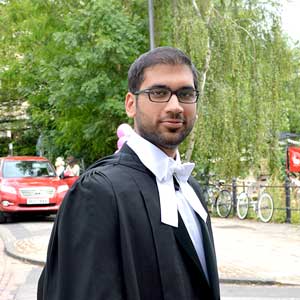
    Nikhil K. Singal graduated from ILS, Pune in 2010. Soon after Graduation he started working at LakshmiKumaran and Sridharan as an Associate and then went on to pursue Masters in Corporate Law from the University of Cambridge, U.K. He is also a Company Secretary holding a Licentiate membership of the Institute of Company Secretaries of India. After returning back to India, he joined LKS as a Senior Associate and was promoted to Principal Associate in May, 2014.

    In this interview he talks about:

    • Law School experience at University of Cambridge
    • Interest and expertise in taxation law
    • Growing from an Associate to Principal Associate at LKS


    How would you like to introduce yourself to our readers who are mainly law students and lawyers?

    Hi! I’m Nikhil Singal and I’m currently associated with the Delhi office of Lakshmikumaran&Sridharan (LKS) as a Principal Associate. I graduated from ILS Law College in 2010 and joined LKS right after college. It has been a good journey so far, and I hope it remains the same in the future!

    Over the years, I’ve had the opportunity to work in different teams, handle some very exciting assignments, represent some of the biggest clients, as well as feel good about my personal growth and development. Currently, I’m handling work related to corporate advisory and commercial litigation, along with handling some important tax matters. For a brief period from 2012-2013, I went to pursue my Masters in Corporate Law (MCL) from the University of Cambridge, after which I came back and joined LKS again.

    As a lawyer, my approach has always been to expand my horizon and learn new things. I don’t like to restrict myself to one area of law or one domain. Of course, I understand that it is physically impossible to do everything, or to master everything, and I’m not aiming for that. Instead, I aim to diversify as much as possible and only after a few more years of practice, I will start specializing in a particular field. For me, change is necessary. It gives me a challenge to keep going and to keep exploring. Fortunately, LKS has been very supportive in this approach. As I mentioned, over the years, I’ve worked in different laterals of the firm and in different areas of law. So whether it be work relating to service tax, income tax, contract drafting, transactional work or dispute resolution in any forum in this country, I can very happily do it!


    When and how did you decide to study law? Which universities did you consider for your legal studies? How did you settle for ILS, Pune?

    I actually didn’t decide to study law. As a kid, I was always interested in doing something related to science. I spent three years in Tanzania where my father was posted as a diplomat. I studied in an international school there and loved their teaching approach. I loved all the science subjects. When I came back to India, I found it difficult to cram non-application based science subjects from voluminous books. That is not what I wanted. So I pursued commerce and thought I’ll end up doing Economics from a good college in Delhi. When I finished schooling in 2005, I had an option of going to Hansraj or Venkateshwara College in Delhi. At that time, my father also insisted that I fill up the forms for ILS and Symbiosis, Pune. So I did!

    Ultimately, I had all four options in my pocket and had to make a choice. After much counselling at home, I decided to go ahead with ILS. My parents persuaded me that law is a great field, and with my analytical approach, I would be happier being a lawyer. So honestly, the credit goes to my parents! Nevertheless, I haven’t regretted the choices I’ve made. ILS is a great college, has a great legacy, and personally I believe it was the right choice for me. I enjoy being a lawyer, and I owe a lot to ILS for who I am today.


    Do you think being from a non-NLU has ever proved to be a hindrance for you? Many non-NLU students complain that they feel being discriminated against during career opportunities. What has been your experience?

    Not really. I think what matters the most is what and whom you let influence you, no matter which college it is. ILS has the best of reputation, the best of faculty, and a very good mix of academic and non-academic focus. I admit that everything is not positive, but that is the same in every college or university. In ILS, I met some of the brightest individuals, some of the most dynamic, some radical, some conservative. All of them are doing very well right now, and not all of them have chosen to remain a lawyer. Personally, I believe if you can prove your worth, you eliminate, or substantially reduce your chances of discrimination. This is how my experience has been. I’ve met many Partners from firms in India as well as from London and New York, and all of them know and appreciate ILS as an institution.


    After graduating from ILS, you joined LakshmiKumaran and Sridharan as an Associate. How did the appointment take place? What comprised your work at LKS?

    I did two internships at LKS. The first internship was in the international trade division and the next one was in the service tax division where I focussed on GST. Both my internships were very fruitful. They liked my work and by the end of the second internship, I was offered a pre-placement offer. The placements in college had yet not started, so I was one of the first ones in my batch to get a job! I took the offer knowing very well that the work will be mostly tax oriented, of which I had very little knowledge (though it was interesting indeed).

    Initially, I was assigned to the tax litigation team and focussed on Service Tax and VAT matters. I did this for about a year. It was a good learning experience as the service tax law is still nascent and evolving. I dealt with some very challenging cases, and as any lawyer, there was a lot of grinding! But there was a lot of focus on knowledge enhancement and understanding the working of the law, rather than just doing something mechanically.

    In my second year of work, an option was given to the Associates to opt for shifting in other practices of the firm. I was the only one who opted for a change and I opted for Direct Tax where I spent another year. This was a great opportunity and a great learning experience. I was also doing some service tax work alongside. By doing this, I got the opportunity to understand Indian tax scenario holistically and in totality. This also helped me to understand why and how many commercial decisions are made in businesses around the world. On many matters, I worked directly with Mr. V. Lakshmikumaran and other Senior Partners and all of this ultimately paved my way to get to Cambridge to do my Masters!


    nikhil-singal-2

    Thereafter you went on to pursue Masters in Corporate law from University of Cambridge. Was it a professional requirement to grow expertise in your career? How would you describe your experience as?

    As I mentioned, my tax experience helped me to understand the working of businesses and the reasoning behind various commercial decisions being taken. I was very interested in understanding the rationale behind these business decisions as well as understanding the legal factors which affect the functioning of these businesses. I thought the best way to do this is to study further, and apply that knowledge in my working. I discussed this with Mr. Lakshmikumaran and though this was not a professional requirement, he encouraged me to apply and study further. I thought the time was right and with some professional experience, I went ahead to apply in select Universities in UK and US.

    Cambridge offered me the perfect course and the perfect platform for what I wanted. Ever since I was in ILS, I had it in my mind that I wanted to study in Cambridge for at least a year, and this became a reality! My year at Cambridge was one of the best years I’ve had. Every day was a learning experience, and I met some of the most intelligent and fun loving people from around the world. I don’t think I need to say anything about the quality of education and the faculty etc, as the reputation of Cambridge speaks for itself.

    The course was rigorous, VERY rigorous! The good thing about the course was its practicality. Many of the modules were taught by Barristers and Partners of law firms in London. We worked on live deals and cases. Not only was there a lot of personal development from Cambridge, but this course also greatly helped my transition to being a commercial lawyer, along with having a strong tax background.


    Thereafter you joined LKS as a Senior Associate and currently work as a Principal Associate there. What does it take to be appointed as a Senior Associate at LKS at that stage? How did your promotion happen?

    I had actually never given my resignation in LKS before going to Cambridge. My one year at Cambridge was considered as part of my job profile and was counted towards my work experience. LKS was very considerate in doing this. I met Mr. Lakshmikumaran and the HR upon my return and started working in the corporate advisory and commercial litigation division of the firm. Along with this, as I also do now, I also handled some important tax matters. This profile complemented my experience as a tax lawyer, as well as my academic qualification as a corporate lawyer.

    Therefore, to answer your question more specifically, my promotions were based on my past experience, my academic qualifications, as well as of course the fact that my work was appreciated by my Partner in charge as well as the senior management. The same criterion applies to all Associates in LKS. At times the promotions are “fast-tracked” depending on the performance of the individual, but that is ultimately the decision of the management. In all this, what is most required and appreciated is the hard work coupled with a positive outlook to learn!


    How do you say one can gain expertise in tax law? What does it take to be a good tax lawyer? Is the work significantly different from other transactional lawyers?

    Tax laws are vast and the jurisprudence relating to these laws is very extensive. Within the ambit of tax laws, you can specialize in Direct or Indirect Tax. Even within these categories, you can specialize in corporate taxation, international taxation, service tax, VAT so on and so forth. What is more interesting is that even within these specializations, you can super-specialize in one area. All these specializations and super-specializations are rewarding. In tax laws, it is generally understood and accepted that expertise can be gained by specialization in a particular area over a period of time. This is because each area has its own extensive background and jurisprudence. I’ve also seen and experienced that once you are able to deal with one area of tax laws confidently, dealing with other tax laws and areas becomes much easier. And once you are comfortable in dealing with different tax laws, dealing with non-tax laws becomes much easier. This has been my experience.

    Of course the nature of work done by a transactional lawyer and a tax lawyer is different, but that difference comes mainly at the level of the law and the procedure involved. I know many transactional lawyers who super-specialize in one area within a broad area, whether it be one leg of financing, or a specific type of private equity transaction. The same rules apply in both these contexts.


    How much of your work does involve litigation, if at all?

    Around 60 percent of my work is litigation, a lot of which is commercial litigation and as I mentioned, I am still handling certain important high value tax matters. The good thing here is that I get to do all kinds of litigation, in all forums, and at all levels. The other 40 percent is corporate advisory work.


    Tell us a bit about work culture at LKS and the life of a Principal Associate. What is your current work profile like? Please tell us about the responsibilities you are entrusted with.

    LKS has a good work culture, people are friendly and there is a lot of encouragement to junior Associates by seniors. One thing I appreciate the most in LKS is the ease of access and the open-door policy. Anyone can approach any person of the senior management, including Mr. Lakshmikumaran and Mr. Sridharan. Resources are ample, and people are always willing to help out. This is a big plus point of the firm.

    As I also mentioned above, I am currently dealing with corporate advisory and commercial litigation, along with handling some important tax matters. Many of these matters are dealt directly with Mr. Lakshmikumaran, and many a times with the guidance of Mr. Sridharan. Since LKS is now a full service law firm, the work varies a lot. I’ve handled matters ranging from tax to environment to electricity to competition. The clients I deal with are diverse, ranging from the world’s biggest social networking site to the biggest spiritual society, and LKS allows you to be the point of contact and deal with them directly relating to the matter. There is of course a lot of responsibility on the shoulder of a Principal Associate. Along with mentoring the juniors and ensuring the quality of work, you become responsible for any negative consequences also (though this is all a part of the profession!). There are times when tough decisions are required to be made, and even though LKS allows this freedom to a Principal Associate, the decisions may not always be correct. All of this is nevertheless looked at in positive light by the firm, and is part and parcel of growth process in the firm.


    You must have guided several interns. How would you say that an intern can generate a positive feedback in the limited time they have?

    The most important thing is dedication. You are right about the fact that there is very limited time which the interns have, but many-a-times the interns spend this time doing non-productive work. I’ve mentored interns who were not at all interested in working, no matter how simple the task or proposition was. On the other hand, there have been some interns who have gone a step further and taken the responsibility of the work. Ultimately, if the intern is able to demonstrate that he/she is a team player, willing to accept an assignment, and complete the assignment with diligence and good legal research, the fact that the intern has limited time does not matter.


    What has been your strategy to deal with errors and mistakes? How would you suggest a young associate to deal with them?

    One should always accept and own up to errors and mistakes. Making mistakes is part of the professional learning and without making mistakes you cannot grow in this profession. Nobody is born a good lawyer. But one must always learn from their mistakes, try and reduce the consequences (damage control is necessary!), and try and ensure that the same mistake does not happen again. Sometimes, mistakes in this profession can cost you and the client a lot, and therefore, one has to be extremely careful. This is one of the stress factors of the profession. Nevertheless, all this should be taken in a positive light and part of the growth process.


    People often complain about the highly skewed work-life balance at the top law firms. What is your workday like? How do you maintain your work-life balance?

    Regular work days are always varied, from answering to various clients at the same time to running between different Courts. Work is the only constant, and workhas considerably increased as I’ve progressed in the profession. I’ve definitely learnt to deal with it in a quicker and more efficient manner, and this has helped me to take time out for myself and my family. LKS as a firm also has a good culture of promoting a work life balance and spending time with your family. Of course there are many days when I don’t get to know when the sun rises and when it sets, but this is more than normal in a profession which demands precision and quick turnaround. I have to do some form of physical exercise at least once a day, without which my day is not complete. This keeps me more active at work also. I am also very spiritual and like to read books in this area. Apart from this, I love travelling and watching movies. I spend whatever time I get with my family and try and catch up with friends as often as possible, whom I prefer to be non-lawyers (makes conversations more interesting!).

    I’ve heard quite a few bad stories about different law firms in India, but I honestly think that even there a decent work-life balance can be maintained. Some firms look down at their Associates if they leave on time. This is quite discouraging! Work, if done efficiently and with focus, can be completed in half the time which one normally takes (the Germans are expert at this!). I think this can easily be emulated and unnecessary time wasted in office should be spent on personal development and on something more social and productive!


    What would be your message to our young readers who want to pursue a career in tax laws?

    Pursuing a career in tax laws may sometimes seems intimidating and sometimes boring. This is the impression which I have got from a lot of undergrads. This is actually not the case. On the contrary, it is a very interesting area of law and can be very rewarding once you cross the initial hurdle of understanding how the law works.

    There is a lot of procedure involved and the substantive questions of law are inextricably linked to the procedural part of tax laws. One should always consider this as a positive challenge. Also, as I mentioned above, once you become comfortable with practicing in tax laws, understanding the working of other laws becomes easier. Many of the best counsels in India started off their practice in tax laws and many of them still invariably take up important tax matters.

    Once you start off with your practice as a tax lawyer, there is always a scope for expansion. Even transactional lawyers cannot proceed without understanding the tax position from tax lawyers, and I’ve seen many deals being changed on this count. Tax lawyers are also highly sought after internationally.

    All in all, being a tax lawyer is a highly rewarding, and I highly recommend pursuing a career in tax laws!

  • Parineeta Srivatsa, Associate, ALMT Legal, on LL.M from NUS and Corporate Law

    Parineeta Srivatsa, Associate, ALMT Legal, on LL.M from NUS and Corporate Law

    Parineeta Srivatsa graduated from Symbiosis Law School in 2011, and thereafter she had the opportunity to pursue higher studies from the National University of Singapore. While at law school she had huge achievements in mooting. She also has rich experience of interning at top-tier Indian and foreign law firms. After returning to India, she joined MD&T Partners as an Associate. Later, she switched over to ALMT Legal.

    We asked her to share:

    • Her experience while pursuing an LL.M from National University of Singapore
    • Internship experience at foreign law firms including Allen & Overy and Allen & Gledhill
    • Work at ALMT Legal


    When did you decide to take up law as a career? Being a law student, were you only focused on academics? How was the academic pressure?

    I chose a career in law as a matter of elimination. I’m a first generation lawyer in my family and had no background in law apart from a general (albeit misinformed) idea from Perry Mason and John Grisham novels and the Practice marathons. I was always interested in civics, administration and constitutional studies (as part of history) in high school. In the 11th Grade, I chose to opt out of science and engineering and chose to study accounts, economics and political science. Over the course of the two years, law became a career choice and with the support of my family, the right choice. Symbiosis Law School was a game changer. In those five years, I developed a synchronous relationship with everything life in law school had to offer and the learning and un-learning that I did in those five years were the most crucial towards contributing to where I am today.

    I imbibed and absorbed everything I could from what was taught, discussed and happening around me. I will cherish my time there the most. Academics weren’t the only focus but a lot of emphasis was paid to the same. Unlike school, undergraduate school suddenly burdens you with the responsibility to make your own decisions and this takes a while to get used to. The academic pressure, too, depends on how much you opt to do and how self driven you are. I had a great support system to make sure I stayed grounded and focussed despite the million distractions per minute.


    parineeta-s-1

    How was your LL.M experience from National University of Singapore? Did you always have higher studies in your mind? If not, what motivated you to go in for the same?

    The LL.M. at National University of Singapore was fascinating for me in every aspect. Renowned and accomplished professors, state of the art facilities, new country, hard working and dedicated students and challenging colleagues were just some of the many facets to my year in Singapore. I was more motivated than ever before to make the most of my year there and the facilities available at my disposal. The teaching style at NUS was more discussion based and there was abundant reading to be done for each class to encourage students and professors alike to bounce ideas off one and other. Focus was on peer review rather than peer to peer competition. The professors stimulate the discussions as moderators providing direction, valuable inputs, insights and opinions on a range of topics. This was different than what I’d been used to in class in India. Personally, I found writing papers more challenging than writing exams because I had to modify / un-learn my working style in order to cope with the level of detail and analyses required for each module.

    An LL.M. was always on my mind. As an undergraduate student, I was given an introduction to all fields of law and I wanted to hone my interest in corporate and business laws with further in-depth studies on the topics and gain a global perspective on the same. I ended up making some great friends and memories in the process, as well.


    During your days at Symbiosis and NUS, you interned with various foreign law firms like E Line Ventures, Joyce A Tan Partners and Allen & Gledhill. How are these foreign firms different from top-tier Indian law firms?

    My first foreign internship was with a children’s educational games based company in New York called E-Line Ventures. It was a small company and quite an informal environment with many creative and dynamic people. I was their only in-house legal intern at the time and I would help with research on Intellectual Property Laws, the Children’s Online Protection Policy Act and basic trademark searches. While at NUS, I had the opportunity to work with local Singaporean firms as well as foreign firms based in Singapore. From my experience on both sides of the fence, I would say that the integration into a firm and the amount of responsibility in terms of work is more qualitative in Indian firms than in foreign firms. Having said that, foreign firms are more systematic in the training provided to interns.  Associates and partners often conduct training sessions / seminars in the different fields of law and provide a general insight into the field of law that interns would be working in during the tenure of their internships.


    Could you please share with us on applications for internship and interviews, especially with foreign law firms?

    A strong yet crisp C.V., internships, especially in your area of interest, published articles / papers, if any, knowing your C.V. inside out (which is why it is important to have specific points and areas you’ve researched on in your C.V. instead of a general overview on the topic), and most importantly, confidence and a calm demeanour. When it comes to interviews, experience is the best tutor. Re-evaluating each interview after it’s done and picking up on all those points that I thought I’d not answered or could’ve answered better has always worked for me in the past. Also, honesty and sincerity is paramount. An interviewer will know immediately if you’re trying to guess the answer to a question you’re uncertain about.


    parineeta-s-2

    You have also interned at Allen and Overy as an intern. Given that you had already graduated and were pursuing Masters what sort of work did you get? How would you say your legal education helped you in this internship?

    At Allen and Overy my scope of work involved drafting / reviewing closing documents and options agreements and management services agreements, among others. I attended training programs on banking transactions and general corporate and mergers and acquisitions transactions. These helped in future assignments as I wasn’t completely thrown off guard when trying to grasp agreements, jargon and more importantly, the reasoning behind the same. I also researched on enforceability of non-compete and restraint to trade clauses under Singapore laws. My LL.M. was in corporate finance and business laws, so I was equipped with a basic understanding of financial and transactional concepts in law. This helped me in some of the areas of research I was expected to do during the tenure of my internships. I also had a few practical sessions in NUS where corporate lawyers from renowned firms would provide us with problems mimicking day-to-day transactional law situations. These helped a great deal in understanding documents from a transactional perspective for future interviews and work.


    Do you think it makes sense to students to go overseas to study law when they want to practice in India?

    I have been asked this question many times and my answer is, monetarily and as a value add to your C.V. you can get into a top law firm without an LL.M. and more often than not people have. But purely from an academic standpoint, it is definitely a value add in terms of academic depth and learning. Further, due to flexibility, it provides you with an opportunity to explore subjects that you wouldn’t normally learn in an undergraduate degree. This may have opened doors for people who didn’t think they’d be interested in that particular field / subject of law. One of the optional modules I signed up for during my LL.M. was entertainment and celebrity law, with no background or interest in the field. It turned out to be the most interesting and engaging modules that semester. These, from an academic standpoint, may open doors for a prospective student that he/she otherwise wouldn’t have foreseen.


    For those students who are planning to go for higher studies, what do you think would be better- going right after graduation or going after having gained some work experience?

    I would suggest considering an LL.M. after a couple of years of work experience. Having said that, going right after your undergraduate studies has its advantages. You’re still inclined to learn and you’ve gotten used to studying and facing and tackling academic pressure. Many peers who’ve intended to break off for an LL.M after a couple of years of working have not been able to do so due to many reasons, including but not limited to secure jobs and steady incomes.


    Currently, you are working as an Associate as ALMT Legal. What prompted you to make this choice? What kind of work and responsibilities does an Associate at ALMT Legal generally deal with?

    I was a lateral hire in ALMT Legal from MD&T Partners. I had wonderful teachers in MD&T Partners and in my short time there I was able to absorb more than I had expected to, thanks to their guidance. Thereafter, I made the shift to ALMT Legal as I found the same to be more streamlined with my interests. My work at ALMT Legal ranges from everyday general corporate research to private equity and mergers and acquisition transactions. I enjoy working in ALMT Legal and don’t think of the work environment with dread. This is important for anyone who intends to develop a career in corporate law. It is as interesting as you make it. And thus far, in ALMT Legal, with the support of a fantastic team, I have been given responsibilities and have interesting work coming my way so I stay engaged and focussed.


    What is the current scenario of studying corporate law as a career option in India? What are the key qualities one should posses for becoming a corporate lawyer?

    I see courses and seminars and other reading material being offered every other day for practical courses in corporate law. It is definitely a good time to enter the field as a corporate lawyer as India is looking to emerge as a global and market-friendly economy. As regards key qualities, I would say reading and keeping abreast of developments in any field of law, whether by self or through discussions with colleagues and peers and using the resources available at one’s disposal are some of the ways in which one may have an edge over others.


    Do you ever feel that you missed out on the fun part of your college life?

    Symbiosis Law School ensured that fun was never neglected. As for managing with academics and ‘extra-curricular activities’, I was surrounded by brilliant peers who knew exactly how to manage that. We were young and malleable and learnt to inspire, challenge, and push each other’s limits without realising how much of it we were involuntarily absorbing for the better.


    Last but not least, what’s next for you?

    Exploring and pursuing interests and learning inside and outside of work. Knowledge is easily accessible these days so if you don’t know something, you have only yourself to blame. I also enjoy scuba diving, driving and travelling and discovering new places, things and people and I intend to continue to explore that as well.

  • Natasha Fernandes, Legal Head, B4U Television on a career in Media Law

    Natasha Fernandes, Legal Head, B4U Television on a career in Media Law

    Natasha Fernandes graduated from Government Law College, Mumbai in 2002 and had thereafter worked as in-house counsels of large corporate houses. She currently heads the Law department of B4U Television Network India Ltd.

    In this interview, she talks about:

    • Building up a career in media law
    • Strategies which she used while working with different places
    • Journey from an Assistant Legal Manager to Legal Head at B4U


    Given that most of our readers are law students and young lawyers, how will you introduce yourself to them? What motivated you to choose law as a career?

    Hi friends, this is Natasha Dsouza.. I head the legal for B4U Television Network India Ltd. Been here since 9 years, with a total rich legal exposure of 12 years.I pursued the 5 years law course from Government Law College, Churchgate. Having no family background in law, the hunger for knowledge was the only factor that kept me going. To be honest, Law was not a career stream for me, rather the interest to know the law of the land so that people could not take me for a ride was the motivation to learn law.


    natasha-fernandes-1

    What all activities did you participate while in your college? What were your areas of interest during your graduation?

    College life was very simple, but fun. Did my 12th from P.D Lions College, Malad and then joined GLC, Churchgate for the 5 year law course. I had a lot of fun with friends but within the four corners of discipline. These years have some of the best memories and friends. College was merely education and fun. All the expertise and practical knowledge was post my completion of law.


    Did you do any internship during the course of your studies? What kind of work did you come across during your internships?

    No, unlike others I did not take up any internship during college. I started my career only post my graduation in law.


    Many lawyers say that the first year after graduation is the most difficult year for young lawyers. How was your first year after graduation?

    I had lived a very simple and protected life, home to college and college to home, never journeyed beyond, rather had always depended on friends or folks to travel to a new place.

    When I joined the law firm after my graduation, I had to appear in all courts all over Mumbai. With no knowledge of routes nor any internship training, had no knowledge about appearing in matters, it was a new world with a plethora of experience, especially with the strict judges who were not very supportive of juniors appearing before them. It was a do it and learn it yourself affair, but a journey that made me independent.


    You had started working at P. V Nichani & Co. right after graduation, and thereafter you joined Shapoorji Pallonji& Co. Ltd.. What led to this shift?

    I always wanted to work for a corporate. I started my career with G.P Consultants and Developers immediately after my graduation in law. On working there, I did feel the need to have procedural and court exposure and hence started my journey with P. V Nichani & Co. Worked there for a year, appeared in all Metropolitan courts in Mumbai, Small Causes Court, City Civil as well as in the Bombay High Court. After a year of enriched experience and exposure, I was approached by Shapoorji Pallonji& Co., and I took up the offer on selection.


    You left SP & Co. Ltd. to join Star India Pvt. Ltd as a Legal Executive. What motivated this shift? What does it take to get job at Star India at that stage?

    STAR motivated this shift. As far as getting a job is concerned, it’s always a matter of confidently marketing your experience and exposure in a way that suits the need of the Company interviewing you. It is very important to know about the job profile and whether you can handle the requirement and an honest answer to everything. It is always good to confess what you don’t know rather than to beat around the bush or lie. Coz even if you sail through the interview, any lie will make you fall flat on your face when you start work.


    Thereafter you started working at B4U Television Network India Ltd. Having been at B4U since 2005 as an in-house counsel, you were promoted to Legal Head; what qualities do you think helped you to achieve this status?

    I joined B4U as an Asst. Manager in 2005 and have been working here since 9 years. My qualities that helped me achieve it, is what every growing employee has..

    • Honesty and sincerity towards work;
    • No saying NO to any work;
    • Constant learning and research. No one knows everything and everyone needs to learn, so never felt ashamed to ask when I didn’t know something. It is better to ask than to make mistakes;
    • Eye to details and re-checking everything that is done;
    • Time management and prioritizing work to achieve within set timeframes
    • And above all my Drafting skills and perfection towards work


    Many lawyers would say that the actual learning takes place in the years of practice. How far would you say it is true? What was the case in your situation?

    Not true in my case. Actual learning takes place wherever there is an intention to learn. You face various challenges as an in-house counsel and also working with a corporate divides your exposure between litigation and non-litigation. Both give you a lot of learning and learning never ends.


    What would be your message to our readers who are budding lawyers and law students?

    • Believe in yourself
    • Be attentive to details
    • Never feel shy to ask what you do not understand
    • Stay positive and self-motivated, focus always on your goal, nothing else matters, no negative comments, no politics, when you know you are working with honest, giving your all, just stay focused, let people not bow you down.
    • Never keep ego at work.


  • Adithya Reddy, Advocate, Tax Matters on setting up an independent litigation practice

    Adithya Reddy, Advocate, Tax Matters on setting up an independent litigation practice

    Adithya Reddy graduated from WBNUJS in 2008 and started his career in litigation as an Associate at HSB Partners. He then moved on to work at the Department of Commercial Taxes, Government of Tamil Nadu as a Government Advocate, and continued working on a variety of commercial law and taxation matters, before leaving to set up his independent practice.

    Here, he talks to us about

    • Why internships in the first three years of law school are a waste
    • Why one must only pursue the field of law they are truly interested in
    • The pros and cons of working as a Government Advocate
    • How to set up an independent litigation practice


    How did you choose to become a lawyer? What were your objectives when you thought about law while still in the preliminary years of at NUJS?

    Law has always offered more career opportunities than what are commonly known. If anything, the variety of opportunities has only increased in recent years. In fact, I remember that this was the first thing Prof. Madhava Menon told me at my interview while joining NUJS in 2003. He said one should leave all career options open at least till the first 3 years of law schools.   This is what I tried to do in NUJS. While I always believed that litigation is where a lawyer can prove his worth the most, I did consider other options like pursuing academics or policy research.

    My friends had no views about my career choice. I would be exaggerating if I say I myself was keen on becoming a lawyer. I was only sure of wanting to become a professional. In fact it was my mother who was totally impressed by her friend’s son who had just graduated from NLS and was drawing a 6-digit salary. She then wanted me to join a law-entrance coaching course, which I did more out of indifference than interest.


    How relevant do you think are internships for a present law student?

    Most people who get a corporate job do so because of one good internship in their 3rd or 4th year. That is why, I see no reason why they should keep interning in different firms right from their 1st or 2nd year, that too twice or thrice a year. Even for litigation, it might, at best, help in gaining some basic idea about how a court works. It gives you no particular advantage when you start as practice. I am also not sure how the number of internships one does makes any difference, say to an LL.M application.


    When did you actually experience the learning curve? What is your opinion when people say that all that they have learnt is in their years of practice?

    My law school experience was very valuable for two reasons:

    First, as you are competing with students of very high calibre, you have to learn independently of anything that the law school may provide for.

    Secondly, a national law school by virtue of its brand and the people at its helm exposes its students to avenues and opportunities that no law student from an ordinary law school can get. I would say my learning curve increased once I found some optional subjects interesting after my third year.

    Many people say that what is taught in law schools is not relevant for a litigating lawyer. This is absolutely true for a lawyer till he establishes good practice and starts arguing cases regularly. Once a lawyer develops enough practice to argue cases involving questions of law on a daily basis his academic knowledge gives him a distinct edge over his peers. So it is important for a national law school student to stay in touch with everything he learnt in law school and keep updating himself/ herself with current legal developments. It is also important to maintain research skills which many national law school students learn well through moots etc.


    How was your work as a litigating lawyer at HSB Partners? Please tell us a little about your work profile while working there. Tell us what a typical day at work was like for you?

    I was a litigating lawyer. HSB has considerable amount of litigation practice. In fact I started working in the city civil court for the first few months. I worked on many high profile litigations involving top corporates in the high court. I also worked in tribunals like the Company Law Board and Consumer forum. Most of the litigation was relating to commercial disputes. I was very lucky to have worked under the firm’s partner Mr. T.K. Bhaskar who was himself a NLS graduate. He gave me full independence in handling much of his litigation practice. Mr. Bhaskar was also kind enough to entrust me with some very interesting non-litigation/ corporate matters, something I never expected.

    A typical day at HSB started with me entering office by 9.00 am, much before most other associates, and sitting with the clerk to note cases in the daily cause list. The next 30-40 minutes involved hectic searching for case bundles and last minute preparation for the day’s cases. I used to leave for court with few other colleagues and come back in the evening. The work day used to end anytime between 8 to 10 pm depending upon the amount of work required to be done for the next day.  The most hectic day used to be when a client needed an urgent case to be filed or when a case involving voluminous documentation and research was being argued in court.


    adithya-reddy-2

    Thereafter you worked as a Government Advocate for the Department of Commercial Taxes, Govt. of Tamil Nadu. How did your appointment take place? What were the responsibilities you were entrusted with?

    Many people fear taking up litigation as a career option for lack of family background or a connections in the profession. My appointment as government advocate is a great example how one can receive help in the profession independent of these things. I was recommended to become a government advocate by an Additional Advocate General only because he had noticed me as a good junior lawyer. I will forever be indebted to him.

    For the first one year (since my appointment in early 2012) I was lawyer for the TN Government’s commercial tax department. Sales Tax/ Value Added Tax is one of the few areas of taxation which falls within state government’s jurisdiction. I argued many cases on behalf of the revenue involving the subject before the High Court. This stint also gave me my first few reported judgments.

    In early 2013 the TN Government appointed a new Advocate General who is also one of Madras High Court’s most senior and knowledgeable lawyers. He had known me from before and requested me assist him in his work on behalf of the government. I readily agreed. I worked with him for one and a half years. The variety of work I did in the AG’s office was mind boggling and I can say with some lack of humility that very few young lawyers would have had such kind of exposure. This was bound to be, because government is the biggest litigant and is involved in cases touching upon almost every branch of law. A lot of credit for this would also go to the AG who treated me very kindly and gave me full independence to interact with the senior-most bureaucrats and officers in the government.


    How and when did you decide to quit your job and start up with independent practice?

    I decided to resign as a government advocate in October 2014 for two reasons. Firstly my work , especially in the AG’s office, left me with very little time for anything else. I was entering my 7th year in the profession with no time to think of my own practice. Developing one’s independent practice involves a lot of struggle. As a government advocate I was getting used to so much comfort that I used to have sleepless nights thinking of how I was going to manage when I begin independently some day. So I decided there was no point postponing the inevitable.

    The second reason which is less significant is that being a government advocate required one also to be loyal to the political dispensation that was in power in the state. Not only did I have no sympathies for the political party ruling in the state, but I had my own political affiliations which I could not and did not want to hide beyond a point. I always felt guilty about having to lie to people about my political views.

    Normally nobody would pay much attention to the political affiliation of a government advocate. But as government advocate attached to the AG’s office I was the centre of a lot of attention. That was when I realized that people were talking behind my back about whether I belonged to the ruling party or not. This prompted me to quicken my decision.


    What are you main practice areas? How has been your experience so far? Is it more comfortable be your own boss or is the pressure of work almost similar?

    It has only been three months since I started independently. For this short period I have got more work than I expected. That only makes me nervous about maintaining this momentum. A lot private work I am getting also relates to the same area I worked on as a government advocate viz. sales tax/ VAT. But I am trying to get more work in other areas.

    It is much less comfortable to be your own boss in the initial years. You have to think of how much you earn because you have expenses to meet. This is something you can blissfully ignore when you are a junior because the senior’s infrastructure, staffs etc. is already there. Also there are expectations to meet.


    As a practicing lawyer how did you manage to learn the basics of court room practice? Did you have anyone to guide and mentor you during the initial days of your practice?

    Every senior I worked with has been a guide and mentor. It is just not possible for me or any junior lawyer to learn court practice without observing seniors and learning how they deal with clients, judges and other lawyers. What happens in the court room is just half of the work that forms part of litigation. There is drafting which you learn more directly from your senior by reading his drafts and by taking dictations from him if necessary. Also there is filing which you learn from the clerk.


    How did your first hearing as an independent practitioner go? Which are the most memorable cases till now?

    Well, as I said it has been only three months since I began independently. So it is too early to talk of memorable cases. The first case I argued after setting up my own practice was for a client who was faced with an adverse sales tax assessment. The judge set aside the assessment holding that the assessing officer had not applied his mind to the issue. I need to mention here that having good judges to represent your cases before is extremely crucial for a young lawyer to make a mark. A client is often only concerned about the result of his case. Judges who pay lesser attention to a case only because it is being argued by a young lawyer put his/her career prospects in great jeopardy. I have been lucky to have appeared to before some very good judges as an independent lawyer.


    What is your workday like? Are there new challenges every day or did work fall into a predictable pattern?

    My work day currently is a lot more relaxed than what it used to be. I don’t miss my daily golf practice and spend little more time on my political/ social activities. Most importantly I don’t miss my calls or at least I ensure I return them at the earliest! This is because now I have freedom to set my own schedule. I can go to court only for the time that my cases are taken up and leave immediately after that. The major challenge is to get new work and to retain clients I’ve just got. I’ve realized that it not always possible to impress a client. As long I am convinced that I have done my best for the client I remain satisfied. These are issues which are far less relevant when you are a junior.


    How far is theoretical knowledge in law schools consistent with the practical arena?

    It is very important once you start arguing your cases regularly. It gives you a clear edge. It is also important to impress your senior when you are still a junior.


    The Bar Council of India has recently come out with new Certificate of Practice and Renewal Rules, 2014. What is your take on this?

    I think it makes sense. Though, what is technically required to be considered by the Supreme Court is only questions of law, it is very essential for a Supreme Court lawyer to know how his case might have been decided at trial. Otherwise the approach tends to be very academic and detached from facts. Also it might help sensitise lawyers to the plight of clients who have to go through the entire process before coming to the Supreme Court.


    How to make a conscious career choice – corporate vs. litigation?

    My advice has always been for people to go with what interests them most. If somebody genuinely believes earning good money, that too pretty early in life, is important than obviously taking up a corporate job is better. I see some of my seniors from NUJS are already partners in the biggest law firms. This is guarantee of a prosperous and comfortable life. But litigation definitely allows you to grow to your full potential as a lawyer.  The uncertainty is what is exciting. The freedom is very satisfying. Also once you are a successful litigator, there is no limit to how much you can earn.

    Another advice would be for students to be sure of what they want to do before taking the plunge. At least in litigation the competition is tough and every day you spend doing something else is a waste. There are many people with a head-start. Lawyers with a family background have a distinct advantage. They can probably afford to try out other options before joining their father/ relative’s practice. But for a fresh lawyer every day brings new opportunities and new contacts.


    What would be your parting message to law students who want to litigate just after graduation?

    Never shy away from litigation because of the uncertainty. That is the most interesting aspect of the career. You could be under stress not knowing what to do next, only to be pleasantly surprised the very next day. It could be in the form of a big case or a big acquaintance, but rewards will keep coming to you from the most unexpected quarters. All that you need to do is show your talent and sincerity. Also, no matter how important success is, honesty and ethics have their own charm and will hold you in good stead throughout your career.

  • Smrity Sudan, In-House Counsel, UD Group, Dubai on her experience in Corporate Law

    Smrity Sudan, In-House Counsel, UD Group, Dubai on her experience in Corporate Law

    Smrity Sudan graduated from CLC, Delhi University in 2007. She holds a B.Com degree also and is a qualified Company Secretary. She has a very rich experience of working in India and Dubai. After graduation, she started working at Bharti Airtel Ltd. and later, switched over to DLF Ltd. Thereafter she moved to Dubai and worked initially at Emirates Legal FZE and then at, Dubai Legal Eagle (Al Dhaheri International). She has recently joined UD Group, Dubai.

    In this interview, she talks about:

    • Working for Bharti Airtel Ltd. and DLF Ltd.
    • Working in Dubai as a Corporate Lawyer


    How would you like to introduce yourself to our readers who are mainly law students and lawyers?

    I am a Corporate Lawyer having experience globally in legal drafting, compliances and International Arbitration.


    When and how did you decide to study law? Which universities did you consider for your legal studies? How did you settle for CLC, DU?

    I decided to do law during my graduation. I enrolled myself for CS in 2003 and acquired interest in law subjects. I always considered CLC to be the most appropriate law college for me. Apart from being a well known university, CLC is the best law college in Delhi.


    Having graduated from a non-premier law school, what would you say to the future graduates of DU regarding this?

    Hardly few people manage to do law from the NLS, Bangalore. Only those who choose law as a career quite early in their lives aspire to join NLS. NLS is not the end. Look beyond and see many successful lawyers from other universities. Soli Sorabjee had graduated from Government College, Mumbai. Harish Salve did his LL.B. from Nagpur University, Mukul Rohatgi from University of Mumbai.


    Many lawyers say that the first year after graduation is the most difficult year for young lawyers. How did you learn the ropes and what were the biggest challenges you faced?

    Facing challenges means you are alive. You will find it in every step of your professional life. People find being exposed for the first time to the professional world a little challenging. As far as my first year of professional life is concerned, it was pleasant being associated with Bharti, a well-known brand, having great HR Policies and highly professional yet empathetic boss. First year of your work life is the year to learn the most when people are more than willing to help you learn. After that expectations begins and you are considered to be an expert. Learn and learn should be the agenda.


    How did you decide to shift from Bharti Airtel to DLF Ltd.?

    As I said, be open to learn the maximum in the initial years. Do not be stuck in the field you don’t find interesting. My reason for change was to learn more of corporate legal work in DLF as my profile was more of secretarial compliances in Bharti. Both are great places to gain valuable experience.


    You left DLF to join Emirates Legal FZE, a law firm in Dubai. What motivated this shift? How did your appointment take place?

    It was a personal reason. After getting married I had to shift to Dubai with my husband. He had secured himself a great job in Dubai and we were excited at the prospect of exploring international work life.

    But, only after 6 months of struggle Emirates Legal was the first break I got in Dubai. I felt that at that time finding a suitable job in Dubai was not easy. Despite having more than four years of experience, I was considered as a fresher. Yes, I was a fresher to a Civil Legal System and to UAE laws.


    Thereafter you worked as a Legal Consultant at Dubai Legal Eagle (Al Dhaheri International). How did the switch from Emirates take place? How was your experience?

    It was a right decision as I was not satisfied with the profile. Dubai Legal Eagle, an International Law firm gave me exposure to International Arbitration. It is an interesting profile for those who possess analytical abilities, enjoy arguing cases before a Tribunal consisting of members appointed from various parts of the world.


    You’ve recently joined UD Group, Dubai. Which events led to your induction into UD Group? Were there any interviews or selection processes?

    Being a Company Secretary and someone who has no interest to litigate, a Corporate Lawyer profile is where I find myself well fitted. Fortunately, the option of UD Group came to me through a consultant and I went through the 3 stages of interviews that lasted for almost 2 months.


    What does your current work profile at UD Group consists of? How is a typical workday like? Can you tell us about a few of the most challenging problems you have faced thus far?

    My work profile at UD Group consists of typical in-house counsel profile, which includes drafting of commercial contracts, negotiating transactions, Merger and Acquisitions, Restructuring, compliances etc. The most challenging part is to think on the lines of Civil Law System since my law degree is on subjects based on Common Law System.


    Tell us a bit about work culture in Dubai.

    The work culture is equally stressful because of long working hours. Magic Circle Firms and MNCs look for people who have acquired degrees from USA, UK, and Australia etc.


    How difficult was the shift to a foreign law firm?

    It was not very difficult rather it poured more confidence to deal with people from different countries and background.


    How has been your B.Com degree helpful in your career?

    Yes, my B.Com degree has indeed been quite helpful in understanding the commercial and business aspects of the transactions.


    Can you give us advice on applications and interviews, especially with foreign law firms?

    Build good CV. Approach consultants and apply directly on the websites of the Companies where you would like to apply. Register on LinkedIn and interact with people. Register on various websites offering services to find jobs like Legalweeks.com, Totallylegal.com.


    What made you gravitate towards this field of Corporate Law?

    I have always wanted to be a Corporate Lawyer. I followed my instincts and not the general perception of the society. I am happy to overcome the challenges coming my way.


    Lastly, what would be your parting message for our readers?

    Believe in yourself, trust your conscience and follow your dreams. Be a winner in the field of your interest. That’s what success is.


  • Sandeep Huilgol, Tax Attorney, King & Partridge on an LL.M from King’s College and work in Civil & Tax Matters

    Sandeep Huilgol, Tax Attorney, King & Partridge on an LL.M from King’s College and work in Civil & Tax Matters

    Sandeep Huilgol is a graduate of ILS Law College, 2010 batch, and of King’s College, London, 2011 batch. For the past three and a quarter years, he has been working in Bangalore, practicing as a civil and tax advocate at King & Partridge. We asked him to share his experiences and strategies he used over the years.

    We took this opportunity to ask him about:

    • Pursuing an LL.M. from King’s College, London
    • Writing a proper SoP for an LL.M and having a Letter of Recommendation
    • Working at King & Partridge


    How did you gravitate towards law? Why law and not engineering or medical studies?

    After I got over my initial, albeit strange dream of becoming a lumberjack in Canada, I only ever dreamed of becoming a lawyer. I was fascinated by civics and political science in school, and the book, “Yes, Minister” further strengthened my interest towards the profession. It’s been nearly ten years since I started at ILS, and I can honestly say that I’ve never looked back.


    How would you describe your time at ILS Pune?

    My time at ILS was a wonderful mix of academics, fun, and growing-up. To be honest, I wasn’t always too hard working as a student, but I managed to put in the extra hours either the week or night before an exam. It’s not an approach I would recommend to anyone, and looking back, I sometimes wish I had worked harder throughout the year. It’s a lesson which, hopefully, the readers of this interview can pick up from me.


    What were your areas of interest during your graduation? How did you go about developing knowledge in these areas?

    Certain subjects fascinated me, such as constitutional law, tax, and jurisprudence. Moot courts however, were something I always looked forward to. I was also very lucky to have had the experience of both, researching / speaking at moot courts, as well as judging a moot court. In my opinion, the best way to go about developing proficiency would be to participate in as many moot courts / debates / seminars as possible. While reading is something all of us can and will do, and over time, knowledge will eventually be garnered, the ability to speak / orate is something that can only be developed by trial and error. Don’t let initial setbacks put you off. Keep trying until it becomes second nature.


    What was your motivation behind pursuing an LL.M right after graduation? When did you finally decide that you need to do masters?

    There were a few reasons that motivated me to apply for an LL,M immediately after my graduation.

    One: I wanted to litigate and I was aware that the chances of me taking time off after commencing work were very low.

    Two: I wanted to push myself academically. Like I said, I don’t think I did justice to my academics during my time at ILS and I felt the growing need to study and learn something out of choice, and not merely for the sake of exams. King’s is a world-renowned institution and I was acutely aware of the quality of its facilities and faculty.

    Lastly, the opportunity to live abroad, and that too in a city like London, was something I could not turn down.


    sandeep-huilgol-1

    How did you choose King’s College, University of London over others? How did you go about choosing a university?

    There were a number of boxes I had to check before I opted for King’s. I analysed the Times UK university ratings, sought reviews from my seniors who had actually gone to the UK to do their LL.M.s, attended UK Education fairs, interviewed faculty from King’s and other colleges which had been arranged at these fairs, approached education consulting service providers and lastly, I approached a few senior lawyers in Bangalore and asked them for their views insofar as pursuing an LL.M. was concerned.


    How did you go about writing your SoP? Are there any key factors which one should keep in mind before writing the SoP?

    My SoP was essentially my mission statement. It was my way of putting down on paper the events that led me to opt for law, the reasons for pursuing my masters, the person I would like to see myself become and so on.

    As for the second question, in my opinion, one’s SoP should be a reflection of one’s ideas, thoughts, and aspirations. Honesty in one’s SoP shines through. Be clear in thought and keep it simple. The reader is not going to meet you in person. The SoP is his / her only way of getting to know who you are. In other words, the SoP is your way of making a good first impression. To me, the key points are honesty, simplicity, and clarity of thought.


    How about recommendation letters? Who all recommended you to pursue LL.M?

    Three of my professors at ILS provided me with letters of recommendation (‘LoR’). I asked only those teachers who had taught me more than one subject, and with whom I had interacted with on a more personal level. That way, I hoped that their own impressions of me would be expressed in their LoRs. It’s a tip which I’d give the readers of this interview as well. Again, if a professor asks you to draft a LoR which is to be vetted by him / her, keep it simple, don’t blow your own trumpet unreasonably, and stick to actual accomplishments / feats.

    The readers of LoRs pore over thousands of LoRs annually. They are able to discern the genuine ones from the overly self-eulogising ones.


    How will you compare King’s College, London with that of Indian Law Schools?

    Vastly different. The pedagogy at King’s was much more interactive and engaging. A lot of room was given for individual thought. Subjects were not taught at King’s. On the contrary, subjects were discussed and debated. It was thoroughly enjoyable. My year in London just flew by and I will always look back with very fond memories. A special mention has to be made here for my professor, Ms. Penney Lewis, who is without a doubt, the best professor I have ever had!


    What was your topic of research for LL.M? Why did you choose that subject for research?

    My dissertation was titled, “Are our bodies really ours? A case for legalising the trade in human organs”. It’s a topic which is close to my heart and, while I admit it is a controversial topic, the legalising of trade in human organs is something I’m keen to see it happen in the near future.


    sandeep-huilgol-3

    You are currently working at King & Partridge, Bangalore. How did you go about bagging this job? Please tell us about the recruitment process at K&P?

    My application, via e-mail, was addressed to one of the partners at K&P. Thereafter, I was called in for a personal interview with each of the partners, pursuant to which I was offered a job in the firm, which I gladly accepted.


    So how did the interview go? Do you happen to recall any of the questions?

    To be honest, it’s a bit of a blur as it’s been over three years! While I can’t remember the actual questions that were posed to me, I do remember that they were more aimed at determining the person I was and discovering my general attitude and approach to work and life, as opposed to questions of a legal nature.


    What are your day-to-day responsibilities? How is the experience so far?

    As a practicing advocate, my work-profile consists of the following:

    (1) Drafting,

    (2) Researching,

    (3) Assisting my senior colleagues while they prepare for arguments, and

    (4) Appearances before trial courts, tribunals, and the High Court.

    Work has thus far been fascinating, rewarding, and enriching. Most importantly, it’s been fun! However I must admit that I like almost everyone else suffer from Sunday-evening blues!


    What would be your parting message to our readers who are mainly young lawyers and law students?

    First and foremost, enjoy your time in college! You will never get those five years again so make the most of it. Study, participate actively in moot courts / seminars / extra-curricular activities, but also remember to have fun. When work begins however, one must work hard. As clichéd as it may sound, there really is no substitute for hard work. One must read as voraciously as one can, be it work-related briefs and journals, as well as non-work related literature and newspapers / magazines. Although I have not even worked for four years, I can confidently say that it’s a rewarding career-choice. One must however be patient. Only if the foundation is strong and sturdy, which is only possible through diligence and discipline, will the latter years be fruitful. Commitment to the profession and more importantly to justice along with honesty in all walks of life, mixed with a healthy and necessary dose of sports and fun should make for a long and enriching career.