Author: Team Research

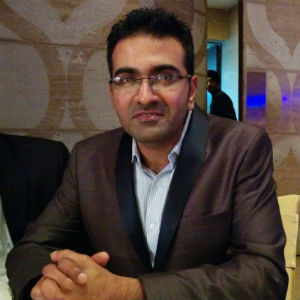
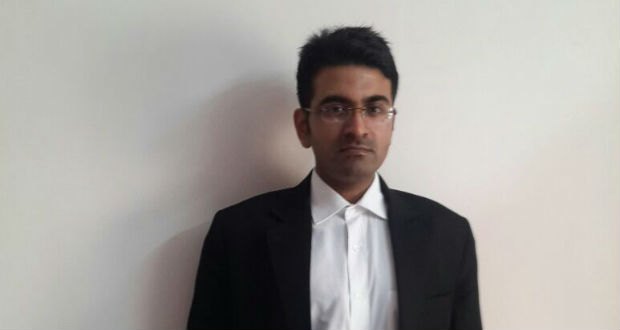
  • Zameer Nathani, Director-Legal, Raymond, ex-Head-Legal of Balaji Telefilms on being an in-house corporate lawyer

    Zameer Nathani, Director-Legal, Raymond, ex-Head-Legal of Balaji Telefilms on being an in-house corporate lawyer

    Mr. Zameer Nathani is one of the most notable legal luminaries within the corporate fraternity. He holds a Master’s Degree in Law and Certifications from World Intellectual Property Office Academy, United Nations.

    Zameer’s corporate career began when he joined Mallar Law Consulting right after graduation. Thereafter, he was the Digital Businesses Associate Vice President-Legal at Reliance Entertainment. He later joined Balaji Telefilms where he worked as Head-Legal. In the meantime he has managed to pursue an Executive MBA from NMIMS.

    While at Balaji, he had personally handled the case for the movie “Dirty Picture” and won before Bombay High Court making it a landmark judgment on brand name, a judgment in the film industry after 1977 Movie “Sholay”.

    Zameer is currently the Director-Legal at Raymond Limited and is also the Honourable Chairman of Entertainment and Media Section at Indian National Bar Association.

    In this interview he talks about:

    • Pursuing an executive-MBA from NMIMS
    • A career in corporate law as an in-house counsel
    • Working at corporates like Reliance, Balaji and Raymond


    Given that most of our readers are law students and young lawyers, how will you introduce yourself to them? What motivated you to choose law as a career?

    My inspiration, that which made way for my decision to choose law as a career was marked by a small yet significant incident, whereby my father made me sign a contract at the age of 21 years for a business property and it made an everlasting impression on my mind of just one sentence that “Everything is about Law”.

    I then decided to pursue a career remarkably different from my family business and that has made me the ‘self-made’ man, I am today. I started working at an early age of 25 and marked the beginning of my career timeline with a lauded law firm and facilitated legal assignments for clients across diverse industry categories.


    Tell us something about your college life? Which activities did you participate in? How did you go about developing expertise and knowledge in your areas of interest?

    Apart from academics, I have had a flair for extracurricular activities always. I used to participate and have won awards for the best speaker in moot court competitions at different levels, best organizer in various inter-college moot courts, quiz contests and compeered college festivals. Developing expertise comes through practice and expediency, and it has been no different for me.


    zameer-nathani-1

    Generally the first year after graduation is the most defining time for a fresh law graduate. What would you suggest a fresh law graduate?

    Be dynamic, you have to push yourself to make sure that you grow in the profession. Be wise, learn to prioritize and distinguish between what is relevant and irrelevant. Be patient and success and growth will come gradually.


    What led to your shift from Mallar Law Consulting to Reliance?

    It is not that I wouldn’t prefer working in a company. Once you have grown as an external counsel, you can have a good role as an In-House Counsel. It is a different business environment with different challenges, but you still deal with the legal affairs of that Company.


    Thereafter you joined Balaji Telefilms as Head-Legal. What does it take to get the position of Head-Legal at that stage?

    When you have a challenging role in India’s conglomerate, you are able to pursue new challenges and thereby seamlessly take care of legal affairs as Head-Legal.


    Recently you have joined Raymond Limited as Director-Legal. What qualities do you think helped you to achieve this status?

    I would take the liberty to shorten it into three words, which are: Experience, knowledge and expertise.


    We would love to hear about your work profile. Tell us about the nature of work you’re entrusted with at Raymond.

    I work towards growth and dynamism in managing the legal affairs of this iconic and the historic group, which is the day to day management. My work profile is to supervise and manage legal affairs of Raymond Limited and its Group Companies.


    What changes has being Director-Legal brought into your life? How do you manage to strike a balance between your personal and professional life?

    I join any corporate considering the opportunities and challenges, and I love that. Work is at par with positions till date. I get up at 4:30 am, meditate and maintain a healthy life and food with a morning walk and begin the day very early for work to be completed by 8 p.m. or 9 p.m. I do not let lethargy set in and come in the way. However, I schedule a vacation once a year with my family. I even organize office outings once in six months where we socialize and have team building exercises.


    What are the primary essentials of a good corporate lawyer? How do you say a fresh graduate can work on building these skills?

    Be prepared to face challenges that come your way. Always absorb challenges and face problems as opportunities.


    Have you ever considered litigation or starting up on your own? Would you say the opportunity a firm provides for a young lawyer is worth the trade off in building a reputation?

    I have been a litigation lawyer in the past, which gives me an experience even when I am in the corporate fraternity in strategy making and arguments. No plan right now to start my own law firm.

    But yes, a reputation in my law firm earned me a job at Reliance- ADAG at a young age.


    In the meantime, you managed to pursue Executive MBA from NMIMS. How do you think an MBA can prove to be useful in a lawyer’s career in the current as well as future market?

    The importance of MBA is to know business management, financial management, team management and alignment of your leadership skills to team up with business.


    So for you, why did you feel MBA is a good option for a lawyer and why now?

    Because understanding overall management skills and functioning is necessary, especially when you are at a leadership position.


    Would you recommend Management and Marketing professionals to learn the law?

    Some knowledge of law is essential for every professional in business management.


    What would be your message to our readers who are budding lawyers and law students?

    Get your law education from good Indian and/or foreign Universities (U.K, U.S.A etc). Be dynamic, upright, and energetic. Get knowledge from wherever you can. Pertaining to local and international laws, attend seminars organised by Lex Witness, meet new people, and get on international forums for discussion on various laws (local and foreign), and I am sure growth and success shall follow.


  • Ruhi Paul, Associate Professor, NLU Delhi on teaching, academics, research acumen and legal education

    Ruhi Paul, Associate Professor, NLU Delhi on teaching, academics, research acumen and legal education

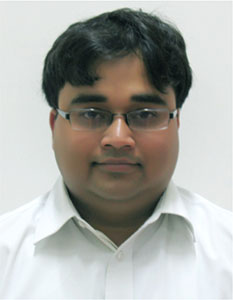
    Ruhi Paul studied law at Delhi University and graduated in 1999. She practised for four years before choosing to enter the world of academia. She also holds a Master Degree offered by Guru Nanak Dev University and Ph.D. (Mediation law) from NALSAR University of Law, Hyderabad. She has worked as an Assistant Professor at Department of Law, Guru Nanak Dev University, NALSAR and NLU, Delhi. Presently, she teaches Civil Procedure, Law of Limitation and ADR at National Law University, Delhi as an Associate Professor. She was also involved in a training programme on Civil Procedure & Arbitration Laws for Controller Generals of Indian Defence Accounts Services.

    In this interview she talks about:

    • Teaching at National Law University, Delhi
    • Tips on excelling in academics
    • Accessibility and uniformity in NLUs


    How did you decide to opt for the field of law?

    As any other young enthusiastic girl, I wanted to join the field of law to help the masses to get justice. I was very fascinated by the idea that simply studying law is empowering in itself as we get to know of our rights and duties.


    Do you feel that the legal profession has significantly changed from the time when you decided to study law?

    Yes, the legal profession has changed for better. The base of any profession is research and research has become so easy with all the online resources available now. However, sometimes I miss the long periods we used to spend in the libraries.


    You studied law at Delhi University. Which areas of the law fascinated you the most as a law student?

    As a student, I was fascinated by Jurisprudence, Constitutional Law, International Law and Criminal Law. The best strategies according to me was listening very carefully to the lectures in the class, making very good books as base books for the subject and reading the related case laws very minutely.


    Your Ph.D. thesis was on mediation law. Why did you choose mediation law in particular? What factors should a legal academic consider while choosing an area of specialization apart from personal interest?

    I chose mediation as I had developed an interest in Alternative Methods of Dispute Resolution (ADR) well before I decided the topic for my Ph.D. thesis. I was teaching ADR at NALSAR University of Law, Hyderabad and I was fascinated by the idea that some disputes can be resolved in ways other than through courts using amicable methods which have the potential of improving human relations apart from resolving disputes. I also realised that Mediation is one such method which is not being researched and used in India as much it is used and researched upon in foreign Jurisdictions. So I decided to do research in Mediation and how it is being administered in India through courts. My Ph.D. is the first Ph.D. on mediation in India.

    A researcher should consider how his/her research can supplement the knowledge about the topic and how relevant the topic is in the contemporary times.


    You currently work as an Associate Professor of Law at National Law University, Delhi. What prompted you to choose teaching as a career?

    I had a short stint of four years at the Bar before I switched over to academics and pursued higher studies. While I was practising, I felt that I could be more productive if I joined teaching. As in teaching I can help a larger section of society through equipping young students with not only legal acumen but also lots of other life skills like positive thinking, taking responsibilities, team work, sensitivity towards others, leadership qualities, time management, stress management, etc. I feel that these qualities can help a law student to not only become a successful professional but a responsible citizen of India. This can automatically improve not only the Bench and Bar but the entire society.


    Tell us about your teaching methodology. Do you encourage students to take notes or do you engage your students in active class participation?

    I practise an interactive teaching methodology. I do not encourage students to take notes. I want a class which is alive and participative. I never mind my students asking questions. In fact, I feel motivated to teach a class which is fully prepared for the topic beforehand or the students who generally have an inquisitive bent of mind.

    Teaching is something which gives me lot of satisfaction at the end of the day as it is a learning process for me as well. I have to keep myself updated to face the students.


    What subjects are you currently teaching? What are your current research interests? Have you involved your students in your research?

    Currently I am teaching Civil Procedure, Law of Limitation and ADR. My practice at the Bar has really helped me in my teaching of procedural subjects. My current research interest is to delve deeper into the field of mediation. I am planning to write something like Jurisprudence of Procedural Laws to make the learning of procedural subjects interesting for students. Presently, students find it very hard to concentrate in procedural subjects as they try to learn it like any theory subject. I try different interesting ways to teach procedural laws and try to give practical based research projects so that students gets a deeper understanding of procedural laws. Yes, I have involved students in my research and it was a great combined learning experience for all of us.


    Do you think students should treat their professors like friends, or is it necessary to maintain a disciplined environment to create a good classroom environment?

    I think some bit of discipline is always necessary for anything that we do in life. I feel that in the classroom there should be a disciplined environment for a serious learning experience for both the teacher and the taught. Outside the classroom, the Professors should be friendly so that the students can approach them for discussing their study related and other problems. I think that we teachers have a larger role to play in the lives of our students and so we have to playing different roles like that of a strict teacher, parent, friend, guide, mentor, etc.


    Could you give our young readers certain tips on excelling in academics? As a teacher what tips do you give to your students for proper understanding of a subject?

    As a student, I used to make it a point to listen very carefully to whatever was taught in the classes. I think students should read the law (bare Acts, etc) very minutely to understand what the legislator is trying to say and why a particular law is being made. Reading cases related to the subject is also very helpful in understanding how the law is applied to real life situations. Most importantly, students should be very sensitive to what is happening in their surroundings as the understanding and application of law becomes very simple if one has lots of real life experiences.

    I strongly suggest students not to go for cramming or following any other short cuts just to pass in exams. Students should understand that they have a very important role to play in building up of the future generation and so they should choose wisely what they want to do in life and do it vey sincerely.


    You were involved in the training programme on Civil Procedure & Arbitration Laws for Controller Generals of Indian Defence Accounts Services. What were the most intellectually stimulating aspects of this experience?

    The most stimulating aspects of this experience is the fact that I have to offer sessions to people who most of the times are very senior officials and experts in their field. To offer orientations in Legal subjects, one requires a totally different type of methodology than teaching young law students. I really enjoy the practical application based questions from the trainees. I also like the fact that I need to design the course according to the need of the trainees who might not be having any legal background but who require an understanding of these areas of law in their work field.


    When would you say a legal academician is ready to start writing books? Any time management tip for budding legal academicians?

    Research is very essential for academics and it is a continuous process. I think there is no hard and fast rule as to what the right time is for an academician to start writing a book. Whenever an academician thinks s/he has acquired sufficient understanding of a topic/phenomenon/ process, both practically and theoretically, and his/her research will add something to the already existing literature on the topic, s/he can start writing a book. An academician can also refine his/her research while writing the book and so it is perfectly fine if s/he is digressing from the original research plan.

    We always can find time to do what we really want to do in life so I think there is no problem of finding out time for research or for any other work from our regular schedule. I sincerely believe in the saying, “When there is a will, there is a way”.

    For budding legal academicians, I want to say firstly, that they should enjoy life because life is a gift from God that we get only once. Secondly, when they work/ study/research than also they should do that with the same zeal and enjoyment. Your work will give you respect, authority, fame, livelihood and satisfaction.


    A common perception in the student community is that the curriculum in most NLUs is outdated and does not equip the students with the skills that they need to solve real life problems. What are your thoughts about this perception?

    I, humbly, don’t subscribe to this view. All the law schools follow a very flexible approach to curriculum design. The faculty is given a lot of space to design courses and are encouraged to keep updating the syllabi with the changes in the law. Apart from the basic courses, law schools have clinic courses which help a student to understand ADR mechanisms, drafting of pleadings and conveyancing, application of law in courts/tribunals, etc. Law schools also have extensive internship programs to enable students to have an experience of working with various organisations. In NLU, Delhi, we have library internships for first year students, NGO intersnships for second year students, Trial advocacy for third year students, appellate courts internship for fourth year and fifth year students. Law schools also have research centres which provide a forum for the students to get involved in various research projects, most of which are empirical in nature. In NLU, Delhi, presently, students are involved in the Clinic on death row prisoners, legal aid work, construction workers, gender issues, etc.


    Another concern that is often raised is that the NLUs are beyond the reach of hardworking students who lack the economic resources to study in these prestigious institutions. What steps should be taken foster more equality in the NLUs?

    At NLU, Delhi, we offer scholarships to students who lack economic resources. Sometimes, full fee waiver is also granted, if the circumstances require it. Various legal and other institutions can also have schemes of sponsoring the student’s studies. Initiatives like IDIA are good and should be extended to all institutions.

    The students who lack economic resources can also be allowed to do part time work in the libraries, etc to earn their pocket money while they stay in the law school.


    NLUs in India have often been described as islands of excellence amidst a sea of mediocrity. What steps should be taken to usher in greater uniformity in the quality of legal education in the country?

    I think the law schools and the Law universities and colleges should start working together. By working together, uniformity can be brought in legal education. There can be arrangements for exchange of faculty, certificate courses can be offered to students in law schools on subjects of their choice, law schools can have trainings for teachers in course designing and teaching methodology, etc. NLU, Delhi has Academy for Law Teachers which conducts training and workshops on regular basis. Joint research programs can be initiated.


    Any important things which law school didn’t teach you but ‘teaching’ did?

    Teaching has taught me lot of patience, the ability to see things from a wider perspective and self-control. Teaching has taught me to be a student of law for the rest of my life.


    Lastly, what would be your message to people who want to take up a career in teaching?

    Teaching has always been a very respectable profession. Teaching as a career is highly satisfying. Now a days, even the financial aspect is not a concern if you want to join teaching. It is a field which will help you to learn throughout your life by keeping you involved with bright, young and enthusiastic people. Teaching gives you the power to shape the future generation and with it comes the high responsibility to do this with great care and concern for the values of the society, the nation and the world as a whole.


  • Shantanu Sahay, Partner, Anand & Anand, on work experience in IPR and journey from Associate to Partner

    Shantanu Sahay, Partner, Anand & Anand, on work experience in IPR and journey from Associate to Partner

    Shantanu Sahay graduated from National Law Institute University, Bhopal in 2007. With an in-depth knowledge and interest in IPR laws, he joined the litigation team of Anand and Anand as an Associate in 2007. With his work, acumen and diligence, he was quickly elevated to the rank of a partner in June, 2014. We asked him to share his work experiences and career moves with us.

    In this interview, he tells us about:

    • Law School experience at NLIU, Bhopal
    • The journey from an associate to becoming a partner at Anand & Anand
    • Work at a top IPR Law Firm
    • Important skills of a lawyer and a partner


    What brought you into studying law? Was it fate or plan?

    I belong to a family of lawyers. In fact, I am the fifth generation lawyer from my father’s side. My father is still a practicing advocate at the Patna High Court. Also, both my grandfathers have been lawyers. Being born in a family full of lawyers, I definitely had some sort of a natural inclination towards this field and in view of this; it was very much a matter of fate too.

    However, I was also impressed by the concept of five years integrated law school course such as NLS, NLIU, NALSAR etc and thus I decided to sit for law school entrance examinations.

    I had the chance to score rank one at the all India entrance examination for NLIU, Bhopal in 2002 and therefore I decided to join it.


    Please tell us a little about your law school days at the National Law Institute University, Bhopal?

    I was in NLIU from 2002 to 2007 and it was one of the finest days of our lives.

    NLIU offered everything which we aspired as law students. From academics, sports, library and other infrastructural facilities, NLIU was just fantastic. It was five years full of fun and was a world in itself. I made a lot of friends at law school.

    Also, because it was an on campus residential set up, we used to have a lot of activities after college hours. Debating, sports, dramatics, moot courts etc gave us a lot of exposure in shaping our outlook towards life in general and legal profession is particular.


    shantanu-sahay-2

    How important do you say is a good CGPA for an illustrious career in legal?

    I would say fifty-fifty. Obviously, good CGPA is an indicator of how much hard work you put in into your academics at law school.

    Also, from the perspective of campus placement, having a good CGPA always stands to be an advantage. But that does not mean that a good CGPA will guarantee an illustrious career.

    Your performance at the law school is totally independent of your performance as a professional. In fact, there have been a lot of cases where a lot of law students who were not that high graders in law school performed really well after they joined the profession.


    You have specialized in IPR. How do you say one can gain expertise in it? What does it take to be good in IPR?

    I got interested in IPR from my first year itself. In the boys hostel during my first year I used to live around my seniors who were interested IPRs. They used to write various articles and do a lot of research work in various field pertaining to IPRs.

    Initially, I used to help them with their researches and it is from there my interested in this particular field of law took off.

    All my internships, publications, moots etc used to be in IPR. In fact, my resume was so much IP specific that I was not even short listed for any corporate based law firms during my final year. I interned at Anand and Anand in 2007 and joined the firm that very year.


    You joined Anand and Anand as an Associate in 2007 and became a Partner in 2014. For a law student it’s very difficult to think about becoming a partner in just seven years of joining work. What would you say helped you to join the ranks of a partner?

    I was inducted in the litigation department at A&A and was involved with the IT and E-commerce law practice group. The partner who was heading this vertical went on to become a client. From 2010, I started heading this practice and in 2014, I was called into partnership as the partner-in-charge of this vertical.


    What kind of effort should a young associate put in to work to get it appreciated? What distinguishes an associate with a partner when it comes to work?

    Execution of the assignments in a diligent manner is the mantra. Hard work and dedication really pays well and associates are recognized very well in terms of their visibility and their importance in a team.


    What does a partner at a Law Firm like Anand and Anand do? What falls within the scope of your responsibility? Tell us about a typical work day.

    As an in-charge of this practice, come a lot of responsibilities, targets and travels. You are responsible to the clients as well as the internal senior leadership. To add, there are also expectations in terms of getting new clients to the firm. These tasks are challenging but fun at the same time.

    Normally in the first half, I go to the Delhi High Court where I attend to my matters along with the team. Then I come back to office (which is in Noida) around lunch time. Post lunch is usually allotted for client meetings and conference calls. In the evening, I respond to all my emails and prepare for the matters listed the coming day. I try to leave office by 9 pm.


    How important is it for a law firm partner to be good at business development, or are great lawyering skills enough to become a partner? What separates the people who become partner from those who don’t?

    As a partner, it is important to engage in Business Development. Especially, as in charge of the vertical, I have been doing BD for a long time now. Rain makers in these law firm structures are always valued by the senior leadership and also increase chances for further promotions. One has to understand that partnership also has its own growth path.


    How is the work culture at Anand and Anand? If an associate commits a mistake or an error what course of action do you follow as a partner?

    Anand and Anand has a fabulous work culture. This is one place where performance takes precedence over seniority. Associates work in a relaxed environment and have a lot of independence and exposure to various challenging legal issues.


    What changes has being a Partner brought into your life, do you ever feel that there is excess of work load on you?

    Not much difference I should say. Work load remains same but responsibilities have increased. Travels have increased and so have client interactions.


    How is internship helpful for a law student? Esp. from the viewpoint of Anand & Anand?

    Anand & Anand in true sense takes internships very seriously and for us an intern is a potential recruit. Internships are important as they can give the real world experience to a law student as to how their life would somewhat be after they pass out from college.

    Internships, if done diligently can result in recruitment as has been my case.


    What are the qualities you look for in an intern at Anand & Anand?

    Hard work, dedication and having a right kind of attitude in terms of taking on assignments from their reporting teams. More than possessing the knowledge of law, it is important to have the right kind of aptitude in terms of knowing where to look for an answer to a legal proposition. Possessing soft skills, knowledge of how to use legal search databases such as SCC online, Manupatra etc. Overall the ability to work hard towards completion of an assignment.


    What do you feel makes an intern stand out and is very important for him to do to have a chance of getting a call back or even a PPO?

    Good performance is always noticed and a second application is accepted or a PPO is offered.


    What would be your message to our readers who are budding lawyers and law students?

    • Have the right kind of attitude towards profession.
    • Money should not be the first criteria in terms of choosing a particular field of law.
    • Give time to your profession and follow your professional ethics.
    • Be persistent and patient. Read a lot.
    • Keep informed about what is happening also at the policy and economic level which has bearing on your field of law.
    • Most importantly, work hard.
  • Gargi Panwar, Associate at Rajani Singhania & Partners, on LL.M from Nottingham Univ for a career in corporate law

    Gargi Panwar, Associate at Rajani Singhania & Partners, on LL.M from Nottingham Univ for a career in corporate law

    Gargi Panwar graduated with a BLS.LL.B degree from Rizvi Law College, Mumbai in 2010.She started her legal career as a Junior Associate in the Chambers of Advocate Flanian G. D’souza. Thereafter she went on to pursue Masters from University of Nottingham in International Commercial Law. After coming back to India, she joined Precept Legal as an Associate. She also holds a Diploma in Corporate Law offered by Asian School of Cyber Laws. Currently, she works as an Associate at Rajani, Singhania & Partners.

    In this interview, she talks about:

    • Law school experience at Rizvi Law College, Mumbai
    • Choosing to pursue higher studies over job
    • LL.M experience at Nottingham
    • Work at Rajani, Singhania & Partners


    Given that most of our readers are law students and lawyers, how would you introduce yourself to them? What is it that motivated you to take up law as a career?

    I am Gargi Panwar, a lawyer specialising in Property Laws and Mergers & Acquisitions in Maharashtra. My work involves a lot of communication with the clients, negotiations and meetings. I call myself a part time litigator because I handle a lot of Schemes of Arrangements and Amalgamations, Schemes of Revivals and therefore I can be often seen running into Company court (sometimes if not always in the rush hour).

    It’s a little cliché but I wanted to be a lawyer since I was a 14. By the time I turned 18, I was ever determined to pursue law as a career. I am happy that I could do what I really wanted to in my career.

    Motivation is not something that comes out of always winning but sometimes the setbacks in your life motivate you to walk on the chosen path with more determination and zeal. Therefore, no matter what everyone says, always ask yourself this question “do I want to pursue it?” and if you do, then give your 100% in achieving it.


    What do you think is the kind of interest or aptitude one needs to pursue law?

    A person needs to love reading because our profession is such that we can never know everything. There is a constant change in relation to laws and regulations and therefore, in order to be up to date one needs to read. In corporate law, I feel a person needs a lot of patience and tolerance to be exercised when clients act difficult. Also, one needs the aptitude to see different outcomes of a problem and then find the most viable option at hand. This is very important in litigation as one needs to be able to identify the key issues and find most appropriate arguments for the same.


    What were your areas of interest during your graduation? How did you go about developing expertise and knowledge in these areas?

    I was always inclined towards corporate law. Not because I do not enjoy litigation, but because I love negotiations. I feel any problem can be solved if two parties sit across each other and talk. Therefore, Company Law and Alternate Dispute Resolution were my fields.


    After your graduation, you started working as a Junior Associate at the Chambers of Advocate Flanian G. D’Souza? What kind of challenges did you face during this job?

    By the end of fifth year, I realised that I need to work under an Advocate who can give me an overall experience in various streams of law. Flanian D’Souza and Jerome D’Souza are very well known lawyers in Bandra, Mumbai for Civil Law & Property Law. I approached them through a friend who was working with them. Flanian Sir instantly appreciated my confidence and my good credentials and I started working with him from the next day. I had to leave the job because I wanted to study further.


    Did you always have higher studies in your mind? If not, what motivated you to go in for the same?

    More than me, my parents were keen on sending me abroad for my LL.M. Also, I love studying. If I could, I would be a student forever.


    gargi-panwar-1

    Do you think it makes sense for students to go overseas to study law when they want to practise in India?

    It depends on what kind of practice you will have once you come back to India. If you are interested in Maritime Law, Human Rights, International Insolvency, Intellectual Property Law or like me if you want to be a specialist in Mergers &Acquisitions, then studying abroad should definitely be your choice.

    Apart from this, students may also opt to study abroad as the experience of the international standards of education, meeting people and interacting with people from all over the world, making lifelong connections with people from all over the world are few of the many advantages of studying abroad.


    After pursuing Masters, you joined Precept Legal as an Associate. What was the nature of your work there?

    I dealt with Intellectual Property Law, Property Law and Civil Law.


    Currently, you are working as an Associate at Rajani, Singhania & Partners (RSP). What prompted you to make this choice and what made this shift possible?

    After coming back from studying for my LL.M, I was looking for a placement relating to Mergers and Acquisitions. I got that opportunity in RSP.


    What kind of work and responsibilities does an Associate at Rajani, Singhania & Partners deal with? What should a student do so that he gets placed in a prestigious firm like RSP?

    I am currently working in the M&A Team. I am currently working on matters involving corporate restructuring such as arrangements, amalgamations, mergers & demergers, revival scheme matters. It’s a round the clock job, exciting and exhilarating.

    Students should work towards doing internships with firms and know the work culture of the firm. The name of the firm is important but what is more important is what you want to pursue and how will you achieve success in what you want. Confidence is also a major factor in getting jobs in law firms. A well read person is always preferred.


    gargi-panwar-5

    Tell us about a case that you are particularly proud of. What steps do you take to prepare for a difficult case?

    I am currently working on a revival of a company after almost 75 years of its incorporation and about 50 years of the company being ordered to be wound up.

    One has to know the facts and read all the papers of their matters. Also, research on various aspects of the matter is also very important.


    What is the current scenario of studying corporate law as a career option in India?

    It’s a very positive and bright future for students who opt for corporate law. There is an unquenchable thirst to absorb good minds in every law firm.


    There is a school of thought that labels LL.M’s as being little more than an expensive holiday unless the individual concerned wishes to enter the world of academia/research? Now that you are working, do you feel the experience acquired during your LL.M is relevant to your professional life?

    Definitely, I am well versed with U.K. Law, U.S. Law and Indian Law because I got an international perspective while studying for my LL.M on various subjects including intellectual property, business law, banking and regulations, cross border mobility and insolvency.

    Also, I am much more confident and sure of myself than when I was before I went abroad for my LL.M.  My earning potential has also increased because of the  added qualifications.


    What do you cherish most about the experience you’ve had over the past two years?

    The fact that I have become a confident, smart and successful woman over the past two years, esp. for the LL.M which gave me the much required exposure. I would love to hold on to my LL.M experience.


    Last but not least, what’s next for you?

    Currently I have not thought about the future but I hope I have opportunities and matters to show my skill. Also I am planning to study further and maybe do my solicitors or an MBA. Well, time will tell.

  • Bharat Kumar, Senior Associate, Saikrishna & Associates, on work in litigation and pro bono commitments

    Bharat Kumar, Senior Associate, Saikrishna & Associates, on work in litigation and pro bono commitments

    Bharat Kumar graduated from Amity Law School, Delhi with a B.A.LL.B degree in 2009. He started working as an Associate in the litigation team of Saikrishna & Associates right after graduation and currently works as a Senior Associate there. He is also an empanelled counsel and counsellor for the Delhi State Legal Services Authority. In this interview he talks about:

    • Law school experience at Amity Law School, Delhi
    • Internship and recruitment at Saikrishna and Associates
    • The importance of pro bono work


    How would you introduce yourself? Could you please share a little bit of what motivated you to pursue law as a career?

    I was born and raised in Delhi and did my schooling from Ahlcon Public School. Essentially, I was a science student. Being from a typical ‘tam-bram’ family (and to be very honest with you!), I was rather fine-tuned since my childhood by my family members to someday become an engineer. Law, although, always fascinated me. I guess it was finally a couple of court excursions, which I did in the final days of my schooling that compelled me to pursue legal studies and become a (successful) advocate someday.


    bharat-kumar-3

    How would you describe your time at Amity Law School, Delhi? Did you take part in extracurricular activities? How important do you think that extra-curricular activities are to a law student?

    Time spend during college days was fun, yet informative. **Laughingly** Our college had a fairly strict attendance regime, which compelled us all to compulsorily amass knowledge! Internships were a regular during holidays. Guess that gave us all an insight into the area of law we desired to get into.

    Yes, I did take part in moot court competitions and played my hand at ‘Table-Tennis’, as a sport. Extra-curricular activities are quintessential to a law student as I believe they help not only in interpersonal skills, but also aid in nurturing the art of team management.


    A lot of law students promise to take up pro-bono work and do some socially relevant work. Have these ideas ever crossed your mind?

    Absolutely! Paying back to society should be if not our primary, but our next best ulterior motive. I did do an internship in the National Commission for Women (NCW) during my 3rd year in college, wherein I got an opportunity to be involved in a lot of cases concerning social issues. I am also currently an empanelled counsel and a counsellor for the Delhi State Legal Services Authority, whereby I help people belonging to the weaker sections of society by my legal services. My best advice to my younger brethren would be to help out as many needy people as possible, through your expertise or otherwise.


    How was your first year after graduation? What would you suggest a fresh law graduate should do to hold spirit and utilise the opportunities available?

    My first year was rather spent on learning (it continues to be so!). The emphasis was on a number of issues, more like, how to apply the law, be it procedural or substantive, onto a matter; how your senior argues a particular matter or even how interpersonal relations are to be developed in a workplace.

    Totally! I believe it takes a fair bit of time to settle in, in any workplace! I feel one should hold fort and not hold grudges against any fellow worker. Believe in your superior and he shall give you opportunities.


    Right after graduation, you started working in the litigation team of Saikrishna & Associates(S&A) as an Associate. How did your appointment take place? How would you describe your working experience there?

    During my final semester, I started applying in law firms. I was fairly sure that I wanted to pursue litigation only. I did receive interview calls from a few law firms, S&A being one of them. Fortunately for me and pursuant to a couple of interviews, I finally got a call to be a part of the firm.

    Working in S&A has been a delight! One is encouraged to handle matters on your own right from the start! Seniors are helpful with frequent discussions on legal issues. The emphasis is more on learning. I guess its fairly significant for any lawyer to have a good boss. I feel we have that in S&A.


    bharat-kumar-2

    How difficult were the first few months of Saikrishna & Associates(S&A) given that it focuses mainly on a specific field of law?

    Litigation offers one rather a protracted period of learning. Initial days in any organization can be challenging as practise may be reasonably different from what one has read. The first few months of my work was rather spent on learning drafting skills and getting deeper into the subject.


    What is the procedure to apply for an internship and recruitment at Saikrishna & Associates? If I say that I have never interned at Saikrishna & Associates, what should I do to apply for a job there?

    We have a fairly streamlined process of applying for an internship or for recruitment. Interns can mail their CV at interns@saikrishnaassociates.com. Pursuant to a screening of their credentials, they are allotted internships during various months of the year. A potential candidate seeking a place within the firm can apply on hr@saikrishnaassociates.com. This of course is subject to vacancies being present.


    What would you suggest to someone who is preparing to work with an IPR law firm? What are the basic subjects (IP and non-IP subjects) which one should read and have understanding of before sitting for an interview?

    It completely depends on whether one would want to get into prosecution or litigation or even work relating to policy. Considering the fact that one wants to get into litigation, one must have a reasonably good knowledge of the CPC. During college days, I presume we all tend to ignore the subject. Also, looking into the diversifications that have come forth in IP law, one has to be prepared even in the area of law he/she wishes to be in. Say for example, the requirements for a lawyer practicing copyright or trademark law is fairly different from a lawyer practicing patent law. The latter would surely require some expertise in science at a university level, in addition to legal studies. Nonetheless, the person going in for an interview should be updated with the latest developments in law. The recitation of a landmark case, together with your answer, during an interview would surely make an impact.


    Please give our readers a few tips in order to land a job in an IPR firm.

    One needs to make sure that their internship is promising and fulfilling. Working with outmost diligence and hard work will surely help in bagging one with a job.


    You have specialized in IPR. What made you interested in the same?

    IPR is an emerging field with a plethora of opportunities. Moreover, the same is also non-conventional, with an emphasis over the protection of rights concerning modern day issues. I believe IP issues, which I read rather habitually on a few popular blogs, elevated my interest levels and made me interested in the same.


    After four year of work as an Associate, you were promoted to Senior Associate. How did you go about achieving this?

    **Smilingly** Guess the question should rather be put to my supervisor(s)! I just did my bit. One needs to make sure that work’s done efficiently and well within the permitted period of time. Be thorough with your matter and with the subject. That’s what is required.


    Have you ever considered starting up on your own? Would you say the opportunity a firm provides for a young lawyer is worth the trade off in building a reputation?

    No. S&A provides us with the independence of arguing and handling matters all by ourselves. Our managing partner provides us with adequate liberty to handle and/or supervise even big ticket matters with minimal supervision.

    Absolutely yes! Firms currently provide a very good platform to help and make your mark. One gets adequate client interaction even during their initial days. It definitely helps in gaining a lot of exposure.


    What is a normal workday like at Saikrishna & Associates?

    A normal workday usually begins with matters in court. The same is followed by working on client issues together with preparation on matters coming up on subsequent day(s).


    What would be your parting message to our readers?

    College days are the best days of your life. Enjoy them to the hilt! Just make sure that you have above average credentials and good internship experiences. Once you’ve finalized where you would want to work, spend most of your time interning with that office. Give your best to it and believe me, your future’s secure!


  • Ayesha Nair, Senior Manager-Legal, Hexaware Technologies, on work experience

    Ayesha Nair, Senior Manager-Legal, Hexaware Technologies, on work experience

    Ayesha Nair graduated from Mumbai University in 2004 with a B.LS. LL.B. (Hons.) degree. While in college, she worked as a paralegal trainee with Bilawala & Co., after which she joined Sony Pictures Entertainment as Legal Counsel. Thereafter, she joined Hexaware Technologies Ltd. as a Legal Executive and she currently works as Senior Manager-Legal. In this interview she talks about:

    • Studying at Mumbai University
    • Working at Sony, Hexaware and Lehman Brothers
    • Internship and recruitment tips


    How would you describe your legal education? Did your legal education prepare you for the reality of legal practice?

    The legal education I received is the foundation on which my future is built. I would definitely state that the perception of the profession and the education system has changed over the period of years. Students have been keen on exploring other areas of law falling outside the purview of general practice, like corporate laws, intellectual property experts etc. My legal education gave me a better understanding of the actual application of the legal practice in my chosen profession. Having said that, I would also say that one does learn a handful while on the actual job.


    You have graduated with B.LS. LLB.(Hons.) degree from Mumbai University in 2004. Tell us about your law school experience. Share some highlights from your college days that shaped you as a lawyer.

    I did the five year law course which was a new option for aspiring lawyers during that time. I would state that it not only allowed me to complete my education a year earlier than what it would have taken me if I did the three year law course after B.A., but also gave me 5 wonderful years in the law college. The Moot courts were an excellent way of motivating students with actual court room scenarios and building their confidence essential for the profession. One lecture and Professor from Government Law College one would never give a miss, I am sure all students from GLC will agree with this one, Prof. Pithawala – Contracts & Company laws. I think this was one subject that gave me insight and focus to pursue corporate law as a profession today.


    You started your career at Sony Pictures as Legal Counsel and later joined Hexaware Technologies as a Legal Executive and currently work as Senior Legal Manager Legal there. Please tell us about your journey till now.

    As a matter of fact, my first job was in 2002 while I was completing my law education. I worked as a paralegal trainee with a legal firm – Bilawala & Co., pursuant to that in 2004 I joined Sony Pictures Entertainment as Legal Counsel. However there were not too many legal or complicated issues to handle here. I got my appointment in Hexaware through a Manpower placement agency and was initially appointed as a Legal Executive. The journey from a Legal Executive to being a Senior Manager – Legal meant hard work, sincerity to the profession, responsibility and most importantly the focus to reach where you want to. Subsequently, as the Company progressed, so did my career and I continued to deliver my job with dedication, commitment and customer relations.

     
    ayesha-nair-2

    You’ve been at Hexaware for nine years. What would you say has contributed towards your long stay at Hexaware?

    As a matter of fact, I did have a break of a short period in my career at Hexaware. That was when I explored working for a very brief period on the customer front with Lehman Brothers, but the job didn’t raise my adrenalin as much as in Hexaware. The customer front ending, the numerous challenges and the independence to work were all missing. Fortunately for me, Hexaware were unable to get a suitable replacement and they called me back. I was only too happy to rejoin. So in the real sense, if we don’t consider my four months short stint with Lehman Brothers, I will actually complete 10 years with Hexaware.


    Tell us what your typical work day is like. What kind of work and responsibilities do you deal with as Senior Manager – Legal? How has the journey at Hexaware been so far?

    We have a very small team of three legal professionals. With the technical title of Senior Manager – Legal, I functionally head the Legal Dept here. I report to the CFO. My colleagues are competent in their work. Basically the Legal team examines the terms and conditions of all contracts that the Company enters into around the world. There are penalty clauses, arbitration arrangements and certain conditions which are stipulated by different customers. Each contract is to be studied separately from the legal angle. Often we are required to directly interact with the Client’s Legal Department to arrive at mutually acceptable conditions. Apart from contracts we look into various other legal issues related to employees, property, intellectual property and litigations to name a few.


    What type of cases do you deal with? At Hexaware, how often is legal work outsourced? Tell us about a case that you are particularly proud of.

    We primarily deal with corporate laws and contracts, litigations are very rare. Fortunately, we have not lost any contract due to inability to resolve differences with clients and have never endangered the interests of the Company.

    Legal work is outsourced on case to case basis on rare events. I perceive each customer as a critical account and closure of the contracts with each of them brings a sense of pride in me, so it is really difficult to just name one.


    What are the primary professional ethics you follow while at work? How do you keep yourself abreast with latest industry news and trends?

    Protection of my employers interests within the legal parameters of the country. I keep myself abreast with the latest industry news and trends through the internet and various legal news letters. For Client counselling, understanding what the customer wants should be the primary focus.


    What has been your strategy to deal with errors and mistakes? How would you advise a young associate to deal with them?

    Errors and mistakes do happen in all walks of life. However in the legal profession one has to be extra cautious. If a lawyer is defending a person in Court on a murder charge there is no room for error or mistakes. It could make a difference of life versus death. However in the Corporate world there is one question that the fresher has to learn and retain with him/her during their entire career. Ask yourself that if you were the owner of the Company, what you would have done in a difficult situation that is presented before you. You will always get the correct answer.


    What is the procedure to apply for an internship or recruitment at Hexaware? What are the qualities which they look for in one and his/her CV?

    The best approach is to contact the HRD of the Company and ask for permission to submit the CV. One needs to also explain the type of job that he/she is looking for. For freshers, it will obviously be as a trainee only. The CV has to be neatly typed with all the relevant information. A more comprehensive CV is required only when the person is applying for a Senior post.Normally a fresher would needs to keep a watch for vacancies advertised in the newspapers. Manpower placement agencies may not be a good source of employment for freshers.


    What do you think differentiates a good intern from the rest? How can an intern make a positive impression in the limited time they have? What skills would you say is a sine qua non for an intern who wants to excel at work?

    A good impression is created by your presentation. Dress smartly, have a neat and logical CV and keep abreast of the news around the country. The fresher needs to read newspapers every day and watch News programmes on TV. This not only sharpens the mind, but also impresses the interviewer that he is looking at a person who knows what he is talking about. Also never give false information or use guesswork. If you do not know the answer or have not understood the question, they should clearly say so. Speech is also important. As the interview will be in English, the fresher should be proficient in the language.


    What do you cherish most about the experiences you’ve had over the past ten years?

    I cherish and value the growth and the challenges that I have lived through each day in the last ten years. The new challenges with a new day give my excitement levels  a new boost.


    Any plans for an LL.M abroad? What are your long term goals?

    My focus for the last four years have been on my son and office. I haven’t got the time out, but yes, in the future I wouldn’t mind exploring some other options. One area that interests me is Marine Law.


    Lastly, what would be your message for our readers?

    Stay focussed, believe in yourself and anything is achievable.


  • Sumeeta Sharma, DGM Legal, Benett Coleman & Co., on work experience at Law firms and as in-house counsel

    Sumeeta Sharma, DGM Legal, Benett Coleman & Co., on work experience at Law firms and as in-house counsel

    Sumeeta Sharma is a graduate from K.C. Law College, 2003 batch. Her work experience has been diverse including litigation firms like Sharma and Associates, Vyas and Bhalwal and M/s. Thakore Jariwala and Associates. Thereafter she was an Associate at Krishna and Saurastri, an IPR firm. She was also the Legal and Secretarial Head at Samsonite South Asia Pvt. Ltd. before becoming DGM Legal at Bennett Coleman and Co. Ltd. (Times Group). She has recently completed Masters in Business Law from National Law School of India University, Bangalore.

    In this interview she talks about:

    • The importance of internships
    • Working at litigation firms, IPR firms and in the corporate sector
    • Working at Bennett Coleman & Co.


    What got you into legal studies? Was it planned or something that just happened by chance?

    My father has been in this profession and I was always inspired by his way of life.I was often recognized as a person with good debating skills and somewhere deep down I felt I can be a good lawyer. Though it was not planned and I wanted to be a scientist, I feel extremely lucky that I actually could take up a profession which was crafted for my personality. I would say that being a lawyer was my calling.


    How was your experience at K.C. Law College? What activities were you involved in apart from the regular academic curriculum?

    The experience with college was good and K.C. Law College per se conducts lots of activities for young aspiring lawyers to instil the love and passion for the profession. Yes, a couple of writing competitions and moot courts were the activities I was involved in.


    What were your major interests as a student of law?

    My interest was in Intellectual Property Laws, Laws with respect to Medicine (Medical Laws) and of course, laws with respect to the family. I would suggest young lawyers to take up criminal law, personal laws (family law, succession laws) as there seems to be great change required in the age old formulas and I feel if young lawyers take up these subjects not only can they  explore a lot, but also contribute in amendments by questioning the very basics of old fundamentals.


    How important is it for a law student to plan out the course of his/her internships to successfully gain from the internship experience?

    Every lawyer should start internships right at the start, if they cannot spare more time, at least 4 hours a day. It is extremely important to get your basics strengthened right at the start. Law taught in class and court room working is completely different from each other. Thus, I pay a lot of importance on internships. I would suggest young aspiring lawyers to start with a small time lawyer (younger lot) rather than opting from bigger law firms as they may not be able to teach the core working of the court. So, I suggest they should approach their seniors from the college and request for internships. Once you have interned with such independent practising lawyers and the basics are already in place then the students should approach bigger firms.


    Many believe that students of ‘elite’ law schools have an edge over students from other colleges? Is this true at all?

    Yes, that is completely true. However, most students from elite colleges end up in the corporate sector with firms barely into transactional work. We have not seen many students from these elite colleges taking up litigation as their career. I feel there is a dearth of good quality lawyers in litigation, thus every lawyer should opt for litigation as their career.


    After graduation you worked with various litigation firms including Sharma and Associates, Vyas and Bhalwal and M/s. Thakore Jariwala & Associates. How was your experience working at these places?

    I always wanted to be a Generalist and wanted to know various things in one lifetime. Thus, I worked with various law firms in different specialities. As stated earlier, litigation firms are run on age old formulas thus the experience was enriching and I gained a lot from the pool of knowledge these firms hold.


    Thereafter you had joined Krishna and Saurastri as an Associate. What led to the shift from litigation to an IPR law firm? How was your experience working there?

    As I said, I had to taste law in its different form. The experience was enriching as I was exposed to the dynamically changing IPR norms globally. My experience was fantastic and created an interest and love for IPR Laws.


    You thereafter left Krishna and Saurastri to start working at as Legal & Secretarial Head. What does Samsonite do and what was the nature of your work there?

    Post Krishna and Saurastri, I started working as a legal counsel with Financial Technologies. FT and Samsonite both gave me an opportunity to learn the workings from the corporate end. Thus, it’s not only about thinking as a lawyer but also as a business personnel ensuring the company’s interests are legally well taken care of and helping the business accelerate.


    Currently you work as DGM Legal at Bennett Coleman and Co. Ltd. (Times Group). How did the switch from Samsonite take place?

    The Switch was smooth and as I said, I wanted to be a generalist, thus I opted to gain experience with different business sectors.


    Please tell us the recruitment process at Bennett Coleman and Co. Ltd. What do they look for in their prospective employees?

    The typical process takes 2 to 3 months and comprises 3 interviews (HR, Reporting Manager and the Business Head). They look for domain knowledge primarily.


    What does your current work profile at Bennett Coleman consist of?

    My current work profile at Bennett comprises mainly of (70 percent) transactional work and the rest is litigation and IPR.


    Does Bennett Coleman and Co. Ltd. take interns? What is the process for same?

    Yes, you may apply or request various legal heads. (Bennett is segregated into various companies and each company functions separately)


    What would be your parting message for our readers?

    Read as much as you can. Don’t try to mug. Law is nothing but common sense and once you read and analyse things will automatically come to you. Always take guidance from experienced personnel and buckle up for a tough ride if you want to be a good lawyer as first 5 to 6 years are your investment with absolutely no returns.


  • Kritika Kapoor, Assistant Manager – Legal, Reliance Broadcast Network, on work profile and experience

    Kritika Kapoor, Assistant Manager – Legal, Reliance Broadcast Network, on work profile and experience

    Kritika Kapoor is a graduate from Pravin Gandhi College of Law. She has interned with Advocate Rajesh Bijlani and SPN Law Associates under the mentorship of Advocate Satish Nagvenkar. After graduation, she started working at B4U Television Network. Meanwhile, she also pursued a Masters in Intellectual Property Rights from Mumbai University. She is currently an Assistant Manager – Legal at Reliance Broadcast Network Limited.

    In this interview she talks about:

    • Life at Pravin Gandhi College of Law
    • Working at B4U Television Network
    • Being Assistant Manager – Legal at Reliance Broadcast Network Limited


    How would you introduce yourself to our readers who are primarily budding lawyers? Did you belong to a family of lawyers?

    Hello Readers!  I come from a family with a strong science background. My father is an engineer, my sister is a dentist and my mother is a homemaker who has a degree in home science. I too, was keen on entering the medical profession and hence took up science in junior college.  It was during my junior college days that I was drawn to the legal profession whilst working on a personal property dispute. I believed pursuing law would be a challenging and intellectually rewarding career option and would complement my personality and skill sets.


    Tell us about your five year journey through law school. Share some highlights from your college days that shaped you as a professional.

    The faculty at Pravin Gandhi College of Law encouraged both academics and extra-curricular activities and the college was always buzzing with action and excitement. I participated in various activities like moots, debates, crime scene investigation competitions, essay writing competitions, etc., and the experience indeed helped me refine my research, analytic and reasoning skills.

    Signing up for various courses relating to consumer protection, property transactions, professional legal communication, etc. helped me add on to my knowledge base. I did a 4-month course on intellectual property from NMIMS which really helped me get an in-depth understanding of IP laws.

    Students should be encouraged and provided a platform to take up research papers and dissertations.

    As President of the college’s Sports Committee, I represented PGCL in various tournaments organised by law schools across India. I won individual titles in Table Tennis & Carrom and team trophies in throwball in various sports tournaments such as: ‘Yuvardha’ organised by National Law University, Jodhpur; ‘Symbhav’ organised by Symbiosis Law School, Pune; and ‘Spiritus’ organised by NLSIU, Bangalore.

    I was in-charge of managing 50+ members contingent on these trips and that truly honed my leadership, time-management, and interpersonal skills. Sports helped me imbibe essential qualities such as sportsmanship, teamwork, respect, integrity, dedication and crisis management. Above all, sports taught me how to be perseverant during times of failure and to remain humble in success. I learnt that you may not always win, but you must play the game with all your heart.


    Did you take up any internships or work during your college days?

    Throughout law school I kept myself busy with one thing or the other. I had 5 years of education ahead of me but still wanted to be occupied and financially independent.  In my first year, I took up a job at Intelenet and was working as a Sales & Service Manager for an inbound call process for Barclays Bank, UK, servicing bank accounts and up-selling banking products.

    My first legal internship was with a practicing criminal lawyer, Advocate Rajesh Bijlani. I assisted in research and drafting on contentious cases relating to murder, rape, etc. Thereafter, I worked with SPN Law Associates, under the mentorship of Advocate Satish Nagvenkar who has a strong practice in property law. It was during my stint at SPN that I acquired a good grip on drafting and pleading. A few months before my final semester exams I got placed at B4U Television Network and started working there.


    How did you secure your appointment at B4U? What did your work comprise of?  How would you describe your experience working there?

    Like all other enthusiastic final year students, I enrolled for the college placement program and simultaneously started hunting for opportunities myself.  I was contacted for an opening at B4U, which is one of the world’s leading Bollywood television networks, by a consultant who found my resume on an online job portal. I had to undergo two rounds of interviews, first with the Legal Head, Natasha D’Souza and the second was with the Chief Financial Officer, Sandeep Gupta. In the first round I had to answer a few pertinent questions related to property laws, drafting and copyright in order to verify the veracity of my resume and was then asked to draft a reply to one Public Notice. In the second round I was asked a few more questions to identify my individuality and to see if I was fitting to the company and team.

    Working at B4U, I was exposed to the niche practice of media laws. My work primarily involved drafting specialised agreements related to film acquisition & distribution, hiring of transponders, channel distribution, hiring talent, corresponding with government authorities and administrative bodies like MIB, TRAI, FDA, DAVP, IPRS and ensuring regulatory compliance. During my stint at B4U, I undertook extensive research on TRAI Regulations, content laws and the amendments to the Copyright Act. The company provided me a great learning platform and I was fortunate to work with veterans like Sandeep, Natasha and Manisha, who were extremely kind to invest their valuable time in mentoring and training me.


    Tell us about your work as an Assistant Manager – Legal at Reliance Broadcast Network Limited. How has the journey at Reliance been so far?

    Reliance Broadcast provides me with simultaneous exposure to the radio & television businesses. I am blessed with a young and vivacious team of lawyers, company secretaries, Charted Accountants, etc. with whom I closely work. My job requires me to juggle between various duties such as drafting & negotiating contracts, regulatory compliance, litigation management, liaison with counsels, intellectual property management & protection, research & strategy, setting SOPs, providing opinions, prescribing S & P procedures, corresponding with government authorities on business and policy related issues. At the office, I’m always on my toes and that’s one of the reasons I love working here.

    The exposure I’ve gained at Reliance has helped me grow professionally as well as personally. My work has been recognised and appreciated due to which I was recommended for a promotion to Assistant Manager within a few months of joining.

    While working under the leadership and able guidance of Asheesh Chatterjee, our Chief Financial Officer, I have been able to develop a strong commercial acumen and now have a more pragmatic & business focused approach. I am very grateful to my bosses – Asheesh Chaterjee, Gururaja Rao and Shikha Kapadia, who always reposed their faith in me and motivated me to perform better.


    Please tell us about the recruitment process at RBNL. What do they look for in their prospective employees?

    I have observed that employers are looking for candidates who are eager to learn and are optimistic about work. They want someone who is hard-working and a team-player.


    Tell us what your typical work day is like. What kind of work does an Assistant Manager – Legal at Reliance Broadcast Network generally deal with? How has the journey at Reliance been so far?

    A normal day at work would involve one or more of the following:

    • Drafting Agreements
    • Legal Research
    • Regulatory Compliance and correspondence
    • Opinion to S&P Team
    • Due Diligence
    • Court Visit
    • Strategy meetings
    • Liasoning with counsels

    At RBNL, I learn something new each day. I am often assigned tasks that are completely new to me and there is always scope for improving as a professional.


    In the meantime, you managed to pursue Masters in Intellectual Property Rights from Mumbai University. Was it a professional requirement to enhance your career?

    Since I was working in the media industry, I thought it would be prudent to pursue a Master’s in Intellectual Property. Besides, I’d like to be a guest lecturer of law, few years down the line.

    How can one apply for an internship at RBNL? What qualities do you look for in an intern?

    The desire to learn and basic understanding of legal concepts are qualities we look for. Usually and candidates pursuing CS and Law are preferred.


    What do you think of the young law graduates/students and the standard of education in the field currently?

    I think young law graduates feel inadequately equipped in their initial years of practice. The legal education system should be revamped so as to prepare students for the skills required in practice. Various internships during college years should be encouraged, giving students exposure to litigation, corporate set-ups, judicial jobs, research roles, etc. Once a student is aware of the various options available after graduation, he can make a more informed decision regarding his career path.


    Lastly, what would be your message for our readers?

    Well, considering my target audience is a group of aspiring lawyers I’d like to say, please make the most of your time during law school and explore the various options available to you. Don’t be swayed into choosing a path just because many of your colleagues are opting for it.  Know your own strengths and weaknesses and figure what is best suited to you. Set goals for yourself and work hard towards achieving them. Remember if you are passionate about your dreams and pursue them diligently, success will inevitably follow.


  • Nandini Kumar, Associate, KAD Legal Consultant on experience in Media and Entertainment Law

    Nandini Kumar, Associate, KAD Legal Consultant on experience in Media and Entertainment Law

    Nandini Kumar is a practicing Media, Entertainment and Sports lawyer. She graduated from Government Law College, Mumbai in 2012. During law school, she participated in various co-curricular activities including moot court competitions, debates, and conferences. From her law school days, she was interested in IP laws and therefore, pursued internships accordingly. Her diligence paid off when she received a job offer from KAD Legal and she currently works as an Associate there.

    We asked her to share her experiences and strategies she used over the years. In this interview, she talks about:

    • Studying Law from GLC, Mumbai
    • Work opportunities in media-entertainment and sports law
    • Work profile at KAD Legal


    Most of our readers are law students and young lawyers. How will you introduce yourself to them?

    Hi, I am Nandini Kumar. I am a practicing lawyer with a special interest in media-entertainment and sports law. I pursued the B.L.S LL.B. degree offered by Government Law College, Mumbai after finishing my secondary education at Delhi Public School, R.K. Puram.


    How would you describe your time at GLC, Mumbai? What are the co-curricular activities you took part in GLC?

    Being a part of the oldest law college in the country was a great learning experience.

    Since my school days, I have been involved in various social service activities and consequently, I chose to be a part of the Social Service League and Rotaract Club in college. I was also the Director of the Community Services, Rotaract Club in the second year.


    What sort of internships did you do while in law school? How instrumental were these internships in helping you decide what field of law you wished to specialize in?

    I have been interning since the first year of college. My first internship was with Senior Advocate of the Supreme Court, Mr. Vijay Hansaria who got me involved in a trademark litigation which made me inquisitive about intellectual property laws. Thereafter, I have interned at Krishna and Saurashtri, Walt Disney, Puneet Aggarwal (Advocate of Delhi High Court), Hindustan Coca-Cola Beverage Private Limited, Nishith Desai Associates and KAD Legal. These internships gave me a platform to understand the nuances of the legal profession. Most of my internships were related to intellectual property matters and drafting agreements and since I was blessed with amazing mentors at my internships, I think they played a pivotal role in my decision to pursue a career in the non-litigation media-entertainment space.


    Do NLU students have an edge over the non-NLU students?

    NLU students may have an edge over the non-NLU students when it comes to placements, however, I feel that each individual and their interest in learning the tricks of the trade are essential for kick-starting the career and continuous growth thereafter.


    You began your professional career with KAD Legal Consultants and currently works as an Associate there. How did you secure your appointment?

    I was offered a PPO at KAD Legal Consultants as I had done repetitive internships at the firm during and after the third year of college. I have had a wonderful learning experience since then at the firm.

    The firm recruits associates based on the requirements of the firm. In the past, either the final year interns have been absorbed or experienced associates have been engaged after a series of interview, both oral and written.


    What does your current work profile at KAD Legal Consultants consists of? Tell us a bit about the firm, your typical workday and the overall work/life balance.

    My current work profile consists of trademark prosecution, media and entertainment which primarily involves drafting and negotiating agreements for production houses, music composers, directors, actors and other personnel of the Indian film and television industry, persons/ companies in digital media and sports persons. The firm is a boutique law firm with an expertise in the intellectual property and securities law related matters.

    Typical work day starts at 9:30am and begins, without fail, by making a to-do list followed by drafting agreements, trademark work, client interaction and reading to update myself with the current affairs. Regarding work/life balance, just after graduation, my father gave me a book with various quotes and life lessons in relation to work/life balance. Two quotes out of the lot made a huge impact on me were “Life is not about work, office and clients. There is more to life. You need to socialize, entertain, relax and exercise. Don’t let life be meaningless” and “A person who stays late in office is not a hardworking person, instead he/she is a fool who doesn’t know how to manage work within the stipulated time. He/She is inefficient and incompetent in his work”. Initially it was difficult, but I have made best endeavours to finish work on time in order to have the luxury of having a work/life balance.


    What brought you towards Media and Entertainment Law?

    I come from a non-legal background, I had zero exposure to law before law school but I have grown up watching movies and it was extremely fascinating for me to understand how law protects the makers of movies, how brands are safeguarded, how law prohibits people from copying and manufacturing designs of a fashion designers. Intellectual property laws which form the basis of media-entertainment law made me understand these aspects and that’s why I chose to be a media-entertainment lawyer.


    Tell us something about this new and emerging field of law that you practice?

    Media-Entertainment and Sports law practice is niche and upcoming field of intellectual property law. What makes it interesting is that is still evolving which requires constant learning and interpretation of law.


    What has been your strategy to deal with errors and mistakes? How would you suggest a young associate to deal with them?

    As humans we all make mistakes. My strategy has been to accept the mistakes I have made, learn from the errors and avoid repeating them. I would advise young associates to own up to the mistakes and bring it to the attention of their senior as soon as possible. Also, have zero tolerance towards repetition of same mistakes.


    Tell us about a case that you are particularly proud of. What steps do you take to prepare for a difficult case?

    As an intern at KAD, I had assisted Mr. Kiran Desai (the Founding Partner) in drafting an endorsement agreement of a celebrity and was very excited and proud to see the hoardings of that endorsement.  My parents got particularly excited to see my name in the credits of a movie, for which the firm had provided legal assistance.

    As a media lawyer, I need to prepare for negotiations. To prepare for negotiations, I make it a point to understand the client’s needs, follow client instructions and know the agreement being negotiated inside out. I also try to have legal and logical reasoning for most of the negotiations that are put forward.


    Does KAD Legal Consultants take interns? Please tell us the procedure. What do they look for in their prospective interns and employees?

    Yes, KAD Legal does take interns. Law students can apply for internships by sending their resume along with the covering letter to contact@kadlegal.com. The firm believes in giving everyone a platform to learn. Prospective interns and employees are expected to be eager to apprehend the media-entertainment and sports law and the practical aspects of the related business. They are also expected to have clarity in thought process and expression.


    Many lawyers would say that the actual learning takes place in the years of practice. How far would you say it is true? What was the case in your situation?

    Actual’ learning does come with practice and also experience. The laws are the same for everyone. The practice and the experience provide the capability of applying and interpreting the law in the relevant situation that the client’s face. The practice and the ability to use the experience distinguish a “senior partner” from an “associate” and also a “good lawyer” from a “lawyer”. In my situation, I think I have also grown as a lawyer with time and have started identifying issue points better.


    Many law school students aspire to secure a job. What do you think most are doing wrong, from your observations?

    In today’s age, I don’t think there is anything wrong in aspiring to secure a job. It is important to understand, during the course of job, if the work excites you enough to want to learn and grow else it’s the waste of time and energy both of the employee and the employer.


    Lastly, what would be your parting message for our readers?

    Be open to learning and exploring. Think and apply your mind to every situation that appears before you. Especially, to the students who intend to intern, don’t consider any assignment given to be small or irrelevant. Good luck. 🙂

  • Jyoti Shekhar, Senior Associate, Legasis Partners on LL.M from Deakin University and work experience in Corporate Law

    Jyoti Shekhar, Senior Associate, Legasis Partners on LL.M from Deakin University and work experience in Corporate Law

    Jyoti Shekar is currently working as a Senior Associate at Legasis Partners, Delhi. She graduated with a B.S.L.LL.B degree from ILS Law College, Pune in 2007. Thereafter she started working at Mindcrest India Pvt Ltd. as a Legal Analyst. She then went on to pursue Masters in Commercial laws from Deakin University, Australia and has thereafter worked with OSC Export Services Pvt. Ltd. and Sahara India.

    In this interview she talks about:

    • Law school experience at ILS, Pune and Deakin, Melbourne
    • Work experience at OSC Export Services Pvt. Ltd. and Sahara India
    • Work as Senior Associate at Legasis Partners


    How would you introduce yourself? Please tell us a bit about how you gravitated towards law.

    Usually, I just introduce myself as a lawyer. I really do take pride in being a part of this industry, however small. Right from my childhood, I have always wanted to do law. Perhaps it had something to do with people telling me to be a lawyer due to my talkative and argumentative behaviour, or perhaps some impression left on me by a very illustrious Supreme Court Judge who was a distant relative and used to tell me stories. Honestly, I don’t know. But I do know that I never had a moment’s doubt about being a lawyer and yes, I still just introduce myself as a lawyer.


    Please tell us a little about your law school days at ILS Law College, Pune. How were you at academics?

    My college life was a lot of fun and a lot of hard work too. I was always a topper during my school days. In fact, my school refused to let me elect commerce in high school. Only after I threatened to quit the school, they reluctantly allowed me to take commerce. But I thoroughly enjoyed accountancy and business studies. I started pursuing the C.A. course along with my LL.B. That’s what kept me busy throughout college life. But I didn’t finish CA after all. But honestly, like any college student does, studying law was a last minute preparation for me, cramming all night and sacrificing sleep. I got average grades but I did have my share of fun in college.


    jyoti-shekar-3

    How important would you say good grades are for an illustrious career in legal?

    Honestly, as a student, marks and percentages mean the world to us. However, to be honest, I believe that experiencing the practical world with different kinds of people, different cultures, behaviours etc. is more important in the real world. Of course, a good grade point average is important to get into good schools for further education and to make your CV look better. But honestly, after your first job, the interviews are more about how you handle people and situations. Book knowledge is something you can always refer to, but living in the practical world and dealing with colleagues, bosses and clients is the key. I guess what I am trying to say is that although a good grade is wonderful, but it shouldn’t be your entire focus.


    How do you think internships are beneficial to law students?

    I think the best way to learn is to practice. Internships are the best source of knowledge. Looking back, I do wish I had done more internships in college. However, internships should not be just about getting certificates. To get a headstart, try to be inquisitive and learn the knack of research, reading a contract, drafting an email, observing in meetings and courts etc.


    jyoti-shekar-4

    Thereafter, you went to pursue Masters in Commercial Law from Deakin University. How would you describe your experience? What motivated you to go in for the same?

    I had an amazing experience during my masters. Actually, after finishing LL.B, I wanted a good job with a good salary. However, my father encouraged me to think long term. He told me that a good qualification will open up opportunities I couldn’t comprehend at that time. And he also said studying in a different country would expose me to different learning methods and will be a life experience. And he was right. I somehow found the courage to go ahead with the LLM plan and even felt excited by the prospect of experiencing a very different culture and academic system. That’s when the idea of going to Australia hit me. And it turned out to be the best decision of my life. When I went there, I did not know anybody in the country. Everything was completely new and different. I slowly learnt to speak their way, I worked in a grocery store, worked in their deli (and I am a strict vegetarian!!), I learnt their way of studying. We did not have exams, we only had research papers instead, lots of them. It was a whole different approach for me. I also learnt to be among people of different cultures and traditions – Australians, Chinese, Sri Lankans, and Europeans. It was very enriching. I am still active with the university’s alumni association in India. They have a lot of business networking events and activities.


    Do you think it makes sense for students to go overseas to study law when they want to practice in India?

    There was actually a time when a foreign degree looked good on CVs and that is partly why I went abroad. But as I mentioned above, it became more of a life experience for me. And another plus is that I learnt a lot about research and writing methods. Now actually, when people ask me this question, I really don’t know how to respond, since our academic system has also improved a lot and I feel it is a personal choice rather than a mandate.


    jyoti-shekar-2

    After coming back to India, you joined OSC Export Services Pvt. Ltd. as a Consultant. How did you secure your appointment? How would you describe your experience working there?

    I simply applied to their vacancy ad. They had a series of written tests which I cleared. Of course, it was quite prestigious for me to start working there after my studies due to its association with Clifford Chance LLP. I got an opportunity to work in Clifford Chance London and New York offices which exposed me to international transactions and practices.


    Thereafter you joined Sahara India as Manager Legal – Corporate Finance. What led to this shift? What kind of challenges did you face during this job?

    Though I was doing quite well in my current job at the time, I wanted to get some in-house experience, which is what I wanted out of my career then – to be an in-house counsel. When the Sahara opportunity came along, I grabbed it, especially because it required me to be in the finance department, which was fast becoming my forte. Even in Clifford Chance, I was associated with their Banking and Finance department. It turned to be an amazing sea of experience with wonderful projects. Each of us lawyers had to deal with our projects independently. I loved every minute of it. The challenges were plenty; I had to pilot transactions right from proposal stage to post closing stage, of course with the assistance of external counsels, especially in other jurisdictions. We reported to the Corporate Finance Head, who had a surprisingly good grasp of legalese. It provided me with a lot of learning and knowledge.


    Currently, you work as a Senior Associate at Legasis Partners. What prompted you to make this choice and what made this shift possible?

    Well, the Managing Partner of Legasis Partners, Mr. Suhas Tuljapurkar, is my absolute role model in this profession. I had interned with him in Mumbai and also worked with him in Pune at the beginning of my career. I jumped at the chance of working with him again in Delhi when the opportunity presented itself. I was planning my exit from Sahara and everything just fell into place.


    What kind of work and responsibilities do Senior Associates at Legasis Partners deal with?

    In Legasis Partners, we are given the opportunity to develop ourselves as professionals as per our interests and skill sets. Here, we do not believe in designations and everybody pitches in to help achieve the common objective of growth. It gives me an opportunity to be independent and learn to take decisions and also to explore various ways in which I can be useful to the organization and hence to my own self as a well rounded professional.


    Tell us about a case that you are particularly proud of. What steps do you take to prepare for a difficult case?

    Well, a parent is equally proud of all their children. Every project I have done so far, be it small or big or high profile, has made me learn new things.

    To answer the second part of your question, in any transaction, homework is the key. I need to know the entire background before starting a project. And I never hesitate to ask questions, even at the risk of sounding ridiculous. If I have a doubt in my mind, then I cannot do a convincing job.


    What is the current scenario of studying corporate law as a career option in India? How challenging is life as a corporate lawyer?

    Corporate law has developed a lot in the past few years. With the new Companies Act in force, there are lots of stringent regulations which necessitate having a strong in-house team in every company. Corporate lawyers can either be in-house or work in law firms. There is no formula for being a successful corporate lawyer, though I personally believe that grasp of legal and contractual language is very crucial to this role. Also important is your negotiation skills which comes with experience. It is also important to understand the business and commercial aspects of the transaction to be valuable to your company/clients.

    Being a transactional lawyer, life can be very hectic while a transaction is in progress. Once I had taken my laptop along on my birthday dinner! But it can be quite exciting at certain times and routine at others.


    What are the other related fields where a corporate lawyer can try hand apart from joining law firms and corporate houses?

    There are LPOs for those who like a little more regular timings and good salaries. However, these days, this depends on projects and deadlines too. Legal journalism is another interesting option. We need a lot of good law professors in different subjects. Then there are research related profiles in legal search engine companies. There are law publishing houses for those whose tastes are literary. People now are specializing in areas like legal recruitments, business development for law firms etc. I have just mentioned a few, there are lots more out there waiting to be explored and discovered.


    What do you cherish most about the experience you’ve had over the past two years?

    I have cherished every stage of my career. I interned with law firms and CA firms. I worked in LPOs. I worked as in-house counsel. I work in a law firm now. Every place has taught me a new perspective in which to look at the law and a new way in which to deal with people and situations.


    What are your plans from here on?

    I love doing different things, learning new areas and doing what I love to do. I am initiating myself in giving lectures also, whenever I can spare the time. Let’s see what the future holds. 🙂