Author: Team Research

  • Piyush Kumar, Retainer Counsel, Krishna & Saurastri Associates, on building a career in IPR

    Piyush Kumar, Retainer Counsel, Krishna & Saurastri Associates, on building a career in IPR

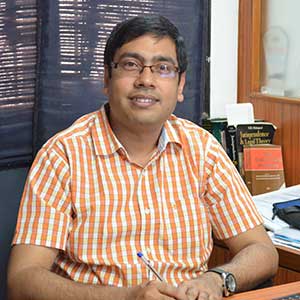
    Piyush Kumar graduated from CLC, Delhi University. After graduation, he started working with Legal Knights Law Firm, followed by S.S. Rana and Co., a boutique IP firm in Delhi. He pursued a Masters in Business Law from NLSIU while working at S.S. Rana and Co. He later joined Krishna & Saurastri Associates as a Retainer Counsel where he currently works. In this interview he talks about:

    • Pursuing litigation and IPR
    • Working and pursuing a Masters course simultaneously
    • Internship and recruitment at Krishna Saurastri Associates


    How would you introduce yourself? Could you please share a little bit of what motivated you to pursue law as a career?

    I am Piyush Kumar, a lawyer dealing with cases under Intellectual Property Laws & Commercial Laws and working in New Delhi. My work involves a lot of communication with clients, negotiations and meetings. My role encompasses that of an in-house counsel as well as a litigator because I handle a lot of Court Cases also.  My father, who is at present a District Judge is my inspiration to enter this field to pursue law as a career. I am happy that I could do what I really wanted to do in my career. Motivation according to me is something that is the culmination of your zeal and determination.


    How would you describe your time at Delhi University? How important do you think extra-curricular activities are to a law student?

    College times are always the best part of one’s life; so for me it was the best time to learn the basics of the profession. Being in CLC, you have to take part in extracurricular activities such as Moot Court Societies, Seminar & Group Discussions Committee, Legal Aid Societies, Intellectual Property Right Cell, Women Empowerment Cell and other committees. I was Convenor of the Seminar & Group Discussions Committee where we organised seminars and group discussions on relevant topics of law and invited legal luminaries to enlighten us from their experiences. I was also actively participating in Moot Courts, Legal Aid and other Societies of the College.  For law students, extra-curricular activities are very important as it gives them insights / exposure to the work / areas they have to work in the coming future.


    A lot of law students promise to take up pro-bono work and do some socially relevant work. Have these ideas ever crossed your mind?

    Pro-bono / voluntary work is always good to do. In law college days I was associated with YMCA, New Delhi and was organizing legal awareness programmes in slums and helping them sort their legal problems. Even today, when I get free time I love to do the same.


    How was your first year after graduation?

    In 2010, after completing my graduation I started working with Legal Knights Law Firm as  a litigation advocate. Litigation, which was my first girlfriend of the profession, taught a lot about the profession and helped me a lot in developing myself and articulating myself with new ideas of professional world. Even my seniors in the firm helped me a lot in developing legal skills such as drafting, court appearances, negotiations etc. For me, when you start preparing your brief for the next day, first jot down the defences you have to put forth for the laches you have to provide during the course of hearing. As in litigation, the safest defence is complete preparation of the case.
     

    piyush-kumar-2

    How did you appointment take place at Legal Knights take place? How would you describe your work experience there?

    I was lucky enough to get two offers within the last month of our last semester; one from Manupatra as Legal editor for their journals and one from the Legal Knights as Associate, Litigation. As I already said litigation being my first girlfriend, I preferred working as an Associate and joined the Litigation Practice in the firm. Although, that was a difficult move for me being a young law graduate because there was the pain of being paid less in comparison to what was being paid by Manupatra. But now, I believe my decision was right as I started working extensively on Commercial Laws ; further my Seniors also helped me to articulate myself as in In-house work. I started on the balance with In-house as well as Litigation profile.


    What contributed towards your appointment at S.S.Rana and Co., a boutique IP law firm in Delhi? How did that go?

    When I joined S.S.Rana & Co.; I was barely aware of the legal technicalities of IP. However, as I was in Court Practice, my basics of law are good. I worked hard to learn the technicalities of IP. Even at present I am learning and developing myself better day by day as you know in this profession you have to learn and develop yourself day by day. As the mantra in this profession is Darwin’s Theory of Survival of the Fittest.


    How did you manage to eke out time for pursuing Masters in Business Law from NLSIU while working at S.S.Rana and Co.? Please share your experience with our readers.

    After enrolling myself in the Master of Business Laws from NLSIU, the Mecca of law schools in India, for the first time I felt that working and pursuing a course together are one of the hardest things to do. As you have to work hard for your firm being in Litigation Profile most of the time you have no time for doing other things when you complete one assignment/case you get another. Although MBL is under DED, NLSIU, Bangalore but the same is a tough nut to crack. Since, my basics concepts were clear and I had a passion to be updated on the legal issues the same helped me pursue MBL from NLSIU.


    Have you ever considered litigation or starting up on your own?

    I am happy to do litigation as a choice not per force. I may start my own work but there is time for it. Certainly, the law firm provides good opportunities and exposure to a young individual lawyer as you have to deal on variety of issues and more volume of work shall mean more opportunities to brush up one’s professional skills.


    After having worked with S.S.Rana and Co. for almost two years, how did you join Krishna & Saurastri Associates as a Retainer Counsel?

    I was made a good offer by Krishna & Saurastri both in terms of exposure and monetisation which appealed to me leading to joining them.


    You have specialized in IPR. What made you interested in the same?

    For me, I am not specialised yet. I am in process of learning as I said that in this field you learn every day. Once your zeal/passion to learn ends I think it ends you also.  Since I am a Science Graduate and also my inclination towards science is a bit more, it made me interested in IPR laws as creations of the human intellect fascinate me.


    How did you build up your expertise in IPR?

    Having already said “I am no expert”, nonetheless it may be noted that IPR is a niche field with a lot of dynamic areas which are being crystallised with time. I feel most of the IP firms are doing a great job of nurturing their young associates in IP laws.


    What is a normal workday like Krishna & Saurastri? Being a Retainer Counsel, what are your responsibilities?

    Handling work of the Litigation & Prosecutions team simultaneously does not have the comfort of workday and times. For me it starts at about nine in the morning and depending upon the work, varies from ten-twelve hours each day. I, along with my able colleagues are responsible for taking care of prosecutions, courts cases, counterfeit actions and related advisory works.


    What has been your strategy to deal with errors and mistakes? How would you suggest a young associate deals with them?

    Error / mistakes play a crucial role in our professional life, as a counsel’s single mistake sometimes not only ruin their clients but also jeopardises your professional life. As the scope of error / mistake in professional life of lawyer is very negligible they must proof read their work, they must have a checklist to reduce the chances of errors / mistakes. Further, factual position of the drafts must be verified by the clients.


    Tell us about a case that you are particularly proud of. What steps do you take to prepare for a difficult case?

    I believe I am proud of all the cases I have dealt with because each case / matter teaches me a lot and the same is added to my professional skills. But, I really remember arguing a NDPS bail matter before the Hon’ble High Court of Delhi in my recent days of joining the profession. One has to know the facts and read all the papers/ documents of their case. Also, research on various aspects of the matter is also very important.


    What is the current scenario of studying IP law as a career option in India?

    With the development of the Indian economy, competition has become intense with brands bending over backwards to achieve sales.  IPRs are now being used not only as a tool to protect creativity and generate revenue but also to build strategic alliances for socio-economic and technological growth. Industries are now dealing with IPRs in different situations in the competitive world. Similarly, domestic industries are also more watchful to ensure that their IPRs are not infringed in India and in other countries. Hence, there is always a vast option in IP law field.


    What is the procedure to apply for an internship and recruitment at Krishna & Saurastri? What do they look for in their prospective employees?

    Students can apply for internship or recruitment by logging on to the link http://www.krishnaandsaurastri.com/?p=careers_employee. Like any other IP firm they look for basics of law especially IP Law. And being computer savvy surely helps.


    What would you suggest to someone who is preparing to work with an IPR law firm?

    When you are preparing for the interview you must be well acquainted with the basics such as C.P.C., Cr.P.C, Arbitration, Contract etc. Further, he/she must also be well versed with established precedents and doctrines of IPR law nationally and internationally.


    Please give our readers a few tips in order to land a job in IPR firm.

    Sciences combined with law are a great combination for patent and for the other aspects of IP doing internship with IP law firm may also go a long way in getting the coveted assignments.


    What would be your parting message to our readers?

    Take positive approach and choose your field as per your personal bent of mind.

  • Somdutta Bhattacharyya, Advocate, Calcutta High Court, on quitting law firm to start up with litigation

    Somdutta Bhattacharyya, Advocate, Calcutta High Court, on quitting law firm to start up with litigation

    Somdutta Bhattacharyya graduated from West Bengal National University of Juridical Sciences, Kolkata in 2012. After graduation, he worked at AMSS for two years before joining Fox & Mandal, Kolkata. He was a part of the Litigation & Dispute Resolution Team at both places. He’s currently an independent practitioner practising litigation at the Calcutta High Court. In this interview he talks about:

    • Law school experience at WBNUJS
    • Working at AMSS and Fox & Mandal
    • Choosing to pursue litigation over a career in corporate law


    Please tell us a little bit about your childhood and your background?

    I am a through and through Kolkatan, born, brought up and working here. I spent a considerably large part of my life in residential school, at Ramakrishna Mission Vidyalaya, Narendrapur, from 5th standard right upto my plus two boards. I am not sure that spending so many years in a residential school and from such a young age has made me very self-sufficient though!


    How did you gravitate towards law? Why law and not engineering or medical studies?

    I did choose science as my study stream for my plus two boards, but that was because my parents initially wanted me to become a doctor. Engineering was never an option anyway, considering my fantastic mathematical skills. To be honest with you, I still have nightmares about my maths exams! I chose law pretty accidentally actually. It was more like law chose me. My uncle, who is a lawyer at the Calcutta High Court, told me at that time of the emergence of the national law schools across the country and the bright, young graduates these institutions were producing and suggested I should try taking the exams for these law schools. I only took the exam for WBNUJS, Kolkata (ours was the last batch who took individual law school exams instead of the CLAT) after preparing for about a month. The results came out about two weeks before the boards and I was very happy to find that I had gotten through. I decided that this was what I was going to pursue and make a career out of. And that is how it happened.


    Tell us about your years in law school. What made your journey with WBNUJS exciting? 

    Law school, I have no qualms in saying, were the five best years of my life. I must admit I was a bit confused at first since I did not come from a legal or even an arts background and there were a lot of subjects like Sociology, History, Economics, Political Science etc. to which I had no or very little previous exposure. But after the first semester or two went by and the strictly law oriented subjects came into the curriculum, I found out that I enjoyed most of these subjects. I enjoyed the process of understanding how and why a particular piece of legislation is framed and how it is implemented in reality. I had the fortune of being taught by some very good professors, who have shaped my life both inside and outside the classroom. There were a lot of extracurricular activities I involved myself in. Being a part of the Legal Aid Society was something I enjoyed thoroughly and it also helped me give a little something back to the society. And lastly, I must say that what made WBNUJS a really exciting place was that I found that most of my fellow students were very bright and very socially, politically and culturally aware people. No wonder I made some of my best friends there.


    How did you fare in your academics at WBNUJS? Would you say a great CGPA is a necessity to kickstart a good career in the legal profession?

    Well, I must say my academic performance at WBNUJS was not among the very best but it was pretty consistent. I was never among the top 10 but I was never outside the top 20. And in a batch of about a hundred students, I guess that isn’t too bad.

    The second part of this question is not very easy to answer. I guess it depends on how one wants to start his or her career, I guess. If he or she wants to get into a good law firm, a decent, if not good, CGPA is required to be taken somewhat seriously as a candidate by the recruiters. But of course, an average CGPA in such cases can be complemented by really noteworthy achievements in extracurricular activities or good recommendations from internships. However, once one starts working in any field of the legal professions, one finds out that the CGPA counts for very little in terms of professional growth. But I must conclude by saying that a good CGPA can never hurt and can only help, so why not aspire for it?


    somdutta-bhattacharyya-2

    What were your areas of interest during your graduation? How did you go about developing expertise and knowledge in these areas?

    My areas of interest in law school were diverse. Some of the subjects that I enjoyed studying the most were Contracts, Constitutional Law, International Law and Alternative Dispute Resolution. If I took a real interest in a subject, I would read the more authoritative textbooks (and not just the ones students mug from right before the exams) on the same, which was helped by the fact that WBNUJS has a really good library. I would also try to keep myself abreast of the developments, from the newspapers and the Internet, of the latest developments in the areas of law that are evolving with every landmark Supreme Court judgment, like Constitutional Law or Arbitration.


    After graduating from WBNUJS, you had worked at AMSS for 2 years and then joined Fox and Mandal before starting litigation. Please tell us a little about your work profile at these firms and the responsibilities you have been entrusted with.

    I would just like to clarify here that I had worked at AMSS for about 2 years and for F&M for about 8 months. In both firms, I was in the Litigation & Dispute Resolution Team, which means I was mostly working on the litigation side of the profession as part of solicitor firms. I was involved in quite a few interesting and high stake litigation matters, mostly at the Calcutta High Court but also sometimes at lower courts. I would have to get thoroughly prepared on the factual and legal issues in such matters so that I could brief the pleading Counsel effectively on the same and assist him ably. I even got to appear in Court once or twice and it felt really great! During my time at AMSS, I was also involved in an international (SIAC) arbitration and got to travel to Singapore and participate in the same. It remains one of the most thrilling experiences of my professional career till date, especially since I had worked very hard on the matter and been very involved in every stage of it.


    When did you decide to quit Fox and Mandal and start litigation? Was it pre-planned?Why did you prefer Litigation over your corporate job?

    I decided to quit F&M and start my career as an independent practitioner in or about December of last year, i.e., 2014.

    It was not pre-planned. I gradually came to realize, after having spent about 3 years in litigation as a solicitor, that I would like to be on the other side of the profession, i.e., as a counsel. I realized I would like to appear and plead in a court of law. And hence I took my decision.

    I would be lying if I said it was a very easy decision to make. I knew it would take me quite a bit of time to establish myself as an independent practitioner, especially coming from a family where no one is in the practice. I knew I would be giving up the financial security of a fixed sum of money, and not a very small one either, in my bank account at the end of every month. But, at the end of the day, the heart wants what it wants and I felt strongly that this is what I wanted to do, so I took the plunge anyway.

    As I said earlier, after being on the solicitor side for about three years, I thought I would like to remain in litigation but I would like to draft and plead my client’s case in the Court, which I would not have got enough opportunities to if I remained in a law firm. But I am immensely grateful to all my colleagues and mentors at the firms that I have worked at, and especially Mr. Debanjan Mandal, Partner at Fox and Mandal, for providing me the exposure to good, interesting and high-stake court litigation that not only increased my experience but also increased my interest in a career in litigation.


    What are you main practice areas? How has been your experience so far? Is it more comfortable be your own boss or is the pressure of work almost similar?

    At this stage of my career as a counsel, after I have just started out on my own practice, I’d prefer not to be choosy and say I will accept any matter. But if I must choose, then I would have to say that my main practice area would be civil and commercial law.

    It is still far too early to answer this question properly (it has only been a month and three weeks), but till now I have really enjoyed being an independent practitioner. I have been briefed in a few matters, both by solicitors as well as from personal sources, and I enjoy the challenge of understanding the problem faced by the client and trying to provide an effective solution to it. I am immensely grateful to my senior, Mr. Abhrajit Mitra, Senior Advocate, who has always provided me any guidance that I may have requested of him in this regard.

    I will say that it is definitely more comfortable to be your own boss but not because there is less work pressure. If anything, the hours I have to put in now are more compared to what I did in a firm. I attend court in the morning, then come back to my residence and leave for my senior’s chamber in the evening. Since my senior works till pretty late in the night, I try to stay in the chamber till he calls it a day and try to assist him in any way that he might require.


    How is your experience so far?  What is your workday like? Are there new challenges every day or did work fall into a predictable pattern?

    My experience so far has been pretty good. I enjoy the independence that comes with being in your own practice and I also relish the added dependence that my clients seem to have on me!

    I get to court by 10.30 am and I am in court till 4.30 pm on a typical workday, attending whatever matters I might have in court on that particular day. Then I come back to my residence, freshen up a bit and leave for my senior’s chamber, where I get to by 7.30 pm. I leave chamber when my senior is finished with his briefings/ work for the day, which on a typical day would be around midnight.

    I must say there are new challenges everyday in litigation. Everyday you are arguing on a different kind of matter, every client has his or her own unique set of problems that they are facing and you must be innovative in your approach to provide an effective solution.


    How necessary is it to have a mentor to guide a young lawyer while still in the formative years of the profession? Do you have one?

    It is absolutely vital to have a mentor in one’s formative years in the profession. He or she is the person from whom a young lawyer will learn the various facets of the profession, how to approach every legal problem differently, how to strategise a litigation, how to plead in a court of law so as to hold the attention of the Judge and the more one assimilates these lessons from one’s senior, I believe the more likely he is to succeed.

    Yes, my mentor/guide in the practice is my senior Mr. Abhrajit Mitra, Senior Advocate at the Calcutta High Court.


    What can the law schools do to encourage more people to pursue litigation? Do you think the law school curriculum requires an overhaul?

    I must not be pretentious here because I really have very little idea as to what law schools can do to encourage more people into litigation. Most young graduates, at the law schools, are hearing about the big bucks their seniors are making at corporate jobs and law firms and get encouraged to just go with the flow. But many of them, after some time, realise they might want to choose a different path, including litigation, for some of them. It is a realization one must have oneself and I doubt law schools can do much in that regard.

    I would not say that the curriculum requires an overhaul. But yes, I would suggest that students be not only constrained to the theoretical knowledge of certain subjects that they will never have to apply in their lives and teachers can provide them with more practical, real-life legal scenarios so the students can understand how to apply the law and find a solution to the same. It would hold them in good stead, no matter which facet of the profession they are involved in their careers.


    How far is theoretical knowledge in law schools consistent with the practical arena?

    A basic good grasp of the theoretical knowledge imparted in law schools is of course necessary in the practical arena also. But that can only help to a certain extent and one can only learn about how to excel in the profession through experience and by being involved in actual legal scenarios. In that regard, I would say the seniors, be it in law firms or in the practice are more important teachers for a young lawyer than their teachers in law school.


    How difficult would you say it is to build a reputed practice in litigation?

    I would say the main difficulties faced by a young practitioner is to get solicitors and possible clientele to know that he or she even exists, let alone being efficient and dependable! In that regard, one must have patience and execute whatever matters one is briefed on with utmost diligence and care. Sooner or later, a reputation, or at least a foundation, would start being built for the practitioner.

    I would certainly say it is not very easy to build a reputed practice. It needs a lot of hard work and probably some luck as well. It is especially difficult in a place like Calcutta, where there are a lot of good, young lawyers but probably not so much good, high stakes litigation. One can only work hard and start building a reputation, as I said in the first part of this question.

    It is difficult to say exactly how many years of hard work it takes to build a firm clientele. It depends a lot on each individual practitioner. From what I hear, it takes at least 3 to 4 years before one can say that the initial period of struggle has somewhat given way to calmer waters.


    The Bar Council of India has recently come out with new Certificate of Practice and Renewal Rules, 2014 that prohibit an Advocate from starting to practise in the Supreme Court unless they have practiced for at least two years in a Trial Court and three years in a High Court in India. What is your take on this?

    The Bar Council feels that one can only have a strong enough foundation in litigation practice to be practising at the Supreme Court if he or she has spent enough time at the lower courts, and I cannot say I entirely disagree. Most of the people in the practice will tell you that young lawyers get the most amount of exposure and experience in the lower courts, while in the Supreme Court they will in all likelihood be assisting an established senior lawyer. So I do not think it is a bad or unreasonable measure by the BCI.


    Indian criminal law is, to a large extent, influenced by its British counterpart. Do you think if Indians would have framed our Penal Code, it would have been better?

    I would not say that when the IPC was drafted, the Indians would have done a better job than the British. Lord Macaulay was an extremely knowledgeable and experienced draftsman and I doubt such an exhaustive Penal Code could have been drafted at that point of time by anyone else. But times have changed, and now the IPC, in my opinion, needs quite a few amendments. Archaic provisions like the criminalisation of homosexuality or the extremely narrow definition of obscenity need to be changed, while stricter measures to counter rape and sexual harassment of women in the current scenario need to be introduced. And that can only be done by our very Indian legislators, isn’t it? No point blaming the British for something that they had drafted so long ago, when social perceptions and scenarios were completely different.


    If you could re-live your five years in Law school, is there something you would do differently?

    I would have definitely studied my Civil Procedure Code course better and with more interest. I should have known more of the basic provisions of the CPC that I need to apply everyday by the time I graduated. Apart from that, I really don’t think there is anything else.


    How to make a conscious career choice – corporate vs. litigation?

    You have to ask yourself what you really want. Does the thought of drafting pleadings and navigating through piles of case law and legal books to present a successful argument in court for your client (I must mention it is a different feeling altogether when one does manage to get a really good order in the favour of his client) excite you? If the answer to that is yes, then you must ask yourself whether you are prepared to be patient and endure a bit of financial struggle in the early days in the sight of a greater goal, i.e., to become a successful practitioner? If the answer is still yes, then litigation is definitely for you.


    Lastly, what would be your parting message for our readers?

    To young people still at law schools, I would ask you to concentrate on your studies and focus on doing well. Indulge yourself in a lot of extracurriculars and also have a lot of fun, because trust me, these are some of the best years of your life and they will not come back. Also, do not give in to peer pressure or what everyone says. Look into your heart and ask yourself what you actually want to do. There are a lot of excellent career paths and options out there, and do not choose something you do not think you will like being stuck in because of extraneous reasons. I am sure you will be able to figure it all out and I wish you the very best of luck!

  • Khyati Rathod, Senior Associate, Khaitan & Co., on work experience in real estate laws

    Khyati Rathod, Senior Associate, Khaitan & Co., on work experience in real estate laws

    Khyati graduated with a B.A. LL.B from Jitendra Chauhan College of Law (Mithibai) in 2007. After graduation she joined Desai & Chinoy (Advocates & Solicitors) as an Associate. After specializing in real estate laws for almost two years, she joined Khaitan and Co. as an Associate and currently works as a Senior Associate there. In this interview she talks about:

    • Specializing in real estate laws
    • Recruitment at Khaitan and Co.
    • Being a Senior Associate at Khaitan and Co.


    What got you into legal studies? Was it all planned or something that just happened by chance?

    I love this question – Why law? I come from a family full of Chartered Accountants and Engineers and to be honest, this was the first question that everybody asked me when I informed them about my decision of choosing law as my career. The sole motivation to turn towards law was my own conviction and the hallmark of prestige towards this profession. The legal profession appeared to me as one of the most intellectually rewarding jobs on the planet!


    How was your experience at Mithibai Law College, Mumbai? What activities were you involved in apart from the regular academic curriculum?

    I graduated with B.A. LL.B. from Jitendra Chauhan College of Law (Mithibai). I have had a wonderful experience in Mithibai. From the very first year of my college, I was given an opportunity to represent our college in some of the prestigious moot court competitions. I was also part of a team who organized moot court competitions and seminars. Co-curricular activities help you develop an all-round personality, improve your interpersonal skills and also boost your self-confidence.


    What were your major interests as a student of law?

    Let me answer the latter question first. Figuring out what practice area to choose after law school is a big decision. To start with, I would say there has to be a self-assessment as to whether you want to be the expert or generalist. Choosing a practice area will depend upon a variety of factors like inventories of your interest and skills, an eye towards the law school courses you most enjoyed, long term goals, work-life balance and so on. I strongly suggest undertaking internship programs in the formative stages of your legal career as such programs are an ideal way to make you realise your interest in specific area of work.

    During the early course of one’s career, one may venture into areas that were not originally considered. Be alert to your changing interests, the changing law and changing markets. Be open minded and unafraid to learn something new.

    The urge to swot the business and legal aspects of real estate was always within me. I was fortunate enough to work on property and alternate dispute resolution matters during my internships and in my earlier law firms.


    What is your take on academics? How important do you say is a good CGPA for an illustrious career?

    There seems to be an incredible fascination amongst law students for maintaining high CGPA and well, let us be honest, who wouldn’t want to score good marks in an examination? The first impression is created by your academic achievements which includes CGPA. However, one should not equate scoring of high CGPA to “success”. I do not wish to negate benefits of scoring of high CGPA but personally, in my view, the concept of “CGPA” is considered as an easy way to assess merit while a securing job. According to me, CGPA cannot be the best indicator of a person’s ability. Let us not forget that at work and in your daily routine, all that matters is your hard work, confidence and your zeal for having in-depth knowledge about your subject. You may be the topper from a law college but that may not make you a good lawyer! Don’t despair if your CGPA isn’t ideal; however, do drum up your effort in practical experience and professional networking.


    How was your first year after graduation? What do you think were the biggest hurdles and challenges in the early days of your career? How did you deal with them?

    Law school does not prepare you to practise law. Of course, it teaches you how to “think like a lawyer,” but when you get your first job as lawyer, you will find that you’re completely in the dark about lot of things. It was a new world with a plethora of experience. One needs to put to use all theoretical knowledge that was learnt in a law school! Luckily for me, I undertook internship programs during my initial days. I would not say that I learnt it all during these programs but it relatively became easier for me to gain a bit of experience and showcase the same when I secured my first job as a lawyer. One more important factor which helped me was that I got to work with wonderful people. Healthy work environment plays an important role to combat any challenge.


    What is your opinion when people say that all that they have learnt is in their years of practice?

    I would like to say my learning during college days helps me every day in some or the other aspect. We were encouraged to do mock-trials, give presentations and so on. My professors and seniors still remain my mentors. It depends on how you make the best out of the opportunities given. Legal education helps in gaining theoretical knowledge. Yes, there is no doubt that you learn a lot when you are actually in a situation where you have to put to use “theoretical solutions” to “your practical problems of clients”! I believe everything cannot be taught in a classroom and this is a profession where there is continuous learning.


    After graduation you joined M/s Desai &Chinoy (Advocates & Solicitors) as an Associate. How was your experience working there?

    Desai & Chinoy was a wonderful experience for me. The best part was that this was my first job after graduation and I was fortunate enough to gain insights about property matters in my early years and worked with wonderful team.


    khyati-rathod-2

    Thereafter, you joined Khaitan and Co. as an Associate and currently work as a Senior Associate there. What led to this shift?

    My superiors will be in a better position to answer this question! The initial few years of your career require lot of hard work, dedication and persistence to grow. I was driven by these factors which helped me to climb the ladder. I am fortunate enough that my work has been acknowledged and appreciated by my partners and senior management. Over all, it is all about your hard work coupled with an optimistic outlook to absorb new things.


    Please tell us the recruitment process at KCO. How did you appointment take place?

    Recruitment process is at KCO is extremely transparent and well structured. Real Estate practice is slightly different from other practice areas. As our team has expertise in real estate sector, it was very important for the team to absorb people who will easily comprehend property laws, specifically, pertaining to Maharashtra. I had 2 rounds of interviews. I was directly interviewed by the partners and after 2 rounds of grilling sessions, I had my offer letter with me!

    What kind of work and responsibilities does a Senior Associate at KCO deal with?

    KCO gives an opportunity to develop ourselves as professionals as the common objective is to grow. It gives opportunity to take independent decisions.


    What has been your strategy to deal with errors and mistakes? How would you suggest a young associate to deal with them?

    No matter where you work, adhering to professional ethics benefits your career. Foremost is to own up to your mistakes. It is simple – you can’t learn from your mistakes if you can’t acknowledge you’ve made them! And if you don’t learn from your mistakes, you’re destined to repeat them. I also ensure to have good working relationship with my colleagues as it helps to maintain healthy working environment.

    My advice will be to maintain a “good work ethic” and make it an important part of your professional package. Your overall reputation and particularly your references will follow you the rest of your life, particularly for your career.


    What changes has being a Senior Associate brought into your life, do you ever feel that there is excess of work load on you?

    Being a Senior Associate is not an easy job and of course it comes as an added responsibility! You are accountable not just to your seniors but also to your clients. You will also have your junior colleagues who will look up to you for your guidance. Your whole outlook changes and you start feeling more responsible which also includes negative consequences if any! Yes, I do come across work pressures but I have excellent colleagues at associate level to make my life easy.

    Work life balance? On a lighter note, my friends always say that “work life balance” in the legal industry is oxymoron! Yes, law firms usually have long working hours but you also enjoy reasonable amount of flexibility. For me, my work starts sharp at 9 am and depending upon the work, my working hours vary from 10-11 hours each day. I try and prefer to finish work at office even if it calls for having late working hours. However, at times to meet urgent deadlines you are left with no choice but to carry work home. To be realistic, there cannot be a “perfect” work life balance but one should strive to achieve a balance between one’s personal and professional life. I strongly feel that it is achievable.


    Have you ever considered litigation or starting up on your own? Would you say the opportunity a firm provides for a young lawyer is worth the trade off in building a reputation?

    Honestly, the amorousness for doing litigation or visiting the courtrooms everyday never got to me. I haven’t considered starting up on my own as my work profile in KCO gives me immense work satisfaction. I think starting up your own is a personal choice.

    I do agree that the law firms be it in small firm or a large firm provide excellent platforms for lawyers to make a mark and build reputation. However, I do not necessarily think of the trade-off between a law firm practitioner and a private practitioner. At the end of the day, reputation happens to be the most important asset for all professionals and all of us endeavour to work towards it in some or the other manner.


    Given a chance to turn back the clock would you have done anything differently from what you’ve done?

    By nature, I have always been headstrong. I have always had clarity of thoughts in decisions that I have made so far and therefore I wouldn’t really want to turn back the clock. In fact there’s no looking back now.


    Lastly, what would be your message to a law student who is yet to decide his/her career?

    It may sound cliché but find what you love and work hard to achieve it! If you wish to become a lawyer, be prepared for challenging work and lots of it. The legal profession is one of the most lucrative industries in  the job market and there are plethora of opportunities for law graduate.

    To quote Mario Puzo in The Godfather – “A lawyer with his briefcase can make more money than a burglar with a gun, if he has a sharp wit and intelligence.”


  • Pratyush Saha, Assistant Manager, Indirect Taxes, PricewaterhouseCoopers, on work in taxation firms

    Pratyush Saha, Assistant Manager, Indirect Taxes, PricewaterhouseCoopers, on work in taxation firms

    Pratyush Saha graduated from WBNUJS in 2011. During law school, he participated in various co-curricular activities and has multiple publications to his name. Soon after graduation, he joined BMR Advisors Pvt. Ltd. as an Associte-Indirect tax. Later he switched to PricewaterhouseCoopers and currently works as an Assistant Manager, Indirect Taxes.

    In this interview, he talks about:

    • Law school experience at WBNUJS
    • Work experience at BMR Advisors
    • Induction and work at PwC
    • Work experience in tax law


    Tell us a bit about your childhood and pre-college life as well as educational background.

    As a kid, I was an exceptionally confused individual. I wanted to be a doctor or a pilot and a painter. Once, I even considered the prospects of becoming a fashion photographer. But the thought of becoming a lawyer never really crossed my mind. Law happened to me by chance. I pursued science in my plus two in and like most of my classmates, I diligently prepared for the engineering entrance examinations. Law was hardly considered as an alternative career option by science students back then.

    Once I came across a friend preparing for law entrance tests and became curious. The questions appeared to be fairly simple, so I decided to give it a shot. I cleared both AIEEE and the entrance test for NUJS. The idea of me becoming a lawyer did not go down too well with my parents initially. However, I eventually managed to get them on board with the idea. I strongly believed that doing law would prove to be a fascinating journey ahead. Fortunately, it turned out to be a decision I would never regret.

    Coming from a typical Bengali family, I always had a liking for creative arts, which I thought would define my career in future. I always find creative thinking to be an essence of the legal profession which complements the objectivity of legal proceedings, research and the practice of law.


    Did you face stiff opposition from your friends about becoming a lawyer? What were your objectives when you thought about law while still in the preliminary years of Law College?

    Law has always offered more career opportunities than what is commonly known. By the time I joined NUJS, law was fast picking up as a lucrative career choice. Legal profession was evolving in every way. There was a huge demand for smart, young lawyers. NUJS is regarded as one of the premier law colleges in India and was naturally getting good placements then. Our alumni were making a mark in the industry. Some were doing exceptionally well as litigators. My friends did not really have much of a say about me becoming a lawyer but most of them were happy seeing me try out something different.

    Time at NUJS was fun. I never focused much on extracurricular activities. I mostly spent my time having regular ‘addaa’ (Bengali for gossip) sessions with friends, reading few books and sleeping. Temperamentally, I was more suited to activities that included reading, thinking and writing as opposed to debating, mooting or head banging with guitars and drum sets, for that matter. For a brief period of time, I was a part of the editorial board of NUJS Law Review (a prestigious law journal published by our college). But that’s it! I preferred to spend just the right amount of energy that was required to maintain decent enough grades to land me a good job in the end. In fact, till my fourth year I hadn’t even figured out what I wanted to do after college. I had few of my own subject preferences though. Thanks to a few outstanding professors at NUJS. I can distinctly remember our Sociology, Jurisprudence, Arbitration, Constitutional law and Contracts lectures to speak of few.


    How relevant do you think are internships for a present law student?

    Internships are very important for law students. But internships must be carefully planned and strategized. I feel, former internships add substantive value to one’s CV, which always helps secure better internships latter. Frankly, I don’t think interning in law firms in 1st or 2nd year serves any real purpose. Most of the students get good placements because of few good internships in their 3rd, 4th or 5th year. Well targeted internships help secure a job in a field where the student is genuinely interested in working. It is very important to make the most out of internships done in 4th and 5th years.  I had a liking for taxation laws (indirect tax in particular). With some good luck, I landed an internship at BMR Advisors, Delhi, at the end of 4th year. I was luckier to get a Pre Placement Offer (PPO) after my internship. It is extremely important to make a good impression on your seniors during internships. I have seen many students treating internships casually, especially in their final year which never helps. A student who comes across as an enthusiastic, hard-working, smart, and efficient person who is eager to learn, has a fairly reasonable chance of converting an internship opportunity into a PPO (of course it largely depends on whether the firm is actually looking to hire a fresher at that point of time). This is why I say, internships must be carefully planned and strategized.


    How valuable would you say your legal education was at WBNUJS? When did you actually experience the learning curve?

    I had a stellar time in college! It made me the person who I am today, in a lot of different ways. Even though the college is located at the heart of Kolkata, NUJS has a spirit that I feel is completely different from its city. In fact, one could often forget who he/she is in Kolkata, the moment one enters the campus (Yes! Our college does have a small but warm campus). NUJS provides a setting that presents a unique confluence of cultural diversity that one hardly comes across in any other undergraduate college in Kolkata. I met a bunch of exceptionally smart and talented individuals there. The ambience, activities, students and faculty made my transformative five years in college the most memorable experience of my life. NUJS was not just about studies, it taught me a lot about life. Managing studies along with research, paper presentations, internships and editorial work were my initial lessons on time management that I learnt at NUJS. Our Vice Chancellor, Professor Dr. MP Singh was a dynamic and a successful leader who had a completely different approach towards academics. Open book exams and take home papers were things that I had never experienced before. Students learned their subjects independently. Academic curriculum, exam and evaluation patterns were extremely flexible. We never had to stick to a routine text book for our studies. Our professor used to hand-pick reading materials for our courses and honestly, some of the lectures were actually worth attending. But one could not attend classes without being prepared. Some professors gave attendance but asked students to walk out if they were not interested. The academic and policy debates we had in their classes where extremely satisfying and fulfilling. We had an outstanding library and the research databases were topnotch. A lot of emphasis was put on reading, researching and publishing at a regular basis. There were so many things happening in college every day, starting from moots, debates, seminars, workshops to guest lectures. I really miss them now! I had the good fortune of attending lectures given by few bright young faculty members like, Dr. Prabhash Ranjan, Dr. Rukmini Sen, Pritam Baruah, Daniel Mathew and Shamnad Basheer who made a huge impact to the academic culture of NUJS.

    It is true that National Law Universities (NLUs) give students the right exposure to great learning opportunities and career avenues that law students from other colleges would rarely get. However, the learning curve only begins in college. It actually curves once we start off with our professional services. I remember an interesting conversation I was once having with a young IRS officer who was newly posted at a Customs station. I asked him, ‘The law is so vast and complex, don’t you feel bogged down as a fresh officer holding the post of an Assistant Commissioner?’He seemed very confident with his job. He smiled and replied, ‘I don’t need to worry, the chair will teach me everything’. That pretty much sums up the point I am trying to make here.

    Having said that, I do not undermine the education that I received in college in anyway. I think they are by far the most important thing that shaped me as a legal professional in my formative years. Professional experiences definitely help us learn court room antics, negotiation strategies, management and networking skills etc. Yet, unique academic insights provided by a lawyer give him a distinct edge over his peers across any table. I can vouch for that from my own practical experiences!


    How important do you think that extra-curricular activities are to a law student?

    The curriculum at NUJS always encourages students to participate in extracurricular activities. These activities include moot courts, debate competitions, essay writing, legal writing and lots more. No matter how much we complained, I feel we received adequate freedom and financial support from college. Such activities help build right attitude towards competition, a zeal for research and develop a skill for formulating arguments and expressing them confidently in front of an audience. Extracurricular activities are required for harnessing desired qualities like confidence building, working in a team, brushing your public speaking skills, managing and coordinating with your peers. However, making these activities mandatory eliminates the fun elements completely. I feel a student should be free to make a choice whether to moot/debate or just write articles or publish papers. Thankfully, NUJS never made them mandatory.


    pratyush-saha-1

    How was your work as an indirect tax lawyer at BMR Advisors Pvt. Ltd.? Tell us what a typical day at work was like for you?

    The year after graduation is the most defining and challenging time for a fresh law graduate. BMR was my first job and like any ‘first’, BMR experience was special in many ways. I relocated to Delhi after joining office. This was the first time I was actually stepping out of home which was my comfort zone and I was out there, dealing with my problems all on my own. I hardly had any relative in Delhi so my college friends and colleagues quickly became my support system. At the cost of a little embarrassment, for the first time in my life, I would admit having known what feeling ‘home-sick’ could be like.

    Before joining as an associate I had interned with BMR for a month. That helped to an extent. I already knew the system and the people within. People in the Indirect Tax team at BMR were like one small, closely knit family. BMR had a healthy mix of chartered accountants and lawyers and most of the lawyers were from NLUs. Back in 2011, when I joined BMR, the indirect tax team had three associates who were law graduates. Our team specialized in dealing with complex Indirect Tax advisory and litigation assignments. BMR is a hard-core consulting firm. People at BMR have very high work standards. I found them extremely knowledgeable, very smart and competitive. Everyone was a thorough professional, The BMR experience taught me a lot in terms of professionalism.

    First few months at BMR were difficult. I could barely draft a memo let alone handling complex indirect tax transactions and providing advice on tax implications. Reporting to multiple seniors and meeting their stiff deadlines had been a challenge. BMR trained me a lot in terms of working under pressure. As an associate, one is expected to take care of everything. Starting from drafting engagement contracts, ensuring bills are raised on time, draft thoroughly researched memos, prepare legal submissions, reply to notices, draft appeals, prepare presentations for client meetings, field queries from clients, keep tab on key legal developments and updates, keep a tab on all court proceedings for clients, give training sessions for team members and the list just goes on. Just name it, and the associate is expected to do it all. I have been very lucky for my seniors had always been there to help me out wherever I would get stuck. I will forever be indebted to two of the sweetest persons I met in BMR, Anshul Aggarwal and Saurabh Agarwal. They were my mentors, my role models and guides. Without their patience, guidance and support, I could never have been where I am today.

    A typical day at BMR would start with me reaching office by 9:30, having breakfast and a small chat with my colleagues. After that, I would usually sit with seniors to discuss my to-dos and set about completing assigned tasks within agreed timelines (BMR is very particular about timelines!). All of us would break for lunch, usually between 1:00-1:30 P.M. My colleagues and I would go for a short stroll outside office post lunch (That was, by the way, the best part of the day! Especially during the winters in Delhi). Post that, I would mostly be found perched up against my chair and profusely typing out deliverables on my laptop to get them done on time. Leaving office would mostly depend on the amount of work one had to complete in a day.

    However, the best/worst part of a consulting firm is that you are always on your toes. One could never guess how a typical day would pan out for him or her. “Urgent” deliverables, client queries and meetings could pop up like a surprise at any given time and one has to deal with them along with their regular work.


    What would you suggest a fresh law graduate should do to hold spirit and utilise the opportunities available in his first year of graduation?

    First: Get your basics right! You are expected to know the law, where to find it and how to use it without wasting much time.

    Second: Be clear as to what you are expected to do. Ask questions and clarify all your doubts before you start working on any deliverable. This was one lesson I learnt a hard way when I was an associate. One should never start working on a project without being clear about their senior’s expectations. Be it in terms of content or timelines, you must discuss it all with your senior before you start your work. That saves your time and your senior’s time as well.

    Third: Don’t shy away from challenges. Get out of your comfort zone and push yourself to do something you have never done before. That’s the only way one can grow as a professional and I feel, this is a ‘must have’ trait for a lawyer.


    Currently, you work as an Assistant Manger- Indirect Taxes at PwC. What prompted you to make this choice and what made this shift possible? How did your appointment take place?

    I always found Mumbai to be a better city to live in, as compared to Delhi. The opportunity of moving to Mumbai from Delhi was a decisive factor for making the decision to switch. Most of my friends and relatives stay in Mumbai and that made a lot of difference to me. Besides, BMR focused mostly on advisory and litigation assignments. I had very little exposure to compliance. I wanted to have a job with a healthy mix of compliance, advisory and litigation and PwC offered them all. I met Abhishek Rastogi (who was a Senior Manager at PwC Mumbai back in 2012), at an event in Delhi. We started chatting up and I discovered that there was vacancy for my post, with the exact job profile that I was looking for. I suggested that I was interested in joining. This followed up with an interview with the Indirect Tax head of PwC in Delhi and I landed my second job at PwC Mumbai.


    We would love to hear about your work profile. What is a normal workday like? Please tell us a little about the responsibilities you have been entrusted with. What kind of legal work do you get there?

    At PwC, I look after clients from Pharmaceutical and Financial Services sector. A normal work day at PwC is pretty much the same as BMR. However, at PwC the clients repose a lot of responsibility on us. Apart from advising clients on tax issues we are also accountable for their tax compliances. However, my seniors have been very kind to give me a free hand in terms how I choose to deal with my clients and plan my work, as long as the work gets done. I have a team of juniors to assist me on my projects.

    My role as an Assistant Manager involves advising clients on various tax positions, review regular compliances like filing returns, and refund claims, review or draft submissions to be made to revenue authorities, prepare reply to show cause notices, appeals before Commissioner (Appeals) and tax Tribunals, represent clients before tax authorities and various appellate forums.


    What were the biggest hurdles and challenges in the first few months? What have been your failures and successes? How did you deal with them?

    Every organization has their unique set of work culture, drafting style, format for deliverables, approach to clients and work. For the first few months, it is extremely important to learn the new essentials and unlearn old habits that do not comply with scheme of work of the new employer.

    Success and failures are a part of life and its best dealt with an objective bent of mind. I always believe in celebrating my success with my colleagues and friends and keep the bad experiences from failures to myself, try and learn from it and never repeat them again. Also, it helps to pass on experiences of failures to juniors so that they do not commit the same mistakes.

    Working with numbers, accounts and tax issues, one could go wrong quite often, and to top it, one may not even realize it immediately. At times, circumstances are beyond our control.  The consequences may leave you with a bad aftertaste but it is important to realize it’s not the end of the world. Similarly, winning and losing a case is a part of the game and its best that we do not take occasional failures to our hearts.


    What are the primary essentials of an indirect tax lawyer? What is the current scenario of studying indirect tax law as a career option in India?

    A tax lawyer needs to have all the basic skills that any lawyer is expected to have. It is also essential to have a good understanding of accounts. Tax, as a subject, evolves every day. It is very important to stay up-to-date with latest provisions. Fresh graduates aspiring to join the tax profession should not only have a good understanding of existing tax provisions but also understand how laws have evolved over the years. This comes in really handy while handling old tax disputes. I would also encourage them to take lessons on Microsoft Excel and PowerPoint. These are basic skills expected out of any fresher at a multinational accounting firm like PwC and most law graduates (including me) struggle with them in their early days.


    Tell us about your work mantra? What do think are the most essential things required to excel at work?

    Keep a positive outlook towards life. Give your best effort on each assignment and believe in your dreams.


    What are the qualities which PwC look for in interns and associates?

    Unlike BMR, I have not seen PwC Mumbai offering short internships to too many law interns. However, PwC does hire law students as full-time analysts. We have students from various law colleges from Mumbai who work with us as full-time resources. Interested candidates can get in touch with the HR. We look for candidates with a fair exposure to tax laws, good drafting skills and a positive attitude. But of course, requirements may vary depending on specific job profiles for which a candidate is being selected.


    What are your future plans from here on?

    As of now, I feel I have lots to learn. Hence, I would like to stick around for a while. But you never know what future beholds!


  • Ankit Sinha, Associate, Juris Corp, on LL.M from QMUL, and work experience in Banking and Finance Laws

    Ankit Sinha, Associate, Juris Corp, on LL.M from QMUL, and work experience in Banking and Finance Laws

    Ankit Sinha is one of the most diligent and illustrious scholars of the 2012 batch of School of Law, Christ University. He has a noteworthy academic record as he ranked in the top 5% of his batch during his college years. He had always planned to pursue Masters since his days in law school and therefore soon after graduation, he went on to pursue Masters in Banking and Finance Law from Queen Mary, University of London. After coming back to India, he started working at Juris Corp and is currently working as an Associate there.

    In this interview, he talks about:

    • Law school experience at School of Law, Christ University
    • LL.M experience at Queen Mary
    • Induction and work at Juris Corp


    How will you introduce yourself to our readers?

    The first question and I find myself lost for words. As human beings, it’s always so much more difficult to talk about yourself. Nonetheless, I’ll try. I come from a family of lawyers, tracing back to my great grandfather. I have lawyers on both my paternal and maternal side. Safe to say it didn’t take me long to fit into the scheme of things and the offerings of this profession. Outside the field of law, I’m like any other mid twenty year old- I love playing sports. I am a diehard Manchester United fan. In my spare time I love listening to music and am also an amateur photographer. I also sing and play the bass guitar.


    How did you gravitate towards law? Why law and not engineering or medical studies?

    Law wasn’t my first choice. Surprisingly, neither was engineering or medical. I loved Economics as a subject whilst I was in school. Unfortunately, as much as I loved Economics, I had an aversion towards Mathematics. Post my 12th board examinations, and once my results were announced, given that my result in Mathematics wasn’t good enough to secure a place in any Delhi University College, I decided to pursue law for a year. My father wasn’t okay with me dropping a year. My sister was pursuing law at the time, and hence I decided to follow suit.

    I appeared for a few entrance examinations, and landed up at Christ College. Within the first few years at law school, I had, during various internships, worked briefly in the field of Banking and Finance. I saw glimpses of Economics in banking and that’s where I developed my love for the subject. So much so that I went on to do my Masters in it as well. Was quite a journey from not wanting to do law, to ending up with a Masters in it.


    Tell us about your law school experience. Share some highlights from your college days that shaped you as a lawyer.

    Five years is a long time. I made some of the best friends and have some of the best memories of my life attached to law school. Like most teenagers, going to law school away from home meant freedom for the first time. Living alone and fending for yourself. In this profession, somewhere down the long winding path, you’ll find yourself stranded and alone. My five year stint at Bangalore made me independent. It made think on my feet. It made me realise that knowing that a problem exists isn’t good enough. Finding solutions was the key. Even today, the fact that I spent those years away from home, away from my parents, made me stand up on my feet. It made me see the world from a different viewpoint. I honestly believe one cannot learn the law, one can only prove to be prudent enough to find it. I developed my research abilities throughout my five years at law school and during my internships.


    How did you fare in your academics at Christ University? Would you say a great CGPA is a necessity to kickstart a good career in the legal profession?

    I ranked in the top 5% of my batch during my years at Christ College and subsequently ended up with a merit during my Masters. So safe to say I was good at studies. If it matters to kick-start your legal career, well, it does to some extent. Most law firms prefer students who excel in studies as it depicts sincerity. It’s not the only criteria, but it may help you land at interview with a prominent law firm. Once there, if you’re good enough, consider the battle won.


    Which subjects did you enjoy during your qualifying degree? What about co-curricular activities?

    Economics and Banking law! I didn’t so much so as have an iota of doubt in my mind that I wanted to pursue a career in Banking. I wasn’t interested in mooting to be honest. I spent a lot of my time playing cricket and football for the College team. In my 4th year I was appointed the convenor of the sports committee and I’m proud to say that under my stewardship, Christ College won its first ever law school sports fest when we visited NUJS, Kolkata that year. I was also an avid counter-strike fan and had the opportunity of being a part of the gaming team at Christ College as well.


    What was your motivation behind pursuing LL.M. right after your under-grad? How did you finally decide that you need to do masters?

    In my 2nd year itself I had made up my mind that I wanted to pursue my Masters in Banking and Finance. I had done my homework on the best Universities in UK for an LL.M. in Banking and Finance and had already sent across my applications by mid 4th year. Throughout law school I worked towards the requirements that each of the 5 colleges I had narrowed down on, stipulated, for an entry into their Banking and Finance programme.


    How did you choose Queen Mary, University of London over others? How did you go about choosing a university?

    I applied to five Colleges. Four of them were Colleges affiliated to the University of London. Queen Mary seemed to have the most concrete Banking and Finance programme and it fit my needs perfectly, making the final decision relatively easy.

    As a heads up to those who wish to pursue higher studies, make sure you do your homework. Rankings are attractive, but there’s a lot more to a Master’s abroad than just that. Don’t blindly follow the herd. Some colleges have better programmes than others. It’s important to narrow down the best Colleges as per your specific needs, the programme you wish to pursue and the professors conducting the relevant modules you intend to take up.


    How did you go about writing your SOP? Are there any key factors which one should keep in mind before writing the SOP?

    A statement of purpose is the driving force behind why you wish to undertake a specific programme at a specific College. It’s not meant to be a glorified version of your curriculum vitae. Keep it short and simple. Avoid flowery language. No one is judging your creative ability. Most College websites abroad specify the length of an ideal statement of purpose. Stick to the word limit. Also, and most importantly, if you intend to apply to more than one College, avoid writing a common statement of purpose. Each statement has to be specific to the College it is intended to be addressed to, keeping in mind the programme they are offering.


    How about recommendation letters? Who all recommended you to pursue LL.M?

    Two professors that I always admired at law school were more than willing to write a letter recommending me. Needless to say, one of them had taught me Banking law. If you’re planning to do a Masters, make sure at least two of your professors admire you.


    Tell us something about your LLM year at Queen Mary, London? How did this influence your career?

    It’s a different ball game altogether. In India the education system mandates that one learns the law instead of learning how to find and apply it. At Queen Mary you’re not expected to know the law, you’re expected to find answers to queries and apply the law as per the given situation at hand. This helped me immensely when I joined Juris Corp. I may not always know the law, but I know where to find it on most occasions and how to apply it appropriately.


    ankit-sinha-2

    What was your topic of research for LL.M? Why did you choose that subject for research?

    My dissertation was titled “Electronic Banking: Boon or Bane?”. During my stay at the United Kingdom I noticed how everyone would just book products online. No one really took the pain to go to a Sainsbury’s or a Tesco’s. Not during the winters at least! That’s how I ended up with a dissertation on electronic banking. My topic was a comparative analysis of the usage of electronic modes of banking by people in India and in the United Kingdom.


    After returning to India, you started working at Juris Corp as an Associate. How did you go about bagging this job?

    Juris Corp, as most know, has a very prominent banking practice. So the decision wasn’t very difficult. I sent in my resume and within a few weeks got a call from the HR department. That was followed by a series of interviews, some telephonic, some personal. The questions were primarily based on my LL.M. modules and my past internship experiences. Within two weeks I had landed myself a job at the firm, well before completing my LL.M.


    How was the job interview? Do you remember any of the questions asked to you? Please give our readers some tips to nail a law firm interview.

    I don’t remember exactly what was asked, but I do remember that a lot was asked from what I had mentioned in my curriculum vitae. Knowing your curriculum vitae inside out is of utmost importance! I was also asked specific questions on my LL.M. modules and my dissertation. The interviewer, who now happens to be the Partner I work under, kept taking lead from my answers while asking her next line of questions.


    How tough were the first six months at your workplace?

    Not at all! I am very lucky in that sense. I had a very welcoming and warm team. My Partner, who heads the Banking and Finance practice at the firm, is one of the most understanding and calmest people to work under. She has, from the inception ensured that I am at par with my peers. She along with a lot of others helped me during the initial few months. Within the first 3 months I was already in the thick of things. Tough is not a situation I experienced. It was challenging, but definitely not tough!


    What are your day-to-day responsibilities? What is the most challenging aspect of your job? How is the experience so far?

    There’s no set day-to-day responsibility. The only responsibility entrusted upon all of us is to ensure that we keep learning every day, widening our scope in the field of Banking and Finance and delivering to our client’s expectations.


    Your main practice area covers Banking and Finance Law. What prompted you to choose these practice areas? Please share with our readers.

    As monotonous as it may sound, I knew I wanted to pursue a career in Banking and Finance as early as 2008. Since then it’s been my dream and today I’m living that dream.


    How do you manage the workload and your personal life?

    That’s not always easy. Some days the workload is a lot more than on others. When you’re still new in the profession, the aim is to strive to be better and work hard. Having said that, once in a while your mind needs to take a break. We get Sundays and alternative Saturdays off. On those days I meet friends or go on road trips. That helps. Week days are all about work! On those few days when I leave office early, I prefer going home and watching television or listening to music.


    How do you keep yourself abreast with latest industry news and trends?

    We have internal FYI’s and bulletins circulated by all teams to help us keep at pace with the industry news and trends. In addition, on a weekly basis one or two associates make an internal presentation on the latest developments in their respective fields. All this helps keep at pace with the latest developments. I also track the Reserve Bank of India website on a daily basis. This further helps augment my knowledge in the field of Banking and Finance.


    What are the primary professional ethics you follow while at work? What has been your strategy to deal with errors and mistakes?

    There’s no replacement to sincerity. I make sure that I’m putting my 100% in every assignment entrusted upon me. I ensure I take up every task and perform it to the best of my ability. Errors and mistakes are inevitable. It makes us learn. It improves the way we think. Unless you really make a blunder, you’ll never end up really learning. Once I make a mistake, the next time round, while drafting that particular clause or opining on that particular aspect of law, I pay that much more attention to the finer details.


    Do you feel that higher education helps a person to have a successful legal career? What would be your word of advice to students who wish to go for higher studies?

    To each his own! There’s no sure shot formula to a successful career. Every individual has his or her own strengths, weaknesses and limitations. It’s best to abide by those because you know yourself best. As for me, yes the 18 month stint abroad did help me. Not just as a lawyer, but also as an individual. It made me a stronger person. More humble to my own shortcomings and towards life in general. So my advice would be, do what you think is best for you. Don’t follow the crowd. Be different, be unique, be yourself.


    What do you feel makes an intern stand out and is very important for him to do to have a chance of getting a call back or even a PPO?

    If I assign work to an intern, on most occasions I don’t expect him or her to find me the answer to my query. It’s not always a simple straightforward answer. For me what counts is the effort. If I’m convinced that a particular intern has the ability to learn and improve if nurtured, I always give him or her a positive feedback.


    The question that whether one should specialise in a particular area of law or be more of a general lawyer often comes up before law students. What is your opinion on the same?

    You must have heard the saying- jack of all trades, master of none! In this field and in my honest opinion, specialism is of vital importance. 10 years into the profession one will recognize you for the area of law you have a strong hold in. Having a forte is essential. The earlier you start, the better off you will be.


    What do you cherish most about the experience you’ve had over the past two years?

    I wouldn’t be able to pick one specific experience or moment. Every day has had its share of glimpses that are etched in my memory.


    Last but not least, what’s next for you?

    I’ve just started. It’s a long winding road ahead. Every day is a challenge. Every day is an opportunity to better yourself. The past is the past and the future is too far. I hope my present and every single day of it I have a new memory to cherish. I intend to take each day as it comes and strive to be the best at what I do. As once said by Steve Jobs- Stay hungry stay foolish!

  • Subhradipta Sarkar, Assistant Professor, ITM Law School, on research acumen and being an academician

    Subhradipta Sarkar, Assistant Professor, ITM Law School, on research acumen and being an academician

    Subhradipta Sarkar graduated from Calcutta University with a BA LL.B degree in 2003. He then specialised in Human Rights Law while pursuing his Masters at National Law School of India University, Bangalore. His internships include the National Human Rights Commission as well as the United Nations High Commissioner for Refugees. Before becoming an academician, he worked as a Law Research Officer at People’s Watch, a human rights NGO where he worked for around two and a half years. He also had the opportunity to work as a Lecturer at BILS and as Assistant Professor at MATS Law School.He is currently teaching at ITM Law School, while pursuing a Ph.D from NLSIU on Crisis/Emergency/Disaster Management.

    In this interview he talks about:

    • Specializing in Disaster Management and Human Rights
    • Working at People’s Watch
    • Being a teacher and academician


    Tell us a bit about your childhood and pre-college life as well as educational background.

    I hail from Balurghat, a small town in West Bengal. I am the only child of my parents. Incidentally, my father is a lawyer who has a long experience of practice in the District Court. My mother was a strict disciplinarian and was very concerned about my studies and future. And today whatever I have achieved, I owe a great deal to my mother’s sacrifice and tenacity during my school days. I went to a Bengali medium Government High School. During my school days, my reasonably decent academic achievements might have prompted my mother to dream of me becoming a doctor. To be honest, coming from a small town with no concept of career counselling I am not sure whether I was geared up for a career as a doctor. However peer pressure and family pressure compelled me to go ahead. Fortunately and expectedly, I failed to clear the medical entrance exams. Otherwise I could have never gotten the opportunity to study law.


    How did your interest gravitate towards law?

    I never found interest in the core science subjects even though I continued to score marks. I was more interested in debates and reading newspapers/magazines for enhancing general knowledge. I always wanted to utilise my interest in pursuing my studies. Of course, I never got encouragement from home in pursuing law despite coming from a lawyer’s background. I remember when I first expressed my wish to become a lawyer, my mother started crying. My intuition told me that I would enjoy this course and I went ahead on my chosen path. Since then, I have never regretted for that decision.


    Having graduated from Calcutta University and pursuing LL.M from NLSIU what were your areas of interest? How did you go about developing expertise and knowledge in these areas?

    My graduation from Calcutta University is B.A.LL.B. without any specialisation. However, I found interest in IPR and Corporate Law. After clearing NLSIU Entrance Exam for LL.M., I got myself registered as a Corporate Law student. While doing a book review as an assignment in Research Methodology in the first semester, accidently, I picked up Neera Burra’s book Born to Work: Child Labour in India and that changed my interest and vision altogether. This book prompted me to read more books on Human Rights. My interest in Corporate Law diminished and I wrote to the PG Council to change my specialisation to Human Rights Law. Subsequently, I went on to have invaluable experiences interning at National Human Rights Commission and United Nations High Commissioner for Refugees. Particularly, the UNHCR internship provided me with practical exposure to deal with human rights issues including interviewing Afghan refugees through interpreters. This was something I have always treasured. In fact, my LL.M. dissertation is on refugee law.


    Before becoming an academician, you worked as a Law Research Officer at People’s Watch, a Human Right NGO. How was the experience?

    Excellent. Working at People’s Watch gave me an edge which many of my counter parts in academics never got. While doing my LL.M., I wanted to work with UN agencies and for that I wanted to start in the real world with Human Rights NGOs. Professor Vijayakumar recommended me to People’s Watch. Hence, it was kind of campus placement for me. I ended up in Madurai. I was extremely fortunate to work under the guidance of Mr. Henri Tiphagne, who is the Executive Director of the organisation. He is an extremely good strategist, with superlative oratory and writing skills and one who knows the law very well. I am thankful to him for shaping my early career. I had the opportunity to work with some socio-legal issues like the STF (constituted to nab Veerappan) violence, caste atrocities, custodial violence, post tsunami relief and rehabilitation, etc. Had I not gone for that job, I would never have the opportunity to witness the actually working of law in the real world.


    subhradipta-sarkar-2

    How did you decide to go into academics?

    After working for a couple of years with People’s Watch, a few things were bothering me as I was increasingly getting annoyed at the donor driven agendas of NGOs. Secondly, eulogising hardcore criminals and advocating for their protection of human rights were somewhere pricking my conscience me as I believed that it was a partial view of the entire truth. Furthermore, I was also not visualising long term growth in my career by confining myself to Madurai as I neither had roots nor knew the local language. I was getting suffocated by work with predetermined agendas and wanted to express myself more freely and independently. Those things prompted me to leav Madurai and migrating to Bangalore to join academics. Additionally, I always felt that many teachers cared little for our issues/problems from our perspective rather they imposed theirs on us. They did not travel an extra mile in making studying law easier. I wanted to change this attitude and that is only possible if I take up teaching.


    What do you like best about teaching at ITM Law School? Which subject(s) do you teach? Which one interests you the most? Why?

    ITM is a very professional organisation. There is always a pressure to achieve more as they always push you to go further in enhancing your academic capabilities. There is academic freedom with accountability. I teach Law of Torts and Jurisprudence. This semester I am offering a course, namely, Disasters, Development and Human Rights, to LL.M. I like teaching Jurisprudence.

    This is a subject which law students generally hate and I like the challenge to make an all out effort to make them love the subject. I feel that if one can understand the fundamentals of law then understanding any kind of law will never be a problem. I am glad that every year I have been successful in influencing a bunch of students to study the issues analytically utilizing legal theories of various jurists. I even started a Facebook group called ‘Jurisprudence for Fun’ where I post many legal news and opinions. I encourage students to comment on them. I also have a Whatsapp group with students where I discuss about many legal problems outside the class hours. They help me to stay connected with them.


    You have authored various papers in many reputed Law journals. What role do publications play in the life of an academician?

    I strongly believe in the saying for academicians: ‘Publish or Perish’. This is more appropriate for law teachers and researchers. Unlike our counterparts in engineering or medicine, we do not have labs or equipments for demonstrating our research skills; and therefore, publication is arguably the best method to demonstrate our novel ideas. One example I may provide from my own experience. In 2006, I published a critique of the Disaster Management Act, 2005 in Economic and Political Weekly. This was well-taken by many and brought recognition to me because at that time very few scholars had researched in this emerging area from legal point of view. The article was even cited by the 2nd Administrative Reforms Commission in its report on ‘Crisis Management’. It enhanced my interest in the area too. Subsequently, I was asked to do a book review and write monographs in disaster management. I did my M.Phil. in the area and now I am also pursuing my Ph.D.


    What, in your view, are the few most important skills that law students should strive to acquire in order to write research papers effectively?

    Good oratory and writing skills are sine qua non for a good law student. When you write you tend to think logically in an organized manner and endeavour to make others understand and appreciate your contribution. Keep those things in mind when you write a research paper. You can write in any area of law you have interest. Just don’t write for the sake of writing or to add a line in your CV. The reason is that if you have interest in an area, you tend to undertake elaborate literature review to find the missing links to contribute. Then focus on one problem in the area and go ahead with the same. That’s the way you develop expertise. I have come across academicians who write in numerous areas – from space law to land law. They add up to their publication number list but I don’t find them in contributing meaningfully in any area and they are not considered as ‘experts’ in any of them. So limit your areas of research and expertise because that is actually feasible for most of us.


    In the meantime, you managed to pursue Master of Philosophy in Crisis/Emergency/Disaster Management from NLSIU. When did you realise the importance of an M.Phil. in your professional profile?

    M.Phil. happened to me by accident. I was involved in various field researches in post-tsunami context. At the same time, law and policy regime in India regarding disaster management was in its nascent stages. So, Prof. Vijayakumar of NLSIU advised me to put down all the work I was doing in form of academic work. I went on to comply with his advice. M.Phil. helped me in numerous ways. Besides adding an academic degree, while undertaking the research, I read significantly about various aspects which certainly enhanced my knowledge. It also laid the foundation and encouragement for further research including my Ph.D.


    At present, along with teaching at ITM Law School, you are a Doctoral Candidate at NLSIU. What made you pursue a Ph.D.?

    Most importantly, Ph.D. is essential for promotion in academics as per UGC norms. There is also a demand for good law teachers with Ph.D. Besides career advancement, I wish to make a genuine contribution in disaster management – an area in which I have developed keen interest. Moreover, there is no book available in India from the law and policy perspective. I aspire to become one of the earliest and meaningful contributors in this regard.


    What is your topic of research for Ph.D.? What was your motivation behind the selection of that topic?

    Natural disaster management and implication of international law. As already explained, I have worked in coastal areas of Tamil Nadu after the Tsunami of 2004, wrote research articles and monographs on this issue, and pursued my M.Phil. in this area, so it became an obvious choice.


    How do you manage your research for Ph.D. with your work?

    It was a bit difficult and stressful. I try to utilize the time after a day’s work. Working for few hours every day is helpful. I have certain plans to do some empirical research during the holidays of the university.


    Describe an outstanding teacher. What do you think makes this educator outstanding?

    The most important quality of an outstanding teacher is command over the subject. Essential qualities includes excellent oratory skills, ability to explain very difficult concepts in a lucid manner, approachable, good understanding of students’ psychology, and fiercely impartial in judging students’ affairs. He must be an inspiration for the students to follow in their lives. I have come across few teachers, especially Prof. Vijayakumar, Prof. M K Ramesh (both from NLSIU), Prof. Shanthakumar (my mentor), whom I consider as outstanding. May be each of them did not possess all the qualities that I have mentioned but indeed I learnt a lot of things from them and I have endeavoured to put them in practice in my case.


    Do you think students should behave with the professors like friends, or is it necessary to maintain a disciplined environment to create a good classroom environment?

    Both are important. While friendly relationship is required in facilitating the students in asking questions and clarifying their doubts without any inhibitions, maintaining a disciplined environment is also important. Students have to realize that probably a true teacher is the only person other than their parents who selflessly strive for their successful future. The only thing we look forward to in return is respect.


    What do you think is wrong with public education today?

    Where is public education? Everything has become private. Be it school or college, it has become so expensive that public cannot afford it. Despite being state institutions, even the National Law Universities charge through the roof. I would have expected the State to pump in more money in education so that more and more students from the middle class get an opportunity to get the highest quality of education. Otherwise in a wrong run, we will lose many smart brains only because of enormous educational fees.


    Also do you feel any changes need to be introduced in the current legal education system of our country? What do you, as a law professor feel has scope for improvement?

    More emphasis should be given to the component of clinical legal education in all subjects. Teachers must be given credit hours of teaching for their involvement in such activities and students should be assessed for their part in such activities. As of now, Drafting, Pleading and Conveyance, and Professional Ethics are considered as clinical subjects which essentially become taught courses. Besides, the simulation exercises are included which are not concerned with real cases. Rather, I would prefer students being attached with legal services authorities assisting the courts, consumer forums, government departments, public bodies in dealing with legal problems or even paralegal works in various fields and that would have a social impact. Otherwise, whatever we do in the law schools have no impact outside the boundaries. And if we can formally integrate them in the course curriculum, then it would not be left to few enthusiastic students but the whole student community would be involved.


    Any important things which law school didn’t teach you but ‘teaching’ did?

    Law school helped me to comprehend any legal topic for my own consumption alone but as a teacher, I have to put myself in the shoes of almost all the students including the worst student in the class. Now I have a responsibility for the performance of the entire batch.


    What are your long-term goals? What do you plan to accomplish in the coming five years?

    First of all, I aspire to complete my Ph.D. Then I would prefer to leave academics for a while and go and work in the field for any governmental/non-governmental/UN organizations dealing with disaster management. Subsequently, equipped with considerable practical knowledge, I want to come back to the classes. I guess such amalgamation of theory and practice would make my lecture delivery more meaningful and real.


    What would be your advice for law students who want to take up the profession of teaching?

    Take up teaching only if you have a passion for it. You should be prepared to learn throughout your life and study systematically for that. Well-read teachers are revered the most by the students. No part of the subject which you are going teach can be earmarked as more or less important. Students may ask you anything to quench their thirst of knowledge. Be bold to admit that you don’t have an appropriate explanation for a student’s enquiry. Come out of the class and try to find the answer. Relax, you are not God but a human being after all. Don’t try to trick the students through elusive explanations. They will soon find out the truth and paint a negative picture of yours. Remember, teaching is a unique job where you will primarily be apprised all your life by people who are junior to you in all aspects. You need to be an efficient manager to control a diverse group of students who are in the class for varying reasons. If you fail to manage the class, you will always be a failure despite all the knowledge you may possess. And never hesitate to act in just and fair way, even if it makes you unpopular for time-being, you will always gain in a long run.

  • Snigdha Pandey Kaushik, Associate, Chitale & Chitale Partners, on law school and work experience in Asset Reconstruction

    Snigdha Pandey Kaushik, Associate, Chitale & Chitale Partners, on law school and work experience in Asset Reconstruction

    Snigdha Pandey Kaushik is a graduate from Gujarat National Law University (Batch of 2009). She has interned at CCI and financial institutions such as IFCI and IIDL. She worked at litigation law firms before joining Assets Care and Reconstruction Enterprise Ltd. as an Assistant Legal Manager, followed by the post of Legal Manager at International Asset Reconstruction Company Pvt. Ltd. After working at IARCPL for almost a year, she started practising and joined Chitale & Chitale Partners. In this interview she talks about:

    • Law school at GNLU
    • Working at IARCPL
    • Being an independent legal practitioner


    Please introduce yourself to our readers. Please tell us a little bit about your childhood and your background?

    I am Snigdha and I have graduated from Gujarat National Law Unversity. I come from a family where my father and mother belong to a small city named Indore in Madhya Pradesh. The initial years of my life were spent in Bhopal. Since my father had a transferable job we moved to Bangalore from Bhopal. My perspective of life and my independence were due to Bangalore since Bangalore has the concept of Pre University College so you get exposed to a typical college life at a very early age. I feel that this exposure made me independent at a very early age.


    How did you gravitate towards law? Why law and not engineering or medical studies?

    Early in my life I was clear that Maths and Science are subjects which are not meant for me. I was always comfortable with subjects like History and Civics. Hence, right after my 10th I took Arts and since I was in Bangalore I could not have been away from NLSIU. That’s when I decided that for sure this is what I want to do as this is one subject which I will never be bored of. Hence, Law and I can still say that this is one of the best subjects I studied.


    Tell us about your years in law school. What made your journey with GNLU exciting?

    Law School Journey has been a very memorable one. I feel that in these five years what one learns always stays with you. The best part of law school is that it has taught me that nothing is that what you cannot do.

    The experience of the Hostel life apart from just studies was great. The Hostel is the best part of the Law School. It makes one learn how to make a relationship and how to deal with different kinds of people. The exciting part of GNLU is your friends. I feel that studies are not the only thing you do when in college. You need to enjoy those five years of your college too and the best people with whom you can do are your friends.


    How did you fare in your academics at GNLU? Would you say a great CGPA is a necessity to kickstart a good career in the legal profession?

    Well with respect to my academics at GNLU I have been an average student. Personally speaking, I don’t find it necessary that you should have great CGPA for a good career start. I feel that one just needs one opportunity whichever way you get it and use it for your benefit. It all depends on the individual what he or she wants to achieve and how they will.


    What were your areas of interest during your graduation? How did you go about developing expertise and knowledge in these areas?

    My areas of interest were Competition Law and Finance law. During my tenure I pursued my internship at CCI and at financial Institutions like IFCI, IIDL. I feel that nothing better than an internship can help you to understand your interests as practical knowledge always helps and after having the insight, knowledge about these institutes it helped me a great deal in working on my Dissertation subjects during 5th year of my college which in turn has now made my basic knowledge of the subjects clear.


    snigdha-kaushik-2

    After graduation, you worked with various litigation law firms before joining Assets Care & Reconstruction Enterprise Ltd. as an Assistant Legal Manager. How did the shift from law firms to ARC take place?

    Well yes I started with Litigation as I wanted to understand how courts work. The shift to ARC was not difficult as I was interested in the financial sector so the decision was not difficult. The responsibilities entrusted to me during my tenure at ARC were of a Assistant Legal Manager where I had to make sure of the Legal compliances for the company. I had to keep knowledge of the ongoing cases on a day to day basis and meet with the lawyers/briefing lawyers and  drafting of MOU and Assignment Agreements.


    You also had the opportunity to work as a Legal Manager at International Asset Reconstruction Company Pvt. Ltd.? Why did you prefer working in ARCs over law firms? How did that go?

    Well when you become Manager Legal the work wise responsibilities’ increase as then you are solely made responsible for the company cases as you are expected to do things efficiently and in a way where minimal supervision is required. It was a good experience which gave an insight of how things are for an in house counsel. Well there is nothing like I preferred working with an ARC and not a law firm. It was a conscious decision before making my mind completely about what exactly I want to achieve in my career it was important for me to understand whether can I work as an in-house counsel or not. Hence, now what I am doing is something I know I really want to do.


    After having worked at IARCPL for almost one year, you started you started practicing and joined Chitale & Chitale Partners. Was it pre-planned or it just happened during your days at IARCPL? What prompted you to make this choice and join a litigation law firm?

    It wasn’t pre-planned at all. During my tenure of working in-house there was always something which I was missing at the Courts. In spite of having lots to work I wasn’t happy with just being in office. Well, independent practice is not what I would say I am doing because it’s too soon to be completely independent in the profession for me I am doing my work but also in assistance of the seniors as there is still a lot to learn and achieve and without the assistance of my seniors in the profession it’s not possible.


    What are you main practice areas? How has been your experience so far? Is it more comfortable be your own boss or is the pressure of work almost similar?

    Well since it’s very niche for me so right now I am open to any kind of work coming my way before I establish myself in one field. I have worked from Competition Law to Criminal law to Environment Law, Company Law and Arbitration. The experience has been good so far. Well yes, I find it being more comfortable when you are your own boss as you can work the way you want to and manage time your way but there are days when there is work pressure. That’s the time you miss the helping hands as when you are your own boss from tiniest details to the main work it’s all your work then time management becomes crucial.


    How did you overcome your initial jitters in a courtroom full of experienced lawyers and judges? Tell us about the highs and lows.

    Well it’s your confidence which helps you to overcome the jitters. The good thing is that the judges are encouraging themselves (in my case I have felt that) if a young lawyer is arguing and that encouragement helps you to overcome the jitters. Highs of course are the very opportunity to argue a case and if getting a good response from the Judges. Lows is the time investment required for you to establish yourself it needs a lot of patience and dedication as it’s not something you can achieve in months or in a year time.


    As a practising lawyer how did you manage to learn the basics of court room practice? Did you have anyone to guide and mentor you during the initial days of your practice?

    The basics of Court room practice I have learnt from observing the seniors and the way they argue their cases and the way they present a case before the Judges. This daily observation helps you to understand and prepares you for the day when you have to stand before the Judges. How you should start with your submissions and what is required to grab the attention of the Judges. Well not really but fortunately I have friends and seniors in the profession who help me at times if I feel I am stuck or encourage me well enough to handle situations my own way. Fortunately the transition isn’t bad.


    How did your first hearing as an independent practitioner go? Which are the most memorable cases you argued on?

    Cases I will not have much to talk about as I am still trying to establish myself in the profession. But any case you get to argue becomes a memorable case for you. My first hearing as an Independent practitioner is indeed a memorable one as it took about 6 months plus for the matter to reach its final disposal but the feeling of getting a favourable order in your very first hearing is just ecstatic.


    What is your workday like? Are there new challenges every day or did work fall into a predictable pattern?

    Well, no, the work has never fallen in a predictable manner as when you are independent that’s the time you keep exploring options of how to enhance your practice and how to get more work. Also, if you’re attached with someone it will help so lot of days have been spent working all alone working with friends or working in a small set up law firms to figure out how it will work for you.  I am still looking for that best option.


    How far is theoretical knowledge in law schools consistent with the practical arena?

    Theoretical Knowledge is the basic knowledge what you gain from law schools and the basics always helps you to be consistent in the practical arena.


    Do you think your experience in mooting, debate, ADR and client counselling competitions shall help you in your litigation career?

    Yes absolutely. I am happy that I was a part of the Moot Court competitions in Law School and got an opportunity to be a part of a National Moot Competition as that helps to have the confidence which is required for arguing in a court room.


    What can the law schools do to encourage more people into litigation? Do you think the law school curriculum requires overhaul?

    As per me, not really as I feel that the Law Schools are giving you the right training I feel it’s important for you study both sides of law without any prejudice. It’s the individual who has to figure out what’s the area he is more interested in and what he or she can practice.


    The Bar Council of India has recently come out with new Certificate of Practice and Renewal Rules, 2014 that prohibit an Advocate from starting to practise in the Supreme Court unless they have practiced for at least two years in a trial court and three years in a high court in India. What is your take on this?

    Well honestly I do not agree with such a rule as I feel that an individual has a right to choose his or her forum where they want to practice and where they want to establish themselves as a lawyer. Though personally speaking I would say that it’s very important as a litigation lawyer to have practised in the lower courts too.


    Indian criminal law is, to a large extent, influenced by its British counterpart. Do you think if Indians would have framed our Penal Code, it would have been better?

    Yes, of course. It’s a fact that when you follow somebody else’s law after sometime you do realise that the problem in your country is not similar to the problem the other country faced. Hence, if we would have made our own Penal Code we would have made it keeping in mind the kind of issues our country was facing or the issues which are more prominent here.


    How to make a conscious career choice – corporate vs. litigation?

    Conscious career choice is when you realise your own strengths when you realise that this is what I enjoy and you accept that career along with its negatives and still feel happy with it, that’s when you know you have made a conscious choice.


    What would be your parting message to law students who want to litigate just after graduation?

    My parting message to the law students who want to litigate after graduation is that no matter how slow your growth is in litigation one should be patient as Litigation is one career choice which needs lots of patience with hardly any money in the beginning.  Another important aspect of Litigation is the building of social relationships with your counterparts as it’s very important in Litigation to interact with your counterparts and maintain a good relationship with them.

  • Prachi Vijay, Associate Consultant, Ernst & Young, on law school, internships and work experience

    Prachi Vijay, Associate Consultant, Ernst & Young, on law school, internships and work experience

    Prachi Vijay is an Associate Consultant at Ernst & Young. She graduated from Government Law College, Mumbai in 2013. While in college, she explored various areas of law and has interned in several places including law firms such as DH Law & Associates and Ernst & Young, tax firms, consultancy firms and the Court. Soon after graduation she joined Intellistay Hotels Pvt. Ltd. as a Legal Executive where she worked for over a year before joining Ernst & Young. In this interview she talks about:

    • Law school experience at GLC, Mumbai
    • The importance of doing varied internships
    • Interning and working at Ernst & Young


    How would you introduce yourself? Could you please share a little bit of what motivated you to pursue law as a career?

    I graduated from Government Law College in 2013 and am currently working with Ernst & Young as an Associate Consultant. I come from a very small town where there are only three types of career options available- Government job, Medicine and Engineering. Anything apart of these is pursued only when you are not good enough to secure one of the three jobs.

    Not wanting to follow the conventional course and clueless about what to do, it was actually my late grandfather who motivated me to pursue law. While studying for 12th Boards, I was staying at my grandparents place. He kept on telling me how honourable the legal profession is. The seeds of legal studies were sown then. Consequently, I entered law school and by the end of first year, I was certain that this is what I was meant to do. So, what started as an experiment became a passion in no time.


    Tell us about your college life at GLC. What all activities did you partake in?

    Government Law College was an experience par excellence. Most of the times, students were involved in the co-curricular and extra-curricular activities. Committee meetings were frequent and it was there that the best friendships were made. Throughout the year, GLC holds a wide number of activities including moot court (national and international), debates, sports, study tour, guest lecture, etc. I was in the organizing team of most of the events that the college used to organise; Students Council ad hoc, Magazine Committee, Placement Committee, Alumni Association, to name a few.

    As far as academics were concerned, the practical exposure was immense. The classes would finish by 10:30 a.m. and I was interning full time throughout the year. So, whatever was being taught in class, I had already worked on them at the law firm where I was interning. The concept became clearer. I managed to inculcate theoretical as well as practical knowledge at the same time. This made studying easier and interesting. Five years passed in no time and voila! I was a lawyer already.


    What were your areas of interest during your graduation? How did you go about developing expertise and knowledge in these areas?

    My areas of interest were Company law, IPR and Arbitration and they still are. During my internships, I worked extensively on these areas. When you are in your 2nd year of law school, you are not taken too seriously and you end up photo copying, scanning and at the most researching, for the entire duration of your internship. So, I would go around the law firm asking people to give me work involving Company law or IPR or Arbitration. As a result I not only researched on the cases at hand but started drafting notices, giving legal opinions, making and filing trademark applications and drafting opposition.


    prachi-vijay-2

    What kind of internships did you do in your law school? Which internships will you consider to be right at the top and why?

    I am originally from Patna. The first time I came to Bombay was when I got admitted to GLC. So going back home for vacations were the only thing I looked forward to in those days. As a result, my first 2 internships happened back home.

    For 2 months, I interned with a Senior Advocate at Patna High Court, Mr. Keshav Srivastava. I learnt the basics there: Court proceedings, researching, etc. Also, it completely shattered the picture I had in my mind about the Court.

    My second internship was at a CA firm. It was a CA firm but it taught me the intricacies of taxation. As a result, my interest in taxation grew manifold and this helped me in getting an internship at a later stage at TLC, which is a taxation firm based out of Bombay which specialises in Tax litigation.

    However, the internships that played a major role in grooming me and preparing me for my legal career were DH Law & Associates and Ernst & Young. I joined DH Law when I was in my 3rdyear and was subsequently promoted from an intern to a paralegal. Consequently, I was there for more than a year and worked mainly on corporate law, IPR and arbitration. This internship by and far clarified the confusion of most law students: whether to pick corporate law or litigation.

    In the last year of my college, I started interning in Ernst & Young where I dealt with extant state, national and international laws. All in all, I explored almost all the areas of the legal field during my college years.

    I don’t come from a law background. So getting the first internship was difficult. I was dependent upon my grades in college for that. However, after much try once I secured the first one, all others followed quite smoothly.


    Did you find that your law school education had prepared you sufficiently for internships and your job?

    Law school is an experience in itself. In GLC everything is student driven. Whether you are organising an event or helping your seniors to get placed. Everything is taken care of by the student bodies which are headed by professors. All the execution work is handled by the students. From getting the bouquets for welcoming the guests at the event to going to law firms to invite them to take part in the placement program, everything was managed by the students. So, GLC ingrained in me a sense of responsibility. And the moment you become responsible and answerable for your work, half the battle is won. Practice years teach you the nitty-gritties of the legal field. But the basics, the concept, the root is learnt during the years of college.


    Did you learn any skills while interning? What are these skills and how did you acquire them?

    The top things that I learnt while interning were patience and how to work under pressure with stringent timelines without compromising on the quality of work.

    If you don’t have a legal background, the only thing that might help you in securing your first internship is a good CGPA.

    When you have contacts, it becomes easier to get into a good law firm for internships from the very initial days of law school. Having said that, contacts may land you into a good internship but whether the law firm is going to retain you or not depends upon your willingness to work hard.


    What do you have to say about mooting at law school and legal writing for journals?

    Mooting gives you a picture of what it would be like when you finally step into the legal field as a professional. It improves your researching and your ability to put your arguments in front of others. While mooting improves your verbal skills, legal writing improves your writing skill. Both of these are extremely important for your overall development as a lawyer. I cannot comment on whether they add bonus value to your CV or not but they certainly enhance your capabilities.


    How did your appointment take place at Intellistay Hotels Pvt. Ltd.? What worked for you in securing the job? What kind of responsibilities you were entrusted with?

    I’d interned in all possible areas-Court, Law Firm, Consultancy, Tax firm. The only area that was left to explore was a Company. The initial years are the only time when one can experiment and explore so when I got to know that there is a vacancy in a hospitality company for legal post, I jumped at the opportunity. I applied directly through their website and after the telephonic interview, I was called for personal interview. Within a week’s time, my appointment got confirmed and I had to join the following week. I worked there for a little more than a year. I was mainly responsible for the day to day legal issues of the company; for e.g.:- drafting and reviewing legal documents like lease, Contracts, MOUs, etc.; hospitality laws and regulations, liaisoning with various departments like Municipal Corporation, Excise Department, Police, etc. for acquiring various licenses including liquor license, trade license, etc.


    What would you suggest a fresh law graduate should do to hold spirit and utilise the opportunities available during the first year of graduation?

    The initial years of a law graduate play the most important role. You are no longer a law student and neither are you an established legal professional. This is the time to learn, to grasp, to get involved and make the most of it. Once you are well equipped with the work at hand, success becomes inevitable.


    You currently work as an Associate Consultant at Ernst and Young. What prompted you to make this choice and what made this shift possible?

    I worked at IntelliStay Hotels for over a year. It will always be special because it helped me become independent. While I was very happy with the work entrusted in IntelliStay, when an opportunity came along from EY, I knew I had to take it. The basic aim is to grow. The initial years are the best time to grow.


    How did your appointment at E&Y take place?

    I had already interned at EY for almost a year during college days. One of my seniors approached me when there was vacancy. While recruitment happens through the traditional method in EY, since I had worked there before, I only had to go through the telephonic interview. The recruitment was smooth.


    We would love to hear about your work profile. Being an Associate Consultant, what are your responsibilities?

    My basic work at EY is to help the clients in executing their plans and business. A normal work day starts with a cup of tea and a briefing of what a particular client wants. Once briefed, time lines are set and everyone gets to work. At EY, no one hovers over your head watching whether you are working or not. Everyone is just concerned about the quality of work and its completion within the stipulated time. So, responsibility comes right from the junior most post. You are responsible and answerable for your own work.


    What have been your failures and successes? What were the biggest hurdles and challenges in the first few months?

    Shifting from a Company (where the work is limited to the matter concerning the company) to a Consultancy (where work revolves around the requirements of the client and you are expected to work on a number of issues at the same time) is in itself the most challenging task. The first few months at EY were difficult for the simple reason that people here are very particular about providing nothing but the best service to clients and for that you are expected to go beyond your comfort zone. Fortunately, my seniors were always there to help. The healthy work environment made this transition very easy.


    What are the primary professional ethics you follow while at work? How do you deal with mistakes or errors?

    EY has a code of conduct and you are not expected to breach it. Client’s information is confidential and in no circumstances it can be discussed with people that have no business. Social media is to be handled with responsibility. There is absolutely no compromise on the integrity of the firm. At EY, there is hardly any scope for error or mistake.


    How do you keep yourself abreast with latest industry news and trends?

    Social media today is so strong that it is not at all difficult to reach the nook and corners of latest industry news.


    Many young lawyers at corporate firms complain about the work being too exhausting, and that maintaining a work-life balance is just not possible. Could you share any tips on this?

    It’s all about the priorities. Once out of law school, the priority is to work in a good firm or a company. The basic idea is career growth. During the initial years, the question of whether one would be able to maintain work-life balance should not seep in. Once the initial years are done and dusted with, there is always a choice to work at your own terms. The career growth in legal field is comparatively fast if you are willing to give your 100%. When I got my first job, I was willing to look beyond the work load and the time schedule. I just wanted to learn and work. I compelled my bosses to give me tasks that no one was willing to take. Within no time, I became indispensable to my company.

    There can never be a work-life balance. You either work or you manage your life. Work is my priority right now too. Five years down the line, may be life will be my priority and I’ll work accordingly.


    What is the procedure to apply for an internship and recruitment at E&Y? What do they look for in their prospective employees?

    Recruitment at EY happens through the traditional way of interview.

    It’s a three stage process-

    1. a) shortlisting your CV;
    2. b) telephonic interview including HR round; and
    3. c) personal interview.

    EY looks for people who are responsible and responsive and are willing to take charge of things.


    Is there any other tip you would like to give to our budding professionals?

    Patience is a virtue. I was rejected by a number of recruiters before being finally employed. And a year and a half later, I am at a happy place. I look back and I thank them for not hiring me. There is no substitute for hard work-whether you are litigating or joining corporate. Just be passionate about whatever you are doing or don’t do it at all.

    Like Charles Bukowsi said: “Find what you love and let it kill you.”

  • Avijit Sharma, Associate, Saikrishna & Associates, work at IAMAI, winning moots and balancing studies

    Avijit Sharma, Associate, Saikrishna & Associates, work at IAMAI, winning moots and balancing studies

    Avijit Sharma graduated with a degree in Anthropology from Hans Raj College, Delhi, later he graduated in law from CLC, Delhi University in 2009. While in college, he earned several awards at moot court competitions including the award for the Best Speaker at the 27th National Bar Council of India Moot Court Competition. He was also the Convenor of the Moot Society at Delhi University. He began his legal career as Assistant Manager-Legal Affairs at Internet and Mobile Association of India. He is currently an Associate at Saikrishna & Associates. In this interview he talks about:

    • Balancing academics and mooting
    • Working at IAMAI and Saikrishna & Associates
    • Specializing in IPR Laws


    You have a Bachelor’s degree in Science (Anthropology) from Hans Raj College, DU. Could share with us any specific incident which motivated you to pursue law as a career?

    Law was always a career option for me. Law could be studied as a five year program after XII Boards, or a three year program after a graduate degree. Graduate degrees in English, Business Administration, Economics and commerce are considered useful for a career in law. However, after going through the syllabus for B.Sc. Anthropology I felt that it should provide an ideal foundation for a career in law – in no other discipline is one simultaneously exposed to the study of biological, sociological, cultural, economic and political growth of human beings and societies, as well as immediately useful subjects – such as human anatomy and forensic science. For me law was a logical progression from Anthropology.


    How was your experience at CLC, DU?

    I had a wonderful time at CLC, DU. The crowd was good. The faculty is great. The intellectual environment is stimulating. I focused on constitutional law, intellectual property and environmental law. I found criminal law fascinating and law of evidence absorbing, but tried not to neglect any major branch. I cannot presume to be able to advise anyone, but would suggest that one should try to explore every major branch of law.


    What is your take on academics?

    Academics are very important. A consistently good CGPA is a reflection of one’s attitude and habits of regularity, inner discipline and capacity for organized work. I believe that these qualities are equally essential for a good career in the legal profession. In addition, a good CGPA makes your CV impressive in the eyes of Law Firms and prospective employers.


    What skills did you get to hone as the Student Convener of your Moot committee?

    Being the student convener of the Moot Court Society was a cherished moment. The Moot Court Society was all about close looping with the senior and junior batch-mates and learning to present arguments at moot court fixtures. I am greatly in debt to Prof. Alka Chawla for recognising my time management skills, and entrusting me with various important decisions to manage the Moot Court Society.


    You have participated and won various moot court competitions. What is your advice to budding mooters?

    Yes, I have won various moot competitions and also won a scholarship and the Best Speaker award in the 27thNational Bar Council of India Moot Court Competition and in a few others.

    One has to be better prepared for the ‘competition’. It requires thinking through both sides of the ‘problem’, being conscious of the strengths and weaknesses of both sides of the case and an anticipation of the possible queries of the judges. In short, one should be prepared enough to be able to argue from any side of the case at a moment’s notice. My advice to a budding mooter would be – never to be aggressive at any moment, but to be assertive at all times. It is important to carefully listen to the arguments of the opposite side and the questions asked by the Judge.


    avijit-sharma-2

    How does one make a winning memo? According to you, what is the difference between a great and an average memo?

    My answer would be the same as in response to the previous question. Plus, a winning memo should be crisp and brief, without missing out on anything essential. A great memo would reflect the fullness of legal research, and a keen focus on the essential issues. An average memo would be comparatively lacking in these properties.


    How important do you think are co-curricular activities in shaping the legal career of a law student?

    Mooting, debating and publication in journals are the best intellectual pleasures for a law student and very effective preparation for a life in law. I’d say that it’s the time best spent.


    What are the tips and strategies you would like to share with our readers who are currently law students?

    Academics are very important, since they reflect one’s inner discipline and attitude towards work, and it would be foolish to sacrifice them for the sake of anything, including a good performance in a moot court competition. It is to be understood that the theory of law itself has resulted into various codified laws and landmark judgements. The great Nani Palkhiwala attained a tall stature at the bar on the foundation of a strong academic background. In short, one has to excel at both, which requires good time management – an advice which is easy to give but hard to follow. Nevertheless, a good CGPA can never hurt.


    How was your first year after graduation?

    The first year after graduation was a tad difficult, since I could not find congenial work at the very outset. It was important to have a proper start by finding a suitable opening with a law firm of repute.


    You started your legal career as an Assistant Manager – Legal Affairs at Internet and Mobile Association of India. How did your appointment take place? What was the nature of your work there?

    I applied for a position at Internet and Mobile Association of India (“IAMAI”), and was fortunate to have been offered the said position. I believe that it was due to the combined effect of my academic and extra-curricular record. As the Assistant Manager, Legal Affairs, in addition to the other things, the most interesting part of my duties was to watch and document the developments taking place in the cyber world – in India as well as globally, be they legislative, judicial, social, political or commercial.

    The tipping point came when I as a co-petitioner along with IAMAI decided to move the Supreme Court of India in a writ proceeding, challenging various provisions of The Information Technology Act, 2000 and the Rules framed thereunder. The Writ has recently been decided by the Supreme Court (reported as Shreya Singhal vs. Union of India) and is considered as a milestone in Internet Jurisprudence.


    Currently you work as an Associate at Saikrishna & Associates. Please tell us the recruitment process at Saikrishna. Tell us about your induction into the firm.

    S&A is always open to the induction of fresh associates. They look for young professionals having the ability to work smart as well as hard, in keeping with its professional requirements. I assume that in addition to a creditable performance at the graduate and law school level, the firm also gives weightage to the extracurricular as well as professional exposure and confidence in a prospective associate. I came in touch with Mr. Saikrishna Rajagopal and Mr. J. Sai Deepak in relation to my law related responsibilities at IAMAI. S&A and IAMAI were collaborating over several matters of mutual interests, including the above-mentioned writ petition. I must have left a good impression upon them and they were gracious enough to offer me the position of an associate in the firm.


    What kind of work and responsibilities does an associate at Saikrishna deal with?

    The Associates in the litigation department deal with subject matters pertaining to IP enforcement, regulatory litigation, competition law litigation, pharmaceutical advisory and litigation, entertainment, media and software anti-piracy campaigns. The gamut of work includes preparing briefs, drafting pleadings, researching relevant case laws, client meetings, court appearances. The firm provides ample work related opportunities, professional exposure and a conducive environment to enable its members to fully utilize their potential to the maximum, thereby enabling them to shape their standing and professional career.


    How did you build up your expertise in IPR?

    The study of law is a never ending process. A lawyer remains a student forever and only the finest and sharpest of minds can claim to be an expert in any given department of law. In all humility, I would say that I have been barely able to scratch the surface of IPR Jurisprudence. The primary essential of an IPR lawyer or for that matter a lawyer in any other field of law is his thirst for knowledge and an open but critical mind.


    What kind of internship applications do you think stand out positively?

    Interns are meticulously and rigorously coached at the Firm which offers to them invaluable insight into the professional lives of the lawyers conducting cases and appearing before the various courts and tribunals. The interns are given a range of responsibilities which includes research upon various propositions, preparing case notes and attending mediation sessions. The firm has an internal department which evaluates the applications keeping in mind various objective standards. I understand that interns having a working knowledge of the substantive and procedural laws usually do well with the firm.


    Given a chance to turn back the clock would you have done anything differently from what you’ve done?

    The study and of law and its practice has so far been an exciting journey. It has taught me ways of life. Given a chance, I would want to revisit my graduation days to attend and discuss study lectures of Prof. Kamla Sankaran on constitutional law and jurisprudence.


    Lastly, what would be your message to a law student who is yet to decide his/her career?

    The study of law is more than chalk and talk, so it is important to meet people, patiently listen to their ideas and to socialise. As an advice to law students, I would first stress upon the importance of academics and theory and thereafter making career decisions after evaluating the stream of opportunities which may come their way.

  • Sheela Yadav, Law Officer, SUN Pharma, on taking out time for LL.M, work in litigation and IPR

    Sheela Yadav, Law Officer, SUN Pharma, on taking out time for LL.M, work in litigation and IPR

    Sheela Yadav was born and brought up in a conservative atmosphere, one that is not very encouraging for girls to study, but that did not stop her from pursuing her dream of studying law. Encouraged by her father, she completed her graduation in sociology and enrolled herself for the three-year LL.B course in SNDT University. Upon graduating, she started working at the chambers of Preeti Shah, and completed an LL.M alongside her work. After developing an interest in IP laws, she switched to Sun Pharma where she currently works as Legal Officer.

    In this interview, she talks about:

    • The initial experiences of her life which made her want to study law
    • Her work in litigation and experience working under Advocate Preeti Shah
    • Her current work profile at Sun Pharma


    Why did you decide to study law? What inspired you to do so? How did you get through to SNDT Law School?

    I belong to a place in North India where girls are not allowed to study much but my family gave me a chance to study. One day, the panchayat of my village gave a wrong decision in a dispute regarding division of property. The dispute was between my father and my uncle, and I wanted to say something but wasn’t allowed to, being a girl. There were many other instances like this, which inspired me to study law in order to know the rights I and other girls hold. My father motivated me to join SNDT Law School.


    What were your areas of interest during your graduation? How did you go about developing expertise and knowledge in these areas?

    During my graduation my area of interest was sociology. Being a sociology student, I had to participate in various surveys where I came to know that there are a lots of people who don’t enjoy benefits of public policies, mainly due to lack of knowledge and awareness about the same. This, again, gave me a push to study a law.


    As a law student which activities did you participate in?

    During law school, I participated in various conferences, seminars, essay competitions and workshops which enhanced my knowledge and deepened my interest in law. I have also participated and presented a research paper in the “World Peace Congress 2008” a UNESCO chair program, on the role of youth in promoting the “Culture of Peace in the World” held at World Peace Centre (Alandi), Maeer’ MIT Pune. I was also awarded for participation in Alternative Dispute Resolution project by Indian Law Institue in 2008. In 2010, I secured First Rank in LL.B. examinations in the University.


    What kind of internships did you do while you were a student?

    I have done various internships during my law school. However, the internships at Haresh Jagtiani & Associates and Divya Shah & Associates are very close to my heart. These were the internships where I majorly worked with the litigation team of the firms. These firms allowed me to understand the roots of litigation and law.


    Do you feel that there is a perception of difference among NLU and non-NLU students?

    Yes, when you are a student from an NLU, everyone treats you like you know everything. While applying for internships, college name plays a vital role. This name gives better and easy exposure to top law firms. It’s because of the kind of education and facilities there. However, in traditional universities, we have to do everything ourselves. They are preferred even when a student from a traditional university is more talented because at the first glance the employers notice the name of the college.


    After graduating from SNDT Law School, you started working at the Chambers of Preeti Shah as a Junior Associate. What kind of responsibilities you were entrusted with?

    I wanted to get experience in litigation and court procedure. I heard about her and therefore directly approached her. She appointed me in spite of the fact that I did not have any references. I have learned a lot from her. She has given me lots of opportunities to appear in court and argue matters. She is the best teacher, in a way, because she taught me the basics of post-graduation experience, guided me and supported me in my highs and lows.


    You left the Chambers of Preeti Shah and had joined Agnihotri & Jha Associates. What led to this shift? How was your experience working there?

    During my work period with Preeti Shah I found my area of interest in IPR laws and therefore shifted to Agnihotri & Jha Associates. There, I handled IP matters including application of registration for Trademark, Copyright & Design along with other litigation matters. However, this place taught me that everything that glitters is not gold.


    sheela-yadav-2

    How did you eke out time for the LL.M from Mumbai University while still working at Chambers of Preeti Shah? Please share your experience with our readers.

    As I already said, Preeti Ma’am is one of the best people I have ever met. She supported me at every stage of my career and guided me throughout. I always wanted to do a Master’s and therefore asked her regarding the same. She allowed me, supported me and encouraged me to do so. After finishing my work, she used to ask me to go and attend my lectures. She has been an angel in my life.


    Currently, you work as a Law Officer at Sun Pharma. How did the switch from Agnihotri and Jha take place?

    To get better exposure, I wanted to switch and join a new company. As far as I think, FMCG & pharma companies are one of the best places to gain experience in IP laws. I am keen user and follower of LinkedIn and one day, I came to know that there’s a vacancy in Sun Pharma. I wanted to switch and therefore applied through LinkedIn. After various procedures, I was recruited.


    What does your current work profile at Sun Pharma consists of?

    My work profile in Sun Pharma is majorly Trademark searches including drafting Applications, Oppositions, attending Show Cause hearings, Special drives, and other follow ups in the registry including Online filings.


    What has been your strategy to deal with errors and mistakes? How would you suggest a young associate to deal with them?

    The first step to deal with your errors and mistakes is to accept them and the fact that you have committed those mistakes. The next time you deal with the same or similar matter, approach it with a clear understanding of the concept and also with the mistakes committed earlier. It will increase your chances of winning.


    Tell us about a case that you are particularly proud of.

    Being an employee of Sun Pharma I can cannot disclose information about matters which are still going on. To crack a difficult case, always think from the other side and only then can one understand what difficulties are faced and how to tackle them. To prepare for a difficult case, deep study of the matter including the applicable laws and study of relevant provisions, remedies, penalties as well case laws is required. For example- if you are preparing for trademark infringement case : criteria for analysing trademark infringement required to be known viz. is likelihood of confusion about the origin of the defendant’s goods or service and the plaintiff should first show that it has developed a protectable trademark right in a trademark. The plaintiff must then show that the defendant is using a confusingly similar mark in such a way that it creates a likelihood of confusion, mistake and/or deception with the consuming public. The confusion created can be that the defendant’s products are the same as that of the plaintiff, or that the defendant is somehow associated, affiliated, connected, approved, authorized or sponsored by plaintiff.


    What are the key qualities one should possess for becoming an IP and FMCG lawyer? What is the earning potential?

    FMCG law is a new and emerging area which give lots of opportunities to learn new things every day. Deep understanding of the consumers and areas covered under the FMGC laws are the only essential and key qualities which one should possess for becoming an FMCG lawyer. Earning potential depends of the person’s hard work and knowledge.


    Many lawyers would say that the actual learning takes place in the years of practice. What was the case in your situation?

    Yes definitely that was true in my case as well. Practical life is totally different from theoretical and college life and day to day practice and challenge expands your knowledge and improves the skills to tackle the situation better.


    Lastly, what would be your parting message for our readers?

    Believe in yourself, and never give up. There is no substitute for hard work and keep patience.